Biostimulants Enhance the Growth and Nutritional Quality of Lettuce (Lactuca sativa L.)

 ,
,  ,
,  , , and
Abstract
1. Introduction
2. Materials and Methods
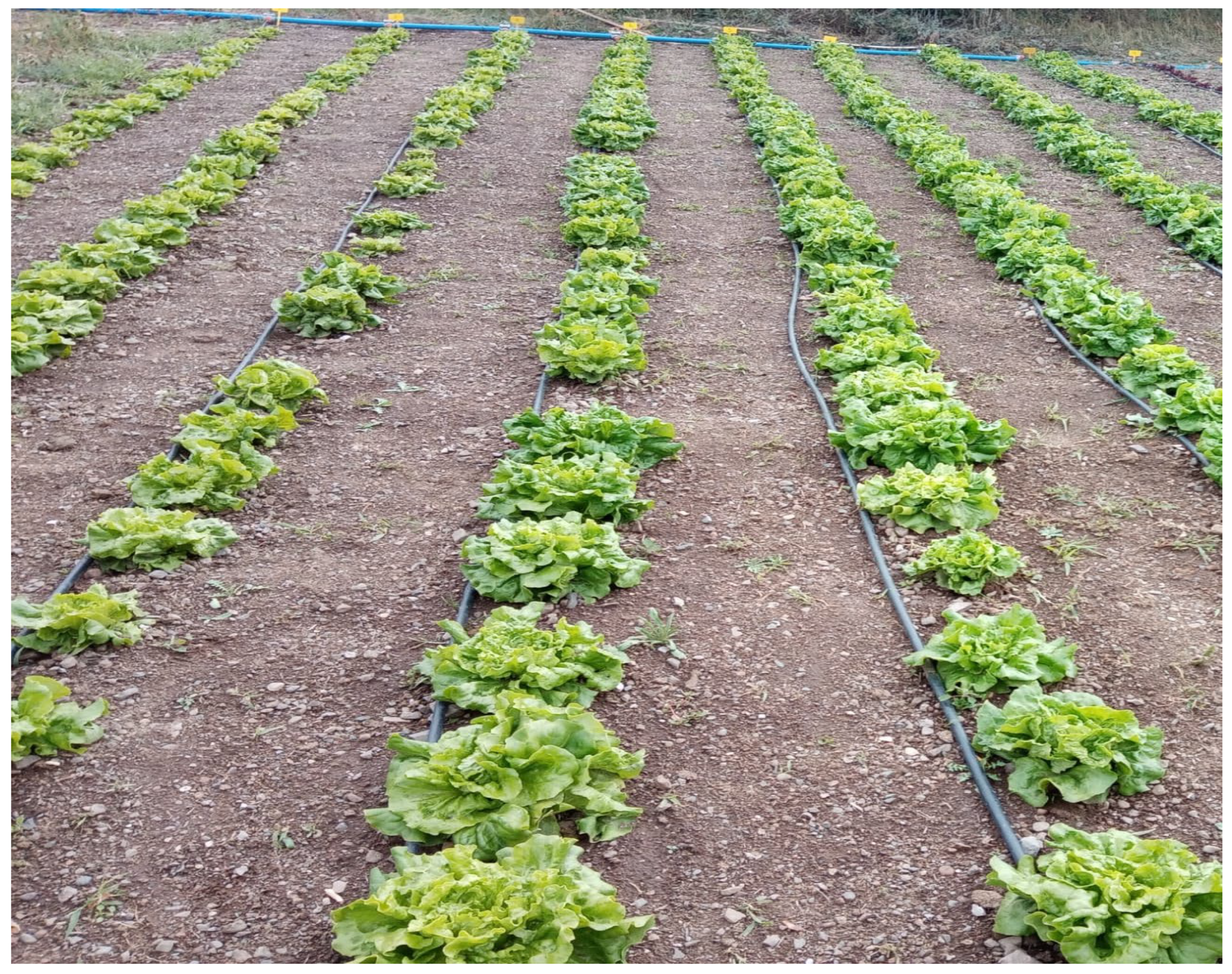
2.1. Experimental Area, Plant Materials and Applications
2.2. Measurements
2.2.1. Measurements of Morphological and Yield Indicators
2.2.2. Physiological Measurements
2.2.3. Biochemical Measurements
2.2.4. Determination of NH4+, NO3−, Mineral, and Soil OM Contents
2.3. Statistical Analysis
3. Results
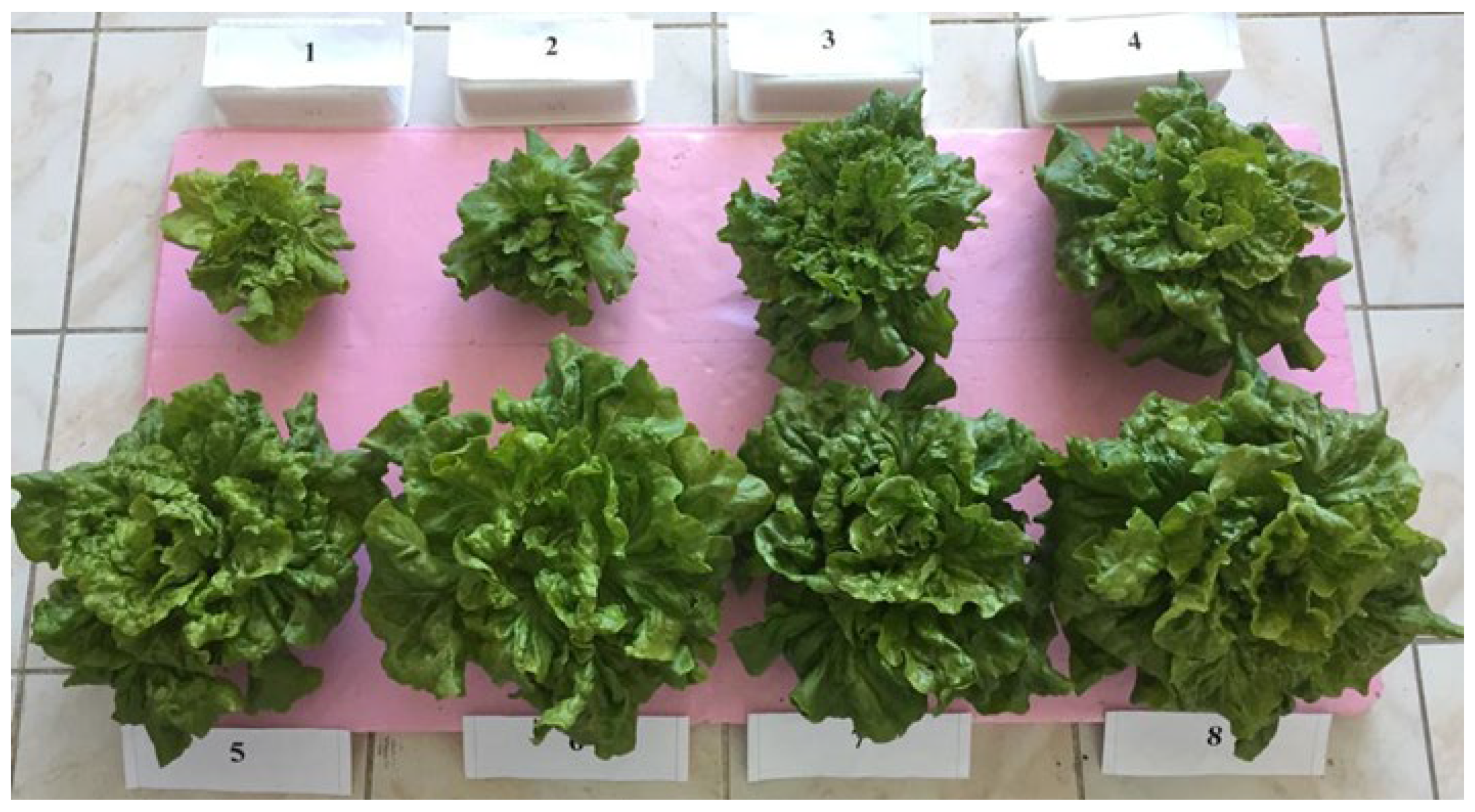
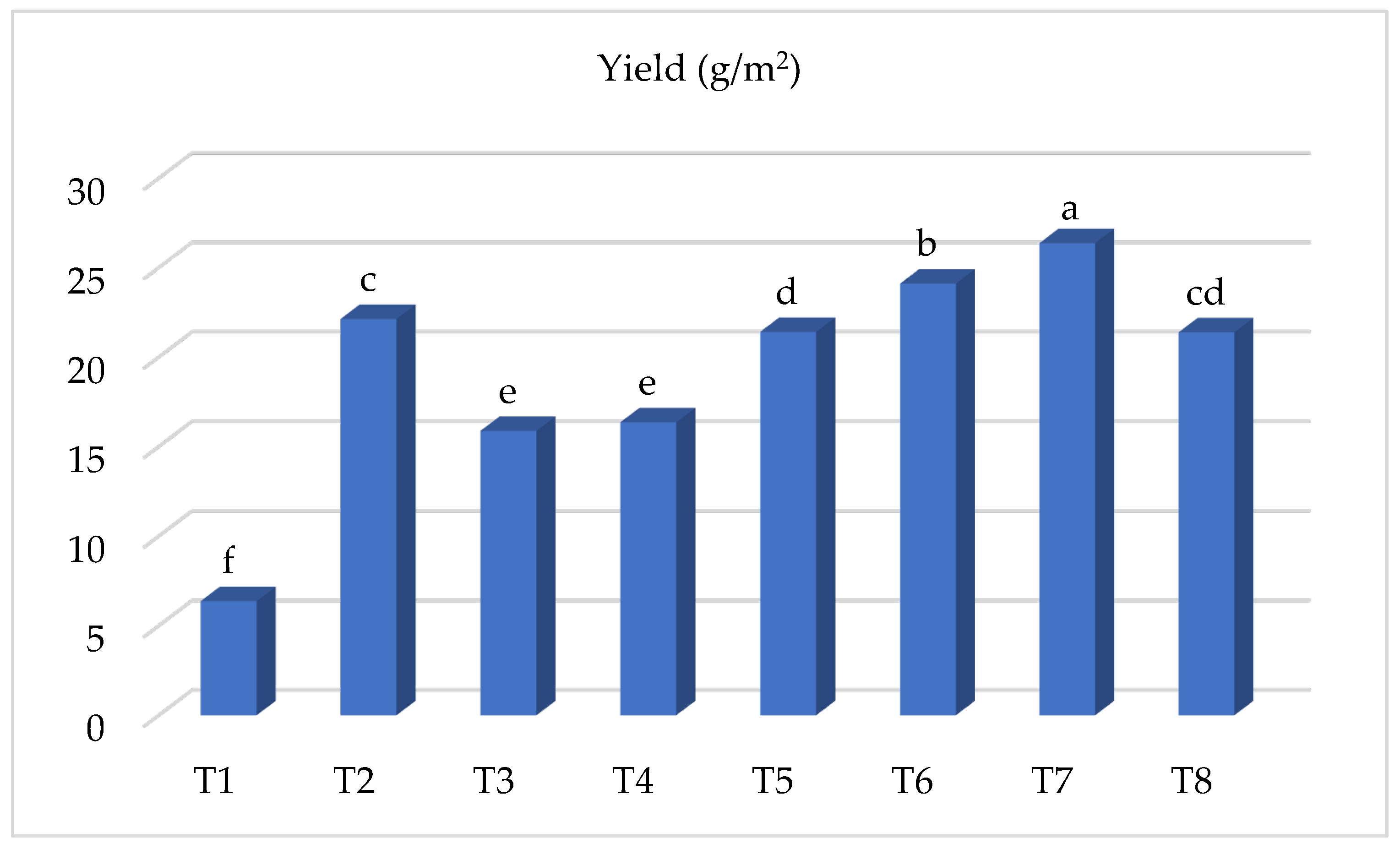
3.1. Morphological and Yield-Related Parameters
3.2. Leaf Colour Characteristics and Photosynthetic Pigment Content
3.3. Antioxidant Compounds, Phenolics, and Flavonoids
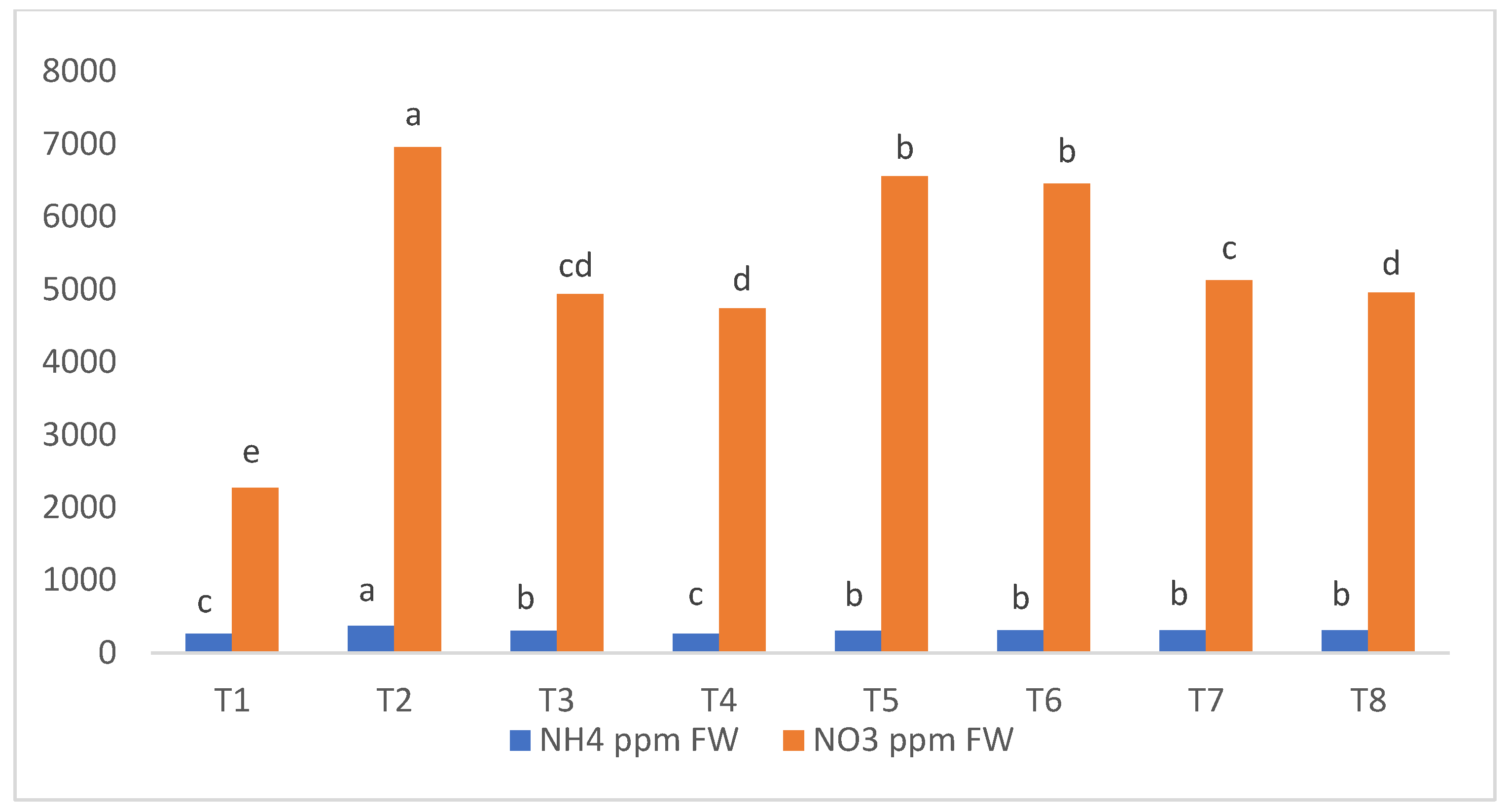
3.4. Nitrogen Assimilation
3.5. Macronutrient Accumulation
3.6. Micronutrient Uptake and Soil OM
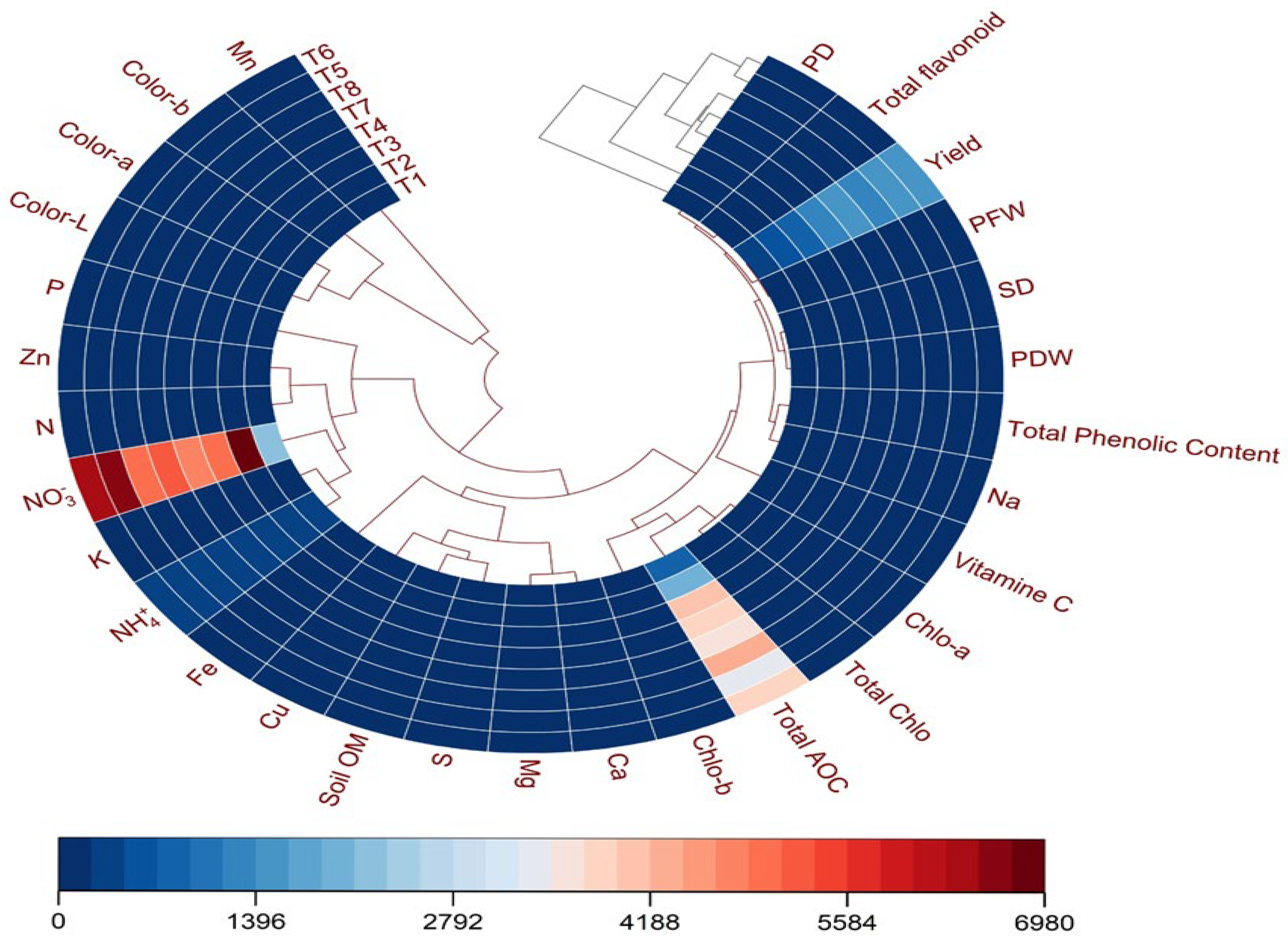
3.7. Polar Heatmap and Cluster Analysis of Treatments and Traits
4. Discussion
5. Conclusions
Author Contributions
Funding
Data Availability Statement
Conflicts of Interest
Abbreviations
| AMF | Arbuscular mycorrhizal fungi |
| ANOVA | Analysis of variance |
| AWD | Alternate wetting and drying |
| CRD | Completely Randomized Design |
| GS | Glutamine synthetase |
| HCA | Hierarchical Clustering Analysis |
| HSD | Honestly Significant Difference |
| NR | Nitrate reductase |
| NUE | Nitrogen use efficiency |
| OM | Organic matter |
| PGPR | Plant growth-promoting rhizobacteria |
| ROS | Reactive oxygen species |
References
- Ray, D.K.; West, P.C.; Clark, M.; Gerber, J.S.; Prishchepov, A.V.; Chatterjee, S. Climate change has likely already affected global food production. PLoS ONE 2019, 14, e0217148. [Google Scholar] [CrossRef]
- Hughes, N.; Gooday, P. Analysis of Climate Change Impacts and Adaptation on Australian Farms; ABARES: Canberra, Australia, 2022; Volume 3.
- Mulvaney, R.L.; Khan, S.A.; Ellsworth, T.R. Synthetic nitrogen fertilizers deplete soil nitrogen: A global dilemma for sustainable cereal production. J. Environ. Qual. 2009, 38, 2295–2314. [Google Scholar] [CrossRef]
- Hossain, M.E.; Shahrukh, S.; Hossain, S.A. Chemical fertilizers and pesticides: Impacts on soil degradation, groundwater, and human health in Bangladesh. In Environmental Degradation: Challenges and Strategies for Mitigation; Springer International Publishing: Cham, Switzerland, 2022; pp. 63–92. [Google Scholar] [CrossRef]
- Nath, A.; Bhuyan, P.; Gogoi, N.; Deka, P. Pesticides and chemical fertilizers: Role in soil degradation, groundwater contamination, and human health. In Xenobiotics in Urban Ecosystems: Sources, Distribution and Health Impacts; Springer International Publishing: Cham, Switzerland, 2023; pp. 131–160. [Google Scholar] [CrossRef]
- Congreves, K.A.; Van Eerd, L.L. Nitrogen cycling and management in intensive horticultural systems. Nutr. Cycl. Agroecosyst. 2015, 102, 299–318. [Google Scholar] [CrossRef]
- Lal, R. Soils and sustainable agriculture. A review. Agron. Sustain Dev. 2008, 28, 57–64. [Google Scholar] [CrossRef]
- Khangura, R.; Ferris, D.; Wagg, C.; Bowyer, J. Regenerative agriculture—A literature review on the practices and mechanisms used to improve soil health. Sustainability 2023, 15, 2338. [Google Scholar] [CrossRef]
- Parađiković, N.; Teklić, T.; Zeljković, S.; Lisjak, M.; Špoljarević, M. Biostimulants research in some horticultural plant species—A review. Food Energy Secur. 2019, 8, e00162. [Google Scholar] [CrossRef]
- Lunghar, P.; Sharma, S.; Rana, V.S.; Sharma, U.; Thakur, S.; Rana, N. Enhancing fruit crops resilience: Harnessing non microbial biostimulants for sustainable mitigation of environmental stresses. Environ. Eng. Manag. J. 2025, 24, 1201–1217. [Google Scholar] [CrossRef]
- Regulation EU1009. Regulation EU 2019/1009 of the European parliament and of the council of 5 June 2019 laying down rules on the making available on the market of EU fertilising products and amending regulations (EC) no 1069/2009 and (EC) no 1107/2009 and repealing regulation (EC) no 2003/2003. J. Eur. Union 2019, 170, 1–114. Available online: http://data.europa.eu/eli/reg/2019/1009/oj (accessed on 25 December 2025).
- Brown, P.; Saa, S. Biostimulants in agriculture. Front. Plant Sci. 2015, 6, 671. [Google Scholar] [CrossRef]
- Du Jardin, P. Plant biostimulants: Definition, concept, main categories and regulation. Sci. Hortic. 2015, 196, 3–14. [Google Scholar] [CrossRef]
- Rouphael, Y.; Colla, G. Biostimulants in agriculture. Front. Plant Sci. 2020, 11, 40. [Google Scholar] [CrossRef] [PubMed]
- Ramzan, F.; Younis, A. Use of biostimulants in tolerance of drought stress in agricultural crops. In Emerging Plant Growth Regulators in Agriculture; Academic Press: Cambridge, MA, USA, 2022; pp. 429–446. [Google Scholar] [CrossRef]
- Calvo, P.; Nelson, L.; Kloepper, J.W. Agricultural uses of plant biostimulants. Plant Soil 2014, 383, 3–41. [Google Scholar] [CrossRef]
- Rouphael, Y.; Cardarelli, M.; Bonini, P.; Colla, G. Synergistic action of a microbial-based biostimulant and a plant derivedprotein hydrolysate enhances lettuce tolerance to alkalinity and salinity. Front. Plant Sci. 2017, 8, 131. [Google Scholar] [CrossRef]
- Khoulati, A.; Ouahhoud, S.; Taibi, M.; Ezrari, S.; Mamri, S.; Merah, O.; Hakkou, A.; Addi, M.; Maleb, A.; Saalaoui, E. Harnessing biostimulants for sustainable agriculture: Innovations, challenges, and future prospects. Discov. Agric. 2025, 3, 56. [Google Scholar] [CrossRef]
- Maffia, A.; Oliva, M.; Marra, F.; Mallamaci, C.; Nardi, S.; Muscolo, A. Humic substances: Bridging ecology and agriculture for a greener future. Agronomy 2025, 15, 410. [Google Scholar] [CrossRef]
- Singh, A.; Sharma, K.; Chahal, H.S.; Kaur, H.; Hasanain, M. Seaweed-derived plant boosters: Revolutionizing sustainable farming and soil health. Front. Plant Sci. 2025, 5, 1504045. [Google Scholar] [CrossRef]
- Canellas, L.P.; Olivares, F.L.; Aguiar, N.O.; Jones, D.L.; Nebbioso, A.; Mazzei, P.; Piccolo, A. Humic and fulvic acids as biostimulants in horticulture. Sci. Hortic. 2015, 196, 15–27. [Google Scholar] [CrossRef]
- Hyun-Sang, S.; Ki-Hoon, K. Chemical and spectroscopic characterization of peat moss and its different humic fractions (Humin, Humic acid and fulvic acid). J. Soil. Groundw. Environ. 2004, 9, 42–51. [Google Scholar]
- Suh, H.Y.; Yoo, K.S.; Suh, S.G. Effect of foliar application of fulvic acid on plant growth and fruit quality of tomato (Lycopersicon esculentum L.). Hortic. Environ. Biotechnol. 2014, 55, 455–461. [Google Scholar] [CrossRef]
- Ampong, K.; Thilakaranthna, M.S.; Gorim, L.Y. Understanding the role of humic acids on crop performance and soil health. Front. Agron. 2022, 4, 848621. [Google Scholar] [CrossRef]
- Ni, H.; Zhao, J.; Yang, Z. Effects of compound fertilizer decrement and water-soluble humic acid fertilizer application on soil properties, bacterial community structure, and shoot yield in Lei Bamboo (Phyllostachys praecox) plantations in subtropical China. Forests 2024, 15, 400. [Google Scholar] [CrossRef]
- Nabi, F.; Sarfaraz, A.; Kama, R.; Kanwal, R.; Li, H. Structure-based function of humic acid in abiotic stress alleviation in plants: A Review. Plants 2025, 14, 1916. [Google Scholar] [CrossRef]
- Loria, N.; Lal, R. Soil Health and Carbon Sequestration. In Carbon Farming: Science and Practice; Springer Nature: Cham, Switzerland, 2025; pp. 41–77. [Google Scholar] [CrossRef]
- Atero-Calvo, S.; Magro, F.; Masetti, G.; Navarro-León, E.; Blasco, B.; Ruiz, J.M. Potential for drought stress alleviation in lettuce (Lactuca sativa L.) with humic substance-based biostimulant applications. Plants 2025, 14, 2386. [Google Scholar] [CrossRef]
- Jackson, W.R. Humic, Fulvic and Microbial Balance: Organic Soil Conditioning; Jackson Research Center: Evergreen, CO, USA, 1993; p. 329. [Google Scholar]
- Husein, M.E.; El-Hassan, S.A.; Shahein, M.M. Effect of humic, fulvic acid and calcium foliar application on growth and yield of tomato plants. Int. J. Biosci. 2015, 7, 132–140. Available online: https://innspub.net/effect-of-humic-fulvic-acid-and-calcium-foliar-application-on-growth-and-yield-of-tomato-plants/ (accessed on 25 December 2025).
- Rai, V.K. Role of amino acids in plant responses to stresses. Biol. Plant 2002, 45, 481–487. [Google Scholar] [CrossRef]
- Noroozlo, Y.A.; Souri, M.K.; Delshad, M. Stimulation effects of foliar applied glycine and glutamine amino acids on lettuce growth. Open Agric. 2019, 4, 164–172. [Google Scholar] [CrossRef]
- Baqir, H.A.; Zeboon, N.H.; Al-Behadili, A.A.J. The role and importance of amino acids within plants: A review. Plant Arch. 2019, 19, 1402–1410. Available online: https://plantarchives.org/SPL%20ISSUE%20SUPP%202,2019/244%20(1402-1410).pdf (accessed on 25 December 2025).
- Sharma, S.S.; Dietz, K.J. The significance of amino acids and amino acid-derived molecules in plant responses and adaptation to heavy metal stress. J. Exper Bot. 2006, 57, 711–726. [Google Scholar] [CrossRef]
- Khan, S.; Yu, H.; Li, Q.; Gao, Y.; Sallam, B.N.; Wang, H.; Liu, P.; Jiang, W. Exogenous application of amino acids improves the growth and yield of lettuce by enhancing photosynthetic assimilation and nutrient availability. Agronomy 2019, 9, 266. [Google Scholar] [CrossRef]
- Souri, M.K.; Hatamian, M. Aminochelates in plant nutrition: A review. J. Plant Nutr. 2019, 42, 67–78. [Google Scholar] [CrossRef]
- Zhang, Y.Y.; Liu, J.L.; Wang, X.; Cao, X.; Liu, K.H.; Luo, Y.T.; Chen, J.Y.; Zhang, J.; Fan, Y.H. A Review of the regulatory role of plant growth–promoting rhizobacteria in alfalfa under stress conditions. Plants 2025, 14, 3248. [Google Scholar] [CrossRef]
- Anu, K.; Gayathry, S.; Sneha, C.K.; Shahul, K.; Sayana, R.; Sree Theertha, K.; Anu, A. Unveiling the multifaceted benefits of Bacillus cereus strain doms B16 for sustainable agriculture and crop productivity. Int. J. Phytoremediat. 2025, 1–10. [Google Scholar] [CrossRef]
- Dagher, D.; Taskos, D.; Mourouzidou, S.; Monokrousos, N. Microbial-enhanced abiotic stress tolerance in grapevines: Molecular mechanisms and synergistic effects of arbuscular mycorrhizal fungi, plant growth-promoting rhizobacteria, and endophytes. Horticulturae 2025, 11, 592. [Google Scholar] [CrossRef]
- Kobua, C.K.; Wang, Y.M.; Jou, Y.T. Exploring the roles of plant growth-promoting rhizobacteria (PGPR) and alternate wetting and drying (AWD) in sustainable rice cultivation. Soil Syst. 2025, 9, 61. [Google Scholar] [CrossRef]
- Bhatti, A.; Suleman, H.M.; Zeshan, K.M.; Imtiaz, M.; Batool, R. Unlocking soil fertility and enhancing plant health: The vital role of PGPR. J. Biol. Allied Health Sci. 2026, 6, 28–43. [Google Scholar] [CrossRef]
- Pradhan, N.; Singh, S.; Saxena, G.; Pradhan, N.; Koul, M.; Kharkwal, A.C.; Sayyed, R. A review on microbe-mineral transformations and their impact on plant growth. Front. Microbiol. 2025, 16, 1549022. [Google Scholar] [CrossRef]
- Yildirim, E.; Yüce, M.; Ekinci, M.; Turan, M.; Ors, S. Effects of Biostimulant treatments on amino acid content of tomato seedling under water deficit. In Proceedings of the 9th International Conference on Agriculture, Virtual, 11–12 August 2022; Volume 7, pp. 1–9. [Google Scholar]
- Atero-Calvo, S.; Izquierdo-Ramos, M.J.; García-Huertas, C.; Rodríguez-Alcántara, M.; Navarro-Morillo, I.; Navarro-León, E. An Evaluation of the effectivity of the green leaves biostimulant on lettuce growth, nutritional quality, and mineral element efficiencies under optimal growth conditions. Plants 2024, 13, 917. [Google Scholar] [CrossRef]
- Wang, Z.; Yang, R.; Liang, Y.; Zhang, S.; Zhang, Z.; Sun, C.; Li, J.; Qi, Z.; Yang, Q. Comparing efficacy of different biostimulants for hydroponically grown lettuce (Lactuca sativa L.). Agronomy 2022, 12, 786. [Google Scholar] [CrossRef]
- Shi, M.; Gu, J.; Wu, H.; Rauf, A.; Emran, T.B.; Khan, Z.; Mitra, S.; Aljohani, A.S.M.; Alhumaydhi, F.A.; Al-Awthan, Y.S.; et al. Phytochemicals, nutrition, metabolism, bioavailability, and health benefits in lettuce—A comprehensive review. Antioxidants 2022, 11, 1158. [Google Scholar] [CrossRef]
- John, V.C.; Verma, A.K.; Hasan, M.; Krishna, H.; Sahu, P.; Kumar, P.; Varghese, T.; Hittinahalli, C.M.; Pai, M. Evaluation of efficacy of vermicompost application to aquaculture wastewater and its impact on growth performance of Channa striata and Lactuca sativa L. in aquaponics. Aquac. Int. 2025, 33, 536. [Google Scholar] [CrossRef]
- Giannothanasis, E.; Ntanasi, T.; Karavidas, I.; Spyrou, G.P.; Neocleous, D.; Ntatsi, G.; Savvas, D. Exploring nutrient reduction strategies without yield losses in hydroponic lettuce production. Sci. Hortic. 2025, 352, 114458. [Google Scholar] [CrossRef]
- Zandvakili, O.R.; Barker, A.V.; Hashemi, M.; Etemadi, F.; Autio, W.R. Comparisons of commercial organic and chemical fertilizer solutions on growth and composition of lettuce. J. Plant Nutr. 2019, 42, 990–1000. [Google Scholar] [CrossRef]
- Colla, G.; Kim, H.J.; Kyriacou, M.C.; Rouphael, Y. Nitrate in fruits and vegetables. Sci. Hortic. 2018, 237, 221–238. [Google Scholar] [CrossRef]
- Lichtenthaler, H.K.; Wellburn, A.R. Determinations of total carotenoids and chlorophylls a and b of leaf extracts in different solvents. Biochem. Soc. 1983, 11, 591–592. [Google Scholar] [CrossRef]
- Yildirim, E.; Ekinci, M.; Turan, M.; Ağar, G.; Dursun, A.; Kul, R.; Alim, Z.; Argin, S. Humic + Fulvic acid mitigated Cd adverse effects on plant growth, physiology and biochemical properties of garden cress. Sci. Rep. 2021, 11, 8040. [Google Scholar] [CrossRef]
- Stankovic, M.S. Total phenolic content, flavonoid concentration and antioxidant activity of Marrubium peregrinum L. extracts. Kragujev. J. Sci. 2011, 33, 63–72. Available online: https://www.pmf.kg.ac.rs/kjs/images/volumes/vol33/kjs33mstankovic63.pdf (accessed on 25 December 2025).
- Shams, M.; Yildirim, E.; Ekinci, M.; Turan, M.; Dursun, A.; Parlakova, F.; Kul, R. Exogenously applied glycine betaine regulates some chemical characteristics and antioxidative defence systems in lettuce under salt stress. Hortic. Environ. Biotechnol. 2016, 57, 225–231. [Google Scholar] [CrossRef]
- Turan, M.; Seçme, M.; Mammadov, R. Antioxidant and anti-proliferative activities of different parts of Cyclamen cilicium. J. Balikesir Univ. Inst. Sci. Technol. 2022, 24, 436–447. [Google Scholar] [CrossRef]
- Youssef, K.M.; Mokhtar, S.M. Effect of drying methods on the antioxidant capacity, colour and phytochemicals of Portulaca oleracea L. leaves. J. Nutr. Food Sci. 2014, 4, 1. [Google Scholar] [CrossRef]
- Bremner, J.M. Nitrogen-total. In Methods of Soil Analysis, Part 3—Chemical Methods, 2nd ed.; Sparks, D.L., Ed.; American Society of Agronomy: Madison, WI, USA, 1996; pp. 1085–1122. [Google Scholar]
- Mertens, D. AOAC Official Method 922.02. Plants preparation of laboratory sample. In Official Methods of Analysis, 18th ed.; Horwitz, W., Latimer, G.W., Eds.; Association of Official Agricultural Chemists: Washington, DC, USA, 2005; Chapter 3; pp. 1–2. [Google Scholar]
- Mertens, D. AOAC Official Method 975.03. Metal in plants and pet foods. In Official Methods of Analysis, 18th ed.; Horwitz, W., Latimer, G.W., Eds.; Association of Official Agricultural Chemists: Washington, DC, USA, 2005; Chapter 3; pp. 3–4. [Google Scholar]
- Nelson, D.W.; Sommers, L.E. Organic matter. In Methods of Soil Analysis, Part 2, Chemical and Microbiological Properties, 2nd ed.; Page, A.L., Miller, R.H., Keeney, E.D., Eds.; ASA and SSSA: Madison, WI, USA, 1982; pp. 574–579. [Google Scholar]
- Ashesh, A.; Purohit, N.N.; Paul, R.M.; Kaur, S.; Singh, A.; Kaur, A.; Singh Purewal, S.; Kohli, R. Current Scenario and Future Prospects. In Coloured Cereals; CRC Press: Boca Raton, FL, USA, 2025; pp. 392–412. [Google Scholar]
- Habib, M.; Singh, S.; Jan, S.; Jan, K.; Bashir, K. The future of the future foods: Understandings from the past towards SDG-2. npj Sci. Food 2025, 9, 138. [Google Scholar] [CrossRef]
- Araujo, E.; Brito, E.C. The structural limitations of Latin American development in the 21st Century: An empirical analysis on the determinants of reprimarization (2000–2022). In Forum for Social Economics; Routledge: London, UK, 2025; pp. 1–22. [Google Scholar]
- Penuelas, J.; Coello, F.; Sardans, J. A better use of fertilizers is needed for global food security and environmental sustainability. Agric. Food Secur. 2023, 12, 5. [Google Scholar] [CrossRef]
- Girawale, V.B.; Naik, R.M. Adoption of organic fertilizer: A way to eco-friendly agriculture. Adv. Life Sci. 2016, 5, 8118–8120. Available online: https://www.academia.edu/30436213/Adoption_of_Organic_Fertilizer_A_Way_to_Eco_friendly_Agriculture (accessed on 25 December 2025).
- Ejedegba, E.O. Advancing green energy transitions with ecofriendly fertilizer solutions supporting agricultural sustainability. Int. Res. J. Modern Eng. Technol. Sci. 2024, 6, 1970–1986. [Google Scholar] [CrossRef]
- Asif, A.; Ali, M.; Qadir, M.; Karthikeyan, R.; Singh, Z.; Khangura, R.; Di Gioia, F.; Ahmed, Z.F. Enhancing crop resilience by harnessing the synergistic effects of biostimulants against abiotic stress. Front. Plant Sci. 2023, 14, 1276117. [Google Scholar] [CrossRef] [PubMed]
- Matthews, S.; Siddiqui, Y.; Ali, A. Unleashing the power of bio-stimulants for enhanced crop growth, productivity, and quality: A comprehensive review. J. Plant Nutr. 2025, 48, 703–725. [Google Scholar] [CrossRef]
- Baltazar, M.; Correia, S.; Guinan, K.J.; Sujeeth, N.; Bragança, R.; Gonçalves, B. Recent advances in the molecular effects of biostimulants in plants: An overview. Biomolecules 2021, 11, 1096. [Google Scholar] [CrossRef]
- Sadeghi Chah-Nasir, A.; Abootalebi Jahromi, A.; Behrooznam, B.; Hassanzadeh Khankahdani, H.; Ejraei, A. Effect of humic acid and amino acid foliar applications on the growth characteristics, yield, and fruit quality of tomato (Solanum lycopersicom L.). Int. J. Hortic. Sci. Technol. 2023, 10, 309–318. [Google Scholar] [CrossRef]
- Turan, M.; Ekinci, M.; Argin, S.; Brinza, M.; Yildirim, E. Drought stress amelioration in tomato (Solanum lycopersicum L.) seedlings by biostimulant as regenerative agent. Front. Plant Sci. 2023, 14, 1211210. [Google Scholar] [CrossRef]
- Decsi, K.; Ahmed, M.; Rizk, R.; Abdul-Hamid, D.; Tóth, Z. Analysis of plant physiological parameters and gene transcriptional changes under the influence of humic acid and humic acid-amino acid combinations in maize. Int. J. Mol. Sci. 2024, 25, 13280. [Google Scholar] [CrossRef]
- Raheem, S.M.; Al-Jaf, H.I.; Tofiq, G.K. Influence of foliar and soil application of humic acid on growth and yield of lettuce. Euphrates J. Agric. Sci. 2018, 10, 199–204. Available online: https://iasj.rdd.edu.iq/journals/uploads/2025/05/07/3d0f50be1055cba6498ae4c9a30508ad.pdf (accessed on 25 December 2025).
- Cristofano, F.; El-Nakhel, C.; Colla, G.; Cardarelli, M.; Pii, Y.; Lucini, L.; Rouphael, Y. Modulation of morpho-physiological and metabolic profiles of lettuce subjected to salt stress and treated with two vegetal-derived biostimulants. Plants 2023, 12, 709. [Google Scholar] [CrossRef]
- Khan, A.A.; Alnusaire, T.S.; Akbar, R.; Iqbal, B.; Zeb, A.; Soliman, M.H. Use of biostimulants to enhance temperature tolerance in oilseed crops. In Oilseed Crops Under Abiotic Stress: Mitigation Strategies and Future Perspectives; Springer Nature: Singapore, 2025; pp. 123–146. [Google Scholar] [CrossRef]
- Ranasingha, R.; Perera, A.; Tabugbo, K.; Vasilev, V. Enhancing plant growth and yield under reduced water and nutrient conditions: The Role of Biostimulants in Improving Irrigation Efficiency and Drought Resilience in Soilless Strawberry Cultivation Under Glasshouse Conditions. J. Sustain. Agric. Environ. 2025, 4, e70082. [Google Scholar] [CrossRef]
- Becker, C.; Urlić, B.; Jukić Špika, M.; Kläring, H.P.; Krumbein, A.; Baldermann, S.; Ban, S.G.; Perca, S.; Schwarz, D. Nitrogen limited red and green leaf lettuce accumulate flavonoid glycosides, caffeic acid derivatives, and sucrose while losing chlorophylls, β-carotene and xanthophylls. PLoS ONE 2015, 10, e0142867. [Google Scholar] [CrossRef]
- Gude, K.; Talavera, M.; Sasse, A.M.; Rivard, C.L.; Pliakoni, E. Effect of light characteristics on the sensory properties of red lettuce (Lactuca sativa). Foods 2021, 10, 2660. [Google Scholar] [CrossRef]
- Smirnova, N.V.; Timofeenko, I.A.; Krutovsky, K.V. Red-leafed lettuces: Genetic variation or epigenetic photomorphogenesis? Plants 2025, 14, 363. [Google Scholar] [CrossRef]
- Ali, O.; Ramsubhag, A.; Jayaraman, J. Biostimulant properties of seaweed extracts in plants: Implications towards sustainable crop production. Plants 2021, 10, 531. [Google Scholar] [CrossRef]
- Teklić, T.; Parađiković, N.; Špoljarević, M.; Zeljković, S.; Lončarić, Z.; Lisjak, M. Linking abiotic stress, plant metabolites, biostimulants and functional food. Ann. Appl. Biol. 2021, 178, 169–191. [Google Scholar] [CrossRef]
- Vitale, E.; Velikova, V.; Tsonev, T.; Ferrandino, I.; Capriello, T.; Arena, C. The interplay between light quality and biostimulant application affects the antioxidant capacity and photosynthetic traits of soybean (Glycine max L. Merrill). Plants 2021, 10, 861. [Google Scholar] [CrossRef] [PubMed]
- Chaski, C.; Petropoulos, S.A. The alleviation effects of biostimulants application on lettuce plants grown under deficit irrigation. Horticulturae 2022, 8, 1089. [Google Scholar] [CrossRef]
- Li, J.; Ma, H.; Ma, H.; Lei, F.; He, D.; Huang, X.; Yang, H.; Fan, G. Comprehensive effects of N reduction combined with biostimulants on N use efficiency and yield of the winter wheat–summer maize rotation system. Agronomy 2023, 13, 2319. [Google Scholar] [CrossRef]
- Mosaad, I.S.; Selim, E.M.M.; Gaafar, D.E.; Al-Anoos, M.A. Effects of humic and fulvic acids on forage production and grain quality of triticale under various soil salinity levels. Cereal Res. Commun. 2025, 53, 1811–1829. [Google Scholar] [CrossRef]
- Alfosea-Simón, M.; Simón-Grao, S.; Zavala-Gonzalez, E.A.; Cámara-Zapata, J.M.; Simón, I.; Martínez-Nicolás, J.J.; Lidon, V.; García-Sánchez, F. Physiological, nutritional and metabolomic responses of tomato plants after the foliar application of amino acids aspartic acid, glutamic acid and alanine. Front. Plant Sci. 2021, 11, 581234. [Google Scholar] [CrossRef] [PubMed]
- Khan, S.; Iqbal, M.Z.; Solangi, F.; Azeem, S.; Bodlah, M.A.; Zaheer, M.S.; Niaz, Y.; Ashraf, M.; Abid, M.; Gul, H.; et al. Impact of amino acid supplementation on hydroponic lettuce (Lactuca sativa L.) growth and nutrient content. Sci. Rep. 2025, 15, 15829. [Google Scholar] [CrossRef]
- Cozzolino, E.; Giordano, M.; Fiorentino, N.; El-Nakhel, C.; Pannico, A.; Di Mola, I.; Mori, M.; Kyriacou, M.C.; Colla, G.; Rouphael, Y. Appraisal of biodegradable mulching films and vegetal-derived biostimulant application as eco-sustainable practices for enhancing lettuce crop performance and nutritive value. Agronomy 2020, 10, 427. [Google Scholar] [CrossRef]
- Borrell, A.K.; Hammer, G.L. Nitrogen dynamics and the physiological basis of stay-green in sorghum. Crop Sci. 2000, 40, 1295–1307. [Google Scholar]
- Nguyen, D.K.V.; Than, H.A.Q.; Tran, M.A.N.; Do, N.K.; Pham, T.H. Impact of nitrogen-supplemented plasma activated water on the germination and early growth of curly lettuce (Lactuca sativa var. crispa). Russ. J. Plant Physiol. 2025, 72, 168. [Google Scholar] [CrossRef]
- Mun, B.G.; Hussain, A.; Park, Y.G.; Kang, S.M.; Lee, I.J.; Yun, B.W. The PGPR Bacillus aryabhattai promotes soybean growth via nutrient and chlorophyll maintenance and the production of butanoic acid. Front. Plant Sci. 2024, 15, 1341993. [Google Scholar] [CrossRef] [PubMed]
- Yaseen, A.A.; Hájos, M.T. The potential role of moringa leaf extract as bio-stimulant to improve some quality parameters of different lettuce (Lactuca sativa L.) Genotypes. Sarhad J. Agric. 2021, 37, 1107–1119. [Google Scholar] [CrossRef]
- Admane, N.; Cavallo, G.; Hadjila, C.; Cavalluzzi, M.M.; Rotondo, N.P.; Salerno, A.; Cannillo, J.; Difonzo, G.; Caponio, F.; Ippolito, A.; et al. Biostimulant formulations and Moringa oleifera extracts to improve yield, quality, and storability of hydroponic lettuce. Molecules 2023, 28, 373. [Google Scholar] [CrossRef]
- Al-Rikabi, G.Z.K.; Fadalah, L.T.; Jewar, A.S. Management of cucumber (Cucumis sativus L.) In integration with biostimulant atonik based on physical and biochemical properties. SABRAO J. Breed. Gen. 2025, 57, 1510–1517. [Google Scholar] [CrossRef]
- Halshoy, H.S.; Sadik, S.K. Impact of training methods and biostimulant applications on sweet pepper (Capsicum annuum) yield and nutritional values: Under greenhouse condition. Hortic. Plant J. 2025, 11, 290–302. [Google Scholar] [CrossRef]
- Dudaš, S.; Šola, I.; Sladonja, B.; Erhatić, R.; Ban, D.; Poljuha, D. The effect of biostimulants and fertilizer on “low input” lettuce production. Acta Bot. Croat. 2016, 75, 253–259. [Google Scholar] [CrossRef]
- Zykova, M.V.; Volikov, A.B.; Buyko, E.E.; Bratishko, K.A.; Ivanov, V.V.; Konstantinov, A.I.; Logvinova, L.A.; Mihalyov, D.A.; Sobolev, N.A.; Zhirkova, A.M.; et al. Enhanced antioxidant activity and reduced cytotoxicity of silver nanoparticles stabilized by different humic materials. Polymers 2023, 15, 3386. [Google Scholar] [CrossRef]
- Deveikytė, J.; Blinstrubienė, A.; Burbulis, N. Amino Acids as Biostimulants: Effects on Growth, Chlorophyll Content, and Antioxidant Activity in Ocimum basilicum L. Agriculture 2025, 15, 1496. [Google Scholar] [CrossRef]
- Neshat, M.; Abbasi, A.; Hosseinzadeh, A.; Sarikhani, M.R.; Dadashi Chavan, D.; Rasoulnia, A. Plant growth promoting bacteria (PGPR) induce antioxidant tolerance against salinity stress through biochemical and physiological mechanisms. Physiol. Mol. Biol. Plants 2022, 28, 347–361. [Google Scholar] [CrossRef]
- Tamburino, R.; Docimo, T.; Sannino, L.; Gualtieri, L.; Palomba, F.; Valletta, A.; Ruocco, M.; Scotti, N. Enzyme-based biostimulants influence physiological and biochemical responses of Lactuca sativa L. Biomolecules 2023, 13, 1765. [Google Scholar] [CrossRef] [PubMed]
- Fiorentino, S.; Bellani, L.; Santin, M.; Castagna, A.; Echeverria, M.C.; Giorgetti, L. Effects of microalgae as biostimulants on plant growth, content of antioxidant molecules and total antioxidant capacity in Chenopodium quinoa exposed to salt stress. Plants 2025, 14, 781. [Google Scholar] [CrossRef]
- Giordano, M.; El-Nakhel, C.; Carillo, P.; Colla, G.; Graziani, G.; Di Mola, I.; Mori, M.; Kyriacou, M.C.; Rouphael, Y.; Soteriou, G.A.; et al. Plant-derived biostimulants differentially modulate primary and secondary metabolites and improve the yield potential of red and green lettuce cultivars. Agriculture 2022, 12, 1361. [Google Scholar] [CrossRef]
- Fajdetić, N.R.; Božić Ostojić, L.; Benković, R.; Zima, D.; Blažinkov, M.; Mirosavljević, K.; Popović, B.; Benković-Lačić, T. Effects of three organic fertilizers and biostimulants on the morphological traits and secondary metabolite content of lettuce. Horticulturae 2025, 11, 1288. [Google Scholar] [CrossRef]
- Shafie, F.; Bayat, H.; Aminifard, M.H.; Daghighi, S. Biostimulant effects of seaweed extract and amino acids on growth, antioxidants, and nutrient content of yarrow (Achillea millefolium L.) in the field and greenhouse conditions. Commun. Soil Sci. Plant Anal. 2021, 52, 964–975. [Google Scholar] [CrossRef]
- Sheng, Y.; Cheng, H.; Wang, L.; Shen, J.; Tang, M.; Liang, M.; Zhang, K.; Zhang, H.; Kong, Q.; Yu, M.; et al. Foliar spraying with compound amino acid-iron fertilizer increases leaf fresh weight, photosynthesis, and Fe-S cluster gene expression in peach (Prunus persica (L.) Batsch). BioMed Res. Int. 2020, 2020, 2854795. [Google Scholar] [CrossRef]
- Al-Karaki, G.N.; Othman, Y. Effect of foliar application of amino acid biostimulants on growth, macronutrient, total phenol contents and antioxidant activity of soilless grown lettuce cultivars. S. Afr. J. Bot. 2023, 154, 225–231. [Google Scholar] [CrossRef]
- Hakeem, K.R.; Sabir, M.; Ozturk, M.; Akhtar, M.S.; Ibrahim, F.H. Nitrate and nitrogen oxides: Sources, health effects and their remediation. Rev. Environ. Contam. Toxicol. 2016, 242, 183–217. [Google Scholar] [CrossRef]
- Signore, A.; Bell, L.; Santamaria, P.; Van Labeke, M.C. Advanced strategies to reduce the nitrate content in vegetables. Front. Plant Sci. 2021, 12, 765636. [Google Scholar] [CrossRef] [PubMed]
- Halpern, M.; Bar-Tal, A.; Ofek, M.; Minz, D.; Muller, T.; Yermiyahu, U. The use of biostimulants for enhancing nutrient uptake. Adv. Agron. 2015, 130, 141–174. [Google Scholar] [CrossRef]
- Capstaff, N.M.; Morrison, F.; Cheema, J.; Brett, P.; Hill, L.; Muñoz-García, J.C.; Khimyak, Y.Z.; Domoney, C.; Miller, A.J. Fulvic acid increases forage legume growth inducing preferential up-regulation of nodulation and signalling-related genes. J. Exp. Bot. 2020, 71, 5689–5704. [Google Scholar] [CrossRef] [PubMed]
- Liu, C.W.; Sung, Y.; Chen, B.C.; Lai, H.Y. Effects of nitrogen fertilizers on the growth and nitrate content of lettuce (Lactuca sativa L.). Int. J. Environ. Res. Public Health 2014, 11, 4427–4440. [Google Scholar] [CrossRef]
- Bhupenchandra, I.; Chongtham, S.K.; Devi, E.L.; Choudhary, A.K.R.; Salam, M.D.; Shaoo, M.N.; Bhutia, T.L.; Devi, S.H.; Thounaojam, A.S.; Behera, C.; et al. Role of biostimulants in mitigating the effects of climate change on crop performance. Front. Plant Sci. 2022, 13, 967665. [Google Scholar] [CrossRef]
- Johnson, R.; Joel, J.M.; Puthur, J.T. Biostimulants: The futuristic sustainable approach for alleviating crop productivity and abiotic stress tolerance. J. Plant Growth Regul. 2024, 43, 659–674. [Google Scholar] [CrossRef]
- Jalali, M.; Ghaffarian Mogharab, M.H.; Nazary, H.; Zare, A.A. Uptake and nitrate accumulation affected by partial replacement of nitrate-N with different source of amino acids in spinach and lettuce. J. Plant Proc. Func. 2020, 9, 37–45. Available online: http://jispp.iut.ac.ir/article-1-1374-en.html (accessed on 25 December 2025).
- Albornoz, F.; Godoy, L. Modulation of Root Nitrogen Uptake Mechanisms Mediated by Beneficial Soil Microorganisms. Plants 2025, 14, 2729. [Google Scholar] [CrossRef] [PubMed]
- Sakthieaswari, P.; Kannan, A.; Baby, S. Role of mycorrhizosphere as a biostimulant and its impact on plant growth, nutrient uptake and stress management. In New and Future Developments in Microbial Biotechnology and Bioengineering; Elsevier: Amsterdam, The Netherlands, 2022; pp. 319–336. [Google Scholar] [CrossRef]
- Rani, D.V.; Singh, A.; Jakhwal, R. Nanobiostimulants for improving plant roots regulations and nutrient uptake. In Nanobiostimulants: Emerging Strategies for Agricultural Sustainability; Springer: Cham, Switzerland, 2024; pp. 457–475. [Google Scholar] [CrossRef]
- Ansari, M.; Devi, B.M.; Sarkar, A.; Chattopadhyay, A.; Satnami, L.; Balu, P.; Choudhary, M.; Shahid, M.A.; Jailani, A.A.K. Microbial exudates as biostimulants: Role in plant growth promotion and stress mitigation. J. Xenobiot. 2023, 13, 572–603. [Google Scholar] [CrossRef]
- Chen, L.; Liu, Y. The function of root exudates in the root colonization by beneficial soil rhizobacteria. Biology 2024, 13, 95. [Google Scholar] [CrossRef]
- Carillo, P.; De Micco, V.; Ciriello, M.; Formisano, L.; El-Nakhel, C.; Giordano, M.; Colla, G.; Rouphael, Y. Morpho-anatomical, physiological, and mineral composition responses induced by a vegetal-based biostimulant at three rates of foliar application in greenhouse lettuce. Plants 2022, 11, 2030. [Google Scholar] [CrossRef] [PubMed]
- Govindasamy, P.; Muthusamy, S.K.; Bagavathiannan, M.; Mowrer, J.; Jagannadham, P.T.K.; Maity, A.; Halli, H.M.; Sujayananad, G.K.; Vadivel, R.; Das, T.K.; et al. Nitrogen use efficiency—A key to enhance crop productivity under a changing climate. Front. Plant Sci. 2023, 14, 1121073. [Google Scholar] [CrossRef] [PubMed]
- Pettit, R.E. Organic matter, humus, humate, humic acid, fulvic acid and humin: Their importance in soil fertility and plant health. CTI Res. 2004, 10, 1–7. Available online: https://humates.com/wp-content/uploads/2020/04/ORGANICMATTERPettit.pdf (accessed on 25 December 2025).
- Wyszkowski, M.; Kordala, N.; Brodowska, M.S. Role of humic acids-based fertilisers and nitrogen fertilisers in the regulation of the macroelement content in maize biomass. J. Elementol. 2023, 28, 1289–1309. [Google Scholar] [CrossRef]
- Navarro-León, E.; López-Moreno, F.J.; Borda, E.; Marín, C.; Sierras, N.; Blasco, B.; Ruiz, J.M. Effect of l-amino acid-based biostimulants on nitrogen use efficiency (NUE) in lettuce plants. J. Sci. Food Agric. 2022, 102, 7098–7106. [Google Scholar] [CrossRef]
- Han, M.; Kasim, S.; Yang, Z.; Deng, X.; Saidi, N.; Uddin, M.; Shuib, E. Plant extracts as biostimulant agents: A promising strategy for managing environmental stress in sustainable agriculture. Phyton 2024, 93, 2149. [Google Scholar] [CrossRef]
- Papa, S.; Fusco, G.M.; Ciriello, M.; Formisano, L.; Woo, S.L.; De Pascale, S.; Rouphael, Y.; Carillo, P. Microbial and non-microbial biostimulants as innovative tools to increase macro and trace element mineral composition of tomato and spinach. Horticulturae 2022, 8, 1157. [Google Scholar] [CrossRef]
- Redoy, M.H.; Al Mamun, M.; Cooley, A.L.; Darby, E.; Islam, T. Enhancing nitrogen uptake efficiency and tomato plant growth in soilless substrates using fulvic acids and mycorrhizal biostimulants. Sci. Hortic. 2025, 348, 114212. [Google Scholar] [CrossRef]
- Debska, B.; Kotwica, K.; Banach-Szott, M.; Spychaj-Fabisiak, E.; Tobiašová, E. Soil fertility improvement and carbon sequestration through exogenous organic matter and biostimulant application. Agriculture 2022, 12, 1478. [Google Scholar] [CrossRef]
- Bashir, O.; Ali, T.; Baba, Z.A.; Rather, G.H.; Bangroo, S.A.; Mukhtar, S.D.; Naik, N.; Mohiuddin, R.; Bharati, V.; Bhat, R.A. Soil organic matter and its impact on soil properties and nutrient status. In Microbiota and Biofertilizers, Vol 2: Ecofriendly Tools for Reclamation of Degraded Soil Environs; Springer International Publishing: Cham, Switzerland, 2021; pp. 129–159. [Google Scholar] [CrossRef]



| Properties | Value | Property | Value |
|---|---|---|---|
| pH | 7.825 | Mg (cmolc/kg) | 22.806 |
| EC (μS/cm) | 130.704 | Na (cmolc/kg) | 2.255 |
| CaCO3 (%) | 7.40 | P (mg/kg) | 1.187 |
| Organic Matter (%) | 2.083 | Fe (mg/kg) | 0.792 |
| Total N (%) | 0.065 | Cu (mg/kg) | 0.246 |
| NH4-N (mg/kg) | 12.669 | Mn (mg/kg) | 0.098 |
| NO3-N (mg/kg) | 1.849 | Zn (mg/kg) | 0.176 |
| K (cmolc/kg) | 39.708 | B (mg/kg) | 0.030 |
| Ca (cmolc/kg) | 248.896 |
| Chemical Fertilizer | Composition of Kiana Products | ||||||||
|---|---|---|---|---|---|---|---|---|---|
| Treatment Number | Treatment | N (kg/ha) | P2O5 (kg/ha) | K2O (kg/ha) | Humic Substance * (%) | Amino Acids ** (%) | Microorganisms *** (cfu/mL) | Enzymes **** (U/g) | Algae ***** (%) |
| T1 | Control | – | – | – | – | – | – | – | – |
| T2 | Chemical fertilizer | 150 | 100 | 150 | – | – | – | – | – |
| T3 | Kiana earth | – | – | – | 18 | – | 1 × 10⁹ | – | – |
| T4 | Kiana climate | – | – | – | 18 | 15 | 1 × 10⁹ | 2750 | 2 |
| T5 | Kiana earth | 75 | 50 | 75 | 18 | 15 | 1 × 10⁹ | – | – |
| T6 | Kiana climate | 75 | 50 | 75 | 18 | 15 | 1 × 10⁹ | 2750 | 2 |
| T7 | Kiana earth | 150 | 100 | 150 | 18 | 15 | 1 × 10⁹ | – | – |
| T8 | Kiana climate | 150 | 100 | 150 | 18 | 15 | 1 × 10⁹ | 2750 | 2 |
| Variables | Treatment Mean Square | Error Mean Square |
|---|---|---|
| PD (cm) | 108.883 ** | 1.613 |
| SD (cm) | 62.196 ** | 0.479 |
| Yield (g/m2) | 552,330.429 ** | 289.896 |
| PFW (g) | 4564.714 ** | 2.396 |
| PDW (g) | 45.544 ** | 0.111 |
| Colour-L* | 48.675 ns | 21.690 |
| Colour-a* | 6.449 ** | 1.060 |
| Colour-b* | 9.934 ns | 6.460 |
| Chlo-a (mg/g) | 0.793 ** | 1.960 |
| Chlo-b (mg/g) | 0.151 ** | 0.013 |
| Total Chlo (mg/g) | 1.403 ** | 0.002 |
| Vitamin C (mg/L) | 828.280 ** | 0.019 |
| Total AOC (µg/mL FW) | 4,423,793.333 ** | 89.667 |
| Total Phenolic Content (mg GAE/100 g FW) | 202.423 ** | 16,521.917 |
| Total flavonoid (mg/100 g FW) | 143.024 ** | 2.792 |
| NH4+ (ppm/g FW) | 3295.661 ** | 1.833 |
| NO3− (ppm/g FW) | 6,600,223.976 ** | 171.458 |
| N% | 0.379 ** | 15,346.250 |
| P (%) | 0.008 ** | 0.020 |
| K (%) | 0.298 ** | 0.000 |
| Ca (%) | 0.606 ** | 0.008 |
| Mg (%) | 0.039 ** | 0.003 |
| S (%) | 0.011 ** | 0.001 |
| Mn (mg/kg) | 32.033 ** | 0.000 |
| Fe (mg/kg) | 1313.442 ** | 2.716 |
| Zn (mg/kg) | 26.270 ** | 15.018 |
| Cu (mg/kg) | 13.504 ** | 1.831 |
| Na (mg/kg) | 839.578 ** | 1.049 |
| Soil OM (%) | 0.054 ** | 51.541 |
| Treatments | PD (cm) | SD (mm) | PFW (g/plant) | PDW (g/plant) |
|---|---|---|---|---|
| T1 | 15.13 ± 1.25 g | 21.93 ± 0.76 e | 58.17 ± 3.26 f | 10.37 ± 0.51 e |
| T2 | 21.40 ± 0.49 f | 25.47 ± 1.11 d | 138.79 ± 1.31 c | 22.13 ± 1.28 b |
| T3 | 23.13 ± 1.02 e | 28.60 ± 0.91 c | 71.17 ± 4.16 e | 15.87 ± 0.71 d |
| T4 | 25.40 ± 0.28 d | 34.73 ± 1.03 b | 76.70 ± 4.55 e | 16.35 ± 0.59 d |
| T5 | 29.00 ± 0.44 a | 36.60 ± 0.38 ab | 127.83 ± 3.89 d | 21.41 ± 0.89 c |
| T6 | 28.23 ± 0.26 ab | 36.00 ± 0.27 ab | 141.67 ± 1.03 b | 24.11 ± 1.22 ab |
| T7 | 27.33 ± 0.18 bc | 36.93 ± 0.68 ab | 156.32 ± 6.14 a | 26.37 ± 1.75 a |
| T8 | 26.20 ± 0.45 cd | 37.47 ± 0.87 a | 131.80 ± 5.78 cd | 21.39 ± 1.13 c |
| Treatments | Colour-L* | Colour-a* | Colour-b* | Chlo-a (mg/g) | Chlo-b (mg/g) | Total Chlo (mg/g) |
|---|---|---|---|---|---|---|
| T1 | 50.83 ± 5.25 ns | 18.40 ± 0.84 ab | 36.40 ± 2.41 ns | 3.25 ± 0.10 f | 1.14 ± 0.02 e | 4.39 ± 0.01 e |
| T2 | 54.50 ± 6.38 | 18.80 ± 0.68 ab | 38.33 ± 2.46 | 3.50 ± 0.14 e | 1.25 ± 0.05 d | 4.75 ± 0.02 d |
| T3 | 42.80 ± 5.11 | 15.93 ± 0.54 c | 35.27 ± 1.28 | 4.29 ± 0.11 b | 1.69 ± 0.12 ab | 5.98 ± 0.11 b |
| T4 | 45.40 ± 4.59 | 15.30 ± 0.49 c | 33.27 ± 3.11 | 3.72 ± 0.17 d | 1.73 ± 0.10 a | 5.45 ± 0.08 c |
| T5 | 46.63 ± 4.45 | 16.93 ± 1.02 bc | 32.80 ± 4.12 | 4.44 ± 0.11 b | 1.61 ± 0.14 b | 6.05 ± 0.12 b |
| T6 | 49.33 ± 3.89 | 18.53 ± 0.89 ab | 36.73 ± 3.87 | 4.02 ± 0.10 c | 1.32 ± 0.08 d | 5.34 ± 0.12 c |
| T7 | 50.13 ± 4.01 | 17.97 ± 1.11 ab | 35.20 ± 3.33 | 4.38 ± 0.14 b | 1.48 ± 0.01 c | 5.86 ± 0.11 b |
| T8 | 53.67 ± 3.94 | 19.47 ± 1.01 a | 36.13 ± 2.84 | 4.75 ± 0.12 a | 1.65 ± 0.02 ab | 6.40 ± 0.20 a |
| Treatments | C Vit (mg/100 g) | Total AOC (µg/mL FW) | Total Phenolic Content (mg GAE/100 g FW) | Total Flavonoid (mg/100 g FW) |
|---|---|---|---|---|
| T1 | 85.33 ± 2.11 d | 819.33 ± 26.82 g | 22.00 ± 1.18 e | 8.67 ± 0.91 d |
| T2 | 94.67 ± 5.43 cd | 1959.33 ± 97.85 f | 37.67 ± 1.22 d | 16.67 ± 0.57 c |
| T3 | 112.67 ± 3.45 b | 4033.33 ± 115.64 b | 38.33 ± 0.37 d | 19.00 ± 1.13 c |
| T4 | 133.33 ± 2.15 a | 3794.67 ± 59.87 cd | 43.67 ± 1.67 bc | 25.67 ± 1.37 b |
| T5 | 119.67± 2.11 ab | 3432.67 ± 43.12 e | 42.67 ± 0.44 c | 28.67 ± 0.49 a |
| T6 | 106.00 ± 5.11 bc | 3942.33 ± 98.25 bc | 47.67 ± 0.61 a | 25.33 ± 1.02 b |
| T7 | 130.67 ± 1.86 a | 3694.33 ± 55.46 d | 46.33 ± 1.46 ab | 27.00 ± 1.12 ab |
| T8 | 106.67 ± 5.68 bc | 4312.00 ± 120.12 a | 44.67 ± 1.28 abc | 27.00 ± 0.94 ab |
| Treatment | N | P | K | Ca | Mg | S |
|---|---|---|---|---|---|---|
| (%) | ||||||
| T1 | 2.19 ± 0.34 c | 0.21 ± 0.02 e | 1.67 ± 0.21 f | 0.85 ± 0.10 e | 0.24 ± 0.06 cd | 0.17 ± 0.01 de |
| T2 | 3.47 ± 1.23 a | 0.33 ± 0.01 b | 2.68 ± 0.10 a | 1.22 ± 0.08 c | 0.27 ± 0.05 d | 0.15 ± 0.01 e |
| T3 | 2.91 ± 0.67 b | 0.25 ± 0.01 d | 2.12 ± 0.11 cd | 1.12 ± 0.05 d | 0.22 ± 0.07 d | 0.18 ± 0.01 cd |
| T4 | 2.95 ± 0.71 b | 0.32 ± 0.01 b | 1.86 ± 0.12 e | 1.08 ± 0.04 d | 0.28 ± 0.07 c | 0.21 ± 0.01 b |
| T5 | 2.79 ± 0.73 b | 0.34 ± 0.02 ab | 2.25 ± 0.20 bc | 1.05 ± 0.05 d | 0.21 ± 0.06 d | 0.18 ± 0.01 cd |
| T6 | 2.72 ± 0.77 b | 0.29 ± 0.01 c | 2.03 ± 0.01 d | 1.25 ± 0.08 c | 0.20 ± 0.04 d | 0.22 ± 0.01 b |
| T7 | 2.70 ± 0.81 b | 0.36 ± 0.02 a | 2.39 ± 0.11 b | 2.18 ± 0.12 a | 0.51 ± 0.04 a | 0.35 ± 0.04 a |
| T8 | 2.70 ± 0.91 b | 0.24 ± 0.01 d | 2.01 ± 0.11 de | 1.85 ± 0.08 b | 0.44 ± 0.034 b | 0.21 ± 0.01 b |
| Treatment | Mn | Fe | Zn | Cu | Na | Soil OM |
|---|---|---|---|---|---|---|
| (mg/kg) | (%) | |||||
| T1 | 33.55 ± 0.67 ab | 68.59 ± 2.22 e | 13.44 ± 0.69 e | 6.48 ± 0.73 d | 102.74±4.77 d | 2.08 ± 0.02 b |
| T2 | 33.33 ± 0.98 ab | 101.06 ± 3.46 c | 22.60 ± 0.18 a | 8.11 ± 0.97 cd | 128.02±5.06 c | 2.11 ± 0.02 b |
| T3 | 31.61 ± 1.21 ab | 73.32 ± 3.58 e | 22.02 ± 0.87 ab | 6.97 ± 0.94 d | 137.79±4.43 bc | 2.16 ± 0.03 b |
| T4 | 34.13 ± 1.16 a | 101.46 ± 2.28 c | 19.87 ± 0.16 bc | 7.56 ± 0.55 cd | 152.35±5.37a | 2.09 ± 0.02 b |
| T5 | 25.80 ± 2.01 c | 59.51 ± 2.38 f | 18.25 ± 0.78 cd | 6.95 ± 0.76 d | 148.77±4.67 ab | 2.24 ± 0.02 b |
| T6 | 31.91 ± 1.45 ab | 118.27 ± 4.15 a | 17.44 ± 0.33 cd | 10.93 ± 0.49 ab | 153.84 ± 3.55 a | 2.27 ± 0.03 b |
| T7 | 30.82 ± 0.84 b | 108.45 ± 3.43 b | 19.36 ± 1.01 c | 12.38 ± 1.12 a | 144.04±5.24 ab | 2.49 ± 0.11 a |
| T8 | 26.02 ± 1.34 c | 87.78 ± 4.11 d | 16.76 ± 0.77 d | 9.36 ± 0.75 bc | 141.08±6.89 ab | 2.17 ± 0.02 b |
Disclaimer/Publisher’s Note: The statements, opinions and data contained in all publications are solely those of the individual author(s) and contributor(s) and not of MDPI and/or the editor(s). MDPI and/or the editor(s) disclaim responsibility for any injury to people or property resulting from any ideas, methods, instructions or products referred to in the content. |
© 2026 by the authors. Licensee MDPI, Basel, Switzerland. This article is an open access article distributed under the terms and conditions of the Creative Commons Attribution (CC BY) license.
Share and Cite
Turan, M.; Ekinci, M.; Yigider, E.; Aydin, M.; Akca, M.; Argin, S.; Eken Türer, N.İ.; Yildirim, E. Biostimulants Enhance the Growth and Nutritional Quality of Lettuce (Lactuca sativa L.). Horticulturae 2026, 12, 75. https://doi.org/10.3390/horticulturae12010075
Turan M, Ekinci M, Yigider E, Aydin M, Akca M, Argin S, Eken Türer Nİ, Yildirim E. Biostimulants Enhance the Growth and Nutritional Quality of Lettuce (Lactuca sativa L.). Horticulturae. 2026; 12(1):75. https://doi.org/10.3390/horticulturae12010075
Chicago/Turabian StyleTuran, Metin, Melek Ekinci, Esma Yigider, Murat Aydin, Melike Akca, Sanem Argin, Nazlı İlke Eken Türer, and Ertan Yildirim. 2026. "Biostimulants Enhance the Growth and Nutritional Quality of Lettuce (Lactuca sativa L.)" Horticulturae 12, no. 1: 75. https://doi.org/10.3390/horticulturae12010075
APA StyleTuran, M., Ekinci, M., Yigider, E., Aydin, M., Akca, M., Argin, S., Eken Türer, N. İ., & Yildirim, E. (2026). Biostimulants Enhance the Growth and Nutritional Quality of Lettuce (Lactuca sativa L.). Horticulturae, 12(1), 75. https://doi.org/10.3390/horticulturae12010075