Article

Efficient In Vitro Regeneration and Genetic Fidelity Assessment Using ISSR of Ficus carica ‘Xinjiang Zaohuang’

1
Shanghai Key Laboratory of Plant Functional Genomics and Resources, Shanghai Chenshan Botanical Garden, Shanghai 201602, China
2
National Key Laboratory of Plant Molecular Genetics (NKLPMG), Chinese Academy of Sciences (CAS) Center for Excellence in Molecular Plant Sciences, Shanghai 201602, China
3
College of Biology and Environmental Sciences, Jishou University, Jishou 416000, China
4
Xinjiang Disheng Yineng Biotechnology Limited Company, Urumqi 830000, China
*
Authors to whom correspondence should be addressed.
These authors contributed equally to this work.
Horticulturae 2026, 12(1), 70; https://doi.org/10.3390/horticulturae12010070
Submission received: 10 November 2025 / Revised: 18 December 2025 / Accepted: 4 January 2026 / Published: 7 January 2026
(This article belongs to the Section Genetics, Genomics, Breeding, and Biotechnology (G2B2))

Abstract

Ficus carica L. is a fruit crop of notable nutritional and economic value. The ‘Xinjiang Zaohuang’ cultivar, rich in flavonoids, also holds considerable medicinal potential. To address the constraints of conventional propagation for mass production, this study developed an efficient and genetically stable generation protocol using healthy sprouted branches. MS medium was identified as the most effective basal medium for shoot growth. The highest adventitious bud induction rate (89.67%) and the greatest mean bud number (6.29) were achieved when explants were cultured on MS medium supplemented with 1 mg/L 6-BA and 0.1 mg/L IBA. In the organogenesis process, indole-3-butyric acid (IBA) promoted direct shoot formation with minimal callus intervention compared to naphthaleneacetic acid (NAA). The optimal combination for shoot elongation was 0.1 mg/L 6-BA and 0.01 mg/L IBA, which produced morphologically uniform shoots. For rooting, an IBA concentration of 1 mg/L was optimal, achieving a 96.7% success rate. Inter-simple sequence repeat (ISSR) analysis confirmed the genetic stability of all regenerated plants. These findings establish a reliable technical framework for the large-scale propagation of this valuable fig cultivar.

1. Introduction

Ficus carica L., known as “Wuhuaguo” in Chinese, which translates to “fruit without flowers”, is often misunderstood as bearing fruit without flowering. In reality, figs produce flowers, but their inflorescences are internal [1,2,3]. F. carica exhibits tolerance to drought and cold, as well as low susceptibility to pests and diseases [4,5]. The fruit of F. carica is not only consumed as a nutritious food but is also valued for its I confirmnotable medicinal properties. Agiyekebal Isa have established a rapid and precise method for separating prenylated flavonoids, providing an important theoretical basis for the development of functional foods from figs and for research on anti-inflammatory and anti-tuberculosis drugs [6]. It is used particularly to strengthen the stomach, clear the intestines, and treat conditions such as loss of appetite, sore throat, and cough with phlegm [7,8,9,10,11,12]. Therefore, the cultivation of this species is highly economically rewarding.
The traditional propagation of F. carica can be achieved through various methods, including cutting, layering, and division [13,14]. For superior varieties that are introduced or bred, grafting is also used. However, the efficiency of these current methods has yet to meet the agricultural demand for F. carica seedlings.
Research on fig regeneration dates back to the 1980s, when Pontikis et al. achieved F. carica regeneration through tissue culture techniques, laying the groundwork for subsequent research [15]. Hewitt and Hoagland’s nutrient solutions enhanced the morphology and biochemistry of nursery-grown fig trees under substrate culture conditions [16]. A 2021 systematic study by Moniruzzaman’s team on three fig clones (Masui Dauphine, Orphan, and A134) examined factors including the ammonium-to-calcium salt ratio, sucrose concentration, explant type, culture system, and light intensity for ex vivo regeneration, resulting in a maximum adventitious bud induction rate of 65% [17]. Al-Aizari et al. (2024) [18] studied the micropropagation of F. carica using nodal explants, with a focus on genetic stability and debrowning protocols. Although their work covered these areas, it failed to account for the synergy between auxins and cytokinins, as only the effect of individual hormones on plant development was considered. Shahla Amani et al. (2024) [19] investigated the impact of methyl jasmonate (MeJA) and the fungal endophyte Piriformospora indica on enhancing secondary metabolite biosynthesis in Ficus carica (cv. Siah) hairy root cultures. It should be noted, however, that this culture system produced very few shoots. Using an optimized protocol through the establishment of an in vitro regeneration and genetic transformation system with stem-derived Stem thin cell layer (TCL) explants, Xiaojiao Gu et al. (2025) achieved a callus induction rate of 78.89% and a shoot differentiation rate of 53.33% in the F. carica cultivar ‘117D’ (Ficus carica) [20]. The regeneration in this study occurred through organogenesis, as evidenced by the lack of callus differentiation, resulting in a moderate adventitious bud differentiation rate.
Consequently, developing high-efficiency and robust regeneration protocols is essential for advancing commercial plantlet production and genetic transformation. In this study, an efficient and reliable regeneration system was established using sprouted-branch explants of the superior cultivar F. carica ‘Xingjiang Zaohuang’. The genetic stability of the regenerated plantlets was confirmed by inter-simple sequence repeat (ISSR) marker analysis.

2. Materials and Methods

2.1. Plant Materials and Culture Conditions

Sprouted branches of F. carica ‘Xinjiang Zaohuang’ were collected as explants from the greenhouse of Shanghai Chenshan Botanical Garden. The culture medium was adjusted to pH 5.8 prior to autoclaving. All cultures were maintained at 25 ± 1 °C under a 16 h light/8 h dark photoperiod with a photosynthetic photon flux density of 336 μmol·m−2·s−1.

2.2. Preparation of Sterile Materials

Healthy sprouted branches of F. carica ‘Xinjiang Zaohuang’ were trimmed into 2–3 cm segments, each containing at least one nodal region, for use as explants. To obtain aseptic materials, the segments were first rinsed under running tap water for 1 h, after which excess leaves were removed. This was followed by ultrasonic cleaning at 45 Hz for 35 min. Surface sterilization was then carried out in a two-step process: shaking in 75% ethanol for 30 s, followed by immersion in 20% NaClO for 18 min. Finally, the explants were rinsed five times with sterile distilled water and blotted dry on sterile filter paper.
All culture media components, including basal salts, sucrose, and agar, were purchased from Lin’an Bottled Scientific Experimental Supplies (Hangzhou, China). Plant growth regulators and the plant preservative mixture were sourced from Moreite Biotechnology (Hangzhou, China) and Yesen Biotechnology (Shanghai, China), respectively.

2.3. Effects of Basal Media on Shoot Growth

After surface sterilization, F. carica ‘Xinjiang Zaohuang’ buds were further trimmed by removing all leaves and any discolored tissues affected by sterilizing agents, retaining only the apical 1 cm or so of non-lignified tissue. Three basal media formulations were evaluated: Murashige and Skoog (MS) media [21], Woody plant media (WPM) [22], and Douglas-fir cotyledon revised (DCR) media [23]. All media were supplemented with 0.05 mg/L indole-3-butyric acid (IBA), 3% (w/v) sucrose as a carbon source, and solidified with 0.8% (w/v) agar [24,25,26,27]. Media sterilization was performed by autoclaving (121 °C, 105 kPa, 20 min).
To assess the effects of different media on in vitro growth, explants (n = 150; 50 per treatment across three replicates) were individually cultured in 100 mL Erlenmeyer flasks. After two weeks, the following morphological parameters were recorded for quantitative analysis: the number of new leaves and the fresh weight of the newly developed leaves.

2.4. Effect of Cytokinin Type and Concentration on Adventitious Buds Induction

A factorial experiment with 18 treatments (3 cytokinins × 6 concentrations) was conducted to identify the optimal cytokinin type and concentration for F. carica growth. Uniform explants were transferred to MS media supplemented with 6-BA, Thidiazuron (TDZ), or Zeatin (ZT) at concentration ranges of 0–1.5, 0–1.5, and 0–2.5 mg/L, respectively. Each treatment was replicated three times, with each replicate consisting of 50 explants cultured individually in 100 mL Erlenmeyer flasks. After two weeks, the adventitious bud induction rate (number of explants producing buds/total explants × 100%) and the mean number of buds per induced explant were determined.

2.5. Effects of Different Concentrations of NAA and IBA on Adventitious Shoot Formation

To compare the proliferation-promoting efficiency of two auxins (NAA and IBA) in tissue culture, a factorial experiment with 12 treatments (2 auxins × 6 concentrations) was conducted. Uniform explants, pre-cultured on MS medium with 1 mg/L 6-BA, were transferred to media containing the same 6-BA concentration supplemented with NAA or IBA (0–0.15 mg/L). Each treatment, with three biological replicates, consisted of 50 explants individually cultured in 100 mL Erlenmeyer flasks. The timing of basal callus formation was recorded. After four weeks, the fresh weight of the basal callus and the average number of adventitious buds per explant were measured.

2.6. Effects of PGRs Combinations on Proliferation

Selected explants from preliminary experiments were cultured on MS media containing one of six PGR combinations (all in mg/L) to identify the optimal protocol for adventitious bud induction: 1.0 6-BA/0.15 IBA, 0.7 TDZ/0.15 IBA, 1.5 ZT/0.15 IBA, 1.0 6-BA/0.1 IBA, 0.7 TDZ/0.1 IBA, and 1.5 ZT/0.1 IBA. The experiment comprised these six treatments, each with three biological replicates of 50 explants individually cultured in 100 mL Erlenmeyer flasks. After two weeks, the adventitious bud induction rate and the mean bud number per responding explant were recorded.

2.7. Effect of PGRs Combinations on Shoot Elongation

In the shoot elongation phase, explants with the highest bud induction rates and bud numbers were cultured on six different MS media supplemented with 6-BA (0.05–0.2 mg/L) and IBA (0.01 or 0.05 mg/L). The experiment was set up with six treatments, each replicated three times with 50 explants per replicate in 100 mL Erlenmeyer flasks. After 3 weeks, the mean shoot length and the percentage of shoots surpassing 1.5 cm were recorded.

2.8. Effects of IBA Concentration on Rooting

To establish robust root systems critical for successful acclimatization, uniform adventitious buds were individually excised and first cultured on hormone-free MS medium with 2 g/L activated charcoal for 7 days to enhance vigor. Subsequently, shoots were transferred to MS media containing IBA (0, 0.5, 1, 1.5, or 2 mg/L) for root induction. The experiment included five treatments, each with three biological replicates of 50 explants cultured in 100 mL Erlenmeyer flasks. Rooting percentage and mean root length were assessed after 3 weeks.
For acclimatization, plantlets were treated as follows: (i) gentle removal of agar from the roots; (ii) transplantation into a 3:1:1:1 (by volume) mixture of peat moss, perlite, vermiculite, and coco coir; (iii) initial cultivation in a greenhouse at 25 ± 3 °C, 75–80% RH (maintained by a polyethylene cover), and a 16/8 h photoperiod with 42 μmol m−2 s−1 PPFD; (iv) a 14-day gradual hardening process through progressive venting; and (v) final transfer to larger pots based on developmental progress.

2.9. Genetic Homogeneity Analysis

Genetic stability evaluation was systematically conducted on twelve randomly selected regenerated plantlets along with the source mother plant to verify clonal fidelity. For genomic DNA extraction, freshly collected leaf tissues were immediately flash-frozen in liquid nitrogen and pulverized to a fine powder via a sterile mortar and pestle prechilled with liquid N2. The nucleic acid isolation followed an optimized CTAB protocol where 100 mg of cryoground tissue was lysed in 700 μL of prewarmed (65 °C) extraction buffer containing 2% (w/v) cetyltrimethylammonium bromide, 1.4 M NaCl, 20 mM EDTA, 100 mM Tris-HCl (pH 8.0), and 1% (v/v) β-mercaptoethanol. Following thorough vortexing, the homogenate was incubated at 65 °C for 60 min with periodic gentle inversion to ensure complete cell lysis and nucleoprotein complex dissociation.
Phase separation was achieved by adding 400 μL of chloroform:isoamyl alcohol (24:1 v/v) followed by vigorous shaking for 2 min and centrifugation at 12,000× g for 10 min at room temperature. The aqueous phase was carefully transferred to a fresh microcentrifuge tube, and nucleic acids were precipitated by adding 0.7 volumes of ice-cold isopropanol followed by incubation at −20 °C for 2 h. The DNA pellet obtained after centrifugation (12,000× g, 10 min) was washed twice with 75% ethanol, air-dried for 15 min, and finally resuspended in 50 μL of molecular biology grade water (pH 8.0). The DNA concentration and purity were determined spectrophotometrically by measuring the A260/A280 ratios via a NanoDrop system, with all the samples showing ratios between 1.8 and 2.0 indicating high-quality DNA suitable for downstream applications.
For ISSR analysis, twenty primers previously reported for F. carica were initially screened, from which six showing clear, reproducible amplification patterns were selected for final analysis [28,29,30,31]. PCRs (Eppendorf ESP-S) were performed in 20 μL volumes containing 10 μL of 2× SanTaq PCR Master Mix, 2 μL of ISSR primer (10 μM), 2 μL of template DNA (200 ng), and 6 μL of nuclease-free water. Amplification was carried out in a thermal cycler programmed for initial denaturation at 95 °C for 4 min, followed by 40 cycles of denaturation at 95 °C for 40 s, primer annealing at optimized temperatures (empirically determined for each primer), and extension at 72 °C for 2 min, with a final extension at 72 °C for 6 min. The reaction products were separated via electrophoresis through 1.2% agarose gels prepared in 1× TAE buffer containing SafeView nucleic acid stain and run at 80 V for 60 min alongside an 8 kb DNA ladder. The gels were visualized under UV transillumination and documented via a Bio-Rad Gel Doc XR+ system with Image Lab software (Bio-Rad, Hercules, CA, USA) for band pattern analysis and size determination.

2.10. Statistics and Data Analysis

Statistical processing of the raw data was performed via the following algorithmic expression:
  • Computational platform: Microsoft Excel 2020
  • Statistical package: IBM SPSS Statistics 27
  • Analytical methods: One-way analysis of variance
  • Duncan’s multiple comparison test (p < 0.05)

3. Results

3.1. Suitable Basic Media Selection

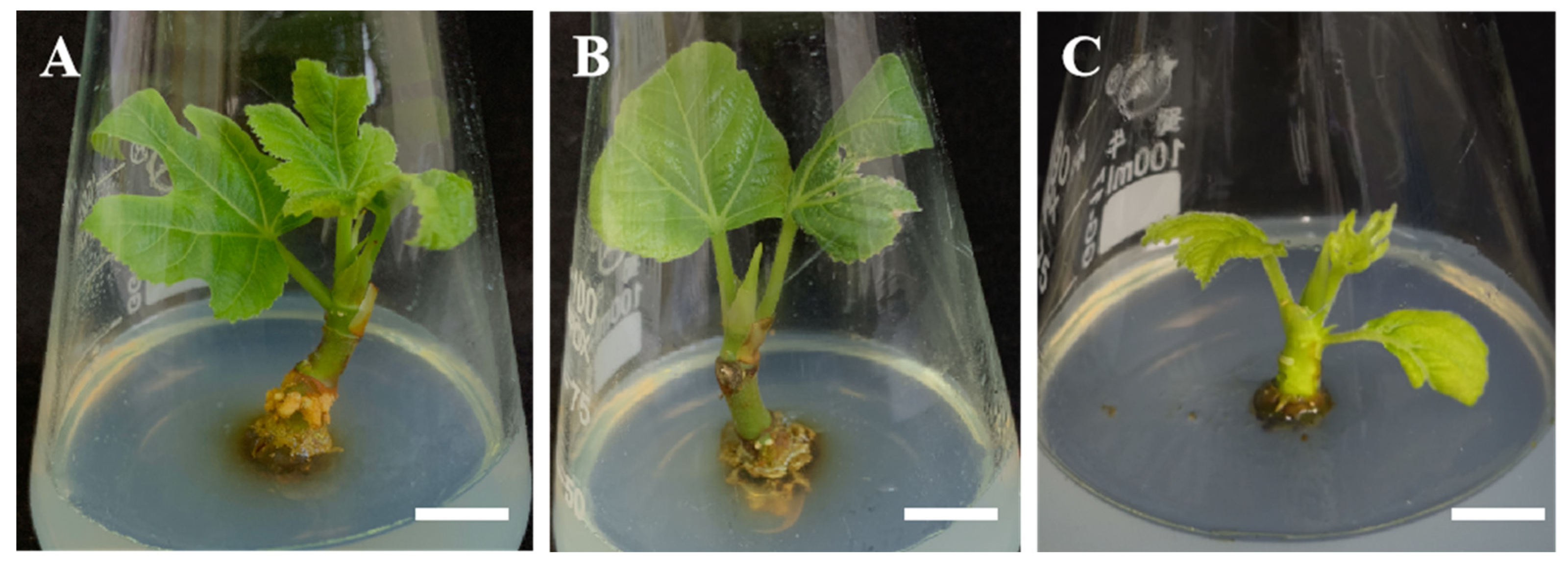
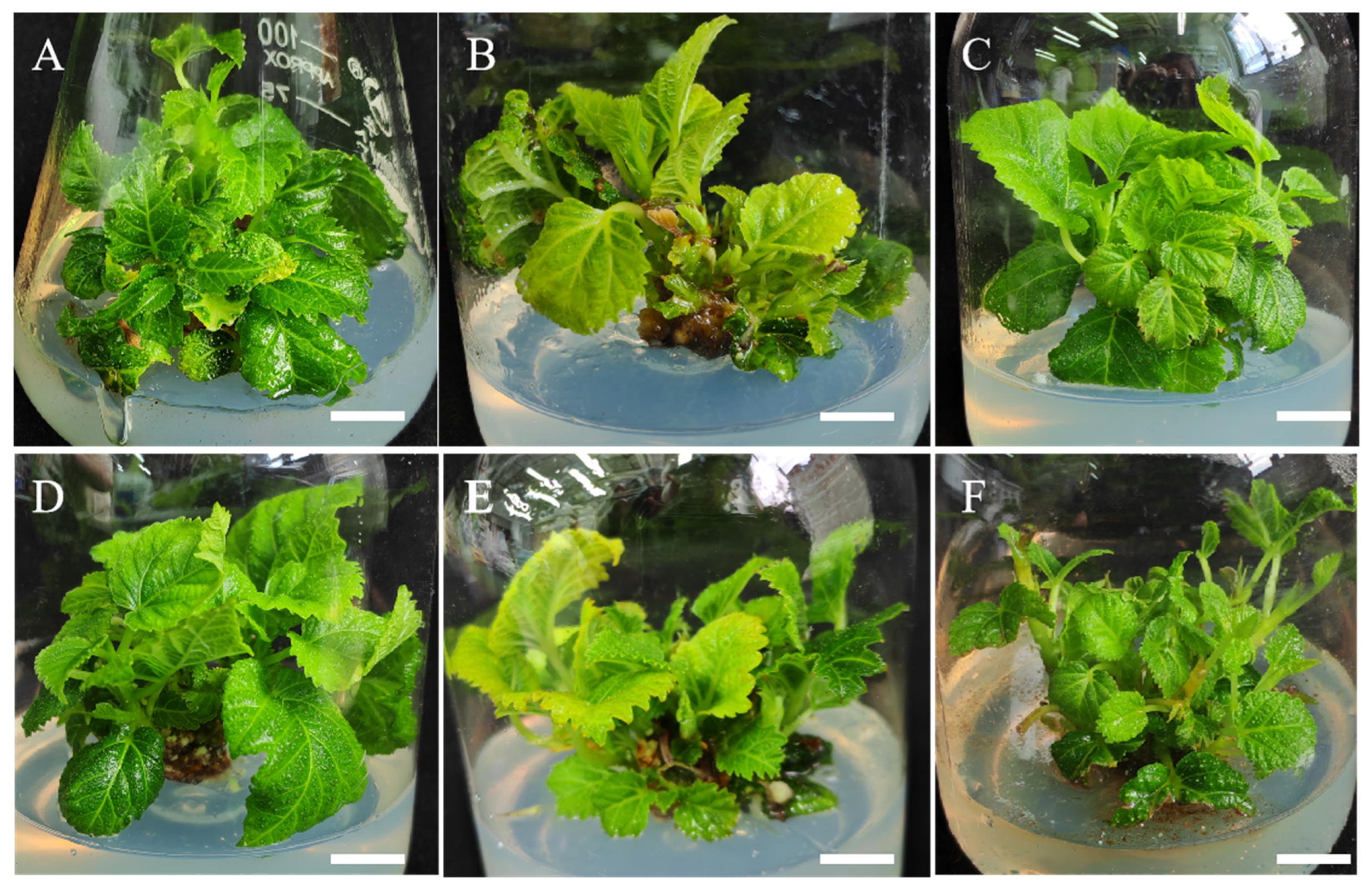
The choice of culture medium was critical for explant growth. F. carica ‘Xinjiang Zaohuang’ explants exhibited superior development on MS medium after three subcultures, showing vigorous growth within two weeks (Figure 1A). Quantitative assessments confirmed this, as explants on MS medium produced significantly higher mean leaf numbers (3.12) and greater fresh weight of leaves (0.85 g) than those on other media (Table 1). Explants cultured on WPM showed moderate growth, with a mean of 2.40 leaves and 0.73 g fresh weight. Both MS and WPM induced only minimal callus formation at the explant base (Figure 1B). In contrast, DCR produced the least favorable outcomes, with the lowest values for leaf number (2.10) and fresh weight (0.51 g), coupled with extensive basal callusing (Figure 1C).

3.2. Effect of Cytokinin Type and Concentration on Adventitious Bud Induction

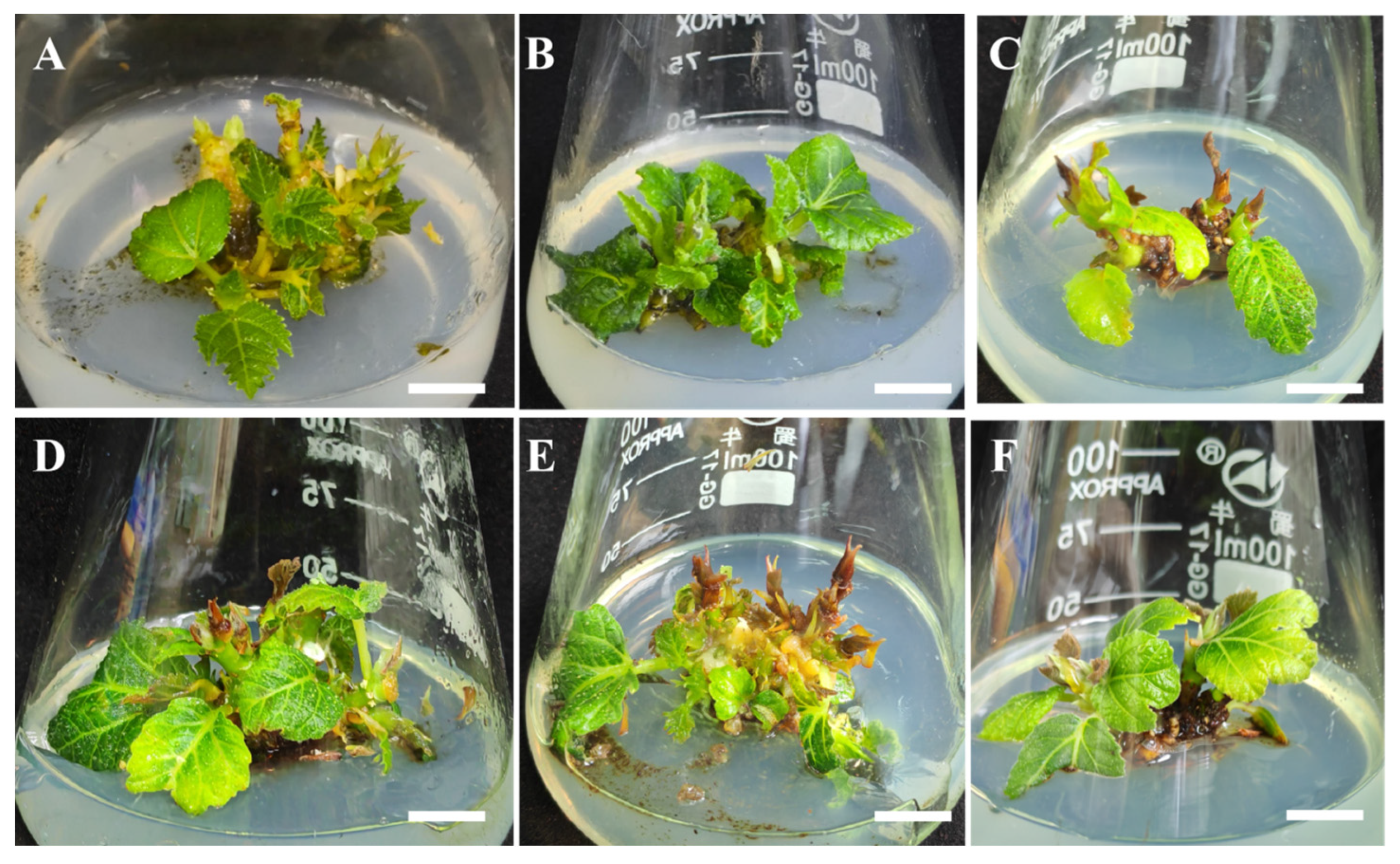
Cytokinin type significantly influenced adventitious bud induction in ‘Xinjiang Zaohuang’ fig (Figure 2). 6-BA was most effective, with optimal induction (89.33%) and bud number (6.21) at 1 mg/L (Table 2). In contrast, while TDZ (0.7 mg/L) induced buds at a moderate rate (76.00%, 4.20 buds), it also led to delayed emergence and inferior shoot morphology—a known drawback of this cytokinin. Furthermore, ZT proved notably less effective, with peak performance (59.33%, 3.14 buds at 1.5 mg/L) well below that of the other two regulators.

3.3. Effect of Auxin on Callus and Adventitious Buds

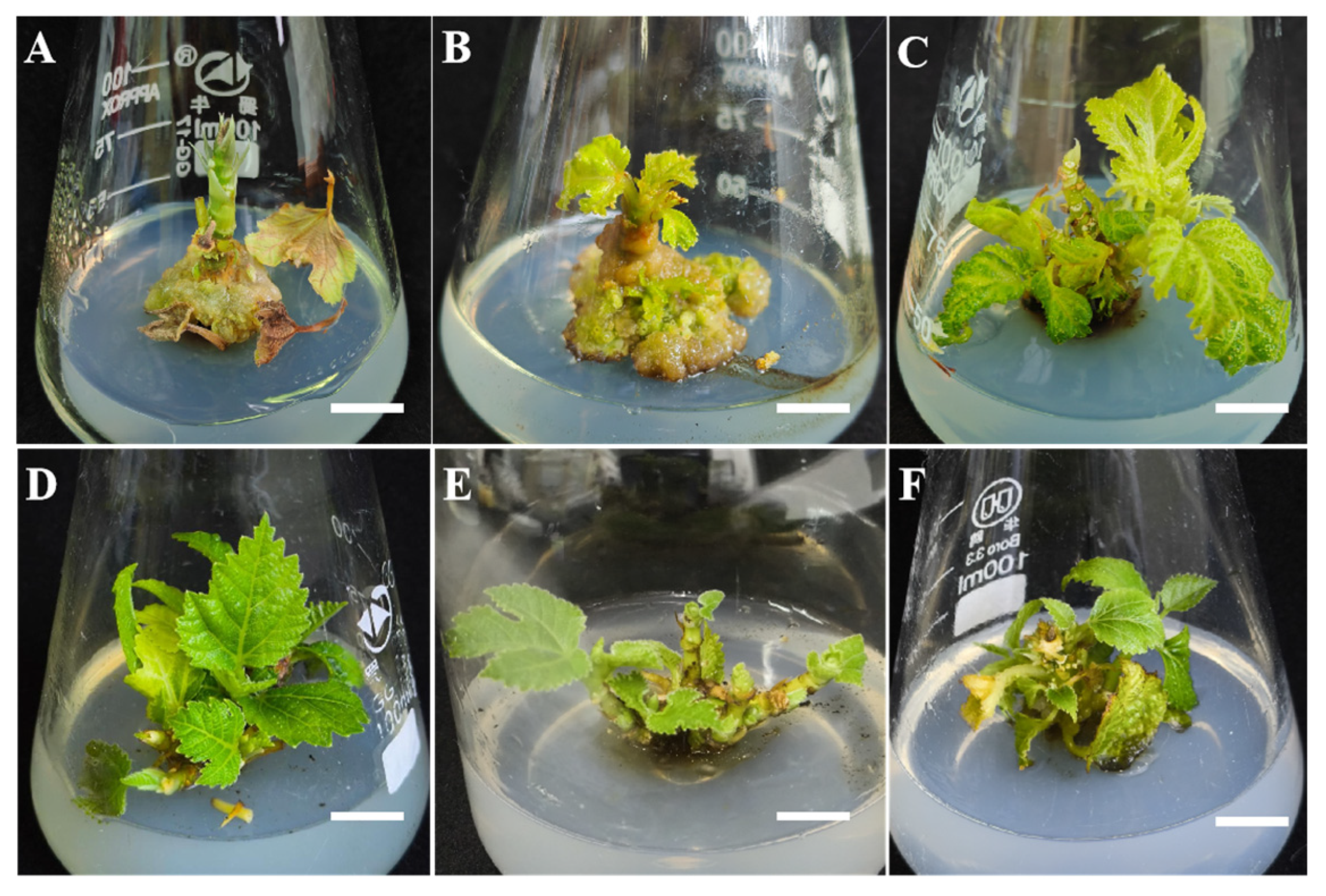
The type and concentration of auxin significantly affected callus initiation, callus mass, and ultimately shoot development. Both NAA and IBA exhibited concentration-dependent effects, with higher concentrations promoting faster callus initiation and greater callus mass (Table 3). However, NAA treatments were consistently detrimental. At 0.2 mg/L, NAA induced dense callus (1.38 g) within 3.18 days, which tightly adhered to the base and caused severe shoot necrosis (Figure 3A). Even at lower concentrations (0.15 and 0.05 mg/L), NAA still induced substantial loose callus (1.36 g and 0.76 g, respectively) and led to shoot wilting, despite a delay in initiation time to 3.36 and 4.20 days (Figure 3B,C). In contrast, IBA treatments were less disruptive. The most favorable shoot growth occurred with 0.1 mg/L IBA, which induced only 0.63 g of callus after 7.26 days (Figure 3D). While a higher IBA concentration (0.2 mg/L) accelerated callus formation (5.54 days; 0.81 g), shoot growth remained slow (Figure 3F). The lowest IBA concentration (0.01 mg/L) minimized callus (0.14 g) but also strongly suppressed shoot development (Figure 3E).

3.4. Effects of PGRs Combinations on Proliferation

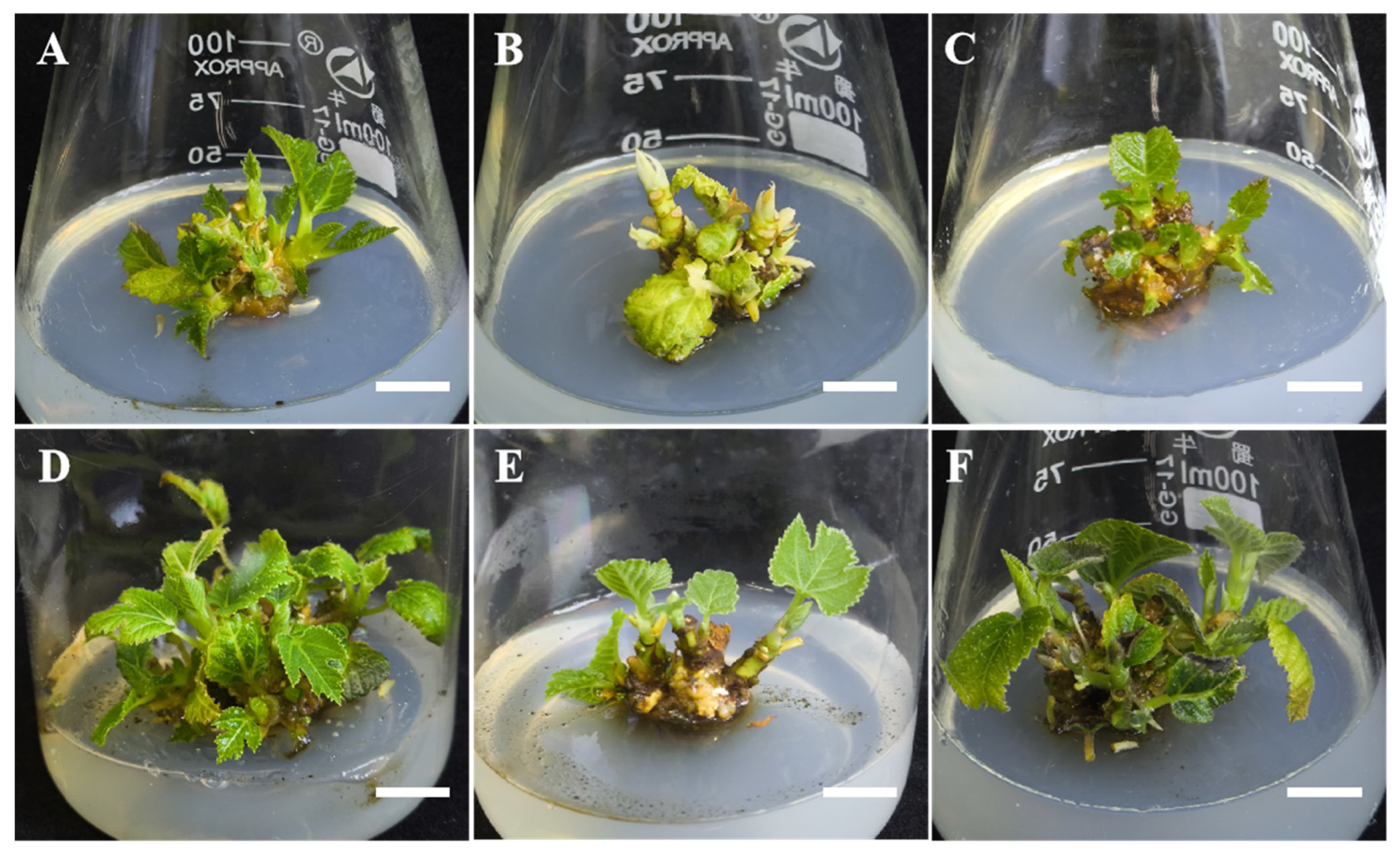
To identify the optimal hormonal combination for adventitious bud proliferation, a factorial experiment was conducted using the most effective auxin concentrations in combination with three optimal cytokinin levels (Table 4). The combination of 0.10 mg/L IBA and 1 mg/L 6-BA performed best, yielding the highest bud induction rate and a significantly greater mean bud number than other treatments, as confirmed by both morphological (Figure 4) and quantitative data (Table 4). The fact that these same concentrations were individually optimal for IBA and 6-BA suggests a synergistic interaction in promoting the micropropagation of F. carica ‘Xinjiang Zaohuang’.

3.5. Effect of PGRs Formulations on Shoots Elongation

Following the induction of a substantial number of adventitious buds, elongation treatments were applied to increase shoot growth. Among the tested treatments, the combination of 0.10 mg/L 6-BA and 0.01 mg/L IBA was the most effective, as evidenced by both quantitative data (Table 5) and morphological observations (Figure 5C). Under this treatment, the shoots exhibited uniform elongation and robust growth.
In contrast, the other treatments resulted in inconsistent shoot elongation (Figure 5A,B,E,F), with some conditions producing excessively thin and fragile shoots (Figure 5F). Although the 0.10 mg/L 6-BA and 0.05 mg/L IBA treatments also promoted satisfactory shoot growth, the average elongation length and elongation rate were significantly lower than those of the 0.10 mg/L 6-BA + 0.01 mg/L IBA treatment (Table 5). These findings highlight the importance of optimizing cytokinin-to-auxin ratios to achieve uniform and vigorous shoot elongation in in vitro propagation systems.

3.6. Effects of IBA Concentration Gradient on Roots Induction

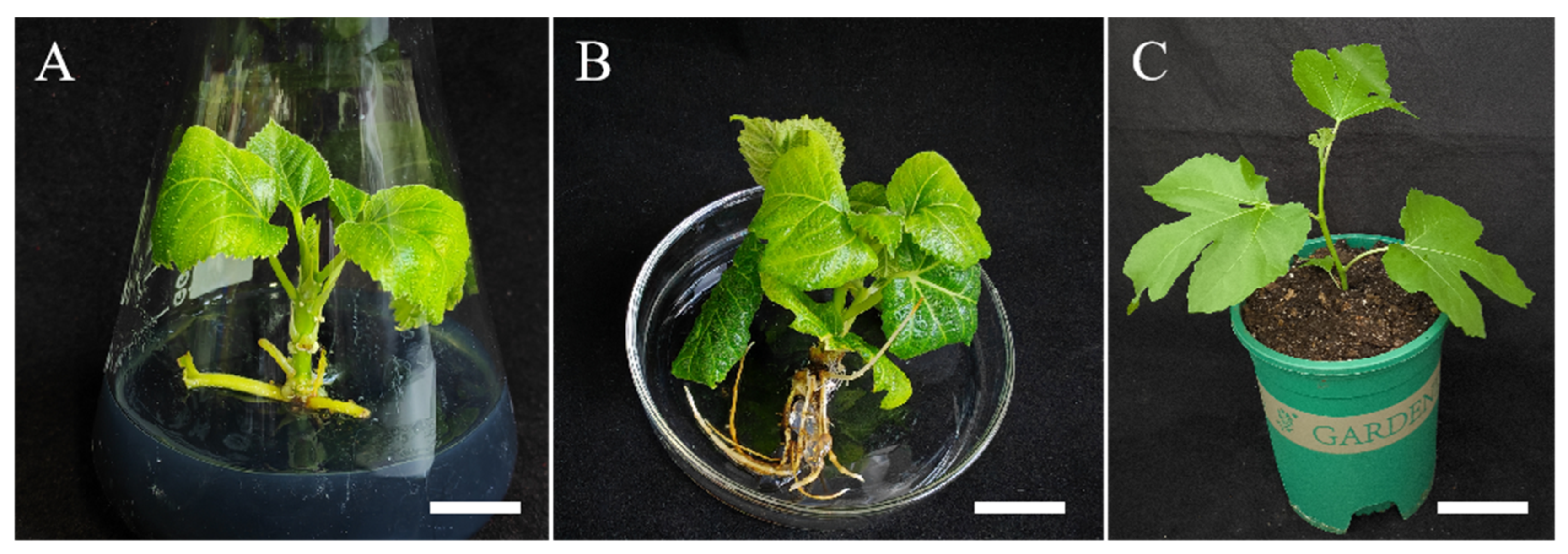
Following the initial treatment phase, the seedlings presented healthy morphological characteristics (Figure 6B). Rooting experiments revealed that 1.0 mg/L IBA was the optimal concentration, with root initiation observed within 8 days, an induction rate of 96.67%, and an average of 9.29 roots per shoot (Table 6). The rooted shoots were subsequently acclimatized and transplanted into pots, where they demonstrated robust growth and establishment after 8 weeks (Figure 6C). These results confirm the effectiveness of the optimized rooting protocol for producing viable fig plants suitable for transplantation.

3.7. Genetic Fidelity Assessment

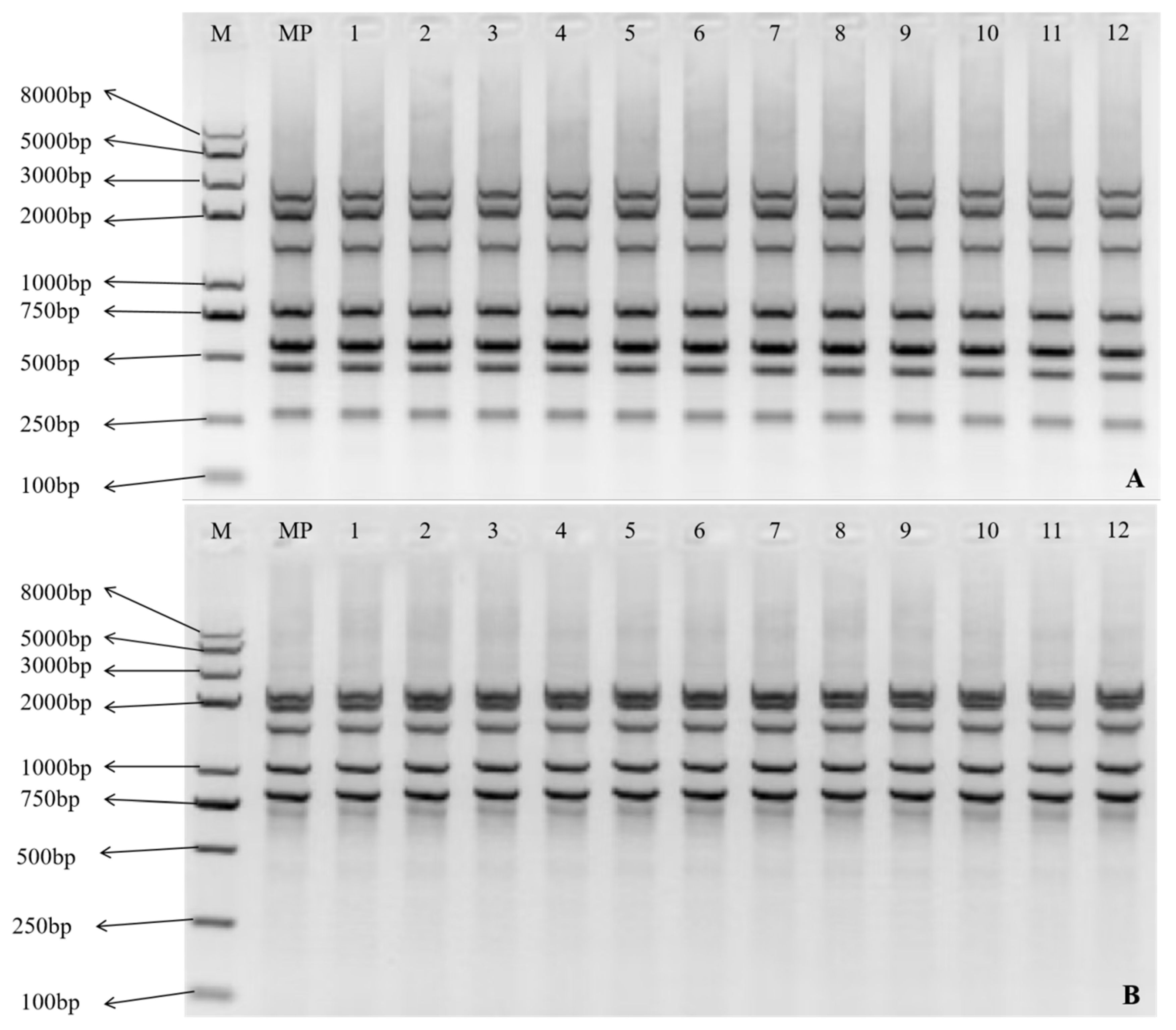
In this study, a genetic fidelity assessment of Ficus carica ‘Xinjiang Zaohuang’ was conducted using inter-simple sequence repeat (ISSR) primers. PCR amplification was performed using a set of ISSR primers. Their sequences, lengths, GC contents, and melting temperatures (Tm) are detailed in Table 7. The amplified fragments varied in size from 250 to 3000 base pairs (bp). The representative ISSR profiles are shown in Figure 7, with the primer UBC811 producing 7 bands (250–3000 bp; Figure 7A) and the primer UBC813 generating 5 bands (500–3000 bp; Figure 7B).
The monomorphic banding patterns observed across all the ISSR primers confirmed the absence of somaclonal variation between the mother plant and the in vitro-regenerated plants. These results demonstrate the genetic stability of the propagated Ficus carica ‘Xinjiang Zaohuang’ plants, validating the reliability of the established micropropagation protocol for maintaining clonal fidelity.

4. Discussion

The choice of culture medium is critical for in vitro plant growth, as species-specific elemental requirements significantly influence developmental outcomes [32,33]. In the present study, MS medium was chosen as the basal formulation due to its superior performance in promoting explant growth. To quantitatively assess this response, leaf number and fresh weight—two reliable indicators of bud development—were measured. The enhanced growth observed on MS medium is likely attributable to its nutritional composition; notably, its nitrogen levels are substantially higher than those in WPM or DCR, which has previously been correlated with increased vigor in vitro [21,22,23]. This preference for a nutrient-rich medium aligns with the physiological requirements of F. carica, providing a foundational understanding for optimizing its micropropagation.
This study systematically evaluated the effects of cytokinin and auxin types and concentrations on the in vitro propagation of F. carica ‘Xinjiang Zaohuang’, establishing an efficient micropropagation protocol. Among the cytokinins tested, 6-BA at 1 mg/L was most effective in promoting robust shoot proliferation, a finding consistent with previous reports [20]. In contrast, TDZ at 0.7 mg/L induced numerous buds but with delayed emergence and poor morphology, aligning with its known trade-off between quantity and quality [20], while ZT proved unsuitable due to low efficiency. For auxins, whereas NAA is used in callus-mediated protocols [34], it proved detrimental to our direct organogenesis objective, causing leaf chlorosis and excessive callus that impaired shoot growth. IBA, in stark contrast, supported stable and direct shoot development with minimal callus and no chlorosis. Furthermore, a 6-BA to IBA ratio of 10:1 yielded the best shoot quality, underscoring the critical role of the cytokinin-auxin balance, as reported in other species [35,36]. Consequently, this study identifies 6-BA and IBA as the optimal PGRs and provides a systematic framework for the efficient micropropagation of this fig cultivar, moving beyond empirical hormone optimization.
This study confirms that robust root system development in vitro is crucial for successful acclimatization and post-transplant growth of tissue-cultured plantlets [37,38], yet this aspect remains under-optimized in many propagation protocols. Our findings demonstrate that plantlets with well-developed, healthy root architecture exhibited markedly higher survival rates during the initial transplant phase. Building upon the work of Pohare et al., who established the importance of 6-BA and IBA in fig micropropagation [39], we further optimized the culture regime and achieved a superior rooting rate of 100%, compared to the 90% reported in their study. Future research should focus on elucidating the molecular mechanisms of root development in vitro, particularly the interplay between auxin signaling and root meristem development, to further enhance rooting efficiency and transplant performance.
Maintaining genotypic integrity is paramount for commercial fig production, where economic value hinges on the stability of yield and fruit quality. In this study, ISSR analysis confirmed the complete genetic stability of F. carica ‘Xinjiang Zaohuang’ plants regenerated in vitro, demonstrating the preservation of species-specific traits. This high degree of clonal fidelity can be attributed to our use of apical shoot explants and a propagation strategy that avoided an intervening callus phase, thereby minimizing the risk of somaclonal variation. This approach contrasts with protocols utilizing TDZ, a PGR previously linked to chromosomal instability [40,41,42]. Furthermore, our molecular validation addresses a critical limitation in studies like that of Wang et al. on Ficus tikoua, where genetic stability was only inferred from phenotypic observations [43]. Consequently, our direct, axillary branching-based protocol is highly suitable for ensuring both genetic fidelity and scalability in commercial micropropagation.
This study establishes a standardized and efficient protocol for the in vitro propagation of F. carica ‘Xinjiang Zaohuang’. The system enables the large-scale production of clonal plants that exhibit consistent phenotypic traits and, as confirmed by ISSR analysis, no detectable genotypic variation. This guaranteed genetic stability makes the protocol particularly suitable for genetic transformation studies, including CRISPR/Cas9-based gene editing, by providing a reliable source of uniform explants. Furthermore, the methodologies developed here—particularly in maintaining genetic fidelity and achieving scalability—offer a valuable framework for optimizing the micropropagation of other recalcitrant woody species. While this work elucidates the practical efficacy of specific PGR combinations, future research should focus on deciphering the underlying molecular mechanisms of these hormonal responses. Such insights will further refine micropropagation techniques and enhance their applicability.

5. Conclusions

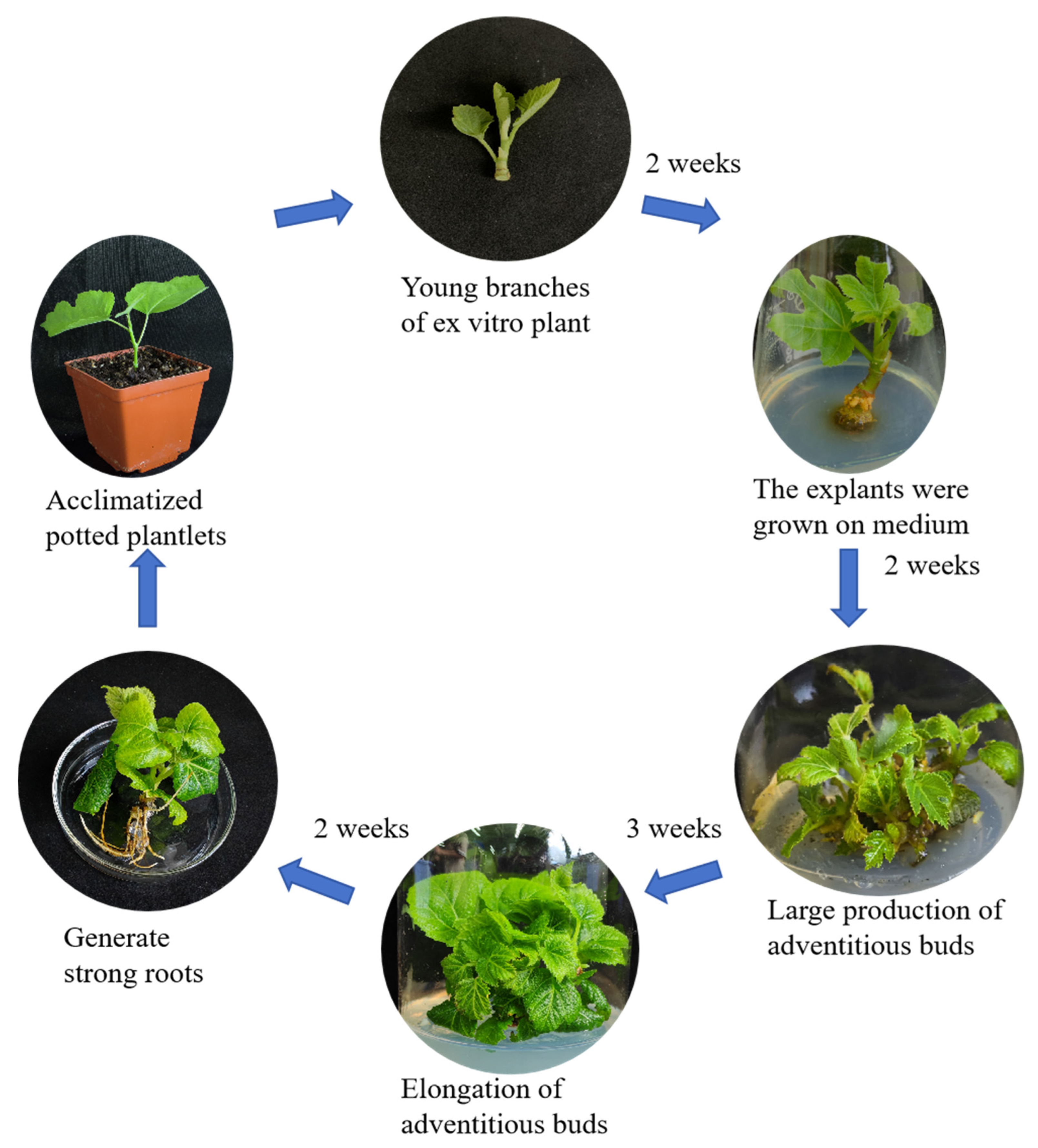
This study successfully established a novel and efficient in vitro regeneration system for Ficus carica ‘Xinjiang Zaohuang’ and confirmed the genetic stability of the regenerated plants (Figure 8). Through systematic evaluation, Murashige and Skoog (MS) medium was identified as the most effective basal formulation. Among the plant growth regulators screened, 6-BA at 1.0 mg/L demonstrated superior efficacy for bud induction, while IBA at 0.1 mg/L was optimal for direct organogenesis. A combination of 0.1 mg/L 6-BA and 0.01 mg/L IBA was found to be optimal for shoot elongation, producing robust shoots with an average length of 4.16 cm. Furthermore, a two-step rooting protocol—involving a one-week pre-culture on medium supplemented with activated charcoal followed by transfer to a medium containing 1.0 mg/L IBA—achieved an excellent rooting rate. Critically, Inter-Simple Sequence Repeat (ISSR) marker analysis confirmed the clonal fidelity of regenerants, revealing no somaclonal variation. In conclusion, we have developed a practical, reliable, and scalable propagation system that is suitable for the large-scale production of this valuable fig cultivar.

Author Contributions

Conceptualization, H.T. and Q.Z.; Data curation, H.T. and Y.X.; Formal analysis, M.Z.; Funding acquisition, X.W. (Xin Wang) and M.Z.; Investigation, H.T. and X.W. (Xinyuan Wang); Methodology, H.T., Y.X., Q.Z. and M.Z.; Project administration, M.Z.; Resources, H.T., X.W. (Xinyuan Wang), Y.X. and X.W. (Xin Wang); Software, X.W. (Xinyuan Wang), Y.X., X.W. (Xin Wang) and Q.Z.; Supervision, X.W. (Xinyuan Wang), X.W. (Xin Wang) and Q.Z.; Validation, H.T., X.W. (Xinyuan Wang) and Y.X.; Visualization, H.T., X.W. (Xinyuan Wang) and M.Z.; Writing—original draft, H.T.; Writing—review and editing, H.T., X.W. (Xinyuan Wang), Y.X., X.W. (Xin Wang), Q.Z. and M.Z. All authors have read and agreed to the published version of the manuscript.

Funding

This work is supported by 1: the National Key Research and Development Program of China (2023YFD2200604); 2: the Special Fund for Scientific Research of Shanghai Landscaping and City Appearance Administrative Bureau (G232409, G252402, and G242411); and 3: the Xinjiang Autonomous Region Science and Technology Commissioners Rural Science and Technology Entrepreneurship Action Project (2022KZ002).

Data Availability Statement

The original contributions presented in this study are included in the article. Further inquiries can be directed to the corresponding authors.

Acknowledgments

The authors are grateful to Li and Zhou for their assistance in the field and laboratory during the study. We thank Xinjiang DSN Biotechnology Co., Ltd., for providing the material, which has played a key role.

Conflicts of Interest

Author Xin Wang was employed by the company Xinjiang Disheng Yineng Biotechnology Limited Company. The remaining authors declare that the research was conducted in the absence of any commercial or financial relationships that could be construed as a potential conflict of interest.

Abbreviations

6-BA6-Benzylaminopurine
DCRDouglas-fir cotyledon revised media
IBAIndole-3-butyric acid
ISSRInter simple sequence repeat
MeJAMethyl jasmonate
MSMurashige and Skoog media
NAA1-Naphthaleneacetic acid
PGRsPlant growth regulators
TDZThidiazuron
TCLStem thin cell layer
WPMWoody plant media
ZTZeatin

References

  1. Binnoubah, A.; Hamdy, R.; Ragab, O.; El-Taher, A.; El-Yazied, A.; Safhi, F.; Elzilal, H.; Althobaiti, A.; Alshamrani, S.; Abd, D. Anatomical and molecular identification of ornamental plant Ficus L. species. Phyton-Int. J. Exp. Bot. 2023, 92, 1329–1347. [Google Scholar] [CrossRef]
  2. Araújo, N.D.; Coelho, V.P.M.; Ventrella, M.C.; Agra, M.D.F. Leaf anatomy and histochemistry of three species of Ficus sect. Microsc. Microanal. 2014, 20, 296–304. [Google Scholar] [CrossRef] [PubMed]
  3. Fan, K.-Y.; Bain, A.; Tzeng, H.-Y.; Chiang, Y.-P.; Chou, L.-S.; Kuo-Huang, L.-L.J.B. Comparative anatomy of the fig wall (Ficus, Moraceae). Botany 2019, 97, 417–426. [Google Scholar] [CrossRef]
  4. Mani, M. Pest management in horticultural crops under protected cultivation. Trends Hortic. Entomol. 2022, 16, 387–417. [Google Scholar] [CrossRef]
  5. Romeh, A.A. Integrated Pest Management for Sustainable Agriculture; CABI: Wallingford, UK, 2018; pp. 215–234. [Google Scholar] [CrossRef]
  6. Yuan, Y.; Li, Z.; Aisa, H.A. Targeted characterisation of bioactive prenylated flavonoids from Ficus carica L. fruits. Food Chem. 2025, 483, 144201. [Google Scholar] [CrossRef]
  7. Amessis-Ouchemoukh, N.; Ouchemoukh, S.; Meziant, N.; Idiri, Y.; Hernanz, D.; Stinco, C.M.; Rodríguez-Pulido, F.J.; Heredia, F.J.; Madani, K.; Luis, J.J.I.C.; et al. Bioactive metabolites involved in the antioxidant, anticancer and anticalpain activities of Ficus carica L., Ceratonia siliqua L. and Quercus ilex L. extracts. Ind. Crops Prod. 2017, 95, 6–17. [Google Scholar] [CrossRef]
  8. Soltana, H.; Pinon, A.; Limami, Y.; Zaid, Y.; Khalki, L.; Zaid, N.; Salah, D.; Sabitaliyevich, U.Y.; Simon, A.; Liagre, B.J.C.; et al. Antitumoral activity of Ficus carica L. on colorectal cancer cell lines. Cell. Mol. Biol. 2019, 65, 6–11. [Google Scholar] [CrossRef] [PubMed]
  9. Yang, Q.; Liu, Y.; Guo, Y.; Jiang, Y.; Wen, L.; Yang, B. New insights of fig (Ficus carica L.) as a potential function food. Trends Food Sci. Technol. 2023, 140, 104146. [Google Scholar] [CrossRef]
  10. Hajam, T.A.; Saleem, H.J.C.-B.I. Phytochemistry, biological activities, industrial and traditional uses of fig (Ficus carica): A review. Chem.-Biol. Interact. 2022, 368, 110237. [Google Scholar] [CrossRef]
  11. Singh, J.P.; Singh, B.; Kaur, A. Polyphenols in fig: A review on their characterisation, biochemistry during ripening, antioxidant activity and health benefits. Int. J. Food Sci. Technol. 2022, 57, 3333–3342. [Google Scholar] [CrossRef]
  12. Rasool, I.F.u.; Aziz, A.; Khalid, W.; Koraqi, H.; Siddiqui, S.A.; AL-Farga, A.; Lai, W.-F.; Ali, A. Industrial application and health prospective of fig (Ficus carica) by-products. Molecules 2023, 28, 960. [Google Scholar] [CrossRef]
  13. Kumar, A.; Thakur, N.; Srivastava, A.; Ingole, A.; Shah, I.; Kumar, P. Exogenous Application of Iba and Naa Improved Rooting and Survival of Hardwood Cuttings of Fig (Ficus carica L.) Cv. Dinkar. Plant Arch. 2025, 25, 354–359. [Google Scholar] [CrossRef]
  14. Mirsoleimani, A.; Zinati, Z.; Abbasi, S. New insights into the identification of biochemical traits linked to rooting percentage in fig (Ficus carica L.) cuttings. J. Berry Res. 2024, 14, 227–245. [Google Scholar] [CrossRef]
  15. Pontikis, C.; Melas, P. Micropropagation of Ficus carica L. HortScience 1986, 21, 153. [Google Scholar] [CrossRef]
  16. Kilinc, S.S.; Ertan, E.; Seferoglu, S. Effects of different nutrient solution formulations on morphological and biochemical characteristics of nursery fig trees grown in substrate culture. Sci. Hortic. 2007, 113, 20–27. [Google Scholar] [CrossRef]
  17. Moniruzzaman, M.; Yaakob, Z.; Anuar, N. Factors affecting in vitro regeneration of Ficus carica L. and genetic fidelity studies using molecular marker. J. Plant Biochem. Biotechnol. 2021, 30, 304–316. [Google Scholar] [CrossRef]
  18. Al-Aizari, A.A.; Dewir, Y.H.; Ghazy, A.-H.; Al-Doss, A.; Al-Obeed, R.S. Micropropagation and genetic fidelity of fegra fig (Ficus palmata Forssk.) and grafting compatibility of the regenerated plants with Ficus carica. Plants 2024, 13, 1278. [Google Scholar] [CrossRef]
  19. Amani, S.; Mohebodini, M.; Khademvatan, S.; Jafari, M.; Kumar, V. Modifications in gene expression and phenolic compounds content by methyl jasmonate and fungal elicitors in Ficus carica. Cv. Siah hairy root cultures. BMC Plant Biol. 2024, 24, 520. [Google Scholar] [CrossRef]
  20. Gu, X.; He, J.; He, H.; Wang, Y.; Fan, Z.; Zhao, D.; Sun, K.; Zheng, C.; Ma, H. Efficient regeneration and genetic transformation of fig (Ficus carica) from stem thin cell layer explants. Hortic. Plant J. 2025; in press. [Google Scholar] [CrossRef]
  21. Murashige, T.; Skoog, F. A revised medium for rapid growth and bio assays with tobacco tissue cultures. Physiol. Plant. 1962, 15, 473–497. [Google Scholar] [CrossRef]
  22. Lloyd, G.; McCown, B. Commercially-feasible micropropagation of mountain laurel, Kalmia latifolia, by use of shoot-tip culture. Plant Prop 1980, 30, 421–427. [Google Scholar]
  23. Gupta, P.K.; Durzan, D.J. Shoot multiplication from mature trees of Douglas-fir (Pseudotsuga menziesii) and sugar pine (Pinus lambertiana). Plant Cell Rep. 1985, 4, 177–179. [Google Scholar] [CrossRef]
  24. Geiss, G.; Gutierrez, L.; Bellini, C. Adventitious root formation: New insights and perspectives. Annu. Plant (Rev.) 2009, 37, 127–156. [Google Scholar] [CrossRef]
  25. Yousef, E.A.A.; Nasef, I.N. Exogenous Application Effect of Indole 3-Butyric Acid and Myo-inositol on Improving Growth, Productivity and Bulb Quality of Garlic. Egypt. J. Hortic. 2021, 48, 111–122. [Google Scholar] [CrossRef]
  26. Wozniak, E.; Blaszczak, A.; Wiatrak, P.; Canady, M. Biostimulant mode of action: Impact of biostimulant on whole-plant level. Chem. Biol. Plant Biostimulants 2020, 205–227. [Google Scholar] [CrossRef]
  27. Sehgal, H.; Joshi, M. The journey and new breakthroughs of plant growth regulators in tissue culture. In Advances in Plant Tissue Culture; Elsevier: Amsterdam, The Netherlands, 2022; pp. 85–108. [Google Scholar] [CrossRef]
  28. Qurbanova, Q.; Babayeva, S.; Abbasov, M. Analysis of the genetic diversity of Azerbaijani fig accessions (Ficus carica L.) using pomological traits and inter simple sequence repeat (ISSR) markers. Genet. Resour. Crop Evol. 2024, 72, 1985–1998. [Google Scholar] [CrossRef]
  29. Rajendra, P.A.; Bee, L.C.; Sreeramanan, S. Assessment of genetic stability on in vitro and ex vitro plants of Ficus carica var. black jack using ISSR and DAMD markers. Mol. Biol. Rep. 2021, 48, 7223–7231. [Google Scholar] [CrossRef] [PubMed]
  30. Ait, H.L.; Jamal, C.; Abdelali, B.; Zerhoune, M.; Hakim, O. Molecular Characterization and Study of Genetic Relationships among local Cultivars of the Moroccan fig (Ficus carica L.) using Microsatellite and ISSR Markers. Int. J. Environ. Agric. Biotechnol. 2018, 3, 18–27. [Google Scholar] [CrossRef]
  31. Dessoky, E.-D.S.; Attia, A.O.; Mohamed, E.-A.A.M. An efficient protocol for in vitro propagation of Fig (Ficus carica sp.) and evaluation of genetic fidelity using RAPD and ISSR markers. J. Appl. Biol. Biotechnol. 2016, 4, 57–63. [Google Scholar] [CrossRef]
  32. Stepan-Sarkissian, G.J.P.C. Selection of media for tissue and cell culture. In Plant Cell and Tissue Culture; Humana Press: Totowa, NJ, USA, 1990; pp. 1–12. [Google Scholar] [CrossRef]
  33. Phillips, G.C.; Garda, M. Plant tissue culture media and practices: An overview. Vitr. Cell. Dev. Biol.-Plant 2019, 55, 242–257. [Google Scholar] [CrossRef]
  34. Sriskanda, D.; Chew, X.J.; Chew, B.L. Callus induction of fig (Ficus carica cv. Violette de Soillès) via thin cell layer technique. J. Trop. Plant Physiol. 2022, 14, 9. [Google Scholar] [CrossRef]
  35. Yan, X.; Zheng, K.; Li, P.; Zhong, X.; Zhu, Z.; Zhou, H.; Zhu, M. An efficient in vitro organogenesis protocol for the endangered relic tree species Bretschneidera sinensis and genetic fidelity assessment using DNA markers. Front. Plant Sci. 2024, 15, 1259925. [Google Scholar] [CrossRef] [PubMed]
  36. Zhou, H.; Sun, J.; Zheng, K.; Zhang, X.; Yao, Y.; Zhu, M. Efficient Plantlet Regeneration from Branches in Mangifera indica L. Plants 2024, 13, 2595. [Google Scholar] [CrossRef] [PubMed]
  37. Davies, F.T., Jr.; Davis, T.D.; Kester, D.E. Commercial importance of adventitious rooting to horticulture. In Biology of Adventitious Root Formation; Springer: Berlin/Heidelberg, Germany, 1994; pp. 53–59. [Google Scholar] [CrossRef]
  38. Gish, T.; Jury, W.A. Effect of plant roots and root channels on solute transport. Trans. ASAE 1983, 26, 440–444. [Google Scholar] [CrossRef]
  39. Pohare, M.; Suryawanshi, P.; Rathod, H.P. In vitro Micropropagation of Banyan Tree (Ficus benghalensis L.) through Shoot Tip Culture. Res. J. Agric. Sci. 2012, 3, 880–882. [Google Scholar]
  40. Dewir, Y.H.; Nurmansyah; Naidoo, Y.; Teixeira da Silva, J.A. Thidiazuron-induced abnormalities in plant tissue cultures. Plant Cell Rep. 2018, 37, 1451–1470. [Google Scholar] [CrossRef]
  41. Bidabadi, S.S.; Meon, S.; Wahab, Z.; Mahmood, M. Study of genetic and phenotypic variability among somaclones induced by BAP and TDZ in micropropagated shoot tips of banana (Musa spp.) using RAPD markers. J. Agric. Sci. 2010, 2, 49. [Google Scholar] [CrossRef]
  42. Roy, A.; Sajeev, S.; Pattanayak, A.; Deka, B.C. TDZ induced micropropagation in Cymbidium giganteum Wall. Ex Lindl. and assessment of genetic variation in the regenerated plants. Plant Growth Regul. 2012, 68, 435–445. [Google Scholar] [CrossRef]
  43. Wang, Z.; Li, F.; Feng, C.; Zheng, D.; Pang, Z.; Ma, Y.; Xu, Y.; Yang, C.; Li, X.; Peng, S. 1-Naphthaleneacetic Acid Improved the In Vitro Cell Culturing by Inhibiting Apoptosis. Adv. Biol. 2024, 8, 2300593. [Google Scholar] [CrossRef]
Figure 1. In vitro growth of Ficus carica ‘Xinjiang Zaohuang’ nodal segments on different basal media after two weeks of culture. (A) MS medium. (B) WPM medium. (C) DCR medium. Bars = 2 cm (A,B), 1.5 cm (C).
Horticulturae 12 00070 g001
Figure 2. Morphology of Ficus carica ‘Xinjiang Zaohuang’ explants following two-week culture on media supplemented with different cytokinins. (A) 1.0 mg/L 6-BA. (B) 0.7 mg/L TDZ. (C) 1.0 mg/L ZT. (D) 1.5 mg/L 6-BA. (E) 1.5 mg/L TDZ. (F) 1.5 mg/L ZT. Bars = 1 cm.
Horticulturae 12 00070 g002
Figure 3. Effects of auxin supplementation on the growth of Ficus carica ‘Xinjiang Zaohuang’ plantlets. (A) 0.20 mg/L NAA. (B) 0.15 mg/L NAA. (C) 0.05 mg/L NAA. (D) 0.10 mg/L IBA. (E) 0.01 mg/L IBA. (F) 0.20 mg/L IBA. Bars = 1.5 cm.
Horticulturae 12 00070 g003
Figure 4. Adventitious bud induction in Ficus carica ‘Xinjiang Zaohuang’ in response to different cytokinins and auxin concentrations. All explants were cultured for two weeks on MS medium supplemented with IBA and one of three cytokinins. (A) 0.15 mg/L IBA + 1 mg/L 6-BA. (B) 0.15 mg/L IBA + 0.7 mg/L TDZ. (C) 0.15 mg/L IBA + 0.5 mg/L ZT. (D) 0.10 mg/L IBA + 1 mg/L 6-BA. (E) 0.10 mg/L IBA + 0.7 mg/L TDZ. (F) 0.10 mg/L IBA + 1.5 mg/L ZT. Bars = 2 cm (AD), 1.5 cm (E,F).
Horticulturae 12 00070 g004
Figure 5. Effects of 6-BA and IBA combinations on shoot elongation in F. carica. (A) 0.01 mg/L 6-BA + 0.05 mg/L IBA. (B) 0.05 mg/L 6-BA + 0.05 mg/L IBA. (C) 0.10 mg/L 6-BA + 0.01 mg/L IBA. (D) 0.15 mg/L 6-BA + 0.01 mg/L IBA. (E) 0.20 mg/L 6-BA + 0.01 mg/L IBA. (F) 0.20 mg/L 6-BA + 0.05 mg/L IBA. Bars = 1.5 cm (AE), 2 cm (F).
Horticulturae 12 00070 g005
Figure 6. Key stages during the micropropagation and acclimatization of Ficus carica ‘Xinjiang Zaohuang’. (A) Shoot pre-culture on MS medium with activated charcoal for 7 days. (B) Root initiation and elongation on MS medium containing 1.0 mg/L IBA after 3 weeks. (C) Acclimatized plant in potting substrate 8 weeks after transfer. Bars = 2 cm (A,B), 30 cm (C).
Horticulturae 12 00070 g006
Figure 7. Genetic fidelity analysis of regenerated Ficus carica ‘Xinjiang Zaohuang’ plants via ISSR molecular markers. (A) Banding profile generated by the primer UBC811. (B) Banding profile generated by the primer UBC813. Lane M: DNA molecular marker (100 bp–8 kb). Lane MP: Mother plant. Lanes 1–12: in vitro-regenerated plants.
Horticulturae 12 00070 g007
Figure 8. An optimized shoot regeneration protocol was established for F. carica ‘Xinjiang Zaohuang’ on the basis of the experimental findings. The developed procedure enables efficient micropropagation of Wuhuaguo using nodal segments as explant material. The regeneration system involves several key steps: first, surface-sterilized branch segments are cultured on initiation medium; then, the induced shoots are transferred to proliferation medium; finally, the multiplied shoots are rooted on appropriate medium before acclimatization. This protocol demonstrated high regeneration efficiency while maintaining the genetic stability of the regenerants, as confirmed by subsequent molecular analysis. The established method provides a reliable approach for large-scale propagation of this economically important fig cultivar.
Horticulturae 12 00070 g008
Table 1. Morphological characteristics of F. carica ‘Xinjiang Zaohuang’ shoots cultured on three different basal media for two weeks in vitro.
Basic MediumAverage Number of Leaves (Leaves)Average Fresh Weight of the Leaves was Increased (g/leaves)
MS3.12 ± 0.05 a0.85 ± 0.04 a
WPM2.40 ± 0.26 b0.73 ± 0.03 b
DCR2.10 ± 0.07 b0.51 ± 0.05 c
The values shown are the means ± SDs of triplicate experiments. Different letters within columns indicate significant differences (p < 0.05, Duncan’s test).
Table 2. Effects of three cytokinins on the adventitious bud induction rate and mean bud number in F. carica ‘Xinjiang Zaohuang’.
Species and Concentrations of Cytokinins (mg/L)Percentage of Adventitious Bud Induction (%)The Average Number of Adventitious Buds
6-BA012.67 ± 4.27 h1.83 ± 0.16 j
0.5046.67 ± 5.03 e2.98 ± 0.26 fg
0.7566.67 ± 3.05 bc4.49 ± 0.23 c
1.0089.33 ± 1.16 a6.21 ± 0.22 a
1.2557.33 ± 2.31 cd4.85 ± 0.15 b
1.5039.33 ± 5.29 ef3.07 ± 0.17 fg
TDZ012.67 ± 6.11 h1.98 ± 0.27 ij
0.3033.33 ± 3.05 f2.24 ± 0.07 ij
0.5046.67 ± 4.16 e3.51 ± 0.30 ef
0.7076.00 ± 3.16 b4.20 ± 0.31 cd
1.0055.33 ± 6.43 d3.85 ± 0.35 de
1.5016.00 ± 2.14 gh2.21 ± 0.18 ij
ZT09.33 ± 3.06 h1.82 ± 0.20 j
0.5021.33 ± 2.31 g2.29 ± 0.36 ij
1.0059.33 ± 4.84 cd2.81 ± 0.17 gh
1.5059.33 ± 6.42 cd3.14 ± 0.78 fg
2.0044.00 ± 2.00 e3.29 ± 0.19 fg
2.509.33 ± 7.57 h2.38 ± 0.18 hi
The values shown are the means ± SDs of triplicate experiments. Different letters within columns indicate significant differences (p < 0.05, Duncan’s test).
Table 3. Effects of auxin type and concentration on callus formation and adventitious bud induction in Ficus carica ‘Xinjiang Zaohuang’.
Concentration of NAA(mg/L)Days to Initiation of Basal CallusAverage Fresh Weight of Basal Callus(g)The Average Number of Adventitious Buds
014.00 ± 0 a0.09 ± 0.03 f4.82 ± 0.09 c
0.017.06 ± 0.33 d0.53 ± 0.04 d5.12 ± 0.10 c
0.054.20 ± 0.31 f0.76 ± 0.06 b3.33 ± 0.24 d
0.103.55 ± 0.42 g0.81 ± 0.04 b2.26 ± 0.18 e
0.153.36 ± 0.53 gh1.36 ± 0.03 a1.47 ± 0.20 f
0.203.18 ± 0.52 h1.38 ± 0.05 a1.21 ± 0.25 f
014.00 ± 0 a0.09 ± 0.03 f4.79 ± 0.30 c
0.0111.72 ± 0.55 b0.14 ± 0.04 f4.89 ± 0.19 c
0.0510.03 ± 0.50 c0.46 ± 0.02 e5.70 ± 0.18 b
0.107.26 ± 0.87 d0.63 ± 0.04 c6.56 ± 0.34 a
0.155.84 ± 0.41 e0.77 ± 0.03 b5.97 ± 0.08 b
0.205.54 ± 0.53 e0.81 ± 0.04 b5.00 ± 0.20 c
The values shown are the means ± SDs of triplicate experiments. Different letters within columns indicate significant differences (p < 0.05, Duncan’s test).
Table 4. Effects of three cytokinins in combination with two different concentrations of auxins on adventitious bud induction rates and mean bud numbers in F. carica ‘Xinjiang Zaohuang’.
PGRs Combination
(mg/L)
Percentage of Adventitious Bud Induction (%)The Average Number of Adventitious Buds
6-BA 1+ IBA 0.1583.33 ± 6.43 b4.87 ± 0.19 f
TDZ 0.7 + IBA 0.1580.00 ± 5.29 b5.30 ± 0.23 d
ZT 1.5 + IBA 0.1568.67 ± 5.03 d5.53 ± 0.15 c
6-BA 1+ IBA 0.189.67 ± 4.51 a6.29 ± 0.17 a
TDZ 0.7 + IBA 0.181.33 ± 6.42 b6.02 ± 0.13 b
ZT1.5 + IBA 0.174.00 ± 2.00 c5.02 ± 0.18 e
The values shown are the means ± SDs of triplicate experiments. Different letters within columns indicate significant differences (p < 0.05, Duncan’s test).
Table 5. Effects of different concentrations of 6-BA and IBA combinations on shoot elongation in F. carica.
PGRs Combination (mg/L)Average Elongation Length (cm)Average Elongation (%)
MS + 6-BA0.05 + IBA0.012.82 ± 0.07 d77.33 ± 5.03 cd
MS + 6-BA0.05 + IBA0.052.36 ± 0.08 c71.33 ± 4.16 d
MS + 6-BA0.10 + IBA0.014.16 ± 0.09 a96.67 ± 1.16 a
MS + 6-BA0.10 + IBA0.053.78 ± 0.11 b88.67 ± 4.13 b
MS + 6-BA0.20 + IBA0.013.44 ± 0.09 c82.00 ± 4.00 bc
MS + 6-BA0.20 + IBA0.052.42 ± 0.05 e75.33 ± 6.11 cd
The values shown are the means ± SDs of triplicate experiments. Different letters within columns indicate significant differences (p < 0.05, Duncan’s test).
Table 6. Effects of different concentrations of IBA on the rate and number of roots. The values represent the means of three replicates.
Concentration of IBA (mg/L)Induction Rate (%)Average Number of Roots
06.00 ± 2.00 e1.85 ± 0.11 e
0.578.67 ± 6.11 b7.76 ± 0.26 b
1.096.67 ± 3.06 a9.29 ± 0.18 a
1.568.67 ± 2.31 c3.00 ± 0.16 c
2.024.00 ± 3.46 d2.48 ± 0.17 d
Values followed by the same letters in each column are not significantly different according to Duncan’s test (p ≤ 0.05).
Table 7. Detailed amplification results of the ISSR primers used to determine the genetic stability of the in vitro regenerated plantlets of F. carica ‘Xinjiang Zaohuang’.
Primer CodePrimer Code (5′–3′)Annealing
Temperature (°C)
No. of Scorable
Bands
Size Range
of Bands
(bp)
UBC809AGAGAGAGAGAGAGAGG4711250–3000
UBC810GAGAGAGAGAGAGAGAT455750–2000
UBC811GAGAGAGAGAGAGAGAC577250–3000
UBC812GAGAGAGAGAGAGAGAA456250–3000
UBC813CTCTCTCTCTCTCTCTT455500–3000
UBC823TCTCTCTCTCTCTCTCC479250–3000
Disclaimer/Publisher’s Note: The statements, opinions and data contained in all publications are solely those of the individual author(s) and contributor(s) and not of MDPI and/or the editor(s). MDPI and/or the editor(s) disclaim responsibility for any injury to people or property resulting from any ideas, methods, instructions or products referred to in the content.