Article

Walnut Shells to Enhance Substrate Sustainability: Effects on Lettuce Yield, Nitrate Accumulation, and Phytochemical Content

1
MED—Mediterranean Institute for Agriculture, Environment and Development & CHANGE—Global Change and Sustainability Institute, Crop Science Department, School of Sciences and Technology, University of Évora, Pólo da Mitra, Ap. 94, 7006-554 Evora, Portugal
2
MED—Mediterranean Institute for Agriculture, Environment and Development & CHANGE—Global Change and Sustainability Institute, Chemistry and Biochemistry Department, School of Sciences and Technology, University of Évora, Colégio Luís António Verney, Ap. 94, 7006-554 Evora, Portugal
3
Chemistry and Biochemistry Department, School of Sciences and Technology, University of Évora, Colégio Luís António Verney, Ap. 94, 7006-554 Evora, Portugal
*
Authors to whom correspondence should be addressed.
Horticulturae 2026, 12(1), 71; https://doi.org/10.3390/horticulturae12010071
Submission received: 12 December 2025 / Revised: 2 January 2026 / Accepted: 4 January 2026 / Published: 7 January 2026
(This article belongs to the Section Vegetable Production Systems)

Abstract

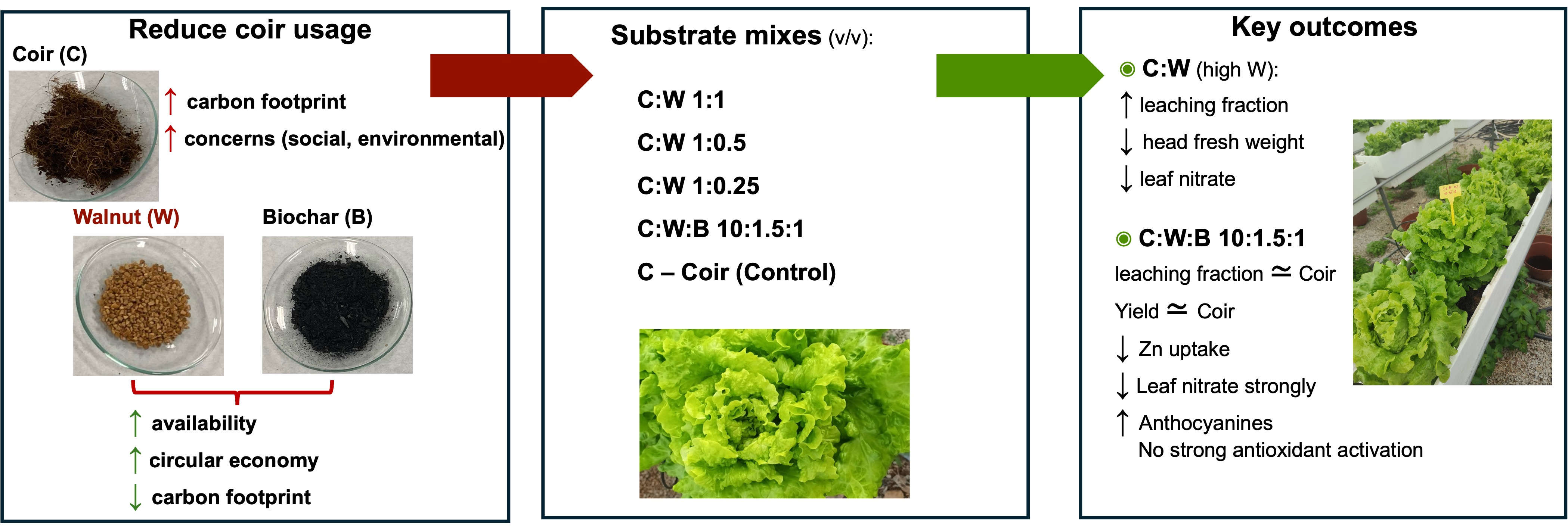
Coir is widely used as a soilless substrate yet partially replacing it with walnut shells in coir-based mixes may improve the sustainability of lettuce production and quality. This study evaluated the effect of incorporating walnut shells, with or without biochar, into coir-based substrates on lettuce yield and quality. Lettuce was grown in five substrates: coir (C), three coir–walnut mixes (1:1, 1:0.5, and 1:0.25 v/v), and one coir–walnut–biochar mix (C:W:B, 10:1.5:1 v/v). Increasing the walnut-shell proportion increased the cumulative leaching fraction, likely because of the coarse walnut particles, and reduced head fresh weight. However, shoot dry weight in the 1:0.5 and 1:0.25 mixes was similar to that in coir alone and reduced leaf nitrate content. In contrast, the C:W:B mix maintained head fresh weight (7.1 kg m−2) and shoot dry weight comparable to coir, while markedly lowering leaf nitrate concentration from 4130 to below 200 mg NO3 kg−1 fresh weight. Leaf nitrate content increased linearly with shoot Zn uptake, suggesting a Zn-mediated control of nitrate accumulation. The coir–walnut–biochar mix emerges as a suitable alternative to pure coir, as it maintains lettuce productivity, reduces leaf nitrate accumulation, enhances anthocyanin content, and reflects more favorable physiological conditions by not requiring a strong activation of antioxidant defenses.

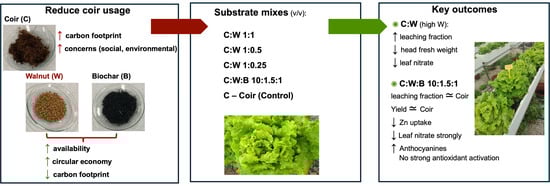
Graphical Abstract

1. Introduction

Reducing peat use is essential to improving the sustainability of soilless substrate crop production and is increasingly required by stricter environmental and regulatory frameworks [1,2]. Coir is often considered a viable peat alternative, but its production and long-distance supply chains result in a substantial carbon footprint and are associated with high costs, logistical challenges, and social and environmental concerns [3,4]. Thus, improving the sustainability of the growing media industry can be achieved in part through the use of locally sourced bioproducts, such as walnut shells, in coir-based blends.
Walnut (Juglans regia L.) is an important crop grown in temperate regions worldwide, primarily for its edible nuts [5]. Global walnut production has steadily increased over the past decade, reaching approximately 2.67 million metric tons in the 2022/2023 season [6]. In Portugal, walnut production has also increased due to greater water availability provided by the Alqueva dam and the use of advanced production technologies, reaching 9199 metric tons in 2023 (GPP). Walnut shells constitute a major fraction of the fruit, with several studies reporting that they account for around two-thirds (≈67%) of the total walnut weight [7,8]. Thus, substantial quantities of walnut shells are produced annually. Given their availability, evaluating the use of this by-product as a substrate component offers an opportunity to implement circular economy principles in soilless systems—a key priority in sustainable soilless culture [9,10].
Walnut shell composition varies slightly with genotype, growing environment, and fruit-processing conditions, but shells are composed predominantly of lignocellulosic material, with lignin (≈52.3%), cellulose (≈25.5%) and hemicelluloses (≈22.2%) together accounting for nearly all of the shell dry mass [11,12,13]. These proportions of lignocellulosic components closely align with the composition of coconut coir [14]. From the standpoint of plant nutrition, their contribution is expected to be low, similarly to coir [15]. Walnut shells have a low ash content, typically 0.7–3.5% of total dry mass [16], and consequently a low concentration of mineral nutrients [11,12]. Among the nutrients present, potassium and calcium are typically the most abundant [11]. In practice, incorporating triturated walnut shells into substrates can enhance aeration, drainage, and structural stability. Because of their high lignin content, walnut shells mineralize slowly, conferring structural persistence to the substrate. Beyond their physical effects, walnut shells may also contribute organic compounds, such as phenols and flavonoids [17], which could affect the microbiota and nutrient dynamics in the substrate. However, two potential drawbacks warrant attention. First, walnut tissues may contain juglone (5-hydroxy-1,4-naphthoquinone), a phytotoxic compound [18]. Nevertheless, concentrations in shells are lower than in other walnut tissues [19], and dilution within a substrate blend may mitigate potential adverse effects. Moreover, juglone is partly soluble in water, and in open soilless substrate systems, its concentration in the growing medium may decline over time due to leaching [20]. Second, walnut shells have a high carbon-to-nitrogen (C/N) ratio [21,22]. This high C/N ratio can promote nitrogen immobilization; however, because walnut shells mineralize slowly [23], the extent of immobilization is likely to be modest and gradual. Despite these potential drawbacks, the relatively low juglone content in shells, their partial water solubility, and the slow mineralization of walnut shells suggest that negative effects when introduced in substrate mixes will be limited. We hypothesized that incorporating triturated walnut shells into coir-based substrates would reduce the use of coir while maintaining or improving lettuce yield and quality relative to coir alone. We further hypothesized that adding low proportions of biochar in combination with walnut shells would enhance—or at least preserve—these responses. Thus, the main goal of this study was to evaluate the impact of incorporating different proportions of triturated walnut shells into coir-based substrates, as well as the use of low proportions of walnut shells and biochar, on lettuce yield and quality.

2. Materials and Methods

2.1. Growth Conditions and Substrates

The experiment was conducted in a greenhouse located at the “Herdade Experimental da Mitra” (38°57′ N, 8°32′ W, 250 m a.s.l), University of Évora, Portugal. The greenhouse was covered with polycarbonate and had no supplemental lighting. Inside, air temperatures ranged from 8 to 27 °C, while solar radiation varied between 34 and 248 W m−2·d−1.
The experiment evaluated five substrate treatments: pure coir as the control and four coir-based blends. Three blends combined coir with walnut shell at volume ratios of 1:1, 1:0.5, and 1:0.25 (v/v), and the fourth mix contained coir, biochar, and walnut shell at 10:1.5:1 (v/v). Treatments were arranged in a randomized complete block design with four replicates per treatment.
The walnut shell was mechanically milled into particles ranging from 0.35 to 3.0 mm, and the particle-size distribution of the resulting material was then determined using the dry sieve method described by Kingston et al. [24]. A 500 g sample of milled walnut shell was shaken through a nested stack of sieves with progressively smaller apertures, and the mass retained on each sieve was expressed as percent by weight. The granulometric fractions were: ≥2 mm, 77.35%; ≥1 to <2 mm, 19.50%; ≥0.5 to <1 mm, 1.57%; and <0.5 mm, 1.56%. The composition and proportion of the components of the mixes are shown in Table 1. The physical and chemical properties supplied by the manufacturers were as follows. The coir pith (Projar S.A., Valencia, Spain) had pH 5.5–6.0, EC > 1.5 dS m−1, particle size 0–10 mm, total porosity 95% (v/v), air-filled porosity 25% (v/v), and CEC 60–120 meq 100 g−1. The acacia wood biochar (Ibero Massa, Oliveira de Azeméis, Portugal), produced by pyrolysis at 400–500 °C, had pH 8–10, EC 0.25 dS m−1, and particle size 1–2 mm. The high pH of biochar can increase substrate pH and reduce the availability of micronutrients such as Fe, Mn, and Zn.
Lettuce (Lactuca sativa L. cv. Madie RZ) seedlings were transplanted into Styrofoam plant boxes (100-cm long × 25-cm wide × 10-cm high) on 27 February 2021, 20 days after emergence. The boxes were filled with 12 L of each mixture at the height of approximately 7 cm. The seedlings were spaced at 20 cm in a row in the center of the box, with a plant density of 16 plants m−2. Each planting box was irrigated using 8 Lh−1 pressure compensating and anti-drain emitters. The emitters were attached to 4 fine tubes of 70 cm in length and 5 mm in diameter, inserted into the substrate near the plant base. Thus, 8 water emission points were used per box, two per lettuce.
The irrigation schedule was optimized for coir. It was based on the drained volume. The nutrient solution was applied 3 to 7 times per day and averaged 10% to 35% of drainage (leaching fraction) for each application.
The leaching fraction was controlled through a relay level connected to an electric valve that stopped watering when the level of leached water was within 10% to 25% of the applied water.
The nutrient solution, except in the first irrigation, to moisten the growing medium was applied in each irrigation from transplanting to the day before harvesting. The nutrient solution contained the following concentrations (mmol L−1): NO3-N (13), NH4-N (5.3), P (1.32), K (11), Ca (3.5), Mg (3.5), S (1.31), Cl (2.1), and Na (0.7); and in µmol L−1: B (46), Cu (7.86, EDTA-chelated), Fe (8.95, EDTA-chelated), Mn (18.3, EDTA-chelated), Mo (1), and Zn (2, EDTA-chelated). The pH of nutrient solution was 6.4 ± 0.3.

2.2. Measurements

2.2.1. Physicochemical Properties of Substrate Components and Mixes and Leachate pH

pH, electrical conductivity (EC), and bulk density (BD) of the components and substrate mixes were measured as previously described in Machado et al. [9]. pH and EC were determined using a pH meter (FiveEasy, Mettler-Toledo GmbH, Greifensee, Switzerland) and a conductivity meter (LF 330, WTW, Weilheim, Germany), respectively. The concentrations of extractable nutrients (NO3, PO43−, SO42−, Ca2+, K+, and Mg2+) were determined in the aqueous extract (1:5 substrate component to distilled water, w/v) following the methodology described by Machado et al. [4,25].
During the crop cycle, drainage water was collected regularly from each box. For each sample, pH was measured using a potentiometer (FiveEasy, Mettler-Toledo GmbH, Greifensee, Switzerland).

2.2.2. Dry Biomass, Nutrient and Nitrates Content

At 39 days after transplanting (DAT), two lettuce heads were collected from each box. The samples were washed with deionized water, dried in a forced-air oven at 70 °C until constant mass (approximately 2–3 days), and then ground to a fine powder (<40 mesh). The powdered tissue was analyzed for N, P, K, Ca, Mg, B, Zn, and Na, whose concentrations were determined following the procedures previously described by Machado et al. [4]. Briefly, total N was measured using a combustion analyzer (LECO Corp., St. Joseph, MI, USA); K and Na were quantified by flame photometry (Jenway, Dunmow, UK); P and B were determined using a UV/Vis spectrophotometer (PerkinElmer Lambda 25); and Ca, Mg, Zn, and the remaining elements were analyzed by atomic absorption spectrophotometry (PerkinElmer Inc., Shelton, CT, USA).
The analytical method described by Lastra [26] was used to find the nitrate concentration in the shoot, and the sample was prepared according to Machado et al. [9].

2.2.3. Phytochemicals Content, Antioxidant Activity and Enzymatic Activities

Lettuce leaf extracts, sampling, processing, and preparation were carried out following the methods previously described by Machado et al. [4,9,27].
The methanol/water extract (MW80) was analyzed for total phenolic compounds (TPC), flavonoids, anthocyanins, ascorbate (AsA), glutathione (GSH), proline, and water-soluble proteins, and its antioxidant activity was evaluated using DPPH free radical scavenging and FRAP assays, as described by Machado et al. [4].
In the shoot phosphate-buffered extract (PB), the enzymatic activities glutathione reductase (GR, EC 1.6.4.2) and peroxidase (POx, EC 1.11.1.7) were measured following Machado et al. [4], while the activities polyphenol oxidase (PPO, EC 1.14.18.1), glutathione peroxidase (GPx, EC 1.11.1.9), ascorbate peroxidase (APx, EC 1.11.1.11), and catalase (CAT, EC 1.11.1.6) were quantified according to Machado et al. [27]. Proline dehydrogenase (PDH, EC 1.5.5.2) activity was also assessed in the same extract, as previously reported by Machado et al. [9].
All spectrometric measurements were carried out using a Hitachi U-2001 double-beam spectrophotometer (Hitachi, Ltd., Tokyo, Japan), with temperature control provided by a Grant water circulation bath (Grant Instruments, Ltd., Cambridge, UK).
Fluorometric determinations were performed using a Shimadzu RF-5001PC single-beam spectrofluorophotometer (Shimadzu Corporation, Kyoto, Japan).

2.2.4. Data Analysis

Data were analyzed using one-way analysis of variance (ANOVA) in SPSS Statistics 29 (IBM Corp., Armonk, NY, USA), under license to the University of Évora. Mean comparisons were performed using Duncan’s new multiple range test at a significant level of 5% (p < 0.05).

3. Results

3.1. Characteristics of Substrate Components and of the Mixes

Walnut shells had a pH of 4.5, an electrical conductivity (EC) of 1.41 dS m−1, and a higher bulk density (0.46 g cm−3) than biochar (0.22 g cm−3) and coir pith (0.11 g cm−3) (Table 2).
The extractable nutrients in walnut shells were low: NO3 and K+ did not exceed 2.0 mg g−1; PO43− and Ca2+ were present in tiny amounts; and SO42− and Mg2+ were undetectable (Table 2). Extractable nutrient levels in biochar and coir pith were also low; however, biochar contained relatively higher concentrations of NO3 (5.2 mg g−1) and Ca2+ (2.35 mg g−1), while coir pith had greater K+ availability (2.64 mg g−1) (Table 2).
The addition of walnut shell significantly affected the pH, EC, and bulk density (BD) of the substrate mixes (Table 3). The pH of the mixes ranged from 5.0 to 6.1. The lowest pH (5.0) was observed in the C:W (1:0.5) mix, and the highest pH (6.1) was recorded in the C:W:B (10:1.5:1) mix.
The lower pH in the C:W (1:0.5) mix may be due to its low bulk density (0.08), which likely increased macroporosity and drainage, contributing to H+ leaching, increasing the acidity in the leachate.
EC was significantly higher in all coir–walnut (C:W) mixes than in coir alone and in the C:W:B (10:1.5:1) mix. The bulk density of the mixes ranged from 0.07 to 0.17 g cm−3. The C:W (1:1) mix had the highest bulk density (0.17 g cm−3), while C:W (1:0.5), C:W:B (10:1.5:1), and coir pith alone showed lower and statistically similar bulk densities (0.07–0.11 g cm−3) (Table 3).

3.2. Cumulative Leaching Fraction and Leachate pH

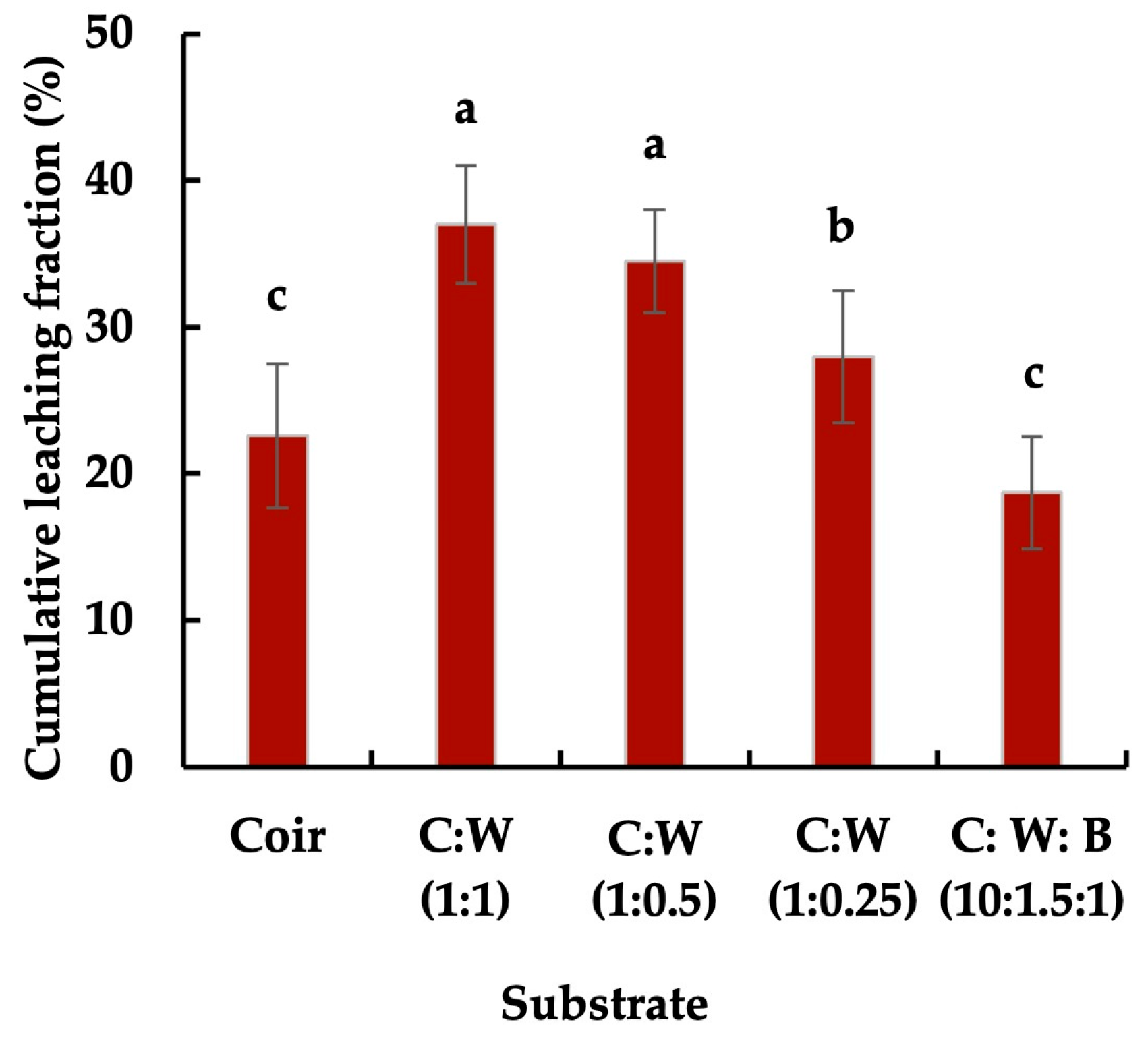
Cumulative leaching fraction, defined as the percentage of applied water lost as drainage (leachate) over the crop cycle, differed among substrates (Figure 1). The lower cumulative leaching fraction was observed in the C:W:B (18.7%) and C (22.6%) treatments. Within the walnut-shell mixes, leaching increased with walnut proportion, (1:1 > 1:0.5 > 1:0.25) indicating that less water held in the root zone as walnut content rose.
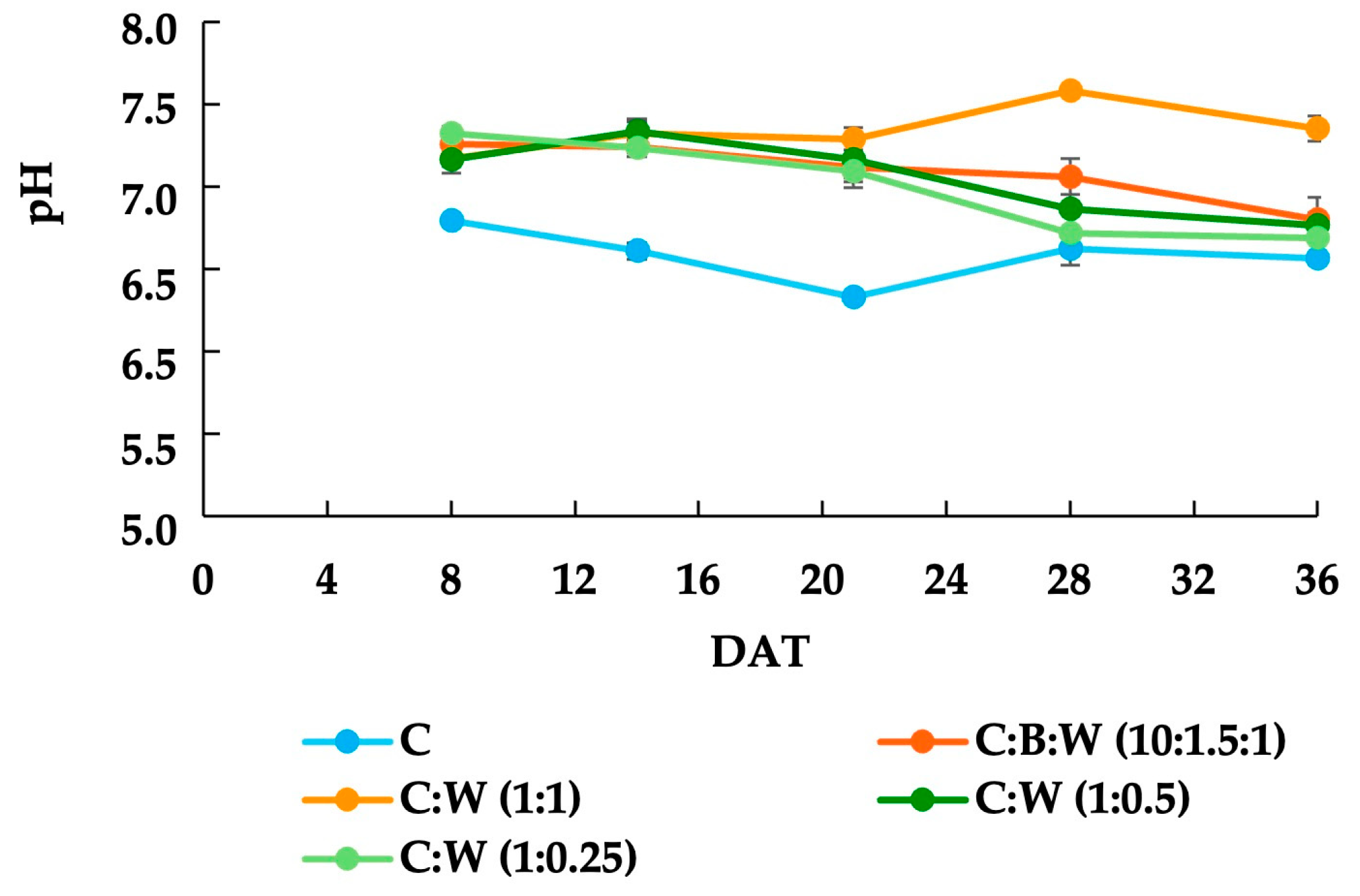
The initial pH of the substrates, except for the C:W (1:0.5) mix, did not differ significantly (Table 3). However, leachate pH was affected by the substrate mixes (Figure 2).
In coir, leachate pH was generally lower than in the substrate mixes, except on the last two sampling dates, when it was similar to that in the C:W (1:0.25) mix. In the other C:W mixes, despite the low pH of the walnut shells, leachate pH was consistently higher than in coir (Table 2). Although the C:W:B mix had a leaching fraction like that of coir, its leachate pH was higher.

3.3. Shoot Nutrients Uptake

Substrate mixes significantly affected shoot uptake of N, P, K, Ca, Mg, B, and Zn, whereas Na uptake was not influenced (Table 4). In the coir–walnut shell (C:W) mixes, shoot N, P, and K uptake generally decreased as the proportion of walnut shells increased. Compared with plants grown in coir, shoot P and K uptake were significantly lower in all C:W mixes. Shoot N uptake was significantly higher than in coir only in the lowest walnut-shell proportion treatment (C:W 1:0.25), whereas the C:W 1:0.5 mix showed values similar to coir (Table 4).
Shoot Ca and Mg uptake were lowest in the substrate containing the highest proportion of walnut shells (C:W 1:1). However, shoot Ca uptake in the low- and medium-walnut mixes (C:W 1:0.25 and 1:0.5) did not differ from that in coir, whereas shoot Mg uptake in all walnut mixes was lower than in coir.
Shoot Na uptake was higher in the C:W (1:1) treatment, whereas uptake of K, Ca, and Mg was lower, which may have reduced ionic competition with Na and thereby favored Na accumulation in shoots.
In plants grown in the coir–biochar–walnut shell mix (C:W:B 10:1.5:1), shoot N, P, K, Ca, Mg, and B uptake did not differ significantly from that of plants grown in coir (Table 4). Only Zn uptake in the C:W:B mix was significantly lower than in coir, which may be associated with the higher pH of this growing medium.

3.4. Photosynthetic Pigment

The proportion of walnut shells in coir-based substrates did not significantly affect the total chlorophyll, chlorophyll a, or chlorophyll b content in lettuce (Table 5). However, carotenoid content was significantly affected, being lower in plants grown in the mix with a smaller amount of walnut shell and biochar. These results suggest that while chlorophyll pigments were relatively stable across substrates, carotenoids were more sensitive to changes in substrate composition, particularly when walnut shells were combined with biochar or used at lower proportions.

3.5. Shoot Dry Weight and Head Fresh Weight

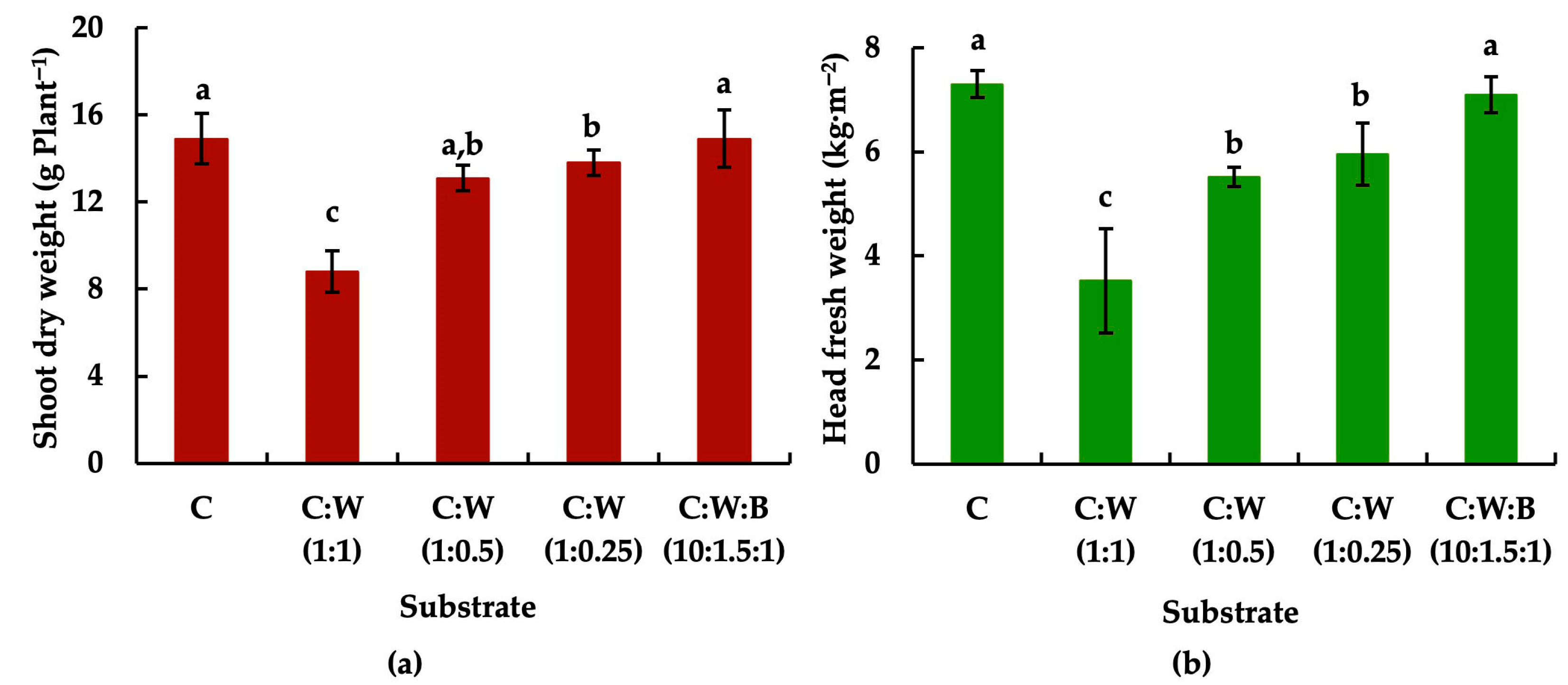
The mix composition significantly affected shoot dry weight (Figure 3a) and head fresh weight (Figure 3b). When walnut shell was incorporated in equal proportion to coir (C:W 1:1), both shoot dry weight and head fresh weight were significantly lower than in the other substrates. Mixes with lower walnut proportions (C:W 1:0.5 and 1:0.25) maintained shoot dry weight comparable to coir but reduced head fresh weight. Plants grown in the coir–walnut mix–biochar (C:B:W 10:1.5:1) had shoot dry and head fresh weights like those grown in coir.
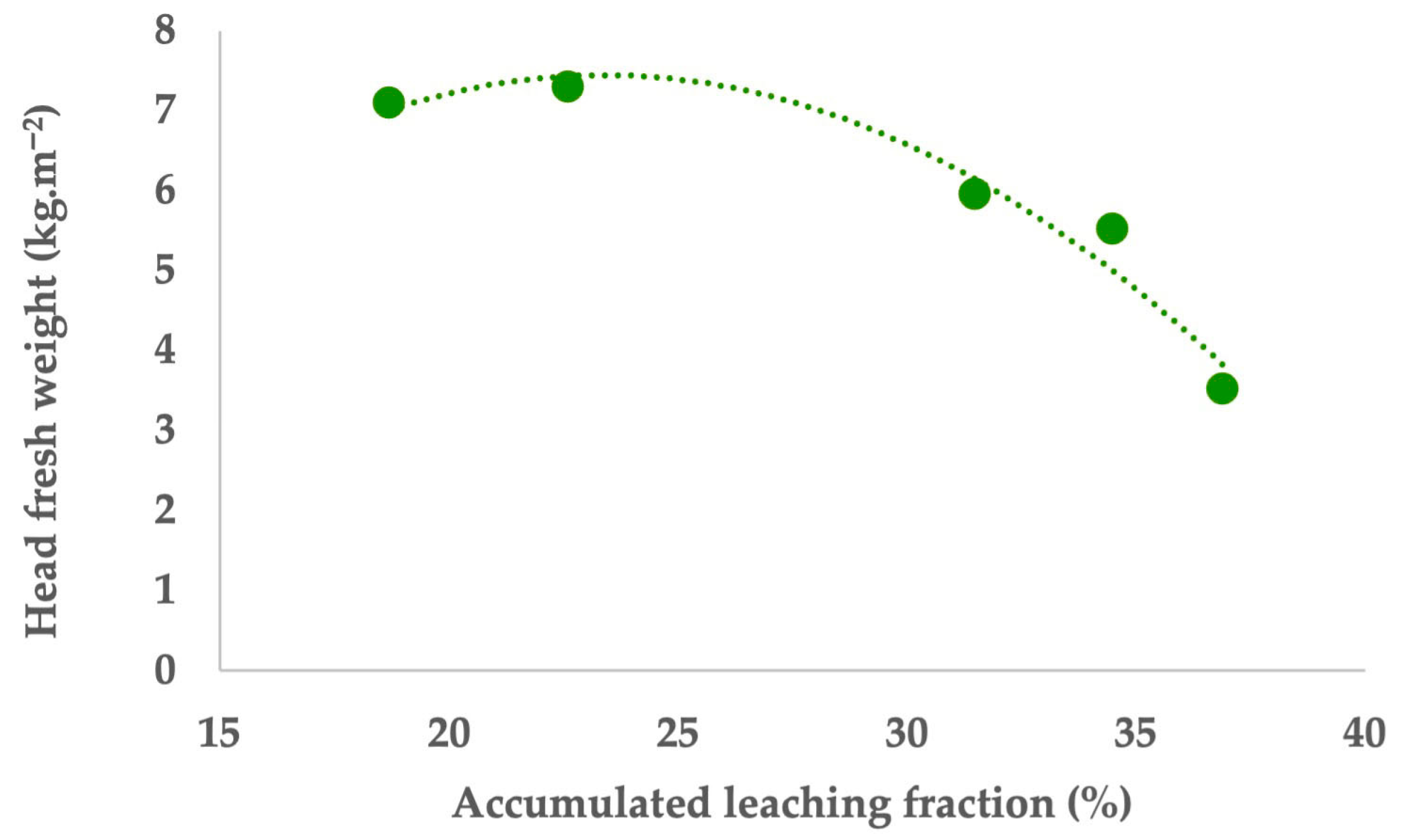
Head fresh weight showed a strong quadratic response to the accumulated leaching peaking at around 23–24% and declining at higher leaching levels (Figure 4). The C:W 1:1 mix had the greatest leaching (~36%) and the lowest head fresh weight.

3.6. Leaf Nitrate

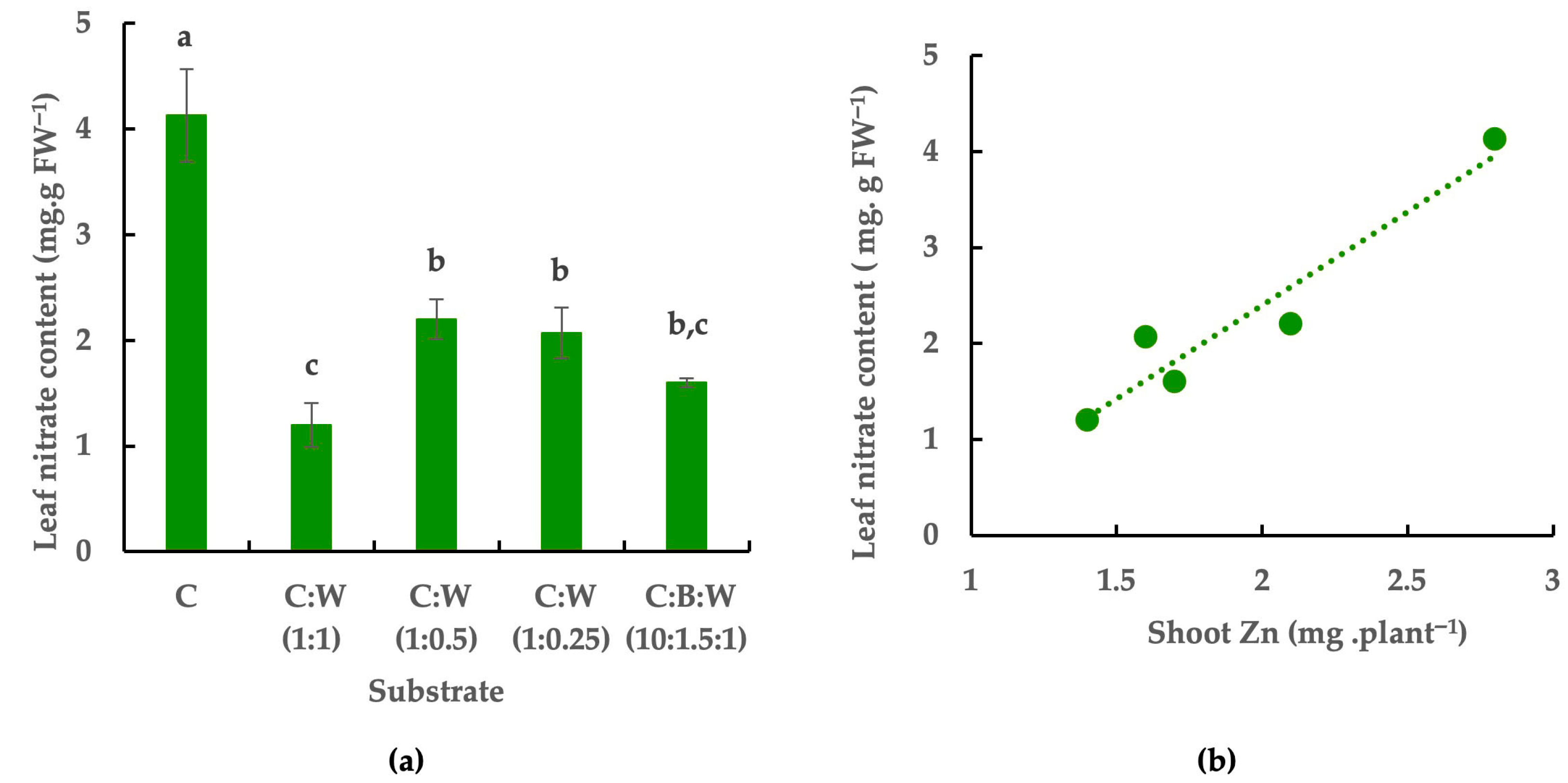
The growing media significantly affected the leaf nitrate content (Figure 5a). Lettuce grown in coir accumulated the highest nitrate levels, averaging 4130 mg kg−1 FW. Leaf nitrate levels of walnut-shell mixes were significantly lower than in coir. The lowest average level occurred in the C:W (1:1) mix (1200 mg·kg−1 FW), followed by the C:W:B (10:1.5:1) mix (1600 mg·kg−1 FW). Relative to coir, the mix C:W:B lowered leaf nitrate by 61% without compromising plant growth (Figure 5a). Leaf nitrate content increased linearly with shoot Zn uptake (Figure 5b).

3.7. Total Phenolic, Flavonoid and Anthocyanin Content and Polyphenol Oxidase Activity

Substrate mixes did not significantly affect leaf total phenolic content (TPC) (Table 6). Leaf TPC ranged from 23.28 to 44.68 mg gallic acid equivalents (GAE) per 100 g fresh weight. However, as fresh yield was higher in plants grown in coir and in the C:W:B mix, leaf TPC per shoot (mg GAE·shoot−1) was also higher in those treatments.
Leaf flavonoid and anthocyanin concentrations and PPO activity were significantly affected by substrate mixes (Table 6). Leaf anthocyanin concentrations in plants grown in the C:W 1:1, 1:0.5, and 1:0.25 mixes did not differ significantly from coir, whereas PPO activity increased, particularly in the 1:1 mix.
Although leaf flavonoid content in the mixes C:W 1:1 and 1:0.25 and anthocyanin contents were similar to coir on a concentration basis, the lower fresh mass of these plants (Table 6) resulted in reduced shoot totals of flavonoids and anthocyanins (mg·shoot−1) relative to coir.
Plants grown in the C:W:B mix (10:1.5:1), relative to coir, showed a distinct metabolic pattern: flavonoid content decreased significantly (0.09 mg·100 g−1 FW), whereas anthocyanin content increased to 0.15 mg·100 g−1 FW—the highest among all treatments (Table 6). Neither TPC nor shoot fresh weight was significantly affected in this treatment

3.8. Glutathione–Aspartate Cycle and Peroxidases

Substrate mixes significantly affected the redox metabolism of lettuce (Table 7).
Plants grown in the C:W:B mix showed the lowest antioxidant enzymatic response: GR, GPx, APx, and POx activities were lower than in coir and in the C:W mixes, while reduced glutathione (GSH) accumulated to higher levels and AsA was not significantly affected. In contrast, plants grown exclusively in coir exhibited higher GR and POx activities. Some C:W mixtures, particularly C:W (1:0.5), showed increased GPx and catalase (Ctt) activities relative to coir. Although the C:W:B mix did not significantly affect shoot dry weight or fresh weight compared with coir (Figure 3), plants in this treatment combined higher GSH levels with lower antioxidant enzyme activities (Table 7).

3.9. DPPH, FRAP and Proline Antioxidant Activity

Leaf DPPH, FRAP and proline dehydrogenase (PDH) activities were significantly affected by the substrate mixes (Table 8). DPPH radical scavenging activity was highest in plants grown in coir (7.97 mg GAE 100 g−1 FW) and was significantly greater than in all C:W and C:W:B mixes.
FRAP was also significantly higher in plants grown in coir than in those grown in the C:W:B mix, being about 8.6 units higher (22.47 vs. 13.91 mg/100 g FW).
Proline content (1.23–1.55 mg·100 g−1 FW) was not significantly affected by substrate mixes, despite lower water availability in the growing media (Figure 1) and reduced nutrient uptake in the C:W mixes (Table 8).
PDH activity, however, was significantly affected by the substrate mixes. The highest PDH activity occurred in C:W (1:1), reaching 70.21 nmol·min−1·mg−1, and was significantly higher than in the other treatments. PDH activity was lower in the biochar-containing C:W:B treatment and in C:W (1:0.5).
Plants grown in C:W:B (10:1.5:1) showed lower DPPH and FRAP activities than those grown in coir. Although plants in C:W:B had lower leaf antioxidant levels, their fresh and dry yields were comparable to coir, and leaf nitrate accumulation was markedly reduced.

4. Discussion

The incorporation of walnut shells into coir-based substrates can influence plant growth and quality by modifying the physicochemical properties of the growing medium. Compared with biochar and coir pith, walnut shells exhibited a lower (more acidic) pH, higher bulk density and electrical conductivity, and generally low concentrations of most extractable nutrients (Table 2). Although grinding walnut shells can influence pH by increasing surface area and enhancing the release of soluble constituents, in this study the pH of the ground material (4.5) remained within the 4–6 range reported for walnut shells by [28]. Due to their slightly acidic pH (4.5), walnut shells can contribute to lowering the pH of growing media, which may be useful when mixed with more neutral or slightly alkaline components.
The higher bulk density of walnut shells may increase the weight and compactness of the substrate mix; however, their coarse particles may create macropores, thereby increasing drainage and air-filled porosity compared with coir. In addition, the high lignin content of walnut shells (~52.3%) may contribute to the long-term physical stability of the substrate. Lignin is a structurally rigid and relatively recalcitrant biopolymer, which slows microbial degradation and helps preserve particle integrity during cultivation.
The low extractable nutrient contents in walnut shells suggest a limited contribution to short-term plant nutrition. This is consistent with Queirós et al. [11], who noted that, although walnut shell ash is enriched in K+ and Ca2+, the overall nutrient levels in the shells are low because their ash content is small. Extractable nutrient levels in biochar and coir pith were also low; however, biochar contained relatively higher concentrations of NO3 (5.2 mg g−1) and Ca2+ (2.35 mg g−1). Coir pith had greater K+ availability (2.64 mg g−1). Abad et al. [15] reported that coir pith can contain elevated levels of soluble K+ and other salts that are readily released into solution.
Incorporating walnut shells into coir-based substrates substantially altered pH, electrical conductivity, and bulk density, with responses that were not always proportional to the walnut inclusion rate. Although walnut shells are slightly acidic, the mix with an intermediate walnut proportion (C:W; 1:0.5) showed the lowest pH, suggesting that factors such as water drainage volume and solute leaching may have influenced the final pH more than the nominal walnut-shell percentage alone. The highest pH in the C:W:B (10:1.5:1) mix is likely related to the alkalinity of biochar, which can partially counteract the acidity of walnut shells and coir. Despite the pH variations among mixes, most remained within the optimal range for vegetable substrate cultivation (5.5–6.8) [29], indicating that walnut shells can be incorporated without causing pH constraints.
The higher EC values observed in all C:W mixes compared with coir and C:W:B reflect the contribution of walnut shells, which have a higher EC than coir and biochar (Table 3).
Despite the differences in bulk density, which ranged from 0.07 to 0.17 g cm−3, all values fell within the acceptable range for substrate use [30]. However, the incorporation of walnut shells in mixes can alter pore-size distribution, thereby affecting water and air retention relative to the coir pith.
Cumulative leaching fraction varied significantly among substrates, with the coir–walnut mixes showing higher values than coir and C:W:B, indicating a clear effect of substrate composition on water retention. The lower leaching observed in the C:W:B and coir treatments suggests that plants grown in these substrates had more available water within the root zone.
The coarse granulometry of the walnut shells (77.35% w/w of particles between 2 and 3 mm) likely increased microporosity in the C:W mixes, particularly those with higher proportions of walnut shells, and consequently altered their hydraulic behavior, including drainage, wet bulb geometry, and air retention. Therefore, further research is needed to evaluate how walnut shell particle size influences plant growth. In addition, visual observations indicated that walnut shells have a lower water uptake rate than coir, which may also contribute to the higher leaching fraction observed in the C:W mixes.
The higher leachate pH in the C:W mixes may be related to the higher leaching fraction, which can reduce hydronium ion concentration. In C:W:B the high leachate pH may be related to changes in buffering capacity and alterations in the geometry of the wetted bulb that can affect ion leaching. This increase in pH may reduce nutrient availability and potentially affect plant nutrition and growth.
The reduction in shoot N, P and K uptake with increasing walnut-shell proportion in the mix may be due to greater nutrient losses in the drained water, since the accumulated leaching fraction was higher than in coir. The decline in Ca and Mg uptake in the mix with the highest proportion of walnut shells further indicates that excessive walnut shells can negatively affect Ca and Mg uptake. In contrast, shoot N, P, K, Ca, Mg and B uptake in plants grown in the C:W:B mix was comparable to that in coir, indicating that the effect of the elevated leachate pH on overall nutrient uptake was minimal. This may be because the pH within the wetted bulb, where roots are concentrated, is similar to that of the nutrient solution [27]. However, in the C:W:B mix, shoot Zn uptake was reduced (Table 4), which is likely related to the higher pH, as increased pH decreases Zn solubility in the growing medium and, consequently, its availability to plants. High proportions of walnut shell negatively affected plant growth, probably due to the higher leaching fraction (Figure 3) that reduced water and shoot nutrient uptake.
In plants grown in mixes with walnut proportions of 1:0.5 and 1:0.25, shoot dry weight was not significantly different from that of plants grown in coir, but head fresh weight was reduced, indicating that marketable yield is more sensitive to walnut inclusion than to shoot dry biomass (g/plant). However, because head fresh weight is an important parameter for assessing both quality and yield in lettuce [31], this reduction is undesirable. Head fresh weight decreased as the accumulated leaching fraction increased. This effect may have been exacerbated by the fact that irrigation scheduling was optimized for coir, potentially causing water limitation in mixes containing walnut shells. Although juglone concentrations in walnut shells are generally relatively low and may be partially leached during irrigation, residual levels may still have contributed to the observed reduction in head fresh weight. However, because higher walnut-shell proportions coincide with higher leaching fractions, there may be a hidden effect of juglone concentration on plant growth. Plants grown with a small percentage of biochar and walnut shells had similar weights to those grown with coir. Martins et al. [32] also reported that including 10% v/v biochar in coir-based mixes improves lettuce seedling growth.
Leaf nitrate concentration was highest in plants grown in coir (4130 mg kg−1 FW) and, given the growing period (27 March–3 April), was slightly above the maximum limit for fresh greenhouse-grown lettuce set by Regulation (EU) No. 1258/2011 [33] for April–September (4000 mg kg−1 FW).The incorporation of walnut shells in coir-based substrates (C:W) substantially reduced leaf nitrate content but also led to a reduction in head fresh weight. In contrast, in the C:W:B mix, leaf nitrate concentration was also reduced (1600 mg kg−1 FW) without any decrease in dry matter production or fresh yield, indicating that incorporating small amounts of walnut shell and biochar into coir-based substrates can be a promising strategy to enhance the nutritional quality of lettuce without compromising productivity. This can be due to the decrease in shoot Zn content, since leaf nitrate content increased linearly with shoot Zn uptake (Figure 5b). Since shoot N uptake did not differ between plants grown in C:W:B and in coir, the lower leaf nitrate concentration in C:W:B-grown plants is unlikely to be driven by reduced N acquisition. Instead, differences in N assimilation and partitioning may be involved. The plant Zn status may influence nitrate reduction and the incorporation of N into organic compounds. Plant Zn status can modulate nitrate reductase (NR) activity; adequate Zn can support or even increase NR, whereas both Zn deficiency and excess Zn often suppress NR activity [34,35]. Barrameda-Medina et al. [36] also reported that, in lettuce, an increase in Zn supply decreased NO3- content and increased NR activity. However, studies about the influence of Zn on leaf nitrate content are scarce, particularly in leafy vegetables. Therefore, further research is needed to clarify how shoot Zn uptake affects leaf nitrate content.
Although TPC was not significantly affected by the substrates, the higher fresh yield in coir and C:W:B implies a greater total phenomenon per plant in these treatments.
The coir–walnut shell mixes, especially C:W (1:1), increased PPO activity, suggesting higher oxidative stress and potentially greater susceptibility to postharvest browning [37]. In the C:W:B mix (10:1.5:1), flavonoid concentration decreased while anthocyanin concentration increased to the highest level among treatments, without changes in TPC or shoot fresh weight. This indicates a shift within the phenolic profile toward anthocyanin accumulation rather than an increase in total phenolic synthesis. Overall, C:W:B appears to be a suitable alternative to coir, maintaining total phenolics while improving anthocyanin content without raising PPO activity. These trends are consistent with the responses observed in the glutathione–aspartate cycle and peroxidase activities. The combination of high GSH content and low antioxidant enzyme activities in plants grown in the C:W:B mix indicates reduced oxidative pressure and a lower need to activate detoxification pathways, suggesting more favorable growing conditions. By contrast, the higher GR and POx activities in coir, and the increased GPx and Ctt activities in some C:W mixes, point to a more active redox metabolism consistent with moderate oxidative stress and greater demand for peroxide removal and GSSG recycling.
Overall, the redox profile of plants grown in C:W:B supports the view that this substrate mix reduces oxidative stress while maintaining growth, making it a suitable alternative to coir.
The behavior of proline metabolism and non-enzymatic antioxidant capacity further supports this interpretation. Proline commonly accumulates under abiotic stress and contributes to osmotic adjustment [38,39,40]. However, the absence of significant differences in proline content among substrate mixes, despite lower water availability and reduced nutrient uptake in some treatments, suggests that proline-mediated osmotic adjustment was limited in this study.
Instead of accumulating proline, plants appeared to regulate its turnover, as indicated by the strong effect of substrate on PDH activity. The highest PDH activity in C:W (1:1) suggests enhanced proline catabolism and more efficient redox cycling of proline, probably linked to the lower water retention capacity of this substrate and a more pronounced adaptive response to moderate stress. In contrast, the lower PDH activity in the biochar-containing C:W:B mix and in C:W (1:0.5) indicates reduced proline catabolism and milder stress conditions.
Finally, the lower DPPH and FRAP activities observed in plants grown in C:W:B (10:1.5:1), together with comparable fresh and dry yields and reduced leaf nitrate accumulation relative to coir, indicate a lower oxidative load and a diminished need to activate antioxidant defenses in this substrate.
Although plants grown in the C:W:B mix had lower leaf antioxidant levels than those grown in coir, their fresh and dry yields were comparable, and leaf nitrate accumulation was markedly reduced. Taken together, these results indicate that the C:W:B mix is a suitable alternative to coir, as it maintains productivity, limits nitrate build-up in leaves, enhances anthocyanin content, and does not require a strong activation of antioxidant defenses, reflecting more favorable physiological conditions for lettuce cultivation. Beyond these advantages, the use of walnut shells also offers potential sustainability benefits, as it valorizes an agro-industrial residue and may lower costs and reduce the carbon footprint when sourced locally. However, life-cycle assessments are needed to quantify these gains.


5. Conclusions

The findings of this study confirm the feasibility of incorporating walnut shells into coir-based substrates; however, high walnut-shell proportions impose growth limitations associated with increased leaching fraction and reduced water and nutrient uptake, linked to the coarse particle size of the triturated shells. The combination of walnut shells with biochar proved to be an effective alternative to coir alone, significantly reducing leaf nitrate accumulation without compromising yield. For growers, we recommend using low-to-moderate walnut-shell proportions (ideally combined with a low rate of biochar) and adjusting irrigation to the water-holding capacity of each mix. Future work should focus on optimizing walnut-shell particle size and proportion in coir-based mixes, refining irrigation management to match the water-holding capacity of each mix and elucidating the role of antioxidant responses in determining plant growth and leaf quality.

Author Contributions

R.M. conceived and designed the experiments; performed the experiments; analyzed and interpreted the data; contributed reagents, materials, analysis tools, or data; and wrote the paper. I.A.-P. and R.F. conceived, designed, and performed the enzyme assay and other biochemical experiments; analyzed and interpreted the data; contributed reagents, materials, analysis tools, or data; and wrote the paper. A.G. and P.E. performed the experiments, analyzed, and interpreted the data. All authors have read and agreed to the published version of the manuscript.

Funding

This work was funded in Portugal by the FCT—Fundação para a Ciencia e Tecnologia—as part of Project UIDB/05183/2020.

Data Availability Statement

The original contributions presented in this study are included in the article. Further inquiries can be directed to the corresponding authors.

Conflicts of Interest

The authors declare no conflicts of interest.

References

  1. European Commission. EU Biodiversity Strategy for 2030; European Commission: Brussels, Belgium, 2020. [Google Scholar]
  2. Department for Environment, Food and Rural Affairs. Sale of Horticultural Peat to be Banned in Move to Protect England’s Precious Peatlands; Department for Environment, Food and Rural Affairs: London, UK, 2022. [Google Scholar]
  3. Abad, M.; Fornes, F.; Carrión, C.; Noguera, V.; Noguera, P.; Maquieira, Á.; Puchades, R. Physical properties of various coconut coir dusts compared to peat. HortScience 2005, 40, 2138–2144. [Google Scholar] [CrossRef]
  4. Machado, R.M.; Alves-Pereira, I.; Ferreira, R.; Gruda, N.S. Coir, an alternative to peat—Effects on plant growth, phytochemical accumulation, and antioxidant power of spinach. Horticulturae 2021, 7, 127. [Google Scholar] [CrossRef]
  5. Szalóki-Dorkó, L.; Kumar, P.; Székely, D.; Végvári, G.; Ficzek, G.; Simon, G.; Abrankó, L.; Tormási, J.; Budjdosó, G.; Máté, M. Comparative Study of Different Walnut (Juglans regia L.) Varieties Based on Their Nutritional Values. Plants 2024, 13, 2097. [Google Scholar] [CrossRef] [PubMed]
  6. Walnut Production Worldwide from 2010/11 to 2023/24. Statista. 2025. Available online: https://www.statista.com/statistics/675967/walnut-production-worldwide/ (accessed on 2 January 2026).
  7. Han, H.; Wang, S.; Rakita, M.; Wang, Y.; Han, Q.; Xu, Q. Effect of ultrasound-assisted extraction of phenolic compounds on the characteristics of walnut shells. Food Nutr. Sci. 2018, 9, 1034–1045. [Google Scholar] [CrossRef]
  8. Barbu, M.C.; Sepperer, T.; Tudor, E.M.; Petutschnigg, A. Walnut and Hazelnut shells: Untapped industrial resources and their suitability in lignocellulosic composites. Appl. Sci. 2020, 10, 6340. [Google Scholar] [CrossRef]
  9. Machado, R.M.; Alves-Pereira, I.; Alves, I.; Ferreira, R.M.; Gruda, N.S. Reusing coir-based substrates for lettuce growth, Nutrient content and phytonutrients accumulation. Horticulturae 2023, 9, 1080. [Google Scholar] [CrossRef]
  10. Gruda, N.S.; Machado, R.M.; van Os, E.A. Is soilless culture a sustainable form of agriculture? Horticulturae 2023, 9, 1190. [Google Scholar] [CrossRef]
  11. Queirós, C.S.; Cardoso, S.; Lourenço, A.; Ferreira, J.; Miranda, I.; Lourenço, M.J.V.; Pereira, H. Characterization of walnut, almond, and pine nut shells regarding chemical composition and extract composition. Biomass Convers. Biorefinery 2020, 10, 175–188. [Google Scholar] [CrossRef]
  12. Domingos, I.; Ferreira, J.; Cruz-Lopes, L.P.; Esteves, B. Liquefaction and chemical composition of walnut shells. Open Agric. 2022, 7, 249–256. [Google Scholar] [CrossRef]
  13. Fordos, S.; Abid, N.; Gulzar, M.; Pasha, I.; Oz, F.; Shahid, A.; Khan, M.K.I.; Mousavi, A.; Aadil, R.M. Recent development in the application of walnut processing by-products (walnut shell and walnut husk). Biomass Convers. Biorefin. 2023, 13, 14389–14411. [Google Scholar] [CrossRef]
  14. Suárez-Cáceres, G.P.; Lokuhitige, S.; Kaufman, N.T.; Alghaithy, A.; Hishaw, M.B.; Donis-Gonzalez, I.; Fernández-Cabanás, V.M.; Gross, J.A. Suitability of walnut and pistachio shells as soilless substrates for producing Genovese basil in aquaponic systems. Front. Hortic. 2025, 4, 1486312. [Google Scholar] [CrossRef]
  15. Abad, M.; Noguera, P.; Puchades, R.; Maquieira, A.; Noguera, V. Physico-chemical and chemical properties of some coconut coir dusts for use as a peat substitute for containerised ornamental plants. Bioresour. Technol. 2002, 82, 241–245. [Google Scholar] [CrossRef] [PubMed]
  16. Jahanban-Esfahlan, A.; Ostadrahimi, A.; Tabibiazar, M.; Amarowicz, R. A comprehensive review on the chemical constituents and functional uses of walnut (Juglans spp.) husk. Int. J. Mol. Sci. 2019, 20, 3920. [Google Scholar] [CrossRef] [PubMed]
  17. Chamorro, F.; Carpena, M.; Lourenço-Lopes, C.; Taofiq, O.; Otero, P.; Cao, H.; Xiao, J.; Simal-Gandarra, J.; Prieto, M.A. By-products of walnut (Juglans regia) as a source of bioactive compounds for the formulation of nutraceuticals and functional foods. Biol. Life Sci. Forum 2022, 12, 35. [Google Scholar] [CrossRef]
  18. Ramezani, N.; Raji, F.; Rezakazemi, M.; Younas, M. Juglone extraction from walnut (Juglans regia L.) green husk by supercritical CO2: Process optimization using Taguchi method. J. Environ. Chem. Eng. 2020, 8, 103776. [Google Scholar] [CrossRef]
  19. Cosmulescu, S.N.; Trandafir, I.; Achim, G.; Baciu, A. Juglone content in leaf and green husk of five walnut (Juglans regia L.) cultivars. Not. Bot. Horti Agrobot. Cluj-Napoca 2011, 39, 237–240. [Google Scholar] [CrossRef]
  20. Kocaçalışkan, I.; Terzi, I. Allelopathic effects of walnut leaf extracts and juglone on seed germination and seedling growth. J. Hort. Sci. Biotech 2001, 76, 436–440. [Google Scholar] [CrossRef]
  21. Jovičić, N.; Antonović, A.; Matin, A.; Antolović, S.; Kalambura, S.; Krička, T. Biomass valorization of walnut shell for liquefaction efficiency. Energies 2022, 15, 495. [Google Scholar] [CrossRef]
  22. Carlson, M.; Forcella, F.; Wortman, S.; Clay, D.; Clay, S.A. Organic fertilizer abrasive grits increase soil available nitrogen, plant height, and biomass. Agrosystems Geosci. Environ. 2020, 3, e20091. [Google Scholar] [CrossRef]
  23. Hahn, S.; Hennecke, D. What can we learn from biodegradation of natural polymers for regulation? Environ. Sci. Eur. 2023, 35, 50. [Google Scholar] [CrossRef]
  24. Kingston, P.H.; Scagel, C.F.; Bryla, D.R.; Strik, B.C. Influence of perlite in peat-and coir-based media on vegetative growth and mineral nutrition of highbush blueberry. HortScience 2020, 55, 658–663. [Google Scholar] [CrossRef]
  25. Machado, R.M.; Alves-Pereira, I.; Morais, C.; Alemão, A.; Ferreira, R. Effects of coir-based growing medium with municipal solid waste compost or biochar on plant growth, mineral nutrition, and accumulation of phytochemicals in spinach. Plants 2022, 11, 1893. [Google Scholar] [CrossRef]
  26. Lastra, O.C. Derivative spectrophotometric determination of nitrate in plant tissue. J. AOAC Int. 2003, 86, 1101–1105. [Google Scholar] [CrossRef] [PubMed]
  27. Machado, R.M.; Alves-Pereira, I.; Velez, D.; Grilo, A.; Veríssimo, I.; Ferreira, R. Exploring sustainable fertilization strategies involving biochar, compost, and inorganic nitrogen: Impact on nutrient uptake, yield, phytochemical accumulation, and antioxidant responses in turnips. Plants 2025, 14, 529. [Google Scholar] [CrossRef] [PubMed]
  28. Freeman Manufacturing; Supply Company. Walnut Shells, Technical Data Sheet. Available online: www.freemansupply.com/datasheets/walnutshells.pdf (accessed on 8 January 2025).
  29. Adams, P. Aspectos de la nutrición mineral en cultivos sin suelo en relación al suelo. In Tratado de Cultivo sin Suelo; Urrestarazu, G.M., Ed.; Editorial Mundi-Prensa: Madrid, Spain, 2004; pp. 81–111. [Google Scholar]
  30. Martínez, P.F.; Roca, D. Sustratos para el cultivo sin suelo. Materiales, propiedades y manejo. In Sustratos, Manejo del Clima, Automatización y Control en Sistemas de Cultivo sin Suelo; Flórez, R.V.J., Ed.; Editorial Universidad Nacional de Colombia: Bogotá, Colombia, 2011; pp. 37–77. Available online: http://hdl.handle.net/20.500.11939/3894 (accessed on 2 January 2026).
  31. Kovácsné, Á.; Hájos, M.T. Evolution of quality parameters of different lettuce (Lactuca sativa L.) varieties under unheated plastic tunnel. Agric. Environ. 2021, 13, 88–99. [Google Scholar] [CrossRef]
  32. Martins, T.C.; Machado, R.M.; Alves-Pereira, I.; Ferreira, R.; Gruda, N.S. Coir-based growing media with municipal compost and biochar and their impacts on growth and some quality parameters in lettuce seedlings. Horticulturae 2023, 9, 105. [Google Scholar] [CrossRef]
  33. European Commission. Commission Regulation (EU) No. 1258/2011 of 2 December 2011 Amending Regulation (EC) No. 1881/2006 as Regards Maximum Levels for Nitrates in Foodstuffs (OJ L 320, pp. 15–17). Official Journal of the European Union. 2011. Available online: https://eur-lex.europa.eu/eli/reg/2011/1258/oj/eng (accessed on 10 December 2025).
  34. Ghosh, M.K.; Srivastava, R.C. Effect of Mg, Zn and Mo salts on nitrate reductase activity and soluble protein content in leaves of Quercus serrata. Biol. Plant. 1994, 36, 599–605. [Google Scholar] [CrossRef]
  35. Luna, C.M.; Casano, L.M.; Trippi, V.S. Inhibition of wheat nitrate reductase activity by zinc. Biol. Plant. 2000, 43, 257–262. [Google Scholar] [CrossRef]
  36. Barrameda-Medina, Y.; Lentini, M.; Esposito, S.; Ruiz, J.M.; Blasco, B. Zn-biofortification enhanced nitrogen metabolism and photorespiration process in green leafy vegetable Lactuca sativa L. J. Sci. Food Agric. 2017, 97, 1828–1836. [Google Scholar] [CrossRef]
  37. Thipyapong, P.; Melkonian, J.; Wolfe, D.W.; Steffens, J.C. Suppression of polyphenol oxidases increases stress tolerance in tomato. Plant Sci. 2004, 167, 693–703. [Google Scholar] [CrossRef]
  38. Szabados, L.; Savouré, A. Proline: A multifunctional amino acid. Trends Plant Sci. 2010, 15, 89–97. [Google Scholar] [CrossRef] [PubMed]
  39. Verbruggen, N.; Hermans, C. Proline accumulation in plants: A review. Amino Acids 2008, 35, 753–759. [Google Scholar] [CrossRef] [PubMed]
  40. Verslues, P.E.; Sharma, S. Proline metabolism and its implications for plant-environment interaction. Arab. Book Am. Soc. Plant Biol. 2010, 8, e0140. [Google Scholar] [CrossRef] [PubMed]
Figure 1. Cumulative leaching fraction (% of applied water drained) over the crop cycle for the substrates. (C—coir pith. W—walnut shell. B—biochar). Means with different letters are significantly different at p < 0.05, and significant at p < 0.001 level. Each bar represents the mean of four replicates, and the error bars represent ±1 SE.
Horticulturae 12 00071 g001
Figure 2. Effect of substrate mixes on average leachate pH. (C—coir pith. W—walnut shell. B—biochar). Each symbol represents the mean of four replicates and the error bars represent ±1 SE.
Horticulturae 12 00071 g002
Figure 3. Effect of substrate mixes on lettuce shoot dry weight (a) and head fresh weight (b). (C—coir pith. W—walnut shell. B—biochar). Means with different letters are significantly different at p < 0.05 and significant at p < 0.001 level. Each bar represents the mean of four replicates, and the error bars represent ±1 SE.
Horticulturae 12 00071 g003
Figure 4. Relationship between head fresh weight and accumulated leaching fraction (y = −0.0112x2 + 0.4464x − 2.6853; R2 = 0.896, p < 0.001). Each symbol represents the mean of four replicates.
Horticulturae 12 00071 g004
Figure 5. Effect of the treatments on leaf nitrate content (C—coir pith. W—walnut shell. B—biochar). Means with different letters are significantly different at p < 0.05, and significant at p < 0.001 level. Each bar represents the mean of four replicates, and the error bars represent ±1 SE. (a). Relationship between leaf nitrate content and shoot Zn accumulation (Y= 1.9479 x−1.4999; R2 = 0.9147, p < 0.001). Each symbol represents the mean of four replicates (b).
Horticulturae 12 00071 g005
Table 1. Constitution and proportion of the different components of the mixes.
Composition (%, v/v)
Substrate MixesCoirWalnutBiochar
C100--
C:W (1:1)5050-
C:W (1:0.5)66.733.3-
C:W (1:0.25)8020-
C:W:B (10:1.5:1)80128
Table 2. Bulk density (BD), substrate pH, electrical conductivity (EC), and extractable nutrients in substrate components.
Substrate ComponentsBDpHECNO3K+PO43−SO42−Ca2+Mg2+
(g cm−3) dS m−1(mg g−1 Component)
Walnut shells0.46 +4.51.411.82.00.10.00.10.0
Biochar0.227.10.125.20.270.00.02.350.05
Coir pith0.115.80.680.352.640.080.120.0.0.02
+ Each value represents the mean of four replicates.
Table 3. pH, electrical conductivity, and bulk density of substrate mixes.
Substrate MixespHECBD
dS m−1g cm−3
C 5.8 ab +0.71 c0.11 c
C:W (1:1)5.8 ab1.21 a0.17 a
C:W (1:0.5)5.0 c1.23 a0.08 c
C:W (1:0.25)5.9 ab0.96 b0.13 b
C:W:B (10:1.5:1)6.1 a0.67 c0.07 c
Significance ***
+—Means followed by different letters within a column are significantly different at p ≤ 0.05. * significant at p < 0.05 level. C—coir pith. W—walnut shells. B—biochar.
Table 4. Effects of substrate mixes on shoot nutrients uptake.
Substrate MixesShoot Nutrients (mg Plant−1)
NPKCaMgBZnNa
C 51.9 b +8.3 a81.7 a14.5 a5.2 a0.41 a2.8 a106.0 ab
C:W (1:1)28.4 c3.3 d36.5 d9.0 b2.8 c0.22 b1.4 b112.7 a
C:W (1:0.5)44.0 b6.8 c48.6 c14.0 a4.8 b0.25 b2.1 a82.5 b
C:W (1:0.25)55.2 a7.5 b53.7 b13.5 a4.6 b0.24 b1,6 b92.8 ab
C:B:W (10:1.5:1)48.3 b7.6 ab73.6 a14.6 a5.7 a0.41 a1.7 b100.3 ab
Significance *****************
+—Means followed by different letters within a column are significantly different at p ≤ 0.05. *, **, *** significant at p < 0.05, 0.01 and 0.001 level, respectively. C—coir pith. W—walnut shells. B—biochar.
Table 5. Effect of mixes on lettuce photosynthetic pigments.
Substrate MixesCha #ChbCha + ChbCarot
(mg/100 g FW)
C 4.54 a +10.49 a15.03 a8.33 a,b
C:W (1:1)5.01 a11.39 a16.40 a7.72 a,b
C:W (1:0.5)4.39 a10.10 a14.49 a9.19 a
C:W (1:0.25)4.75 a10.45 a15.17 a5.77 b,c
C:W:B (10:1.5:1)4.77 a10.47 a15.24 a4.26 c
SignificanceNSNSNS*
+—Means followed by different letters within a column are significantly different at p ≤ 0.05. NS not significant, * significant at p < 0.05 level. C—coir peat. W—walnut shells. B—biochar, # Cha—chlorophyll a, Chb—chlorophyll b. Cha + Chb—Total chlorophyll, Carot—carotenoid.
Table 6. Effect of mixes on lettuce total phenols flavonoids, and anthocyanins levels and polyphenol oxidase activity.
TreatmentsTPCFlavonoidsAnthocyaninsPPO
GAE (mg/100 g FW)(mg/100 g FW)(nmolmin−1/mg)
C 36.35 a ⁺0.25 b0.08 b199.9 c
C:W (1:1)29.66 a0.26 b0.10 b513.74 a
C:W (1:0.5)44.68 a0.51 a0.09 b363.84 b
C:W (1:0.25)23.28 a0.21 b0.11 b239.65 b,c
C:W:B (10:1.5:1)25.20 a0.09 c0.15 a317.59 b,c
SignificanceNS*******
+—Means followed by different letters within a column are significantly different at p ≤ 0.05. NS not significant, **, *** significant at p < 0.01 and 0.001 level, respectively. C—coir. W—walnut shells. B—biochar.
Table 7. Effect of mixes on lettuce glutathione levels and GR, GPx, APx, POx and Ctt activities.
TreatmentsGSHAsAGRGPxAPxPOxCtt
(mg/100 g FW)(nmolmin−1/mg)(µmolmin−1/mg)
C 3.29 b +3.73 a99.94 a326.91 b,c31.78 a,b79.47 a5.11 c,d
C:W (1:1)1.40 d3.87 a45.72 b411.62 b50.25 a75.97 a3.86 d
C:W (1:0.5)1.57 d3.93 a35.66 b,c566.95 a37.07 a,b53.19 a, b8.09 a,b
C:W (1:0.25)3.32 c3.35 a28.45 b,c441.77 a,b34.93 a,b62.29 a,b9.67 a,b
C:W:B (10:1.5:1)4.06 a3.33 a19.47 c202.53 c22.70 b43.35 b6.62 b,c
Significance***NS************
+—Means followed by different letters within a column are significantly different at p ≤ 0.05. NS not significant, **, *** significant at p < 0.01 and 0.001 level, respectively. C—coir. W—walnut shells. B—biochar.
Table 8. Effect of mixes on lettuce glutathione levels DPPH and FRAP antioxidant activities, proline levels and proline dehydrogenase activity.
TreatmentsDPPHFRAPProlinePDH
(mg/100 g FW)(nmolmin−1/mg)
C 7.97 a +22.47 a1.50 a42.49 b
C:W (1:1)4.09 b15.56 a,b1.55 a70.21 a
C:W (1:0.5)5.93 b18.12 a,b1.40 a28,63 c
C:W (1:0.25)4.25 b16,16 a,b1.23 a37.59 b,c
C:W:B (10:1.5:1)4.10 b13.91 b1.24 a28.28 c
Significance****NS***
+—Means followed by different letters within a column are significantly different at p ≤ 0.05. NS not significant, **, *** significant at p < 0.01 and 0.001 level, respectively. C—coir. W—walnut shells. B—biochar.
Disclaimer/Publisher’s Note: The statements, opinions and data contained in all publications are solely those of the individual author(s) and contributor(s) and not of MDPI and/or the editor(s). MDPI and/or the editor(s) disclaim responsibility for any injury to people or property resulting from any ideas, methods, instructions or products referred to in the content.