1. Introduction
Hydroponic agriculture has emerged as a controlled cultivation method that plays a significant role in the modern greenhouse industry of developed countries. These hydroponic greenhouse systems provide a controlled environment that leads to substantial improvements in plant growth and yield, while also enhancing the efficiency of agricultural water management and enabling year-round production [
1]. This advanced agricultural technique, which has rapidly developed over the past 30–40 years, is widely applied particularly in greenhouse environments, where the majority of hydroponic crops are cultivated in high-technology greenhouse facilities equipped with fully automated climate control systems [
2,
3]. This method, in which plants are grown without soil using a nutrient-rich solution dissolved in water, is considered both environmentally friendly and space-efficient, making it an ideal option for urban areas or regions with limited agricultural land [
4].
Biostimulants are substances, either natural or synthetic, that promote plant growth, increase yield, and improve stress resistance by triggering physiological processes, without functioning as traditional nutrients or pesticides [
5]. Agricultural advancements, including the use of chemical fertilizers, have played a crucial role in ensuring food production meets the demands of the growing global population. However, these developments have resulted in considerable environmental costs. Enhancing the efficiency of plant nutrient utilization is essential for addressing greenhouse gas emissions, supporting biodiversity, and improving agricultural productivity to satisfy the needs of the expanding world population. Biostimulants, which are compounds derived from various sources, have the ability to regulate plant physiological functions and enhance nutrient absorption and utilization. As a result, incorporating biostimulants into conventional farming practices could help reduce the need for fertilizers while sustaining crop yields [
6]. Plant biostimulation is a practical approach that involves biological processes triggered by environmental factors, including physical, chemical, and biological stimuli. These processes lead to adaptive modifications in the plant’s metabolism, allowing it to optimize the use of environmental resources and enhance its ability to cope with stress conditions [
7].
Humic substances are organic compounds that naturally form through the decomposition of plant and animal residues and are classified into three groups: humin, humic acid, and fulvic acid (FA). Fulvic acid is distinguished by its low molecular weight and oxygen-rich functional groups, which enable it to pass through biological membrane micropores [
5,
8]. Its high total acidity, abundant carboxyl groups, and superior adsorption and cation-exchange capacity allow fulvic acid to function as a natural chelating agent, facilitating the transport and uptake of micronutrients across cell membranes [
9,
10]. Additionally, it promotes plant growth by enhancing photosynthesis, stimulating the secretion of growth hormones, improving nutrient absorption, and increasing resistance to both biotic and abiotic stresses [
11]. As a water-soluble, carbon-based chelating agent that remains stable across a wide pH range (acidic, neutral, and alkaline), fulvic acid plays a significant role in agricultural production due to its versatile and dynamic nature [
12].
Amino acids (AAs) are nitrogen-containing compounds that serve as the essential building blocks of proteins and play a fundamental role in protein synthesis [
13]. They are crucial in metabolic processes by supplying key enzymes that promote cell growth [
14]. Recognized as potent biostimulants, AAs contribute significantly to plant growth and development. Extensive studies have highlighted their diverse benefits across various plant species. Research indicates that AAs enhance fertilizer uptake, improve nutrient and water absorption, and boost photosynthetic efficiency in many vegetable crops. These combined effects lead to increased flower production, better fruit set, and higher yields, emphasizing their importance in enhancing agricultural productivity [
15].
Chitin is the second most significant natural polymer globally. The primary sources used are two types of marine crustaceans: shrimp and crabs. Through partial deacetylation in alkaline conditions, chitosan is produced, which is considered the most significant derivative of chitin for various applications [
16]. Due to their cationic polymer structure, biodegradability, ability to be absorbed by living organisms, and antimicrobial effects, chitosan nanoparticles (ChNPs) are considered highly suitable for developing slow-release pesticide and fertilizer formulations [
17]. The antimicrobial activity of chitosan is influenced by various factors such as the microbial species, degree of acetylation, and molecular weight, along with conditions like inoculum density, temperature, type of culture medium, and pH level [
18]. Chitosan enables the removal of heavy metals such as lead, uranium, copper, and mercury from soil and agricultural waste, thereby allowing the treated water to be reused for irrigation purposes [
19]. Utilizing chitosan as a plant biostimulant provides protection against soil-borne pathogens and enhances the population of beneficial soil microorganisms. This, in turn, supports better nutrient absorption by plants and contributes to improved growth and overall productivity [
20].
Parsley (
Petroselinum crispum), a member of the Apiaceae family (formerly known as Umbelliferae), is part of a plant group that has long been utilized as medicinal, aromatic, and edible vegetable species [
21]. Parsley is high in iron, vitamins A, B, and C, as well as in apiol, an oil extracted from the seeds, which is helpful to treat several health issues [
22]. Parsley leaves are rich in an essential oil known as myristicin, which exhibits anti-inflammatory, analgesic, and antiproliferative properties, and also demonstrates strong antibiotic activity against certain fungi and Gram-negative bacteria [
23].
In addition to being a rich source of vitamins, minerals, and bioactive compounds, parsley is a widely cultivated leafy vegetable, making it a suitable model crop for evaluating the impact of biostimulant applications under hydroponic conditions. The primary objective of this research is to investigate how different biostimulant treatments influence yield and quality parameters in hydroponically grown parsley. By doing so, this study aims to provide valuable insights into the potential of biostimulants as sustainable tools to enhance crop productivity and nutritional quality, while reducing the dependency on synthetic inputs in modern agricultural systems.
2. Materials and Methods
2.1. Plant Material
This study was conducted in a designated section of a 500 m2 glasshouse allocated for soilless cultivation at the Department of Horticulture, Faculty of Agriculture, Çukurova University (36°59′ N, 35°18′ E; 20 m a.s.l.). Two separate trials were established. The objective of the first trial was to determine the optimal doses of the biostimulants. Based on the outcomes of the first trial, the second trial employed the most effective doses in combination with different biostimulants. The plant material used in the experiments was the ‘D’giant Italiana®’ parsley cultivar procured from the Asgen seed company. This cultivar is characterized by large, flat, dark-green leaves with broad lamina and slightly pointed tips.
2.2. Experimental Conditions
Parsley seeds were subjected to a priming treatment prior to sowing in order to promote rapid and uniform germination and to obtain homogeneous, high-quality seedlings. As the seeds used in this study were not commercially pre-primed by the supplier, the priming treatment was applied equally to all seeds, including the control, to ensure uniform emergence and experimental consistency. For priming, 15 g of seeds were soaked in a solution containing 0.5 g L−1 humic acid at 15 °C for 24 h under continuous aeration and then dried. This treatment promoted synchronized germination and improved seed vigor, leading to more consistent experimental outcomes. Following priming, the seeds were sown in plug trays filled with a peat–perlite mixture (2:1, v/v). Germination began approximately 10 days later, after which the seedlings were transferred to the greenhouse and grown under daytime temperatures of 20 °C and nighttime temperatures of 15 °C. The seedlings were subsequently transferred to the hydroponic system. The plants were grown in rigid PVC containers with a capacity of 50 L and dimensions of 105 × 55 cm, filled with aerated nutrient solution. A floating culture system was used, in which the roots remained submerged in the nutrient solution, and air stones were installed to ensure continuous aeration. During the first experiment, conducted in winter, daytime temperatures inside the glasshouse ranged between 20 and 23 °C and nighttime temperatures between 13 and 15 °C. In the second experiment, carried out in spring, the daytime temperature was maintained at 26–28 °C, while nighttime conditions ranged from 17 to 19 °C. Relative humidity was maintained between 50 and 60% under natural sunlight conditions. The plants were arranged in a randomized block design with a spacing of 15 × 15 cm, placing three plants in each position, corresponding to a planting density of 133 plants m−2. For plant nutrition, a fertilizer program consisting of two separate stock solutions (Stock A and Stock B) was prepared and diluted prior to use. Electrical conductivity (EC) was regularly adjusted, initially set at 1.5 dS m−1 for the first 20 days, increased to 1.8 dS m−1 between days 20 and 40, and subsequently maintained at 2.2 dS m−1 for the remainder of the cultivation period. The pH of the nutrient solution was consistently adjusted to 6.0 throughout the experiment.
Biostimulants were applied via the root zone by incorporation into the nutrient solution. The nutrient solution was completely renewed at 7-day intervals, and at each renewal, the respective biostimulants were freshly added to the solution at the designated concentrations. No partial replenishment or top-up was performed between solution renewals. Following biostimulant addition, the pH of the nutrient solution was adjusted to 6.0, and electrical conductivity (EC) values were measured and recorded to ensure consistency among treatments throughout the experimental period.
The nutrient solution was formulated to supply the following concentrations of essential mineral elements: 212 mg L−1 nitrogen (N), 50 mg L−1 phosphorus (P), 305 mg L−1 potassium (K), 205 mg L−1 calcium (Ca), and 60 mg L−1 magnesium (Mg). Micronutrients were provided at the following concentrations: 3.0 mg L−1 iron (Fe), 0.78 mg L−1 manganese (Mn), 0.51 mg L−1 boron (B), 0.50 mg L−1 zinc (Zn), 0.23 mg L−1 copper (Cu), and 0.18 mg L−1 molybdenum (Mo). These concentrations were optimized to meet the nutritional requirements of parsley under hydroponic cultivation.
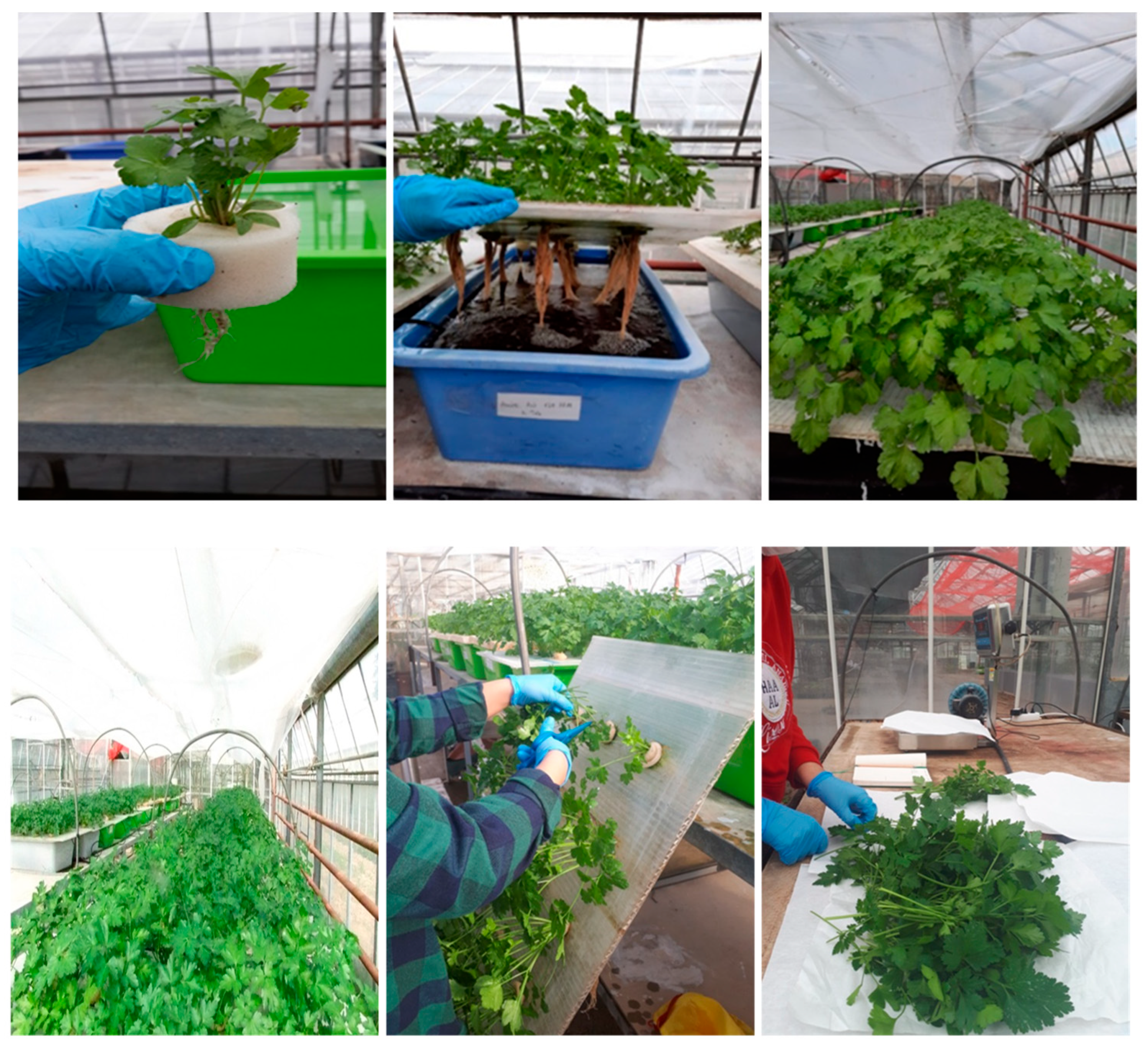
The experiment consisted of four replications, each comprising 45 plants (180 plants per treatment) (
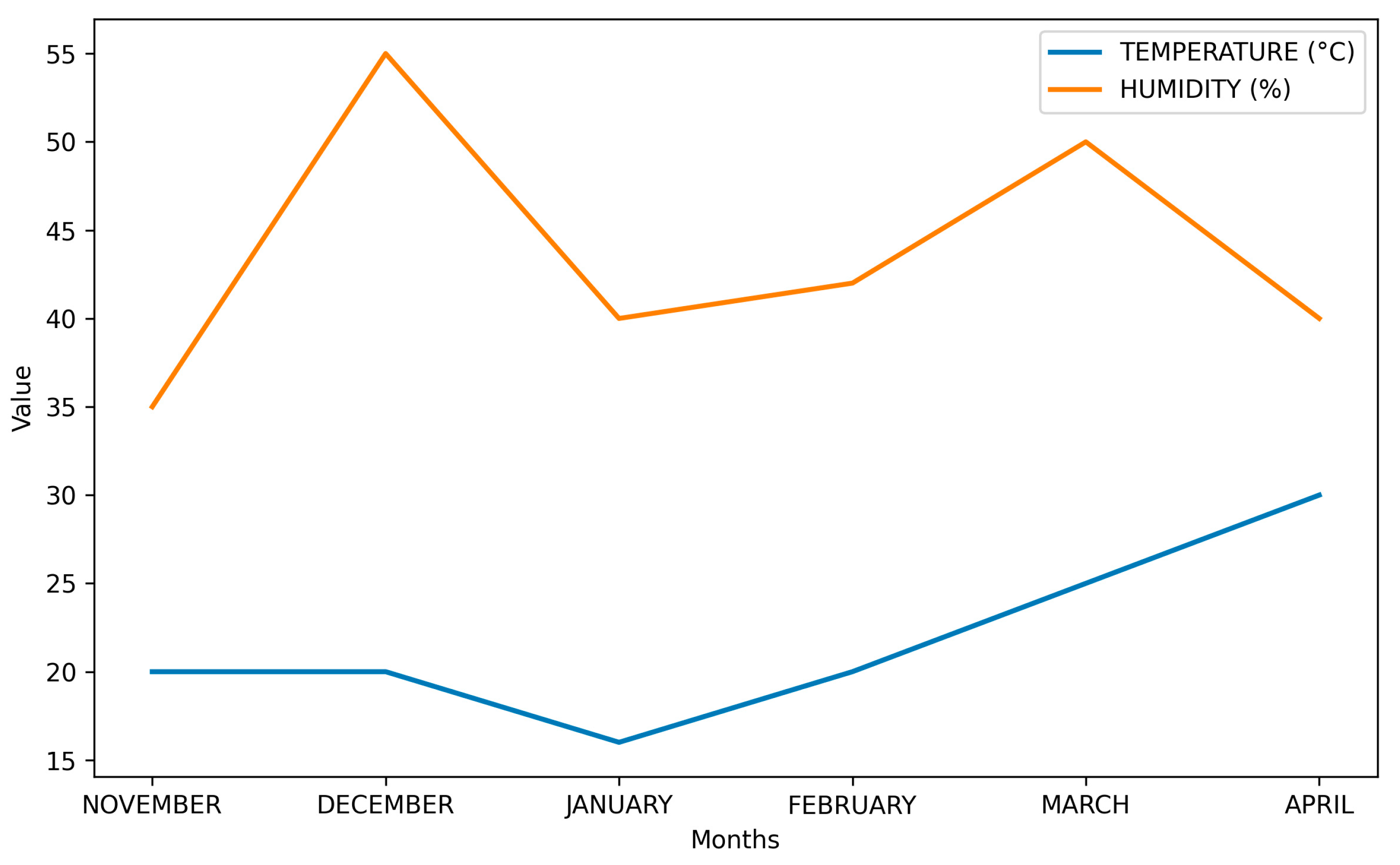
Figure 1). Parsley plants were harvested using a cut-and-regrowth approach. At each harvest, all fully developed leaves were cut while the central growing point was left intact, allowing regrowth from the apical meristem. New leaves emerged within approximately 7–10 days. In the first experiment, three harvests were conducted, whereas in the second experiment only two harvests were completed due to higher greenhouse temperatures, which shortened the growth period (
Figure 2).
The same plants were harvested repeatedly throughout each trial. Total leaf yield (g m
−2) represents the cumulative yield obtained by summing all harvests per treatment. Yield was expressed on an area basis (g m
−2) to ensure comparability across treatments and seasons and was calculated using plant spacing (row × plant distance) (
Figure 1). Plant weight was calculated at the end of each trial as the total fresh weight of all leaves harvested per plant across all harvests. Dry matter content represents the mean dry matter value determined from leaf samples collected at each harvest.
2.3. Biostimulants
In this study, three root-applied biostimulants were used. The amino acid-based biostimulant Amino Gold® (Teos Tarım) and the powdered fulvic acid Sacaka Gold® (Agromer) were applied. The compositions of the amino acid and fulvic acid biostimulants were as follows: the fulvic acid contained 80% total organic matter, including 70% humic–fulvic substances, 70% fulvic acid, and a maximum moisture content of 7%, with a pH ranging from 2.0 to 4.0. The amino acid product contained 70% total organic matter, 14% organic carbon, 3% organic nitrogen, 29% free amino acids, and a maximum moisture content of 20%, with a pH between 2.5 and 4.5. In addition, a chitosan-based biostimulant, Adaga® (Adaga), was used as the chitosan source, with a guaranteed content of 2.5% N-acetyl-d-glucosamine (w/w).
A two-stage experimental design was adopted (
Table 1). In Trial 1, different single doses of fulvic acid (FA), amino acids (AA), and chitosan (C) were tested to identify the most effective dose of each biostimulant. Dose selection was based on total yield (g m
−2), calculated from cumulative leaf harvests, as shown in
Table 2. Accordingly, FA 80 ppm, AA 40 ppm, and C 0.3 mL L
−1 were identified as the most favorable doses.
Trial 2 was established to evaluate the combined application of these selected doses. Single-factor applications were not repeated in Trial 2 because they had already been assessed in Trial 1. Trial 2 was not designed as a full factorial experiment, and treatment effects were therefore interpreted as comparative performance rather than additive or synergistic interactions.
2.4. Measurements of Plant Growth Parameters
For growth measurements, 10 plants were randomly selected and evaluated per replicate. Plant height (cm) was measured using a meter with 1 cm precision. The number of leaves per plant was recorded by manual counting. Leaf area (cm
2 plant
−1) was determined using a leaf area meter (Li-3100, LICOR, Lincoln, NE, USA). Fresh plant weight was measured using a digital balance with 0.1 g accuracy, while dry weight was obtained with a scale precise to 0.01 g. Leaf chlorophyll content was assessed non-destructively using a SPAD chlorophyll meter (Minolta SPAD-502, Tokyo, Japan). Dry matter content was determined from 100 g of fresh parsley samples, which were oven-dried until a constant weight was achieved. Dry matter percentage was then calculated using the following formula:
2.5. Determination of Nitrate Concentration
In parsley plants, nitrate concentration was determined using the method described by Cataldo et al. [
24], which involves the use of salicylic acid. The analysis was conducted colorimetrically at a wavelength of 410 nm. The results were expressed in milligrams per kilogram of fresh weight [
25].
2.6. Determination of Ascorbic Acid Content (Vitamin C)
Fresh parsley samples were homogenized using a juicer to obtain the plant extract. From the extract, 1 mL was mixed with 4.5 mL of 0.4% oxalic acid and filtered through filter paper. Thereafter, 1 mL of the filtrate was reacted with 9 mL of 2,6-dichlorophenolindophenol dye solution, and absorbance was measured at 502 nm using a UV-Vis spectrophotometer (UV-1700 PharmaSpec, Shimadzu, Kyoto, Japan). A standard reference was prepared by diluting 1 mL of the filtered extract with 9 mL of distilled water. Ascorbic acid content was calculated based on the obtained absorbance values [
26,
27].
2.7. Determination of Antioxidant Activity
For the determination of antioxidant activity, the DPPH (2,2-diphenyl-1-picrylhydrazyl) method, as described by Brand-Williams et al. [
28], was used to assess the free radical scavenging activity of parsley (expressed as Trolox equivalents). Aliquots of 50 μL were withdrawn from the Falcon tubes and transferred into 2 mL Eppendorf tubes. Under light-protected conditions, 1950 μL of a 0.06 mM DPPH (2,2-diphenyl-1-picrylhydrazyl) solution was added to each tube. From each prepared sample, 250 μL was dispensed into the microplate wells. For the control, a mixture of 50 μL distilled water and 1950 μL DPPH solution was used, whereas the blank consisted of 50 μL of 80% methanol and 1950 μL The absorbance of DPPH was measured every 5 min at 515 nm using a Multiskan GO Microplate Spectrophotometer. The solvent was used as a blank, and the antioxidant activity was calculated using the following formula:
2.8. Determination of Total Phenolic and Flavonoid Compounds
The total phenolic content in parsley plants was determined using a modified spectrophotometric method based on the procedure outlined by Spanos and Wrolstad [
29]. Aliquots of 50 μL were withdrawn from the Falcon tubes and transferred into 2 mL Eppendorf tubes. Subsequently, 100 μL of Folin–Ciocalteu reagent was added, followed by the addition of 1500 μL of ultrapure water, and the mixture was allowed to react for 10 min. Thereafter, 50 μL of 20% (
w/
v) Na
2CO
3 solution was added, and the samples were incubated for 2 h in the dark. For the control, a mixture containing 50 μL ultrapure water, 100 μL Folin–Ciocalteu reagent, 1500 μL ultrapure water, and 50 μL Na
2CO
3 was prepared. The blank (background correction) consisted of 50 μL of 80% methanol, 100 μL Folin–Ciocalteu reagent, 1500 μL ultrapure water, and 50 μL Na
2CO
3. Absorbance was measured at 765 nm with a spectrophotometer (UV-1700 PharmoSpec Shimadzu, Kyoto, Japan), using a gallic acid calibration curve for quantification. The total flavonoid content was measured at 415 nm following the method of Quettier-Deleu et al. [
30], Total flavonoid content was determined using the aluminum chloride (AlCl
3) colorimetric method. Briefly, 200 μL of each sample was transferred into a 15 mL Falcon tube, followed by the addition of 200 μL of 2% (
w/
v) AlCl
3 solution prepared by dissolving 2 g AlCl
3 in 100 mL ultrapure water. The mixture was vortexed for 20 s, after which 4.6 mL of 96% ethanol was added and vortexed again for 20 s. The reaction mixtures were incubated in a water bath at 20 °C for 40 min under dark conditions, with the tube caps tightly closed to prevent ethanol evaporation. To avoid light exposure, the tubes were wrapped with aluminum foil during incubation. Following incubation, absorbance was measured at 415 nm using a spectrophotometer [
27].
2.9. Mineral Nutrient Analysis
The analysis included macronutrients (N, P, K, Mg, Ca) and micronutrients (Fe, Mn, Cu, Zn). Parsley samples were thoroughly washed three times with distilled water to prevent contamination and dried at 65 °C for 48 h using oven drying. The dried leaves were then ground to a 40-mesh particle size using a leaf grinder. For the analysis of K, Ca, Mg, Na, Fe, Mn, Zn, and Cu, 0.2 g of the ground sample was incinerated at 550 °C for 5 h, and the resulting ash was dissolved in 3.3% HCl (
v/
v) and filtered [
27]. Potassium, calcium, magnesium, and sodium were analyzed in emission mode, while iron, manganese, zinc, and copper were analyzed in absorbance mode using an Atomic Absorption Spectrophotometer (Varian FS220, Palo Alto, CA, USA). Leaf nitrogen and phosphorus content were determined using the Kjeldahl and Barton methods, respectively [
31].
2.10. Statistical Analysis
Data were analyzed using analysis of variance (ANOVA) with JMP statistical software (Version 7.0, SAS Institute, Cary, NC, USA). Four independent replicates were used per treatment. When the F-test was significant (p ≤ 0.05), treatment means were compared using the least significant difference (LSD) test at the 0.05 probability level. Prior to analysis, data were checked for normality and homogeneity of variance.
4. Discussion
Biostimulants represent an innovative and eco-friendly agricultural approach that enhances plant productivity, promotes growth, and improves product quality. These applications support sustainability in agricultural production by enabling the efficient use of natural resources. Additionally, by reducing the use of chemical fertilizers, they contribute to the protection of ecosystems and allow for the production of healthier products in the long term.
The uniform application of humic acid seed priming across all treatments was intended solely to improve germination uniformity and seedling quality and, therefore, is not considered to have influenced the comparative effects of the post-emergence biostimulant treatments.
4.1. The Effects of Biostimulant Applications on Growth Parameters of Parsley
When evaluating the results obtained from the first trial in terms of plant growth parameters, it was found that the FA 80 and C 0.3 biostimulant applications demonstrated more favorable effects compared to other treatments. Notably, the FA 80 + C 0.3 combination stood out in the second trial as well. These findings suggest that the combination of fulvic acid and chitosan may represent an effective biostimulant strategy to support the growth and development of parsley plants. Przygocka-Cyna and Grzebisz [
32], indicated that the use of biostimulants enhances the absorption of nutrients by plants, which in turn contributes to an improvement in the nutritional quality of the final products. Overall, based on the results of the growth parameters assessed in this study, it can be concluded that FA 80 and C 0.3 biostimulant applications are effective in promoting the development of parsley. These findings highlight the potential of biostimulant combinations to improve the total leaf yield of parsley. Pepper, radish, and cucumber plants exhibited increased growth and produced higher-quality fruit following the application of foliar chitosan [
33]. Chitosan is a naturally derived biopolymer that functions as an effective elicitor by activating plant defense mechanisms, thereby contributing to sustainable agricultural practices [
34,
35]. Its beneficial effects are generally influenced by factors such as its concentration, the growth conditions, the method of preparation, and environmental variables [
36]. The findings of our study closely align with the results reported by Oraby [
37], where it was demonstrated that the foliar application of certain biostimulant combinations significantly improved vegetative growth parameters such as plant height, number of branches, leaf area, and both fresh and dry biomass. The higher total leaf yield observed in the winter experiment compared to the spring experiment may be related to seasonal differences in environmental conditions, particularly day and night temperatures; however, since temperature was not an experimentally controlled factor in this study, this effect should be interpreted cautiously.
4.2. The Effects of Biostimulant Applications on Nitrate Content and Antioxidant Activity in Parsley
The effects of different biostimulant applications on the nitrate levels, vitamin C content, antioxidant activities, and total phenolic and total flavonoid contents in parsley were evaluated. The results revealed significant variation in the responses to different biostimulant combinations. Biostimulants have a significant impact on secondary metabolite synthesis. Compounds such as alkaloids, phenylpropanoids, terpenoids, and phenolics contribute significantly to enhancing the plant’s resilience to both biotic and abiotic stress factors [
38,
39,
40].
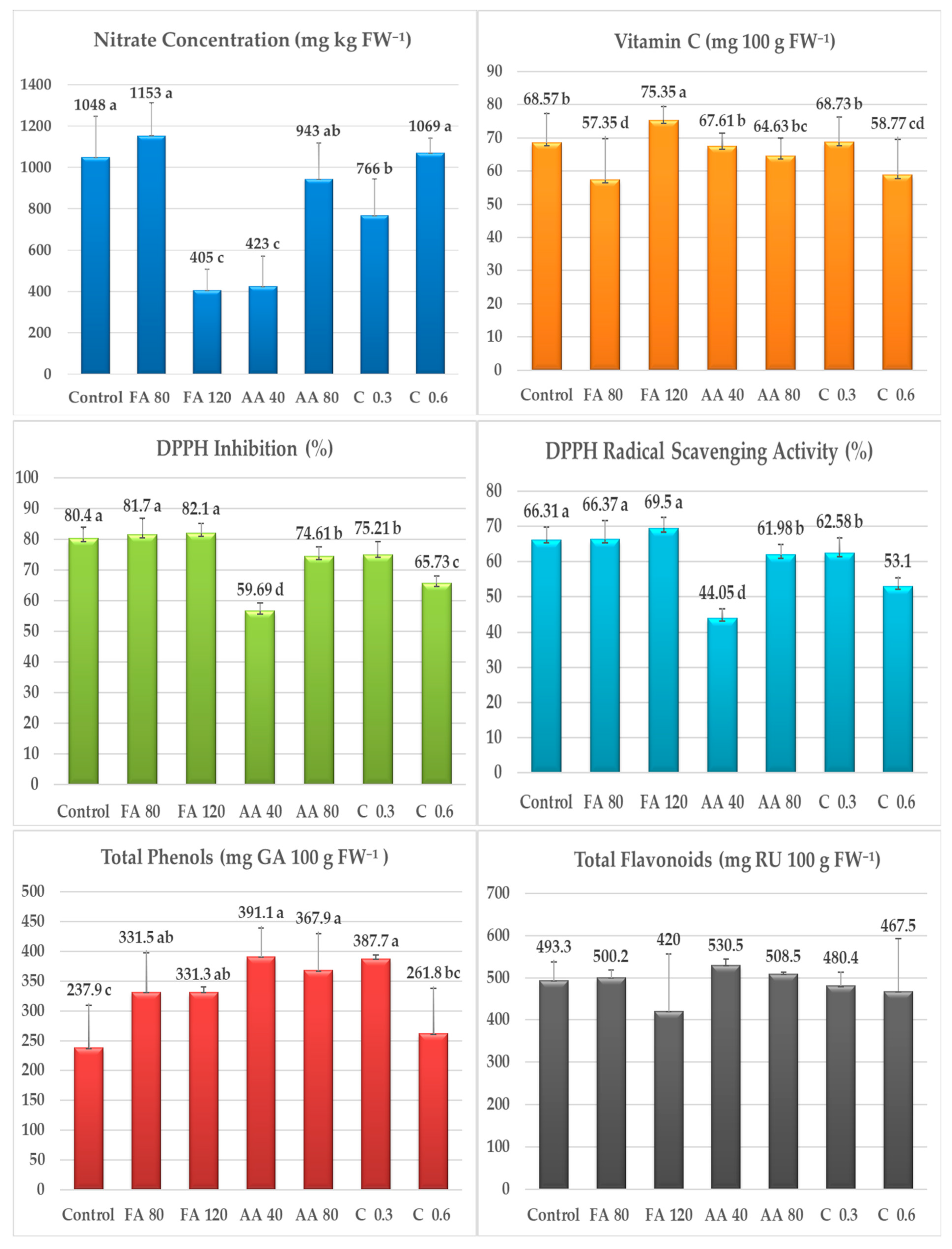
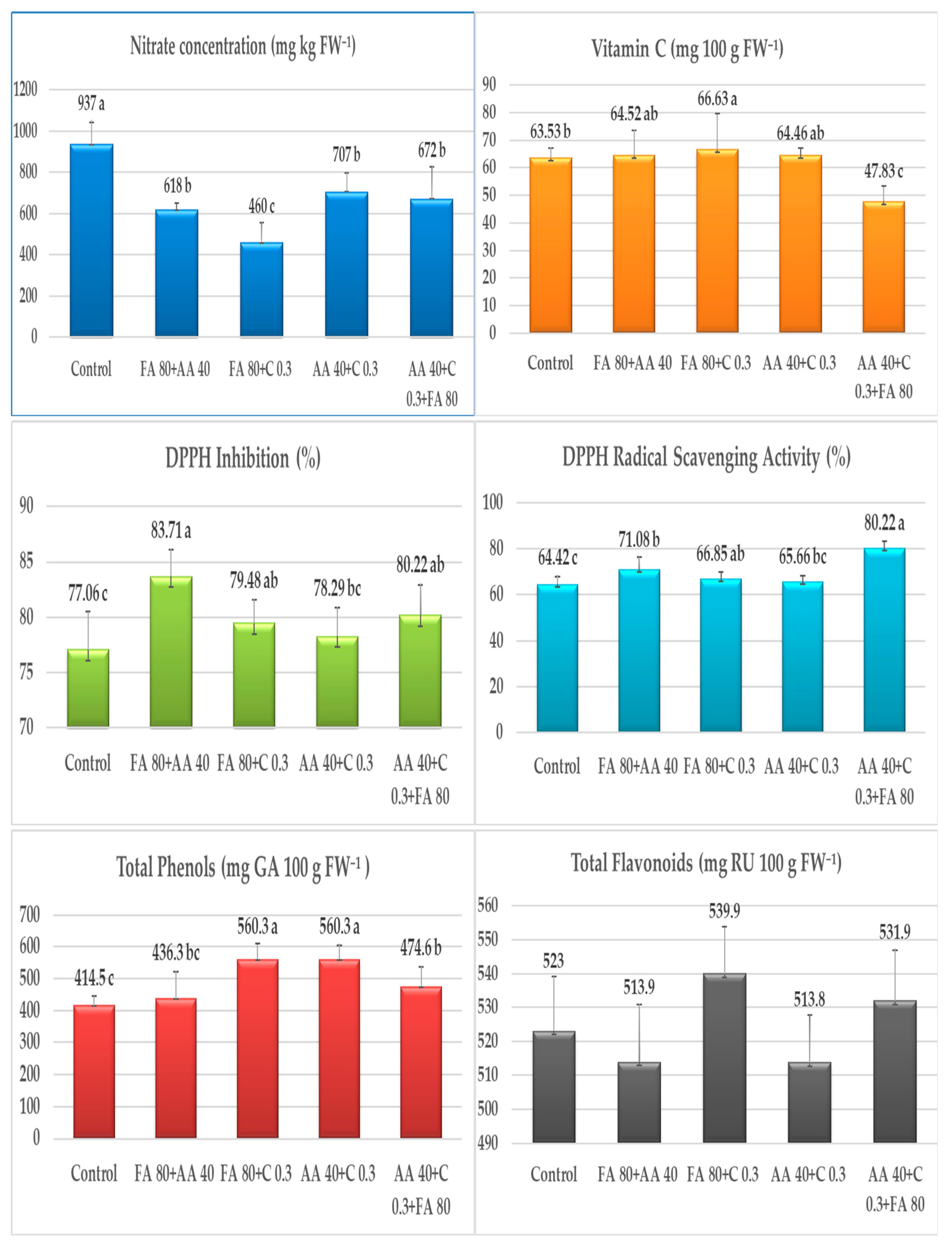
In terms of nitrate content, the control group exhibited the highest nitrate level, while certain biostimulant applications, particularly FA 120 and AA 40, significantly reduced nitrate content. Additionally, the FA 80 + C 0.3 combination was also found to notably decrease nitrate content. Among the applied biostimulants, some treatments and their respective dosages were capable of significantly reducing nitrate levels. Compared to the control plants, nitrate content was lower in all biostimulant applications during the first trial, except for the FA 80 treatment. Keskin et al. [
12] reported that the application of FA alone did not significantly reduce nitrate content in lettuce. Similarly, İkiz et al. [
41] found that FA did not cause any changes in nitrate content in basil plants under biostimulant and salt stress treatments. In the second trial, nitrate content was lower in all biostimulant combinations compared to the control. The study by Keskin et al. [
12] also indicated that biostimulant combinations reduced nitrate content in lettuce, which aligns with the findings of our study. The observed differences in nitrate content between the first and second trials in the control plants can be attributed to the seasonal timing of the experiments, with the first trial conducted in winter and the second trial in spring. The decrease in nitrate content with increasing daylight supports the close relationship between nitrate metabolism and light intensity [
42].
In terms of vitamin C content, the control group exhibited a moderate level. However, the FA 80 application resulted in a decrease in vitamin C content, while the FA 120 application displayed the highest vitamin C content, suggesting that FA 120 may enhance vitamin C levels in parsley. Additionally, the FA 80 + C 0.3 combination showed higher vitamin C content compared to other combinations. Previous studies have also reported that different biostimulant applications can enhance vitamin C content, and the findings of the present study are consistent with those reported in the literature [
27,
41,
43].
In this study, the FA 80 and FA 120 treatments exhibited slightly higher antioxidant activity, as measured by DPPH inhibition and radical scavenging assays, compared to the other applications. This finding suggests that these treatments may stimulate antioxidant defense mechanisms in parsley. Moreover, the FA 80 + AA 40 and AA 40 + C 0.3 + FA 80 combinations also displayed enhanced antioxidant activity, whereas the AA 40 treatment showed the lowest inhibition value, indicating that amino acid applications alone may have a limited effect on promoting antioxidant activity. A study by Wen et al. [
44] demonstrated that the combined application of specific treatments can effectively enhance the growth and physiological responses of switchgrass under saline–alkali stress conditions. Compared to individual applications, the integrated approach led to a significant improvement in biomass accumulation, photosynthetic performance, and antioxidant enzyme activity. These results are consistent with previous reports suggesting that biostimulant applications can modulate both enzymatic and non-enzymatic antioxidant systems, thereby enhancing plants’ ability to cope with oxidative stress [
45]. Similarly, Yadav et al. [
46] demonstrated that plant extract-based biostimulants significantly increased antioxidant capacity, as measured by DPPH and FRAP assays, supporting our observation that combined biostimulant treatments exert superior effects on antioxidant performance.
Regarding phenolic content, all biostimulant treatments led to an increase compared with the control group. In particular, the AA 40, AA 80, C 0.3, FA 80 + C 0.3, and AA 40 + C 0.3 treatments significantly enhanced phenolic accumulation. This outcome aligns with the widely accepted understanding that phenolic compounds play a crucial role in determining antioxidant capacity. Patanè et al. [
47] observed that biostimulant applications influenced both phenolic content and antioxidant activity while improving plant productivity. Previous findings have indicated that biostimulant applications are effective in enhancing phenolic accumulation in various plant species [
12,
27,
41,
43]. In terms of flavonoid content, the FA 80 + C 0.3 combination resulted in the highest flavonoid level; however, the differences among treatments were not statistically significant, suggesting that biostimulant applications may have a limited effect on flavonoid accumulation.
4.3. Effects of Biostimulant Applications on the Mineral Profile of Parsley
In this study, the effects of different biostimulant applications on the mineral content of parsley were evaluated. Among the treatments, several biostimulants had significant effects on different minerals, while others showed no substantial impact.
The mineral analysis results demonstrated that biostimulant applications had varying effects on nutrient accumulation in parsley plants. While nitrogen and potassium contents were not significantly influenced, notable improvements were observed in other elements. Amino acid treatments, particularly AA 40 and AA 80, led to significant increases in calcium, magnesium, copper, and iron contents, highlighting their effectiveness in enhancing mineral uptake. Similarly, FA 80 improved copper and iron levels. Overall, amino acid-based treatments, especially at moderate doses, showed the most consistent positive impact on mineral enrichment in parsley. The results of the second trial demonstrated that biostimulant combinations had selective effects on the mineral content of parsley plants. Notably, the AA 40 + FA 80 + C 0.3 combination resulted in the highest nitrogen accumulation, suggesting a synergistic effect of these biostimulants on nitrogen uptake and assimilation. Conversely, the FA 80 + AA 40 and FA 80 + C 0.3 treatments showed the highest magnesium concentration, indicating treatment-specific responses in mineral absorption. However, other macro- and micronutrients such as phosphorus (P), potassium (K), calcium (Ca), copper (Cu), manganese (Mn), zinc (Zn), and iron (Fe) did not exhibit statistically significant changes across treatments. These findings indicate that although certain biostimulant combinations can enhance the accumulation of specific nutrients, their overall effect on the mineral profile may be limited, depending on the type and combination used, and generally tends to be negative. Previous studies conducted on various plant species have demonstrated that biostimulant applications can modify the dynamics of nutrient uptake and accumulation, generally leading to increased mineral content and improved metabolic efficiency [
12,
27,
41]. However, the findings of the present study indicate that these effects are not always positive and may vary depending on the type, dosage, and combination of biostimulants applied.
Overall, the findings of this study indicate that biostimulant applications can influence mineral uptake and accumulation in parsley. However, the magnitude and direction of these effects appear to vary depending on the type, concentration, and combination of biostimulants used. The absence of significant changes in certain mineral elements further suggests that these treatments may have selective rather than uniform impacts on the mineral composition of parsley.
5. Conclusions
This study clearly demonstrates that fulvic acid, amino acids, and chitosan can effectively improve the growth, productivity, and nutritional quality of parsley grown in hydroponic greenhouse conditions. Among the tested treatments, fulvic acid (80 ppm) and chitosan (0.3 mL L−1) stood out individually and in combination for their strong positive effects on leaf yield and overall plant vigor. Biostimulant application not only enhanced biomass accumulation but also enriched the nutritional profile of parsley by increasing total phenolic compounds and antioxidant capacity, while reducing leaf nitrate levels. These outcomes highlight the value of biostimulants as sustainable and environmentally friendly tools that can replace or complement conventional inputs, particularly in modern soilless cultivation systems. Overall, the consistent improvements observed in yield and nutritional quality indicate a promising role for biostimulant-based strategies in advancing hydroponic vegetable production.
Future research should focus on elucidating the physiological mechanisms underlying the observed responses to biostimulant applications, with particular emphasis on photosynthetic performance. In addition, evaluating the effectiveness of biostimulant combinations across different parsley cultivars and soilless growing systems would help to broaden their practical applicability. Further studies are also warranted to assess potential biostimulant residue dynamics in edible plant tissues, as well as their effects on key postharvest traits such as shelf life and freshness, in order to support both food safety and commercial relevance in hydroponic production systems.