Article

Unraveling the Formation Mechanism of Wax Powder on Broccoli Curds: An Integrated Physiological, Transcriptomic and Targeted Metabolomic Approach


1
Fujian Key Laboratory of Vegetable Genetics and Breeding, Crops Research Institute, Fujian Academy of Agricultural Sciences, Fuzhou 350003, China
2
College of Horticulture, Fujian Agriculture and Forestry University, Fuzhou 350002, China
*
Author to whom correspondence should be addressed.
These authors contributed equally to this work.
Horticulturae 2026, 12(1), 5; https://doi.org/10.3390/horticulturae12010005

Submission received: 31 October 2025 / Revised: 14 December 2025 / Accepted: 17 December 2025 / Published: 19 December 2025
(This article belongs to the Special Issue Genomics and Genetic Diversity in Vegetable Crops)

Abstract

As a vital appearance quality trait of broccoli, curd-surface wax powder not only affects its commercial value but also plays a key role in plant resistance to abiotic stresses. However, its formation mechanism remains unclear. Using low-wax variety CK (‘QH18’) and high-wax variety T1 (‘QHMS4’) as materials, this study systematically elucidated the molecular mechanism of wax powder formation via physiological indexes, scanning electron microscopy (SEM), targeted metabolomics, and transcriptomics. Determination of fatty acid (FA) content in broccoli flower bud tissue showed a close association between FA content and wax deposition. SEM observation revealed that T1 had significantly denser wax crystals, mainly granular, than CK. Targeted metabolomics identified 25 fatty acids in the two varieties. And the linolenic and palmitic acids, with high content and significant differences, may be key metabolites regulating wax synthesis. Integrated transcriptomics and metabolomics indicated that BolfabG, BolLACS, BolKCS1, BolKCS2 and BolMAH1 genes are involved in wax biosynthesis. Moreover, AP2/ERF-ERF transcription factor (TF)-encoding genes (BolERF018, BolERF1F.1, BolERF1F.2 and BolERF1C) played the primary role in regulating wax biosynthesis, followed by NAC (BolNAC62.1), MYB (BolMYB44), and MADS-MIKC(BolPISTILLATA). These TFs may regulate BolfabG, BolLACS, BolKCS1, BolACOX2 and BolACAA1 to affect linolenic and palmitic acid balance, altering wax precursor synthesis and accumulation, and finally leading to differences in wax morphology and content. This study reveals a “Transcription Factors–Differentially Expressed Genes–Differentially Accumulated Metabolites–Fatty Acids” (TFs-DEGs-DAMs-FA) network, providing a basis for understanding broccoli wax formation.

1. Introduction

Broccoli (Brassica oleracea L.), also known as green broccoli, western broccoli, and green cauliflower, is one of the variants of cabbage vegetables belonging to the genus Brassica in the Brassicaceae family [1]. It is rich in nutrients, including various vitamins, dietary fiber, proteins, minerals, trace elements, as well as bioactive substances with anti-cancer properties. Possessing characteristics such as easy digestion and absorption, antioxidant activity, and anti-cancer effects, broccoli is a highly nutritious and health-promoting vegetable favored by consumers at home and abroad [2,3,4]. The surface of broccoli curd appears gray-green or gray-white due to the coverage of a layer of wax powder. Among them, curds with higher wax powder content and gray-green color are more favored in the market [5]. Therefore, studying the molecular mechanism of wax powder formation on broccoli curd surfaces and related functional genes is of great value for creating excellent germplasm resources and breeding new varieties.
Plant wax (also referred to as the wax layer) is a class of lipid components in the outer layer of plant epidermis, typically presenting as a gray-green or gray-white frosty covering [6]. The main components of wax in Brassicaceae plants are very-long-chain fatty acids (VLCFAs) and their derivatives, including fatty acids, alkanes, alcohols, aldehydes, esters, ketones, and other substances [7]. The wax of Brassicaceae plants exhibits 26 morphological types, such as lamellar, granular, tubular, rod-shaped, columnar, and reticular, with sizes generally ranging from 0.2 to 100.0 μm [8]. The wax structure varies across different plant parts: in Arabidopsis thaliana, the wax on leaf surfaces is irregular, while that on stigma and stem surfaces is columnar [9]. Furthermore, wax crystals differ at various developmental stages of the same species. Under a scanning electron microscope, it was observed that the epidermal wax of cabbage at the seedling stage is mostly granular, acicular, and lamellar; at the heading stage, it is mostly lamellar and columnar; and at the mature stage, it is mainly lamellar and acicular [10]. The epidermal wax of Brassicaceae plants not only serves as a hydrophobic barrier outside epidermal cells but also acts as an important defense structure. During plant growth and development, it plays roles in maintaining water balance, reflecting ultraviolet radiation, reducing low-temperature damage, resisting bacterial and fungal invasion, and preventing insect feeding [11]. In addition, it is involved in regulating the coloration characteristics of plant organs, affecting the integrity of fruit development, and is closely related to the reproductive capacity of plants [12].
Plant wax synthesis is an extremely complex process that requires the involvement of multiple organelles and catalysis by various enzymes [13]. Currently, research on this process is relatively thorough in Arabidopsis thaliana, and the basic metabolic pathway has been clarified. The synthesis of plant cuticular wax mainly consists of three stages: First, the de novo synthesis of C16-C18 fatty acid precursors occurs in plastids, catalyzed by acetyl-CoA carboxylase (ACC), fatty acid synthase (FAS) complex, acyl carrier protein thioesterase (FAT), and long-chain acyl-CoA synthetase (LACS) [14]. The identified FATs in plants include acyl carrier protein thioesterase A (FATA) and acyl carrier protein thioesterase B (FATB). In Arabidopsis fatb loss-of-function mutants, the wax content on the surfaces of leaves and stems decreases [15,16]. To date, 9 LACS family genes have been identified in Arabidopsis, among which LACS1 and LACS2 are both involved in wax synthesis [17,18]. Additionally, LACS1 and LACS4 jointly participate in the synthesis of VLCFAs in the pollen coat [19]. Second, the extension of these fatty acids to C20-C34 VLCFAs takes place in the endoplasmic reticulum (ER), catalyzed by the fatty acid elongase (FAE) complex. This complex comprises β-ketoacyl-CoA synthase (KCS), β-ketoacyl-CoA reductase (KCR), β-hydroxyacyl-CoA dehydratase (HCD), and enoyl-CoA reductase (ECR). Among these, KCS is the key enzyme of the reaction and exhibits substrate specificity [20]. In Arabidopsis, numerous mutants of KCS-like genes have been identified, including KCS1, KCS2, KCS20, KCS6, KCS9, KCS10, KCS13 and CER6 [21,22,23,24]. There are two KCR genes in Arabidopsis (KCR1 and KCR2) and researchers have found that only AtKCR1 functions in fatty acid elongation [25]. In contrast, research on HCD is relatively limited. A gene encoding HCD, PASTICCINO2 (PAS2) has been identified in Arabidopsis, and it is hypothesized that PAS2 plays an important role in VLCFA synthesis and biological development [26]. In citrus, the CsECR gene encodes ECR; ectopic overexpression of CsECR in tomato resulted in increased contents of total wax and aliphatic wax components in the leaves and fruits of transgenic tomato plants [27]. Third, VLCFAs in the ER are converted into various wax products (e.g., alkanes, alcohols, aldehydes and esters) through the primary alcohol metabolic pathway and alkane metabolic pathway. This process is catalyzed by fatty acyl-CoA reductase (FAR), wax ester synthase (WS), and midchain alkane hydroxylase (MAH) [28,29,30]. CER4 encodes FAR; researchers found that the contents of alcohols and wax esters in the stems of Arabidopsis cer4 mutants were significantly reduced [31]. In Arabidopsis, the wax ester content of WSD mutants is significantly lower than that of wild-type plants, indicating that WSD may encode WS in the alcohol synthesis pathway [32]. Moreover, CER1 and CER3 mutants have been identified in Arabidopsis and shown to play important roles in the alkane pathway: the alkane content is significantly reduced in cer1 mutants, while the contents of alkanes, secondary alcohols, aldehydes, and ketones are all significantly decreased in cer3 mutants [33,34]. In recent years, the functions of CER1 and CER3 genes have also been successively identified in various vegetables, such as Brassica napus, Chinese cabbage (Brassica rapa), tomato, and cucumber [35,36,37,38].
The deposition process of plant cuticular wax involves multi-level regulatory mechanisms, and its synthetic metabolism is dynamically regulated by various transcription factors to respond to environmental changes. Transcription factors associated with wax synthesis include WAX INDUCER1/SHINE1 (WIN1/SHN1), CURLY FLAG LEAF1 (CFL1), GLABROUS1 (HDG1), DEWAX, MYB96 and MYB94 [39,40,41,42]. WIN1/SHN1 is an AP2-EREBP-type transcription factor. Overexpression of SHN1 in tomato revealed that SHN1 acts as a transcriptional activator regulating wax synthesis [43]. The CFL1 and HDG1 transcription factors belong to the HD-ZIP gene family; CFL1 can negatively regulate the expression of HDG1, while HDG1 can regulate the expression of downstream genes BDH and FDH [40]. The DEWAX transcription factor is an AP2/ERF-type transcription factor that modulates wax synthesis through negative regulation. The total cuticular wax content of Arabidopsis decreases under dark conditions, which is significantly associated with the downregulated expression of the DEWAX gene in Arabidopsis [44]. The MYB96 transcription factor is closely related to the regulation of plant drought tolerance. Studies have shown that the Arabidopsis MYB96 protein, as a transcriptional activator, can directly bind to the conserved sequences in the promoters of wax synthesis genes and activate their expression, thereby increasing wax content and enhancing drought resistance [45]. It has been found in Arabidopsis that the MYB96 transcription factor is also associated with plant cold tolerance; MYB96 can improve plant cold resistance by regulating the expression of the LTP3 gene [46]. The MYB94 transcription factor shares similar functions with MYB96. The expression level of MYB94 in Arabidopsis increases 9-fold under drought conditions, and the wax content of MYB94-overexpressing lines is 2-fold higher than that of wild-type plants [47].
Wax content is regulated by various environmental factors, such as ultraviolet (UV) radiation, water availability, and temperature [48]. Metwally et al. reported that prolonged UV exposure significantly increases the thickness of the epicuticular wax layer in plants [49]. Under drought stress, plants enhance cuticular wax synthesis to cope with water deficit, a phenomenon that has also been confirmed in Arabidopsis [50]. Temperature changes directly modulate wax layer density, chemical composition, and biomechanical properties: elevated temperatures not only induce alterations in cuticular viscoelasticity but also promote wax accumulation and drive significant changes in wax chemical composition [51,52].
Network analysis of metabolomics and transcriptomics has been successfully applied to studies on plant metabolic mechanisms and gene regulatory functions [53]. However, there are no reported studies on the mining and functional analysis of genes involved in broccoli curd wax powder synthesis using metabolomic and transcriptomic sequencing technologies. Therefore, in this study, the low-wax broccoli curd variety CK (‘QH18’) and high-wax variety T1 (‘QHMS4’) were used as materials. Based on targeted metabolomic and transcriptomic sequencing technologies, the expression of genes related to cuticular wax on the surface of different broccoli curds was analyzed, and a regulatory network associated with wax synthesis was constructed. This work lays a foundation for in-depth exploration of the molecular mechanism underlying the biosynthesis and metabolism of broccoli curd wax powder, the mining of related genes, and their application in genetic breeding.

2. Materials and Methods

2.1. Plant Materials

Two broccoli varieties with significantly different wax content on curd surfaces were used as experimental materials in this study: the control variety CK (‘QH18’) was a low-wax material, and T1 (‘QHMS4’) was a high-wax material. All seeds were provided by Xiamen Zhongxia Vegetable Seed Industry Co., Ltd. (Xiamen, Fujian Province, China). The materials used were genetically stable pure lines obtained through more than five consecutive generations of self-pollination. The authenticity of these varieties was verified by both SSR marker-based molecular identification and observation of phenotypic consistency over multiple successive generations. The experiment was conducted in a modern glass greenhouse at the Fujian Academy of Agricultural Sciences (26°07′50″ N, 119°20′04″ E) from 27 September 2024, to 13 February 2025. A completely randomized block design was adopted for cultivation management. The greenhouse environmental parameters were set as follows: natural light conditions, day and night temperatures maintained at 25 °C and 15 °C, respectively, and relative air humidity controlled at approximately 70%. During the experiment, an intelligent irrigation system was used for precise water and fertilizer management to ensure that the plants received adequate water and nutrient supply. Other agronomic management measures were implemented in accordance with the local standardized cultivation technical regulations for field-grown broccoli.
For this study, two cultivars were selected, from each of which four plants with uniform growth and waxy curd uniformity were randomly chosen, with three biological replicates established per cultivar. Sampling was conducted when the curds reached commercial maturity (compact with no loosening at the margins), resulting in a total of eight plant samples collected. Representative bud tissues were obtained using the five-point sampling method, and the samples were immediately divided into four parts for subsequent processing: the first part was used for FA content determination; the second part for scanning electron microscopy observation; the third part for targeted metabolite analysis; and the fourth part for transcriptome sequencing and RT-qPCR validation analysis. All samples were quickly stored in a −80 °C ultra-low temperature refrigerator to ensure sample integrity. All operations were performed on ice to guarantee sample quality, and the consistency of tissue sources among different treatment groups was strictly controlled.

2.2. Scanning Electron Microscopy Analysis of Wax Crystal Morphology on Broccoli Floret Surfaces

In this study, the low-wax broccoli variety CK and high-wax variety T1 were selected as experimental materials, and SEM technology was used to observe the morphology of wax crystals on the surface of broccoli buds. The specific methods were as follows: First, the buds were cut into small pieces of 3 mm × 5 mm, with careful handling to maintain the integrity of the wax layer. Subsequently, the samples were fixed on sample stubs and pre-cooled in a liquid nitrogen environment. Then, the VFD-30 freeze dryer (Hitachi High-Technologies (Shanghai) International Trading Co., Ltd., Shanghai, China.) was used for sample transfer under vacuum conditions: the samples were first sublimated at −70 °C for 20 min, followed by a 45-s gold-sputtering treatment. Finally, a Hitachi Regulus 8100 scanning electron microscope (Hitachi Scientific Instruments (Beijing) Co., Ltd., Beijing, China.) was employed to observe and capture the surface morphology of the samples, with the magnification and imaging field adjusted according to the observation requirements.

2.3. Determination and Analysis of FA Content in Broccoli Flower Bud Tissue

The micro-method was used to determine the FA content in broccoli flower bud tissue, and the specific operation was performed in accordance with the instructions of the kit (Fujian Herui Biotechnology Co., Ltd., Fuzhou, Fujian Province, China). For the determination, 0.1 g of bud sample was weighed, and 1 mL of extraction solution was added. After oscillating for 3 h to extract FA, the mixture was centrifuged at 8000× g for 10 min at 4 °C, and the supernatant was collected for subsequent determination. Three replicates were set for each sample, and a blank control was also established simultaneously. The absorbance value was measured at a wavelength of 715 nm using a microplate reader (BioTek Synergy H1; Agilent Technologies, Inc., Santa Clara, CA, USA). The FA content was calculated based on the standard curve, and the results were expressed as nmol per gram of fresh weight (nmol·g−1·FW). During the experiment, the operation temperature and time were strictly controlled to ensure the accuracy of the data. Furthermore, the measured FA pool represents total tissue FA and is used here as a metabolic proxy rather than a direct wax quantification.

2.4. Targeted Metabolomics Profiling and Data Analysis

2.4.1. Gas Chromatography-Mass Spectrometry (GC-MS) Analysis

Targeted metabolomic analysis was conducted on floret samples of two broccoli cultivars stored at −80 °C, with three biological replicates per cultivar (six samples total), performed by Biomarker Technologies Corporation following standardized protocols. For fatty acid extraction and derivatization, precisely 50 mg of sample was homogenized in a 2 mL EP tube containing 500 μL extraction solvent (isopropanol: n-hexane = 2:3, v/v) with 0.2 mg·L−1 internal standard and steel beads, vortexed for 30 s. Samples were processed using a 40 Hz grinder for 4 min followed by ice-water bath ultrasonication for 5 min, repeated for three cycles. After centrifugation (12,000 rpm, 15 min, 4 °C), 450 μL supernatant was collected, with residual pellets re-extracted and supernatants pooled. Nitrogen-evaporated extracts were derivatized with 500 μL methanol/trimethylsilyl diazomethane (1:2, v/v) for 30 min at room temperature. Following repeat evaporation, residues were reconstituted in 160 μL n-hexane, centrifuged (12,000 rpm, 1 min), and supernatants subjected to GC-MS analysis. All procedures included triplicate technical replicates with stringent quality controls.
The analysis was performed using an Agilent 7890B gas chromatography-mass spectrometry system (Agilent Technologies, Inc., Santa Clara, CA, USA) equipped with a DB-FastFAME capillary column (30 m × 0.25 mm × 0.25 μm). Chromatographic conditions were set as follows: 1 μL injection volume with a 5:1 split ratio, high-purity helium as carrier gas at a constant pressure of 46 psi and a pre-column purge flow of 3 mL·min−1. The temperature program initiated at 50 °C (1 min hold), ramped at 50 °C·min−1 to 200 °C (15 min hold), followed by 2 °C·min−1 to 210 °C (1 min hold), and finally 10 °C·min−1 to 230 °C (15 min hold). Mass spectrometric parameters included: electron impact (EI) ionization at 70 eV; ion source temperature 150 °C; quadrupole temperature 230 °C; transfer line temperature 240 °C; injector temperature 240 °C. Data acquisition commenced after a 7 min solvent delay using selected ion monitoring (SIM) mode for optimal detection sensitivity and specificity.

2.4.2. Targeted Metabolomics Data Analysis

Principal component analysis (PCA) was performed on the normalized data using the R package ComplexHeatmap (v2.20.0) to assess overall sample variation [54]. The fold change (FC) of each metabolite was calculated, and Student’s t-test was applied to obtain the raw p-values. Subsequently, the Benjamini–Hochberg method was used to correct these raw p-values for multiple testing. DAMs were identified according to the criteria of VIP (Variable Importance in Projection) ≥ 1 and p-value < 0.05. Metabolite classification and pathway annotation were performed based on the Kyoto Encyclopedia of Genes and Genomes (KEGG), Human Metabolome Database (HMDB), and Lipidmaps databases. Finally, a hypergeometric distribution test was used to perform KEGG pathway enrichment analysis on the DAMs, so as to determine the significantly enriched metabolic pathways. Notably, Rich factor = (Number of significant items in a pathway)/(Total number of items in that pathway in the reference database).The reference “universe” is the set of all known metabolites mapped to KEGG pathways.

2.5. Transcriptome Sequencing and Data Analysis

2.5.1. RNA Extraction and Quality Control of Broccoli Florets

Transcriptome sequencing was performed on −80 °C preserved floret samples from two broccoli cultivars, with three biological replicates per cultivar (six samples total), conducted by Biomarker Technologies Corporation, Beijing, China. Total RNA was extracted using the TianGen DP441 Plant RNA Kit (Tiangen Biotech Co., Ltd., Beijing, China), followed by rigorous quality assessment: RNA purity was verified via Nanodrop 2000 spectrophotometry (Thermo Fisher Scientific, Waltham, MA, USA), integrity evaluated using Agilent 2100 Bioanalyzer (Agilent Technologies, Inc., Santa Clara, CA, USA), and concentration precisely measured with LabChip GX technology (PerkinElmer, Inc., Waltham, MA, USA), ensuring all samples met stringent requirements for high-throughput sequencing.

2.5.2. Library Construction and Reference Sequence Analysis

Transcriptome libraries were constructed using the Illumina high-throughput sequencing platform (Illumina, Inc., San Diego, CA, USA) following standardized protocols. Polyadenylated mRNAs were first enriched using Oligo(dT) magnetic beads, followed by fragmentation in Fragmentation Buffer. First-strand cDNA was synthesized from fragmented mRNA templates via reverse transcription, with subsequent second-strand synthesis using DNA Polymerase I and RNase H. Purified double-stranded cDNA underwent end repair, 3′-adenylation, and adapter ligation before size selection with AMPure XP beads and PCR amplification to complete library preparation.
Following construction, libraries were initially quantified using Qubit 3.0 Fluorometer (Thermo Fisher Scientific, Waltham, MA, USA; minimum requirement: 1 ng·μL−1), with insert size distribution verified by Qsep400 high-throughput (Bioptic Inc., New Taipei City, Taiwan, China) analysis system. Accurate quantification of effective library concentration (>2 nM) was performed via qPCR prior to sequencing. Following quality control, the RNA libraries were sequenced on the Illumina platform. Raw sequencing data were initially processed with Trimmomatic 0.39 for adapter trimming and low-quality read removal. The resulting clean reads were then aligned to the Boleracea reference genome (http://39.100.233.196:82/download_genome/Brassica_Genome_data/Braol_HDEM_V1.0/; accessed on 25 March 2025) using Hisat2, and gene expression levels were quantified in FPKM units via feature Counts [55].

2.5.3. Identification of Differentially Expressed Genes and Functional Enrichment Analysis

In this study, the FPKM (Fragments Per Kilobase of exon per Million fragments mapped) method was used for the quantitative analysis of gene expression levels [56]. Differential expression analysis was performed in parallel using three algorithms: DESeq2, edgeR, and EBSeq [57,58]. FC represents the ratio of expression levels between two samples or groups. To facilitate comparison, the fold change is logarithmically transformed to log2FC. The significance of differences was determined using Student’s t-test to obtain raw p-values, which were then adjusted to FDR using the Benjamini–Hochberg method. Significantly differentially expressed genes (DEGs) were screened based on the criteria of |log2FC| ≥ 1 and FDR < 0.05 [59]. Functional annotation analysis of all DEGs, including Gene Ontology (GO) annotation and KEGG pathway enrichment analysis, was completed on the BMKCloud (Biomarker Cloud) bioinformatics analysis platform [60]. Notably, the reference universe is the set of all genes/proteins mapped to KEGG pathways.

2.6. Integrative Analysis of Transcriptomics and Metabolomics Data

2.6.1. Transcription Factor and Target Gene Prediction

All genes obtained from transcriptome sequencing were aligned with all transcription factors of Arabidopsis thaliana in the PlantTFDB (Plant Transcription Factor Database) using the BMKCloud platform (www.biocloud.net; accessed on 27 June 2025). Subsequently, target gene prediction was performed using the Fimo plugin of TBtools-II (v2.153). Finally, plotting was conducted using the Chiplot online website (https://www.chiplot.online/; accessed on 27 June 2025).

2.6.2. Regulatory Network Construction

The Pearson correlation coefficients (PCC) were calculated between the FPKM values of DEGs related to the wax biosynthesis pathway, the relative contents of DAMs, and the fatty acid contents, and the raw p-values were obtained. The p-values from all correlation tests were subsequently corrected for multiple comparisons using the Benjamini–Hochberg method. Indicators with an extremely high correlation with wax biosynthesis were screened using |PCC| ≥ 0.82 and p-values < 0.05 as thresholds. Meanwhile, the same method was used to analyze the correlations among the following pairs: transcription factors related to wax synthesis and DEGs in the wax synthesis pathway, DEGs in the wax synthesis pathway and DAMs related to wax synthesis, and DAMs related to wax synthesis and the fatty acid contents.

2.6.3. RT-qPCR Validation

The expression patterns of 15 selected DEGs were verified by quantitative real-time PCR (RT-qPCR) using the HiScript II Q RT SuperMix (+gDNA wiper) (Nanjing Vazyme Biotech Co., Ltd., Nanjing, Jiangsu, China) and ChamQ Universal SYBR qPCR Master Mix (Vazyme Biotech) following manufacturer’s protocols [61]. Gene-specific primers for the target genes and reference gene BolActin (Genbank accession number: AF044573.1) were designed and synthesized by Tsingke Biotechnology (Beijing, China; primer sequences provided in Supplementary Table S3). All reactions were performed in triplicate technical replicates on a QuantStudio 6 Flex Real-Time PCR System (Applied Biosystems, Waltham, MA, USA), with relative expression levels calculated using the 2−ΔΔCt method with Actin as the internal control [62].

2.7. Data Analysis

Experimental data were processed using Microsoft Excel 2019. Statistical analysis, correlation analysis, and significance test for differences (p < 0.05) were performed using GraphPad Prism 10.5. Graphs were plotted using Origin 2018 and the online platform Chiplot.

3. Results

3.1. Observation on Wax Morphological Structure and Determination of FA Content in Broccoli Flower Bud Tissue

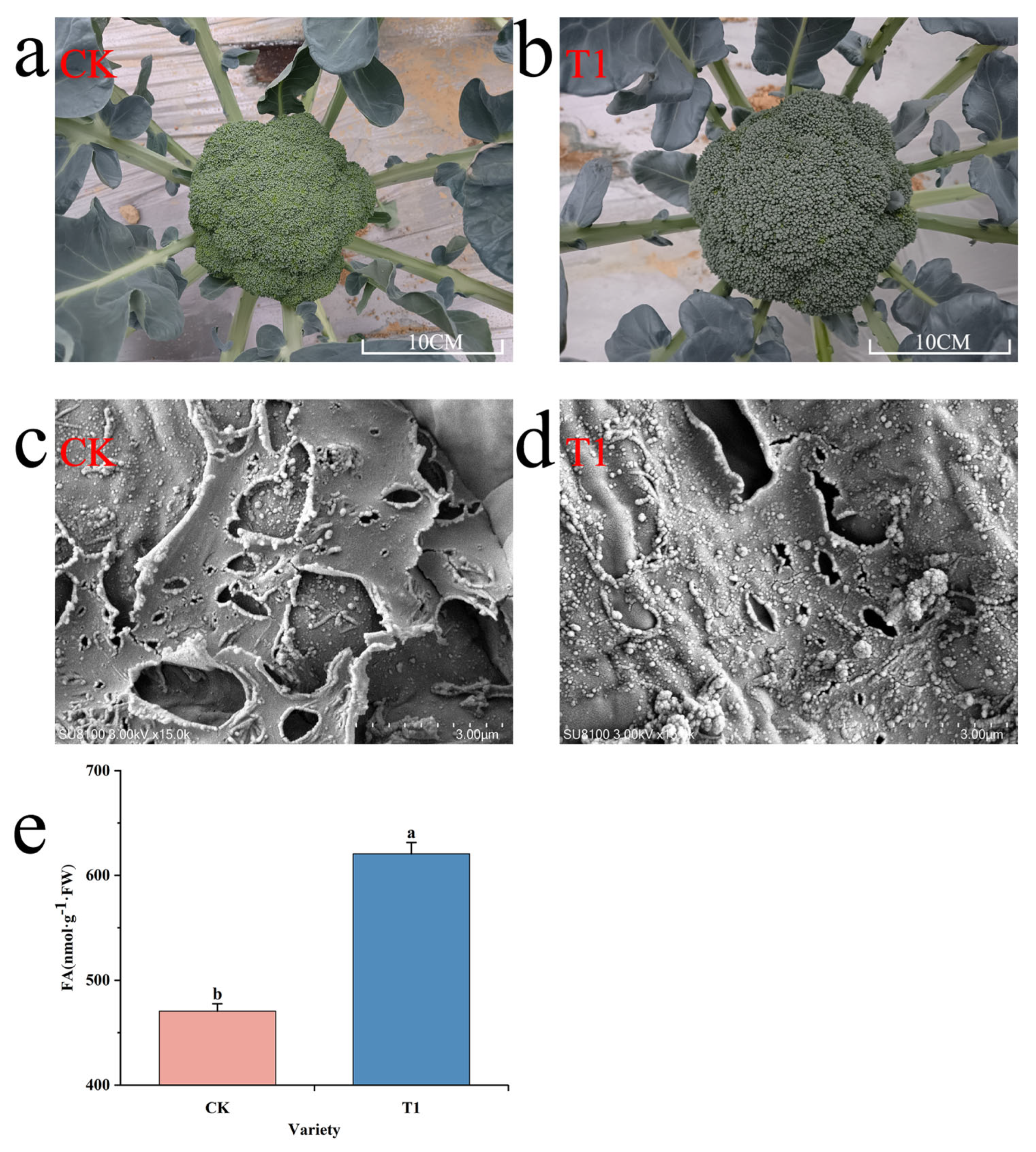
The broccoli curd of the low-wax cultivar CK exhibited a bright, emerald-green color with a smooth surface and distinct luster (Figure 1a). In contrast, the curd of the high-wax cultivar T1 was darker, showing a grayish-green color, and its surface presented a typical matte or frosted texture (Figure 1b).
SEM was employed to observe the wax structure on the flower bud surfaces of CK (low-wax) and T1 (high-wax) cultivars. The results revealed that wax crystals existed on the surfaces of both cultivars, but significant differences were observed in their morphology and distribution. Only a small amount of wax crystals were distributed on the surface of CK (Figure 1c). However, the surface of T1 was densely covered with wax, mainly in the form of granular and flake-like crystals, with granular structures being dominant (Figure 1d). At the same magnification, the distribution density of wax crystals on CK was significantly lower than that on T1.
The FA content in broccoli flower bud tissue was determined. The results showed that the FA content of the high-wax cultivar T1 was 620.51 nmol·g−1·FW, while that of the low-wax cultivar CK was 470.57 nmol·g−1·FW, with a significant difference between the two cultivars (Figure 1e). These findings indicate that there is a close association between the FA content in flower bud tissue and the amount of wax deposition.

3.2. Targeted Metabolomic Profiling

3.2.1. Quality Assessment of Fatty Acid Metabolomics in Broccoli Florets

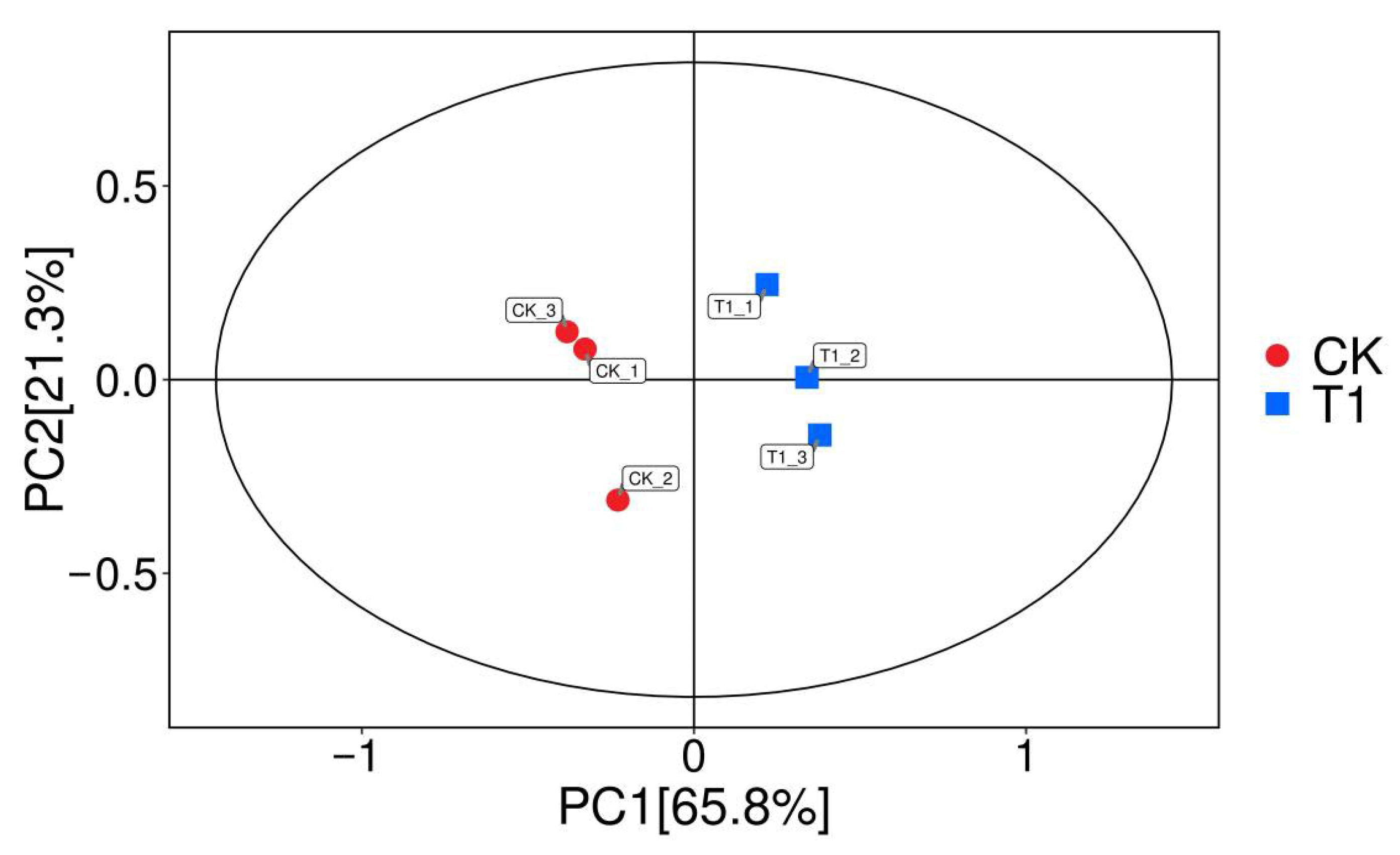
To investigate metabolic differences between low-wax (CK) and high-wax (T1) broccoli cultivars, we performed GC-MS-based targeted analysis of FAs. Principal component analysis (PCA) revealed distinct separation between cultivars along PC1 (65.80%) and PC2 (21.30%), with a cumulative variance contribution of 87.10%, indicating significant inter-cultivar metabolic variation (Figure 2). Tight clustering of biological replicates within each group demonstrated excellent experimental reproducibility, validating the robustness of our metabolomic profiling approach. The pronounced metabolic divergence observed between CK and T1 provides a foundation for subsequent differential metabolite identification and pathway analysis.

3.2.2. Identification and Enrichment Analysis of Differential Fatty Acid Metabolites in Broccoli Florets

GC-MS analysis identified 25 FAs comprising 11 saturated (SFAs) and 14 unsaturated fatty acids (UFAs), with UFAs predominating in both cultivars. Linolenic acid represented the most abundant FA component. Comparative analysis revealed significant differences (p-value < 0.05) in myristic, palmitic, oleic, linolenic, eicosatrienoic and lignoceric acids between CK and T1, while pentadecanoic, palmitoleic, cis-vaccenic, arachidonic, eicosapentaenoic, erucic and nervonic acids showed highly significant variations (p-value < 0.01), with linolenic and palmitic acid being particularly abundant (Table 1).
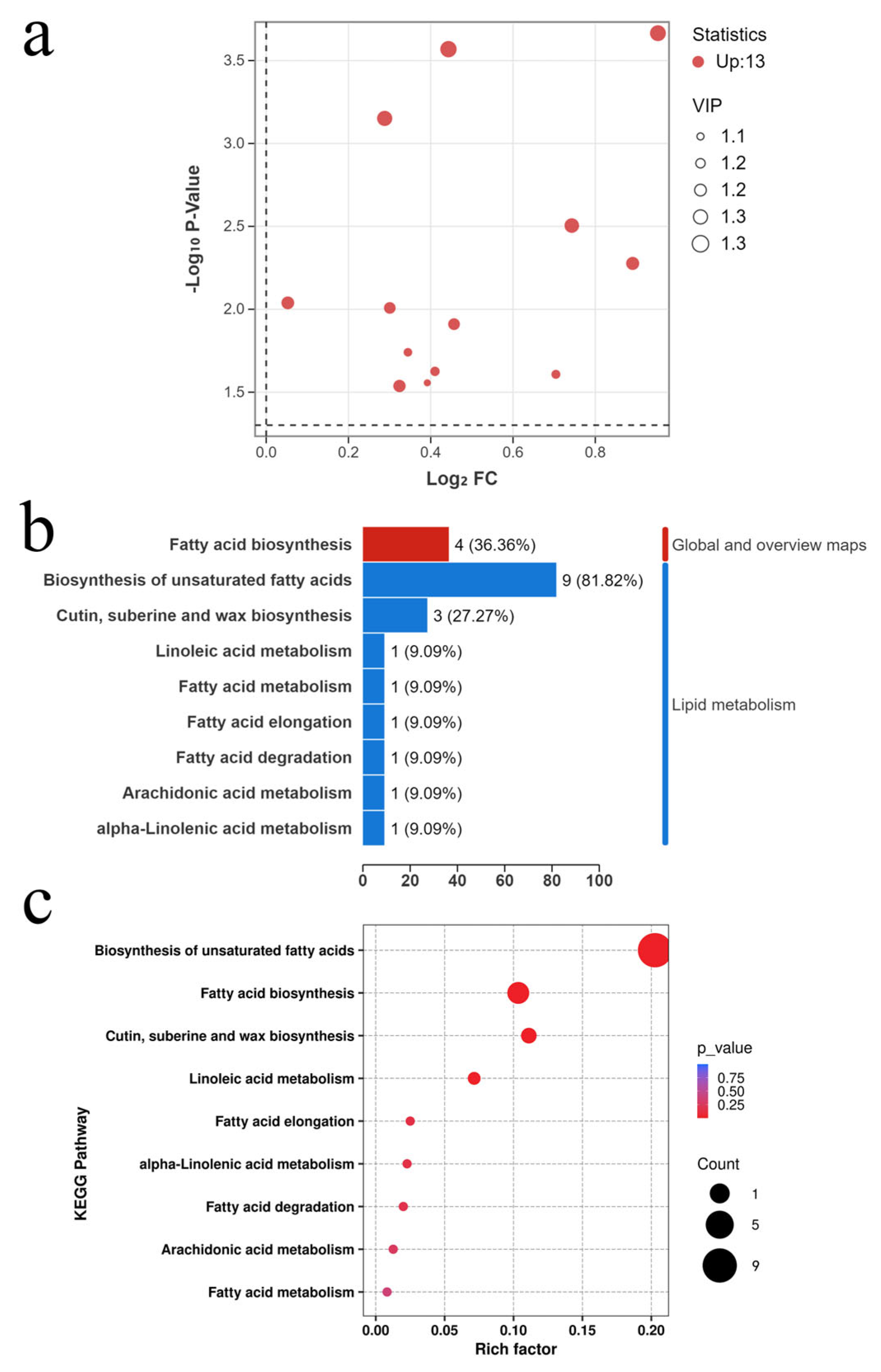
DAMs between the CK and T1 groups were identified using the thresholds of VIP ≥ 1 and p-value < 0.05. A total of 13 DAMs were screened, all of which were up-regulated (Figure 3a). KEGG pathway annotation revealed that, of the 13 DAMs, 11 were successfully annotated. They were predominantly annotated to the biosynthesis of unsaturated fatty acids (81.82%), fatty acid biosynthesis (36.36%), and the biosynthesis of cutin, suberin, and waxes (27.27%). Among these, the biosynthesis of unsaturated fatty acids pathway was the most prominent. (Figure 3b). Among the top 9 significantly enriched pathways, biosynthesis of unsaturated fatty acids, fatty acid biosynthesis, cutin/suberin/wax biosynthesis, linoleic acid metabolism and fatty acid elongation were most prominent (Figure 3c), highlighting key metabolic divergence between the cultivars.

3.3. Transcriptomic Analysis

3.3.1. Quality Assessment of Broccoli Floret Transcriptome Sequencing

To investigate the transcriptomic basis of wax formation, we constructed six strand-specific cDNA libraries (three biological replicates per cultivar) for RNA-seq analysis. High-throughput sequencing generated 35.69 Gb of clean data (minimum 5.74 Gb per sample), with quality metrics exceeding Q20 > 98.48%, Q30 > 94.17%, and average GC content of 46.05%, confirming data reliability for downstream analysis. Reference genome alignment showed 92.29–92.84% overall mapping rates, including 89.63–90.48% uniquely mapped reads and 2.36–2.66% multi-mapped reads (Supplementary Table S1).
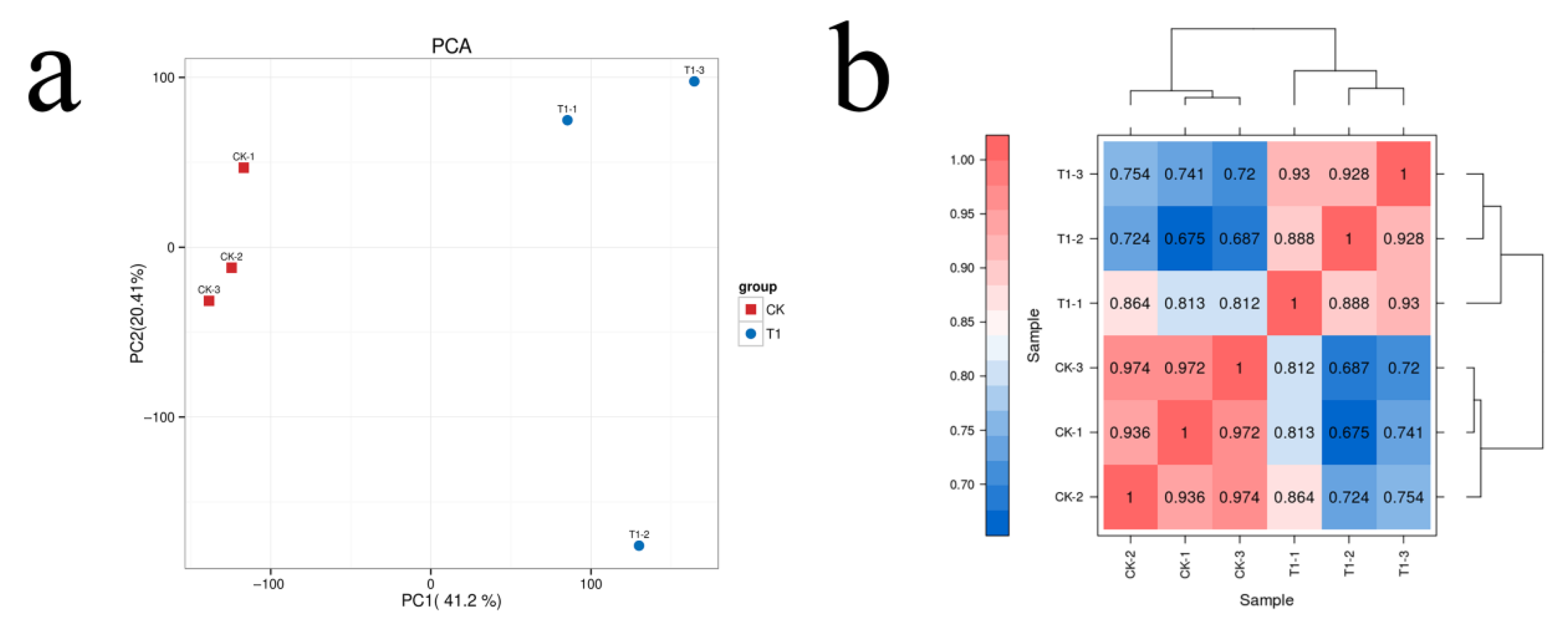
Principal component analysis revealed clear cultivar separation along PC1 (41.20% variance), while intra-group replicates exhibited strong reproducibility (R2 > 0.88) and inter-group comparisons showed significant transcriptomic divergence (Figure 4a,b). These results establish robust molecular differentiation between the low-wax and high-wax cultivars at the transcriptional level, supporting subsequent differential gene expression analysis.

3.3.2. Statistical Analysis and Functional Enrichment of DEGs in Broccoli Florets

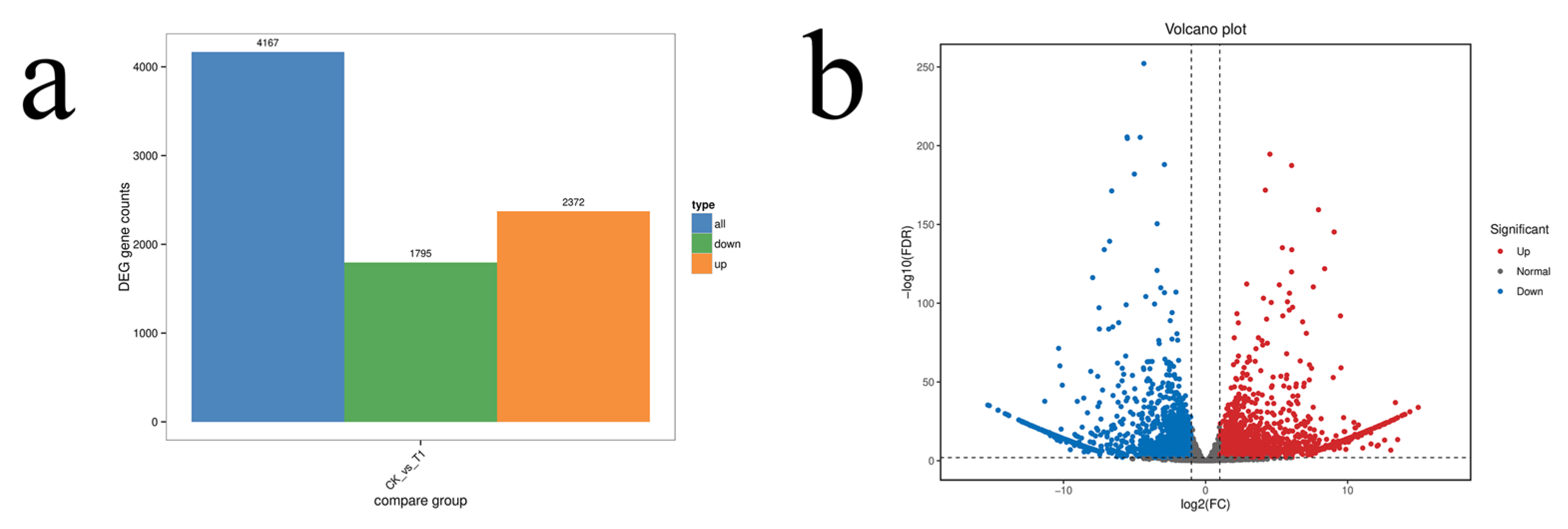
Using stringent thresholds (|log2FC| ≥ 1 and FDR < 0.05), we identified 4167 DEGs between CK and T1 cultivars, comprising 2372 upregulated and 1795 downregulated genes in the high-wax T1 line compared to the low-wax CK (Figure 5a,b). This substantial transcriptional divergence highlights the complex genetic regulation underlying cuticular wax accumulation, with the predominance of upregulated genes suggesting potential activation of wax biosynthesis pathways in the high-wax cultivar. The robust differential expression profile provides a strong foundation for subsequent pathway analysis and candidate gene identification.
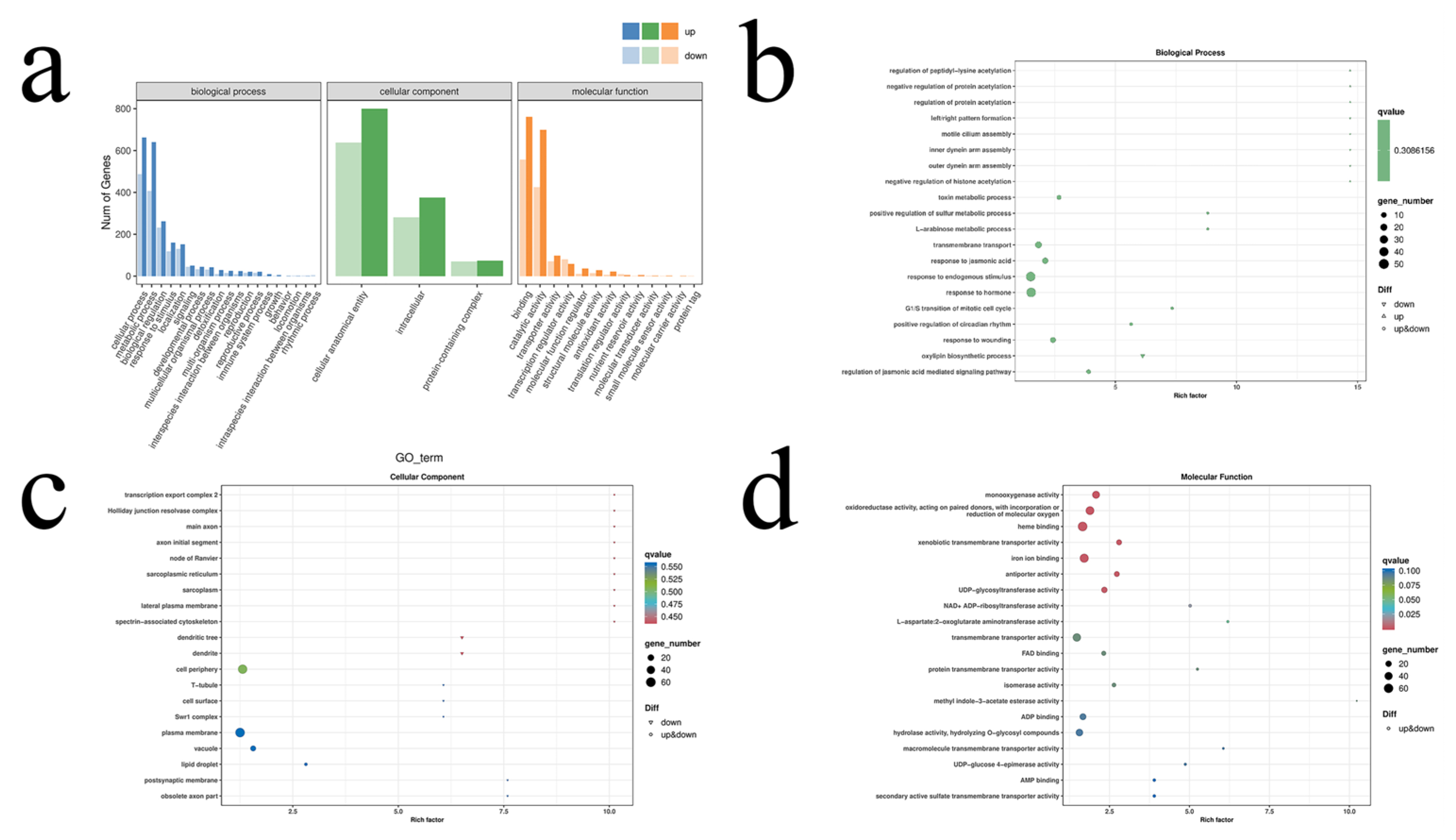
GO annotation classified all DEGs into three major categories: biological process, molecular function and cellular component. Among these, biological process was significantly enriched in the GO classification, with cellular process and metabolic process as the dominant subcategories (Figure 6a). GO enrichment analysis further revealed: Biological processes were enriched with regulation of peptidyl-lysine acetylation, negative regulation of protein acetylation and protein acetylation regulation (Figure 6b);Cellular components were enriched for transcription export complex 2, Holliday junction helicase complex and spindle microtubule (Figure 6c); Molecular functions showed highest enrichment for monooxygenase activity, oxidoreductase activity and heme binding (Figure 6d). These findings systematically characterize the functional spectrum of wax-related transcriptional regulation, particularly highlighting the importance of post-translational modification (acetylation) and redox processes in cuticular wax biosynthesis.
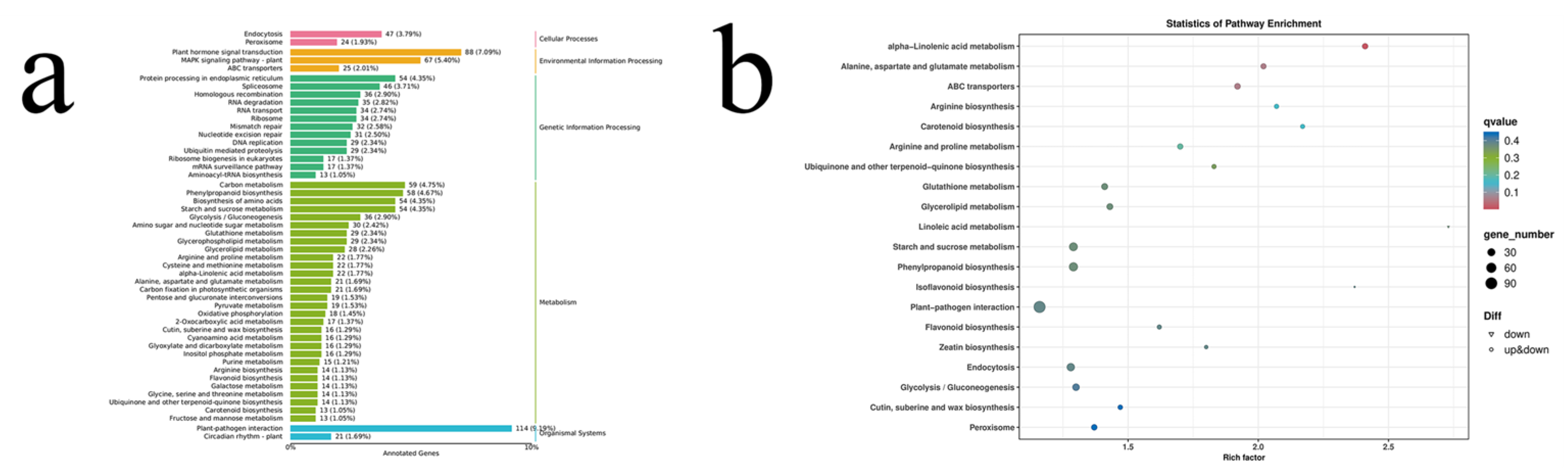
KEGG annotation classified all DEGs into five major functional categories: cellular processes, environmental information processing, genetic information processing, metabolism and organismal systems, with the majority of genes (62.3%) assigned to metabolic pathways (Figure 7a). Among the top 20 most significantly enriched pathways, DEGs were predominantly associated with linolenic acid metabolism, alanine/aspartate/glutamate metabolism, ABC transporters, arginine biosynthesis and carotenoid biosynthesis (Figure 7b). These results systematically characterize the metabolic reprogramming associated with wax biosynthesis, particularly highlighting the importance of lipid metabolism (linolenic acid pathway) and amino acid/nutrient transport (ABC transporters) in cuticular wax deposition.

3.4. Integrative Analysis of Transcriptomic and Metabolomic Profiles in Broccoli Florets

3.4.1. Key KEGG Pathway Analysis

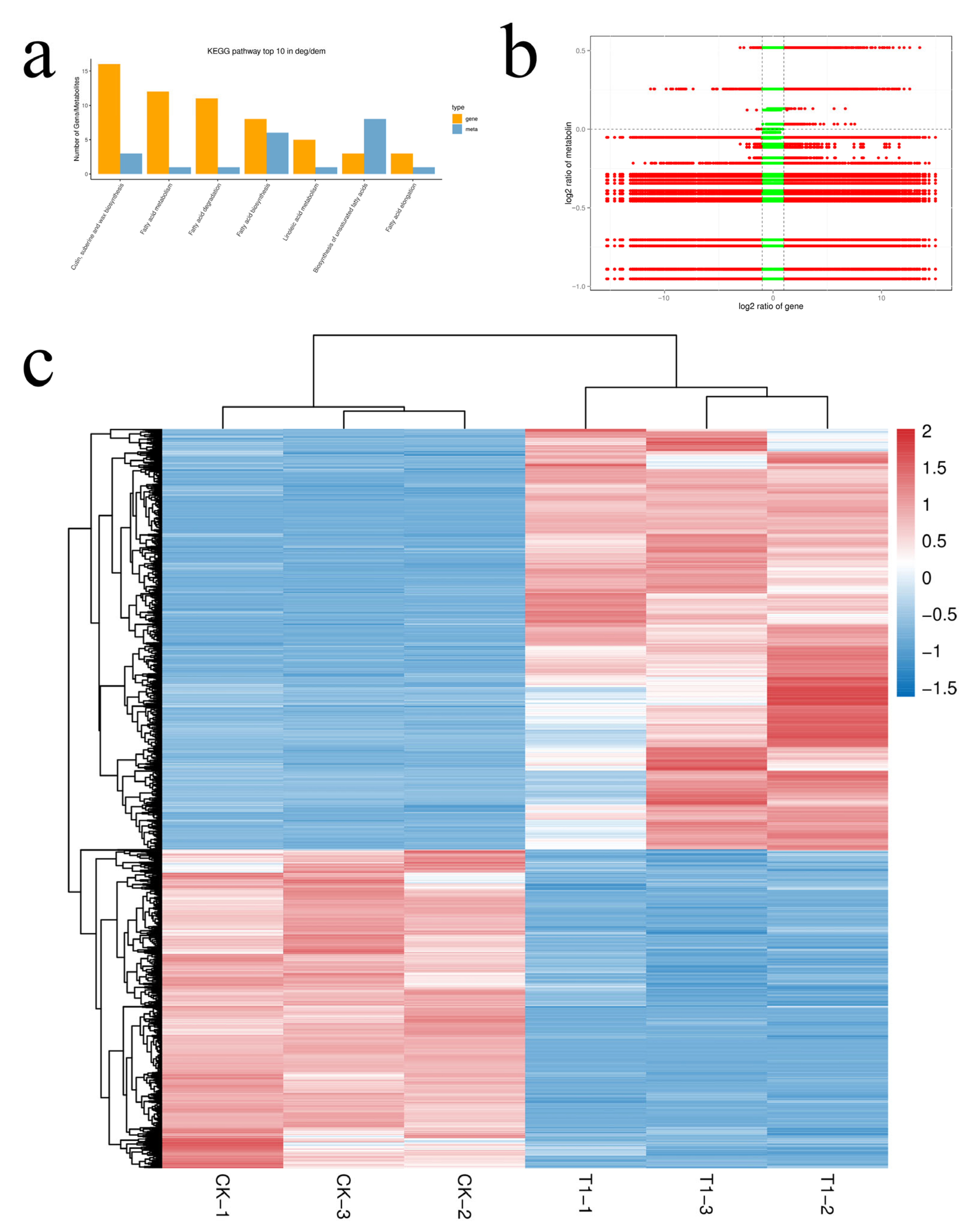
Integrated pathway analysis identified the top 10 KEGG pathways with co-participation of DEGs and DAMs, revealing: Cutin/suberin/wax biosynthesis (ko00073) involving 16 DEGs and 3 DAMs; Fatty acid metabolism (ko01212, 12 DEGs/1 DAM); Fatty acid degradation (ko00071, 11 DEGs/1 DAM); Fatty acid biosynthesis (ko00061, 8 DEGs/6 DAMs); Linoleic acid metabolism (ko00591, 5 DEGs/1 DAM); Unsaturated fatty acid biosynthesis (ko01040, 3 DEGs/8 DAMs); and Fatty acid elongation (ko00062, 3 DEGs/1 DAM) (Figure 8a). Pearson correlation analysis (|CC| > 0.80, p-value < 0.05) generated a nine-quadrant plot showing fatty acid metabolism-related genes/metabolites predominantly clustered in quadrants 3 and 7 (positive correlations) (Figure 8b). Hierarchical clustering of DEGs/DAMs expression profiles demonstrated pathway-specific co-regulation patterns, with intra-cluster homogeneity suggesting coordinated biological functions and inter-cluster divergence indicating potential antagonistic regulation in wax biosynthesis pathways (Figure 8c). These multi-omics signatures systematically elucidate the molecular basis of cuticular wax accumulation, particularly highlighting the synergistic regulation between lipid metabolism genes and wax-related metabolites.

3.4.2. Integrated Analysis of DEGs and DAMs in Wax Biosynthesis Pathways

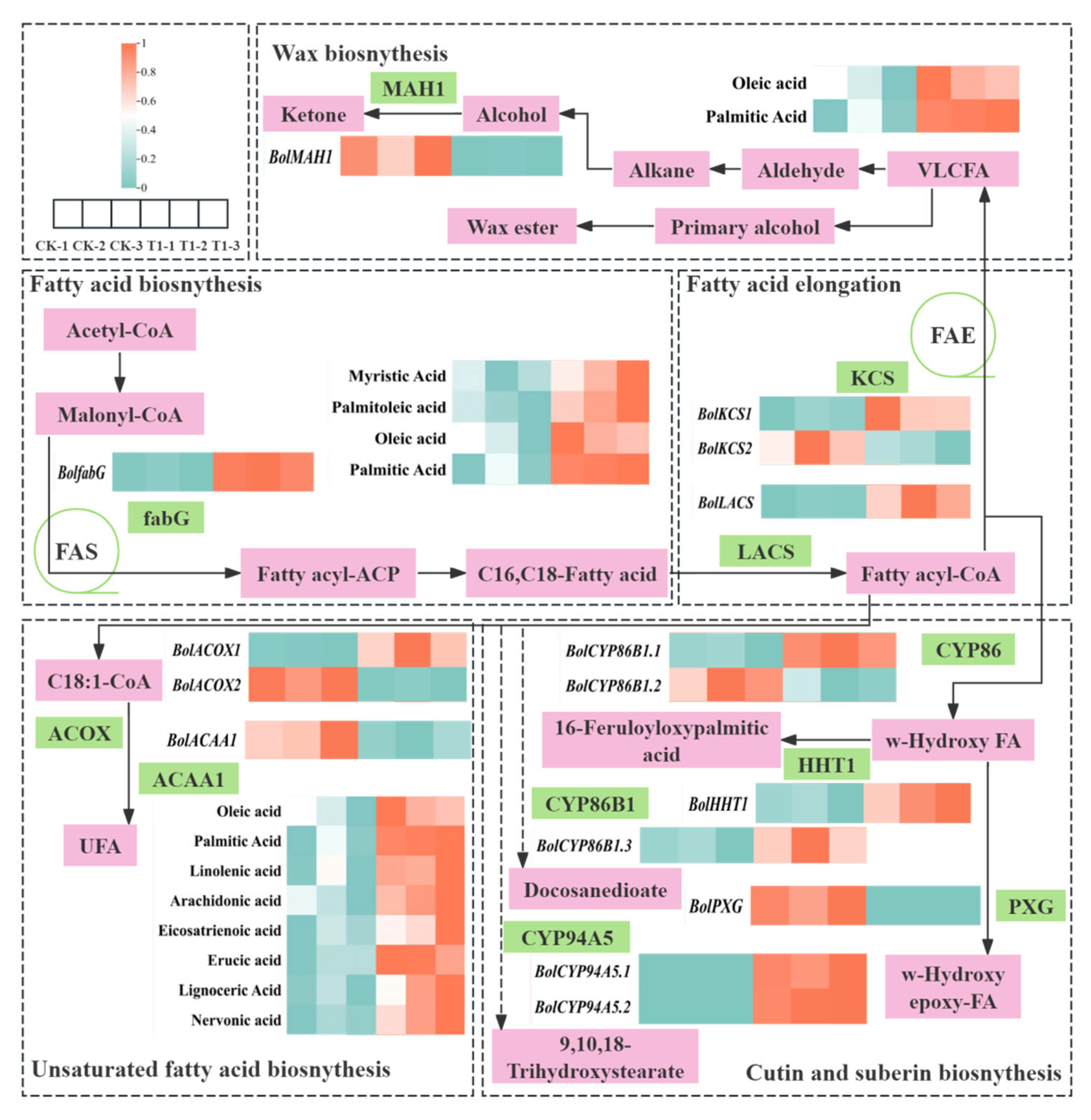
To investigate the regulatory patterns of genes involved in the wax biosynthesis pathway on wax metabolites in broccoli, we constructed a regulatory pathway map of DEGs and DAMs in broccoli flower buds. A total of 15 DEGs and 10 DAMs involved in the wax biosynthesis pathway were identified (Figure 9).
Fatty acids are synthesized in plastids. Malonyl-CoA undergoes four reactions (condensation, reduction, dehydration, and re-reduction) under the action of the FAS complex to generate C16 and C18 acyl carrier proteins. These proteins are then hydrolyzed to form free C16 or C18 fatty acids, which are subsequently transported to the endoplasmic reticulum [63]. The study found that compared with the CK cultivar, the expression level of the FAS-encoding gene BolfabG in the T1 cultivar was significantly upregulated, accompanied by a significant increase in the contents of downstream metabolites such as myristic acid, palmitic acid, palmitoleic acid, and oleic acid (Figure 9). These results indicated that the T1 cultivar significantly enhanced the metabolic activity of the fatty acid synthesis pathway by upregulating BolfabG expression, thereby exhibiting a stronger capacity for fatty acid synthesis.
LACS activates fatty acids and transports newly synthesized fatty acids to the endoplasmic reticulum for chain elongation [64]. The expression of the LACS-encoding gene BolLACS was significantly upregulated in the T1 cultivar (Figure 9). This suggested that the T1 cultivar promoted the activation and transport of fatty acids by upregulating BolLACS expression, thereby providing more sufficient substrate supply for subsequent chain elongation reactions. FAE complex extends the carbon chain through multiple cycles, ultimately forming VLCFAs. Within this complex, KCS is the rate-limiting enzyme of the reaction and exhibits substrate specificity [65]. In the T1 cultivar, the expression of BolKCS1 was significantly upregulated, accompanied by an increase in the contents of downstream metabolites (palmitic acid and oleic acid). In contrast, BolKCS2 showed a high expression level in the CK cultivar (Figure 9). These findings demonstrated that BolKCS1 and BolKCS2 have different substrate specificities.
The final stage of wax biosynthesis involves the conversion of VLCFAs into aliphatic wax components via two metabolic pathways: the alkane-forming pathway produces alkanes, aldehydes, secondary alcohols, and ketones (decarboxylation pathway), while the alcohol-forming pathway generates primary alcohols and wax esters (acyl reduction pathway) [28]. In this study, we found that in the alkane-forming pathway, the expression of the MAH1-encoding gene BolMAH1 was significantly upregulated in the CK cultivar (Figure 9). This result indicated that BolMAH1 inhibits wax synthesis by regulating key steps in the alkane metabolic pathway, thereby affecting the accumulation of wax on the surface of broccoli flower buds.
In the process of unsaturated fatty acid synthesis, BolACOX1 was highly expressed in the T1 cultivar, accompanied by an increase in the contents of downstream metabolites such as palmitic acid, oleic acid, linolenic acid, eicosatrienoic acid, arachidonic acid, erucic acid, lignoceric acid and nervonic acid. In contrast, BolACOX2 and BolACAA1 showed high expression levels in the CK cultivar. In the process of cutin and suberin biosynthesis, BolCYP86B1.1, BolCYP86B1.3, BolHHT1, BolCYP94A5.1 and BolCYP94A5.2 were highly expressed in the T1 cultivar, while BolCYP86B1.2 and BolPXG were highly expressed in the CK cultivar (Figure 9).

3.4.3. Integrated Analysis of Transcription Factors Related to Wax Biosynthesis

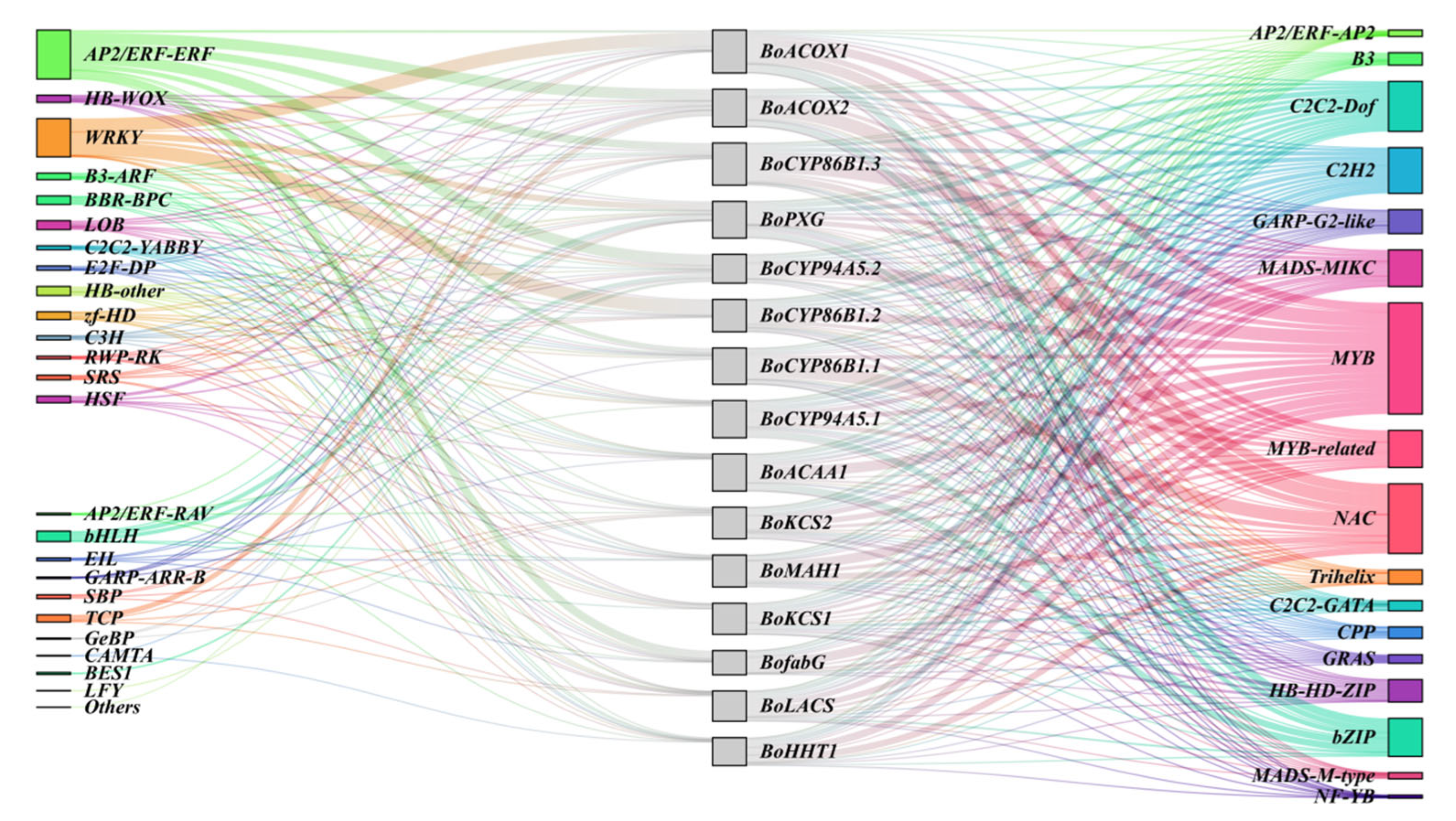
To preliminarily explore the DEGs involved in the wax biosynthesis pathway of broccoli flower buds and their upstream transcription factors, an analysis was conducted on the 15 screened DEGs in the wax biosynthesis pathway. It was found that among the upstream transcription factors of these 15 DEGs, those belonging to the MYB, NAC, and AP2/ERF-ERF families showed an extremely high correlation with the wax biosynthesis pathway (Figure 10). The results indicate that transcription factors from the MYB, NAC, and AP2/ERF-ERF families play key regulatory roles in the wax biosynthesis pathway. These transcription factors may directly or indirectly regulate the expression of wax synthesis-related genes by binding to the promoters of wax synthesis genes, or participate in metabolic regulatory networks, thereby affecting the deposition of plant cuticular wax. This finding provides important targets for subsequent in-depth studies on the molecular mechanism of wax synthesis, as well as for genetic improvement of crop stress resistance and cuticular texture.

3.4.4. Construction of Regulatory Networks Related to the Wax Biosynthesis Pathway

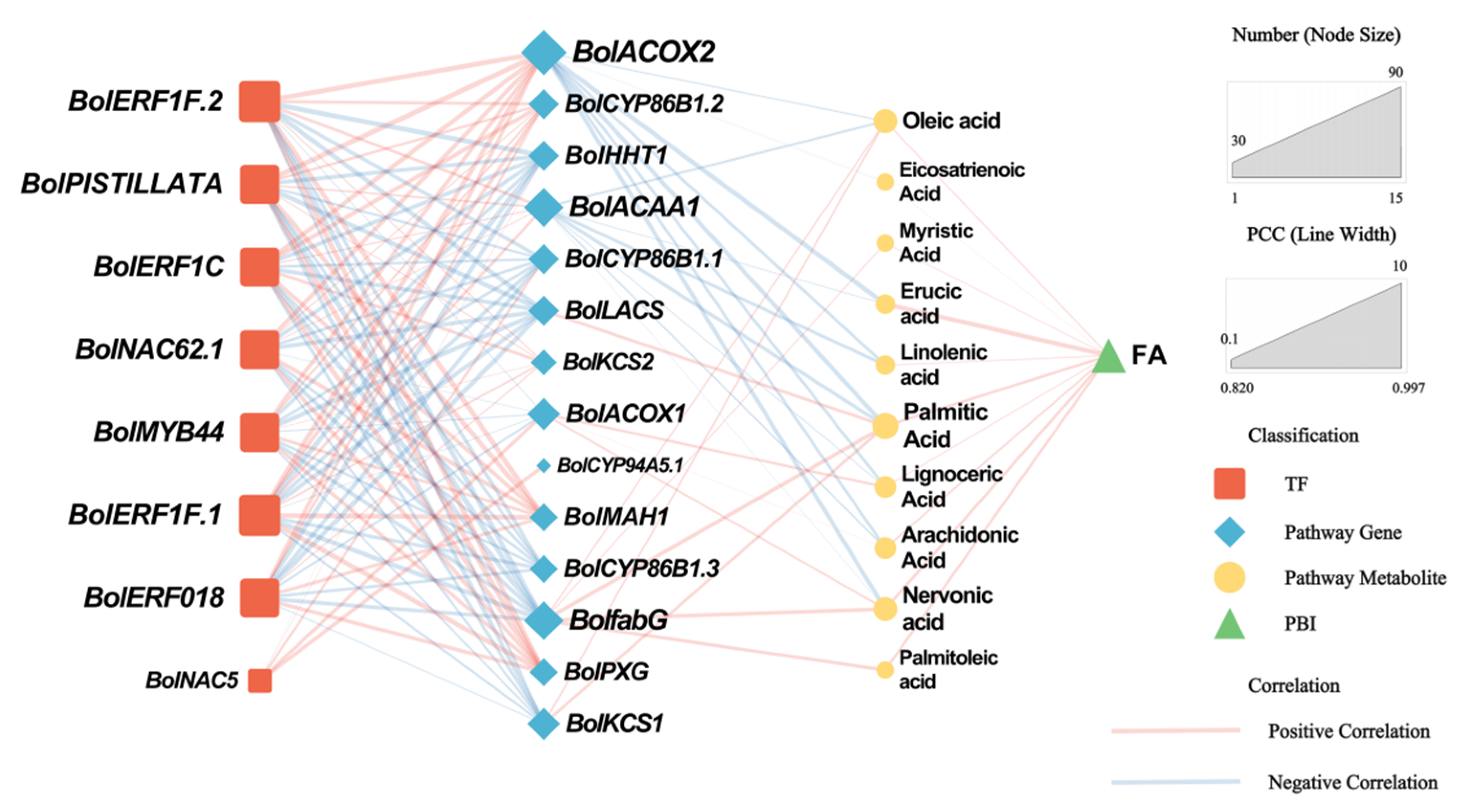
To further explore the regulatory mechanism underlying the formation of waxy powder on broccoli curds, we calculated the correlations among key transcription factors-key pathway DEGs, key pathway DEGs-key pathway DAMs, and key pathway DAMs-FA contents, and constructed a transcription factor-key pathway DEGs-key pathway DAMs-FA content regulatory network (Supplementary Table S2) (Figure 11). The results showed that a greater number of AP2/ERF-ERF transcription factors were involved in regulating genes of the wax biosynthesis pathway, followed by those from the NAC, MYB, and MADS-MIKC families. BolERF018, BolERF1F.1, BolERF1F.2, BolMYB44, and BolNAC62.1 exhibited a significant negative correlation with 7 genes including BolfabG, BolLACS, and BolKCS1. In contrast, BolERF018 and BolMYB44 showed a significant positive correlation with 5 genes such as BolKCS2 and BolMAH1; BolERF1F.1 and BolERF1F.2 were significantly positively correlated with 6 genes including BolKCS2 and BolMAH1; and BolNAC62.1 displayed a significant positive correlation with 5 genes such as BolMAH1, BolERF1C and BolPISTILLATA were significantly negatively correlated with 6 genes including BolfabG, BolLACS, and BolKCS1, while showing a significant positive correlation with 6 genes such as BolKCS2 and BolMAH1.
Subsequently, it was noted that in the fatty acid biosynthesis pathway, the gene BolfabG, which is regulated by transcription factors BolERF018, BolERF1F.1, BolERF1F.2, BolMYB44, BolNAC62.1, BolERF1C, and BolPISTILLATA, exhibited a significant positive correlation with intermediate metabolites (myristic acid, palmitic acid, palmitoleic acid, oleic acid, and nervonic acid). BolLACS showed a significant positive correlation with the intermediate metabolite palmitic acid; and BolKCS1 was significantly positively correlated with the intermediate metabolites palmitic acid and oleic acid (Figure 11).
In the unsaturated fatty acid synthesis pathway, the gene BolACOX1, regulated by transcription factors BolERF018, BolERF1F.1, BolERF1F.2, BolMYB44, and BolNAC62.1, displayed a significant positive correlation with intermediate metabolites (arachidonic acid, lignoceric acid, and nervonic acid). In contrast, the gene BolACOX2, regulated by 7 transcription factors including BolERF018, BolERF1F.1, and BolERF1F.2, showed a significant negative correlation with intermediate metabolites (palmitic acid, oleic acid, linolenic acid, arachidonic acid, eicosatrienoic acid, erucic acid, lignoceric acid, and nervonic acid). Additionally, the gene BolACAA1, regulated by transcription factors BolERF1F.1, BolERF1F.2, BolERF1C, BolPISTILLATA, and BolNAC62.1, exhibited a significant negative correlation with intermediate metabolites (palmitic acid, oleic acid, linolenic acid, arachidonic acid, erucic acid, lignoceric acid, and nervonic acid).Finally, in the correlation analysis between key pathway DAMs and FA contents, all 10 intermediate metabolites of the wax biosynthesis pathway showed a significant positive correlation with FA contents (Figure 11).
This study reveals the key regulatory network underlying wax powder formation on broccoli curds. Transcription factors including BolERF018, BolERF1F.1/1F.2, and BolERF1C synergistically regulate genes in the fatty acid synthesis pathway (BolfabG, BolLACS, BolKCS1, BolACOX2, and BolACAA1), which significantly affects the accumulation of wax precursors (linolenic acid and palmitic acid). Moreover, these metabolic intermediates exhibit a positive correlation with fatty acid content, indicating that the cascade regulation of “transcription factors—metabolic pathways—wax synthesis” serves as an important molecular basis for wax powder formation.

3.4.5. Experimental Validation by RT-qPCR

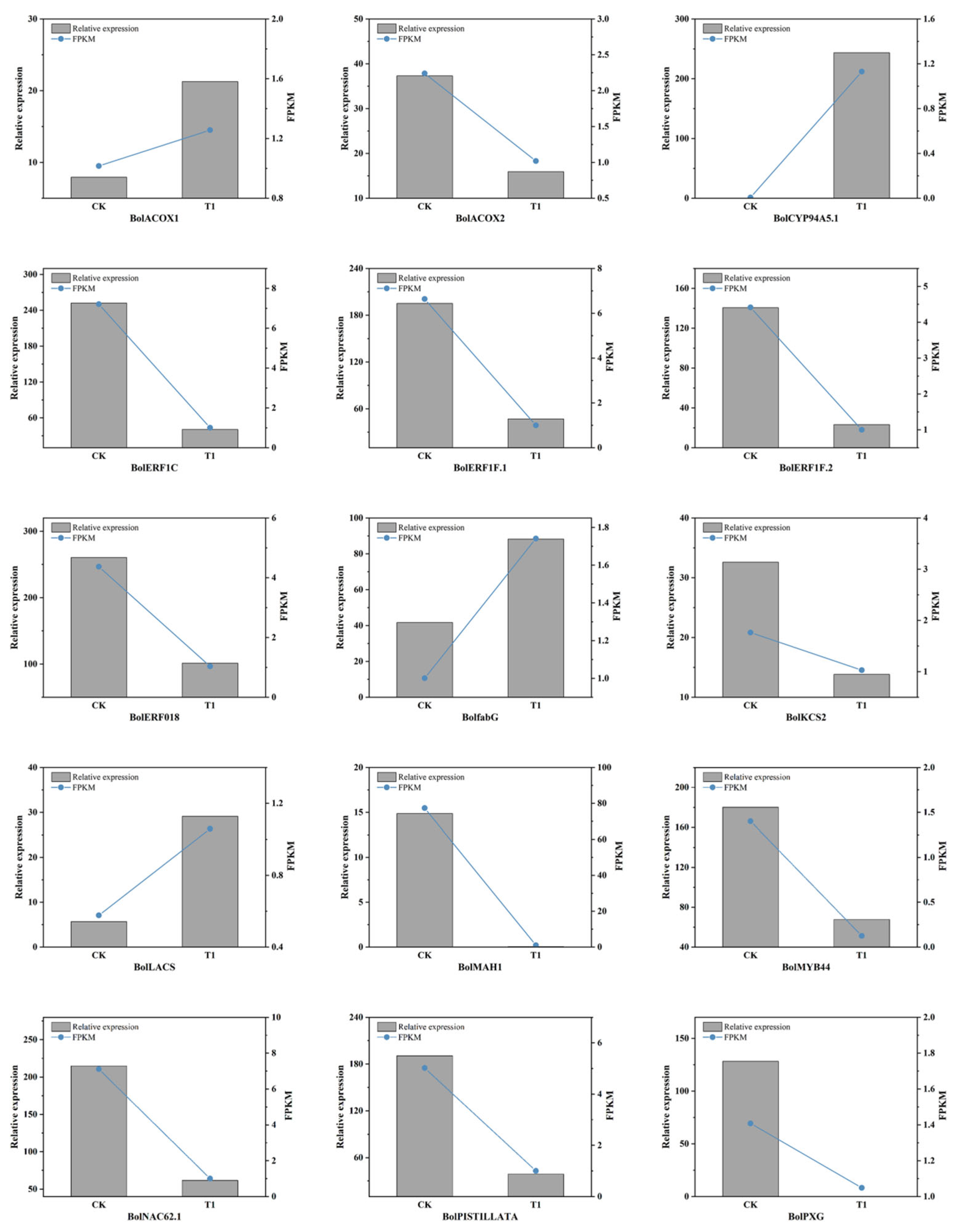
As shown in the figure, the RT-qPCR analysis results indicated that the relative expression trends of the selected genes were highly consistent with the transcriptome sequencing data. This result confirms the accuracy of the transcriptome sequencing data in evaluating changes in gene expression levels (Figure 12).

4. Discussion

4.1. Analysis of Wax Accumulation on the Surface of Broccoli Flower Buds

Wax-deficient mutants are mainly characterized by the absence of or reductions in wax due to variations in the metabolic processes of intracellular fatty acid synthesis, decomposition, and transport [66]. In this study, the FA content in T1 was significantly higher than that in CK, indicating a close association between the FA content in flower bud tissue and the amount of wax deposition. This is consistent with previous research findings in cabbage [67]. SEM observations further confirmed that the floret surface of T1 exhibited densely distributed granular wax crystals, whereas that of CK showed sparse wax crystal coverage. Such morphological differences may be related to the regulation of wax synthesis pathways in different cultivars. Granular wax crystals are generally associated with the accumulation of long-chain fatty acids and their derivatives [68]. Therefore, the higher FA content in T1 may reflect more active synthesis of wax precursors, thereby promoting the formation and deposition of wax crystals.
The results of this study support a close link between cuticular wax and fatty acid metabolism. In plants, cuticular wax not only acts as a barrier against abiotic stresses but may also affect the attachment of pathogens by regulating surface hydrophobicity [69]. The high-wax cultivar T1 may possess greater resistance to abiotic stresses due to its more abundant wax deposition, which provides potential molecular markers for future stress-resistant breeding of broccoli.

4.2. Metabolic Differences in Fatty Acids in Broccoli Flower Buds

In this study, GC-MS was employed to systematically analyze FAs in flower buds of the low-wax (CK) and high-wax (T1) broccoli cultivars. The results revealed that UFAs accounted for the majority of FA in both cultivars, with linolenic acid being the most abundant. This indicates that both cultivars possess high nutritional value and health-promoting functions, making them excellent sources of fatty acids. This finding not only provides a theoretical basis for the development of functional foods but also lays a foundation for subsequent variety breeding and metabolic regulation studies. It is consistent with the characteristic of Brassica plants being rich in UFAs [67]. Differential analysis showed that the fatty acid components were identical in the two cultivars, but their contents varied. Most fatty acids in T1 were present at higher levels than in CK, which is consistent with the phenotypic observation that T1 flower buds are covered with wax while CK lacks such wax coverage. Since lipids serve as the main energy source for biological metabolism, the differences between the two cultivars should not be overly drastic; phenotypic variations are mostly caused by point mutations in metabolic pathways.
Notably, the contents of linolenic acid and palmitic acid in the high-wax cultivar T1 were significantly higher than those in the low-wax cultivar CK, indicating that these two fatty acids are key characteristic fatty acids of wax on the flower bud surfaces of the two cultivars and may act as important precursors for wax synthesis on broccoli flower bud surfaces. This is consistent with the previous research results on tung trees [70].
Further analysis revealed that the content of VLCFAs in the high-wax cultivar T1 was significantly higher, which may be directly related to the greater deposition of cuticular wax in this cultivar. Previous studies have demonstrated that plant cuticular wax synthesis primarily relies on the elongation of very-long-chain fatty acids catalyzed by FAE [71]. The higher content of VLCFAs in T1 may reflect a more active FAE enzyme system in this high-wax cultivar.

4.3. Analysis of Regulatory Networks Related to Waxy Biosynthesis Pathway

Significant progress has been made in studying the molecular mechanisms underlying the regulatory network of wax formation on broccoli curds. In this study, a regulatory network encompassing “TFs—DEGs—DAMs—FA” was constructed to systematically dissect the complex molecular mechanisms governing wax formation on the surface of broccoli curds. The results showed that the AP2/ERF family transcription factors play a dominant role in the regulation of wax synthesis. This finding echoes the conclusions from previous studies on the regulatory mechanism of wax synthesis in apple epidermis [72]. In-depth analysis showed that different transcription factors exhibit significant specificity in regulating genes involved in the wax synthesis pathway. Specifically, BolERF018, BolERF1F.1, BolERF1F.2, BolERF1C, BolMYB44, BolNAC62.1, and BolPISTILLATA negatively regulate BolfabG, BolLACS, and BolKCS1, whereas they positively regulate BolMAH1 and BolKCS2 (except for BolNAC62.1, which does not regulate BolKCS2), which may reflect the precise control of carbon source allocation in plant cells. This “bidirectional regulation” mode can prevent excessive accumulation of metabolic precursors while ensuring the balanced synthesis of fatty acids with different chain lengths [73,74]. Notably, BolKCS1 and BolKCS2 are subject to opposite regulatory patterns, suggesting that these two homologous genes exhibit distinct substrate specificities or spatiotemporal expression patterns, which is consistent with previous research findings in Citrus sinensis and other citrus species [75,76].
In the fatty acid biosynthesis pathway, the expression of key genes shows a significant correlation with the accumulation of metabolites. Metabolomic analysis indicated that palmitic acid, as a key characteristic fatty acid component in the wax on the bud surface of the two varieties, its content changes hold important biological indicative significance. The study found that the expression levels of BolfabG, BolLACS and BolKCS1 genes all showed a significant positive correlation with the content of palmitic acid. This correlation pattern confirms, at the molecular level, the core regulatory roles of BolfabG, BolLACS and BolKCS1 genes in the initial stage of fatty acid synthesis.
In the unsaturated fatty acid synthesis pathway, the results showed that BolACOX2, regulated by seven TFs, and BolACAA1, regulated by five TFs, both showed significant negative correlations with the contents of palmitic acid, oleic acid, linolenic acid, and other key fatty acids. These findings suggest that linolenic acid, another key characteristic fatty acid component in the bud surface wax of the two varieties, may be negatively regulated by BolACOX2 and BolACAA1. The widespread positive correlation between intermediate products and fatty acid content indicates that wax synthesis is closely coupled with primary metabolism. FA may act as signaling molecules to feedback-regulate the wax synthesis pathway, forming a self-balancing regulatory loop [67].
In summary, this study constructed a complete four-level regulatory network for wax synthesis in broccoli, revealed the core regulatory role of AP2/ERF family transcription factors and clarified the quantitative relationship between metabolites and phenotypic traits. These findings provide important targets for improving broccoli quality.
It should be noted that this study has a key limitation: since the analysis is based on two pure-line genotypes, the observed omics differences are inherently genotypic and may be confounded by physiological associations arising from divergent genetic backgrounds, rather than solely reflecting the specific effects of the wax phenotype. To focus on the core mechanisms, we systematically screened candidate genes logically related to the wax biosynthesis pathway (e.g., genes involved in fatty acid elongation and transport) by integrating wax-deficient phenotypes with multi-omics data, thereby constructing a high-confidence set of hypotheses driving the extreme phenotypic divergence. Future validation using segregating populations or reverse genetics in a common genetic background will be essential to definitively confirm causal relationships. Nonetheless, this study provides a testable hypothesis framework and valuable data resources for the field of plant cuticular wax research.

5. Conclusions

This study systematically elucidated the molecular mechanism underlying the formation of wax powder on the surface of broccoli curds, with the main conclusions as follows: Wax deposition is significantly correlated with the content of FA. The FA content in the high-wax variety T1 is significantly higher than that in the low-wax variety CK and the distribution density of wax crystals on its surface is higher, mainly in the form of granular structures. Metabolomic analysis identified 25 fatty acid compounds, among which linolenic acid and palmitic acid, as key characteristic metabolites, showed significant differences between the two groups of materials and may be key factors regulating wax synthesis. Transcriptomic analysis revealed that genes such as BolfabG, BolLACS, BolKCS1/2 and BolMAH1 are involved in wax biosynthesis by regulating key steps such as fatty acid elongation, esterification and alcohol synthesis. Transcription factors of the AP2/ERF-ERF family (BolERF018, BolERF1F.1/1F.2 and BolERF1C) play a leading regulatory role in the wax synthesis pathway and, together with transcription factors of the NAC, MYB and MADS-MIKC families, form a complex regulatory network. This study constructed a multi-level regulatory network of “TFs-DEGs-DAMs-FA” and clarified the molecular basis of wax formation in broccoli curds.
Future research can focus on the following aspects: using gene editing technologies such as CRISPR/Cas9 to verify the functions of key genes (e.g., BolfabG, BolKCS1/2) and clarify their specific mechanisms in wax synthesis; exploring the impact of environmental factors (such as light and temperature) on the wax synthesis regulatory network to analyze the environmental response mechanism of wax deposition in broccoli; carrying out molecular design breeding for wax traits in broccoli to cultivate new varieties with ideal wax characteristics; and conducting in-depth research on the relationship between wax synthesis and stress resistance, so as to provide new theoretical basis and technical approaches for stress-resistant breeding of broccoli.

Supplementary Materials

The following supporting information can be downloaded at: https://www.mdpi.com/article/10.3390/horticulturae12010005/s1.

Author Contributions

Conceptualization, M.C., B.L. and H.Z.; methodology, Q.S. and M.C.; investigation, Q.S., H.L. (Huangfang Lin), S.C., B.Q. and H.L. (Honghui Lin); resources, H.Z.; data curation, Q.S.; writing—original draft preparation, Q.S.; writing—review and editing, H.Z., J.L. and M.C. All authors have read and agreed to the published version of the manuscript.

Funding

This research was funded by “The Special Project for Central Government’s Guidance of Local Scientific and Technological Development: Construction and Operation of Fujian Province’s Public Service Platform for Seed Industry Research and Development (2022L3089)” and “The Project for Cultivating Discipline Leaders of Fujian Academy of Agricultural Sciences: Breeding and Utilization of New Varieties of Main Vegetables in Fujian Province (YCZX202403)” and “Public Welfare Scientific Research Institution Special Project: Multi-Omics Joint Analysis on the Effect of Temperature on Broccoli Flower Bud Differentiation (2025R1029002)”.

Data Availability Statement

The original contributions presented in this study are included in the article/Supplementary Material. Further inquiries can be directed to the corresponding author.

Conflicts of Interest

The authors declare no conflicts of interest.

References

  1. Li, H.; Xia, Y.; Liu, H.Y.; Guo, H.; He, X.Q.; Liu, Y.; Wu, D.T.; Mai, Y.H.; Li, H.B.; Zou, L.; et al. Nutritional Values, Beneficial Effects, and Food Applications of Broccoli (Brassica oleracea Var. italica Plenck). Trends Food Sci. Technol. 2022, 119, 288–308. [Google Scholar] [CrossRef]
  2. Kowalczyk, T.; Gerszberg, A.; Durańska, P.; Biłas, R.; Hnatuszko-Konka, K. High Efficiency Transformation of Brassica oleracea var. botrytis Plants by Rhizobium rhizogenes. AMB Express 2018, 8, 125. [Google Scholar] [CrossRef]
  3. Farag, M.A.; Motaal, A.A.A. Sulforaphane Composition, Cytotoxic and Antioxidant Activity of Crucifer Vegetables. J. Adv. Res. 2010, 1, 65–70. [Google Scholar] [CrossRef]
  4. Yan, Z.; Shi, J.; Yuan, S.; Xu, D.; Zheng, S.; Gao, L.; Wu, C.; Zuo, J.; Wang, Q. Whole-Transcriptome RNA Sequencing Highlights the Molecular Mechanisms Associated with the Maintenance of Postharvest Quality in Broccoli by Red LED Irradiation. Postharvest Biol. Technol. 2022, 188, 111878. [Google Scholar] [CrossRef]
  5. Zhang, Z.C.; Tao, M.Q.; Pan, Y.F.; Dai, Z.L.; Yao, Y.M. Transcriptome Analysis and Mining of Genes Related to Wax Powder Synthesis of Broccoli Flower Buds. J. South. Agric. 2022, 53, 607–617. [Google Scholar] [CrossRef]
  6. Domínguez, E.; Heredia-Guerrero, J.A.; Heredia, A. The Biophysical Design of Plant Cuticles: An Overview. New Phytol. 2011, 189, 938–949. [Google Scholar] [CrossRef]
  7. Lee, S.B.; Suh, M.C. Cuticular Wax Biosynthesis Is Up-Regulated by the MYB94 Transcription Factor in Arabidopsis. Plant Cell Physiol. 2015, 56, 48–60. [Google Scholar] [CrossRef]
  8. Barthlott, W.; Mail, M.; Bhushan, B.; Koch, K. Plant Surfaces: Structures and Functions for Biomimetic Innovations. Nano-Micro Lett. 2017, 9, 23. [Google Scholar] [CrossRef] [PubMed]
  9. Jenks, M.A.; Tuttle, H.A.; Eigenbrode, S.D.; Feldmann, K.A. Leaf Epicuticular Waxes of the Eceriferum Mutants in Arabidopsis. Plant Physiol. 1995, 108, 369–377. [Google Scholar] [CrossRef] [PubMed]
  10. Mu, X.L.; Wang, C.; Wang, S. Observation of Ultra Microstructure of Wax-Less Mutant Epicuticular Wax on Cabbage. China Veg. 2013, 4, 32–37. [Google Scholar]
  11. Segado, P.; Domínguez, E.; Heredia, A. Ultrastructure of the Epidermal Cell Wall and Cuticle of Tomato Fruit (Solanum lycopersicum L.) during Development. Plant Physiol. 2016, 170, 935–946. [Google Scholar] [CrossRef]
  12. Bi, H.; Kovalchuk, N.; Langridge, P.; Tricker, P.J.; Lopato, S.; Borisjuk, N. The Impact of Drought on Wheat Leaf Cuticle Properties. BMC Plant Biol. 2017, 17, 85. [Google Scholar] [CrossRef] [PubMed]
  13. Zhu, K.; Xu, S.; Tao, H.; Cao, W. Research Progress of Plant Wax Synthesis and Transport Mechanism. Mol. Plant Breed. 2017, 15, 3731–3739. [Google Scholar] [CrossRef]
  14. Bueno, A.; Sancho Knapik, D.; Gil Pelegrín, E.; Leide, J.; Peguero Pina, J.J.; Burghardt, M.; Riederer, M. Cuticular Wax Coverage and Its Transpiration Barrier Properties in Quercus coccifera L. Leaves: Does the Environment Matter? Tree Physiol. 2020, 40, 827–840. [Google Scholar] [CrossRef] [PubMed]
  15. Bonaventure, G.; Salas, J.J.; Pollard, M.R.; Ohlrogge, J.B. Disruption of the FATB Gene in Arabidopsis Demonstrates an Essential Role of Saturated Fatty Acids in Plant Growth. Plant Cell 2003, 15, 1020–1033. [Google Scholar] [CrossRef]
  16. Schnurr, J.; Shockey, J.; Browse, J. The Acyl-CoA Synthetase Encoded by LACS2 Is Essential for Normal Cuticle Development in Arabidopsis. Plant Cell 2004, 16, 629–642. [Google Scholar] [CrossRef]
  17. Zhao, L.; Haslam, T.M.; Sonntag, A.; Molina, I.; Kunst, L. Functional Overlap of Long-Chain Acyl-CoA Synthetases in Arabidopsis. Plant Cell Physiol. 2019, 60, 1041–1054. [Google Scholar] [CrossRef]
  18. Weng, H.; Molina, I.; Shockey, J.; Browse, J. Organ Fusion and Defective Cuticle Function in a Lacs1lacs2 Double Mutant of Arabidopsis. Planta 2010, 231, 1089–1100. [Google Scholar] [CrossRef]
  19. Jessen, D.; Olbrich, A.; Knüfer, J.; Krüger, A.; Hoppert, M.; Polle, A.; Fulda, M. Combined Activity of LACS1 and LACS4 Is Required for Proper Pollen Coat Formation in Arabidopsis. Plant J. 2011, 68, 715–726. [Google Scholar] [CrossRef] [PubMed]
  20. Li Beisson, Y.; Beisson, F.; Riekhof, W. Metabolism of Acyl-Lipids in Chlamydomonas reinhardtii. Plant J. 2015, 82, 504–522. [Google Scholar] [CrossRef]
  21. Kim, J.; Jung, J.H.; Lee, S.B.; Go, Y.S.; Kim, H.J.; Cahoon, R.; Markham, J.E.; Cahoon, E.B.; Suh, M.C. Arabidopsis 3-Ketoacyl-Coenzyme A Synthase9 Is Involved in the Synthesis of Tetracosanoic Acids as Precursors of Cuticular Waxes, Suberins, Sphingolipids, and Phospholipids. Plant Physiol. 2013, 162, 567–580. [Google Scholar] [CrossRef]
  22. Suh, M.C.; Samuels, A.L.; Jetter, R.; Kunst, L.; Pollard, M.; Ohlrogge, J.; Beisson, F. Cuticular Lipid Composition, Surface Structure, and Gene Expression in Arabidopsis Stem Epidermis. Plant Physiol. 2005, 139, 1649–1665. [Google Scholar] [CrossRef]
  23. Lee, S.B.; Jung, S.J.; Go, Y.S.; Kim, H.U.; Kim, J.K.; Cho, H.J.; Park, O.K.; Suh, M.C. Two Arabidopsis 3-Ketoacyl CoA Synthase Genes, KCS20 and KCS2/DAISY, Are Functionally Redundant in Cuticular Wax and Root Suberin Biosynthesis, but Differentially Controlled by Osmotic Stress. Plant J. 2009, 60, 462–475. [Google Scholar] [CrossRef]
  24. Hooker, T.S.; Millar, A.A.; Kunst, L. Significance of the Expression of the CER6 Condensing Enzyme for Cuticular Wax Production in Arabidopsis. Plant Physiol. 2002, 129, 1568–1580. [Google Scholar] [CrossRef]
  25. Beaudoin, F.; Wu, X.; Li, F.; Haslam, R.P.; Markham, J.E.; Zheng, H.; Napier, J.A.; Kunst, L. Functional Characterization of the Arabidopsis β-Ketoacyl-Coenzyme A Reductase Candidates of the Fatty Acid Elongase. Plant Physiol. 2009, 150, 1174–1191. [Google Scholar] [CrossRef]
  26. Roudier, F.; Gissot, L.; Beaudoin, F.; Haslam, R.; Michaelson, L.; Marion, J.; Molino, D.; Lima, A.; Bach, L.; Morin, H.; et al. Very-Long-Chain Fatty Acids Are Involved in Polar Auxin Transport and Developmental Patterning in Arabidopsis. Plant Cell 2010, 22, 364–375. [Google Scholar] [CrossRef]
  27. Liu, D.; Guo, W.; Guo, X.; Yang, L.; Hu, W.; Kuang, L.; Huang, Y.; Xie, J.; Liu, Y. Ectopic Overexpression of CsECR from Navel Orange Increases Cuticular Wax Accumulation in Tomato and Enhances Its Tolerance to Drought Stress. Front. Plant Sci. 2022, 13, 924552. [Google Scholar] [CrossRef] [PubMed]
  28. Bernard, A.; Joubès, J. Arabidopsis Cuticular Waxes: Advances in Synthesis, Export and Regulation. Prog. Lipid Res. 2013, 52, 110–129. [Google Scholar] [CrossRef]
  29. Yuan, Z.; Jiang, Y.; Liu, Y.; Xu, Y.; Li, S.; Guo, Y.; Jetter, R.; Ni, Y. Exogenous Hormones Influence Brassica Napus Leaf Cuticular Wax Deposition and Cuticle Function. PeerJ 2020, 8, e9264. [Google Scholar] [CrossRef] [PubMed]
  30. Chen, W.; Liu, D.; Yang, L.; Liu, S.; Liu, Y. Progress in Research on Plant Cuticular Wax and Related Genes. Plant Physiol. J. 2016, 52, 1117–1127. [Google Scholar] [CrossRef]
  31. Rowland, O.; Zheng, H.; Hepworth, S.R.; Lam, P.; Jetter, R.; Kunst, L. CER4 Encodes an Alcohol-Forming Fatty Acyl-Coenzyme A Reductase Involved in Cuticular Wax Production in Arabidopsis. Plant Physiol. 2006, 142, 866–877. [Google Scholar] [CrossRef] [PubMed]
  32. Li, F.; Wu, X.; Lam, P.; Bird, D.; Zheng, H.; Samuels, L.; Jetter, R.; Kunst, L. Identification of the Wax Ester Synthase/Acyl-Coenzyme A: Diacylglycerol Acyltransferase WSD1 Required for Stem Wax Ester Biosynthesis in Arabidopsis. Plant Physiol. 2008, 148, 97–107. [Google Scholar] [CrossRef]
  33. Bourdenx, B.; Bernard, A.; Domergue, F.; Pascal, S.; Léger, A.; Roby, D.; Pervent, M.; Vile, D.; Haslam, R.P.; Napier, J.A.; et al. Overexpression of Arabidopsis ECERIFERUM1 Promotes Wax Very-Long-Chain Alkane Biosynthesis and Influences Plant Response to Biotic and Abiotic Stresses. Plant Physiol. 2011, 156, 29–45. [Google Scholar] [CrossRef] [PubMed]
  34. Bernard, A.; Domergue, F.; Pascal, S.; Jetter, R.; Renne, C.; Faure, J.-D.; Haslam, R.P.; Napier, J.A.; Lessire, R.; Joubès, J. Reconstitution of Plant Alkane Biosynthesis in Yeast Demonstrates That Arabidopsis ECERIFERUM1 and ECERIFERUM3 Are Core Components of a Very-Long-Chain Alkane Synthesis Complex. Plant Cell 2012, 24, 3106–3118. [Google Scholar] [CrossRef]
  35. Pu, Y.; Gao, J.; Guo, Y.; Liu, T.; Zhu, L.; Xu, P.; Yi, B.; Wen, J.; Tu, J.; Ma, C.; et al. A Novel Dominant Glossy Mutation Causes Suppression of Wax Biosynthesis Pathway and Deficiency of Cuticular Wax in Brassica Napus. BMC Plant Biol. 2013, 13, 215. [Google Scholar] [CrossRef]
  36. Liu, C.; Song, G.; Wang, N.; Huang, S.; Gao, Y.; Fu, W.; Zhang, M.; Feng, H. A Single SNP in Brcer1 Results in Wax Deficiency in Chinese Cabbage (Brassica campestris L. ssp. pekinensis). Sci. Hortic. 2021, 282, 110019. [Google Scholar] [CrossRef]
  37. Wu, H.; Liu, L.; Chen, Y.; Liu, T.; Jiang, Q.; Wei, Z.; Li, C.; Wang, Z. Tomato SlCER1–1 Catalyzes the Synthesis of Wax Alkanes, Increasing Drought Tolerance and Fruit Storability. Hortic. Res. 2022, 9, uhac004. [Google Scholar] [CrossRef]
  38. Wang, W.; Zhang, Y.; Xu, C.; Ren, J.; Liu, X.; Black, K.; Gai, X.; Wang, Q.; Ren, H. Cucumber ECERIFERUM1 (CsCER1), Which Influences the Cuticle Properties and Drought Tolerance of Cucumber, Plays a Key Role in VLC Alkanes Biosynthesis. Plant Mol. Biol. 2015, 87, 219–233. [Google Scholar] [CrossRef]
  39. Djemal, R.; Khoudi, H. Isolation and Molecular Characterization of a Novel WIN1/SHN1 Ethylene-Responsive Transcription Factor TdSHN1 from Durum Wheat (Triticum turgidum. L. subsp. durum). Protoplasma 2015, 252, 1461–1473. [Google Scholar] [CrossRef]
  40. Wu, R.; Li, S.; He, S.; Waßmann, F.; Yu, C.; Qin, G.; Schreiber, L.; Qu, L.-J.; Gu, H. CFL1, a WW Domain Protein, Regulates Cuticle Development by Modulating the Function of HDG1, a Class IV Homeodomain Transcription Factor, in Rice and Arabidopsis. Plant Cell 2011, 23, 3392–3411. [Google Scholar] [CrossRef]
  41. Kim, H.; Go, Y.S.; Suh, M.C. DEWAX2 Transcription Factor Negatively Regulates Cuticular Wax Biosynthesis in Arabidopsis Leaves. Plant Cell Physiol. 2018, 59, 966–977. [Google Scholar] [CrossRef]
  42. Lee, S.B.; Suh, M.C. Recent Advances in Cuticular Wax Biosynthesis and Its Regulation in Arabidopsis. Mol. Plant 2013, 6, 246–249. [Google Scholar] [CrossRef]
  43. Wu, H.; Luo, W.; Zhao, S.; Wang, C.; Ni, Z.; Zhu, H.; Niu, Y.; Wang, Y.; Wang, Z.; Quan, L. Effect of Drought Stress on Wax Accumulation in Leaves of Tomato (Lycopersicon esculentum). J. Northwest AF Univ. Sci Ed 2017, 45, 73–80. [Google Scholar] [CrossRef]
  44. Go, Y.S.; Kim, H.; Kim, H.J.; Suh, M.C. Arabidopsis Cuticular Wax Biosynthesis Is Negatively Regulated by the DEWAX Gene Encoding an AP2/ERF-Type Transcription Factor. Plant Cell 2014, 26, 1666–1680. [Google Scholar] [CrossRef]
  45. Seo, P.J.; Lee, S.B.; Suh, M.C.; Park, M.J.; Go, Y.S.; Park, C.M. The MYB96 Transcription Factor Regulates Cuticular Wax Biosynthesis under Drought Conditions in Arabidopsis. Plant Cell 2011, 23, 1138–1152. [Google Scholar] [CrossRef]
  46. Guo, L.; Yang, H.; Zhang, X.; Yang, S. Lipid Transfer Protein 3 as a Target of MYB96 Mediates Freezing and Drought Stress in Arabidopsis. J. Exp. Bot. 2013, 64, 1755–1767. [Google Scholar] [CrossRef]
  47. Li, L.; Zhao, M.; Wang, J.; Liu, S.; Wang, G.; Schnables, P. Research Progress on Genetic Mechanisms of Plant Epidermal Wax Synthesis, Transport and Regulation. J. China Agric. Univ. 2023, 28, 1–19. [Google Scholar]
  48. Lewandowska, M.; Keyl, A.; Feussner, I. Wax Biosynthesis in Response to Danger: Its Regulation upon Abiotic and Biotic Stress. New Phytol. 2020, 227, 698–713. [Google Scholar] [CrossRef]
  49. Metwally, S.A.; Shoaib, R.M.; Hashish, K.I.; El-Tayeb, T.A. In Vitro Ultraviolet Radiation Effects on Growth, Chemical Constituents and Molecular Aspects of Spathiphyllum Plant. Bull. Natl. Res. Cent. 2019, 43, 94. [Google Scholar] [CrossRef]
  50. Kosma, D.K.; Bourdenx, B.; Bernard, A.; Parsons, E.P.; Lü, S.; Joubès, J.; Jenks, M.A. The Impact of Water Deficiency on Leaf Cuticle Lipids of Arabidopsis. Plant Physiol. 2009, 151, 1918–1929. [Google Scholar] [CrossRef] [PubMed]
  51. Domínguez, E.; Heredia Guerrero, J.A.; Benítez, J.J.; Heredia, A. Self-Assembly of Supramolecular Lipidnanoparticles in the Formation of Plant Biopolyester Cutin. Mol. Biosyst. 2010, 6, 948–950. [Google Scholar] [CrossRef] [PubMed]
  52. Schuster, A.C.; Burghardt, M.; Riederer, M. The Ecophysiology of Leaf Cuticular Transpiration: Are Cuticular Water Permeabilities Adapted to Ecological Conditions? J. Exp. Bot. 2017, 68, 5271–5279. [Google Scholar] [CrossRef]
  53. Wang, S.; Li, Y.; He, L.; Yang, J.; Fernie, A.R.; Luo, J. Natural Variance at the Interface of Plant Primary and Specialized Metabolism. Curr. Opin. Plant Biol. 2022, 67, 102201. [Google Scholar] [CrossRef]
  54. Dunn, W.B.; Broadhurst, D.; Begley, P.; Zelena, E.; Francis-McIntyre, S.; Anderson, N.; Brown, M.; Knowles, J.D.; Halsall, A.; Haselden, J.N.; et al. Procedures for Large-Scale Metabolic Profiling of Serum and Plasma Using Gas Chromatography and Liquid Chromatography Coupled to Mass Spectrometry. Nat. Protoc. 2011, 6, 1060–1083. [Google Scholar] [CrossRef]
  55. Kim, D.; Langmead, B.; Salzberg, S.L. HISAT: A Fast Spliced Aligner with Low Memory Requirements. Nat. Methods 2015, 12, 357–360. [Google Scholar] [CrossRef]
  56. Trapnell, C.; Williams, B.A.; Pertea, G.; Mortazavi, A.; Kwan, G.; van Baren, M.J.; Salzberg, S.L.; Wold, B.J.; Pachter, L. Transcript Assembly and Quantification by RNA-Seq Reveals Unannotated Transcripts and Isoform Switching during Cell Differentiation. Nat. Biotechnol. 2010, 28, 511–515. [Google Scholar] [CrossRef]
  57. Love, M.I.; Huber, W.; Anders, S. Moderated Estimation of Fold Change and Dispersion for RNA-Seq Data with DESeq2. Genome Biol. 2014, 15, 550. [Google Scholar] [CrossRef]
  58. Robinson, M.D.; McCarthy, D.J.; Smyth, G.K. edgeR: A Bioconductor Package for Differential Expression Analysis of Digital Gene Expression Data. Bioinformatics 2009, 26, 139–140. [Google Scholar] [CrossRef] [PubMed]
  59. Fonseca, J.P.; Lee, H.K.; Boschiero, C.; Griffiths, M.; Lee, S.; Zhao, P.; York, L.M.; Mysore, K.S. Iron-Sulfur Cluster Protein NITROGEN FIXATION S-LIKE 1 and Its Interactor FRATAXIN Function in Plant Immunity. Plant Physiol. 2020, 184, 1532–1548. [Google Scholar] [CrossRef]
  60. Yuan, Y.; Liu, C.; Zhao, G.; Gong, X.; Dang, K.; Yang, Q.; Feng, B. Transcriptome Analysis Reveals the Mechanism Associated with Dynamic Changes in Fatty Acid and Phytosterol Content in Foxtail Millet (Setaria italica) during Seed Development. Food Res. Int. 2021, 145, 110429. [Google Scholar] [CrossRef] [PubMed]
  61. Min, D.; Li, Z.; Fu, X.; Wang, J.; Li, F.; Li, X.; Zhang, X. Integration of Transcriptomic and Metabonomic Reveals Molecular Differences of Sweetness and Aroma between Postharvest and Vine Ripened Tomato Fruit. Food Control 2022, 139, 109102. [Google Scholar] [CrossRef]
  62. Zhao, F.; Maren, N.A.; Kosentka, P.Z.; Liao, Y.Y.; Lu, H.; Duduit, J.R.; Huang, D.; Ashrafi, H.; Zhao, T.; Huerta, A.I.; et al. An Optimized Protocol for Stepwise Optimization of Real-Time RT-PCR Analysis. Hortic. Res. 2021, 8, 179. [Google Scholar] [CrossRef] [PubMed]
  63. Moreno Pérez, A.J.; Venegas Calerón, M.; Vaistij, F.E.; Salas, J.J.; Larson, T.R.; Garcés, R.; Graham, I.A.; Martínez-Force, E. Reduced Expression of FatA Thioesterases in Arabidopsis Affects the Oil Content and Fatty Acid Composition of the Seeds. Planta 2012, 235, 629–639. [Google Scholar] [CrossRef] [PubMed]
  64. Gacek, K.; Bayer, P.E.; Bartkowiak-Broda, I.; Szala, L.; Bocianowski, J.; Edwards, D.; Batley, J. Genome-Wide Association Study of Genetic Control of Seed Fatty Acid Biosynthesis in Brassica napus. Front. Plant Sci. 2017, 7, 2062. [Google Scholar] [CrossRef]
  65. Kunst, L.; Samuels, L. Plant Cuticles Shine: Advances in Wax Biosynthesis and Export. Curr. Opin. Plant Biol. 2009, 12, 721–727. [Google Scholar] [CrossRef]
  66. Tang, J.; Liu, D.M.; Liu, Z.Z.; Yang, L.M.; Fang, Z.Y.; Liu, Y.M.; Zhuang, M.; Zhang, Y.Y.; Sun, P.T. Studies on Characteristics of Several Glossy Mutants in Cabbage. Acta Hortic. Sin. 2015, 42, 1093–1102. [Google Scholar] [CrossRef]
  67. Chang, Z.; Liu, M.; Deng, C.; Ren, Y.; Li, J.; Hou, Q.; Shao, D. Analysis of Waxy Fatty Acids Composition of the Leaves in Early-maturing Cabbage (Brassica oleracea L. var. capitata L.). Mol. Plant Breed. 2025, 23, 2267–2274. [Google Scholar] [CrossRef]
  68. Koch, K.; Ensikat, H.J. The Hydrophobic Coatings of Plant Surfaces: Epicuticular Wax Crystals and Their Morphologies, Crystallinity and Molecular Self-Assembly. Micron 2008, 39, 759–772. [Google Scholar] [CrossRef]
  69. Xue, D.; Zhang, X.; Lu, X.; Chen, G.; Chen, Z.H. Molecular and Evolutionary Mechanisms of Cuticular Wax for Plant Drought Tolerance. Front. Plant Sci. 2017, 8, 621. [Google Scholar] [CrossRef]
  70. Chen, H.; Zhang, F.; Wang, Y.; Xu, T.; Dou, M.; Pei, Y. Identification of Tung Tree FATB as a Promoter of 18:3 Fatty Acid Accumulation through Hydrolyzing 18:0-ACP. Plant Cell Tissue Organ Cult. PCTOC 2021, 145, 143–154. [Google Scholar] [CrossRef]
  71. Lee, S.B.; Suh, M.C. Regulatory Mechanisms Underlying Cuticular Wax Biosynthesis. J. Exp. Bot. 2022, 73, 2799–2816. [Google Scholar] [CrossRef] [PubMed]
  72. Zhang, Y.L.; Zhang, C.L.; Wang, G.L.; Wang, Y.X.; Qi, C.H.; You, C.X.; Li, Y.Y.; Hao, Y.J. Apple AP2/EREBP Transcription Factor MdSHINE2 Confers Drought Resistance by Regulating Wax Biosynthesis. Planta 2019, 249, 1627–1643. [Google Scholar] [CrossRef] [PubMed]
  73. Yang, H.; Zhu, Z.; Zhang, M.; Li, X.; Xu, R.; Zhu, F.; Xu, J.; Deng, X.; Cheng, Y. QTL Analysis Reveals Reduction of Fruit Water Loss by NAC042 through Regulation of Cuticular Wax Synthesis in Citrus Fruit. Hortic. Plant J. 2022, 8, 737–746. [Google Scholar] [CrossRef]
  74. Sun, Y.; Zhang, X.; Jiang, Y.; Wang, J.; Li, B.; Zhang, X.; Li, X.; Li, F. Roles of ERF2 in Apple Fruit Cuticular Wax Synthesis. Sci. Hortic. 2022, 301, 111144. [Google Scholar] [CrossRef]
  75. Yang, H.; Zhang, M.; Li, X.; Zhu, Z.; Xu, R.; Zhu, F.; Xu, J.; Deng, X.; Cheng, Y. CsERF003, CsMYB7 and CsMYB102 Promote Cuticular Wax Accumulation by Upregulating CsKCS2 at Fruit Ripening in Citrus sinensis. Sci. Hortic. 2023, 310, 111744. [Google Scholar] [CrossRef]
  76. Yang, H.; Zhu, Z.; Zhang, M.; Li, X.; Xu, R.; Zhu, F.; Xu, J.; Deng, X.; Cheng, Y. CitWRKY28 and CitNAC029 Promote the Synthesis of Cuticular Wax by Activating CitKCS Gene Expression in Citrus Fruit. Plant Cell Rep. 2022, 41, 905–920. [Google Scholar] [CrossRef] [PubMed]
Figure 1. Ultrastructural characterization of wax morphology and quantitative analysis of FA in broccoli flower buds. (a) Phenotype of low-wax cultivar CK. (b) Phenotype of high-wax cultivar T1 (scale bar = 10 cm). (c) SEM image of the flower bud surface of low-wax cultivar CK. (d) SEM image of the flower bud surface of high-wax cultivar T1. Both images were captured at 15,000× magnification (scale bar = 3 μm). (e) Quantitative analysis of FA content in flower bud tissue of CK and T1 cultivars. Different letters indicate significant differences at p < 0.05.
Horticulturae 12 00005 g001
Figure 2. PCA score plot of six broccoli floret samples.
Horticulturae 12 00005 g002
Figure 3. Analysis of differentially accumulated metabolites among varieties. (a) Volcano plot of DAMs between CK and T1 varieties. (b) Histogram of KEGG classification for DAMs between CK and T1 varieties. (c) KEGG enrichment bubble plot of DAMs between CK and T1 varieties.
Horticulturae 12 00005 g003
Figure 4. Quality evaluation of transcriptome sequencing results from two cultivars. (a) PCA plot of six samples. (b) Heatmap depicting gene expression correlation coefficients among samples.
Horticulturae 12 00005 g004
Figure 5. Analysis of differentially expressed genes between two cultivars. (a) Bar chart displaying the number of DEGs between CK and T1 cultivars. (b) Volcano plot illustrating all detected DEGs. Each dot represents a detected DEGs.
Horticulturae 12 00005 g005
Figure 6. GO annotation and functional enrichment of DEGs between two cultivars. (a) Bar chart displaying GO classification of DEGs between CK and T1 cultivars. (bd) Bubble plots illustrating GO enrichment analysis of DEG. (b) Biological processes. (c) Cellular components. (d) Molecular functions. Pathways shown are those with p-value < 0.05. Q-values for these pathways are closely distributed near the significance threshold.
Horticulturae 12 00005 g006
Figure 7. KEGG annotation and functional enrichment of DEGs between two cultivars. (a) Histogram displaying KEGG classification of DEGs between CK and T1 cultivars. (b) Bubble plot illustrating KEGG pathway enrichment of DEGs. Pathways shown are those with p-value < 0.05. Q-values for these pathways are closely distributed near the significance threshold.
Horticulturae 12 00005 g007
Figure 8. Integrated transcriptomic and metabolomic analysis between two cultivars. (a) Bar chart displaying the top 10 KEGG pathways with the highest numbers of both DEGs and DAMs in CK versus T1 comparison. (b) Nine-quadrant plot illustrating correlations between DEGs and DAMs. In the figure, 9 quadrants (numbered 1 to 9 from left to right and top to bottom) are divided by black dashed lines. Among them, Quadrants 3 and 7 indicate that the expression trends of genes and metabolites are consistent, suggesting that the genes may positively regulate the metabolites. In the figure, red represents genes and green represents metabolites. (c) Hierarchical clustering heatmap of DEGs and DAMs expression profiles.
Horticulturae 12 00005 g008
Figure 9. Regulatory pathway map of wax biosynthesis in two broccoli cultivars. The gene expression levels are represented by the average FPKM values from three biological replicates, with blue indicating low expression and red indicating high expression. For metabolite contents, red denotes high abundance while blue denotes low abundance. FAS, Fatty Acid Synthase; fabG, 3-Ketoacyl-ACP Reductase; LACS, Acyl-CoA Synthetase; FAE, Fatty Acid Elongase; KCS, β-Ketoacyl-CoA Synthase; MAH1, Midchain Alkane Hydroxylase 1; ACOX, Acyl-CoA Oxidase; ACAA1, Acetyl-CoA Acyltransferase 1; CYP86, Cytochrome P450 family 86; CYP86B1, Cytochrome P45086B1; HHT1, Hydroxyacyl-CoA Hydratase; PXG, Peroxisomal ABC Transporter; CYP94A5, Cytochrome P45094A5.
Horticulturae 12 00005 g009
Figure 10. Prediction and analysis of DEGs related to the wax biosynthesis pathway and their upstream transcription factors.
Horticulturae 12 00005 g010
Figure 11. Analysis of the regulatory network in the wax biosynthesis pathway. The PBI refers to the physiological index, namely FA content.
Horticulturae 12 00005 g011
Figure 12. The RT-qPCR validation of 15 DEGs.
Horticulturae 12 00005 g012
Table 1. Comparative analysis of fatty acid composition in CK and T1 broccoli florets.
Compound NameCK (ng·mg−1)T1 (ng·mg−1)p-Value
Lauric Acid0.060.050.787
Myristic Acid0.420.550.024
Myristoleic acid1.030.720.189
Pentadecanoic Acid0.720.980.000
Palmitic Acid92.33115.570.029
Palmitoleic acid1.342.480.005
Heptadecanoic Acid1.261.350.230
Stearic Acid32.2434.900.242
6-Octadecenoic acid2.762.530.599
Oleic acid12.0515.800.028
cis-11-Octadecenoic acid16.0931.130.000
Linoleic acid71.0269.480.757
Linolenic acid257.92327.490.018
Arachidic Acid2.853.320.057
Eicosenoic Acid0.570.570.994
Heneicosanoic Acid0.130.140.936
Eicosatetraenoic Acid0.200.240.010
Eicosatrienoic Acid0.871.410.025
Behenic Acid1.001.040.651
Eicosapentaenoic Acid5.055.240.009
Erucic acid0.560.690.001
Tricosanoic Acid0.390.450.201
Lignoceric Acid1.822.490.012
Docosapentaenoic acid0.250.210.089
Nervonic acid1.001.680.003
Disclaimer/Publisher’s Note: The statements, opinions and data contained in all publications are solely those of the individual author(s) and contributor(s) and not of MDPI and/or the editor(s). MDPI and/or the editor(s) disclaim responsibility for any injury to people or property resulting from any ideas, methods, instructions or products referred to in the content.