
Article

Exogenous Putrescine Application Mitigates Chill Injury in Melon Fruit During Cold Storage by Regulating Polyamine Metabolism and CBF Gene Expression

1
Research Institute of Farm Products Processing, Xinjiang Academy of Agricultural Sciences, Research Center of Agricultural Products Processing Engineeringin, Urumqi 830091, China
2
Institute of Agricultural Products Preservation and Processing Technology, Tianjin Academy of Agricultural Sciences (National Engineering and Technology Research Center for Preservation of Agricultural Products (Tianjin)), State Key Laboratory of Vegetable Biobreeding, Key Laboratory of Storage and Preservation of Agricultural Products, Ministry of Agriculture and Rural Affairs, Tianjin Key Laboratory of Postharvest Physiology and Storage and Preservation of Agricultural Products, Tianjin 300384, China
3
Tianjin Guojia Productivity Promotion Co., Ltd., Tianjin 300384, China
4
College of Food Science and Engineering, Tianjin University of Science & Technology, Tianjin 300457, China
5
School of Life Science, Tianjin University, Tianjin 300072, China
*
Authors to whom correspondence should be addressed.
Horticulturae 2026, 12(1), 63; https://doi.org/10.3390/horticulturae12010063
Submission received: 28 November 2025 / Revised: 22 December 2025 / Accepted: 2 January 2026 / Published: 4 January 2026

Abstract

When kept at a low temperature, yellow melons are prone to chilling injury. It is widely known that applying putrescine (Put) after harvest can prevent chilling harm in fruit. The best dosage of Put for treating yellow melon remains unknown, and the underlying mechanisms are not well understood. This study aimed to investigate the effects of exogenous putrescine application on chilling injury in melons and to elucidate the underlying physiological and molecular mechanisms involved. In this study, melons were treated with various concentrations of Put (0, 1, 2, and 4 mM), and the phenotype, chilling injury index, endogenous polyamine content, activities of crucial enzymes, and expression levels of associated genes (CmADC, CmODC, CmSAMDC1-4, CmSPDS1-2, CmSPMS1-2, and CmCBF1-4) were measured during storage. In our study on yellow melon, we found that treatment with 2 mM Put optimally alleviated chilling injury. This effect was achieved by enhancing the activities of ADC, AIH, CPA, ODC, SAMDC, DAP, and PAO, thereby regulating the endogenous levels of Put, Spd, and Spm. Furthermore, Put mainly impacted the expression of CmCBFs, which might help regulate downstream cold-inducible genes, leading to the improvement of tolerance in yellow melon fruit. Exogenous Put enhances melon chilling tolerance by activating endogenous polyamine biosynthesis and the CBF signaling pathway. This provides an effective strategy for post-harvest preservation of melons and might serve as a guide for future research into the mechanism involved in Put-induced chilling tolerance in horticulture crops.

1. Introduction

The Cucurbitaceae family comprises some of the world’s major horticultural crops. Cucumis melo L. (muskmelon, frequently known simply as melon) is among them [1]. Yellow melon is popular among customers due to its high nutritional content and pleasant flavor [2]. Cold storage is a widely employed technique for extending the shelf life of agricultural products after harvest. However, in contrast to other horticultural crops, yellow melon fruit is extremely vulnerable to cold stress post-harvest and during storage, which may cause fruit rot, brown spots, discoloration, and pitting on the fruit surface [3]. Furthermore, the quality and market value of yellow melons are significantly impacted by these chilling symptoms. Since melon is heavily dependent on the cold chain for both storage and transportation, it is imperative to develop technologies to mitigate cold stress symptoms for this fruit.
Polyamines (PAs), characterized as small aliphatic polycations, are integral to the developmental processes and growth of plants [4]. They are also essential for helping plants to resist various abiotic and biotic stresses, including extreme temperatures, heavy metal exposure, salinity, and drought conditions [5,6]. In higher plant species, PAs are primarily found in an unbound condition [7]. Spermidine (Spd) and spermine (Spm), which are two of the three primary PAs in plants alongside putrescine (Put), are synthesized from Put by the enzyme S-adenosylmethionine decarboxylase (SAMDC) [8]. Previous research indicated that treatments with the same concentration of different PAs—such as Put, Spd, or Spm—may produce either beneficial or adverse effects [9]. The final effect is determined by the particular polyamine, its application method, the target plant species, and the specific stress confronted [9].
Multiple studies have indicated that the exogenous application of PAs to Cucumber sativus [10], Arabidopsis thaliana [11], and Brassica oleracea var. acephala L. [12] among others, can improve their tolerance to chilling stress. For example, Phornvillay et al. [13] found that 2 mM Put alleviated chilling injury (CI) in okra (Abelmoschus esculentus) by enhancing its antioxidant activity and reducing oxidative damage. Although Put treatment has been widely used to alleviate CI in fruit, the optimal dose for treating post-harvest yellow melon remains uncertain. It also remains unknown whether exogenous PA treatment can influence the chilling resistance of post-harvest yellow melon.
The role of transcription factors in regulating plant stress resistance genes has become a hot research topic. The C-repeat/dehydration-responsive element binding family, known as CBF, which is part of the AP2/EREBP family, is well studied for its crucial function in governing plant tolerance to low-temperature stress [14,15]. The CRT/DRE cis-element, which is defined by the conserved CCGAC motif, is the target of CBF proteins and is located in the promoter areas of specific cold-regulated (COR) genes, allowing for their transcriptional regulation. Upon exposure to cold stress, in most higher plants, the CBF genes are quickly induced within 15 min, peak within 3 h, and subsequently activate their downstream target genes known as COR [16]. Consequently, in Arabidopsis, the expression of CBF genes following cold stress exhibits characteristic progression, with clearly defined phases of induction, attenuation, and cessation [17].
While the significance of CBF proteins in post-harvest fruit remains under-explored, their regulatory function during plant developmental stages is well established. Recent research has revealed that some post-harvest methods, such as the use of ethylene [18], nitric oxide (NO) [3], and eugenol fumigation [19], trigger the expression of CBF genes in tomato, melon, and eggplant, respectively, leading to improved cold resistance and preserving quality throughout storage at lower temperatures.
This study focused on elucidating how exogenous Put treatment enhances the chilling tolerance of post-harvest yellow melon fruit during low-temperature storage. A comprehensive analysis was conducted, which included evaluating chilling injury (CI) incidence and severity, quantifying endogenous PA concentrations, and assessing the activities of crucial biosynthetic and metabolic enzymes (ADC, AIH, CPA, ODC, SAMDC, DAP, and PAO). Furthermore, the regulatory effects of exogenous Put on the expression patterns of CmCBFs, central transcription factors in the cold signaling pathway, were examined to elucidate the potential molecular basis of Put-induced cold resistance.

2. Materials and Methods

2.1. Plant Materials and Treatment

“Xinmi No.3” melon fruits, purchased on 4 August 2024, from Regiment 121, Shihezi City, Xinjiang, were used in this study. Fruits of uniform size with consistent color and intact rinds, free from pest infestations, diseases, and physical harm, were carefully selected and transported within 12 h after harvest to the Institute of Farm Product Storage and Processing, Xinjiang Academy of Agricultural Sciences. The fruits were pre-cooled at 8 ± 0.5 °C for 24 h. Putrescine (Put) was purchased from Shanghai Macklin Biochemical Technology (Shanghai, China).
Melon fruits that were uniform in size and devoid of any physical harm or pest invasion were randomly categorized into four distinct groups. The groups were exposed to three varying concentrations (1, 2, and 4 mmol/L) of Put (with 2 g/L Tween-20) by means of immersion for 10 min, using distilled water (containing 2 g/L Tween-20) treatment for the control group (CK), ensuring complete coverage of the fruit surface. Each group contained 60 fruits, and was kept at a temperature of 5 ± 0.5 °C and relative humidity ranging from 75% to 80%. Sampling was conducted every 7 days, with 8 melons collected each time, until day 49. An additional 4 melons were reserved to account for potential experimental loss during the process. The chilling injury index was evaluated for all 8 melons in each treatment group. Biochemical indicators and qRT-PCR assays were performed on 3 melons that were randomly selected from these 8. At each sampling point, visible chilling damage on the exterior of the fruit, including browning and pitting, was noted and documented for every treatment category. Representative fruits were photographed under fixed lighting and background conditions for subsequent statistical analyses of the chilling injury index and quality indicators. At each sampling point, peel or flesh tissue was uniformly collected from the equatorial area of the three melons that had been randomly selected for biochemical analysis within each treatment group. Tissues from the three melons were pooled and mixed thoroughly to form one composite biological sample per treatment group per time point. Peel or flesh tissue was uniformly collected from the equatorial area of the fruits with a cork borer and mixed thoroughly to form one biological sample. The harvested tissues were promptly flash-frozen in liquid nitrogen and kept at −80 °C, with all groups processed in three distinct biological repetitions.

2.2. Determination and Calculation of Chilling Injury Index

With reference to the technique established by Zhang et al. [3], the chilling injury grading standard was as follows:
  • Grade 0: No browning or chilling injury spots on the peel.
  • Grade 1: Slight browning on the peel; affected area ≤ 10%.
  • Grade 2: Obvious browning spots on the peel; affected area between 11% and 25%.
  • Grade 3: Severe browning on the peel; affected area between 26% and 50%.
  • Grade 4: Very severe browning on the peel; affected area ≥ 50%.
The formula for calculating the chilling injury index is as follows:
Chilling Injury Index = [Σ (Chilling injury grade × Number of fruit at that grade)/(Highest chilling injury grade × Total number of fruit surveyed)] × 100%.

2.3. Determination of Endogenous Polyamine Content

We extracted polyamines from approximately 0.5 g of frozen flesh tissue by homogenizing it with 3 mL of chilled 5% perchloric acid in an ice bath. Following centrifugation at 12,000× g for 20 min at 4 °C, the supernatant was collected and designated as the extract.
Benzoylation derivatization: To the prepared supernatant, 1 mL of sodium carbonate-sodium bicarbonate buffer was added and mixed. Then, 1 mL of derivatization reagent (dansyl chloride acetone solution, 10 mg/mL) was added, mixed immediately, and allowed to react at 60 °C in a water bath in the dark for 15 min. Following the reaction, the solution was allowed to cool to ambient temperature in a dark environment. The resulting solution was extracted two times using ethyl acetate (2 mL for each extraction). The pooled organic phases were then evaporated with a nitrogen flow at room temperature. The dried sample was dissolved in 0.5 mL of HPLC-grade acetonitrile, thoroughly homogenized, filtered through a 0.22 μm membrane filter, diluted by a factor of ten, and set up for analysis.
The polyamines that were benzoylated were separated using diethyl ether following the reaction. The organic extract was dried, reconstituted in methanol, and filtered for HPLC (Agilent 1260, Waldbronn, Germany) analysis on a C18 column with a methanol–water/acetonitrile–water (60.5:2.5:37, v/v) gradient and detection at 254 nm. Put, Spd, and Spm were quantified based on standard curves created from external references.

2.4. Measurement of Key Enzyme Activity

The activities of arginine decarboxylase (ADC), ornithine decarboxylase (ODC), agmatine iminohydrolase (AIH), N-carbamoylputrescine amidase (CPA), S-adenosylmethionine decarboxylase (SAMDC), diamine oxidase (DAO), and polyamine oxidase (PAO) were evaluated by utilizing ELISA kits from Shanghai Enzyme-linked Biotechnology (Shanghai, China), located in China. A 10 mg tissue sample was homogenized in 100 μL of PBS buffer using a glass homogenizer on ice, followed by centrifugation at 12,000× g for 20 min. The enzyme extract was obtained from the supernatant. The enzyme activity (U/g) was calculated according to the regression equation, measured using a microplate analyzer (Rayto RT-6100, Shenzhen, China). Three replicates were examined for all samples.

2.5. Expression Analysis of CmCBF and CmPA Genes in Yellow Melon

Throughout the 49-day storage of “Xinmi No.3” fruit at 5 ± 0.5 °C, peel tissues from the control (CK) and 2 mM Put-treated groups were periodically collected (0, 7, 14, 21, 28, 35, 42, and 49 days). The samples were powdered, rapidly frozen using liquid nitrogen, and subsequently stored at a temperature of −80 °C. Afterward, total RNA was isolated by utilizing the RNAprep Pure Plant Kit from Tiangen Biotech (DP432, Beijing, China), followed by cDNA synthesis using the Vazyme HiScript III RT SuperMix kit (R323-01, Nanjing, China).
Quantitative real-time PCR (qRT-PCR) was performed to evaluate the expression of four CmCBF and ten CmPA genes, with CmEF1a serving as the internal reference (primers listed in Table 1). The 20 µL reaction mixture, created with Vazyme ChamQ SYBR qPCR Master Mix (Q711-02, Nanjing, China), consisted of 0.8 µL of cDNA, 0.5 µL of both the forward and reverse primers (2 µmol/L), 9.7 µL of the 2× Master Mix, and 8.5 µL of ddH2O. The thermal cycling procedure began with a denaturation step at 95 °C lasting 15 min, then proceeded with 41 cycles of 95 °C for 5 s and 60 °C for 20 s. Each sample was evaluated in three separate technical replicates. After the amplification process, a melting curve analysis was performed to verify specificity, and the relative levels of gene expression were quantified utilizing the 2−ΔΔCT method.

2.6. Statistical Analysis

The chilling injury (CI) index was subjected to a Chi-Square analysis, while all other data were evaluated by means of two-way ANOVA, considering the storage time (ST) and treatment (T) as the main factors. The least significant difference (LSD) for the ST × T interaction was determined at a significance level of 5%. All applicable ANOVA assumptions were confirmed to be met. Statistical operations were performed with SigmaPlot 12.0 and SPSS 16.0, and data are presented as the mean ± SEM of three repetitions.

3. Results

3.1. Effect of Put on Visual Quality and CI Index of Yellow Melon Fruit in Cold Storage

Figure 1A shows that yellow melon fruit (Xinmi No.3) in the CK group and the groups treated with various concentrations (1, 2, and 4 mM) of Put showed no visual difference in their external appearance during the first fourteen days, but developed slight CI after storage at 5 ± 0.5 °C for 21 d. CI symptoms (brown spots on the peel) developed after 21 d and became more evident in subsequent evaluations (Figure 1A). Fewer brown spots were observed in the Put-treated groups than in the CK group (based on photographs) (Figure 1A).
A consistent increase in the chilling injury index was observed in all “Xinmi No.3” melons during the 21 days of continuous exposure to 5 ± 0.5 °C (Figure 1B). As anticipated, the Put-treated groups exhibited a significantly lower CI index than the CK group. Specifically, after 49 d of exposure to 5 ± 0.5 °C, the CI index for 2 mM Put-treated Xinmi No.3 fruit was about 59% lower than that for the CK group (Figure 1B). Throughout storage, the CI index for the group treated with 2 mM Put was lower (p < 0.05) than the CI indices for the groups treated with 1 mM and 4 mM Put (Figure 1B). These data demonstrate that the exogenous Put treatment delayed CI and significantly alleviated CI symptoms; additionally, 2 mM Put was the best concentration for the Xinmi No.3 fruit.

3.2. Temporal Changes in Endogenous Polyamine Levels in Stored Yellow Melon Fruit

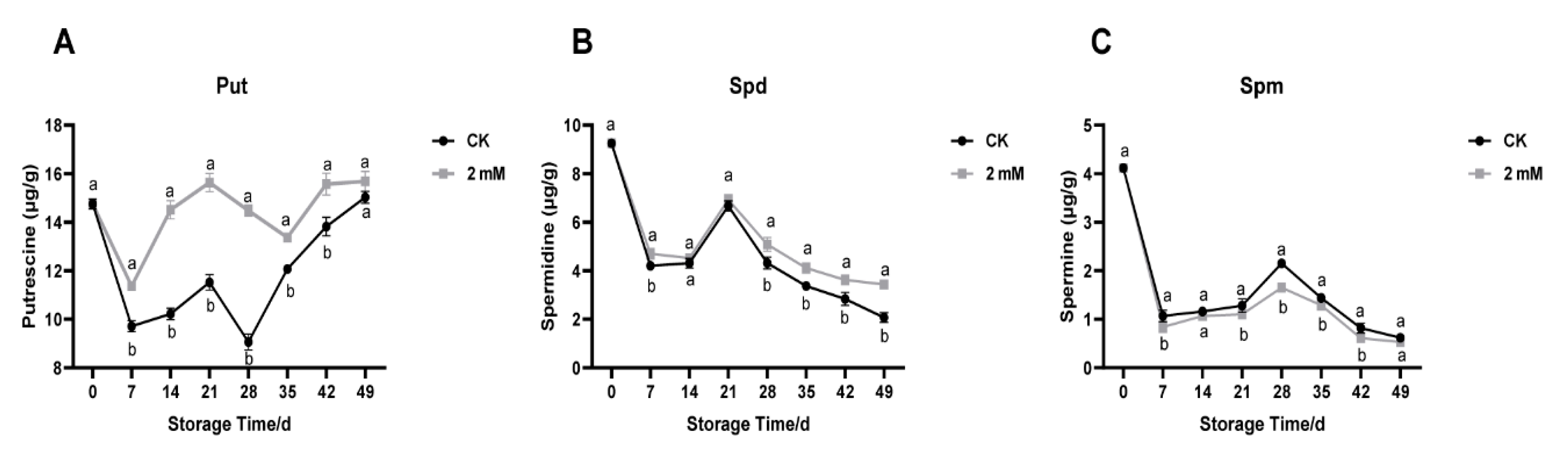
The changes in the endogenous polyamine contents of Xinmi No.3 fruit are presented in Figure 2. The total endogenous Put, Spd, and Spm contents in the CK group and the exogenous Put-treated Xinmi No.3 fruit displayed similar trends (Figure 2). The exogenous Put stimulated the accumulation of endogenous Put and Spd in Xinmi No.3 fruit stored under cold conditions (Figure 2A,B). On day 28, the endogenous Put content of the exogenous Put-treated Xinmi No.3 fruit was 37.4% higher than that of the CK group (Figure 2A). During cold storage, the endogenous Spd contents in the exogenous Put-treated group were 10.5%, 4.6%, 3.8%, 15.1%, 18%, 21.5% and 39.8% higher than those in the CK group (Figure 2B, p < 0.05). However, the exogenous Put-treated group exhibited significantly lower endogenous Spm levels, in contrast to the CK group (Figure 2C). Compared with the control treatment, the exogenous Put treatment reduced the endogenous Spm content by 21.5%, 7.8%, 14%, 23.3%, 10.4%, 25.6%, and 14.5% during the cold storage (Figure 2C). These findings suggest that the external application of Put treatment enhanced the accumulation of endogenous Put and Spd while concomitantly reducing the endogenous Spm content of Xinmi No.3 fruit during cold storage.

3.3. Polyamine Pathway Enzyme Activity Is Involved in Yellow Melon Fruit During Cold Storage

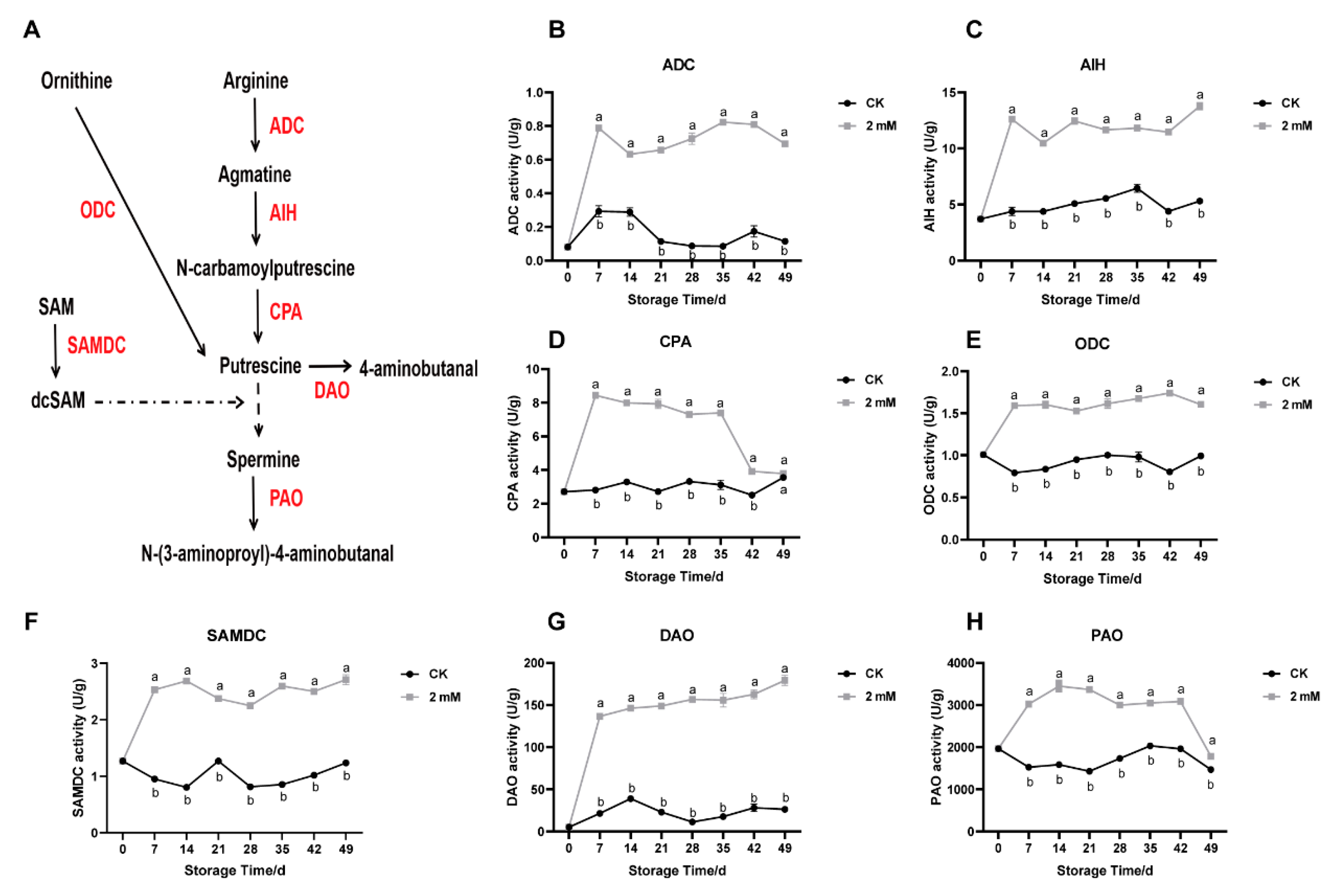
As outlined in Figure 3A, putrescine is synthesized via two major pathways involving several key enzymes. The pathway initiated by arginine decarboxylase (ADC) proceeds through agmatine iminohydrolase (AIH) and N-carbamoylputrescine amidohydrolase (CPA). Alternatively, putrescine can be directly produced by ornithine decarboxylase (ODC). The biosynthesis of Spd and Spm from Put is mediated by S-adenosylmethionine decarboxylase (SAMDC). In contrast, polyamine oxidase (PAO) and diamine oxidase (DAO) serve as the primary enzymes in the catabolism of polyamines.
The activity of these enzymes was higher in the Put-treated group when compared with the CK group (Figure 3). However, their temporal patterns varied. The activities of ADC and CPA exhibited a similar trend, increasing during the first 7 days and then gradually declining (Figure 3B,D). In contrast, the activities of AIH and SAMDC rose slowly in the early storage period before decreasing, ultimately peaking at the end of the storage period (Figure 3C,F). ODC activity increased significantly upon Put treatment, reaching a peak on day 42 that was 53.8% higher than that in the CK group (Figure 3E). The catabolic enzymes also showed strong responses: DAO activity increased dramatically, with a 13.9-fold rise over the CK level observed on day 28 (Figure 3G), while the PAO activity increased over the first 14 days before declining (Figure 3H). These findings indicate that exogenous Put altered the endogenous pool of Put, Spd, and Spm by regulating the activities of key enzymes involved in both their biosynthesis (ADC, AIH, CPA, ODC, SAMDC) and degradation (DAO, PAO) during cold storage.

3.4. Put Treatment Induced the Expression of Genes Involved in the Polyamine Pathway

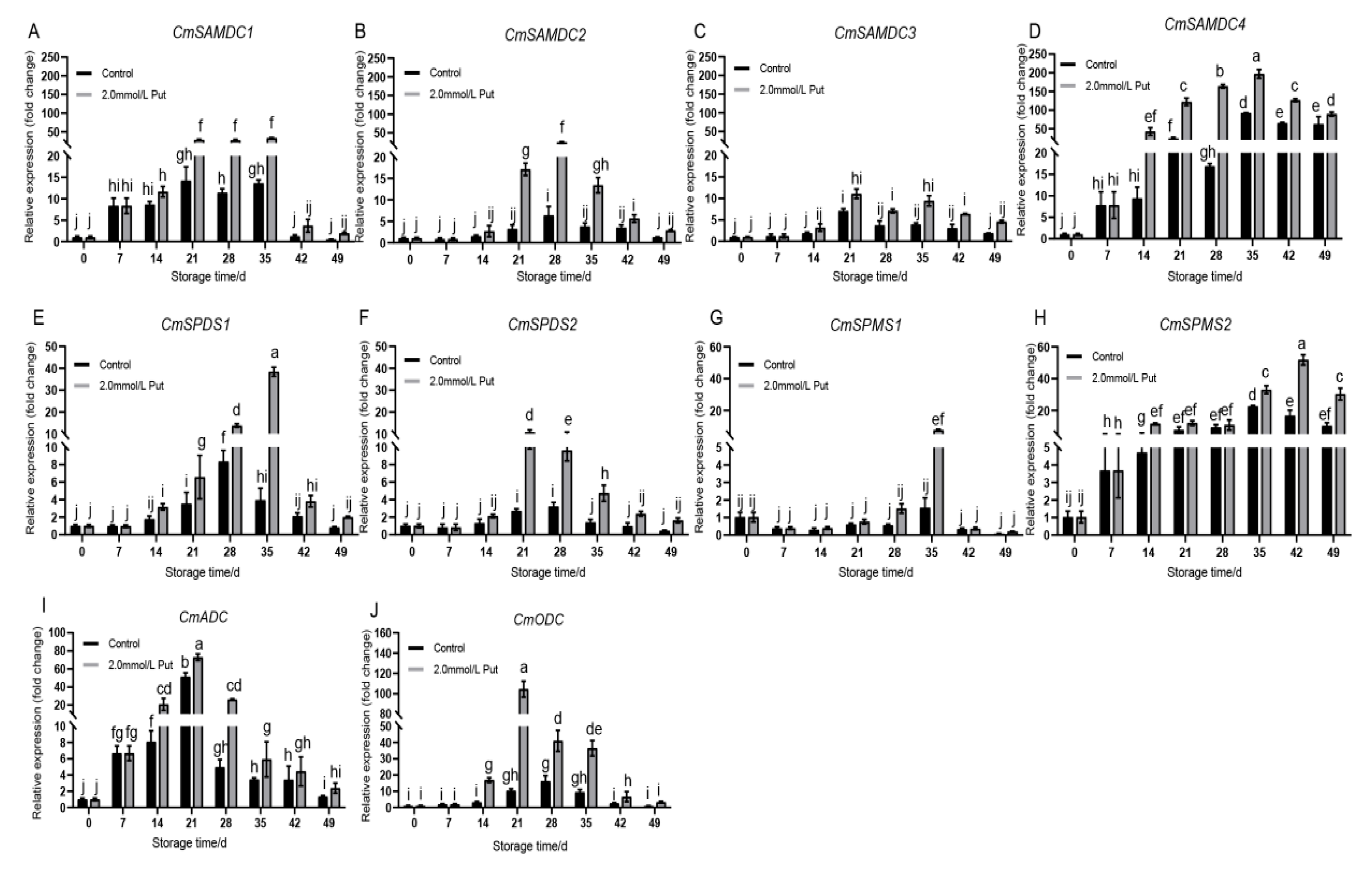
The expression of all analyzed genes (except CmSPMS2 in the control group) was induced during cold storage. Put treatment markedly enhanced the peak expression levels of genes involved in polyamine biosynthesis, including CmSAMDC1-4, CmSPDS1-2 (spermidine synthases), CmSPMS1-2 (spermine synthases), CmADC, and CmODC, throughout this period (Figure 4). As illustrated in Figure 4, the expression levels of these genes were generally higher in Put-treated fruit from mid-to-late stages of storage compared with the control group.
Among the CmSAMDC gene family, CmSAMDC4 showed the strongest response to Put (Figure 4D). Under Put treatment, CmSAMDC4 expression increased sharply from day 14, reached a peak on day 28 that was nearly 10-fold higher than that observed in the control group, and remained at an extremely high level on day 42. The expression levels of CmSAMDC2 and CmSAMDC3 were also markedly up-regulated by the Put treatment from day 14 onwards (Figure 4B,C). The CmSAMDC1 expression was enhanced by Put, particularly from day 21 onwards (Figure 4A). The expression levels of CmSPDS1-2 were induced by Put, especially during the middle period of storage (Figure 4E,F). On day 35, the expression levels of CmSPDS1 in fruit treated with Put reached a peak that was approximately 38.4-fold higher than that in the control group (Figure 4E). And the expression levels of CmSPMS1 in Put-treated fruit had a similar pattern to those of CmSPDS1 (Figure 4G). Similarly to CmSPDS1, the expression of CmSPMS1 in the Put-treated fruit reached its maximum on day 35 (Figure 4G). Under the Put treatment, the expression of CmSPMS2 increased sharply throughout the storage period. It reached levels approximately 32.9-fold and 51.8-fold higher than those of the control at 35 and 42 days, respectively (Figure 4H). Furthermore, the expression levels of CmADC and CmODC in fruit treated with Put reached their maximum at 21 days, exhibiting increases of 20.5 and 36.5-fold, respectively, compared with the control group at the same timepoint (Figure 4I,J). Exogenous Put treatment activated polyamine biosynthesis in melons by significantly up-regulating essential genes involved in the polyamine synthesis pathway, especially CmSAMDC4, CmSPMS2, and CmODC.

3.5. Expression of CmCBFs in Put-Treated Yellow Melon During Cold Storage

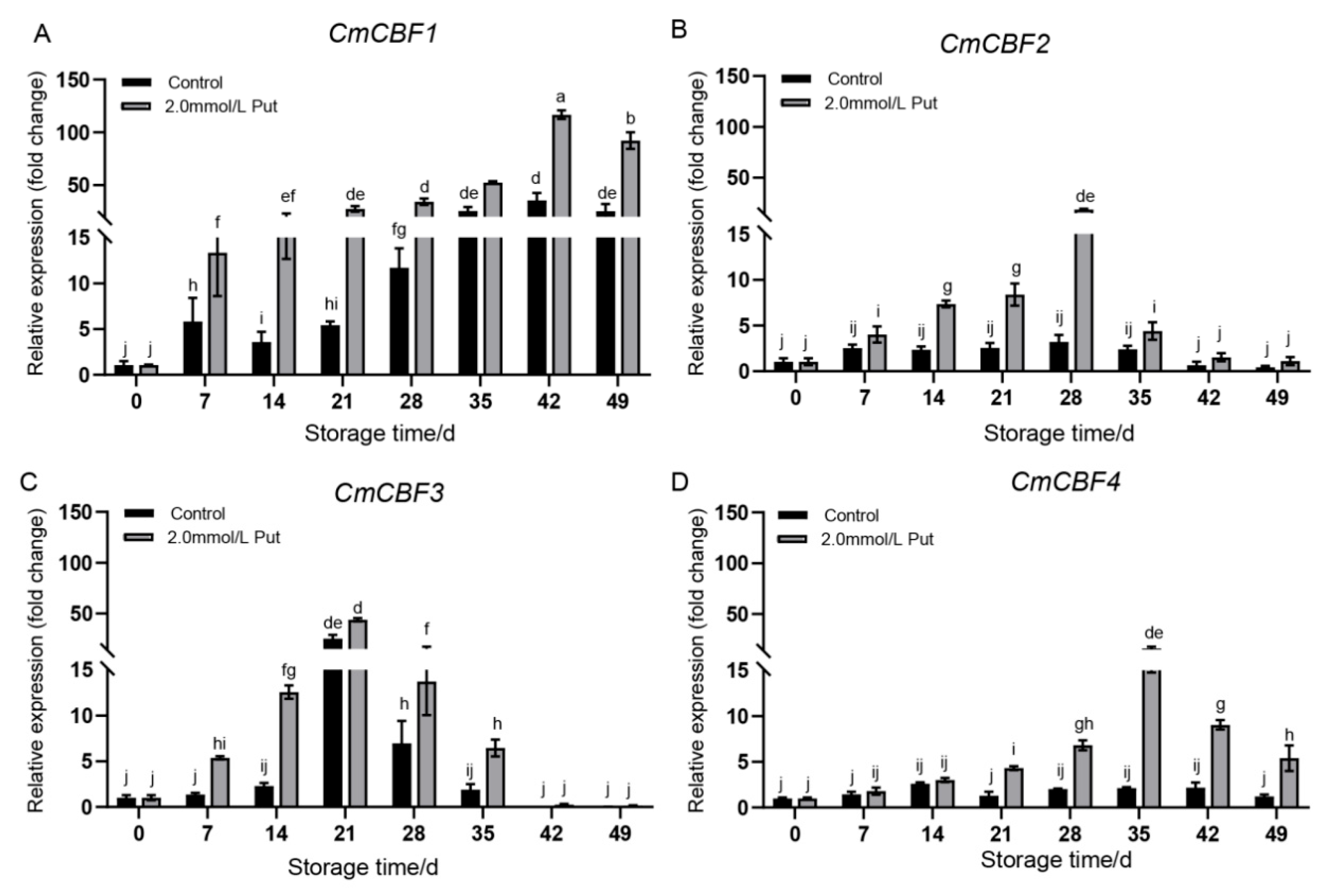
Exogenous Put treatment reshaped the transcriptional dynamics of CmCBF genes in yellow melon fruit during cold storage (Figure 5). CmCBF1 and CmCBF4 were strongly up-regulated by Put (Figure 5A,D). Notably, on day 35, the levels of CmCBF4 in fruit that had received Put treatment were about 14.5 times higher than those in the control group, representing the most pronounced increase among all CmCBF genes. In contrast, the Put treatment suppressed the expression of CmCBF3, particularly during the mid-to-late storage period, where its transcript abundance was only a quarter of that in the control on day 42 (Figure 5C). For CmCBF2, Put application did not enhance its peak expression but effectively attenuated its decline thereafter, maintaining a significantly higher level (4.5-fold higher than that for the control) on day 35 (Figure 5B). These results clearly indicate that CmCBF family members respond differently to Put treatment and may play distinct roles in mediating Put-induced cold tolerance in post-harvest melon fruit. Further investigation into their downstream target genes would be required to fully elucidate the signaling cascade involved.

4. Discussion

Yellow melon is extremely vulnerable to cold damage during post-harvest handling and shipping, resulting in significant financial losses because of a decrease in quality [20,21]. Polyamines (PAs) are integral components of this adaptive mechanism, directly involved in mitigating cold stress [11,14]. Furthermore, previous research has shown that the external use of Put can preserve the post-harvest quality of horticultural crops, including apricot [22], broccoli [23], blueberry [24], and sweet orange [14]. This study demonstrated that exogenous Put treatment significantly alleviated chilling injury symptoms and reduced the CI index of yellow melon during cold storage (Figure 1A,B). Previous studies demonstrated that 1 mM Put treatment prolonged the shelf life of fruits such as mango [25], blueberry [24], and pear [5]. In our study, 2 mM Put treatment was effective in maintaining the quality of yellow melon, as compared with the CK group (Figure 1A,B). These results suggest that different fruits have different optimal concentrations of Put and that treatment with 2 mM Put may be an effective method of reducing CI in yellow melon during cold storage.
Naturally occurring PAs in plants comprise Put, Spd, and Spm, which exist in both free and conjugated forms [26]. Therefore, polyamine levels serve as a reliable biomarker for predicting low-temperature tolerance or sensitivity in plants [27,28]. For example, low temperatures can impact endogenous PA levels in tomato and anthurium, and exogenous treatment with PAs can modulate PA metabolism [29,30]. In our research, exogenous Put (2 mM) improved the contents of natural Put and Spd (Figure 2A,B) and slightly decreased the content of endogenous Spm in yellow melon during cold storage (Figure 2C). We propose that Put may lessen the impact of chilling stress on yellow melon fruit, mainly by modulating the PA metabolism.
The biosynthesis of PAs in higher plants is well studied (Figure 3A). The biosynthesis of Put is mediated by two enzymes: ODC for direct production from ornithine, and ADC for indirect synthesis from arginine [31]. The biosynthesis of Spd and Spm from Put involves the movement of aminopropyl units from decarboxylated S-adenosylmethionine (dcSAM). The precursor dcSAM is generated in reactions catalyzed by S-adenosylmethionine decarboxylase (SAMDC) [29]. The oxidation of polyamines in higher plants, primarily catalyzed by PAO and DAO, results in the concomitant generation of H2O2 [32]. It has been observed that the application of external PAs increases the endogenous PA concentration by increasing the activity of related enzymes [33,34]. Very similarly to the contents of Put, Spd, and Spm, the contents of these enzymes were significantly higher than those in the CK groups in the yellow melons kept at low temperatures (Figure 3B–H). In accordance with previous research, our data suggest that the activation of Put biosynthesis may be a conserved strategy for chilling injury tolerance in higher plants.
Enhanced environmental stress tolerance in various plant species has been reported in many studies, resulting from genetic transformation involving the SAMDC, SPDS, SPMS, ADC, and ODC genes [35,36]. During cold stress, cold-tolerant chickpea (Cicer arietinum L.) genotypes exhibit higher gene expression levels of CaADC, CaSPDS1, CaSPDS2, and CaSPMS than cold-sensitive genotypes [37]. In pepper (Capsicum annuum L.), CaSPDS participates in the plant’s response to chilling stress [38]. The application of external Put markedly enhanced the expression of TaADC, TaODC, TaSAMDC, and TaSPDS at 4 °C [39]. Since exposure to cold stress in our study increased the concentration of endogenous polyamines and the activity of important enzymes, we then employed qRT-PCR to evaluate the expression of genes involved in the polyamine pathway (Figure 4). In our results, we found that cold stress and the exogenous application of 2 mM Put induced the expression of CmSAMDC1-4, CmSPDS1-2, CmSPMS1-2, CmADC, and CmODC (Figure 4A–J).
Among the genetic mechanisms of cold acclimation, the CBF-regulated route has been examined in great detail and is acknowledged for its crucial function [40]. CBFs have been identified and isolated in numerous plant species, including Hami melon [3], Arabidopsis [41], sweet orange [14], and Solanum commersonii [42]. This widespread occurrence suggests that the CBF pathway is conserved across higher plants, including both chilling-sensitive and chilling-tolerant species [16]. CBF genes have been documented to exist as multi-gene families across plant species and often exhibit significant functional redundancy [43]. For example, AtCBF1, 2, and 3 are all involved in cold acclimation, but AtCBF2 is more important in A. thaliana [44]. Previous research demonstrated that CmCBF1 and CmCBF3 exhibit enhanced expression in Hami melon fruit when subjected to cold temperatures [3,21]. However, by promoting Put synthesis, CmCBF4 helps melon seedlings withstand the cold [45]. Our results showed that CmCBF1 and 4 were significantly induced by the treatment with 2 mM Put in yellow melon fruit during cold storage (Figure 5), and these results are partly consistent with those of previous research [3,21,45]. According to some studies, a higher level of CBF expression can lead to a stronger induction of its downstream target genes (e.g., COR genes) under cold stress, thereby prolonging the adaptive response [15,46]. From this, in conjunction with our findings, we hypothesize that CmCBF4 might be involved in Put metabolism and play a significant role in yellow melon fruit during cold storage. The up-regulation of CmCBF1 and CmCBF4 suggests their potential role in activating the cold-responsive transcriptional network, although the expression of their downstream effector genes remains to be verified.

5. Conclusions

In conclusion, this study demonstrated that exogenous Put treatment, particularly at an optimal concentration of 2 mM, effectively alleviates chilling injury in post-harvest yellow melon. The underlying mechanism involves the enhancement of endogenous polyamine biosynthesis, shown by the increased activities of key enzymes and elevated levels of Put, Spd, and Spm. Furthermore, Put treatment up-regulates the expression of CmCBFs, which likely activate the downstream cold-responsive signaling pathway. Therefore, our findings reveal that exogenous Put enhances chilling tolerance by synchronously modulating both polyamine metabolism and the CBF-mediated transcriptional network. This provides a viable strategy for melon preservation and offers valuable insights for improving cold resistance in other horticultural crops.

Author Contributions

Conceptualization, X.L. and K.K.; methodology, X.L. and K.K.; software, X.L.; validation, H.Y.; investigation, J.Z., H.Y. and P.Z.; data curation, Z.Z.; writing—original draft preparation, X.L.; writing—review and editing, K.K. and Z.Z.; visualization, J.Z.; supervision, Y.Z., C.C. and T.Z.; project administration, C.C.; funding acquisition, C.C. All authors have read and agreed to the published version of the manuscript.

Funding

This research was funded by [Ting Zhang] grant number [2024A02007-4 and XJARS-06-10], by [Cunkun Chen] grant number [NSFC, No. 32472805 and 23JCYBJC00840], by [Xiaoxue Li] grant number [24JCQNJC01120 and 019250364].

Data Availability Statement

The original contributions presented in this study are included in the article. Further inquiries can be directed to the corresponding author.

Acknowledgments

This work was supported by the Major Special Project of Xinjiang Uygur Autonomous Region “Research on Key Technologies for Quality Safety, Cold Chain Logistics, and Processing Efficiency Improvement of Hami Melon” (2024A02007-4), Modern Agricultural Industry Technology System Project of the Autonomous Region “Industrial Technology System for Melons—Post of Deep Processing and Storage & Transportation of Agricultural Products” (XJARS-06-10), Projects of National Natural Science Foundation of China (NSFC, No. 32472805), Project of Natural Science Foundation of Tianjin (23JCYBJC00840 and 24JCQNJC01120), and 2025 Agricultural Science and Technology International Cooperation and Exchange Program (019250364).

Conflicts of Interest

Author Xiaoxue Li was employed by the company Tianjin Guojia Productivity Promotion Co., Ltd. The remaining authors declare that the research was conducted in the absence of any commercial or financial relationships that could be construed as a potential conflict of interest.

References

  1. Jayakodi, M.; Schreiber, M.; Mascher, M. Sweet genes in melon and watermelon. Nat. Genet. 2019, 51, 1572–1573. [Google Scholar] [CrossRef]
  2. Liu, Y.; Li, Y.; Guo, H.; Lv, B.; Feng, J.; Wang, H.; Zhang, Z.; Chai, S. Gibberellin biosynthesis is required for CPPU-induced parthenocarpy in melon. Hortic. Res. 2023, 10, uhad084. [Google Scholar] [CrossRef]
  3. Zhang, T.; Che, F.; Zhang, H.; Pan, Y.; Xu, M.; Ban, Q.; Han, Y.; Rao, J. Effect of nitric oxide treatment on chilling injury, antioxidant enzymes and expression of the CmCBF1 and CmCBF3 genes in cold-stored Hami melon (Cucumis melo L.) fruit. Postharvest Biol. Technol. 2017, 127, 88–98. [Google Scholar] [CrossRef]
  4. Tavallali, V.; Alhavi, N.; Gholami, H.; Mirazimi Abarghuei, F. Developmental and phytochemical changes in pot marigold (Calendula officinalis L.) using exogenous application of polyamines. Plant Physiol. Biochem. 2022, 183, 128–137. [Google Scholar] [CrossRef]
  5. Xiang, F.; Gao, R.; Chen, Y.; Pang, J.; Liu, S.; Linghu, T.; Rui, Z.; Wang, Z.; Xu, L. Exogenous putrescine and 1-methylcyclopropene prevent soft scald in ‘Starkrimson’ pear. Postharvest Biol. Technol. 2022, 193, 112035. [Google Scholar] [CrossRef]
  6. Amiri, H.; Banakar, M.H.; Hemmati Hassan Gavyar, P. Polyamines: New Plant Growth Regulators Promoting Salt Stress Tolerance in Plants. J. Plant Growth Regul. 2024, 43, 4923–4940. [Google Scholar] [CrossRef]
  7. Nidhi; Iqbal, N.; Khan, N.A. Polyamines Interaction with Gaseous Signaling Molecules for Resilience Against Drought and Heat Stress in Plants. Plants 2025, 14, 273. [Google Scholar] [CrossRef] [PubMed]
  8. Du, H.; Liu, D.; Liu, G.; Liu, H.; Kurtenbach, R. Polyamines conjugated to the bio-membranes and membrane conformations are involved in the melatonin-mediated resistance of harvested plum fruit to cold stress. Postharvest Biol. Technol. 2023, 204, 112480. [Google Scholar] [CrossRef]
  9. Pál, M.; Szalai, G.; Gondor, O.K.; Janda, T. Unfinished story of polyamines: Role of conjugation, transport and light-related regulation in the polyamine metabolism in plants. Plant Sci. 2021, 308, 110923. [Google Scholar] [CrossRef]
  10. Shen, W.; Nada, K.; Tachibana, S. Involvement of polyamines in the chilling tolerance of cucumber cultivars. Plant Physiol. 2000, 124, 431–439. [Google Scholar] [CrossRef]
  11. Cuevas, J.C.; Lopez-Cobollo, R.; Alcazar, R.; Zarza, X.; Koncz, C.; Altabella, T.; Salinas, J.; Tiburcio, A.F.; Ferrando, A. Putrescine is involved in Arabidopsis freezing tolerance and cold acclimation by regulating abscisic acid levels in response to low temperature. Plant Physiol. 2008, 148, 1094–1105. [Google Scholar] [CrossRef]
  12. Cao, D.; Huang, Y.; Mei, G.; Zhang, S.; Wu, H.; Zhao, T. Spermidine enhances chilling tolerance of kale seeds by modulating ROS and phytohormone metabolism. PLoS ONE 2023, 18, e0289563. [Google Scholar] [CrossRef] [PubMed]
  13. Phornvillay, S.; Pongprasert, N.; Wongs-Aree, C.; Uthairatanakij, A.; Srilaong, V. Exogenous putrescine treatment delays chilling injury in okra pod (Abelmoschus esculentus) stored at low storage temperature. Sci. Hortic. 2019, 256, 108550. [Google Scholar] [CrossRef]
  14. Song, J.; Wu, H.; He, F.; Qu, J.; Wang, Y.; Li, C.; Liu, J.H. Citrus sinensis CBF1 Functions in Cold Tolerance by Modulating Putrescine Biosynthesis through Regulation of Arginine Decarboxylase. Plant Cell Physiol. 2022, 63, 19–29. [Google Scholar] [CrossRef]
  15. Zhou, M.Q.; Shen, C.; Wu, L.H.; Tang, K.X.; Lin, J. CBF-dependent signaling pathway: A key responder to low temperature stress in plants. Crit. Rev. Biotechnol. 2011, 31, 186–192. [Google Scholar] [CrossRef]
  16. Shi, Y.; Ding, Y.; Yang, S. Molecular Regulation of CBF Signaling in Cold Acclimation. Trends Plant Sci. 2018, 23, 623–637. [Google Scholar] [CrossRef]
  17. Ye, K.; Li, H.; Ding, Y.; Shi, Y.; Song, C.; Gong, Z.; Yang, S. BRASSINOSTEROID-INSENSITIVE2 Negatively Regulates the Stability of Transcription Factor ICE1 in Response to Cold Stress in Arabidopsis. Plant Cell 2019, 31, 2682–2696. [Google Scholar] [CrossRef]
  18. Zhao, D.; Shen, L.; Fan, B.; Yu, M.; Zheng, Y.; Lv, S.; Sheng, J. Ethylene and cold participate in the regulation of LeCBF1 gene expression in postharvest tomato fruits. FEBS Lett. 2009, 583, 3329–3334. [Google Scholar] [CrossRef] [PubMed]
  19. Huang, Q.; Qian, X.; Jiang, T.; Zheng, X. Effect of eugenol fumigation treatment on chilling injury and CBF gene expression in eggplant fruit during cold storage. Food Chem. 2019, 292, 143–150. [Google Scholar] [CrossRef] [PubMed]
  20. Ning, M.; Tang, F.; Chen, J.; Song, W.; Cai, W.; Zhang, Q.; Zhao, X.; Yang, X.; Shan, C.; Hao, G. Low-temperature adaptation and preservation revealed by changes in physiological-biochemical characteristics and proteome expression patterns in post-harvest Hami melon during cold storage. Planta 2022, 255, 91. [Google Scholar] [CrossRef]
  21. Zhang, T.; Zhang, Q.; Pan, Y.; Che, F.; Wang, Q.; Meng, X.; Rao, J. Changes of polyamines and CBFs expressions of two Hami melon (Cucumis melo L.) cultivars during low temperature storage. Sci. Hortic. 2017, 224, 8–16. [Google Scholar] [CrossRef]
  22. Koushesh saba, M.; Arzani, K.; Barzegar, M. Postharvest polyamine application alleviates chilling injury and affects apricot storage ability. J. Agric. Food Chem. 2012, 60, 8947–8953. [Google Scholar] [CrossRef]
  23. Zheng, Q.; Zuo, J.; Gu, S.; Gao, L.; Hu, W.; Wang, Q.; Jiang, A. Putrescine treatment reduces yellowing during senescence of broccoli (Brassica oleracea L. var. italica). Postharvest Biol. Technol. 2019, 152, 29–35. [Google Scholar] [CrossRef]
  24. Song, X.; Dai, H.; Wang, S.; Ji, S.; Zhou, X.; Li, J.; Zhou, Q. Putrescine Treatment Delayed the Softening of Postharvest Blueberry Fruit by Inhibiting the Expression of Cell Wall Metabolism Key Gene VcPG1. Plants 2022, 11, 1356. [Google Scholar] [CrossRef]
  25. Malik, A.U.; Singh, Z. Improved fruit retention, yield and fruit quality in mango with exogenous application of polyamines. Sci. Hortic. 2006, 110, 167–174. [Google Scholar] [CrossRef]
  26. Sharma, S.; Pareek, S.; Sagar, N.A.; Valero, D.; Serrano, M. Modulatory Effects of Exogenously Applied Polyamines on Postharvest Physiology, Antioxidant System and Shelf Life of Fruits: A Review. Int. J. Mol. Sci. 2017, 18, 1789. [Google Scholar] [CrossRef]
  27. Romero, F.M.; Maiale, S.J.; Rossi, F.R.; Marina, M.; Ruíz, O.A.; Gárriz, A. Polyamine Metabolism Responses to Biotic and Abiotic Stress. In Polyamines; Methods in Molecular Biology; Humana Press: New York, NY, USA, 2018; pp. 37–49. [Google Scholar]
  28. Hummel, I. Involvement of polyamines in the interacting effects of low temperature and mineral supply on Pringlea antiscorbutica (Kerguelen cabbage) seedlings. J. Exp. Bot. 2004, 55, 1125–1134. [Google Scholar] [CrossRef] [PubMed]
  29. Diao, Q.; Song, Y.; Qi, H. Exogenous spermidine enhances chilling tolerance of tomato (Solanum lycopersicum L.) seedlings via involvement in polyamines metabolism and physiological parameter levels. Acta Physiol. Plant. 2015, 37, 230. [Google Scholar] [CrossRef]
  30. Sun, X.; Yuan, Z.; Wang, B.; Zheng, L.; Tan, J.; Chen, F. Physiological and transcriptome changes induced by exogenous putrescine in anthurium under chilling stress. Bot. Stud. 2020, 61, 28. [Google Scholar] [CrossRef]
  31. Yang, J.; Zhang, J.; Liu, K.; Wang, Z.; Liu, L. Involvement of polyamines in the drought resistance of rice. J. Exp. Bot. 2007, 58, 1545–1555. [Google Scholar] [CrossRef] [PubMed]
  32. Diao, Q.; Song, Y.; Shi, D.; Qi, H. Interaction of Polyamines, Abscisic Acid, Nitric Oxide, and Hydrogen Peroxide under Chilling Stress in Tomato (Lycopersicon esculentum Mill.) Seedlings. Front. Plant Sci. 2017, 8, 203. [Google Scholar] [CrossRef] [PubMed]
  33. Ahanger, M.A.; Qin, C.; Maodong, Q.; Dong, X.X.; Ahmad, P.; Abd_Allah, E.F.; Zhang, L. Spermine application alleviates salinity induced growth and photosynthetic inhibition in Solanum lycopersicum by modulating osmolyte and secondary metabolite accumulation and differentially regulating antioxidant metabolism. Plant Physiol. Biochem. 2019, 144, 1–13. [Google Scholar] [CrossRef] [PubMed]
  34. Ebeed, H.T.; Hassan, N.M.; Aljarani, A.M. Exogenous applications of Polyamines modulate drought responses in wheat through osmolytes accumulation, increasing free polyamine levels and regulation of polyamine biosynthetic genes. Plant Physiol. Biochem. 2017, 118, 438–448. [Google Scholar] [CrossRef]
  35. Gao, C.; Sheteiwy, M.S.; Han, J.; Dong, Z.; Pan, R.; Guan, Y.; Alhaj Hamoud, Y.; Hu, J. Polyamine biosynthetic pathways and their relation with the cold tolerance of maize (Zea mays L.) seedlings. Plant Signal. Behav. 2020, 15, 1807722. [Google Scholar] [CrossRef]
  36. Adamipour, N.; Khosh-Khui, M.; Salehi, H.; Razi, H.; Karami, A.; Moghadam, A. Role of genes and metabolites involved in polyamines synthesis pathways and nitric oxide synthase in stomatal closure on Rosa damascena Mill. under drought stress. Plant Physiol. Biochem. 2020, 148, 53–61. [Google Scholar] [CrossRef] [PubMed]
  37. Amini, S.; Maali-Amiri, R.; Kazemi-Shahandashti, S.-S.; López-Gómez, M.; Sadeghzadeh, B.; Sobhani-Najafabadi, A.; Kariman, K. Effect of cold stress on polyamine metabolism and antioxidant responses in chickpea. J. Plant Physiol. 2021, 258–259, 153387. [Google Scholar] [CrossRef]
  38. Zhang, J.; Xie, M.; Yu, G.; Wang, D.; Xu, Z.; Liang, L.; Xiao, J.; Xie, Y.; Tang, Y.; Sun, G.; et al. CaSPDS, a Spermidine Synthase Gene from Pepper (Capsicum annuum L.), Plays an Important Role in Response to Cold Stress. Int. J. Mol. Sci. 2023, 24, 5013. [Google Scholar] [CrossRef]
  39. Gholizadeh, F.; Mirzaghaderi, G.; Marashi, S.H.; Janda, T. Polyamines-Mediated amelioration of cold treatment in wheat: Insights from morpho-physiological and biochemical features and PAO genes expression analyses. Plant Stress 2024, 11, 100402. [Google Scholar] [CrossRef]
  40. Vogel, J.T.; Zarka, D.G.; Van Buskirk, H.A.; Fowler, S.G.; Thomashow, M.F. Roles of the CBF2 and ZAT12 transcription factors in configuring the low temperature transcriptome of Arabidopsis. Plant J. 2004, 41, 195–211. [Google Scholar] [CrossRef]
  41. Jia, Y.; Ding, Y.; Shi, Y.; Zhang, X.; Gong, Z.; Yang, S. The cbfs triple mutants reveal the essential functions of CBFs in cold acclimation and allow the definition of CBF regulons in Arabidopsis. New Phytol. 2016, 212, 345–353. [Google Scholar] [CrossRef]
  42. Carvallo, M.A.; Pino, M.T.; Jeknic, Z.; Zou, C.; Doherty, C.J.; Shiu, S.H.; Chen, T.H.; Thomashow, M.F. A comparison of the low temperature transcriptomes and CBF regulons of three plant species that differ in freezing tolerance: Solanum commersonii, Solanum tuberosum, and Arabidopsis thaliana. J. Exp. Bot. 2011, 62, 3807–3819. [Google Scholar] [CrossRef]
  43. Wang, P.; Chen, X.; Guo, Y.; Zheng, Y.; Yue, C.; Yang, J.; Ye, N. Identification of CBF Transcription Factors in Tea Plants and a Survey of Potential CBF Target Genes under Low Temperature. Int. J. Mol. Sci. 2019, 20, 5137. [Google Scholar] [CrossRef]
  44. Zhao, C.; Zhang, Z.; Xie, S.; Si, T.; Li, Y.; Zhu, J.-K. Mutational Evidence for the Critical Role of CBF Transcription Factors in Cold Acclimation in Arabidopsis. Plant Physiol. 2016, 171, 2744–2759. [Google Scholar] [CrossRef] [PubMed]
  45. Li, M.; Duan, X.; Gao, G.; Liu, T.; Qi, H. CmABF1 and CmCBF4 cooperatively regulate putrescine synthesis to improve cold tolerance of melon seedlings. Hortic. Res. 2022, 9, uhac002. [Google Scholar] [CrossRef] [PubMed]
  46. Mohseni, S.; Che, H.; Djillali, Z.; Dumont, E.; Nankeu, J.; Danyluk, J.; Gulick, P. Wheat CBF gene family: Identification of polymorphisms in the CBF coding sequence. Genome 2012, 55, 865–881. [Google Scholar] [CrossRef] [PubMed]
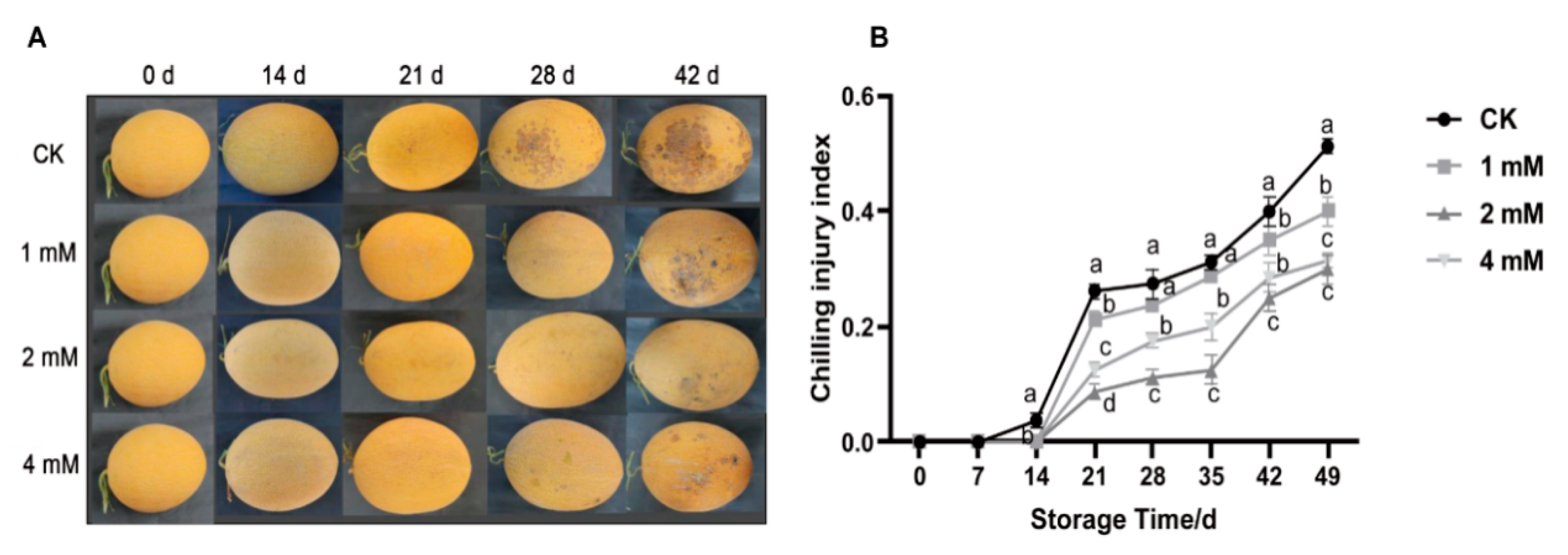
Figure 1. Effect of varying concentrations of Put on visual quality (A) and CI index (B) in Xinmi No.3 fruit on different cold storage days. At each time point, different lowercase letters indicate significant differences between the control and Put-treated groups (p < 0.05, LSD test).
Horticulturae 12 00063 g001
Figure 2. Effect of 2 mM exogenous Put treatment on endogenous Put content (A), Spd content (B), and Spm content (C) in Xinmi No.3 fruit on different cold storage days. At each time point, different lowercase letters indicate significant differences between the control and Put-treated groups (p < 0.05, LSD test).
Horticulturae 12 00063 g002
Figure 3. The activity of key enzymes in the putrescine pathway of yellow melon after treatment with Put during cold storage. A schematic diagram of polyamine synthesis (note: spermidine, an intermediate in this pathway, is not explicitly labeled in the schematic) (A). The effects of Put on ADC (B), AIH (C), CPA (D), ODC (E), SAMDC (F), DAO (G), and PAO activities (H) in Xinmi No.3 fruit on different cold storage days. Data represent the mean ± SEM of three replicates. Lowercase letters indicate significant differences (p < 0.05) based on a two-way ANOVA followed by LSD tests for the interaction between storage time and treatment.
Horticulturae 12 00063 g003
Figure 4. Expression levels of essential genes in the putrescine pathway of yellow melon after Put treatment during cold storage: (AD) CmSAMDC1-4, (E,F) CmSPDS1-2, (G,H) CmSPMS1-2, (I) CmADC, and (J) CmODC in Xinmi No.3 fruit on different cold storage days. Data represent the mean ± SEM of three replicates. Lowercase letters indicate significant differences (p < 0.05) based on a two-way ANOVA followed by LSD tests for the interaction between storage time and treatment.
Horticulturae 12 00063 g004
Figure 5. Changes in gene expression of CmCBF1 (A), CmCBF2 (B), CmCBF3 (C), and CmCBF4 (D) in yellow melon fruit during cold storage for 49 d. Values are the mean ± SEM of three replicates. At each time point, different lowercase letters indicate significant differences between the control and Put-treated groups (p < 0.05, LSD test).
Horticulturae 12 00063 g005
Table 1. Primers and sequences.
Primer NameGene IDSequence (5′ to 3′)
QCBF1FMELO3C006869CAGAGATATCCAGAAGGCGG
QCBF1RMELO3C006869TATCCTCCAACAATCCAGGC
QCBF2FMELO3C005367CTCATGATGTTGCTGCCATC
QCBF2RMELO3C005367AGTACTCATGATCATCCGGC
QCBF3FMELO3C009442CCCGATTTACAAAGGCGTTC
QCBF3RMELO3C009442GTGGAAATGAGTGAGCGAAG
QCBF4FMELO3C005629AGACATCCGGTTTACAGAGG
QCBF4RMELO3C005629TTCCCTCTTAACGCTAGTGC
QCmADCFMELO3C023359GATCCCCTCTACTGCTTTGC
QCmADCRMELO3C023359GCAGCATACTCTTCGAGTCC
QCmODCFMELO3C011335GGAAGTGGGGCTACTGAAAC
QCmODCRMELO3C011335TTATGGCCGACTTTACTGCC
QCmSAMDC1FMELO3C023787GAGAAGAAGACTCATCGGCG
QCmSAMDC1RMELO3C023787CATCCTCTGGAGTAACGTGC
QCmSAMDC2FMELO3C021386CATCAAGCTCGAAGTCTCGG
QCmSAMDC2RMELO3C021386GAGGCTTTCCGGTAATGGAG
QCmSAMDC3FMELO3C006580CTCTGAGGAAGTTGCTGTCC
QCmSAMDC3RMELO3C006580TTCCAGGGTATAAACGGGGT
QCmSAMDC4FMELO3C004110TCCATGAATGGAATCGACGG
QCmSAMDC4RMELO3C004110GGTCGATACCGACACTTTCC
QCmSPDS1FMELO3C012007TTTGAGTTCTGTTCCACCAGG
QCmSPDS1RMELO3C012007GGAAACCAAAGGCTTTCTGC
QCmSPDS2FMELO3C017103GCGTAGCTATTGGGTACGAG
QCmSPDS2RMELO3C017103CATACAACACCTCCTGGTCG
QCmSPMS1FMELO3C005877CACAAGAGCTGGTGGAGATG
QCmSPMS1RMELO3C005877TGGATATGTTGGAACGCTGG
QCmSPMS2FMELO3C008477CTGGTGGTGTCCTCTGTAAC
QCmSPMS2RMELO3C008477AACAGGTTTCCCTTCGGTTG
EF1aFMELO3C020441AAATACTCCAAGGCAAGGTAC
EF1aRMELO3C020441TCATGTTGTCACCCTCGAAACCAG
Disclaimer/Publisher’s Note: The statements, opinions and data contained in all publications are solely those of the individual author(s) and contributor(s) and not of MDPI and/or the editor(s). MDPI and/or the editor(s) disclaim responsibility for any injury to people or property resulting from any ideas, methods, instructions or products referred to in the content.