Next Article in Journal
Exogenous Putrescine Application Mitigates Chill Injury in Melon Fruit During Cold Storage by Regulating Polyamine Metabolism and CBF Gene Expression
Previous Article in Journal
Nutrient Use Efficiency in Yacon Potato Under Varying NPK Fertilization Rates
Previous Article in Special Issue
Blue Light Suppresses Pepper Resistance Against Phytophthora capsici Through CRY2-Mediated ROS and SA Signaling Pathways
error_outline You can access the new MDPI.com website here. Explore and share your feedback with us.
 
 
Article

The CsBT1 Gene from Cucumber (Cucumis sativus L.) Negatively Regulates Salt and Drought Tolerance in Transgenic Arabidopsis Plants

1
Guangdong Provincial Key Laboratory of Utilization and Conservation of Food and Medicinal Resources in Northern Region, Shaoguan University, Shaoguan 512000, China
2
School of Biology and Agriculture, Shaoguan University, Shaoguan 512000, China
3
Key Laboratory of Crop Physiology, Ecology and Genetic Breeding, Ministry of Education, College of Bioscience and Bioengineering, Jiangxi Agricultural University, Nanchang 330045, China
4
Jiangsu Key Laboratory of Crop Genomics and Molecular Breeding, Agricultural College of Yangzhou University, Yangzhou 225009, China
*
Author to whom correspondence should be addressed.
These authors contributed equally to this work.
Horticulturae 2026, 12(1), 62; https://doi.org/10.3390/horticulturae12010062
Submission received: 18 November 2025 / Revised: 25 December 2025 / Accepted: 30 December 2025 / Published: 4 January 2026
(This article belongs to the Special Issue A Decade of Research on Vegetable Crops: From Omics to Biotechnology)

Abstract

BTB-TAZ (BT) proteins are plant-specific transcription factors that contain a BTB domain and a TAZ domain and play vital roles in various biological processes, growth regulation, and stress responses. In this study, we investigate the effect of overexpressing the cucumber CsBT1 gene in Arabidopsis thaliana on its tolerance to salt and drought. Quantitative analysis revealed significant downregulation of CsBT1 under salt and drought treatments, contrasting with its ABA-induced expression. The CsBT1 gene was introduced into Arabidopsis under the control of 35S promoter via floral dip transformation method. Two CsBT1-overexpressing transgenic Arabidopsis lines were used for stress treatment and phenotypic studies. The transgenic lines exhibited reduced germination, shorter root lengths, and accelerated leaf chlorosis under salt and drought treatments, in comparison to wild-type (WT) plants. Furthermore, overexpressed lines accumulated higher reactive oxygen species with lower superoxide dismutase (SOD) activity, correlating with increased electrolyte leakage and malondialdehyde (MDA) content. Notably, abscisic acid (ABA) treatment rescued the root growth inhibition in CsBT1-overexpressing transgenic Arabidopsis lines. Taken together, these results establish CsBT1 as a key negative regulator of salt and drought tolerance that functions through the ABA signaling pathway.

1. Introduction

Plants in their natural habitats face a spectrum of environmental stresses that severely constrain their growth and development, leading to substantial economic losses. Among these, salt and drought stress are major environmental factors severely limiting global crop productivity, especially under climate change and water scarcity [1]. Upon exposure to these stresses, plants initiate complex signaling pathways that reprogram gene expression and physiology to enable adaptation. As a globally significant vegetable, cucumber (Cucumis sativus L.) faces increasing threats from salt and drought stress, which are intensified by climate change [2]. Given the limited number of cloned drought- and salt-resistant genes in cucumber, there is an urgent need to identify novel genes to understand stress response mechanisms and develop resilient, high-yielding varieties.
BTB (broad-complex, tramtrack, and bric-à-brac) proteins are a class of eukaryotic proteins defined by their highly conserved BTB domain, a 120-amino-acid region typically located at the N-terminus. The BTB domain, also known as the POZ (Pox virus and zinc finger) domain, serves as a protein interaction motif, allowing for these proteins to participate in diverse cellular processes such as transcriptional regulation and protein degradation. A key mechanism is its role as a critical component of E3 ubiquitin ligase complexes, where it typically binds to CUL3 to form CRL3 (Cullin-RING ligase 3) complexes [3]. BTB proteins are broadly classified into various subfamilies based on the additional functional domains fused to their N- or C-terminal. This domain architecture, which includes combinations with TAZ, Kelch, BACK, MATH, and ANK domains, dictates their specific functions [4,5]. Amongst them, the BTB-TAZ (BT) subfamily is characterized by an N-terminal BTB/POZ domain, a central TAZ zinc-finger domain, and a C-terminal calmodulin binding domain (CaMBD) [6].
BT proteins are widely distributed in land plants, with reported instances in Arabidopsis [7], maize [8], cucumber [9], apple [10,11], rice [12], tomato [13], peach [14], and chrysanthemum [15]. However, only a few BT genes have been functionally characterized. In Arabidopsis, five BT proteins (AtBT1–AtBT5) have been identified, among which AtBT2 interacts with multiple substrate proteins to regulate leaf morphogenesis, gametophyte development, 35S enhancer activity, and seed germination [7,16,17]. AtBT4 inhibits interactions between effector proteins and host targets to regulate immunity to Pseudomonas syringae [18]. In maize, ZmBT2a protein forms a functional complex with ZmCUL3, which triggers ubiquitin-dependent post-translational modifications. These modifications directly regulate the expression of ZmLOXs and ZmPRs by altering the activity of their transcriptional regulators, thereby enhancing the plant’s defense mechanisms against Botrytis cinerea and P. syringae [8]. The apple MdBT2 protein regulates multiple processes, including drought stress responses [19,20], iron uptake [21], malate accumulation [22], anthocyanin biosynthesis [23], and cuticular wax biosynthesis [11], by interacting with various proteins, such as MdCOP1, MdHDZ27, MdMYB106, and MdARF8. PpBT3 promotes peach bud endodormancy release by mediating the degradation of PpDAM5, which alleviates cell cycle repression and activates gibberellin biosynthesis [14]. These findings collectively demonstrate the diverse roles of BT proteins in plant growth, development, and stress responses.
Our previous studies have identified three BT genes in the cucumber genome [9], but the biological functions of CsBT genes are still largely unknown. Among the three CsBT genes, CsBT1 shares similar structural features with other plant BT genes and its expression is downregulated by abiotic stresses [9], suggesting functional conservation between CsBT1 and BT genes in other plants. Therefore, it was selected for further investigation. We found that heterologous overexpression of CsBT1 in Arabidopsis thaliana compromised salt and drought tolerance, potentially by modulating the ABA signaling pathway to reduce reactive oxygen species (ROS) accumulation. Our findings provide valuable insights for enhancing stress resilience in cucumber via molecular breeding approaches.

2. Materials and Methods

2.1. Plant Materials and Growth Conditions

Cucumis sativus (‘Chinese long’ 9930 inbred line) and Arabidopsis thaliana (Col-0 ecotype) were cultivated in controlled growth chambers under a 16 h light/8 h dark photoperiod, with constant temperatures maintained at 22–24 °C.
Cucumber seeds were first soaked in warm water at 50–55 °C for 15 min. Subsequently, the soaked seeds were placed on moist filter paper in a Petri dish, covered with an additional layer of filter paper, and incubated at 28 °C for 48–72 h. Once roots had emerged, the germinated seeds were transferred to 1/2 Hongland nutrient solution (pH 5.8) for further cultivation. To investigate tissue-specific expression patterns, six tissues including roots, stems, leaves, male flowers, female flowers, and developing fruits were collected from plants at seven days post anthesis. For abiotic stress treatments, 14-day-old seedlings were exposed to abiotic stress conditions including salt stress (200 mM NaCl), drought stress (10% PEG-6000, w/v), and ABA treatment (100 μM ABA), according to our previous methods [2]. Leaf samples were harvested at 0, 3, 6, 12, and 24 h after stress induction, with three independent biological replicates collected for each time point.
Arabidopsis seeds were surface-sterilized with 10% sodium hypochlorite solution for 15 min, rinsed thoroughly with sterile distilled water, and sown on 1/2 Murashige and Skoog (MS) solid medium. Plates were kept at 4 °C in the dark for 2–3 days for stratification, then transferred to a growth chamber set at 22–24 °C under a 16 h light/8 h dark cycle. When roots reached about 1 cm in length, seedlings were transplanted into cell trays for further growth.

2.2. RNA Extraction and Quantitative Real-Time PCR (qRT-PCR)

Total RNA was extracted from cucumber and Arabidopsis samples using the RNA-easy Isolation Reagent (Vazyme, Nanjing, China) and subsequently reverse-transcribed with HiScript II Q RT SuperMix for qPCR (+gDNA) (Vazyme, Nanjing, China) following manufacturer’s protocols. Quantitative real-time PCR (qRT-PCR) analyses were conducted on a LightCycler 480 System (Roche, Switzerland) using ChamQ Universal SYBR qPCR Master Mix (Vazyme, Nanjing, China). CsACTIN and AtACTIN2 served as internal reference genes for cucumber and Arabidopsis, respectively [24,25,26]. Gene expression levels were calculated using the 2−ΔΔCt method [27], according to the comparative Ct formula. Gene-specific primers were listed in Table S1.

2.3. Cloning and Sequence Analysis of CsBT1

The coding sequence (CDS) of CsBT1 (Csa1G032450) was retrieved from the CuGenDB database (http://cucurbitgenomics.org/organism/2, accessed on 8 November 2025). Using the gene-specific primers provided in Table S1, the CDS of CsBT1 was successfully amplified from cucumber leaf complementary DNA. Following sequence verification, the obtained CsBT1 sequence was subjected to BLAST analysis on the NCBI platform (http://www.ncbi.nlm.nih.gov/blast/, accessed on 8 November 2025). Multiple sequence alignment of CsBT1 with homologous proteins from other species was conducted using Clustal Omega (https://www.ebi.ac.uk/jdispatcher/msa/clustalo, accessed on 8 November 2025), and a phylogenetic tree was constructed with MEGA 11.0 software via the Neighbor-Joining (NJ) method with p-distance method and 1000 bootstrap replicates as previously described [28].

2.4. Vector Construction and Generation of Transgenic Arabidopsis Lines

The CDS of CsBT1 gene was amplified and subsequently ligated into the overexpression vector pHB driven by double 35S promoter [29], via homologous recombination to generate the recombinant plasmid pHB-CsBT1. Then, pHB-CsBT1 was transformed into Arabidopsis thaliana (Col-0) using Agrobacterium tumefaciens-mediated floral dip method [30]. Transgenic Arabidopsis seeds were screened over multiple generations on 1/2 MS medium supplemented with hygromycin (25 mg/L) until homozygous lines were obtained. CsBT1 expression levels were then quantified by qRT-PCR, and the two transgenic lines exhibiting the highest expression (OE5 and OE8) were selected for subsequent function analysis.

2.5. Various Abiotic Stresses in Arabidopsis Plants

For the germination assay, surface sterilized seeds of wild-type (WT) and two T3 homozygous CsBT1-overexpressing Arabidopsis lines, OE5 and OE8, were sown on stress media containing either 125 mM NaCl in 1/2 MS medium for salt stress or 300 mM mannitol in 1/2 MS medium for drought stress, according to the previous methods [31,32]. Each treatment used 80 seeds divided into three technical replicates, and the germination rates were recorded after four days of incubation.
For the root elongation assay, seeds of OE5 and OE8 were germinated on 1/2 MS medium supplemented with 25 mg/mL hygromycin, while wild-type seeds were grown on standard 1/2 MS medium. Seedlings of WT and two CsBT1-overexpressing lines (OE5 and OE8) with uniform root length (approximately 1.5 cm) were transferred to 1/2 MS medium containing either 125 mM NaCl for salt stress [33], 300 mM mannitol for drought stress [31], or 10 µM ABA for ABA treatment [34], with 0 mM treatment serving as control. Root lengths were measured after one week of treatment, with three biological replicates performed for each condition.
Four-week-old WT and transgenic lines (OE5 and OE8) grown in nutrient soil were subjected to drought and salt stress treatments [31,32]. For drought stress, irrigation was completely withheld, while for salt stress, plants were irrigated once to soil saturation with 200 mM NaCl solution.

2.6. Histochemical Staining and Determination of Physiological Indexes

The accumulation of superoxide anion (O2·−), a crucial reactive oxygen species, was detected using nitroblue tetrazolium (NBT) histochemical staining as previously described [35]. Approximately 0.2 g of fresh Arabidopsis leaves were transferred to a 15 mL centrifuge tube with 5 mL of 95% ethanol. Samples were incubated in the dark at 4 °C for 48 h, and then absorbance was measured at wavelengths of 665 nm and 649 nm using a microplate reader. Chlorophyll content was measured following established methods [36]. For relative electrolyte leakage determination, the cleaned leaves were fully immersed in a centrifuge tube containing 10 mL of distilled water. The initial conductivity (R1) was measured by immersing the tube in a 25 °C water bath. Subsequently, the samples were boiled for 20 min, and the final conductivity (R2) was recorded after cooling to 25 °C. Three biological replicates were performed per line. Relative electrolyte leakage was calculated a percentage of R1 compared to R2 [28]. Superoxide dismutase (SOD) activity and malondialdehyde (MDA) content were measured using commercial assay kits (T-SOD assay kit A001-1-2 and MDA assay kit A003-1-2) from the Nanjing Jiancheng Bioengineering Institute (Nanjing, China) following the manufacturer’s protocols.

2.7. Statistical Analysis

The statistical analysis was performed using SPSS software (version 21.0), and data were statistically analyzed using One-way ANOVA with the least significance difference test, and a p-value < 0.05 was considered as significant.

3. Results

3.1. Sequence Analysis of CsBT1 and Its Deduced Amino Acid Sequences

To characterize the features of CsBT1, a multiple sequence alignment was performed using the amino acid sequences of CsBT1 and its homologs from different plant species. The results showed that CsBT1 shares relatively high identity with other BT proteins, including conserved domains (BTB, TAZ, and CaMBD) (Figure 1A). To further investigate the phylogenetic relationships between CsBT1 and other plant BT proteins, we constructed a phylogenetic tree using their homologous amino acid sequences. The analysis indicated that CsBT1 is most closely related to the melon (Cucumis melo L.) protein (Figure 1B).

3.2. Expression Analysis of CsBT1 in Cucumber

Our previous study showed that CsBT1 was highly expressed in roots, followed by leaves and fruits, and other tissues from cucumber plants on day 7 after flowering [9]. To further analyze the expression patterns of CsBT1, we quantified its transcript levels in various cucumber tissues at maturation stage using qRT-PCR. The results show that CsBT1 exhibited significant tissue-specific expression, with the most abundant level in the root, followed by the leaf, and the lowest in male flower (Figure S1A). We also analyzed the impact of salt stress, drought, and exogenous ABA on CsBT1 mRNA levels in cucumber leaves using qRT-PCR. Under salt stress, CsBT1 expression was markedly downregulated, reaching its lowest level at 3 h post-treatment, followed by a slight recovery, though expression remained significantly below pretreatment levels (Figure S1B). Drought stress induced a similar initial suppression, with minimal expression observed at 3 h, followed by gradual recovery to baseline levels by 24 h, while expression at other time points remained lower than pretreatment levels (Figure S1C). ABA treatment elicited a biphasic response, characterized by initial suppression, subsequent upregulation (peaking at 12 h with 2.98-fold higher expression than control), and eventual decline; however, no significant differences from pretreatment levels were observed at other time points (Figure S1D). These findings collectively demonstrate that CsBT1 expression is dynamically regulated by salt stress, drought stress, and ABA treatment.

3.3. Obtaining of Transgenic Arabidopsis Plants Overexpressing CsBT1

To elucidate the role of CsBT1, we introduced the gene driven by the cauliflower mosaic virus 35S promoter into Arabidopsis thaliana via Agrobacterium-mediated transformation. We obtained 12 homozygous transgenic lines overexpressing CsBT1. The expression levels of CsBT1 in nine randomly selected T3 homozygous lines were quantified by qRT-PCR. Based on this analysis, two lines (OE5 and OE8) with the highest transcript levels were selected for further investigation (Figure S2).

3.4. Overexpression of CsBT1 Decreased the Salt Stress Tolerance of Transgenic Arabidopsis

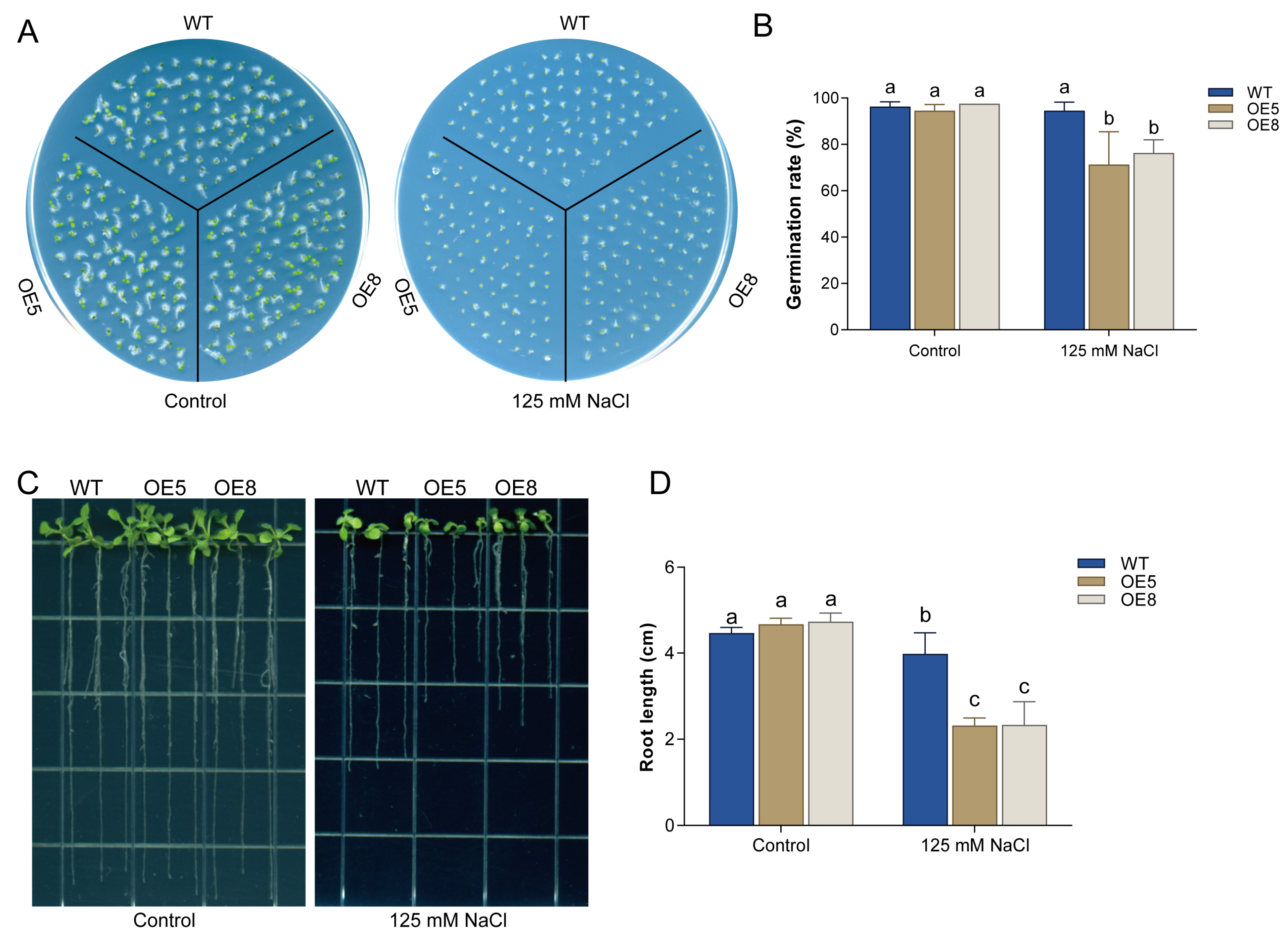
To investigate whether CsBT1 is associated with salt stress response, seed germination of wild-type (WT) and transgenic lines was assessed under control and salt stress conditions. The results showed that on day 4 of treatment, the germination rates of WT, OE5, and OE8 were 98.33%, 97.5%, and 97.91%, respectively, with no significant differences on normal 1/2 MS medium (Figure 2A,B). However, salt stress significantly suppressed germination in CsBT1-overexpressing lines compared to the WT (Figure 2A,B), demonstrating that CsBT1 overexpression in Arabidopsis heightens sensitivity to salt stress during germination.
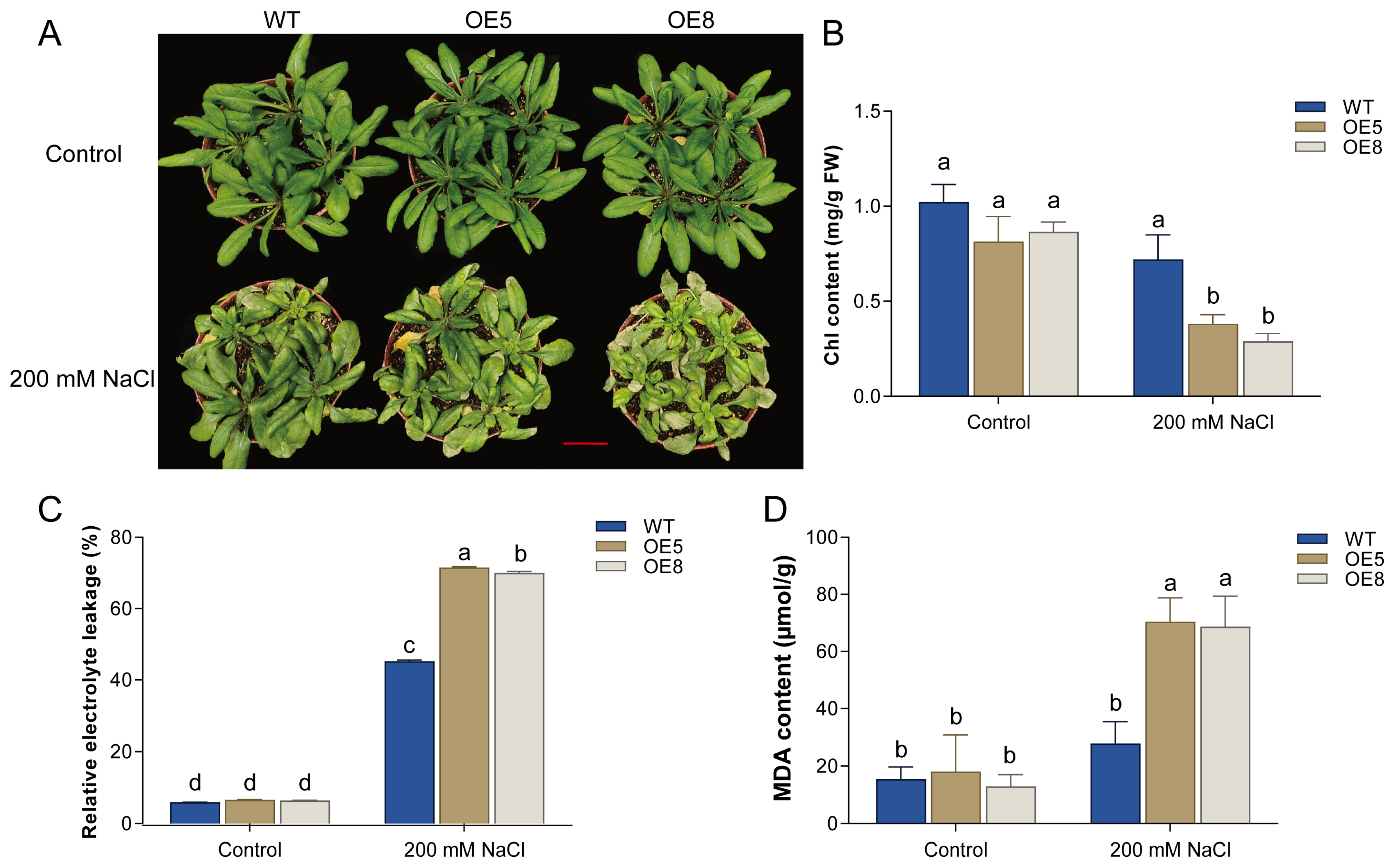
Subsequently, salt stress treatments were applied to WT and transgenic lines at both the seedling and adult stages. At the seedling stage, root growth was comparable between WT and CsBT1-overexpressing lines under normal conditions, while salt stress (125 mM NaCl) caused a more pronounced inhibition of root growth in the CsBT1-overexpressing lines than in the WT (Figure 2C,D). At the adult stage, 4-week-old plants were treated with 0 mM (control) or 200 mM NaCl for 7 days. While no phenotypic differences were observed under control conditions, the salt-stressed overexpression lines exhibited severe leaf wilting and chlorosis compared to the WT (Figure 3A). Under salt stress, the total chlorophyll content was significantly lower in the CsBT1-overexpressing lines than in the WT, while both relative electrolyte leakage and MDA content were markedly higher, indicating more severe loss of photosynthetic pigments and exacerbation of membrane damage (Figure 3B–D).

3.5. Analysis of Drought Tolerance in Transgenic Arabidopsis Plants Overexpressing CsBT1

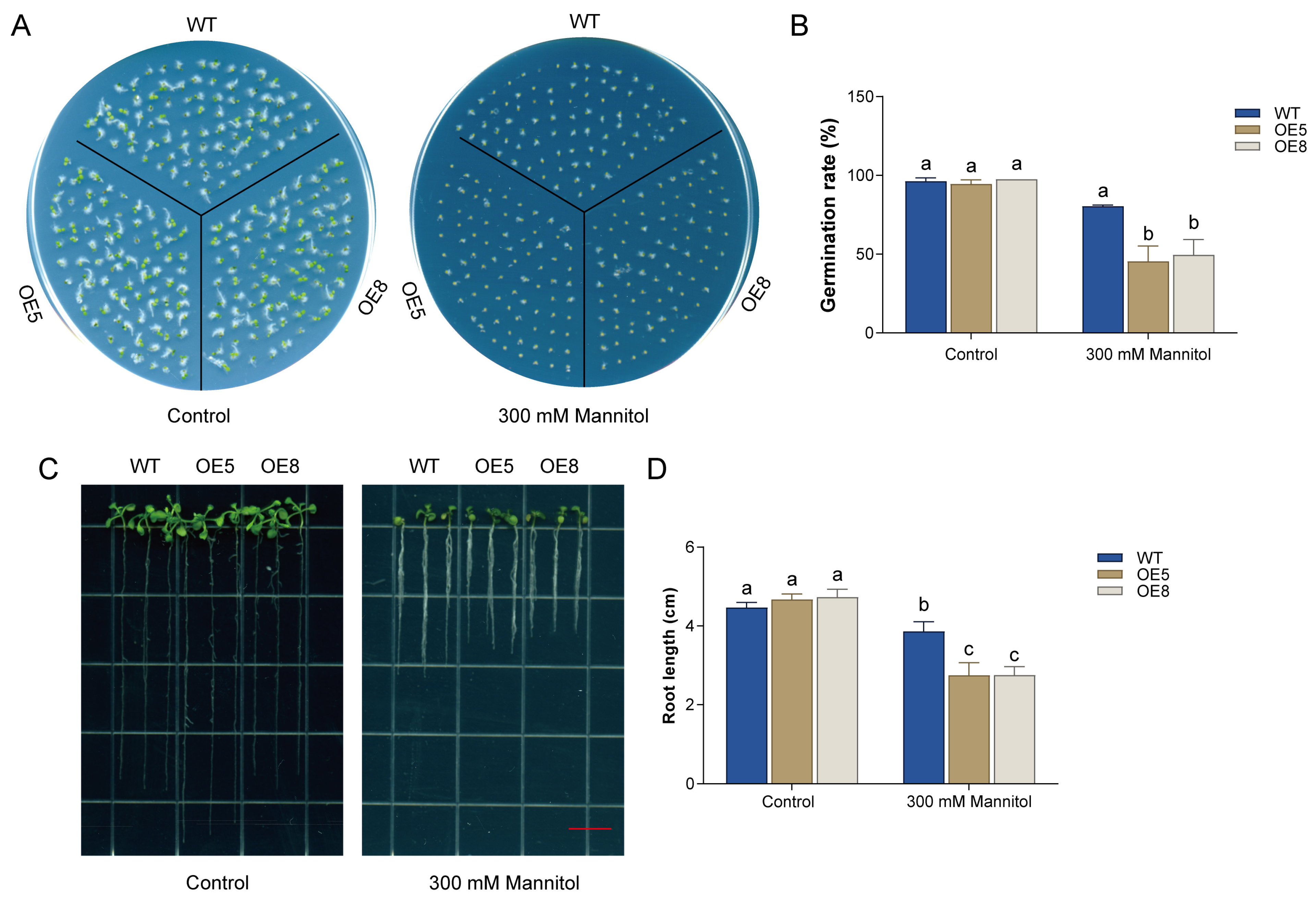
We also investigated the role of CsBT1 in drought tolerance using WT and two CsBT1-overexpressing lines (OE5 and OE8). Seed germination and root growth were analyzed under mannitol-induced drought stress, and adult plant phenotypes were observed under soil drought conditions. Under 300 mM mannitol, seed germination was severely inhibited in the CsBT1-overexpressing lines compared to the WT after 4 days, despite similar germination under control conditions (Figure 4A,B), confirming that CsBT1 overexpression reduces seed viability under drought stress.
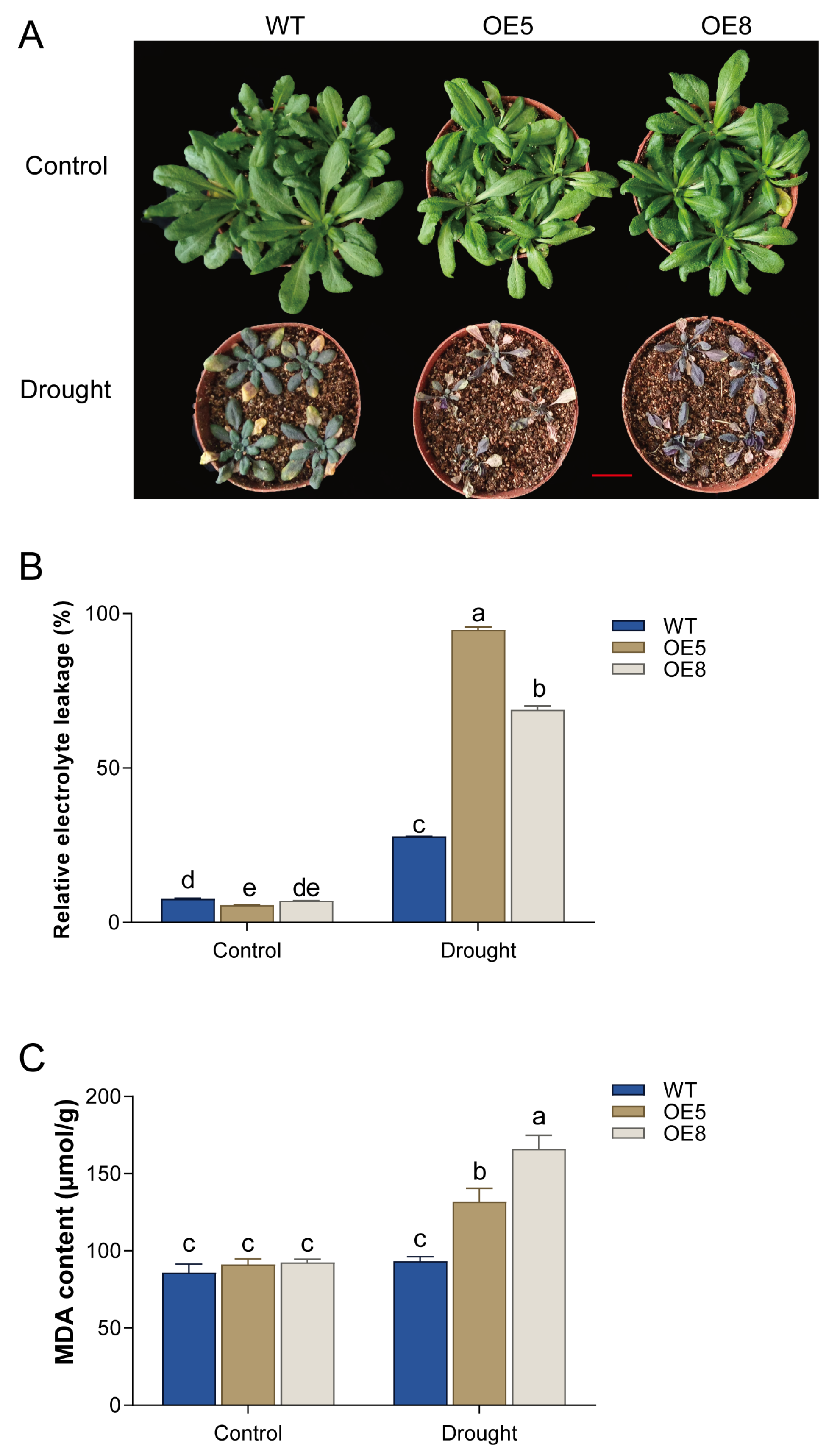
The response of WT and CsBT1-overexpressing lines to drought stress was also assessed at both seedling and adult stages. In seedlings, root elongation under 300 mM mannitol was significantly more inhibited in CsBT1-overexpressing lines than in the WT, with transgenic root lengths only about 71% of the WT (Figure 4C,D). In adult plants, a 14-day drought treatment caused more severe wilting in the transgenic lines, which was accompanied by significantly elevated relative electrolyte leakage and MDA content compared to the WT (Figure 5). These results demonstrate that CsBT1 enhances drought sensitivity across developmental stages.

3.6. Overexpression of CsBT1 in Arabidopsis Increased ROS Accumulation Under Salt and Drought Stress

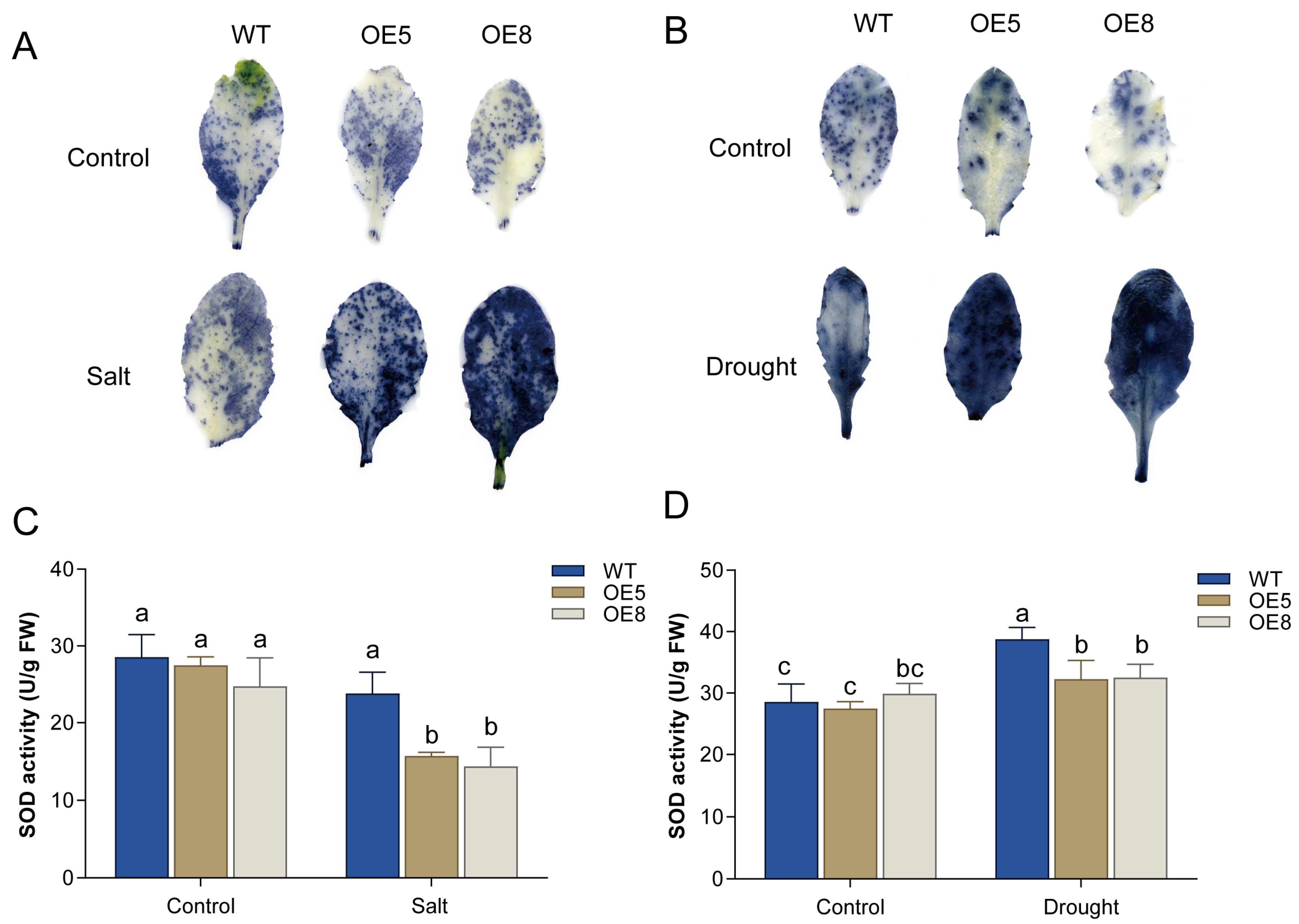
Salt and drought stress typically induce the excessive accumulation of ROS, leading to oxidative stress in plant cells. To assess in situ ROS levels under the two stresses, we performed histochemical staining using nitroblue tetrazolium (NBT). Under control conditions, negligible and comparable blue staining was observed in the leaves of both WT and CsBT1-overexpressing lines. Under salt and drought treatments, the CsBT1-overexpressing lines displayed markedly more intense blue staining across the entire leaf area compared to the WT, indicating greater O2·− accumulation (Figure 6A,B). We also quantified SOD activity and found that while there was no observable difference under normal conditions, while the CsBT1-overexpressing lines exhibited significantly lower SOD activity under the two stresses (Figure 6C,D). These results suggest that CsBT1 overexpression exacerbates oxidative stress by impairing the antioxidant defense system.

3.7. Overexpression of CsBT1 in Arabidopsis Increased Resistant to ABA Treatment

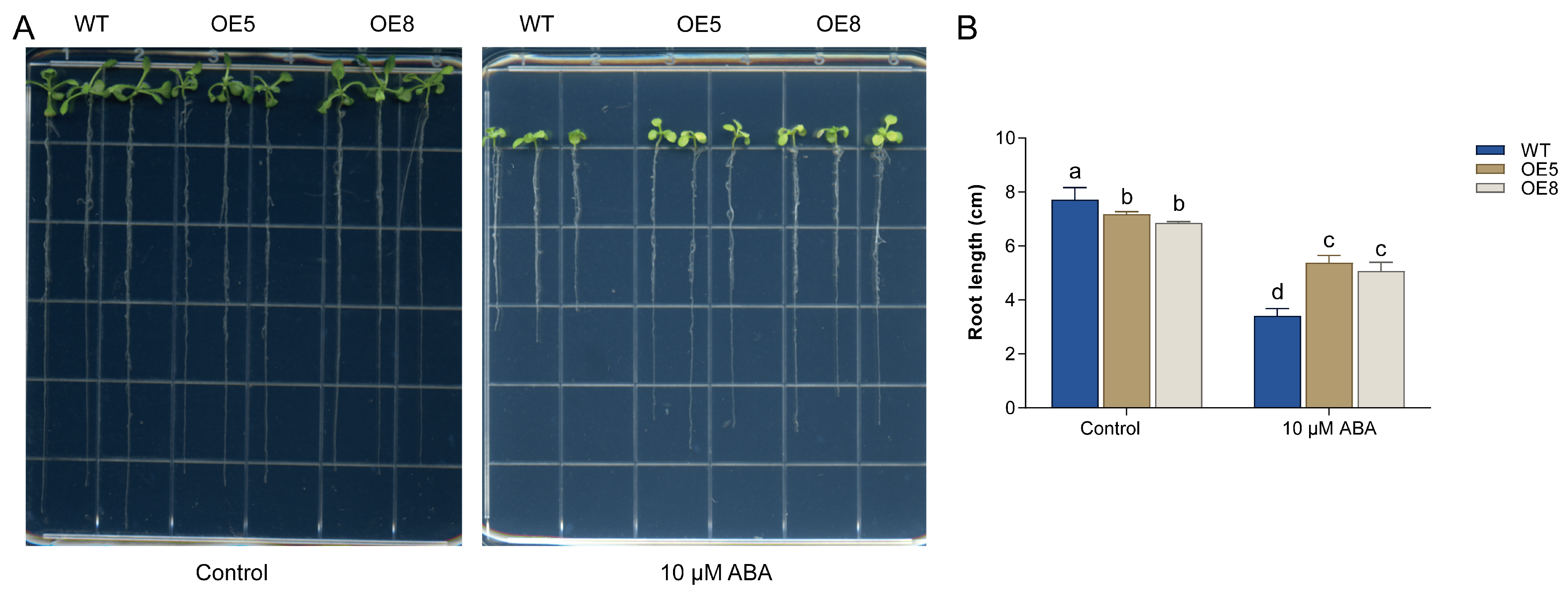
To investigate whether CsBT1 participates in Arabidopsis stress response regulation via the ABA signaling pathway, WT and two CsBT1-overexpressing lines (OE5 and OE8) seedlings were treated with 0 mM (control) or 10 µM ABA for 7 days, followed by root length measurement. No significant difference in root length was observed between WT and CsBT1-overexpressing lines under control conditions (Figure 7). However, ABA treatment resulted in significantly longer roots in CsBT1-overexpressing lines (1.53-fold and 1.54-fold of WT, respectively) (Figure 7), indicating that CsBT1 alleviates the inhibitory effect of ABA on Arabidopsis root elongation.

4. Discussion

Studies have demonstrated that the plant-specific BT protein family plays pivotal roles in growth regulation and stress responses across species such as apple, Arabidopsis, and maize [7,8,16,17,20]. However, the biological functions of BT genes in cucumber remain largely unexplored. In this study, we cloned the CsBT1 gene from cucumber and characterized its expression patterns, protein structure and function in salt and drought stress responses using transgenic Arabidopsis. Multiple alignment revealed that all BT proteins including CsBT1 possess a conserved architecture of N-terminal BTB, C-terminal TAZ, and CaMBD domains (Figure 1A). Furthermore, a phylogenetic tree was constructed with sequences from cucumber and other plant species. The analysis revealed that CsBT1 clusters with its homologs in Group I (Figure 1B). In addition, qRT-PCR results showed that CsBT1 exhibits tissue-specific expression, with the highest transcript abundance in roots, and its expression was significantly downregulated in leaves under salt and drought stresses (Figure S1A–C). Similarly, the soybean BT gene GmBTB092 also exhibited root-preferential expression and distinct regulatory patterns in response to salt and drought stress [5]. Chrysanthemum CmBT5 was also primarily expressed in roots, exhibiting a significantly different expression pattern from the other three CmBT genes, and its expression was up-regulated by mannose treatment [37].
As crucial organs for water and nutrient acquisition, roots play a fundamental role in determining plant responses to various abiotic stresses, including salt and drought. Consequently, a number of genes have been demonstrated to regulate both root development and plant stress tolerance [38,39,40]. Similarly, drought stress reduces MdBT2 expression and protein stability, and the MdBT2 gene also plays an important role in controlling root development and is known to negatively regulate the drought stress response [19,41]. Under drought stress, transgenic apple plantlets overexpressing MdBT2 exhibited enhanced sensitivity, whereas antisense lines showed improved tolerance, demonstrating that MdBT2 negatively regulates drought tolerance in apple [20]. These findings collectively highlight the functional specificity of BT genes and suggested CsBT1 may also have a conserved regulatory role in abiotic stress responses. In this study, CsBT1-overexpressing Arabidopsis plants exhibited hypersensitivity to salt and drought stresses, characterized by impaired growth, inhibited root elongation, and reduced germination rates (Figure 2, Figure 3, Figure 4 and Figure 5). These findings demonstrate that CsBT1 overexpression negatively regulates root development and compromises salt and drought tolerance. In addition, the expression of cucumber CsBT1 was strongly induced by ABA treatment (Figure S1D), and phenotypic analyses further showed that CsBT1-overexpressing Arabidopsis lines exhibited longer roots than WT under ABA treatment (Figure 7), indicating that CsBT1 may regulate the stress response via ABA signaling pathway. In apple, MdBT2 negatively modulates drought stress by degrading MdHDZ27 through the 26S proteasome pathway, thereby repressing the expression of ABA- and drought-responsive genes [20]. Therefore, CsBT1 may play a critical role in reducing plant tolerance to salt and drought stress by regulating the stability of its interacting proteins possibly through ABA signaling pathway. Further investigation of the interaction partners and downstream targets of CsBT1 will clarify whether it acts by directly suppressing stress-associated transcription factors to increase stress sensitivity in ABA signaling pathway.
Environmental stress triggers an increase in intracellular ROS, such as H2O2 and O2·−, whose excessive accumulation disrupts plant metabolism and severely impairs growth and development [1]. It is known that plants possess an antioxidant system composed of various antioxidant enzymes, which can regulate intracellular ROS balance and mitigate environmental threats. SOD is a crucial antioxidant enzyme for ROS scavenging and its activity in plants reflects the ability of plants to resist various stresses [30,42]. In this study, SOD enzyme activity in transgenic lines was significantly lower than in WT plants after salt and drought stress (Figure 6C,D), while ROS accumulation increased markedly (Figure 6A,B). This confirms that overexpression of CsBT1 negatively regulates ROS scavenging capacity by reducing SOD activity under stress conditions. Similarly, under drought stress, overexpression of MdBT2 promotes ROS accumulation, whereas its silencing suppresses ROS production [19]. With the continuous accumulation of ROS, salt and drought stresses induce membrane lipid peroxidation damage in plants, exacerbating plasma membrane injury and solute leakage [43]. Both MDA content and relative electrolyte leakage in leaves are widely utilized as key indicators for assessing oxidative stress and the severity of plant impairment [36]. In this study, the MDA content were significantly higher in transgenic lines compared to WT under salt and drought stress (Figure 3D and Figure 5C). The transgenic lines exhibited reduced MDA content, indicating diminished oxidative damage to cell membranes and a consequent decrease in electrolyte leakage (Figure 3C and Figure 5B). These results suggest that CsBT1 may enhance ROS accumulation, leading to cellular lipid peroxidation and membrane system damage, thereby reducing plant tolerance to salt and drought stress.
In summary, our data proved that the BTB-TAZ domain protein CsBT1 exhibits key functions in plant stress responses, enhancing ABA tolerance while increasing sensitivity to salt/drought stress. Its root-predominant expression is suppressed by abiotic stress but strongly induced by ABA, and CsBT1 negatively regulated plant tolerance to drought and salt stresses by mediating the production of ROS. Overexpressing CsBT1 increased resistant to ABA treatment in Arabidopsis. These findings provide the first evidence that CsBT1 may negatively regulate plant stress adaptation via the ABA signaling pathway, offering new insights into the functional divergence of BT proteins in abiotic stress responses, and also provided gene resources of drought and salt tolerance in cucumber. Future studies are needed to reveal the functional mechanism of CsBT1 in response to abiotic stresses by using overexpression and CRISPR to generate overexpression and knockdown lines in cucumber.

Supplementary Materials

The following supporting information can be downloaded at: https://www.mdpi.com/article/10.3390/horticulturae12010062/s1, Figure S1: qRT-PCR analysis of CsBT1 transcript in different cucumber tissues and in response to various treatments; Figure S2: qRT-PCR analysis of CsBT1 expression in nine transgenic Arabidopsis and WT plants; Table S1: The gene-specific primers used in this study.

Author Contributions

W.H.: conceptualization, writing—original draft, formal analysis, writing—review and editing. M.W.: methodology, formal analysis, data curation, investigation. Z.Z.: methodology, formal analysis, software, data curation. X.G.: resources; formal analysis. Z.H.: visualization, software; Y.Z. (Yuelong Zhou): software; S.L.: resources; Y.Z. (Yong Zhou): funding acquisition, conceptualization, formal analysis, supervision, resources, writing—original draft, writing—review and editing. All authors have read and agreed to the published version of the manuscript.

Funding

This research was financially supported by the Key Projects of Shaoguan University (SZ2023KJ04), Doctoral Scientific Research Startup Foundation of Shaoguan University (9900064505), the Natural Science Foundation of Jiangxi Province, China (20224BAB215024), the Open Fund of the Guangdong Provincial Key Laboratory of Utilization and Conservation of Food and Medicinal Resources in Northern Region (FMR2023002M), and the Open Funds of the Jiangsu Key Laboratory of Crop Genomics and Molecular Breeding (PL202405).

Data Availability Statement

The original contributions presented in this study are included in the article/supplementary material. Further inquiries can be directed to the corresponding author.

Conflicts of Interest

The authors declare no conflicts of interest.

References

  1. Zhou, Y.; Hu, L.; Ye, S.; Jiang, L.; Liu, S. Genome-wide identification of glutathione peroxidase (GPX) gene family and their response to abiotic stress in cucumber. 3 Biotech 2018, 8, 159. [Google Scholar] [CrossRef] [PubMed]
  2. Liao, L.; Hu, Z.; Liu, S.; Yang, Y.; Zhou, Y. Characterization of germin-like proteins (GLPs) and their expression in response to abiotic and biotic stresses in cucumber. Horticulturae 2021, 7, 412. [Google Scholar] [CrossRef]
  3. Guo, L.; Nezames, C.D.; Sheng, L.; Deng, X.; Wei, N. Cullin-RING ubiquitin ligase family in plant abiotic stress pathways(F). J. Integr. Plant Biol. 2013, 55, 21–30. [Google Scholar] [CrossRef]
  4. Yue, J.; Dai, X.; Li, Q.; Wei, M. Genome-wide characterization of the BTB gene family in poplar and expression analysis in response to hormones and biotic/abiotic stresses. Int. J. Mol. Sci. 2024, 25, 9048. [Google Scholar] [CrossRef] [PubMed]
  5. Elsanosi, H.A.; Zhang, J.; Mostafa, S.; Geng, X.; Zhou, G.; Awdelseid, A.H.M.; Song, L. Genome-wide identification, structural and gene expression analysis of BTB gene family in soybean. BMC Plant Biol. 2024, 24, 663. [Google Scholar] [CrossRef]
  6. Bonchuk, A.; Balagurov, K.; Georgiev, P. BTB domains: A structural view of evolution, multimerization, and protein-protein interactions. Bioessays 2023, 45, e2200179. [Google Scholar] [CrossRef]
  7. Ren, S.; Mandadi, K.K.; Boedeker, A.L.; Rathore, K.S.; McKnight, T.D. Regulation of telomerase in Arabidopsis by BT2, an apparent target of TELOMERASE ACTIVATOR1. Plant Cell 2007, 19, 23–31. [Google Scholar] [CrossRef]
  8. Zhou, F.; Wang, Y.; Liu, P.; Ma, W.; He, R.; Cao, H.; Xing, J.; Zhang, K.; Dong, J. Function of ZmBT2a gene in resistance to pathogen infection in maize. Phytopathol. Res. 2024, 6, 43. [Google Scholar] [CrossRef]
  9. Zhou, Y.; Li, G.; Zhang, L.; Xu, J.; Hu, L.; Jiang, L.; Liu, S. Comprehensive genomic analysis and expression profiling of the BTB and TAZ (BT) genes in cucumber (Cucumis sativus L.). Czech J. Genet. Plant Breed 2020, 56, 15–23. [Google Scholar] [CrossRef]
  10. Zhang, Z.; Xie, Y.H.; Sun, P.; Zhang, F.J.; Zheng, P.F.; Wang, X.F.; You, C.X.; Hao, Y.J. Nitrate-inducible MdBT2 acts as a restriction factor to limit apple necrotic mosaic virus genome replication in Malus domestica. Mol. Plant Pathol. 2022, 23, 383–399. [Google Scholar] [CrossRef]
  11. Jiang, H.; Qi, C.H.; Gao, H.N.; Feng, Z.Q.; Wu, Y.T.; Xu, X.X.; Cui, J.Y.; Wang, X.F.; Lv, Y.H.; Gao, W.S.; et al. MdBT2 regulates nitrogen-mediated cuticular wax biosynthesis via a MdMYB106-MdCER2L1 signalling pathway in apple. Nat. Plants 2024, 10, 131–144. [Google Scholar] [CrossRef]
  12. Gingerich, D.J.; Hanada, K.; Shiu, S.H.; Vierstra, R.D. Large-scale, lineage-specific expansion of a bric-a-brac/tramtrack/broad complex ubiquitin-ligase gene family in rice. Plant Cell 2007, 19, 2329–2348. [Google Scholar] [CrossRef]
  13. Li, J.; Su, X.; Wang, Y.; Yang, W.; Pan, Y.; Su, C.; Zhang, X. Genome-wide identification and expression analysis of the BTB domain-containing protein gene family in tomato. Genes Genom. 2018, 40, 1–15. [Google Scholar] [CrossRef] [PubMed]
  14. Zhang, X.; Shen, H.; Wen, B.; Li, S.; Xu, C.; Gai, Y.; Meng, X.; He, H.; Wang, N.; Li, D.; et al. BTB-TAZ domain protein PpBT3 modulates peach bud endodormancy by interacting with PpDAM5. Plant Sci. 2021, 310, 110956. [Google Scholar] [CrossRef] [PubMed]
  15. Du, L.D.; Guan, Z.J.; Liu, Y.H.; Zhu, H.D.; Sun, Q.; Hu, D.G.; Sun, C.H. The BTB/TAZ domain-containing protein CmBT1-mediated CmANR1 ubiquitination negatively regulates root development in chrysanthemum. J. Integr. Plant Biol. 2024, 66, 285–299. [Google Scholar] [CrossRef] [PubMed]
  16. Robert, H.S.; Quint, A.; Brand, D.; Vivian-Smith, A.; Offringa, R. BTB and TAZ domain scaffold proteins perform a crucial function in Arabidopsis development. Plant J. 2009, 58, 109–121. [Google Scholar] [CrossRef]
  17. Irigoyen, S.; Ramasamy, M.; Misra, A.; McKnight, T.D.; Mandadi, K.K. A BTB-TAZ protein is required for gene activation by Cauliflower mosaic virus 35S multimerized enhancers. Plant Physiol. 2022, 188, 397–410. [Google Scholar] [CrossRef]
  18. Zheng, X.; Xing, J.; Zhang, K.; Pang, X.; Zhao, Y.; Wang, G.; Zang, J.; Huang, R.; Dong, J. Ethylene response factor ERF11 activates BT4 transcription to regulate immunity to Pseudomonas syringae. Plant Physiol. 2019, 180, 1132–1151. [Google Scholar] [CrossRef]
  19. Ji, X.L.; Li, H.L.; Qiao, Z.W.; Zhang, J.C.; Sun, W.J.; Wang, C.K.; Yang, K.; You, C.X.; Hao, Y.J. The BTB-TAZ protein MdBT2 negatively regulates the drought stress response by interacting with the transcription factor MdNAC143 in apple. Plant Sci. 2020, 301, 110689. [Google Scholar] [CrossRef]
  20. Zhang, Q.Y.; Ma, C.N.; Gu, K.D.; Wang, J.H.; Yu, J.Q.; Liu, B.; Wang, Y.; He, J.X.; Hu, D.G.; Sun, Q. The BTB-BACK-TAZ domain protein MdBT2 reduces drought resistance by weakening the positive regulatory effect of MdHDZ27 on apple drought tolerance via ubiquitination. Plant J. 2024, 119, 283–299. [Google Scholar] [CrossRef]
  21. Zhao, Q.; Ren, Y.R.; Wang, Q.J.; Wang, X.F.; You, C.X.; Hao, Y.J. Ubiquitination-related MdBT scaffold proteins target a bHLH transcription factor for iron homeostasis. Plant Physiol. 2016, 172, 1973–1988. [Google Scholar] [CrossRef]
  22. Zhang, Q.Y.; Gu, K.D.; Cheng, L.; Wang, J.H.; Yu, J.Q.; Wang, X.F.; You, C.X.; Hu, D.G.; Hao, Y.J. BTB-TAZ domain protein MdBT2 modulates malate accumulation and vacuolar acidification in response to nitrate. Plant Physiol. 2020, 183, 750–764. [Google Scholar] [CrossRef]
  23. Ren, Y.R.; Zhao, Q.; Yang, Y.Y.; Zhang, T.E.; Wang, X.F.; You, C.X.; Hao, Y.J. The apple 14-3-3 protein MdGRF11 interacts with the BTB protein MdBT2 to regulate nitrate deficiency-induced anthocyanin accumulation. Hortic. Res. 2021, 8, 22. [Google Scholar] [CrossRef] [PubMed]
  24. Hu, L.; Zhang, F.; Song, S.; Yu, X.; Ren, Y.; Zhao, X.; Liu, H.; Liu, G.; Wang, Y.; He, H. CsSWEET2, a hexose transporter from cucumber (Cucumis sativus L.), affects sugar metabolism and improves cold tolerance in Arabidopsis. Int. J. Mol. Sci. 2022, 23, 3886. [Google Scholar] [CrossRef]
  25. Bai, X.; Liu, P.; Zhu, F.; Zhang, C.; Pang, H.; Zhang, Y. CsWRKY46 is involved in the regulation of cucumber salt stress by regulating abscisic acid and modulating cellular reactive oxygen species. Horticulturae 2025, 11, 251. [Google Scholar] [CrossRef]
  26. Xie, S.; Shi, B.; Miao, M.; Zhao, C.; Bai, R.; Yan, F.; Lei, C. A B-Box (BBX) transcription factor from cucumber, CsCOL9 positively regulates resistance of host plant to Bemisia tabaci. Int. J. Mol. Sci. 2025, 26, 324. [Google Scholar] [CrossRef] [PubMed]
  27. Livak, K.J.; Schmittgen, T.D. Analysis of relative gene expression data using real-time quantitative PCR and the 2−ΔΔCT method. Methods 2001, 25, 402–408. [Google Scholar] [CrossRef] [PubMed]
  28. Yang, F.; Xia, H.; Zhao, J.; Guo, X.; Wang, M.; Lin, Z.; Mao, D.; Hu, Z.; Zhou, Y.; Liu, S.; et al. Overexpression of cucumber CsVQ12 gene modulates MeJA-mediated freezing tolerance and leaf senescence in Arabidopsis. Plant Cell Tissue Organ Cult. 2025, 163, 21. [Google Scholar] [CrossRef]
  29. Li, Y.; Chen, T.; Wang, W.; Liu, H.; Yan, X.; Wu-Zhang, K.; Qin, W.; Xie, L.; Zhang, Y.; Peng, B.; et al. A high-efficiency Agrobacterium-mediated transient expression system in the leaves of Artemisia annua L. Plant Methods 2021, 17, 106. [Google Scholar] [CrossRef]
  30. Zhou, Y.; Hu, L.; Jiang, L.; Liu, H.; Liu, S. Molecular cloning and characterization of an ASR gene from Cucumis sativus. Plant Cell Tissue Organ Cult. 2017, 130, 553–565. [Google Scholar] [CrossRef]
  31. Lu, M.; Guo, J.; Dong, D.; Zhang, M.; Li, Q.; Cao, Y.; Dong, Y.; Chen, C.; Jin, X. UDP-glycosyltransferase gene SlUGT73C1 from Solanum lycopersicum regulates salt and drought tolerance in Arabidopsis thaliana L. Funct. Integr. Genom. 2023, 23, 320. [Google Scholar] [CrossRef]
  32. Chen, Q.; Peng, L.; Wang, A.; Yu, L.; Liu, Y.; Zhang, X.; Wang, R.; Li, X.; Yang, Y.; Li, X.; et al. An R2R3-MYB FtMYB11 from Tartary buckwheat has contrasting effects on abiotic tolerance in Arabidopsis. J. Plant Physiol. 2023, 280, 153842. [Google Scholar] [CrossRef] [PubMed]
  33. Huang, Z.; Liu, L.; Jian, L.; Xu, W.; Wang, J.; Li, Y.; Jiang, C.-Z. Heterologous expression of MfWRKY7 of resurrection plant Myrothamnus flabellifolia enhances salt and drought tolerance in Arabidopsis. Int. J. Mol. Sci. 2022, 23, 7890. [Google Scholar] [CrossRef] [PubMed]
  34. Mo, X.; Luo, C.; Xia, L.M.; Mo, W.J.; Zhu, J.W.; Zhang, Y.L.; Hu, W.L.; Liu, Y.; Xie, F.F.; He, X.H. Overexpression of mango MiSVP3 and MiSVP4 delays flowering time in transgenic Arabidopsis. Sci. Hortic. 2023, 317, 112021. [Google Scholar] [CrossRef]
  35. Han, J.; Li, X.; Li, W.; Yao, A.; Niu, C.; Hou, R.; Liu, W.; Wang, Y.; Zhang, L.; Han, D. Overexpression of Malus baccata WRKY40 (MbWRKY40) enhances stress tolerance in Arabidopsis subjected to cold and drought. Plant Stress 2023, 10, 100209. [Google Scholar] [CrossRef]
  36. Wei, J.T.; Hou, Z.H.; Wang, Y.; Hao, J.M.; Wang, J.; Wang, W.; Wang, W.; Wang, D.M.; Xu, Z.S.; Song, X.; et al. Foxtail millet SiCDPK7 gene enhances tolerance to extreme temperature stress in transgenic plants. Environ. Exp. Bot. 2023, 207, 105197. [Google Scholar] [CrossRef]
  37. Du, L.; Guan, Z.; Liu, Y.; Hu, D.; Gao, J.; Sun, C. Scaffold protein BTB/TAZ domain-containing genes (CmBTs) play a negative role in root development of chrysanthemum. Plant Sci. 2024, 341, 111997. [Google Scholar] [CrossRef]
  38. Sun, Y.; Liu, Q.; Yan, Z.; Ma, S.; Liu, X.; Mu, C.; Yao, G.; Leng, B. Overexpression of maize expansin gene ZmEXPA6 improves salt tolerance of Arabidopsis thaliana. Agronomy 2025, 15, 2240. [Google Scholar] [CrossRef]
  39. Zhai, X.; Yan, X.; Zenda, T.; Wang, N.; Dong, A.; Yang, Q.; Zhong, Y.; Xing, Y.; Duan, H. Overexpression of the peroxidase gene ZmPRX1 increases maize seedling drought tolerance by promoting root development and lignification. Crop J. 2024, 12, 753–765. [Google Scholar] [CrossRef]
  40. Chi, Q.; Du, L.Y.; Ma, W.; Niu, R.Y.; Wu, B.W.; Guo, L.J.; Ma, M.; Liu, X.L.; Zhao, H.X. The miR164-TaNAC14 module regulates root development and abiotic-stress tolerance in wheat seedlings. J. Integr. Agric. 2023, 22, 981–998. [Google Scholar] [CrossRef]
  41. Ji, X.L.; Li, H.L.; Qiao, Z.W.; Zhang, J.C.; Sun, W.J.; You, C.X.; Hao, Y.J.; Wang, X.F. The BTB protein MdBT2 recruits auxin signaling components to regulate adventitious root formation in apple. Plant Physiol. 2022, 189, 1005–1020. [Google Scholar] [CrossRef] [PubMed]
  42. Duan, D.; Yi, R.; Ma, Y.; Dong, Q.; Mao, K.; Ma, F. Apple WRKY transcription factor MdWRKY56 positively modulates drought stress tolerance. Environ. Exp. Bot. 2023, 212, 105400. [Google Scholar] [CrossRef]
  43. Li, W.; Li, P.; Chen, H.; Zhong, J.; Liang, X.; Wei, Y.; Zhang, L.; Wang, H.; Han, D. Overexpression of a Fragaria vesca 1R-MYB transcription factor gene (FvMYB114) increases salt and cold tolerance in Arabidopsis thaliana. Int. J. Mol. Sci. 2023, 24, 5261. [Google Scholar] [CrossRef] [PubMed]
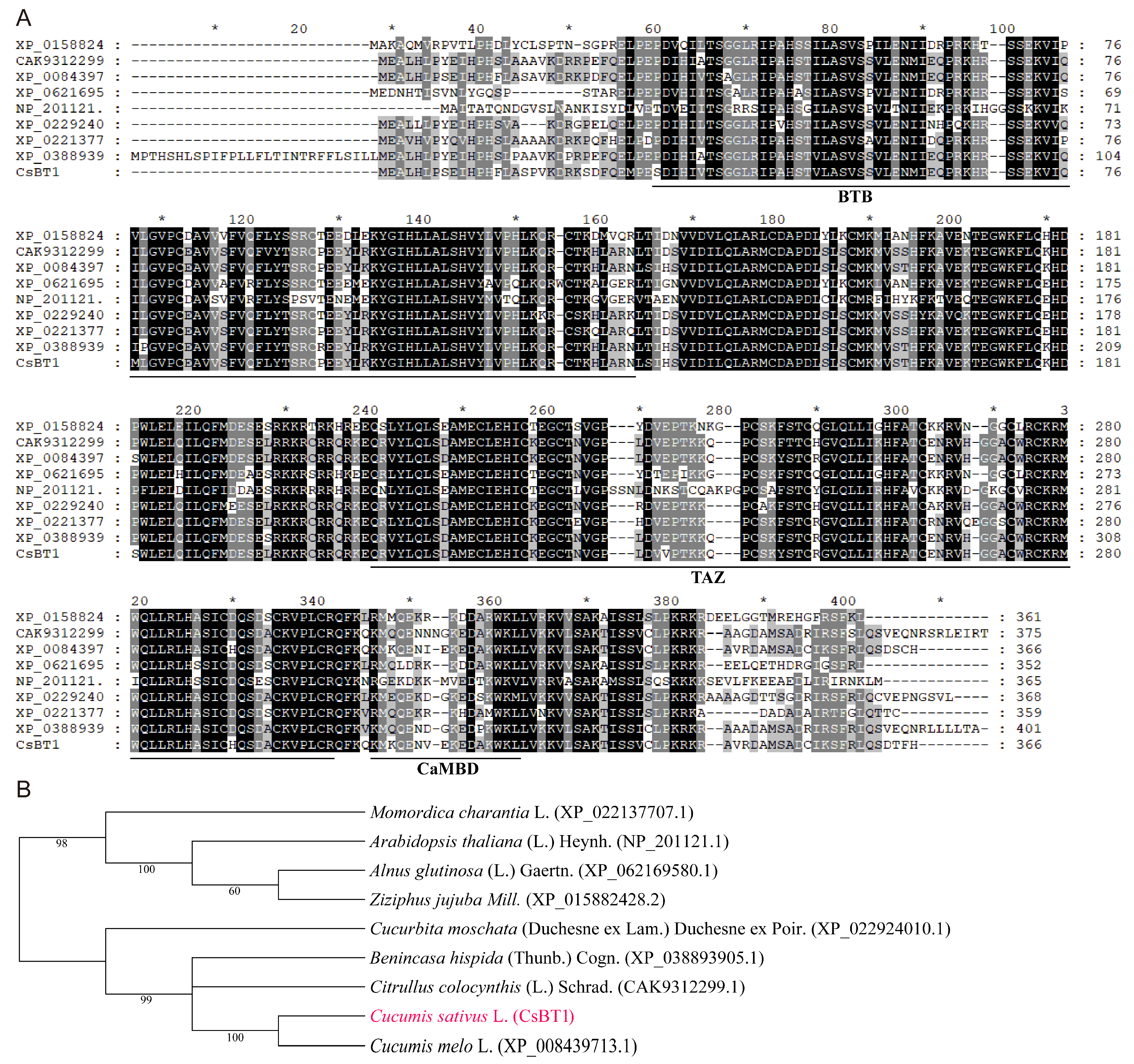
Figure 1. Multiple sequence alignment (A) and phylogenetic relationship analysis (B) of BT proteins from various plants. The subject of this study, Cucumis sativus L. (CsBT1), is highlighted in red. The asterisks were automatically generated by GeneDoc and denote the midpoint between the left and right numbers.
Horticulturae 12 00062 g001
Figure 2. Determination of seed germination rate and root length of CsBT1-overexpressing transgenic Arabidopsis and WT under salt stress. (A) Seed germination of CsBT1-overexpressing transgenic Arabidopsis and WT on 1/2 MS medium with 0 and 125 mM NaCl. (B) Germination rates of CsBT1-overexpressing transgenic Arabidopsis and WT under salt stress. (C) The root length of CsBT1-overexpressing transgenic Arabidopsis and WT seedlings on 1/2 MS medium containing 0 and 125 mM NaCl for 7 days. (D) Measurement of root length of CsBT1-overexpressing transgenic Arabidopsis and WT seedlings under salt stress. Data represent the mean ± SD of three biological replicates, and different letters above the bars indicate statistically significant differences (p < 0.05).
Horticulturae 12 00062 g002
Figure 3. Comparative analysis of growth and physiological parameters in transgenic and wild-type Arabidopsis under salt stress. (A) Growth states of CsBT1-overexpressing transgenic Arabidopsis and WT seedlings after 7 days of 200 mM NaCl stress. (BD) Chlorophyll content (B), relative electrolyte leakage (C), and MDA content (D) of leaves in WT and CsBT1-overexpressing transgenic Arabidopsis lines under salt stress. Data represent the mean ± SD of three biological replicates, and different letters above the bars indicate statistically significant differences (p < 0.05). Bar = 3 cm.
Horticulturae 12 00062 g003
Figure 4. Determination of seed germination rate and root length of CsBT1-overexpressing transgenic Arabidopsis and WT under drought stress. (A) Seed germination of CsBT1-overexpressing transgenic Arabidopsis and WT on 1/2 MS medium with 0 and 300 mM mannitol for 4 d. (B) Germination rates of CsBT1-overexpressing transgenic Arabidopsis and WT in control and 300 mM mannitol treatment. (C) The root length of CsBT1-overexpressing transgenic Arabidopsis and WT seedlings on 1/2 MS medium containing 0 and 300 mM mannitol for 7 days. Bar = 1 cm. (D) Measurement of root length of CsBT1-overexpressing transgenic Arabidopsis and WT seedlings under drought stress. Data represent the mean ± SD of three biological replicates, and different letters above the bars indicate statistically significant differences (p < 0.05).
Horticulturae 12 00062 g004
Figure 5. Comparative analysis of growth and physiological parameters in transgenic and WT Arabidopsis under drought stress. (A) Growth states of CsBT1-overexpressing transgenic Arabidopsis and WT seedlings after 14 days of drought stress. Bar = 3 cm. (B) Relative electrolyte leakage of leaves in WT and CsBT1-overexpressing transgenic Arabidopsis lines under drought stress. (C) MDA content of leaves in WT and CsBT1-overexpressing transgenic Arabidopsis lines under drought stress. Data represent the mean ± SD of three biological replicates, and different letters above the bars indicate statistically significant differences (p < 0.05).
Horticulturae 12 00062 g005
Figure 6. NBT staining and SOD activity in WT and CsBT1-overexpressing lines under salt and drought stress treatments. (A,B) Histochemical detection of O2·− by NBT staining in leaves under salt (A) and drought (B) stress treatments. (C,D) SOD activity in leaves under salt (C) and drought (D) stress treatments. Data represent the mean ± SD of three biological replicates, and different letters above the bars indicate statistically significant differences (p < 0.05).
Horticulturae 12 00062 g006
Figure 7. Root length of WT and CsBT1-overexpressing lines under ABA treatment. (A) The root length of CsBT1-overexpressing transgenic Arabidopsis and WT seedlings on 1/2 MS medium containing 0 and 10 µM ABA for 7 days. (B) Measurement of root length of CsBT1-overexpressing transgenic Arabidopsis and WT seedlings under ABA treatment. Data represent the mean ± SD of three biological replicates, and different letters above the bars indicate statistically significant differences (p < 0.05).
Horticulturae 12 00062 g007
Disclaimer/Publisher’s Note: The statements, opinions and data contained in all publications are solely those of the individual author(s) and contributor(s) and not of MDPI and/or the editor(s). MDPI and/or the editor(s) disclaim responsibility for any injury to people or property resulting from any ideas, methods, instructions or products referred to in the content.