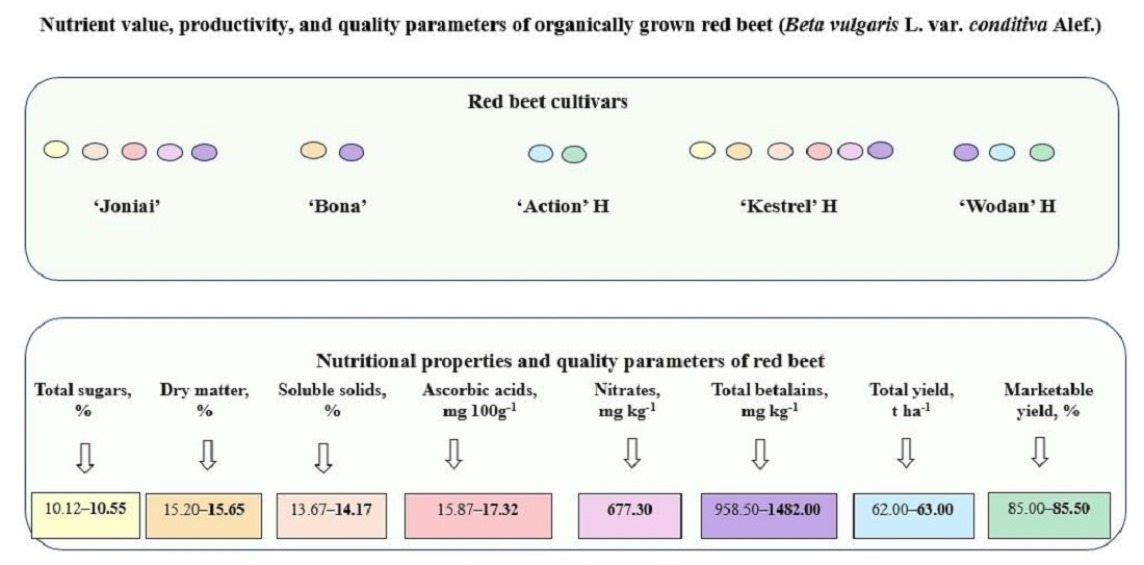
Nutrient Value, Productivity, and Quality Parameters of Organically Grown Red Beet (Beta vulgaris L. var. conditiva Alef.)

 ,
,  ,
,  ,
,  and
and
Abstract
1. Introduction
2. Materials and Methods
2.1. Growing Conditions
2.1.1. Experimental Site and Soil
2.1.2. Fertilization and Plant Care
2.2. Plant Material
2.3. Experimental Methodology
2.3.1. Experimental Design and Plant Monitoring
2.3.2. Soil Traits
2.3.3. Yield-Related and Biological Traits
2.3.4. Taste Characteristics
2.3.5. Biochemical Analysis
2.4. Meteorological Conditions
2.5. Statistical Analysis
3. Results
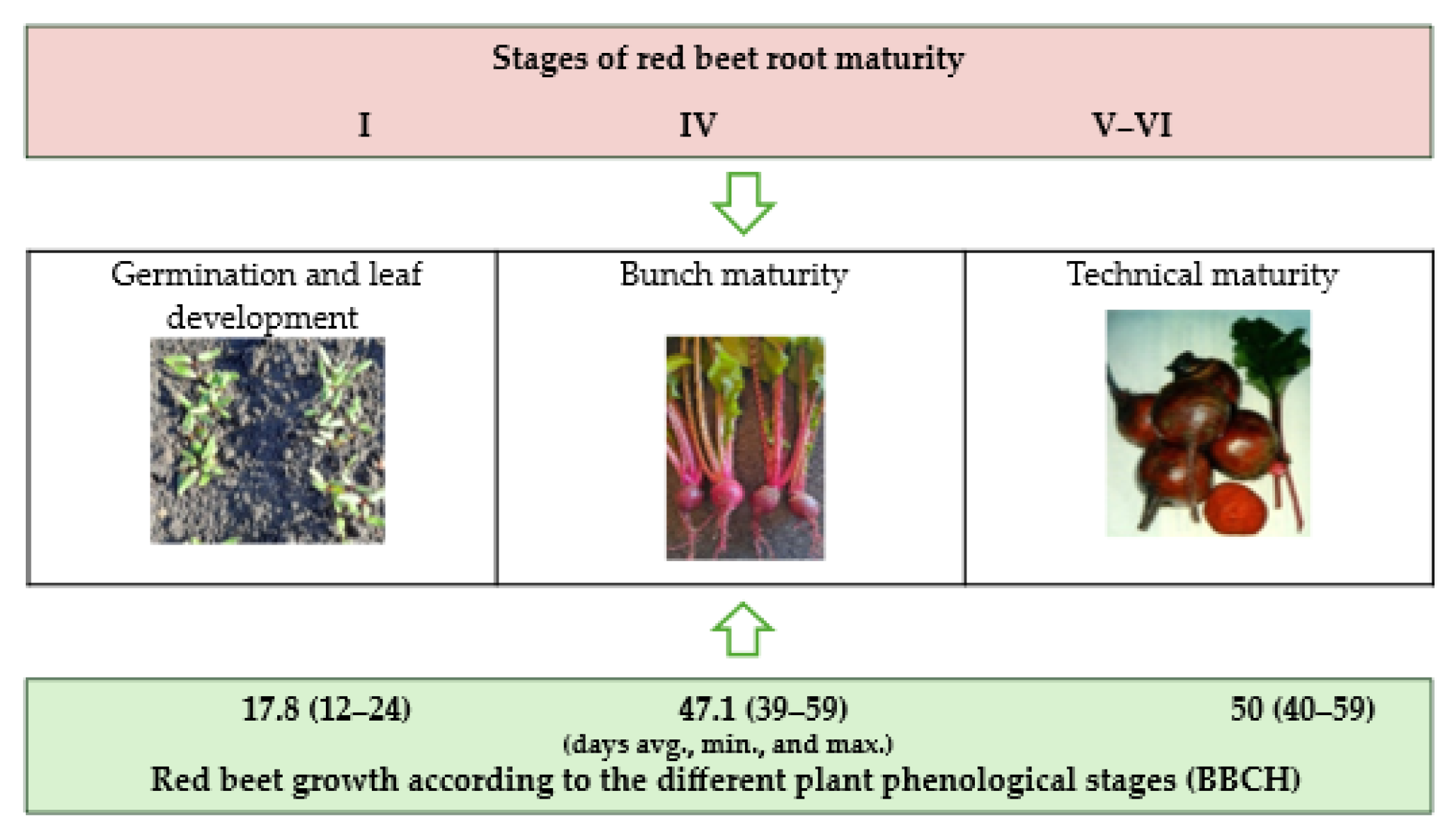
3.1. Assessment of the Biological Characteristics of Red Beet Cultivars
3.2. Research on the Productivity and Morphological Parameters of Red Beet
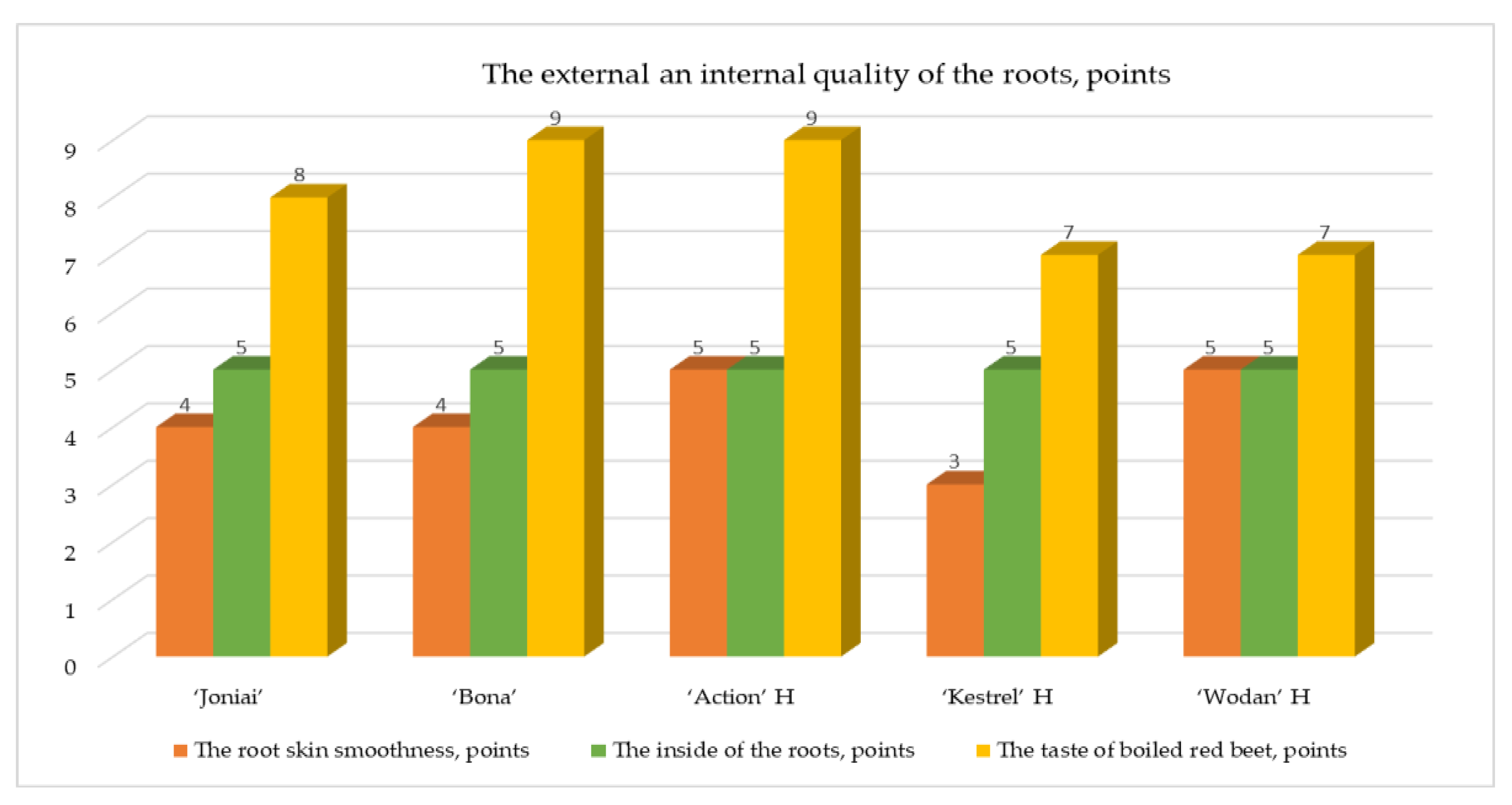
3.3. Quality Parameters of the Root and the Complex Effect of Nutrients on Taste
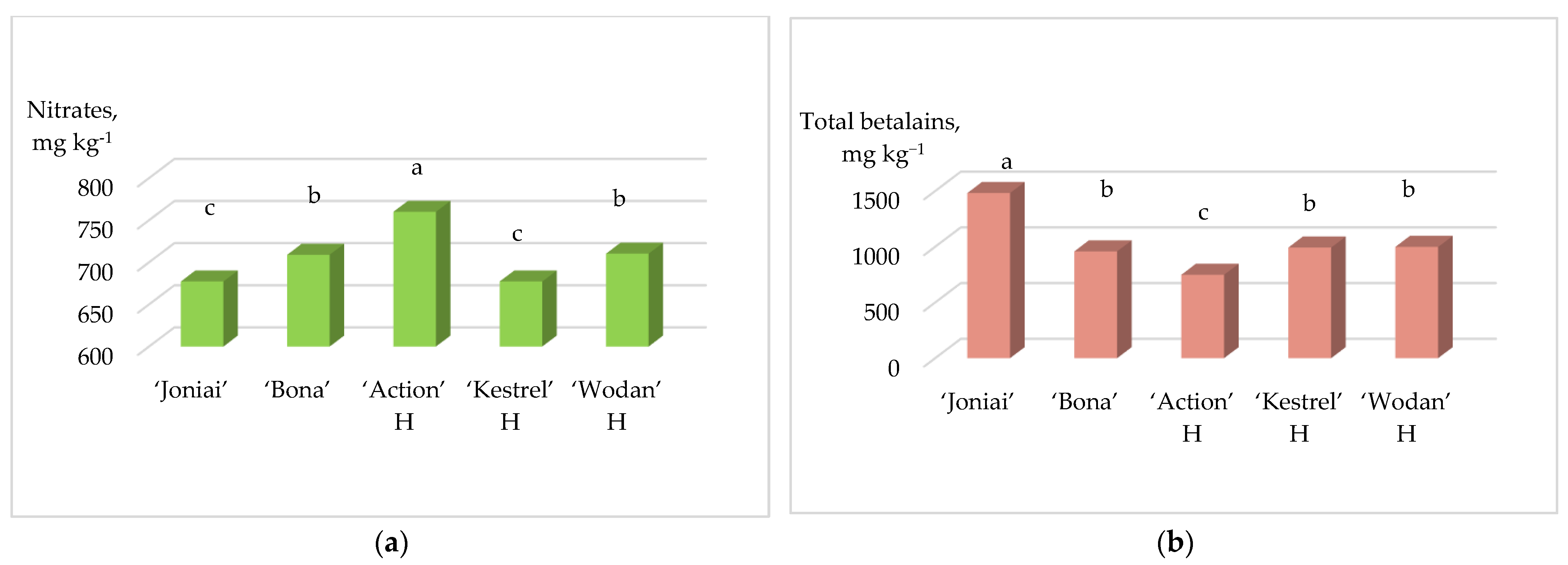
3.4. Nutritional Value of Tested Cultivars
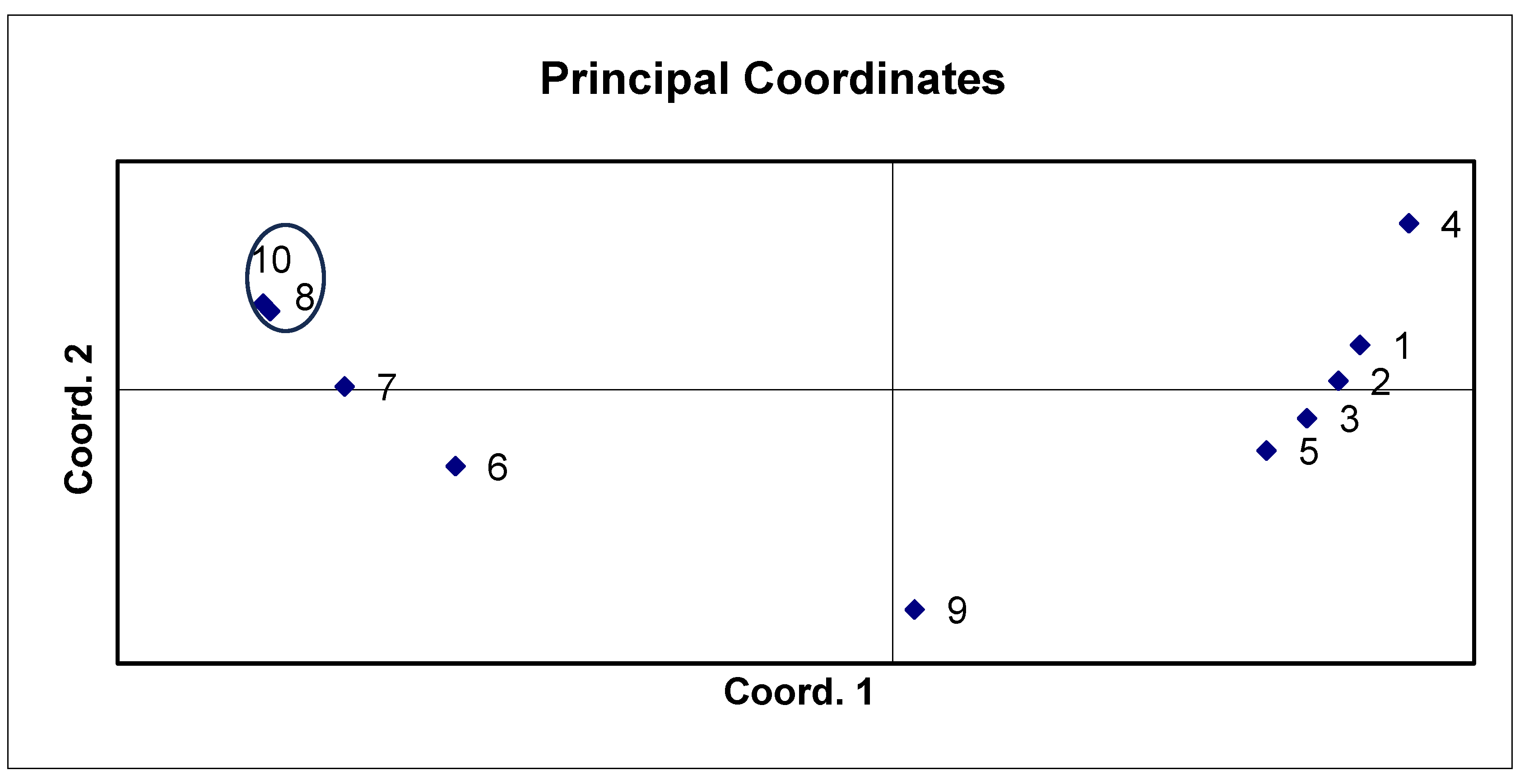
3.5. Detailed Productivity and Nutritional Characteristics of Red Beets
4. Discussion
5. Conclusions
Author Contributions
Funding
Data Availability Statement
Acknowledgments
Conflicts of Interest
References
- Petronienė, O.D. Photosynthetic potential, productivity, and quality factors in red beet. Sodininkystė Daržininkystė 2000, 19, 55–61. [Google Scholar]
- Petronienė, O.D.; Viškelis, P. Biochemical composition and preservation of various red beet cultivars. Sodininkystė Daržininkystė 2004, 23, 89–97. [Google Scholar]
- Karklelienė, R.; Radzevičius, A.; Juškevičienė, D.; Viškelis, P.; Šileikienė, D.; Pekarskas, J. Biochemical and electrochemical evaluation of organic red beet (Beta vulgaris L. subsp. vulgaris convar. vulgaris var. vulgaris) root crops. Rural Dev. 2013, 6, 137–141. [Google Scholar] [CrossRef] [Scilit]
- Petronienė, O.D. Beet Biology and Cultivation; Akademija: Kėdainių r.: Kėdainiai, Lithuania, 2001; p. 49p. (In Lithuanian) [Google Scholar]
- Bundinienė, O.; Kavaliauskaitė, D.; Starkutė, R.; Jankauskienė, J.; Zalatorius, V.; Bobinas, Č. Influence of prolonged-release fertilizers on the productivity and biochemical composition of root-crop vegetables before and after storage. In Horticulture; Maldondo, A.I.L., Ed.; IntechOpen: London, UK, 2012; pp. 19–40. [Google Scholar]
- Paulauskienė, A.; Šileikienė, D.; Karklelienė, R.; Tarasevičienė, Ž.; Česonienė, L. Quality Research of the Beetroots (Beta vulgaris L., ssp. vulgaris var. conditiva Alef.) Grown in Different Farming Systems Applying Chemical and Holistic Research Methods. Sustainability 2023, 15, 7102. [Google Scholar] [CrossRef] [Scilit]
- Zin, M.M.; Márki, E.; Bánvölgyi, S. Evaluation of Reverse Osmosis Membranes in Concentration of Beetroot Peel Extract. Period. Polytech. Chem. Eng. 2020, 6, 340–348. [Google Scholar] [CrossRef] [Scilit]
- Rożek, S. Factors influencing the accumulation of nitrates in vegetable crops. Zeszyty Naukowe AR im. H. Kołłątaja 2000, 364, 19–31. (In Polish) [Google Scholar]
- Viskelis, J.; Nevidomskis, S.; Bobinas, C.; Urbonaviciene, D.; Bobinaite, R.; Karkleliene, R.; Viskelis, P. Evaluation of Beetroot Quality During Various Storage Conditions. In Proceedings of the FOODBALT 2019 13th Baltic Conference on Food Science and Technology, Jelgava, Latvia, 2–3 May 2019; pp. 170–175. [Google Scholar] [CrossRef] [Scilit]
- Hikmawanti, N.P.E.; Dwita, L.P.; Wisnunanda, D.W.; Farista, F. The Effect of Different Extracts of Beetroots as Antioxidant and Anti-Anaemia on Phenylhydrazine-Induced Rats. Eur. Pharm. J. 2021, 68, 1–7. [Google Scholar] [CrossRef] [Scilit]
- Chen, L.; Zhu, Y.; Hu, Z.; Wu, S.; Jin, C. Beetroot as a functional food with huge health benefits: Antioxidant, antitumor, physical function, and chronic metabolomics activity. J. Food Sci. Nutr. 2021, 9, 6406–6420. [Google Scholar] [CrossRef] [Scilit]
- Trych, U.; Buniowska-Olejnik, M.; Marszałek, K. Bioaccessibility of Betalains in Beetroot (Beta vulgaris L.) Juice Under Different High-Pressure Techniques. Molecules 2022, 27, 7093. [Google Scholar] [CrossRef] [Scilit]
- Grotewold, E. The genetics and biochemistry of floral pigments. Annu. Rev. Plant Biol. 2006, 57, 761–780. [Google Scholar] [CrossRef] [Scilit] [PubMed]
- Kaur, S.; Kaur, N.; Aggarwal, P.; Grover, K. Bioactive Compounds, Antioxidant Activity, and Color Retention of Beetroot (Beta vulgaris L.) Powder: Effect of Steam Blanching with Refrigeration and Storage. J. Food Process. Preserv. 2021, 45, 1–10. [Google Scholar] [CrossRef] [Scilit]
- Evstigneeva, T.; Iakovchenko, N.; Kuzmicheva, N.; Skvortsova, N. Applying Beetroot as Food Ingredient in Ice-Cream Production. Agron. Res. 2020, 18, 1662–1672. [Google Scholar]
- Kaur, S.; Kaur, N.; Aggarwal, P.; Grover, K. Sensory Attributes, Bioactive Compounds, Antioxidant Activity and Color Values of Jam and Candy Developed from Beetroot (Beta vulgaris L.). J. Appl. Nat. Sci. 2022, 14, 459–468. [Google Scholar] [CrossRef] [Scilit]
- Lubauskaitė, M.; Černiauskienė, J. Comparison of Chemical Composition of the Different Varieties of Beetroots (Beta vulgaris L.). Collection of Articles from the Young Scientists XX Conference 2023. pp. 583–587. (In Lithuanian) Available online: https://portalcris.vdu.lt/server/api/core/bitstreams/1850f8f5-1241-4c42-9af0-c321c553d8ce/content (accessed on 10 October 2025).
- Kosson, R.; Elkner, K.; Szafirowska, A. Quality of fresh and processed red beet from organic and conventional cultivation. Veg. Crops Res. Bull. 2011, 75, 125–132. [Google Scholar] [CrossRef] [Scilit]
- Szopińska, A.; Gawęda, M. Comparison of Yield and Quality of Red Beet Roots Cultivated Using Conventional, Integrated and Organic Methods. J. Hortic. Res. 2013, 21, 107–114. [Google Scholar] [CrossRef] [Scilit]
- Zhakashbaeva, M.; Aytbaev, T. Ecological and agrochemical state of soil, productivity, and quality of edible roots, depending on the system of vegetable fertilizers rotations in the south-east region of Kazakhstan. Life Sci. J. 2014, 11, 679–684. [Google Scholar]
- Tarvydienė, A.; Duchovskis, P.; Šiuliauskas, A. Dynamics of formation of photosynthetic indicators of red beet in a differently fertilized crop. Sodininkystė Daržininkystė 2004, 23, 76–88. (In Lithuanian) [Google Scholar]
- WRB. The World Reference base for Soil resources. International soil classification system for naming soils and creating legends for the soil maps. World Soil Resour. Rep. 2014, 106, 118–181. [Google Scholar]
- Petronienė, O.D. ‘Joniai’—Nauja burokėlių veislė. Sodininkystė Daržininkystė 2000, 19, 81–86. (In Lithuanian) [Google Scholar]
- Sasnauskas, A.; Tilvikienė, V.; Mašalaitė, R. Mokslinės metodikos inovatyviems sodininkystės ir daržininkystės tyrimams. In Mokslinės Metodikos Inovatyviems Žemės ir Miškų Tyrimams; Lithuanian Research Centre for Agriculture and Forestry: Kaunas, Lithuania, 2013; pp. 157–259. (In Lithuanian) [Google Scholar]
- AOAC. Vitamin C (ascorbic acid) is in vitamin preparations and juice. In Official Methods of Analysis, 15th ed.; Helrich, K., Ed.; AOAC Inc.: Arlington, VA, USA, 1990; p. 1058p. [Google Scholar]
- Viskelis, P.; Rubinskiene, M.; Bobinaite, R.; Dambrauskiene, E. Bioactive compounds and antioxidant activity of small fruits in Lithuania. J. Food Agric. Environ. 2010, 8, 259–263. [Google Scholar]
- AOAC. Sucrose in fruits and fruit products. In Official Methods of Analysis, 15th ed.; Helrich, K., Ed.; AOAC Inc.: Arlington, VA, USA, 1990; p. 922p. [Google Scholar]
- Methodological Instructions for the Determination of Nitrates in Crop Production; Ministry of Agriculture: Vilnius, Lithuania, 1990; p. 41. (In Lithuanian)
- Wruss, J.; Waldenberger, G.; Huemer, S.; Uygun, P.; Lanzerstorfer, P.; Müller, U.; Hoglinger, O.; Weghuber, J. Compositional characteristics of commercial beetroot products and beetroot juice prepared from seven beetroot varieties grown in Upper Austria. J. Food Compos. Anal. 2015, 42, 46–55. [Google Scholar] [CrossRef] [Scilit]
- Raudonius, S. Application of statistics in plant and crop research: Important issues. Zeder.-Agric 2017, 104, 377–382. [Google Scholar] [CrossRef] [Scilit]
- Meier, U. Growth Stages of Mono- and Dicotyledonous Plants; BBCH Monograph; Federal Biological Research Centre for Agriculture and Forestry: Bonn, Germany, 2001; pp. 115–119. Available online: https://plantevaernonline.dlbr.dk/cp/Documents/bbcheng.pdf.
- Coutinho, P.W.R.; Echer, M.M.; Oliveira, P.S.R.; Dalastra, G.M.; Cadorin, D.A.; Vanelli, J. Productivity and Qualitative Characteristics of Varieties of Beets. J. Agric. Sci. 2018, 10, 327–333. [Google Scholar] [CrossRef] [Scilit]
- Bundinienė, O.; Zalatorius, V.; Starkutė, R. The influence of new generation fertilizers on the yield and quality indicators of beetroot intended for processing. Sodininkystė Daržininkystė 2017, 36, 36–46. (In Lithuanian) [Google Scholar]
- Viškelis, P.; Liubertas, T.; Urbonavičienė, D.; Bobinas, Č.; Viškelis, J. Nitrates in fruits and vegetables: Is it a risk factor? Sodininkystė Daržininkystė 2018, 37, 3–17. (In Lithuanian) [Google Scholar]
- Kołota, E.; Adamczewska-Sowinska, K.; Krezel, J. Suitability of Entec 26 as a source of nitrogen for red beet and celeriac. J. Fruit Ornam. Plant Res. 2007, 67, 47–54. [Google Scholar] [CrossRef] [Scilit]
- Šlosár, M.; Kopta, T.; Hegedűs, O.; Hegedűsová, A.; Mezeyová, I.; Timoracká, M.; Mezey, J. Yield parameters, antioxidant activity, polyphenol, and total soluble solids content of beetroot cultivars with different flesh colours. Folia Hort. 2020, 32, 351–362. [Google Scholar] [CrossRef] [Scilit]
- Agic, R.; Zdravkovska, M.; Popsimonova, G.; Dimovska, D.; Bogrvska, Z.; Davitkovska, M. Yield and quality of beetroot (Beta vulgaris ssp. esculenta L.) as a result of microbial fertilizers. Contemp. Agric. 2018, 67, 40–44. [Google Scholar] [CrossRef] [Scilit]
- Majhi, S.K.; Mehata, D.K.; Shah, D.K.; Yadav, N.K.; Chaudhary, P.; Shah, S.K.; Timilsina, U.; Rijal, P. Impact of organic and inorganic fertilizers on the growth and yield of Beetroot (Beta vulgaris L.) in the hilly region of Nepal. Int. J. Agric. Environ. Food Sci. 2024, 8, 242–250. [Google Scholar] [CrossRef] [Scilit]
- Dhital, M.; Sharma, M.D.; Tripathi, K.M.; Pande, K.R.; Thapa, R.B. Yield and Quality of Beetroot (Beta vulgaris L.) Varieties in the Inner Terai Area of Sindhuli, Nepal. Grassroots J. Nat. Resour. 2025, 8, 190–208. [Google Scholar] [CrossRef] [Scilit]
- Michalik, B. Growing red beet root and spinach. In Hodowla Roślin Warzywnych; Wyd. SGGW: Warszawa, Poland, 1993; pp. 315–349. (In Polish) [Google Scholar]
- Karklelienė, R.; Radzevičius, A.; Dambrauskienė, E.; Survilienė, E.; Bobinas, Č.; Duchovskienė, L.; Kavaliauskaitė, D.; Bundinienė, O. Root yield, quality, and plant resistance to diseases of organically grown carrot hybrids and cultivars. Zemdirb.-Agric 2012, 99, 393–398. [Google Scholar]
- Karklelienė, R.; Juškevičienė, D.; Radzevičius, A.; Sasnauskas, A. Productivity and adaptability of the new carrot and garlic cultivars in Lithuania. Zemdirb.-Agric 2018, 105, 165–170. [Google Scholar] [CrossRef] [Scilit]
- Karklelienė, R.; Juškevičienė, D.; Radzevičius, A. Application of genetic resources in the development of new Lithuanian vegetable cultivars. Plants 2023, 12, 807. [Google Scholar] [CrossRef] [Scilit] [PubMed]
- Straus, S.; Bavec, F.; Turinek, M.; Slatnar, A.; Rozman, C.; Bavec, M. Nutritional value and economic feasibility of red beetroot (Beta vulgaris L. ssp. vulgaris Rote Kugel) from different production systems. Afr. J. Agric. Res. 2012, 7, 5653–5660. [Google Scholar] [CrossRef] [Scilit]
- Yasaminshirazi, K.; Hartung, J.; Fleck, M.; Graeff-Hoenninger, S. Bioactive Compounds and Total Sugar Contents of Different Open-Pollinated Beetroot Genotypes Grown Organically. Molecules 2020, 25, 4884. [Google Scholar] [CrossRef] [Scilit]
- European Food Safety Authority (EFSA). Nitrate in Vegetables—Scientific Opinion of the Panel on Contaminants in the Food Chain. EFSA J. 2008, 6, 689. [Google Scholar] [CrossRef] [Scilit]
- Agency for Toxic Substances & Disease Registry (ATSDR). Nitrate/Nitrite Toxicity. What Were the Health Effects of Exposure to Nitrates and Nitrites in 2013? Available online: https://wwwn.cdc.gov/TSP/ToxProfiles/ToxProfiles.aspx?id=1452&tid=258 (accessed on 10 October 2025).
- Kazimierczak, R.; Hellmamm, E.; Treščinska, V.; Rembiałkowska, E. Estimation of the nutritive value of two red beet (Beta vulgaris L.) varieties from organic and conventional cultivation. J. Res. Appl. Agric. Eng. 2011, 56, 206–210. [Google Scholar]
- Kondal, P.; Kaur, R.; Singh, N.; Maurya, V.; Sharma, A.; Kumar, R. Effect of organic and inorganic fertilizers on the growth, yield, and quality of beetroot (Beta vulgaris L.). Int. J. Res. Agron. 2024, 7, 180–186. [Google Scholar] [CrossRef] [Scilit]
- Krężel, J. Usefulness of selected cultivars of beetroot for the cultivation of bunch-harvest for store and processing. Sci. J. Wrocław Univ. Environ. Life Sci. Agron. (In Polish) 2005, 515, 325–332. [Google Scholar]
- Gopalan, M.; Jadhav, A.S. Protective Effect of Beetroot Beta vulgaris Extract Against H2O2-Induced Oxidative Stress in U87MG, Glioma Cells. South Asian J. Exp. Biol. 2021, 11, 266–274. [Google Scholar] [CrossRef] [Scilit]
- Ravichandran, K.; Saw, N.M.M.T.; Mohdaly, A.A.A.; Gabr, A.M.M.; Kastell, A.; Riedel, H.; Cai, Z.; Knorr, D.; Smetanska, I. Impact of Processing of Red Beet on Betalain Content and Antioxidant Activity. Food Res. Int. 2013, 50, 670–675. [Google Scholar] [CrossRef] [Scilit]
- Nizioł-Łukaszewska, Z.; Gawęda, M. Changes in quality of selected red beet (Beta vulgaris L.) cultivars during the growing season. Folia Horti 2014, 26, 139–146. [Google Scholar] [CrossRef] [Scilit]
- Oroian, C.; Ugruţan, F.; Mureșan, I.C.; Oroian, I.; Odagiu, A.; Petrescu-Mag, I.V.; Burduhos, P. AMMI Analysis of Genotype x Environment Interaction on Sugar Beet (Beta vulgaris L.) Yield, Sugar Content, and Production in Romania. Agronomy 2023, 13, 2549. [Google Scholar] [CrossRef] [Scilit]
- Hoberg, F.; Ladewig, E.; Kenter, C. Genotype × environment interactions in sugar beet and implications for variety choice in Germany. In Proceedings of the 75th IIRB Congress, Brussels, Belgium, 16–17 February 2016. [Google Scholar]

| Cultivar | Country of Origin * | Experimental Observation Values | Vegetation Duration (from Seed Germination to Technical Maturity), Days | Roots |
|---|---|---|---|---|
| ‘Joniai’ | Lithuania | The roots are round or oval, with a root diameter of 7.6 to 8.1 cm (index 0.98–1.1) and a weight of up to 279 g. The flesh has indistinct concentric rings. They are distinguished by smoother skin, thinner main roots, and smaller tubercles. Suitable for fresh consumption, canning, and storage [4,6,23]. | 95–105 | 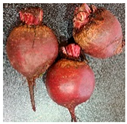 |
| ‘Bona’ | Czech Republic | The roots are round, with diameters up to 8.0 cm and weights up to 280 g. The flesh is dark red, and the surface skin is smooth without white rings. The root vegetables are suitable for processing; they retain their color when cooked **. | 100–110 | 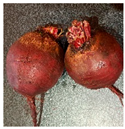 |
| ‘Action’ H | The Netherlands | The roots are round, with root weights of 240–350 g. The roots are round, attractive, dark red, and do not tend to form light, hardened fiber rings. The cultivars are tolerant to leaf spot (cercosporosis) [9]. | 85–90 | 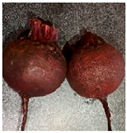 |
| ‘Kestrel’ H | The Netherlands | A high-yielding, medium-late hybrid. The roots are round, smooth, well-shaped, and have a root weight up to 300 g. Root flesh is dark red, dense, without rings, and marketable, with taste and juiciness. The foliage is strong and healthy [9]. | 100–110 | 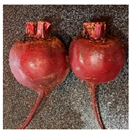 |
| ‘Wodan’ H | The Netherlands | Roots are round and slightly oval, are uniform in size, and have a good marketable appearance. Root weight is from 250 to 400 g. The skin is smooth and soft. The flesh is dark red, without concentric rings, juicy, and sweet. The foliage is medium-sized, not very lush, and grows vertically [2,4]. | 70–80 | 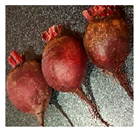 |
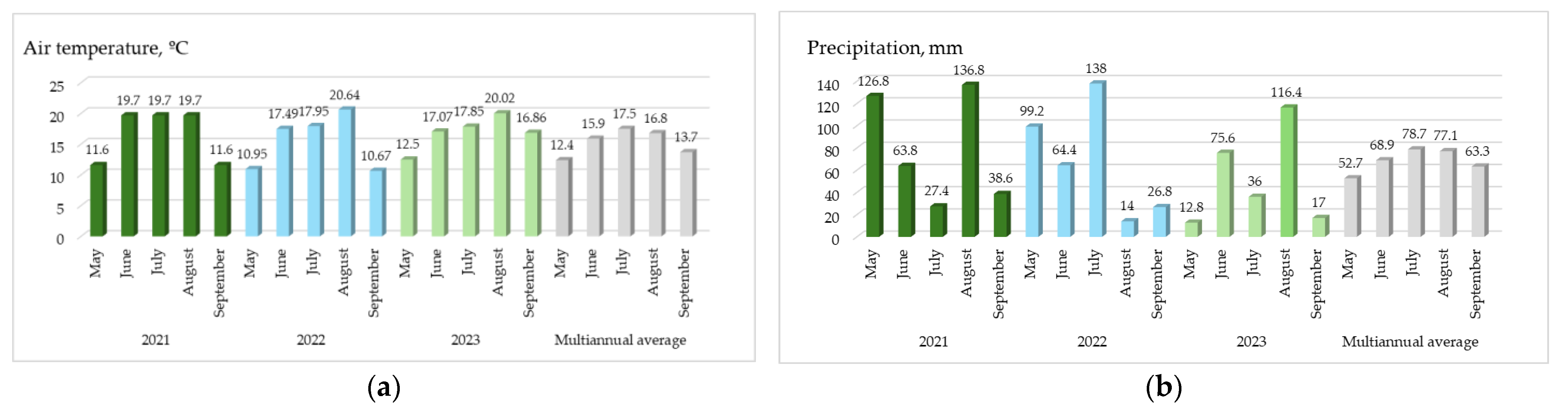
| Year of Investigation | Air Temperature, °C (Avg., Min., and Max.) | Precipitation, mm | Cultivar | ||||
|---|---|---|---|---|---|---|---|
| ‘Joniai’ | ‘Bona’ | ‘Action’ H | ‘Kestrel’ H | ‘Wodan’ H | |||
| May month | From the day of sowing to the full germination of red beets, days (in different replicates) | ||||||
| 2021 | 11.6 (−2.8; 26.6) | 126.8 | 15–16 | 15–16 | 13–15 | 15–17 | 12–14 |
| 2022 | 11.0 (−7.4; 24.4) | 99.2 | 17–18 | 16–17 | 16–17 | 18–19 | 16–17 |
| 2023 | 12.5 (−3.0; 26.7) | 12.8 | 22–23 | 21–22 | 20–21 | 23–24 | 18–20 |
| July month | Bunch maturity, days (in different replicates) | ||||||
| 2021 | 19.7 (7.3; 38.5) | 63.8 | 41–42 | 49–50 | 41–42 | 55–57 | 39–40 |
| 2022 | 17.5 (5.1; 32.6) | 64.4 | 45–46 | 51–52 | 43–44 | 58–59 | 40–41 |
| 2023 | 17.1 (7.0; 32.9) | 75.6 | 46–47 | 51–52 | 43–44 | 56–57 | 40–41 |
| Cultivars | Productivity | Root Morphological Parameters | |||
|---|---|---|---|---|---|
| Total Yield, t ha−1 | Marketable Yield, t ha−1 | Weight, g | Diameter, cm | Length, cm | |
| ‘Joniai’ | 60.0 ± 0.7 bc | 47.7 ± 1.0 d | 222.7 ± 14.3 d | 8.2 ± 0.4 a | 8.0 ± 0.2 b |
| ‘Bona’ | 61.0 ± 0.3 b | 50.2 ± 1.5 c | 255.0 ± 18.0 a | 8.3 ± 0.5 a | 8.2 ± 0.4 b |
| ‘Action’ H | 62.0 ± 1.3 ab | 52.7 ± 4.0 b | 249.0 ± 12.0 ab | 7.5 ± 0.3 c | 7.1 ± 0.7 c |
| ‘Kestrel’ H | 55.7 ± 5.0 c | 39.1 ± 9.6 e | 231.0 ± 6.0 b | 7.3 ± 0.5 c | 6.7 ± 1.1 d |
| ‘Wodan’ H | 63.0 ± 2.3 a | 53.9 ± 5.2 a | 227.3 ± 9.0 c | 7.9 ± 0.1 b | 8.8 ± 1.0 a |
| Cultivar | Total Sugar, % | Dry Matter, % | Soluble Solids, % | Ascorbic Acids, mg 100 g−1 |
|---|---|---|---|---|
| ‘Joniai’ | 10.12 ± 0.40 b | 14.2 ± 0.37 b | 13.67 ± 0.53 ab | 15.87 ± 0.89 b |
| ‘Bona’ | 9.03 ± 0.69 d | 15.2 ± 0.63 a | 13.2 ± 0.06 b | 14.83 ± 0.15 c |
| ‘Action’ H | 9.18 ± 0.54 d | 14.25 ± 0.32 b | 12.7 ± 0.44 c | 12.82 ± 2.16 d |
| ‘Kestrel’ H | 10.55 ± 0.83 a | 15.65 ± 1.08 a | 14.17 ± 1.03 a | 17.32 ± 2.34 a |
| ‘Wodan’ H | 9.73 ± 0.01 c | 13.55 ± 1.02 c | 11.97 ± 1.17 d | 14.05 ± 0.93 cd |
| Comparative Traits | ||||||
|---|---|---|---|---|---|---|
| X | Y | |||||
| Root weight, g | Total sugar, % | Dry matter, % | Soluble solids, % | Ascorbic acids, mg 100 g−1 | Nitrates, mg kg−1 | Total betalains, mg kg−1 |
| ‒0.68 | 0.34 | ‒0.14 | ‒0.24 | 0.65 | ‒0.69 | |
Disclaimer/Publisher’s Note: The statements, opinions and data contained in all publications are solely those of the individual author(s) and contributor(s) and not of MDPI and/or the editor(s). MDPI and/or the editor(s) disclaim responsibility for any injury to people or property resulting from any ideas, methods, instructions or products referred to in the content. |
© 2026 by the authors. Licensee MDPI, Basel, Switzerland. This article is an open access article distributed under the terms and conditions of the Creative Commons Attribution (CC BY) license.
Share and Cite
Karklelienė, R.; Radzevičius, A.; Viškelis, P.; Vaštakaitė-Kairienė, V.; Juškevičienė, D. Nutrient Value, Productivity, and Quality Parameters of Organically Grown Red Beet (Beta vulgaris L. var. conditiva Alef.). Horticulturae 2026, 12, 55. https://doi.org/10.3390/horticulturae12010055
Karklelienė R, Radzevičius A, Viškelis P, Vaštakaitė-Kairienė V, Juškevičienė D. Nutrient Value, Productivity, and Quality Parameters of Organically Grown Red Beet (Beta vulgaris L. var. conditiva Alef.). Horticulturae. 2026; 12(1):55. https://doi.org/10.3390/horticulturae12010055
Chicago/Turabian StyleKarklelienė, Rasa, Audrius Radzevičius, Pranas Viškelis, Viktorija Vaštakaitė-Kairienė, and Danguolė Juškevičienė. 2026. "Nutrient Value, Productivity, and Quality Parameters of Organically Grown Red Beet (Beta vulgaris L. var. conditiva Alef.)" Horticulturae 12, no. 1: 55. https://doi.org/10.3390/horticulturae12010055
APA StyleKarklelienė, R., Radzevičius, A., Viškelis, P., Vaštakaitė-Kairienė, V., & Juškevičienė, D. (2026). Nutrient Value, Productivity, and Quality Parameters of Organically Grown Red Beet (Beta vulgaris L. var. conditiva Alef.). Horticulturae, 12(1), 55. https://doi.org/10.3390/horticulturae12010055