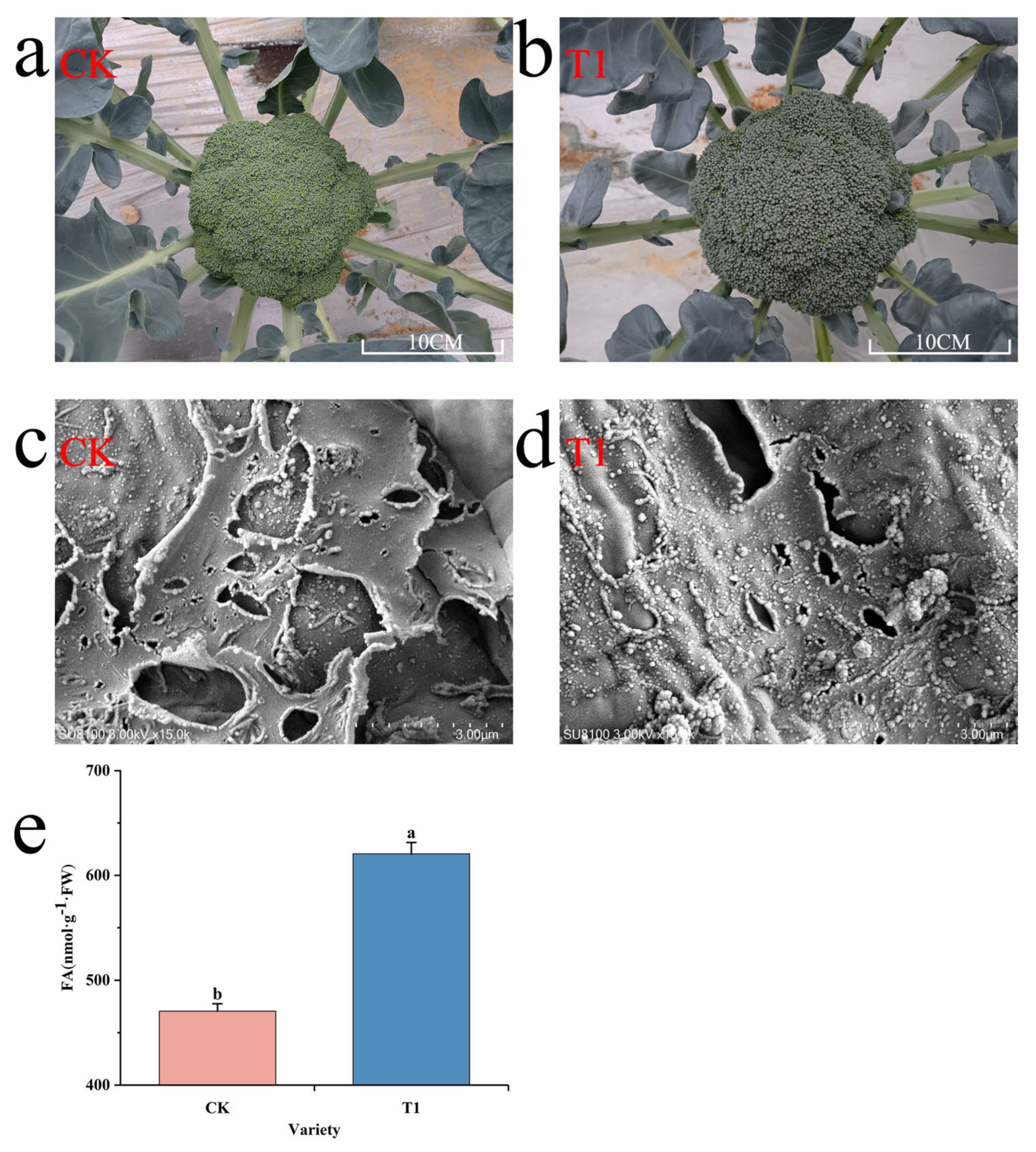
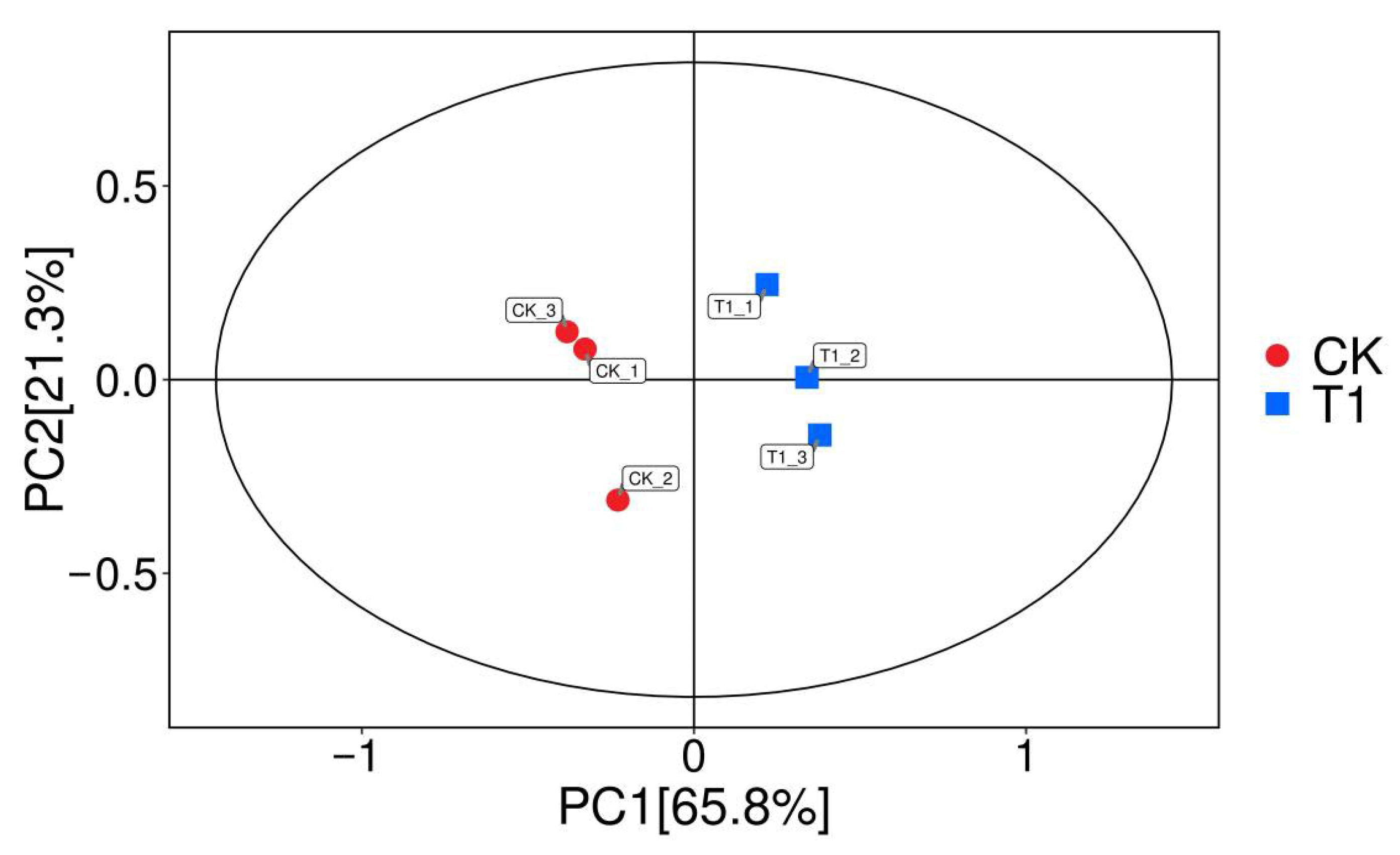
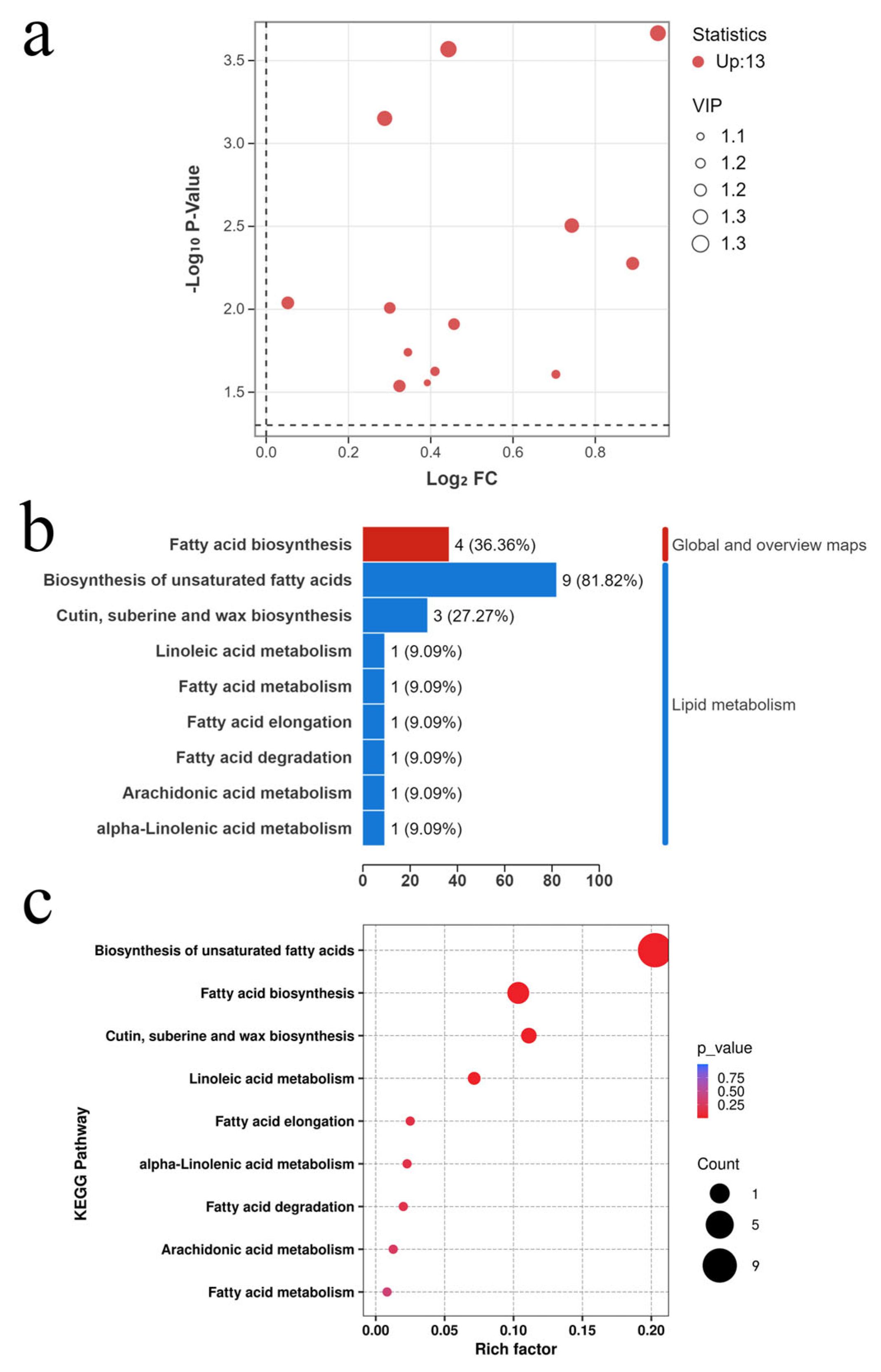
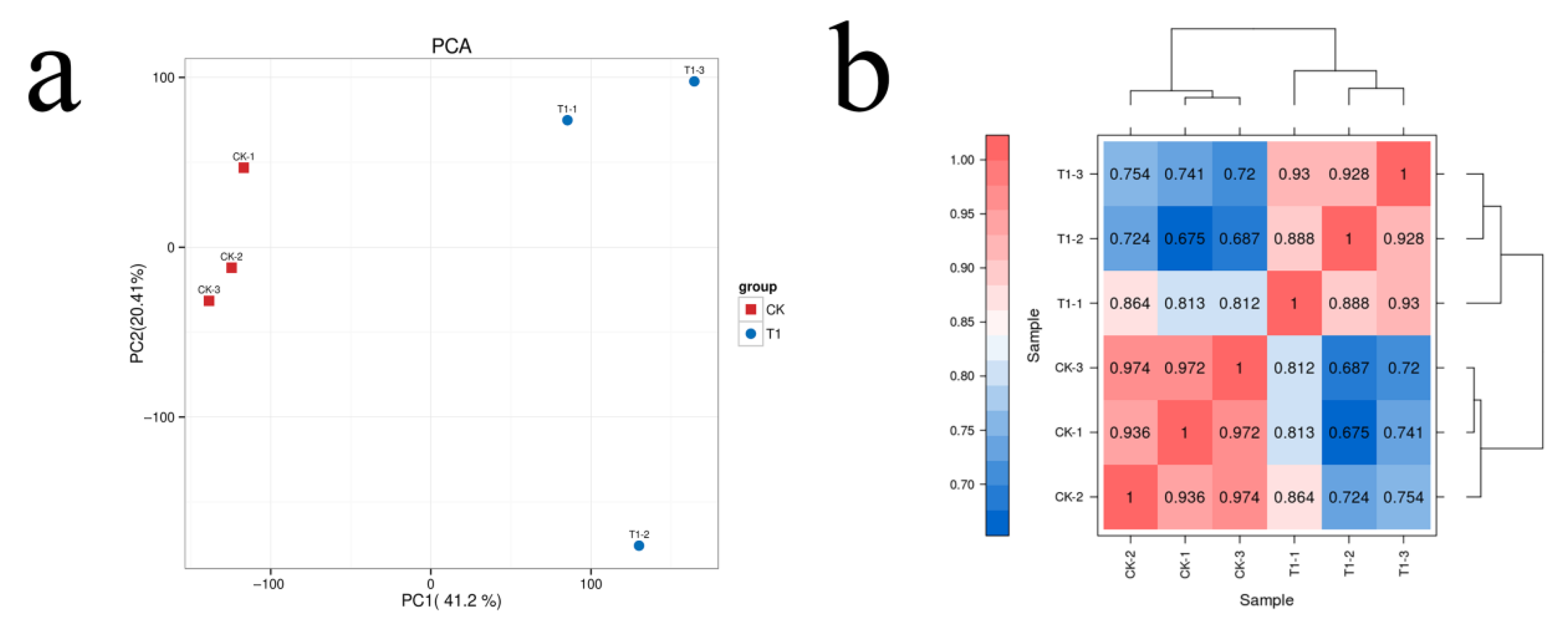
Unraveling the Formation Mechanism of Wax Powder on Broccoli Curds: An Integrated Physiological, Transcriptomic and Targeted Metabolomic Approach


Abstract
Share and Cite
Shao, Q.; Liu, J.; Chen, M.; Lin, H.; Cheng, S.; Lin, B.; Qiu, B.; Lin, H.; Zhu, H. Unraveling the Formation Mechanism of Wax Powder on Broccoli Curds: An Integrated Physiological, Transcriptomic and Targeted Metabolomic Approach. Horticulturae 2026, 12, 5. https://doi.org/10.3390/horticulturae12010005
Shao Q, Liu J, Chen M, Lin H, Cheng S, Lin B, Qiu B, Lin H, Zhu H. Unraveling the Formation Mechanism of Wax Powder on Broccoli Curds: An Integrated Physiological, Transcriptomic and Targeted Metabolomic Approach. Horticulturae. 2026; 12(1):5. https://doi.org/10.3390/horticulturae12010005
Chicago/Turabian StyleShao, Qingqing, Jianting Liu, Mindong Chen, Huangfang Lin, Saichuan Cheng, Biying Lin, Boyin Qiu, Honghui Lin, and Haisheng Zhu. 2026. "Unraveling the Formation Mechanism of Wax Powder on Broccoli Curds: An Integrated Physiological, Transcriptomic and Targeted Metabolomic Approach" Horticulturae 12, no. 1: 5. https://doi.org/10.3390/horticulturae12010005
APA StyleShao, Q., Liu, J., Chen, M., Lin, H., Cheng, S., Lin, B., Qiu, B., Lin, H., & Zhu, H. (2026). Unraveling the Formation Mechanism of Wax Powder on Broccoli Curds: An Integrated Physiological, Transcriptomic and Targeted Metabolomic Approach. Horticulturae, 12(1), 5. https://doi.org/10.3390/horticulturae12010005