Article

Greenhouse Performance of Anemone and Ranunculus Under Northern Climates: Effects of Temperature, Vernalization, and Storage Organ Traits


Department of Biology and the Centre for Forest Research, Laval University, Quebec City, QC G1X 1N1, Canada
*
Author to whom correspondence should be addressed.
Horticulturae 2026, 12(1), 43; https://doi.org/10.3390/horticulturae12010043 (registering DOI)

Submission received: 21 November 2025 / Revised: 19 December 2025 / Accepted: 23 December 2025 / Published: 29 December 2025
(This article belongs to the Section Floriculture, Nursery and Landscape, and Turf)

Abstract

Optimizing the growing conditions of Anemone coronaria and Ranunculus asiaticus for cut-flower production under northern greenhouse conditions requires a better understanding of the environmental and cultivation practices influencing emergence, flowering, and flower quality. This study evaluated the effect of storage organ reuse, along with vernalization conditions, growth temperature, growing season, and planting method (in-ground vs. containers) on plant phenology and flower yield and quality. Flower quantity and quality were unaffected by storage organ age, confirming that these organs can be stored and reused the following season. Vernalization at temperatures of 7 °C or 10 °C advanced flowering compared to warmer vernalization in all cultivars, and increased flower yield compared to non-vernalization. Growth under cool conditions (15/10 °C day/night) extended the production period and improved floral quality by promoting longer stems and delaying senescence. Short to moderate photoperiods (11–13 h in the winter vs. 15 h in the spring) and low light intensity, typical of winter, promoted stem elongation and marketable flower yield, whereas increasing photoperiod and temperature in late spring shorten the flowering period. Ground beds provided cooler and more buffered soil conditions, improving flowering duration and yield compared to container-grown plants during springtime. These findings highlight the importance of integrating temperature management, vernalization, and tailored cultivation practices to enhance flower quality, prolong the production, and improve sustainability of cut-flower production under northern climates in both species.

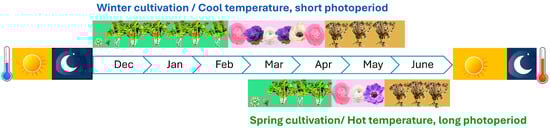
Graphical Abstract

1. Introduction

Over the past decade, the number of flower farms in Canada has grown steadily, with approximately 120 farms now established in the province of Quebec alone [1], primarily to serve the local market and support agritourism [2]. Many consumers are giving priority to local growers for the purchase of cut flowers and ornamentals [3] increasing the demand for sustainable, locally produced flowers. Furthermore, given that bouquets for major occasions, such as Mother’s Day or Valentine’s Day often travel thousands of kilometres before reaching consumers in North America generating thousands of tons of CO2 emission per year [4], the development of local and environmentally responsible flower production has become more crucial than ever. At the heart of this challenge lies consumer expectations, which remain the central driver of product profitability and ultimately determine commercial viability [5]. Among them, the vase life duration of cut flowers stands out as a critical issue. This is why local production offers a major advantage: by shortening the time between harvest and purchase, it contributes significantly to extending the vase life of cut flowers [6,7].
Anemone and ranunculus are important species for both the cut flower industry and potted plant production, particularly in Mediterranean climates [8,9,10,11], and they are also widely grown by North American producers. A 2017 survey of 188 North American growers reported that 40% cultivated anemones and 45% cultivated ranunculus [12]. Both geophytes are mainly grown in the field or cold greenhouse during the winter under mild climates, but production under high tunnels has recently been promoted for colder areas [13,14]. In their native habitats, both Anemone coronaria L. and Ranunculus asiaticus L. emerge in early autumn after their storage organs are rehydrated by the first rains [8,9]. They grow and flower during the cool, wet winter months. Anemone varieties also prefer cool temperatures and typically flowers when day/night temperatures are around 15/10 °C [15]. Ranunculus varieties require temperatures ranging from 12 to 25 °C during the day and 5–10 °C at night, along with medium to high light intensity for successful flowering [16,17]. The cooling temperatures that occur during the fall appear to satisfy the vernalization requirement in both species grown outside [18], although flowering will occur even in non-vernalized plants in both species [15,17,19,20].
Approximately three months after planting, flowering occurs in both anemone and ranunculus varieties [16,21,22]. Flowering continues until the onset of leaf senescence which occurs in spring. Leaf senescence is primarily induced by high temperatures, with photoperiod having a secondary influence [21,22]. In many geophytes, soil temperatures have more influence on plant phenology than air temperature [23]. Therefore, cool soils could delay leaf senescence despite high air day temperatures, although to our knowledge, this factor has not been assessed with either species. During flowering, increasing temperatures have been reported to cause floral deformities [8,9,24], for example, the development of mixed organs such as petals containing anther-like structures [24]. Temperature and photoperiod also influence another key parameter of flower quality, the floral stem length [15,22,25,26,27].
Mimicking these growth and flowering preferences during their biological cycle appears critical to optimize cultivation practices under climatic conditions that differ from the native habitat. In northern climates (USDA plant hardiness zones of less than 5), where growers face challenging environmental and economic constraints (long and cold winters, early/late frosts, low light in autumn and winter, late spring high day temperatures, heating and lighting costs), regional management guidelines are needed to optimize the planting schedules and cultivation conditions in order to maximize yields of both species. Most cut-flower producers in Quebec initiate production in greenhouses at the beginning of March to avoid the high heating costs associated with winter. However, the window of optimal temperatures for flowering is relatively short under natural photoperiod, typically occurring between late April and mid-May. Therefore, advancing the flowering period to align with the more favourable photoperiod and cooler temperatures of winter can be advantageous [14]. Winter growth under northern climates (USDA hardiness zone of less than 5) can be achieved by using heated greenhouses during winter months and controlling excessive temperature fluctuations in April and May through efficient ventilation. Additionally, growers face a major challenge due to the limited understanding of the vernalization requirements for both species. Few studies have focused on the cultivation conditions of these crops, and the available research often concerns cultivars no longer commercially available.
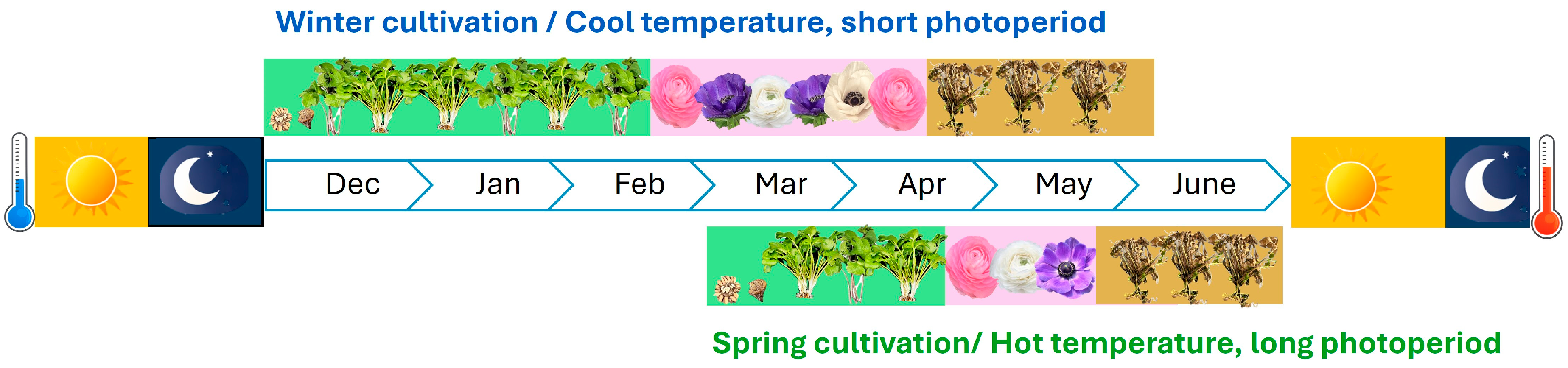
Given these constraints and the limited knowledge regarding the cultivation of Anemone coronaria and Ranunculus asiaticus modern varieties, this study aims to identify the planting methods, vernalization treatment, and growing seasons that advance first harvest and optimize cut flower yield and quality under northern climate. The specific objectives are to: (1) Optimize vernalization conditions, by identifying the best combination of duration and temperature that advances flowering and favours high flower yield, (2) Assess the potential for reusing second- and third-year storage organs, in comparison with newly purchased one-year-old organs, in terms of flowering performance, (3) Determine the optimal growth temperature regime for promoting the production of high-quality flowers, (4) Evaluate the impact of the planting season by comparing flower production under semi-controlled greenhouse conditions during winter (starting in December) vs. early spring planting (starting in Mars), and (5) Compare planting methods, specifically the direct planting of storage organs in the ground vs. in containers on the timing of flowering and on the quantity and quality of flowers produced.
We posit that vernalization at 7 °C for 30 days will advance flowering compared to treatments at higher temperatures and that older, larger storage organ, often discarded after one season, can be reused and outperform younger ones, offering a cost-effective cultivation strategy. We expect that cooler growth temperatures will promote the production of longer stems and increase flower yield by prolonging the flowering period. We also expect that winter planting under short photoperiods and cool temperatures enhances flower yield compared to spring cultivation. Finally, direct in-ground planting is expected to extend the duration of flowering and improve flower quality compared to container cultivation by maintaining cooler soil temperatures during springtime.

2. Materials and Methods

2.1. Plant Material and Vernalization

Two early-flowering cultivars of Anemone coronaria (Mistral Plus Blue, AB; Mistral Plus Bianco Centro Nero, AW) and of Ranunculus asiaticus (Elegance Rosa 89-02, RR; Elegance Bianco 59-99, RW) were used in this study. All storage organs were purchased from Unicorn Bloom (Peterborough, ON, Canada). One-year old plants had been grown from seeds by commercial growers during the season (autumn to spring) preceding the purchase in early autumn. Storage organs aged two and three years were harvested at the end of the growing season following different vernalization treatments [28]. These plants were then grown in a greenhouse beginning in March of each respective year. Consequently, two-year-old organs were harvested in summer 2023, whereas three-year-old organs were harvested in summer 2022. All storage organs were subsequently pooled by cultivar by year, as vernalization treatments had no significant effect on the final dry biomass of the plants.
Anemone tubers and ranunculus tuberous roots were soaked in water at 10 °C for 12 h and 6 h, respectively [29], with constant aeration provided by an air pump. After soaking, all storage organs were treated with a biological fungicide (ROOTSHIELD® PLUS+ WP, BioWorks®, Inc., Victor, NY, USA; a few drops of a solution of 0.6 g L−1 were applied per organ). Given that cold exposure is generally recommended for both species to promote earlier flowering, all storage organs were vernalized immediately following rehydration in all experiments.
Vernalization was conducted in breathable jute bags filled with moistened commercial substrate (Agro-Mix® G6; Fafard, Agawam, MA, USA), using one cultivar per bag. Each bag contained either 14 anemone tubers or 11 ranunculus tuberous roots. Bags were placed in plastic trays (26 cm × 52 cm × 6 cm), with two bags of tubers and two of tuberous roots per tray (50 storage organs/tray). Trays were covered with vented plastic domes to maintain appropriate moisture throughout vernalization. They were placed in a germination chamber (Model G30, Conviron, Winnipeg, MB, Canada) at 10 °C for 22 days, except in the “Effect of Growth Temperature” experiment where vernalization was at 7 °C for 30 days and “Optimization of Vernalization Conditions” experiment, where vernalization conditions differed, as described below.

2.2. Planting and Experimental Design

Experiment 1: Impact of Age and Size of Storage Organs
This experiment was conducted from early December 2023 to April 2024 in a semi-controlled greenhouse (temperature-controlled only), under natural light conditions, at Eco Fleurs (St-Lambert-de-Lauzon, QC, Canada, 46°36′30.3″ N 71°11′06.0″ W). One cultivar per species was tested: AB (anemone) and RR (ranunculus). Storage organs were categorized by age and size into four groups for AB (1-year medium, 2-year medium, 2-year large, 3-year medium) and three groups for RR (1-year medium, 2-year medium, 2-year large). Medium AB tubers weighed 2–5 g; large ones, 6–19 g. Medium RR tuberous roots weighed 1.4–2.5 g; large ones, 3.5–9.3 g. Older (reused) storage organs came from previous experiments using the same cultivars, while one-year-old organs were bought from Unicorn Bloom. Reuse of the storage organs is allowed for the Mistral Plus and Elegance series of Biancheri Creazioni which are not under patent (Camporosso, Italy).
Following vernalization, storage organs were planted at a depth of 5 cm in tulip forcing boxes (46 cm × 61 cm × 18 cm; Beekenkamp Verpakkingen, Maasdijk, The Netherlands) filled with a commercial substrate (Agro-Mix G6). Four containers (blocks) per species were used, each containing 10 plants. A total of 160 AB tubers and 120 RR roots were planted. Irrigation was as needed. Fertilization began 10 days after planting using an 18-9-18 formulation (N–P2O5–K2O; pH Reducer, Plant-Prod, Leamington, ON, Canada) applied weekly at a concentration of 200 ppm N. To assist in maintaining optimal substrate pH, the 18-9-18 solution was substituted once per month with a 20-8-20 formulation (Plant-Prod, ON, Canada). Greenhouse temperatures were maintained at 15/10 °C (day/night) as much as possible. iButton sensors (iButtonLink Technology, Whitewater, WI, USA) recorded substrate and air temperatures throughout the growing season (December 2023 to April 2024).
Experiment 2: Comparison of Different Vernalization Conditions
Conducted from early February 2024, this experiment assessed five vernalization treatments that provided similar total degree days during the vernalization (~223 ± 2 degree-days): (1) 30 days at 7 °C (30D7 °C), (2) 22 days at 10 °C (22D10 °C), (3) Pre-sprouting for 7 days at 20 °C followed by 12 days at 7 °C (P7+12D7 °C), (4) 18 days at 12.5 °C (18D12.5 °C), (5) No vernalization, thus, rehydrated and maintained at 20 °C for 11 days (Control). The duration of each vernalization treatment was adjusted on a degree-day basis, recognizing that plant roots and shoots grow during vernalization and are likely to develop more rapidly at higher temperatures.
All four cultivars (AB, AW, RR, and RW) were included in the experiment. For each treatment, 55 storage organs per cultivar were subjected to vernalization, resulting in a total of 1100 storage organs. However, not all vernalized organs were thereafter planted. Only those that developed at least some absorbent roots were selected, ensuring sufficient emerging and growing plants, along with more homogeneous phenology within treatment groups. From preliminary tests, we observed that some vernalization treatments lead to low emergence, and in some years, the emergence rate was low for a given cultivar. This is why we choose to vernalize more tubers and tuberous roots than needed. Vernalization ended on 5 March 2024, and the selected plants were transferred to the semi-controlled greenhouse at Eco Fleurs. Eight plants per block, per treatment, and per cultivar were planted directly in the ground covering a 0.2 m2 area. Four blocks were set up, with each block containing the five vernalization treatments and the four cultivars, resulting in a total of 160 storage organs per cultivar and 640 in total, covering an area of 16 m2.
A 6 cm layer of Agro-Mix® G6 was added on top of the ground before planting. To suppress weeds, a non-woven landscape fabric (Princess Auto, Winnipeg, MB, Canada) covered the surface, with X-shaped incisions made to plant each organ at a 5 cm depth. Air temperatures were kept near 15/10 °C (day/night), though daytime temperatures exceeded 15 °C on sunny days. Fertilization began 10 days after planting (DAP) using 20-8-20 (N–P2O5–K2O; Plant-Prod) at a rate of 200 ppm N applied weekly. This was alternated with a 2:1 ratio of 20-8-20 and a mixture of 15-0-15 (containing 11% Ca and other micronutrients) and 15.5-0-0 (containing 19% Ca) to ensure adequate calcium supply.
Experiment 3: Effect of Growth Temperature
This experiment was conducted twice, in December 2021 and December 2022. After vernalization, 12 storage organs per cultivar were planted in 15 cm diameter × 15 cm deep pots (one plant per pot). During the first year, pots were filled with Pro-Mix® MP Mycorrhizae Organik (Premier Tech Horticulture, Rivière-du-Loup, QC, Canada) and in the second year with Agro-Mix® G6. One cultivar per species was tested, AW for anemones and RR for ranunculus. Pots were placed in growth chambers set at 20/15 °C, 17/12 °C, or 15/10 °C (day/night), under increasing day length but constant irradiance of 300 μmol m−2 s−1. The photoperiod was adjusted weekly to simulate natural day length at 45° N (southern Quebec), starting 1 March (11 h daylight) and continuing until senescence in late June (15 h 50 min daylight). Plants were watered as needed. Fertilization started at flowering, with Nature’s Source liquid fertilizer (Nature’s Source®, Sherman, TX, USA) applied weekly at a rate of 200 ppm N, following standard recommendations for similar ornamental species.
Experiment 4: Winter vs. Early Spring Planting
This experiment compared two planting seasons: winter (December 2023 to April 2024) and spring (March to June 2024). All four cultivars were used. Storage organs were planted as in Experiment 1, using similar containers and substrate. Four containers (blocks) per cultivar were planted per season, each with 10 plants, for a total of 320 storage organs. All plants were grown in the same greenhouse as in Experiment 1. Temperature was maintained at 15/10 °C (day/night) as much as possible, and air and substrate temperatures were recorded with iButton sensors.
Experiment 5: Planting Mode (In-ground vs. Container)
Conducted from early March to June 2024, this experiment compared two planting methods: in-ground and in containers. The four cultivars (AB, AW, RR and RW) were included. Organs were vernalized for 22 days at 10 °C, then half of them were transplanted into the same type of containers and substrate as in Experiment 4 (4 containers each containing 10 plants of the same cultivar × 4 cultivars). For in-ground planting, eight plants per block were established within 0.2 m2 plots, with four blocks each containing the four cultivars (128 storage organs in total; 3.2 m2). This planting method was the same as in Experiment 2. Greenhouse temperature during March was kept around 15/10 °C (day/night), although fluctuations occurred on sunny days. Fertilization was applied as described in Experiment 2 for both plants grown in the ground and in containers.

2.3. Data Collection

Plant monitoring began immediately after planting, except in the vernalization conditions experiment, where the emergence rate was recorded at the end of the vernalization period. A plant was considered to have emerged when it had produced at least a few roots. The following phenological and production parameters were recorded: number of DAP to shoot emergence above the substrate, number of DAP to first flower harvest, total number of flowers produced per plant, number of marketable flowers per plant, flower stem length. Flowers were considered marketable when they measured at least 26 cm long and without malformations, consistent with florists’ standards for bouquet production [30]. Individual flower stem lengths were then averaged over the season to determine a mean stem length per plant. Besides these parameters, the number of DAP to the onset of senescence was recorded for each plant when at least 10% of the leaves showed signs of yellowing, except in Experiment 1: Impact of Age and Size of Storage Organs, where senescence was not recorded.

2.4. Statistical Analyses

Since it is known that cultivars present different phenology and flower yields [19], we chose to focus on identifying the optimal growth conditions for each cultivar, and therefore statistical analyses were conducted separately for each cultivar. All statistical analyses were performed using SAS software (version 9.4, SAS Institute Inc., Cary, NC, USA), with a significance threshold set at α = 0.05. For each cultivar, the effects of the treatments were analyzed using a two-factor ANOVA in a randomized complete block design, with the applied treatment (i.e., Growth Temperature, Age and Size of Storage Organs, Planting Season, Vernalization Conditions, or Planting Mode) considered as a fixed factor and the block as a random factor.
This design allowed the partitioning of variation attributable to treatment effects while accounting for environmental variability within the blocks. Each container was considered as one experimental unit. For the in-ground plants, the eight plants of the same cultivar and treatment within the same block were grouped and considered as a single experimental unit. For the growth-temperature experiment, the 12 pots per cultivar within each growth chamber were grouped and considered as a single experimental unit, and the repetitions across the two years during which the experiment was conducted served as the true replicates. Assumptions of normality and homogeneity of variance were verified through residual diagnostics, and data transformations were applied, when necessary, as indicated by the Box–Cox procedure.
To compare the emergence rate recorded at the end of the different vernalization treatments (Experiment 2), a mixed-effects model was fitted for each cultivar using the PROC MIXED procedure, with treatment as a fixed effect. The RR cultivar was excluded from analysis due to its 100% emergence rate, which resulted in near-zero variance.
The number of DAP to emergence, number of DAP to first flowering, number of DAP to senescence, as well as the mean stem length were analyzed using the MIXED procedure whereas the total number of flowers produced and total number of marketable flowers were analyzed using the GLIMMIX procedure. The analysis of the random factor (block) in the model was performed using the COVTEST/WALD option to assess the block effect. Pairwise comparisons between treatments were performed using the LSMEANS statement coupled with the LINES option to identify significant differences.
A repeated measures mixed-effects model was fitted using the PROC MIXED procedure with Restricted Maximum Likelihood (REML) estimation to compare the air temperatures between the two growing seasons (winter vs. spring) or soil temperatures between the two planting modes (in-ground vs. containers). The model included fixed effects of Season or Planting mode, Day after planting and Time (temperatures were recorded every 3 h) nested within Day after planting, while accounting for the fact that the same data loggers registered temperatures repeatedly over Time (three replicates) using a compound symmetry covariance structure. Replicates were considered as a random factor. The daily mean and maximum air temperatures were calculated during winter and spring for Experiment 4, and the daily mean and maximum soil temperatures were calculated in containers and in-ground conditions in Experiment 5. These data were used to compare temperatures (either air or soil) 5 days before shoot emergence (at least half of the plants emerged within 5 days) and 10 days before the onset of flowering and senescence in the two experiments. We chose 10 days since we estimated from another experiment that flowers appear every 10 days on average in both species [31]. Cumulative growing degree days were calculated by summing the mean daily temperature during the period of interest (time 0 to the date of emergence, of the first flower, or the beginning of senescence). We chose to subtract 5 °C from the mean daily temperature when calculating cumulative growing degree days because we do not know whether the plants could continue to grow below 5 °C, despite their capacity to tolerate such low temperatures [8,9].

3. Results

3.1. Recorded Temperatures During Plant Growth in the Greenhouse

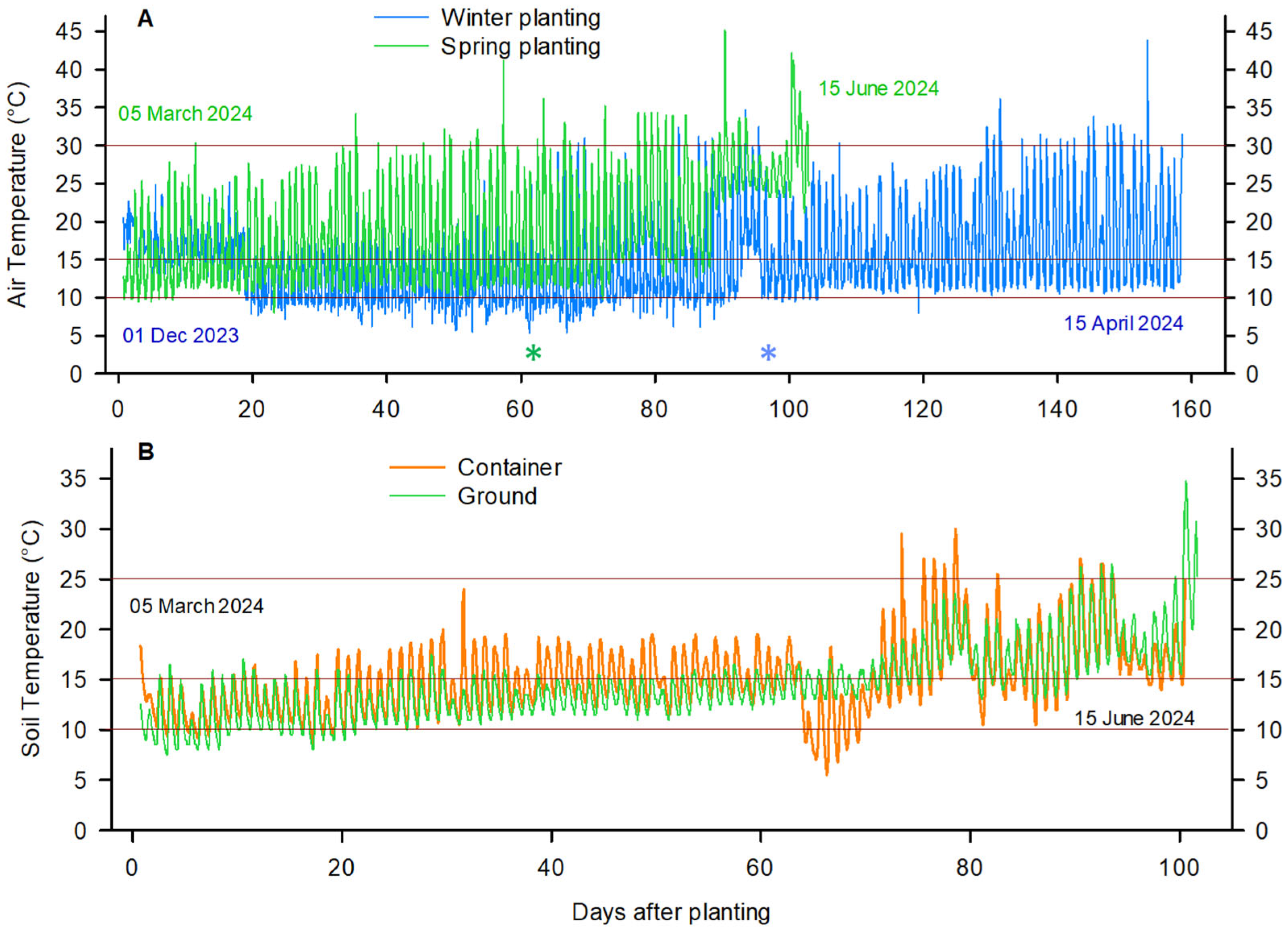
Daily air temperatures recorded in the greenhouse were monitored from the first day of planting for each treatment: 1 December 2023 for the winter planting and 5 March 2024 for the spring planting (Figure 1A). During the initial 2 to 3 DAP, daily temperatures were higher in the winter treatment compared to the spring one. The producer then reduced the heating for the rest of the winter period. Over time, winter temperatures exhibited high day-to-day variability, with minimum temperatures often falling below 10 °C, particularly between 15 and 80 DAP. Maximum temperatures generally ranged between 15 °C and 25 °C, with occasional peaks approaching 30 °C. In contrast, spring temperatures gradually increased immediately after planting. From approximately 30 DAP, daily maximum temperatures regularly reached 30 °C and sometimes surpassed 40 °C toward the end of the cycle. Minimum temperatures remained consistently above 10 °C from about 15 DAP onward. Over the entire season, plants grown during springtime were subjected to higher temperatures than those grown in the winter (p < 0.0001).
Soil temperatures recorded during early spring in containers and in ground (Figure 1B) remained relatively low and similar across both conditions, fluctuating between 8 °C and 15 °C, during the first 30 DAP. However, slight differences began to emerge after 30 DAP, with container temperatures exhibiting greater daily variation, including occasional spikes above 20 °C, while ground temperatures increased more gradually and remained more stable. Between 60 and 80 DAP, a drop in container soil temperatures was observed, with values falling below 10 °C, coinciding with the period when the containers were moved from the greenhouse to outdoor conditions. The producer made this decision given that the plants in the containers had stopped flowering and she needed the space to plant other species. Ground soil temperatures remained relatively constant between 60 and 70 DAP, then started increasing again before exhibiting a drop in temperature for a few days. From 80 DAP onward, both temperature profiles steadily increased, but the amplitude of daily fluctuations remained slightly more pronounced in the containers. Toward the end of the monitoring period (up to 101 DAP), container and ground temperatures reached maxima exceeding 30 °C. Throughout the entire monitoring period, the container condition displayed a more variable thermal profile, with greater sensitivity to diurnal temperature changes compared to the ground condition, which exhibited a more buffered and stable soil temperature pattern (soil temperatures between the two planting modes statistically differed at p < 0.0001). Soil temperatures in the containers were on average 2 °C less than air temperatures both in the winter and in the spring.

3.2. Shoot Emergence

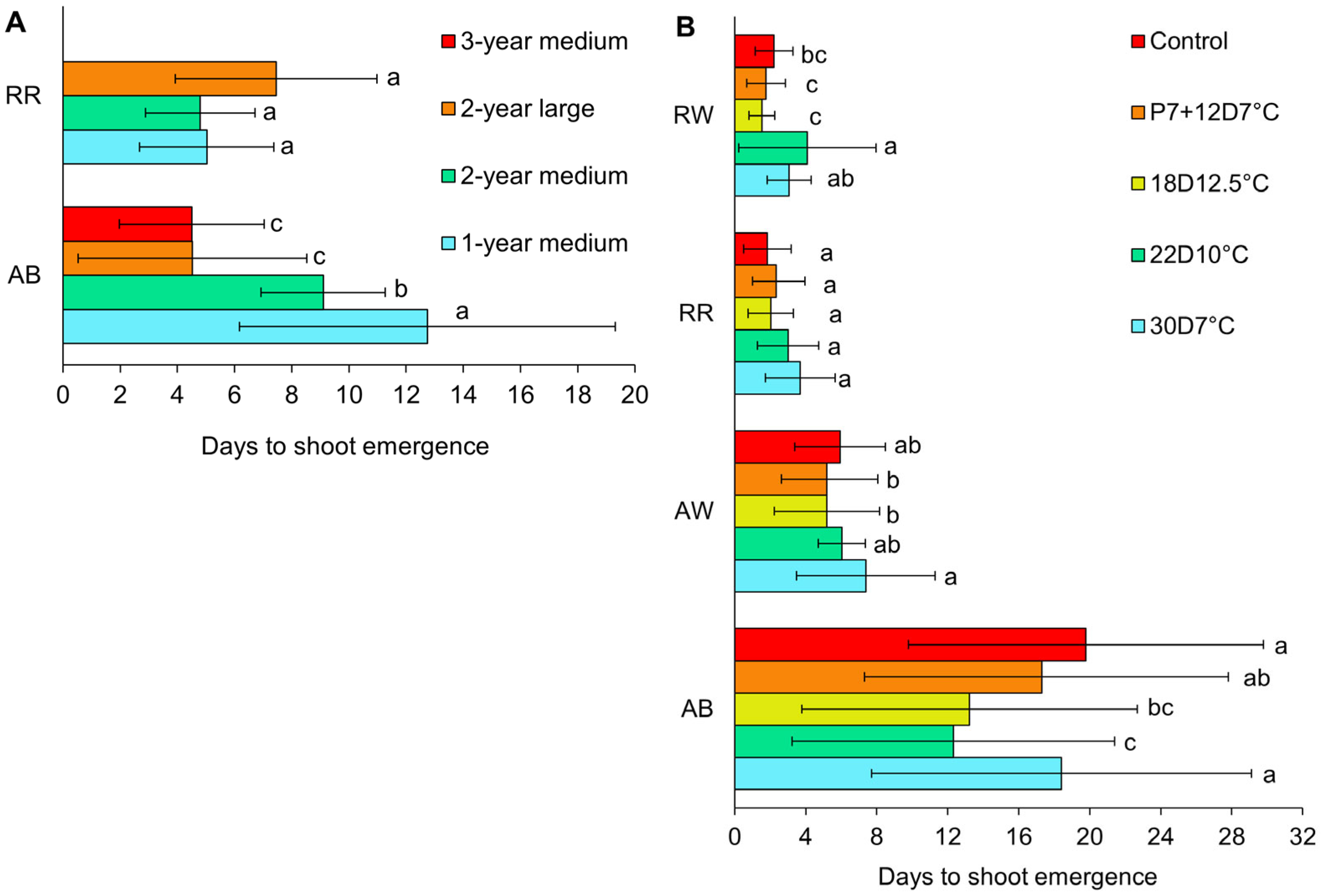
Age of the storage organs significantly influenced the emergence of AB (Figure 2A; Table S1). Older tubers emerged earlier than the one-year-old ones. In RR, the age and size of the root tubers did not statistically impact emergence. Vernalization treatments significantly affected the timing of shoot emergence, but also the number of plants that developed roots during vernalization (Table S2). For both ranunculus cultivars, nearly 100% of the plants started rooting during vernalization, regardless of the treatment (Figure S1). In contrast, cultivar AB exhibited the highest root initiation rate under the control condition (80%) and the lowest under the 30D7 °C treatment (55%). For the other treatments, between 60% and 67% of tubers produced roots during vernalization. For AW, 95% of the tubers initiated roots under both the control and the 18D12.5 °C treatments. As for AB, the 30D7 °C treatment resulted in the lowest rooting rate (67%). Under the P7+12D7 °C and 22D10 °C treatments, 88% and 70% of the plants, respectively, produced roots. These results are in contrast with the planting that occurred in December, when essentially all tubers rooted during the 22D10 °C treatment in both anemone cultivars.
After planting, the AB cultivar tubers vernalized for 22 days at 10 °C and for 18 days at 12.5 °C emerged 13 ± 1 days earlier compared to those subjected to either colder (30 days at 7 °C) or warmer conditions, which emerged after 19 ± 1 days (Figure 2B; Table S2). In the AW cultivar, the 18D12.5 °C and P7+12D7 °C treatments led to emergence two days earlier than the 30D7 °C treatment. Overall, warmer vernalization treatments (18D12.5 °C, P7+12D7 °C, and control) advanced emergence by 1 to 2 days compared to the cooler treatments. Similarly, warmer temperatures of vernalization slightly advanced emergence in ranunculus cultivars, compared to the plants subjected to vernalization at 7 or 10 °C. However, in all treatments, ranunculus emerged rapidly, that is within 4 DAP on average and we reported statistically significant differences among treatments only for RW.
None of the tested growth temperatures (20/15 °C, 17/12 °C, or 15/10 °C day/night) affected the timing of shoot emergence (Table S3), but the emergence was generally delayed compared to what was observed in the other experiments. On average plants emerged after 13 and 11 days for AW and RR, respectively, in the growth chambers.
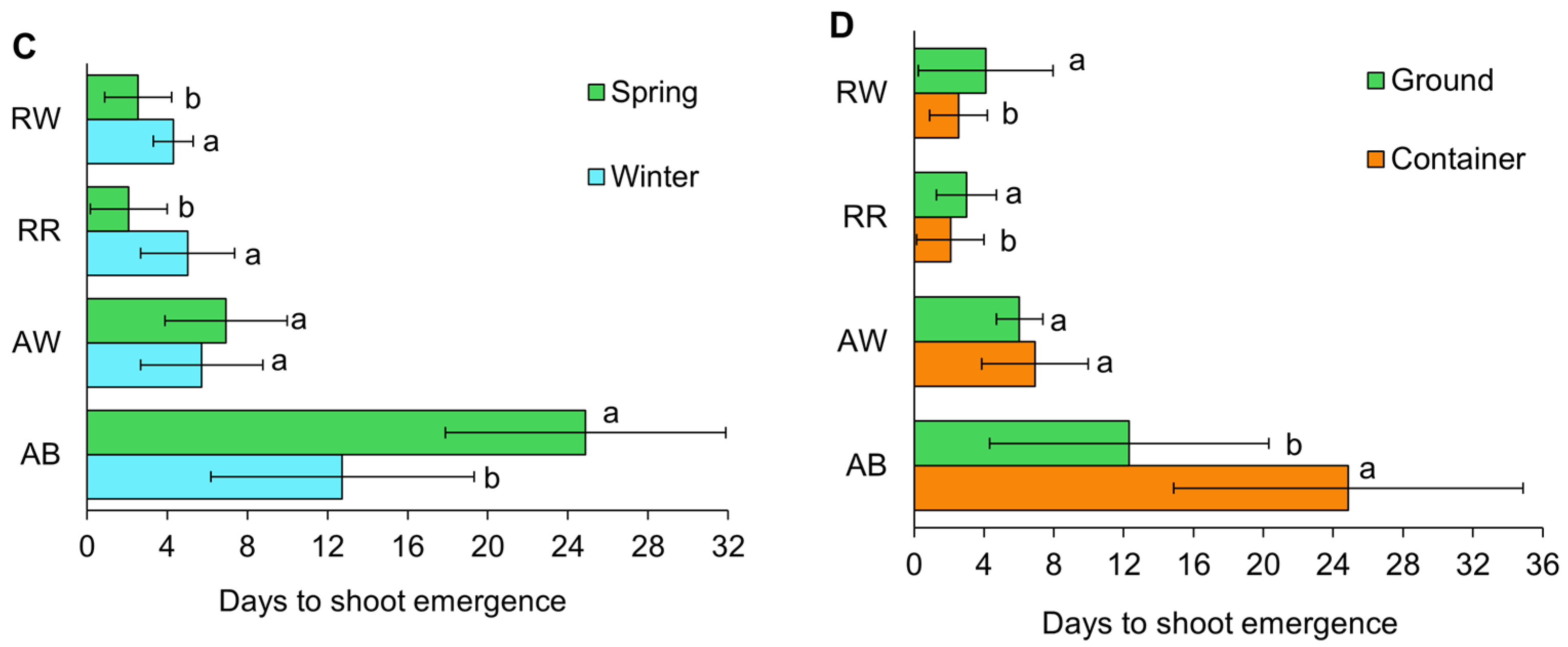
A notable difference in emergence time was observed between winter and spring planting dates, particularly in the AB cultivar (Figure 2C; Table S4). AB tubers planted in the winter emerged approximately two weeks earlier than those planted in the spring, resulting in higher degree-day accumulation before emergence in spring (Table 1 and Table S6). However, this seasonal effect was not observed in the AW cultivar; for RR and RW cultivars, spring emergence occurred 3 and 2 days earlier, respectively, than winter emergence, despite lower mean daily temperature recorded during the emergence period in the springtime (Table 1 and Table S6). The AB cultivar emerged approximately 13 days earlier when planted in the ground than in containers, whereas the AW cultivar showed no significant difference between planting modes (Figure 2D; Table S5). RR and RW cultivars emerged 1 and 2 days earlier in containers than in the ground, respectively. Mean and maximum soil temperatures were higher in containers than in the ground during the days prior to emergence, resulting in greater accumulation of degree days before shoot emergence for AB (Table 2 and Table S7). However, for the three other cultivars, in-ground and container-grown plants exhibited similar cumulative growing days to emergence suggesting that initial shoot growth rate might be mainly controlled by soil temperature when all other growing conditions remain the same.

3.3. First Flower

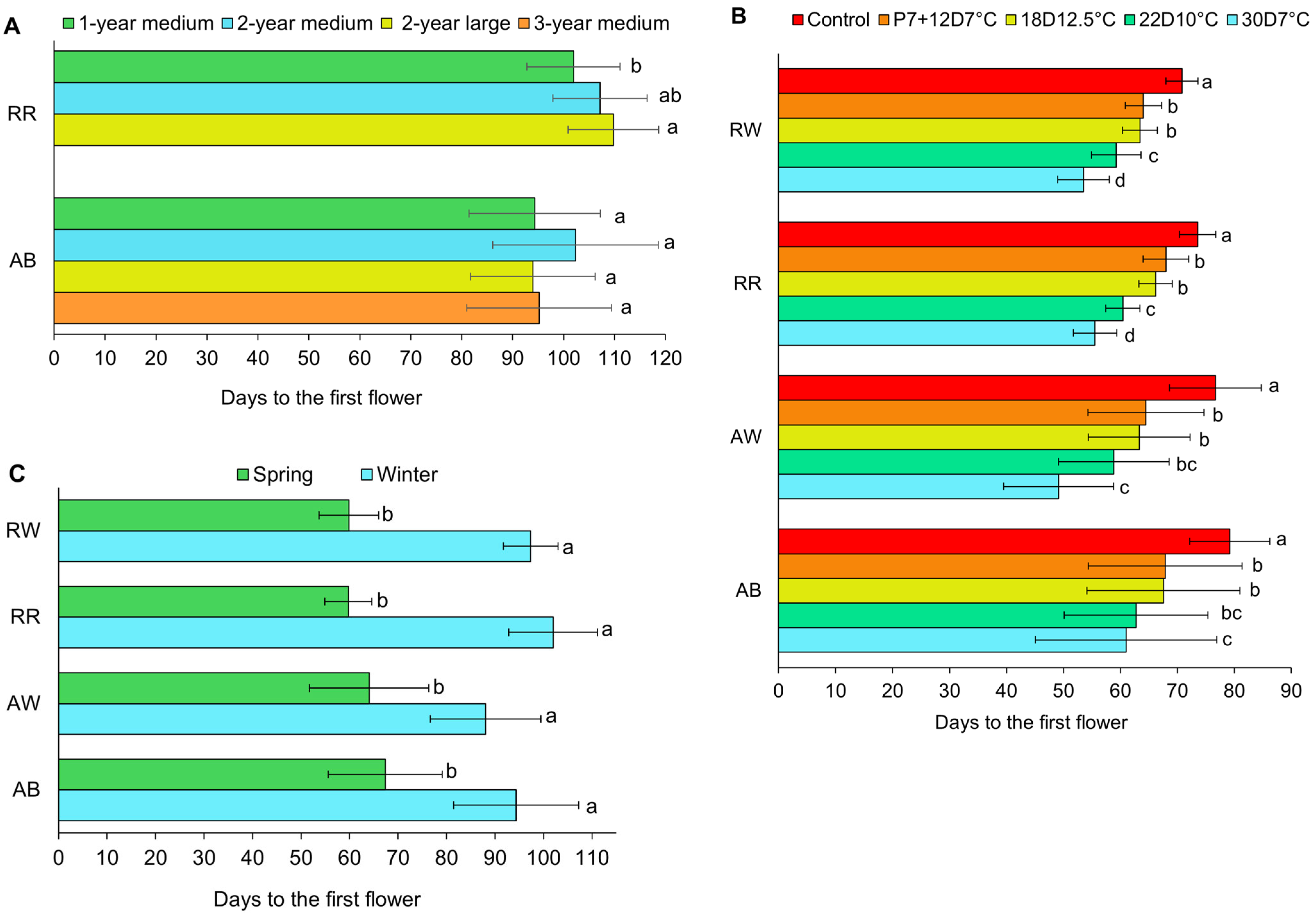
Regardless of the size or age of their storage organs, all AB groups flowered at the same time (Figure 3A; Table S1). However, RR one-year-old tuberous roots flowered about 8 ± 1 days earlier than the two-year-old medium and large roots. In contrast, vernalization conditions significantly influenced the beginning of flowering in all cultivars (Figure 3B; Table S2). The 30D7 °C treatment led to the earliest flowering compared to all other treatments. Specifically, AB flowered 61 DAP, RR after 55 days, and RW after 53 days, hence, approximately 18 days earlier than their respective control plants, whereas AW flowered after 49 days, which was 28 days earlier than the control. The warmer the vernalization treatments, the later the plant started to flower, although differences were significant between the treatment at 10 °C and at 12.5 °C only in ranunculus cultivars.
Flowering was not significantly advanced by temperature when grown under controlled growing conditions (Experiment 3). In both cultivars, flowering began approximately 2 months after planting in growth chamber (Table S3), which is somewhat delayed compared to the plants cultivated in the spring in the greenhouse following the same vernalization treatment (30D7 °C; Figure 3B). The conditions in the growth chamber simulated spring photoperiod conditions and the plants had been subjected to the coldest vernalization treatment prior to their transfer to the growth chamber. Season of planting exerted the most pronounced impact on the timing of flowering across all four cultivars (Figure 3C; Table S4). Spring-planted plants flowered substantially earlier than those planted in winter, by 27, 24, 42, and 37 days for AB, AW, RR, and RW, respectively. The mean and maximum air temperatures during the ten days preceding flowering, as well as the photoperiod, were higher in spring than in winter (Table 1 and Table S6). Ranunculus cultivars appeared to require more cumulative degree days in winter to initiate flowering than in the spring, whereas for anemone cultivars, the difference in degree days between spring and winter was not significant. Surprisingly, planting mode (in-ground vs. container) did not affect the timing of the first flower in any cultivar. Cultivars AB, AW, RR and RW flowered on average 65, 61, 60 and 59 DAP, respectively (Table S5), despite warmer soil temperatures in the container than in the ground during the days preceding flowering (Table 2 and Table S7). This led to similar cumulative growing degree days cumulated before flowering for both anemone cultivars, as also observed in the comparison between winter and spring planting.

3.4. Floral Stem Length

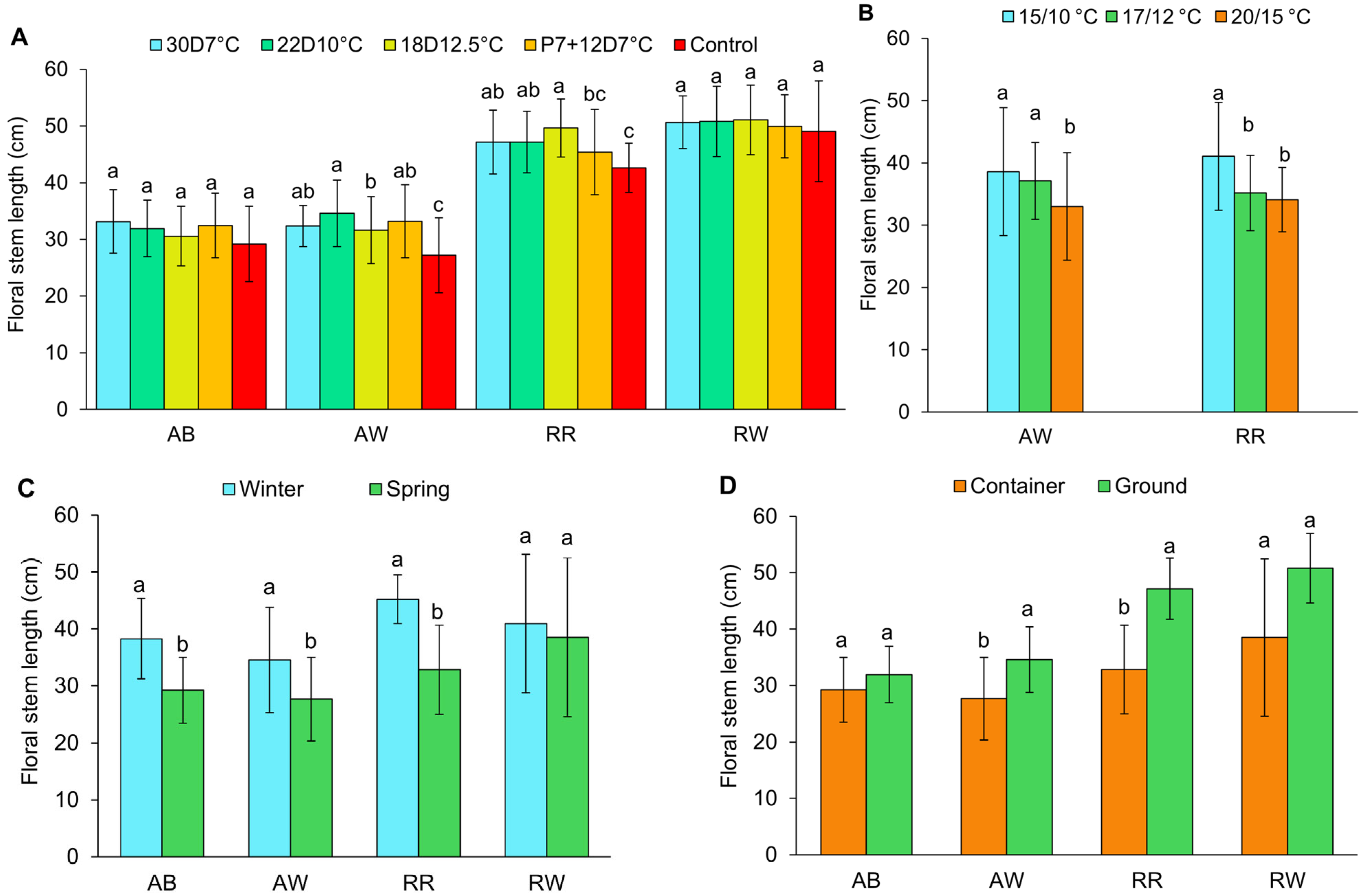
Neither age nor storage organ size affected the length of the stem produced in AB and RR (Table S1); floral stem length of AB averaged 36.5 cm and that of RR averaged 46 cm. Vernalization treatments significantly affected floral stem length but only in the AW and RR cultivars (Figure 4A; Table S2). In AW, the average stem length per plant exceeded 30 cm under all vernalization treatments, except in the control plants which produced noticeably shorter stems. AB also produced stems that were on average 32 cm. In RR, stem lengths surpassed 47 cm under the 30D7 °C, 22D10 °C, and 18D12.5 °C treatments. In contrast, the shortest stems were recorded under the P7+12D7 °C treatment and in the control condition. RW produced 50 cm long stems on average.
Floral stems produced at 15/10 °C (day/night) were the longest in both cultivars, with an average length of 40 ± 1 cm (Figure 4B; Table S3). Flowers produced at 17/12 °C and 20/15 °C were approximately 6 cm shorter in ranunculus than those produced at 15/10 °C, whereas in anemone, shorter stems were observed only under the 20/15 °C treatment. Conditions in growth chambers favoured longer stems in AW compared to plants grown in the greenhouse (all other experiments), whereas RR stems were slightly longer in plants grown in the greenhouse compared to those grown in the growth chamber, when comparing the best conditions within each experiment (Figure 4). In growth chambers, AW and RR stem were of similar lengths, whereas in all other experiments, anemones produced shorter stems than ranunculus cultivars. Winter planting led to the production of significantly longer stems compared to spring planting, particularly in AB, AW, and RR cultivars, with stem lengths exceeding those of spring-grown plants by 9, 7, and 12 cm, respectively (Figure 4C; Table S4). Similarly, in-ground planting significantly enhanced stem length in AW and RR cultivars (Figure 4D; Table S5). The effect was most pronounced in RR: Stems were 12 cm and 7 cm longer, respectively, for RR and AW, when grown in-ground compared to container-grown plants.

3.5. Total and Marketable Flower Production

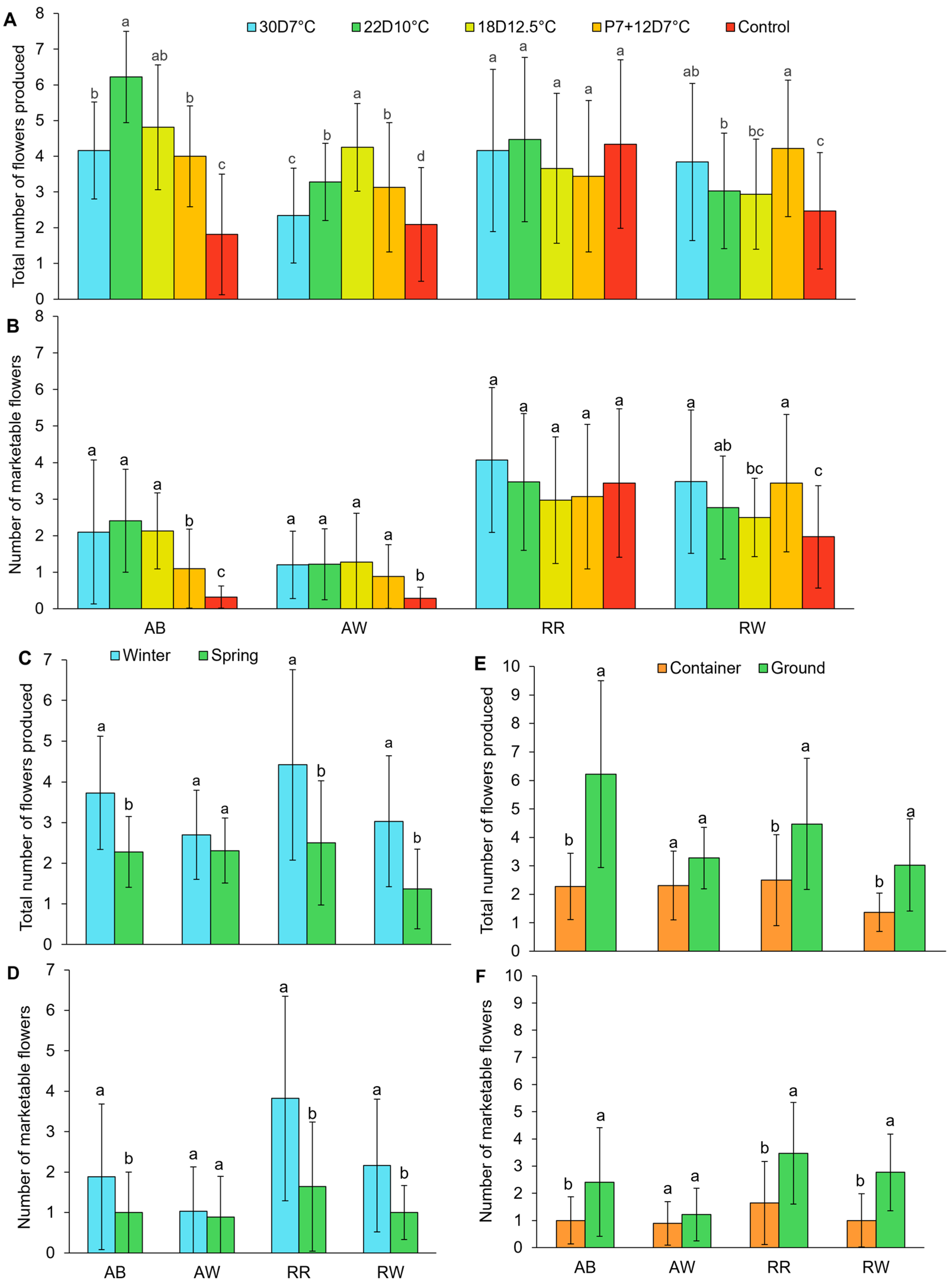
No significant differences in flower production were detected as a function of age or size of the tubers, with all groups averaging approximately 3.5 flowers per plant. The same trend was observed for marketable flower production, with no significant variation among treatments (Table S1), with an average of one flower marketable for anemones and 3 for ranunculus. Vernalization treatments significantly influenced total flower production (Figure 5A; Table S2). Anemone cultivars produced the highest number of flowers under 22D10 °C and 18D12.5 °C treatments, averaging 5 ± 1 flowers for AB and 4 ± 1 for AW. There were fewer differences among treatments for the number of marketable flowers, but the control treatment strongly reduced the number of marketable flowers produced in both anemone cultivars (Figure 5B). In contrast, RR was not significantly affected by vernalization, producing around 4 flowers consistently per plant, of which approximately 3.4 were marketable. In RW, the highest flower yield was observed under the 30D7 °C and P7+12D7 °C treatments, with around 4 flowers per plant, of which 3.4 were marketable. The control treatment resulted in the lowest flower yield in RW.
Flower production was not significantly affected by the three growth temperature regimes in either species (Table S3), with a total of 6.4 flowers produced in anemone and 6 flowers in ranunculus. The number of marketable flowers was not recorded in this experiment.
Winter planting resulted in higher flower yields compared to spring planting for three of the cultivars (Figure 5C; Table S4). Only AW exhibited similar flower yields in the two seasons. In both seasons, marketable flowers represented approximately half of the total flower count (Figure 5D), leading to more marketable stems during the winter season, again in three of the cultivars.
Container planting reduced flower production in three of the cultivars compared to ground planting (Figure 5E; Table S5). In AB, ground-grown plants produced 4 more flowers and 1.4 more marketable flowers than container-grown plants (Figure 5F), while the flowering period lasted 12 more days in the ground. AW flower yield did not significantly differ between the two planting modes and produced on average 2.5 flowers, with only one marketable flower in both conditions. RR and RW plants yielded 2 more flowers, both being marketable when grown in the ground compared to those grown in containers. This higher yield of in-ground grown plants was accompanied by a longer flowering period: 7 days for RR and 9 days for RW more than for container-grown plants.

3.6. Onset of Senescence

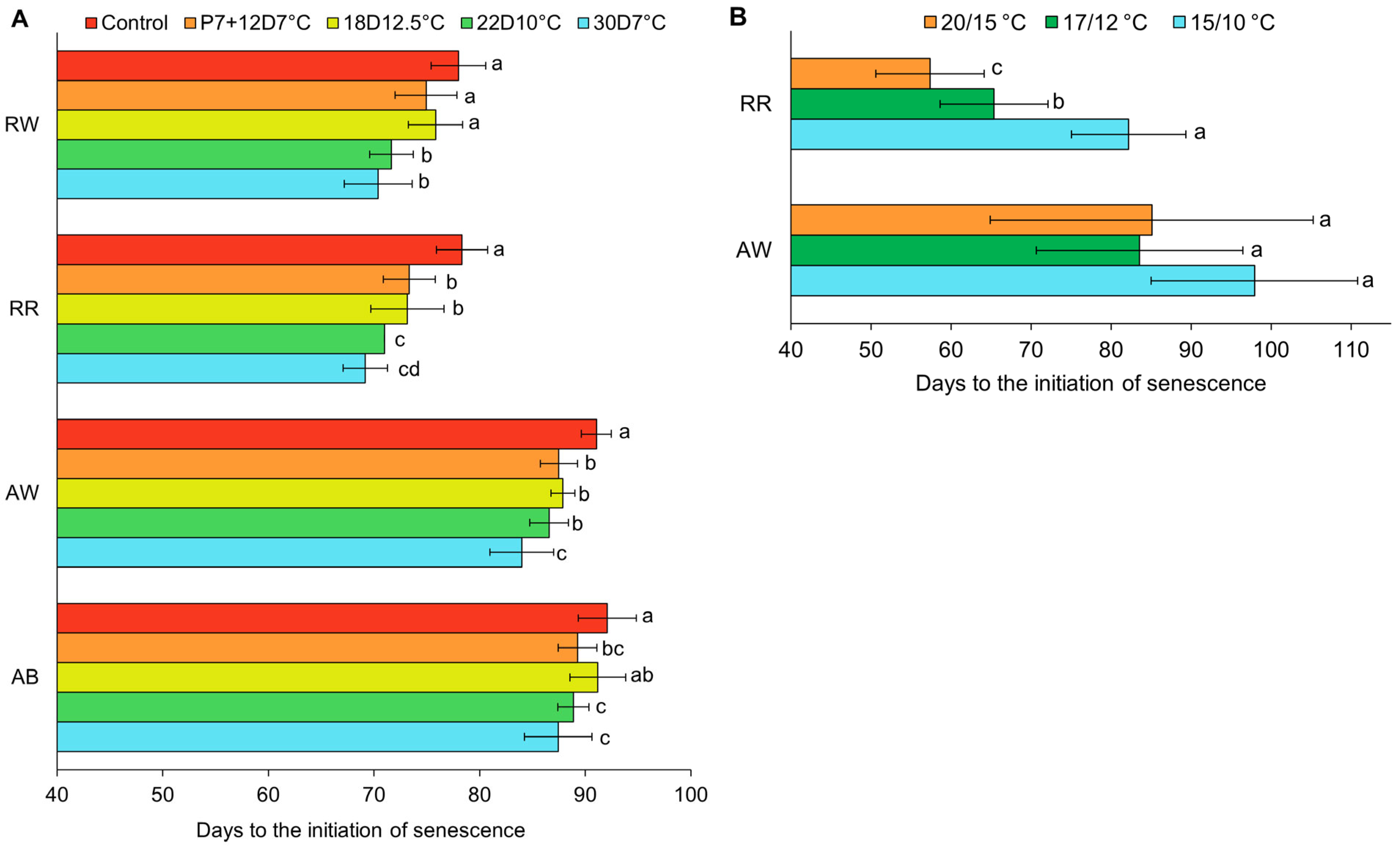
As described in Section 2, senescence was not recorded in the experiment involving the age and size of storage organs. Vernalization treatments affected the timing of senescence across all cultivars (Figure 6A; Table S2). Senescence appeared earlier in the AB, RR, and RW cultivars under the 30D7 °C and 22D10 °C treatments than under the other treatments. In the AW cultivar, senescence was also triggered earlier under 30D7 °C, while the control group exhibited the most delayed onset of senescence in all cultivars. On average there was 5- to 10-day difference between the onset of senescence of the earliest and the latest treatments, depending on the cultivar.
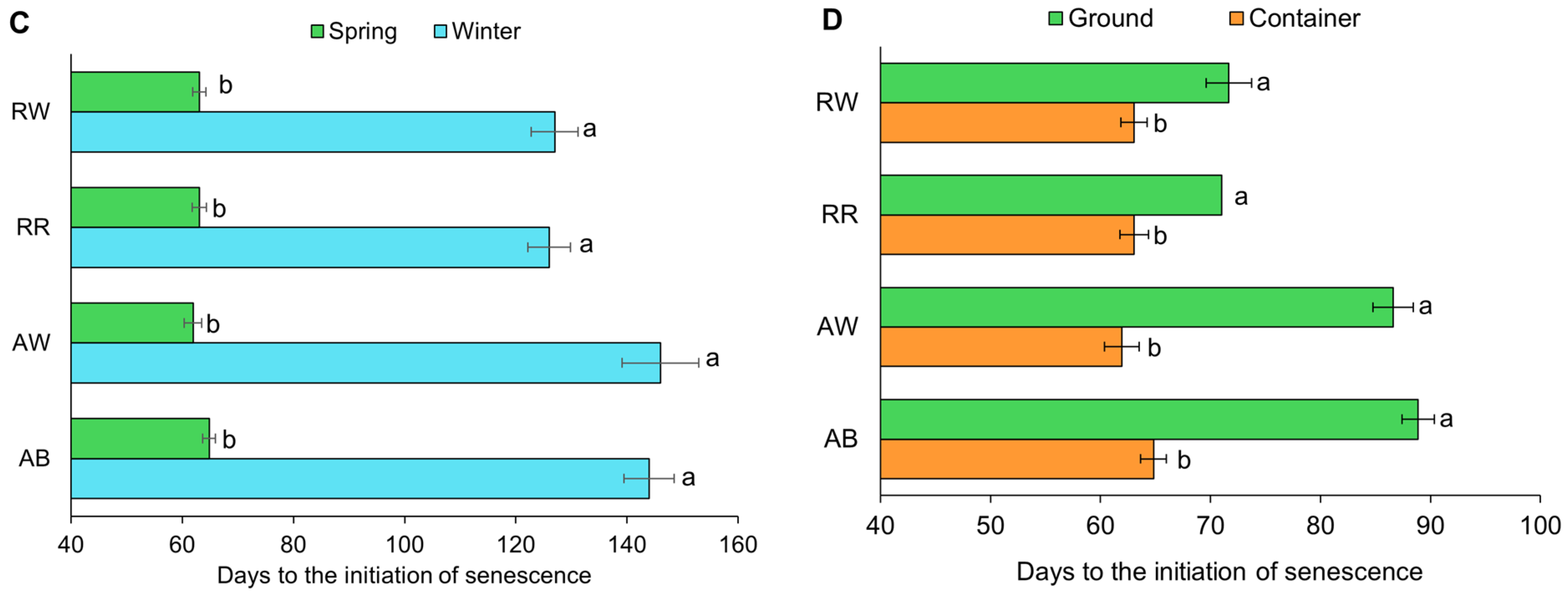
In both AW and RR, the 15/10 °C temperature regime delayed senescence compared to warmer temperatures, although the differences were not significant in AW (Figure 6B; Table S3). Planting season had the strongest impact on the duration of the growing season among all experiments (Figure 6). Senescence began much earlier following spring planting for all four cultivars, with leaf yellowing observed on average 63 DAP in all cultivars (Figure 6C; Table S4). In winter, the first visible signs of leaf senescence occurred approximately 126 DAP in ranunculus and 145 DAP in anemone, resulting in a much higher accumulation of degree days to reach senescence. The early senescence in the spring occurred while mean and maximum air temperatures during the ten days preceding senescence remained higher than during winter cultivation, and the photoperiod was longer (Table 1 and Table S6).
Planting mode also played a role, with plants growing in containers exhibiting earlier senescence than those planted in the ground (Figure 6D; Table S5). Anemone plants initiated senescence 24 days earlier in containers than in the ground, while ranunculus exhibited an 8-day advance. The mean and maximum soil temperatures during the ten days preceding senescence were lower in containers compared to the ground for anemone cultivars, but higher for ranunculus cultivars (Table 2 and Table S7). Consequently, anemones grown in the ground had accumulated more degree days at senescence than those grown in containers, while ranunculus showed similar degree-day accumulation between the two planting modes. We could not identify a threshold mean or maximum daily temperature above which senescence was recorded a few days later.

4. Discussion

4.1. Shoot Emergence

The present results confirmed that neither anemone nor ranunculus cultivars require vernalization to initiate growth. They only require rehydration. Moderate vernalization temperatures (10–12 °C) accelerated emergence in anemone cultivars, consistent with [15] who reported earlier emergence at warmer (15 to 20 °C) than at cooler temperatures, contrarily to many spring geophytes such as tulips that prefer colder treatments during forcing [32]. In contrast, ranunculus remained unaffected by vernalization, emerging rapidly within a few days under all conditions as reported previously [28]. Emergence rates varied only among anemone cultivars, whereas nearly all ranunculus tuberous roots emerged. Rauter et al. [13,14] reported near 100% emergence under tunnel conditions for both genera, suggesting that other anemone cultivars may display higher and more stable emergence rates than AB and AW.

4.2. First Flower Harvest

Flowering occurred in all cultivars even without vernalization, but vernalization consistently advanced flowering. In anemones, vernalization at 5 °C has been shown to advance flowering by 30 days compared to non-vernalized controls [15], similar to the 28-day difference observed in AW. In ranunculus, a study reported 14-day difference due to vernalization [17], closely matching our observations (17–18 days). More recent work on two ranunculus cultivars showed even greater differences of up to 59 days between vernalized and non-vernalized plants [20]. Cultivars also differ greatly in terms of days to the first flower: differences of 3 to 4 weeks were reported in a comparison of 11 ranunculus cultivars [19]. Such genotype variability highlights the importance of optimizing conditions for the cultivars of interest to growers and confirms that even new cultivars remain dependent on vernalization to optimize flowering.
The 7 °C vernalization treatment accelerated flowering more than the other treatments for all four cultivars. While earlier studies have reported that vernalization at lower temperatures (2–5 °C) can advance flowering by up to four weeks [8,15], a first study with the same cultivars indicated that vernalization treatment at temperatures below 7 °C negatively affected emergence rates in anemone and flower quality in both genera [28]. The P7+12D7 °C treatment allowed early emergence (except in AB) but did not induce early flowering, suggesting that more than 12 days at 7 °C are required to advance flowering. Future experiments should test longer cold duration following an initial 7-day treatment at room temperature, particularly for anemone cultivars, which could benefit from an earlier emergence.
Spring conditions also hastened flowering compared to winter conditions. Supplemental lighting in winter advanced flowering, yet even under higher winter light, AB flowered 10 days later and RR more than 20 days later than in spring [31]. Longer photoperiods in spring may also contribute to earlier flowering. Longer photoperiod (induced by a 4 h night-interruption light treatment) promoted earlier flowering in anemones [15] and ranunculus [17] compared with the natural winter photoperiod. A similar effect was also reported in an anemone cultivar [21] and in one of the two ranunculus cultivars tested by Modarelli et al. [27], both flowering earlier under longer photoperiods.
Flower initiation also appears to be related to the accumulation of growing degree days in anemones but not in ranunculus (Table 1 and Table 2). Ohkawa [15,17] found that days to flowering decreased as night growing temperature increased from 5 °C to 15 °C (ranunculus) or to 20 °C (anemone). However, smaller differences in growth temperature such as those of the growth temperature experiment (15/10 to 20/15 °C) or between in-ground and container-grown plants (non-significant differences up to 1.9 °C difference in daily mean temperature at the beginning of flowering depending on the cultivar) were likely insufficient to influence the timing of flowering.
Previous studies suggest that flowering may be triggered upon reaching a specific number of leaves, 5 to 6 leaves for anemone [21] and 6 to 8 leaves for ranunculus [9]. It is therefore surprising that no clear relationship can be established between the number of degree days and the beginning of flowering in ranunculus. The relationship with temperature is possibly non-linear.
Tuber age or size did not influence the timing of flowering in anemones, as reported previously [33]. On the other hand, ranunculus first-year plants flowered earlier compared to older or larger tuberous roots, whereas Meynet [9] noted that larger ranunculus roots flowered earlier. One possible explanation is the fact that the 1st year root tubers were larger in the present study than in that of Meynet [9]. Storage conditions during dormancy may also influence the timing of flowering as shown in some ranunculus [19].

4.3. Onset of Senescence

Leaf senescence in both anemone and ranunculus was strongly delayed in winter compared to plants grown in spring. When temperatures were held constant while photoperiod increased (Experiment 3), plants still exhibited a longer lifespan under cooler regimes, but with smaller differences in DAP than when both temperatures and photoperiod increased (winter vs. spring). Similarly, under constant cool temperatures, a short photoperiod delayed senescence by 10–17 days depending on the cultivar compared to an increasing photoperiod [34] in accordance with a previous study [22]. Therefore, the combination of rising temperatures and increasing photoperiod appears to act synergistically to trigger early senescence in spring-grown plants. However, Ben-Hod et al. [21] reported that elevated temperatures (27/22 °C vs. 17/12 °C) exert a stronger impact than long photoperiods (16 vs. 8 h) in inducing senescence in anemone, emphasizing thermal stress as the dominant driver of dormancy initiation and, consequently, a key determinant of total flower yield. We posit that the relative impact of these two factors depends on the temperature and photoperiod ranges that the plants are subjected to during their growing season.
Despite evidence that both high temperatures and long photoperiod act as environmental cues for plant senescence in these species, no clear temperature threshold, either for mean or maximum values, was identified as a trigger for senescence, nor was any photoperiod threshold detected. The influence of soil temperature further suggests that the signal that induces senescence could be perceived not only by the foliage but also by the storage organs. This aligns with the finding in Crocus vernus, where high temperatures stopped corm growth before leaf senescence appeared, suggesting that corm growth can regulate leaf lifespan as the plant becomes rapidly sink-limited under elevated temperatures [23]. But the fact that plants do senesce even under constant conditions [34], indicates the existence of internal regulatory mechanisms, likely influenced by the physiological status of the storage organ. According to Lim et al. [35], senescence represents an integrated response of plants to endogenous developmental cues such as age or reproductive stage [36], to phytohormonal changes including the accumulation of ethylene, abscisic acid, and jasmonates [37], as well as to external environmental factors such as temperature and photoperiod.
Vernalization treatments that slightly delayed flowering also delayed senescence, while they had induced an earlier emergence, suggesting that developmental rate post-emergence may differ among vernalization treatments. It remains to be shown that plants exposed to warmer vernalization regimes develop more slowly after emergence than those vernalized at 7 °C or 10 °C, but the trend aligns with the hypothesis that a slower developmental pace prolongs the vegetative phase as shown when geophytes are grown at low temperatures [38].
Overall, our findings confirm that senescence in anemone and ranunculus is primarily driven by elevated temperature at both air and soil level, modulated by photoperiod, and further influenced by intrinsic developmental cues. These factors interact to control the duration of the growing cycle, directly impacting flower productivity. Indeed, we determined that anemone plants stopped flowering on average one day and ranunculus plants approximately four days before the onset of senescence, therefore suggesting a strong link between these two phenological stages as already posit by Ben-Hod et al. [21].

4.4. Floral Stem Length

The longest floral stems (>40 cm) were produced in cool, low light winter or in growth chamber conditions, except for the RW cultivar. Likewise, Ohkawa [15] observed longer stems in anemones under cooler night temperature (10 °C vs. 15-20 °C) and a similar effect was also reported in lily [39]. This enhanced final stem size under low temperature aligns with other studies showing that many geophytes grow better under low than under warmer temperature regimes mainly through increases in cell size [23,40]. In some cultivars, in-ground grown plants produced longer stems than those cultivated in containers, suggesting genotype-specific sensitivity to soil thermal conditions. Longer stems under mulching which reduced soil temperature, have also been reported in lily, another geophyte [41], confirming the adaptation of many geophytes to low temperatures.
Low light might also play a significant role as reported by Armitage [25] who demonstrated that applying shade cloth in winter field-grown anemone increased stem length, likely through reduced light intensity and canopy temperatures. However, lower light will likely diminish plant photosynthetic rates which might affect flower yield, as both species require high light intensities to reach high flower yield [6]. Determining the light intensity that optimizes both flower yield and flower stem length will thus be necessary. Photoperiod might also affect stem length. Preliminary data showed that under a constant 15/10 °C regime, shorter photoperiods (11 h) produced longer stems than increasing photoperiods typical of springtime [34]. This contrasts with Ohkawa [15,17] and Kadman-Zahavi et al. [22] who obtained longer stems when extending the natural winter photoperiod by 4 or 5 h and shorter stems when maintaining 8 or 10 h photoperiods, respectively, compared to control plants exposed to increasing photoperiod during the winter. These contrasting results might be related to the light quality (abundance of far-red) of the supplementary lights as shown by Modarelli et al. [27].
Vernalization treatments only slightly affected stem length. The most effective conditions for early flowering also tended to produce longer stems, possibly because early induced flowers developed under cooler, more favourable temperatures. The temperature experiment confirmed this trend. Ohkawa [15] similarly reported weak vernalization effects on stem length in anemone, while Modarelli et al. [20] and Fusco et al. [26] found that 2–4 weeks of vernalization at 3.5 °C reduced stem length in ranunculus compared with non-vernalized plants. However, as the vernalization treatments also advanced flowering in these last two studies, the plants were not subjected to the same temperature and photoperiod conditions in the unheated greenhouses during flowering.

4.5. Flower Yield

Plants cultivated during the winter produced more flowers and more marketables flowers than those grown in spring, likely because of a shorter flowering period under warmer spring conditions. Across nine independent experiments, flowering duration correlated positively with the number of flowers produced per plant in ranunculus (RR: r = 0.92, p < 0.001, n = 9; RW: r = 0.79, p = 0.059, n = 6), whereas no such relationship was found in anemone. This difference might reflect distinct flowering strategies between genera: Ranunculus flowering ends rapidly at the onset of leaf senescence, whereas some anemone plants continue to produce flowers during senescence, although these late flowers are often deformed or have very short stems. Consequently, ranunculus produced a higher proportion of marketable flowers (≈70%) than anemones (≈40%), consistent with the study of Rauter et al. [13,14], who reported similar proportions (70% vs. 24%, respectively).
Spring conditions advanced senescence and plants did not compensate for the shorter flowering period by increasing their flower production rate. Rauter et al. [13,14] likewise observed higher flower yields following autumn (November) planting than spring (March) planting in unheated tunnels in Utah, USA, for two anemones and two ranunculus cultivars. November plantings yielded on average 3.6 more anemone flowers and 2.5 more ranunculus flowers per plant than the present winter greenhouse-grown planting. In contrast, their March field plantings produced a comparable number of anemone flowers, but nearly two fewer ranunculus flowers per plant than our spring-grown plants (in-ground). Estimated first flower for November planting derived from their cumulative curves occurred four weeks later than in the current study, likely due to cooler winter temperatures (<10 °C). However, early spring remained cool under unheated tunnels, prolonging flowering of the November planting compared to cultivation under heated greenhouses leading to higher flower yield. In contrast, planting in March under heated greenhouses accelerated growth and hastened flowering compared to growth in unheated tunnels, leading to slightly higher flower yield, before long photoperiod and high temperatures of late spring induce senescence under both types of infrastructure.
These findings suggest that ranunculus is more sensitive to elevated temperatures than anemones. In both the current study and that of Rauter et al. [13,14], anemones frequently flowered earlier and continued flowering after ranunculus had ceased, regardless of the season. Consequently, spring cultivation has a more detrimental impact on ranunculus performance, as heat stress advances senescence and shortens the flowering period, whereas anemone displays greater resilience toward high day temperatures that becomes more frequent in May and June.
Photoperiod has also been shown to modulate flower production in these species. Ben-Hod et al. [21] reported that anemone plants grown under long days produced about two fewer flowers than those under short days, despite similar vegetative development, likely due to an earlier dormancy induction under longer photoperiods. Likewise, Ohkawa [17] showed in ranunculus that long photoperiods advanced flowering but reduced total flower production compared with short-day conditions, although he did not report the effects of photoperiod on the flowering duration.
Soil temperature also influenced floral yield. Cooler soil temperatures in ground beds extended the flowering, resulting in more flowers for three of the four cultivars. The effect of vernalization treatment on flower production appeared complex and species-dependent, with no consistent relationship between total flower number and flowering duration across treatments. In anemone, treatments at 30D7 °C or 22D10 °C maximized marketable flower production, combining early and high-quality flowering. These results align with those of Ohkawa [15], which identified 10 °C as optimal vernalization temperature for anemone flower production. In ranunculus, vernalization responses varied markedly between cultivars. Flower production in the cultivar RR did not respond to vernalization, consistent with our previous findings [28]. In contrast, cultivar RW responded positively to vernalization, with the 30D7 °C treatment yielding earlier flowering and higher flower yield. Further optimization might be achieved through slightly longer exposures at 7 °C (more than 12 days), preceded by a short preconditioning phase (e.g., 7 days at room temperature), to hasten shoot emergence and flowering without compromising flower yield. Beruto et al. [19] likewise reported more flowers in ranunculus vernalized plants compared to untreated controls (14.6 vs. 11.3 flowers per plant). They also highlighted strong genotype-specific variability, with total flower production ranging from as few as 7–8 flowers per plant in low-yielding cultivars to as many as 18–19 in highly productive ones. Consequently, comparisons of flower yield across studies must consider the cultivar used.
Neither tuber age nor size significantly affected flower production in the current study. This result contrasts with the findings of Ben-Hod et al. [33] who reported an increase in flower number with increasing initial tuber weight (1.5–5 g) in anemone. Their tested range corresponds to the size of our medium tuber group (2–5 g). Similarly, Meynet [9] observed that flower production in ranunculus increased with the mass of tuberous roots, from less than 1.5 g to more than 5 g, which encompasses both of our tested groups (medium 1.4–2.5 g and large 3.5–9 g). The discrepancy among studies may reflect differences in storage conditions, which are known to affect dormancy release, carbohydrate reserves, and subsequent flower initiation [19]. Nevertheless, the current study confirms that tubers and root tubers can be reused in the following years with limited impact on the timing of flowering and flower yield and quality.

5. Conclusions

This study highlights the pivotal role of environmental and cultural management in optimizing the production of anemones and ranunculus under northern greenhouse conditions. Vernalization advances flowering, and the best results were obtained with a 7–10 °C treatment for 3–4 weeks. Sustained cool temperatures (15/10 °C), moderate light, and cool soil temperature delayed senescence and favours high-quality flower production in both species. Winter greenhouse cultivation is feasible and strategically advantageous to supply the premium market windows of Valentine’s Day and Easter. While this practice implies higher energy costs, integrating artificial lighting under short-day conditions could further improve flower yield and quality. In-ground cultivation appears more suitable for spring planting, as containerized systems are vulnerable to overheating that lead to premature dormancy. From a sustainability perspective, the reuse of storage organs emerges as a promising and cost-effective strategy, provided that careful storage management minimizes loss of viability and disease and that the chosen varieties are allowed to be propagated by the growers. These results highlight that low growing temperatures and shorter photoperiods are key to maximizing anemone and ranunculus yield and flower quality. Nevertheless, differences among cultivars necessitate further evaluation of vernalization and growing conditions across a broader range of genotypes before generalized cultural management recommendations can be established.

Supplementary Materials

The following supporting information can be downloaded at: https://www.mdpi.com/article/10.3390/horticulturae12010043/s1, Figure S1. Emergence rate of storage organs immediately after the end of the different vernalization treatments (Experiment 2). Different lowercase letters indicate significant differences among treatments within each cultivar at α = 0.05. Table S1. Results of two-way ANOVAs testing the effect of age and size of the storage organs on the phenology and flower production of anemone (AB) and ranunculus (RR). F-values are presented along with statistical significance. p-values in bold are significant at p ≤ 0.05. Table S2. Results of two-way ANOVAs testing the effect of vernalization conditions on the phenology and flower production of anemone (AB and AW) and ranunculus (RR and RW). F-values are presented along with statistical significance. p-values in bold are significant at p ≤ 0.05. Table S3. Results of two-way ANOVAs testing the effect of growth temperature on the phenology and flower production of anemone (AW) and ranunculus (RR). F-values are presented along with statistical significance. p-values in bold are significant at p ≤ 0.05. Table S4. Results of two-way ANOVAs testing the effect of the season planting, winter vs. early spring on the phenology and flower production of anemone (AB and AW) and ranunculus (RR and RW). F-values are presented along with statistical significance. p-values in bold are significant at p ≤ 0.05. Table S5. Results of two-way ANOVAs testing the effect of the planting mode (in-ground vs. container) on the phenology and flower production of anemone (AB and AW) and ranunculus (RR and RW). F-values are presented along with statistical significance. p-values in bold are significant at p ≤ 0.05. Table S6. Results of two-way ANOVAs comparing daily air (mean and max.) temperature, degree days since planting and photoperiod, in spring vs. in winter planting during the phenological stages: emergence, flowering and senescence, in anemone (AB and AW) and ranunculus (RR and RW). F-values are presented along with statistical significance. p-values in bold are significant at p ≤ 0.05. Table S7. Results of two-way ANOVAs comparing daily soil (mean and max.) temperature, degree days since planting and photoperiod, in container vs. in-ground planting during the phenological stages: emergence, flowering and senescence, in anemone (AB and AW) and ranunculus (RR and RW). F-values are presented along with statistical significance. p-values in bold are significant at p ≤ 0.05.

Author Contributions

L.L. and S.B. conceived and designed the experiments; S.B. performed the experiments; S.B. analyzed data, L.L. supervised the project, S.B. and L.L. wrote the paper. All authors have read and agreed to the published version of the manuscript.

Funding

This project was supported financially by the Ministère de l’Agriculture, des Pêcheries et de l’Alimentation du Québec (MAPAQ) from the Innov’Action agroalimentaire program (grant no. AI120647).

Data Availability Statement

Data is contained within the article and Supplementary Material. The raw data supporting the conclusions of this article will be made available by the authors on request.

Acknowledgments

We thank Sophie Lavoie and Fanny Rochon-Vear for their assistance with the experimental work, Gaétan Daigle and David Emond for statistical support and advice and Nicolas Authier, Caroline Martineau, and Jenny Leblanc for their advice regarding cultivation practices for these species. The authors thank the owners of EcoFleurs Grossiste for allowing us to run the experiments within their facilities.

Conflicts of Interest

The authors declare no conflicts of interest.

References

  1. Létourneau, M.F. Dites-le avec des Fleurs... Cultivées au Québec. La Voix de l’Est. 2023. Available online: https://www.lesoleil.com/actualites/actualites-locales/2023/07/09/dites-le-avec-des-fleurs-cultivees-au-quebec-4RUP5CFZUJESHDG5YIRWPUTYTA/ (accessed on 22 November 2024).
  2. Létourneau, M.F. Les Fermes Florales se Multiplient Dans la Région. La Voix de l’Est. 2019. Available online: https://www.lavoixdelest.ca/actualites/les-fermes-florales-se-multiplient-dans-la-region-af98315a6e8d42ade69349641fd5a216 (accessed on 1 September 2022).
  3. Gabellini, S.; Scaramuzzi, S. Evolving consumption trends, marketing strategies, and governance settings in ornamental horticulture: A grey literature review. Horticulturae 2022, 8, 234. [Google Scholar] [CrossRef]
  4. Housley, E. A Bouquet of Benefits: Floriculture and Ecosystem Gifts in an Urban Industrial Zone. Master’s Thesis, University of Washington, Washington, DC, USA, 2020. Available online: http://hdl.handle.net/1773/46071 (accessed on 22 December 2025).
  5. De Hertogh, A.; Scheepen, J.; Le Nard, M.; Okubo, H.; Kamenetsky, R. Globalization of the flower bulb industry. In Ornamental Geophytes from Basic Science to Sustainable Production; Kamenetsky, R., Okubo, H., Eds.; CRC Press: New York, NY, USA, 2012; pp. 1–16. [Google Scholar]
  6. Dole, J.M.; Wilkins, H.F. Floriculture: Principles and Species; Prentice Hall: Upper Saddle River, NJ, USA, 1999; p. 613. [Google Scholar]
  7. Rhin, A.L.; Yue, C.; Behe, B.K. Consumer preferences for longevity information and guarantees on cut flower arrangements. HortScience 2014, 49, 769–778. [Google Scholar] [CrossRef]
  8. Meynet, J. Anemone. In The Physiology of Flower Bulbs: A Comprehensive Treatise on the Physiology and Utilization of Ornamental Flowering Bulbous and Tuberous Plants; De Hertogh, A., Le Nard, M., Eds.; Elsevier Science: Amsterdam, The Netherlands, 1993; pp. 211–218. [Google Scholar]
  9. Meynet, J. Ranunculus. In The Physiology of Flower Bulbs: A Comprehensive Treatise on the Physiology and Utilization of Ornamental Flowering Bulbous and Tuberous Plants; De Hertogh, A., Le Nard, M., Eds.; Elsevier Science: Amsterdam, The Netherlands, 1993; pp. 603–610. [Google Scholar]
  10. De Hertogh, A.A. Technologies for forcing flower bulbs. Acta Hortic. 1997, 430, 175–182. [Google Scholar] [CrossRef]
  11. Hoot, S.B.; Meyer, K.M.; Manning, J.C. Phylogeny and reclassification of Anemone (Ranunculaceae), with an emphasis on austral species. Syst. Bot. 2012, 37, 139–152. [Google Scholar] [CrossRef]
  12. Loyola, C.E.; Dole, J.M.; Dunning, R. North American specialty cut flower production and postharvest survey. HortTechnology 2019, 29, 338–359. [Google Scholar] [CrossRef]
  13. Rauter, S.; Stock, M.; Black, B.; Drost, D.; Dai, X.; Ward, R. Overwintering improves Ranunculus cut flower production in the US Intermountain West. Horticulturae 2022, 8, 1128. [Google Scholar] [CrossRef]
  14. Rauter, S.; Stock, M.; Black, B.; Drost, D.; Dai, X.; Ward, R. Anemone cut flower timing, yield, and quality in a high-elevation field and high tunnel. Horticulturae 2023, 9, 2. [Google Scholar] [CrossRef]
  15. Ohkawa, K. Growth and flowering of Anemone coronaria L. ‘de Caen’. Acta Hortic. 1987, 205, 159–168. [Google Scholar] [CrossRef]
  16. Horovitz, A. Anemone coronaria and related species. In Handbook of Flowering; Halevy, A.H., Ed.; CRC Press: Boca Raton, FL, USA, 1985; pp. 455–464. [Google Scholar]
  17. Ohkawa, K. Growth and flowering of Ranunculus asiaticus. Acta Hortic. 1986, 177, 165–172. [Google Scholar] [CrossRef]
  18. Kamenetsky, R.; Zaccai, M.; Flaishman, M.A. Florogenesis. In Ornamental Geophytes from Basic Science to Sustainable Production; Kamenetsky, R., Okubo, H., Eds.; CRC Press: New York, NY, USA, 2012; pp. 197–224. [Google Scholar]
  19. Beruto, M.; Fibiani, M.; Rinino, S.; Lo Scalzo, R.; Curir, P. Plant development of Ranunculus asiaticus L. tuberous roots is affected by different temperature and oxygen conditions during storage period. Isr. J. Plant Sci. 2009, 57, 377–388. [Google Scholar] [CrossRef]
  20. Modarelli, G.C.; Arena, C.; De Pascale, S.; Paradiso, R. The influence of the hybrid and the duration of vernalization of tuberous roots on photosynthesis and flowering in Ranunculus asiaticus L. Acta Hortic. 2020, 1296, 493–500. [Google Scholar] [CrossRef]
  21. Ben-Hod, G.; Kigel, J.; Steinitz, B. Dormancy and flowering in Anemone coronaria L. as affected by photoperiod and temperature. Ann. Bot. 1988, 61, 623–633. [Google Scholar] [CrossRef]
  22. Kadman-Zahavi, A.; Horovitz, A.; Ozeri, Y. Long-day induced dormancy in Anemone coronaria L. Ann. Bot. 1984, 53, 213–217. [Google Scholar] [CrossRef]
  23. Badri, M.; Minchin, P.E.H.; Lapointe, L. Effects of temperature on the growth of spring ephemerals: Crocus vernus (L.) Hill. Physiol. Plant. 2007, 130, 67–76. [Google Scholar] [CrossRef]
  24. Zaccai, M.; Lazare, S.; Bar, R.; Nishri, Y.; Yasuor, H. De-vernalization—When heat erases flower induction. Acta Hortic. 2025, 1435, 203–208. [Google Scholar] [CrossRef]
  25. Armitage, A.M.; Laushman, J.M. Planting date, in-ground time affect cut flowers of Acidanthera, Anemone, Allium, Brodiaea, and Crocosmia. HortScience 1990, 25, 1236–1238. [Google Scholar] [CrossRef]
  26. Fusco, G.M.; Carillo, P.; Nicastro, R.; Modarelli, G.C.; Arena, C.; De Pascale, S.; Paradiso, R. Vernalization procedure of tuberous roots affects growth, photosynthesis and metabolic profile of Ranunculus asiaticus L. Plants 2023, 12, 425. [Google Scholar] [CrossRef]
  27. Modarelli, G.C.; Arena, C.; Pesce, G.; Dell’Aversana, E.; Fusco, G.M.; Carillo, P.; De Pascale, S.; Paradiso, R. The role of light quality of photoperiodic lighting on photosynthesis, flowering and metabolic profiling in Ranunculus asiaticus L. Physiol. Plant. 2020, 170, 187–201. [Google Scholar] [CrossRef]
  28. Benchaa, S.; Lapointe, L. Do recently released cultivars of Ranunculus and Anemone still need vernalization? Acta Hortic. 2025, 1435, 227–234. [Google Scholar] [CrossRef]
  29. Umiel, N.; Hagiladi, A.; Ozeri, Y.; Elyasi, R.; Abramsky, S.; Kanza, M. A standard viability test for corms of Anemone coronaria and Ranunculus asiaticus. Acta Hortic. 1992, 325, 333–340. [Google Scholar] [CrossRef]
  30. Trouillet-Ducharme, S. Cut-flower producer and owner of Fleurs de ferme, Ste-Christine, Quebec, Canada. Personal communication, 2022. [Google Scholar]
  31. Benchaa, S.; Girouard, O.; Lapointe, L. Non-Structural and Structural Carbohydrates as Energy Reserves for Regrowth in Anemone coronaria and Ranunculus asiaticus: Insights from Storage Compounds, Histological Analysis, and Phenology. Department of Biology, Université Laval: Québec City, QC, Canada, 2026; manuscript in preparation. [Google Scholar]
  32. Kawata, J. Optimum temperature and duration of low-temperature treatment for forcing tulips. Acta Hortic. 1975, 47, 201–208. [Google Scholar] [CrossRef]
  33. Ben-Hod, G.; Kigel, J.; Steinitz, B. Photothermal effects on corm and flower development in Anemone coronaria L. Sci. Hortic. 1989, 40, 247–258. [Google Scholar] [CrossRef]
  34. Benchaa, S.; Lapointe, L. Unpublished Work: Essay on Increasing Versus Constant Photoperiod Effects on Flower Production in Anemone and Ranunculus; Department of Biology, Université Laval: Québec City, QC, Canada.
  35. Lim, P.O.; Kim, H.J.; Nam, H.G. Leaf senescence. Annu. Rev. Plant Biol. 2007, 58, 115–136. [Google Scholar] [CrossRef] [PubMed]
  36. Guo, Y.; Ren, G.; Zhang, K.; Li, Z.; Miao, Y.; Guo, H. Leaf senescence: Progression, regulation, and application. Mol. Hortic. 2021, 1, 5. [Google Scholar] [CrossRef] [PubMed]
  37. He, P.; Osaki, M.; Takebe, M.; Shinano, T.; Wasaki, J. Endogenous hormones and expression of senescence-related genes in different senescent types of maize. J. Exp. Bot. 2005, 56, 1117–1128. [Google Scholar] [CrossRef] [PubMed]
  38. Lapointe, L. How phenology influences physiology in deciduous forest spring ephemerals. Physiol. Plant. 2001, 113, 151–157. [Google Scholar] [CrossRef]
  39. Inamoto, K.; Nagasuga, K.; Yano, T.; Yamazaki, H. Influence of growing temperature on dry matter accumulation in plant parts of ‘Siberia’ oriental hybrid lily. Jpn. Agric. Res. Q. 2013, 47, 435–441. [Google Scholar] [CrossRef]
  40. Gandin, A.; Gutjahr, S.; Dizengremel, P.; Lapointe, L. Source-sink imbalance increases with growth temperature in the spring geophyte Erythronium americanum. J. Exp. Bot. 2011, 62, 3467–3479. [Google Scholar] [CrossRef]
  41. Lorenzo, G.A.; Mascarini, L.; Gonzalez, M.N.; Lalor, E. Sand mulching and its relationship with soil temperature and light environment in the cultivation of Lilium longiflorum cut flower. Sci. Hortic. 2018, 240, 251–257. [Google Scholar] [CrossRef]
Figure 1. Temperatures recorded in the greenhouse during plant growth: (A) air temperatures measured during the winter growing season (1 December 2023 to 15 April 2024) represented in blue, and the spring growing season (5 March to 15 June 2024) represented in green; (B) soil temperatures measured at the same depth as the planted storage organs, with ground planting represented in green and container planting in orange. The asterisk (*) marks the onset of flowering (in DAP, averaged across the four cultivars) during the winter growing season (blue) and the spring season (green).
Horticulturae 12 00043 g001
Figure 2. The number of days from planting to shoot emergence as a function of treatments in each experiment where statistical differences among treatments were recorded. (A) Impact of age and size of the storage organs, (B) Vernalization conditions, (C) Winter vs. early spring planting, (D) In-ground vs. container planting mode. AB: Mistral Plus Blue, AW: Mistral Plus Bianco Centro Nero, RR: Elegance Rosa 89-02, RW: Elegance Bianco 59-99. The error bars correspond to one standard deviation. Different letters indicate significant differences among treatments within each cultivar at α = 0.05.
Horticulturae 12 00043 g002aHorticulturae 12 00043 g002b
Figure 3. The number of days from planting to the first flower as a function of treatments in each experiment where statistical differences among treatments were recorded. (A) Impact of age and size of storage organs, (B) Vernalization conditions, (C) Winter vs. early spring planting. AB: Mistral Plus Blue, AW: Mistral Plus Bianco Centro Nero, RR: Elegance Rosa 89-02, RW: Elegance Bianco 59-99. The error bars correspond to one standard deviation. Different letters indicate significant differences among treatments within each cultivar at α = 0.05.
Horticulturae 12 00043 g003
Figure 4. Floral stem length (cm) as a function of treatments in each experiment where statistical differences among treatments were recorded (A) Vernalization conditions, (B) Growth temperature, (C) Winter vs. early spring planting, and (D) In-ground vs. container planting mode. AB: Mistral Plus Blue, AW: Mistral Plus Bianco Centro Nero, RR: Elegance Rosa 89-02, RW: Elegance Bianco 59-99. The error bars correspond to one standard deviation. Different letters indicate significant differences among treatments within each cultivar at α = 0.05.
Horticulturae 12 00043 g004
Figure 5. Total number of flowers produced and number of marketable flowers as a function of treatments in each experiment where statistical differences among treatments were recorded. Vernalization conditions ((A) total; (B) marketable), Winter vs. early spring planting ((C) total; (D) marketable), and In-ground vs. container planting ((E) total; (F) marketable). AB: Mistral Plus Blue, AW: Mistral Plus Bianco Centro Nero, RR: Elegance Rosa 89-02, RW: Elegance Bianco 59-99. The error bars correspond to one standard deviation. Different lowercase letters indicate significant differences for either the total number of flowers or the total number of marketable flowers produced among treatments within each cultivar at α = 0.05.
Horticulturae 12 00043 g005
Figure 6. Number of days from planting to the onset of senescence as a function of treatments in each experiment conditions. (A) Vernalization conditions, (B) Growth temperature, (C) Winter vs. early spring planting, and (D) In-ground vs. container planting mode. AB: Mistral Plus Blue, AW: Mistral Plus Bianco Centro Nero, RR: Elegance Rosa 89-02, RW: Elegance Bianco 59-99. The error bars correspond to one standard deviation. Different letters indicate significant differences among treatments within each cultivar at α = 0.05.
Horticulturae 12 00043 g006aHorticulturae 12 00043 g006b
Table 1. Seasonal variation in mean and maximum daily air temperatures, accumulated growing degree days, and photoperiod at emergence, flowering, and senescence stages for the two cultivars of anemone (AB and AW) and ranunculus (RR and RW) grown under winter and spring conditions.
Stage/CultivarMean Daily Air Temperature (°C)Daily Max. Air Temperature (°C)Growing Degree Days Since PlantingPhotoperiod (h)
Emergence 1WinterSpringWinterSpringWinterSpringWinterSpring
>AB16.8 ± 0.2 a16.2 ± 0.3 b20.3 ± 0.4 b22.4 ± 1.1 a152 ± 26 b281 ± 64 a8.6 ± 0.02 b12.8 b ± 0.3 a
AW17.6 ± 1.0 a15.0 ± 0.5 b20.9 ± 1.0 a21.2 ± 1.5 a70 ± 18 a66 ± 27 a8.7 ± 0.04 b11.5 a ± 0.2 a
RR17.9 ± 0.7 a14.9 ± 0.1 b21.5 ± 0.1 a20.3 ± 0.7 b64 ± 16 a21 ± 7 b8.7 ± 0.04 b11.4 a ± 0.02 a
RW18.6 ± 0 a14.9 ± 0.1 b20.9 ± 0 a20.3 ± 0.7 a59 ± 4 a25 ± 6 b8.7 ± 0.01 b11.5 a ± 0.03 a
Flowering 2WinterSpringWinterSpringWinterSpringWinterSpring
AB15.9 ± 0.8 b18.4 ± 0.1 a26.2 ± 0.7 b28.7 ± 0.2 a1025 ± 94 a904 ± 33 a11.3 ± 0.1 b14.9 ± 0.1 a
AW14.8 ± 1.3 b18.2 ± 0.1 a23.8 ± 1.4 b28.5 ± 0.4 a870 ± 202 a854 ± 105 a11.0 ± 0.4 b14.8 ± 0.4 a
RR16.2 ± 0.6 b18.5 ± 0.2 a24.2 ± 1 b28.3 ± 0.3 a1145 ± 24 a807 ± 22 b11.7 ± 0.3 b14.6 ± 0.3 a
RW16.3 ± 0.6 b18.5 ± 0.1 a24.9 ± 1.3 b28.2 ± 0.3 a1107 ± 91 a809 ± 18 b11.5 ± 0.2 b14.6 ± 0.04 a
Senescence 2WinterSpringWinterSpringWinterSpringWinterSpring
AB17.9 ± 0.01 b18.4 ± 0.1 a29.3 ± 0.01 a28.7 ± 0.2 a1875 ± 3 a866 ± 10 b13.9 ± 0.01 b14.8 ± 0.06 a
AW17.9 ± 018.5 ± 0.1129.3 ± 0.6 a28.3 ± 0.2 a1895 ± 5 a837 ± 15 b14.1 ± 0.03 b14.7 ± 0.05 a
RR16.8 ± 018.5 ± 0.0424.3 ± 0.1 b28.5 ± 0.3 a1485 ± 2 a851 ± 19 b12.9 ± 0.03 b14.7 ± 0.06 a
RW16.8 ± 018.5 ± 0.0224.7 ± 0.1 b28.4 ± 0.02 a1496 ± 0849.7 ± 1213.0 ± 0.01 b14.7 ± 0.04 a
1: The mean and max. air temperature during Emergence was the average of the 5 days prior to emergence, 2: The daily mean and max air temperature for Flowering and Senescence was the average of the 10 days prior to the first flower produced or the onset of senescence. Different lowercase letters indicate significant differences between winter and spring conditions at α = 0.05. The absence of lowercase letters indicates the impossibility to statistically compare the data (the model did not converge due to lack of within-treatment variation).
Table 2. Comparison of mean and maximum daily soil temperatures accumulated growing degree days, and photoperiod at emergence, flowering, and senescence stages for the two cultivars of anemone (AB and AW) and ranunculus (RR and RW) grown in containers and in-ground conditions.
Stage/CultivarMean Daily Soil Temperature (°C)Daily Max. Soil Temperature (°C)Growing Degree Days Since PlantingPhotoperiod (h)
Emergence 1ContainerGroundContainerGroundContainerGroundContainerGround
AB13.5 ± 0.8 a11.1 ± 0.6 b17.3 ± 1.0 a14.6 ± 0.4 b215 ± 59 a77 ± 41 b12.8 ± 0.3 a12.0 ± 0.3 b
AW11.9 ± 0.2 a10.5 ± 0.04 b14.3 ± 0.1 a14.2 ± 0.3 a48 ± 14 a34 ± 3 a11.5 ± 0.2 a11.6 ± 0.03 a
RR14.6 ± 0.3 a10.9 ± 0.4 b17.6 ± 0.3 a14.5 ± 0.5 b20 ± 5 a18 ± 6 a11.4 ± 0.02 a11.5 ± 0.05 a
RW14.6 ± 0.3 a11.5 ± 0.6 b17.6 ± 0.3 a14.6 ± 0.1 b25 ± 4 a26 ± 8 a11.5 ± 0.03 a11.5 ± 0.1 a
Flowering 2ContainerGroundContainerGroundContainerGroundContainerGround
AB13.9 ± 1.2 a14.0 ± 0.3 a16.7 ± 0.8 a15.7 ± 0.3 a597 ± 57 a567 ± 46 a14.9 ± 0.1 a14.7 ± 0.17 a
AW14.3 ± 1.0 a13.7 ± 0.4 a17.6 ± 0.5 a15.4 ± 0.4 b596 ± 37 a515 ± 68 a14.8 ± 0.4 a14.5 ± 0.3 a
RR15.5 ± 0.04 a13.9 ± 0.2 b18.2 ± 0.1 a15.6 ± 0.2 b628 ± 13 a536 ± 24 b14.6 ± 0.03 a14.6 ± 0.1 a
RW15.6 ± 0.6 a13.7 ± 0.1 b18.2 ± 0.1 a15.5 ± 0.1 b635 ± 13 a519 ± 23 b14.6 ± 0.04 a14.5 ± 0.1 a
Senescence 2ContainerGroundContainerGroundContainerGroundContainerGround
AB14.8 ± 0.3 a16.7 ± 1.5 a17.4 ± 0.2 b21.3 ± 0.5 a640 ± 18 b1039 ± 147 a14.8 ± 0.1 b15.6 ± 0.04 a
AW15.7 ± 0.1 b17.5 ± 0.1 a18.2 ± 0.1 b21.0 ± 0.1 a662 ± 19 b1086 ± 2 a14.7 ± 0.05 b15.6 ± 0.02 a
RR15.6 ± 0.3 a14.8 ± 0 b18.0 ± 0.3 a16.4 ± 0 b666 ± 18697 ± 014.7 ± 0.06 b15.1 ± 0 a
RW15.7 ± 0.04 a14.8 ± 0.1 b18.1 ± 0.1 a16.6 ± 0.2 b675 ± 12 a708 ± 23 a14.7 ± 0.04 b15.1 ± 0.04 a
1: The mean and max. soil temperature during Emergence was the average of the 5 days prior to emergence. 2: The daily mean and max soil temperature for Flowering and Senescence was the average of the 10 days prior to the first flower produced or the onset of senescence. Different lowercase letters indicate significant differences between container and ground conditions at α = 0.05. The absence of lowercase letters indicates the impossibility to statistically compare the data (the model did not converge due to lack of within-treatment variation).
Disclaimer/Publisher’s Note: The statements, opinions and data contained in all publications are solely those of the individual author(s) and contributor(s) and not of MDPI and/or the editor(s). MDPI and/or the editor(s) disclaim responsibility for any injury to people or property resulting from any ideas, methods, instructions or products referred to in the content.