Article

An Integrated Analysis of WRKY Genes in Autotetraploid Bupleurum chinense: Evolution, Stress Response, and Impact on Saikosaponin Biosynthesis


1
College of Life Sciences and Agri-forestry, Southwest University of Science and Technology, Mianyang 621010, China
2
Institute of Plateau Biology of Xizang Autonomous Region, 64 Nongke Road, Lhasa 850001, China
3
Jining Polytechnic, Jining 272007, China
*
Authors to whom correspondence should be addressed.
These authors contributed equally to this work.
Horticulturae 2026, 12(1), 102; https://doi.org/10.3390/horticulturae12010102 (registering DOI)
Submission received: 1 December 2025 / Revised: 2 January 2026 / Accepted: 14 January 2026 / Published: 18 January 2026

Abstract

WRKY transcription factors play critical roles in plant growth, development, metabolism, and stress responses. In this study, we performed the first genome-wide characterization of the WRKY gene family in Bupleurum chinense, using a T2T-level assembly of the autotetraploid genome. A total of 303 BcWRKY genes were identified and found to be unevenly distributed across four subgenomes. Phylogenetic and structural analyses revealed that segmental duplications after polyploidization drove lineage-specific expansion of the family. Meta-transcriptome analysis demonstrated that BcWRKY genes exhibited tissue-specific expression patterns and dynamic responses to stress, suggesting functional diversification. Under drought, waterlogging, methyl jasmonate, and ABA treatments, the contents of saikosaponins A and D significantly increased. This increase was accompanied by transcriptional activation of multiple BcWRKY genes. Correlation analysis between ten BcWRKYs and ten saikosaponins biosynthetic associated genes (BcBASs, BcCYPs, and BcUGTs) identified BcWRKY22, BcWRKY33, and BcWRKY46 as potential regulators of saikosaponin metabolism under stress conditions. Our study provided a comprehensive framework for understanding BcWRKY gene evolution and secondary metabolic regulation in polyploid medicinal plants. It also offered candidate genes for breeding B. chinense cultivars with high saikosaponin content.

1. Introduction

The WRKY gene family represents plant-specific transcription factors defined by a conserved WRKY domain (WRKYGQK). They recognize W-box cis-elements and function in stress responses, metabolism, and developmental regulation [1,2,3,4]. The protein structural feature of the WRKY gene family is a highly conserved WRKYGQK domain at the N-terminus, coupled with a zinc finger motif (either C2H2 or C2HC) at the C-terminus [1,2]. In 1994, Ishiguro successfully cloned the first WRKY gene, SPF1 (Sweet Potato Factor 1), from sweet potato (Ipomoea batatas). Since then, WRKY family members have been found and characterized in algae, vascular plants, and flowering plants. Based on the number of conserved domains and the characteristics of zinc finger motifs in 72 WRKY genes from Arabidopsis thaliana, the family was initially classified into three groups. Group I contains one WRKY domain at both the N- and C-termini along with a C2H2-type zinc finger motif, whereas Groups II and III each possess a single WRKY domain at the N-terminus, with Group II characterized by a C2H2 motif and Group III by a C2HC motif. Furthermore, Group II was subdivided into five subgroups (IIa–IIe) based on phylogenetic analyses [3,4]. Advancement in whole-genome sequencing and comparative genomics later refined this classification in higher plants into five groups: Group I, IIa + IIb, IIc, IId + IIe, and Group III. Currently, WRKY family is recognized as one of the largest gene families in plants. And its expansion is explored to understand the mechanisms underlying plant responses to biotic and abiotic stresses, as well as to explore the role of signaling processes during terrestrial plant evolution [5,6]. Early evolutionary hypotheses inferred that an ancestral gene with a single WRKY domain gave rise to Group I through domain duplication. Subsequent loss of the N-terminal domain then yielded Group IIc, from which all other groups, including the newer Group III, later evolved. In 2015, Rinerson introduced the Group I hypothesis and the independent origin hypothesis for Groups IIa and IIb, suggesting that all WRKY genes originated from the C-terminal domain of Group I [3,7]. Additionally, they proposed that Groups IIa and IIb evolved independently from a single-domain algal gene, distinct from the lineage that gave rise to Group I.
The functional roles of WRKY transcription factors have been extensively documented in several model and non-model plants, such as A. thaliana and Oryza sativa. The WRKYGQK domain plays a key role in regulating gene expression by specifically binding to the W-box cis-element sequence (C/T)TGAC(C/T). In Arabidopsis thaliana, AtWRKY11 and AtWRKY70 have been identified as crucial regulators of Bacillus cereus AR156-induced systemic resistance (ISR). AtWRKY11 modulated the jasmonic acid (JA) signaling pathway, whereas AtWRKY70 activated the salicylic acid (SA) pathway to enhance cellular defense responses [8]. Gene AtWRKY11 negatively regulated pathogen-associated molecular pattern-triggered immunity (PTI) by repressing the bZIP28 transcription factor, which controlled endoplasmic reticulum stress gene expression during immune responses [9]. In rice, OsWRKY71 has been identified as a critical transcription factor in biotic stress responses; its overexpression enhanced resistance to Xanthomonas oryzae pv. oryzae by regulating downstream defense-related genes [10]. In Artemisia annua, AaWRKY17 functioned as a positive regulator of artemisinin biosynthesis, boosting both artemisinin production and resistance to Pseudomonas syringae by directly binding to the W-box motif in the promoter of the amorpha-4,11-diene synthase (ADS) gene [11]. In cotton, Group IIc WRKY transcription factors enhanced resistance to Fusarium oxysporum by activating the MAPK cascade [12]. In Cannabis sativa, CsWRKY1 and CsWRKY31 have been shown to negatively regulate the expression of Δ9-tetrahydrocannabinolic acid (THCA) synthase, thereby modulating THCA accumulation [13,14].
Bupleurum chinense DC., belonging to the genus Bupleurum L. in the Apiaceae family, is one of the most commonly used bulk medicinal materials in Asia [15,16]. Saikosaponins are the primary active constituents of B. chinense and serve as hub indicators of its medicinal quality [17]. However, their biosynthesis faces significant challenges, as both biotic and abiotic stresses can substantially influence the content, yield, and quality of saikosaponins [18,19,20]. Previous studies have identified WRKY transcription factors—specifically BcWRKY6, BcWRKY32, and BcWRKY35—as potential regulators of saikosaponins biosynthesis in the roots of B. chinense, with their expression induced by NaCl and PEG6000 treatments [21]. Studies on drought stress during the seedling stage have suggested that BcWRKY40 might be involved in regulating core enzyme genes in saikosaponin biosynthesis [20]. Despite these findings, the BcWRKY family remains poorly characterized at the genomic level in B. chinense, particularly with respect to its systematic identification and phylogenetic analyses. The recent completion of a telomere-to-telomere genome sequence enables a comprehensive study of the WRKY family in this species, which will provide critical insights into their evolutionary history and functional diversification in relation to saikosaponin biosynthesis and stress adaptation.

2. Materials and Methods

2.1. Plant Materials

The seeds of B. chinense (CBC1) were sown in pots, with five seeds per pot, and cultivated in a greenhouse. The growth substrate consisted of a 1:1:1 mixture of vermiculite, peat soil, and organic soil. When seedlings had developed five true leaves, they were subjected to abiotic stress treatments, including drought, salinity, and cold. Drought stress was applied by irrigating the seedlings with 300 mL of a 10% (w/v) PEG-6000 solution. Waterlogging stress was imposed by placing the pots in plastic trays filled with tap water to a level 5 cm above the substrate surface. For Methyl jasmonate (MeJA) and abscisic acid (ABA) treatments, 300 mL of a 100 µM solution of each chemical (Sigma-Aldrich Chemie GmbH, Steinheim, Germany) was applied. Control seedlings were irrigated with an equal volume of distilled water following the same procedure. Root samples were collected at 0 (CK), 1, 2, 4 and 8 h post-treatment, immediately snap-frozen in liquid nitrogen and stored at −80 °C until RNA extraction and qRT-PCR; saikosaponin A and D contents were quantified at 8 h.

2.2. Sequence Retrieval

The WRKY protein sequences of A. thaliana were retrieved from the PlantTFDB database (http://planttfdb.cbi.pku.edu.cn/ (accessed on 13 January 2026)) [22]. The genomic data of B. chinense were generated in our laboratory (available at https://ym-lab.vip.cpolar.cn/ (accessed on 13 January 2026), unpublished). For comparative analysis within the Apiaceae family, genomic sequences were obtained for Heracleum hemsleyanum from the NCBI database (https://www.ncbi.nlm.nih.gov/ (accessed on 13 January 2026)) [23], Daucus carota from the JGI database (https://genome.jgi.doe.gov/portal/ (accessed on 13 January 2026)) [24], and Ligusticum chuanxiong from the Figshare repository (https://figshare.com/ (accessed on 13 January 2026)) [25].

2.3. Identification and Characterization of WRKY in B. chinense

The Hidden Markov Model (HMM) profile for the WRKY domain (PF03106) was obtained from the Pfam database (http://pfam.xfam.org/ (accessed on 13 January 2026)) and used to identify putative WRKY TFs in the B. chinense genome using HMMER (e-value < 1 × 10⁻⁵, coverage > 50%) [26] and subsequently employed to identify putative WRKY transcription factors within the B. chinense genome using the BLAST + tool v2.9.0-2, with an e-value threshold of <1 × 10⁻⁵ and a minimum sequence coverage of 50% [27]. The conserved domains of predicted BcWRKY proteins were further confirmed using both the NCBI Conserved Domain Database (CDD) [28] and the Pfam database [29]. Finally, the physicochemical properties of these proteins—including molecular weight (MW), sequence length, and isoelectric point (pI)—were calculated using the ExPASy Compute pI/Mw tool (http://www.expasy.org (accessed on 13 January 2026)) [30], and manual annotation was performed for genes exhibiting erroneous predictions.

2.4. Classification of BcWRKYs

The predicted BcWRKY sequences were aligned with those of AtWRKYs using MUSCLE v3.8.1551 [31]. Classification of BcWRKYs into distinct groups and subgroups was performed according to the alignment results and the established classification criteria of AtWRKYs [4].

2.5. Chromosomal Locations, Phylogenetic and Collinearity Analysis for BcWRKYs Genes

The exon-intron structures of BcWRKY genes were determined based on their coding sequence alignments and their respective genomic sequences, while diagrams were obtained from the online program Gene Structure Display Server (http://gsds.cbi.pku.edu.cn/ (accessed on 13 January 2026)) [32].
The chromosomal locations of BcWRKY genes were obtained from the B. chinense genomic database and visualized by Tbtools-II v2.36 [33]. To explore the evolutionary dynamics of the WRKY gene family within Apiaceae, single-copy orthologous WRKY genes were identified across H. hemsleyanum, D. carota, L. chuanxiong, and B. chinense using OrthoFinder (v 2.5.2, default parameters). Protein sequences of these orthologs were aligned with MUSCLE v3.8.1551 [31]. PhyloSuite (v1.2.3) and ModelTest-NG (v0.1.7) were used to select the optimal amino acid substitution model, followed by the construction of a maximum likelihood (ML) phylogenetic tree by FastTree v2.2.0 [34] with 1000 bootstrap replicates. Divergence times were then estimated using the MCMCTree program (PAML v3.0 package) [35], with evolutionary distances calibrated based on the pairwise divergence between B. chinense and A. thaliana from the TimeTree database (http://www.timetree.org/ (accessed on 13 January 2026)) [36]. Finally, whole-genome duplication (WGD) events were detected with WGDI v0.5.2 [37], and gene family expansion and contraction analyses were conducted with CAFE5 v5.0 [38].

2.6. Analysis of the Expression Profiles of WRKYs in B. chinense Based on RNA-Seq

To investigate the expression patterns of BcWRKY genes in B. chinense, three transcriptome datasets were used. These included: (1) transcriptome data from roots, stems, leaves, and flowers of mature B. chinense plants (NCBI accession: PRJNA728560) [39]; (2) transcriptome data from roots following continuous flower removal (NCBI accession: PRJNA613380) [40]; and (3) own transcriptome data (Illumina NovaSeq 6000, PE150) from roots under continuous drought stress (available at https://ym-lab.vip.cpolar.cn (accessed on 13 January 2026), unpublished). Raw reads were quality-filtered using fastp v0.24.0 [41], and clean reads were aligned to the B. chinense reference genome with HISAT2 v2.2.1 [42]. Gene-level quantification was performed using featureCounts (built in Subread v2.1.1) [43], followed by normalization and expression matrix merging with DESeq2 [44]. Differentially expressed genes were identified based on |log2FC| ≥ 1 and adjusted p < 0.05. These steps follow standard RNA-seq analytical pipelines as described in our previous work [39]. Gene expression levels across all datasets were normalized using the trimmed mean of M-values (TMM) method [45].

2.7. Expression Profiling of BcWRKYs and Saikosaponin Biosynthetic Genes Under Abiotic Stress by qRT-PCR

The expression patterns of key BcWRKYs and ten downstream genes involved in the saikosaponin biosynthetic pathway (available at https://ym-lab.vip.cpolar.cn/ (accessed on 13 January 2026)) were analyzed by qRT-PCR in B. chinense roots under various abiotic stresses. Gene-specific primers were designed by Primer3Plus (https://www.primer3plus.com/ (accessed on 13 January 2026)) [46], and the corresponding sequences were provided in Table A1. Total RNA was extracted using the RNAprep Pure Plant Kit (Tiangen Biotech, Beijing, China), each sample included three replicates. The first-strand cDNA was synthesized with the TransScript® All-in-One First-Strand cDNA Synthesis SuperMix for qPCR (with One-Step gDNA Removal) (TransGen Biotech, Beijing, China). qRT-PCR reactions were performed using the TransStart Top Green qPCR SuperMix (TransGen Biotech, Beijing, China) on a LightCycler 96 system (Roche Diagnostics International Ltd., Rotkreuz, Switzerland). The BcADF5 gene was used as the internal reference gene [47]. Relative gene expression levels were calculated using the 2−ΔΔCt method [48]. All qRT-PCR analyses were performed with three biologic replicates, each with three technical replicates. The values represent the mean ± SE of the biological replicates [49].

2.8. Determination of Saikosaponin Contents

Roots were oven-dried (Thermo Fisher Scientific, Waltham, MA, USA) at 120 °C for 30 min followed by 60 °C for 72 h. Dried roots were ground to a fine powder through a 60-mesh sieve (Wanshi, Beijing, China). For each sample, 0.5 g of root powder was extracted in 25 mL of 5% ammonia-methanol solution using ultrasonication for 30 min and then lyophilized. The dried extract was redissolved in 10 mL methanol. Saikosaponins A and D were quantified using a HPLC system (Waters, Milford, MA, USA) equipped with C18 column (4.6 × 250 mm, 5 μm). Reference standards were obtained from the National Institutes for Food and Drug Control (Beijing, China), and analysis was performed following the method described by Wang et al. [40].

2.9. Statistical Analysis

Analysis of variance (ANOVA) for all traits was performed using SPSS software v21.0 (SPSS Inc., Chicago, IL, USA).

3. Results

3.1. Genome-Wide Identification and Characterization of BcWRKY Genes

In the autotetraploid B. chinense, 303 gene sequences containing conserved WRKY domain-encoding regions were identified through the WRKY genes from A. thaliana and the PF03106 (HMM) profile of the WRKY DNA-binding domain (DBD) as a reference. Among them, 57 BcWRKY genes had four alleles, four BcWRKYs had three, 14 had two, and 35 had one (Table 1). The predicted proteins exhibited a wide spectrum of structural properties, with lengths, molecular weights, and isoelectric points (pI) ranging from 116 to 1361 amino acids (Hap1_chr2G3465 to Hap1_chr4G2769), 12,801.97 to 154,409.27 Da (Hap1_chr2G3465 to Hap1_chr2G9134), and 4.58 to 10.34 (Hap1_chr3G4986 to Hap2_chr1G123195/Hap3_chr1G142509), respectively (Data S1).
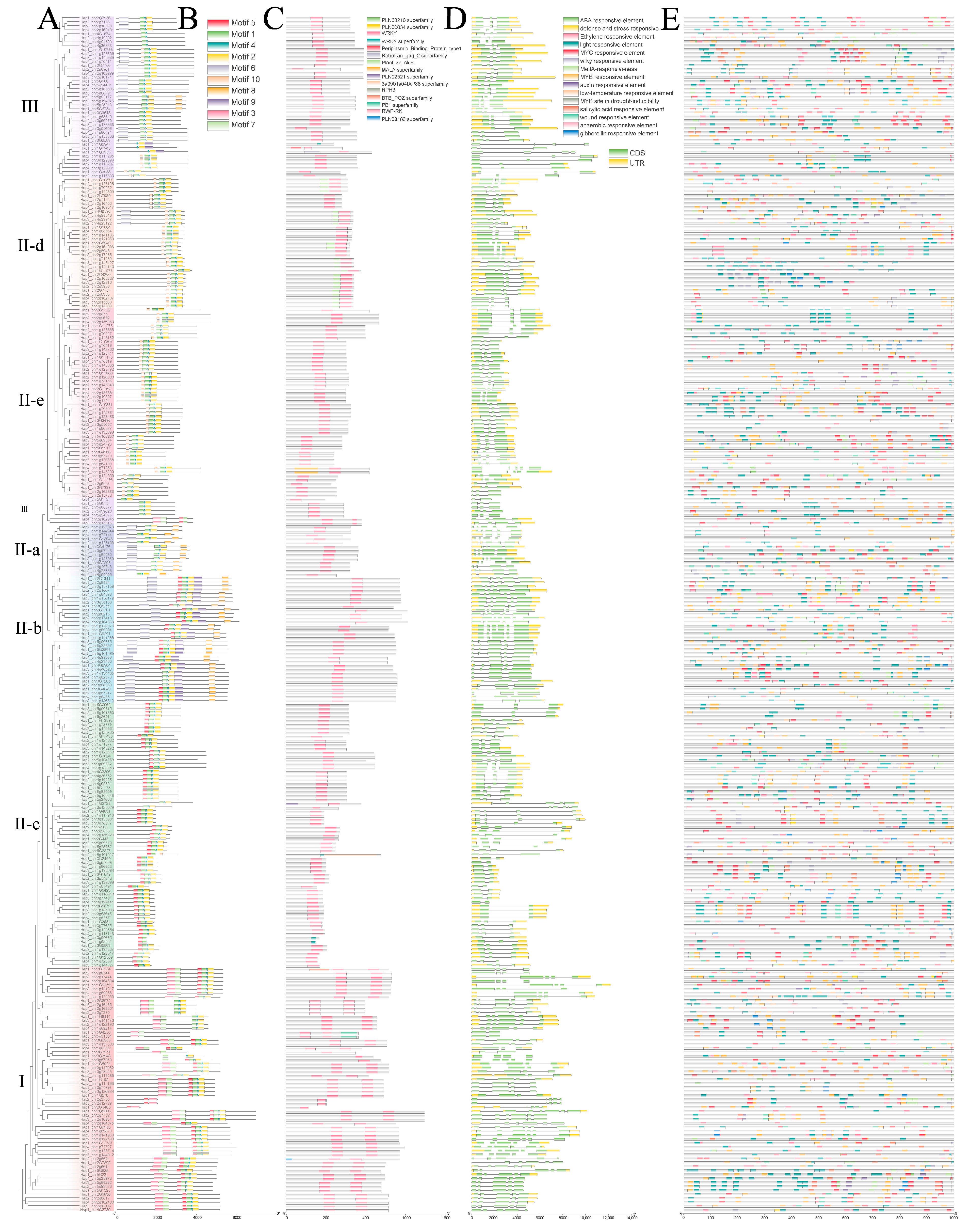
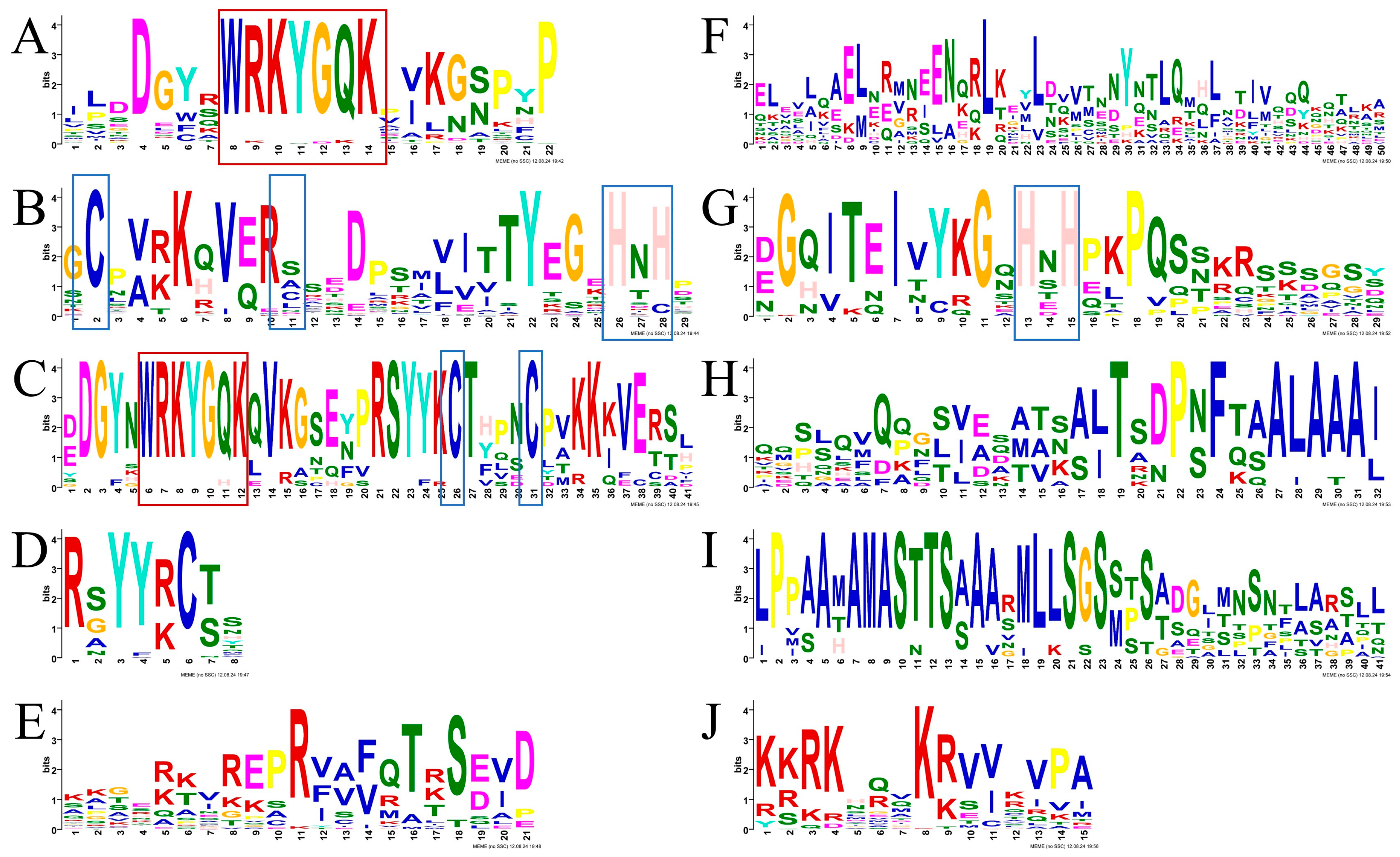
Ten conserved motifs (MEME-1 to MEME-10) were identified over the 303 BcWRKYs (Figure A1A,B and Figure A2), among which motif 1 (22 aa; 300 genes) contained the canonical WRKYGQK core sequence, and motif 2 (29 aa; 283 genes) displayed C2H2-type zinc-finger topology. Motif 3 (41 aa; 54 genes) contained both the WRKYGQK core and C2-residues, while motif 7 (29 aa; 54 genes) harbored the H2-residues. Other motifs showed structural diversity; for instance, motif 4 (8 aa; 297 genes) representing RSYYRCTS sequence, and motif 10 (15 aa; 82 genes) with lysine/arginine-enriched α-helical motifs. Domain composition analysis revealed that 250 genes contained only the WRKY domain (pfam03106), ten genes only contained the plant zinc cluster domain (pfam10533), and 43 genes carried both domains (Figure A1C). Gene structure analysis showed that exon–intron organization was relatively conserved among alleles, with intron numbers ranging from one to seven. Genes with two introns were the most common (49.5%), while 3.3% of genes carried seven introns (Figure A1D).
According to Cis-regulatory Elements (CREs) analysis, 58 types of CREs related to stress responses, phytohormone regulation, and plant growth were identified. These CREs fall into three categories: stress-responsive, phytohormone-responsive, and growth and development-related. Seven CREs (TC-rich repeats, MBS, LTR, WUN-motif, W box, ARE, and TCT-motif) were linked to responses to abiotic and biotic stresses. Eight phytohormone-responsive elements were identified, including ABRE, TGA-element, TGACG-motif, GARE-motif, TCA-element, and CGTCA-motif. Six elements (G-box, CAT-box, AE-box, GT1-motif, GATA-motif, and I-box) were associated with plant growth and development. The ARE motif was the most common promoter in BcWRKY, suggesting it might play a role in anaerobic induction (Figure A1E).

3.2. Phylogenetic Classification and Conserved Domain Analysis

Based on the classification of AtWRKYs and the primary structure features of BcWRKY protein, all 303 BcWRKY genes were classified into three major groups (Figure 1A). The 61 BcWRKYs with two WRKY domains were assigned to group I, which had C2H2 zinc fingers. Group II comprised 157 BcWRKYs with a single WRKY domain and a zinc finger motif of C2H2. This group was further divided into five subgroups based on the presence of specific sequences in the zinc fingers. Twelve genes were in subgroup IIa with a CX5CPVKKK(L/V)Q motif, 30 genes in subgroup IIb with CX5CPVRKQVQ motif, 55 genes in subgroup IIc with CX4C motif, 27 genes in subgroup IId with CX5CPARKHVE motif and 33 genes in subgroup IIe with CX5CPARK(Q/M)V(E/D) motif. Group III contained in 85 BcWRKY genes with one WRKY domain and C2HC zinc finger motif (Data S1).
Domain analysis of the 303 BcWRKYs identified the conserved heptapeptide WRKYGQK and five variants (Data S1). These variant motifs included WRKYGKK, WRKYDQK, WRKYGHK, WRKNGQK, and WSKYGQK, each possessing one or two amino acid mismatches. Beyond the predominant conservative domain WRKYGQK present in over 90% of BcWRKYs, variants such as WRKYGKK (4.0%) and WRKYDQK (2.6%) were also detected. Variants WRKYGHK (1.3%) and WRKNGQK (1.0%) were found in group I. Variant WSKYGQK (0.7%) was only detected in Hap1_chr1G2728 and Hap4_chr3G128829 from group II. At the C-terminus of the WRKY domain, variants were also found in motifs C2H2 (C-X(4-5)-C-X(22-23)-H-X(1)-H) and C2HC (C-X(7)-C-X(23)-H-X(1)-C). SCH2 (S-X(4-5)-C-X(22-23)-H-X(1)-H) were presented in the group I and II. C2HC_insert (C-X(7)-C-X(24)-H-X(1)-C) were found in group III.

3.3. Chromosomal Distribution and Gene Duplication Patterns

Chromosome 1 included 124 BcWRKY genes, chromosome 2 included 73 BcWRKY genes, chromosome 3 included 43 genes, chromosome 4 included 21 genes and chromosome 5 included 42 genes (Figure 1B, Table 1). The BcWRKY genes from groups I, IIb, IIc, and III were distributed across all chromosomes. In contrast, the distribution of other groups was more restricted: Group IIa genes were absent on chromosomes 2 and 5; subgroup IId was absent on chromosomes 3 and 5; and Group IIe genes were not found on chromosome 4.
Gene duplication events have been found in B. chinense (Figure 1B). Most BcWRKY genes (291; 96%) were derived from whole-genome or segmental duplication (WGD/segmental), whereas eight genes (2.6%) originated from proximal duplication and four genes (1.3%) from dispersed duplication. In total, 506 BcWRKY colinear pairs were identified using BLASTP and MCScanX, including 148 nonallelic and 358 allelic pairs.

3.4. Comparative Genomics and Evolutionary Dynamics of BcWRKYs in Apiaceae Family

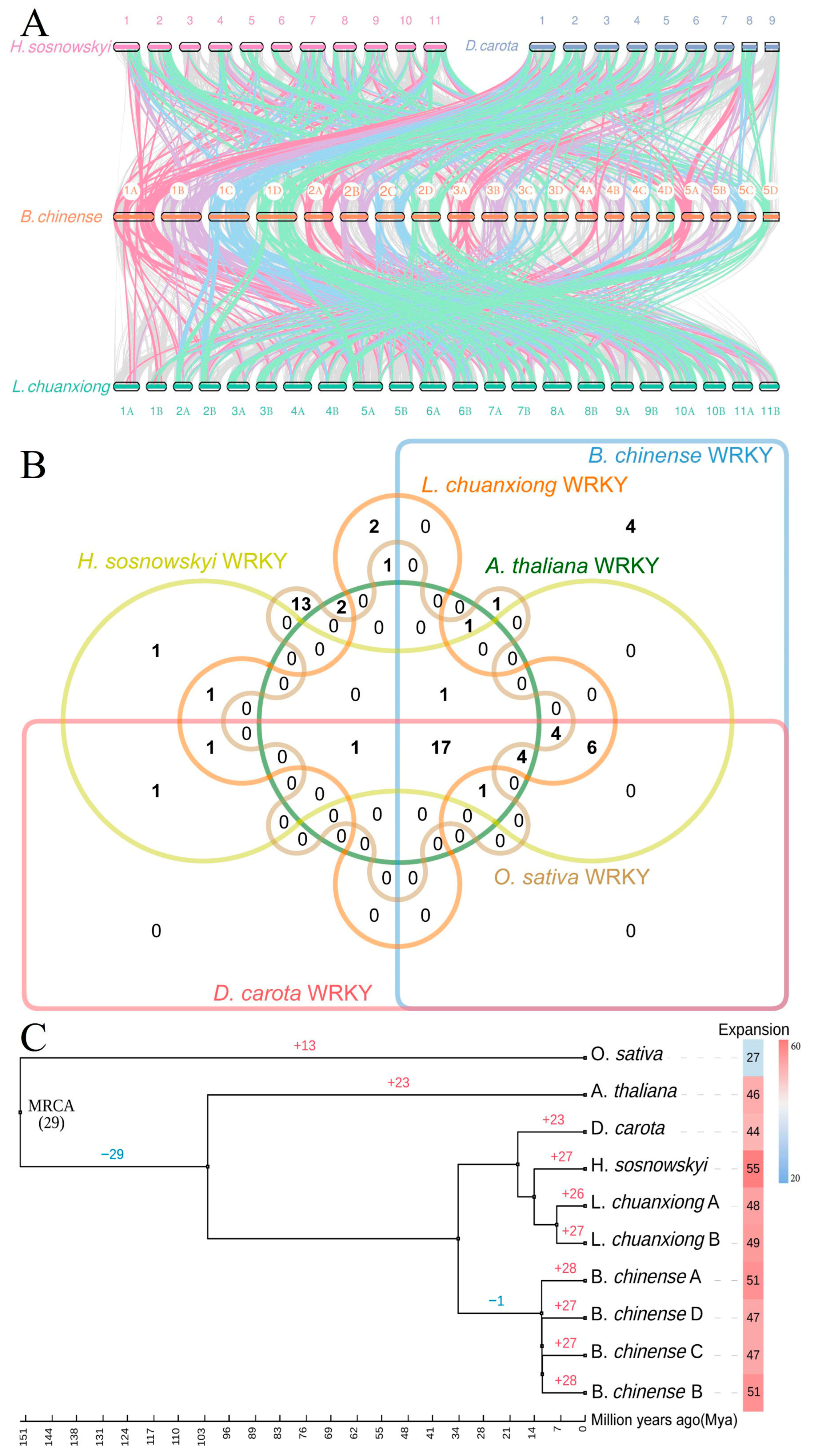
To elucidate the synteny and collinearity relationships of BcWRKY genes, a comparative syntenic map was constructed both within B. chinense and across other species in the Apiaceae family, including H. sosnowskyi, L. chuanxiong, and D. carota (Figure 2A). Interspecies collinearity analysis demonstrated extensive syntenic relationships between B. chinense and L. chuanxiong, with 255 homologous WRKY genes and 604 syntenic gene pairs identified, representing the highest degree of conservation among the compared species. In addition, B. chinense shared 247 homologous WRKY genes and 306 syntenic gene pairs with H. sosnowskyi; while B. chinense and D. carota had 238 homologous WRKY genes with 277 syntenic gene pairs.
To further elucidate the evolutionary relationships of BcWRKY genes, a comparative gene family analysis was conducted by identifying orthologous genes between B. chinense and A. thaliana, O. sativa, as well as three Apiaceae species analyzed in the synteny study (H. sosnowskyi, L. chuanxiong, and D. carota). The results revealed that B. chinense possessed a total of 39 orthologous groups, including four unique groups and 17 groups shared with other species (Figure 2B). An evolutionary tree of BcWRKY genes was constructed based on divergence times estimated from A. thaliana and O. sativa (Figure 2C). Divergence of the BcWRKY genes from their A. thaliana and D. carota orthologs occurred approximately 102.09 and 34.34 million years ago, respectively. Within the tetraploid B. chinense, the subgenomes of BcWRKYs diverged within the last million years. Specifically, Hap1 and Hap2 diverged from Hap3 and Hap4 approximately 0.188 million years ago, followed by the divergence between Hap1 and Hap2 around 0.093 million years ago.
Analysis of the expansion and contraction of the BcWRKY gene family revealed distinct patterns following divergence from different species (Figure 2C; Data S1). After the divergence from O. sativa, 13 orthologous groups underwent contraction, whereas no expansion or contraction events were observed after the divergence from A. thaliana. Following divergence from D. carota, a single orthologous group exhibited contraction. After subgenome differentiation within B. chinense, gene family expansion events were evident across all subgenomes. For instantce, Both Hap1 and Hap2 exhibited expansion in 28 orthologous groups, each adding a total of 51 genes. Similarly, Hap3 and Hap4 displayed expansion in 27 orthologous group, each increasing by 47 genes. The subgenomic analysis of BcWRKY genes revealed heterogeneous patterns: groups II-b and II-c were conserved, whereas groups II-d and II-e expanded substantially. Group I expanded by six genes in Hap1 but contracted in Hap3 and Hap4, while Group III expanded slightly in Hap1.

3.5. Expression Profiles of BcWRKY Genes in B. chinense by RNA-Seq Analysis

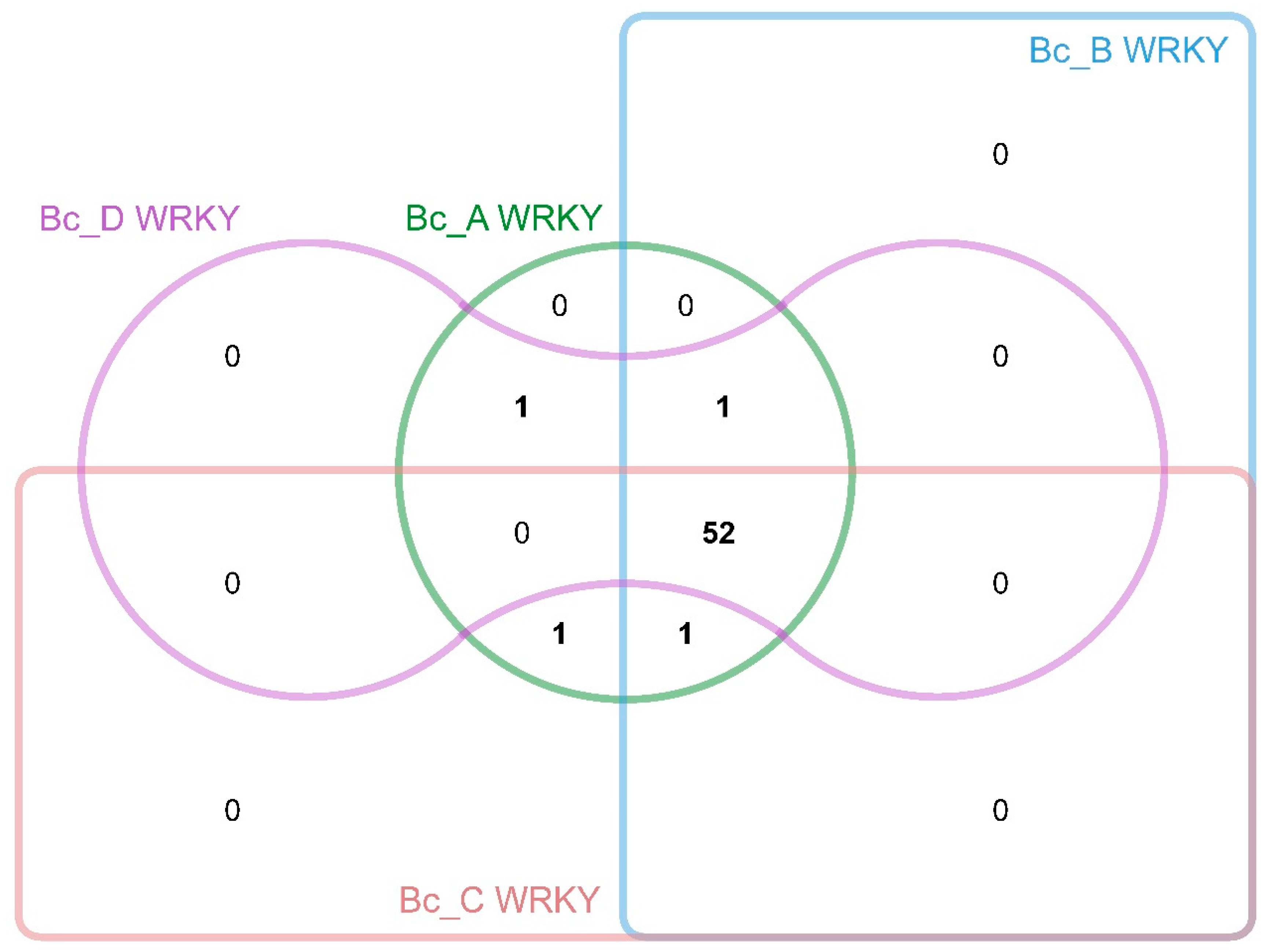
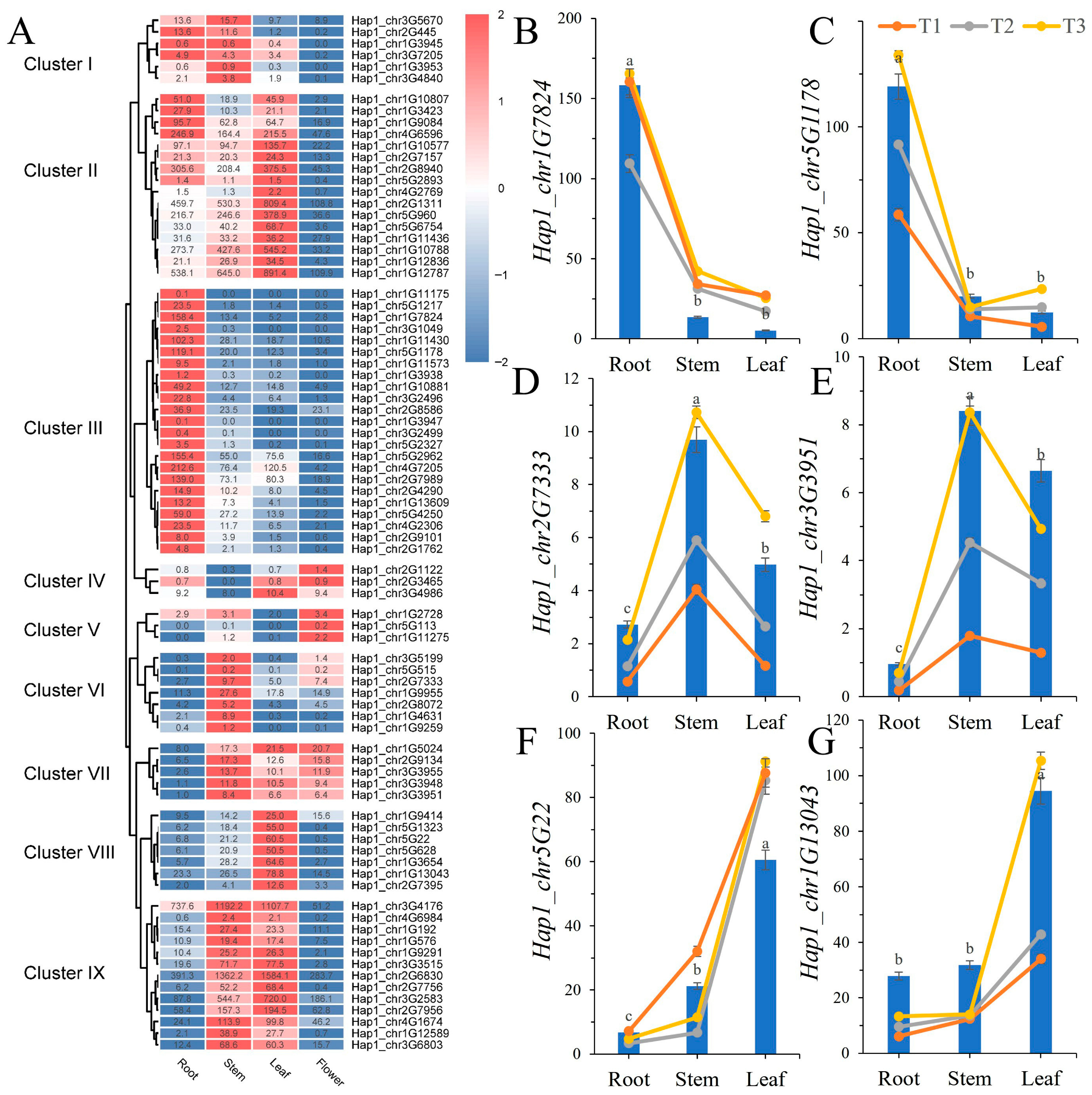
The BcWRKY genes in subgenome Hap1 were considered as the reference for further transcriptomics analysis due to their comprehensive homology with genes in other subgenomes (Figure A3). Three independent RNA-seq datasets demonstrate organ-specific expression divergence of BcWRKY transcription factors across root, stem, and leaf tissues. Specifically, genes Hap2_chr2G6385 and Hap1_chr5G1178 were uniquely highly expressed in roots (Figure 3B,C), while Hap1_chr2G7333 and Hap1_chr3G3951 specifically high expressed in stems (Figure 3D,E). Genes Hap1_chr5G22 and Hap4_chr5G25387 showed elevated expression in leaves (Figure 3F,G).
At the adult stage of B. chinense var. CBC1, 70 genes exhibited expression levels above the threshold (TMM > 0.1) in all tissues (root, stem, leaf and flower) (Figure 3A). Four genes were unexpressed in roots and stems. Eight genes were unexpressed in leaves, and nine were unexpressed in flowers. Gene Hap1_chr1G11175 was absent in all tissues. Clustering analysis revealed distinct expression profiles. Clusters I and II had low expression in flowers, while clusters IV and V were mainly expressed in flowers. Cluster III showed relatively high expression in roots, while cluster VII had low expression in roots. Cluster VI had higher expression in stems, and Cluster VIII showed higher expression in leaves. Cluster IX showed higher expression in both stems and leaves.

3.6. Transcriptome-Based Expression Patterns of BcWRKY Genes in Abiotic Stress

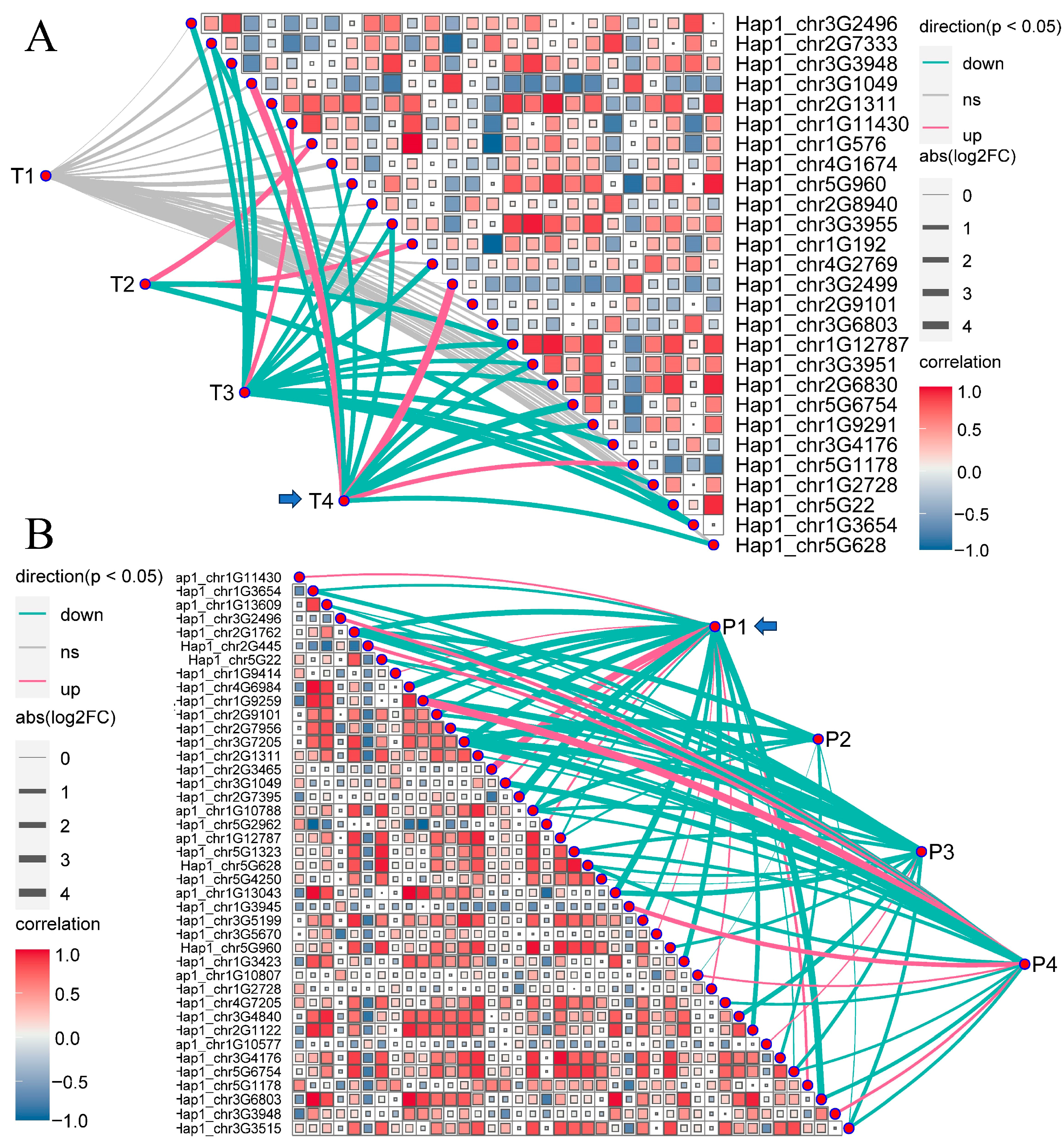
A total of 27 BcWRKY genes showed differential expression during flower removal (Figure 4A). Overall, seven genes were upregulated and 20 downregulated during flower removal. No significant changes were detected at T1 (Inflorescence removal: eleven days), while only four Differential expression genes (DEGs) appeared at T2 (31 days). The strongest responses occurred at T3 (49 days) and T4 (74 days), with 14 and 12 DEGs, respectively. Hap1_chr1G192, Hap1_chr1G576 and Hap1_chr2G9101 were significantly upregulated at T2 and showed strong expression correlation (>85%). During the final stage (T4), three genes (Hap1_chr3G1049, Hap1_chr3G2499, Hap1_chr5G1178) were strongly upregulated with high correlation (>90%). In contrast, Hap1_chr1G12787 and its tandem duplicates Hap1_chr3G3951 and Hap1_chr3G3955 were consistently downregulated from T2 onward.
Under drought stress, 41 DEGs were identified, with the strongest responses at P1 (Drought: seven days; 23 DEGs) and P4 (28 days; 20 DEGs) (Figure 4B). At P1, eight genes were upregulated and 15 downregulated, whereas at P4, six were induced and 14 repressed. Only one gene was upregulated at P3 (21 days), accompanied by seventeen downregulated genes. P2 (14 days) showed the weakest response, with all seven DEGs downregulated. Three genes Hap1_chr2G1762, Hap1_chr3G7205, Hap1_chr1G10788) were consistently suppressed across all stages, exhibiting correlations >90%. Conversely, eight P1-induced genes showed low similarity (r < 0.4). Across the drought treatment, three genes including Hap1_chr1G9259, Hap1_chr1G10807, and Hap1_chr3G1049, showed transient induction followed by repression during drought treatment.

3.7. Expression Profile of BcWRKY Genes Under Abiotic Stresses Treatment

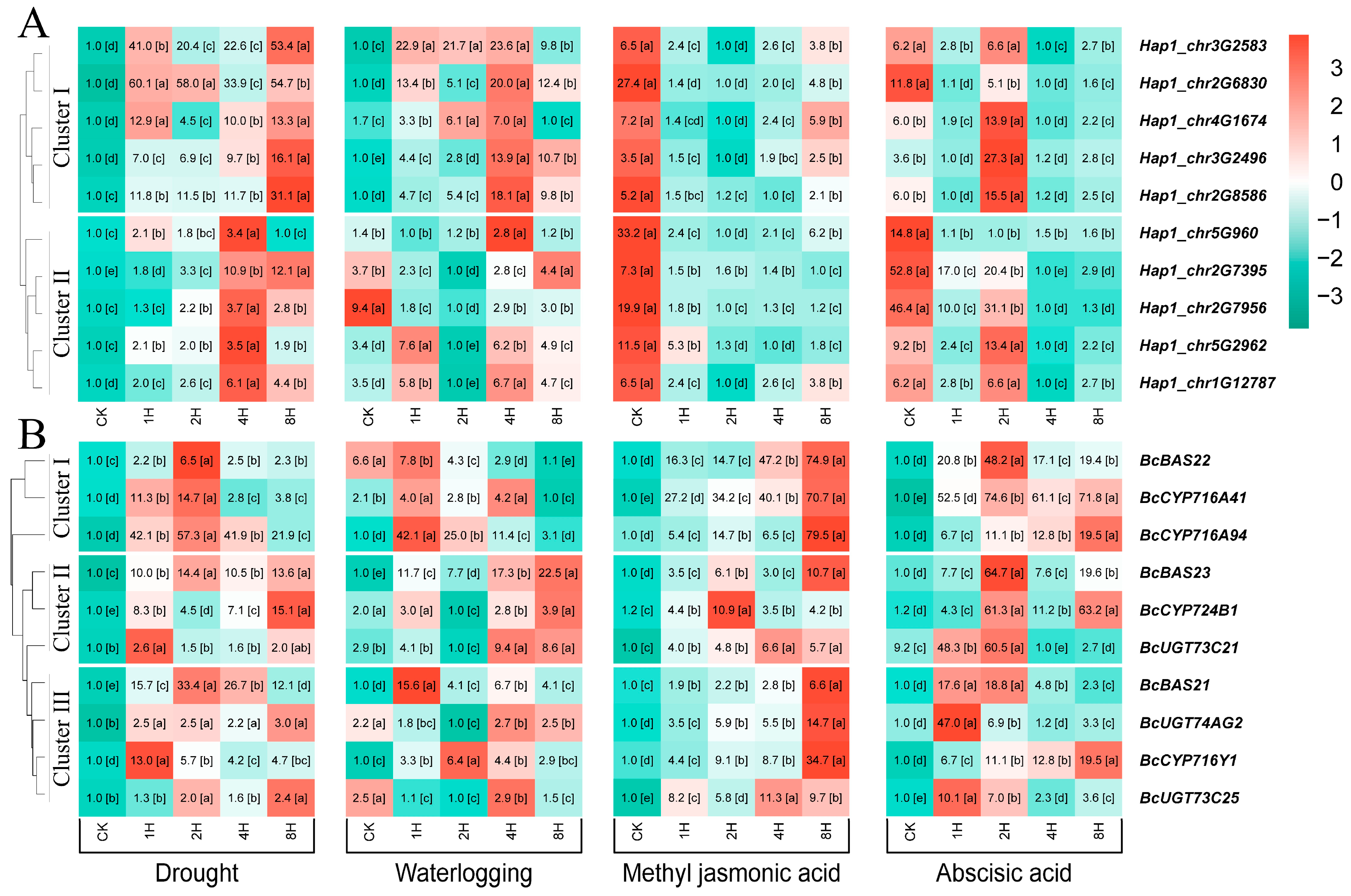
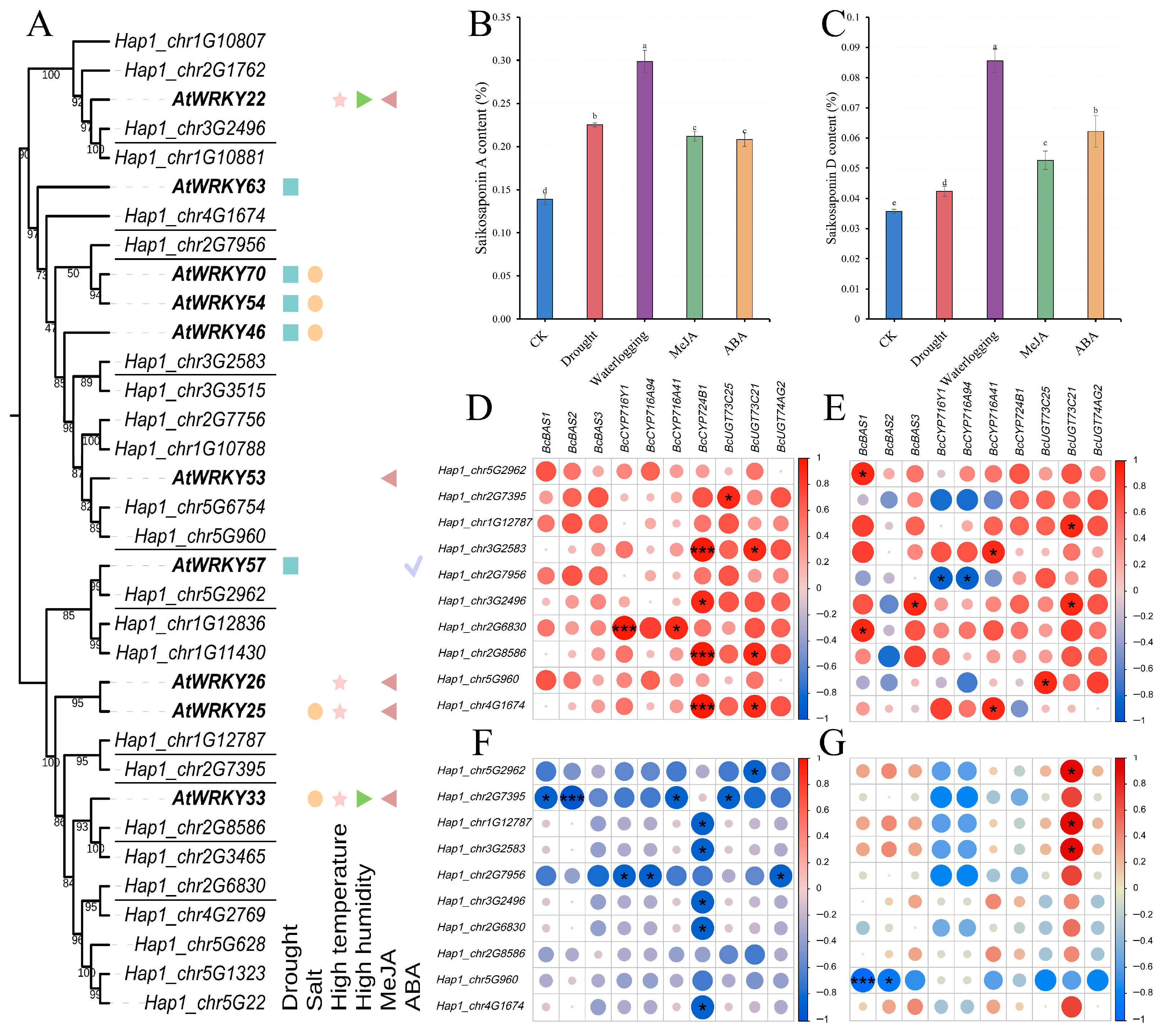
Among the stress-responsive candidate BcWRKY genes, ten genes with the closest phylogenetic relationships to AtWRKYs were selected for qRT-PCR analysis (Figure 5A). Their expression patterns were examined under drought, waterlogging, MeJA, and ABA treatments (Figure A4). Ten BcWRKY genes were grouped into two major clusters (Figure A4A): Cluster I included Hap1_chr3G2583, Hap1_chr2G6830, Hap1_chr4G1674, Hap1_chr3G2496, and Hap1_chr2G8586, while Cluster II comprised Hap1_chr5G960, Hap1_chr2G7395, Hap1_chr2G7956, Hap1_chr5G2962, and Hap1_chr1G12787. Under drought and waterlogging conditions, most BcWRKY genes were markedly upregulated, reaching peak expression at 4–8 h. In contrast, MeJA treatment led to a general downregulation of all BcWRKYs throughout the treatment period. Under ABA, expression was transiently suppressed at 1 h, followed by a sharp induction at 2 h and a subsequent decline thereafter.
The expression profiles of saikosaponin biosynthetic genes showed more diverse regulatory behaviors (Figure A4B). These genes were classified into three major clusters: Cluster I (BcBAS22, BcCYP716A41, BcCYP716A94), Cluster II (BcBAS23, BcCYP724B1, BcUGT73C21), and Cluster III (BcBAS21, BcUGT74AG2, BcCYP716Y1, BcUGT73C25). During drought stress, nearly all BcBAS, BcCYP, and BcUGT genes were significantly upregulated at 2 h. Under waterlogging, BcBAS and BcCYP transcripts peaked at 2 h, whereas BcUGTs gradually increased and reached their maximum expressions at 4 h. During MeJA treatment, all metabolic genes achieved their highest expression levels at 8 h, while under ABA, rapid induction was observed within 1–2 h.
Quantification of saikosaponin A and D contents revealed significant (p < 0.05) increased under all treatments (Figure 5B,C). Notably, under waterlogging, both saikosaponins accumulated to more than twice the levels observed in the control.
To explore potential transcriptional associations between BcWRKY transcription factors and saikosaponin biosynthetic genes, a correlation analysis was performed based on qRT–PCR expression data under different stress treatments (Figure 5D–G). During drought exposure, all BcWRKY genes exhibited positive transcriptional responses; among them, Hap1_chr3G2583, Hap1_chr2G8586, and Hap1_chr4G1674 showed significant positive correlations (cor > 0.8) with BcCYP724B1 (p < 0.001) and BcUGT73C25 (p < 0.05), while Hap1_chr2G6830 was highly correlated (cor > 0.85) with BcCYP716Y1 (p < 0.001) and BcCYP716A41 (p < 0.05). Subjected to waterlogging, most BcWRKY genes remained positively associated with saikosaponin biosynthetic genes, such as Hap1_chr5G2962 and Hap1_chr2G6830 with BcBAS1 (cor > 0.8, p < 0.05) and Hap1_chr3G2496 with BcBAS3 and BcUGT73C21 (cor > 0.8, p < 0.05). Oppositely, Hap1_chr2G7956 displayed strong negative correlations with BcCYP716Y1 and BcCYP716A94 (cor < −0.85, p < 0.05). Exposure to MeJA caused an overall shift toward negative associations, with Hap1_chr2G7956 showing significant negative correlations with BcBAS1 and BcBAS2, BcCYP716A41, and BcUGT73C25 (cor < −0.85, p < 0.05), as well as with BcCYP716Y1, BcCYP716A94, and BcUGT74AG2 (cor < −0.8, p < 0.05). In addition, Hap1_chr1G12787, Hap1_chr3G2583, Hap1_chr3G2496, Hap1_chr2G6830, and Hap1_chr4G1674 were all negatively correlated with BcCYP724B1 (cor < −0.9, p < 0.05). Under ABA application, Hap1_chr5G960 exhibited negative correlations with BcBAS1 and BcBAS2, whereas Hap1_chr5G2962, Hap1_chr1G12787, and Hap1_chr3G2583 were positively correlated with BcUGT73C21 (cor > 0.9, p < 0.05). Genes Hap1_chr2G6830, Hap1_chr3G2583, Hap1_chr3G2496, and Hap1_chr2G8586 (Cluster I, Figure A4A) exhibited consistently stronger and more coherent correlations with saikosaponin biosynthetic genes than those from Cluster II.

4. Discussion

The current study provides the first comprehensive genomic and evolutionary analysis of the WRKY transcription factor family in the medicinal tetraploid B. chinense. The WRKY family, one of the largest plant transcription factor groups, is distributed across the green lineage with pronounced lineage-specific expansions and contractions [4,50]. The model plant A. thaliana encodes 72 AtWRKYs [1], whereas contractions are evident in Platycodon grandiflorus [51] and Cannabis sativa each harbor 49 and 48 WRKY genes, respectively [14]. Many species in Apiaceae show expansion: Apium graveolens (84 WRKYs; [52]), H. sosnowskyi (85 WRKYs; [53]), Coriandrum sativum (98 WRKYs; [54]) and an allotetraploid L. chuanxiong (160 WRKYs; [25]). The current study identified 303 BcWRKYs in B. chinense—far exceeding those in most diploid plants and highlighted polyploidization might as a key force driving expansion. since polyploid plants in other families showed similar trends: 125 PqWRKYs were identified in the tetraploid Panax quinquefolius [55], 154 in the autotetraploid Saccharum spontaneum [56], and 257 in the allo-octoploid strawberry (Fragaria × ananassa) [57]. WRKY expansion across polyploid medicinal plants implies broader regulatory capacity, which may support functional exploration and trait improvement in B. chinense.
Variation in the expansion of groups I, II-d and II-e among subgenomes points to unequal evolutionary pressures that shape WRKY gene retention (Figure 2C; Data S1). Group II-e appeared to have undergone lineage-specific expansion in Apiaceae, as evidenced in celery [58] and carrot [59]. Uneven subgenomic dynamics parallel findings in autotetraploid S. spontaneum, where only 13 out of the 154 SsWRKYs possessed four alleles [56]. Subgenome-biased retention indicates that post-polyploidization selection shaped the WRKY repertoire.
In BcWRKYs, most genes maintained the canonical WRKYGQK domain, yet several non-canonical variants such as WKKYDQK, WRKNGQK, WRKYGHK, WRKYGKK and WSKYGQK. Caragana korshinskii contained variants such as WRKYGHK and WRKYGKK [60]. Panax ginseng carried WKKYDQK and WRKYGKK [61]. Safflower and maize harbored motifs including WRKYGEK, WRKYGKK, and WKKYGEK [62,63]. While these atypical motifs occur at low frequency across taxa, those reported in the literature may contribute to subtle regulatory divergence. AtWRKY11 even single-residue substitutions within the WRKY domain can alter DNA-binding affinity and specificity [64]. AtWRKY50 (WRKYGKK) and OsWRKY31 (WRKYGEK) variants retained W-box binding and transcriptional activation functions [65,66]. CaWRKY27b with the WRKYGMK variant loses W-box binding, but partners with CaCDPK29 to modulate CaWRKY40-driven immunity in pepper [67]. Nonetheless, the predominance of the typical WRKYGQK motif in B. chinense implies strong structural constraints on WRKY evolution, while the presence of conserved but rare variants reflects a limited yet evolutionarily tolerated degree of motif flexibility.
In B. chinense, saikosaponins are mainly accumulated in roots, and their levels are markedly higher than in other tissues [15,39]. Consistent with this pattern, several BcWRKY genes, particularly those clustered in group III (Figure 3), were highly expressed in roots, implying potential involvement in saikosaponin metabolism. Both tapping and drought stress treatments—known to promote root growth and saikosaponin accumulation [20,40]—triggered substantial transcriptional changes in BcWRKYs. During the late developmental stages, 19 genes were downregulated and four were upregulated, whereas drought stress strongly induced 41 BcWRKYs (Figure 4B). The pronounced root specificity and stress-induced activation of BcWRKYs point to a regulatory role for select members in saikosaponin biosynthesis in B. chinense. CsWRKY20 and CsWRKY28 have been identified as positive regulators of the cannabinoid biosynthesis pathway [14]. PqWRKY1 functions as a positive regulator that linked osmotic stress to triterpene ginsenoside biosynthesis in Panax quinquefolius [68]. SmWRKY27 participated in positive regulation of triterpenoid saponin biosynthesis by directly regulating SmCYP71D-3 under stress/TF networks [69]. Downregulation of AsWRKY44 relieved the inhibition of Agarwood sesquiterpene synthase 1 (ASS1), a key enzyme in sesquiterpene biosynthesis in Aquilaria sinensis [70].
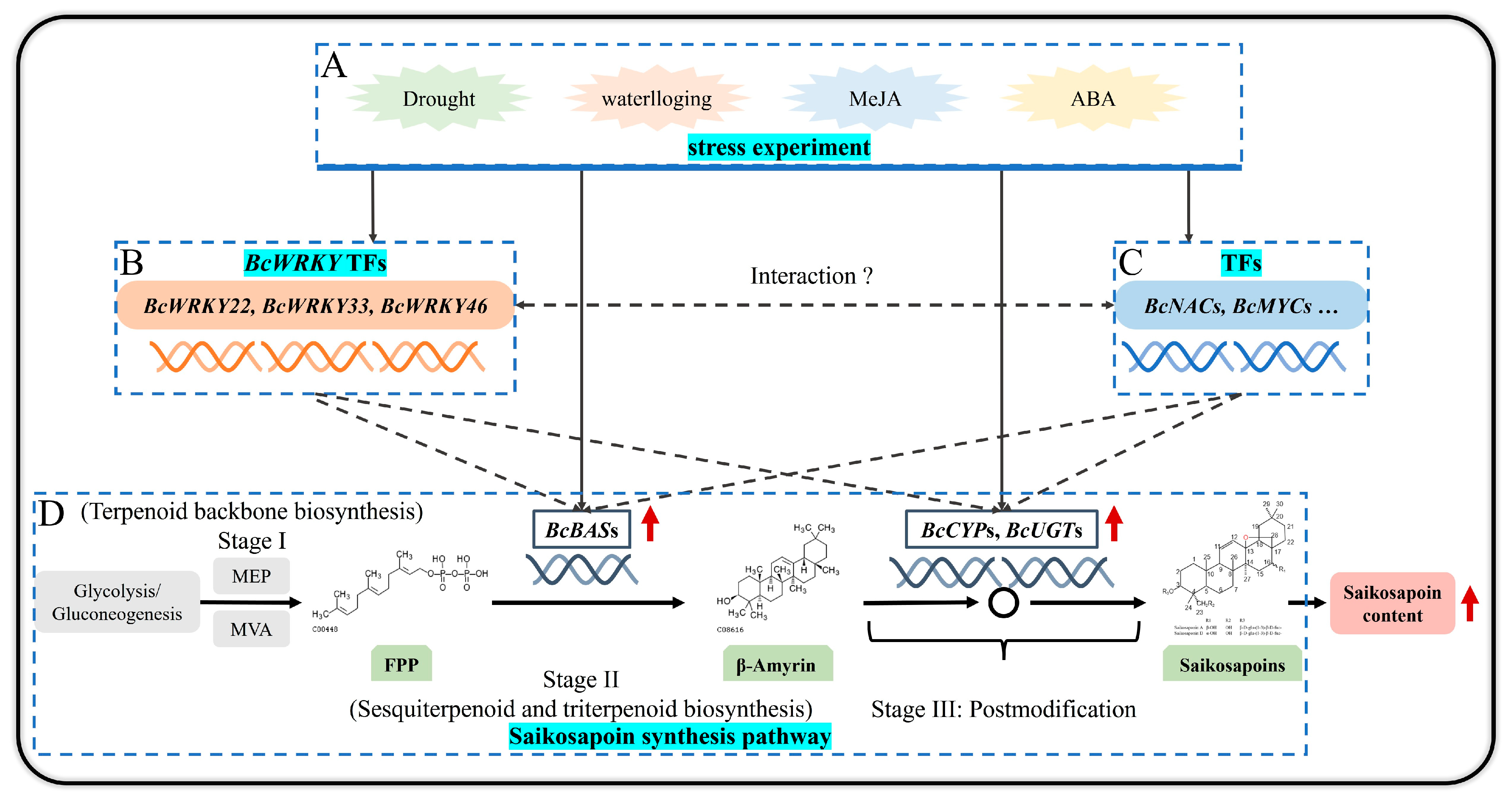
In this study, genes BcWRKY33 (Hap1_chr2G6830), BcWRKY22 (Hap1_chr3G2496), and BcWRKY46 (Hap1_chr3G2583)—designated based on their closest phylogenetic relationship to AtWRKY homologs—showed strong correlations with BcBASs (BcBAS21, BcBAS22 and BcBAS23), BcCYP716A94, and BcUGT73C25. These results indicate that the three genes are potentially involved in saikosaponin biosynthesis (Figure A5). Another three BcWRKY genes BcWRKY57 (Hap1_chr5G2962), BcWRKY33-2 (Hap1_chr1G12787) and BcWRKY70 (Hap1_chr2G7956) strongly correlation with BcCYP716Y1 and BcUGT73C21. Functionally, these downstream biosynthetic genes play key roles in saikosaponin biosynthesis. BcBAS21 (BcBAS1, GenBank: ON890382.1) catalyzes the formation of β-amyrin, the common triterpene precursor of saikosaponins [71]. BcCYP716Y1 (CYP716Y1, GenBank: KC963423.1) mediates C-16α hydroxylation of oleanane- and ursane-type triterpenes [72], while BcCYP716A41 (CYP716A41, GenBank: JF803813.1) has been identified as a likely candidate involved in saikosaponin oxidation steps [73]. Consistent with these metabolic roles, the three BcWRKY genes mentioned above were markedly induced under drought and waterlogging but repressed by MeJA, whereas ABA elicited a biphasic expression response. These stress-dependent transcriptional patterns align with environmental conditions that promote saikosaponin A and D accumulation—particularly deflowering, drought, and MeJA treatments [18,20,40]. Together, these findings suggest that BcWRKY46, BcWRKY22, and BcWRKY33 members are strong candidates for transcriptional regulators mediating the crosstalk between abiotic stress signaling and saikosaponin biosynthesis in B. chinense.

5. Conclusions

In this study, we systematically identified and characterized 303 WRKY genes from the tetraploid B. chinense genome. Phylogenetic and structural analyses divided them into three major groups and revealed that polyploidization and segmental duplication were the main forces shaping their expansion and functional divergence. Expression analyses based on transcriptome and qRT-PCR data under drought, waterlogging, MeJA, and ABA treatments demonstrated that numerous BcWRKYs may participate in stress responses and secondary metabolism. In particular, BcWRKY22, BcWRKY33, and BcWRKY46 were strongly co-expressed with key saikosaponin biosynthetic genes (BcBASs, BcCYPs, and BcUGTs), suggesting their potential roles in regulating saikosaponin biosynthesis. Collectively, this work provides new insights into WRKY evolution and regulatory networks in B. chinense, and lays a foundation for enhancing saikosaponin accumulation and stress tolerance through molecular breeding and genome engineering.

Supplementary Materials

The following supporting information can be downloaded at: https://www.mdpi.com/article/10.3390/horticulturae12010102/s1, Data S1. Identification and classification of WRKY genes in B. chinense.

Author Contributions

C.M.: Investigation, Writing—original draft, Visualizaion. Z.W.: Data curation, Validation, Visualization. Y.L.: Investigation, Data curation. X.W.: Visualizaion. M.Y. (Mingyue Yan): Data curation. J.Z.: WrWriting—reviewnd editing, Supervision. Z.Y.: Visualizaion. C.X.: Writing—review and editing, Supervision. M.Y. (Ma Yu): Writing—review and editing. W.C.: Writing—review and editing, Funding acquisition, Supervision. H.C.: Conceptualization, Funding acquisition, Project administration. All authors have read and agreed to the published version of the manuscript.

Funding

This research was funded by the China Agriculture Research System (CARS-21), the CAMS Innovation Fund for Medical Sciences (2021-I2M-1-032), the Science and Technology Department of Xizang (XZ202401ZY0020), and the Regional Innovation Cooperation Project of the Science and Technology Department of Sichuan Province (2026YFHZ0163).

Data Availability Statement

The original contributions presented in this study are included in the article/Supplementary Material. Further inquiries can be directed to the corresponding author.

Conflicts of Interest

The authors declare that they have no known competing financial interests or personal relationships that could have appeared to influence the work reported in this paper.

Appendix A

Table A1. Primer sequence for the selected genes in qRT-PCR.
Gene IDGene NameForward Primer (5′→3′)Reverse Primer Sequence (5′→3′)
Hap1_chr1G12787BcWRKY33-2TCATCCCAAGCCTCAGTCAACTGCAGCAGAATCCATTTGCC
Hap1_chr2G8586BcWRKY33-1TTGATGATGGATACCGCTGGAGAGCCTGCATTTGTGCACTTG
Hap1_chr2G6830BcWRKY33ACAACCCCGGAAAATTCTGCTTGCCTCGGGTTCATTTTCC
Hap1_chr2G7956BcWRKY70AGCTATTGTGAAGGCTGCACAGATTTGGGTTGCGAAGTGC
Hap1_chr2G7395BcWRKY33-3AGCAGCCACTCTTTGAACAGATGTTGGTGCCCTCAAACTG
Hap1_chr3G2583BcWRKY46TAATGCACAAGGCTGCTTGGTGGTTCTGAGCCTTGTTTGC
Hap1_chr3G2496BcWRKY22ACCAAATTGCTCTGCTTCGGAAGGCGTATCGGAAGACCAC
Hap1_chr4G1674BcWRKY63AAGATGAGCTCGTCTGTGGTGTTTGTTGCTTGGCACCCTTG
Hap1_chr5G960BcWRKY53AGACAACGGAGTGGAAAGTTCCTGTGGCGCAACAACTTTGAG
Hap1_chr5G2962BcWRKY57TTGCCTGAAAAGTCGACAGCTCGCTCTTGGTCACAAATGC
Hap1_chr1G5366BcBAS21TGGCACTGTGACAGCAATACACCACATTTTCGCTGGATGC
Hap1_chr1G5523BcBAS22TGATGGTGGTTGGGGAGAAAGAAACCCATTGTTGCCCATGC
Hap1_chr1G5343BcBAS23ATGCCAAGAACCTTGTTCGGTGGCTCAAGCACTTGTTTGG
Hap1_chr5G3928BcCYP716Y1GGTTGCGCAAAAACATGGTGAGGTCTCGCAATTCCAATGC
Hap1_chr3G7452BcCYP716A94AACCCACAGAAACGCAGAAGTTTCCAGGGCACATTCTTGG
Hap1_chr1G5524BcCYP716A41AACTGCATCAGCCACACAAGAAAGCACAAGCAGAGCTAGC
Hap1_chr2G8480BcCYP724B1AATTCCATCCGGTTGGCAAGGAAACTGAGAGGCATGAGCATG
Hap1_chr1G9521BcUGT73C25TGGACCGCTAAAGTTGCATGTGTCCGAAACGCCAACATTC
Hap1_chr1G9522BcUGT73C21TGTTTGCTCACCATGGCATGCCTCAGCTGCTGGAAAATCAAG
Hap1_chr3G5569BcUGT74AG2ATGTTTCGTGTCCCATTGCGACACCCCAAACTTGTTCCAC
Figure A1. Phylogenetic relationship, conserved motifs, conserved domains, exon–intron structures, and cis-acting elements of BcWRKY genes. (A) Phylogenetic tree. (B) Conserved motifs, with different colored blocks representing distinct motifs. (C) Conserved domains, with different colored blocks representing distinct domains. (D) Exon–intron structures, where green indicates coding sequences (CDS), yellow indicates untranslated regions (UTRs), and lines represent introns. (E) Cis-acting elements, with different colors corresponding to different types of CREs.
Horticulturae 12 00102 g0a1
Figure A2. The top 10 sequences of BcWRKYs motif analysis. (AJ) were Motif1 to Motif10, respectively. The red box indicates the conserved WRKY heptapeptide, and the blue box highlights the residues of the zinc finger structural domain.
Horticulturae 12 00102 g0a2
Figure A3. Venn analysis of orthologous WRKY gene families among BcWRKY subgenomes. Bc_A to Bc_D represent to karyotypes Hap1 to Hap4, and the numbers indicate the counts of orthologous WRKY genes.
Horticulturae 12 00102 g0a3
Figure A4. qRT-PCR expression analysis of BcWRKY candidate genes and downstream saikosaponin-biosynthetic downstream genes under four abiotic stresses. Heat-maps in panels (A,B) depict the expression dynamics of ten BcWRKYs and ten downstream saikosaponin genes, respectively, under drought, waterlogging, methyl jasmonaic acid (MeJA) and abscisic acid (ABA) treatments. Expression values at 0, 1, 2, 4 and 8 h post-treatment were row-standardized (Z-score). Numbers inside each box indicate relative expression levels; letters represent Duncan’s multiple comparison results following one-way ANOVA (p < 0.05); different letters denote significant differences.
Horticulturae 12 00102 g0a4
Figure A5. Proposed mechanism of BcWRKY genes participate in saikosaponin biosynthesis in B. chinense. (A) various biotic stresses. (B) BcWRKY genes. (C) additional transcription factors. (D) core saikosaponin-biosynthetic pathway. Solid arrows indicate confirmed up-regulation of gene expression or enhancement of metabolite accumulation; dashed arrows denote putative transcriptional activation or protein–protein interaction; red arrows signify significant increases in transcript abundance or metabolite content.
Horticulturae 12 00102 g0a5

References

  1. Eulgem, T.; Rushton, P.J.; Robatzek, S.; Somssich, I.E. The WRKY Superfamily of Plant Transcription Factors. Trends Plant Sci. 2000, 5, 199–206. [Google Scholar] [CrossRef]
  2. Schluttenhofer, C.; Yuan, L. Regulation of Specialized Metabolism by WRKY Transcription Factors. Plant Physiol. 2015, 167, 295–306. [Google Scholar] [CrossRef]
  3. Rinerson, C.I.; Rabara, R.C.; Tripathi, P.; Shen, Q.J.; Rushton, P.J. The Evolution of WRKY Transcription Factors. BMC Plant Biol. 2015, 15, 66. [Google Scholar] [CrossRef] [PubMed]
  4. Rushton, P.J.; Somssich, I.E.; Ringler, P.; Shen, Q.J. WRKY Transcription Factors. Trends Plant Sci. 2010, 15, 247–258. [Google Scholar] [CrossRef]
  5. Li, W.; Pang, S.; Lu, Z.; Jin, B. Function and Mechanism of WRKY Transcription Factors in Abiotic Stress Responses of Plants. Plants 2020, 9, 1515. [Google Scholar] [CrossRef]
  6. Wani, S.H.; Anand, S.; Singh, B.; Bohra, A.; Joshi, R. WRKY Transcription Factors and Plant Defense Responses: Latest Discoveries and Future Prospects. Plant Cell Rep. 2021, 40, 1071–1085. [Google Scholar] [CrossRef] [PubMed]
  7. Brand, L.H.; Fischer, N.M.; Harter, K.; Kohlbacher, O.; Wanke, D. Elucidating the Evolutionary Conserved DNA-Binding Specificities of WRKY Transcription Factors by Molecular Dynamics and in Vitro Binding Assays. Nucleic Acids Res. 2013, 41, 9764–9778. [Google Scholar] [CrossRef]
  8. Jiang, C.-H.; Huang, Z.-Y.; Xie, P.; Gu, C.; Li, K.; Wang, D.-C.; Yu, Y.-Y.; Fan, Z.-H.; Wang, C.-J.; Wang, Y.-P.; et al. Transcription Factors WRKY70 and WRKY11 Served as Regulators in Rhizobacterium bacillus Cereus AR156-Induced Systemic Resistance to Pseudomonas syringae Pv. Tomato DC3000 in Arabidopsis. J. Exp. Bot. 2016, 67, 157–174. [Google Scholar] [CrossRef] [PubMed]
  9. Arraño-Salinas, P.; Domínguez-Figueroa, J.; Herrera-Vásquez, A.; Zavala, D.; Medina, J.; Vicente-Carbajosa, J.; Meneses, C.; Canessa, P.; Moreno, A.A.; Blanco-Herrera, F. WRKY7, -11 and -17 Transcription Factors Are Modulators of the bZIP28 Branch of the Unfolded Protein Response during PAMP-Triggered Immunity in Arabidopsis thaliana. Plant Sci. 2018, 277, 242–250. [Google Scholar] [CrossRef]
  10. Liu, X.; Bai, X.; Wang, X.; Chu, C. OsWRKY71, a Rice Transcription Factor, Is Involved in Rice Defense Response. J. Plant Physiol. 2007, 164, 969–979. [Google Scholar] [CrossRef]
  11. Chen, T.; Li, Y.; Xie, L.; Hao, X.; Liu, H.; Qin, W.; Wang, C.; Yan, X.; Wu-Zhang, K.; Yao, X.; et al. AaWRKY17, a Positive Regulator of Artemisinin Biosynthesis, Is Involved in Resistance to Pseudomonas syringae in Artemisia annua. Hortic. Res. 2021, 8, 217. [Google Scholar] [CrossRef]
  12. Wang, L.; Guo, D.; Zhao, G.; Wang, J.; Zhang, S.; Wang, C.; Guo, X. Group IIc WRKY Transcription Factors Regulate Cotton Resistance to Fusarium oxysporum by Promoting GhMKK2-Mediated Flavonoid Biosynthesis. New Phytol. 2022, 236, 249–265. [Google Scholar] [CrossRef]
  13. Liu, Y.; Zhu, P.; Cai, S.; Haughn, G.; Page, J.E. Three Novel Transcription Factors Involved in Cannabinoid Biosynthesis in Cannabis sativa L. Plant Mol. Biol. 2021, 106, 49–65. [Google Scholar] [CrossRef] [PubMed]
  14. Yu, J.; Cao, X.; Mi, Y.; Sun, W.; Meng, X.; Chen, W.; Xie, X.; Wang, S.; Li, J.; Yang, W.; et al. Genome-Wide Analysis of WRKY Gene Family in High-CBD Hemp (Cannabis sativa L.) and Identification of the WRKY Genes Involved in Abiotic Stress Responses and Regulation Cannabinoid Accumulation. Ind. Crops Prod. 2024, 210, 118158. [Google Scholar] [CrossRef]
  15. Ashour, M.L.; Wink, M. Genus Bupleurum: A Review of Its Phytochemistry, Pharmacology and Modes of Action. J. Pharm. Pharmacol. 2011, 63, 305–321. [Google Scholar] [CrossRef]
  16. Teng, L.; Guo, X.; Ma, Y.; Xu, L.; Wei, J.; Xiao, P. A Comprehensive Review on Traditional and Modern Research of the Genus Bupleurum (Bupleurum L., Apiaceae) in Recent 10 Years. J. Ethnopharmacol. 2023, 306, 116129. [Google Scholar] [CrossRef]
  17. Tan, L.-L.; Cai, X.; Hu, Z.-H.; Ni, X.-L. Localization and Dynamic Change of Saikosaponin in Root of Bupleurum chinense. J. Integr. Plant Biol. 2008, 50, 951–957. [Google Scholar] [CrossRef]
  18. Mao, Y.; Yang, Y.; Li, Y.; Zhang, Y.; Wei, P.; Chen, H.; Hou, D. Comparative Transcriptome Analysis Provides Insights into the Molecular Mechanism Underlying the Effect of MeJA Treatment on the Biosynthesis of Saikosaponins in Bupleurum chinense DC. Life 2023, 13, 563. [Google Scholar] [CrossRef] [PubMed]
  19. Sui, C.; Han, W.-J.; Zhu, C.-R.; Wei, J.-H. Recent Progress in Saikosaponin Biosynthesis in Bupleurum. Curr. Pharm. Biotechnol. 2021, 22, 329–340. [Google Scholar] [CrossRef]
  20. Yang, L.; Qiao, L.; Su, X.; Ji, B.; Dong, C. Drought Stress Stimulates the Terpenoid Backbone and Triterpenoid Biosynthesis Pathway to Promote the Synthesis of Saikosaponin in Bupleurum chinense DC. Roots. Molecules 2022, 27, 5470. [Google Scholar] [CrossRef]
  21. Wu, S.; Gao, K.; Liu, X.; Xu, J.; Wei, J.; Sui, C. Identification of WRKY Transcription Factors Related to Saikosaponin Biosynthesis in Adventitious Roots of Bupleurum chinense. Chin. Herb. Med. 2017, 9, 153–160. [Google Scholar] [CrossRef]
  22. Tian, F.; Yang, D.-C.; Meng, Y.-Q.; Jin, J.; Gao, G. PlantRegMap: Charting Functional Regulatory Maps in Plants. Nucleic Acids Res. 2020, 48, D1104–D1113. [Google Scholar] [CrossRef] [PubMed]
  23. Sayers, E.W.; Bolton, E.E.; Brister, J.R.; Canese, K.; Chan, J.; Comeau, D.C.; Connor, R.; Funk, K.; Kelly, C.; Kim, S.; et al. Database Resources of the National Center for Biotechnology Information. Nucleic Acids Res. 2022, 50, D20–D26. [Google Scholar] [CrossRef] [PubMed]
  24. Goodstein, D.M.; Shu, S.; Howson, R.; Neupane, R.; Hayes, R.D.; Fazo, J.; Mitros, T.; Dirks, W.; Hellsten, U.; Putnam, N.; et al. Phytozome: A Comparative Platform for Green Plant Genomics. Nucleic Acids Res. 2012, 40, D1178–D1186. [Google Scholar] [CrossRef] [PubMed]
  25. Nie, B.; Chen, X.; Hou, Z.; Guo, M.; Li, C.; Sun, W.; Ji, J.; Zang, L.; Yang, S.; Fan, P.; et al. Haplotype-Phased Genome Unveils the Butylphthalide Biosynthesis and Homoploid Hybrid Origin of Ligusticum chuanxiong. Sci. Adv. 2024, 10, eadj6547. [Google Scholar] [CrossRef]
  26. Pagnuco, I.A.; Revuelta, M.V.; Bondino, H.G.; Brun, M.; Ten Have, A. HMMER Cut-off Threshold Tool (HMMERCTTER): Supervised Classification of Superfamily Protein Sequences with a Reliable Cut-off Threshold. PLoS ONE 2018, 13, e0193757. [Google Scholar] [CrossRef]
  27. Camacho, C.; Coulouris, G.; Avagyan, V.; Ma, N.; Papadopoulos, J.; Bealer, K.; Madden, T.L. BLAST+: Architecture and Applications. BMC Bioinform. 2009, 10, 421. [Google Scholar] [CrossRef]
  28. Wang, J.; Chitsaz, F.; Derbyshire, M.K.; Gonzales, N.R.; Gwadz, M.; Lu, S.; Marchler, G.H.; Song, J.S.; Thanki, N.; Yamashita, R.A.; et al. The Conserved Domain Database in 2023. Nucleic Acids Res. 2023, 51, D384–D388. [Google Scholar] [CrossRef]
  29. Prakash, A.; Jeffryes, M.; Bateman, A.; Finn, R.D. The HMMER Web Server for Protein Sequence Similarity Search. Curr. Protoc. Bioinform. 2017, 60, 3.15.1–3.15.23. [Google Scholar] [CrossRef]
  30. Artimo, P.; Jonnalagedda, M.; Arnold, K.; Baratin, D.; Csardi, G.; de Castro, E.; Duvaud, S.; Flegel, V.; Fortier, A.; Gasteiger, E.; et al. ExPASy: SIB Bioinformatics Resource Portal. Nucleic Acids Res. 2012, 40, W597–W603. [Google Scholar] [CrossRef]
  31. Edgar, R.C. MUSCLE: Multiple Sequence Alignment with High Accuracy and High Throughput. Nucleic Acids Res. 2004, 32, 1792–1797. [Google Scholar] [CrossRef]
  32. Hu, B.; Jin, J.; Guo, A.-Y.; Zhang, H.; Luo, J.; Gao, G. GSDS 2.0: An Upgraded Gene Feature Visualization Server. Bioinformatics 2015, 31, 1296–1297. [Google Scholar] [CrossRef]
  33. Chen, C.; Wu, Y.; Li, J.; Wang, X.; Zeng, Z.; Xu, J.; Liu, Y.; Feng, J.; Chen, H.; He, Y.; et al. TBtools-II: A “One for All, All for One” Bioinformatics Platform for Biological Big-Data Mining. Mol. Plant 2023, 16, 1733–1742. [Google Scholar] [CrossRef]
  34. Price, M.N.; Dehal, P.S.; Arkin, A.P. FastTree: Computing Large Minimum Evolution Trees with Profiles Instead of a Distance Matrix. Mol. Biol. Evol. 2009, 26, 1641–1650. [Google Scholar] [CrossRef]
  35. Stamatakis, A. RAxML Version 8: A Tool for Phylogenetic Analysis and Post-Analysis of Large Phylogenies. Bioinformatics 2014, 30, 1312–1313. [Google Scholar] [CrossRef] [PubMed]
  36. Kumar, S.; Suleski, M.; Craig, J.M.; Kasprowicz, A.E.; Sanderford, M.; Li, M.; Stecher, G.; Hedges, S.B. TimeTree 5: An Expanded Resource for Species Divergence Times. Mol. Biol. Evol. 2022, 39, msac174. [Google Scholar] [CrossRef] [PubMed]
  37. Sun, P.; Jiao, B.; Yang, Y.; Shan, L.; Li, T.; Li, X.; Xi, Z.; Wang, X.; Liu, J. WGDI: A User-Friendly Toolkit for Evolutionary Analyses of Whole-Genome Duplications and Ancestral Karyotypes. Mol. Plant 2022, 15, 1841–1851. [Google Scholar] [CrossRef]
  38. Mendes, F.K.; Vanderpool, D.; Fulton, B.; Hahn, M.W. CAFE 5 Models Variation in Evolutionary Rates among Gene Families. Bioinformatics 2021, 36, 5516–5518. [Google Scholar] [CrossRef]
  39. He, Y.; Chen, H.; Zhao, J.; Yang, Y.; Yang, B.; Feng, L.; Zhang, Y.; Wei, P.; Hou, D.; Zhao, J.; et al. Transcriptome and Metabolome Analysis to Reveal Major Genes of Saikosaponin Biosynthesis in Bupleurum chinense. BMC Genom. 2021, 22, 839. [Google Scholar] [CrossRef]
  40. Wang, H.; Zhang, G.; Gao, Z.; Sui, C.; Ji, H.; Jiang, J.; Xinwei, G.; Wei, J. Transcriptome Profiling of Bupleurum Chinense DC. Root Provides New Insights into the Continuous Inflorescence Removal Induced Improvements to Root Growth and Saikosaponin Biosynthesis. Ind. Crops Prod. 2021, 160, 113085. [Google Scholar] [CrossRef]
  41. Chen, S.; Zhou, Y.; Chen, Y.; Gu, J. Fastp: An Ultra-Fast All-in-One FASTQ Preprocessor. Bioinformatics 2018, 34, i884–i890. [Google Scholar] [CrossRef]
  42. Kim, D.; Langmead, B.; Salzberg, S.L. HISAT: A Fast Spliced Aligner with Low Memory Requirements. Nat. Methods 2015, 12, 357–360. [Google Scholar] [CrossRef]
  43. Liao, Y.; Smyth, G.K.; Shi, W. The R package Rsubread is easier, faster, cheaper and better for alignment and quantification of RNA sequencing reads. Nucleic Acids Res. 2019, 47, e47. [Google Scholar] [CrossRef]
  44. Love, M.I.; Huber, W.; Anders, S. Moderated Estimation of Fold Change and Dispersion for RNA-Seq Data with DESeq2. Genome Biol. 2014, 15, 550. [Google Scholar] [CrossRef]
  45. Robinson, M.D.; Oshlack, A. A Scaling Normalization Method for Differential Expression Analysis of RNA-Seq Data. Genome Biol. 2010, 11, R25. [Google Scholar] [CrossRef]
  46. Untergasser, A.; Cutcutache, I.; Koressaar, T.; Ye, J.; Faircloth, B.C.; Remm, M.; Rozen, S.G. Primer3—New Capabilities and Interfaces. Nucleic Acids Res. 2012, 40, e115. [Google Scholar] [CrossRef] [PubMed]
  47. Yu, M.; Liu, D.; Li, Y.-C.; Sui, C.; Chen, G.-D.; Tang, Z.-K.; Yang, C.-M.; Hou, D.-B.; Wei, J.-H. Validation of Reference Genes for Expression Analysis in Three Bupleurum Species. Biotechnol. Biotechnol. Equip. 2019, 33, 154–161. [Google Scholar] [CrossRef]
  48. Livak, K.J.; Schmittgen, T.D. Analysis of Relative Gene Expression Data Using Real-Time Quantitative PCR and the 2(-Delta Delta C(T)) Method. Methods 2001, 25, 402–408. [Google Scholar] [CrossRef]
  49. Bustin, S.A.; Benes, V.; Garson, J.A.; Hellemans, J.; Huggett, J.; Kubista, M.; Mueller, R.; Nolan, T.; Pfaffl, M.W.; Shipley, G.L.; et al. The MIQE Guidelines: Minimum Information for Publication of Quantitative Real-Time PCR Experiments. Clin. Chem. 2009, 55, 611–622. [Google Scholar] [CrossRef] [PubMed]
  50. Ulker, B.; Somssich, I.E. WRKY Transcription Factors: From DNA Binding towards Biological Function. Curr. Opin. Plant Biol. 2004, 7, 491–498. [Google Scholar] [CrossRef] [PubMed]
  51. Yu, H.; Li, J.; Chang, X.; Dong, N.; Chen, B.; Wang, J.; Zha, L.; Gui, S. Genome-Wide Identification and Expression Profiling of the WRKY Gene Family Reveals Abiotic Stress Response Mechanisms in Platycodon grandiflorus. Int. J. Biol. Macromol. 2024, 257, 128617. [Google Scholar] [CrossRef]
  52. Li, M.-Y.; Feng, K.; Hou, X.-L.; Jiang, Q.; Xu, Z.-S.; Wang, G.-L.; Liu, J.-X.; Wang, F.; Xiong, A.-S. The Genome Sequence of Celery (Apium graveolens L.), an Important Leaf Vegetable Crop Rich in Apigenin in the Apiaceae Family. Hortic. Res. 2020, 7, 9. [Google Scholar] [CrossRef]
  53. Schelkunov, M.I.; Shtratnikova, V.Y.; Klepikova, A.V.; Makarenko, M.S.; Omelchenko, D.O.; Novikova, L.A.; Obukhova, E.N.; Bogdanov, V.P.; Penin, A.A.; Logacheva, M.D. The Genome of the Toxic Invasive Species Heracleum sosnowskyi Carries an Increased Number of Genes despite Absence of Recent Whole-Genome Duplications. Plant J. 2024, 117, 449–463. [Google Scholar] [CrossRef]
  54. Song, X.; Wang, J.; Li, N.; Yu, J.; Meng, F.; Wei, C.; Liu, C.; Chen, W.; Nie, F.; Zhang, Z.; et al. Deciphering the High-Quality Genome Sequence of Coriander That Causes Controversial Feelings. Plant Biotechnol. J. 2020, 18, 1444–1456. [Google Scholar] [CrossRef] [PubMed]
  55. Pang, Y.; Chen, L.; Zhang, Q.; Dong, Y.; Wang, H. The WRKY Gene Family Members in Panax quinquefolius L.: Identification, Evolution, and Expression Analysis in Response to Rusty Root Rot Disease. Hortic. Environ. Biotechnol. 2025, 66, 1299–1315. [Google Scholar] [CrossRef]
  56. Li, Z.; Hua, X.; Zhong, W.; Yuan, Y.; Wang, Y.; Wang, Z.; Ming, R.; Zhang, J. Genome-Wide Identification and Expression Profile Analysis of WRKY Family Genes in the Autopolyploid Saccharum spontaneum. Plant Cell Physiol. 2020, 61, 616–630. [Google Scholar] [CrossRef]
  57. Garrido-Gala, J.; Higuera, J.-J.; Rodríguez-Franco, A.; Muñoz-Blanco, J.; Amil-Ruiz, F.; Caballero, J.L. A Comprehensive Study of the WRKY Transcription Factor Family in Strawberry. Plants 2022, 11, 1585. [Google Scholar] [CrossRef] [PubMed]
  58. Wu, B.; Li, M.-Y.; Xu, Z.-S.; Wang, F.; Xiong, A.-S. Genome-Wide Analysis of WRKY Transcription Factors and Their Response to Abiotic Stress in Celery (Apium graveolens L.). Biotechnol. Biotechnol. Equip. 2018, 32, 293–302. [Google Scholar] [CrossRef]
  59. Nan, H.; Gao, L. Genome-Wide Analysis of WRKY Genes and Their Response to Hormone and Mechanic Stresses in Carrot. Front. Genet. 2019, 10, 363. [Google Scholar] [CrossRef]
  60. Liu, J.; Li, G.; Wang, R.; Wang, G.; Wan, Y. Genome-Wide Analysis of WRKY Transcription Factors Involved in Abiotic Stress and ABA Response in Caragana korshinskii. Int. J. Mol. Sci. 2023, 24, 9519. [Google Scholar] [CrossRef]
  61. Nuruzzaman, M.; Cao, H.; Xiu, H.; Luo, T.; Li, J.; Chen, X.; Luo, J.; Luo, Z. Transcriptomics-Based Identification of WRKY Genes and Characterization of a Salt and Hormone-Responsive PgWRKY1 Gene in Panax ginseng. Acta Biochim. Biophys. Sin. 2016, 48, 117–131. [Google Scholar] [CrossRef]
  62. Song, X.; Hou, X.; Zeng, Y.; Jia, D.; Li, Q.; Gu, Y.; Miao, H. Genome-Wide Identification and Comprehensive Analysis of WRKY Transcription Factor Family in Safflower during Drought Stress. Sci. Rep. 2023, 13, 16955. [Google Scholar] [CrossRef]
  63. Zhang, T.; Tan, D.; Zhang, L.; Zhang, X.; Han, Z. Phylogenetic Analysis and Drought-Responsive Expression Profiles of the WRKY Transcription Factor Family in Maize. Agri Gene 2017, 3, 99–108. [Google Scholar] [CrossRef]
  64. Ciolkowski, I.; Wanke, D.; Birkenbihl, R.P.; Somssich, I.E. Studies on DNA-Binding Selectivity of WRKY Transcription Factors Lend Structural Clues into WRKY-Domain Function. Plant Mol. Biol. 2008, 68, 81–92. [Google Scholar] [CrossRef]
  65. Chen, X.; Zhang, T.; Wang, H.; Zhao, W.; Guo, Z. Transcription Factor WRKY Complexes in Plant Signaling Pathways. Phytopathol. Res. 2025, 7, 54. [Google Scholar] [CrossRef]
  66. Wang, S.; Han, S.; Zhou, X.; Zhao, C.; Guo, L.; Zhang, J.; Liu, F.; Huo, Q.; Zhao, W.; Guo, Z.; et al. Phosphorylation and Ubiquitination of OsWRKY31 Are Integral to OsMKK10-2-Mediated Defense Responses in Rice. Plant Cell 2023, 35, 2391–2412. [Google Scholar] [CrossRef] [PubMed]
  67. Yang, S.; Cai, W.; Shen, L.; Cao, J.; Liu, C.; Hu, J.; Guan, D.; He, S. A CaCDPK29-CaWRKY27b Module Promotes CaWRKY40-Mediated Thermotolerance and Immunity to Ralstonia solanacearum in Pepper. New Phytol. 2022, 233, 1843–1863. [Google Scholar] [CrossRef] [PubMed]
  68. Sun, Y.; Niu, Y.; Xu, J.; Li, Y.; Luo, H.; Zhu, Y.; Liu, M.; Wu, Q.; Song, J.; Sun, C.; et al. Discovery of WRKY Transcription Factors through Transcriptome Analysis and Characterization of a Novel Methyl Jasmonate-Inducible PqWRKY1 Gene from Panax quinquefolius. Plant Cell Tissue Organ Cult. 2013, 114, 269–277. [Google Scholar] [CrossRef]
  69. Xu, Y.; Zhao, G.; Ji, X.; Liu, J.; Zhao, T.; Gao, Y.; Gao, S.; Hao, Y.; Gao, Y.; Wang, L.; et al. Metabolome and Transcriptome Analysis Reveals the Transcriptional Regulatory Mechanism of Triterpenoid Saponin Biosynthesis in Soapberry (Sapindus mukorossi Gaertn.). J. Agric. Food Chem. 2022, 70, 7095–7109. [Google Scholar] [CrossRef]
  70. Sun, P.-W.; Xu, Y.-H.; Yu, C.-C.; Lv, F.-F.; Tang, X.-L.; Gao, Z.-H.; Zhang, Z.; Wang, H.; Liu, Y.; Wei, J.-H. WRKY44 Represses Expression of the Wound-Induced Sesquiterpene Biosynthetic Gene ASS1 in Aquilaria sinensis. J. Exp. Bot. 2020, 71, 1128–1138. [Google Scholar] [CrossRef]
  71. Mao, Y.; Chen, H.; Zhao, J.; Li, Y.; Feng, L.; Yang, Y.; Zhang, Y.; Wei, P.; Hou, D. Molecular Cloning, Functional Characterization and Expression of the β-Amyrin Synthase Gene Involved in Saikosaponin Biosynthesis in Bupleurum chinense DC. J. Plant Biochem. Biotechnol. 2023, 32, 284–295. [Google Scholar] [CrossRef] [PubMed]
  72. Moses, T.; Pollier, J.; Almagro, L.; Buyst, D.; Van Montagu, M.; Pedreño, M.A.; Martins, J.C.; Thevelein, J.M.; Goossens, A. Combinatorial Biosynthesis of Sapogenins and Saponins in Saccharomyces cerevisiae Using a C-16α Hydroxylase from Bupleurum falcatum. Proc. Natl. Acad. Sci. USA 2014, 111, 1634–1639. [Google Scholar] [CrossRef] [PubMed]
  73. Sui, C.; Zhang, J.; Wei, J.; Chen, S.; Li, Y.; Xu, J.; Jin, Y.; Xie, C.; Gao, Z.; Chen, H.; et al. Transcriptome Analysis of Bupleurum chinense Focusing on Genes Involved in the Biosynthesis of Saikosaponins. BMC Genom. 2011, 12, 539. [Google Scholar] [CrossRef] [PubMed]
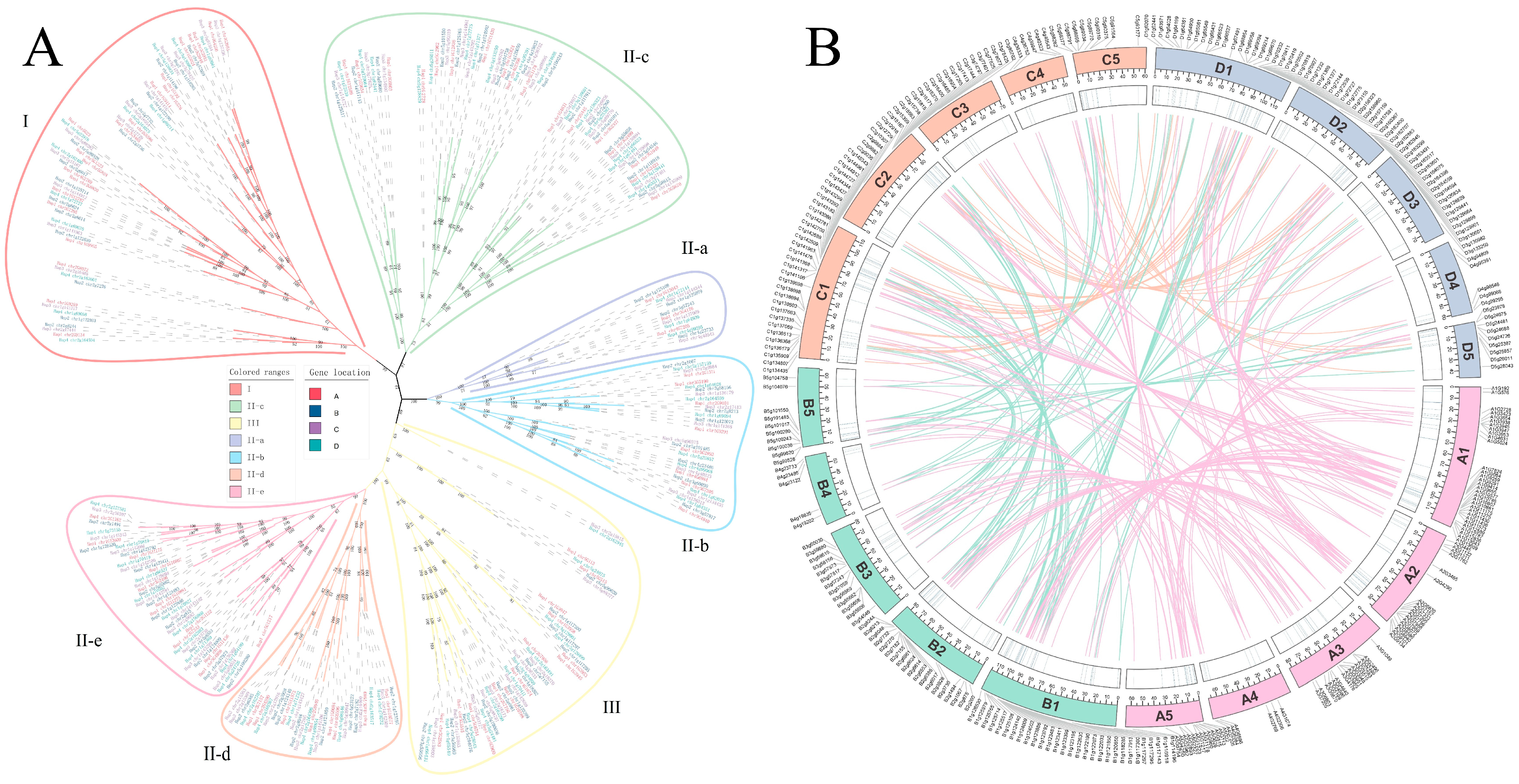
Figure 1. Phylogenetic tree and synteny analysis of WRKY gene family in B. chinense. (A) Phylogenetic tree, the outermost colored bands represent the classification of subfamilies I, II-a, II-b, II-c, II-d, II-e, and III. The different colored fonts for the genes indicate their distribution across different haplotypes A (Hap1), B (Hap2), C (Hap3), and D (Hap4). (B) Synteny analysis between karyotypes, showing gene names, chromosome numbers and lengths, WRKY gene density, and syntenic pairs (lines) from outer to inner circles.
Horticulturae 12 00102 g001
Figure 2. Homology analysis of BcWRKY genes across karyotypes and comparative gene family analysis with different species. (A) homology between BcWRKY and DcWRKY, HsWRKY, and LcWRKY gene families, with numbers indicating chromosome numbers and letters representing different karyotypes (A to D correspond to Hap1 to Hap4, respectively). (B) Orthologous WRKY gene families of BcWRKY with other species. (C) Expansion and contraction analysis of WRKY gene families between BcWRKY and other species, with a heatmap indicating the number of expanded genes. MRCA: Most Recent Common Ancestor. Red and blue numbers indicate expanded and contracted orthologous groups, respectively.
Horticulturae 12 00102 g002
Figure 3. Tissue-specific expression patterns of BcWRKY genes in karyotype Hap1. (A) expression analysis and clustering of transcriptomes from root, stem, leave, and flower. (BG) Validation analysis of tissue-specific expression patterns, with bar plots showing expression levels in root (B,C), stem (D,E) and leaf (F,G); line graphs displaying expression levels from three other three transcriptome data, where the y-axis represents relative expression levels.
Horticulturae 12 00102 g003
Figure 4. Network heatmap analysis of BcWRKY genes under different stress transcriptomes. (A) Transcriptome analysis of continuous flower-removal treatment, with sampling conducted at four time points: T1 (11 days), T2 (31 days), T3 (49 days), and T4 (74 days) of continuous flower removal. (B) Transcriptome analysis of continuous drought treatment, with samples collected at four stages: P1 (7 days), P2 (14 days), P3 (21 days), and P4 (28 days). The color and size of squares indicate expression correlations between genes, while the thickness of connecting lines represents the fold change in upregulation or downregulation, with red lines indicating upregulated expression and light green lines indicating downregulated expression. The blue arrow indicates the stage with the richest response.
Horticulturae 12 00102 g004
Figure 5. Integrated analysis of BcWRKY genes under abiotic stresses and their relationship with saikosaponin biosynthesis. (A) evolutionary analysis of BcWRKY and AtWRKY genes responsive to abiotic stresses such as drought, salt, high temperature, high humidity, methyl jasmonate (MeJA), and abscisic acid (ABA). The genes marked with black underlines are the candidate genes. (B,C) Saikosaponin A and saikosaponin D contents (%, w/w) in B. chinense roots under the indicated treatments. Data are means ± SE (n = 3). Different lowercase letters indicate significant differences among treatments (Duncan’s test, p < 0.05). (DG), Correlation heat-map between the expression levels of ten candidate BcWRKY genes and ten saikosaponin-biosynthetic downstream genes under drought (D), waterlogging (E), MeJA (F) and ABA (G) treatments. Pearson correlation coefficients (r) were calculated from the time-course data (0, 1, 2, 4, 8 h) under the four stress treatments. Asterisks denote significant correlations: * p < 0.05, *** p < 0.001.
Horticulturae 12 00102 g005
Table 1. Distribution of BcWRKY alleles and gene loci across chromosomes.
TpyeChr1Chr2Chr3Chr4Chr5Summary
Alleles174421835
27160014
3112004
4251655657
Gene locus402217724110
Gene number12473422242303
Disclaimer/Publisher’s Note: The statements, opinions and data contained in all publications are solely those of the individual author(s) and contributor(s) and not of MDPI and/or the editor(s). MDPI and/or the editor(s) disclaim responsibility for any injury to people or property resulting from any ideas, methods, instructions or products referred to in the content.