Article

Effects of a Novel Waterlogging-Tolerant Growth-Promoting Pelletizing Agent on the Growth of Brassica napus


1
College of Agriculture, Agricultural University of Hunan, Changsha 410128, China
2
Zhangjiajie Agriculture and Rural Bureau, Zhangjiajie 427000, China
*
Authors to whom correspondence should be addressed.
Horticulturae 2025, 11(8), 946; https://doi.org/10.3390/horticulturae11080946
Submission received: 8 July 2025 / Revised: 30 July 2025 / Accepted: 4 August 2025 / Published: 11 August 2025
(This article belongs to the Section Biotic and Abiotic Stress)

Abstract

The Yangtze River Basin serves as the primary rapeseed-producing region in China, accounting for over 80% of the national output, yet it is severely impacted by waterlogging, resulting in yield reductions of 17–42.4%. This study investigated the effects of pelleting treatments on growth and waterlogging resistance in Brassica napus varieties Xiangzayou 787 and Fanmingyoutai. Conventional pelleting agents were augmented with waterlogging resistance agents, surfactants, and amino acids as growth-promoting reagents. The results demonstrated that melatonin at 5.0 × 10 5 mol/L significantly enhanced rapeseed growth and stress resistance. Specifically, for Xiangzayou 787, root fresh weight increased by 16.9% and stem diameter by 30.6%; for Fanmingyoutai, stem diameter increased by 16.9% and leaf length by 12.3%. The freezing injury index decreased by 90.9% for Xiangzayou 787 and 50% for Fanmingyoutai. The waterlogging injury index was reduced by 43.5% for Xiangzayou 787 and 30.4% for Fanmingyoutai, with stem diameter increasing by 30.6% and 16.5% in the respective varieties. The disease index decreased by 63.2% for Xiangzayou 787 (incidence reduced to 20.5%) and up to 57.1% for Fanmingyoutai (incidence reduced to 23.3%). Under this treatment, soluble protein content in Fanmingyoutai reached 20.37%, representing a 20.37% increase relative to the control. Peroxidase (POD) and superoxide dismutase (SOD) activities exceeded control levels, exhibiting an initial rise followed by a decline; malondialdehyde (MDA) content gradually increased; catalase (CAT) activity and soluble protein content showed an initial increase then decrease. The increase in relative electrical conductivity was reduced by 20.8% for Xiangzayou 787 and 17.3% for Fanmingyoutai. Yield per plant increased by 10.2% for Xiangzayou 787 and 35.6% for Fanmingyoutai. The newly developed pelleting formulation integrates waterlogging resistance agents, surfactants, and amino acids, unlike traditional agents, and proves effective for both hybrid and conventional rapeseed varieties. It enhances waterlogging resistance, promotes growth, improves disease resistance, and elevates seed quality while being cost-effective and simple for production and field application. This approach significantly boosts yield and supports productivity enhancement in southern rice fields, thereby improving rapeseed output and oil supply.

1. Introduction

Rapeseed is one of China’s important oil crops [1], accounting for approximately 23.6% of the total edible oil supply. With China’s current edible oil self-sufficiency rate at only about 30%, urgent development of rapeseed production is needed to ensure national edible oil security [2]. The middle and lower reaches of the Yangtze River serve as China’s primary rapeseed production region, contributing over 80% of total output [3]. However, frequent seasonal rainfall and rising groundwater levels in this area often cause waterlogging damage in fields, severely restricting rapeseed seed germination and seedling growth [4]. This affects 20% of the planted rapeseed area [5], leading to yield reductions of 17–42.4% [6]. Waterlogging stress induces root hypoxia, with prolonged exposure causing severe damage to crop roots—resulting in blackening, rotting, and even death [7]. Thus, waterlogging tolerance represents a critical challenge requiring immediate resolution in rapeseed production within this region.
Seed pelleting centers on encapsulating seeds with pelleting powder, integrating precision sowing, nutrition, stress resistance, and plant protection functions [8]. In the 1930s, UK’s Ger-mains Seed Company first developed pelleted seed coatings for dryland crops [9]. The Texas Experimental Station pioneered film-coated seed treatments for controlling damping-off in dryland crops in 1978 [10]. Japanese researcher Otani et al. (1999) [11] created a coating promoting water absorption and germination in light-dependent flower seeds. Hirano et al. (2001) [12] developed a chitin-containing seed coating for soybeans that significantly improved yields. Subsequently, K.S.V. Poorna Chandrika et al. [13] demonstrated that chemical, biological, and coating treatments could mitigate abiotic stress impacts, while Paul L. Sanchez [14] found pelleting enhanced guayule seeds’ adaptability to acidic/alkaline environments.
Wang Hongying et al. (1994) [15] improved existing dryland seed coatings by incorporating pesticides, hormones, and micro-fertilizers with superabsorbent polymers to create film coatings for corn, peanuts, and cotton. Xiong Hairong et al. [16] discovered seed coatings promoted rapeseed seedling growth, stress resistance, and seedling quality—with pelleted coatings outperforming film types. Yu Julong et al. [17] used triflumezopyrim, chlorantraniliprole, and thifluzamide pelleting on rice seeds to significantly increase germination, tillering, pesticide efficiency, and pest control. Recent studies by Bai Weijun et al. [18] showed pelleting enhanced quinoa germination and yield. She Huijie et al. [19] demonstrated that fulvic acid and alginate oligosaccharide coatings promoted rapeseed emergence in delayed-sowing field trials, increasing overwintering biomass accumulation, siliques per plant, and yield. Our laboratory confirmed a 1:300 pesticide–seed mass ratio in pelleted coating improves germination [20]. Liu Mingfen et al. [21] reported cotton seed pelleting accelerated nutrient conversion, boosted seedling growth, and enhanced cold resistance. Chen Yannan et al. [22] observed higher germination metrics for pelleted Allium mongolicum seeds under drought and saline–alkali stress versus untreated seeds. Despite specialized pelleting techniques for cold/drought resistance (e.g., adding osmoregulants or water-retaining agents) [23], waterlogging-focused research remains scarce, with most formulations targeting single functions like pest control or nutrition.
Adopting a rice–rapeseed rotation model with timely ditch drainage after rice harvest, this study examines two rapeseed varieties using diverse pelleting materials and dosages to formulate distinct pelleting recipes. We analyze agronomic traits, stress resistance, physiological indicators, and yield quality across growth stages to identify optimal formulations. Developing composite pelleting agents that simultaneously enhance growth and waterlogging resistance is crucial for achieving stable yields and efficiency improvements in rapeseed cultivation under waterlogged conditions.

2. Materials and Methods

2.1. Experimental Materials

“Xiangzayou 787” (hybrid) and “Fanmingyoutai” (conventional variety), provided by the College of Agronomy, Hunan Agricultural University.

2.2. Experimental Methods

Materials were sown on 10 October 2023, at Hunan Agricultural University’s Xunlonghe Experimental Base (28.34° N, 113.19° E). Soil with relatively uniform fertility was selected, each treatment plot covered 10 m2, and a planting density of 30 plants per square meter was used. Other farming practices followed field methods: (Base fertilizer application: 600 kg/ha of compound fertilizer (N-P2O5-K2O=15-15-15); topdressing with 120 kg/ha urea at bolting stage. Post-sowing weed control using acetochlor for soil sealing, supplemented by manual weeding at seedling stage. Spraying paclobutrazol (Jiangsu Jianpai Agrochemical Co., Ltd.) during vigorous growth period to control height and prevent lodging. Key disease and pest control focuses on sclerotinia (spray dimethachlon at full bloom) and aphids (controlled with imidacloprid). Unobstructed drainage channels is maintained throughout the growth cycle, ensuring 70–80% relative soil moisture content during bud-bolting and pod formation stages. Implementation timing and intensity of all management measures remain consistent across treatments.) Based on conventional pelleting agents, inert filler [24], binder [25], waterlogging resistance agent, surfactant, and amino acids were added. Inert filler included diatomaceous earth, talc, attapulgite powder (mass ratio 1:1:2), and following growth-promoting substances: brassinolide 0.0005% to 0.002%, paclobutrazol 0.03% to 0.08%, fungicides and insecticides 8% to 15%, fluazinam (Shiyuan (Shanghai) Chemicals Co., Ltd.) 0.05% to 0.15%, avermectin benzoate (Shandong Binzhou Zhanhua Guochang Fine Chemical Co., Ltd.) 0.03% to 0.08%, thiamethoxam (Shandong Bainongsida Biotechnology Co., Ltd.) 0.3% to 0.7%. Sodium dodecyl sulfate SDS (Tianjin Ruijin Biochemicals Co., Ltd.) 0.01% to 0.05%, glycine (Sinopharm Chemical Reagent Co., Ltd.) 0.05% to 0.15%, and adhesive: methyl cellulose 1.5% to 2.5%. The two materials were pelleted and treated with different concentrations of melatonin (Shanghai MacLean Biochemical Technology Co., Ltd.) ( 5.0 × 10 5 mol L−1, 1.0 × 10 4 mol L−1, 1.5 × 10 4 mol L−1) in treatment A, different concentrations of betaine (Shanghai MacLean Biochemical Technology Co., Ltd.) ( 2.14 × 10 4 mol L−1, 4.27 × 10 4 mol L−1, 6.41 × 10 4 mol L−1) in treatment B, and different concentrations of mannitol (Sinopharm Chemical Reagent Co., Ltd.) ( 0.137 mol L−1, 0.274 mol L−1, 0.549 mol L−1) in treatment C. The unpelletized seeds were used as the control.

2.2.1. Seed Pelleting Method

Seed pelleting method referenced in [26]. The procedure for pelleting rapeseed seeds is as follows: First, use seed sieves with varying mesh sizes and shapes to remove impurities and select plump, high-quality seeds. Then prepare a composite coating liquid system by pre-mixing 0.01% SDS solution with glycine buffer (pH 6.8, dissolved in 30 °C warm water), sequentially adding 1.8% methylcellulose to form a colloidal matrix. Incorporate plant protection components such as fluazinam, emamectin benzoate, and thiamethoxam in order, while integrating stress-resistant regulators like paclobutrazol (0.05%) and melatonin. Control SDS addition speed to prevent flocculation with glycine. Subsequently, sieve diatomite-based inert filler (80-mesh mixed powder in 1:1:2 ratio) in three batches, grinding until suspension particle size ≤ 50 μm achieves homogeneity. After pelleting coating at 2% of seed mass, dry pelleted seeds at 35 °C for 15 min and store for future use.

2.2.2. Agronomic Trait Investigation

On 20 November 2023, a survey of seedling traits at the 3–4 leaf stage was conducted [27], including the aboveground fresh and dry weight of the root, the aboveground length, the root length, the maximum leaf length, the leaf width, and the rhizome diameter; on 18 December 2023, a survey of pre-winter traits was conducted [28], including the total number of leaves on the main stem, the number of green leaves on the main stem, the maximum leaf length, the leaf width, the rhizome diameter, and the plant height; on 3 May 2024, a survey of rapeseed at the harvest stage was conducted [29], including the plant height, the effective branch height, the effective length of the main inflorescence, the silique length, and the number of siliques.

2.2.3. Quality Determination Method

Rapeseed quality under each treatment was detected using the DS2500F near-infrared analyzer (Foss (Beijing) Science and Technology Trading Co., Ltd.) [30].

2.2.4. Resistance Investigation Method

Freezing injury assessment referenced: Gao Shihai et al. [31]; waterlogging injury referenced: Zhang Xuekun et al. [6]; disease assessment referenced: Wang Xiaodan et al. [32]. Those three kinds of index could be calculated by the formula below:
Index = ( Grade × Number of plants per grade ) Highest grade × Total number of plants × 100 %
Cold Damage Investigation: The investigation was conducted on 27 February 2024 in each plot. The freezing injury was classified based on leaf freezing rate and growing point status:
  • Grade 0 (No freezing injury)
  • Grade 1 (1/3 leaves wilted)
  • Grade 2 (1/2 leaves browned)
  • Grade 3 (Apical meristem necrosis)
  • Grade 4 (Whole plant death)
Waterlogging Damage Investigation: The investigation was conducted on 27 February 2024 in each plot. A 5-grade evaluation system was established based on morphological characteristics:
  • Grade 0 (Normal growth, no symptoms)
  • Grade 1 (1/3 outer leaves reddening, normal heart leaves)
  • Grade 2 (1/3–2/3 outer leaves red/yellow, or <1/3 shriveled leaves)
  • Grade 3 (2/3 leaves yellowing, 1/3–2/3 shriveled leaves)
  • Grade 4 (>2/3 leaves necrotic, plant death)
Disease Investigation: Conducted on 9 April 2024 in each plot. Recorded:
  • Disease incidence rate (%) = (Number of infected plants/Total plants) × 100%
  • Disease severity index (0–4 scale by stem lesion area):
    Grade 0: No disease
    Grade 1: ≤5%
    Grade 2: 6–15%
    Grade 3: 16–25%
    Grade 4: >25%

2.2.5. Physiological Index Determination Method

Samples collected per method in Section 2.2.2 were used to measure peroxidase (POD) [33], superoxide dismutase (SOD) [33], malondialdehyde (MDA) content [33], catalase (CAT) [33], soluble protein content [33], and relative electrical conductivity [34] across growth stages.
(1) Determination of POD activity by guaiacol method: Take 0.05 mL ( V 2 ) of crude enzyme extract, add 1 mL of 0.3% H2O2, 0.95 mL of 0.2% guaiacol, and 1 mL of PBS 7.0. Measure absorbance at 470 nm every 30 s using a UV spectrophotometer for three readings. Calculate Δ A 470 based on A 30 s , A 60 s , and A 90 s , with t 1 being 0.5 min. Calculate activity using the following formula:
Δ A 470 = A 30 s + ( A 60 s A 30 s ) + ( A 90 s A 60 s ) 3
POD activity ( U / ( g · min · FW ) ) = Δ A 470 × V total t 1 × 0.1 × FW × V 2
(2) Determination of SOD activity by nitroblue tetrazolium photochemical method: Take 0.05 mL ( V 1 ) supernatant, add 3.25 mL reaction mixture containing 1.5 mL 50 mM PB (pH7.8), 0.3 mL 130 mM methionine, 0.3 mL 750 µM NBT, 0.3 mL 100 µM EDTA-Na2, 0.3 mL 20 µM riboflavin, and 0.5 mL distilled water. Use 0.05 mL PB (pH 7.8) as control tube 1 (light-shielded) and control tube 2 (non-shielded). Incubate all tubes under 6000 Lx illumination at 28 °C for 25 min. After reaction, shield for 5 min to terminate. Measure absorbance at 560 nm using light-shielded control as reference. Calculate activity by
SOD activity ( U / g · FW ) = ( A control A sample ) × V total A control × 0.5 × FW × V 1
(3) Determination of MDA content by thiobarbituric acid method: Homogenize 0.1 g (W) rapeseed sample with 5% TCA. Centrifuge at 8000 rpm (4 °C) for 20 min. Add 0.67% TBA to supernatant, boil for 30 min, then centrifuge to obtain supernatant ( V t ). Measure absorbance at 450 nm, 532 nm, and 600 nm. Calculate using
MDA concentration C ( µmol / L ) = 6.45 × ( A 532 A 600 ) 0.56 × A 450
MDA content ( µmol / g ) = C × V t W × V s
(4) Determination of CAT activity by UV absorption method: Take 0.05 mL (V) crude enzyme extract, add 1 mL 0.3% H2O2 and 1.95 mL PB 7.0. Measure absorbance at 240 nm every 30 s for three readings. Calculate Δ A 240 based on A 30 s , A 60 s , and A 90 s , with t 2 being 0.5 min. Calculate activity by
Δ A 240 = A 30 s + ( A 30 s A 60 s ) + ( A 60 s A 90 s ) 3
CAT activity ( U / ( g · min · FW ) ) = Δ A 240 × V t 2 × 0.1 × FW × V t 3
(5) Determination of soluble protein content: Prepare Coomassie Brilliant Blue G-250 reagent by dissolving 0.1 g dye in 50 mL 90% ethanol, adding 100 mL 85% phosphoric acid, and diluting to 1 L. Prepare BSA standard (100 mg/100 mL) for calibration curve. Add reagents to seven tubes according to Table 1. After 2 min incubation, measure absorbance at 595 nm. Plot standard curve with BSA concentration vs. absorbance. For samples, add 20 µL crude enzyme to 3 mL dye reagent, incubate 2 min, measure at 595 nm, and calculate from standard curve. Formula:
Soluble protein content ( mg / g FW ) = ( C × V / V a ) W / 1000
where: C = soluble protein from standard curve (mg), V = total extract volume (mL), V a = sample volume used (mL), W = sample weight (g).
(6) Determination of relative conductivity: Select intact leaves (minimal stems), wash with tap water followed by three distilled water rinses. Blot dry, cut into strips (avoiding midribs), and weigh three 0.14 g samples. Immerse each in 10 mL deionized water for 12 h at room temperature. Measure conductivity ( R 1 ). Boil samples for 30 min, cool to room temperature, remeasure conductivity ( R 2 ). Calculate:
Relative conductivity ( % ) = R 1 R 2 × 100

2.2.6. Benefit Analysis

An input–output analysis of the application of the new pelleting agent was conducted, and the analysis mainly included cost accounting, income-increasing benefit accounting, and input–output ratio calculation.
Input cost accounting: The main accounting is the direct cost increased by the use of pelleting technology, including the cost of pelleting agent materials and the labor cost of pelleting processing. Pelletizing agent material cost (CNY/ha): According to the market price and addition ratio of each component in the best formula (A1 treatment) of this study, combined with the average seed dosage per hectare (3.75 kg) and the mass ratio of pelleting agent to seeds (2%) determined by the experiment, the pelleting agent material cost per hectare was calculated. Labor cost (CNY/kg): According to the local labor market situation (a temporary worker’s daily wage is about CNY 200/day) and the efficiency of pelleting operation (one person can process 1500 kg of seeds in 8 h), the labor cost of pelleting processing per kilogram of seeds was calculated. Other field management costs (such as fertilizers, pesticides, irrigation, etc.) remained consistent between the treatment group and the control group and were not included in the differential cost.
Output benefit calculation: Mainly calculate the increase in output value brought about by the use of pelleting technology. Increased yield per hectare (kg/ha):
Increased yield = yield of treatment group yield of control group
where the yield per hectare is calculated based on the single plant yield surveyed during the harvest period and the set planting density (300,000 plants/ha). Increased income per hectare (CNY/ha):
Increased income = increased yield × rapeseed market price
The rapeseed price refers to the local market purchase price (CNY 6.0/kg) during the trial harvest period (May 2024).
Input–output ratio calculation:
In-out ratio = increased income / ha average pelleting material cost / ha + average labor cost / ha
This ratio directly reflects the economic return brought by the unit cost invested in the application of this technology.

2.3. Data Analysis Methods

Experimental data were analyzed using Excel 2010 and SPSS 22.0 software, and one-way analysis of variance (ANOVA) + Tukey HSD method was used.

3. Results and Analysis

3.1. Agronomic Traits

3.1.1. Investigation of Seedling Traits at 3–4 Leaf Stage

On 20 November 2023, five rapeseed plants per plot were selected for trait investigation of Xiangzayou 787 and Fanmingyoutai. Agronomic trait impacts are presented in Table 2.
As shown in Table 2, pelleting can improve rapeseed’s tolerance to waterlogging, and the rapeseed in treatment A1 grew better. In the variety Xiangzayou 787, its aboveground fresh weight, aboveground dry weight, and leaf length increased by 16.9%, 10.3%, and 4.3%, respectively, compared with the control; the rhizome thickness increased by 30.6%; and the root fresh weight ratio remained stable. Treatment A1 performed best in stem and leaf biomass accumulation and root system development, and its overall growth was better than other treatments (p < 0.05). In the variety Fanmingyoutai, treatment B1 performed best—the aboveground fresh weight remained the same as the control, the root fresh weight significantly increased by 34.0%, the leaf length increased by 13.1%, the leaf width increased by 14.3%, and the rhizome thickness increased by 7.0%.

3.1.2. Pre-Winter Agronomic Traits Survey

On 28 December 2023, five rapeseed plants were selected from each plot to record the total main stem leaves and green leaves count on the main stem. Measurements included maximum leaf length and width, root-collar diameter, and plant height. The impact on agronomic traits is presented in Table 3.
As shown in Table 3, the pelleting agent treatment of seeds can improve waterlogging tolerance and promote rapeseed growth to a certain extent. In the comparison of 10 treatment groups (A1–C3) and the control, the A series treatment showed significant advantages, among which the A1 treatment performed best. The total number of main stem leaves of Xiangzayou 787-A1 increased by 48.3% compared with the control CK1, and the number of green leaves increased by 50%. The leaf length and leaf width of the leaves of Fanmingyoutai-A1 treatment increased by 34.7% and 30.2% compared with the control. The root and stem diameter and plant height of Xiangzayou 787-A1 increased by 83.7% and 50% compared with the control. The Fanmingyoutai-A1 treatment showed significant advantages over the control CK2 in root and stem diameter and plant height, and the root and stem diameter and plant height increased by 67.4% and 42%, respectively, compared with the control.

3.1.3. Harvest Trait Survey

On 3 May 2024, harvest trait surveys were conducted for Xiangzayou 787 and Fanmingyoutai. The effects on their agronomic traits are presented in Table 4.
Under normal growth conditions, the plant height of Xiangzayou 787 typically reaches around 170 cm [35]. However, waterlogging treatment significantly inhibited plant growth and development. As shown in Table 4, the plant height of the two varieties of rapeseed under waterlogging stress was significantly lower than the normal growth level. Compared with the control, the pelleting agent treatment could increase the effective branch height, the number of effective branches at one time, the yield per plant, the length of siliques, and the number of siliques of rapeseed plants under flooding treatment. In the variety Xiangzayou 787, the best treatment was A1, which increased the yield per plant by 10.2% compared with the control, and the number of effective siliques of the main inflorescence decreased by 45.2%, but the yield was stabilized by increasing the total number of siliques. The plant height of this treatment decreased by 7.6% and enhanced lodging resistance, and the number of siliques increased by 14.1%, while the length of siliques remained stable. In the variety Fanmingyoutai, the comprehensive performance of the B3 treatment was the best, with the yield per plant increasing by 134.5%, the total number of siliques increasing by 75.6%, and the number of siliques increasing by 15.7% compared with the control. The plant height of this treatment increased by 18.1%, the effective length of the main inflorescence increased by 16.5%, and the accumulation of photosynthetic products was enhanced. In the variety Fanmingyoutai taro, compared with the control, treatment A1 also grew better than the control, with the yield per plant increasing by 35.6% and the number of siliques and total number of siliques increasing by 30.7% and 16.3%, respectively.

3.1.4. Quality Analysis at Harvest Stage

Oil content, erucic acid content, and glucosinolate content in seeds of Xiangzayou 787 and Fanmingyoutai rapeseed were examined (Table 5).
As shown in Table 5, different pelleting treatments have certain effects on rapeseed seed quality. Among them, treatment A1 (melatonin 5.0 × 10 5 mol L−1) increased the oil content of Xiangzayou 787 by 1.51%; Fanmingyoutai showed a 20.37% increase in protein content with an insignificant decrease in oil content, demonstrating optimal comprehensive benefits.

3.2. Resistance Investigation

Following the investigation method described in Section 2.2.4, the resistance of rapeseed was evaluated, with results presented in Table 6.

3.2.1. Frost Damage Survey

On 27 February 2024, frost damage was investigated for rapeseed in each plot. As shown in Table 6, compared with the control, treatment A1 (melatonin 5.0 × 10 5 mol L−1) reduced the frost damage index of Xiangzayou 787 by 90.9%, demonstrating the best frost resistance effect. Compared with the control, pelletized melatonin treatments on Fanmingyoutai all showed lower frost damage indices. Among these, treatment A1 (melatonin 5.0 × 10 5 mol L−1) exhibited the least frost damage, reducing the frost damage index by 50%.

3.2.2. Waterlogging Damage Survey

On 27 February 2024, waterlogging damage was investigated for rapeseed in each plot. Table 6 indicates that pelletization treatment enhanced waterlogging tolerance in rapeseed. Specifically, treatment A1 (melatonin 5.0 × 10 5 mol L−1) reduced the waterlogging damage index of Xiangzayou 787 by 43.5% and decreased that of Fanmingyoutai by 30.4%.

3.2.3. Disease Survey

On 9 April 2024, disease incidence was investigated for rapeseed in each plot. Table 6 shows that pelletization treatments improved disease resistance in rapeseed. For Xiangzayou 787, all treatment groups had significantly lower disease indices than the control (CK), with disease incidence reduced by 11.4–39.0% compared to CK. Fanmingyoutai treatment groups also exhibited lower disease indices than CK, though the difference in disease incidence was less pronounced.

3.3. Physiological Indicators Measurement

3.3.1. POD Activity Measurement

POD activity was measured in leaves at the 3–4 leaf stage, 5–6 leaf stage, and budding stage, as well as in flowers at different developmental stages for two rapeseed cultivars (Xiangzayou 787 and Fanmingyoutai). Results are shown in the figure below.
As shown in Figure 1a,b, under flooding treatment, the POD activity in leaves of Xiangzayou 787 at different growth stages gradually increased with prolonged flooding duration, while the POD activity in flowers at various developmental stages initially rose and then declined. This trend was particularly evident in treatments A1 and B2. Figure 1c,d indicate that under flooding treatment, both leaf POD activity at different growth stages and floral POD activity at various developmental stages of Fanmingyoutai progressively increased with extended flooding duration, aligning with findings from Li Ling et al. [36]. Treatments A1 and A2 showed notable prominence in this regard.

3.3.2. SOD Activity Determination

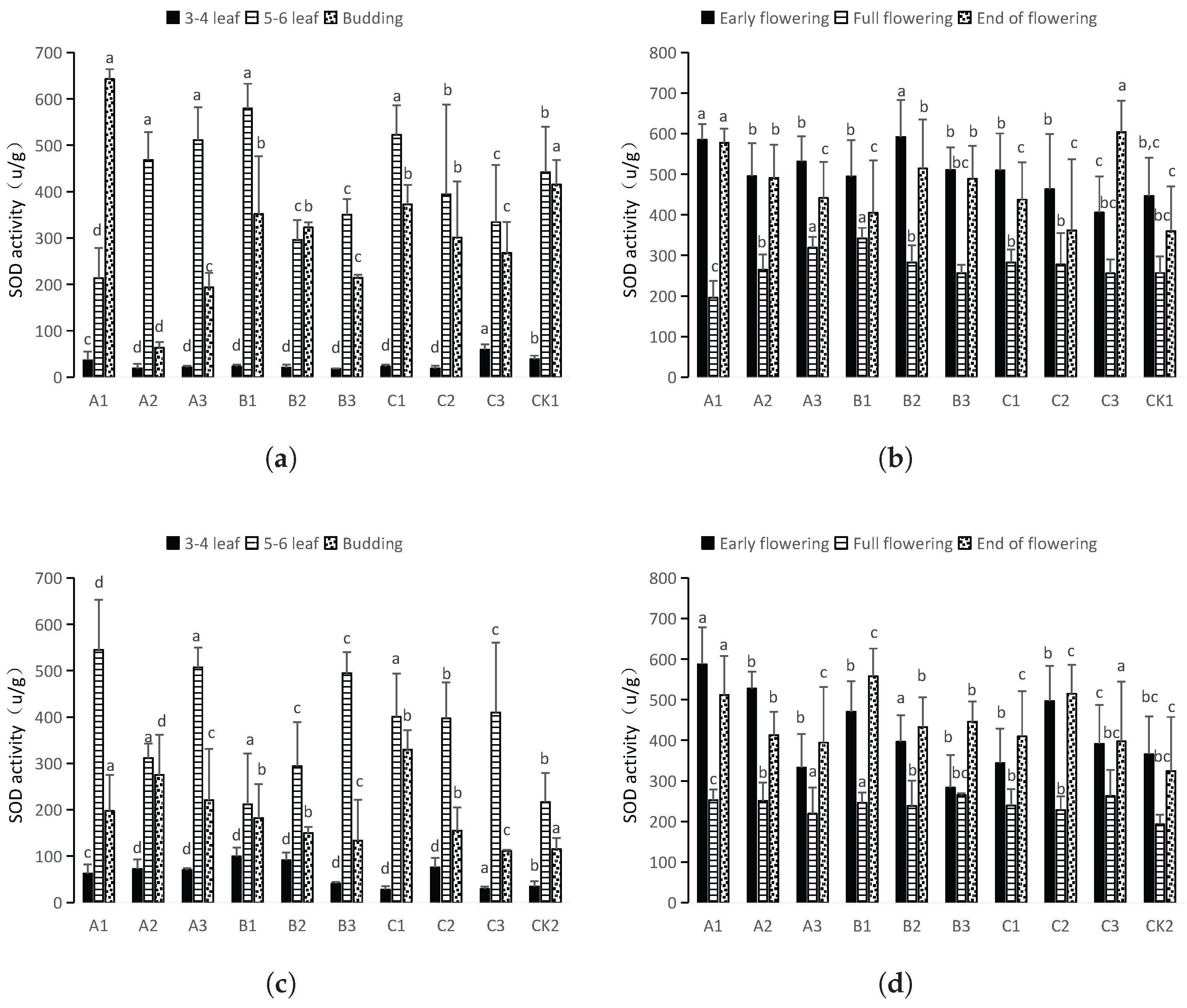
SOD activity was measured in leaves at the 3–4 leaf stage, 5–6 leaf stage, and budding stage, as well as in flowers at different opening stages of two rapeseed varieties—Xiangzayou 787 and Fanmingyoutai. The results are presented in the figure below.
As shown in Figure 2a,b, under flooding treatment, the SOD activity in leaves of Xiangzayou 787 at different growth stages initially increased and then decreased with prolonged flooding duration, while the SOD activity in flowers at different developmental stages showed an initial decrease followed by an increase. This trend was particularly evident in treatments A1 and A2. Figure 2c,d indicate that under flooding treatment, the SOD activity in leaves of Fanmingyoutai at various growth stages first rose and then declined with extended flooding time, whereas the SOD activity in flowers at different developmental stages exhibited an initial decrease followed by an increase, consistently exceeding control levels. These findings align with the research results of Peng Duozi [37]. Treatments A1 and B1 demonstrated particularly notable effects.

3.3.3. MDA Content Measurement

The MDA content was measured in leaves at the 3–4 leaf stage, 5–6 leaf stage, and budding stage, as well as in flowers at varying degrees of openness for the two rapeseed varieties, Xiangzayou 787 and Fanmingyoutai. The results are presented in the following figures.
As shown in Figure 3a,b, under waterlogging treatment, the MDA content in leaves of Xiangzayou 787 gradually increased across different growth stages with prolonged flooding duration. Similarly, the MDA content in flowers at various developmental stages progressively rose, with treatments A1 and A2 showing particularly pronounced effects. Figure 3c,d indicate that under waterlogging stress, Fanmingyoutai exhibited an initial increase followed by a decrease in leaf MDA content across growth periods, while its floral MDA content demonstrated a gradual upward trend during prolonged flooding. Treatments A1 and A2 displayed marked changes, consistent with the research findings of Zhou Xiangyu et al. [7].

3.3.4. CAT Activity Assay

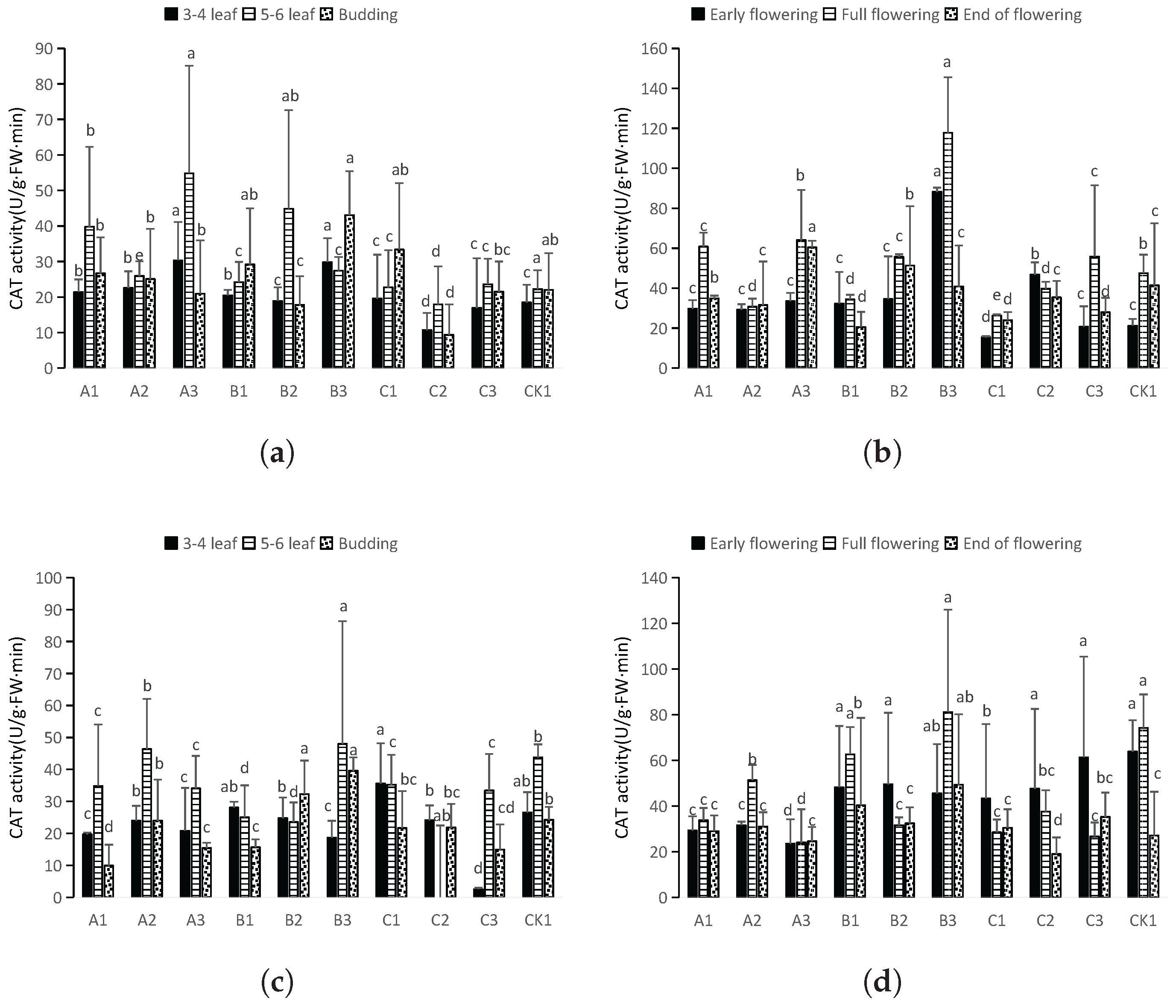
CAT activity was measured in leaves (3–4 leaf stage, 5–6 leaf stage, bud-budding stage) and flowers (varying developmental stages) of two rapeseed varieties: Xiangzayou 787 and Fanmingyoutai. The results are presented in the following figures.
As shown in Figure 4a,b, under flooding stress, the CAT activity in leaves of Xiangzayou 787 at different growth stages exhibited an initial increase followed by a decrease with prolonged flooding duration. Similarly, CAT activity in flowers at various developmental stages increased initially before declining. Treatments A1, A3, and B3 showed particularly notable changes. Figure 4c,d indicate that Fanmingyoutai’s leaf CAT activity at different growth stages and floral CAT activity at various developmental stages both displayed the same initial-rise-then-fall pattern under extended flooding. Treatments A2 and B3 demonstrated significant effects, consistent with findings by Zhou Xiangyu et al. [5].

3.3.5. Soluble Protein Content Measurement

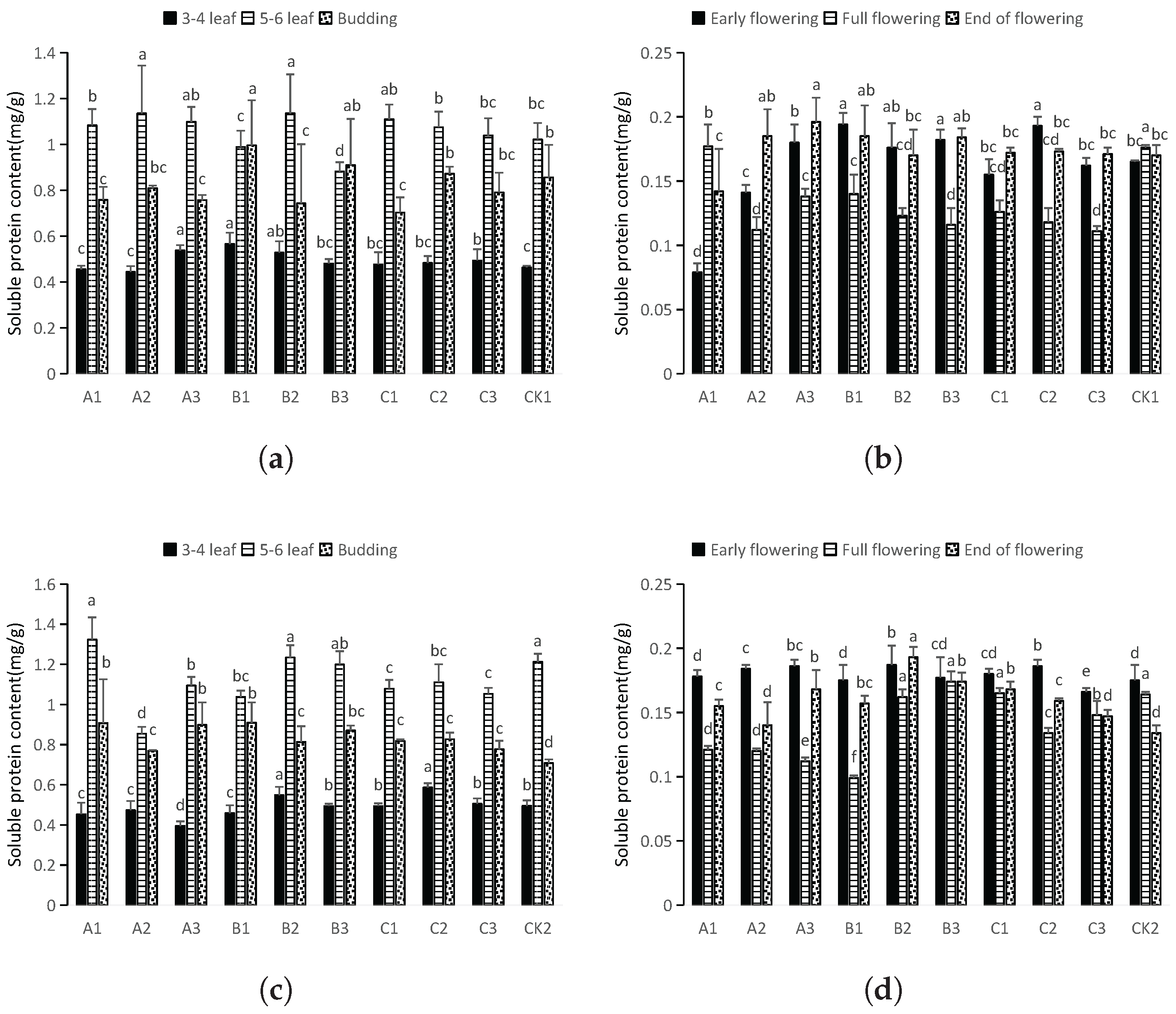
Soluble protein content was measured in leaves (3–4 leaf stage, 5–6 leaf stage, budding stage) and flowers at different opening stages for both Xiangzayou 787 and Fanmingyoutai. Results are illustrated below.
Figure 5a,b reveal that under prolonged flooding, soluble protein content in Xiangzayou 787 leaves across growth stages initially increased then decreased. Some treatments on flowers at different developmental stages showed similar trends, with treatments A1 and A2 being particularly evident. Figure 5c,d demonstrate that Fanmingyoutai’s leaf soluble protein content followed the same pattern under extended flooding stress, with treatments A1 and B2 showing pronounced effects, aligning with Peng Duozi et al.’s [37] research.

3.3.6. Relative Electrical Conductivity Measurement

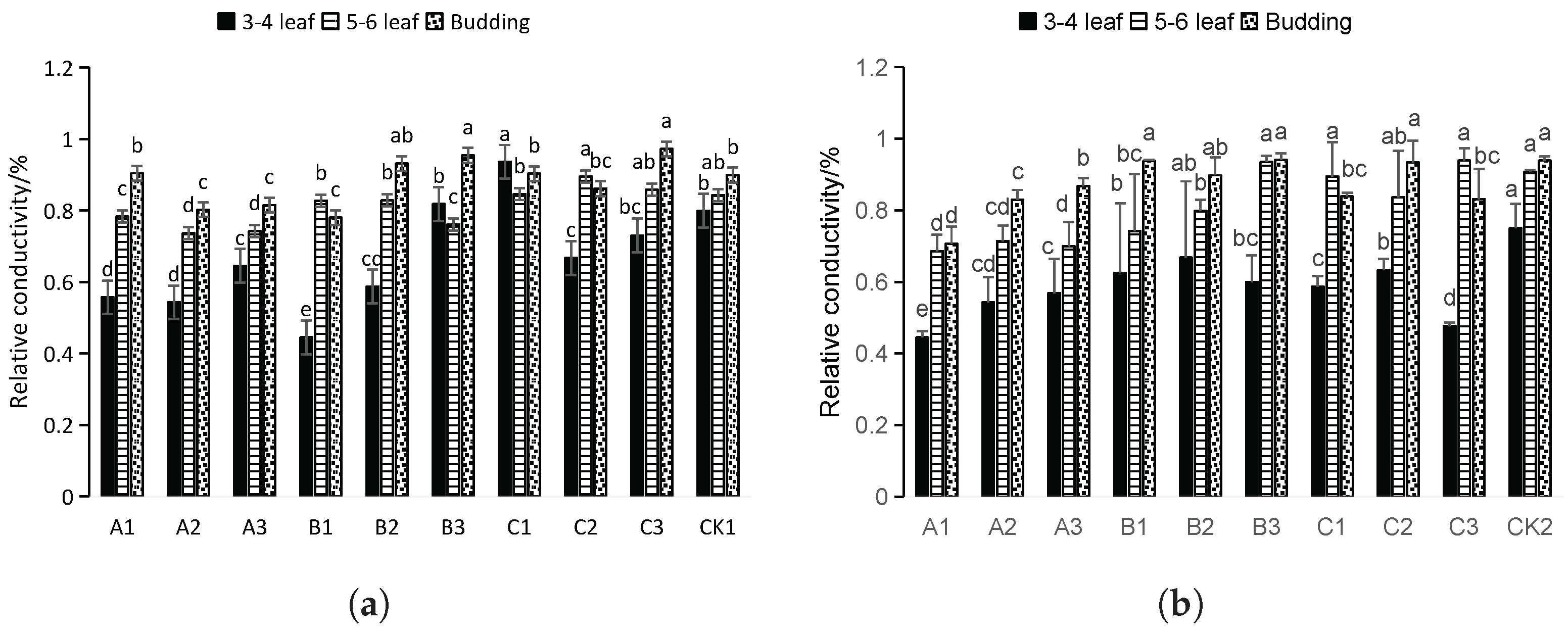
Relative electrical conductivity was measured in leaves of both cultivars at 3–4 leaf, 5–6 leaf, and budding stages.
When plants face stress, intracellular electrolyte leakage increases the electrical conductivity of cell extracts, indicating severe flooding damage and weakened resistance [38]. Figure 6a,b show that under extended flooding, relative electrical conductivity gradually increased in leaves of both cultivars across growth stages, though remaining below control levels. This aligns with Nie Lixuan’s [39] findings. Treatment A1 reduced the conductivity increase rate by 20.8% in Xiangzayou 787 and 17.3% in Fanmingyoutai compared to the controls, with treatments A1 and A3 showing significant effects.

3.4. Benefit Analysis

Assumption: Average seed usage of 3750 g/ha, pellet coating agent application at 2% seed weight (75 g/ha), daily production of 100 kg coated seeds per worker (18.75 kg/hour over 8 h), temporary worker daily wage of about CNY 200, labor cost of CNY ¥2.0/kg coated seeds, and coating agent cost of CNY 8.1/ha (Table 7).
Among treatments, A1 (melatonin 5.0 × 10 5 mol L−1) showed the highest yield potential. Compared to the controls (CK1, CK2), it increased yield by 132 kg/ha for Xiangzayou 787 and 300 kg/ha for Fanmingyoutai. Input–output ratios reached 1:97.8 and 1:222.2, respectively, demonstrating significant enhancement of waterlogging resistance in rapeseed. This coating agent offers high cost-effectiveness and substantial economic benefits.

4. Discussion and Conclusions

4.1. Discussion

Seed coating can promote healthy seed growth and germination [39]. This study aims to provide an effective solution to this production problem by integrating functions such as waterlogging tolerance, growth promotion, and disease resistance through seed pelleting technology. The results show that a new type of pelleting agent with bioactive substances such as melatonin, betaine, and mannitol as core additives can significantly enhance the adaptability of Brassica napus to waterlogging stress, and its effects are reflected in morphological construction, physiological response, and final yield.
This study found that the two rapeseed varieties treated with A1 ( 5.0 × 10 5 mol L−1 melatonin) showed better growth trends both in the seedling stage and before winter. In particular, Xiangzayou 787 had a 30.6% increase in root and rhizome diameter at the seedling stage, and its plant height and root and rhizome diameter before winter were significantly better than the control. A strong root system is the basis for plants to absorb water and nutrients and is also the key to resisting adverse stress. Melatonin in the pelletizer enhances the activity of root meristems by activating the auxin signaling pathway, thereby alleviating the oxygen deficiency caused by waterlogging. This is consistent with the melatonin–auxin interaction pathway discovered by Huang Bo et al. [40] and the osmotic regulation mechanism revealed by Guan Wenqi et al. [41]. At the same time, strong rhizomes not only mean stronger nutrient storage and transport capabilities but also provide better mechanical support for plants, which is crucial for enhancing the plant’s ability to survive the winter and resist lodging in the later period [42].
The study systematically monitored key physiological and biochemical indicators in rapeseed and revealed the intrinsic mechanism of the new pelletizer to enhance waterlogging tolerance. First, the pelletizer significantly activated the antioxidant enzyme defense system of rapeseed. The data showed that the POD and SOD activities of A1-treated plants were significantly higher than those of the control group at the early stage of stress (3–4 leaf to 5–6 leaf). The rapid increase in the activity of these enzymes indicates that their ROS scavenging ability has been effectively activated, and they can more efficiently quench harmful free radicals produced by hypoxia. This is directly reflected in the cell membrane damage index: the MDA content accumulation rate of the two varieties treated with A1 was significantly lower than that of the control, and the increase in relative conductivity was also reduced by 20.8% and 17.3%, respectively. This shows that active substances represented by melatonin effectively reduce oxidative damage by upregulating the activity of antioxidant enzymes and maintain the stability and integrity of the cell membrane. This is consistent with the mechanism proposed by Fang Dan [43], who found that oxygen diffusion capacity alleviates waterlogging formation.
Secondly, the pelletizer maintains cell water balance by enhancing osmotic regulation ability. Betaine and mannitol in this study are classic osmotic regulation substances. Although the A1 (melatonin) treatment has the best overall performance, betaine (B treatment) and mannitol (C treatment) also show positive effects on some indicators. At the same time, the soluble protein content of the leaves of the treated group plants was generally higher than that of the control under stress and reached a peak in the middle of stress. As an important osmotic regulating substance, the increase in the content of soluble protein helps to increase the concentration of cell sap, maintain cell turgor pressure, and prevent wilting caused by difficulty in root water absorption [44].
Analysis of yield composition showed that Xiangzayou 787 was most sensitive to low concentrations of melatonin (A1), with a 10.2% increase in yield per plant. The A1 treatment significantly increased the number of siliques by 14.1%, indicating optimized photosynthetic product distribution after flowering. In contrast, the conventional species Fanmingyoutai stalk showed a 134.5% yield increase under B3 treatment (high concentration of betaine), with total silique number and silique count increasing by 75.6% and 15.7%, respectively. The A1 treatment also increased yield by 35.6% for Fanmingyoutai sedge, demonstrating melatonin’s broad adaptability.
The pelleting agent developed in this study also improved frost and disease resistance. A1 treatment reduced the frost damage index of Xiangzayou 787 and Fanmingyoutai sedge by 90.9% and 50%, respectively, attributed to increased pre-winter biomass accumulation. The disease index decreased significantly, potentially due to synergistic effects between bactericidal components (e.g., fluazinam) and bioactive substances.
From an economic perspective, the pelleting agent cost is CNY 8.1 per hectare, generating an additional farmer income of 792 to CNY 1800/ha with input–output ratios of 1:97.8 to 1:222.2. This technology integrates precision seeding, nutrient supply, stress protection, and pest control, aligning with modern agricultural goals of green and efficient production. It holds significant potential for adoption in the Yangtze River Basin’s rice–rapeseed rotation areas, contributing to China’s rapeseed production security and edible oil supply stability.
In summary, the three bioactive compounds affect the waterlogging tolerance of rapeseed through different but synergistic pathways: the core role of melatonin is that it acts as a signaling molecule and antioxidant, fully activating the endogenous antioxidant enzyme system and promoting root growth; betaine mainly acts as an osmotic protectant, stabilizing the cell membrane and protein structure; and mannitol may regulate the cell osmotic potential and remove some ROS, jointly building a three-dimensional physiological defense network, thereby significantly improving the adaptability of rapeseed to waterlogging.

4.2. Conclusions

Under waterlogging stress, the increase in SOD activity and root fresh weight can most stably reflect rapeseed’s waterlogging tolerance. Among the three pelletized substances, melatonin mainly exerts positive effects by activating antioxidant enzymes (SOD, POD) and enhancing root vitality, betaine focuses on improving cell osmotic regulation and maintaining membrane stability, and mannitol enhances waterlogging tolerance by significantly improving root permeability and promoting water balance. Melatonin treatment ( 5.0 × 10 5 mol L−1) significantly enhanced stress tolerance and agronomic traits in Brassica napus cultivars. In Xiangzayou 787, relative to untreated controls, this treatment increased fresh root weight by 34.3%, reduced the freezing damage index by 90.9%, decreased the waterlogging damage index by 43.5%, lowered the disease index by 63.2%, reduced disease incidence to 20.5%, and augmented stem diameter by 30.6%. Correspondingly, Fanmingyoutai exhibited increases of 5.0% in fresh root weight, reductions of 50.0% in the freezing damage index and 30.4% in the waterlogging damage index, a 57.1% decline in the disease index, a disease incidence of 23.3%, and a 16.9% increase in stem diameter.
Antioxidant enzyme activities demonstrated dynamic responses: both peroxidase (POD) and superoxide dismutase (SOD) activities transiently exceeded the control levels before subsequent decline. Malondialdehyde (MDA) content progressively increased, while catalase (CAT) activity and soluble protein content exhibited an initial rise followed by reduction. These patterns indicate plant defense activation through coordinated enzymatic regulation and MDA accumulation. Relative electrical conductivity was significantly suppressed, with Xiangzayou 787 and Fanmingyoutai showing 20.8% and 17.3% lower increases than the controls, respectively.
The waterlogging-resistant pelleting technology concurrently improved yield performance and economic returns. Xiangzayou 787 achieved a 10.2% increase in single-plant yield, whereas Fanmingyoutai showed a 35.6% enhancement. Economic analysis revealed net profits ranging from CNY 792 to 1800 per hectare, with input–output ratios reaching 1:97.8 and 1:222.2 for the respective cultivars.

Author Contributions

Conceptualization, funding acquisition, resources, supervision, validation, writing—original draft, writing—review and editing, Z.Z. and C.X.; Conceptualization, data curation, formal analysis, investigation, methodology, software, visualization, writing—original draft, writing—review and editing, L.L. and G.X.; Supervision, validation, H.J. and Y.W. All authors have read and agreed to the published version of the manuscript.

Funding

This research was funded by National Key 302 R&D Program of the 14th Five-Year Plan: 2023YFD1201402; National Key R&D Program R&D on Key Technologies for 301 Light and Simplified Yield of Oilseed Rape: 2022YFD2300103-1.

Data Availability Statement

The materials of this study were provided by the College of Agriculture, Agricultural University of Hunan. Correspondence and requests for materials should be addressed to Zhenqian Zhang (zhangzhenqian@hunau.edu.cn).

Conflicts of Interest

The authors declare no conflicts of interest.

References

  1. Li, Z.; Zhang, Y.; Wang, Y.; Zhao, Q.; Liu, L.; Zhang, T.; Chen, Y. Identification of Rapeseed Seedling Number Based on YC-YOLO v7 Model. Trans. Chin. Soc. Agric. Mach. 2024, 55, 322–332. [Google Scholar]
  2. Yan, M.; Ge, W.; Zhang, X.; Huang, Y.; Zhang, Z.; Zhang, Y. Situation analysis and development countermeasures of China’s oilseed industry. China Oils Fats 2023, 48, 8–18. [Google Scholar] [CrossRef]
  3. Yu, Z.; Yuelin, J. Influence of Forced Water Logging During Florescence on the Growth and Output of Winter Rape. J. Agric. 2014, 4, 24–27. [Google Scholar]
  4. Liu, R. Identification of Brassica napus Anthocyanin-susceptibleMutant as and Its Response to Adverse Stress. Master’s Thesis, Jiangsu University, Zhenjiang, China, 2019. [Google Scholar]
  5. Zhou, X.; Xu, J.; Xie, L.; Xu, B.; Zhang, X. Physiological Mechanisms in Response to Waterlogging During Seedling Stage of Brassica napus L. Crop J. 2024, 50, 1015–1029. [Google Scholar]
  6. Zhang, X.; Fan, Q.; Chen, J.; Li, J.; Wang, H. Physiological Reaction Differences of Different WaterloggingTolerant Genotype Rapeseed (Brassica napus L.) to Anoxia. Sci. Agric. Sin. 2007, 40, 485–491. [Google Scholar]
  7. Zhou, X. Effects of Waterlogging Stress on Physiological and Biochemical Indexes of Brassica napus L. Master’s Thesis, Yangtze University, Jingzhou, Chins, 2024. [Google Scholar] [CrossRef]
  8. Zhao, H.; Xu, L.; Chen, S.; Cai, Y.; Du, X.; Yang, L.; Huang, X.; Xue, J. Research progress of seed pelleting technology at home and abroad. Crops 2024, 6, 18–25. [Google Scholar] [CrossRef]
  9. Kaufman, G. Seed Coating: A Tool for Stand Establishment; a Stimulus to Seed Quality. HortTechnology 1991, 1, 98–102. [Google Scholar] [CrossRef]
  10. Liu, S.; Chen, H. New Generation Seed Coating Agent 63% F·K·W Corn Dry Powder Seed Coating Agent. China Seed Ind. 2005, 45–46. [Google Scholar]
  11. Otani, T.; Nakata, H.; Akao, T.; Maeda, Y. Coated Seed and Process for Producing the Same. U.S. Patent US5918413A, 6 July 1999. [Google Scholar]
  12. Hirano, S.; Hayashi, M.; Okuno, S. Soybean Seeds Surface-Coated with Depolymerised Chitins: Chitinase Activity as a Predictive Index for the Harvest of Beans in Field Culture. J. Sci. Food Agric. 2001, 81, 205–209. [Google Scholar] [CrossRef]
  13. Chandrika, K.P.; Prasad, R.; Godbole, V. Development of Chitosan-PEG Blended Films Using Trichoderma: Enhancement of Antimicrobial Activity and Seed Quality. Int. J. Biol. Macromol. 2019, 126, 282–290. [Google Scholar] [CrossRef]
  14. Sanchez, P.L.; Chen, M.k.; Pessarakli, M.; Hill, H.J.; Gore, M.A.; Jenks, M.A. Effects of Temperature and Salinity on Germination of Non-Pelleted and Pelleted Guayule (Parthenium Argentatum A. Gray) Seeds. Ind. Crops Prod. 2014, 55, 90–96. [Google Scholar] [CrossRef]
  15. Wang, H.; Gao, F.; Li, D. Drought-Resistant Seed Composite Coating Agent and Preparation Method Thereof. China CN1108878A, 30 September 1995. [Google Scholar]
  16. Xiong, H.; Zhang, X.; Lin, H.; Li, X.; Xiong, Y.; Zou, Y. Effects of Seed-coating Agent on Seedling Growth of No-tillage and Direct-seeding Rape. Chin. Agric. Sci. Bull. 2011, 27, 274–278. [Google Scholar]
  17. Yu, J.; Zhang, G.; Zhang, X.; Zhu, A.; Zhang, H.; Wang, X.; Miao, K.; Zhang, J.; Shu, Z.; Yao, K. The efficacy of rice seed pelleting agent on the control of key pests and yield under wet direct seeding mode. Plant Prot. 2025, 51, 339–345, 351. [Google Scholar] [CrossRef]
  18. Bai, W.; Huang, J.; Wei, Y.; Liu, W.; Chai, J.; Yang, F.; Li, X. Screening of quinoa seed pelleting formula and effect verification. Crops 2025, 6–14, 1–8. [Google Scholar]
  19. She, H.; Sun, M.; Li, S.; Wang, D.; Cheng, T.; Jiang, B.; Chen, A.; Wang, J.; Zhao, J.; Wang, B.; et al. Effect of coating with fulvic acid and alginate oligosaccharide on emergence and yield of late-sown rapeseed. Crop J. 2025, 51, 1022–1036. [Google Scholar]
  20. Li, L.; Chen, Z.; Zhou, Y.; Ding, F.; Wang, G.; Zhang, Z. Effects of Different Seed Coating Formulations on Growth of Rapeseed. J. Agric. 2024, 14, 1–5. [Google Scholar] [CrossRef]
  21. Liu, M.; Wang, L.; Zhang, Y.; Li, X.; Zhai, C.; Li, Q.; Chen, L. Effects of Cotton Seed Pelletizing on the Cold-resistance and PhysiologicalCharacteristics in Germinating Process. J. Cotton Res. 2008, 20, 73–75. [Google Scholar]
  22. Chen, Y. Optimization of Pellet Granulation Technology for Allium mongolicum seeds and Analysis of Drought and Salinity Resistance Effects. Master’s Thesis, Inner Mongolia Agricultural University, Hohhot, China, 2024. [Google Scholar] [CrossRef]
  23. Xie, J.; Han, L. Current status and prospects of seed pelleting research in China. Chin. J.-Eco-Agric. 2024, 32, 605–615. [Google Scholar]
  24. Pedrini, S.; Merritt, D.J.; Stevens, J.; Dixon, K. Seed Coating: Science or Marketing Spin. Trends Plant Sci. 2017, 22, 106–116. [Google Scholar] [CrossRef]
  25. Mandal, A.B.; Mondal, R.; Dutta, P.M.S. Seed enhancement through priming, coating and pelleting for uniform crop stand and increased productivity. J. Andaman Sci. Assoc. 2015, 20, 26–33. [Google Scholar]
  26. Chen, D.; Zhou, L.; Chen, Q.; Yang, J.; Ren, J. Study on the Technology of Pelletizing and Coating Rapeseed. Seed 2004, 23, 85–86. [Google Scholar] [CrossRef]
  27. Li, J. Dynamic Process and Genetic Basis of Rapeseed in Response to Waterlogging Occurred at Seedling Stage. Ph.D. Thesis, Huazhong Agricultural University, Wuhan, China, 2022. [Google Scholar] [CrossRef]
  28. Wang, X.; Jiang, Y.; Lei, Y.; Xiao, S.; She, H.; Duan, S.; Huang, M.; Kuai, J.; Wang, B.; Wang, J.; et al. Effects of seed soaking with exogenous substances on late-seeded rapeseed cold resistance of during overwintering period and yield. Crop J. 2024, 50, 1271–1286. [Google Scholar]
  29. Ma, R. Identification of Early Flowering Mutants in Brassica napus L. and Study on Its Molecular Mechanism. Master’s Thesis, Hunan Agricultural University, Changsha, China, 2022. [Google Scholar] [CrossRef]
  30. Jiang, L.; Ren, J.; Zhang, Z.; Miao, P. Effects of Harvest Time on the Yield and Quality of Different Maturing Stage Rapeseed Varieties. China Seed Ind. 2023, 9, 100–104. [Google Scholar] [CrossRef]
  31. Gao, S.; Huang, J.; Gao, F.; Yao, X. Analysis on the impact of frost damage level and index on rapeseed production. Rural. Econ.-Sci.-Technol. 2014, 25, 36–38. [Google Scholar]
  32. Wang, X.; Chen, H.; Zhang, Z.; Guan, C. Analysis of the Relationship Between Two Disease-Resistant Related Genes and Diseases in High Oleic Acid Rapeseed. J. Nucl. Agric. Sci. 2019, 33, 894–901. [Google Scholar]
  33. Li, H. Principles and Techniques of Plant Physiological and Biochemical Experiments, 3rd ed.; Higher Education Press: Beijing, China, 2000. [Google Scholar]
  34. Chen, A.; Han, R.; Li, D.; Ling, L.; Luo, H.; Tang, S. Comparative study on the determination methods of relative electrical conductivity of plant leaves. J. Guangdong Educ. Inst. 2010, 30, 88–91. [Google Scholar]
  35. Qiu, Q.; Xiao, Y.; Yan, M.; Liao, L. Large-Area Demonstration and Plot Comparison Experiment of a New Rape Variety Xiangzayou 787. Hunan Agric. Sci. 2020, 10, 13–16. [Google Scholar] [CrossRef]
  36. Li, L.; Zhang, C.; Zhang, S.; Li, G. Effects of waterlogging on growth and physiological changes ofwinter rapeseed seedling (Brassica napus L.). Oil Crop Sci. 2011, 33, 247–252. [Google Scholar]
  37. Peng, D.; Dai, Y.; Zhang, Q.; Chen, H.; Yang, L.; Zhang, Z. Study on Difference of Seedling Growth and Physiological Characteristics Between Three-way Cross Rapeseed and Its Parents Under Different Water Stress. Chin. Agric. Sci. Bull. 2024, 40, 20–26. [Google Scholar]
  38. Nie, L. Identification and Related Mechanisms of Waterlogging Tolerance at the Seedling Emergence of Oilseed Rape. Master’s Thesis, Huazhong Agricultural University, Wuhan, China, 2024. [Google Scholar] [CrossRef]
  39. Li, C. The current status of seed coating technology and its impact on crop yield. Seed Sci. Technol. 2025, 43, 198–200. [Google Scholar] [CrossRef]
  40. Huang, B. Effects of Melatonin on the Structure and Function of Photosystem II Under High Light Stress. Master’s Thesis, Sichuan Agricultural University, Ya’an, China, 2020. [Google Scholar]
  41. Guan, W. Overexpression of BnaNAC100 Regulated Salttolerance and Plant Type in Brassica napus. Master’s Thesis, Northwest A & F University, Yangling, China, 2024. [Google Scholar] [CrossRef]
  42. Jiang, Z.; Zhou, W.; Yang, S.; Sun, Y.; Zhang, L. Study on high-yield and high-efficiency cultivation technology of rapeseed in Anhui Yangtze River area by direct seeding and mechanical harvesting. Nongcun Shiyong Jishu 2023, 11, 119–121. [Google Scholar]
  43. Fang, D. Effects of Waterlogging on Winter Wheat Rootgrowth and Development, and Its Alleviationby Zinc Application in the Huai River Region, Anhui Province, China. Ph.D. Thesis, Anhui Agricultural University, Hefei, China, 2023. [Google Scholar]
  44. Liu, C.; Liang, S.; Wu, J.; Gu, J.; Duan, H. Responses of growth and physiological and biochemical characteristics of Pinus yunnanensis seedlings to drought and rewatering. J. Northwest A&F Univ. 2025, 54, 99–108. [Google Scholar] [CrossRef]
Figure 1. POD activity at different times: (a) POD activity in leaves of Xiangzayou 787 at 3–4 leaf stage, 5–6 leaf stage, budding stage; (b) POD activity in flowers of Xiangzayou 787 at different developmental stages; (c) POD activity in leaves of Fanmingyoutai at 3–4 leaf stage, 5–6 leaf stage, budding stage; (d) POD activity in flowers of Fanmingyoutai at different developmental stages. Different letters within a column indicate significant differences ( p < 0.05 ).
Horticulturae 11 00946 g001
Figure 2. SOD activity at different times: (a) SOD activity in leaves of Xiangzayou 787 at 3–4 leaf stage, 5–6 leaf stage, budding stage; (b) SOD activity in flowers of Xiangzayou 787 at different developmental stages; (c) SOD activity in leaves of Fanmingyoutai at 3–4 leaf stage, 5–6 leaf stage, budding stage; (d) SOD activity in flowers of Fanmingyoutai at different developmental stages. Different letters within a column indicate significant differences ( p < 0.05 ).
Horticulturae 11 00946 g002
Figure 3. MDA content at different times: (a) MDA content in leaves of Xiangzayou 787 at 3–4 leaf stage, 5–6 leaf stage, budding stage; (b) MDA content in flowers of Xiangzayou 787 at different developmental stages; (c) MDA content in leaves of Fanmingyoutai at 3–4 leaf stage, 5–6 leaf stage, budding stage; (d) MDA content in flowers of Fanmingyoutai at different developmental stages. Different letters within a column indicate significant differences ( p < 0.05 ).
Horticulturae 11 00946 g003
Figure 4. CAT activity at different times: (a) CAT activity in leaves of Xiangzayou 787 at 3–4 leaf stage, 5–6 leaf stage, budding stage; (b) CAT activity in flowers of Xiangzayou 787 at different developmental stages; (c) CAT activity in leaves of Fanmingyoutai at 3–4 leaf stage, 5–6 leaf stage, budding stage; (d) CAT activity in flowers of Fanmingyoutai at different developmental stages. Different letters within a column indicate significant differences ( p < 0.05 ).
Horticulturae 11 00946 g004
Figure 5. Soluble protein content at different times: (a) Soluble protein content in leaves of Xiangzayou 787 at 3–4 leaf stage, 5–6 leaf stage, budding stage; (b) Soluble protein content in flowers of Xiangzayou 787 at different developmental stages; (c) Soluble protein content in leaves of Fanmingyoutai at 3–4 leaf stage, 5–6 leaf stage, budding stage; (d) Soluble protein content in flowers of Fanmingyoutai at different developmental stages. Different letters within a column indicate significant differences ( p < 0.05 ).
Horticulturae 11 00946 g005
Figure 6. Relative conductivity of leaves at different periods: (a) Xiangzayou 787 at 3–4 leaf stage, 5–6 leaf stage, budding stage; (b) Fanmingyoutai at 3–4 leaf stage, 5–6 leaf stage, budding stage. Different letters within a column indicate significant differences ( p < 0.05 ).
Horticulturae 11 00946 g006
Table 1. Standard curve for determination of the content of soluble protein.
No.1234567
1mg/mL BSA (mL)00.10.30.50.70.91.0
Distilled water (mL)1.00.90.70.50.30.10
Coomassie brilliant blue G-250 (mL)3.03.03.03.03.03.03.0
Protein content (mg)00.10.30.50.70.91.0
Table 2. Investigation of seedling-stage traits under waterlogging stress after seed pelleting agent treatment.
Va.Tr.FWag
(g)
DWag
(g)
DFagFWrt
(g)
DWrt
(g)
DFrtLag
(cm)
Rlen
(cm)
Llen
(cm)
Lwid
(cm)
Diam
(cm)
Xiangzayou 787A114.15
± 0.42 a
1.93
± 0.31 a
0.14
± 0.02
0.98
± 0.21 ab
0.33
± 0.04 ab
0.07
± 0.02 a
3.85
± 0.75 a
7.82
± 1.35 a
9.28
± 1.52 a
7.95
± 0.19 ab
1.62
± 0.03 a
A26.31
± 1.22 d
0.97
± 0.19 b
0.15
± 0.04
0.65
± 0.20 bc
0.36
± 0.34 a
0.10
± 0.04 b
3.58
± 0.48 a
5.77
± 0.18 a
7.05
± 0.85 cd
6.01
± 0.18 cd
0.64
± 0.09 a
A35.12
± 0.95 e
0.85
± 0.16 bc
0.17
± 0.05
0.38
± 0.18 c
0.07
± 0.05 b
0.07
± 0.03 c
3.61
± 1.05 a
6.69
± 2.89 a
6.73
± 0.68 abc
5.04
± 0.23 ef
0.34
± 0.19 a
B19.32
± 0.58 c
1.16
± 0.05 b
0.12
± 0.01
1.27
± 0.26 a
0.16
± 0.03 ab
0.14
± 0.03 c
2.65
± 0.36 ab
7.29
± 1.52 a
8.35
± 0.27 abc
6.66
± 0.34 c
0.49
± 0.03 a
B28.55
± 0.85 c
1.22
± 0.22 b
0.14
± 0.03
0.63
± 1.03 bc
0.10
± 0.02 b
0.07
± 0.11 c
3.32
± 1.04 ab
6.91
± 2.22 a
7.83
± 0.90 bc
6.73
± 0.73 c
0.53
± 0.10 a
B36.75
± 1.17 d
1.07
± 0.19 b
0.16
± 0.04
0.98
± 0.07 ab
0.19
± 0.03 ab
0.15
± 0.02 c
3.63
± 0.11 a
5.70
± 0.09 a
7.46
± 0.57 cd
6.17
± 0.36 cd
0.48
± 0.04 a
C17.10
± 0.26 d
1.12
± 0.16 b
0.16
± 0.02
0.52
± 0.21 bc
0.10
± 0.05 b
0.07
± 0.03 c
3.81
± 1.28 a
6.11
± 2.20 a
6.63
± 0.21 ab
5.56
± 0.53 de
0.55
± 0.05 a
C212.08
± 0.13 b
1.71
± 0.23 a
0.14
± 0.02
1.11
± 0.46 a
0.24
± 0.11 ab
0.09
± 0.04 b
4.22
± 0.99 a
8.13
± 1.74 a
9.00
± 0.71
8.60
± 0.39 a
1.50
± 0.10 a
C33.46
± 0.17f
0.53
± 0.04 c
0.15
± 0.01
0.48
± 0.09 c
0.07
± 0.01 b
0.14
± 0.03 c
1.86
± 0.09 b
6.12
± 0.55 a
5.49
± 0.01 d
4.58
± 0.17 f
1.50
± 1.76 a
CK112.10
± 0.95 b
1.75
± 0.19 a
0.14
± 0.02
0.97
± 0.04 ab
0.20
± 0.01 ab
0.08
± 0.01 b
3.70
± 0.48 a
7.00
± 1.02 a
8.90
± 1.37 ab
7.57
± 0.61 b
1.24
± 2.62 a
FanmingyoutaiA118.25
± 0.80 bc
1.97
± 0.09 bc
0.11
± 0.01
1.05
± 0.31 abc
0.24
± 0.05 bcd
0.06
± 0.02 b
6.00
± 1.65 ab
9.60
± 1.73 a
11.10
± 0.97 bc
8.46
± 0.77 a
0.83
± 0.02 bc
A218.38
± 0.52 de
1.13
± 0.12 cd
0.06
± 0.01
1.04
± 0.21 ab
0.25
± 0.05 ab
0.06
± 0.01 b
5.28
± 0.63 de
9.47
± 0.85 a
11.30
± 0.27 d
8.58
± 0.28 b
0.75
± 0.04 b
A317.79
± 3.46 a
2.12
± 0.34 a
0.12
± 0.03
0.76
± 0.29bcd
0.17
± 0.05abc
0.04
± 0.02 b
7.13
± 0.51 a
5.32
± 1.12a
10.71
± 1.80 abc
9.08
± 0.61 a
0.54
± 0.05 bc
B117.62
± 2.66 ab
1.63
± 0.55 abc
0.09
± 0.03
1.34
± 0.61 a
0.29
± 0.15 a
0.07
± 0.04b
5.61
± 0.26 bcd
9.05
± 1.64 a
12.27
± 0.27 a
9.46
± 1.36 a
0.76
± 0.15 b
B29.85
± 0.41cd
1.19
± 0.24 cd
0.12
± 0.03
0.61
± 0.09 bcd
0.12
± 0.02 cd
0.06
± 0.01 b
4.17
± 0.34 cd
9.64
± 1.28 a
9.56
± 0.83 c
8.66
± 0.52 a
0.40
± 0.04 cd
B313.11
± 0.84 abc
1.43
± 0.27 bc
0.11
± 0.02
0.80
± 0.23 abc
0.17
± 0.04 abc
0.06
± 0.02 b
5.75
± 0.73 ab
7.74
± 1.29 a
11.78
± 1.17 ab
9.36
± 0.68 a
0.46
± 0.03 bcd
C110.05
± 1.35 cd
1.26
± 0.32 c
0.13
± 0.04
0.68
± 0.15 bcd
0.12
± 0.04 cd
0.07
± 0.02 c
3.42
± 0.68 de
8.67
± 2.41 a
10.20
± 0.36 bc
8.53
± 0.83 a
0.42
± 0.02 bcd
C23.89
± 0.57 e
0.60
± 0.09 d
0.15
± 0.03
0.27
± 0.08 cd
0.03
± 0.02 d
0.07
± 0.03 c
2.46
± 0.36 e
5.51
± 1.00 a
5.77
± 0.42 d
5.07
± 0.99 b
0.32
± 0.08 d
C33.57
± 0.46 e
0.62
± 0.13 d
0.17
± 0.04
0.20
± 0.06 d
0.02
± 0.01 d
0.06
± 0.02 c
2.43
± 0.44 e
7.38
± 1.62 a
5.77
± 0.68 d
4.93
± 0.61 b
0.34
± 0.01 d
CK217.61
± 3.84 a
1.98
± 0.44 ab
0.11
± 0.03
1.00
± 0.20 ab
0.18
± 0.03 abc
0.06
± 0.02 c
5.43
± 0.35 bc
9.38
± 4.90 a
10.85
± 0.85 abc
8.28
± 0.64 a
0.71
± 0.11 a
Data are mean ± SD of five plants per plot. Different letters within a column indicate significant differences ( p < 0.05 ); Abbreviations: Va. (Variety); Tr. (Treatment); FWag (Fresh weight aboveground); DWag (Dry weight aboveground); DFag (Dry/fresh ratio aboveground); FWrt (Fresh weight root); DWrt (Dry weight root); DFrt (Dry/fresh ratio root); Lag (Length aboveground); Rlen (Root length); Llen (Leaf length); Lwid (Leaf width); Diam (Diameter).
Table 3. Survey of agronomic traits before winter under waterlogging treatment after seed coating agent treatment.
Va.Tr.TLGLLlen
(cm)
Lwid
(cm)
Diam
(cm)
Lag
(cm)
Xiangzayou 787A17.8 ± 1.3 a8.6 ± 1.1 a14.6 ± 2.3 a8.4 ± 1.1 a1.80 ± 0.30 a11.4 ± 1.5 a
A27.2 ± 1.5 ab7.8 ± 1.3 ab12.1 ± 2.6 b7.9 ± 0.9 ab1.68 ± 0.28 ab9.4 ± 1.3 b
A37.6 ± 0.9 a8.4 ± 0.5 a13.3 ± 2.9 ab8.6 ± 1.3 a1.12 ± 0.38 c9.9 ± 1.8 ab
B16.8 ± 1.8 b7.6 ± 1.5 b13.4 ± 2.0 ab8.1 ± 1.7 ab1.56 ± 0.25 b10.6 ± 1.4 a
B26.2 ± 0.8 c7.0 ± 0.7 c11.8 ± 2.7 b7.3 ± 1.1 b1.40 ± 0.34 bc8.6 ± 1.1 c
B36.4 ± 1.1 bc7.2 ± 1.0 bc14.1 ± 3.1 a8.9 ± 1.9 a1.22 ± 0.43 cd9.8 ± 1.6 ab
C15.8 ± 0.4 d6.6 ± 1.0 d12.6 ± 2.2 ab7.8 ± 1.5 ab1.48 ± 0.31 b8.9 ± 1.2 bc
C26.0 ± 1.2 cd6.8 ± 1.2 cd13.8 ± 2.7 a8.3 ± 1.3 a1.64 ± 0.29 ab10.2 ± 1.7 a
C35.6 ± 1.4 d6.4 ± 1.6 d11.9 ± 2.8 b7.1 ± 1.0 b1.32 ± 0.36 c8.1 ± 1.0c
CK15.2 ± 1.0 e5.8 ± 1.2 e10.3 ± 2.5 c6.7 ± 1.2 c0.98 ± 0.18 d7.6 ± 0.9d
FanmingyoutaiA17.4 ± 1.1 a8.0 ± 0.8 a13.2 ± 2.1 a8.2 ± 1.0 a1.54 ± 0.27 a9.8 ± 1.3 a
A26.8 ± 1.3 b7.6 ± 1.4 ab12.8 ± 2.6 a7.9 ± 1.3 ab1.42 ± 0.31 ab8.9 ± 1.5 b
A37.0 ± 1.0 ab7.8 ± 0.9 a11.9 ± 2.3 b7.6 ± 1.1 b1.18 ± 0.35 c8.6 ± 1.2 bc
B16.6 ± 1.2 bc7.2 ± 1.1 b12.4 ± 2.8 ab7.8 ± 1.5 ab1.34 ± 0.29 b9.2 ± 1.4 ab
B26.0 ± 0.9 c6.8 ± 0.7 c13.6 ± 2.5 a8.4 ± 1.2 a1.08 ± 0.39 d8.4 ± 1.0 c
B36.4 ± 1.4 ab7.0 ± 1.3 bc12.1 ± 2.7 b7.7 ± 1.4 ab1.26 ± 0.33 bc8.1 ± 1.1 d
C15.8 ± 1.5 d6.6 ± 1.2 d10.7 ± 2.0 c7.0 ± 1.0 c1.46 ± 0.30 ab8.7 ± 1.3 bc
C26.2 ± 1.7 cd6.4 ± 1.6 d12.3 ± 2.9 ab7.5 ± 1.3 b1.22 ± 0.36 c7.9 ± 1.0 d
C35.4 ± 1.8 e6.0 ± 1.4 e11.4 ± 2.4 b6.9 ± 0.9 c1.10 ± 0.28 d7.3 ± 0.8 e
CK24.8 ± 1.2 f5.6 ± 1.0 f9.8 ± 2.1 d6.3 ± 0.8 d0.92 ± 0.15 e6.9 ± 0.7 f
Data are mean ± SD of five plants per plot. Different letters within a column indicate significant differences ( p < 0.05 ); Abbreviations: Va. (Variety); Tr. (Treatment); TL (Total leaves on main stem); GL (Green leaves on main stem); Llen (Leaf length); Lwid (Leaf width); Diam (Stem diameter); Lag (Plant height).
Table 4. Survey results of harvest traits under waterlogging treatment after seed coating agent application.
Va.Tr.PH
(cm)
EBH
(cm)
MIEL
(cm)
PEB
(no.)
ESMI
(no.)
TS
(no.)
SL
(cm)
SPS
(no.)
YP
(g)
Xiangzayou 787A1122
± 9.4 b
54.3
± 5.8 ab
45.0
± 4.7 ab
5.0
± 0.8 ab
21.0
± 2.3 d
97.3
± 22.1 b
6.01
± 0.25 ab
24.3
± 0.50 ab
4.74
± 1.22a
A2126.3
± 11.8 a
57.3
± 7.0 ab
47.7
± 7.6 a
4.3
± 0.5 ab
24.3
± 1.8 c
69.7
± 8.3 c
6.16
± 0.16 ab
22.5
± 0.55 a
3.92
± 0.56 ab
A3117.3
± 1.9 b
51.3
± 6.4 ab
33.7
± 1.6 d
5.0
± 0.8 ab
31.7
± 4.7 b
81.0
± 4.0 c
5.76
± 0.22 c
22.6
± 0.56 a
3.15
± 0.69 ab
B1127.7
± 5.3 a
55.0
± 3.5 ab
43.7
± 3.7 ab
5.3
± 1.2 ab
28.0
± 4.3 b
83.7
± 5.0 c
6.09
± 0.07 ab
21.4
± 1.76 ab
3.96
± 0.09 ab
B2123.0
± 3.4 a
50.0
± 10.5 b
42.3
± 0.9 ab
6.7
± 2.0 a
18.7
± 1.6 d
120.3
± 5.8 a
6.42
± 0.23 a
22.6
± 0.16 a
3.99
± 1.00 ab
B3118.6
± 3.9 b
54.0
± 3.1 ab
36.0
± 1.3 c
6.3
± 2.0 a
19.0
± 0.8 d
84.3
± 21.7 c
6.53
± 0.50 a
20.9
± 1.16 ab
3.77
± 1.04 ab
C1108.0
± 3.4 c
50.3
± 0.9 b
37.0
± 1.3 bc
5.3
± 0.5 ab
18.7
± 1.2 d
50.7
± 1.8 d
5.93
± 0.09 b
20.2
± 0.82 b
2.24
± 0.22 b
C2109.3
± 5.0 c
65.0
± 4.7 a
33.7
± 2.7 d
3.0
± 0.8 b
21.3
± 1.6 d
39.7
± 2.9 e
6.08
± 0.14 ab
21.3
± 0.55 ab
2.26
± 0.19 b
C3116.7
± 4.7 b
58.3
± 0.5 ab
40.7
± 2.4 ab
4.0
± 0.8 ab
29.7
± 2.0 b
84.3
± 6.8 c
6.13
± 0.09 ab
21.5
± 1.16 ab
4.40
± 1.03 a
CK1132.0
± 4.1 a
56.7
± 6.6 ab
48.0
± 2.3 a
6.3
± 1.2 a
38.3
± 4.0 a
140.7
± 12.4 a
6.03
± 0.13 ab
21.3
± 0.50 ab
4.30
± 0.73 a
FanmingyoutaiA1112.3
± 5.1 b
42.3
± 7.2 c
58.0
± 9.6 ab
3.2
± 1.2 a
32.3
± 3.5 c
88.7
± 9.3 b
7.81
± 0.72 c
21.7
± 0.85 ab
3.81
± 0.31 b
A2100.0
± 10.1d
50.7
± 9.7 ab
50.0
± 10.9 ab
2.3
± 0.5 d
26.3
± 2.7 d
37.3
± 8.2 e
5.56
± 0.04 d
21.6
± 1.52 ab
1.26
± 0.08 d
A3119.7
± 3.1 b
65.0
± 5.8 a
64.0
± 6.3 a
3.3
± 1.2 c
37.7
± 5.0 b
68.0
± 17.1 d
7.36
± 0.24 c
19.8
± 0.55 b
2.35
± 0.59 c
B1126.3
± 5.0 a
49.0
± 2.3 ab
54.0
± 6.1 ab
5.3
± 0.5 ab
52.3
± 0.9 a
114.0
± 29.3 a
6.98
± 0.44 c
18.8
± 1.57 b
3.50
± 0.87 b
B2122.0
± 8.6 b
51.6
± 11.1 ab
57.7
± 3.5 ab
5.3
± 0.9 ab
49.0
± 2.1 a
107.0
± 14.0 a
7.36
± 0.03 c
23.1
± 1.14 a
4.33
± 0.21 b
B3137.3
± 4.0 a
61.3
± 13.9 a
65.6
± 1.6 a
6.3
± 1.2 a
46.3
± 3.2 a
134.0
± 23.5 a
6.89
± 0.41 c
19.2
± 2.42 b
6.59
± 1.18 a
C1122.0
± 4.1 b
48.3
± 10.3 ab
64.0
± 4.8 a
6.3
± 1.8 a
50.7
± 7.4 a
128.0
± 13.9 a
7.44
± 0.16 c
21.2
± 1.12 ab
6.15
± 0.93 a
C2106.0
± 4.8 c
40.0
± 1.3 c
56.0
± 3.5 ab
5.3
± 1.2 ab
33.0
± 10.1 c
115.0
± 22.6 a
11.80
± 1.04 b
11.7
± 0.91 d
2.54
± 0.37 c
C3101.0
± 0.8 d
46.6
± 0.4 ab
48.7
± 5.8 b
4.0
± 0.8 b
40.3
± 4.5 b
70.7
± 14.3 d
7.05
± 0.21 c
20.0
± 1.79 ab
1.54
± 0.06 d
CK2116.3
± 7.8 b
44.3
± 3.8 b
56.3
± 3.9 ab
4.3
± 0.5 b
41.0
± 2.1 b
76.3
± 12.1 c
14.47
± 0.95 a
16.6
± 2.34 c
2.81
± 1.05 c
Data are mean ± SD of five plants per plot. Different letters within a column indicate significant differences ( p < 0.05 ); Abbreviations: Va. (Variety); Tr. (Treatment); PH (Plant height); EBH (Effective branching height); MIEL (Main inflorescence effective length); PEB (Primary effective branches); ESMI (Effective siliques on main inflorescence); TS (Total siliques); SL (Silique length); SPS (Seeds per silique); YP (Yield per plant).
Table 5. Quality analysis of rapeseed seeds under waterlogging stress treatment after seed pelleting.
Va.Tr.Oleic Acid (%)Erucic Acid (%)Glucosinolate
(µmol/g)
Protein (%)Oil Content (%)
Xiangzayou 787A170.070.9817.7819.1751.75
A267.191.2121.3918.7150.36
A366.591.4619.2417.9650.33
B165.301.5119.6118.9450.27
B268.541.4019.0517.8950.87
B367.181.4317.4318.0150.68
C162.321.3619.2619.4348.49
C263.271.4126.6719.6647.98
C370.381.3918.5817.0352.33
CK171.611.2517.9218.7950.24
FanmingyoutaiA172.850.6129.7220.3745.59
A273.621.0429.2020.0443.73
A371.730.9823.5719.6747.08
B168.461.3846.0619.4347.59
B274.900.8325.8918.0549.17
B369.191.0131.4720.5944.47
C166.790.8833.3719.1348.17
C266.790.8232.5420.8343.59
C370.480.7725.5919.7945.94
CK267.891.0230.7818.5947.17
The data of oleic acid and erucic acid indicate their relative percentages in the total fatty acids in seed oil, and the oil content is the percentage of oil in the dry weight of seeds. Abbreviations: Va. (Variety); Tr. (Treatment); Glucosinolate (Total glucosinolate content).
Table 6. Resistance investigation results under waterlogging treatment after seed pelleting.
Va.Tr.TP
(no.)
Freezing DamageWaterlogging DamageDisease
Rate (%) Index Rate (%) Index Rate (%) Index
Xiangzayou 787A1793.80.0145.60.1327.80.08
A29412.80.0125.50.0932.90.10
A3704.30.0132.90.1334.20.10
B1785.10.0234.60.1320.50.08
B26817.60.0632.40.1223.50.07
B36521.50.0629.20.1130.70.09
C15715.80.0543.90.1542.10.14
C25420.40.0640.70.1448.10.14
C35317.00.0437.70.1137.70.10
CK14228.60.1164.30.2359.50.19
FanmingyoutaiA14443.20.0651.10.1640.00.14
A24535.60.1468.20.2451.10.16
A35230.80.1053.80.1942.30.14
B16428.10.0839.10.1228.10.08
B25226.90.1050.00.1638.50.10
B36035.00.1748.30.1623.30.06
C14042.50.1375.00.2440.00.11
C23930.80.1266.70.2038.50.12
C35127.50.1054.90.1931.30.10
CK25234.60.1267.30.2346.10.14
Abbreviations: Va. (Variety); Tr. (Treatment); TP (Total plants); Freezing damage (Cold stress damage); Waterlogging damage (Water stress damage); Disease (Pathogen infection damage).
Table 7. Integrated cost-benefit analysis of rapeseed pelletizing agent.
ParameterXiangzayou 787Fanmingyoutai
Yield per plant (g)    Treatment A14.743.81
Yield per plant (g)    Control (CK)4.302.81
Yield increase per plant (%)10.2035.60
Planting density (plants/ha)300,000300,000
Control yield (kg/ha)1290843
Treatment yield (kg/ha)14221143
Yield increase (kg/ha)132300
Pelleting agent cost (CNY ¥/ha)8.108.10
Rapeseed price (CNY ¥/kg)6.006.00
Revenue increase (CNY ¥/ha)7921800
Input–output ratio1:97.81:222.2
Disclaimer/Publisher’s Note: The statements, opinions and data contained in all publications are solely those of the individual author(s) and contributor(s) and not of MDPI and/or the editor(s). MDPI and/or the editor(s) disclaim responsibility for any injury to people or property resulting from any ideas, methods, instructions or products referred to in the content.