Article

Genome-Wide Characterization of the YTH Proteins in Salix suchowensis

1
State Key Laboratory of Tree Genetics and Breeding, Nanjing Forestry University, Nanjing 210037, China
2
Key Open Laboratory of Forest Genetics and Gene Engineering of National Forestry & Grassland, Nanjing Forestry University, Nanjing 210037, China
3
Co-Innovation Center for Sustainable Forestry in Southern China, Nanjing Forestry University, Nanjing 210037, China
*
Author to whom correspondence should be addressed.
Horticulturae 2025, 11(12), 1532; https://doi.org/10.3390/horticulturae11121532
Submission received: 19 November 2025 / Revised: 14 December 2025 / Accepted: 16 December 2025 / Published: 17 December 2025
(This article belongs to the Section Genetics, Genomics, Breeding, and Biotechnology (G2B2))

Abstract

YT521-B homology (YTH) domain-containing RNA-binding proteins, the earliest identified and most well-known m6A reader proteins, play important roles in post-transcriptional regulation of plant growth and development as well as stress response by specifically recognizing m6A-modified RNA and subsequently recruiting downstream effector proteins to mediate the biological effects of m6A modification in eukaryotes. In recent years, the identification and functional characterization of YTH family proteins in woody plants have significantly advanced. However, a systematic identification of the YTH proteins has not yet been reported in Salix suchowensis (S. suchowensis), an early-flowering shrub serving as a valuable model for basic genetic research in woody plants. In this study, we identified 11 YTH genes, named SsYTH1-SsYTH11, located on 9 of 19 chromosomes in S. suchowensis. All proteins with a highly conserved YTH domain were classified into 4 distinct subfamilies based on the phylogenetic analysis. The MEME analysis showed that two conserved motifs, motif 1 and motif 2, were distributed in most SsYTH proteins. Promoter cis-acting element analysis of these proteins suggested a potential close association with abiotic stress and hormones. Subsequently, expression analysis following abscisic acid (ABA) and jasmonic acid (JA) treatments demonstrated significant differential expression of several SsYTH genes, thereby establishing a basis for further exploration of the YTH function in S. suchowensis and contributing to the broader understanding of epigenetic regulation in woody plants.

1. Introduction

Among over 170 identified RNA post-transcriptional modifications [1], N6-methyladenine (m6A) is recognized as the most abundant and conserved RNA modification in higher eukaryotes. Although first discovered in the 1970s, the biological significance of m6A remained largely unknown until the recent discovery of demethylases confirmed its reversibility and dynamics. With the bloom of high-throughput sequencing technology, its profound regulatory function on life activities has been gradually uncovered recently. It has been reported that m6A plays an important role in gene expression regulation such as mRNA splicing, export, degradation, stability and translation [2].
It is demonstrated that the dynamic and reversible process of m6A is mediated by a tripartite system including the methyltransferases (writers), demethylases (erasers) and recognition proteins (readers) [3]. The YTH family has been identified as the m6A readers [4]. In mammals, there are five members of the YTH family: YTHDF1, YTHDF2, YTHDF3, YTHDC1 and YTHDC2 [4,5,6]. Among these five YTH protein families, YTHDC1 is the only one protein located in the nucleus, mainly involved in regulating mRNA splicing and non-coding RNA-mediated gene silencing, thereby affecting RNA nuclear functions [7,8]. The other four function in the cytoplasm. YTHDF2 affects RNA stability and promotes RNA degradation mainly through interaction with the CCR4-NOT complex [9]. YTHDF1, YTHDF3 and YTHDC2 can affect the translation efficiency of mRNA [4,5,6]. In plants, YTH domain proteins serve as the m6A readers, with a greater abundance of family members compared to animals [10,11,12,13]. Arabidopsis thaliana (A. thaliana) encodes 13 YTH proteins, including 11 YTH-DF members designated as ECT (Evolutionarily Conserved C-Terminal Region) 1–11, and 2 YTH-DC members (ECT12 and AtCPSF30-L) [10]. Among these, ECT2, ECT3, and ECT4 play redundant roles in regulating leaf development and stem growth [14,15]. ECT1 and ECT2 are involved in modulating the calcium signaling pathway through interaction with the stress response protein CIPK1 [16], while loss of ECT8 increases A. thaliana sensitivity to ABA and NaCl stresses. AtCPSF30-L recognizes m6A modification to regulate mRNA polyadenylation site selection, thereby modulating the expression of genes associated with nitrate nitrogen signaling and influencing nitrogen uptake in plants [17]. In crops, similar functional diversification of YTH proteins has been observed. Twelve YTH proteins have been characterized in rice, with studies demonstrating that loss-of-function mutations impair growth and alter responses to salt, drought, cold, and heat stress [18]. In tomato, nine YTH proteins have been identified: deletion of SlYTH2 led to elevated endogenous ABA levels, reduced gibberellin content, delayed fruit ripening, and causes developmental abnormalities such as stunted growth and increased seed abortion [12], while knockout of SlYTH1 suppressed gibberellin synthesis, leading to reduced root length, hindered vegetative growth, and altered fruit morphology [19]. Additionally, SiYTH1 enhances drought tolerance in millet [20]. Collectively, these findings underscore the central roles of plant YTH domain proteins in growth and development, hormone signaling, and stress responses. Nonetheless, the majority of YTH domain protein family members in plants remain unidentified.
S. suchowensis, an early-flowering shrub species native to northern Jiangsu and widely distributed in China, exhibits remarkable adaptability to diverse environments, such as drought, barren soils, waterlogging and humidity. Its vigorous root system, strong sprouting ability, and rapid growth enable S. suchowensis to thrive on various soil types and make it an ideal candidate for vegetative propagation by cuttings. In addition to its ecological importance in slope protection, sand fixation, and water and soil conservation, S. suchowensis also holds considerable economic value. Due to its rapid life cycle and ease of genetic manipulation, this species has emerged as an attractive model for basic genetic and epigenetic studies in woody plants. Despite growing insights into m6A-mediated RNA regulation and YTH domain-containing reader proteins in herbaceous plants, the molecular characterization of YTH family members in S. suchowensis remains largely unexplored. The aim of this study was to systematically characterize YTH domain-containing RNA-binding proteins in S. suchowensis, including their gene composition and structural features, and potential roles in hormone-mediated stress responses. This work provides a foundation for understanding the regulatory functions of YTH readers in woody plants.

2. Materials and Methods

2.1. Plant Materials and Treatments

One-year-old S. suchowensis seedlings were obtained from Nanjing Forestry University and cultivated in nutrient soil at 25 °C under a 16 h light/8 h dark cycle at the State Key Laboratory of Tree Genetics and Breeding, Nanjing Forestry University. Tissue-specific expression analysis was conducted using fresh root, stem, and leaf samples. For hormone treatment experiments, seedlings were treated with 100 μM methyl jasmonate and 100 μM ABA [21] via spraying. Leaf samples from each treated seedling were collected at 6, 12, 24, and 48 h post-treatment, while untreated leaf samples were collected as controls. The collected samples were rapidly frozen in liquid nitrogen and stored at −80 °C for subsequent RNA extraction. All treatments were carried out with three biological replicates.

2.2. Identification of SsYTH Genes in S. suchowensis

The whole genome data of S. suchowensis was obtained from the National Genomics Data Center website. Hidden Markov models (HMM) within the HMMER 3. program was utilized to identify the YTH domain within the S. suchowensis genome database. Amino acid properties such as molecular weight (MW), aliphatic index, grand average of hydropathicity (GRAVY), and pI were determined using the ProtParam tool (http://web.expasy.org/protparam/, accessed 5 March 2025). Prediction of PrLDs and disordered regions was conducted through the website (http://plaac.wi.mit.edu) utilizing the PLAAC algorithm.

2.3. Phylogenetic Analysis, Chromosome Mapping and Synteny Analysis

To investigate the phylogenetic relationships of YTH proteins, we compared the YTH protein sequences from S. suchowensis, A. thaliana, Populus, and Zea mays. Phylogenetic trees were constructed using the MEGA11 software with the Neighbor-Joining method, JTT model, pairwise deletion, and 1000 bootstrap replicates. The protein sequences, along with their corresponding gene names (IDs) and accession numbers, were provided in the Supplementary Materials (Supplementary Table S1). Chromosome mapping information of the YTH gene was extracted from S. suchowensis GFF file. Then, the chromosome map of the YTH gene was generated by Tbtools software. The genome file and annotated genome file of A. thaliana were downloaded, and collinearity analysis of S. suchowensis and A. thaliana was constructed by TBtools.

2.4. Gene Structure, Conserved Motifs and Conserved Domains Analysis

The YTH gene’s structure was analyzed using genome annotation files of S. suchowensis, introns and exons were identified, and data were visualized using Tbtools (Toolbox for Biologists/v2.310). The conserved motifs of 11 S. suchowensis YTH protein sequences were analyzed using the online tool MEME (https://meme-suite.org/meme, accessed on 7 March 2025). The conserved motifs were further examined by utilizing the Web CD-Search tool available on the NCBI website (https://www.ncbi.nlm.nih.gov/, accessed on 7 March 2025). Conserved domains of 11 Salix YTH protein sequences were analyzed. Finally, TBtools software was used to analyze the data visually.

2.5. Identification of Prion Structural Sequence

We utilized the phase-separation protein prediction tool PhaSePred (http://plaac.wi.mit.edu/ accessed on 20 March 2025), developed by Tingting Li, accessed on 28 April 2025, to forecast the LLPS of SsYTH proteins, with the subsequent visualization of the prediction outcomes.

2.6. Analysis of Cis-Regulatory Elements of SsYTH Gene Promoters

The 2000 bp upstream promoter sequences of S. suchowensis were extracted from its genome GFF file using Tbtools software. Subsequently, the cis-regulatory elements within the promoter region were analyzed through PlantCARE (https://bioinformatics.psb.ugent.be/webtools/plantcare/html/, accessed on 20 March 2025) and visualized using Tbtools.

2.7. Total RNA Extraction and qRT-PCR Analysis of SsYTH Gene Expression

Total RNA was extracted using a polysaccharide and polyphenol-rich plant total RNA isolation kit (Vazme Biotechnology, Nanjing, China), following the manufacturer’s instructions. The concentration and purity of the RNA were assessed with a NanoDrop 2000 spectrophotometer (Thermo Fisher Scientific, Waltham, MA, USA), and its integrity was confirmed via 1.2% agarose gel electrophoresis. Subsequently, cDNA was synthesized from 1 µg of total RNA using the 1st Strand cDNA Synthesis Kit (Yeasen, Shanghai, China). Quantitative PCR (qPCR) reactions were conducted using the StepOne Plus real-time fluorescence quantitative PCR system (Applied Biosystems, Foster City, CA, USA). The reaction mixture comprised 1 µL of 20-fold diluted cDNA, 0.4 µL of forward and reverse primers (10 µM each), 10 µL of 2× SYBR Green Master Mix (Yeasen, Shanghai, China), and 6.4 µL of ddH2O, with a final volume of 20 µL. Primer sequences are provided in the Supplementary Information (Supplementary Table S2). The amplification protocol included an initial denaturation at 95 °C for 2 min, followed by 40 cycles of denaturation at 95 °C for 10 s and extension at 60 °C for 30 s. The melting curve analysis was performed according to the instrument’s default settings. Relative gene expression levels were determined using the 2−ΔΔCT method [22].

2.8. Statistical Analysis

Experimental data were collected in triplicate and were presented as mean ± standard error (SE). Significance of differences in the data was evaluated using GraphPad Prism 9.5.0 (one-way ANOVA with Dunnett’s multiple comparisons against control). * p < 0.05, ** p < 0.01, *** p < 0.001, **** p < 0. 0001.

3. Results

3.1. Genome-Wide Identification, Physicochemical Properties and Phylogenetic Analysis of SsYTH Proteins

A total of 11 YTH genes were identified from S. suchowensis genome, named SsYTH1-SsYTH11. The deduced SsYTH proteins ranged from 412 to 740 amino acids in length, with an average of 597.6 residues. The molecular weights ranged from 46.270 kDa to 81.547 kDa, with an average of 66.036 kDa. The isoelectric point (pI) rangede from 5.11 to 7.69, with an average of 6.36. Protein stability prediction suggested that approximately 36% of these proteins were stable, while the remaining 64% were unstable, as indicated by instability indices ranging from 30.39 to 52.43. Notably, SsYTH1, SsYTH2, SsYTH3, SsYTH5, SsYTH7, SsYTH9, and SsYTH11 were classified as unstable, each with an instability index value greater than 40. Subcellular localization analysis predicted that nine of the SsYTH proteins were mainly localized in the nucleus, except for SsYTH4 and SsYTH7 (Table 1).
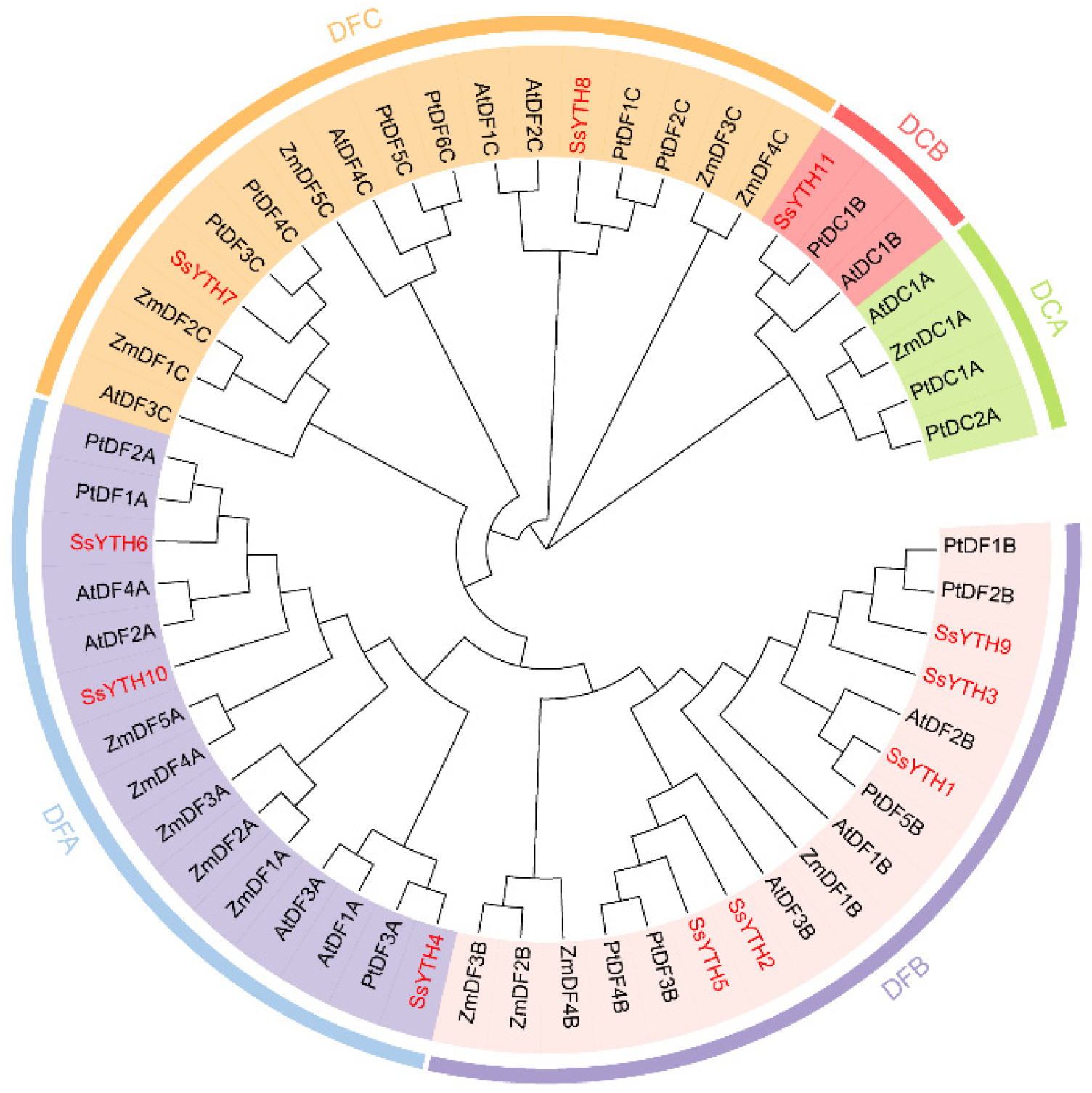
Based on comparative analysis with YTH proteins from other plant species, the S. suchowensis YTH family can be divided into two major clades: the DF group (containing SsYTH1-SsYTH10) and the DC group (represented only by SsYTH11). To further elucidate their evolutionary relationships, a phylogenetic tree was constructed using 45 YTH proteins from three species. This analysis classified the S. suchowensis YTH proteins into four subfamilies: DFA (SsYTH4, SsYTH6, SsYTH10), DFB (SsYTH1–SsYTH3, SsYTH5, SsYTH9), DFC (SsYTH7, SsYTH8), DCB (SsYTH11) and none from DCA (Figure 1).

3.2. Chromosome Localization of SsYTH Genes

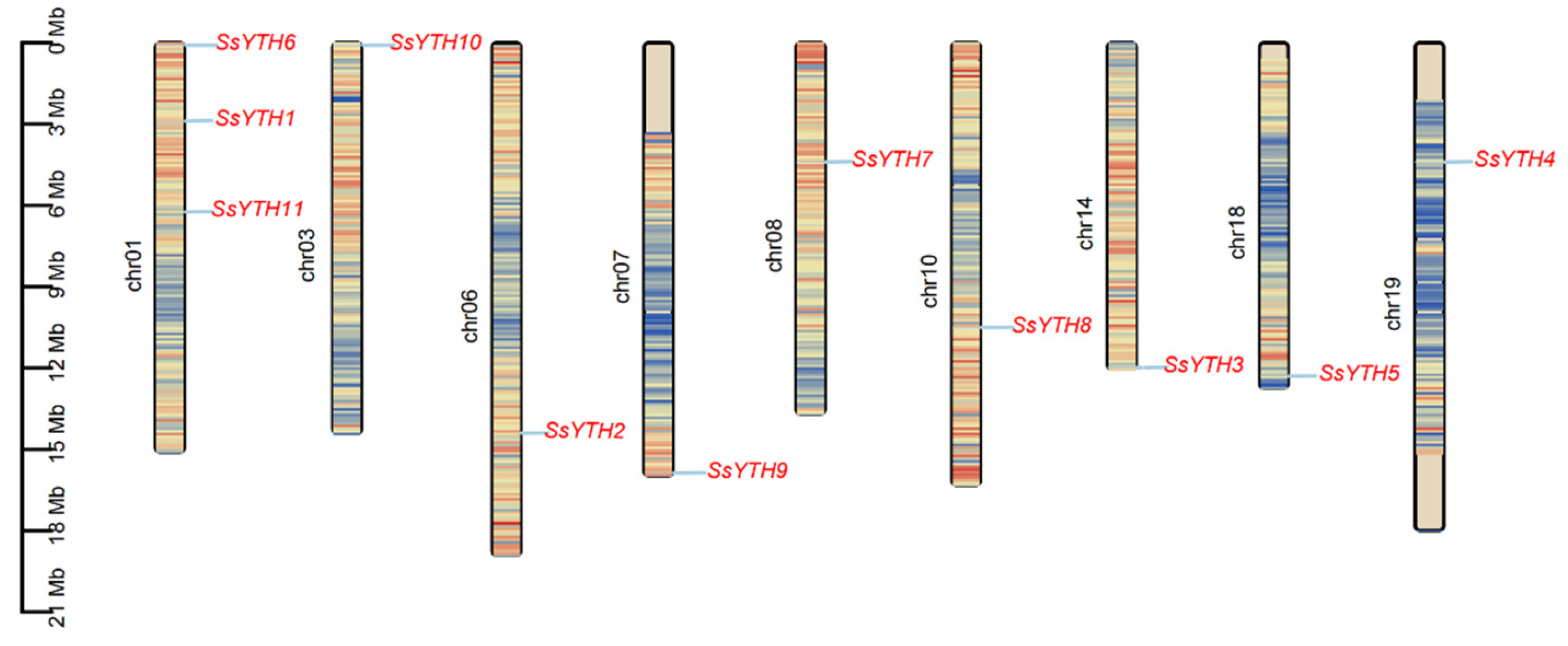
S. suchowensis possesses 19 chromosomes, and mapping analysis revealed that the 11 identified SsYTH genes are unevenly dispersed across 9 chromosomes. Notably, with the exception of chromosome 1, each chromosome contains only one SsYTH gene. Importantly, there is no discernible relationship between chromosome length and the number of SsYTH genes present. Furthermore, no SsYTH gene within the family exhibits clustering in tandem repeat regions on any chromosome. This uneven chromosomal distribution of SsYTH genes may reflect genetic variation and evolutionary divergence in S. suchowensis (Figure 2).

3.3. Collinearity Analysis of SsYTH Family

To investigate the evolutionary relationships of YTH genes, collinearity analysis was conducted between S. suchowensis and A. thaliana. The results showed that 7 SsYTH genes exhibit syntenic relationships with AtYTH genes in Arabidopsis, and the sequence similarity between the YTH domain for the two species analyzed by BioEdit was higher than 79% (Supplementary Table S3). All findings indicate a close evolutionary relationship between the YTH gene families of these two species (Figure 3).

3.4. Gene Structure, Conserved Domain and Motif Analysis of SsYTH Genes

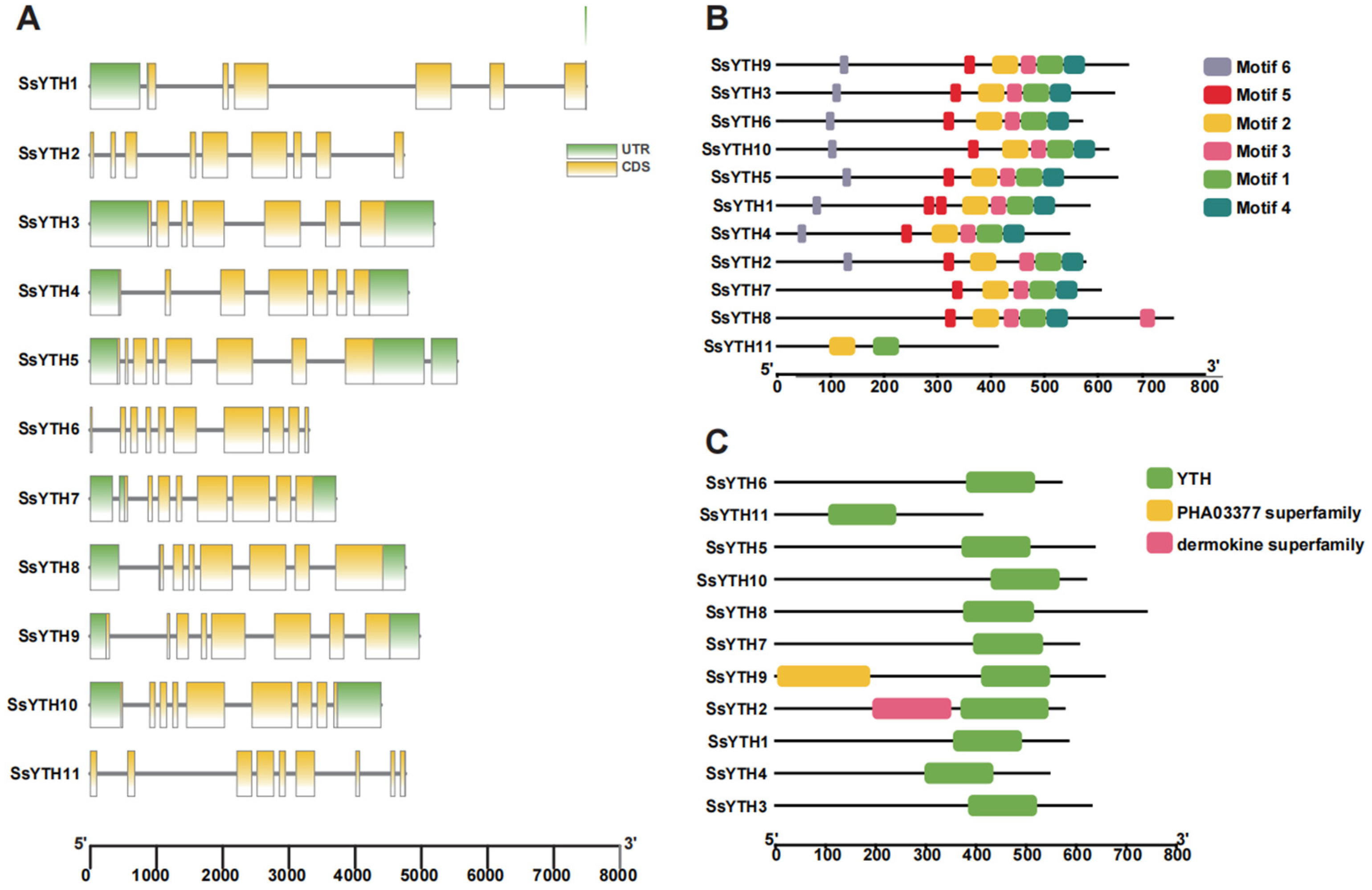
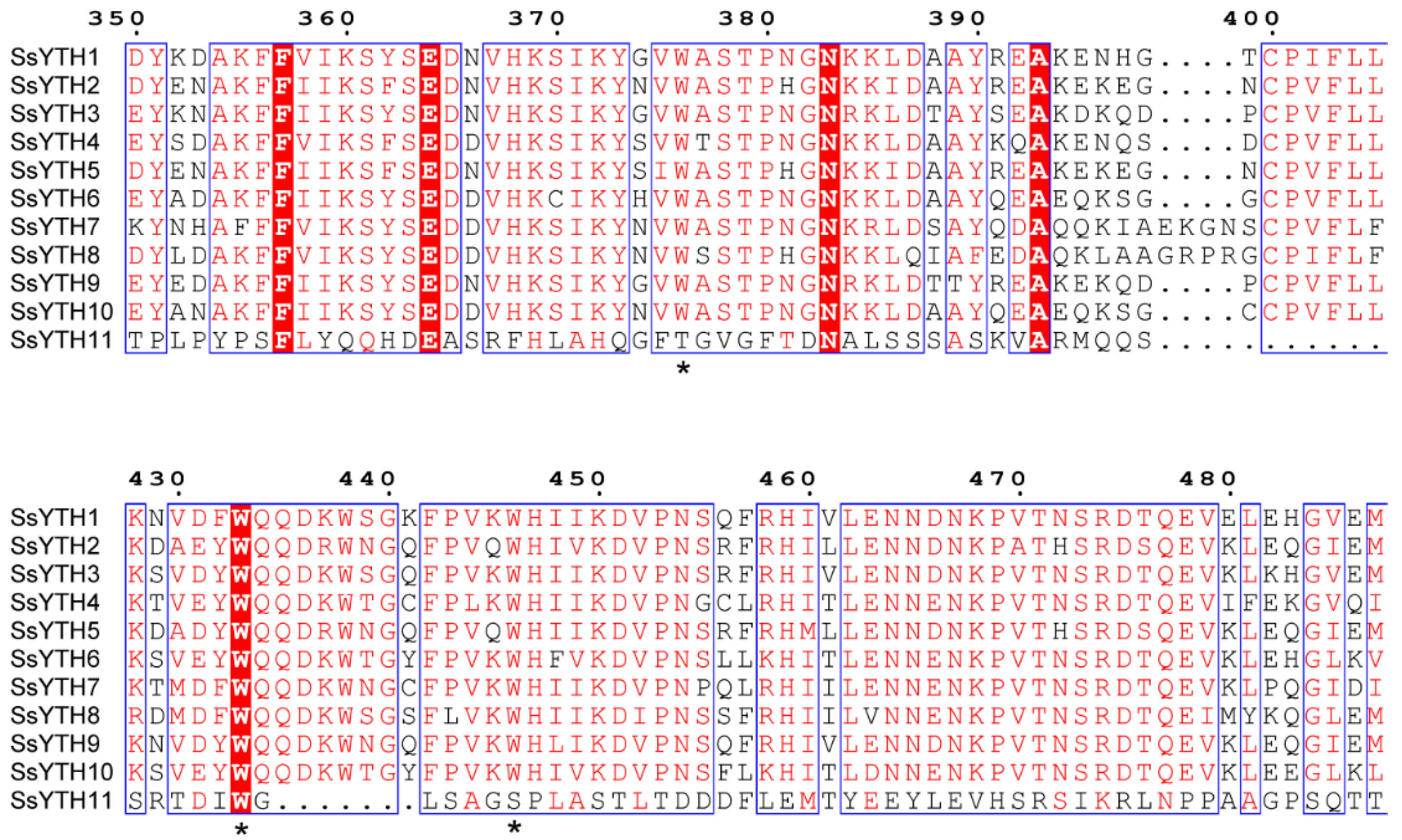
To elucidate the structural diversity of SsYTH proteins, we conducted a comprehensive analysis encompassing gene structure, conserved domains, and motifs (Figure 4). Our examination of conserved domains revealed the presence of a characteristic functional YTH domain within each SsYTH protein. Utilizing the MEME tool, we identified six conserved motifs, with Motifs 1 and 2 universally present in all SsYTH proteins. Motifs 1–5 were detected in 10 SsYTH proteins, with the exception of SsYTH11 (Figure 4B). The distribution of conserved motifs within each protein group showed high consistency, implying that members within the same phylogenetic cluster may share similar functions. Sequence alignment further revealed the presence of conserved aromatic cage residues: tryptophan residues (WWW) in all DF subfamily members, whereas the third tryptophan is substituted by serine (S) in the DCB subfamily member SsYTH11, possibly indicating functional divergence (Figure 5).

3.5. Prion-Like Domain Prediction and Phase Separation Potential

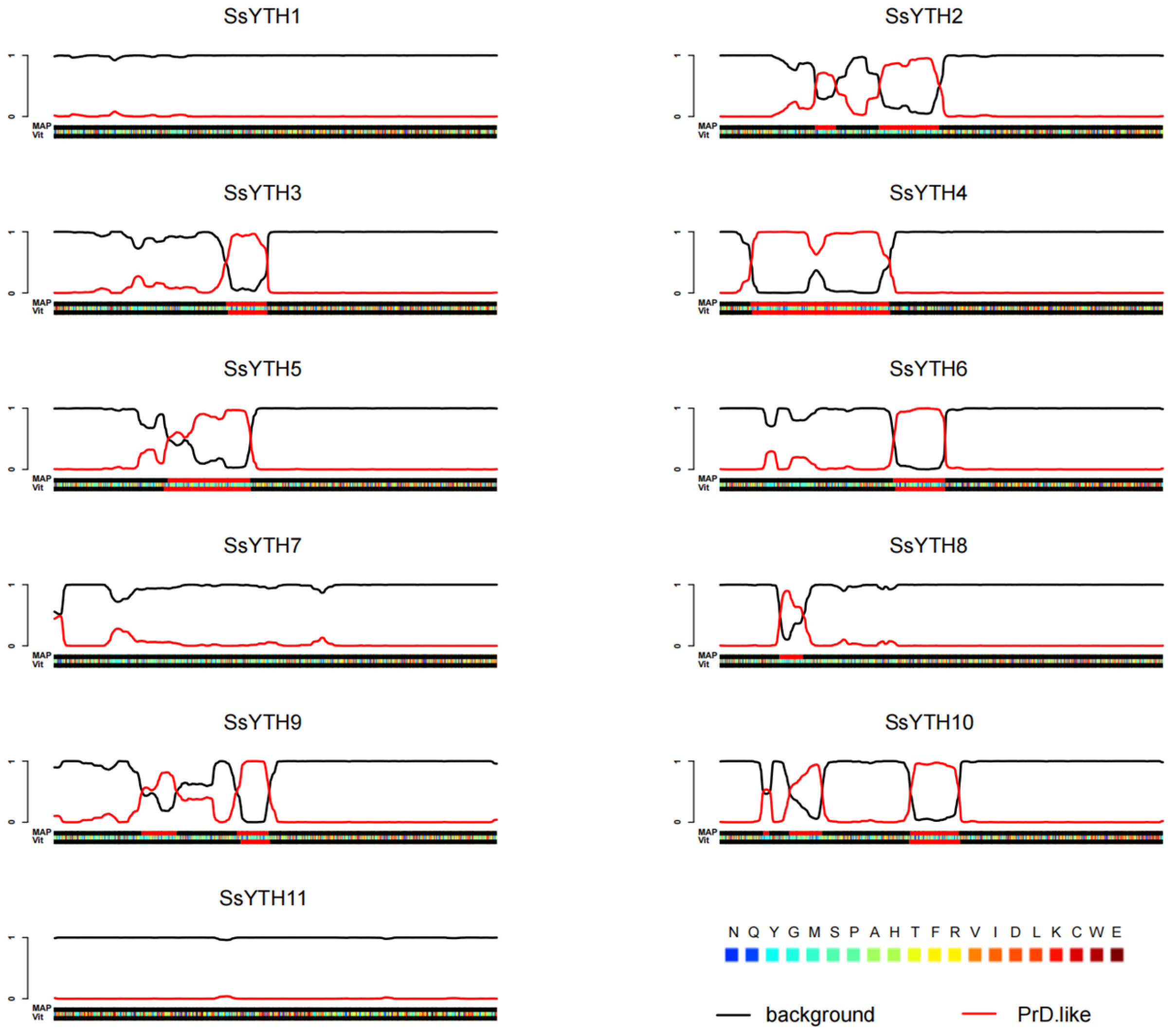
PrLPs (Prion-like Proteins) are typically composed of one or more Prion-like domains (PrLDs), which are low-complexity regions enriched in specific amino acids. These domains have been reported to facilitate protein-protein and protein-RNA interactions and are frequently associated with LLPS in RNA-binding proteins [23]. To investigate whether SsYTH proteins contain such features, the prion-like amino acid composition (PLAAC) tool was used to predict PrLDs. The results showed that, except for SsYTH1, SsYTH7 and SsYTH11, all SsYTH members were found to contain one or two PrLDs (Figure 6). Given that PrLDs are known to promote LLPS, the widespread presence of these domains suggests that most SsYTH proteins may undergo phase separation like the human YTHDF1-YTHDF3 protein, thereby influencing the growth and development of plants and their adaptability to the environment in terms of organelle formation, gene expression regulation and metabolic regulation.

3.6. Tissue-Specific Expression Pattern of SsYTH Genes

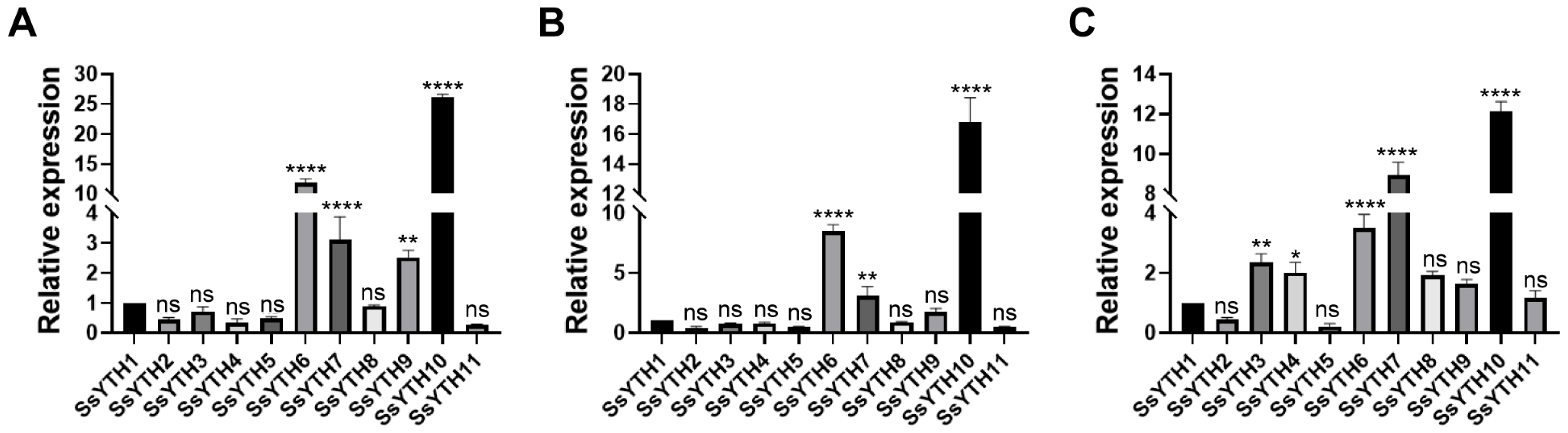
To elucidate the potential physiological function of SsYTH in the growth and development of S. suchowensis, we conducted a tissue-specific expression analysis of the SsYTH gene in root, stem, and leaf tissues using RT-qPCR. Our findings demonstrated distinct expression patterns of the SsYTH genes across the three tissues. SsYTH10 showed the highest expression across all tissues, while SsYTH6 and SsYTH7 displayed high expression levels in two tissues, respectively. Conversely, the other SsYTH genes demonstrated relatively lower expression levels. These tissue-specific patterns are different from those in other plants, indicating possible functional specialization among SsYTH family members and indicating regulatory mechanisms distinct from those in other plant species (Figure 7).

3.7. Analysis of Cis-Regulatory Elements in SsYTH Gene Promoter Region

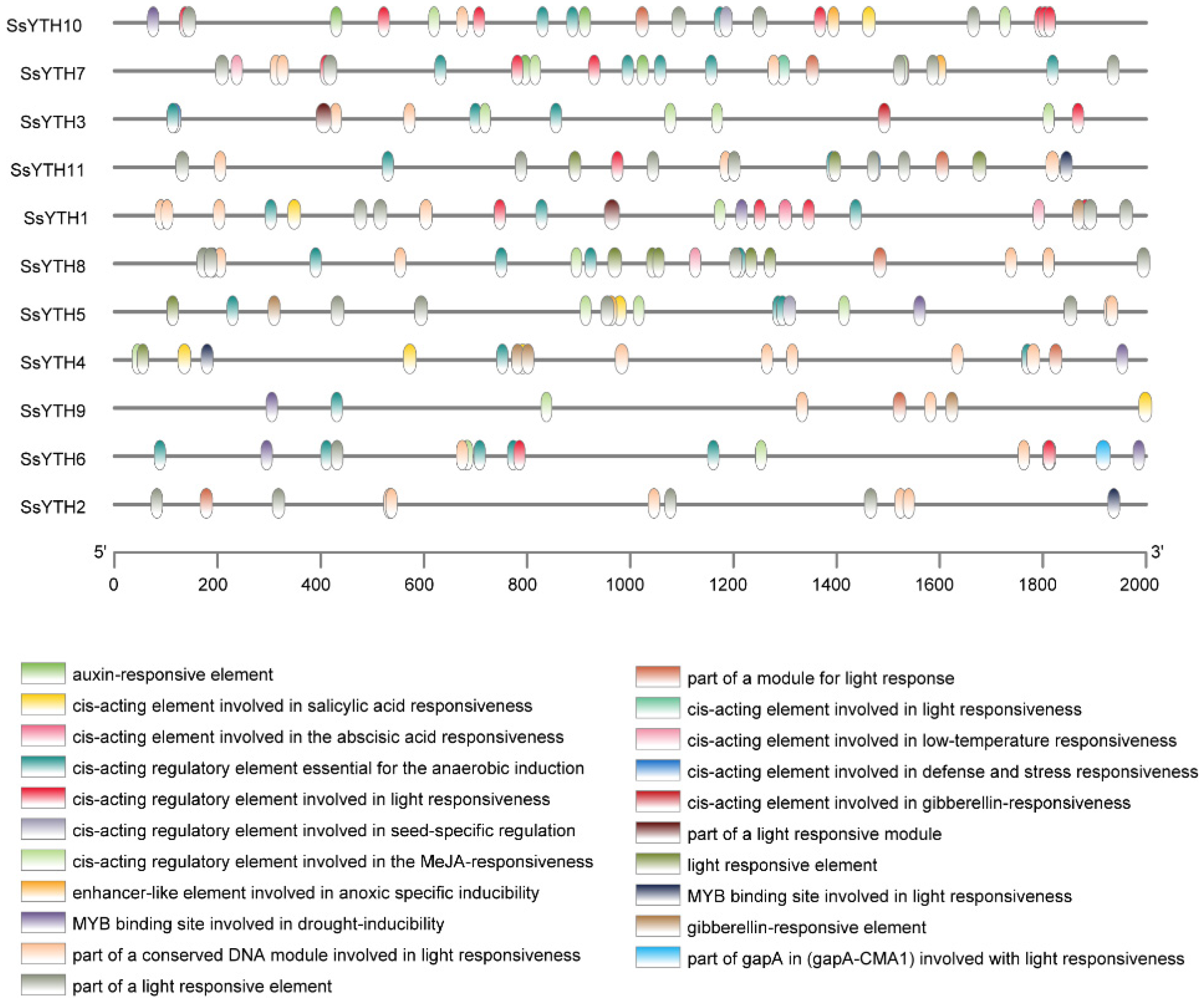
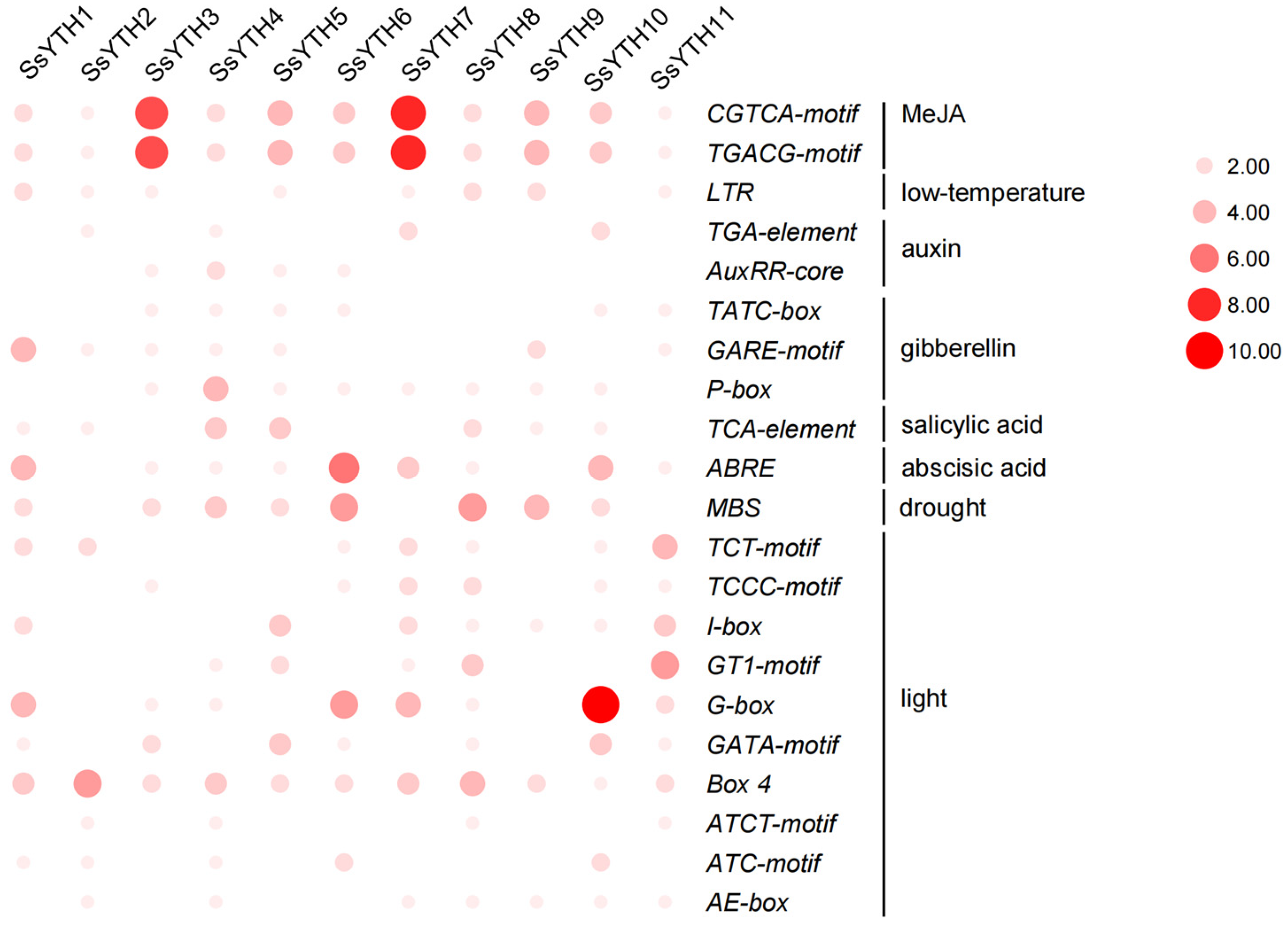
Cis-regulatory elements in the promoter regions can govern transcriptional regulation by serving as binding sites for gene regulatory proteins. Upon examination of cis-regulatory elements within the 2000 bp upstream promoter region of SsYTH genes, multiple stress and hormone-responsive elements were identified, including JA, light, cold, drought, auxin, salicylic acid, gibberellin, and ABA response elements (Figure 8). After counting the number of these cis-acting elements in each gene, we found that JA-responsive elements were the most prevalent, followed by those responsive to ABA and light (Figure 9). These findings imply potential involvement of the SsYTH family in response to hormonal and abiotic stresses.

3.8. Expression Pattern of SSYTH Gene Under Hormone Treatment

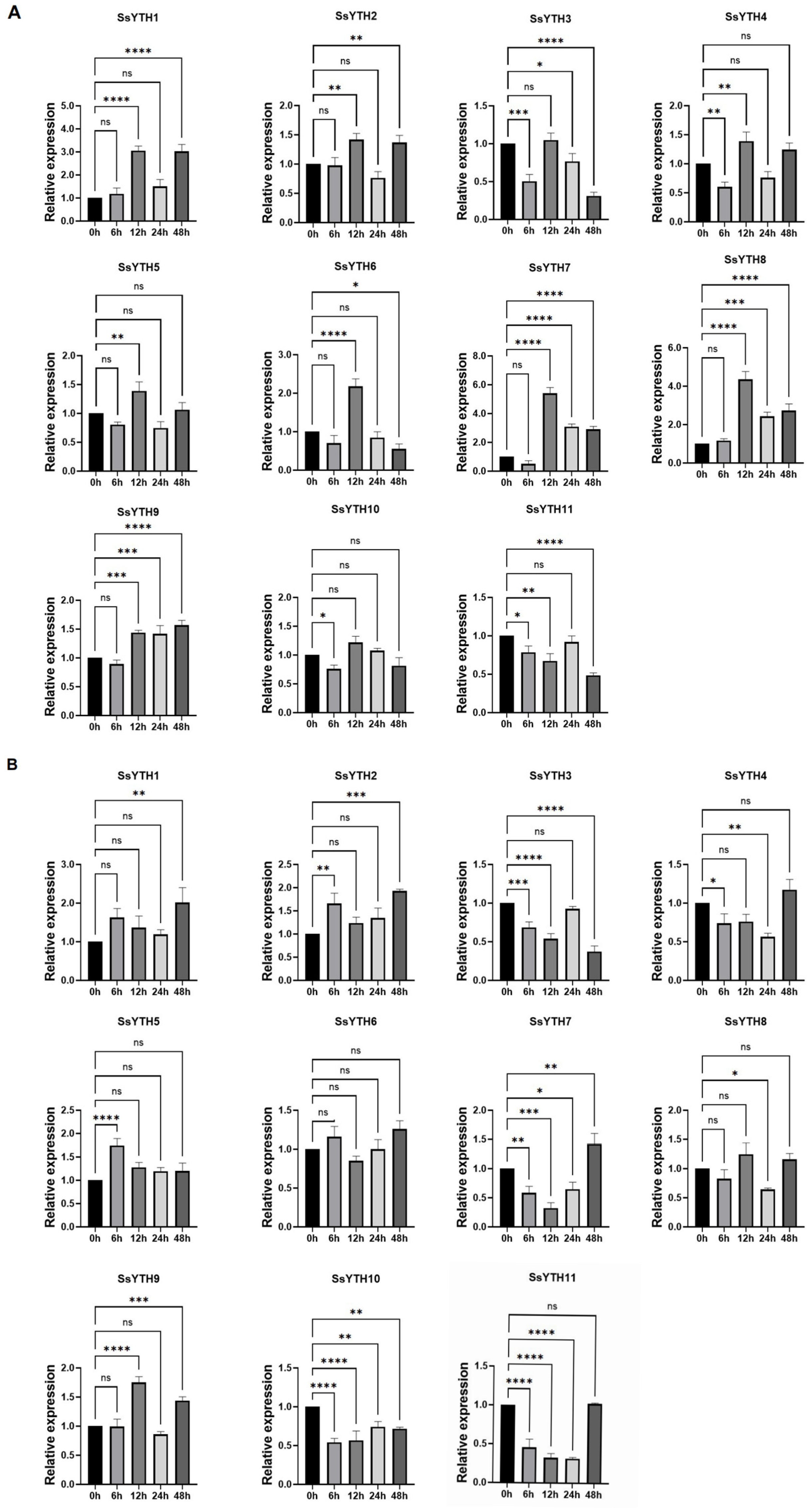
Given the abundance of hormone-related cis-elements, the expression patterns of SsYTH genes were analyzed under exogenous JA and ABA treatments. The results showed that the expression patterns of SsYTH1, SsYTH3, SsYTH5, SsYTH6, SsYTH7, SsYTH8, SsYTH9, SsYTH11 changed significantly within 48 h after ABA treatment, and most of the gene expression levels increased first and then decreased. Except SsYTH3, SsYTH9 and SsYTH11, the relative expression of the other 8 members reached the highest level after 12 h treatment. The relative expression of SsYTH1, SsYTH7 and SsYTH8 increased significantly at 12 h, and the change amplitude was more than 3-fold (Figure 10A). Under JA hormone treatment, the relative expression levels of most members decreased at 6 h and 12 h after treatment and recovered to their initial expression levels at 48 h after treatment. The relative expression levels of 4 members (SsYTH1, SsYTH2, SsYTH6, SsYTH7) reached the highest level at 48 h after treatment. The overall expression decreased first and then increased (Figure 10B).

4. Discussion

m6A is a common RNA modification present in mRNA and non-coding RNA, influencing various RNA processes like splicing, translation, stability, and epigenetic control of specific non-coding RNAs. The functional impacts of m6A modifications are executed predominantly by m6A-binding “reader” proteins, among which the YTH domain-containing proteins are the best characterized. The YTH domain-containing family is widely conserved across eukaryotes and plays vital roles in post-transcriptional gene regulation. In this study, we performed a systematic genome-wide identification and characterization of the SsYTH gene family in S. suchowensis, providing new insights into the evolutionary relationships, structural diversity, and functional potential of this important family in a woody perennial species.
Our finding that the 11 SsYTH genes are unevenly distributed across 9 chromosomes, without evidence of tandem duplication or direct correlation with chromosome length, reflects the dynamic evolutionary history and possibly lineage-specific gene loss or retention in S. suchowensis. This distribution pattern is consistent with reports from Populus and Arabidopsis [10], where gene family expansion has occurred mainly via segmental rather than tandem duplications. Synteny analysis reveals that 10 of 11 SsYTH genes have orthologous collinear counterparts in A. thaliana, supporting the notion of strong purifying selection and conservation of YTH-mediated m6A recognition functions in plants. Structurally, all SsYTH proteins contain the canonical YTH domain, yet they display substantial diversity in motif arrangement, gene structure, and predicted physicochemical properties. Notably, motif 1 and 2 were conserved across all family members, suggesting a core function in m6A binding, while additional motifs likely contribute to functional differentiation. Most SsYTH gene family members were predicted to be located in the nucleus, suggesting involvement in nuclear RNA metabolism. With respect to PrLDs, all members except SsYTH1, SsYTH7, and SsYTH11 harbor one or two PrLDs. PrLDs are low-complexity regions that can mediate multivalent interactions among proteins or between proteins and nucleic acids, promoting LLPS. These interactions facilitate the formation of membraneless compartments, potentially influencing the fate of m6A-modified RNA [24,25,26]. This is analogous to mammalian YTHDF proteins, where PrLD-mediated LLPS is critical for stress granule formation and m6A-dependent RNA regulation [27,28,29,30,31]. Notably, the variation in PrLD presence among SsYTH subfamilies may reflect functional divergences, suggesting that different members could contribute distinctively to LLPS-related processes. In S. suchowensis, such functional diversification could underlie species-specific adaptations in RNA metabolism and stress responsiveness. Whether plant YTHs functionally engage in LLPS in vivo and to what extent this shapes RNA metabolism and plant adaptation warrants further experimental validation.
Phylogenetic and collinearity analyses demonstrate that the SsYTH gene family in S. suchowensis is highly conserved and under strong selective pressure. The four subfamilies (DFA, DFB, DFC, DCB) observed reflect both ancient duplications and potential functional divergence within the family. Notably, sequence analysis showed conserved aromatic cage residues critical for m6A binding in DF subfamily members, which may be functionally distinct from DCB subfamily proteins such as SsYTH11.
At present, many plants have studied the functions of YTH family genes, which mainly play roles in plant growth and development and response to abiotic stress. For example, in Brassica napus, BnaHAKAI regulates gene expression during seed development by recognizing m6A-modified RNA [32]. In rice, YTH family members influence plant height by regulating m6A-modified RNA. In cotton, GhYTH gene expression significantly changed under stress, indicating that YTH family members may participate in plant responses to drought, high temperature, low temperature and other abiotic stresses [33]. SsYTH gene expression was found to be tissue-specific, with SsYTH6 and SsYTH10 (DFA subfamily) highly expressed in roots, stems, and leaves, echoing findings in other tree species like Cinnamomum camphora and Camellia sinensis [34,35]. This observation indicated their potential roles in basal cellular processes. Conversely, other subfamilies with more limited or tissue-specific expression patterns may fulfill specialized or stress-inducible functions. The dynamic, gene-specific expression responses observed in S. suchowensis suggest that some YTH paralogs have undergone subfunctionalization or neofunctionalization, possibly as an adaptive strategy for woody perennial life cycles or stress environments.
Furthermore, analysis of cis-acting elements in the promoter regions of SsYTH genes demonstrated a significant enrichment of cis-regulatory elements associated with hormone responses, especially JA and ABA. Hormone treatment experiments corroborated these findings, showing clear and differential induction patterns for several SsYTH genes in response to ABA and JA. These results are consistent with reports from other crops, where YTH family members have been functionally linked to hormone signaling and stress tolerance. For instance, BnaECT8 in Brassica napus is required for salt and drought responses [36]. Most SsYTH genes showed transient upregulation in response to hormone stimuli, implicating the family in hormonal signaling and stress adaptation. Thus, the SsYTH gene family likely plays fundamental roles in the growth, development, and abiotic stress response of S. suchowensis, with significant implications for genetic improvement and breeding. It should be noted that hormone-regulated gene expression is often dose-dependent or tissue-specific. In the present study, a single, commonly used effective concentration was applied to assess the responsiveness of SsYTH genes to ABA and JA signaling. Further dose–response and tissue-resolved analyses will be required to fully elucidate the regulatory roles of YTH readers in hormone signaling.
In summary, this study expands our understanding of the YTH gene family in a significant woody species, highlights their evolutionary conservation and functional complexity, and provides a robust foundation for future research into m6A-mediated regulatory mechanisms in trees. The insights gained here can inform not only basic biology but also applied breeding strategies for stress-resilient willow cultivars and related woody plants.

Supplementary Materials

The following supporting information can be downloaded at https://www.mdpi.com/article/10.3390/horticulturae11121532/s1, Table S1: Amino acid sequence of YTH conserved domain for evolutionary tree construction; Table S2: Primer sequence of SsYTH; Table S3: Similarity of YTH domains between two species; Table S4: PLAAC of YTH proteins in Salix suchowensis; Table S5: Protein sequence of SsYTHs; Table S6: Prediction of promoter cis-regulatory elements.

Author Contributions

Conceptualization, Q.Y.; methodology, Y.C.; software, Y.C., Y.M. and H.Y.; validation, Y.C.; formal analysis, Y.C., B.L., Y.M. and J.Z.; data curation, Y.C., W.G.; writing—original draft preparation, Y.C.; writing—review and editing, Y.C., K.J. and Q.Y.; All authors have read and agreed to the published version of the manuscript.

Funding

This research was supported by the National Natural Science Foundation of China (grant no. 32201583), Beijing National Laboratory for Molecular Sciences (BNLMS202202) and State Key Laboratory of Tree Genetics and Breeding (SKLTGB-NJ2024-004).

Data Availability Statement

The original contributions presented in this study are included in the article/Supplementary Material. Further inquiries can be directed to the corresponding author(s).

Acknowledgments

The author expresses sincere gratitude to Wang Zhengxuan of Nanjing Forestry University for generously providing Salix suchowensis seedlings.

Conflicts of Interest

The authors declare no conflicts of interest. The funders had no role in the design of the study; in the collection, analyses, or interpretation of data; in the writing of the manuscript; or in the decision to publish the results.

Abbreviations

qRT-PCRQuantitative reverse transcription PCR
YTHDFYTH domain family proteins
ECTEvolutionarily conserved C-terminal
CPSF30Cleavage and Polyadenylation Specificity Factor 30
CIPK1CBL-INTERACTING PROTEIN KINASE 1
PrLDsPrion-like domains
ANOVAAnalysis of variance

References

  1. Boccaletto, P.; Stefaniak, F.; Ray, A.; Cappannini, A.; Mukherjee, S.; Purta, E.; Kurkowska, M.; Shirvanizadeh, N.; Destefanis, E.; Groza, P. MODOMICS: A database of RNA modification pathways. Nucleic Acids Res. 2022, 50, 231–235. [Google Scholar] [CrossRef]
  2. Oerum, S.; Meynier, V.; Catala, M.; Tisné, C. A comprehensive review of m6A/m6Am RNA methyltransferase structures. Nucleic Acids Res. 2021, 49, 7239–7255. [Google Scholar] [CrossRef] [PubMed]
  3. Yang, Y.; Hsu, P.J.; Chen, Y.; Yang, Y. Dynamic transcriptomic m6A decoration: Writers, erasers, readers and functions in RNA metabolism. Cell Res. 2018, 28, 616–624. [Google Scholar] [CrossRef] [PubMed]
  4. Wu, B.; Li, L.; Huang, Y.; Ma, J.; Min, J. Readers, writers and erasers of N6-methylated adenosine modification. Curr. Opin. Struct. Biol. 2017, 47, 67–76. [Google Scholar] [CrossRef] [PubMed]
  5. Liao, S.; Sun, H.; Xu, C. YTH Domain: A Family of N6-methyladenosine (m6A) Readers. Genom. Proteom. Bioinform. 2018, 16, 99–107. [Google Scholar] [CrossRef]
  6. Huang, J.; Yin, P. Structural Insights into N6-methyladenosine (m6A) Modification in the Transcriptome. Genom. Proteom. Bioinform. 2018, 16, 85–98. [Google Scholar] [CrossRef]
  7. Xiao, W.; Adhikari, S.; Dahal, U.; Chen, Y.; Hao, Y.; Sun, B.; Sun, H.; Li, A.; Ping, X.; Lai, W.; et al. Nuclear m6A Reader YTHDC1 Regulates mRNA Splicing. Mol. Cell 2016, 61, 507–519. [Google Scholar] [CrossRef]
  8. Roundtree, I.A.; Luo, G.Z.; Zhang, Z.; Wang, X.; Zhou, T.; Cui, Y.; Sha, J.; Huang, X.; Guerrero, L.; Xie, P.; et al. YTHDC1 mediates nuclear export of N6-methyladenosine methylated mRNAs. eLife 2017, 6, e31311. [Google Scholar] [CrossRef]
  9. Du, H.; Zhao, Y.; He, J.; Zhang, Y.; Xi, H.; Liu, M.; Ma, J.; Wu, L. YTHDF2 destabilizes m(6)A-containing RNA through direct recruitment of the CCR4-NOT deadenylase complex. Nat. Commun. 2016, 7, 12626. [Google Scholar] [CrossRef]
  10. Arribas-Hernández, L.; Bressendorff, S.; Mathias, H.H.; Poulsen, C.; Erdmann, S.; Brodersen, P. An m6A-YTH Module Controls Developmental Timing and Morphogenesis in Arabidopsis. Plant Cell 2018, 30, 952–967. [Google Scholar] [CrossRef]
  11. Cai, L.; Cui, S.; Jin, T.; Huang, X.; Hou, H.; Hao, B.; Xu, Z.; Cai, L.; Hu, Y.; Yang, X.; et al. The N6-methyladenosine binding proteins YTH03/05/10 coordinately regulate rice plant height. Plant Sci. 2023, 329, 111546. [Google Scholar] [CrossRef] [PubMed]
  12. Ao, Q.; Qiu, T.; Liao, F.; Hu, Z.; Yang, Y. Knockout of SlYTH2, encoding a YTH domain-containing protein, caused plant dwarfing, delayed fruit internal ripening, and increased seed abortion rate in tomato. Plant Sci. 2023, 335, 111807. [Google Scholar] [CrossRef] [PubMed]
  13. Guo, T.; Wang, N.; Xue, Y.; Guan, Q.; Steven, V.N.; Liu, C.; Ma, F. Overexpression of the RNA binding protein MhYTP1 in transgenic apple enhances drought tolerance and WUE by improving ABA level under drought condition. Plant Sci. 2019, 280, 397–407. [Google Scholar] [CrossRef] [PubMed]
  14. Wei, L.; Song, P.; Wang, Y.; Lu, Z.; Tang, Q.; Yu, Q.; Xiao, Y.; Zhang, X.; Duan, H.; Jia, G. The m6A Reader ECT2 Controls Trichome Morphology by Affecting mRNA Stability in Arabidopsis. Plant Cell 2018, 30, 968–985. [Google Scholar] [CrossRef]
  15. Arribas-Hernández, L.; Brodersen, P. Occurrence and Functions of m(6)A and Other Covalent Modifications in Plant mRNA. Plant Physiol. 2020, 182, 79–96. [Google Scholar] [CrossRef]
  16. Ok, S.; Jeong, H.; Bae, J.; Shin, J.; Luan, S.; Kim, K. Novel CIPK1-associated proteins in Arabidopsis contain an evolutionarily conserved C-terminal region that mediates nuclear localization. Plant Physiol. 2005, 139, 138–150. [Google Scholar] [CrossRef]
  17. Hou, Y.; Sun, J.; Wu, B.; Gao, Y.; Nie, H.; Nie, Z.; Quan, S.; Wang, Y.; Cao, X.; Li, S. CPSF30-L-mediated recognition of mRNA m6A modification controls alternative polyadenylation of nitrate signaling-related gene transcripts in Arabidopsis. Mol. Plant 2021, 14, 688–699. [Google Scholar] [CrossRef]
  18. Ma, W.; Cui, S.; Lu, Z.; Yan, X.; Cai, L.; Lu, Y.; Cai, K.; Zhou, H.; Ma, R.; Zhou, S.; et al. YTH Domain Proteins Play an Essential Role in Rice Growth and Stress Response. Plants 2022, 11, 2206. [Google Scholar] [CrossRef]
  19. Yin, S.; Ao, Q.; Qiu, T.; Tan, C.; Tu, Y.; Kuang, T.; Yang, Y. Tomato SlYTH1 encoding a putative RNA m6A reader affects plant growth and fruit shape. Plant Sci. 2022, 323, 111417. [Google Scholar] [CrossRef]
  20. Luo, W.; Tang, Y.; Li, S.; Zhang, L.; Liu, Y.; Zhang, R.; Diao, X.; Yu, J. The m6A reader SiYTH1 enhances drought tolerance by affecting the messenger RNA stability of genes related to stomatal closure and reactive oxygen species scavenging in Setaria italica. J. Integr. Plant Biol. 2023, 65, 2569–2586. [Google Scholar] [CrossRef]
  21. Wang, H.; Wang, Y.; Wang, Y.; Zhu, J.; Chen, L.; Yan, X.; Yu, C.; Jiang, B. Genome-Wide Identification, Characterization, and Expression Analysis of VQ Gene Family in Salix suchowensis Under Abiotic Stresses and Hormone Treatments. Plants 2025, 14, 1431. [Google Scholar] [CrossRef] [PubMed]
  22. Livak, K.J.; Schmittgen, T.D. Analysis of relative gene expression data using real-time quantitative PCR and the 2−ΔΔCT Method. Methods 2001, 25, 402–408. [Google Scholar] [CrossRef] [PubMed]
  23. Wu, P.; Li, Y. Prion–like Proteins in Plants: Key Regulators of Development and Environmental Adaptation via Phase Separation. Plants 2024, 13, 2666. [Google Scholar] [CrossRef] [PubMed]
  24. Li, P.; Banjade, S.; Cheng, H.C.; Kim, S.; Chen, B.; Guo, L.; Llaguno, M.; Hollingsworth, J.V.; King, D.S.; Banani, S.F.; et al. Phase transitions in the assembly of multivalent signalling proteins. Nature 2012, 483, 336–340. [Google Scholar] [CrossRef]
  25. Farag, M.; Borcherds, W.M.; Bremer, A.; Mittag, T.; Pappu, R.V. Phase separation of protein mixtures is driven by the interplay of homotypic and heterotypic interactions. Nat. Commun. 2023, 14, 5527. [Google Scholar] [CrossRef]
  26. Oh, Z.G.; Ang, W.S.L.; Poh, C.W.; Lai, S.K.; Sze, S.K.; Li, H.Y.; Bhushan, S.; Wunder, T.; Mueller-Cajar, O. A linker protein from a red–type pyrenoid phase separates with Rubisco via oligomerizing sticker motifs. Proc. Natl. Acad. Sci. USA 2023, 120, e2304833120. [Google Scholar] [CrossRef]
  27. Fu, Y.; Zhuang, X. m6A-binding YTHDF proteins promote stress granule formation. Nat. Chem. Biol. 2020, 16, 955–963. [Google Scholar] [CrossRef]
  28. Alberti, S.; Gladfelter, A.; Mittag, T. Considerations and Challenges in Studying Liquid-Liquid Phase Separation and Biomolecular Condensates. Cell 2019, 176, 419–434. [Google Scholar] [CrossRef]
  29. Banani, S.F.; Lee, H.O.; Hyman, A.A.; Rosen, M.K. Biomolecular condensates: Organizers of cellular biochemistry. Nat. Rev. Mol. Cell Biol. 2017, 18, 285–298. [Google Scholar] [CrossRef]
  30. Patel, A.; Lee, H.O.; Jawerth, L.; Maharana, S.; Jahnel, M.; Hein, M.Y.; Stoynov, S.; Mahamid, J.; Saha, S.; Franzmann, T.M.; et al. A Liquid-to-Solid Phase Transition of the ALS Protein FUS Accelerated by Disease Mutation. Cell 2015, 162, 1066–1077. [Google Scholar] [CrossRef]
  31. Kato, M.; Han, T.W.; Xie, S.; Shi, K.; Du, X.; Wu, L.C.; Mirzaei, H.; Goldsmith, E.J.; Longgood, J.; Pei, J.; et al. Cell-free Formation of RNA Granules: Low Complexity Sequence Domains Form Dynamic Fibers within Hydrogels. Cell 2012, 149, 753–767. [Google Scholar] [CrossRef]
  32. Chen, X.; Kang, Y.; Li, S.; Yang, B.; Xia, X.; Wang, Z.; Qian, L.; Xiong, X.; Kang, L.; He, X. Identification and expression analysis of N6-methyltransferase and demethylase in rapeseed (Brassica napus L.). BMC Genom. 2025, 26, 526. [Google Scholar] [CrossRef]
  33. Hao, W.; Wang, W.; Xiao, X.; Sun, J.; Wu, B.; Zhao, Y.; Pei, S.; Fan, W.; Xu, D.; Qin, T. Genome-Wide Identification and Evolutionary Analysis of Gossypium YTH Domain-Containing RNA-Binding Protein Family and the Role of GhYTH8 in Response to Drought Stress. Plants 2023, 12, 1198. [Google Scholar] [CrossRef]
  34. Zhang, J.; Yao, S.; Cheng, X.; Zhao, Y.; Yu, W.; Ren, X.; Ji, K.; Yu, Q. Genome-Wide Identification and Expression Analysis of the YTH Domain-Containing RNA-Binding Protein Family in Cinnamomum camphora. Int. J. Mol. Sci. 2024, 25, 5960. [Google Scholar] [CrossRef]
  35. Cheng, X.; Yao, S.; Zhang, J.; Wang, D.; Xu, S.; Yu, Q.; Ji, K. Genome-Wide Identification and Expression Analysis of YTH Gene Family for Abiotic Stress Regulation in Camellia chekiangoleosa. Int. J. Mol. Sci. 2024, 25, 3996. [Google Scholar] [CrossRef]
  36. Wang, P.; Liu, F.; Wang, Y.; Chen, H.; Liu, T.; Li, M.; Chen, S.; Wang, D. Deciphering crucial salt-responsive genes in Brassica napus via statistical modeling and network analysis on dynamic transcriptomic data. Plant Physiol. Biochem. 2025, 220, 109568. [Google Scholar] [CrossRef]
Figure 1. Phylogenetic tree of YTH domain proteins from S. suchowensis, A. thaliana, Populus, and Zea mays. Different colored backgrounds and surrounding letters signify distinct groups. The phylogenetic tree categorizes YTH genes into five groups. The YTH domain sequences are shown in Table S1.
Horticulturae 11 01532 g001
Figure 2. Chromosomal localization of SsYTH genes. Chromosome numbers are shown on the left, and relative chromosome lengths are indicated by scale bars.
Horticulturae 11 01532 g002
Figure 3. Synteny analysis of YTH genes between A. thaliana and S. suchowensis. The gray lines in the background indicate collinear blocks between the S. suchowensis and A. thaliana genomes, while the red lines indicate collinear YTH gene pairs.
Horticulturae 11 01532 g003
Figure 4. Gene structure, conserved domain, and motif analysis of SsYTH proteins. (A) Exon-intron structure and UTR organization of SsYTH genes. The external display, UTR, and internal display are denoted by the box, green box, and line, respectively. (B) Conserved motif composition. Conserved motifs of SsYTH proteins are depicted using various colors to differentiate between them. (C) Conserved domain structure of SsYTH proteins.
Horticulturae 11 01532 g004
Figure 5. Multiple sequence alignment of the YTH domain from the SsYTH protein family. The asterisk indicates the position of the amino acid.
Horticulturae 11 01532 g005
Figure 6. PLAAC prediction results of PrLDs in SsYTH proteins, with red lines indicating prion-like regions and background lines indicating the baseline. A red line overlapping with the baseline signifies a high phase transition probability at that specific location, suggesting the presence of a prion structure region.
Horticulturae 11 01532 g006
Figure 7. The expression profiles of YTH genes in various tissues. (A) Expression patterns of YTH genes in the root tissue. (B) Expression patterns of YTH genes in the stem tissue. (C) Expression patterns of various YTH genes based on the leaf tissue. Using the expression of the YTH1 gene as a control, the relative expression levels were determined. Each value represents the mean ± standard error (SE) of three replicates. Asterisks indicate significant differences in transcript abundance compared to the control group (ns p > 0.05, * p < 0.05, ** p < 0.01, **** p < 0.0001).
Horticulturae 11 01532 g007
Figure 8. Distribution of predicted cis-regulatory elements in SsYTH gene promoters. The predicted cis-elements are represented in boxes of different colors.
Horticulturae 11 01532 g008
Figure 9. Number of major cis-acting element of 11 SsYTH gene. Different color and different sizes represent numbers of each cis-acting element.
Horticulturae 11 01532 g009
Figure 10. The expression patterns of SsYTH genes under (A) ABA and (B) JA treatments. Samples were taken at 6, 12, 24, and 48 h post-treatment. An asterisk denotes significant differences in transcript abundance between the treatment and control groups (0 h) (ns p > 0.05, * p < 0.05, ** p < 0.01, *** p < 0.001, **** p < 0.0001).
Horticulturae 11 01532 g010
Table 1. Physicochemical properties and subcellular localization of SsYTH family members of S. suchowensis.
Sequence IDGene IDNumber of Amino AcidMolecular Weight (kDa)Theoretical pIInstability IndexPrediction of Subcellular Localization
SsYTH1OIU78_00947058464.9346.7742.34nucleus
SsYTH2OIU78_00330857663.4825.5851.95nucleus
SsYTH3OIU78_01633063069.1695.6750.41nucleus
SsYTH4OIU78_02242654660.0556.3533.47cell wall or nucleus
SsYTH5OIU78_02434963669.7885.1149.42nucleus
SsYTH6OIU78_00906457063.6087.5930.39nucleus
SsYTH7OIU78_00662660566.6056.7345.94cell membrane or nucleus
SsYTH8OIU78_00511974081.5476.5736.93nucleus
SsYTH9OIU78_02913865672.1365.4352.43nucleus
SsYTH10OIU78_01301761968.7996.4536.66nucleus
SsYTH11OIU78_00994341246.277.6948.09nucleus
Disclaimer/Publisher’s Note: The statements, opinions and data contained in all publications are solely those of the individual author(s) and contributor(s) and not of MDPI and/or the editor(s). MDPI and/or the editor(s) disclaim responsibility for any injury to people or property resulting from any ideas, methods, instructions or products referred to in the content.