Article

Design and Selection of SNP Markers for Grape Integrated Chip Arrays

1
Shanghai Collaborative Innovation Center of Agri-Seeds, School of Agriculture and Biology, Shanghai Jiao Tong University, Shanghai 200240, China
2
The Key Laboratory of Special Fruits and Vegetables Cultivation Physiology and Germplasm Resources Utilization of Xinjiang Production and Construction, Department of Horticulture, Agricultural College, Shihezi University, Shihezi 832003, China
*
Author to whom correspondence should be addressed.
Horticulturae 2025, 11(12), 1509; https://doi.org/10.3390/horticulturae11121509
Submission received: 16 November 2025 / Revised: 11 December 2025 / Accepted: 11 December 2025 / Published: 12 December 2025

Abstract

Grape (Vitis vinifera spp.) accessions exhibit rich diversity, and understanding their genetic variation and evolutionary relationships is crucial for cultivar selection and utilization. A highly representative SNP marker set was developed in this study based on re-sequencing data analysis, to clarify the phylogenetic relationships among 96 grape accessions and to evaluate the genetic resolution of core markers. Using PN40024 as the reference genome, high-quality SNP loci were screened from resequencing data of the 96 accessions. A phylogenetic tree was constructed, and genetic diversity was analyzed using PCA and population structure analysis. The results showed that the 96 accessions were mainly divided into four groups: European (‘Merlot’, ‘Chardonnay’), American (‘Beta’, ‘Concord’), Euro-American hybrids (‘Vidal’, ‘Miguang’), and wild populations along with their hybrid progeny (‘Zuoyouhong’, ‘Huajia 8’). PCA and ADMIXTURE validated population differentiation, revealing clear separation between wild and cultivated accessions. Through screening of core SNP markers, 384,304 candidate SNPs suitable for probe design were identified. Further refinement yielded 2000 and 10,000 SNP markers. Detailed analysis of core marker characteristics showed that their minor allele frequency (MAF) was predominantly between 0.1 and 0.3, with the majority distributed in CDS (38.65%), intronic (30.2%), and intergenic regions. The most common mutation types were [A/G] (35%) and [C/T] (34%) transitions. The 2000 core SNPs were associated with 1220 functional genes and were significantly enriched in pathways such as protein binding, RNA transport, and plant–pathogen interaction. These findings provide an efficient tool for grape genetic diversity analysis, cultivar identification, and molecular breeding, laying the groundwork for the precise utilization of grape germplasm resources.

1. Introduction

Grapes (Vitis vinifera spp.), a deciduous woody vine of the Vitaceae family, have a long cultivation story [1,2]. In recent years, research on grape genetic diversity has achieved a breakthrough: the successful construction of a haplotype-resolved super-pangenome encompassing extensive germplasm resources from Eurasia, North America, and East Asia [3]. This pangenome comprehensively reveals the hybridization history and abundant genetic variation within the Vitis genus, providing new perspectives for mining genes controlling key traits such as stress resistance and fruit quality [4]. Phylogenetic analyses indicate frequent hybridization events between Eurasian and North American populations, whereas the East Asian population remains relatively isolated, suggesting the preservation of unique resistance gene resources through long-term evolution [5]. Modern cultivated varieties exhibit narrow genetic diversity due to domestication and breeding, making resistance genes from wild germplasm a renewed research focus [6]. Population genetics approaches have elucidated gene flow, population bottlenecks, and adaptive evolution mechanisms in grape germplasm, providing a theoretical basis for stress-resilience breeding [7]. Based on these genetic diversity findings, functional markers associated with resistance and quality traits are being developed. When integrated with high-throughput genotyping technologies such as SNP arrays, these markers enable precise selection of target traits, significantly shortening breeding cycles [8].
With intensifying global climate change and growing grape industry demands, deciphering the genetic basis of complex plant traits and identifying key functional genes have become central objectives for breeding improvement [9,10]. Traditional molecular RFLP, ISSR [11] and SSR markers are inadequate for wide genome large-scale genotyping due to their low throughput and high costs [12]. Although these markers can be used for QTL mapping of key traits, their limited number remains a constraint [13]. In contrast, single-nucleotide polymorphisms (SNPs), the most abundant form of genetic variation in genomes, offer advantages including widespread distribution, high stability, and ease of automated detection, making them ideal markers for association studies, gene mapping, and molecular breeding [14]. Although genotyping technologies are maturely applied in breeding, their implementation in plant systems still faces challenges related to insufficient species-specific adaptability and high costs [15]. Plant genomes commonly exhibit complex features such as high repetitive sequences and polyploidization, leading to difficulties in probe design, high rates of non-specific hybridization, and compromised detection accuracy, thereby limiting their adoption in breeding programs [16].
In recent years, Genotyping by Target Sequencing (GBTS), which achieves specific target enrichment in genome sequencing, has demonstrated multiple advantages, including higher sequencing depth, marker flexibility, efficient genotyping, cumulative data collection, and reduced system requirements [17]. By combining the strengths of high-throughput sequencing and multiplex PCR amplification, methods such as multiplex restriction amplicon sequencing, SNP-seq, and Geno-plex have been developed, enabling high-throughput genotyping of hundreds of SNPs via sequencing [18]. These techniques have been successfully applied for DNA fingerprinting in various horticultural crops, including cucumber [19], pepper [20], and watermelon [21].
Grapes have undergone over 10,000 years of domestication and improvement [22]. However, the narrow genetic base of cultivated grapes has resulted in numerous varieties with similar morphological characteristics, posing challenges to the genetic enhancement of existing cultivars [23]. Numerous molecular markers have been developed for grape based on genomic data, continuing to serve as essential tools for grape genetic research and molecular breeding [14]. However, as a low-cost, high-throughput genotyping method, Geno-baits can design probes for these marker sites, thereby integrating them into a unified marker matrix for molecular design breeding.
To develop a high-throughput SNP array, this study performed comprehensive sequence alignment using resequencing data from 96 grape accessions, identifying 384,304 high-quality SNPs distributed across 19 chromosomes that met probe design criteria. Through systematic evaluation of multiple parameters, 10,000 and 2000 SNPs were selected for further development of liquid-phase chip systems. These SNPs will be synthesized into liquid-phase chips for functional locus mining, true hybrid identification, and genetic background analysis, providing a powerful technical platform for grape breeding innovation.

2. Materials and Methods

2.1. DNA Extraction and Quality Control

Genomic DNA was extracted from young grape leaves using the CTAB method described by Qu et al. [24]. DNA concentration was measured using Qubit, and integrity was verified by 1% agarose gel electrophoresis (Gel Doc XR, Bio-Rad, Shinagawa City, Japan).

2.2. Analysis of Grape SNP Loci and Probe Design

An SNP array was developed by identifying SNPs from 96 re-sequenced grape accessions. Among these, whole-genome resequencing data for 87 accessions were downloaded from the NCBI Sequence Read Archive (SRA, https://www.ncbi.nlm.nih.gov/sra, accessed on 2 October 2024), while the remaining 9 accessions (designated SJ-1 to SJ-9) were collected and sequenced in our laboratory. Detailed information for all 96 accessions is provided in Supplementary Table S1.
All re-sequenced reads were aligned to the grape reference genome (ASM3070453v1) using BWA-mem software (https://github.com/lh3/bwa, accessed on 22 October 2024). Genomic VCF files from all individuals were integrated using the Genomics DB Import module in the GATK toolkit for population-level SNP calling. Raw SNPs were filtered using the Variant Filtration module in GATK (https://github.com/Bio-protocol/GATK-SNP-Calling, accessed on 30 October 2024).
SNPs were retained using PLINK software (v 1.9) (format: 1 January 2025) [25] according to the following criteria: (i) Minor allele frequency (MAF) > 0.05, missing rate < 0.2, observed heterozygosity < 0.1, and average sequencing depth per site > 5; (ii) Only loci with no InDels or fewer than two additional SNPs within their 110 bp flanking sequences were retained; (iii) SNPs located in non-repetitive regions were screened using BLAST software (https://ngdc.cncb.ac.cn/blast/home, accessed on 10 January 2025) with parameters “-perc_identity 85 -qcov_hsp_perc 90”; (iv) SNPs with GC content of the 110 bp flanking sequences between 0.3 and 0.7 were retained; (v) SNPs with a variance inflation factor (VIF) > 30 were recursively removed using a sliding window approach (window size: 100 kb and 600 kb; step size: 5 SNPs) [26].

2.3. Data Analysis

Principal component analysis (PCA) of the 96 grape accessions was performed using Plink [27] based on the PN40024 (ASM3070453v1) reference genome, and results were visualized with the ggplot2 R package (v 4.5.0). Population structure was inferred using ADMIXTURE 1.4. Genetic distances were calculated with VCF2Dis (https://github.com/BGI-shenzhen/VCF2Dis, accessed on 10 October 2024) and FastME 2.0 [28]. A maximum likelihood (ML) phylogenetic tree was constructed using MEGA X (v 11.0.13) and subsequently optimized via the ITOL online platform (https://itol.embl.de/, accessed on 20 October 2024). SNP distribution patterns were visualized using the Advanced Circos feature in TBtools (v2.056) [29]. All other figures were prepared using Office 2019 and GraphPad Prism 10.

3. Results

3.1. Genetic Diversity Analysis of Grape Accessions

To resolve the phylogenetic relationships among grape germplasm resources, this study used PN40024 as the reference genome and analyzed SNP loci from resequencing data of 96 predominantly cultivated accessions. Among these, resequencing data for 9 accessions were generated in the laboratory, while the remaining data were obtained from the NCBI database (Supplementary Table S1). The germplasm included 46 accessions of Vitis vinifera, 7 accessions of Vitis labrusca, 14 accessions of Vitis vinifera × Vitis labrusca hybrids, and the remainder derived from wild germplasm and their hybrid progenies. Resequencing data analysis shows that the sequencing depth is mainly concentrated in the range of 10× to 15× (Supplementary Figure S1).
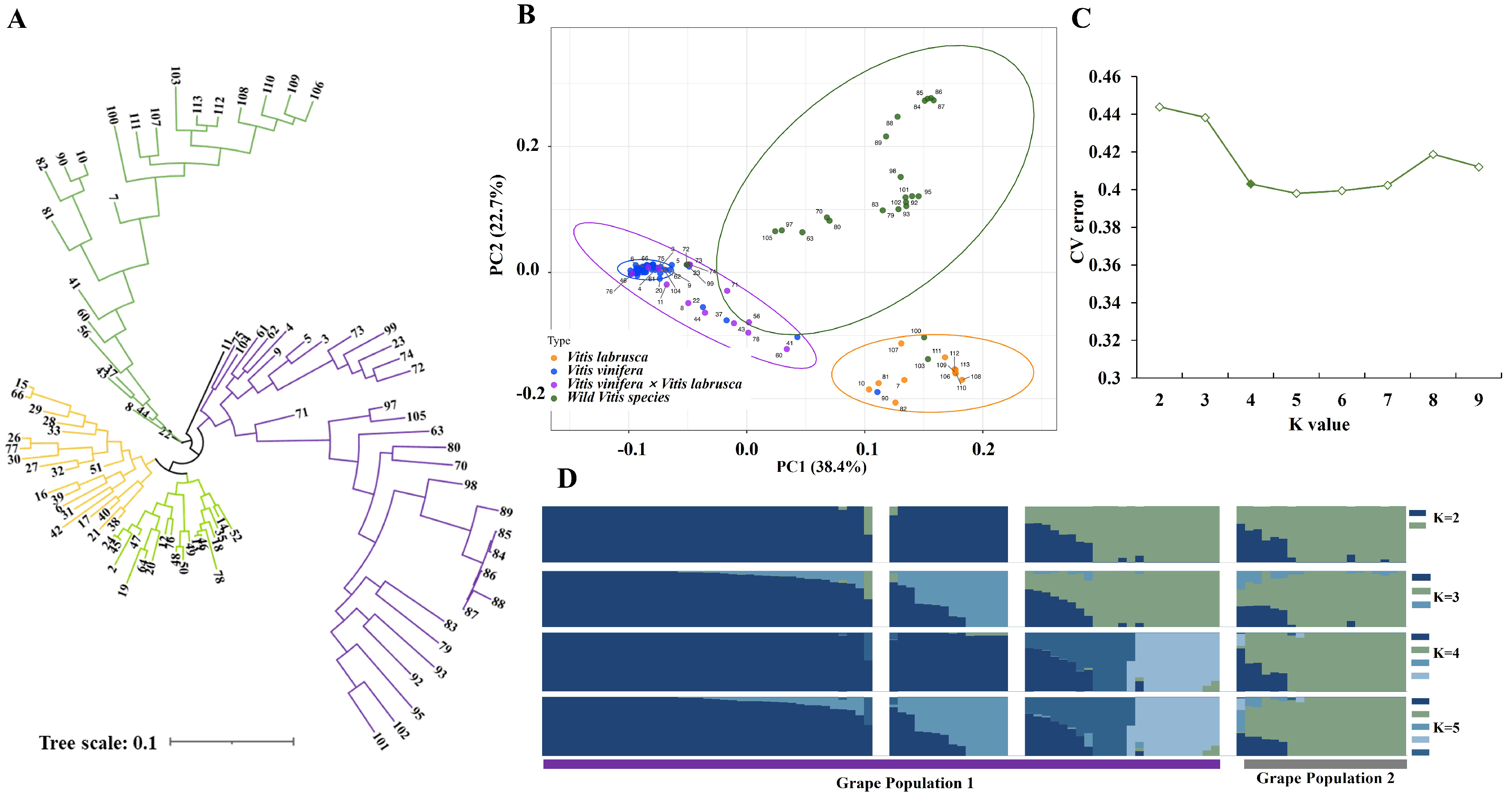
Genetic distances among 96 accessions were calculated using VCF2Dis, a phylogenetic tree was constructed with FastME 2.0, and visualization was performed with iTOL. The results showed that these grape germplasm resources were primarily divided into four major groups: the European group included ‘Merlot’, ‘Chardonnay’, and ‘Victoria’; the American group included ‘Beta’, ‘Concord’ and ‘Riparia 10’; the Euro-American hybrid group mainly comprised ‘Vidal’ and ‘Mi guang’; and the wild group consisted of Chinese wild accessions and their hybrid offspring such as ‘Zuo you hong’, ‘Hua jia 8’, and ‘Ci Putao 1’ (Figure 1A). Principal component analysis (PCA) confirmed this clustering pattern, revealing significant genetic differentiation among European, American, and wild groups (Figure 1B), while the European group fell within the confidence interval of the Euro-American hybrid group. To further assess genetic relationships among accessions, we performed population structure analysis using ADMIXTURE, testing K values from 2 to 5. At K = 2, clear introgression was observed among the four major groups (Figure 1D). At K = 3, the Euro-American hybrid group showed further differentiation, largely consistent with the phylogenetic classification. At K = 4, wild germplasm and their hybrid offspring exhibited more distinct separation, with ‘Zuo you hong’ and ‘Huadong Grape No.1’ forming an independent cluster genetically distant from ‘Chardonnay’ and ‘Shine Muscat’ (Figure 1C).

3.2. Design of Grape Core Probes and Analysis of Genetic Characteristics

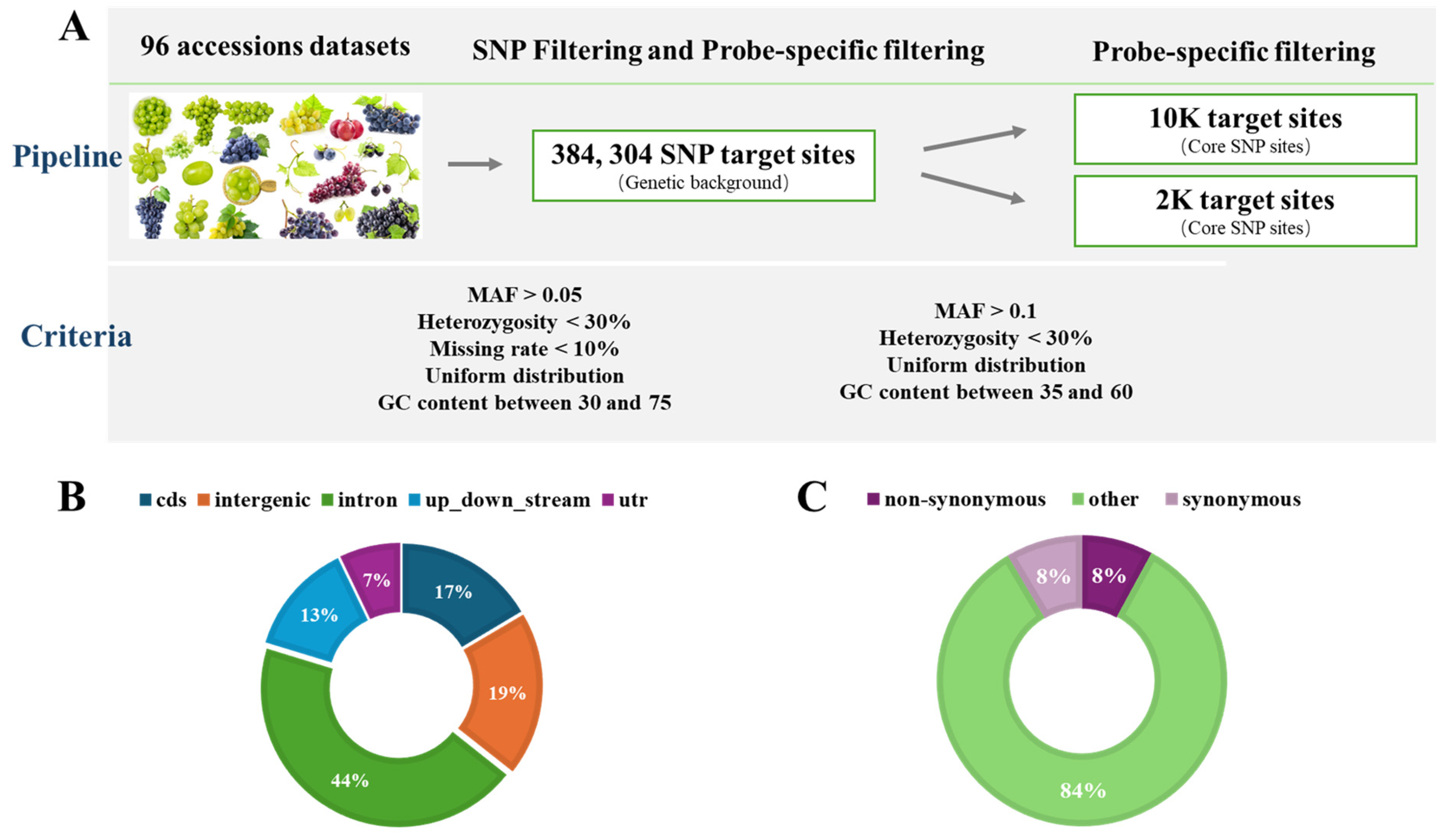
To develop a grape SNP marker panel, we utilized the SNP dataset obtained above and applied filtering and probe design based on the following main parameters: missing rate < 10%, heterozygosity between 0.1 and 0.3, minor allele frequency (MAF) > 0.05, uniform distribution, and GC content between 30% and 75% (Figure 2A). This process yielded 384,304 SNP target sites. We performed annotation analysis of these genomic loci, revealing that the largest proportion of SNPs (44%, 169,263) were located in intronic regions (Figure 2A). This was followed by intergenic and coding sequence (CDS) regions, accounting for 17% (63,331) and 19% (73,748), respectively. The UTR regions contained the smallest proportion, only 7% (27,374). In the genome, CDS regions are the core functional domains where SNPs are directly associated with protein function and phenotypic variation (Figure 2B). Therefore, we further distinguished between synonymous and non-synonymous mutations in our study. The results showed that both synonymous and non-synonymous mutations accounted for 8% each among these loci, while other natural variations comprised 84% (Figure 2C).

3.3. Analysis of 2k Core SNP Loci in Genomic Regions

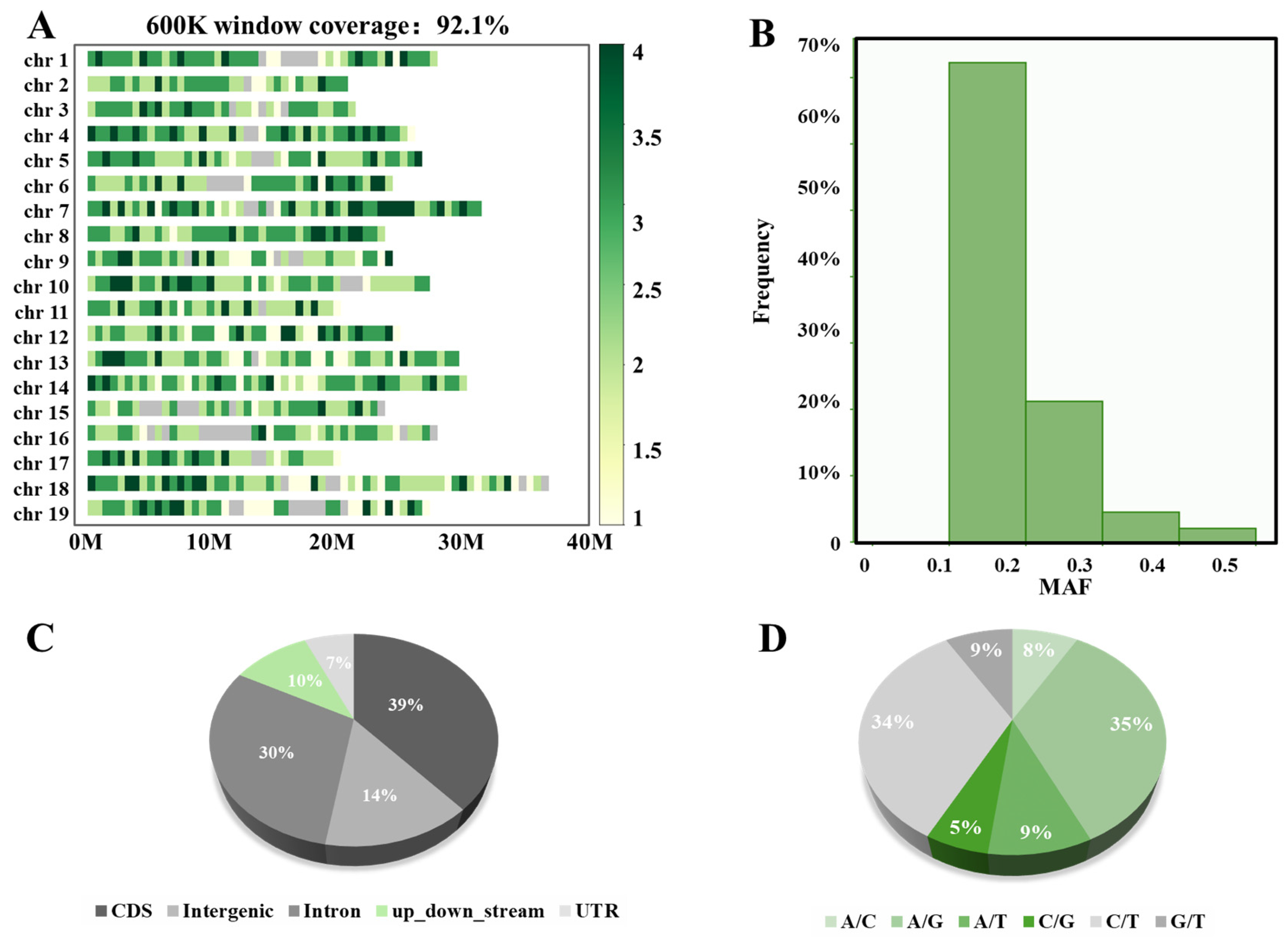
To achieve the core strategy of balancing detection cost and genetic representativeness, we further reduced the number of SNPs. Using parameters including minor allele frequency (MAF) > 0.1 and GC content between 35% and 60%, we selected 2000 targeted SNP loci (Figure 2A). These SNPs were evenly distributed across the genome, achieving 92.1% coverage in 600 kb windows (Figure 3A), with a maximum of 4 SNPs per window. Statistical analysis revealed that the number of windows containing 3 SNPs was the highest (304 windows), followed by windows with 2 SNPs (258 windows), while only 66 windows contained no SNPs (Supplementary Figure S3B). The MAF distribution of these SNPs showed the highest number in the 0.1 to 0.2 range, with a gradual decrease from 0.2 to 0.5 (Figure 3B).
To further investigate the genomic distribution characteristics of the identified SNPs, they were systematically classified based on their genomic locations. The results showed that the largest proportion of SNPs (38.65%) was located in intergenic CDS regions, followed by 30.2% in intronic regions. Additionally, 14% of SNPs were located in intergenic regions, 10.45% in upstream or downstream regions of coding genes, while only 6.70% were distributed in 3’ untranslated regions (3’ UTR) and 5’ untranslated regions (5’ UTR) (Figure 3C). Subsequent analysis of SNP types revealed that [A/G] and [C/T] were the most predominant mutation types, accounting for 35% and 34%, respectively, followed by [A/T] (9%), [G/T] (9%), and [A/C] (8%), while the [C/G] type was the least frequent, representing only 5% (Figure 3D).
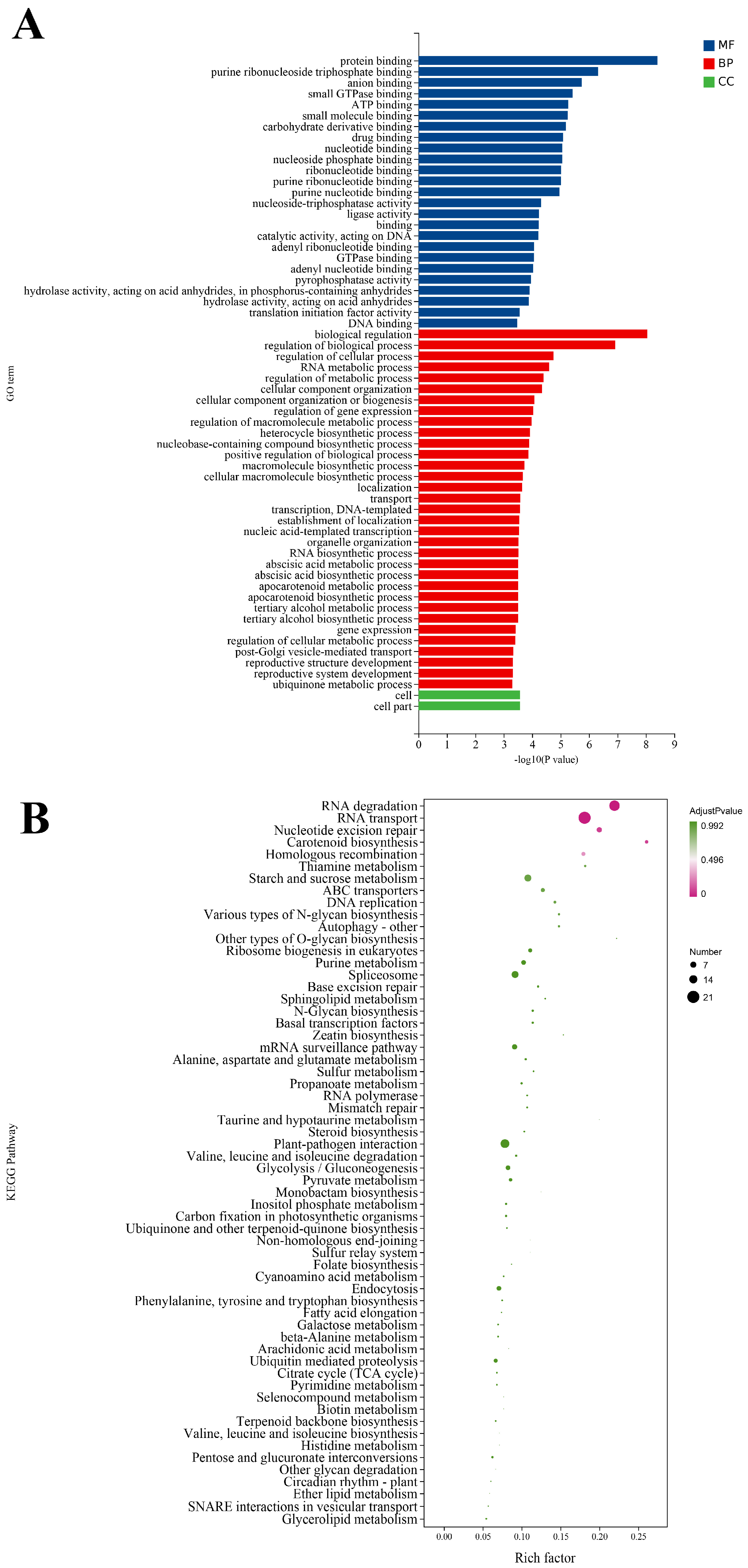
To ensure the direct relevance of these 2000 core SNP markers to phenotypic associations, we analyzed their distribution within the genome. The study found that these loci were located in 1220 functional genes. Gene Ontology (GO) enrichment analysis showed that these genes were significantly enriched in pathways including protein binding, purine ribonucleoside triphosphate binding, biological regulation, regulation of biological process, and regulation of cellular process (Figure 4A). Further Kyoto Encyclopedia of Genes and Genomes (KEGG) enrichment analysis indicated that these genes were significantly involved in metabolic pathways such as RNA transport, RNA degradation, plant–pathogen interaction, spliceosome, and starch and sucrose metabolism (Figure 4B). These findings suggest that the identified set of 2000 core SNP markers may play crucial roles in regulating grape growth and development, key agronomic traits, and stress resistance.

3.4. PCA Clustering and Phylogenetic Analysis of 96 Accessions by 10k SNP Loci

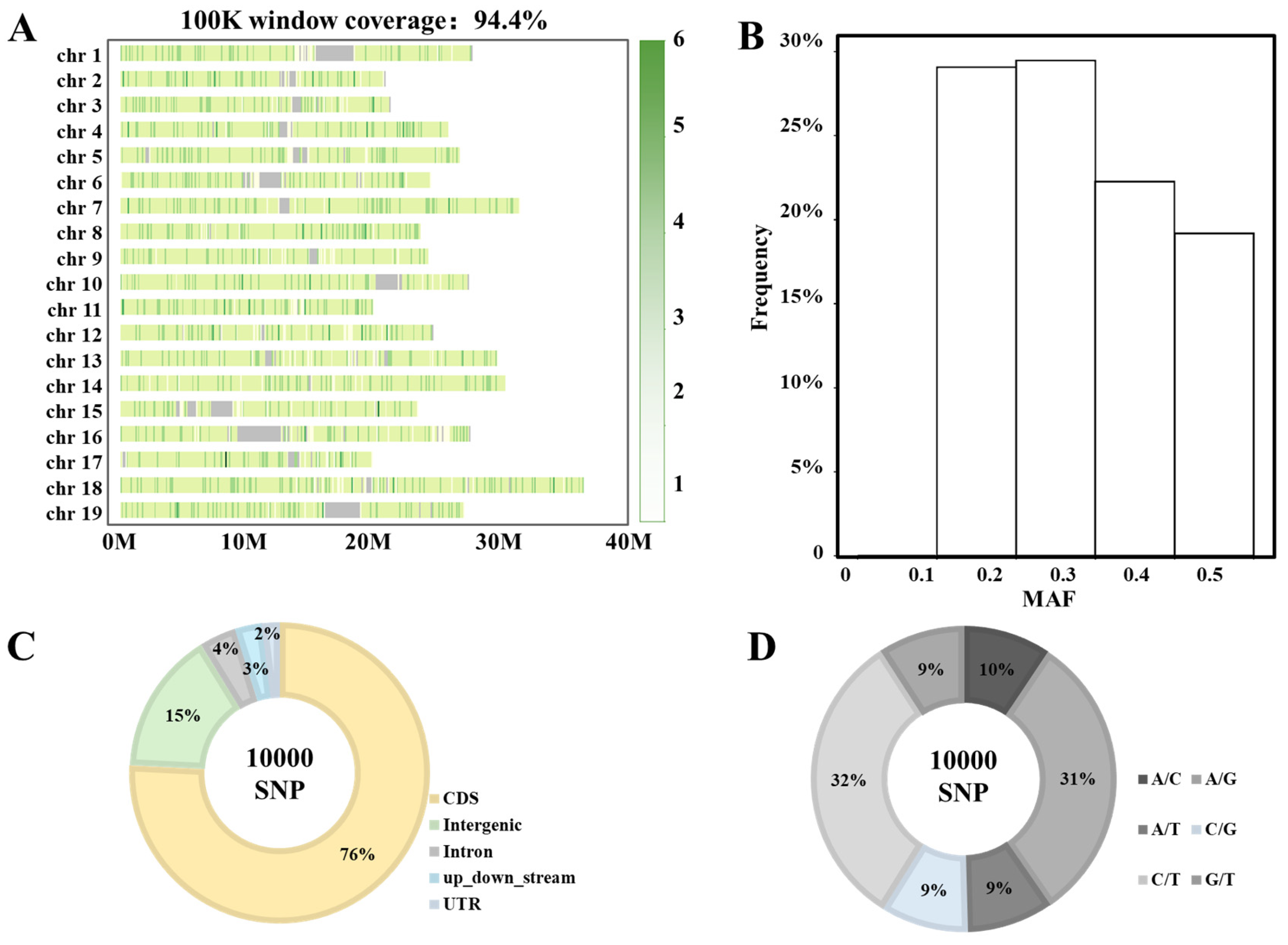
A genome-wide set of core polymorphic SNP markers was established to represent population genetic diversity and cover trait-associated functional regions. To develop a high-precision, comprehensive SNP marker panel suitable for fine mapping of key traits and elucidating genetic mechanisms across multiple grape varieties, we further selected 10K core sites from 384,304 SNP target sites (Figure 1B). These marker sites are evenly distributed across the genome, achieving a coverage rate of 94.4% (100 kb window coverage) (Figure 5A). Among these, windows containing at least 2 SNPs were the most numerous (3622 windows), followed by windows containing 3 SNPs, while windows containing 5 or 6 SNP sites were the least frequent, with only one window each (Supplementary Figure S3A). We then analyzed the relationship between the number of SNPs distributed on each chromosome and their physical length in the 10K and 2K SNP sets, and the results indicated that chromosome physical length was unrelated to the number of selected SNPs on the chromosome. MAF analysis showed the highest proportion of SNPs in the 0.2 to 0.3 range, followed by the 0.1 to 0.2 range (Figure 5B).
These SNP sites are mainly distributed in CDS coding regions, intergenic regions, introns, gene upstream/downstream regions, and UTR regions. Among them, CDS coding regions contained the highest number of SNPs, accounting for 76%, followed by intergenic regions, comprising 15% of the sites. UTR regions contained the fewest SNPs, representing only 2% (Figure 5C). The remaining SNPs were distributed in intronic and gene upstream/downstream regions. For SNP base substitution types, A/G and C/T transitions were the most common, at 32% (3199) and 31% (3102), respectively; while A/C, A/T, C/G, and G/T transitions occurred at similar frequencies, each ranging from 9% to 10% (Figure 5D).
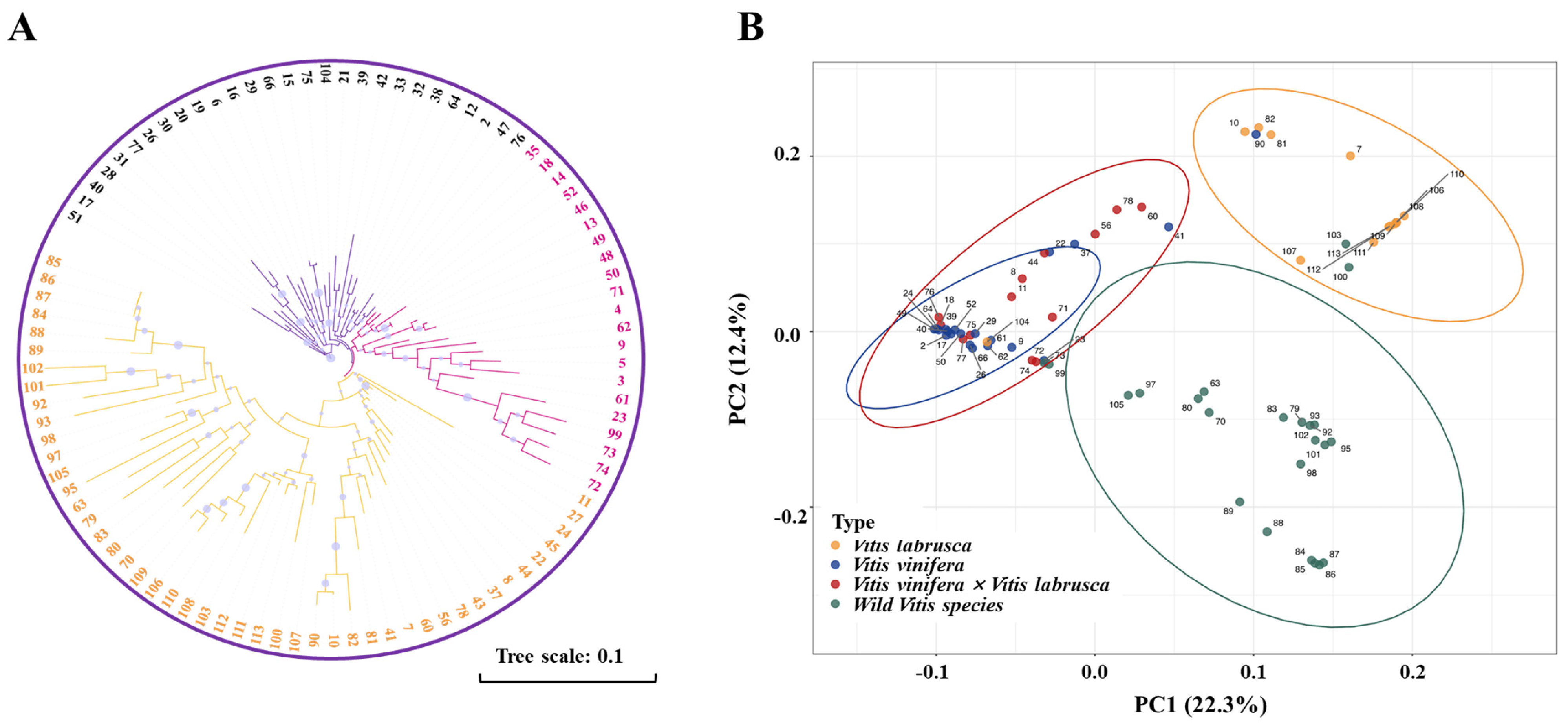
To further analyze the application of core SNP sites in population genetic diversity, a maximum likelihood (ML) phylogenetic tree was constructed and optimized based on genetic distances of 96 grape accessions calculated using VCF2Dis, implemented through FastME 2.0 and Itol (Figure 6A). The results showed that the phylogenetic tree primarily formed three major branches, which differed from the evolutionary tree constructed using the genome-wide SNP set described above—possibly due to the inclusion of hybrid populations. However, many representative cultivars still clustered within the same evolutionary branch, consistent with the previous results, such as accessions numbered 72, 73, 77, and 99 (Figure 6A). Principal component analysis (PCA) results were also consistent with the phylogenetic tree (Figure 6B), with the PCA results also dividing into three main confidence intervals; meanwhile, Euro-American hybrids and European populations were contained within the same confidence interval, confirming the rationale for the three branches in the phylogenetic tree (Figure 6). These findings reveal clear differentiation among wild grape germplasm, American species, and Euro-American hybrid cultivars within the 96 accessions. The above results demonstrate that this integrated probe chip can serve as an effective tool for genetic diversity analysis in grapes.

4. Discussion

4.1. Role of Genetic Diversity Analysis in Grape Germplasm for Molecular Design Breeding

SNP-based integrated chip probe detection is a genotyping technique widely used in plant and animal research. This method enables large-scale parallel sequencing of specific genomic regions, thereby improving detection efficiency and reducing sequencing redundancy [30]. It has been successfully applied in multiple species, including rice (O. sativa), maize (Z. mays), wheat (T. aestivum), tomato (Solanum lycopersicum), and pepper (Capsicum spp.), playing a critical role in functional genomics, marker-assisted breeding [18], and genomic selection [17]. Therefore, screening and identifying core genomic SNPs is of great importance [31].
Grape is an economically important fruit crop cultivated worldwide [9,32,33]. However, its genetic diversity and high heterozygosity, particularly concerning key agronomic and quality metabolic traits, remain incompletely understood [34]. A recent large-scale de novo sequencing study involved over 300 grape accessions. This work has provided important insights into the genetic diversity and domestication history of grape germplasm [4,5]. Although whole-genome resequencing enables comprehensive detection of genomic variations across germplasm resources, its application is often limited by the high cost of grape genome sequencing [35]. In this study, we analyzed the genetic diversity and population structure of grape based on resequencing data from 96 widely cultivated accessions, laying the foundation for constructing an efficient liquid-phase chip array (Figure 2A). These accessions were divided into four groups: European, Euro-American hybrids, American, and wild populations, a classification further validated by genetic structure analysis at K = 4 (Figure 1A). Additionally, genetic diversity analysis helps reveal phylogenetic relationships and avoid marker redundancy. It also enables effective cost control while maintaining coverage, providing critical guidance for balancing “coverage breadth and locus specificity” in subsequent core probe design (Figure 2).

4.2. Research on Genome-Wide Coverage and Functional Regions in Core Probe Design

Depending on the requirements of breeding strategies, core probe design must balance uniform genome-wide distribution, marker density, and focused coverage of functional regions [16]. High-density chips are used for genetic diversity analysis and functional gene mapping, while low-density chips are suitable for variety traceability and true hybrid verification. Screening for uniformly distributed SNPs across the genome through genome-wide scanning can effectively address issues such as gene linkage and enhance chip applicability (Figure 4). By integrating previously reported functional gene regions. Such as the MYB family [36] associated with fruit color, the HSF family [37] related to heat tolerance, and the CBF family [38] linked to low-temperature traits background selection, SNP screening, and specific probe design can directly associate genotypes with phenotypic variations, thereby facilitating the development of core marker loci and functional studies.
This study systematically evaluated polymorphism parameters, including MAF and heterozygosity, of the 10K and 2K SNP loci to efficiently select informative markers and ensure the chip’s ability to distinguish materials with different genetic backgrounds (Figure 3 and Figure 4). Gene functional annotation and KEGG analysis were employed to screen functional loci associated with multiple agronomic traits (Figure 4B). A well-designed molecular marker matrix provides a cost-effective and scalable solution for high-resolution genetic analysis. Compared to existing genotyping methods such as sequencing-based genotyping (GBS), Kompetitive Allele-Specific PCR (KASP), and solid-phase chip platforms like Illumina Infinium and Affymetrix, the development of 2K and 10K SNP-integrated chips simplifies the selection of ideal genotypes (Supplementary Figure S3). The combined strategy of “background selection, genome-wide coverage, and enhanced functional region targeting” holds significant importance for population genetics research and efficient marker-assisted breeding.

4.3. Validation of Chip Marker Effectiveness Through Clustering and Evolutionary Analysis

In this study, PCA clustering and phylogenetic analysis of 96 accessions based on the selected 10K core SNP loci were crucial for evaluating the representativeness and genetic resolution of the chip marker (Figure 5). The clustering results separated the accessions into three major groups: European, American, and hybrid populations. These groupings were largely consistent with the known background information. This consistency indicates that the selected markers accurately reflect the genetic relationships among the accessions. (Figure 6). Although branched and overlapping germplasms were observed in the phylogenetic tree and PCA results (Figure 6B). Such as genetic origin overlaps between some European cultivars and rootstock breeding materials (Supplementary Table S1). This discrepancy could be attributed to the high heterozygosity of the grape genome, which may have led to the omission of key loci during probe design. Consequently, optimizing the probe selection strategy is required to enhance the accuracy of germplasm identification and pedigree tracing.
Furthermore, the core SNP markers offer several advantages. First, the reduction in marker density leads to significant cost savings. As SNP density decreases, so does the detection cost [39], making the low-density chip affordable for breeders and related enterprises. Second, as the chip is upgradable without requiring resynthesis, upgrades can be achieved merely by adding new probes to the existing liquid-phase chip platform. In practical applications, the 10K marker chip can identify over 10K variants (Figure 5), a capability unavailable in solid-phase chips. These polymorphic sites are highly valuable for studying cultivar adaptability, QTL mapping, and genome-wide association studies, aiding in the discovery of new haplotypes or key mutations [18].

5. Conclusions

This study first conducted genetic diversity and population structure analysis of 96 grape accessions, revealing that these materials are primarily divided into four populations. Subsequently, the applicability of high-density SNP matrices to different populations was analyzed using 10,000 and 2000 SNP-integrated panels, and genomic annotation and related loci were characterized. A closed-loop evaluation system from “marker selection” to “genetic application” was established, ensuring the reliability of the integrated chip in gene mapping and breeding practice. These results demonstrate that the core SNP-integrated panels can be further developed into a stable, flexible, and cost-effective genotyping platform, providing high marker density, reproducibility, and broad practical utility for grape genetic research and molecular breeding.

Supplementary Materials

The following supporting information can be downloaded at: https://www.mdpi.com/article/10.3390/horticulturae11121509/s1, Supplementary Table S1. The information of 96 grape accessions. Supplementary Figure S1. Statistical analysis of sequencing depth for 96 grape accessions. Supplementary Figure S2. Relationship between chromosome length and SNP density. Supplementary Figure S3. The coverage quantities of 10,000 and 2000 SNPs in the 100k window and 600k window, respectively.

Author Contributions

C.M. conceived this experiment and designed this study. L.Z. performed the experiments and wrote the original draft. Y.S. and Y.T., analyzed the data. Y.M. were responsible for data acquisition and curation. Y.L. provided critical reagents and analytical tools. S.S., were involved in the investigation and provided resources. H.L. and J.H. revised the manuscript. All authors have read and agreed to the published version of the manuscript.

Funding

This research was funded by the Shanghai Agricultural Science and Technology Innovation Program (Grant No. 2023-02-08-00-12-F04607), the Xingdian Talent Support Plan of Yunnan Province, Yunling Scholar Program (Certificate No. XDYC-YLXZ-2023-0018), the AI+ project of Shanghai Municipal Education Commission (2024AIZD010), and the Earmarked Fund for CARS-29.

Data Availability Statement

The original contributions presented in this study are included in the article/Supplementary Materials. For further inquiries, please contact the corresponding author.

Conflicts of Interest

The authors declare no conflicts of interest.

References

  1. Liu, M.; Xu, Y.; Song, Y.; Fan, D.; Li, J.; Zhang, Z.; Wang, L.; He, J.; Chen, C.; Ma, C. Hierarchical Regulatory Networks Reveal Conserved Drivers of Plant Drought Response at the Cell-Type Level. Adv. Sci. 2025, 12, 2415106. [Google Scholar] [CrossRef]
  2. Zhang, L.; Chen, Q.; Liu, J.; Dou, F.; Wang, H.; Song, Y.; Ren, Y.; He, J.; Wang, L.; Zhang, C.; et al. Identification of grape miRNA revealed Vvi-miR164b involved in auxin induced root development. Sci. Hortic. 2022, 295, 110804. [Google Scholar] [CrossRef]
  3. Liu, Z.; Wang, N.; Su, Y.; Long, Q.; Peng, Y.; Shangguan, L.; Zhang, F.; Cao, S.; Wang, X.; Ge, M.; et al. Grapevine pangenome facilitates trait genetics and genomic breeding. Nat. Genet. 2024, 56, 2804–2814. [Google Scholar] [CrossRef]
  4. Guo, L.; Wang, X.; Ayhan, D.H.; Rhaman, M.S.; Yan, M.; Jiang, J.; Wang, D.; Zheng, W.; Mei, J.; Ji, W.; et al. Super pangenome of Vitis empowers identification of downy mildew resistance genes for grapevine improvement. Nat. Genet. 2025, 57, 741–753. [Google Scholar] [CrossRef]
  5. Massonnet, M.; Cochetel, N.; Minio, A.; Vondras, A.M.; Lin, J.; Muyle, A.; Garcia, J.F.; Zhou, Y.; Delledonne, M.; Riaz, S.; et al. The genetic basis of sex determination in grapes. Nat. Commun. 2020, 11, 2902. [Google Scholar] [CrossRef]
  6. Zhang, Y.; Wang, Y.; Henke, M.; Carbonell-Bejerano, P.; Wang, Z.; Bert, P.F.; Wang, Y.; Li, H.; Kong, J.; Fan, P.; et al. Integrating Dense Genotyping with High-Throughput Phenotyping Empowers the Genetic Dissection of Berry Quality and Resilience Traits in Grapevine. Adv. Sci. 2025, 12, 2412587. [Google Scholar] [CrossRef]
  7. Zou, C.; Massonnet, M.; Minio, A.; Patel, S.; Llaca, V.; Karn, A.; Gouker, F.; Cadle-Davidson, L.; Reisch, B.; Fennell, A.; et al. Multiple independent recombinations led to hermaphroditism in grapevine. Proc. Natl. Acad. Sci. USA 2021, 118, e2023548118. [Google Scholar] [CrossRef]
  8. Yang, B.; Wu, W.; Lv, J.; Li, J.; Xu, Y.; Yin, L.; Lu, J.; Fu, P. Identification of sex determination locus and development of marker combination in Vitis based on genotyping by target sequencing. Fruit Res. 2023, 3, 31. [Google Scholar] [CrossRef]
  9. Chen, Q.J.; Zhang, L.P.; Song, S.R.; Wang, L.; Xu, W.P.; Zhang, C.X.; Wang, S.P.; Liu, H.F.; Ma, C. vvi-miPEP172b and vvi-miPEP3635b increase cold tolerance of grapevine by regulating the corresponding MIRNA genes. Plant Sci. 2022, 325, 111450. [Google Scholar] [CrossRef]
  10. Ma, C.; Burd, S.; Lers, A. miR408 is involved in abiotic stress responses in Arabidopsis. Plant J. 2015, 84, 169–187. [Google Scholar] [CrossRef]
  11. Debnath, S.C. Development of ISSR markers for genetic diversity studies in Vaccinium angustifolium. Nord. J. Bot. 2009, 27, 141–148. [Google Scholar] [CrossRef]
  12. Zhang, L.; Song, Y.; Li, J.; Liu, J.; Zhang, Z.; Xu, Y.; Fan, D.; Liu, M.; Ren, Y.; Xi, X.; et al. Development, Identification and Validation of a Novel SSR Molecular Marker for Heat Resistance of Grapes Based on miRNA. Horticulturae 2023, 9, 931. [Google Scholar] [CrossRef]
  13. Bojinov, B.M. Quantitative trait loci detection in Bulgarian cotton mutant segregating population. Genetika 2019, 51, 323–334. [Google Scholar] [CrossRef]
  14. Zhang, C.; Wu, J.Y.; Cui, L.W.; Fang, J.G. Mining of candidate genes for grape berry cracking using a genome-wide association study. J. Integr. Agric. 2022, 21, 2291–2304. [Google Scholar] [CrossRef]
  15. Yu, Q.; Li, S.; Su, X.; Chen, X.; Dong, Y.; Yao, Z.; Jiang, N.; Chai, S.; Zhang, Z.; Xu, K. Melon2K array: A versatile 2K liquid SNP chip for melon genetics and breeding. Hortic. Plant J. 2025, 11, 314–322. [Google Scholar] [CrossRef]
  16. Liu, S.; Xiang, M.; Wang, X.; Li, J.; Cheng, X.; Li, H.; Singh, R.P.; Bhavani, S.; Huang, S.; Zheng, W.; et al. Development and application of the GenoBaits WheatSNP16K array to accelerate wheat genetic research and breeding. Plant Commun. 2025, 6, 101138. [Google Scholar] [CrossRef]
  17. Burridge, A.J.; Wilkinson, P.A.; Winfield, M.O.; Barker, G.L.A.; Allen, A.M.; Coghill, J.A.; Waterfall, C.; Edwards, K.J. Conversion of array-based single nucleotide polymorphic markers for use in targeted genotyping by sequencing in hexaploid wheat (Triticum aestivum). Plant Biotechnol. J. 2017, 16, 867–876. [Google Scholar] [CrossRef]
  18. Guo, Z.; Yang, Q.; Huang, F.; Zheng, H.; Sang, Z.; Xu, Y.; Zhang, C.; Wu, K.; Tao, J.; Prasanna, B.M.; et al. Development of high-resolution multiple-SNP arrays for genetic analyses and molecular breeding through genotyping by target sequencing and liquid chip. Plant Commun. 2021, 2, 100230. [Google Scholar] [CrossRef]
  19. Zhang, J.Y.; Wang, T.; Jia, Z.H.; Guo, Z.R.; Liu, Y.Z.; Wang, G. Photosystem Disorder Could be the Key Cause for the Formation of Albino Leaf Phenotype in Pecan. Int. J. Mol. Sci. 2020, 21, 6137. [Google Scholar] [CrossRef]
  20. Du, H.; Yang, J.; Chen, B.; Zhang, X.; Zhang, J.; Yang, K.; Geng, S.; Wen, C. Target sequencing reveals genetic diversity, population structure, core-SNP markers, and fruit shape-associated loci in pepper varieties. BMC Plant Biol. 2019, 19, 587. [Google Scholar] [CrossRef]
  21. Duan, S.; Wang, D.; Kang, Q.; Yan, H.; Cui, J.; Zhang, M.; Liu, D.; Yang, S.; Zhu, Y.; Niu, H.; et al. The development of liquid-phase chip by target sequencing and their application in watermelon molecular breeding. Hortic. Plant J. 2025, 6, 2109–2120. [Google Scholar] [CrossRef]
  22. Bouby, L.; Bonhomme, V.; Ivorra, S.; Bacilieri, R.; Ben Makhad, S.; Bonnaire, E.; Cabanis, M.; Derreumaux, M.; Dietsch-Sellami, M.F.; Durand, F.; et al. Seed morphometrics unravels the evolutionary history of grapevine in France. Sci. Rep. 2024, 14, 22207. [Google Scholar] [CrossRef]
  23. Liang, Z.; Duan, S.; Sheng, J.; Zhu, S.; Ni, X.; Shao, J.; Liu, C.; Nick, P.; Du, F.; Fan, P.; et al. Whole-genome resequencing of 472 Vitis accessions for grapevine diversity and demographic history analyses. Nat. Commun. 2019, 10, 1190. [Google Scholar] [CrossRef]
  24. Zhang, Y.; Lyu, X.; Chen, D.; Wu, J.; Li, D.; Li, Y. DNA induced CTAB-caped gold bipyramidal nanoparticles self-assembly using for Raman detection of DNA molecules. Talanta 2024, 266, 124936. [Google Scholar] [CrossRef]
  25. Chang, C.C.; Chow, C.C.; Tellier, L.C.A.M.; Vattikuti, S.; Purcell, S.M.; Lee, J.J. Second-generation PLINK: Rising to the challenge of larger and richer datasets. Gigascience 2015, 4, s13742–015. [Google Scholar] [CrossRef]
  26. Liu, D.; Zhang, C.; Ye, Y.; Mei, P.; Gong, Y.; Liu, Z.; Sun, C.; Zhao, X.; Ding, S.; Chen, J.; et al. TEA5K: A high-resolution and liquid-phase multiple-SNP array for molecular breeding in tea plant. J. Nanobiotechnol. 2025, 23, 481. [Google Scholar] [CrossRef]
  27. Purcell, S.; Neale, B.; Todd-Brown, K.; Thomas, L.; Ferreira, M.A.R.; Bender, D.; Maller, J.; Sklar, P.; de Bakker, P.I.W.; Daly, M.J.; et al. PLINK: A Tool Set for Whole-Genome Association and Population-Based Linkage Analyses. Am. J. Hum. Genet. 2007, 81, 559–575. [Google Scholar] [CrossRef]
  28. Lefort, V.; Desper, R.; Gascuel, O. FastME 2.0: A Comprehensive, Accurate, and Fast Distance-Based Phylogeny Inference Program: Table 1. Mol. Biol. Evol. 2015, 32, 2798–2800. [Google Scholar] [CrossRef]
  29. Chen, C.; Wu, Y.; Li, J.; Wang, X.; Zeng, Z.; Xu, J.; Liu, Y.; Feng, J.; Chen, H.; He, Y.; et al. TBtools-II: A “one for all, all for one” bioinformatics platform for biological big-data mining. Mol. Plant 2023, 16, 1733–1742. [Google Scholar] [CrossRef]
  30. Li, X.; Liu, X.; Fan, Y.; Li, S.; Yu, M.; Qian, M.; Chen, Y.; Chen, H.; Li, X.; Liu, B.; et al. Development of a target capture sequencing SNP genotyping platform for genetic analysis and genomic breeding in rapeseed. Crop J. 2023, 11, 499–510. [Google Scholar] [CrossRef]
  31. Zhang, J.; Ren, J.; Yang, J.; Fu, S.; Zhang, X.; Xia, C.; Zhao, H.; Yang, K.; Wen, C. Evaluation of SNP fingerprinting for variety identification of tomato by DUS testing. Agric. Commun. 2023, 1, 100006. [Google Scholar] [CrossRef]
  32. Chen, Q.J.; Deng, B.H.; Gao, J.; Zhao, Z.Y.; Chen, Z.L.; Song, S.R.; Wang, L.; Zhao, L.P.; Xu, W.P.; Zhang, C.X.; et al. A miRNA-Encoded Small Peptide, vvi-miPEP171d1, Regulates Adventitious Root Formation. Plant Physiol. 2020, 183, 656–670. [Google Scholar] [CrossRef]
  33. Gao, Z.; Li, J.; Luo, M.; Li, H.; Chen, Q.; Wang, L.; Song, S.; Zhao, L.; Xu, W.; Zhang, C.; et al. Characterization and Cloning of Grape Circular RNAs Identified the Cold Resistance-Related Vv-circATS1. Plant Physiol. 2019, 180, 966–985. [Google Scholar] [CrossRef]
  34. Zhang, Z.; Fan, D.; Song, Y.; Zhang, L.; Liu, J.; Liu, M.; Xu, Y.; He, J.; Song, S.; Ren, Y.; et al. Translational profile of coding and non-coding RNAs revealed by genome wide profiling of ribosome footprints in grapevine. Front Plant Sci. 2023, 14, 1097846. [Google Scholar] [CrossRef]
  35. Wang, Z.; Zhang, H.; Ye, W.; Han, Y.; Li, H.; Zhou, Z.; Li, C.; Zhang, X.; Zhang, J.; Chen, J.; et al. Development of a FER0.4K SNP array for genomic predication of Fusarium ear rot resistance in maize. Crop J. 2025, 13, 996–1002. [Google Scholar] [CrossRef]
  36. Chen, Y.; Yang, X.; He, K.; Liu, M.; Li, J.; Gao, Z.; Lin, Z.; Zhang, Y.; Wang, X.; Qiu, X.; et al. The MYB Transcription Factor Superfamily of Arabidopsis: Expression Analysis and Phylogenetic Comparison with the Rice MYB Family. Plant Mol. Biol. 2006, 60, 107–124. [Google Scholar] [CrossRef]
  37. Scharf, K.D.; Berberich, T.; Ebersberger, I.; Nover, L. The plant heat stress transcription factor (Hsf) family: Structure, function and evolution. Biochim. Et Biophys. Acta (BBA)-Gene Regul. Mech. 2012, 1819, 104–119. [Google Scholar] [CrossRef]
  38. Zhao, Q.; Han, R.; Cai, K.; Yan, H.; Li, Y.; Qu, G.; Liu, L.; Zhao, X. Identification and Analysis of the CBF Gene Family in Three Species of Acer under Cold Stress. Int. J. Mol. Sci. 2023, 24, 2088. [Google Scholar] [CrossRef]
  39. Guo, Z.; Wang, H.; Tao, J.; Ren, Y.; Xu, C.; Wu, K.; Zou, C.; Zhang, J.; Xu, Y. Development of multiple SNP marker panels affordable to breeders through genotyping by target sequencing (GBTS) in maize. Mol. Breed. 2019, 39, 37. [Google Scholar] [CrossRef]
Figure 1. Genetic diversity and population structure of 96 accessions. (A) Phylogenetic tree based on the whole-genome SNP data. The four colors of branches represent different groups. (B) Principal component analysis based on all SNP data. (C) Population structure analysis of 96 accessions at K values of 2, 3, 4, and 5. (D) The cross-validation (CV) error calculated by admixture analysis.
Horticulturae 11 01509 g001
Figure 2. Marker site analysis of grape SNP array. (A) Design pipeline of the GenoBaits grapes SNP array. (B) Distribution of 384,304 SNP sites derived from different genomic regions. (C) Mutation type of 384,304 SNPs, distinguishing between synonymous, non-synonymous, and other mutations.
Horticulturae 11 01509 g002
Figure 3. Characterization of the set of 2000 SNPs. (A) Distribution of 2000 SNPs on 19 grape chromosomes. (B) MAF distributions of 2000 SNPs. (C) Distribution of 2000 SNP sites derived from different genomic regions. (D) Classification of single-base mutation types of 2000 SNPs.
Horticulturae 11 01509 g003
Figure 4. Functional annotation of 2000 SNP sites. (A) Gene Ontology (GO) enrichment analysis revealed significant functional preferences among the annotated genes harboring these SNPs. (B) Kyoto Encyclopedia of Genes and Genomes (KEGG) pathway enrichment analysis identified key biological pathways associated with these genes.
Horticulturae 11 01509 g004
Figure 5. Characterization of the set of 10,000 SNPs. (A) Distribution of 10,000 SNPs on 19 chromosomes. (B) MAF distributions of 10,000 SNPs. (C) Distribution of 10,000 SNP sites derived from different genomic regions. (D) Classification of single-base mutation types of 10,000 SNPs.
Horticulturae 11 01509 g005
Figure 6. Genetic diversity by 10,000 SNP sites of 96 accessions. (A) Phylogenetic tree based on the 10,000 SNP data. The three colors of branches represent different groups. (B) Principal component analysis based on 10,000 SNP data.
Horticulturae 11 01509 g006
Disclaimer/Publisher’s Note: The statements, opinions and data contained in all publications are solely those of the individual author(s) and contributor(s) and not of MDPI and/or the editor(s). MDPI and/or the editor(s) disclaim responsibility for any injury to people or property resulting from any ideas, methods, instructions or products referred to in the content.