Cadmium Tolerance in Tea Plants (Camellia sinensis): Physiological, Biochemical, and Molecular Insights

 ,
, 
Abstract
1. Introduction
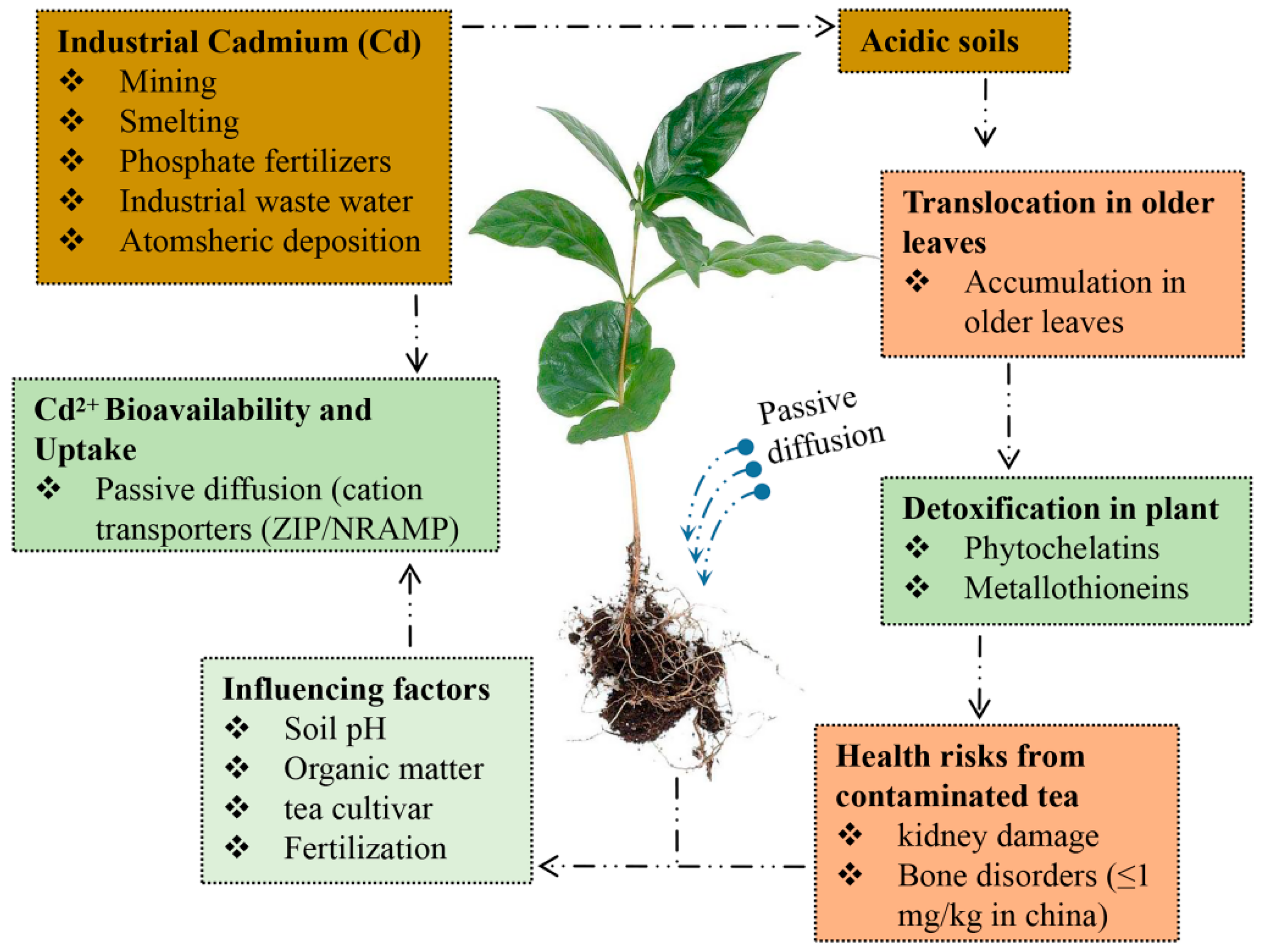
2. Cadmium Sources and Uptake in Tea Ecosystems
Cadmium Accumulation in Tea Leaves
3. Physiological and Biochemical Responses

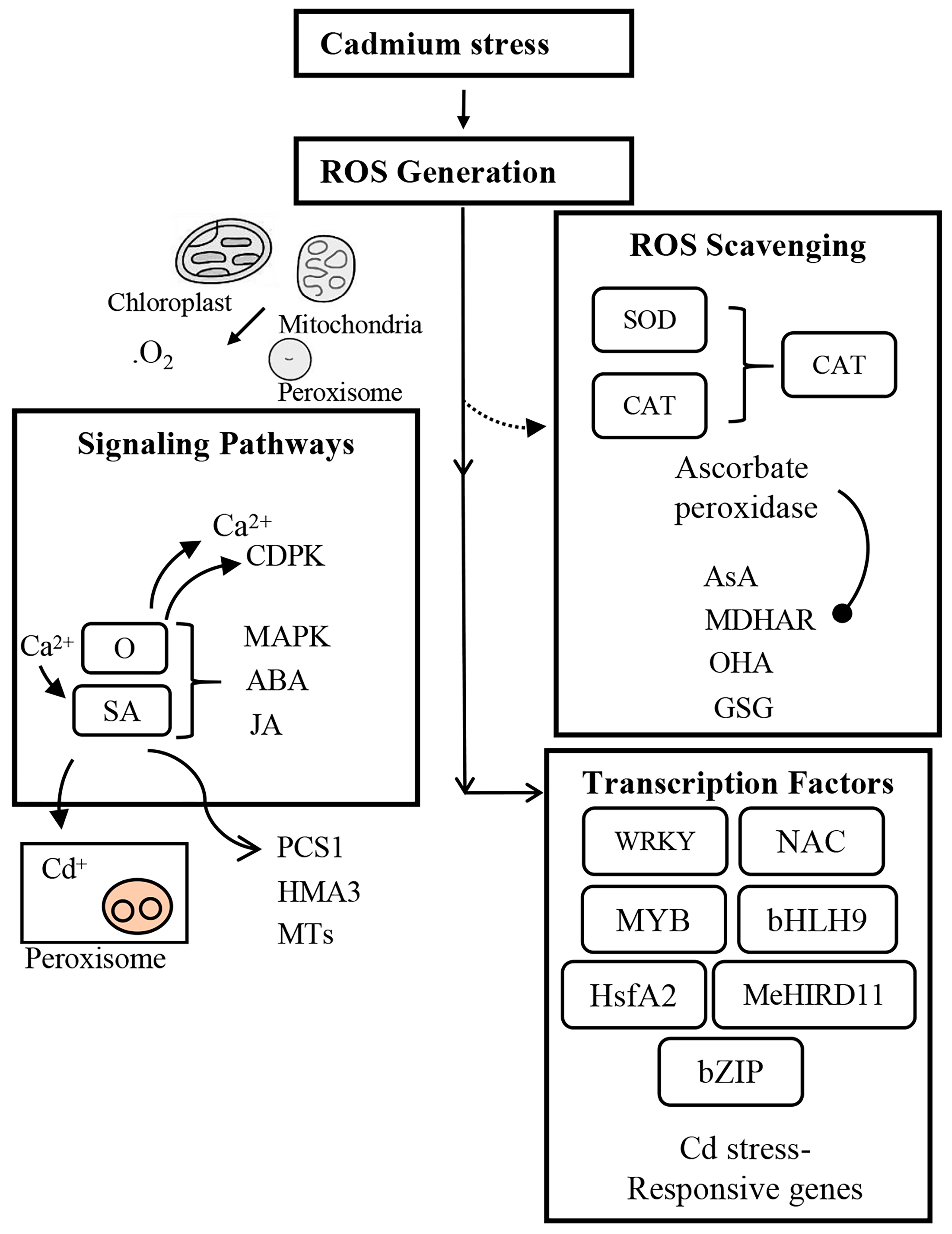
ROS-Mediated Cd Toxicity
4. Molecular and Transcriptional Regulation
5. Epigenetic, Proteomic, and Metabolomic Perspectives
5.1. Cadmium-Responsive Transcription Factors
5.2. Methylation-Mediated Adaptation
5.3. Proteomic and Metabolomic Responses
6. Conclusions
7. Future Perspective
Supplementary Materials
Author Contributions
Funding
Data Availability Statement
Conflicts of Interest
References
- Nesamvuni, A. Sustainable Application of Water Footprint in Black Tea and Botanical Extract Production System; Water Research Commission: Pretoria, South Africa, 2024. [Google Scholar]
- Zhao, X.; Zhu, A.L.; Liu, X.; Li, H.; Tao, H.; Guo, X.; Liu, J. Current Status, Challenges, and Opportunities for Sustainable Crop Production in Xinjiang. iScience 2025, 28, 112114. [Google Scholar] [CrossRef]
- Gulati, A.; Zhou, Y.; Huang, J.; Tal, A.; Juneja, R.; Gulati, A.; Juneja, R. Innovations in Production Technologies in India. In From Food Scarcity to Surplus: Innovations in Indian, Chinese, and Israeli Agriculture; Springer: Berlin/Heidelberg, Germany, 2021; pp. 23–82. [Google Scholar] [CrossRef]
- Pan, S.Y.; Nie, Q.; Tai, H.C.; Song, X.L.; Tong, Y.F.; Zhang, L.J.F.; Liang, C. Tea and Tea Drinking: China’s Outstanding Contributions to Mankind. Chin. Med. 2022, 17, 27. [Google Scholar] [CrossRef] [PubMed]
- Koros, D.K.; Tshelang, C.K.; Masangano, M. The Current Trend in Kenya’s Tea Industry. Agric. Socio-Econ. J. 2023, 23, 231–238. [Google Scholar] [CrossRef]
- Arhin, J.; Li, H.; Mei, H.; Amoah, M.; Chen, X.; Jeyaraj, A.; Liu, A. Looking into the Future of Organic Tea Production and Sustainable Farming: A Systematic Review. Int. J. Agric. Sustain. 2022, 20, 942–954. [Google Scholar] [CrossRef]
- Mishra, S.; Bharagava, R.N.; More, N.; Yadav, A.; Zainith, S.; Mani, S.; Chowdhary, P. Heavy Metal Contamination: An Alarming Threat to Environment and Human Health. In Environmental Biotechnology: For Sustainable Future; Springer: Singapore, 2019; pp. 103–125. [Google Scholar] [CrossRef]
- EFSA. Cadmium Dietary Exposure in the European Population. EFSA J. 2012, 10, 2551. [Google Scholar] [CrossRef]
- Song, Y.; Jin, L.; Wang, X. Cadmium Absorption and Transportation Pathways in Plants. Int. J. Phytoremediat. 2017, 19, 133–141. [Google Scholar] [CrossRef]
- Wang, M.; Mu, C.; Lin, X.; Ma, W.; Wu, H.; Si, D.; Li, H. Foliar Application of Nanoparticles Reduced Cadmium Content in Wheat (Triticum aestivum L.) Grains via Long-Distance “Leaf–Root–Microorganism” Regulation. Environ. Sci. Technol. 2024, 58, 6900–6912. [Google Scholar] [CrossRef]
- Xu, F.; Liu, W.; Wang, H.; Alam, P.; Zheng, W.; Faizan, M. Genome Identification of the Tea Plant (Camellia sinensis) ASMT Gene Family and Its Expression Analysis under Abiotic Stress. Genes 2023, 14, 409. [Google Scholar] [CrossRef]
- WHO. The Selection and Use of Essential Medicines: Report of the WHO Expert Committee on Selection and Use of Essential Medicines; WHO: Geneva, Switzerland, 2021. [Google Scholar]
- ATSDR. Agency for Toxic Substances and Disease Registry Toxicological Profile for Arsenic TP-92/09; Centers for Disease Control and Prevention: Atlanta, GA, USA, 2000. [Google Scholar]
- Hao, A.; Wu, D.; Li, C.; Hou, M. Advances in molecular mechanisms underlying cadmium uptake and translocation in rice. Front. Plant Sci. 2022, 13, 1003953. [Google Scholar] [CrossRef] [PubMed]
- Grill, E.; Löffler, S.; Winnacker, E.-L.; Zenk, M.H. Phytochelatins, the Heavy-Metal-Binding Peptides of Plants, Are Synthesized from Glutathione by a Specific γ-Glutamylcysteine Dipeptidyl Transpeptidase (Phytochelatin Synthase). Proc. Natl. Acad. Sci. USA 1989, 86, 6838–6842. [Google Scholar] [CrossRef]
- Lee, D.W.; Bae, D.W.; Kim, S.H.; Han, H.J.; Liu, X.; Park, H.C.; Chung, W.S. Comparative Proteomic Analysis of the Short-Term Responses of Rice Roots and Leaves to Cadmium. J. Plant Physiol. 2010, 167, 161–168. [Google Scholar] [CrossRef]
- Sterckeman, T.; Thomine, S. Mechanisms of Cadmium Accumulation in Plants. Crit. Rev. Plant Sci. 2020, 39, 322–359. [Google Scholar] [CrossRef]
- Zhou, Y.; Hu, L.; Ye, S.; Jiang, L.; Liu, S. Genome-Wide Identification of Glutathione Peroxidase (GPX) Gene Family and Their Response to Abiotic Stress in Cucumber. 3 Biotech 2018, 8, 159. [Google Scholar] [CrossRef] [PubMed]
- Yamniuk, A.P.; Nguyen, L.T.; Hoang, T.T.; Vogel, H.J. Metal Ion Binding Properties and Conformational States of Calcium-and Integrin-Binding Protein. Biochemistry 2004, 43, 2558–2568. [Google Scholar] [CrossRef] [PubMed]
- Dimke, H.; Hoenderop, J.G.; Bindels, R.J. Molecular Basis of Epithelial Ca2+ and Mg2+ Transport: Insights from the TRP Channel Family. J. Physiol. 2011, 589, 1535–1542. [Google Scholar] [CrossRef] [PubMed]
- Liu, J.; Feng, X.; Qiu, G.; Li, H.; Wang, Y.; Chen, X.; Fu, Q.; Guo, B. Inhibition Roles of Calcium in Cadmium Uptake and Translocation in Rice: A Review. Int. J. Mol. Sci. 2023, 24, 11587. [Google Scholar] [CrossRef]
- Guo, C.; Liu, C.; Liang, Y.; Li, N.; Fu, Q. Salicylic Acid Signals Plant Defence against Cadmium Toxicity. Int. J. Mol. Sci. 2019, 20, 2960. [Google Scholar] [CrossRef]
- Li, H.; Song, K.; Zhang, X.; Wang, D.; Dong, S.; Liu, Y.; Yang, L. Application of Multi-Perspectives in Tea Breeding and the Main Directions. Int. J. Mol. Sci. 2023, 24, 12643. [Google Scholar] [CrossRef]
- Perkins, M.L. Monolignol Export by Sink-Driven Diffusion in Lignifying Plant Biomass. Ph.D. Thesis, University British Columbia, Vancouver, BC, Canada, 2022. [Google Scholar]
- Pottier, M.; Oomen, R.; Picco, C.; Giraudat, J.; Scholz-Starke, J.; Richaud, P.; Thomine, S. Identification of Mutations Allowing Natural Resistance Associated Macrophage Proteins (NRAMP) to Discriminate against Cadmium. Plant J. 2015, 83, 625–637. [Google Scholar] [CrossRef]
- Conn, S.; Gilliham, M. Comparative Physiology of Elemental Distributions in Plants. Ann. Bot. 2010, 105, 1081–1102. [Google Scholar] [CrossRef]
- Zhang, G.; Zhang, Z.; Luo, S.; Li, X.; Lyu, J.; Liu, Z.; Yu, J. Genome-Wide Identification and Expression Analysis of the Cucumber PP2C Gene Family. BMC Genom. 2022, 23, 563. [Google Scholar] [CrossRef]
- Goncharuk, E.A.; Zagoskina, N.V. Heavy Metals, Their Phytotoxicity, and the Role of Phenolic Antioxidants in Plant Stress Responses with Focus on Cadmium. Molecules 2023, 28, 3921. [Google Scholar] [CrossRef]
- Yan, H.; Pei, X.; Zhang, H.; Li, X.; Zhang, X.; Zhao, M.; Zhao, X. MYB-Mediated Regulation of Anthocyanin Biosynthesis. Int. J. Mol. Sci. 2021, 22, 3103. [Google Scholar] [CrossRef]
- Jeevitha, G. A Study on Export of Major Marine Products from India. Ph.D. Thesis, Dr. Rajendra Prasad Central Agricultural University, Pusa, India, 2023. [Google Scholar]
- Girolametti, F.; Annibaldi, A.; Illuminati, S.; Damiani, E.; Carloni, P.; Truzzi, C. Essential and potentially toxic elements (PTEs) content in European tea (Camellia sinensis) leaves: Risk assessment for consumers. Molecules 2023, 28, 3802. [Google Scholar] [CrossRef]
- Alengebawy, A.; Abdelkhalek, S.T.; Qureshi, S.R.; Wang, M.-Q. Heavy metals and pesticide toxicity in agricultural soil and plants: Ecological risks and human health implications. Toxics 2021, 9, 42. [Google Scholar] [CrossRef]
- Zulfiqar, U.; Jiang, W.; Xiukang, W.; Hussain, S.; Ahmad, M.; Maqsood, M.F.; Haider, F.U. Cadmium phytotoxicity, tolerance, and advanced remediation approaches in agricultural soils; a comprehensive review. Front. Plant Sci. 2022, 13, 773815. [Google Scholar] [CrossRef] [PubMed]
- Yang, Z.; Yang, F.; Liu, J.L.; Wu, H.T.; Yang, H.; Shi, Y.; Chen, K.M. Heavy metal transporters: Functional mechanisms, regulation, and application in phytoremediation. Sci. Total Environ. 2022, 809, 151099. [Google Scholar] [CrossRef] [PubMed]
- Liu, C.; Yu, H.; Rao, X.; Li, L.; Dixon, R.A. Abscisic acid regulates secondary cell-wall formation and lignin deposition in Arabidopsis thaliana through phosphorylation of NST1. Proc. Natl. Acad. Sci. USA 2021, 118, e2010911118. [Google Scholar] [CrossRef] [PubMed]
- Gupta, D.K.; Vandenhove, H.; Inouhe, M. Role of Phytochelatins in Heavy Metal Stress and Detoxification Mechanisms in Plants; Springer: Berlin/Heidelberg, Germany, 2013. [Google Scholar] [CrossRef]
- Ahmed, S.; Stepp, J.R. Green tea: The plants, processing, manufacturing and production. In Tea in Health and Disease Prevention; Academic Press: Cambridge, MA, USA, 2013; Volume 1, pp. 19–31. [Google Scholar]
- Xia, J.; Zhou, J.; Cui, H.; Liang, J.; Liu, Q.; Zhou, X. Nodes play a major role in cadmium (Cd) storage and redistribution in low-Cd-accumulating rice (Oryza sativa L.) cultivars. Sci. Total Environ. 2023, 859, 160436. [Google Scholar] [CrossRef]
- Yan, J.; Wang, P.; Wang, P.; Yang, M.; Lian, X.; Tang, Z.; Zhao, F.J. A loss-of-function allele of OsHMA3 associated with high cadmium accumulation in shoots and grain of Japonica rice cultivars. Plant Cell Environ. 2016, 39, 1941–1954. [Google Scholar] [CrossRef]
- Uraguchi, S.; Fujiwara, T. Cadmium transport and tolerance in rice: Perspectives for reducing grain cadmium accumulation. Rice 2012, 5, 5. [Google Scholar] [CrossRef]
- Sytar, O.; Kumar, A.; Latowski, D.; Kuczynska, P.; Strzałka, K.; Prasad, M.N.V. Heavy metal-induced oxidative damage, defense reactions, and detoxification mechanisms in plants. Acta Physiol. Plant. 2013, 35, 985–999. [Google Scholar] [CrossRef]
- Ighodaro, U.; Akinloye, O. First line defence antioxidants—Superoxide dismutase (SOD), catalase (CAT) and glutathione peroxidase (GPX): Their fundamental role in the entire antioxidant defence grid. Alex. J. Med. 2018, 54, 287–293. [Google Scholar] [CrossRef]
- Bhattacharjee, S.; Bhattacharjee, S. ROS and oxidative stress: Origin and implication. In Reactive Oxygen Species in Plant Biology; Springer: New Delhi, India, 2019; Volume 1, pp. 1–31. [Google Scholar] [CrossRef]
- Unsal, V.; Dalkiran, T.; Çiçek, M.; Kölükçü, E. The role of natural antioxidants against reactive oxygen species produced by cadmium toxicity: A review. Adv. Pharm. Bull. 2020, 10, 184–202. [Google Scholar] [CrossRef]
- Hossain, M.A.; Nakano, Y.; Asada, K. Monodehydroascorbate reductase in spinach chloroplasts and its participation in regeneration of ascorbate for scavenging hydrogen peroxide. Plant Cell Physiol. 1984, 25, 385–395. [Google Scholar] [CrossRef]
- Chen, S.; Yu, M.; Li, H.; Wang, Y.; Lu, Z.; Zhang, Y.; Han, X. SaHsfA4c from Sedum alfredii Hance enhances cadmium tolerance by regulating ROS-scavenger activities and heat shock protein expression. Front. Plant Sci. 2020, 11, 142. [Google Scholar] [CrossRef] [PubMed]
- Dorion, S.; Ouellet, J.C.; Rivoal, J. Glutathione metabolism in plants under stress: Beyond reactive oxygen species detoxification. Metabolites 2021, 11, 641. [Google Scholar] [CrossRef]
- Zhang, J.Y.; Gao, S.C.; Dong, M.H.; Chang, J.X.; Zhu, D.L.; Guo, Y.D.; Bi, Y. Alfalfa MsbHLH115 confers tolerance to cadmium stress through activating the iron deficiency response in Arabidopsis thaliana. Front. Plant Sci. 2024, 15, 1358673. [Google Scholar] [CrossRef]
- Sun, Y.; Zhao, Y.; Zhou, H.; Li, F.; Wang, Y.; Du, X. The regulatory effect of Se-Cd interaction on tea plants (Camellia sinensis (L.) O. Kuntze) under cadmium stress. Agronomy 2025, 15, 246. [Google Scholar] [CrossRef]
- Singh, B.; Bhat, T.K.; Singh, B. Potential therapeutic applications of some antinutritional plant secondary metabolites. J. Agric. Food Chem. 2003, 51, 5579–5597. [Google Scholar] [CrossRef] [PubMed]
- Soares, C.; de Sousa, A.; Pinto, A.; Azenha, M.; Teixeira, J.; Azevedo, R.A.; Fidalgo, F. Effect of 24-epibrassinolide on ROS content, antioxidant system, lipid peroxidation and Ni uptake in Solanum nigrum L. under Ni stress. Environ. Exp. Bot. 2016, 122, 115–125. [Google Scholar] [CrossRef]
- Riaz, M.; Kamran, M.; Rizwan, M.; Ali, S.; Parveen, A.; Malik, Z.; Wang, X. Cadmium uptake and translocation: Selenium and silicon roles in Cd detoxification for the production of low Cd crops: A critical review. Chemosphere 2021, 273, 129690. [Google Scholar] [CrossRef] [PubMed]
- Anjum, S.A.; Tanveer, M.; Hussain, S.; Bao, M.; Wang, L.; Khan, I.; Shahzad, B. Cadmium toxicity in maize (Zea mays L.): Consequences on antioxidative systems, reactive oxygen species and cadmium accumulation. Environ. Sci. Pollut. Res. 2015, 22, 17022–17030. [Google Scholar] [CrossRef] [PubMed]
- Cargnello, M.; Roux, P.P. Activation and function of the MAPKs and their substrates, the MAPK-activated protein kinases. Microbiol. Mol. Biol. Rev. 2011, 75, 50–83. [Google Scholar] [CrossRef] [PubMed]
- Tuteja, N. Abscisic acid and abiotic stress signaling. Plant Signal. Behav. 2007, 2, 135–138. [Google Scholar] [CrossRef] [PubMed]
- Rodirigues, A.; Adamo, M.; Crozet, P.; Margalha, L.; Confraria, A.; Martinho, C.; González-Guzmán, M. ABI1 and PP2CA phosphatases are negative regulators of Snf1-related protein kinase1 signaling in Arabidopsis. Plant Cell 2013, 25, 3871–3884. [Google Scholar] [CrossRef] [PubMed]
- Jarocka-Karpowicz, A.; Markowska, A. Therapeutic potential of jasmonic acid and its derivatives. Int. J. Mol. Sci. 2021, 22, 8437. [Google Scholar] [CrossRef] [PubMed]
- Dalton, H. The Regulation of Defence Chemistry in Nicotiana. Ph.D. Thesis, Monash University, Melbourne, VIC, Australia, 2015. [Google Scholar]
- Salami, S.A.; Arad, N. MicroRNA-mediated regulation of drought stress response. In Plant MicroRNAs Stress Response; CRC Press: Boca Raton, FL, USA, 2023; pp. 120–143. [Google Scholar]
- Khan, S.A.; Li, M.Z.; Wang, S.M.; Yin, H.J. Revisiting the role of plant transcription factors in the battle against abiotic stress. Int. J. Mol. Sci. 2018, 19, 1634. [Google Scholar] [CrossRef]
- Qiu, Z.; Li, A.; Huang, W.; Chen, J.; Lin, X.; Yao, J.; Zheng, P. Metabolic profiling reveals changes in shoots and roots of nitrogen-deficient tea plants (Camellia sinensis cv. Jinxuan). Sci. Hortic. 2024, 337, 113528. [Google Scholar] [CrossRef]
- Bhatla, S.C.; Lal, M.A.; Bhatla, S.C. Signal perception and transduction. In Plant Physiology, Development and Metabolism; Springer: Singapore, 2018; Volume 1, pp. 729–765. [Google Scholar] [CrossRef]
- Van der Geer, P.; Hunter, T. Protein-tyrosine kinases and their signal transduction pathways. Annu. Rev. Cell Biol. 1994, 10, 251–337. [Google Scholar] [CrossRef]
- Guan, J.; Ji, J.; Li, X.; Jin, C.; Wang, G. LcMKK, a MAPK kinase from Lycium chinense, confers cadmium tolerance in transgenic tobacco by transcriptional upregulation of ethylene-responsive transcription factor gene. J. Genet. 2016, 95, 875–885. [Google Scholar] [CrossRef] [PubMed]
- De Zélicourt, A.; Colcombet, J.; Hirt, H. The role of MAPK modules and ABA during abiotic stress signaling. Trends Plant Sci. 2016, 21, 677–685. [Google Scholar] [CrossRef]
- Khan, W.; Wu, D.; Chen, P.; Zhao, H.; Zheng, P.; Sun, B.; Liu, S. Multi-omics analysis of the low temperatures in enhancing the aroma of Oolong tea (Camellia sinensis cv. Yashixiang Dancong). LWT 2025, 224, 117807. [Google Scholar] [CrossRef]
- Alhudhaibi, M. Heterologous Expression of Triticum Aestivum WRKY Transcription Factors in Pichia Pastoris: Interaction with Promoters of Defence Genes. Ph.D. Thesis, Newcastle University, Newcastle upon Tyne, UK, 2022. Available online: http://hdl.handle.net/10443/5800 (accessed on 5 August 2025).
- Yao, S.; Wu, F.; Hao, Q.; Ji, K. Transcriptome-wide identification of WRKY transcription factors and their expression profiles under different types of biological and abiotic stress in Pinus massoniana Lamb. Genes 2020, 11, 1386. [Google Scholar] [CrossRef] [PubMed]
- Baldoni, E.; Genga, A.; Cominelli, E. Plant MYB transcription factors: Their role in drought response mechanisms. Int. J. Mol. Sci. 2015, 16, 15811–15851. [Google Scholar] [CrossRef] [PubMed]
- Mu, Y.; Shi, L.; Tian, H.; Tian, H.; Zhang, J.; Zhao, F.; Geng, G. Characterization and transformation of TtMYB1 transcription factor from Tritipyrum to improve salt tolerance in wheat. BMC Genom. 2024, 25, 163. [Google Scholar] [CrossRef]
- Brenner, W.G.; Ramireddy, E.; Heyl, A.; Schmülling, T. Gene regulation by cytokinin in Arabidopsis. Front. Plant Sci. 2012, 3, 8. [Google Scholar] [CrossRef]
- Khoudi, H. SHINE clade of ERF transcription factors: A significant player in abiotic and biotic stress tolerance in plants. Plant Physiol. Biochem. 2023, 195, 77–88. [Google Scholar] [CrossRef]
- Jiang, W.; Wang, T.; Zhang, M.; Duan, X.; Chen, J.; Liu, Y.; Guo, Q. Genome-wide identification of glutathione S-transferase family from Dendrobium officinale and the functional characterization of DoGST5 in cadmium tolerance. Int. J. Mol. Sci. 2024, 25, 8439. [Google Scholar] [CrossRef]
- Bian, Z.; Gao, H.; Wang, C. NAC transcription factors as positive or negative regulators during the ongoing battle between pathogens and our food crops. Int. J. Mol. Sci. 2020, 22, 81. [Google Scholar] [CrossRef]
- Belda-Palazon, B.; Adamo, M.; Valerio, C.; Ferreira, L.J.; Confraria, A.; Reis-Barata, D.; Rodrigues, A.; Meyer, C.; Rodriguez, P.L.; Baena-González, E. A dual function of SnRK2 kinases in the regulation of SnRK1 and plant growth. Nat. Plants 2020, 6, 1345–1353. [Google Scholar] [CrossRef]
- Lam, E.; Meisel, L. bZIP transcription factors in Arabidopsis. Trends Plant Sci. 2018, 23, 101–113. [Google Scholar]
- Bain, A.; Bouchard, E.; Séguin, A. NAC transcription factors: Regulators of plant development and stress responses. Plants 2020, 9, 1642. [Google Scholar] [CrossRef]
- Bouain, N.; Shahzad, Z.; Rouached, A.; Khan, G.A.; Berthomieu, P.; Abdelly, C.; Rouached, H. Phosphate and zinc transport and signalling in plants: Toward a better understanding of their homeostasis interaction. J. Exp. Bot. 2014, 65, 5725–5741. [Google Scholar] [CrossRef] [PubMed]
- Shi, Y.J.; Niu, M.X.; Feng, C.H.; Li, J.L.; Lin, T.T.; Wang, T.; He, F. Overexpression of PtrAREB3 improved cadmium enrichment and tolerance in poplar. Environ. Exp. Bot. 2023, 210, 105343. [Google Scholar] [CrossRef]
- Arora, H.; Singh, R.K.; Sharma, S.; Sharma, N.; Panchal, A.; Das, T.; Prasad, M. DNA methylation dynamics in response to abiotic and pathogen stress in plants. Plant Cell Rep. 2022, 41, 1931–1944. [Google Scholar] [CrossRef]
- Kim, J.M.; Sasaki, T.; Ueda, M.; Sako, K.; Seki, M. Chromatin changes in response to drought, salinity, heat, and cold stresses in plants. Front. Plant Sci. 2015, 6, 114. [Google Scholar] [CrossRef] [PubMed]
- Ramakrishnan, M.; Satish, L.; Kalendar, R.; Narayanan, M.; Kandasamy, S.; Sharma, A.; Zhou, M. The dynamism of transposon methylation for plant development and stress adaptation. Int. J. Mol. Sci. 2021, 22, 11387. [Google Scholar] [CrossRef]
- Niederhuth, C.E.; Schmitz, R.J. Putting DNA methylation in context: From genomes to gene expression in plants. Biochim. Biophys. Acta 2017, 1860, 149–156. [Google Scholar] [CrossRef]
- Martin, G.T.; Seymour, D.K.; Gaut, B.S. CHH methylation islands: A nonconserved feature of grass genomes that is positively associated with transposable elements but negatively associated with gene-body methylation. Genome Biol. Evol. 2021, 13, evab144. [Google Scholar] [CrossRef]
- Zhang, H.; Ali, A.; Hou, F.; Wu, T.; Guo, D.; Zeng, X.; Xu, P. Effects of ploidy variation on promoter DNA methylation and gene expression in rice (Oryza sativa L.). BMC Plant Biol. 2018, 18, 314. [Google Scholar] [CrossRef] [PubMed]
- Kumar, S.; Mohapatra, T. Dynamics of DNA methylation and its functions in plant growth and development. Front. Plant Sci. 2021, 12, 596236. [Google Scholar] [CrossRef] [PubMed]
- Rui, L.; Su, J.Y.; Li, T.; Sun, J.M.; Wu, G.H. Molecular regulation of immunity in tea plants. Mol. Biol. Rep. 2023, 50, 2883–2892. [Google Scholar] [CrossRef] [PubMed]
- Qiao, S.; Song, W.; Hu, W.; Wang, F.; Liao, A.; Tan, W.; Yang, S. The role of plant DNA methylation in development, stress response, and crop breeding. Agronomy 2024, 15, 94. [Google Scholar] [CrossRef]
- Chen, Y.; Gong, H.; Wang, J.; Cai, Y.; Zhao, M.; Zhao, Q. Advances in browning chemistry markers, detections, and coping strategies to preserve the quality of traditional Chinese pickles. Food Rev. Int. 2025, 41, 142–172. [Google Scholar] [CrossRef]
- Mifsud, K.R.; Gutièrrez-Mecinas, M.; Trollope, A.F.; Collins, A.; Saunderson, E.A.; Reul, J.M. Epigenetic mechanisms in stress and adaptation. Brain Behav. Immun. 2011, 25, 1305–1315. [Google Scholar] [CrossRef]
- Li, J.; Lu, J.; Tao, M.; Li, M.; Yang, H.; Xia, E.-H.; Wan, X. Genome-wide identification of seven polyamine oxidase genes in Camellia sinensis (L.) and their expression patterns under various abiotic stresses. Front. Plant Sci. 2020, 11, 544933. [Google Scholar] [CrossRef]
- Wei, Y.; Peng, X.; Wang, X.; Wang, C. The heavy metal-associated isoprenylated plant protein (HIPP) gene family plays a crucial role in cadmium resistance and accumulation in the tea plant (Camellia sinensis L.). Ecotoxicol. Environ. Saf. 2023, 260, 115077. [Google Scholar] [CrossRef]
- Lin, X.; Huang, W.; Qiu, Z.; Yao, J.; Zhao, H.; Khan, W.; Zheng, P. Impact of fresh leaf elements on flavor components and aroma quality in ancient Dancong tea gardens across varying altitudes. Plants 2025, 14, 1339. [Google Scholar] [CrossRef]
- Liu, B.; Liu, X.; Yang, S.; Chen, C.; Xue, S.; Cai, Y.; Ren, H. Silencing of the gibberellin receptor homolog, CsGID1a, affects locule formation in cucumber (Cucumis sativus) fruit. New Phytol. 2016, 210, 551–563. [Google Scholar] [CrossRef]
- Sun, T.; Zhang, J.; Zhang, Q.; Li, X.; Li, M.; Yang, Y.; Zhou, B. Exogenous application of acetic acid enhances drought tolerance by influencing the MAPK signaling pathway induced by ABA and JA in apple plants. Tree Physiol. 2022, 42, 1827–1840. [Google Scholar] [CrossRef] [PubMed]
- Khan, W.; Zheng, P.; Sun, B.; Liu, S. Transcriptomics analysis reveals differences in purine and phenylpropanoid biosynthesis pathways between Camellia sinensis var. shuchazao and Camellia ptilophylla. Horticulturae 2024, 11, 8. [Google Scholar] [CrossRef]
- Karakaya, A.; Dikilitas, M. Biochemical, physiological and molecular defence mechanisms of tea plants against pathogenic agents under changing climate conditions. In Stress Physiology of Tea in the Face of Climate Change; Springer: Singapore, 2018; pp. 241–268. [Google Scholar] [CrossRef]
- Zhang, J.; Cai, S.; Wang, L.; Lv, D.; Yuan, X.; Zeng, Y.; Li, Y. Identification and expression analysis of the ethylene response factor gene family in tea plant (Camellia sinensis). Agronomy 2023, 13, 1900. [Google Scholar] [CrossRef]
- Migocka, M.; Papierniak, A.; Maciaszczyk-Dziubińska, E.; Posyniak, E.; Kosieradzka, A. Molecular and biochemical properties of two P1B2-ATPases, CsHMA3 and CsHMA4, from cucumber. Plant Cell Environ. 2015, 38, 1127–1141. [Google Scholar] [CrossRef]
- Li, X.; Chen, D.; Li, B.; Yang, Y.; Yang, Y. Combined transcriptomic, proteomic and biochemical approaches to identify the cadmium hyper-tolerance mechanism of turnip seedling leaves. Environ. Sci. Pollut. Res. 2021, 28, 22458–22473. [Google Scholar] [CrossRef] [PubMed]
- Luo, S.; Tian, S.; Yao, X.; Wan, Y.; Chen, Z.; Yang, Z.; Lu, L. Genome-wide identification of ABCC gene subfamily members and functional analysis of CsABCC11 in Camellia sinensis. Phyton 2024, 93, 2019–2036. [Google Scholar] [CrossRef]
- Shuting, Z.; Hongwei, D.; Qing, M.; Rui, H.; Huarong, T.; Lianyu, Y. Identification and expression analysis of the ZRT, IRT-like protein (ZIP) gene family in Camellia sinensis (L.) O. Kuntze. Plant Physiol. Biochem. 2022, 172, 87–100. [Google Scholar] [CrossRef] [PubMed]
- Hao, J.; Peng, A.; Li, Y.; Zuo, H.; Li, P.; Wang, J.; Wan, X. Tea plant roots respond to aluminum-induced mineral nutrient imbalances by transcriptional regulation of multiple cation and anion transporters. BMC Plant Biol. 2022, 22, 203. [Google Scholar] [CrossRef]
- Zhu, C.; Zhang, S.; Zhou, C.; Xie, S.; Chen, G.; Tian, C.; Guo, Y. Genome-wide investigation of N6-methyladenosine regulatory genes and their roles in tea (Camellia sinensis) leaves during the withering process. Front. Plant Sci. 2021, 12, 702303. [Google Scholar] [CrossRef] [PubMed]
- Huang, Y.; Mao, Y.; Guo, G.; Ni, D.; Chen, L. Genome-wide identification of PME gene family and expression of candidate genes associated with aluminum tolerance in tea plant (Camellia sinensis). BMC Plant Biol. 2022, 22, 306. [Google Scholar] [CrossRef]
- Cao, Q.; Lv, W.; Jiang, H.; Chen, X.; Wang, X.; Wang, Y. Genome-wide identification of glutathione S-transferase gene family members in tea plant (Camellia sinensis) and their response to environmental stress. Int. J. Biol. Macromol. 2022, 205, 749–760. [Google Scholar] [CrossRef] [PubMed]
- Li, Y.; Yang, Y.; Sun, K.; Chen, Y.; Chen, X.; Li, X. Exogenous melatonin enhances cold, salt, and drought stress tolerance by improving antioxidant defense in tea plant (Camellia sinensis (L.) O. Kuntze). Molecules 2019, 24, 1826. [Google Scholar] [CrossRef] [PubMed]
- Khan, W.; Sun, B.; Zheng, P.; Wang, H.; Zhao, H.; Liu, S. Impact of cadmium chloride stress on volatile compounds and expression profiling of CsHMA genes in Camellia sinensis cv. Fenghuang Dancong. Plant Physiol. Biochem. 2025, 229, 110734. [Google Scholar] [CrossRef] [PubMed]


| Category | Aspect | Details | Ref. |
|---|---|---|---|
| Global Tea Production & Consumption | Global Production (2023) | 6.5 million tons cultivated across 4.3 million hectares | [1] |
| Largest Producer | China—2.9 million tons (45%) from 2.4 million ha | [2] | |
| Second Producer | India—1.3 million tons (20%) | [3] | |
| Other Producers | Kenya (0.5 Mt), Sri Lanka (0.3 Mt), Vietnam (0.18 Mt) | [3] | |
| Tea Types & Distribution | Green tea = 20% (China supplies 70% of this); Black tea = 60% (India, Kenya, Sri Lanka); Oolong tea = Fujian & Taiwan; White & Yellow = China; Pu’erh = Yunnan, China | ||
| Consumption | China—2.1 Mt, India—1.1 Mt, the EU, USA & Middle East are the leading importers | [4] | |
| Largest Exporter | Kenya—0.5 Mt annually | [5] | |
| Market Value | >50 billion USD | [5] | |
| Industry Shift | Growing demand for organic & specialty teas; adoption of sustainable cultivation, high-yield cultivars, automation | [6] |
| Category | Key Components/Pathways | Mechanisms | Ref. |
|---|---|---|---|
| Cd Uptake & Primary Effects | Inhibition of mineral transporters (Fe2+, Zn2+) | Cd competitively blocks nutrient uptake, disrupting ion homeostasis | [52] |
| Reactive oxygen species (ROS: H2O2, O2−, OH·) | Cd induces oxidative stress, damaging proteins, lipids, and DNA | [53] | |
| Signaling Pathways | MAPK Pathway | MPK3/6 kinases activate stress-responsive genes via nuclear translocation | [54] |
| ABA Pathway | PYR/PYL receptors → PP2C inhibition → SnRK2/bZIP activation → stress gene expression | [49] | |
| Ethylene Pathway | Limits root growth to reduce Cd uptake; regulates stress acclimation | [10] | |
| Jasmonic Acid (JA) Pathway | JAZ repressor degradation → MYC TF activation → antioxidant synthesis | [58] | |
| Antioxidant Systems | Enzymatic (SOD, CAT, APX, GST) | Detoxify ROS (e.g., SOD converts O2− to H2O2; CAT breaks down H2O2) | [40] |
| Non-enzymatic (GSH, polyphenols) | Scavenge ROS directly; tea-specific EGCG and catechins enhance resilience | [21] | |
| Genetic Regulation | Upregulated Genes (CsSOD, CsGST) | Enhance ROS scavenging and Cd chelation | [44] |
| Transcription Factors (NAC, WRKY, bZIP) | Bind stress-responsive elements to activate defense genes | [59] | |
| Therapeutic Targets | Exogenous GSH application | Boosts cellular glutathione pools to mitigate oxidative stress | [47] |
| TF engineering (e.g., HsfA2 overexpression) | Improves ROS homeostasis and Cd tolerance | [47] |
| S. No. | Genes | Name | Function | Expression | Ref. |
|---|---|---|---|---|---|
| 1 | CsNRAMP1, CsNRAMP2, CsNRAMP3. | Natural Resistance-Associated Macrophage Protein | Gene family encodes metal ion transporters, growth, development, and stress responses. | Roots | [100] |
| 2 | CsABCC1, CsABCC2. | ATP-binding Cassette Transporters | Convert the energy gained from ATP hydrolysis into trans-bilayer movement | Root & leaves | [101] |
| 3 | CsIRT1, CsZIP1. | Zinc-Iron Permease | Transition metal ions, zinc and iron, are transported into the cytoplasm | Leaves | [102] |
| 4 | CsYSL2, CsYSL5. | Yellow Stripe-Like | Transportation of metal-phytosiderophores | Shoots | [103] |
| 5 | CsMT1, CsMT2, CsMT3. | Metallothioneins | Cis-elements related to stress and hormone responses | Shoots | [104] |
| 6 | CsPCS1, CsPCS2. | Phytochelatin Synthase | Important in stress response and adaptation. | Roots & leaves | [105] |
| 7 | CsGSTU1, CsGSTF2. | Glutathione S-Transferases | Stress response, detoxification, and biosynthesis of secondary metabolites like anthocyanins. | Leaves | [106] |
| 8 | CsSOD1, CsSOD2. | Superoxide Dismutase | Response to various abiotic stresses | Roots | [107] |
| 9 | CsCAT1, CsCAT2. | Catalase | Key enzymes involved in antioxidant defense systems | Roots | [27] |
| 10 | CsAPX1, CsAPX2. | Ascorbate Peroxidase | Development and defense against abiotic stresses. | Shoots | [106] |
| 11 | CsHSP70, CsHSP90. | HSP Families | Tolerance to heat and cold stresses. | Shoots | [46] |
| 12 | CsWRKY28, CsWRKY53. | WRKY | Response to biotic and abiotic stress. | Roots | [68] |
| 13 | CsMYB108, CsMYB30. | Myeloblastosis | Responses to biotic and abiotic stresses, development, and primary and secondary metabolism | Roots & leaves | [85] |
| 14 | CsbZIP60 | Basic Leucine Zipper | Positive regulators of drought and salt stress responses | Shoots | [87] |
| 15 | CsNAC1, CsNAC5. | NAC | Essential for plant growth and development | Roots | [11] |
| 16 | CsMAPK3, CsMAPK6. | Mitogen-Activated Protein Kinase | Defense response against citrus canker | Leaves | [15] |
| 17 | CsCML19, CsCML37. | Calmodulin-like Proteins | Regulating plant growth and development, and response to abiotic stress | Roots & leaves | [88] |
| 18 | CsCDPK. | Calcium-Dependent Protein Kinase | Plant responses to abiotic and biotic stresses | Roots | [10] |
| 19 | CsPIP1, CsPIP2. | play roles in water and solute transport under stress | Mediating water transport | Leaves | [101] |
| 20 | CsFER1, CsFER2. | An iron storage protein that also helps in metal detoxification | Response to iron deficiency, growth, and development | Leaves | [103] |
| 21 | CsPHT1, CsPHT2. | Phytochelatin Transporter | Phosphate transport, essential for phosphate uptake, translocation, and homeostasis | Leaves & shoots | [106] |
| 22 | CsCAX1, CsCAX3 | regulates vacuolar sequestration of metal ions | Contributing to ion homeostasis and stress responses | Roots | [103] |
| 23 | CsMTP1, CsMTP3, CsMTP8. | vacuolar transporters that sequester excess metals | Maintain metal homeostasis and confer tolerance to heavy metal stress | Leaves and shoots | [27] |
| 24 | CsGRX1, CsGRX2 | Glutaredoxin | Regulation and defense against oxidative stress | Roots & leaves | [73] |
| 25 | CsPOD1, CsPOD2 | Peroxidase | Antioxidant defense and enhancing stress tolerance | Leaves | [20] |
| 26 | CsMDHAR1, CsMDHAR2. | Monodehydroascorbate Reductase | Maintain redox balance and enhance tolerance to oxidative stress | Roots | [91] |
| 27 | CsDHAR1, CsDHAR2. | Dehydroascorbate Reductase | Sustaining antioxidant capacity and enhancing stress resilience | Leaves | [10] |
| 28 | CsHSP17, CsHSP22, CsHSP90.1, CsHSP90.2. | Heat shock proteins | Tolerance to heat and other stresses | Leaves | [58] |
| 29 | CsZAT6, CsZAT12. | zinc transporter | Drought, salt, and heavy metals enhance plant stress tolerance | Leaves & shoots | [104] |
| 30 | CsERF1, CsERF109. | Ethylene Response Factor | Role in plant responses to abiotic stresses such as drought and salinity | Leaves | [48] |
| 31 | CsbHLH38, CsbHLH39. | Basic Helix-Loop-Helix | Growth, development, and responses to environmental stresses | Roots | [38] |
| 32 | CsAP2/ERF1, CsAP2/ERF4. | AP2/ERF Family | Antioxidant defense and stress tolerance mechanisms | Leaves | [66] |
| 33 | CsNHX1, CsNHX2. | (Na+)/(H+) antiporter | Regulates ion homeostasis and pH balance | Roots and leaves | [86] |
| 34 | CsSULTR1, CsSULTR3. | Sulfate Transporter | Sulfate uptake and distribution, supporting sulfur assimilation and promoting stress resilience and growth | Roots | [27] |
| 35 | CsCAX1, CsACA8. | anti-CRISPR-associated (aca) genes | Calcium-transporting ATPase that helps regulate intracellular calcium levels and stress response. | Leaves & shoots | [103] |
| 36 | CsARF7, CsARF19. | Auxin response factors | Plant growth, development, and adaptation to environmental stresses | Leaves | [11] |
| 37 | CsJAZ1, CsJAZ2. | Jasmonate-ZIM domain | Modulating plant defense responses, growth, and stress adaptation | [104] | |
| 38 | CsAREB1, CsABF4. | ABA-responsive element binding protein | Key role in stress tolerance, particularly under drought and salinity conditions | Roots & leaves | [27] |
| 39 | CsTRX1, CsTRX2. | Thioredoxin | Redox regulation aids in cellular homeostasis, stress response, and protection against oxidative damage | Roots & leaves | [91] |
| 40 | CsNIA1, CsNIA2. | Nitrate reductase | Nitrogen assimilation and supporting plant growth and development. | Leaves & shoots | [20] |
| 41 | CsLAC1, CsLAC4. | The lactose operon | Contributing to cell wall formation, stress tolerance, and defense responses | Leaves | [104] |
| 42 | CsHMT1, CsHMT2. | Histone methyltransferases | Role in plant development and stress responses | Leaves & shoots | [50] |
| 43 | CsVIT1, CsVIT2. | The vacuolar iron transporter | Contributing to iron homeostasis and overall plant health | Leaves | [15] |
| 44 | CsNIP1. | Necrosis-inducing protein | Playing a crucial role in root development and stress adaptation | Roots | [79] |
| 45 | CsP1B1, CsP1B2. | P1B-type ATPase | Contributing to plant responses to stress and developmental processes | Roots & leaves | [36] |
| 46 | CsTRR1, CsTRR2. | tRNA-Arg (anticodon ACG) 1-2 provided | Plays a key role in redox regulation, helping to maintain cellular homeostasis and protect against oxidative stress | Roots | [17] |
| 47 | CsGPX1, CsGPX2. | Glutathione peroxidase | Vital role in antioxidant defense and stress response mechanisms | Leaves & shoots | [25] |
| 48 | CsALDH7, CsALDH12. | Aldehyde Dehydrogenase | Contributing to stress tolerance and overall plant health | Roots & leaves | [91] |
| 49 | CsZFP1, CsZFP7. | Zinc Finger Protein | Response to environmental stresses and developmental cues | Leaves & shoots | [99] |
| 50 | CsHD-Zip1, CsHD-Zip2. | Homeodomain-leucine zipper | Regulates plant development and adaptation to abiotic stresses | Roots | [47] |
| 51 | CsGRAS1, CsGRAS2. | GIBBERELLIC ACID INSENSITIVE | Plant growth, development, and stress responses | Leaves | [25] |
| 52 | CsPP2C1, CsPP2C5. | Protein phosphatase 2C | Regulating plant growth, development, and stress responses | Roots & leaves | [27] |
| 53 | CsCaBP1, CsCaBP2. | calcium-binding protein 5provided | Role in stress response and adaptation, particularly under drought conditions | Leaves & shoots | [33] |
| 54 | CsGPCR1. | G protein-coupled receptors | Role in perceiving environmental signals and mediating stress responses | Leaves | [23] |
| 55 | CsCHI1, CsCHI3. | Chalcone Isomerase | Catalyzes the conversion of chalcones to flavanones, supporting plant defense | Roots & leaves | [99] |
| 56 | CsLTP1, CsLTP3. | Lipid Transfer Protein | Role in cuticle formation, pathogen defense, and stress adaptation | Leaves | [14] |
| 57 | CsPAO1, CsPAO2. | Polyamine oxidases | Cellular homeostasis, stress response, and defense against oxidative stress | Roots and leaves | [33] |
| 58 | CsGID1A, CsGID1B. | Gibberellin Insensitive Dwarf1 | Regulating growth, development, and responses to environmental stimuli | Roots | [91] |
| 59 | CsSAMT1, CsSAMT2. | Salicylic Acid Methyltransferase | Role in the modulation of plant defense and stress responses | Roots | [23] |
| 60 | CsPIN1, CsPIN2. | PIN-FORMED | Regulating auxin distribution and polar transport to influence plant growth and development | Leaves & shoots | [14] |
| 61 | CsEXP1, CsEXP3. | Expansin gene family | Role in cell wall loosening, facilitating cell growth and expansion during plant development | Roots & leaves | [52] |
| 62 | CsCESA1, CsCESA3. | Cellulose Synthase | Contributing to cell wall structure, plant growth, and resistance to abiotic stresses | Roots & leaves | [45] |
| 63 | CsPME1, CsPME2. | Pectin Methylesterase | Influencing cell wall integrity, development, and stress responses | Roots & leaves | [105] |
| 64 | CsHSF1, CsHSF2. | Heat Shock Factor | Response to thermal stress and maintaining protein homeostasis | Roots | [36] |
| 65 | CsUBC1, CsUBC2. | Ubiquitin-Conjugating Enzyme | Regulates protein degradation, signaling, and responses to environmental stresses | Roots & leaves | [52] |
| 66 | CsCYP71, CsCYP85. | Cytochrome P450 | Contributing to stress responses and development | Leaves & shoots | [49] |
| 67 | CsHMA1, CsHMA2. | Heavy Metal ATPases | Gene family encodes metal ion transporters, growth, development, and stress responses. | Roots | [108] |
Disclaimer/Publisher’s Note: The statements, opinions and data contained in all publications are solely those of the individual author(s) and contributor(s) and not of MDPI and/or the editor(s). MDPI and/or the editor(s) disclaim responsibility for any injury to people or property resulting from any ideas, methods, instructions or products referred to in the content. |
© 2025 by the authors. Licensee MDPI, Basel, Switzerland. This article is an open access article distributed under the terms and conditions of the Creative Commons Attribution (CC BY) license (https://creativecommons.org/licenses/by/4.0/).
Share and Cite
Khan, W.; Sun, B.; Zheng, P.; Deng, Y.; Zhao, H.; Liu, S. Cadmium Tolerance in Tea Plants (Camellia sinensis): Physiological, Biochemical, and Molecular Insights. Horticulturae 2025, 11, 1508. https://doi.org/10.3390/horticulturae11121508
Khan W, Sun B, Zheng P, Deng Y, Zhao H, Liu S. Cadmium Tolerance in Tea Plants (Camellia sinensis): Physiological, Biochemical, and Molecular Insights. Horticulturae. 2025; 11(12):1508. https://doi.org/10.3390/horticulturae11121508
Chicago/Turabian StyleKhan, Waqar, Binmei Sun, Peng Zheng, Yaxin Deng, Hongbo Zhao, and Shaoqun Liu. 2025. "Cadmium Tolerance in Tea Plants (Camellia sinensis): Physiological, Biochemical, and Molecular Insights" Horticulturae 11, no. 12: 1508. https://doi.org/10.3390/horticulturae11121508
APA StyleKhan, W., Sun, B., Zheng, P., Deng, Y., Zhao, H., & Liu, S. (2025). Cadmium Tolerance in Tea Plants (Camellia sinensis): Physiological, Biochemical, and Molecular Insights. Horticulturae, 11(12), 1508. https://doi.org/10.3390/horticulturae11121508