Article

Integrated Analysis of Transcriptome and Metabolome Provides Insights into Phenylpropanoid Biosynthesis of Blueberry Leaves in Response to Low-Temperature Stress


Department of Horticulture, College of Plant Science, Jilin University, Changchun 130062, China
*
Authors to whom correspondence should be addressed.
These authors contributed equally to this work.
Horticulturae 2025, 11(12), 1495; https://doi.org/10.3390/horticulturae11121495
Submission received: 7 November 2025 / Revised: 5 December 2025 / Accepted: 8 December 2025 / Published: 10 December 2025

Abstract

The phenylpropanoid compounds are crucial secondary metabolites for blueberry plants. Low temperatures induce the expression of phenylpropanoid biosynthesis genes and regulate the accumulation of phenylpropanoid metabolites. However, the molecular mechanisms of blueberry leaves in response to low-temperature stress are unknown. To explore the molecular mechanisms of phenylpropanoid biosynthesis under low-temperature stress, the 6-month-old blueberry plants were cultured at 10 °C for 0, 6, 12, 24, and 48 h. The total of 16,388 differentially expressed genes (DEGs) and 303 differentially accumulated metabolites (DAMs) were identified by transcriptome deep sequencing (RNA-seq) and ultra-high performance liquid mass spectrometry, respectively. The most enriched low-temperature-responsive genes are mainly involved in the phenylpropanoid biosynthesis pathway and the main low-temperature-responsive metabolites come from the phenylpropanoid superclass based on transcriptome and metabolome data, respectively. CBF2 plays essential roles in the ICE-CBF-COR regulatory pathway, and transcription factors (TFs) ERF109, MYB14, WRKY40, HSP30, MPSR1, ZHD4, MADS3, and MADS27 might be responsible for blueberry leaf low-temperature tolerance. The MYB TFs from group 5, group 6, and group AtMYB5 may regulate the accumulation of phenylpropanoid metabolites by regulating expression of phenylpropanoid biosynthesis genes. These findings uncover possible molecular mechanisms of phenylpropanoid biosynthesis during low-temperature stress and provide a basis for future studies and crop improvement.

1. Introduction

Low-temperature stress is a crucial environmental factor limiting the distribution of plants, affecting their growth and development, and reducing crop productivity [1,2]. To cope with cold-induced damage, plants have evolved precise and efficient mechanisms, ranging from sensing cold signals to adjusting physiological and biochemical responses [3]. Cold acclimation research has led to a number of important findings in the past decades in which C-repeat binding factor (CBF) plays essential roles in the cold stress response by binding to the promoters of the cold-regulated (COR) genes and regulating their expressions. C-repeat binding factor (CBF) expression 1 (ICE) contributes to the improved cold tolerance by directly activating the CBF genes. Many studies have proved that the ICE-CBF-COR regulatory pathway plays a core role in the regulation of low-temperature stress response [4,5]. At the same time, low temperatures regulate phenylpropanoid compound biosynthesis via CBF transcription factors. For example, in ripening litchi fruits, LcDREB2C, a CBF/DREB transcription factor, promoted anthocyanin accumulation by directly binding to the promoters of LcMYB1, LcCHI, and LcF3H at low temperatures [6,7].
Phenylpropanoids are a vast family in the plant kingdom and can improve tolerance low-temperature environments [8,9]. In this family, flavonoids, isoflavonoids, cinnamic acids, and coumarins are the main phenylpropanoid compounds. The phenylpropanoid metabolites are biosynthesized via the general phenylpropanoid pathway, with key steps catalyzed by phenylalanine ammonia-lyase (PAL), cinnamate 4-hydroxylase (C4H), and 4-coumarate CoA ligase (4CL) enzymes, which subsequently enters the simple phenylpropanoid biosynthetic pathway by O-hydroxycinnamoyltransferase (HCT), cinnamoyl-CoA reductase (CCR), and caffeoyl shikimate esterase (CSE). It enters the flavonoid biosynthetic pathway through chalcone synthase (CHS), flavanone 3-hydroxylase (F3H), flavonoid 3′5′-hydroxylase (F3′5′H), and so on. Then flavonol synthase (FLS) catalyzes flavonol biosynthesis, and 2-hydroxyisoflavanone dehydratase (HID), isoflavone malonyltransferase (IMaT) and isoflavone 2′-hydroxylase (I2′H) catalyze isoflavonoid biosynthesis, while dihydroflavonol 4-reductase (DFR) and anthocyanidin synthase (ANS) catalyze anthocyanin and flavan-3-ol biosynthesis. The UDP-glucose flavonoid 3-O-glucosyl transferase (UFGT) and UDP-glycosyltransferase (UGT) catalyze the last step in anthocyanin and flavonol glycoside biosynthesis, while anthocyanidin reductase (ANR) and leucoanthocyanidin reductase (LAR) are responsible for flavan-3-ol biosynthesis [10]. The genes encoding these enzymes regulate phenylpropanoid accumulation and increase low-temperature tolerance.
Transcription factors (TFs), such as WRKY, MYB, AP2, WRKY, bHLH, and NAC families, may simultaneously control numerous pathways during low-temperature stresses in plants [11,12,13]. MYB TFs involved in the regulation of cold tolerance have been functionally identified in many species. For Arabidopsis, AtMYB14 and AtMYB15 are involved in cold regulation in CBF genes [14,15]. In apple, MdMYB23, MdMYB4, MdMYB88, MdMYB124, and MdSIMYB1 positively regulate cold tolerance and cold-responsive gene expression [16,17,18], whereas MdMYB44 and MdMYB15L negatively regulate plant cold tolerance [19,20]. Furthermore, MYB TFs have been characterized to regulate phenylpropanoid metabolism accumulation in response to low-temperature signals. For example, apple MdMYB308L was found to regulate cold tolerance and anthocyanin accumulation [21]. CeMYB52 (Cymbidium ensifolium) acts as a key temperature-responsive TF regulating anthocyanin biosynthesis and transport via CeCHS8 and CeGST [22]. MeMYB2 (Manihot esculenta Crantz) appears to act as an inhibitor of chilling-induced anthocyanin accumulation during the rapid response of cassava to chilling stress [23].
Blueberries (Vaccinium corymbosum L.) is one of the most economically important fruit crops in China, in which ‘Northland’ are the main cultivated cultivars in northeast China, and they are severely affected by cold damage [24]. Low temperatures cause significant economic losses in blueberry production. Especially in the early spring in northern China, blueberries often suffer from low-temperature damage, so it is of great significance to improve low-temperature tolerance in the flowering and fruiting stages of blueberries. The leaves and fruits of blueberry are known to be rich in phenylpropanoid compounds for use either as dietary botanicals or by the pharmaceutical industry [25,26]. Transcriptomic analysis revealed that many differentially expressed genes (DEGs) and differentially abundant proteins were mainly involved in the pathways of protein processing in the endoplasmic reticulum, the glutathione metabolism pathway, and ribosomes during overwintering in blueberries [24]. However, the mechanism of blueberry responses to low-temperature stress is unclear. Transcriptome and metabolome analyses are powerful tools for identifying DEGs and differentially accumulated metabolites (DAMs) under low-temperature and providing more information for the gene-to-metabolite network [27]. Thus, it is important to explore the molecular regulatory mechanisms of low-temperature stress response in blueberry by integrative transcriptomic and metabolomic data for the breeding of low-temperature-resistant blueberry cultivars.
In this study, DEGs were identified in blueberry leaves during low-temperature stress by transcriptome analysis, and we also screened DEGs from ICE-CBF-COR regulatory and phenylpropanoid biosynthetic pathways and differentially expressed MYB genes. The metabolomic substances were detected by ultra-high performance liquid mass spectrometry (UHPLC-MS/MS), and differentially accumulated phenylpropanoid metabolites were also identified under low-temperature stress by metabolome data. To elucidate the mechanism driving phenylpropanoid biosynthesis in blueberry leaves under low temperatures, we assembled a regulatory network encompassing phenylpropanoid biosynthetic genes, MYB genes, and phenylpropanoid metabolites by integrating transcriptome and metabolome data. The results of this study will broaden our understanding of low-temperature-induced phenylpropanoid metabolite biosynthesis.

2. Materials and Methods

2.1. Plant Materials and Low-Temperature Stress Treatments

The in vitro-grown blueberry (Vaccinium corymbosum) cultivar ‘Northland’ seedlings were cultured on modified woody plant medium (WPM) containing Murashige and Skoog vitamins and 1.0 mg/L trans-Zeatin under a 16/8h light/dark photoperiod at 25 °C in the College of Plant Science of Jilin University, China. In vitro-grown 40 d seedlings were transferred to 7 cm pots containing soil and cultured in the artificial climate chamber in a growth condition of 25 °C temperature, 70% relative humidity, and a 16/8h light/dark photoperiod. The temperature of the chamber was set to 10 °C after 6 months, and the first-to-third fully expanded leaves from randomly selected plants were collected from the 10 °C treatment after 0, 6, 12, 24, and 48 h. The samples were labeled in sequence as L0h, L6h, L12h, L24h, and L48h, rapidly flash-frozen in liquid nitrogen, and stored at −80 °C for transcriptome deep sequencing (RNA-seq) analysis (three independent biological replicates) and metabolomic profiling (five independent biological replicates).

2.2. Transcriptomic Analysis by Transcriptome Deep Sequencing

The RNAs of the samples were obtained using TRIzol reagent (Invitrogen, Walthan, MA, USA) to construct RNA-seq libraries. MGISEQ-T7 (MGI, Shenzhen, China) was used for high-throughput sequencing, and 150 bp paired-end reads were generated. All of the analyses were performed using an in-house pipeline from Shanghai Applied Protein Technology (Shanghai, China). The GC content of clean reads and quality scores of Q20 and Q30 were used to evaluate base quality. The clean reads were compared with the blueberry genome (https://www.vaccinium.org/analysis/49, accessed on 20 April 2025) using HISAT2 software version 2.2.1. The values of fragments per kilobase of transcript per million fragments mapped (FPKM) were used to evaluate gene expression. DESeq2 software version 1.30.1 was used to identify the DEGs by the criteria of absolute log2 fold change (FC) ≥1 and p-value < 0.05. Among them, the values of log2 (FC) ≥ 1 and log2 (FC) ≤ –1 were defined as the up-regulation and down-regulation of gene expression levels, respectively. The Kyoto Encyclopedia of Genes and Genomes (KEGG) tools (Kyoto, Japan) were used to analyze the DEGs.

2.3. RNA Sequencing Data Validation

The samples used for RNA-seq (samples were treated at 10 °C for 0, 6, 12, 24, and 48 h, with three independent biological replicates in each treatment) were employed for confirmation of the accuracy and reliability of the RNA-seq data. The genes of interest, CBF2, ERF109, MYB14, WRKY40, HSF30, MPSR1, ZHD4, and MADS3, were selected for RT-qPCR analysis, and GAPDH (AY123769) was used as the reference transcript. Primer sequences are presented in Table S1. The experiments were carried out with three technical replicates for each independent biological replicate. The 2−∆∆Ct method was used to calculate the relative expression levels of each gene. SPSS 19.0 software was used for Tukey’s test, and the p value of ≤0.05 was considered a significant difference between treatments.

2.4. Metabolomics Analysis by UHPLC-MS/MS

Each powder sample was added to pre-cooled methanol/acetonitrile/H2O (2:2:1, v/v/v) solution, followed by vortex mixing, low-temperature ultrasonication for 30 min, standing at −20 °C for 10 min, and centrifugation at 14,000× g at 4 °C for 20 min, and the supernatant was vacuum-dried. For mass spectrometry analysis, 0.1 mL of acetonitrile/water (1:1, v/v) was added to re-dissolve the sample, vortexed, and then centrifuged at 14,000 g at 4 °C for 15 min. The supernatant was taken for LC-MS analysis.
The samples were separated using the Agilent 1290 infinity LC ultra performance liquid chromatography (UHPLC) (Santa Clara, CA, USA) with a C-18 column; column temperature: 40 °C; flow rate: 0.4 mL/min; injection volume: 2 μL; mobile phase composition: A: 25 mM ammonium acetate and 0.5% formic acid in water; B: methanol; The gradient elution procedure is as follows: 0–0.5 min, 5% B; within 0.5 to 10 min, B linearly changes from 5% to 100%; from 10.0 to 12.0 min, B remained at 100%; from 12.0 to 12.1 min, B linearly changed from 100% to 5%; 12.1–16 min, B remained at 5%. Quality control (QC) samples were inserted into the sample queue to monitor and evaluate the stability of the system and the reliability of the experimental data.
For analysis of the metabolome data, ProteoWizard MSConvert was used to convert the raw data to the final data format, and MS-DIAL software (ver. 4.60) was used to normalize the matched peak data and peak area data. DAMs were identified from positive and negative ion mode according to fold change >1.5 (upregulation) or fold change <0.67 (down-regulation) and p-value < 0.05. Pareto-scaled principal component analysis (PCA) was carried out by multivariate statistical analysis using the R package ropls version 1.14.11.

2.5. Integrative Analysis of Transcriptomic and Metabolomic Data

The KEGG pathways of phenylpropanoid, flavonoid, flavonol, and anthocyanin were mapped using the above-identified target DEGs and DAMs. The correlations between DEGs and DAMs from phenylpropanoid biosynthesis pathways were calculated by Pearson correlation coefficients using SPSS software. Heatmaps of gene expression levels were constructed using scale-normalized log10 (FPKM), and heatmaps of metabolites were constructed using scale-normalized log10 (peak intensity) by Tbtools (v1.098761) software.

3. Results

3.1. Transcriptome Analysis and Differentially Expressed Genes in Response to Low-Temperature Stress

To investigate the responses of blueberry to low-temperature stress, RNA-Seq technology was employed to perform transcriptome analysis on 15 blueberry samples. In total, 11.94–14.33 Gb of clean bases was obtained for each sample, with a Q30 ranging from 89.09 to 92.40% and a GC content ranging from 46.16% to 46.59%. Here, 89.79–91.54% of all clean reads per sample were successfully mapped to the blueberry reference genome (Table S2). PCA showed that samples were dispersed between treatments, while samples within treatments were clustered together (Figure S1). These results implied that the sequencing quality was high and the sequencing data met the requirements for further analyses.
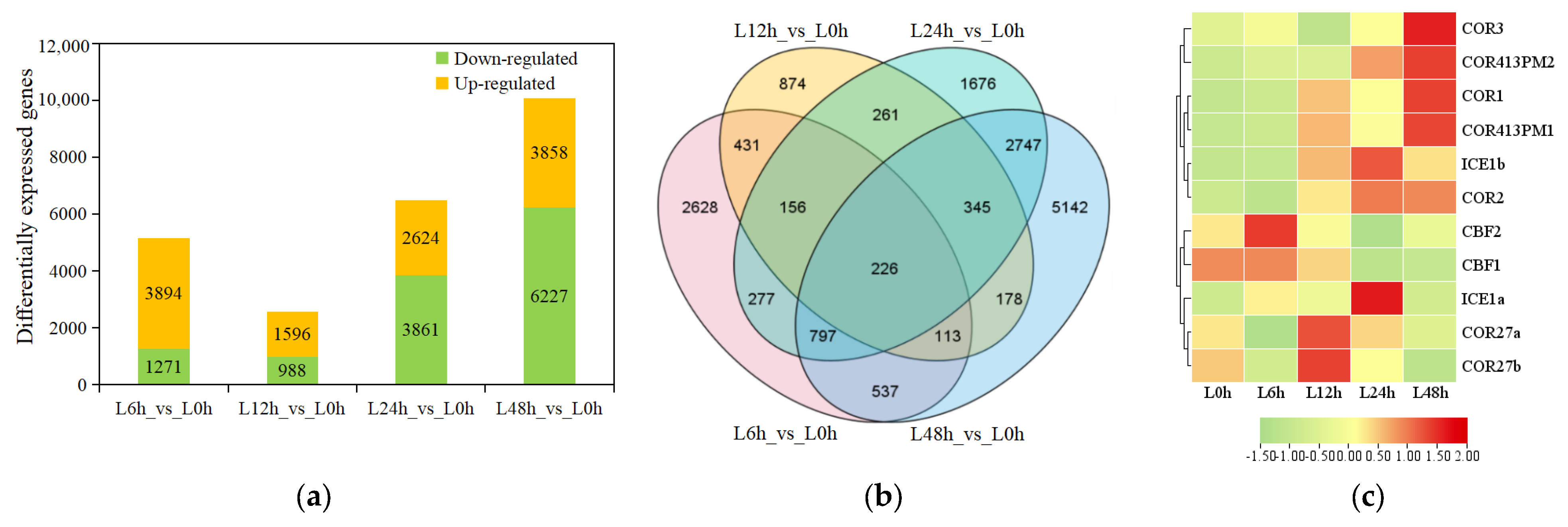
A total of 16,388 DEGs were detected between the control samples (0 h) and each time point of the low-temperature stress (Table S3). We detected 5165 DEGs in 6 h (3984 up-regulated and 1271 down-regulated), 2584 in 12 h (1596 up-regulated and 988 down-regulated), 6485 in 24 h (2624 up-regulated and 3861 down-regulated), and 10, 085 in 48 h (3858 up-regulated and 6227 down-regulated) under low-temperature stress compared to the 0 h control samples (Figure 1a). However, the Venn diagram showed that only 226 DEGs were shared for all the pairwise-compared groups (Figure 1b).
To clarify the response of cold-regulatory genes to low-temperature stress, the ICE-CBF-COR regulatory pathway genes were screened (Table S4). A total of nine differentially expressed COR genes responded to low-temperature stress, in which COR1 and COR2 were significantly up-regulated at 12 h, 24 h, and 48 h of low-temperature stress compared to the 0 h control. We also found that COR3, COR413IM1, COR413PM1, and COR413PM2 were significantly up-regulated; however, COR27a and COR27b were significantly down-regulated during low-temperature stress, in which COR1, COR2, and COR413PM1 were up-regulated more than 3-fold at 48 h of low-temperature stress compared to the 0 h control. CBF1 and CBF2 were also induced under low-temperature stress, in which CBF2 was up-regulated more than 16-fold at 6 h of low-temperature stress compared to the 0 h control. Both ICE1a and ICE1b were up-regulated at 24 h of low-temperature stress compared to the 0 h control. These genes may form a blueberry ICE-CBF-COR regulatory network under low temperatures (Figure 1c). We also found that there are similar change trends between RNA-seq data and RT-qPCR data under low-temperature stress, indicating the accuracy and reliability of the RNA-seq data (Figure S2).

3.2. Functional Annotation and Enrichment Analysis of Differentially Expressed Genes

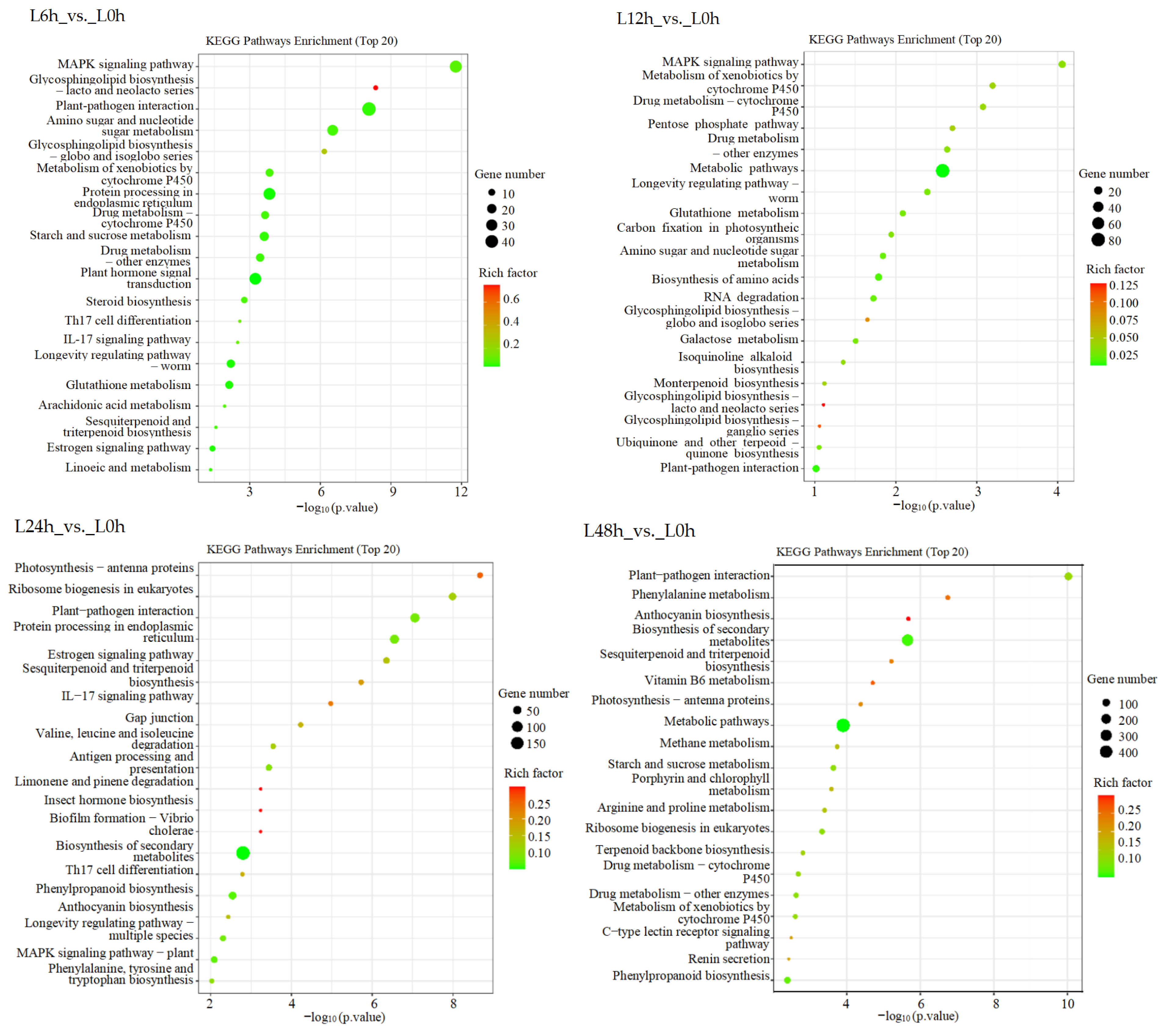
The KEGG database was used to annotate the functions of the DEGs (Table S5). All the DEGs were assigned to 271 KEGG pathways, of which 104 KEGG pathways were shared in all pairwise comparisons (Figure S3). In the top 20 KEGG enrichment analysis, plant–pathogen interaction, protein processing in the endoplasmic reticulum, plant hormone signal transduction pathways at 6 h, and metabolic pathway at 12 and 24 h of low-temperature stress compared to 0 h control samples were significantly enriched (Figure 2). We also found that DEGs involved in the phenylpropanoid biosynthesis pathway and anthocyanin biosynthesis pathway were significantly enriched at 24 and 48 h of low-temperature treatment.

3.3. The Differentially Expressed Transcription Factors in Response to Low-Temperature Stress

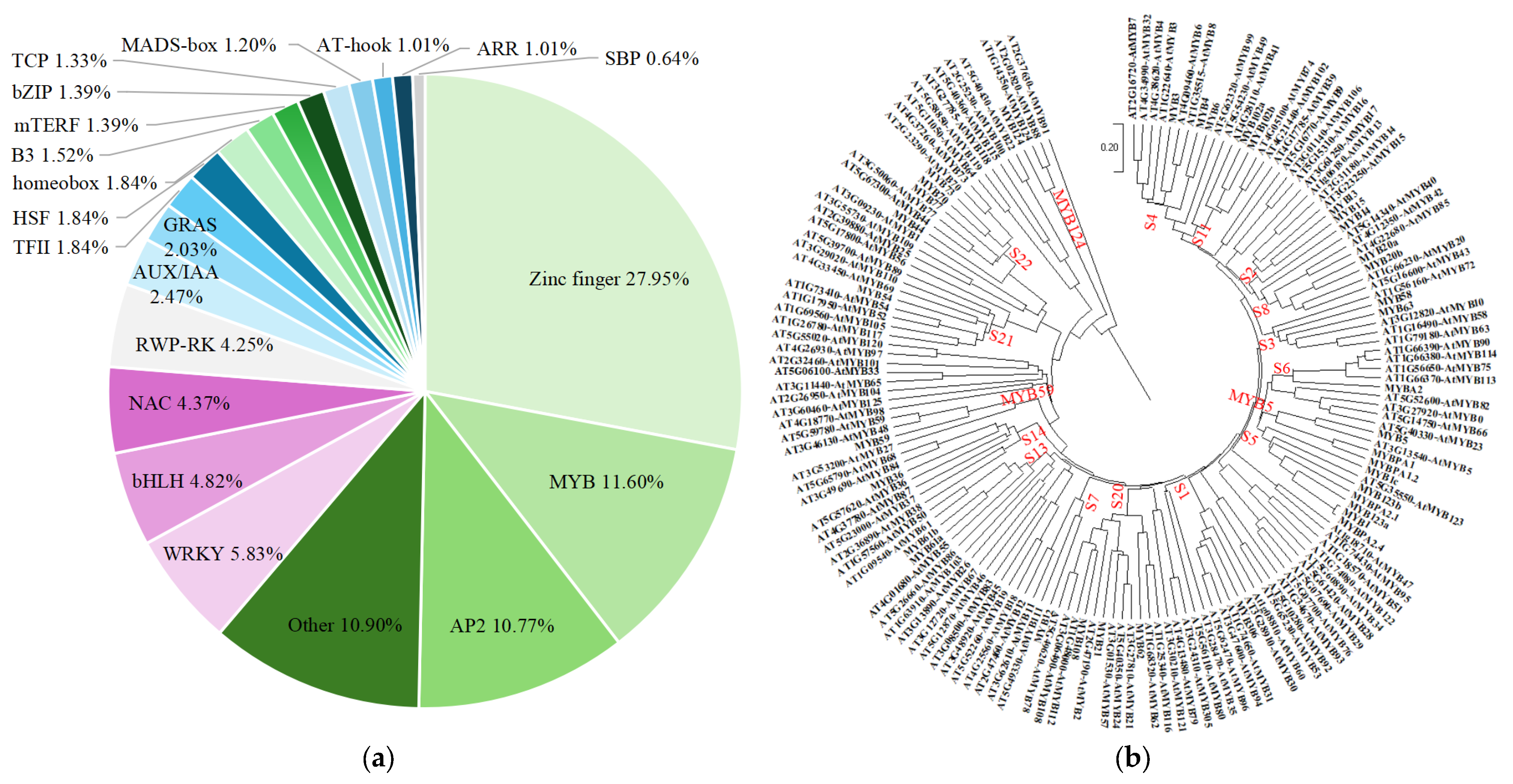
To explore the responses of TFs to low-temperature stress, differentially expressed TFs were screened (Table S6). A total of 1578 differentially expressed transcription factor genes were identified and belonged to 20 major TF families, including zinc finger (27.95%), MYB (11.60%), AP2 (10.77%), WRKY (5.83%), bHLH (4.82%), NAC (4.37%), and so on (Figure 3a). Among them, the expression levels of CBF2 and ERF109 (AP2 family), MYB14 (MYB family), WRKY40 (WRKY family), HSP30 (HSP family), MPSR1 and ZHD4 (zinc finger family), and MADS3 and MADS27 (MADS-box family) were significantly up-regulated more than 16-fold under low-temperature stress compared to the 0 h control (Table 1). These TFs may play an important role in responses to low-temperature stress.
After deleting redundant sequences of MYB TFs, 38 differentially expressed R2R3-MYB TFs were identified (Table S7). To predict the potential functions of these R2R3-MYB TFs, we constructed a phylogenetic tree based on the amino acid sequences of the 38 differentially expressed R2R3-MYBs from blueberry and 124 AtMYBs from Arabidopsis (Figure 3b). These blueberry MYB TFs belong to 14 subgroups, which were previously defined for Arabidopsis AtMYB TFs. In them, MYB13, MYB14, and MYB15 belonged to subgroup 2 and MYB3, MYB4, and MYB6 were clustered in subgroup 4. MYB1, MYB123a, MYB123b, MYB1c, MYBA2.1 and MYBPA2.4 were clustered in subgroup 5, MYBA2 belonged to subgroup 6, and MYB12 belonged to subgroup 7. At the same time, some blueberry MYBs belonging to subgroup 1 (MYB306), subgroup 3, subgroup 8, subgroup 11, subgroup 13, subgroup 14, subgroup 20, and subgroup 22 (MYB44) also showed differential expression under low-temperature stress. MYB5, MYBPA1, and MYBPA1.2 (probably homologs of AtMYB5), MYB124 (probably homologs of AtMYB124), and MYB59 (probably homologs of AtMYB59) also respond to low-temperature stress.

3.4. Metabolome Analysis in Response to Low-Temperature Stress

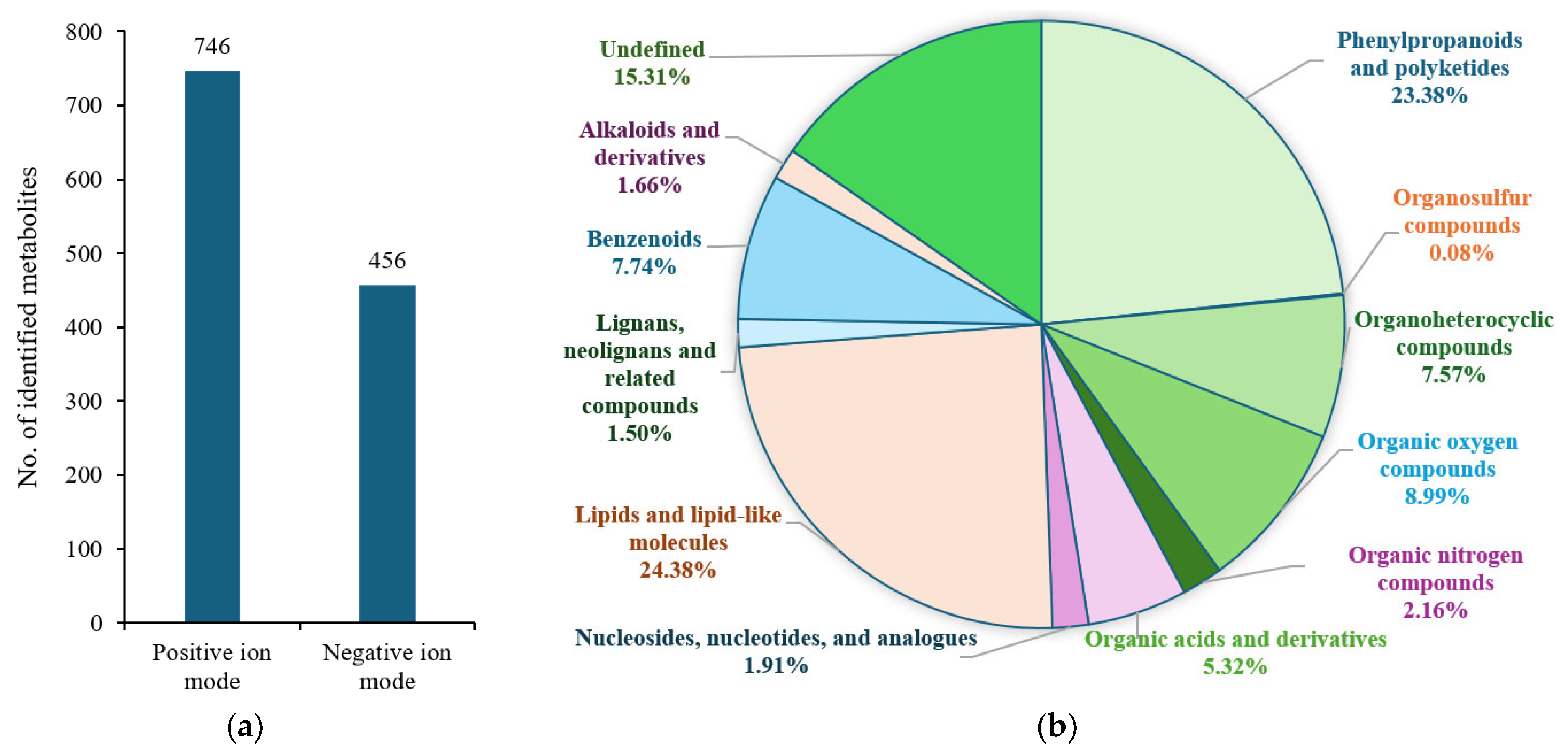
A total of 1202 metabolomic substances were detected from 11 superclasses in positive (746) and negative (456) ion mode in response to low-temperature stress (Figure 4a and Table S8). Among these, lipids and lipid-like molecules and phenylpropanoids and polyketides are mainly metabolomic and account for 24.38% and 23.38%, respectively. Then, organic oxygen compounds, benzenoids, organoheterocyclic compounds, and organic acids and derivatives account for about 20% (Figure 4b). The quality control (QC) samples were closely clustered together in both the positive ion mode and the negative ion mode (Figure S4). The correlations between QC samples were more than 0.989 and indicated good repeatability of the experiment (Figure S5).

3.5. Differentially Accumulated Metabolites in Response to Low-Temperature Stress

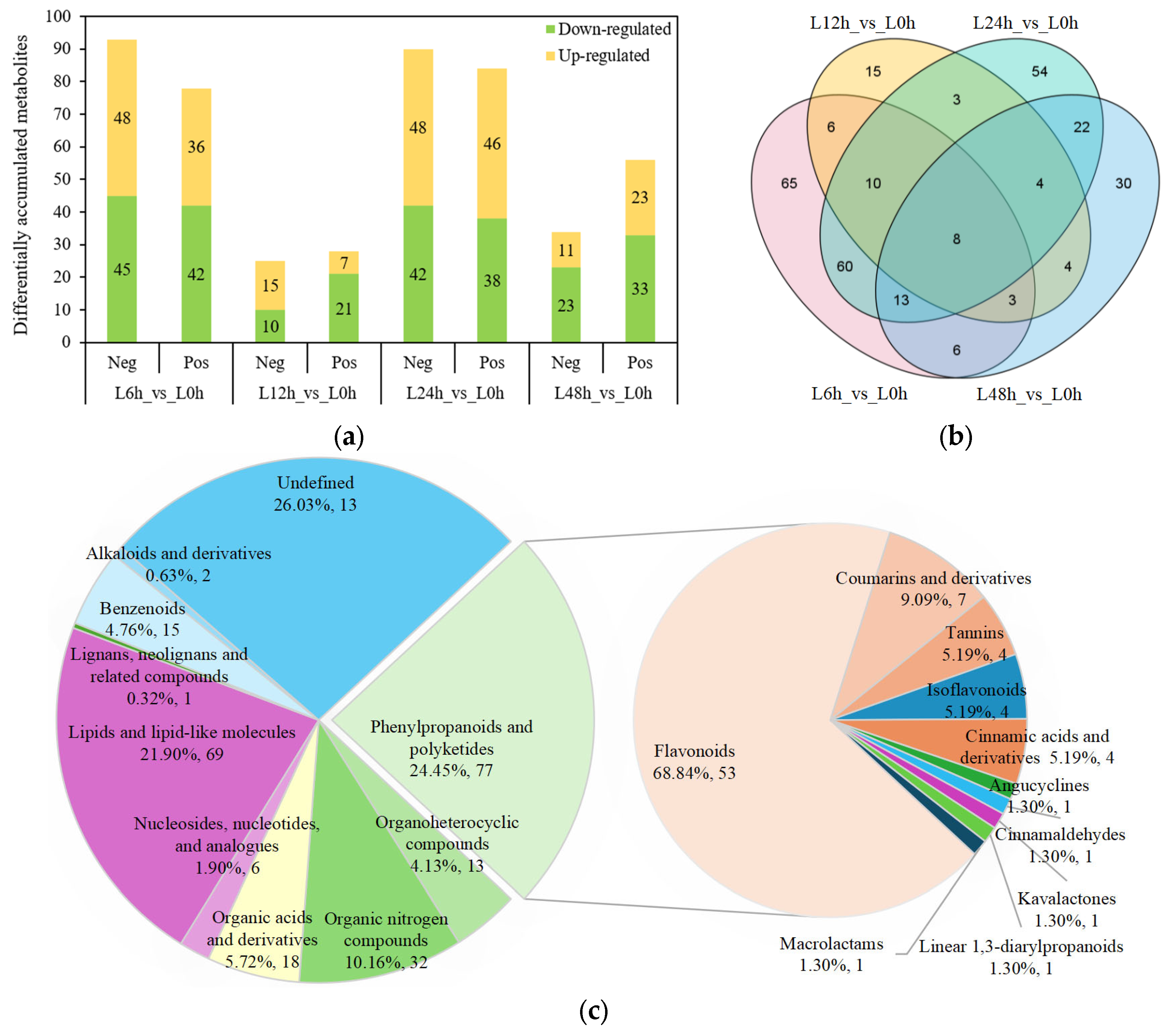
To explore the effects of low-temperature stress on metabolism in blueberry leaves, we screened the DAM in positive and negative ion mode in response to low temperatures (Table S9). A total of 303 DAMs were significantly up-regulated or down-regulated under low-temperature stress. For example, 171 DAMs were identified in L6h_vs._L0h (84 up-regulated and 87 down-regulated), 53 in L12h_vs._L0h (22 up-regulated and 31 down-regulated), 174 in L24h_vs._L0h (94 up-regulated and 80 down-regulated), and 90 in L48h_vs._L0h (34 up-regulated and 56 down-regulated) (Figure 5a). The Venn diagram showed that only 8 DAMs were shared by all pairwise comparisons, 65 DAMs were identified only in L6h_vs._L0h, 15 in L12h_vs._L0h, 54 in L24h_vs._L0h, and 30 in L48h_vs._L0h, indicating that most metabolites accumulated specifically at various time points under low-temperature stress (Figure 5b). Most DAMs belonged to the phenylpropanoid and polyketide superclass (24.44%, 77 DAMs), and the Venn diagram showed that most phenylpropanoid and polyketide metabolites were accumulated at 6 and/or 24 h of low-temperature stress compared to the 0 h control samples (Figure 5b). We also found that flavonoid metabolites (53 DAMs) accounted for 68.83% and coumarins and derivatives (7 DAMs) accounted for 9.09% in the phenylpropanoid and polyketide superclass, indicating that flavonoid metabolites are the main DAMs under low-temperature stress (Figure 5c).

3.6. Enrichment Analysis of KEGG Pathways for Differentially Accumulated Metabolites

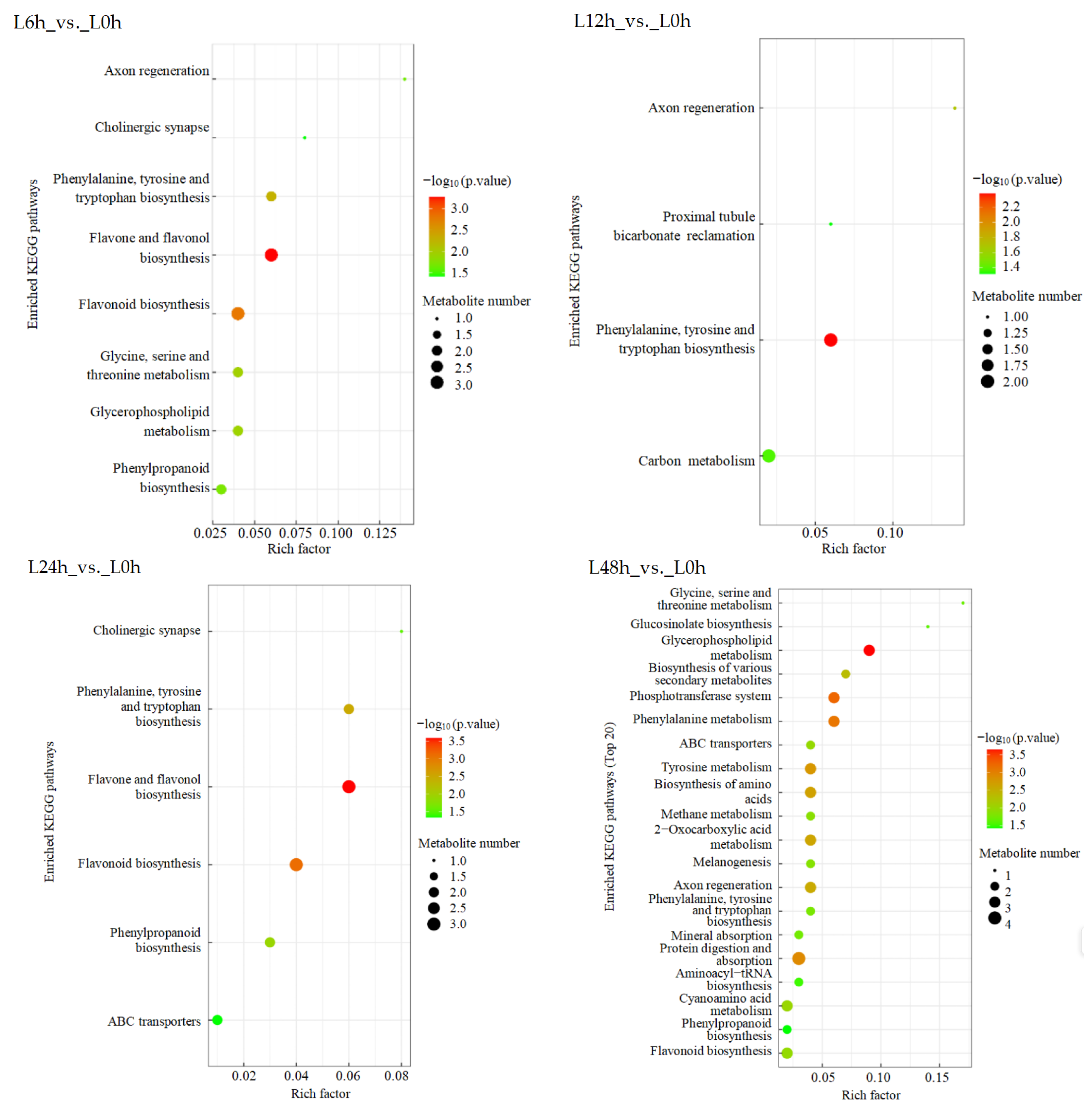
A Venn diagram showed that all DAMs were assigned to 62 KEGG pathways; of these, 19 KEGG pathways were shared by all four pairwise comparisons (Figure S6 and Table S10). The flavonoid biosynthesis and phenylpropanoid biosynthesis pathways were significantly enriched at 6, 24, and 48 h of low-temperature stress compared to the 0 h control samples, and the flavone and flavonol biosynthesis pathway was significantly enriched in L6h_vs._L0h and L24h_vs._L0h (Figure 6). Thus, the DAMs from the phenylpropanoid biosynthesis pathway, the flavonoid biosynthesis pathway, and the flavone and flavonol biosynthesis pathway play an important role in response to low-temperature stress in blueberry leaves.

3.7. Differentially Accumulated Metabolites and Differentially Expressed Genes in Phenylpropanoid Biosynthesis KEGG Pathway Under Low-Temperature Stress

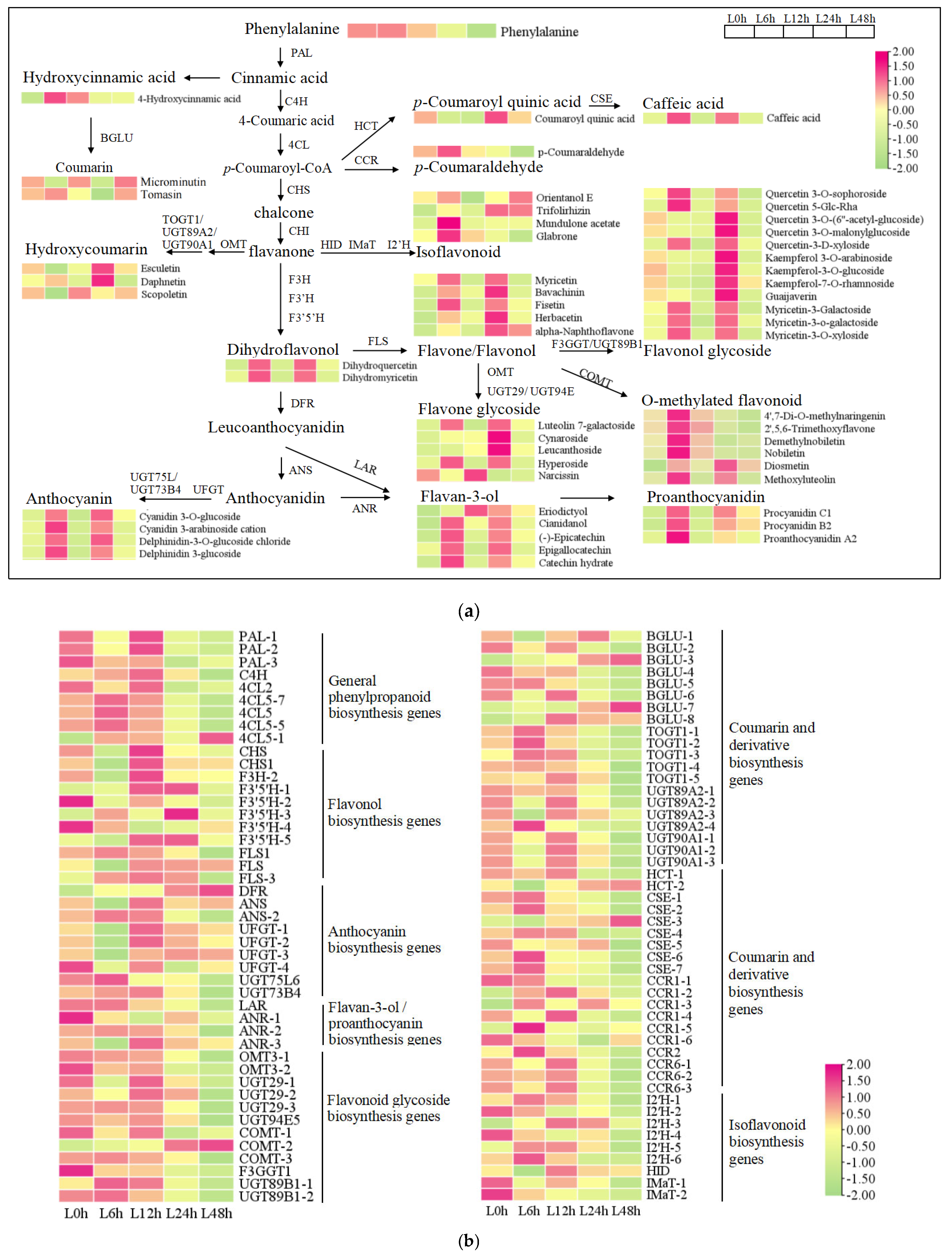
The analysis of the KEGG pathway showed that DEGs and DAMs were enriched in the phenylpropanoid biosynthesis pathway. Thus, we identified 93 DEGs encoding 30 types of enzymes involved in phenylpropanoid biosynthesis and 56 differentially accumulated phenylpropanoid metabolites including flavonoids (flavonols, flavans, anthocyanins, and proanthocyanidins), cinnamic acids and derivatives, and coumarins and derivatives in response to low-temperature stress (Table S11). Most DAMs belonging to the cinnamic acids and derivatives (caffeic acid and 4-hydroxycinnamic acid) and flavonoids (dihydroflavonols, flavonols, flavonol glycosides, flavan-3-ols, flavone glycosides, anthocyanins, and proanthocyanidins) were up-regulated at 6 or 24 h of low-temperature stress. However, most flavonoid metabolites were down-regulated at 48 h in response to low-temperature stress. Orientanol E and glabrone (isoflavonoids), microminutin and tomasin (coumarins and derivatives), and scopoletin (hydroxycoumarins) were down-regulated under low-temperature stress. In general, most differentially accumulated phenylpropanoid metabolites were up-regulated under low-temperature stress. Among them, bavachinin and alpha-naphthoflavone (flavonols) and kaempferol-7-O-rhamnoside (flavonol glycosides) increased more than 4-fold after 24 h of low-temperature treatment and dihydromyricetin (dihydroflavonols), myricetin-3-O-xyloside and delphinidin 3-glucoside (flavonol glycosides), nobiletin (O-methylated flavonoids) and caffeic acid increased more than 3-fold after 6 h of low-temperature treatment relative to the 0 h control (Figure 7a).
The most DEGs from phenylpropanoid biosynthesis pathway were down-regulated at 48 h of low temperature (Figure 7b). Some DEGs were up-regulated under low temperature at 6 or 12 h of low-temperature stress. Among them, 4CL5-1 (general phenylpropanoid biosynthesis gene), F3′5′H-1, F3′5′H-3, F3′5′H-5, and FLS-3 (flavonol biosynthesis genes), CSE-3, CCR1-2, CCR1-3, and CCR1-5 (coumarin and derivative biosynthesis genes), I2′H-3 and I2′H-5 (isoflavonoid biosynthesis genes), and COMT-2, BGLU-3, BGLU-7, and BGLU-8 (cinnamic acid and derivative biosynthesis genes) were up-regulated, CSE-2, CSE-6, I2′H-1, TOGT1-2, and TOGT1-3 (coumarin and derivative biosynthesis genes) and UGT89B1-1 (a flavonoid glucoside biosynthesis gene) were up-regulated and then down-regulated, and other DEGs from the phenylpropanoid biosynthesis pathway were down-regulated in response to low-temperature stress. 4CL5-1, CCR1-3, and I2′H-5 at 6 h, 4CL5-1, F3′5′H-5, CCR1-2, I2′H-3, and I2′H-5 at 12 h, F3′5′H-5, DFR, and CCR1-3 at 24 h, and 4CL5-1 and DFR at 48 h increased more than 4-fold in expression levels under low-temperature treatment compared to the 0 h control samples (Table S11). Thus, most genes involved in the phenylpropanoid biosynthesis pathway were induced during low-temperature stress.

3.8. Combined Metabolome and Transcriptome Analysis of the Phenylpropanoid Biosynthesis Pathway Under Low-Temperature Stress

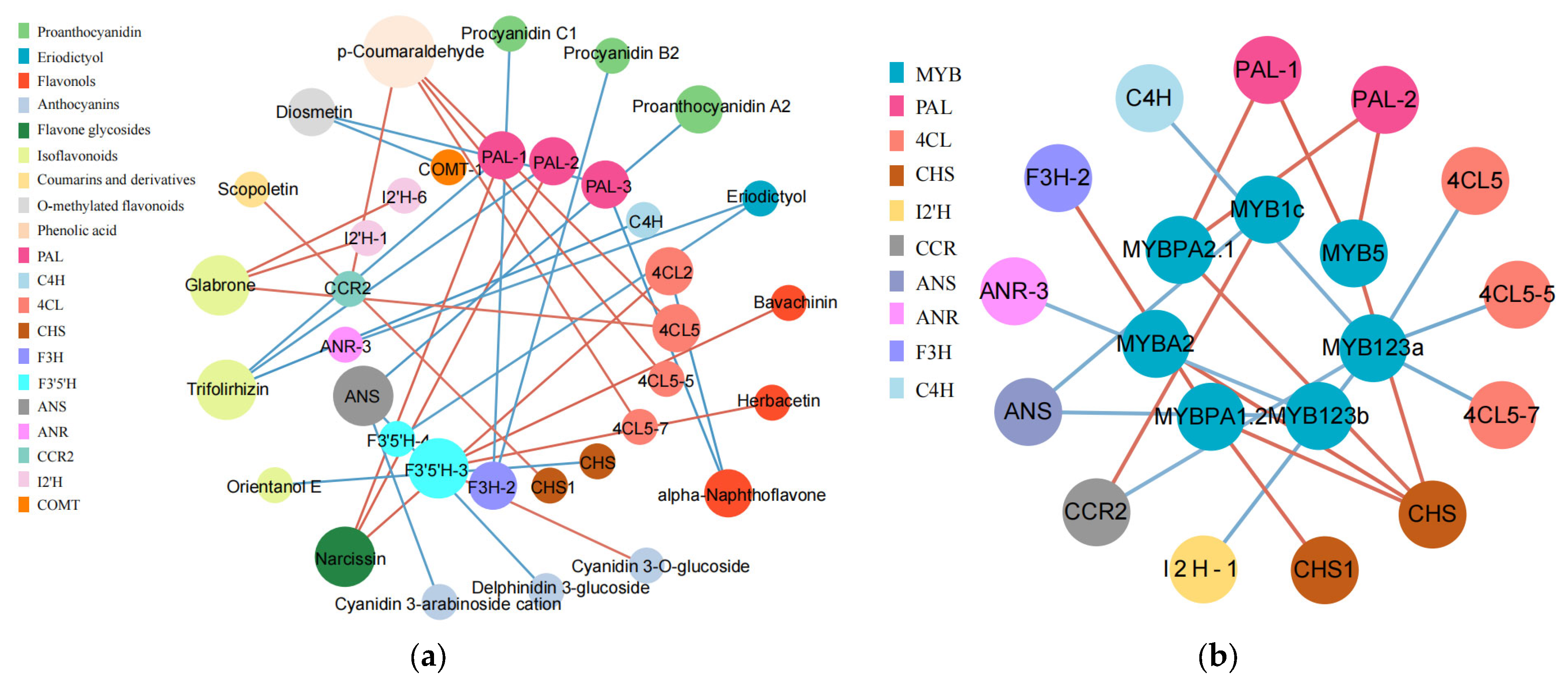
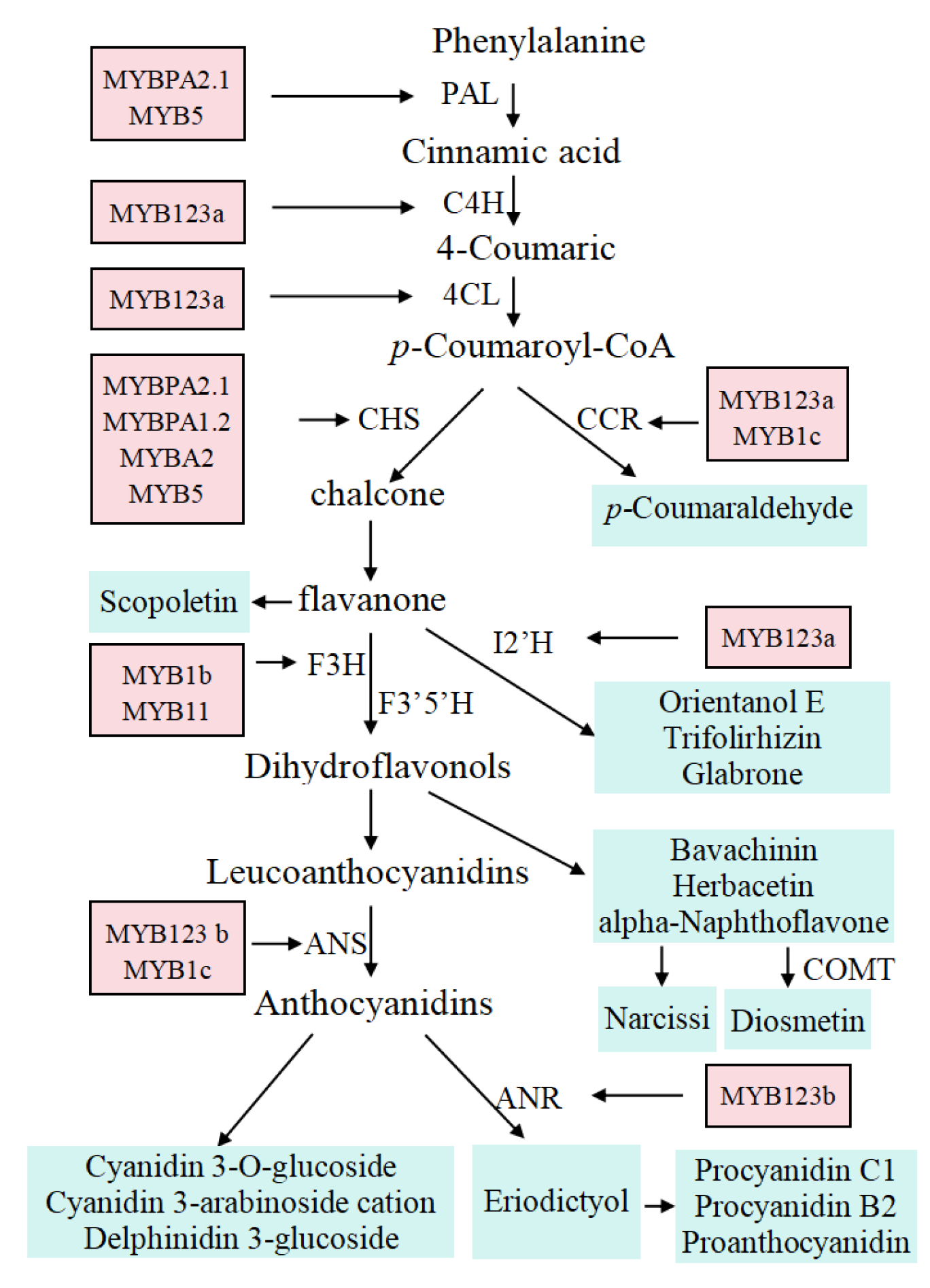
The correlations between the FPKM values of differentially expressed phenylpropanoid biosynthesis genes and peak areas of differentially accumulated phenylpropanoid metabolites were calculated to investigate the functions of phenylpropanoid biosynthesis genes in response to low temperature (Table S12; Figure 8a). The proanthocyanidin metabolites procyanidin C1 and procyanidin B2 were negatively correlated with F3H-2 and proanthocyanidin A2 was negatively correlated with ANS and ANR-3 during low-temperature stress. For falvan-3-ol metabolites, only eriodictyol was negatively correlated with F3′5′H-4. Among the three flavonol metabolites, the levels of bavachinin and herbacetin were positively correlated with F3′5′H-3 expression, and those of alpha-naphthoflavone was negatively correlated with PAL-3 and 4CL2 expression. For anthocyanin metabolites, the level of cyanidin 3-O-glucoside was also positively correlated with F3′5′H-3 expression; however, the levels of cyanidin 3-arabinoside cation and delphinidin 3-glucoside were negatively correlated with ANS expression. Narcissin (flavone glycoside) was positively correlated with three general phenylpropanoid biosynthesis genes (PAL-1, PAL-2 and 4CL2). The isoflavonoid metabolite orientanol E was negatively correlated with CHS, trifolirhizin was negatively correlated with three genes including PAL-1, PAL-2, and C4H, and glabrone was positively correlated with 4CL5 and isoflavone 2′-hydroxylases (I2′H-1 and I2′H-2). The hydroxycoumarin metabolite scopoletin was positively correlated with CHS1, and diosmetin was negatively correlated with PAL-3 and COMT-1. p-coumaraldehyde was positively correlated with 4CLs (4CL5, 4CL5-5, and 4CL5-7) and CCR2. These results indicate that PAL, C4H, 4CL, CHS, F3H, F3′5′H, ANS, ANR, CCR, I2′H, and COMT gene families play important roles in regulating phenylpropanoid metabolite biosynthesis under low-temperature stress in blueberry leaves.
The MYB TFs from subgroups 5, 6, and 7 and subgroup AtMYB5 regulated the phenylpropanoid metabolite accumulation by regulating the expression of phenylpropanoid biosynthesis genes [28]. To elucidate the functions of the MYBs in response to low-temperature stress in regulating phenylpropanoid metabolite biosynthesis, the Pearson correlation coefficients (r) were calculated between MYBs from subgroups 5, 6, and 7 and subgroup AtMYB5 and genes above phenylpropanoid biosynthesis genes (Table S13). A total of seven MYBs were significantly correlated with phenylpropanoid biosynthesis genes (Figure 8b). In which, MYBA2 belonging to subgroup 6 was positively correlated with CHS during low-temperature stress. For subgroup 5, MYB123a was negatively correlated with C4H, 4CL5-7, 4CL5, 4CL5-5, CCR2, and I2′H-1 genes, MYB123b was negatively correlated with ANS and ANR-3, MYB1c was positively correlated with CCR2 and negatively correlated with ANS, and MYBPA2.1 was positively correlated with PAL-1, PAL-2, and CHS. MYBPA1.2 and MYB5 were homologues of AtMYB5; MYBPA1.2 was positively correlated with CHS, CHS1, and F3H-2, and MYB5 was positively correlated with PAL-1, PAL-2, and CHS.

4. Discussion

4.1. The DEGs and DAMs in Response to Low-Temperature Stress in Blueberry Leaves

The response of plants to low-temperature stress is accompanied by changes in the expression patterns of many genes [29]. Here, we found that 16,388 DEGs were up-regulated or down-regulated during low-temperature stress and were assigned to 271 KEGG pathways. In Arabidopsis, CBF1, CBF2, and CBF3 function redundantly in regulating a large number of COR genes and are critical in freezing tolerance [30,31,32]. In blueberry, overexpression of the CBF gene exhibited enhanced freezing tolerance [33,34]. Here, the CBF2 gene (the same gene with CBF) was up-regulated more than 16-fold during low-temperature stress and may play an essential role in increasing low-temperature stress tolerance. At the same time, we screened nine COR genes, among which seven genes were up-regulated and two genes were down-regulated. Among them, COR1, COR2, and COR413PM1 were up-regulated more than 3-fold during low-temperature stress. The expression of COR genes has been shown to be critical in low-temperature-tolerance in plants and is regulated by CBFs [35,36]. In Arabidopsis, ICE1 (bHLH TF) can bind to the CBF3 promoter and is important for the expression of CBF3 during cold acclimation. The overexpression of ICE1 enhanced the expression of CBF3, CBF2, and COR genes during cold acclimation and increased the freezing tolerance of the transgenic Arabidopsis [37]. Here, two ICE1 genes were induced under low-temperature stress. Therefore, the ICE1, ABF, and COR genes, especially ABF2, play an important role in improving blueberry tolerance to low-temperature stress. We also found that the DEGs from the phenylpropanoid biosynthesis pathway was significantly enriched; the expression levels of 4CL5-1, DFR, F3′5′H-5, CCR1-2, CCR1-3, I2′H-3, and I2′H-5 genes increased more than 4-fold during low temperatures compared to 0 h control samples. These genes may contribute to plant tolerance to low-temperature stress in blueberry leaves [38,39].
In plants, TFs are involved in the regulation of the low-temperature stress response [40,41]. Here, 1578 TFs were differentially expressed under low temperature; these TFs mainly come from zinc finger, MYB, AP2, WRKY, bHLH, and NAC families. Among them, HD-Zip TFs (zinc finger family) HaHB1, and AtHB13 confer cold tolerance [42]. WRKY Ifs, as molecular switches, regulate low-temperature stresses in plants; for example, CsWRKY2 (Camellia sinensis) is involved in cold stress responses, and KoWRKY40 (Kandelia obovata) and MbWRKY40 (Malus baccata) enhance cold tolerance in transgenic Arabidopsis [11,43,44]. The AP2/ERF family in plants is involved in plant multiple environmental stimuli [12]. The most famous members of the AP2/ERF family involved in cold stress are DREBs, also known as CBFs. As pioneers of regulatory networks in response to cold stress, CBFs can increase the expression of cold-regulated genes and improve cold tolerance in many plants [45,46]. The members of HSP and MADS-box families are also involved in abiotic stress [47,48]. In this study, CBF2 and ERF109, WRKY40, HSP30, MPSR1, ZHD4, MADS3, and MADS27 were significantly up-regulated more than 16-fold during low-temperature stress. Therefore, we predict that these TFs may be related to low-temperature tolerance in the blueberry leaves.
R2R3-MYB family TFs have been found to mediate low-temperature stress responses in plants. Apple MdMYB88 and MdMYB124 regulate frost tolerance and cold response gene expression [17]. In Arabidopsis, AtMYB14 and AtMYB15 participate in freezing tolerance, the AtMYB44 gene is activated under low-temperature stress and the overexpression of AtMYB44 enhances abiotic stress tolerance, and AtMYB96 can be induced by cold stress and activates freezing tolerance [14,15,49]. In this study, 38 blueberry R2R3-MYB TFs were induced by low-temperature stress. Of these, MYB13, MYB14 (probably homologous to AtMYB14) and MYB15 (probably homologous to AtMYB14) from subgroup 2 were induced by low-temperature stress. We also found that MYB44 (probably homologous to AtMYB44), MYB124 (probably homologous to MdMYB124), and MYB306 from group 1 (the same group with AtMYB96) were also activated under low-temperature stress. Thus, MYB13, MYB14, MYB15, MYB44, MYB124, and MYB306 play crucial roles in low-temperature stress for blueberry leaves.
Low temperatures are the main factor affecting the growth of blueberry plants in northern China [50]. Plants adapt to environmental changes by adjusting metabolite accumulation under stress [51]. Most DAMs belong to the phenylpropanoid and polyketide superclass. Low temperatures promote the rapid accumulation of these metabolites. Among them, dihydromyricetin, myricetin-3-O-xyloside, delphinidin 3-glucoside, nobiletin, and caffeic acid increased more than 3-fold and bavachinin, alpha-naphthoflavone, and kaempferol-7-O-rhamnoside increased more than 4-fold during low-temperature stress. These metabolites have potential drug development value in many fields, such as anti-inflammatory and antitumor treatments, nervous system diseases, and diabetes [52]. These results indicate that blueberry may mitigate damage from low-temperature stress by promoting the accumulation of these phenylpropanoid metabolites.

4.2. The Regulatory Network of Low-Temperature Stress-Induced Accumulation of Phenylpropanoid Metabolites in Blueberry Leaves

The PAL, C4H, and 4CL, as the general phenylpropanoid biosynthesis pathway genes, regulated phenylpropanoid metabolite biosynthesis under low-temperature stress [53,54]. Here, we found that PAL-1 and PAL-2 were positively correlated with narcissin and negatively correlated with trifolirhizin and PAL-3 was negatively correlated with alpha-naphthoflavone and diosmetin. C4H was negatively correlated with trifolirhizin. 4CL2 was positively correlated with narcissin and was negatively correlated with alpha-Naphthoflavone. 4CL5 was positively correlated with glabrone and p-coumaraldehyde and 4CL5-5 and 4CL5-7 were also positively correlated with p-coumaraldehyde. Thus, it is likely that PAL-1 and PAL-2 are the key genes in narcissin biosynthesis, and PAL-3 is one of the key genes in alpha-naphthoflavone and diosmetin biosynthesis under low-temperature stress. C4H might be the key gene in trifolirhizin biosynthesis under low-temperature stress. 4CL family members may play key roles in alpha-naphthoflavone, narcissin, glabrone, and p-coumaraldehyde biosynthesis during low-temperature stress.
The CHS gene regulates isoflavonoid, flavonoid, and hydroxycoumarin biosynthesis [55,56]. In this study, CHS was negatively correlated with orientanol E and CHS1 was positively correlated with scopoletin during low-temperature stress. Orientanol E belongs to the isoflavonoid class and may be regulated by CHS in blueberry leaves under low-temperature stress. The F3H and F3′5′H were “early” flavonoid biosynthesis genes. ScF3′5′H from Senecio cruentus promotes anthocyanin biosynthesis [57]. Here, F3H-2 was negatively correlated with procyanidin C1 and procyanidin B2 and F3′5′H-3 was positively correlated with bavachinin, herbacetin, and cyanidin 3-O-glucoside. Thus, F3H-2 may be one of the key genes in proanthocyanidin biosynthesis and F3′5′H-3 may be one of the key genes in flavonol and anthocyanin biosynthesis under low-temperature stress, respectively.
The ANS from Vaccinium spp. is the key factor for modulating anthocyanin production [58]. In mango fruit peel, ANS is also crucial for anthocyanin and proanthocyanidin biosynthesis [59]. Here, ANS was significantly correlated with proanthocyanidin A2, cyanidin 3-arabinoside cation and delphinidin 3-glucoside, indicating that ANS plays an important role in anthocyanin and proanthocyanidin biosynthesis. ANR is a pivotal enzyme that diverts the flavonoid pathway from anthocyanins to proanthocyanidin synthesis [60]. In this study, ANR-3 was significantly correlated with proanthocyanidin A2. Therefore, ANR-3 may be the key gene for the biosynthesis of proanthocyanidin A2 in blueberry leaves under low-temperature stress. In plants, p-coumaraldehyde is a direct precursor to H-type monolignol biosynthesis, which is synthesized by the members of the CCR family [61]. This study showed that CCR2 was significantly correlated with p-coumaraldehyde, indicating CCR2 may be the key gene in p-coumaraldehyde biosynthesis in blueberry leaves during low-temperature stress. I2′H is an isoflavonoid biosynthesis pathway gene, and COMT is an O-methylated flavonoid biosynthesis pathway gene [62,63]. Here, I2′H-1 and I2′H-6 were significantly correlated with glabrone, and COMT-1 was significantly correlated with diosmetin during the low-temperature stress. Thus, I2′H-1 and I2′H-6 and COMT-1 play important roles in regulating glabrone and diosmetin biosynthesis in blueberry leaves during low-temperature stress, respectively.
In Arabidopsis, the R2R3-MYB family members are divided into 25 subgroups [28,64], in which subgroup 5 (AtMYB123), subgroup 6 (AtMYB75/90/113/114), and subgroup 7 (AtMYB11/12/111) positively regulate proanthocyanidin, anthocyanin, or flavonol biosynthesis [65,66,67,68]. The gene VvMYB5b from grape is homologous with AtMYB5, which is associated with anthocyanin and proanthocyanidin biosynthesis [69]. MtMYB5 (Medicago truncatula) and DkMYB4 (Diospyros kaki), the homolog of AtMYB5, have also been demonstrated to regulate proanthocyanidin accumulation [70,71]. Here, MYB1, MYB123a, MYB123b, MYB1c, MYBA2.1, and MYBPA2.4 (subgroup 5), MYBA2 (subgroup 6), MYB12 (subgroup 7), and MYB5, MYBPA1, and MYBPA1.2 (probably homologs of AtMYB5) were induced by low-temperature stress in blueberry leaves. For Erigeron breviscapus, EbMYBP1 participated in flavonoid biosynthesis by activating the transcription of flavonoid-associated genes (FLS, F3H, and CHS) [72]. In apple (Malus sieversii f. niedzwetzkyana), MYB12 could bind to the promoters of UFGT, ANR, and LAR, and MYB22 could bind to the promoters of UFGT and FLS, promoting the accumulation of proanthocyanidin and flavonol in apple callus [73]. In this study, the blueberry MYB TFs belonging to subgroup 6 (MYBA2), subgroup 5 (MYB123a, MYB123b, MYB1c, and MYBPA2.1) and subgroup AtMYB5 (MYB5 and MYBPA1.2) were significantly correlated with phenylpropanoid biosynthesis genes, indicating that these MYB TFs may be involved in low-temperature stress-induced phenylpropanoid biosynthesis by regulating the expression of phenylpropanoid biosynthetic genes (Figure 9).

5. Conclusions

In this paper, we analyzed the transcriptional and metabolic responses of blueberry leaves to low-temperature stress via RNA-seq and UHPLC-MS/MS, respectively. Transcriptomic analysis indicated that low-temperature stress induced expression of ICE-CBF-COR regulatory pathway genes, phenylpropanoid biosynthesis genes, and TFs and significantly up-regulated the expression of CBF2, ERF109, MYB14, WRKY40, HSP30, MPSR1 ZHD4, MADS3, and MADS27 genes. Metabolomics analysis showed that low-temperature stress induced the accumulation of phenylpropanoid metabolites and significantly promoted the accumulation of dihydromyricetin, myricetin-3-O-xyloside, delphinidin 3-glucoside, kaempferol-7-O-rhamnoside, nobiletin, caffeic acid bavachinin, and alpha-naphthoflavone. Integrative transcriptomic and metabolomic analysis indicated that MYBA2, MYB123a, MYB123b, MYB1c, MYBPA2.1, MYB5, and MYBPA1.2 regulated low-temperature-induced accumulation of phenylpropanoid metabolites in blueberry leaves by regulating the expression of PAL, C4H, 4CL, CHS, F3H, ANS, CCR, I2′H, and ANR genes. In this study, we screened the genes and metabolites that respond to low-temperature stress in blueberry leaves. Whether these genes and metabolites improve the low-temperature tolerance of blueberry leaves requires further functional verification. At the same time, it is not clear whether low-temperature stress induces the expression of these genes and accumulation of these metabolites in fruits and roots. Our findings will provide a basis for future studies aimed at cultivating low-temperature-resistant blueberry varieties.

Supplementary Materials

The following supporting information can be downloaded at: https://www.mdpi.com/article/10.3390/horticulturae11121495/s1.

Author Contributions

Conceptualization, C.Z. and L.Z.; methodology, S.J.; software, S.J. and Y.L. (Yuanjing Li); validation, S.J., Y.L. (Yuanjing Li) and X.F.; formal analysis, Y.S.; investigation, Y.L. (Yanyu Liu); resources, C.Z.; data curation, J.A.; writing—original draft preparation, S.J. and Y.L. (Yuanjing Li); writing—review and editing, C.Z. and L.Z.; visualization, M.W.; supervision, C.Z. and L.Z.; project administration, C.Z. and L.Z.; funding acquisition, C.Z. All authors have read and agreed to the published version of the manuscript.

Funding

This research was funded by the National Natural Science Foundation of China, grant number 31700260.

Data Availability Statement

Data are contained within the article and Supplementary Materials. We have uploaded the RNA-Seq data generated in this study to BioProject in the NCBI repository with the accession number PRJNA1364161.

Conflicts of Interest

The authors declare no conflicts of interest.

References

  1. Adhikari, L.; Baral, R.; Paudel, D.; Min, D.; Makaju, S.O.; Poudel, H.P.; Acharya, J.P.; Missaoui, A.M. Cold stress in plants: Strategies to improve cold tolerance in forage species. Plant Stress 2022, 4, 100081. [Google Scholar] [CrossRef]
  2. Guan, Y.L.; Hwarari, D.; Mateko, K.H.; Baseer, A.; Cao, Y.W.; Movahedi, A.; Yang, L. Low temperature stress-induced perception and molecular signaling pathways in plants. Environ. Exp. Bot. 2023, 207, 105190. [Google Scholar] [CrossRef]
  3. Zhu, J. Abiotic stress signaling and responses in plants. Cell 2016, 167, 313–324. [Google Scholar] [CrossRef] [PubMed]
  4. Qian, Z.; He, L.; Li, F. Understanding cold stress response mechanisms in plants: An overview. Front. Plant Sci. 2024, 15, 1443317. [Google Scholar] [CrossRef] [PubMed]
  5. Gusain, S.; Joshi, S.; Joshi, R. Sensing, signalling, and regulatory mechanism of cold-stress tolerance in plants. Plant Physiol. Biochem. 2023, 197, 107646. [Google Scholar] [CrossRef]
  6. Kuang, L.; Chen, J.; Bao, X.; Zhang, D.; Liu, J.; Wang, W.; Wei, Y.; Zong, C. Environmental and phytohormonal factors regulating anthocyanin biosynthesis in fruits. Horticulturae 2025, 11, 681. [Google Scholar] [CrossRef]
  7. Zou, S.; Zhuo, M.; Abbas, F.; Zeng, R.; Hu, G.; Wang, H.; Huang, X. ROS- and CBF- mediated pathways are involved in chlorophyll degradation and anthocyanin accumulation enhanced by cool temperatures in ripening litchi fruits. Postharvest Biol. Technol. 2024, 212, 112888. [Google Scholar] [CrossRef]
  8. Solecka, D.; Boudet, A.; Kacperska, A. Phenylpropanoid and anthocyanin changes in low-temperature treated winter oilseed rape leaves. Plant Physiol. Biochem. 1999, 37, 491–496. [Google Scholar] [CrossRef]
  9. Rezaie, R.; Mandoulakani, B.A.; Fattahi, M. Cold stress changes antioxidant defense system, phenylpropanoid contents and expression of genes involved in their biosynthesis in Ocimum basilicum L. Sci. Rep. 2020, 10, 5290. [Google Scholar] [CrossRef]
  10. Vogt, T. Phenylpropanoid Biosynthesis. Mol. Plant 2010, 3, 2–20. [Google Scholar] [CrossRef]
  11. Wang, Y.; Shu, Z.; Wang, W.; Jiang, X.; Li, D.; Pan, J.; Li, X. CsWRKY2, a novel WRKY gene from Camellia sinensis, is involved in cold and drought stress responses. Biol. Plant. 2016, 60, 443–451. [Google Scholar] [CrossRef]
  12. Ritonga, F.N.; Ngatia, J.N.; Wang, Y.; Khoso, M.A.; Farooq, U.; Chen, S. AP2/ERF, an important cold stress-related transcription factor family in plants: A review. Physiol. Mol. Biol. Plants 2021, 27, 1953–1968. [Google Scholar] [CrossRef] [PubMed]
  13. Jiang, L.; Tian, X.; Li, S.; Fu, Y.; Xu, J.; Wang, G. The AabHLH35 transcription factor identified from Anthurium andraeanum is involved in cold and drought tolerance. Plants 2019, 8, 216. [Google Scholar] [CrossRef] [PubMed]
  14. Agarwal, M.; Hao, Y.; Kapoor, A.; Dong, C.; Fujii, H.; Zheng, X.; Zhu, J. A R2R3 type MYB transcription factor is involved in the cold regulation of CBF genes and in acquired freezing tolerance. J. Biol. Chem. 2006, 281, 37636–37645. [Google Scholar] [CrossRef]
  15. Chen, Y.; Chen, Z.; Kang, J.; Kang, D.; Gu, H.; Qin, G. AtMYB14 regulates cold tolerance in Arabidopsis. Plant Mol. Biol. Rep. 2013, 31, 87–97. [Google Scholar] [CrossRef]
  16. An, J.; Li, R.; Qu, F.; You, C.; Wang, X.; Hao, Y. R2R3-MYB transcription factor MdMYB23 is involved in the cold tolerance and proanthocyanidin accumulation in apple. Plant J. 2018, 96, 562–577. [Google Scholar] [CrossRef]
  17. Wu, R.; Wang, Y.; Wu, T.; Xu, X.; Han, Z. MdMYB4, an R2R3-Type MYB transcription factor, plays a crucial role in cold and salt stress in apple calli. J. Am. Soc. Hortic. Sci. 2017, 142, 209–216. [Google Scholar] [CrossRef]
  18. Wang, R.; Cao, Z.; Hao, Y. Overexpression of a R2R3 MYB gene MdSIMYB1 increases tolerance to multiple stresses in transgenic tobacco and apples. Physiol. Plant. 2014, 150, 76–87. [Google Scholar] [CrossRef]
  19. Wu, R.; Wang, Y.; Wu, T.; Xu, X.; Han, Z. Functional characterisation of MdMYB44 as a negative regulator in the response to cold and salt stress in apple calli. J. Hortic. Sci. Biotechnol. 2018, 93, 347–355. [Google Scholar] [CrossRef]
  20. Xu, H.; Yang, G.; Zhang, J.; Wang, Y.; Zhang, T.; Wang, N.; Jiang, S.; Zhang, Z.; Chen, X. Overexpression of a repressor MdMYB15L negatively regulates anthocyanin and cold tolerance in red-fleshed callus. Biochem. Biophys. Res. Commun. 2018, 500, 405–410. [Google Scholar] [CrossRef]
  21. An, J.; Wang, X.; Zhang, X.; Xu, H.; Bi, S.; You, C.; Hao, Y. An apple MYB transcription factor regulates cold tolerance and anthocyanin accumulation and undergoes MIEL1-mediated degradation. Plant Biotechnol. J. 2020, 18, 337–353. [Google Scholar] [CrossRef]
  22. Wang, M.; Huang, T.; Peng, Z.; Wang, S.; Wu, G.; Xiong, L.; Lan, S.; Peng, D.; Liu, Z.; Ai, Y. An R2R3-MYB transcription factor regulates anthocyanin accumulation in response to temperature signals in Cymbidium ensifolium. Plant Physiol. Biochem. 2025, 228, 110244. [Google Scholar] [CrossRef] [PubMed]
  23. Guo, X.; Yu, X.; Lin, C.; Zhao, P.; Wang, B.; Zou, L.; Li, S.; Yu, X.; Chen, Y.; Zhang, P.; et al. Down-regulation of MeMYB2 leads to anthocyanin accumulation and increases chilling tolerance in cassava (Manihot esculenta Crantz). Crop J. 2023, 11, 1181–1191. [Google Scholar] [CrossRef]
  24. Wei, X.; Wang, H.; Guo, D.; Wang, B.; Zhang, X.; Wang, J.; Liu, Y.; Wang, X.; Liu, C.; Dong, W. Integrated transcriptomic and proteomic analysis reveals molecular mechanisms of the cold stress response during the overwintering period in blueberries (Vaccinium spp.). Plants 2024, 13, 1911. [Google Scholar] [CrossRef] [PubMed]
  25. Chu, Y.; Clevenger, J.; Lee, K.; Zhang, J.; Li, C. Genetic breeding to improve freeze tolerance in blueberries, a review. Horticulturae 2025, 11, 614. [Google Scholar] [CrossRef]
  26. Piljac-Zegarac, J.; Belscak, A.; Piljac, A. Antioxidant capacity and polyphenolic content of blueberry (Vaccinium corymbosum L.) leaf infusions. J. Med. Food 2009, 12, 608–614. [Google Scholar] [CrossRef]
  27. Song, J.; Chen, Y.; Jiang, G.; Zhao, J.; Wang, W.; Hong, X. Integrated analysis of transcriptome and metabolome reveals insights for low-temperature germination in hybrid rapeseeds (Brassica napus L.). J. Plant Physiol. 2023, 291, 154120. [Google Scholar] [CrossRef]
  28. Stracke, R.; Werber, M.; Weisshaar, B. The R2R3-MYB gene family in Arabidopsis thaliana. Curr. Opin. Plant Biol. 2001, 4, 447–456. [Google Scholar] [CrossRef]
  29. Chinnusamy, V.; Zhu, J.; Zhu, J. Cold stress regulation of gene expression in plants. Trends Plant Sci. 2007, 12, 444–451. [Google Scholar] [CrossRef]
  30. Jaglo-Ottosen, K.R.; Gilmour, S.J.; Zarka, D.G.; Schabenberger, O.; Thomashow, M.F. Arabidopsis CBF1 overexpression induces COR genes and enhances freezing tolerance. Science 1998, 280, 104–106. [Google Scholar] [CrossRef]
  31. Liu, Q.; Kasuga, M.; Sakuma, Y.; Abe, H.; Miura, S.; Yamaguchi-Shinozaki, K.; Shinozaki, K. Two transcription factors, DREB1 and DREB2, with an EREBP/AP2 DNA binding domain separate two cellular signal transduction pathways in drought- and low-temperature-responsive gene expression, respectively, in Arabidopsis. Plant Cell 1998, 10, 1391–1406. [Google Scholar] [CrossRef]
  32. Zhao, C.; Zhang, Z.; Xie, S.; Si, T.; Li, Y.; Zhu, J.K. Mutational evidence for the critical role of CBF transcription factors in cold acclimation in Arabidopsis. Plant Physiol. 2016, 171, 2744–2759. [Google Scholar] [CrossRef] [PubMed]
  33. Polashock, J.J. Functional identification of a C-repeat binding factor transcriptional activator from blueberry associated with cold acclimation and freezing tolerance. J. Am. Soc. Hortic. Sci. 2010, 135, 44. [Google Scholar] [CrossRef]
  34. Walworth, A.E.; Rowland, L.J.; Polashock, J.J.; Hancock, J.F.; Song, G. Overexpression of a blueberry-derived CBF gene enhances cold tolerance in a southern highbush blueberry cultivar. Mol. Breed. 2012, 30, 1313–1323. [Google Scholar] [CrossRef]
  35. Nia, Y.; Aslam, M.M.; Wang, X.; Gu, H.; Li, W.; Shao, Y. The CpCOR1 gene enhances cold tolerance and antioxidant activity of papaya fruit in response to postharvest chilling stress. Postharvest Biol. Technol. 2024, 218, 113154. [Google Scholar] [CrossRef]
  36. Shi, Y.; Huang, J.; Sun, T.; Wang, X.; Zhu, C.; Ai, Y.; Gu, H. The precise regulation of different COR genes by individual CBF transcription factors in Arabidopsis thaliana. J. Integr. Plant Biol. 2017, 59, 118–133. [Google Scholar] [CrossRef]
  37. Chinnusamy, V. ICE1: A regulator of cold-induced transcriptome and freezing tolerance in Arabidopsis. Genes Dev. 2003, 17, 1043–1054. [Google Scholar] [CrossRef]
  38. Han, H.; Zhang, L.; Li, S.; Zhao, R.; Wang, F.; Zhang, N.; Wang, X. Transcriptome analysis reveals the involvement of phenylpropane metabolic pathway in cold tolerance of Cinnamomun bodinieri. Russ. J. Plant Physiol. 2025, 72, 24. [Google Scholar] [CrossRef]
  39. Yue, Y.; Ma, S.; Niu, J.; Ren, Y.; Zhao, X.; Shi, Q.; Yu, Y. Integrative transcriptomic and metabolomic analysis reveal the flavonoid biosynthesis of Physalis under low temperature stress. Physiol. Plant. 2025, 177, e70445. [Google Scholar] [CrossRef]
  40. Liu, Z.; Pan, J.; Liu, S.; Yang, Z.; Zhang, H.; Yu, T.; He, S. Integrated transcriptome and metabolome analysis provides insights into the low-temperature response in sweet potato (Ipomoea batatas L.). Genes 2025, 16, 899. [Google Scholar] [CrossRef]
  41. Yu, M.; Zhaxi, L.; Deqing, Z.; Wei, X.; Tang, Y. Advances in plant reponse to low-temperature stress. Plant Growth Regul. 2025, 105, 167–185. [Google Scholar] [CrossRef]
  42. Cabello, J.V.; Arce, A.L.; Chan, R.L. The homologous HD-Zip I transcription factors HaHB1 and AtHB13 confer cold tolerance via the induction of pathogenesis-related and glucanase proteins. Plant J. 2015, 69, 141–153. [Google Scholar] [CrossRef] [PubMed]
  43. Fei, J.; Wang, Y.; Cheng, H.; Su, Y.; Zhang, Y.; Zheng, L. The Kandelia obovata transcription factor KoWRKY40 enhances cold tolerance in transgenic Arabidopsis. BMC Plant Biol. 2022, 22, 274. [Google Scholar] [CrossRef] [PubMed]
  44. Han, J.; Li, X.; Li, W.; Yao, A.; Niu, C.; Hou, R.; Liu, W.; Wang, Y.; Zhang, L.; Han, D. Overexpression of Malus baccata WRKY40 (MbWRKY40) enhances stress tolerance in Arabidopsis subjected to cold and drought. Plant Stress 2023, 10, 100209. [Google Scholar] [CrossRef]
  45. Li, S.; Zhang, Q.; Zhang, Z.; Zhang, P.; Li, C.; Sun, L.; Fang, J.; Wang, R.; Wei, F.; Li, Y.; et al. Genome-wide identification and expression divergence of CBF family in Actinidia arguta and functional analysis of AaCBF4 under cold stress. Life 2025, 15, 227. [Google Scholar] [CrossRef]
  46. Wang, P.; Chen, X.; Guo, Y.; Zheng, Y.; Yue, C.; Yang, J.; Ye, N. Identification of CBF transcription factors in tea plants and a survey of potential CBF target genes under low temperature. Int. J. Mol. Sci. 2019, 20, 5137. [Google Scholar] [CrossRef]
  47. Peng, M.; Wang, H.; Wen, S.; Liang, Z.; Huang, Z.; Zhang, B.; Chen, T.; Liu, Q.; Li, Q.; Meng, Y.; et al. Identification and expression analysis of the heat shock proteins Hsp70, Hsp90, and Hsp90b in Litopenaeus vannamei under low-temperature stress. Aquacult. Rep. 2025, 40, 102591. [Google Scholar] [CrossRef]
  48. Zhang, J.; Chen, Y.; Wang, X.; Cao, J.; Yang, S.; Shao, Q.; Yu, M.; Jin, Z.; Liu, L. Identification and expression analysis of low-temperature stress responsive MIKC-Type MADS-Box gene family in wheat. Trop. Plant Biol. 2025, 18, 17. [Google Scholar] [CrossRef]
  49. Lee, H.G.; Seo, P.J. The MYB96-HHP module integrates cold and abscisic acid signaling to activate the CBF-COR pathway in Arabidopsis. Plant J. 2015, 82, 962–977. [Google Scholar] [CrossRef]
  50. Dong, H.; Xing, H.; Li, R.; Fang, Y. Suitable regional distribution of blueberry in Liaoning province under current and future climate scenarios based on MaxEnt model. Chin. J. Agrometeorol. 2025, 46, 1338–1349. [Google Scholar] [CrossRef]
  51. Kaplan, F.; Kopka, J.; Haskell, D.W.; Zhao, W.; Schiller, K.C.; Gatzke, N.; Sung, D.Y.; Guy, C.L. Exploring the temperature-stress metabolome of Arabidopsis. Plant Physiol. 2004, 136, 4159–4168. [Google Scholar] [CrossRef] [PubMed]
  52. Zeng, J.; Lan, J.; Wei, D.; Lan, L.; Hao, H.; Zhao, S.; Huang, L.; Shuang, K.; Bin, C.; Wen, H. A review of bavachinin and its derivatives as multi-therapeutic agents. Chem. Biodivers. 2025, 22, 1612–1880. [Google Scholar] [CrossRef] [PubMed]
  53. Tian, J.; Xu, R.; Chang, K.; Yuan, S.; Huang, C.; Wang, J.; Li, S.; Liu, F.; Zhong, F. Identification of PAL gene in purple cabbage and functional analysis related to anthocyanin synthesis. Horticulturae 2023, 9, 469. [Google Scholar] [CrossRef]
  54. Li, X.; Zang, C.; Ge, H.; Zhang, J.; Grierson, D.; Yin, X.R.; Chen, K.S. Involvement of PAL, C4H, and 4CL in chilling injury-induced flesh lignification of loquat fruit. Hortscience 2017, 52, 127–131. [Google Scholar] [CrossRef]
  55. Imaizumi, R.; Mameda, R.; Takeshita, K.; Kubo, H.; Sakai, N.; Nakata, S.; Takahashi, S.; Kataoka, K.; Yamamoto, M.; Nakayama, T.; et al. Crystal structure of chalcone synthase, a key enzyme for isoflavonoid biosynthesis in soybean. Proteins 2021, 89, 126–131. [Google Scholar] [CrossRef]
  56. Zhang, Z.; Qu, P.; Hao, S.; Li, R.; Zhang, Y.; Zhao, Q.; Wen, P.; Cheng, C. Characterization and functional analysis of chalcone synthase genes in highbush blueberry (Vaccinium corymbosum). Int. J. Mol. Sci. 2023, 24, 13882. [Google Scholar] [CrossRef]
  57. Huang, H.; Hu, K.; Han, K.; Xiang, Q.; Silan, D.S. Flower colour modification of chrysanthemum by suppression of F3′H and overexpression of the exogenous Senecio cruentus F3′5′H gene. PLoS ONE 2013, 8, e74395. [Google Scholar] [CrossRef]
  58. Nguyen, H.M.; Putterill, J.; Dare, A.P.; Plunkett, B.J.; Cooney, J.; Peng, Y.; Souleyre, E.J.F.; Albert, N.W.; Espley, R.V.; Günther, C.S. Two genes, ANS and UFGT2, from Vaccinium spp. are key steps for modulating anthocyanin production. Front. Plant Sci. 2023, 14, 1082246. [Google Scholar] [CrossRef]
  59. Zhu, W.; Wu, H.; Yang, C.; Wang, X.; Shi, B.; Zheng, B.; Ma, X.; Qian, M.; Gao, A.; Zhou, K. Transcription regulation of anthocyanins and proanthocyanidins accumulation by bagging in ‘Ruby’ red mango: An RNA-seq study. Horticulturae 2023, 9, 870. [Google Scholar] [CrossRef]
  60. Zhong, R.; Liu, J.; Huang, X.; Zhang, Z.; Li, Y.; Fang, F.; Pang, X. Molecular and functional characterization of the key proanthocyanidin pathway enzymes anthocyanidin reductases and leucoanthocyanidin reductases in Litchi chinensis. J. Agric. Food Chem. 2024, 72, 25972–25986. [Google Scholar] [CrossRef]
  61. Wagner, A.; Tobimatsu, Y.; Goeminne, G.; Phillips, L.; Flint, H.; Steward, D.; Torr, K.; Donaldson, L.; Boerjan, W.; Ralph, J. Suppression of CCR impacts metabolite profile and cell wall composition in Pinus radiata tracheary elements. Plant Mol. Biol. 2013, 81, 105–117. [Google Scholar] [CrossRef] [PubMed]
  62. Xia, Y.; He, C.; Yan, S.; Liu, J.; Huang, H.; Li, X.; Su, Q.; Jiang, W.; Pang, Y. New dual functional CYP450 gene involves in isoflavone biosynthesis in Glycine max L. Synth. Syst. Biotechnol. 2023, 8, 157–167. [Google Scholar] [CrossRef] [PubMed]
  63. Cao, Y.; Chen, Z.; Jiang, H.; Chen, J. Computational studies of the regioselectivities of COMT-catalyzed meta-/para-O methylations of luteolin and quercetin. J. Phys. Chem. B 2014, 118, 470–481. [Google Scholar] [CrossRef] [PubMed]
  64. Kranz, H.D.; Denekamp, M.; Greco, R.; Jin, H.; Leyva, A.; Meissner, R.C.; Petroni, K.; Urzainqui, A.; Bevan, M.; Martin, C.; et al. Towards functional characterisation of the members of the R2R3-MYB gene family from Arabidopsis thaliana. Plant J. 1998, 16, 263–276. [Google Scholar] [CrossRef]
  65. Bogs, J.; Faffe, F.W.; Takos, A.M.; Walker, A.R.; Robinson, S.P. The grapevine transcription factor VvMYBPA1 regulates proanthocyanidin synthesis during fruit development. Plant Physiol. 2007, 143, 1347–1361. [Google Scholar] [CrossRef]
  66. Czemmel, S.; Stracke, R.; Weissharr, B.; Cordon, N.; Harris, N.N.; Walker, A.R.; Robinson, S.P.; Bogs, J. The grapevine R2R3-MYB transcription factor VvMYBF1 regulates flavonol synthesis in developing grape berries. Plant Physiol. 2009, 151, 1513–1530. [Google Scholar] [CrossRef]
  67. Zifkin, M.; Jin, A.; Ozga, J.A.; Zaharia, I.; Schernthamer, J.P.; Gesell, A.; Abrams, S.R.; Kennedy, J.A.; Constabel, P. Gene expression and metabolite profiling of developing highbush blueberry fruit indicates transcriptional regulation of flavonoid metabolism and activation of abscisic acid metabolism. Plant Physiol. 2012, 158, 200–224. [Google Scholar] [CrossRef]
  68. An, X.; Tian, Y.; Chen, K.; Liu, X.; Liu, D.; Xie, X.; Cheng, C.; Cong, P.; Hao, Y. MdMYB9 and MdMYB11 are involved in the regulation of the JA-induced biosynthesis of anthocyanin and proanthocyanidin in apples. Plant Cell Physiol. 2015, 56, 650–662. [Google Scholar] [CrossRef]
  69. Deluc, L.; Bogs, J.; Walker, A.R.; Ferrier, T.; Decendit, A.; Merillon, J.; Robinson, S.P.; Barrieu, F. The transcription factor VvMYB5b contributes to the regulation of anthocyanin and proanthocyanidin biosynthesis in developing grape berries. Plant Physiol. 2008, 147, 2041–2053. [Google Scholar] [CrossRef]
  70. Liu, C.; Jun, J.H.; Dixon, R.A. MYB5 and MYB14 play pivotal roles in seed coat polymer biosynthesis in Medicago truncatula. Plant Physiol. 2014, 165, 1424–1439. [Google Scholar] [CrossRef]
  71. Akagi, T.; Tsujimoto, T.; Ikegami, A.; Yonemori, K. Effects of seasonal temperature changes on DkMyb4 expression involved in proanthocyanidin regulation in two genotypes of persimmon (Diospyros kaki Thunb.) fruit. Planta 2011, 233, 883–894. [Google Scholar] [CrossRef]
  72. Zhao, Y.; Zhang, G.; Tang, Q.; Song, W.; Gao, Q.; Xiang, G.; Li, X.; Liu, G.; Fan, W.; Li, X.; et al. EbMYBP1, a R2R3-MYB transcription factor, promotes flavonoid biosynthesis in Erigeron breviscapus. Front. Plant Sci. 2022, 13, 946827. [Google Scholar] [CrossRef]
  73. Wang, N.; Xu, H.; Jiang, S.; Zhang, Z.; Lu, N.; Qiu, H.; Qu, C.; Wang, Y.; Wu, S.; Chen, X. MYB12 and MYB22 play essential roles in proanthocyanidin and flavonol synthesis in red-fleshed apple (Malus sieversii f. niedzwetzkyana). Plant J. 2017, 90, 276–292. [Google Scholar] [CrossRef]
Figure 1. Differentially expressed genes (DEGs) under low-temperature stress in blueberry leaves in response to low-temperature stress identified by transcriptome deep sequencing. (a) Number of DEGs. “Down-regulated” and “Up-regulated” represent down-regulated and up-regulated DEGs, respectively. (b) Venn diagram showing the extent of overlap between DEGs across pairwise comparisons. (c) The heatmap represents the differentially expressed genes from the ICE-CBF-COR regulatory pathway. L0h, L6h, L12h, L24h, and L48h represent samples treated with low temperatures for 0, 6, 12, 24, and 48 h, respectively.
Horticulturae 11 01495 g001
Figure 2. The top 20 KEGG enrichment analysis of differentially expressed genes under low-temperature stress in blueberry leaves identified by transcriptome deep sequencing. L0h, L6h, L12h, L24h, and L48h represent samples treated with low temperatures for 0, 6, 12, 24, and 48 h, respectively.
Horticulturae 11 01495 g002
Figure 3. Differentially expressed transcription factors (TFs) during low-temperature stress in blueberry leaves identified by transcriptome deep sequencing. (a) Number of differentially expressed TFs in response to low-temperature stress. (b) The differentially expressed R2R3-MYB transcription factors from blueberry and R2R3-MYB transcription factors from Arabidopsis thaliana were clustered into different subgroups using MEGA X with the neighbor-joining method.
Horticulturae 11 01495 g003
Figure 4. Metabolomic substances were identified under low-temperature stress in blueberry leaves identified by metabolomic profiling. (a) Number of detected metabolomic substances. (b) Classification of the metabolomic substances.
Horticulturae 11 01495 g004
Figure 5. Differentially accumulated metabolites (DAMs) were identified during low-temperature stress in blueberry leaves identified by metabolomic profiling. (a) Number of DAMs in response to low-temperature stress in positive and negative ion mode; “Down-regulated” and “Up-regulated” represent down-regulated and up-regulated DAMs, respectively. (b) The Venn diagram shows the extent of overlap between DAMs for across pairwise comparisons. L0h, L6h, L12h, L24h, and L48h represent samples treated with low temperatures for 0, 6, 12, 24, and 48 h, respectively. (c) Classification of the DAMs.
Horticulturae 11 01495 g005
Figure 6. The top 20 KEGG enrichment analysis for differentially accumulated metabolites during low-temperature stress in blueberry leaves identified by non-targeted metabolomic profiling. L0h, L6h, L12h, L24h, and L48h represent samples treated with low temperatures for 0, 6, 12, 24, and 48 h, respectively.
Horticulturae 11 01495 g006
Figure 7. The KEGG biosynthesis pathways of differentially accumulated phenylpropanoid metabolites and differentially expressed phenylpropanoid biosynthesis genes in blueberry leaves in response to low-temperature stress. (a) The phenylpropanoid KEGG biosynthesis pathways. Heatmaps show the accumulation of DAMs. Colored bars on the upper right indicate low expression (pink) or high expression (green) of differentially accumulated phenylpropanoid metabolites based on log10 (peak intensity). (b) The heatmaps represent the differentially expressed phenylpropanoid biosynthesis genes. Colored bars on the lower right indicate low expression (pink) or high expression (green) of differentially expressed phenylpropanoid biosynthesis genes based on log10 (FPKM). PAL, phenylalanine ammonia-lyase; C4H, cinnamate 4-hydroxylase; 4CL, 4-coumarate CoA ligase; HCT, shikimate O-hydroxycinnamoyltransferase; CSE, caffeoyl shikimate esterase; CCR, cinnamoyl-CoA reductase; CHS, chalcone synthase; CHI, chalcone isomerase; F3H, flavanone 3-hydroxylase; F3′H, flavonoid 3′-hydroxylase; F3′5′H, flavonoid 3′5′-hydroxylase; FLS, flavonol synthase; DFR, dihydroflavonol 4-reductase; ANS, anthocyanidin synthase; ANR, anthocyanidin reductase; LAR, leucoanthocyanidin reductase; UFGT, UDP-glucose flavonoid 3-O-glucosyl transferase; OMT, O-methyltransferase domain; COMT, caffeic acid 3-O-methyltransferase; HID, 2-hydroxyisoflavanone dehydratase; IMaT, isoflavone malonyltransferase; I2′H, isoflavone 2′-hydroxylase; F3GGT, flavonol-3-O-glucoside/galactoside glucosyltransferase; UGT, UDP-glycosyltransferase.
Horticulturae 11 01495 g007
Figure 8. The correlation analysis between the differentially accumulated phenylpropanoid metabolites and differentially expressed phenylpropanoid biosynthesis genes for blueberry leaves in response to low-temperature stress by integrative of transcriptomic and metabolomic data. (a) The network of correlation between differentially accumulated phenylpropanoid metabolites and differentially expressed phenylpropanoid biosynthesis pathway genes. (b) The network of correlation between differentially expressed phenylpropanoid biosynthesis pathway genes and differentially expressed MYB genes from group 5, group 6, and group AtMYB5.
Horticulturae 11 01495 g008
Figure 9. A regulatory network identified in this study via the integration of transcriptomic and metabolomic data in low-temperature stress-induced accumulation of phenylpropanoid metabolites in blueberry leaves.
Horticulturae 11 01495 g009
Table 1. The significantly up-regulated transcription factors during low-temperature stress.
Gene IDGene FamilyGene NameFold Change
L6h_vs._L0hL12h_vs._L0hL24h_vs._L0hL48h_vs._L0h
VaccDscaff12-processed-gene-63.5AP2CBF216.68------
VaccDscaff206-processed-gene-1.6ERF10916.34------
VaccDscaff38-augustus-gene-244.13MYBMYB1416.31------
VaccDscaff20-augustus-gene-258.24WRKYWRKY4016.8726.62----
VaccDscaff2-augustus-gene-24.22HSFHSF30----20.26--
VaccDscaff13-processed-gene-79.20Zinc fingerMPSR1----17.19--
VaccDscaff27-augustus-gene-109.27ZHD4------17.92
VaccDscaff22-snap-gene-30.36MADS-boxMADS3------25.14
VaccDscaff23-augustus-gene-282.26MADS27------30.61
Disclaimer/Publisher’s Note: The statements, opinions and data contained in all publications are solely those of the individual author(s) and contributor(s) and not of MDPI and/or the editor(s). MDPI and/or the editor(s) disclaim responsibility for any injury to people or property resulting from any ideas, methods, instructions or products referred to in the content.