
Article

Effects of Pre-Harvest Hexanal and Post-Harvest 1-Methylcyclopropene Treatments on Bitter Pit Incidence and Fruit Quality in ‘Arisoo’ Apples

1
Department of Horticultural Science, Kyungpook National University, Daegu 41566, Republic of Korea
2
Apple Research Center, National Institute of Horticultural and Herbal Science, RDA, Daegu 43100, Republic of Korea
3
Department of Horticulture & Life Science, Yeungnam University, Gyeongsan 38541, Republic of Korea
*
Authors to whom correspondence should be addressed.
These authors contributed equally to this work.
Horticulturae 2025, 11(12), 1468; https://doi.org/10.3390/horticulturae11121468
Submission received: 4 November 2025 / Revised: 28 November 2025 / Accepted: 3 December 2025 / Published: 4 December 2025
(This article belongs to the Section Postharvest Biology, Quality, Safety, and Technology)

Abstract

This study evaluated the effects of pre-harvest hexanal and post-harvest 1-methylcyclopropene (1-MCP) treatments on bitter pit incidence and fruit quality in ‘Arisoo’ apples during cold storage. Hexanal (0.02%) was sprayed on trees twice, 18 and 8 days before harvest, and 1-MCP (1 μL·L−1) was applied by fumigation immediately after harvest. Treated apples were subsequently stored at 0.5 ± 1 °C for 5 months. At harvest, the control group showed an incidence rate of 20.6% and a severity score of 0.34, while the hexanal-treated group had a reduced incidence of 13.2% and a severity score of 0.18. Fruit quality parameters did not differ significantly between the control and hexanal-treated groups at harvest. During cold storage, spot incidence significantly increased in the control after 2 months and reached 60.5% after 5 months. In contrast, bitter pit incidence in the hexanal and 1-MCP-treated groups was lower after 5 months, at 46.6% and 47.1%, respectively. No significant difference in spot severity was observed between the hexanal and 1-MCP treatments. Polyphenol oxidase activity increased in all treatments during storage, but both hexanal and 1-MCP significantly inhibited this increase compared to the control. Total sugar and uronic acid contents decreased across all treatments during storage. However, the hexanal and 1-MCP treatments mitigated this reduction relative to the control. At the end of storage, apples treated with 1-MCP had lower internal ethylene concentrations and higher flesh firmness compared to both the control and hexanal-treated apples. In conclusion, pre-harvest hexanal application reduced the bitter pit incidence at harvest and during storage, while post-harvest 1-MCP provided a similar reduction effect and better preserved fruit quality during cold storage.

1. Introduction

‘Arisoo’ (‘Yoko’ × ‘Senshu’) apple (Malus domestica Borkh.) is a red cultivar that was commercially registered in South Korea in 2013, with an estimated harvest time in early September. ‘Arisoo’ apples are generally medium-sized, with an average fruit weight of 260 g, a soluble solids content of 14.3 °Brix, and a titratable acidity of 0.35% at commercial harvest. These characteristics contribute to the fruit’s excellent taste, due to the high sugar-to-acid ratio [1].
However, ‘Arisoo’ apples are susceptible to spotting disorders such as bitter pit, green spot, blotch pit, and Jonathan spot during both cultivation and storage, resulting in economic losses for growers [2]. Among these disorders, the occurrence of bitter pit during cultivation and postharvest storage has become a major challenge for this apple cultivar [3]. Calcium deficiency is a common cause of skin spot disorders in apples [4], often linked to excessive nitrogen application and pruning, which reduce calcium concentrations in the fruit [5]. Some studies have shown that foliar application of calcium during the growing season can reduce the incidence of skin spot disorders [5,6]. However, treatments using calcium chloride and calcium nitrate have only reduced spot incidence in ‘Arisoo’ apples by 23.6% and 38.8%, respectively [7]. Therefore, a more fundamental and effective solution is still needed to fully suppress skin spot disorders in apples.
Enhanced freshness formulation (EFF) is a formulation that mainly includes a mixture of hexanal, geraniol, alpha-tocopherol and ascorbic acid [8]. Among them, hexanal is a naturally occurring volatile compound found in plants and exhibits antimicrobial, ethylene release-slowing, and phospholipase-inhibiting properties [9]. Previous studies have shown that hexanal treatment can inhibit fruit rot and reduce phospholipase D activity by disrupting the cell membrane structure during storage [10]. Geraniol is an acyclic isoprenoid monoterpene that regulates various biological activities, including increased plant defense system, antioxidant activities, and responses to pathogen infection [11]. Alpha-tocopherol is a lipid-soluble non-enzymatic antioxidant that plays critical roles in maintaining plant metabolism, preventing lipid peroxidation, reducing free radicals, and enhancing stress tolerance [12]. Ascorbic acid plays an essential role in fruit development and postharvest storage, which also helps improve plant resistance under stress conditions [13]. Previous studies have shown that this mixture treatment has the capacity to optimize bioactive compounds of various fruits and can extend the storability of gold kiwifruits [14]. In ‘Honeycrisp’ apples, the EFF treatment reduced both the incidence and severity of bitter pit under field and storage conditions [15]. Additionally, hexanal treatment (formulation as EFF) has been reported to delay softening in nectarines [16], extend shelf life and increase soluble solids in mango [17], and reduce fruit decay while improving storability in guava by inhibiting pectin methyl esterase activity [18]. These findings suggest that hexanal formulation treatment may not only reduce spot incidence but also enhance the storability of various fruits.
In apples, 1-methylcyclopropene (1-MCP) has been widely used as an ethylene action inhibitor to maintain fruit quality during storage [19,20]. In addition to its role in inhibiting respiration and ethylene production, 1-MCP is effective in preserving fruit quality by maintaining firmness and titratable acidity [21], slowing the degradation of cell wall hydrolase activities [22], and delaying the reduction in uronic acid [23] and total sugar [24] content in the middle lamella of the cell wall. Moreover, fumigation with 1-MCP followed by low-temperature storage at 0.5 °C has been reported to effectively suppress the occurrence of physiological disorders in ‘Honeycrisp’ apples [25]. However, despite the widespread use of calcium sprays in apple orchards across Korea, spot disorders are still commonly observed in apples both at harvest and during storage. This indicates that more effective research strategies are required to mitigate spot disorders, particularly in the ‘Arisoo’ cultivar. Therefore, the main objective of this study was to investigate the effects of hexanal and 1-MCP treatments on the reduction in skin spot disorders and on changes in fruit quality attributes in ‘Arisoo’ apples during cold storage.

2. Materials and Methods

2.1. Plant Materials, Treatments, and Storage Conditions

This experiment was conducted in 2022 using 4-year-old ‘Arisoo’ apple trees (Malus domestica Borkh.) grafted on M.9 rootstock, grown in an orchard located in Uisung-gun, Gyeongsangbuk-do, South Korea. The trees were planted under the same environmental and soil conditions at a spacing of 3.0 m × 1.0 m, corresponding to 3333 plants per hectare (ha). The uniform apple trees with approximately 9.0 ± 0.5 m3 of canopy volume (tree height × tree length × tree diameter) were selected for this study. The apple trees were subjected to light-moderate pruning during winter and summer pruning times, and the fertilization (N:P:K = 18:6:17) was applied two times at approximately 15 g per tree during March and May, following the protocol of Rural Development Administration [26]. The apple trees were fully bloomed on 22 April 2022, and the crop load of each tree was adjusted to five fruits per trunk cross-sectional area one month after full bloom (22 May 2022). The meteorological data (daily temperatures, relative humidity, and precipitation) of the experimental orchard in 2022 are reported (Figure 1).
Hexanal treatment was prepared following the method described by Gill et al. [18], as an enhanced freshness formulation (EFF) containing 1% (v/v) hexanal, 10% (v/v) ethanol, 1% (v/v) geraniol, 1% (w/v) alpha-tocopherol, 1% (w/v) ascorbic acid, and 10% (v/v) Tween 20. Tween 20 was used as a surfactant to enhance the efficacy of the treatment solution during spraying. The solution was applied to fifteen apple trees as a foliar application at a concentration of 0.02% (5000 L ha−1) using a hand sprayer fitted with a halocon nozzle (ATR60, Solcera, Evreux Cedex, France), 18 (17 August 2022) and 8 (27 August 2022) days before harvest. The fruits were harvested on 4 September 2022. For the 1-MCP treatment, harvested fruits were exposed to 1 μL·L−1 of 1-MCP (SmartFresh™, AgroFresh, Yakima, WA, USA) for 18 h in an enclosed container. Untreated fruits were used as the control. After treatments, all fruits were stored at 0.5 ± 1 °C and 90% relative humidity for five months.

2.2. Bitter Pit Incidence Evaluations

Bitter pit incidence was evaluated at both harvest and throughout the storage period to determine the incidence and severity of spot formation. Bitter pit incidence was expressed as a percentage using the following formula:
Bitter pit incidence (%) = (Number of fruits with spots/Total number of fruits) × 100
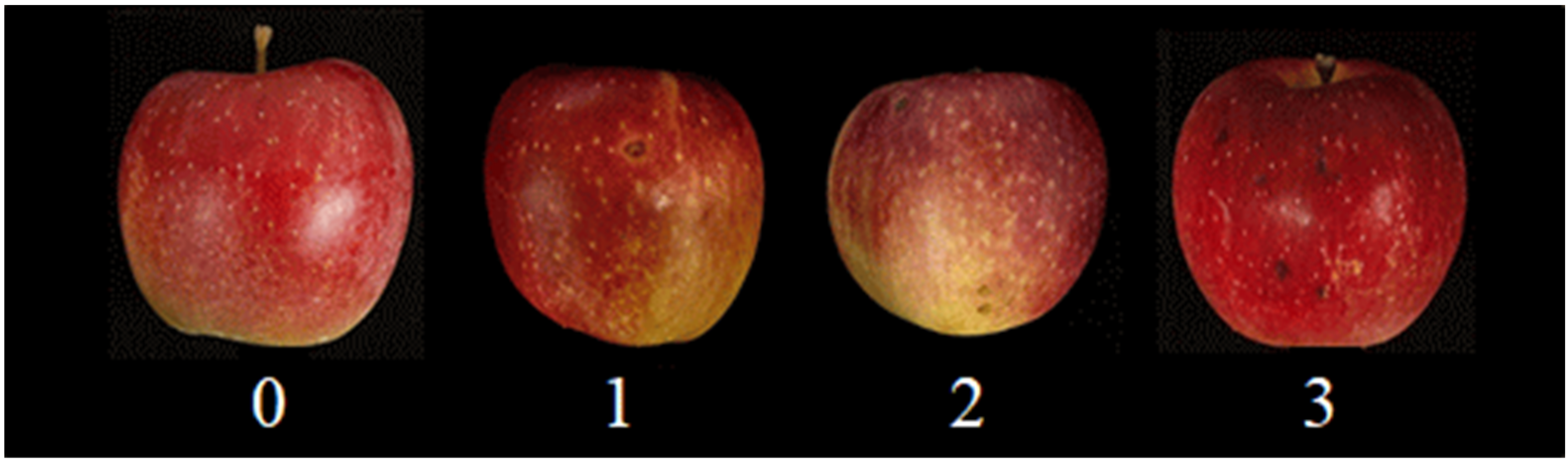
Spot severity was assessed for each fruit using a severity index based on the number of visible spots, categorized into four levels: 0 = none, 1 = 1–2 spots, 2 = 3–4 spots, 3 = more than 5 spots (Figure 2). The bitter pit incidence evaluation at harvest was performed using all fruits from each tree. The fruits (ranging from 210 g to 310 g) were selected and used for the determination of fruit quality attributes. At harvest, 90 fruits per treatment (30 fruits per replicate) were assessed for fruit quality attributes. During storage, 15 fruits per treatment (5 fruits per replicate) were evaluated at one-month intervals for five months, with three replicates.

2.3. Evaluation of Fruit Quality Attributes

Fruit quality attributes including flesh firmness, titratable acidity (TA), soluble solids content (SSC), internal ethylene concentration (IEC), weight loss, and peel color were evaluated. Fruit weight loss was calculated for individual fruits by comparing weights before and after storage. Peel color was measured on both the sun-exposed and shaded sides of the fruit using a chromameter (CR-400, Konica Minolta Inc., Tokyo, Japan). Flesh firmness was measured on the equatorial region of each fruit using a rheometer (Compac-100 II, Sun Scientific Co., Tokyo, Japan) fitted with an 11 mm plunger. Firmness data were averaged and expressed in newtons (N). TA was determined by titrating a mixture of 5 mL of fresh juice and 45 mL of distilled water with 0.1 N NaOH to pH 8.1, based on malic acid content, using an automatic titrator (DL-15, Mettler Toledo Co., Greifensee, Switzerland). SSC was measured from fresh juice using a digital refractometer (PR-201α, Atago Co., Ltd., Tokyo, Japan).
IEC was analyzed by extracting 1 mL of gas from the fruit’s core cavity using a syringe fitted with a 3.8 cm hypodermic needle. The gas sample was injected into a gas chromatograph (GC 7820A, Agilent Technologies Inc., Santa Clara, CA, USA) equipped with a flame ionization detector and a Porapak Q column (80/100, 1 m, RASTEK, Bellefonte, PA, USA). The injector, oven, and detector temperatures were set at 100 °C, 90 °C, and 250 °C, respectively. Helium was used as the carrier gas at a flow rate of 20 mL min−1.

2.4. Polyphenol Oxidase (PPO) Activity

PPO activity was measured as described by Park et al. [27] with slight modifications. Peel samples were collected from both non-spotted and spotted fruits. A 9.5 mm cork borer (LCB12, LKLAB, Seoul, Republic of Korea) was used to punch the peel, and 5 mm-thick tissue slices from beneath the peel were collected and freeze-dried. For the assay, 1 g of dried sample was homogenized with 20 mL of McIlvaine citric-phosphate buffer (pH 6.5) and centrifuged at 4000× g for 20 min at 4 °C. Then, 1 mL of supernatant was incubated with 2 mL of 0.1% catechol. Absorbance at 420 nm was recorded every 30 s for 5 min using a UV spectrophotometer (UV-1800, Shimadzu, Kyoto, Japan). One unit of PPO activity was defined as the amount of enzyme producing an absorbance change equivalent to 1 unit per minute per gram of fresh weight (unit/min/g).

2.5. Extraction of Cell Wall Materials

Cell wall materials were extracted following the method of Yoo et al. [28]. Frozen fruit flesh (10 g) was homogenized with 50 mL of boiling 95% ethanol and then heated in an 80 °C water bath (SH-SAKWB, Samheung21, Seoul, Republic of Korea) for 40 min to inactivate endogenous enzymes and remove alcohol-soluble compounds. The mixture was filtered through Whatman No. 541 filter paper (Whatman International Limited, Kent, UK), washed with 100 mL of 95% ethanol followed by acetone, and then air-dried at 30 °C for 24 h. The resulting material was used as alcohol-insoluble solids (AIS).

2.6. Determination of Total Sugar and Uronic Acid Contents

Total sugar content was determined using the phenol-sulfuric acid method [28], with absorbance measured at 490 nm. The sugar content was quantified using a glucose standard curve. Uronic acid content was determined by the carbazole colorimetric method [29], with absorbance measured at 530 nm and calibration based on a galacturonic acid standard curve.

2.7. Statistical Analysis

All statistical analyses were conducted using SPSS software (IBM SPSS Statistics 26, SPSS Inc., Armonk, NY, USA). A t-test was used to compare control and hexanal treatments at harvest. During storage, data were analyzed by Duncan’s multiple range test (p < 0.05) for control, hexanal, and 1-MCP treatments. All data are presented as means ± standard error (SE).

3. Results and Discussion

3.1. Effects of Hexanal Treatment on Bitter Pit Incidence and Fruit Quality of ‘Arisoo’ Apples at Harvest

The effect of pre-harvest hexanal treatment on the bitter pit incidence in ‘Arisoo’ apples was assessed at harvest (Table 1). In the untreated control group, the bitter pit incidence was 20.6% with a severity score of 0.34. In contrast, the hexanal-treated group showed a bitter pit incidence rate of 13.2% and a severity score of 0.18. South Korea is located in the temperate climate zone and experiences frequent rainfall from June to August. According to Figure 1, however, no heavy rainfall was observed during this period. Additionally, Win et al. [30] recently reported that the ‘Arisoo’ apple is susceptible to bitter pit disorders and other pathogen infections when the fruits are not protected by bagging treatments, compared with bagged fruits. Therefore, the increased fruit spot incidence in this cultivar may be related to genetic factors rather than environmental conditions. Thus, hexanal treatment reduced the bitter pit incidence by 7.0% compared to the control. Therefore, the reduction in bitter pit incidence in treated fruits can be attributed to the effectiveness of the treatment, whereas the incidence was increased in the untreated fruits. Calcium deficiency in fruit is closely associated with the limited mobility of calcium during cell expansion [31], and xylem plays a key role in calcium transport [32]. It has been suggested that xylem dysfunction caused by cell expansion during fruit development hinders calcium transport, resulting in calcium deficiency and the appearance of spot disorders [33]. A previous study reported that pre-harvest hexanal formulation treatment in ‘Honeycrisp’ apples maintained xylem function by inhibiting phospholipase D activity, an enzyme involved in membrane degradation, thereby supporting calcium movement and suppressing bitter pit development [15]. Similarly, it can be inferred that hexanal treatment in ‘Arisoo’ apples may have partially reduced bitter pit incidence by improving calcium transport through the xylem. Regarding fruit quality attributes at harvest (Table 2), the control group had an average fruit weight of 269.4 g, firmness of 63.6 N, soluble solids content (SSC) of 12.5 °Brix, titratable acidity (TA) of 0.38%, internal ethylene concentration (IEC) of 4.72 μL·L−1, and a starch pattern index (SPI) of 7.06. There were no significant differences in these quality attributes between the control and the hexanal-treated fruit. Therefore, we concluded that hexanal treatment did not affect the fruit quality of ‘Arisoo’ apples at harvest. The lack of observed differences in this study may be attributed to variations in application timing, concentration, or crop type, as the effects of pre-harvest hexanal treatment can differ depending on these factors [34].

3.2. Effects of Hexanal and 1-MCP Treatment on Bitter Pit Incidence, Fruit Quality, PPO, TS, and UA Activity of ‘Arisoo’ Apples During Cold Storage

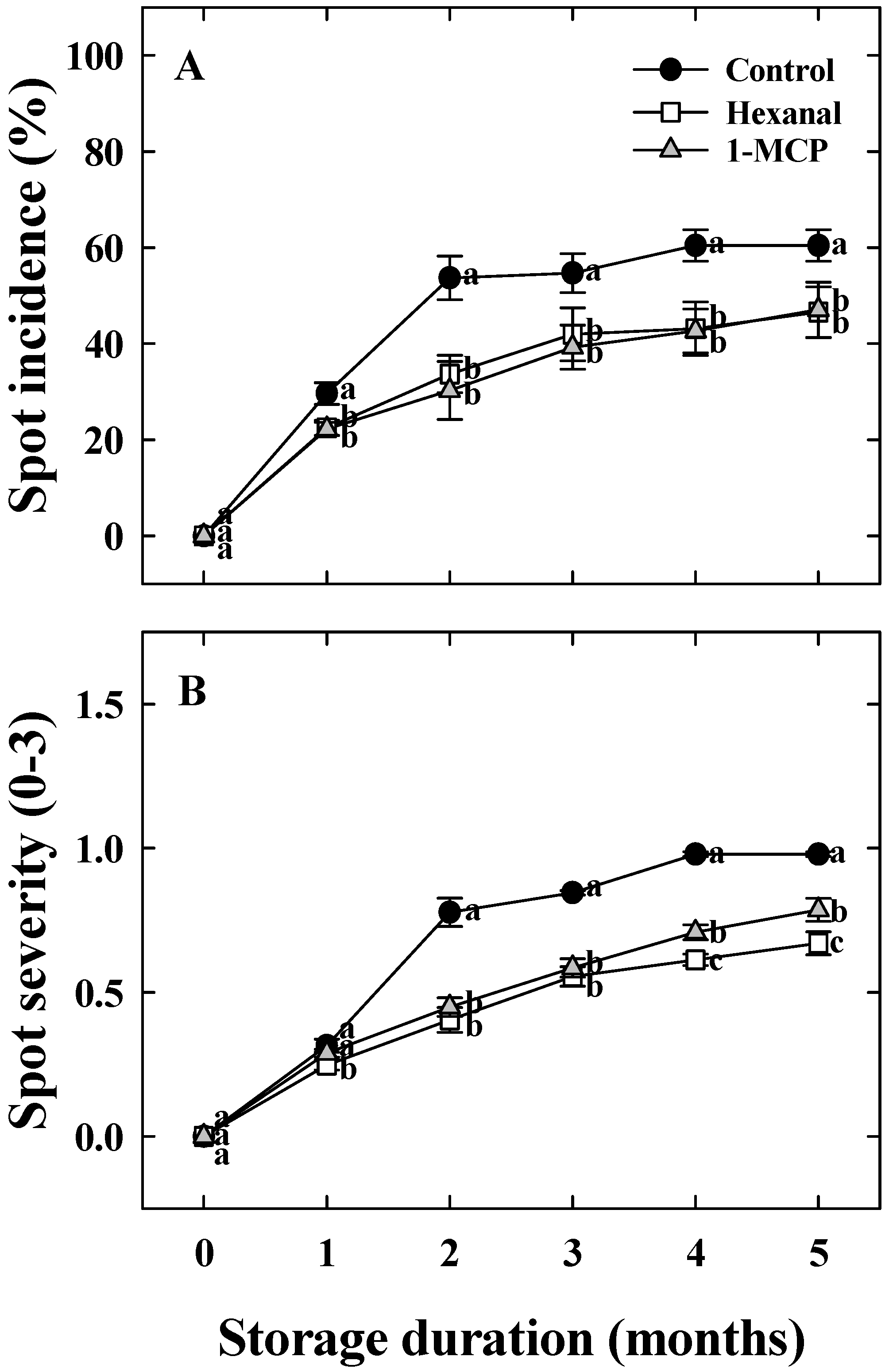
Fruit sample images and the method used to determine the severity index are presented in Figure 1. The effects of hexanal and 1-MCP treatments on the bitter pit incidence in ‘Arisoo’ apples during cold storage were examined (Figure 3). After 1 month of storage, bitter pit incidence in the control group was 29.6%, while it was 22.5% and 22.2% in the hexanal and 1-MCP treatments, respectively (Figure 3A). After 2 months, bitter pit incidence increased sharply in the control to 53.7% and further to 60.0% by 5 months. In contrast, bitter pit incidence in the hexanal and 1-MCP treatments rose to only 33.7% and 30.3% after 2 months, and reached 43.1% and 42.6% after 5 months, respectively. Therefore, by the end of storage, both treatments reduced bitter pit incidence by approximately 20% compared to the control (Figure 3A). The severity score of control fruit increased significantly from 1 month through the end of storage (Figure 3B). After 2 months, the severity score was 0.78 in the control, compared to 0.40 and 0.45 in the hexanal and 1-MCP treatments, respectively. After 5 months, the severity score remained lower in the treated fruit: 0.98 in the control, 0.61 in the hexanal group, and 0.71 in the 1-MCP group.
Previous studies have shown that hexanal treatment improved the storability of raspberries by upregulating annexin genes and calmodulin-binding transcription activators, while downregulating transcription and activity of the phospholipase-D gene [35]. In our study, hexanal treatment effectively reduced the bitter pit incidence in ‘Arisoo’ apples both at harvest and during cold storage. This effect is likely due to the regulation of calcium metabolism and subsequent accumulation of calcium in the fruit. Similarly, 1-MCP postharvest treatment also partially suppressed the development of bitter pit incidence. These findings are consistent with previous reports showing that 1-MCP treatment in ‘Honeycrisp’ apples reduced bitter pit development during cold storage by delaying ripening-related physiological changes [25,36].
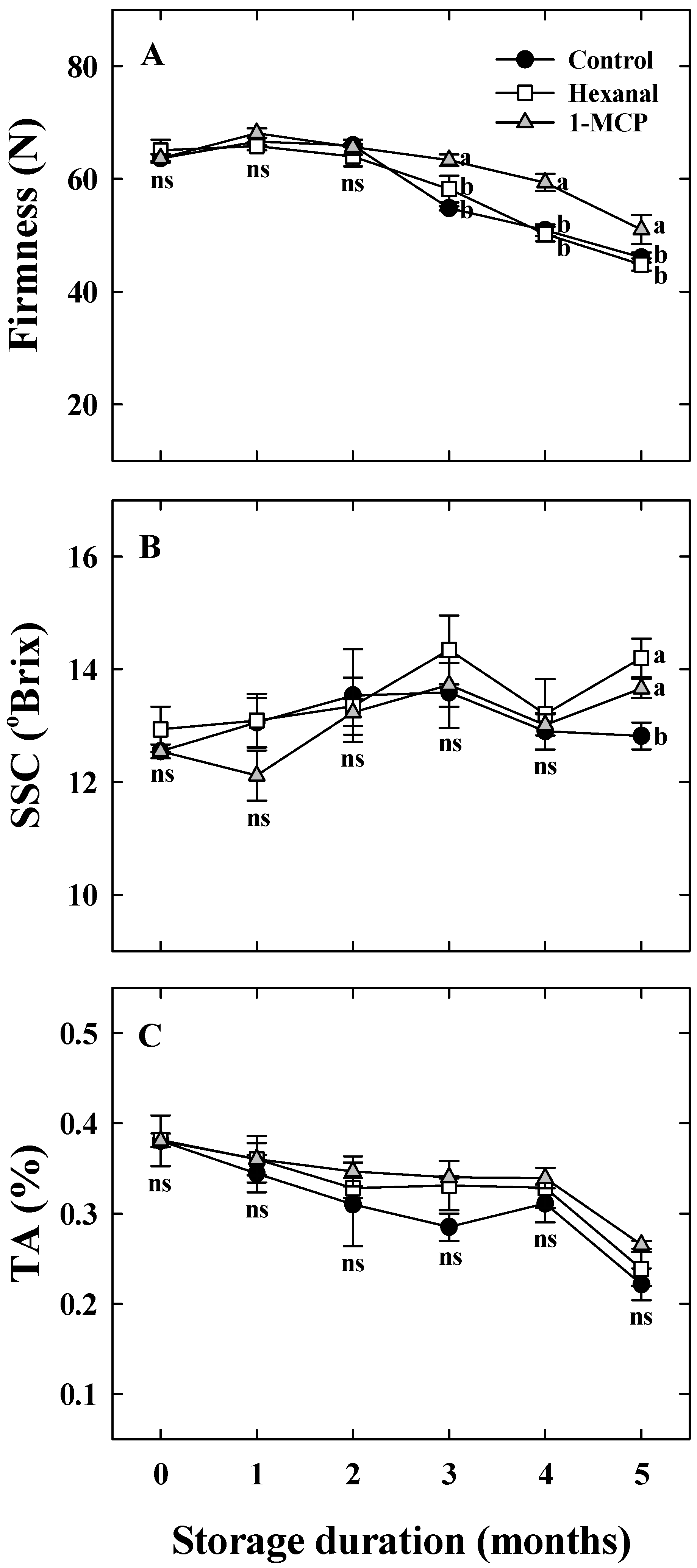
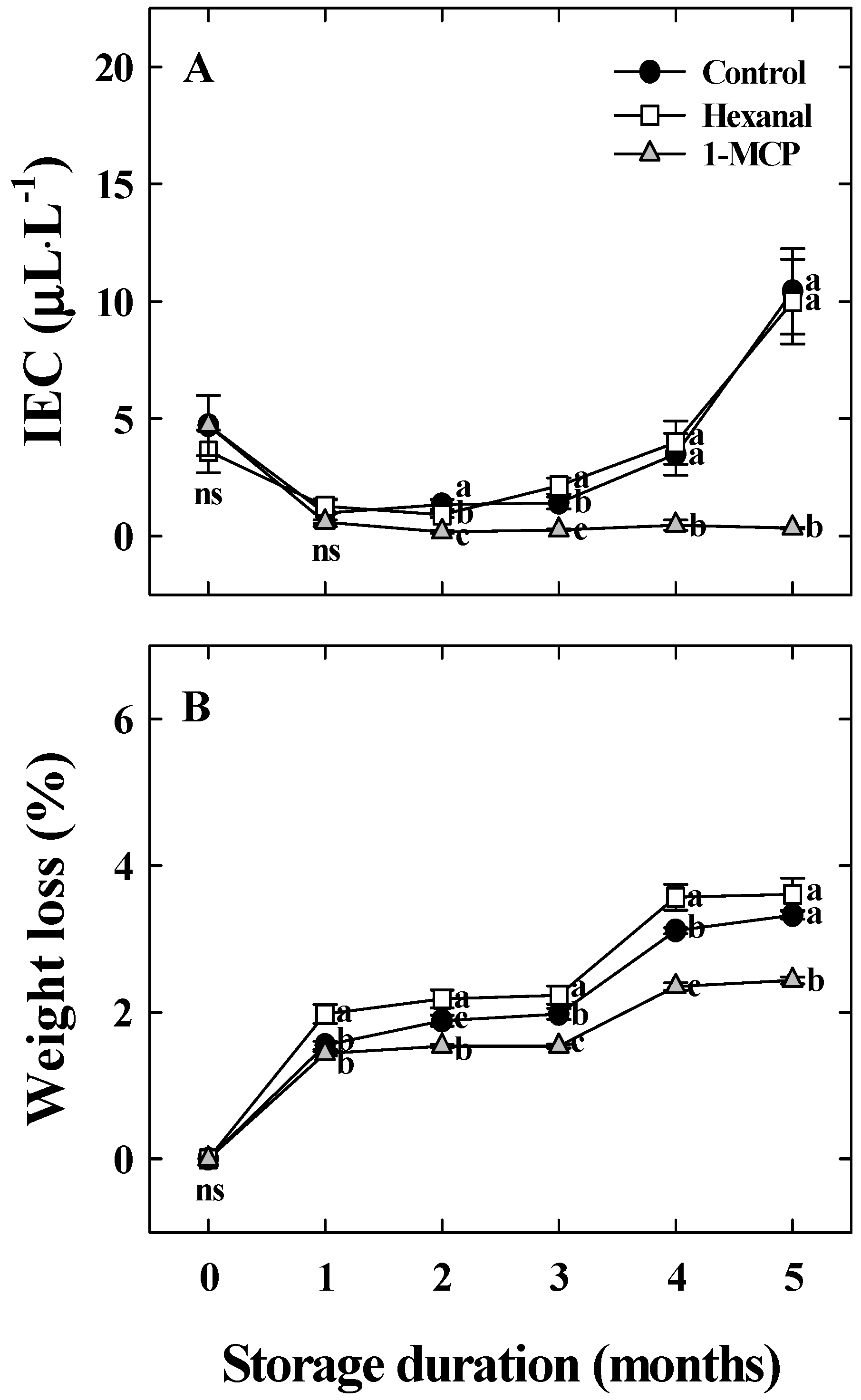
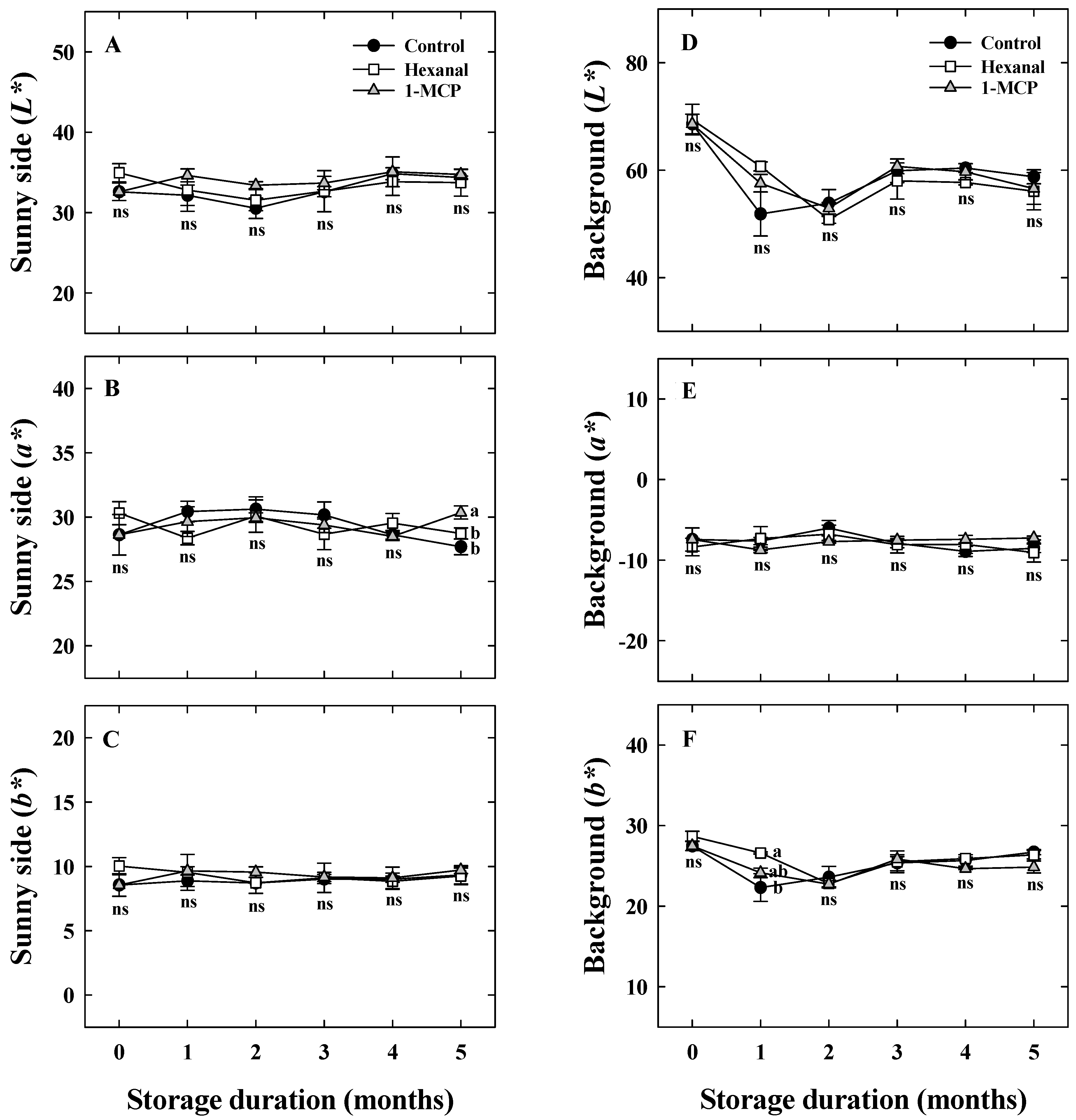
Flesh firmness remained unchanged across all treatments until 2 months of storage (Figure 4A). After 3 months, firmness declined in the control and hexanal treatments, while 1-MCP-treated fruit maintained higher firmness levels. SSC was similar among all treatments up to 4 months of storage (Figure 4B). However, after 5 months, SSC in the control fruit was the lowest, whereas hexanal- and 1-MCP-treated fruit retained higher SSC values. Although TA slightly declined during storage, there were no significant differences among the treatments (Figure 4C). At harvest, IEC in the control and hexanal treatments was 4.99 μL·L−1 and 3.61 μL·L−1, respectively, increasing to 10.25 μL·L−1 and 9.63 μL·L−1 after 5 months of storage (Figure 5A). In contrast, 1-MCP treatment completely suppressed ethylene production during storage, with IEC measured at just 0.34 μL·L−1 after 5 months. Weight loss was less than 2.0% across all treatments up to 5 months of storage. Beyond this point, weight loss exceeded 3.0% in the control and hexanal groups, while it was only 2.4% in the 1-MCP group (Figure 5B). With the exception of increased redness (a*) on the sun-exposed side of 1-MCP-treated fruit at 5 months, peel color variables, including lightness (L*) and yellowness (b*) on both sun-exposed and sun-shaded sides, did not differ significantly among treatments during cold storage (Figure 6A–F).
In general, 1-MCP treatment is effective in maintaining flesh firmness and titratable acidity, as well as inhibiting internal ethylene concentration in apples during ripening [19,20,21,24,28]. The inhibition of ethylene production has been attributed to the suppression of cell wall hydrolase activity and the downregulation of related gene expression, thereby contributing to the maintenance of fruit quality [2,22,37,38]. In our study, 1-MCP treatment effectively suppressed internal ethylene concentration in ‘Arisoo’ apples, although it did not have a significant effect on titratable acidity. Hexanal has been reported to enhance the storability of fruits such as nectarines [16], mango [17], and guava [18]. However, in our study, hexanal treatment showed limited effectiveness in maintaining the quality of ‘Arisoo’ apples. Yoo et al. [24] found that postharvest 1-MCP treatment reduced weight loss in ‘Summer Prince’ apples but not in ‘Summer King’ apples. Similarly, Win et al. [38] reported that 1-MCP had no effect on weight loss in ‘Summer King’ apples, while it slowed the increase in weight loss in ‘Green Ball’ apples. Consistent with these observations, our results showed that 1-MCP treatment reduced weight loss in ‘Arisoo’ apples compared to the control, suggesting that the impact of 1-MCP on weight loss may vary depending on the cultivar. In addition, 1-MCP treatment delayed changes in peel color variables during cold storage in ‘Custard’ apples [30], whereas it had no significant effect on peel color in ‘Honeycrisp’ apples [20]. A previous study also reported that peel color variables in ‘Arisoo’ apples remained stable during cold storage [39], which is consistent with our findings.
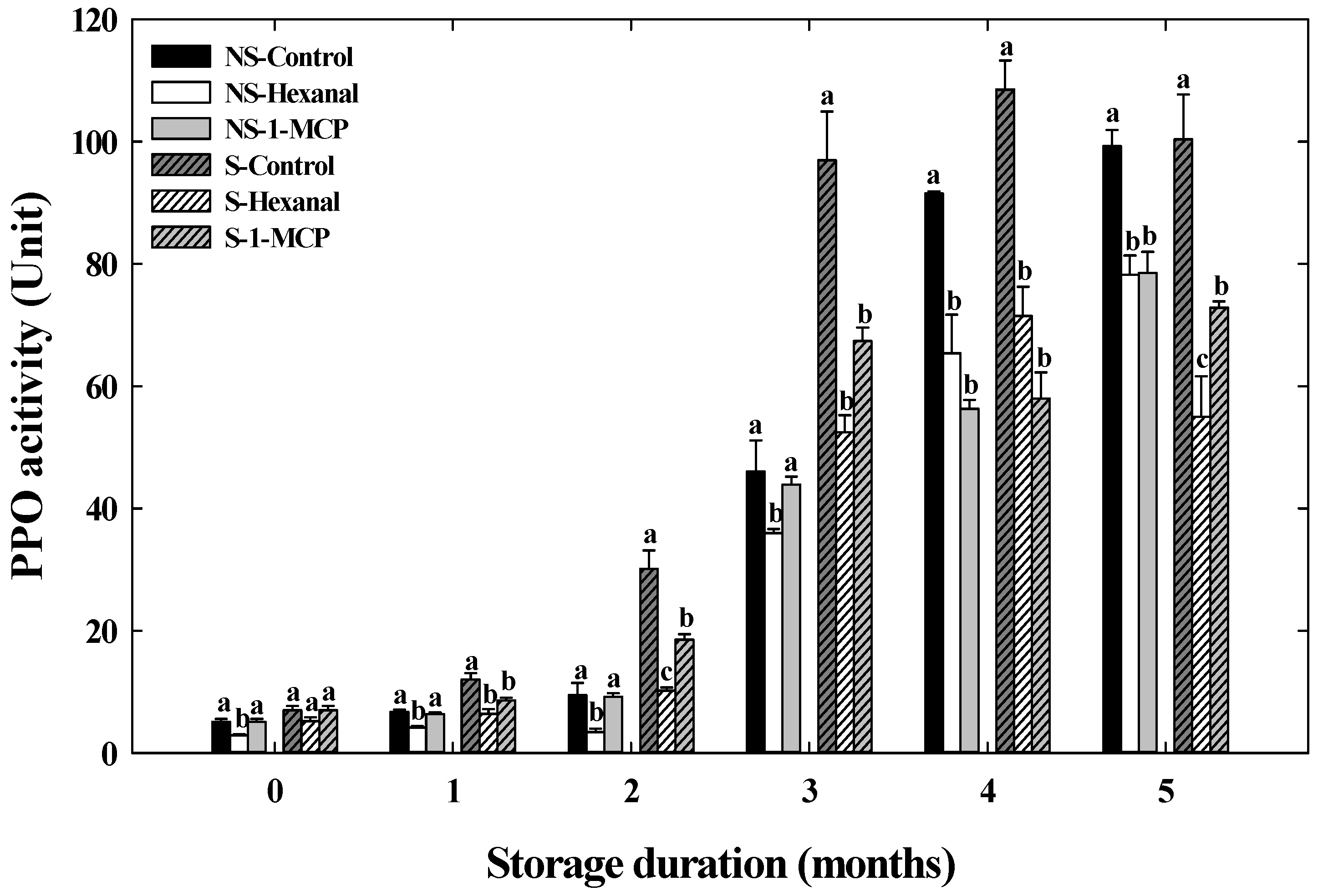
In the control group, PPO activity in the non-spotted peel of healthy fruits was 5.1 units at harvest and increased to 46.0, 91.5, and 99.3 units after 3, 4, and 5 months of storage, respectively (Figure 7). In fruits treated with 1-MCP, PPO activity followed a similar trend as the control up to 3 months. However, at 4 and 5 months, the activity was lower, at 56.3 and 78.5 units, respectively. In contrast, hexanal-treated fruits maintained low PPO activity (3.4 units) up to 2 months of storage, which then increased to 36.0 units after 3 months, with no significant difference from the 1-MCP treatment thereafter. Notably, the spotted peel of damaged fruits exhibited higher PPO activity than the non-spotted peel. In the control group, PPO activity in the spotted peel reached 30.1 units after 2 months and peaked at 108.5 units after 4 months of storage. In comparison, PPO activity in hexanal- and 1-MCP-treated fruits remained relatively low at 10.2 and 18.5 units, respectively, up to 2 months of storage (Figure 7).
Superficial scald in apple fruit is primarily induced by ethylene production during storage, which promotes the accumulation and oxidation of α-farnesene. The resulting oxidation products, particularly conjugated trienols, disrupt cell membranes and mediate PPO activity in the peel, leading to browning and necrosis of the epidermal cell layer [40]. 1-MCP treatment has been shown to effectively inhibit the increase in PPO activity and reduce the development of superficial scald in ‘Starkrimson’ apples during storage [41]. This effect is attributed to the suppression of ethylene production and action, which delays ripening and mitigates peel browning [42]. Generally, ethylene regulates the ripening of climacteric apple fruit. Similar to this study, exogenous ethylene treatment induced the occurrence of browning while 1-MCP markedly reduced browning [43]. However, the timing of 1-MCP application and storage conditions can vary its effects on PPO activity [44]. On the other hand, pre-harvest treatment with 2% hexanal alleviated the rachis browning in ‘Flame Seedless’ grapes during storage [45]. This treatment inhibited the activities of pectin methyl esterase and PPO, reduced titratable acidity loss, and minimized weight loss, thus helping to preserve fruit quality [45]. These effects are likely due to hexanal’s ability to stabilize cell membranes by inhibiting phospholipase D activity, thereby delaying phenolic compound oxidation and ripening. In our study, PPO activity in the spotted peel increased significantly with extended storage duration, compared to the non-spotted peel. However, both 1-MCP and hexanal treatments significantly reduced PPO activity in both peel types compared to the control. This reduction in PPO activity may be attributed to the decreased incidence and severity of bitter pit in the treated fruits.
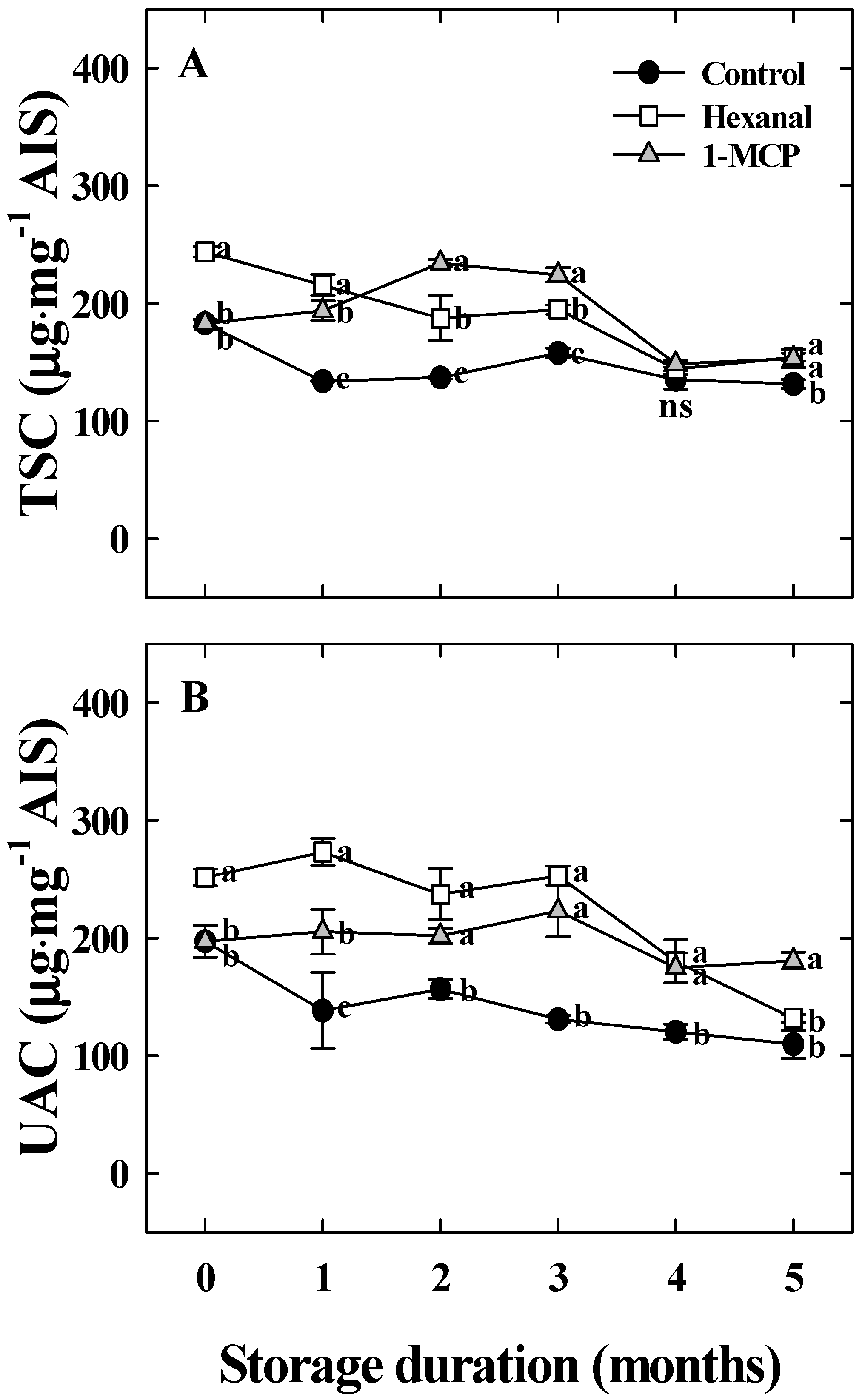
At harvest, the TS content in the control fruit was 183.05 μg·mg−1, while the hexanal-treated fruit had a higher TS content of 245.50 μg·mg−1 (Figure 8A). After 5 months of storage, the TS content in the control decreased to 131.42 μg·mg−1, whereas the hexanal treatment maintained a higher level at 154.25 μg·mg−1. The TS content in the 1-MCP-treated fruit was comparable to that of the hexanal-treated fruit; therefore, both treatments resulted in higher TS content than the control at the end of the storage period. Similarly, the UA content in the control fruit gradually declined from 197.23 μg·mg−1 at harvest to 109.63 μg·mg−1 after 5 months of storage (Figure 8B). In the hexanal treatment, the UA content was 251.51 μg·mg−1 at harvest and decreased to 131.65 μg·mg−1 after storage. The 1-MCP-treated fruit maintained relatively stable UA content throughout the storage period, with a final value of 180.70 μg·mg−1 after 5 months.
Fruit softening is generally attributed to the degradation of cell wall components, especially pectin in the middle lamella of the cell wall [46]. The middle lamella is primarily composed of sugars, such as galacturonic acid, galactose, rhamnose, and arabinose, which tend to decrease during prolonged storage [28]. A previous study on ‘Arisoo’ apples reported that 1-MCP treatment effectively inhibited the reduction of TS and UA content in the cell wall’s middle lamella during storage, thereby delaying the degradation of cell wall structure [39]. Likewise, hexanal treatment was found to inhibit pectin degradation and the activity of pectin methyl esterase in ‘Flame Seedless’ grapes [45]. However, compared to 1-MCP, hexanal showed a lesser effect in preserving TS and UA contents. Therefore, our findings suggest that 1-MCP treatment slows the degradation of cell wall structure in ‘Arisoo’ apples by maintaining the TS and UA contents in the middle lamella during storage.
In conclusion, pre-harvest hexanal treatment of ‘Arisoo’ apples resulted in a 7.0% reduction in bitter pit incidence and significantly lower severity (0.18) compared to the control. Throughout the storage period, both hexanal and 1-MCP treatments effectively suppressed the development of bitter pit incidence and PPO activity. Additionally, both treatments maintained higher TS and UA contents than the control. Therefore, this study demonstrates that pre-harvest application of hexanal and post-harvest treatment with 1-MCP have beneficial effects in suppressing spot disorder development and maintaining fruit quality in ‘Arisoo’ apples during harvest and storage. However, this study was performed in a single year, which may limit the potential variability of the results. Therefore, further studies are necessary to ensure the consistent results of hexanal formulation and 1-MCP treatments in this apple cultivar across different growing seasons and environmental conditions.

Author Contributions

Conceptualization, J.-Y.L. and J.-G.K.; methodology, J.-Y.L. and J.-G.K.; software, J.-Y.L. and J.-G.K.; validation, J.-Y.L. and J.-G.K.; formal analysis, J.-Y.L. and J.-G.K.; investigation, J.-Y.L. and J.-G.K.; resources, I.-K.K.; data curation, J.-Y.L. and J.-G.K.; writing—original draft preparation, J.-G.K. and N.M.W.; writing—review and editing, J.-G.K.; N.M.W. and I.-K.K.; visualization, J.-G.K., K.K., J.Y., S.K., N.M.W. and I.-K.K.; supervision I.-K.K.; project administration, I.-K.K.; funding acquisition, I.-K.K. All authors have read and agreed to the published version of the manuscript.

Funding

This work was supported by the Rural Development Administration, Republic of Korea (Project No. RS-2024-00397309).

Data Availability Statement

The original contributions presented in this study are included in the article. Further inquiries can be directed to the corresponding authors.

Conflicts of Interest

The authors declare no conflicts of interest.

References

  1. Kwon, Y.S.; Kwon, S.I.; Kim, J.H.; Park, M.Y.; Park, J.T.; Lee, J. ‘Arisoo’, a midseason apple. Hortic. Sci. 2021, 56, 1139–1141. [Google Scholar] [CrossRef]
  2. Kwon, J. Effects of 1-Methylcyclopropene (1-MCP) Application on Fruit Quality Attributes in ‘Arisoo’ and ‘Picnic’ Apples During Cold Storage. Master’s Thesis, Kyungpook National University, Daegu, Republic of Korea, 2021. [Google Scholar]
  3. Research Report: Development of Cultivation Technologies for ‘Arisoo’ Apples. Available online: https://scienceon.kisti.re.kr/commons/util/originalView.do?cn=TRKO201900015907&dbt=TRKO&rn= (accessed on 10 October 2025).
  4. Ferguson, I.B.; Watkins, C.B. Bitter pit in apple fruit. Hortic. Rev. 2011, 11, 289–355. [Google Scholar]
  5. Kim, D.H.; Byun, J.K.; Choi, C.; Choi, D.G.; Kang, I.K. The effect of calcium chloride, prohexadione-Ca and Ca-coated paper bagging on reduction of bitter pit in ‘Gamhong’ apple. Korean J. Hortic. Sci. Technol. 2008, 26, 367–371. [Google Scholar]
  6. Lötze, E.; Joubert, J.; Theron, K.I. Evaluating pre-harvest foliar calcium applications to increase fruit calcium and reduce bitter pit in ‘Golden Delicious’ apples. Sci. Hortic. 2008, 116, 299–304. [Google Scholar] [CrossRef]
  7. Park, M.Y.; Kwon, S.I.; Kwon, Y.S.; Kwon, H.J.; Park, J.T.; Lee, D.Y.; Lee, Y.S. Different treatments induce the development of fruit. In Proceedings of the 38th Annual Meeting of Korean Society for Horticultural Science, Gyeongju, Republic of Korea, 11 November 2020; p. 157. [Google Scholar]
  8. Cheema, A.; Padmanabhan, P.; Subramanian, J.; Blom, T.; Paliyath, G. Improving quality of greenhouse tomato (Solanum lycoperscum L.) by pre- and postharvest application of hexanal-containing formulations. Postharvest. Biol. Technol. 2014, 95, 13–19. [Google Scholar] [CrossRef]
  9. Paliyath, G.; Padmanabhan, P. Preharvest and postharvest technologies based on hexanal: An overview. In Postharvest Biology and Nanotechnology; John Wiley and Sons: Hoboken, NJ, USA, 2018; pp. 89–101. [Google Scholar]
  10. Paliyath, G.; Tiwari, K.; Yuan, H.; Whitaker, B.D. Structural deterioration in produce: Phospholipase D, membrane deterioration, and senescence. In Postharvest Biology and Technology of Fruits, Vegetables, and Flowers; John Wiley and Sons: Hoboken, NJ, USA, 2008; Volume 19, p. 33. [Google Scholar]
  11. Chen, W.; Viljoen, A.M. Gerniol—A review of a commercially important fragrance material. S. Afric. J. Bot. 2010, 76, 643–651. [Google Scholar] [CrossRef]
  12. Mesa, T.; Munné-Bosch, S. ɑ-Tocopherol in chloroplasts: Nothing more than an antioxidant? Curr. Opin. Plant Biol. 2023, 74, 102400. [Google Scholar] [CrossRef] [PubMed]
  13. Zheng, X.; Gong, M.; Zhang, Q.; Tan, H.; Li, L.; Tang, Y.; Li, Z.; Peng, M.; Deng, W. Metabolism and regulation of ascorbic acid in fruits. Plants 2022, 18, 1602. [Google Scholar] [CrossRef]
  14. Mthembu, S.S.L.; Magwaza, L.S.; Tesfay, S.Z.; Midtshwa, A. Mechanism of enhanced freshness formulation in optimizing antioxidant retention of gold kiwifruit (Actinida chinensis) harvested at two maturity stages. Front. Sustain. Food Syst. 2023, 7, 1286677. [Google Scholar] [CrossRef]
  15. DeBrouwer, E.J.; Sriskantharajah, K.; El Kayal, W.; Sullivan, J.A.; Paliyath, G.; Subramanian, J. Pre-harvest hexanal spray reduces bitter pit and enhances post-harvest quality in ‘Honeycrisp’ apples (Malus domestica Borkh.). Sci. Hortic. 2020, 273, 109610. [Google Scholar] [CrossRef]
  16. Kumar, S.K.; El Kayal, W.; Sullivan, J.A.; Paliyath, G.; Subramanian, J. Pre-harvest application of hexanal formulation enhances shelf life and quality of ‘Fantasia’ nectarines by regulating membrane and cell wall catabolism-associated genes. Sci. Hortic. 2018, 229, 117–124. [Google Scholar] [CrossRef]
  17. Anusuya, P.; Nagaraj, R.; Janavi, G.J.; Subramanian, K.S.; Paliyath, G.; Subramanian, J. Pre-harvest sprays of hexanal formulation for extending retention and shelf-life of mango (Mangifera indica L.) fruits. Sci. Hortic. 2016, 211, 231–240. [Google Scholar] [CrossRef]
  18. Gill, K.S.; Dhaliwal, H.S.; Mahajanc, B.V.C.; Paliyath, G.; Boorae, R.S. Enhancing post-harvest shelf life and quality of guava (Psidium guajava L.) cv. Allahabad Safeda by pre-harvest application of hexanal containing aqueous formulation. Postharvest Biol. Technol. 2016, 112, 224–232. [Google Scholar] [CrossRef]
  19. Watkins, C.B. The use of 1-methylcyclopropene (1-MCP) on fruits and vegetables. Biotechnol. Adv. 2006, 24, 389–409. [Google Scholar] [CrossRef]
  20. Mattheis, J.P.; Rudell, D.R.; Hanrahan, I. Impacts of 1-methylcyclopropene and controlled atmosphere established during conditioning on development of bitter pit in ‘Honeycrisp’ apples. HortScience 2017, 52, 132–137. [Google Scholar] [CrossRef]
  21. Lim, B.S.; Oh, S.Y.; Lee, J.W.; Hwang, Y.S. Influence of 1-methylcyclopropene treatment time on the fruit quality in the ‘Fuji’ apple (Malus domestica). Korean J. Hortic. Sci. Technol. 2007, 25, 191–195. [Google Scholar]
  22. Manenoi, A.; Paull, R.E. Papaya fruit softening, endoxylanase gene expression, protein and activity. Plant Physiol. 2007, 131, 470–480. [Google Scholar] [CrossRef]
  23. Sañudo-Barajas, J.A.; Labavitch, J.; Greve, C.; Osuna-Enciso, T.; Muy-Rangel, D.; Siller-Cepeda, J. Cell wall disassembly during papaya softening: Role of ethylene in changes in composition, pectin-derived oligomers (PDOs) production and wall hydrolases. Postharvest Biol. Technol. 2009, 51, 158–167. [Google Scholar] [CrossRef]
  24. Yoo, J.; Kim, S.H.; Kwon, J.G.; Cho, Y.J.; Kang, I.K. Effects of 1-methylcyclopropene treatments on fruit quality attributes and cell wall metabolism in cold stored ‘Summer Prince’ and ‘Summer King’ apples. Hortic. Sci. Technol. 2020, 5, 660–674. [Google Scholar] [CrossRef]
  25. Shoffe, A.Y.; Nock, J.F.; Zhang, Y.; Watkins, C.B. Physiological disorder development of ‘Honeycrisp’ apples after pre-and post-harvest 1-methycyclopropene (1-MCP) treatments. Postharvest Biol. Technol. 2021, 182, 111703. [Google Scholar] [CrossRef]
  26. Do, V.G.; Lee, Y.; Park, J.; Win, N.M.; Kwon, S.I.; Yang, S.; Kim, S. Heat stress and water irrigation management effects on the fruit color and quality of ‘Hongro’ apples. Agriculture 2024, 14, 761. [Google Scholar] [CrossRef]
  27. Park, D.H.; Park, J.J.; Olawuyi, I.F.; Lee, W.Y. Quality of White mushroom (Agaricus bisporus) under argon-and nitrogen-based controlled atmosphere storage. Sci. Hortic. 2020, 265, 109229. [Google Scholar] [CrossRef]
  28. Yoo, J.; Suk, Y.; Lee, J.; Jung, H.Y.; Choung, M.G.; Park, K.I.; Han, J.S.; Cho, Y.J.; Lee, D.H.; Kang, I.K. Preharvest sprayable 1-methylcyopropene (1-MCP) effects on fruit quality attributes and cell wall metabolism in cold stored ‘Fuji’ apples. Hortic. Sci. Technol. 2018, 36, 853–862. [Google Scholar]
  29. Bitter, T.; Muir, H.M. A modified uronic acid carbazole reaction. Anal. Biochem. 1962, 4, 330–334. [Google Scholar] [CrossRef]
  30. Win, N.M.; Do, V.G.; Kwon, J.G.; Park, J.T.; Park, J.; Lee, Y.; Kweon, H.J.; Kang, I.K.; Kwon, S.I.; Kim, S. Fruit bag removal timing influences fruit coloration, quality, and physiological disorders in ‘Arisoo’ apples. Plants 2025, 14, 2923. [Google Scholar] [CrossRef]
  31. de Freitas, S.T.; do Amarante, C.V.T.; Labavitch, J.M.; Mitcham, E.J. Cellular approach to understand bitter pit development in apple fruit. Postharvest Biol. Technol. 2010, 57, 6–13. [Google Scholar] [CrossRef]
  32. Hocking, B.; Tyerman, S.D.; Burton, R.A.; Gilliham, M. Fruit calcium: Transport and physiology. Front. Plant Sci. 2016, 7, 569. [Google Scholar] [CrossRef]
  33. Miqueloto, A.; do Amarante, C.V.T.; Steffens, C.A.; dos Santos, A.; Mitcham, E. Relationship between xylem functionality, calcium content and the incidence of bitter pit in apple fruit. Sci. Hortic. 2014, 165, 319–323. [Google Scholar] [CrossRef]
  34. Ashintha, G.N.; Sunny, A.C.; Nisha, R. Effect of pre-harvest and post-harvest hexanal treatments on fruits and vegetables: A review. Agric. Rev. 2020, 41, 124–131. [Google Scholar]
  35. El Kayal, W.; Paliyath, G.; Sullivan, J.A.; Subramanian, J. Phospholipase D inhibition by hexanal is associated with calcium signal transduction events in raspberry. Hortic. Res. 2017, 4, 17042. [Google Scholar] [CrossRef] [PubMed]
  36. Watkins, C.B.; Mattheis, J.P. Apple. In Postharvest Physiological Disorders in Fruits and Vegetables; CRC Press: Boca Raton, FL, USA, 2019; pp. 165–206. [Google Scholar]
  37. Park, J.Y.; Kim, K.O.; Yoo, J.; Win, N.M.; Lee, J.; Choung, M.G.; Jung, H.Y.; Kang, I.K. Effects of aminoethoxyvinylglycine, sprayable 1-methylcyclopropene (1-MCP) and fumigation 1-MCP treatments on fruit quality attributes in cold-stored ‘Jonathan’ apples. Korean J. Food Preserv. 2016, 23, 453–458. [Google Scholar] [CrossRef]
  38. Win, N.M.; Yoo, J.; Kwon, S.I.; Watkins, C.B.; Kang, I.K. Characterization of fruit quality attributes and cell wall metabolism in 1-methylcyclopropene (1-MCP) treated ‘Summer King’ and ‘Green Ball’ apples during cold storage. Front. Plant Sci. 2019, 10, 1513. [Google Scholar] [CrossRef]
  39. Yoo, J.; Kwon, H.W.; Kwon, J.G.; Win, N.M.; Kang, I.K. Effects of Salicylic acid and 1-methylcyclopropene treatments on fruit quality and cell wall hydrolases of ‘Hwangok’ apples during cold and shelf-life storage. Hortic. Sci. Technol. 2022, 40, 539–551. [Google Scholar] [CrossRef]
  40. Rupasinghe, H.P.V.; Paliyath, G.; Murr, D.P. Sesquiterpene alpha-farnesene synthase: Partial purification, characterization, and activity in relation to superficial scald development in apples. Sci. Hortic. 2000, 125, 111–119. [Google Scholar]
  41. Niu, J.; Hou, Z.; Ou, Z.; Hui, W. Comparative study of effects of resveratrol, 1-MCP and DPA treatments on postharvest quality and superficial scald of ‘Starkrimson’ apples. Sci. Hortic. 2018, 240, 516–521. [Google Scholar] [CrossRef]
  42. Lurie, S.; Watkins, C.B. Superficial scald, its etiology and control. Postharvest Biol. Technol. 2012, 65, 44–60. [Google Scholar] [CrossRef]
  43. Lichanporn, I.; Srilaong, V.; Wongs-Aree, C.; Kanlayanarat, S. Postharvest physiology and browning of longkong (Aglaia dookkoo Griff.) fruit under ambient conditions. Postharvest Biol. Technol. 2009, 52, 294–299. [Google Scholar] [CrossRef]
  44. DeEll, J.R.; Lum, G.B.; Mostofi, Y.; Lesage, S.K. Timing of ethylene inhibition affects internal browning and quality of ‘Gala apples in long-term low oxygen storage. Front. Plant Sci. 2022, 13, 914441. [Google Scholar] [CrossRef] [PubMed]
  45. Kaur, S.; Arora, N.K.; Gill, K.B.S.; Sharma, S.; Gill, M.I.S. Hexanal formulation reduces rachis browning and postharvest losses in table grapes cv. ‘Flame Seedless’. Sci. Hortic. 2019, 248, 265–273. [Google Scholar] [CrossRef]
  46. Huber, D.J. The role of cell wall hydrolases in fruit softening. Hortic. Rev. 1983, 5, 169–219. [Google Scholar]
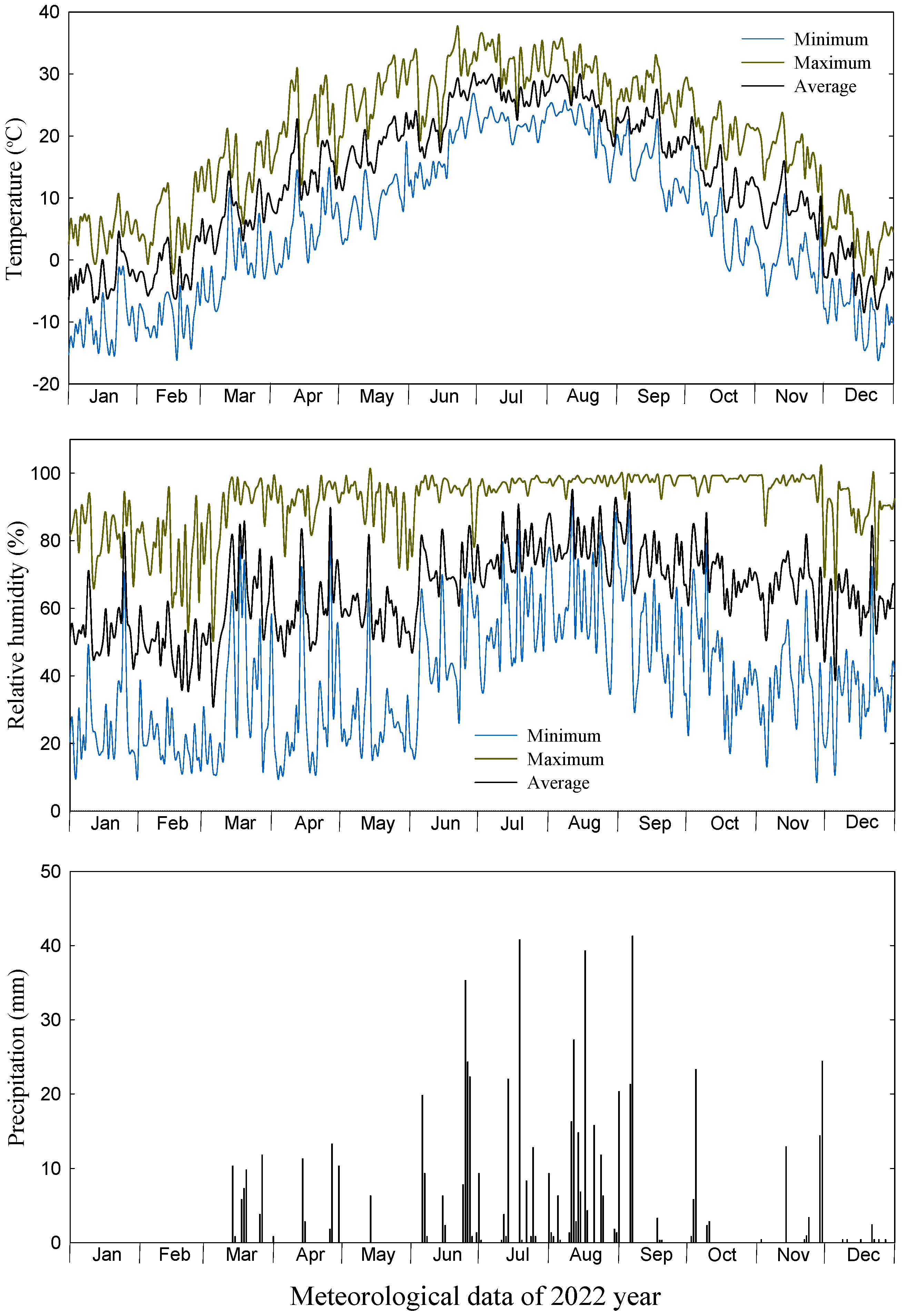
Figure 1. The meteorological data (temperature, relative humidity, and precipitation) of the experimental orchard in 2022.
Horticulturae 11 01468 g001
Figure 2. Bitter pit severity index in ‘Arisoo’ apples. Severity index scale: 0 = none; 1 = 1–2 spots; 2 = 3–4 spots; 3 = more than 5 spots.
Horticulturae 11 01468 g002
Figure 3. Effects of hexanal and 1-MCP treatments on bitter pit spot incidence (A) and severity (B) in ‘Arisoo’ apples during cold storage. All values are expressed as mean ± SE (n = 90). Different letters indicate significant differences among treatments in the same storage by Duncan’s multiple range test (p < 0.05).
Horticulturae 11 01468 g003
Figure 4. Effects of hexanal and 1-MCP treatments on firmness (A), soluble solids content (SSC) (B), and titratable acidity (TA) (C) in ‘Arisoo’ apples during cold storage. All values are expressed as mean ± SE (n = 15). Different letters indicate significant differences among treatments in the same storage by Duncan’s multiple range test (p < 0.05). ns, non-significant difference.
Horticulturae 11 01468 g004
Figure 5. Effects of hexanal and 1-MCP treatments on internal ethylene concentration (IEC) (A) and weight loss (B) in ‘Arisoo’ apples during cold storage. All values are expressed as means ± SE (n = 15). Different letters indicate significant differences among treatments in the same storage by Duncan’s multiple range test (p < 0.05). ns, non-significant difference.
Horticulturae 11 01468 g005
Figure 6. Effects of hexanal and 1-MCP treatments on peel color variables of the sunny (L* (A), a* (B), and b* (C)) and background (L* (D), a* (E), and b* (F)) sides of ‘Arisoo’ apples during cold storage. All values are expressed as means ± SE (n = 15). Different letters indicate significant differences among treatments in the same storage by Duncan’s multiple range test (p < 0.05). ns, non-significant difference.
Horticulturae 11 01468 g006
Figure 7. Effects of hexanal and 1-MCP treatments on polyphenol oxidase (PPO) activity in non-spotted (NS) and spotted (S) peel of ‘Arisoo’ apples during cold storage. All values are expressed as means ± SE (n = 15). Different letters indicate significant differences among treatments in the same storage by Duncan’s multiple range test (p < 0.05).
Horticulturae 11 01468 g007
Figure 8. Effects of hexanal and 1-MCP treatments on total sugar content (TSC) (A) and uronic acid content (UAC) (B) of alcohol-insoluble substance (AIS) in ‘Arisoo’ apples during cold storage. All values are expressed as means ± SE (n = 15). Different letters indicate significant differences among treatments in the same storage by Duncan’s multiple range test (p < 0.05). ns, non-significant difference.
Horticulturae 11 01468 g008
Table 1. Effects of pre-harvest hexanal treatment on bitter pit incidence and severity of ‘Arisoo’ apples at harvest.
TreatmentBitter Pit
Incidence
(%)
Incidence
Severity
(0–3) y
Bitter Pit Severity Index (%)
0123
Control20.6 ± 0.7 z0.34 ± 0.0278.4 ± 3.414.3 ± 4.42.2 ± 0.75.0 ± 0.8
Hexanal13.2 ± 0.80.18 ± 0.0282.9 ± 1.816.6 ± 1.80.6 ± 0.70.0 ± 0.0
Significance****nsnsns*
z Values are expressed as mean ± SE (n = 90). Statistical significance was assessed by t-test. ns, * and ** indicate non-significant, significant at p < 0.05, and p < 0.01, respectively. y bitter pit incidence severity scale: 0 = no spot; 1 = 1–2 spots; 2 = 3–4 spots; 3 = more than 5 spots.
Table 2. Fruit quality attributes of ‘Arisoo’ apples at harvest.
TreatmentFruit Qualities
Fruit
Weight (g)
Firmness
(N/Φ11 mm)
SSC
(°Brix)
TA
(%)
IEC
(μL·L−1)
SPI
(1–8)
Control269.4 ± 11.4 z63.6 ± 0.612.5 ± 0.10.38 ± 0.024.72 ± 1.067.06 ± 0.12
Hexanal298.3 ± 14.565.1 ± 1.612.9 ± 0.30.38 ± 0.013.61 ± 0.746.66 ± 0.27
Significancensnsnsnsnsns
Fruit color (sun-exposed side)Fruit color (sun-shaded side)
L*a*b*L*a*b*
Control32.6 ± 0.928.6 ± 1.38.6 ± 0.768.6 ± 1.5−7.4 ± 1.227.5 ± 0.5
Hexanal35.0 ± 0.930.3 ± 0.710.0 ± 0.569.4 ± 2.3−8.4 ± 0.928.7 ± 0.5
Significancensnsnsnsnsns
z Values are expressed as mean ± SE (n = 15). Statistical significance was assessed by t-test. ns indicate non-significant. SSC, soluble solids content; TA, titratable acidity; IEC, internal ethylene concentration; SPI, starch pattern index.
Disclaimer/Publisher’s Note: The statements, opinions and data contained in all publications are solely those of the individual author(s) and contributor(s) and not of MDPI and/or the editor(s). MDPI and/or the editor(s) disclaim responsibility for any injury to people or property resulting from any ideas, methods, instructions or products referred to in the content.