


Abstract
Modern fruit crop production increasingly seeks sustainable strategies to enhance growth, yield, and fruit quality while minimizing environmental impacts. Plant biostimulants—naturally derived substances or beneficial microorganisms, such as seaweed and plant extracts, Plant-Growth-Promoting Rhizobacteria (PGPR), humic substances, protein hydrolysates, and Si—emerge as promising tools to achieve these goals by stimulating key physiological and biochemical processes. They can improve nutrient uptake and efficiency, modulate hormonal and metabolic pathways, and enhance the activity of enzymatic and non-enzymatic antioxidants, leading to improved plant vitality and fruit quality. Biostimulants also influence rhizosphere microbial communities and soil health, promoting nutrient cycling, beneficial microbial diversity, and soil structure. This review evaluates the application of biostimulants in fruit crops and their effects on growth, physiology, productivity, fruit quality, both chemical and nutritional composition and physical parameters. Challenges related to variability in efficacy, formulation standardization, and crop-specific responses are discussed, alongside future perspectives on integrating biostimulants into sustainable orchard management. Overall, biostimulants represent multifunctional tools that support both productivity and ecological sustainability in modern fruit production systems.
1. Introduction
Modern fruit crop production faces significant challenges due to adverse weather events, which are increasing in frequency because of climate change. All abiotic stressors, such as drought, salinity, and temperature extremes, cause membrane damage, disrupt ionic and osmotic homeostasis, and promote the accumulation of reactive oxygen species (ROS), which can impair fruit quality and reduce yields [1,2]. These frequently occurring stress events can also increase crop susceptibility to diseases and pests [2,3]. The overuse and overreliance on chemical fertilizers and other synthetic agri-inputs, such as pesticides, herbicides, fungicides, and synthetic growth regulators, may also have the potential to impact ecosystems and soil fertility [4]. In this context, ‘Plant Biostimulants’ may be used as sustainable and environmentally friendly alternatives to the conventional approaches to crop production [5]. Unlike conventional fertilizers that primarily supply nutrients, biostimulants are naturally derived substances or microorganisms that, when applied to plants, seeds, or the rhizosphere, stimulate essential metabolic processes [6,7,8]. This stimulation enhances nutrient uptake and efficiency, increases tolerance to environmental stress, and improves crop yield and quality, influencing traits such as °Brix, firmness, and phenolic content in fruit trees [9,10]. The EU Regulation 2019/1009 defines Plant Biostimulants as products “stimulating plant nutrition processes independently of the product’s nutrient content with the sole aim of improving one or more of the following characteristics of the plant or the plant rhizosphere: (a) nutrient use efficiency; (b) tolerance to abiotic stress; (c) quality traits; (d) availability of confined nutrients in soil or rhizosphere” [11]. Biostimulants can be classified into different categories based on their origin and mode of action, including humic substances, protein hydrolysates, seaweed extracts, microbial inoculants, and other natural compounds (Figure 1).
Figure 1.
Classification of biostimulants for fruit growing.
This review aims to explore the current knowledge on the use of biostimulants in fruit crop production, with a focus on their impacts on plant growth, yield, and fruit quality. Furthermore, it discusses key limitations, challenges, and future directions for their sustainable integration into modern orchard systems.
2. Categories of Biostimulants Used in Fruit Crops
2.1. Seaweed Extracts (SWE)
Wild seaweeds are harvested as raw materials for the manufacture of products for the plant biostimulant, animal feed, and human food industries. Brown seaweeds (class Phaeophyceae) are primarily used in the manufacture of biostimulants, particularly species that grow at high densities in the wild, can be sustainably sourced and are commercially viable (reviewed by [12,13]). Commercially available seaweed-based biostimulants are primarily derived from species such as Ascophyllum nodosum and Ecklonia maxima. Scientific studies on biostimulants derived specifically from A. nodosum are well-documented, highlighting their benefits across various crop species, including fruit crops. Extracts from A. nodosum contain unique carbohydrates like alginates, fucoidans, and laminarins, along with proteins, glycolipids, betaine lipids, non-polar glycerolipids, polyphenols, and phlorotannins. Polysaccharides act as molecular priming agents to trigger specific plant responses [14]. Proteins and peptides aid nutrient assimilation and hormonal regulation, while glycolipids and betaine lipids stabilize membranes and osmotic balance [15]. Polyphenols and phlorotannins function as antioxidants, reducing oxidative stress [15]. Together, these metabolites improve drought tolerance and nutrient-use efficiency through coordinated metabolic and physiological regulation (as reviewed by [12]). The European Biostimulants Industry Council [16] reviewed the latest scientific literature and found that seaweed-based biostimulants, particularly those derived from A. nodosum, improve abiotic stress tolerance and crop performance by modulating gene expression and metabolism via complex carbohydrates and biomolecules. These molecular mechanisms have been shown to operate independently of any plant growth hormones that may (or may not) be present in seaweed extracts; they most likely induce endogenous hormone-like activity by modulating hormone biosynthesis and signaling pathways, potentially through the complex carbohydrate compounds present in these extracts [8,12,16]. Functional studies also show that growth hormones are not responsible for biostimulant effects observed on treated plants (reviewed by [12]). In terms of efficacy, it has been shown that seaweed-based biostimulants can vary significantly depending on the species of seaweed, the extraction methods employed during the manufacturing process, and application parameters such as the timing or growth stage of application, the method of application (foliar, soil, or seed), as well as the concentration of the product used [17,18]. In recent years, research on the use of seaweed-based biostimulants in crop production has focused on the modes of action of these extracts, particularly their ability to enhance tolerance to abiotic and oxidative stresses through processes known as ‘Molecular Priming’ [8,12,14]. For example, studies on the effects of Ascophyllum nodosum extracts have demonstrated the effects of molecular priming within plants, which involves extensive modulation of gene expression at the transcriptomic level and extensive changes at the metabolic level—these changes involve genes which influence key molecular pathways and responses in plants, such as those related to plant tolerance abiotic stresses (such as cold, drought, heat, and salinity), tolerance to oxidative stress, and defense responses [15,19,20]. The role of molecular priming as a key mechanism underlying the effects of seaweed-based biostimulants in fruit crop production warrants further investigation in future molecular and functional studies.
2.2. Protein Hydrolysates (PHs) and Bioactive Peptides
Protein hydrolysates (PHs) are complex mixtures of free amino acids and short-chain bioactive peptides. They are produced through chemical (acid or alkaline), thermal, or enzymatic hydrolysis of proteins derived from either animal or plant sources [21]. Enzymatic hydrolysis of these raw materials is superior to chemical and thermal methods, as it minimizes the loss of functional peptides due to racemization and denaturation, while preserving the nutritional value of the original protein sources (as reviewed by [22,23,24]). Although they are inactive within their parent protein structure, they can exert specific physiological functions upon release through enzymatic hydrolysis or fermentation. However, their bioactivity is not only dependent on their liberation from the parent protein but also on factors such as peptide size, charge, hydrophobicity, and structural conformation, as these determine their interaction with biological targets and stability in physiological conditions [23]. These peptides, derived from various plant, animal, and microbial sources, are gaining significant attention for their potential as biostimulants due to their diverse biological activities [25]. Some of these bioactive peptides can potentially regulate plant growth, root development, and improve plant resistance to stresses [26]. Bioactive peptides derived by enzymatic hydrolysis can improve fruit tree health and productivity by enhancing nutrient uptake, promoting stress resistance, and boosting overall plant vigor [27,28].
PHs may have beneficial effects on various physiological processes, including photosynthetic activity, nutrient assimilation and translocation, as well as improvements in quality parameters [29,30]. Their action can be direct, influencing the plant’s carbon and nitrogen metabolism and hormonal profile, or indirect, through interactions with plant-associated microbes that alter the microflora community in the rhizosphere or phyllosphere [31,32,33]. The application of PHs to fruit crops can potentially lead to improvements in yield, quality, and nutrient use efficiency [33]. The variable composition of amino acids based on the origin of raw materials and production processes, along with differential plant responses, poses limitations in understanding the precise mode of action of PHs [22]. Current research in PHs must also focus more on the role of amino acids as precursors for aroma and color in fruits, as well as on metabolomic profiling and functional level studies to elucidate cellular responses to PH applications.
2.3. Humic and Fulvic Substances (HSs)
Humic and fulvic acids are natural organic compounds present in humus, which is the decomposed organic matter found in soil [10]. Humic acids are larger molecules soluble in alkaline solutions but precipitating under acidic conditions, while fulvic acids are smaller and remain soluble across all pH levels. Their absorption by plants depends not only on molecular size but also on molecular weight, charge, functional groups, soil properties, and application method. These acids are essential components of soil organic matter and play a significant role in promoting soil health and enhancing plant growth [34]. Humic substances (HSs) improve various soil properties, including water retention, aeration, and tilth, while also enhancing nutrient uptake through the chelation of soil nutrients [35]. Additionally, HSs promote beneficial microbial activity in the soil and stimulate root and plant growth (as reviewed by [36]). Research on HSs primarily focuses on their impact on nutrient uptake and the modulation of biochemical properties in treated crops, which leads to improved crop performance [37,38]. The application of fulvic acid derived from corn straw to fruit-bearing crops, such as tomato, has been shown to enhance root development and nutrient absorption, thereby contributing to superior crop performance [39]. Also, application of fulvic acid in fruit trees has likewise enhanced carbon–nitrogen metabolism, stress tolerance, nutrient uptake, and quality traits, with demonstrated benefits in apple and citrus [40,41,42]. However, the effectiveness of HSs can vary considerably based on their source, extraction method, composition, and environmental conditions, resulting in uncertainties regarding plant responses [43]. Future research on HSs should aim to elucidate structure-function relationships, optimize application methods, develop standardized guidelines, and investigate the synergistic potential of combining HSs with other organic amendments, such as compost or biochar [44].
2.4. Beneficial Microorganisms (PGPRs, Mycorrhizae and Yeast)
The beneficial categories of plant growth-promoting rhizobacteria (PGPRs) and mycorrhizal fungi are frequently employed in the production of biostimulants. PGPRs encompass a diverse array of plant growth-promoting bacterial genera such as Acetobacter, Achromobacter, Arthrobacter, Actinobacteria, Azospirillum, Azotobacter, Bacillus, Paraburkholderia, Exiguobacterium, Flavobacterium, Gluconacetobacter, Herbaspirillum, Methylobacterium, Paenibacillus, Pseudomonas, Rhizobium, Serratia, and Staphylococcus, which are associated with plant root systems [45]. Mycorrhizae represent symbiotic fungi that establish mutualistic relationships with the roots of the majority of terrestrial plants, extending their hyphal networks into the rhizosphere [46]. Additionally, microscopic eukaryotic organisms, primarily from the phyla Ascomycota and Basidiomycota (e.g., Saccharomyces spp.), are often derived from fermentation processes and utilized in the production of microbial-based biostimulants (as reviewed by [47]).
PGPRs enhance nutrient acquisition through mechanisms such as nitrogen fixation, phosphorus and potassium solubilization, and siderophore production for iron uptake, while also suppressing pathogenic microorganisms [48]. They can also influence the architecture of the plant root system, promoting deeper and denser root growth, which facilitates improved water and nutrient absorption [49]. Arbuscular mycorrhizal fungi (AMF) play a critical role in extending hyphal networks, significantly increasing the effective root surface area for water and nutrient uptake, thereby reducing reliance on chemical fertilizers [50]. Yeasts are capable of producing volatile organic compounds (VOCs) and toxins that inhibit the growth of pathogens [51]. They also compete for space and nutrients on plant surfaces, forming biofilms and producing lytic enzymes (such as chitinases and glucanases) that degrade pathogen cell walls, consequently reducing pathogen ingress [52].
Microbial biostimulants have been documented to improve overall plant growth, including increases in shoot and root length, dry and fresh weight, and final yield across various crops, including many fruit-bearing vegetables and fruit trees. Research on these microorganisms often focuses on elucidating the complex interactions between microbes and plants [53]. However, challenges persist, including inconsistent efficacy based on the soil types, competition with indigenous microflora, and varying survival rates across different soil types and pH conditions [54]. Also, regulatory obstacles, high production costs, and a lack of standardized methods for evaluation and comparison further limit their market penetration and consistent performance. Additionally, understanding host specificities and population dynamics within agricultural ecosystems remains a challenge (as reviewed by [55]). Effective biodegradable carriers and formulations are also essential for ensuring the viability and efficiency of biostimulants based on microbials [54].
2.5. Plant-Derived Compounds (Essential Oils, Botanical Extracts)
Plant-derived compounds encompass essential oils and botanical extracts, and are heterogeneous mixtures obtained from various parts of higher plants, including byproducts, whole plants, specific organs, or cell cultures. Their diverse composition includes protein hydrolysates, complex polysaccharides, phenolic compounds, hormones, amino acids, vitamins, and specialized metabolites [56]. Biostimulants based on plant-derived compounds may consist of bioactives with natural growth-enhancing properties, antioxidants, or antimicrobial agents. Plant-derived biostimulants regulate physiological processes in plants from germination to fructification, influencing mineral nutrition, primary and secondary metabolism, photosynthetic processes, oxidative metabolism, and signaling-related processes [57]. Plant-derived biostimulants can enhance crop production, impacting flowering, fruit development, root biomass, and response to stresses [58].
The revalorization of agricultural waste by-products (e.g., vine-shoot residues) into a plant-derived biostimulant product is an innovative and sustainable approach [59,60]. The diverse origins of plant materials and the various preparation methods, such as ultrasound-assisted extraction and mechanical homogenization, complicate the understanding of the mechanisms of action of plant-derived biostimulants and their effects on plant physiology [58]. Additionally, the application techniques further contribute to this complexity. For instance, biostimulants derived from essential oils present challenges, as these formulations necessitate effective stabilization processes, including microencapsulation [61].
2.6. Nanobiostimulants
Nanoparticles of metals, semimetals, and non-metals and nanomaterials of carbon (such as carbon nanotubes), organic (such as chitosan), and other materials such as nano clays, characterized by at least one dimension below 100 nm, that have the potential to exhibit biostimulatory properties [62,63]. The nanoparticles can be synthesized chemically or biologically. Biologically produced nanoparticles, particularly those derived from plant extracts, are more environmentally friendly, cost-effective, and involve milder reaction conditions, making them suitable for agricultural applications [64]. For instance, the halophytic leaf extract of Salvadora persica-zinc oxide nanoparticles (S-ZnONPs), used as nano-seed priming agents, has demonstrated a significant enhancement in seed germination and plant growth [65]. Additionally, silver nanoparticles from Citrus hystrix extracts have been reported to increase water uptake and enzymatic activity, thereby contributing to improved plant vigor [66].
Integrating nanotechnology with traditional biostimulants represents another cutting-edge approach for the future. This technique involves utilizing nanoscale materials, typically ranging from 1 to 100 nm, to deliver bioactive compounds derived from traditional biostimulants. Such integration is expected to significantly enhance the efficacy, targeting, and controlled release of bioactives sourced from these biostimulants [67]. For example, lecithin/chitosan-based nanoparticle formulations used as carriers for an Arthrospira platensis-derived protein hydrolysate have been shown to enhance the efficacy of the hydrolysate in promoting tomato plant metabolism and growth [68].
3. Modes of Action of Biostimulants in Fruit Crops
Biostimulants play a pivotal role in enhancing the growth and development of fruit crops by modulating several biological pathways. Their effects on vegetative and root growth are multifactorial, involving molecular, physiological, and microbiological mechanisms that interact synergistically to improve plant vigor, resilience, and productivity [69,70,71]. Their integration into sustainable horticultural practices enables better resource use, increased resilience to abiotic stress, enhanced nutrient uptake, and improved growth performance [72,73,74]. Therefore, continued research on crop-specific responses and molecular mechanisms will help optimize biostimulant application to achieve high-quality and sustainable fruit production.
3.1. Stimulation of Vegetative and Root Growth
Biostimulants have emerged as valuable tools in promoting sustainable intensification of fruit crop production, contributing to improved vegetative growth and overall plant performance. Biostimulants, used as a complement to traditional fertilization practices, enhance nutrient use efficiency and strengthen plants’ resilience, supporting both productivity and environmental sustainability [6,75]. Plant growth and development result from the coordinated action of three fundamental cellular processes: cell division, cell expansion, and cell differentiation. Cell division, or mitosis, entails the duplication and segregation of complete sets of genetic material. This genetic information is then selectively transcribed and translated, guiding cell expansion and differentiation to establish final cell form and function [76,77]. Thus, cell expansion and division are fundamental processes that underpin vegetative growth and organ development in fruit crops [78]. Together, cell division and expansion determine the number and size of cells in a mature organ, thereby directly influencing organ size and yield [77]. In plants, a family of serine/threonine kinases known as cyclin-dependent kinases (CDKs) plays a pivotal role in regulating cell division by controlling the progression of the cell cycle [79]. CDKs are heterodimeric enzymes composed of an inactive catalytic subunit and an associated regulatory cyclin that activates the kinase, whereby CDK/cyclin complexes are required for normal cell cycle progression, as the consequent cell division and expansion. These complexes are codified by a huge amount of genes encoding CDKs [79,80].
Biostimulants such as protein hydrolysates can influence the expression of genes responsible for cell wall synthesis and modification. This leads to changes in cell wall development and plasticity, promoting cell wall expansion, enhancing plant growth and biomass, and improving root development, nutrient uptake, and tolerance to abiotic stresses [23,24,81]. Among them, expansins (EXP) play a crucial role in loosening cell walls, allowing cell expansion [82], while xyloglucan endotransglucosylase/hydrolase (XTH) is involved in breaking and rejoining xyloglucan chains within the cell wall, regulating cell wall extensibility and elongation, without compromising its structural integrity [83], promoting overall plant growth. Moreover, biostimulants can stimulate the activity of meristems, the regions of plant growth responsible for cell division and differentiation. This leads to increased growth and development of new tissues, including roots, shoots and leaves, and fruits. Simultaneously, it can promote the elongation of plant tissues, contributing to larger fruits and overall plant size [70,84]. For example, an extract from Ascophyllum nodosum (SuperFifty) has a key role as a regulator of HISTONE H4 and CYCLIN P2;1, enhancing cell division at the shoot apical meristem [19]. On the other hand, biostimulants can enhance a plant’s water-use efficiency by improving root development, promoting soil moisture retention, and optimizing water uptake [85]. Due to the osmotic potential within the cell and storage in the vacuole by water uptake, cell enlargement is often facilitated [86]. Thus, the morphological response through biostimulants application results in enhanced plant growth and vigor, with increased shoots, leaves, and roots development.
Among the multifaceted effects of biostimulants, the enhancement of photosynthetic efficiency represents a central mechanism [56]. Biostimulants influence photosynthesis through biochemical, physiological, and structural modifications that enhance light capture, stomatal conductance, chlorophyll synthesis, and carbon assimilation efficiency [56]. Enhanced vegetative growth and productivity can, in part, be attributed to improved photosynthetic efficiency and optimized resource allocation [87]. Specifically, an enhanced capacity for carbon fixation results in increased synthesis of sugars and other organic compounds, which serve as vital substrates for biomass accumulation [87]. This leads to an increase in plant biomass accumulation and, consequently, to better plant growth and productivity [87]. The use of biostimulants has been proven to improve photosynthesis, intensifying the activity of RubisCO, a key enzyme in photosynthesis, through an increase in CO2 sequestration [88]. For instance, fulvic acid improves photosynthetic efficiency by modulating stomatal conductance and reducing transpiration [89]. Thus, biostimulants positively influence fruit crops by promoting meristematic activity, tissue elongation, and overall biomass accumulation, ultimately enhancing productivity and resilience [84,85,90].
Table 1 provides examples of biostimulant effects on vegetative and root growth in fruit crops. Additionally, biostimulants have been shown to enhance vegetative and root growth by modulating hormonal pathways, nutrient use efficiency, antioxidant defense mechanisms, tolerance to abiotic stresses, and rhizosphere microbiota and soil health, by synergistically stimulating molecular, physiological, and microbiological pathways, modifying gene expression, enzymatic activity, and cell wall remodeling mechanisms. For example, carrageenans, a biostimulant obtained from red seaweeds Rhodophyta (such as Hypnea, Gigartina, Eucheuma, Kappaphycus, and Chondrus crispus), stimulate several biochemical and metabolic processes, including nutrient uptake, photosynthesis, antioxidant activity, production of secondary metabolites, and defense responses against biotic and abiotic stresses, thereby improving plant growth [91].
Table 1.
Effects of biostimulants on vegetative and root growth of fruit crops.
3.2. Endogenous Growth Hormone Signaling and Modulation
Proper plant growth, development, reproduction, senescence, and stress tolerance require the coordinated regulation of multiple physiological and biochemical processes [56,90]. This regulation is largely mediated by phytohormones, which act as signaling molecules [56,90]. Hormonal regulation in plants is highly interconnected, with individual hormones often modulating diverse biological functions, and multiple hormones collectively contributing to the control of a single physiological response [100]. Key plant growth phytohormones include auxins, cytokinins, gibberellins, ethylene, and abscisic acid. Other important hormones are brassinosteroids, jasmonates, and salicylic acid [56,101]. Some biostimulants may contain phytohormones or hormone-like compounds that can directly regulate plant growth and developmental processes [102]. While some studies have suggested that the application of seaweed extracts may increase plant growth or modulate the expression and localization of growth hormones within plants, it has not been demonstrated that such effects are due to the presence of hormones in such extracts [12]. Moreover, Sujeeth et al. [12] reviewed functional studies showing that the trace amounts of plant hormones detected in some seaweed extracts are not directly responsible for the observed effects on treated plants. Using phytohormone-insensitive and biosynthetic mutants, these studies demonstrated that the growth responses were more likely driven by changes in the plants’ own endogenous hormone pathways, rather than by exogenous phytohormones present in the extracts [8]. As such, the “growth hormone model” of how seaweed extracts affect plant growth has not been fully supported by the literature, and other modes of action have been considered [8]. In this context, new research indicates that different molecular mechanisms are involved in the effects of seaweed extracts on plants, which are independent of any plant growth hormones that may (or may not) be present in seaweed extracts; for example, studies show that A. nodosum extracts improve abiotic stress tolerance and crop performance by modulating gene expression and metabolism, effects that are likely due to the activity of complex carbohydrates and biomolecules found in these extracts (reviewed by [8,12,16]). Further research in this area is required to fully elucidate the changes and pathways induced by seaweed extracts at the molecular level [16].
Biostimulants can modulate the expression of genes associated with hormone metabolism, such as auxin, gibberellin, and cytokinin –key hormones that play crucial roles in regulating cell division and differentiation [103]. Modulation of phytohormone levels can initiate signaling cascades that regulate numerous physiological processes. Acting as central signaling messengers, phytohormones activate stress-responsive genes and induce physiological and structural adjustments, thereby enhancing the plant’s tolerance to abiotic stress [90].
Auxins regulate multiple aspects of plant growth, including cell division, cell elongation, root and shoot development, and apical dominance [101,104]. It is primarily synthesized in actively growing tissues such as the shoot apical meristems, young leaves, and developing fruits and seeds, where its concentration is typically higher compared to other parts of the plant, such as the roots [101,104]. Auxins are essential for enabling plants to cope with abiotic stresses by integrating environmental signals and modulating downstream physiological responses [105,106]. Under abiotic stress conditions such as drought, salinity, and extreme temperatures, auxin operates in coordination with other hormones—particularly salicylic acid and abscisic acid—to precisely regulate plant stress responses [105,106]. Auxin-responsive genes are genes whose expression is altered in response to the plant hormone auxin. These genes play crucial roles in various plant developmental processes, including cell growth, division, and differentiation, and are generally upregulated in response to auxin-like stimuli. Among them, auxin/indole-3-acetic acid (Aux/IAA), Gretchen Hagen 3 (GH3), auxin response factors (ARFs), and small auxin-up RNA (SAUR) are the main families of early auxin-responsive genes [107,108]. The Aux/IAA gene family encodes Aux/IAA proteins, which are key regulators of the auxin signaling pathway. Together with ARFs, these proteins modulate the expression of auxin-responsive genes, acting as intermediaries that translate auxin perception into specific changes in gene expression [107,108,109,110]. GH3 genes play a critical role in both normal plant development and in plant defense responses to various abiotic and biotic stress factors, regulating hormone homeostasis [108,111]. SAUR genes encode small, rapidly induced proteins involved in auxin-mediated cell elongation. They are thought to play a role in cell wall loosening and other processes related to cell expansion [112,113]. Lateral organ boundary domain (LBD) genes are transcription factors involved in multiple aspects of plant development, particularly in the formation of lateral organs such as roots and leaves, and they also contribute to the plant’s responses to abiotic stress [114,115]. PIN proteins, encoded by the PIN-formed (PIN) gene family, are transmembrane transporters responsible for the directional transport of auxin within plant tissues. By establishing and maintaining auxin gradients, they play a crucial role in regulating key developmental processes, such as root branching and organ patterning [116,117]. Actually, the application of certain brown seaweed extracts has been shown, via molecular analyses, to upregulate auxin-related genes and increase the total length and number of fine roots, enhancing root architecture and boosting yield in fruit crops, as tomato and apple [118].
Cytokinins are a class of plant hormones that play a pivotal role in promoting cell division and proliferation, particularly within the shoot apical meristem [119]. They also regulate multiple aspects of plant growth and development, including leaf formation, apical dominance, and the mobilization of nutrients [119]. Cytokinins are widely recognized as key promoters of mitotic cell division in the shoot, where they drive meristem activity and organ formation [120,121]. Their signaling pathway integrates into the core machinery controlling cell cycle progression by regulating the expression of key cell cycle regulators, such as cyclins (CYCD) and cyclin-dependent kinases (CDKs) [120,121]. Through this regulation, cytokinins promote the G1-to-S phase transition, facilitating active cell proliferation [120,121]. Additionally, cytokinin promotes cell cycle progression by stimulating the nuclear translocation of the Myb-domain protein 3R4 (MYB3R4), a transcription factor that activates mitosis-related genes [121]. Beyond cell cycle control, cytokinins signaling activate the expression of the homeobox gene STIMPY (STIP or WOX9) in meristematic tissues, a gene essential for preserving meristematic cell identity and sustaining continuous growth [122]. This cytokinin-driven regulation of WOX9 also interacts with other developmental pathways, such as auxin signaling, and the WUSCHEL (WUS) regulatory network, to balance stem cell maintenance and differentiation within the shoot apical meristem [123].
Biostimulants, such as humic substances, seaweed extracts, and plant or microbial derivatives, can enhance cytokinin biosynthesis or signaling, either by upregulating genes like isopentenyl transferase (IPT), involved in cytokinin production, or by downregulating cytokinin oxidase/dehydrogenase (CKX) genes, which degrade cytokinins [124,125]. This modulation amplifies cytokinin’s effects on meristematic activity, promoting shoot growth, delaying senescence, and improving the plant’s ability to tolerate abiotic stresses [124,125]. For instance, Bacillus velezensis 83 induced the upregulation of cytokinin-related genes ARR5 and LBD3, enhancing cell proliferation and plant growth [126]. Furthermore, the synergistic interaction between cytokinins, which promote cell division by modulating mitotic activity, and auxins, which trigger cell cycle initiation and facilitate DNA replication, is critical for the precise regulation of plant cell proliferation [101].
Gibberellins (GAs) are diterpenoid plant hormones that promote organ elongation by inducing cell wall remodeling and cell expansion [127]. They play key roles in various developmental processes such as stem and leaf growth, seed germination, and phase transitions [128]. GA signaling interacts closely with other hormones—including auxin, cytokinin, brassinosteroids, and abscisic acid—to regulate growth under changing environmental conditions [129]. Their biosynthesis is controlled by genes like GA20ox, GA3ox, and GA2ox, which maintain optimal GA levels for coordinated plant development [128]. GAs signaling is initiated upon GA perception by the GIBBERELLIN INSENSITIVE DWARF1 (GID1) receptor, which undergoes a conformational change enabling high-affinity binding to GRAS-domain DELLA repressors [127,130,131,132]. The resulting GA–GID1–DELLA complex is recognized by the SCF (GID2/SLY1) E3 ubiquitin ligase, promoting polyubiquitination and subsequent 26S proteasome-mediated degradation of DELLA proteins [128,130,131,132]. This proteolytic depression permits the activation of downstream transcriptional regulators, such as PHYTOCHROME-INTERACTING FACTORS (PIFs), thereby reprogramming GA-responsive gene expression and modulating organ growth, developmental phase transitions, and stress-adaptive responses [127,128,130,131,132]. Exogenous application of GA is frequently employed in agricultural practices, which can enhance vegetative growth and crop yield [133].
Abscisic acid (ABA) has emerged as a central regulator of leaf senescence, acting predominantly through transcriptional networks that coordinate chlorophyll degradation and cellular dismantling [134,135,136]. ABA signaling activates key transcriptional regulators—including NAC-domain and WRKY transcription factors, as well as ABF/ABI5—which collectively upregulate senescence-associated genes such as NYE1, SGR, and NYC1, which are critical for chlorophyll catabolism and the disassembly of photosynthetic structures [134,135,136]. The underlying ABA perception involves PYL/RCAR receptors forming complexes that inhibit PP2C phosphatases, thereby enabling SnRK2 kinases to phosphorylate ABI5 and related ABFs, initiating transcription of senescence genes [136,137]. These ABA-responsive cascades are further integrated with ethylene- and jasmonic acid-mediated pathways, as well as environmental stimuli such as drought, ensuring coordinated control of senescence timing [135,138]. Biostimulants, including microbial, plant-derived, and seaweed extracts, can enhance plant resilience to abiotic stress by modulating ABA signaling pathways [84].
Ethylene is produced and active in multiple plant tissues, such as the stems, leaves, flowers, roots, seeds, and fruits, where it regulates diverse physiological processes, being often referred to as an “aging hormone”, as it accelerates, and is sometimes essential for, processes such as fruit ripening, senescence, and organ abscission [139,140,141]. However, when cytokinin levels rise in a plant, the roots produce more ethylene, which negatively impacts the plant by causing damage to the integrity of its cell membranes [101]. In the ethylene biosynthetic pathway, S-adenosyl-L-methionine (SAM), derived from the methionine cycle, is converted to 1-aminocyclopropane-1-carboxylic acid (ACC) through the catalytic action of ACC synthase (ACS), which represents the key regulatory step. Subsequently, ACC is oxidized to ethylene, along with by-products CO2 and cyanide, via ACC oxidase (ACO) in an oxygen-dependent reaction, completing the terminal step of the Yang cycle [141,142]. Once produced, ethylene functions as a key regulator of numerous physiological and developmental processes, including organ growth, ripening, senescence, and stress adaptation, through a signaling cascade involving endoplasmic reticulum–localized receptors (ETR/ERS), CTR1 kinase, EIN2, and downstream EIN3/EIL transcription factors that orchestrate ethylene-responsive gene expression [141]. Biostimulants have been shown to modulate ethylene biosynthesis by attenuating stress-induced ethylene production, often through downregulation of ACS and ACO activity, which can delay premature senescence, maintain photosynthetic competence, and enhance plant resilience under adverse environmental conditions. This hormonal modulation contributes to sustained growth, biomass accumulation, and yield stability despite abiotic stress factors such as drought, salinity, or extreme temperatures [55,143].
Hormonal modulation through biostimulant application can result in numerous effects in several fruit crops, such as guava [89], tomato [144], sweet cherry [10,145], blueberry [146], and strawberry [147], among others. As previously mentioned, biostimulants such as seaweed extracts, protein hydrolysates, humic/fulvic acids, and beneficial microorganisms enhance growth, stress tolerance, nutrient uptake, and hormone-related gene regulation in fruit crops. Table 2 summarizes the effects of major biostimulants on hormonal modulation in fruit crops.
Table 2.
Effects of key biostimulants on hormonal regulation in fruit crops.
3.3. Improvement of Nutrient Use Efficiency
Crop species are frequently exposed to nutrient stresses during their growth cycle, primarily due to limited bioavailability of essential mineral elements such as nitrogen (N), phosphorus (P), sulfur (S), zinc (Zn), and iron (Fe). To sustain growth and metabolic balance, plants have developed complex regulatory networks that integrate nutrient sensing, signaling, and transport, enabling coordinated adjustments in uptake, translocation, and utilization to maintain homeostasis under fluctuating nutrient conditions [154]. A key mechanism to improve nutrient acquisition and assimilation is through the modulation of root system architecture, thereby increasing the soil volume explored for nutrient foraging [155]. Plant root system architecture exhibits high plasticity in response to nutrient availability [76,156]. These responses include modulation of primary root elongation, lateral root branching, root hair proliferation, and rhizosphere exudation, processes tightly regulated by nutrient-specific signaling pathways and hormonal crosstalk. Such adjustments enhance the plant’s capacity to access water and nutrients from deeper soil strata, thereby playing a decisive role in determining plant performance and overall productivity, particularly under adverse environmental conditions such as drought or nutrient limitation [157,158].
Biostimulants such as humic substances, seaweed extracts (e.g., Ascophyllum nodosum), and microbial inoculants (PGPR and AMF) have been shown to stimulate auxin- and cytokinin-mediated developmental programs that promote lateral root initiation, elongation, and root hair proliferation. This morphological plasticity enhances the plant’s capacity to access both macro- and micronutrients, particularly immobile elements, which are concentrated in localized soil microdomains [159,160]. Moreover, seaweed-derived extracts, particularly those enriched in bioactive polysaccharides such as alginates and fucoidans, have been shown to enhance the uptake and assimilation of essential macronutrients across diverse crop species [161]. Similarly, humic and fulvic substances as well as protein hydrolysates stimulate root development, leading to increased surface area for absorption and improved uptake of essential nutrients [89,149,162]. On the other hand, biostimulants such as humic substances, amino acid complexes, and microbial inoculants enhance nutrient bioavailability by promoting chelation and solubilization in the rhizosphere. Humic and fulvic acids chelate micronutrients like Fe, Zn, and Cu, while PGPR and mycorrhizal fungi release organic acids and siderophores to solubilize phosphate and trace elements. These processes collectively improve nutrient uptake efficiency, supporting plant growth and resilience under nutrient-limited conditions [163,164].
Plasma membrane H+-ATPases (PMAs) are primary active transporters that hydrolyze ATP to extrude protons (H+) from the cytoplasm into the apoplast, playing a central role in nutrient acquisition, regulating root elongation and branching, facilitating the uptake and long-distance translocation of macro- and micronutrients, and supporting the formation of mutualistic interactions with AMF [165]. A core mechanism by which biostimulants enhance nutrient acquisition is through the activation of PMAs activity in root cells. Specifically, humic and fulvic acids have consistently been shown to stimulate PMAs activity at both post-translational and transcriptional levels, leading to increased extracellular H+ efflux, apoplastic acidification, and enhanced energization of nutrient transporters for nitrate, phosphate, and other ions [166,167,168]. Actually, humic substances (HS) act as plant biostimulants by targeting multiple molecular and physiological pathways. They activate plasma membrane H+-ATPases, upregulate nutrient transporter families, modulate key phytohormonal signaling routes (auxin, cytokinin, and ABA), and enhance the transcriptional and enzymatic machinery for nitrogen assimilation. HS also regulates genes involved in cell division and differentiation, thereby improving nutrient uptake, metabolic efficiency, and overall plant growth [167,169].
Beyond H+-ATPases activity, root nutrient uptake is mediated by specialized transporter families, whose activity is tightly regulated by nutrient availability, hormones, and environmental signals. This modulation improves nutrient use efficiency and plant performance, especially under stress [170,171]. Humic substances, seaweed extracts, protein hydrolysates and amino acids, and microbial inoculants enhance plant nutrient uptake by modulating the expression and activity of root-localized nutrient transporters [172,173]. These include nitrate transporters (NRT1.1, NRT2.1) [174] and ammonium transporters (AMT1;1), which enable plants to acquire NH4+, the dominant nitrogen form in flooded or acidic soils, thereby meeting nitrogen demands and supporting growth under such conditions [175]. Nitrogen (N) holds particular significance among essential plant nutrients, as it is assimilated primarily through nitrate (NO3−) reduction and subsequent incorporation into organic forms, serving as the fundamental precursor for amino acid, protein, and nucleic acid biosynthesis, as well as chlorophyll formation and photosynthetic efficiency [174]. Thus, beyond nitrate transporters, this process is accompanied by the transcriptional upregulation of key genes involved in nitrogen metabolism, including those encoding nitrate reductase (NR), nitrite reductase (NiR), aspartate aminotransferase (AST), glutamine-dependent asparagine synthetase (ASN1), ferredoxin- and NADH-dependent glutamate synthases (GLT and GLS), glutamate dehydrogenase (GDH), and glutamine synthetases (GS1 and GS2), collectively facilitating the efficient assimilation of inorganic nitrogen into organic compounds [56]. Other important nutrient transporters include phosphate transporters (PHT1) [176], potassium transporters (HAK/KUP/KT, AKT) [177], and sulfate transporters (SULTR) [178], as well as iron and zinc-related transporters, iron-regulated transporter (IRT/IRT1), zinc-regulated transporter (ZRT), the heavy metal ATPase family protein (HMA), vacuolar iron transporter (VIT), natural resistance-associated macrophage protein (NRAMP), and the metal tolerance protein (MTP) family [179,180]. This coordinated regulation improves nutrient uptake efficiency and supports plant growth, particularly under nutrient-deficient or stress conditions. Therefore, biostimulants enhance not only the acquisition of nutrients but also their assimilation and translocation within plants, thereby improving overall nutrient use efficiency. For instance, humic substances and protein hydrolysates stimulate the activity and expression of key enzymes involved in nitrogen metabolism. Likewise, seaweed extracts, rich in polysaccharides, further promote the mobilization of assimilated nutrients by enhancing phloem loading and xylem transport. These effects collectively facilitate the efficient redistribution of macro- and micronutrients to growing tissues, supporting biomass accumulation, stress resilience, and improved crop productivity [172,173].
3.4. Activation of Antioxidant Defense System
Biostimulants optimize plant growth conditions and modify key physiological processes to enhance plant performance. An important feature of their efficacy, often explored in targeted research, is their capacity to modulate the plant’s antioxidant response. Studies have shown that the application of biostimulants directly influences enzymatic and non-enzymatic antioxidant networks, thereby reinforcing redox regulation and contributing to plant performance. In fruit crops, oxidative metabolism encompasses a series of biochemical reactions essential for maintaining cellular redox balance. Under optimal conditions, reactive oxygen species (ROS) such as superoxide anions (O2−), hydrogen peroxide (H2O2), and hydroxyl radicals (·OH) are produced at controlled levels, serving as signaling molecules in various physiological processes [56,181,182,183].
To maintain this balance, fruit plants rely on antioxidant defense systems that comprise both enzymatic and non-enzymatic components. Enzymatic antioxidants include superoxide dismutase (SOD), which catalyzes the dismutation of superoxide radicals (O2−) into hydrogen peroxide (H2O2), catalase (CAT), which decomposes H2O2 into water and oxygen, and peroxidases (POX), such as ascorbate peroxidase (APX) and glutathione-related enzymes, which together regulate ROS homeostasis [56,184,185,186]. The activity of these enzymes is finely controlled by signaling cascades, including mitogen-activated protein kinase (MAPK) pathways, abscisic acid (ABA)-mediated regulation, and NADPH oxidase-derived ROS signaling [187,188,189,190,191,192,193]. Mostly, these enzymes are located across multiple subcellular compartments, highlighting the compartmentalized regulation of redox homeostasis, and may selectively upregulate distinct sets of genes or isoenzymes, such as Cu/Zn-SOD is often upregulated under abiotic stress (e.g., drought and cold), Mn-SOD, and Fe-SOD show variable expression depending on subcellular site and type of stress [194], and APX isoforms (cytosolic, chloroplast, peroxisomal) are differentially expressed depending on ROS source and signal strength [193]. Non-enzymatic antioxidants, such as ascorbic acid, proline, glutathione, carotenoids (like β-carotene and lutein), and tocopherols, complement these mechanisms by directly neutralizing ROS and regenerating oxidized forms, thus ensuring redox stability. In addition, carotenoids and tocopherols, being lipid-soluble compounds, play a crucial role in stabilizing membrane lipids and protecting photosystem II from oxidative damage, thereby safeguarding the photosynthetic apparatus [185,186,195,196,197,198,199,200].
The application of biostimulants, particularly those derived from seaweed extracts, protein hydrolysates, humic substances, and beneficial microorganisms, has been widely recognized for enhancing the activity of antioxidant enzymes and increasing the concentration of non-enzymatic antioxidants, which directly improves plant physiological performance.
Seaweed-based biositmulants have been among the most studied for their effects on antioxidant modulation. SuperFifty®, a seaweed-derived formulation, stimulates the plant antioxidant defense system, particularly glutathione metabolism and redox-regulating pathways, thereby protecting against oxidative stress and safeguarding photosynthesis in raspberries and strawberries [201]. Treated fruits maintained stable levels of key antioxidants such as glutathione, caffeic acid, p-coumaric acid, kaempferol, and quercetin, improving both stress resilience and nutritional quality [201]. In tomatoes, SuperFifty® similarly enhanced the ascorbate–glutathione cycle, flavonoid pathways, and antioxidant metabolite pools (ascorbic acid, dehydroascorbic acid (DHA, DDHA), glutathione, GABA, caffeic acid, and quercetin), thereby strengthening protection against oxidative stress during drought [202]. Seaweed-based biostimulants have also improved phenolic content, antioxidant activity, and postharvest maintenance of antioxidant levels in cherries, although responses varied by cultivar and application strategy [203].
Humic- and fulvic acid-based treatments also promote antioxidant enhancement. In apricot trees, foliar applications of Hendophyt®, Ergostim®, and Radicon® (vermicompost-derived humic and fulvic acids) significantly increased total phenolic content and overall antioxidant capacity relative to untreated controls [204].
Plant-derived and microalgae-based biostimulants have shown similar effects. Foliar application of moringa leaf extract (MLE) to ‘Kinnow’ mandarin increased ascorbic acid, total phenolic content, and antioxidant enzymatic activities such as SOD and CAT [205]. In apples, foliar treatments with microalgae extract, B-group vitamins, and alfalfa protein hydrolysate significantly increased antioxidant capacity and phenolic content, particularly in the skin [206].
Collectively, these studies demonstrate that biostimulant efficacy in fruit crops depends on both the biostimulant origin and the mode of application, yet consistently converges on the activation of antioxidant metabolism and secondary phenolic pathways. Beyond antioxidant modulation, biostimulants also support plant functionality by promoting osmotic regulation through the accumulation of compatible solutes, contributing to ion homeostasis, and influencing stress-related gene expression associated with antioxidant defense and signaling [152,207,208]. These multifaceted mechanisms demonstrate how biostimulant application strengthens plant metabolism and performance, with particular benefits in fruit crops.
3.5. Effects on Rhizosphere Microbiota and Soil Health
Plants host complex and dynamic microbial communities on both external and internal tissues. The rhizosphere and phyllosphere are key hotspots where microbes actively interact with plants, influencing development, growth, and productivity. Additionally, microorganisms colonize internal tissues, continuing to affect plant performance. These interactions are driven by continuous release of root and leaf exudates—such as amino acids, sugars, and organic acids—that serve as nutrients or signaling molecules, shaping microbial populations [209].
Biostimulants play a crucial role in modulating these plant-microbe interactions by promoting beneficial microbial communities, improving soil functionality, and supporting overall ecosystem health. Such modulation enhances enzymatic activities in the soil, promotes nutrient cycling, improves structure and aeration, and contributes to pathogen suppression through microbial competition or by inducing systemic resistance [210,211].
Microbial and bio-organic fertilizer-based biostimulants have shown particularly strong impacts on soil microbiome composition and performance. For instance, the application of bio-organic fertilizer (BOF), enriched with Bacillus velezensis SQR9, significantly enhanced pear yield by modulating both soil physicochemical properties and rhizosphere microbiota [212]. Over a three-year field trial, BOF outperformed conventional fertilizers, improving soil pH, organic matter, and nutrient availability while fostering microbial richness and beneficial taxa such as Mitsuaria and Actinoplanes. Metagenomic analyses revealed enrichment in functional gene clusters related to ion transport and secondary metabolite biosynthesis, indicating that yield gains were largely mediated through ecological and functional optimization of the soil microbiome rather than direct nutrient input.
Synthetic microbial consortia (SynComs) and microbial biostimulants containing nitrogen-fixing bacteria have also demonstrated strong effects on soil microbiota and nutrient dynamics. Novello et al. [213] observed that formulations including Azospirillum and Rhizobium strains, alone or combined with AMF and Bacillus strains (Micomix), enhanced rhizosphere microbiota and soil health in open-field tomato cultivation. Treatments enriched beneficial genera such as Azospira, Erythrobacter, Sphingobium, and Rhodopseudomonas, which are associated with nitrogen cycling, organic compound degradation, and improved plant performance. These microbial shifts were particularly pronounced during flowering, coinciding with increased root exudation, and contributed to maintaining tomato productivity under reduced NPK fertilization, underscoring the potential of microbial biostimulants to sustain yield and soil health simultaneously.
Seaweed fertilizers also influence microbial diversity and soil enzyme activity. Wang et al. [214] reported that fermented Sargassum horneri fertilizer increased bacterial alpha-diversity and altered community composition in tomato fields within 60 days, correlating with higher soil enzyme activities—including invertase, dehydrogenase, protease, polyphenol oxidase, and urease—thereby enhancing nutrient cycling and soil fertility. Similar results were reported in apple systems, where seaweed fertilizers increased soil enzymatic activities and microbial diversity, alleviating apple replant disease [215]. Furthermore, Shang et al. [216] demonstrated that waste seaweed compost combined with Pseudomonas koreensis HCH2-3 improved the properties of coastal saline soil and fostered beneficial rhizosphere bacteria, thereby enhancing soil nutrient availability, enzyme activity, and overall fertility.
AMF further strengthen plant–soil interactions by improving root architecture and soil structure. Wu et al. [217] showed that AMF inoculation optimized root system architecture in Citrus tangerine, increasing the proportion of fine roots and enhancing polyamine metabolism, thereby indirectly improving plant vigor and resource uptake. Wu et al. [218] further highlighted that AMF inoculation increased glomalin-related soil protein (GRSP) and soil organic carbon in citrus rhizospheres, strengthening water-stable aggregates and improving soil structure and fertility, even in soils with low organic matter.
Combined biostimulant strategies that integrate microbial formulations with organic amendments also demonstrate synergistic benefits for both soil microbiota and fruit quality. Huang et al. [219] reported that Citrus reticulata Blanco ‘Orah’ trees treated with Strongreen (rich in fulvic and humic acids, micronutrients, and biological agents) and Yumeiren (enzymatic hydrolysate of fish proteins and peanut bran) exhibited increased fruit weight and enhanced coloration. High-throughput 16S rRNA gene sequencing revealed that combined treatments elevated microbial diversity, enriched beneficial taxa such as Pseudomonas and Phyllobacteriaceae, and reduced potentially less beneficial genera like Cyanobacteria. Correlations between microbial community shifts and carotenoid profiles revealed that specific operational taxonomic units (OTUs) were closely linked with pigments involved in fruit coloration, directly connecting microbial modulation to improvements in fruit biochemical quality.
Overall, these studies demonstrate that biostimulants extend their benefits beyond direct plant nutrition. By reshaping rhizosphere microbial communities, enhancing soil enzyme activities, and improving soil structure, biostimulants provide multifunctional advantages that support sustainable crop production, soil fertility, and ecosystem health.
4. Sustainable Applications of Biostimulants in Fruit Crops Production
Sustainable agriculture demands innovative solutions that promote productivity while preserving environmental integrity. Biostimulants have emerged as promising tools in horticultural crop production, offering multifaceted benefits that align with sustainability goals [10]. These may include, always depending on product/dose/phenology and environment interaction, improved plant performance, enhanced soil and water health, greater nutrient use efficiency, reduced reliance on synthetic inputs, and increased resilience to both biotic and abiotic stresses [8,70,148,160,173,220,221,222,223,224]. Their integration into agricultural systems supports the development of more circular and low-impact agricultural practices. This section explores the role of biostimulants in sustainable and resilient orchard management, their compatibility with green and precision agriculture technologies, and their contribution to minimizing chemical inputs while fostering resource-efficient and environmentally friendly production systems.
4.1. Role in Sustainable and Resilient Agricultural Management
Sustainable and environmentally friendly biostimulants might enhance resource use efficiency and crop yield even under challenging environmental conditions [225], thereby contributing to improved food production while reducing reliance on unsustainable chemical inputs. When promoting yield improvement through sustainable mechanisms, biostimulants can influence fruit number (fruit set and count per plant), fruit weight (size/mass of individual fruits), and uniformity (consistency in size or ripening). They are often particularly effective in improving fruit set and fruit count per plant. For instance, foliar application of Ascophyllum nodosum extract significantly increased fruit set and number of fruits in ‘Gala’ apples [226]. In strawberry, repeated foliar sprays of amino-acid-based biostimulants increased flower and fruit counts by roughly 50–100% relative to untreated control plants [227]. Similarly, apple orchards sprayed with combinations of natural extracts (moringa leaf extract, seaweed extract [unknown species]) and fulvic acid showed higher fruit set percentage and fruits per tree [92]. In grapevines, field studies also report increased yield with seaweed treatments (implying more clusters or berries); for example, repeated soil applications of a Durvillaea/Ascophyllum extract boosted wine grape yield by ~15% on average [228], consistent with improved fruit set or retention. Increases in fruit set after the use of biostimulants have also been recorded in many different fruits, including sweet cherry [229,230], apricot [204], tomato [231], arctic bramble [232], avocado [233], almond [234], guava [89], hazelnut [235], grapevine [236], pecan nut [237], or pear [238]. An increase in yield can also be recorded, not only by the increase in fruit set, but also by the presence of heavier and bigger fruits. Indeed, the use of seaweed-based biostimulants increased the size of tomato [239], sweet cherry [240], apple [241], hazelnut [242], kiwifruit [222], plum [243], and blueberry [146,244]. On the other hand, an amino acid and peptide-based biostimulant and a microbial inoculant application resulted in higher strawberry size [245], as did a humic acid biostimulant [246]. Trichoderma-based biostimulants were able to increase melon fruit size [247], and several biostimulants increased fruit size of arctic bramble [232], as well as in apricot [248], black currant [249], mango [250,251], and guava [89]. Another key aspect that biostimulants can influence is fruit uniformity. Several biostimulants appear to improve uniformity, though fewer studies quantify it. Notably, Gatti et al. [252] observed that applying a commercial seaweed+yeast extract to apricots significantly improved fruit uniformity and synchronized harvest timing, with treated apricots more consistent in size and color at harvest. Uniform ripening was also noted, which can facilitate efficient harvesting. In strawberries, watermelons, and apples, the use of biostimulants also improved fruit uniformity [253,254,255], which might indicate a wider effect on other fruits that are not currently reported in the available works. One of the key effects of the use of biostimulants is related to fruit quality, particularly regarding the content of sugars, acids, or bioactive compounds. Indeed, numerous studies on different biostimulants report their beneficial effects on those fruit characteristics and will only be briefly addressed here. Seaweed-based biostimulants have been reported to enhance several quality parameters in tomato, including °Brix values, soluble carbohydrate levels, total phenolic content, total antioxidant capacity, lycopene and β-carotene concentrations, and vitamin C content [256,257]. In grapevine, several biostimulants derived from microorganisms, seaweed, or plants were shown to increase soluble sugar concentration, maturity index, and polyphenol accumulation, as well as to promote anthocyanin synthesis. These improvements contributed to greater consumer acceptability of table grapes [258,259,260]. Similar benefits have been observed in sweet cherry. Treatments with glycine betaine or Ascophyllum nodosum-based biostimulants resulted in fruits with higher TSS/TA ratios and increased total phenolic and anthocyanin content [145]. Additionally, biostimulant application improved fruit firmness and sensory attributes, enhancing descriptors such as “overall aspect,” “firmness,” and “cherry flavor” [240]. Comparable outcomes regarding fruit firmness, TSS, sugar, and vitamin C levels were also documented with other biostimulant formulations, including a novel tropical plant extract [261,262]. In kiwifruit, biostimulant treatments positively influenced total solids content [222], whereas in plum, they promoted carbohydrate accumulation and anthocyanin biosynthesis [243]. Similarly, in strawberry, seaweed-based biostimulants and combined biostimulant strategies improved fruit color parameters, soluble solids, and ascorbic acid content [93,263,264]. Positive effects have also been recorded for tropical fruit species. In mango, A. nodosum extracts increased TSS content [251], while in guava, treatments with fulvic acid and seaweed extract (species not specified), either individually or in combination, enhanced TSS as well as total, reduced, and non-reduced sugar levels [89]. Beyond yield and compositional quality, biostimulant applications can exert beneficial effects during the post-harvest period. Seaweed-based products have been shown to maintain or enhance post-harvest fruit quality by improving firmness and color in avocado [233], and by increasing flesh firmness, total soluble solids, and titratable acidity in apples [265]. They also reduced the incidence and severity of post-harvest rots in strawberries [266] and mitigated storage disorders in apples [267]. Although some compounds discussed in this section (e.g., salicylic acid, chitosan, glycine betaine, or Si–Ca formulations) may also be categorized as plant growth regulators or bioactive substances, they are included here as biostimulant-like agents because of their comparable physiological roles and their frequent classification as such in the scientific literature. Other post-harvest advantages have been associated with different biostimulant types. For instance, applications of salicylic acid and chitosan have been reported to decrease firmness loss and decay in strawberries [268]. Spraying kiwifruit with a glycine–betaine–proline-based biostimulant improved fruit quality traits during cold storage, particularly antioxidant potential (DPPH and vitamin C) and both fresh and dry weight [269]. Similarly, the application of a Si–Ca-based compound to mandarin (Citrus clementina) enhanced quality attributes after cold storage and reduced decay symptoms during shelf life [270].
Integrating biostimulants into orchard management allows growers to move toward more biologically intensive and ecologically resilient systems, aligning environmental stewardship with production goals within a sustainable horticultural framework. Although their agronomic benefits are well documented, the specific impacts of biostimulants on key fruit quality attributes—such as appearance, chemical composition, and shelf life—remain insufficiently understood, particularly in perennial fruit systems. To date, most research has concentrated on stress mitigation, leaving the effects on fruit development and postharvest performance underexplored. Moreover, little is known about their long-term impact, as few studies have evaluated biostimulant applications over multiple years. Future research should therefore address their influence across distinct phenological stages and over extended periods to fully harness their potential in sustainably improving fruit quality.
4.2. Integration with Green and Precision Agriculture Technologies
The integration of biostimulants with green and precision agriculture technologies represents a promising frontier for enhancing the sustainability and efficiency of agricultural crop production systems. This approach reinforces the shift from single-product applications to synergistic, multi-input strategies [271]. By their nature, biostimulants align well with green agriculture principles—such as reducing chemical inputs, improving soil health, and fostering ecological intensification—and their efficacy can be substantially optimized through the targeted application enabled by precision agriculture tools.
Recent studies highlight that biostimulants not only improve crop quality and stress resilience but also reduce reliance on synthetic fertilizers, mitigating associated risks to ecosystems and human health [272]. Given their diverse composition and the variable responses, they elicit across plant species and environments, site-specific and data-driven applications are crucial to optimize their effects. Moreover, the potential for synergistic or antagonistic interactions among bioactive components adds complexity to their mode of action, further supporting the need for precision strategies [272].
Precision agriculture tools—such as remote sensing (RS), UAVs (unmanned aerial vehicles), soil sensors, and decision support systems (DSS)—enable the site-specific application of biostimulants based on real-time physiological and environmental data [273]. These technologies, particularly when applied to variable-rate fertilization and irrigation, enhance input efficiency and environmental sustainability in fruit crop production. Advances in field data acquisition, geostatistics, and variable-rate application systems offer a solid foundation for integrating biostimulants into targeted management protocols [274].
UAV-based imaging and vegetation indices (e.g., NDVI, SAVI, EVI) facilitate the spatial monitoring of crop responses to biostimulants, allowing dynamic adjustments in application timing and dosage. For example, in olive and grapevine, biostimulant-treated plots demonstrated improved vegetative vigor assessed via satellite-derived indices— higher phenolic content in olive oil, and increased grape yields, compared to controls [275]. Similarly, in a two-year study in Sardinian vineyards, unmanned aerial systems (UAS) and sensing tools effectively monitored growth, but only higher doses of soil-applied biostimulant significantly improved canopy greenness and productivity—highlighting the importance of optimized dosage strategies [276]. Roma et al. [277] applied UAV-based NDVI mapping and geostatistics to develop variable-rate fertilization in olive groves, reducing waste and improving nutrient uptake. Although focused on mineral nutrients, the methodology is easily transferable to biostimulant application [277]. However, Marques et al. [278] noted the lack of standardized, reproducible remote sensing frameworks for olive systems, limiting decision-making accuracy.
From a green agriculture perspective, biostimulants support the reduction in agrochemical dependency by enhancing natural plant processes. When integrated with sensors and automated irrigation, they can improve water and nutrient use efficiency while maintaining high productivity. Biostimulants also synergize with eco-friendly practices such as organic mulching, cover cropping, and biofertilization, forming productive and regenerative orchard systems.
Digital agriculture advances—such as decision-support tools (DSTs), predictive models, IoT sensors, drones, and artificial intelligence (AI)—are increasingly enabling real-time identification of stress zones, optimal application windows, and precise dosing. Nonetheless, challenges persist, particularly in traditional or smallholder orchard systems. These include high investment costs, limited technological literacy, infrastructural deficits, and the absence of standardized sensor-based biostimulant protocols [279]. Moreover, the environmental footprint of high-tech equipment must be considered in life cycle assessments. Still, the convergence of biostimulants and precision agriculture holds strong potential to transform fruit production into a more data-driven, climate-resilient, and resource-efficient system.
Unlocking the full potential of biostimulants in precision agriculture requires robust integration of RS and data analytics, alongside advances in formulation customization, mechanistic understanding, regulatory harmonization, and knowledge transfer to ensure safety, efficacy, and widespread adoption [84].
4.3. Contribution to Reducing Chemical Inputs, Enhancing Circular Practices and Sustainability
Biostimulants are increasingly recognized as essential tools in the transition to low-input and circular agricultural systems, particularly in fruit production, where sustainability and product quality are critical. Their multifunctional role allows partial substitution for synthetic fertilizers and pesticides, reducing environmental and health impacts while improving crop performance and resilience [6,164,280]. Humic substances and microbial inoculants—including PGPRs such as Pseudomonas spp. and Bacillus spp., and AMF—enhance nutrient solubilization and mobilization, stimulate root architecture, and improve uptake of nitrogen (N), phosphorus (P), and micronutrients. These effects have been demonstrated across multiple fruit crops. In grapes, humic substances increased N content in must, and iron chelates combined with humic acids improved P and Fe uptake [281,282]. In pear, low humic acid doses enhanced plant height, shoot biomass, leaf chlorophyll, and nutrient assimilation [283]. Fulvic acids in lemon improved foliar Fe and Cu uptake, fruit weight, equatorial diameter, juice pH, and vitamin C content [284]. AMF inoculation in olive improved root uptake of N and P, reducing fertilizer requirements [285,286]. Additionally, fulvic acid amendments in wild olive grown on trace element-contaminated soils increased N and chlorophyll content without elevating arsenic, cadmium, copper, lead, thallium, or zinc to toxic levels [287]. Collectively, these strategies support sustainable orchard management by reducing nutrient leaching and environmental pollution, particularly in orchards with long-term fertilization histories [288].
Biostimulants also enable the valorization of agricultural and agro-industrial by-products, promoting circularity. Protein hydrolysates derived from plant or animal residues transform waste into high-value bioproducts [23,70,149,151,289,290,291,292,293]. Vermicompost, rich in humic substances, enzymes, and plant hormones, can act as a biostimulant, enhancing soil fertility, microbial activity, and plant growth beyond its nutrient contribution [294,295,296]. Compost- or vermicompost-based biostimulants enriched with microbial consortia close nutrient loops, restore microbial biodiversity, and improve soil fertility [295]. Recent innovations include biodegradable plantlet containers derived from fruit and vegetable wastes, enriched with biostimulant compounds and beneficial microbes, providing dual functionality as biofertilizing propagation plugs while reducing inputs and promoting circularity [297]. Biostimulants derived from agricultural residues such as apple seeds, rice husks, spelt husks, and vine shoots improve crop productivity, stress tolerance, and nutraceutical quality, reinforcing circular bioeconomy strategies [60]. Biostimulants may also be manufactured on a regenerative basis using renewable raw materials; for example, species of brown seaweeds are primarily used in the manufacture of biostimulants, as many can grow at high density in the wild, are commercially viable and can be sustainably sourced (reviewed by [12]).
Building on these interconnected applications, a holistic framework for sustainable orchard management is outlined in Figure 2, followed by Table 3, which summarizes the main attributes of each sustainability pillar.
Figure 2.
Conceptual representation of the sustainable applications of biostimulants in fruit crops. The diagram highlights three interconnected pillars: resilient orchard management, integration with green and precision agriculture, and the reduction in chemical inputs through circular practices.
Table 3.
Summary of key aspects of the sustainable application of biostimulants in fruit crop production.
5. Limitations, Challenges, and Future Perspectives
Environmental factors, fruit crop species, and application methods (e.g., foliar versus soil application) strongly influence biostimulant performance. While their short-term physiological effects are well documented, long-term impacts on soil health, microbial communities, and fruit quality remain understudied. Moreover, although evidence of biostimulant efficacy in improving yield and fruit quality is growing, research on perennial fruit trees is still considerably scarcer than on annual crops.
The sustainable integration of biostimulants in fruit production holds great promise but faces several challenges that may limit widespread adoption. Despite recognition of their role in enhancing orchard resilience, supporting green technologies, and reducing chemical inputs [280], effectiveness is highly context-dependent. Factors such as local climate, soil health, fruit crop species, and compatibility with other components of integrated orchard management are critical determinants of success [163].
A key challenge lies in aligning biostimulant applications with precision agriculture and circular economy approaches. Although potential synergies are evident, there is limited field-based evidence demonstrating how biostimulants interact with technologies such as variable rate application systems, remote sensing, or digital decision-support platforms [102]. Similarly, biostimulants derived from agro-industrial waste align with circular economy principles, but variability in quality and regulatory constraints can affect their consistent use in sustainable orchard programs [6]. Another limitation is the insufficient tailoring of biostimulant formulations to specific phenological stages and developmental cycles in perennial fruit systems. Unlike annual crops, fruit trees undergo complex multi-year growth and long-term developmental dynamics, necessitating targeted, seasonally adjusted strategies [280]. Further research is also required to evaluate long-term effects on soil microbial communities and their contribution to agroecosystem sustainability [327].
Future perspectives in this field include the development of biostimulant formulations with traceable, standardized compositions suited to sustainable orchard contexts. Interdisciplinary studies that integrate agronomic, environmental, and technological dimensions are essential to quantify the sustainability gains achieved through biostimulant use [280]. Strengthening policy support, certification schemes, and farmer education regarding sustainable inputs will be critical to promote broader adoption and fully harness the potential of biostimulants as tools for ecological intensification in fruit production [73].
6. Conclusions
Biostimulants have demonstrated considerable potential in enhancing fruit crop production, yet their evaluation requires extensive experimental setups and substantial labor. Optimizing application protocols, alongside assessing impacts on yield, fruit quality, shelf life, and economic returns, is essential for robust and reproducible results. Targeted transcriptional and functional analyses can provide mechanistic insights into sucrose biosynthesis, transport, and other biochemical pathways activated by specific extracts, clarifying the molecular basis of observed improvements in fruit yield and marketable quality traits.
Biostimulants play multifunctional roles—hormonal, genetic, metabolic, and microbial—that enhance vegetative growth, root development, and nutrient use efficiency across diverse fruit crops. When integrated into sustainable orchard management, particularly alongside green and precision agriculture technologies, biostimulants can increase productivity while preserving environmental integrity. Moreover, biostimulants support circular economy principles by adding value to sustainably sourced renewable raw materials, valorizing agricultural and agro-industrial by-products, and transforming waste into high-value inputs that improve soil fertility, microbial diversity, and plant performance. This dual role in productivity enhancement and sustainability aligns biostimulant application with broader ecological and economic goals in fruit production. Despite these advantages, widespread adoption of biostimulants is constrained by factors such as variability in efficacy, lack of standardized protocols, and cost considerations. Addressing these challenges through interdisciplinary research, innovation, and supportive regulatory frameworks will be critical to fully exploit their potential in resilient and environmentally sound fruit production systems. Continued investigation into crop-specific responses, phenological stage effects, and molecular targets will further optimize their application, maximizing benefits for high-quality, sustainable fruit production.
In conclusion, biostimulants are not merely agronomic inputs; they are central to transitioning toward more sustainable, resource-efficient, and resilient fruit production systems, integrating productivity, quality, and environmental stewardship.
Author Contributions
Conceptualization, B.G.; writing—original draft preparation, B.G., M.S., V.S., A.R., I.O., T.L., N.S. and K.J.G.; writing—review and editing, B.G., M.S., V.S., A.R., I.O., T.L., N.S. and K.J.G.; validation, B.G., M.S., V.S., A.R., I.O., T.L., N.S. and K.J.G. All authors have read and agreed to the published version of the manuscript.
Funding
This research was funded by National Funds by FCT–Portuguese Foundation for Science and Technology, under the projects UID/04033/2025: Centre for the Research and Technology of Agro-Environmental and Biological Sciences and LA/P/0126/2020 (https://doi.org/10.54499/LA/P/0126/2020 (accessed on 19 September 2025)). NS acknowledges project BIOCROPS, funded by the Bulgarian National Science Fund, VIHREN program (Grant No. КП-06-ДБ/1).
Data Availability Statement
Not applicable.
Acknowledgments
The authors have reviewed and edited the output and take full responsibility for the content of this publication.
Conflicts of Interest
S.N. and K.J.G. are employees of BioAtlantis Ltd. The remaining authors declare that the research was conducted in the absence of any commercial or financial relationships that could be construed as a potential conflict of interest.
References
- Estravis-Barcala, M.; Mattera, M.G.; Soliani, C.; Bellora, N.; Opgenoorth, L.; Heer, K.; Arana, M.V. Molecular Bases of Responses to Abiotic Stress in Trees. J. Exp. Bot. 2020, 71, 3765–3779. [Google Scholar] [CrossRef] [Scilit]
- Ren, C.; Aini, N.; Kuang, Y.; Lin, Y.; Liang, Z. Sensing, Adapting and Thriving: How Fruit Crops Combat Abiotic Stresses. Plant Cell Environ. 2025, 48, 5584–5603. [Google Scholar] [CrossRef] [Scilit]
- Miller, S.A.; Testen, A.L.; Jacobs, J.M.; Ivey, M.L.L. Mitigating Emerging and Reemerging Diseases of Fruit and Vegetable Crops in a Changing Climate. Phytopathology 2024, 114, 917–929. [Google Scholar] [CrossRef] [Scilit]
- Yang, S.; Hao, D.; Jin, M.; Li, Y.; Liu, Z.; Huang, Y.; Chen, T.; Su, Y. Internal Ammonium Excess Induces ROS-Mediated Reactions and Causes Carbon Scarcity in Rice. BMC Plant Biol. 2020, 20, 143. [Google Scholar] [CrossRef] [Scilit]
- Gechev, T. Genomics Control of Biostimulant-Induced Stress Tolerance and Crop Yield Enhancement. Plant J. 2025, 123, e70382. [Google Scholar] [CrossRef] [Scilit] [PubMed]
- Du Jardin, P. Plant Biostimulants: Definition, Concept, Main Categories and Regulation. Biostimulants Hortic. 2015, 196, 3–14. [Google Scholar] [CrossRef] [Scilit]
- Ricci, M.; Tilbury, L.; Daridon, B.; Sukalac, K. General Principles to Justify Plant Biostimulant Claims. Front. Plant Sci. 2019, 10, 494. [Google Scholar] [CrossRef] [Scilit] [PubMed]
- Baltazar, M.; Correia, S.; Guinan, K.J.; Sujeeth, N.; Bragança, R.; Gonçalves, B. Recent Advances in the Molecular Effects of Biostimulants in Plants: An Overview. Biomolecules 2021, 11, 1096. [Google Scholar] [CrossRef] [Scilit]
- Li, J.; Van Gerrewey, T.; Geelen, D. A Meta-Analysis of Biostimulant Yield Effectiveness in Field Trials. Front. Plant Sci. 2022, 13, 836702. [Google Scholar] [CrossRef] [Scilit] [PubMed]
- Afonso, S.; Oliveira, I.; Meyer, A.S.; Gonçalves, B. Biostimulants to Improved Tree Physiology and Fruit Quality: A Review with Special Focus on Sweet Cherry. Agronomy 2022, 12, 659. [Google Scholar] [CrossRef] [Scilit]
- Regulation (EU) 2019/1009; European Parliament and of the Council of 5 June 2019 Laying Down Rules on the Making Available on the Market of EU Fertilising Products and Amending. Publications Office of the European Union: Luxembourg, 2019.
- Sujeeth, N.; Petrov, V.; Guinan, K.J.; Rasul, F.; O’Sullivan, J.T.; Gechev, T.S. Current Insights into the Molecular Mode of Action of Seaweed-Based Biostimulants and the Sustainability of Seaweeds as Raw Material Resources. Int. J. Mol. Sci. 2022, 23, 7654. [Google Scholar] [CrossRef] [Scilit]
- Kergosien, N.; Stiger-Pouvreau, V.; Connan, S.; Hennequart, F.; Brébion, J. Mini-Review: Brown Macroalgae as a Promising Raw Material to Produce Biostimulants for the Agriculture Sector. Front. Agron. 2023, 5, 1109989. [Google Scholar] [CrossRef] [Scilit]
- Kerchev, P.; van der Meer, T.; Sujeeth, N.; Verlee, A.; Stevens, C.V.; Van Breusegem, F.; Gechev, T. Molecular Priming as an Approach to Induce Tolerance against Abiotic and Oxidative Stresses in Crop Plants. Biotechnol. Adv. 2020, 40, 107503. [Google Scholar] [CrossRef] [Scilit]
- Omidbakhshfard, M.A.; Sujeeth, N.; Gupta, S.; Omranian, N.; Guinan, K.J.; Brotman, Y.; Nikoloski, Z.; Fernie, A.R.; Mueller-Roeber, B.; Gechev, T.S. A Biostimulant Obtained from the Seaweed Ascophyllum nodosum Protects Arabidopsis thaliana from Severe Oxidative Stress. Int. J. Mol. Sci. 2020, 21, 474. [Google Scholar] [CrossRef] [Scilit] [PubMed]
- European Biostimulants Industry Council. Recent Insights into the Mode of Action of Seaweed-Based Plant Biostimulants; EBIC: Brussels, Belgium, 2023. [Google Scholar]
- Guinan, K.J.; Sujeeth, N.; Copeland, R.B.; Jones, P.W.; O’Brien, N.M.; Sharma, S.; Prouteau, P.F.J.; O’Sullivan, J.T. Discrete Roles for Extracts of Ascophyllum nodosum in Enhancing Plant Growth and Tolerance to Abiotic and Biotic Stresses. Acta Hortic. 2013, 1009, 127–135. [Google Scholar] [CrossRef] [Scilit]
- Andreotti, C.; Rouphael, Y.; Colla, G.; Basile, B. Rate and Timing of Application of Biostimulant Substances to Enhance Fruit Tree Tolerance toward Environmental Stresses and Fruit Quality. Agronomy 2022, 12, 603. [Google Scholar] [CrossRef] [Scilit]
- Rasul, F.; Gupta, S.; Olas, J.J.; Gechev, T.; Sujeeth, N.; Mueller-Roeber, B. Priming with a Seaweed Extract Strongly Improves Drought Tolerance in Arabidopsis. Int. J. Mol. Sci. 2021, 22, 1469. [Google Scholar] [CrossRef] [Scilit]
- Staykov, N.S.; Angelov, M.; Petrov, V.; Minkov, P.; Kanojia, A.; Guinan, K.J.; Alseekh, S.; Fernie, A.R.; Sujeeth, N.; Gechev, T.S. An Ascophyllum nodosum-Derived Biostimulant Protects Model and Crop Plants from Oxidative Stress. Metabolites 2021, 11, 24. [Google Scholar] [CrossRef] [Scilit]
- Sestili, F.; Rouphael, Y.; Cardarelli, M.; Pucci, A.; Bonini, P.; Canaguier, R.; Colla, G. Protein Hydrolysate Stimulates Growth in Tomato Coupled with N-Dependent Gene Expression Involved in N Assimilation. Front. Plant Sci. 2018, 9, 1233. [Google Scholar] [CrossRef] [Scilit]
- Colla, G.; Rouphael, Y.; Canaguier, R.; Svecova, E.; Cardarelli, M. Biostimulant Action of a Plant-Derived Protein Hydrolysate Produced through Enzymatic Hydrolysis. Front. Plant Sci. 2014, 5, 448. [Google Scholar] [CrossRef] [Scilit]
- Colla, G.; Hoagland, L.; Ruzzi, M.; Cardarelli, M.; Bonini, P.; Canaguier, R.; Rouphael, Y. Biostimulant Action of Protein Hydrolysates: Unraveling Their Effects on Plant Physiology and Microbiome. Front. Plant Sci. 2017, 8, 2202. [Google Scholar] [CrossRef] [Scilit] [PubMed]
- Malécange, M.; Sergheraert, R.; Teulat, B.; Mounier, E.; Lothier, J.; Sakr, S. Biostimulant Properties of Protein Hydrolysates: Recent Advances and Future Challenges. Int. J. Mol. Sci. 2023, 24, 9714. [Google Scholar] [CrossRef] [Scilit] [PubMed]
- Pan, S.; Agyei, D.; Jeevanandam, J.; Danquah, M.K. Bio-Active Peptides: Role in Plant Growth and Defense. In Natural Bio-Active Compounds: Volume 3: Biotechnology, Bioengineering, and Molecular Approaches; Akhtar, M.S., Swamy, M.K., Eds.; Springer: Singapore, 2019; pp. 1–29. ISBN 978-981-13-7438-8. [Google Scholar]
- Zhang, P.; Zhao, J.; Zhang, W.; Guo, Y.; Zhang, K. Sulfated Peptides: Key Players in Plant Development, Growth, and Stress Responses. Front. Plant Sci. 2024, 15, 1474111. [Google Scholar] [CrossRef] [Scilit]
- Qurartieri, M.; Lucchi, A.; Cavani, L. Effects of the Rate of Protein Hydrolysis and Spray Concentration on Growth of Potted Kiwifruit (Actinidia deliciosa) Plants. Acta Hortic. 2002, 594, 341–347. [Google Scholar] [CrossRef] [Scilit]
- Parrado, J.; Escudero-Gilete, M.L.; Friaza, V.; García-Martínez, A.; González-Miret, M.L.; Bautista, J.D.; Heredia, F.J. Enzymatic Vegetable Extract with Bio-Active Components: Influence of Fertiliser on the Colour and Anthocyanins of Red Grapes. J. Sci. Food Agric. 2007, 87, 2310–2318. [Google Scholar] [CrossRef] [Scilit]
- Rouphael, Y.; Colla, G.; Giordano, M.; El-Nakhel, C.; Kyriacou, M.C.; De Pascale, S. Foliar Applications of a Legume-Derived Protein Hydrolysate Elicit Dose-Dependent Increases of Growth, Leaf Mineral Composition, Yield and Fruit Quality in Two Greenhouse Tomato Cultivars. Sci. Hortic. 2017, 226, 353–360. [Google Scholar] [CrossRef] [Scilit]
- Meggio, F.; Trevisan, S.; Manoli, A.; Ruperti, B.; Quaggiotti, S. Systematic Investigation of the Effects of a Novel Protein Hydrolysate on the Growth, Physiological Parameters, Fruit Development and Yield of Grapevine (Vitis vinifera L., cv Sauvignon Blanc) under Water Stress Conditions. Agronomy 2020, 10, 1785. [Google Scholar] [CrossRef] [Scilit]
- Ceccarelli, A.V.; Miras-Moreno, B.; Buffagni, V.; Senizza, B.; Pii, Y.; Cardarelli, M.; Rouphael, Y.; Colla, G.; Lucini, L. Foliar Application of Different Vegetal-Derived Protein Hydrolysates Distinctively Modulates Tomato Root Development and Metabolism. Plants 2021, 10, 326. [Google Scholar] [CrossRef] [Scilit]
- Costa, O.Y.A.; Chang, J.; Li, J.; van Lith, W.; Kuramae, E.E. Unraveling the Impact of Protein Hydrolysates on Rhizosphere Microbial Communities: Source Matters. Appl. Soil Ecol. 2024, 196, 105307. [Google Scholar] [CrossRef] [Scilit]
- Peli, M.; Ambrosini, S.; Sorio, D.; Pasquarelli, F.; Zamboni, A.; Varanini, Z. The Soil Application of a Plant-Derived Protein Hydrolysate Speeds up Selectively the Ripening-Specific Processes in Table Grape. Physiol. Plant. 2025, 177, e70033. [Google Scholar] [CrossRef] [Scilit]
- Zavarzina, A.G.; Danchenko, N.N.; Demin, V.V.; Artemyeva, Z.S.; Kogut, B.M. Humic Substances: Hypotheses and Reality (a Review). Eurasian Soil Sci. 2021, 54, 1826–1854. [Google Scholar] [CrossRef] [Scilit]
- Maffia, A.; Oliva, M.; Marra, F.; Mallamaci, C.; Nardi, S.; Muscolo, A. Humic Substances: Bridging Ecology and Agriculture for a Greener Future. Agronomy 2025, 15, 410. [Google Scholar] [CrossRef] [Scilit]
- Ampong, K.; Thilakaranthna, M.S.; Gorim, L.Y. Understanding the Role of Humic Acids on Crop Performance and Soil Health. Front. Agron. 2022, 4, 848621. [Google Scholar] [CrossRef] [Scilit]
- Tahoun, A.M.M.A.; El-Enin, M.M.A.; Mancy, A.G.; Sheta, M.H.; Shaaban, A. Integrative Soil Application of Humic Acid and Foliar Plant Growth Stimulants Improves Soil Properties and Wheat Yield and Quality in Nutrient-Poor Sandy Soil of a Semiarid Region. J. Soil Sci. Plant Nutr. 2022, 22, 2857–2871. [Google Scholar] [CrossRef] [Scilit]
- Ma, Y.; Cheng, X.; Zhang, Y. The Impact of Humic Acid Fertilizers on Crop Yield and Nitrogen Use Efficiency: A Meta-Analysis. Agronomy 2024, 14, 2763. [Google Scholar] [CrossRef] [Scilit]
- Zhang, P.; Zhang, H.; Wu, G.; Chen, X.; Gruda, N.; Li, X.; Dong, J.; Duan, Z. Dose-Dependent Application of Straw-Derived Fulvic Acid on Yield and Quality of Tomato Plants Grown in a Greenhouse. Front. Plant Sci. 2021, 12, 736613. [Google Scholar] [CrossRef] [Scilit]
- Wang, L.; Chen, R.; Jiang, Z.; Li, H.; Xue, X. The Combined Application of Urea and Fulvic Acid Regulates Apple Tree Carbon and Nitrogen Metabolism and Improves Anthocyanin Biosynthesis. Agronomy 2024, 14, 2062. [Google Scholar] [CrossRef] [Scilit]
- Zhang, M.; Li, X.; Wang, X.; Feng, J.; Zhu, S. Potassium Fulvic Acid Alleviates Salt Stress of Citrus by Regulating Rhizosphere Microbial Community, Osmotic Substances and Enzyme Activities. Front. Plant Sci. 2023, 14, 1161469. [Google Scholar] [CrossRef] [Scilit]
- Yu, B.; Xue, X.; Nie, P.; Lu, N.; Wang, L. Fulvic Acid Alleviates Cadmium-Induced Root Growth Inhibition by Regulating Antioxidant Enzyme Activity and Carbon–Nitrogen Metabolism in Apple Seedlings. Front. Plant Sci. 2024, 15, 1370637. [Google Scholar] [CrossRef] [Scilit]
- Rose, M.T.; Patti, A.F.; Little, K.R.; Brown, A.L.; Jackson, W.R.; Cavagnaro, T.R. Chapter Two—A Meta-Analysis and Review of Plant-Growth Response to Humic Substances: Practical Implications for Agriculture. In Advances in Agronomy; Sparks, D.L., Ed.; Academic Press: Cambridge, MA, USA, 2014; Volume 124, pp. 37–89. ISBN 0065-2113. [Google Scholar]
- Rahim, H.U.; Allevato, E.; Vaccari, F.P.; Stazi, S.R. Biochar Aged or Combined with Humic Substances: Fabrication and Implications for Sustainable Agriculture and Environment-a Review. J. Soils Sediments 2024, 24, 139–162. [Google Scholar] [CrossRef] [Scilit]
- Kour, D.; Rana, K.L.; Yadav, N.; Yadav, A.N.; Kumar, A.; Meena, V.S.; Singh, B.; Chauhan, V.S.; Dhaliwal, H.S.; Saxena, A.K. Rhizospheric Microbiomes: Biodiversity, Mechanisms of Plant Growth Promotion, and Biotechnological Applications for Sustainable Agriculture. In Plant Growth Promoting Rhizobacteria for Agricultural Sustainability: From Theory to Practices; Kumar, A., Meena, V.S., Eds.; Springer: Singapore, 2019; pp. 19–65. ISBN 978-981-13-7553-8. [Google Scholar]
- Ullah, A.; Gao, D.; Wu, F. Common Mycorrhizal Network: The Predominant Socialist and Capitalist Responses of Possible Plant–Plant and Plant–Microbe Interactions for Sustainable Agriculture. Front. Microbiol. 2024, 15, 1183024. [Google Scholar] [CrossRef] [Scilit]
- Hernández-Fernández, M.; Cordero-Bueso, G.; Ruiz-Muñoz, M.; Cantoral, J.M. Culturable Yeasts as Biofertilizers and Biopesticides for a Sustainable Agriculture: A Comprehensive Review. Plants 2021, 10, 822. [Google Scholar] [CrossRef] [Scilit]
- Etesami, H.; Adl, S.M. Plant Growth-Promoting Rhizobacteria (PGPR) and Their Action Mechanisms in Availability of Nutrients to Plants. In Phyto-Microbiome in Stress Regulation; Kumar, M., Kumar, V., Prasad, R., Eds.; Springer: Singapore, 2020; pp. 147–203. ISBN 978-981-15-2576-6. [Google Scholar]
- Grover, M.; Bodhankar, S.; Sharma, A.; Sharma, P.; Singh, J.; Nain, L. PGPR Mediated Alterations in Root Traits: Way toward Sustainable Crop Production. Front. Sustain. Food Syst. 2021, 4, 618230. [Google Scholar] [CrossRef] [Scilit]
- Fall, A.F.; Nakabonge, G.; Ssekandi, J.; Founoune-Mboup, H.; Apori, S.O.; Ndiaye, A.; Badji, A.; Ngom, K. Roles of Arbuscular Mycorrhizal Fungi on Soil Fertility: Contribution in the Improvement of Physical, Chemical, and Biological Properties of the Soil. Front. Fungal Biol. 2022, 3, 723892. [Google Scholar] [CrossRef] [Scilit] [PubMed]
- Choińska, R.; Piasecka-Jóźwiak, K.; Chabłowska, B.; Dumka, J.; Łukaszewicz, A. Biocontrol Ability and Volatile Organic Compounds Production as a Putative Mode of Action of Yeast Strains Isolated from Organic Grapes and Rye Grains. Antonie Van Leeuwenhoek 2020, 113, 1135–1146. [Google Scholar] [CrossRef] [Scilit] [PubMed]
- Castoria, R.; De Curtis, F.; Lima, G.; De Cicco, V. β-1,3-Glucanase Activity of Two Saprophytic Yeasts and Possible Mode of Action as Biocontrol Agents against Postharvest Diseases. Postharvest Biol. Technol. 1997, 12, 293–300. [Google Scholar] [CrossRef] [Scilit]
- Kimotho, R.N.; Maina, S. Unraveling Plant–Microbe Interactions: Can Integrated Omics Approaches Offer Concrete Answers? J. Exp. Bot. 2024, 75, 1289–1313. [Google Scholar] [CrossRef] [Scilit]
- Pabar, S.A.; Kotroczó, Z.; Takács, T.; Biró, B. Evaluating the Efficacy of Selected Plant Growth-Promoting Microorganisms in Optimizing Plant Growth and Soil Health in Diverse Soil Types. Agriculture 2024, 14, 1586. [Google Scholar] [CrossRef] [Scilit]
- Ali, S.; Akhtar, M.S.; Siraj, M.; Zaman, W. Molecular Communication of Microbial Plant Biostimulants in the Rhizosphere under Abiotic Stress Conditions. Int. J. Mol. Sci. 2024, 25, 12424. [Google Scholar] [CrossRef] [Scilit]
- Martínez-Lorente, S.E.; Martí-Guillén, J.M.; Pedreño, M.Á.; Almagro, L.; Sabater-Jara, A.B. Higher Plant-Derived Biostimulants: Mechanisms of Action and Their Role in Mitigating Plant Abiotic Stress. Antioxidants 2024, 13, 318. [Google Scholar] [CrossRef] [Scilit]
- Roque, J.; Carvalho, A.; Rodrigues, M.Â.; Correia, C.M.; Lima-Brito, J. Assessing the Effect of Plant Biostimulants and Nutrient-Rich Foliar Sprays on Walnut Nucleolar Activity and Protein Content (Juglans regia L.). Horticulturae 2024, 10, 314. [Google Scholar] [CrossRef] [Scilit]
- Tudu, C.K.; Dey, A.; Pandey, D.K.; Panwar, J.S.; Nandy, S. Chapter 8—Role of Plant Derived Extracts as Biostimulants in Sustainable Agriculture: A Detailed Study on Research Advances, Bottlenecks and Future Prospects. In New and Future Developments in Microbial Biotechnology and Bioengineering; Singh, H.B., Vaishnav, A., Eds.; Elsevier: Amsterdam, The Netherlands, 2022; pp. 159–179. ISBN 978-0-323-85579-2. [Google Scholar]
- Pardo-García, A.I.; de la Hoz, K.S.; Zalacain, A.; Alonso, G.L.; Salinas, M.R. Effect of Vine Foliar Treatments on the Varietal Aroma of Monastrell Wines. Food Chem. 2014, 163, 258–266. [Google Scholar] [CrossRef] [Scilit]
- Puglia, D.; Pezzolla, D.; Gigliotti, G.; Torre, L.; Bartucca, M.L.; Del Buono, D. The Opportunity of Valorizing Agricultural Waste, through Its Conversion into Biostimulants, Biofertilizers, and Biopolymers. Sustainability 2021, 13, 2710. [Google Scholar] [CrossRef] [Scilit]
- Jíménez-Arias, D.; Morales-Sierra, S.; Silva, P.; Carrêlo, H.; Gonçalves, A.; Ganança, J.F.; Nunes, N.; Gouveia, C.S.S.; Alves, S.; Borges, J.P.; et al. Encapsulation with Natural Polymers to Improve the Properties of Biostimulants in Agriculture. Plants 2023, 12, 55. [Google Scholar] [CrossRef] [Scilit] [PubMed]
- Juárez-Maldonado, A.; Ortega-Ortíz, H.; Morales-Díaz, A.B.; González-Morales, S.; Morelos-Moreno, Á.; Cabrera-De la Fuente, M.; Sandoval-Rangel, A.; Cadenas-Pliego, G.; Benavides-Mendoza, A. Nanoparticles and Nanomaterials as Plant Biostimulants. Int. J. Mol. Sci. 2019, 20, 162. [Google Scholar] [CrossRef] [Scilit]
- Sakthivel, A.; Chandrasekaran, R.; Balasubramaniam, S.; Sathyanarayanan, H.; Gnanajothi, K.; T, S. Nanomaterials as Potential Plant Growth Modulators: Applications, Mechanism of Uptake, and Toxicity: A Comprehensive Review. BioNanoScience 2025, 15, 53. [Google Scholar] [CrossRef] [Scilit]
- Mittal, A.K.; Chisti, Y.; Banerjee, U.C. Synthesis of Metallic Nanoparticles Using Plant Extracts. Biotechnol. Adv. 2013, 31, 346–356. [Google Scholar] [CrossRef] [Scilit]
- Ramzan, M.; Parveen, M.; Naz, G.; Sharif, H.M.A.; Nazim, M.; Aslam, S.; Hussain, A.; Rahimi, M.; Alamer, K.H. Enhancing Physio-Biochemical Characteristics in Okra Genotypes through Seed Priming with Biogenic Zinc Oxide Nanoparticles Synthesized from Halophytic Plant Extracts. Sci. Rep. 2024, 14, 23753. [Google Scholar] [CrossRef] [Scilit]
- Mahakham, W.; Sarmah, A.K.; Maensiri, S.; Theerakulpisut, P. Nanopriming Technology for Enhancing Germination and Starch Metabolism of Aged Rice Seeds Using Phytosynthesized Silver Nanoparticles. Sci. Rep. 2017, 7, 8263. [Google Scholar] [CrossRef] [Scilit]
- Agrawal, R.; Manikandan, S.K.; Hasnain, M.; Klironomos, J.; Sheteiwy, M.S.; El-Keblawy, A. Halophyte-Derived Nanoparticles and Biostimulants for Sustainable Crop Production under Abiotic Stresses. Plant Stress 2025, 17, 100934. [Google Scholar] [CrossRef] [Scilit]
- Munaro, D.; Mazo, C.H.; Bauer, C.M.; da Silva Gomes, L.; Teodoro, E.B.; Mazzarino, L.; da Rocha Veleirinho, M.B.; Moura e Silva, S.; Maraschin, M. A Novel Biostimulant from Chitosan Nanoparticles and Microalgae-Based Protein Hydrolysate: Improving Crop Performance in Tomato. Sci. Hortic. 2024, 323, 112491. [Google Scholar] [CrossRef] [Scilit]
- Rajesaheb, K.S.; Subramanian, S.; Boominathan, P.; Thenmozhi, S.; Gnanachitra, M. Bio-Stimulant in Improving Crop Yield and Soil Health. Commun. Soil Sci. Plant Anal. 2025, 56, 458–493. [Google Scholar] [CrossRef] [Scilit]
- Singh, M.; Subahan, G.M.; Sharma, S.; Singh, G.; Sharma, N.; Sharma, U.; Kumar, V. Enhancing Horticultural Sustainability in the Face of Climate Change: Harnessing Biostimulants for Environmental Stress Alleviation in Crops. Stresses 2025, 5, 23. [Google Scholar] [CrossRef] [Scilit]
- Kaya, C.; Ugurlar, F. Non-Microbial Biostimulants for Quality Improvement in Fruit and Leafy Vegetables. In Growth Regulation and Quality Improvement of Vegetable Crops: Physiological and Molecular Features; Ahammed, G.J., Zhou, J., Eds.; Springer Nature: Singapore, 2025; pp. 457–494. ISBN 978-981-96-0169-1. [Google Scholar]
- Asif, A.; Ali, M.; Qadir, M.; Karthikeyan, R.; Singh, Z.; Khangura, R.; Di Gioia, F.; Ahmed, Z.F. Enhancing Crop Resilience by Harnessing the Synergistic Effects of Biostimulants against Abiotic Stress. Front. Plant Sci. 2023, 14, 1276117. [Google Scholar] [CrossRef] [Scilit]
- Bulgari, R.; Franzoni, G.; Ferrante, A. Biostimulants Application in Horticultural Crops under Abiotic Stress Conditions. Agronomy 2019, 9, 306. [Google Scholar] [CrossRef] [Scilit]
- Johnson, R.; Joel, J.M.; Puthur, J.T. Biostimulants: The Futuristic Sustainable Approach for Alleviating Crop Productivity and Abiotic Stress Tolerance. J. Plant Growth Regul. 2024, 43, 659–674. [Google Scholar] [CrossRef] [Scilit]
- Melini, F.; Melini, V.; Luziatelli, F.; Abou Jaoudé, R.; Ficca, A.G.; Ruzzi, M. Effect of Microbial Plant Biostimulants on Fruit and Vegetable Quality: Current Research Lines and Future Perspectives. Front. Plant Sci. 2023, 14, 1251544. [Google Scholar] [CrossRef] [Scilit] [PubMed]
- Longnecker, N. Nutrient Deficiencies and Vegetative Growth; CRC Press: Boca Raton, FL, USA, 1994; pp. 137–172. ISBN 978-1-003-21025-2. [Google Scholar]
- Wang, L.; Ruan, Y.-L. Regulation of Cell Division and Expansion by Sugar and Auxin Signaling. Front. Plant Sci. 2013, 4, 163. [Google Scholar] [CrossRef] [Scilit] [PubMed]
- Bhat, N.R.; Bhatt, A.; Suleiman, M.K. Physiology of Growth and Development in Horticultural Plants; CRC Press: Boca Raton, FL, USA, 2024; ISBN 1-040-11626-4. [Google Scholar]
- Carneiro, A.K.; Montessoro, P.D.; Fusaro, A.F.; Araújo, B.G.; Hemerly, A.S. Plant CDKs—Driving the Cell Cycle through Climate Change. Plants 2021, 10, 1804. [Google Scholar] [CrossRef] [Scilit]
- Tank, J.G.; Thaker, V.S. Cyclin Dependent Kinases and Their Role in Regulation of Plant Cell Cycle. Biol. Plant. 2011, 55, 201–212. [Google Scholar] [CrossRef] [Scilit]
- Monterisi, S.; Garcia-Perez, P.; Buffagni, V.; Zuluaga, M.Y.A.; Ciriello, M.; Formisano, L.; El-Nakhel, C.; Cardarelli, M.; Colla, G.; Rouphael, Y.; et al. Unravelling the Biostimulant Activity of a Protein Hydrolysate in Lettuce Plants under Optimal and Low N Availability: A Multi-Omics Approach. Physiol. Plant. 2024, 176, e14357. [Google Scholar] [CrossRef] [Scilit] [PubMed]
- Marowa, P.; Ding, A.; Kong, Y. Expansins: Roles in Plant Growth and Potential Applications in Crop Improvement. Plant Cell Rep. 2016, 35, 949–965. [Google Scholar] [CrossRef] [Scilit]
- Gao, Y.; Wang, L.; Li, D.; Qi, D.; Fang, F.; Luo, Y.; Zhang, H.; Zhang, S. Genome-Wide Characterization of the Xyloglucan Endotransglucosylase/Hydrolase Family Genes and Their Response to Plant Hormone in Sugar Beet. Plant Physiol. Biochem. 2024, 206, 108239. [Google Scholar] [CrossRef] [Scilit] [PubMed]
- Di Sario, L.; Boeri, P.; Matus, J.T.; Pizzio, G.A. Plant Biostimulants to Enhance Abiotic Stress Resilience in Crops. Int. J. Mol. Sci. 2025, 26, 1129. [Google Scholar] [CrossRef] [Scilit]
- Carillo, P. Can Biostimulants Enhance Plant Resilience to Heat and Water Stress in the Mediterranean Hotspot? Plant Stress 2025, 16, 100802. [Google Scholar] [CrossRef] [Scilit]
- Cui, Y.; Zhao, Q.; Hu, S.; Jiang, L. Vacuole Biogenesis in Plants: How Many Vacuoles, How Many Models? Trends Plant Sci. 2020, 25, 538–548. [Google Scholar] [CrossRef] [Scilit]
- Sembada, A.A.; Faizal, A.; Sulistyawati, E. Photosynthesis Efficiency as Key Factor in Decision-Making for Forest Design and Redesign: A Systematic Literature Review. Ecol. Front. 2024, 44, 1128–1139. [Google Scholar] [CrossRef] [Scilit]
- Rostocki, A.; Wieczorek, D.; Pipiak, P.; Ławińska, K. Use of Biostimulants in Energy Crops as a New Approach for the Improvement of Performance Sequestration CO2. Energies 2024, 17, 2881. [Google Scholar] [CrossRef] [Scilit]
- Mosa, W.F.; Sas-Paszt, L.; Gornik, K.; Ali, H.M.; Salem, M.Z. Vegetative Growth, Yield, and Fruit Quality of Guava (Psidium guajava L.) cv. Maamoura as Affected by Some Biostimulants. Bioresources 2021, 16, 7379. [Google Scholar] [CrossRef] [Scilit]
- Nephali, L.; Piater, L.A.; Dubery, I.A.; Patterson, V.; Huyser, J.; Burgess, K.; Tugizimana, F. Biostimulants for Plant Growth and Mitigation of Abiotic Stresses: A Metabolomics Perspective. Metabolites 2020, 10, 505. [Google Scholar] [CrossRef] [Scilit] [PubMed]
- Hossain, M.M.; Sultana, F.; Khan, S.; Nayeema, J.; Mostafa, M.; Ferdus, H.; Tran, L.-S.P.; Mostofa, M.G. Carrageenans as Biostimulants and Bio-Elicitors: Plant Growth and Defense Responses. Stress Biol. 2024, 4, 3. [Google Scholar] [CrossRef] [Scilit]
- Mosa, W.F.A.; Sas-Paszt, L.; Głuszek, S.; Górnik, K.; Anjum, M.A.; Saleh, A.A.; Abada, H.S.; Awad, R.M. Effect of Some Biostimulants on the Vegetative Growth, Yield, Fruit Quality Attributes and Nutritional Status of Apple. Horticulturae 2023, 9, 32. [Google Scholar] [CrossRef] [Scilit]
- Soppelsa, S.; Kelderer, M.; Casera, C.; Bassi, M.; Robatscher, P.; Matteazzi, A.; Andreotti, C. Foliar Applications of Biostimulants Promote Growth, Yield and Fruit Quality of Strawberry Plants Grown under Nutrient Limitation. Agronomy 2019, 9, 483. [Google Scholar] [CrossRef] [Scilit]
- Al-Saif, A.M.; Sas-Paszt, L.; Saad, R.M.; Mosa, W.F.A. Amino Acids as Safe Biostimulants to Improve the Vegetative Growth, Yield, and Fruit Quality of Peach. BioResources 2024, 19, 5978–5993. [Google Scholar] [CrossRef] [Scilit]
- Almutairi, K.F.; Górnik, K.; Ayoub, A.; Abada, H.S.; Mosa, W.F.A. Performance of Mango Trees under the Spraying of Some Biostimulants. Sustainability 2023, 15, 15543. [Google Scholar] [CrossRef] [Scilit]
- Almutairi, K.F.; Sas-Paszt, L.; Mosa, W.F.A. The Role of Some Biostimulants in Improving the Productivity of Orange. Sustainability 2024, 16, 7131. [Google Scholar] [CrossRef] [Scilit]
- Dutta, S.K.; Layek, J.; Yadav, A.; Das, S.K.; Rymbai, H.; Mandal, S.; Sahana, N.; Bhutia, T.L.; Devi, E.L.; Patel, V.B.; et al. Improvement of Rooting and Growth in Kiwifruit (Actinidia deliciosa) Cuttings with Organic Biostimulants. Heliyon 2023, 9, e17815. [Google Scholar] [CrossRef] [Scilit]
- Loubser, J.; Le Maitre, N.C.; Claassens, A.P.; Coetzee, B.; Kossmann, J.; Hills, P.N. BC204, a Citrus-Based Plant Extract, Stimulates Plant Growth in Arabidopsis thaliana and Solanum lycopersicum through Regulation and Signaling. Crop Sci. 2025, 65, e21423. [Google Scholar] [CrossRef] [Scilit]
- Martinez-Alonso, A.; Yepes-Molina, L.; Guarnizo, A.L.; Carvajal, M. Modification of Gene Expression of Tomato Plants through Foliar Flavonoid Application in Relation to Enhanced Growth. Genes 2023, 14, 2208. [Google Scholar] [CrossRef] [Scilit] [PubMed]
- Fuentes, L.; Figueroa, C.R.; Valdenegro, M. Recent Advances in Hormonal Regulation and Cross-Talk during Non-Climacteric Fruit Development and Ripening. Horticulturae 2019, 5, 45. [Google Scholar] [CrossRef] [Scilit]
- Ashtalakshmi, M.; Saraswathy, S.; Muthulakshmi, S.; Venkatesan, K.; Anitha, T. A Review on Exploring the Efficiency of Plant Hormones on Fruitfulness of Perishables. Discov. Appl. Sci. 2024, 6, 494. [Google Scholar] [CrossRef] [Scilit]
- Yakhin, O.; Lubyanov, A.; Yakhin, I.; Brown, P. Biostimulants in Plant Science: A Global Perspective. Front. Plant Sci. 2017, 7, 2049. [Google Scholar] [CrossRef] [Scilit] [PubMed]
- Neto, A.R.d.C.; Ambrósio, A.d.S.; Resende, A.d.J.R.; Santos, B.R.; Nadal, M.C. From Cell Division to Stress Tolerance: The Versatile Roles of Cytokinins in Plants. Phyton-Int. J. Exp. Bot. 2025, 94, 539–560. [Google Scholar] [CrossRef] [Scilit]
- Sosnowski, J.; Truba, M.; Vasileva, V. The Impact of Auxin and Cytokinin on the Growth and Development of Selected Crops. Agriculture 2023, 13, 724. [Google Scholar] [CrossRef] [Scilit]
- Jing, H.; Wilkinson, E.G.; Sageman-Furnas, K.; Strader, L.C. Auxin and Abiotic Stress Responses. J. Exp. Bot. 2023, 74, 7000–7014. [Google Scholar] [CrossRef] [Scilit]
- Gao, J.; Zhuang, S.; Zhang, W. Advances in Plant Auxin Biology: Synthesis, Metabolism, Signaling, Interaction with Other Hormones, and Roles under Abiotic Stress. Plants 2024, 13, 2523. [Google Scholar] [CrossRef] [Scilit]
- Luo, J.; Zhou, J.-J.; Zhang, J.-Z. Aux/IAA Gene Family in Plants: Molecular Structure, Regulation, and Function. Int. J. Mol. Sci. 2018, 19, 259. [Google Scholar] [CrossRef] [Scilit] [PubMed]
- Bao, D.; Chang, S.; Li, X.; Qi, Y. Advances in the Study of Auxin Early Response Genes: Aux/IAA, GH3, and SAUR. Crop J. 2024, 12, 964–978. [Google Scholar] [CrossRef] [Scilit]
- Li, S.-B.; Xie, Z.-Z.; Hu, C.-G.; Zhang, J.-Z. A Review of Auxin Response Factors (ARFs) in Plants. Front. Plant Sci. 2016, 7, 47. [Google Scholar] [CrossRef] [Scilit]
- Liu, L.; Yahaya, B.S.; Li, J.; Wu, F. Enigmatic Role of Auxin Response Factors in Plant Growth and Stress Tolerance. Front. Plant Sci. 2024, 15, 1398818. [Google Scholar] [CrossRef] [Scilit] [PubMed]
- Wojtaczka, P.; Ciarkowska, A.; Starzynska, E.; Ostrowski, M. The GH3 Amidosynthetases Family and Their Role in Metabolic Crosstalk Modulation of Plant Signaling Compounds. Phytochemistry 2022, 194, 113039. [Google Scholar] [CrossRef] [Scilit] [PubMed]
- Ren, H.; Gray, W.M. SAUR Proteins as Effectors of Hormonal and Environmental Signals in Plant Growth. Mol. Plant 2015, 8, 1153–1164. [Google Scholar] [CrossRef] [Scilit] [PubMed]
- Stortenbeker, N.; Bemer, M. The SAUR Gene Family: The Plant’s Toolbox for Adaptation of Growth and Development. J. Exp. Bot. 2019, 70, 17–27. [Google Scholar] [CrossRef] [Scilit]
- Song, B.; Tang, Z.; Li, X.; Li, J.; Zhang, M.; Zhao, K.; Liu, H.; Zhang, S.; Wu, J. Mining and Evolution Analysis of Lateral Organ Boundaries Domain (LBD) Genes in Chinese White Pear (Pyrus bretschneideri). BMC Genomics 2020, 21, 644. [Google Scholar] [CrossRef] [Scilit]
- Liang, J.; Hou, Z.; Liao, J.; Qin, Y.; Wang, L.; Wang, X.; Su, W.; Cai, Z.; Fang, Y.; Aslam, M.; et al. Genome-Wide Identification and Expression Analysis of LBD Transcription Factor Genes in Passion Fruit (Passiflora edulis). Int. J. Mol. Sci. 2022, 23, 4700. [Google Scholar] [CrossRef] [Scilit] [PubMed]
- Křeček, P.; Skůpa, P.; Libus, J.; Naramoto, S.; Tejos, R.; Friml, J.; Zažímalová, E. The PIN-FORMED (PIN) Protein Family of Auxin Transporters. Genome Biol. 2009, 10, 249. [Google Scholar] [CrossRef] [Scilit]
- Kovrizhnykh, V.; Mustafin, Z.; Bagautdinova, Z. The Auxin Signaling Pathway to Its PIN Transporters: Insights Based on a Meta-Analysis of Auxin-Induced Transcriptomes. Vavilov J. Genet. Breed. 2021, 25, 39–45. [Google Scholar] [CrossRef] [Scilit]
- Ali, O.; Ramsubhag, A.; Jayaraman, J. Biostimulant Properties of Seaweed Extracts in Plants: Implications towards Sustainable Crop Production. Plants 2021, 10, 531. [Google Scholar] [CrossRef] [Scilit]
- Kieber, J.J.; Schaller, G.E. Cytokinins. Arab. Book 2014, 12, e0168. [Google Scholar] [CrossRef] [Scilit]
- Schaller, G.E.; Street, I.H.; Kieber, J.J. Cytokinin and the Cell Cycle. SI Cell Signal. Gene Regul. 2014, 21, 7–15. [Google Scholar] [CrossRef] [Scilit]
- Yang, W.; Cortijo, S.; Korsbo, N.; Roszak, P.; Schiessl, K.; Gurzadyan, A.; Wightman, R.; Jönsson, H.; Meyerowitz, E. Molecular Mechanism of Cytokinin-Activated Cell Division in Arabidopsis. Science 2021, 371, 1350–1355. [Google Scholar] [CrossRef] [Scilit] [PubMed]
- Skylar, A.; Hong, F.; Chory, J.; Weigel, D.; Wu, X. STIMPY Mediates Cytokinin Signaling during Shoot Meristem Establishment in Arabidopsis Seedlings. Development 2010, 137, 541–549. [Google Scholar] [CrossRef] [Scilit]
- Zhang, Y.; Chen, X.; Wei, G.; Tian, W.; Ling, Y.; Wang, N.; Zhang, T.; Sang, X.; Zhu, X.; He, G.; et al. The WOX9-WUS Modules Are Indispensable for the Maintenance of Stem Cell Homeostasis in Arabidopsis thaliana. Plant J. 2024, 120, 910–927. [Google Scholar] [CrossRef] [Scilit]
- Nguyen, H.N.; Lai, N.; Kisiala, A.B.; Emery, R.J.N. Isopentenyltransferases as Master Regulators of Crop Performance: Their Function, Manipulation, and Genetic Potential for Stress Adaptation and Yield Improvement. Plant Biotechnol. J. 2021, 19, 1297–1313. [Google Scholar] [CrossRef] [Scilit]
- Sharma, A.; Prakash, S.; Chattopadhyay, D. Killing Two Birds with a Single Stone—Genetic Manipulation of Cytokinin Oxidase/Dehydrogenase (CKX) Genes for Enhancing Crop Productivity and Amelioration of Drought Stress Response. Front. Genet. 2022, 13, 941595. [Google Scholar] [CrossRef] [Scilit]
- Barrera-Ortiz, S.; Balderas-Ruíz, K.A.; López-Bucio, J.S.; López-Bucio, J.; Flores, C.; Galindo, E.; Serrano-Carreón, L.; Guevara-García, Á.A. A Bacillus velezensis Strain Improves Growth and Root System Development in Arabidopsis Thaliana through Cytokinin Signaling. Rhizosphere 2023, 28, 100815. [Google Scholar] [CrossRef] [Scilit]
- Castro-Camba, R.; Sánchez, C.; Vidal, N.; Vielba, J.M. Plant Development and Crop Yield: The Role of Gibberellins. Plants 2022, 11, 2650. [Google Scholar] [CrossRef] [Scilit] [PubMed]
- Ritonga, F.N.; Zhou, D.; Zhang, Y.; Song, R.; Li, C.; Li, J.; Gao, J. The Roles of Gibberellins in Regulating Leaf Development. Plants 2023, 12, 1243. [Google Scholar] [CrossRef] [Scilit]
- Weiss, D.; Ori, N. Mechanisms of Cross Talk between Gibberellin and Other Hormones. Plant Physiol. 2007, 144, 1240–1246. [Google Scholar] [CrossRef] [Scilit]
- Vandenbussche, F.; Fierro, A.C.; Wiedemann, G.; Reski, R.; Van Der Straeten, D. Evolutionary Conservation of Plant Gibberellin Signalling Pathway Components. BMC Plant Biol. 2007, 7, 65. [Google Scholar] [CrossRef] [Scilit]
- Schwechheimer, C. Understanding Gibberellic Acid Signaling—Are We There Yet? Growth Dev. 2008, 11, 9–15. [Google Scholar] [CrossRef] [Scilit]
- Schwechheimer, C. Gibberellin Signaling in Plants—The Extended Version. Front. Plant Sci. 2012, 2, 107. [Google Scholar] [CrossRef] [Scilit] [PubMed]
- Abbas, M.; Imran, F.; Iqbal Khan, R.; Zafar-ul-Hye, M.; Rafique, T.; Jameel Khan, M.; Taban, S.; Danish, S.; Datta, R. Gibberellic Acid Induced Changes on Growth, Yield, Superoxide Dismutase, Catalase and Peroxidase in Fruits of Bitter Gourd (Momordica charantia L.). Horticulturae 2020, 6, 72. [Google Scholar] [CrossRef] [Scilit]
- Asad, M.A.; Zakari, S.A.; Zhao, Q.; Zhou, L.; Ye, Y.; Cheng, F. Abiotic Stresses Intervene with ABA Signaling to Induce Destructive Metabolic Pathways Leading to Death: Premature Leaf Senescence in Plants. Int. J. Mol. Sci. 2019, 20, 256. [Google Scholar] [CrossRef] [Scilit] [PubMed]
- Abhilasha, A.; Choudhury, S.R. Molecular and Physiological Perspectives of Abscisic Acid Mediated Drought Adjustment Strategies. Plants 2021, 10, 2769. [Google Scholar] [CrossRef] [Scilit]
- Lim, J.; Lim, C.W.; Lee, S.C. Core Components of Abscisic Acid Signaling and Their Post-Translational Modification. Front. Plant Sci. 2022, 13, 895698. [Google Scholar] [CrossRef] [Scilit]
- Zhao, H.; Nie, K.; Zhou, H.; Yan, X.; Zhan, Q.; Zheng, Y.; Song, C.-P. ABI5 Modulates Seed Germination via Feedback Regulation of the Expression of the PYR/PYL/RCAR ABA Receptor Genes. New Phytol. 2020, 228, 596–608. [Google Scholar] [CrossRef] [Scilit]
- Guo, Y.; Ren, G.; Zhang, K.; Li, Z.; Miao, Y.; Guo, H. Leaf Senescence: Progression, Regulation, and Application. Mol. Hortic. 2021, 1, 5. [Google Scholar] [CrossRef] [Scilit]
- Schaller, G.E. Ethylene and the Regulation of Plant Development. BMC Biol. 2012, 10, 9. [Google Scholar] [CrossRef] [Scilit]
- Iqbal, N.; Khan, N.A.; Ferrante, A.; Trivellini, A.; Francini, A.; Khan, M.I.R. Ethylene Role in Plant Growth, Development and Senescence: Interaction with Other Phytohormones. Front. Plant Sci. 2017, 8, 475. [Google Scholar] [CrossRef] [Scilit]
- Khan, S.; Alvi, A.F.; Khan, N.A. Role of Ethylene in the Regulation of Plant Developmental Processes. Stresses 2024, 4, 28–53. [Google Scholar] [CrossRef] [Scilit]
- Houben, M.; Poel, B.V. de 1-Aminocyclopropane-1-Carboxylic Acid Oxidase (ACO): The Enzyme That Makes the Plant Hormone Ethylene. Front. Plant Sci. 2019, 10, 695. [Google Scholar] [CrossRef] [Scilit]
- Khan, S.; Alvi, A.F.; Saify, S.; Iqbal, N.; Khan, N.A. The Ethylene Biosynthetic Enzymes, 1-Aminocyclopropane-1-Carboxylate (ACC) Synthase (ACS) and ACC Oxidase (ACO): The Less Explored Players in Abiotic Stress Tolerance. Biomolecules 2024, 14, 90. [Google Scholar] [CrossRef] [Scilit]
- Rouphael, Y.; Formisano, L.; Ciriello, M.; Cardarelli, M.; Luziatelli, F.; Ruzzi, M.; Ficca, A.; Bonini, P.; Colla, G. Natural Biostimulants as Upscale Substitutes to Synthetic Hormones for Boosting Tomato Yield and Fruits Quality. Italus Hortus 2021, 28, 88–99. [Google Scholar] [CrossRef] [Scilit]
- Gonçalves, B.; Morais, M.C.; Sequeira, A.; Ribeiro, C.; Guedes, F.; Silva, A.P.; Aires, A. Quality Preservation of Sweet Cherry cv. “staccato” by Using Glycine-Betaine or Ascophyllum nodosum. Food Chem. 2020, 322, 126713. [Google Scholar] [CrossRef] [Scilit] [PubMed]
- Lopes, T.; Silva, A.P.; Ribeiro, C.; Carvalho, R.; Aires, A.; Vicente, A.A.; Gonçalves, B. Ecklonia maxima and Glycine–Betaine-Based Biostimulants Improve Blueberry Yield and Quality. Horticulturae 2024, 10, 920. [Google Scholar] [CrossRef] [Scilit]
- Cardarelli, M.; El Chami, A.; Rouphael, Y.; Ciriello, M.; Bonini, P.; Erice, G.; Cirino, V.; Basile, B.; Corrado, G.; Choi, S.; et al. Plant Biostimulants as Natural Alternatives to Synthetic Auxins in Strawberry Production: Physiological and Metabolic Insights. Front. Plant Sci. 2024, 14, 1337926. [Google Scholar] [CrossRef] [Scilit]
- Nishchala; Sharma, A.; Banyal, A.; Shivandu, S.K.; Sharma, I. Use of Biostimulants in Fruit Crop Enhancement. Biot. Res. Today 2024, 6, 359–364. [Google Scholar] [CrossRef] [Scilit]
- Colla, G.; Nardi, S.; Cardarelli, M.; Ertani, A.; Lucini, L.; Canaguier, R.; Rouphael, Y. Protein Hydrolysates as Biostimulants in Horticulture. Biostimulants Hortic. 2015, 196, 28–38. [Google Scholar] [CrossRef] [Scilit]
- Barreto, G.; Petry, C.; Silveira, D.; Trentin, T.; Turmina, A.; Chiomento, J. Use of Biostimulants in Fruiting Crops’ Sustainable Management: A Narrative Review. Laddee 2023, 4, 29–48. [Google Scholar] [CrossRef] [Scilit]
- Pasković, I.; Popović, L.; Pongrac, P.; Polić Pasković, M.; Kos, T.; Jovanov, P.; Franić, M. Protein Hydrolysates—Production, Effects on Plant Metabolism, and Use in Agriculture. Horticulturae 2024, 10, 1041. [Google Scholar] [CrossRef] [Scilit]
- Santos-Jiménez, J.L.; de Barros Montebianco, C.; Olivares, F.L.; Canellas, L.P.; Barreto-Bergter, E.; Rosa, R.C.C.; Vaslin, M.F.S. Passion Fruit Plants Treated with Biostimulants Induce Defense-Related and Phytohormone-Associated Genes. Plant Gene 2022, 30, 100357. [Google Scholar] [CrossRef] [Scilit]
- Lau, S.-E.; Teo, W.F.; Teoh, E.Y.; Tan, B.C. Microbiome Engineering and Plant Biostimulants for Sustainable Crop Improvement and Mitigation of Biotic and Abiotic Stresses. Discov. Food 2022, 2, 9. [Google Scholar] [CrossRef] [Scilit]
- Fan, X.; Zhou, X.; Chen, H.; Tang, M.; Xie, X. Cross-Talks between Macro- and Micronutrient Uptake and Signaling in Plants. Front. Plant Sci. 2021, 12, 663477. [Google Scholar] [CrossRef] [Scilit]
- Giehl, R.F.H.; Wirén, N. von Root Nutrient Foraging. Plant Physiol. 2014, 166, 509–517. [Google Scholar] [CrossRef] [Scilit]
- Lopez, G.; Ahmadi, S.H.; Amelung, W.; Athmann, M.; Ewert, F.; Gaiser, T.; Gocke, M.I.; Kautz, T.; Postma, J.; Rachmilevitch, S.; et al. Nutrient Deficiency Effects on Root Architecture and Root-to-Shoot Ratio in Arable Crops. Front. Plant Sci. 2023, 13, 1067498. [Google Scholar] [CrossRef] [Scilit]
- Shanmugam, A.; Srinivasan, R. The Role of Plant Roots in Nutrient Uptake and Soil Health. Plant Sci. Arch. 2021, 6, 5–08. [Google Scholar] [CrossRef] [Scilit]
- Chen, W.; Chen, Y.; Siddique, K.H.M.; Li, S. Root Penetration Ability and Plant Growth in Agroecosystems. Plant Physiol. Biochem. 2022, 183, 160–168. [Google Scholar] [CrossRef] [Scilit]
- Khan, W.; Rayirath, U.P.; Subramanian, S.; Jithesh, M.N.; Rayorath, P.; Hodges, D.M.; Critchley, A.T.; Craigie, J.S.; Norrie, J.; Prithiviraj, B. Seaweed Extracts as Biostimulants of Plant Growth and Development. J. Plant Growth Regul. 2009, 28, 386–399. [Google Scholar] [CrossRef] [Scilit]
- Meena, D.C.; Birthal, P.S.; Kumara, T.M.K. Biostimulants for Sustainable Development of Agriculture: A Bibliometric Content Analysis. Discov. Agric. 2025, 3, 2. [Google Scholar] [CrossRef] [Scilit]
- Mughunth, R.J.; Velmurugan, S.; Mohanalakshmi, M.; Vanitha, K. A Review of Seaweed Extract’s Potential as a Biostimulant to Enhance Growth and Mitigate Stress in Horticulture Crops. Sci. Hortic. 2024, 334, 113312. [Google Scholar] [CrossRef] [Scilit]
- Canellas, L.P.; Olivares, F.L.; Aguiar, N.O.; Jones, D.L.; Nebbioso, A.; Mazzei, P.; Piccolo, A. Humic and Fulvic Acids as Biostimulants in Horticulture. Sci. Hortic. 2015, 196, 15–27. [Google Scholar] [CrossRef] [Scilit]
- Calvo, P.; Nelson, L.; Kloepper, J.W. Agricultural Uses of Plant Biostimulants. Plant Soil 2014, 383, 3–41. [Google Scholar] [CrossRef] [Scilit]
- Suman, S.; Pradhan, B.; Kumar, V.; Singh, H.; Nath, D.; Kamat, D.; Kumar, M. Exploring the Role of Biostimulants in Sustainable Agriculture. Curr. Sci. 2025, 128, 25–30. [Google Scholar] [CrossRef] [Scilit]
- Zeng, H.; Chen, H.; Zhang, M.; Ding, M.; Xu, F.; Yan, F.; Kinoshita, T.; Zhu, Y. Plasma Membrane H+-ATPases in Mineral Nutrition and Crop Improvement. Trends Plant Sci. 2024, 29, 978–994. [Google Scholar] [CrossRef] [Scilit]
- Canellas, L.P.; Olivares, F.L. Physiological Responses to Humic Substances as Plant Growth Promoter. Chem. Biol. Technol. Agric. 2014, 1, 3. [Google Scholar] [CrossRef] [Scilit]
- Shah, Z.H.; Rehman, H.M.; Akhtar, T.; Alsamadany, H.; Hamooh, B.T.; Mujtaba, T.; Daur, I.; Al Zahrani, Y.; Alzahrani, H.A.S.; Ali, S.; et al. Humic Substances: Determining Potential Molecular Regulatory Processes in Plants. Front. Plant Sci. 2018, 9, 263. [Google Scholar] [CrossRef] [Scilit] [PubMed]
- Zanin, L.; Tomasi, N.; Cesco, S.; Varanini, Z.; Pinton, R. Humic Substances Contribute to Plant Iron Nutrition Acting as Chelators and Biostimulants. Front. Plant Sci. 2019, 10, 675. [Google Scholar] [CrossRef] [Scilit] [PubMed]
- Nardi, S.; Schiavon, M.; Francioso, O. Chemical Structure and Biological Activity of Humic Substances Define Their Role as Plant Growth Promoters. Molecules 2021, 26, 2256. [Google Scholar] [CrossRef] [Scilit]
- Aibara, I.; Miwa, K. Strategies for Optimization of Mineral Nutrient Transport in Plants: Multilevel Regulation of Nutrient-Dependent Dynamics of Root Architecture and Transporter Activity. Plant Cell Physiol. 2014, 55, 2027–2036. [Google Scholar] [CrossRef] [Scilit]
- Jia, Z.; Giehl, R.F.H.; von Wirén, N. Nutrient–Hormone Relations: Driving Root Plasticity in Plants. Mol. Plant 2022, 15, 86–103. [Google Scholar] [CrossRef] [Scilit]
- Halpern, M.; Bar-Tal, A.; Ofek, M.; Minz, D.; Müller, T.; Yermiyahu, U. The Use of Biostimulants for Enhancing Nutrient Uptake. Adv. Agron. 2015, 130, 141–174. [Google Scholar] [CrossRef] [Scilit]
- Khoulati, A.; Ouahhoud, S.; Taibi, M.; Ezrari, S.; Mamri, S.; Merah, O.; Hakkou, A.; Addi, M.; Maleb, A.; Saalaoui, E. Harnessing Biostimulants for Sustainable Agriculture: Innovations, Challenges, and Future Prospects. Discov. Agric. 2025, 3, 56. [Google Scholar] [CrossRef] [Scilit]
- Muratore, C.; Espen, L.; Prinsi, B. Nitrogen Uptake in Plants: The Plasma Membrane Root Transport Systems from a Physiological and Proteomic Perspective. Plants 2021, 10, 681. [Google Scholar] [CrossRef] [Scilit] [PubMed]
- Hao, D.-L.; Zhou, J.-Y.; Yang, S.-Y.; Qi, W.; Yang, K.-J.; Su, Y.-H. Function and Regulation of Ammonium Transporters in Plants. Int. J. Mol. Sci. 2020, 21, 3557. [Google Scholar] [CrossRef] [Scilit]
- Wang, Y.; Wang, F.; Lu, H.; Liu, Y.; Mao, C. Phosphate Uptake and Transport in Plants: An Elaborate Regulatory System. Plant Cell Physiol. 2021, 62, 564–572. [Google Scholar] [CrossRef] [Scilit]
- Ragel, P.; Raddatz, N.; Leidi, E.O.; Quintero, F.J.; Pardo, J.M. Regulation of K+ Nutrition in Plants. Front. Plant Sci. 2019, 10, 281. [Google Scholar] [CrossRef] [Scilit]
- Takahashi, H. Sulfate Transport Systems in Plants: Functional Diversity and Molecular Mechanisms Underlying Regulatory Coordination. J. Exp. Bot. 2019, 70, 4075–4087. [Google Scholar] [CrossRef] [Scilit]
- Connorton, J.M.; Balk, J.; Rodríguez-Celma, J. Iron Homeostasis in Plants—A Brief Overview. Metallomics 2017, 9, 813–823. [Google Scholar] [CrossRef] [Scilit] [PubMed]
- Saleem, M.H.; Usman, K.; Rizwan, M.; Al Jabri, H.; Alsafran, M. Functions and Strategies for Enhancing Zinc Availability in Plants for Sustainable Agriculture. Front. Plant Sci. 2022, 13, 1033092. [Google Scholar] [CrossRef] [Scilit] [PubMed]
- Decros, G.; Baldet, P.; Beauvoit, B.; Stevens, R.; Flandin, A.; Colombié, S.; Gibon, Y.; Pétriacq, P. Get the Balance Right: ROS Homeostasis and Redox Signalling in Fruit. Front. Plant Sci. 2019, 10, 1091. [Google Scholar] [CrossRef] [Scilit]
- Dumanović, J.; Nepovimova, E.; Natić, M.; Kuča, K.; Jaćević, V. The Significance of Reactive Oxygen Species and Antioxidant Defense System in Plants: A Concise Overview. Front. Plant Sci. 2021, 11, 552969. [Google Scholar] [CrossRef] [Scilit]
- Khan, M.; Ali, S.; Al Azzawi, T.N.; Saqib, S.; Ullah, F.; Ayaz, A.; Zaman, W. The Key Roles of ROS and RNS as a Signaling Molecule in Plant–Microbe Interactions. Antioxidants 2023, 12, 268. [Google Scholar] [CrossRef] [Scilit]
- Zandi, P.; Schnug, E. Reactive Oxygen Species, Antioxidant Responses and Implications from a Microbial Modulation Perspective. Biology 2022, 11, 155. [Google Scholar] [CrossRef] [Scilit]
- Mishra, N.; Jiang, C.; Chen, L.; Paul, A.; Chatterjee, A.; Shen, G. Achieving Abiotic Stress Tolerance in Plants through Antioxidative Defense Mechanisms. Front. Plant Sci. 2023, 14, 1110622. [Google Scholar] [CrossRef] [Scilit]
- Rao, M.J.; Duan, M.; Zhou, C.; Jiao, J.; Cheng, P.; Yang, L.; Wei, W.; Shen, Q.; Ji, P.; Yang, Y.; et al. Antioxidant Defense System in Plants: Reactive Oxygen Species Production, Signaling, and Scavenging during Abiotic Stress-Induced Oxidative Damage. Horticulturae 2025, 11, 477. [Google Scholar] [CrossRef] [Scilit]
- Hirt, H. Multiple Roles of MAP Kinases in Plant Signal Transduction. Trends Plant Sci. 1997, 2, 11–15. [Google Scholar] [CrossRef] [Scilit]
- Grant, J.J.; Yun, B.-W.; Loake, G.J. Oxidative Burst and Cognate Redox Signalling Reported by Luciferase Imaging: Identification of a Signal Network That Functions Independently of Ethylene, SA and Me-JA but Is Dependent on MAPKK Activity. Plant J. 2000, 24, 569–582. [Google Scholar] [CrossRef] [Scilit]
- Bartels, D.; Sunkar, R. Drought and Salt Tolerance in Plants. Crit. Rev. Plant Sci. 2005, 24, 23–58. [Google Scholar] [CrossRef] [Scilit]
- Zurbriggen, M.D.; Carrillo, N.; Hajirezaei, M.-R. ROS Signaling in the Hypersensitive Response. Plant Signal. Behav. 2010, 5, 393–396. [Google Scholar] [CrossRef] [Scilit] [PubMed]
- Yoshida, T.; Mogami, J.; Yamaguchi-Shinozaki, K. ABA-Dependent and ABA-Independent Signaling in Response to Osmotic Stress in Plants. Curr. Opin. Plant Biol. 2014, 21, 133–139. [Google Scholar] [CrossRef] [Scilit]
- Soma, F.; Takahashi, F.; Yamaguchi-Shinozaki, K.; Shinozaki, K. Cellular Phosphorylation Signaling and Gene Expression in Drought Stress Responses: ABA-Dependent and ABA-Independent Regulatory Systems. Plants 2021, 10, 756. [Google Scholar] [CrossRef] [Scilit] [PubMed]
- Huchzermeyer, B.; Menghani, E.; Khardia, P.; Shilu, A. Metabolic Pathway of Natural Antioxidants, Antioxidant Enzymes and ROS Providence. Antioxidants 2022, 11, 761. [Google Scholar] [CrossRef] [Scilit] [PubMed]
- Gill, S.S.; Anjum, N.A.; Gill, R.; Yadav, S.; Hasanuzzaman, M.; Fujita, M.; Mishra, P.; Sabat, S.C.; Tuteja, N. Superoxide Dismutase—Mentor of Abiotic Stress Tolerance in Crop Plants. Environ. Sci. Pollut. Res. 2015, 22, 10375–10394. [Google Scholar] [CrossRef] [Scilit] [PubMed]
- Hayat, S.; Hayat, Q.; Alyemeni, M.N.; Wani, A.S.; Pichtel, J.; Ahmad, A. Role of Proline under Changing Environments. Plant Signal. Behav. 2012, 7, 1456–1466. [Google Scholar] [CrossRef] [Scilit]
- Akram, N.A.; Shafiq, F.; Ashraf, M. Ascorbic Acid-a Potential Oxidant Scavenger and Its Role in Plant Development and Abiotic Stress Tolerance. Front. Plant Sci. 2017, 8, 613. [Google Scholar] [CrossRef] [Scilit]
- Hasanuzzaman, M.; Nahar, K.; Anee, T.I.; Fujita, M. Glutathione in Plants: Biosynthesis and Physiological Role in Environmental Stress Tolerance. Physiol. Mol. Biol. Plants 2017, 23, 249–268. [Google Scholar] [CrossRef] [Scilit]
- Srivastava, R. Physicochemical, Antioxidant Properties of Carotenoids and Its Optoelectronic and Interaction Studies with Chlorophyll Pigments. Sci. Rep. 2021, 11, 18365. [Google Scholar] [CrossRef] [Scilit]
- Ali, E.; Hussain, S.; Hussain, N.; Kakar, K.; Shah, J.; Zaidi, S.H.R.; Jan, M.; Zhang, K.; Khan, M.; Imtiaz, M. Tocopherol as Plant Protector: An Overview of Tocopherol Biosynthesis Enzymes and Their Role as Antioxidant and Signaling Molecules. Acta Physiol. Plant. 2022, 44, 20. [Google Scholar] [CrossRef] [Scilit]
- Rudenko, N.N.; Vetoshkina, D.V.; Marenkova, T.V.; Borisova-Mubarakshina, M.M. Antioxidants of Non-Enzymatic Nature: Their Function in Higher Plant Cells and the Ways of Boosting Their Biosynthesis. Antioxidants 2023, 12, 2014. [Google Scholar] [CrossRef] [Scilit]
- Kazakov, P.; Alseekh, S.; Ivanova, V.; Gechev, T. Biostimulant-Based Molecular Priming Improves Crop Quality and Enhances Yield of Raspberry and Strawberry Fruits. Metabolites 2024, 14, 594. [Google Scholar] [CrossRef] [Scilit] [PubMed]
- Kanojia, A.; Lyall, R.; Sujeeth, N.; Alseekh, S.; Martínez-Rivas, F.J.; Fernie, A.R.; Gechev, T.S.; Petrov, V. Physiological and Molecular Insights into the Effect of a Seaweed Biostimulant on Enhancing Fruit Yield and Drought Tolerance in Tomato. Plant Stress 2024, 14, 100692. [Google Scholar] [CrossRef] [Scilit]
- Zhi, H.; Dong, Y. Seaweed-Based Biostimulants Improves Quality Traits, Postharvest Disorders, and Antioxidant Properties of Sweet Cherry Fruit and in Response to Gibberellic Acid Treatment. Sci. Hortic. 2024, 336, 113454. [Google Scholar] [CrossRef] [Scilit]
- Tarantino, A.; Lops, F.; Disciglio, G.; Lopriore, G. Effects of Plant Biostimulants on Fruit Set, Growth, Yield and Fruit Quality Attributes of ‘Orange Rubis®’ Apricot (Prunus armeniaca L.) Cultivar in Two Consecutive Years. Sci. Hortic. 2018, 239, 26–34. [Google Scholar] [CrossRef] [Scilit]
- Nasir, M.; Khan, A.S.; Basra, S.M.A.; Malik, A.U. Foliar Application of Moringa Leaf Extract, Potassium and Zinc Influence Yield and Fruit Quality of ‘Kinnow’ Mandarin. Sci. Hortic. 2016, 210, 227–235. [Google Scholar] [CrossRef] [Scilit]
- Soppelsa, S.; Kelderer, M.; Casera, C.; Bassi, M.; Robatscher, P.; Andreotti, C. Use of Biostimulants for Organic Apple Production: Effects on Tree Growth, Yield, and Fruit Quality at Harvest and during Storage. Front. Plant Sci. 2018, 9, 1342. [Google Scholar] [CrossRef] [Scilit]
- Mulet, J.M.; Campos, F.; Yenush, L. Editorial: Ion Homeostasis in Plant Stress and Development. Front. Plant Sci. 2020, 11, 618273. [Google Scholar] [CrossRef] [Scilit] [PubMed]
- Jiménez-Arias, D.; García-Machado, F.J.; Morales-Sierra, S.; García-García, A.L.; Herrera, A.J.; Valdés, F.; Luis, J.C.; Borges, A.A. A Beginner’s Guide to Osmoprotection by Biostimulants. Plants 2021, 10, 363. [Google Scholar] [CrossRef] [Scilit]
- Verbon, E.H.; Liberman, L.M. Beneficial Microbes Affect Endogenous Mechanisms Controlling Root Development. Trends Plant Sci. 2016, 21, 218–229. [Google Scholar] [CrossRef] [Scilit]
- EL Boukhari, M.E.; Barakate, M.; Bouhia, Y.; Lyamlouli, K. Trends in Seaweed Extract Based Biostimulants: Manufacturing Process and Beneficial Effect on Soil-Plant Systems. Plants 2020, 9, 359. [Google Scholar] [CrossRef] [Scilit] [PubMed]
- Mickan, B.S.; Alsharmani, A.R.; Solaiman, Z.M.; Leopold, M.; Abbott, L.K. Plant-Dependent Soil Bacterial Responses Following Amendment with a Multispecies Microbial Biostimulant Compared to Rock Mineral and Chemical Fertilizers. Front. Plant Sci. 2021, 11, 550169. [Google Scholar] [CrossRef] [Scilit]
- Wang, Z.; Yang, T.; Mei, X.; Wang, N.; Li, X.; Yang, Q.; Dong, C.; Jiang, G.; Lin, J.; Xu, Y.; et al. Bio-Organic Fertilizer Promotes Pear Yield by Shaping the Rhizosphere Microbiome Composition and Functions. Microbiol. Spectr. 2022, 10, e03572-22. [Google Scholar] [CrossRef] [Scilit] [PubMed]
- Novello, G.; Bona, E.; Nasuelli, M.; Massa, N.; Sudiro, C.; Campana, D.C.; Gorrasi, S.; Hochart, M.L.; Altissimo, A.; Vuolo, F.; et al. The Impact of Nitrogen-Fixing Bacteria-Based Biostimulant Alone or in Combination with Commercial Inoculum on Tomato Native Rhizosphere Microbiota and Production: An Open-Field Trial. Biology 2024, 13, 400. [Google Scholar] [CrossRef] [Scilit] [PubMed]
- Wang, M.; Chen, L.; Li, Y.; Chen, L.; Liu, Z.; Wang, X.; Yan, P.; Qin, S. Responses of Soil Microbial Communities to a Short-Term Application of Seaweed Fertilizer Revealed by Deep Amplicon Sequencing. Appl. Soil Ecol. 2018, 125, 288–296. [Google Scholar] [CrossRef] [Scilit]
- Wang, Y.; Fu, F.; Li, J.; Wang, G.; Wu, M.; Zhan, J.; Chen, X.; Mao, Z. Effects of Seaweed Fertilizer on the Growth of Malus Hupehensis Rehd. Seedlings, Soil Enzyme Activities and Fungal Communities under Replant Condition. Eur. J. Soil Biol. 2016, 75, 1–7. [Google Scholar] [CrossRef] [Scilit]
- Shang, X.; Zhang, M.; Zhang, Y.; Hou, X.; Yang, L. Waste Seaweed Compost and Rhizosphere Bacteria Pseudomonas koreensis Promote Tomato Seedlings Growth by Benefiting Properties, Enzyme Activities and Rhizosphere Bacterial Community in Coastal Saline Soil of Yellow River Delta, China. Waste Manag. 2023, 172, 33–42. [Google Scholar] [CrossRef] [Scilit] [PubMed]
- Wu, Q.-S.; He, X.-H.; Zou, Y.-N.; Liu, C.-Y.; Xiao, J.; Li, Y. Arbuscular Mycorrhizas Alter Root System Architecture of Citrus Tangerine through Regulating Metabolism of Endogenous Polyamines. Plant Growth Regul. 2012, 68, 27–35. [Google Scholar] [CrossRef] [Scilit]
- Wu, Q.-S.; Huang, Y.-M.; Li, Y.; Nasrullah; He, X.-H. Contribution of Arbuscular Mycorrhizas to Glomalin-Related Soil Protein, Soil Organic Carbon and Aggregate Stability in Citrus Rhizosphere. Int. J. Agric. Biol. 2014, 16, 207–212. [Google Scholar] [CrossRef] [Scilit]
- Huang, Q.; Zhou, W.; Zeng, Z.; Wang, N.; Huang, Y.; Cheng, H.; Huang, Q.; Liu, J.; Liu, F.; Liao, H.; et al. Microbial and Organic Manure Fertilization Alters Rhizosphere Bacteria and Carotenoids of Citrus reticulata Blanco ‘Orah’. BMC Microbiol. 2024, 24, 475. [Google Scholar] [CrossRef] [Scilit]
- Basile, B.; Rouphael, Y.; Colla, G.; Soppelsa, S.; Andreotti, C. Appraisal of Emerging Crop Management Opportunities in Fruit Trees, Grapevines and Berry Crops Facilitated by the Application of Biostimulants. Sci. Hortic. 2020, 267, 109330. [Google Scholar] [CrossRef] [Scilit]
- Rana, V.S.; Sharma, S.; Rana, N.; Sharma, U. Sustainable Production through Biostimulants under Fruit Orchards. CABI Agric. Biosci. 2022, 3, 38. [Google Scholar] [CrossRef] [Scilit]
- Rana, V.S.; Sharma, V.; Sharma, S.; Rana, N.; Kumar, V.; Sharma, U.; Almutairi, K.F.; Avila-Quezada, G.D.; Abd_Allah, E.F.; Gudeta, K. Seaweed Extract as a Biostimulant Agent to Enhance the Fruit Growth, Yield, and Quality of Kiwifruit. Horticulturae 2023, 9, 432. [Google Scholar] [CrossRef] [Scilit]
- Alvarez, I.Z.; Ahmed, M.; McSorley, G.; Dunlop, M.; Lucas, I.; Hu, Y. An Overview of Biostimulant Activity and Plant Responses under Abiotic and Biotic Stress Conditions. Syst. Microbiol. Biomanufacturing 2024, 4, 39–55. [Google Scholar] [CrossRef] [Scilit]
- Bisht, A.; Chhabra, R. Biostimulants: Paving Way towards Sustainable Agriculture and Food Security. Theor. Exp. Plant Physiol. 2024, 36, 139–163. [Google Scholar] [CrossRef] [Scilit]
- Sharma, S.; Rana, V.S.; Pawar, R.; Lakra, J.; Racchapannavar, V. Nanofertilizers for Sustainable Fruit Production: A Review. Environ. Chem. Lett. 2021, 19, 1693–1714. [Google Scholar] [CrossRef] [Scilit]
- Ayub, R.; Sousa, A.; Viencz, T.; Botelho, R. Fruit Set and Yield of Apple Trees cv. Gala Treated with Seaweed Extract of Ascophyllum nodosum and Thidiazuron. Rev. Bras. Frutic. 2019, 41, e-072. [Google Scholar] [CrossRef] [Scilit]
- Zydlik, P.; Zydlik, Z.; Kafkas, N.E. The Effect of the Foliar Application of Biostimulants in a Strawberry Field Plantation on the Yield and Quality of Fruit, and on the Content of Health-Beneficial Substances. Agronomy 2024, 14, 1786. [Google Scholar] [CrossRef] [Scilit]
- Arioli, T.; Mattner, S.W.; Hepworth, G.; McClintock, D.; McClinock, R. Effect of Seaweed Extract Application on Wine Grape Yield in Australia. J. Appl. Phycol. 2021, 33, 1883–1891. [Google Scholar] [CrossRef] [Scilit]
- Ureta Ovalle, A.; Atenas, C.; LarraÃ-n, P. Application of an Ecklonia maxima Seaweed Product at Two Different Timings Can Improve the Fruit Set and Yield in “Bing” Sweet Cherry Trees. In Proceedings of the Acta Horticulturae, International Society for Horticultural Science (ISHS), Leuven, Belgium, 28 February 2019; pp. 319–326. [Google Scholar]
- İmrak, B.; Kafkas, N.E.; Çömlekçioğlu, S.; Bilgin, Ö.F.; Gölcü, A.E.; Burgut, A.; Attar, Ş.H.; Küçükyumuk, C.; Küçükyumuk, Z. A Comparative Study of Dormex® and Biostimulant Effects on Dormancy Release, Productivity, and Quality in ‘Royal Tioga®’ Sweet Cherry Trees (Prunus avium L.). Horticulturae 2025, 11, 250. [Google Scholar] [CrossRef] [Scilit]
- Dash, P.K.; Guo, B.; Leskovar, D.I. Biostimulants Alleviate Heat Stress in Organic Hydroponic Tomato Cultivation: A Sustainable Approach. HortScience 2025, 60, 344–352. [Google Scholar] [CrossRef] [Scilit]
- Tommila, T.; Palonen, P. The Effect of Relative Humidity and the Use of Algae-Based Biostimulants on Fruit Set, Yield and Fruit Size of Arctic Bramble (Rubus arcticus). Agric. Food Sci. 2024, 33, 189–200. [Google Scholar] [CrossRef] [Scilit]
- Arioli, T.; Villalta, O.N.; Hepworth, G.; Farnsworth, B.; Mattner, S.W. Effect of Seaweed Extract on Avocado Root Growth, Yield and Post-Harvest Quality in Far North Queensland, Australia. J. Appl. Phycol. 2024, 36, 745–755. [Google Scholar] [CrossRef] [Scilit]
- Tarantino, A.; Frabboni, L.; Disciglio, G. Vegetative and Reproductive Responses Induced by Organo-Mineral Fertilizers on Young Trees of Almond cv. Tuono Grown in a Medium-High Density Plantation. Agriculture 2024, 14, 230. [Google Scholar] [CrossRef] [Scilit]
- Rovira, M.; Romero, A.; del Castillo, N. Efficacy of Manvert Foliplus (Complete Biostimulant) in Two Hazelnut Cultivars in Tarragona, Spain. In Proceedings of the Acta Horticulturae, International Society for Horticultural Science (ISHS), Leuven, Belgium, 20 November 2018; pp. 261–264. [Google Scholar]
- Gutiérrez-Gamboa, G.; Garde-Cerdán, T.; Souza-Da Costa, B.; Moreno-Simunovic, Y. Strategies for the Improvement of Fruit Set in Vitis vinifera L. cv. ‘Carménère’ through Different Foliar Biostimulants in Two Different Locations. Ciênc. Téc Vitiv 2018, 33, 177–183. [Google Scholar] [CrossRef] [Scilit]
- Ashraf, N.; Ashraf, M.; Tomar, C.S. Effect of Foliar Application of Nutrients and Biostimulant on Growth, Phenology and Yield Attributes of Pecan Nut cv. “Western Schley”. J. Food Agric. Environ. 2013, 11, 1222–1226. [Google Scholar]
- Colavita, G.M.; Spera, N.; Blackhall, V.; Sepulveda, G.M. Effect of Seaweed Extract on Pear Fruit Quality and Yield. In Proceedings of the Acta Horticulturae, International Society for Horticultural Science (ISHS), Leuven, Belgium, 31 October 2011; pp. 601–607. [Google Scholar]
- Choudhary, D.; Rawat, M.; Kumar Mashkey, V.; Sharma, V.; Kundu, P. Estimation of Seaweed Extract and Micronutrient Potential to Improve Net Returns by Enhancing Yield Characters in Tomato Using Correlation Analysis. J. Appl. Biol. Biotechnol. 2024, 13, 243–249. [Google Scholar] [CrossRef] [Scilit]
- Afonso, S.; Oliveira, I.; Ribeiro, C.; Vilela, A.; Meyer, A.S.; Gonçalves, B. Exploring the Role of Biostimulants in Sweet Cherry (Prunus avium L.) Fruit Quality Traits. Agriculture 2024, 14, 1521. [Google Scholar] [CrossRef] [Scilit]
- Mousavi, S.M.; Jafari, A.; Shirmardi, M. The Effect of Seaweed Foliar Application on Yield and Quality of Apple cv. ‘Golden Delicious’. Sci. Hortic. 2024, 323, 112529. [Google Scholar] [CrossRef] [Scilit]
- Ellena, M.; González, A.; Romero, I. Effect of Seaweed Extracts (Ascophyllum nodosum) on Yield and Nut Quality in Hazelnut. In Proceedings of the Acta Horticulturae, International Society for Horticultural Science (ISHS), Leuven, Belgium, 31 October 2023; pp. 253–258. [Google Scholar]
- Yao, L.; Liang, D.; Xia, H.; Pang, Y.; Xiao, Q.; Huang, Y.; Zhang, W.; Pu, C.; Wang, J.; Lv, X. Biostimulants Promote the Accumulation of Carbohydrates and Biosynthesis of Anthocyanins in ‘Yinhongli’ Plum. Front. Plant Sci. 2023, 13, 1074965. [Google Scholar] [CrossRef] [Scilit] [PubMed]
- García-Vázquez, I.; Calderón Zavala, G.; Arévalo-Galarza, M.D.L. Bioregulators and Biostimulants on Development, Growth and Fruit Yield of Blueberry cv. Biloxi. Rev. Fitotec. Mex. 2023, 46, 383–388. [Google Scholar] [CrossRef] [Scilit]
- Ranasingha, R.; Perera, A.; Baghalian, K.; Gerofotis, C. Amino Acid-Based Biostimulants and Microbial Biostimulants Promote the Growth, Yield and Resilience of Strawberries in Soilless Glasshouse Cultivation. J. Sustain. Agric. Environ. 2024, 3, e12113. [Google Scholar] [CrossRef] [Scilit]
- Kilic, N. Improvement in Plant Growth, Yield, and Fruit Quality with Biostimulant Treatment in Organic Strawberry Cultivation. HortScience 2024, 59, 1165–1171. [Google Scholar] [CrossRef] [Scilit]
- Diánez, F.; Santos, M.; Carretero, F.; Marín, F. Biostimulant Activity of Trichoderma saturnisporum in Melon (Cucumis melo). HortScience 2018, 53, 810–815. [Google Scholar] [CrossRef] [Scilit]
- Cirillo, A.; Izzo, L.; Ciervo, A.; Ledenko, I.; Cepparulo, M.; Piscitelli, A.; Di Vaio, C. Optimizing Apricot Yield and Quality with Biostimulant Interventions: A Comprehensive Analysis. Horticulturae 2024, 10, 447. [Google Scholar] [CrossRef] [Scilit]
- Rätsep, R.; Arus, L.; Kaldmäe, H.; Kahu, K. The Effect of Foliar Applications of Biostimulants on Leaf Chlorophyll and Fruit Quality in Organically Grown Black Currant (Ribes nigrum L.). In Proceedings of the Acta Horticulturae, International Society for Horticultural Science (ISHS), Leuven, Belgium, 2 December 2021; pp. 721–726. [Google Scholar]
- Morales-Payan, J.P. Response of “Banilejo” Mango to Foliar Applications of a Biostimulant Based on Free Amino Acids and Potassium. In Proceedings of the Acta Horticulturae, International Society for Horticultural Science (ISHS), Leuven, Belgium, 25 March 2015; pp. 121–125. [Google Scholar]
- Dash, A.; Samant, D.; Dash, D.K.; Dash, S.N.; Mishra, K.N. Influence of Ascophyllum nodosum Extract, Homobrassinolide and Triacontanol on Fruit Retention, Yield and Quality of Mango. J. Environ. Biol. 2021, 42, 1085–1091. [Google Scholar] [CrossRef] [Scilit]
- Gatti, N.; Maghrebi, M.; Serio, G.; Gentile, C.; Bunea, V.V.; Vigliante, I.; Boitte, C.; Garabello, C.; Contartese, V.; Bertea, C.M.; et al. Seaweed and Yeast Extracts as Sustainable Phytostimulant to Boost Secondary Metabolism of Apricot Fruits. Front. Plant Sci. 2025, 15, 1455156. [Google Scholar] [CrossRef] [Scilit]
- Mendonça Júnior, A.; Rodrigues, A.; Júnior, R.; Negreiros, A.; Bettini, M.; Freitas, C.; França, K.; Gomes, T. Seaweed Extract Ascophyllum nodosum (L.) on the Growth of Watermelon Plants. J. Exp. Agric. Int. 2019, 31, 1–12. [Google Scholar] [CrossRef] [Scilit]
- Haaf, S.; Althaus, B.; Kunz, A.; Blanke, M. Reflective Materials and Biostimulants for Anthocyanin Synthesis and Colour Enhancement of Apple Fruits: Visualization, Abaxial and Adaxial Leaf Light Reflection. In Proceedings of the Acta Horticulturae, International Society for Horticultural Science (ISHS), Leuven, Belgium, 30 September 2022; pp. 27–34. [Google Scholar]
- Wise, K.; Selby-Pham, J. Strawberry Field Trial in Australia Demonstrates Improvements to Fruit Yield and Quality Control Conformity, from Application of Two Biostimulant Complexes. N. Z. J. Crop Hortic. Sci. 2024, 53, 3124–3139. [Google Scholar] [CrossRef] [Scilit]
- Mauro, R.P.; Distefano, M.; Steingass, C.B.; May, B.; Giuffrida, F.; Schweiggert, R.; Leonardi, C. Boosting Cherry Tomato Yield, Quality, and Mineral Profile through the Application of a Plant-Derived Biostimulant. Sci. Hortic. 2024, 337, 113597. [Google Scholar] [CrossRef] [Scilit]
- Arikan-Algul, Y.; Mutlu-Durak, H.; Kutman, U.B.; Yildiz Kutman, B. Biostimulant Extracts Obtained from the Brown Seaweed Cystoseira barbata Enhance the Growth, Yield, Quality, and Nutraceutical Value of Soil-Grown Tomato. Agronomy 2025, 15, 1138. [Google Scholar] [CrossRef] [Scilit]
- Petoumenou, D.G.; Patris, V.-E. Effects of Several Preharvest Canopy Applications on Yield and Quality of Table Grapes (Vitis vinifera L.) cv. Crimson Seedless. Plants 2021, 10, 906. [Google Scholar] [CrossRef] [Scilit]
- Ganugi, P.; Caffi, T.; Gabrielli, M.; Secomandi, E.; Fiorini, A.; Zhang, L.; Bellotti, G.; Puglisi, E.; Fittipaldi, M.B.; Asinari, F.; et al. A 3-Year Application of Different Mycorrhiza-Based Plant Biostimulants Distinctively Modulates Photosynthetic Performance, Leaf Metabolism, and Fruit Quality in Grapes (Vitis vinifera L.). Front. Plant Sci. 2023, 14, 1236199. [Google Scholar] [CrossRef] [Scilit]
- Zapata-García, S.; Berríos, P.; Temnani, A.; Espinosa, P.J.; Monllor, C.; Pérez-Pastor, A. Combined Use of Biostimulation and Deficit Irrigation Improved the Fruit Quality in Table Grape. Plants 2025, 14, 485. [Google Scholar] [CrossRef] [Scilit]
- Calinescu, M.; Mazilu, I.; Chitu, E.; Plăiașu, F.; Paraschiv, M. Biostimulators Effect on Growth and Fruiting Processes of Two Sweet Cherry Cultivars Grafted on Gisela 3 Rootstock. Fruit Grow. Res. 2024, 40, 63–71. [Google Scholar] [CrossRef] [Scilit]
- Basile, B.; Brown, N.; Valdes, J.M.; Cardarelli, M.; Scognamiglio, P.; Mataffo, A.; Rouphael, Y.; Bonini, P.; Colla, G. Plant-Based Biostimulant as Sustainable Alternative to Synthetic Growth Regulators in Two Sweet Cherry Cultivars. Plants 2021, 10, 619. [Google Scholar] [CrossRef] [Scilit]
- Consentino, B.B.; Vultaggio, L.; Iacuzzi, N.; La Bella, S.; De Pasquale, C.; Rouphael, Y.; Ntatsi, G.; Virga, G.; Sabatino, L. Iodine Biofortification and Seaweed Extract-Based Biostimulant Supply Interactively Drive the Yield, Quality, and Functional Traits in Strawberry Fruits. Plants 2023, 12, 245. [Google Scholar] [CrossRef] [Scilit] [PubMed]
- Soltaniband, V.; Brégard, A.; Gaudreau, L.; Dorais, M. Biostimulants Promote Plant Development, Crop Productivity, and Fruit Quality of Protected Strawberries. Agronomy 2022, 12, 1684. [Google Scholar] [CrossRef] [Scilit]
- Di-Vaio, C.; Cirillo, A.; Cice, D.; El-Nakhel, C.; Rouphael, Y. Biostimulant Application Improves Yield Parameters and Accentuates Fruit Color of Annurca Apples. Agronomy 2021, 11, 715. [Google Scholar] [CrossRef] [Scilit]
- Mattner, S.W.; Villalta, O.N.; McFarlane, D.J.; Islam, M.T.; Arioli, T.; Cahill, D.M. The Biostimulant Effect of an Extract from Durvillaea potatorum and Ascophyllum nodosum Is Associated with the Priming of Reactive Oxygen Species in Strawberry in South-Eastern Australia. J. Appl. Phycol. 2023, 35, 1789–1800. [Google Scholar] [CrossRef] [Scilit]
- Soppelsa, S.; Kelderer, M.; Testolin, R.; Zanotelli, D.; Andreotti, C. Effect of Biostimulants on Apple Quality at Harvest and after Storage. Agronomy 2020, 10, 1214. [Google Scholar] [CrossRef] [Scilit]
- Almutairi, K.F.; Alharbi, A.R.; Abdelaziz, M.E.; Mosa, W.F.A. Salicylic Acid and Chitosan Effects on Fruit Quality When Applied to Fresh Strawberry or during Different Periods of Cold Storage. BioResources 2024, 19, 6057–6075. [Google Scholar] [CrossRef] [Scilit]
- Papantzikos, V.; Stournaras, V.; Mpeza, P.; Patakioutas, G. The Effect of Organic and Amino Acid Biostimulants on Actinidia deliciosa ‘Hayward’ Cultivation: Evaluation of Growth, Metabolism, and Kiwifruit Postharvest Performance. Appl. Biosci. 2024, 3, 360–377. [Google Scholar] [CrossRef] [Scilit]
- Ziogas, V.; Bravos, N.; Hussain, S.B. Preharvest Foliar Application of Si–Ca-Based Biostimulant Affects Postharvest Quality and Shelf-Life of Clementine Mandarin (Citrus clementina Hort. Ex Tan). Horticulturae 2022, 8, 996. [Google Scholar] [CrossRef] [Scilit]
- Shahrajabian, M.H.; Petropoulos, S.A. Editorial for the Special Issue on Plant Biostimulants in Sustainable Horticulture and Agriculture: Development, Function, and Applications. Plants 2024, 13, 2342. [Google Scholar] [CrossRef] [Scilit] [PubMed]
- Sunitha, C.; Madhavi, M.; Sandhyarani, M.; Jasmitha, M.; Srinivasulu, B.; Kum, P.P. Role of Biostimulants in Fruit Crops: A Review. Pharma Innov. J. 2022, 11, 2041–2048. [Google Scholar]
- Sishodia, R.P.; Ray, R.L.; Singh, S.K. Applications of Remote Sensing in Precision Agriculture: A Review. Remote Sens. 2020, 12, 3136. [Google Scholar] [CrossRef] [Scilit]
- Lu, Y.; Liu, M.; Li, C.; Liu, X.; Cao, C.; Li, X.; Kan, Z. Precision Fertilization and Irrigation: Progress and Applications. AgriEngineering 2022, 4, 626–655. [Google Scholar] [CrossRef] [Scilit]
- Leogrande, R.; El Chami, D.; Fumarola, G.; Di Carolo, M.; Piegari, G.; Elefante, M.; Perrelli, D.; Dongiovanni, C. Biostimulants for Resilient Agriculture: A Preliminary Assessment in Italy. Sustainability 2022, 14, 6816. [Google Scholar] [CrossRef] [Scilit]
- Sassu, A.; Deidda, A.; Mercenaro, L.; Virgillito, B.; Gambella, F. Multisensor Analysis for Biostimulants Effect Detection in Sustainable Viticulture. Agriculture 2024, 14, 2221. [Google Scholar] [CrossRef] [Scilit]
- Roma, E.; Laudicina, V.A.; Vallone, M.; Catania, P. Application of Precision Agriculture for the Sustainable Management of Fertilization in Olive Groves. Agronomy 2023, 13, 324. [Google Scholar] [CrossRef] [Scilit]
- Marques, P.; Pádua, L.; Sousa, J.J.; Fernandes-Silva, A. Advancements in Remote Sensing Imagery Applications for Precision Management in Olive Growing: A Systematic Review. Remote Sens. 2024, 16, 1324. [Google Scholar] [CrossRef] [Scilit]
- Dhanaraju, M.; Chenniappan, P.; Ramalingam, K.; Pazhanivelan, S.; Kaliaperumal, R. Smart Farming: Internet of Things (IoT)-Based Sustainable Agriculture. Agriculture 2022, 12, 1745. [Google Scholar] [CrossRef] [Scilit]
- Rouphael, Y.; Colla, G. Editorial: Biostimulants in Agriculture. Front. Plant Sci. 2020, 11, 40. [Google Scholar] [CrossRef] [Scilit]
- Sánchez-Sánchez, A.; Sánchez-Andreu, J.; Juárez, M.; Jordá, J.; Bermúdez, D. Improvement of Iron Uptake in Table Grape by Addition of Humic Substances. J. Plant Nutr. 2006, 29, 259–272. [Google Scholar] [CrossRef] [Scilit]
- Morard, P.; Eyheraguibel, B.; Morard, M.; Silvestre, J. Direct Effects of Humic-like Substance on Growth, Water, and Mineral Nutrition of Various Species. J. Plant Nutr. 2010, 34, 46–59. [Google Scholar] [CrossRef] [Scilit]
- Marino, G.; Cellini, A.; Masia, A.; Simoni, A.; Francioso, O.; Gessa, C. In Vitro Treatment with a Low Molecular Weight Humic Acid Can Improve Growth and Mineral Uptake of Pear Plantlets during Acclimatization. In Proceedings of the Acta Horticulturae, International Society for Horticultural Science (ISHS), Leuven, Belgium, 20 December 2010; pp. 565–572. [Google Scholar]
- Sánchez-Sánchez, A.; Sánchez-Andreu, J.; Juárez, M.; Jordá, J.; Bermúdez, D. Humic Substances and Amino Acids Improve Effectiveness of Chelate FeEDDHA in Lemon Trees. J. Plant Nutr. 2002, 25, 2433–2442. [Google Scholar] [CrossRef] [Scilit]
- Wu, T.; Pan, L.; Zipori, I.; Mao, J.; Li, R.; Li, Y.; Li, Y.; Jing, Y.; Chen, H. Arbuscular Mycorrhizal Fungi Enhanced the Growth, Phosphorus Uptake and Pht Expression of Olive (Olea europaea L.) Plantlets. PeerJ 2022, 10, e13813. [Google Scholar] [CrossRef] [Scilit] [PubMed]
- Mechri, B.; Tekaya, M.; Guesmi, A.; Hamadi, N.B.; Khezami, L.; Soltani, T.; Attia, F.; Chehab, H. Enhancing Olive Tree (Olea europaea) Rhizosphere Dynamics: Co-Inoculation Effects of Arbuscular Mycorrhizal Fungi and Plant Growth- Promoting Rhizobacteria in Field Experiments. Appl. Soil Ecol. 2024, 202, 105596. [Google Scholar] [CrossRef] [Scilit]
- Murillo, J.M.; Madejón, E.; Madejón, P.; Cabrera, F. The Response of Wild Olive to the Addition of a Fulvic Acid-Rich Amendment to Soils Polluted by Trace Elements (SW Spain). J. Arid Environ. 2005, 63, 284–303. [Google Scholar] [CrossRef] [Scilit]
- Montanaro, G.; Celano, G.; Dichio, B.; Xiloyannis, C. Effects of Soil-Protecting Agricultural Practices on Soil Organic Carbon and Productivity in Fruit Tree Orchards. Land Degrad. Dev. 2010, 21, 132–138. [Google Scholar] [CrossRef] [Scilit]
- Colla, G.; Cardarelli, M.; Bonini, P.; Rouphael, Y. Foliar Applications of Protein Hydrolysate, Plant and Seaweed Extracts Increase Yield but Differentially Modulate Fruit Quality of Greenhouse Tomato. HortScience 2017, 52, 1214–1220. [Google Scholar] [CrossRef] [Scilit]
- Cesaretti, A.; Montegiove, N.; Calzoni, E.; Leonardi, L.; Emiliani, C. Protein Hydrolysates: From Agricultural Waste Biomasses to High Added-Value Products (Minireview). AgroLife Sci. J. 2020, 9, 79–87. [Google Scholar]
- García-García, A.L.; García-Machado, F.J.; Borges, A.A.; Morales-Sierra, S.; Boto, A.; Jiménez-Arias, D. Pure Organic Active Compounds against Abiotic Stress: A Biostimulant Overview. Front. Plant Sci. 2020, 11, 575829. [Google Scholar] [CrossRef] [Scilit] [PubMed]
- Mikula, K.; Konieczka, M.; Taf, R.; Skrzypczak, D.; Izydorczyk, G.; Moustakas, K.; Kułażyński, M.; Chojnacka, K.; Witek-Krowiak, A. Tannery Waste as a Renewable Source of Nitrogen for Production of Multicomponent Fertilizers with Biostimulating Properties. Environ. Sci. Pollut. Res. 2023, 30, 8759–8777. [Google Scholar] [CrossRef] [Scilit]
- Sonkar, S.; Pal, P.; Singh, A.K. Chapter 4—Role of Protein Hydrolysates in Plants Growth and Development. In Biostimulants in Plant Protection and Performance; Husen, A., Ed.; Elsevier: Amsterdam, The Netherlands, 2024; pp. 61–72. ISBN 978-0-443-15884-1. [Google Scholar]
- Arancon, N.Q.; Edwards, C.A.; Lee, S.; Byrne, R. Effects of Humic Acids from Vermicomposts on Plant Growth. ICSZ 2006, 42, S65–S69. [Google Scholar] [CrossRef] [Scilit]
- Lazcano, C.; Domínguez, J. The Use of Vermicompost in Sustainable Agriculture: Impact on Plant Growth and Soil Fertility. In Soil Nutrients; Nova Science Pub Inc: Hauppauge, New York, NY, USA, 2011; pp. 1–23. ISBN 978-1-61324-785-3. [Google Scholar]
- Caixeta, L.; Neves, R.; Lima, C.; Zandonadi, D. Vermicompost Biostimulants: Nutrients and Auxin for Root Growth. In Proceedings of the 16 World Fertilizer Congress of CIECA, Rio de Janeiro, Brazil, 1 January 2014; pp. 256–258. [Google Scholar]
- Mapelli, F.; Carullo, D.; Farris, S.; Ferrante, A.; Bacenetti, J.; Ventura, V.; Frisio, D.; Borin, S. Food Waste-Derived Biomaterials Enriched by Biostimulant Agents for Sustainable Horticultural Practices: A Possible Circular Solution. Front. Sustain. 2022, 3, 928970. [Google Scholar] [CrossRef] [Scilit]
- Morales-Payan, J.P.; Stall, W. Papaya (Carica papaya) Response to Foliar Treatments with Organic Complexes of Peptides and Amino Acids. Proc. Fla. State Hortic. Soc. 2003, 116, 30–32. [Google Scholar]
- Viti, R.; Bartolini, S.; Vitagliano, C. Growth Regulators on Pollen Germination in Olive. In Proceedings of the Acta Horticulturae, International Society for Horticultural Science (ISHS), Leuven, Belgium, 1 December 1990; pp. 227–230. [Google Scholar]
- Morales-Payan, J.P.; Stall, W. Passion Fruit (Passiflora edulis) Transplant Production Is Affected by Selected Biostimulants. Proc. Fla. State Hortic. Soc. 2004, 117, 224–227. [Google Scholar]
- Gurav, R.G.; Jadhav, J.P. A Novel Source of Biofertilizer from Feather Biomass for Banana Cultivation. Environ. Sci. Pollut. Res. 2013, 20, 4532–4539. [Google Scholar] [CrossRef] [Scilit]
- Lachhab, N.; Sanzani, S.M.; Adrian, M.; Chiltz, A.; Balacey, S.; Boselli, M.; Ippolito, A.; Poinssot, B. Soybean and Casein Hydrolysates Induce Grapevine Immune Responses and Resistance against Plasmopara viticolai. Front. Plant Sci. 2014, 5, 716. [Google Scholar] [CrossRef] [Scilit]
- Boselli, M.; Bahouaoui, M.A.; Lachhab, N.; Sanzani, S.M.; Ferrara, G.; Ippolito, A. Protein Hydrolysates Effects on Grapevine (Vitis vinifera L., cv. Corvina) Performance and Water Stress Tolerance. Sci. Hortic. 2019, 258, 108784. [Google Scholar] [CrossRef] [Scilit]
- Aziz, R.; Naira, A.; Moieza, A. Effect of Plant Biostimulants on Fruit Cracking and Quality Attributes of Pomegranate cv. Kandhari Kabuli. Sci. Res. Essays 2013, 8, 2171–2175. [Google Scholar] [CrossRef] [Scilit]
- Correia, S.; Oliveira, I.; Queirós, F.; Ribeiro, C.; Ferreira, L.; Luzio, A.; Silva, A.P.; Gonçalves, B. Preharvest Application of Seaweed Based Biostimulant Reduced Cherry (Prunus avium L.) Cracking. Procedia Environ. Sci. 2015, 29, 251–252. [Google Scholar] [CrossRef] [Scilit]
- Saa, S.; Olivos-Del Rio, A.; Castro, S.; Brown, P.H. Foliar Application of Microbial and Plant Based Biostimulants Increases Growth and Potassium Uptake in Almond (Prunus dulcis [Mill.] D. A. Webb). Front. Plant Sci. 2015, 6, 87. [Google Scholar] [CrossRef] [Scilit]
- Correia, S.; Queirós, F.; Ferreira, H.; Morais, M.C.; Afonso, S.; Silva, A.P.; Gonçalves, B. Foliar Application of Calcium and Growth Regulators Modulate Sweet Cherry (Prunus avium L.) Tree Performance. Plants 2020, 9, 410. [Google Scholar] [CrossRef] [Scilit]
- Correia, S.; Santos, M.; Glińska, S.; Gapińska, M.; Matos, M.; Carnide, V.; Schouten, R.; Silva, A.P.; Gonçalves, B. Effects of Exogenous Compound Sprays on Cherry Cracking: Skin Properties and Gene Expression. J. Sci. Food Agric. 2020, 100, 2911–2921. [Google Scholar] [CrossRef] [Scilit]
- Monteiro, E.; Gonçalves, B.; Cortez, I.; Castro, I. The Role of Biostimulants as Alleviators of Biotic and Abiotic Stresses in Grapevine: A Review. Plants 2022, 11, 396. [Google Scholar] [CrossRef] [Scilit] [PubMed]
- Oliveira, I.; Afonso, S.; Pinto, L.; Vieira, S.; Vilela, A.; Silva, A.P. Preliminary Evaluation of the Application of Algae-Based Biostimulants on Almond. Plants 2022, 11, 3083. [Google Scholar] [CrossRef] [Scilit] [PubMed]
- Serapicos, M.; Afonso, S.; Gonçalves, B.; Silva, A.P. Exogenous Application of Glycine Betaine on Sweet Cherry Tree (Prunus avium L.): Effects on Tree Physiology and Leaf Properties. Plants 2022, 11, 3470. [Google Scholar] [CrossRef] [Scilit] [PubMed]
- Afonso, S.; Oliveira, I.; Guedes, F.; Meyer, A.S.; Gonçalves, B. Glycine Betaine and Seaweed-Based Biostimulants Improved Leaf Water Status and Enhanced Photosynthetic Activity in Sweet Cherry Trees. Front. Plant Sci. 2024, 15, 1467376. [Google Scholar] [CrossRef] [Scilit]
- Monteiro, E.; Correia, S.; Baltazar, M.; Pereira, S.; Ferreira, H.; Bragança, R.; Cortez, I.; Castro, I.; Gonçalves, B. Foliar Application of Nettle and Japanese Knotweed Extracts on Vitis vinifera: Consequences for Plant Physiology, Biochemical Parameters, and Yield. Horticulturae 2024, 10, 1275. [Google Scholar] [CrossRef] [Scilit]
- Monteiro, E.; De Lorenzis, G.; Ricciardi, V.; Baltazar, M.; Pereira, S.; Correia, S.; Ferreira, H.; Alves, F.; Cortez, I.; Gonçalves, B.; et al. Exploring Seaweed and Glycine Betaine Biostimulants for Enhanced Phenolic Content, Antioxidant Properties, and Gene Expression of Vitis vinifera cv. “Touriga Franca” Berries. Int. J. Mol. Sci. 2024, 25, 5335. [Google Scholar] [CrossRef] [Scilit]
- Kumar, G.; Nanda, S.; Singh, S.K.; Kumar, S.; Singh, D.; Singh, B.N.; Mukherjee, A. Seaweed Extracts: Enhancing Plant Resilience to Biotic and Abiotic Stresses. Front. Mar. Sci. 2024, 11, 1457500. [Google Scholar] [CrossRef] [Scilit]
- Rovetto, E.I.; La Spada, F.; Aloi, F.; Riolo, M.; Pane, A.; Garbelotto, M.; Cacciola, S.O. Green Solutions and New Technologies for Sustainable Management of Fungus and Oomycete Diseases in the Citrus Fruit Supply Chain. J. Plant Pathol. 2024, 106, 411–437. [Google Scholar] [CrossRef] [Scilit]
- Sharma, H.S.S.; Fleming, C.; Selby, C.; Rao, J.R.; Martin, T. Plant Biostimulants: A Review on the Processing of Macroalgae and Use of Extracts for Crop Management to Reduce Abiotic and Biotic Stresses. J. Appl. Phycol. 2014, 26, 465–490. [Google Scholar] [CrossRef] [Scilit]
- Salvi, L.; Brunetti, C.; Cataldo, E.; Niccolai, A.; Centritto, M.; Ferrini, F.; Mattii, G.B. Effects of Ascophyllum Nodosum Extract on Vitis Vinifera: Consequences on Plant Physiology, Grape Quality and Secondary Metabolism. Plant Physiol. Biochem. 2019, 139, 21–32. [Google Scholar] [CrossRef] [Scilit] [PubMed]
- La Spada, F.; Aloi, F.; Coniglione, M.; Pane, A.; Cacciola, S.O. Natural Biostimulants Elicit Plant Immune System in an Integrated Management Strategy of the Postharvest Green Mold of Orange Fruits Incited by Penicillium digitatum. Front. Plant Sci. 2021, 12, 684722. [Google Scholar] [CrossRef] [Scilit]
- Kumari, S.; Sehrawat, K.D.; Phogat, D.; Sehrawat, A.R.; Chaudhary, R.; Sushkova, S.N.; Voloshina, M.S.; Rajput, V.D.; Shmaraeva, A.N.; Marc, R.A.; et al. Ascophyllum nodosum (L.) Le Jolis, a Pivotal Biostimulant toward Sustainable Agriculture: A Comprehensive Review. Agriculture 2023, 13, 1179. [Google Scholar] [CrossRef] [Scilit]
- Bavaresco, L.; Lucini, L.; Squeri, C.; Zamboni, M.; Frioni, T. Protein Hydrolysates Modulate Leaf Proteome and Metabolome in Water-Stressed Grapevines. Sci. Hortic. 2020, 270, 109413. [Google Scholar] [CrossRef] [Scilit]
- González-Castro, A.L.; Muñoz-Ochoa, M.; Hernández-Carmona, G.; López-Vivas, J.M. Evaluation of Seaweed Extracts for the Control of the Asian Citrus Psyllid Diaphorina citri. J. Appl. Phycol. 2019, 31, 3815–3821. [Google Scholar] [CrossRef] [Scilit]
- González-Hernández, A.I.; Pérez-Sánchez, R.; Gómez-Sánchez, M.Á.; Morales-Corts, M.R. Compost Tea as Biostimulant: Promoting Tomato Root Development. Chem. Proc. 2022, 10, 57. [Google Scholar] [CrossRef] [Scilit]
- Mustafa, N.; Ashwaq, M.; Eman, S.; Mohamad, F.; Hassoub, M.; Thabet, A.; Im, E.-B. Role of Vermicompost and Algae Extract in Improving Growth and Fruit Quality of Mango (Keitt). Int. J. Agric. Sci. Food Technol. 2024, 10, 150–157. [Google Scholar] [CrossRef] [Scilit]
- Ladan Moghaddam, A.R.; Soleimani, A. Compensatory Effects of Humic Acid on Physiological Characteristics of Pistachio Seedlings under Salinity Stress. In Proceedings of the Acta Horticulturae, International Society for Horticultural Science (ISHS), Leuven, Belgium, 14 December 2012; pp. 253–255. [Google Scholar]
- Adedayo, A.A.; Babalola, O.O. The Potential of Biostimulants on Soil Microbial Community: A Review. Front. Ind. Microbiol. 2023, 1, 1308641. [Google Scholar] [CrossRef] [Scilit]
- Backer, R.; Rokem, J.S.; Ilangumaran, G.; Lamont, J.; Praslickova, D.; Ricci, E.; Subramanian, S.; Smith, D.L. Plant Growth-Promoting Rhizobacteria: Context, Mechanisms of Action, and Roadmap to Commercialization of Biostimulants for Sustainable Agriculture. Front. Plant Sci. 2018, 9, 1473. [Google Scholar] [CrossRef] [Scilit] [PubMed]
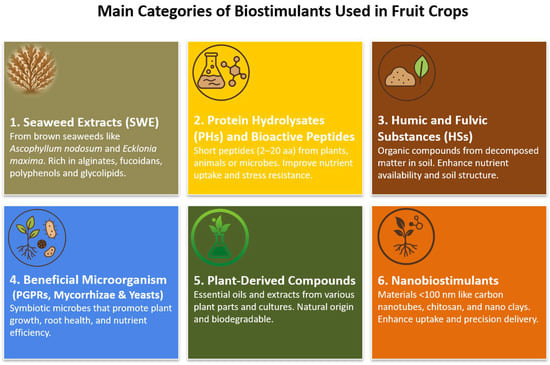
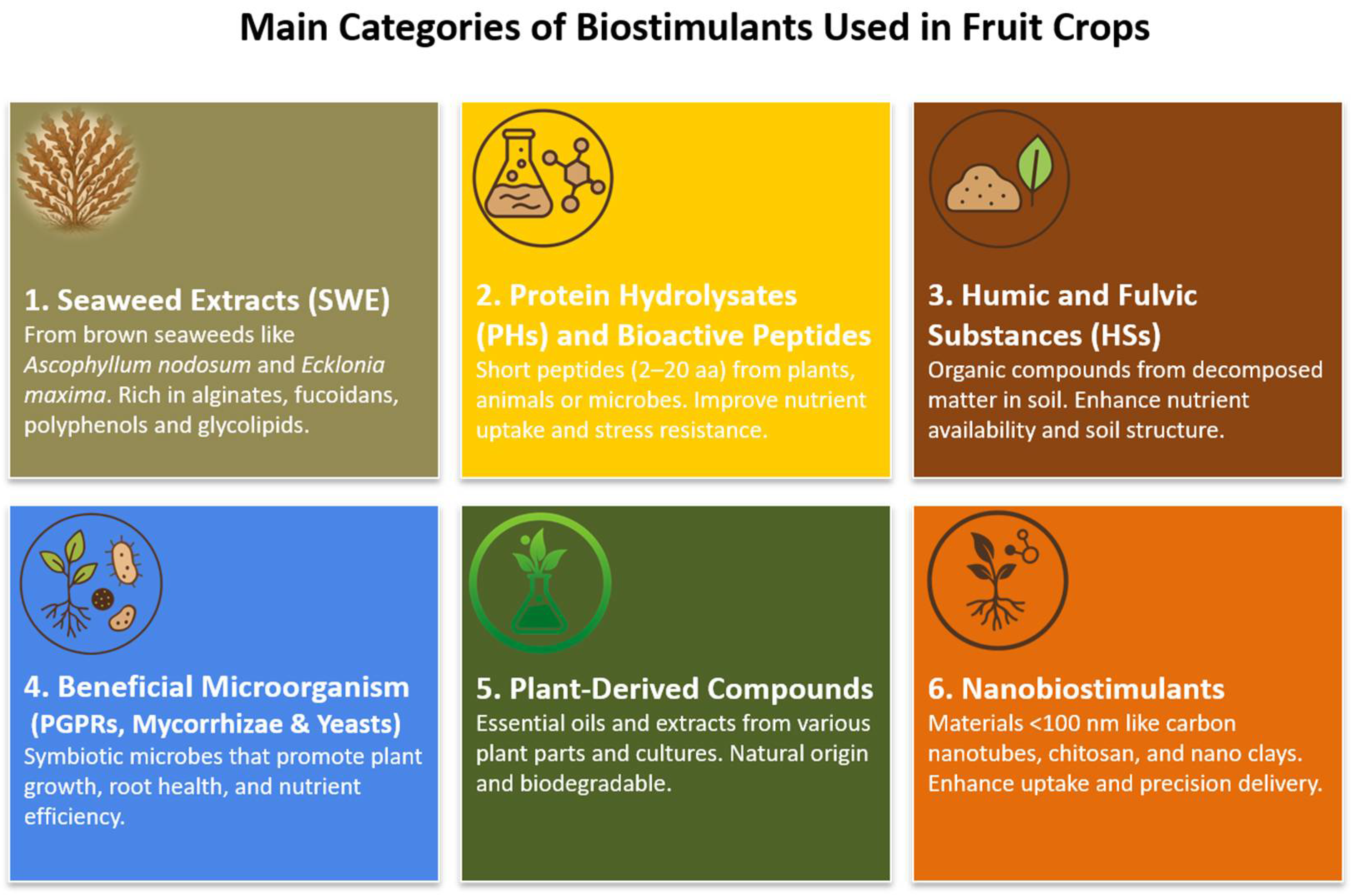
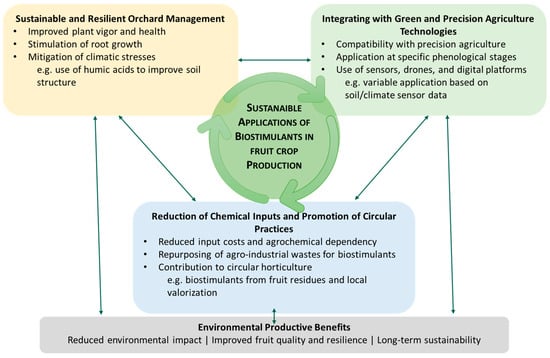
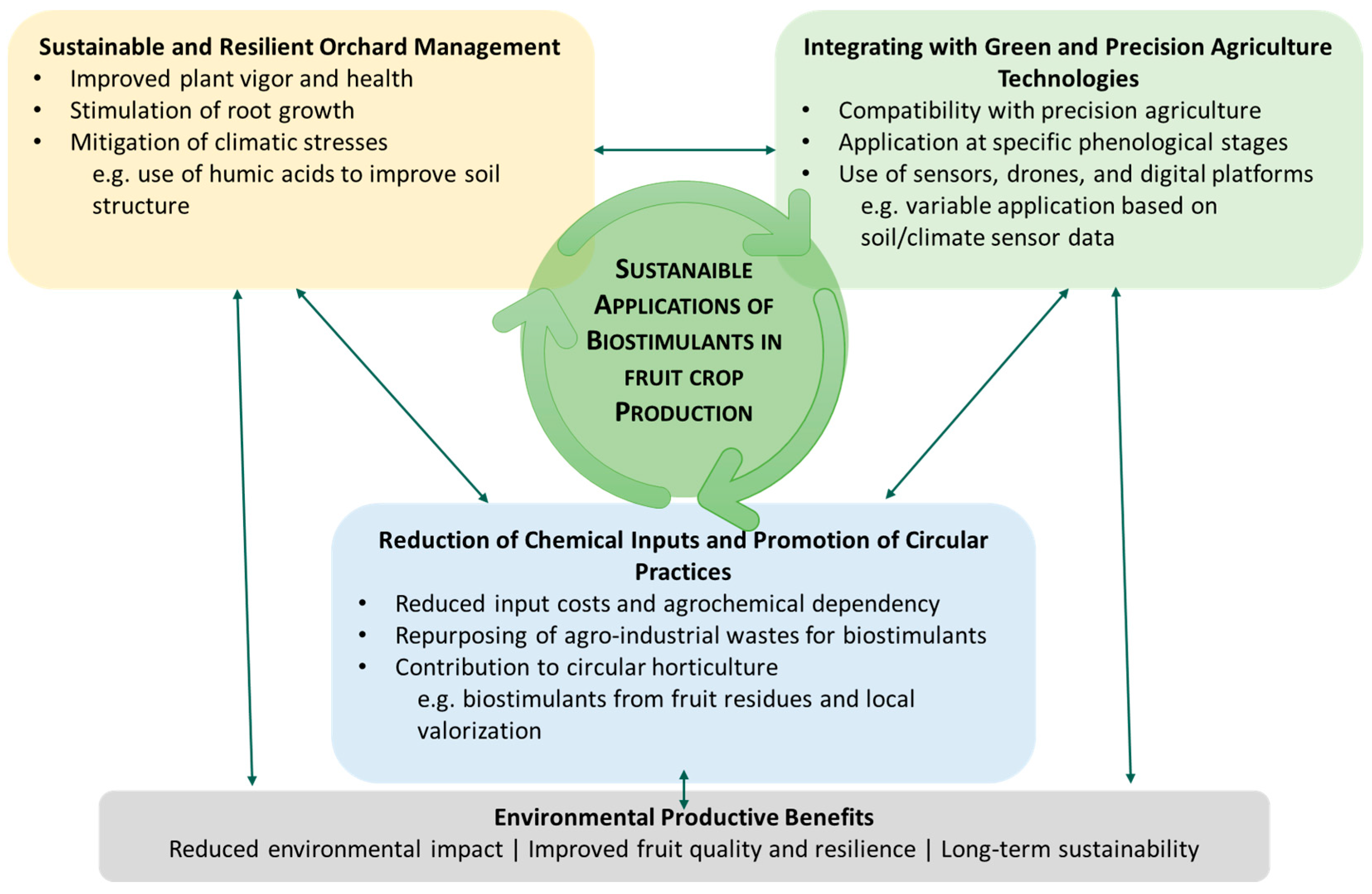

Disclaimer/Publisher’s Note: The statements, opinions and data contained in all publications are solely those of the individual author(s) and contributor(s) and not of MDPI and/or the editor(s). MDPI and/or the editor(s) disclaim responsibility for any injury to people or property resulting from any ideas, methods, instructions or products referred to in the content. |
© 2025 by the authors. Licensee MDPI, Basel, Switzerland. This article is an open access article distributed under the terms and conditions of the Creative Commons Attribution (CC BY) license (https://creativecommons.org/licenses/by/4.0/).