Article

Comparative Transcriptome Analysis Reveals Key miRNAs and Pathways Involved in Adventitious Root Formation in Peach

College of Horticulture Science and Engineering, Shandong Agricultural University, Tai’an 271000, China
*
Authors to whom correspondence should be addressed.
Horticulturae 2025, 11(12), 1444; https://doi.org/10.3390/horticulturae11121444
Submission received: 20 October 2025 / Revised: 25 November 2025 / Accepted: 26 November 2025 / Published: 28 November 2025
(This article belongs to the Section Propagation and Seeds)

Abstract

Adventitious root (AR) formation is critical for the vegetative propagation of peach rootstocks. While miRNAs are known to regulate AR development, the role of specific miRNAs and target genes in peach rootstocks remains poorly understand. In this study, we profiled the miRNAome of ‘GF677’ peach rootstock during indole-3-butyric acid (IBA)-induced AR formation. Samples were collected at key four time points (2 h, 2, 10, and 17 days) based on the dynamic changes in endogenous auxin and root morphogenesis. A total of 188 miRNAs were identified, including 60 novel miRNAs. There were 28, 45, 59, 18, 30, and 14 differentially expressed miRNAs (DEMs) in the following six comparison groups of libraries: 2 h vs. 2 d, 2 h vs. 10 d, 2 h vs. 17 d, 2 d vs. 10 d, 2 d vs. 17 d, and 10 d vs. 17 d, respectively. KEGG pathway enrichment indicated that the target genes of DEMs were predominantly associated with signal transduction and metabolism. Specifically, the plant hormone signaling and starch and sucrose metabolism pathways were enriched across all the six comparison groups, while each group exhibited a unique enriched pathway. Additionally, the functional validation of miR319, a DEM, through transgenic analysis in Arabidopsis revealed its regulatory role in AR development. Collectively, this study provides the first insights into the role of miRNAs in peach adventitious rooting, laying a theoretical foundation for improving the vegetative propagation of peach rootstock.

1. Introduction

China ranks as the world’s largest peach producer. In many regions, peaches are the primary economic pillar for the farmers’ prosperity. In peach production, China primarily relies on seedling rootstocks for tree propagation [1]. However, seedling rootstocks are prone to trait segregation [2], leading to poor orchard uniformity, time-consuming and labor-intensive cultivation management, and a fruit yield and quality that vary greatly. Clonal rootstock can overcome these drawbacks, ensuring consistent seedling growth and facilitating standardized orchard establishment. Therefore, there is a need for a large amount of vegetatively propagated rootstocks in peach production.
Adventitious root (AR) formation is critical to the success of vegetative propagation. ARs arise from non-root tissues such as stems or leaves of plants, and they are essential for the formation of complete plantlets through vegetative propagation [3]. Physiological and biochemical studies on AR have revealed that AR formation involves multiple types and is influenced by various environmental factors, such as temperature [4] and substrate (river sand, vermiculite, etc.) [5], as well as endogenous hormones [6], enzyme activities (peroxidase, indoleacetic acid oxidase, etc.) [7], and nutrients [8,9]. Most previous research on AR development in peach has remained at this physiological level, investigating the effects of nutritional status, hormones, and substrate on rooting success. With the development of plant molecular biology, the research on the mechanism of AR formation has progressed to molecular mechanisms, mainly utilizing approaches such as gene cloning, transcriptomics, and proteomics to identify genes and proteins related to this process. Currently, identified genes regulating AR formation include functional genes responding to hormones and signal transduction, such as GER5 [10], ARRO-1 [11], and TCP17 [12]; transcription factors, such as ERF109 [13], WRKY6 [14], and WOX4 [15]; and non-coding RNAs [16,17]. Among the non-coding RNAs regulating AR formation, miRNAs have been the most extensively studied [18,19,20,21,22].
MicroRNA (miRNA) is a type of small RNA that is widely present in plants, and it plays an important role in plant development, including root development, by regulating their target genes. For example, in poplar, the miR159a-PeMYB33 module regulates the development of ARs through ABA signals [22], and peu-miR160a targets the auxin response factor PeARF17.1/PeARF17.2 to participate in the development process of ARs. Overexpression of the target gene PeARF17.1 significantly increases the number of ARs [23]. In Malus xiaojinensis, miR156 can integrate plant age and auxin and wound signals to cooperatively regulate the regenerative ability of roots [24]. In older plants of Arabidopsis thaliana, the target genes of miR156, SPL2/10/11, can bind to the promoter of AP2/ERFs and inhibit the expression of AP2/ERFs, thereby reducing the accumulation of auxin at the wound site and inhibiting the formation of ARs [13].
The formation of adventitious roots in peach rootstocks is difficult, which limits the application of vegetative propagation techniques. Currently, most studies on AR development for peach focus on the physiological aspects. These studies investigate the effects of cutting nutritional conditions [25], enzyme activity [8,26], endogenous hormones [27], anatomy [28], and environmental factors (such as rooting substrate, temperature, moisture, and plant growth regulators) on AR development [29]. Zhang et al. [4] investigated the effect of substrate temperature on adventitious root formation in peach cuttings by transcriptome analysis and identified numerous candidate genes, providing a direction for the study of the molecular mechanism of AR formation in peach. However, the involvement of miRNAs in this process remains largely unexplored to date.
In this study, four high-throughput sequencing libraries were established using cuttings from four developmental stages (2 h, 2 d, 10 d, and 17 d) of AR in peach rootstock ‘GF677’ as materials. The aim was to identify key miRNAs that might regulate the development of ARs in peach, and to explore their molecular regulatory mechanisms. This study provides the first monitoring of changes in miRNA expression levels during AR development in peach rootstocks ‘GF677’, establishing a theoretical foundation for elucidating the mechanisms underlying AR development in peach.

2. Materials and Methods

2.1. Plant Cultivation

This experiment was conducted in a greenhouse of the experimental station of Shandong Agricultural University on 15 March 2023 (Tai’an, China), using the eight-year-old peach rootstock ‘GF677’ as the material. Healthy and vigorous one-year-old branches, free from pests and diseases, were selected and cut into segments approximately 10–15 cm in length. The upper end of each segment was cut flat, while the basal end was beveled to a length of about 2 cm with a scalpel, and the basal leaves were removed. The prepared cuttings were then soaked in a 1 mg/L IBA (indole-3-butyric acid) solution for 10 min before being inserted into a sand bed. The sand bed was subsequently watered thoroughly and kept moist. Samples (about 2–3 cm at the basal end of the cuttings) were collected at 0 h (immediately after the cut was made) and at 2 h, 6 h, 2 d, 5 d, 10 d, 17 d, 21 d, and 28 d post-planting. A portion of the samples from each time point was cut into small sections, frozen in liquid nitrogen, and stored in a −80 °C ultra-low-temperature freezer for subsequent analysis, while the other portion was prepared for paraffin sectioning. Additionally, photographs were taken at each sampling point for morphological analysis.

2.2. Morphological and Anatomical Analysis

To collect samples at 0 h, 5 d, 10 d, 17 d, and 21 d post-cutting, the 2 cm long bark section from the base of each cutting was excised transversely with a scalpel blade at an increased depth to ensure the excised tissue contained a thin layer of xylem. These samples were then cut into 5 mm long pieces and immersed in FAA fixative solution (70% ethanol–formaldehyde–acetic acid = 90:5:5, v/v/v) for 48 h. The fixed stem segments were then dehydrated, followed by paraffin infiltration and embedding. Subsequently, sections were cut using a Leica microtome. The sections were deparaffinized and rehydrated through a graded series of xylene and alcohol. They were then stained with 0.5% safranin solution for 4 h, followed by dehydration in a graded alcohol series to 95% ethanol. Finally, the sections were counterstained with 0.5% fast green solution for 3–5 s, and they were mounted with coverslips. The prepared sections were observed and photographed under a microscope to analyze the anatomical characteristics of AR formation. The histological assay was performed as described by [30].

2.3. Quantitative Analysis of Endogenous Hormones

Samples from each time point (0 h, 6 h, 10 d, and 17 d) collected and stored in the −80 °C ultra-low-temperature freeze were ground into fine powers using a grinder. Three biological replicates of samples at each time point were separately ground, followed by the extraction and analysis of hormones. There were 20 cuttings in each biological replicate. For each sample, 50 mg of power was weighed into a 2 mL plastic microtube, and 1 mL of a methanol/water/formic acid (15:4:1, v/v/v) mixture was added to each tube. To the extract, 10 µL of a mixed internal standard (IS) solution (100 ng/mL) of 109 hormones was added for quantification. The mixture was vortexed for 10 min and then centrifuged at 12,000 rpm and 4 °C for 5 min. The resulting supernatant was transferred to a clean plastic microtube, subsequently evaporated to dryness, and reconstituted in 100 µL of 80% methanol (v/v). The solution was finally filtered through a 0.22 µm membrane filter prior to LC-MS/MS analysis. The analytical conditions were based on methods described by Niu et al. and Xiao et al. [31,32].

2.4. miRNA Library Construction and Sequencing

Samples for four miRNA libraries were collected at 2 h, 2 d, 10 d, and 17 d after cutting, respectively. For each time point, 60 cuttings were harvested, with every 20 cuttings pooled as one biological replicate (n = 3). Each replicate was ground individually for total RNA extraction and small RNA sequencing. Total RNA was extracted using an RNAprep Pure Plant Plus Kit (Polysaccharides & Polyphenolics-rich) (Tiangen, Beijing, China) and treated with DNase I (TaKaRa, Osaka, Japan) to remove genomic DNA. Approximately 1 μg of RNA was ligated to 3′ and 5′ adapters, then used as a template for reverse transcription and PCR amplification. The PCR amplification was performed as follows: 1 cycle 98 °C for 30 s, 15 cycles 98 °C for 10 s, 60 for 30 s, 72 °C for 30 s, 1 cycle 72 °C for 10 min, hold at 4 °C. We ran 1 μL of the product on a high-sensitivity DNA chip for quality inspection. After passing the inspection, the remaining product was subjected to RNA gel electrophoresis. We excised the gel fragments of 147 nt and 157 nt and purified them. Finally, 2 μL of the purified product was loaded onto an Agilent 2100 chip for quality assessment, and the purified product that passed the quality check was then subjected to sequencing using an Illumina HiSeq6000 genomic sequencer. The library construction and sequencing of miRNA were conducted by OE Biotech Co., Ltd. (Shanghai, China).

2.5. Bioinformatic Analysis of miRNAs

After sequencing, the reads with 5′ primer contaminants and poly (A) were removed, without the 3′ adapter and insert tag; the reads shorter than 15 nt and longer than 41 nt from the raw data were filtered, and the clean reads were obtained. Sequence alignment and subsequent analysis were performed using the Prunus persica L. whole genome (Prunus persica genome assembly Prunus_persica_NCBIv2—NCBI—NLM) as the reference genome. Non-coding RNAs such as rRNAs, tRNAs, small nuclear RNAs (snRNAs), and small nucleolar RNAs (snoRNAs) were aligned and then subjected to a BLAST search against Rfam v.10.1 (http://rfam.xfam.org (accessed on 14 June 2023)) and the Prunus persica L. whole genome. The known miRNAs were identified by aligning against the miRBase v.21 database (https://www.mirbase.org/results/?query=ppe (accessed on 14 June 2023)), and the known miRNA expression patterns in different samples were analyzed. Unannotated small RNAs were analyzed by mirdeep2 [33] to predict novel miRNAs. Based on the hairpin structure of a pre-miRNA and the miRBase database, the corresponding miRNA star sequence was also identified. Differentially expressed miRNAs were identified with the threshold of p value < 0.05 and fold change > 2.
TargetFinder software [34] was used to predict the targets of differentially expressed miRNAs by matching the miRNA sequences to the peach genome. GO enrichment and KEGG pathway enrichment analysis of differentially expressed miRNA-target-Gene were performed using R based on the hypergeometric distribution.

2.6. Quantitative RT-PCR (qRT-PCR) Analysis

Total RNA was extracted from the samples using an RNAprep Pure Plant Plus Kit (Polysaccharides & Polyphenolics-rich) (Tiangen, Beijing, China) and treated with DNase I (TaKaRa, Osaka, Japan). The cDNA was synthesized using the PrimeScript RT Kit (TaKaRa, Osaka, Japan) for the analysis of coding gene expression levels, and the cDNA synthesized using miRNA-specific stem-loop primers was used for the analysis of miRNA expression levels. Subsequently, quantitative real-time PCR (qRT-PCR) was performed on a QuantStudio® 3 Real-Time PCR instrument (Thermo, Waltham, MA, USA) using the SYBR Premix Ex Taq kit (TaKaRa, Osaka, Japan) in a 25 μL reaction volume. The target genes of selected differentially expressed miRNAs were predicted through the PmiREN database. The relative expression levels were normalized to appropriate reference genes: for peach, Ppactin [35] was used for protein-coding genes and PpU6 [36] for miRNAs; for Arabidopsis thaliana, AtTubllin was used for protein-coding genes and AtU6 for miRNAs. The relative abundances of miRNAs and genes were calculated using the 2−ΔΔCT method [37]. All primers used are listed in Table S8 and were synthesized by Shanghai Bioengineering Co., Ltd (Shanghai, China).

2.7. Firefly Luciferase Assay

The precursor sequences of miR319, miR395, and miR172 were cloned into the CamV 35S-driven pGreenII 62-SK vector, and the coding sequences of PpGAMYB, PpTCP4, PpAPS1, and PpTOE3 were cloned into the pGreenII 0800-LUC vector, respectively. The constructed vectors were transformed into the Agrobacterium GV3101 strain. After cultivation, the bacteria were collected and resuspended in a suspension, OD600 = 1.0. The bacterial solutions were mixed in equal volumes after 2 h and injected into the leaves of N. benthamiana. Two days later, the backs of the leaves were sprayed with 1 mM of sodium D-luciferin salt solution. The luciferase signal was captured and analyzed using the IVIS LuminAI II in vivo imaging device (Xenogen, Atlanta, GA, USA). All synthetic primers are listed in Supplementary Table S8.

2.8. 5′RLM-RACE Analysis of miRNA Target Genes

About 5 µg of total RNA was placed in an RNase-free microcentrifuge tube and heated at 65 °C for 5 min to remove dimers. Subsequently, 1 µL of 10× RNA ligase Buffer, 1 µL of BSA (1 mg/mL), 0.5 µL of T4 RNA ligase (TaKaRa, Osaka, Japan), and 2 µL of 5′ Adaptor (listed in Table S8) (10 µM) were added. The reaction volume was brought to 10 µL with RNase-free water. The ligation reaction was incubated at 37 °C for 1 h. Then, 90 µL of RNase-free water was added, followed by 100 µL of a chloroform:isoamyl alcohol (24:1, v/v) solution for RNA purification. First-strand cDNA was synthesized from purified RNA using M-MLV reverse transcriptase (TaKaRa, Osaka, Japan). Finally, two rounds of PCR were performed using the resulting cDNA as the template, with the primers listed in Table S8. The products of the second PCR reaction were purified and then cloned into the pMD19-T simple vector, then transformed into the E. coli DH5α strain. For each gene, 6 positive clones were sent to Shanghai Bioengineering Co., Ltd (Shanghai, China) for sequencing.

2.9. Generation of Transgenic Plants and Phenotypic Analysis

The precursor sequences of miR319a and miR172c cloned from peach, along with the STTM (Short Tandem Target Mimic) fragment of miR319, were cloned into the pRI101-AN vector, respectively. The primers used are listed in Table S8. The constructs were verified by DNA sequencing and then transformed into Agrobacterium tumefaciens strain GV3101. Transgenic Arabidopsis was produced via the floral dip method. Transgenic seeds were screened on MS (Murashige and Skoog) (Hopebio, Qingdao, China) medium containing 25 mg/L kanamycin (GENVIEW, Tallahassee, FL, USA), yielding six independent T1 transgenic lines. The T3 generation transgenic seeds and wild-type (WT) seeds were successively surface-sterilized with 75% ethanol solution and 2% sodium hypochlorite solution, then rinsed 5 times with sterile water, and finally, sown separately on MS medium. After stratification at 4 °C for three days, the plates were transferred to a growth chamber at 22 °C under a 16/8 h light/dark cycle. Twelve days after germination, the primary roots were excised, and the seedlings were placed horizontally on new MS medium. The development of ARs was observed every other day. For observation, hypocotyls were harvested from Arabidopsis thaliana seedlings following primary root removal, and they were placed on a slide with a drop of water, covered with a coverslip, and gently pressed. Images were captured with an inverted microscope (NIB900, Ningbo, China) equipped with a 4× objective.
Ppe-miR319 was used for the transformation of peach seedlings, the primary roots of 20-day-old peach seedlings were removed, and their basal ends were immersed in an Agrobacterium suspension (MgCl2·6H2O 20 mM, MSE 10 mM, AS 0.2μM, OD600 = 0.6), then placed in a vacuum chamber for 30 min. Subsequently, the treated seedlings were planted in moist vermiculite and covered with a plastic dome to maintain high humidity. The growth of adventitious roots was observed two weeks later.

2.10. Statistical Analysis

All data in this study were plotted as means ± SD, and error bars were standard deviations. The data were analyzed using GraphPad Prism 5.01 software, and significant differences were analyzed with Student’s t test or two-way ANOVA with a Tukey multiple comparisons test using IBM SPSS Statistics 20 software.

3. Results

3.1. The Morphology and Endogenous Hormones of Cutting Base Changes During AR Formation

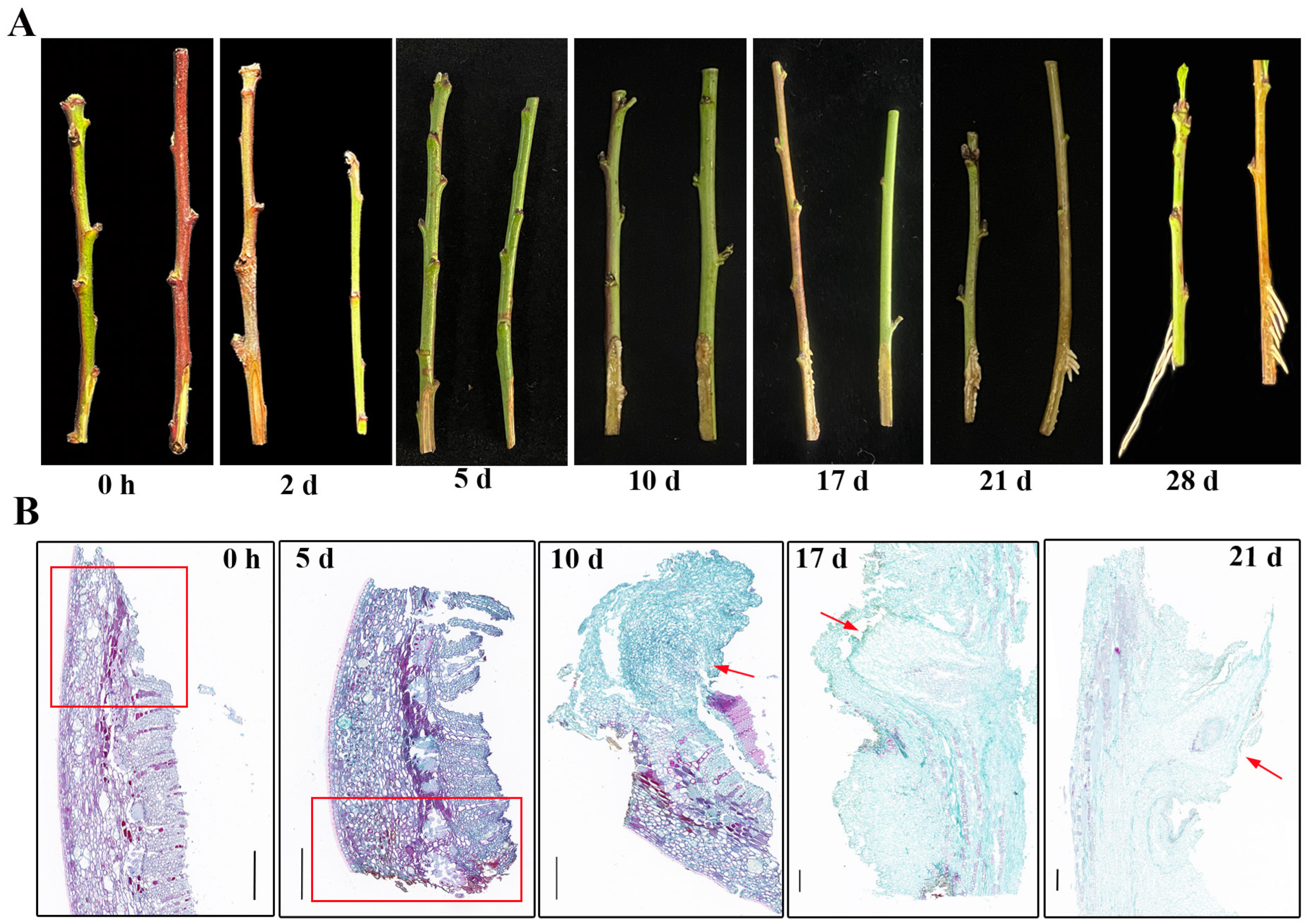
During the process of AR formation, multiple samples were taken to observe the development of ARs and detect hormonal changes. Auxin accumulated at the wound site 6 h after induction (Figure S1). There was no obvious change in the branches at 5 days (Figure 1A), and the paraffin section showed a thicker non-xylem tissue and a denser cell packing. At 10 days, callus had already formed at the wound site. At 17 days, AR buds emerged. The same result was also observed in paraffin sections (Figure 1). At 28 days, ARs elongated.
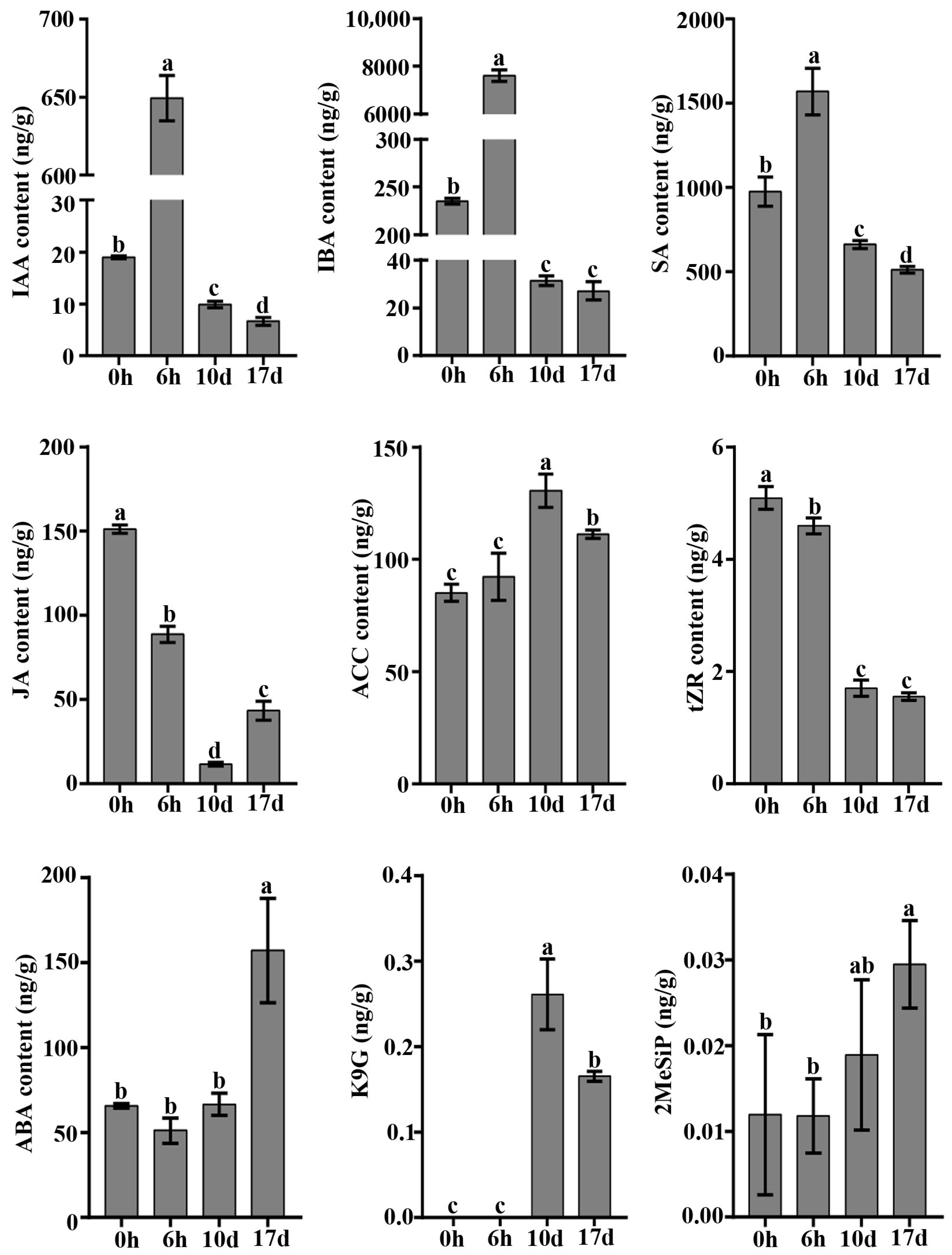
The contents of various hormones were investigated at the base of the cuttings during the early and formation stages of AR (Table S1). The jasmonic acid (JA) content peaked immediately after cutting (0 h), while auxin (IAA and IBA) levels were the highest at 6 h after cutting. During the formation stage of ARs (10 and 17 days), both auxin and JA decreased, while abscisic acid (ABA) levels increased, along with elevated levels of the ethylene precursor ACC. Among the cytokinins, trans-zeatin riboside (tZR) showed a high content in the early stage and low levels in the AR formation stage. In contrast, 2-Methylthio-N6-isopentenyladenine (2MeSiP) exhibited the opposite trend to tZR. Kinetin-9-glucoside (K9G) was not detected in the early stage but increased in the AR formation stage (Figure 2 and Figure S1). These findings indicate that the formation of adventitious roots in peach rootstocks is also regulated by multiple hormones.

3.2. miRNA Sequencing Overview and Analysis of Differential Expression of miRNA and Target Genes

According to the changes in hormone content and the phenotypic variations in the cuttings, we sampled at 2 h, 2 d, 10 d, and 17 d after cutting, constructed miRNA libraries for each, and performed a comparative analysis of these four libraries. Clean reads of each sample (20.06–24.6 million (M)) were obtained, with 96.42–99.14% of the clean reads meeting the Q20 quality control, indicating a high sequencing quality (Table S2). The genome alignment rate of clean reads to the Prunus persica L. reference genome ranged from 88.59% to 95.09% (Table S3). After quality assessment and size selection of the sequencing fragments, the obtained clean reads were mainly 21–24 nt in length. In libraries constructed from 2 h, 2 d, and 10 d samples, the length distribution peak of clean reads was 21 nt, while in the library constructed from the 17 d sample, the peak shifted to 24 nt (Figure S2). Then, the obtained clean reads were classified and annotated, with various categories being identified, such as rRNA, tRNA, Cis-reg, snRNA, and miRNA, but the majority of the reads remained unannotated (Figure S3). Through alignment with the miRBase (version 22.0) database, a total of 128 known miRNAs were mapped across all samples. The mapping rates of known miRNAs ranged from 8.23% to 21.85% (Table S4). Additionally, 60 novel miRNAs were predicted, which originated from 48 distinct precursors (Figure S6 and Table S5). This suggested that 12 of these precursors yield both a 5p and 3p mature miRNA (miR-5p/3p).
The nucleotide base preference of the obtained known miRNAs was analyzed. The first base of the miRNA exhibited a strong preference for uracil (U). The obtained known miRNAs are mostly shorter than 23 nt. Among miRNAs with lengths of 19–22 nt, those starting with U accounted for over 50% of the total in each group (Figure S4A). Analysis of nucleotide preference at each position of 22 nt miRNAs revealed specific positional biases: adenine (A) was enriched at positions 7 and 22, and cytosine (C) at position 19. The remaining positions showed no significant bias toward any specific nucleotide (Figure S4B).
The expression levels of the obtained miRNAs were calculated using transcripts per million (TPM). Comparative analysis of miRNA expression levels across the four libraries revealed significant variations in expression patterns at different time points (Figure S5A). Among the four libraries, miRNAs with expression levels greater than 100 TPM accounted for 14.81–18.67%, with the highest proportion observed in the 2 h database (18.67%) and the lowest in the 17 d database (14.81%). miRNAs expressed at 5–100 TPM comprised 17.75–18.67% of the total, and those in the 0.5–5 TPM accounted for 22.89–26.56%. Within this latter group, the 2 h database showed the lowest proportion (22.89%), and the 17 d database showed the highest proportion (26.56%). The miRNA with expression levels below 0.5 TPM accounted for 38.79–40.24% (Figure S5B). For the known miRNAs, the top three miRNAs with the highest abundance were ppe-miR166, ppe-miR482f, and ppe-miR159, and the top three novel miRNAs were ppe-miRN04, ppe-miRN42, and ppe-miRN02 (Figure S6).
Principal component analysis (PCA) was performed based on miRNA expression levels, and the results are presented in Figure S5C. The three biological replicates of each sample clustered closely, indicating good reproducibility across biological replicates and reasonable sampling. The first principal component (PC1) explained 52.82% of the variance, and the second principal component (PC2) explained 16.22%. This indicated distinct transcriptional differences between the original cutting stage and the callus formation stage. Pairwise comparisons were performed among the four databases to identify differentially expressed miRNAs. The number of differentially expressed miRNAs varied across the different comparisons, with 2 h vs. 17 d groups yielding the highest number (Figure S5D).
A trend analysis of all miRNAs grouped them into 19 distinct profiles, and the number of miRNAs in each profile varied (Figure S7). Among these, profiles 0 and 7 reached statistical significance. The numbers of miRNAs grouped into the two profiles were 33 and 12, respectively. miRNAs displayed a persistent down-regulation trend in profile 0, and in profile 7, the expression level of miRNAs remained unchanged from 2 h to 2 d, decreased at 10 d, and remained constant at 17 d. The results suggested that the miRNAs exhibiting the two expression trends might be involved in regulating AR development and require further investigation.
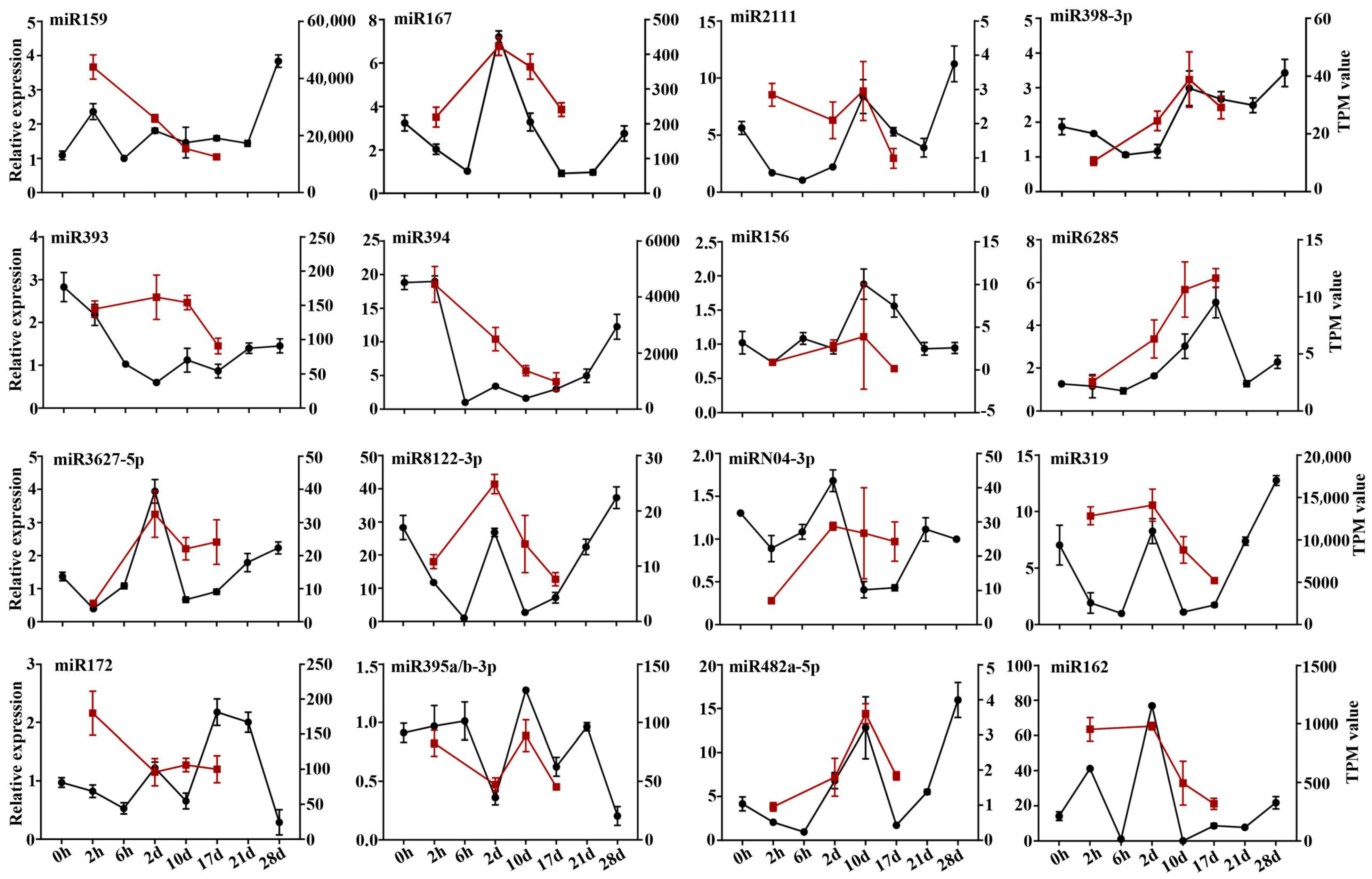
Fifteen known miRNAs and one novel miRNA (miRN04-3p) were selected for qRT-PCR analysis to validate their differential expression and investigate their role in AR development. The results confirmed that the expression patterns of fourteen miRNAs were consistent with small RNA-seq data, and their abundance dynamically varied across AR development stages (Figure 3).

3.3. Annotation and Classification of Predicted Target Genes of the Differentially Expressed miRNAs

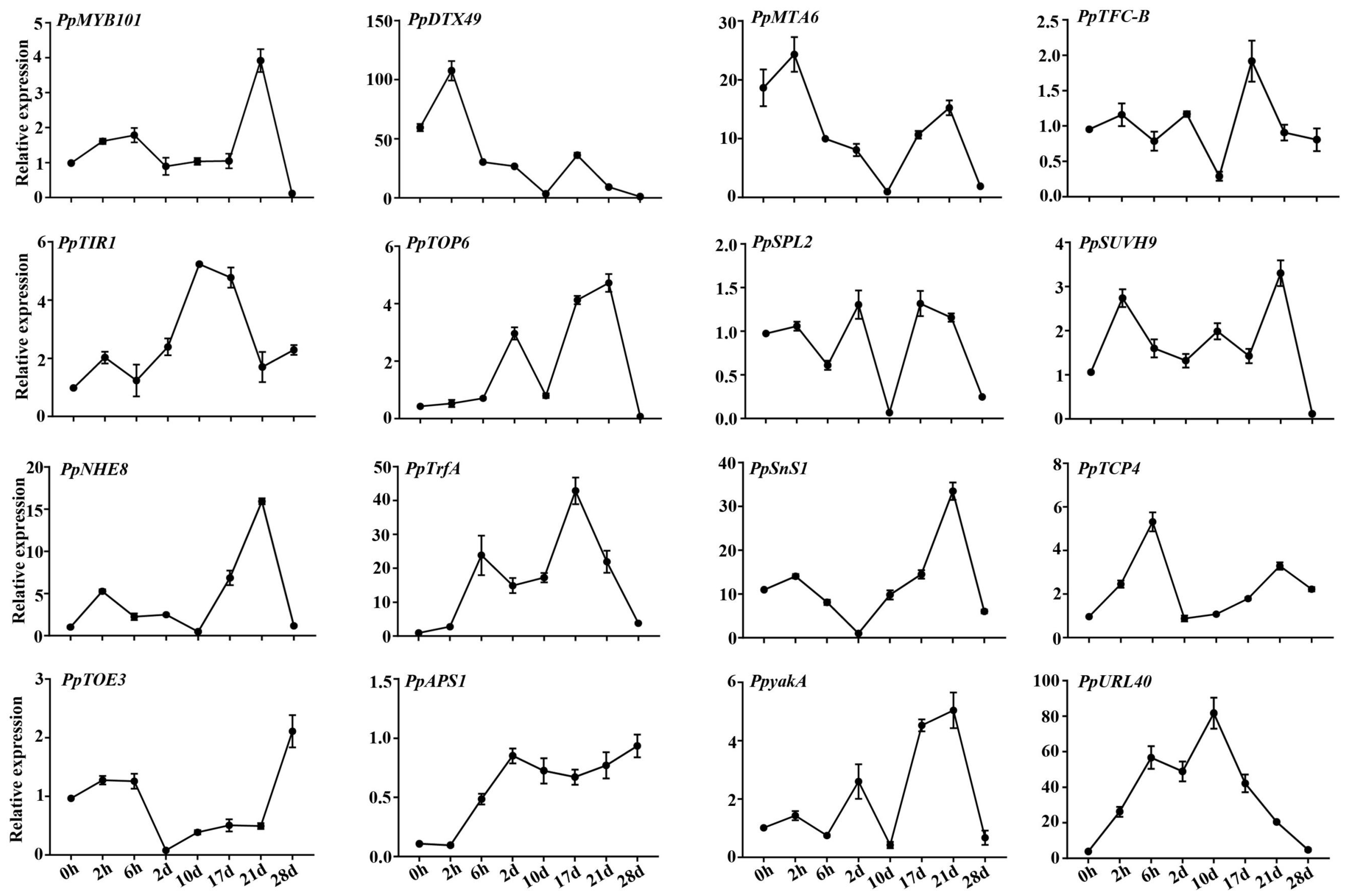
MicroRNAs (miRNAs) exert their functions by regulating the mRNA abundance of their target genes. To elucidate the key biological processes involved in AR development, we firstly performed target gene prediction for the miRNAs identified from the four libraries (Table S7). The results indicated that a single miRNA had many predicted target genes. For example, the predicted target genes of ppe-miR169e include NF-YA10 (nuclear transcription factor Y subunit A-10), LCYE (lycopene epsilon cyclase), and TIFY 6B (containing conserved T-I-F-Y amino acid motif protein 6B). Similarly, the predicted target genes of ppe-miRN04-3p include PPR (pentatricopeptide repeat-containing protein) and its homologous family genes, as well as TMV resistance protein N (Table S7). We further performed qRT-PCR analysis on the expression trend of one predicted target gene of the selected miRNAs at multiple time points during AR development. It showed that the expression levels of most target genes were negatively correlated with those of their corresponding miRNAs, while some did not show this negative correlation (Figure 4).
Then, we performed Gene Ontology (GO) and Kyoto Encyclopedia of Genes and Genomes (KEGG) pathway enrichment analyses on the predicted target genes of the differentially expressed miRNAs in the six comparison groups: 2 h vs. 2 d, 2 h vs. 10 d, 2 h vs. 17 d, 2 d vs. 10 d, 2 d vs. 17 d, and 10 d vs. 17 d. The top 30 enriched GO terms from the biological process (BP), cellular component (CC), and molecular function (MF) categories were selected based on adjusted p values. For visualization, a comparative analysis of GO terms annotated across the six comparison groups was performed (Figure S8). In the BP category, regulation of the transcription term was enriched in the six groups (2 h vs. 2 d, 2 d vs. 10 d, 2 d vs. 17 d, and 10 d vs. 17 d). The defense response term was enriched in all comparison groups except for 2 d vs. 2 d, and the cell division term was enriched in all comparison groups except for 2 d vs. 10 d. The auxin signaling pathway was enriched in 2 h vs. 2 d and 2 h vs. 17 d. The development growth, abscisic acid response, mRNA processing, and protein ubiquitination terms were enriched in 10 d vs. 17 d. In the CC category, the predicted target genes in all six comparison groups were enriched in components associated with the nucleus and cytoplasm. Additionally, distinct stage-specific enrichment patterns were observed: in 2 h vs. 17 d and 2 d vs. 17 d, predicted target genes were significantly enriched in the apoplast; in 2 h vs. 2 d and 2 h vs. 17 d, predicted target genes were significantly enriched in the plasma membrane; and in 10 d vs. 17 d, predicted target genes were enriched in the nuclear subunits and PP2A complex (protein phosphatase type2A complex). In the MP category, ATP-binding, DNA-binding and DNA-binding transcription factor activation were enriched in all comparison groups. In 10 d vs. 17 d, SUMO transferase activity, helicase activity, and transcription regulatory region DNA binding were enriched (Figure S8).
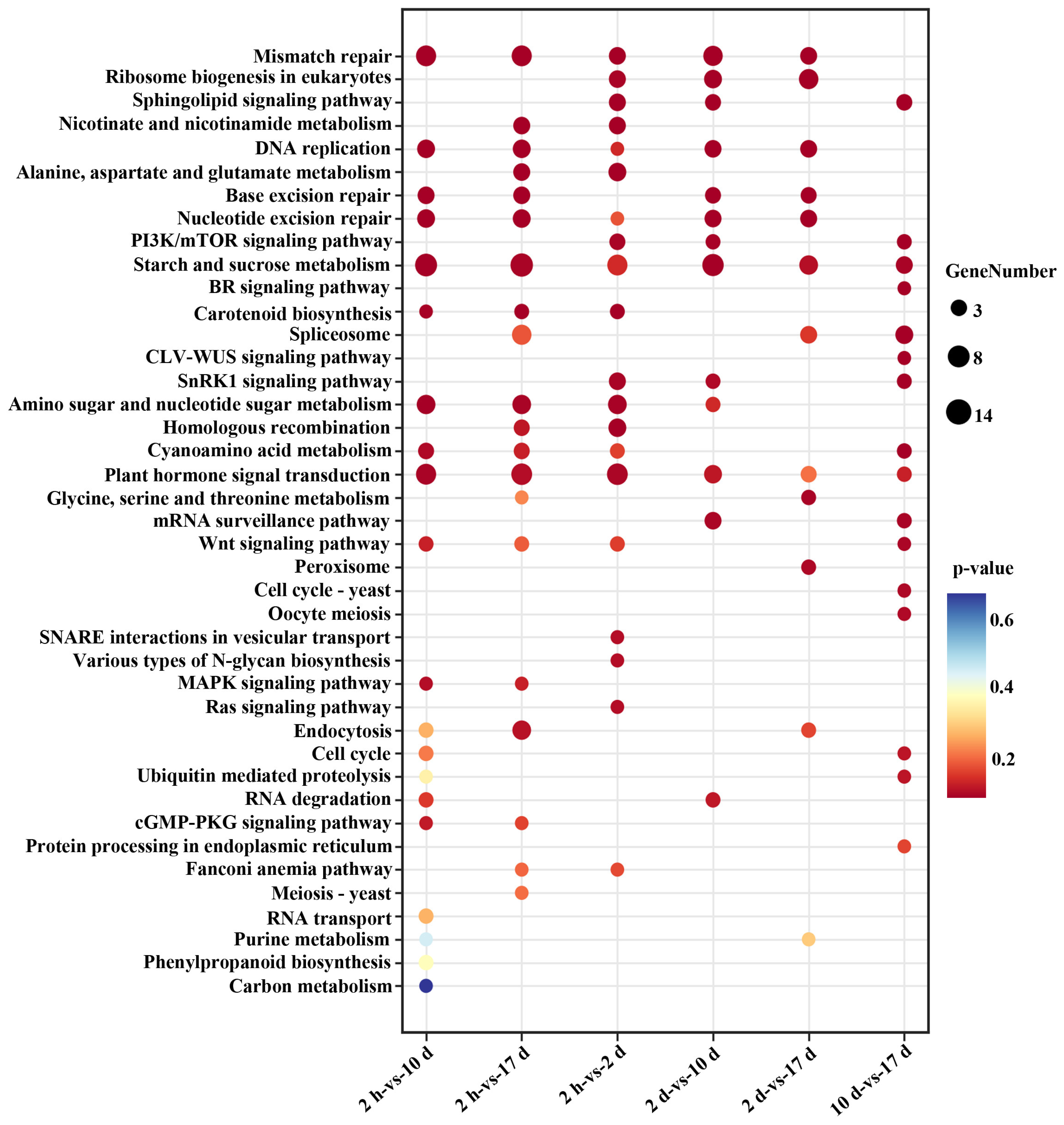
For KEGG pathway enrichment analysis, the top 20 enriched pathways were presented visually (Figure 5). From the results, we found that the most enriched pathways across the six comparison groups were the signal transduction and metabolism categories. Among the metabolism-related pathways, starch and sucrose metabolism was enriched in all comparison groups. In 2 h vs. 2 d, 2 h vs. 10 d, and 2 h vs. 17 d, amino sugar and nucleotide sugar metabolism, carotenoid biosynthesis, and cyano-amino acid metabolism were enriched. Specifically, the 2 h vs. 10 d group exhibited enrichment in phenylpropanoid biosynthesis and carbon metabolism, and the 2 h vs. 2 d group exhibited enrichment in various types of N-glycan biosynthesis. For signal transduction, plant hormone signal transduction was enriched in all comparison groups. Specifically, the 10 d vs. 17 d group demonstrated enrichment in the BR signaling pathway and CLV-WUS signaling pathway, the 2 h vs. 2 d group exhibited enrichment in the SNARE interaction in vesicular transport, and the 2 d vs. 17 d group exhibited enrichment in the peroxisome. In 2 h vs. 10 d and 2 h vs. 17 d, the MAPK signaling pathway was enriched (Figure 5). These results suggested that miRNAs and their target genes participated in coordinating hormone responses and cellular signaling during callus formation, root primordium induction, and adventitious root emergence. These findings suggest the important roles of metabolic and signaling pathways in integrating the complex process of AR formation in peach rootstock.

3.4. The Regulation of ppe-miR319 in AR Development

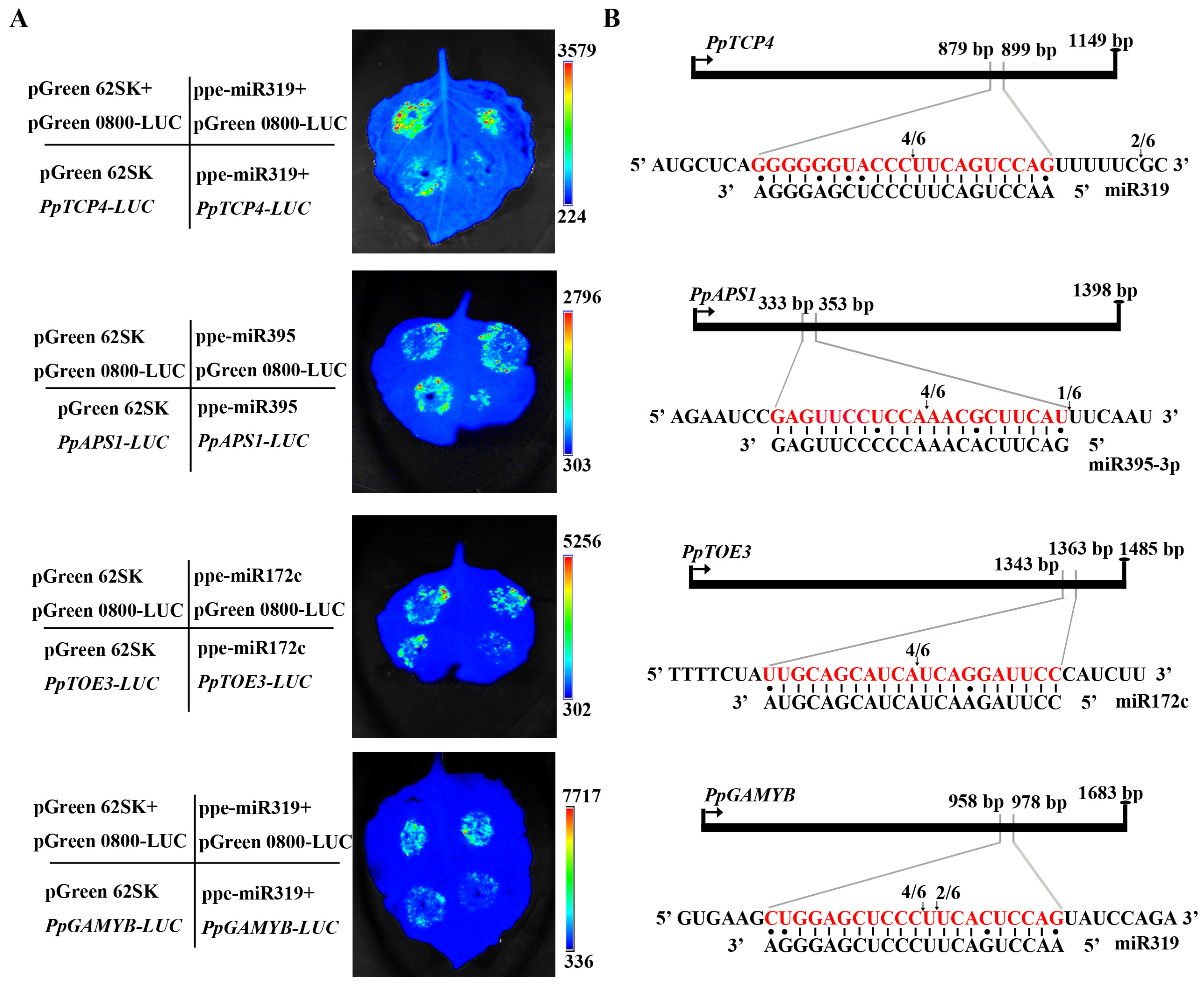
The identified differentially expressed miRNAs might play roles at different stages of adventitious root development. The differentially expressed miRNAs ppe-miR172, ppe-miR319, and ppe-miR395-3p were selected from profile 0. Firefly luciferase activity assays and 5′RLM-RACE analysis proved that PpTCP4 (TEOSINTE BRANCHED1/CYCLOIDEA/PCF 4), PpAPS1 (ATP Sulfurylase 1), and PpTOE3 (TARGET OF EAT 3) were the target genes of ppe-miR319, ppe-miR395-3p, and ppe-miR172, respectively (Figure 6). Furthermore, the 5′RLM-RACE analysis confirmed that ppe-miR319 directly targeted PpGAMYB, and two cleavage sites were detected, at 9–10 nt and 10–11 nt, with cleavage frequencies of 4/6 and 2/6 (Figure 6).
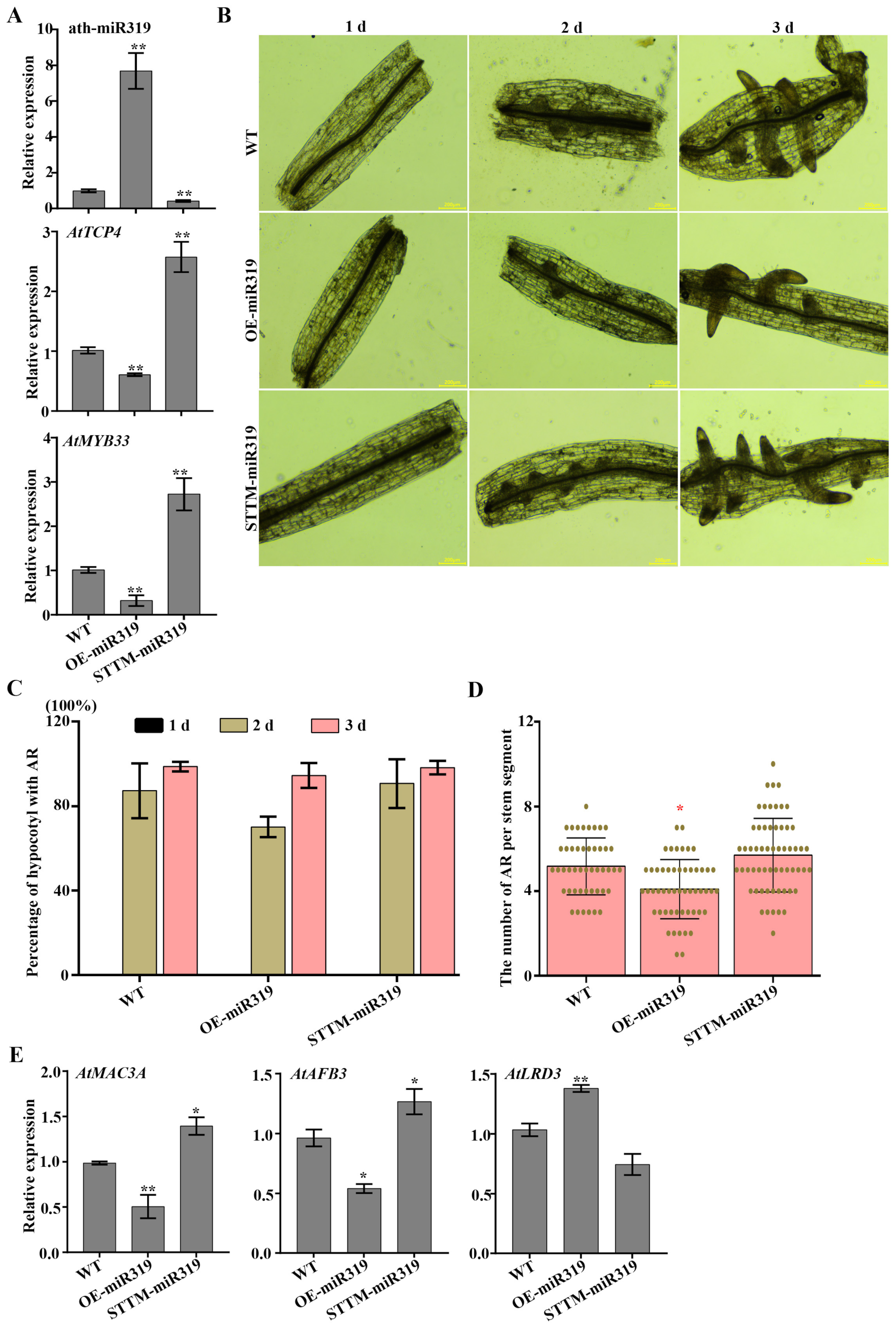
The conserved miRNAs miR319 and miR172 have homologous target genes in Arabidopsis and peach [38,39]. To further investigate their function in regulating AR development, we generated Arabidopsis lines heterologously expressing miR319 (Figure 7A,B) and miR172 (Figure S9). After excising the primary roots to induce adventitious rooting, we observed that the miR319-overexpressing (OE-miR319) Arabidopsis formed AR primordia later and produced fewer ARs than the WT. Meanwhile, the miR319 knockdown Arabidopsis STTM-miR319 (Short Tandem Target Mimic miR319) formed AR primordia earlier than WT, and they exhibited enhanced AR growth compacted to the WT, although the difference was not statistically significant (Figure 7C,D). We also analyzed the expression levels of genes related to AR development 2 days after primary root removal. In OE-miR319, the expression levels of AtMAC3A (MOS4-Associated complex 3A) and AtAFB3 (Auxin Signaling F-box 3), positive regulators of AR development, were down-regulated, whereas the expression level of AtLRD3 (Lateral root development 3), the negative regulator of AR development, was up-regulated. In contrast, the expression levels of these three genes were reversed in the STTM-miR319 plant (Figure 7E).
For the transgenic Arabidopsis heterologously overexpressing miR172 (OE-miR172), there was no significant difference in the number of ARs compared to the WT. However, 3 days after the primary root removal, the number of ARs that had emerged from the epidermis in the OE-miR172 transgenic plants was significantly higher, while the number of non-emerged ARs was lower (Figure S9). The results suggest that miR172 promotes the formation and elongation of ARs.
Meanwhile, miR319 was transiently expressed in the stems of derooted peach seedlings via the Agrobacterium-mediated method. The number of ARs emerging from the stem base showed no significant difference compared to the control (Figure S10), which was different from the phenotype of transgenic Arabidopsis. The expression level of the auxin signaling gene PpAFB2 was significantly higher in the STTM-miR319-treated peach seedlings than in the control (Figure S10). The results suggested that the response of peach rootstock to auxin signaling might be different from that of Arabidopsis to AR development.

4. Discussion

4.1. The Process of AR Formation in Peach

This study investigated rooting in hardwood cuttings of peach. At 0 d, cross-sections of the phloem showed no presence of root primordia, demonstrating that peach adventitious root primordia are induced, in agreement with earlier research [21]. Subsequently, substantial annular callus was generated at the wound sites of the cuttings, and adventitious roots were seen forming within this callus (Figure 1). We also observed that while not all wound-induced callus inevitably developed adventitious roots, cuttings that did not produce callus exhibited basal rotting and failed to form roots. These findings suggest, to some extent, that peach adventitious roots can originate from callus, and that callus formation and root initiation are distinct, independent processes.

4.2. Relationship Between Hormones and ARs

Endogenous hormones are critical factors affecting adventitious root formation in cuttings [40]. Although the relationship between changes in endogenous hormone levels and rooting has been widely investigated, the findings remain inconsistent. For instance, in Betula platyphylla softwood cuttings, the IAA content peak aligns with the emergence of root primordia [41]. Studies on Pinus massoniana cuttings and apple tissue-cultured plantlets both reported that IAA levels are highest during the callus formation stage [16,42]. The IAA level in poplar was highest on day 2 after micropropagation [43], while in Prunus mume, it is highest at the initial time point (0 d) [44]. In this study, following induction with the exogenous hormone IBA, the IAA content in GF677 cuttings peaked at 6 h post-planting before subsequently declining (Figure 2). This initial surge is likely attributable to IBA stimulating the activity of cambial cells at the cutting base, prompting them to produce large quantities of IAA. The subsequent decline in IAA levels over time may be due to its gradual oxidation during the formation of callus and root primordia, a hypothesis that warrants further investigation. Concurrently, we observed that the jasmonic acid (JA) content was highest immediately after wounding and decreased as auxin concentrations rose. JA is a wound-induced hormone that regulates AR development in varying ways at different stages [45]. It is possible that the peach cuttings initially initiated defense responses for self-protection upon wounding, with the JA content rapidly increasing, which promotes local IAA production [46]. And elevated IAA levels promote callus formation at the wound site to facilitate repair.
The dynamic balance between rooting inhibitors and promoters within a cutting is crucial for successful rooting [47]. Low concentrations of ZR promote root primordia formation [48]. In our study, we found high levels trans-zeatin riboside (tZR) immediately following wound formation (0 h and 6 h) but decreased after 10 days of cutting. We hypothesize that the high initial tZR levels were residual, originating from the mother plant. Following separation, tZR in the cutting was gradually degraded, thereby facilitating the formation of adventitious roots. The dynamics of tZR in peach differ from patterns studied in other species. For instance, in poplar, tZT levels peaked on day 1 of micropropagation, declined, and then rose again on day 9 [43]. Similarly, in apple tissue culture plantlets, the ZR content reached its maximum as adventitious roots emerged [16]. These findings suggest species-specific variations in endogenous hormone dynamics, which may contribute to the differences in rooting capacity among cuttings.

4.3. Regulation Mechanism of miRNAs and Their Targets

In this study, we identified numerous differentially expressed miRNAs during adventitious root regeneration in peach using small RNA-seq (Figure S5), including conserved miRNAs like miR160, miR159, miR319, and miR393, which are known regulators of adventitious root development in other species. For example, miR160 targets ARFs and inhibits callus initiation from pericycle cells [49]. Similarly, miR159 suppresses primary root growth by repressing MYB33/66/101 [50]. miR319 has been shown to target TCP, participating in lateral root growth [51,52] and cell proliferation [53]. In rice, miR319 regulates tillering and the yield by targeting TCP21 and GAMYB [54], and in Populus tomentosa, its overexpression decreases the lateral root number [52]. In apple rootstock, miR393 regulates AR formation by targeted regulation of TIR1A expression and weakened sensitivity to auxin [20]. Consistent with their negative regulatory roles, the expression of these miRNAs was down-regulated at 2 days post-cutting in our study, indicating their potential involvement in suppressing adventitious root formation in peach.
In this study, the target genes of ppe-miR319 in peach were PpTCP4 and PpGAMYB. Manipulation of miR319 abundance did not significantly affect the number of ARs in peach (Figure S10), while its up-regulation in Arabidopsis (OE-miR319) resulted in delayed root primordia emergence and fewer ARs (Figure 7). After changing the expression level of miR319, the expression of the auxin-signaling gene AFB was also perturbed upon manipulation of miR319 levels in both species (Figure 7E and Figure S10D), indicating a change in the IAA signaling pathway. The reason for the different phenotypes in peaches and Arabidopsis might be the different sensitivity to signals between the two species, or differences in tissue hardness, etc., a hypothesis that remains to be experimentally verified. Furthermore, while STTM-miR319 Arabidopsis exhibited a phenotype opposite to that of the OE-miR319 plants, this difference was not statistically significant compared to the WT. The lack of a strict correlation between gene expression levels and AR number, however, aligned with the expression changes in AR-associated genes (AtMAC3A, AtAFB3). We hypothesized that miR319 may not be a simple, linear regulator of AR development. Instead, it may act as a ‘threshold switch’, or it may function as a node within a broader regulatory circuit, where its influence is integrated and amplified by multiple downstream factors. This complex regulation, compounded by high biological variability during the rooting process, may explain the observed phenotype subtlety. Future studies with a larger sample size will be necessary to confirm this finding and to clarify whether the exact role of miR319 in AR development is direct or indirect.
In addition to the miRNAs that negatively regulate root development, there are also miRNAs that positively regulate it. miR2111 is a bud-derived signal that can be transported from the plant phloem to the roots and positively regulates root nodule development and lateral root formation [55]. miR171d positively regulates adventitious rooting in grapes by targeting SCL15 and SCL27 [19]. miR172 promotes de novo root regeneration by repressing EIN3 transcription through its targets, TOE1/TOE2 [56], and may also inhibit WUS expression—a key regulator of embryogenic induction—via AP2 [57]. In this study, these miRNAs were differentially expressed. And transgenic Arabidopsis overexpressing miR172 exhibited a significant increase in emergent ARs compared to the WT (Figure S9), suggesting its role as a positive regulator for AR. Whether the same phenomenon occurs in peaches requires further experiments to verify.
In the early stage (2 h vs. 2 d), target genes were specifically enriched in N-glycan biosynthesis and the response to dehydration. The 2 h vs. 2 d and 2 d vs. 10 d comparisons revealed enrichment in the PI3K/mTOR signaling pathway and SnRK1 signaling pathway. The 10 d vs. 17 d comparison highlighted enrichment in the BR signaling pathway and CLV-WUS signaling pathway. Furthermore, plant hormone signal transduction and starch and sucrose metabolism were enriched across all the comparison groups. Genes involved in transcription regulation were also consistently enriched (Figure 5 and Figure S7). Accordingly, many miRNA-target gene modules associated with these metabolic and signaling pathways were discovered. These modules included those involved in auxin signaling pathways, such as miR160-ARF [49] and miR393-TIR1 [58,59]; gibberellin pathways, such as miR319-TCP [60]; and sugar metabolism, such as miR3627-3p-SUS (sucrose synthase) and miR164a-BGL12 (beta-glucosidase 12). The enrichment of pathways like plant hormone signal transduction and starch and sucrose metabolism is a recurring finding in root development research [61,62]. In addition, we identified the modules related to sulfur metabolism, such as miR395-APS1. In this study, the expression pattern of PpAPS1 had a similar change pattern to the IAA level, which is consistent with the results obtained in apples [16]. These findings suggest that these metabolic and signaling pathways are relevant to adventitious root formation in peach. However, the molecular regulatory roles of these miRNA-target models in the process of AR development in peach rootstock still require further investigation.

5. Conclusions

This study provides evidence for the complex molecular mechanisms underlying adventitious root development in peach rootstocks by integrating histological observations with hormone and gene expression analyses. Through a comprehensive analysis of the miRNAome during the development of adventitious roots in peach rootstocks, we identified many potential regulatory miRNAs that may contribute to root formation. Their target genes are implicated in various pathways, including the auxin and PI3K/mTOR signaling pathways, with some acting as transcription factors. Furthermore, transgenic experiments provide evidence of a role for miR319 and miR172 in the development of adventitious roots. These discoveries provide new perspectives and critical clues for a deeper understanding of the molecular mechanisms behind adventitious root formation in peach rootstocks.

Supplementary Materials

The following supporting information can be downloaded at https://www.mdpi.com/article/10.3390/horticulturae11121444/s1, Figure S1: Heatmap analysis of phytohormone change in the phloem at the base of cuttings at 0 h (wounding) and 6 h, 10 d and 17 d after planting. Figure S2: The length distribution of clean reads. Figure S3: Pie chart illustrating the classification of reads detected in 2 h, 2 d, 10 d, and 17 d samples. Figure S4: Nucleotide preference analysis of known miRNA. Figure S5: Preliminary miRNAomic analysis of peach rootstock cuttings at four time points during the rooting process. Figure S6: Novel miRNA structure diagram. Figure S7: Trend clustering of detected miRNAs during AR formation. Figure S8: Comprehensive Gene Ontology (GO) enrichment analysis of target genes for differentially expressed miRNAs from the six comparison groups (2 h vs. 2 d, 2 h vs. 10 d, 2 h vs. q7 d, 2 d vs. 10 d, 2 d vs. 17 d, 10 d vs. 17 d). Figure S9: Phenotypic characterization of WT and overexpression of miR172 Arabidopsis. Figure S10: Phenotypic characterization of peach seedlings with different genes transformed. Table S1: The list of endogenous hormones detected and their corresponding concentrations. Table S2: Statistical results of RNA-seq data. Table S3: Mapping results compared to the P. persica L genome. Table S4: Sequence alignment statistics of known miRNAs. Table S5: Detailed information of identified novel miRNAs. Table S6: The expression of miRNAs in four libraries. Table S7: The predicted target genes of conserved and novel miRNAs. Table S8: Primer list used in this study.

Author Contributions

Q.C., Y.X. and F.P. designed the experiments. Q.C. and Z.W. carried out the experiments. W.S. contributed the plant materials and helped to carry out some experiments. Q.C. collated the results and wrote the manuscript draft. Y.X. and F.P. revised the manuscript. All authors have read and agreed to the published version of the manuscript.

Funding

This work was supported by the Shandong Provincial Natural Science Foundation (ZR2022QC038), National Natural Science Foundation of China (32402542), and National Modern Agricultural Industrial Technology System Construction Project (CARS-30-202).

Institutional Review Board Statement

Not applicable.

Informed Consent Statement

Not applicable.

Data Availability Statement

The original contributions presented in this study are included in the article and Supplementary Materials. Further inquiries can be directed to the corresponding authors.

Acknowledgments

We would like to thank the Shandong Provincial Natural Science Foundation (ZR2022QC038), National Natural Science Foundation of China (32402542), and national modern agricultural industrial technology system construction project (CARS-30-202). At the same time, we used the AI tool ChatGLM to improve the grammar and readability of the manuscript. We thank ChatGLM for the assistance in language polishing.

Conflicts of Interest

The authors declare that they have no conflicts of interest.

References

  1. Xu, L.; Chen, C. Economic situation and development countermeasures of Chinese peach industry. J. Fruit Sci. 2023, 40, 133–143. (In Chinese) [Google Scholar] [CrossRef]
  2. Wang, Z.; Niu, L.; Lu, Z.; Cui, G.; Zeng, W.; Pan, L.; Zong, X. Breeding report on ‘CPR1’, a replanting-tolerant rootstock for peach. J. Fruit Sci. 2016, 33, 504–508. (In Chinese) [Google Scholar] [CrossRef]
  3. Bellini, C.; Pacurar, D.I.; Perrone, I. Adventitious Roots and Lateral Roots: Similarities and Differences. Annu. Rev. Plant Biol. 2014, 65, 639–666. [Google Scholar] [CrossRef] [PubMed]
  4. Zhang, F.; Wang, H.; Wang, C.; Wang, X.; Ren, J.; Guo, M. Transcriptome analysis of substrate temperature effects on adventitious root formation in peach rootstocks. PeerJ 2025, 13, e20015. [Google Scholar] [CrossRef] [PubMed]
  5. Ghimire, B.K.; Kim, S.H.; Yu, C.Y.; Chung, I.M. Biochemical and Physiological Changes during Early Adventitious Root Formation in Chrysanthemum indicum Linné Cuttings. Plants 2022, 11, 1440. [Google Scholar] [CrossRef] [PubMed]
  6. Pan, R.; Liu, Y.; Buitrago, S.; Jiang, W.; Gao, H.; Han, H.; Wu, C.; Wang, Y.; Zhang, W.; Yang, X. Adventitious root formation is dynamically regulated by various hormones in leaf-vegetable sweetpotato cuttings. J. Plant Physiol. 2020, 253, 153267. [Google Scholar] [CrossRef]
  7. Kose, C.; Erdal, S.; Kaya, O.; Atici, O. Comparative evaluation of oxidative enzyme activities during adventitious rooting in the cuttings of grapevine rootstocks. J. Sci. Food Agric. 2011, 91, 738–741. [Google Scholar] [CrossRef]
  8. Chen, J.; Yan, D.; Zheng, B. Research progress of the mechanism on adventitious root induction in plant. North. Hortic. 2021, 6, 129–137. Available online: https://kns.cnki.net/kcms2/article/abstract?v=-PyPURV5YK2bxEHjJWtQNLDlH0LkJNf9bGBe__C3NVRsGWMpbX1kv-3kl_w_1Q-SNqvRQPgKrtz6StUtvKVEnf_dukB1oLXMwQ2JbywujV0hZaCmpWjsGzcB4dOfgWXHGdlsupgh4OyPsTHXctp4W6Lt8PTjn6WBKdK1aNt66nsK8stAvH6aAg==&uniplatform=NZKPT&language=CHS (accessed on 14 March 2025). (In Chinese).
  9. Sun, X.; Yang, C.; Hu, Y.; Zou, X. Rooting mechanism of plant cuttings: A Review. J. Agron. 2021, 11, 33–40. Available online: https://kns.cnki.net/kcms2/article/abstract?v=-PyPURV5YK22jEkUgOkkt6dKAobDxrKsfHnKU66HIQqT2HceO3OVjF620fhle7w6Eko2nVgkWk--hK0vdlkO_NPIP0rrjLs4qRGTO1IYoW2pRfeQ5ApH03ZL6bXBfOUCCXh_pvvKi8s-FrY4c2C8K21tztk74669als5TBfkKxaZIOljwVnYdg==&uniplatform=NZKPT&language=CHS (accessed on 14 March 2025). (In Chinese).
  10. Wang, Z.; Li, X.; Gao, X.-R.; Dai, Z.-R.; Peng, K.; Jia, L.-C.; Wu, Y.-K.; Liu, Q.-C.; Zhai, H.; Gao, S.-P.; et al. IbMYB73 targets abscisic acid-responsive IbGER5 to regulate root growth and stress tolerance in sweet potato. Plant Physiol. 2024, 194, 787–804. [Google Scholar] [CrossRef]
  11. Li, T.-Y.; Wang, Y.; Zhang, X.-Z.; Han, Z.-H. Isolation and characterization of ARRO-1 genes from apple rootstocks in response to auxin treatment. Plant Mol. Biol. Rep. 2012, 30, 1408–1414. [Google Scholar] [CrossRef]
  12. Mao, J.; Niu, C.; Li, K.; Fan, L.; Liu, Z.; Li, S.; Ma, D.; Tahir, M.M.; Xing, L.; Zhao, C.; et al. Cytokinin-responsive MdTCP17 interacts with MdWOX11 to repress adventitious root primordium formation in apple rootstocks. Plant Cell 2023, 35, 1202–1221. [Google Scholar] [CrossRef]
  13. Ye, B.; Shang, G.; Pan, Y.; Xu, Z.; Wang, J. AP2/ERF transcription factor integrate age and wound signals for root regeneration. Plant Cell 2020, 32, 226–241. [Google Scholar] [CrossRef] [PubMed]
  14. Fan, X.; Li, Y.; Deng, C.H.; Wang, S.; Wang, Z.; Wang, Y.; Qiu, C.; Xu, X.; Han, Z.; Li, W. Srigolactone regulates adventitious root formation via the MdSMXL7-MdWRKY6-MdBRC1 signaling cascade in apple. Plant J. 2023, 113, 772–786. [Google Scholar] [CrossRef] [PubMed]
  15. Wang, H.; Xie, Y.; Liu, W.; Tao, G.; Sun, C.; Sun, X.; Zhang, S. Transcription factor LkWOX4 is involved in adventitious root development in Larix kaempferi. Gene 2020, 758, 144942. [Google Scholar] [CrossRef] [PubMed]
  16. Li, K.; Liu, Z.; Xing, L.; Wei, Y.; Mao, J.; Meng, Y.; Bao, L.; Han, M.; Zhao, C.; Zhang, D. miRNAs associated with auxin signaling, stress response, and cellular activities mediate adventitious root formation in apple rootstocks. Plant Physiol. Biochem. 2019, 39, 66–81. [Google Scholar] [CrossRef]
  17. Ran, N.; Liu, S.; Qi, H.; Wang, J.; Shen, T.; Xu, W.; Xu, M. Long Non-Coding RNA lncWOX11a Suppresses Adventitious Root Formation of Poplar by Regulating the Expression of PeWOX11a. Int. J. Mol. Sci. 2023, 24, 5766. [Google Scholar] [CrossRef]
  18. Gutierrez, L.; Bussell, J.D.; Pacurar, D.I.; Schwambach, J.; Pacurar, M.; Bellini, C. Phenotypic plasticity of adventitious rooting in Arabidopsis is controlled by complex regulation of AUXIN RESPONSE FACTOR transcripts and microRNA abundance. Plant Cell 2009, 21, 3119–3132. [Google Scholar] [CrossRef]
  19. Chen, Q.-J.; Deng, B.-H.; Gao, J.; Zhao, Z.-Y.; Chen, Z.-L.; Song, S.-R.; Wang, L.; Zhao, L.-P.; Xu, W.-P.; Zhang, C.-X.; et al. A miRNA-encoded small peptide, vvi-miPEP171d1, regulates adventitious root formation. Plant Physiol. 2020, 183, 656–670. [Google Scholar] [CrossRef]
  20. Li, K.; Wei, Y.-H.; Wang, R.-H.; Mao, J.-P.; Tian, H.-Y.; Chen, S.-Y.; Li, S.-H.; Tahir, M.-M.; Zhang, D. Mdm-MIR393b-mediated adventitious root formation by targeted regulation of MdTIR1A expression and weakened sensitivity to auxin in apple rootstock. Plant Sci. 2021, 308, 110909. [Google Scholar] [CrossRef]
  21. Fan, X.; Li, H.; Guo, Y.; Sun, H.; Wang, S.; Qi, Q.; Jiang, X.; Wang, Y.; Xu, X.; Qiu, C.; et al. Integrated multi-omics analysis uncovers roles of mdm-miR164b-MdORE1 in strigolactone-mediated inhibition of adventitious root formation in apple. Plant Cell Environ. 2022, 45, 3582–3603. [Google Scholar] [CrossRef] [PubMed]
  22. Zhao, M.; Lei, Y.; Wu, L.; Qi, H.; Song, Z.; Xu, M. The miR159a-PeMYB33 module regulates poplar adventitious rooting through the abscisic acid signal pathway. Plant J. 2024, 118, 879–891. [Google Scholar] [CrossRef] [PubMed]
  23. Liu, S.; Yang, C.; Wu, L.; Cai, H.; Li, H.; Xu, M. The peu-miR160a-PeARF17.1/PeARF17.2 module participates in the adventitious root development of poplar. Plant Biotechnol. J. 2020, 18, 457–469. [Google Scholar] [CrossRef] [PubMed]
  24. Xu, X.; Li, X.; Hu, X.; Wu, T.; Wang, Y.; Xu, X.; Zhang, X.; Han, Z. High miR156 Expression Is Required for Auxin-Induced Adventitious Root Formation via MxSPL26 Independent of PINs and ARFs in Malus xiaojinensis. Front. Plant Sci. 2017, 8, 1059. [Google Scholar] [CrossRef]
  25. Ji, Q.; Liu, X. Effects of Natural Leaf Defoliation and Nutritional Status of Cuttings on the Rooting of Peach Cuttings. J. Zhejiang Agric. Sci. 2006, 3, 272–274. Available online: https://kns.cnki.net/kcms2/article/abstract?v=-PyPURV5YK2EsD0ezZZt-KDK38-qZ94MQIVSKE4jnoe_iTZPFSzOHFf7SaKTuKRa0XGMpNvpymcHi0wLVut39g8BeMG3duvpZlh-Iv4RJPfDxhs_wbZ1LolYoHhY7KdsV9dBT9TuqPKsVa8WRlN4PMkwaMqhV2ggNQtl_xSPI2RRXffi9VfgSw==&uniplatform=NZKPT&language=CHS (accessed on 14 March 2025). (In Chinese).
  26. Zhang, F.; Wang, H. Research progress of peach greenwood cutting. China Fruits 2019, 2, 20–25. (In Chinese) [Google Scholar] [CrossRef]
  27. Justamante, M.S.; Mhimdi, M.; Molina-Pérez, M.; Albacete, A.; Moreno, M.Á.; Mataix, I.; Pérez-Pérez, J.M. Effects of Auxin (Indole-3-butyric acid) on adventitious root formation in peach-based Prunus rootstocks. Plants 2022, 11, 913. [Google Scholar] [CrossRef]
  28. Bai, X.; Wang, L.; Wang, X.; Zhu, G.; Fang, W.; Cao, K.; Chen, C.; Li, Y. Microscopic observation on adventitious root development of micropropagation and cutting propagation on peach rootstocks. J. Fruit Sci. 2015, 32, 74–78. (In Chinese) [Google Scholar] [CrossRef]
  29. Zhang, F.; Wang, H.; Chen, J.; Zhang, X. Study on factors affecting adventitious formation of peach clone rootstock. J. Cold-Arid. Agric. Sci. 2023, 2, 59–65. Available online: https://kns.cnki.net/kcms2/article/abstract?v=-PyPURV5YK3ZEIeP4eLJuc3TEA4MyBe2zOvKMEZsPnfKnce1RLVe2yAclUygoNq6fSkAQcLIjY7TAPPhjfiDb63yQS9Hs0d-21tMLSZ4m5COsrqT1qmfwqqjj96cFKzJNVc_tkRHSWVrZ-q-vrzGKIdByy9wcDrcskP9Ar_LMomhTYR3JmYN5Q==&uniplatform=NZKPT&language=CHS (accessed on 14 March 2025). (In Chinese).
  30. Xiao, K.; Chen, W.; Chen, X.; Zhu, X.; Guan, P.; Hu, J. CCS52 and DEL1 function in root-knot nematode giant cell development in Xinjiang wild myrobalan plum (Prunus sogdiana Vassilcz). Protoplasma 2020, 257, 1333–1344. [Google Scholar] [CrossRef]
  31. Niu, Q.; Zong, Y.; Qian, M.; Yang, F.; Teng, Y. Simultaneous quantitative determination of major plant hormones in pear flowers and fruit by UPLC/ESI-MS/MS. Anal. Methods 2014, 6, 1766. [Google Scholar] [CrossRef]
  32. Xiao, H.-M.; Cai, W.-J.; Ye, T.-T.; Ding, J.; Feng, Y.-Q. Spatio-temporal profiling of abscisic acid, indoleacetic acid and jasmonic acid in single rice seed during seed germination. Anal. Chim. Acta 2018, 1031, 119–127. [Google Scholar] [CrossRef]
  33. Friedländer, M.R.; Mackowiak, S.D.; Li, N.; Chen, W.; Rajewsky, N. miRDeep2 accurately identifies known and hundreds of novel microRNA genes in seven animal clades. Nucleic Acids Res. 2012, 40, 37–52. [Google Scholar] [CrossRef] [PubMed]
  34. Fahlgren, N.; Carrington, J.C. miRNA Target Prediction in Plants. Methods Mol. Biol. 2010, 592, 51–57. [Google Scholar] [CrossRef] [PubMed]
  35. Tong, Z.; Gao, Z.; Wang, F.; Zhou, J.; Zhang, Z. Selection of reliable reference genes for gene expression studies in peach using real-time PCR. BMC Mol. Biol. 2009, 10, 71. [Google Scholar] [CrossRef]
  36. Luo, X.; Shi, T.; Sun, H.; Song, J.; Ni, Z.; Gao, Z. Selection of suitable inner reference genes for normalisation of microRNA expression response to abiotic stresses by RT-qPCR in leaves, flowers and young stems of peach. Sci. Hortic. 2014, 165, 281–287. [Google Scholar] [CrossRef]
  37. Schmittgen, T.D.; Livak, K.J. Analyzing real-time PCR data by the comparative C(T) method. Nat. Protoc. 2008, 3, 1101–1108. [Google Scholar] [CrossRef]
  38. Koyama, T.; Sato, F.; Ohme-Takagi, M. Roles of miR319 and TCP Transcription Factors in Leaf Development. Plant Physiol. 2017, 175, 874–885. [Google Scholar] [CrossRef] [PubMed] [PubMed Central]
  39. Jung, J.H.; Lee, S.; Yun, J.; Lee, M.; Park, C.M. The miR172 target TOE3 represses AGAMOUS expression during Arabidopsis floral patterning. Plant Sci. 2014, 215–216, 29–38. [Google Scholar] [CrossRef] [PubMed]
  40. Wang, J.; Yan, X.; Pan, R. Relationship between adventitious root formation and plant hormones. Plant Physiol. J. 2005, 2, 133–142. (In Chinese) [Google Scholar] [CrossRef]
  41. Zhan, Y.; Yang, C.; Jin, Z.; Wang, Y. Endogenous hormones and nutritive material in softwood cuttings of Betula platyphylla during rooting. J. Northeast For. Univ. 2001, 4, 1–4. (In Chinese) [Google Scholar] [CrossRef]
  42. Zhou, F. Study on change rule of endogenous hormones content and anatomy during rooting process of Pinus massoniana cuttings. Guizhou Agric. Sci. 2025, 53, 90–98. (In Chinese) [Google Scholar]
  43. Qiao, L.; Zhang, T.; Yang, H.; Yang, S.; Wang, J. Overexpression of a SHORT-ROOT transcriptional factor enhances the auxin mediated formation of adventitious roots and lateral roots in poplar trees. Plant Sci. 2022, 323, 111408. [Google Scholar] [CrossRef] [PubMed]
  44. Wang, X.; Li, Y.; Li, Z.; Gu, X.; Wang, Z.; Qin, X.; Li, Q. Investigating the Mechanisms of Adventitious Root Formation in Semi-Tender Cuttings of Prunus mume: Phenotypic, Phytohormone, and Transcriptomic Insights. Int. J. Mol. Sci. 2025, 26, 2416. [Google Scholar] [CrossRef]
  45. Pan, X.; Yang, Z.; Xu, L. Dual roles of jasmonate in adventitious rooting. J. Exp. Bot. 2021, 72, 6808–6810. [Google Scholar] [CrossRef]
  46. Zhang, G.; Zhao, F.; Chen, L.; Pan, Y.; Sun, L.; Bao, N.; Zhang, T.; Cui, C.-X.; Qiu, Z.; Zhang, Y.; et al. Jasmonate-mediated wound signalling promotes plant regeneration. Nat. Plants 2019, 5, 491–497. [Google Scholar] [CrossRef]
  47. Hu, T.; Cao, Y.; Zhang, G. Softwood cutting of Chionanthus virginicus and changes of endogenous hormone content during rooting period. J. Northwest For. Univ. 2019, 34, 109–115. (In Chinese) [Google Scholar]
  48. Ouyang, F.; Fu, Z.; Wang, J.; Ma, J.; An, S. Qualitative analysis of endogenesis hormone and polyphenol during rooting of cuttings in norway spruce (Picea abies). Sci. Silvae Sin. 2015, 51, 155–162. Available online: https://kns.cnki.net/kcms2/article/abstract?v=-PyPURV5YK0Lzo8ozW8cp_sCQFryyybKdl4_538N2aQ-h5pg3Yj9c0CVx7zvCe_ITc6ecPuEkf1ytgaCZi9X0WmUxg4WWW1lFbHkN6RUqvvJd5wGmBjjeBOcElHst-8QaQrMkOu0Lqe2UejUsheRTSWrpeZ5DHRVDpj74JfuX_nnrYh8SvHKnA==&uniplatform=NZKPT&language=CHS (accessed on 14 March 2025). (In Chinese).
  49. Liu, Z.; Li, J.; Wang, L.; Li, Q.; Lu, Q.; Yu, Y.; Li, S.; Bai, M.; Hu, Y.; Xiang, F. Epression of callus initiation by the miRNA-directed interaction of auxin-cytokinin in Arabidopsis thaliana. Plant J. 2016, 87, 391–402. [Google Scholar] [CrossRef]
  50. Xue, T.; Liu, Z.; Dai, X.; Xiang, F. Primary root growth in Arabidopsis thaliana is inhibited by the miR159 mediated repression of MYB33, MYB65 and MYB101. Plant Sci. 2017, 262, 182–189. [Google Scholar] [CrossRef]
  51. Baulies, J.L.; Bresso, E.G.; Goldy, C.; Palatnik, J.F.; Schommer, C. Potent inhibition of TCP transcription factors by miR319 ensures proper root growth in Arabidopsis. Plant Mol. Biol. 2022, 108, 93–103. [Google Scholar] [CrossRef]
  52. Li, J.; Chen, H.; Zhao, Z.; Yao, Y.; Pan, J.; Wang, H.; Fan, D.; Luo, K.; Song, Q. MicroRNA319-TCP19-IAA3.2 Module Mediates Lateral Root Growth in Populus tomentosa. Plants 2025, 14, 2494. [Google Scholar] [CrossRef]
  53. Schommer, C.; Debernardi, J.M.; Bresso, E.G.; Rodriguez, R.E.; Palatnik, J.F. Repression of cell proliferation by miR319-regulated TCP4. Mol. Plant 2014, 7, 1533–1544. [Google Scholar] [CrossRef] [PubMed]
  54. Wang, R.; Yang, X.; Guo, S.; Wang, Z.; Zhang, Z.; Fang, Z. MiR319-targeted OsTCP21 and OsGAmyb regulate tillering and grain yield in rice. J. Integr. Plant Biol. 2021, 63, 1260–1272. [Google Scholar] [CrossRef] [PubMed]
  55. Zhang, M.; Su, H.; Gresshoff, P.M.; Ferguson, B.J. Shoot-derived miR2111 controls legume root and nodule development. Plant Cell Environ. 2021, 44, 1627–1641. [Google Scholar] [CrossRef]
  56. Wang, Y.; Sun, L.; Wang, R.; Li, H.; Zhu, Z. The AP2 transcription factors TOE1/TOE2 convey Arabidopsis age information to ethylene signaling in plant de novo root regeneration. Planta 2022, 257, 1. [Google Scholar] [CrossRef]
  57. Nowak, K.; Morończyk, J.; Grzyb, M.; Szczygieł-Sommer, A.; Gaj, M.D. miR172 Regulates WUS during Somatic Embryogenesis in Arabidopsis via AP2. Cells 2022, 11, 718. [Google Scholar] [CrossRef]
  58. Bai, B.; Bian, H.; Zeng, Z.; Hou, N.; Shi, B.; Wang, J.; Zhu, M.; Han, N. miR393-Mediated Auxin Signaling Regulation is Involved in Root Elongation Inhibition in Response to Toxic Aluminum Stress in Barley. Plant Cell Physiol. 2017, 58, 426–439. [Google Scholar] [CrossRef]
  59. Ma, L.; Zhao, Y.; Chen, M.; Li, Y.; Shen, Z.; Cao, Y.; Wu, D.; Yu, M.; Grierson, D.; Shi, Y.; et al. The microRNA ppe-miR393 mediates auxin-induced peach fruit softening by promoting ethylene production. Plant Physiol. 2023, 192, 1638–1655. [Google Scholar] [CrossRef]
  60. Fan, D.; Ran, L.; Hu, J.; Ye, X.; Xu, D.; Li, J.; Su, H.; Wang, X.; Ren, S.; Luo, K. miR319a/TCP module and DELLA protein regulate trichome initiation synergistically and improve insect defenses in Populus tomentosa. New Phytol. 2020, 227, 867–883. [Google Scholar] [CrossRef]
  61. Uddin, S.; Munir, M.Z.; Gull, S.; Khan, A.H.; Khan, A.; Khan, D.; Khan, M.A.; Wu, Y.; Sun, Y.; Li, Y. Transcriptome Profiling Reveals Role of MicroRNAs and Their Targeted Genes during Adventitious Root Formation in Dark-Pretreated Micro-Shoot Cuttings of Tetraploid Robinia pseudoacacia L. Genes 2022, 13, 441. [Google Scholar] [CrossRef] [PubMed]
  62. Zhang, Y.; Zhang, T.; Zheng, Y.; Wang, J.; Luo, C.; Li, Y.; Liu, X. Physiological and Transcriptomic Analyses Reveal Regulatory Mechanisms of Adventitious Root Formation in In Vitro Culture of Cinnamomum camphora. Int. J. Mol. Sci. 2025, 26, 7264. [Google Scholar] [CrossRef] [PubMed]
Figure 1. The morphological and anatomical change in the basal region of the cuttings during AR formation. (A) The morphological changes in the basal region of the cutting. (B) The anatomical observations. Scale = 100 μm. 0 h represents the time immediately after the base of the cutting was wounded. 2 d, 5 d, 10 d, 17 d, 21 d, and 28 d represent 2 days, 5 days, 10 days, 17 days, 21 days, and 28 days after cutting, respectively. The part marked by the red box in the picture is the tissue at the wound site. The part marked by the red arrow is the formed callus tissue and the adventitious roots formed within the callus tissue.
Horticulturae 11 01444 g001
Figure 2. Changes in endogenous hormone levels during AR formation. Different lowercase letters indicate significant differences (p < 0.05) by two-way ANOVA with Tukey multiple comparisons test. IAA: Indole-3-acetic acid, IBA: 3-Indolebutyric acid, SA: Salicylic acid, JA: Jasmonic acid, ACC: 1-Aminocyclopropanecarboxylic acid, tZR: trans-Zeatin riboside, ABA: Abscisic acid, K9G: Kinetin-9-glucoside, 2MeSiP: 2-Methylthio-N6-isopentenyladenine.
Horticulturae 11 01444 g002
Figure 3. Validation and expression analysis of selected differentially expressed miRNAs derived from high-throughput sequencing. The relative expression levels from qRT-PCR are plotted as black lines against the left y-axis. The TPM value of differentially expressed miRNAs are plotted as red lines against the right y-axis. miRN04-3p is a novel miRNA derived from the 3′ arm of the hairpin structure in its precursor, and the remaining 15 miRNAs are known miRNAs.
Horticulturae 11 01444 g003
Figure 4. qRT-PCR analysis of target genes of selected differentially expressed miRNAs. PpMYB101 (Myeloblastosis 101, LOC18782072), PpDTX49 (Detoxification 49, LOC18784653), PpMTA6 (Microtubule-associated protein 6, LOC18779131), PpTFC-B (Tubulin-folding cofactor B, LOC18771277), PpTIR1(Transport inhibitor response 1, LOC18768495), PpTOP6 (F-box only protein 6, LOC18790346), PpSPL2 (Squamosa promoter-binding-like protein 2, LOC18792130), PpSUVH9 (Suppressor of Variegation, histone homolog 9, LOC18790095), PpNHE8 (Na+/H+ exchanger 8, LOC18793606), PpTrfA (Tetraresistant factor A, LOC18780731), PpSnS1 (S-norcoclaurine synthase 1, LOC18776634), PpTCP4 (Teosinte branched1/Cycloinea/Proliferating cell factor, LOC18779362), PpTOE3 (Target of early activation tagged 3, LOC18785397), PpAPS1 (ATP sulfurylase 1, LOC18791765), PpyakA (Yet another kinase A, LOC18782261), PpURL40 (Ubiquitin-60S ribosomal protein L40, LOC18785272). Pp: Prunus persisca.
Horticulturae 11 01444 g004
Figure 5. Comprehensive KEGG pathway enrichment analysis of target genes of significantly up- and down-regulated differentially expressed miRNAs. The size of the circle represents the number of target genes in that KEGG pathway, and the color of the circle indicates the p value.
Horticulturae 11 01444 g005
Figure 6. Analysis of miRNA-mediated target gene cleavage. (A) Firefly luciferase reporter assay for target validation. The assay was conducted on Nicotiana leaves. The left panel shows the vector combinations used for infiltration. (B) 5′RACE mapping of the cleavage site. The expanded diagrams depict the target gene structure (CDS) and the miRNA binding site. Arrows indicate the cleavage site detected by 5RLM-’RACE, and the number above represents the frequency of the corresponding 5′RACE clones. The sequence alignment shows base matches (bars) and mismatches (dots).
Horticulturae 11 01444 g006
Figure 7. Phenotypic characterization of WT and transgenic Arabidopsis. (A) qRT-PCR analysis of relative expression levels of ath-miR319 and its target genes. (B) Images of WT and transgenic Arabidopsis hypocotyls. (C) Percentage of hypocotyls that formed AR in different genotypes at 1, 2, and 3 days after primary root removal (n = 15 seedlings per genotype). (D) A combined scatter plot and bar graph showing the number of ARs per hypocotyl of different genotypes at 3 days after primary root removal. (E) Relative expression levels of genes involved in AR formation determined by qRT-PCR. Asterisks indicate significant differences compared to the WT, as determined by a two-tailed Student’s t-test (* p < 0.05 and ** p < 0.01). Error bars represent the standard error between three biological replicates (n = 3). The OE-miR319 line 3 and the STTM-miR319 line 2 were used for this study.
Horticulturae 11 01444 g007
Disclaimer/Publisher’s Note: The statements, opinions and data contained in all publications are solely those of the individual author(s) and contributor(s) and not of MDPI and/or the editor(s). MDPI and/or the editor(s) disclaim responsibility for any injury to people or property resulting from any ideas, methods, instructions or products referred to in the content.