Article

Chemometric Application of GC-MS and Sensometry for Generation of Volatile Fingerprint, Real-Time Sensory Dominance and Cognitive Profile of Consumers of Mexican Wild Chili Peppers (Capsicum annuum L. Variety glabriusculum)


by
Julio Enrique Oney-Montalvo
1,
Emmanuel de Jesús Ramírez-Rivera
2,*,
Adán Cabal-Prieto
3,*,
Maricruz Cruz-Hernández
2,
Antonieta Donají Becerra-Ferniza
3,
Humberto Marín-Vega
2,
Gregorio Hernández-Salinas
2,
Susana Isabel Castillo-Martínez
2,
Fernando Uribe-Cuauhtzihua
2,
Jesús Rodríguez-Miranda
4,
Ismael Quiroz-Guerrero
5,
Víctor Daniel Cuervo-Osorio
6,
José Andrés Herrera-Corredor
7,
Javier Rangel-Enyanchen
8 and
Jesús Atenodoro-Alonso
3
1
Tecnológico Nacional de México, Instituto Tecnológico Superior Calkiní, Av. Ah Canul S/N por Carretera Federal, Calkiní 24900, Campeche, Mexico
2
Tecnológico Nacional de México, Instituto Tecnológico Superior de Zongolica, Km. 4 Carretera S/N Tepetitlanapa, Zongolica 95005, Veracruz, Mexico
3
Tecnológico Nacional de México, Instituto Tecnológico Superior de Huatusco, Av. 25 Poniente No. 100, Colonia Reserva Territorial, Huatusco 94106, Veracruz, Mexico
4
Tecnológico Nacional de México, Instituto Tecnológico de Tuxtepec, Av. Dr. Víctor Bravo Ahuja No. 561, Colonia Predio el Paraíso, Tuxtepec 68350, Oaxaca, Mexico
5
Facultad de Ciencias Biológicas y Agropecuarias, Universidad Veracruzana Peñuela, Km 1 Carretera Peñuela-Amatlán de los Reyes, Amatlán de los Reyes 94945, Veracruz, Mexico
6
Tecnológico Nacional de México, Instituto Tecnológico de Chiná, Calle 11 S/N entre 22 y 28, Chiná 24520, Campeche, Mexico
7
Posgrado en Innovación Agroalimentaria Sustentable, Colegio de Postgraduados, Campus Córdoba, Km 348 Carretera Córdoba-Veracruz, Amatlán de los Reyes 94946, Veracruz, Mexico
8
Universidad del Papaloapan, Campus Loma Bonita, Av. Ferrocarril S/N, Cd. Universitaria, Loma Bonita 68400, Oaxaca, Mexico
*
Authors to whom correspondence should be addressed.
Horticulturae 2025, 11(11), 1365; https://doi.org/10.3390/horticulturae11111365
Submission received: 6 October 2025 / Revised: 7 November 2025 / Accepted: 10 November 2025 / Published: 13 November 2025
(This article belongs to the Special Issue Fruits Quality and Sensory Analysis—2nd Edition)

Abstract

Wild chili peppers from Mexico are a representative product of high cultural and gastronomic importance. The objective of this research was to apply chemometric and sensometric techniques to generate volatile fingerprints, real-time sensory dominance profiles, and cognitive profiles of consumers of Mexican wild chili peppers (Capsicum annuum L. variety glabriusculum). Samples of wild chili peppers, including Chilpaya, Chiltepin, Mirasol, and Tabaquero, were collected for analyses of volatile compounds, sensory dominance, and the association with emotions and memories, all of which were conducted remotely. Volatile fingerprinting via GC-MS revealed that wild chili peppers have a high content of fatty acids associated with oily and waxy notes, as well as terpenes such as longifolene, which contribute herbal notes to these peppers. In the dominance analysis, it was found that the Chiltepín and Chilpaya wild chili peppers were dominant in a burning sensation and chili flavor. In contrast, the Mirasol and Tabaquero wild chili peppers produced greater numbness and heat in the mouth during consumption in real time. The correlation between GC-MS and TDS was greater than 0.70, confirming that the identified volatile compounds are related to the effects generated during the consumption of wild chili peppers in real time. The online cognitive profile showed that images of wild chili peppers evoked more positive emotions and memories (active, adventurous, aggressive, calm, free, good, satisfied, traditional food, party, family, cold weather, and birthplace).

1. Introduction

Chili is one of the foods consumed worldwide due to its sensory properties, including color, flavor, and aroma, which contribute to its acceptance by consumers [1]. In Mexico, pungent fruits are an integral part of the population’s diet and a key ingredient in Mexican cuisine due to their distinctive flavors [2]. In addition to their economic, social, and cultural importance, fruits such as chili represent an essential crop in Mexico; in 2024 alone, 171,715.84 hectares were reported to be dedicated to their production, with a total volume of 3,688,405.96 tons [3]. In Mexico, more than 20 different types of chili peppers have been reported, including Jalapeño, wax, Ancho, Mirasol, Poblano, Serrano, Chilaca, Guajillo, Colorado, Pasilla, Chiltepin, Chilpaya, and Habanero, among others [4]. In recent years, some pungent fruits (i.e., habanero, jalapeño, wax) grown under controlled conditions have been analyzed by different analytical and sensory techniques [5]. However, other types of chili peppers, such as wild ones (Capsicum annuum L. var. glabriusculum), have not been widely studied but have sparked the interest of the scientific community because they are considered a valuable genetic resource with significant cultural and economic relevance for various rural communities in Mexico [6]. These wild fruits are so named because they lack agronomic management (i.e., irrigation, fertilization, or pest management, among others) for their development, making their standardization complex [7]. Currently, the presence of wild chilies commonly known as Tabaquero, Mirasol, Chiltepin, and Chilpaya has been detected in Mexico. These chilies are widely used in Mexican cuisine for the preparation of traditional dishes (for example, salsa macha, chicken with chiltepín, among others). However, there is no scientific evidence demonstrating their volatile compounds, sensory attributes, and cognitive aspects that evoke responses in consumers of wild chilies. Therefore, techniques such as gas chromatography–mass spectrometry (GC-MS) are essential tools that can highlight the differences in volatile compounds that make up the distinctive fingerprint of wild chilies, based on factors such as species, degree of maturity, and environmental conditions [8]. For example, the concentration of capsaicin has an impact on the release of these volatile aromatic compounds, in which aldehydes, alcohols, esters, terpenes, and fatty acids are responsible for the aroma and flavor of chili [9], and at the same time has an impact on the consumer’s cognitive evocation [5,10,11]. The information obtained instrumentally must be accompanied by an analysis of the aromas perceived during consumption in real time. This can be addressed using dynamic sensometric techniques, such as Temporal Dominance of Sensations (TDS), which allows for the recording of the evolution of sensory perceptions over the course of consumption, identifying the dominant attributes at each moment [12]. On the other hand, cognitive analysis related to the emotions evoked and memories associated with the consumption of the product can be explored through the use of structured vocabularies, such as EsSense25, which captures emotional responses, and MemVOC, focused on evoking specific memories [13,14]. These tools can be applied using the Check-all-that-apply (CATA) technique, which enables consumers to freely select the terms that best describe their sensory, emotional, and cognitive experiences, thereby facilitating rapid characterization [15]. Therefore, the objective of this research was to apply chemometric and sensometric techniques for the generation of a volatile fingerprint, a real-time sensory dominance profile, and a cognitive profile of consumers of Mexican wild chili peppers (Capsicum annuum L. variety glabriusculum).

2. Materials and Methods

2.1. Sample Preparation

For the present research work, four varieties of wild chilies were harvested: (1) Chiltepin, (2) Tabaquero, (3) Mirasol, and (4) Chilpaya. These were obtained from 6 communities in “Las Altas Montañas” region of Tezonapa, Veracruz, Mexico. The fruits were randomly selected, free from physical and pathogenic damage. These were dried in a convection oven for 48 h at 45 °C. Subsequently, the samples were ground using an electric mill (Krups GX4100, Lerma, Mexico) and stored at −20 °C until analysis.

2.2. Determination of Pungency in Wild Chili Peppers

The pungency of wild chili peppers was expressed in Scoville Heat Units (SHUs). This determination was made using liquid chromatography, following the methodology reported by Cruz-Hernández et al. (2025) [16]. For the extraction process, 50 mg of chili powder was homogenized with 4 mL of a methanol–water solution (80:20, v/v). The mixture was subjected to ultrasonic treatment for 30 min, followed by centrifugation at 3500 rpm for 10 min. The resulting supernatant was filtered through 0.45 µm nylon membrane filters before analysis.
Quantification of capsaicinoids was performed using an Ultimate 3000 high-performance liquid chromatography (HPLC) system (Thermo Fisher Scientific, Waltham, MA, USA), equipped with a photodiode array (PDA). Chromatographic separation was achieved using a Hypersil GOLD™ C18 column (4.6 mm × 100 mm, 3 µm particle size) from Thermo Scientific® (Waltham, MA, USA). The mobile phase consisted of a 50:50 (v/v) mixture of water and acetonitrile (ACN), acidified with 0.2% formic acid. Detection was conducted at a wavelength of 280 nm, employing a flow rate of 1 mL/min and a total run time of 15 min. Quantification was based on external calibration using standard solutions prepared from pure capsaicin.

2.3. Volatile Profile: Extraction and Identification by GC-MS

The extraction of volatile compounds was carried out using the work made by Oney-Montalvo (2021) [17] as a reference, with some modifications. To this, 100 g of fresh pepper was subjected to steam distillation for one hour. The product obtained from distillation was mixed with 5 mL of dichloromethane and separated by liquid–liquid extraction. The organic phase was evaporated in an extraction hood to a volume of 1 mL, and then the sample was analyzed by GC-MS. The volatile compounds were determined using a gas chromatography system (Trace GC Ultra) coupled to a mass spectrometer detector (Thermo Scientific, San Jose, CA, USA). For this, the methodology reported by Pino et al. (2006) [18] was used with some modifications. The chromatographic conditions consisted of a capillary column HP-5 MS (30 m in length, 0.25 mm i.d., and 0.25 μm in film thickness), an injector temperature of 260 °C, a carrier gas flow (He) of 1 mL min-1, and an injection in the splitless mode of 1 µL of the sample. The oven temperature was initially set at 40 °C for 4 min, then increased to 240 °C at a rate of 4 °C/min and maintained for 4 min. The scan mode was utilized for detection between 30 and 400 Da. The identification of constituents was achieved by comparing their mass spectra with those in the NBS and NIST databases.

2.4. Dominance During Real-Time Consumption

2.4.1. Formation of the Sensory Panel

The sensory panel consisted of 10 individuals (5 women and 5 men) aged between 19 and 24 years, from the Tecnológico Nacional de Mexico Campus Zongolica. The judges were selected in different stages: (1) their availability, motivation, and lack of aversion to chili peppers or products derived from them were determined [19,20]; (2) tests of basic taste recognition (sweet, salty, bitter and sour) and odor recognition were applied [21], as well as triangular tests [22] and duo–trio tests [23]. The number of responses from the people who participated in the tests above was evaluated using the Sequential Analysis technique, and with this, the people who made up the sensory panel were determined [24]. All judges were informed about the research aim and product ingredients and signed a consent form to participate in the sensory tests. Principles established by the Declaration of Helsinki were followed to protect subjects participating in the study.

2.4.2. Experimental Conditions: Preparation and Evaluation of Wild Chilies

Wild chili samples were prepared according to the conditions established by Ramírez-Rivera et al. [5]. 1.7 g of chili was mixed in 150 mL of water with 7 g of Zucarmex standard sugar (Zucarmex from Mexico S.A. de C.V., Mexico City, Mexico). The use of sugar as an ingredient in chili preparation for sensory evaluation is due to its contribution to reducing irritation in the oral cavity [25], although capsaicin suppresses sweetness while the use of other ingredients such as salt (NaCl) can induce further changes in perception [26]. This mixture was then heated to 85 ± 5 °C for 90 s in a microwave oven (Whirlpool® model WM1207 D Monterrey, Nuevo León, Mexico) at a power of 1274 W. The mixture was then left to stand for 12 h at room temperature (25 ± 5 °C). Finally, each chili mixture was filtered using a blanket to remove all chili particles that could cause discomfort to the judge during the evaluation. Evaluation of chilies in aqueous solution has also been used in other investigations to analyze the relationship of pungency with sensory attributes and using dynamic sensory techniques [27,28], determination of the level of pungency of red Korean chilies [29] and for the assessment of itching thresholds of Thailand chili consumers [30]. The sensory attributes evaluated were those proposed by Ramírez-Rivera et al. (2021) [5] for the use of the TDS technique: Burn feeling (BURNFEELING), Chilli flavor (CHILLIFLAV), Mouth numbness (NUMB), and Mouth heat (HEAT). The evaluation conditions were a 5 s delay and a 30 s evaluation, during which a sip was retained in the mouth for 5 s. Then, the sample was ingested to assess the different attributes considered during the remaining evaluation time [5]. The procedure consisted of each judge selecting the attribute they considered dominant until the test concluded. Each judge was free to choose a sensory attribute several times as they perceived it [12]. Each judge performed a total of five replicates to generate 50 evaluations per mixture. The replicates were performed on different days to avoid possible irritation or excessive burning in the judges’ oral cavity. The samples were coded with three random digits and delivered to the judges in a sequential monadic manner to avoid carryover from the previous sample [31]. The judges were also asked to rinse their mouths with plain water (Agua Purificada Cristal from Mexico, Bepensa Bebidas S.A. de C.V., Mérida, Yucatán, Mexico) to eliminate possible flavor residues from the previous sample when evaluating mouthfeel [27].

2.5. Remote Cognitive Profile: Emotions and Memories

A survey was designed using Google Forms and comprised the following sections: (1) consumer type; (2) frequency of chili consumption; and (3) cognitive determination (emotions and memories). For the section on emotions and memories, the vocabulary was applied using EsSense25 and MemVOC [13,14]. The technique employed was check-all-that-apply (CATA), where each consumer selected the emotions and memories that each image of chilies evoked [15]. Images of wild chili peppers were acquired using a Canon INC. camera, Melville, NY, USA, model Eos Rebel T7, with fixed lighting. Each image had a resolution of 12 megapixels and was randomized for each consumer [10,32]. The survey was answered by 190 consumers (104 women and 86 men) with different ages: under 18 years old (16 consumers), 18 to 30 years old (122 consumers), 30 to 50 years old (45 consumers) and over 50 years old (7 consumers) and from different geographical points in Mexico (Baja California Sur, Campeche, Chiapas, Ciudad de Mexico, Durango, Guanajuato, Guerrero, Hidalgo, Jalisco, Estado de Mexico, Michoacán, Nayarit, Oaxaca, Puebla, Tabasco, Tlaxcala, Veracruz and, Yucatán). Consumer responses were selected based on the following criteria: (1) that the consumer consumes chili peppers daily, and (2) that they completed the survey. The statistical power of the test was 0.99 for a moderate effect size (f = 0.80) in three groups, with a significance level of 0.05 and a sample size of 190 consumers [33]. The survey data were collected in a matrix of dimensions (J * I * K), where J corresponds to the four types of wild chilies, I represents the 190 consumers, and K represents the emotions and memories evoked by each consumer. This type of analysis has been successfully applied from the COVID-19 pandemic to the present to generate cognitive profiles using images of different foods (e.g., chili peppers, chicken, and coffee). It has been demonstrated that emotions and memories play a crucial role in shaping consumer preferences or rejection [10,14,32].

2.6. Statistical Analysis

2.6.1. Volatile Fingerprint

Principal components analysis (PCA) was used to evaluate how volatile compounds cluster according to chili variety (Tabaquero, Mirasol, Chilpaya, and Chiltepín). The effects of the variables were represented in principal component space using vectors that indicated the relationship between chili variety and these components.

2.6.2. Dominance During Real-Time Consumption and Correlation with Chemometrics

The data generated from the TDS test were evaluated as follows: (1) An Analysis of Variance (ANOVA) model was applied to two factors (chili and time) to analyze possible differences during the real-time evaluation of the samples (95% confidence level), (2) TDS curves were then constructed to visualize the behavior of the different wild chilies during consumption in real time according to Pineau et al. [12]. In each TDS curve, two lines were drawn: one indicates the “chance level” (dominance rate that can have an attribute by chance) and the “significance level,” which is defined as the minimum value that the dominance rate should be considered significant. The level of significance was calculated using the confidence interval of a binomial proportion based on a normal approximation [12].
P s = P o + 1.645 P o   ( 1 P o ) n
where Ps = lowest significant proportion value (α = 0.05) at any point in time for the TDS curve, Po = 1/p, with p being the number of attributes (4), and n = number of subjects (10) per replication. In this research, Po = 0.25 so minimum number of observations should be n = 10/(0.25 × (1 − 0.25)) = 53. This is why each of the 10 judges performed five replications of each product (i.e., 50 trials). The parameters Vmax (the maximum value corresponding to a TDS dominance rate) and Tmax (the time to reach Vmax from the start of the evaluation) were then calculated. Finally, the volatile compound and TDS data were correlated using the Multiple Factor Analysis (MFA) technique and the Rv coefficient [34]. Only TDS sensory data and chromatographic results were correlated to determine the sensations produced in the oral cavity of the panelists as a result of the different volatile compounds. This type of analysis has also been applied in various previous studies [35,36,37].

2.6.3. Remote Cognitive Profile: Online Survey for Emotions and Memories

Cochran’s Q statistical technique was applied to determine the significant emotions and memories evoked by the different images of chili [38]. Subsequently, the cognitive maps that were evoked in consumers by each of the photos of chili peppers were generated using the Correspondence Analysis technique with 95% confidence ellipses with 500 samples [39,40].
The TDS curves were built using SensoMaker version 1.91 software [41]. PCA, ANOVA, Cochran’s Q, MFA, and Rv coefficient statistical tests were performed with the software XLSTAT 2017 (version 2015.6.01; [42]). Confidence ellipses were generated with the SensoMineR program [43], and the calculation of statistical power was carried out with the pwr function; both procedures were carried out in the R programming language version 3.2.5 [44].

3. Results and Discussion

3.1. Punctuality of Wild Chili Peppers

The wild chili peppers evaluated in the present study did not exhibit statistically significant differences in the degree of spiciness, as expressed in Scoville units (ρ ≤ 0.05), despite belonging to different varieties. This lack of variability in pungency could be attributed to the influence of environmental factors, which have been widely recognized for affecting the biosynthesis of capsaicinoids [16]. These factors include temperature, water availability, soil type, and solar radiation, which can modulate the genetic expression of key enzymes such as capsaicin synthase, suggesting that the ecological environment plays a determining role in the expression of spiciness, beyond the genetic variability between varieties [16].
The spiciness of the wild chilies analyzed (Table 1) ranged from 20,723.2 to 34,421.5 Scoville units (SHUs), placing them at a level of pungency comparable to that of the jalapeño chili (21,700 ± 7210 SHU). However, this level is considerably lower than that of varieties recognized for their high pungency, such as the habanero chili (253,000 ± 88,400 SHU) and the Bhut Jolokia (537,000 ± 143,000 SHU), both of which are ranked among the hottest in the world [45]. These results highlight that, although wild chilies have a notable spiciness intensity, they are within a moderate range on the pungency scale of the Capsicum genus.
The four wild chili varieties exhibited high standard deviations in pungency values, which can be attributed to the genetic heterogeneity of the wild germplasm. This results in individual fruits of the same variety expressing different levels of capsaicinoid accumulation, likely influenced by genetic polymorphism, microenvironmental conditions, and the state of maturity at harvest [46].

3.2. Volatile Fingerprint

Table 2 shows the volatile compounds identified in the four varieties of wild chili peppers evaluated in the present investigation. It is demonstrated that mirasol chili had the highest amount of identified molecules, being 4-methyl-4-methylpentyl ester of pentanoic acid (10.8%), longifolene (10.4%), pentadecanoic acid (19.3%), and palmitoleic acid (10.6%), which were found in the highest proportion. In the case of the Tabaquero chili, the main volatile compounds were pentadecanoic acid (24.6%), palmitoleic acid (19.7%), and stearic acid (26.6%). Meanwhile, the chilpaya and chiltepín chilies were characterized by having longifolene as their primary compound (21.1–43.5%).
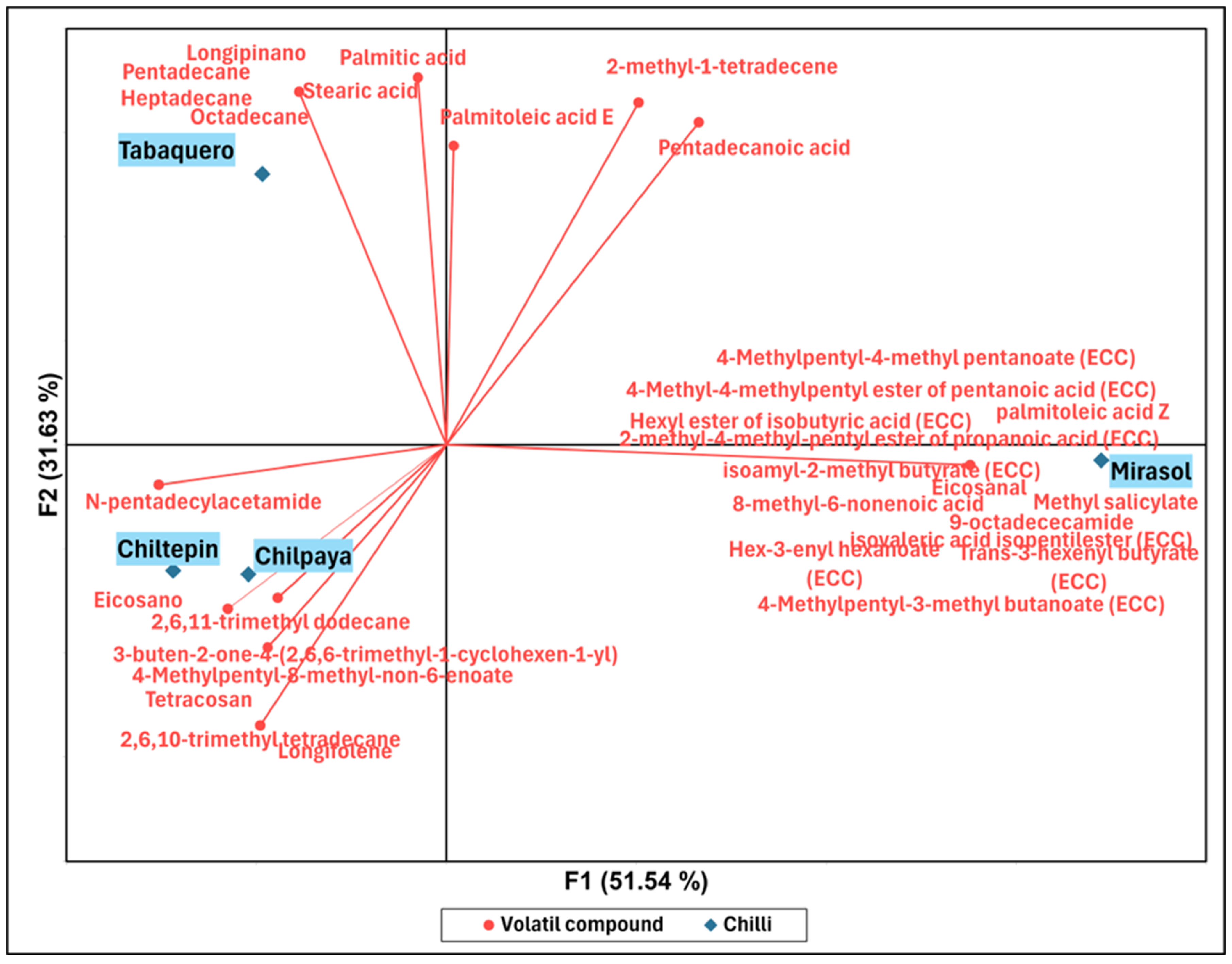
Figure 1 shows the results obtained after evaluating the PCA. 72.2% of the variability in the data was found in the first two principal components (PC1 = 39.6% and PC2 = 32.6%). The PCA graph (Figure 1) shows that the variety of chili (Tabaquero, Mirasol, Chilpaya, and Chiltepín) contributes to each component and their relationship, which are represented with red color vectors for Tabaquero chili, green for Mirasol chili, blue for Chilpaya chili, and purple for Chiltepín chili. The formed vectors move similarly along the PC1 axis. Still, the analysis of the axis corresponding to PC2 shows that the vectors for the Chilpaya and Chiltepín peppers are grouped on the negative side of the axis. In contrast, the vectors for the Tabaquero and Mirasol peppers are grouped on the positive side of the axis. These results indicate that the Chilpaya and Chiltepín peppers share a comparable aroma compound profile. In contrast, the Tabaquero and Mirasol peppers differ from the varieties above but share similarities.
The volatile compounds identified as the majority and shown to influence the profile of the chili species evaluated were fatty acids, such as pentadecanoic acid, palmitoleic acid, and palmitic acid, which can contribute to the profile by imparting oily and waxy notes [47]. Terpenes such as longifolene were also identified, which contribute herbal notes to the olfactory profile in the overall aroma [48].

3.3. Dominance During Real-Time Consumption of Wild Chilies

The results of the ANOVA with TDS data are shown in Table 3. It was observed that significant differences (p > 0.05) were found in all sensory attributes evaluated for the factors chili and time.
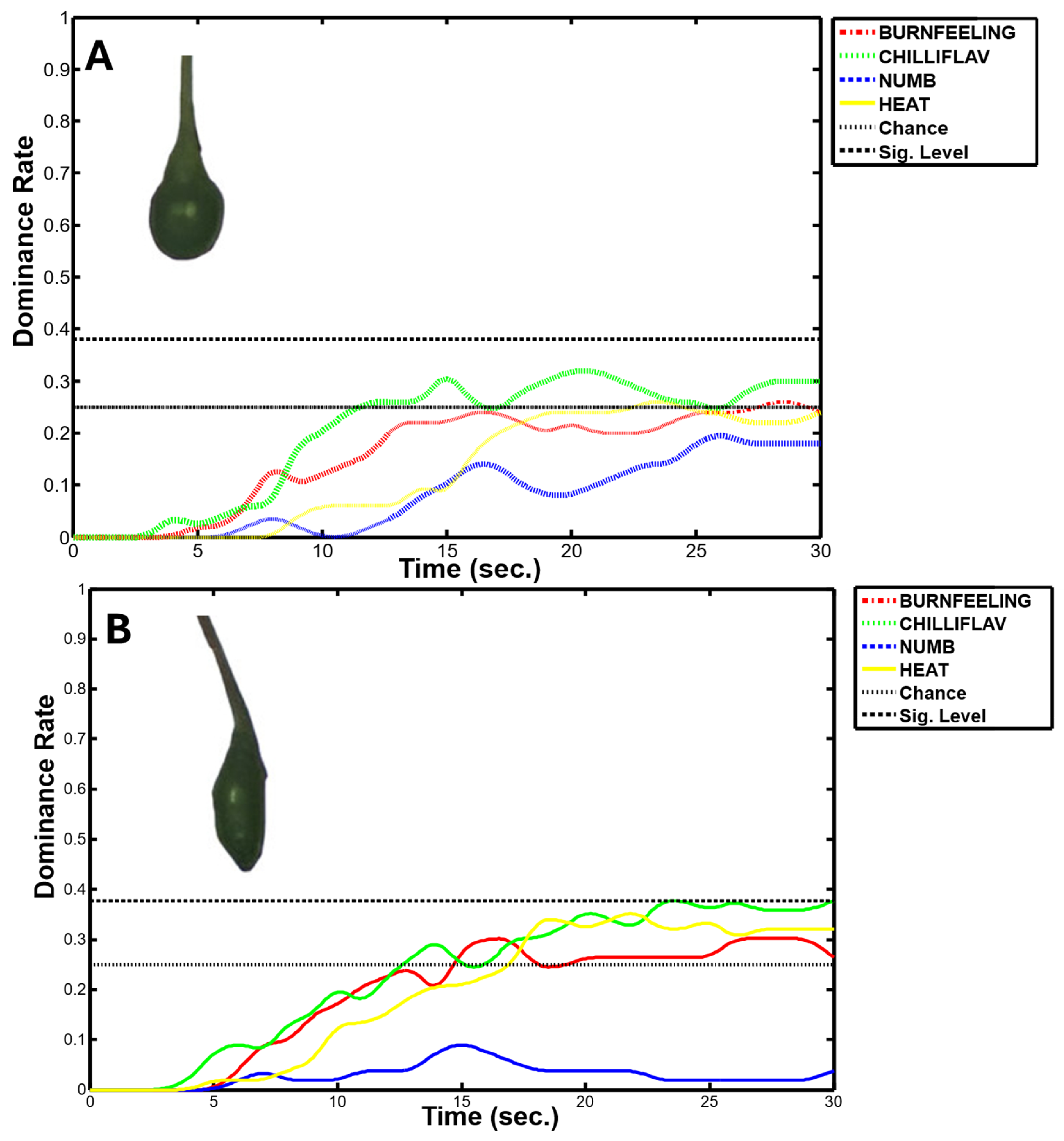
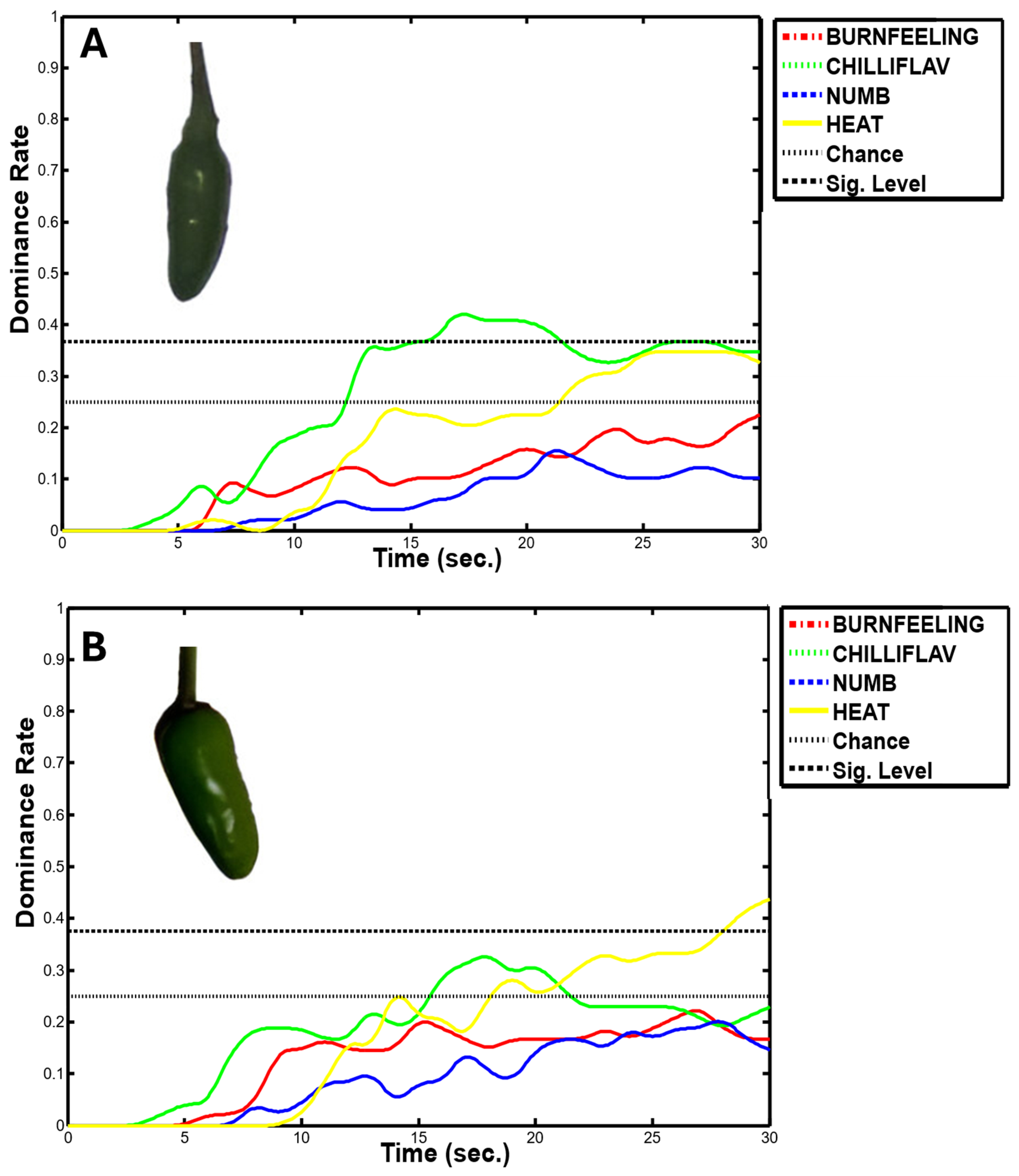
The TDS curves of each of the chilies are shown in Figure 2 and Figure 3. It is observed that no sensory attribute was considered dominant in the case of the Chilpaya and Chiltepin chilies (Figure 2). However, for Mirasol and Tabaquero chilies, the dominant sensory attributes were found to be chili flavor (CHILLIFLAV) and heat in the mouth (HEAT), respectively (Figure 3). Therefore, the CHILLIFLAV attribute dominated from second 15 to 20 while the HEAT attribute was dominant from second 27 until the end of the test at second 30. The dominant attributes CHILLIFLAV and HEAT were also reported as dominant in Mexican chilies such as habanero, serrano, jalapeño, and cera [5]. The perception of these dominant attributes may be due to the complex interactions of capsaicinoids at different sites in the oral and pharyngeal cavity [25]. However, the late perception of the dominant attribute HEAT and even its increase in dominance even after the test ended (30 s) could be because the migration of spiciness starts in the throat and subsequently moves towards the edges and tip of the tongue; therefore, this attribute is long-lasting [27,49].

3.4. Chemometric–Sensometric Correlation

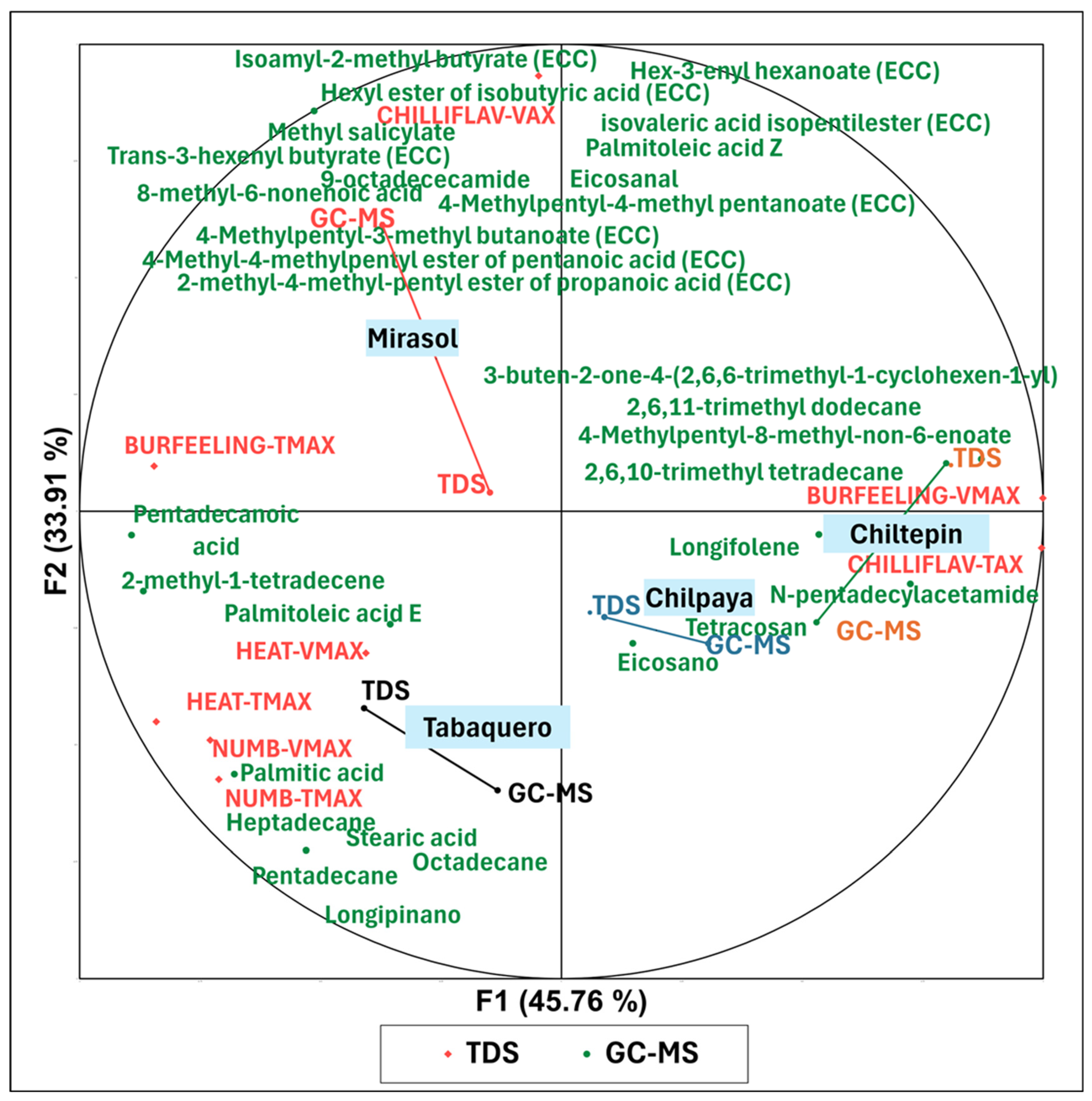
The correlation of the TDS test data and volatile compounds is shown in Figure 4. It is observed that 79.67% of the variability of the data is in the first two principal components (F1: 45.76% and F2: 33.91%). It is also indicated that the distances between the volatile compounds and TDS data are close to the average of the analyzed chili sample data, indicating that both methods similarly characterize each chili considered in this investigation. Additionally, this closeness was confirmed by the correlation values Rv = 0.71 between chromatographic data and TDS [34]. Therefore, the chiltepín and chilpaya chilies presented the most significant dominance of burning sensation (BURNFEELING—Tmax) and the greatest speed in the perception of chili flavor (CHILLIFLAV—Tmax). The behavior of the chilies could be generated by the volatile compounds 2,6,10-trimethyl-tetradecane, 3-buten-2-one-4 (2,6,6,trimethyl-1, Cyclohexen-1-yl, 2,6,1-trimethyl dodecane, 4-methylpentyl-8-methyl-non-6-enoate, longifolene, N-pentadecylacetamide, tetracosane, and eicosane. However, the Mirasol chili showed an opposite effect to the chilies mentioned above, where the chili flavor (CHILLIFLAV—Vmax) was dominant and perceived more quickly than the burning sensation (BURNFEELING—Tmax), which was related to the volatile compounds 4-methyl-pentyl-3-methylbutanoate (ECC), 4-methyl-4-methylpentyl-ester of pantanoic acid (ECC), eicosonal, 9-octadececamide, hex-3-enyl hexanoate (ECC), methyl salicylate, isobutyric acid hexyl ester (ECC), 2-methyl-4-methyl-pentyl ester of propanoic acid (ECC), 4-methyl-pentyl-4-methyl-pentanoate (ECC), isoamyl-2-methyl-butyrate (ECC), palmitoleic acid Z, trans-3-hexenylbutyrate (ECC), and 8-methyl-6-nonenoic acid. In the case of the Tabaquero chili, it was found that it generated the most numbness and heat in the mouth, both in dominance and speed (HEAT—Vmax, HEAT—Tmax, NUMB—Tmax and, NUMB—Vmax), which could have been caused by the volatile compounds pentadecanoic acid, 2-methyl-1-tetradecane, palmitoleic acid E, palmitic acid, octadecane, heptadecane, pentadecane, longipinane, and steraic acid.

3.5. Remote Cognitive Profile: Online Survey for Emotions and Memories

Table 4 shows the results of the emotions and memories evoked by the images in chili consumers. It is observed that only the positive emotions active, adventurous, calm, free, good, and satisfied and the negative emotions aggressive, worried, and disgusted were significant (p < 0.05). These emotions were also observed by [10] for habanero peppers from the Yucatan Peninsula, Mexico, who reported the emotions adventurous, aggressive, bored, calm, enthusiastic, free, guilty, happy, interested, joyful, loving, satisfied, secure, tame, wild and worried. In the case of memories, it was found that traditional food, parties, family, cold weather, and birthplace were significant (p < 0.05), as well as the negative memories of disease, pain, hurt, and obesity. These memories have been reported for various foods and traditional Mexican cuisine, such as coffee and honey [14,50].
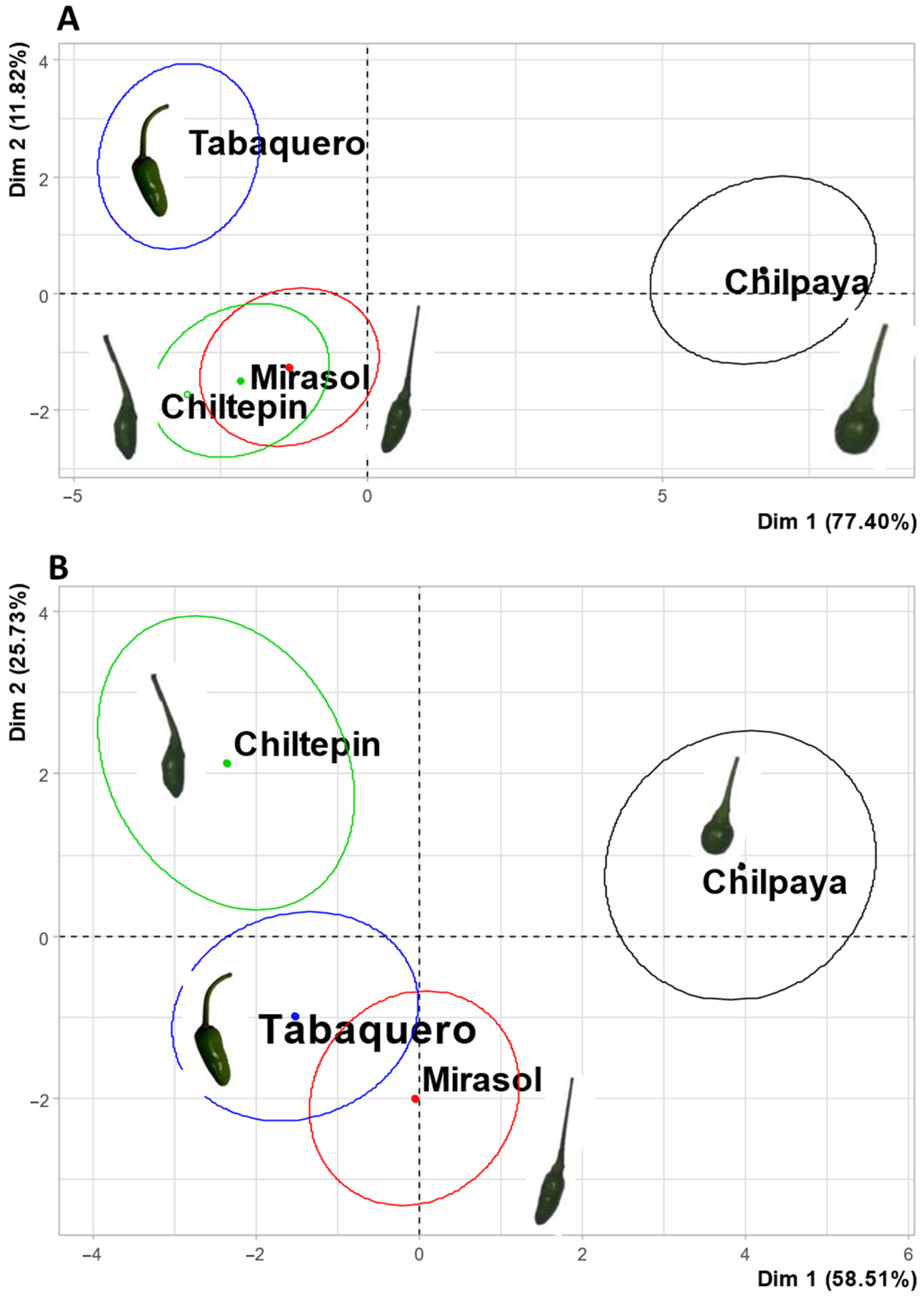
Figure 5 shows the trust ellipses based on emotions and significant memories. It is observed that 89.22% (Dim1: 77.40% and Dim2: 11.82%) and 84.24% (Dim1: 58.51% and Dim2: 25.75%) of the total variability of the data are found in the first two principal components. It was observed that the images of the Chilpaya and Tabaquero chili peppers evoked different emotions compared to the pictures of the Chiltepín and Mirasol chili peppers, which evoked similar emotions (Figure 5A). In the case of the trust ellipses built with memories (p < 0.05), it was observed that the images of the Chilpaya and Chiltepin chili peppers evoked different memories (p < 0.05) compared to the images of the Mirasol and Tabaquero chili peppers (Figure 5B).
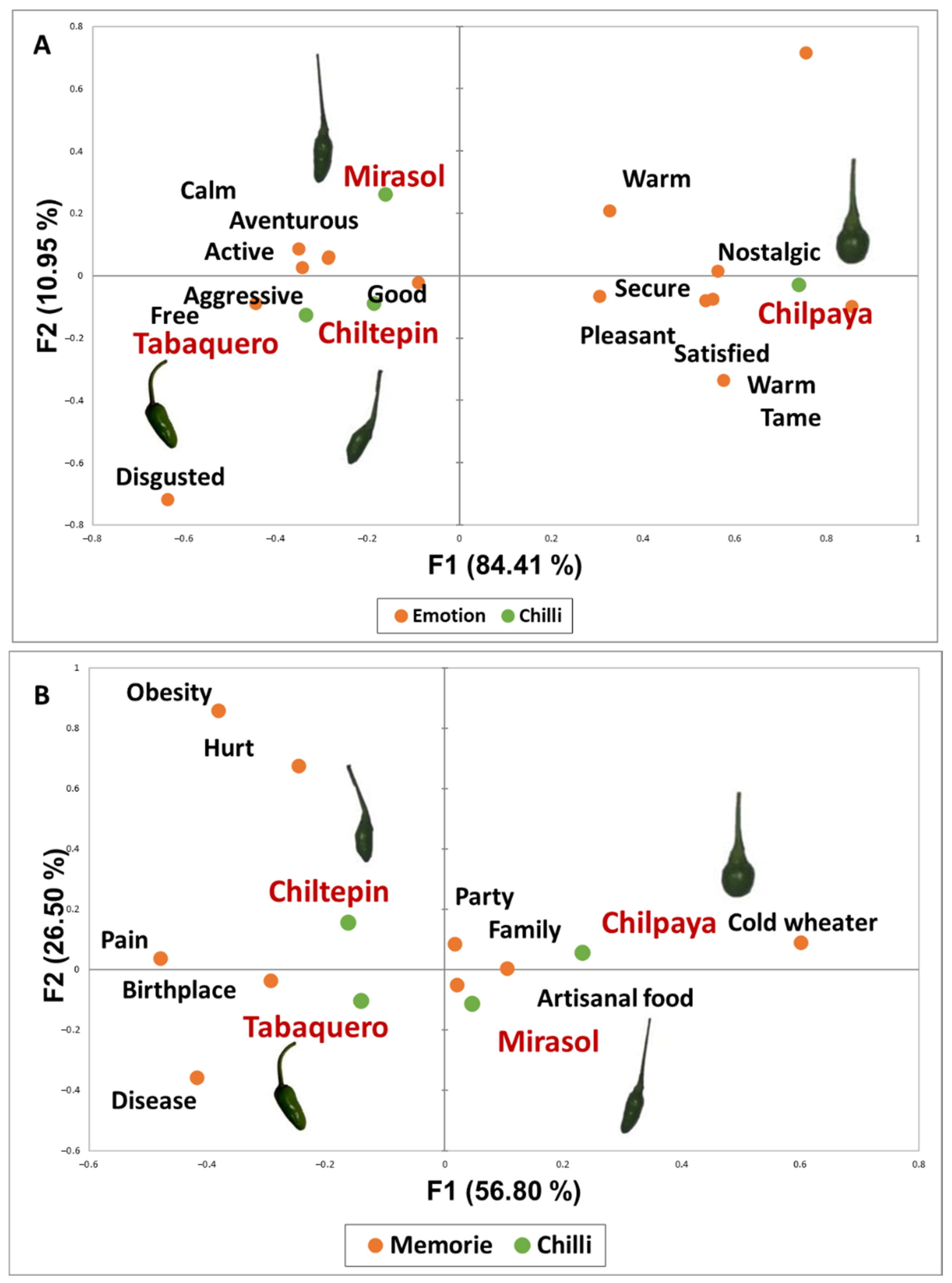
The cognitive maps are shown in Figure 6. It is observed that 95.33% (Dim1: 84.41% and Dim2: 10.95%) and 83.30% (Dim1: 56.80% and Dim2: 26.50%) of the total variability of the data were found in the first two principal components. The Chilpaya pepper evoked positive emotions, including pleasant, satisfied, tame, secure, nostalgic, and warm. The images of the Chiltepin and Tabaquero peppers evoked positive emotions, such as good and free, and negative emotions, such as disgusted and aggressive. In contrast, the image of the Mirasol pepper evoked positive emotions, such as calm, adventurous, and active. These emotions were also identified by Peralta-Cruz et al. (2021) [10], who reported the emotions calm, bored, tame, mild, loving, pleasant, active, worried, satisfied, happy, guilty, wild, aggressive, and joyful evoked by images of habanero pepper with a designation of origin from the Yucatan Peninsula, Mexico. In the case of memories, it was observed that the image of the Chilpaya evoked only positive memories of party, family and cold weather. In contrast, the images of the Mirasol and Tabaquero chilies evoked mostly positive memories (traditional food, birthplace) and only one negative memory (pain), whereas the image of the Chiltepin chili evoked only negative memories of pain, obesity, and hurt.
In general, it was observed that the wild chilies analyzed in this research mostly evoke positive emotions and memories that may be related to the consumer’s purchase intention [34,51], as this food is considered in gastronomy to be an ingredient for preparing sauces and traditional dishes.
The limitations of this research are limited to the analysis of wild chili peppers. Although they are important for their consumption, it is essential to conduct new research that allows for a comparison of the volatile profile and sensory aspects of these wild chili peppers with those of chili peppers grown under controlled agronomic conditions. From a chemical perspective, one limitation was the extraction technique used (distillation), although several authors recommend using a solid-phase microextraction system to improve extraction selectivity and analytical precision, with a lower risk of volatile compound alteration due to the low temperatures at which it is operated; however, it is important to point out that steam distillation has been widely used in exploratory and screening studies of complex matrices because of its ability to maximize the recovery of volatile compounds of different polarity [52,53,54]. Additionally, the use of other fast sensory techniques (i.e., Napping, Sorting task, Flash profile) should be considered as a means of preliminary analysis and development of vocabularies for wild pungent fruits.

4. Conclusions

The volatile signature of the wild chili peppers in this study was primarily characterized by compounds such as longifolene (21.1–43.5%), tetracosane (6.3–39.1%), and fatty acids such as pentadecanoic acid and palmitoleic acid (10.6–24.6%). Real-time consumption determined that wild chili peppers were dominant in flavor and mouth heat. The correlation between volatile compounds and TDS showed that different volatile compounds were related to the effects generated during real-time consumption of the chili peppers. For example, Chiltepín and Chilpaya chili peppers exhibited dominant burning sensations with a faster rate of chili flavor perception, while Mirsaol and Tabaquero chili peppers rapidly caused numbness and heat in the mouth. The evaluation of images of wild chilies evoked in consumers a greater number of positive emotions and memories (active, adventurous, aggressive, calm, free, good, satisfied, traditional food, party, family, cold weather, and birthplace) and, to a lesser extent, negative emotions and memories (worried, disgusted, disease, pain, hurt, and obesity). The findings of this research on wild chilies are important for the chili industry, producers, gourmets, and national and international researchers dedicated to the production, processing, use, and study of habanero chilies.

Author Contributions

Conceptualization, M.C.-H., A.C.-P., J.E.O.-M. and E.d.J.R.-R.; methodology M.C.-H., E.d.J.R.-R., V.D.C.-O., J.R.-M., A.D.B.-F., J.E.O.-M. and J.A.-A.; software, J.R.-E., G.H.-S. and E.d.J.R.-R.; validation, V.D.C.-O., J.A.-A., A.D.B.-F. and I.Q.-G.; formal analysis, J.A.H.-C., H.M.-V. and S.I.C.-M.; investigation, J.A.H.-C., E.d.J.R.-R., J.R.-M., I.Q.-G. and F.U.-C.; resources, S.I.C.-M., I.Q.-G., F.U.-C., A.D.B.-F. and V.D.C.-O. data curation, H.M.-V. and J.R.-E.; writing—original draft preparation, A.C.-P., J.E.O.-M. and E.d.J.R.-R.; writing—review and editing, A.C.-P., J.E.O.-M. and E.d.J.R.-R.; visualization, J.A.-A. and E.d.J.R.-R.; supervision, J.A.H.-C., E.d.J.R.-R., J.E.O.-M. and A.C.-P.; project administration, E.d.J.R.-R., and J.E.O.-M. All authors have read and agreed to the published version of the manuscript.

Funding

This research received no external funding.

Informed Consent Statement

Informed consent was obtained from all subjects involved in the study.

Data Availability Statement

The original contributions presented in this study are included in the article. Further inquiries can be directed at the corresponding authors.

Acknowledgments

We extend our gratitude to the Tecnológico Nacional de Mexico Campus Calkini for all the support and facilities provided for the performance of the various analyses and for the research stay of the fourth author of this article.

Conflicts of Interest

The authors declare no conflicts of interest.

References

  1. Guzmán, I.; Bosland, P.W. Sensory Properties of Chile Pepper Heat—And Its Importance to Food Quality and Cultural Preference. Appetite 2017, 117, 186–190. [Google Scholar] [CrossRef] [PubMed]
  2. Sosa-Moguel, O.; Cuevas-Glory, L.; Pino, J.A.; Sauri-Duch, E. Conocimientos actuales sobre el aroma de chile habanero (Capsicum chinense Jacq.): Current Knowledge about Aroma of Habanero Pepper (Capsicum chinense Jacq.). Cienc. Tecnol. Aliment. 2018, 28, 68–72. [Google Scholar]
  3. Servicio de Información Agroalimentaria y Pesquera. Intención de Siembra y de Cosecha. Available online: https://nube.agricultura.gob.mx/agroprograma/ (accessed on 8 August 2025).
  4. Martínez, E.C.; Carrillo-Rodríguez, J.; Chávez-Servia, J.; Vera-Guzmán, A. Variación fenotípica de morfotipos de chile (Capsicum annuum L.) nativo de Oaxaca, México. Phyton 2014, 83, 225–236. [Google Scholar] [CrossRef]
  5. de Jesús Ramírez-Rivera, E.; Rodriguez-Buenfil, I.M.; Pérez-Robles, M.; Oney-Montalvo, J.E.; Prinyawiwatkul, W.; Cabal-Prieto, A.; Ramírez-Sucre, M.O.; Herrera-Corredor, J.A. Development and Validation of a Methodology for the Sensometric Characterisation of High-Pungency Peppers: A Case Study of Habanero Pepper (Capsicum chinense Jacq.). Int. J. Food Sci. Technol. 2021, 56, 573–586. [Google Scholar] [CrossRef]
  6. Servicio de Información Agroalimentaria y Pesquera. El Chiltepin, la Importancia Económica y Biocultural del Más Pequeño de los Chiles. Available online: https://www.gob.mx/agricultura%7Cdgsiap/articulos/el-chiltepin-la-importancia-economica-y-biocultural-del-mas-pequeno-de-los-chiles (accessed on 25 July 2025).
  7. Serrano-Mejía, C.; Bello-Bedoy, R.; Arteaga, M.C.; Castillo, G.R. Does Domestication Affect Structural and Functional Leaf Epidermal Traits? A Comparison between Wild and Cultivated Mexican Chili Peppers (Capsicum annuum). Plants 2022, 11, 3062. [Google Scholar] [CrossRef]
  8. Díaz-Pérez, J.C.; John, K.S. Bell pepper (Capsicum annum L.) under colored shade nets: Plant growth and physiological responses. HortScience 2019, 54, 1795–1801. [Google Scholar] [CrossRef]
  9. Li, J.; Dadmohammadi, Y.; Abbaspourrad, A. Flavor components, precursors, formation mechanisms, production and characterization methods: Garlic, onion, and chili pepper flavors. Crit. Rev. Food Sci. Nutr. 2022, 62, 8265–8287. [Google Scholar] [CrossRef]
  10. Peralta-Cruz, C.; Rodríguez-Buenfil, I.M.; Cabal-Prieto, A.; Cuervo-Osorio, V.D.; Oney-Montalvo, J.E.; Herrera-Corredor, J.A.; Ramírez-Sucre, M.O.; de Jesús Ramírez-Rivera, E. Modeling Consumer Satisfaction to Identify Drivers for Liking: An Online Survey Based on Images of Habanero Pepper (Capsicum chinense Jacq.). J. Sens. Stud. 2021, 36, e12696. [Google Scholar] [CrossRef]
  11. Hu, X.; Ayed, C.; Chen, J.; Fisk, I.; Yang, N. The role of capsaicin stimulation on the physicochemical properties of saliva and aroma release in model aqueous and oil systems. Food Chem. 2022, 386, 132824. [Google Scholar] [CrossRef]
  12. Pineau, N.; Schlich, P.; Cordelle, S.; Mathonnière, C.; Issanchou, S.; Imbert, A.; Rogeaux, M.; Etiévant, P.; Köster, E. Temporal Dominance of Sensations: Construction of the TDS Curves and Comparison with Time-Intensity. Food Qual. Prefer. 2009, 20, 450–455. [Google Scholar] [CrossRef]
  13. Nestrud, M.A.; Meiselman, H.L.; King, S.C.; Lesher, L.L.; Cardello, A.V. Development of EsSense25, a Shorter Version of the EsSense Profile®. Food Qual. Prefer. 2016, 48, 107–117. [Google Scholar] [CrossRef]
  14. Cabal-Prieto, A.; Teodoro-Bernabé, G.; Coria-Rincón, C.; Sánchez-Arellano, L.; Ramón-Canul, L.G.; Rodríguez-Miranda, J.; Prinyawiwatkul, W.; Juárez-Barrientos, J.M.; Herrera-Corredor, J.A.; Ramírez-Rivera, E.D.J. Development of a Memories Vocabulary (MemVOC) for Food Products Using Coffee as Model. Food Sci. Technol. 2022, 42, e44221. [Google Scholar] [CrossRef]
  15. Vidal, L.; Ares, G.; Hedderley, D.I.; Meyners, M.; Jaeger, S.R. Comparison of Rate-All-That-Apply (RATA) and Check-All-That-Apply (CATA) Questions across Seven Consumer Studies. Food Qual. Prefer. 2018, 67, 49–58. [Google Scholar] [CrossRef]
  16. Cruz-Hernández, M.; Cuervo-Osorio, V.D.; Cabal-Prieto, A.; Herrera, L.A.C.; Guerrero-Ortiz, C.A.; Uribe-Cuauhtzihua, F.; Hernandez-Arzaba, J.C.; de Jesús Ramírez-Rivera, E.; Oney-Montalvo, J.E. Determination of the Antioxidant Activity of Capsaicinoids and Polyphenols Extracted from Wild Chili Pepper. Hortic. Bras. 2025, 43, e291946. [Google Scholar] [CrossRef]
  17. Oney Montalvo, J.E.; Morozova, K.; Ferrentino, G.; Ramirez Sucre, M.O.; Rodríguez Buenfil, I.M.; Scampicchio, M. Effects of Local Environmental Factors on the Spiciness of Habanero Chili Peppers (Capsicum chinense Jacq.) by Coulometric Electronic Tongue. Eur. Food Res. Technol. 2021, 247, 101–110. [Google Scholar] [CrossRef]
  18. Pino, J.; Sauri-Duch, E.; Marbot, R. Changes in volatile compounds of Habanero chile pepper (Capsicum chinense Jack. cv. Habanero) at two ripening stages. Food Chem. 2006, 94, 394–398. [Google Scholar] [CrossRef]
  19. ISO 8586-1; Sensory Analysis—General Guidance for the Selection, Training, and Monitoring of Assessors, Part 1—Selected Assessors. International Organization for Standardization: Geneva, Switzerland, 1993.
  20. ISO 11035; Analyse Sensorielle—Recherche et Sélection de Descripteurs pour L’élaboration d’un Profil Sensoriel par Approche Multidimensionnelle. International Organization for Standardization: Saint-Denis, France, 1994.
  21. ISO 5496; Sensory Analysis—Methodology—Initiation and Training of Assessors in the Detection and Recognition of Odors. International Organization for Standardization: Geneva, Switzerland, 2005.
  22. ISO 4120; Sensory Analysis—Methodology. Triangle Test. International Organization for Standardization: Geneva, Switzerland, 2004.
  23. ISO 10399; Sensory Analysis—Methodology—Duo-Trio Test. International Organization for Standardization: Geneva, Switzerland, 2004.
  24. ISO 16820; Sensory Analysis—Methodology—Sequential Analysis. International Organization for Standardization: Geneva, Switzerland, 2004.
  25. Rentmeister-Bryant, H.; Green, B.G. Perceived Irritation during Ingestion of Capsaicin or Piperine: Comparison of Trigeminal and Non-trigeminal Areas. Chem. Senses 1997, 22, 257–266. [Google Scholar] [CrossRef] [PubMed]
  26. Prescott, J.; Allen, S.; Stephens, L. Interactions between oral chemical irritation, taste and temperature. Chem. Senses 1993, 18, 389–404. [Google Scholar] [CrossRef]
  27. Kostyra, E.; Baryłko-Pikielna, N.; Dąbrowska, U. Relationship of Pungency and Leading Flavour Attributes in Model Food Matrices—Temporal Aspects. Food Qual. Prefer. 2010, 21, 197–206. [Google Scholar] [CrossRef]
  28. Schneider, D.J.; Seuß-Baum, I.; Schlich, E. Relationship between pungency and food components—A comparison of chemical and sensory evaluations. Food Qual. Prefer. 2014, 38, 98–106. [Google Scholar] [CrossRef]
  29. Ku, K.H.; Lee, K.A.; Park, J.B. Physicochemical properties and sensory evaluation for the heat level (hot taste) of Korean red pepper powder. Prev. Nutr. Food Sci. 2012, 17, 29–35. [Google Scholar] [CrossRef] [PubMed]
  30. Toontom, N.; Meenune, M.; Aguiar, L.; Posri, W. Exploring hotness and pungent odour thresholds among three groups of Thai chilli users. Int. J. Food Sci. Technol. 2024, 59, 8473–8489. [Google Scholar] [CrossRef]
  31. Macfie, H.J.; Bratchell, N.; Greenhoff, K.; Vallis, L.V. Designs to balance the effect of order of presentation and first-order carry-over effects in hall tests. J. Sens. Stud. 1989, 4, 129–148. [Google Scholar] [CrossRef]
  32. Oliveira e Silva, R.; do Carmo Rouxinol, M.I.F.; da Silva Coutinho Patarata, L.A. The Use of Photography to Perform an Online Consumer Test on the Freshness of Chicken Breast and the Extension of Shelf Life. J. Sens. Stud. 2020, 35, e12565. [Google Scholar] [CrossRef]
  33. Cohen, J. Statistical Power Analysis for the Behavioral Sciences, 2nd ed.; Routledge: London, UK, 1988. [Google Scholar] [CrossRef]
  34. Josse, J.; Pagès, J.; Husson, F. Testing the Significance of the RV Coefficient. Comput. Stat. Data Anal. 2008, 53, 82–91. [Google Scholar] [CrossRef]
  35. Huang, M.; Li, Y.; Zhan, P.; Liu, P.; Tian, H.; Fan, J. Correlation of Volatile Compounds and Sensory Attributes of Chinese Traditional Sweet Fermented Flour Pastes Using Hierarchical Cluster Analysis and Partial Least Squares-Discriminant Analysis. J. Chem. 2017, 2017, 3213492. [Google Scholar] [CrossRef]
  36. Jiang, C.; Zhang, L.; Yu, L.; Fang, Z.; Hu, B.; Chen, H.; Wu, W.; Liu, Y.; Zeng, Z. Effects of Thermal Treatments on the Physicochemical and Flavor Profiles of Chili Powders and Their Derived Chili Oils. Foods 2025, 14, 3129. [Google Scholar] [CrossRef]
  37. Pu, D.; Zhang, H.; Zhang, Y.; Sun, B.; Ren, F.; Chen, H.; He, J. Characterization of the aroma release and perception of white bread during oral processing by gas chromatography-ion mobility spectrometry and temporal dominance of sensations analysis. Food Res. Int. 2019, 123, 612–622. [Google Scholar] [CrossRef]
  38. Santiago-Cruz, I.A.; de Jesús Ramírez-Rivera, E.; López-Espíndola, M.; Hidalgo-Contreras, J.V.; Prinyawiwatkul, W.; Herrera-Corredor, J.A. Use of Online Questionnaires to Identify Emotions Elicited by Different Types of Corn Tortilla in Consumers of Different Gender and Age Groups. J. Sens. Stud. 2021, 36, e12638. [Google Scholar] [CrossRef]
  39. Cadoret, M.; Husson, F. Construction and Evaluation of Confidence Ellipses Applied at Sensory Data. Food Qual. Prefer. 2013, 28, 106–115. [Google Scholar] [CrossRef]
  40. Meyners, M.; Castura, J. The analysis of temporal check-all-that-apply (TCATA) data. Food Qual. Prefer. 2017, 67, 67–76. [Google Scholar] [CrossRef]
  41. Pinheiro, A.C.M.; Nunes, C.A.; Vietoris, V. SensoMaker: A Tool for Sensorial Characterization of Food Products. Ciênc. Agrotec. 2013, 37, 199–201. [Google Scholar] [CrossRef]
  42. Addinsoft. XLSTAT Statistial and Data Analysis Solution. Available online: https://www.xlstat.com. (accessed on 15 March 2025).
  43. Le, S.; Husson, F. SensoMineR: A package for sensory data analysis. J. Sens. Stud. 2008, 23, 14–25. [Google Scholar] [CrossRef]
  44. R Core Team. R: A Language and Environment for Statistical Computing; R Foundation for Statistical Computing: Vienna, Austria, 2019; Available online: https://www.R-project.org/ (accessed on 11 August 2025).
  45. Sweat, K.G.; Broatch, J.; Borror, C.; Hagan, K.; Cahill, T.M. Variability in Capsaicinoid Content and Scoville Heat Ratings of Commercially Grown Jalapeño, Habanero and Bhut Jolokia Peppers. Food Chem. 2016, 210, 606–612. [Google Scholar] [CrossRef]
  46. Díaz-Sánchez, D.D.; López-Sánchez, H.; Silva-Rojas, H.V.; Gardea-Béjar, A.A.; Cruz-Huerta, N.; Ramírez-Ramírez, I.; González-Hernández, V.A. Pungency and fruit quality in Mexican landraces of piquín pepper (Capsicum annuum var. glabriusculum) as affected by plant growth environment and postharvest handling. Chil. J. Agric. Res. 2021, 81, 546–556. [Google Scholar] [CrossRef]
  47. Schröder, M.; Abdurahman, H.; Ruoff, T.; Lehnert, K.; Vetter, W. Identification of aromatic fatty acids in butter fat. J. Am. Oil Chem. Soc. 2014, 91, 1695–1702. [Google Scholar] [CrossRef]
  48. Api, A.M.; Belsito, D.; Biserta, S.; Botelho, D.; Bruze, M.; Burton, G.; Tsang, S. RIFM fragrance ingredient safety assessment, longifolene, CAS Registry Number 475-20-7. Food Chem. Toxicol. 2019, 134, 10–16. [Google Scholar] [CrossRef]
  49. Zhang, L.; Shi, B.; Wang, H.; Zhao, L.; Chen, Z. Pungency Evaluation of Hydroxyl-Sanshool Compounds After Dissolution in Taste Carriers Per Time-Related Characteristics. Chem. Senses 2017, 42, 575–584. [Google Scholar] [CrossRef]
  50. Ramón-Canul, L.G.; Guzmán-Victoria, E.; de Jesús Ramírez-Rivera, E.; Cabal-Prieto, A.; Rodríguez-Miranda, J.; Llaguno-Aguiñaga, A.; Sánchez-Orea, J.M.; Ramírez-García, S.A.; Prinyawiwatkul, W.; Herrera-Corredor, J.A. Antidiabetic, Antihypertensive and Antioxidant Activity of Cookies Formulated with Ground Mangifera indica L. Leaves. Int. J. Food Sci. Technol. 2023, 58, 4437–4445. [Google Scholar] [CrossRef]
  51. Jiang, Y.; King, J.M.; Prinyawiwatkul, W. A Review of Measurement and Relationships between Food, Eating Behavior and Emotion. Trends Food Sci. Technol. 2014, 36, 15–28. [Google Scholar] [CrossRef]
  52. Cuevas-Glory, L.; Sosa Moguel, O.; Pino, J.; Sauri, E. GC–MS Characterization of Volatile Compounds in Habanero Pepper (Capsicum Chinense Jacq.) by Optimization of Headspace Solid-Phase Microextraction Conditions. Food Anal. Methods 2014, 8, 1005–1013. [Google Scholar] [CrossRef]
  53. Ju, X.; Zhang, M.; Shi, J. Detection and analysis of volatile compounds in indica rice during the period of storage by electronic nose and HS-SPM-GC-MS. J. Chin. Cereals Oils Assoc. 2016, 31, 139–146. [Google Scholar]
  54. Yang, K.-M.; Chao, L.K.; Wu, C.-S.; Ye, Z.-S.; Chen, H.-C. Headspace Solid-Phase Microextraction Analysis of Volatile Components in Peanut Oil. Molecules 2021, 26, 3306. [Google Scholar] [CrossRef]
Figure 1. Principal component analysis (PCA) biplot with vectors showing the influence of chili varieties.
Horticulturae 11 01365 g001
Figure 2. TDS curves (5 products × 10 judges × 4 sensory attributes × 5 repetitions) (A) Chilpaya chili and (B) Chiltepín chili. BURNFEELING = Burn feeling; CHILLIFLAV Chili flavor; NUMB = Mouth numbness; HEAT = Mouth heat.
Horticulturae 11 01365 g002
Figure 3. TDS curves (5 products × 10 judges × 4 sensory attributes × 5 repetitions) (A) Mirasol chili and (B) Tabaquero chili. BURNFEELING = Burn feeling; CHILLIFLAV = Chili flavor; NUMB = Mouth numbness; HEAT = Mouth heat.
Horticulturae 11 01365 g003
Figure 4. Correlation of TDS and volatile compound data and correlation between groups of variables. BURNFEELING = Burn feeling; CHILLIFLAV = Chili flavor; NUMB = Mouth numbness; HEAT = Mouth heat. Vmax = maximum value corresponding to a TDS dominance rate; Tmax = time to reach Vmax from the start of the evaluation.
Horticulturae 11 01365 g004
Figure 5. 95% confidence ellipses (500-resamples) from the matrix with dimensions (J * I) K, where J = corresponds to the four wild chilies, I = are the 190 consumers, and K = are the emotions and memories evoked by each consumer. (A) Emotions and (B) Memories.
Horticulturae 11 01365 g005
Figure 6. Cognitive map from the matrix with dimensions (J * I) K, where J = corresponds to the four wild chilies, I = are the 190 consumers, and K = are the emotions and memories evoked by each consumer. (A) Emotions (p < 0.05) and (B) Memories (p < 0.05).
Horticulturae 11 01365 g006
Table 1. Determination of Scoville Heat Units (SHUs) in the four varieties of wild chili (Capsicum annuum L. variety glabriusculum).
VarietyScoville Heat Units (SHU)
Chilpaya34,421.5 ± 9427.5 a
Chiltepin20,723.2 ± 5538.6 a
Mirasol28,978.2 ± 5962.5 a
Tabaquero28,854.4 ± 6207.5 a
Different letters denote statistically significant differences between means at p ≤ 0.05.
Table 2. Volatile compounds were identified in the four varieties of wild chili peppers (Tabaquero, Mirasol, Chilpaya, and Chiltepin) by mass chromatography.
Retention Time (min)CompoundTabaquero (%)Mirasol (%)Chilpaya (%)Chiltepin (%)
14.81Isoamyl-2-methyl butyrate≤0.11.3≤0.1≤0.1
14.98Isovaleric acid isopentyl ester≤0.11.0≤0.1≤0.1
15.212-methyl-4-methyl-pentyl ester of propanoic acid≤0.17.3≤0.1≤0.1
16.17Trans-3-hexenyl butyrate≤0.12.1≤0.1≤0.1
16.32Hexyl ester of isobutyric acid≤0.11.7≤0.1≤0.1
17.63Methyl salicylate≤0.12.9≤0.1≤0.1
18.004-Methylpentyl-3-methyl butanoate≤0.17.6≤0.1≤0.1
20.042,6,11-trimethyl dodecane≤0.1≤0.1≤0.13.4
21.044-Methyl-4-methylpentyl ester of pentanoic acid≤0.110.8≤0.1≤0.1
21.608-methyl-6-nonenoic acid≤0.11.6≤0.1≤0.1
21.88Hex-3-enyl hexanoate≤0.12.6≤0.1≤0.1
22.004-Methylpentyl-4-methyl pentanoate≤0.14.7≤0.1≤0.1
24.382-methyl-1-tetradecene3.12.0≤0.1≤0.1
25.28Longifolene3.310.443.521.1
25.423-buten-2-one-4-(2,6,6-trimethyl-1-cyclohexen-1-yl)≤0.1≤0.1≤0.110.6
25.592,6,10-trimethyl tetradecane≤0.1≤0.1≤0.110.4
25.70Pentadecane1.3≤0.1≤0.1≤0.1
29.28Longipinano1.9≤0.1≤0.1≤0.1
29.79Eicosanal≤0.11.3≤0.1≤0.1
30.124-Methylpentyl-8-methyl-non-6-enoate≤0.1≤0.1≤0.110.6
30.25Heptadecane3.3≤0.1≤0.1≤0.1
30.46Octadecane1.1≤0.1≤0.1≤0.1
33.27Pentadecanoic acid24.619.3≤0.1≤0.1
34.82Palmitoleic acid E19.710.6≤0.111.6
35.11Palmitic acid6.11.4≤0.1≤0.1
35.47Palmitoleic acid Z≤0.15.0≤0.1≤0.1
35.58Stearic acid26.6≤0.1≤0.1≤0.1
39.72N-pentadecylacetamide7.3≤0.1≤0.1≤0.1
40.66Eicosano0.9≤0.117.5≤0.1
44.989-octadececamide≤0.14.2≤0.1≤0.1
45.60Tetracosan1.02.439.16.3
Table 3. Probability results for the factors “chili” and “time” for the TDS data.
Chili Time
AttributeFp-ValueFp-Value
Burn feeling521.73<0.00136.82<0.001
Chili flavor174.65<0.00138.09<0.001
Mouth numbness183.46<0.0017.93<0.001
Mouth heat219.84<0.00162.96<0.001
TDS curves (5 products × 10 judges × 4 sensory attributes × 5 repetitions). F = F-test.
Table 4. Probability values of emotions and memories.
Emotionp-ValueEmotionp-ValueMemoriep-ValueMemoriep-Value
Active (+)<0.0001Secure (+)0.005Artisanal food (+)0.019Hot weather (+)0.968
Adventurous (+)0.003Tame (+)0.038Party (+)0.009Mild weather (+)0.494
Calm (+)0.035Understanding (+)0.107Family (+)0.000Disease (−)0.049
Enthusiastic (+)0.104Warm (+)0.092Birthplace (+)0.018Pain (−)0.022
Free (+)0.001Aggressive (−)<0.0001Childhood (+)0.219Hurt (−)0.090
Good (+)0.025Bored (−)0.733Friendship (+)0.825Obesity (−)0.080
Good nature (+)0.193Disgusted (−)0.000Sport (+)0.861Stench (−)0.479
Happy (+)0.109Guilty (−)0.934Alive (+)0.972Addiction (−)0.768
Interested (+)0.429Wild (−)0.251Gift (+)0.589Poverty (−)0.557
Joyful (+)0.463Worried (−)<0.0001Spring (+)0.276Death (−)0.572
Loving (+)0.409 Summer (+)0.784Interpersonal conflict (−)0.300
Mild (+)0.180 Fall (+)0.356Accident (−)0.786
Nostalgic (+)0.001 Winter (+)0.436
Pleasant (+)0.087 Rainy weather (+)0.147
Satisfied (+)<0.0001 Cold weather (+)0.014
(+) = Positive emotion or memory; (−) = Negative emotion or memory.
Disclaimer/Publisher’s Note: The statements, opinions and data contained in all publications are solely those of the individual author(s) and contributor(s) and not of MDPI and/or the editor(s). MDPI and/or the editor(s) disclaim responsibility for any injury to people or property resulting from any ideas, methods, instructions or products referred to in the content.