Article

Comprehensive Transcriptome and Metabolome Analysis Reveals the Potential Mechanism Influencing Flower Color Formation in Macadamia integrifolia


1
Yunnan Institute of Tropical Crops, Jinghong 666100, China
2
Guizhou Institute of Subtropical Crops, Guiyang 550025, China
3
Key Laboratory of Tropical Fruit Biology, Ministry of Agriculture & Rural Affairs, South Subtropical Crops Research Institute, Chinese Academy of Tropical Agricultural Sciences, Zhanjiang 524091, China
4
Guangxi South Subtropical Agricultural Research Institute, Longzhou 532415, China
5
Institute of Tropical and Subtropical Cash Crops, Yunnan Academy of Agricultural Sciences, Ruili 678600, China
*
Authors to whom correspondence should be addressed.
These authors contributed equally to this work.
Horticulturae 2025, 11(11), 1347; https://doi.org/10.3390/horticulturae11111347
Submission received: 3 October 2025 / Revised: 5 November 2025 / Accepted: 8 November 2025 / Published: 9 November 2025

Abstract

Color serves as a crucial visual signal for attracting pollinating insects and directly affects the fruit set rate in woody crops. This study investigated the molecular mechanisms underlying flower color formation in macadamia. The results demonstrated that darker flower colors were associated with higher fruit set rates: the rates for purple, pink, pinkish-white, and white flowers were 2.78, 1.99, 1.35, and 1.31, respectively. High-throughput sequencing identified 1359 differentially accumulated metabolites, including benzoic acid, 4-hydroxybenzaldehyde, and isorhamnetin. Transcriptional regulators such as ERF, MYB, and WRKY were significantly up-regulated in darker flowers. KEGG analysis revealed two key metabolic pathways, in which genes including HCT (shikimate hydroxycinnamoyl transferase) and F3GalTase (flavonol 3-O-galactosyltransferase), as well as related metabolites such as p-coumaric acid, chlorogenic acid, and myricetin, showed higher expression levels in darker flowers. Anthocyanin content was highest in pink and pinkish-purple varieties (462.79 and 446.35 μg/g, respectively), and lower in white and light pink varieties (140.52 and 167.97 μg/g). In conclusion, flower color intensity is positively correlated with both fruit set rate and anthocyanin content. Genes involved in the flavonoid and phenylpropanoid pathways, along with transcription factors such as WRKY and MYB, collectively regulate flower color formation. This study provides a theoretical basis for macadamia flower color breeding.

1. Introduction

Macadamia integrifolia is native to Queensland, Australia, belongs to the Proteaceae family, and is a species of tall evergreen tree nut. Globally, macadamia nuts are primarily grown in Australia, China, South Africa, and the United States, with China having the largest cultivation area [1]. The macadamia planting area is over 4.5 million acres, accounting for approximately 60% of the world’s total planting area, and it is mainly cultivated in tropical and subtropical regions of China such as Yunnan, Guangxi, Guangdong, and Guizhou [2,3]. It is highly sought after for its flavor and nutritional characteristics [4]. Macadamia have an oil content as high as 78% and an unsaturated fatty acid content of around 84%, making them highly valuable for consumption [5]. Among them, the content of three unsaturated fatty acids, namely oleic acid (60%), arachidonic acid (16%), and palmitoleic acid (10%), in macadamia is much higher than that in other nuts such as walnuts and cashews, in addition, macadamia are extremely rich in protein and vitamins. The protein content is approximately 9% [6] Long-term consumption of macadamia can help lower blood lipids, reduce the risk of heart disease, improve blood cholesterol levels, and extend lifespan [7,8]. Currently, global crop yields are all below the expected levels, and tree crops account for a significant proportion of global crops. The number and size of fruits are key components of the yield of tree crops [9,10]. The yield of tree crops may be related to nutrients, pollination, and the percentage of mature fruits, and pollen pollination is also closely related to flower color [11,12]. China is the country with the largest area for macadamia cultivation. However, current research on macadamia mainly focuses on variety selection and cultivation. But the formation mechanism of macadamia flower color and the relationship between flower color and pollination have not yet been studied.
The color of flowers serves as one of the crucial indicators for pollinators to locate the position of pollen. The color of flowers may influence the diversity of pollinators and the efficiency of pollination, thereby affecting the yield of crops [13]. Therefore, the study of flower color formation plays a crucial role in the pollination ability and yield of plants. Studies have shown that the formation of flower colors is a complex process, which may be related to genetic regulation or environmental factors [14]. The regulatory mechanism of DNA methyltransferase in the formation of flower color in chrysanthemums indicates that the new strategy of silencing or activating the allelic genes of CmMYB6 to regulate anthocyanin synthesis was discovered by Li et al. [15]. There are also studies showing that the anthocyanin biosynthesis pathway can be regulated by genes such as phenylalanine ammonia-lyase (PAL) and chalcone synthase (CHS) to cause changes in flower color [16]. In addition, flower color is also affected by environmental factors such as light, temperature, and soil pH, and this has been proven [17]. In recent years, high-throughput RNA transcriptome sequencing technology (RNA-seq) has been widely studied in various fields and has also been extensively utilized in the research of flower color. Wang et al. used this technology to discover that plant hormone signal transduction, starch-sucrose metabolism, phenylpropanoid metabolism, flavonoid biosynthesis, and anthocyanin biosynthesis pathways are closely related to the development and flower color formation of macadamia [18]. Some researchers have also revealed the reasons for regulating flower color in narcissus based on transcriptome WGCNA analysis [19]. Some have used transcriptomics and metabolomics to analyze the temperature-regulated anthocyanin biosynthesis mechanism in asparagus [17]. Guizhou is a typical karst terrain, and the growth environment of macadamia is poor, so most researchers have focused on stress resistance [1,20]. Studies analyzing the synthesis of flower color for increasing yield from the aspect of increasing pollination probability are rarely seen.
Macadamia is a kind of woody oil-producing tree species with high nutritional and medicinal value. They are widely cultivated in China. Their pollination is mainly carried out by bees. The attraction of bees to different flower colors varies, and the final yield also differs. Therefore, this experiment selected four different flower colors of macadamia from the Guizhou region as experimental materials, aiming to understand the potential mechanism underlying the formation of macadamia flower colors, providing a theoretical basis for increasing the yield of macadamia, and offering a new theoretical foundation for their breeding.

2. Materials and Methods

2.1. Plant Material and Experimental Treatments

On 26 March 2024, at the macadamia experimental base of the Subtropical Crops Research Institute in Guizhou Province, 4 different flowers of macadamia in full bloom were collected. The collected part is the petals of the macadamia flower. The 4 varieties were the white variety NY2 (W), the white with pink variety QA3 (WP), the pink variety QA5 (P), and the purple-red variety 695 (F). For each cultivar, a normally fruiting 10-year-old tree was selected. Two hundred uniformly colored small flowers were collected from the eastern, southern, western, and northern sides of the tree to form a composite sample. Each variety was collected with 3 mixed samples. Each mixed sample was divided into 3 parts. One portion was used for the determination of anthocyanin content, another portion for untargeted metabolomic analysis, and the remainder for transcriptome analysis and PCR validation.

2.2. Anthocyanin Content Measurement

Anthocyanin measurement method: The sample was freeze-dried, ground into powder (30 Hz, 1.5 min), and stored at −80 °C for future use. We weighed 50 mg of the powder and added 0.5 mL of methanol/water/hydrochloric acid (500: 500: 1, v/v/v) for extraction. After vortexing for 10 min, the extract was centrifuged at 12,000 r/min for 3 min at 4 °C. The residue was extracted again under the same conditions and the supernatants were combined. The filtrate was filtered through a 0.22 μm microporous membrane (Ampere) and analyzed by liquid chromatography–tandem mass spectrometry [18].

2.3. Flower and Fruit Set Rate Assessment

Flower and fruit counting method: First, during the flowering period, ten inflorescences were randomly selected from each variety to count the number of flowers per inflorescence, and the average number of flowers per inflorescence for each variety was calculated. After the fruit set stabilized, ten additional inflorescences were randomly selected from all sides of the tree to count the number of macadamia, obtaining the average fruit set per variety. The average fruit set was then divided by the average number of flowers per inflorescence.

2.4. Metabolite-Related Analysis

First, grind 100 mg of tissue samples with liquid nitrogen. Then, suspend them in pre-cooled 80% methanol in a plate vortex mixer and incubate at 4 °C for 5 min on an ice bath. Next, centrifuge at 15,000× g for 20 min at 4 °C and take a portion of the supernatant and dilute it with liquid chromatography-grade water to a final methanol concentration of 53%. Transfer the diluted samples to new tubes, centrifuge again at the same conditions (4 °C, 15,000× g) for 20 min, and finally collect the supernatant for liquid chromatography–tandem mass spectrometry analysis [21]. Principal component analysis (PCA) was performed on all metabolites to determine the differences in metabolite composition among the samples. Select significant differential metabolites (DAMs) with the criteria being a p-value < 0.05 and the criteria of |Fold Change| > 2.

2.5. Transcriptome Sequencing and Analysis Process

We selected flowers from four macadamia varieties for RNA extraction. Extraction of total RNA from macadamia was performed with the TIANGEN kit (TIANGEN, Beijing, China). The RNA purity was then detected using the NanoPhotometer® spectrophotometer (IMPLEN, Munich, Germany), and the RNA integrity was evaluated using the Bioanalyzer 2100 system (Agilent Technologies, Santa Clara, CA, USA) in combination with the RNA Nano 6000 Assay Kit. RNA samples that met the quality requirements were prepared into sequencing libraries using the NEBNext® UltraTM RNA Library Preparation Kit (NEB, Berkeley, CA, USA), and index codes were added for sample identification. The libraries were sequenced on the Illumina Novaseq platform with 150 bp paired-end sequencing. The FPKM (Fragments Per Kilobase of transcript per Million mapped fragments) values (number of exon fragments per 1000 bases in each million mapped reads) of each gene were calculated based on the sequencing data. The raw sequencing data from each sample were subjected to quality control using the fastp [22] software to generate clean data for subsequent analysis. Differential expression analysis was performed using the DESeq2 R package (version 1.51.0). Genes with a corrected p-value < 0.05 and an absolute Fold Change ≥ 2 were selected as significantly differentially expressed genes (DEGs).

2.6. Functional Enrichment Analysis of Differentially Expressed Genes

This study systematically analyzed the functional characteristics of DEGs using bioinformatics methods. Firstly, the clusterProfiler R software package (version 3.10.1) was used for Gene Ontology (GO) enrichment analysis to screen out significant enriched entries with a corrected p-value less than 0.05; simultaneously, in combination with the KOBAS database and the clusterProfiler software (version 3.10.1), the enrichment of DEGs in Kyoto Encyclopedia of Genes and Genomes (KEGG) pathways was deeply analyzed. All analyses were based on a corrected p-value less than 0.05 as the significance determination criterion.

2.7. Quantitative Real-Time PCR (RT-qPCR)

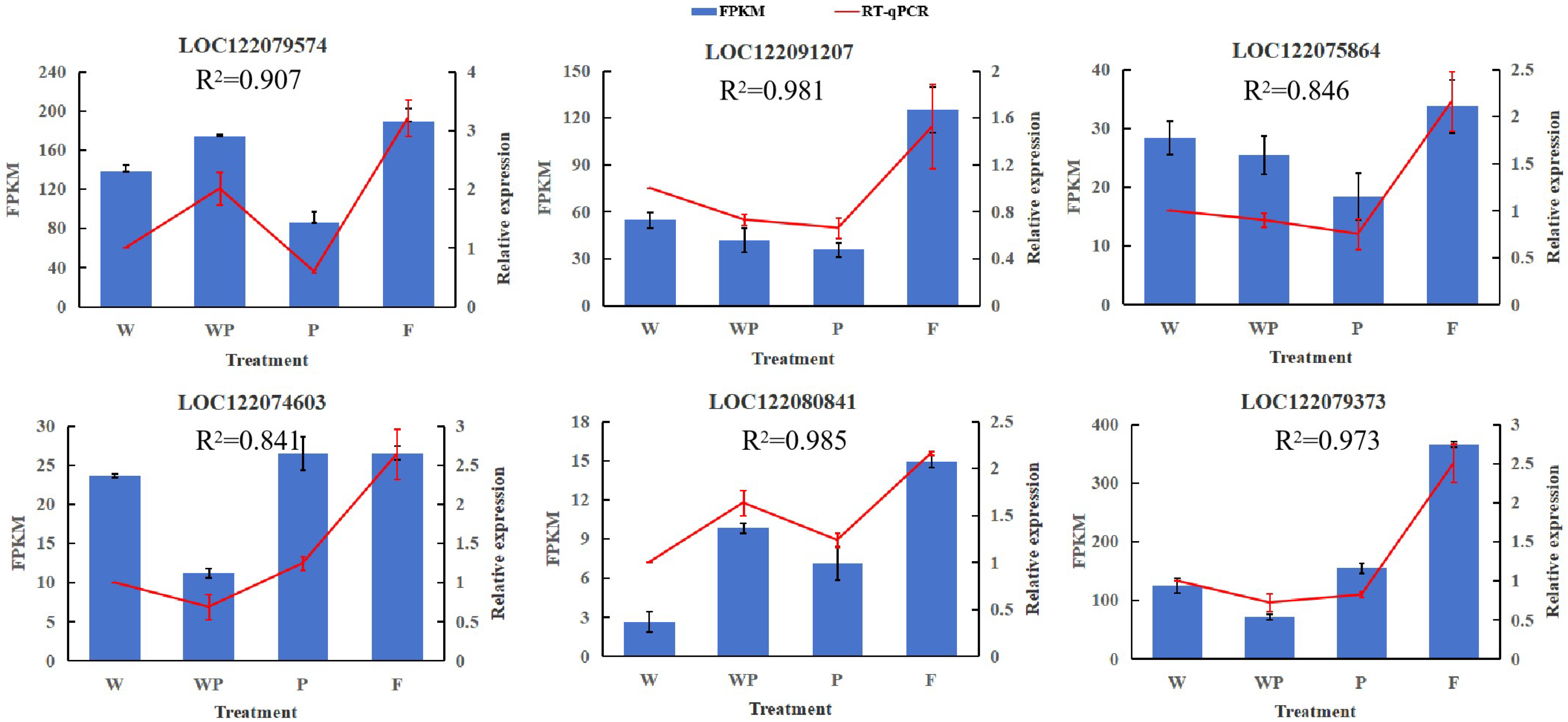
In this study, six differentially expressed genes (DEGs) were selected as candidates for validation by RT-qPCR. These genes were all highly expressed members of the significantly enriched KEGG pathways, using the same RNA samples as in RNA sequencing. The specific experimental procedure is as follows: Firstly, cDNA was synthesized using the Vazyme Biotech (Nanjing Huada Biotechnology Co., Ltd., Nanjing, China) R223 reverse transcription kit, and the operation was strictly carried out in accordance with the instructions; β-actin was used as the internal reference gene, and the reaction system was established according to reference [23]; the relative expression levels of genes were calculated using the 2−ΔΔCt method [24]. To ensure the reliability of the results, three biological replicates were set for each sample, and the primer sequences used are detailed in Supplementary Table S1.

2.8. Statistical Analysis

In this study, various statistical and visualization methods were employed to analyze the experimental data. The means and standard errors of biological replicates were calculated using Microsoft Excel 2019, and graphs were generated with GraphPad Prism 8.0.2. Analysis of variance (ANOVA) was performed in SPSS 22.0, and the significance of intergroup differences was determined using Duncan’s test (p < 0.05). For metabolomic data, principal component analysis (PCA) was conducted on the online platform (https://www.bioinformatics.com.cn/, accessed on 28 March 2025). Additionally, heatmaps were plotted and multi-omics integration analysis was carried out using TBtools 1.068.

3. Results

3.1. Number of Flowers per Inflorescence, Fruit Production, and Fruit Set Rates of Different Colored Macadamia

Among the four different colors, group W had the highest number of flowers, approximately 305, which was about 100 more than the pink and purple groups. There was a significant difference in the number of flowers. However, in this experiment, group F had the largest number of fruits, approximately 7, which had 75% more fruits than W. Therefore, the conclusion was drawn that the fruit set rate of group F was the highest, approximately 2.78, which was 1.37, 1.33, and 0.79 higher than that of groups W, WP, and P, respectively. Moreover, our results also showed that as the flower color intensity, the fruit setting rate also increased (Table 1).

3.2. Flower Color and Anthocyanin Content of Macadamia Integrifolia

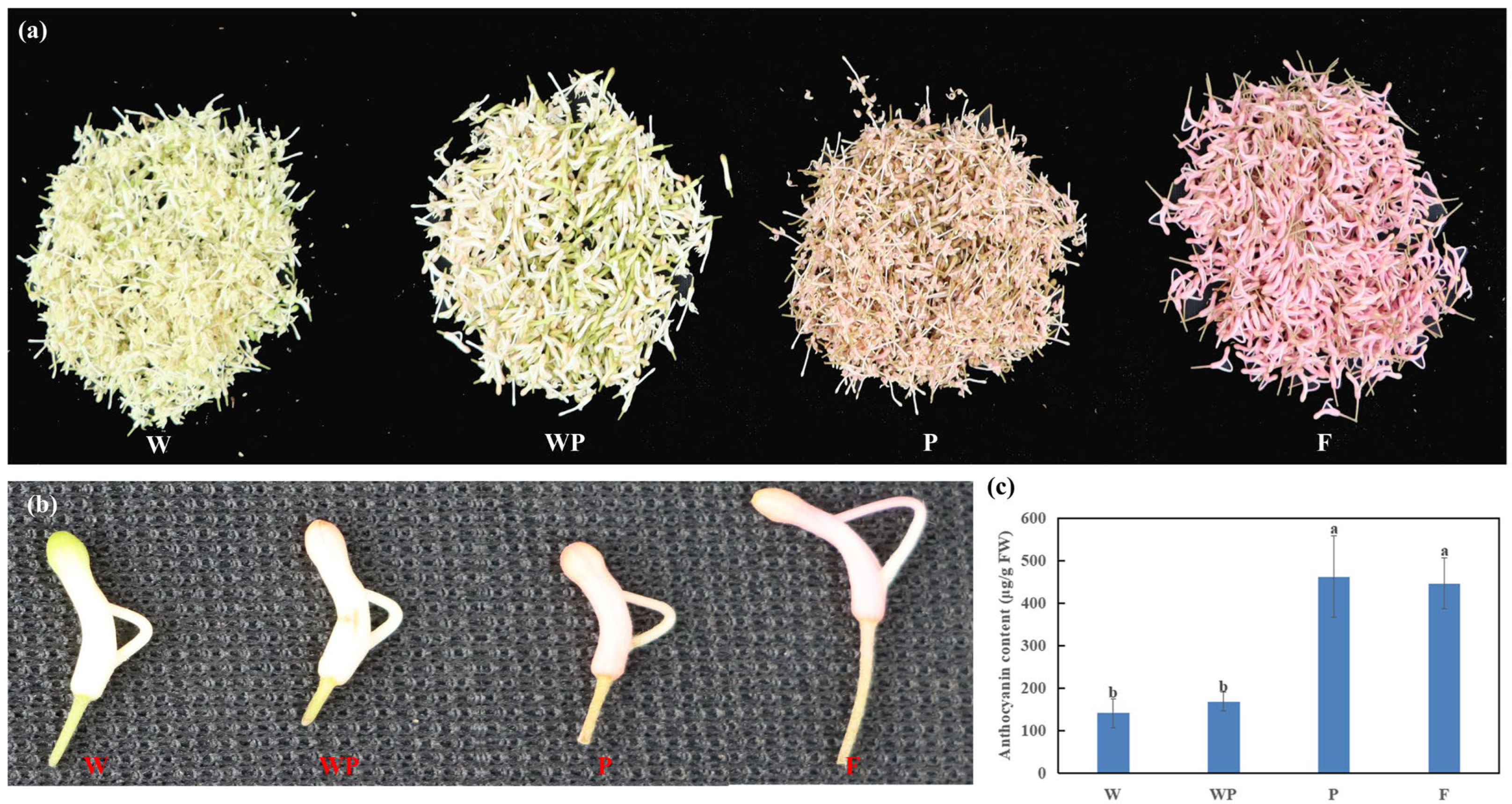
The flower organs of the four macadamia varieties exhibited distinct flower colors: white, light pink, pink, and purplish-pink (Figure 1a,b). Anthocyanin content varied significantly among these color types. P and F showed the highest levels, reaching 462.79 μg/g and 446.35 μg/g, respectively, whereas the W and WP materials contained considerably lower amounts, at 140.52 μg/g and 167.97 μg/g (Figure 1c). Among them, substances such as delphinidin-3-O-galactoside, sophorin-3-O-galactoside, pelargonidin-3-O-galactoside, and proanthocyanidin B4 showed significant increases in the F group and P group compared to the W group and WP group. Delphinidin-3-O-galactoside increased the most in the P group, increasing by approximately 35 times compared to the W group and approximately 18 times when combined with the WP group. Pelargonidin-3-O-galactoside increased the most in the F group, increasing by approximately 55 times compared to the W group and approximately 7 times when combined with the WP group (Table S2).

3.3. Metabolite Analysis of Macadamia Flowers of Different Colors

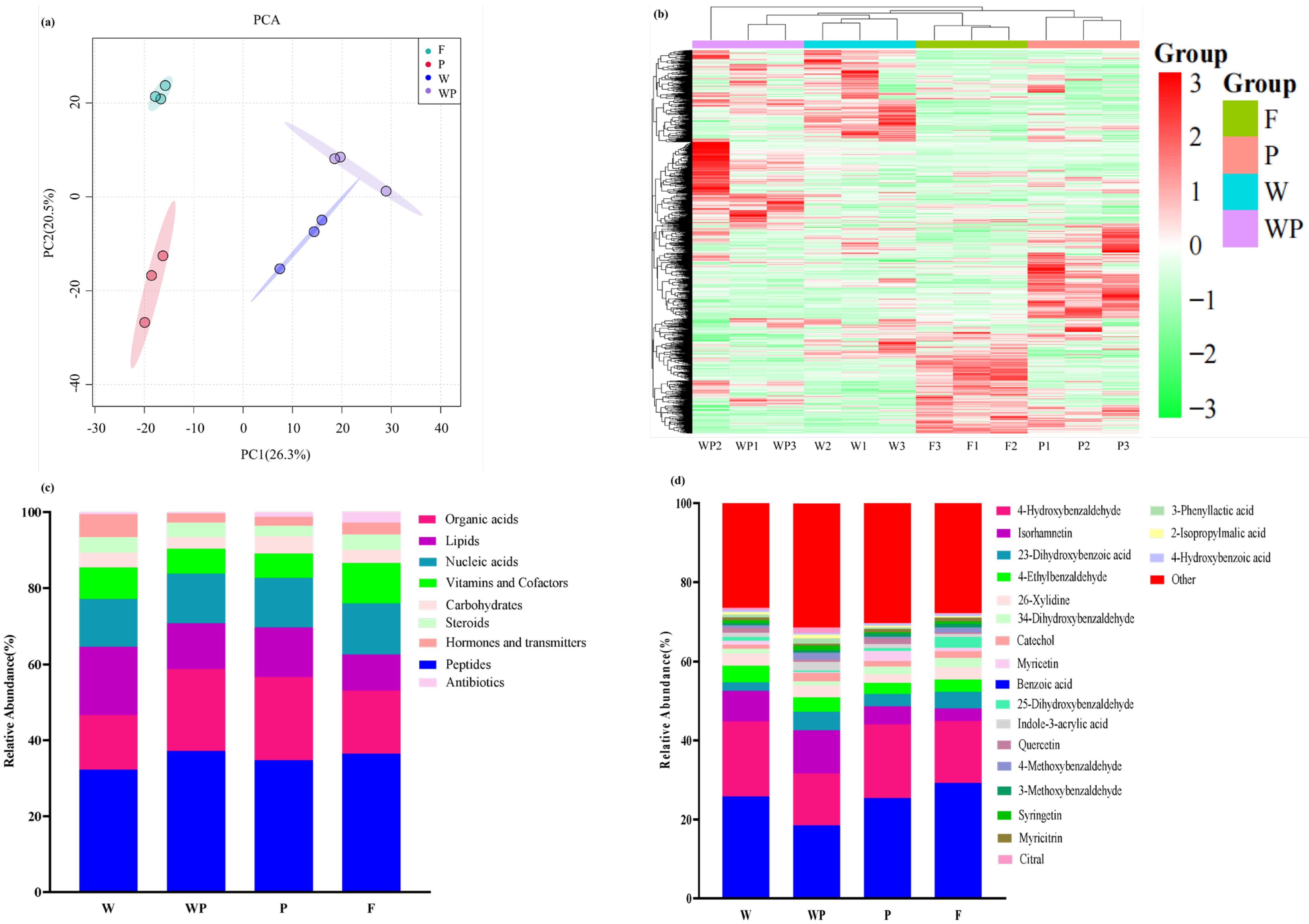
In order to explore the response mechanism of macadamia metabolites to flower color from multiple perspectives, the research team conducted a metabolomics analysis on 12 macadamia flower samples. Firstly, through principal component analysis, it was found that PC1 and PC2 accounted for 63% of the total variance of the metabolites, indicating that the metabolome data were reproducible and reliable (Figure 2a). Metabolomics analysis detected a total of 1359 metabolites, including 115 substances with clear biological functions and 1224 other metabolites (Figure 2b). According to their biological functions, these metabolites can be classified into nine major categories: nucleic acids (22), peptides (20), lipids (18), vitamins and cofactors (17), steroids (11), carbohydrates (10), organic acids (10), hormones and neurotransmitters (5), and antibiotics (2) (Figure 2c). Further analysis revealed that the 20 metabolites with the highest content were as follows: benzoic acid, 4-hydroxybenzaldehyde, isoquercitrin, 2,3-dihydroxybenzoic acid, 4-ethylbenzaldehyde, 2,6-dimethoxyaniline, 3,4-dihydroxybenzaldehyde, catechol, mangiferin, 2,5-dihydroxybenzaldehyde, indole-3-propionic acid, quercetin, 4-methoxybenzaldehyde, 3-methoxybenzaldehyde, eugenol, mangiferin glycoside, 3-phenyllactic acid, 2-isopropylmalic acid, 4-hydroxybenzoic acid, and citral (Figure 2d).
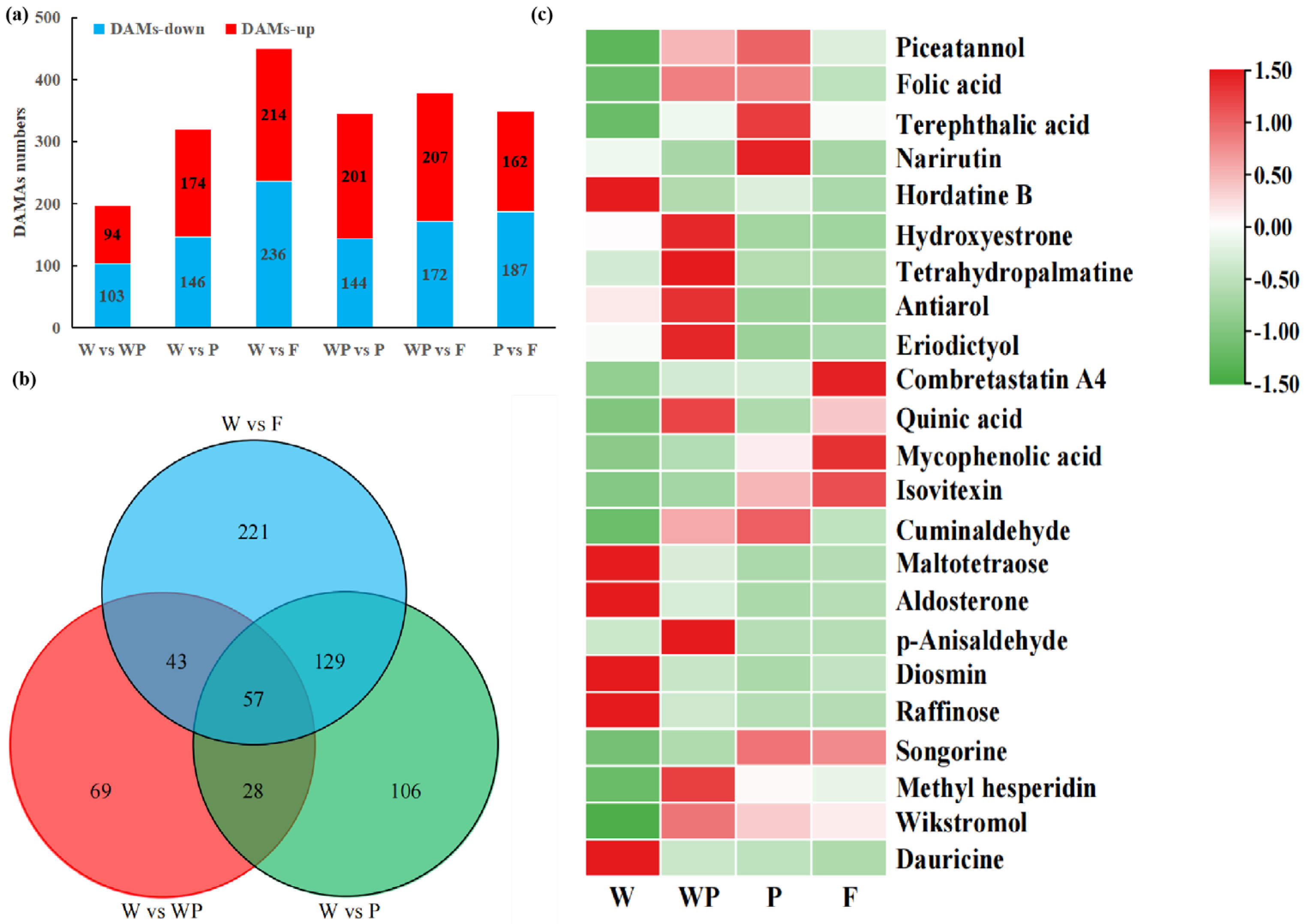
Based on Fold Change and p-value, differential metabolite (DAM) screening was conducted, with the screening criteria set as |log2(Fold Change)| > 1 and p < 0.05. In the three comparison groups (W vs. WP, W vs. P, and W vs. F), a total of 653 DAMs were identified. Among them, the W vs. F group (450 types) and the W vs. P group (320 types) had the largest number of DAMs, indicating that the more vivid the color, the more significant the metabolic differences (Figure 3a,b). Further analysis revealed that there were 57 common DAMs across the three comparison groups, among which 23 had known biological functions, including squalene, folic acid, quinonic acid, etc. (Figure 3c).
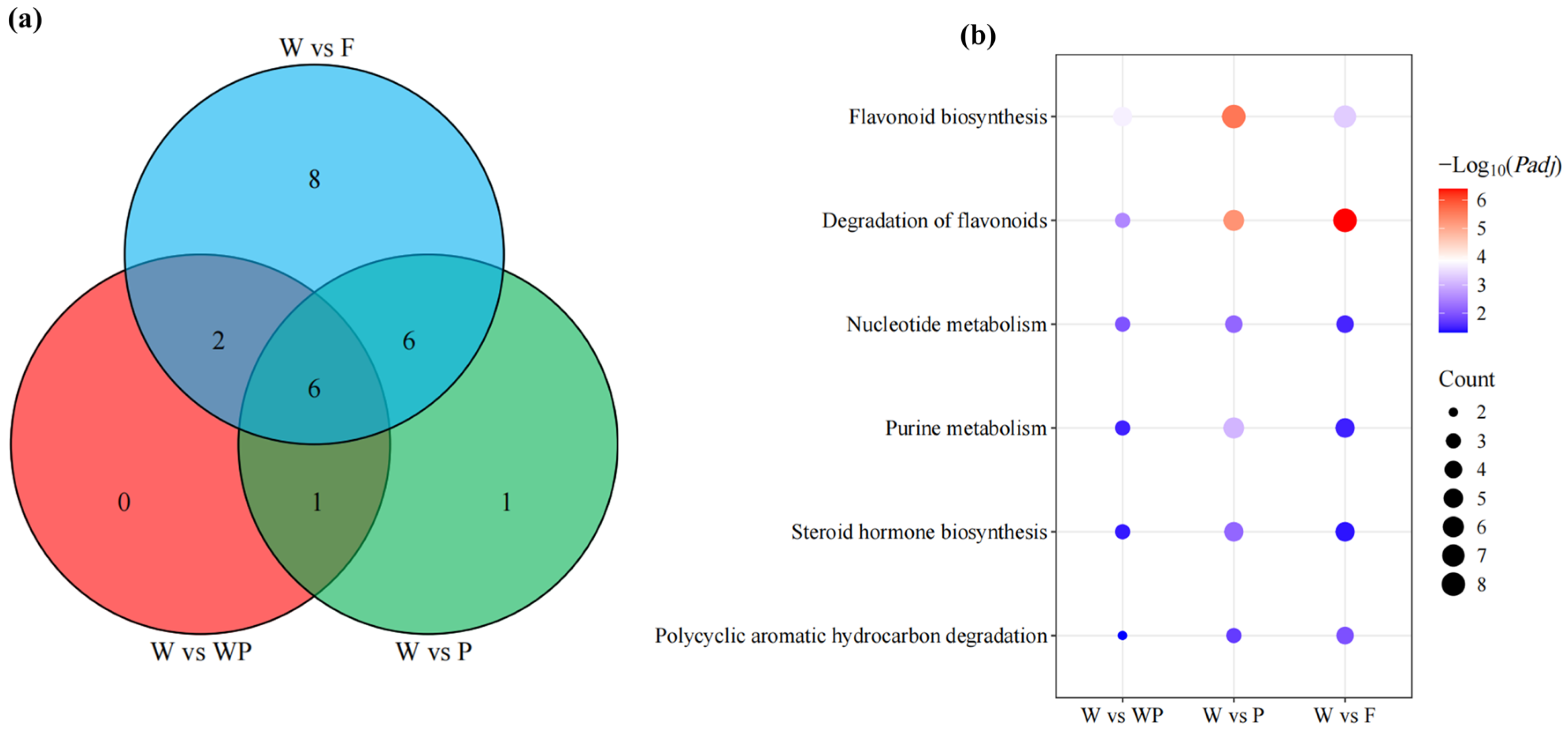
By comparing the DAMs of each treatment group with the KEGG database, the metabolic pathways information was obtained and enrichment analysis was conducted to screen out the significantly enriched metabolic pathways. The results showed that the W vs. WP group significantly enriched 9 pathways, the W vs. P group significantly enriched 14 pathways, and the W vs. F group significantly enriched 22 pathways. The common significantly enriched pathways among the three comparison groups were six in total, including flavonoid biosynthesis, flavonoid degradation, nucleotide metabolism, purine metabolism, steroid hormone biosynthesis, and polycyclic aromatic hydrocarbon degradation pathways (Figure 4a,b).

3.4. Transcriptome Analysis of Different Flower Color Phenotypes of Macadamia

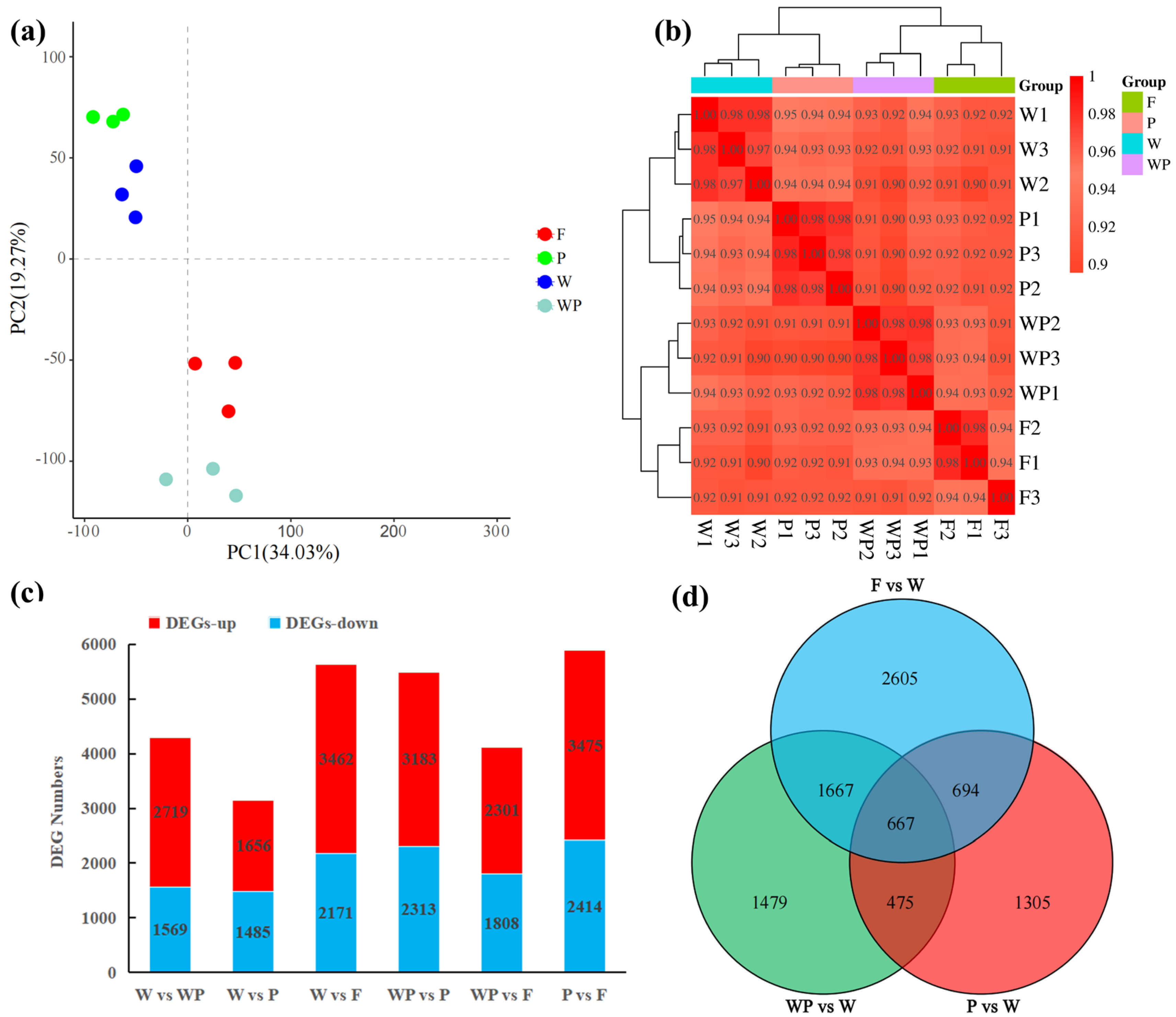
Principal component analysis (PCA) and intra-group correlation assessment were conducted on the transcriptome data of 12 samples. The PCA results showed that the first principal component (PC1) and the second principal component (PC2) accounted for 34.03% and 19.27% of the gene expression variation, respectively (Figure 5a). Through the correlation heatmap analysis, it was found that the biological replicate samples within each treatment group showed a high degree of correlation (R2 > 0.94), confirming the reliability and good repeatability of the experimental data (Figure 5b). Subsequently, transcriptome sequencing analysis was carried out. After strict data quality control, each sample obtained 4308.65–5739.21 million high-quality Clean Reads. The quality assessment of sequencing data showed that the Q20 and Q30 values of all samples remained above 99.18% and 97.53%, respectively. The Clean Reads of each sample were aligned to the macadamia reference genome, resulting in an effective alignment rate of 82.40–89.80% (Table S3). A total of 31,456 expressed genes were detected. Further, differential expression analysis of the obtained genes was conducted, and a cumulative total of 11,514 DEGs were obtained in the six comparison groups of different colors. Among them, 8892 DEGs were obtained in the three comparison groups of W vs. WP, W vs. P, and W vs. F. In the comparison groups W vs. WP, W vs. P, and W vs. F, 4288 (up-regulated 2719, down-regulated 1569), 3141 (up-regulated 1656, down-regulated 1485), and 5633 (up-regulated 3462, down-regulated 2171) DEGs were identified, respectively (Figure 5c). The common DEGs among the three comparison groups were 667 (Figure 5d).

3.5. Functional Annotation and Pathway Enrichment Analysis of Differentially Expressed Genes Based on GO and KEGG Databases

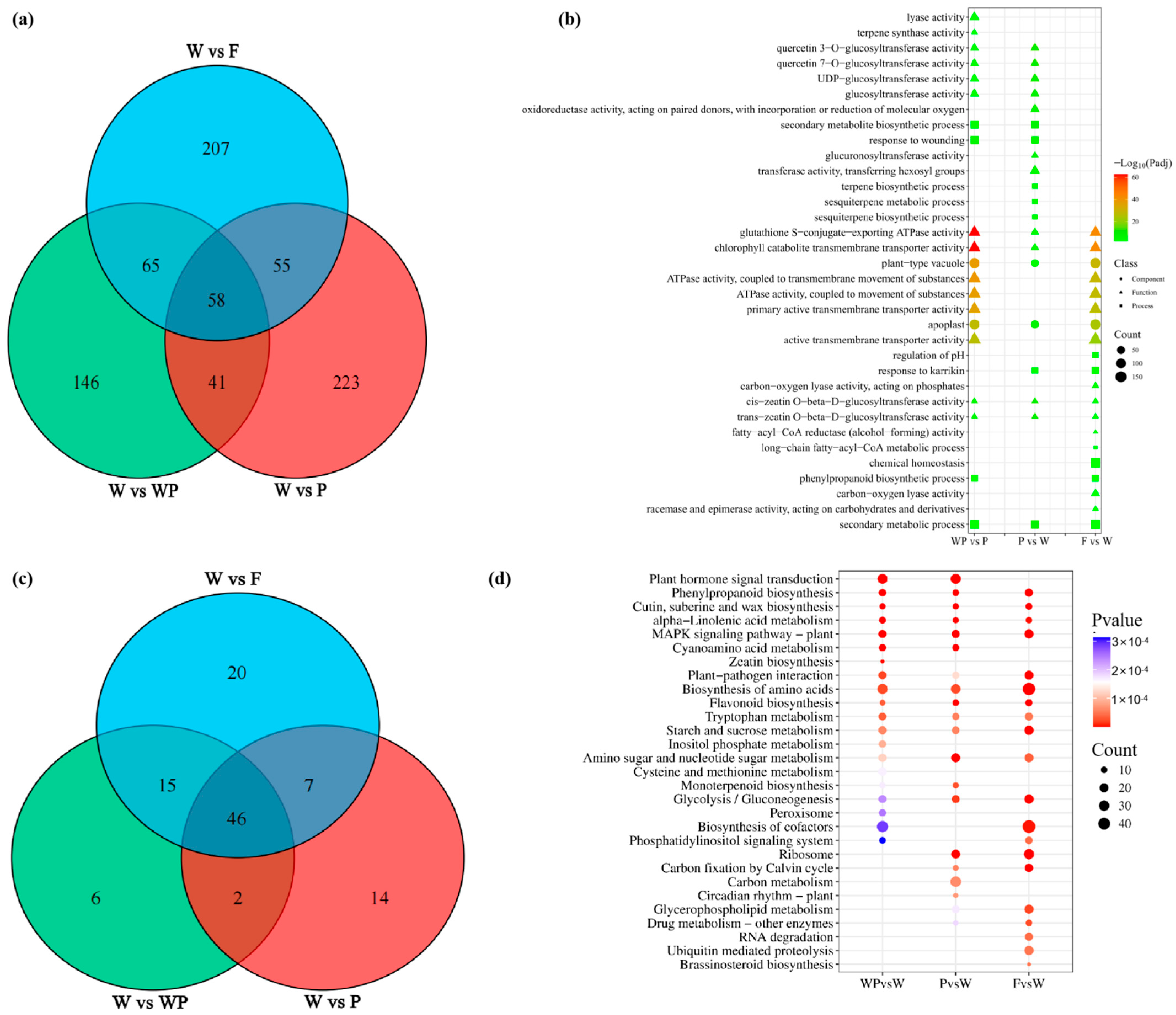
Based on the GO functional annotation database, a functional enrichment analysis was conducted on the DEGs. The results showed that in the three comparison groups (W vs. WP, W vs. P, and W vs. F), 310, 377, and 385 functional entries were significantly enriched (p < 0.05), respectively (Figure 6a). The common significantly enriched entries in the three comparison groups totaled 58, which could be classified into three categories: biological process, molecular function, and cellular component. Among them, the entry number of biological process was the largest. The most significant 20 entries from the common enriched GO entries were selected for in-depth analysis, and it was found that they mainly concentrated on pathways such as secondary metabolism processes, biosynthesis processes of secondary metabolites, and phenylpropanoid biosynthesis processes (Figure 6b). Based on the KEGG database, the metabolic pathways involved by the DEGs under different flower color backgrounds were analyzed. The screening criterion was set at p < 0.05. The results showed that in the three comparison groups (W vs. WP, W vs. P, and W vs. F), 69, 69, and 88 metabolic pathways were significantly enriched, respectively (Figure 6c). The common enriched pathways in the three comparison groups were 46 in total, mainly involving important metabolic pathways such as plant hormone signal transduction, phenylpropanoid biosynthesis, flavonoid biosynthesis, plant MAPK signal pathway, and amino acid biosynthesis (Figure 6d).

3.6. Analysis of Differentially Expressed Genes Related to Transcription Factors

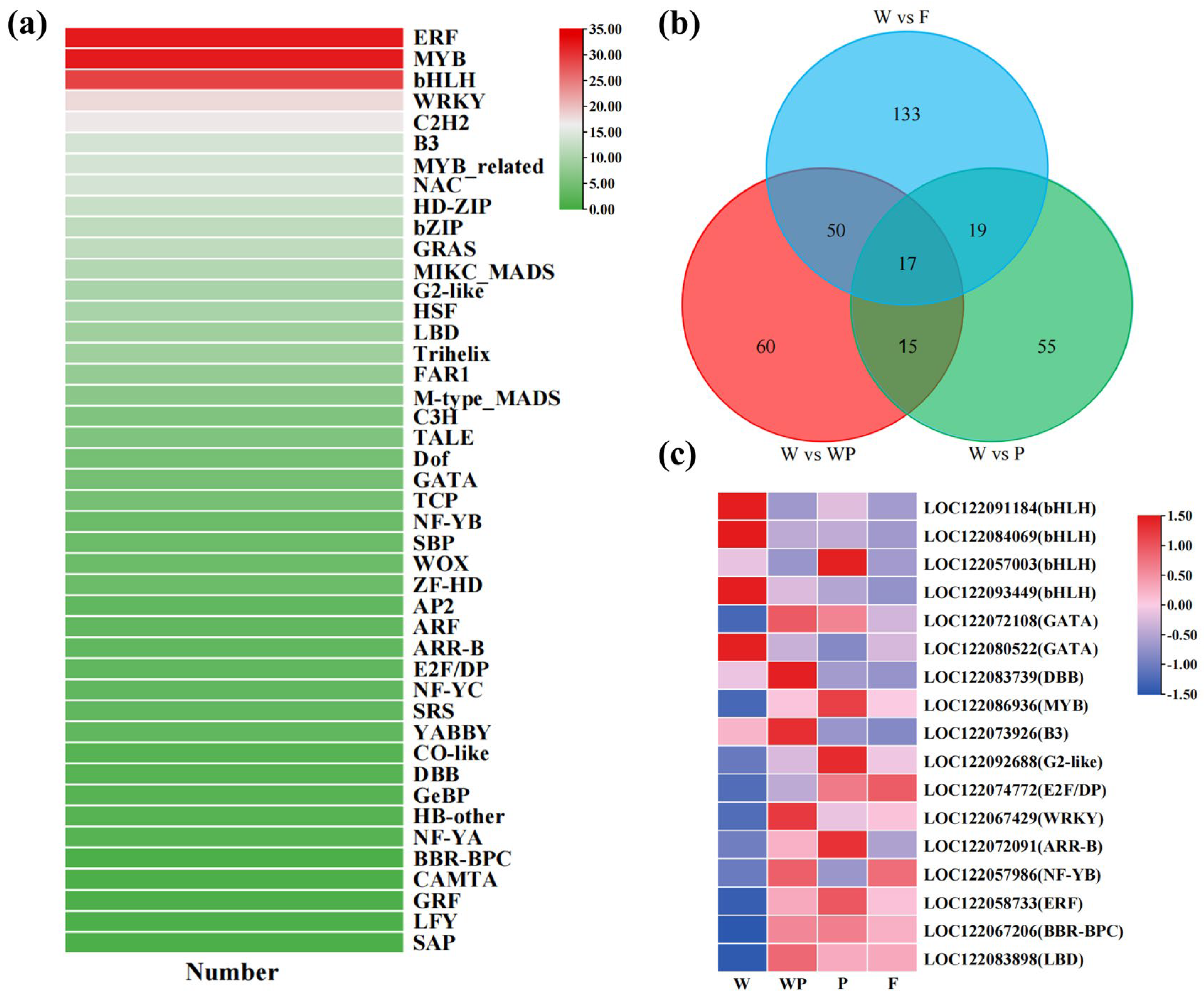
During the process of flower color formation, transcription factors play a crucial role by regulating the expression levels of downstream target genes. In this study, a total of 1410 transcription factors were identified from four different colors of macadamia flowers. From the perspective of family distribution, the numbers of transcription factors in the ERF, MYB, bHLH, WRKY, C2H2, MYB-related, and NAC families were relatively large, with 32, 32, 29, 18, 17, 14, and 14 detected, respectively (Figure 7a). Furthermore, in the comparisons of W with WP, W with P, and W with F, a total of 349 transcription factors showed significant expression differences. Among them, 17 were significantly different in all three groups, and most of the genes had higher expression levels in the F group (Figure 7b,c), suggesting that these family members may play important regulatory roles in the formation of flower color.
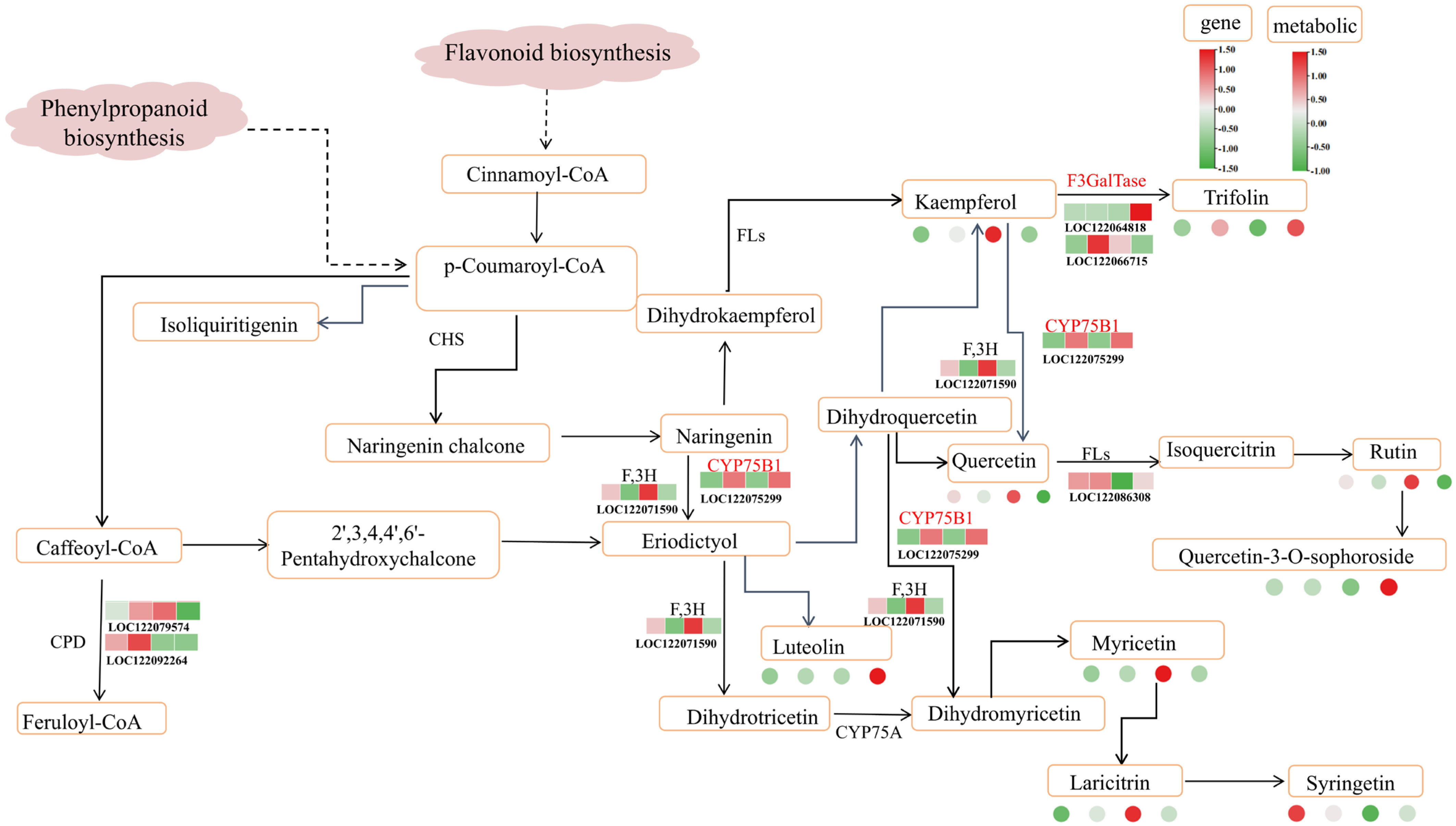
The KEGG markup language adopts an XML structure and is specifically designed to represent molecular interactions, reaction processes, and associated networks within the KEGG pathways. The core value of this format lies in integrating multi-omics data, particularly establishing a bridge between transcriptomics and metabolomics. The transcriptome and metabolome analyses revealed that both the transcriptome and metabolome were enriched in the phenylpropyl biosynthesis and flavonoid metabolism pathways. Therefore, we conducted an analysis of these two pathways.

3.7. Differences in Phenylpropyl Biosynthesis Under Different Colorations

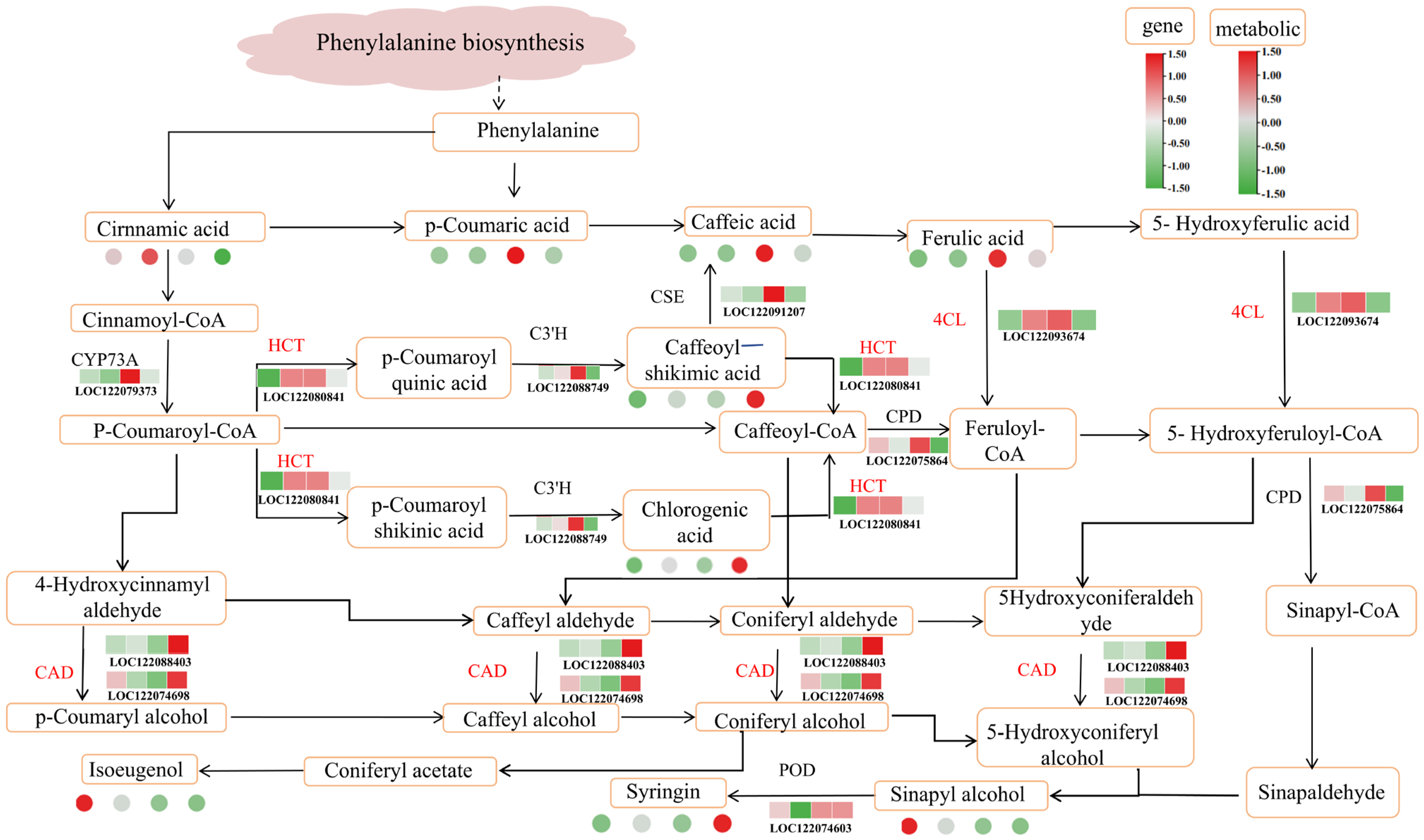
The phenylpropanoid metabolic pathway is the upstream pathway of the flavonoid pathway and is closely related to the synthesis of anthocyanins and chromophores. It was also significantly enriched in the KEGG enrichment analysis of this experiment. Combined with genomic analysis, nine DEGs and nine DAMs were detected on this pathway in different flower colors. These nine genes include HCT (LOC122080841), 4CL (LOC122093674), CAD (LOC122088403, LOC122074698), CSE (LOC122091207), CYP73A (LOC122079373), C3′H (LOC122079373), POD (LOC122088749), and CPD (LOC122075864). Among them, HCT, 4CL, and CAD have higher expression levels in flowers with darker colors. At the metabolite level, the contents of coumaric acid, caffeic acid, ferulic acid, chlorogenic acid, caffeoyl shikimic acid, and eugenol also increased with the deepening of the flower color. Among them, the contents of caffeoyl shikimic acid, chlorogenic acid, and eugenol were the highest in the F group, while coumaric acid and ferulic acid had the highest contents in the WP group. Among them, coumaric acid, caffeic acid, and ferulic acid are some of the sources of the flower base color, while chlorogenic acid, caffeoyl shikimic acid, and eugenol directly affect the synthesis efficiency of anthocyanins, thereby determining the intensity of the color. Therefore, the synthesis of these substances is crucial for the formation of flower color (Figure 8).

3.8. Differences in Flavonoid Metabolism Under Different Colorations

Many metabolites in the flavonoid pathway affect the synthesis of flower color, and it is one of the important pathways for controlling flower color. In this experiment, eight DEGs and nine DAMs were detected on this pathway. According to KEGG analysis, the key genes identified include CYP75B1 (LOC122075299), F,3H (LOC122071590), CPD (LOC122079574, LOC122092264), FLs (LOC122086308), and F3GalTase (LOC122064818, LOC122066715). Among these, the expression levels of F3GalTase and CYP75B1 were up-regulated in the F group. These genes are critical for the synthesis of flavonoid compounds such as quercetin and myricetin. The metabolite profile corresponded well with the gene expression results. Compounds including luteolin, trifolin, and quercetin-3-O-sophoroside showed the highest accumulation in the F group. These metabolites contribute to flower coloration by providing a base pigmentation, assisting in color presentation, and stabilizing the developed color, thereby playing essential roles in the formation of flower hues (Figure 9).

3.9. Quantitative Real-Time PCR (RT-qPCR)

To validate data reliability, six key genes and transcription factors identified through multi-omics analysis were selected for experimental verification. Both RNA sequencing and RT-PCR results demonstrated that all six genes exhibited their highest expression levels in the F group. Their lowest expression levels, however, varied across groups: LOC122079574, LOC122091207, and LOC122075864 were lowest in the P group; LOC122074603 and LOC122079373 were lowest in the WP group; and LOC122080841 was lowest in the W group. Furthermore, the expression trends from RT-PCR highly agreed with those from RNA sequencing (Figure 10), indicating that the transcriptomic data reliably reflects gene expression differences across the treatment groups.

4. Discussion

4.1. Correlation Analysis of Flower Color Depth, Anthocyanin Accumulation, and Fruit Setting Rate

Given that global agricultural production capacity may struggle to meet the growing demand for food in the future, the development and utilization of woody crop resources have become particularly important [25]; as a key woody crop, macadamia yield is closely related to pollination efficiency [26]. Flower color serves as a critical visual signal in plant-pollinator interactions: deeper flower hues enhance floral visibility against green backgrounds, thereby increasing pollination success and crop yield. In this study, the deeply pigmented F group demonstrated a 75% higher fruit set rate compared to the lightly pigmented W group, suggesting that flower color intensity may be a key factor contributing to yield improvement. These findings are consistent with the conclusions reported by Jose et al. [27]. Therefore, this research focuses on the flower color of macadamia to systematically elucidate the metabolic and molecular mechanisms underlying its formation, aiming to provide a theoretical basis for improving yield. Our metabolomic analysis identified key differentially accumulated metabolites (DAMs)—including pyrrolidone, folic acid, and quinic acid—which were present at significantly higher levels in the F group. Previous studies have demonstrated the functional importance of these compounds in flower pigmentation in species such as Black Nightshade and Fragaria × ananassa. Integrating prior evidence with our current findings solidifies the conclusion that pyrrolidone, folic acid, and quinic acid play critical roles in flower color formation [28,29]. Studies have shown that factors such as ERF, WRKY, and MYB form co-expression networks with structural genes, functioning at multiple stages of the carotenoid pathway and influencing flower color [30]; research has also indicated that MYB can change flower color through the regulation of the FhPAP1 gene, which is closely linked to the genes involved in the later steps of anthocyanin biosynthesis [31]. The transcriptome analysis in this study revealed that the transcription factors ERF, WRKY, and MYB, associated with flower pigmentation, are significantly up-regulated in the purplish-red cultivar ‘695’, which also has the deepest flower color, further affirming their relationship with color intensity. This finding is consistent with previous research. Anthocyanins are key pigments determining flower color. In this study, the F group, which exhibited the deepest flower color, showed an anthocyanin content 305.83 μg/g higher than that of the W group. This result provides direct evidence that anthocyanin accumulation is the primary factor underlying the intense coloration, a conclusion that aligns with previous research [14,32,33], in addition, pelargonidin, as a key component of anthocyanins, accounts for approximately 85% of the total anthocyanin content. In this experiment, the F group also demonstrated the highest accumulation of pelargonidin, which is consistent with previous studies [34]. Notably, KEGG pathway enrichment analysis of both transcriptomic and metabolomic data revealed significant enrichment in phenylpropanoid biosynthesis and flavonoid metabolic pathways. These pathways have been extensively demonstrated to be involved in anthocyanin biosynthesis and flower color formation [35,36,37]. These results indicate that flower color formation in macadamia is regulated by a complex network involving multiple genes and metabolites.

4.2. Role of Phenylpropanoid Metabolism in Regulating Flower Color in Macadamia

Anthocyanins have also been reported to be an important substance in the synthesis of flower color [14,38]. In our experiment, among the four varieties, the deep magenta 695 variety group had the highest anthocyanin content. This not only demonstrates the role of anthocyanins in flower color formation but also validates previous conclusions. Moreover, this phenylpropyl biosynthesis is responsible for the synthesis of phenolic compounds within plants. These phenolic compounds, especially flavonoids, are one of the three major pigment groups that determine the color of plants’ flowers. Therefore, this phenylpropyl biosynthesis plays a significant role in the formation of flower colors [39]. In this phenylpropanoid metabolism, it has been demonstrated that p-coumaric acid directly constitutes a part of the framework of flavonoid molecules. Without p-coumaric acid, most flowers would lose their red, purple, blue, and some yellow colors [40]; hydroxycinnamic acids are an important class of compounds, with chlorogenic acid and ferulic acid being the primary hydroxycinnamic acids. Their origin lies in the general metabolic pathway of phenylpropanoid compounds, which is closely linked to the anthocyanin biosynthesis pathway and represents a series of downstream reactions within it. As metabolites closely associated with anthocyanin synthesis, higher levels of chlorogenic acid and ferulic acid correspond to higher anthocyanin content. In this experiment, the F group with the highest anthocyanin content not only exhibited significantly elevated anthocyanin levels but also showed markedly increased concentrations of chlorogenic acid and ferulic acid. This indicates the importance of chlorogenic acid and ferulic acid in the anthocyanin biosynthesis process and also demonstrates their influence on flower coloration [41]. Compared to the white variety NY2 group, the contents of ocimic acid and chlorogenic acid were higher. Therefore, through the comparison of the results before and after the experiment and previous studies, it can be concluded that p-coumaric acid and chlorogenic acid in the phenylpropanoid metabolism play an important role in the formation of flower color.

4.3. Contribution of Flavonoid Biosynthesis to Flower Pigmentation in Macadamia

The flavonoid metabolic pathway is a derivative of the phenylpropanoid biosynthesis pathway. Anthocyanins, as members of the flavonoid family [42], possess natural pigmentation functions and impart coloration to plants [43]. The enhancement of their color intensity is closely associated with organic components such as phenolic acids, flavonoids, or flavonol derivatives, as well as the formation of weak covalent complexes [44]. Flavonols, a subclass of flavonoids, are primarily composed of four compounds in plant vacuoles: quercetin, kaempferol, myricetin, and isorhamnetin. They not only assist anthocyanins in color formation but also protect anthocyanins from degradation. In this experiment, as flower color deepened, the expression levels of genes involved in flavonoid synthesis (such as flavonol 3-O-galactosyltransferase) were significantly up-regulated. Concurrently, the contents of compounds like quercetin-3-O-saponarin and luteolin (a quercetin derivative) increased correspondingly, thereby promoting anthocyanin biosynthesis. These results are consistent with previous studies, indicating that flavonoid compounds play a key role in flower coloration [45,46].

5. Conclusions

This study systematically elucidated the molecular mechanisms underlying flower color formation in macadamia. High-throughput analysis identified a total of 1359 differentially accumulated metabolites among the four flower color varieties, with prominent compounds such as benzoic acid, 4-hydroxybenzaldehyde, and isorhamnetin. Transcription factors including ERF, MYB, and WRKY were significantly up-regulated in darker-colored flowers. Anthocyanin, a key pigment responsible for flower coloration, was most abundant in pink and purplish-pink varieties (462.79 μg/g and 446.35 μg/g), while white and light-pink varieties showed lower levels (140.52 μg/g and 167.97 μg/g). KEGG analysis enriched two key metabolic pathways: phenylpropanoid biosynthesis and flavonoid metabolism. Key genes such as shikimate hydroxycinnamoyl transferase and flavonol 3-O-galactosyltransferase, as well as metabolites including p-coumaric acid, chlorogenic acid, and myricetin, exhibited consistent trends with flower color development. The study also found that the fruit set rates of macadamia in W, WP, P, and F were 1.31%, 1.35%, 1.99%, and 2.78%, respectively. This suggests a potential correlation between flower color intensity and fruit set, although this hypothesis requires further validation. These findings enhance the understanding of the regulatory mechanisms of flower color formation in macadamia and provide a theoretical basis for breeding practices.

Supplementary Materials

The following supporting information can be downloaded at: https://www.mdpi.com/article/10.3390/horticulturae11111347/s1, Table S1: Primers selected for real-time quantitative polymerase chain reaction (RT-qPCR) analysis. Table S2: The content of various anthocyanins in different varieties. Table S3: Table of transcriptome data from 12 samples of macadamia flower.

Author Contributions

All authors contributed to the study’s conception. Material preparation was performed by G.G., H.C., J.G., X.S. and F.Y.; L.T., Q.L., Q.S. and Q.Z. analyzed the data, constructed the figures, and wrote the draft. Z.K., W.W., H.Z. and X.T. conceived and designed the experiment, provided financial support, and reviewed the manuscript. All authors have read and agreed to the published version of the manuscript.

Funding

This research was financially supported by Chinese Academy of Tropical Agricultural Sciences for Science and Technology Innovation Team of National Tropical Agricultural Science Center (No. CATASCXTD202512); Forest Research Project of Guizhou Province (Qianlinkehe [2025] No. 07); Yunnan Province Twelfth Batch Technological Innovation Talent Cultivation Candidate Project (202305AD160033); Yunnan Special Fund for Scientific and Technological Innovation of Tropical Crops (RF2025); Subsidies for the Cultivation of Forest Tree Seeds and Seedlings (2024-ZM-39; 2025-ZM-19); Forestry Science and Technology Innovation Platform Operation Subsidy Funds (2020132540); Ministry of Agriculture Opening Project Fund of Key Laboratory of Tropical Fruit Biology, Ministry of Agriculture & Rural Affairs.

Data Availability Statement

The original contributions presented in this study are included in the article/Supplementary Material. Further inquiries can be directed to the corresponding authors.

Conflicts of Interest

The authors declare that they have no known competing financial interests or personal relationships that could have appeared to influence the work reported in this paper.

References

  1. Kang, Z.M.; Wang, R.; Guo, G.Z.; Wang, D.G.; He, F.P.; Song, X.M.; Geng, J.J. Physiological Responses of 5 Australian Nut Germplasm Materials’ Leaves to Low Temperature Stress. Econ. For. Res. 2025, 54, 1–9. [Google Scholar] [CrossRef]
  2. Aquino-Bolaños, E.N.; Mapel-Velazco, L.; Martín-del-Campo, S.T.; Chávez-Servia, J.L.; Martínez, A.J.; Verdalet-Guzmán, I. Fatty acids profile of oil from nine varieties of Macadamia nut. Int. J. Food Prop. 2017, 20, 1262–1269. [Google Scholar] [CrossRef]
  3. Wei, B.; Hou, K.; Zhang, H.H.; Wang, X.Y.; Wu, W. Integrating transcriptomics and metabolomics to studies key metabolism, pathways and candidate genes associated with drought-tolerance in Carthamus tinctorius L. Under drought stress. Ind. Crop Prod. 2020, 151, 112465. [Google Scholar] [CrossRef]
  4. Rogiers, S.Y. Challenges to optimal macadamia (Macadamia spp.) kernel quality in a changing climate. Funct. Plant Biol. 2025, 52, FP24218. [Google Scholar] [CrossRef]
  5. Hare, T.J.; Trieu, H.H.; Topp, B.; Russell, D.; Pun, S.; Torrisi, C.; Liu, D. Assessing fatty acid profiles of macadamia nuts. HortScience 2019, 54, 633–637. [Google Scholar] [CrossRef]
  6. Shuai, X.; Dai, T.; Chen, M.; Liu, C.M.; Ruan, R.; Liu, Y.; Chen, J. Characterization of lipid compositions, minor components and antioxidant capacities in macadamia (Macadamia integrifolia) oil from four major areas in China. Food Biosci. 2022, 50, 102009. [Google Scholar] [CrossRef]
  7. Hu, W.; Fitzgerald, M.; Topp, B.; Alam, M.; O’Hare, T.J. A review of biological functions, health benefits, and possible de novo biosynthetic pathway of palmitoleic acid in macadamia. J. Funct. Foods 2019, 62, 103520. [Google Scholar] [CrossRef]
  8. Shuai, X.X.; Dai, T.T.; David, J.M.; Roger, R.; Du, L.Q.; Liu, Y.H.; Chen, J. Hypolipidemic effects of macadamia oil are related to AMPK activation and oxidative stress relief: In vitro and in vivo studies. Food Res. Int. 2023, 168, 112772. [Google Scholar] [CrossRef]
  9. Fróna, D.; Szenderák, J.; Harangi-Rákos, M. The challenge of feeding the world. Sustainability 2019, 11, 5816. [Google Scholar] [CrossRef]
  10. Alcaraz, M.L.; Hormaza, J.I. Fruit set in avocado: Pollen limitation, pollen load size, and selective fruit abortion. Agronomy 2021, 11, 1603. [Google Scholar] [CrossRef]
  11. Trueman, S.J.; Kämper, W.; Nichols, J.; Ogbourne, S.M.; Hawkes, D.; Peters, T.; Hosseini, B.S.; Wallace, H.M. Pollen limitation and xenia effects in a cultivated mass-flowering tree, Macadamia integrifolia (Proteaceae). Ann. Bot. 2022, 129, 135–146. [Google Scholar] [CrossRef]
  12. Lai, Q.; Zhu, Y.L.; Wu, S.; Chong, H.N.; Zheng, D.S.; Zou, Y.; Xiao, H.J. The impacts of colorful oilseed rape on pollinator diversity and its pollination services. Insect Sci. 2025; Advance online publication. [Google Scholar] [CrossRef]
  13. Li, Y.Q.; Bao, T.T.; Zhang, J.; Li, H.J.; Shan, X.T.; Yan, H.J.; Shadrack, K.; Zhang, L.S.; Gao, X. The coordinated interaction or regulation between floral pigments and volatile organic compounds. Hortic. Plant J. 2025, 11, 463–485. [Google Scholar] [CrossRef]
  14. Borghi, M.; Fernie, A.R. Floral metabolism of sugars and amino acids: Implications for pollinators’ preferences and seed and fruit set. Plant Physiol. 2017, 175, 1510–1524. [Google Scholar] [CrossRef] [PubMed]
  15. Li, X.; Bu, F.; Zhang, M.; Li, Z.; Zhang, Y.; Chen, H.; Xue, W.; Guo, R.; Qi, J.; Kim, C.; et al. Enhancing nature’s palette through the epigenetic breeding of flower color in chrysanthemum. New Phytol. 2025, 245, 2117–2132. [Google Scholar] [CrossRef]
  16. Li, S.; Li, X.; Wang, X.; Chang, T.; Peng, Z.; Guan, C. Flavonoid synthesis-related genes determine the color of flower petals in Brassica napus L. Int. J. Mol. Sci. 2023, 30, 6472. [Google Scholar] [CrossRef] [PubMed]
  17. Liang, Y.Q.; Han, C.Z.; Liu, Y.; Yang, Y.; Cao, Y.P. Transcriptomic and metabolomic analysis of the mechanism of temperature-regulated anthocyanin biosynthesis in purple Asparagus spears. Sci. Hortic. 2022, 295, 110858. [Google Scholar] [CrossRef]
  18. Wang, Y.; Xia, J.; Wang, Z.; Ying, Z.; Xiong, Z.; Wang, C.; Shi, R. Combined analysis of multi-omics reveals the potential mechanism of flower color and aroma formation in Macadamia integrifolia. Front. Plant Sci. 2023, 13, 1095644. [Google Scholar] [CrossRef] [PubMed]
  19. Yang, J.; Ren, Y.; Zhang, D.; Chen, X.; Huang, J.; Xu, Y.; Aucapiña, C.B.; Zhang, Y.; Miao, Y. Transcriptome-Based WGCNA Analysis Reveals Regulated Metabolite Fluxes between Floral Color and Scent in Narcissus tazetta Flower. Int. J. Mol. Sci. 2021, 22, 8249. [Google Scholar] [CrossRef]
  20. Kang, Z.M.; Li, C.X.; Cai, Y.B.; Guo, G.Z.; Tu, X.H.; Pan, X.J.; Zhang, W. Metabolomic and transcriptomic analysis of macadamia seedling responses to drought stress and the role of MiGST in enhancing drought resistance. Ind. Crop Prod. 2025, 229, 120984. [Google Scholar] [CrossRef]
  21. Want, E.J.; Masson, P.; Michopoulos, F.; Wilson, I.D.; Theodoridis, G.; Plumb, R.S.; Shockcor, J.; Loftus, N.; Holmes, E.; Nicholson, J.K. Global metabolic profiling of animal and human tissues via UPLC-MS. Nat. Protoc. 2013, 8, 17–32. [Google Scholar] [CrossRef]
  22. Chen, S.F.; Zhou, Y.Q.; Chen, Y.R.; Gu, J. fastp: An ultra-fast all-in-one FASTQ preprocessor. Bioinformatics 2018, 34, i884–i890. [Google Scholar] [CrossRef]
  23. Kan, L.; Liao, Q.C.; Chen, Z.P.; Wang, S.Y.; Ma, Y.F.; Su, Z.Y.; Zhang, L. Dynamic Transcriptomic and Metabolomic Analyses of Madhuca pasquieri (Dubard) H. J. Lam During the Post-germination Stages. Front. Plant Sci. 2021, 12, 731203. [Google Scholar] [CrossRef] [PubMed]
  24. Livak, K.J.; Schmittgen, T.D. Analysis of Relative Gene Expression Data Using Real-Time Quantitative PCR and the 2−ΔΔCT Method. Methods 2001, 25, 402–408. [Google Scholar] [CrossRef] [PubMed]
  25. Zhu, P.; Burney, J.; Chang, J. Warming reduces global agricultural production by decreasing cropping frequency and yields. Nat. Clim. Chang. 2022, 12, 1016–1023. [Google Scholar] [CrossRef]
  26. Ramonda, S.S.; Marcelode, O.M.; Mairon, M.; Silva, L.T.C.; Cibele, C.C. Butterflies provide pollination services to macadamia in northeastern Brazil. Sci. Hortic. 2020, 259, 108818. [Google Scholar]
  27. José, C.V.; Melissa, L.O.; Carlos, D.G.; Mª Luisa, B.; Montserrat, A.; Pedro, L.O.; Justen, B.W. Eduardo Narbona, Green flowers need yellow to get noticed in a green world. Ann. Bot. 2025, 135, 1281–1292. [Google Scholar]
  28. Chhon, S.; Jeon, J.; Kim, J.; Park, S.U. Accumulation of Anthocyanins through Overexpression of AtPAP1 in Solanum nigrum Lin (Black Nightshade). Biomolecules 2020, 10, 277. [Google Scholar] [CrossRef]
  29. Lisa, O.; Wee, S.C. Folate, ascorbic acid, anthocyanin and colour changes in strawberry (Fragaria × annanasa) during refrigerated storage. LWT-Food Sci. Technol. 2017, 86, 652–659. [Google Scholar]
  30. Zhang, M.; Chai, Z.H.; Zhang, C.; Chen, L. Unbalanced Expression of Structural Genes in Carotenoid Pathway Contributes to the Flower Color Formation of the Osmanthus Cultivar ‘Yanzhi Hong’. Int. J. Mol. Sci. 2024, 25, 10198. [Google Scholar] [CrossRef]
  31. Yue, Q.L.; Xiao, T.S.; Lin, N.T.; Chao, W.; Ke, Y.L.; Shu, Y.L.; Shadrack, K.; Shu, C.W.; Li, W.; Xiang, G. The Conserved and Particular Roles of the R2R3-MYB Regulator FhPAP1 from Freesia hybrida in Flower Anthocyanin Biosynthesis. Plant Cell Physiol. 2020, 61, 1365–1380. [Google Scholar]
  32. Nguyen, H.M.; Putterill, J.; Dare, A.P.; Plunkett, B.J.; Cooney, J.; Peng, Y.; Souleyre, E.J.F.; Albert, N.W.; Espley, R.V.; Günther, C.S. Two genes, ANS and UFGT2, from Vaccinium spp. are key steps for modulating anthocyanin production. Front. Plant Sci. 2023, 14, 1082246. [Google Scholar] [CrossRef]
  33. Wan, H.; Yu, C.; Han, Y.; Guo, X.; Luo, L.; Pan, H.; Zheng, T.; Wang, J.; Cheng, T.; Zhang, Q. Determination of flavonoids and carotenoids and their contributions to various colors of rose cultivars (Rosa spp.). Fronti. Plant Sci. 2019, 10, 429038. [Google Scholar] [CrossRef] [PubMed]
  34. Lee, J.H.; Lee, H.; Choung, M. Anthocyanin compositions and biological activities from the red petals of Korean edible rose (Rosa hybrida cv. Noblered). Food Chem. 2011, 129, 272. [Google Scholar] [CrossRef]
  35. Edna, K.; Muthamia, K.; Naito1, H.O.; Yukino, K.; Tokuyu, K.; Takuya, N.; Yasunori, H.K.M.; Ken-ichiro, Y.; Yuichi, Y.; Yoshikuni, K.; et al. Elucidation of low-temperature regulated flavone synthesis in dahlia variabilis and its effects on flower color. Horticul. J. 2024, 93, 335–343. [Google Scholar]
  36. Zhang, Z.; Shi, Y.; Ma, Y.; Yang, X.; Yin, X.; Zhang, Y.; Xiao, Y.; Liu, W.; Li, Y.; Li, S.; et al. The strawberry transcription factor FaRAV1 positively regulates anthocyanin accumulation by activation of FaMYB10 and anthocyanin pathway genes. Plant Biotech. J. 2020, 18, 13382. [Google Scholar] [CrossRef]
  37. Tang, Y.H.; Zhao, D.Q.; Tao, J. Daminozide reduces red color intensity in herbaceous peony (Paeonia lactiflora Pall.) flowers by inhibiting the expression of flavonoid biosynthetic genes. Biotech 2018, 8, 102. [Google Scholar] [CrossRef]
  38. Carmona, L.; Alquézar, B.; Marques, V.V.; Peña, L. Anthocyanin biosynthesis and accumulation in blood oranges during postharvest storage at different low temperatures. Food Chem. 2017, 237, 7–14. [Google Scholar] [CrossRef] [PubMed]
  39. Zhou, Z.; Duan, Y.H.; Li, Y.J.; Zhang, P.; Li, Q.; Yu, L.Y.; Han, C.C.; Huo, J.C.; Chen, W.S.; Xiao, Y. CYP98A monooxygenases: A key enzyme family in plant phenolic compound biosynthesis. Horticul. Res. 2025, 12, 6. [Google Scholar] [CrossRef]
  40. Deng, Y.; Lu, S. Biosynthesis and Regulation of Phenylpropanoids in Plants. Crit. Rev. Sci. 2017, 36, 257–290. [Google Scholar] [CrossRef]
  41. Julia, M.; Almudena, B.; Pilar, N.; María, Á.F.G.; Alejandra, S. Rootstock effect on fruit quality, anthocyanins, sugars, hydroxycinnamic acids and flavanones content during the harvest of blood oranges ‘Moro’ and ‘Tarocco Rosso’ grown in Spain. Food Chem. 2021, 342, 128305. [Google Scholar] [CrossRef] [PubMed]
  42. Sánchez, C.M.; Jiménez, L.F.J.; Narbona, E.; Arista, M.; Ortiz, P.L.; Romero, C.F.J.; Ramanauskas, K.I.B.; Fuller, A.A.; Whittall, J.B. Changesat a Critical Branchpoint in the Anthocyanin Biosynthetic Pathway Underlie the Blue to Orange Flower Color Transition in Lysimachia arvensis. Front. Plant Sci. 2021, 12, 633979. [Google Scholar]
  43. Scheffeldt, P.; Hrazdina, G. Co-pigmentation of anthocyanins under physiological conditions. J. Food Sci. 1978, 43, 517–520. [Google Scholar] [CrossRef]
  44. Ke, X.; He, Z.F.; Zhang, B.; Reeves, M.J.; Liu, Y.; Zhao, X.; Duan, C.Q. The effect of prefermentative addition of gallic acid and ellagic acid on the red wine color, copigmentation and phenolic profiles during wine aging. Food Res. Int. 2018, 106, 568–579. [Google Scholar] [CrossRef]
  45. Leo, C.H.; Woodman, O.L. Flavonols in the prevention of diabetes-induced vascular dysfunction. J. Cardiovasc. Pharm. 2015, 65, 532–544. [Google Scholar] [CrossRef]
  46. Wu, Q.; Li, P.C.; Zhang, H.J.; Feng, C.Y.; Li, S.S.; Yin, D.D.; Tian, J.; Xu, W.Z.; Wang, L.S. Relationship between the flavonoid composition and flower colour variation in Victoria. Plant Biol. 2018, 20, 674–681. [Google Scholar] [CrossRef] [PubMed]
Figure 1. The phenotypic characteristics of macadamia and the corresponding anthocyanin content (a,b): phenotypic characters of a single flower, (c): anthocyanin content). W represents the white variety NY2; WP represents the white-pink variety QA3; P represents the pink variety QA5; and F represents the purplish-red variety 695, the same as below. Different lowercase letters indicate significant differences among the varieties (p < 0.05).
Horticulturae 11 01347 g001
Figure 2. (a) Principal component analysis of the samples. (b) Clustering heatmap of metabolites. (c) Relative abundance of compounds with biological roles across treatments. (d) Metabolites ranked in the top 20 in terms of content, with the rest included in Others.
Horticulturae 11 01347 g002
Figure 3. Statistical plot of differential metabolites. (a) Number of differential metabolites in each comparison group; (b) Venn diagram of differential metabolites from the three comparison groups; (c) heatmap of the relative abundance of differential metabolites common to all three comparison groups.
Horticulturae 11 01347 g003
Figure 4. Metabolite KEGG enrichment analysis. (a) Venn diagram of differential metabolites among different comparison groups; (b) commonly enriched metabolic pathways among the comparison groups.
Horticulturae 11 01347 g004
Figure 5. Transcriptome analysis of different colored macadamia (a) and correlation analysis (b) in transcriptome data. (c) Total number of differentially expressed genes among different comparison groups. (d) Venn plots of the number of differential genes between different comparison groups.
Horticulturae 11 01347 g005
Figure 6. Functional annotation and pathway enrichment analysis of differentially expressed genes. (a) Venn diagram of significantly enriched GO terms in the three comparison groups; (b) top 20 common enriched entries for each comparison group; (c) Venn diagram of significantly enriched KEGG pathways in the three comparison groups; (d) top 20 common enriched KEGG pathways for each comparison group.
Horticulturae 11 01347 g006
Figure 7. Analysis of differentially expressed genes related to transcription factors. (a) The heatmap shows the total number of transcription factors with significant differential expression in the comparison group; (b) Venn diagram of differentially expressed transcription factors in the three comparison groups; (c) the heatmap shows the expression levels of significantly differential transcription factors shared by the three control groups.
Horticulturae 11 01347 g007
Figure 8. Joint analysis of transcriptome and metabolome of phenylpropanoid metabolic pathway. Different shapes represent different high-throughput sequencing data in which transcriptional levels (rectangular) and metabolite levels (circular), and different colors indicate different expression and content. The color boxes from left to right represent different treatments in order: the white variety NY2 (W), the white with pink variety QA3 (WP), the pink variety QA5 (P), and the purple-red variety 695 (F). Solid lines generally represent direct and explicit interactions or reactions.
Horticulturae 11 01347 g008
Figure 9. Joint analysis of transcriptome and metabolome of flavonoid metabolism. Different shapes represent different high-throughput sequencing data in which transcriptional levels (rectangular), metabolite levels (circular), and different colors indicate different expression and content. The color boxes from left to right represent different treatments in order: the white variety NY2 (W), the white with pink variety QA3 (WP), the pink variety QA5 (P), and the purple-red variety 695 (F). Solid lines generally represent direct and explicit interactions or reactions, whereas dashed lines typically indicate indirect, putative, or more complex interactions.
Horticulturae 11 01347 g009
Figure 10. RT-qPCR analysis of genes in different varieties. Relative expression of selected genes (line graph relative quantification, bar graph FPKM). Results are expressed as mean ± standard deviation (n = 3). Reference sample: W. R2: Correlation coefficient between FPKM and qPCR values. The white variety NY2 (W), the white with pink variety QA3 (WP), the pink variety QA5 (P), and the purple-red variety 695 (F).
Horticulturae 11 01347 g010
Table 1. The number of flowers per inflorescence, fruit yield, and fruit setting rate of macadamia.
VarietyNumber of Flowers per Inflorescence (n)The Number of Fruits per
Inflorescence (n)
Fruit Set Rate (%)
W305.00 ± 1.00 a4.00 ± 1.00 b1.31 ± 0.33 c
WP271.33 ± 4.51 b3.67 ± 0.58 b1.35 ± 0.20 c
P251.67 ± 3.06 c5.00 ± 0.00 b1.99 ± 0.02 b
F252.00 ± 2.00 c7.00 ± 1.00 a2.78 ± 0.41 a
Note: W represents the white variety NY2; WP represents the white-pink variety QA3; P represents the pink variety QA5; and F represents the purplish-red variety 695. Different lowercase letters indicate significant differences among the varieties (p < 0.05). The “±” symbol represents the standard deviation.
Disclaimer/Publisher’s Note: The statements, opinions and data contained in all publications are solely those of the individual author(s) and contributor(s) and not of MDPI and/or the editor(s). MDPI and/or the editor(s) disclaim responsibility for any injury to people or property resulting from any ideas, methods, instructions or products referred to in the content.