Article

Pulsed Light as a Physical Defense Elicitor in Tomato cv. Marmande: Enhancing Defense Responses and Reducing Botrytis Infection


1
Laboratoire E2Lim (UR24133), Faculté de Sciences et Techniques, Université de Limoges, 123 Avenue Albert Thomas, 87060 Limoges, France
2
EAGL SANODEV, 26 Avenue des Courrières, 87170 Isle, France
*
Author to whom correspondence should be addressed.
Horticulturae 2025, 11(11), 1331; https://doi.org/10.3390/horticulturae11111331
Submission received: 3 October 2025 / Revised: 31 October 2025 / Accepted: 3 November 2025 / Published: 4 November 2025

Abstract

The trade-off between reducing pesticide use and ensuring effective crop protection is a key challenge for sustainable agriculture. Stimulating the plant’s natural defense mechanisms represents a promising alternative. In this study, we evaluated the potential of pulsed light as a physical elicitor in tomato (Solanum lycopersicum). This technology is based on the emission of brief but intense light flashes, covering a broad spectrum (from UV-C to infrared), capable of simultaneous activation of multiple signaling pathways. Tomato plants were treated using a standard protocol and subjected to biochemical, transcriptional, physiological, and pathological analyses. The treatment significantly increased the activity of defense-related and antioxidant enzymes, the accumulation of phenolic compounds and callose, and the expression of key immunity-related genes. Upon Botrytis cinerea inoculation, pretreated tomato plants showed enhanced defense responses and a significant reduction in disease severity, indicating a priming effect. The standard protocol did not impair photosynthesis, growth, or yield. These findings highlight pulsed light as an innovative technology for integrated crop protection.

1. Introduction

The global population is steadily increasing and is projected to reach 10 billion by 2050 [1], requiring an estimated 50% increase in food production compared to 2013 in order to ensure global food security [2]. At the same time, pathogens and pests are responsible for annual global crop losses ranging from 20% to 40% [3]. To mitigate these losses, farmers heavily rely on pesticides. However, despite their recognized effectiveness at preventing pests, these products have well-documented adverse effects on biodiversity, soil and water quality, and human health [4]. In 2023, more than 3.7 million tons of pesticides were still used worldwide [5]. In the context of the agroecological transition, the search for sustainable alternatives has become a major priority, among which the stimulation of plant natural defenses using plant defense stimulators (PDSs), is emerging as a promising strategy.
As sessile organisms, plants have evolved a sophisticated array of defense mechanisms enabling effective responses to biotic stress. These defenses include, on the one hand, the so-called passive mechanisms, non-specific and constitutively present, such as mechanical barriers or constitutive antimicrobial metabolites, and on the other hand, active defenses, which are triggered upon pathogen recognition. This recognition relies on the perception of either conserved molecular patterns such as PAMPs (Pathogen-Associated Molecular Patterns, e.g., flagellin) and DAMPs (Damage-Associated Molecular Patterns, e.g., oligogalacturonides) by membrane-bound receptors (PRRs) or of specific effectors detected by intracellular receptors such as NB-LRRs [6]. Recognition initiates a cell signaling cascade allowing extensive transcriptional reprogramming, leading to, among others, cell wall reinforcement, synthesis of pathogenesis-related (PR) proteins, production of antimicrobial compounds, and sometimes the establishment of a hypersensitive response [7,8,9]. These local responses can also extend throughout the plant via systemic mechanisms such as the systemic acquired resistance (SAR) signal transduction pathway [10,11].
Advances in molecular biology have allowed a better understanding of the signaling events involved in plant–pathogen interactions, paving the way for the development of PDSs, either of biological origin (yeast, algal or fungal extracts) or chemical nature (phosphites, amino acids, etc.) [12,13,14,15]. More recently, the so-called physical elicitors have also been explored, leveraging the overlap between biotic and abiotic stress signaling pathways. Among these physical stimuli, light represents a particularly relevant lever. Beyond its role in photosynthesis, light acts a major environmental signal regulating key biological processes such as photomorphogenesis, circadian rhythms, and defense responses to both abiotic and biotic stressors [16]. This regulation is mediated by specific photoreceptors that enable plants to detect subtle variations in light wavelength or intensity, and to further activate intracellular signaling cascades [17].
Among these photoreceptors, UVR8 plays a central role in the perception of UV-B and UV-C [18,19], activating the UVR8-HY5 signaling pathway, which is known to contribute to the light-dependent activation of numerous immune responses [20]. Several studies have shown that controlled light exposure, particularly to UV-B and UV-C, can enhance plant immunity by inducing the biosynthesis of secondary metabolites, activating hormonal signaling pathways (salicylic acid (SA), jasmonic acid (JA)), and triggering the expression of defense-related genes [19,21,22,23]. The combination of UV-B and UV-C has been reported to further amplify these effects. For instance, in tomato plants, this combination was shown to simultaneously activate both SA- and JA-mediated signaling pathways, resulting in an 81% reduction in the severity of Sclerotinia sclerotiorum infection [24].
In this context, pulsed light emerges as an innovative elicitor technology. It is characterized by the emission of very short but intense flashes covering a broad spectral range, from UV-C to infrared. By combining multiple wavelengths known to have immunostimulant effects, this technology could synergistically activate several defense pathways, thereby enhancing the amplitude and durability of the induced responses, while minimizing the duration constraints of light exposure. Although its postharvest use has been documented for fruit preservation and reduction in storage diseases [25,26], its potential as a preharvest plant defense stimulator remains largely unexplored.
The present work is aimed at characterizing, for the first time, the ability of pulsed light to induce defense responses in tomato (Solanum lycopersicum). This species is widely used both as an agronomic and as a scientific research model. Tomato is a key crop in plant pathology studies, due to its susceptibility to biotic stress, linked to low genetic diversity [27]. As a result of these comprehensive studies, research of tomato benefits from large and well-established genetic and molecular resources. We evaluated the effects of pulsed light on various defense markers (enzymatic, transcriptional, physiological), as well as its effectiveness in limiting the development of Botrytis cinerea, a major necrotrophic pathogen affecting this crop [28].

2. Materials and Methods

2.1. Plant Material and Growth Conditions

Tomato plants (Solanum lycopersicum L., cv. Marmande) were grown under greenhouse conditions in a semi-controlled environment in individual pots filled with a professional horticultural substrate (Vertys GO PP7, Jiffy®, Zwijndrecht, The Netherlands). Sowing was performed with two seeds per pot, and thinning was carried out one week before the beginning of light treatments to retain only one plant per pot. Plants were watered two to three times per week by capillarity, by adding water directly into the saucers. Light treatments were applied at the 4–6 true leaf stage (BBCH 14–16). No fertilizers or phytosanitary products were used during the entire experiment.

2.2. Pulsed Light Treatment

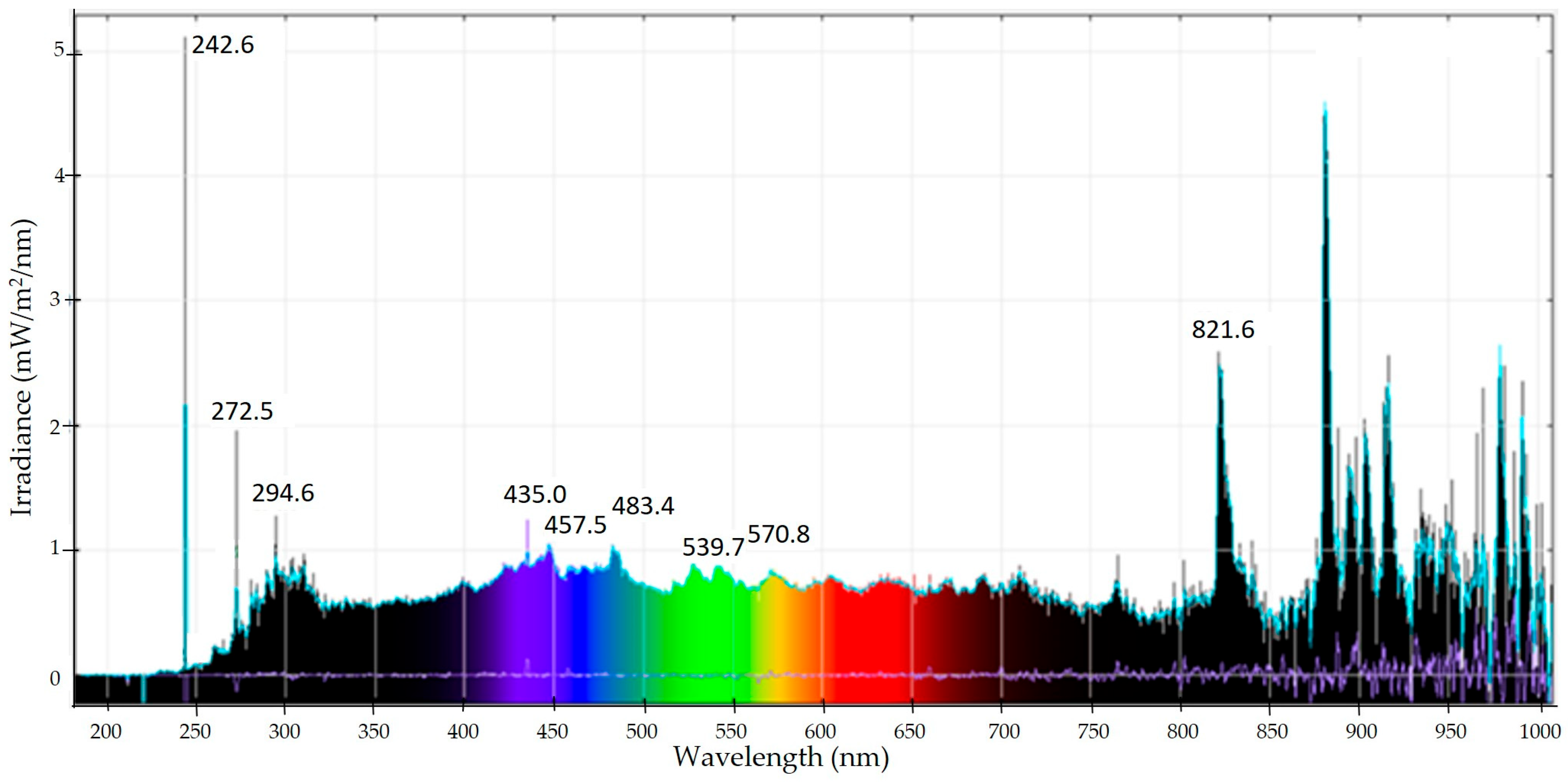
Pulsed light treatments were carried out using the LP.Box system (Figure S1; SANODEV®, Limoges, France), a flash-based device originally designed for disinfection applications. The system operates via capacitive discharge in a xenon arc lamp, producing high-intensity polychromatic light covering a broad spectrum from 180 to 1200 nm. Operating parameters were set to 4000 V, with a flash frequency of 3 Hz and an energy output of 140 J per pulse. The spectral distribution of the pulsed light was characterized using a Qmini spectrometer (Broadcom®, San José, CA, USA), covering the range from 225 to 1000 nm (Figure 1).
The energy fluence delivered per flash was 37 mJ/cm2, measured with a joulemeter (ES220C, Thorlabs, Newton, NJ, USA). Plants were placed individually in the treatment chamber at a fixed distance of 10 cm between the apex and the lamp to ensure uniform exposure.
The standard treatment protocol, determined from preliminary optimization experiments, consisted of five flashes per day, applied three days per week (Monday, Wednesday, and Friday) for two consecutive weeks. For long-term assays, this treatment cycle was repeated every two weeks throughout the vegetative growth phase, in accordance with the observed response dynamics. These experiments were conducted using a mobile LP.Box prototype equipped with an adjustable vertical lamp system to maintain a constant distance from the growing canopy (Figure S2). In addition, a more intense treatment protocol was used as a negative control to assess the potential impact of overexposure. This treatment, based on preliminary stress-induction trials, consisted of ten flashes per day, three times per week (Monday, Wednesday and Friday) for two weeks.

2.3. Inoculation with Botrytis cinerea

Plants were inoculated three days after the end of the light treatment by infiltrating the first true leaves located above the cotyledons with a conidial suspension of Botrytis cinerea (UBOC 117017) at a concentration of 2 × 10⁵ spores/mL, prepared from mycelial cultures grown on PDA medium. The leaves located above the inoculation site were collected for biochemical analyses [12].
For infection monitoring experiments, in planta inoculation was performed using the same protocol. In parallel, mycelial plugs were placed on detached leaves, which were then incubated in Petri dishes on moistened filter paper and maintained in darkness to promote pathogen development.

2.4. Biochemical Analyses: Defense-Related Enzymatic and Metabolite Assays

Phenylalanine ammonia lyase (PAL) activity was determined as described by Francini et al. [29]. Foliar samples were ground in 100 mM borate buffer (pH 8.8) containing 14 mM β-mercaptoethanol. The enzymatic extract was incubated for 2 h at 40 °C in a reaction mixture containing 1 mL of borate buffer and 200 μL of 100 mM L-phenylalanine. The reaction was stopped by adding 5 M HCl, and the mixture was centrifuged at 13,000× g for 5 min at 4 °C. Absorbance of the produced trans-cinnamic acid was measured at λ = 290 nm.
Peroxidase (POD) activity was determined according to Faugeron-Girard et al. [13]. Leaf disks were homogenized in 100 mM phosphate buffer (pH 7.0), and the enzymatic activity was assessed by monitoring the oxidation of 500 μM 2.2′-azino-bis(3-ethylbenzothiazoline-6-sulfonic acid)-diammonium salt (ABTS) in the presence of 250 μM H2O2, in 250 mM acetate buffer (pH 4.4). Absorbance was recorded at λ = 412 nm for 3 min, and activity was calculated using a molar extinction coefficient of 32,400 M−1 cm−1.
Catalase (CAT) activity was evaluated following the method of Hadwan and Abed [30]. Enzymatic extracts were prepared in 50 mM potassium phosphate buffer (pH 7.0). After 3 min of incubation with H2O2 at 5 mM, the reaction was stopped using 32 mM ammonium molybdate. Absorbance of the resulting complex was measured at λ = 374 nm, and CAT activity was expressed in U mg−1 protein.
Superoxide dismutase (SOD) activity was measured using the Invitrogen Colorimetric SOD assay kit (Ref. EIASODC, ThermoFisher Scientific, Waltham, MA, USA), according to the manufacturer’s instructions. Absorbance, inversely proportional to enzymatic activity, was read at λ = 450 nm and results expressed as U mg−1 protein.
β-1,3-glucanase activity was evaluated as described by Ippolito et al. [31]. Enzyme extracts prepared in 50 mM phosphate buffer (pH 7.0) were incubated with 4% laminarin, and the amount of reducing sugars released was measured using the dinitrosalicylic acid (DNS) method [32]. Absorbance was recorded at λ = 550 nm and the results were expressed as μmol glucose equivalents per hour per mg protein.
All enzymatic activities were normalized related to total protein content. Protein concentration was determined spectrophotometrically at λ = 595 nm according to Bradford et al. [33], using bovine serum albumin as a standard.
Total phenolic content was determined following Singleton and Rossi [34]. For each treatment, leaves from 10 plants were lyophilized and ground to a fine powder. Powder samples (50 mg, three replicates of each treatment) were extracted with 2 mL of 96% ethanol under agitation. After centrifugation, the supernatants were assayed. The reaction mixture, incubated at 50 °C for 5 min, consisted of diluted Folin–Ciocalteu reagent and 75 g L−1 sodium carbonate. Absorbance was measured at λ = 760 nm and results expressed as μg gallic acid equivalents (GAE) per mg dry weight.
Callose content was measured as described by Hirano et al. [35], using 0.1% sirofluor commercially known as aniline blue. From the same freeze-dried leaf powder used for phenolic content analysis, three replicates of 30 mg were used. After pigment removal with 96% ethanol and addition of polyvinylpyrrolidone (PVP), samples were solubilized in 1 M NaOH. A calibration curve was prepared using β-1,3-glucan (Megazyme, Bray, Ireland) dissolved in 1 M NaOH (range: 0–15 μg mL−1). Fluorescence was measured at λexcitation = 395 nm and λemission = 485 nm, and results were expressed in μg mg−1 dry weight.

2.5. Physiological Measurements

2.5.1. Chlorophyll Fluorescence

Chlorophyll fluorescence transients (OJIP) were analyzed with a portable fluorimeter (FluorPen FP110 PAR, Photo Systems Instruments, Drásov, Czech Republic) to assess Photosystem II (PSII) activity. Leaves were dark-adapted for 30 min prior to measurement to ensure complete relaxation of PSII reaction centers.

2.5.2. Leaf Area Measurement

Leaf photographs were taken three days after the end of the treatments, and leaf area was quantified by image segmentation and analysis using ImageJ software (version 1.54g).

2.6. Gene Expression Analysis by Real-Time Quantitative PCR (qRT-PCR)

Gene expression analysis was performed following the protocol described by Koci et al. [12], with minor modifications. Total RNA was extracted from three tomato leaf disks (1 cm diameter) from the same plant using the RNeasy Kit (Qiagen, Venlo, The Netherlands), and RNA concentration and purity were assessed with a Nanodrop One spectrophotometer (ThermoFisher ScientificTM, Illkirch, France). Reverse transcription was carried out from 1 μg of total RNA using the RevertAid First Strand cDNA Synthesis Kit (Thermo ScientificTM) and random hexamer primers. qPCR reactions were performed with 50 ng of cDNA and 10 nM of each primer, with SYBR Green as the fluorescent dye (SYBRTM Select Master Mix, ThermoFischer Scientific). The target genes included light signaling genes (UVR8, RUP, HY5), defense-related genes (PR1, PR2, PR5, PR8, PR9, PR15, PAL), and transcription factors associated with plant immunity (WRKY36, MYB12). These genes were selected for their key roles in light perception and downstream defense activation: UVR8 encodes the UV-B photoreceptor initiating UV-B and UV-C light signaling; HY5 is a central transcriptional regulator of light responsive genes; WRKY36 and MYB12 are defense-associated transcription factors; PR genes serve as classical markers of induced immunity; and PAL participates in phenylpropanoid metabolism and the synthesis of defense-related phenolic compounds. The β-actin gene was used as an internal reference. The list of primers used is provided in Appendix A (Table A1).
Relative expression was calculated based on threshold cycle (Ct) values using the ΔΔCt method, with normalization to the non-treated control (set to a relative value of 1). For values below 1, the transformation (−1/2−ΔΔCt) was applied to optimize graphical representation. Only Ct values below 35 were considered for relative quantification.

2.7. Growth and Yield Parameters

Plant growth and agronomic performance were assessed over a six-month cultivation period, from sowing to final harvest. Two groups of ten tomato plants were established: a control group and a treated group exposed monthly to pulsed light following the standard protocol. Vegetative growth was monitored through regular measurements of stem height (cm). Floral development was evaluated by counting the cumulative number of flowers per plant. Yield was estimated based on the total number of fruits per plant and the overall weight of mature fruits harvested.

2.8. Pathogen Resistance Assessment

On detached leaves, symptom progression was monitored for six days post-inoculation and quantified by calculating the area under the disease progress curve (AUDPC). On intact leaves, disease incidence (percentage of infected sites) and severity (percentage of necrotic leaf area) were assessed 21 days after inoculation using the ImageJ software.

2.9. Statistical Analysis

Biochemical and physiological measurements were performed on 10 biological replicates per treatment. Callose and total phenolic contents were assessed from 3 analytical replicates, each derived from a pooled sample of 10 plants. Gene expression analysis by qRT-PCR was conducted on 4 independent biological replicates. Statistical analyses were carried out using R software (RStudio 2024.04.1+748). Depending on data distribution and homogeneity of variances, either one-way or two-way ANOVA followed by a Student-Newman-Keuls (SNK) post hoc test, or a Kruskal–Wallis test followed by Wilcoxon multiple comparisons was applied. Repeated measures ANOVA was used to analyze plant growth over time. A significance threshold of p < 0.05 was used for all tests. Full statistical details are provided in the figure legends.

3. Results

3.1. Pulsed Light Acts as a Defense Elicitor in Tomato Plants

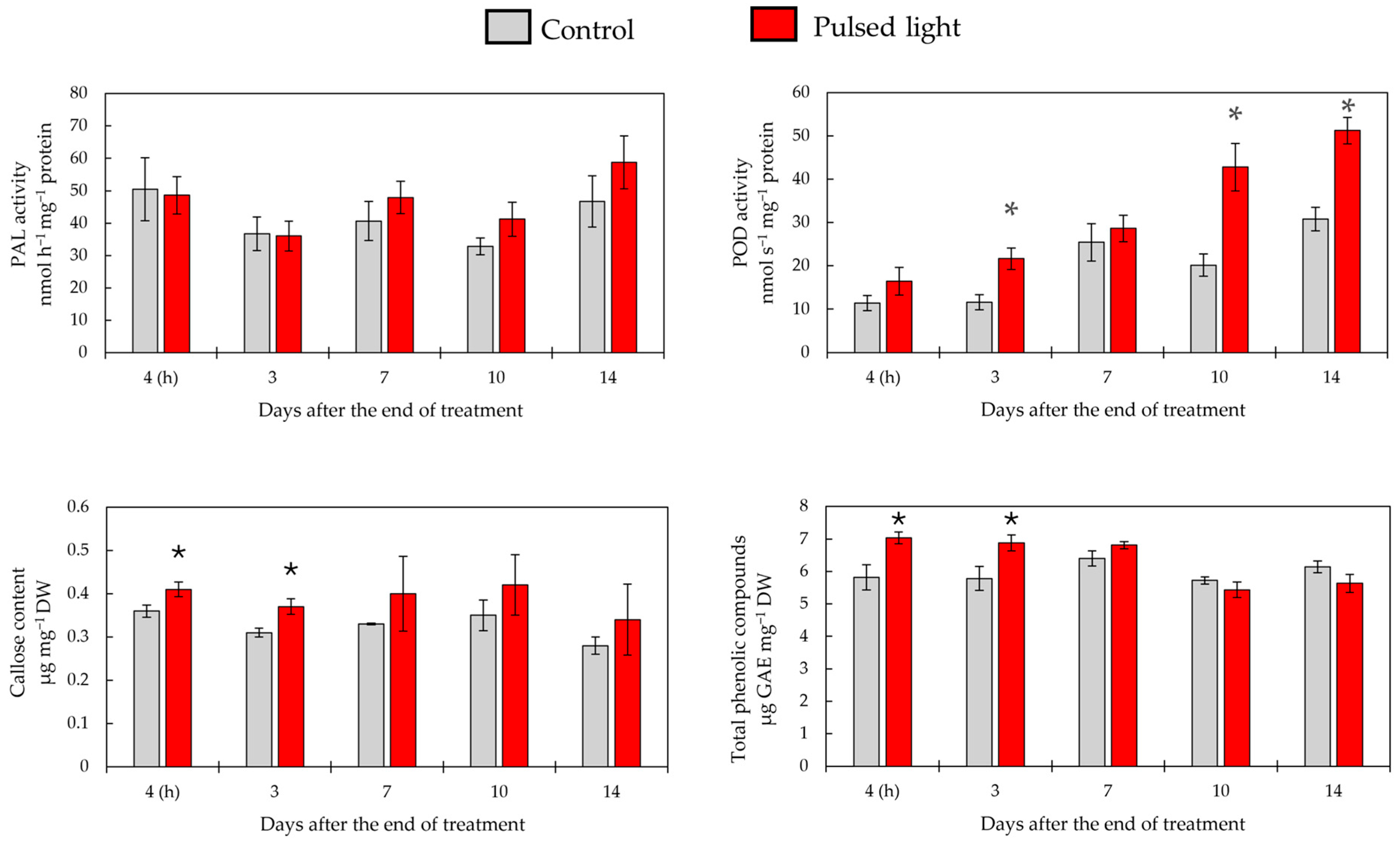
To evaluate the elicitor potential of pulsed light treatment under the standard protocol (5 flashes/day), the specific activity of two defense-related enzymes (PAL and POD), as well as callose and total phenolic contents, were measured in tomato leaves at various time points after the end of the treatment (0 [4 h], 3, 7, 10, and 14 days; Figure 2).
Sampling was performed on separate sets of plants at each time point to avoid any interference from tissue collection on subsequent physiological responses.
PAL activity remained generally comparable between treated and control plants until day 3. A slight increase was observed from day 7 in pulsed light-treated plants, with mean enzymatic activity approximately 20% higher than in controls, but the difference was not statistically significant. In contrast, POD activity was significantly enhanced by the treatment. A first induction was observed as early as day 3 (21.0 vs. 11.6 nmol s−1 mg−1 in treated vs. control plants), followed by a second activation phase on day 10, reaching a maximum on day 14 (51.2 vs. 30.8 nmol s−1 mg−1).
Callose accumulation was also triggered by pulsed light exposure. Significantly higher levels were detected in treated plants on day 0 and day 3, although the differences lessened thereafter due to increased within-group variability. Nevertheless, the treatment effect remained significant over the entire time course (p < 0.001). Similarly, total phenolic content was higher in treated plants at early time points (7.03 vs. 5.82 μg mg−1 DW on day 0), with no notable differences after day 7. ANOVA confirmed a significant treatment effect across the full kinetic profile (p = 0.0047).

3.2. From Signal to Response: Gene Expression Changes Triggered by Pulsed Light

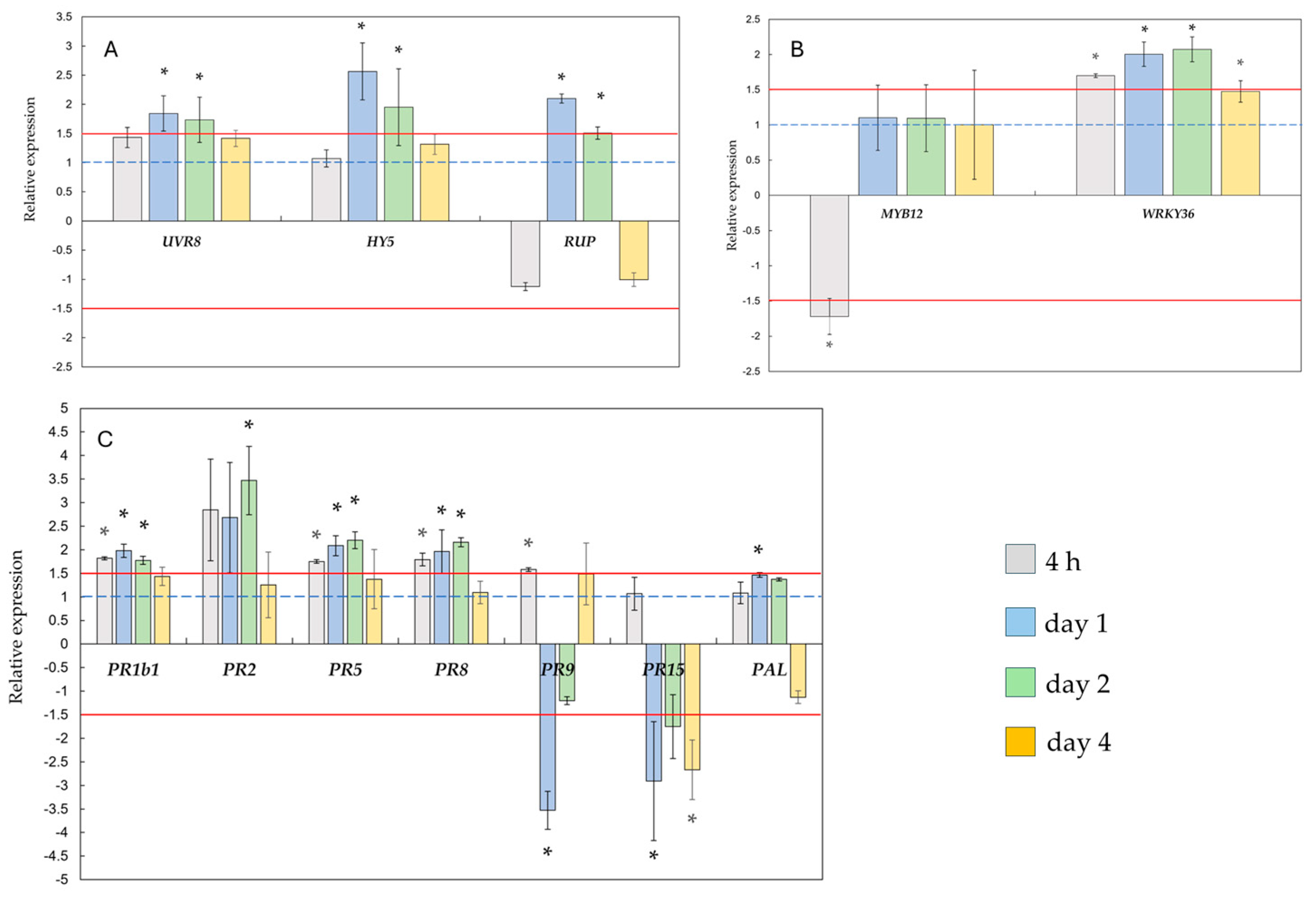
To investigate the transcriptional mechanisms activated by pulsed light, the relative expression of genes involved in light signaling, their transcriptional regulation and the defense response were analyzed in tomato leaves at 0 (4 h), 1, 2, and 4 days after treatment (Figure 3).
This short time window was selected based on the generally rapid and transient nature of transcriptional responses to stimuli.
Pulsed light rapidly activated genes associated with UV signaling (Figure 3A). The expression of UVR8 was significantly induced on day 1 (1.84-fold) and day 2 (1.73-fold), before returning to baseline levels by day 4. Downstream, HY5, a central regulator of light signaling [20], showed strong induction at the same time points (2.56- and 1.95-fold, respectively). The expression of RUP, a negative regulator of UVR8, followed a similar trend, with pronounced upregulation on day 1 (2.10-fold) and day 2 (1.51-fold). These results highlight a rapid but tightly regulated activation of the UVR8-HY5 signaling cascade in response to pulsed light exposure.
In parallel, transcriptional regulators associated with defense displayed contrasting patterns (Figure 3B). WRKY36 was significantly upregulated from day 0 (1.70-fold), peaking on day 2 (2.01-fold), whereas MYB12 was temporarily repressed on day 0 (−1.70-fold) returning to basal levels as early as day 1.
Finally, several defense-related genes were differentially expressed (Figure 3C). PR1b1, PR2, PR5 and PR8 were strongly induced between day 0 and day 2, with peak expression observed on day 1 or 2, followed by a return to near-basal levels on day 4. In contrast, PR9 and PR15 were transiently repressed on day 1 (−3.53 and −2.90-fold, respectively), followed by a gradual recovery at later time points. The PAL gene showed a moderate induction on day 1 (1.50-fold), without sustained upregulation beyond 48 h.

3.3. Defense Priming by Pulsed Light in Tomato Plants: Biochemical Responses to Botrytis cinerea

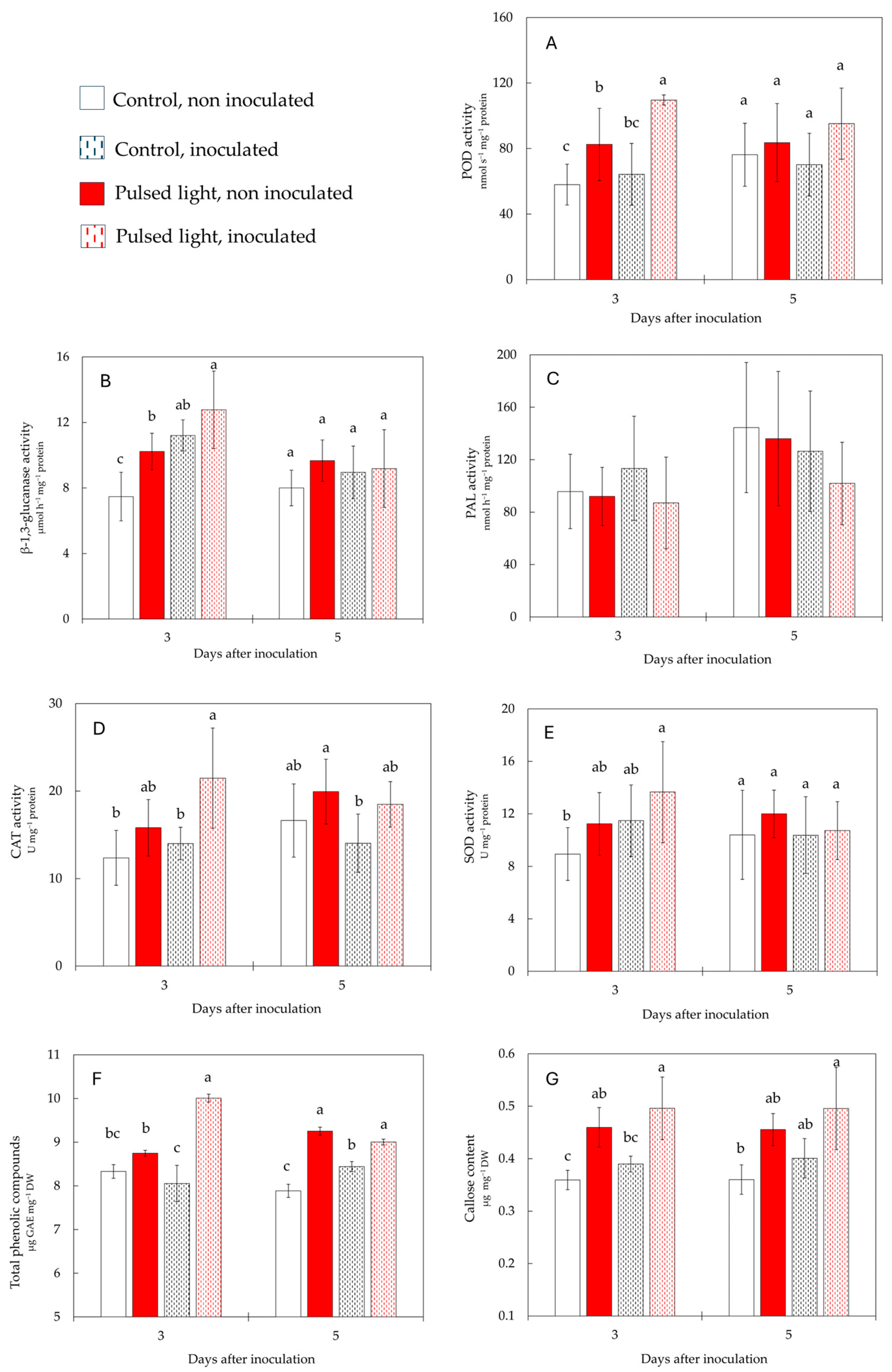
To assess whether pulsed light could prepare tomato plants to better respond to a subsequent infection, several biochemical markers were analyzed in plants either inoculated or not with Botrytis cinerea, at 3 and 5 days post-inoculation (i.e., 6 and 8 days after the last light exposure). The analyses focused on five defense-related enzymes (PAL, POD, β-1,3-glucanase, CAT, SOD), as well as total phenolic compounds and callose (Figure 4).
POD and β-1,3-glucanase activities were significantly enhanced by pulsed light, both in the presence and absence of infection, indicating early activation of defense mechanisms (Figure 4A,B). At 3 days post-inoculation (dpi), POD activity increased by 42% in light-treated non-inoculated plants compared to untreated control, and by 71% in light-treated and inoculated plants compared to inoculated controls. A strong induction was also observed for β-1,3-glucanase, whose activity peaked in the light-treated and inoculated group. At 5 dpi, activity levels tended to stabilize, and differences between different treatments became less pronounced, suggesting a transient enzymatic response. In contrast, PAL activity remained stable and unchanged across all conditions, confirming its limited involvement in pulsed light-induced responses under pathogen challenge (Figure 4C) However, it is worth noting that in the assays performed in non-infected plants (Section 3.1), a slight albeit non-significant increase in PAL activity was observed at later stages (7–14 days after treatment). This discrepancy suggests that the sampling times we have chosen (6 and 8 days post-treatment) may not have been optimal to detect a potentially late activation of PAL.
Regarding antioxidant enzymes, CAT and SOD showed a significant increase at 3 dpi (Figure 4D,E), particularly in plants that were treated and then infected (+73% for CAT and +54% for SOD compared to non-inoculated controls). By 5 dpi, enzymatic activities converged across treatments, indicating a gradual return to basal levels.
Total phenolic compounds accumulated from 3 dpi in pulsed light-treated plants, regardless of B. cinerea inoculation (Figure 4F). This accumulation was significantly higher in treated and inoculated plants, which showed the highest levels at both time points. By contrast, infected controls showed no increase at 3 dpi and only a moderate rise at 5 dpi.
This delayed response highlights the early and sustained accumulation observed in pulsed light-treated plants, supporting the hypothesis of a priming-like effect, promoting faster mobilization of metabolic defenses.
Callose accumulation was also stimulated by pulsed light, independently of infection (Figure 4G). The highest levels were observed in the light-treated and inoculated group at both 3 and 5 dpi (+28% to +39% compared to controls), suggesting a preemptive reinforcement of cell walls, initiated before infection and maintained during the response in presence of the pathogen.

3.4. Pulsed Light Induces Resistance to Botrytis cinerea in Tomato Plants

3.4.1. Detached Leaves

The protective effect of pulsed light on B. cinerea progression was evaluated on detached tomato leaves by monitoring lesion development over six days post-inoculation and quantified using AUDPC. Compared to controls, the standard treatment (5 flashes/day) significantly reduced symptom progression by 22% (Figure S3). The intense treatment (10 flashes/day) led to an even greater reduction (−26%).

3.4.2. In Planta Assay

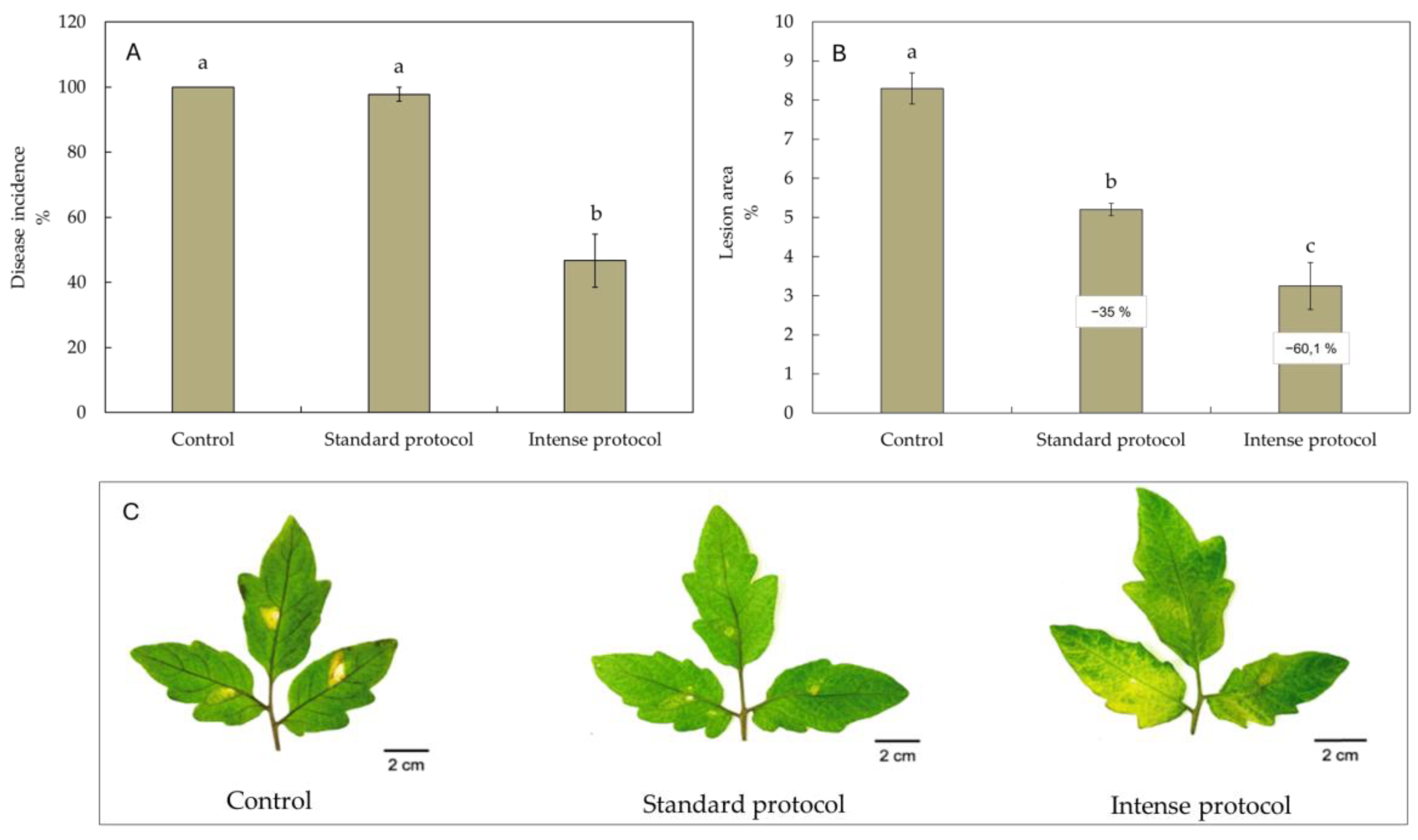
Twenty-one days after inoculation, in planta assessment showed no significant reduction in incidence with the standard treatment (97% vs. 100% in controls), whereas the intense treatment virtually halved the incidence (47%), indicating a strong inhibition of fungal establishment (Figure 5A).
A similar trend was observed for disease severity: necrotic area was reduced by 35% with the standard treatment and by 60% with the intense exposure (Figure 5B). However, in the latter case, this reduction was accompanied by atypical physiological symptoms, such as diffuse yellowing and leaf discoloration (Figure 5C).

3.5. Short-Term Physiological Effects of Pulsed Light Treatment in Tomato Plant

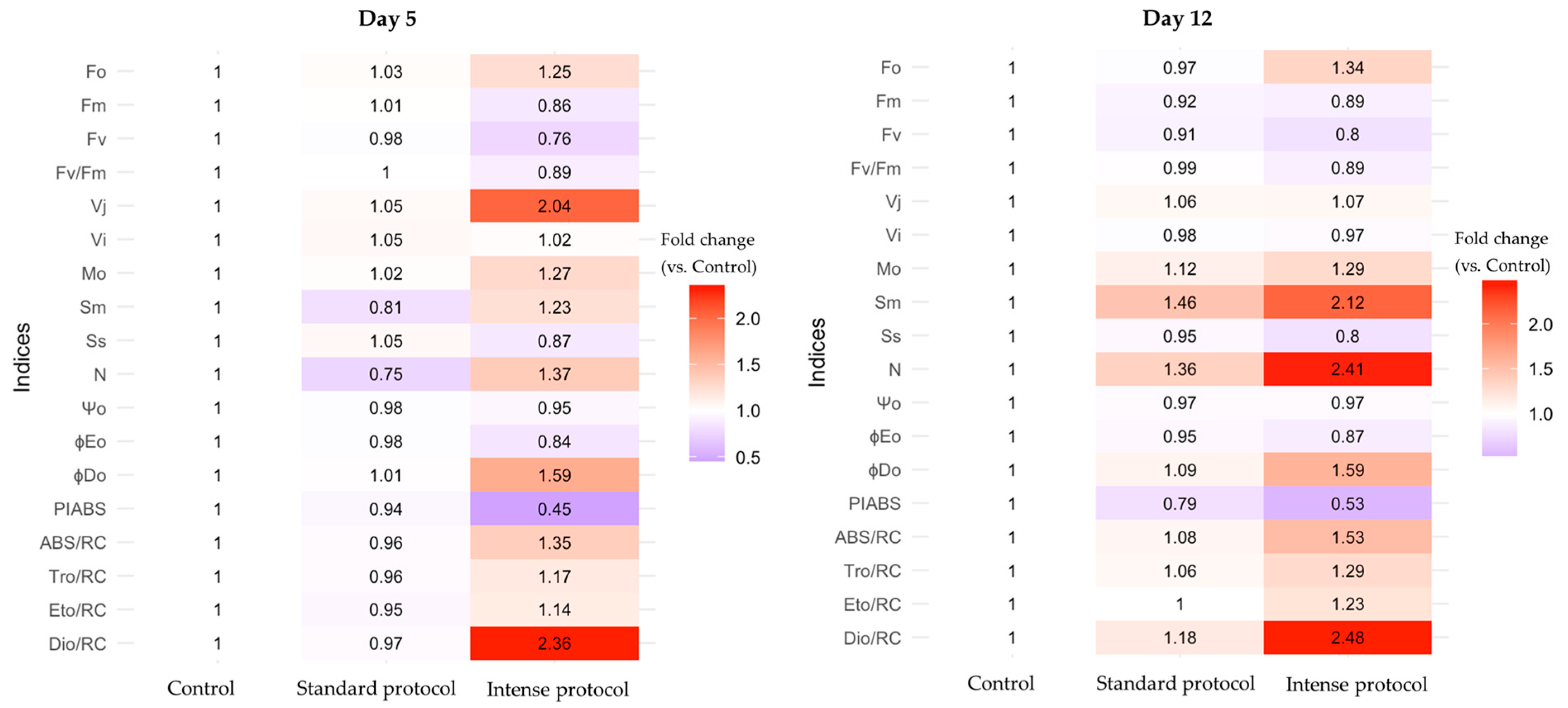
Chlorophyll fluorescence measurements were conducted on day 5 of treatment (after three applications) and on day 12 (4 h after the final exposure) to assess the physiological impact of pulsed light on tomato plants. The standard protocol (5 flashes/day) did not significantly alter baseline parameters (Fv/Fm = 0.84) or energy fluxes, indicating that the functional integrity of PSII was preserved (Table S1). In contrast, the intense protocol (10 flashes/day) induced marked photoinhibition, evidenced by a decrease in Fv/Fm (down to 0.74), increased energy dissipation (ϕDo, DIo/RC), and a drop in the performance index PIabs. These disruptions were detectable from day 5 and persisted through day 12, as illustrated by the heatmaps, which represent fold changes relative to the control (Figure 6).
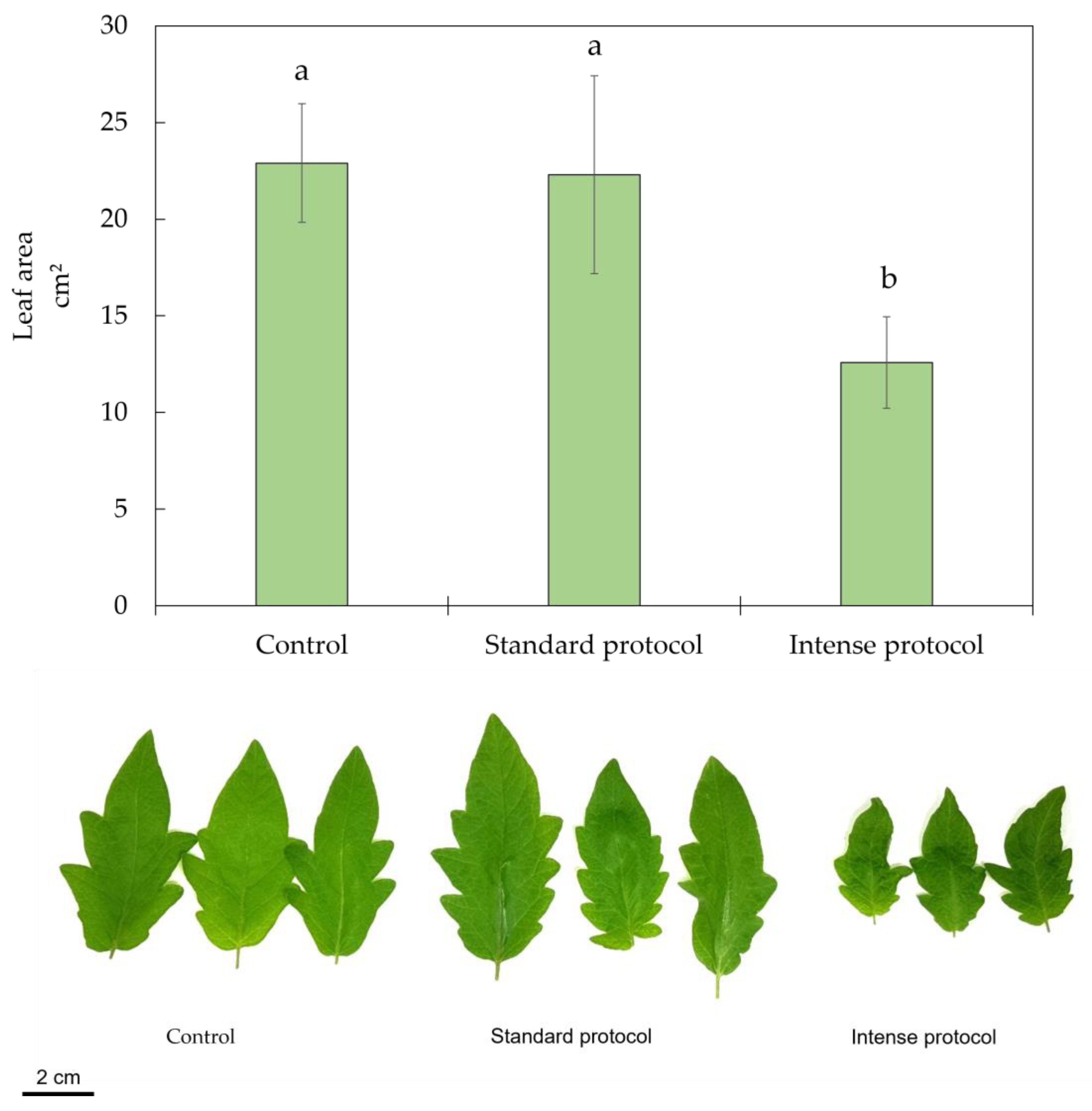
Complementary analysis of leaf area three days after the end of the treatment confirmed that the standard protocol was well tolerated, with values comparable to untreated controls (Figure 7). However, plants exposed to the intense treatment showed a significant reduction in leaf area (~45%), indicating impaired vegetative growth associated with light-induced stress.

3.6. Pulsed Light Is Well Tolerated over the Long Term and Preserves Agronomic Performance in Tomato

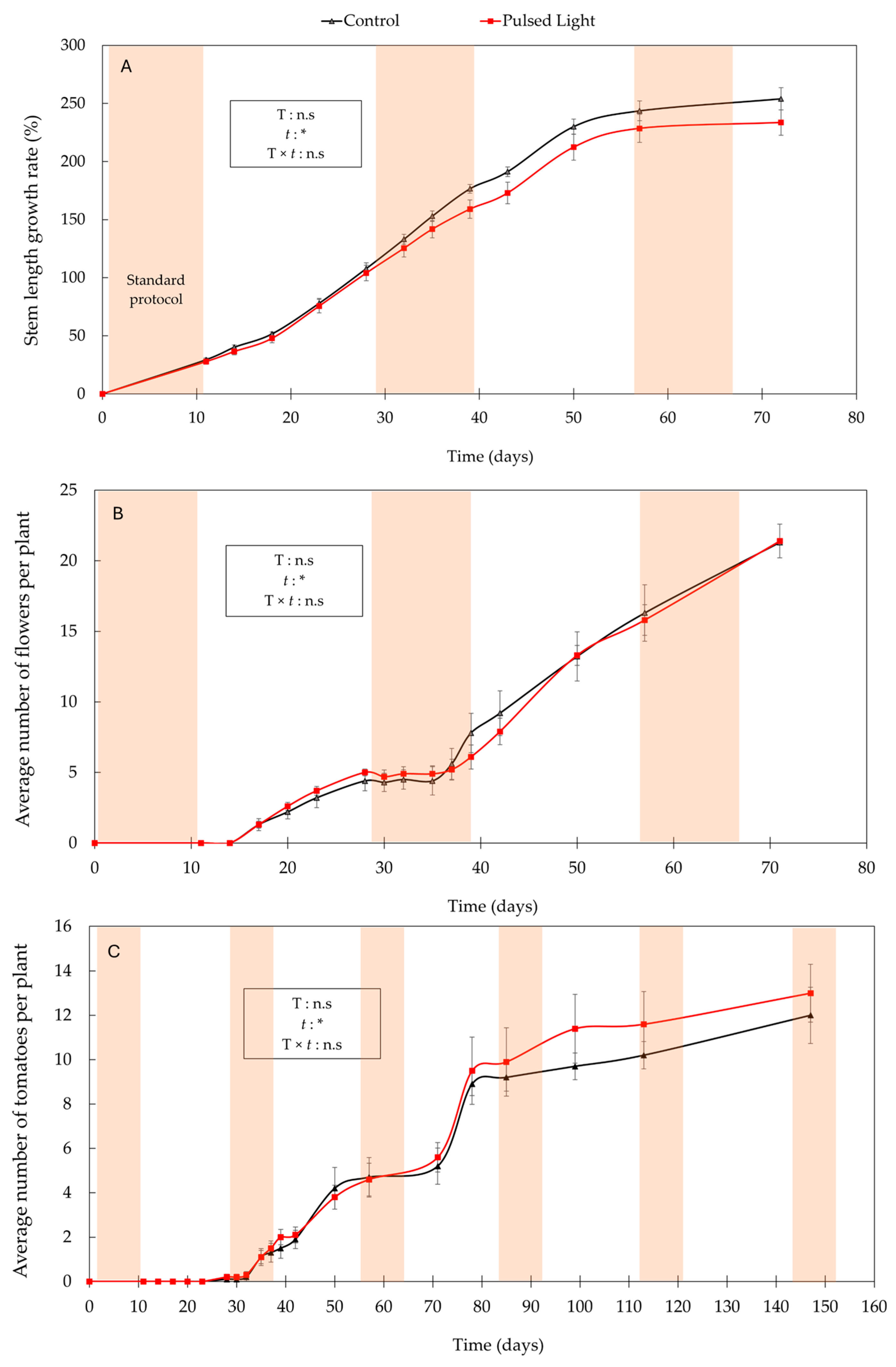
Although short-term assessments showed that the standard pulsed light treatment (5 flashes/day) had no adverse effects on photosynthesis or leaf development, it remained necessary to determine whether biweekly exposures over the long term could affect tomato plant performance at more advanced stages (6-month-old plants). Stem elongation remained comparable to the control group, with no significant treatment × time interaction, indicating similar growth dynamics between modalities (Figure 8A). Likewise, no significant differences were observed in flowering or fruit development (Figure 8B,C). A slight phenological advance was noted in treated plants at the onset of flowering, but the total number of flowers per plant remained similar in either plant groups. Crop yield reached 6.14 kg in treated plants compared to 5.74 kg in controls, corresponding to a moderate increase of approximately 7%. The average fruit mass was also comparable.

4. Discussion

In the context of agroecological transition, where reducing the use of chemical inputs has become a priority for more sustainable agriculture, identifying alternative strategies capable of enhancing natural plant defense without compromising its development remains a major challenge. Based on a previously defined standardized treatment protocol, we evaluated the activation of defenses at different organizational levels, both in the absence and presence of a pathogen, and over timeframes ranging from a few hours to several weeks. This protocol, established through an initial optimization study, has shown a good compromise between defense induction and metabolic tolerance, in accordance with literature recommendations emphasizing the importance of precise calibration of light-based treatments [23,36,37]. It consists of six exposures in total, corresponding to a cumulative light fluence of 11.1 kJ.m−2, distributed among 1.70 kJ.m−2 in the UV range (including 0.21 in UV-C, 0.5 in UV-B, and 0.99 kJ.m−2 in UV-A), 5.33 kJ.m−2 in the visible range, and 3.87 kJ.m−2 in the infrared.
The cumulative UV-B and UV-C fluence over the two-week treatment were markedly lower than the threshold doses typically reported to trigger defense activation when theses wavelengths are applied alone and continuously [23,38,39,40,41,42,43]. This indicates that the observed defense enhancement is unlikely to be due to UV-C or UV-B alone, but rather to the synergistic contribution of multiple spectral regions within the pulsed light emission. In addition, the pulsed regime itself may further potentiate plant signaling responses, as suggested by studies reporting that one second UV-C flashes stimulated plant defenses as effectively or even more effectively, than continuous 60 s irradiations delivering the same dose [44]. This observation highlights that beyond dose, the temporal dynamics of light delivery can significantly influence plant perception and response, supporting the hypothesis of a combined spectral and temporal synergy underlying pulsed light action.
Initially, the kinetic analysis of several biochemical markers confirmed the elicitor potential of pulsed light. We observed a significant increase in POD activity, on average 2-fold on days 3, 10, and 14 after the end of treatment, compared to untreated controls. This biomarker, involved in ROS detoxification and cell wall lignification, plays a central role in plant defense responses. Indeed, peroxidases participate in the cross-linking of proteins and phenolic compounds in the cell wall, thereby reinforcing its integrity [45]. This marker is frequently used to assess plant responses to stress, and 2- to 3-fold increases have been reported in correlation with significant reduction in downy mildew symptoms on grapevine [12,13]. We also observed significant increases in phenolic compounds and callose contents up to 3 days after the end of the light treatment. The dynamics observed for phenolic compounds were similar to those reported in other studies on UV-B and UV-C [40,43]. Deposition of callose, a β-1,3-glucan polysaccharide, is also a well-documented defense mechanism against biotic stress [46]. It is rapidly synthesized and deposited at the periphery of infection site, forming a dense barrier that is difficult for many pathogens to penetrate [47].
As for PAL activity, after an initial phase similar to the controls, we observed a rising trend maintained from day 7 to day 14 after treatment, although the variation was not statistically significant. This profile echoes previous observations reporting an initial PAL induction one day after UV-C treatment, followed by a return to baseline levels and a subsequent reactivation around day 13 [40]. This late reactivation may reflect an adaptive memory of the light treatment or a secondary response triggered by the physiological needs of the plant.
Gene expression analysis provided further insights into the early molecular events triggered by pulsed light. We observed a rapid and coordinated activation of the UVR8-HY5-RUP signaling pathway, demonstrating that pulsed light is perceived as a specific light signal. The overexpression of UVR8 and HY5 during the first few hours post treatment confirmed that the UV-B/C fraction in the pulsed light spectrum was sufficient to induce UVR8 monomerization. Once activated, this photoreceptor is translocated to the nucleus, where it interacts with COP1 to stabilize HY5 and initiate a signaling cascade regulating UV-adaptative responses [48]. The overexpression of RUP suggested the establishment of a feedback mechanism aimed at preventing excessive signaling, while also allowing UVR8 to revert to its dimeric form, ready for reactivation [49,50].
Simultaneously, we observed overexpression of the transcription factor WRKY36, known for its key role in regulating hormonal signaling pathways (salicylic and jasmonic acids) and MAPK cascades involved in immune responses [51]. These findings are consistent with studies showing that UVR8 interacts with WRKY36 to relieve HY5 repression [52], highlighting convergence between light signaling and defense response. The coordinated activation of several PR genes further confirmed that pulsed light acts as an effective plant immunity inducer. The overexpression of PR1 (a marker of systemic resistance), PR5 (thaumatin-like protein), and PR8 (chitinase) from 4 h to 48 h post treatment revealed a rapid and sequential defense response. PR2 (β-1,3-glucanase) exhibited a progressive dynamic, with maximum induction at 48 h. The discrepancy between PAL gene expression and enzymatic activity reinforces the idea that light-induced responses can be temporally modulated depending on the physiological status of the plant, as also reported in previous studies [53]. PR9, encoding a class III peroxidase, followed a biphasic pattern, with early induction at 4 h, repression at 24 h, stabilization at 48 h, and a slight reactivation at 96 h.
Our findings confirmed that pulsed light, even in the absence of pathogens, triggered a coordinated transcriptional reprogramming involving light perception, transcriptional regulation, and defense activation. These observations are consistent with earlier reports describing elicitor as agents capable of inducing immune responses in plants independently of pathogen presence [54,55].
Under infectious conditions, we observed that pulsed light enhanced the pathogen-induced defense responses. This pattern is consistent with a priming-like phenomenon, which represents the desired outcome in plant defense stimulation strategies, as it enables the plant to respond faster and more intensely upon subsequent attack [56]. POD and β-1,3-glucanase activities were significantly higher in pretreated and infected plants compared to pretreated but non-infected ones, which themselves showed higher values than the untreated controls. Antioxidant enzymes CAT and SOD were also rapidly activated post-infection, with quick stabilization, reflecting improved oxidative stress management triggered by B. cinerea. It is well known that ROS play a dual role in plant–pathogen interactions: at low levels, they act as signaling molecules for defense activation, while at high concentrations, they cause cellular damage [57].These results suggest that pulsed light may induce a durable immune alert state, enabling efficient and anticipatory defense mobilization. Moreover, the earlier accumulation of phenolic compounds and callose in pretreated plants suggests that light exposure conferred anticipatory responsiveness, limiting the pathogen’s initial advantage. These responses, observed on leaves distant from the inoculation site, together with the previously observed overexpression of PR1 following pulsed light treatment in non-infected plants, strongly support the activation of systemic acquired resistance (SAR). However, this hypothesis could be further confirmed by monitoring key molecular regulators such as NPR1 and DIR1 in future investigations [58,59].
These defense mechanisms allowed a significant reduction in disease symptoms, on detached leaves as well as in in planta conditions. The reduction in AUDPC and lesion area confirmed that the standard pulsed light protocol did not merely trigger metabolic activation, but effectively induced resistance against B. cinerea.
Short-term physiological assessments confirmed the good tolerance of the standard protocol (5 flashes/day). No significant alterations in chlorophyll fluorescence parameters of leaf surface area were observed. In contrast, the intense protocol treatment (10 flashes/day) caused photoinhibition, disruption of the electron transport chain, excessive thermal dissipation, and significant reduction in leaf growth. Although this treatment was associated with reduced B. cinerea progression, this effect was likely related, at least in part, to non-specific stress or tissue damage rather than to a true defense activation. Indeed, the observed loss of pigmentation and reduced photosynthetic efficiency may have altered the physiological state of leaf tissue, making it less favorable for fungal colonization. Such alterations can reduce carbohydrate availability, which is essential for the growth of necrotophic pathogens such as B. cinerea [60,61]. This treatment therefore proved to be phytotoxic, underscoring the importance of balancing efficacy and plant tolerance. Our results support the idea that pulsed light, like other physical elicitors, follows a typical dose–response curve with an optimal intensity window that depends on the plant species and its developmental stage [36,62].
Finally, full-cycle monitoring showed that the standard protocol could be applied repeatedly every two weeks without negative impact on growth, flowering, or crop yield. On the contrary, a slight trend toward increased yield was observed. This confirmed that, when applied under controlled conditions, pulsed light represents a strategy compatible with agricultural productivity goals, unlike some physical treatments known to be detrimental in the long term, such as repeated UV-C exposures at 1–2.5 kJ.m−2, which were shown to significantly reduce tomato plant size from the second week onward [36].

5. Conclusions

The results of this study demonstrate that pulsed light can be considered as a promising plant defense stimulator, capable of inducing effective resistance against B. cinerea in tomato (cv. Marmande) without compromising plant development or yield.
Further investigations should include complementary analyses of hormonal signaling pathways (e.g., SA/JA profiles), oxidative response (ROS), and the potential involvement of additional photoreceptors such as cryptochromes, phototropins, phytochromes, and ZEITLUPE, to refine the understanding of underlying mechanisms. Beyond these mechanistic insights, since this study was conducted on a single tomato cultivar, it would be valuable to assess whether the intensity and nature of elicited responses vary among different genotypes, as cultivar-dependent variability in responsiveness to defense elicitors has been widely reported in plants. Such studies, along with the extension of the pulsed light treatment’s performance under real-world production conditions and the assessment of postharvest quality and shelf-life of fruits from treated plants, would provide a broader foundation for its agronomic application.
By limiting the exposure of ecosystems, crops, and consumers to chemical inputs while ensuring a high level of sanitary protection, this approach aligns with the core principles of the One Health concept. Overall, these findings support the integration of pulsed light into sustainable crop protection programs, particularly as part of integrated pest management (IPM) strategies.

Supplementary Materials

The following supporting information can be downloaded at: https://www.mdpi.com/article/10.3390/horticulturae11111331/s1. Figure S1: LP.Box system used for pulsed light exposure of tomato plants; Figure S2: Mobile LP.Box prototype for pulsed light treatment; Figure S3: Comparison of AUDPC values and visual symptoms of Botrytis cinerea lesions on detached tomato leaves at 6 days post-inoculation, following pulsed light pretreatment; Table S1: Evolution of OJIP parameters during and after pulsed light treatment in tomato leaves.

Author Contributions

Conceptualization, C.F.G., V.G., L.S., F.D. and I.M.; methodology, C.F.G., V.G., L.S., F.D. and I.M.; investigation, C.F.G., F.D. and I.M.; writing—original draft preparation, I.M. and C.F.G.; writing—review and editing: C.F.G., V.G., L.S., F.D. and I.M.; funding acquisition, L.S., C.F.G. and V.G. All authors have read and agreed to the published version of the manuscript.

Funding

I.M. received a grant from the SANODEV company (CIFRE—Industrial Agreements for Training through Research—agreement n°2021/1783 by ANRT Association Nationale Recherche Technologie).

Data Availability Statement

The original contributions presented in this study are included in the article/Supplementary Materials. Further inquiries can be directed to the corresponding author.

Acknowledgments

The authors acknowledge M. Guilloton for his help in manuscript editing.

Conflicts of Interest

I.M. and L.S. are employed by the EAGL SANODEV company. The remaining authors declare that the research was conducted in the absence of any commercial or financial relationships that could be construed as a potential conflict of interest.

Appendix A

Table A1. List of primers used in real time q-PCR experiments on tomato plants (Solanum lycopersicum). F: Forward. R: Reverse.
GeneAccession NbPrimers (5′ → 3′)References
UVR8XM_004232088.4F: CTGCTATGGTCAAGCGGCTA[63]
R: AGCATGCATCAGTCAGCACT
RUPXM_004249808.4F: TATGAGGAAAATGCTTGACCCACT[64]
R: ACCTTCTGGTCCTCCGCATTC
HY5NM_001247891.2F: AGCGACGAGTTCTATTGCCG[65]
R: GCTTCTCCGCCCATCTCC
PR1b1Y08804.1F: GTACTGCATCTTCTTGTTTCCA[65]
R: TAGATAAGTGCTTGATGTGCC
PR2NM_001247869.2F: CCGTTGGAAACGAAGTTGAT[12]
R: TCATCAGCATGGCCAAAATA
PR5LT855381.1F: ATGGGGTAAACCACCAAACA[66]
R: GTTAGTTGGGCCGAAAGACA
PR8FJ849060.1F: TGCAGGAACATTCACTGGAG[67]
R: TAACGTTGTGGCATGATGGT
PR9NM_001302921.2F: GCTTTGTCAGGGGTTGTGAT[68,69]
R: TGCATCTCTAGCAACCAACG
PR15AK322185F: GGGCTAAATCCACCTCA[70]
R: GGCACCACGAACATCTC
PALNM_001320040.1F: CTTTGATGCAGAAGCTGAGACA[71]
R: TCGTCCTCGAAAGCTACAATCT
WRKY36XM_019213569.2F: AGTAATTCAATCGGACCAGATGA[72]
R: TCACAGAGCAATTTTGTCCAGT
MYB12NM_001247472.1F: TGCCATGGAATTAATGCAAGAAG[73]
R: CGAGTCTTGGCCATTCGATATC
β-actinNM_001308447.1F: AGGCACACAGGTGTTATGGT[67]
R: AGC AACTCGAAGCTCATTGT

References

  1. ONU. Department of Economic and Social Affairs. News. Growing at a Slower Pace, World Population Is Expected to Reach 9.7 Billion in 2050 and Could Peak at Nearly 11 Billion Around 2100. 2019. Available online: https://www.un.org/development/desa/en/news/population/world-population-prospects-2019.html (accessed on 21 February 2025).
  2. FAO. The Future of Food and Agriculture: Trends and Challenges; Food and Agriculture Organization of the United Nations: Rome, Italy, 2017; ISBN 978-92-5-109551-5.
  3. Savary, S.; Willocquet, L.; Pethybridge, S.J.; Esker, P.; McRoberts, N.; Nelson, A. The Global Burden of Pathogens and Pests on Major Food Crops. Nat. Ecol. Evol. 2019, 3, 430–439. [Google Scholar] [CrossRef] [PubMed]
  4. Ahmad, M.F.; Ahmad, F.A.; Alsayegh, A.A.; Zeyaullah; AlShahrani, A.M.; Muzammil, K.; Saati, A.A.; Wahab, S.; Elbendary, E.Y.; Kambal, N.; et al. Pesticides Impacts on Human Health and the Environment with Their Mechanisms of Action and Possible Countermeasures. Heliyon 2024, 10, e29128. [Google Scholar] [CrossRef]
  5. FAOSTAT. Available online: https://www.fao.org/faostat/en/#data/RP/visualize (accessed on 20 September 2025).
  6. Dodds, P.N.; Rathjen, J.P. Plant Immunity: Towards an Integrated View of Plant–Pathogen Interactions. Nat. Rev. Genet. 2010, 11, 539–548. [Google Scholar] [CrossRef] [PubMed]
  7. Trouvelot, S.; Varnier, A.-L.; Allègre, M.; Mercier, L.; Baillieul, F.; Arnould, C.; Gianinazzi-Pearson, V.; Klarzynski, O.; Joubert, J.-M.; Pugin, A.; et al. A β-1,3 Glucan Sulfate Induces Resistance in Grapevine against Plasmopara Viticola Through Priming of Defense Responses, Including HR-like Cell Death. Mol. Plant-Microbe Interact. 2008, 21, 232–243. [Google Scholar] [CrossRef]
  8. Barceló, A.R.; Ros, L.V.G.; Carrasco, A.E. Looking for Syringyl Peroxidases. Trends Plant Sci. 2007, 12, 486–491. [Google Scholar] [CrossRef] [PubMed]
  9. Glazebrook, J. Contrasting Mechanisms of Defense against Biotrophic and Necrotrophic Pathogens. Annu. Rev. Phytopathol. 2005, 43, 205–227. [Google Scholar] [CrossRef]
  10. Durrant, W.E.; Dong, X. Systemic Acquired Resistance. Annu. Rev. Phytopathol. 2004, 42, 185–209. [Google Scholar] [CrossRef]
  11. Van Wees, S.C.M.; Van der Ent, S.; Pieterse, C.M.J. Plant Immune Responses Triggered by Beneficial Microbes. Curr. Opin. Plant Biol. 2008, 11, 443–448. [Google Scholar] [CrossRef]
  12. Koçi, R.; Dupuy, F.; Lebbar, S.; Gloaguen, V.; Faugeron Girard, C. A New Promising Plant Defense Stimulator Derived from a By-Product of Agar Extraction from Gelidium Sesquipedale. Horticulturae 2022, 8, 958. [Google Scholar] [CrossRef]
  13. Faugeron-Girard, C.; Gloaguen, V.; Koçi, R.; Célérier, J.; Raynaud, A.; Moine, C. Use of a Pleurotus Ostreatus Complex Cell Wall Extract as Elicitor of Plant Defenses: From Greenhouse to Field Trial. Molecules 2020, 25, 1094. [Google Scholar] [CrossRef]
  14. Klarzynski, O.; Fritig, B. Stimulation des défenses naturelles des plantes. Comptes Rendus De L’Académie Des Sci. Ser. III Sci. De La Vie 2001, 324, 953–963. [Google Scholar] [CrossRef] [PubMed]
  15. Réseau mixte technologique Elicitra (Ed.) Les Stimulateurs de Défense des Plantes: Panorama Et Solutions D’avenir; Acta éditions: Paris, France, 2018; ISBN 978-2-85794-309-9. [Google Scholar]
  16. Kami, C.; Lorrain, S.; Hornitschek, P.; Fankhauser, C. Light-Regulated Plant Growth and Development. Curr. Top. Dev. Biol. 2010, 91, 29–66. [Google Scholar] [CrossRef] [PubMed]
  17. Casal, J.J. Photoreceptor Signaling Networks in Plant Responses to Shade. Annu. Rev. Plant Biol. 2013, 64, 403–427. [Google Scholar] [CrossRef] [PubMed]
  18. Meyer, P.; Van de Poel, B.; De Coninck, B. UV-B Light and Its Application Potential to Reduce Disease and Pest Incidence in Crops. Hortic. Res. 2021, 8, 194. [Google Scholar] [CrossRef]
  19. Aarrouf, J.; Ben, H.D.; Alice, D.; Bornard, I.; Lauri, F.; Urban, L. Flashes of UV-C Light Are Perceived by UVR8, the Photoreceptor of UV-B Light. J. Plant Sci. Phytopathol. 2022, 6, 151. [Google Scholar] [CrossRef]
  20. Bhatnagar, A.; Singh, S.; Khurana, J.P.; Burman, N. HY5-COP1: The Central Module of Light Signaling Pathway. J. Plant Biochem. Biotechnol. 2020, 29, 590–610. [Google Scholar] [CrossRef]
  21. Ballare, C.L.; Scopel, A.L.; Stapleton, A.E.; Yanovsky, M.J. Solar Ultraviolet-B Radiation Affects Seedling Emergence, DNA Integrity, Plant Morphology, Growth Rate, and Attractiveness to Herbivore Insects in Datura Ferox. Plant Physiol. 1996, 112, 161–170. [Google Scholar] [CrossRef]
  22. Izaguirre, M.M.; Scopel, A.L.; Baldwin, I.T.; Ballaré, C.L. Convergent Responses to Stress. Solar Ultraviolet-B Radiation and Manduca Sexta Herbivory Elicit Overlapping Transcriptional Responses in Field-Grown Plants of Nicotiana Longiflora. Plant Physiol. 2003, 132, 1755–1767. [Google Scholar] [CrossRef]
  23. Vàsquez, H.; Ouhibi, C.; Forges, M.; Lizzi, Y.; Urban, L.; Aarrouf, J. Hormetic Doses of UV-C Light Decrease the Susceptibility of Tomato Plants to Botrytis cinerea Infection. J. Phytopathol. 2020, 168, 524–532. [Google Scholar] [CrossRef]
  24. Cheang, W.K.; Wong, G.R.; Rahim, A.N.; Kethiravan, D.; Harikrishna, J.A.; Tan, B.C.; Ramakrishnan, N.; Mazumdar, P. Synergistic Effects of UV-B and UV-C in Suppressing Sclerotinia Sclerotiorum Infection in Tomato Plants. J. Crop Health 2024, 76, 1383–1402. [Google Scholar] [CrossRef]
  25. Filho, F.O.; Silva, E.d.O.; Lopes, M.M.d.A.; Ribeiro, P.R.V.; Oster, A.H.; Guedes, J.A.C.; Zampieri, D.d.S.; Bordallo, P.d.N.; Zocolo, G.J. Effect of Pulsed Light on Postharvest Disease Control-Related Metabolomic Variation in Melon (Cucumis melo) Artificially Inoculated with Fusarium Pallidoroseum. PLoS ONE 2020, 15, e0220097. [Google Scholar] [CrossRef] [PubMed]
  26. Hua, X.; Li, T.; Wu, C.; Zhou, D.; Fan, G.; Li, X.; Cong, K.; Yan, Z.; Wu, Z. Novel Physical Treatments (Pulsed Light and Cold Plasma) Improve the Quality of Postharvest Apricots after Long-Distance Simulated Transportation. Postharvest Biol. Technol. 2022, 194, 112098. [Google Scholar] [CrossRef]
  27. Fletcher, J.F. Compendium of Tomato Diseases; Jones, J.B., Jones, J.P., Stall, R.E., Zitter, T.A., Eds.; APS Press (The American Pathological Society Press): St. Paul, MN, USA, 1991; p. 73. ISBN 0-89054-120-5. [Google Scholar] [CrossRef]
  28. Carisse, O.; Van der Heyden, H. Relationship of Airborne Botrytis cinerea Conidium Concentration to Tomato Flower and Stem Infections: A Threshold for De-Leafing Operations. Plant Dis. 2015, 99, 137–142. [Google Scholar] [CrossRef] [PubMed]
  29. Francini, A.; Nali, C.; Picchi, V.; Lorenzini, G. Metabolic Changes in White Clover Clones Exposed to Ozone. Environ. Exp. Bot. 2007, 60, 11–19. [Google Scholar] [CrossRef]
  30. Hadwan, M.H.; Abed, H.N. Data Supporting the Spectrophotometric Method for the Estimation of Catalase Activity. Data Brief. 2016, 6, 194–199. [Google Scholar] [CrossRef]
  31. Ippolito, A.; El Ghaouth, A.; Wilson, C.L.; Wisniewski, M. Control of Postharvest Decay of Apple Fruit by Aureobasidium pullulans and Induction of Defense Responses. Postharvest Biol. Technol. 2000, 19, 265–272. [Google Scholar] [CrossRef]
  32. Miller, G.L. Use of Dinitrosalicylic Acid Reagent for Determination of Reducing Sugar. Anal. Chem. 1959, 31, 426–428. [Google Scholar] [CrossRef]
  33. Bradford, M.M. A Rapid and Sensitive Method for the Quantitation of Microgram Quantities of Protein Utilizing the Principle of Protein-Dye Binding. Anal. Biochem. 1976, 72, 248–254. [Google Scholar] [CrossRef]
  34. Singleton, V.L.; Rossi, J.A. Colorimetry of Total Phenolics with Phosphomolybdic-Phosphotungstic Acid Reagents. Am. J. Enol. Vitic. 1965, 16, 144–158. [Google Scholar] [CrossRef]
  35. Hirano, Y.; Pannatier, E.G.; Zimmermann, S.; Brunner, I. Induction of Callose in Roots of Norway Spruce Seedlings after Short-Term Exposure to Aluminum. Tree Physiol. 2004, 24, 1279–1283. [Google Scholar] [CrossRef]
  36. Darras, A.I.; Tsikaloudakis, G.; Lycoskoufis, I.; Dimitriadis, C.; Karamousantas, D. Low Doses of UV-C Irradiation Affects Growth, Fruit Yield and Photosynthetic Activity of Tomato Plants. Sci. Hortic. 2020, 267, 109357. [Google Scholar] [CrossRef]
  37. Mewis, I.; Schreiner, M.; Nguyen, C.N.; Krumbein, A.; Ulrichs, C.; Lohse, M.; Zrenner, R. UV-B Irradiation Changes Specifically the Secondary Metabolite Profile in Broccoli Sprouts: Induced Signaling Overlaps with Defense Response to Biotic Stressors. Plant Cell Physiol. 2012, 53, 1546–1560. [Google Scholar] [CrossRef] [PubMed]
  38. de Oliveira, I.R.; Crizel, G.R.; Severo, J.; Renard, C.M.G.C.; Chaves, F.C.; Rombaldi, C.V. Preharvest UV-C Radiation Influences Physiological, Biochemical, and Transcriptional Changes in Strawberry Cv. Camarosa. Plant Physiol. Biochem. 2016, 108, 391–399. [Google Scholar] [CrossRef] [PubMed]
  39. Forges, M.; Vàsquez, H.; Charles, F.; Sari, D.C.; Urban, L.; Lizzi, Y.; Bardin, M.; Aarrouf, J. Impact of UV-C Radiation on the Sensitivity of Three Strawberry Plant Cultivars (Fragaria x ananassa) against Botrytis cinerea. Sci. Hortic. 2018, 240, 603–613. [Google Scholar] [CrossRef]
  40. Xu, Y.; Charles, M.T.; Luo, Z.; Mimee, B.; Tong, Z.; Véronneau, P.-Y.; Roussel, D.; Rolland, D. Ultraviolet-C Priming of Strawberry Leaves against Subsequent Infection Involves the Action of Reactive Oxygen Species, Plant Hormones, and Terpenes. Plant Cell Environ. 2019, 42, 815–831. [Google Scholar] [CrossRef]
  41. Suthaparan, A.; Stensvand, A.; Solhaug, K.A.; Torre, S.; Telfer, K.H.; Ruud, A.K.; Mortensen, L.M.; Gadoury, D.M.; Seem, R.C.; Gislerød, H.R. Suppression of Cucumber Powdery Mildew by Supplemental UV-B Radiation in Greenhouses Can Be Augmented or Reduced by Background Radiation Quality. Plant Dis. 2014, 98, 1349–1357. [Google Scholar] [CrossRef]
  42. Suthaparan, A.; Solhaug, K.A.; Bjugstad, N.; Gislerød, H.R.; Gadoury, D.M.; Stensvand, A. Suppression of Powdery Mildews by UV-B: Application Frequency and Timing, Dose, Reflectance, and Automation. Plant Dis. 2016, 100, 1643–1650. [Google Scholar] [CrossRef]
  43. Mannucci, A.; Mariotti, L.; Castagna, A.; Santin, M.; Trivellini, A.; Reyes, T.H.; Mensuali-Sodi, A.; Ranieri, A.; Quartacci, M.F. Hormone Profile Changes Occur in Roots and Leaves of Micro-Tom Tomato Plants When Exposing the Aerial Part to Low Doses of UV-B Radiation. Plant Physiol. Biochem. 2020, 148, 291–301. [Google Scholar] [CrossRef]
  44. Aarrouf, J.; Urban, L. Flashes of UV-C Light: An Innovative Method for Stimulating Plant Defences. PLoS ONE 2020, 15, e0235918. [Google Scholar] [CrossRef]
  45. Passardi, F.; Cosio, C.; Penel, C.; Dunand, C. Peroxidases Have More Functions than a Swiss Army Knife. Plant Cell Rep. 2005, 24, 255–265. [Google Scholar] [CrossRef]
  46. Feng, H.; Xia, W.; Shan, C.; Zhou, T.; Cai, W.; Zhang, W. Quaternized Chitosan Oligomers as Novel Elicitors Inducing Protection against B. cinerea in Arabidopsis. Int. J. Biol. Macromol. 2015, 72, 364–369. [Google Scholar] [CrossRef]
  47. Ellinger, D.; Naumann, M.; Falter, C.; Zwikowics, C.; Jamrow, T.; Manisseri, C.; Somerville, S.C.; Voigt, C.A. Elevated Early Callose Deposition Results in Complete Penetration Resistance to Powdery Mildew in Arabidopsis. Plant Physiol. 2013, 161, 1433–1444. [Google Scholar] [CrossRef]
  48. Christie, J.M.; Arvai, A.S.; Baxter, K.J.; Heilmann, M.; Pratt, A.J.; O’Hara, A.; Kelly, S.M.; Hothorn, M.; Smith, B.O.; Hitomi, K.; et al. Plant UVR8 Photoreceptor Senses UV-B by Tryptophan-Mediated Disruption of Cross-Dimer Salt Bridges. Science 2012, 335, 1492–1496. [Google Scholar] [CrossRef] [PubMed]
  49. Gruber, H.; Heijde, M.; Heller, W.; Albert, A.; Seidlitz, H.K.; Ulm, R. Negative Feedback Regulation of UV-B–Induced Photomorphogenesis and Stress Acclimation in Arabidopsis USA. Proc. Natl. Acad. Sci. 2010, 107, 20132–20137. [Google Scholar] [CrossRef]
  50. Heilmann, M.; Jenkins, G.I. Rapid Reversion from Monomer to Dimer Regenerates the Ultraviolet-B Photoreceptor UV RESISTANCE LOCUS8 in Intact Arabidopsis Plants. Plant Physiol. 2013, 161, 547–555. [Google Scholar] [CrossRef] [PubMed]
  51. Javed, T.; Gao, S.-J. WRKY Transcription Factors in Plant Defense. Trends Genet. 2023, 39, 787–801. [Google Scholar] [CrossRef] [PubMed]
  52. Yang, Y.; Liang, T.; Zhang, L.; Shao, K.; Gu, X.; Shang, R.; Shi, N.; Li, X.; Zhang, P.; Liu, H. UVR8 Interacts with WRKY36 to Regulate HY5 Transcription and Hypocotyl Elongation in Arabidopsis. Nat. Plants 2018, 4, 98–107. [Google Scholar] [CrossRef]
  53. Pombo, M.A.; Rosli, H.G.; Martínez, G.A.; Civello, P.M. UV-C Treatment Affects the Expression and Activity of Defense Genes in Strawberry Fruit (Fragaria × ananassa, Duch.). Postharvest Biol. Technol. 2011, 59, 94–102. [Google Scholar] [CrossRef]
  54. An, Q.-D.; Zhang, G.-L.; Wu, H.-T.; Zhang, Z.-C.; Zheng, G.-S.; Luan, L.; Murata, Y.; Li, X. Alginate-deriving Oligosaccharide Production by Alginase from Newly Isolated Flavobacterium sp. LXA and Its Potential Application in Protection against Pathogens. J. Appl. Microbiol. 2009, 106, 161–170. [Google Scholar] [CrossRef]
  55. Zhang, P.Y.; Wang, J.C.; Liu, S.H.; Chen, K.S. A Novel Burdock Fructooligosaccharide Induces Changes in the Production of Salicylates, Activates Defence Enzymes and Induces Systemic Acquired Resistance to Colletotrichum Orbiculare in Cucumber Seedlings. J. Phytopathol. 2009, 157, 201–207. [Google Scholar] [CrossRef]
  56. Conrath, U.; Beckers, G.J.M.; Langenbach, C.J.G.; Jaskiewicz, M.R. Priming for Enhanced Defense. Annu. Rev. Phytopathol. 2015, 53, 97–119. [Google Scholar] [CrossRef] [PubMed]
  57. Waszczak, C.; Carmody, M.; Kangasjärvi, J. Reactive Oxygen Species in Plant Signaling. Annu. Rev. Plant Biol. 2018, 69, 209–236. [Google Scholar] [CrossRef] [PubMed]
  58. Champigny, M.J.; Isaacs, M.; Carella, P.; Faubert, J.; Fobert, P.R.; Cameron, R.K. Long Distance Movement of DIR1 and Investigation of the Role of DIR1-like during Systemic Acquired Resistance in Arabidopsis. Front. Plant Sci. 2013, 4, 230. [Google Scholar] [CrossRef] [PubMed]
  59. Tada, Y.; Spoel, S.H.; Pajerowska-Mukhtar, K.; Mou, Z.; Song, J.; Wang, C.; Zuo, J.; Dong, X. Plant Immunity Requires Conformational Changes of NPR1 via S-Nitrosylation and Thioredoxins. Science 2008, 321, 952–956. [Google Scholar] [CrossRef]
  60. Veillet, F.; Gaillard, C.; Lemonnier, P.; Coutos-Thévenot, P.; La Camera, S. The Molecular Dialogue between Arabidopsis thaliana and the Necrotrophic Fungus Botrytis cinerea Leads to Major Changes in Host Carbon Metabolism. Sci. Rep. 2017, 7, 17121. [Google Scholar] [CrossRef]
  61. Veillet, F.; Gaillard, C.; Coutos-Thévenot, P.; La Camera, S. Targeting the AtCWIN1 Gene to Explore the Role of Invertases in Sucrose Transport in Roots and during Botrytis cinerea Infection. Front. Plant Sci. 2016, 7, 1899. [Google Scholar] [CrossRef]
  62. Castronuovo, D.; Tataranni, G.; Lovelli, S.; Candido, V.; Sofo, A.; Scopa, A. UV-C Irradiation Effects on Young Tomato Plants: Preliminary Results. Pak. J. Bot. 2014, 46, 945–949. [Google Scholar]
  63. Mariz-Ponte, N.; Mendes, R.J.; Sario, S.; Ferreira de Oliveira, J.M.P.; Melo, P.; Santos, C. Tomato Plants Use Non-Enzymatic Antioxidant Pathways to Cope with Moderate UV-A/B Irradiation: A Contribution to the Use of UV-A/B in Horticulture. J. Plant Physiol. 2018, 221, 32–42. [Google Scholar] [CrossRef]
  64. Zhang, C.; Zhang, Q.; Guo, H.; Yu, X.; Liang, W.; Chen, Y.; Yin, R.; Lin, L. Tomato SlRUP Is a Negative Regulator of UV-B Photomorphogenesis. Mol. Hortic. 2021, 1, 8. [Google Scholar] [CrossRef]
  65. Escobar-Bravo, R.; Chen, G.; Kim, H.K.; Grosser, K.; van Dam, N.M.; Leiss, K.A.; Klinkhamer, P.G.L. Ultraviolet Radiation Exposure Time and Intensity Modulate Tomato Resistance to Herbivory through Activation of Jasmonic Acid Signaling. J. Exp. Bot. 2019, 70, 315–327. [Google Scholar] [CrossRef]
  66. Soliman, S.A.; Al-Askar, A.A.; Sobhy, S.; Samy, M.A.; Hamdy, E.; Sharaf, O.A.; Su, Y.; Behiry, S.I.; Abdelkhalek, A. Differences in Pathogenesis-Related Protein Expression and Polyphenolic Compound Accumulation Reveal Insights into Tomato–Pythium Aphanidermatum Interaction. Sustainability 2023, 15, 6551. [Google Scholar] [CrossRef]
  67. Chun, S.-C.; Chandrasekaran, M. Chitosan and Chitosan Nanoparticles Induced Expression of Pathogenesis-Related Proteins Genes Enhances Biotic Stress Tolerance in Tomato. Int. J. Biol. Macromol. 2019, 125, 948–954. [Google Scholar] [CrossRef]
  68. Babu, A.; Jogaiah, S.; Ito, S.; Kestur Nagaraj, A.; Tran, L.-S.P. Improvement of Growth, Fruit Weight and Early Blight Disease Protection of Tomato Plants by Rhizosphere Bacteria Is Correlated with Their Beneficial Traits and Induced Biosynthesis of Antioxidant Peroxidase and Polyphenol Oxidase. Plant Sci. 2015, 231, 62–73. [Google Scholar] [CrossRef]
  69. Jogaiah, S.; Abdelrahman, M.; Tran, L.-S.P.; Shin-ichi, I. Characterization of Rhizosphere Fungi That Mediate Resistance in Tomato against Bacterial Wilt Disease. J. Exp. Bot. 2013, 64, 3829–3842. [Google Scholar] [CrossRef] [PubMed]
  70. Sun, G.; Feng, C.; Zhang, A.; Zhang, Y.; Chang, D.; Wang, Y.; Ma, Q. The Dual Role of Oxalic Acid on the Resistance of Tomato against Botrytis cinerea. World J. Microbiol. Biotechnol. 2019, 35, 36. [Google Scholar] [CrossRef] [PubMed]
  71. Wang, F.; Feng, G.; Chen, K. Defense Responses of Harvested Tomato Fruit to Burdock Fructooligosaccharide, a Novel Potential Elicitor. Postharvest Biol. Technol. 2009, 52, 110–116. [Google Scholar] [CrossRef]
  72. Karkute, S.G.; Gujjar, R.S.; Rai, A.; Akhtar, M.; Singh, M.; Singh, B. Genome Wide Expression Analysis of WRKY Genes in Tomato (Solanum lycopersicum) under Drought Stress. Plant Gene 2018, 13, 8–17. [Google Scholar] [CrossRef]
  73. Liu, X.; Zhang, Q.; Yang, G.; Zhang, C.; Dong, H.; Liu, Y.; Yin, R.; Lin, L. Pivotal Roles of Tomato Photoreceptor SlUVR8 in Seedling Development and UV-B Stress Tolerance. Biochem. Biophys. Res. Commun. 2020, 522, 177–183. [Google Scholar] [CrossRef]
Figure 1. Spectral distribution of the pulsed light emitted by the LP.Box xenon lamp at 4000 V, recorded using a Broadcom® Qmini spectrometer (225–1000 nm).
Horticulturae 11 01331 g001
Figure 2. Time-course analysis of PAL and POD enzyme activities, total phenolic content, and callose deposition in tomato leaves following pulsed light treatment. Measurements were performed at 0 (4 h), 3, 7, 10, and 14 days after treatment consisting of 5 pulses per day, 3 treatments per week during 2 weeks. Data are shown as means ± SE (n = 10) for PAL and POD activities and means ± SD (n = 3) for phenolic content and callose. Asterisks (*) indicate significant differences between treated plants and corresponding controls (one-way ANOVA, p < 0.05).
Horticulturae 11 01331 g002
Figure 3. Relative expression levels of genes involved in light perception (A), transcriptional regulation (B), and defense responses (C) in tomato leaves following pulsed light treatment. Gene expression was measured at 0 (4 h), 1, 2, and 4 days post-treatment consisting of 5 pulses per day, 3 treatments per week during 2 weeks. (A) Photoreceptor-related genes: UVR8, HY5, and RUP. (B) Transcription factors: MYB12 and WRKY36. (C) Defense-related genes: PAL and multiple PR genes. Data represent means ± SD (n = 4). (*) indicate statistically significant differences from the control at the corresponding time point (one-way ANOVA, p < 0.05). Only relative expression values out of the interval (+1.5, −1.5), were taken into consideration (red lines). The blue dashed line indicates the reference value corresponding to control plants (relative expression = 1).
Horticulturae 11 01331 g003
Figure 4. POD (A), β-1,3-glucanase (B), PAL (C), CAT (D), and SOD (E) specific activities, total phenolic content (F) and callose accumulation (G) in tomato leaves pretreated or not with pulsed light (5 pulses per day, 3 treatments per week during 2 weeks) and subsequently inoculated (on day 3 after the end of pulsed light exposure) or not with Botrytis cinerea. Biochemical analyses were conducted at 3 and 5 dpi. Data represent means ± SD (n = 9 for enzyme activities; n = 3 for phenolics and callose). Different letters indicate statically significant differences between treatments at the same time point (ANOVA or Kruskal–Wallis test, p < 0.05).
Horticulturae 11 01331 g004
Figure 5. Effect of pulse light pretreatment on foliar symptoms caused by Botrytis cinerea at 21 days post-inoculation. (A) Disease incidence on tomato leaves (% of symptomatic plants), mean ± SE; n = 15; Kruskal–Wallis test. (B) Percentage of leaf area infected, mean ± SE; 19 ≤ n ≤ 45; Kruskal–Wallis test. (C) Representative images of tomato leaves showing symptom expression and overall leaf condition at 21 days post-inoculation.
Horticulturae 11 01331 g005
Figure 6. Heatmaps of OJIP fluorescence parameters in tomato plants following standard (5 flashes/day) and intense pulsed light treatment protocol (10 flashes/day). Chlorophyll fluorescence was measured on day 5 (after three applications) and on day 12 (4 h after the final exposure). Color scale represents the ratio of each parameter relative to the control, normalized to 1.
Horticulturae 11 01331 g006
Figure 7. Effect of pulsed light treatment on tomato leaf area. Leaf area was measured three days after the final exposure to either the standard (5 flashes/day) or intense pulsed light protocol (10 flashes/day). Values represent mean ± SD (n = 8). Different letters indicate statistically significant differences between treatments (ANOVA, p < 0.05).
Horticulturae 11 01331 g007
Figure 8. Temporal evolution of growth and reproductive traits of tomato plants exposed, or not, to pulsed light. (A) Stem elongation rate (%), (B) number of flowers per plant, and (C) number of fruits per plant. Values represent mean ± SE (n = 10). Two-way repeated measures ANOVA was performed; T = treatment effect, t = time effect, T × t = interaction; n.s = not significant, * = significant at p < 0.05. The orange-shaded areas indicate the periods during which the standard pulsed light treatment was applied.
Horticulturae 11 01331 g008
Disclaimer/Publisher’s Note: The statements, opinions and data contained in all publications are solely those of the individual author(s) and contributor(s) and not of MDPI and/or the editor(s). MDPI and/or the editor(s) disclaim responsibility for any injury to people or property resulting from any ideas, methods, instructions or products referred to in the content.