Article

Revealing the Changes in Compounds When Producing Strong-Flavor Daqu by Statistical and Instrumental Analysis

1
Key Laboratory of Brewing Molecular Engineering of China Light Industry, Beijing Technology and Business University, Beijing 100048, China
2
Beijing Laboratory for Food Quality and Safety, Beijing Technology and Business University, Beijing 100048, China
3
Key Laboratory of Precision Nutrition and Food Quality, Department of Nutrition and Health, China Agricultural University, Beijing 100083, China
4
Shandong Bandaojing Co., Ltd., Zibo 256300, China
*
Author to whom correspondence should be addressed.
Fermentation 2022, 8(12), 720; https://doi.org/10.3390/fermentation8120720

Submission received: 1 November 2022 / Revised: 28 November 2022 / Accepted: 5 December 2022 / Published: 8 December 2022
(This article belongs to the Special Issue Bioactive Compounds in Grain Fermentation)

Abstract

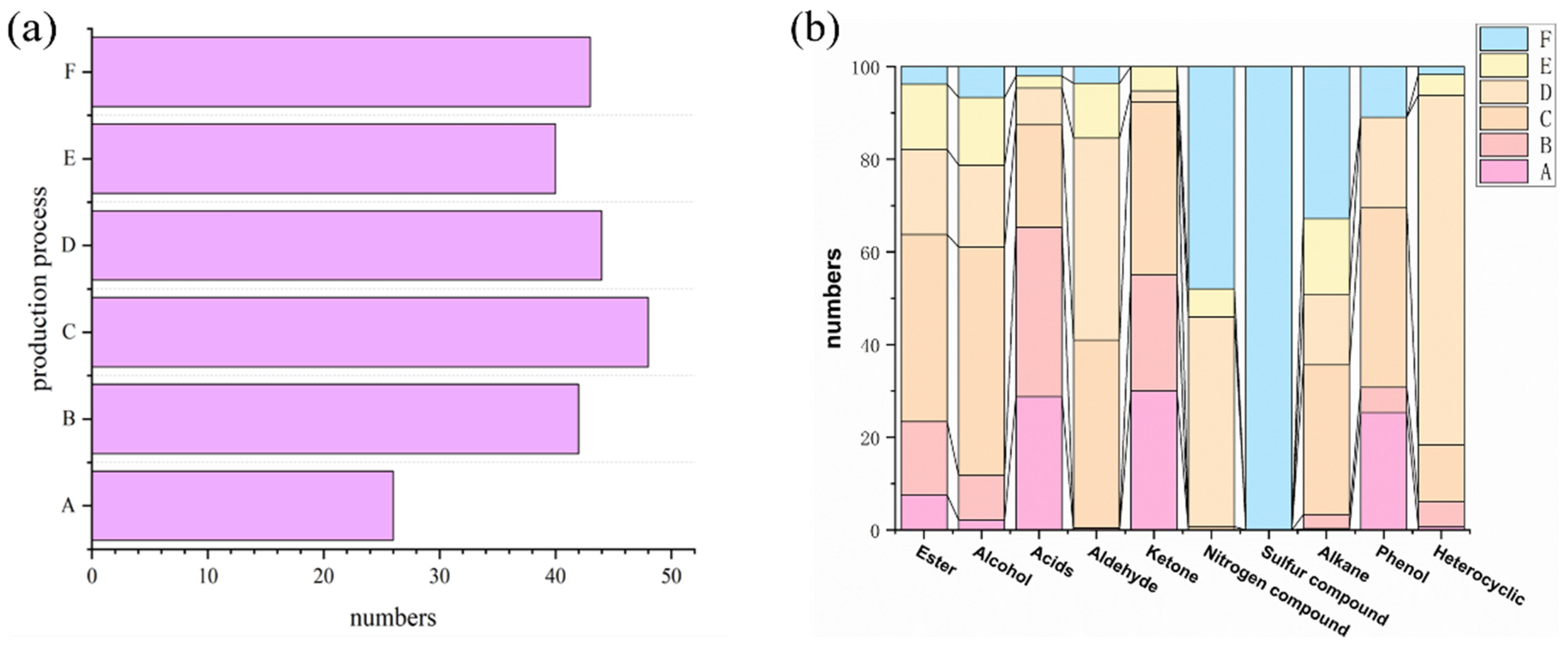
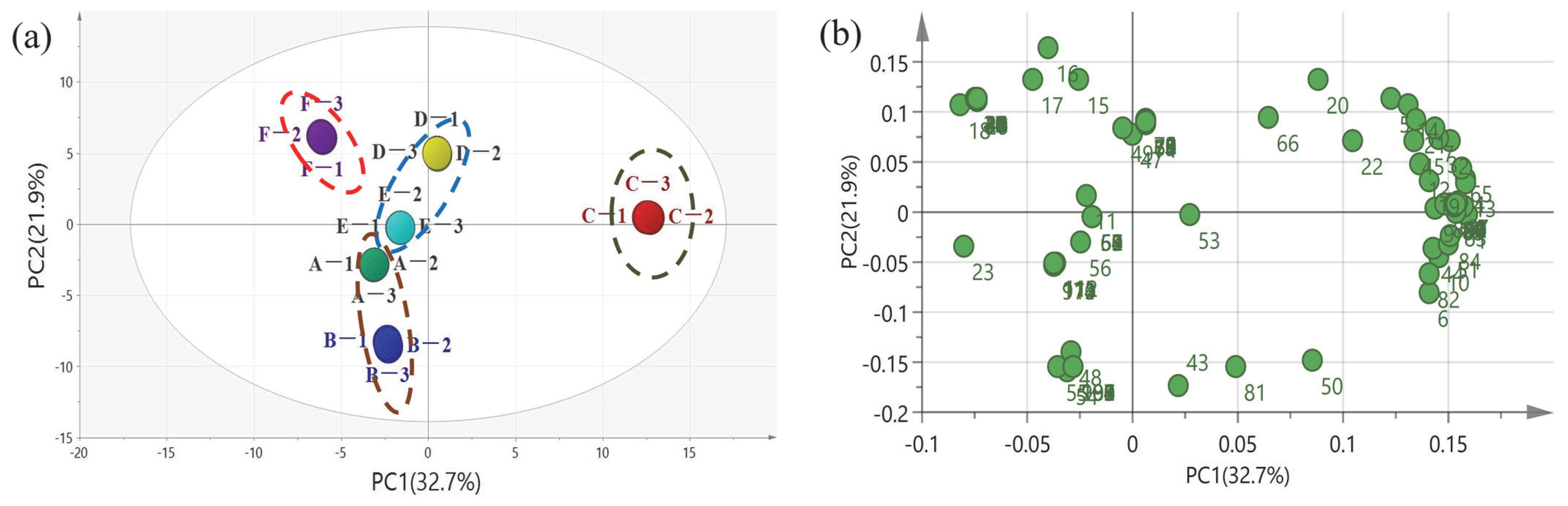
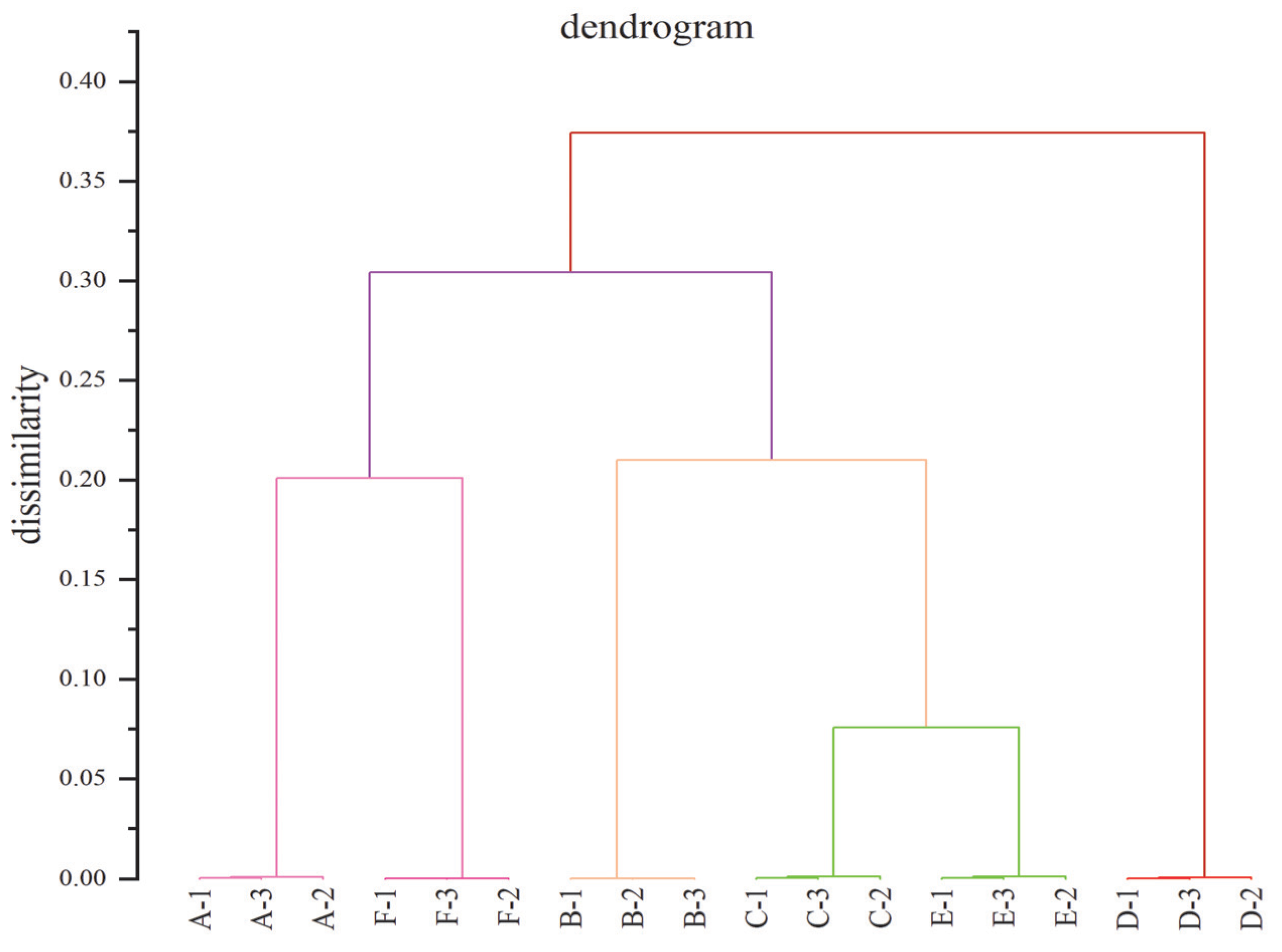
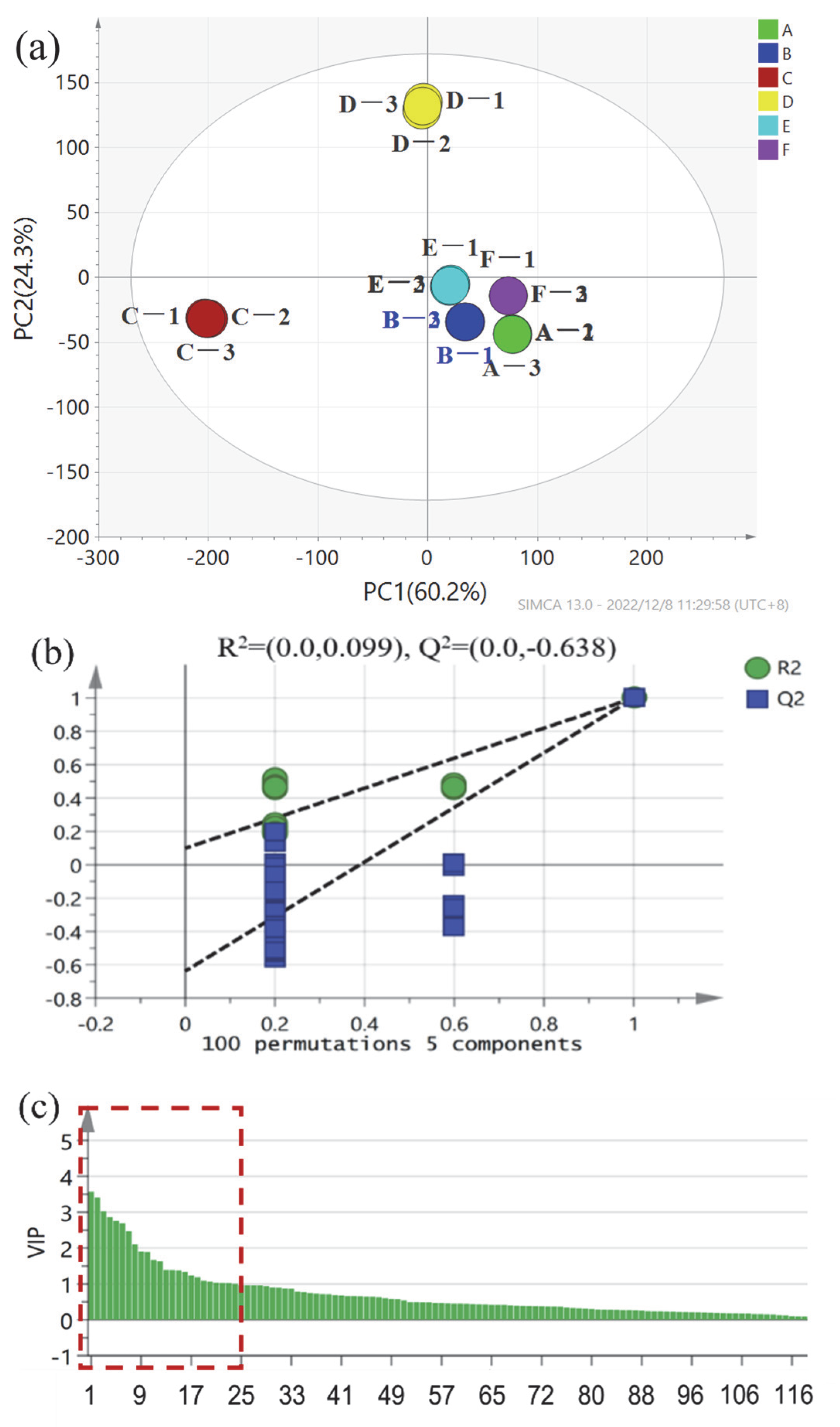
Daqu is not only a crucial starter in the production of baijiu, but it is also an important source of flavoring substances, so maintaining a stable quality is an important part of improving the quality of baijiu. Nonetheless, since the production of daqu is still a natural fermentation process, which is influenced by seasonal factors, the rapid testing of daqu quality is a problem that must be solved. In this study, headspace solid-phase microextraction technology (HS-SPME) was used to explore the volatile components in daqu, and a total of 115 volatile components were extracted. By constructing an untargeted statistical model, the variation in volatile compounds in dissimilar production processes of daqu was studied, and the differences between different maturation stages and the correlations between volatile compounds were analyzed. Subsequently, six compounds, including ethyl acetate, ethanol, phenylethanol, (R,R)-2,3-butanediol, ethyl caproate, and 2,3-butanediol, were further screened out by partial least squares discrimination analysis (PLS-DA), and the symbolic combination of daqu’s maturity was speedily judged in accordance with the changes in marker compound concentrations to lay the foundation for the mechanization of baijiu production.
Keywords: baijiu; daqu; flavor; rapid judgment; marker compounds baijiu; daqu; flavor; rapid judgment; marker compounds