


Abstract
Skatole is a harmful, odorous pollutant in livestock manure. Skatole-degrading strains are mostly harmful Gram-negative bacteria, whereas safe Gram-positive strains demonstrate poor degradation performance, limiting bioremediation applications. To solve this problem, this study was conducted to enhance the skatole degradation capacity of the food-grade strain Lactococcus lactis NZ9000 via heterologous expression of the skatole-degrading Ska enzyme from Acinetobacter piscicola p38. Three gene sequences, designated Ska-Y (original sequence from A. piscicola p38), Ska-D (E. coli codon-optimized), and Ska-R (L. lactis codon-optimized), were separately expressed using constitutive pMG36e and nisin-inducible pNZ8148 plasmids. The constitutive system only transcribed mRNA but produced misfolded, nonfunctional inclusion bodies. By contrast, the codon-optimized pNZ8148-Ska-R strain exhibited prominent skatole degradation ability, even under non-inductive conditions. Under optimal conditions (30 ℃, ultra-low nisin induction), the engineered strain increased the 24 h degradation rate of 50 mg/L skatole from 20% to 88% and completely degraded 25 mg/L skatole. Field tests verified that the strain effectively reduced skatole accumulation in manure compost and lagoon manure. This study achieved efficient functional heterologous expression in Gram-positive bacteria, provides new insights into ultra-low-dose induction and codon optimization, and offers a safe and efficient microbial agent for livestock manure odor remediation.
1. Introduction
Skatole (3-methylindole, 3MI) is widely distributed in livestock and poultry farms, the surrounding air, human excreta, wastewater treatment plants, landfills, public toilets, and natural soil and water samples [1,2]. Studies have shown that skatole possesses toxic, mutagenic, and potentially carcinogenic properties, posing potential risks to the environment and human health [3,4]. Therefore, effective control and degradation of skatole has become a focal point of research in the field of environmental protection. In this context, the microbial degradation of skatole is an economical and environmentally friendly approach [5]. However, only a few strains are known to degrade skatole, most of them originating from marine sediments, mangrove mud, animal intestines, soil, or manure [6]. Moreover, the majority of the reported skatole-degrading bacteria are Gram-negative, and the use of Gram-negative bacteria for environmental pollution control poses potential threats to the environment and animals [5]. In contrast, very few Gram-positive bacteria have been reported. It has been documented that Lactobacillus brevis strain 1.12 can degrade 1 mg/L skatole by 65% within 120 h [7]. This degradation capability is significantly lower than that of Gram-negative bacteria. For example, Acinetobacter oleivorans AO-06 can degrade up to 100 mg/L of 3MI within 48 h [8], while Acinetobacter towneri NTA1-2A degrades, by approximately 97%, 65.58 mg/L 3MI within 72 h [9], Cupriavidus sp. KK10 degrades 100 mg/L 3MI within 24 h [10], and A. piscicola p38 degrades 100 mg/L 3MI within 6 h [11]. Although Gram-negative bacteria exhibit higher skatole degradation efficiency, L. lactis has significant advantages in terms of safety, food-grade applications, secretory expression capabilities, and well-developed expression systems. These advantages endow it with a unique competitiveness for environmental remediation and industrial applications. Further optimization of the L. lactis expression system to enhance its degradation efficiency could provide a safer and more sustainable solution for skatole degradation.
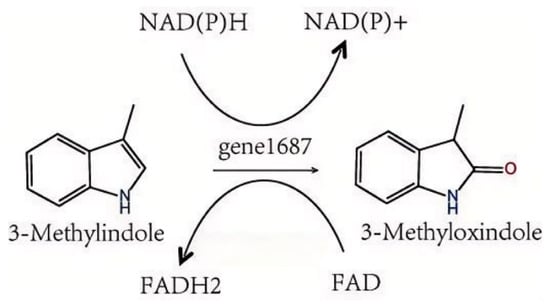
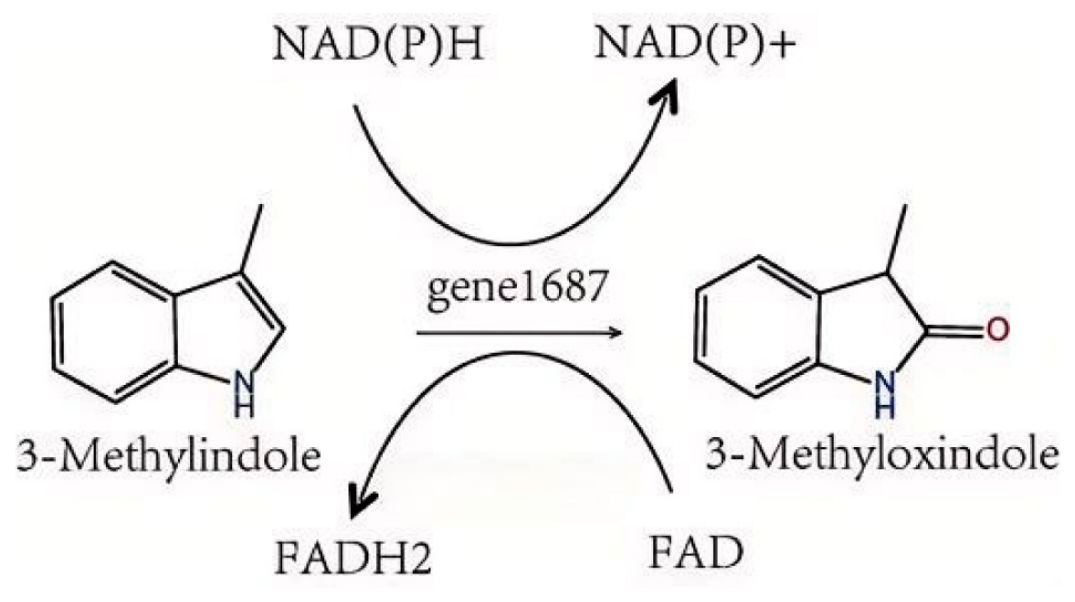
Skatole (3-methylindole) is a heterocyclic compound consisting of an indole ring with a methyl substituent at the C-3 position (Figure 1). Compared with the large-scale screening process for obtaining Gram-negative bacteria capable of efficiently degrading skatole, the use of heterologous expression systems to express target proteins in Gram-positive bacteria is a more rapid and efficient method [12,13]. Nonetheless, this process faces multiple challenges, including protein folding and secretion issues owing to differences in cell membrane structures [14], mismatches in post-translational modifications that affect protein function and stability [15], unstable gene expression regulation leading to fluctuating expression levels [16], protein stability issues in the new host [17], and potential toxicity and pathogenicity concerns [18]. Collectively, these factors increase the complexity of successfully expressing functional heterologous proteins in Gram-positive bacteria. To overcome these barriers, researchers must employ strategies such as codon optimization of heterologous genes and selection of appropriate expression vectors to enhance the expression levels and functionality of heterologous proteins in Gram-positive bacteria [12,19]. In our previous research, we successfully isolated and characterized A. piscicola strain p38 (NCBI: CP167896) and initially documented its skatole-degrading enzyme, designated as gene1687 (styrene monooxygenase: ACDW34_08350) (Figure 1) [11] or, as we named it, the Ska degradation enzyme. To optimize the biological activity of the Ska degradation enzyme in a heterologous system, we facilitated its expression in such a system by employing codon optimization strategies and meticulously choosing the appropriate expression vectors.
Figure 1.
Degradation reaction of skatole [11].
Lactic acid bacteria, recognized as Gram-positive bacteria with probiotic characteristics, are ideal for heterologous protein expression [20]. In this study, we selected lactic acid bacteria as our expression vector to achieve an efficient expression of target genes without adverse effects in humans and animals. Our aim was to express Ska in L. lactis NZ9000 and further explore its potential applications in skatole degradation. By heterologously expressing a skatole-degrading enzyme from Gram-negative bacteria in Gram-positive bacteria, we aimed to effectively degrade skatole while maintaining environmental sustainability, offering innovative solutions in the field of environmental remediation.
2. Materials and Methods
2.1. Reagents and Consumables
Agar (CAS 9002-18-0 agar powder, strength 1400; Solarbio Science & Technology Co., Ltd., Beijing, China), yeast extract (Oxoid LP0021; Oxoid Ltd., Basingstoke, UK), tryptic soy peptone (Oxoid LP0042B; Oxoid Ltd., Basingstoke, UK), sodium chloride, M17 medium (Qingdao Haibo Biotechnology Co., Ltd., Qingdao, China), GM17 medium (with glucose) (Qingdao Haibo Biotechnology Co., Ltd., Qingdao, China), 3-methylindole, DNA extraction kit, PrimeSTAR GXL DNA Polymerase kit (Takara R050A; Takara Bio Inc., Kusatsu, Shiga, Japan), plasmid extraction kit, glycine, EDTA, glycerol, magnesium chloride, calcium chloride, L. lactis NZ9000, pMG36e plasmid, pNZ8148 plasmid, gel purification kit, Escherichia coli MC1061, E. coli DH5α, chloramphenicol, erythromycin, DNA electrophoresis agarose, and ClonExpress II one step cloning kit-C112 (Nanjing Vazyme Biotech Co., Ltd., Nanjing, China) were used.
GM17, GSGM17 (GM17 supplemented with 2% glycine and 0.5 M sucrose), and resuscitation media as well as electroporation buffers I and II were prepared according to standard protocols. Detailed medium and buffer compositions are provided in Supplementary Material, Table S1.
2.2. Codon Optimization Strategy for Gene Sequences
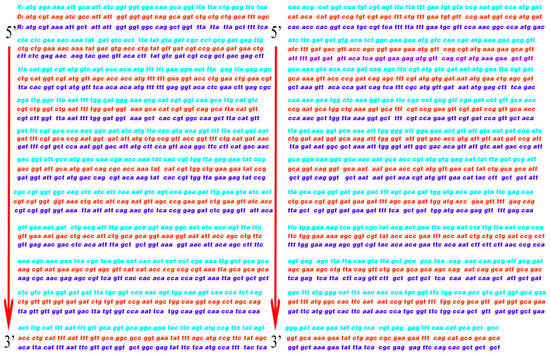
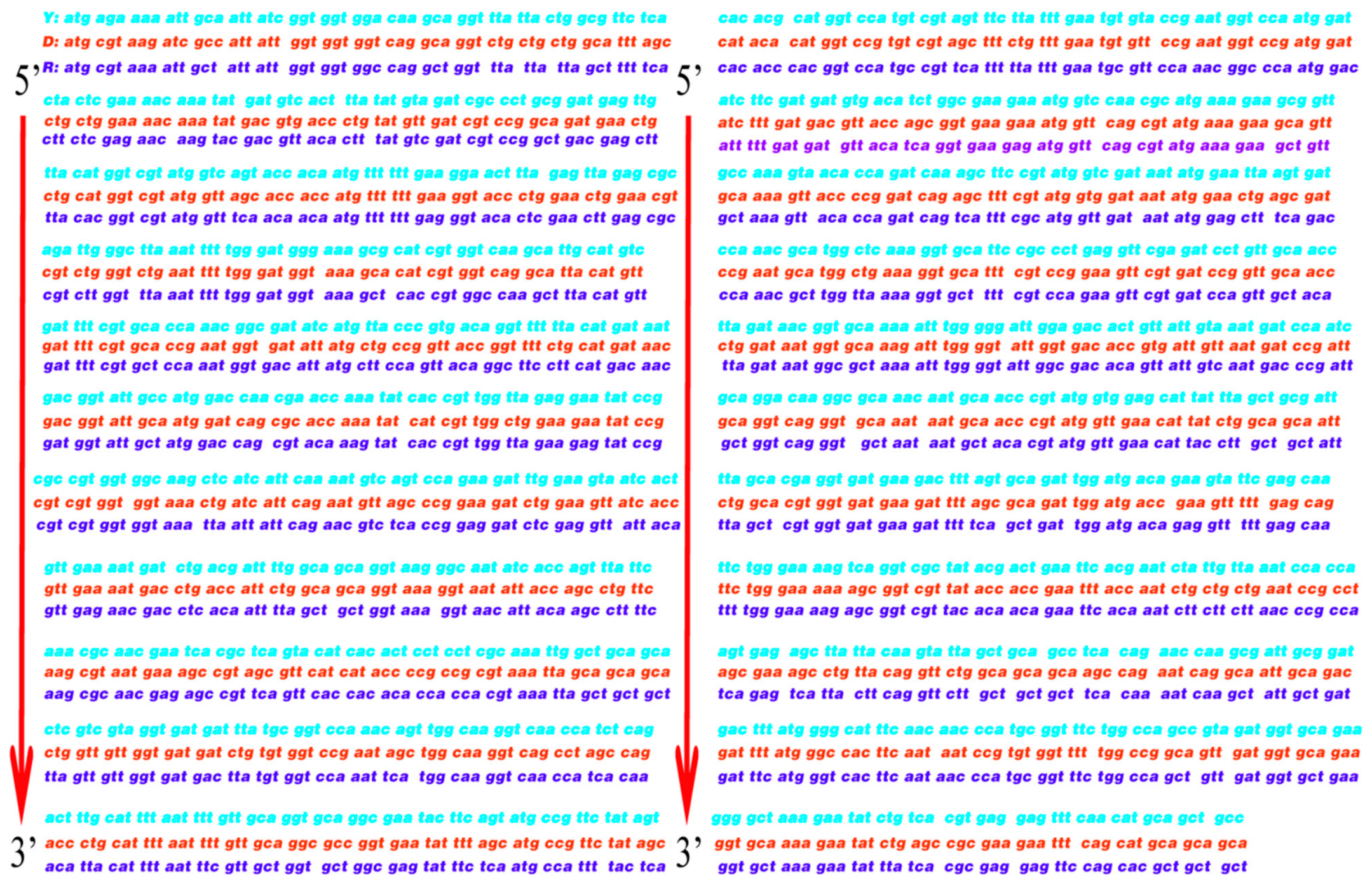
In this study, we successfully screened and completed whole-genome sequencing of A. piscicola strain p38; the sequencing data were deposited in the NCBI database (NCBI: CP167896). Through meticulous analysis of the data, we focused on the Ska gene (styrene monooxygenase: ACDW34_08350), which is responsible for the degradation of skatole, and we designated its original base sequence as Ska-Y (Figure 2). During gene cloning, a His tag was incorporated at its terminus.
Figure 2.
Ska gene sequence from Acinetobacter piscicola p38 and optimized ska sequences designed for heterologous systems. Here and throughout the manuscript, Y denotes the original ska gene sequence from A. piscicola p38; D denotes the sequence codon-optimized according to the E. coli bias database; and R denotes the sequence codon-optimized according to the L. lactis bias database. These abbreviations (Y, D, R) are used consistently in all plasmid names and figure labels. The arrows represent the sequential order of steps.
To enhance the expression efficiency of ska in host cells, we employed two distinct codon optimization strategies. We first optimized the ska gene sequence based on the E. coli codon usage preference database provided by BGI, and this optimized sequence was designated as Ska-D (Figure 2). We then optimized the ska sequence in accordance with the L. lactis codon bias database, and the resulting sequence was named Ska-R (Figure 2). During the optimization process, a 6xHis tag was incorporated before the stop codon in both sequences, which would facilitate subsequent protein purification.
Compared to the original Ska-Y sequence, the optimized Ska-D and Ska-R sequences exhibited variations, which are clearly illustrated in Figure 2. We ligated Ska-D into the pET28(a) vector and Ska-R into the LVY-pKMV plasmid while performing a whole-genome synthesis process. This approach not only aids in the differentiation and cloning of distinct genes but also ensures the stability of gene fragments. The codon-optimized ska gene sequences (Ska-D and Ska-R) were deposited in the GenBank database under accession numbers PZ727063 and PZ727062, respectively.
2.3. Plasmid and Target Gene Fragment Cloning and Extraction
We initially inoculated a single colony of A. piscicola p38 into LB broth and incubated it for 24 h. Subsequently, DNA was extracted from the cultured bacteria using a bacterial DNA extraction kit, following the manufacturer’s guidelines. Thereafter, a PrimeSTAR GXL DNA Polymerase kit (Takara Bio Inc., Kusatsu, Shiga, Japan) was used to clone linear plasmids and target gene fragments from five distinct gene sources, namely, pMG36e, pNZ8148, Ska-Y, Ska-D, and Ska-R, via PCR. After amplification, the products were separated on an agarose gel, and gene fragments were purified using gel extraction techniques. Purified gene fragments were professionally sequenced by Sangon Biotech (Shanghai) Co., Ltd. (Shanghai, China). to verify sequence integrity. For target gene cloning, we specifically designed homologous arms for pMG36e and pNZ8148 for subsequent homologous recombination.
2.4. Construction of Target Gene Expression Plasmids
Using homologous recombination techniques, we cloned the target gene fragments into linear plasmids carrying identical homologous arms. The linear plasmids pMG36e and pNZ8148 were ligated with the corresponding target gene fragments and transformed into the host strains DH5α and MC1061, respectively, spread on LB agar plates containing appropriate antibiotics, and incubated at 37 °C for 24 h. After incubation, single colonies were selected for enrichment cultures, and plasmid DNA was extracted from the strains according to the instructions of the plasmid extraction kit used. The extracted plasmids were sent to Shenggong Bioengineering Co., Ltd., for professional sequencing to verify the sequences of the cloning products. Those plasmids with the correct sequences were selected for subsequent experiments. The gene fragments recombined with pMG36e were designated as pMG36e-Ska-Y, pMG36e-Ska-D, and pMG36e-Ska-R, whereas those recombined with pNZ8148 were designated as pNZ8148-Ska-Y, pNZ8148-Ska-D, and pNZ8148-Ska-R.
2.5. Preparation of Competent Cells of L. lactis NZ9000
Competent cells of L. lactis NZ9000 were prepared as follows. Briefly, cells were cultured in GM17 broth at 30 ℃ and then transferred to GSGM17 broth and incubated at 37 °C until the OD600 (optical density at 600 nm) reached approximately 0.4 (logarithmic growth phase). The cells were harvested by centrifugation, washed twice with ice-cold electroporation buffer I and once with ice-cold electroporation buffer II, and finally resuspended in electroporation buffer I. The competent cells were stored at −20 °C for subsequent transformation experiments. The complete step-by-step competent-cell preparation protocol is described in Supplementary Material, Text S1.
2.6. Electroporation of L. lactis and Verification of Target Gene Expression
Plasmid DNA (10 μL) was gently mixed with competent cells and placed on ice for 5 min to ensure binding between plasmids and competent cells. The mixture was then transferred to a 2 mm gap electroporation cuvette and subjected to electroporation at 2.5 kV. Immediately after electroporation, 900 μL of prechilled recovery solution was added to the cuvette, and the mixture was placed on ice for an additional 5 min to promote cell recovery. Electroporated cells were then statically cultured at 37 °C for 2 to 3 h to facilitate stable plasmid expression. Cells were then spread on GM17 agar plates containing appropriate antibiotics and incubated at 37 °C for 48 h to select successfully transformed single colonies.
After 48 h of incubation, single colonies were selected for enrichment culture. Plasmid DNA was extracted from these strains using a plasmid extraction kit, according to the manufacturer’s instructions. To ensure sequence accuracy, the extracted plasmids were sent to Shenggong Bioengineering Co., Ltd., for professional sequencing. Based on the sequencing results, single colonies carrying plasmids with the correct sequences were selected for subsequent experiments and application studies.
2.7. Bacterial Lysis
L. lactis strains carrying pMG36e-Ska-Y, pMG36e-Ska-D, and pMG36e-Ska-R were collected in 50 mL centrifuge tubes and washed twice with physiological saline; the supernatant was discarded. In each tube, 20 mL of sterile water containing lysozyme (1 mg/mL) was added; the mixture was then incubated at 37 °C for 1 h, followed by chilling at 4 °C for 1 h. Lysozyme treatment was repeated three times. The samples were then quickly frozen at −80 °C for 30 min, followed by water bath thawing; this freezing/thawing treatment was repeated three times. The supernatant was collected by centrifugation at 12,000 rpm for 10 min and used for protein recovery on a Ni column. In addition, cell pellets were washed three times with physiological saline and resuspended in protein denaturation buffer, followed by centrifugation at 12,000 rpm for 10 min to collect the supernatant for Ni column protein recovery. Proteins recovered from the Ni columns were stained with Coomassie brilliant blue.
2.8. Skatole Determination Through High-Performance Liquid Chromatography (HPLC)
Single colonies of lactic acid bacteria were cultured in 100 mL of liquid GM17 medium for enrichment. After 24 h of enrichment, 5 mL of bacterial liquid was transferred to a new medium for further culture for 6 h, 12 h, 24 h and 48 h. The medium contained 25 mg/L, 50 mg/L, 75 mg/L and 100 mg/L, respectively. In all experiments involving skatole, each group was set up with three replicates. After the reaction was completed, high-performance liquid chromatography (HPLC) was used for measurement. The entire experimental process was repeated three times to ensure the reliability of the results. HPLC was used for determining skatole concentration in each sample, as established by [11].
2.9. Manure Composting Treatment and Sample Collection
Single colonies of wild-type Lactococcus lactis NZ9000 and engineered strains were inoculated into liquid M17 medium and cultured in a constant-temperature shaker at 30 °C with shaking at 100 rpm. When the OD value reached 0.6, a uniform concentration of nisin inducer (10−46 ng/mL) was supplemented into the culture. The cultivation was terminated once the OD increased to 1.8, and the bacterial cells were harvested. The collected cells were washed three times with sterile normal saline, resuspended in normal saline to an OD of 1.1 (approximately 1 × 10⁹ CFU/mL based on the bacterial growth curve), and further concentrated 10-fold via centrifugation and resuspension to prepare a bacterial suspension of 1 × 10¹⁰ CFU/mL.
A total of 200 kg of fresh pig manure was collected from the on-campus pig breeding experimental base and thoroughly homogenized. Fifteen individual manure piles were constructed using 10 kg of well-mixed manure for each pile. The experiment was set up with three treatment groups, including a blank control group (treated with normal saline), a wild-type NZ9000 group, and an engineered bacterial group, with five biological replicates per group. A total of 100 mL of the prepared bacterial suspension or normal saline was evenly sprayed onto each manure pile and fully blended with the manure matrix.
For sampling, three cross-sections (front, middle, and rear) were selected for each manure pile, and nine sampling points were set on each cross-section. Twenty-seven subsamples collected from each pile were fully mixed as one composite sample. The obtained samples were weighed and mixed with an equal volume of acetonitrile containing 2-methylindole as the internal standard, followed by incubation in a 30 °C water bath for 1 h for skatole extraction. Subsequently, 400 μL of the extract was mixed with 100 μL of distilled water and 500 μL of Tris buffer solution. The mixed solution was filtered through a 0.22 μm microporous membrane to obtain the test sample. Sampling was performed daily at 10:00 a.m. for seven consecutive days.
2.10. Lagoon Manure Treatment and Sample Collection
A total of 10 kg of fresh pig manure was placed in a plastic barrel and mixed with 50 L of tap water. The mixture was soaked and intermittently stirred for 3 d to achieve full homogenization of manure and water. Fifteen 3 L containers were prepared, and each container was filled with 1 L of homogenized lagoon manure. Consistent with the composting experiment, three treatment groups (blank control, NZ9000, and engineered strain) were established with five replicates for each group. Each container was supplemented with 10 mL of the corresponding bacterial suspension or normal saline and thoroughly stirred.
During the experimental period, the lagoon manure was fully stirred before sampling, and 2 mL of manure liquid was collected each time. The samples were centrifuged at 12,000 rpm for 20 min, and 100 μL of the supernatant was mixed with 400 μL acetonitrile and 500 μL Tris buffer solution. After uniform mixing, the solution was filtered through a 0.22 μm microporous membrane for subsequent detection. Sampling was conducted daily at 9:00 a.m. for seven consecutive days.
2.11. Data Analysis
Data were recorded using Excel (Microsoft® Excel® 2019 MSO, Microsoft Corporation, Redmond, Washington, DC, USA), figures were drawn using GraphPad Prism 9.0 (GraphPad Software, San Diego, CA, USA), and graphic illustration was performed using Adobe Illustrator 2022-26.0 (Adobe Systems, San Jose, CA, USA). Statistical analysis of the data was performed using IBM SPSS Statistics 26 (IBM Corporation, Armonk, NY, USA); a t-test was performed to assess the statistical significance of the differences, and p < 0.05 was considered significant. All data were first tested for normality using the Shapiro–Wilk test and for homogeneity of variances using Levene’s test. For comparisons among the three treatment groups (blank control, NZ9000, and engineered bacteria) at each time point, one-way ANOVA was applied when data met the assumptions of normality and equal variance; otherwise, the non-parametric Kruskal–Wallis test was used. Pairwise comparisons were performed using Tukey‘s post hoc test. Statistical significance was set at p < 0.05. All analyses were performed using IBM SPSS Statistics 26 (IBM Corporation, Armonk, NY, USA).
3. Results and Discussion
3.1. Constitutive Plasmid Expression
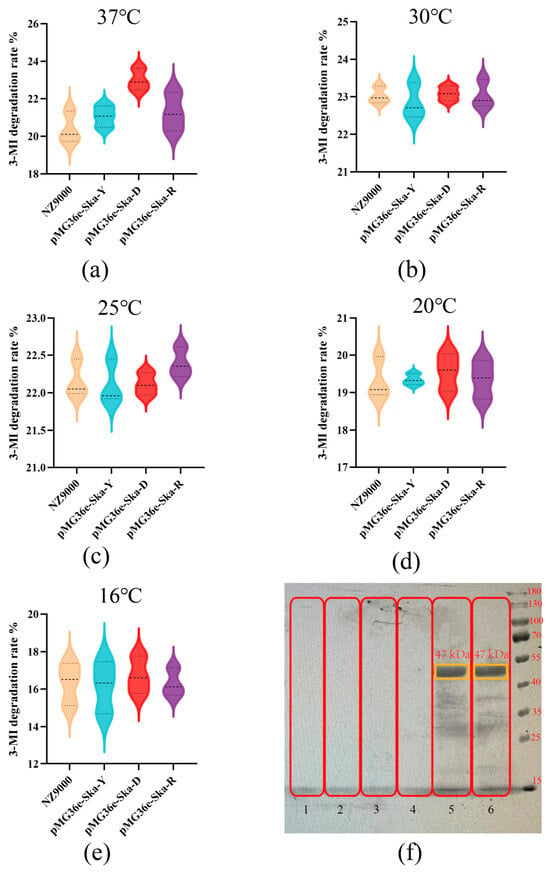
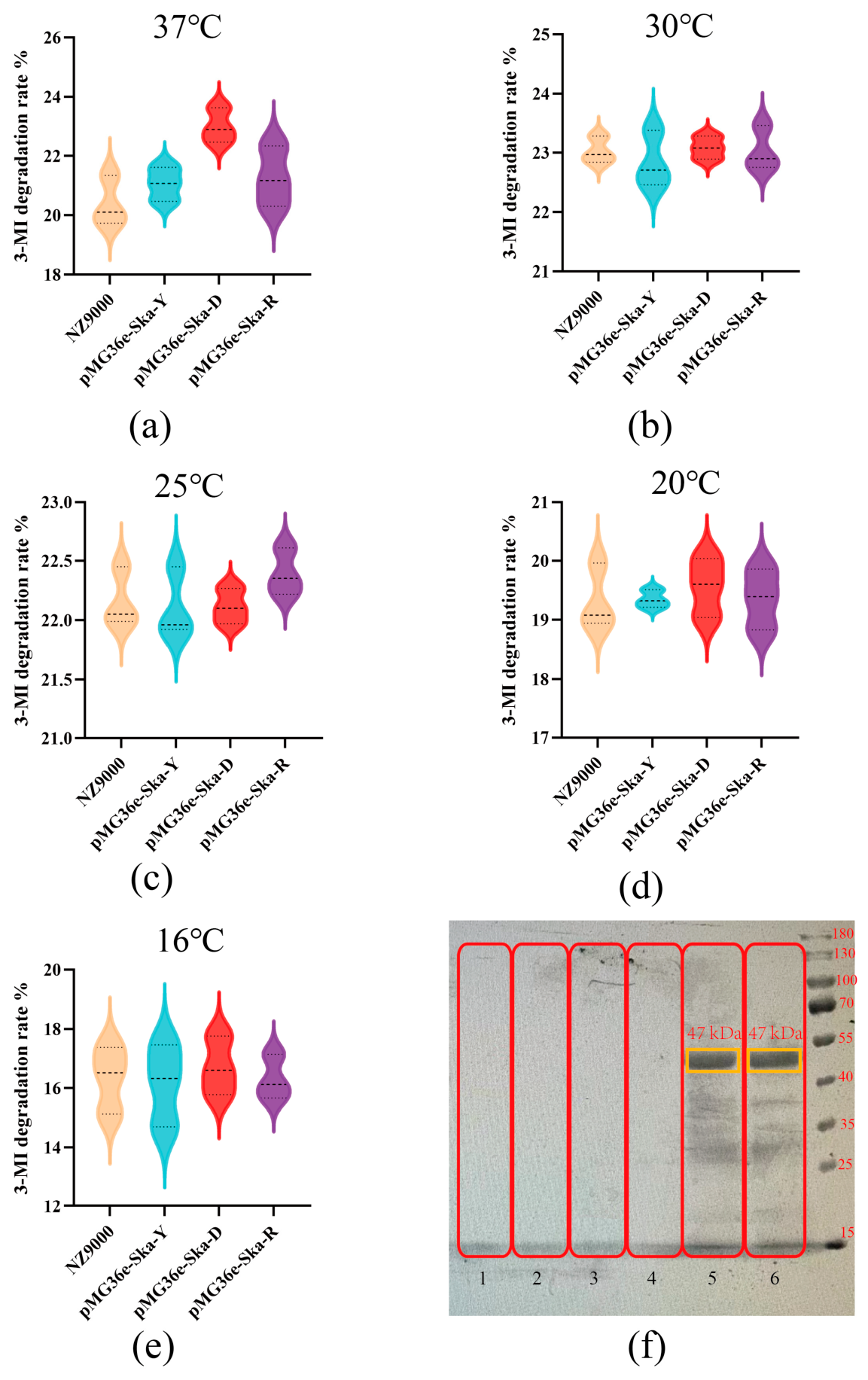
As defined in Section 2.2, the suffixes Ska-Y, Ska-D, and Ska-R in all plasmid constructs denote the original, E. coli-optimized, and L. lactis-optimized ska gene sequences, respectively. The pMG36e expression system is widely utilized in L. lactis because of its constitutive nature; that is, inducers are not needed [21,22,23]. In the present study, we initially used pMG36e as the vector for target gene expression. Plasmids pMG36e-Ska-Y, pMG36e-Ska-D, and pMG36e-Ska-R were electroporated into NZ9000 cells, and single colonies were selected. Skatole degradation assays were performed using electrotransformed colonies cultured at various temperatures. The results indicated no significant differences in skatole degradation efficiency between electrotransformed and non-transformed NZ9000 cells (Figure 3a–e). Expression in pMG36e depends on the strong promoter p32, which enhances mRNA transcription [24]. It is known that, during heterologous expression, mRNA overproduction can negatively affect protein folding, leading to the formation of inclusion bodies and the loss of protein function [25]. Consequently, we subjected NZ9000/pMG36e-Ska-Y, NZ9000/pMG36e-Ska-D, and NZ9000/pMG36e-Ska-R lactococci to cell lysis, followed by Ni column adsorption of the supernatant, which revealed no expression of the target proteins (Figure 3f, lanes 1–3). Further investigation following cell lysis and a protein denaturation–renaturation treatment revealed protein bands for pMG36e-Ska-D and pMG36e-Ska-R but not for pMG36e-Ska-Y, confirming that the optimized nucleotide sequences could successfully form complete peptide chains; however, due to misfolding, these peptides were nonfunctional. Several factors may have contributed to this outcome, including codon bias, translation rate, and mRNA expression levels [17,25]. Therefore, this study considered the use of inducible plasmids to mitigate the negative effects of these factors on target protein expression.
Figure 3.
(a) Skatole degradation ability of NZ9000 and derivative strains carrying pMG36e-Ska-Y, pMG36e-Ska-D, or pMG36e-Ska-R at (a) 37, (b) 30, (c) 25, (d) 20, and (e) 16 °C in the presence of 50 mg/L skatole. (f) Coomassie brilliant blue-stained His-tagged proteins obtained by Ni column adsorption of bacterial lysate supernatants, either untreated (lanes 1–3) or treated for protein denaturation and renaturation (lanes 4–6). Lanes 1 and 4: pMG36e-Ska-Y; lanes 2 and 5: pMG36e-Ska-D; lanes 3 and 6: pMG36e-Ska-R. Note: The labels Y, D, and R in this figure are defined in the legend of Figure 2.
3.2. Inducible Plasmid Expression
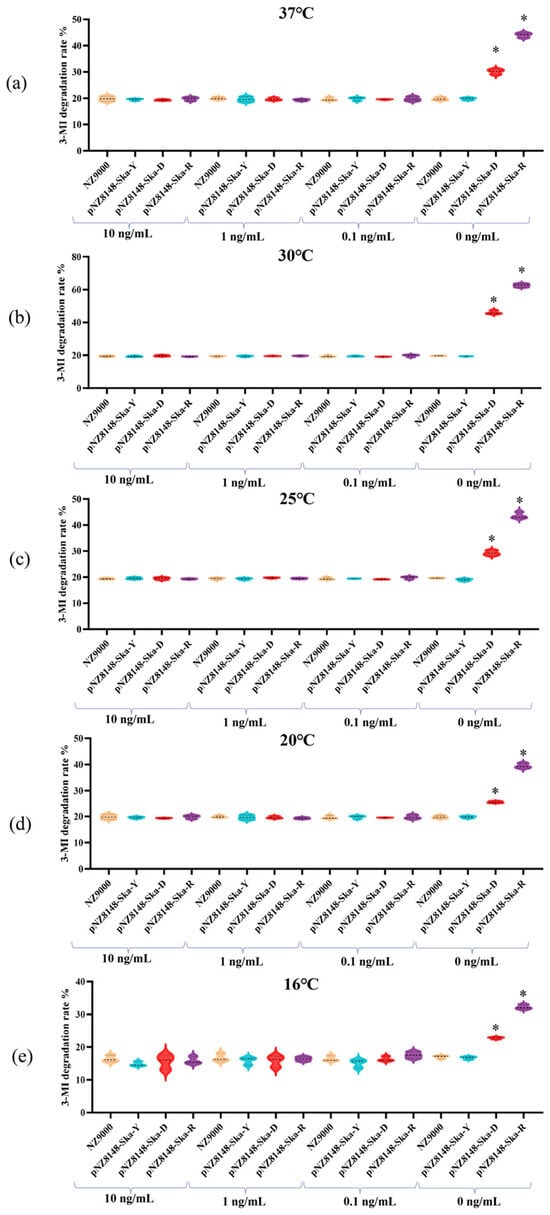
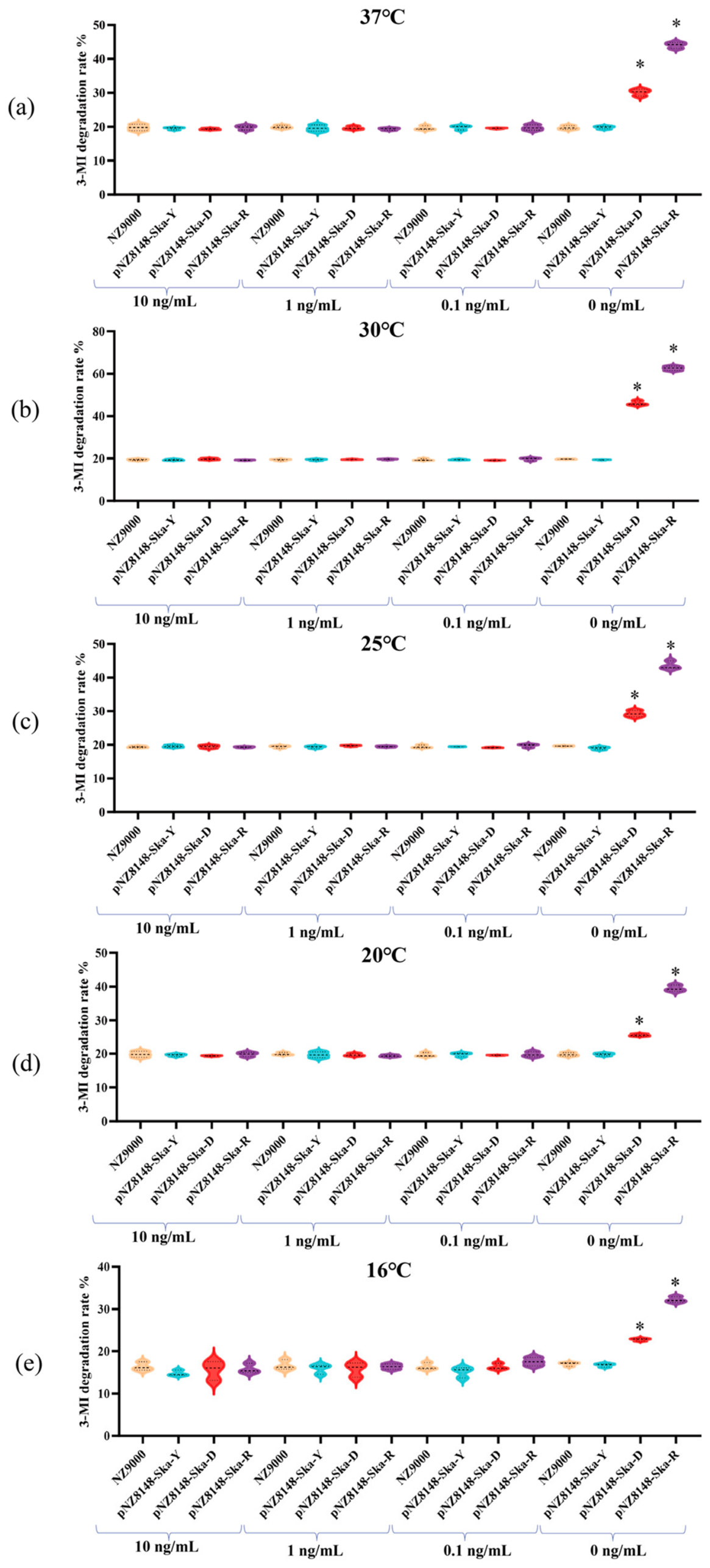
For the pNZ8148 series, the same nomenclature applies: -Y, -D, and -R represent the original, E. coli-optimized, and L. lactis-optimized sequences, respectively. The nisin-inducible pNZ8148 vector is widely used in lactococci [26,27]. Compared with pMG36e, pNZ8148 allows the regulation of target gene expression in lactococci through an induction agent, making it a common method to reduce the formation of inclusion bodies by controlling mRNA expression levels [28]. Studies have indicated that pNZ8148 can be induced with nisin at various concentrations, such as 1 ng/mL [27], 10 ng/mL [26,29], and 40 ng/mL [29]. In this study, the nisin induction concentrations used ranged from 0 to 10 ng/mL, and experiments were performed under the same temperature conditions for validation. The results showed no significant differences in the skatole degradation efficiency of L. lactis due to the expressions of pNZ8148-Ska-Y, pNZ8148-Ska-D, and pNZ8148-Ska-R within the 0.1–10 ng/mL nisin induction concentration range. In contrast, skatole degradation capacity was enhanced in the absence of the induction agent (Figure 4). Interestingly, in the complete absence of nisin induction (0 ng/mL), and compared with NZ9000, strain NZ9000/pNZ8148-Ska-R exhibited a significant increase in skatole degradation, reaching approximately 55% degradation within 24 h, whereas the wild-type NZ9000 degraded only about 20% under the same conditions (Figure 4). This phenomenon suggests the occurrence of basal-level (leaky) expression from the nisin-inducible promoter in NZ9000, possibly triggered by endogenous factors or spontaneous promoter activity in the host strain. Although numerous researchers have successfully achieved heterologous protein expression using inducers, there are unreported cases of failure. This discovery provides a new solution for researchers who have failed to express target proteins using inducible plasmids.
Figure 4.
(a) Skatole degradation ability of L. lactis NZ9000 and derivative strains carrying pNZ8148-Ska-Y, pNZ8148-Ska-D, or pNZ8148-Ska-R in the presence of different inducer concentrations and 50 mg/L skatole at (a) 37, (b) 30, (c) 25, (d) 20, and (e) 16 °C. Note: The labels Y, D, and R in this figure are defined in the legend of Figure 2. * indicates a significant difference (p < 0.05).
Heterologous expression in prokaryotes involves numerous challenges. For example, the expression of Gram-negative bacterial target proteins in Gram-positive bacteria is significantly hindered by codon bias, which affects the success rate of the experiments [30]. As shown in Figure 4, strains carrying the target protein gene sequence Ska-Y from A. piscicola p38 were unable to degrade skatole. In addition, Ska-Y was not correctly expressed in NZ9000, and no inclusion bodies were formed against such a background (Figure 3f). Studies have indicated that this could be due to mRNA bases not matching the host codon/anticodon apparatus during heterologous expression, leading to premature termination of translation [31]. Codon optimization of nucleotide sequences is a common solution for this problem [32]. As shown in Figure 4, pNZ8148-Ska-D and pNZ8148-Ska-R enhanced the ability of L. lactis NZ9000 to degrade skatole, and the degradation efficiency conferred by pNZ8148-Ska-R was higher than that conferred by pNZ8148-Ska-D. This phenomenon was not related to the mRNA expression levels, as no inducer was used. Moreover, it was not related to bacterial population numbers either, since the initial OD600 of the cultures was the same, the culturing time was 24 h for all of them, and bacterial growth had reached the plateau phase in all such cultures (previous studies have shown that an NZ9000 culture with an OD600 of 0.7 reaches the plateau phase within 6 h). Thus, this phenomenon may be related to codon optimization biases that result in incorrect protein folding, which requires further exploration.
3.3. Optimal Induction Concentration of pNZ8148-Ska
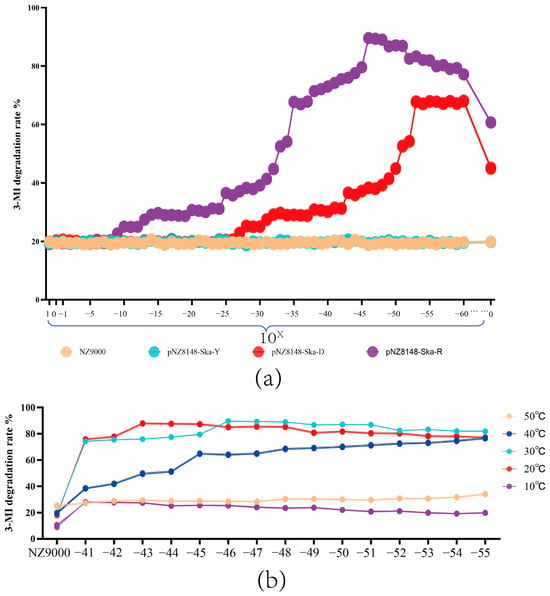
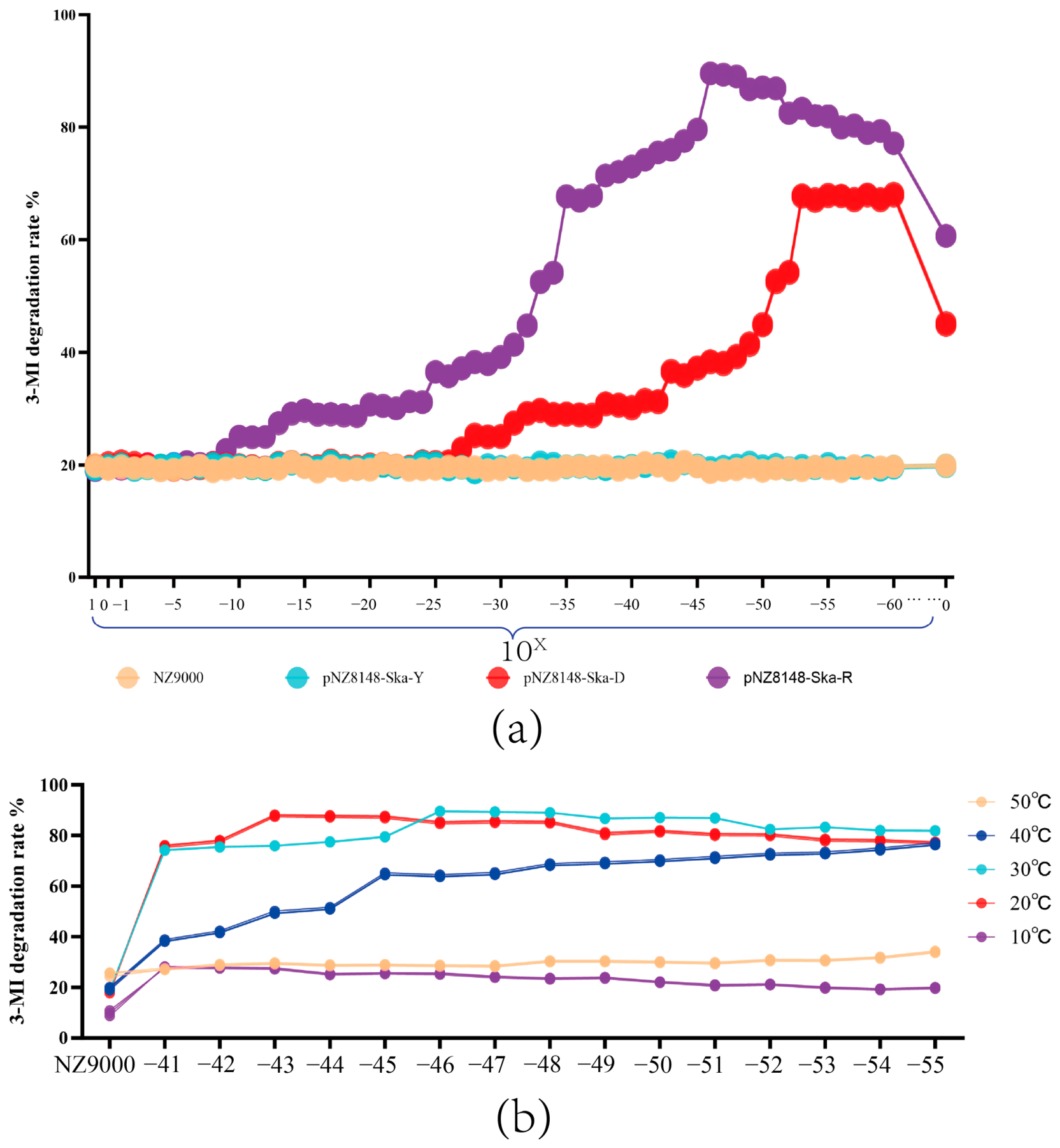
To further explore the impact of codon bias on protein expression, it is essential to obtain soluble proteins from heterologous expression systems. However, not all soluble proteins are biologically functional [18]. Moreover, the extraction and purification of proteins can introduce additional complexities in addressing this issue. Therefore, we employed an alternative approach to substantiate this viewpoint by examining the highest degradation efficiency and degradation trends of skatole among bacteria carrying pNZ8148-Ska-Y, pNZ8148-Ska-D, and pNZ8148-Ska-R. As shown in Figure 5, the skatole degradation capacities of strains carrying plasmids pNZ8148-Ska-D and pNZ8148-Ska-R gradually increased with decreasing inducer concentrations. However, compared to that of NZ9000/pNZ8148-Ska-R, the degradation efficiency of NZ9000/pNZ8148-Ska-D decreased as inducer concentrations decreased. Moreover, its maximum degradation efficiency was not as high as that of NZ9000/pNZ8148-Ska-D, with an optimal induction concentration of 10−46 ng/mL of nisin for the strain carrying pNZ8148-Ska-D. The observed optimal induction concentration (10−46 ng/mL) was remarkably low, yet it was consistently verified by serial dilution experiments. Although this concentration is far below the conventional nisin induction ranges reported in the literature (typically 1–40 ng/mL), the underlying mechanism for this ultrasensitive response warrants further investigation. These results indicate that, while both strains can enhance the skatole degradation ability of NZ9000, codon bias cannot be overlooked in heterologous expression. The superior performance of Ska-R over Ska-D can be attributed to its higher Codon Adaptation Index (CAI: 0.73 vs. 0.625) when evaluated against the L. lactis reference set, indicating a better match with the host’s codon usage bias and translational machinery. This further confirms that codon optimization can improve the expression of proteins with biological functions. The mechanism behind this ultrasensitive induction remains to be further explored.
Figure 5.
(a) Skatole degradation ability of NZ9000 and derivative strains carrying pNZ8148-Ska-Y, pNZ8148-Ska-D, or pNZ8148-Ska-R at 30 °C in the presence of varying concentrations of nisin (ranging from 101 to 10−60 ng/mL, and 0 ng/mL) and 50 mg/L skatole. (b) Skatole degradation ability of NZ9000 and NZ9000/pNZ8148-Ska-R at different temperatures in the presence of varying concentrations of nisin (ranging from 10 to 41 to 10−55 ng/mL) and 50 mg/L skatole. Note: The labels Y, D, and R in this figure are defined in the legend of Figure 2.
3.4. Factors Affecting the Skatole Degradation Ability of NZ9000/pNZ8148-Ska-R
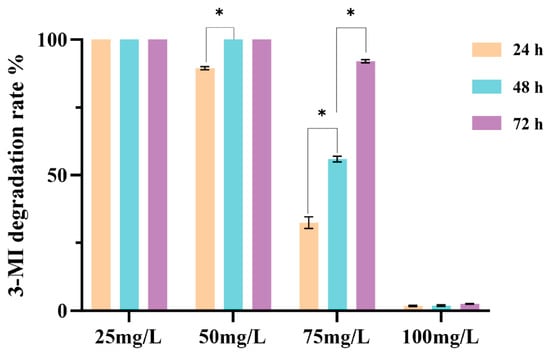
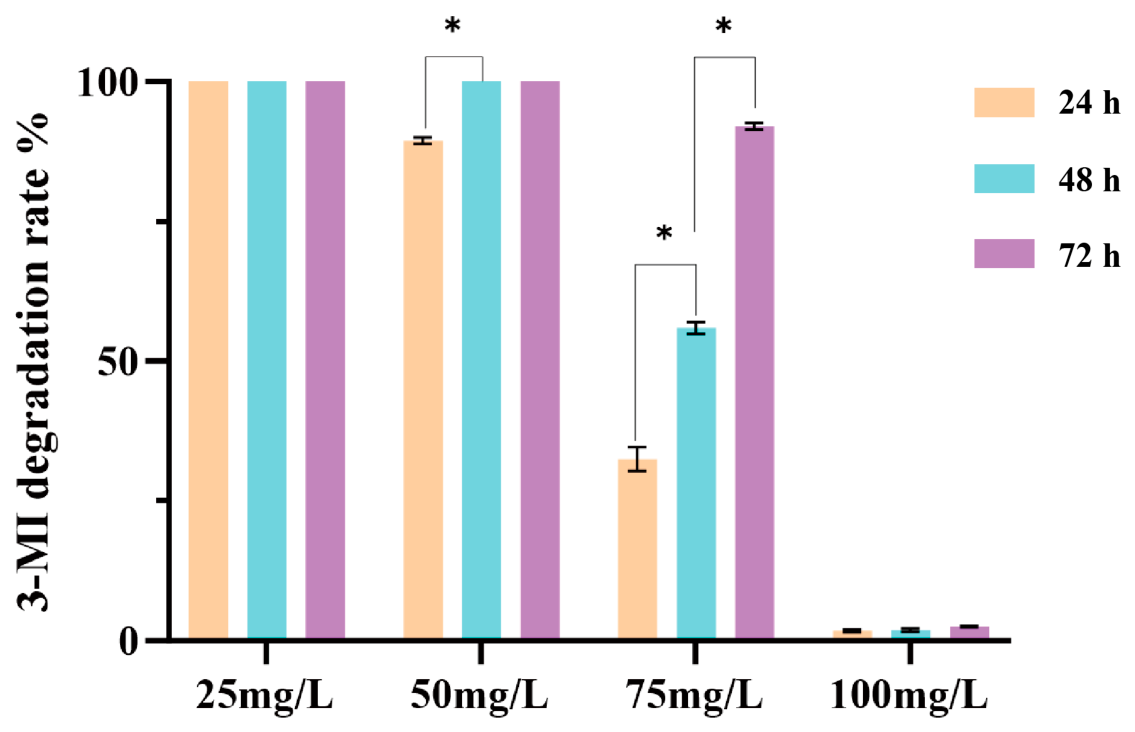
Having endowed L. lactis NZ9000 with the ability to degrade skatole, it was necessary to further explore the environmental application of pNZ8148-Ska-R. As shown in Figure 5a, the optimal induction concentration of nisin was 10−46 ng/mL; however, bacterial metabolism rates under different temperature conditions affect protein synthesis [33]. Therefore, we investigated the effect of temperature on the skatole degradation ability of NZ9000/pNZ8148-Ska-R. Figure 5a shows that, as the temperature decreased from 30 to 20 °C, the optimal induction concentration shifted to higher values. It has been shown that extremely low temperatures can affect cell growth, which is detrimental to protein synthesis. In addition, if the temperature is elevated, the inducer concentrations required to achieve a correct expression of the target protein will decrease; however, excessively high temperatures can inhibit bacterial growth. This phenomenon is consistent with the adjustments made by many researchers working with heterologous expression systems, in which both the temperature and inducer concentration are modified to achieve target protein expression [25]. Studies have shown that high skatole concentrations affect microbial growth and degradation efficiency [6]. As shown in Figure 6, in this study, NZ9000/pNZ8148-Ska-R, at 30 °C for 24 h, demonstrated 100% degradation efficiency for 25 mg/L of skatole, 88% for 50 mg/L, 32.56% for 75 mg/L, and only 1.78% for 100 mg/L—with NZ9000 growth being significantly inhibited. Compared with that of lactococci strains isolated from the environment through functional enrichment of NZ9000, a significant enhancement in bacterial skatole degradation ability was achieved in this study, exhibiting a promising capability for bioremediation.
Figure 6.
Impact of different skatole concentrations on the degradation efficiency of L. lactis NZ9000/pNZ8148-Ska-R. * indicates a significant difference (p < 0.05).
3.5. Application Effect of Engineered Bacteria in Manure Composting
As shown in Table 1, the initial skatole concentrations exhibited no significant differences among all treatment groups before the experiment (p > 0.05). During the composting process, the skatole content in the engineered bacteria treatment group was significantly lower than that in the blank control group and the wild-type NZ9000 group from day 3 to day 7 (p < 0.05). As shown in Table 2, the addition of engineered bacteria significantly reduced the skatole content in lagoon manure from day 1 to day 5 compared with the blank control group and the wild-type NZ9000 group (p < 0.05). Skatole is a typical nuisance odorant in livestock production and is frequently neglected in routine farming management. Uncontrolled skatole accumulation in pig manure can reach up to 72 mg/kg under natural conditions [34,35]. Previous studies have reported that the skatole concentration in fresh pig manure is approximately 10 mg/kg, and it varies substantially depending on manure treatment strategies and storage conditions [34,35,36]. Manure composting is a conventional open-air manure disposal method, and skatole concentration naturally increases gradually during composting, which is consistent with the variation trend observed in the blank group of the present study [34,35]. However, inoculation with the engineered lactic acid bacterial strain effectively reversed this trend and markedly reduced skatole accumulation in manure.
Table 1.
Skatole content (mg/L) during composting of manure.
Table 2.
Skatole content (mg/L) during the treatment of lagoon manure.
Lagoon manure storage is another prevalent manure management mode in intensive pig farms, and odor emission from lagoon manure severely impairs ambient air quality. In this study, the engineered strain exerted a prominent skatole-removing effect during the early stage of lagoon manure treatment, whereas this mitigation effect was not sustained in the later stage. This phenomenon may be attributed to the dynamic competitive advantage of the engineered strain in the complex microbial community of manure systems. Continuous supplementation of engineered bacteria is speculated to maintain its dominant population status and achieve persistent skatole reduction in lagoon manure. Collectively, the engineered lactic acid bacterial strain possesses promising potential for skatole abatement in livestock manure, providing an efficient and novel biological strategy for the remediation of manure odor pollution.
4. Conclusions
In this study, a skatole-degrading engineered strain was successfully constructed by heterologously expressing the Ska enzyme of Acinetobacter piscicola p38 in food-grade Lactococcus lactis NZ9000 through codon optimization and vector selection to overcome the safety risks and low degradation defects of traditional skatole-degrading bacteria; the constitutive plasmid pMG36e was found to drive target gene transcription but cause misfolded protein and inactive inclusion body formation, whereas the nisin-inducible plasmid pNZ8148 harboring the L. lactis-optimized Ska-R sequence realized efficient functional expression, and the engineered strain reached a maximum 24 h skatole degradation rate of 88% for 50 mg/L skatole under optimal conditions (30 °C and ultra-low nisin induction), with temperature and inducer concentration jointly regulating its degradation performance. Field application experiments confirmed that the engineered strain could effectively suppress skatole accumulation in manure compost during the middle and late fermentation stages and reduce skatole levels in the early treatment of lagoon manure. This work clarifies the key effects of codon optimization and ultra-low-dose induction on heterologous functional protein expression, breaks through the bottleneck of the low skatole removal capacity of Gram-positive bacteria, and provides a safe, efficient, and promising microbial remediation strategy for controlling odor pollution in livestock manure.
Supplementary Materials
The following supporting information can be downloaded at: https://www.mdpi.com/article/10.3390/fermentation12090423/s1, Table S1: Composition and preparation of media and buffers; Text S1: Detailed protocol for preparation of competent cells of L. lactis NZ9000.
Author Contributions
The manuscript was written with contributions from all authors. All the authors approved the final version of the manuscript. H.H.: Conceptualization; W.Z. (Weibing Zhang): Methodology; W.Z. (Wenjie Zhang): Software; Y.Z.: Validation; Z.W.: Formal analysis, Writing—original draft, Investigation; L.W.: Resources; J.C.: Data curation; W.Z. (Wei Zhang): Writing—review and editing; Y.J.: Visualization; F.R.: Supervision; Q.L.: Project administration, Funding acquisition; J.S.: Methodology. Authorship was limited to those who substantially contributed to this work. All authors have read and agreed to the published version of the manuscript.
Funding
This research was funded by the Shanxi Province “1331 Project” fund (Project No. 20211331-15); supported by the Science and Technology Program of Xinjiang Uyghur Autonomous Region (2025LQ02006) and the Earmarked Fund for XJARS (No. XJARS-09-12).
Institutional Review Board Statement
Ethical review and approval were waived for this study due to the non-invasive nature of the sampling. Samples consisted of manure collected from the ground after natural defecation; because no animal handling or intervention was required, the study meets the Institutional Animal Care and Use Committee (IACUC) criteria for exemption.
Informed Consent Statement
Not applicable.
Data Availability Statement
The nucleotide sequences of the codon-optimized ska genes (Ska-D and Ska-R) reported in this study have been deposited in the GenBank database under accession numbers PZ727063 (Ska-D) and PZ727062 (Ska-R). These sequences are publicly accessible at https://www.ncbi.nlm.nih.gov/genbank/ (18 August 2026). All other data supporting the findings of this study are available within the article and its Supplementary Materials.
Acknowledgments
We express our sincere gratitude to the Shanxi Province “1331 Project” fund (Project No.: 20211331-15); the Science and Technology Program of Xinjiang Uyghur Autonomous Region (2025LQ02006) and the Earmarked Fund for XJARS (No. XJARS-09-12) for their support and confidence in our research project. This study would not have been possible without their financial support. We also hope that the outcomes of our research will contribute to the advancement of the relevant field. We would like to extend our heartfelt gratitude to all of the unlisted teachers and classmates who generously contributed their time and expertise to assist in our experiments. Their invaluable support was instrumental to our success.
Conflicts of Interest
The authors declare no conflict of interest.
References
- Lin, J.; Aoll, J.; Niclass, Y.; Velazco, M.I.; Wünsche, L.; Pika, J.; Starkenmann, C. Qualitative and quantitative analysis of volatile constituents from latrines. Environ. Sci. Technol. 2013, 47, 7876–7882. [Google Scholar] [CrossRef] [Scilit] [PubMed]
- Wang, C.; Gallagher, D.L.; Dietrich, A.M.; Su, M.; Wang, Q.; Guo, Q.; Zhang, J.; An, W.; Yu, J.; Yang, M. Data Analytics Determines Co-occurrence of Odorants in Raw Water and Evaluates Drinking Water Treatment Removal Strategies. Environ. Sci. Technol. 2021, 55, 16770–16782. [Google Scholar] [CrossRef] [Scilit] [PubMed]
- Carlson, J.R.; Yokoyama, M.T.; Dickinson, E.O. Induction of Pulmonary Edema and Emphysema in Cattle and Goats with 3-Methylindole. Science 1972, 176, 298–299. [Google Scholar] [CrossRef] [Scilit] [PubMed]
- Weems, J.M.; Cutler, N.S.; Moore, C.; Nichols, W.K.; Martin, D.; Makin, E.; Lamb, J.G.; Yost, G.S. 3-Methylindole is mutagenic and a possible pulmonary carcinogen. Toxicol. Sci. 2009, 112, 59–67. [Google Scholar] [CrossRef] [Scilit] [PubMed]
- Ma, Q.; Meng, N.; Li, Y.; Wang, J. Occurrence, impacts, and microbial transformation of 3-methylindole (skatole): A critical review. J. Hazard. Mater. 2021, 416, 126181. [Google Scholar] [CrossRef] [Scilit]
- Ma, Q.; Liu, Z.; Yang, B.; Dai, C.; Qu, Y. Characterization and functional gene analysis of a newly isolated indole-degrading bacterium Burkholderia sp. IDO3. J. Hazard. Mater. 2018, 367, 144–151. [Google Scholar] [CrossRef] [Scilit] [PubMed]
- Meng, X.; He, Z.-F.; Li, H.-J.; Zhao, X. Removal of 3-methylindole by lactic acid bacteria in vitro. Exp. Ther. Med. 2013, 6, 983–988. [Google Scholar] [CrossRef] [Scilit] [PubMed]
- Hu, H.; Li, L.; Gao, F.; Diao, W.; Ma, H.; Feng, F.; Quan, S.; Xiang, L.; Zhang, X. Screening, identification, and degradation characteristics of 3-methylindole degrading bacteria. Front. Environ. Sci. 2022, 10, 1028699. [Google Scholar] [CrossRef] [Scilit]
- Tesso, T.A.; Zheng, A.; Cai, H.; Liu, G. Isolation and characterization of two Acinetobacter species able to degrade 3-methylindole. PLoS ONE 2019, 14, e0211275. [Google Scholar] [CrossRef] [Scilit] [PubMed]
- Fukuoka, K.; Ozeki, Y.; Kanaly, R.A. Aerobic biotransformation of 3-methylindole to ring cleavage products by Cupriavidus sp. strain KK10. Biodegradation 2015, 26, 359–373. [Google Scholar] [CrossRef] [Scilit] [PubMed]
- Wang, Z.; Sun, J.; Yang, P.; Zhang, W.; Jiang, Y.; Liu, Q.; Yang, Y.; Hao, R.; Guo, G.; Huo, W.; et al. Molecular Analysis of Indole and Skatole Decomposition Metabolism in Acinetobacter piscicola p38 Utilizing Biochemical and Omics Approaches. Microorganisms 2024, 12, 1792. [Google Scholar] [CrossRef] [Scilit] [PubMed]
- Gupta, S.K.; Pratyoosh, S. Advanced technologies for improved expression of recombinant proteins in bacteria: Perspectives and applications. Crit. Rev. Biotechnol. 2016, 36, 1089–1098. [Google Scholar] [CrossRef] [Scilit] [PubMed]
- Lecomte, X.; Gagnaire, V.; Lortal, S.; Dary, A.; Genay, M. Streptococcus thermophilus, an emerging and promising tool for heterologous expression: Advantages and future trends. Food Microbiol. 2016, 53, 2–9. [Google Scholar] [CrossRef] [Scilit] [PubMed]
- Kolaj, O.; Spada, S.; Robin, S.; Wall, J.G. Use of folding modulators to improve heterologous protein production in Escherichia coli. Microb. Cell Factories 2009, 8, 9. [Google Scholar] [CrossRef] [Scilit] [PubMed]
- Pouresmaeil, M.; Azizi-Dargahlou, S. Factors involved in heterologous expression of proteins in E. coli host. Arch. Microbiol. 2023, 205, 212. [Google Scholar] [CrossRef] [Scilit] [PubMed]
- Ahmad, M.; Hirz, M.; Pichler, H.; Schwab, H. Protein expression in Pichia pastoris: Recent achievements and perspectives for heterologous protein production. Appl. Microbiol. Biotechnol. 2014, 98, 5301–5317. [Google Scholar] [CrossRef] [Scilit] [PubMed]
- Markossian, K.A.; Kurganov, B.I. Protein folding, misfolding, and aggregation. Formation of inclusion bodies and aggresomes. Biochemistry 2004, 69, 971–984. [Google Scholar] [CrossRef] [Scilit] [PubMed]
- Falak, S.; Sajed, M.; Rashid, N. Strategies to enhance soluble production of heterologous proteins in Escherichia coli. Biologia 2022, 77, 893–905. [Google Scholar] [CrossRef] [Scilit]
- Saccardo, P.; Corchero, J.L.; Ferrer-Miralles, N. Tools to cope with difficult-to-express proteins. Appl. Microbiol. Biotechnol. 2016, 100, 4347–4355. [Google Scholar] [CrossRef] [Scilit] [PubMed]
- Mugwanda, K.; Hamese, S.; Van Zyl, W.F.; Prinsloo, E.; Du Plessis, M.; Dicks, L.M.; Thimiri Govinda Raj, D.B. Recent advances in genetic tools for engineering probiotic lactic acid bacteria. Biosci. Rep. 2023, 43, BSR20211299. [Google Scholar] [CrossRef] [Scilit] [PubMed]
- Li, J.; Yu, S.; Pan, X.; Zhang, M.; Lv, Z.; Pan, L.-L.; Sun, J. Recombinant CRAMP-producing Lactococcus lactis attenuates dextran sulfate sodium-induced colitis by colonic colonization and inhibiting p38/NF-κB signaling. Food Nutr. Res. 2021, 65, 10-29219. [Google Scholar] [CrossRef] [Scilit] [PubMed]
- Wang, C.; Yang, Y.; Ma, C.; Sunkang, Y.; Tang, S.; Zhang, Z.; Wan, X.; Wei, Y. Expression of β-Glucosidases from the Yak Rumen in Lactic Acid Bacteria: A Genetic Engineering Approach. Microorganisms 2023, 11, 1387. [Google Scholar] [CrossRef] [Scilit] [PubMed]
- Zhou, Y.; Song, F.; Yang, H.; Li, D.; Zhang, N.; Huang, K.; He, X.; Wang, M.; Tian, H.; Li, C. Construction of a food-grade gene editing system based on CRISPR-Cas9 and its application in Lactococcus lactis NZ9000. Biotechnol. Lett. 2023, 45, 955–966. [Google Scholar] [CrossRef] [Scilit] [PubMed]
- Wei, W.; Xiang, H.; Tan, H. Two tandem promoters to increase gene expression in Lactococcus lactis. Biotechnol. Lett. 2002, 24, 1669–1672. [Google Scholar] [CrossRef] [Scilit]
- Kaur, J.; Kumar, A.; Kaur, J. Strategies for optimization of heterologous protein expression in E. coli: Roadblocks and reinforcements. Int. J. Biol. Macromol. 2018, 106, 803–822. [Google Scholar] [CrossRef] [Scilit] [PubMed]
- Zhu, Z.; Yang, J.; Yang, P.; Wu, Z.; Zhang, J.; Du, G. Enhanced acid-stress tolerance in Lactococcus lactis NZ9000 by overexpression of ABC transporters. Microb. Cell Factories 2019, 18, 136. [Google Scholar] [CrossRef] [Scilit] [PubMed]
- Ye, W.; Huo, G.; Chen, J.; Liu, F.; Yin, J.; Yang, L.; Ma, X. Heterologous expression of the Bacillus subtilis (natto) alanine dehydrogenase in Escherichia coli and Lactococcus lactis. Microbiol. Res. 2009, 165, 268–275. [Google Scholar] [CrossRef] [Scilit] [PubMed]
- Bhatwa, A.; Wang, W.; Hassan, Y.I.; Abraham, N.; Li, X.Z.; Zhou, T. Challenges Associated with the Formation of Recombinant Protein Inclusion Bodies in Escherichia coli and Strategies to Address Them for Industrial Applications. Front. Bioeng. Biotechnol. 2021, 9, 630551. [Google Scholar] [CrossRef] [Scilit] [PubMed]
- Van Hoang, V.; Ochi, T.; Kurata, K.; Arita, Y.; Ogasahara, Y.; Enomoto, K. Nisin-induced expression of recombinant T cell epitopes of major Japanese cedar pollen allergens in Lactococcus lactis. Appl. Microbiol. Biotechnol. 2018, 102, 261–268. [Google Scholar] [CrossRef] [Scilit] [PubMed]
- Rong, Y.; Jensen, S.I.; Lindorff-Larsen, K.; Nielsen, A.T. Folding of heterologous proteins in bacterial cell factories: Cellular mechanisms and engineering strategies. Biotechnol. Adv. 2022, 63, 108079. [Google Scholar] [CrossRef] [Scilit] [PubMed]
- Gingold, H.; Pilpel, Y. Determinants of translation efficiency and accuracy. Mol. Syst. Biol. 2011, 7, 481. [Google Scholar] [CrossRef] [Scilit] [PubMed]
- Al-Hawash, A.B.; Zhang, X.; Ma, F. Strategies of codon optimization for high-level heterologous protein expression in microbial expression systems. Gene Rep. 2017, 9, 46–53. [Google Scholar] [CrossRef] [Scilit]
- Hoffmann, F.; Weber, J.; Rinas, U. Metabolic adaptation of Escherichia coli during temperature-induced recombinant protein production: 1. Readjustment of metabolic enzyme synthesis. Biotechnol. Bioeng. 2002, 80, 313–319. [Google Scholar] [CrossRef] [Scilit] [PubMed]
- Li, X.; Jensen, B.B.; Canibe, N. The Mode of Action of Chicory Roots on Skatole Production in Entire Male Pigs Is neither via Reducing the Population of Skatole-Producing Bacteria nor via Increased Butyrate Production in the Hindgut. Appl. Environ. Microbiol. 2019, 85, e02327-18. [Google Scholar] [CrossRef] [Scilit] [PubMed]
- Zhou, Z.; Zheng, W.; Shang, W.; Du, H.; Li, G.; Yao, W. How host gender affects the bacterial community in pig feces and its correlation to skatole production. Ann. Microbiol. 2015, 65, 2379–2386. [Google Scholar] [CrossRef] [Scilit]
- Szogi, A.A.; Loughrin, J.; Vanotti, M. Improved Water Quality and Reduction of Odorous Compounds in Anaerobic Lagoon Columns Receiving Pre-Treated Pig Wastewater. Environ. Technol. 2017, 39, 2613–2621. [Google Scholar] [CrossRef] [Scilit] [PubMed]

Disclaimer/Publisher’s Note: The statements, opinions and data contained in all publications are solely those of the individual author(s) and contributor(s) and not of MDPI and/or the editor(s). MDPI and/or the editor(s) disclaim responsibility for any injury to people or property resulting from any ideas, methods, instructions or products referred to in the content. |
© 2026 by the authors. Licensee MDPI, Basel, Switzerland. This article is an open access article distributed under the terms and conditions of the Creative Commons Attribution (CC BY) license.