Article

Deterministic Drivers of Microbial Community Succession in Nongxiang Daqu Fermentation: Fungi Exhibit Stronger Environmental Selection Imprints than Bacteria


1
Sichuan Langjiu Co., Ltd., Luzhou 646523, China
2
College of Bioengineering, Sichuan University of Science and Engineering, Zigong 643000, China
3
Brewing Biotechnology and Application Key Laboratory of Sichuan Province, Yibin 644000, China
*
Authors to whom correspondence should be addressed.
Fermentation 2026, 12(4), 193; https://doi.org/10.3390/fermentation12040193
Submission received: 10 March 2026 / Revised: 4 April 2026 / Accepted: 8 April 2026 / Published: 10 April 2026
(This article belongs to the Section Fermentation for Food and Beverages)

Abstract

Microbial communities are the fundamental determinants of Nongxiang Daqu quality. In this study, we systematically investigated the assembly and succession mechanisms of microbial communities during Nongxiang Daqu fermentation. Our findings reveal that this ecological succession is primarily driven by deterministic processes, encompassing dynamic environmental variables and interspecific microbial interactions. Significant stage-specific temporal variations in the community structure were observed, and biomarkers identified via a random forest model further corroborated these dynamic successional patterns. Both the neutral community model and Modified Stochasticity Ratio (MST) tests demonstrated that community assembly is dominated by deterministic processes, the influence of which intensifies as fermentation progresses. Notably, the fungal community exhibited a more pronounced response to these deterministic environmental selections than the bacterial community. Furthermore, co-occurrence network analysis, Mantel tests, and redundancy analysis (RDA) collectively illustrated that microbial interactions and environmental factors—specifically temperature, humidity, oxygen, carbon dioxide, and acidity—synergistically regulate this succession. Crucially, the rates of change in these environmental parameters directly dictated the pace of microbial turnover. Among these, oxygen and acidity had the greatest influence: oxygen accounted for 17.32% and 29.05% of the effects on fungi and bacteria, respectively, while acidity accounted for 16.77% and 25.23%, respectively. Time-series forecasting indicated that community structural assembly and stabilization predominantly conclude within the initial 30 days of fermentation. Ultimately, this study uncovers the ecological driving forces shaping the Nongxiang Daqu microbiome, providing a vital theoretical foundation for the targeted regulation of Daqu microecology and the enhancement of product quality.

1. Introduction

Chinese Baijiu is one of the world’s six major distilled spirits, boasting a profound cultural heritage [1,2,3,4]. Among its twelve distinct aroma categories [1,5], the Strong-aroma type (Nongxiangxing) Baijiu dominates the market [6], largely due to its unique sensory profile, which is inextricably linked to the quality of Nongxiangxing Daqu [7,8]. As a functional starter and saccharification agent, Daqu is the primary source of microorganisms and enzymes essential for the brewing process [9,10,11,12,13]. Its quality directly dictates the flavor and final characteristics of the Baijiu produced [11,14,15].
Nongxiangxing Daqu uses wheat as the raw material, which undergoes conditioning, crushing, mixing, pressing into blocks, fermentation in a Qu room, and finally long-term storage and aging before being used in the Baijiu brewing process [11]. Daqu production involves a crucial approximately one-month fermentation phase in a specialized incubation room, followed by a maturation period of 3 to 8 months [16,17]. During the primary fermentation stage, indigenous microorganisms derived from raw materials (e.g., wheat) and the ambient environment rapidly proliferate and metabolize. Traditionally, artisans manipulate environmental conditions such as temperature, humidity, and oxygen levels through empirical interventions (e.g., adjusting ventilation or moisture) [18,19]. These dynamic physicochemical fluctuations impose a strong selective pressure, triggering continuous spatiotemporal shifts in the microbial community [12,20,21].
In recent years, research on the microbial communities during Daqu fermentation has progressively deepened, revealing the dynamic and heterogeneous characteristics of these communities from multiple perspectives. For example, studies by He et al. [22] and Mu et al. [23] have shown that the addition of exogenous microorganisms and the niche characteristics of indigenous microbes can significantly influence community interactions and spatial distribution patterns. Notably, there is growing recognition that the structure of microbial communities is jointly shaped by environmental factors and microbial interactions [24,25]. For instance, Yang et al. [26] indicated that key taxa such as lactic acid bacteria can regulate community structure. Using null model analysis, Tan et al. [27] found that microbial assembly during Baijiu fermentation is influenced by both deterministic factors and stochastic processes. Moreover, research on community assembly mechanisms in the field of environmental microbiology is relatively systematic, providing an important reference for understanding microbial succession in Daqu. For example, Xu et al. [28] emphasized the key role of niche differentiation in community assembly. Ning et al. [29] also reported that the assembly of groundwater microbial communities shifts toward deterministic dominance with changes in pH. Although these studies have revealed general patterns of microbial succession across different ecosystems, a systematic understanding of the assembly and succession mechanisms specific to the microbial communities during the fermentation stage of Daqu remains limited. In particular, the relative contributions of deterministic versus stochastic processes have not yet been clearly elucidated.
Therefore, this study focuses on the microbial community succession mechanisms during the Daqu fermentation period, aiming to systematically analyze the assembly process and succession patterns, and to clarify the dominant processes and driving factors behind the structural succession of the microbial community. The research findings will deepen the understanding of the temporal construction patterns of the microbial community during Daqu fermentation and provide a theoretical basis and technical reference for the precise regulation of the Daqu production process and quality improvement.

2. Materials and Methods

2.1. Daqu Sample Collection

Daqu samples were collected from the workshop for Daqu production at Sichuan Province GuLing Langjiu Distillery Co., Ltd. (Luzhou, China). According to the fermentation process, samples were taken at key time points during the fermentation period in the Qu-room, namely 0 d, 3 d, 7 d, 11 d, 15 d, 18 d, 21 d, 25 d, and 29 d. For biological replicates, three Qu-rooms were selected for sampling. In each Qu-room, four sampling points were designated, and three Daqu bricks were collected from each sampling point. All Daqu bricks from the four sampling points in the same Qu-room were crushed and mixed evenly [30]. The mixed samples were then placed into sterile sampling bags and frozen at −80 °C for subsequent analysis.

2.2. Monitoring of Environmental Parameters

Wireless environmental sensors were deployed to continuously monitor and record the fluctuations in temperature, humidity, carbon dioxide (CO2), and oxygen (O2) concentrations at each designated sampling point. Acidity is measured using acid-base neutralization titration to determine the acidity index of the Daqu.

2.3. DNA Extraction and PCR Amplification

Total microbial DNA was extracted from the samples using the E.Z.N.A.® soil DNA Kit (Omega Bio-tek, Norcross, GA, USA). DNA concentration, purity, and integrity were evaluated utilizing a NanoDrop 2000 spectrophotometer (Thermo Fisher Scientific, Waltham, MA, USA) and 1% agarose gel electrophoresis. PCR amplification was performed to target the bacterial 16S rRNA gene V3–V4 region using the forward primer 338F (5′-ACTCCTACGGGAGGCAGCAG-3′) and the reverse primer 806R (5′-GGACTACHVGGGTWTCTAAT-3′). Concurrently, the fungal ITS region was amplified using the forward primer ITS1F (5′-CTGGTCATTTAGAGGAAGTAA-3′) and the reverse primer 2043R (5′-GCTGCGTTCTTCATCGATGC-3′). The PCR thermal cycling program consisted of an initial denaturation step at 95 °C for 3 min, followed by 27 cycles of denaturation at 95 °C for 30 s, annealing at 55 °C for 30 s, and extension at 72 °C for 30 s, concluding with a final extension step at 72 °C for 10 min. The final PCR products were temporarily stored at 4 °C prior to downstream analysis.

2.4. Illumina MiSeq Sequencing

PCR products were purified using the AxyPrep DNA Gel Extraction Kit (Axygen Biosciences, Union City, CA, USA) and quantified using the Quantus™ Fluorometer (Promega, Madison, WI, USA). Libraries were constructed using the NEXTflexTM Rapid DNA-Seq Kit (Bioo Scientific, Austin, TX, USA) and sequenced on the Illumina MiSeq PE300/NovaSeq PE250 platform (Shanghai Majorbio Bio-pharm Technology Co., Ltd., Shanghai, China).

2.5. Data Processing

Raw sequencing data were quality-controlled using fastp (v0.20.0) and assembled using FLASH (v1.2.7). High-quality sequences were clustered into Operational Taxonomic Units (OTUs) at a 97% sequence similarity threshold utilizing UPARSE (v7.1), coupled with the identification and removal of chimeric sequences. Sequences were taxonomically annotated using the RDP classifier (v2.2) against the Silva database (v138) with a confidence threshold of 70%.

2.6. Statistical Analysis

Microbial community composition analysis, α- and β- diversity calculations, LEfSe differential species screening, co-occurrence network analysis, correlation analysis, Mantel tests, and Redundancy Analysis (RDA) were performed using R software (v4.5.1). The contribution of environmental factors to microbial community succession was quantified using the R package “rdacca.hp” (v1.0-9), while the proportion of environmental change rate influencing community succession rate was assessed via a bivariate random forest model. Signature microbial genera were identified using randomForest (v4.7-1.2), and co-occurrence networks (screening criteria: r > 0.6, p < 0.05) were visualized with Gephi (v0.9.2). Microbial functional differential gene analysis was performed by predicting sequencing data using PICRUSt2 (v2.6.2). Time-series prediction models were completed in SPSS (v27.0.1).

3. Results and Discussion

3.1. Composition and Dynamics of Microbial Community Structure During Daqu Fermentation

Analysis at the genus level (genera with relative abundance < 0.01% merged as “Other”) showed that the main bacteria during Daqu fermentation included Weissella, Lactobacillus, Pediococcus, Thermoactinomyces, Staphylococcus, Leuconostoc, Bacillus, Lactococcus, Saccharopolyspora, and Acetobacter (Figure 1D). Weissella rapidly became a dominant bacterium in the early fermentation stage, its relative abundance sharply increasing from 18.95% on day 0 to 55.99% on day 3, then gradually decreasing and stabilizing around 38%. Lactobacillus showed a similar trend, increasing rapidly from 0.24% on day 0 to 34.84% on day 3, and maintaining around 20% in the mid to late stages. Lactobacillus is also considered one of the most dominant bacterial genera in the later stages of Nongxiang Daqu fermentation [26]. Acetobacter had a high abundance initially (48.44%) but rapidly decreased to about 0.5%. Bacillus showed a trend similar to the aforementioned lactic acid bacteria genera, its abundance increasing from 0.73% on day 0 to 9.92% on day 7, then remaining relatively stable. Furthermore, the figure showed that lactic acid bacteria genera like Weissella, Lactobacillus, Pediococcus, and Leuconostoc dominated the ecological niche in the mid to late fermentation stages, further confirming the general understanding that lactic acid bacteria are the dominant microbial group in Daqu [26,31,32].
The fungal community primarily consisted of Issatchenkia, Thermoascus, Wickerhamomyces, Saccharomycopsis, Aspergillus, Candida, Saccharomyces, Pichia, Rhizomucor, and Thermomyces (Figure 1E). The relative abundance of Wickerhamomyces increased rapidly from 1.24% on day 0 to 43.95% on day 3, becoming the dominant fungus during the mid-fermentation period from day 3 onwards, with its dominance weakening later. The relative abundance of Issatchenkia was less than 0.01 on day 0, rapidly increased to around 17% by day 3, and remained stable. The relative abundance of Aspergillus remained relatively stable throughout fermentation. Saccharomyces and Candida maintained dominance in the mid to late stages, while Thermoascus and Saccharomycopsis increased significantly at the end of fermentation. Typically, Thermoascus is a fungus with high abundance in the late fermentation stage, while Wickerhamomyces is less abundant in most Daqu types [33].
Notably, the Daqu already possessed a certain microbial community at the initial stage (day 0) (Figure 1), indicating its initial microorganisms originate from raw materials and the environment. During fermentation, some highly abundant microorganisms persisted for a long time, while certain initially low-abundance taxa (e.g., Weissella) developed into dominant groups later. Conversely, some initially dominant taxa (e.g., Acetobacter, Thermoactinomyces) significantly declined later. Bacterial and fungal community structures showed clear differences across fermentation stages, indicating dynamic replacement of the microbial community as fermentation progresses, consistent with the findings of Tang et al. [34].
Simultaneously, microbial α-diversity indices showed (Figure 1A–C) that bacterial richness (Chao1, ace) and diversity (Shannon) exhibited a fluctuating, gradual increase during fermentation. In contrast, fungal richness (Chao1) gradually increased, while diversity (Shannon) gradually decreased. Overall, in the early stage of Daqu fermentation, fungal diversity was higher than bacterial diversity, but fungal richness was lower than bacterial richness.

3.2. Differential Analysis of Microbial Community Structure During Daqu Fermentation

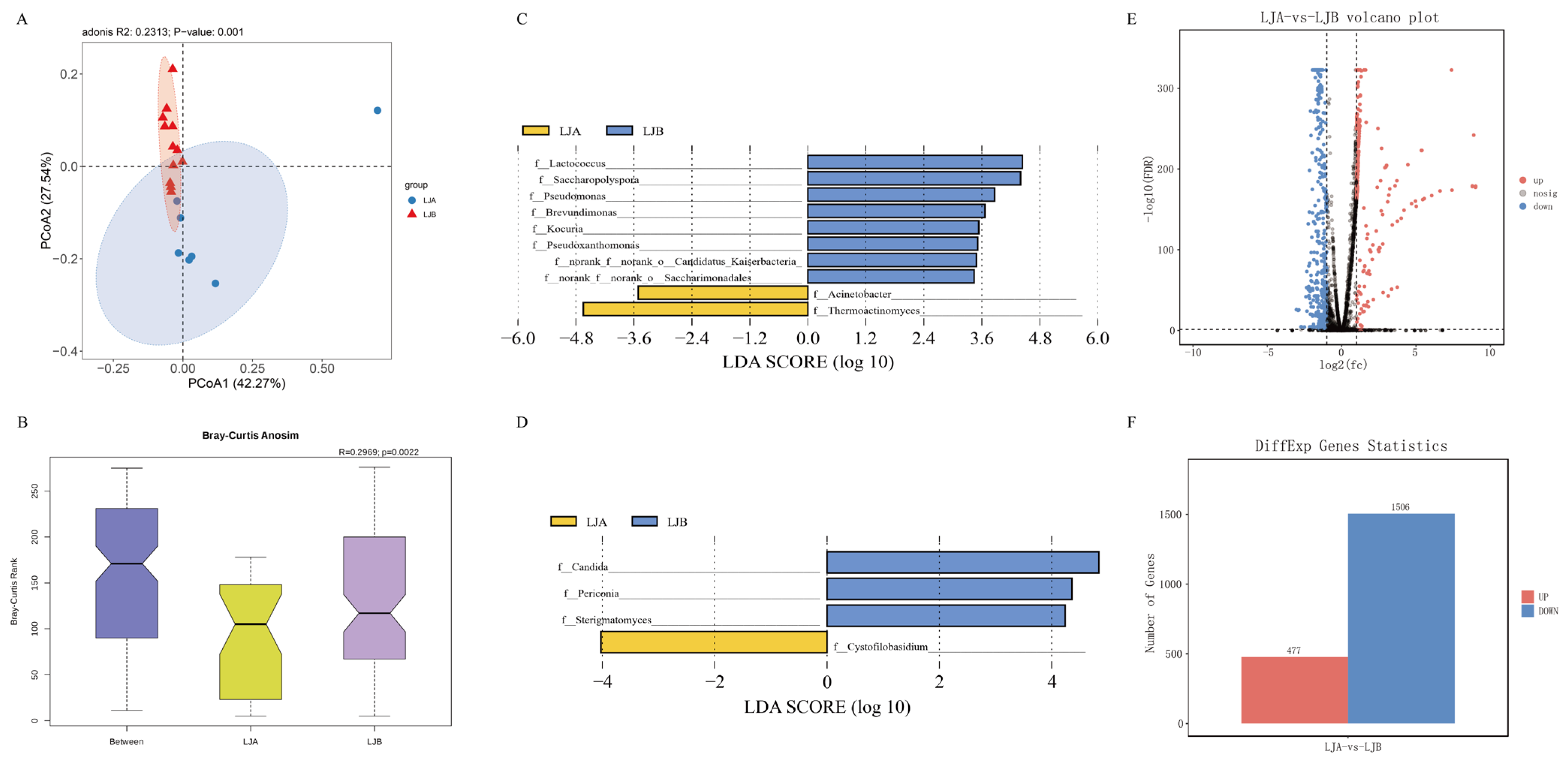
Based on the Bray–Curtis distance matrix, Principal Coordinates Analysis (PCoA) and ANOSIM tests were used to assess β-diversity changes in the microbial community during Daqu fermentation. PCoA results (Figure 2A,B) showed a clear separation between samples from the early fermentation stage (LJA, 0–7 d) and the late stage (LJB, 11–29 d) in the coordinate space, indicating significant differences in microbial community structure between different fermentation stages [35]. The ANOSIM test further supported this conclusion (R = 0.30, p = 0.002), confirming that the community structure had significant temporal stage-specific succession characteristics.
These β-diversity changes were consistent with the dynamic trends in genus-level relative abundance (Figure 1D,E). The underlying mechanisms were likely closely related to microbial interactions and changes in environmental factors during fermentation [30]. The discrete distribution of sample points in the PCoA plot also reflected the structural reorganization and dynamic changes in the microbial community as it adapted to new ecological niches during different fermentation stages [36].
To further identify differential microbial taxa during Daqu fermentation, LEfSe analysis was used to distinguish differential species between the LJA and LJB stages. As shown in Figure 2C, for bacteria, Acinetobacter (LDA = 3.5) and Thermoactinomyces (LDA = 4.6) were the main differential taxa in the early stage, while Lactococcus (LDA = 4.4), Pseudomonas (LDA = 3.8), and Saccharopolyspora (LDA = 4.3), among eight genera, were differential taxa in the late stage. For fungi (Figure 2D), Cystofilobasidium (LDA = 4) was an early-stage differential taxon, while Candida (LDA = 4.9) and Periconia (LDA = 4.4), among three genera, were late-stage differential taxa. These results further reveal, at the species level, that the Daqu microbial community structure changes over time. Regarding microbial sources, Acinetobacter is widely distributed in air, indoor ground, and raw materials [7], explaining its presence primarily in the early fermentation stage (LJA) and its role as a key differential microbe in that period.
Furthermore, functional gene prediction analysis for the two stages using PICRUSt2 (Figure 2E,F) identified 1983 differential genes, with 477 significantly upregulated and 1506 downregulated. These functional differential genes, from a metabolic potential perspective, confirm that the microbial community structure exhibited significant differences between the LJA and LJB fermentation stages [37].
In summary, multiple analytical results consistently demonstrated that as fermentation proceeded, the Daqu microbial community structure exhibited distinct differential characteristics across different time periods.

3.3. Random Forest Algorithm Identifies Succession and Assembly of Daqu Microbial Community Structure

To verify the actual occurrence of microbial community succession during Nongxiangxing Daqu fermentation, a random forest algorithm was employed. Using genus-level relative abundance as features and fermentation time stage as the response variable, a classification regression model was established to identify biomarkers significantly associated with fermentation time and thereby assess the temporal succession characteristics of the community structure [19].
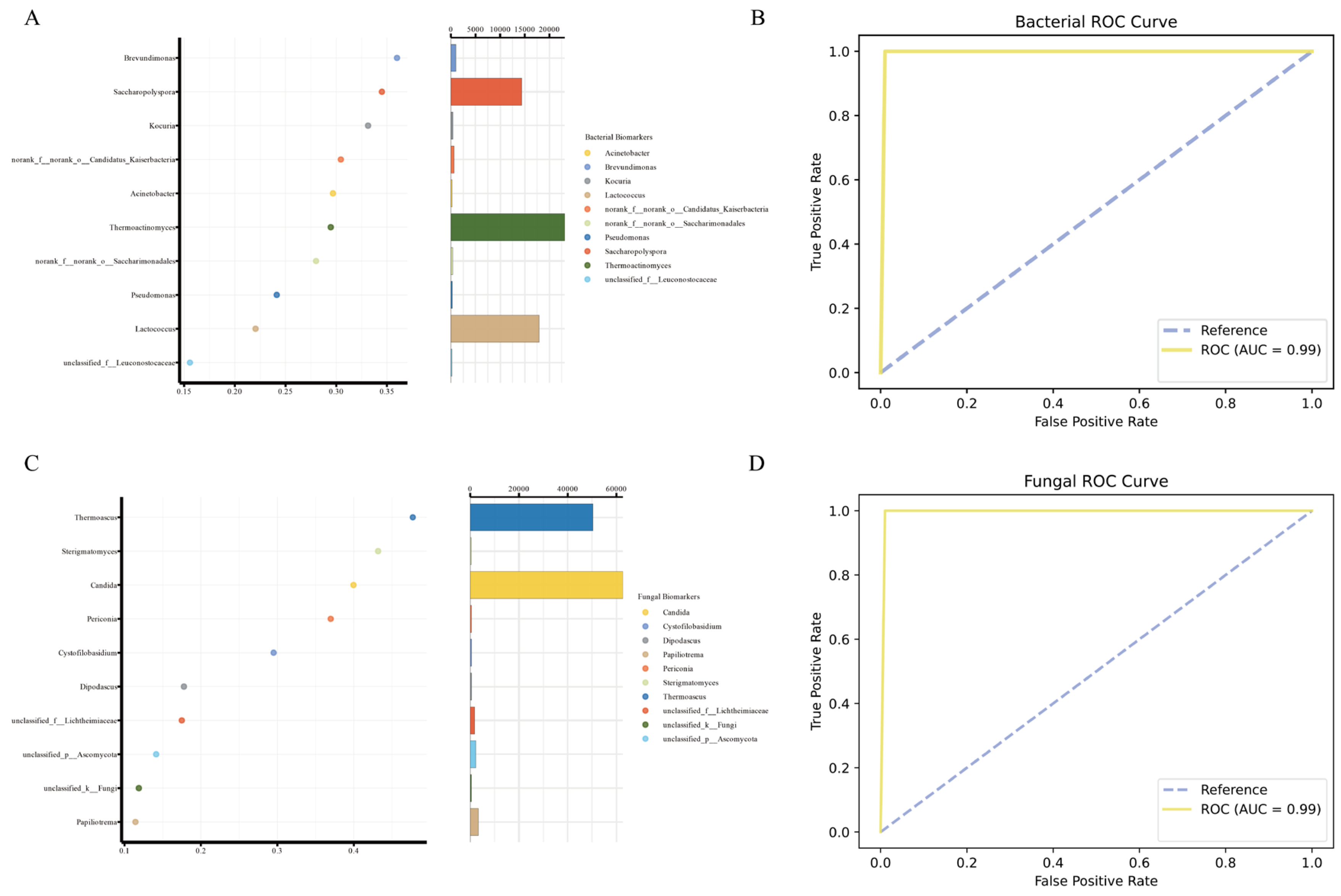
The top 10 bacterial biomarkers identified by the random forest model included: Saccharopolyspora, Kocuria, Lactococcus, Thermoactinomyces, Acinetobacter, Pseudomonas, etc. Fungal biomarkers were Candida, Cystofilobasidium, Periconia, Papiliotrema, Sterigmatomyces, Thermoascus, etc. (Figure 3A,C). The importance ranking of these microbial genera indicates their significant indicative role during Daqu fermentation, demonstrating the existence of succession in the Daqu microbial community structure.
To evaluate model performance, ROC curves were plotted and AUC values calculated (Figure 3B,D). The results showed that the AUC values for both bacterial and fungal communities were 0.99, significantly higher than that of a random classifier (AUC = 0.5), indicating good stage prediction capability and reliability of the model. These results consistently indicate that these time-indicative microbial biomarkers and their high-precision prediction model collectively confirm the distinct temporal succession characteristics of the Daqu microbial community structure during fermentation.

3.4. Determining the Mechanisms of Microbial Community Assembly and Succession in Daqu

The Daqu microbial community exhibits significant scale effects, and its assembly process can be divided into two stages: initial assembly and successional assembly. The formation of the initial community originates from the immigration and colonization of various microorganisms from raw materials and the environment [18]. During the subsequent fermentation process, the microbial community showed a clear temporal dynamic succession. This process was jointly driven by multi-scale environmental factors and interspecific microbial interactions (such as nutrient competition, quorum sensing, biofilm formation, and metabolite inhibition) [18,38,39]. Microbial community assembly refers to the process by which different populations form a stable structure through ecological processes like selection, dispersal, and drift in a specific environment [40]. Community succession refers to the orderly, predictable change in community composition, structure, and function over time [41,42,43].
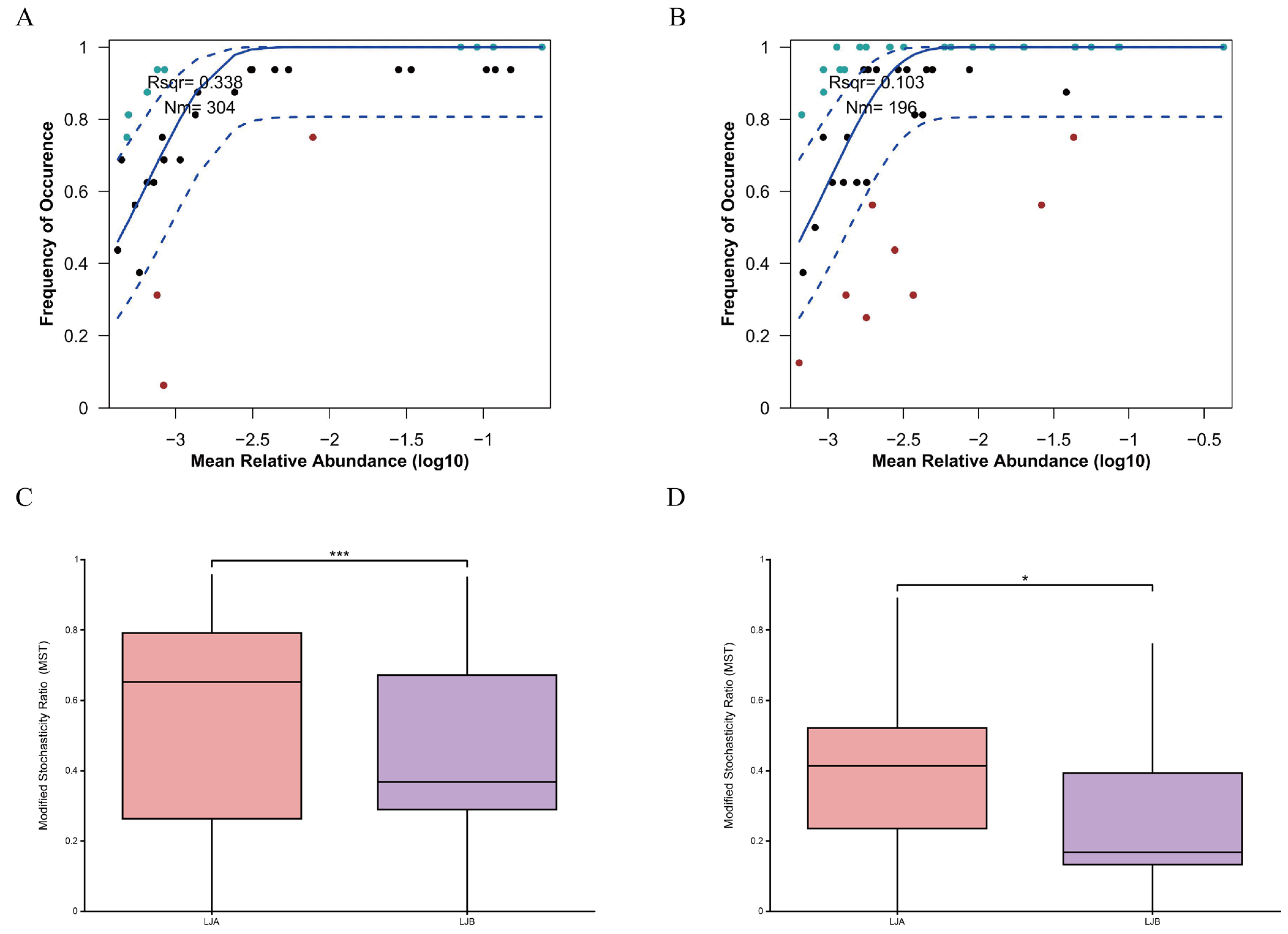
Community assembly and succession are usually influenced by both stochastic and deterministic processes [44]. To discern the dominant mechanism of microbial community construction during the main fermentation stage of Nongxiang Daqu, neutral community models (Neutral Community Model) were constructed for bacterial and fungal communities respectively. Fitting results (Figure 4A,B) showed significant deviations between the actual community structure and neutral predictions for both bacteria (R2 = 0.338, Nm = 304) and fungi (R2 = 0.103, Nm = 196), indicating that species migration and random drift were not the main mechanisms of community assembly [18]. Furthermore, the MST test was used to quantitatively assess the degree of stochasticity in community assembly. Results showed that MST values for both bacterial and fungal communities decreased as fermentation progressed (Figure 4C,D). In the LJA stage, most MST values were already below 0.5; by the LJB stage, MST values all fell below 0.5, indicating that deterministic processes dominated both stages, and this deterministic role strengthened in the LJB stage. Notably, MST values for the fungal community were generally lower than those for bacteria, indicating it was more significantly influenced by deterministic processes.
These results consistently confirmed that the assembly and succession of this Daqu microbial community were primarily regulated by deterministic processes, aligning with the conclusions of Tang Jie et al. regarding the surface bacterial community of Daqu [45]. Deterministic processes are driven by both biological factors (e.g., interspecific interactions) and abiotic factors (e.g., environmental filtering) [46,47,48]. Their dominant role tended to select and retain well-adapted microorganisms, thereby strengthening specific functions of the community. Stochastic processes help enrich species and functional diversity [49]. The dominance of deterministic processes can lead to reduced species diversity, which was consistent with the results in Section 3.1 of this study. It further indicated that the succession of the microbial community during Daqu fermentation was primarily driven synergistically by environmental factors and microbial interactions.

3.5. Deterministic Influences on Microbial Community Succession and Assembly During Daqu Fermentation

3.5.1. Influence of Microbial Interactions During Daqu Fermentation

Based on the conclusions of Section 3.4, the assembly and succession of the Daqu microbial community were mainly regulated by deterministic processes, with environmental filtering and microbial interactions being key factors. Microbial interactions directly affect community assembly, and network analysis can quantify such interactions to analyze their ecological impact [19,26]. Therefore, constructing microbial co-occurrence networks to characterize interspecies association patterns is crucial for revealing the mechanisms of community structural succession [50]. This analytical method helps decipher the complex interactions and construction patterns of microbial communities across spatial and temporal dimensions [19,35,51].
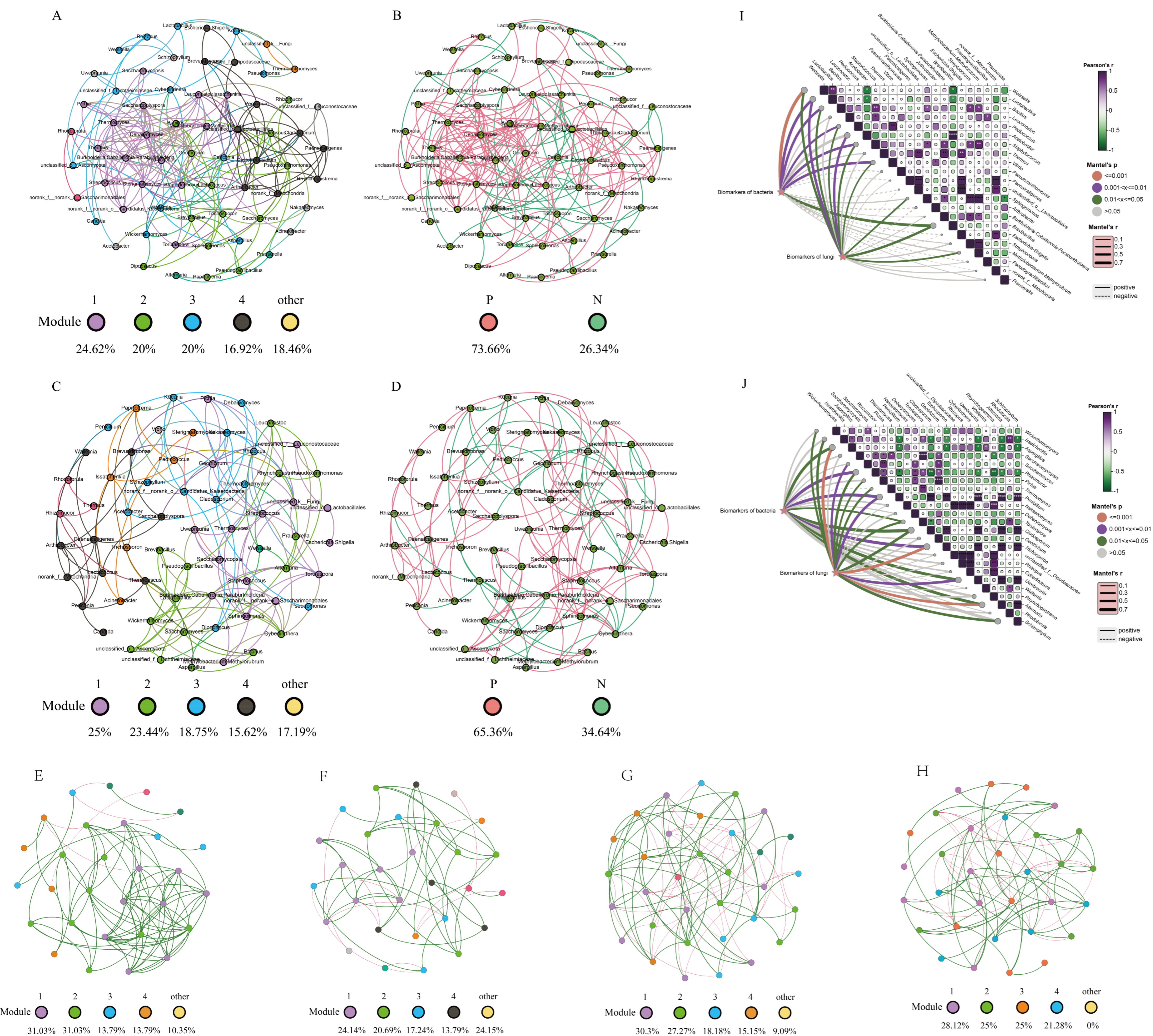
To deeply investigate the influence of microbial interactions on community structural succession, co-occurrence networks were constructed at the genus level for the LJA and LJB stages respectively. Results showed that networks in both stages had high topological complexity: positive correlations accounted for 73.66% and negative for 26.34% in the LJA stage network (Figure 5B); positive correlations accounted for 65.36% and negative for 34.64% in the LJB stage network (Figure 5D). The LJA network contained 66 nodes and 206 edges, with modularity analysis identifying 13 modules (Figure 5A). The LJB network contained 65 nodes and 154 edges, corresponding to 8 modules (Figure 5C). Overall, the networks exhibited dense connections, a relatively small number of modules, and tight connections between modules. This indicated extensive interactions among microorganisms within the community, with strong ecological associations but relatively low structural stability, making them susceptible to disturbance from changes in key taxa [52]. Highly connected hub microbial nodes, once changed, may significantly impact module or even the overall network structure, thereby driving community succession [19,52,53].
Further analysis of changes in bacterial and fungal subnetworks (Figure 5E–H) revealed that as fermentation progressed, the number of bacterial network modules increased from 6 to 8, but the number of edges decreased from 88 to 54. The number of fungal network modules decreased from 6 to 4, and edges decreased from 87 to 81. This result indicated that overall, the microbial community structure tended to stabilize as fermentation proceeded, and the degree of succession was higher for the fungal community than for bacteria, suggesting it was more significantly influenced by environmental filtering and microbial interactions.
Furthermore, biomarker analysis (Figure 5I,J) showed that biomarker taxa had a greater impact on the fungal community than on the bacterial community. For bacteria, the impact was mainly concentrated on dominant genera like Weissella, Lactobacillus, and Bacillus. For fungi, the impact involved multiple genera like Aspergillus, Rhizomucor, and Penicillium, further confirming the existence of extensive microbial interactions.
In summary, microbial interactions significantly influenced the dynamic changes and succession direction of community structure during Daqu fermentation. Hub taxa likely played a key role in maintaining network stability and promoting community turnover. However, changes in the microbial community resulted from the combined effects of biological interactions and abiotic environmental factors. According to niche theory, community assembly was simultaneously influenced by biological and abiotic drivers [54,55]. Therefore, further comprehensive analysis incorporating environmental factors was needed.

3.5.2. Impact of Environmental Factors on Microbial Community Structure During Daqu Fermentation

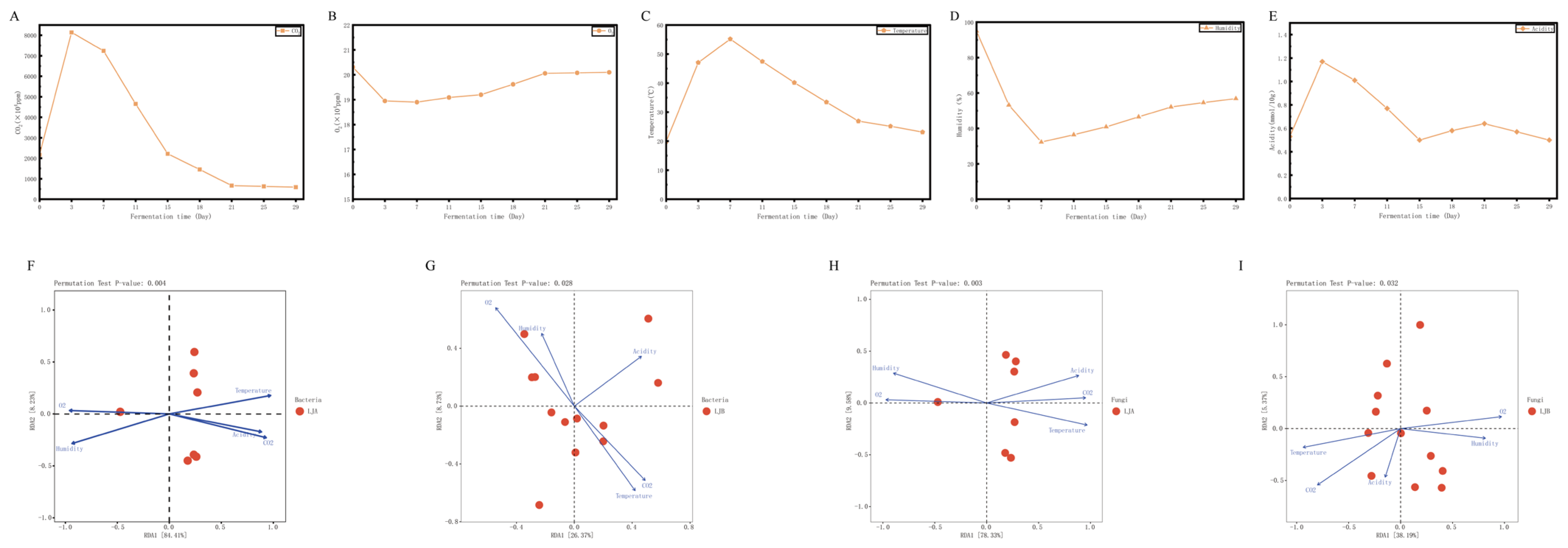
To elucidate the mechanism of environmental factors on Daqu microbial community structure succession, this study monitored the dynamic changes in five key environmental parameters during Daqu fermentation: carbon dioxide (CO2), oxygen (O2), temperature, humidity, and acidity. As shown in Figure 6A, CO2 concentration rapidly increased to a peak of 8140 × 104 ppm in the early fermentation stage, then gradually decreased and stabilized around 600 × 104 ppm. O2 concentration (Figure 6B) decreased from 20.31 × 10⁴ ppm to 18.9 × 10⁴ ppm by day 3 in the early stage, then stabilized later (around 20 × 104 ppm). This change was likely closely related to the active microbial metabolism and O2 consumption/CO2 production process in the initial fermentation stage. Temperature (Figure 6C) increased from an initial 19.8 °C to 55 °C on day 7, then slowly declined to around 24 °C in later stages. The early temperature rise primarily stemmed from microbial metabolic heat production and the insulating effect of straw covering the Daqu material. Humidity (Figure 6D) was highest at the start of fermentation (95%), then gradually decreased with increasing temperature due to factors like the non-sealed structure of the fermentation room and ventilation. Acidity (Figure 6E) peaked at 1.17 mmol/10 g on day 3, then gradually decreased. Its change is related to the massive reproduction and acid production by lactic acid bacteria genera (e.g., Weissella, Lactobacillus, Pediococcus) in the early stage, followed by reduced populations and acid volatilization later.
Redundancy analysis (RDA) was further used to analyze the correlation between environmental variables and microbial community structure. Results (Figure 6F–I) showed that both bacterial and fungal communities were significantly correlated with environmental factors (p < 0.05). Specifically, the impact of environmental factors on both bacterial (p = 0.001) and fungal (p = 0.028) communities in the LJA stage was significantly greater than in the LJB stage. Combined with the community stability analysis in Section 3.5, the LJA stage community stability was lower than the LJB stage. This indicated that the microbial structure in the LJB stage had less variation and stronger resistance to environmental disturbances, meaning it was less affected by environmental factors in this stage [19,26,56], consistent with the above RDA results.
In summary, the Daqu microbial community succession was driven by multiple environmental factors together, with O2, CO2, humidity, temperature, and acidity playing regulatory roles to varying degrees during fermentation. The results further supported that the successional assembly of the Daqu microbial community was dominated by deterministic processes, co-regulated by environmental filtering and microbial interactions. Previous studies also indicated that environmental conditions like temperature, moisture, humidity, acidity, CO2, and O2 significantly influence Daqu microbial succession, with temperature, acidity, and humidity being the main driving factors [32,57], consistent with the conclusions of this study.

3.5.3. Contribution of Environmental Factors to Microbial Community Succession and the Impact of Their Change Rates

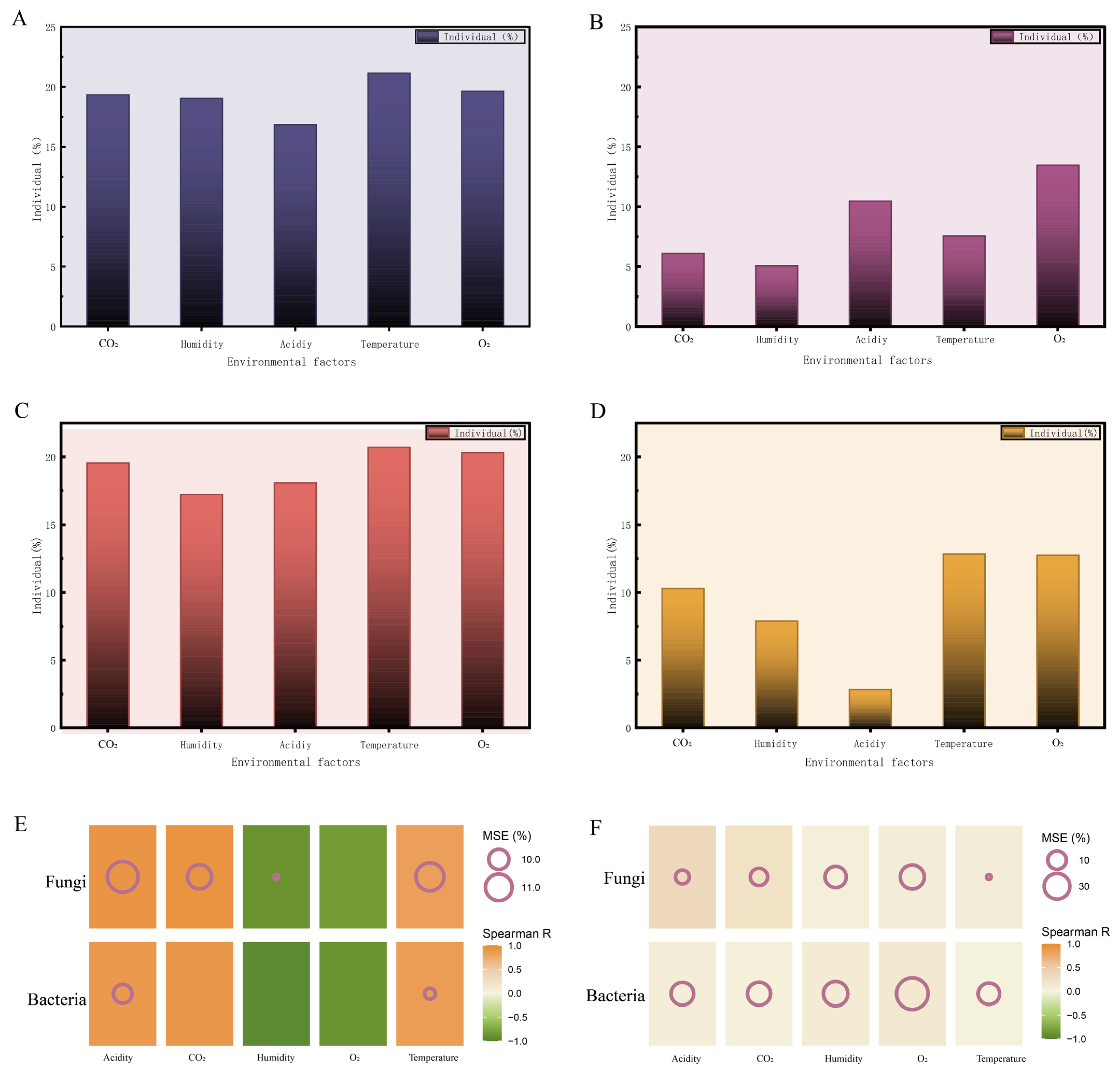
To quantify the specific impact of each environmental factor on microbial community succession, this study decomposed the contribution of environmental variables using the R package rdacca.hp, based on β-diversity calculated from Bray–Curtis distance (Figure 7A–D). Overall, the contribution of environmental factors to community succession was higher in the LJA stage than in the LJB stage (for detailed calculation data, see Supplementary Materials).
During the LJA stage, temperature had the highest contribution to both bacterial (21.16%) and fungal (20.73%) community influence, indicating that rapid temperature rise in the early fermentation stage had a strong filtering effect on microorganisms. The contribution of acidity to the fungal community (18.09%) was significantly higher than to the bacterial community (16.83%). This was likely because dominant taxa in this stage were acid-producing lactic acid bacteria like Weissella, Lactobacillus, and Pediococcus, whose metabolic lactic acid directly inhibited the fungal community. The contributions of humidity, CO2, and O2 to bacterial and fungal communities were relatively close, all around 19%.
During the LJB stage, O2 became the primary factor influencing the succession of bacterial (13.48%) and fungal (12.77%) communities. This was likely attributed to the continuous depletion of oxygen within the fermentation chamber and the gradual elimination of aerobic microorganisms. The higher contribution of CO2 to fungi (10.30%) than to bacteria (6.12%) also supports this inference, as most fungi are aerobic and more sensitive to anoxic and high CO2 environments. Conversely, the contribution of acidity to bacteria (10.48%) in the LJB stage was higher than to fungi (2.84%). The reason may be that acidity had already exerted strong filtering on fungi in the earlier stage, while changes in bacterial community structure (decrease in lactic acid bacteria abundance, increase in other genera) made it more responsive to acidity changes later. Furthermore, the contributions of temperature and humidity to fungi in this stage were higher than to bacteria, possibly related to the presence of thermophiles like Thermoactinomyces and Thermus in the bacterial community, giving them stronger tolerance to high temperature and humidity environments.
Furthermore, we calculated the rates of change in environmental factors and microbial community succession rates. The impact proportion of environmental factor change rates on community succession rates was assessed using a bivariate random forest model (Figure 7E,F) (for detailed calculation data, see Supplementary Materials). In the LJA stage, the change rates of acidity and temperature were positively correlated with fungal community succession rate, with the highest impact proportions (10.89% and 10.62% respectively). The humidity change rate showed a negative correlation, with an impact proportion of 9.50%. The impact proportions of acidity and temperature change rates on bacterial community succession rate were relatively lower (acidity 9.90%, temperature 9.58%). In the LJB stage, the change rates of all environmental factors were positively correlated with both bacterial and fungal community succession rates. Among them, the impact proportion of the O2 change rate on bacterial succession rate (29.04%) was much higher than on fungal succession rate (17.32%). The humidity change rate impact showed a similar trend (bacteria 18.00%, fungi 13.43%). The impact proportion of temperature change rate on bacteria (13.56%) was also significantly higher than on fungi (2.63%). The impact proportions of acidity and CO2 change rates on bacterial community succession rate were around 15%, while their impact proportions on fungal community succession rate were 5.88% and 8.75% respectively.
These results indicated that not only the absolute state of environmental factors but also their dynamic rates of change were key factors driving Daqu microbial community succession, jointly regulating the structure and succession pace of the microbial community during fermentation [58].

3.6. Time-Series-Based Prediction of Microbial Community Structure Succession

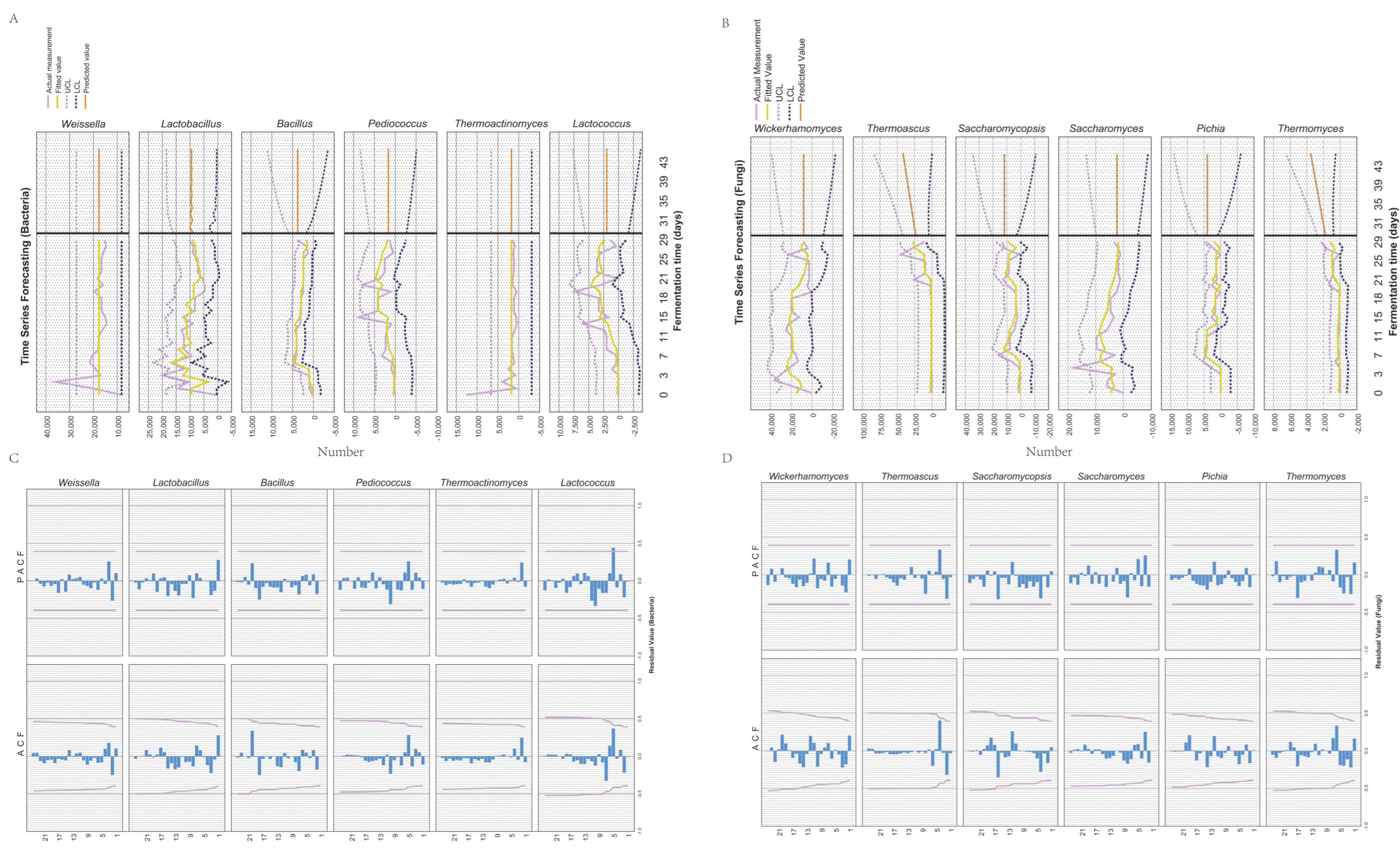
To explore the impact of extending the fermentation period on Daqu microbial community structure, this study selected 6 representative bacterial and fungal genera with relatively high abundance (results for other genera see Supplementary Materials). Time series prediction models were established with fermentation time as the independent variable and genus-level relative abundance as the dependent variable. Microbial dynamics during an extended fermentation period were predicted. Model validity tests (Table 1 and Table 2) showed p-values ≤ 0.05 for all models corresponding to each microbial genus, indicating statistical significance. Figure 8A,B show the predicted change trends of microbial relative abundance during a 10-day extended fermentation period for Daqu. The ACF and PACF of prediction residuals in Figure 8C,D all fell within the confidence interval, further confirming model reliability.
As shown in Figure 8A,B, after the existing fermentation period of about 30 days, during the predicted 10-day extension period, the predicted abundance values for each microbial genus tended to stabilize without significant fluctuation. This indicated that the assembly and succession of the Daqu microbial community were mainly concentrated in the first approximately 30 days of fermentation. During this stage, deterministic processes constituted by environmental factors like temperature, humidity, oxygen, and microbial interactions dominated the formation and finalization of the community structure.
The prediction results further indicated that after about 30 days of fermentation, the microbial community structure no longer underwent drastic changes, entering a relatively stable state overall. This may be due to environmental conditions stabilizing and the community structure being largely established by then, significantly weakening the driving role of environmental filtering and microbial interactions. Therefore, the first 30 days of Daqu fermentation were the critical period for community structure succession and assembly. Extending the fermentation period had limited significance for further altering the microbial community structure.
According to Daqu production technology, after the approximately 30-day fermentation period, the storage stage begins. This stage can be regarded as a maintenance period where community structure and metabolic functions tend to stabilize [59,60]. Therefore, future research could further focus on changes in microbial metabolic activities during the Daqu storage period. During the storage stage, with a relatively stable community structure, it may be an important phase where microorganisms participate in the transformation and accumulation of flavor compounds through continuous metabolic activity [32,61]. This might be a crucial link affecting the final flavor quality of Daqu.

4. Conclusions

In this study, we systematically analyzed the dynamic changes in the microbial community during the fermentation of Nongxiangxing Daqu and identified the core mechanisms underlying its succession and assembly. The results showed that the fermentation process drove significant stage-specific shifts in the microbial community structure, with deterministic processes playing a dominant role that strengthened as fermentation progressed. Compared with the bacterial community, the fungal community was more sensitive to deterministic factors such as environmental selection and biological interactions. Environmental factors, represented by temperature, humidity, oxygen, carbon dioxide, and acidity, together with interspecific microbial interactions, constituted the key forces driving community succession. Notably, the rate of change in environmental factors directly influenced the rate of community succession, highlighting the important role of dynamic environmental conditions in regulating microbial ecological processes. Time-series analysis further indicated that community assembly and functional formation mainly occurred within the first 30 days of fermentation. From the perspective of deterministic processes, this study elucidates the mechanisms underlying the establishment of the Daqu fermentation microecosystem and provides a theoretical basis for optimizing Daqu production processes and improving product quality through the regulation of environmental conditions and microbial interactions. Our findings further confirm that the regulation of environmental parameters during the Qu-room fermentation stage is a critical control point in Daqu fermentation. During this process, special attention should be given to the dynamics and regulation of temperature, humidity, oxygen, carbon dioxide, and acidity to ensure the stable production of high-quality Daqu.

Supplementary Materials

The following supporting information can be downloaded at: https://www.mdpi.com/article/10.3390/fermentation12040193/s1, Table S1. Contribution of Environmental Factors to the Succession of Bacterial Microbial Communities (LJA). Table S2. Contribution of Environmental Factors to the Succession of Bacterial Microbial Communities (LJB). Table S3. Contribution of Environmental Factors to the Succession of Fungal Microbial Communities (LJA). Table S4. Contribution of Environmental Factors to the Succession of Fungal Microbial Communities (LJB). Table S5. Bacterial succession rate during Daqu fermentation. Table S6. Fungal Succession Rate During Daqu Fermentation. Table S7. Rate of Change in Environmental Factors During Daqu Fermentation. Table S8. Correlation between the rate of environmental factor change and the rate of microbial succession (LJA). Table S9. Contribution of Environmental Factor Change Rate to Microbial Succession Rate (LJA). Table S10. Correlation between the rate of environmental factor change and the rate of microbial succession (LJB). Table S11. Contribution of Environmental Factor Change Rate to Microbial Succession Rate (LJB). Table S12. Time Series Predictive Exponential Smoothing Model Parameters (Bacterial). Table S13. Time Series Predictive ARIMA Model Parameters (Bacterial). Table S14. Time Series Predictive Residual value (ACF) (Bacterial). Table S15. Time Series Predictive Residual value (PACF) (Bacterial). Table S16. Time Series Predictive value (Bacterial). Table S17. Time Series Predictive Exponential Smoothing Model Parameters (Fungal). Table S18. Time Series Predictive ARIMA Model Parameters (Fungal). Table S19. Time Series Predictive Residual value (ACF) (Fungal). Table S20. Time Series Predictive Residual value (PACF) (Fungal). Table S21. Time Series Predictive Residual value (PACF) (Fungal).

Author Contributions

D.W.: conceptualization, data curation, visualization, writing—original draft, writing—review and editing, Funding acquisition. F.W., P.T., L.W. and Y.X.: investigation, resources and data curation. M.X., Q.L. and Y.L.: investigation and resources; D.H.: writing—review and editing, conceptualization, supervision, resources, data curation, Methodology; L.Y.: writing—review and editing, conceptualization, data curation, visualization, writing—original draft, supervision, resources, project administration. All authors have read and agreed to the published version of the manuscript.

Funding

This work was supported by the Sichuan Province Science and Technology Achievement Transfer and Transformation Demonstration Project (No. 2024ZHCG0094) and the Luzhou City Science and Technology Plan Project (No. 2023SYF141).

Institutional Review Board Statement

Not applicable.

Informed Consent Statement

Not applicable.

Data Availability Statement

The data presented in this study are available upon request from the corresponding author due to confidentiality agreements and privacy concerns related to the laboratory and the collaborating enterprise.

Conflicts of Interest

Author Lei Yang, Dongmei Wang, Fei Wang, Ping Tang, Maosen Xiong, Qian Luo, Yanping Luo were employed by the company Sichuan Langjiu Co., Ltd. The remaining authors declare that the research was conducted in the absence of any commercial or financial relationships that could be construed as a potential conflict of interest.

References

  1. Yan, Q.; Zhang, K.Z.; Zou, W.; Hou, Y.C. Three main flavour types of Chinese Baijiu: Characteristics, research, and perspectives. J. Inst. Brew. 2021, 127, 317–326. [Google Scholar] [CrossRef]
  2. Wei, Y.; Zou, W.; Shen, C.H.; Yang, J.G. Basic flavor types and component characteristics of Chinese traditional liquors: A review. J. Food Sci. 2020, 85, 4096–4107. [Google Scholar] [CrossRef] [PubMed]
  3. Huang, X.; Zheng, J.; Zhang, K.Z.; Qiao, Z.W.; Luo, H.B.; Zou, W. Short-chain fatty acids and their producing microorganisms in the Nongxiangxing baijiu ecosystem: Status and perspectives. Food Biosci. 2024, 61, 104701. [Google Scholar] [CrossRef]
  4. Liu, H.; Sun, B. Effect of Fermentation Processing on the Flavor of Baijiu. J. Agric. Food Chem. 2018, 66, 5425–5432. [Google Scholar] [CrossRef]
  5. Hu, Y.L.; Lei, X.Y.; Zhang, X.M.; Guan, T.W.; Wang, L.Y.; Zhang, Z.J.; Yu, X.; Tu, J.M.; Peng, N.; Liang, Y.X.; et al. Characteristics of the Microbial Community in the Production of Chinese Rice-Flavor Baijiu and Comparisons with the Microflora of Other Flavors of Baijiu. Front. Microbiol. 2021, 12, 673670. [Google Scholar] [CrossRef]
  6. Zhu, H.; Li, Q.; El-Sappah, A.H.; Sun, Y.; Liu, Y.; Pan, S.J.; Zhu, K.; Sun, X.K.; Xiong, T.; Luo, H.B.; et al. Influence of two sorghum varieties on metabolic factors, microbial community, and flavor component precursors of strong-flavor Baijiu Zaopei. Food Chem. 2025, 474, 143079. [Google Scholar] [CrossRef]
  7. Du, H.; Wang, X.S.; Zhang, Y.H.; Xu, Y. Exploring the impacts of raw materials and environments on the microbiota in Chinese Daqu starter. Int. J. Food Microbiol. 2019, 297, 32–40. [Google Scholar] [CrossRef]
  8. Xiao, C.; Yang, Y.; Lu, Z.M.; Chai, L.J.; Zhang, X.J.; Wang, S.T.; Shen, C.H.; Shi, J.S.; Xu, Z.H. Daqu microbiota exhibits species-specific and periodic succession features in Chinese baijiu fermentation process. Food Microbiol. 2021, 98, 103766. [Google Scholar] [CrossRef]
  9. Zhao, J.Z.; Yang, Y.; Chen, L.Q.; Zheng, J.X.J.; Lv, X.B.; Li, D.D.; Fang, Z.Y.; Shen, C.P.; Mallawaarachchi, V.; Lin, Y.; et al. Quantitative metaproteomics reveals composition and metabolism characteristics of microbial communities in Chinese liquor fermentation starters. Front. Microbiol. 2023, 13, 1098268. [Google Scholar] [CrossRef] [PubMed]
  10. Sun, Y.Y.; Yin, Y.G.; Wu, Y.M.; Tan, H.G.; Bai, J.N.; Li, J.Q.; Li, A.; Ma, L.J.; Yuan, L.; Wei, C.H.; et al. Decoding the aroma characterization and influencing factor in the core brewing process of China’s northern Sauce-Flavored Baijiu. J. Food Compos. Anal. 2025, 144, 107666. [Google Scholar] [CrossRef]
  11. Li, H.D.; Liu, S.Y.; Liu, Y.B.; Hui, M.; Pan, C.M. Functional microorganisms in Baijiu Daqu: Research progress and fortification strategy for application. Front. Microbiol. 2023, 14, 1119675. [Google Scholar] [CrossRef]
  12. Chen, L.H.; Peng, Q.H.; Chen, Y.H.; Che, F.H.; Chen, Z.X.; Feng, S.B. Analysis of dominant microorganisms and core enzymes in Qingke Baijiu Daqu by high-throughput sequencing and proteomics. Food Res. Int. 2025, 204, 115941. [Google Scholar] [CrossRef]
  13. Fan, G.S.; Du, Y.H.; Fu, Z.L.; Chen, M.; Wang, Z.; Liu, P.X.; Li, X.T. Characterisation of physicochemical properties, flavour components and microbial community in Chinese Guojing roasted sesame-like flavour Daqu. J. Inst. Brew. 2020, 126, 105–115. [Google Scholar] [CrossRef]
  14. Yang, Y.; Wang, S.T.; Lu, Z.M.; Zhang, X.J.; Chai, L.J.; Shen, C.H.; Shi, J.S.; Xu, Z.H. Metagenomics unveils microbial roles involved in metabolic network of flavor development in medium-temperature daqu starter. Food Res. Int. 2021, 140, 110037. [Google Scholar] [CrossRef] [PubMed]
  15. Gan, S.H.; Yang, F.; Sahu, S.K.; Luo, R.Y.; Liao, S.L.; Wang, H.Y.; Jin, T.; Wang, L.; Zhang, P.F.; Liu, X.; et al. Deciphering the Composition and Functional Profile of the Microbial Communities in Chinese Moutai Liquor Starters. Front. Microbiol. 2019, 10, 1540. [Google Scholar] [CrossRef] [PubMed]
  16. Guan, T.W.; Yang, H.; Ou, M.Y.; Zhang, J.X. Storage period affecting dynamic succession of microbiota and quality changes of strong-flavor Baijiu Daqu. LWT-Food Sci. Technol. 2021, 139, 110544. [Google Scholar] [CrossRef]
  17. Fan, G.S.; Fu, Z.L.; Teng, C.; Liu, P.X.; Wu, Q.H.; Rahman, M.K.R.; Li, X.T. Effects of aging on the quality of roasted sesame-like flavor Daqu. BMC Microbiol. 2020, 20, 67. [Google Scholar] [CrossRef]
  18. Tang, J.; Wei, J.L.; Yang, Y.; Ge, X.Y.; Zuo, Q.C.; Zhao, C.; Huang, Y.G. Spatio-temporal scales of the Chinese Daqu microbiome: Heterogeneity, niche differentiation, and assembly mechanisms. Trends Food Sci. Technol. 2025, 156, 104832. [Google Scholar] [CrossRef]
  19. Ma, S.; Luo, H.; Zhao, D.; Qiao, Z.; Zheng, J.; An, M.; Huang, D. Environmental factors and interactions among microorganisms drive microbial community succession during fermentation of Nongxiangxing daqu. Bioresour. Technol. 2022, 345, 126549. [Google Scholar] [CrossRef]
  20. He, M.W.; Jin, Y.; Liu, M.M.; Yang, G.R.; Zhou, R.Q.; Zhao, J.S.; Wu, C.D. Metaproteomic investigation of enzyme profile in daqu used for the production of Nongxiangxing baijiu. Int. J. Food Microbiol. 2023, 400, 110250. [Google Scholar] [CrossRef]
  21. Shi, W.; Chai, L.J.; Fang, G.Y.; Mei, J.L.; Lu, Z.M.; Zhang, X.J.; Xiao, C.; Wang, S.T.; Shen, C.H.; Shi, J.S.; et al. Spatial heterogeneity of the microbiome and metabolome profiles of high-temperature Daqu in the same workshop. Food Res. Int. 2022, 156, 111298. [Google Scholar] [CrossRef]
  22. He, G.Q.; Huang, J.; Wu, C.D.; Jin, Y.; Zhou, R.Q. Bioturbation effect of fortified Daqu on microbial community and flavor metabolite in Chinese strong-flavor liquor brewing microecosystem. Food Res. Int. 2020, 129, 108851. [Google Scholar] [CrossRef]
  23. Mu, Y.; Huang, J.; Zhou, R.Q.; Zhang, S.Y.; Qin, H.; Tang, H.L.; Pan, Q.L.; Tang, H.F. Bioaugmented Daqu-induced variation in community succession rate strengthens the interaction and metabolic function of microbiota during strong-flavor Baijiu fermentation. LWT-Food Sci. Technol. 2023, 182, 114806. [Google Scholar] [CrossRef]
  24. Li, X.M.; Meng, Z.H.; Chen, K.; Hu, F.F.; Liu, L.; Zhu, T.B.; Yang, D.G. Comparing diversity patterns and processes of microbial community assembly in water column and sediment in Lake Wuchang, China. PeerJ 2023, 11, e14592. [Google Scholar] [CrossRef]
  25. Tang, X.M.; Xie, G.J.; Shao, K.Q.; Hu, Y.; Cai, J.; Bai, C.R.; Gong, Y.; Gao, G. Contrast diversity patterns and processes of microbial community assembly in a river-lake continuum across a catchment scale in northwestern China. Environ. Microbiome 2020, 15, 10. [Google Scholar] [CrossRef] [PubMed]
  26. Yang, L.; Chen, J.; Li, Z.J.; Gong, L.J.; Huang, D.; Luo, H.B. Effect of lactic acid bacteria on the structure and potential function of the microbial community of Nongxiangxing Daqu. Biotechnol. Lett. 2023, 45, 1183–1197. [Google Scholar] [CrossRef] [PubMed]
  27. Tan, Y.W.; Du, H.; Zhang, H.X.; Fang, C.; Jin, G.Y.; Chen, S.; Wu, Q.; Zhang, Y.; Zhang, M.H.; Xu, Y. Geographically Associated Fungus-Bacterium Interactions Contribute to the Formation of Geography-Dependent Flavor during High-Complexity Spontaneous Fermentation. Microbiol. Spectr. 2022, 10, e0184422. [Google Scholar] [CrossRef] [PubMed]
  28. Xu, M.; Huang, Q.Y.; Xiong, Z.Q.; Liao, H.; Lv, Z.G.; Chen, W.L.; Luo, X.S.; Hao, X.L. Distinct Responses of Rare and Abundant Microbial Taxa to In Situ Chemical Stabilization of Cadmium-Contaminated Soil. Msystems 2021, 6, e0104021. [Google Scholar] [CrossRef]
  29. Ning, D.L.; Wang, Y.J.; Fan, Y.P.; Wang, J.J.; Van Nostrand, J.D.; Wu, L.Y.; Zhang, P.; Curtis, D.J.; Tian, R.M.; Lui, L.R.; et al. Environmental stress mediates groundwater microbial community assembly. Nat. Microbiol. 2024, 9, 490–501. [Google Scholar] [CrossRef]
  30. Zhu, M.; Zheng, J.; Xie, J.; Zhao, D.; Qiao, Z.-W.; Huang, D.; Luo, H.-B. Effects of environmental factors on the microbial community changes during medium-high temperature Daqu manufacturing. Food Res. Int. 2022, 153, 110955. [Google Scholar] [CrossRef]
  31. Huang, X.; Liu, J.; Luo, H.B.; Zou, W. Research progress on the diversity, physiological and functional characteristics of lactic acid bacteria in the Nongxiangxing baijiu microbiome. J. Food Sci. 2025, 90, e70082. [Google Scholar] [CrossRef]
  32. Zhou, Y.Y.; Li, Y.; Dong, Y.; Ma, S.Y.; Zhang, L.Q.; Huang, P.; Wu, C.D. Microbial community of Nongxiangxing daqu during storage: Microbial succession, assembly mechanisms and metabolic functions. J. Sci. Food Agric. 2025, 105, 3665–3678. [Google Scholar] [CrossRef]
  33. Li, Z.G.; Yan, X.; Zou, S.B.; Ji, C.F.; Dong, L.; Zhang, S.F.; Liang, H.P.; Lin, X.P. Analysis of Fungal Diversity, Physicochemical Properties and Volatile Organic Compounds of Strong-Flavor Daqu from Seven Different Areas. Foods 2024, 13, 1263. [Google Scholar] [CrossRef] [PubMed]
  34. Tang, J.; Chen, J.; Chen, D.; Li, Z.; Huang, D.; Luo, H. Structural Characteristics and Formation Mechanism of Microbiota Related to Fermentation Ability and Alcohol Production Ability in Nongxiang Daqu. Foods 2022, 11, 2602. [Google Scholar] [CrossRef]
  35. Zhang, Y.; Shen, Y.; Niu, J.; Ding, F.; Ren, Y.; Chen, X.; Han, B.Z. Bacteria-induced amino acid metabolism involved in appearance characteristics of high-temperature Daqu. J. Sci. Food Agric. 2023, 103, 243–254. [Google Scholar] [CrossRef]
  36. Zheng, X.W.; Yan, Z.; Nout, M.J.; Smid, E.J.; Zwietering, M.H.; Boekhout, T.; Han, J.S.; Han, B.Z. Microbiota dynamics related to environmental conditions during the fermentative production of Fen-Daqu, a Chinese industrial fermentation starter. Int. J. Food Microbiol. 2014, 182–183, 57–62. [Google Scholar] [CrossRef] [PubMed]
  37. Li, X.Y.; Du, C.Y.; Zhao, Y.F.; Li, J.S.; Hu, Y.M.; Dong, W.W.; Peng, N.; Zhao, S.M. Differences in microbial communities among different types of zaopei and their effects on quality and flavor of baijiu. Food Res. Int. 2024, 197, 115224. [Google Scholar] [CrossRef]
  38. Zhu, Q.; Chen, L.Q.; Peng, Z.; Zhang, Q.L.; Huang, W.Q.; Yang, F.; Du, G.C.; Zhang, J.; Wang, L. Analysis of environmental driving factors on Core Functional Community during Daqu fermentation. Food Res. Int. 2022, 157, 111286. [Google Scholar] [CrossRef] [PubMed]
  39. Zhang, Y.D.; Xu, J.G.; Ding, F.; Deng, W.Y.; Wang, X.; Xue, Y.S.; Chen, X.X.; Han, B.Z. Multidimensional profiling indicates the shifts and functionality of wheat-origin microbiota during high-temperature Daqu incubation. Food Res. Int. 2022, 156, 111191. [Google Scholar] [CrossRef]
  40. Morrow, K.H. Neutral and niche theory in community ecology: A framework for comparing model realism. Biol. Philos. 2024, 39, 4. [Google Scholar] [CrossRef]
  41. Zhang, X.; Dong, B.; Huang, Y.T.; Dai, H.D.; Yang, Z.; Fu, S.L.; Li, Q.; Yuan, Y.D.; Tan, Y.H.; Li, H.; et al. Disentangling mechanisms that mediate soil fungal α and β diversity during forest secondary succession. Ecography 2024, Early view. [Google Scholar] [CrossRef]
  42. Liu, J.; Jia, X.Y.; Yan, W.N.; Zho, Y.Q.W.; Shangguan, Z.P. Changes in soil microbial community structure during long-term secondary succession. Land Degrad. Dev. 2020, 31, 1151–1166. [Google Scholar] [CrossRef]
  43. Krishna, M.; Gupta, S.; Delgado-Baquerizo, M.; Morriën, E.; Garkoti, S.C.; Chaturvedi, R.; Ahmad, S. Successional trajectory of bacterial communities in soil are shaped by plant-driven changes during secondary succession. Sci. Rep. 2020, 10, 9864. [Google Scholar] [CrossRef]
  44. Li, H.Z.; Zhou, H.Y.; Yang, S.S.; Dai, X. Stochastic and Deterministic Assembly Processes in Seamount Microbial Communities. Appl. Environ. Microbiol. 2023, 89, e0070123. [Google Scholar] [CrossRef]
  45. Tang, J.; Rao, J.Q.; Zou, Y.F.; Liao, L.; Huang, D.; Luo, H.B. The community assembly patterns determined differences between the surface and the core microbial communities of Nongxiangxing Daqu. LWT-Food Sci. Technol. 2023, 183, 114936. [Google Scholar] [CrossRef]
  46. Aguilar, P.; Sommaruga, R. The balance between deterministic and stochastic processes in structuring lake bacterioplankton community over time. Mol. Ecol. 2020, 29, 3117–3130. [Google Scholar] [CrossRef]
  47. Menéndez-Serra, M.; Ontiveros, V.J.; Cáliz, J.; Alonso, D.; Casamayor, E.O. Understanding stochastic and deterministic assembly processes in microbial communities along temporal, spatial and environmental scales. Mol. Ecol. 2023, 32, 1629–1638. [Google Scholar] [CrossRef]
  48. Yuan, H.Y.; Mei, R.; Liao, J.H.; Liu, W.T. Nexus of Stochastic and Deterministic Processes on Microbial Community Assembly in Biological Systems. Front. Microbiol. 2019, 10, 1536. [Google Scholar] [CrossRef] [PubMed]
  49. Liu, W.J.; Graham, E.B.; Dong, Y.; Zhong, L.H.; Zhang, J.W.; Qiu, C.W.; Chen, R.R.; Lin, X.G.; Feng, Y.Z. Balanced stochastic versus deterministic assembly processes benefit diverse yet uneven ecosystem functions in representative agroecosystems. Environ. Microbiol. 2021, 23, 391–404. [Google Scholar] [CrossRef]
  50. Kong, Z.Y.; Wu, Z.J.; Glick, B.R.; He, S.Y.; Huang, C.; Wu, L. Co-occurrence patterns of microbial communities affected by inoculants of plant growth-promoting bacteria during phytoremediation of heavy metal contaminated soils. Ecotoxicol. Environ. Saf. 2019, 183, 109504. [Google Scholar] [CrossRef]
  51. Wang, X.; Wang, B.; Sun, Z.; Tan, W.; Zheng, J.; Zhu, W. Effects of modernized fermentation on the microbial community succession and ethyl lactate metabolism in Chinese baijiu fermentation. Food Res. Int. 2022, 159, 111566. [Google Scholar] [CrossRef]
  52. Yang, Y.; Zou, Y.; Zeng, K.; Chen, D.; Li, Z.; Guo, H.; Huang, D.; Wang, X.; Luo, H. Effect of Bacillus subtilis fortified inoculation on the microbial communities in different niches of Daqu. J. Biosci. Bioeng. 2022, 134, 407–415. [Google Scholar] [CrossRef] [PubMed]
  53. Zhang, Y.; Shen, Y.; Cheng, W.; Wang, X.; Xue, Y.; Chen, X.; Han, B.Z. Understanding the Shifts of Microbial Community and Metabolite Profile from Wheat to Mature Daqu. Front. Microbiol. 2021, 12, 714726. [Google Scholar] [CrossRef]
  54. Samaddar, S.; Chatterjee, P.; Truu, J.; Anandham, R.; Kim, S.; Sa, T. Long-term phosphorus limitation changes the bacterial community structure and functioning in paddy soils. Appl. Soil Ecol. 2019, 134, 111–115. [Google Scholar] [CrossRef]
  55. Xu, M.; Liao, H.; Qin, F.; Gao, S.H.; Ma, S.L.; Chen, W.L.; Huang, Q.Y.; Hao, X.L. Deciphering the role of biotic factors in community assembly and diversity patterns of soil bacterial communities under different land use. Ecol. Indic. 2023, 157, 111273. [Google Scholar] [CrossRef]
  56. Xun, W.B.; Liu, Y.P.; Li, W.; Ren, Y.; Xiong, W.; Xu, Z.H.; Zhang, N.; Miao, Y.Z.; Shen, Q.R.; Zhang, R.F. Specialized metabolic functions of keystone taxa sustain soil microbiome stability. Microbiome 2021, 9, 35. [Google Scholar] [CrossRef]
  57. Deng, J.; Zheng, J.; Huang, D.; Huang, Z.G.; Ye, G.B.; Luo, H.B. Characterization of physicochemical properties, volatile compounds and microbial community structure in four types of Daqu. LWT-Food Sci. Technol. 2023, 184, 115064. [Google Scholar] [CrossRef]
  58. Zhou, Y.; Liu, N.; Li, Z.; Peng, K.; Wang, C.; Xia, Y.; Huang, D.; Luo, H. The rate of change in temperature and humidity during the temperature increase period determines the microbial community structure and function of Medium-high temperature Daqu. Food Biosci. 2025, 70, 106990. [Google Scholar] [CrossRef]
  59. Hou, X.G.; Hui, M.; Sun, Z.K.; Li, X.S.; Shi, X.; Xiao, R.; Wang, J.F.; Pan, C.M.; Li, R.F. Comparative analysis of the microbiotas and physicochemical properties inside and outside medium-temperature Daqu during the fermentation and storage. Front. Microbiol. 2022, 13, 934696. [Google Scholar] [CrossRef] [PubMed]
  60. Ren, H.W.; Sun, Y.F.; Yang, Y.F.; Li, Y.F.; Guo, X.P.; Zhang, B.Y.; Zhao, H.Y.; Ma, D.L.; Zhang, Z.L. Unraveling the correlations between microbial communities and metabolic profiles of strong-flavor Jinhui Daqu with different storage periods. Food Microbiol. 2024, 121, 104497. [Google Scholar] [CrossRef]
  61. Ma, S.; Li, Y.; Chen, C.; Dong, Y.; Huang, P.; Tu, R.; Liu, X.; Zhou, R.; Wu, C. Metabolic interactions drive microbial community succession and functional expression of Nongxiangxing (Strong-flavor) daqu. J. Adv. Res. 2025. Online ahead of print.
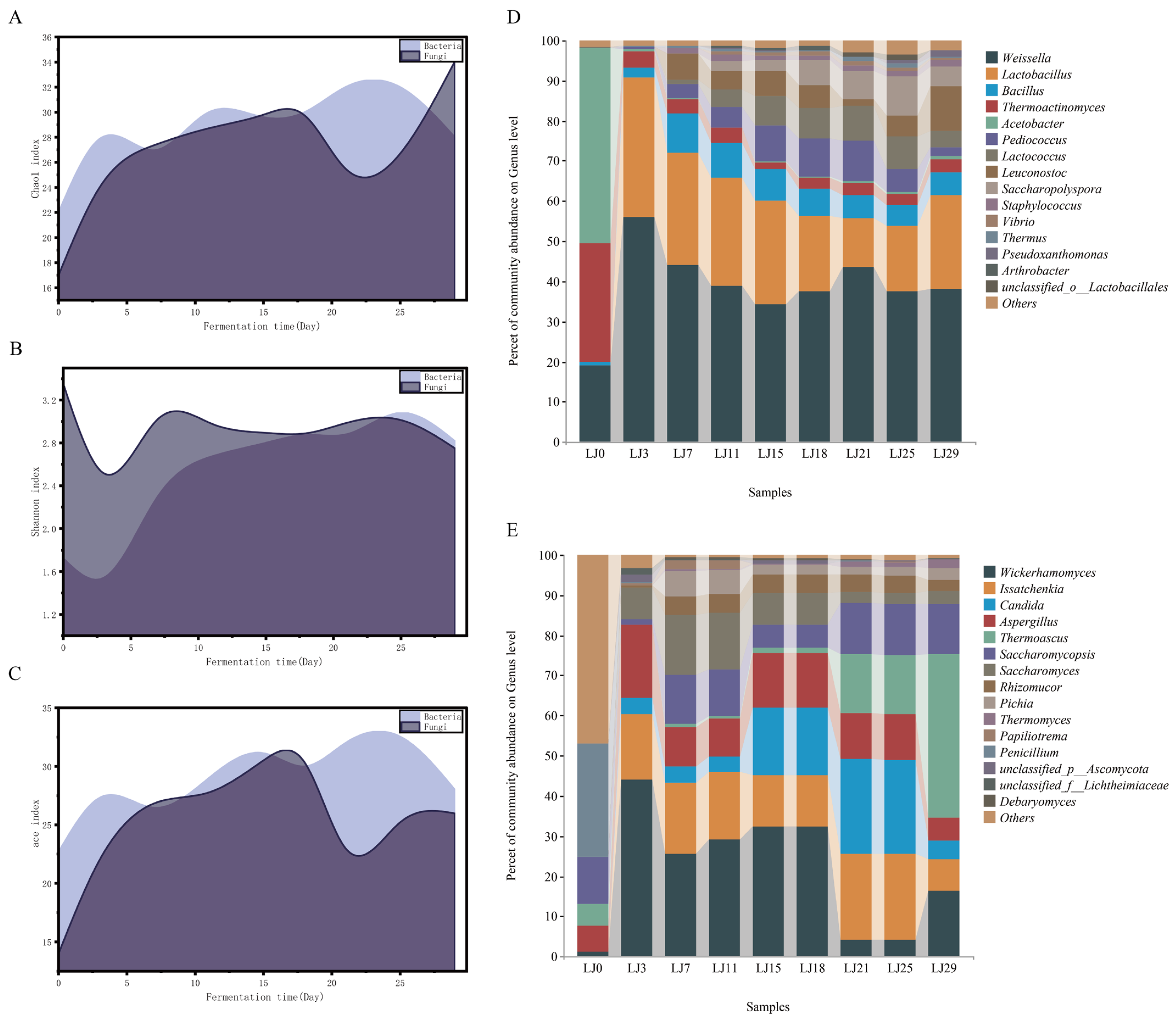
Figure 1. Temporal dynamics of microbial alpha-diversity and community structure during Nongxiang Daqu fermentation. Alpha-diversity indices include (A) Chao1, (B) Shannon, and (C) ACE. Relative abundances of microbial communities at the genus level are shown for (D) bacteria and (E) fungi.
Fermentation 12 00193 g001
Figure 2. Differential analysis of microbial communities during Daqu fermentation. (A) Principal Coordinates Analysis (PCoA) based on Bray–Curtis distances. (B) ANOSIM test evaluating stage-specific community differences. LEfSe analysis identifying biomarker taxa for (C) bacteria and (D) fungi. Volcano plot (E) and statistical summary (F) of predicted differential functional genes between the LJA and LJB stages.
Fermentation 12 00193 g002
Figure 3. Random Forest classification models identifying microbial biomarkers during Daqu fermentation. Feature importance of (A) bacterial and (C) fungal genera. Receiver Operating Characteristic (ROC) curves validating the predictive performance of the models for (B) bacterial and (D) fungal communities.
Fermentation 12 00193 g003
Figure 4. Assembly mechanisms of microbial communities during Daqu fermentation. Fit of the neutral community model (NCM) for (A) bacteria and (B) fungi. Modified Stochasticity Ratio (MST) assessing the relative importance of deterministic processes in (C) bacterial and (D) fungal community succession across different fermentation stages. * indicates a significant difference between group LJA and LJB (0.01 < p ≤ 0.05). *** indicates extremely significant difference (p ≤ 0.001).
Fermentation 12 00193 g004
Figure 5. Co-occurrence networks and biomarker impact analysis of microbial communities during Daqu fermentation. (A,C) Overall microbial networks in the LJA (A) and LJB (C) stages. Different colors represent different microbial co-occurrence modules (clusters). (B,D) Corresponding positive/negative correlation statistics for LJA (B) and LJB (D). Red indicates positive correlation, green indicates negative correlation. (E,F) Sub-networks for bacteria in the LJA (E) and LJB (F) stages. Different colors represent different bacterial co-occurrence modules. (G,H) Sub-networks for fungi in the LJA (G) and LJB (H) stages. Different colors represent different fungal co-occurrence modules. (I,J) Mantel tests illustrating the impact of key biomarkers on bacterial (I) and fungal (J) taxa. Significance levels: * 0.01 < p ≤ 0.05, ** 0.001 < p ≤ 0.01, *** p ≤ 0.001, **** p ≤ 0.0001.
Fermentation 12 00193 g005
Figure 6. Environmental dynamics and their correlations with microbial communities during Daqu fermentation. Temporal variations in (A) CO2, (B) O2, (C) temperature, (D) humidity, and (E) acidity. Redundancy analysis (RDA) illustrating the relationships between environmental factors and community structures for bacteria ((F) LJA stage; (G) LJB stage) and fungi ((H) LJA stage; (I) LJB stage).
Fermentation 12 00193 g006
Figure 7. Quantitative contributions of environmental factors to microbial community succession. Relative contributions of environmental parameters to the (A,B) bacterial and (C,D) fungal communities in the LJA and LJB stages, respectively. Bivariate random forest models assessing the impact of the rates of change in environmental factors on community succession rates in the (E) LJA and (F) LJB stages.
Fermentation 12 00193 g007
Figure 8. Time-series forecasting of microbial community succession during an extended Daqu fermentation period. Predicted relative abundances of key (A) bacterial and (B) fungal genera. Autocorrelation (ACF) and partial autocorrelation (PACF) plots of the prediction residuals for (C) bacteria and (D) fungi, verifying model reliability.
Fermentation 12 00193 g008
Table 1. Time-Series Model Validity (Bacteria).
Bacterial GenusTime Series Modelp-Value (≤0.05)
WeissellaARIMA<0.001
LactobacillusARIMA<0.001
BacillusExponential Smoothing<0.001
PediococcusExponential Smoothing0.042
ThermoactinomycesARIMA<0.001
LactococcusExponential Smoothing0.043
Table 2. Time-Series Model Validity (Fungi).
Fungal GenusTime Series Modelp-Value (≤0.05)
WickerhamomycesExponential Smoothing0.020
ThermoascusExponential Smoothing0.007
SaccharomycopsisExponential Smoothing0.003
SaccharomycesExponential Smoothing0.031
PichiaExponential Smoothing<0.001
ThermomycesExponential Smoothing0.014
Disclaimer/Publisher’s Note: The statements, opinions and data contained in all publications are solely those of the individual author(s) and contributor(s) and not of MDPI and/or the editor(s). MDPI and/or the editor(s) disclaim responsibility for any injury to people or property resulting from any ideas, methods, instructions or products referred to in the content.