Article

Fermentation-Driven Generation of α-Glucosidase Inhibitory Whey Peptides by Marine-Derived Probiotic Lacticaseibacillus casei DS31: Activity Enrichment and Peptidomics

1
College of Marine Food and Bioengineering, Jimei University, Xiamen 361021, China
2
Technology Innovation Centre for Exploitation of Marine Biological Resources, Third Institute of Oceanography, Ministry of Natural Resources, Xiamen 361005, China
3
Fujian Provincial Key Laboratory of Island Conservation and Development, Island Research Center, Ministry of Natural Resources, Xiamen 361005, China
*
Author to whom correspondence should be addressed.
These authors contributed equally to this work.
Fermentation 2026, 12(2), 74; https://doi.org/10.3390/fermentation12020074
Submission received: 2 January 2026 / Revised: 21 January 2026 / Accepted: 23 January 2026 / Published: 29 January 2026
(This article belongs to the Section Probiotic Strains and Fermentation)

Abstract

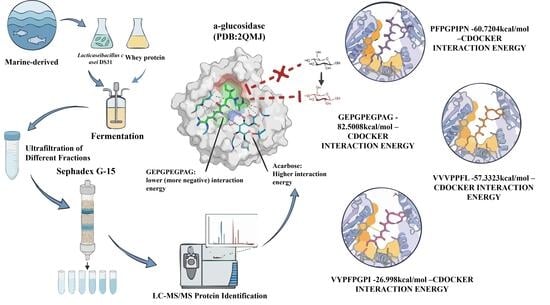
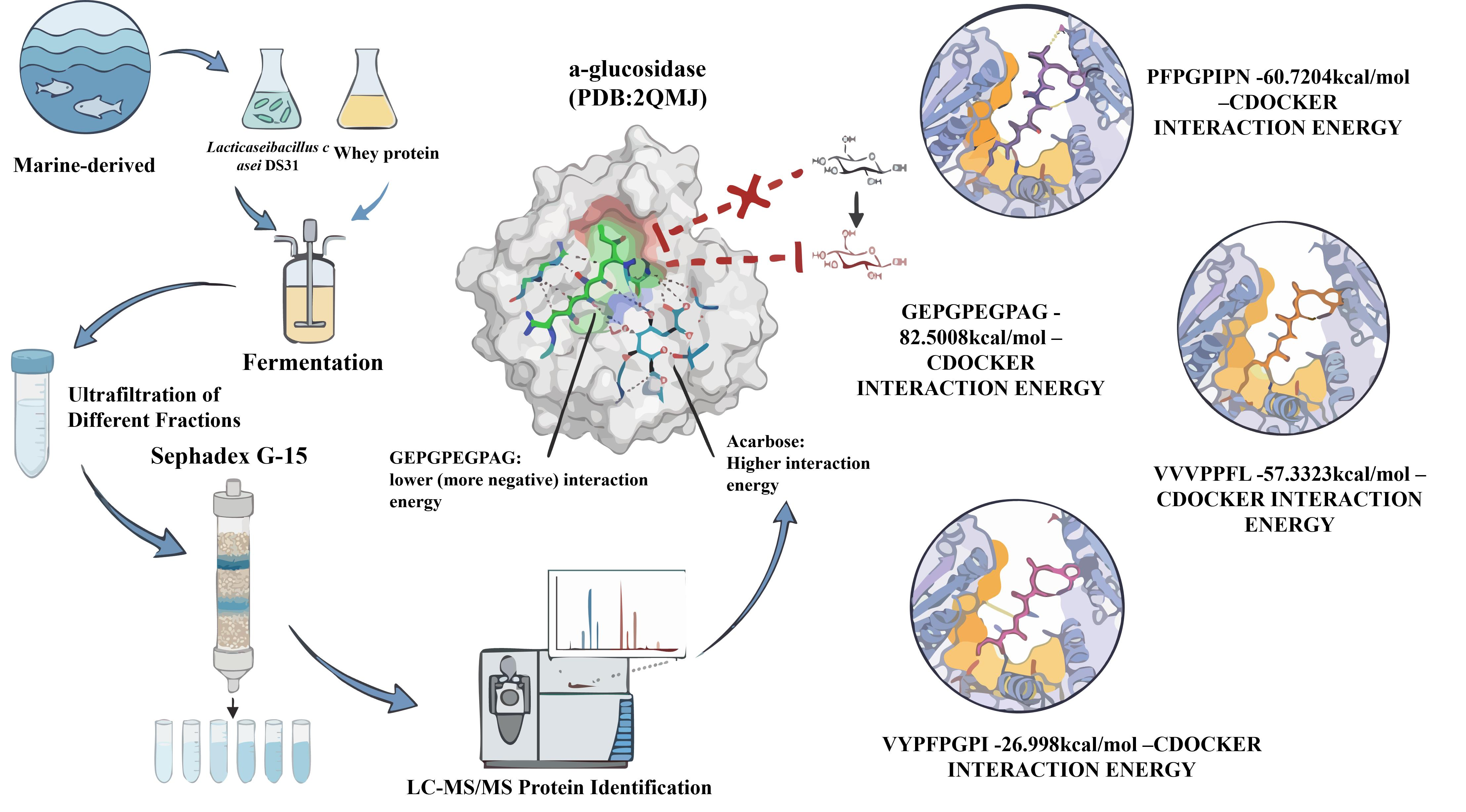
This study investigated the generation of α-glucosidase inhibitory peptides from whey protein fermented by the marine-derived probiotic Lacticaseibacillus casei DS31 (isolated from the intestinal microbiota of the large yellow croaker, Larimichthys crocea) and assessed their potential for practical glycemic management. Fermentation markedly increased inhibitory activity, with the freeze-dried crude supernatant exhibiting an IC50 of 2.115 mg/mL. Activity was further enriched through stepwise purification: ultrafiltration (<3 kDa) improved potency (IC50 = 1.206 mg/mL), and subsequent Sephadex (crosslinked dextran) G-15 gel filtration yielded a more active E fraction (IC50 = 1.145 mg/mL). LC–MS/MS characterized 19 peptides, and integrated in silico screening (PeptideRanker combined with molecular docking) highlighted GEPGPEGPAG as a leading candidate, showing a more favorable predicted binding energy (−82.50 kcal/mol) than the positive control acarbose (−69.31 kcal/mol). Docking analysis suggests that GEPGPEGPAG may inhibit α-glucosidase by forming a stable network of hydrogen bonds, salt bridges, and hydrophobic interactions within the catalytic pocket. Overall, DS31-fermented whey and its enriched fractions show promise as functional ingredients for postprandial glycemic control.

Graphical Abstract

1. Introduction

Type 2 diabetes mellitus (T2DM) is one of the most prevalent metabolic diseases globally. Chronic hyperglycemia can lead to a range of complications [1], including cardiovascular diseases, nephropathy, and retinopathy, posing a significant threat to public health and placing a substantial burden on healthcare systems. Among the various intervention strategies, controlling the rapid postprandial rise in blood glucose is considered a critical step in reducing the risk of these complications [2]. The α-glucosidase enzyme located on the brush border of the small intestine plays a key role in hydrolyzing oligosaccharides and disaccharides into monosaccharides [3], making it an important target for regulating postprandial blood glucose levels. Clinically used α-glucosidase inhibitors, such as acarbose and voglibose, are effective in delaying the digestion and absorption of carbohydrates [4]. However, systematic reviews indicate that these drugs are often associated with gastrointestinal side effects, such as bloating and diarrhea, which limit their long-term use despite their effectiveness in lowering blood glucose [5].
Compared to chemically synthesized drugs, food-derived bioactive peptides are considered promising candidates for the development of novel antidiabetic agents due to their safe origins, controllable structures, and relatively low toxicity [6]. Extensive research has shown that these peptides can regulate blood glucose through multiple-target pathways [7], including the inhibition of α-glucosidase and DPP-IV, improvement of insulin resistance [8], promotion of incretin secretion, and modulation of glucose transporter expression [9].
Whey protein, a byproduct of cheese processing, contains high-nutritional-value proteins such as α-lactalbumin and β-lactoglobulin, and is widely recognized as one of the most important dairy-derived precursors of bioactive peptides [10]. Studies have shown that whey protein and its hydrolysates can participate in blood glucose regulation through mechanisms such as improving insulin sensitivity [11], inhibiting α-glucosidase activity, and promoting incretin secretion. Lacroix et al. [12] discovered that trypsin hydrolysis of whey protein can simultaneously produce peptides with inhibitory activities against both DPP-IV and α-glucosidase, suggesting that whey peptides may improve glucose metabolism through a “dual-target” mechanism. Recent reviews have further highlighted that acid whey and whey concentrate, when appropriately enzymatically hydrolyzed or fermented [13], can release various short peptides with antidiabetic and antioxidant functions [14], making them ideal substrates for the development of multifunctional nutritional beverages [15].
From a structural perspective, α-glucosidase inhibitory peptides typically consist of 2 to 12 amino acid residues, enriched in aromatic, hydrophobic [16], and positively charged amino acids. These peptides can interact with key residues in the enzyme’s active site through hydrogen bonding [17], hydrophobic interactions, and electrostatic forces, thereby inhibiting enzyme activity in a competitive or non-competitive manner [18]. In recent years, various food proteins from sources such as cereals, legumes, meats, dairy products, and marine resources have been identified as important sources of α-glucosidase inhibitory peptides. Li et al. and colleagues systematically reviewed the identified food-derived α-glucosidase inhibitory peptides, summarizing their structure–activity relationships, safety profiles, and bioavailability characteristics, thereby further highlighting the research value of exploring such peptides from food protein sources [19].
Compared to the traditional “exogenous enzyme hydrolysis” method, probiotic fermentation, such as with lactic acid bacteria, offers advantages in the preparation of dairy-derived bioactive peptides, including lower costs, mild conditions, high safety, and ease of industrialization. During fermentation, lactic acid bacteria secrete cell wall-associated proteases and extracellular proteases, which can break down whey protein at multiple sites [20], resulting in a richer and structurally diverse peptide profile. Rosa et al. [21] found that the fermentation of whey–milk mixed substrates by different probiotic strains significantly altered the peptide profile of the system and endowed the products with antioxidant and potential antidiabetic activities. Similarly, Lee et al. [22] demonstrated that bio-transformed milk exhibited α-glucosidase inhibitory activity and antimicrobial functions, suggesting that the rational design of fermentation strains and process parameters is crucial for obtaining dairy products with multiple health benefits. Additionally, fermented beverages made from acid whey not only reduce lactose content and improve flavor but have also been shown to enhance the release and bioavailability of functional peptides [23].
However, existing research still has significant limitations regarding the source of strains and the peptide profiles. On one hand, studies on the fermentation of whey or milk by lactic acid bacteria have primarily focused on terrestrial strains, with most research centered on the evaluation of the antidiabetic activity of overall hydrolysates or crude peptide fractions [23,24]. There is relatively insufficient research on the isolation, identification, and mechanism analysis of individual α-glucosidase inhibitory peptides [6]. On the other hand, recent studies on bioactive peptides derived from marine biological proteins suggest that the protein sequences of probiotics formed under extreme conditions, such as high salinity, high pressure, and low temperature in marine environments, exhibit unique amino acid compositions and conformations [25]. The hydrolysates of these proteins show distinct advantages in terms of antihypertensive, antioxidant, and antidiabetic activities [26]. However, reports on the use of marine-derived probiotics to ferment whey protein and obtain antidiabetic peptides remain extremely limited.
Notably, the Lacticaseibacillus casei DS31 strain used in this study was isolated from the intestine of large yellow croaker reared in offshore cage aquaculture. Under this farming mode, the fish are continuously fed compound diets with a high protein content and ingest and digest feed in a high-salinity seawater environment, resulting in intestinal contents characterized by both high protein and high salt levels. The intestinal microbiota that survive and colonize in such a niche must not only possess strong capabilities for utilizing proteins and peptide substrates, but also maintain good physiological adaptability to elevated osmotic pressure. Therefore, it can be inferred that DS31 may differ from conventional terrestrial lactic acid bacteria in its extracellular protease profile, protein hydrolysis site selectivity, and halotolerance [27]. Based on this ecological background, the application of DS31 in whey protein fermentation is expected to efficiently generate α-glucosidase inhibitory peptides with unique structural features and superior bioactivity under high-protein substrate conditions, thereby highlighting the potential advantages of marine intestinal strains over terrestrial counterparts [28]. The objectives of this study are: (1) to systematically evaluate the α-glucosidase inhibitory activity of whey fermentation liquor under different fermentation conditions and to identify the fermentation process with the most significant antidiabetic activity; (2) to separate and purify the key active components using ultrafiltration and gel filtration chromatography, and to identify their amino acid sequences using LC-MS/MS; (3) to preliminarily elucidate the inhibition mechanism of representative peptides and their interaction with α-glucosidase through molecular docking. The study aims to provide a theoretical basis and potential peptide molecules for the development of fermented whey protein products with antihyperglycemic effects, offering new insights for dietary interventions and functional food development for T2DM populations.

2. Materials and Methods

2.1. Materials

The Lacticaseibacillus casei DS31 strain used in this study was stored at the China General Microbiological Culture Collection Center, with the registration number CGMCC No. 10073. MRS broth medium (CAS No. 027312) was purchased from Guangdong Huankai Microbial Technology Co., Ltd. (Guangzhou, China); whey protein (CAS No. 9013-90-5) was obtained from Shanghai McLean Biochemical Technology Co., Ltd. (Shanghai, China); α-glucosidase was sourced from Shanghai Yuanye Bio-Technology Co., Ltd. (Shanghai, China); acarbose was purchased from Beijing Puxitang Biotechnology Co., Ltd. (Beijing, China); p-nitrophenyl-α-D-glucopyranoside (p-NPG) was obtained from Shanghai Yuanye Bio-Technology Co., Ltd. (Shanghai, China). All other reagents were of analytical or chromatographic grade and used without further purification.

2.2. Activation and Cultivation of Strains and Preparation of Whey Protein Medium

The Lacticaseibacillus casei DS31 strain, stored at −80 °C, was activated using MRS medium. First, the frozen strain was streaked onto MRS agar plates and incubated at 37 °C for 24 h to obtain isolated single colonies. Next, 8–10 typical and well-separated single colonies were selected and inoculated into MRS liquid medium, followed by incubation at 37 °C for 19 h under constant agitation (180 rpm). The resulting bacterial suspension was used as the fermentation seed culture [29].
Based on the conditions optimized in the preliminary experiments, the whey protein medium was prepared by dissolving whey protein to a concentration of 3% (w/v) under sterile conditions. water to a final concentration of 3% (w/v). The inoculum was added at a 3% (v/v) inoculation ratio, and the mixture was thoroughly mixed. The inoculated whey protein medium was then fermented at 37 °C and 180 rpm for 20 h. All fermentation experiments were conducted in triplicate to ensure the reproducibility of results and the reliability of the data [30].
Similar inoculation ratios of 3% (v/v) and fermentation conditions of 30–40 °C for whey- or dairy-based substrates have been demonstrated to support stable microbial growth and metabolic activity in whey-based beverages and related functional fermentation studies. Therefore, the fermentation conditions used in this study offer good comparability and repeatability [31].

2.3. α-Glucosidase Inhibitory Activity

The α-glucosidase inhibitory activity was measured according to the method described by Guo W. et al. [32], with slight modifications. A 100 μL aliquot of the sample at various concentrations was added to a 2 mL centrifuge tube, followed by 100 μL of α-glucosidase solution (1 U/mL, in 0.1 mol/L PBS buffer, pH 7.4). The mixture was incubated at 37 °C for 10 min to activate the enzyme activity. Subsequently, 200 μL of p-nitrophenyl-α-D-glucopyranoside (PNPG) solution (5 mmol/L, dissolved in the same PBS buffer) was added as the substrate, and the mixture was thoroughly mixed and incubated at 37 °C for 30 min. After the reaction, 100 μL of sodium carbonate solution (1 mol/L) was added to terminate the reaction, and the absorbance of the solution was measured at 405 nm. A blank control group and a sample control group were set up for the reaction system.
The inhibition rate was calculated using the formula:
I n h i b i t i o n   r a t e = 1 A a A b A 0 A 0 b × 100 %
where:
  • A 0 is the absorbance of the negative control group (PBS buffer + α-glucosidase solution + PNPG solution);
  • A a is the absorbance of the test sample group (sample supernatant + α-glucosidase solution + PNPG solution);
  • A b is the absorbance of the blank control group (sample supernatant + PBS buffer + PNPG solution);
  • A 0 b is the absorbance of the negative control group (PBS buffer + inactivated α-glucosidase solution + PNPG solution).
The whey samples at the fermentation endpoint were centrifuged at 8000 rpm for 10 min, the precipitate was discarded, and the supernatant was collected and stored at −20 °C.

2.4. Preparation of Fermented Peptides

Ultrafiltration was performed using a flat-sheet laboratory-scale membrane system. The supernatant was fractionated by ultrafiltration using 10 kDa and 3 kDa MWCO membranes, and both retentate and permeate were collected to obtain the corresponding MW fractions. The fraction with the highest activity was then further filtered using a 3 kDa membrane to obtain two additional fractions: <3 kDa and >3 kDa samples. freeze-dried and stored at −20 °C until further analysis [33].
Gel filtration was performed using a Sephadex G-15 (Beijing Solarbio Science & Technology Co., Ltd., Beijing, China) gel filtration column. A 2.0 mL aliquot of the reconstituted freeze-dried supernatant powder solution (448 mg powder/mL, w/v) was loaded onto the column, and elution was carried out with deionized water at a flow rate of 0.3 mL/min. The optical density of the eluate was measured at 228 nm, collected every 2 min [34].

2.5. Characterization of the Most Active Fraction

Based on peptide quantification results, the peptide samples were dissolved in an MS loading buffer (2% acetonitrile containing 0.1% formic acid) and adjusted to a final concentration of 0.25 μg/μL for LC–MS/MS analysis. Data acquisition was performed using a Thermo Xcalibur 4.7 (Thermo Fisher Scientific, Waltham, MA, USA). Chromatographic separation was conducted on a Vanquish Neo system (Thermo, USA) equipped with a uPAC High Throughput u column (75 μm × 5.5 cm, Thermo, USA). The mobile phases consisted of solvent A (98% water, 2% acetonitrile, 0.1% formic acid) and solvent B (80% acetonitrile, 20% water, 0.1% formic acid). The flow rate was set at 300 nL/min, and peptides were eluted using an 8 min linear gradient, as follows: 4% B at 0 min; 4–8% B from 0 to 0.1 min; 8–12.5% from 0.1 to 1 min; 12.5–12.6% from 1 to 1.1 min; 12.6–22.5% from 1.1 to 3.6 min; 22.5–45% from 3.6 to 5.8 min; 45–99% from 5.8 to 6.4 min; and held at 99% from 6.4 to 8 min. Following nano-LC separation, the eluted peptides were analyzed on an Astral mass spectrometer (Thermo, USA).
The MS analysis was operated in data-dependent acquisition (DDA) mode. The MS1 scan range was set to 380–980 m/z, while the MS2 scan range was 150–2000 m/z. The Top 100 most intense precursor ions were selected for secondary fragmentation. The MS1 resolution was set to 240,000 with an AGC target of 500% and a maximum injection time of 3 ms. Higher-energy collisional dissociation (HCD) was employed for fragmentation. The MS2 resolution was set to 80,000–100,000 with an AGC target of standard, a maximum injection time of 10 ms, and a fixed first mass of 150 m/z. A dynamic exclusion time of 12 s was applied [35].

2.6. Virtual Screening and Molecular Docking of Short Peptides

PeptideRanker was employed to rank the identified peptides according to their predicted bioactivity scores. The shortlisted short peptides with putative bio-activity were subsequently subjected to molecular docking analysis. The docking protocol was adapted from the method described by Hau et al. [36], with minor modifications. The crystal structure of α-glucosidase (PDB ID: 2QMJ, 1.90 Å resolution) was retrieved from the RCSB Protein Data Bank. The two-dimensional structures of the candidate peptides were generated using the ChemDraw20.0 software package prior to docking.
After energy minimization, peptides with higher predicted bioactivity scores (PeptideRanker https://distilldeep.ucd.ie/PeptideRanker/) were selected and docked against α-glucosidase using Discovery Studio2019, which was also employed for subsequent binding-mode visualization and interaction analysis. The docking workflow was adapted from the method reported by Dang et al. [37] with minor modifications. To minimize potential bias arising from predefined binding pockets, ensuring that each residue was provided with an equivalent opportunity to engage in ligand binding.
Molecular docking was performed in Discovery Studio (BIOVIA) using the CDOCKER protocol with the CHARMm force field. The crystal structure of human maltase-glucoamylase N-terminal catalytic domain (NtMGAM, PDB ID: 2QMJ) co-crystallized with acarbose was used as the receptor. Crystallographic water molecules were removed, polar hydrogens were added, and the protein was prepared using the standard protein preparation workflow. in Discovery Studio under the CHARMm force field.
The binding site was defined based on the co-crystallized acarbose, and the shortlisted peptides were docked into this pocket using the same protocol. For each ligand, multiple poses were generated, and the pose with the most favorable −CDOCKER Interaction Energy was retained for binding-mode visualization and interaction analysis.
Following docking, the complexes formed between α-glucosidase and the candidate inhibitory peptides were systematically analyzed. Two-dimensional interaction maps were generated in Discovery Studio to facilitate an intuitive assessment of key noncovalent forces. In particular, hydrogen bonds, salt bridges, and other relevant intermolecular interactions between the peptides and the receptor were carefully examined to elucidate the potential binding determinants underpinning the α-glucosidase inhibitory activity of the screened peptides.

2.7. Statistical Analysis

All experiments were conducted using three independent fermentation batches (biological replicates; n = 3). For each batch, each assay/measurement was performed in triplicate (technical replicates), and the technical replicates were averaged to yield one value per batch for statistical analysis. Data are presented as mean ± standard deviation (SD) of the three independent batches. Statistical analyses were performed using GraphPad Prism 10. Normality was assessed using the Shapiro—Wilk test, and intergroup differences were evaluated by one-way analysis of variance (ANOVA), followed by Tukey’s multiple-comparison test for post hoc comparisons when applicable. A value of p ≤ 0.05 was considered statistically significant.

3. Results and Discussion

3.1. Determination of Biomass and α-Glucosidase Inhibition Rate at Different Fermentation Times

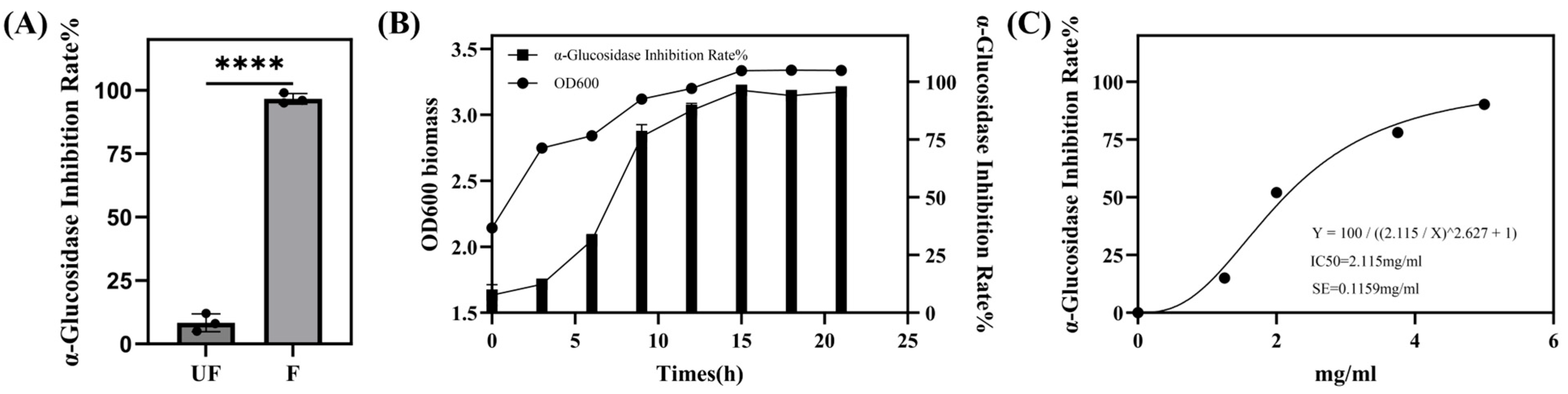
In the present fermentation system, the temporal profile of biomass accumulation was highly consistent with the time-dependent increase in α-glucosidase inhibitory activity. As shown in Figure 1B, the OD600 of Lacticaseibacillus casei DS31 in the whey protein medium increased continuously with fermentation time, exhibiting a typical microbial growth pattern: 0–3 h corresponded to the adaptation (lag) phase, 3–15 h represented the exponential growth phase with a steady rise in OD600, and thereafter the culture gradually approached a plateau. This continuous increase indicates that, under the experimental conditions employed, whey protein provided sufficient carbon and nitrogen sources to support vigorous growth of L. casei DS31, as well as sustained secretion of extracellular proteases and peptidases. When considered together with the pronounced time-dependent elevation in α-glucosidase inhibition, it can be inferred that biomass accumulation is tightly coupled with metabolism-driven proteolysis in this system, thereby constituting a key prerequisite for the continuous generation and enrichment of functional peptides during fermentation. Consistent with previous reports, the metabolic activity of lactic acid bacteria can facilitate the hydrolysis of whey proteins, leading to the release of low-molecular-weight bioactive peptides and other components with α-glucosidase inhibitory potential, which collectively enhance the antihyperglycemic capacity of the system (Sar et al., 2025 [38]; Meleti et al., 2025 [39]).
Comparable time-dependent structural modifications accompanied by enhanced bioactivity have also been reported in other fermentation systems using whey or dairy substrates. Helal et al. [40] reported that, during whey fermentation, the degree of proteolysis and multiple biological activities (including enzyme inhibitory activities) often peak at approximately 24 h, a process closely associated with rapid lactic acid production and a sharp decline in pH. In addition, the review by Zeng et al. [41] highlighted that lactic acid bacterial fermentation can markedly alter the higher-order structure and peptide profile of whey proteins, resulting in the gradual accumulation of bioactive peptides with potential anti-diabetic effects. In the present study, an α-glucosidase inhibition rate close to 95% was achieved within 15–20 h, which not only indicates the strong proteolytic capacity and efficient generation of functional peptides by the marine-derived L. casei DS31 in the whey protein system but also suggests that rational optimization of fermentation conditions may enable the activity peak—often observed at around 24 h in some reports—to be reached (or even surpassed) within a shorter time frame.
The IC50 results (Figure 1C) further corroborated the strong α-glucosidase inhibitory capacity of the fermentation supernatant from a dose–response perspective. With increasing concentrations of proteins (or peptides) in the fermentation supernatant, the inhibition curve exhibited a typical sigmoidal trend: a moderate level of inhibition was achieved at relatively low concentrations, and a near-plateau was reached within a comparatively low concentration range. Notably, the fitted IC50 was clearly lower than most values reported for dairy fermentation systems without targeted optimization [42]. This finding implies that the inhibitory constituents generated from whey protein fermentation by L. casei DS31 possess relatively high potency, such that a significant inhibitory effect can be achieved at lower doses. From an application standpoint, this property is advantageous for delivering physiologically effective levels in foods or nutritional formulations with a reduced addition amount, thereby minimizing potential adverse impacts on sensory attributes and matrix properties.
Linking the biomass profile with the IC50 data suggests two complementary interpretations. First, as cell growth proceeds and proteolysis intensifies, the concentrations of low-molecular-weight peptides and other potential inhibitory factors in the supernatant are expected to increase continuously, resulting in strengthened overall inhibition and a progressive decrease in IC50. Second, when fermentation approaches the stationary phase, although OD600 may continue to rise slowly, the inhibitory activity becomes essentially saturated. This observation implies that the effective inhibitory peptides in the system have likely approached equilibrium; prolonging fermentation may primarily promote further degradation of peptides rather than yield additional gains in activity. Collectively, these results indicate that the selected fermentation endpoint not only achieved nearly 95% α-glucosidase inhibition but also yielded a low IC50, thereby providing a favorable balance between functional performance and process economy. In summary, the data in Figure 1B,C jointly demonstrate that robust growth of L. casei DS31 in the whey protein system provides a necessary basis for efficient proteolysis and functional peptide formation, and that the resulting fermentation supernatant exhibits both a low IC50 and strong α-glucosidase inhibitory activity. Together with prior evidence that lactic acid bacterial fermentation promotes the accumulation of anti-diabetic peptides (Sar et al., 2025; Meleti et al., 2025; Helal et al., 2023; Zeng et al., 2024) [38,39,40,41], these findings further highlight the application potential of the marine-derived L. casei DS31 as a promising source of antihyperglycemic functional factors and as a candidate starter culture for developing whey protein-based anti-diabetic functional foods.

3.2. Purification of Potential α-Glucosidase Inhibitory Peptides

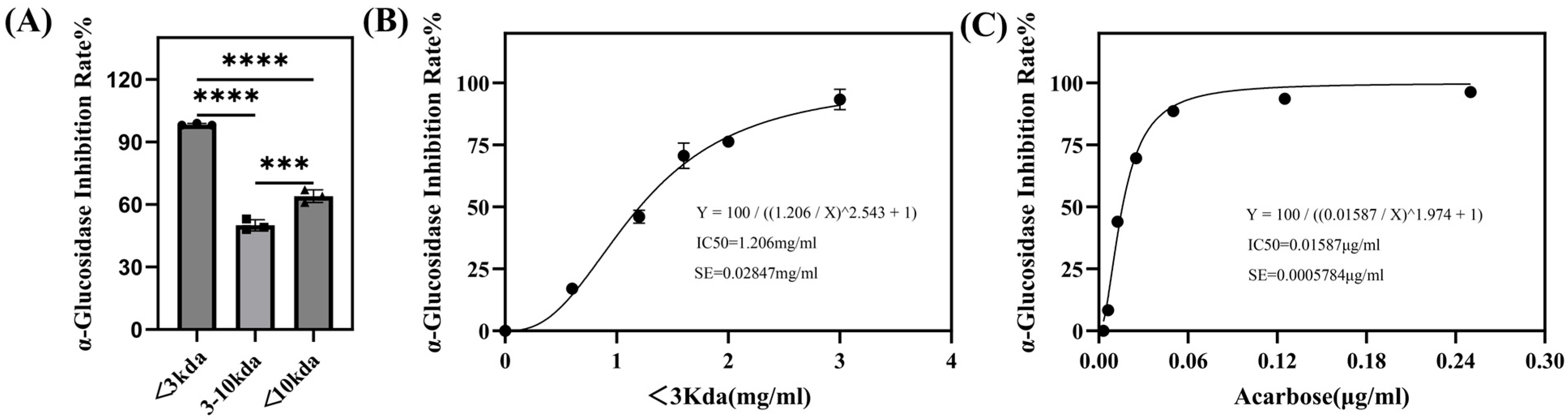
We first performed stepwise membrane fractionation to obtain three peptide fractions with distinct molecular-weight ranges (>3 kDa, 3–10 kDa, and <10 kDa; Figure 2A). At the same mass concentration, the α-glucosidase inhibitory activity differed significantly among fractions, following the order: <3 kDa fraction > <10 kDa fraction > 3–10 kDa fraction. Notably, the <3 kDa ultrafiltration fraction consistently maintained 100% inhibition at the same concentration, which was markedly higher than the other fractions. Dose–response analysis of this fraction yielded an IC50 of 1.206 mg/mL (As shown in Figure 2B), which was superior to the most active fraction reported by Hau et al. [43] in casein hydrolysates (4.9 mg/mL) and was broadly consistent with the IC50 of 1.17 mg/mL reported by Liu et al. [44] for the <3 kDa fraction from rice bran. Collectively, these results indicate that the inhibitory peptides are predominantly concentrated in the low-molecular-weight fraction. This conclusion is in close agreement with previous studies; for example, AL-Bukhaiti et al. [45] also reported that the strongest α-glucosidase inhibitory activity in peanut protein hydrolysates resided in the <3 kDa fraction. The higher inhibitory potency of low-molecular-weight peptides is commonly attributed to their greater exposure of amino acid residues and their enhanced ability to access the enzyme active pocket, where they can form hydrogen bonds, hydrophobic interactions, and electrostatic pairing with catalytic residues or surrounding hydrophobic/charged sites.
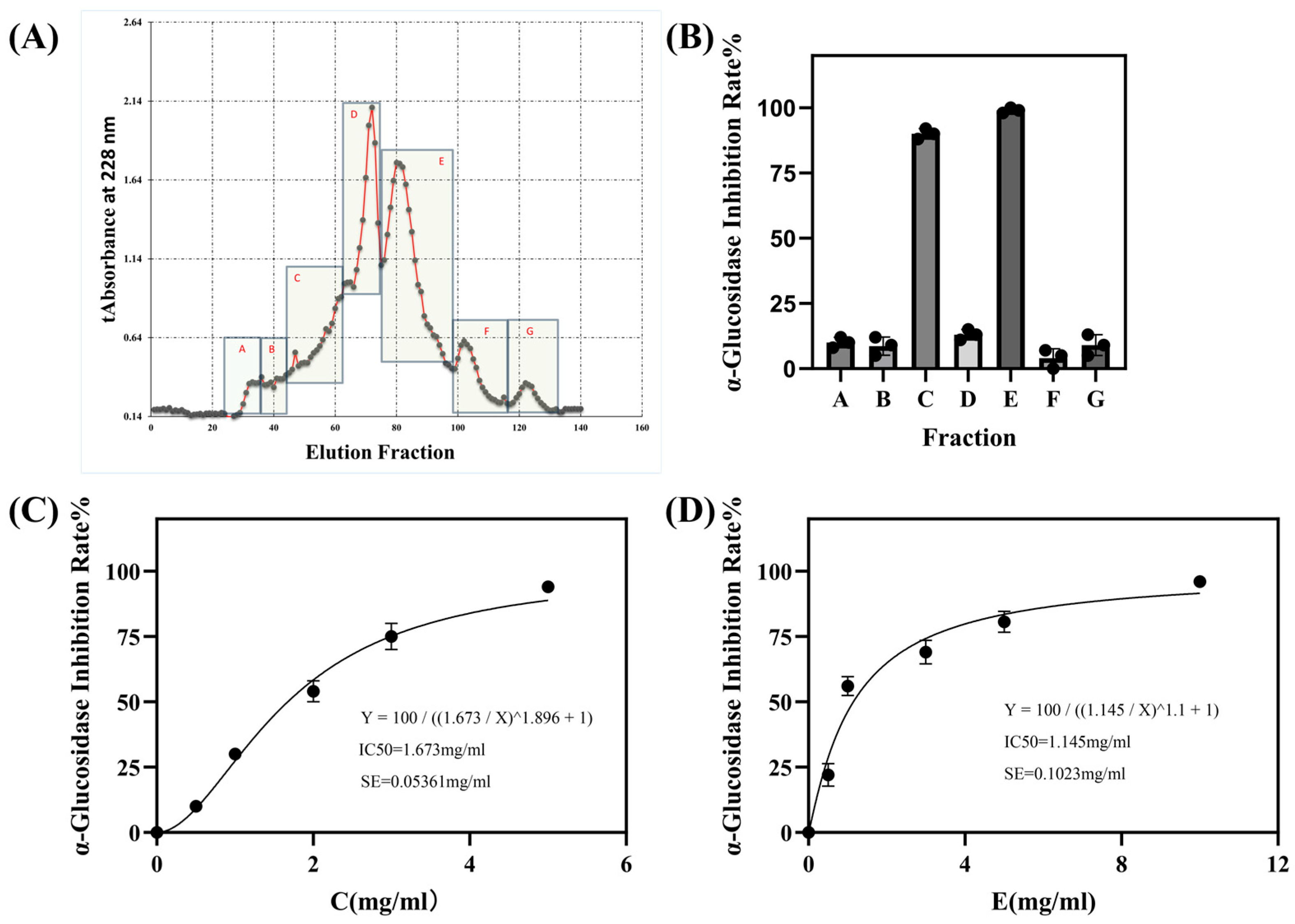
Subsequently, to further validate the inhibitory potency of the <3 kDa hydrolysate, we subjected this fraction to Sephadex G-15 gel filtration, yielding 135 subfractions that were subsequently pooled according to similarity. The 228 nm elution profile obtained from Sephadex G-15 (Figure 3A) showed multiple peaks and valleys throughout the elution volume, indicating the presence of several peptide populations with substantial differences in molecular weight and hydrophobicity. The major peak was eluted within a relatively concentrated volume range, suggesting that part of the hydrolysate exhibited a clustered distribution under the current chromatographic conditions. Because absorbance at 228 nm primarily reflects peptide bonds, with additional contributions from certain aromatic/hydrophobic amino acid residues, this chromatogram further supports that the fermentation system contains abundant and diverse peptides that may serve as the material basis for α-glucosidase inhibition.
When integrated with the bioactivity profile of the individual chromatographic fractions (Figure 3A,B), α-glucosidase inhibition was highly heterogeneous across elution regions. Only a limited number of specific elution segments (fractions C and E) exhibited pronounced inhibition, whereas most other fractions displayed little or no detectable activity. This finding indicates that, despite the seemingly continuous distribution of the total hydrolysate by UV monitoring, the bioactive peptides responsible for α-glucosidase inhibition are enriched within a restricted chromatographic window. Accordingly, Sephadex G-15 gel filtration is effective for removing inactive or weakly active components and achieving preliminary enrichment of functional peptides. Importantly, the major UV-absorption peak did not fully coincide with the peak fraction exhibiting maximal inhibitory activity, indicating that UV peak area alone is insufficient for assessing bioactivity and that chromatographic information must be interpreted in conjunction with functional assays. This provides valuable guidance for optimizing downstream separation processes and selecting target elution windows.
Measurement of α-glucosidase inhibition for the pooled fractions showed that fractions C and E exhibited the highest activities: fraction C achieved 86% inhibition, whereas fraction E reached 100% inhibition (Figure 3B). The IC50 of fraction C was 1.673 mg/mL, whereas that of fraction E reached 1.145 mg/mL (Figure 3C,D). These results are consistent with those reported by Zhang et al. [46] using Sephadex G-10 for fractionating shiitake mushroom hydrolysates. We also observed that the IC50 values of acarbose and the tested samples varied across different assay conditions. Therefore, under our assay settings, the IC50 of acarbose was determined to be 0.01587 μg/mL, which is in agreement with the value reported by Hau et al. [43].
Taken together, the combined application of ultrafiltration-based pre-fractionation and gel filtration–based fine separation progressively enriched the active peptides from a “complex protein hydrolysate” into functional fractions defined by both a “specific molecular-weight range” and a “specific elution window.” This strategy not only markedly increased the density of α-glucosidase inhibitory activity but also established a solid foundation for subsequent LC–MS/MS identification of key peptide sequences.

3.3. Peptide Composition Characterization and Screening

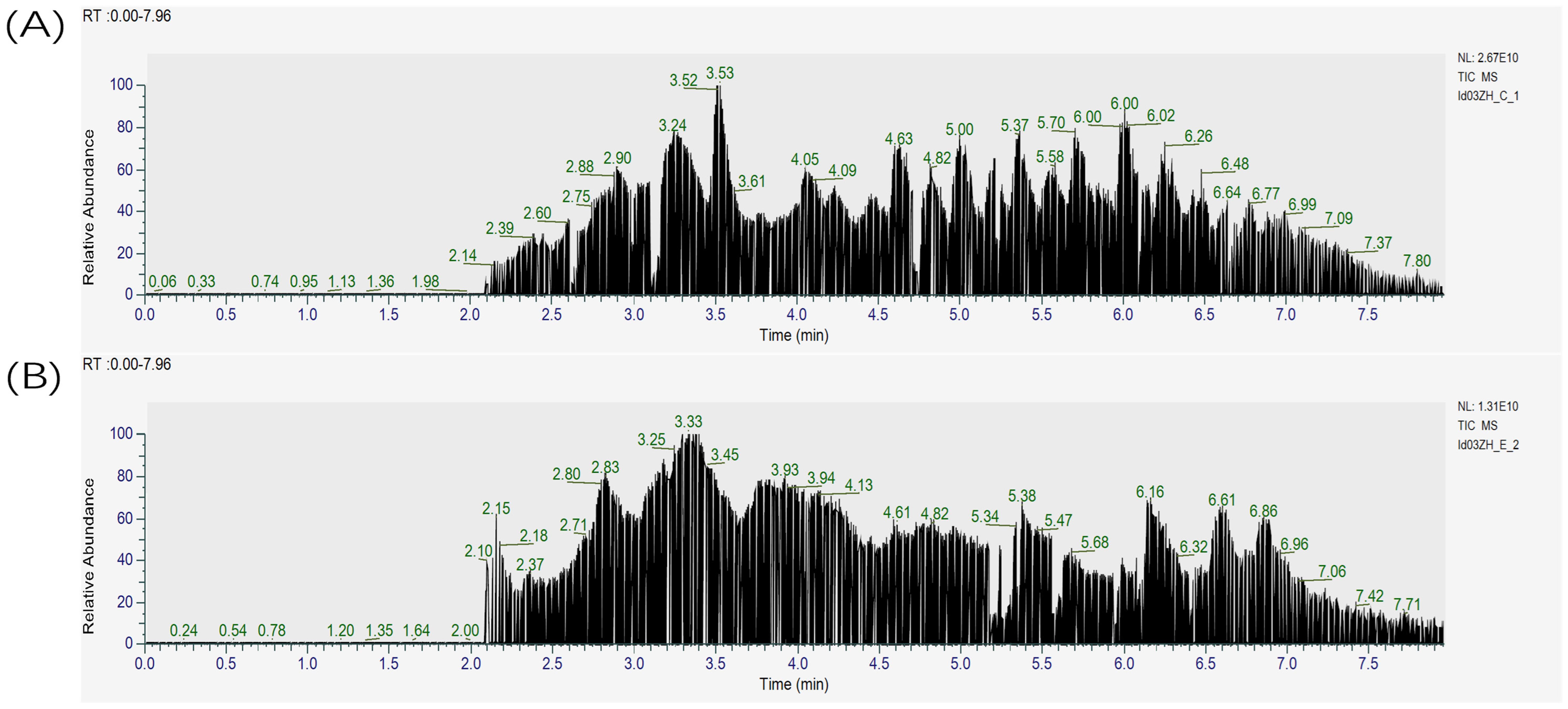
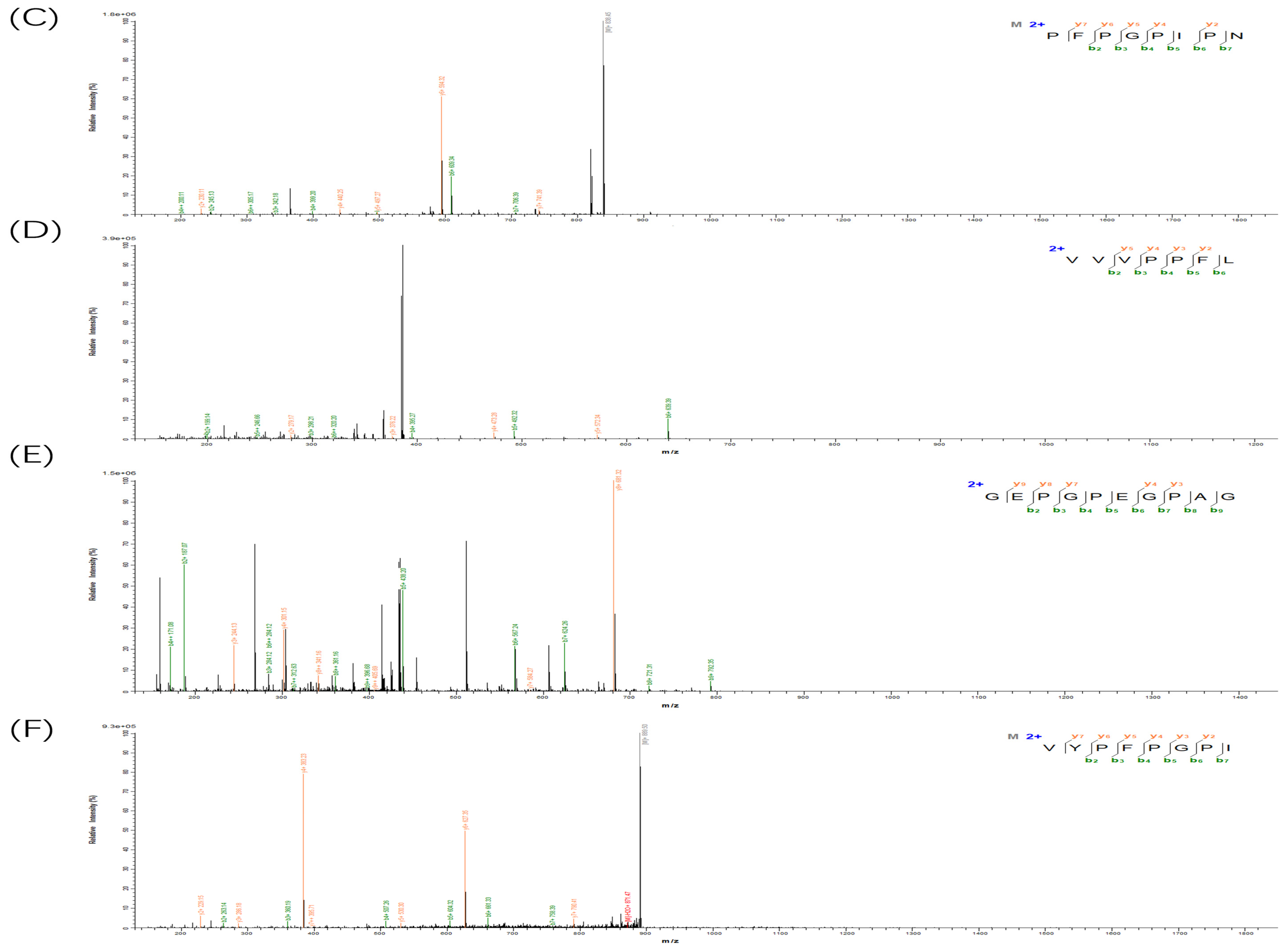
In this study, the high-activity fractions obtained from Sephadex G-15 were subjected to HPLC–MS/MS analysis. Peptide identification was performed by searching against the UniProtKB Bos taurus database, resulting in 19 confident peptide sequences with lengths ranging from 6 to 24 amino acid residues and corresponding molecular weights of 725.44–2746.43 Da. The total ion chromatogram (TIC) is shown in Figure 4. The chromatographic profiles across different retention-time windows were complex, with pronounced differences in peak intensities, indicating an uneven abundance distribution among peptides in the system. Signals with relatively larger peak areas and stronger fragment-ion intensities were mainly concentrated in the mid-retention-time region, which coincided with the chromatographic window previously identified by G-15 fractionation as exhibiting strong α-glucosidase inhibitory activity. This agreement suggests that peptides eluting in this region are likely the principal contributors to the observed bioactivity.
Regarding peptide structural characteristics, the identified sequences were generally enriched in proline (Pro) and glycine (Gly), which are often associated with hydrophobicity and/or conformational rigidity. In addition, several peptides contained aromatic or branched-chain hydrophobic residues such as tyrosine (Tyr), phenylalanine (Phe), and valine (Val). These residues are commonly considered favorable for interacting with hydrophobic pockets located near the α-glucosidase active center, thereby enhancing binding affinity and inhibitory efficacy. The fragment-ion spectra in Figure 4 exhibited well-resolved and continuous b/y ion series, further supporting the reliability of peptide sequencing.
To prioritize potential α-glucosidase inhibitory peptides from the 19 candidates, we employed PeptideRanker to predict bioactivity and integrated the resulting scores with chromatographic abundance information. As summarized in Table 1, four peptides—GEPGPEGPAG, PFPGPIPN, VVVPPFL, and VYPFPGPI—showed PeptideRanker scores of 0.5493, 0.8904, 0.6224, and 0.8497, respectively, all exceeding the commonly used empirical threshold of 0.5. Notably, PFPGPIPN and VYPFPGPI achieved scores close to 0.9, indicating high predicted bioactivity. These four peptides shared several structural features that may be advantageous for enzyme inhibition: (1) each contained 2–4 proline residues, forming typical Pro-enriched repeat motifs (e.g., PGP and PIP), which may confer increased conformational rigidity and facilitate adoption of a stable binding conformation within the enzyme pocket; (2) VVVPPFL and VYPFPGPI possessed multiple hydrophobic/aromatic residues (Val, Phe, Tyr, and Ile), which may promote strong hydrophobic packing and/or π–π interactions with the hydrophobic pocket of α-glucosidase; and (3) the presence of negatively charged residues such as Glu in GEPGPEGPAG suggests a potential contribution of electrostatic interactions under specific pH conditions, enabling binding to positively charged regions on the enzyme surface and synergistically enhancing inhibition.
Taken together, by integrating PeptideRanker scores, MS signal intensities, and structural-feature considerations, these four peptides were selected as priority targets for subsequent in vitro validation and mechanistic investigations. This integrated workflow—“MS-based identification + bioinformatics scoring + structure-guided prioritization”—substantially narrowed the candidate space and improved the efficiency of pinpointing key α-glucosidase inhibitory peptides from complex fermentation-derived peptide mixtures, thereby providing a clear starting point for subsequent structure–activity relationship analyses and the rational design of novel antihyperglycemic functional peptides.

3.4. Molecular Docking Visualization

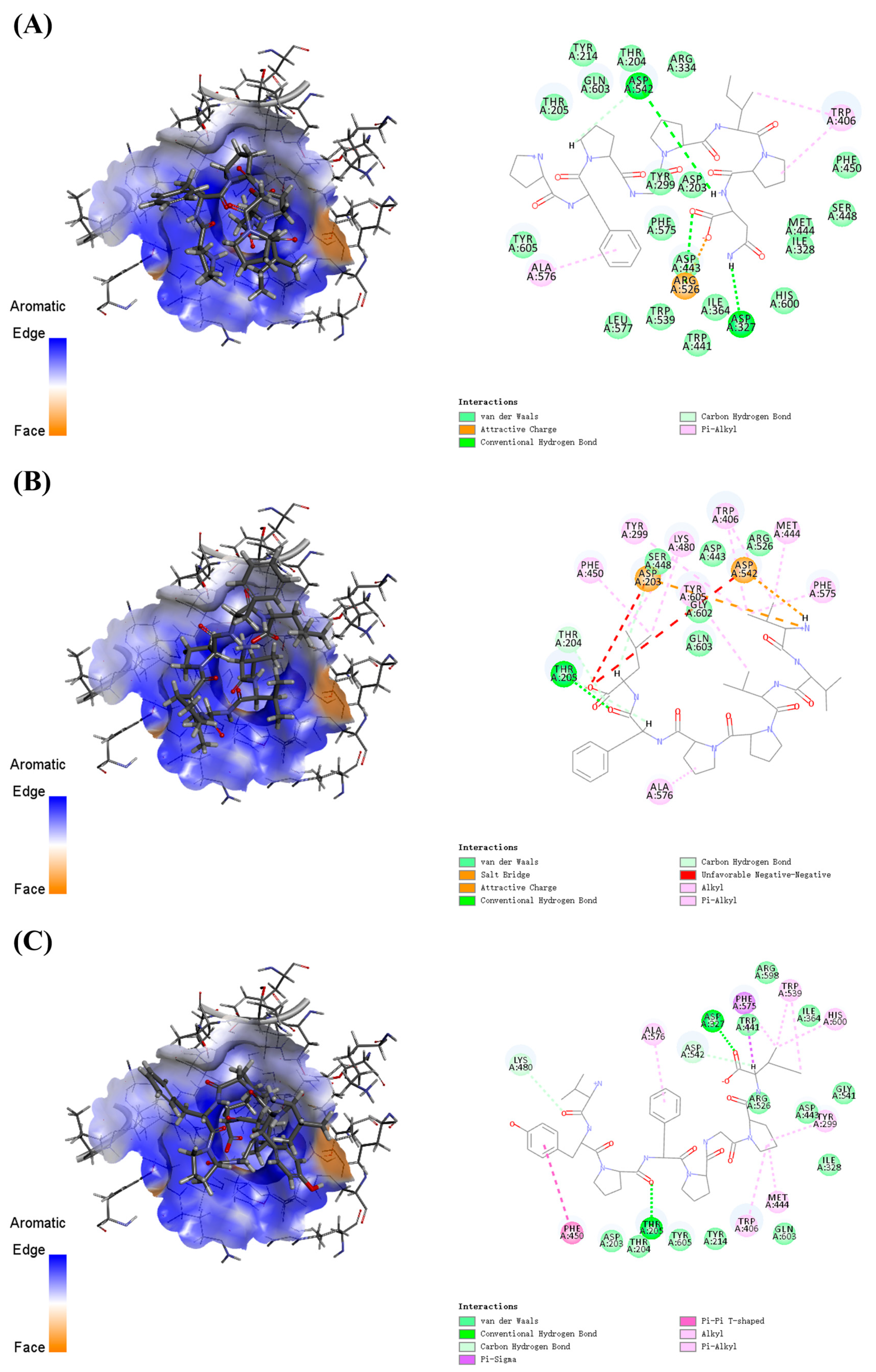
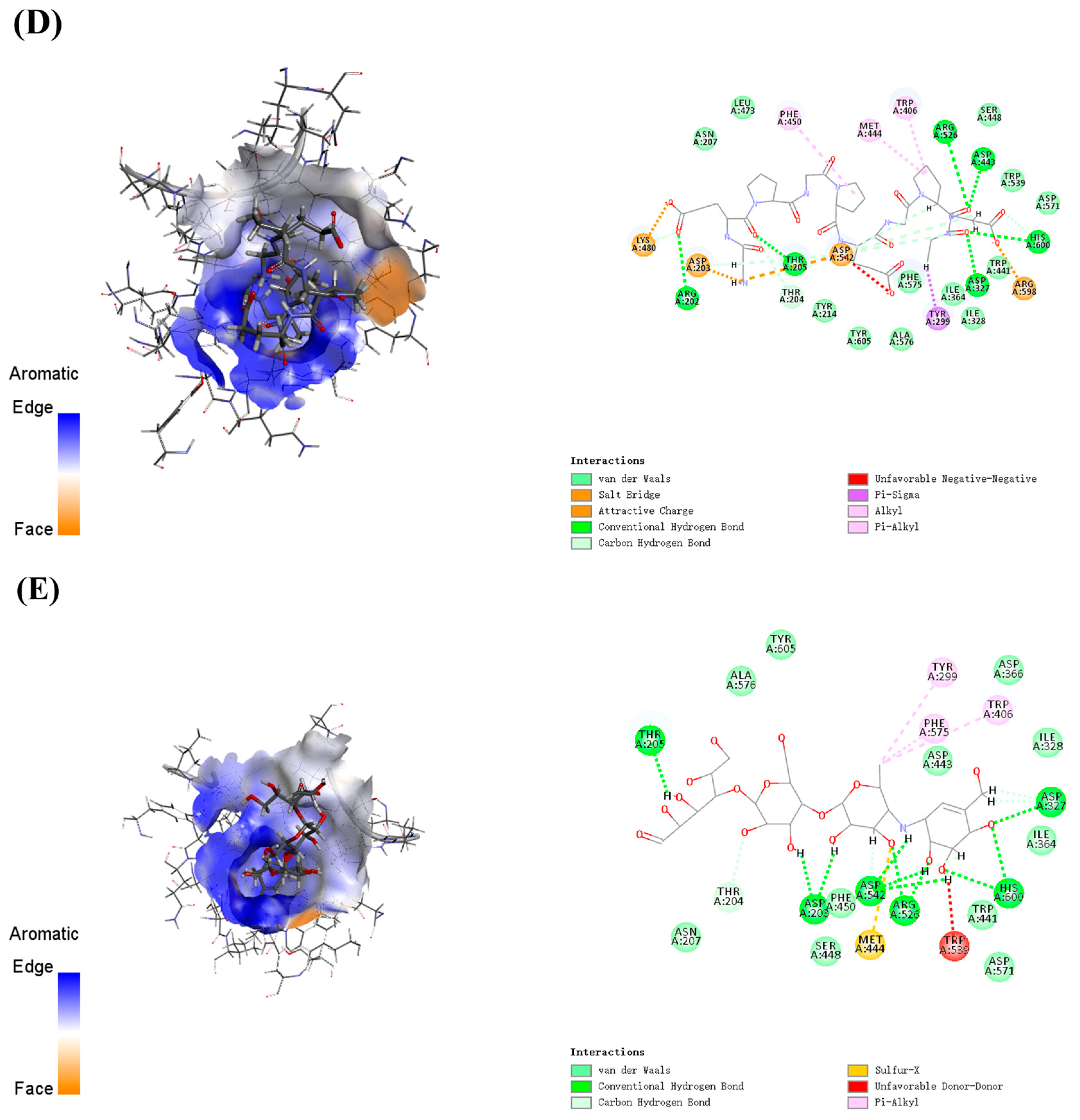
In this study, CDOCKER/CHARMm-based molecular docking (Figure 5; Table 2 and Table 3) further elucidated, at the molecular level, the binding modes of the candidate peptides toward α-glucosidase and their potential inhibitory mechanisms.
From an energetic perspective, all four candidate peptides exhibited relatively strong −CDOCKER Interaction Energy values. Among them, GEPGPEGPAG showed the most favorable interaction energy (−82.50 kcal/mol), which was markedly stronger than that of the positive control acarbose (−69.31 kcal/mol). PFPGPIPN and VVVPPFL also displayed substantial interaction energies of −60.72 and −57.33 kcal/mol, respectively, whereas VYPFPGPI exhibited a much weaker value (−26.99 kcal/mol), indicating a comparatively low predicted affinity. This trend is broadly consistent with the earlier enzyme inhibition results and PeptideRanker predictions, suggesting that GEPGPEGPAG, PFPGPIPN, and VVVPPFL are likely the principal α-glucosidase inhibitory peptides, while VYPFPGPI—despite possessing certain hydrophobic features—may have limited geometric complementarity with the enzyme pocket and thus may be unable to form a sufficiently stable complex. for instance, mung bean-derived FNSL exhibited a binding free energy of −12.773 kcal/mol, outperforming acarbose through key residues like Asp616 and Leu678 [47], while mulberry leaf peptides like RWPFFAFM reached −8.65 kcal/mol, closely matching acarbose’s −8.84 kcal/mol and highlighting the role of C-terminal hydrophobic residues in enzyme pocket occupancy. Collectively, these comparisons underscore the superior predictive power of CDOCKER for identifying natural peptides with enhanced inhibitory efficacy, paving the way for developing peptide-based functional foods targeting postprandial hyperglycemia in type 2 diabetes management.
Visualization of the docking poses indicated that nearly all high-affinity peptides were anchored within the same catalytic pocket as, or in close proximity to, the acarbose-binding site, forming multivalent interactions with key catalytic/anchoring residues. As expected for the positive control, acarbose formed a dense hydrogen-bonding and electrostatic network with core catalytic residues, including Asp203, Asp327, Asp542, Arg526, and His600, and additionally engaged aromatic residues such as Trp406, Tyr299, and Phe575 through π–π and/or π–alkyl interactions (Table 3). This canonical binding pattern is highly consistent with the reports by Khademian et al. [48] and other crystallographic/docking studies, thereby supporting the reliability of the docking protocol and evaluation criteria used in the present work.
On this basis, the binding mode of GEPGPEGPAG was particularly notable. As summarized in Table 3, GEPGPEGPAG formed multiple conventional hydrogen bonds with Arg526, Asp443, His600, Asp327, Thr205, and Arg202, and simultaneously established salt bridges and/or electrostatic interactions with Lys480, Asp203, Asp542, and Arg598. In addition, the peptide interacted with several hydrophobic/aromatic residues—such as Tyr299, Phe450, Met444, and Trp406—via π–alkyl interactions and hydrophobic packing. Collectively, GEPGPEGPAG occupied most of the critical catalytic residues involved in the acarbose-binding site (Asp203, Asp327, Asp542, His600, and Arg526) as well as the surrounding hydrophobic subpockets, thereby achieving a “multisite anchoring + hydrophobic encapsulation” binding pattern. This interaction architecture plausibly explains its lower docking energy and the formation of a more stable complex relative to acarbose. Notably, the acidic residues (e.g., Glu and Asp) in GEPGPEGPAG enabled salt-bridge formation with positively charged Arg/Lys residues on the enzyme, while the alternating rigid–flexible features conferred by Pro (P) and Gly (G) may facilitate adaptive bending of the peptide chain within a narrow pocket. This interpretation aligns with literature observations that highly active inhibitory peptides often contain acidic and proline residues to enhance binding precision and complex stability.
Although PFPGPIPN and VVVPPFL exhibited slightly weaker interaction energies than GEPGPEGPAG, both still displayed characteristic high-affinity binding features. PFPGPIPN formed multiple hydrogen bonds with Asp542, Asp443, and Asp327, established a salt bridge with Arg526, and further engaged hydrophobic residues such as Trp406 and Ala576 through π–alkyl and hydrophobic interactions (Figure 5A). This “multisite charge/hydrogen-bonding network plus local hydrophobic clamping” suggests effective occupancy of the deep catalytic pocket and implies a potential competitive inhibitory mechanism by blocking substrate access. In contrast, VVVPPFL—owing to its highly hydrophobic Val–Val–Val–Pro–Pro–Phe–Leu sequence—formed dense π–alkyl interactions and hydrophobic packing with numerous hydrophobic/aromatic residues, including Phe450, Lys480, Tyr299, Trp406, Met444, Phe575, Tyr605, and Ala576, while also establishing hydrogen bonds and salt-bridge contacts involving Thr205 and Asp542/Asp203 (Figure 5B). This “hydrophobic core with polar anchoring at both ends” architecture likely facilitates firm insertion into the substrate-binding groove, thereby contributing to effective enzyme inhibition.
By comparison, although VYPFPGPI formed hydrogen bonds with residues such as Thr205 and Asp327 and engaged multiple aromatic/hydrophobic sites (e.g., Phe450, Trp406, Met444, Tyr299, His600, Trp539, Phe575, and Ala576) through π–π and π–alkyl interactions, it lacked strong charge complementarity and multivalent salt bridges. Moreover, its hydrophobic side chains appeared more dispersed within the pocket, resulting in insufficient overall complex stability, as reflected by its less favorable docking energy (smaller absolute value). This observation suggests that peptides relying primarily on hydrophobic contacts, without adequate hydrogen-bonding and electrostatic constraints, may struggle to maintain a stable binding conformation within the α-glucosidase active pocket, thereby limiting inhibitory potential.
Importantly, the high-affinity peptides identified in this work were generally enriched in hydrophobic and aliphatic amino acids (e.g., L, I, P, M, and A), and carried aromatic residues (F, Y, and/or W) either at the C-terminus or internally [6]. This compositional preference is consistent with previous reviews summarizing amino acid biases for potent α-glucosidase inhibitory peptides. Multiple studies have suggested that hydrophobic/aromatic residues at the C-terminus can promote deep occupancy of the enzyme pocket and strengthen π–π stacking with aromatic residues such as Trp, Phe, and Tyr, thereby substantially reducing binding free energy. The docking poses of peptides such as VVVPPFL and GEPGPEGPAG in the present study support this structure–activity pattern.
Compared with docking studies on food-derived peptides from other sources, the absolute values of −CDOCKER Interaction Energy obtained herein were generally larger. It should be noted that these values (given the specific force field and scoring scheme) are not directly comparable to experimentally derived binding free energies (e.g., −8 to −13 kcal/mol); nevertheless, the relative ranking and trends remain informative. Notably, GEPGPEGPAG exhibited a more favorable interaction energy than acarbose within the same force field and evaluation framework, indicating a potentially superior theoretical affinity. Combined with the strong inhibitory performance observed experimentally for the <3 kDa fraction and its high-activity chromatographic subfractions, it is reasonable to infer that peptides such as GEPGPEGPAG, PFPGPIPN, and VVVPPFL are likely key “functional peptide units” driving the α-glucosidase inhibitory activity of fermented whey protein.
Overall, the results in Figure 5 and Table 2 and Table 3 systematically reveal the interaction features between short peptides derived from fermented whey and α-glucosidase from both molecular-recognition and energetic perspectives: (1) high-activity peptides can overlap with the acarbose-associated catalytic core region and achieve stable binding through a synergistic combination of “multiple hydrogen bonds/salt bridges + hydrophobic encapsulation + aromatic stacking”; (2) salt bridges formed between acidic and basic residues, together with Pro-enriched motifs, appear to enhance conformational stability of the peptide–enzyme complex and are key determinants underlying low docking energies; and (3) relative to various reported food-derived inhibitory peptides, the candidate peptides identified here exhibit theoretical binding affinities that are not inferior to acarbose, providing computational-chemistry support for their potential use as natural active components for modulating postprandial glycemic responses.
It is important to acknowledge that while molecular docking provides significant insights into the potential binding mechanisms of the identified peptides, it does not replace empirical validation. The specific contribution of individual peptides to the overall activity of the enriched fraction remains to be quantified through chemical synthesis and enzyme kinetic studies (determination of Ki). The current findings provide a narrowed pool of high-potential candidates for such future investigations.

4. Conclusions

This study demonstrates that fermentation of whey protein by the marine-derived Lacticaseibacillus casei DS31 can generate constituents with measurable α-glucosidase inhibitory activity and that such activity can be progressively enriched by downstream fractionation. Notably, the freeze-dried crude fermentation supernatant already exhibited appreciable potency (IC50 = 2.115 mg/mL), supporting the practical feasibility of using minimally processed fermented whey as a functional ingredient. Stepwise purification further concentrated the bioactivity: the <3 kDa ultrafiltration fraction showed enhanced inhibition (IC50 = 1.206 mg/mL), and subsequent gel filtration on crosslinked dextran (Sephadex G-15) yielded an even more active subfraction. Among the pooled chromatographic fractions, Fraction E exhibited the strongest activity (IC50 = 1.145 mg/mL), indicating that the major inhibitory components are enriched within a restricted elution window and can be targeted for process-oriented enrichment.
LC–MS/MS identified 19 peptides in the high-activity fractions, and integrated in silico prioritization (PeptideRanker combined with molecular docking) highlighted four candidate peptides (GEPGPEGPAG, PFPGPIPN, VVVPPFL, and VYPFPGPI). Within the same docking protocol and scoring framework, GEPGPEGPAG showed a more favorable predicted interaction energy than the positive control acarbose, and the binding-mode analysis suggests that it may associate with the catalytic pocket through cooperative hydrogen-bonding, electrostatic contacts (including salt bridges), and hydrophobic/aromatic interactions. While these computational results do not substitute for binding thermodynamics or in vivo efficacy, they provide a mechanistic rationale consistent with the observed enrichment of inhibitory activity in low-molecular-weight fractions and the high-activity Sephadex subfractions.
Collectively, the fermentation–fractionation strategy described here supports the application potential of DS31-fermented whey as a source of natural α-glucosidase inhibitory components for postprandial glycemic management. From an implementation perspective, the crude supernatant offers a low-processing option, whereas membrane-based enrichment and targeted collection of Fraction E provide routes to higher potency ingredients. Future work should verify the key functional peptide(s) and their contribution to the overall activity (e.g., activity-guided quantification, enzyme kinetics, and structure–activity validation), and evaluate stability/bioaccessibility under simulated gastrointestinal digestion and within representative food matrices. In addition, in vivo studies and safety/quality assessments will be important to substantiate efficacy, establish effective dosages, and facilitate translation toward scalable whey-based functional products.

Author Contributions

H.Z.: Methodology, Formal analysis, Data curation, Writing—original draft, and Visualization; X.T.: Writing—review & editing; L.Y.: Methodology and Formal analysis; S.Y.: Visualization and Investigation; P.W.: Data curation, Writing—original draft, Writing—review & editing, Supervision, Project administration, Funding acquisition, and Conceptualization. All authors have read and agreed to the published version of the manuscript.

Funding

This study was supported by Innovation Research and Development Special Funds of the Municipality-province-ministry Co-constructed (grant number: GJZX-HYSW-2024-09), Fujian Science and Technology Program Guiding Project (2025Y0055).

Institutional Review Board Statement

Not applicable.

Informed Consent Statement

Not applicable.

Data Availability Statement

The original contributions presented in this study are included in the article. Further inquiries can be directed to the corresponding author.

Acknowledgments

We would like to express our gratitude to Ling Wang, Xiaofeng Chen, and Zhiwen Wu for their valuable contributions to the preliminary research for this article. We also extend our thanks to Qinmiao Huang from Fujian Huijing Biological Technology Co., Ltd., Zhangzhou 363600, China, for providing the strains used in this study.

Conflicts of Interest

The authors declare no conflict of interest.

References

  1. American Diabetes Association Professional Practice Committee. 12. Retinopathy, Neuropathy, and Foot Care: Standards of Care in Diabetes-2025. Diabetes Care 2025, 48, S252–S265. [Google Scholar] [CrossRef]
  2. DECODE Study Group; the European Diabetes Epidemiology Group. Glucose Tolerance and Cardiovascular Mortality: Comparison of Fasting and 2-Hour Diagnostic Criteria. Arch. Intern. Med. 2001, 161, 397–405. [Google Scholar] [CrossRef]
  3. Gericke, B.; Schecker, N.; Amiri, M.; Naim, H.Y. Structure-Function Analysis of Human Sucrase-Isomaltase Identifies Key Residues Required for Catalytic Activity. J. Biol. Chem. 2017, 292, 11070–11078. [Google Scholar] [CrossRef] [PubMed]
  4. Akmal, M.; Patel, P.; Wadhwa, R. Alpha Glucosidase Inhibitors. In StatPearls; StatPearls Publishing: Treasure Island, FL, USA, 2025. [Google Scholar]
  5. van de Laar, F.A.; Lucassen, P.L.; Akkermans, R.P.; van de Lisdonk, E.H.; Rutten, G.E.; van Weel, C. Alpha-Glucosidase Inhibitors for Patients with Type 2 Diabetes: Results from a Cochrane Systematic Review and Meta-Analysis. Diabetes Care 2005, 28, 154–163. [Google Scholar] [CrossRef] [PubMed]
  6. Lu, H.; Xie, T.; Wu, Q.; Hu, Z.; Luo, Y.; Luo, F. Alpha-Glucosidase Inhibitory Peptides: Sources, Preparations, Identifications, and Action Mechanisms. Nutrients 2023, 15, 4267. [Google Scholar] [CrossRef]
  7. Jahandideh, F.; Bourque, S.L.; Wu, J. A Comprehensive Review on the Glucoregulatory Properties of Food-Derived Bioactive Peptides. Food Chem. X 2022, 13, 100222. [Google Scholar] [CrossRef]
  8. Hamadou, M. Bioactive Peptides and Metabolic Health: A Mechanistic Review of the Impact on Insulin Sensitivity, Lipid Profiles, and Inflammation. Appl. Food Res. 2025, 5, 101056. [Google Scholar] [CrossRef]
  9. Miguéns-Gómez, A.; Casanova-Martí, À.; Blay, M.T.; Terra, X.; Beltrán-Debón, R.; Rodríguez-Gallego, E.; Ardévol, A.; Pinent, M. Glucagon-like Peptide-1 Regulation by Food Proteins and Protein Hydrolysates. Nutr. Res. Rev. 2021, 34, 259–275. [Google Scholar] [CrossRef] [PubMed]
  10. Mirzakulova, A.; Sarsembaeva, T.; Suleimenova, Z.; Kowalski, Ł.; Gajdzik, B.; Wolniak, R.; Bembenek, M. Whey: Composition, Processing, Application, and Prospects in Functional and Nutritional Beverages—A Review. Foods 2025, 14, 3245. [Google Scholar] [CrossRef]
  11. Sousa, G.T.; Lira, F.S.; Rosa, J.C.; de Oliveira, E.P.; Oyama, L.M.; Santos, R.V.; Pimentel, G.D. Dietary Whey Protein Lessens Several Risk Factors for Metabolic Diseases: A Review. Lipids Health Dis. 2012, 11, 67. [Google Scholar] [CrossRef]
  12. Lacroix, I.M.E.; Li-Chan, E.C.Y. Inhibition of Dipeptidyl Peptidase (DPP)-IV and α-Glucosidase Activities by Pepsin-Treated Whey Proteins. J. Agric. Food Chem. 2013, 61, 7500–7506. [Google Scholar] [CrossRef]
  13. Bandara, T.A.; Munasinghe-Arachchige, S.P.; Gamlath, C.J. Fermented Whey Beverages: A Review of Process Fundamentals, Recent Developments and Nutritional Potential. Int. J. Dairy Technol. 2023, 76, 737–757. [Google Scholar] [CrossRef]
  14. Nwachukwu, I.D.; Aluko, R.E. Structural and Functional Properties of Food Protein-Derived Antioxidant Peptides. J. Food Biochem. 2019, 43, e12761. [Google Scholar] [CrossRef]
  15. Anumudu, C.K.; Miri, T.; Onyeaka, H. Multifunctional Applications of Lactic Acid Bacteria: Enhancing Safety, Quality, and Nutritional Value in Foods and Fermented Beverages. Foods 2024, 13, 3714. [Google Scholar] [CrossRef] [PubMed]
  16. Ibrahim, M.A.; Bester, M.J.; Neitz, A.W.H.; Gaspar, A.R.M. Structural Properties of Bioactive Peptides with α-Glucosidase Inhibitory Activity. Chem. Biol. Drug Des. 2018, 91, 370–379. [Google Scholar] [CrossRef]
  17. Holliday, G.L.; Mitchell, J.B.O.; Thornton, J.M. Understanding the Functional Roles of Amino Acid Residues in Enzyme Catalysis. J. Mol. Biol. 2009, 390, 560–577. [Google Scholar] [CrossRef]
  18. Ashrafi, A.M.; Sýs, M.; Sedláčková, E.; Shaaban Farag, A.; Adam, V.; Přibyl, J.; Richtera, L. Application of the Enzymatic Electrochemical Biosensors for Monitoring Non-Competitive Inhibition of Enzyme Activity by Heavy Metals. Sensors 2019, 19, 2939. [Google Scholar] [CrossRef]
  19. Li, Z.; Zhang, S.; Meng, W.; Zhang, J.; Zhang, D. Food-Derived α-Glucosidase Inhibitory Peptides: Research Progress on Structure-Activity Relationship, Safety and Bioavailability. Food Sci. 2023, 44, 298–320. [Google Scholar]
  20. De Chiara, I.; Marasco, R.; Della Gala, M.; Alfano, A.; Parecha, D.; Costanzo, N.; Schiraldi, C.; Muscariello, L. Isolation and Partial Characterization of Lactic Acid Bacteria from Natural Whey Starter Culture. Fermentation 2025, 11, 668. [Google Scholar] [CrossRef]
  21. Rosa, L.S.; Santos, M.L.; Abreu, J.P.; Rocha, R.S.; Esmerino, E.A.; Freitas, M.Q.; Mársico, E.T.; Campelo, P.H.; Pimentel, T.C.; Cristina Silva, M.; et al. Probiotic Fermented Whey-Milk Beverages: Effect of Different Probiotic Strains on the Physicochemical Characteristics, Biological Activity, and Bioactive Peptides. Food Res. Int. 2023, 164, 112396. [Google Scholar] [CrossRef] [PubMed]
  22. Lee, Y.; Yoon, Y.; Choi, K.-H. Development and Evaluation of Bioconverted Milk with Anti-Microbial Effect against Periodontal Pathogens and α-Glucosidase Inhibitory Activity. Microorganisms 2024, 12, 1290. [Google Scholar] [CrossRef]
  23. Rejdlová, A.; Lorencová, E.; Míšková, Z.; Salek, R.N. Techno-Functional Properties and Recent Advances in the Manufacturing of Whey Beverages: A Review. Appl. Sci. 2025, 15, 1846. [Google Scholar] [CrossRef]
  24. Lambuk, F.; Mazlan, N.; Thung, T.Y.; New, C.Y.; Rinai, K.R.; Son, R. A Review of Lactic Acid Bacteria Isolated from Marine Animals: Their Species, Isolation Site and Applications. Food Res. 2022, 6, 311–323. [Google Scholar] [CrossRef]
  25. Fukuchi, S.; Yoshimune, K.; Wakayama, M.; Moriguchi, M.; Nishikawa, K. Unique Amino Acid Composition of Proteins in Halophilic Bacteria. J. Mol. Biol. 2003, 327, 347–357. [Google Scholar] [CrossRef]
  26. Shahidi, F.; Saeid, A. Bioactivity of Marine-Derived Peptides and Proteins: A Review. Mar. Drugs 2025, 23, 157. [Google Scholar] [CrossRef]
  27. Liu, Y.; Wu, P.; Li, Y.; Chen, X.; Wang, L.; Su, Y.; Luo, L.; Cai, Y.; Huang, Q.; Tang, X. Probiotics and Amelioration of Periodontitis: Significant Roles of Lacticaseibacillus Casei DS31. Front. Microbiol. 2025, 16, 1715664. [Google Scholar] [CrossRef]
  28. Solieri, L.; Sola, L.; Vaccalluzzo, A.; Randazzo, C.L.; Martini, S.; Tagliazucchi, D. Characterization of Cell-Envelope Proteinases from Two Lacticaseibacillus Casei Strains Isolated from Parmigiano Reggiano Cheese. Biology 2022, 11, 139. [Google Scholar] [CrossRef]
  29. Mulaw, G.; Sisay Tessema, T.; Muleta, D.; Tesfaye, A. In Vitro Evaluation of Probiotic Properties of Lactic Acid Bacteria Isolated from Some Traditionally Fermented Ethiopian Food Products. Int. J. Microbiol. 2019, 2019, 7179514. [Google Scholar] [CrossRef] [PubMed]
  30. Pescuma, M.; Hébert, E.M.; Mozzi, F.; de Valdez, G.F. Functional Fermented Whey-Based Beverage Using Lactic Acid Bacteria. Int. J. Food Microbiol. 2010, 141, 73–81. [Google Scholar] [CrossRef] [PubMed]
  31. Reyes-Díaz, A.; Mata-Haro, V.; Hernández, J.; González-Córdova, A.F.; Hernández-Mendoza, A.; Reyes-Díaz, R.; Torres-Llanez, M.J.; Beltrán-Barrientos, L.M.; Vallejo-Cordoba, B. Milk Fermented by Specific Lactobacillus Strains Regulates the Serum Levels of IL-6, TNF-α and IL-10 Cytokines in a LPS-Stimulated Murine Model. Nutrients 2018, 10, 691. [Google Scholar] [CrossRef] [PubMed]
  32. Guo, W.; Xiao, Y.; Fu, X.; Long, Z.; Wu, Y.; Lin, Q.; Ren, K.; Jiang, L. Identification of Novel α-Glucosidase and ACE Inhibitory Peptides from Douchi Using Peptidomics Approach and Molecular Docking. Food Chem. X 2023, 19, 100779. [Google Scholar] [CrossRef] [PubMed]
  33. Shao, C.-H.; Wayal, V.; Hsieh, C.-C. Goat Whey Protein Hydrolysate Mitigates High-Fructose Corn Syrup-Induced Hepatic Steatosis in a Murine Model. Nutrients 2025, 17, 2011. [Google Scholar] [CrossRef] [PubMed]
  34. Wu, N.; Xu, W.; Liu, K.; Xia, Y.; Shuangquan. Angiotensin-Converting Enzyme Inhibitory Peptides from Lactobacillus Delbrueckii QS306 Fermented Milk. J. Dairy Sci. 2019, 102, 5913–5921. [Google Scholar] [CrossRef]
  35. Bird, L.E.; Xu, B.; Hobbs, A.D.; Ziegler, A.R.; Scott, N.E.; Newton, P.; Thomas, D.R.; Edgington-Mitchell, L.E.; Newton, H.J. Coxiella Burnetii Manipulates the Lysosomal Protease Cathepsin B to Facilitate Intracellular Success. Nat. Commun. 2025, 16, 3844. [Google Scholar] [CrossRef]
  36. Hau, E.H.; Chew, L.Y.; Yeo, S.K.; Owatworakit, A.; Teh, S.S.; Mah, S.H. Oil Palm Leaf Protein Hydrolysate and Its Novel Peptides as Alternative Plant-Based α-Glucosidase Inhibitors. Int. J. Biol. Macromol. 2025, 291, 138897. [Google Scholar] [CrossRef]
  37. Dang, D.X.; Xu, S.Q.; Li, D.; Wang, H.; Xia, X.; Xu, S. Identification of Potential Dual α-Amylase and α-Glucosidase Inhibitory Peptides from Humulus scandens through Multi-Step Virtual Screening, Molecular Docking, Ligand Efficiency Analysis, and Molecular Dynamics Simulation. Results Chem. 2025, 16, 102448. [Google Scholar] [CrossRef]
  38. Sar, T.; Bogovic Matijasic, B.; Danilovic, B.; Gamero, A.; Gandía, M.; Krausova, G.; Martínez-Villaluenga, C.; Peñas, E.; Bagherzadehsurbagh, E.; Cemali, Ö.; et al. A Systematic Review of Health Promoting Effects of Consumption of Whey-Based Fermented Products on Adults. Front. Nutr. 2025, 12, 1651365. [Google Scholar] [CrossRef]
  39. Meleti, E.; Koureas, M.; Manouras, A.; Giannouli, P.; Malissiova, E. Bioactive Peptides from Dairy Products: A Systematic Review of Advances, Mechanisms, Benefits, and Functional Potential. Dairy 2025, 6, 65. [Google Scholar] [CrossRef]
  40. Helal, A.; Nasuti, C.; Sola, L.; Sassi, G.; Tagliazucchi, D.; Solieri, L. Impact of Spontaneous Fermentation and Inoculum with Natural Whey Starter on Peptidomic Profile and Biological Activities of Cheese Whey: A Comparative Study. Fermentation 2023, 9, 270. [Google Scholar] [CrossRef]
  41. Zeng, X.; Wang, Y.; Yang, S.; Liu, Y.; Li, X.; Liu, D. The Functionalities and Applications of Whey/Whey Protein in Fermented Foods: A Review. Food Sci. Biotechnol. 2024, 33, 769–790. [Google Scholar] [CrossRef]
  42. Konrad, B.; Anna, D.; Marek, S.; Marta, P.; Aleksandra, Z.; Józefa, C. The Evaluation of Dipeptidyl Peptidase (DPP)-IV, α-Glucosidase and Angiotensin Converting Enzyme (ACE) Inhibitory Activities of Whey Proteins Hydrolyzed with Serine Protease Isolated from Asian Pumpkin (Cucurbita ficifolia). Int. J. Pept. Res. Ther. 2014, 20, 483–491. [Google Scholar] [CrossRef]
  43. Hau, E.H.; Huang, W.; Huang, L.; Zeng, X.; Huang, Z.; Dan, X.; Fan, X.; Mah, S.H.; Li, L. Antidiabetic Potential of Buffalo Milk Casein Hydrolysates through Enzymatic Hydrolysis and Bioactive Peptide Identification as α-Glucosidase Inhibitors. Food Chem. 2025, 493, 145780. [Google Scholar] [CrossRef] [PubMed]
  44. Liu, W.; Ma, R.; Cui, G.; Wen, Y.; Li, H.; Wang, J.; Sun, B. Rice Bran Peptide with α-Glucosidase Inhibition Activity: Preparation, Evaluation and Molecular Mechanism. J. Cereal Sci. 2024, 115, 103837. [Google Scholar] [CrossRef]
  45. Al-Bukhaiti, W.Q.; Al-Dalali, S.; Li, H.; Yao, L.; Abed, S.M.; Zhao, L.; Qiu, S.-X. Identification and in Vitro Characterization of Novel Antidiabetic Peptides Released Enzymatically from Peanut Protein. Plant Foods Hum. Nutr. 2024, 79, 66–72. [Google Scholar] [CrossRef] [PubMed]
  46. Zhang, Y.; Chen, Y.; Liu, X.; Wang, W.; Wang, J.; Li, X.; Sun, S. Preparation and Identification of Peptides with α-Glucosidase Inhibitory Activity from Shiitake Mushroom (Lentinus edodes) Protein. Foods 2023, 12, 2534. [Google Scholar] [CrossRef] [PubMed]
  47. Deng, F.; Liang, Y.; Lei, Y.; Xiong, S.; Rong, J.; Hu, Y. Development and Identification of Novel α-Glucosidase Inhibitory Peptides from Mulberry Leaves. Foods 2023, 12, 3917. [Google Scholar] [CrossRef]
  48. Khademian, A.; Halimi, M.; Azarbad, R.; Alaedini, A.H.; Noori, M.; Dastyafteh, N.; Mojtabavi, S.; Faramarzi, M.A.; Mohammadi-Khanaposhtani, M.; Mahdavi, M. Quinoline-Thiosemicarbazone-1,2,3-Triazole-Acetamide Derivatives as New Potent α-Glucosidase Inhibitors. Sci. Rep. 2024, 14, 30876. [Google Scholar] [CrossRef]
Figure 1. (A) α-Glucosidase inhibitory activity of whey protein before and after fermentation, F: Fermented whey; UF: Unfermented whey. (B) Time-course changes in inhibition rate and biomass (OD600) during fermentation. (C) Dose–response curve and IC50 of the reconstituted lyophilized fermentation supernatant. ****, p < 0.0001.
Fermentation 12 00074 g001
Figure 2. (A) Inhibitory rates of different ultrafiltration fractions at the same concentration; (B) Determination of the half-maximal inhibitory concentration (IC50) of the <3 kDa fraction; (C) Determination of the IC50 of acarbose (positive control). ***, p < 0.001; ****, p < 0.0001.
Fermentation 12 00074 g002
Figure 3. (A) Absorbance profile of the fractions obtained by Sephadex G-15 gel filtration monitored at 228 nm (The boxed regions indicate pooled fractions combined according to individual chromatographic peaks); (B) α-Glucosidase inhibitory activity of the fractions obtained after Sephadex G-15 gel filtration; (C) Determination of the half-maximal inhibitory concentration (IC50) of fraction C after Sephadex G-15 gel filtration; (D) Determination of the IC50 of fraction E after Sephadex G-15 gel filtration.
Fermentation 12 00074 g003
Figure 4. Visualization and analysis of the mass spectrometry results. (A) Liquid chromatographic separation profile of fraction C; (B) liquid chromatographic separation profile of fraction E; (C) representative MS/MS spectrum of peptide PFPGPIPN; (D) representative MS/MS spectrum of peptide VVVPPFL; (E) representative MS/MS spectrum of peptide GEPGPEGPAG; (F) representative MS/MS spectrum of peptide VYPFPGPI.
Fermentation 12 00074 g004aFermentation 12 00074 g004b
Figure 5. Molecular docking of the identified potential bioactive peptides: (A) PFPGPIPN, (B) VVVPPFL, (C) VYPFPGPI, (D) GEPGPEGPAG, (E) Acarbose. Note: The interaction colors follow the default DS theme; therefore, some interaction subtypes may appear in identical or similar colors (e.g., Salt Bridge vs. Attractive Charge, and Alkyl vs. π–Alkyl).
Fermentation 12 00074 g005aFermentation 12 00074 g005b
Table 1. Activity scores of potential α-glucosidase inhibitory peptides.
Peptide SequencePeptideRanker
GEPGPEGPAG0.549308
PFPGPIPN0.890369
VVVPPFL0.622409
VYPFPGPI0.849683
Table 2. Semi-flexible docking binding energies of peptides with α-glucosidase.
Ligand (Peptide/Compound)−CDOCKER INTERACTION ENERGY
GEPGPEGPAG−82.5008
PFPGPIPN−60.7204
VVVPPFL−57.3323
VYPFPGPI−26.998
Acarbose−69.31
Table 3. Interactions of potential α-glucosidase inhibitory peptides with the α-glucosidase active site.
LigandHydrogen-Bonding Interactions Electrostatic InteractionsHydrophobic and π-Related Interactions
AcarboseAsp327, Asp542, Arg526, Thr205, Asp203, His600noneTrp406, Tyr299, Phe575
GEPGPEGPAGArg526, Asp443, His600, Asp327, Thr205, Arg202Lys480, Asp203, Asp542, Arg598Tyr299, Phe450, Met444, Trp406
PFPGPIPNAsp542, Asp443, Asp327Arg526Trp406, Ala576
VVVPPFLThr205Asp542, Asp203Phe450, Lys480, Tyr299, Trp406, Met444, Phe575, Tyr605, Ala576
VYPFPGPIThr205, Asp327nonePhe450, Trp406, Met444, Tyr299, His600, Trp539, Phe575, Ala576
Note: A = Alanine, E = Glutamic acid, F = Phenylalanine, G = Glycine, I = Isoleucine, L = Leucine, N = Asparagine, P = Proline, V = Valine, Y = Tyrosine [43].
Disclaimer/Publisher’s Note: The statements, opinions and data contained in all publications are solely those of the individual author(s) and contributor(s) and not of MDPI and/or the editor(s). MDPI and/or the editor(s) disclaim responsibility for any injury to people or property resulting from any ideas, methods, instructions or products referred to in the content.