Review

Recent Updates on Autochthonous Lactic Acid Bacteria in the Food Industry: A Bibliometric Analysis

by
Jayuri Susy Fernandes de Araújo
1,2,
Genésio José da Silva Neto
3,
Bruno Fonsêca Feitosa
4,
Winnie Alencar Luciano
2,
Bárbara Fernanda Figueiredo dos Santos
2,
Emmanuel Moreira Pereira
2,5,
Mônica Correia Gonçalves
2,6,
Mônica Tejo Cavalcanti
1,2,*,
Maria Manuela Pintado
7 and
Osvaldo Soares da Silva
1
1
Graduate Program in Process Engineering, Federal University of Campina Grande, Campina Grande 58429-900, Brazil
2
CEBBI Caatinga—Center for Bioeconomy, Medical Biotechnology and Innovation in the Caatinga, Federal University of Campina Grande, Campina Grande 58429-900, Brazil
3
Department of Antibiotics, Center for Biosciences, Federal University of Pernambuco, Recife 50670-901, Brazil
4
Department of Agricultural Engineering, State University of Amapá, Amapá 68950-000, Brazil
5
Department of Agriculture, Federal University of Paraíba, Bananeiras Campus, Bananeiras 58220-000, Brazil
6
Department of Production Engineering, Federal University of Campina Grande, Campina Grande 58429-900, Brazil
7
Centre for Biotechnology and Fine Chemistry, Associated Laboratory, School of Biotechnology, Catholic University of Portugal, 4169-005 Porto, Portugal
*
Author to whom correspondence should be addressed.
Fermentation 2026, 12(2), 104; https://doi.org/10.3390/fermentation12020104
Submission received: 19 November 2025 / Revised: 24 January 2026 / Accepted: 2 February 2026 / Published: 11 February 2026
(This article belongs to the Section Fermentation for Food and Beverages)

Abstract

This bibliometric review aimed to map recent scientific production (2020–2026) on autochthonous bacterial strains applied to the food industry, focusing on experimental studies retrieved from the Scopus® database. Boolean operators and truncation were applied to refine searches and exclude yeast-related terms, and keyword co-occurrence analysis was performed using VOSviewer (v1.6.20). A total of 44,095 experimental articles were analyzed. Results revealed a stable annual output exceeding 8000 papers between 2021 and 2024, indicating sustained scientific interest in the topic. China and the United States accounted for over 55% of total publications, with Chinese institutions and funding agencies showing predominant activity. Research was mainly distributed across Biochemistry, Genetics, Molecular Biology, Medicine, and Microbiology, reflecting applied and mechanistic approaches. Two major thematic clusters were identified: one focused on gastrointestinal health and microbiota modulation and another centered on microbial metabolism, probiotic functionality, and biochemical characterization. The findings confirm the growing scientific and technological relevance of autochthonous strains in improving food quality, safety, and functionality, especially in fermented products, and provide valuable insights for guiding future research and innovation in food microbiology and biotechnology.

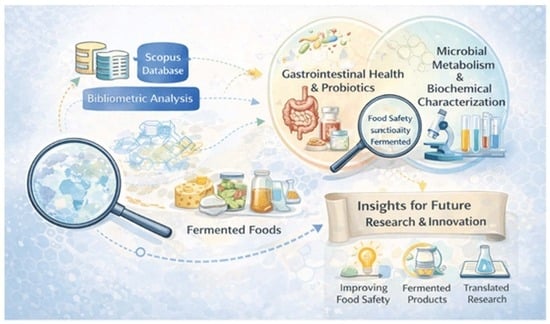
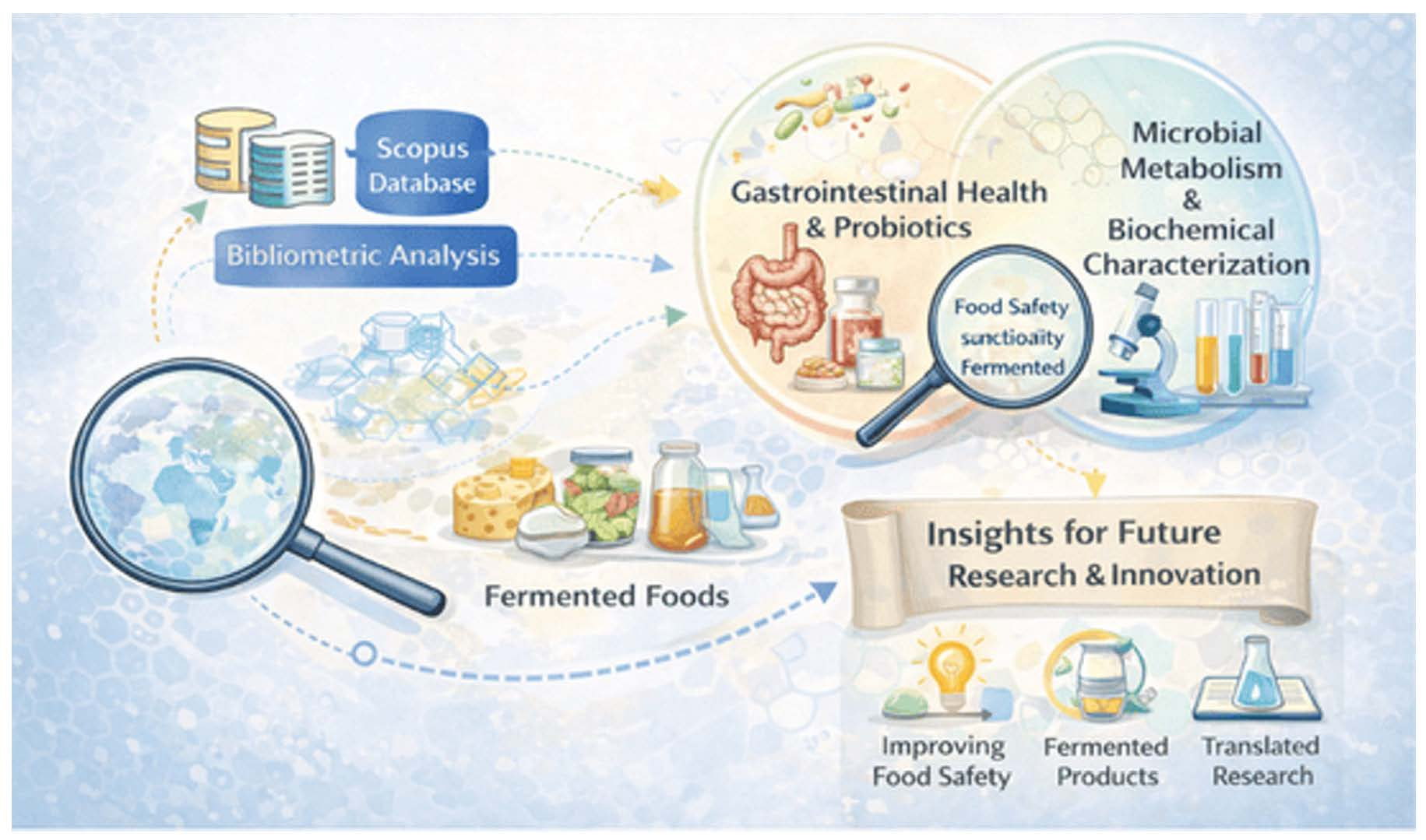
Graphical Abstract

1. Introduction

Autochthonous lactic acid bacteria (LAB) have garnered growing attention in international scientific research due to their technological potential to enhance the quality, functionality, and safety of fermented foods [1,2]. These microorganisms play a central role in fermentation processes, being associated with bacteriocin production, antimicrobial activity, exopolysaccharide synthesis, and the modulation of flavor and texture [3,4,5].
Their application in both dairy and non-dairy fermented products has also been linked to health-promoting properties, positioning them as promising candidates for functional and probiotic foods [6,7,8]. These applications include products such as yogurt, kefir, fermented cheeses, fermented vegetables (e.g., kimchi and sauerkraut), and fermented meats, where autochthonous microbiota can contribute to safety, sensory quality, and potential health benefits. The broader relevance of fermented foods and their associated microorganisms has been reinforced by recent consensus statements, which highlight fermented foods as an important and distinct category within food systems and human nutrition [9].
Furthermore, their relevance as natural biopreservatives has been increasingly emphasized in the literature, offering sustainable alternatives to synthetic additives [10,11]. In this context, lactic acid bacteria contribute to food preservation through the production of organic acids, bacteriocins, and other antimicrobial metabolites that inhibit spoilage and pathogenic microorganisms, thereby reducing the reliance on chemical preservatives and supporting cleaner-label strategies [12,13]. Recent studies have reinforced this perspective by highlighting the application potential of autochthonous LAB as natural preservation agents in both dairy and non-dairy food matrices, in line with current sustainability and food safety demands [14].
In the dairy sector, autochthonous LAB have shown particular importance in the production of artisanal cheeses and fermented milk products [15]. These strains, often isolated from raw milk or traditional dairy products, are adapted to local environmental and processing conditions. Their use as starter or adjunct cultures not only enhances microbial safety and sensory complexity but also supports the preservation of regional characteristics and biodiversity [16].
This is especially relevant in semi-arid regions, where their resilience and functional diversity have been highlighted in goat’s milk cheese production [3]. In addition to their technological relevance, the valorization of autochthonous microbiota as an expression of microbial terroir has gained prominence in strategies for geographical and cultural differentiation. Such characteristics contribute to sensory identity and support the recognition of products with Protected Designation of Origin (PDO) status.
Few studies have systematically synthesized this knowledge using bibliometric approaches. Bibliometric analysis provides a robust methodology to assess scientific trends [17]; identify the most influential countries, institutions, and authors; and uncover thematic gaps and emerging research areas [18]. In this context, the present study conducts a bibliometric review of scientific literature published between 2020 and 2026 concerning the application of autochthonous bacteria in the food industry. These insights are intended to guide research, development, and innovation strategies focused on microbial biodiversity and the sustainability of food systems.

2. Materials and Methods

To map recent scientific production on autochthonous bacterial cultures, a bibliometric review was conducted based on data extracted from the Scopus® database (https://www.scopus.com, accessed on 16 June 2025), recognized for its broad coverage of peer-reviewed scientific literature. The search strategy was constructed using Boolean operators and truncation to encompass different ways of describing autochthonous bacteria while filtering out yeast-related results. The combinations of terms used were: bacteria AND (autochthonous OR indigenous OR endogenous); culture AND (autochthonous OR indigenous OR endogenous) AND NOT yeast; strain AND (autochthonous OR indigenous OR endogenous) AND NOT yeast; probiotic AND (autochthonous OR indigenous OR endogenous) AND NOT yeast; micro AND (autochthonous OR indigenous OR endogenous) AND NOT yeast.
Keyword analysis was performed using VOSviewer software (version 1.6.20), following the methodological procedures described by van Eck and Waltman [19,20]. The co-occurrence technique was applied to identify the most frequent terms in the literature based on the first set of searches. The filtering process included only experimental articles, excluding reviews, conference papers, book chapters, and academic works (such as dissertations and theses). Patent publications were also discarded at all stages of the analysis, maintaining the focus exclusively on original studies with experimental data. The bibliographic search and refinement of records were conducted in the Scopus® database between April and June 2025, with the final data extraction completed on 16 June 2025, which was adopted as the cutoff date for the analysis. Generative artificial intelligence (ChatGPT, OpenAI, San Francisco, CA, USA; https://chat.openai.com, accessed on 15 October 2025) was used solely for language editing and formatting support; no content generation or data interpretation was performed.

3. Results and Discussion

3.1. Annual Evolution of Publications (2020–2026)

The search in the Scopus® database resulted in a total of 168,972 publications, including both original research and review articles. After applying the inclusion criteria and excluding review papers, 44,095 experimental articles were identified, distributed between 2020 and 2026. Of this total, 43,492 were already published and 603 were accepted for publication. The search strategy using the expression micro AND (autochthonous OR indigenous OR endogenous) AND NOT yeast* yielded the highest number of records, highlighting its relevance and broader coverage compared to the other keyword combinations tested.
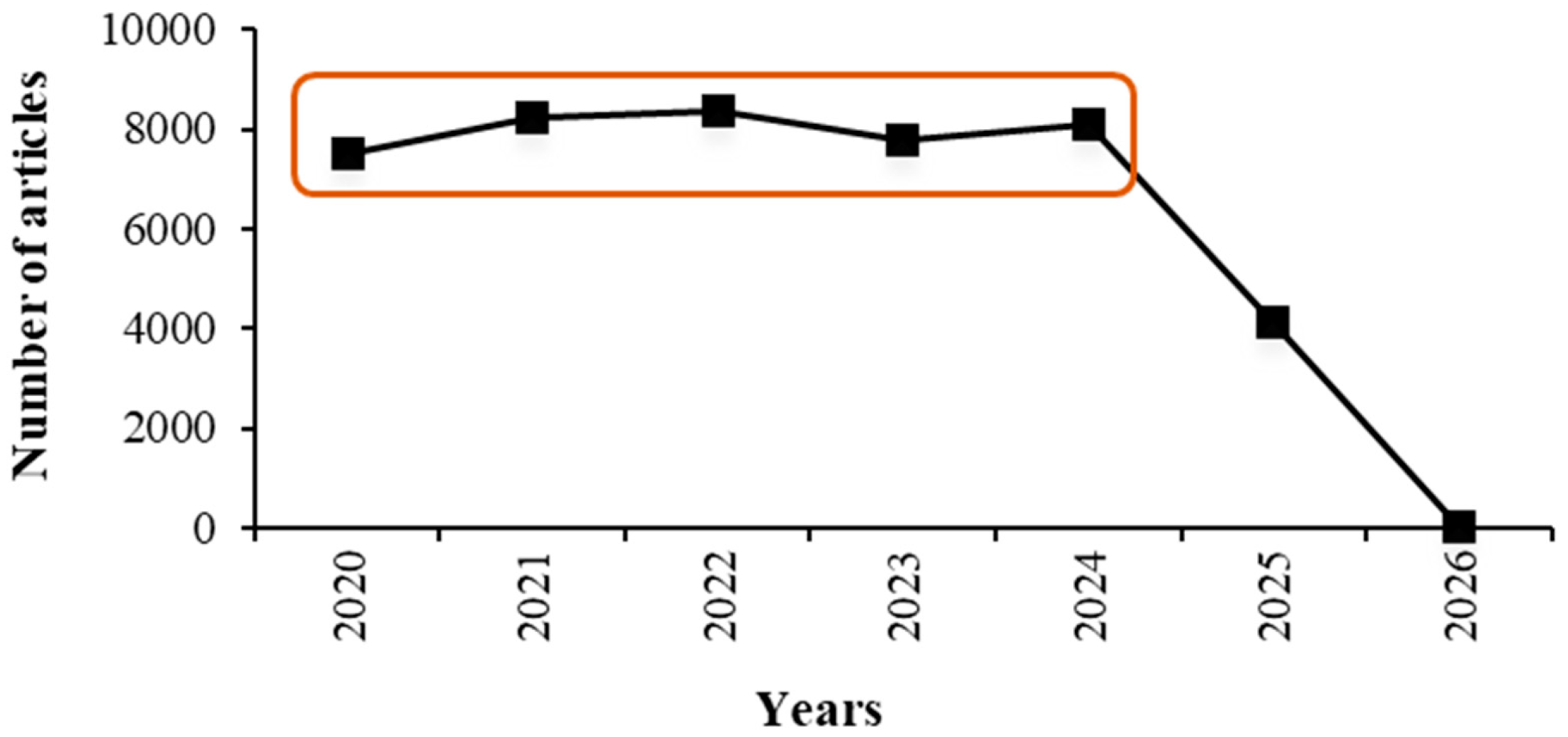
Figure 1 illustrates the temporal evolution of scientific production related to autochthonous bacterial strains in the food industry, showing the number of articles published per year based on the 44,095 records retrieved from the Scopus® database. This temporal analysis is fundamental for understanding the dynamics, growth, and stability of scientific interest in this field of research.
During the period from 2020 to 2024, a robust and relatively stable volume of scientific production was observed. The number of articles showed a continuous increase from 2020 (n = 7497) to 2021 (n = 8224), reaching a peak of 8366 publications in 2022. Although a slight decrease occurred in 2023 (n = 7776), production recovered in 2024 with 8101 publications. This consistency, with an annual average exceeding 8000 articles between 2021 and 2024, confirms the sustained and growing interest of researchers in the study of autochthonous microorganisms.
This pattern indicates that the field is not merely a passing trend but a consolidated and persistently relevant research domain. However, the analysis for 2025 and 2026 requires careful interpretation. Since data collection was carried out on 16 June 2025, the number of articles indexed in Scopus® and assigned to the publication year 2025 at the time of the search (n = 4129) represents only a partial output for that year. Similarly, the two articles assigned to 2026 reflect only the early stage of the indexing cycle and are insufficient to support trend analysis. These values should therefore not be interpreted as a decline in scientific interest.

3.2. Reports of Selected Articles

To provide concrete examples, the most cited studies with an experimental or applied focus related to dairy matrices or LAB functionality were selected. Levante et al. [21] isolated 14 wild strains of Lactobacillus casei, L. paracasei, and L. rhamnosus from DOP cheeses (Parmigiano reggiano, Grana padano, and Pecorino toscano) at different ripening stages. The study evaluated the acidification capacity and production of volatile compounds. The results revealed substantial variability among strains, even among those with similar acidifying properties. Four strains stood out for their technological potential, displaying traits that could enhance flavor and aroma development in cheeses.
Bratulić et al. [22] assessed sensory, physicochemical, and microbiological changes during both artisanal and industrial production of Istrian sausages. They also identified autochthonous strains suitable for controlled fermentation. The findings showed no major differences between artisanal and similar commercial products. Fermentation favored LAB species such as Lactobacillus sakei, L. plantarum, and L. curvatus. Three strains (L. curvatus S30, L. sakei S32, and L. plantarum S50) demonstrated high lactic acid production, salt tolerance, and pathogen inhibition, indicating strong potential for standardizing and improving microbiological safety in sausage fermentation.
Chourasia et al. [7] reviewed the production of bioactive peptides in fermented foods and their potential in the functional food industry. These peptides, produced by microorganisms such as LAB, Bacillus spp., yeasts, and fungi, exhibited antioxidant, antihypertensive, antidiabetic, and immunomodulatory properties. Controlled fermentation using defined strains is being explored to enrich foods with such compounds. However, challenges such as compound identification, quantification, organoleptic properties, and bioavailability still hinder their broader commercial application.
Hoxha et al. [23] investigated the antiviral activity of newly isolated LAB strains from traditional fermented foods, aiming to expand their use in functional and probiotic products. Ten LAB strains were tested to evaluate the effect of their cell-free supernatants (CFSs) on the replication of human alpha herpesviruses (HHV-1 and HHV-2) and their virucidal activity. While no direct virucidal effect was observed, five strains exhibited notable inhibition of viral replication, with selective indices (SI) ranging from 4.40 to >54. Among them, Lactobacillus delbrueckii subsp. bulgaricus KZM 2-11-3 and L. plantarum KC 5–12 showed strong activity against HHV-2, with SIs greater than 45, indicating promising potential for future research.
Bahrami et al. [24] explored ways to improve the functional properties of Doowina, a traditional Iranian fermented food, by incorporating turnip, pumpkin, and natural starter cultures. Physicochemical, microbial, and sensory properties were evaluated over nine days of fermentation. Moisture and ash content remained stable, while LAB counts increased up to the sixth day and protein content gradually decreased. Samples containing pumpkin and natural starter showed higher levels of phenolic compounds and antioxidant activity and better sensory acceptance, suggesting enhanced functional potential.
Milani et al. [5] evaluated 45 strains of Latilactobacillus isolated from Mediterranean fermented sausages as potential starter cultures. The strains were tested for their technological properties, pathogen inhibition capacity, and presence of bacteriocin genes. All strains inhibited Escherichia coli and Listeria innocua, and 25 strains carried genes such as sakacin X and sakacin P. The observed phenotypic diversity reinforces their potential to improve the microbiological safety and sensory characteristics of fermented sausages, preserving traditional qualities while enhancing standardization.

3.3. Rankings of Most Productive Authors

Table 1 presents the ranking of the most cited authors in research related to autochthonous bacteria, based on the number of publications (n) retrieved from the Scopus® database (Elsevier; https://www.scopus.com; accessed on 16 June 2025). This analysis is part of a bibliometric assessment encompassing 44,095 publications between 2020 and 2026. The column “%” indicates the percentage of publications attributed to each author relative to the total number of articles analyzed. Author productivity was assessed based on the total number of publications in which each author appears, regardless of authorship position (i.e., first, corresponding, or co-author), following standard bibliometric practices
The authors Peng, Y., Zhang, Q., and Li, X. stand out in the top positions of the ranking. Peng, Y. leads with 33 publications, representing only 0.075% of the total. It is worth noting that other non-ranked authors presented at least nine publications each.
The individual contribution percentages highlight a key feature of research on autochthonous bacterial strains: decentralized authorship. These findings suggest that, although certain researchers exhibit high individual productivity, there is no significant concentration of scientific output within a small group of authors. On the contrary, the field appears to be driven by a broad and diverse scientific community, with contributions distributed among many researchers worldwide.

3.4. Rankings of Leading Journals

Table 2 presents the ranking of the most frequently cited journals publishing research on autochthonous bacterial strains, together with recognized impact metrics such as the Impact Factor (IF) and CiteScore, providing an overview of both the productivity and influence of these scientific communication outlets.
The ten journals listed together account for a significant portion of the total scientific production in this area. The International Journal of Molecular Sciences stands out as the most cited journal (n = 592), corresponding to 1.34% of the total publications. It is followed by Scientific Reports (n = 513; 1.16%) and Nature Communications (n = 353; 0.80%).
These three journals, along with the others listed, demonstrate the inherent multidisciplinarity of research on autochthonous microorganisms. The prominence of journals such as International Journal of Molecular Sciences and Nature Communications reflects a strong molecular biology component, while titles such as Frontiers in Microbiology and Science of the Total Environment highlight the relevance of applied microbial sciences and their intersection with environmental interactions and food safety.

3.5. Distribuition of Subject Areas

Table 3 presents the ranking of the study areas in which the 44,095 publications on autochthonous bacterial strains in the food industry were classified according to the Scopus® database. It is important to note that a single article may be categorized under multiple thematic areas in bibliometric classification systems. This means that the sum of “n” across all listed areas may exceed the total number of publications analyzed.
A clear dominance of the Biological and Biomedical Sciences can be observed in research on autochthonous microorganisms. The area of Biochemistry, Genetics and Molecular Biology ranks first (n = 15,375), clearly indicating that understanding the molecular, genetic, and biochemical aspects of bacterial strains is fundamental for advancing knowledge in this field. The second most prominent area, Medicine (n = 12,110), reflects the crucial interface between human health, the microbiome, and food safety, as autochthonous microorganisms may have probiotic, pathogenic, or biopreservation implications.
Subsequent areas such as Agricultural and Biological Sciences (n = 7264) and Immunology and Microbiology (n = 5599) reinforce the applied biological foundation of this research domain. The inclusion of Environmental Science (n = 5455) and Chemistry (n = 4007) underscores the relevance of studies addressing the environmental sources of these microorganisms and the chemical interactions they promote or undergo. The presence of Social Sciences (n = 5272) is noteworthy, possibly associated with consumer perception, regulatory policies, or market studies on fermented food products.
For the food industry, the inclusion of Chemical Engineering (n = 3288) and Engineering (n = 3048) among the top ten areas is particularly relevant. Although lower in ranking, their presence indicates that applying knowledge about autochthonous strains requires engineering expertise for process optimization, product development, and technological innovation.
There is a clear correlation between the predominant study areas in Table 3 and the most frequently cited journals identified in Table 2. The prominence of Biochemistry, Genetics and Molecular Biology in Table 3 aligns with the high productivity of the International Journal of Molecular Sciences (n = 592) in Table 2, suggesting that this journal serves as a primary channel for publishing fundamental research on the intrinsic and genetic characteristics of autochthonous bacterial strains.

3.6. Leading Affiliations and Funding Sources

Table 4 presents the leading research affiliations and funding sources associated with studies on autochthonous bacteria. Both analyses are contextualized within the total of 44,095 publications retrieved from the Scopus® database.
The list of institutions reveals a predominance of Chinese entities. The top three positions are occupied by institutions from China: the Ministry of Education of the People’s Republic of China (n = 1904), the Chinese Academy of Sciences (n = 1207), and the University of Chinese Academy of Sciences (n = 571). China also appears in the fifth and sixth positions with Fudan University (n = 443) and Shanghai Jiao Tong University School of Medicine (n = 424). This indicates that China has made substantial investments and exhibits strong scientific output in the field of autochthonous bacterial strains, consolidating itself as a central player in this global research area. The inclusion of a government ministry and a national academy of sciences highlights the centralized coordination and institutional support behind this research.
Other notable institutions include the CNRS Centre National de la Recherche Scientifique (France, n = 455) and Harvard Medical School (USA, n = 366). This demonstrates that, although Chinese output dominates, important contributions also come from leading centers of excellence in other regions. The presence of Harvard Medical School aligns with the prominence of the “Medicine” category observed in Table 3, reinforcing the biomedical dimension of this research field.
The analysis of funding agencies further corroborates the institutional pattern observed. Once again, there is a clear predominance of Chinese funding bodies. The National Natural Science Foundation of China leads with a markedly higher number of supported publications (n = 8916), emphasizing the country’s strong investment in both basic and applied research. It is followed by other major Chinese funding initiatives, such as the National Key Research and Development Program of China (n = 2114) and the China Postdoctoral Science Foundation (n = 654), reflecting a coordinated national strategy to foster scientific advancement.
Prominent international funding agencies include the National Institutes of Health (NIH) in the United States (n = 2714), the Japan Society for the Promotion of Science (n = 770), the Deutsche Forschungsgemeinschaft (DFG) in Germany (n = 698), and the Horizon 2020 Framework Programme of the European Union (n = 653). The presence of the NIH underscores the relevance of health-related research funding, which aligns with the “Medicine” category identified in Table 3, while Horizon 2020 illustrates Europe’s collaborative efforts and sustained investments in research and innovation, including areas relevant to the food industry.

3.7. Country Rankings

The ranking of countries corroborates and consolidates the observations made in Table 4, revealing a concentration of scientific production within a limited number of nations. China dominates the global landscape, accounting for 16,637 publications, which represents 37.73% of the total output. This Chinese leadership confirms what was already evident from the prevalence of Chinese institutions and funding agencies in Table 4. The United States ranks second, with 7791 publications (17.67%), maintaining its position as a major scientific player, although with less than half of China’s output in this specific field.
Together, China and the United States account for more than 55% of all scientific publications on autochthonous bacteria, underscoring their strong representation and influence in this research area. Other countries in the top ten include India (n = 2345; 5.32%), Germany (n = 1981; 4.49%), the United Kingdom (n = 1919; 4.35%), Australia (n = 1776; 4.03%), Canada (n = 1755; 3.98%), Japan (n = 1477; 3.35%), Italy (n = 1414; 3.21%), and Spain (n = 1142; 2.59%).
The prominence of these countries, most of which represent developed economies with a strong tradition in scientific research, is expected. However, India’s rise to a leading position is noteworthy and reflects the growing investment and research capacity of emerging nations. This global distribution highlights both the geographic concentration of expertise and the gradual expansion of research on autochthonous bacteria beyond traditional scientific hubs.

3.8. Ranking of the Most Cited Articles

Table 5 presents the ten most cited articles focused on the food sector and related to autochthonous bacterial strains, ranked according to the number of citations. In addition to the title, the table includes the number of citations, the journal’s Impact Factor (IF), and its CiteScore, offering a detailed view of the most influential studies in the field. This analysis complements the previous discussions on authors, journals, subject areas, and countries, providing a more granular perspective on the most impactful research themes. Overall, the selected articles emphasize the application of autochthonous microorganisms to enhance food quality, safety, and nutritional or functional properties.
The most cited article (n = 214) discusses the use of fruits and fruit by-products as fermentable matrices for lactic acid bacteria (LAB), highlighting their potential in the development of functional foods [26]. The authors examined the bioactive compounds present in fruits, extraction techniques, and the role of lactic fermentation in modulating food functionality. They emphasized that strains such as Lactiplantibacillus plantarum, Lacticaseibacillus rhamnosus, and other Lactobacillus species can ferment these matrices, acting on fruit phytochemicals through microbial enzymes to generate new compounds with positive effects on aroma, nutritional value, and shelf life of fermented beverages.
Following this, Reuben et al. [27], in their study “Characterization and evaluation of lactic acid bacteria from indigenous raw milk for potential probiotic properties”, underscored the importance of exploring local microbial biodiversity. This work aligns with the growing interest in identifying and characterizing microorganisms with potential health benefits directly from native food matrices. The authors investigated the probiotic potential of LAB isolated from indigenous raw milk in Bangladesh, performing phenotypic and functional characterization of several strains and evaluating key properties for probiotic applications.
In third position, Shen et al. [28], in Food Chemistry (IF 9.8; CiteScore 18.3), analyzed the “Contribution of autochthonous microbiota succession to flavor formation during Chinese fermented mandarin fish (Siniperca chuatsi)”. This influential work illustrates the effort to elucidate the complex mechanisms of flavor and aroma formation in traditional animal-based fermented foods. The study applied gas chromatography (HS-SPME-GC-MS) and 16S rRNA sequencing to identify key volatile compounds and microbial succession throughout fermentation.
The research conducted by Xu et al. [29], also published in Food Chemistry, examined shifts in microbial diversity and volatile metabolites during the fermentation of chili pepper (Capsicum frutescens L.). Their earlier study [31], published in Food Microbiology, correlated native microbial communities with key odorants formed during the fermentation of red pepper (Capsicum annuum L.). Together, these works demonstrate a consistent research effort to identify autochthonous microorganisms and aromatic metabolites in vegetable fermentations.
Expanding this line of research, Xing et al. [30] explored solid-state fermentation to improve the nutritional value of chickpea protein concentrate, highlighting the technological potential of combining bioprocessing with plant-based matrices. Yang et al. [32], in Food Research International, compared traditional fermentation of northeastern Chinese sauerkraut with fermentations conducted using isolated LAB strains. In the context of alcoholic beverages, the studies by Pang et al. [33] in LWT—Food Science and Technology and Du et al. [34] in Applied and Environmental Microbiology highlighted the crucial role of autochthonous LAB in shaping the flavor and aroma profiles of traditional Chinese liquors such as Baijiu.
Finally, Demirkesen-Bicak et al. [35] examined how fermentation conditions affect the nutritional, textural, and sensory properties of sourdough bread, including its estimated glycemic index and in vitro starch digestibility. This work demonstrates how process optimization and strain selection can directly influence the functional and health-related attributes of fermented foods. Together, these findings reinforce the relevance of native microbiota in defining the unique sensory and nutritional characteristics of fermented products, particularly in systems driven by spontaneous fermentation.

3.9. Network Maps of Co-Occurrence of Keywords

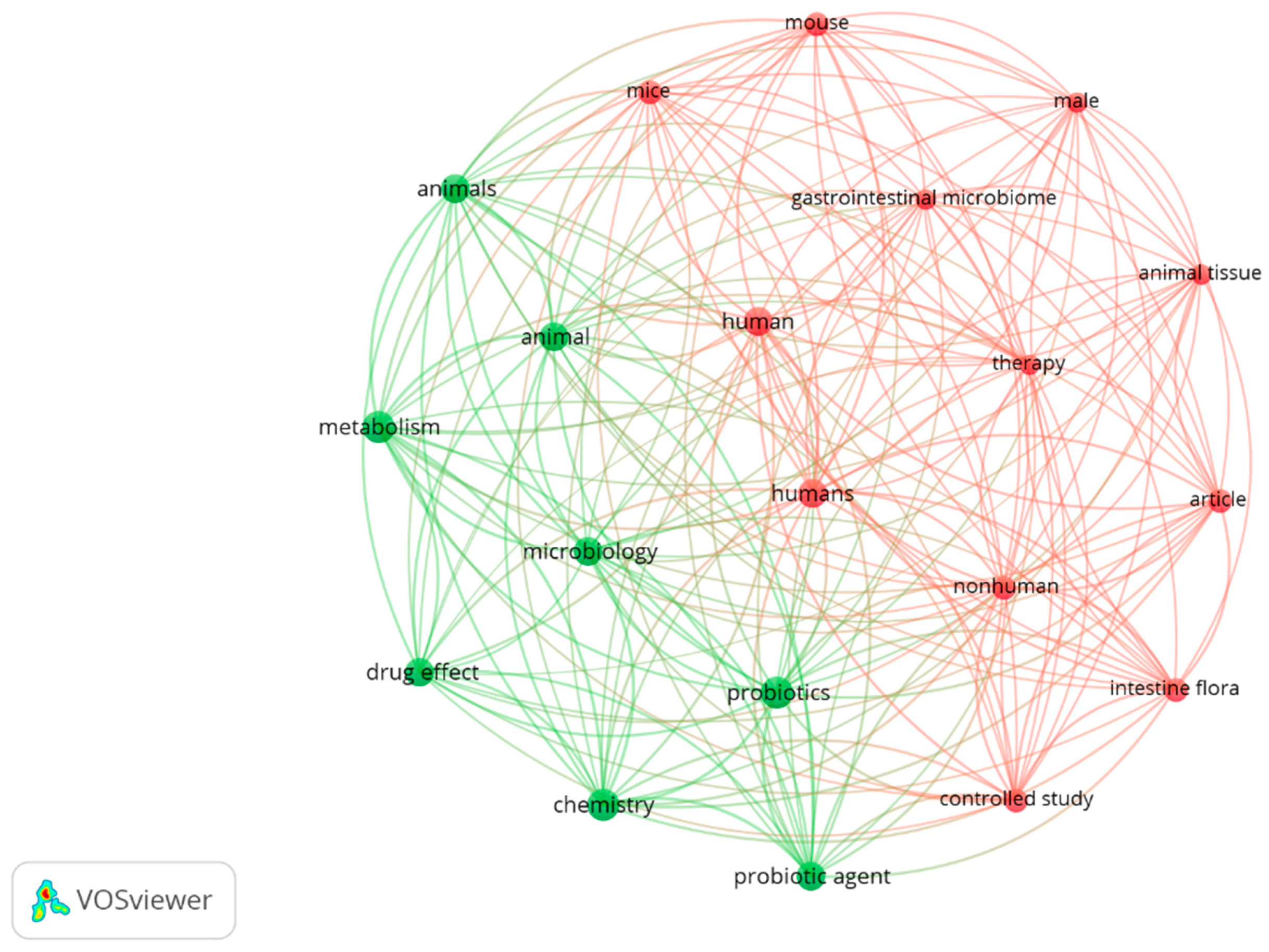
Figure 2 presents a co-occurrence network of the 20 most frequent keywords identified within the corpus of publications on autochthonous bacterial strains in the food industry. This visualization, generated using VOSviewer (version 1.6.20), groups terms that frequently appear together in articles, revealing the main thematic clusters and their interconnections.
Two major thematic areas stand out in the keyword network, reflecting the diversity of studies in this field. The first cluster, represented in red, includes terms such as “mouse”, “mice”, “male”, “human”, “gastrointestinal microbiome”, “animal tissue”, “therapy”, “nonhuman”, “intestinal flora”, and “controlled study”. The presence of these terms indicates that a significant portion of research on autochthonous bacteria focuses on understanding their effects on health, particularly on the gastrointestinal microbiome. The frequent use of “mouse” and “mice” underscores the relevance of animal models in preliminary studies, while “human” and “controlled study” highlight the progression of this research toward clinical trials. The keyword “therapy” suggests that the investigations extend beyond descriptive analyses, exploring practical applications for improving intestinal health. This trend is consistent with the strong representation of Medicine among the publication areas identified earlier.
The second cluster, represented in green, groups keywords such as “animals”, “animal”, “metabolism”, “microbiology”, “drug effect”, “chemistry”, “probiotics”, and “probiotic agent”. This group is more closely linked to the fundamental scientific basis of the research, emphasizing microbial functioning and metabolic effects. Terms like “microbiology” and “chemistry” indicate studies that aim to understand the biological and chemical characteristics of bacteria, as well as the compounds they produce. The keywords “probiotics” and “probiotic agent” highlight a strong interest in identifying and characterizing strains with probiotic potential, capable of providing health benefits. Although “drug effect” might suggest pharmacological research, in this context, it likely refers to the physiological effects induced by probiotics. This cluster aligns with the fields of Biochemistry, Genetics, Molecular Biology, Immunology, and Microbiology, which were previously shown to be prominent within the analyzed publications.
Although the analysis focuses on autochthonous bacteria in the food industry, the relative prominence of health- and microbiome-related keywords reflects the current research trend toward functional and probiotic applications, where food matrices often act as delivery systems rather than primary descriptors in keyword indexing.

4. Conclusions

The bibliometric analysis revealed a consistent and significant growth in scientific production related to autochthonous bacterial strains between 2020 and 2025. The predominance of experimental articles indicates that this is a highly applied field, strongly oriented toward technological innovation. The research landscape is characterized by a wide dispersion of authorship, emphasizing the collaborative contribution of a global scientific community, with China emerging as a leading actor in publications, institutions, and funding.
The predominant areas of knowledge include biochemistry, genetics, microbiology, and medicine, reflecting the scientific interest in understanding the molecular, metabolic, and functional mechanisms of these bacteria. The keyword co-occurrence network revealed two major thematic axes: one centered on human health and the gastrointestinal microbiome and another focused on the biological foundations and probiotic potential of microorganisms. In addition, the most cited journals highlight the multidisciplinary nature and scientific impact of this research domain.
These findings reinforce the relevance of autochthonous bacterial strains in the development of functional, safe, and culturally distinctive foods. Understanding their diversity and applicability is strategic for advancing food biotechnology and for valuing traditional products. Within this context, bibliometric analysis proved to be an effective tool for guiding decisions in research, development, and innovation.

Author Contributions

Conceptualization, J.S.F.d.A. and O.S.d.S.; methodology, G.J.d.S.N. and M.C.G.; validation, J.S.F.d.A., O.S.d.S. and M.T.C.; formal analysis, J.S.F.d.A., B.F.F. and E.M.P.; investigation, J.S.F.d.A., W.A.L., B.F.F.d.S. and M.M.P.; resources, M.T.C.; data curation, B.F.F., G.J.d.S.N., W.A.L. and B.F.F.d.S.; writing—original draft preparation, M.C.G. and G.J.d.S.N.; writing—review and editing, J.S.F.d.A., B.F.F. and E.M.P.; visualization, J.S.F.d.A. and M.M.P.; supervision, M.T.C. and O.S.d.S.; project administration, J.S.F.d.A.; funding acquisition, M.T.C. All authors have read and agreed to the published version of the manuscript.

Funding

This study was supported by the CEBBI Caatinga Project (TED No. 943007/2023, 52/2023), funded by the Ministry of Regional Development (MIDR), Brazil. The authors also acknowledge financial support from the Coordination for the Improvement of Higher Education Personnel (CAPES, Brazil), Finance Code 001, and from the National Council for Scientific and Technological Development (CNPq), Brazil, through the Productivity Scholarship in Technological Development and Innovative Extension (DT), Process No. 303932/2025-2.

Institutional Review Board Statement

Not applicable.

Informed Consent Statement

Not applicable.

Data Availability Statement

No new data were created or analyzed in this study. Data sharing is not applicable.

Acknowledgments

The authors thank the Federal University of Campina Grande (UFCG, Brazil) and the Graduate Program in Process Engineering (PPGEP) for institutional support. The authors also acknowledge the contributions and support provided by the State University of Amapá (UEAP, Brazil), through collaborative efforts involving its faculty. Additionally, the authors thank the Centre for Biotechnology and Fine Chemistry (CBQF), Universidade Católica Portuguesa (UCP, Porto, Portugal), for fostering technical and scientific interaction.

Conflicts of Interest

The authors declare no conflicts of interest.

References

  1. Cavalcanti, M.T.; Xavier, L.E.; Feitosa, B.F.; Alencar-Luciano, W.; Feitosa, V.A.; de Souza, E.L.; Gonçalves, M.C. Influence of red wine marination on the quality, safety, and stability of goat Coalho cheese produced in the Brazilian semi-arid region. Food Biosci. 2023, 53, 102727. [Google Scholar] [CrossRef]
  2. Oliveira, J.M.C.; Antunes, A.E.C.; Sales, G.F.C.; Costa, C.N.M.; Alves, A.M.S.; de Lima, K.Y.G.; de Oliveira, C.J.B.; do Egito, A.S.; dos Santos, K.M.O.; de Souza, E.L.; et al. Influence of autochthonous lactic acid bacteria cultures on the microbiota and biogenic amine production in medium-ripened artisan goat cheese. Foods 2025, 14, 1561. [Google Scholar] [CrossRef]
  3. Cruxen, C.E.S.; Funck, G.D.; Haubert, L.; Dannenberg, G.S.; Marques, J.L.; Chaves, F.C.; Silva, W.P.; Fiorentini, Â.M. Selection of native bacterial starter culture in the production of fermented meat sausages: Application potential, safety aspects, and emerging technologies. Food Res. Int. 2019, 122, 371–382. [Google Scholar] [CrossRef]
  4. Zhang, K.; Zhang, T.-T.; Guo, R.-R.; Ye, Q.; Zhao, H.-L.; Huang, X.-H. The regulation of key flavor of traditional fermented food by microbial metabolism: A review. Food Chem. X 2023, 19, 100871. [Google Scholar] [CrossRef]
  5. Milani, G.; Tabanelli, G.; Barbieri, F.; Montanari, C.; Gardini, F.; Belloso Daza, M.V.; Castellone, V.; Bozzetti, M.; Cocconcelli, P.S.; Bassi, D. Technological traits and mitigation activity of autochthonous lactic acid bacteria from Mediterranean fermented meat-products. LWT—Food Sci. Technol. 2024, 196, 115861. [Google Scholar] [CrossRef]
  6. Ilango, S.; Antony, U. Probiotic microorganisms from non-dairy traditional fermented foods. Trends Food Sci. Technol. 2021, 118, 617–638. [Google Scholar] [CrossRef]
  7. Chourasia, R.; Phukon, L.C.; Abedin, M.M.; Padhi, S.; Singh, S.P.; Rai, A.K. Bioactive peptides in fermented foods and their application: A critical review. Syst. Microbiol. Biomanufacturing 2023, 3, 88–109. [Google Scholar] [CrossRef]
  8. Abedin, M.M.; Chourasia, R.; Phukon, L.C.; Sarkar, P.; Ray, R.C.; Singh, S.P.; Rai, A.K. Lactic acid bacteria in the functional food industry: Biotechnological properties and potential applications. Crit. Rev. Food Sci. Nutr. 2024, 64, 10730–10748. [Google Scholar] [CrossRef]
  9. Marco, M.L.; Sanders, M.E.; Gänzle, M.; Arrieta, M.C.; Cotter, P.D.; De Vuyst, L.; Hill, C.; Holzapfel, W.; Lebeer, S.; Merenstein, D.; et al. The International Scientific Association for Probiotics and Prebiotics (ISAPP) consensus statement on fermented foods. Nat. Rev. Gastroenterol. Hepatol. 2021, 18, 196–208. [Google Scholar] [CrossRef]
  10. Rizo, J.; Daniel, G.; Amelia, F.; Gloria, D.-R.; Sergio, S.; Carmen, W.; Rodríguez-Sanoja, R. Omics in traditional vegetable fermented foods and beverages. Crit. Rev. Food Sci. Nutr. 2020, 60, 791–809. [Google Scholar] [CrossRef] [PubMed]
  11. Praveen, M.; Brogi, S. Microbial fermentation in food and beverage industries: Innovations, challenges, and opportunities. Foods 2025, 14, 114. [Google Scholar] [CrossRef]
  12. Shi, C.; Maktabdar, M. Lactic Acid Bacteria as Biopreservation Against Spoilage Molds in Dairy Products—A Review. Front. Microbiol. 2022, 12, 819684. [Google Scholar] [CrossRef]
  13. Carneiro, K.O.; Campos, G.Z.; Scafuro Lima, J.M.; Rocha, R.d.S.; Vaz-Velho, M.; Todorov, S.D. The Role of Lactic Acid Bacteria in Meat Products, Not Just as Starter Cultures. Foods 2024, 13, 3170. [Google Scholar] [CrossRef] [PubMed]
  14. Sivamaruthi, B.S.; Kesika, P.; Rafeek, S.B.S.; Sivakumar, K.; Ramasamy, S.P.; Chaiaysut, C.; Fukngoen, P.; Alagarsamy, K. Lactic acid bacteria in the meat industry: Flavor, function, and food safety. Front. Microbiol. 2025, 16, 1703213. [Google Scholar] [CrossRef] [PubMed]
  15. Feitosa, B.F.; Xavier, L.E.; Araújo, J.S.F.; Gonçalves, M.C.; dos Santos, K.M.O.; do Egito, A.S.; Cavalcanti, M.T. Bioconservation of artisanal raw goat milk cheese produced with lactic acid bacteria of the genus Lacticaseibacillus spp. Food Res. Int. 2025, 206, 116070. [Google Scholar] [CrossRef] [PubMed]
  16. Feitosa, B.F.; Alcântara, C.M.; de Lima, A.B.S.; Silva, A.S.; Araújo, A.S.; Cavalcanti, M.T.; Mori, E.; Araújo, I.M.; de Farias, P.A.M.; Wilairatana, P.; et al. Bioactive natural products for chemical control of microorganisms: Scientific prospecting (2001–2021) and systematic review. Molecules 2022, 27, 5917. [Google Scholar] [CrossRef]
  17. Feitosa, B.F.; Decker, B.L.A.; Brito, E.S.; Marques, M.C.; Rodrigues, S.; Mariutti, L.R.B. Stability of anthocyanins from fruits associated with microencapsulation: A 21st-century bibliometric approach. Food Res. Int. 2025, 214, 116621. [Google Scholar] [CrossRef]
  18. Feitosa, B.F.; Barros, J.H.T.; Feitoza, J.V.F. Pseudocereals: A bibliometric analysis and literature review on the potential for manufacturing flours, bakery products, and milk analogues. NFS J. 2024, 34, 100163. [Google Scholar] [CrossRef]
  19. van Eck, N.J.; Waltman, L. Software survey: VOSviewer, a computer program for bibliometric mapping. Scientometrics 2010, 84, 523–538. [Google Scholar] [CrossRef]
  20. van Eck, N.J.; Waltman, L. Visualizing bibliometric networks. In Measuring Scholarly Impact: Methods and Practice; Ding, Y., Rousseau, R., Wolfram, D., Eds.; Springer: Cham, Switzerland, 2014. [Google Scholar] [CrossRef]
  21. Levante, A.; Bancalari, E.; Tambassi, M.; Lazzi, C.; Neviani, E.; Gatti, M. Phenotypic Diversity of Lactobacillus casei Group Isolates as a Selection Criterion for Use as Secondary Adjunct Starters. Microorganisms 2020, 8, 128. [Google Scholar] [CrossRef]
  22. Bratulić, M.; Mikuš, T.; Cvrtila, Ž.; Cenci-Goga, B.T.; Grispoldi, L.; Pavunc, A.L.; Novak, J.; Kos, B.; Šušković, J.; Zadravec, M.; et al. Quality of Traditionally Produced Istrian Sausage and Identification of Autochthonous Lactic Acid Bacteria Strains as Potential Functional Starter Cultures. Eur. Food Res. Technol. 2021, 247, 2847–2860. [Google Scholar] [CrossRef]
  23. Hoxha, R.; Todorov, D.; Hinkov, A.; Shishkova, K.; Evstatieva, Y.; Nikolova, D. In Vitro Screening of Antiviral Activity of Lactic Acid Bacteria Isolated from Traditional Fermented Foods. Microbiol. Res. 2023, 14, 333–342. [Google Scholar] [CrossRef]
  24. Bahrami, S.; Davati, N.; Noshirvani, N. The Effect of Sourdough, Turnips, and Butternut Squash on the Physicochemical and Nutritional Properties of Doowina Functional Food during Fermentation. Food Sci. Nutr. 2024, 12, 2131–2144. [Google Scholar] [CrossRef]
  25. Clarivate Analytics. Journal Citation Reports 2024; Clarivate Analytics: Philadelphia, PA, USA, 2024; Available online: https://clarivate.com/products/journal-citation-reports/ (accessed on 18 November 2025).
  26. Rodríguez, L.G.R.; Gasga, V.M.Z.; Pescuma, M.; Van Nieuwenhove, C.; Mozzi, F.; Burgos, J.A.S. Fruits and fruit by-products as sources of bioactive compounds: Benefits and trends of lactic acid fermentation in the development of novel fruit-based functional beverages. Food Res. Int. 2021, 140, 109854. [Google Scholar] [CrossRef]
  27. Reuben, R.C.; Roy, P.C.; Sarkar, S.L.; Alam, A.S.M.R.U.; Jahid, I.K. Characterization and evaluation of lactic acid bacteria from indigenous raw milk for potential probiotic properties. J. Dairy Sci. 2020, 103, 1223–1237. [Google Scholar] [CrossRef] [PubMed]
  28. Shen, Y.; Wu, Y.; Wang, Y.; Li, L.; Li, C.; Zhao, Y.; Yang, S. Contribution of autochthonous microbiota succession to flavor formation during Chinese fermented mandarin fish (Siniperca chuatsi). Food Chem. 2021, 348, 129107. [Google Scholar] [CrossRef] [PubMed]
  29. Xu, X.; Wu, B.; Zhao, W.; Lao, F.; Chen, F.; Liao, X.; Wu, J. Shifts in autochthonous microbial diversity and volatile metabolites during the fermentation of chili pepper (Capsicum frutescens L.). Food Chem. 2021, 335, 127512. [Google Scholar] [CrossRef] [PubMed]
  30. Xing, Q.; Dekker, S.; Kyriakopoulou, K.; Boom, R.M.; Smid, E.J.; Schutyser, M.A.I. Enhanced nutritional value of chickpea protein concentrate by dry separation and solid-state fermentation. Innov. Food Sci. Emerg. Technol. 2020, 59, 102269. [Google Scholar] [CrossRef]
  31. Xu, X.; Wu, B.; Zhao, W.; Pang, X.; Lao, F.; Liao, X.; Wu, J. Correlation between autochthonous microbial communities and key odorants during the fermentation of red pepper (Capsicum annuum L.). Food Microbiol. 2020, 91, 103510. [Google Scholar] [CrossRef]
  32. Yang, X.; Hu, W.; Xiu, Z.; Jiang, A.; Yang, X.; Sarengaowa; Ji, Y.; Guan, Y.; Feng, K. Comparison of northeast sauerkraut fermentation between single lactic acid bacteria strains and traditional fermentation. Food Res. Int. 2020, 137, 109553. [Google Scholar] [CrossRef]
  33. Pang, X.-N.; Chen, C.; Huang, X.-N.; Yan, Y.-Z.; Chen, J.-Y.; Han, B.-Z. Influence of indigenous lactic acid bacteria on the volatile flavor profile of light-flavor Baijiu. LWT—Food Sci. Technol. 2021, 147, 111540. [Google Scholar] [CrossRef]
  34. Du, R.; Wu, Q.; Xu, Y. Chinese liquor fermentation: Identification of key flavor-producing Lactobacillus spp. by quantitative profiling with indigenous internal standards. Appl. Environ. Microbiol. 2020, 86, e00456-20. [Google Scholar] [CrossRef] [PubMed]
  35. Demirkesen-Bicak, H.; Arici, M.; Yaman, M.; Karasu, S.; Sagdic, O. Effect of different fermentation conditions on estimated glycemic index, in vitro starch digestibility, and textural and sensory properties of sourdough bread. Foods 2021, 10, 514. [Google Scholar] [CrossRef] [PubMed]
Figure 1. Annual distribution of publications related to autochthonous bacteria in Scopus®; 2025 data are partial and 2026 reflects early indexing. The red box indicates the period with complete annual data (2020–2024).
Fermentation 12 00104 g001
Figure 2. Network maps of co-occurrence of keywords regarding the application of autochthonous bacteria in the food industry.
Fermentation 12 00104 g002
Table 1. Ranking of authors with the highest number of publications related to the application of autochthonous bacteria in the food industry.
RankingNamen% *
1Peng, Y.330.075
2Zhanag, Q.290.066
3Peng Y.260.059
4Li, X.250.057
5Cui. W.240.054
6Zhang, J.230.052
7Kluda, T.220.050
8Yang, P.210.048
9Takahashi, H.200.045
10Lee, I.200.045
* Percentage calculated based on 44,095 publications.
Table 2. Ranking of journals with the highest number of publications retrieved on the application of autochthonous bacteria in the food industry.
RankingSource Titlen%IF *% *
1International Journal of Molecular Sciences5921.344.90.075
2Scientific Reports5131.163.90.066
3Nature Communications3530.8015.70.059
4PLoS ONE3320.752.60.057
5Science of the Total Environment3080.708.00.054
6Frontiers in Microbiology3030.694.50.052
7Frontiers in Immunology2960.675.90.050
8Frontiers in Genetics2770.632.80.048
9Proceedings of the National Academy of Sciences of the United States of America2370.549.10.045
10Cells2260.515.20.045
* Source Journal Citation Reports 2024 (Clarivate Analytics) [25].
Table 3. Ranking of study areas with the highest number of publications retrieved on the application of autochthonous bacteria in the food industry.
RankingSource Titlen
1Biochemistry, Genetics and Molecular Biology15,375
2Medicine12,110
3Agricultural and Biological Sciences7264
4Immunology and Microbiology5599
5Environmental Science5455
6Social Science5272
7Chemistry4007
8Pharmacology, Toxicology and Pharmaceutics3361
9Chemical Engineering3288
10Engineering3048
Table 4. Ranking of affiliations and funding sources with the highest number of publications retrieved on the application of autochthonous bacteria in the food industry.
RankingSource TitlenFunding Sourcen
1Ministry of Education of the People’s Republic of China1904National Natural Science Foundation of China8916
2Chinese Academy of Sciences1207National Institutes of Health2714
3University of Chinese Academy of Sciences571National Key Research and Development Program of China2114
4CNRS Centre National de la Recherche Scientifique455Fundamental Research Funds for the Central Universities839
5Fudan University443Japan Society for the Promotion of Science770
6Shanghai Jiao Tong University School of Medicine424National Science Foundation713
7Ministry of Agriculture of the People’s Republic of China388Deutsche Forschungsgemeinschaft698
8Sun Yat-Sen University387China Postdoctoral Science Foundation654
9Zhejiang University386Horizon 2020 Framework Programme653
10Harvard Medical School366National Cancer Institute570
Table 5. The 10 most cited articles related to autochthonous bacterial strains in the food industry.
RankingTitleSourceCitationsIF *CiteScoreReference
1Fruits and fruit by-products as sources of bioactive compounds. Benefits and trends of lactic acid fermentation in the development of novel fruit-based functional beveragesFood Research International2148.012.8[26]
2Characterization and evaluation of lactic acid bacteria from indigenous raw milk for potential probiotic propertiesJournal of Dairy Science2014.47.8[27]
3Contribution of autochthonous microbiota succession to flavor formation during Chinese fermented mandarin fish (Siniperca chuatsi)Food Chemistry1419.818.3[28]
4Shifts in autochthonous microbial diversity and volatile metabolites during the fermentation of chili pepper (Capsicum frutescens L.)Food Chemistry1359.818.3[29]
5Enhanced nutritional value of chickpea protein concentrate by dry separation and solid-state fermentationInnovative Food Science & Emerging Technologies1196.812.5[30]
6Correlation between autochthonous microbial communities and key odorants during the fermentation of red pepper (Capsicum annuum L.)Food Microbiology974.610.1[31]
7Comparison of northeast sauerkraut fermentation between single lactic acid bacteria strains and traditional fermentationFood Research International938.012.8[32]
8Influence of indigenous lactic acid bacteria on the volatile flavor profile of light-flavor BaijiuLWT—Food Science and Technology736.613.6[33]
9Chinese liquor fermentation: Identification of key flavor-producing Lactobacillus spp. by quantitative profiling with indigenous internal standardsApplied and Environmental Microbiology733.77.2[34]
10Effect of different fermentation conditions on estimated glycemic index, in vitro starch digestibility, and textural and sensory properties of sourdough breadFoods695.18.7[35]
* Source Journal Citation Reports 2024 (Clarivate Analytics) [25].
Disclaimer/Publisher’s Note: The statements, opinions and data contained in all publications are solely those of the individual author(s) and contributor(s) and not of MDPI and/or the editor(s). MDPI and/or the editor(s) disclaim responsibility for any injury to people or property resulting from any ideas, methods, instructions or products referred to in the content.