
Article

Efficient Production of L-Threonine by E. coli Using High-Throughput Screening and Multi-Enzyme Complex Engineering
1
State Key Laboratory of Green Papermaking and Resource Recycling, Qilu University of Technology, Jinan 250353, China
2
Dongxiao Biotechnology Co., Ltd., Weifang 262200, China
*
Authors to whom correspondence should be addressed.
These authors contributed equally to this work.
Fermentation 2025, 11(11), 642; https://doi.org/10.3390/fermentation11110642
Submission received: 16 September 2025 / Revised: 8 November 2025 / Accepted: 10 November 2025 / Published: 12 November 2025

Abstract

To enhance the L-threonine synthesis level in Escherichia coli, this study constructed screening markers rich in L-threonine rare codons. By replacing all the threonine codons in the protein sequences with a high proportion of threonine with L-threonine rare codons and linking them to the fluorescent proteins with the same replacement, high-throughput screening of L-threonine production mutant strains was achieved. To address the metabolic imbalance caused by overexpression of a single enzyme, an artificial multi-enzyme complex system was constructed based on the principle of cellulosome self-assembly. By co-locating ThrC-DocA and ThrB-CohA, the substrate transfer path was shortened, achieving a 31.7% increase in L-threonine production. Furthermore, combined with multi-copy chromosomal integration technology via CRISPR-associated transposase (MUCICAT) technology, the thrC-docA-thrB-cohA gene cluster was integrated into the genome of the high-yield strains obtained through screening, eliminating the plasmid-dependent metabolic burden and significantly enhancing genetic stability. The modular assembly of metabolic pathways by using cellulosome elements provides a new paradigm for the optimization of complex pathways and lays a theoretical and technical foundation for the efficient production of L-threonine.

1. Introduction

Currently, L-threonine is produced mainly through protein hydrolysis, chemical synthesis, or biosynthesis (microbial fermentation) [1]. However, protein hydrolysis has been gradually replaced due to its low efficiency and high cost [2]. Furthermore, although the chemical synthesis of L-threonine from petrochemical materials via multi-step chemical reactions is technologically mature and highly industrialized, it requires harsh reaction conditions and toxic catalysts and generates several by-products, resulting in low product purity, high cost, and severe environmental pollution [3]. Hence, biosynthesis has become the mainstream method for producing L-threonine due to its sustainability, low cost, high efficiency, and significant capacity for strain improvement through genetic modification. [4]. Indeed, the current biosynthesis methods of L-threonine increase its yield by genetically modifying microorganisms and optimizing metabolic pathways [5]. However, biosynthesis efficiency is reduced by poor strain stability from excessive metabolic burden of modified pathways, scarcity of modification targets, long genetic engineering cycles, and yield bottlenecks in modified strains [6]. Thus, developing rapid and stable approaches to generate chassis cells for strain engineering is particularly important for constructing high-yield L-threonine strains.
High-throughput screening (HTS) is a novel approach in synthetic biology that is reshaping the technical framework for engineering industrial microbial strains [7]. Traditional screening methods usually rely on chromatographic or mass spectrometry techniques, but their inherent throughput limitations, time-consuming processes, and high costs restrict the efficiency of strain screening [8]. However, by designing synthetic biology components such as transcriptional regulatory elements and ribose switches, the dynamic concentration of intracellular metabolites is converted into quantifiable parameters such as fluorescence signals; this biosensor-driven intelligent screening system has achieved major breakthroughs. Combined with flow cytometry sorting technology, HTS provides single-cell resolution analyses. This combination effectively solves the key technical bottleneck of real-time monitoring of metabolic phenotypes [9]. Flow cytometry, as a core supporting technology for HTS, is continuously increasing the resolution of microbial phenotypic screening. In metabolic engineering, the fluorescent-activated cell sorting (FACS) approach has been successfully applied to the screening of large-scale mutant libraries, rapidly isolating engineered strains with a β-carotene synthesis capacity of 9.4 g/L [10,11]. Recently, screening high-yield amino acid strains by using genes rich in rare codons has been proposed. Under conditions of low amino acid concentrations, the transport efficiency of rare tRNA is near zero, while the transport efficiency of common tRNA remains relatively high for several minutes. When common codons are replaced with synonymous rare codons in heterologous proteins and the content of the corresponding amino acids remains high, the host is an amino acid high-yield strain [12].
Multi-enzyme assemblies (MEAs) are an innovation in biocatalysis that form a catalytic cascade network through the self-assembly and spatial programming of enzymes [13]. Its key advantage stems from the nanoscale spatial arrangement of enzyme clusters, which can construct directional substrate channels between adjacent active sites, thereby confining the diffusion of intermediate metabolites at the molecular scale and achieving precise spatiotemporal regulation of metabolic fluxes [14]. By optimizing the three-dimensional topological structure of catalytic units, MEAs reduce the activation energy of the reaction and decrease the loss rate of intermediate products compared with those of discrete multi-enzyme systems, providing a significant competitive advantage in industrial-grade biotransformation processes [15,16,17,18,19].
The cellulosome is a multi-enzyme complex system composed of four functionally coordinated modules: the cell anchor unit, substrate recognition component, assembly regulatory factor, and catalytic reaction core [20]. The assembly mechanism occurs through the synergy of adhesive (CohA) and docking (DocA) proteins. CohA specifically recognizes the receptor-mediated complex localization on the cell surface, while DocA optimizes the catalytic network by dynamically regulating the interaction of enzymes. Their synergy significantly enhances the spatial organization of enzymes and the substrate transformation efficiency [21]. Since Bayer’s team first elucidated the interaction mechanism of Coh/Doc proteins in 1994, research in this field has continued to advance [22]. Blue et al. found that specific calcium ion concentrations are key for maintaining the conformational stability of Doc proteins. Further experiments confirmed that Ca2+ effectively stabilizes the structural integrity of CipA type II Doc and Cel48S type I Doc [23,24]. Murashima et al. successfully increased the cellulose degradation efficiency 1.5 to 3 times the baseline level through a dual-enzyme co-localization strategy [25]. Lu et al. combined the key components of cellulosomes with L-aspartate-α-decarboxylase (bspanD) from Bacillus subtilis and aspartate aminotransferase (aspC) from Escherichia coli to enhance the catalytic efficiency and β-alanine yield of the enzyme [26]. Based on this theoretical framework, researchers have developed three types of engineered assembly systems: You’s team constructed a self-assembly platform based on the interaction mechanism of adhesin (Coh) [27], Han’s group developed a hybrid scaffold system through heterologous Coh protein fusion technology [28], and the Endoglucanase-containing scaffold designed by Tarraran et al. can reconstruct the biosynthetic metabolic network of lactic acid [29]. Notably, surface display technology has made breakthrough progress in CMC-ethanol conversion efficiency, increasing the conversion rate by 47 to 62%. The chimeric cellulosomes developed by Du increased the ethanol yield to 1.12 g/L [30,31]. Moreover, Lu et al. confirmed that cellulosome elements can shorten the substrate transfer time of the β-alanine synthesis pathway by 78%. To address the limitations of gene regulation and the challenges of genetic stability in traditional strain engineering, Zhang’s team developed a multi-copy chromosomal integration technology via CRISPR-associated transposase (MUCICAT) [32,33,34]; this integrated system achieved the programmed integration of exogenous gene expression units at specific sites on Escherichia coli chromosomes by engineering the CRISPR guided transposase complex [35,36,37]. Compared with the conventional plasmid expression system, this chromosome integration strategy has significant advantages.
In this study, we constructed a green fluorescent mRNA containing the rare threonine codon ATC to monitor intracellular L-threonine levels and serve as a marker for FACS strain sorting. This enabled the rapid engineering of a mutation library of millions of strains and shortened the construction time of a cell chassis. We established a directed evolution platform based on a fluorescence reporter system and integrated ultraviolet mutagenesis technology with a screening strategy mediated by flow cytometry. After inducing random mutations in the strains, the fluorescence intensity threshold was set at 0.01% to achieve phenotypic enrichment. Fermentation was performed to validate the isolated L-threonine-dominant strains. Furthermore, the metabolic phenotype-genotype association network was constructed by combining metabolomic-transcriptomic analyses. Finally, key mutation sites were located through genome-wide association analysis. Cellulosomes were used to assemble the pairwise key enzymes for L-threonine synthesis to enhance the expression efficiency, explore the synergy of enzymes related to L-threonine synthesis, improve the efficiency of L-threonine-synthesizing microorganisms, accelerate the transfer of raw materials and intermediates among enzymes in L-threonine synthesis, and construct high-yield L-threonine strains.

2. Materials and Methods

2.1. Strains and Cultures

E. coli CGMCC 1.366-Thr was used as the expression host and cultured in Luria Broth (LB) medium at 37 °C. Sangon pET22b (+) (Sangon Biotech Co., Ltd., Shanghai, China) was used for E. coli protein expression with the rare codon fluorescent protein DCT1/DCT2/DCT3/GBT1/GBT2/GBT3—staygoldr expression. Enzymes used for DNA amplification and restriction were purchased from Vazyme (Nanjing, China). Primers were synthesized by Qingke (Beijing, China). The gene fragment synthesis was conducted by Genscript, which was optimized based on the codon of Escherichia coli. The plasmid preparation kit was purchased from Vazyme. All chemicals were purchased from Sigma-Aldrich. The strains and plasmids used in this study are listed in Table 1. Primers used are listed in Supplementary Table S1. L-threonine fermentation seed medium was composed of peptone 1.4%, yeast powder 0.8%, and NaCl 0.5%, adjusted pH 7.2; L-threonine fermentation medium was composed of glucose 3.0%, yeast powder 0.2%, peptone 0.4%, sodium citrate 0.1%, KH2PO4 0.2%, MgSO4·7H2O 0.07%, FeSO4·7H2O 100 mg/L, MnSO4·H2O 100 mg/L, VB1 0.8 mg/L, and VH 0.2 mg/L, adjusted pH 7.2.

2.2. Construction of Fluorescence Expression Vectors Based on Rare Codons of L-Threonine

Genes with a high proportion of L-threonine in the amino acid sequence and no effect of protein secretion on cell growth were screened in the genomes of E. coli and Corynebacterium glutamicum available at NCBI and ligated with flexible ligating peptides to construct the fluorescent protein staygoldr. In this study, nucleotide sequences of genes DCT1 (RID: FC457X5X014), DCT2 (RID: FC5S0AU8015), DCT3 (RID: FC5UKP4K014), GBT1 (RID: FC5XUJRP015), GBT2 (RID: FC60AXUS015), and GBT3 (RID: FC6345NA015) with threonine contents of 16.8, 14.1, 12, 17.5, 17.4, and 16% in the protein sequences, respectively, were screened. The DCT1-staygoldr, DCT2-staygoldr, DCT3-staygoldr, GBT1-staygoldr, GBT2-staygoldr, and GBT3-staygoldr fragments were obtained through gene synthesis by Shanghai Sangong. The vectors pET-22b(+)-DCT1-staygoldr, pET-22b(+)-DCT2-staygoldr, pET-22b(+)-DCT3-staygoldr, pET-22b(+)-GBT1-staygoldr, pET-22b(+)-GBT2-staygoldr, and pET-22b(+)-GBT3-staygoldr were then constructed. E. coli BL21(DE3) competent cells were transformed, and L-threonine concentration gradients (0–4 g/L, 1 g/L interval) were added, with 3 biological replicates in each group. The final concentration of 1 μM IPTG was added and induced at 25 °C and 200 rpm for 16 h. The fluorescence signal was detected using a microplate reader (SpectraMax i3X, Molecular Devices, San Jose, CA, USA).

2.3. Construction and Induced Expression of HTS Strains of L-Threonine

E. coli CGMCC 1.366-Thr competent cells were prepared using the Shanghai Sangon Super Competent Cell Preparation Kit (Sangon Biotech Co., Ltd., Shanghai, China). The plasmids pET-22b(+)-DCT1-staygoldr and pET-22b(+)-GBT2-staygoldr were extracted for transformation experiments. Strains E. coli CGMCC 1.366-Thr/pET-22b(+)-DCT1-staygoldr and E. coli CGMCC 1.366-Thr/pET-22b(+)-GBT2-staygoldr were obtained. Induction was performed, and the fluorescence intensity was determined using a microplate reader.

2.4. Determination of Ultraviolet Mutagenicity Conditions for E. coli CGMCC 1.366-Thr/pET-22b(+)-GBT2-Staygoldr Screening Strains

Strain E. coli CGMCC 1.366-Thr/pET-22b(+)-GBT2-staygoldr was activated and cultured, and the culture in the logarithmic phase was centrifuged at 6000 rpm for 10 min, the supernatant was discarded, and the bacterial cells were resuspended with PBS. This process was repeated 2–3 times. Finally, cells were diluted 10−6 times with PBS buffer. The ultraviolet lamp was preheated for 30 min, and 3 mL of diluted bacterial solution was placed onto a disposable culture dish, 35 cm away from the ultraviolet lamp tube. The ultraviolet irradiation gradient was defined, and 3 parallel experiments per gradient were performed. Then, 100 μL of the mutagenic treatment bacterial suspension was inoculated onto 100 μg/mL ampicillin LB plates by gradient dilution and coating methods and incubated at 37 °C for 16 h. The number of visible colonies was counted, and the fatality rate was calculated. Mutant strains with fatality rates of 70, 80, and 90% were selected and inoculated into threonine seed medium without antibiotics. Mutant strains were cultured at 37 °C and 200 rpm for 18 h, then transferred to CgxII medium containing 100 μg/mL ampicillin and cultured at 37 °C and 200 rpm for 4 h. IPTG at a final concentration of 1 μM was added, and mutant strains were cultured at 25 °C and 200 rpm for 24 h. The fluorescence intensity differences in the various lethal bacterial solutions were determined using an enzyme-linked immunosorbent assay (ELISA) reader. In this part of the experiment, the entire process was conducted in the dark after ultraviolet irradiation.

2.5. HTS and Validation of L-Threonine High-Yield Mutant Strains

The mutant strain with a mortality rate of 90% was selected. After protein induction, it was centrifuged at 8000 rpm for 10 min. The samples were washed with PBS buffer and resuspended for flow cytometry screening. The fluorescence signal was detected using a 488 nm excitation light source of a flow cytometer, with a sheath fluid pressure of 60 psi and a 70 μm gemstone nozzle. Based on the FACS approach, directed evolution screening was conducted. By setting a fluorescence intensity threshold of 0.01% manually in the first half, metabolically active enhanced strains were quantitatively captured. Highly expressing cells were collected by running the sorting system and inoculated into 96-well shallow plates containing 200 μL threonine seed medium per well, and then amplified and cultured. Then, 200 μL of the induced culture was transferred to a multi-functional microplate reader to detect the fluorescence intensity. This procedure was repeated three times in parallel.
The strain with the highest fluorescence intensity with respect to the control sample was selected for strain preservation. Bacteria were inoculated into LB medium with ampicillin 100 μg/mL at a ratio of 1:10 (v/v). Overnight culture was conducted to detect the capacity of the mutant strain to produce L-threonine.

2.6. Transcriptome Sequencing of Mutant Strains

Transcriptome sequencing was performed on the mutant strains to systematically analyze the biosynthesis regulation of L-threonine. In this study, a total of two strains, the strain with the highest L-threonine yield, E. coli CGMCC 1.366-Thr/pET-22b(+)-GBT2-staygoldr-f3, and the starting strain treated as a control, were provided to Qingke Biology for transcriptome sequencing.

2.7. Overexpression and Assembly of Key Enzymes for L-Threonine Synthesis

The cellulosome molecular module DocA/CohA was selected and spatially co-localized with the rate-limiting enzyme system in the L-threonine biosynthesis pathway of E. coli. This novel metabolic enzyme assembly enabled us to explore the regulatory mechanism of the L-threonine biosynthesis pathway. The modular design strategy of synthetic biology was used, wherein plasmids were constructed by pairwise combination of the key enzyme coding genes for L-threonine biosynthesis and the cellulosome docking module DocA/CohA. Six pathway enzymes on the L-threonine synthesis pathway were screened out, and five plasmids were synthesized by Shanghai Sangon: pET28a(+)-aspC-docA-lysC-cohA, pET28a(+)-lysC-docA-Asd-cohA, pET22b(+)-thrA-docA-Asd-cohA, pET22b(+)-thrB-docA-thrA-cohA, and pET22b(+)-thrC-docA-thrB-cohA. The recombinant plasmids were cloned into E. coli CGMCC 1.366-Thr for fermentation. The production of L-threonine in the fermentation broth was detected by high-performance liquid chromatography.

2.8. Plasmid Curing of E. coli CGMCC 1.366-Thr/pET-22b(+)-GBT2-Staygoldr-f3

E. coli CGMCC 1.366-Thr/pET-22b(+)-GBT2-staygoldr-f3 was inoculated in LB liquid medium containing ampicillin for activation for 12–16 h, then transferred to LB liquid medium without antibiotics for continuous passage at least 5 times. After the subculture was completed, the bacteria were diluted in a gradient and spread on LB plates containing ampicillin for control and those without antibiotics. Then, plates were incubated at 37 °C for 12–16 h. The loss of plasmids was preliminarily verified by comparing the number of colonies on the two groups of plates. Finally, the strains with successful plasmid elimination were inoculated into LB liquid medium and cultured to the logarithmic phase. Subsequently, 15% glycerol was added, and bacteria were stored at −80 °C.

2.9. MUCICAT Gene Integration of Strain E. coli CGMCC 1.366-Thr-f3

The E. coli CGMCC 1.366-Thr-f3 competent state was achieved after activating the strain E. coli CGMCC 1.366-Thr-f3 with successful plasmid curing. The pTnsABC and pQCascade plasmids were transformed successively to obtain the strain E. coli CGMCC 1.366-Thr-f3/pTnsABC/pQCascade. Further transformation of L-threonine key enzymes using the plasmid pDonor-thrC-docA-thrB-cohA was performed, ultimately obtaining the E. coli CGMCC 1.366 Thr—f3/pTnsABC/pQCascade/ pDonor-thrC-docA-thrB-cohA. Strain induction was conducted in 50 mL LB medium with 50 μg/mL kanamycin sulfate, 50 μg/mL streptomycin, and 100 μg/mL ampicillin. At an initial OD600 of 0.2, the culture was conducted at 37 °C and 200 rpm until OD600 1.2. After adding IPTG with a final concentration of 1 μM, the recombinant protein was induced overnight at 37 °C and 200 rpm for 14–16 h.
We integrated the MUCICAT system tool enzyme plasmid elimination to verify the successful strain E. coli CGMCC 1.366 Thr—f3/pTnsABC/pQCascade/pDonor-thrC-docA-thrB-cohA. By using the plasmid pCutamp, the strains of E. coli CGMCC 1.366 Thr—f3/pTnsABC/pQCascade/pDonor-thrC-docA-thrB-cohA/pCutamp were obtained. Then these strains were inoculated into LB liquid medium containing 50 μg/mL ampramycin and 10 mM rhamnose and incubated at 37 °C. Then, 1 mL was transferred to antibiotic-free LB medium for 8 h. Samples were streaked onto LB agar plates containing 10 g/L sucrose and incubated for 12 h. Then, multiple single colonies were selected and incubated in 1 mL LB medium for 10 h. Subsequently, they were spot cultured on Kan, Str, Amp, Apr, and antibiotic-free LB plates. The colonies that grew on the antibiotic-free LB plate but not on the others were the colonies that successfully eliminated the plasmid.

2.10. Fermentation Verification of the Integrated Strain of Key Enzymes for L-Threonine Synthesis

The fermentation performance was verified for the strain E. coli CGMCC 1.366-Thr-f3-thrC-docA-thrB-cohA with successful plasmid elimination. The seed culture in the middle of the logarithmic growth phase was inoculated at 10% (v/v) and fermented for 36 h at 37 °C and 200 rpm to detect the ability of the mutant strain to produce L-threonine. In this study, the detection of L-threonine products was conducted using a high-performance liquid chromatograph with a UV detector. Three parallel groups were set up. Liquid chromatography detection was performed using the Agilent 1260 Infinity II liquid chromatography system (Agilent Technologies, Santa Clara, CA, USA). Chromatographic analysis was conducted using the AdvanceBio AAA C18 chromatographic column (Agilent Technologies, Santa Clara, CA, USA) (4.6 × 100 mm, 2.7 μm), with the column temperature maintained at 40 °C and the flow rate at 1.5 mL/min for gradient elution. The mobile phase A was 10 mmol/L Na2HPO4 and 10 mmol/L sodium borate buffer solution (pH adjusted to 8.2 with hydrochloric acid), and the mobile phase B was methanol-acetonitrile-water (45:45:10, v/v/v). The detection wavelength is 338 nm, and the detection time is 20 min.

3. Results and Discussion

3.1. Relationship Between Fluorescence Intensity of Rare Codon Screening Strains and Amount of L-Threonine

By replacing the threonine codon in the fluorescent protein gene with the rare ATC, an engineered strain with an expression system associated with L-threonine concentration was constructed. Due to the introduction of rare codons, the protein translation efficiency is regulated by temperature, induction conditions, and availability of L-threonine in the culture medium. Thus, by setting up a gradient concentration of L-threonine supplementation, the dose–effect relationship between fluorescence intensity and L-threonine concentration was quantitatively analyzed, thereby establishing a correlation model.
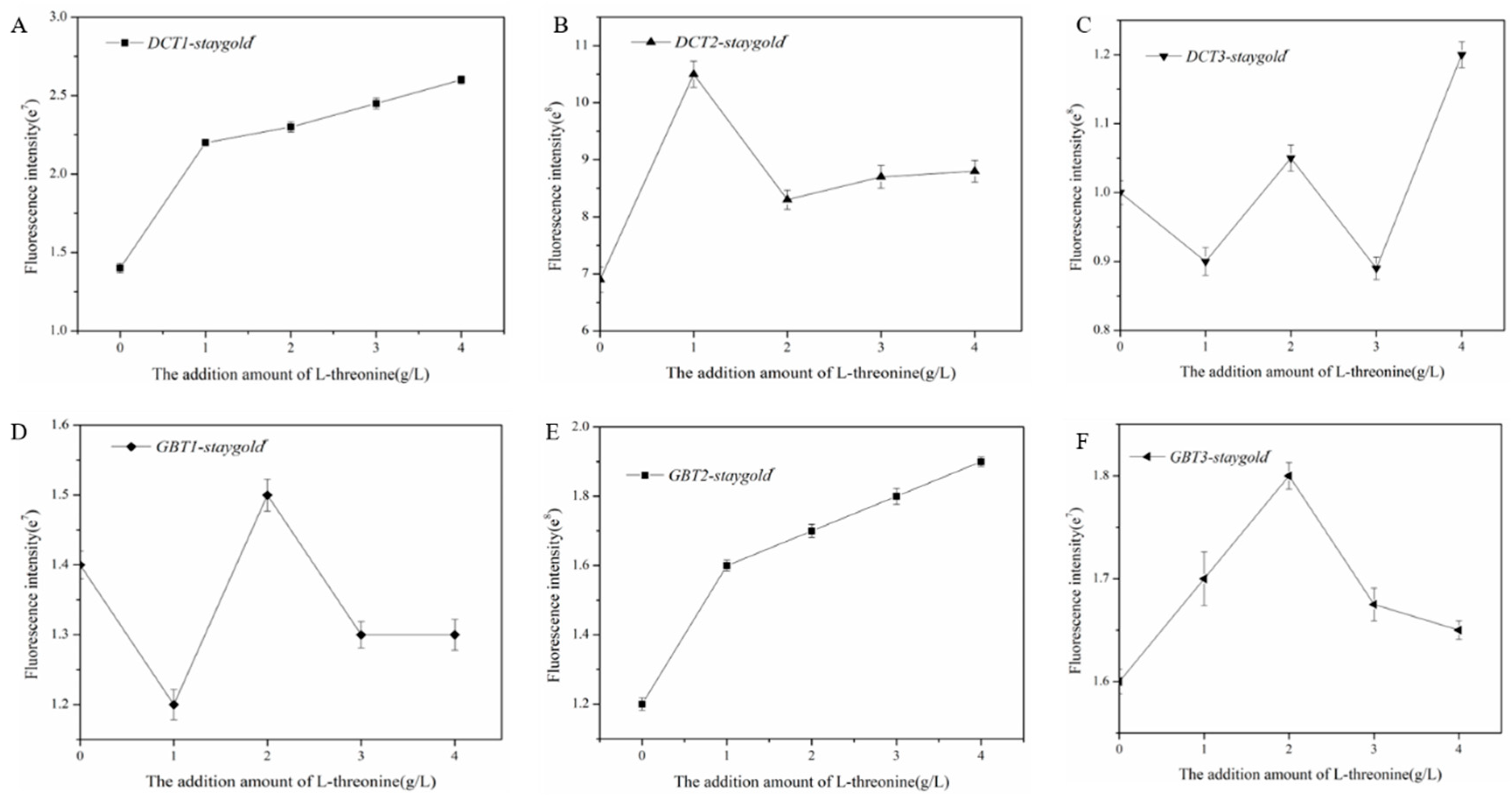
Recombinant plasmids pET-22b(+)-DCT1-staygoldr, pET-22b(+)-DCT2-staygoldr, pET-22b(+)-DCT3-staygoldr, pET-22b(+)-GBT1-staygoldr, pET-22b(+)-GBT2-staygoldr, and pET-22b(+)-GBT3-staygoldr were successfully transformed into E. coli BL21. The plasmid and gel electrophoresis spectra are shown in Supplementary Figures S1 and S2. The fluorescent protein fragments DCT1-staygoldr, DCT2-staygoldr, DCT3-staygoldr, GBT1-staygoldr, GBT2-staygoldr, and GBT3-staygoldr containing the rare codon ATC of L-threonine were successfully expressed (Figure 1).
The fluorescence intensities of the fluorescent proteins DCT1-staygoldr and GBT2-staygoldr increased significantly with L-threonine in the range of 0–1 g/L; although the enhancement trend slowed down within the range of 2–4 g/L, it showed a positive correlation trend between fluorescence intensity and L-threonine concentration. The 0–4 g/L L-threonine calibration curve was established in 96 deep well plates. The fluorescence was linear within the range of 0–2.5 g/L and tended to be saturated above 3 g/L. Therefore, the preferred fluorescent protein GBT2-staygoldr was used as a potential screening marker for subsequent FASC. We determined the in vivo responses of E. coli CGMCC 1.366-Thr/pET-22b(+)-GBT2-staygoldr with the addition of 0-4 g/L L-serine, L-hyperserine, L-lysine, L-methionine and L-isoleucine under the same induction conditions as L-threonine. The fluorescence changes produced by the above amino acids did not exceed 6% of the L-threonine signal, indicating that this system has a high selectivity for the concentration of L-threonine.
In the screening for high-yield amino acid strains, the Forschungszentrum Jilich Research Center team in Germany has developed a multi-target metabolite detection system that acts through the conformational allosteric effect of Lrp family transcription factors and specific promoters. The concentration dynamics of amino acids such as methionine, L-lysine, and serine can be resolved, and high-expression strains can be sorted with the output of fluorescent protein signals amplified in a cascade. In contrast, the L-threonine directional screening system constructed in this study has specific improvements. By designing screening markers for L-threonine rare codons, a positive correlation between L-threonine concentration and fluorescence intensity was achieved. The response speed is faster compared with traditional systems and is not disturbed by structural analogues, with higher accuracy. Combined with a flow cytometry sorting system, the screening throughput reached 2 × 10⁴ cells/s, providing a more precise and efficient solution for the high-throughput engineering of industrial strains.

3.2. Determination of the Optimal Ultraviolet Mutagenesis Time

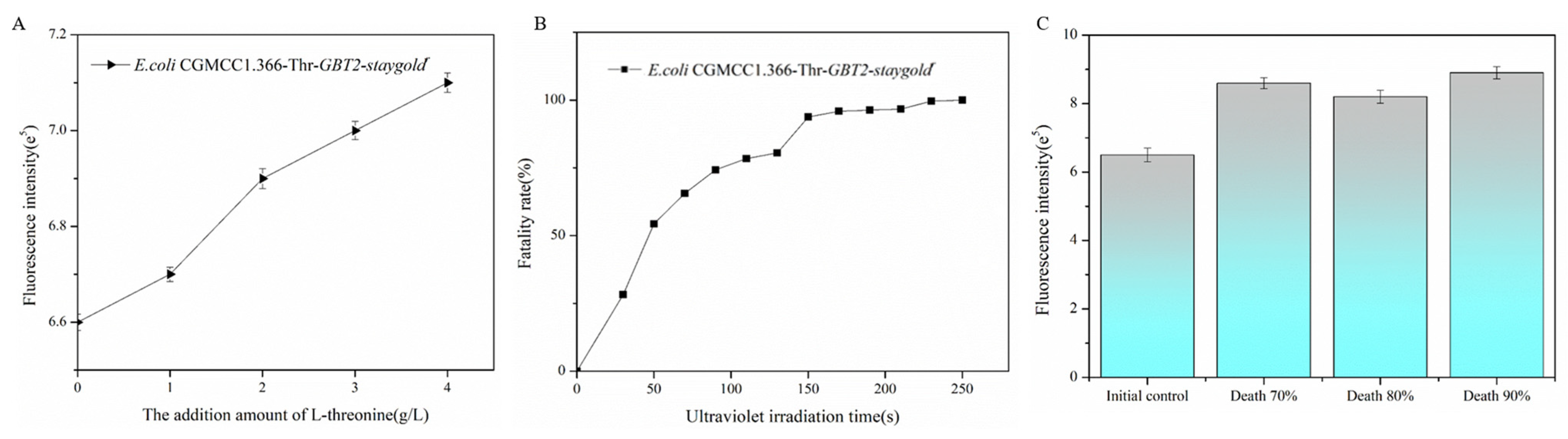
The expression of E. coli CGMCC 1.366-Thr/pET-22b(+)-GBT2-staygoldr fluorescent protein is shown in Figure 2A. The fluorescence intensity of the fluorescent protein GBT2-staygoldr decreased in the strain E. coli CGMCC 1.366-Thr compared with that in E. coli BL21; however, the overall trend remained. Both fluorescence intensities were positively correlated with the concentration of L-threonine, and the fluorescence intensity increased with L-threonine. This renders the system adequate for subsequent screening marking.
Based on the differences in survival rates of strain E. coli CGMCC 1.366-Thr/pET-22b(+)-GBT2-staygoldr under different ultraviolet irradiation times, a fatality rate curve was plotted (Figure 2B). Cultures with mortality rates of 70, 80, and 90% were induced with the control group that had not been irradiated. The fluorescence intensity was preliminarily detected using an ELISA reader (Figure 2C). The mutant strains of E. coli CGMCC 1.366-Thr/pET-22b(+)-GBT2-staygoldr showed varying degrees of increased fluorescence intensity after being exposed to ultraviolet light irradiation. The fluorescence intensity increase was the least when the fatality rate was 80%, and the difference in fluorescence intensity from the original strain was the greatest when the fatality rate was 90%. This is consistent with the concept that the proportion of beneficial mutations in the surviving strains is the highest when the fatality rate is over 85%. The results of this study suggest that a fatality rate of 90% enables the best screening effect. According to the analysis of the fatality rate curve, E. coli CGMCC 1.366-Thr/pET-22b(+)-GBT2-staygoldr displayed a fatality rate of approximately 90% at 150 s of ultraviolet irradiation. By combining the correlation between the high mortality rate and the positive mutation rate in the conventional mutagenesis model, this study determined that the optimal ultraviolet mutagenesis time was 150 s.

3.3. HTS with Flow Cytometer

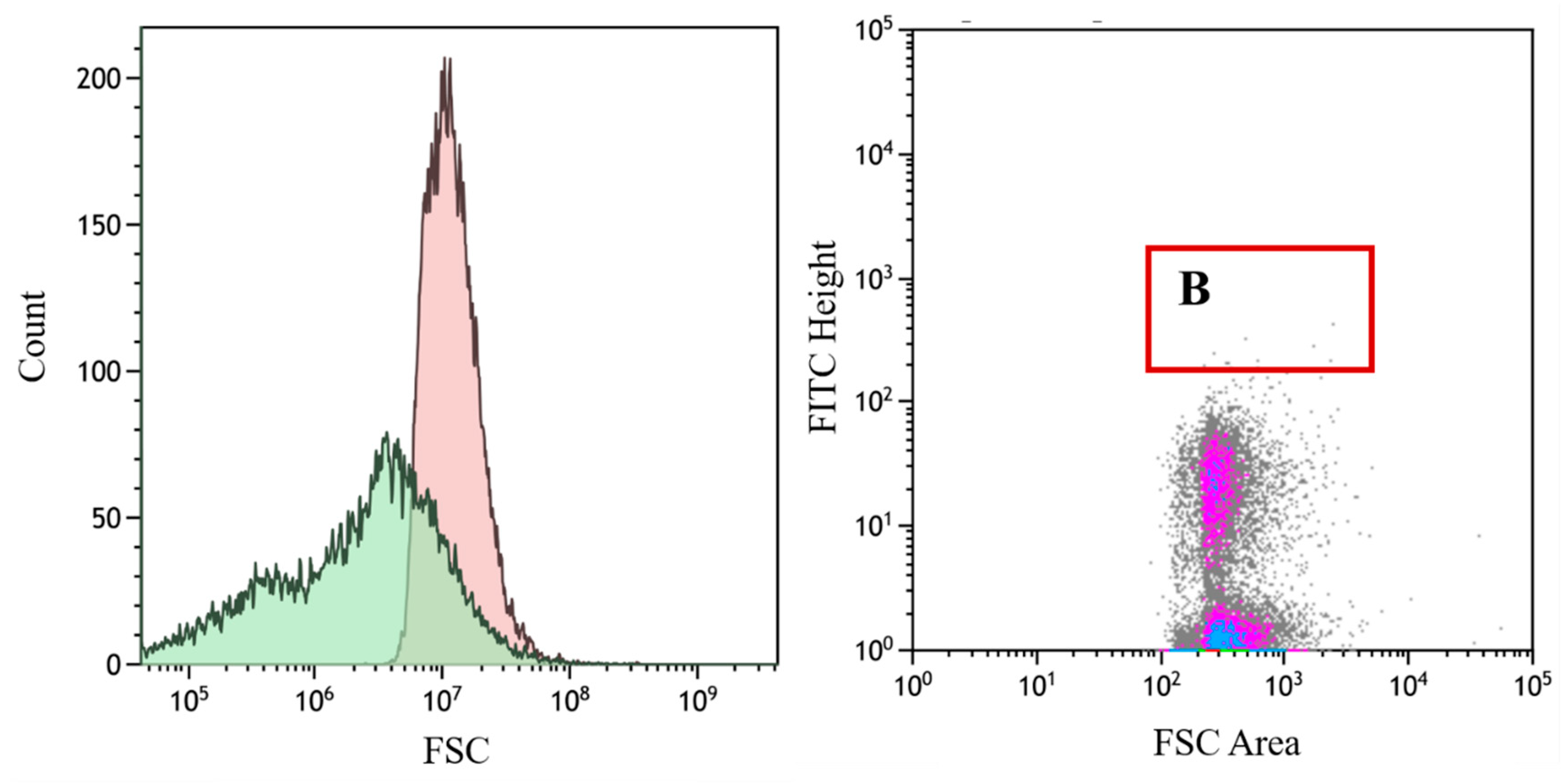
E. coli CGMCC 1.366-Thr/pET-22b(+)-GBT2-staygoldr was irradiated with ultraviolet light for 150 s. The culture was screened by flow cytometry, and the region with the most concentrated cell size was selected; it is considered that the genetic inheritance of the strains within this range is relatively stable. During the screening process, strains with uniform cell size and high fluorescence intensities were selected to obtain strains with stable genetic traits and high L-threonine yield. E. coli CGMCC 1.366-Thr/pET-22b(+)-GBT2-staygoldr screening is shown in Figure 3.

3.4. Fluorescence Intensity and Fermentation of High-Yield Mutant Strains of L-Threonine

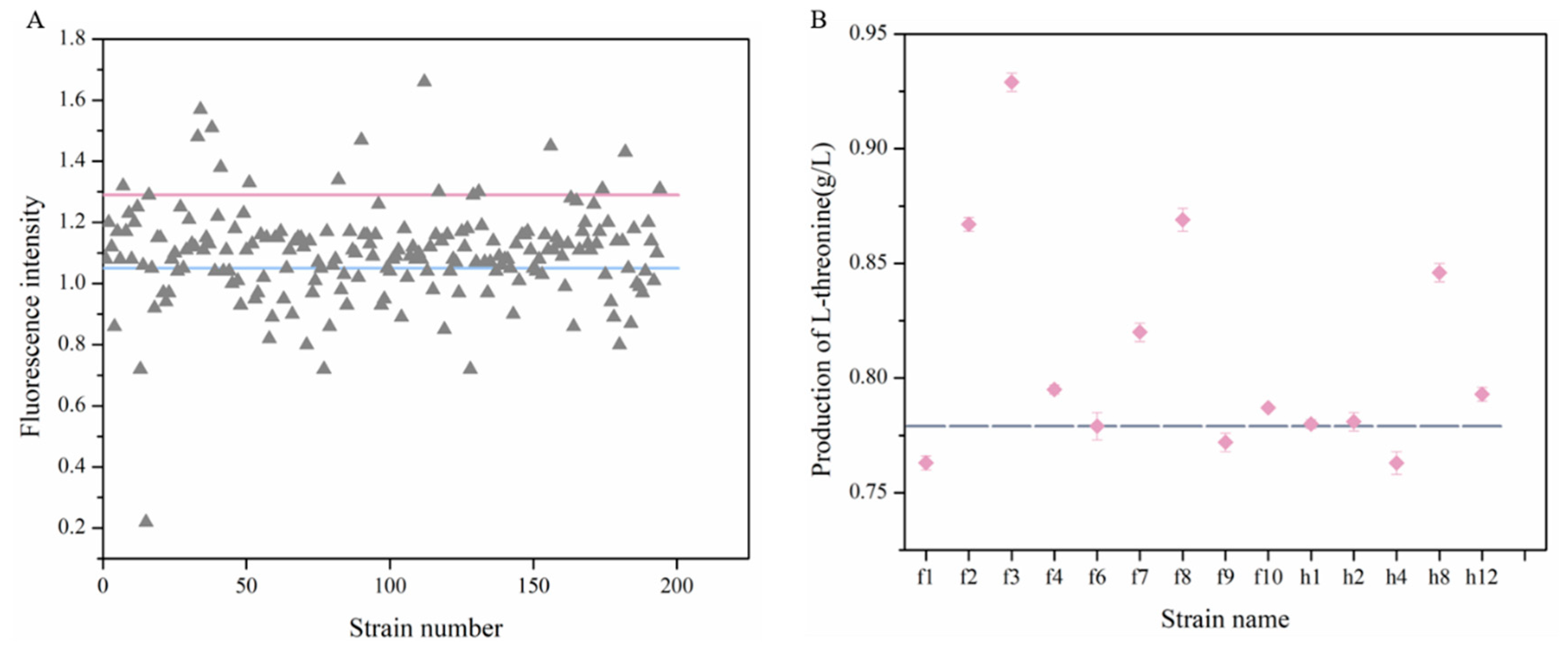
The strains selected by the screening of the mutant culture through flow cytometry were transferred to deep well plates for induction, and the fluorescence intensity was determined. As shown in Figure 4, the fluorescence intensity of the mutant strains screened out by E. coli CGMCC 1.366-Thr/pET-22b(+)-GBT2-staygoldr was higher than the average fluorescence intensity of the strains not exposed to ultraviolet irradiation (blue line). Among the screening results of E. coli CGMCC 1.366-Thr/pET-22b(+)-GBT2-staygoldr, the fluorescence intensity of 14 strains was higher than the highest fluorescence intensity (pink line) screened out from samples without ultraviolet irradiation.
The results of further shake flask fermentation of the mutant strain are shown in Figure 4B. The blue line in the figure indicates that the L-threonine yield of the control group of the starting strain was 0.779 g/L. Among the 14 mutant strains of E. coli CGMCC 1.366-Thr/pET-22b(+)-GBT2-staygoldr, 10 strains with increased L-threonine production were screened out. Among them, the yield of the mutant strain f3 screened by E. coli CGMCC 1.366-Thr/pET-22b(+)-GBT2-staygoldr was 0.929 g/L, the highest among all screened strains, which represented a 19% increase compared with the original strain. In addition, we determined the L-threonine yield of the starting strain when it carried fluorescent plasmids or empty vectors. When carrying fluorescent protein granules, the production of L-threonine decreased by 5.1%. It indicates that there is indeed a burden on the fluorescent protein plasmid, but all mutant strains were screened under the same burden. Therefore, the ranking and the final selected optimal mutant strain f3 remain valid. After the t-test, the fluorescence intensity of the f3 mutant strain was significantly increased compared with the control mean (p < 0.01). The fermentation yield of 0.929 g/L was also significantly higher than that of the control bacteria at 0.779 g/L (p < 0.01), with an increase of 19%, which was statistically significant.

3.5. Transcriptome Sequencing and Analysis

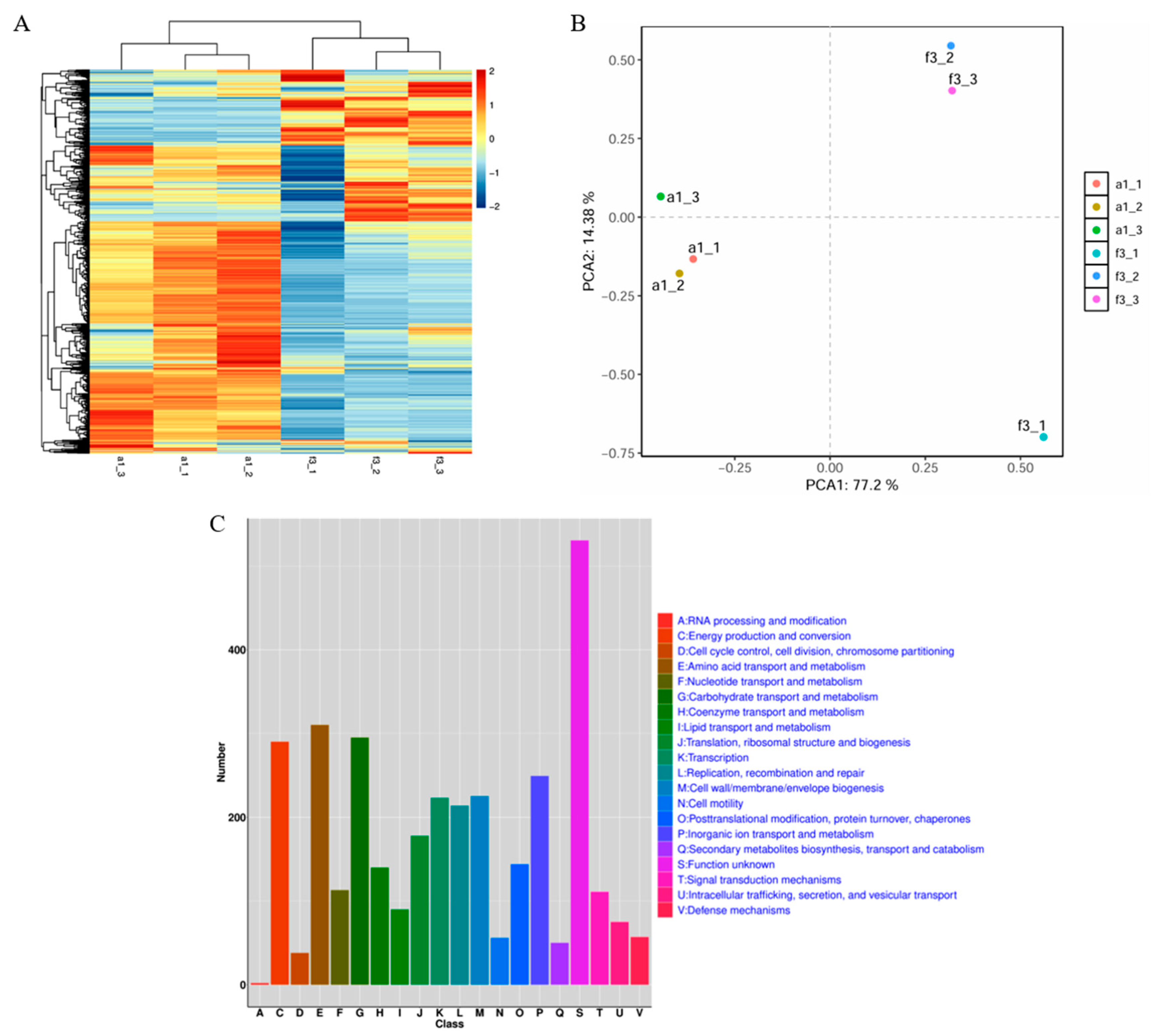
In this study, prokaryotic transcriptome sequencing analysis was conducted on the high-yield L-threonine strain E. coli CGMCC 1.366-Thr/pET-22b(+)-GBT2-staygoldr-f3 and the starting strain. Based on the criteria of Fold Change ≥ 2 and FDR < 0.05, a total of 3 groups of differential gene sets were identified (Table 2). Overall, 517 and 2637 genes of the mutant strain were upregulated and downregulated, respectively. As shown in Figure 5A, the heat map of the differential genes indicates that the samples in the mutation group are closely clustered and significantly separated from those in the control group, suggesting that the gene expression pattern is significantly influenced by the strain modification. Figure 5B shows the PCA analysis that further verified the differences between groups, with principal component 1 showing 78.6% variation. Figure 5C shows the COG annotation, indicating that among the differentially expressed genes, “Amino acid transport and metabolism” (COG category E) and “Energy Production and conversion” (COG category C) account for the highest proportion. Transcriptome analysis revealed the molecular mechanism by which the mutant strain achieves an efficient synthesis of L-threonine, associated with the upregulation of key synthetic genes and carbon metabolism reprogramming. The functional enrichment results are highly consistent with the phenotypic data, providing a target basis for subsequent metabolic engineering modifications.

3.6. Screening of Positive Strains of Recombinant Plasmids for Key Enzymes in Cellulosome Element/L-Threonine Synthesis

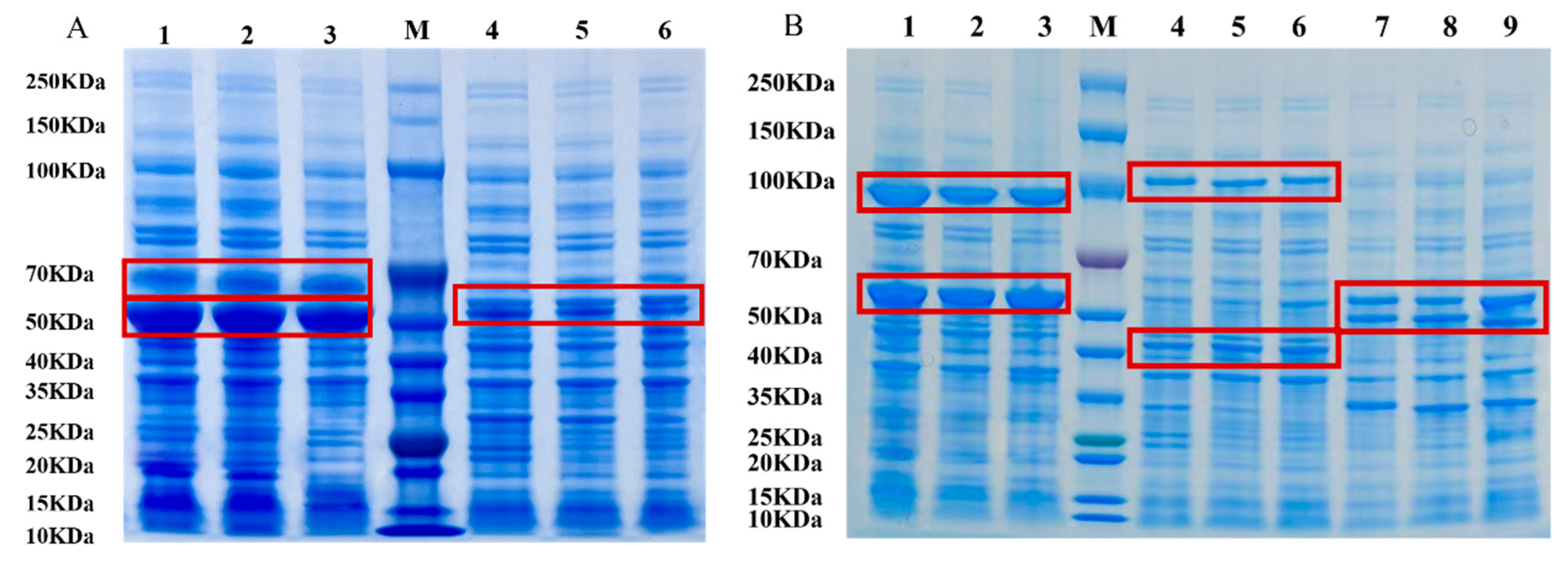
Recombinant plasmids pET28a(+)-aspC-docA-lysC-cohA, pET28a(+)-lysC-docA-Asd-cohA, pET22b(+)-thrA-docA-Asd-cohA, pET22b(+)-thrB-docA-thrA-cohA, and pET22b(+)-thrC-docA-thrB-cohA were designed to couple and overexpress the cellulosome framework and L-threonine synthase. Five engineered strains, namely E. coli CGMCC 1.366-Thr/pET28a(+)-aspC-docA-lysC-cohA, E. coli CGMCC 1.366-Thr/pET28a(+)-lysC-docA-Asd-cohA, E. coli CGMCC 1.366-Thr/pET22b(+)-thrA-docA-Asd-cohA, E. coli CGMCC 1.366-Thr/pET22b(+)-thrB-docA-thrA-cohA, and E. coli CGMCC 1.366-Thr/pET22b(+)-thrC-docA-thrB-cohA, were constructed. The gel electrophoresis diagram is shown in the Supplementary Figure S3, and the SDS-PAGE gel electrophoresis detection result is shown in Figure 6, indicating that the cellulosome skeleton DocA/CohA and L-threonine synthase are successfully expressed.

3.7. Effect of Key Enzyme Plasmid Assembly on the Fermentation Synthesis of L-Threonine in E. coli CGMCC 1.366-Thr

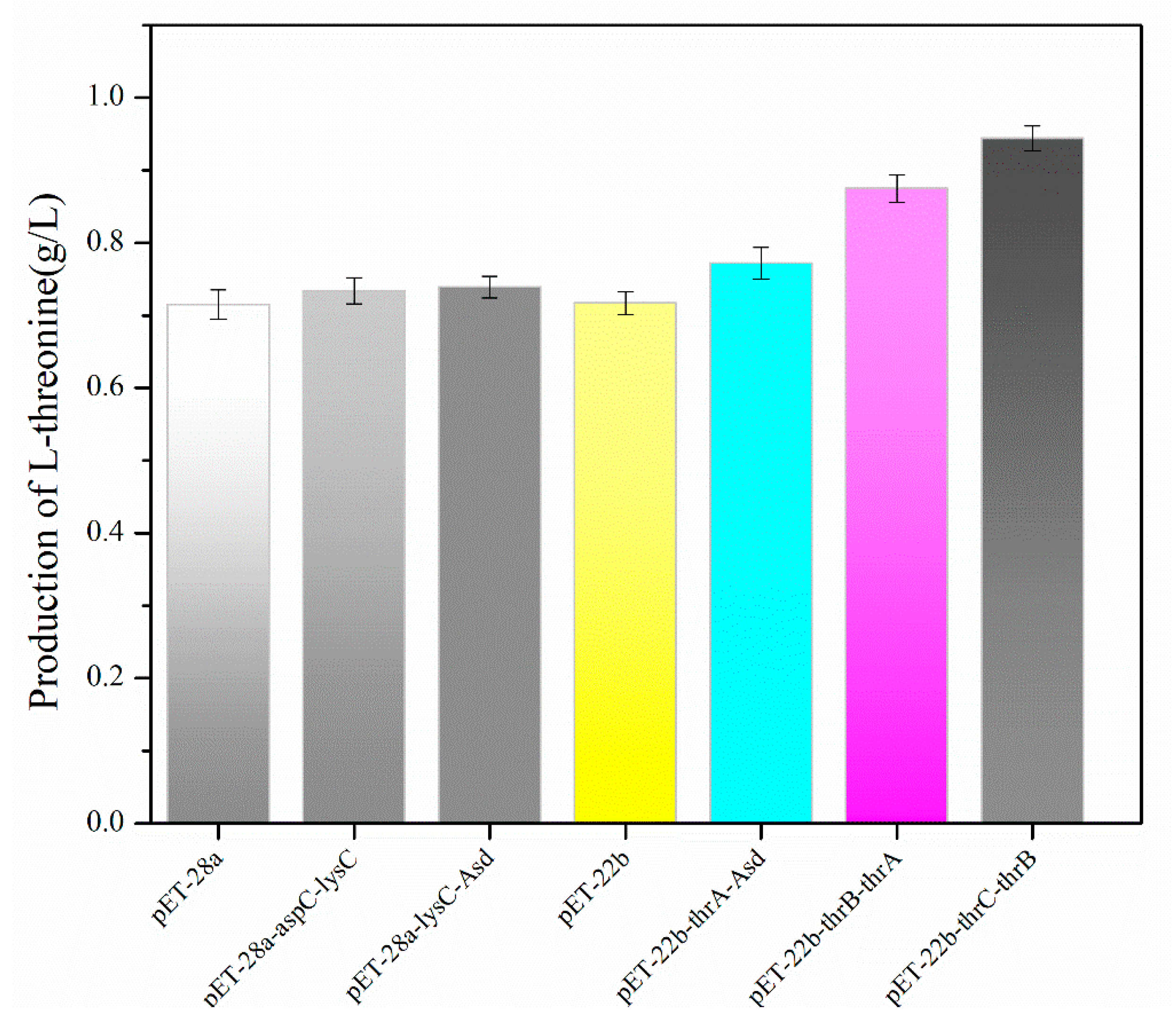
For the modified strains E. coli CGMCC 1.366-Thr/pET28a(+)-aspC-docA-lysC-cohA, E. coli CGMCC 1.366-Thr-pET28a(+)/lysC-docA-Asd-cohA, E. coli CGMCC 1.366-Thr/pET22b(+)-thrA-docA-Asd-cohA, E. coli CGMCC 1.366-Thr/pET22b(+)-thrB-docA-thrA-cohA, and E. coli CGMCC 1.366-Thr/pET22b(+)-thrC-docA-thrB-cohA, the effect of the key enzyme self-assembly system on the fermentation of L-threonine was detected after 36 h. Figure 7 shows the comparison of L-threonine yield results in 100 mL shake flask fermentation between the control and experimental groups. The L-threonine yield of the starting strain in this part is 0.7 g/L.The combination of five key enzymes had a synergistic effect on L-threonine production. Among them, the combination of aspC-docA-lysC-cohA increased L-threonine production by 2% and lysC-docA-Asd-cohA increased it by 3.4%. The combination of thrA-docA-Asd-cohA increased the yield of L-threonine by 7.7%, thrB-docA-thrA-cohA increased it by 13.5%, and thrC-docA-thrB-cohA increased it by 31.7%, reaching 0.944 g/L. The overexpression of thrC-docA-thrB-cohA had the most significant effect on the yield of L-threonine. Experimental data confirm that the co-expression strategy of plasmids assembled by key enzymes in coordination with cellulosomes has a significant effect on L-threonine biosynthesis. The combined overexpression of rate-limiting enzymes in metabolic pathways through a multi-enzyme complex system mediated by cellulosomes enhances the synthetic efficiency of target products, providing a theoretical basis and technical support for the industrial production of amino acids based on synthetic biology strategies.

3.8. Validation of L-Threonine Production by MUCICAT Gene Integration Strains

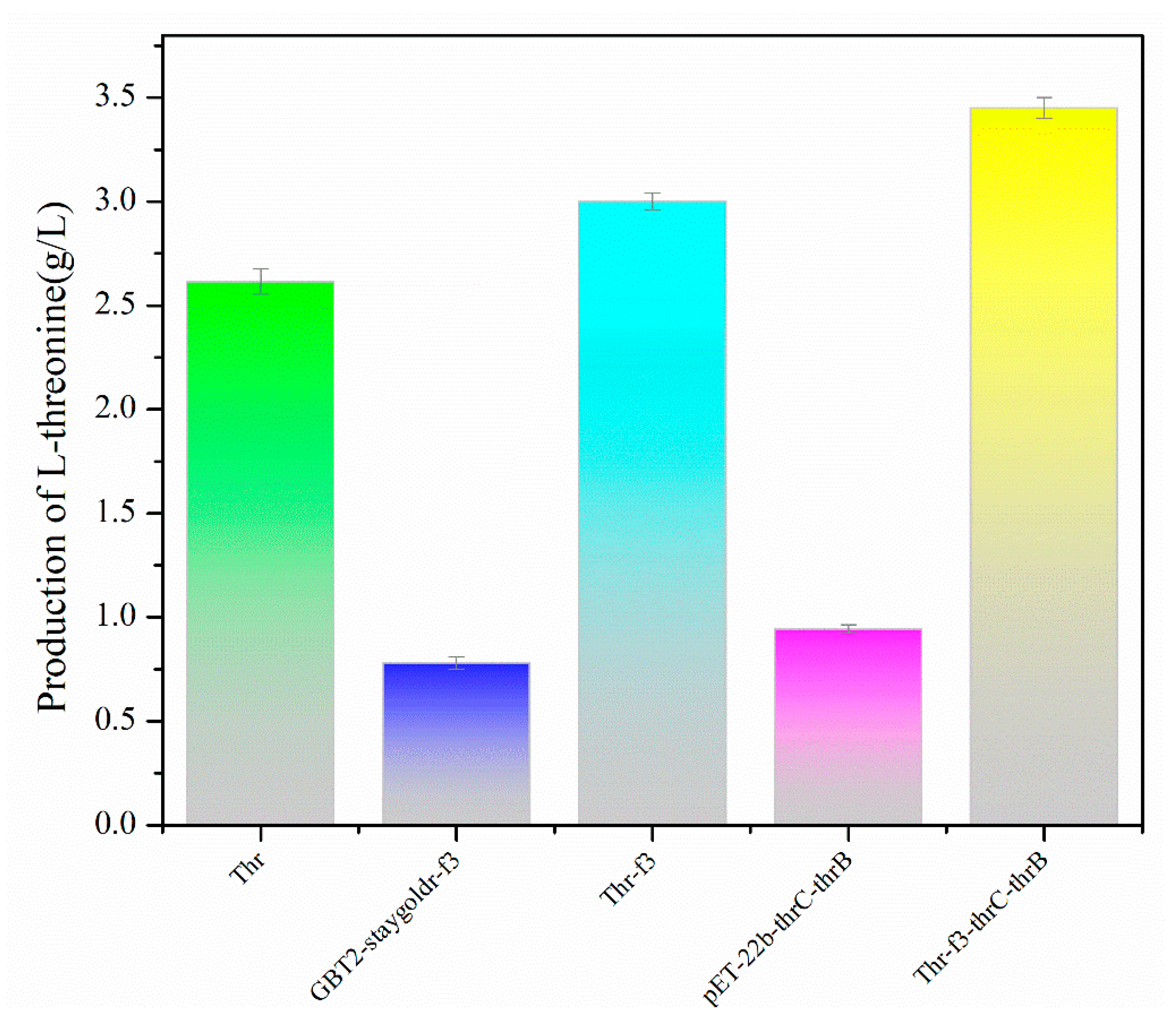
The thrC-docA-thrB-cohA was integrated into the E. coli CGMCC 1.366-Thr-f3 genome to obtain the strain E. coli CGMCC 1.366-Thr-f3-thrC-docA-thrB-cohA. Figure 8 shows the comparison of the fermentation performance of L-threonine production after 36 h of fermentation of the control starting strain E. coli CGMCC 1.366-Thr, E. coli CGMCC 1.366-Thr-f3/GBT2-staygoldr containing fluorescent screening markers, E. coli CGMCC 1.366-Thr-f3 without screening markers, and E. coli CGMCC 1.366-Thr/pET22b(+)-thrC-docA-thrB-cohA with the key enzyme assembly plasmid. The high-yield mutant strain E. coli CGMCC 1.366-Thr-f3 obtained through screening was relieved of the metabolic burden of plasmids after the screening markers were removed, and the performance of increased yield was retained. The strain that was transferred with the key enzyme assembly plasmid was affected by it, and its yield decreased significantly compared with that of the original strain. However, after integrating the thrC-docA-thrB-cohA gene fragment, the L-threonine yield of the E. coli CGMCC 1.366-Thr-f3-thrC-docA-thrB-cohA strain was 3.45. It was significantly higher than that of E. coli CGMCC 1.366-Thr-f3 without integrating this gene fragment. This indicates that achieving the self-assembly of key enzymes with the aid of cellulosomes is possible. While helping the strain to liberate the metabolic burden, it can also retain the key enzyme assembly for the increase in L-threonine yield, and the effect is significant. Compared with the production of the starting strain E. coli CGMCC 1.366-Thr, the production of L-threonine in E. coli CGMCC 1.366-Thr-f3-thrC-docA-thrB-cohA increased. This further validates that combining mutagenesis screening with genomic integration of key enzyme genes generates strains with higher yields than those constructed by a single approach.

4. Conclusions

This study developed an innovative platform integrating L-threonine biosensors with flow cytometry sorting. This system enabled establishing a quantitative correlation between intracellular L-threonine metabolic fluxes and fluorescence reporter signals by constructing gene circuits, achieving ultra-HTS of mutant strains with the aid of a multi-laser excitation system. Specifically, strains mutated by ultraviolet mutagenesis are sorted at the single-cell level through the photofluid channel, where the dual-color laser confocal detection module simultaneously analyzes the metabolite concentration gradient and cell viability parameters. The cell detection throughput is ≥106. By optimizing the optical calibration algorithm and signal acquisition parameters, a molecular recognition system with a wide dynamic detection range and high selectivity was established, overcoming the technical barriers of screening methods in terms of sensitivity and throughput, thereby providing precise sorting tools for the rational design of high-yield amino acid strains.
By constructing a fluorescent protein expression vector containing the rare codon ATC, a quantitative correlation model between L-threonine concentration and fluorescence signal was successfully established. The experimental results show that the fluorescence intensity of the protein fragment GBT2-staygoldr is significantly positively correlated with the concentration of L-threonine, validating its feasibility as a screening marker. On this basis, through ultraviolet mutagenesis combined with flow cytometry sorting, several potential high-yield L-threonine strains with significantly stronger fluorescence signals were screened from millions of mutation libraries. Shake flask fermentation verified that the L-threonine yield of the mutant strain E. coli CGMCC 1.366-Thr/pET-22b(+)-GBT2-staygoldr-f3 reached 0.929 g/L, which was 19% higher than that of the original strain. The combination of the rare codon strategy and HTS technology in the engineering of L-threonine-producing strains has overcome the limitations of traditional screening methods in terms of sensitivity and throughput. However, the potential burden of fluorescent protein expression on host metabolism and the randomness of ultraviolet mutagenesis need to be further optimized, providing important theoretical and technical support for the subsequent modification of strains through metabolic engineering for industrial production.
A key enzyme self-assembly system for L-threonine synthesis based on cellulosome elements was successfully constructed. The coupling assembly of ThrC-DocA and ThrB-CohA significantly increased the metabolic flux, and the yield of L-threonine in shake flask fermentation was 31.7% higher than that of the original strain. After integrating the thrC-docA-thrB-cohA gene cluster into the E. coli CGMCC 1.366-Thr-f3 genome of the high-yield strain through MUCICAT technology, the L-threonine yield of the engineered bacteria was further increased to 3.45 g/L, and the genetic stability was significantly enhanced. This study suggests that the spatial co-localization of key enzymes reduces the diffusion of intermediate products and enhances the efficiency of L-threonine synthesis. However, the synergy of some enzyme combinations is relatively weak, suggesting that the design of enzyme-linked peptides needs to be further optimized. This study proposes a novel approach for the modular reconstruction of the L-threonine synthesis pathway and provides a preliminary demonstration of the rational design of high-yield L-threonine strains. Future research can couple the rare codon-fluorescence screening system with CRISPR base editing to achieve targeted mutations and dynamic shutdown of fluorescence burden. By using AlphaFold2 and molecular dynamics to optimize the length and flexibility of the linker, a temperature-responsive multi-enzyme complex was constructed to regulate metabolic flow in real time. The scale-up parameters, such as dissolved oxygen, feeding and specific production rate, were investigated in a large-scale bioreactor system, and it is planned to evaluate the production stability by long-term continuous culture in a constant-state reactor. Combining the machine learning-response surface hybrid model, an online feeding—dissolved oxygen linkage control strategy was developed, and the universality of this strategy in the construction of high-yield strains of other amino acids such as lysine and isoleucine was tested.

Supplementary Materials

The following supporting information can be downloaded at: https://www.mdpi.com/article/10.3390/fermentation11110642/s1, Table S1: Primers used in this work; Figure S1: Schematic diagram of fluorescence screening marker plasmid construction. Figure S2: The nucleic acid gel electrophoresis diagram of the fluorescent protein gene fragment. Figure S3: Nucleic acid gel electrophoresis of key enzyme self-assembled gene fragments.

Author Contributions

Conceptualization, C.G. and N.L.; methodology, N.L.; software, J.W. (Jianbin Wang); validation, C.G. and L.Y.; formal analysis, C.G.; investigation, L.Y.; resources, J.L.; data curation, P.L.; writing—original draft preparation, C.G.; writing—review and editing, N.L.; visualization, J.W. (Jianbin Wang); supervision, J.L.; project administration, J.W. (Junqing Wang); funding acquisition, R.W., C.G. and N.L. contributed equally to this work. All authors have read and agreed to the published version of the manuscript.

Funding

This work was supported by the National Key R&D Program of China (2023YFD1300700), Major Scientific Research Project for the Construction of State Key Lab (No. 2025ZDGZ02), Key Technology Research and Development Program of Shandong (2022CXGC020206), Taishan Scholar Foundation of Shandong Province (tscx202306067), and Innovation Fund for Small and Medium-sized Technology Innovation Capacity Enhancement Project of Shandong Province (2023TS1047).

Institutional Review Board Statement

Not applicable.

Informed Consent Statement

Not applicable.

Data Availability Statement

The original contributions presented in this study are included in the article/Supplementary Material. Further inquiries can be directed to the corresponding authors.

Acknowledgments

We would like to thank the State Key Laboratory of Green Papermaking and Resource Recycling at Qilu University of Technology for help and support.

Conflicts of Interest

Author Chuanzhuang Guo, Jianbin Wang, Junlin Li and Junqing Wang are employed by the company “Dongxiao Biotechnology Co., Ltd.” However, for the purposes of this investigation, there was no financing relationship with the company; therefore, there are no conflicts of interest. The remaining authors declare that the research was conducted in the absence of any commercial or financial relationships that could be construed as a potential conflict of interest.

Abbreviations

The following abbreviations are used in this manuscript:
HTSHigh-throughput screening
FACSFluorescent-activated cell sorting
MEAsMulti-enzyme assemblies
CohAAdhesive protein
DocADocking protein
CohAdhesin
MUCICATMulti-copy chromosomal integration technology via CRISPR-associated transposase

References

  1. Fang, Y.; Wang, J.; Ma, W.; Yang, J.; Zhang, H.; Zhao, L.; Chen, S.; Zhang, S.; Hu, X.; Li, Y.; et al. Rebalancing microbial carbon distribution for L-threonine maximization using a thermal switch system. Metab. Eng. 2020, 61, 33–46. [Google Scholar] [CrossRef]
  2. Lv, Y.; Wu, Z.; Han, S.; Lin, Y.; Zheng, S. Construction of recombinant Corynebacterium glutamicum for L-threonine production. Biotechnol. Bioprocess Eng. 2012, 17, 16–21. [Google Scholar] [CrossRef]
  3. Yang, H.; Hou, Y.-J.; Xu, J.-Z.; Zhang, W.-G. Metabolic engineering of Escherichia coli for the efficient production of l-threonine. Syst. Microbiol. Biomanufacturing 2024, 4, 810–819. [Google Scholar] [CrossRef]
  4. Zhao, H.; Fang, Y.; Wang, X.; Zhao, L.; Wang, J.; Li, Y. Increasing l-threonine production in Escherichia coli by engineering the glyoxylate shunt and the l-threonine biosynthesis pathway. Appl. Microbiol. Biotechnol. 2018, 102, 5505–5518. [Google Scholar] [CrossRef]
  5. Du, H.; Zhao, Y.; Wu, F.; Ouyang, P.; Chen, J.; Jiang, X.; Ye, J.; Chen, G.Q. Engineering Halomonas bluephagenesis for L-threonine production. Metab. Eng. 2020, 60, 119–127. [Google Scholar] [CrossRef] [PubMed]
  6. Wang, S.; Chen, X.; Jin, X.; Gu, F.; Jiang, W.; Qi, Q.; Liang, Q. Creating polyploid Escherichia coli and Its Application in Efficient L-threonine Production. Adv. Sci. 2023, 10, 230–241. [Google Scholar] [CrossRef] [PubMed]
  7. Ekwealor, I.A.; Obeta, J.A.N. Screening of UV-irradiated and S-2-aminoethyl-Lcysteine resistant mutants of Bacillus megaterium for improved lysine accumulation. Afr. J. Biotechnol. 2006, 5, 2312–2314. [Google Scholar]
  8. Berg, L.; Strand, T.A.; Valla, S.; Brautaset, T. Combinatorial mutagenesis and selection to understand and improve yeast promoters. Biomed Res. Int. 2013, 2013, 926985. [Google Scholar] [CrossRef]
  9. Abimbola, B.S.; Ahuekwe, E.F.; Orukotan, K.E.; Akinyosoye, A.D.; Akinhanmi, F.; Nwinyi, O.C. Omics and mutagenesis: Molecular optimization strategies for strain improvement in biosurfactant production. In Biotechnological Approaches to Sustainable Development Goals; Springer: Berlin/Heidelberg, Germany, 2023; pp. 291–303. [Google Scholar]
  10. Chen, R.; Lin, Y.-T.; Fornace, A.J., Jr.; Li, H.-H. A high throughput and highly automated genotoxicity screening assay. ALTEX 2022, 39, 71–81. [Google Scholar] [CrossRef]
  11. Rambault, M.; Borkute, R.; Doz-Deblauwe, E.; Le-Vern, Y.; Winter, N.; Dorhoi, A.; Remot, A. Isolation of bovine neutrophils by fluorescence- and magnetic-activated cell sorting. In Myeloid-Derived Suppressor Cells; Humana: New York, NY, USA, 2021; Volume 2236, pp. 203–217. [Google Scholar]
  12. Yang, C.; Peng, Z.; Yang, L.; Du, B.; Guo, C.; Sui, S.; Wang, J.; Li, J.; Wang, J.; Li, N. Design and application of artificial rare L-lysine codons in Corynebacterium glutamicum. Front. Bioeng. Biotechnol. 2023, 11, 1194511. [Google Scholar] [CrossRef]
  13. Su, B.; Lai, P.; Deng, M.-R.; Zhu, H. Global rewiring of lipid metabolism to produce carotenoid by deleting the transcription factor genes ino2/ino4 in Saccharomyces cerevisiae. Int. J. Biol. Macromol. 2024, 264, 130400. [Google Scholar] [CrossRef]
  14. Li, N.; Yang, L.; Ren, X.; Du, P.; Li, P.; Su, J.; Xiao, J.; Wang, J.; Wang, R. Improving the synthesis efficiency of amino acids by analyzing the key sites of intracellular self-assembly of artificial cellulosome. Fermentation 2024, 10, 229. [Google Scholar] [CrossRef]
  15. Klucher, K.M.; Gerlach, M.J.; Daley, G.Q. A novel method to isolate cells with conditional gene expression using fluorescence activated cell sorting (FACS). Nucleic Acids Res. 1997, 25, 4858. [Google Scholar] [CrossRef] [PubMed][Green Version]
  16. Kang, W.; Ma, T.; Liu, M.; Qu, J.; Liu, Z.; Zhang, H.; Shi, B.; Fu, S.; Ma, J.; Lai, L.T.F.; et al. Modular enzyme assembly for enhanced cascade biocatalysis and metabolic flux. Nat. Commun. 2019, 10, 4248. [Google Scholar] [CrossRef] [PubMed]
  17. Miles, E.W. Tryptophan synthase: A multienzyme complex with an intramolecular tunnel. Chem. Rec. 2001, 1, 140–151. [Google Scholar] [CrossRef]
  18. Li, Q.; Min, J.; Zhang, J.; Reches, M.; Shen, Y.; Su, R.; Wang, Y.; Qi, W. Enzyme-driven, switchable catalysis based on dynamic self-assembly of peptides. Angew. Chem. 2023, 62, e202309830. [Google Scholar] [CrossRef]
  19. Ye, Y.; Liu, H.; Wang, Z.; Qi, Q.; Du, J.; Tian, S. A cellulosomal yeast reaction system of lignin-degrading enzymes for cellulosic ethanol fermentation. Biotechnol Lett. 2024, 46, 531–543. [Google Scholar] [CrossRef] [PubMed]
  20. Bayer, E.A.; Lamed, R.; White, B.A.; Flint, H.J. From cellulosomes to cellulosomics. Chem. Rec. 2008, 8, 364–377. [Google Scholar] [CrossRef]
  21. Xu, C.; Huang, R.; Teng, L.; Wang, D.; Hemme, C.L.; Borovok, I.; He, Q.; Lamed, R.; Bayer, E.A.; Zhou, J.; et al. Structure and regulation of the cellulose degradome in Clostridium cellulolyticum. Biotechnol. Biofuels 2013, 6, 73. [Google Scholar] [CrossRef]
  22. Bayer, E.A.; Morag, E.; Lamed, R. The cellulosome—A treasure-trove for biotechnology. Trends Biotechnol. 1994, 12, 379–386. [Google Scholar] [CrossRef]
  23. Blue, P.; Cameron, K.; Prates, J.A.; Ferreira, L.M.A.; Smith, S.P.; Gilbert, H.J.; Bayer, E.A.; Najmudin, S.; Fontes, C.M.G.A.; Alves, V.D. Structure–function analyses generate novel specificities to assemble the components of multi-enzyme bacterial cellulosome complexes. J. Biol. Chem. 2018, 293, 4201–4212. [Google Scholar] [CrossRef] [PubMed]
  24. Xu, Q.; Ding, S.Y.; Brunecky, R.; Bomble, Y.J.; Himmel, M.E.; Baker, J.O. Improving activity of minicellulosomes by integration of intra- and intermolecular synergies. Biotechnol. Biofuels 2013, 6, 126. [Google Scholar] [CrossRef]
  25. Murashima, K.; Kosugi, A.; Doi, R.H. Synergistic effects on crystalline cellulose degradation between cellulosomal cellulases from Clostridium cellulovorans. J. Bacteriol. 2002, 184, 5088–5095. [Google Scholar] [CrossRef]
  26. Lu, J.; Wang, G.; Yang, C.; Peng, Z.; Yang, L.; Du, B.; Guo, C.; Sui, S.; Wang, J.; Li, J.; et al. Study on the construction technology of β-alanine synthesizing Escherichia coli based on cellulosome assembly. Front. Bioeng. Biotechnol. 2023, 11, 1202483. [Google Scholar] [CrossRef]
  27. You, C.; Zhang, Y.-H.P. Self-assembly of synthetic metabolons through synthetic protein scaffolds: One-step purification, co-immobilization, and substrate channeling. ACS Synth. Biol. 2013, 2, 102–110. [Google Scholar] [CrossRef]
  28. Han, Z.; Su, W.W. Intein-mediated assembly of tunable scaffoldins for facile synthesis of designer cellulosomes. Appl. Microbiol. Biotechnol. 2018, 102, 1331–1342. [Google Scholar] [CrossRef]
  29. Tarraran, L.; Gandini, C.; Luganini, A.; Mazzoli, R. Cell-surface binding domains from Clostridium cellulovorans can be used for surface display of cellulosomal scaffoldins in Lactococcus lactis. Biotechnol. J. 2021, 16, e2100064. [Google Scholar] [CrossRef] [PubMed]
  30. Artzi, L.; Bayer, E.A.; Moraïs, S. Cellulosomes: Bacterial nanomachines for dismantling plant polysaccharides. Nat. Rev. Microbiol. 2017, 15, 83–95. [Google Scholar] [CrossRef] [PubMed]
  31. Barth, A.; Hendrix, J.; Fried, D.; Barak, Y.; Bayer, E.A.; Lamb, D.C. Dynamic interactions of type I cohesin modules fine-tune the structure of the cellulosome of Clostridium thermocellum. Proc. Natl Acad. Sci. USA 2018, 115, E11274–E11283. [Google Scholar] [CrossRef]
  32. Mugabo, Y.; Lim, G.E.J.E. Scaffold proteins: From coordinating signaling pathways to metabolic regulation. Endocrinology 2018, 159, 3615–3630. [Google Scholar] [CrossRef] [PubMed]
  33. Jiang, Y.; Qian, F.; Yang, J.; Liu, Y.; Dong, F.; Xu, C.; Sun, B.; Chen, B.; Xu, X.; Li, Y.; et al. CRISPR-Cpf1 assisted genome editing of Corynebacterium glutamicum. Nat. Commun. 2017, 8, 15179. [Google Scholar] [CrossRef] [PubMed]
  34. Zhang, Y.; Sun, X.; Wang, Q.; Xu, J.; Dong, F.; Yang, S.; Yang, J.; Zhang, Z.; Qian, Y.; Chen, J.; et al. Multicopy chromosomal integration using CRISPR-associated transposases. ACS Synth. Biol. 2020, 9, 1998–2008. [Google Scholar] [CrossRef]
  35. Zhang, Y.; Yang, J.; Yang, S.; Zhang, J.; Chen, J.; Tao, R.; Jiang, Y.; Yang, J.; Yang, S. Programming cells by multicopy chromosomal integration using CRISPR-associated transposases. CRISPR J. 2021, 4, 350–359. [Google Scholar] [CrossRef] [PubMed]
  36. Murakami, M.; Ohba, T.; Murakami, A.M.; Han, C.; Kuwasako, K.; Itagaki, S. A simple and dual expression plasmid system in prokaryotic (E. coli) and mammalian cells. PLoS ONE 2019, 14, e0216169. [Google Scholar] [CrossRef]
  37. Englaender, J.A.; Jones, J.A.; Cress, B.F.; Kuhlman, T.E.; Linhardt, R.J.; Koffas, M.A.G. Effect of genomic integration location on heterologous protein expression and metabolic engineering in E. coli. ACS Synth. Biol. 2017, 6, 710–720. [Google Scholar] [CrossRef]
Figure 1. Effect of L-threonine concentration on the fluorescence intensity of different screened proteins. (A) DCT1-staygoldr; (B) DCT2-staygoldr; (C) DCT3-staygoldr; (D) GBT1-staygoldr; (E) GBT2-staygoldr; (F) GBT3-staygoldr.
Fermentation 11 00642 g001
Figure 2. Mortality curve of E. coli CGMCC 1.366-Thr/pET-22b(+)-GBT2-staygoldr and differences in fluorescence intensities of the mutant strain. (A) The expression of E. coli CGMCC 1.366-Thr/pET-22b(+)-GBT2-staygoldr fluorescent protein; (B) The ultraviolet mortality curve of strain E. coli CGMCC 1.366-Thr/pET-22b(+)-GBT2-staygoldr; (C) The fluorescence intensity comparison chart of bacterial liquids with different fatality rates.
Fermentation 11 00642 g002
Figure 3. E. coli CGMCC 1.366-Thr/pET-22b(+)-GBT2-staygoldr flow cytometric sorter analysis results. Green and pink areas represent the fluorescence intensity of the culture before and after ultraviolet irradiation, respectively. The fluorescence intensity of the culture of this strain after ultraviolet irradiation is more concentrated, mostly at the position with higher fluorescence intensity. Using box B as the gating region for screening, the selected strains accounted for approximately 0.02% of the total screened strains.
Fermentation 11 00642 g003
Figure 4. E. coli CGMCC 1.366-Thr/pET-22b(+)-GBT2-staygoldr mutation screening verification. (A) The fluorescence intensity map of the mutant strain by flow cytometry; (B) The result of shake flask fermentation with mutant strains.
Fermentation 11 00642 g004
Figure 5. Sequencing analysis of mutant strain E. coli CGMCC 1.366-Thr/pET-22b(+)-GBT2-staygoldr-f3. (A) Differentially expressed genes. (B) PCA cluster analysis plot. (C) Statistical map of the gene eggNOG/COG annotation classification.
Fermentation 11 00642 g005
Figure 6. Gel electrophoresis results of E. coli CGMCC 1.366-Thr expressing target proteins. (A) M: marker 250 kDa; 1–3: 51.02 kDa protein fragment of AspC-DocA and 65.22 kDa protein fragment of LysC-CohA; 4–6: 55.93 kDa protein fragment of LysC-DocA and 56.71 kDa protein fragment of Asd-CohA; (B) M: marker 250KDa; 1–3: 96.58 kDa protein fragment of ThrA-DocA and 56.71 kDa protein fragment of Asd-CohA; 4–6: 41.07 kDa protein fragment of ThrB-DocA and 105.82 kDa protein fragment of ThrA-CohA; 7–9: 54.57 kDa protein fragment of ThrC-DocA and 50.32 kDa protein fragment of ThrB-CohA.
Fermentation 11 00642 g006
Figure 7. Effect of different key enzyme self-assembly pairings on the yield of L-threonine.
Fermentation 11 00642 g007
Figure 8. L-threonine yield after strain modification.
Fermentation 11 00642 g008
Table 1. Information on strains and plasmids.
Strain/PlasmidRelevant GenotypeSource
Strain  
E. coli CGMCC 1.366-ThrL-threonine producing bacteriaThis study
E. coli BL21(DE3)protein expression and extractionVazyme
E. coli CGMCC 1.366-Thr/pET-22b(+)-DCT1-staygoldrcarry plasmid pET-22b(+) DCT1-staygoldrThis study
E. coli CGMCC 1.366-Thr/pET-22b(+)-GBT2-staygoldrcarry plasmid pET-22b(+)-GBT2-staygoldrThis study
E. coli CGMCC 1.366-Thr/pET28a(+)-aspC-docA-lysC-cohAcarry plasmid pET28a(+)-aspC-docA-lysC-cohAThis study
E. coli CGMCC 1.366-Thr/pET28a(+)-lysC-docA-Asd-cohAcarry plasmid pET28a(+)-lysC-docA-Asd-cohAThis study
E. coli CGMCC 1.366-Thr/pET22b(+)-thrA-docA-Asd-cohAcarry plasmid pET22b(+)-thrA-docA-Asd-cohAThis study
E. coli CGMCC 1.366-Thr/pET22b(+)-thrB-docA-thrA-cohAcarry plasmid pET22b(+)-thrB-docA-thrA-cohAThis study
E. coli CGMCC 1.366-Thr/pET22b(+)-thrC-docA-thrB-cohAcarry plasmid pET22b(+)-thrC-docA-thrB-cohAThis study
E. coli CGMCC 1.366-Thr-f3high-throughput screening was conducted to obtain high-yield strains and eliminate fluorescent plasmidsThis study
E. coli CGMCC 1.366-Thr -f3-thrC-docA-thrB-cohAgenomic integration thrC-docA-thrB-cohAThis study
Plasmid   
pET-22b(+)E. coli protein expressionThis study 
pET-22b(+)-DCT1/DCT2/DCT3/GBT1/GBT2/GBT3-staygoldrexpress rare codon fluorescent proteins DCT1/DCT2/DCT3/GBT1/GBT2/GBT3-staygoldrThis study
pET28a(+)-aspC-docA-lysC-cohAexpression protein fragment aspC-docA-lysC-cohAThis study 
pET28a(+)-lysC-docA-Asd-cohAexpression protein fragment lysC-docA-Asd-cohAThis study 
pET22b(+)-thrA-docA-Asd-cohAexpression protein fragment thrA-docA-Asd-cohAThis study
pET22b(+)-thrB-docA-thrA-cohAexpression protein fragment thrB-docA-thrA-cohAThis study
pET22b(+)-thrC-docA-thrB-cohAexpression protein fragment thrC-docA-thrB-cohAThis study
pTnsABCexpression protein CAST TnsA, TnsB, and TnsCThis study
pQCascadecrRNA-IS1 targets the IS1 site in E. coliThis study
pDonor-thrC-docA-thrB-cohAexpression protein thrC-docA-thrB-cohAThis study
PCutamprtargeting the AmpR promoter to solidify plasmids in E. coliThis study
Table 2. Differentially expressed gene results.
DEG SetDEG NumberUpregulatedDownregulated
f3_1-VS-a1_131545172637
f3_2-VS-a1_225766541922
f3_3-VS-a1_323128671445
Disclaimer/Publisher’s Note: The statements, opinions and data contained in all publications are solely those of the individual author(s) and contributor(s) and not of MDPI and/or the editor(s). MDPI and/or the editor(s) disclaim responsibility for any injury to people or property resulting from any ideas, methods, instructions or products referred to in the content.