Article

Biological Activity and Phenolic Content of Kombucha Beverages under the Influence of Different Tea Extract Substrates


by
Raluca A. Mihai
1,*,
Nelson S. Cubi-Insuaste
1 and
Rodica D. Catana
2
1
Army Scientific and Technological Research Center—CICTE, Department of Life Science and Agriculture, Universidad de Las Fuerzas Armadas—ESPE, Av. General Rumiñahui s/n y, Sangolqui 171103, Ecuador
2
Institute of Biology Bucharest of Romanian Academy, 296 Splaiul Independentei, 060031 Bucharest, Romania
*
Author to whom correspondence should be addressed.
Fermentation 2024, 10(7), 338; https://doi.org/10.3390/fermentation10070338

Submission received: 12 May 2024 / Revised: 19 June 2024 / Accepted: 19 June 2024 / Published: 28 June 2024
(This article belongs to the Special Issue Flavor and Aroma in the Fermented Food)

Abstract

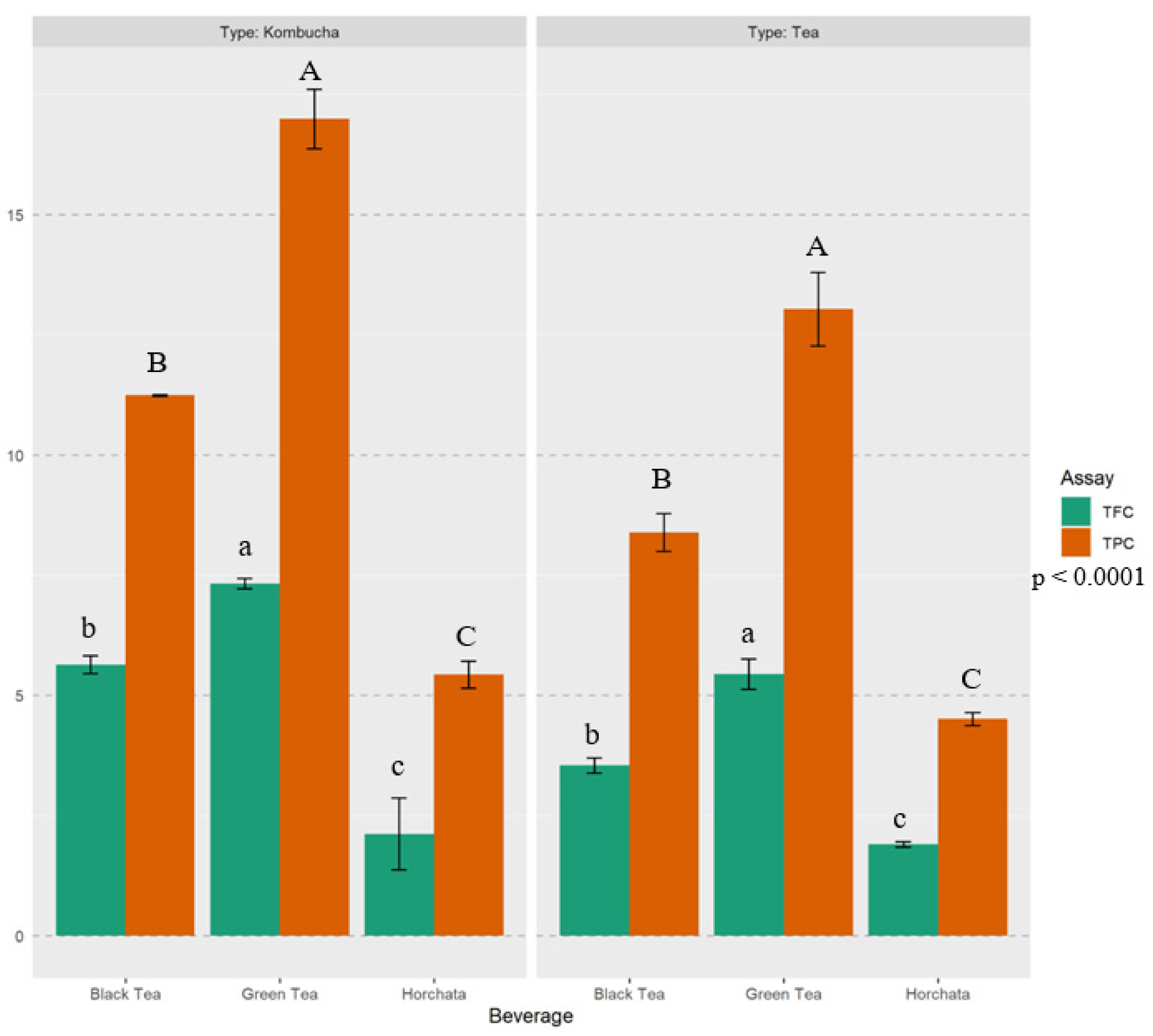
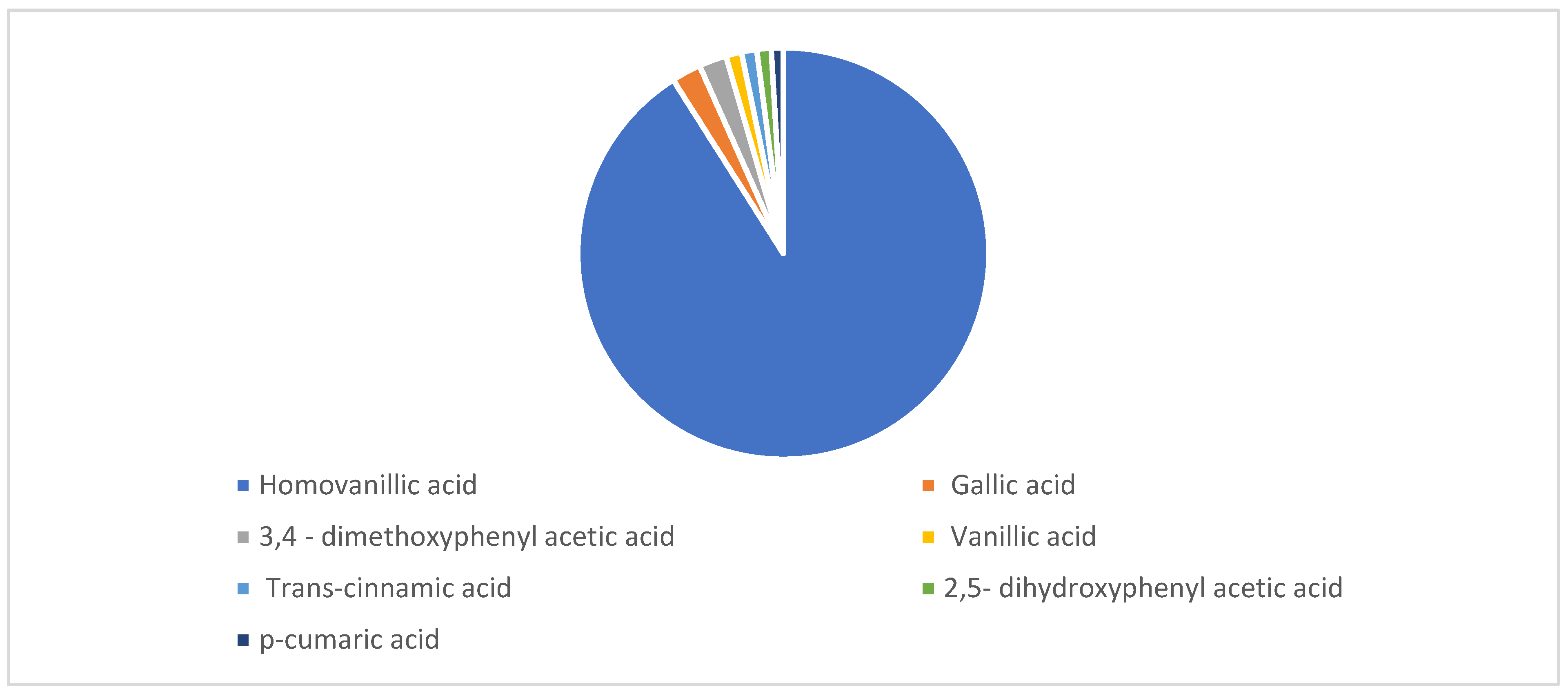
In this study, the influence of different tea extract substrates on the biological activities of kombucha beverages was investigated. The variations in bioactive compounds such as polyphenols and flavonoids and their potential health-promoting properties represented by antioxidant activity were analyzed. Our findings shed light on the diverse effects of tea substrates on the production of bioactive compounds and their subsequent impact on the biological activities of kombucha, providing valuable insights for optimizing kombucha production and its potential health benefits. The new tea substrate for kombucha, called horchata, an Ecuadorian tea, shows a similar trend but with a low content of phenolics (4.511 ± 0.111 mg gallic acid equivalent (GAE)/g dry weight (DW)) and flavonoids (1.902 ± 0.0455 mg quercetin equivalent (QE)/g DW), and antioxidant activity (DPPH—33.569 ± 1.377 µmol TROLOX/g DW, ABTS—20.898 ± 2.709 µmol TROLOX/g DW, FRAP—34.456 ± 2.0618 Fe2+ mM/100 g DW compared to black and green tea as substrates for kombucha. Through HPLC-DAD, several polyphenols were registered, and homovanillic acid showed the highest concentration (74.45 mg/100 g). Horchata kombucha scored the highest in sweetness and smell, reflecting its popularity among the tasters, making it a valuable candidate as a kombucha substrate.
Keywords: antioxidant capacity; black tea; green tea; horchata tea; kombucha; secondary metabolites antioxidant capacity; black tea; green tea; horchata tea; kombucha; secondary metabolites