Review

Engineered Biochar for the Sequestration of Textile Fibrous Microplastics: From Mechanistic Insights to Rational Functional Design

Department of Civil Engineering, California State Polytechnic University, Pomona, CA 91768, USA
*
Author to whom correspondence should be addressed.
Submission received: 20 February 2026 / Revised: 18 March 2026 / Accepted: 4 April 2026 / Published: 7 April 2026
(This article belongs to the Topic Converting and Recycling of Waste Materials)

Abstract

Microplastic pollution has emerged as a major environmental concern due to its persistence, widespread distribution and potential risks to ecosystems and human health. Among the various types of microplastics, fibrous microplastics (FMPs) account for 60% to 90% of all detected microplastic particles in surface waters, primarily originating from synthetic textile production, laundering, and wastewater discharge. Their elongated morphology, high aspect ratio, and complex surface chemistry differentiate them significantly from microplastic fragments or beads, creating unique challenges for effective removal in water treatment systems. In recent years, engineered biochar has attracted increasing attention as a promising and sustainable material for microplastic removal due to tunable pore structure, surface chemistry, and adsorption capacity. However, existing reviews largely discuss microplastic removal in general terms, with limited attention to the distinctive properties of textile FMPs and their implications for biochar design and performance. This review provides a comprehensive and focused analysis of the functional characteristics of biochar that enable the effective removal of textile FMPs in water systems. First, the environmental significance and physicochemical characteristics of textile-derived FMPs are summarized. Next, the major mechanisms governing biochar–microplastic interactions, including physical interception, adsorption, and aggregation processes, are discussed. The review then examines key functional characteristics of engineered biochar, such as pore structure, surface functional groups, hydrophobicity, and composite modifications, that enhance the sequestration of FMPs. Finally, current technological challenges, research gaps, and future directions for developing scalable biochar-based solutions for textile microplastic mitigation are discussed. By linking the unique properties of textile FMPs with the functional design of biochar, this review provides a framework to guide the development of more effective and sustainable treatment strategies for reducing microplastic contamination in aquatic environments.

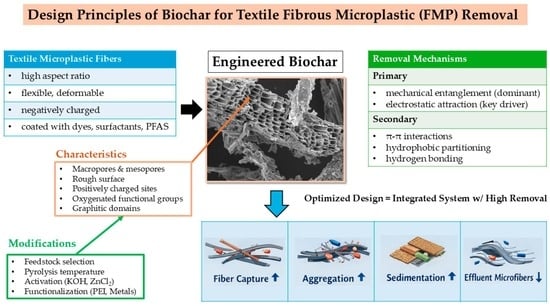
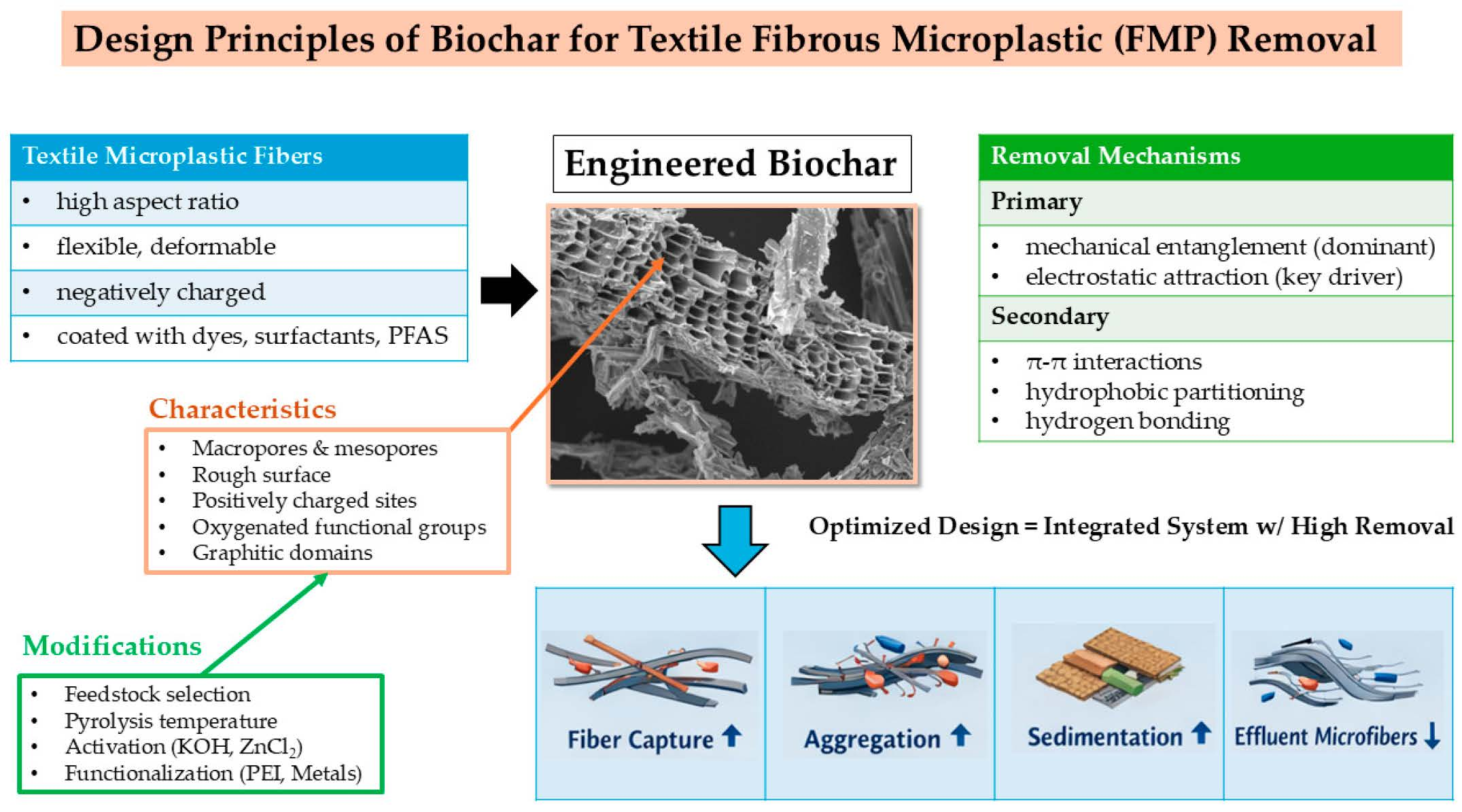
Graphical Abstract

1. Introduction

Microplastics (MPs), typically defined as plastic particles smaller than 5 mm, have emerged as pervasive contaminants in natural and engineered water systems [1]. Over the past decade, a rapidly growing body of evidence has demonstrated that MPs are not only ubiquitous in oceans [2], rivers [3], lakes [4], and drinking water sources [5], but are also capable of entering biological systems and potentially posing risks to ecosystems and human health [6]. Recent studies have reported the presence of MPs in remote and ostensibly pristine environments, including Antarctic snow and ice [7], highlighting their capacity for long-range atmospheric and hydrological transport. Even more concerning, MPs have been detected in human biological samples, including blood [8], lung tissue [9], placenta [10], and fetal tissues [11], suggesting that exposure to MPs may occur through multiple pathways and potentially during critical stages of human development. However, reported concentrations vary widely among studies due to differences in analytical techniques, detection limits, and contamination control procedures [12]. As analytical methods for identifying and quantifying microplastics in biological matrices are still evolving, uncertainties remain regarding the absolute abundance of MPs and their long-term toxicological implications. These findings nevertheless highlight the growing need to better understand human exposure pathways and develop effective strategies for reducing microplastic contamination in environmental and drinking water systems. Due to their small diameter, high aspect ratio, and buoyancy or near-neutral density, a large portion of MPs can pass through conventional water and wastewater treatment plants [13]. Quantitative analyses have reported microplastic concentrations ranging from tens to thousands of particles per liter in surface waters and treated wastewater effluents [14,15], underscoring the scale of the challenge for water quality management.
Among the diverse forms of MPs, textile fibrous microplastics (FMPs) have been consistently identified as a dominant fraction in aquatic environments [16]. Studies characterizing MPs in surface waters and wastewater effluents consistently identify FMPs as the dominant morphotype, typically accounting for 60–90% of all detected MP particles [17,18,19]. These fibers originate primarily from the shedding of synthetic textiles (e.g., polyester, nylon, acrylic, and polypropylene) during washing, wearing, and manufacturing processes [20]. Between 1992 and 2010, global textile fiber consumption grew by 79.3%. This trend is primarily attributable to a threefold increase in synthetic fiber demand, which rose from 16 to 42 million metric tons [16]. Recent estimates suggest an annual release of 50.6–1180 kg of FMPs per 100,000 people from synthetic textile washing [21]. Considering that the actual removal efficiencies of microplastics in WWTPs vary substantially depending on plant configuration, operation conditions, and technologies (e.g., conventional activated sludge systems versus membrane bioreactors), the annual discharge to receiving waters is projected at 2.53–59 kg per 100,000 residents per year when an average removal efficiency of approximately 95% reported in the literature is assumed [21]. This predominance, coupled with the persistence and mobility of these fibrous particles, makes textile FMPs a particularly critical target for mitigation.
While numerous studies have examined the removal of microplastics in general, relatively few investigations have focused specifically on FMPs, which exhibit markedly different transport and adsorption behaviors due to their high aspect ratio and flexibility. Many reported removal efficiencies are therefore derived from experiments using spherical polymer beads or irregular fragments [22,23,24], which may not adequately represent the hydrodynamic behavior of textile fibers. Consequently, the present review places particular emphasis on studies that explicitly investigate fiber-shaped microplastics or textile-derived particles while critically examining the extent to which findings from conventional microplastic systems can be extrapolated to fibrous materials.
Meanwhile, a wide range of technologies have been investigated for the removal of MPs from aquatic environments, including physical separation (e.g., membrane filtration, sand filtration, dissolved air flotation) [25,26,27], chemical and physicochemical processes (e.g., coagulation–flocculation, electrocoagulation) [28,29], and biological approaches (e.g., biofilm-mediated capture) [30]. While these methods often achieve high efficiency under controlled conditions, their practical application is frequently hindered by high energy demands, membrane fouling, and poor selectivity for FMPs [31]. In response, biochar has emerged as a low-cost, carbon-negative, and tunable sorbent with significant potential for MP remediation [32]. Recent studies and reviews have demonstrated that biochar, either as a standalone material or in hybrid systems combined with coagulation, filtration, or membrane processes, shows strong potential for MP removal [33,34,35].
Notably, a meta-analysis by Li et al. (2019) [36] demonstrated that excessive generalization of biochar applications often leads to weak correlations between biochar production parameters and observed performance, particularly when target contaminants exhibit diverse physicochemical properties. Textile FMPs differ fundamentally from MP fragments, beads, and films in terms of morphology, flexibility, surface chemistry, and hydrodynamic behavior [16]. These unique attributes dictate the specific interaction mechanisms with biochar, thereby determining which functional characteristics of the sorbent are most critical for effective sequestration. However, despite a recent surge in the literature reviewing general MP removal, a critical knowledge gap remains concerning textile FMPs. Most existing reviews treat MPs as a homogeneous class [35,37,38], largely overlooking the unique transport behaviors and different removal challenges. Consequently, there is a profound lack of focused syntheses that systematically bridge the distinctive properties of textile microfibers with the rational functional design of biochar.
The objective of this review is to critically examine the functional characteristics of biochar governing the effective removal of textile FMPs. Specifically, this paper: (i) synthesizes the physicochemical properties of textile FMPs and their influence on dominant biochar-based removal mechanisms; (ii) identifies the key biochar functional characteristics required to specifically target these fibrous morphologies; and (iii) outlines prevailing technical challenges and provides a strategic roadmap for future research. To clearly distinguish between material-level design principles and treatment-process performance, this review first examines the structural and surface properties of biochar that influence fibrous microplastic interactions. Subsequently, the discussion transitions toward process-level considerations, including hydraulic scalability, reactor configuration, operational stability, and analytical standardization for wastewater treatment applications. By providing a mechanism- and function-oriented framework, this review aims to inform the rational design of biochar-based technologies for mitigating textile-derived microplastic pollution and advancing cleaner and more resilient water systems.

2. Physicochemical and Morphological Determinants of Textile FMPs

Textile FMPs possess a distinct suite of physicochemical and morphological attributes that differentiate them from conventional MP archetypes, such as spheres, fragments, and films. These characteristics do not merely define their appearance but fundamentally govern their environmental persistence, hydrodynamic transport, and susceptibility to engineered remediation processes.

2.1. Compositional Heterogeneity and Reactive Surfaces

The global burden of textile FMPs is dominated by a specific suite of synthetic thermoplastic polymers. Market data and environmental surveys consistently identify polyethylene terephthalate (PET/polyester) as the primary contributor, accounting for approximately ~55% of global fiber production, followed by polyamide (PA/nylon, ~5%), polyacrylonitrile (PAN/acrylic, ~2%), and polyolefins such as polypropylene (PP) [16,24]. These polymers possess varying degrees of crystallinity and glass transition temperatures ( T g ) that dictate their mechanical fragmentation patterns and thermal stability in aquatic matrices [39].
Beyond the primary polymer backbone, textile fibers must be viewed as multicomponent chemical systems. During manufacturing, fibers are loaded with a diverse array of functional additives that can constitute a significant fraction of the total fiber mass, particularly in highly processed or functionalized textiles. In some industrial textiles, technical fabrics, or heavily treated performance garments, additives may account for approximately 10–30% of the total fiber mass [40], whereas typical consumer textiles may contain lower proportions depending on the type of dyeing, finishing, and coating processes used. For example, azo dyes and metal-complex dyes (often containing Cu, Cr, or Co) are applied to achieve colorfastness, significantly altering the surface potential and electron-donating/accepting capabilities of the fiber [41]. Furthermore, compounds such as phthalates and organophosphate esters (OPEs) are incorporated to enhance flexibility and safety, often leaching into the surrounding aqueous phase and increasing the chemical oxygen demand (COD) at the fiber–water interface [42]. Additionally, hydrophobic coatings, such as per- and polyfluoroalkyl substances (PFAS) or silicone oils, are applied for water and stain resistance. These finishes create a high interfacial tension and strongly influence the partition coefficient ( K o w ) of the FMPs, thus affecting their partitioning behavior in aquatic environments [43].
Consequently, textile FMPs do not function as inert or homogeneous substrates. Instead, they act as dynamic, reactive surfaces [24]. The presence of these additives can modulate the zeta ( ζ ) potential, often shifting it toward more negative values. Reported ζ -potential values typically range from approximately −15 to −50 mV under circumneutral pH conditions (pH~6–8) and low to moderate ionic strengths commonly used in laboratory measurements, although the exact values may vary depending on polymer type, surface weathering, electrolyte composition, and measurement protocols [44]. Such surface charge characteristics play an important role in governing electrostatic interactions with sorbent materials including engineered biochars [45]. Some additives also increase the specific surface energy (i.e., the energy needed to create a new unit of surface area for a material) of FMPs, leading to their increased mobility [46]. This chemical heterogeneity ensures that FMPs engage in sophisticated interactions, including hydrogen bonding, ππ stacking, and hydrophobic partitioning, with both natural organic matter and engineered sorbents like biochar [38].

2.2. Geometric Anisotropy and Anomalous Hydrodynamics

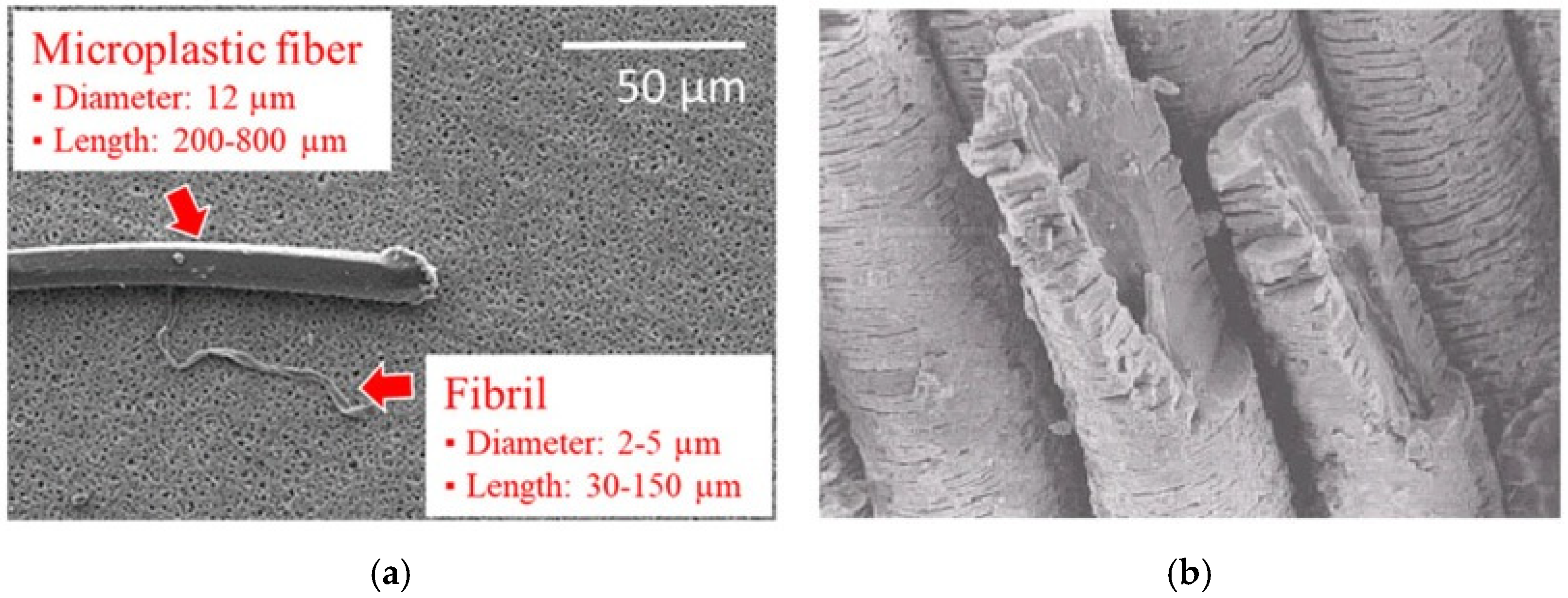
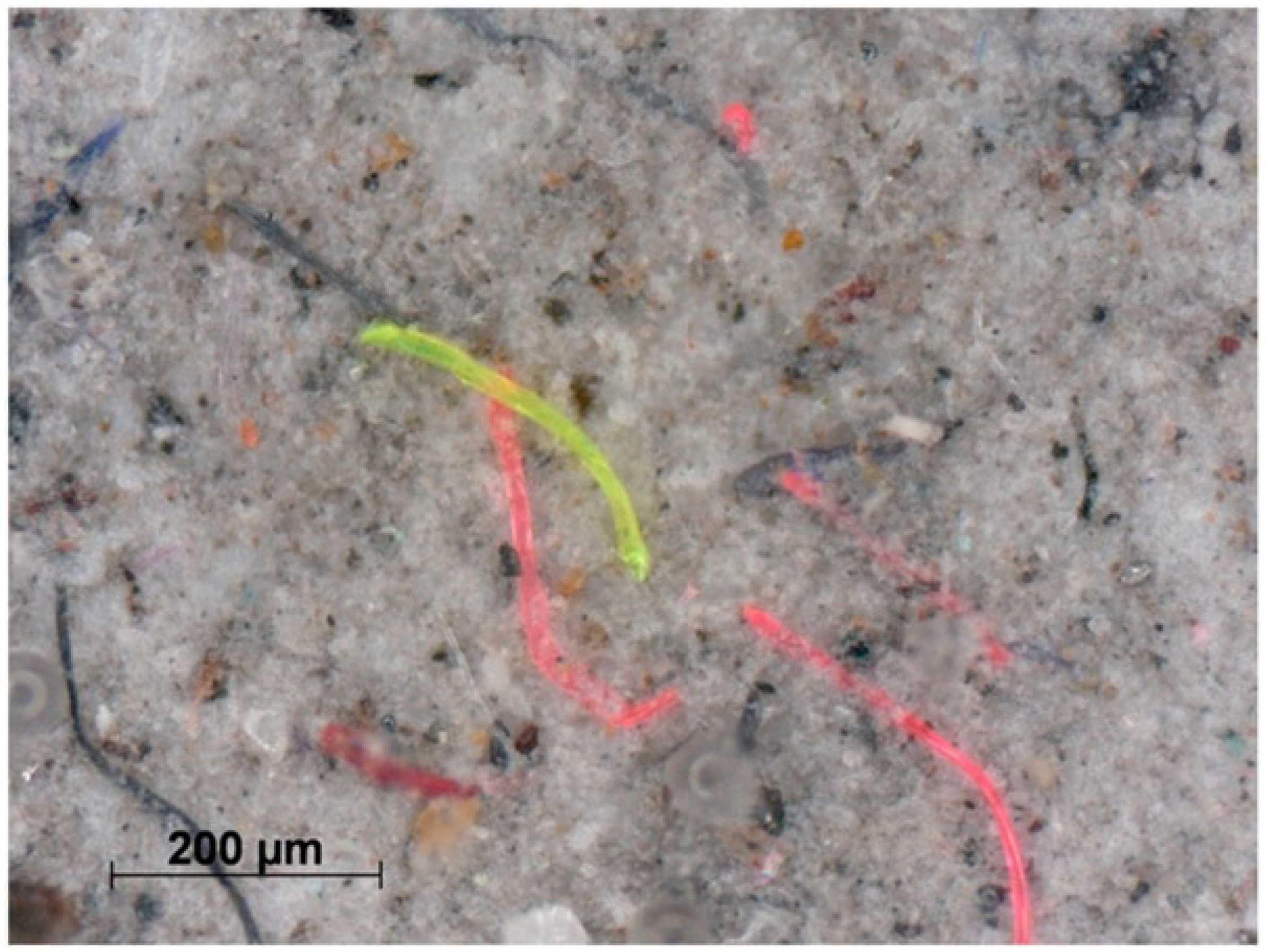
Morphologically, as shown in Figure 1a, textile FMPs are defined by exceptionally high aspect ratios (L/D), frequently exceeding 100:1 and reaching as high as 500:1 in environmental samples [47]. They possess characteristic diameters typically ranging from 5 to 30 μm, while lengths can extend from 100 μm to several millimeters [47]. This extreme anisotropy and inherent structural flexibility confer unique hydrodynamic behaviors that deviate significantly from the predictable settling velocities governed by Stokes’ Law for rigid spheres.
Under both laminar and turbulent flow regimes, FMPs undergo dynamic deformation and axial alignment with streamlines [22]. This slender-body behavior facilitates a threading effect, wherein fibers orient their longitudinal axis parallel to the flow, allowing them to penetrate the interstitial voids of conventional sand filters or membrane pores that would otherwise exclude spherical particles of an equivalent volume [1]. Quantitatively, studies have shown that fibrous particles can bypass filtration meshes whose openings are significantly smaller than their total fiber length, because the fibers can rotate and align with the flow field. As a result, fibers may pass through mesh openings that are two to three times smaller than their length, provided that the pore size remains larger than the fiber diameter, which typically governs the effective exclusion threshold in filtration processes [21].
Furthermore, the high specific surface area (SSA), which for typical synthetic fibers ranges from 0.5 to 1.5 m2/g depending on the cross-sectional geometry (e.g., trilobal vs. circular), provides an expansive interface for interfacial phenomena [48]. This elevated SSA facilitates the concentrated partition-based adsorption of dissolved organic matter (DOM), heavy metals (with partition coefficients, log Kp, often ranging from 3.0 to 5.5), and persistent organic pollutants (POPs) [16,49,50]. By serving as high-capacity sorptive platforms, FMPs function as both primary contaminants and mobile vectors for co-contaminant transport. This dual role allows them to alter the chemical speciation and bioavailability of associated pollutants within aquatic matrices, significantly complicating the environmental risk assessment of textile-derived emissions.

2.3. Weathering Dynamics and Variable Buoyancy

The interfacial properties of textile FMPs are a dynamic product of nascent polymer chemistry and cumulative environmental weathering, as shown in Figure 1b [51]. Primary degradation pathways, including domestic laundering, mechanical abrasion, and photo-oxidative aging, induce severe structural and chemical transformations [50]. Photo-oxidation, in particular, facilitates the cleavage of polymer chains and the formation of oxygen-containing functional groups, such as carboxyl (–COOH), hydroxyl (–OH), and carbonyl (C=O) moieties [51]. Quantitatively, this is often characterized by a significant increase in the carbonyl index (CI), which measures the intensity or the area of the carbonyl band compared with the intensity or the area of a reference band; for instance, weathered PET fibers can exhibit a CI increase from near-zero to over 0.5–1.2, signaling a heightened density of reactive surface sites [52]. These chemical modifications, coupled with the development of micro-fractures and increased surface roughness (often measured as a 2- to 5-fold increase in root mean square roughness), dramatically enhance surface charge heterogeneity and the adsorption potential for both polar and non-polar species [53].
Furthermore, FMP buoyancy is not a static function of intrinsic polymer density ( ρ ). While virgin polymers like polypropylene ( ρ 0.91 g/cm3) are naturally buoyant and polyester ( ρ 1.38 g/cm3) is prone to sinking, their actual transport is governed by a dynamic effective density. This is influenced by the entrapment of air within the fibrous interstitial spaces, which can increase buoyancy by up to 20–30%, and the subsequent development of biofilms (biofouling) or hetero-aggregates with suspended minerals [30,54]. These factors lead to a complex vertical flux and non-linear settling velocities that deviate from traditional sedimentation models [54], necessitating removal strategies that can address both buoyant and suspended fibrous fractions.

3. Mechanisms of Biochar-Mediated FMP Sequestration

The efficacy of biochar in removing textile-derived FMPs is not governed by a single pathway but rather by a synergistic interplay of physical, chemical, and mechanical mechanisms. Unlike traditional MP literature focused on point-contact interactions, FMP removal exploits the fiber’s unique slender-body morphology and longitudinal dimensions.
It should be noted that the mechanistic interpretations presented in this section are derived from a combination of experimental observations reported in adsorption studies and theoretical interpretations based on surface chemistry and colloidal interaction models. Where direct experimental evidence for fibrous microplastics is limited, the mechanisms discussed should be considered conceptual frameworks that require further experimental validation, particularly under realistic wastewater conditions.

3.1. Hierarchical Interception and Mechanical Bridging

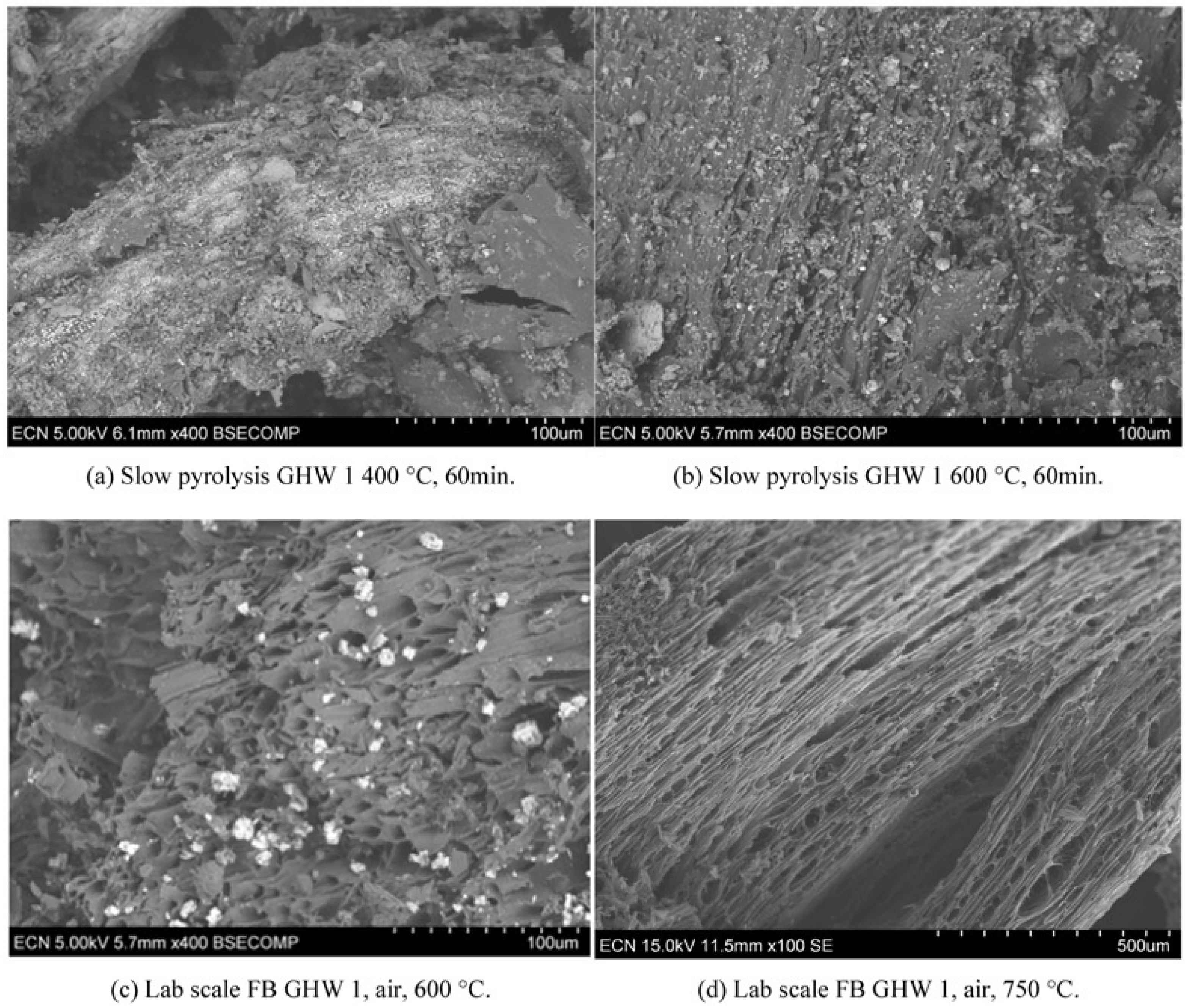
Unlike the point-contact interactions characteristic of spherical or fragmented microplastics, the removal of textile FMPs is primarily governed by their anisotropic, slender-body morphology, which facilitates sequestration through complex physical entanglement [50]. The efficacy of this mechanism is intrinsically linked to the structural evolution of biochar during thermochemical conversion. High-temperature pyrolysis (>600 °C) induces significant carbonization and de-volatilization, resulting in a rigid, highly developed carbon skeleton characterized by a hierarchical pore network (Figure 2) [55].
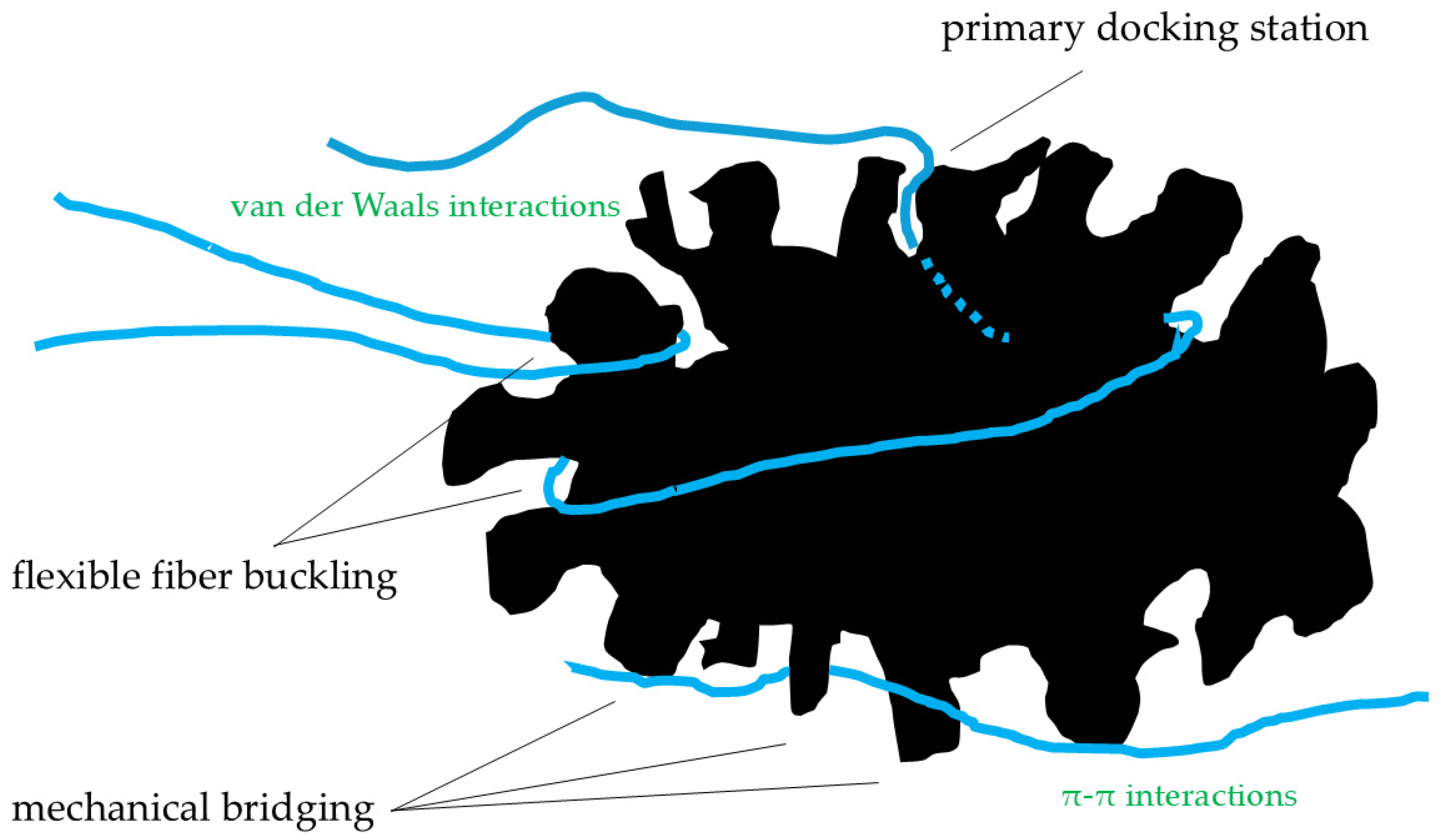
The presence of a well-developed macropore network plays a critical role in facilitating interactions between biochar and FMPs. While the International Union of Pure and Applied Chemistry (IUPAC) definition classifies macropores as >50 nm, the effective docking of textile fibers primarily occurs within larger structural features of biochar, including micrometer-scale surface cavities, fissures, and inter-particle void spaces formed within biochar aggregates (Figure 3) [57]. These larger structural openings serve as the primary mechanical interception sites for fibrous substrates.
In addition to these micrometer-scale cavities, the nanometer-scale macropores (>50 nm) and inherent surface rugosity contribute to secondary anchoring by increasing the local surface roughness and friction resistance [58]. Although the primary diameter of a textile fiber (5–30 μm) typically exceeds the dimensions of individual meso- and micropores, fiber tips or flexible segments may partially penetrate into surface invaginations or structural cavities, allowing localized deformation and mechanical interlocking with the biochar matrix [58]. This nesting effect increases the contact area-to-volume ratio, providing a mechanical shield against the hydrodynamic shear forces prevalent in turbulent wastewater streams [59]. This process is further amplified by the structural flexibility of synthetic polymers, which allows fibers to deform and lock into the biochar’s surface topology [60]. Unlike spherical microplastics that interact via a single tangential point-contact, the deep-seated anchoring of fibers within these surface cavities and inter-particle voids prevents the sloughing off effect [17]. This ensures that once a fiber undergoes initial attachment, it remains physically constrained (Figure 3), allowing time for slower, short-range forces (van der Waals and ππ interactions) within the adjacent meso- and micropores to establish irreversible chemical bonds [61].
Recent empirical studies utilizing textile-derived fibers have demonstrated that biochar possessing a hierarchical pore architecture can achieve removal efficiencies as high as ~95% under controlled laboratory conditions [37]. These values are typically reported in experiments using synthetic or simplified aqueous matrices, with defined fiber concentrations (often in the range of tens to hundreds of particles per liter) and contact time ranging from minutes to several hours, depending on the filtration or adsorption configuration. This superior performance is largely attributed to inter-particle bridging effects within packed biochar beds [62]. Given that FMP lengths (100–1000 μm) often exceed the mean particle diameter of biochar sorbents by an order of magnitude, a single fiber can simultaneously entangle across multiple biochar grains [62]. This multi-point attachment transforms the biochar–fiber matrix into a secondary filtration mat or a dynamic membrane. The formation of this tangled network has been shown to reduce the effective pore size of the filter bed, thereby enhancing the secondary capture of smaller particulate matter and incidental micro-fragments through an intensified depth-filtration mechanism [62]. Consequently, the physical architecture of the biochar does not merely act as a passive sieve but functions as a structural scaffold that promotes the self-assembly of fiber-based filtration barriers.

3.2. Electrostatic Coupling and Charge-Reversal Strategies

The interfacial elective force between biochar and textile FMPs is primarily governed by electrical double layer (EDL) interactions, where the surface charge density of both the sorbent and the substrate dictates the collision efficiency [63]. In aqueous matrices at circumneutral pH (pH 6.0–8.0), the majority of synthetic textile polymers (most notably PET and nylon) undergo deprotonation of surface functional groups or preferential adsorption of hydroxyl ions, resulting in a distinct net negative zeta potential ( ζ ) typically ranging from −15 to −50 mV [37,45,64].
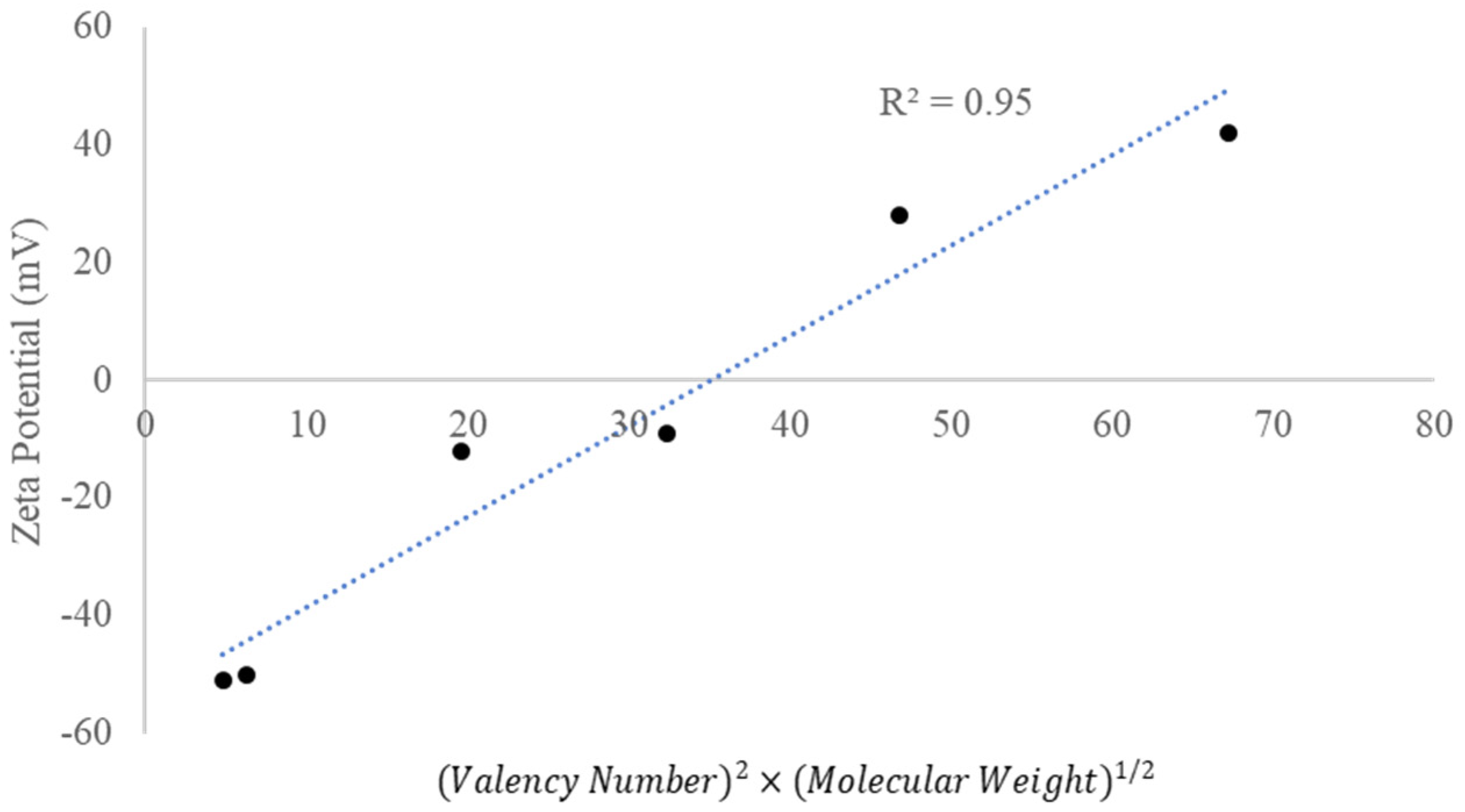
Pristine biochar typically exhibits a negative surface charge due to the presence of oxygen-containing functional groups (e.g., carboxyl and phenolic moieties) formed during biomass carbonization [65]. According to the Derjaguin–Landau–Verwey–Overbeek (DLVO) theory, the total interaction energy between a fiber and a sorbent is the sum of attractive van der Waals forces and repulsive EDL forces [66]. Introducing a positive surface charge on the biochar surface effectively neutralizes the negative potential of the FMP. For example, incorporating multivalent metal species, such as Al3+, Fe3+, or Zn2+, through hydrothermal impregnation or co-pyrolysis, can transition the biochar surface to a strongly positive regime ( ζ > +30 mV) [45,67]. According to the data reported in Long et al. (2018) [68], the increase in zeta potential from multivalent metal species modification correlates strongly with the product of ( V a l e n c y   N u m b e r ) 2 × ( M o l e c u l a r   W e i g h t ) 1 / 2 , yielding a significant coefficient of determination (R2 = 0.95), as illustrated in Figure 4. Additionally, the use of Lewis acid dopants like AlCl3 or the grafting of quaternary ammonium groups introduces persistent positive charge sites that remain stable across a broad pH spectrum [69,70].
For textile FMPs, the effect of functionalization via metal-oxyhydroxide loading or Lewis acid doping is particularly significant; unlike spherical particles that interact at a single tangential point, the elongated morphology of a fiber allows for longitudinal electrostatic coupling along the fiber axis [60]. Recent empirical data indicate that such cationized biochar composites can enhance the equilibrium adsorption capacity ( q e ) for textile microfibers by a factor of 3 to 5 relative to unmodified counterparts [71]. Furthermore, the localized electric field generated by metal-doped biochar can induce dipole–dipole interactions with polar segments of the polymer chain (such as the amide bonds in nylon), providing a secondary stabilization mechanism that maintains attachment under the shear stresses of turbulent flow [72,73].

3.3. Aromatic Partitioning and π–π Interactions

The sequestration of synthetic FMPs, particularly those derived from aromatic fibers like PET and certain polyamides, is heavily mediated by the interplay between hydrophobic partitioning and ππ electron donor–acceptor (EDA) interactions [74]. Synthetic textile fibers are inherently hydrophobic; this characteristic is often quantified by high octanol-water partition coefficients (log K o w ) of their constituent monomers and the high water contact angles (>90°) exhibited by the fiber surfaces [75]. Biochar, especially when pyrolyzed at temperatures exceeding 700 °C, undergoes significant carbonization and aromatization, resulting in the formation of a condensed, graphenic, s p 2 -hybridized carbon structure [76]. As the s p 2 domains expand, the biochar’s conductivity and electron-shuttling capacity increase, directly enhancing its affinity for aromatic FMP chains [77].
The aromatization process, often monitored via Raman spectroscopy (specifically the I D / I G ratio) or X-ray diffraction (XRD), increases the graphitic index [78]. The aromatic framework serves as an expansive platform for ππ EDA interactions, where the electron-rich graphitic planes of the biochar act as donors or acceptors to the aromatic moieties within the FMP polymer backbone [74]. Unlike non-specific van der Waals forces, ππ interactions can provide relatively stronger non-covalent binding energies (commonly estimated in the range of ~10–50 kJ/mol in computational and thermodynamic studies of aromatic interactions) [79], which is essential for stabilizing the FMP–biochar interface under the shear stresses of aqueous flow. These energy estimates are typically derived from molecular modeling and adsorption thermodynamic analyses of aromatic systems rather than direct experimental measurement of individual interfacial bonds, and the effective interaction strength may vary depending on molecular orientation, solvent environment, and surface functionalization. This mechanism can promote the stabilization of polymer chains onto the graphitic lamellae of biochar, thereby reducing the probability of desorption during hydraulic fluctuations [80].
The hydrophobic effect is driven by the increase in entropy ( Δ S ) resulting from the release of structured water molecules (iceberg structures) from the hydrophobic surfaces of both the FMP and the biochar into the bulk aqueous phase [74]. This spontaneous partitioning is further stabilized by short-range Van der Waals forces [22]. Notably, the adsorption of microplastics onto biochar is frequently characterized by the Freundlich isotherm model, with the Freundlich constant (1/n) typically falling below 1.0, indicating a high affinity and a distribution of adsorption sites with varying energy levels across the heterogeneous biochar surface [81].
For textile FMPs, the exceptionally high SSA of engineered biochars (frequently optimized within the 200–600 m2/g range) is critical [36]. However, research suggests that the effective contact area is dictated by the accessibility of these hydrophobic domains [37]. While the internal microporosity (<2 nm) may be sterically inaccessible to the 5–30 μm diameter of a fiber, the meso- and macroporous hydrophobic surfaces provide the necessary interfacial contact [82]. Recent studies using PET fibers have reported adsorption capacities ( q m a x ) significantly higher than those for polyethylene (PE) or polypropylene (PP), a phenomenon directly attributed to the additional stabilization provided by ππ stacking between the terephthalate rings of the fiber and the aromatic clusters of the biochar [83].

3.4. Longitudinal Multi-Point Attachment and Cooperative Binding

Unlike spherical microplastic archetypes, which are restricted to localized, quasi-point-contact interactions, the millimetric longitudinal dimension of FMPs enables multi-point attachment (MPA) [60]. This phenomenon occurs when a single high-aspect-ratio fiber spans multiple discrete functional domains on a biochar particle (or bridges across several biochar particles) simultaneously [84].
From a thermodynamic perspective, this spatial extension transitions the interaction from a simple bimolecular collision to a cooperative binding regime. The summation of individual, weak non-covalent forces (e.g., Van der Waals, dipole–dipole) across the extensive fiber-sorbent contact area can substantially increase the cumulative adsorption free energy ( Δ G a d s ). As a result, FMPs may exhibit stronger overall adsorption stability than spherical particles of comparable volumes because their elongated morphology enables multi-point contact with the sorbent surface rather than a single tangential point of interaction [66]. This molecular anchoring effect reduces the probability of fiber detachment under the shear stresses typical of turbulent flow in wastewater treatment systems [17].
In realistic textile-effluent matrices, FMPs are rarely pristine; their surfaces are complex chemical landscapes modified by residual chromophores (dyes) and amphiphilic surfactants [85]. These auxiliary species act as molecular bridges that facilitate secondary interaction pathways [85]. Specifically, the polar substituents of common textile dyes (e.g., sulfonated or hydroxylated groups) can engage in extensive hydrogen bonding with the oxygenated functional moieties (primarily carboxylic, phenolic, and carbonyl groups) that are prevalent on the surfaces of low-temperature biochars (<400 °C) [86,87].

3.5. Hetero-Aggregation, Flocculation, and Ballasting Effects

Biochar particles function as high-efficiency nucleation templates and ballasting agents, facilitating the formation of dense biochar-FMP hetero-aggregates [88]. In the complex matrix of textile-laden wastewater, the transition from discrete, suspended microfibers to settleable flocs is often kinetically limited by the low collision frequency and high hydrodynamic drag associated with anisotropic FMPs [89]. Biochar integration addresses these limitations by modulating the colloidal stability of the system [58].
In hybrid treatment systems, biochar acts as a weighting agent that enhances the physical properties of chemical flocs. When utilized alongside traditional coagulants (e.g., aluminum sulfate or ferric chloride), biochar particles (10–100 μm) provide a rigid substrate that promotes sweep flocculation [37]. The high surface rugosity of biochar increases the collision cross-section for flexible textile fibers, which wrap around the carbonaceous biochar core through a combination of physical entanglement and van der Waals attractions [38]. Empirical data from recent studies on laundry-derived effluent under controlled laboratory coagulation-flocculation experiments demonstrate that biochar-assisted flocculation can reduce the required dosage of primary coagulants (e.g., alum or aluminum-based salts) by approximately 30% in certain experimental systems while maintaining comparable or improved turbidity removal performance [90]. These results have typically been observed in batch or jar-test studies using laundry wastewater or simulated textile effluent with defined suspended particle concentrations, and the extent of coagulant reduction may vary depending on water chemistry, biochar properties, and operational conditions.
The inclusion of dense carbonaceous biochar nuclei (1.5–2.1 g/cm3 skeleton density) fundamentally alters the sedimentation profile of FMPs [91]. By incorporating into the floc matrix, biochar increases the effective density of the aggregate, leading to an increase in settling velocities by over 200% (often exceeding 2.5 mm/s), effectively circumventing the buoyancy trap of synthetic fibers like PP and nylon [60].
Moreover, beyond simple weight addition, biochar influences the fractal dimension ( D f ) of the resulting FMP aggregates [92]. Standard FMP flocs are often highly porous and prone to shear-induced breakage during agitation. The introduction of biochar promotes the development of more compact, multi-level structures with higher D f values [60]. This structural reinforcement is particularly critical in the presence of anionic surfactants (common in textile wastewater) that typically stabilize FMP suspensions through steric and electrostatic repulsion [93]. Biochar-induced compression of the electrical double layer shortens Debye length, allowing attractive forces to dominate and yielding aggregates suitable for large-scale hydraulic treatment [94].

4. Rational Design of Biochar for Targeted FMP Sequestration

To transition from incidental MP removal to targeted FMP sequestration, biochar must be engineered with specific functional characteristics that address the unique morphology and interfacial chemistry of textile fibers [36]. The rational design of these sorbents involves a precise calibration of thermochemical parameters and post-synthetic modifications to optimize the structure–property–performance relationship.
Importantly, the performance of biochar in FMP removal is not governed by a single parameter, but rather by a synergistic interplay among structural (e.g., specific surface area and pore architecture), interfacial (e.g., surface charge and functional groups), and mechanical (e.g., entanglement and bridging) factors. Among these, emerging evidence suggests that mechanical entanglement enabled by hierarchical porosity and surface roughness, combined with interfacial forces such as electrostatic attraction and ππ interactions, are the dominant contributors to high removal efficiencies. Therefore, optimal performance is achieved through integrated design rather than maximizing any single property in isolation.

4.1. Hierarchical Porosity and Morphological Complementarity

The effective sequestration of textile FMPs necessitates a departure from the micropore-centric paradigms typically employed in the adsorption of low-molecular-weight aqueous pollutants. Given the characteristic diameter of textile fibers (5–30 μm), capture is not a function of molecular diffusion into the carbon matrix but rather a multiscale morphological docking process [48]. Engineered biochar must therefore possess a hierarchical pore architecture, where a multimodal distribution of macro-, meso-, and micropores operates in concert to facilitate physical entrapment and chemical stabilization [95].
While high specific surface area (SSA) is traditionally considered a key performance metric for adsorption processes [36], its role in FMP removal is secondary to the accessibility and geometry of pore structures. In particular, macropores and surface cavities—rather than micropores—serve as primary docking sites for fiber interception and entanglement. Therefore, optimizing pore size distribution and surface topology is more critical than maximizing SSA alone for fibrous microplastic capture.
First, the selection of lignocellulosic feedstocks with highly organized vascular systems (e.g., the xylem and phloem structures of bamboo, woody biomass, or maize stalks) is critical [57]. During carbonization, these inherent cellular conduits act as natural templates, preserving an interconnected network of longitudinal macro-channels that are dimensionally compatible with microfibers [37].
Furthermore, pyrolysis temperatures in the moderate-to-high range (typically ~500–900 °C) can facilitate pore development during biochar formation and promote the removal of volatile organic compounds (VOCs) [96]. Elevated temperatures (e.g., >600 °C) generally enhance devolatilization and structural arrangement, which can clear blocked pores and induce thermal shrinkage of the carbon lamellae. This process often increases pore connectivity and SSA, although comparable functional pore structures may also be achieved at lower temperatures depending on feedstock characteristics and processing conditions [97]. Additionally, higher-temperature treatment also generally enhances the mechanical rigidity of the pore walls, ensuring the structural integrity of the docking sites under high hydraulic loading [97].
To further refine the interface, chemical activating agents such as K2CO3, KOH, or ZnCl2 can be employed [38,65]. These agents act as chemical etchants that induce localized pitting on the carbon surface. This process creates secondary mesoporosity (2–50 nm) and enhances surface rugosity, which is a critical factor for mechanical entanglement [38]. By increasing the fractal dimension of the biochar surface, chemical activation creates surface irregularities of the biochar that match the micro-fractures of weathered textile fibers, drastically increasing the probability of multi-point attachment [71].

4.2. Surface Charge Engineering and Cationic Functionalization

As established, synthetic fibers possess a distinct net negative zeta potential ( ζ −15 to −50 mV) due to the presence of polar additives and oxygenated moieties [98]. Pristine biochar typically mirrors this negative polarity, resulting in a formidable electrostatic repulsion barrier that prevents the close-range approach required for short-range van der Waals forces to take effect [45].
Among the interfacial properties, surface functionalization plays a pivotal role in overcoming this barrier. Specifically, cationic modification is often identified as a key factor for enhancing removal efficiency in aqueous systems where electrostatic interactions dominate. Compared to unmodified biochar, functionalized biochars with positive surface charge (ζ > 0 mV) exhibit significantly higher collision efficiency with negatively charged fibers.
Achieving a stable, positive surface regime requires a strategic selection of dopants and thermochemical conditions [73]. For instance, post-synthetic impregnation or co-pyrolysis with multivalent cations (e.g., Fe3+, Al3+, Mg2+) results in the formation of mineral–carbon composites [99]. These metals form hydroxy-complexes on the biochar surface that provide permanent, pH-resilient positive charge sites. These sites act as electrostatic lures, significantly increasing the collision efficiency between the sorbent and the FMPs [100]. Alternatively, the grafting of nitrogen-rich polymers, such as polyethyleneimine (PEI) or chitosan [35], or the introduction of quaternary ammonium groups, provides a high density of protonated amine sites [101]. These functional groups maintain a positive charge even in alkaline wastewater conditions, where metal-based sorbents might otherwise reach their point of zero charge [57].
A critical design trade-off exists between the structural benefits of high-temperature pyrolysis and the chemical benefits of lower temperatures [83]. As discussed in Section 4.1, high temperatures are essential for generating the hierarchical macroporosity and rigid carbon skeleton required for mechanical entanglement and physical shielding [97]. However, this comes at the cost of de-functionalization, as oxygen-containing functional groups (OFGs) are lost as volatile species [83]. Conversely, lower-temperature carbonization preserves a higher density of carboxylic, phenolic, and hydroxyl OFGs [87]. While these groups are initially negative, they serve as essential chemical anchors for subsequent cationic modifications. For instance, PEI or metal ions bind more effectively to a biochar surface rich in OFGs [37]. Therefore, the choice of temperature depends on the intended removal pathway. If the primary goal is mechanical entanglement, high-temperature biochar is superior. If the goal is electrostatic/chemical adsorption, a low-temperature biochar (modified to reverse its native charge) provides a higher density of active sites [36]. Modern rational design often employs a two-stage approach: high-temperature pyrolysis to establish the physical scaffold, followed by chemical oxidation or grafting to re-introduce the necessary functional groups.

4.3. Graphitic Degree and π–π Affinity Optimization

For synthetic FMPs containing aromatic backbones, the degree of graphitization and the resulting electronic environment of the biochar are critical determinants of adsorption affinity [97]. Beyond non-specific dispersive forces, the interaction between the sorbent and the fiber is governed by the overlap of π -orbitals, necessitating a carbon matrix with high structural order [102]. Although ππ interactions contribute to the stabilization of the biochar–fiber interface, their effectiveness depends strongly on prior physical contact established through mechanical entanglement or electrostatic attraction. Therefore, ππ interactions should be viewed as a secondary stabilization mechanism rather than a primary capture pathway.
The transition from amorphous biomass to a pseudo-graphitic carbon scaffold requires precise control over the kinetics and thermodynamics of carbonization. High-intensity pyrolysis is the primary driver of carbon structural reorganization. As temperatures exceed ~700 °C, the carbonaceous matrix can undergo significant condensation, leading to the growth of polycyclic aromatic hydrocarbons (PAHs) into larger, fused-ring graphitic domains that increase the degree of structural ordering in the carbon framework [102]. This increase in graphitic character provides more extended aromatic surfaces that can facilitate longitudinal contact with FMPs and enhance π π interactions [97].
To further promote graphitic ordering at relatively lower temperatures, transition metal catalysts such as iron (Fe), nickel (Ni), or cobalt (Co) may be introduced via pre-impregnation. These metals can act as nucleation sites during pyrolysis, lowering the activation energy for the conversion of disordered carbon into more ordered graphitic nanostructures [100]. However, the formation of highly engineered nanostructures (e.g., carbon nanotubes or onion-like carbons) is typically demonstrated under controlled laboratory conditions and may not be economically feasible for large-scale wastewater treatment applications. In practice, the use of catalytic graphitization should therefore be considered as a conceptual strategy for enhancing aromatic surface domains, while scalable biochar production for water treatment may rely on simpler pyrolysis processes that balance performance, cost, and operational practicality.
Additionally, the soaking time (i.e., residence time) at peak temperature is critical for ensuring structural homogeneity [103]. Extended residence times facilitate the removal of residual amorphous carbon and tar-like de-volatilization products that might otherwise occlude the high-energy graphitic planes [103]. By maximizing the accessibility of these s p 2 -hybridized domains, researchers can optimize the effective sorptive surface area specifically for aromatic FMP capture [38].

4.4. Amphiphilicity Modulation and Surface Free Energy Alignment

In engineered aqueous systems, the adsorption of FMPs is largely governed by the thermodynamic compatibility between the sorbent and the substrate [33]. Textile fibers are rarely pristine polymers; they often possess complex surface coatings, such as hydrophobic PFAS for stain resistance or hydrophilic ethoxylated surfactants for antistatic properties [43]. Surface energy alignment and amphiphilicity are particularly important for fibers with complex coatings (e.g., surfactants or hydrophobic finishes) [88]. However, compared to structural and electrostatic factors, amphiphilicity primarily enhances attachment probability rather than acting as a dominant capture mechanism.
In bulk water, hydrophobic surfaces are surrounded by highly ordered, iceberg-like clusters of water molecules held together by hydrogen bonds [75]. When the hydrophobic domains of biochar and FMPs associate, these ordered water structures are displaced and returned to the bulk phase. This increase in system disorder leads to a significant positive entropic gain (∆S > 0), resulting in a negative Gibbs free energy (∆G < 0) and spontaneous partitioning [104]. Matching the water contact angle and surface free energy of the biochar to the fiber minimizes the energy barrier for this displacement. As a result, the spontaneity of partitioning can be maximized [104].
The hydrophobic/hydrophilic balance of biochar can be systematically manipulated through both the thermal intensity of carbonization and post-synthetic surface engineering [105]. The degree of carbonization directly dictates the surface polarity [106]. Intense pyrolysis results in the extensive loss of oxygen-containing functional groups (OFGs) and hydrogen, leading to low O/C and H/C ratios [36]. This produces a highly non-polar, hydrophobic surface optimized for weathered polyolefins or fibers with fluorinated finishes [107]. Conversely, lower temperatures preserve a high density of polar moieties. This renders the biochar more hydrophilic, facilitating better wetting and interaction with fresh fibers or those carrying hydrophilic antistatic coatings [97].
For ultra-hydrophobic fibers (e.g., those treated with PFAS), the biochar surface can be modified with organosilanes (e.g., octadecyltrichlorosilane) to minimize the interfacial energy gap [108]. This grafting process allows for precise adjustment of the carbon surface energy, creating super-hydrophobic sorbents for polyolefin capture. Alternatively, aminosilanes can be used to introduce specific ligands capable of hydrogen bonding with the amide linkages in nylon (polyamide) fibers, providing a targeted chemical handshake that transcends simple hydrophobic partitioning [109].

4.5. Ballasting Potential and Skeletal Density Modulation

In integrated wastewater treatment trains, the sedimentation kinetics of FMPs are often the primary bottleneck for efficient removal [17]. Many synthetic fibers possess densities near or below that of the aqueous phase, leading to prolonged hydraulic retention and a high probability of effluent breakthrough [19]. To circumvent these buoyancy constraints, biochar must be engineered as a high-efficiency ballasting agent. By functioning as a dense nucleus for hetero-aggregation, biochar facilitates the formation of composite flocs with a significantly higher effective density than the isolated fibers [58]. This increase in skeletal density fundamentally alters the sedimentation profile, shifting the mechanism from hindered suspension to rapid, gravity-driven settling.
Notably, ballasting and hetero-aggregation represent process-level enhancements rather than intrinsic adsorption mechanisms. While they significantly improve the overall removal efficiency in sedimentation-based systems, their effectiveness depends on prior attachment between fibers and biochar particles.
The intrinsic density of biochar is largely determined by the mineral-to-carbon ratio, which can be strategically manipulated through feedstock selection and thermochemical processing [91]. Utilizing high-ash precursors, such as municipal sewage sludge, dairy manure, or rice husks, yields biochars with a dense inorganic matrix composed of silica (SiO2), calcium carbonates (CaCO3), and iron oxides [110,111,112]. During pyrolysis, the concentration of these non-volatile minerals increases as the organic fraction is de-volatilized, resulting in a carbonaceous composite with a superior skeletal density [112]. These mineral inclusions not only provide the mass required for ballasting but also act as internal structural reinforcements, maintaining the integrity of the biochar particle under the compressive forces of large-scale flocculation tanks [113].
Beyond endogenous mineralization, the skeletal density and operational utility of biochar can be enhanced through the incorporation of ferromagnetic nanostructures [114]. By synthesizing magnetic biochar composites (typically via the in situ precipitation of magnetite (Fe3O4) or co-pyrolysis with iron-salts), researchers can achieve a dual-purpose functionalization [115]. The high density of iron oxides (typically >5.0 g/cm3) dramatically increases the overall settleability of the biochar-FMP aggregate [113]. Furthermore, this magnetic signature enables a zero-waste recovery pathway; external magnetic separators can be employed to retrieve the fiber-loaded sorbents from the sludge phase, preventing the secondary contamination of biosolids and allowing for potential thermal regeneration of the biochar [116].
However, the environmental stability of magnetic biochar must also be carefully considered. Under certain aqueous conditions, particularly at low pH or in the presence of complexing ligands, partial dissolution of iron oxides or the release of nanoscale iron particles may occur. Such processes could contribute to metal accumulation in treatment residuals or sludge streams. Therefore, future studies should incorporate systematic leaching tests, long-term stability assessments, and lifecycle evaluations to ensure that magnetic functionalization does not introduce unintended environmental risks during full-scale wastewater treatment applications.
To systematically compare the relative importance of these influencing factors, it can be concluded that (i) hierarchical porosity and surface morphology primarily control fiber capture through mechanical entanglement, (ii) surface functionalization governs interfacial attraction and collision efficiency, and (iii) secondary interactions such as ππ bonding and hydrophobic partitioning contribute to the stabilization of attached fibers. Among these, mechanical entanglement and electrostatic attraction are generally the key determinants of removal performance, particularly under dynamic hydraulic conditions. Therefore, the best-performing biochar systems are those that integrate: (a) a well-developed macroporous and rough surface for physical interception, (b) positively charged or functionalized surfaces for enhanced collision probability, and (c) sufficient structural stability to withstand hydraulic shear. The key design parameters governing biochar-mediated FMP sequestration are systematically summarized and comparatively evaluated in Table 1.

5. Critical Barriers and Future Research Frontiers

Despite the promising mechanistic potential of biochar for textile FMP sequestration, the transition from bench-scale efficacy to industrial viability is impeded by significant technical, economic, and methodological challenges. Characterized by extreme hydraulic variability and chemical heterogeneity, the complexity of real-world textile effluents demands a rigorous re-evaluation of current research paradigms.

5.1. The Matrix Effect and Competitive Adsorption Dynamics

A significant disparity exists between laboratory-scale efficacy and field-scale performance, primarily due to the matrix effect inherent in complex aqueous environments [35]. The prevailing literature largely relies on virgin microplastics suspended in ultrapure or deionized water, which is a reductionist framework that neglects the multicomponent interference characteristic of industrial and municipal effluents [38]. In realistic textile wastewater, the sequestration of FMPs is not an isolated event but a competitive process governed by the relative affinities of co-existing solutes and the dynamic evolution of the fiber–water interface [16]. Wastewater originating from textile laundering often contains surfactants, dyes, and residual finishing chemicals, which can significantly modify the surface chemistry of both fibers and biochar [13]. Surfactants may reduce surface tension and alter fiber dispersion behavior, while dissolved dyes and organic molecules can occupy adsorption sites or modify electrostatic interactions [19]. These interactions introduce additional complexity that is rarely captured in simplified laboratory systems.

5.1.1. Competitive Sorption and Pore Blockage by DOM

Textile effluents are characterized by elevated COD, driven by high concentrations of synthetic dyes (e.g., reactive, azo, and disperse dyes), surfactants, and macromolecular sizing agents such as hydrolyzed starches or polyvinyl alcohol [19]. These dissolved organic species compete aggressively for the restricted density of active sites on the biochar surface. Due to their significantly smaller hydrodynamic radii compared to FMPs, DOM molecules exhibit superior intra-particle diffusion kinetics [121]. They rapidly penetrate the biochar’s microporous and mesoporous structure, leading to site-poisoning and the occlusion of high-energy domains. This competitive adsorption is particularly detrimental to the ππ EDA interactions [131]. Aromatic dye molecules can preferentially stack onto the graphitic lamellae of the biochar, effectively quenching the active sites intended for the aromatic backbones of polyester or nylon fibers [132].

5.1.2. Eco-Corona and Interfacial Masking

In natural and engineered aquatic matrices, FMPs do not maintain a pristine surface; they rapidly undergo a conditioning process known as eco-corona formation [133]. Biomolecules, extracellular polymeric substances (EPS), and surfactants spontaneously adsorb onto the fiber surface, creating a corona that masks the fiber’s intrinsic physicochemical properties [134]. This conditioning layer can fundamentally shift the zeta potential ( ζ ) and alter the hydrophobicity of the fiber, often rendering the original cationic design of the biochar ineffective [134]. The presence of a bulky eco-corona can induce steric repulsion, preventing the close-range approach required for short-range van der Waals or hydrogen bonding mechanisms [133].

5.1.3. Strategic Research Imperatives

To bridge the gap between bench-scale research and industrial application, future investigations must transition toward high-fidelity simulation. Research must move beyond deionized water, prioritizing the use of real textile effluents or standardized synthetic matrices (e.g., adhering to ISO 105-C06 or specialized industrial formulations) [19,64,135]. Furthermore, studies should establish a quantitative fouling factor to model the decrease in FMP adsorption capacity ( q e ) as a function of background COD and DOM concentration [121]. Moreover, future directions should explore sequential treatment trains where biochar is utilized as a tertiary polishing step following primary coagulation or advanced oxidation processes (AOPs) designed to reduce the DOM load and unmask FMPs for targeted capture.

5.2. Hydraulic Scalability and Contact Time Limitations

A fundamental bottleneck in the transition from laboratory proof-of-concept to industrial implementation is the temporal and mechanical disparity between batch-scale equilibrium and operational hydraulic flux [17]. In controlled laboratory settings, biochar–FMP interactions are typically optimized over 12–48 h under vigorous agitation in batch adsorption experiments to approach equilibrium conditions [62]. Conversely, full-scale WWTPs operate under high-throughput, continuous-flow regimes where hydraulic retention times are constrained to approximately 2–4 h in secondary clarifiers and often only minutes (5–20 min) in tertiary filtration or polishing stages [14].
In continuous-flow treatment systems, hydrodynamic factors such as interstitial velocity, turbulence intensity, and bed porosity strongly influence fiber capture efficiency. Unlike batch systems where contact time can be extended, filtration-based systems rely on collision probability between the fibers and sorbent particles, which is governed by flow velocity and media packing [63]. Therefore, evaluating biochar performance under column experiments or pilot-scale reactors is essential for translating laboratory findings into practical treatment processes.

5.2.1. Kinetic Mismatch and Collision Efficiency

The sequestration of anisotropic, millimetric fibers is a kinetically disadvantaged process compared to the adsorption of molecular pollutants. While dissolved contaminants rely on rapid film and intra-particle diffusion [136,137], the capture of FMPs is governed by convective transport and physical interception [17]. The large hydrodynamic volume and slender-body orientation of fibers reduce their probability of entering the boundary layer of the biochar particle within short contact windows [88]. Under peak flow conditions, the increased interstitial velocity within biochar filter beds can produce pressure gradients comparable to those observed in granular filtration systems (typically on the order of 0.1 [63]. This may exceed the critical shear stress required for stable fiber anchoring. As a result, a significant risk of mechanical bypass exists, where fibers are flushed through the media before they can achieve stable multi-point attachment or threading into the hierarchical macropores [46].

5.2.2. The Granulometry Dilemma Between Permeability and Interfacial Area

The physical form of the biochar sorbent presents a conflicting optimization challenge between hydraulic permeability and capture efficiency. Utilizing pulverized or fine-grained biochar (<1.0 mm) maximizes the available external surface area and reduces the transport distance for fiber-surface docking [38]. However, in fixed-bed applications, due to FMP deposition (Figure 5), this configuration can produce rapid head loss development and filter clogging, often requiring backwashing frequencies comparable to rapid sand filters (typically every 24–72 h depending on loading rates) [63]. Meanwhile, larger granules provide superior hydraulic conductivity and lower pressure drops, suitable for high-volume processing [35]. Nevertheless, they significantly diminish the effective collision cross-section and external reactive sites, often leading to premature breakthrough in the effluent stream [62].

5.2.3. Strategic Engineering for Hydraulic Integration

To resolve these kinetic and mechanical conflicts, future research must pivot toward hybrid reactor configurations and dynamic filtration models. Research should explore the efficacy of biochar-amended fluidized bed reactors or circulating bed systems, which maximize collision frequency while maintaining lower pressure drops. Alternatively, the implementation of biochar blankets (i.e., sludge blankets seeded with high-density biochar) in sedimentation tanks could extend the contact time via ballasted flocculation.
Integrating biochar as a cap or partial replacement in rapid sand filters offers a viable path for tertiary treatment. This requires a precise calibration of the biochar-to-sand ratio to balance depth filtration with adsorptive capture [32]. Compared with pressure-driven membrane filtration (e.g., microfiltration or ultrafiltration), which typically operates under transmembrane pressures of 0.1–0.5 MPa and incurs higher energy and membrane replacement costs, biochar-based filtration may offer a lower-cost alternative but with reduced particle size selectivity [25,62]. Likewise, conventional coagulation-flocculation processes can achieve high removal efficiencies for suspended solids at relatively low chemical cost but generate larger volumes of chemical sludge [28]. Therefore, biochar-based systems should be evaluated within a techno-economic framework that considers media cost, hydraulic head loss, regeneration frequency, and the overall cost per cubic meter of treated water.
Moreover, from an operational perspective, the long-term performance of biochar filtration systems is also influenced by media clogging, pressure drop development, and biochar attrition. Accumulation of fibers and suspended solids can progressively reduce bed porosity, increasing hydraulic resistance and necessitating periodic backwashing. Furthermore, repeated regeneration cycles may alter the pore structure and mechanical stability of biochar particles. These factors must be carefully evaluated through long-term column studies or pilot-scale trials before biochar-based FMP removal systems can be implemented in full-scale wastewater treatment facilities.
Hence, the academic community must shift from static batch isotherms to rigorous column breakthrough studies. Quantifying the service life of the bed using the bed depth service time analysis (or other models) is essential to provide engineers with the data necessary to determine backwash cycles and sorbent replacement intervals in real-world infrastructure [138].

5.3. Lifecycle Management and the Spent Sorbent Dilemma

A critical paradox in microplastic remediation is the transformation of biochar from a circular economy tool into a concentrated hazardous waste stream upon reaching its sorptive capacity [139]. Once saturated, the biochar–FMP matrix functions as a reservoir for not only synthetic polymers but also a co-adsorbed suite of heavy metals and POPs sequestered from the wastewater [67]. The management of this spent material represents a significant environmental bottleneck that threatens the sustainability of the entire treatment process.

5.3.1. Secondary Contamination and Leaching Kinetics

The disposal of exhausted biochar through traditional landfilling introduces the risk of secondary environmental contamination [140]. While biochar is inherently stable, the fibrous particles entrained within its macroporous structure are susceptible to physical displacement or chemical leaching under the dynamic conditions of a landfill [140]. The organic-rich, acidic nature of landfill leachate can neutralize the cationic surface charge of modified biochars, triggering the desorption of heavy metals and the release of FMPs into the groundwater [141]. Furthermore, the slow mechanical degradation of the biochar carrier over decades may eventually remobilize the sequestered fibers, merely delaying their entry into the environment rather than eliminating them [142].

5.3.2. Thermochemical Regeneration and Toxicological Risks

Thermal regeneration offers a potential route for sorbent recovery, yet the inclusion of textile FMPs introduces significant thermochemical complexity. Common textile polymers like PET and Nylon 6,6 exhibit melting points ( T m ) between 250 °C and 265 °C, well below the temperatures required for carbon reactivation [143]. During thermal treatment, these fibers transition into a molten phase, which can coat the biochar’s internal surface area, leading to permanent pore occlusion and a drastic reduction in regenerated capacity.
Moreover, the presence of textile additives, particularly chlorinated or brominated flame retardants, poses a severe risk during re-pyrolysis. The thermal decomposition of these compounds in the presence of carbonaceous matrices can catalyze the formation of polychlorinated dibenzo-p-dioxins and furans [144]. Without sophisticated and costly flue-gas cleaning systems, the regeneration process may inadvertently convert a water-bound pollutant into an airborne toxicological hazard.
In addition, thermochemical regeneration of carbonaceous sorbents typically requires temperatures in the range of 600–900 °C, which can correspond to energy demands on the order of several megajoules per kilogram of material treated, depending on reactor configuration and heating efficiency [145]. While regeneration can reduce the demand for new sorbent materials, the associated energy consumption and emissions may partially offset these benefits [145]. By comparison, the production of fresh biochar from biomass feedstocks can often be integrated with energy recovery from pyrolysis gases, potentially lowering the net carbon footprint of initial production [145]. Therefore, the decision between regeneration and fresh biochar replacement should be evaluated through LCA frameworks that consider energy demand, greenhouse gas emissions, pollution control requirements, and operational cost per treatment cycle [146]. Such analyses are essential to determine whether regeneration provides a net environmental advantage in large-scale wastewater treatment applications.

5.3.3. Future Directions: Circularity and Encapsulation

To achieve a genuinely closed-loop remediation strategy, research must pivot toward high-stability disposal and valorization pathways. Future studies must employ “cradle-to-grave” LCAs to quantify the net environmental benefit of biochar use, accounting for the energy intensity of production, the chemical load of modification, and the risks associated with final disposal [57]. Additionally, valorizing spent biochar as a functional additive in construction materials (e.g., bitumastic asphalt or concrete composites) offers a promising sequestration route [140]. Encapsulation within a cementitious or bitumen matrix provides both physical and chemical immobilization, effectively shielding the FMP-loaded biochar from environmental weathering [147]. Furthermore, investigating the controlled gasification of spent sorbents at temperatures exceeding 850 °C can ensure the complete thermal destruction of polymers while facilitating energy recovery, provided that emissions are strictly regulated to mitigate the aforementioned dioxin risks.

5.4. Standardization of Analytical Metrics and Reporting Protocols

A significant impediment to the advancement of FMP remediation science is the pervasive lack of standardized metrics for quantifying removal efficacy. Unlike spherical microplastics, the high aspect ratio and structural vulnerability of textile fibers introduce unique analytical artifacts that complicate the interpretation of performance data. This lack of a unified reporting framework prevents rigorous meta-analysis and hinders the benchmarking of biochar-based technologies against established industrial benchmarks such as membrane bioreactors or ultrafiltration systems.

5.4.1. The Mass-Count Duality and Fragmentation Paradox

The quantification of FMP removal typically oscillates between mass-based and count-based metrics, each presenting distinct limitations in a slender-body context [148]. Reporting removal efficiency by mass tends to overemphasize the capture of larger, high-density fragments or aggregates. While useful for gravimetric balances, mass-based data may overlook the breakthrough of thousands of lightweight, low-diameter fibers that pose a significant environmental risk but represent a negligible fraction of the total mass [148]. Conversely, particle counting (via microscopy or flow cytometry) is highly susceptible to mechanical fragmentation [148]. During treatment, particularly in high-shear environments like stirred-tank reactors, a single long fiber can fracture into multiple shorter segments. Consequently, the removal efficiency based on count can paradoxically yield a negative value (i.e., an effluent count exceeding the influent count), despite a net reduction in the total mass of plastic.

5.4.2. Methodological Inconsistency and Inter-Laboratory Comparability

The reliability of current biochar performance data is often compromised by substantial variability in pre-treatment and analytical protocols. Variability in the chemical digestion of organic matter (e.g., H2O2 vs. Fenton’s reagent) can lead to the incidental degradation or melting of certain synthetic fibers (e.g., polyamides) [149], skewing the baseline concentration data.
Additionally, the choice of filter pore size for effluent sampling (ranging from 0.45 µm to 100 µm in various studies) fundamentally dictates the reported removal rate [58]. A study utilizing a 50 µm mesh may report near-complete removal, whereas the use of a 0.45 µm membrane might reveal a significant population of sub-visible microfibers passing through the biochar media [57].

5.4.3. Future Direction: Toward a Unified Reporting Framework

To establish a robust evidence base for biochar-mediated FMP sequestration, the academic community must pivot toward a multidimensional reporting framework. Research should mandatorily report removal efficiencies using both mass and count. Furthermore, the use of fiber length distribution analysis is essential to characterize the shift in fiber morphology post-treatment, providing insight into whether removal is occurring through true sequestration or merely through fragmentation into smaller, more mobile fractions.
To improve inter-study comparability, we propose that future studies adopt a standardized reporting framework consisting of the following minimum elements:
(1)
Influent and effluent characterization: reporting both mass concentration (µg/L or mg/L) and particle counts (fibers/L), along with polymer identification. Such information enables a comparison between studies using both gravimetric and count-based metrics and captures the environmental relevance of small fibers that contribute little mass but large counts.
(2)
Fiber morphology metrics: including length distribution, diameter range, and aspect ratio before and after treatment. Such information provides insight into the capture mechanisms (e.g., entanglement, interception, adsorption) and enables the evaluation of treatment-induced fragmentation.
(3)
Operational parameters: detailed documentation of hydraulic retention time, mixing intensity, contact time, sorbent dosage (g/L), temperature, pH, and ionic strength. Such information ensures reproducibility and allows performance comparisons across reactor configurations and water chemistry conditions.
(4)
Analytical pretreatment methods: explicit reporting of organic matter digestion methods, filtration pore size, and contamination control procedures. Such information prevents analytical artifacts such as fiber degradation or loss during sample preparation.
(5)
Polymer identification: spectroscopic confirmation of polymer composition using techniques such as µ-FTIR or Raman spectroscopy. Such information confirms polymer identity and distinguishes synthetic fibers from natural or semi-synthetic materials.
(6)
Reporting of detection limits and size thresholds: specifying the smallest detectable fiber size and associated analytical uncertainty.
(7)
Breakthrough and fragmentation analysis: characterization of whether treatment leads to complete capture, partial retention, or mechanical fragmentation of fibers.
Furthermore, the adoption of standardized, pre-characterized surrogate textile fibers with defined lengths, diameters, and surface finishes would allow for direct inter-laboratory comparisons of biochar performance. Adopting such standardized reporting practices would significantly improve the reliability of performance comparisons and facilitate benchmarking of biochar-based FMP removal technologies against conventional secondary and tertiary treatment systems.

5.5. Economic Feasibility of Designer Biochars

While designer biochars, whether engineered through sophisticated magnetic functionalization or surface grafting, demonstrate high-fidelity sequestration of FMPs, their integration into municipal wastewater treatment infrastructure is fundamentally constrained by economic thresholds [150]. The transition from high-performing laboratory sorbents to commercially viable industrial reagents requires a rigorous reconciliation of marginal performance gains against incremental production costs.

5.5.1. Cost-Performance Trade-Offs in Advanced Synthesis

The scalability of engineered biochars is often hindered by the high fiscal and energy intensity associated with multi-stage functionalization. The utilization of high-purity silanes, noble metal catalysts, or specialized polymers like polyethylene-imine drastically elevates the unit cost per metric ton of sorbent [151]. When compared to conventional, low-cost coagulants such as alum or ferric chloride, the price premium for functionalized biochar may render it prohibitive for large-scale hydraulic processing [152].
Moreover, multi-step synthesis that encompasses pre-pyrolysis impregnation, high-temperature carbonization, and post-synthetic washing/drying increases the embodied energy of the sorbent [60]. This complicates the carbon footprint of the remediation process, potentially negating the green profile of biochar as a waste-derived material.

5.5.2. Scarcity of Robust Techno-Economic Analyses (TEA)

There is currently a critical deficit in comprehensive TEA that specifically addresses the removal of textile-derived FMPs. Current models rarely account for the full lifecycle costs, including the frequency of sorbent regeneration, the management of backwash residuals, and the secondary costs of disposing of microplastic-laden biochar [153,154]. Detailed comparative data regarding the cost-per-cubic-meter (m3) of treated effluent, which are typically benchmarked against state-of-the-art membrane bioreactors or sand filtration, remains sparse. Without such data, water utility operators lack the necessary financial evidence to justify the capital investment required for biochar integration.

5.5.3. Future Direction: Valorization of Industrial Byproducts

To achieve economic feasibility, the research community must pivot toward frugal innovation, focusing on high-performance architectures derived from low-cost, scalable pathways. Streamlining production through the simultaneous carbonization and functionalization of biomass can significantly reduce energy and labor overheads.
Additionally, future research should explore the use of industrial byproducts, such as red mud (from alumina refining) [155], fly ash [154], or steel slag [155], as low-cost dopants to introduce mineral sites for electrostatic capture or density-driven ballasting [85]. Leveraging these waste streams not only reduces reagent costs but also promotes a circular economy.
Moreover, developing localized biochar hubs that utilize region-specific agricultural waste can minimize transportation-related costs and carbon emissions [57]. The development of robust, open-access TEA tools will be essential to demonstrate the return on investment and long-term economic sustainability of biochar-based microplastic sequestration to global policy and utility stakeholders.

6. Conclusions and Outlook

The strategic sequestration of textile-derived FMPs necessitates a departure from traditional water treatment paradigms, shifting toward a design-led approach that accounts for the fibers’ unique geometric anisotropy and interfacial complexity. This review has demonstrated that biochar-mediated removal is governed by a synergistic combination of hierarchical physical docking, longitudinal electrostatic coupling, and ππ electron donor–acceptor interactions. Effective removal therefore requires biochar materials that are intentionally engineered to exploit these mechanisms. In particular, high-temperature pyrolysis (>600 °C) can generate hierarchical pore structures that facilitate the mechanical entanglement and physical retention of fibrous particles, while targeted functionalization (e.g., cationization or amination) can help overcome electrostatic repulsion between negatively charged polymer surfaces and biochar.
Despite promising laboratory-scale results, several barriers currently limit the practical deployment of biochar-based systems for textile microplastic removal. These challenges include the complex matrix effects of real-world wastewater, hydraulic constraints in high-throughput treatment systems, variability in biochar properties derived from different feedstocks, and the absence of standardized analytical protocols for the quantification of fibrous microplastics. Addressing these limitations will be essential for translating laboratory findings into scalable treatment solutions.
Looking forward, several research directions merit particular attention. First, future studies should prioritize the rational design of fiber-targeted biochar materials, including the development of hierarchical pore architectures and surface chemistries specifically optimized for fibrous particle capture. Second, hybrid treatment systems, such as biochar-assisted filtration, coagulation–biochar coupling, and membrane–biochar integration, offer promising pathways to improve removal efficiency while maintaining operational feasibility in wastewater treatment plants. Third, advancing standardized methods for the detection and quantification of textile fibrous microplastics will be critical for evaluating treatment performance and enabling meaningful comparisons across studies. Finally, future work should incorporate techno-economic analysis and lifecycle assessment to evaluate the sustainability of biochar-based solutions, particularly when produced from agricultural residues or industrial byproducts.
Overall, bridging advances in fiber-specific material engineering, environmental chemistry, and hydraulic system design will be essential to realize the full potential of biochar as a scalable and sustainable technology for mitigating textile microplastic pollution in aquatic environments. Such interdisciplinary progress could ultimately support the development of resilient water treatment infrastructure capable of addressing the growing global challenge of microplastic contamination.

Author Contributions

Conceptualization, K.C. and S.L.; methodology, S.L.; software, S.L.; validation, K.C. and S.L.; formal analysis, K.C. and S.L.; investigation, K.C. and S.L.; resources, S.L.; data curation, K.C. and S.L.; writing—original draft preparation, K.C. and S.L.; writing—review and editing, K.C. and S.L.; visualization, K.C. and S.L.; supervision, S.L.; project administration, S.L.; funding acquisition, S.L. All authors have read and agreed to the published version of the manuscript.

Funding

This research was funded by USDA-NIFA, grant number 2024-77040-43098.

Data Availability Statement

No new data were created or analyzed in this study. Data sharing is not applicable to this article.

Acknowledgments

The authors are grateful for the APC support offered by MDPI.

Conflicts of Interest

The authors declare no conflicts of interest. The funder had no role in the design of the study; in the collection, analyses, or interpretation of data; in the writing of the manuscript; or in the decision to publish the results.

References

  1. Nihei, Y.; Ota, H.; Tanaka, M.; Kataoka, T.; Kashiwada, J. Comparison of concentration, shape, and polymer composition between microplastics and mesoplastics in Japanese river waters. Water Res. 2024, 249, 120979. [Google Scholar] [CrossRef]
  2. Zhao, S.; Kvale, K.F.; Zhu, L.; Zettler, E.R.; Egger, M.; Mincer, T.J.; Amaral-Zettler, L.A.; Lebreton, L.; Niemann, H.; Nakajima, R. The distribution of subsurface microplastics in the ocean. Nature 2025, 641, 51–61. [Google Scholar] [CrossRef]
  3. Wang, T.; Li, B.; Shi, H.; Ding, Y.; Chen, H.; Yuan, F.; Liu, R.; Zou, X. The processes and transport fluxes of land-based macroplastics and microplastics entering the ocean via rivers. J. Hazard. Mater. 2024, 466, 133623. [Google Scholar] [CrossRef]
  4. Chen, L.; Zhou, S.; Zhang, Q.; Su, B.; Yin, Q.; Zou, M. Global occurrence characteristics, drivers, and environmental risk assessment of microplastics in lakes: A meta-analysis. Environ. Pollut. 2024, 344, 123321. [Google Scholar] [CrossRef]
  5. Chowdhury, S.R.; Razzak, S.A.; Hassan, I.; Hossain, S.Z.; Hossain, M.M. Microplastics in freshwater and drinking water: Sources, impacts, detection, and removal strategies. Water Air Soil Pollut. 2023, 234, 673. [Google Scholar] [CrossRef]
  6. Kumar, A.; Mishra, S.; Pandey, R.; Yu, Z.G.; Kumar, M.; Khoo, K.S.; Thakur, T.K.; Show, P.L. Microplastics in terrestrial ecosystems: Un-ignorable impacts on soil characterises, nutrient storage and its cycling. TrAC Trends Anal. Chem. 2023, 158, 116869. [Google Scholar] [CrossRef]
  7. Aves, A.R.; Revell, L.E.; Gaw, S.; Ruffell, H.; Schuddeboom, A.; Wotherspoon, N.E.; LaRue, M.; McDonald, A.J. First evidence of microplastics in Antarctic snow. Cryosphere Discuss. 2022, 16, 2127–2145. [Google Scholar] [CrossRef]
  8. Leonard, S.V.; Liddle, C.R.; Atherall, C.A.; Chapman, E.; Watkins, M.; Calaminus, S.D.; Rotchell, J.M. Microplastics in human blood: Polymer types, concentrations and characterisation using μFTIR. Environ. Int. 2024, 188, 108751. [Google Scholar] [CrossRef] [PubMed]
  9. Saha, S.C.; Saha, G. Effect of microplastics deposition on human lung airways: A review with computational benefits and challenges. Heliyon 2024, 10, e24355. [Google Scholar] [CrossRef]
  10. Ragusa, A.; Svelato, A.; Santacroce, C.; Catalano, P.; Notarstefano, V.; Carnevali, O.; Papa, F.; Rongioletti, M.C.A.; Baiocco, F.; Draghi, S. Plasticenta: First evidence of microplastics in human placenta. Environ. Int. 2021, 146, 106274. [Google Scholar] [CrossRef]
  11. Li, H.; Yang, Z.; Jiang, F.; Li, L.; Li, Y.; Zhang, M.; Qi, Z.; Ma, R.; Zhang, Y.; Fang, J. Detection of microplastics in domestic and fetal pigs’ lung tissue in natural environment: A preliminary study. Environ. Res. 2023, 216, 114623. [Google Scholar] [CrossRef]
  12. Di Fiore, C.; Ishikawa, Y.; Wright, S.L. A review on methods for extracting and quantifying microplastic in biological tissues. J. Hazard. Mater. 2024, 464, 132991. [Google Scholar] [CrossRef]
  13. Yang, J.; Monnot, M.; Sun, Y.; Asia, L.; Wong-Wah-Chung, P.; Doumenq, P.; Moulin, P. Microplastics in different water samples (seawater, freshwater, and wastewater): Removal efficiency of membrane treatment processes. Water Res. 2023, 232, 119673. [Google Scholar] [CrossRef]
  14. Kwon, H.J.; Hidayaturrahman, H.; Peera, S.G.; Lee, T.G. Elimination of microplastics at different stages in wastewater treatment plants. Water 2022, 14, 2404. [Google Scholar] [CrossRef]
  15. Sol, D.; Laca, A.; Laca, A.; Díaz, M. Microplastics in wastewater and drinking water treatment plants: Occurrence and removal of microfibres. Appl. Sci. 2021, 11, 10109. [Google Scholar] [CrossRef]
  16. Acharya, S.; Rumi, S.S.; Hu, Y.; Abidi, N. Microfibers from synthetic textiles as a major source of microplastics in the environment: A review. Text. Res. J. 2021, 91, 2136–2156. [Google Scholar] [CrossRef]
  17. Herzke, D.; Ghaffari, P.; Sundet, J.H.; Tranang, C.A.; Halsband, C. Microplastic fiber emissions from wastewater effluents: Abundance, transport behavior and exposure risk for biota in an arctic fjord. Front. Environ. Sci. 2021, 9, 662168. [Google Scholar] [CrossRef]
  18. Xu, C.; Zhou, G.; Lu, J.; Shen, C.; Dong, Z.; Yin, S.; Li, F. Spatio-vertical distribution of riverine microplastics: Impact of the textile industry. Environ. Res. 2022, 211, 112789. [Google Scholar] [CrossRef]
  19. Akyildiz, S.H.; Bellopede, R.; Sezgin, H.; Yalcin-Enis, I.; Yalcin, B.; Fiore, S. Detection and analysis of microfibers and microplastics in wastewater from a textile company. Microplastics 2022, 1, 572–586. [Google Scholar] [CrossRef]
  20. Cui, H.; Xu, C. Study on the relationship between textile microplastics shedding and fabric structure. Polymers 2022, 14, 5309. [Google Scholar] [CrossRef]
  21. Zhang, Y.-Q.; Lykaki, M.; Alrajoula, M.T.; Markiewicz, M.; Kraas, C.; Kolbe, S.; Klinkhammer, K.; Rabe, M.; Klauer, R.; Bendt, E. Microplastics from textile origin–emission and reduction measures. Green Chem. 2021, 23, 5247–5271. [Google Scholar] [CrossRef]
  22. Jabbar, A.; Tausif, M. Investigation of ring, airjet and rotor spun yarn structures on the fragmented fibers (microplastics) released from polyester textiles during laundering. Text. Res. J. 2023, 93, 5017–5028. [Google Scholar] [CrossRef]
  23. Militký, J.; Novotná, J.; Wiener, J.; Křemenáková, D.; Venkataraman, M. Microplastics and Fibrous Fragments Generated during the Production and Maintenance of Textiles. Fibers 2024, 12, 51. [Google Scholar] [CrossRef]
  24. Sait, S.T.L.; Sørensen, L.; Kubowicz, S.; Vike-Jonas, K.; Gonzalez, S.V.; Asimakopoulos, A.G.; Booth, A.M. Microplastic fibres from synthetic textiles: Environmental degradation and additive chemical content. Environ. Pollut. 2021, 268, 115745. [Google Scholar] [CrossRef]
  25. Akarsu, C.; Kumbur, H.; Kideys, A.E. Removal of microplastics from wastewater through electrocoagulation-electroflotation and membrane filtration processes. Water Sci. Technol. 2021, 84, 1648–1662. [Google Scholar] [CrossRef]
  26. Sembiring, E.; Fajar, M.; Handajani, M. Performance of rapid sand filter–single media to remove microplastics. Water Supply 2021, 21, 2273–2284. [Google Scholar] [CrossRef]
  27. De Somer, T.; Van Melkebeke, M.; Goethals, B.; Gusev, S.; Van der Meeren, P.; Van Geem, K.M.; De Meester, S. Modelling and application of dissolved air flotation for efficient separation of microplastics from sludges and sediments. J. Environ. Chem. Eng. 2024, 12, 112864. [Google Scholar] [CrossRef]
  28. Li, C.; Busquets, R.; Moruzzi, R.B.; Campos, L.C. Preliminary study on low-density polystyrene microplastics bead removal from drinking water by coagulation-flocculation and sedimentation. J. Water Process Eng. 2021, 44, 102346. [Google Scholar] [CrossRef]
  29. Shen, M.; Zhang, Y.; Almatrafi, E.; Hu, T.; Zhou, C.; Song, B.; Zeng, Z.; Zeng, G. Efficient removal of microplastics from wastewater by an electrocoagulation process. Chem. Eng. J. 2022, 428, 131161. [Google Scholar] [CrossRef]
  30. Huang, Y.; Hu, T.; Lin, B.; Ke, Y.; Li, J.; Ma, J. Microplastics-biofilm interactions in biofilm-based wastewater treatment processes: A review. Environ. Pollut. 2024, 361, 124836. [Google Scholar] [CrossRef]
  31. Li, S. Selecting the front-runners: Comparative evaluation of emerging technologies for microplastic removal from drinking water. Processes 2025, 13, 3943. [Google Scholar] [CrossRef]
  32. Wang, Z.; Sedighi, M.; Lea-Langton, A. Filtration of microplastic spheres by biochar: Removal efficiency and immobilisation mechanisms. Water Res. 2020, 184, 116165. [Google Scholar] [CrossRef] [PubMed]
  33. Selim, M.M.; Tounsi, A.; Gomaa, H.; Shenashen, M. Biochar-based adsorption technologies for microplastic remediation in aquatic ecosystems. AIP Adv. 2025, 15, 030701. [Google Scholar] [CrossRef]
  34. Lin, J.; Cheng, Q.; Kumar, A.; Zhang, W.; Yu, Z.; Hui, D.; Zhang, C.; Shan, S. Effect of degradable microplastics, biochar and their coexistence on soil organic matter decomposition: A critical review. TrAC Trends Anal. Chem. 2025, 183, 118082. [Google Scholar] [CrossRef]
  35. Mohsenzadeh, A.; Persson, M.; Pettersson, A.; Frandsen, F.J. Biochar for the Removal of Microplastics from Water: A Comprehensive Scoping Review. Microplastics 2025, 4, 99. [Google Scholar] [CrossRef]
  36. Li, S.; Harris, S.; Anandhi, A.; Chen, G. Predicting biochar properties and functions based on feedstock and pyrolysis temperature: A review and data syntheses. J. Clean. Prod. 2019, 215, 890–902. [Google Scholar] [CrossRef]
  37. Mota, L.S.O.; de Oliveira, P.C.O.; Peixoto, B.S.; Bezerra, E.S.; de Moraes, M.C. Biochar applications in microplastic and nanoplastic removal: Mechanisms and integrated approaches. Environ. Sci. Water Res. Technol. 2025, 11, 222–241. [Google Scholar] [CrossRef]
  38. Ji, G.; Xing, Y.; You, T. Biochar as adsorbents for environmental microplastics and nanoplastics removal. J. Environ. Chem. Eng. 2024, 12, 113377. [Google Scholar] [CrossRef]
  39. Schirrmeister, S.; Kurzweg, L.; Gjashta, X.; Socher, M.; Fery, A.; Harre, K. Regression analysis for the determination of microplastics in sediments using differential scanning calorimetry. Environ. Sci. Pollut. Res. 2024, 31, 31001–31014. [Google Scholar] [CrossRef] [PubMed]
  40. Costa, J.P.d.; Avellan, A.; Mouneyrac, C.; Duarte, A.; Rocha-Santos, T. Plastic additives and microplastics as emerging contaminants: Mechanisms and analytical assessment. TrAC Trends Anal. Chem. 2023, 158, 116898. [Google Scholar] [CrossRef]
  41. Khanum, R.; Shoukat Ali, R.A.; Rangaswamy, H.R.; Santhosh Kumar, S.R.; Prashantha, A.G.; Jagadisha, A.S. Recent review on Synthesis, spectral Studies, versatile applications of azo dyes and its metal complexes. Results Chem. 2023, 5, 100890. [Google Scholar] [CrossRef]
  42. Su, Z.-H.; Wang, C.; Zhou, X.; He, M.-J. Organophosphate esters and phthalate esters in marine fishes from a coastal area of China: Occurrence, tissue distribution, trophic transfer, and human exposure. Mar. Environ. Res. 2025, 208, 107135. [Google Scholar] [CrossRef] [PubMed]
  43. Scott, J.W.; Gunderson, K.G.; Green, L.A.; Rediske, R.R.; Steinman, A.D. Perfluoroalkylated Substances (PFAS) Associated with Microplastics in a Lake Environment. Toxics 2021, 9, 106. [Google Scholar] [CrossRef]
  44. Li, S.; Liu, H.; Gao, R.; Abdurahman, A.; Dai, J.; Zeng, F. Aggregation kinetics of microplastics in aquatic environment: Complex roles of electrolytes, pH, and natural organic matter. Environ. Pollut. 2018, 237, 126–132. [Google Scholar] [CrossRef] [PubMed]
  45. Tong, M.; Li, T.; Li, M.; He, L.; Ma, Z. Cotransport and deposition of biochar with different sized-plastic particles in saturated porous media. Sci. Total Environ. 2020, 713, 136387. [Google Scholar] [CrossRef]
  46. Wang, B.; Wu, L.; Pang, K.; Zhang, G.; Xu, D.; Sun, H.; Yin, X. Transport of reduced PBAT microplastics in saturated porous media: Synergistic effects of enhanced surface energy and roughness. Water Res. 2024, 267, 122514. [Google Scholar] [CrossRef]
  47. Tatsii, D.; Bucci, S.; Bhowmick, T.; Guettler, J.; Bakels, L.; Bagheri, G.; Stohl, A. Shape Matters: Long-Range Transport of Microplastic Fibers in the Atmosphere. Environ. Sci. Technol. 2024, 58, 671–682. [Google Scholar] [CrossRef]
  48. Malchiodi, B.; Cedillo-González, E.I.; Siligardi, C.; Pozzi, P. A Practical Valorization Approach for Mitigating Textile Fibrous Microplastics in the Environment: Collection of Textile-Processing Waste Microfibers and Direct Reuse in Green Thermal-Insulating and Mechanical-Performing Composite Construction Materials. Microplastics 2022, 1, 393–405. [Google Scholar] [CrossRef]
  49. Schutte, M.M.; Kteeba, S.M.; Guo, L. Photochemical reactivity of water-soluble dissolved organic matter from microplastics and microfibers. Sci. Total Environ. 2024, 911, 168616. [Google Scholar] [CrossRef]
  50. Frost, H.; Bond, T.; Sizmur, T.; Felipe-Sotelo, M. A review of microplastic fibres: Generation, transport, and vectors for metal(loid)s in terrestrial environments. Environ. Sci. Process. Impacts 2022, 24, 504–524. [Google Scholar] [CrossRef]
  51. Rostampour, S.; Jhang, S.S.; Hsu, J.-K.; Cook, R.; Li, Y.; Fan, C.; Sung, L.-P. Evaluating the Environmental Factors on Microplastic Generation: An Accelerated Weathering Study. Microplastics 2025, 4, 13. [Google Scholar] [CrossRef]
  52. Stark, N.M.; Matuana, L.M. Surface chemistry and mechanical property changes of wood-flour/high-density-polyethylene composites after accelerated weathering. J. Appl. Polym. Sci. 2004, 94, 2263–2273. [Google Scholar] [CrossRef]
  53. Bond, T.; Morton, J.; Al-Rekabi, Z.; Cant, D.; Davidson, S.; Pei, Y. Surface properties and rising velocities of pristine and weathered plastic pellets. Environ. Sci. Process. Impacts 2022, 24, 794–804. [Google Scholar] [CrossRef]
  54. Li, M.; Ou, J.; Chen, Z. Settling behavior of microplastic hetero-aggregates in aquatic environments with varying salinity. Int. J. Sediment Res. 2025, 40, 561–572. [Google Scholar] [CrossRef]
  55. Li, S.; Chen, G. Thermogravimetric, thermochemical, and infrared spectral characterization of feedstocks and biochar derived at different pyrolysis temperatures. Waste Manag. 2018, 78, 198–207. [Google Scholar] [CrossRef]
  56. Fryda, L.; Visser, R. Biochar for Soil Improvement: Evaluation of Biochar from Gasification and Slow Pyrolysis. Agriculture 2015, 5, 1076–1115. [Google Scholar] [CrossRef]
  57. Chaudhary, R.; Sangwan, G.; Kumar, S.; Sharma, V. Turning Trash into Tools: Agricultural Waste-Derived Biochar and Composites for Microplastic Removal from Wastewater. RSC Sustain. 2026, 4, 650–676. [Google Scholar] [CrossRef]
  58. Bhattacharjee, S.; Ghosh, P.K.; Mandal, B.; Mallik, A.; Mukherjee, A. Microplastic in Mangrove Water: Occurrence and Possible Remediation Through Biological and Technological Advancement. In Water Crises and Sustainable Management in the Global South; Izah, S.C., Ogwu, M.C., Loukas, A., Hamidifar, H., Eds.; Springer Nature: Singapore, 2024; pp. 279–312. [Google Scholar]
  59. Seyfi, S.; Karimpour, S.; Balachandar, R.; Shnapp, R.; Liberzon, A. Response of microplastic particles to turbulent flow: An experimental study. In River Flow 2024; CRC Press: Boca Raton, FL, USA, 2025; pp. 717–724. [Google Scholar]
  60. Das, K.P.; Chauhan, P.; Staudinger, U.; Satapathy, B.K. Exploring sustainable adsorbents to mitigate micro-/nano-plastic contamination: Perspectives on electrospun fibrous constructs, biochar, and aerogels. Environ. Sci. Adv. 2024, 3, 1217–1243. [Google Scholar] [CrossRef]
  61. Duan, X.; Chen, X.; Shi, L.; Cao, Y.; Liang, Y.; Wang, T.; Huang, C.; Cao, Y. Functionality-dependent removal efficiency and mechanisms of polystyrene microplastics by a robust magnetic biochar. J. Environ. Chem. Eng. 2025, 13, 115509. [Google Scholar] [CrossRef]
  62. Changlor, N.; Inchana, C.; Sabar, M.A.; Suyamud, B.; Lohwacharin, J. Effects of relative microplastic–biochar sizes and biofilm formation on fragmental microplastic retention in biochar filters. Environ. Res. 2025, 268, 120834. [Google Scholar] [CrossRef]
  63. Subair, A.; Krishnamoorthy Lakshmi, P.; Chellappan, S.; Chinghakham, C. Removal of polystyrene microplastics using biochar-based continuous flow fixed-bed column. Environ. Sci. Pollut. Res. 2024, 31, 13753–13765. [Google Scholar] [CrossRef] [PubMed]
  64. Magalhães, S.; Paciência, D.; Rodrigues, J.M.M.; Lindman, B.; Alves, L.; Medronho, B.; Rasteiro, M.d.G. Insights on Microplastic Contamination from Municipal and Textile Industry Effluents and Their Removal Using a Cellulose-Based Approach. Polymers 2024, 16, 2803. [Google Scholar] [CrossRef]
  65. Li, S.; Tasnady, D.; Skelley, S.; Calderon, B.; Jiang, S. Enhancing Organic Contaminant Removal from Wool Scouring Wastewater Using Chemically Modified Biochars. C 2024, 10, 6. [Google Scholar] [CrossRef]
  66. Ohshima, H. The Derjaguin–Landau–Verwey–Overbeek (DLVO) Theory of Colloid Stability. In Electrical Phenomena at Interfaces and Biointerfaces; John Wiley & Sons: Hoboken, NJ, USA, 2012. [Google Scholar]
  67. Long, X.; Zhang, R.; Rong, R.; Wu, P.; Chen, S.; Ao, J.; An, L.; Fu, Y.; Xie, H. Adsorption characteristics of heavy metals Pb2+ and Zn2+ by magnetic biochar obtained from modified AMD sludge. Toxics 2023, 11, 590. [Google Scholar] [CrossRef]
  68. Long, L.; Xue, Y.; Hu, X.; Zhu, Y. Study on the influence of surface potential on the nitrate adsorption capacity of metal modified biochar. Environ. Sci. Pollut. Res. 2019, 26, 3065–3074. [Google Scholar] [CrossRef]
  69. Li, X.; Cheng, Q.; Kang, Y.; Gu, Z.; Bao, H.; Wang, N.; Liu, Y.; Hu, C.; Qu, J. Synergistic adsorption and removal of nitrate in an electrically polarized column packed with AlCl3-modified activated carbon. Sep. Purif. Technol. 2025, 364, 132570. [Google Scholar] [CrossRef]
  70. Chai, Y.; Li, Y.; Han, W.; Zhang, Y.; Du, Y.; Wang, B.; Chen, M.; Li, N.; Zha, X.; Hu, Z. Magnetic biochar conjugated quaternary ammonium salt-constructed hemoperfusion adsorbent for viral removal with rapid and high-performance. Sep. Purif. Technol. 2025, 354, 129366. [Google Scholar] [CrossRef]
  71. Wang, B.; He, G.; Xiao, J.; Shi, H.; Li, Y. Cationic wood-derived anisotropic biochar: Monolithic design enables high-efficiency capture of microplastic. Chem. Eng. J. 2025, 525, 169959. [Google Scholar] [CrossRef]
  72. Liu, F.; Pignatello, J.J.; Sun, R.; Guan, X.; Xiao, F. A comprehensive review of novel adsorbents for per-and polyfluoroalkyl substances in water. ACS ES T Water 2024, 4, 1191–1205. [Google Scholar] [CrossRef]
  73. Zhao, J.; Jiang, Y.; Chen, X.; Wang, C.; Nan, H. Unlocking the potential of element-doped biochar: From tailored synthesis to multifunctional applications in environment and energy. Biochar 2025, 7, 77. [Google Scholar] [CrossRef]
  74. Ahmed, M.B.; Zhou, J.L.; Ngo, H.H.; Johir, M.A.H.; Sun, L.; Asadullah, M.; Belhaj, D. Sorption of hydrophobic organic contaminants on functionalized biochar: Protagonist role of π-π electron-donor-acceptor interactions and hydrogen bonds. J. Hazard. Mater. 2018, 360, 270–278. [Google Scholar] [CrossRef] [PubMed]
  75. Melki, S.; Biguenet, F.; Dupuis, D. Hydrophobic properties of textile materials: Robustness of hydrophobicity. J. Text. Inst. 2019, 110, 1221–1228. [Google Scholar] [CrossRef]
  76. Pusceddu, E.; Montanaro, A.; Fioravanti, G.; Santilli, S.; Foscolo, P.; Criscuoli, I.; Raschi, A.; Miglietta, F. Comparison between ancient and fresh biochar samples, a study on the recalcitrance of carbonaceous structures during soil incubation. Int. J. New Technol. Res. 2017, 3, 39–46. [Google Scholar]
  77. Wang, L.; Liang, L.; Li, N.; Chen, G.; Guo, H.; Hou, L.a. A Mini-Review of Sludge-Derived Biochar (SDB) for Wastewater Treatment: Recent Advances in 2020–2025. Appl. Sci. 2025, 15, 6173. [Google Scholar] [CrossRef]
  78. Li, S.; Galoustian, T.; Trejo, H. Biochar pyrolyzed with concentrated solar radiation for enhanced nitrate adsorption. J. Anal. Appl. Pyrolysis 2023, 174, 106131. [Google Scholar] [CrossRef]
  79. Keiluweit, M.; Kleber, M. Molecular-Level Interactions in Soils and Sediments: The Role of Aromatic π-Systems. Environ. Sci. Technol. 2009, 43, 3421–3429. [Google Scholar] [CrossRef]
  80. Zhang, Q.; Cai, H.; Yi, W.; Lei, H.; Liu, H.; Wang, W.; Ruan, R. Biocomposites from organic solid wastes derived biochars: A review. Materials 2020, 13, 3923. [Google Scholar] [CrossRef]
  81. Bashir, M.; Ahanger, M.A.; Gani, K.M. Investigations on adsorptive removal of PVC microplastics from aqueous solutions using Pinus roxburghii–derived biochar. Environ. Sci. Pollut. Res. 2024, 31, 59416–59429. [Google Scholar] [CrossRef]
  82. Siipola, V.; Pflugmacher, S.; Romar, H.; Wendling, L.; Koukkari, P. Low-Cost Biochar Adsorbents for Water Purification Including Microplastics Removal. Appl. Sci. 2020, 10, 788. [Google Scholar] [CrossRef]
  83. Liu, J.; Pan, Z.; Sun, K.; Chen, Y.; Yang, Y.; Gao, B.; Xing, B. The preferential preservation of both different minerals and polyethylene microplastics on aromatic or aliphatic carbon fractions within low or high pyrolysis temperature biochar under mineralization. Renew. Sustain. Energy Rev. 2022, 170, 112963. [Google Scholar] [CrossRef]
  84. Kaur, K.; Saleem, M.; Kaur, H. Biochar and biopolymer based nanomaterials for microplastic remediation: A sustainable approach for environment. Top. Catal. 2025, 69, 825–852. [Google Scholar] [CrossRef]
  85. Jiang, Y.; Zhou, S.; Fei, J.; Qin, Z.; Yin, X.; Sun, H.; Sun, Y. Transport of different microplastics in porous media: Effect of the adhesion of surfactants on microplastics. Water Res. 2022, 215, 118262. [Google Scholar] [CrossRef]
  86. Tubić, A.; Vujić, M.; Gvoić, V.; Agbaba, J.; Vasiljević, S.; Cveticanin, L.; Vukelić, Đ.; Prica, M. Sorption potential of microplastics for azo- and phthalocyanine printing dyes. Dye. Pigment. 2023, 209, 110884. [Google Scholar] [CrossRef]
  87. Li, S.; Barreto, V.; Li, R.; Chen, G.; Hsieh, Y.P. Nitrogen retention of biochar derived from different feedstocks at variable pyrolysis temperatures. J. Anal. Appl. Pyrolysis 2018, 133, 136–146. [Google Scholar] [CrossRef]
  88. Li, J.; Zhou, Y.; Liu, W.; Zhang, M. Molecular dynamics simulation of microplastics adsorption mechanisms on balsa biochar. Sep. Purif. Technol. 2026, 383, 136214. [Google Scholar] [CrossRef]
  89. Xiao, S.; Cui, Y.; Brahney, J.; Mahowald, N.M.; Li, Q. Long-distance atmospheric transport of microplastic fibres influenced by their shapes. Nat. Geosci. 2023, 16, 863–870. [Google Scholar] [CrossRef]
  90. Yaseen, Z.M.; Zigale, T.T.; Tiyasha; Salih, S.Q.; Awasthi, S.; Tung, T.M.; Al-Ansari, N.; Bhagat, S.K. Laundry wastewater treatment using a combination of sand filter, bio-char and teff straw media. Sci. Rep. 2019, 9, 18709. [Google Scholar] [CrossRef] [PubMed]
  91. Downie, A.; Crosky, A.; Munroe, P. Physical properties of biochar. In Biochar for Environmental Management; Routledge: Oxfordshire, UK, 2012; pp. 45–64. [Google Scholar]
  92. Bianco, V.; Pirone, D.; Memmolo, P.; Merola, F.; Ferraro, P. Identification of microplastics based on the fractal properties of their holographic fingerprint. ACS Photonics 2021, 8, 2148–2157. [Google Scholar] [CrossRef]
  93. Jiang, H.; Bu, J.; Bian, K.; Su, J.; Wang, Z.; Sun, H.; Wang, H.; Zhang, Y.; Wang, C. Surface change of microplastics in aquatic environment and the removal by froth flotation assisted with cationic and anionic surfactants. Water Res. 2023, 233, 119794. [Google Scholar] [CrossRef] [PubMed]
  94. Dai, G.; Zhang, L.; Liao, Y.; Shi, Y.; Xie, J.; Lei, F.; Fan, L. Multi-scale model for describing the effect of pore structure on carbon-based electric double layer. J. Phys. Chem. C 2020, 124, 3952–3961. [Google Scholar] [CrossRef]
  95. Akhil, D.; Lakshmi, D.; Kartik, A.; Vo, D.-V.N.; Arun, J.; Gopinath, K.P. Production, characterization, activation and environmental applications of engineered biochar: A review. Environ. Chem. Lett. 2021, 19, 2261–2297. [Google Scholar] [CrossRef]
  96. Sadegh, F.; Sadegh, N.; Wongniramaikul, W.; Apiratikul, R.; Choodum, A. Adsorption of volatile organic compounds on biochar: A review. Process Saf. Environ. Prot. 2024, 182, 559–578. [Google Scholar] [CrossRef]
  97. Chen, C.; Sun, K.; Huang, C.; Yang, M.; Fan, M.; Wang, A.; Zhang, G.; Li, B.; Jiang, J.; Xu, W. Investigation on the mechanism of structural reconstruction of biochars derived from lignin and cellulose during graphitization under high temperature. Biochar 2023, 5, 51. [Google Scholar] [CrossRef]
  98. Jang, M.-H.; Kim, M.-S.; Han, M.; Kwak, D.-H. Experimental application of a zero-point charge based on pH as a simple indicator of microplastic particle aggregation. Chemosphere 2022, 299, 134388. [Google Scholar] [CrossRef]
  99. Jetsrisuparb, K.; Jeejaila, T.; Saengthip, C.; Kasemsiri, P.; Ngernyen, Y.; Chindaprasirt, P.; Knijnenburg, J.T. Tailoring the phosphorus release from biochar-based fertilizers: Role of magnesium or calcium addition during co-pyrolysis. RSC Adv. 2022, 12, 30539–30548. [Google Scholar] [CrossRef] [PubMed]
  100. Kim, J.; Lee, Y.-G.; Kim, H.; Chon, K.; Phae, C. One-step synthesis of magnetic biochar via co-pyrolysis of walnut shells and Fe-rich mine tails for adsorption capacity improvement of polystyrene sulfonate microplastics: Role of microplastic size. Environ. Technol. Innov. 2024, 34, 103624. [Google Scholar] [CrossRef]
  101. Qin, L.; Qian, S.; Zhou, X.; Al-Dhabi, N.A.; Lai, C.; Ma, D.; Huo, X.; Wu, L.; Tang, W. Co-pyrolyzed biochar derived from microplastics and microalgae as peroxymonosulfate activator: Influence of microplastic types and analysis of systemic causes. J. Environ. Chem. Eng. 2024, 12, 114647. [Google Scholar] [CrossRef]
  102. Sun, J.; He, F.; Pan, Y.; Zhang, Z. Effects of pyrolysis temperature and residence time on physicochemical properties of different biochar types. Acta Agric. Scand. Sect. B—Soil Plant Sci. 2017, 67, 12–22. [Google Scholar] [CrossRef]
  103. Tong, Y.; Mayer, B.K.; McNamara, P.J. Adsorption of organic micropollutants to biosolids-derived biochar: Estimation of thermodynamic parameters. Environ. Sci. Water Res. Technol. 2019, 5, 1132–1144. [Google Scholar] [CrossRef]
  104. Xiao, G.; Li, R.; Zhu, D.; Vakili, M.; Zhu, X.; Liu, X.; Zhou, S.; Wang, W. Adsorption of Pb (II) on covalent organic frameworks: Overlooked sorption sites formed in the post-synthetic modification process. Colloids Surf. A Physicochem. Eng. Asp. 2024, 681, 132791. [Google Scholar] [CrossRef]
  105. Gęca, M.; Khalil, A.M.; Tang, M.; Bhakta, A.K.; Snoussi, Y.; Nowicki, P.; Wiśniewska, M.; Chehimi, M.M. Surface treatment of biochar—Methods, surface analysis and potential applications: A comprehensive review. Surfaces 2023, 6, 179–213. [Google Scholar] [CrossRef]
  106. Tadesse, M.G.; Abate, M.T.; Lübben, J.F. Polymeric Materials in Textile Finishing. In Sustainable Finishing Techniques in Textiles; Springer: Berlin/Heidelberg, Germany, 2025; pp. 129–154. [Google Scholar]
  107. Bélanger, N.; Prasher, S.; Dumont, M.-J. Tailoring biochar production for use as a reinforcing bio-based filler in rubber composites: A review. Polym.-Plast. Technol. Mater. 2023, 62, 54–75. [Google Scholar] [CrossRef]
  108. Li, S.-K.; Wen, Y.-J.; Wang, Y.-F.; Liu, M.; Peng, Z.-j.; Su, L.-z.; Zhou, Z.; Zhou, N. Biochar rich in amino ligand for copper selective recollection in wastewater. Sep. Purif. Technol. 2025, 356, 129981. [Google Scholar] [CrossRef]
  109. Leksungnoen, P.; Wisawapipat, W.; Ketrot, D.; Aramrak, S.; Nookabkaew, S.; Rangkadilok, N.; Satayavivad, J. Biochar and ash derived from silicon-rich rice husk decrease inorganic arsenic species in rice grain. Sci. Total Environ. 2019, 684, 360–370. [Google Scholar] [CrossRef] [PubMed]
  110. Yu, J.; Li, X.; Wu, M.; Lin, K.; Xu, L.; Zeng, T.; Shi, H.; Zhang, M. Synergistic role of inherent calcium and iron minerals in paper mill sludge biochar for phosphate adsorption. Sci. Total Environ. 2022, 834, 155193. [Google Scholar] [CrossRef] [PubMed]
  111. Brewer, C.E.; Chuang, V.J.; Masiello, C.A.; Gonnermann, H.; Gao, X.; Dugan, B.; Driver, L.E.; Panzacchi, P.; Zygourakis, K.; Davies, C.A. New approaches to measuring biochar density and porosity. Biomass Bioenergy 2014, 66, 176–185. [Google Scholar] [CrossRef]
  112. Xu, Q.; Zhou, Q.; Pan, M.; Dai, L. Interaction between chlortetracycline and calcium-rich biochar: Enhanced removal by adsorption coupled with flocculation. Chem. Eng. J. 2020, 382, 122705. [Google Scholar] [CrossRef]
  113. Yin, P.; Luo, Y.; Lan, D.; Wang, J.; Feng, X.; Jia, Z.; Wu, G.; Zhang, Y. Structural engineering of porous biochar loaded with ferromagnetic/anti-ferromagnetic NiCo2O4/CoO for excellent electromagnetic dissipation with flexible and self-cleaning properties. J. Mater. Sci. Technol. 2024, 180, 12–22. [Google Scholar] [CrossRef]
  114. Zhang, L.; Dong, Y.; Liu, J.; Liu, C.; Liu, W.; Lin, H. The effect of co-pyrolysis temperature for iron-biochar composites on their adsorption behavior of antimonite and antimonate in aqueous solution. Bioresour. Technol. 2022, 347, 126362. [Google Scholar] [CrossRef]
  115. Li, S.; Zhao, H.; Bai, P.; Meng, Y.; Tian, Y. A multifunctional magnetic biochar composites for advanced magnetorheological fluid applications. Colloids Surf. A Physicochem. Eng. Asp. 2025, 711, 136346. [Google Scholar] [CrossRef]
  116. Zhang, L.; Yu, Q.; Li, W.; Zhou, Y.; Peng, Q.; Wang, Y. Plane trees’ bark–derived porous biochar for efficient methylene blue biosorption. Biomass Convers. Biorefin. 2025, 15, 23411–23422. [Google Scholar] [CrossRef]
  117. Patra, B.R.; Mukherjee, A.; Nanda, S.; Dalai, A.K. Biochar production, activation and adsorptive applications: A review. Environ. Chem. Lett. 2021, 19, 2237–2259. [Google Scholar] [CrossRef]
  118. Alharbi, H.A.; Hameed, B.H.; Alotaibi, K.D.; Al-Oud, S.S.; Al-Modaihsh, A.S. Recent methods in the production of activated carbon from date palm residues for the adsorption of textile dyes: A review. Front. Environ. Sci. 2022, 10, 996953. [Google Scholar] [CrossRef]
  119. Wu, W.; Liu, J.; Zhang, G.; Wang, Y.; Wu, C.; Li, G.; Zhao, Y. Adsorption of CO2 by sludge/bamboo shoot shell hybrid biochar prepared by a single-step K2CO3 activation. Fuel 2025, 381, 133555. [Google Scholar] [CrossRef]
  120. Tan, M.-M.; Feng, L.-J.; Bian, S.-Z.; Duan, J.-L.; Li, X.-H.; Sun, X.-D.; Sun, Y.-C.; Wang, S.-G.; Yuan, X.-Z. Interaction of Dissolved Organic Matters and Microplastics Regulates the Transport of Microplastics in Saturated Porous Media. ACS ES T Eng. 2024, 4, 1230–1239. [Google Scholar] [CrossRef]
  121. Wang, H.; Tian, Z.; Jiang, L.; Luo, W.; Wei, Z.; Li, S.; Cui, J.; Wei, W. Highly efficient adsorption of Cr (VI) from aqueous solution by Fe3+ impregnated biochar. J. Dispers. Sci. Technol. 2017, 38, 815–825. [Google Scholar] [CrossRef]
  122. Savić, A.; Vuksanović, M.M.; Savić, M.; Knežević, N.; Šaponjić, A.; Ilić, S.; Egelja, A. Modified Silica Particles Coated with Cu-Al Layered Double Hydroxide for Phosphate and Arsenate Removal in Water Treatment. Molecules 2025, 30, 2138. [Google Scholar] [CrossRef] [PubMed]
  123. Alshahrani, H.; Prakash, V.A. Effect of silane-grafted orange peel biochar and areca fibre on mechanical, thermal conductivity and dielectric properties of epoxy resin composites. Biomass Convers. Biorefinery 2024, 14, 8081–8089. [Google Scholar] [CrossRef]
  124. Zhang, M.; Zhu, H.; Xi, B.; Tian, Y.; Sun, X.; Zhang, H.; Wu, B. Surface hydrophobic modification of biochar by silane coupling agent KH-570. Processes 2022, 10, 301. [Google Scholar] [CrossRef]
  125. Navarathna, C.M.; Bombuwala Dewage, N.; Keeton, C.; Pennisson, J.; Henderson, R.; Lashley, B.; Zhang, X.; Hassan, E.B.; Perez, F.; Mohan, D. Biochar adsorbents with enhanced hydrophobicity for oil spill removal. ACS Appl. Mater. Interfaces 2020, 12, 9248–9260. [Google Scholar] [CrossRef]
  126. Tujjohra, F.; Hoque, E.; Kader, M.A.; Rahman, M.M. Sustainable valorization of textile industry cotton waste through pyrolysis for biochar production. Clean. Chem. Eng. 2025, 11, 100161. [Google Scholar] [CrossRef]
  127. Xia, X.; Wang, X.; Riaz, M.; Babar, S.; El-Desouki, Z.; Wang, J.; Yan, B.; Jiang, C. Nitric acid-modified biochar enhances saline-alkali soil remediation and cotton growth via regulating soil-plant homeostasis. Plant Physiol. Biochem. 2025, 229, 110722. [Google Scholar] [CrossRef]
  128. Arunmugan, M.; Rupasinghe, C.; Manoharan, T.; Kannan, N. The effect of hydrogen peroxide treatment on functional properties of paddy husk biochar and its application for wastewater treatment. Trop. Agric. Res. Ext. 2023, 26, 318–330. [Google Scholar] [CrossRef]
  129. Verheijen, F.G.; Zhuravel, A.; Silva, F.C.; Amaro, A.; Ben-Hur, M.; Keizer, J.J. The influence of biochar particle size and concentration on bulk density and maximum water holding capacity of sandy vs sandy loam soil in a column experiment. Geoderma 2019, 347, 194–202. [Google Scholar] [CrossRef]
  130. Zhou, X.; Lai, C.; Almatrafi, E.; Liu, S.; Yan, H.; Qian, S.; Li, H.; Qin, L.; Yi, H.; Fu, Y. Unveiling the roles of dissolved organic matters derived from different biochar in biochar/persulfate system: Mechanism and toxicity. Sci. Total Environ. 2023, 864, 161062. [Google Scholar] [CrossRef] [PubMed]
  131. Goswami, L.; Kushwaha, A.; Kafle, S.R.; Kim, B.-S. Surface modification of biochar for dye removal from wastewater. Catalysts 2022, 12, 817. [Google Scholar] [CrossRef]
  132. Yao, S.; Li, X.; Wang, T.; Jiang, X.; Song, Y.; Arp, H.P.H. Soil metabolome impacts the formation of the eco-corona and adsorption processes on microplastic surfaces. Environ. Sci. Technol. 2023, 57, 8139–8148. [Google Scholar] [CrossRef]
  133. Yang, H.; Chen, Z.; Kong, L.; Xing, H.; Yang, Q.; Wu, J. A Review of Eco-Corona Formation on Micro/Nanoplastics and Its Effects on Stability, Bioavailability, and Toxicity. Water 2025, 17, 1124. [Google Scholar] [CrossRef]
  134. Dharmarathna, S.P.; Priyantha, N. Investigation of boundary layer effect of intra-particle diffusion on methylene blue adsorption on activated carbon. Energy Nexus 2024, 14, 100294. [Google Scholar] [CrossRef]
  135. Sarsour, J.; Ewert, B.; Janisch, B.; Stegmaier, T.; Gresser, G.T. Efficient Filtration Systems for Microplastic Elimination in Wastewater. Microplastics 2025, 4, 36. [Google Scholar] [CrossRef]
  136. Othman, M.; Roddick, F.; Snow, R. Removal of dissolved organic compounds in fixed-bed columns: Evaluation of low-rank coal adsorbents. Water Res. 2001, 35, 2943–2949. [Google Scholar] [CrossRef] [PubMed]
  137. Osman, A.I.; Farghali, M.; Rashwan, A.K. Life cycle assessment of biochar as a green sorbent for soil remediation. Curr. Opin. Green Sustain. Chem. 2024, 46, 100882. [Google Scholar] [CrossRef]
  138. Mpeta, M.; Wenga, T.; Marondedze, K.A.; Sadondo, P. Regeneration, recycling, and disposal of spent biochars. In Biochar for Environmental Remediation; Elsevier: Amsterdam, The Netherlands, 2025; pp. 379–393. [Google Scholar]
  139. Tan, Z.; Yuan, S.; Hong, M.; Zhang, L.; Huang, Q. Mechanism of negative surface charge formation on biochar and its effect on the fixation of soil Cd. J. Hazard. Mater. 2020, 384, 121370. [Google Scholar] [CrossRef] [PubMed]
  140. Barbosa, T.A.; Gomes Filho, R.R.; Wisniewski, A., Jr.; Mašek, O. Biochar physical degradation: Long-term effects as soil amendments. Biomass Bioenergy 2025, 203, 108284. [Google Scholar] [CrossRef]
  141. Xu, Z.; He, M.; Xu, X.; Cao, X.; Tsang, D.C. Impacts of different activation processes on the carbon stability of biochar for oxidation resistance. Bioresour. Technol. 2021, 338, 125555. [Google Scholar] [CrossRef]
  142. Xiong, P.; Yan, X.; Zhu, Q.; Qu, G.; Shi, J.; Liao, C.; Jiang, G. A review of environmental occurrence, fate, and toxicity of novel brominated flame retardants. Environ. Sci. Technol. 2019, 53, 13551–13569. [Google Scholar] [CrossRef]
  143. Li, S.; Tasnady, D. Biochar for Soil Carbon Sequestration: Current Knowledge, Mechanisms, and Future Perspectives. C 2023, 9, 67. [Google Scholar] [CrossRef]
  144. Zhu, X.; Labianca, C.; He, M.; Luo, Z.; Wu, C.; You, S.; Tsang, D.C. Life-cycle assessment of pyrolysis processes for sustainable production of biochar from agro-residues. Bioresour. Technol. 2022, 360, 127601. [Google Scholar] [CrossRef]
  145. Dassanayake, C.; Mashaan, N.S. Biochar as additive and modifier in bitumen and asphalt mixtures. Eng 2025, 6, 341. [Google Scholar] [CrossRef]
  146. Rathinamoorthy, R.; Balasaraswathi, S.R. Impact of quantification method on microfiber assessment–A comparative analysis between mass and count based methods. J. Environ. Manag. 2023, 347, 119040. [Google Scholar] [CrossRef]
  147. Adeel, M.; Frois, C.F.G.; Berruti, I.; Sirtori, C.; Oller, I.; Malato, S.; Rizzo, L. Effect of microplastics on tertiary/quaternary treatment of urban wastewater: Fe-biochar/peroxymonosulfate/sunlight vs solar photo-Fenton. J. Environ. Manag. 2025, 384, 125555. [Google Scholar] [CrossRef]
  148. Maroušek, J.; Kolář, L.; Strunecký, O.; Kopecký, M.; Bartoš, P.; Maroušková, A.; Cudlínová, E.; Konvalina, P.; Šoch, M.; Moudrý, J., Jr. Modified biochars present an economic challenge to phosphate management in wastewater treatment plants. J. Clean. Prod. 2020, 272, 123015. [Google Scholar] [CrossRef]
  149. Chandra, A.; Singh, A.A.; Prasad, S.; Andersson, M.R.; Gedefaw, D. Crosslinking Approaches for Polyethylene Imine (PEI) and Its Uses in Adsorption of Heavy Metals, Dyes, and Carbon Dioxide. Appl. Sci. 2025, 15, 4767. [Google Scholar] [CrossRef]
  150. Hadadi, A.; Imessaoudene, A.; Bollinger, J.-C.; Assadi, A.A.; Amrane, A.; Mouni, L. Comparison of four plant-based bio-coagulants performances against alum and ferric chloride in the turbidity improvement of bentonite synthetic water. Water 2022, 14, 3324. [Google Scholar] [CrossRef]
  151. Anosike-Francis, E.N.; Obianyo, I.I.; Kaoje, H.A.; Oyinloye, O.B.; Ogedengbe, T.S.; Adeleke, A.A. Artificial intelligence-driven techno-economic and life cycle assessment of biochar-based catalysts for contaminant removal and waste recycling: A comparative study of developing and developed nations. In Biochar-Based Catalysts for Removal of Environmental Contaminants; Elsevier: Amsterdam, The Netherlands, 2026; pp. 281–306. [Google Scholar]
  152. Labianca, C.; DeGisi, S.; Notarnicola, M.; Zhu, X.; Tsang, D.W. Environmental and economic evaluation of biochar application in wastewater and sludge treatment. In Biochar Applications for Wastewater Treatment; John Wiley & Sons: Hoboken, NJ, USA, 2023; pp. 289–308. [Google Scholar]
  153. Nayak, K.C.; Pathania, A.; Pathania, A.R. Red mud: Characteristics, utilization, and environmental remediation strategies in the aluminium industry. Mater. Today Proc. 2024, in press. [Google Scholar]
  154. Truong, H.B.; Ike, I.A.; Ok, Y.S.; Hur, J. Polyethyleneimine modification of activated fly ash and biochar for enhanced removal of natural organic matter from water via adsorption. Chemosphere 2020, 243, 125454. [Google Scholar] [CrossRef] [PubMed]
  155. Wang, W.; Lai, D.Y.F.; Abid, A.A.; Neogi, S.; Xu, X.; Wang, C. Effects of steel slag and biochar incorporation on active soil organic carbon pools in a subtropical paddy field. Agronomy 2018, 8, 135. [Google Scholar] [CrossRef]
Figure 1. Scanning electron microscope (SEM) images of microplastic fibers showing: (a) the high aspect ratio and (b) environmental weathering. Adapted from Militky et al. (2024) [23], originally published under the Creative Commons license (CC BY 4.0).
Carbon 12 00031 g001
Figure 2. SEM images of pepper-derived biochar: (a) via slow pyrolysis at 400 °C, (b) via slow pyrolysis at 600 °C, (c) via gasification at 600 °C, and (d) via gasification at 750 °C. The images show that higher-temperature biochar presents less condensates and more pores. Reproduced from Fryda & Visser (2015) [56], originally published under the Creative Commons license (CC BY 4.0).
Carbon 12 00031 g002
Figure 3. Interaction of fibrous microplastics (FMPs) with biochar pores. The illustration highlights the internalization of FMPs through tip penetration and the localized buckling of flexible fiber segments into the biochar matrix.
Carbon 12 00031 g003
Figure 4. Influence of metal ion valence and molecular weight on biochar’s zeta potential enhancement through multivalent metal modification.
Carbon 12 00031 g004
Figure 5. Surface morphology of FMP deposition on the filter cake, illustrating the mechanisms of rapid head loss and filter clogging. Images captured using analySIS 5.0, Olympus Soft Imaging. Reproduced from Sarsour et al. (2025) [135], originally published under the Creative Commons license (CC BY 4.0).
Carbon 12 00031 g005
Table 1. Strategic design parameters and comparative influencing factors governing biochar-mediated FMP sequestration performance.
MechanismPrimary FeedstockPyrolysis TemperatureResidence TimeActivation/Surface ModificationRational Contribution to FMP RemovalReferences
Physical interception & mechanical entanglementLignocellulosic (e.g., bamboo, wood, maize stalks)High (600–900 °C)Moderate (1–2 h)K2CO3, KOH, ZnCl2Maintains internal pathways for the fibers to settle into and uses a highly textured surface to hook and hold them in place.[117,118,119,120]
Electrostatic attraction (charge neutralization)OFG-rich (e.g., agricultural waste, low-temperature residues)Low (<400 °C) for anchoring sitesShort to moderate (0.5–1 h)Cationization: Fe3+, Al3+, Mg2+ impregnation or Amination: PEI/Chitosan graftingOvercomes the electrostatic repulsion barrier by reversing surface charge ( ζ > +30 mV); reduces Debye length.[121,122,123]
ππ electron donor-acceptor (EDA)High-carbon (e.g., hardwoods, nut shells)Ultra-high (>700 °C) Extended (2–4 h)Catalytic graphitization: Pre-impregnation with Fe, Ni, CoPromotes s p 2 -hybridization and graphitic crystallinity for high-energy overlap with aromatic polymer rings (e.g., PET).[74,83,102]
Hydrophobic partitioningLow-ash (e.g., (woody biomass, crop residues)High (>700 °C)Moderate (1–2 h)Surface tailoring: Organosilane grafting (e.g., octadecyltri-chlorosilane)Decreases H/C and O/C ratios to match surface energy of non-polar polymers; maximizes entropic gain (∆S) via water displacement.[124,125,126]
Hydrogen bondingHigh-cellulose (e.g., cotton waste, softwoods)Low (<450 °C)Short (0.5–1 h)Oxidative modification: HNO3, H2O2, or aminosilane graftingPreserves polar moieties (carboxyl, hydroxyl) to engage with amide linkages in Nylon or functional finishes.[127,128,129]
Ballasting & hetero-aggregationHigh-ash (e.g., sewage sludge, manure, rice husks)Moderate to High (500–700 °C)Moderate (1–1.5 h)Magnetic Functionalization: In-situ Fe3O4 precipitationIncreases skeletal density (1.5–2.1 g/cm3) to circumvent buoyancy traps and accelerate sedimentation.[112,130]
Disclaimer/Publisher’s Note: The statements, opinions and data contained in all publications are solely those of the individual author(s) and contributor(s) and not of MDPI and/or the editor(s). MDPI and/or the editor(s) disclaim responsibility for any injury to people or property resulting from any ideas, methods, instructions or products referred to in the content.