1. Introduction
Many countries restrict the atmospheric release of greenhouse gases due to their negative effects on the environment and public health. These gases include carbon dioxide (CO
2), sulfur oxides (SO
x), nitrogen oxides (NO
x), hydrogen sulphide (H
2S), and ammonia (NH
3). Mitigating greenhouse gases is one of the world’s most pressing challenges because of their substantial impact in climate change and global warming. Fuel significantly contributes to environmental pollution in the petrochemical industry due to its composition of several aromatic compounds, particularly nitrogen- and sulfur-containing aromatics, which emit toxic chemicals into the atmosphere upon combustion. The characteristics of fossil fuels can influence both climate and human health [
1].
Over the past 10 years, renewable energy technology has advanced significantly. For wind and solar energy technologies, the net energy cost of power has decreased by 66% and 85%, respectively. This signifies that, only a decade ago, the mWh cost of solar power was about sixfold more. Furthermore, by 2040, fossil fuels are expected to account for 78% of global energy consumption. Carbon capture, storage, and utilisation of fossil-based emissions are essential as a transition strategy while renewable energy technologies mature and replace fossil fuels. In a nation like India, transportation and power production account for 45% of the nation’s overall greenhouse gas emissions [
2,
3,
4,
5]. Flue gas with up to 10–15 volume percent [
6] CO
2 poses a serious risk to both the environment and public health. Therefore, it is crucial to create biodegradable absorbents with high capacity and low volatility to remove CO
2 from flue gas.
Amine solutions are the most commonly utilized reversible solvents for industrial CO
2 capture operations. However, economic and environmental concerns—including equipment corrosion, amine volatility losses, and high regeneration energy costs—necessitate the development of alternative solvents with lower volatility and reduced energy requirements [
7].
Ionic liquids have attracted considerable attention as promising materials for gas separation applications, including CO
2 capture. They offer potential advantages over conventional solvents in terms of capacity, selectivity, regenerability, and thermal stability. Numerous ionic liquids have been investigated as CO
2 capture sorbents [
8,
9,
10,
11,
12,
13]. Further, ref. [
14] developed imidazolium ILs for the chemical absorption of CO
2 with an amino-grafted cation. As the anion is required for carbon capture, several task-specific ILs have been produced across the world. As a result, in recent years, an increasing number of functional ILs have been developed, including those based on acids, amines, imidazoles, and carboxyls. Although functional ILs have a high CO
2 capacity even at low CO
2 partial pressures, they nevertheless have significant limitations, such as high viscosity, difficult synthesis processes, and high cost [
15,
16,
17,
18,
19].
Deep eutectic solvents (DESs) have generated a lot of scientific attention in recent years. These materials are produced by eutectic mixing of a hydrogen bond acceptor (HBA), commonly a quaternary ammonium salt, with a hydrogen bond donor (HBD), resulting in a combination with a melting point significantly lower than either component. Abbott et al. defined “deep eutectic solvent” and divided DESs into four groups depending on their composition [
20]. Type I DESs consist of quaternary ammonium salts with metal chlorides, Type II combines quaternary ammonium salts with metal chloride hydrates, Type III pairs quaternary ammonium salts with hydrogen bond donors (such as alcohols or amines), and Type IV comprises metal salts with hydrogen bond donors. n contrast to traditional ionic liquid synthesis, DES preparation is relatively straightforward and cost-effective. These fluids can be suggested as excellent carbon capture sorbents due to their favourable profiles. With great overall kinetics (25.2 wt percent uptake within 2.5 min), recyclability, and an unexpected gravimetric uptake of 33.7 wt percent, a DES composed of Monoethanolamine hydrochloride and ethylenediamine is demonstrated. The provided DES also performs sustainably when water is present, shows a respectable tolerance to temperature rise, and has a low heat of absorption. This suggests that even if a new chemical bond between DES and CO
2 forms, ingested CO
2 hardly affects the water solubility of DESs [
21,
22,
23,
24]. Further, applications of DES in biological matrices are linked to the experimental specifications and characteristics of the most commonly used matrices in clinical and toxicological analysis [
25].
The development of innovative functionalized ionic liquids for CO
2 capture requires an examination of the thermodynamic characteristics of CO
2-functionalized ionic liquid systems. Investigations into the thermodynamic characteristics of CO
2 chemical absorption by functionalised ILs have attracted significant attention to date. For instance, to examine the thermodynamic characteristics of CO
2 in ILs functionalised with amines, Brennecke et al. proposed the “deactivated IL” and “two-reaction” models. According to Wang et al., entropic effects led to anion-functionalised [P66614][p-AA] and [P66614][p-ANA] exhibiting higher absorption capacities and lower reaction enthalpies. Through the “deactivated IL” model, Hu et al. thoroughly investigated the thermodynamic characteristics of CO
2 capture in low-viscosity fluorine-substituted phenolic ILs. Therefore, it is crucial to expand the thermodynamic study of various synthesised DES types [
14,
26,
27,
28,
29].
Deep eutectic solvents (DESs) have emerged as promising alternatives to ionic liquids for CO
2 capture due to their low cost, biodegradability, and simple preparation. Early investigations by Li et al. demonstrated that ChCl:urea (1:2) exhibited maximum CO
2 capacity (xCO
2 = 0.309 at 12.5 MPa, 313.15 K), with solubility increasing with pressure and decreasing with temperature [
30]. Systematic studies on glycol-based systems showed ChCl:ethylene glycol and ChCl:glycerol achieving solubilities up to 3.13 and 3.69 mol·kg
−1, respectively, at 303.15 K [
31,
32]. Li et al. reported ChCl:triethylene glycol (1:4) as the most effective among phenol and glycol-based DESs, while azole-functionalized systems (acetylcholine chloride:imidazole) demonstrated enhanced capacities (H_m = 1.91–2.32 MPa·kg·mol
−1) [
33,
34].
Hydrophobic DESs have attracted attention for water-resistant applications. Zubeir et al. measured CO
2 solubilities in decanoic acid-based DESs with tetraalkylammonium salts, finding that TBAB:decanoic acid (1.5:1) exhibited Henry’s constants (5.90 MPa at 298.15 K) comparable to fluorinated ILs without hydrolysis concerns [
35]. Ali et al. synthesized 17 DESs and discovered that amine-functionalized systems (ChCl:monoethanolamine, 1:6) achieved xCO
2 = 0.1096, with 90% physical absorption requiring lower regeneration energy than aqueous MEA [
36]. Luo et al. conducted comprehensive process simulations that confirmed DESs’ advantages of negligible vapor pressure and low ecotoxicity relative to conventional solvents [
37].
CO
2 absorption in DESs consistently follows physical dissolution, with negative enthalpies (from −10 to −20 kJ·mol
−1) and solubilities correlatable with extended Henry’s law (AAD < 2%). These systems demonstrate absorption capacities comparable to or exceeding many ionic liquids while offering superior sustainability profiles for industrial CO
2 capture applications [
33,
34,
38].
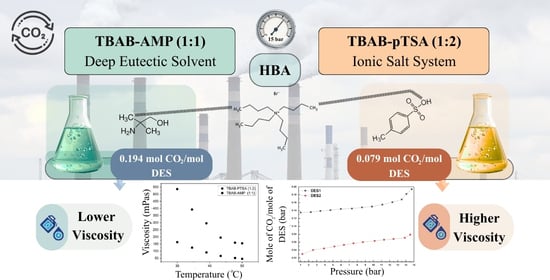
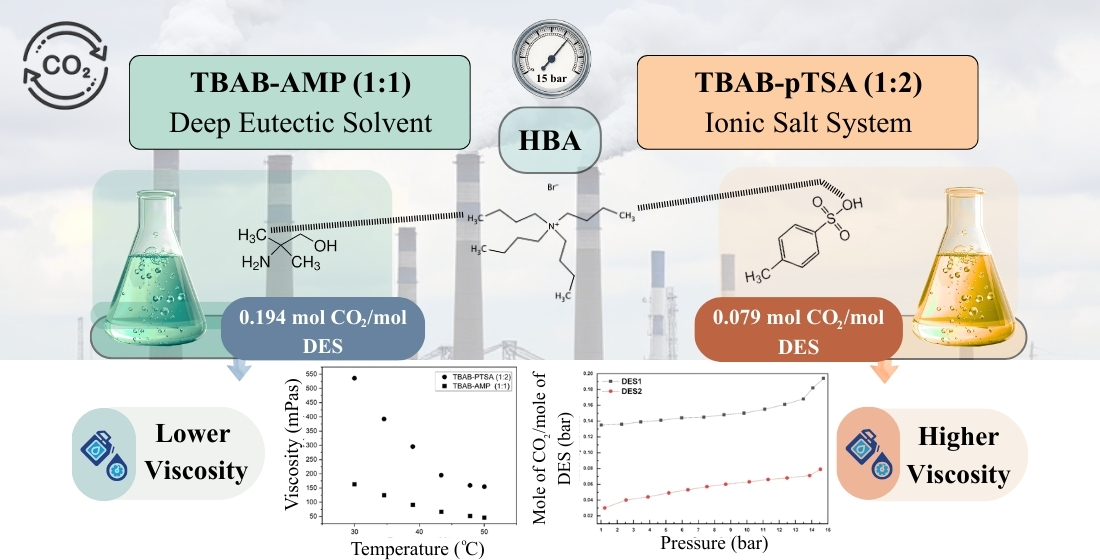
In this study, two TBAB-based systems were synthesized using different hydrogen bond donors—2-amino-2-methyl-1-propanol (AMP) at a 1:1 molar ratio and p-toluenesulfonic acid (PTSA) at a 1:2 molar ratio, to investigate their CO2 capture performance. FTIR spectroscopy was employed to distinguish actual DES formation from ionic salt formation. CO2 solubility measurements were conducted at 30 °C up to 15 bar using a SETARAM PCT-PRO apparatus. Critical properties were estimated using modified Lydersen–Joback–Reid and Lee–Kesler methods. Thermophysical properties were estimated using the Haghbaksh group contribution method. FTIR was performed to validate hydrogen bonding between the DES constituents. Temperature-dependent viscosity measurements from 30 to 50 °C were performed using an Anton Paar MCR 102e rheometer. The relationship between molecular structure, thermophysical properties, and CO2 absorption performance was systematically evaluated.
3. Results and Discussion
3.1. FTIR Analysis
The formation of a DES is commonly validated by spectroscopic evidence of strong hydrogen-bonding interactions between HBA and HBD, accompanied by the absence of complete proton transfer or salt formation. In the present study, FTIR spectroscopy was employed as a primary tool to assess whether such interactions are established in the investigated systems.
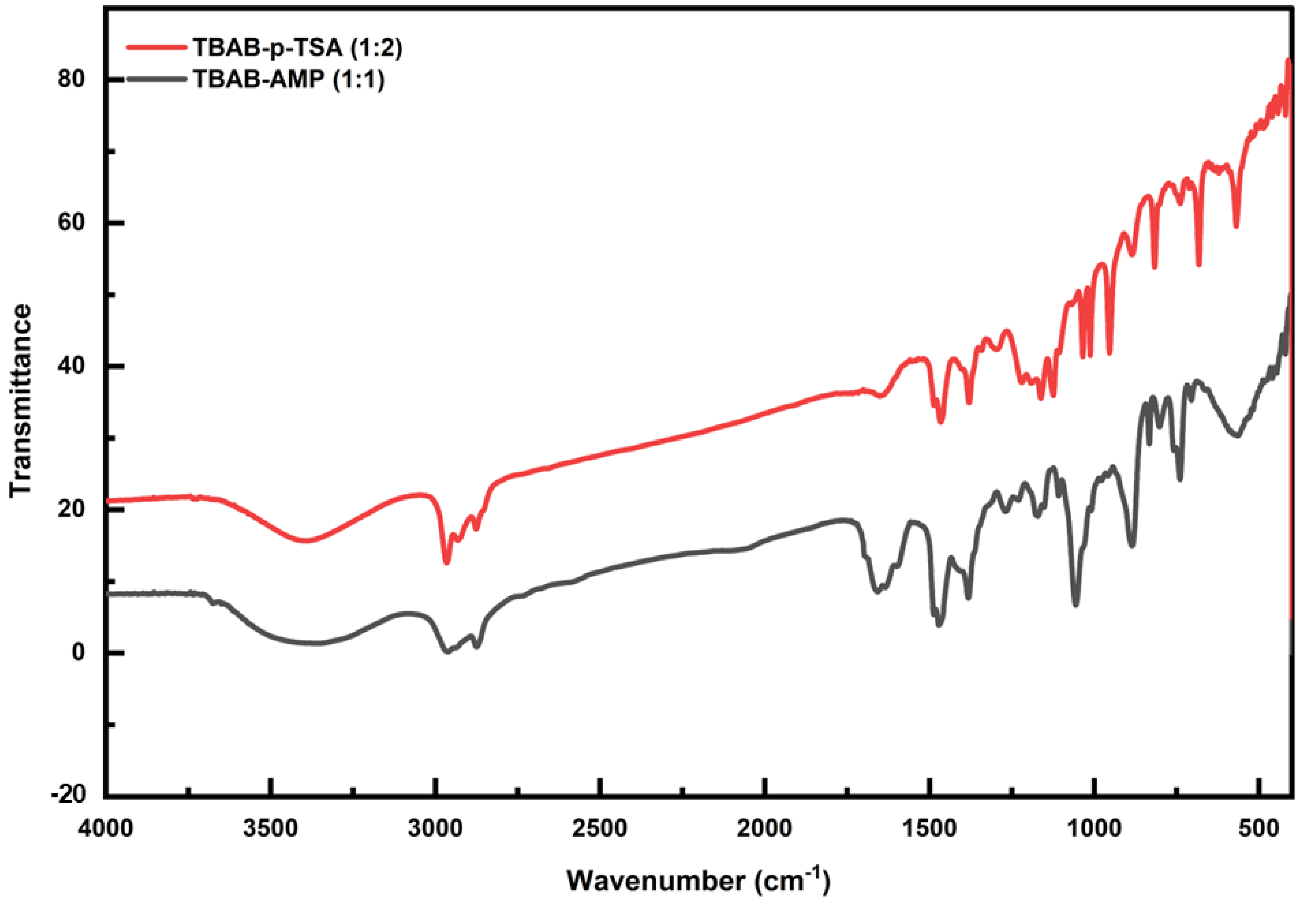
As shown in
Figure 1, the FTIR spectrum of the TBAB-AMP (1:1) system provides strong evidence for DES formation. The hydroxyl and amine stretching vibrations of AMP exhibited pronounced broadening and a clear shift toward lower wavenumbers in the 3600–3300 cm
−1 region when compared to pure AMP. These spectral changes are characteristic of extensive hydrogen bonding between the HBD (AMP) and the HBA (TBAB), primarily via the bromide anion. Importantly, no new absorption bands attributable to ammonium (NH
3+) bending vibrations were observed in the 1600–1500 cm
−1 region, indicating the absence of full proton transfer from AMP. The preservation of the alkyl C-H vibrational features of TBAB further confirms that the quaternary ammonium salt remains structurally intact. Collectively, these observations satisfy the established spectroscopic criteria for DES formation, validating that the TBAB-AMP (1:1) mixture constitutes a hydrogen-bonded deep eutectic solvent rather than a simple salt or physical mixture.
In contrast, the TBAB-PTSA (1:2) system does not fulfill the defining criteria of a deep eutectic solvent. The FTIR spectrum of this mixture showed the disappearance or significant attenuation of the broad sulfonic acid O-H stretching band (3000–2500 cm−1), accompanied by the persistence and slight shifting of the characteristic sulfonate S=O stretching vibrations in the 1150–1180 cm−1 and 1020–1050 cm−1 regions. These spectral features unambiguously indicate proton transfer from p-toluenesulfonic acid to the counterion environment, resulting in the formation of a tetrabutylammonium p-toluenesulfonate salt. Such acid–base neutralization and salt formation are inconsistent with the hydrogen-bond-dominated interaction framework required for DES classification.
Therefore, based on FTIR spectroscopic analysis, the TBAB-AMP (1:1) system is validated as a deep eutectic solvent formed through strong, cooperative hydrogen bonding without proton transfer, whereas the TBAB-PTSA (1:2) system is best described as an ionic salt system rather than a deep eutectic solvent. These findings highlight the critical role of functional group chemistry in governing DES formation and provide a spectroscopic basis for distinguishing true DES systems from simple acid–base salts.
3.2. Critical Properties of DES
Critical Properties of deep eutectic solvents were calculated by combining the modified Lyderson–Joback–Reid method and Lee–Kesler method [
40,
41,
42,
46]. Critical properties of DES are shown in
Table 3.
3.3. Physical Properties of DES
The thermophysical properties of the investigated TBAB-based systems are summarised in
Table 4. The TBAB-AMP (1:1) system exhibited a density of 1.07 g·cm
−3 and a refractive index of 1.48, indicative of a compact hydrogen-bonded network. The relatively high heat capacity (610.08 J·mol
−1·K
−1) and elevated surface tension (49.18 mN/m) suggest strong intermolecular interactions, consistent with deep eutectic solvent behavior and extensive hydrogen bonding. The speed of sound in TBAB-AMP (1740.68 m/s) was significantly lower than that in TBAB-PTSA (4758.04 m/s), reflecting differences in the molecular structure and interaction strength between the two systems.
In contrast, the TBAB-PTSA (1:2) system displayed a lower heat capacity (420.20 J·mol−1·K−1) and reduced surface tension (35.74 mN/m), reflecting stronger ionic character and restricted molecular motion. The exceptionally high speed of sound (4758.04 m/s) in the TBAB-PTSA system is consistent with its ionic salt character, where strong electrostatic interactions result in a higher elastic modulus and acoustic velocity. The comparable densities (1.07–1.08 g·cm−1) and similar molar volumes (156.93–157.29 cm3/mol) indicate dense molecular packing in both systems. However, the slightly lower free volume in TBAB-PTSA (111.83 cm3/mol vs. 112.25 cm3/mol) suggests diminished space for molecular rearrangement, supporting the conclusion that this system behaves as an ionic salt-dominated liquid rather than a classical deep eutectic solvent.
3.4. Viscosity of DES
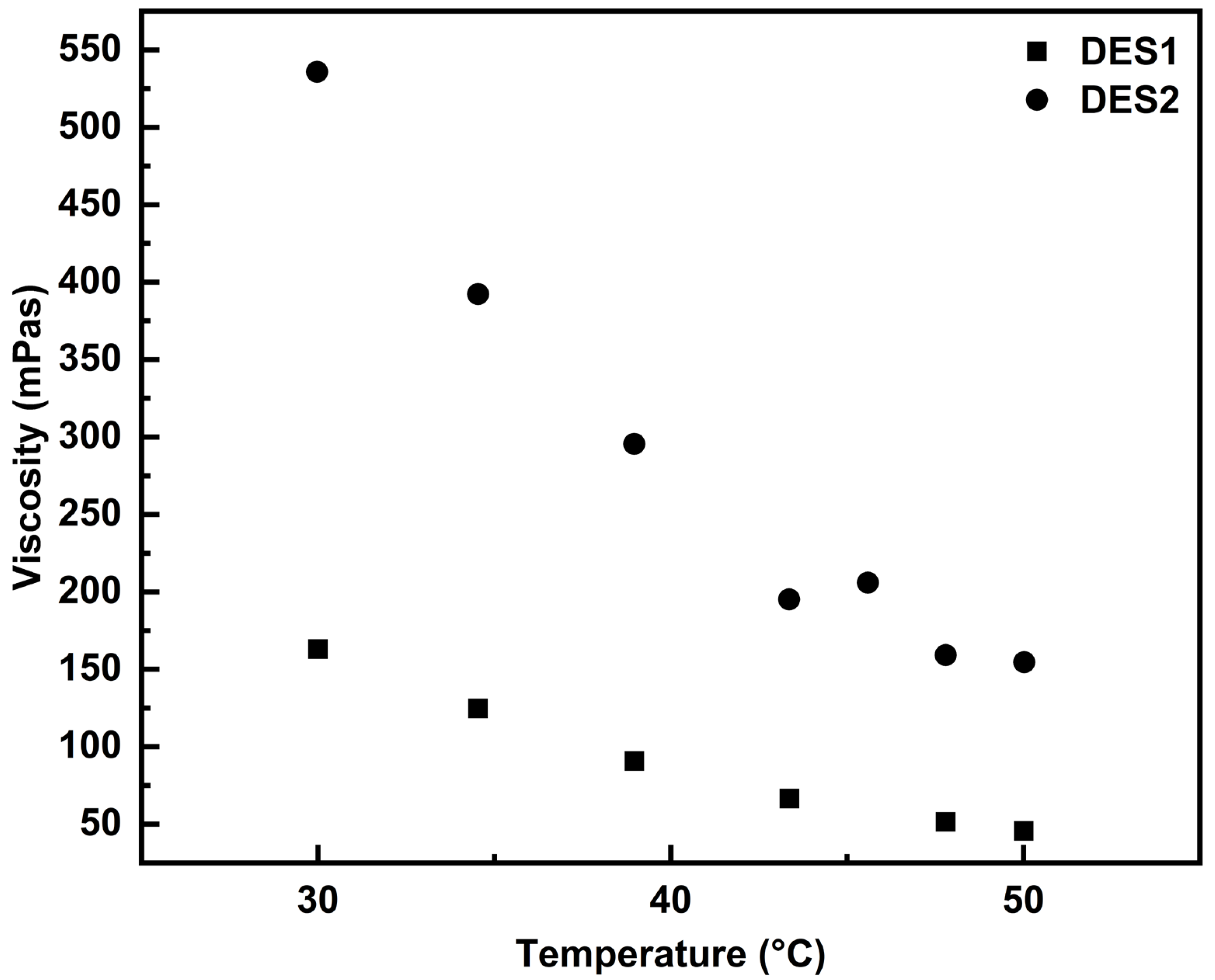
Viscosity is a characteristic that defines a fluid’s resistance to flow. Compared to organic solvents, deep eutectic solvents (DESs) have significantly higher viscosity akin to ionic liquids (ILs), hence presenting challenges in handling, filtering, pumping, and stirring. Consequently, examining the viscosity of DESs is essential. The viscosity of DES was determined using an Anton Paar Rheometer MCR 102e. The temperature dependency of viscosity was checked from 30 °C to 50 °C. The viscosity of the DES showed an exponential decline with increasing temperature, as shown in
Figure 2 and
Table 5 [
47]. This might be explained by the weakening of the hydrogen bond between HBD and HBA as the temperature rises. TBAB-PTSA had higher viscosity compared to TBAB-AMP. This may be because, at higher temperatures, the intermolecular attraction forces weaken, increasing molecular mobility and kinetic energy, which aid in reducing viscosity [
48]. It was also observed that the higher the viscosity, the lower the CO
2 solubility in DES. Hence, the lower solubility of TBAB-PTSA compared to TBAB-AMP.
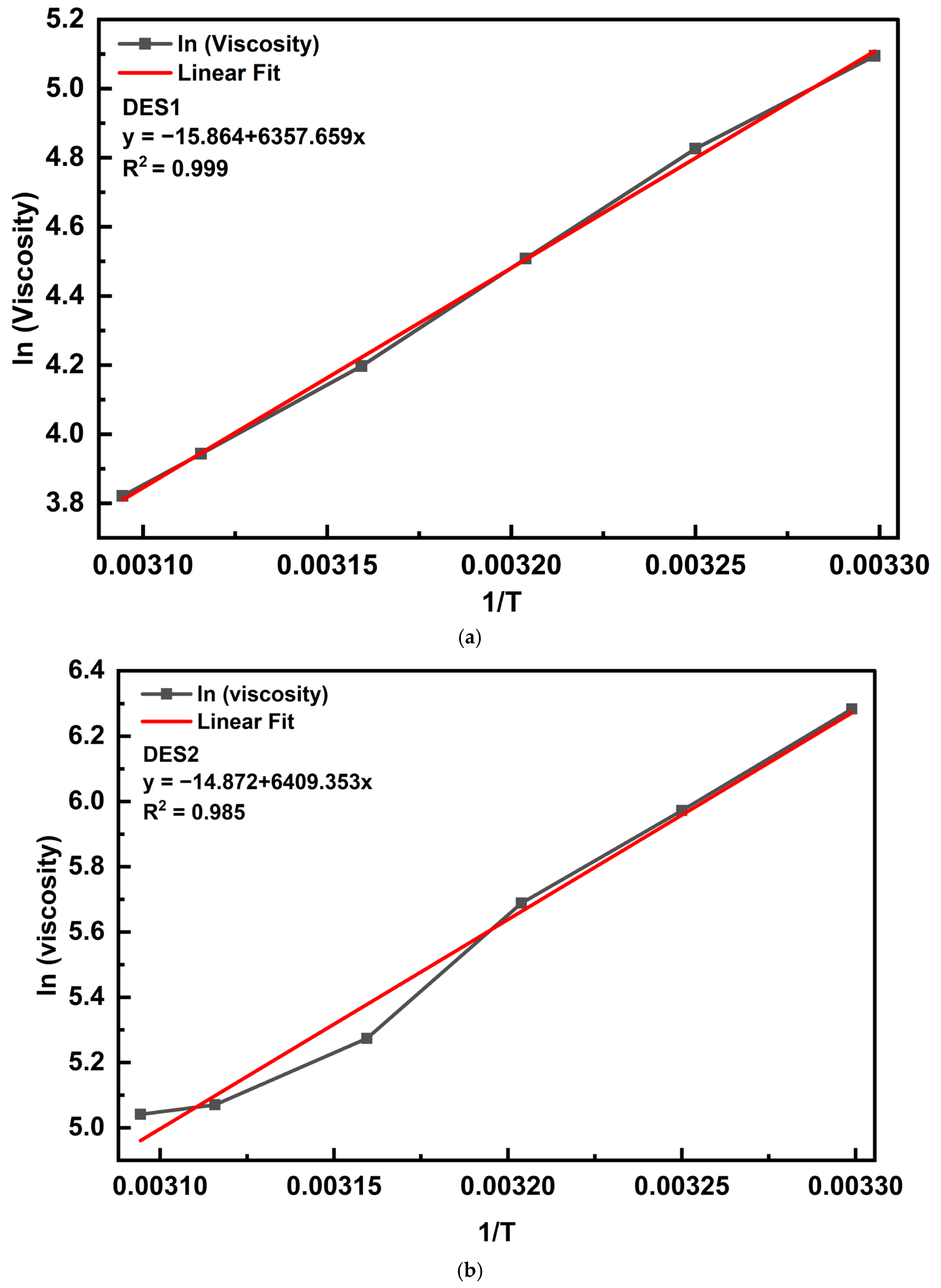
The Arrhenius equation model, a two-parameter model denoted by Equation (24), was used to validate the experimental viscosities of the DESs, as shown in
Figure 3 [
49]. The fitting parameters of the Arrhenius equation of DESs are shown in
Table 6.
The activation energies of both systems are within the same range, indicating that the molecular rearrangement requires a similar amount of energy in both cases. Nonetheless, the key difference in the mechanism between DES1 and DES2 lies in the nature of interactions in the two systems:
In DES1, hydrogen bonds are defined as ephemeral and directed, exhibiting typical lifetimes of 1.5–20 picoseconds [
50]. Throughout that period, the bonds are nearly perpetually disrupted and re-established, thereby permitting the molecules to move freely. This elucidates the low viscosity of the solution, measured at 163 mPa·s at 303 K.
Conversely, the interaction between the cation and anion in DES2 is significantly more robust and enduring. The system exhibits reduced directionality, resulting in both species attracting oppositely charged neighbors, which establishes a network of long-range Coulombic contacts that maintain a consistent resistance to flow. This elucidates the elevated viscosity in this instance, measured at 536 mPa·s at 303 K. The viscosity increase, reaching 3.3 times its standard value, directly influences CO
2 mass transfer by regulating diffusion rates and accessibility to reactive sites [
51,
52].
3.5. CO2 Absorption in DES
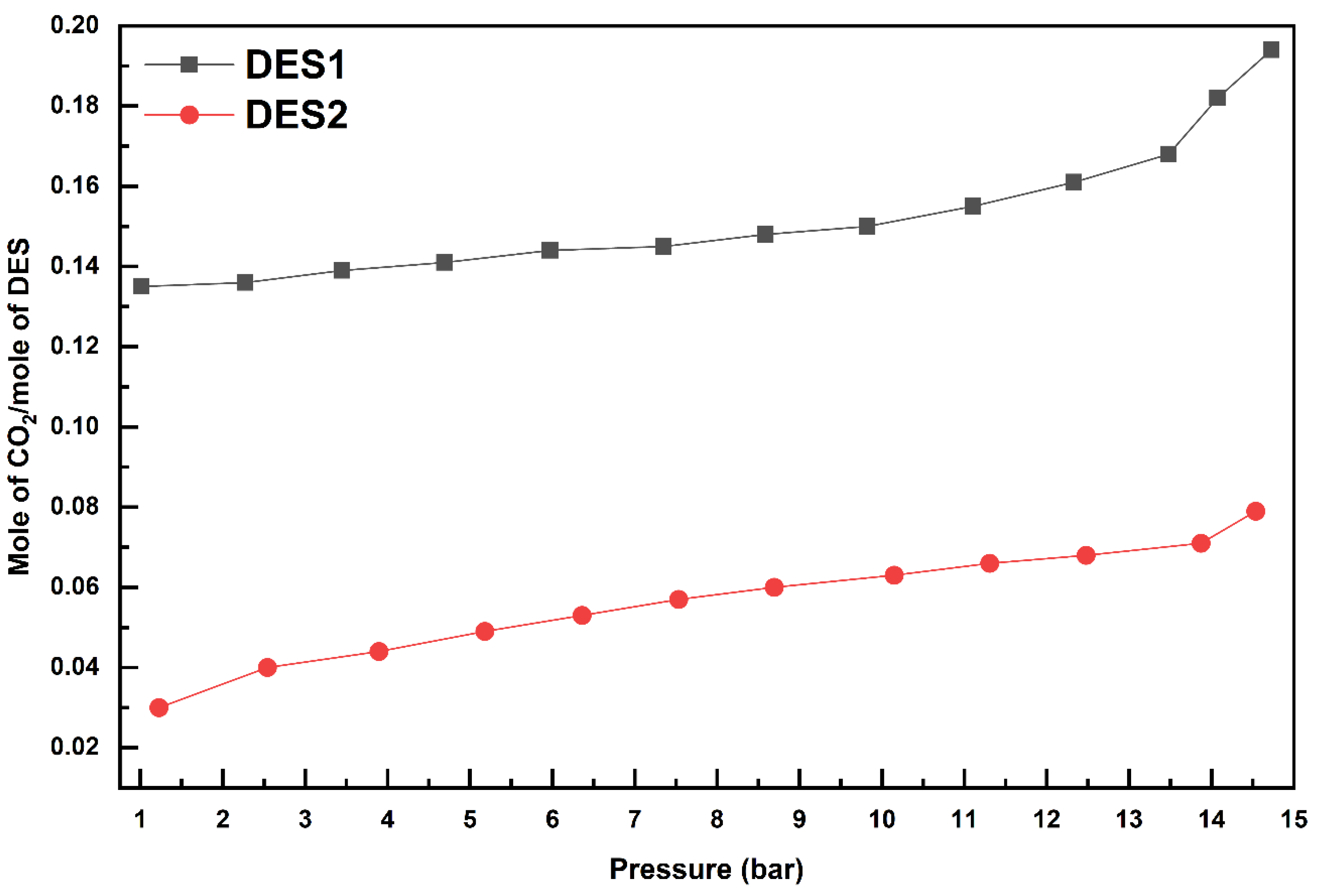
Figure 4 and
Table 7 show the CO
2 absorption data at 30 °C for both DESs across a pressure range of 1–15 bar. DES1 (TBAB-1AMP) absorbed 0.135 mol CO
2/mol DES at 1 bar and increased steadily to 0.194 mol/mol at 14.7 bar, corresponding to mole fractions of 0.119 and 0.163, respectively. In comparison, DES2 (TBAB-2PTSA) absorbed only 0.030 mol/mol at 1.2 bar and reached 0.079 mol/mol at 14.5 bar (mole fraction 0.073). This represents roughly a 2.5-fold difference in capacity at similar pressures. The data reveal two distinct absorption patterns: DES1 reaches 70% of its total capacity at 1 bar before gradually increasing at higher pressures, while DES2 shows a continuous, slow increase across all tested pressures.
These contrasting behaviors can be explained by examining how the molecular structure, as confirmed by FTIR spectroscopy (
Section 3.1), influences CO
2 interactions. TBAB-AMP is a true deep eutectic solvent where hydrogen bonds between the bromide anion and the hydroxyl/amine groups of AMP create a dynamic, flexible network. TBAB-PTSA underwent complete proton transfer to form a tetrabutylammonium p-toluenesulfonate ionic salt with a rigid electrostatic lattice. This structural difference has cascading effects on every aspect of CO
2 absorption. The free primary amine in TBAB-AMP interacts with CO
2 through a well-known carbamate reaction pathway which begins when the amine compound attacks CO
2 to create a zwitterionic intermediate (R-NH
2+-COO
−) that undergoes stabilization through proton transfer to a second base which can be either another amine group or the bromide anion, resulting in the formation of the stable carbamate (R-NHCOO
−) [
53]. The presence of methyl groups next to the amine group creates steric hindrance, leading AMP to react in a 1:1 stoichiometry; primary amines without such hindrance typically show a 2:1 ratio, resulting in double the CO
2 absorption capacity per amine group. The hydroxyl group in AMP contributes to the stability of the carbamate through intramolecular hydrogen bonding and to proton shuttling during absorption [
54]. This explains why 0.135 mol CO
2 per mol DES was captured at just 1 bar; the chemical reaction proceeds without requiring high pressure. The additional 0.059 mol/mol gained from 1 to 15 bar results from the physical dissolution of CO
2 into the hydrogen-bonded matrix, which depends on pressure according to Henry’s law. This dual-mode absorption-chemical at low pressure, physical at higher pressure, makes TBAB-AMP particularly suited for post-combustion capture where flue gas CO
2 partial pressures are only 0.03–0.20 bar [
55,
56].
TBAB-PTSA offers none of these advantages. The sulfonic acid has completely deprotonated to form sulfonate anions (−SO
3−), which are charge-saturated species lacking a nucleophilic character and therefore are unreactive toward CO
2 [
26]. The ionic structure formed by the electrostatic pairing of tetrabutylammonium cations with sulfonate anions is rigid and densely packed, preventing molecular movement while providing minimal void space for gas accommodation. The 0.030 mol/mol absorbed at 1 bar and the linear pressure dependence indicates purely physical absorption, which occurs when CO
2 molecules fill all available tiny spaces within the ionic lattice. The viscosity results from
Section 3.4 show that TBAB-AMP reached 163 mPa·s, compared to TBAB-PTSA, which reached 536 mPa·s at 30 °C, resulting in a 3.3-fold difference that directly impacts gas diffusion rates and mass transfer. The transient nature of hydrogen bonds in TBAB-AMP produces lower viscosity because these bonds continuously break and reform, allowing molecular motion [
50,
57]. The electrostatic interactions in the TBAB-PTSA system extend over long distances, which results in increased viscosity because the molecules remain in relatively fixed positions [
24]. Such mechanistic differences are quantitatively supported by the Arrhenius activation energy data in
Section 3.4, which shows that TBAB-PTSA has a much higher energy barrier for viscous flow compared to TBAB-AMP, thereby indicating that more energy is needed to break the strong electrostatic interactions that are stable over time, while less energy is required to break transient hydrogen bonds. Slow diffusion creates two challenges: it requires a long equilibration time and prevents the full use of all available absorption sites, resulting in poor performance of TBAB-PTSA [
58,
59,
60].
The thermophysical properties in
Table 4 provide additional detail for this explanation. TBAB-AMP has a marginally higher free volume (112.25 vs. 111.83 cm
3/mol), indicating voids between molecules where CO
2 can dissolve. Free-volume theory predicts greater gas solubility in systems with more open structures [
61]. Heat capacity is notably different: 610.08 J·mol
−1·K
−1 for TBAB-AMP versus 420.20 J·mol
−1·K
−1 for TBAB-PTSA. The exothermic nature of amine-CO
2 reactions releases between 40 and 60 kJ/mol of energy, and the higher heat capacity of DES1 means it experiences smaller temperature increases during absorption, which helps maintain CO
2 solubility, as solubility decreases with increasing temperature [
27]. The surface tension values of 49.18 mN/m for TBAB-AMP and 35.74 mN/m for TBAB-PTSA demonstrate that TBAB-AMP possesses stronger hydrogen bonding cohesive forces, which enable it to maintain dissolved CO
2 and carbamate compounds in the DES matrix.
Table 8 compares the performance of synthesized DESs with the literature. The TBAB:AMP (1:1) system exhibited a superior CO
2 absorption capacity of 0.194 mol/mol at 303.15 K and 14.7 bar, which is significantly higher than conventional physical absorption-based systems. The TBAB:AMP system showed better performance than TBAB:Ethylene Glycol (0.057 mol/mol) and TBAB:Diethylene Glycol (0.110 mol/mol), because it used AMP functionality to achieve chemical fixation [
62,
63,
64]. The TBAB:AMP system demonstrated a capacity that was almost 7 times that of the standard ChCl:Urea system (0.028 mol/mol) [
36,
47].
The TBAB:AMP system showed a viscosity of 163.15 mPa·s at 303.15 K, which is favorable compared to other high-performance solvents. While ChCl:Ethylene Glycol glycol-based systems display lower viscosity of approximately 25.72 mPa·s, they exhibit absorption capacities below 0.06 mol/mol [
36,
65]. Systems with moderate capacity exhibit excessive viscosity, including TBAB:Decanoic Acid (900 mPa·s) and ChCl:Urea (447 mPa·s) [
35,
66]. The TBAB:AMP system thus provides an ideal solution that combines amine-based solvent capacity with lower viscosity, surpassing most ionic liquids and DESs, resulting in improved mass transfer and pumping efficiency.
From an application standpoint, TBAB-AMP shows promising behaviour for post-combustion CO2 capture because it maintains high capacity at the low partial pressures typical of flue gas (0.1–0.15 bar, corresponding to 0.135 mol/mol at 1 bar). TBAB-PTSA, despite sharing the same quaternary ammonium cation, captures negligible CO2 under these conditions. This demonstrates that simply choosing a TBAB-based system is not enough; a hydrogen bond donor must provide reactive functionality, form a true DES rather than an ionic salt, and not introduce excessive viscosity. The study found that viscosity and CO2 loading display an inverse relationship: 163 mPa·s yielded 0.194 mol/mol, while 536 mPa·s yielded 0.079 mol/mol at maximum pressure. The development of DESs for CO2 capture should focus on two essential elements: viscosity reduction and chemical functionality.
Table 8.
Comparison of CO2 absorption capacity and viscosity of the synthesized DESs with those reported in the literature.
Table 8.
Comparison of CO2 absorption capacity and viscosity of the synthesized DESs with those reported in the literature.
| DESs | Molar Ratio | T (K) | P (bar) | CO2 Capacity (mol/mol) | Viscosity (mPa·s) at 303.15 K | Reference |
|---|
| TBAB:AMP | 1:1 | 303.15 | 14.7 | 0.194 | 163.15 | This work |
| TBAB:PTSA | 1:2 | 303.15 | 14.5 | 0.079 | 535.78 | This work |
| TBAB:Decanoic Acid | 1:2 | 298.15 | 10 | 0.11 | 900 | [35,66] |
| TBAB:Diethylene Glycol | 1:2 | 303.15 | 13.9 | 0.110 | 149.24 | [62,63] |
| TBAB:Ethylene Glycol | 1:2 | 303.15 | 12.8 | 0.057 | 77.27 | [62,64] |
| ChCl:Urea | 1:2 | 298.15 | 10 | 0.028 | 447 | [36,47] |
| ChCl:MEA | 1:6 | 303.15 | 1 | 0.123 | 350 | [36,67] |
| ChCl:Ethylene Glycol | 1:2 | 303.15 | 12.5 | 0.055 | 25.72 | [36,65] |
3.6. CO2 Absorption Kinetics
In order to both measure the capture dynamics and check the validity of the reaction mechanism, the time-resolved absorption profiles were analyzed with the help of a macroscopic reactive absorption model. The experimental uptake data was fitted by means of a pseudo-first order mass transfer Equation (25) that looks like [
68]:
where C
o (mol CO/mol DES) is the instantaneous CO
2 loading in the liquid phase, C
e (mol CO/mol DES) is the equilibrium loading at CO
2 partial pressure P (bar), and k
obs (min) is the overall rate constant. Here, k
obs include the volumetric mass transfer coefficient k
La, and, where chemical reaction occurs, an enhancement factor arising from the reaction kinetics [
69]. The driving force stands for the difference from thermodynamic equilibrium and decreases gradually as the liquid phase saturation occurs. The parameters of the eq 25 were computed from the plot of concentration of CO
2 (mol/mol) vs. time (min
−1). The extracted kinetic parameters for both systems are summarized in
Table 9.
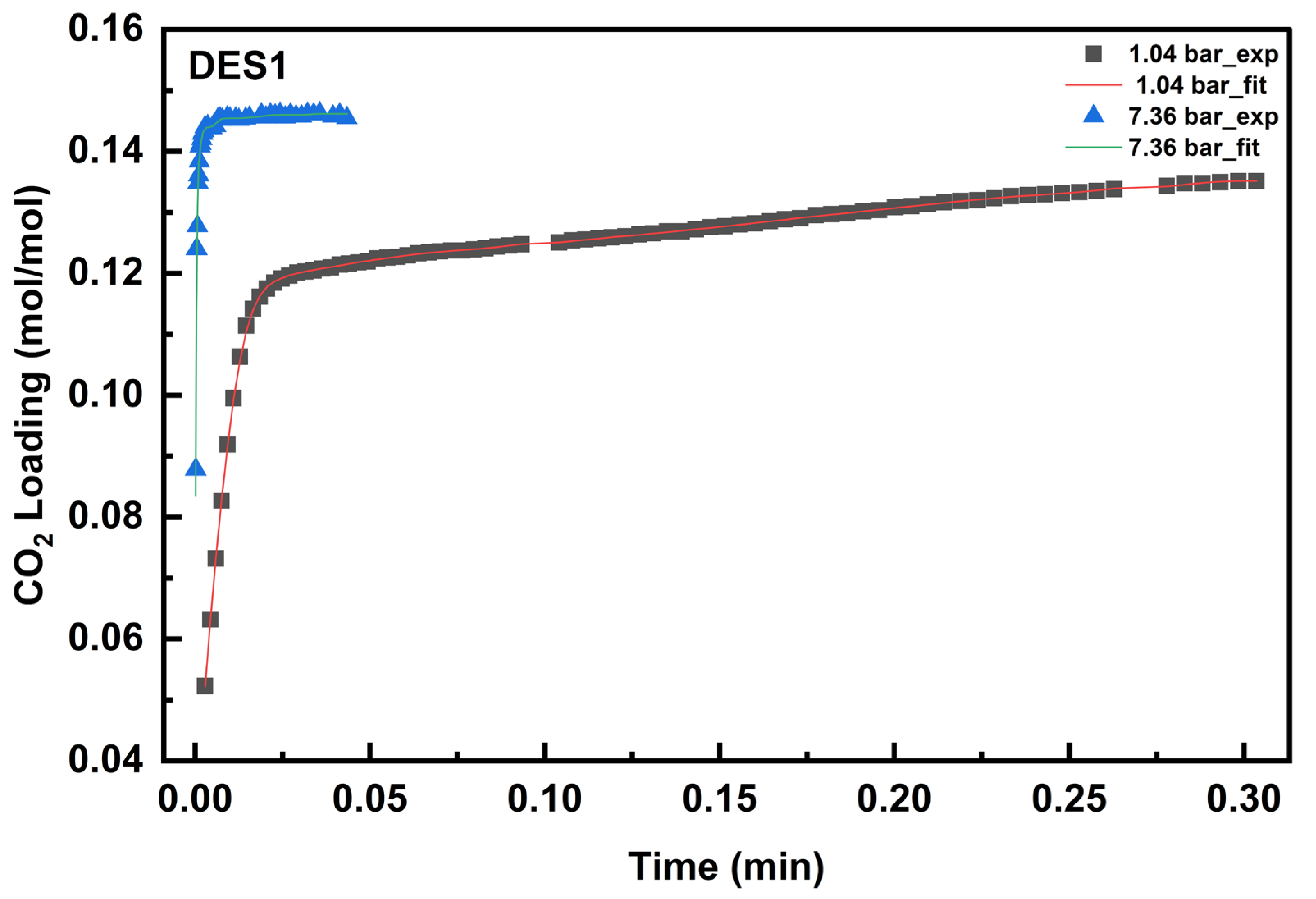
As shown in
Figure 5, at both pressures, the profiles exhibit a steep initial rise that progressively flattens as the loading approaches C
e, reflecting the diminishing driving force (C
e-C
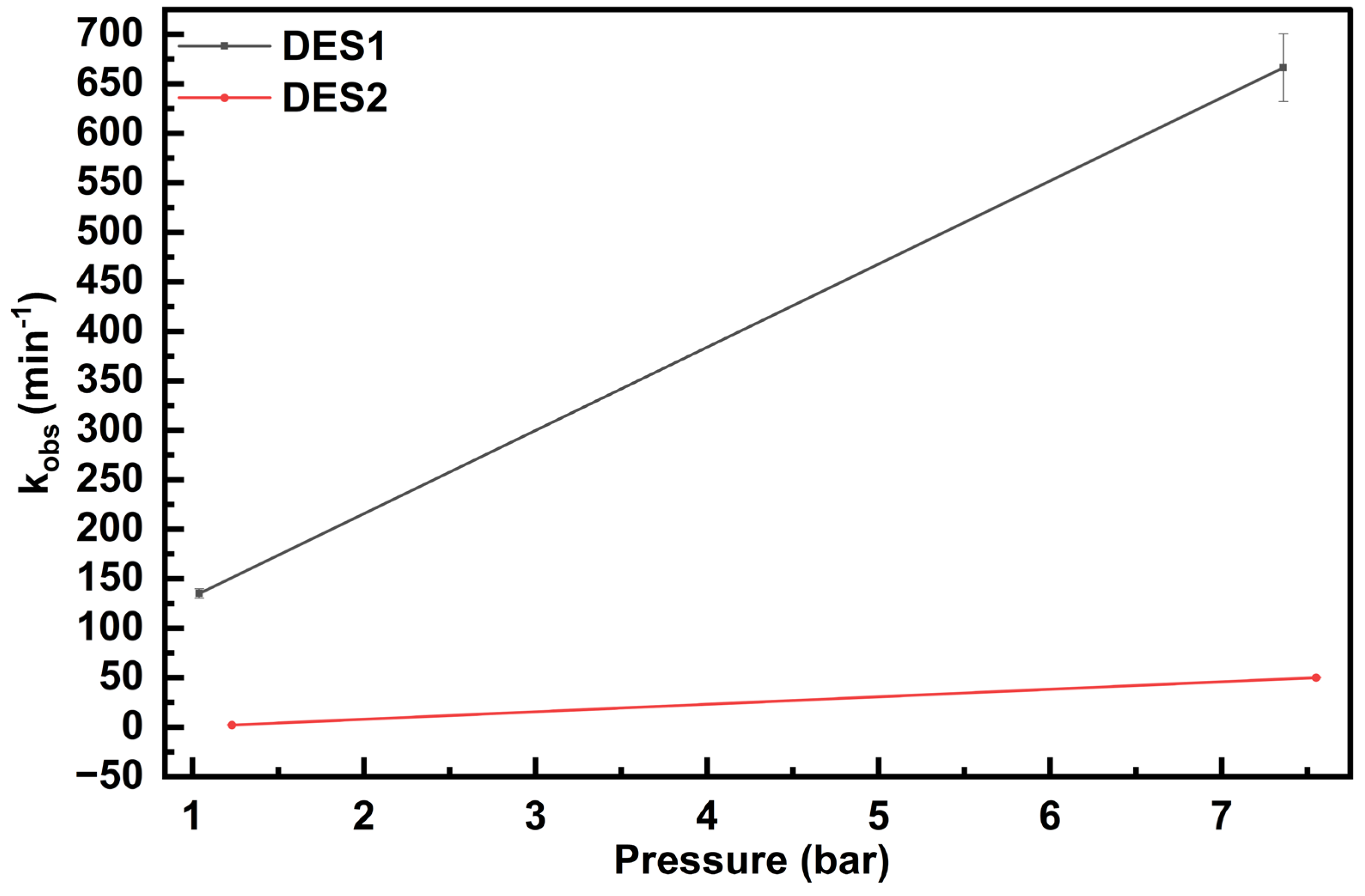
o) as amine sites become progressively occupied. The overall rate constant increased from k
obs = 134.99 ± 4.78 min
−1 at 1.04 bar to 666.33 ± 34.24 min
−1 at 7.36 bar, a 4.9-fold pressure-induced enhancement consistent with a bimolecular reaction in which both CO
2 fugacity and local amine concentration govern the absorption rate [
70].
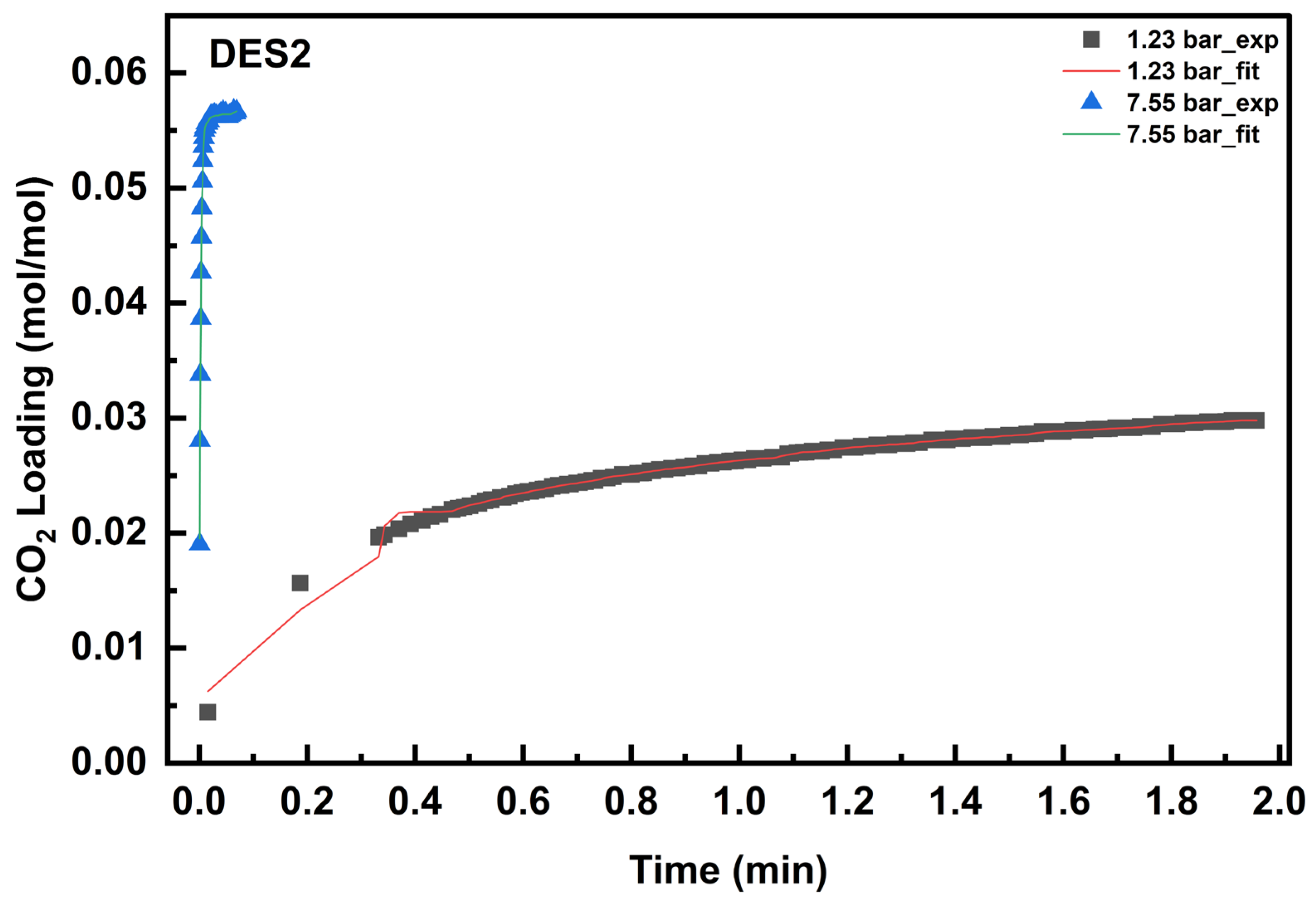
Figure 6 shows the corresponding profiles for DES2 at 1.23 and 7.55 bar. The kinetics are markedly slower: at 1.23 bar, the loading climbs gradually over nearly 2 min toward a plateau of 0.030 mol/mol, while at 7.55 bar, an equilibrium is reached in under 0.05 min. The rate constant rises from k
obs = 2.24 ± 0.04 min
−1 at 1.23 bar to 50.06 ± 0.25 min
−1 at 7.55 bar, with the near-perfect fit at the higher pressure indicating a well-defined, kinetically uniform absorption regime dominated by physical dissolution [
11].
Figure 7 places the pressure dependence of k
obs for both systems on a common axis. TBAB-AMP maintains a decisive and consistent advantage over TBAB-p-TSA—approximately 60-fold at ~1 bar and 13-fold at ~7.5 bar. Since both DES share an identical TBAB cation framework and were measured under the same conditions, this systematic difference is mechanistic rather than physical in origin [
71].
DES1 incorporates 2-amino-2-methyl-1-propanol, whose primary amine undergoes nucleophilic addition to CO
2 to form a carbamic acid intermediate that deprotonates to a stable carbamate [
72]:
The bromide anion in TBAB further facilitates proton transfer during carbamate formation, accelerating the reaction in the non-aqueous environment [
69]. The implied enhancement factor for DES1 falls in the range 10
2–10
3, placing the system firmly in the fast pseudo-first-order regime where CO
2 is consumed near the gas–liquid interface rather than diffusing into the bulk [
73,
74]. DES2, by contrast, contains para-toluenesulfonic acid as the hydrogen bond donor—a species with no nucleophilic site for covalent CO
2 reaction and absorbs solely through physical dissolution and weak dipolar interactions, which are intrinsically slower [
11]. The initial absorption rate (r
o) for DES1 at 1.04 bar (r
o = 17.87 mol CO
2/(mol DES·min)) is 224-fold higher than that of DES2 at comparable pressure (0.080 mol CO
2/(mol DES·min)), quantifying this mechanistic gap directly.
The concurrent enhancement of equilibrium capacity (0.194 vs. 0.079 mol/mol at ~15 bar) and absorption kinetics (k
obs up to 666 vs. 50 min
−1) in DES1 constitutes a defining signature of chemically reactive absorption—reactive systems break the capacity-kinetics trade-off inherent to physical solvents by introducing a fast parallel chemical pathway that elevates both simultaneously [
75]. Taken together with the isotherm data, these results provide strong, self-consistent evidence that amine-mediated carbamate formation is the primary CO
2 capture mechanism in DES1.
4. Conclusions
Two TBAB-based solvents with different hydrogen bond donors were synthesized and characterized through analytical techniques: TBAB-AMP (1:1) and TBAB-PTSA (1:2). FTIR spectroscopic analysis provided conclusive evidence that TBAB-AMP forms a proper deep eutectic solvent through hydrogen bonding interactions between the bromide anion and the hydroxyl/amine groups of AMP, whereas TBAB-PTSA undergoes complete acid–base neutralization to form an ionic salt. This fundamental structural distinction determined all subsequent performance characteristics. CO2 solubility measurements demonstrated that the TBAB-AMP DES achieved significantly higher absorption capacity, capturing 0.194 mol CO2/mol DES at 14.7 bar compared to the TBAB-PTSA salt system, which absorbed only 0.079 mol/mol at 14.5 bar. The 2.5-fold enhancement in capacity was attributed to multiple factors working in concert: the primary amine functionality in AMP enables chemical absorption through carbamate formation with favorable 1:1 stoichiometry due to steric hindrance, the hydrogen-bonded DES network provides accessible pathways for CO2 diffusion and dissolution, and the substantially lower viscosity (163 mPa·s versus 536 mPa·s at 30 °C) facilitates rapid mass transfer. Critical and thermophysical properties were estimated using group contribution methods. Temperature-dependent viscosity measurements from 30 to 50 °C confirmed an inverse relationship between viscosity and CO2 solubility, with TBAB-AMP maintaining lower viscosity across the entire temperature range. The thermophysical property analysis revealed that TBAB-AMP has a higher free volume (112.25 cm3/mol), higher heat capacity (610.08 J·mol−1·K−1), and higher surface tension (49.18 mN/m) than TBAB-PTSA, all of which contribute to better CO2 accommodation and thermal management during the exothermic absorption process. Notably, TBAB-AMP achieved 70% of its maximum capacity at just 1 bar, making it particularly suitable for post-combustion CO2 capture from flue gas, where partial pressures are typically 0.1–0.15 bar. The results demonstrate that amine-functionalized deep eutectic solvents offer significant advantages over acid-based ionic salt systems for CO2 capture applications. The study also highlights the critical importance of proper system classification, distinguishing true DESs from ionic salts formed through proton transfer. This distinction fundamentally determines absorption performance. Future research should focus on evaluating the regeneration characteristics of TBAB-AMP, measuring desorption kinetics and energy requirements, assessing long-term stability through multiple absorption–desorption cycles, and exploring the effects of water and other flue gas components on absorption performance to fully establish the practical viability of this system for industrial CO2 capture.




 ,
,