
Textile Microplastics in Wastewater: A Critical Review of Removal and Carbonization Technologies



Abstract
1. Introduction
2. Classification of Micro and Nanoplastics
3. Textile-Based Microplastics and Their Release
3.1. Fibrous Microplastics
3.2. Polyethylene Terephthalate-Based Microplastics
4. Microplastics Produced from Polymeric Finishes
4.1. Textile Finishes as the Source of Microplastic Production
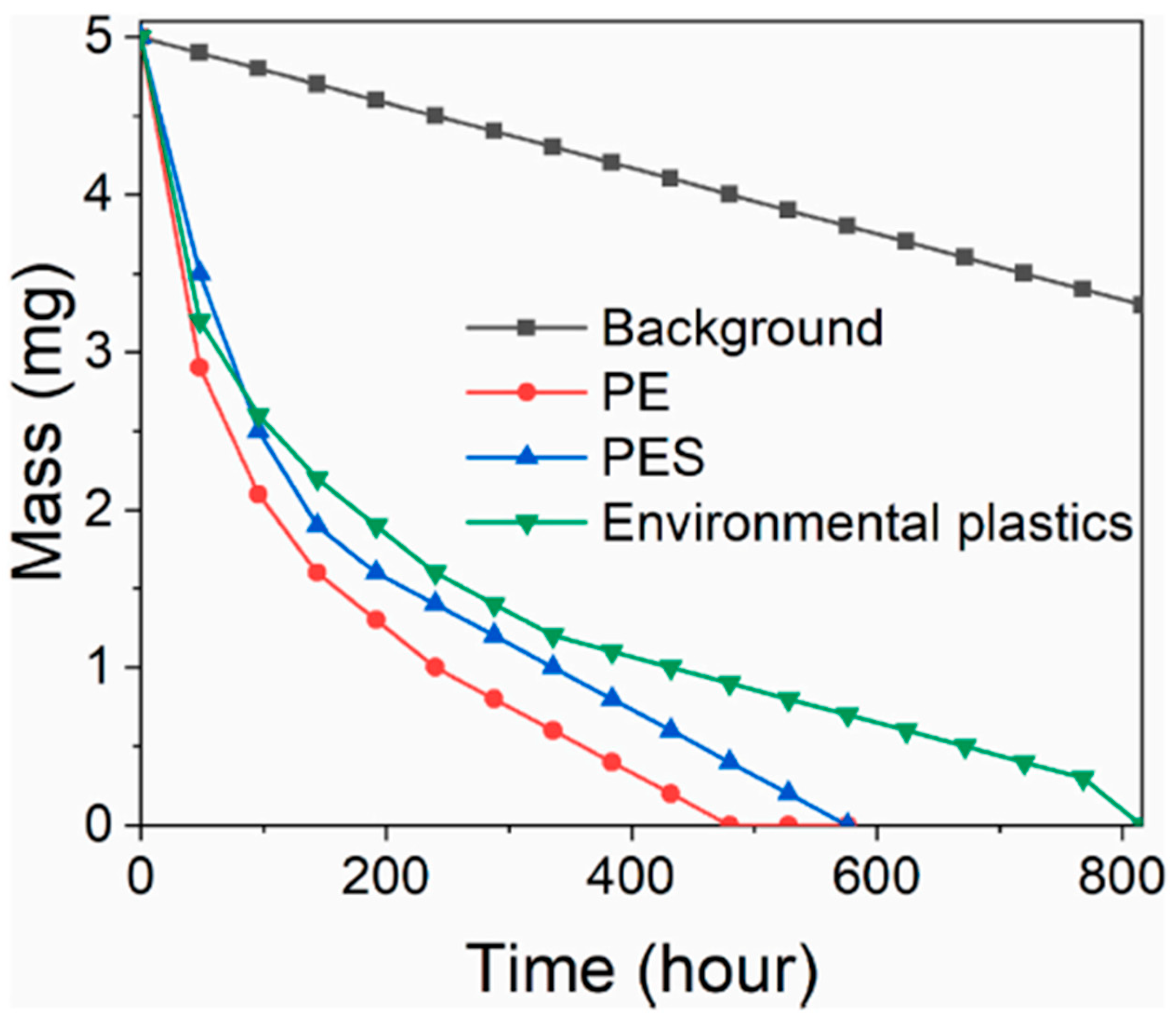
4.2. Degradation Rates of Plastics in the Environment
4.3. Polyurethane Textile Finish
4.4. Polyethylene-Based Textile Finish
4.5. PVAC and DMDHEU Textile Finish
4.6. Fluorocarbon Plastics Textile Finish
4.7. Melamine-Based Finishes
4.8. Microcapsule-Based Textile Finishes and Associated Microplastics
5. Washings and Their Influence on the Release of Fiber Fragments
6. Micro and Nanoplastics in Textile Wastewater
6.1. Textile Microplastics Identification
6.2. Removal of Micro and Nanoplastics from Wastewater
6.2.1. Removal Through Sedimentation
6.2.2. Removal Through Coagulation and Flocculation
6.2.3. Removal Through Flotation/Density Separation
6.2.4. Removal Through Filtration Technologies
Sand Filtration
Microfiltration
Ultrafiltration
Nanofiltration
Reverse Osmosis
Membrane Bioreactors
Removal Through Adsorption
6.2.5. Removal of Micro and Nanoplastics Through Degradation Methods Biodegradation
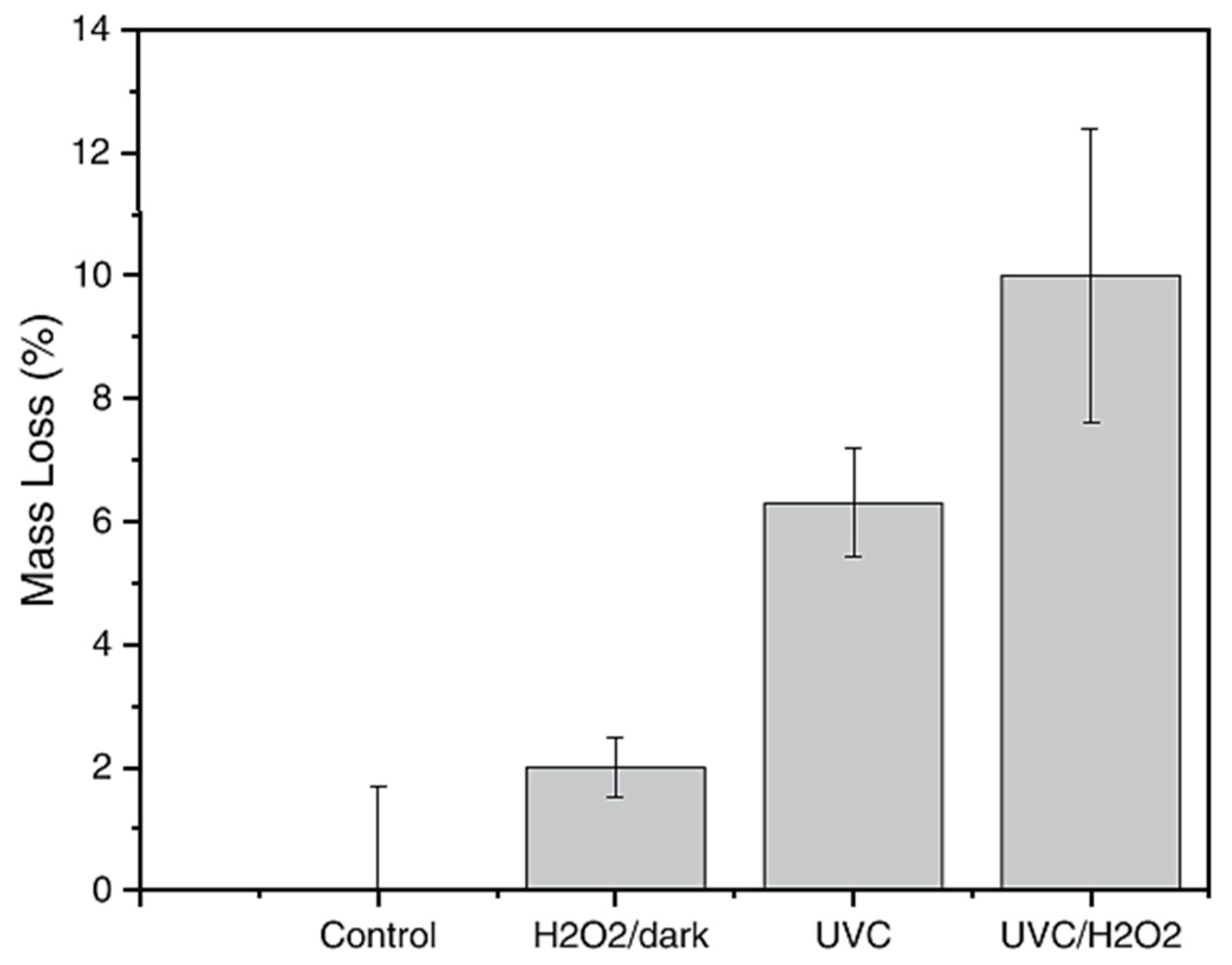
Photodegradation
6.2.6. Removal of Micro and Nanoplastics Through Electrochemical Oxidation
6.2.7. Removal of Micro and Nanoplastics Through Magnetic Extraction
7. Carbonization of Microplastics
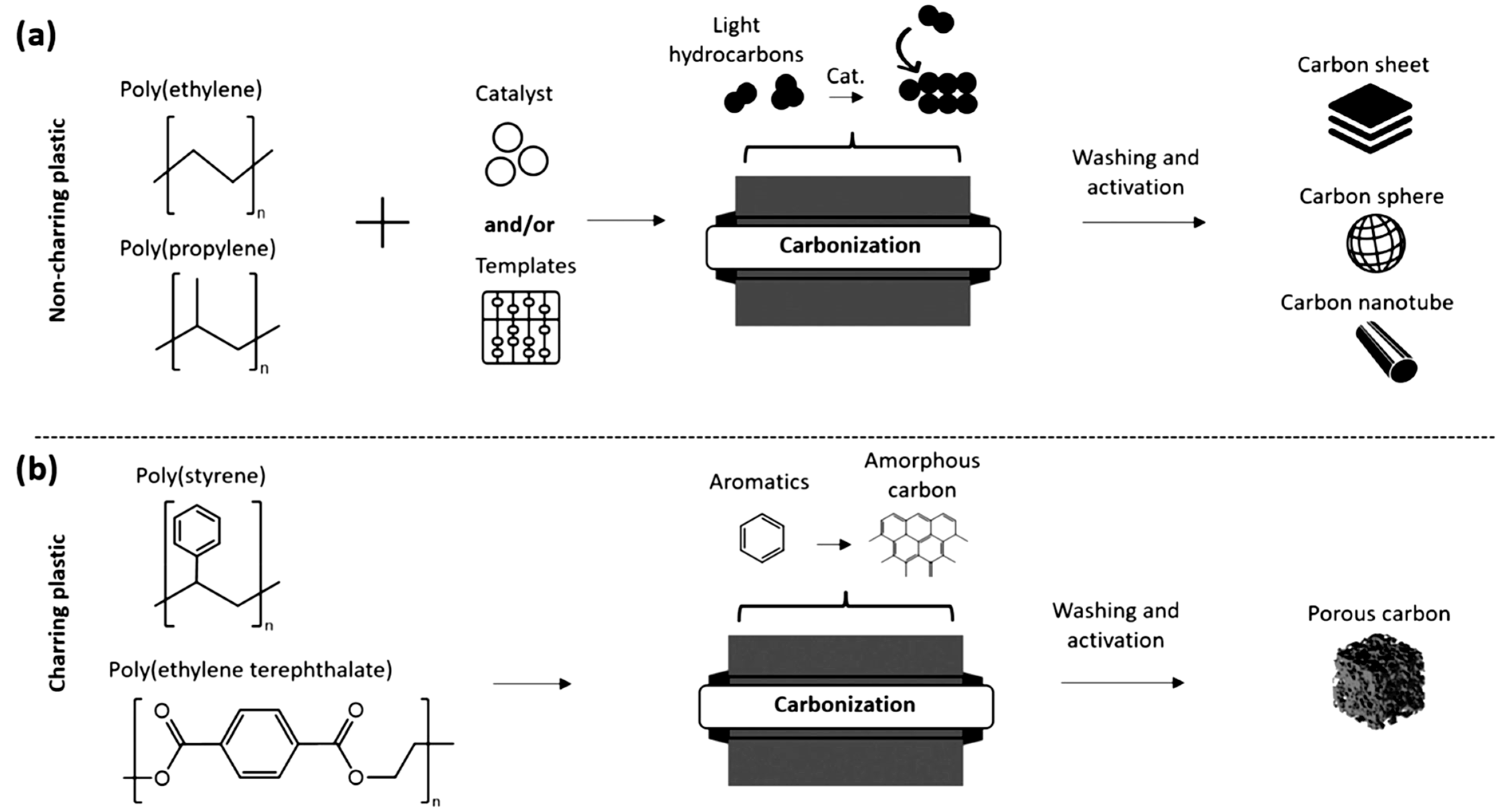
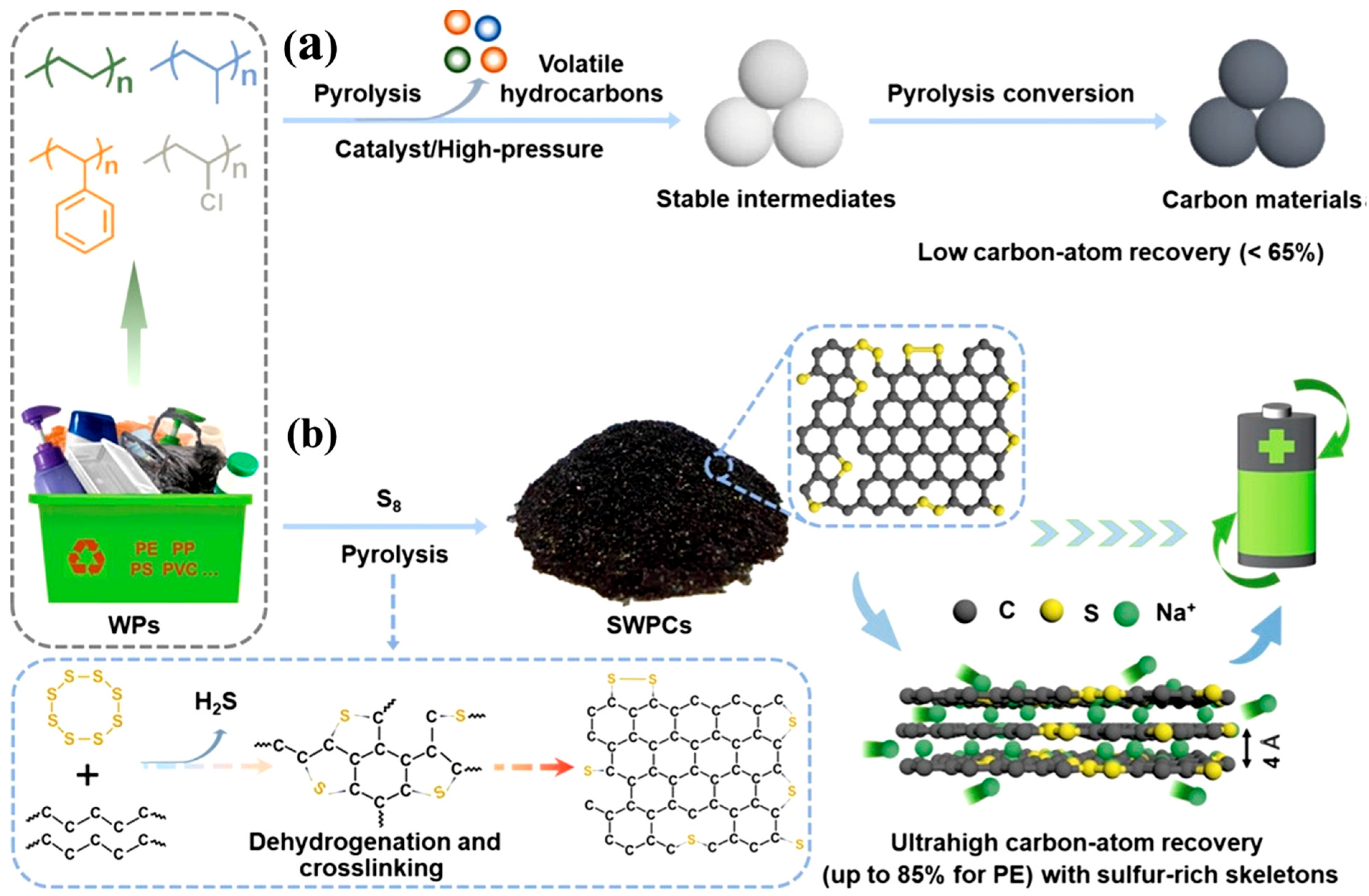
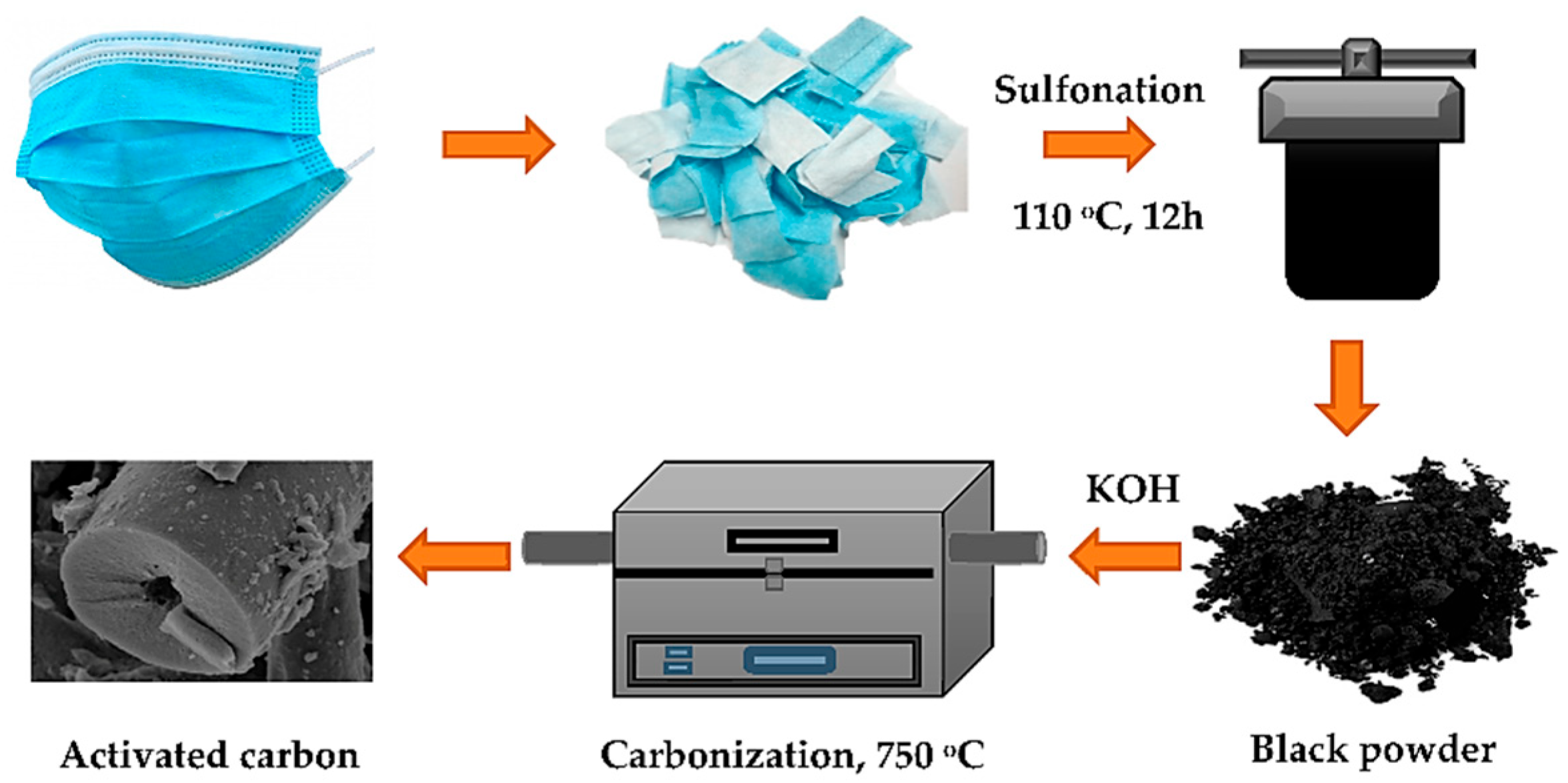
7.1. Anoxic Pyrolysis Carbonization
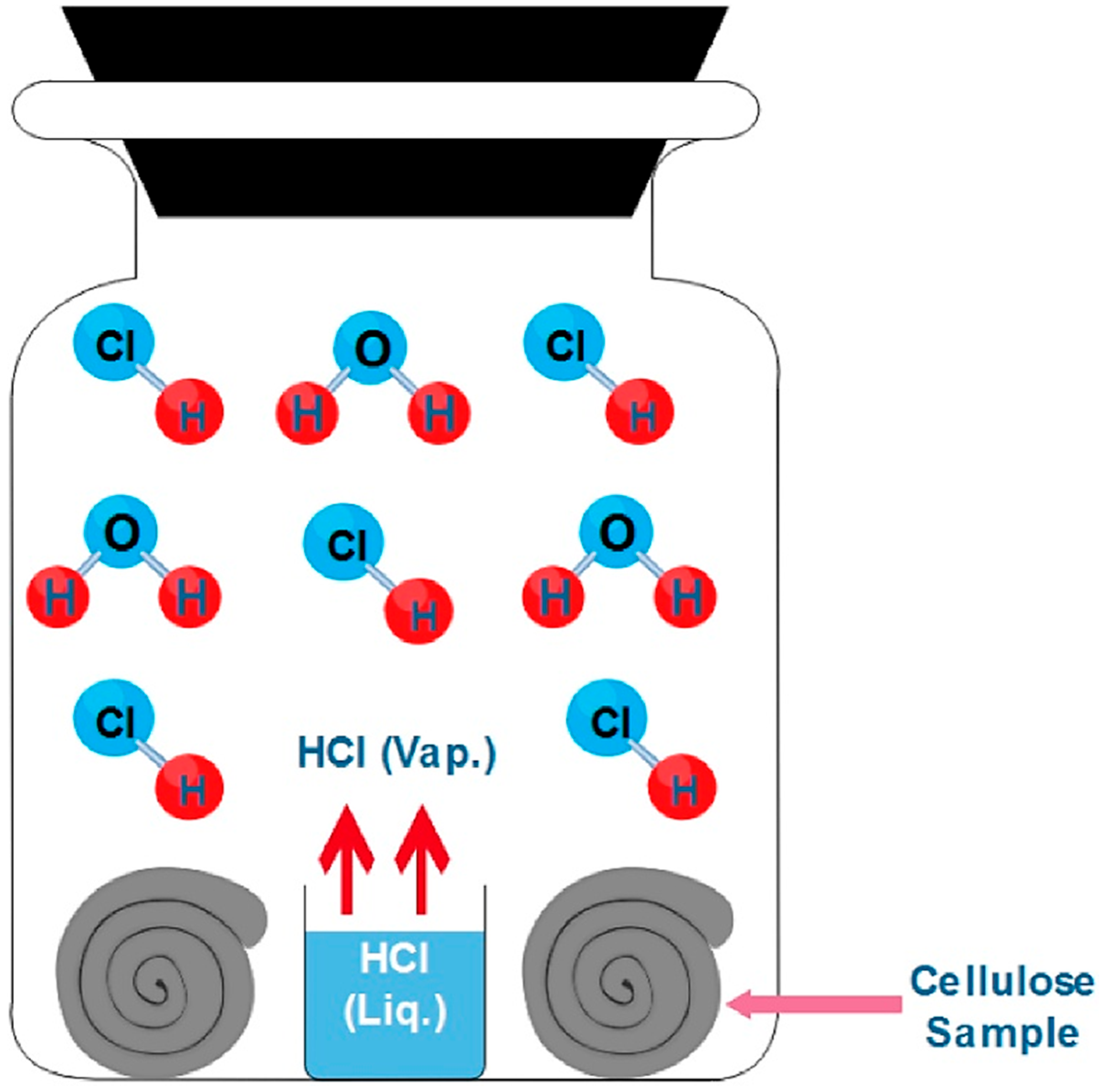
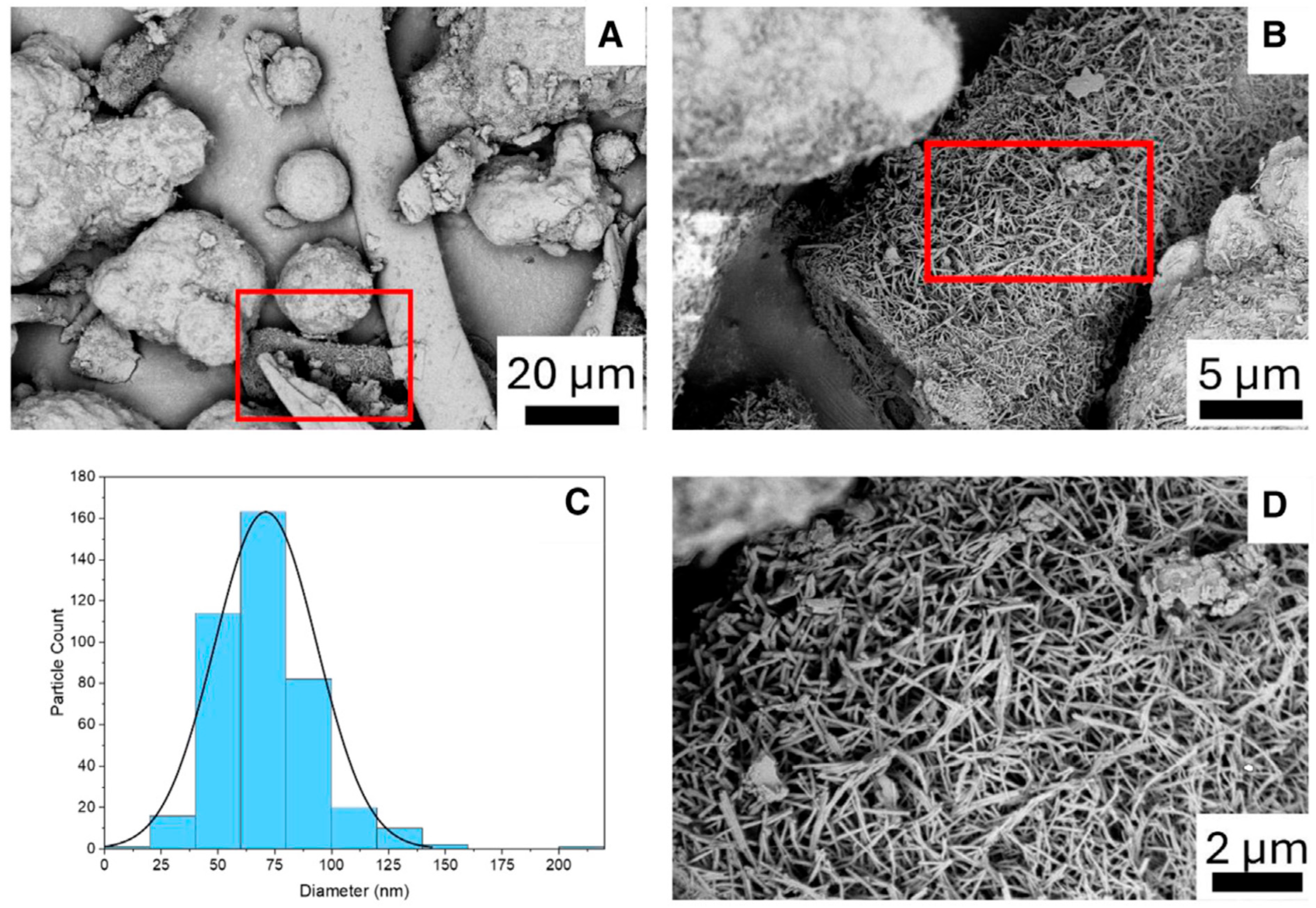
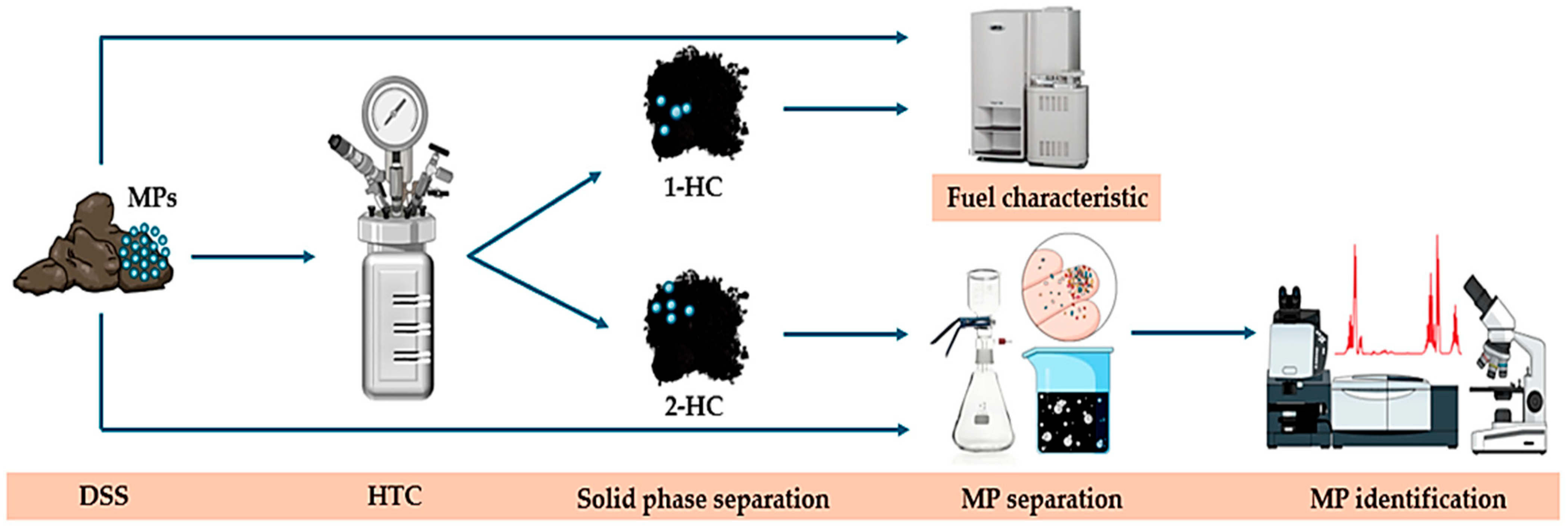
7.2. Hydrothermal Carbonization (HTC)
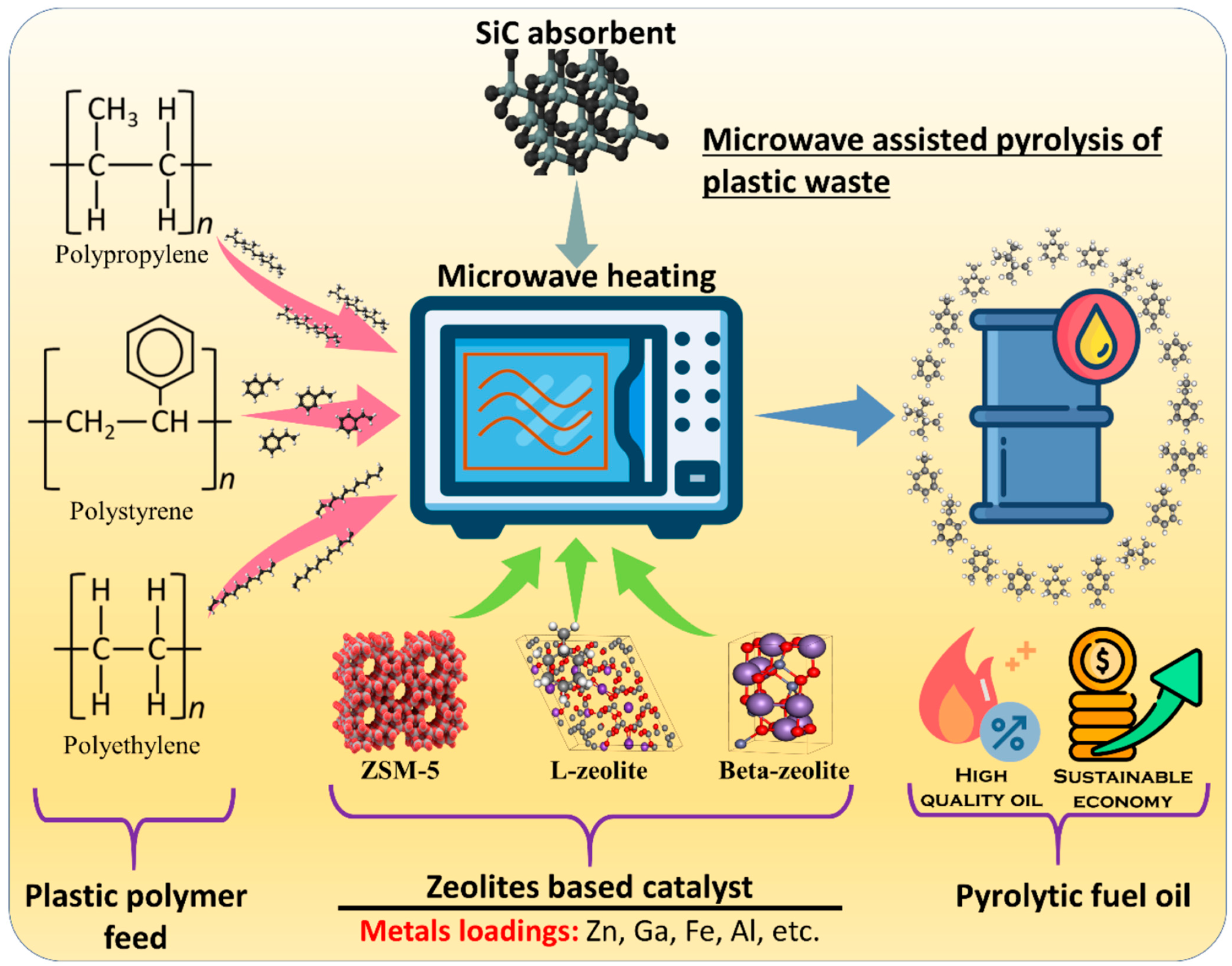
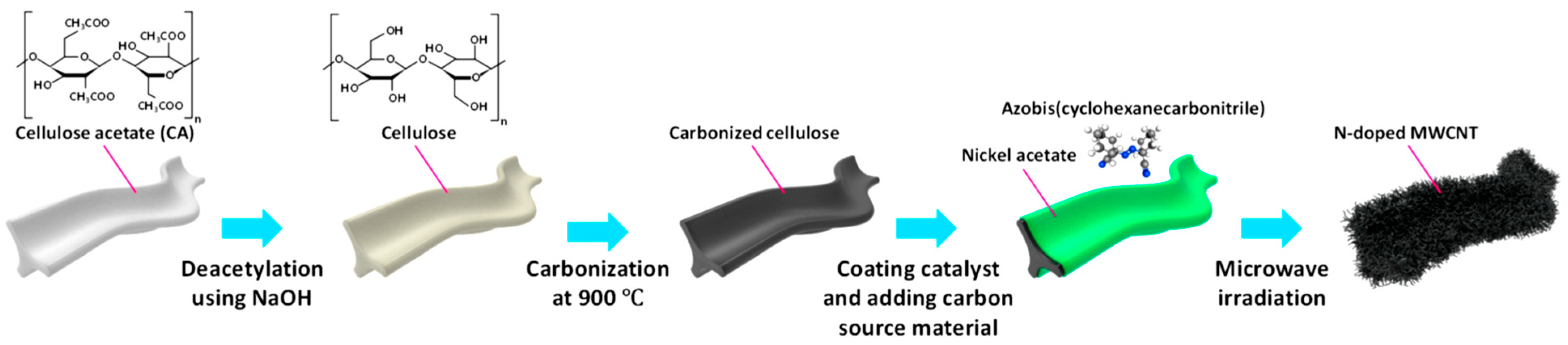
7.3. Microwave-Assisted Carbonization
7.4. Laser-Carbonization
7.5. Reaction Mechanism of Carbonization
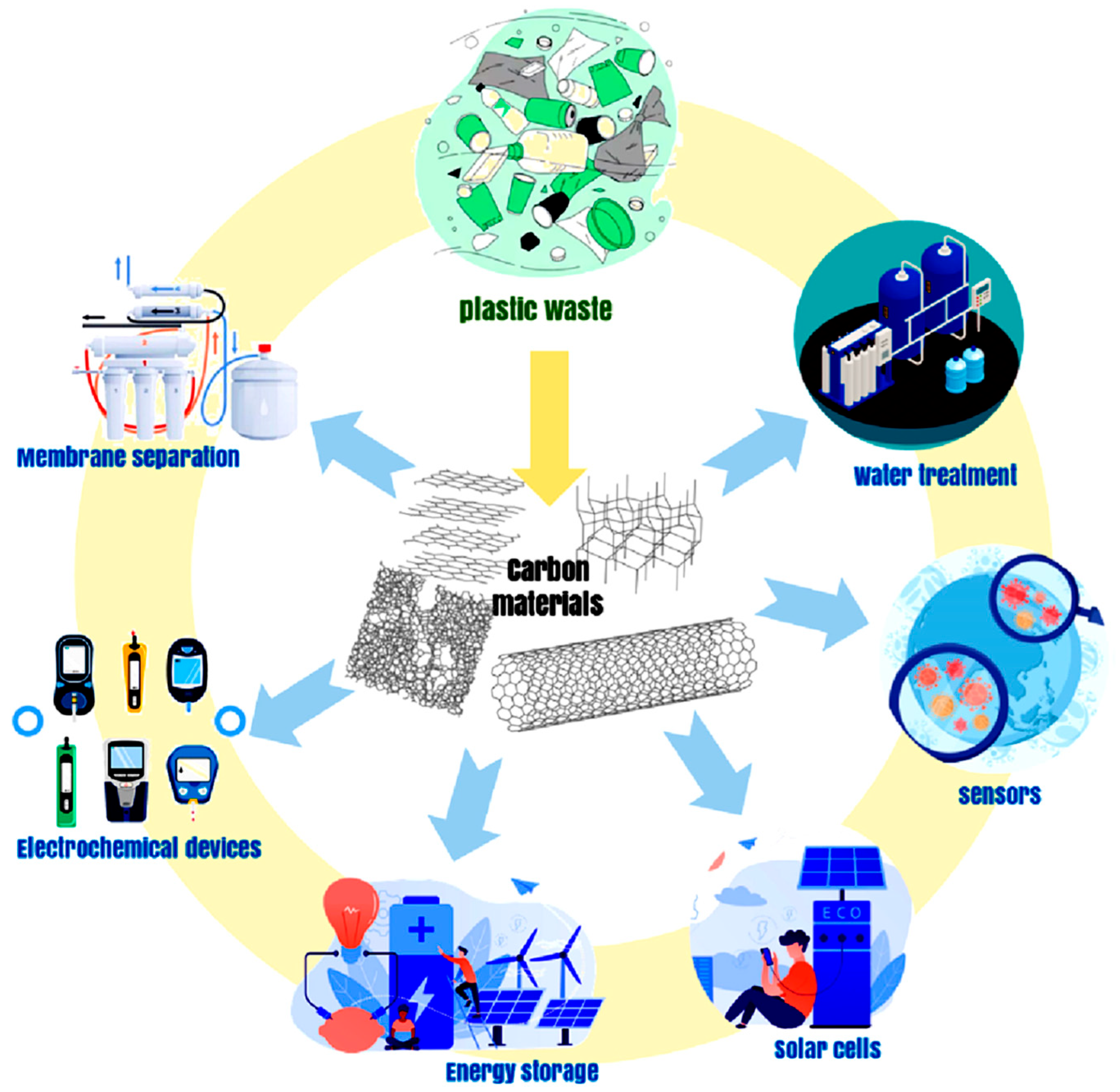
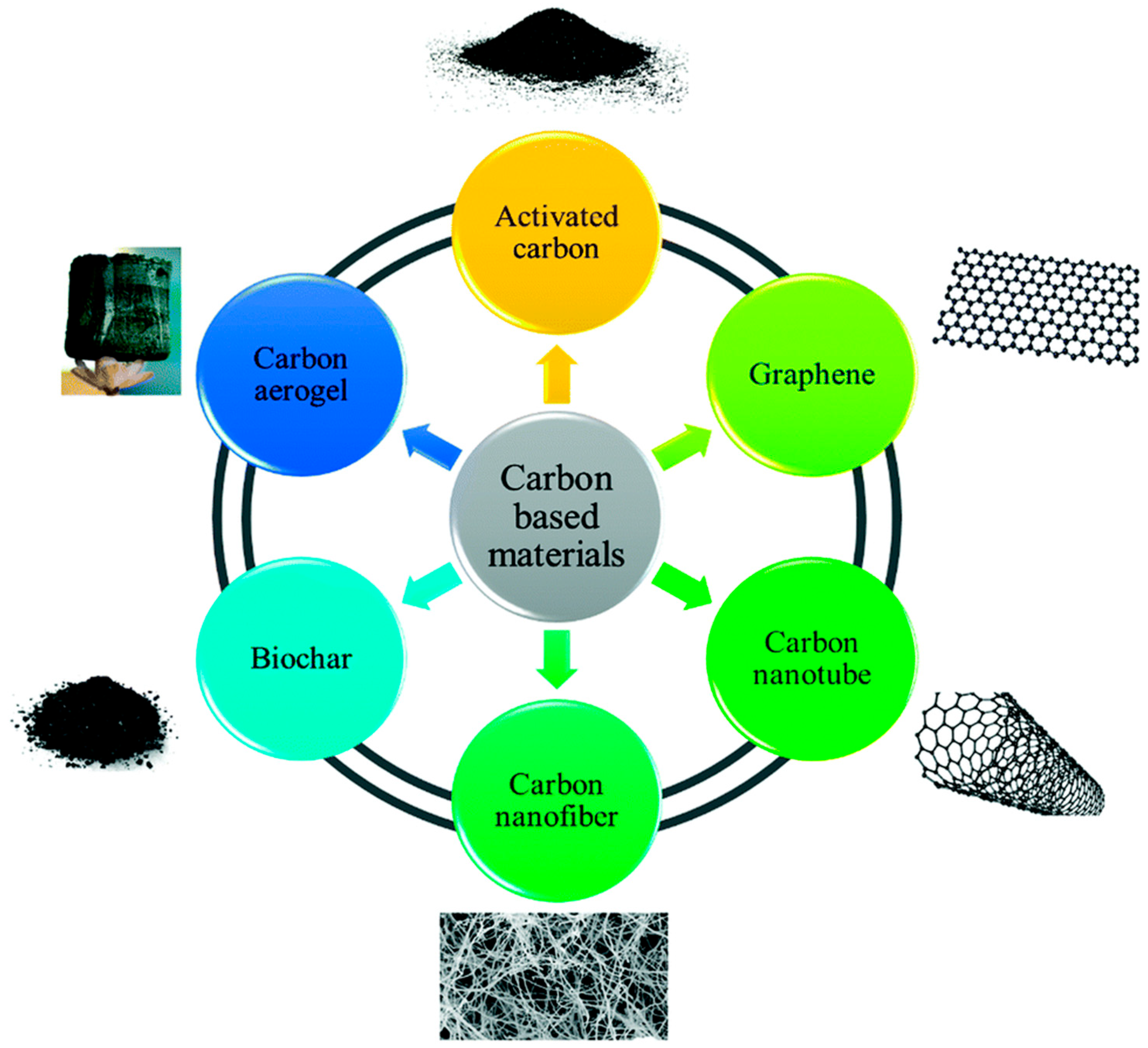
8. Activated Carbons for Wastewater Treatment Applications
9. Utilization of Microplastics for Wastewater Treatment
10. Health and Environmental Implications of Textile-Derived Microplastics and By-Products
11. Economic Feasibility, Scalability, and Key Challenges
12. Conclusions
Author Contributions
Funding
Data Availability Statement
Conflicts of Interest
References
- Ziajahromi, S.; Neale, P.A.; Rintoul, L.; Leusch, F.D.L. Wastewater treatment plants as a pathway for microplastics: Development of a new approach to sample wastewater-based microplastics. Water Res. 2017, 112, 93–99. [Google Scholar] [CrossRef] [Scilit]
- Khoaele, K.K.; Gbadeyan, O.J.; Chunilall, V.; Sithole, B. The Devastation of Waste Plastic on the Environment and Remediation Processes: A Critical Review. Sustainability 2023, 15, 5233. [Google Scholar] [CrossRef] [Scilit]
- Andrady, A.L. Microplastics in the Marine Environment. Mar. Pollut. Bull. 2011, 62, 1596–1605. [Google Scholar] [CrossRef] [Scilit]
- Mellin, P.; Jönsson, C.; Åkermo, M.; Fernberg, P.; Nordenberg, E.; Brodin, H.; Strondl, A. Nano-sized by-products from metal 3D printing, composite manufacturing and fabric production. J. Clean. Prod. 2016, 139, 1224–1233. [Google Scholar] [CrossRef] [Scilit]
- Talukdar, A.; Kundu, P.; Bhattacharya, S.; Dutta, N. Microplastic contamination in wastewater: Sources, distribution, detection and remediation through physical and chemical-biological methods. Sci. Total Environ. 2024, 916, 170254. [Google Scholar] [CrossRef] [Scilit]
- Napper, I.E.; Thompson, R.C. Release of synthetic microplastic plastic fibres from domestic washing machines: Effects of fabric type and washing conditions. Mar. Pollut. Bull. 2016, 112, 39–45. [Google Scholar] [CrossRef] [Scilit]
- Dubaish, F.; Liebezeit, G. Suspended microplastics and black carbon particles in the Jade system, southern North Sea. Water Air Soil Pollut. 2013, 224, 1352. [Google Scholar] [CrossRef] [Scilit]
- Rist, S.; Carney Almroth, B.; Hartmann, N.B.; Karlsson, T.M. A critical perspective on early communications concerning human health aspects of microplastics. Sci. Total Environ. 2018, 626, 720–726. [Google Scholar] [CrossRef] [Scilit] [PubMed]
- Hahladakis, J.N.; Velis, C.A.; Weber, R.; Iacovidou, E.; Purnell, P. An overview of chemical additives present in plastics: Migration, release, fate and environmental impact during their use, disposal and recycling. J. Hazard. Mater. 2018, 344, 179–199. [Google Scholar] [CrossRef] [Scilit] [PubMed]
- Giuliani, A.; Zuccarini, M.; Cichelli, A.; Khan, H.; Reale, M. Critical review on the presence of phthalates in food and evidence of their biological impact. Int. J. Environ. Res. Public Health 2020, 17, 5655. [Google Scholar] [CrossRef] [Scilit] [PubMed]
- Lu, Y.; Li, M.-C.; Lee, J.; Liu, C.; Mei, C. Microplastic remediation technologies in water and wastewater treatment processes: Current status and future perspectives. Sci. Total Environ. 2023, 868, 161618. [Google Scholar] [CrossRef] [Scilit]
- Akkajit, P.; Sukkuea, A.; Thongnonghin, B. Comparative analysis of five convolutional neural networks and transfer learning classification approach for microplastics in wastewater treatment plants. Ecol. Inform. 2023, 78, 102328. [Google Scholar] [CrossRef] [Scilit]
- Okoffo, E.D.; O’Brien, S.; O’Brien, J.W.; Tscharke, B.J.; Rauert, C.; Rødland, E.S.; Ribeiro, F.; Burrows, S.D.; Toapanta, T.; Mueller, J.F.; et al. Does size matter? Quantification of plastics associated with size fractionated biosolids. Sci. Total Environ. 2022, 811, 152382. [Google Scholar] [CrossRef] [Scilit]
- Yuan, Z.; Nag, R.; Cummins, E. Human health concerns regarding microplastics in the aquatic environment—From marine to food systems. Sci. Total Environ. 2022, 823, 153730. [Google Scholar] [CrossRef] [Scilit] [PubMed]
- Gall, S.C.; Thompson, R.C. The impact of debris on marine life. Mar. Pollut. Bull. 2015, 92, 170–179. [Google Scholar] [CrossRef] [Scilit]
- Peller, J.R.; Tabor, G.; Davis, C.; Iceman, C.; Nwachukwu, O.; Doudrick, K.; Wilson, A.; Suprenant, A.; Dabertin, D.; McCool, J.-P. Distribution and Fate of Polyethylene Microplastics Released by a Portable Toilet Manufacturer into a Freshwater Wetland and Lake. Water 2023, 16, 11. [Google Scholar] [CrossRef] [Scilit]
- Salvador Cesa, F.; Turra, A.; Baruque-Ramos, J. Synthetic fibers as microplastics in the marine environment: A review from textile perspective with a focus on domestic washings. Sci. Total Environ. 2017, 598, 1116–1129. [Google Scholar] [CrossRef] [Scilit]
- Quintana, E.; Valls, C.; Roncero, M.B. Dissolving-grade pulp: A sustainable source for fiber production. Wood Sci. Technol. 2024, 58, 23–85. [Google Scholar] [CrossRef] [Scilit]
- Horton, A.A.; Walton, A.; Spurgeon, D.J.; Lahive, E.; Svendsen, C. Microplastics in freshwater and terrestrial environments: Evaluating the current understanding to identify the knowledge gaps and future research priorities. Sci. Total Environ. 2017, 586, 127–141. [Google Scholar] [CrossRef] [Scilit] [PubMed]
- Khan, M.Z. Hydrothermal Growth of TiO2 Nanoflowers on PET Fabrics for Functional Applications. J. Fiber Bioeng. Inform. 2021, 14, 199–210. [Google Scholar] [CrossRef] [Scilit]
- Ferreira, M.S.V.; Mousavi, S.H. Nanofiber technology in the ex vivo expansion of cord blood-derived hematopoietic stem cells. Nanomedicine 2018, 14, 1707–1718. [Google Scholar] [CrossRef] [Scilit]
- Tian, L.; Skoczynska, E.; Siddhanti, D.; van Putten, R.-J.; Leslie, H.A.; Gruter, G.-J.M. Quantification of polyethylene terephthalate microplastics and nanoplastics in sands, indoor dust and sludge using a simplified in-matrix depolymerization method. Mar. Pollut. Bull. 2022, 175, 113403. [Google Scholar] [CrossRef] [Scilit]
- Setala, F.N.O.; Magnussan, K.; Lehtiniemi, M. Distribution and abundance of surface water microlitter in the Baltic Sea: A comparison of two sampling methods. Mar. Pollut. Bull. 2016, 110, 177–183. [Google Scholar] [CrossRef] [Scilit]
- Janssen, C.R.; Koelmans, A.A.; Bakir, A.; Burton, G.A. Microplastic as a Vector for Chemicals in the Aquatic Environment: Critical Review and Model-Supported Reinterpretation of Empirical Studies. Environ. Sci. Technol. 2016, 50, 3315–3326. [Google Scholar] [CrossRef] [Scilit]
- Ladewig, A.T.C.S.; Bao, S. Natural Fibers: A Missing Link to Chemical Pollution Dispersion in Aquatic Environments. Environ. Sci. Technol. 2015, 49, 12609–12610. [Google Scholar] [CrossRef] [Scilit]
- Wagner, M.; Scherer, C.; Alvarez-Muñoz, D.; Brennholt, N.; Bourrain, X.; Buchinger, S.; Fries, E.; Grosbois, C.; Klasmeier, J.; Marti, T.; et al. Microplastics in freshwater ecosystems: What we know and what we need to know. Environ. Sci. Eur. 2014, 26, 9. [Google Scholar] [CrossRef] [Scilit]
- Thompson, R.; Browne, M.A.; Crump, P.; Niven, S.J.; Teuten, E.; Tonkin, A. Accumulation of Microplastic on Shorelines Woldwide: Sources and Sinks. Environ. Sci. Technol. 2011, 45, 9175. [Google Scholar] [CrossRef] [Scilit]
- Fan, W.; Bao, W.; Gong, R.H.; Ding, X.; Xue, Y.; Li, P. Optimizing a laundering program for textiles in a front-loading washing machine and saving energy. J. Clean. Prod. 2017, 148, 415–421. [Google Scholar] [CrossRef] [Scilit]
- Cai, Y.; Yang, T.; Mitrano, D.M.; Heuberger, M.; Hufenus, R.; Nowack, B. Systematic Study of Microplastic Fiber Release from 12 Different Polyester Textiles during Washing. Environ. Sci. Technol. 2020, 54, 4847–4855. [Google Scholar] [CrossRef] [Scilit] [PubMed]
- Šaravanja, A.; Pušić, T.; Dekanić, T. Microplastics in Wastewater by Washing Polyester Fabrics. Materials 2022, 15, 2683. [Google Scholar] [CrossRef] [Scilit]
- Ali, A.; Qamer, S.; Shahid, M.; Tomkova, B.; Khan, M.Z.; Militky, J.; Wiener, J.; Venkataraman, M. Micro- and Nanoplastics Produced from Textile Finishes: A Review. Langmuir 2024, 40, 17849–17867. [Google Scholar] [CrossRef] [Scilit]
- Machado, A.A.D.; Werner, K.; Christiane, Z.; Stefan, H.; Rillig, M.C. Microplastics as an Emerging Threat to Terrestrial Ecosystems. Glob. Change Biol. 2018, 24, 1405. [Google Scholar] [CrossRef] [Scilit]
- Hidalgo-Ruz, V.; Gutow, L.; Thompson, R.C.; Thiel, M. Microplastics in the Marine Environment: A Review of the Methods Used for Identification and Quantification. Environ. Sci. Technol. 2012, 46, 3060–3075. [Google Scholar] [CrossRef] [Scilit]
- Ali, S.S.; Elsamahy, T.; Koutra, E.; Kornaros, M.; El-Sheekh, M.; Abdelkarim, E.A.; Zhu, D.; Sun, J. Degradation of conventional plastic wastes in the environment: A review on current status of knowledge and future perspectives of disposal. Sci. Total Environ. 2021, 771, 144719. [Google Scholar] [CrossRef] [Scilit]
- Zhang, S.S.Y.Q.; Lykaki, M.; Alrajoula, M.T.; Markiewicz, M.; Kraas, C.; Kolbe, S.; Klinkhammer, K.; Rabe, M.; Klauer, R.; Bendt, E. Microplastics from textile origin—Emission and reduction measures. Green Chem. 2021, 21, 5247–5271. [Google Scholar] [CrossRef] [Scilit]
- Bianco, A.; Passananti, M. Atmospheric micro and nanoplastics: An enormous microscopic problem. Sustainability 2020, 12, 7327. [Google Scholar] [CrossRef] [Scilit]
- Boucher, J.; Friot, D. Primary Microplastics in the Oceans: A Global Evaluation of Sources. In Primary Microplastics in the Oceans: A Global Evaluation of Sources; IUCN: Gland, Switzerland, 2017. [Google Scholar] [CrossRef] [Scilit]
- Periyasamy, A.P.; Tehrani-Bagha, A. A review on microplastic emission from textile materials and its reduction techniques. Polym. Degrad. Stab. 2022, 199, 109901. [Google Scholar] [CrossRef] [Scilit]
- Kelly, M.R.; Lant, N.J.; Kurr, M.; Burgess, J.G. Importance of Water-Volume on the Release of Microplastic Fibers from Laundry. Environ. Sci. Technol. 2019, 53, 11735–11744. [Google Scholar] [CrossRef] [Scilit] [PubMed]
- De Falco, F.; Di Pace, E.; Cocca, M.; Avella, M. The contribution of washing processes of synthetic clothes to microplastic pollution. Sci. Rep. 2019, 9, 6633. [Google Scholar] [CrossRef] [Scilit]
- Hassabo, A.; Mohamed, N.; Gouda, N.; Khaleed, N. Polyurethane (PU) in textile finishing process. J. Text. Color. Polym. Sci. 2023, 21, 173–186. [Google Scholar] [CrossRef] [Scilit]
- Rajan, A.; Ameen, F.; Jambulingam, R.; Shankar, V. Biodegradation of Polyurethane by Fungi Isolated from Industrial Wastewater—A Sustainable Approach to Plastic Waste Management. Polymers 2024, 16, 1411. [Google Scholar] [CrossRef] [Scilit]
- Gashti, M.P.; Navid, M.Y.; Rahimi, M.H. Effects of coating of nano- and microemulsion silicones on thermal properties and flammability of polyethylene terephthalate textile. Pigment. Resin Technol. 2013, 42, 34–44. [Google Scholar] [CrossRef] [Scilit]
- Monira, S.; Roychand, R.; Hai, F.I.; Bhuiyan, M.; Dhar, B.R.; Pramanik, B.K. Nano and microplastics occurrence in wastewater treatment plants: A comprehensive understanding of microplastics fragmentation and their removal. Chemosphere 2023, 334, 139011. [Google Scholar] [CrossRef] [Scilit] [PubMed]
- Cózar, A.; Echevarría, F.; González-Gordillo, J.I.; Duarte, C.M. Plastic debris in the open ocean. Proc. Natl. Acad. Sci. USA 2014, 111, 10239–10244. [Google Scholar] [CrossRef] [Scilit]
- Zangmeister, C.D.; Radney, J.G.; Benkstein, K.D.; Kalanyan, B. Common Single-Use Consumer Plastic Products Release Trillions of Sub-100 nm Nanoparticles per Liter into Water during Normal Use. Environ. Sci. Technol. 2022, 56, 5448–5455. [Google Scholar] [CrossRef] [Scilit]
- Bayo, J.; Olmos, S.; López-Castellanos, J. Microplastics in an urban wastewater treatment plant: The influence of physicochemical parameters and environmental factors. Chemosphere 2020, 238, 124–593. [Google Scholar] [CrossRef] [Scilit]
- Chowdhury, K.P. Effect of Special Finishes on the Functional Properties of Cotton Fabrics. J. Text. Sci. Technol. 2018, 04, 49–66. [Google Scholar] [CrossRef]
- Mondal, S.; Pal, S.; Maity, J. Hydrophobic thin fluoropolymer coating on cotton surfaces. Int. J. Polym. Anal. Charact. 2018, 23, 376–382. [Google Scholar] [CrossRef] [Scilit]
- Yu, T.-H.; David, M.M.; Hagen, K.D.; Carpenter, S.J.; Hanson, E.J.; Wolk, M.B.; McMan, S.J.; Schwartz, E.L. Fluorocarbon Release Coating. U.S. Patent 10,967,399 B2, 6 April 2021. [Google Scholar]
- Richterich, R. Besoins Langagiers et Objectifs d’ Apprentissage. Rech. Appl. 1985, 3, 1–24. [Google Scholar]
- García, J.V.; Dow, N.; Milne, N.; Zhang, J.; Naidoo, L.; Gray, S.; Duke, M. Membrane distillation trial on textile wastewater containing surfactants using hydrophobic and hydrophilic-coated polytetrafluoroethylene (PTFE) membranes. Membranes 2018, 8, 31. [Google Scholar] [CrossRef] [Scilit]
- Hou, M.; Li, Q.; Che, Y. Hydrophilic Modification of Polytetrafluoroethylene (PTFE) Capillary Membranes with Chemical Resistance by Constructing Three-Dimensional Hydrophilic Networks. Polymers 2024, 16, 1154. [Google Scholar] [CrossRef] [Scilit] [PubMed]
- Nag, A.; Baksi, A.; Ghosh, J.; Kumar, V.; Bag, S.; Mondal, B.; Ahuja, T.; Pradeep, T. Tribochemical Degradation of Polytetrafluoroethylene in Water and Generation of Nanoplastics. ACS Sustain. Chem. Eng. 2019, 7, 17554–17558. [Google Scholar] [CrossRef] [Scilit]
- Ambroziak, A.; Kłosowski, P. Influence of water-induced degradation of polytetrafluoroethylene (Ptfe)-coatedwoven fabrics mechanical properties. Materials 2022, 15, 1. [Google Scholar] [CrossRef] [Scilit]
- Palacios-Marín, A.V.; Tausif, M. Fragmented fibre (including microplastic) pollution from textiles. Text. Prog. 2021, 53, 123–182. [Google Scholar] [CrossRef] [Scilit]
- Konde, S.; Brackmann, S.; Prume, J.; Philipps, M.G.; Koch, M. Nile Red staining for the detection of microplastics: A comprehensive study on the emission spectra. Res. Sq. 2023, 1–17. [Google Scholar]
- Xu, C.; Zhou, G.; Lu, J.; Shen, C.; Dong, Z.; Yin, S.; Li, F. Spatio-vertical distribution of riverine microplastics: Impact of the textile industry. Environ. Res. 2022, 211, 112789. [Google Scholar] [CrossRef] [Scilit]
- Belzagui, F.; Crespi, M.; Álvarez, A.; Gutiérrez-Bouzán, C.; Vilaseca, M. Microplastics’ emissions: Microfibers’ detachment from textile garments. Environ. Pollut. 2019, 248, 1028–1035. [Google Scholar] [CrossRef] [Scilit]
- De Falco, F.; Gullo, M.P.; Gentile, G.; Di Pace, E.; Cocca, M.; Gelabert, L.; Brouta-Agnésa, M.; Rovira, A.; Escudero, R.; Villalba, R.; et al. Evaluation of microplastic release caused by textile washing processes of synthetic fabrics. Environ. Pollut. 2018, 236, 916–925. [Google Scholar] [CrossRef] [Scilit]
- Cesa, F.S.; Turra, A.; Checon, H.H.; Leonardi, B.; Baruque-Ramos, J. Laundering and textile parameters influence fibers release in household washings. Environ. Pollut. 2020, 257, 113553. [Google Scholar] [CrossRef] [Scilit] [PubMed]
- Li, C.; Zhang, T.; Ji, X.; Wang, Z.; Sun, S.; Hu, S. Effect of Ca2+/Mg2+ on the stability of the foam system stabilized by an anionic surfactant: A molecular dynamics study. Colloids Surf. A Physicochem. Eng. Asp. 2016, 489, 423–432. [Google Scholar] [CrossRef] [Scilit]
- Simon, M.; van Alst, N.; Vollertsen, J. Quantification of microplastic mass and removal rates at wastewater treatment plants applying Focal Plane Array (FPA)-based Fourier Transform Infrared (FT-IR) imaging. Water Res. 2018, 142, 1–9. [Google Scholar] [CrossRef] [Scilit]
- Şimşek, B.; Sevgili, İ.; Ceran, Ö.B.; Korucu, H.; Şara, O.N. Nanomaterials Based Drinking Water Purification: Comparative Study with a Conventional Water Purification Process. Period. Polytech. Chem. Eng. 2018, 63, 96–112. [Google Scholar] [CrossRef] [Scilit]
- Bakos, V.; Szombathy, P.; Simon, J.; Jobbágy, A. Implementing Cost-effective Co-treatment of Domestic and Food-industrial Wastewater by Novel Methods for Estimating Industrial Load. Period. Polytech. Chem. Eng. 2020, 64, 505–513. [Google Scholar] [CrossRef] [Scilit]
- Bui, X.-T.; Vo, T.-D.-H.; Nguyen, P.-T.; Nguyen, V.-T.; Dao, T.-S.; Nguyen, P.-D. Microplastics pollution in wastewater: Characteristics, occurrence and removal technologies. Environ. Technol. Innov. 2020, 19, 101013. [Google Scholar] [CrossRef] [Scilit]
- Ngo, P.L.; Pramanik, B.K.; Shah, K.; Roychand, R. Pathway, classification and removal efficiency of microplastics in wastewater treatment plants. Environ. Pollut. 2019, 255, 113326. [Google Scholar] [CrossRef] [Scilit]
- Tang, W.; Li, H.; Fei, L.; Wei, B.; Zhou, T.; Zhang, H. The removal of microplastics from water by coagulation: A comprehensive review. Sci. Total Environ. 2022, 851, 158224. [Google Scholar] [CrossRef] [Scilit] [PubMed]
- Prokopova, M.; Novotna, K.; Pivokonska, L.; Cermakova, L.; Cajthaml, T.; Pivokonsky, M. Coagulation of polyvinyl chloride microplastics by ferric and aluminium sulphate: Optimisation of reaction conditions and removal mechanisms. J. Environ. Chem. Eng. 2021, 9, 106465. [Google Scholar] [CrossRef] [Scilit]
- Liu, S.; Zhuang, Q.; Huang, H.; Lin, X.; Yang, Y.; Wu, J. Removal Effect of Coagulating Sedimentation Method on Polyethylene Microplastics in Water. Asian Agric. Res. 2023, 15, 9. [Google Scholar]
- Ashenafi, M. Give to AgEcon Search. 2023. Available online: https://www.researchgate.net/publication/375895202_Give_to_AgEcon_Search (accessed on 20 December 2025).
- Parashar, N.; Hait, S. Recent advances on microplastics pollution and removal from wastewater systems: A critical review. J. Environ. Manag. 2023, 340, 118014. [Google Scholar] [CrossRef] [Scilit]
- Jamal, M.; Sarac, A.S.; Magner, E. Conductive copolymer-modified carbon fibre microelectrodes: Electrode characterisation and electrochemical detection of p-aminophenol. Sens. Actuators B Chem. 2004, 97, 59–66. [Google Scholar] [CrossRef] [Scilit]
- Du, Q.; Wei, H.; Li, A.; Yang, H. Evaluation of the starch-based flocculants on flocculation of hairwork wastewater. Sci. Total Environ. 2017, 601–602, 1628–1637. [Google Scholar] [CrossRef] [Scilit]
- Gao, W.; Mo, A.; Jiang, J.; Liang, Y.; Cao, X.; He, D. Removal of microplastics from water by coagulation of cationic-modified starch: An environmentally friendly solution. Sci. Total Environ. 2023, 904, 166787. [Google Scholar] [CrossRef] [Scilit] [PubMed]
- Perren, W.; Wojtasik, A.; Cai, Q. Removal of Microbeads from Wastewater Using Electrocoagulation. ACS Omega 2018, 3, 3357–3364. [Google Scholar] [CrossRef] [Scilit] [PubMed]
- Singh, J.; Shrivastava, A.; Mukophadhyaya, K.; Prasad, D.; Sharma, V. Design and Development of Composite Nonwoven Filter for Pre-filtration of Textile Effluents Using Nano-technology. J. Mater. Sci. Eng. 2017, 6, 1000340. [Google Scholar] [CrossRef]
- Rosariawari, F.; Rachmanto, T.A.; Mirwan, M.; Rahmayanti, D. Electrocoagulation Process to Reduce Microplastic in Wonokromo Surface Water. In Proceedings of the 2nd International Conference Eco-Innovation in Science, Engineering, and Technology, Kuantan, Malaysia, 25–26 November 2021. [Google Scholar] [CrossRef] [Scilit]
- Rasheed, Z. Electro-coagulation technique using iron [Fe] and aluminium [Al] for microplastics removal from fashion industry wastewater, Thailand. Econ. Environ. 2024, 90, 826. [Google Scholar] [CrossRef] [Scilit]
- Shammas, N.K.; Bennett, G.F. Principles of Air Flotation Technology. In Flotation Technology; Humana Press: Totowa, NJ, USA, 2010; pp. 1–47. [Google Scholar] [CrossRef] [Scilit]
- Ghernaout, D. The Best Available Technology of Water/Wastewater Treatment and Seawater Desalination: Simulation of the Open Sky Seawater Distillation. Green Sustain. Chem. 2013, 3, 68–88. [Google Scholar] [CrossRef]
- Konechnaya, O.; Lüchtrath, S.; Dsikowitzky, L.; Schwarzbauer, J. Optimized microplastic analysis based on size fractionation, density separation and μ-FTIR. Water Sci. Technol. 2020, 81, 834–844. [Google Scholar] [CrossRef] [Scilit]
- Stolte, A.; Forster, S.; Gerdts, G.; Schubert, H. Microplastic concentrations in beach sediments along the German Baltic coast. Mar. Pollut. Bull. 2015, 99, 216–229. [Google Scholar] [CrossRef] [Scilit]
- Karami, A.; Golieskardi, A.; Choo, C.K.; Romano, N.; Bin Ho, Y.; Salamatinia, B. A high-performance protocol for extraction of microplastics in fish. Sci. Total Environ. 2017, 578, 485–494. [Google Scholar] [CrossRef] [Scilit]
- Li, J.; Liu, Y.; Gao, Y.; Li, X.; Gong, Y. Study on the Extraction Method of Microplastic System in Textile Wastewater. Polymers 2023, 15, 1394. [Google Scholar] [CrossRef] [Scilit]
- Quinn, B.; Murphy, F.; Ewins, C. Validation of density separation for the rapid recovery of microplastics from sediment. Anal. Methods 2017, 9, 1491–1498. [Google Scholar] [CrossRef] [Scilit]
- Coppock, R.L.; Cole, M.; Lindeque, P.K.; Queirós, A.M.; Galloway, T.S. A small-scale, portable method for extracting microplastics from marine sediments. Environ. Pollut. 2017, 230, 829–837. [Google Scholar] [CrossRef] [Scilit] [PubMed]
- Nuelle, M.-T.; Dekiff, J.H.; Remy, D.; Fries, E. A new analytical approach for monitoring microplastics in marine sediments. Environ. Pollut. 2014, 184, 161–169. [Google Scholar] [CrossRef] [Scilit]
- Zobkov, M.B.; Esiukova, E.E. Evaluation of the Munich Plastic Sediment Separator efficiency in extraction of microplastics from natural marine bottom sediments. Limnol. Oceanogr. Methods 2017, 15, 967–978. [Google Scholar] [CrossRef] [Scilit]
- Poerio, T.; Piacentini, E.; Mazzei, R. Membrane Processes for Microplastic Removal. Molecules 2019, 24, 4148. [Google Scholar] [CrossRef] [Scilit]
- Bayo, J.; López-Castellanos, J.; Olmos, S. Membrane bioreactor and rapid sand filtration for the removal of microplastics in an urban wastewater treatment plant. Mar. Pollut. Bull. 2020, 156, 111211. [Google Scholar] [CrossRef] [Scilit] [PubMed]
- Umar, M.; Singdahl-Larsen, C.; Ranneklev, S.B. Microplastics Removal from a Plastic Recycling Industrial Wastewater Using Sand Filtration. Water 2023, 15, 896. [Google Scholar] [CrossRef] [Scilit]
- Acarer, S. A review of microplastic removal from water and wastewater by membrane technologies. Water Sci. Technol. 2023, 88, 199–219. [Google Scholar] [CrossRef] [Scilit]
- Pandey, B.; Zainuddin, A.H.; Saifuddin, M.F.U.; Razak, M.R.; Isa, N.M.; Ash’aari, Z.H.; Aris, A.Z. Microplastics in the Ecosystem: An Overview on Detection, Removal, Toxicity Assessment, and Control Release. Water 2022, 15, 51. [Google Scholar] [CrossRef] [Scilit]
- Acarer, S. Microplastics in wastewater treatment plants: Sources, properties, removal efficiency, removal mechanisms, and interactions with pollutants. Water Sci. Technol. 2023, 87, 685–710. [Google Scholar] [CrossRef] [Scilit]
- Karimi, A.; Khataee, A.; Vatanpour, V.; Safarpour, M. High-flux PVDF mixed matrix membranes embedded with size-controlled ZIF-8 nanoparticles. Sep. Purif. Technol. 2019, 229, 115838. [Google Scholar] [CrossRef] [Scilit]
- Luogo, B.D.P.; Salim, T.; Zhang, W.; Hartmann, N.B.; Malpei, F.; Candelario, V.M. Reuse of Water in Laundry Applications with Micro- and Ultrafiltration Ceramic Membrane. Membranes 2022, 12, 223. [Google Scholar] [CrossRef] [Scilit]
- Pizzichetti, A.R.P.; Pablos, C.; Álvarez-Fernández, C.; Reynolds, K.; Stanley, S.; Marugán, J. Evaluation of membranes performance for microplastic removal in a simple and low-cost filtration system. Case Stud. Chem. Environ. Eng. 2021, 3, 100075. [Google Scholar] [CrossRef] [Scilit]
- Hummers, W.S.; Offeman, R.E. Preparation of Graphitic Oxide. J. Am. Chem. Soc. 1958, 80, 1339. [Google Scholar] [CrossRef] [Scilit]
- Fryczkowska, B.; Przywara, L. Removal of microplastics from industrial wastewater utilizing an ultrafiltration composite membrane rGO/PAN application. Desalination Water Treat. 2021, 214, 252–262. [Google Scholar] [CrossRef] [Scilit]
- Puthai, W.; Kanezashi, M.; Nagasawa, H.; Tsuru, T. Development and permeation properties of SiO2-ZrO2 nanofiltration membranes with a MWCO of <200. J. Memb. Sci. 2017, 535, 331–341. [Google Scholar] [CrossRef] [Scilit]
- Barbier, J.-S.; Dris, R.; Lecarpentier, C.; Raymond, V.; Delabre, K.; Thibert, S.; Tassin, B.; Gasperi, J. Microplastic occurrence after conventional and nanofiltration processes at drinking water treatment plants: Preliminary results. Front. Water 2022, 4, 886703. [Google Scholar] [CrossRef] [Scilit]
- Barreto, C.M.; Garcia, H.A.; Hooijmans, C.M.; Herrera, A.; Brdjanovic, D. Assessing the Performance of an MBR Operated at High Biomass Concentrations. Int. Biodeterior. Biodegradation 2017, 119, 528–537. [Google Scholar] [CrossRef] [Scilit]
- Lares, M.; Ncibi, M.C.; Sillanpää, M.; Sillanpää, M. Occurrence, identification and removal of microplastic particles and fibers in conventional activated sludge process and advanced MBR technology. Water Res. 2018, 133, 236–246. [Google Scholar] [CrossRef] [Scilit]
- Nur, A.; Fauzi, M.; Soewondo, P.; Setiyawan, A.S.; Oginawati, K. The Occurrence of Microplastics on the Start-Up Process of an Anoxic Biofilm Batch Reactor. Int. J. GEOMATE 2022, 22, 63–70. [Google Scholar] [CrossRef] [Scilit]
- Nur, A.; Soewondo, P.; Setiyawan, A.S.; Oginawati, K. Microplastics in the continuous biofilm reactor: Occurrence, fate, and removal. IOP Conf. Ser. Earth Environ. Sci. 2022, 1065, 012012. [Google Scholar] [CrossRef] [Scilit]
- Ali, I.; Gupta, V.K. Advances in water treatment by adsorption technology. Nat. Protoc. 2006, 1, 2661–2667. [Google Scholar] [CrossRef] [Scilit]
- Ramirez Arenas, L.; Ramseier Gentile, S.; Zimmermann, S.; Stoll, S. Nanoplastics adsorption and removal efficiency by granular activated carbon used in drinking water treatment process. Sci. Total Environ. 2021, 791, 148175. [Google Scholar] [CrossRef] [Scilit] [PubMed]
- Ran, J.; Talebian-Kiakalaieh, A.; Zhang, S.; Hashem, E.M.; Guo, M.; Qiao, S.-Z. Recent advancement on photocatalytic plastic upcycling. Chem. Sci. 2024, 15, 1611–1637. [Google Scholar] [CrossRef] [Scilit] [PubMed]
- Bhagwat, K.P.; Rodrigue, D.; Romero-Zerón, L. Effective Removal of Microplastic Particles from Wastewater Using Hydrophobic Bio-Substrates. Pollutants 2024, 4, 231–250. [Google Scholar] [CrossRef] [Scilit]
- Ahmed, S.F.; Islam, N.; Tasannum, N.; Mehjabin, A.; Momtahin, A.; Chowdhury, A.A.; Almomani, F.; Mofijur, M. Microplastic removal and management strategies for wastewater treatment plants. Chemosphere 2024, 347, 140648. [Google Scholar] [CrossRef] [Scilit]
- Krishnan, R.Y.; Manikandan, S.; Subbaiya, R.; Karmegam, N.; Kim, W.; Govarthanan, M. Recent approaches and advanced wastewater treatment technologies for mitigating emerging microplastics contamination—A critical review. Sci. Total Environ. 2023, 858, 159681. [Google Scholar] [CrossRef] [Scilit]
- Lucas, N.; Bienaime, C.; Belloy, C.; Queneudec, M.; Silvestre, F.; Nava-Saucedo, J.-E. Polymer biodegradation: Mechanisms and estimation techniques—A review. Chemosphere 2008, 73, 429–442. [Google Scholar] [CrossRef] [Scilit]
- Oliveira, J.; Belchior, A.; da Silva, V.D.; Rotter, A.; Petrovski, Ž.; Almeida, P.L.; Lourenço, N.D.; Gaudêncio, S.P. Marine Environmental Plastic Pollution: Mitigation by Microorganism Degradation and Recycling Valorization. Front. Mar. Sci. 2020, 7, 567126. [Google Scholar] [CrossRef] [Scilit]
- Sacco, N.A.; Zoppas, F.M.; Devard, A.; González Muñoz, M.d.P.; García, G.; Marchesini, F.A. Recent Advances in Microplastics Removal from Water with Special Attention Given to Photocatalytic Degradation: Review of Scientific Research. Microplastics 2023, 2, 278–303. [Google Scholar] [CrossRef] [Scilit]
- Easton, T.; Koutsos, V.; Chatzisymeon, E. Removal of polyester fibre microplastics from wastewater using a UV/H2O2 oxidation process. J. Environ. Chem. Eng. 2023, 11, 109057. [Google Scholar] [CrossRef] [Scilit]
- Nakata, K.; Fujishima, A. TiO2 photocatalysis: Design and applications. J. Photochem. Photobiol. C Photochem. Rev. 2012, 13, 169–189. [Google Scholar] [CrossRef] [Scilit]
- Sutradhar, M. A review of microplastics pollution and its remediation methods: Current scenario and future aspects. Arch. Agric. Environ. Sci. 2022, 7, 288–293. [Google Scholar] [CrossRef] [Scilit]
- Ariza-Tarazona, M.C.; Villarreal-Chiu, J.F.; Hernández-López, J.M.; De la Rosa, J.R.; Barbieri, V.; Siligardi, C.; Cedillo-González, E.I. Microplastic pollution reduction by a carbon and nitrogen-doped TiO2: Effect of pH and temperature in the photocatalytic degradation process. J. Hazard. Mater. 2020, 395, 122632. [Google Scholar] [CrossRef] [Scilit]
- Saifuddin, M.; Ghaffari, Y.; Park, S.Y.; Kim, C.G. Rapid surface degradation of co-axially arranged polypropylene globules by nanoporous carbonized TiO2 assisted with UV-C. Environ. Res. 2022, 212, 113422. [Google Scholar] [CrossRef] [Scilit]
- Jiao, X.; Zheng, K.; Chen, Q.; Li, X.; Li, Y.; Shao, W.; Xu, J.; Zhu, P.J.; Pan, P.Y.; Sun, P.Y.; et al. Photocatalytic Conversion of Waste Plastics into C2 Fuels under Simulated Natural Environment Conditions. Angew. Chem. Int. Ed. 2020, 59, 15497–15501. [Google Scholar] [CrossRef] [Scilit]
- He, Y.; Rehman, A.U.; Xu, M.; Not, C.A.; Ng, A.M.C.; Djurišić, A.B. Photocatalytic degradation of different types of microplastics by TiOx/ZnO tetrapod photocatalysts. Heliyon 2023, 9, e22562. [Google Scholar] [CrossRef] [Scilit]
- Lv, X.; Dong, Q.; Zuo, Z.; Liu, Y.; Huang, X.; Wu, W.-M. Microplastics in a municipal wastewater treatment plant: Fate, dynamic distribution, removal efficiencies, and control strategies. J. Clean. Prod. 2019, 225, 579–586. [Google Scholar] [CrossRef] [Scilit]
- Rout, P.R.; Mohanty, A.; Aasth; Sharma, A.; Miglani, M.; Liu, D.; Varjani, S. Micro- and nanoplastics removal mechanisms in wastewater treatment plants: A review. J. Hazard. Mater. Adv. 2022, 6, 100070. [Google Scholar] [CrossRef] [Scilit]
- Anglada, A.; Ortiz, D.; Urtiaga, A.M.; Ortiz, I. Electrochemical oxidation of landfill leachates at pilot scale: Evaluation of energy needs. Water Sci. Technol. 2010, 61, 2211–2217. [Google Scholar] [CrossRef] [Scilit] [PubMed]
- Moreira, F.C.; Soler, J.; Fonseca, A.; Saraiva, I.; Boaventura, R.A.R.; Brillas, E.; Vilar, V.J.P. Electrochemical advanced oxidation processes for sanitary landfill leachate remediation: Evaluation of operational variables. Appl. Catal. B 2016, 182, 161–171. [Google Scholar] [CrossRef] [Scilit]
- Chen, J.; Wan, J.; Gong, Y.; Xu, K.; Zhang, H.; Chen, L.; Liu, J.; Liu, C. Effective electro-Fenton-like process for phenol degradation on cerium oxide hollow spheres encapsulated in porous carbon cathode derived from skimmed cotton. Chemosphere 2021, 270, 128661. [Google Scholar] [CrossRef] [Scilit]
- Grbic, J.; Nguyen, B.; Guo, E.; You, J.B.; Sinton, D.; Rochman, C.M. Magnetic Extraction of Microplastics from Environmental Samples. Environ. Sci. Technol. Lett. 2019, 6, 68–72. [Google Scholar] [CrossRef] [Scilit]
- Wang, L.; Kaeppler, A.; Fischer, D.; Simmchen, J. Photocatalytic TiO2 Micromotors for Removal of Microplastics and Suspended Matter. ACS Appl. Mater. Interfaces 2019, 11, 32937–32944. [Google Scholar] [CrossRef] [Scilit]
- Dey, T.K.; Uddin, M.E.; Jamal, M. Detection and removal of microplastics in wastewater: Evolution and impact. Environ. Sci. Pollut. Res. 2021, 28, 16925–16947. [Google Scholar] [CrossRef] [Scilit]
- Shi, X.; Zhang, X.; Gao, W.; Zhang, Y.; He, D. Removal of microplastics from water by magnetic nano-Fe3O4. Sci. Total Environ. 2022, 802, 149838. [Google Scholar] [CrossRef] [Scilit]
- Bazargan, A.; McKay, G. A review—Synthesis of carbon nanotubes from plastic wastes. Chem. Eng. J. 2012, 195–196, 377–391. [Google Scholar] [CrossRef] [Scilit]
- Deng, J.; You, Y.; Sahajwalla, V.; Joshi, R.K. Transforming waste into carbon-based nanomaterials. Carbon 2016, 96, 105–115. [Google Scholar] [CrossRef] [Scilit]
- Gong, J.; Chen, X.; Tang, T. Recent progress in controlled carbonization of (waste) polymers. Prog. Polym. Sci. 2019, 94, 1–32. [Google Scholar] [CrossRef] [Scilit]
- Al Aiti, M.; Jehnichen, D.; Fischer, D.; Brünig, H.; Heinrich, G. On the morphology and structure formation of carbon fibers from polymer precursor systems. Prog. Mater. Sci. 2018, 98, 477–551. [Google Scholar] [CrossRef] [Scilit]
- Choi, D.; Jang, D.; Joh, H.I.; Reichmanis, E.; Lee, S. High Performance Graphitic Carbon from Waste Polyethylene: Thermal Oxidation as a Stabilization Pathway Revisited. Chem. Mater. 2017, 29, 9518–9527. [Google Scholar] [CrossRef] [Scilit]
- László, K.; Bóta, A.; Dékány, I. Effect of heat treatment on synthetic carbon precursors. Carbon 2003, 41, 1205–1214. [Google Scholar] [CrossRef] [Scilit]
- Chen, S.; Liu, Z.; Jiang, S.; Hou, H. Carbonization: A feasible route for reutilization of plastic wastes. Sci. Total Environ. 2020, 710, 136250. [Google Scholar] [CrossRef] [Scilit]
- Ren, S.; Xu, X.; Hu, K.; Tian, W.; Duan, X.; Yi, J.; Wang, S. Structure-oriented conversions of plastics to carbon nanomaterials. Carbon Res. 2022, 1, 15. [Google Scholar] [CrossRef] [Scilit]
- Luo, Y.; Lin, X.; Lichtfouse, E.; Jiang, H.; Wang, C. Conversion of waste plastics into value-added carbon materials. Environ. Chem. Lett. 2023, 21, 3127–3158. [Google Scholar] [CrossRef] [Scilit]
- Blanchard, R.; Mekonnen, T.H. Valorization of plastic waste via chemical activation and carbonization into activated carbon for functional material applications. RSC Appl. Polym. 2024, 2, 557–582. [Google Scholar] [CrossRef] [Scilit]
- Gong, J.; Yao, K.; Liu, J.; Jiang, Z.; Chen, X.; Wen, X.; Mijowska, E.; Tiana, N.; Tang, T. Striking influence of Fe2O3 on the ‘catalytic carbonization’ of chlorinated poly(vinyl chloride) into carbon microspheres with high performance in the photo-degradation of Congo red. J. Mater. Chem. A Mater. 2013, 1, 5247–5255. [Google Scholar] [CrossRef] [Scilit]
- Tang, Y.; Cen, Z.; Ma, Q.; Zheng, B.; Cai, Z.; Liu, S.; Wu, D. A Versatile Sulfur-Assisted Pyrolysis Strategy for High-Atom-Economy Upcycling of Waste Plastics into High-Value Carbon Materials. Adv. Sci. 2023, 10, 2206924. [Google Scholar] [CrossRef] [Scilit]
- Shen, Y. A review on hydrothermal carbonization of biomass and plastic wastes to energy products. Biomass Bioenergy 2020, 134, 105479. [Google Scholar] [CrossRef] [Scilit]
- Yoganandham, S.T.; Sathyamoorthy, G.; Renuka, R.R. Emerging Extraction Techniques: Hydrothermal Processing. In Sustainable Seaweed Technologies: Cultivation, Biorefinery, and Applications; Elsevier: Amsterdam, The Netherlands, 2020; pp. 191–205. [Google Scholar] [CrossRef] [Scilit]
- Budyk, Y.; Fullana, A. Hydrothermal carbonization of disposable diapers. J. Environ. Chem. Eng. 2019, 7, 103341. [Google Scholar] [CrossRef] [Scilit]
- Iñiguez, M.E.; Conesa, J.A.; Fullana, A. Hydrothermal carbonization (HTC) of marine plastic debris. Fuel 2019, 257, 116033. [Google Scholar] [CrossRef] [Scilit]
- Zulkornain, M.F.; Shamsuddin, A.H.; Normanbhay, S.; Saad, J.M.; Zhang, Y.S.; Samsuri, S.; Ghani, W.A.W.A.K. Microwave-assisted Hydrothermal Carbonization for Solid Biofuel Application: A Brief Review. Carbon Capture Sci. Technol. 2021, 1, 100014. [Google Scholar] [CrossRef] [Scilit]
- Hu, X.; Lin, Z. Transforming waste polypropylene face masks into S-doped porous carbon as the cathode electrode for supercapacitors. Ionics 2021, 27, 2169–2179. [Google Scholar] [CrossRef] [Scilit]
- Ghimbeu, C.M.; Raymundo-Piñero, E.; Raship, N.A.; Nooraya, S.; Tawil, M.; Syaripuddin, M. PPE Waste-Derived Carbon Materials for Energy Storage Applications via Carbonization Techniques. C 2025, 11, 8. [Google Scholar] [CrossRef] [Scilit]
- Nagai, Y.; Smith, R.L.; Inomata, H.; Arai, K. Direct observation of polyvinylchloride degradation in water at temperatures up to 500 °C and at pressures up to 700 MPa. J. Appl. Polym. Sci. 2007, 106, 1075–1086. [Google Scholar] [CrossRef] [Scilit]
- Poerschmann, J.; Weiner, B.; Woszidlo, S.; Koehler, R.; Kopinke, F.D. Hydrothermal carbonization of poly(vinyl chloride). Chemosphere 2015, 119, 682–689. [Google Scholar] [CrossRef] [Scilit] [PubMed]
- Hu, B.; Wang, K.; Wu, L.; Yu, S.H.; Antonietti, M.; Titirici, M.M. Engineering carbon materials from the hydrothermal carbonization process of biomass. Adv. Mater. 2010, 22, 813–828. [Google Scholar] [CrossRef] [Scilit]
- Sevilla, M.; Fuertes, A.B. Chemical and structural properties of carbonaceous products obtained by hydrothermal carbonization of saccharides. Chem. A Eur. J. 2009, 15, 4195–4203. [Google Scholar] [CrossRef] [Scilit]
- Shekoohiyan, S.; Sajadi, A.; Moussavi, G.; Heidari, M. Hydrothermal carbonization of plastic wastes and effect of influential parameters on performance and challenges: A review. Int. J. Environ. Sci. Technol. 2025, 22, 8335–8376. [Google Scholar] [CrossRef] [Scilit]
- Ahamed Kameel, N.I.; Wan Daud, W.M.A.; Abdul Patah, M.F.; Mohd Zulkifli, N.W. Influence of reaction parameters on thermal liquefaction of plastic wastes into oil: A review. Energy Convers. Manag. X 2022, 14, 100196. [Google Scholar] [CrossRef] [Scilit]
- Ong, M.Y.; Nomanbhay, S.; Rosman, C.U.A.A.C.; Yusaf, T.; Silitonga, A.S. Hydrochar production through co-hydrothermal carbonization of water hyacinth and plastic waste. IOP Conf. Ser. Earth Environ. Sci. 2024, 1372, 012034. [Google Scholar] [CrossRef] [Scilit]
- Kaewtrakulchai, N.; Chanpee, S.; Jadsadajerm, S.; Wongrerkdee, S.; Manatura, K.; Eiad-Ua, A. Co-hydrothermal carbonization of polystyrene waste and maize stover combined with KOH activation to develop nanoporous carbon as catalyst support for catalytic hydrotreating of palm oil. Carbon Resour. Convers. 2024, 7, 100231. [Google Scholar] [CrossRef] [Scilit]
- Parrilla-Lahoz, S.; Jiménez-Páez, E.; Masteghin, M.G.; Pawlak, J.J.; Venditti, R.A.; Bird, R.; Servin, P.; Odriozola, J.A.; Reina, T.R.; Duyar, M.S. Upcycling textile derived microplastics waste collected from washer and dryers to carbonaceous products using hydrothermal carbonization. Waste Manag. 2025, 200, 114740. [Google Scholar] [CrossRef] [Scilit] [PubMed]
- Parrilla-Lahoz, S.; Zambrano, M.C.; Pawlak, J.J.; Venditti, R.A.; Reina, T.R.; Odriozola, J.A.; Duyar, M.S. Textile microfibers valorization by catalytic hydrothermal carbonization toward high-tech carbonaceous materials. iScience 2024, 27, 111427. [Google Scholar] [CrossRef] [Scilit] [PubMed]
- Wiener, J.; Khan, M.Z.; Frajová, J. Novel vapor-phase assisted hydrothermal decomposition of cellulose waste for future recycling of textiles. J. Ind. Text. 2025, 55, 15280837251361229. [Google Scholar] [CrossRef] [Scilit]
- Prus, Z.; Szkadłubowicz, K.; Mikusińska, J.; Dróżdż, A.; Brunarska, I.; Chwiej, J.; Styszko, K.; Wilk, M. The Effect of Hydrothermal Carbonization Temperature on Microplastic Content in Digested Sewage Sludge and Its Relation to the Fuel Properties of Hydrochars. Energies 2025, 18, 5105. [Google Scholar] [CrossRef] [Scilit]
- Menéndez, J.A.; Arenillas, A.; Fidalgo, B.; Fernández, Y.; Zubizarreta, L.; Calvo, E.G.; Bermúdez, J.M. Microwave heating processes involving carbon materials. Fuel Process. Technol. 2010, 91, 1–8. [Google Scholar] [CrossRef] [Scilit]
- Jie, X.; Li, W.; Slocombe, D.; Gao, Y.; Banerjee, I.; Gonzalez-Cortes, S.; Yao, B.; AlMegren, H.; Alshihri, S.; Dilworth, J.; et al. Microwave-initiated catalytic deconstruction of plastic waste into hydrogen and high-value carbons. Nat. Catal. 2020, 3, 902–912. [Google Scholar] [CrossRef] [Scilit]
- Yang, C.; Shang, H.; Li, J.; Fan, X.; Sun, J.; Duan, A. A Review on the Microwave-Assisted Pyrolysis of Waste Plastics. Processes 2023, 11, 1487. [Google Scholar] [CrossRef] [Scilit]
- Rajasekhar Reddy, B.; Malhotra, A.; Najmi, S.; Baker-Fales, M.; Coasey, K.; Mackay, M.; Vlachos, D.G. Microwave assisted heating of plastic waste: Effect of plastic/susceptor (SiC) contacting patterns. Chem. Eng. Process. Process Intensif. 2022, 182, 109202. [Google Scholar] [CrossRef] [Scilit]
- Pérez, A.S.L.; Castro, J.J.L.; Lozada, J.J. Castro Application of Microwave Energy to Biomass: A Comprehensive Review of Microwave-Assisted Technologies, Optimization Parameters, and the Strengths and Weaknesses. J. Manuf. Mater. Process. 2024, 8, 121. [Google Scholar] [CrossRef] [Scilit]
- Alarfaj, N.A.; El-Tohamy, M.F.; Oraby, H.F. CA 19-9 Pancreatic Tumor Marker Fluorescence Immunosensing Detection via Immobilized Carbon Quantum Dots Conjugated Gold Nanocomposite. Int. J. Mol. Sci. 2018, 19, 1162. [Google Scholar] [CrossRef] [Scilit]
- Adeola, A.O.; Duarte, M.P.; Naccache, R. Microwave-assisted synthesis of carbon-based nanomaterials from biobased resources for water treatment applications: Emerging trends and prospects. Front. Carbon 2023, 2, 1220021. [Google Scholar] [CrossRef] [Scilit]
- Sheng, D.; Liu, X.; Liu, B.; Zhang, T.; Zhou, S.; Yin, H.; Wang, Y.; Ran, J.; Zhang, Q.; Chao, D.; et al. Ultrafast Microwave Carbonization of Waste Using Graphene Microreactor for Efficient Energy Storage. Adv. Funct. Mater. 2025, 35, e08032. [Google Scholar] [CrossRef] [Scilit]
- Islam, K.M.O.; Ahmad, N.; Ummer, A.C.; Ahmed, U.; Siddiqui, M.N.; Millan, M.; Jameel, A.G.A. Microwave-Assisted pyrolysis of waste plastics: A comprehensive review on process parameters, catalysts, and future prospects. Results Eng. 2025, 26, 105571. [Google Scholar] [CrossRef] [Scilit]
- Kang, Y.; Yu, X.; Kota, M.; Park, H.S. Carbon nanotubes branched on three-dimensional, nitrogen-incorporated reduced graphene oxide/iron oxide hybrid architectures for lithium ion battery anode. J. Alloys Compd. 2017, 726, 88–94. [Google Scholar] [CrossRef] [Scilit]
- Zheng, W.; Zhang, P.; Chen, J.; Tian, W.B.; Zhang, Y.M.; Sun, Z.M. In situ synthesis of CNTs@Ti3C2 hybrid structures by microwave irradiation for high-performance anodes in lithium ion batteries. J. Mater. Chem. A Mater. 2018, 6, 3543–3551. [Google Scholar] [CrossRef] [Scilit]
- Choi, Y.J.; Lee, D.; Kwon, S.H.; Kim, K.H. Enhanced Capacitive Performance of Microwave-Driven CNTs on Carbonized Cigarette Filter Waste for Sustainable Energy Storage. Nanomaterials 2025, 15, 257. [Google Scholar] [CrossRef] [Scilit]
- Pathiyar, S.; Ravi, V. Efficient synthesis of sarbon nanospheres from waste plastic using a microwave-initiated, biochar-supported bimetallic catalytic method. Fuller. Nanotub. Carbon Nanostructures 2025, 36, 308–320. [Google Scholar] [CrossRef] [Scilit]
- Li, L.; Fu, W.; Liu, Y.; Gou, F.; Gao, Y.; Xing, Z. Research progress on methods, mechanisms, and applications of activated carbon preparation from waste plastics by pyrolysis. J. Mater. Cycles Waste Manag. 2025, 27, 2054–2075. [Google Scholar] [CrossRef] [Scilit]
- Wang, B.; Chen, Y.; Chen, W.; Hu, J.; Chang, C.; Pang, S.; Li, P. Enhancement of aromatics and syngas production by co-pyrolysis of biomass and plastic waste using biochar-based catalysts in microwave field. Energy 2024, 293, 130711. [Google Scholar] [CrossRef] [Scilit]
- Zhang, P.; Liang, C.; Wu, M.; Chen, X.; Liu, D.; Ma, J. High-efficient microwave plasma discharging initiated conversion of waste plastics into hydrogen and carbon nanotubes. Energy Convers. Manag. 2022, 268, 116017. [Google Scholar] [CrossRef] [Scilit]
- Liu, J.; Ji, H.; Lv, X.; Zeng, C.; Li, H.; Li, F.; Qu, B.; Cui, F.; Zhou, Q. Laser-induced graphene (LIG)-driven medical sensors for health monitoring and diseases diagnosis. Microchim. Acta 2022, 189, 54. [Google Scholar] [CrossRef] [Scilit]
- Ye, R.; Chyan, Y.; Zhang, J.; Li, Y.; Han, X.; Kittrell, C.; Tour, J.M. Laser-Induced Graphene Formation on Wood. Adv. Mater. 2017, 29, 1702211. [Google Scholar] [CrossRef] [Scilit]
- Devi, M.; Wang, H.; Moon, S.; Sharma, S.; Strauss, V. Laser-Carbonization—A Powerful Tool for Micro-Fabrication of Patterned Electronic Carbons. Adv. Mater. 2023, 35, 2211054. [Google Scholar] [CrossRef] [Scilit]
- Mamleyev, E.R.; Heissler, S.; Nefedov, A.; Weidler, P.G.; Nordin, N.; Kudryashov, V.V.; Länge, K.; MacKinnon, N.; Sharma, S. Laser-induced hierarchical carbon patterns on polyimide substrates for flexible urea sensors. NPJ Flex. Electron. 2019, 3, 2. [Google Scholar] [CrossRef] [Scilit]
- Farzana, S.; Lee, J.U.; Tuccitto, A.V.; Aguiar, R.; Shu, J.; Lee, P.C. Green catalyst-laser based approach for recycling plastic waste into high-quality graphene. Chem. Eng. J. 2025, 509, 161174. [Google Scholar] [CrossRef] [Scilit]
- Huang, F.; Feng, G.; Yin, J.; Zhou, S.; Shen, L.; Wang, S.; Luo, Y. Direct Laser Writing of Transparent Polyimide Film for Supercapacitor. Nanomaterials 2020, 10, 2547. [Google Scholar] [CrossRef] [Scilit] [PubMed]
- Nasser, J.; Groo, L.A.; Zhang, L.; Sodano, H. Laser induced graphene fibers for multifunctional aramid fiber reinforced composite. Carbon 2020, 158, 146–156. [Google Scholar] [CrossRef] [Scilit]
- Cheng, J.; Lin, Z.; Wu, D.; Liu, C.; Cao, Z. Aramid textile with near-infrared laser-induced graphene for efficient adsorption materials. J. Hazard. Mater. 2022, 436, 129150. [Google Scholar] [CrossRef] [Scilit] [PubMed]
- Mamleyev, E.R.; Falk, F.; Weidler, P.G.; Heissler, S.; Wadhwa, S.; Nassar, O.; Kumar, C.N.S.; Kübel, C.; Wöll, C.; Islam, M.; et al. Polyaramid-Based Flexible Antibacterial Coatings Fabricated Using Laser-Induced Carbonization and Copper Electroplating. ACS Appl. Mater. Interfaces 2020, 12, 53193–53205. [Google Scholar] [CrossRef] [Scilit]
- Cheng, J.; Fan, X.; Wan, L.; Wang, Z.; Tang, S.; Wu, D.; Wang, D.; Liu, C.; Cao, Z. Laser-induced carbonization strategy for designing efficient dual-layer solar wastewater evaporator. Chem. Eng. J. 2024, 495, 153498. [Google Scholar] [CrossRef] [Scilit]
- Chia, J.W.F.; Sawai, O.; Nunoura, T. Reaction pathway of poly(ethylene) terephthalate carbonization: Decomposition behavior based on carbonized product. Waste Manag. 2020, 108, 62–69. [Google Scholar] [CrossRef] [Scilit]
- Anuar Sharuddin, S.D.; Abnisa, F.; Wan Daud, W.M.A.; Aroua, M.K. A review on pyrolysis of plastic wastes. Energy Convers. Manag. 2016, 115, 308–326. [Google Scholar] [CrossRef] [Scilit]
- Miandad, R.; Barakat, M.A.; Aburiazaiza, A.S.; Rehan, M.; Nizami, A.S. Catalytic pyrolysis of plastic waste: A review. Process Saf. Environ. Prot. 2016, 102, 822–838. [Google Scholar] [CrossRef] [Scilit]
- Lopez, G.; Artetxe, M.; Amutio, M.; Alvarez, J.; Bilbao, J.; Olazar, M. Recent advances in the gasification of waste plastics. A critical overview. Renew. Sustain. Energy Rev. 2018, 82, 576–596. [Google Scholar] [CrossRef] [Scilit]
- Qureshi, M.S.; Oasmaa, A.; Pihkola, H.; Deviatkin, I.; Tenhunen, A.; Mannila, J.; Minkkinen, H.; Pohjakallio, M.; Laine-Ylijoki, J. Pyrolysis of plastic waste: Opportunities and challenges. J. Anal. Appl. Pyrolysis 2020, 152, 104804. [Google Scholar] [CrossRef] [Scilit]
- Sathya, K.; Nagarajan, K.; Carlin Geor Malar, G.; Rajalakshmi, S.; Raja Lakshmi, P. A comprehensive review on comparison among effluent treatment methods and modern methods of treatment of industrial wastewater effluent from different sources. Appl. Water Sci. 2022, 12, 70. [Google Scholar] [CrossRef] [Scilit] [PubMed]
- Singh, E.; Kumar, A.; Mishra, R.; You, S.; Singh, L.; Kumar, S.; Kumar, R. Pyrolysis of waste biomass and plastics for production of biochar and its use for removal of heavy metals from aqueous solution. Bioresour. Technol. 2021, 320, 124278. [Google Scholar] [CrossRef] [Scilit]
- Argun, M.E.; Dursun, S.; Ozdemir, C.; Karatas, M. Heavy metal adsorption by modified oak sawdust: Thermodynamics and kinetics. J. Hazard. Mater. 2007, 141, 77–85. [Google Scholar] [CrossRef] [Scilit] [PubMed]
- Sun, Y.; Gao, B.; Yao, Y.; Fang, J.; Zhang, M.; Zhou, Y.; Chen, H.; Yang, L. Effects of feedstock type, production method, and pyrolysis temperature on biochar and hydrochar properties. Chem. Eng. J. 2014, 240, 574–578. [Google Scholar] [CrossRef] [Scilit]
- Tounsadi, H.; Khalidi, A.; Machrouhi, A.; Farnane, M.; Elmoubarki, R.; Elhalil, A.; Sadiq, M.; Barka, N. Highly efficient activated carbon from Glebionis coronaria L. biomass: Optimization of preparation conditions and heavy metals removal using experimental design approach. J. Environ. Chem. Eng. 2016, 4, 4549–4564. [Google Scholar] [CrossRef] [Scilit]
- Rathi, B.S.; Kumar, P.S. Application of adsorption process for effective removal of emerging contaminants from water and wastewater. Environ. Pollut. 2021, 280, 116995. [Google Scholar] [CrossRef] [Scilit]
- Sabzehmeidani, M.M.; Mahnaee, S.; Ghaedi, M.; Heidari, H.; Roy, V.A.L. Carbon based materials: A review of adsorbents for inorganic and organic compounds. Mater. Adv. 2021, 2, 598–627. [Google Scholar] [CrossRef] [Scilit]
- Pérez-Huertas, S.; Calero, M.; Ligero, A.; Pérez, A.; Terpiłowski, K.; Martín-Lara, M.A. On the use of plastic precursors for preparation of activated carbons and their evaluation in CO2 capture for biogas upgrading: A review. Waste Manag. 2023, 161, 116–141. [Google Scholar] [CrossRef] [Scilit]
- Pereira, L.; Castillo, V.; Calero, M.; Blázquez, G.; Solís, R.R.; Martín-Lara, M.Á. Insights into using plastic waste to produce activated carbons for wastewater treatment applications: A review. J. Water Process Eng. 2024, 62, 105386. [Google Scholar] [CrossRef] [Scilit]
- Liu, P.; Yan, T.; Zhang, J.; Shi, L.; Zhang, D. Separation and recovery of heavy metal ions and salt ions from wastewater by 3D graphene-based asymmetric electrodes via capacitive deionization. J. Mater. Chem. A Mater. 2017, 5, 14748–14757. [Google Scholar] [CrossRef] [Scilit]
- Björklund, K.; Li, L.Y. Adsorption of organic stormwater pollutants onto activated carbon from sewage sludge. J. Environ. Manag. 2017, 197, 490–497. [Google Scholar] [CrossRef] [Scilit]
- Li, J.; Zheng, L.; Liu, H. A novel carbon aerogel prepared for adsorption of copper(II) ion in water. J. Porous Mater. 2017, 24, 1575–1580. [Google Scholar] [CrossRef] [Scilit]
- Lin, Y.F.; Chang, C.Y. Magnetic mesoporous iron oxide/carbon aerogel photocatalysts with adsorption ability for organic dye removal. RSC Adv. 2014, 4, 28628–28631. [Google Scholar] [CrossRef] [Scilit]
- Aylaz, G.; Okan, M.; Duman, M.; Aydin, H.M. Study on Cost-Efficient Carbon Aerogel to Remove Antibiotics from Water Resources. ACS Omega 2020, 5, 16635–16644. [Google Scholar] [CrossRef] [Scilit] [PubMed]
- Maldonado-Hódar, F.J.; Moreno-Castilla, C.; Carrasco-Marín, F.; Pérez-Cadenas, A.F. Reversible toluene adsorption on monolithic carbon aerogels. J. Hazard. Mater. 2007, 148, 548–552. [Google Scholar] [CrossRef] [Scilit]
- Gao, J.; Zhang, X.; Yang, J.; Zhou, J.; Tong, M.; Jin, Q.; Dai, F.; Dai, F. Ethylenediamine-Catalyzed Preparation of Nitrogen-Doped Hierarchically Porous Carbon Aerogel under Hypersaline Condition for High-Performance Supercapacitors and Organic Solvent Absorbents. Nanomaterials 2019, 9, 771. [Google Scholar] [CrossRef] [Scilit]
- Liu, Y.; Shi, T.; Zhang, T.; Yuan, D.; Peng, Y.; Qiu, F. Cellulose-derived multifunctional nano-CuO/carbon aerogel composites as a highly efficient oil absorbent. Cellulose 2019, 26, 5381–5394. [Google Scholar] [CrossRef] [Scilit]
- Hu, Y.; Tong, X.; Zhuo, H.; Zhong, L.; Peng, X.; Wanga, S.; Sun, R. 3D hierarchical porous N-doped carbon aerogel from renewable cellulose: An attractive carbon for high-performance supercapacitor electrodes and CO2 adsorption. RSC Adv. 2016, 6, 15788–15795. [Google Scholar] [CrossRef] [Scilit]
- Tian, H.; Wu, J.; Zhang, W.; Yang, S.; Li, F.; Qi, Y.; Zhou, R.; Qi, X.; Zhao, L.; Wang, X. High performance of Fe nanoparticles/carbon aerogel sorbents for H2S Removal. Chem. Eng. J. 2017, 313, 1051–1060. [Google Scholar] [CrossRef] [Scilit]
- Yang, K.; Wu, W.; Jing, Q.; Zhu, L. Aqueous Adsorption of Aniline, Phenol, and their Substitutes by Multi-Walled Carbon Nanotubes. Environ. Sci. Technol. 2008, 42, 7931–7936. [Google Scholar] [CrossRef] [Scilit]
- Fu, Q.; Tan, X.; Ye, S.; Ma, L.; Gu, Y.; Zhang, P.; Chen, Q.; Yang, Y.; Tang, Y. Mechanism analysis of heavy metal lead captured by natural-aged microplastics. Chemosphere 2021, 270, 128624. [Google Scholar] [CrossRef] [Scilit]
- Zhou, X.; Wei, J.; Liu, K.; Liu, N.; Zhou, B. Adsorption of Bisphenol A Based on Synergy between Hydrogen Bonding and Hydrophobic Interaction. Langmuir 2014, 30, 13861–13868. [Google Scholar] [CrossRef] [Scilit] [PubMed]
- Qiu, R.; Song, Y.; Zhang, X.; Xie, B.; He, D. Microplastics in Urban Environments: Sources, Pathways, and Distribution. In Microplastics in Terrestrial Environments: Emerging Contaminants and Major Challenges; Springer: Berlin/Heidelberg, Germany, 2020; pp. 41–61. [Google Scholar] [CrossRef] [Scilit]
- Yang, Y.; Liu, W.; Zhang, Z.; Grossart, H.-P.; Gadd, G.M. Microplastics provide new microbial niches in aquatic environments. Appl. Microbiol. Biotechnol. 2020, 104, 6501–6511. [Google Scholar] [CrossRef] [Scilit]
- Zhurina, M.V.; Bogdanov, K.I.; Gannesen, A.V.; Mart’yanov, S.V.; Plakunov, V.K. Microplastics as a New Ecological Niche For Multispecies Microbial Biofilms within the Plastisphere. Microbiology 2022, 91, 107–123. [Google Scholar] [CrossRef] [Scilit]
- He, S.; Jia, M.; Xiang, Y.; Song, B.; Xiong, W.; Cao, J.; Peng, H.; Yang, Y.; Wang, W.; Yang, Z.; et al. Biofilm on microplastics in aqueous environment: Physicochemical properties and environmental implications. J. Hazard. Mater. 2022, 424, 127286. [Google Scholar] [CrossRef] [Scilit]
- Huang, Y.; Hu, T.; Lin, B.; Ke, Y.; Li, J.; Ma, J. Microplastics-biofilm interactions in biofilm-based wastewater treatment processes: A review. Environ. Pollut. 2024, 361, 124836. [Google Scholar] [CrossRef] [Scilit]
- Stabnikova, O.; Stabnikov, V.; Marinin, A.; Klavins, M.; Vaseashta, A. The role of microplastics biofilm in accumulation of trace metals in aquatic environments. World J. Microbiol. Biotechnol. 2022, 38, 117. [Google Scholar] [CrossRef] [Scilit] [PubMed]
- Kalčíková, G.; Skalar, T.; Marolt, G.; Jemec Kokalj, A. An environmental concentration of aged microplastics with adsorbed silver significantly affects aquatic organisms. Water Res. 2020, 175, 115644. [Google Scholar] [CrossRef] [Scilit] [PubMed]
- Ibrahim, Y.S.; Anuar, S.T.; Azmi, A.A.; Khalik, W.M.A.W.M.; Lehata, S.; Hamzah, S.R.; Ismail, D.; Ma, Z.F.; Dzulkarnaen, A.; Zakaria, Z.; et al. Detection of microplastics in human colectomy specimens. JGH Open 2021, 5, 116–121. [Google Scholar] [CrossRef] [Scilit]
- Leslie, H.A.; van Velzen, M.J.M.; Brandsma, S.H.; Vethaak, A.D.; Garcia-Vallejo, J.J.; Lamoree, M.H. Discovery and quantification of plastic particle pollution in human blood. Environ. Int. 2022, 163, 107199. [Google Scholar] [CrossRef] [Scilit]
- Snehamayee, N.; Somya, S.; Kumar, S.C.; Niranjan, M.; Ranjan, S.B.; Kumar, M.N. Microplastics and Human Health: A Comprehensive Review on Exposure Pathways, Toxicity, and Emerging Risks. Microplastics 2026, 5, 8. [Google Scholar] [CrossRef] [Scilit]
- Tan, K.Q.; Ahmad, M.A.; Da Oh, W.; Low, S.C. Valorization of hazardous plastic wastes into value-added resources by catalytic pyrolysis-gasification: A review of techno-economic analysis. Renew. Sustain. Energy Rev. 2023, 182, 113346. [Google Scholar] [CrossRef] [Scilit]
- Keller, A.A.; Li, W.; Floyd, Y.; Bae, J.; Clemens, K.M.; Thomas, E.; Han, Z.; Adeleye, A.S. Elimination of microplastics, PFAS, and PPCPs from biosolids via pyrolysis to produce biochar: Feasibility and techno-economic analysis. Sci. Total Environ. 2024, 947, 174773. [Google Scholar] [CrossRef] [Scilit] [PubMed]
- Abdelfatah, A.M.; Hosny, M.; Elbay, A.S.; El-Maghrabi, N.; Fawzy, M. From Waste to Worth: Upcycling Plastic into High-Value Carbon-Based Nanomaterials. Polymers 2024, 17, 63. [Google Scholar] [CrossRef] [Scilit] [PubMed]
- Anuwa-Amarh, N.A.; Dizbay-Onat, M.; Venkiteshwaran, K.; Wu, S. Carbon-Based Adsorbents for Microplastic Removal from Wastewater. Materials 2024, 17, 5428. [Google Scholar] [CrossRef] [Scilit] [PubMed]













| Sr. No. | Technology | Typical Removal Efficiency (Reported) | Particle-Size Range Effectively Removed | Main Operational Limitations | Sludge/Secondary Residue | Refs. |
|---|---|---|---|---|---|---|
| 1 | Sedimentation/Primary settling | 57–64% | >100 µm (large fragments) | Low for fibers & NPs, depends on density | Low-volume settled solids | [70,71] |
| 2 | Coagulation–Flocculation | ~60–>90% (varies with coagulant & conditions) | ~10 µm-mm | Sensitive to pH, ionic strength, coagulant dose; produces flocs | Converts MPs to sludge → disposal needed | [74,75] |
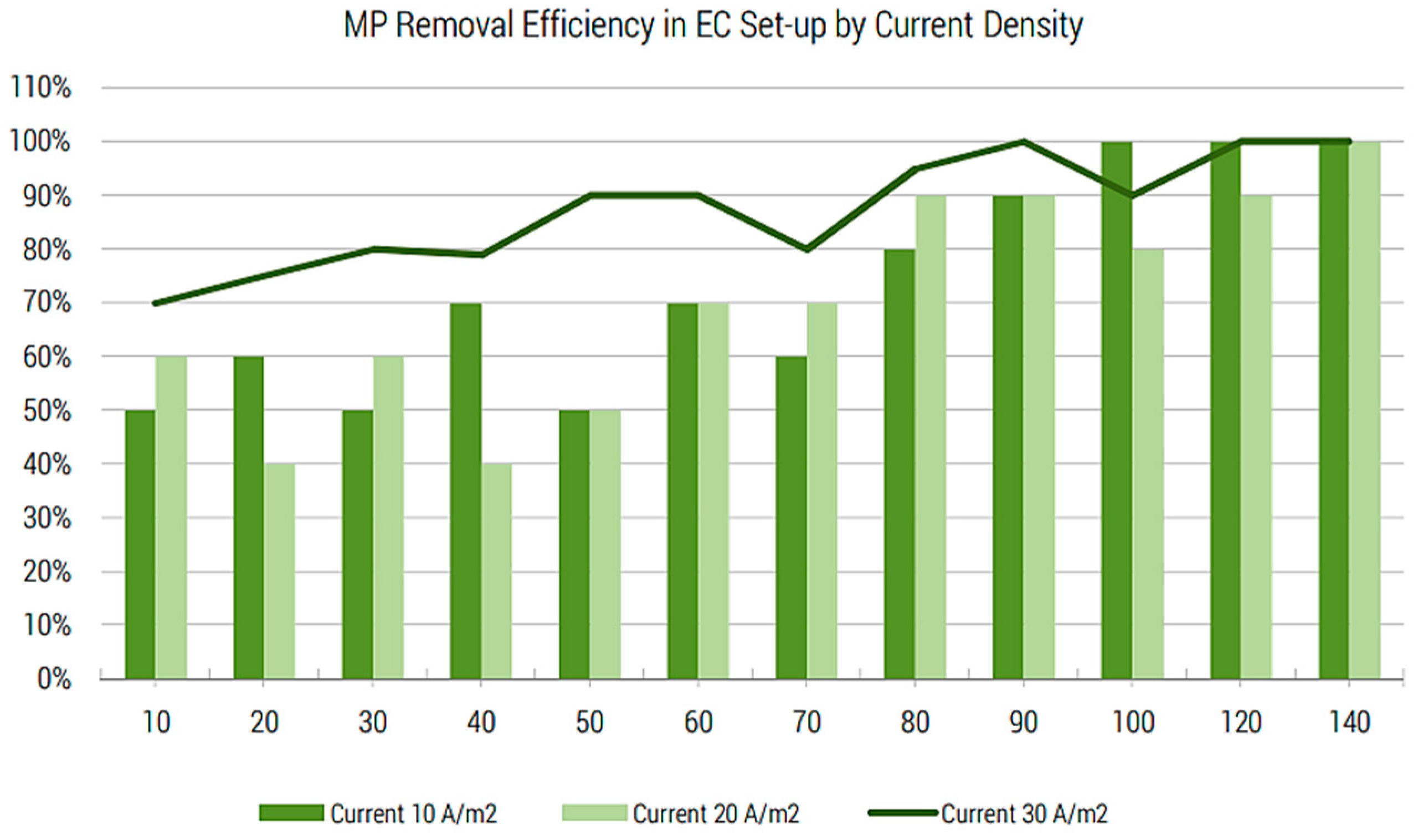
| 3 | Electrocoagulation (EC) | Up to ~99% (lab optimizations) | ~µm-mm | Energy & electrode management; current density control | Flocs/flotation residues; electrode sludge | [79] |
| 4 | Sand filtration | 49–100% (size-dependent; lab: 86–100% for many classes) | >100 µm to some smaller fractions | Channeling, breakthrough, heterogeneity of feed | Filter backwash solids | [92] |
| 5 | Microfiltration (MF)/Ultrafiltration (UF) | 98–99% (pilot/bench) | MF: ~0.1–10 µm; UF: ~1–100 nm (effective vs. MPs/NPs) | Fouling, cleaning, energy | Concentrate/backwash solids | [94,97] |
| 6 | Nanofiltration (NF)/Reverse Osmosis (RO) | Very high for many MPs; some nanoplastics reported in permeate | NF/RO: <1 nm-10 nm | High energy, concentrated brine, occasional permeation of NPs | Brine concentrate | [102] |
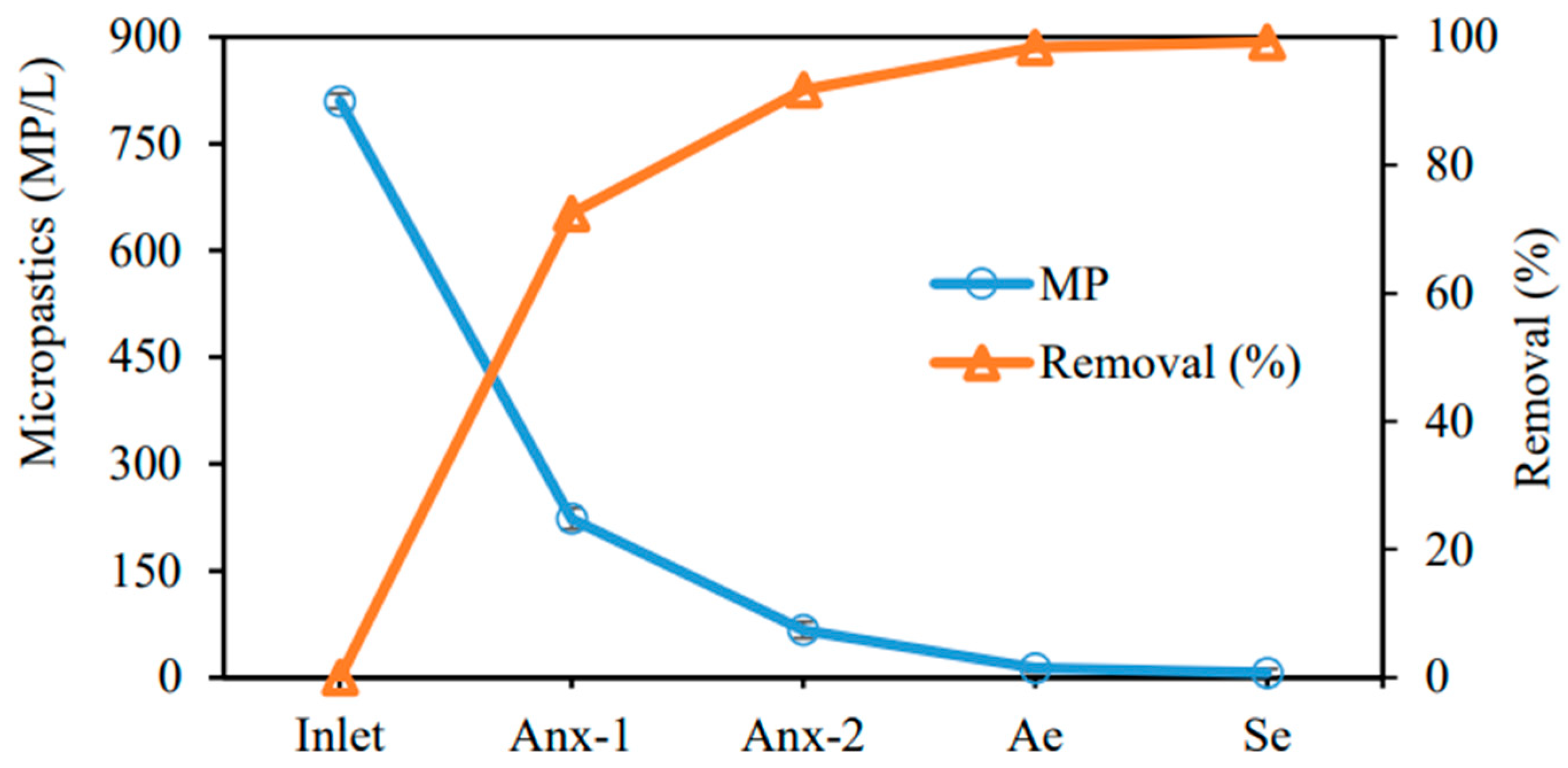
| 7 | Membrane Bioreactor (MBR) | ~99% reported (pilot) | Broad (fibers & fragments) | High CAPEX & OPEX; fouling | Sludge with concentrated MPs | [105] |
| 8 | Adsorption (GAC, biochar, graphene) | Effective for NPs/functionalized MPs (depends on surface chemistry) | Nano, micro | Capacity, regeneration, potential secondary waste | Spent adsorbent | [109] |
| 9 | Magnetic/micromotor separation | 77–98% (lab) | ~10 µm to mm | Secondary nanoparticle contamination risk; scalability | Magnetic residues/used particles | [131] |
| Parameter | Textile-Derived MP Carbon Adsorbents | Conventional Activated Carbon (Coal/Coconut Shell/Wood) | Economic Implication | Key Challenges |
|---|---|---|---|---|
| Feedstock cost | Low or negative value (waste stream), but high collection and pre-concentration cost | Stable bulk feedstock supply chains | Collection logistics may offset the feedstock advantage | Dispersed sources (laundry effluent, sludge), sorting requirements |
| Feedstock consistency | Highly heterogeneous (polyester, nylon, blends, coatings, dyes) | Relatively uniform biomass or coal sources | Increased process variability increases operational cost | Standardization and quality control of char properties |
| Pre-processing cost | High (filtration, drying, separation, transport) | Moderate (size reduction, drying) | Major cost component in MP valorization | Need for decentralized or co-located facilities |
| Energy requirement | High (pyrolysis 400–800 °C + activation) | High but optimized at an industrial scale | Energy dominates OPEX unless waste heat or renewable integration is used | Energy efficiency and carbon footprint |
| Activation chemicals | Often required (KOH, H3PO4, steam, catalytic additives) | Established and optimized consumption rates | Chemical consumption increases CAPEX/OPEX | Chemical recovery and waste management |
| Product yield | Variable depending on polymer composition and additives | Predictable yields | Yield variability affects economic predictability | Process optimization required |
| Adsorption performance | Potentially high, tunable surface chemistry and pore structure | Commercially standardized performance | Economic feasibility improves if higher selectivity or capacity is demonstrated | Application-specific validation needed |
| Scale maturity | Laboratory to pilot scale | Fully industrialized | Higher financial risk for scale-up | Lack of industrial demonstration plants |
| Environmental compliance cost | Off-gas treatment and ash handling are required due to additives | Established emission control systems | Additional compliance costs are possible | Halogens, metals, finishing chemicals |
| Life-cycle environmental benefit | Potentially favorable (waste diversion + resource recovery) | Moderate, depending on feedstock source | Policy incentives may improve competitiveness | Requires full LCA validation |
| Market competitiveness | Currently niche or application-specific | Low-cost mass production | Competitive only with functional advantage or policy support | Market acceptance and certification |
Disclaimer/Publisher’s Note: The statements, opinions and data contained in all publications are solely those of the individual author(s) and contributor(s) and not of MDPI and/or the editor(s). MDPI and/or the editor(s) disclaim responsibility for any injury to people or property resulting from any ideas, methods, instructions or products referred to in the content. |
© 2026 by the authors. Licensee MDPI, Basel, Switzerland. This article is an open access article distributed under the terms and conditions of the Creative Commons Attribution (CC BY) license.
Share and Cite
Ali, A.; Khan, M.Z. Textile Microplastics in Wastewater: A Critical Review of Removal and Carbonization Technologies. C 2026, 12, 24. https://doi.org/10.3390/c12010024
Ali A, Khan MZ. Textile Microplastics in Wastewater: A Critical Review of Removal and Carbonization Technologies. C. 2026; 12(1):24. https://doi.org/10.3390/c12010024
Chicago/Turabian StyleAli, Azam, and Muhammad Zaman Khan. 2026. "Textile Microplastics in Wastewater: A Critical Review of Removal and Carbonization Technologies" C 12, no. 1: 24. https://doi.org/10.3390/c12010024
APA StyleAli, A., & Khan, M. Z. (2026). Textile Microplastics in Wastewater: A Critical Review of Removal and Carbonization Technologies. C, 12(1), 24. https://doi.org/10.3390/c12010024