
Mechanisms of Halomethane Adsorption on Functionalized Carbons: How Surface Chemistry Governs Selectivity in Realistic Gas Mixtures


Abstract
1. Introduction
2. Materials and Methods
2.1. Simulation Methodology
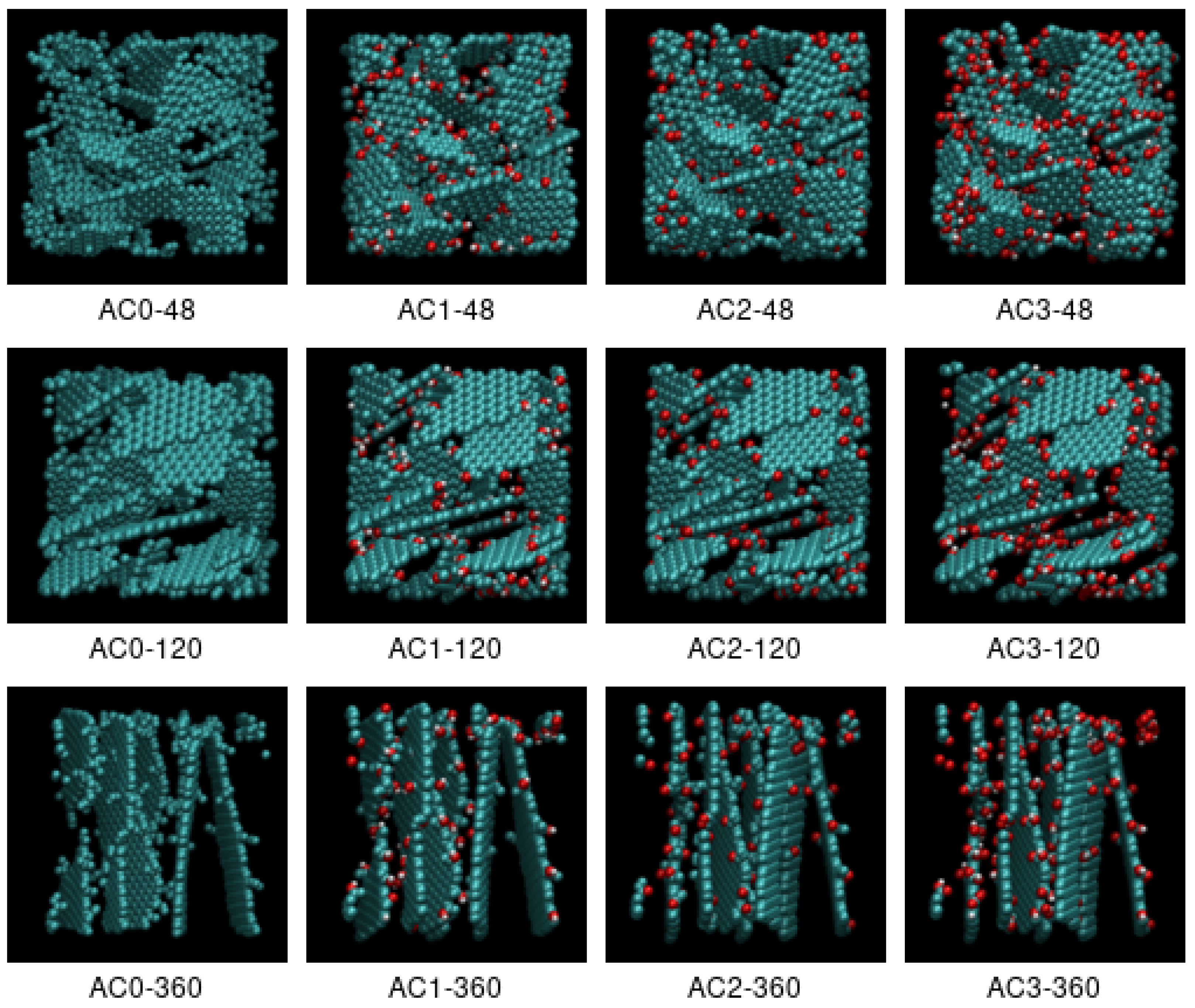
2.2. Adsorbent Models: Construction and Validation
- AC0 (Pristine): Unfunctionalized graphitic surfaces, serving as the hydrophobic baseline.
- AC1 (Phenolic): Functionalized with hydroxyl groups (–OH).
- AC2 (Carbonyl): Functionalized with carbonyl groups (=O).
- AC3 (Carboxyl): Functionalized with carboxyl groups (–COOH).
2.3. Interaction Potentials
2.4. Adsorbate Models
2.5. Simulation Conditions
2.6. Thermodynamic Quantities
3. Results: Pure Component Adsorption
3.1. Baseline Adsorption: CH3F and CH3Cl
3.2. Effect of Cluster Size (BSU Size) on Adsorption Capacity
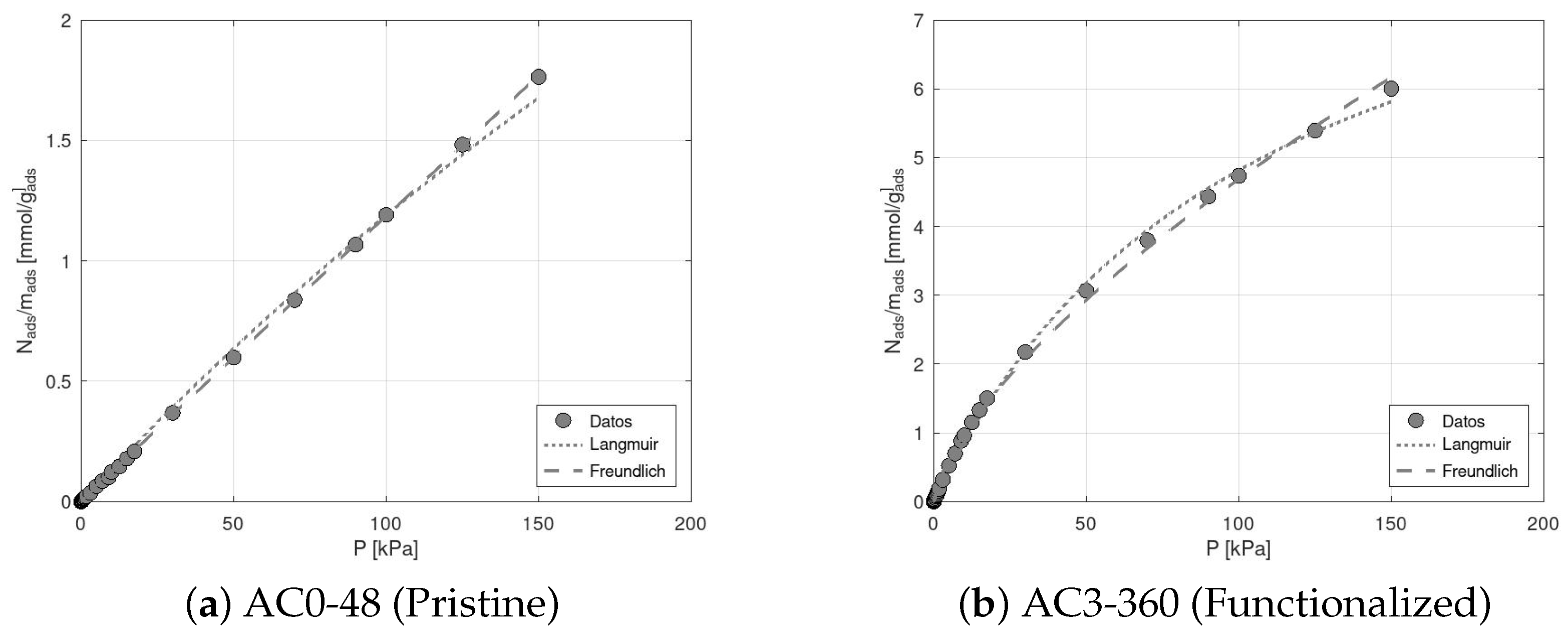
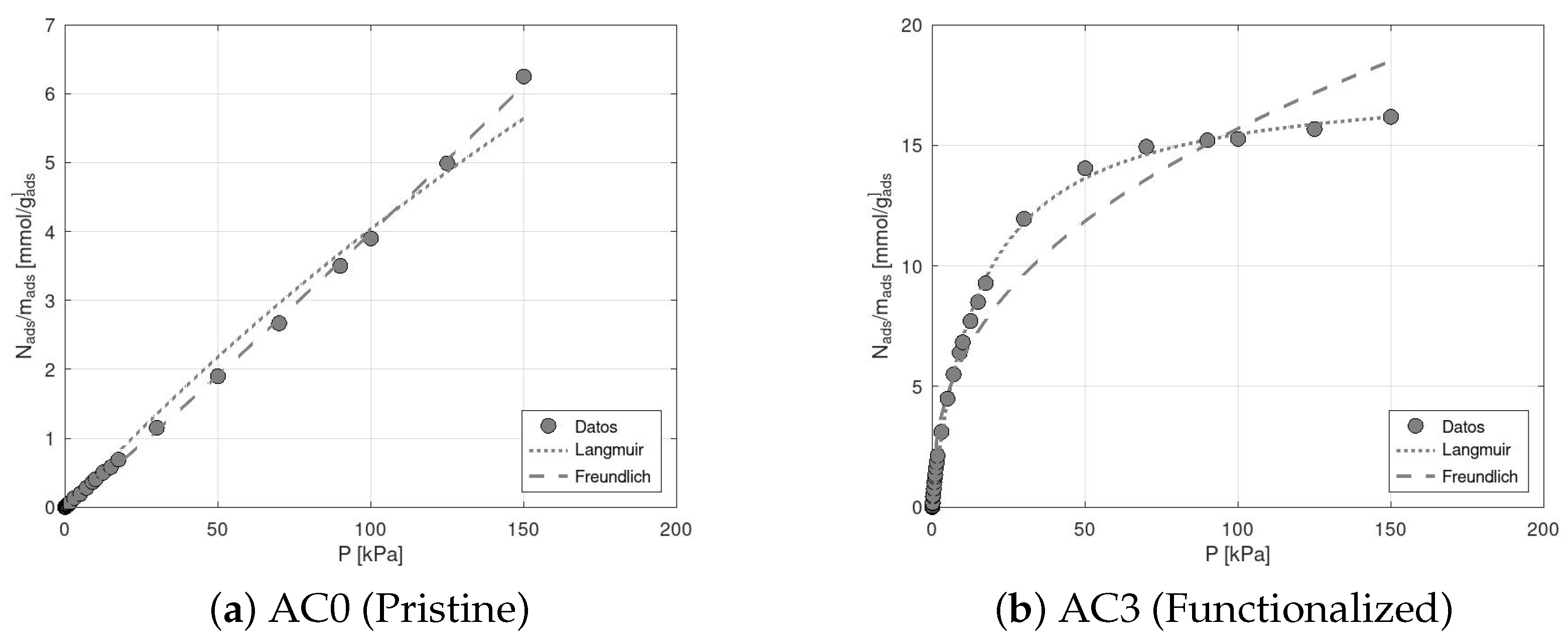
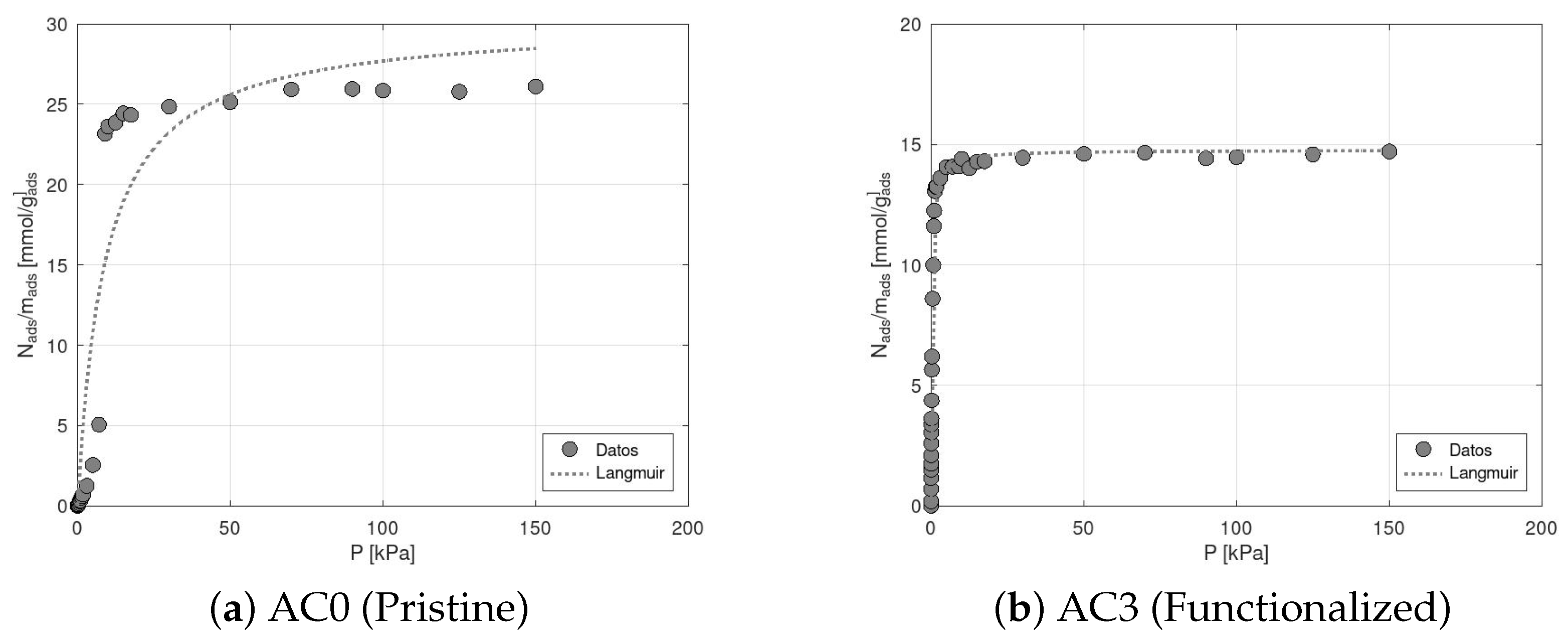
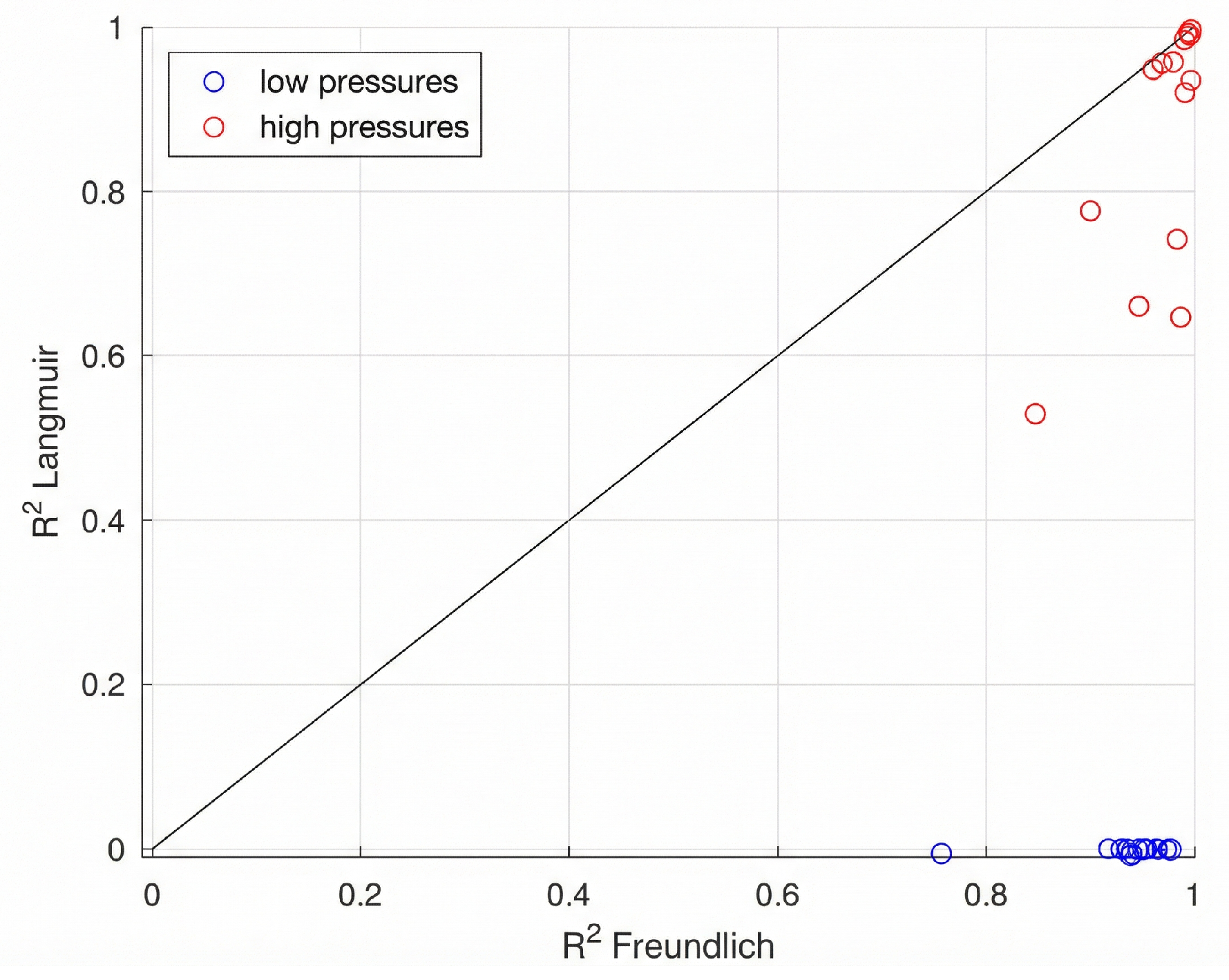
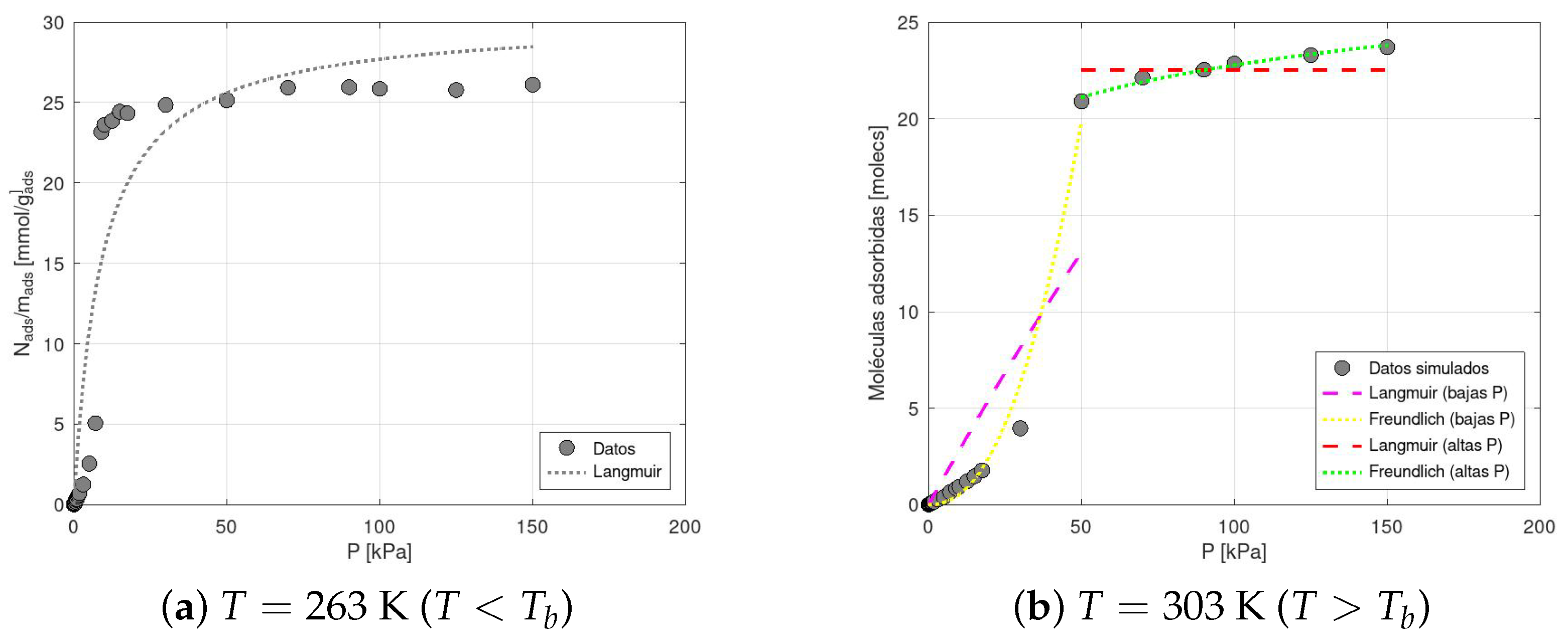
3.3. Isotherm Modeling and Evidence of Mechanism Transition (CH3Br)
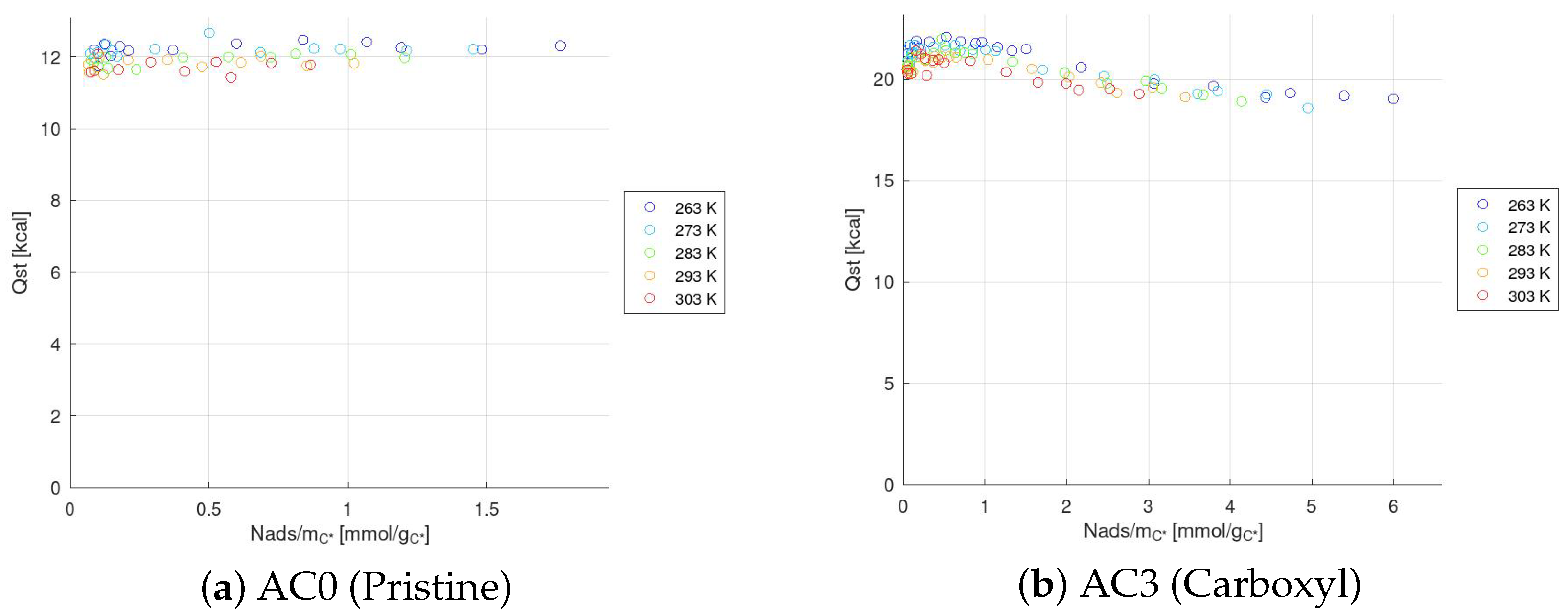
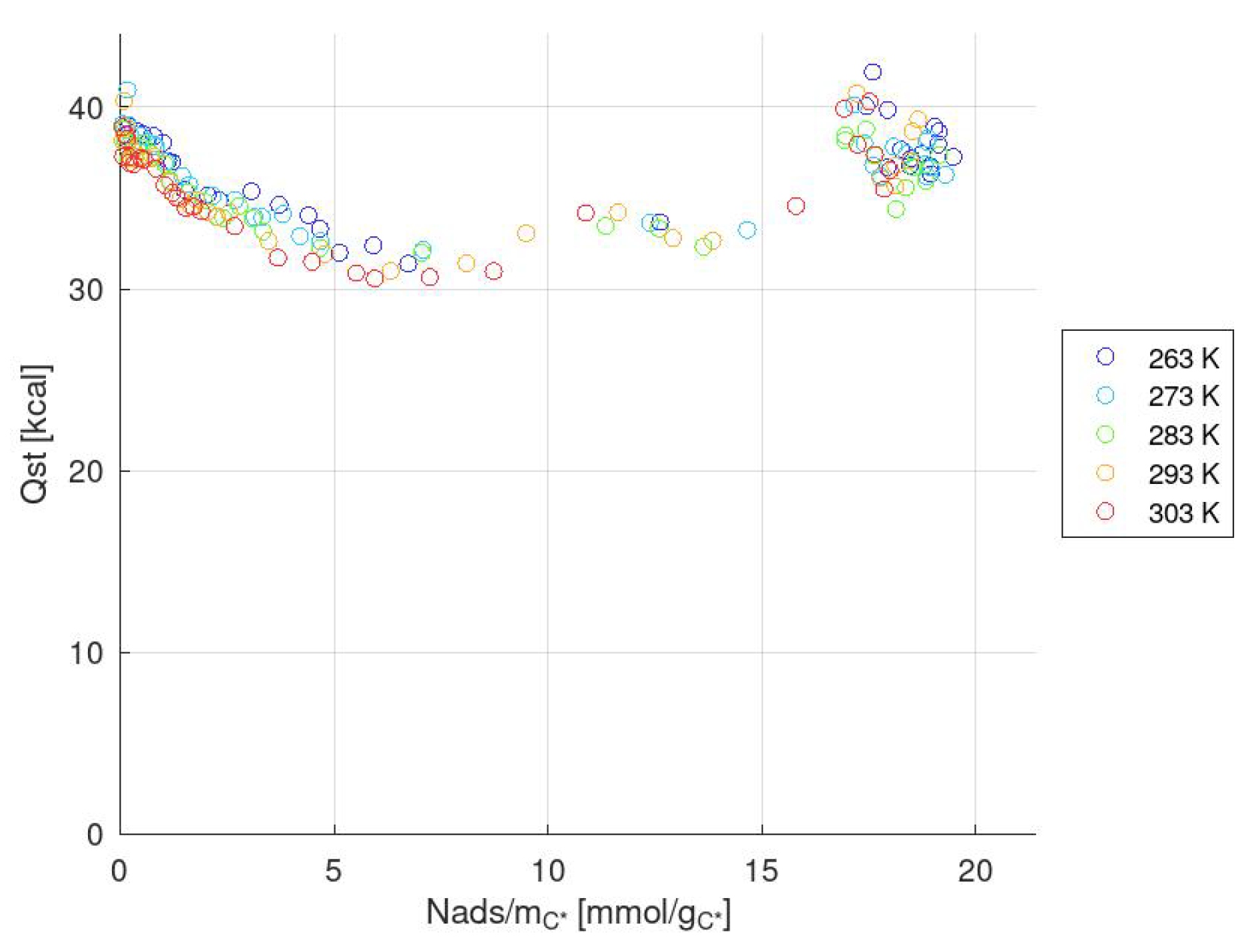
- At (263 K–273 K): The adsorbate–adsorbate lateral interactions dominate over thermal entropy. The isotherms are sigmoidal, and the isosteric heat () rises to ≈35–45 kJ/mol (Figure 7), matching the enthalpy of sublimation. This confirms a surface-induced condensation mechanism.
- At (293 K–303 K): As temperature increases, the kinetic energy disrupts the formation of the ordered condensed phase. The sigmoidal “step” in the isotherm flattens, and the behavior reverts towards a standard Type I profile governed by fluid–solid interactions. Figure 8
3.4. Thermodynamic Signature: Isosteric Heat Analysis
3.5. Spatial Configurations as Structural Evidence
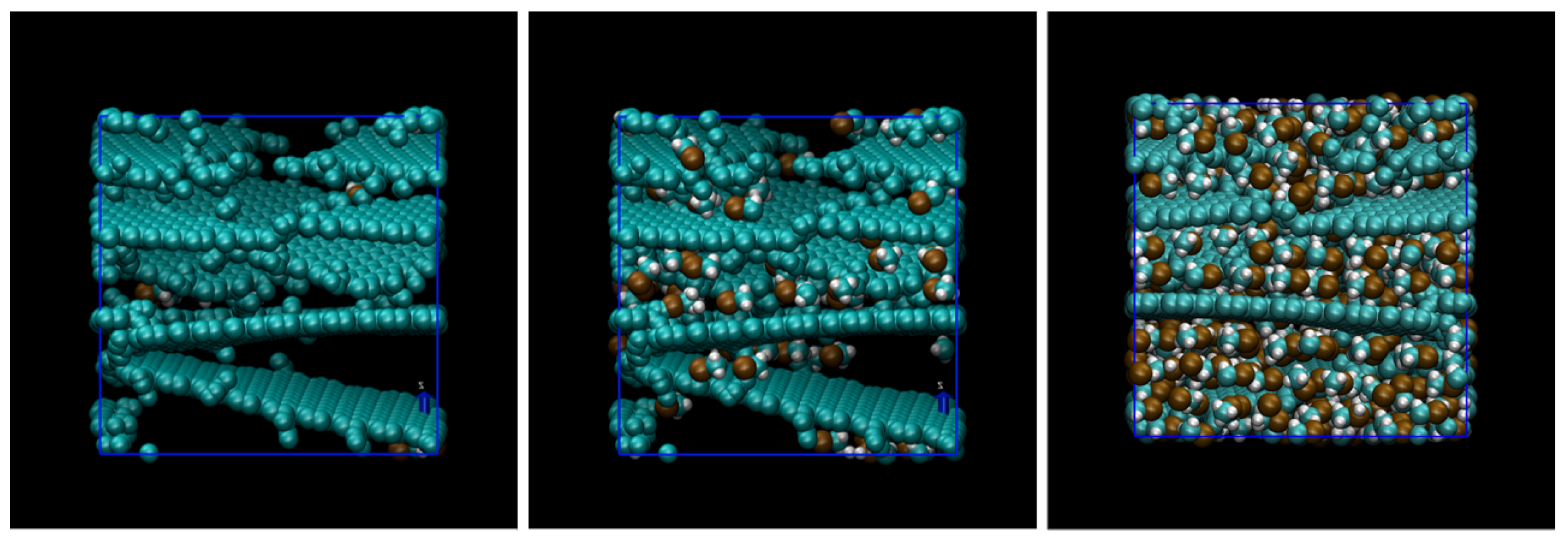
- On AC0 (Pristine): At intermediate pressures, CH3Br molecules are observed to form highly ordered, dense monolayers on the graphitic basal planes (Figure 9). The molecules maximize fluid–fluid contact, corroborating the condensation mechanism suggested by the data.
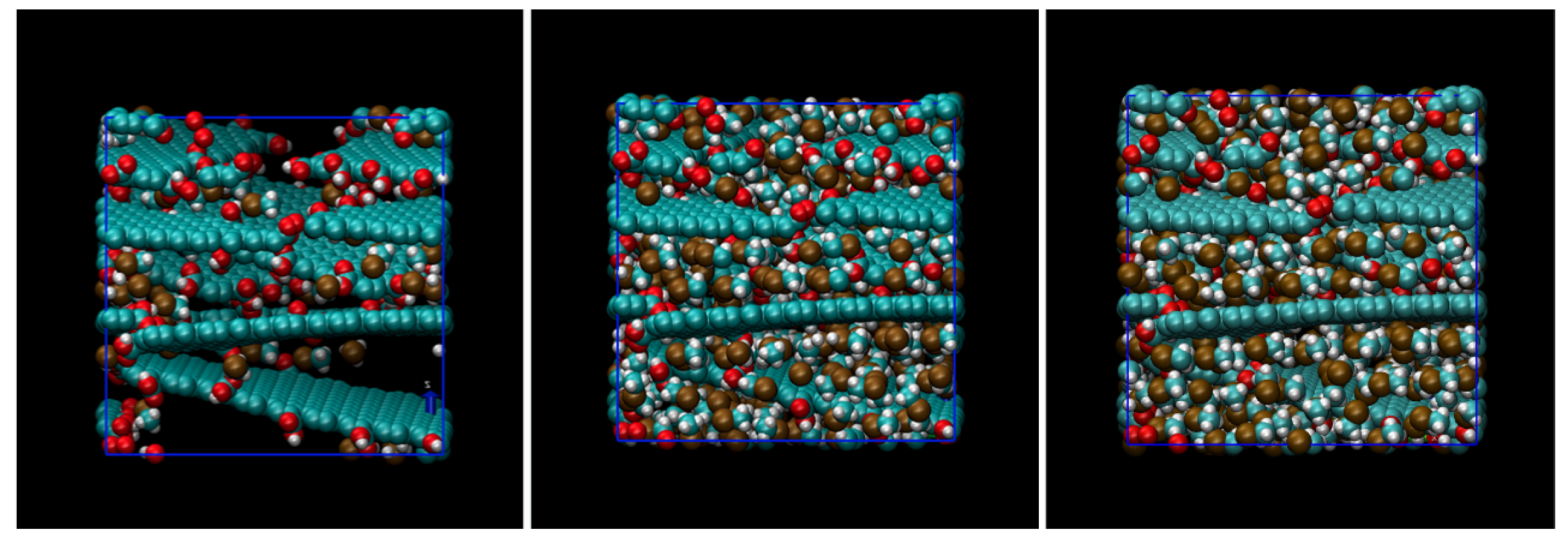
- On AC3 (Functionalized): The presence of carboxyl groups at the edges of the BSUs introduces steric and electrostatic heterogeneity. Snapshots reveal that while CH3Br molecules bind strongly to these sites initially, the functional groups physically disrupt the packing arrangement on the adjacent basal planes (Figure 10).
4. Results: Adsorption from Realistic Gas Mixtures
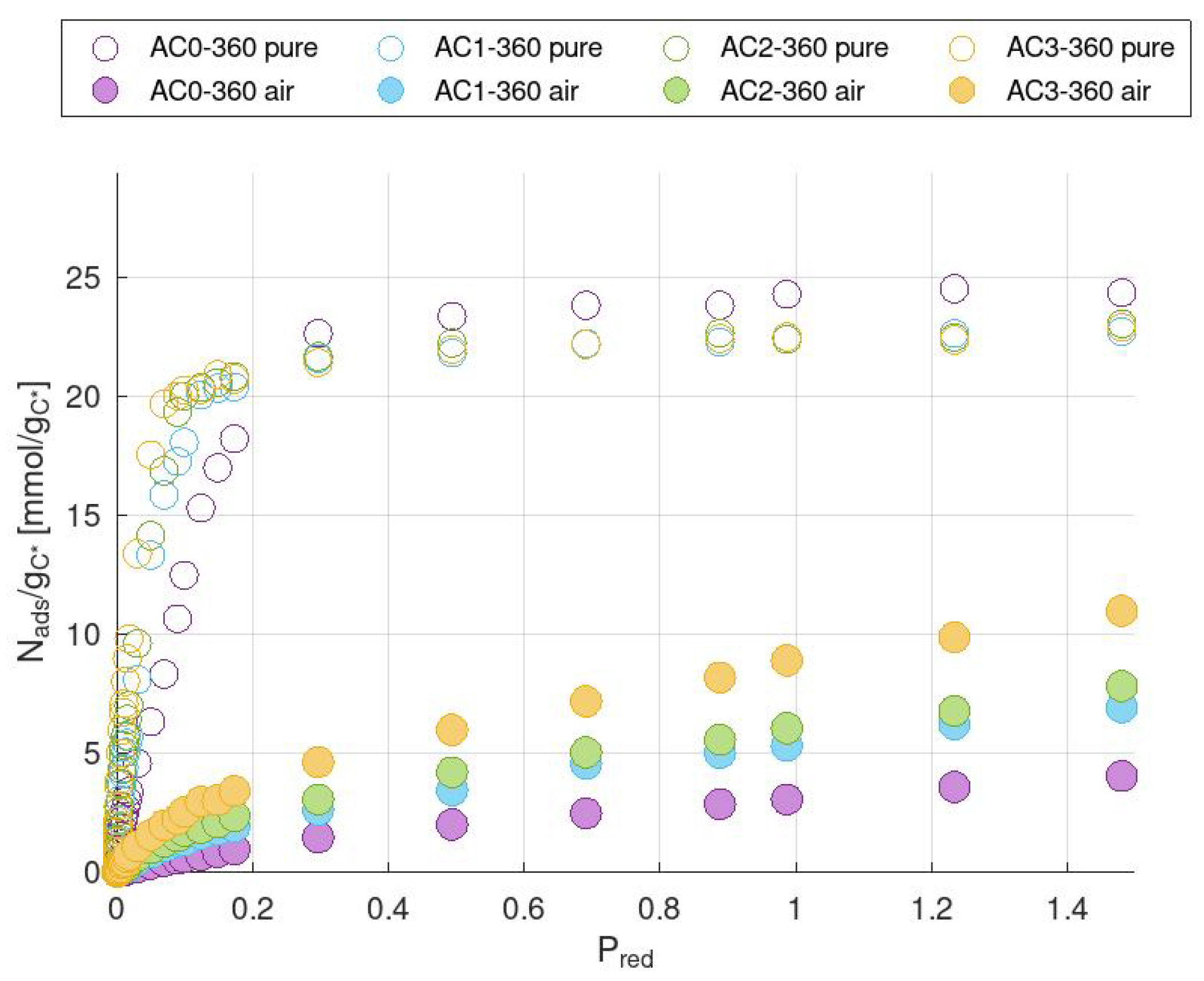
4.1. From Pure Gas to Realistic Mixtures: Collapse of Capacity-Driven Trends
4.2. Quantitative Evidence of the Inversion
4.3. Competitive Adsorption and Non-Specific Site Poisoning (AC0)
4.4. Functional Groups as Selective Anchors
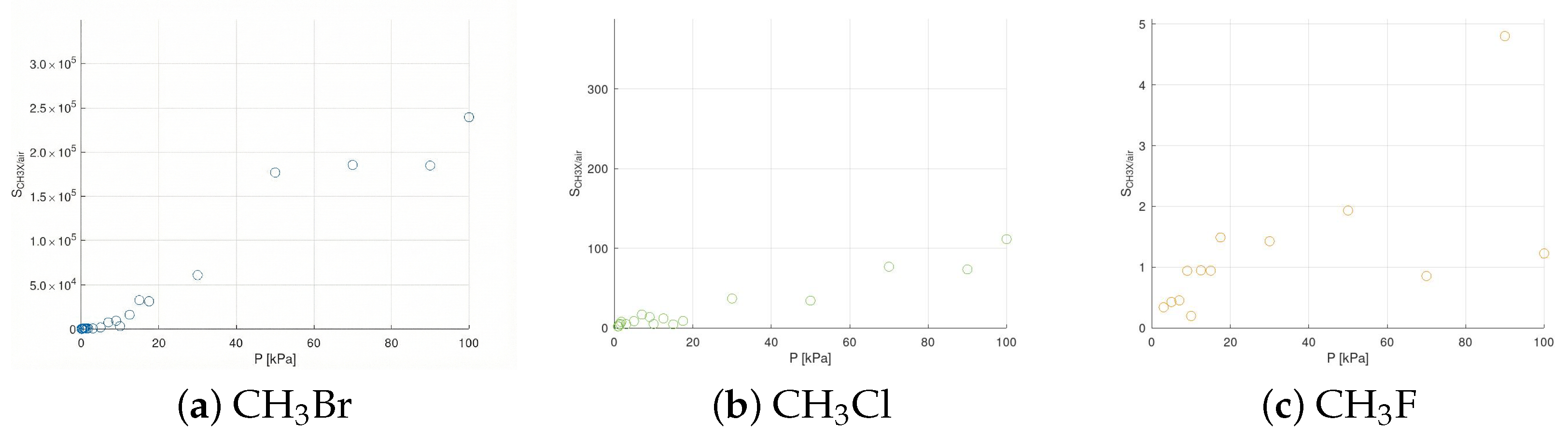
4.5. Selectivity Analysis: Thermodynamic Quantification
4.6. Thermodynamic Mechanism of the Inversion
4.7. Comparison with Experimental Literature
5. Discussion: Implications for Adsorbent Design
5.1. The Critical Role of Cluster Size and Graphitic Domain Geometry
- For smaller molecules like CH3F, increasing the BSU size (from 48 to 360 atoms) consistently enhances adsorption by creating larger, more accessible slit-pores, facilitating a volume-filling mechanism [14].
- For the bulkier CH3Br, the effect is non-monotonic. The formation of extensive graphitic domains (large BSU) in AC0 favors condensation in the pure state but offers no advantage in the competitive mixture.
- On AC0 (Pure): The process is enthalpy-driven by lateral interactions. The homogeneous surface allows CH3Br to form dense clusters, maximizing the fluid–fluid enthalpic contribution ().
- On AC0 (Mixture): In the dilute mixture, the low partial pressure prevents cluster formation (entropic penalty). Without the cooperative lateral enthalpy, the weak fluid–solid interaction () is insufficient to overcome the competitive displacement by water and air.
- On AC3 (Mixture): The process remains enthalpy-driven but via a different mechanism: strong, specific fluid–solid interactions () with the carboxyl groups. This interaction energy is sufficiently high to maintain a favorable even for isolated molecules, allowing the adsorbate to anchor despite the entropic penalties of the mixture.
5.2. General Design Rules for CH3Br Capture from Humid Air
- Prioritize Selectivity Over Capacity: In realistic humid streams, the total pore volume (capacity) is irrelevant if the surface lacks specific affinity. Design criteria must shift from maximizing BET area to maximizing the density of specific adsorption sites.
- Target Specific Functionality: Carboxyl groups demonstrate superior anchoring capability for CH3Br compared to phenolic or carbonyl groups. Synthesis efforts should focus on oxidation methods that selectively enhance –COOH density.
- Optimize Graphitic Domain Size: Avoid maximizing graphitic order blindly. Moderate cluster sizes (BSUs) provide a better balance between site accessibility and pore volume for bulky halides than highly graphitized, large-domain carbons.
- Evaluate Under Multicomponent Conditions: Pure component isotherms are insufficient and potentially misleading predictors of performance. Screening protocols must include water vapor competition to assess the robustness of the adsorption mechanism.
- Distinguish Mechanism by Adsorbate Size: Recognize that design rules for small probes (N2, CH3F) do not scale linearly to larger condensable halides (CH3Br); the latter require geometric considerations to avoid steric exclusion from active sites.
6. Conclusions
Supplementary Materials
Author Contributions
Funding
Data Availability Statement
Acknowledgments
Conflicts of Interest
Abbreviations
| AC | Activated Carbon |
| AC0 | Unfunctionalized Activated Carbon model |
| AC1 | Phenolic-functionalized Activated Carbon model |
| AC2 | Carbonyl-functionalized Activated Carbon model |
| AC3 | Carboxyl-functionalized Activated Carbon model |
| BSU | Basic Structural Unit |
| DFT | Density Functional Theory |
| GCMC | Grand Canonical Monte Carlo |
| LJ | Lennard-Jones |
| QPS | Quarantine and Pre-Shipment |
| Isosteric Heat of Adsorption | |
| VOC | Volatile Organic Compound |
References
- Liu, S.S.; Bai, Y.N.; Ni, J.; He, Z.; Yang, G.P. Sources and Emissions of Marine-Derived Halocarbons Over the Coastal and Open Ocean. J. Geophys. Res. Atmos. 2025, 130, e2024JD042706. [Google Scholar] [CrossRef]
- Velders, G.J.M.; Ravishankara, A.R.; Miller, M.K.; Molina, M.J.; Alcamo, J.; Daniel, J.S.; Fahey, D.W.; Montzka, S.A.; Reimann, S. Preserving Montreal Protocol climate benefits by limiting HFCs. Science 2012, 335, 922–923. [Google Scholar] [CrossRef]
- Rhew, R.C.; Miller, B.R.; Bill, M.; Goldstein, A.H. Environmental and biological controls on methyl halide emissions from southern California coastal salt marshes. Biogeochemistry 2002, 60, 141–161. [Google Scholar] [CrossRef]
- Peterson, G.; Rossin, J.; Smith, P.; Wagner, G. Effects of water on the removal of methyl bromide using triethylene diamine impregnated carbon. Carbon 2010, 48, 81–88. [Google Scholar] [CrossRef]
- Wang, Y.; Pan, C.; Chu, W.; Vipin, A.K.; Sun, L. Environmental Remediation Applications of Carbon Nanotubes and Graphene Oxide: Adsorption and Catalysis. Nanomaterials 1999, 9, 439. [Google Scholar] [CrossRef]
- Kuppusamy, S.; Palanisami, T.; Megharaj, M.; Venkateswarlu, K.; Naidu, R. Ex-Situ Remediation Technologies for Environmental Pollutants: A Critical Perspective. In Reviews of Environmental Contamination and Toxicology; de Voogt, P., Ed.; Springer: Cham, Switzerland, 2016. [Google Scholar] [CrossRef]
- Lad, J.; Makkawi, Y. Adsorption of methyl chloride on molecular sieves, silica gels and activated carbon. Chem. Eng. Technol. 2019, 43, 436–446. [Google Scholar] [CrossRef]
- Gan, J.; Yates, S. Recapturing and decomposing methyl bromide in fumigation effluents. J. Hazard. Mater. 1998, 57, 249–258. [Google Scholar] [CrossRef]
- Laskar, I.; Hashisho, Z.; Phillips, J.; Anderson, J.; Nichols, M. Competitive Adsorption Equilibrium Modeling of Volatile Organic Compound (VOC) and Water Vapor onto Activated Carbon. Sep. Purif. Technol. 2019, 212, 632–640. [Google Scholar] [CrossRef]
- Li, J.; Ma, X.; Wu, H.; Yang, L. Adsorption of Low-Concentration VOCs on Modified Activated Carbons in a Humid Atmosphere. Energy Fuels 2021, 35, 5090–5100. [Google Scholar] [CrossRef]
- Leesch, J.; Knapp, G.; Mackey, B. Methyl bromide adsorption on activated carbon to control emissions from commodity fumigations. J. Stored Prod. Res. 2000, 36, 65–74. [Google Scholar] [CrossRef]
- Walton, K.; Sholl, D. Predicting multicomponent adsorption: 50 years of the ideal adsorbed solution theory. AIChE J. 2015, 61, 2757–2762. [Google Scholar] [CrossRef]
- Tan, S.; Prasetyo, L.; Do, D.; Nicholson, D. On the Coexistence Pressure between the Bulk and Adsorbed Argon on Graphite. Chem. Eng. J. 2019, 378, 122214. [Google Scholar]
- Albesa, A.; Rafti, M.; Vicente, J.; Sánchez, H.; Húmpola, P. Adsorption of CO2/CH4 Mixtures in a Molecular Model of Activated Carbon through Monte Carlo Simulations. Adsorpt. Sci. Technol. 2012, 30, 669–689. [Google Scholar] [CrossRef]
- Albesa, A.; Llanos, J.; Vicente, J. Comparative Study of Methane Adsorption on Graphite. Langmuir 2008, 24, 3836–3840. [Google Scholar] [CrossRef]
- Allen, M.P.; Tildesley, D.J. Computer Simulation of Liquids; Oxford University Press: Oxford, UK, 1987. [Google Scholar]
- Albesa, A. Simulación Monte Carlo de adsorción de nitrógeno en un modelo molecular de carbón activado y su comparación con resultados experimentales. Av. Cienc. Ing. 2010, 1, 47–58. [Google Scholar]
- Farías Hermosilla, M.; Albesa, A. Monte Carlo simulations of simple gases adsorbed onto graphite and molecular models of activated carbon. Adsorption 2020, 26, 1301–1322. [Google Scholar] [CrossRef]
- Fennell, C.J.; Gezelter, J.D. Is the Ewald summation still necessary? Pairwise alternatives to the accepted standard for long-range electrostatics. J. Chem. Phys. 2006, 124, 234104. [Google Scholar] [CrossRef]
- Chen, B.; Potoff, J.J.; Siepmann, J.I. Monte Carlo calculations for alcohols and their mixtures with alkanes. Transferable potentials for phase equilibria. 5. United-atom description of primary, secondary, and tertiary alcohols. J. Phys. Chem. B 2001, 105, 3093–3104. [Google Scholar] [CrossRef]
- Neese, F. The ORCA program system. Wiley Interdiscip. Rev. Comput. Mol. Sci. 2012, 2, 73–78. [Google Scholar] [CrossRef]
- Palmer, B.J.; Anchell, J.L. Molecular Mechanics Parameters for Fluorine-Substituted methanes from ab Initio Quantum Calculations. J. Phys. Chem. 1995, 99, 12239–12248. [Google Scholar] [CrossRef]
- Sumi, I.; Picaud, S.; Jedlovszky, P. Adsorption of chlorinated methane derivatives at the ice surface: A grand canonical monte carlo simulation study. J. Phys. Chem. C 2017, 121, 7782–7793. [Google Scholar] [CrossRef]
- Wang, J.; Wolf, R.M.; Caldwell, J.W.; Kollman, P.A.; Case, D.A. Development and testing of a general amber force field. J. Comput. Chem. 2004, 25, 1157–1174. [Google Scholar] [CrossRef]
- Adluri, A.N.S.; Murphy, J.N.; Tozer, T.; Rowley, C.N. Polarizable force field with a σ-hole for liquid and aqueous bromomethane. J. Phys. Chem. B 2015, 119, 13422–13432. [Google Scholar] [CrossRef]
- Hayward, T.M.; Svishchev, I.M. Equations of state and phase coexistence properties for simulated water. Fluid Phase Equilibria 2001, 182, 65–73. [Google Scholar] [CrossRef]
- Do, D.D.; Do, H.D. Evaluation of 1-site and 5-site models of methane on its adsorption on graphite and in graphitic slit pores. J. Phys. Chem. B 2005, 109, 19288–19295. [Google Scholar] [CrossRef]
- Lemus, J.; Martin-Martinez, M.; Palomar, J.; Gomez-Sainero, L.; Gilarranz, M.; Rodriguez, J. Removal of chlorinated organic volatile compounds by gas phase adsorption with activated carbon. Chem. Eng. J. 2012, 211–212, 246–254. [Google Scholar] [CrossRef]
- Madani, S.; Biggs, M.; Rodríguez-Reinoso, F.; Pendleton, P. Decoding gas-solid interaction effects on adsorption isotherm shape: II. Polar adsorptives. Microporous Mesoporous Mater. 2019, 278, 232–240. [Google Scholar] [CrossRef]
- Palmer, J.; Brennan, J.; Hurley, M.; Balboa, A.; Gubbins, K. Detailed structural models for activated carbons from molecular simulation. Carbon 2009, 47, 2904–2913. [Google Scholar] [CrossRef]
- Do, D.D.; Nicholson, D.; Do, H.D. On the anatomy of the adsorption heat versus loading as a function of temperature and adsorbate for a graphitic surface. J. Colloid Interface Sci. 2008, 325, 7–22. [Google Scholar] [CrossRef]
- Liu, J.; Wang, L.; Xi, S.; Asthagiri, D.; Chapman, W. Adsorption and phase behavior of pure/mixed alkanes in nanoslit graphite pores: An iSAFT application. Langmuir 2016, 33, 11189–11202. [Google Scholar] [CrossRef]
- Kim, K.C.; Lee, K.; Snurr, R.Q. Computational Screening of Functional Groups for Selective Capture of Toxic Industrial Chemicals in Humid Air. ChemPhysChem 2017, 18, 3440–3448. [Google Scholar]



| Model | Functional Group | BET Surface Area (m2/g) | Bulk Density (g/cm3) |
|---|---|---|---|
| AC0-360 (Pristine) | None | 2774.6 | 0.70 |
| AC1-360 (Phenolic) | Hydroxyl (–OH) | 2359.4 | 0.70 |
| AC2-360 (Carbonyl) | Carbonyl (=O) | 2405.1 | 0.70 |
| AC3-360 (Carboxyl) | Carboxyl (–COOH) | 2237.2 | 0.70 |
| Model Group | Atom | (nm) | (K) | q () |
|---|---|---|---|---|
| Pristine (AC0) | C (graphitic) | 0.34 | 20.0 | 0.0 |
| Phenolic (AC1) | C (graphitic, site) | 0.34 | 28.0 | 0.20 |
| O (hydroxyl) | 0.307 | 78.2 | −0.64 | |
| H (hydroxyl) | 0.0 | 0.0 | 0.44 | |
| Carbonyl (AC2) | C (graphitic, site) | 0.34 | 28.0 | 0.50 |
| O (carbonyl) | 0.296 | 105.8 | −0.50 | |
| Carboxyl (AC3) | C (graphitic, site) | 0.34 | 28.0 | 0.08 |
| C (carboxyl) | 0.375 | 52.0 | 0.55 | |
| O (carbonyl) | 0.296 | 105.7 | −0.50 | |
| O (hydroxyl) | 0.3 | 85.6 | −0.58 | |
| H (hydroxyl) | 0.0 | 0.0 | 0.45 |
| Molecule | Atom | (nm) | (K) | q () | Ref. |
|---|---|---|---|---|---|
| C | 0.391 | 15.549 | −0.218 | ||
| CH3F | H | 0.231 | 9.108 | 0.037 | [22] |
| F | 0.236 | 229.971 | 0.107 | ||
| C | 0.34 | 55.328 | −0.407 | ||
| CH3Cl | H | 0.25 | 9.117 | 0.152 | [23,24] |
| Cl | 0.35 | 133.51 | −0.049 | ||
| C | 0.382 | 55.052 | −0.575 | ||
| CH3Br | H | 0.277 | 7.901 | 0.233 | [25] |
| Br | 0.404 | 211.352 | −0.125 |
| Component | Mole Fraction () | Partial Pressure (kPa) | Condition |
|---|---|---|---|
| Methyl Bromide (CH3Br) | 0.0165 | 1.67 | QPS Fumigation Level |
| Water (H2O) | 0.0230 | 2.33 | 100% Relative Humidity |
| Air (N2 + O2) | 0.9605 | 97.32 | Background Gas |
Disclaimer/Publisher’s Note: The statements, opinions and data contained in all publications are solely those of the individual author(s) and contributor(s) and not of MDPI and/or the editor(s). MDPI and/or the editor(s) disclaim responsibility for any injury to people or property resulting from any ideas, methods, instructions or products referred to in the content. |
© 2026 by the authors. Licensee MDPI, Basel, Switzerland. This article is an open access article distributed under the terms and conditions of the Creative Commons Attribution (CC BY) license.
Share and Cite
Farías Hermosilla, M.E.; Albesa, A.G. Mechanisms of Halomethane Adsorption on Functionalized Carbons: How Surface Chemistry Governs Selectivity in Realistic Gas Mixtures. C 2026, 12, 15. https://doi.org/10.3390/c12010015
Farías Hermosilla ME, Albesa AG. Mechanisms of Halomethane Adsorption on Functionalized Carbons: How Surface Chemistry Governs Selectivity in Realistic Gas Mixtures. C. 2026; 12(1):15. https://doi.org/10.3390/c12010015
Chicago/Turabian StyleFarías Hermosilla, María E., and Alberto G. Albesa. 2026. "Mechanisms of Halomethane Adsorption on Functionalized Carbons: How Surface Chemistry Governs Selectivity in Realistic Gas Mixtures" C 12, no. 1: 15. https://doi.org/10.3390/c12010015
APA StyleFarías Hermosilla, M. E., & Albesa, A. G. (2026). Mechanisms of Halomethane Adsorption on Functionalized Carbons: How Surface Chemistry Governs Selectivity in Realistic Gas Mixtures. C, 12(1), 15. https://doi.org/10.3390/c12010015