Article

Influence of MgO Binder Regulation on the Interfacial Structure of Lithium Thermal Batteries


1
School of Chemical Engineering and Technology, Xi’an Jiaotong University, Xi’an 710049, China
2
State Key Laboratory of Space Power-Sources Technology, Shanghai Institute of Space Power-Sources, 2965 Dongchuan Road, Shanghai 200245, China
*
Authors to whom correspondence should be addressed.
Submission received: 18 December 2025 / Revised: 5 January 2026 / Accepted: 20 January 2026 / Published: 22 January 2026
(This article belongs to the Section Carbon Materials and Carbon Allotropes)

Abstract

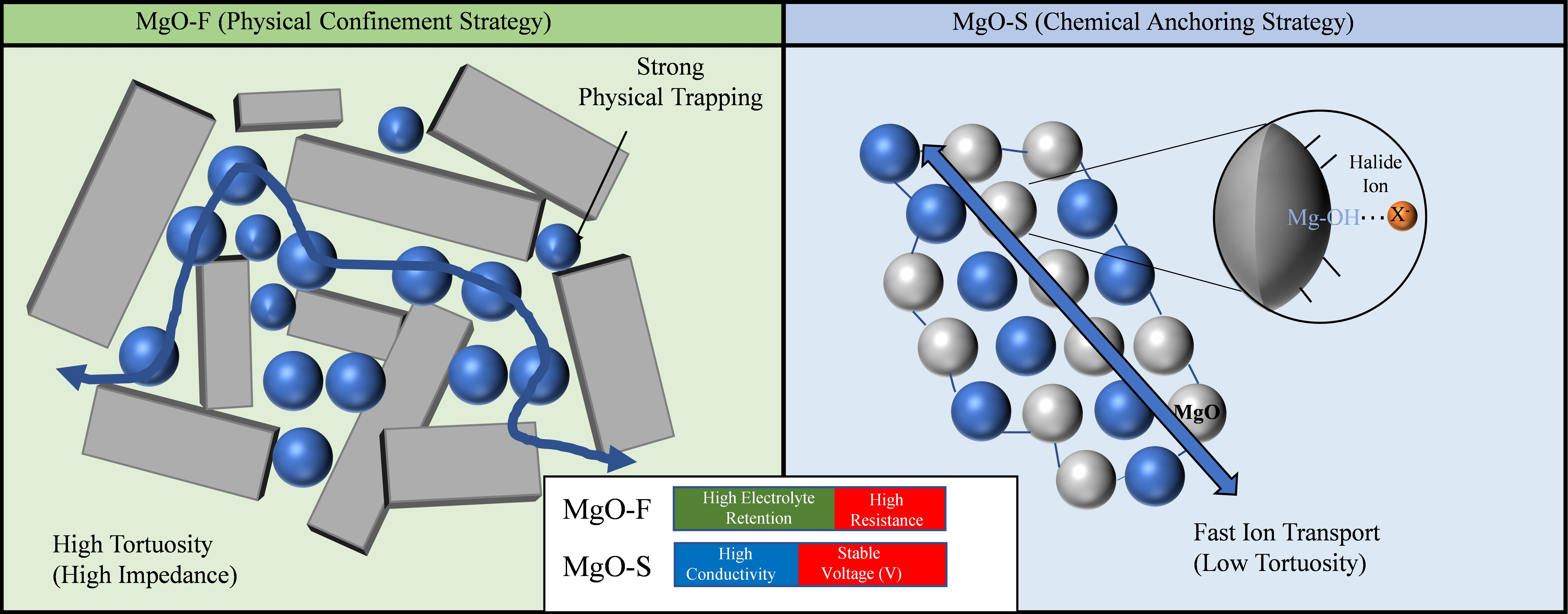
Lithium thermal batteries are primary reserve batteries utilizing solid molten salt electrolytes. They are regarded as ideal power sources for high-reliability applications due to their high power density, rapid activation, long shelf life, wide operating temperature range, and excellent environmental adaptability. However, existing electrode systems are limited by insufficient conductivity and the use of high-impedance MgO binders. This results in sluggish electrode reaction kinetics and incomplete material conversion during high-temperature discharge, causing actual discharge capacities to fall far below theoretical values. To address this, FeS2-CoS2 multi-component composite cathode materials were synthesized via a high-temperature solid-phase method. Furthermore, two distinct MgO binders were systematically investigated: flake-like MgO (MgO-F) with a sheet-stacking structure and spherical MgO (MgO-S) with a low-tortuosity granular structure. Results indicate that while MgO-F offers superior electrolyte retention via physical confinement, its high tortuosity limits ionic conduction. In contrast, MgO-S facilitates the construction of a wettability-enhanced continuous ionic network, which effectively reduces interfacial impedance and enhances system conductivity. This regulation promoted Li+ migration and accelerated interfacial reaction kinetics. This study provides a feasible pathway for improving the electrochemical performance of lithium thermal batteries through morphology-oriented MgO binder regulation.

Graphical Abstract

1. Introduction

Thermal batteries, also known as molten salt batteries, belong to a class of reserve electrochemical power sources [1,2]. Their operating mechanism is based on a solid molten salt electrolyte system. During activation, an internal heating device heats the electrolyte to a molten state, thereby establishing an ionic conductive pathway to facilitate electrical energy output [3,4]. Once activated, irreversible electrochemical reactions are triggered inside the battery, continuously releasing energy until the active materials are consumed. Under ambient storage conditions, the electrolyte remains solid with extremely high internal resistance and does not participate in any electrochemical reactions, thus maintaining a non-conductive state. This structural characteristic significantly inhibits self-discharge during storage, endowing the battery with excellent long-term storage stability, often maintaining effective performance for over 25 years [5,6,7]. Therefore, thermal batteries are classified as non-reusable primary reserve power sources [8]. The core advantage of thermal batteries lies in their high-temperature operating environment (typically 400 °C to 600 °C), under which the molten electrolyte exhibits excellent ionic conductivity, supporting extremely high discharge current densities [9]. Especially in pulse discharge mode, this characteristic facilitates the achievement of high specific energy and specific power. Compared to other electrochemical systems, thermal batteries possess extremely short activation times (generally 0.5 s to 2 s), granting them superior rapid response capabilities and deployment flexibility [10]. Furthermore, this class of batteries exhibits broad environmental adaptability, capable of maintaining stable operating performance under various extreme conditions [11]. In summary, thermal batteries are considered ideal power sources for high-reliability applications due to their high power density, rapid activation characteristics, ultra-long shelf life, wide operating temperature range, and exceptional environmental robustness.
The initiation of a lithium thermal battery is triggered by an external activation signal (electrical or mechanical) that ignites the squib. This heat is conducted via a thermal fuse to the heating pellets, achieving rapid heating of the system. When the temperature reaches the electrolyte melting threshold (usually ≥350 °C), the solid electrolyte undergoes a phase transition to form an ionic conductor, and the battery enters a working state. During discharge, reduction reactions occur at the cathode, releasing electrons to the external circuit, while oxidation reactions occur at the anode, consuming electrons. The molten electrolyte serves as the Li+ transport medium to complete the charge cycle [12,13,14]. The core of this mechanism lies in the synergy between thermally triggered phase transition and electrochemical reaction kinetics; the selection of the material system directly affects activation efficiency and discharge stability [15,16,17]. Currently, mainstream sulfide cathode materials include FeS2 [18,19,20], CoS2 [21,22,23], NiS2 [24,25], etc.
Despite the significant commercial potential of metal sulfides such as FeS2, CoS2, and NiS2 as cathode materials, their application is currently hindered by critical technical bottlenecks. The intrinsic electrical conductivity of FeS2 and NiS2 is relatively low, restricting charge transport efficiency [26,27,28]; while CoS2 exhibits better conductivity, its high raw material cost limits large-scale application [29,30,31,32]. To synergistically improve the theoretical specific capacity and economic viability of cathode materials, this study aims to achieve a unity of high specific capacity and low manufacturing cost by constructing a multi-component composite cathode system. Furthermore, insufficient conductivity in existing electrode systems and the use of high-impedance MgO binders lead to sluggish electrode reaction kinetics and incomplete active material utilization caused by severe polarization during high-temperature discharge, causing the actual discharge capacity to be significantly lower than the theoretical value [33,34]. To address these issues, this paper employs a high-temperature solid-phase method to synthesize FeS2-CoS2 multi-component composite cathode materials. By selecting MgO samples with different crystal forms and morphological characteristics as binder systems and systematically optimizing the type and ratio of MgO binders, this study aims to reduce cathode/electrolyte interfacial impedance, enhance the overall conductivity of the system, and promote Li+ migration and interfacial reaction kinetics. This approach provides an effective pathway to enhance the comprehensive electrochemical performance of lithium thermal batteries.

2. Materials and Methods

2.1. Preparation of Cathode Materials

The composite cathode materials were synthesized via a high-temperature solid-state method. Fe powder, Co powder, and S powder were mixed uniformly according to a specific stoichiometric ratio. The mixture was then calcined at 400–600 °C for 6–10 h under an inert gas atmosphere protection to obtain the target composite material. To strictly decouple the influence of the binder morphology from the active material chemistry, the composition of the FeS2-CoS2 composite cathode was maintained constant across all comparative experiments involving different MgO samples.

2.2. Preparation of Separator Materials

The modified MgO and LiCl-LiBr-LiF ternary eutectic salt powder were weighed in a mass ratio of 1:1. The mixture was subjected to cryogenic high-energy ball milling in a liquid nitrogen environment for 30–60 min to achieve uniform dispersion utilizing low-temperature brittleness. The mixed powder was then heated to 500–520 °C under an inert atmosphere and maintained at this temperature for 6–8 h to ensure complete infiltration of the molten electrolyte into the MgO interstitial voids. After cooling with the furnace, the fused block was mechanically crushed, passed through a 200-mesh sieve, and vacuum-dried in a dry room (dew point < −40 °C) to obtain the low-impedance composite separator powder.

2.3. Assembly of Single Thermal Batteries

The cathode consisted of 50 wt% cathode active material, 35 wt% LiCl-LiBr-LiF eutectic salt, and 15 wt% MgO. The electrolyte layer (separator) was a uniform mixture of 50 wt% eutectic salt and 50 wt% MgO, while the anode directly employed a commercial Li-B alloy. During electrode preparation, the cathode components were first mixed uniformly. The cathode mixture and the separator powder (prepared from LiF-LiBr-LiCl and MgO via heat treatment) were weighed separately. A powder tableting process was employed to press the cathode mixture into dense electrode pellets under a static pressure of 4 MPa. Battery assembly was conducted in an inert atmosphere. The nickel current collector, Li-B anode pellet, electrolyte separator layer, and cathode pellet were stacked in sequence. All components were flattened and aligned to ensure good interfacial contact and finally encapsulated to form a complete thermal battery structure.

2.4. Electrochemical Testing

Galvanostatic discharge tests were performed on the batteries assembled with the composite cathode materials using a CT2001B-A2 LAND battery testing system (Wuhan LAND Electronics Co., Ltd., Wuhan, China). Ionic conductivity measurements were performed on the composite separator pellets. The pellets were sandwiched between two stainless steel blocking electrodes to assemble symmetric cells. Electrochemical Impedance Spectroscopy (EIS) was conducted over a frequency range of 0.1 Hz to 100 kHz using a Princeton electrochemical workstation (Princeton Applied Research, Oak Ridge, TN, USA).

3. Results

In this study, FeS2-CoS2 multi-component composite cathode materials were synthesized, and the electrochemical performance was optimized through the systematic screening of MgO binders with distinct crystal forms and morphologies. The experimental results demonstrate that the selected MgO samples (specifically Sample #1 and Sample #2), characterized by high crystallinity and optimized pore structures, effectively mitigate the issue of high interfacial resistance. These optimized binders significantly enhance the chemical stability and molten salt retention capability of the system, leading to improved discharge stability and reaction kinetics compared to conventional electrode systems.

3.1. Screening and Physicochemical Characterization of MgO Binders

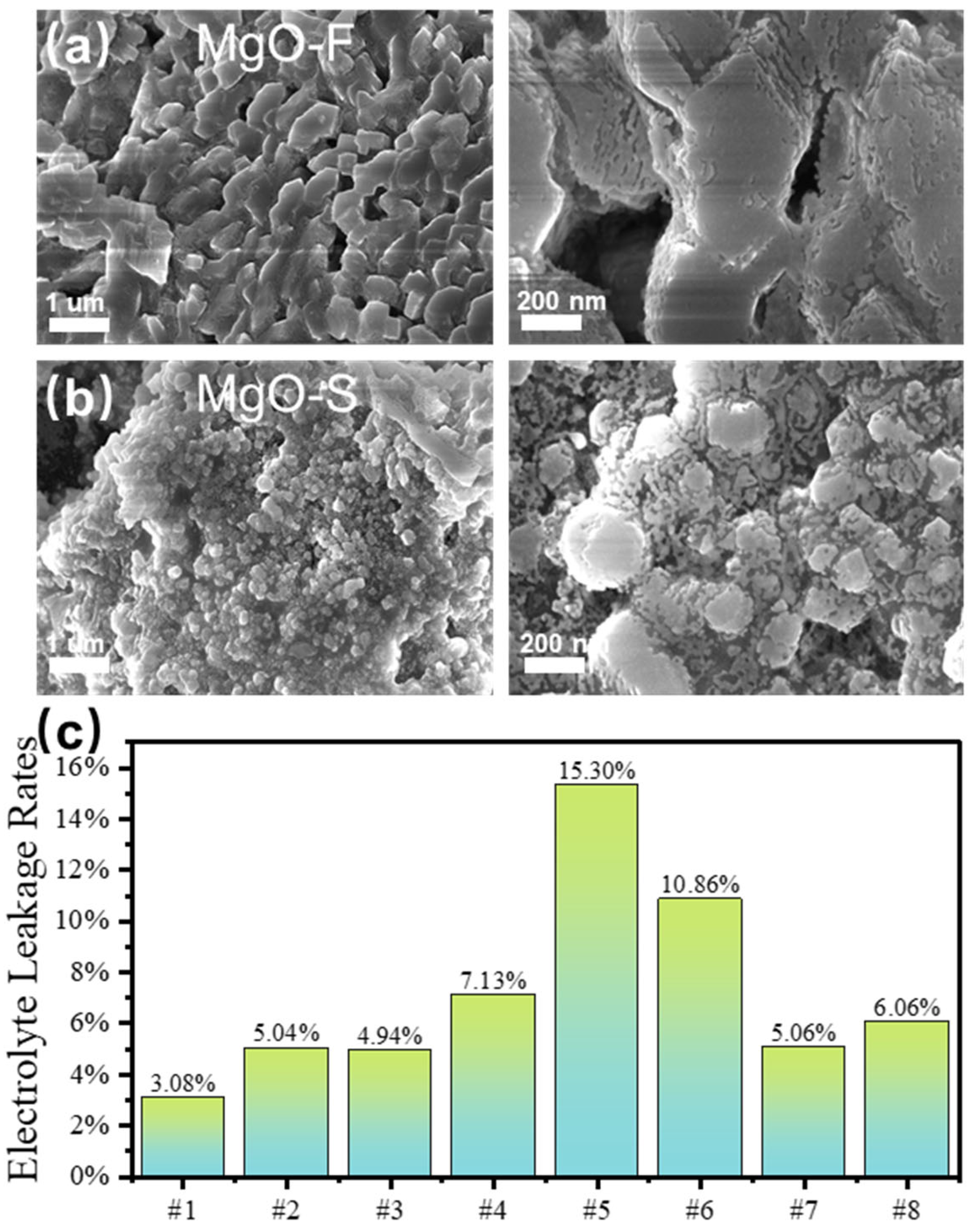
To establish a rational selection criterion for binders that effectively balance molten salt retention with structural integrity, a comprehensive screening of eight commercial MgO candidates was conducted. Scanning Electron Microscopy (SEM) revealed a distinct morphological dichotomy across the sample library. Based on these observations, two representative samples were selected and explicitly named to reflect their structural features: Sample #1, characterized by an architecture of interlaced micron-sized flakes, is hereafter denoted as MgO-F (Flake-like). Sample #2, consisting of fine spherical particles forming dense aggregates, is denoted as MgO-S (Spherical). As detailed in Figure 1a,b, MgO-F displays a “house-of-cards” structure with abundant slit-like voids, while MgO-S exhibits lower geometric tortuosity. The decisive leakage test at 500 °C (Figure 1c) demonstrated that MgO-F achieved the lowest electrolyte mass loss rate (3.08%) due to the strong physical confinement effect of its flake-stacking morphology. MgO-S followed closely, exhibiting competitive retention capabilities. Consequently, MgO-F and MgO-S were established as the model systems to investigate the trade-off between physical retention and ionic conduction. As illustrated in the comprehensive comparison in Figure S1, the unselected samples (Sample #3–#8) are predominantly composed of heterogeneous aggregates with irregular particle fusion, which are prone to inefficient packing and structural collapse. In sharp contrast, the two optimized candidates selected for this study, MgO-F and MgO-S, exhibit uniform yet fundamentally different architectures suitable for mechanistic investigation.
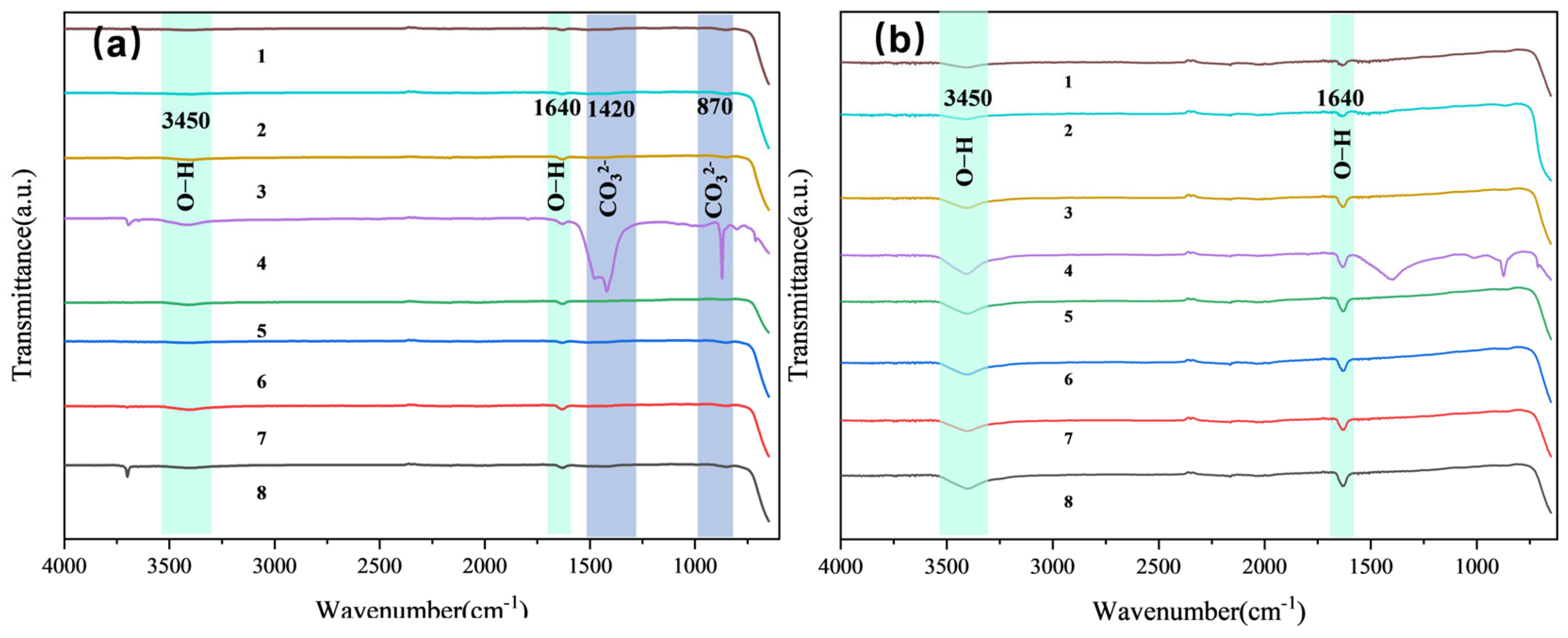
The crystalline integrity and chemical purity of the binders are critical for preventing side reactions in thermal batteries. The high purity of the entire sample set was verified via X-ray Diffraction (XRD), with all patterns indexing to cubic MgO (JCPDS No. 45-0946) (Figure S2). Notably, MgO-F and MgO-S display superior crystallinity with sharper diffraction peaks compared to the broadened profiles of the unselected samples (e.g., Sample #3–#7). This structural ordering is complemented by excellent surface chemical stability, as confirmed by FT-IR spectra (Figure 2a). Both selected samples exhibit a negligible presence of peaks near 3700 cm−1 and 3420 cm−1, indicating the absence of bulk adsorbed water or free hydroxyl groups. This is a crucial prerequisite, as moisture residues can lead to detrimental hydrogen evolution and battery swelling during high-temperature operation.
The decisive criterion for binder selection is the capability to retain molten electrolyte under thermal stress. The detailed particle size distribution statistics for all samples are provided in the Supplementary Materials (Figure S3). MgO-S exhibits a uniform narrow distribution, whereas MgO-F displays a broader distribution consistent with its irregular stacking morphology. The static leakage test conducted at 500 °C (Figure 1c) demonstrated that MgO-F achieved the most robust retention, with a minimal electrolyte mass loss rate of 3.08%. This superior performance is attributed to the physical confinement effect offered by its tortuous flake-stacking morphology, which effectively traps the molten salt via capillary forces. MgO-S followed closely, exhibiting competitive retention capabilities, whereas samples with uncontrolled particle size distributions suffered from significant leakage. Consequently, MgO-F and MgO-S were designated as representative model systems to investigate the trade-off between physical retention and ionic conduction in the subsequent sections.

3.2. Interfacial Modification and Electrochemical Enhancement Mechanism

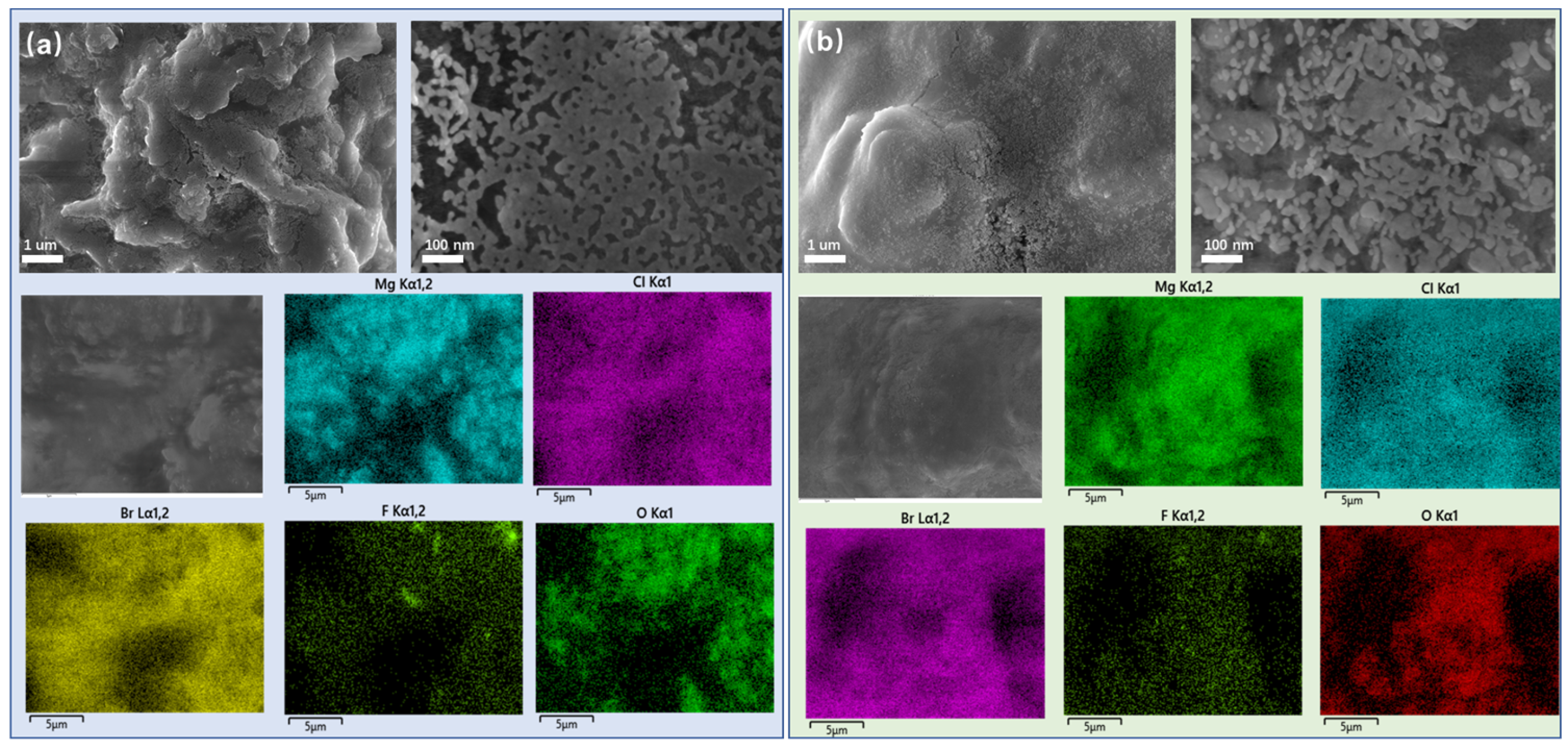
To elucidate the specific contributions of pore architecture and surface chemistry to the electrochemical performance, composite separator powders were prepared using the screened binders. Figure 3 presents the microstructural characterization of these composites. Although EDS elemental mapping confirms that the LiCl-LiBr-LiF electrolyte is homogeneously distributed within both binder matrices, the underlying ion-transport pathways differ fundamentally. MgO-F constructs a continuous, three-dimensional (3D) interconnected network driven by its sheet-like morphology, acting as a complex physical barrier. In contrast, MgO-S exhibits a structure with lower tortuosity, where the electrolyte fills the voids between the packed polyhedral particles.
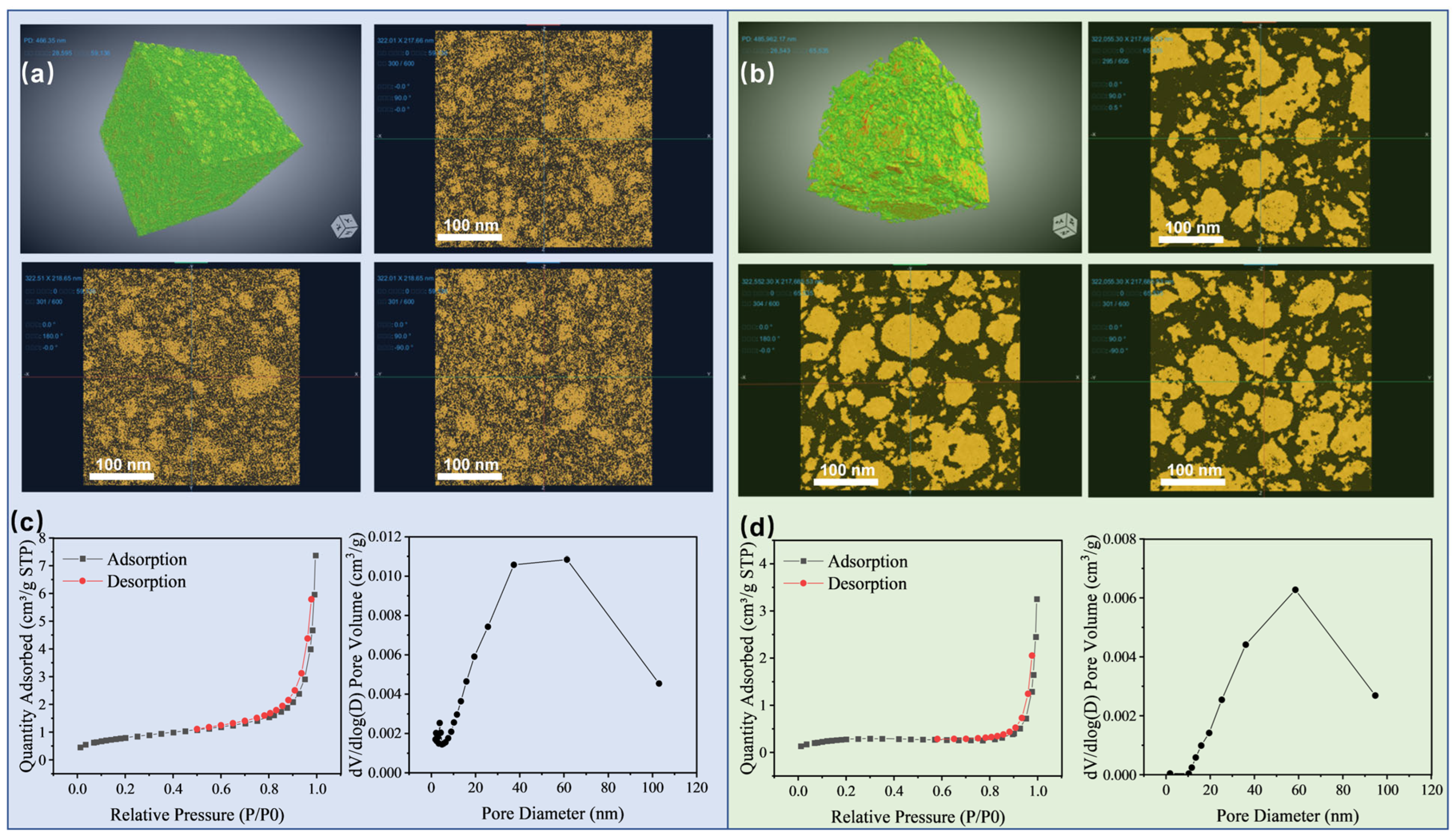
To quantitatively visualize this spatial confinement, X-ray Computed Tomography (CT) and nitrogen adsorption–desorption isotherms (BET) were employed. The 3D CT reconstruction (Figure 4a) reveals that the pellet derived from MgO-F possesses a porosity of 18.64% with a concentrated pore volume distribution. This flake-based architecture effectively constructs a tortuous cage, which is highly efficient for physical trapping of the molten salt but creates a longer, more winding path for ion transport. Conversely, MgO-S (Figure 4b) exhibits a lower porosity of 15.63% with visible micro-voids, attributed to the weaker mechanical interlocking of its spherical particles. Consistent with these observations, BET results (Figure 4c,d) indicate that MgO-F possesses a significantly higher specific surface area (2.87 m2/g) than MgO-S (1.01 m2/g). These results empirically indicate that MgO-F relies on a dominant physical locking mechanism driven by high specific surface area and pore complexity.
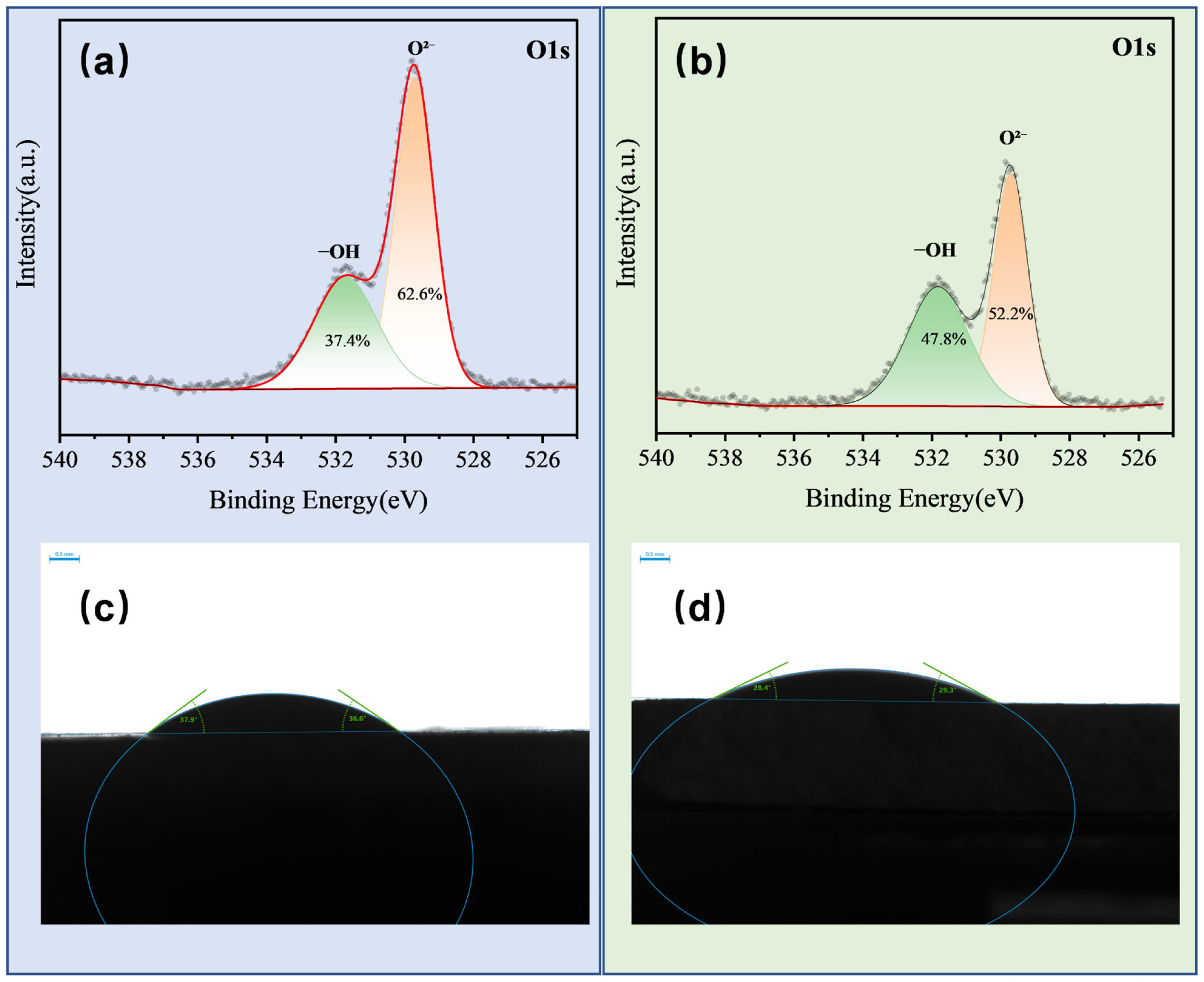
To probe the chemical origin of the interfacial compatibility, X-ray Photoelectron Spectroscopy (XPS) was employed. The high-resolution O 1s spectra (Figure 5a,b) unveil a critical distinction in surface termination: MgO-S retains a notably higher concentration of surface-bound hydroxyls (47.81%) compared to MgO-F (37.40%). It is imperative to distinguish these surface-bound species from detrimental bulk hydration. While bulk water typically induces side reactions, a controlled concentration of surface hydroxyls (-OH) acts as essential chemical anchoring sites. These sites enhance the affinity between the MgO binder and the ionic melt through the formation of hydrogen bonds or electrostatic coordination, effectively lowering the surface energy barrier for electrolyte infiltration. This hypothesis of wettability-driven enhancement is empirically corroborated by the contact angle measurements shown in Figure 5c,d. MgO-S exhibits a markedly superior wettability (significantly lower contact angle) compared to MgO-F. This enhanced wetting behavior transforms the electrolyte-binder interface from a simple physical contact into a continuous ion-conductive network. By promoting the spontaneous capillary infiltration of the molten salt into the interstitial voids, MgO-S minimizes the dead volume and significantly reduces the interfacial contact resistance between the solid oxide framework and the liquid electrolyte, thereby establishing efficient pathways for Li+ transport.
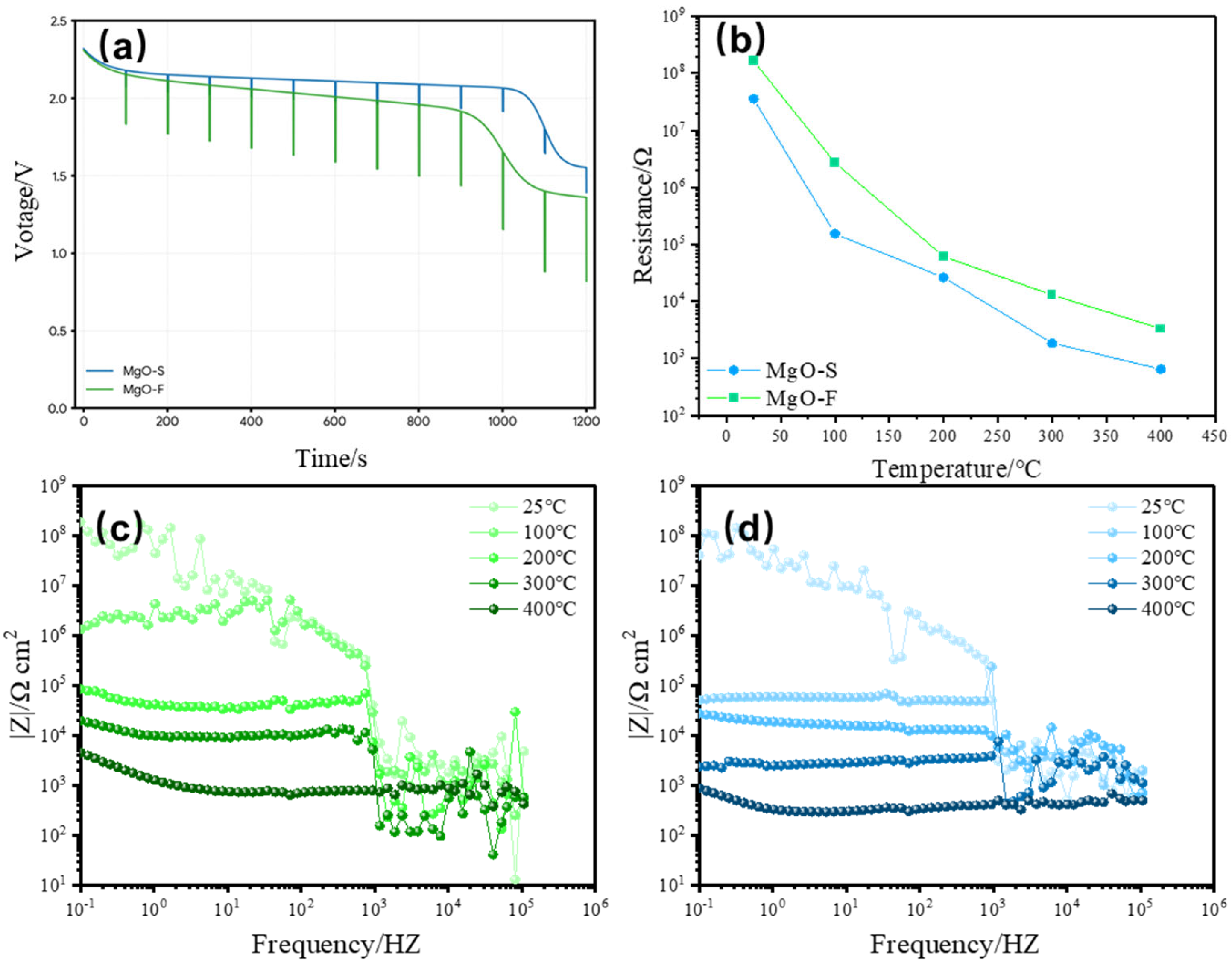
The practical implications of these microstructural advantages are conclusively evidenced in the single-cell constant current pulse discharge profiles (Figure 6a). The cell employing the MgO-S binder delivered a significantly higher operating voltage plateau (~2.17 V), whereas the MgO-F cell suffered from a lower plateau due to severe ohmic voltage drop. More critically, the dynamic response to current pulses reveals a divergent evolution of internal resistance. For the cell with MgO-F, the voltage dips generated by current pulses became progressively deeper and non-uniform as the discharge proceeded. This phenomenon indicates a rapid accumulation of concentration polarization and severe mass transport limitations within the tortuous pores, likely caused by the local depletion of active lithium ions that cannot be replenished quickly.
In stark contrast, the cell utilizing MgO-S exhibited shallow and uniform pulse dips throughout the entire discharge duration. This stability implies that the gel-networked interface and optimized pore structure of MgO-S effectively maintain robust ionic conductivity even at high depths of discharge, successfully mitigating polarization build-up. Consequently, this study demonstrates that MgO-S represents a superior strategy for improving the kinetic stability of thermal batteries. While further evaluation under higher current densities is required for industrial adoption, the current comparative data confirms that MgO-S effectively mitigates polarization under pulsed operating conditions, as it overcomes the trade-off between electrolyte retention and kinetic efficiency, ensuring both high power output and long-term electrochemical stability.
The interplay between pore tortuosity and surface wettability is the fundamental determinant of electrochemical kinetics and overall cell performance. This structure-property relationship was systematically evaluated via Electrochemical Impedance Spectroscopy (EIS) across a temperature range of 25–400 °C. As illustrated in Figure 6b, the separator utilizing the MgO-S binder consistently exhibited a significantly lower bulk ionic resistance. It is important to note that these measurements were conducted using blocking electrodes to isolate the ionic transport properties. Consequently, the Bode plots (Figure 6c,d) exhibit that MgO-S exhibits a significantly lower Rb (652.6 Ω) compared to MgO-F (1006.4 Ω) at 400 °C, directly confirming that the spherical morphology facilitates a more effective ionic percolation network. This substantial improvement in conductivity is attributed to the synergistic effect of the pore structure and enhanced electrolyte wetting. While specific tortuosity values were not modeled, the lower bulk resistance of MgO-S empirically supports the hypothesis that its spherical packing creates a more direct ionic path compared to the tortuous flake-like network of MgO-F. Unlike the sheet-like stacking of MgO-F which creates dead-ends and tortuous paths, the uniform spherical particles of MgO-S establish continuous, high-speed ion conduction highways, thereby minimizing the obstruction to Li+ migration.

4. Discussion

The role of MgO in the electrolyte immobilization system extends beyond simple physical mixing, involving a complex synergistic regulation of bulk structural characteristics and interfacial surface chemistry. MgO-F, characterized by its sheet-like morphology and high specific surface area, establishes a robust mechanism driven primarily by physical confinement. While its three-dimensional interconnected pore network effectively inhibits molten salt overflow through strong capillary forces, this high-tortuosity structure simultaneously imposes significant steric hindrance on ion migration. This kinetic limitation is clearly reflected in the discharge behavior, where the accumulation of concentration polarization leads to progressively deepening voltage dips, indicating a degradation in mass transport kinetics. This severe polarization causes the cell voltage to reach the cutoff threshold prematurely, limiting the effective utilization of the active material.
In stark contrast, MgO-S exhibits superior ionic conductivity, originating from the synergistic optimization of pore structure and surface chemistry. The spherical geometry of MgO-S minimizes the tortuosity of ion transport channels, providing a more direct pathway for lithium ion migration. Furthermore, this study unveils the critical dual influence of surface hydroxyl concentration. While bulk hydration is detrimental, a controlled concentration of surface-bound hydroxyls on MgO-S serves as essential chemical anchoring sites. These sites enhance the affinity with the ionic melt, facilitating the construction of a stable ionic transport interface with improved physical contact that effectively lowers the energy barrier for electrolyte infiltration and reduces interfacial contact resistance. By balancing physical retention with kinetic efficiency, the regulation of MgO crystal form provides a theoretical basis for mitigating the trade-off between leakage prevention and power output in high-performance lithium thermal batteries.

5. Conclusions

This work addresses the critical challenge of high interfacial impedance in lithium thermal batteries by constructing an FeS2-CoS2 multi-component composite cathode system and systematically regulating the microstructure of MgO binders. Our investigation identifies that while MgO with a 3D interconnected pore network (MgO-F) ensures excellent electrolyte retention via physical locking, its high tortuosity restricts ion transport, leading to increased polarization during prolonged discharge. Conversely, the strategy represented by MgO-S, which combines an optimized low-tortuosity spherical structure with surface chemical anchoring, proves to be the superior approach. We demonstrate that balancing surface hydroxyl concentration is essential for establishing a continuous ionic transport pathway with low resistance, which significantly reduces transport resistance and stabilizes the operating voltage plateau. Consequently, this study establishes a vital material design paradigm for developing optimized MgO binder systems for thermal batteries that require both structural integrity and robust electrochemical kinetics.

Supplementary Materials

The following supporting information can be downloaded at: https://www.mdpi.com/article/10.3390/c12010010/s1.

Author Contributions

Z.-Y.F.: software, Conceptualization; Methodology, Formal analysis, Writing—original draft; X.-M.W.: Methodology, Writing—review and editing; W.-Y.Z.: Visualization, Writing—original draft; L.-K.C.: Investigation; C.-Y.S.: Writing—review and editing; Project administration, Resources; W.-X.G.: Project administration, Resources, Conceptualization, Methodology, and Writing—Review and Editing. All authors have read and agreed to the published version of the manuscript.

Funding

This research was funded by the following funding sources: the National Natural Science Foundation of China (Grant No. 22409157, 22379120).

Data Availability Statement

The original contributions presented in this study are included in the article. Further inquiries can be directed to the corresponding author.

Acknowledgments

The authors sincerely appreciate the support provided by the following funding sources: the National Natural Science Foundation of China (Grant No. 22409157, 22379120).

Conflicts of Interest

The authors declare no conflicts of interest.

References

  1. Wang, C.; Zhang, X.; Cui, Y.X.; He, K.; Cao, Y.; Liu, X.J.; Zeng, C. A System-Level Thermal-Electrochemical Coupled Model for Evaluating the Activation Process of Thermal Batteries. Appl. Energy 2022, 328, 120177. [Google Scholar]
  2. Park, T.R.; Park, H.; Kim, K.; Im, C.N.; Cho, J.H. Heat and Weight Optimization Methodology of Thermal Batteries by Using Deep Learning Method with Multi-Physics Simulation. Energy Convers. Manag. 2021, 236, 114033. [Google Scholar] [CrossRef]
  3. Butler, P.; Wagner, C.; Guidotti, R.; Francis, I. Long-Life, Multi-Tap Thermal Battery Development. J. Power Sources 2004, 136, 240–245. [Google Scholar]
  4. Guidotti, R.A.; Masset, P. Thermally Activated (“Thermal”) Battery Technology. J. Power Sources 2007, 164, 397–414. [Google Scholar] [CrossRef]
  5. Kang, S.-H. Heat Treatment Effect on Microstrain and Electrochemical Performance of Nano-Sized FeS Cathode for Thermal Batteries. Int. J. Electrochem. Sci. 2016, 11, 4371–4379. [Google Scholar] [CrossRef]
  6. Jeong, M.G.; Cho, J.H.; Lee, B.J. Heat Transfer Analysis of a High-Power and Large-Capacity Thermal Battery and Investigation of Effective Thermal Model. J. Power Sources 2019, 424, 35–41. [Google Scholar] [CrossRef]
  7. Cao, Y.; Gao, C.Y.; Yang, X.W.; Wang, C.; Yan, J.; Shi, D.H.; Chen, Y.; Cui, Y.H. The Suppression Effect of Functional Gradient Design on Concentration Polarization of Multiple Cations Molten Salt Electrolyte for Thermal Batteries. J. Electrochem. Soc. 2021, 168, 010503. [Google Scholar] [CrossRef]
  8. Choi, Y.S.; Yu, H.R.; Cheong, H.W. Electrochemical Properties of a Lithium-Impregnated Metal Foam Anode for Thermal Batteries. J. Power Sources 2015, 276, 102–104. [Google Scholar] [CrossRef]
  9. Xin, W.W.; Liu, H.L.; Zhao, J.F.; Shao, X.D.; Zhao, Y.X. Investigation on the Flow and Thermal Properties of Fibrous Insulation Used in Thermal Batteries at Alternative Atmosphere and Pressure Gradient. Energy 2024, 304, 132039. [Google Scholar] [CrossRef]
  10. Dunn, B.; Kamath, H.; Tarascon, J.M. Electrical Energy Storage for the Grid: A Battery of Choices. Science 2011, 334, 928–935. [Google Scholar] [CrossRef]
  11. Guo, H.; Tang, L.C.; Tian, Q.Q.; Chu, Y.; Shi, B.; Yin, X.C.; Huo, H.; Han, X.P.; Yang, C.X.; Wang, C.; et al. Cobalt-Doped NiS2 Micro/Nanostructures with Complete Solid Solubility as High-Performance Cathode Materials for Actual High-Specific-Energy Thermal Batteries. ACS Appl. Mater. Interfaces 2020, 12, 50377–50387. [Google Scholar] [CrossRef]
  12. Zhu, Y.L.; Li, W.; Zhang, L.; Fang, W.H.; Ruan, Q.Q.; Li, J.; Zhang, F.J.; Zhang, H.T.; Quan, T.; Zhang, S.J. Electrode/Electrolyte Interphases in High-Temperature Batteries: A Review. Energy Environ. Sci. 2023, 16, 2825–2855. [Google Scholar] [CrossRef]
  13. Lee, H.; Yanilmaz, M.; Toprakci, O.; Fu, K.; Zhang, X.W. A Review of Recent Developments in Membrane Separators for Rechargeable Lithium-Ion Batteries. Energy Environ. Sci. 2014, 7, 3857–3886. [Google Scholar] [CrossRef]
  14. Nong, Y. Low Resistance Separator with Hexagonal Boron Nitride (h-BN) Binder for High Power Thermal Battery. Mater. Chem. Phys. 2023, 296, 127221. [Google Scholar] [CrossRef]
  15. Zhang, L. FeF3 0.33H2 O@carbon Nanosheets with Honeycomb Architectures for High-Capacity Lithium-Ion Cathode Storage by Enhanced Pseudocapacitance. J. Mater. Chem. A 2021, 9, 16370–16383. [Google Scholar] [CrossRef]
  16. Khan, J.; Ullah, H.; Sajjad, M.; Bahadar, A.; Bhatti, Z.; Soomro, F.; Memon, F.H.; Iqbal, M.; Rehman, F.; Thebo, K.H. High Yield Synthesis of Transition Metal Fluorides (CoF2, NiF2, and NH4MnF3) Nanoparticles with Excellent Electrochemical Performance. Inorg. Chem. Commun. 2021, 130, 108751. [Google Scholar] [CrossRef]
  17. Wang, Y.; Bai, X.T.; Luo, Z.S.J.; Fitz, L.C. High Specific Energy of CuO as a Thermal Battery Cathode. Int. J. Electrochem. Sci. 2020, 15, 10406–10411. [Google Scholar] [CrossRef]
  18. Zhang, X.X.; Yu, H.L.; Ben, L.B.; Cen, G.J.; Sun, Y.; Wang, L.P.; Hao, J.F.; Zhu, J.; Sun, Q.F.; Qiao, R.H.; et al. Topology Fortified Anodes Powered High-Energy All-Solid-State Lithium Batteries. Adv. Mater. 2025, 37, 2506298. [Google Scholar] [CrossRef]
  19. Cardenas, J.A.; Bullivant, J.P.; Kolesnichenko, I.V.; Roach, D.J.; Gallegos, M.A.; Coker, E.N.; Lambert, T.N.; Allcorn, E.; Talin, A.A.; Cook, A.W. 3D Printing of Ridged FeS2 Cathodes for Improved Rate Capability and Custom-Form Lithium Batteries. ACS Appl. Mater. Interfaces 2022, 14, 45342–45351. [Google Scholar] [CrossRef]
  20. Dickson, S.A.; Gover, R.K.; Irvine, J.T. Development of the Ca/FeS2 Chemistry for Thermal Batteries. Chem. Mater. 2021, 33, 7367–7378. [Google Scholar] [CrossRef]
  21. Tang, L.C.; Zhang, C.C.; Guo, H.; Zhao, H.K.; Tian, Q.Q.; Wang, J.Y.; Pan, Z.P.; Meng, J.; Tang, J.; Zhou, L.P.; et al. High-Specific Capacity Thermal Battery Cathode Fe and Ni Doped CoS2 by Enhanced Thermal Stability and Conductivity. Electrochem. Commun. 2023, 157, 107604. [Google Scholar] [CrossRef]
  22. Almashnowi, M.Y.A. CoS2@Li7P3S11 Nanocomposites Cathode Enabled High-Performance All-Solid-State Li-Based Batteries with Ultrahigh Capacity. Inorg. Chem. Commun. 2025, 174, 113915. [Google Scholar] [CrossRef]
  23. Yu, T.; Yu, Z.; Cao, Y.; Liu, H.; Liu, X.; Cui, Y.; Wang, C.; Cui, Y. Electrochemical Performances and Air Stability of Fe-Doped CoS2 Cathode Materials for Thermal Batteries. Int. J. Electrochem. Sci. 2018, 13, 7590–7597. [Google Scholar] [CrossRef]
  24. Yao, B.; Fu, L.; Liao, Z.; Zhu, J.; Yang, W.; Li, D.; Zhou, L. Flexible NiS2 Film as High Specific Capacity Cathode for Thermal Battery. J. Alloys Compd. 2022, 900, 163448. [Google Scholar]
  25. Jin, C.Y.; Song, K.X.; Liu, J.Q.; Ge, B.; Zhao, L.M.; Pu, X.P.; Li, W.Z. Flexible, Self-Assembly NiS2/C Thin Film Cathodes for Long Life Thermal Battery. J. Alloys Compd. 2020, 833, 155091. [Google Scholar] [CrossRef]
  26. Ko, J. Organic Binder-free Cathode Using FeS2—MWCNT s Composite for Thermal Batteries. J. Am. Ceram. Soc. 2017, 100, 4435–4441. [Google Scholar] [CrossRef]
  27. Choi, Y.; Cho, S.; Lee, Y.S. Effect of the Addition of Carbon Black and Carbon Nanotube to FeS2 Cathode on the Electrochemical Performance of Thermal Battery. J. Ind. Eng. Chem. 2014, 20, 3584–3589. [Google Scholar] [CrossRef]
  28. Kim, I.Y.; Woo, S.P.; Ko, J.; Kang, S.H.; Yoon, Y.S.; Cheong, H.W.; Lim, J.H. Binder-Free Cathode for Thermal Batteries Fabricated Using FeS2 Treated Metal Foam. Front. Chem. 2020, 7, 904. [Google Scholar] [CrossRef]
  29. Payne, J.L.; Percival, J.D.; Giagloglou, K.; Crouch, C.J.; Carins, G.M.; Smith, R.I.; Gover, R.K.B.; Irvine, J.T.S. In Situ Thermal Battery Discharge Using CoS2 as a Cathode Material. J. Electrochem. Soc. 2019, 166, A2660–A2664. [Google Scholar] [CrossRef]
  30. Xie, S. Carbon Coated CoS2 Thermal Battery Electrode Material with Enhanced Discharge Performances and Air Stability. Electrochim. Acta 2017, 231, 287–293. [Google Scholar] [CrossRef]
  31. Xie, Y.L.; Liu, Z.J.; Ning, H.L.; Huang, H.F.; Chen, L.B. Suppressing Self-Discharge of Li–B/CoS2 Thermal Batteries by Using a Carbon-Coated CoS2 Cathode. RSC Adv. 2018, 8, 7173–7178. [Google Scholar] [CrossRef]
  32. Xie, S. Facile Synthesis of CoS2/CNTs Composite and Its Exploitation in Thermal Battery Fabrication. Compos. Part B Eng. 2016, 93, 203–209. [Google Scholar] [CrossRef]
  33. Kang, S.H.; Chae, S.H.; Cheong, H.W.; Kim, K.H.; Han, Y.S.; Lee, S.M.; Yoon, D.H.; Yi, J. Thermal Batteries with Ceramic Felt Separators—Part 2: Ionic Conductivity, Electrochemical and Mechanical Properties. Ceram. Int. 2017, 43, 4023–4028. [Google Scholar] [CrossRef]
  34. Zhang, P.; Liu, J.S.; Yang, Z.T.; Liu, X.J.; Wang, F. Synthesis of Porous Magnesia Fibers with Enhanced Performance as a Binder for Molten Electrolyte. Electrochim. Acta 2017, 230, 358–364. [Google Scholar] [CrossRef]
Figure 1. (a,b) High-magnification SEM images of the selected MgO-F (Sample #1) and MgO-S (Sample #2); (c) Comparative electrolyte leakage rates of all 8 samples.
Carbon 12 00010 g001
Figure 2. (a) FTIR images of all 8 MgO Samples; (b) FTIR images of all 8 separators Samples.
Carbon 12 00010 g002
Figure 3. Microstructural characterization of the composite separators: SEM images and corresponding EDS elemental mapping of the powders prepared using (a) MgO-F and (b) MgO-S.
Carbon 12 00010 g003
Figure 4. Three-dimensional CT reconstruction models of separators (a) MgO-F and (b) MgO-S; N2 adsorption–desorption isotherms and pore size distribution (c) MgO-F and (d) MgO-S.
Carbon 12 00010 g004
Figure 5. XPS O 1s spectra (a) MgO-F and (b) MgO-S; Contact angle images (c) MgO-F and (d) MgO-S.
Carbon 12 00010 g005
Figure 6. (a) Single-cell discharge curves. (b) Resistance vs. Temperature curves of the separator pellets measured using blocking electrodes. Bode plots (|Z| vs. Frequency) of (c) MgO-F and (d) MgO-S.
Carbon 12 00010 g006
Disclaimer/Publisher’s Note: The statements, opinions and data contained in all publications are solely those of the individual author(s) and contributor(s) and not of MDPI and/or the editor(s). MDPI and/or the editor(s) disclaim responsibility for any injury to people or property resulting from any ideas, methods, instructions or products referred to in the content.