Pressure Transient Analysis for Vertical Well Drilled in Filled-Cave in Fractured Reservoirs

 ,
,  ,
, 
Abstract
1. Introduction
2. Methodology
2.1. Physical Model
- (1)
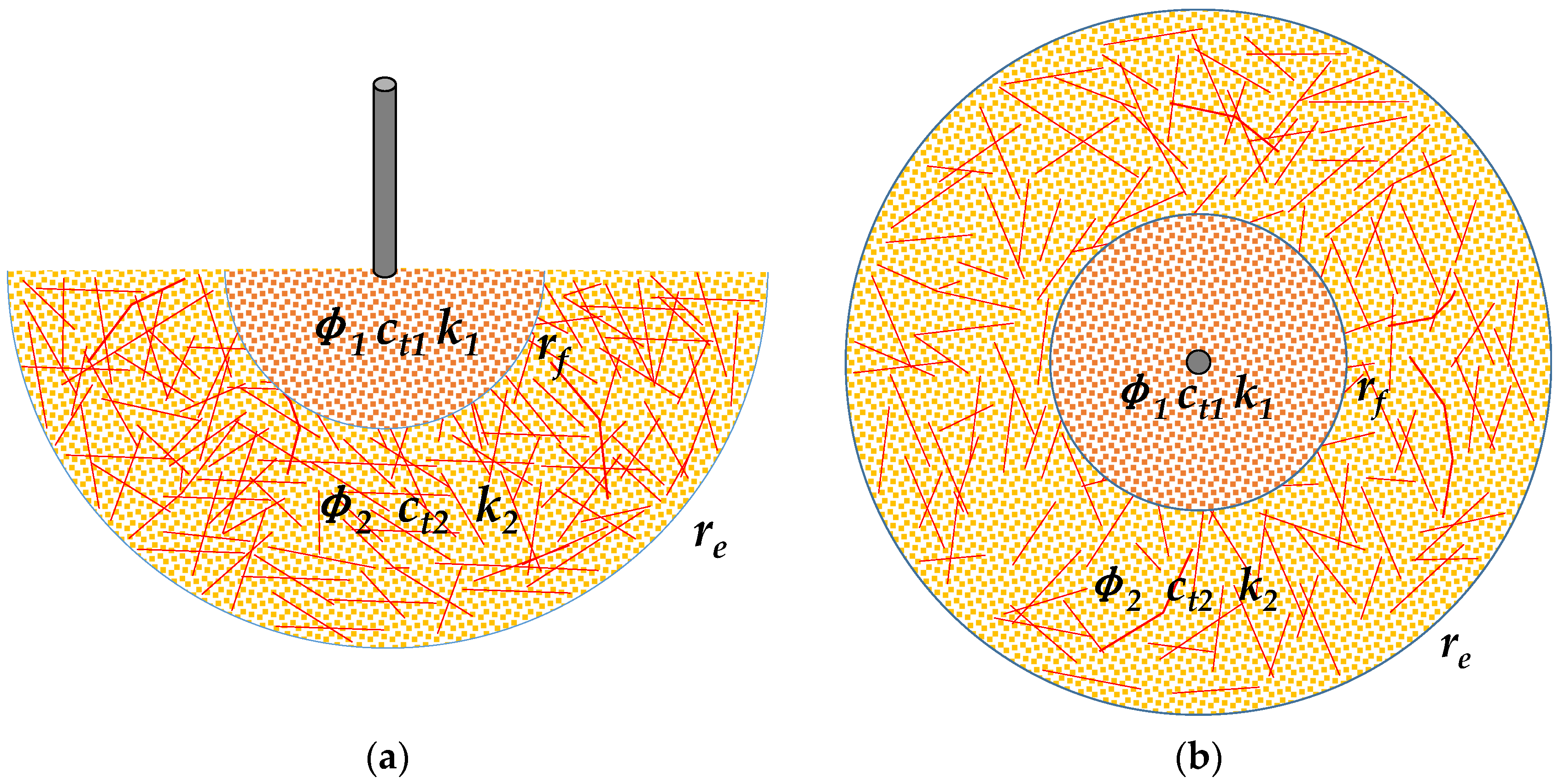
- The producing well drills into the filled-cave, and the filled-cave zone is homogeneous. At the bottom of the wellbore is located in the ball center of the filled-cave, the fluid of the filled-cave flows into the wellbore through the perforated section in the form of spherical concentric flow.
- (2)
- Due to the main pressure-drop occurring around the wellbore and the compaction degree of the filled-cave being lower than the peripheral rock, the deformation caused by the stress-sensitivity of the filled-cave is considered in the flow process.
- (3)
- The peripheral rock develops natural fractures, and it is equivalent to the dual-porous medium. In the outer zone, the natural fracture is the flow channel, and the rock matrix is the storage volume without any infiltration capacity. In the pressure drop process, the internal fluid in the matrix only flows towards the rock fracture in the form of pseudo-steady-state.
- (4)
- The fluids present in both the inner and outer zones are single-phase and exist in a compressed liquid state. Within the rock fracture system, the internal fluid moves toward the filled-cave, exhibiting a spherical flow pattern that converges inward. There is no additional pressure loss induced by flow in the interface of the inner and outer zones.
- (5)
- Before the well is opened, the initial pressure is uniform throughout the reservoir. The test well is then produced at a constant rate. The impact of the wellbore storage effect and the formation skin effect are considered together.
- (6)
- The reservoir possesses a limited distance to its boundary, which may be either a closed (no-flow) type or a constant-pressure type. Throughout the entire flow process, variations in temperature and the effects of gravity are neglected.
2.2. Mathematical Model
- (1)
- Dimensionless diffusivity equation of inward spherical flow in the stress-sensitive filled-cave (inner zone) is
- (2)
- See Appendix A, dimensionless diffusivity equation of inward spherical flow in the dual-pore media rock (outer zone) is
- (3)
- Corresponding initial condition is
- (4)
- Corresponding flux condition in the wellbore, see Appendix B, is
- (5)
- Corresponding pressure condition in the wellbore, see Appendix B, is
- (6)
- Pressure condition in the interface of filled-cave and fractured rock is
- (7)
- Flux condition in the interface of filled-cave and fractured rock is
- (8)
- If the boundary type is constant-pressure, the boundary condition can be written as
- (9)
- If the boundary type is no-flow, the boundary condition can be written as
2.3. Solution Approach
2.3.1. Inner Diffusivity Equation
2.3.2. Outer Diffusivity Equation
2.3.3. Boundary Conditions
2.3.4. Solution of BHP
3. Results
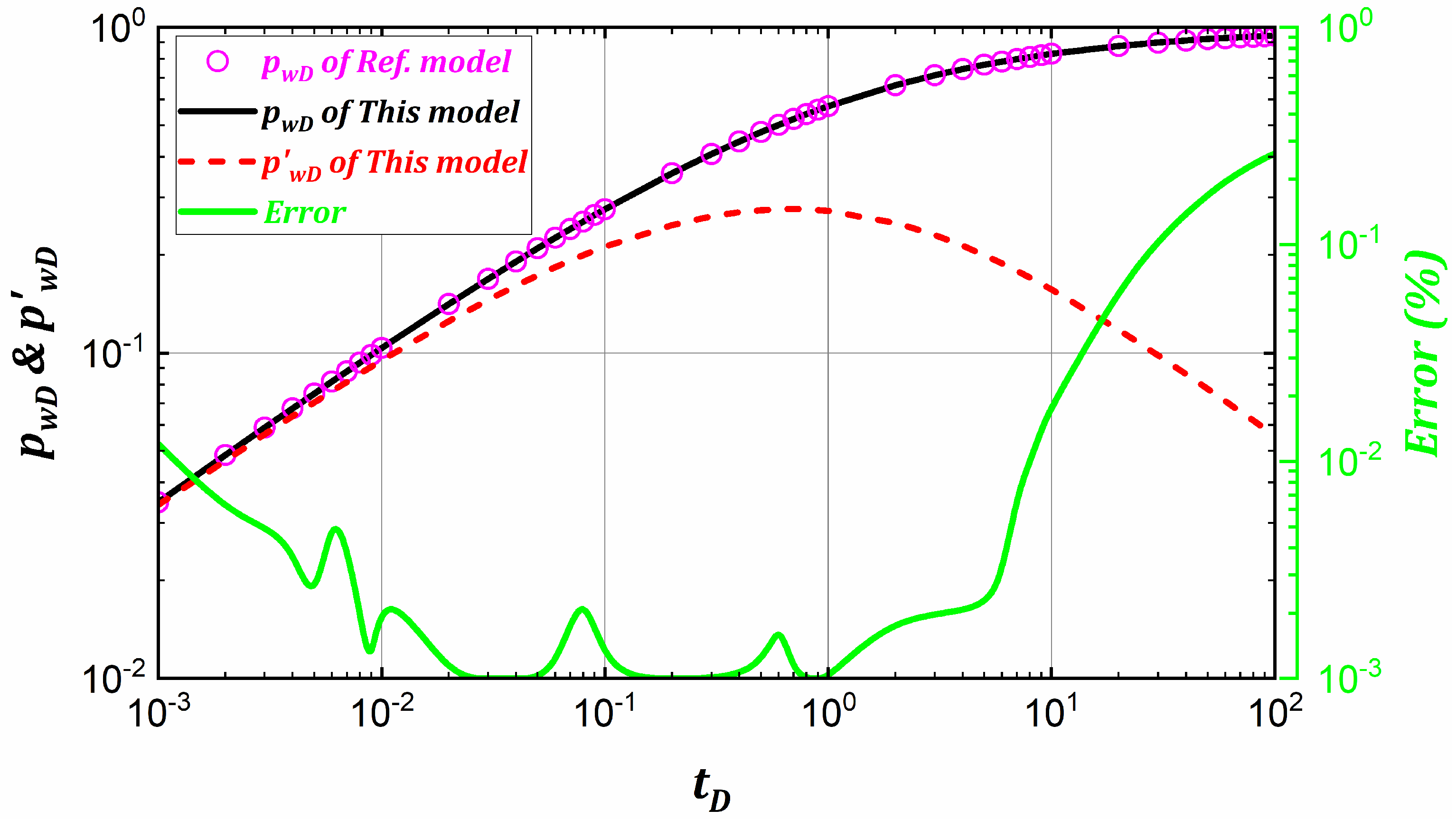
3.1. Model Verification
3.2. BHP Response and Flow Regimes
3.3. Flow Regimes
4. Discussion
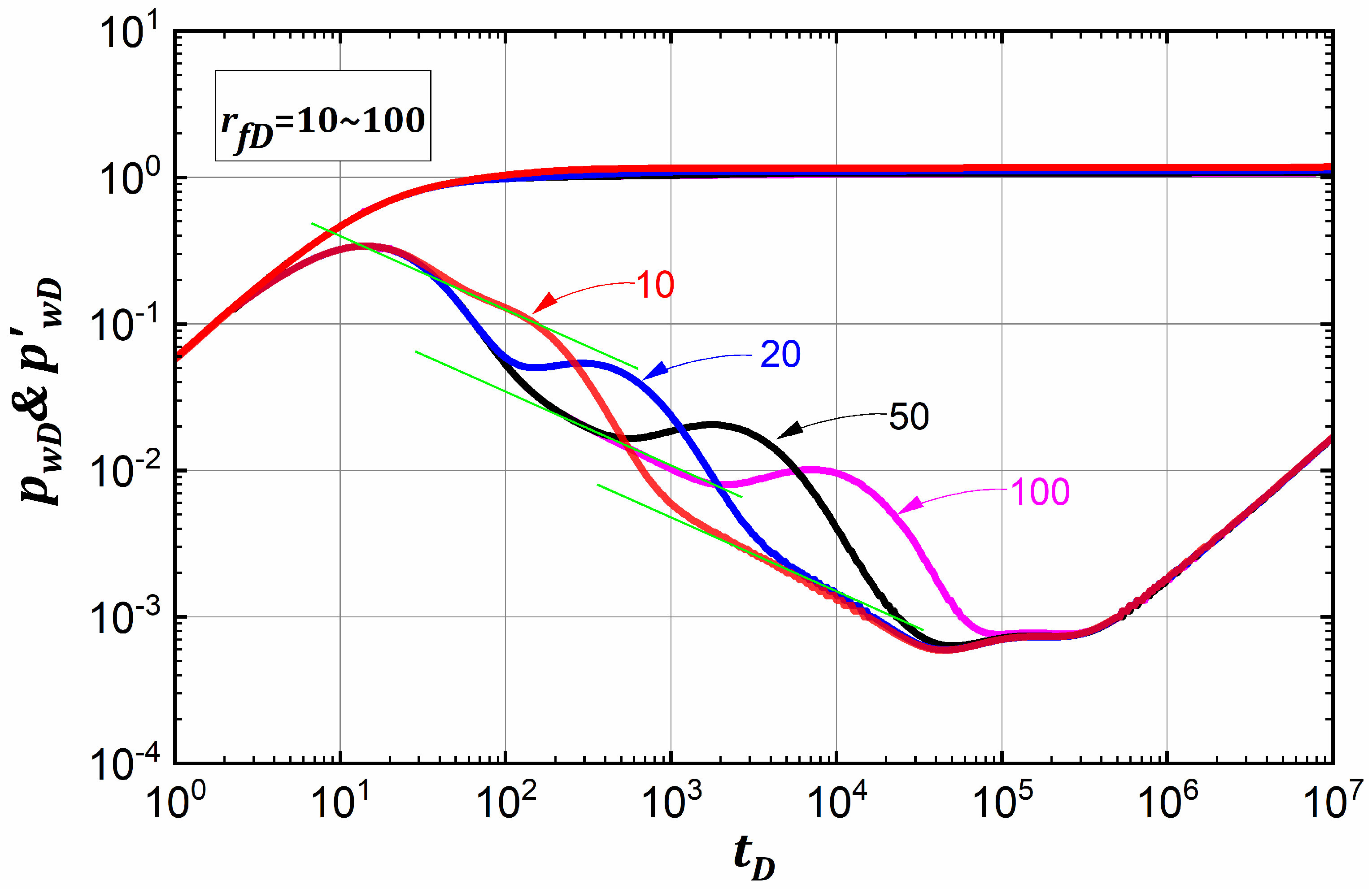
4.1. Composite Distance
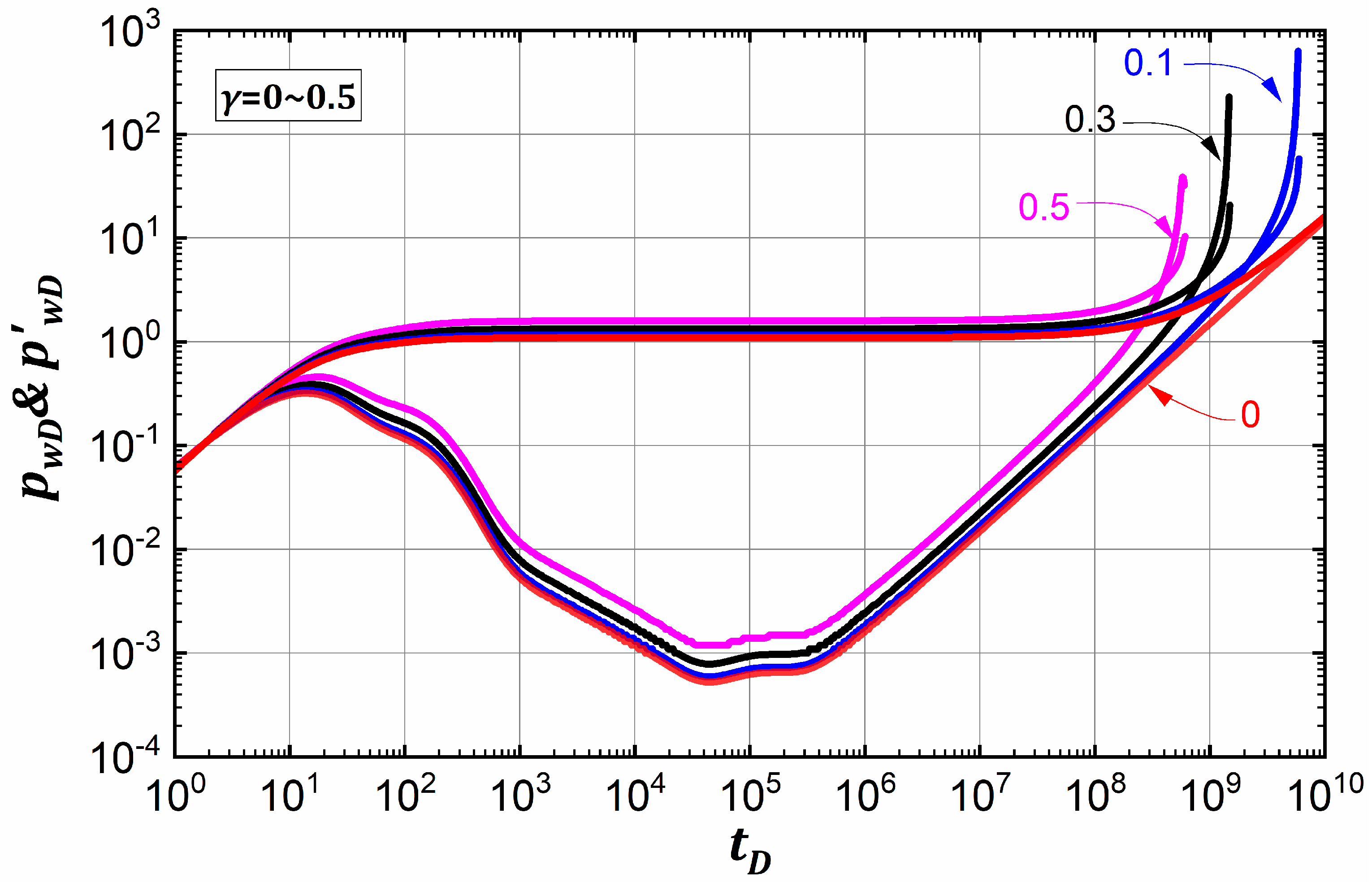
4.2. Stress-Sensitivity Factor
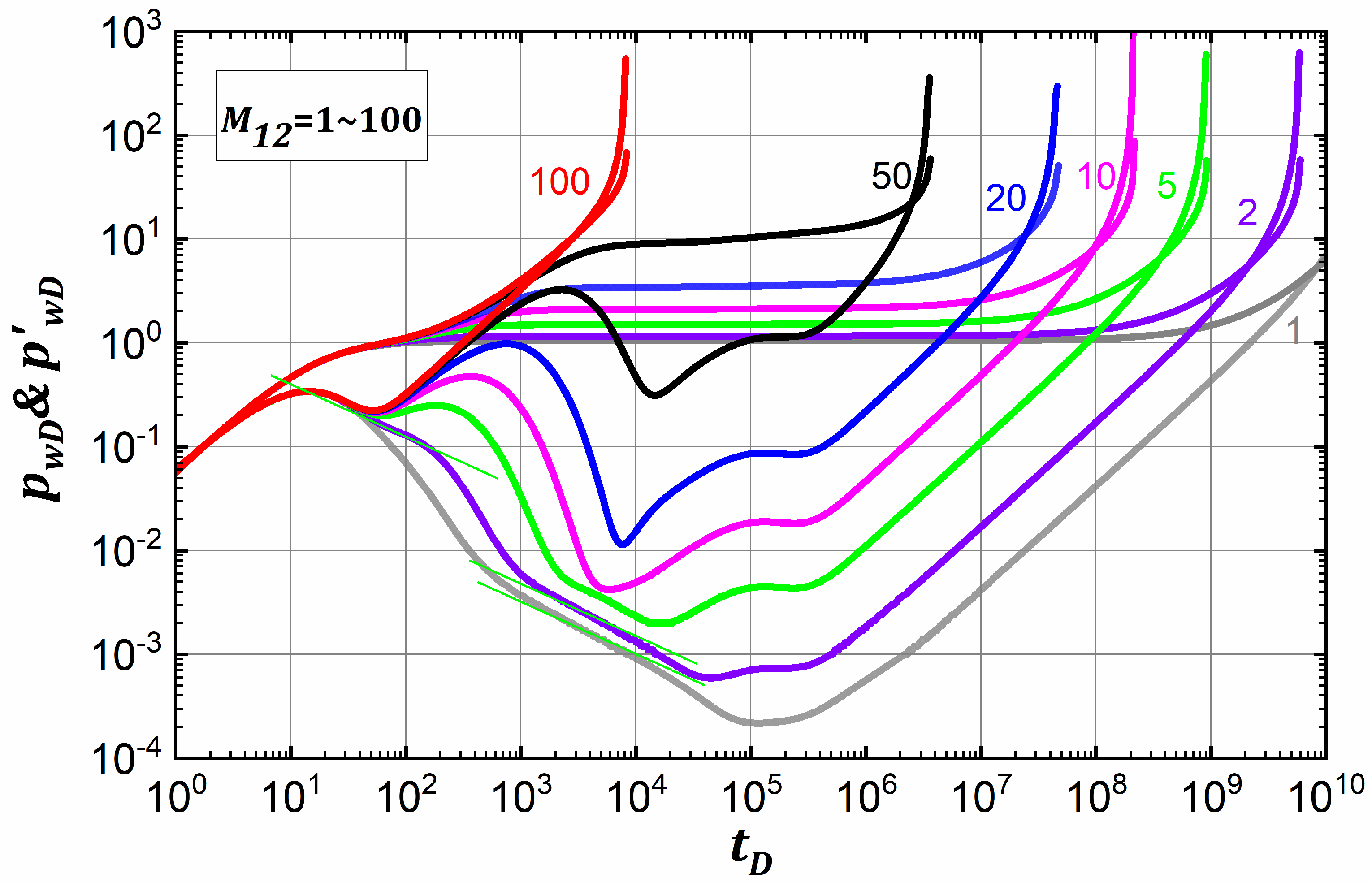
4.3. Mobility Ratio
4.4. Storability Ratio
4.5. Diffusivity Ratio
4.6. Inter-Porosity Flow Coefficient
4.7. Storability Ratio of Fracture
4.8. Boundary Distance
5. Conclusions
- (1)
- The composite model can be used to characterize the fractured reservoir with the filled-caves, and its flow follows the composite flow regimes The stress-sensitivity effect of the filled-cave area and the inter-porosity flow phenomenon within the fractured reservoir should be considered. In this model, the corresponding analytical solution can be obtained by using Perturbation transformation.
- (2)
- There are eight flow regimes for a well drilled into filled-caves in fractured reservoirs. Among them, the spherical flow and boundary flow can be used to identify the size of the filled-caves and the stress-sensitivity, respectively. The spherical flow has an obvious slope of 0.5 on the BHPD curve.
- (3)
- Affected by the stress-sensitivity of the filled-cave, the BHPD’s slope of the boundary flow will be greater than 1. The greater the stress-sensitivity coefficient, the greater the deviation of the boundary flow. At the same time, other flow stages (inter-porosity flow) will also deviate.
Author Contributions
Funding
Institutional Review Board Statement
Informed Consent Statement
Data Availability Statement
Conflicts of Interest
Abbreviations
| BHP | Bottomhole Pressure |
| BHPD | Bottomhole Pressure Derivative |
| PTA | Pressure Transient Analysis |
Appendix A. Derivation of Equation (9): Dimensionless Flow Equation for the Outer Zone
Appendix B. Derivation of Equation (11): Dimensionless Flux Condition in the Wellbore
References
- Li, Q.; Du, X.; Tang, Q.; Xu, Y.; Li, P.; Lu, D. A novel well test model for fractured vuggy carbonate reservoirs with the vertical bead-on-a-string structure. J. Pet. Sci. Eng. 2021, 196, 107938. [Google Scholar] [CrossRef]
- Du, X.; Li, Q.; Li, P.; Xian, Y.; Zheng, Y.; Lu, D. A novel pressure and rate transient analysis model for fracture-caved carbonate reservoirs. J. Pet. Sci. Eng. 2022, 208, 109609. [Google Scholar] [CrossRef]
- Popov, P.; Qin, G.; Bi, L.; Efendiev, Y.; Ewing, R.E.; Kang, Z.; Li, J. Multiscale Methods for Modeling Fluid Flow Through Naturally Fractured Carbonate Karst Reservoirs. Presented at the SPE Annual Technical Conference and Exhibition, Anaheim, CA, USA, 11–14 November 2007. [Google Scholar] [CrossRef]
- Shi, W.; Cheng, J.; Liu, Y.; Gao, M.; Tao, L.; Bai, J.; Zhu, Q. Pressure transient analysis of horizontal wells in multibranched fault-karst carbonate reservoirs: Model and application in SHB oilfield. J. Pet. Sci. Eng. 2023, 220, 111167. [Google Scholar] [CrossRef]
- Popov, P.; Qin, G.; Bi, L.; Efendiev, Y.; Kang, Z.; Li, J.; Ewing, R.E. Multiphysics and multiscale methods for modeling fluid flow through naturally fractured carbonate karst reservoirs. SPE Reserv. Eval. Eng. 2009, 12, 218–231. [Google Scholar] [CrossRef]
- Gao, B.; Huang, Z.-Q.; Yao, J.; Lv, X.-R.; Wu, Y.-S. Pressure transient analysis of a well penetrating a filled cavity in naturally fractured carbonate reservoirs. J. Pet. Sci. Eng. 2016, 145, 392–403. [Google Scholar] [CrossRef]
- Wan, Y.; Liu, Y.; Ouyang, W.; Han, G.; Liu, W. Numerical investigation of dual-porosity model with transient transfer function based on discrete-fracture model. Appl. Math. Mech. Engl. 2016, 37, 611–626. [Google Scholar] [CrossRef]
- Wan, Y.; Liu, Y.; Wu, N. Numerical pressure transient analysis for Unfilled-caved carbonate reservoirs based on Stokes-Darcy coupled Theory. J. Pet. Sci. Eng. 2020, 190, 107085. [Google Scholar] [CrossRef]
- Davies, J.P.; Davies, D.K. Stress-Dependent Permeability: Characterization and Modeling. SPE J. 2001, 6, 224–235. [Google Scholar] [CrossRef]
- Aghabarari, A.; Ghaedi, M. Evaluation of the effects of homogenizing matrix block sizes on the simulation of naturally fractured reservoirs. J. Pet. Sci. Eng. 2022, 213, 110373. [Google Scholar] [CrossRef]
- Du, X.; Zhang, Y.; Zhou, C.; Su, Y.; Li, Q.; Li, P.; Lu, Z.; Xian, Y.; Lu, D. A novel method for determining the binomial deliverability equation of fractured caved carbonate reservoirs. J. Pet. Sci. Eng. 2022, 208, 109496. [Google Scholar] [CrossRef]
- Ehlig-Economides, C.A.; Joseph, J. A new test for determination of individual layer properties in a multilayered reservoir. SPE Form. Eval. 1987, 2, 261–283. [Google Scholar] [CrossRef]
- Gomes, E.; Ambastha, A.K. An analytical pressure-transient model for multilayered, composite reservoirs with pseudo-steady state formation crossflow. Present at the SPE Western Regional Meeting, Anchorage, AK, USA, 26–28 May 1993. [Google Scholar] [CrossRef]
- Onur, M.; Cinar, M. Analysis of Sandface-Temperature-Transient Data for Slightly Compressible, Single-Phase Reservoirs. SPE J. 2017, 22, 1134–1155. [Google Scholar] [CrossRef]
- Guo, B.; Stewart, G.; Mario, T. Linearly Supported Radial Flow—A New Flow Regime Identified in Dual-Porosity Reservoirs. Presented at the SPE International Petroleum Conference and Exhibition in Mexico, Villahermosa, Mexico, 1–3 February 2000. [Google Scholar] [CrossRef]
- Guo, B.; Stewart, G.; Toro, M. Linearly Supported Radial Flow—A Flow Regime in Layered Reservoirs. SPE Res. Eval. Eng. 2002, 5, 103–110. [Google Scholar] [CrossRef]
- Du, X.; Lu, Z.; Li, D.; Xu, Y.; Li, P.; Lu, D. A novel analytical well test model for fractured vuggy carbonate reservoirs considering the coupling between oil flow and wave propagation. J. Pet. Sci. Eng. 2018, 173, 447–461. [Google Scholar] [CrossRef]
- Shamu, J.; Zou, L.; Håkansson, U. An Experimental Study of 2D Radial Flow of a Yield Stress Fluid Between Parallel Disks. Presented at the ISRM 9th Nordic Grouting Symposium, Helsinki, Finland, 2–3 September 2019; Available online: https://onepetro.org/ISRMNGS/proceedings-abstract/NGS19/NGS19/ISRM-NGS-2019-02/42047 (accessed on 11 January 2025).
- Chatas, A.T. Unsteady Spherical Flow in Petroleum Reservoirs. SPE J. 1966, 6, 102–114. [Google Scholar] [CrossRef]
- Joseph, J.A.; Koederitz, L.F. Koederitz. Unsteady-State Spherical Flow with Storage and Skin. SPE J. 1985, 25, 804–822. [Google Scholar] [CrossRef]
- Jiang, L.; Chen, L.; Yu, H.; Kristensen, M.; Gisolf, A.; Hadrien, D. Detectable Radius of Investigation for One Flow Period with Bourdet Derivative. SPE J. 2024, 29, 4027–4042. [Google Scholar] [CrossRef]
- Gelvez, C.; Carlos, T. Fluid Contamination Transient Analysis. Petrophysics 2024, 65, 32–50. [Google Scholar] [CrossRef]
- Warren, J.E.; Root, P.J. The Behavior of Naturally Fractured Reservoirs. SPE J. 1963, 3, 245–255. [Google Scholar] [CrossRef]
- Pedrosa, O.J. Pressure transient response in stress-sensitive formations. Presented at the SPE California Regional Meeting, Oakland, CA, USA, 2–4 April 1986. [Google Scholar] [CrossRef]
- Kikani, J.; Pedrosa, O.A. Perturbation analysis of stress-sensitive reservoirs (includes associated papers 25281 and 25292). SPE Form. Eval. 1991, 6, 379–386. [Google Scholar] [CrossRef]
- Stehfest, H. Numerical inversion of Laplace transforms. Commun. ACM 1970, 13, 47–49. [Google Scholar] [CrossRef]




| Parameters | Definition |
|---|---|
| Dimensionless distance | |
| Dimensionless distance to inner boundary | |
| Dimensionless distance to outer boundary | |
| Dimensionless wellbore storage coefficient | |
| Dimensionless time | |
| Dimensionless pressure of inner zone | |
| Dimensionless pressure of outer zone | |
| Mobility ratio of inner zone to outer zone | |
| Storability ratio of inner zone to outer zone | |
| Stress-sensitivity coefficient | |
| Storability ratio of fracture | |
| Inter-porosity flow coefficient |
| Dimensionless Parameters | Type Curve Part | Sensitivity Analysis Part |
|---|---|---|
| Composite distance, rfD | 10.0 | 10~100 |
| Stress-sensitivity factor, γ | 0.1 | 0~0.5 |
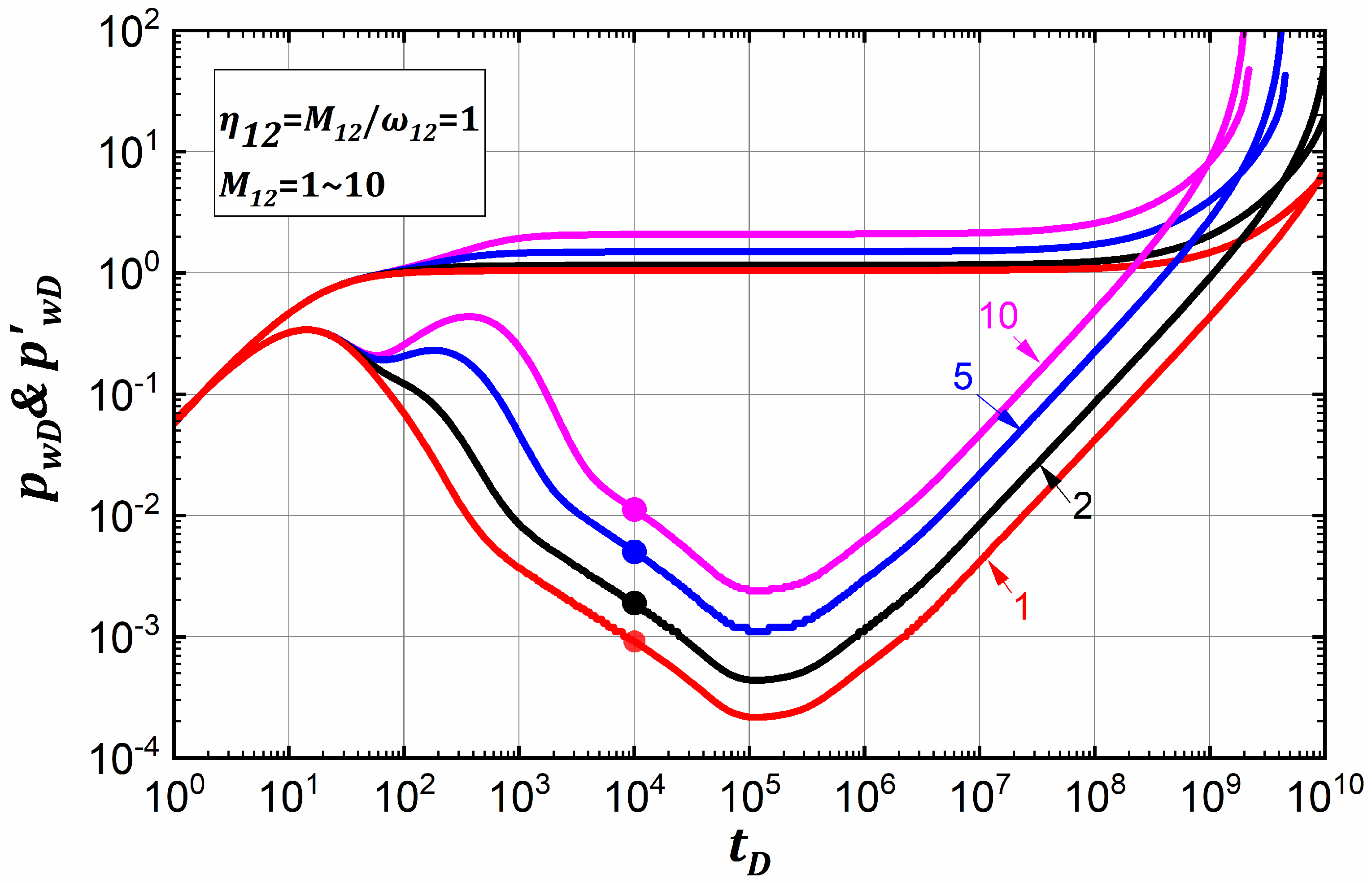
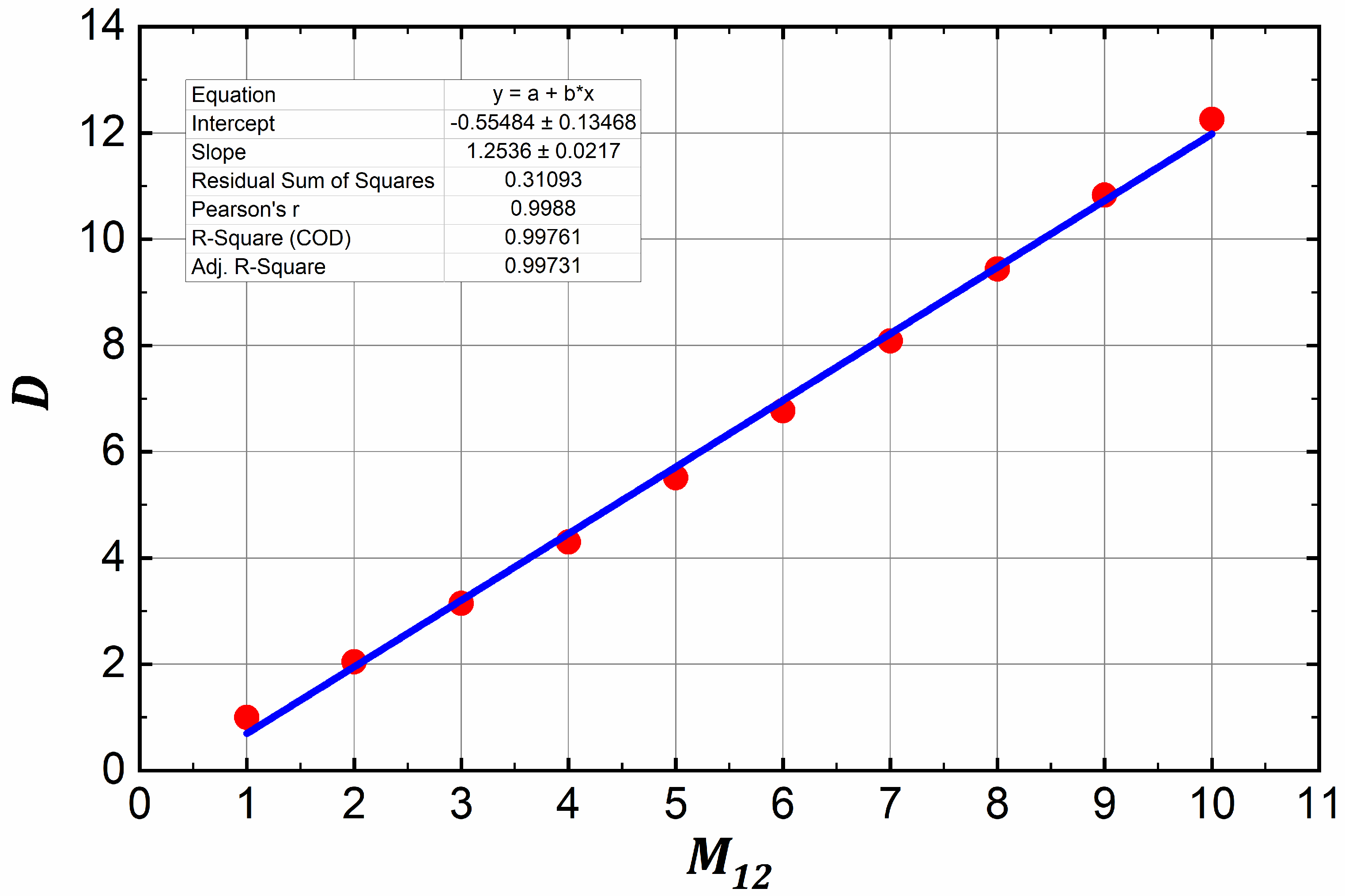
| Mobility ratio, M12 | 2.0 | 1~100 |
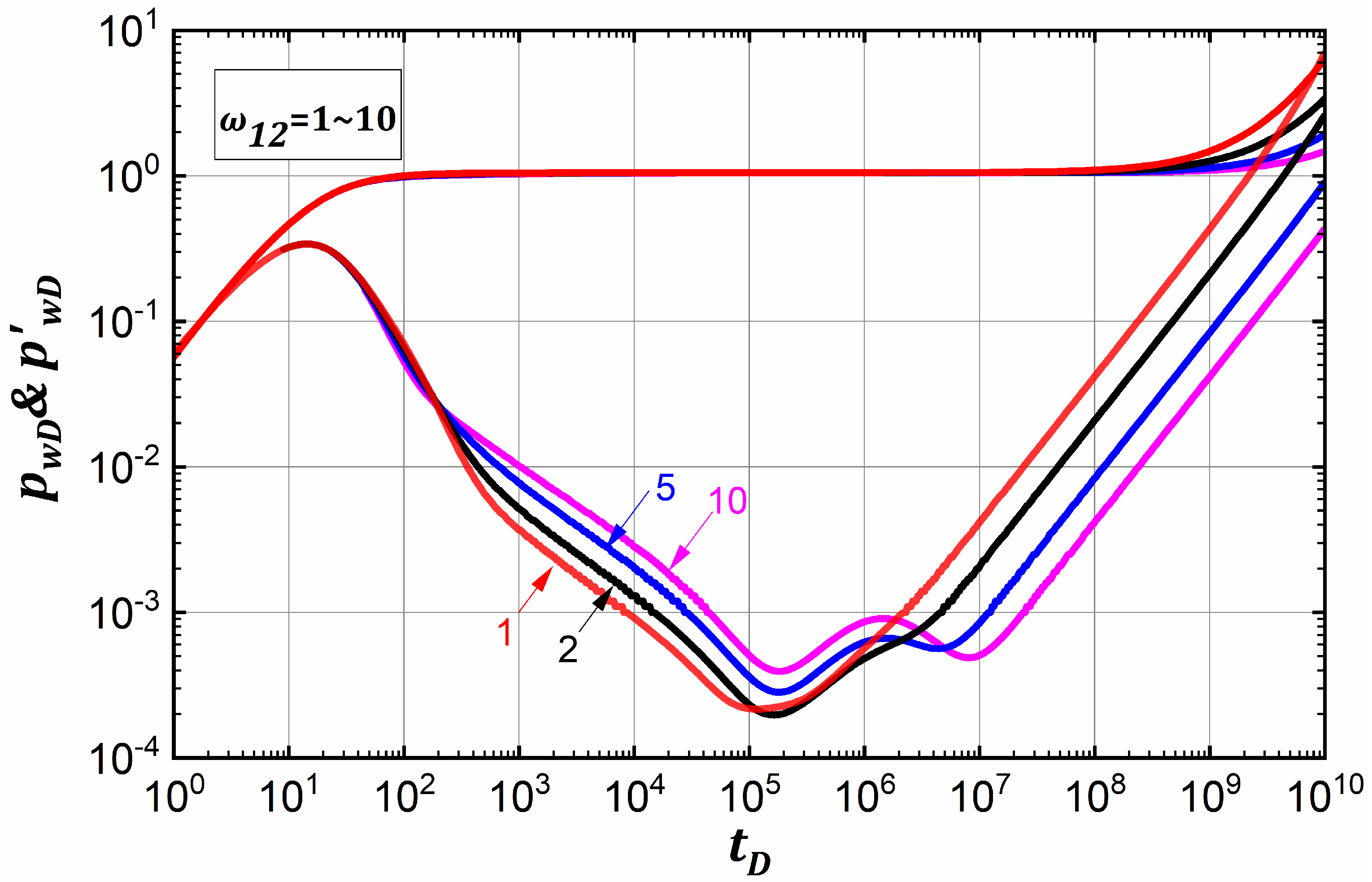
| Storability ratio, ω12 | 1.0 | 1~10 |
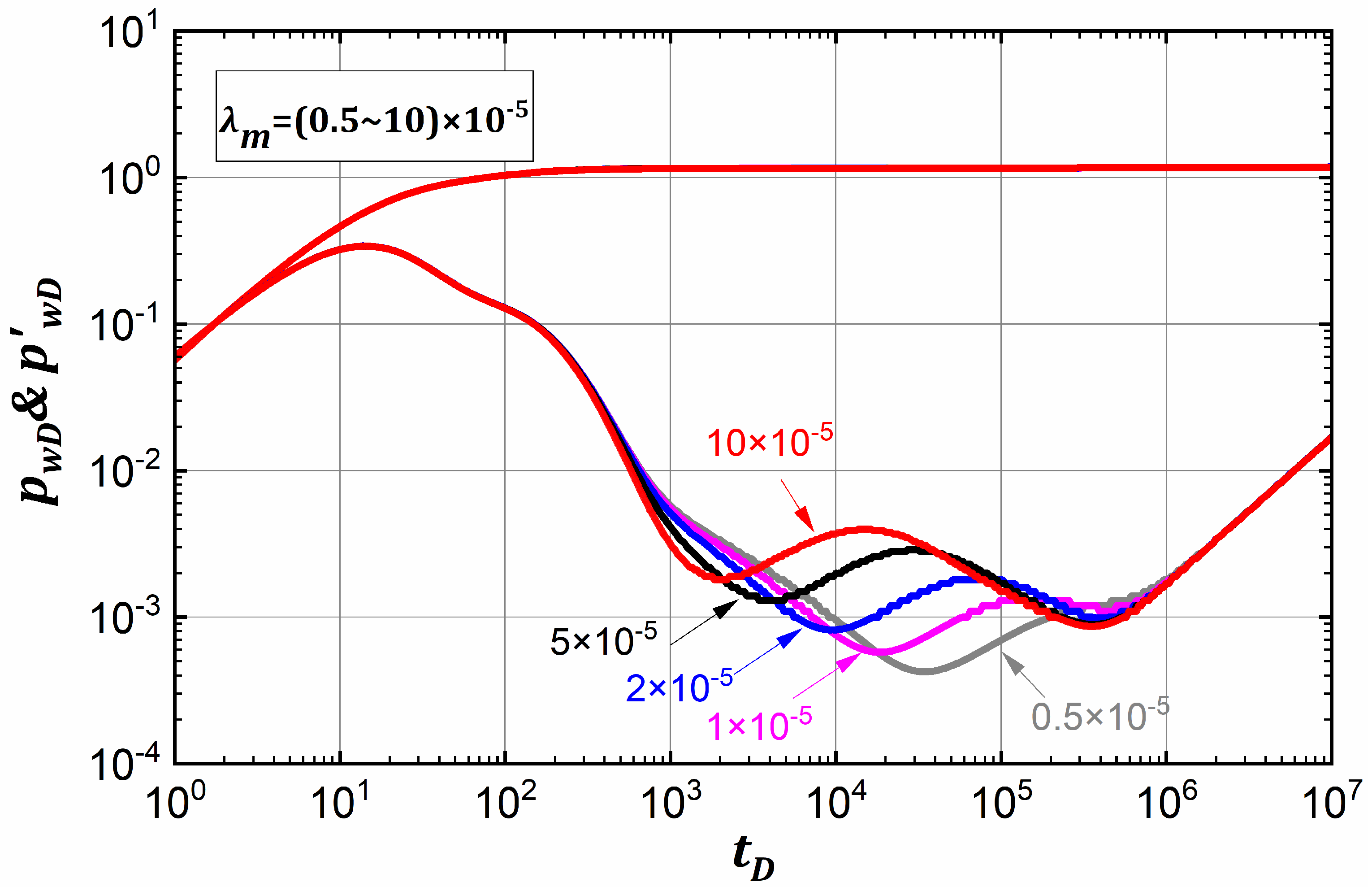
| Inter-porosity flow coefficient, λm | 0.5 × 10⁻⁵ | (0.5~10) × 10−5 |
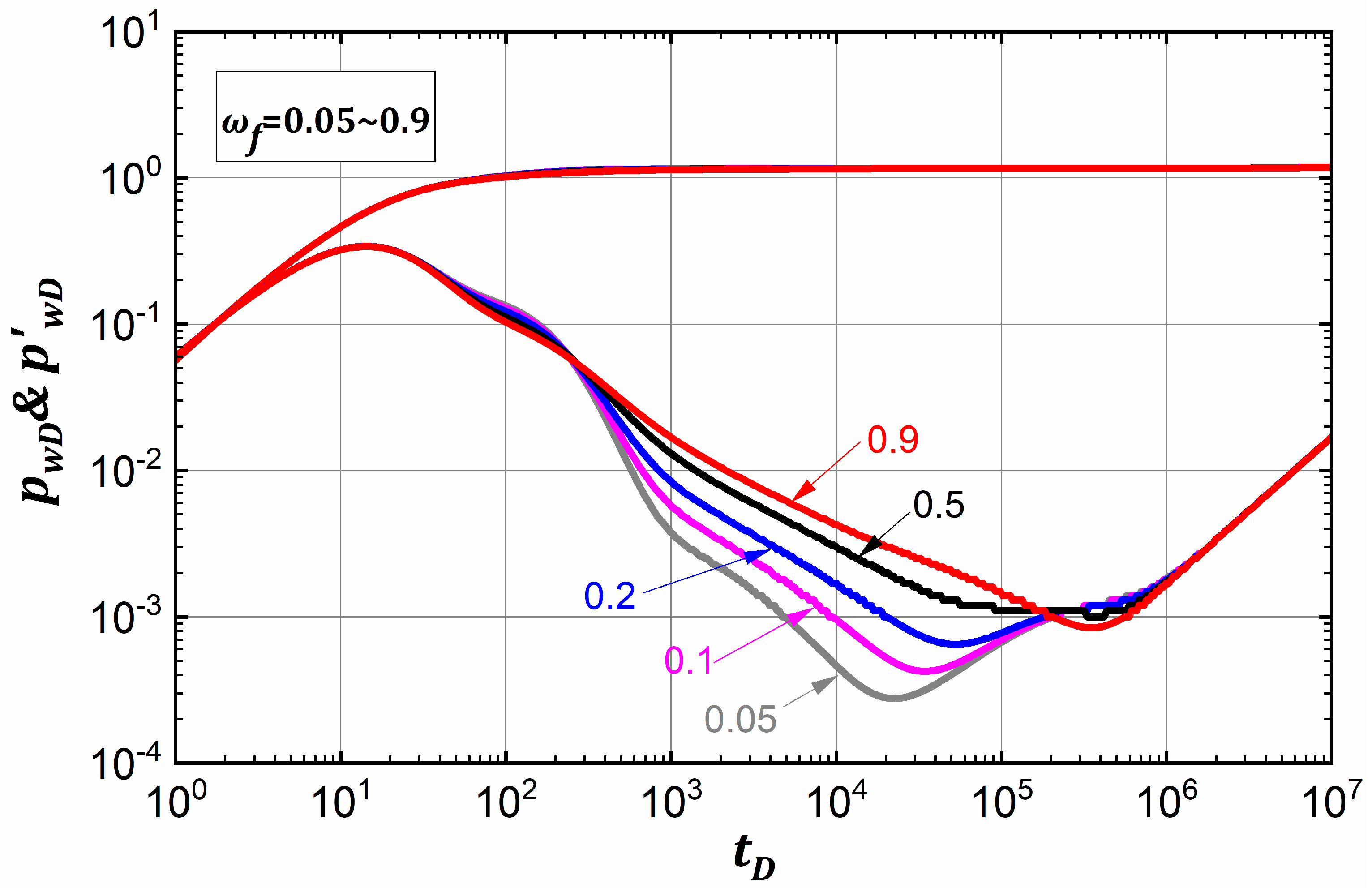
| Storability of fracture, ωf | 0.01 | 0.05~0.9 |
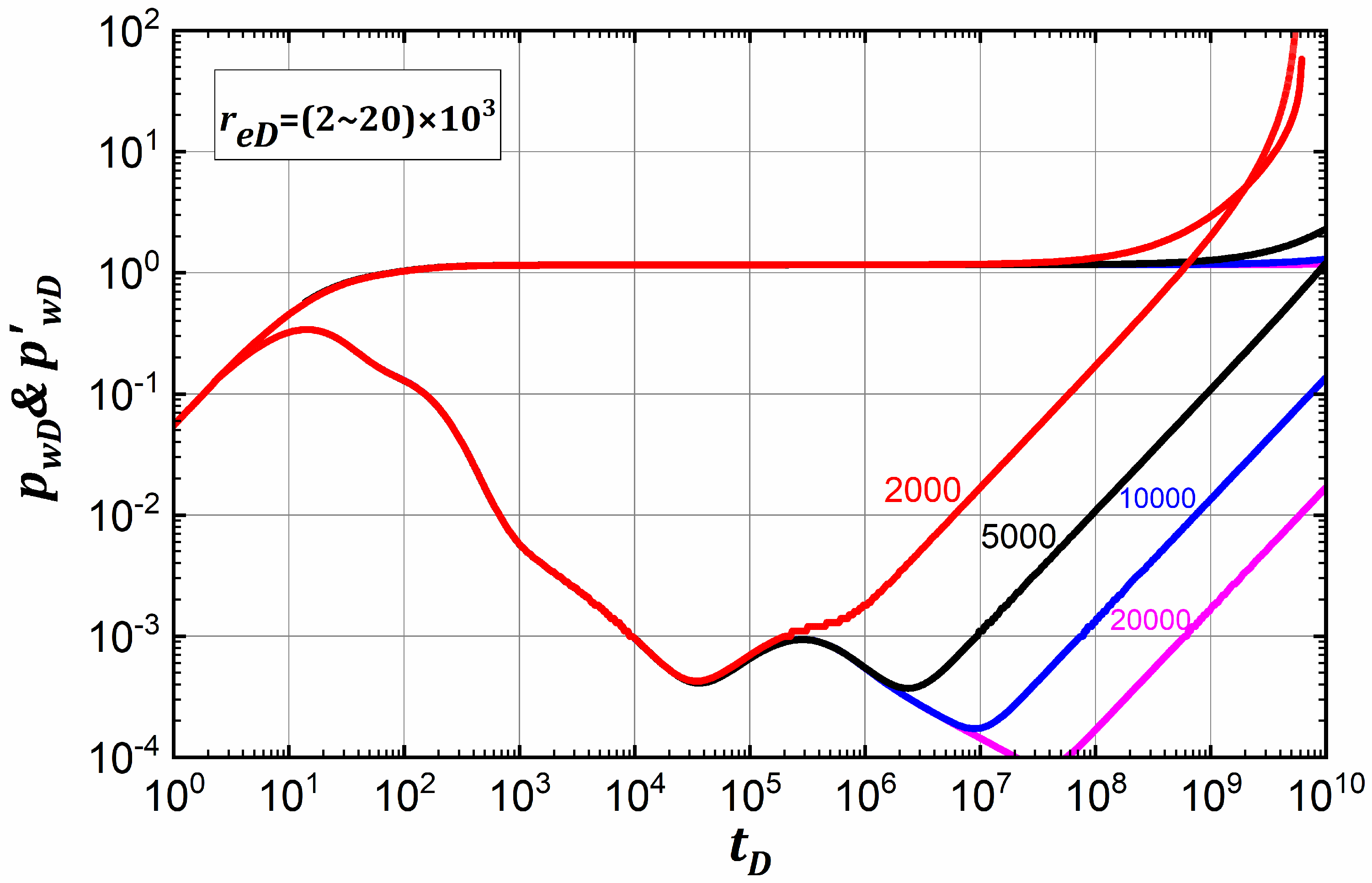
| Distance to outer boundary, reD | 2 × 10³ | (1~100) × 103 |
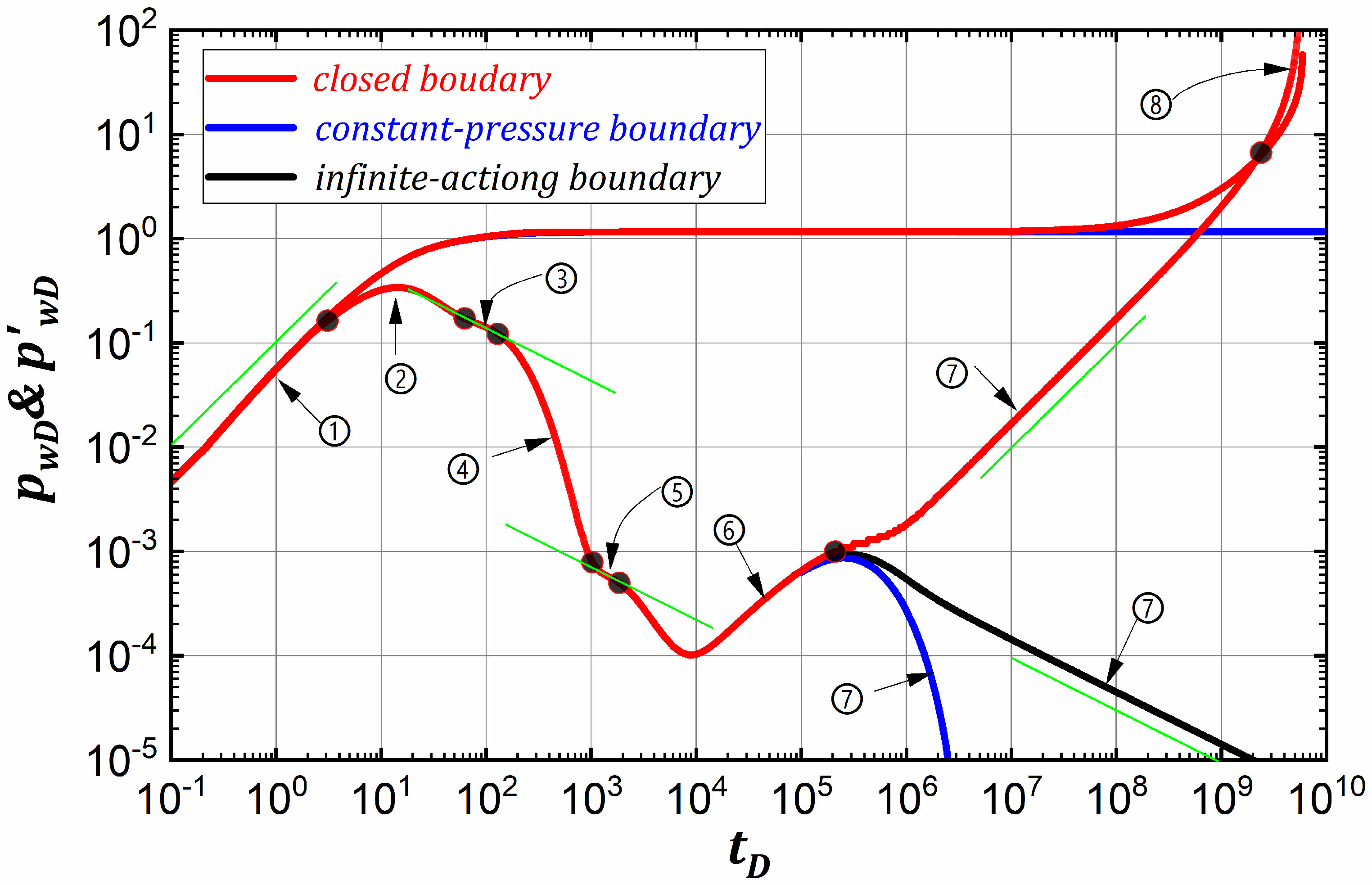
| Flow Stage | Flow Regime | HPD Curve Feature p’wD |
|---|---|---|
| Early | ① wellbore storage | Slope = 1 |
| ② transitional flow | ||
| ③ inner spherical flow | Slope = −1/2 | |
| Middle | ④ transitional flow | |
| ⑤ outer spherical flow | Slope = −1/2 | |
| ⑥ inter-porosity flow | V-shape | |
| Late | ⑦ boundary control flow | Closed boundary, slope = 1 Infinite-acting boundary, slope = −1/2, |
| ⑧ stress-sensitivity control flow | Slope > 1 |
Disclaimer/Publisher’s Note: The statements, opinions and data contained in all publications are solely those of the individual author(s) and contributor(s) and not of MDPI and/or the editor(s). MDPI and/or the editor(s) disclaim responsibility for any injury to people or property resulting from any ideas, methods, instructions or products referred to in the content. |
© 2025 by the authors. Licensee MDPI, Basel, Switzerland. This article is an open access article distributed under the terms and conditions of the Creative Commons Attribution (CC BY) license (https://creativecommons.org/licenses/by/4.0/).
Share and Cite
Shi, W.; Wang, G.; Rong, S.; Qin, J.; Chen, J.; Tao, L.; Bai, J.; Xu, Z.; Zhu, Q. Pressure Transient Analysis for Vertical Well Drilled in Filled-Cave in Fractured Reservoirs. Fluids 2025, 10, 324. https://doi.org/10.3390/fluids10120324
Shi W, Wang G, Rong S, Qin J, Chen J, Tao L, Bai J, Xu Z, Zhu Q. Pressure Transient Analysis for Vertical Well Drilled in Filled-Cave in Fractured Reservoirs. Fluids. 2025; 10(12):324. https://doi.org/10.3390/fluids10120324
Chicago/Turabian StyleShi, Wenyang, Gerui Wang, Shaokai Rong, Jiazheng Qin, Juan Chen, Lei Tao, Jiajia Bai, Zhengxiao Xu, and Qingjie Zhu. 2025. "Pressure Transient Analysis for Vertical Well Drilled in Filled-Cave in Fractured Reservoirs" Fluids 10, no. 12: 324. https://doi.org/10.3390/fluids10120324
APA StyleShi, W., Wang, G., Rong, S., Qin, J., Chen, J., Tao, L., Bai, J., Xu, Z., & Zhu, Q. (2025). Pressure Transient Analysis for Vertical Well Drilled in Filled-Cave in Fractured Reservoirs. Fluids, 10(12), 324. https://doi.org/10.3390/fluids10120324