
Article

Physical Gels of Atactic Poly(N-isopropylacrylamide) in Water: Rheological Properties and As-Derived Spinodal Temperature


Department of Chemical Engineering, National Cheng Kung University, Tainan 70101, Taiwan
*
Author to whom correspondence should be addressed.
Gels 2023, 9(4), 288; https://doi.org/10.3390/gels9040288
Submission received: 22 February 2023 / Revised: 21 March 2023 / Accepted: 27 March 2023 / Published: 1 April 2023
(This article belongs to the Special Issue New Era in the Volume Phase Transition of Gels II)

Abstract

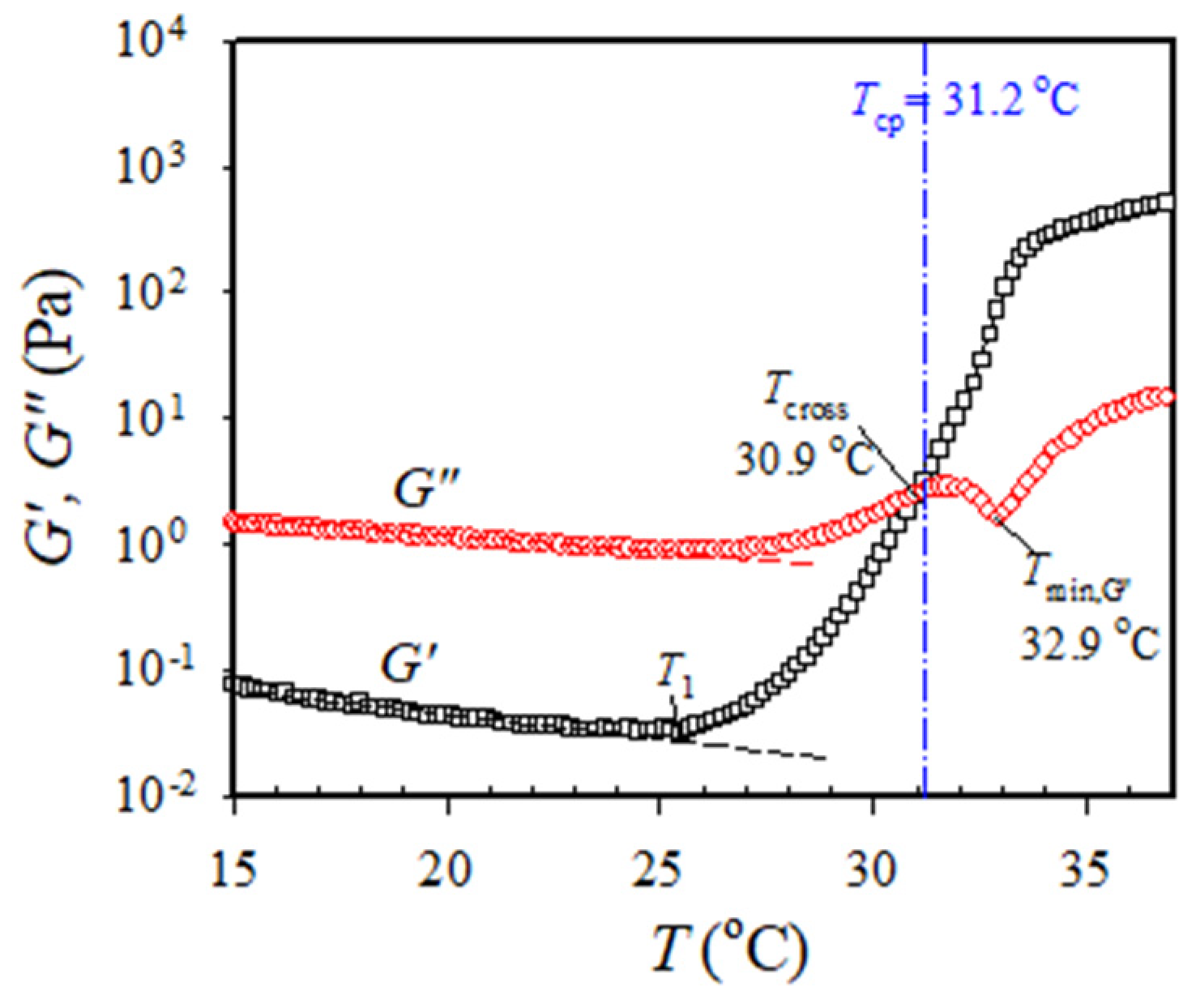
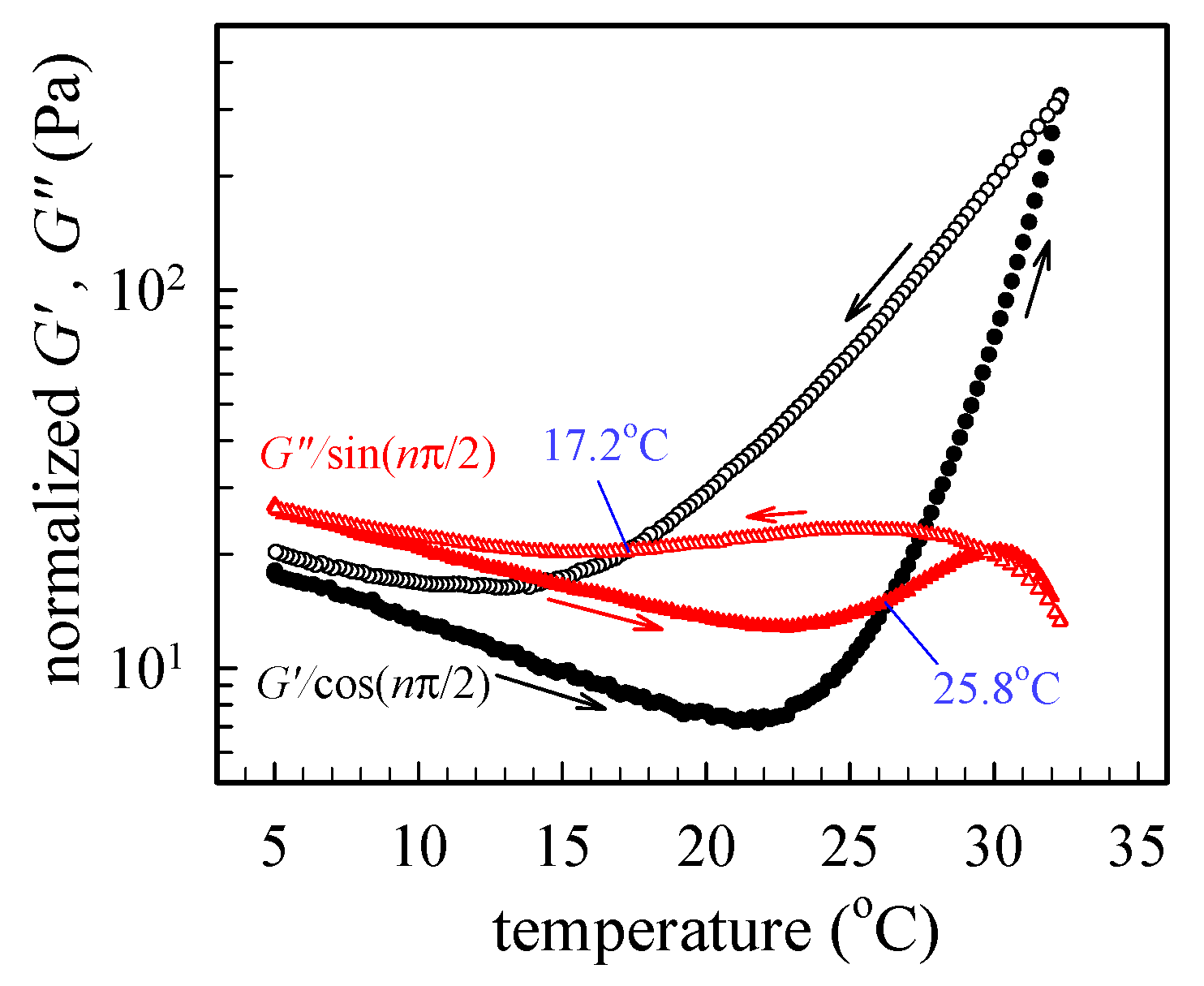
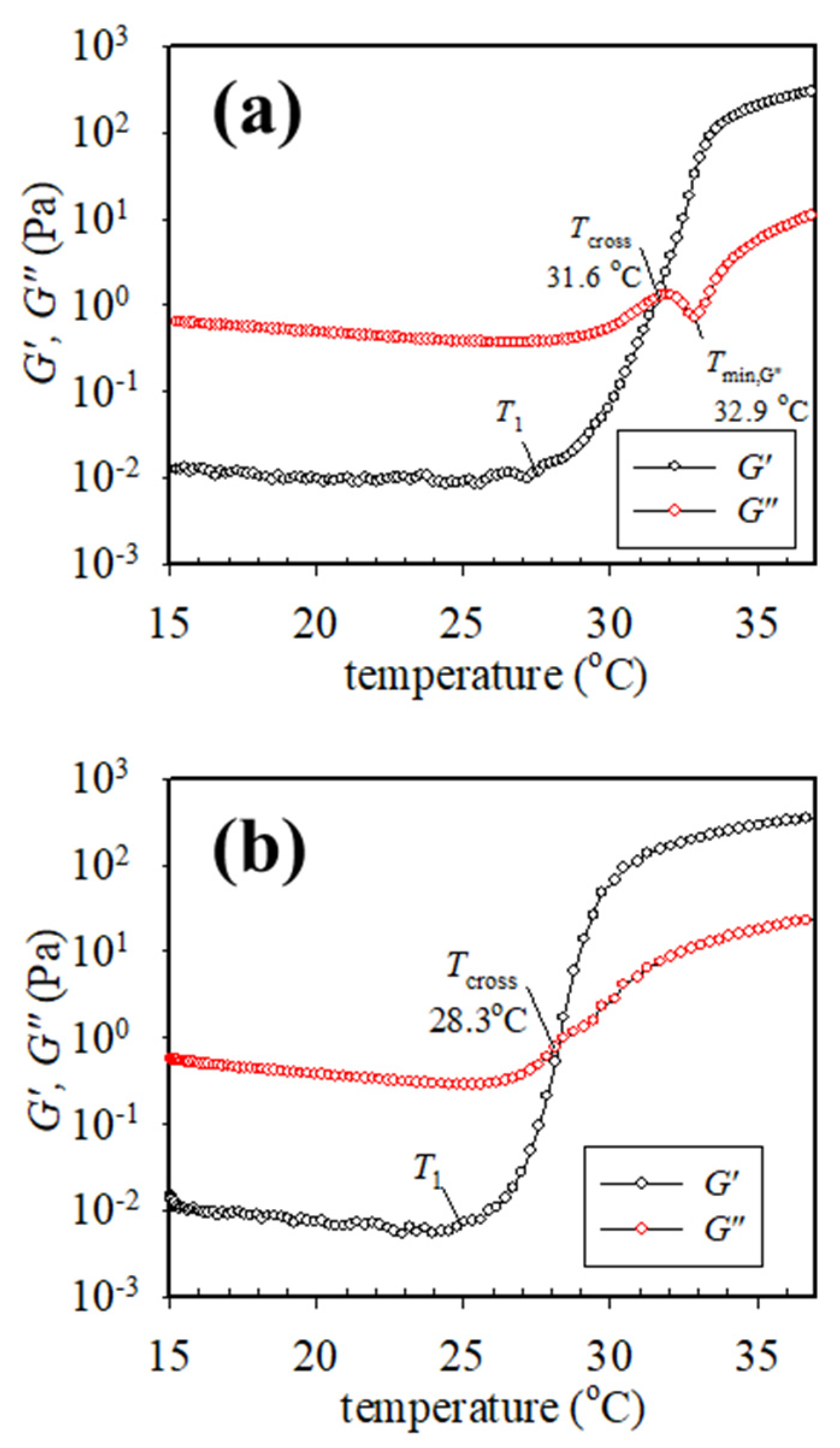
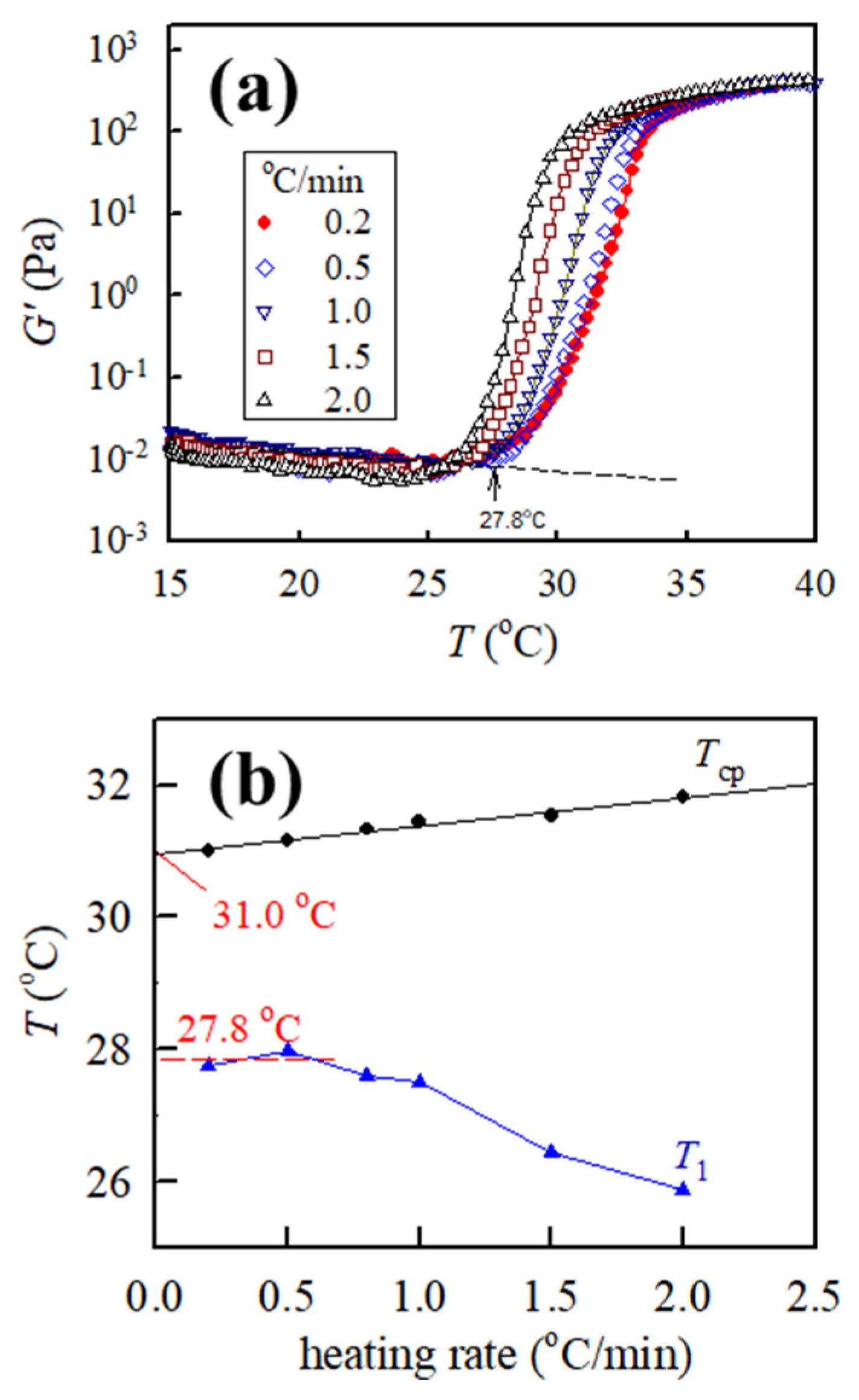
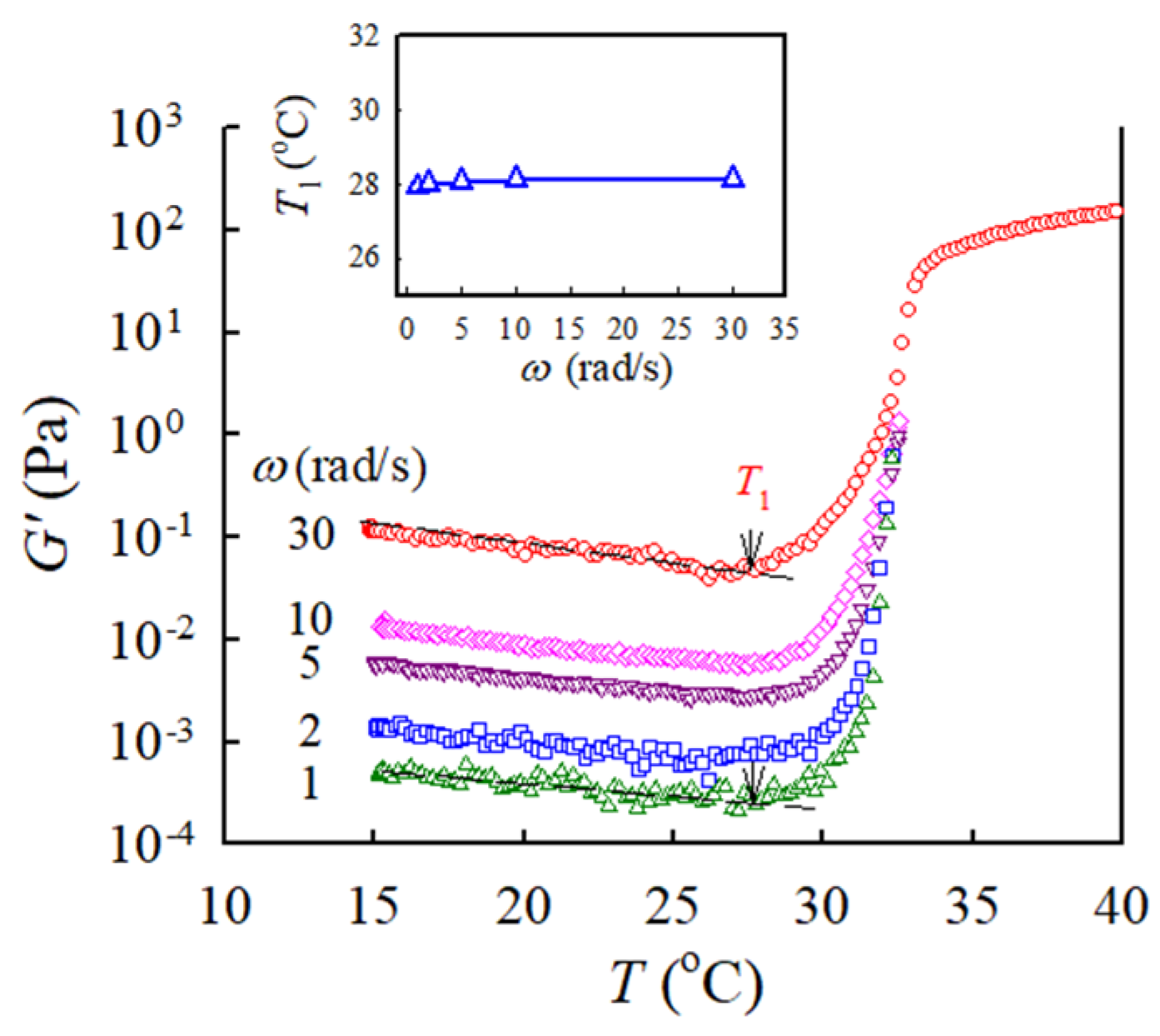
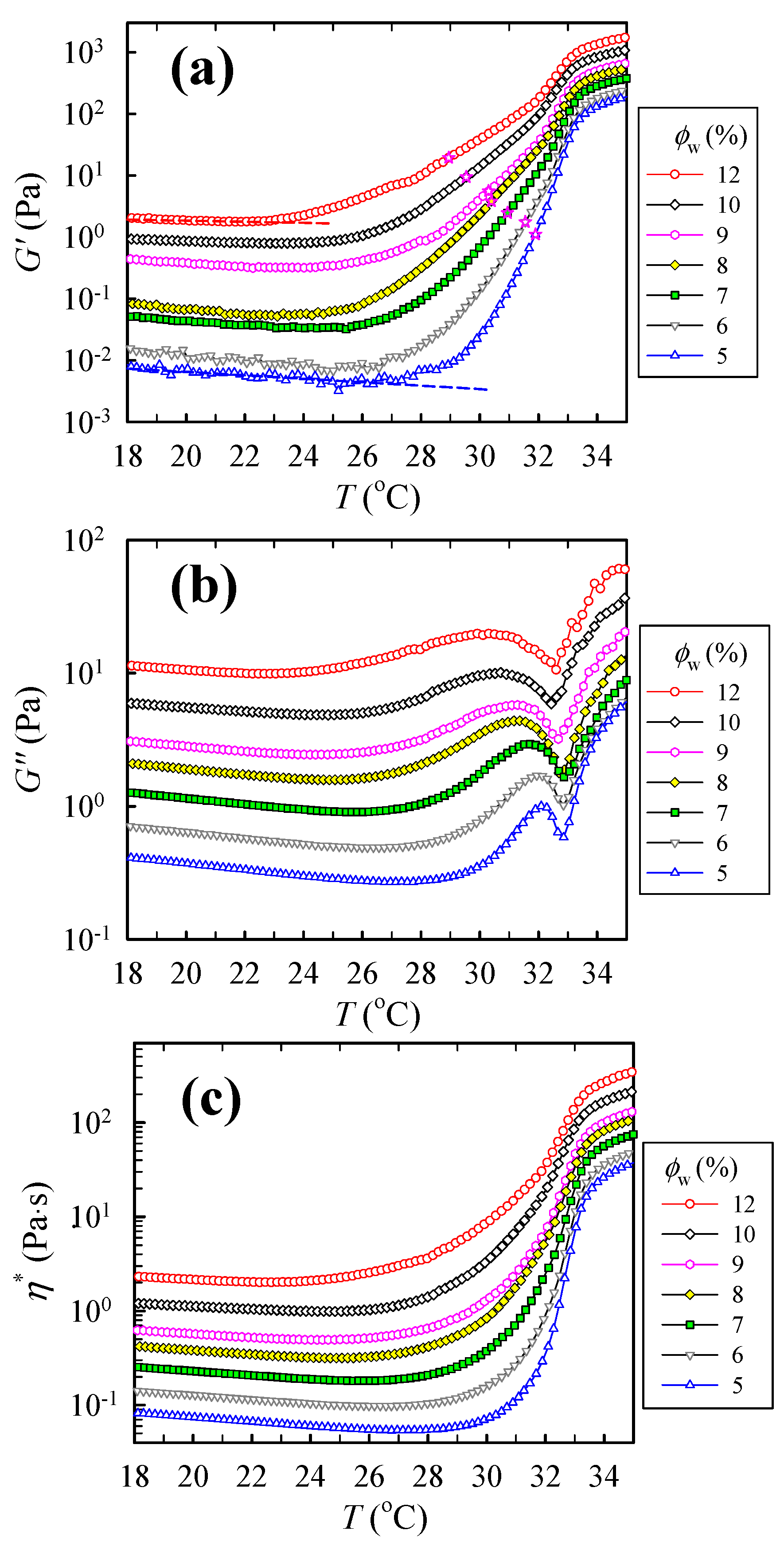
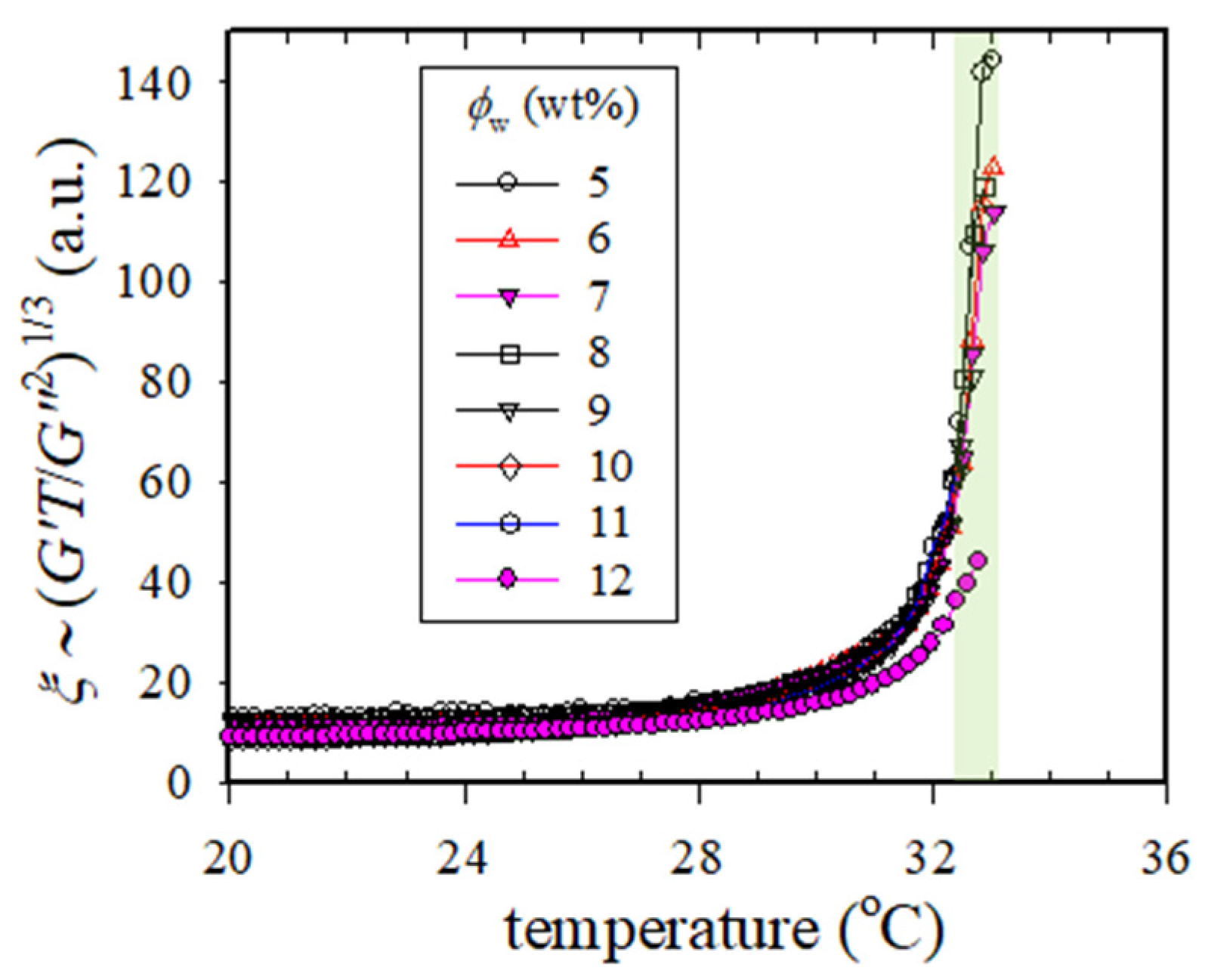
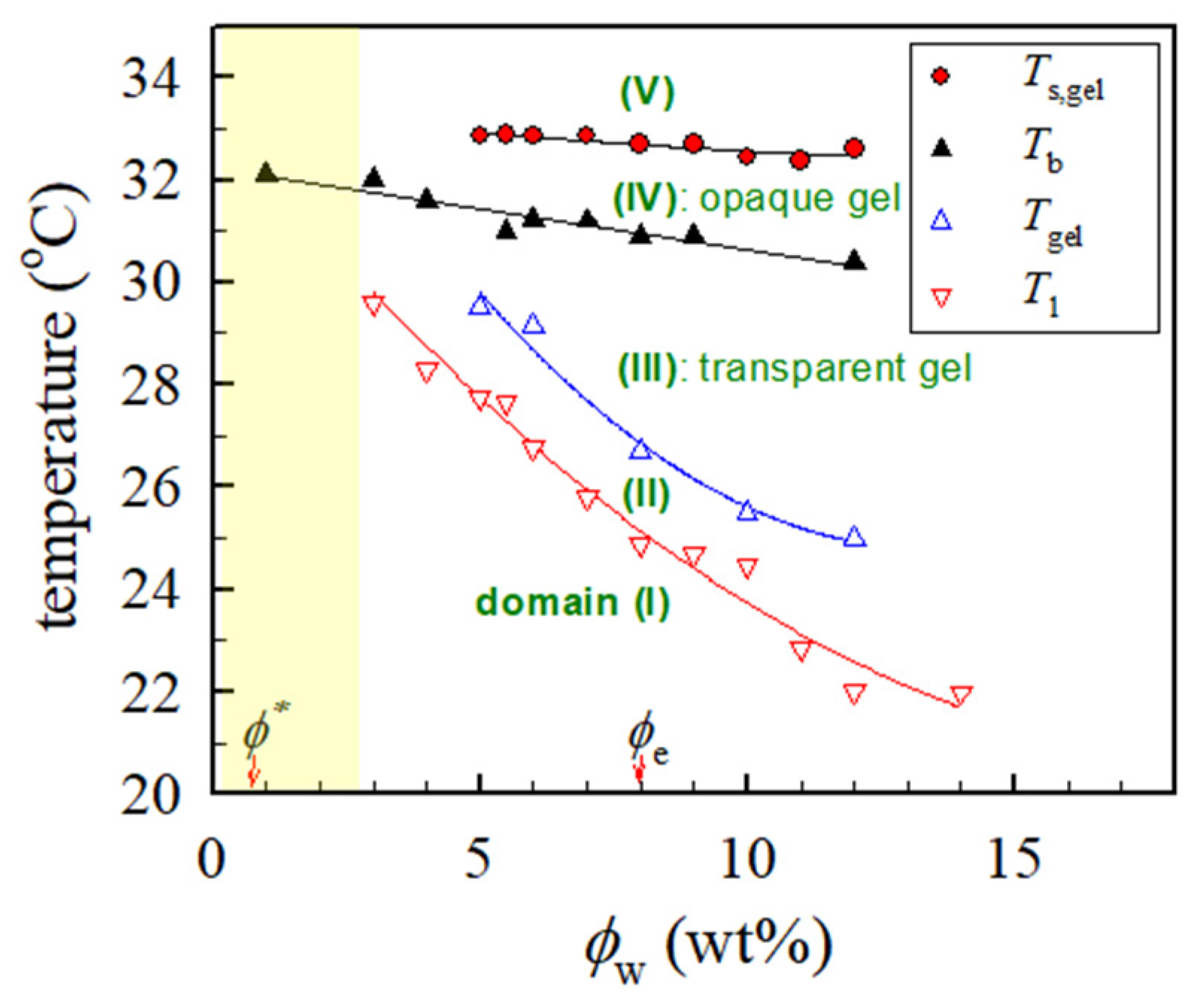
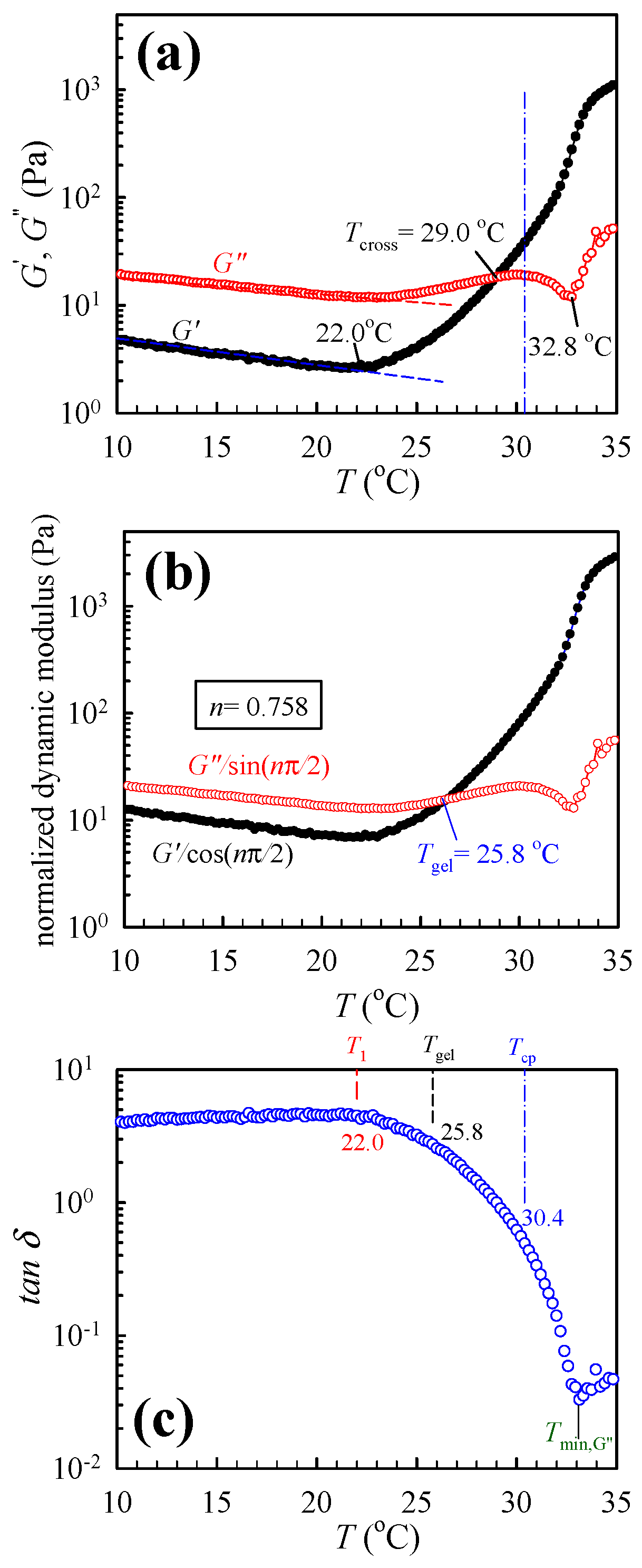
Aqueous solutions of atactic poly(N-isopropylacrylamide) (a-PNIPAM) undergo complex phase transitions at 20–33 °C. In this temperature range, the a-PNIPAM solution exhibits a phase behavior of lower critical solution temperature at the binodal temperature (Tb) and physical gel formation at the gel temperature (Tgel). On slow heating of the one-phase solution containing linear a-PNIPAM chains, branched chains are gradually developed to proceed with the physical gelation before phase separation considering that Tgel < Tb. Thus, the phase separation temperature determined from the conventional approaches, either by turbidity to derive the Tb or by scattering to derive the spindal temperature (Ts) from the Ornstein–Zernike analysis, is strictly the transition temperature associated with the a-PNIPAM hydrogel (or highly branched chains newly developed at elevated temperatures), rather than the initial a-PNIPAM solution prepared. Herein, the spinodal temperatures of a-PNIPAM hydrogels (Ts,gel) of various concentrations were determined from rheological measurements at a heating rate of 0.2 °C/min. Analyses of the temperature dependence of loss modulus G″ and storage modulus G′ give rise to the Ts,gel, based on the Fredrickson–Larson–Ajji–Choplin mean field theory. In addition, the specific temperature (T1) above which the one-phase solution starts to dramatically form the aggregated structure (e.g., branched chains) was also derived from the onset temperature of G′ increase; this is because as solution temperature approaches the spinodal point, the concentration fluctuations become significant, which is manifested with the elastic response to enhance G′ at T > T1. Depending on the solution concentration, the measured Ts,gel is approximately 5–10 °C higher than the derived T1. On the other hand, Ts,gel is independent of solution concentration to be constant at 32.8 °C. A phase diagram of the a-PNIPAM/H2O mixture is thoroughly constructed together with the previous data of Tgel and Tb.
Keywords: physical gelation; phase separation; phase diagram; spinodal temperature; rheological properties physical gelation; phase separation; phase diagram; spinodal temperature; rheological properties