Article

Effects of Alcalase and Pepsin Hydrolysis on Gel Forming Behavior and Technological Properties of Porcine Skin Gelatin


1
Division of Animal Bioscience & Integrated Biotechnology, Gyeongsang National University, Jinju-si 52828, Republic of Korea
2
Department of GreenBio Science, Gyeongsang National University, Jinju-si 52725, Republic of Korea
*
Author to whom correspondence should be addressed.
Gels 2026, 12(8), 657; https://doi.org/10.3390/gels12080657
Submission received: 19 June 2026 / Revised: 10 July 2026 / Accepted: 15 July 2026 / Published: 23 July 2026

Abstract

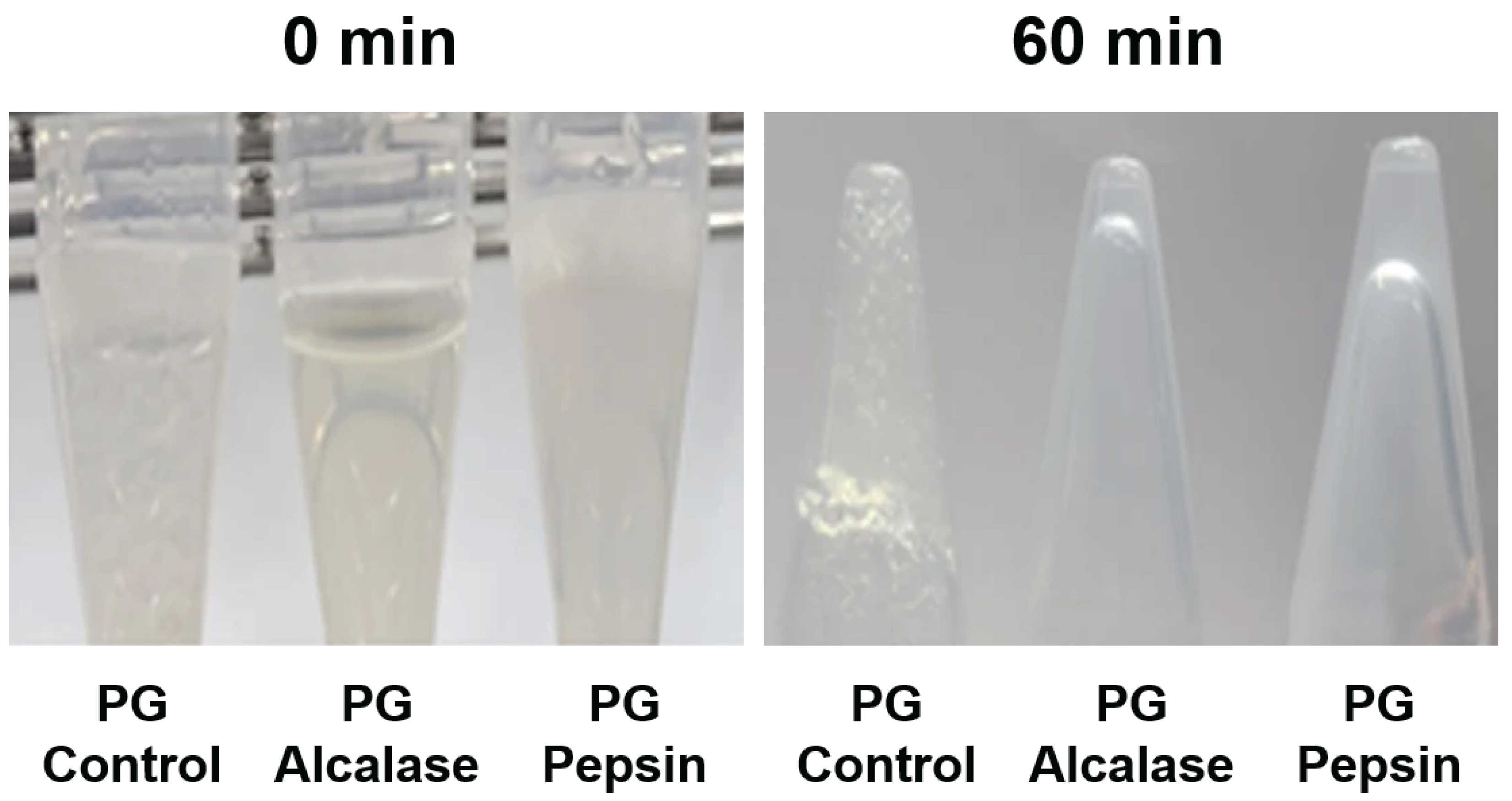
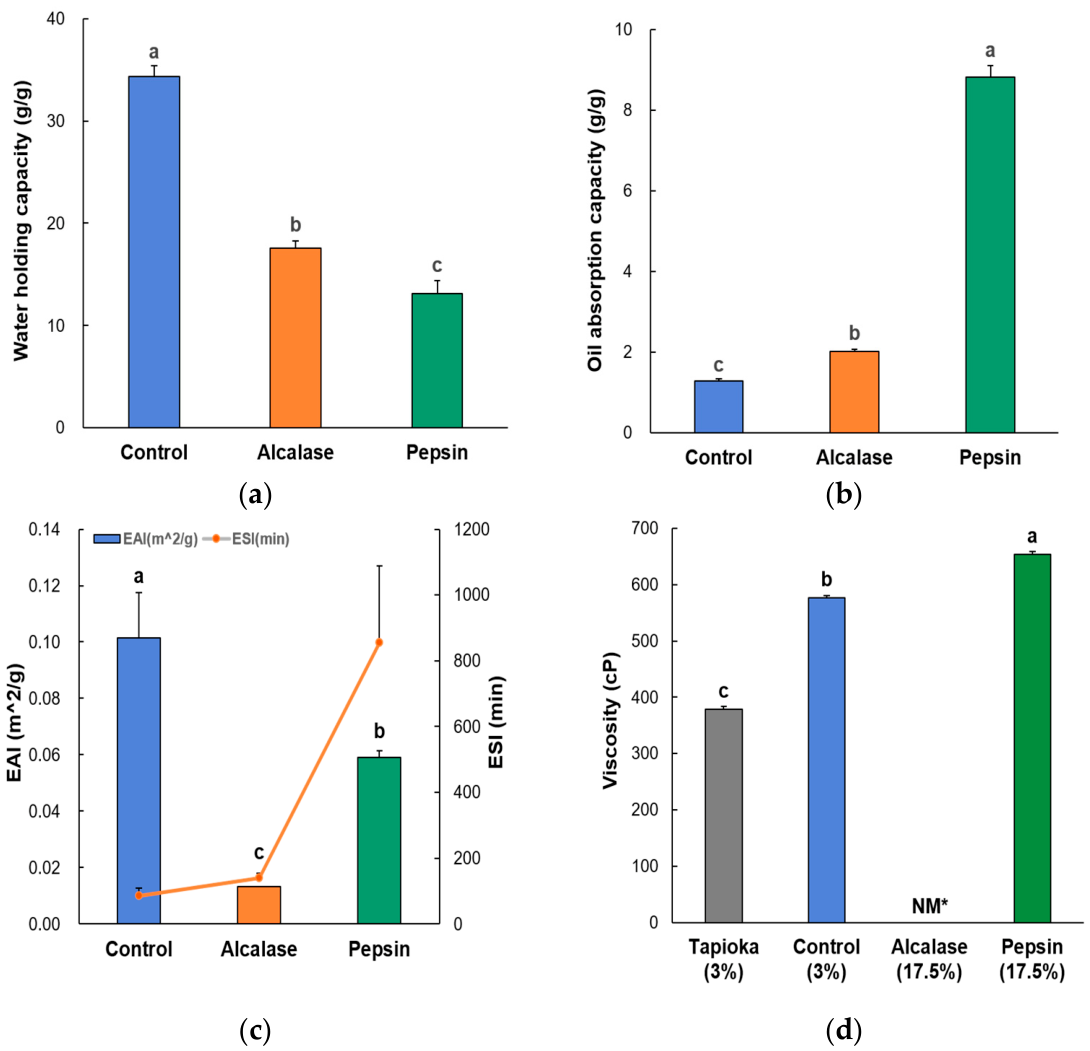
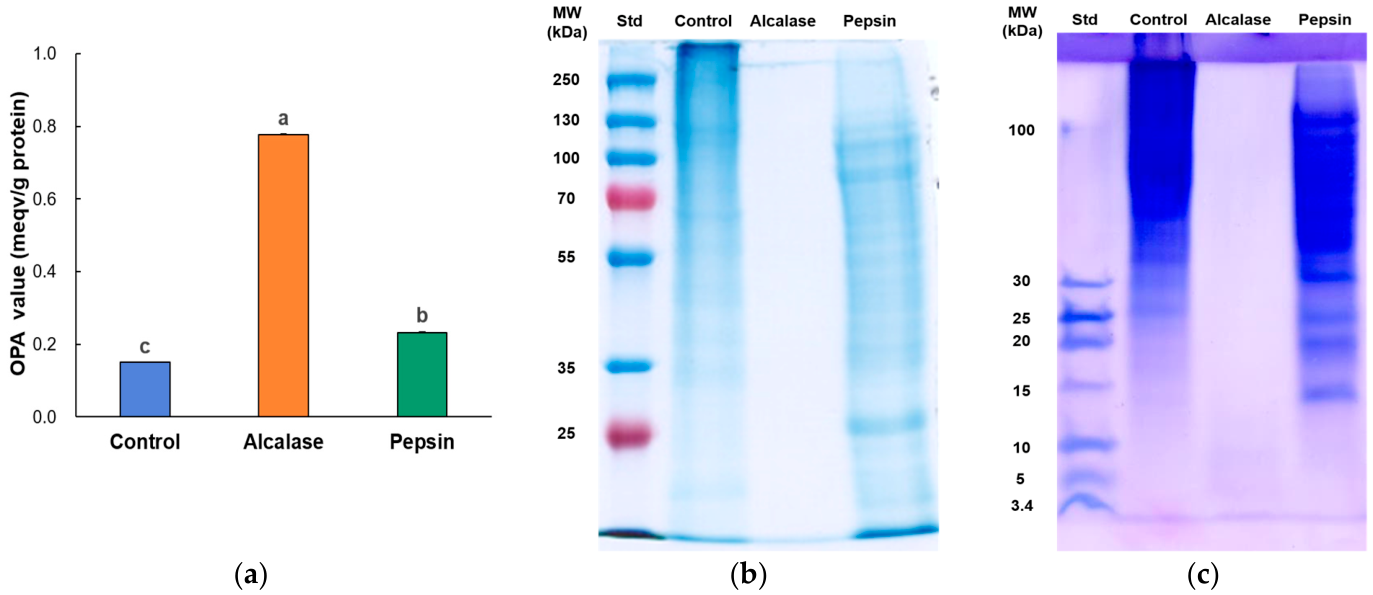
The gelation ability of gelatin is useful for improving texture and stabilizing food structure, but excessive gelation may limit its application in liquid and high-moisture food systems. Therefore, this study compared the effects of Alcalase and pepsin hydrolysis on the gel-forming ability, viscosity, and functional properties of porcine skin gelatin. o-Phthaldialdehyde (OPA) analysis showed that the Alcalase hydrolysate had a higher free amino group content (0.77 meqv/g protein) than the pepsin hydrolysate (0.23 meqv/g protein), indicating more extensive peptide bond cleavage (p < 0.05). The control formed a stable gel structure after 60 min at 25 °C, whereas both hydrolysates showed reduced gel-forming ability. In particular, the Alcalase hydrolysate was found to maintain high fluidity, completely inhibiting gel formation. Furthermore, 17.5% (w/v) Alcalase hydrolysate solution showed no measurable viscosity. In contrast, 17.5% (w/v) pepsin hydrolysate solution exhibited a viscosity of 653.88 cP. In contrast to the Alcalase hydrolysate, the pepsin hydrolysate also showed the highest oil absorption capacity (8.81 g/g), emulsion stability index (854.09 min), and a slightly higher in vitro digestibility (29.36%) (p < 0.05). These results demonstrate that enzyme-specific hydrolysis can differentially modify the balance between gel suppression and techno-functional properties of porcine skin gelatin.
Keywords: porcine skin gelatin; gel-forming; enzymatic hydrolysis; viscosity; functional properties porcine skin gelatin; gel-forming; enzymatic hydrolysis; viscosity; functional properties