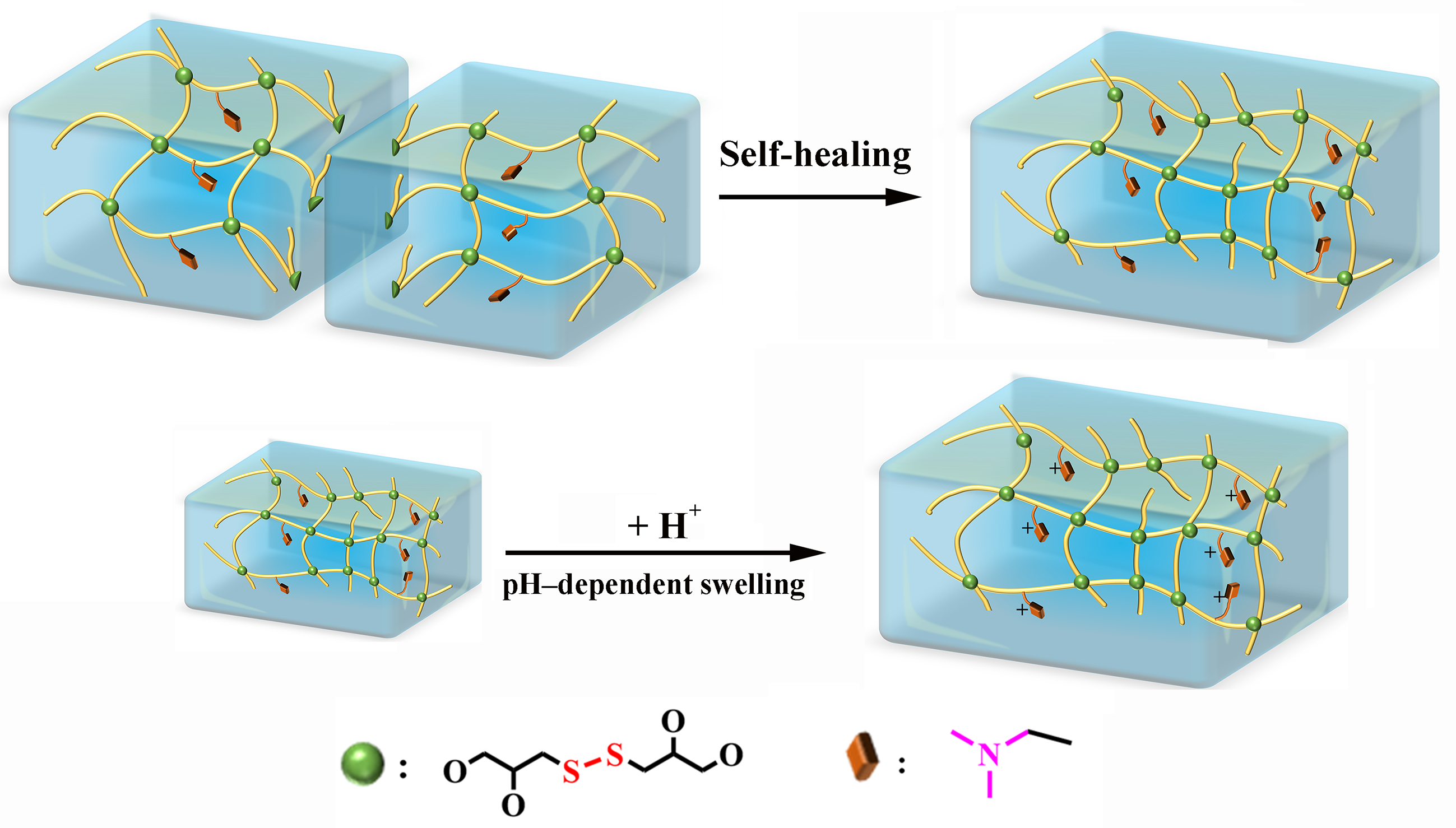

Robust Polyurethane Hydrogels Based on Dynamic Disulfide Bonds and Pendant Tertiary Amines with Room-Temperature Self-Healing and pH Responsiveness

Abstract
1. Introduction
2. Results and Discussion
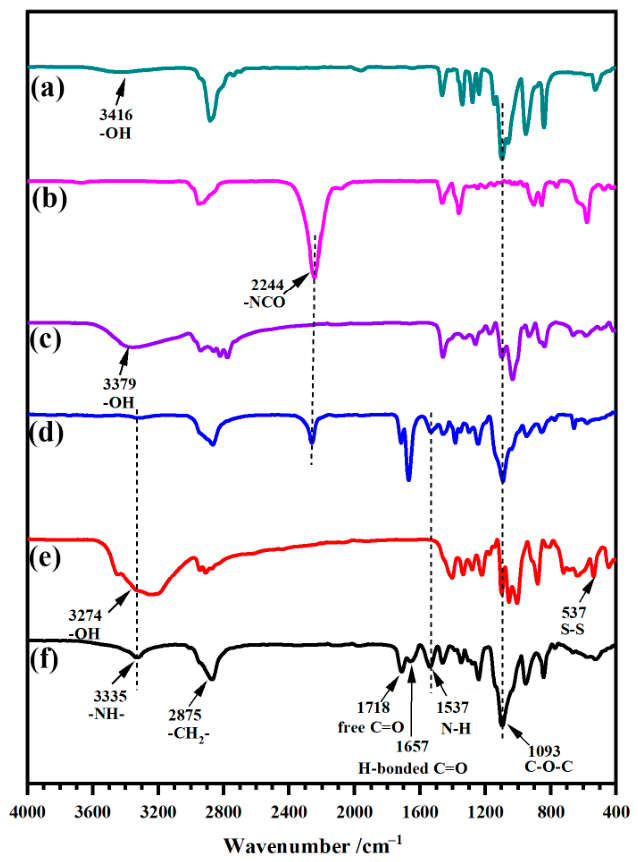
2.1. FTIR Spectra
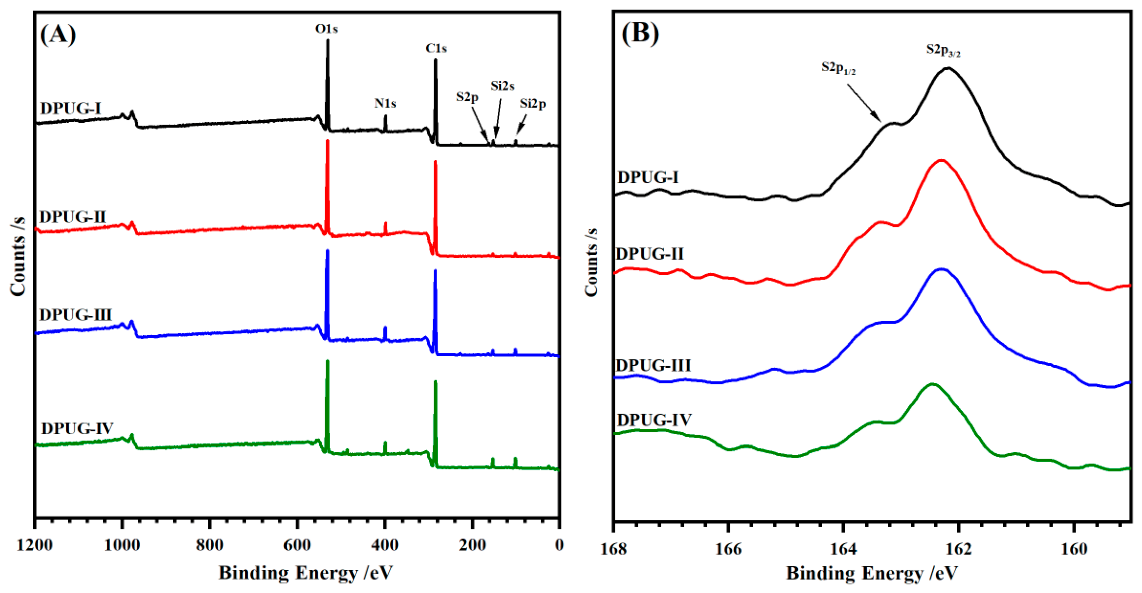
2.2. XPS Spectra
2.3. Micromorphology
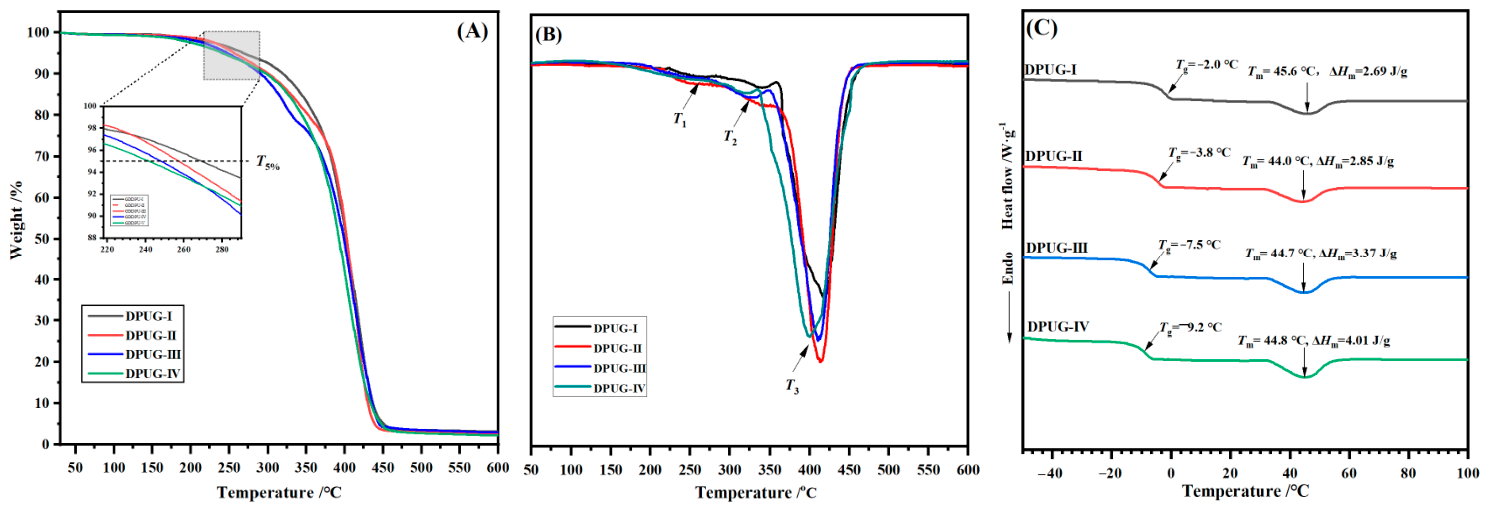
2.4. Thermal Stability
2.5. Thermal Transition
2.6. pH-Dependent Swelling Behavior
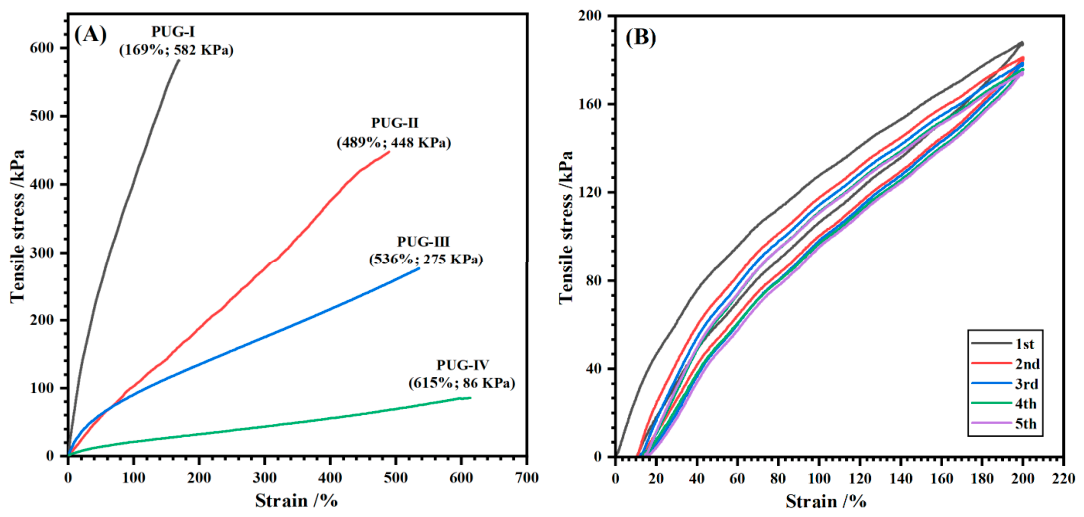
2.7. Mechanical Properties
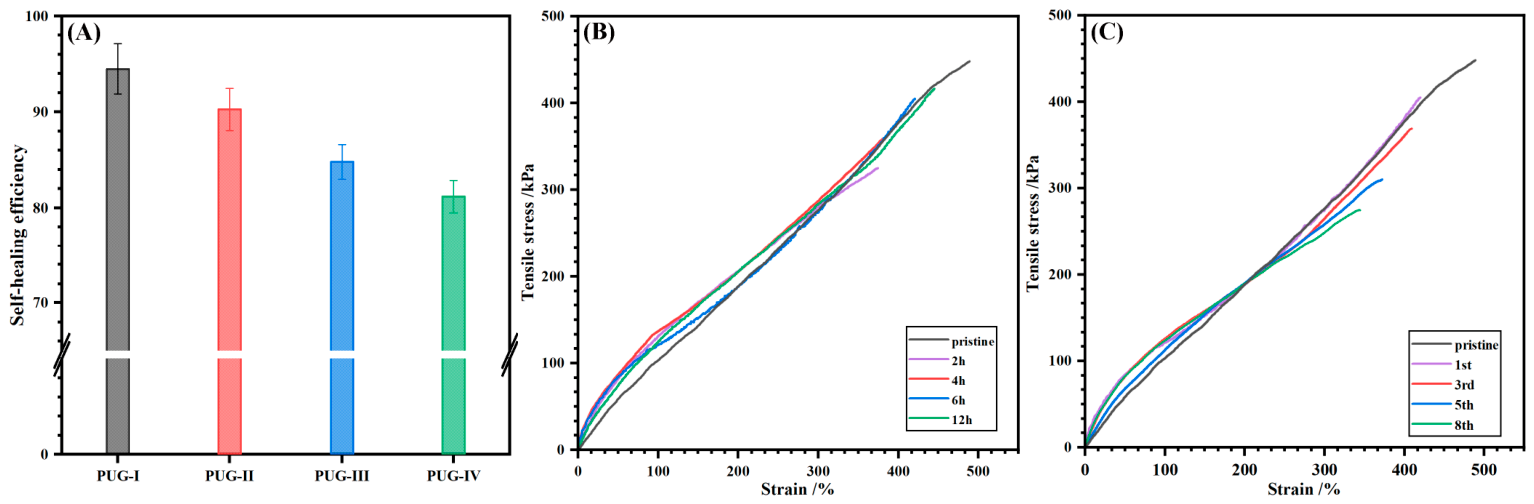
2.8. Self-Healing Properties
3. Conclusions
4. Materials and Methods
4.1. Materials
4.2. Synthesis of 3,3′-Dithiodipropane-1,2-diol (DSO)
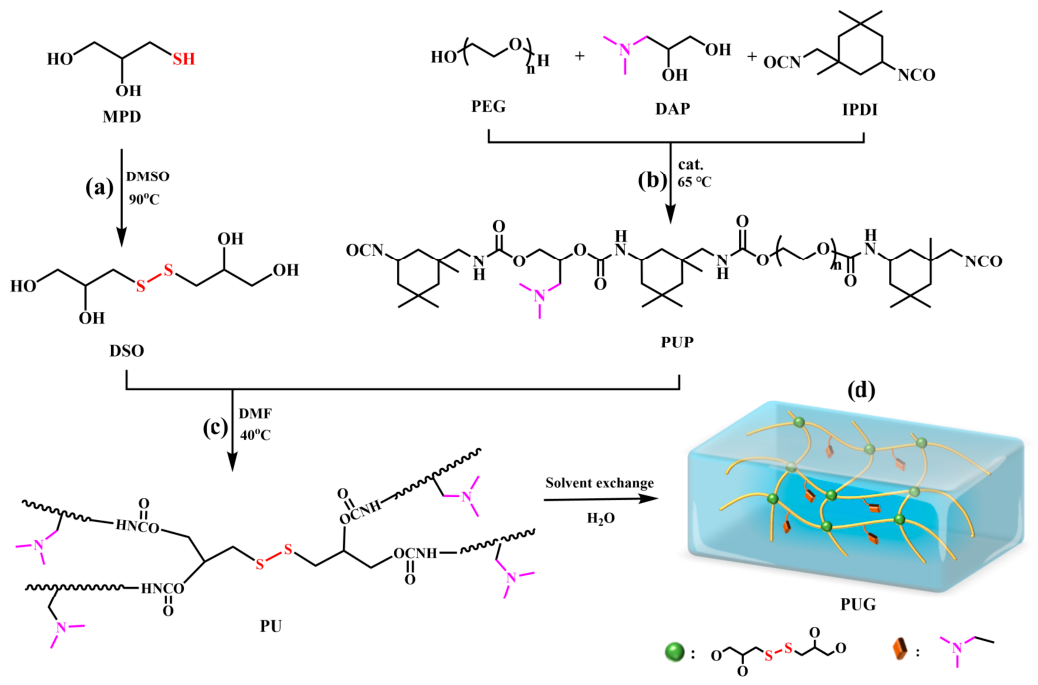
4.3. Synthesis of PUs and Preparation of PUGs
4.4. Instruments and Characterization
Supplementary Materials
Author Contributions
Funding
Institutional Review Board Statement
Informed Consent Statement
Data Availability Statement
Conflicts of Interest
References
- Kaith, B.S.; Singh, A.; Sharma, A.K.; Sud, D. Hydrogels: Synthesis, classification, properties and potential applications—A brief review. J. Polym. Environ. 2021, 29, 3827–3841. [Google Scholar] [CrossRef]
- Buwalda, S.J. ‘Click’ hydrogels from renewable polysaccharide resources: Bioorthogonal chemistry for the preparation of alginate, cellulose and other plant-based networks with biomedical applications. Int. J. Biol. Macromol. 2024, 282, 136695. [Google Scholar] [CrossRef] [PubMed]
- Wang, S.; Yang, Q.; Xu, J.; Zhou, Y.; Tian, X.; Wu, W.; Elango, J.; Diao, X. Biofunctional carboxymethyl chitosan hydrogel incorporating hyaluronic acid and RGD peptides for accelerated wound repair. Gels 2025, 11, 765. [Google Scholar] [CrossRef] [PubMed]
- Lu, P.; Ruan, D.; Huang, M.; Tian, M.; Zhu, K.; Gan, Z.; Xiao, Z. Harnessing the potential of hydrogels for advanced therapeutic applications: Current achievements and future directions. Signal Transduct. Target. Ther. 2024, 9, 166. [Google Scholar] [CrossRef] [PubMed]
- Du, Y.; Xu, Y.; Hou, J.; Li, X.; Yang, J.; Yang, J.; Shan, S.; Wang, C.; Su, H. Robust fabrication of pyrogallol-conjugated dextran hydrogel as antioxidant hemo-adsorbent for the selective adsorption of Pb(II). Sep. Purif. Technol. 2025, 363, 132098. [Google Scholar] [CrossRef]
- Zheng, E.; Zhang, P.; Wang, J.; Chen, Y.; Liu, H.; Xu, J.; Hou, Z. Dual dynamic bonds enable biocompatible polyurethane hydrogels with superior toughness, fatigue and puncture resistance, pH-reversibility, and room-temperature self-healability. Polymer 2025, 327, 128381. [Google Scholar] [CrossRef]
- Yang, R.; Xia, C.; Mei, C.; Li, J. Integration of biopolymers in polyacrylic acid hydrogels: Innovations and applications in bioresources and bioproducts. J. Bioresour. Bioprod. 2025, 10, 145–169. [Google Scholar] [CrossRef]
- Soliman, B.G.; Nguyen, A.K.; Gooding, J.J.; Kilian, K.A. Advancing synthetic hydrogels through nature-inspired materials chemistry. Adv. Mater. 2024, 36, 2404235. [Google Scholar] [CrossRef] [PubMed]
- Sepe, F.; Valentino, A.; Marcolongo, L.; Petillo, O.; Calarco, A.; Margarucci, S.; Peluso, G.; Conte, R. Polysaccharide hydrogels as delivery platforms for natural bioactive molecules: From tissue regeneration to infection control. Gels 2025, 11, 198. [Google Scholar] [CrossRef] [PubMed]
- Maiti, S.; Maji, B.; Yadav, H. Progress on green crosslinking of polysaccharide hydrogels for drug delivery and tissue engineering applications. Carbohyd. Polym. 2024, 326, 121584. [Google Scholar] [CrossRef] [PubMed]
- Di Martino, M.; Sessa, L.; Romano, F.; Piotto, S.; Concilio, S. Tailored thermoresponsive polyurethane hydrogels: Structure–property relationships for injectable biomedical applications. Polymers 2025, 17, 2350. [Google Scholar] [CrossRef] [PubMed]
- Tang, Y.; Wang, H.; Liu, S.; Pu, L.; Hu, X.; Ding, J.; Xu, G.; Xu, W.; Xiang, S.; Yuan, Z. A review of protein hydrogels: Protein assembly mechanisms, properties, and biological applications. Colloids Surf. B Biointerfaces 2022, 220, 112973. [Google Scholar] [CrossRef]
- Naureen, B.; Haseeb, A.S.M.A.; Basirun, W.J.; Muhamad, F. Recent advances in tissue engineering scaffolds based on polyurethane and modified polyurethane. Mater. Sci. Eng. C 2021, 118, 111228. [Google Scholar] [CrossRef] [PubMed]
- Zhang, M.; Xu, S.; Wang, R.; Che, Y.; Han, C.; Feng, W.; Wang, C.; Zhao, W. Electrospun nanofiber/hydrogel composite materials and their tissue engineering applications. J. Mater. Sci. Technol. 2023, 162, 157–178. [Google Scholar] [CrossRef]
- Divakaran, A.V.; Nair, S.B.; Karambe, S.S.; Wadgaonkar, P.P.; Nair, K.S.; Badiger, M.V. Influence of hydrophilic/hydrophobic diols on the properties of polyurethane hydrogels: Solvent-free one-pot synthesis. J. Mater. Chem. B 2025, 13, 11010–11019. [Google Scholar] [CrossRef] [PubMed]
- Jia, H.Y.; Huang, Z.J.; Fei, Z.F.; Dyson, P.J.; Zheng, Z.; Wang, X.L. Unconventional tough double-network hydrogels with rapid mechanical recovery, self-healing, and self-gluing properties. ACS Appl. Mater. Interfaces 2016, 8, 31339–31347. [Google Scholar] [CrossRef] [PubMed]
- Divakaran, A.V.; Azad, L.B.; Surwase, S.S.; Torris, A.T.A.; Badiger, M.V. Mechanically tunable curcumin incorporated polyurethane hydrogels as potential biomaterials. Chem. Mater. 2016, 28, 2120–2130. [Google Scholar] [CrossRef]
- Erezuma, I.; Lukin, I.; Desimone, M.; Zhang, Y.S.; Dolatshahi-Pirouz, A.; Orive, G. Progress in self-healing hydrogels and their applications in bone tissue engineering. Biomater. Adv. 2023, 146, 213274. [Google Scholar] [CrossRef] [PubMed]
- Hao, T.; Gao, Y.; Zheng, E.; Yang, H.; Pan, Y.; Zhang, P.; Xu, J.; Hou, Z. Multifunctional poly(ether-urethane) elastomer based on dynamic phenol-urethane and disulfide bonds: Simultaneously showing superior toughness, self-healing, shape memory, antibacterial, and antioxidative properties. Eur. Polym. J. 2024, 220, 113494. [Google Scholar] [CrossRef]
- Zhang, K.; Liu, Y.; Wang, Z.; Song, C.; Gao, C.; Wu, Y. A type of self-healable, dissoluble and stretchable organosilicon elastomer for flexible electronic devices. Eur. Polym. J. 2020, 134, 109857. [Google Scholar] [CrossRef]
- Shi, Z.; Kang, J.; Zhang, L. Water-enabled room-temperature self-healing and recyclable polyurea materials with super-strong strength, toughness, and large stretchability. ACS Appl. Mater. Interfaces 2020, 12, 23484–23493. [Google Scholar] [CrossRef] [PubMed]
- Li, Y.; He, J.; Luo, H.; He, X.; Liu, F. Synthesis and property of room-temperature self-healable cathodic electrophoretic deposition coatings based on cationic waterborne polyurethane. J. Coat. Technol. Res. 2022, 19, 1621–1633. [Google Scholar] [CrossRef]
- Kim, S.M.; Jeon, H.; Shin, S.H.; Park, S.A.; Jegal, J.; Hwang, S.Y.; Oh, D.X.; Park, J. Superior toughness and fast self-healing at room temperature engineered by transparent elastomers. Adv. Mater. 2018, 30, 1705145. [Google Scholar] [CrossRef]
- Mou, X.Y.; Yang, Z.P.; Lai, X.J.; Ding, J.P.; Chen, Y.J.; Li, H.Q.; Zeng, X.R. Self-healing and reprocessable biobased non-isocyanate polyurethane elastomer with dual dynamic covalent adaptive network for flexible strain sensor. Chem. Eng. J. 2024, 493, 152876. [Google Scholar] [CrossRef]
- Yang, B.; Ding, X.; Xu, J.; Li, Y.; Gu, R.; Zhang, H.; Hou, Z.S. Robust, self-healing polyurethane hydrogel enabled by dual crosslinking of dynamic disulfide and hydrogen bonds. Chem. J. Chin. Univ. 2025, 46, 20250098. [Google Scholar] [CrossRef] [PubMed]
- Schwarzer, L.; Agarwal, S. Adaptable polyurethane networks containing tertiary amines as intrinsic bond exchange catalyst. Macromol. Chem. Phys. 2024, 225, 2400072. [Google Scholar] [CrossRef]
- Wu, G.M.; Bian, J.N.; Liu, G.F.; Chen, J.; Huo, S.P.; Jin, C.; Kong, Z.W. Self-catalytic two-component waterborne polyurethanes with amino polyols from biomass based epoxy resin. J. Polym. Environ. 2020, 28, 713–724. [Google Scholar]
- Lv, X.; Li, X.J.; Zhu, P.Y.; Ge, Y.; Li, Q.P.; Lu, H.S. Regulating redox and pH-responsive behavior of emulsion by varying alkane carbon number of tertiary amine. J. Disper. Sci. Technol. 2022, 43, 1383–1390. [Google Scholar]
- Chen, Q.; Zheng, J.; Yuan, X.; Wang, J.; Zhang, L. Folic acid grafted and tertiary amino based pH-responsive pentablock polymeric micelles for targeting anticancer drug delivery. Mater. Sci. Eng. C 2018, 82, 1–9. [Google Scholar] [CrossRef] [PubMed]
- Jiang, H.; Yan, T.; Pang, W.; Cheng, M.; Zhao, Z.; He, T.; Wang, Z.; Li, C.; Sun, S.; Hu, S. Incomplete ionic interactions and hydrogen bonds constructing elastomers with water accelerated Self-Healing and self-healing strengthening capacities. Chem. Eng. J. 2024, 489, 151074. [Google Scholar] [CrossRef]
- Li, Y.; Jin, Y.; Zeng, W.; Jin, H.; Shang, X.; Zhou, R. Bioinspired fast room-temperature self-healing, robust, adhesive, and AIE fluorescent waterborne polyurethane via hierarchical hydrogen bonds and use as a strain sensor. ACS Appl. Mater. Interfaces 2023, 15, 35469–35482. [Google Scholar] [CrossRef] [PubMed]
- Wen, J.; Jia, Z.; Zhang, X.; Pan, M.; Yuan, J.; Zhu, L. Tough, thermo-responsive, biodegradable and fast self-healing polyurethane hydrogel based on microdomain-closed dynamic bonds design. Mater. Today Commun. 2020, 25, 101569. [Google Scholar] [CrossRef]
- Kim, S.; Traore, Y.L.; Chen, Y.; Ho, E.A.; Liu, S. Switchable on-demand release of a nanocarrier from a segmented reservoir type intravaginal ring filled with a pH-responsive supramolecular polyurethane hydrogel. ACS Appl. Bio Mater. 2018, 1, 652–662. [Google Scholar] [CrossRef] [PubMed]
- Liu, Y.; Zhang, Z.; Fan, W.; Yang, K.; Li, Z. Preparation of renewable gallic acid-based self-healing waterborne polyurethane with dynamic phenol–carbamate network: Toward superior mechanical properties and shape memory function. J. Mater. Sci. 2022, 57, 5679–5696. [Google Scholar] [CrossRef]
- Fleet, M.E.; Harmer, S.L.; Liu, X.; Nesbitt, H.W. Polarized X-ray absorption spectroscopy and XPS of TiS3: S K- and Ti L-ledge XANES and S and Ti 2p XPS. Surf. Sci. 2005, 584, 133–145. [Google Scholar] [CrossRef]
- Qiao, L.; Liu, C.; Liu, C.; Zong, L.; Gu, H.; Wang, C.; Jian, X. Self-healing, pH-sensitive and shape memory hydrogels based on acylhydrazone and hydrogen bonds. Eur. Polym. J. 2022, 162, 118038. [Google Scholar] [CrossRef]
- Zhao, Z.; Qin, Z.; Zhao, T.; Li, Y.; Hou, Z.; Hu, H.; Su, X.; Gao, Y. Crosslinked biodegradable hybrid hydrogels based on poly(ethylene glycol) and gelatin for drug controlled release. Molecules 2024, 29, 4952. [Google Scholar] [CrossRef] [PubMed]
- Ye, G.; Jiang, T. Preparation and properties of self-healing waterborne polyurethane based on dynamic disulfide bond. Polymers 2021, 13, 2936. [Google Scholar] [CrossRef] [PubMed]
- Zou, F.; Wang, Y.; Zheng, Y.; Xie, Y.; Zhang, H.; Chen, J.; Hussain, M.I.; Meng, H.; Peng, J. A novel bioactive polyurethane with controlled degradation and L-Arg release used as strong adhesive tissue patch for hemostasis and promoting wound healing. Bioact. Mater. 2022, 17, 471–487. [Google Scholar] [CrossRef] [PubMed]
- Raftopoulos, K.N.; Hebda, E.; Grzybowska, A.; Klonos, P.A.; Kyritsis, A.; Pielichowski, K. PEG-POSS star molecules blended in polyurethane with flexible hard segments: Morphology and dynamics. Molecules 2022, 26, 99. [Google Scholar]
- Xu, J.; Hao, T.; Liu, C.; Bi, J.; Sun, J.; Wen, Z.; Hou, Z.; Wei, J. pH-Responsive and degradable polyurethane film with good tensile properties for drug delivery in vitro. Mater. Today Commun. 2021, 29, 102969. [Google Scholar] [CrossRef]
- Wei, S.; Liu, J.; Zhao, Y.; Zhang, T.; Zheng, M.; Jin, F.; Dong, X.; Xing, J.; Duan, X. Protein-based 3D microstructures with controllable morphology and pH-responsive properties. ACS Appl. Mater. Interfaces 2017, 9, 42247–42257. [Google Scholar] [CrossRef] [PubMed]
- Deen, G.R.; Loh, X.J. Stimuli-responsive cationic hydrogels in drug delivery applications. Gels 2018, 4, 13. [Google Scholar] [CrossRef] [PubMed]
- Tshepelevitsh, S.; Kutt, A.; Lokov, M.; Kaljurand, I.; Saame, J.; Heering, A.; Plieger, P.; Vianello, R.; Leito, I. On the basicity of organic bases in different media. Eur. J. Org. Chem. 2019, 2019, 6735–6748. [Google Scholar] [CrossRef]
- Woodward, P.J.; Merino, D.H.; Greenland, B.W.; Hamley, I.W.; Light, Z.; Slark, A.T.; Hayes, W. Hydrogen bonded supramolecular elastomers: Correlating hydrogen bonding strength with morphology and rheology. Macromolecules 2010, 43, 2512–2517. [Google Scholar] [CrossRef]
- Yilgör, E.; Yilgör, İ. Influence of soft segment structure hydrogen bonding diisocyanate symmetry on morphology properties of segmented thermoplastic polyurethanes polyureas. Turk. J. Chem. 2023, 47, 1007–1017. [Google Scholar] [CrossRef] [PubMed]
- Truong, V.X.; Tsang, K.M.; Forsythe, J.S. Nonswelling click-cross-linked gelatin and PEG hydrogels with tunable properties using pluronic linkers. Biomacromolecules 2017, 18, 757–766. [Google Scholar] [CrossRef] [PubMed]
- Chen, L.; Wang, S.; Guo, Z.; Hu, Y. Double dynamic bonds tough hydrogel with high self-healing properties based on acylhydrazone bonds and borate bonds. Polym. Adv. Technol. 2022, 33, 2528–2541. [Google Scholar] [CrossRef]
- Xiang, Z.; Chu, C.; Xie, H.; Xiang, T.; Zhou, S. Multifunctional thermoplastic polyurea based on the synergy of dynamic disulfide bonds and hydrogen bond cross-links. ACS Appl. Mater. Interfaces 2021, 13, 1463–1473. [Google Scholar] [PubMed]
- Xu, Y.; Lu, G.; Chen, M.; Wang, P.; Li, Z.; Han, X.; Liang, J.; Sun, Y.; Fan, Y.; Zhang, X. Redox and pH dual-responsive injectable hyaluronan hydrogels with shape-recovery and self-healing properties for protein and cell delivery. Carbohyd. Polym. 2020, 250, 116979. [Google Scholar] [CrossRef] [PubMed]
- Rong, J.; Zhong, J.; Yan, W.; Liu, M.; Zhang, Y.; Qiao, Y.; Fu, C.; Gao, F.; Shen, L.; He, H. Study on waterborne self-healing polyurethane with dual dynamic units of quadruple hydrogen bonding and disulfide bonds. Polymer 2021, 221, 123625. [Google Scholar] [CrossRef]





| Samples | PEG/mmol | DAP /mmol | IPDI /mmol | DSO /mmol | DSO /wt% | PEG /wt% | Solid Content /wt% | |||
|---|---|---|---|---|---|---|---|---|---|---|
| 600 g/mol | 1000 g/mol | 1500 g/mol | 2000 g/mol | |||||||
| PUG–I | 10 | – | – | – | 10 | 30 | 5.0 | 10.2 | 40.1 | 44.8 |
| PUG–II | – | 10 | – | – | 10 | 30 | 5.0 | 7.3 | 52.9 | 45.2 |
| PUG–III | – | – | 10 | – | 10 | 30 | 5.0 | 6.9 | 62.7 | 45.5 |
| PUG–IV | – | – | – | 10 | 10 | 30 | 5.0 | 4.4 | 69.1 | 44.8 |
Disclaimer/Publisher’s Note: The statements, opinions and data contained in all publications are solely those of the individual author(s) and contributor(s) and not of MDPI and/or the editor(s). MDPI and/or the editor(s) disclaim responsibility for any injury to people or property resulting from any ideas, methods, instructions or products referred to in the content. |
© 2026 by the authors. Licensee MDPI, Basel, Switzerland. This article is an open access article distributed under the terms and conditions of the Creative Commons Attribution (CC BY) license.
Share and Cite
Ding, X.; Yang, B.; Si, X.; Ni, L.; Fang, C.; Hou, Z. Robust Polyurethane Hydrogels Based on Dynamic Disulfide Bonds and Pendant Tertiary Amines with Room-Temperature Self-Healing and pH Responsiveness. Gels 2026, 12, 555. https://doi.org/10.3390/gels12060555
Ding X, Yang B, Si X, Ni L, Fang C, Hou Z. Robust Polyurethane Hydrogels Based on Dynamic Disulfide Bonds and Pendant Tertiary Amines with Room-Temperature Self-Healing and pH Responsiveness. Gels. 2026; 12(6):555. https://doi.org/10.3390/gels12060555
Chicago/Turabian StyleDing, Xia, Bing Yang, Xinyi Si, Lei Ni, Chao Fang, and Zhaosheng Hou. 2026. "Robust Polyurethane Hydrogels Based on Dynamic Disulfide Bonds and Pendant Tertiary Amines with Room-Temperature Self-Healing and pH Responsiveness" Gels 12, no. 6: 555. https://doi.org/10.3390/gels12060555
APA StyleDing, X., Yang, B., Si, X., Ni, L., Fang, C., & Hou, Z. (2026). Robust Polyurethane Hydrogels Based on Dynamic Disulfide Bonds and Pendant Tertiary Amines with Room-Temperature Self-Healing and pH Responsiveness. Gels, 12(6), 555. https://doi.org/10.3390/gels12060555