
Preliminary Assessment of BNC Membranes as Solvent Delivery Systems for the Cleaning of Mural Paintings: Comparison with Traditional Gel Systems

 , , , and
Abstract
1. Introduction
2. Results and Discussion
2.1. Characterization of BNC Membranes
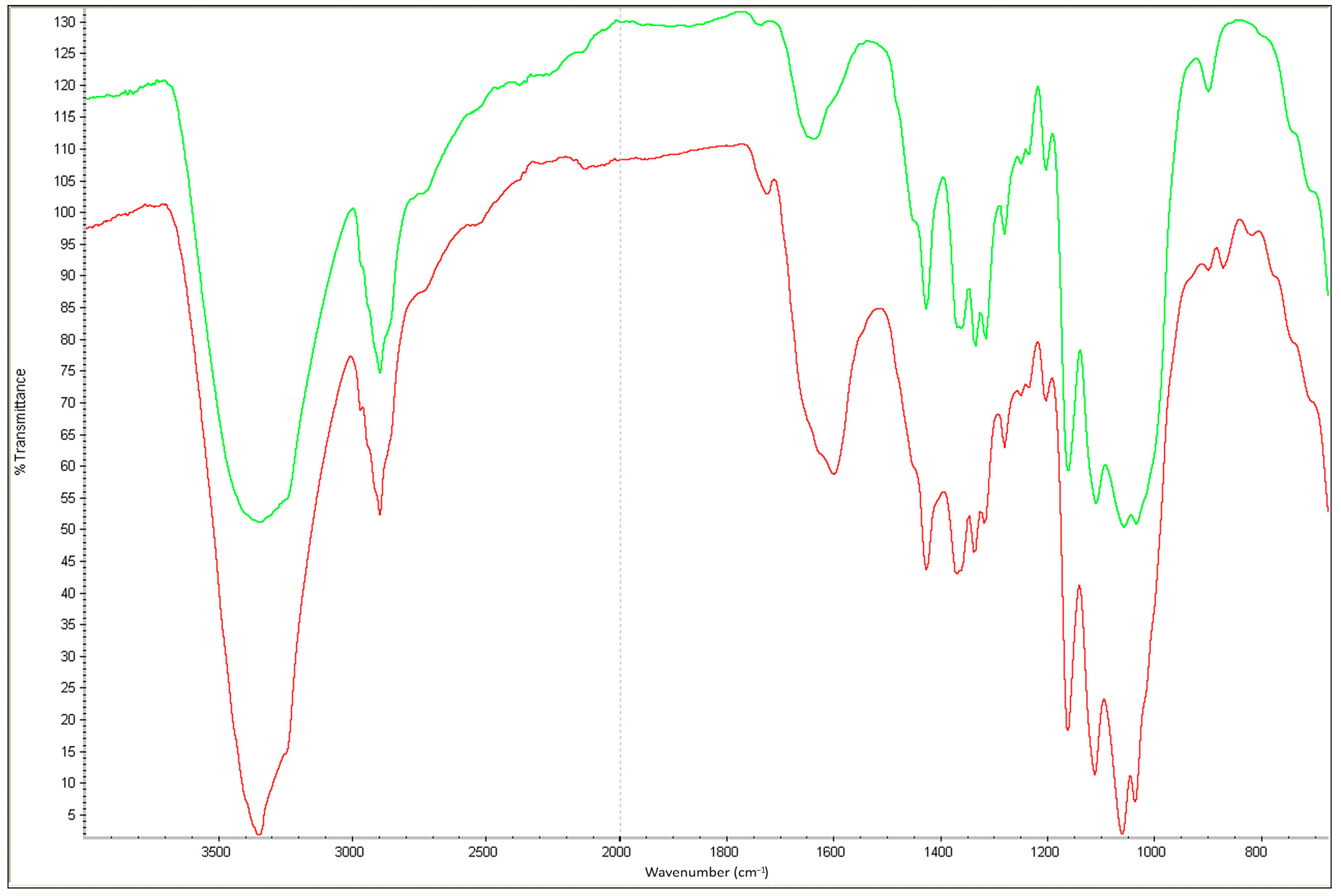
2.1.1. Chemical Compatibility Assessment for Conservation Applications
2.1.2. Water Holding Capacity (WHC) and Water Release Rate (WRR)
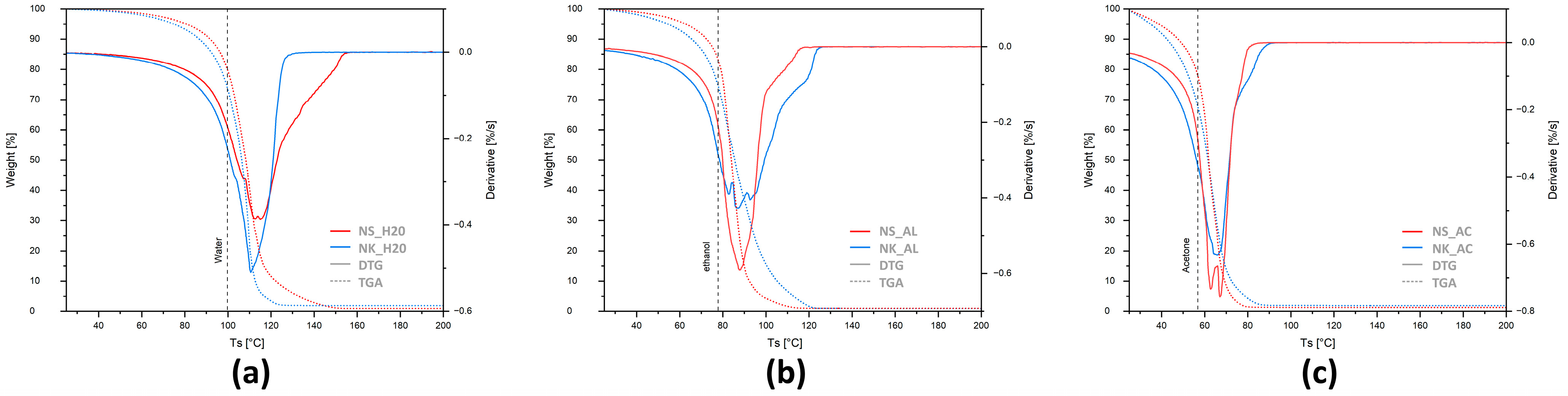
2.1.3. Solvent-Loading Assessment
2.1.4. Tensile Properties
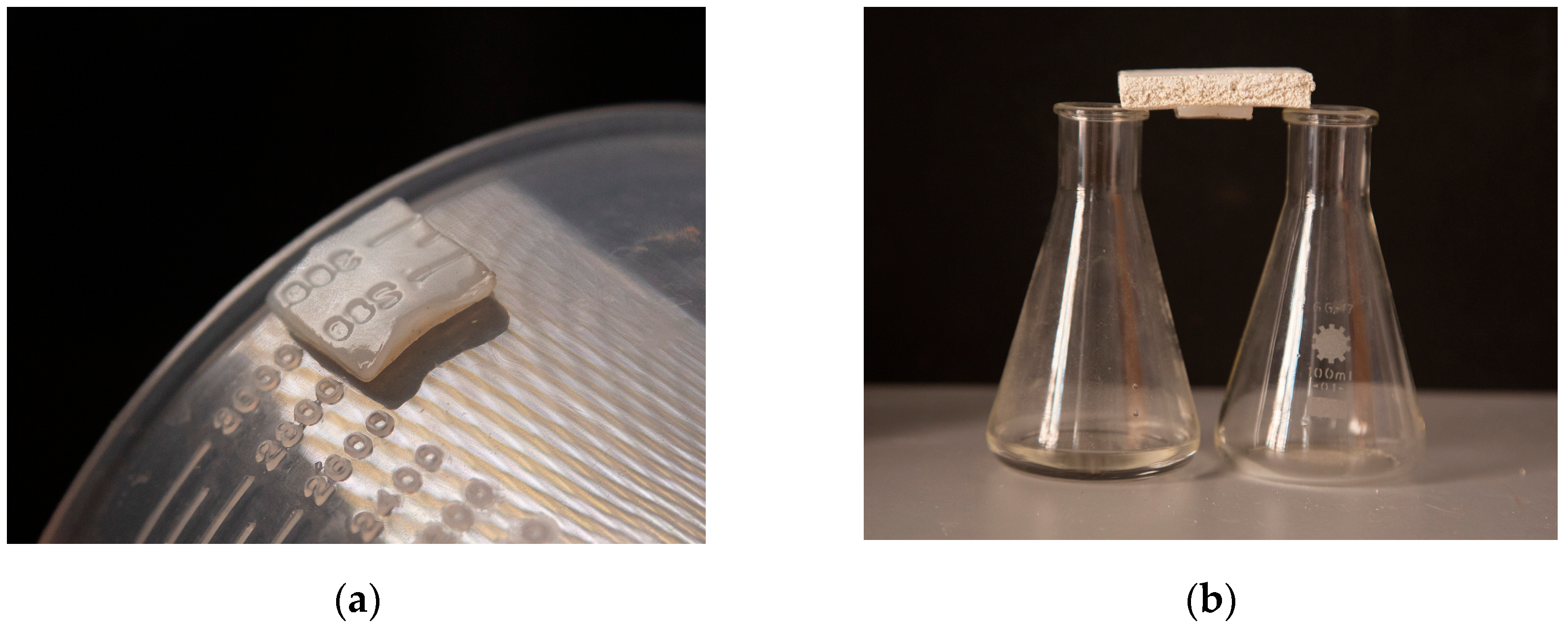
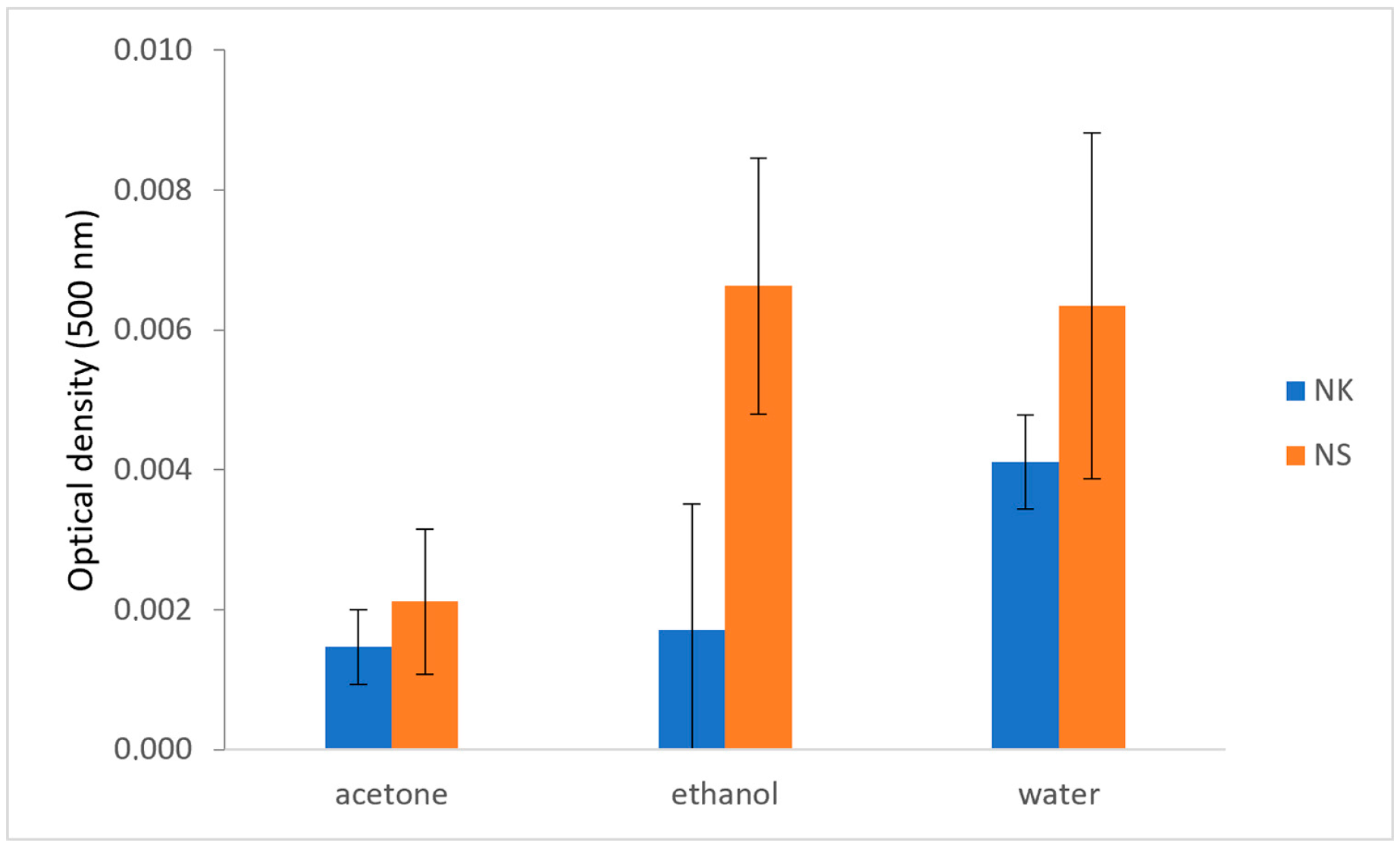
2.1.5. Mechanical Integrity in Solvents
2.2. Comparative Tests
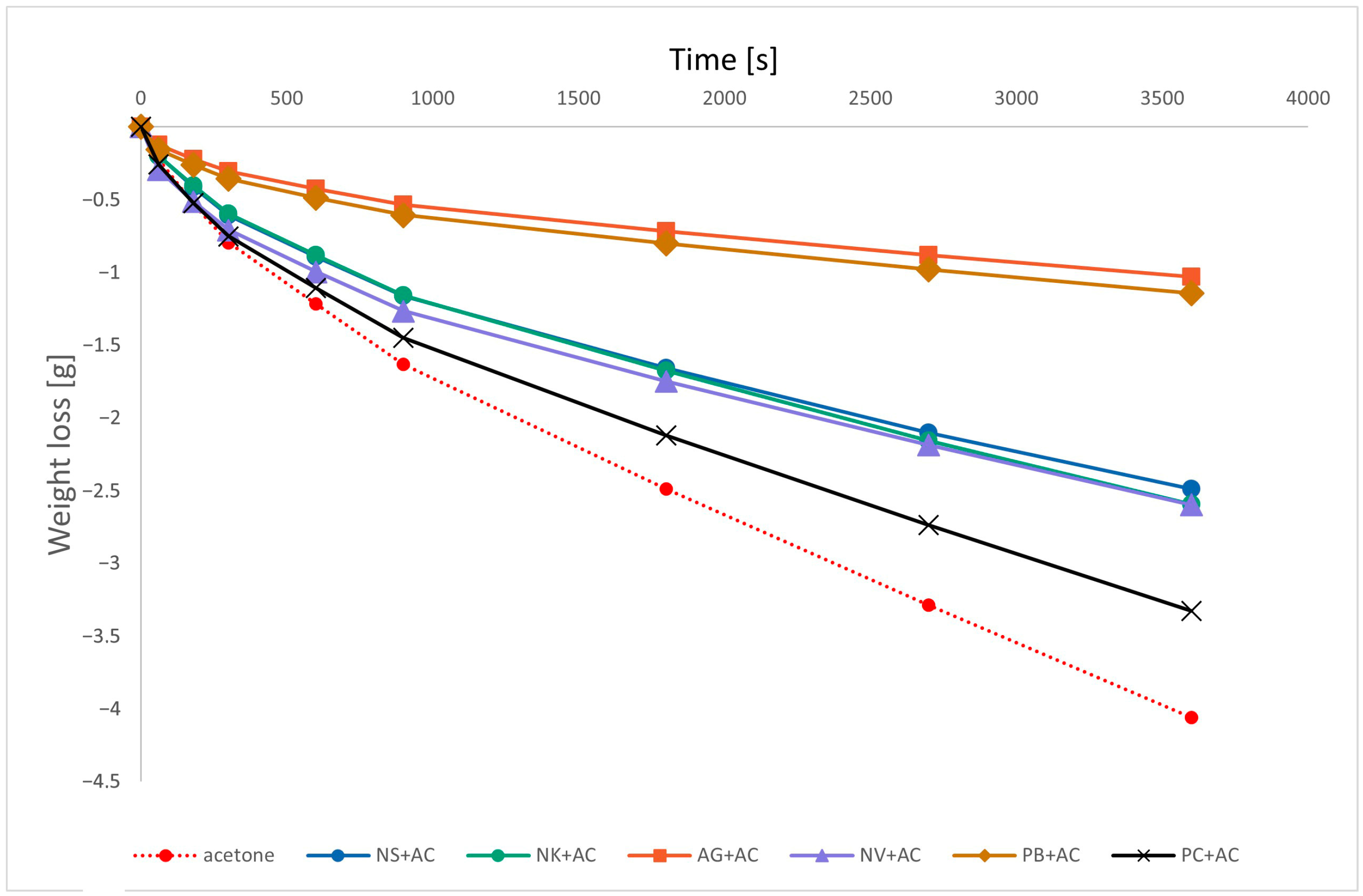
2.2.1. Solvent Retention Test
2.2.2. Diffusion Test
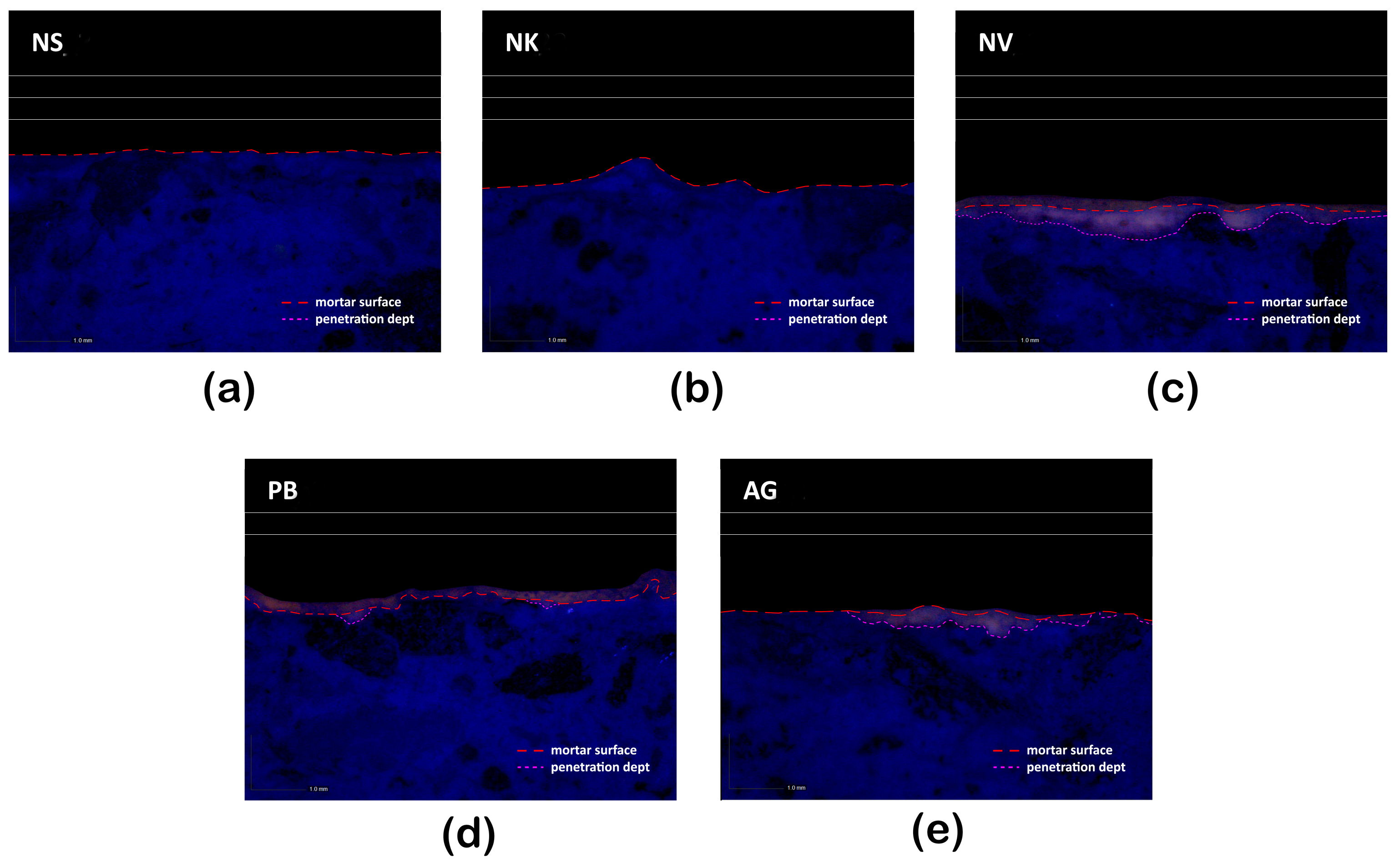
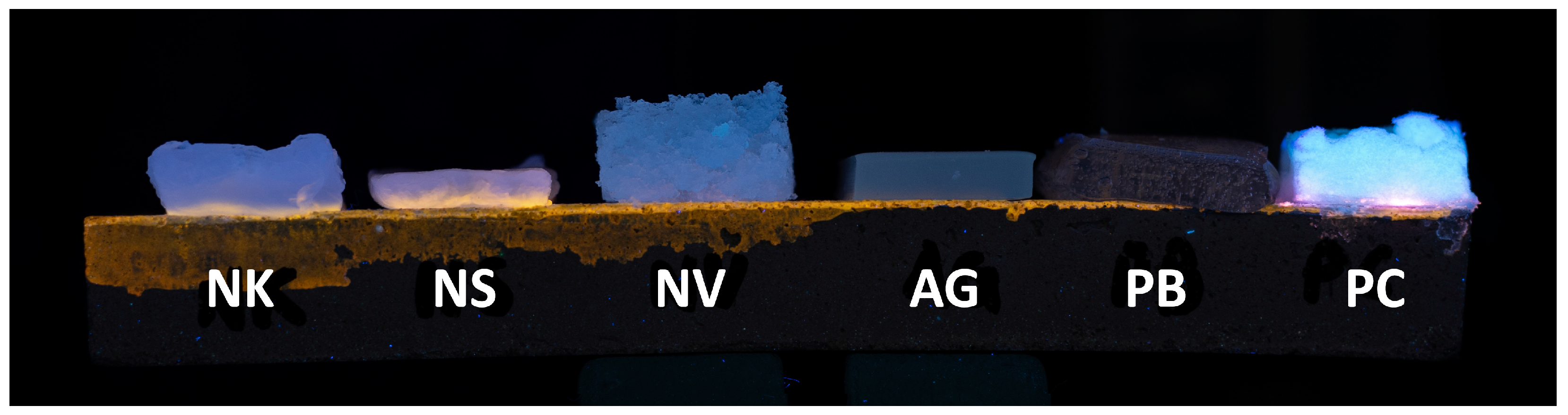
2.2.3. Residue Release
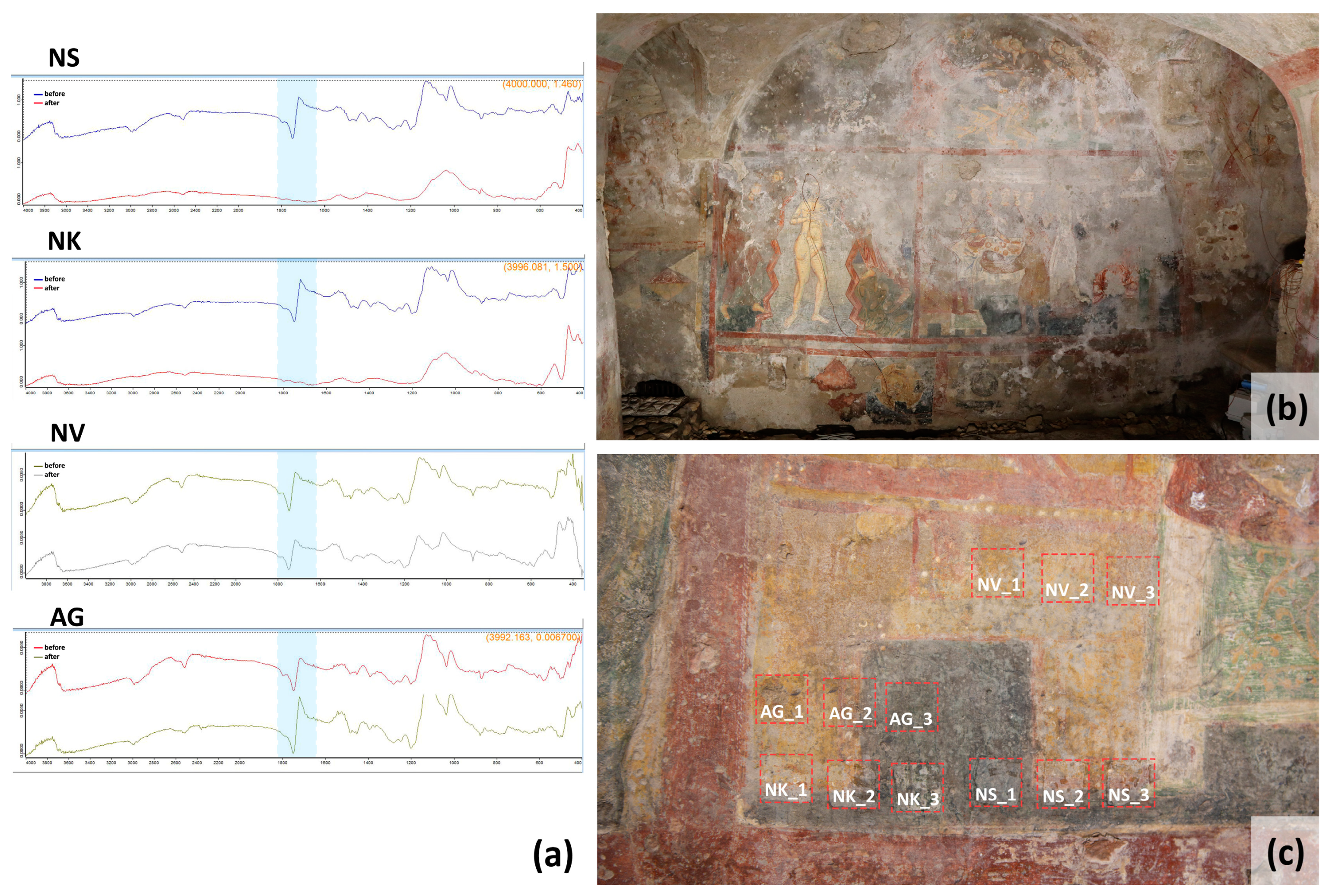
2.2.4. Cleaning Efficacy Assessment
3. Conclusions
4. Materials and Methods
4.1. Bacterial Nanocellulose Membranes
4.2. Reference Delivery Systems and Gels
- Agar–agar (AgarArt®, CTS S.r.l., Altavilla Vicentina (VI), Italy) powder (3% w/v) was dispersed in demineralized water and heated to 95 °C under stirring until complete dissolution. Acetone (30% v/v) was added at 40 ± 5 °C prior to gel setting.
- NEVEK® (CTS S.r.l., Altavilla Vicentina (VI), Italy) was loaded with solvent (30% v/w) to obtain a non-dripping consistency suitable for application.
- Poly(vinyl alcohol) (PVA molecular weight 50,000, hydrolysis 87–89%, Antares S.r.l., San Lazzaro di Savena, (BO), Italy) was dissolved in demineralized water (8% w/v) at 95 °C under stirring until a clear solution was obtained. A borax aqueous solution (8% w/v) was added to the PVA solution at a 1:4 volume ratio to induce gelation [88]. Before borax addition, acetone was incorporated into the aqueous poly(vinyl alcohol) (PVA) solution at a ratio of 30% relative to the final PVA–borax mixture.
- Paper pulp (Arbocel® BWW40, JRS PHARMA GmbH & Co. KG, Rosenberg, Germany) was loaded with appropriate amounts of acetone (paper pulp/acetone ratio: 1/2 w/w) by absorption and manual mixing.
4.3. Fresco Specimens
4.4. Characterization of BNC Membranes
4.4.1. Chemical Compatibility Assessment for Conservation Applications
4.4.2. Water Holding Capacity (WHC) and Water Release Rate (WRR)
4.4.3. Solvent-Loading Assessment
4.4.4. Tensile Testing
4.4.5. Mechanical Integrity in Solvents
4.5. Comparative Tests
4.5.1. Solvent Retention Test
4.5.2. Diffusion Test
4.5.3. Residue Release
4.5.4. Cleaning Efficacy Assessment
Supplementary Materials
Author Contributions
Funding
Institutional Review Board Statement
Informed Consent Statement
Data Availability Statement
Acknowledgments
Conflicts of Interest
References
- Chelazzi, D.; Fratini, E.; Giorgi, R.; Mastrangelo, R.; Rossi, M.; Baglioni, P. Gels for the Cleaning of Works of Art. In ACS Symposium Series; Horkay, F., Douglas, J.F., Del Gado, E., Eds.; American Chemical Society: Washington, DC, USA, 2018; Volume 1296, pp. 291–314. ISBN 978-0-8412-3316-4. [Google Scholar]
- Chelu, M.; Musuc, A.M. Polymer Gels: Classification and Recent Developments in Biomedical Applications. Gels 2023, 9, 161. [Google Scholar] [CrossRef] [PubMed]
- Fratini, E.; Carretti, E. Cleaning IV: Gels and Polymeric Dispersions. In Nanoscience for the Conservation of Works of Art; Baglioni, P., Chelazzi, D., Eds.; The Royal Society of Chemistry: London, UK, 2013; pp. 252–279. ISBN 978-1-84973-566-7. [Google Scholar]
- Baglioni, P.; Dei, L.; Carretti, E.; Giorgi, R. Gels for the Conservation of Cultural Heritage. Langmuir 2009, 25, 8373–8374. [Google Scholar] [CrossRef] [PubMed]
- Passaretti, A.; Cuvillier, L.; Sciutto, G.; Guilminot, E.; Joseph, E. Biologically Derived Gels for the Cleaning of Historical and Artistic Metal Heritage. Appl. Sci. 2021, 11, 3405. [Google Scholar] [CrossRef]
- Prati, S.; Volpi, F.; Fontana, R.; Galletti, P.; Giorgini, L.; Mazzeo, R.; Mazzocchetti, L.; Samorì, C.; Sciutto, G.; Tagliavini, E. Sustainability in Art Conservation: A Novel Bio-Based Organogel for the Cleaning of Water Sensitive Works of Art. Pure Appl. Chem. 2018, 90, 239–251. [Google Scholar] [CrossRef]
- Baglioni, P.; Bonelli, N.; Chelazzi, D.; Chevalier, A.; Dei, L.; Domingues, J.; Fratini, E.; Giorgi, R.; Martin, M. Organogel Formulations for the Cleaning of Easel Paintings. Appl. Phys. A 2015, 121, 857–868. [Google Scholar] [CrossRef]
- Pianorsi, M.D.; Raudino, M.; Bonelli, N.; Chelazzi, D.; Giorgi, R.; Fratini, E.; Baglioni, P. Organogels for the Cleaning of Artifacts. Pure Appl. Chem. 2017, 89, 3–17. [Google Scholar] [CrossRef]
- Zhang, J.; Hu, Y.; Li, Y. Gel Chemistry: Interactions, Structures and Properties; Lecture Notes in Chemistry; Springer: Singapore, 2018; ISBN 978-981-10-6880-5. [Google Scholar]
- Weththimuni, M.L.; Lee, C.; Milanese, C.; Vigani, B.; Malagodi, M.; Rossi, S.; Licchelli, M. A Comparative Study of “Green” and Synthetic Gels as Tools for the Cleaning of Artifacts; IRIS/AIR Institutional Research Information System: Milan, Italy, 2023. [Google Scholar]
- 1Al-Emam, E.; Motawea, A.G.; Janssens, K.; Caen, J. Evaluation of Polyvinyl Alcohol–Borax/Agarose (PVA–B/AG) Blend Hydrogels for Removal of Deteriorated Consolidants from Ancient Egyptian Wall Paintings. Herit. Sci. 2019, 7, 22. [Google Scholar] [CrossRef]
- Baij, L.; Liu, C.; Buijs, J.; Alvarez Martin, A.; Westert, D.; Raven, L.; Geels, N.; Noble, P.; Sprakel, J.; Keune, K. Understanding and Optimizing Evolon® CR for Varnish Removal from Oil Paintings. Herit. Sci. 2021, 9, 155. [Google Scholar] [CrossRef]
- Baglioni, M.; Poggi, G.; Chelazzi, D.; Baglioni, P. Advanced Materials in Cultural Heritage Conservation. Molecules 2021, 26, 3967. [Google Scholar] [CrossRef] [PubMed]
- Marques, A.P.S.; Almeida, R.O.; Pereira, L.F.R.; Carvalho, M.G.V.S.; Gamelas, J.A.F. Nanocelluloses and Their Applications in Conservation and Restoration of Historical Documents. Polymers 2024, 16, 1227. [Google Scholar] [CrossRef] [PubMed]
- Kryg, P.; Mazela, B.; Perdoch, W.; Broda, M. Challenges and Prospects of Applying Nanocellulose for the Conservation of Wooden Cultural Heritage—A Review. Forests 2024, 15, 1174. [Google Scholar] [CrossRef]
- Santos, S.M.; Carbajo, J.M.; Gómez, N.; Quintana, E.; Ladero, M.; Sánchez, A.; Chinga-Carrasco, G.; Villar, J.C. Use of Bacterial Cellulose in Degraded Paper Restoration. Part I: Application on Model Papers. J. Mater. Sci. 2016, 51, 1541–1552. [Google Scholar] [CrossRef]
- Santos, S.M.; Carbajo, J.M.; Gómez, N.; Quintana, E.; Ladero, M.; Sánchez, A.; Chinga-Carrasco, G.; Villar, J.C. Use of Bacterial Cellulose in Degraded Paper Restoration. Part II: Application on Real Samples. J. Mater. Sci. 2016, 51, 1553–1561. [Google Scholar] [CrossRef]
- Fornari, A.; Rossi, M.; Rocco, D.; Mattiello, L. A Review of Applications of Nanocellulose to Preserve and Protect Cultural Heritage Wood, Paintings, and Historical Papers. Appl. Sci. 2022, 12, 12846. [Google Scholar] [CrossRef]
- Gómez, N.; Santos, S.M.; Carbajo, J.M.; Villar, J.C. Use of Bacterial Cellulose in Degraded Paper Restoration: Effect on Visual Appearance of Printed Paper. BioRes 2017, 12, 9130–9142. [Google Scholar] [CrossRef]
- Jiang, M.; Yao, J.; Guo, Q.; Yan, Y.; Tang, Y.; Yang, Y. Recent Advances in Paper Conservation Using Nanocellulose and Its Composites. Molecules 2025, 30, 417. [Google Scholar] [CrossRef] [PubMed]
- Chen, G.; Wu, G.; Chen, L.; Wang, W.; Hong, F.F.; Jönsson, L.J. Performance of Nanocellulose-Producing Bacterial Strains in Static and Agitated Cultures with Different Starting pH. Carbohydr. Polym. 2019, 215, 280–288. [Google Scholar] [CrossRef] [PubMed]
- Villarreal-Soto, S.A.; Beaufort, S.; Bouajila, J.; Souchard, J.; Taillandier, P. Understanding Kombucha Tea Fermentation: A Review. J. Food Sci. 2018, 83, 580–588. [Google Scholar] [CrossRef] [PubMed]
- Brown, A.J. XLIII.—On an Acetic Ferment Which Forms Cellulose. J. Chem. Soc. Trans. 1886, 49, 432–439. [Google Scholar] [CrossRef]
- Gorgieva, S.; Trček, J. Bacterial Cellulose: Production, Modification and Perspectives in Biomedical Applications. Nanomaterials 2019, 9, 1352. [Google Scholar] [CrossRef] [PubMed]
- Maiuolo, L.; Algieri, V.; Olivito, F.; Tallarida, M.A.; Costanzo, P.; Jiritano, A.; De Nino, A. Chronicle of Nanocelluloses (NCs) for Catalytic Applications: Key Advances. Catalysts 2021, 11, 96. [Google Scholar] [CrossRef]
- Popa, L.; Ghica, M.V.; Tudoroiu, E.-E.; Ionescu, D.-G.; Dinu-Pîrvu, C.-E. Bacterial Cellulose—A Remarkable Polymer as a Source for Biomaterials Tailoring. Materials 2022, 15, 1054. [Google Scholar] [CrossRef] [PubMed]
- Rapti, S.; Boyatzis, S.; Velios, A.; Rivers, S.; Pournou, A. Hydrogels in Heritage Conservation: A Comparative Evaluation on Composite Objects. Gels 2025, 11, 828. [Google Scholar] [CrossRef] [PubMed]
- Stulik, D.C.; Dorge, V. (Eds.) Solvent Gels for the Cleaning of Works of Art: The Residue Question; Research in Conservation; Getty Conservation Institute: Los Angeles, CA, USA, 2004; ISBN 978-0-89236-759-7. [Google Scholar]
- Bonelli, N.; Chelazzi, D.; Baglioni, M.; Giorgi, R.; Baglioni, P. Confined Aqueous Media for the Cleaning of Cultural Heritage: Innovative Gels and Amphiphile-Based Nanofluids. In Nanoscience and Cultural Heritage; Dillmann, P., Bellot-Gurlet, L., Nenner, I., Eds.; Atlantis Press: Paris, France, 2016; pp. 283–311. ISBN 978-94-6239-197-0. [Google Scholar]
- Burnstock, A.; Kieslich, T. ICOM Committee for Conservation. 1: Preprints. In A Study of the Clearance of Sovent Gels Used For Varnish Removal from Paintings; 1996; Volume 1, ISBN 978-1-873936-50-4. [Google Scholar]
- Lizzi, V.; Masullo, E.; D’Agostino, A. Il Restauro Della Pala Di Sant’Antonio Abate Di Tullio e Girolamo Siciolante Da Sermoneta: Studio Di Materiali e Metodi per La Reintegrazione Delle Lacune Della Pellicola Pittorica e Delle Mancanze Del Supporto Di Un Dipinto a Olio Su Ardesia. Master’s Thesis, Istituto Centrale per il Restauro (ICR), Rome, Italy, 2023. [Google Scholar]
- Sonaglia, E.; Schifano, E.; Sharbaf, M.; Uccelletti, D.; Felici, A.C.; Santarelli, M.L. Bacterial Nanocellulose Hydrogel for the Green Cleaning of Copper Stains from Marble. Gels 2024, 10, 150. [Google Scholar] [CrossRef] [PubMed]
- Sonaglia, E.; Schifano, E.; Augello, S.; Sharbaf, M.; Marra, F.; Montanari, A.; Dini, L.; Sarto, M.S.; Uccelletti, D.; Santarelli, M.L. Ozone-Loaded Bacterial Cellulose Hydrogel: A Sustainable Antimicrobial Solution for Stone Cleaning. Cellulose 2024, 31, 9847–9864. [Google Scholar] [CrossRef]
- Sonaglia, E.; Bracciale, M.P.; Santarelli, M.L. Recycled Bacterial Nanocellulose Membranes as Novel Green Gels for the Cleaning of Cultural Heritage Surfaces. In Proceedings of the 2022 IMEKO TC4 International Conference on Metrology for Archaeology and Cultural Heritage, Calabria, Italy, 19–21 October 2022; IMEKO: Rome, Italy, 2023; pp. 452–456. [Google Scholar]
- Pacaphol, K.; Katemake, P.; Bankeeree, W.; Tse, N. Enzyme-Loaded Bacterial Nanocellulose Aerogel as a Biocleaning Material for Artwork Restoration. Sci. Rep. 2025, 15, 25536. [Google Scholar] [CrossRef] [PubMed]
- Przygrodzka, K.; Charęza, M.; Banaszek, A.; Zielińska, B.; Ekiert, E.; Drozd, R. Bacterial Cellulose Production by Komagateibacter Xylinus with the Use of Enzyme-Degraded Oligo- and Polysaccharides as the Substrates. Appl. Sci. 2022, 12, 12673. [Google Scholar] [CrossRef]
- Quijano, L.; Rodrigues, R.; Fischer, D.; Tovar-Castro, J.D.; Payne, A.; Navone, L.; Hu, Y.; Yan, H.; Pinmanee, P.; Poon, E.; et al. Bacterial Cellulose Cookbook: A Systematic Review on Sustainable and Cost-Effective Substrates. J. Bioresour. Bioprod. 2024, 9, 379–409. [Google Scholar] [CrossRef]
- Keshk, S.M. Bacterial Cellulose Production and Its Industrial Applications. J. Bioprocess. Biotech. 2014, 4, 150. [Google Scholar] [CrossRef]
- Barja, F. Bacterial Nanocellulose Production and Biomedical Applications. J. Biomed. Res. 2021, 35, 310. [Google Scholar] [CrossRef] [PubMed]
- Hestrin, S.; Schramm, M. Synthesis of Cellulose by Acetobacter Xylinum. 2. Preparation of Freeze-Dried Cells Capable of Polymerizing Glucose to Cellulose. Biochem. J. 1954, 58, 345–352. [Google Scholar] [CrossRef] [PubMed]
- Shezad, O.; Khan, S.; Khan, T.; Park, J.K. Physicochemical and Mechanical Characterization of Bacterial Cellulose Produced with an Excellent Productivity in Static Conditions Using a Simple Fed-Batch Cultivation Strategy. Carbohydr. Polym. 2010, 82, 173–180. [Google Scholar] [CrossRef]
- Shezad, O.; Khan, S.; Khan, T.; Park, J.K. Production of Bacterial Cellulose in Static Conditions by a Simple Fed-Batch Cultivation Strategy. Korean J. Chem. Eng. 2009, 26, 1689–1692. [Google Scholar] [CrossRef]
- Yim, S.M.; Song, J.E.; Kim, H.R. Production and Characterization of Bacterial Cellulose Fabrics by Nitrogen Sources of Tea and Carbon Sources of Sugar. Process Biochem. 2017, 59, 26–36. [Google Scholar] [CrossRef]
- Yassine, F.; Bassil, N.; Flouty, R.; Chokr, A.; Samrani, A.E.; Boiteux, G.; Tahchi, M.E. Culture Medium pH Influence on Gluconacetobacter Physiology: Cellulose Production Rate and Yield Enhancement in Presence of Multiple Carbon Sources. Carbohydr. Polym. 2016, 146, 282–291. [Google Scholar] [CrossRef] [PubMed]
- Zeng, X.; Small, D.P.; Wan, W. Statistical Optimization of Culture Conditions for Bacterial Cellulose Production by Acetobacter Xylinum BPR 2001 from Maple Syrup. Carbohydr. Polym. 2011, 85, 506–513. [Google Scholar] [CrossRef]
- Lins, L.S.G.; Silva, W.E.; Belian, M.F.; Calazans, G.M.T. Use of Biodiesel Waste for Efficient Production of Cellulosic Membranes: A “Green” Proposal for Filter Preparation. Cellul. Chem. Technol. 2019, 53, 417–425. [Google Scholar] [CrossRef]
- Taokaew, S. Bacterial Nanocellulose Produced by Cost-Effective and Sustainable Methods and Its Applications: A Review. Fermentation 2024, 10, 316. [Google Scholar] [CrossRef]
- Lin, D.; Lopez-Sanchez, P.; Li, R.; Li, Z. Production of Bacterial Cellulose by Gluconacetobacter Hansenii CGMCC 3917 Using Only Waste Beer Yeast as Nutrient Source. Bioresour. Technol. 2014, 151, 113–119. [Google Scholar] [CrossRef] [PubMed]
- Tsouko, E.; Kourmentza, C.; Ladakis, D.; Kopsahelis, N.; Mandala, I.; Papanikolaou, S.; Paloukis, F.; Alves, V.; Koutinas, A. Bacterial Cellulose Production from Industrial Waste and By-Product Streams. Int. J. Mol. Sci. 2015, 16, 14832–14849. [Google Scholar] [CrossRef] [PubMed]
- Liu, Z.; Zhao, R.; Zhang, X.; Wang, H.; Zhang, C.; Liu, J.; Zhu, P. Comparison of Bacterial Cellulose Production by Various Biomass Wastes as Culture Media. Int. J. Biol. Macromol. 2025, 309, 143091. [Google Scholar] [CrossRef] [PubMed]
- Urbina, L.; Corcuera, M.Á.; Gabilondo, N.; Eceiza, A.; Retegi, A. A Review of Bacterial Cellulose: Sustainable Production from Agricultural Waste and Applications in Various Fields. Cellulose 2021, 28, 8229–8253. [Google Scholar] [CrossRef]
- Kadier, A.; Ilyas, R.A.; Huzaifah, M.R.M.; Harihastuti, N.; Sapuan, S.M.; Harussani, M.M.; Azlin, M.N.M.; Yuliasni, R.; Ibrahim, R.; Atikah, M.S.N.; et al. Use of Industrial Wastes as Sustainable Nutrient Sources for Bacterial Cellulose (BC) Production: Mechanism, Advances, and Future Perspectives. Polymers 2021, 13, 3365. [Google Scholar] [CrossRef] [PubMed]
- Gorgieva, S. Bacterial Cellulose as a Versatile Platform for Research and Development of Biomedical Materials. Processes 2020, 8, 624. [Google Scholar] [CrossRef]
- Dima, S.-O.; Panaitescu, D.-M.; Orban, C.; Ghiurea, M.; Doncea, S.-M.; Fierascu, R.; Nistor, C.; Alexandrescu, E.; Nicolae, C.-A.; Trică, B.; et al. Bacterial Nanocellulose from Side-Streams of Kombucha Beverages Production: Preparation and Physical-Chemical Properties. Polymers 2017, 9, 374. [Google Scholar] [CrossRef] [PubMed]
- Behera, B.; Laavanya, D.; Balasubramanian, P. Techno-Economic Feasibility Assessment of Bacterial Cellulose Biofilm Production during the Kombucha Fermentation Process. Bioresour. Technol. 2022, 346, 126659. [Google Scholar] [CrossRef] [PubMed]
- Sonaglia, E. Nuovi Idrogel Eco-Sostenibili Di Origine Sintetica e Naturale per Diverse Applicazioni. Ph.D. Thesis, Dottorato di Ricerca in Ingegneria Elettrica, dei Materiali e delle Nanotecnologie Sapienza University, Rome, Italy, 2024. [Google Scholar]
- Molavi, H.; Salimi, M.S. Investigation the Effect of Exchange Solvents on the Adsorption Performances of Ce-MOFs towards Organic Dyes. Sci. Rep. 2025, 15, 7074. [Google Scholar] [CrossRef] [PubMed]
- Bento, C.S.A.; De Sousa, H.C.; Braga, M.E.M. Measurement of Ethanol Concentration for Monitoring the Solvent Exchange during the Alcogel Preparation. MethodsX 2024, 13, 102960. [Google Scholar] [CrossRef] [PubMed]
- Bento, C.S.A.; Agostinho, B.; Teixeira, A.; Reis, M.S.; De Sousa, H.C.; Braga, M.E.M. Alcogel Formation Analysis: An Important Step for scCO2 Aerogel Production. J. Supercrit. Fluids 2024, 211, 106321. [Google Scholar] [CrossRef]
- Yang, P.; Mather, P.T. Thermal Analysis to Determine Various Forms of Water Present in Hydrogels; TA Instruments: New Castle, DE, USA, 1999. [Google Scholar]
- Wulandari, W.T.; Rochliadi, A.; Arcana, I.M. Nanocellulose Prepared by Acid Hydrolysis of Isolated Cellulose from Sugarcane Bagasse. IOP Conf. Ser. Mater. Sci. Eng. 2016, 107, 012045. [Google Scholar] [CrossRef]
- Fuller, M.E.; Andaya, C.; McClay, K. Evaluation of ATR-FTIR for Analysis of Bacterial Cellulose Impurities. J. Microbiol. Methods 2018, 144, 145–151. [Google Scholar] [CrossRef] [PubMed]
- Ul-Islam, M.; Khan, T.; Park, J.K. Water Holding and Release Properties of Bacterial Cellulose Obtained by in Situ and Ex Situ Modification. Carbohydr. Polym. 2012, 88, 596–603. [Google Scholar] [CrossRef]
- Gromovykh, T.I.; Pigaleva, M.A.; Gallyamov, M.O.; Ivanenko, I.P.; Ozerova, K.E.; Kharitonova, E.P.; Bahman, M.; Feldman, N.B.; Lutsenko, S.V.; Kiselyova, O.I. Structural Organization of Bacterial Cellulose: The Origin of Anisotropy and Layered Structures. Carbohydr. Polym. 2020, 237, 116140. [Google Scholar] [CrossRef] [PubMed]
- Martínez-Soler, X.; Malaspina, D.; Antón-Sales, I.; Roig-Sánchez, S.; Martínez-Reyes, N.; Laromaine, A.; Roig, A.; Faraudo, J. Insights on the Amphiphillicity of Cellulose: Competitive Wetting by Polar and Apolar Solvents 2022. ChemRxiv 2022. [Google Scholar] [CrossRef]
- Frensemeier, M.; Koplin, C.; Jaeger, R.; Kramer, F.; Klemm, D. Mechanical Properties of Bacterially Synthesized Nanocellulose Hydrogels. Macromol. Symp. 2010, 294, 38–44. [Google Scholar] [CrossRef]
- Hosseini, H.; Kokabi, M.; Mousavi, S.M. Dynamic Mechanical Properties of Bacterial Cellulose Nanofibres. Iran. Polym. J. 2018, 27, 433–443. [Google Scholar] [CrossRef]
- Roux, D.C.D.; Jeacomine, I.; Maîtrejean, G.; Caton, F.; Rinaudo, M. Characterization of Agarose Gels in Solvent and Non-Solvent Media. Polymers 2023, 15, 2162. [Google Scholar] [CrossRef] [PubMed]
- Roux, D.C.D.; Caton, F.; Jeacomine, I.; Maîtrejean, G.; Rinaudo, M. Reversibility in the Physical Properties of Agarose Gels Following an Exchange in Solvent and Non-Solvent. Polymers 2024, 16, 811. [Google Scholar] [CrossRef] [PubMed]
- Shu, L.; Zhang, X.-F.; Wang, Z.; Yao, J. Structure Reorganization of Cellulose Hydrogel by Green Solvent Exchange for Potential Plastic Replacement. Carbohydr. Polym. 2022, 275, 118695. [Google Scholar] [CrossRef] [PubMed]
- Stagno, V.; Genova, C.; Zoratto, N.; Favero, G.; Capuani, S. Single-Sided Portable NMR Investigation to Assess and Monitor Cleaning Action of PVA-Borax Hydrogel in Travertine and Lecce Stone. Molecules 2021, 26, 3697. [Google Scholar] [CrossRef] [PubMed]
- Riedo, C.; Rollo, G.; Chiantore, O.; Scalarone, D. Detection and Identification of Possible Gel Residues on the Surface of Paintings after Cleaning Treatments. Heritage 2021, 4, 304–315. [Google Scholar] [CrossRef]
- Stagno, V.; Ciccola, A.; Curini, R.; Postorino, P.; Favero, G.; Capuani, S. Non-Invasive Assessment of PVA-Borax Hydrogel Effectiveness in Removing Metal Corrosion Products on Stones by Portable NMR. Gels 2021, 7, 265. [Google Scholar] [CrossRef] [PubMed]
- Scott, C.L. The Use of agar as a solvent gel in objects conservation. In Objects Specialty Group Postprints; The American Institute for Conservation of Historic & Artistic Works: Washington, DC, USA, 2012; Volume 19. [Google Scholar]
- Sansonetti, A.; Bertasa, M.; Canevali, C.; Rabbolini, A.; Anzani, M.; Scalarone, D. A Review in Using Agar Gels for Cleaning Art Surfaces. J. Cult. Herit. 2020, 44, 285–296. [Google Scholar] [CrossRef]
- Anzani, M. Gel Rigidi Di Agar per Il Trattamento Di Pulitura Di Manufatti in Gesso = Use of Rigid Agar Gels for Cleaning Plaster Objects; Il prato: Saonara, Italy, 2008; ISBN 88-6336-034-0. [Google Scholar]
- Vârban, R.; Crișan, I.; Vârban, D.; Ona, A.; Olar, L.; Stoie, A.; Ștefan, R. Comparative FT-IR Prospecting for Cellulose in Stems of Some Fiber Plants: Flax, Velvet Leaf, Hemp and Jute. Appl. Sci. 2021, 11, 8570. [Google Scholar] [CrossRef]
- Wu, Y.; Geng, C.; Cui, C.; Xin, Z.; Xia, Y.; Xue, Z. Seaweed Fiber Fabricated with Agar Alkali-Free Extracted from Gracilaria Lemaneiformis. J. Renew. Mater. 2023, 11, 1199–1208. [Google Scholar] [CrossRef]
- Luan, V.H.; Long, H. Self-Healable PVA-Borax-K2 SO4 Hydrogel Electrolyte for Flexible Symmetric Supercapacitors. IOP Conf. Ser. Earth Environ. Sci. 2024, 1340, 012004. [Google Scholar] [CrossRef]
- Rosenzweig, B.; Carretti, E.; Picollo, M.; Baglioni, P.; Dei, L. Use of Mid-Infrared Fiber-Optic Reflectance Spectroscopy (FORS) to Evaluate Efficacy of Nanostructured Systems in Wall Painting Conservation. Appl. Phys. A 2006, 83, 669–673. [Google Scholar] [CrossRef]
- Ramacciotti, F.; Sciutto, G.; Cazals, L.; Biagini, D.; Reale, S.; Degano, I.; Focarete, M.L.; Mazzeo, R.; Thoury, M.; Bertrand, L.; et al. Microporous Electrospun Nonwovens Combined with Green Solvents for the Selective Peel-off of Thin Coatings from Painting Surfaces. J. Colloid. Interface Sci. 2024, 663, 869–879. [Google Scholar] [CrossRef] [PubMed]
- Jia, Y.; Sciutto, G.; Mazzeo, R.; Samorì, C.; Focarete, M.L.; Prati, S.; Gualandi, C. Organogel Coupled with Microstructured Electrospun Polymeric Nonwovens for the Effective Cleaning of Sensitive Surfaces. ACS Appl. Mater. Interfaces 2020, 12, 39620–39629. [Google Scholar] [CrossRef] [PubMed]
- Reddersen, K.; Tittelbach, J.; Wiegand, C. 3D Biofilm Models Containing Multiple Species for Antimicrobial Testing of Wound Dressings. Microorganisms 2022, 10, 2027. [Google Scholar] [CrossRef] [PubMed]
- Goh, W.N.; Rosma, A.; Kaur, B.; Fazilah, A.; Karim, A.; Bhat, R. Fermentation of Black Tea Broth (Kombucha): I. Effects of Sucrose Concentration and Fermentation Time on the Yield of Microbial Cellulose. Int. Food Res. J. 2012, 19, 109–117. [Google Scholar]
- Oliver-Ortega, H.; Geng, S.; Espinach, F.X.; Oksman, K.; Vilaseca, F. Bacterial Cellulose Network from Kombucha Fermentation Impregnated with Emulsion-Polymerized Poly(Methyl Methacrylate) to Form Nanocomposite. Polymers 2021, 13, 664. [Google Scholar] [CrossRef] [PubMed]
- Amarasekara, A.S.; Wang, D.; Grady, T.L. A Comparison of Kombucha SCOBY Bacterial Cellulose Purification Methods. SN Appl. Sci. 2020, 2, 240. [Google Scholar] [CrossRef]
- Santos, S.M.; Carbajo, J.M.; Quintana, E.; Ibarra, D.; Gomez, N.; Ladero, M.; Eugenio, M.E.; Villar, J.C. Characterization of Purified Bacterial Cellulose Focused on Its Use on Paper Restoration. Carbohydr. Polym. 2015, 116, 173–181. [Google Scholar] [CrossRef] [PubMed]
- Giuffredi, A.; Del Bianco, A.; DI Foggia, M. La Rimozione Dei Depositi Superficiali Del Gesso Mediante Idro-Gel Viscoelastici Di Alcol Polivinilico e Borace; Università di Bologna: Bologna, Italy, 2019; pp. 253–257. [Google Scholar]
- Smith, N.L.; Coukouma, A.E.; Jakubek, R.S.; Asher, S.A. Mechanisms by Which Organic Solvent Exchange Transforms Responsive Pure Protein Hydrogels into Responsive Organogels. Biomacromolecules 2020, 21, 839–853. [Google Scholar] [CrossRef] [PubMed]
- ASTM D882-18; Standard Test Method for Tensile Properties of Thin Plastic Sheeting. ASTM International: West Conshohocken, PA, USA, 2018. [CrossRef]
- Hervy, M.; Santmarti, A.; Lahtinen, P.; Tammelin, T.; Lee, K.-Y. Sample Geometry Dependency on the Measured Tensile Properties of Cellulose Nanopapers. Mater. Des. 2017, 121, 421–429. [Google Scholar] [CrossRef]

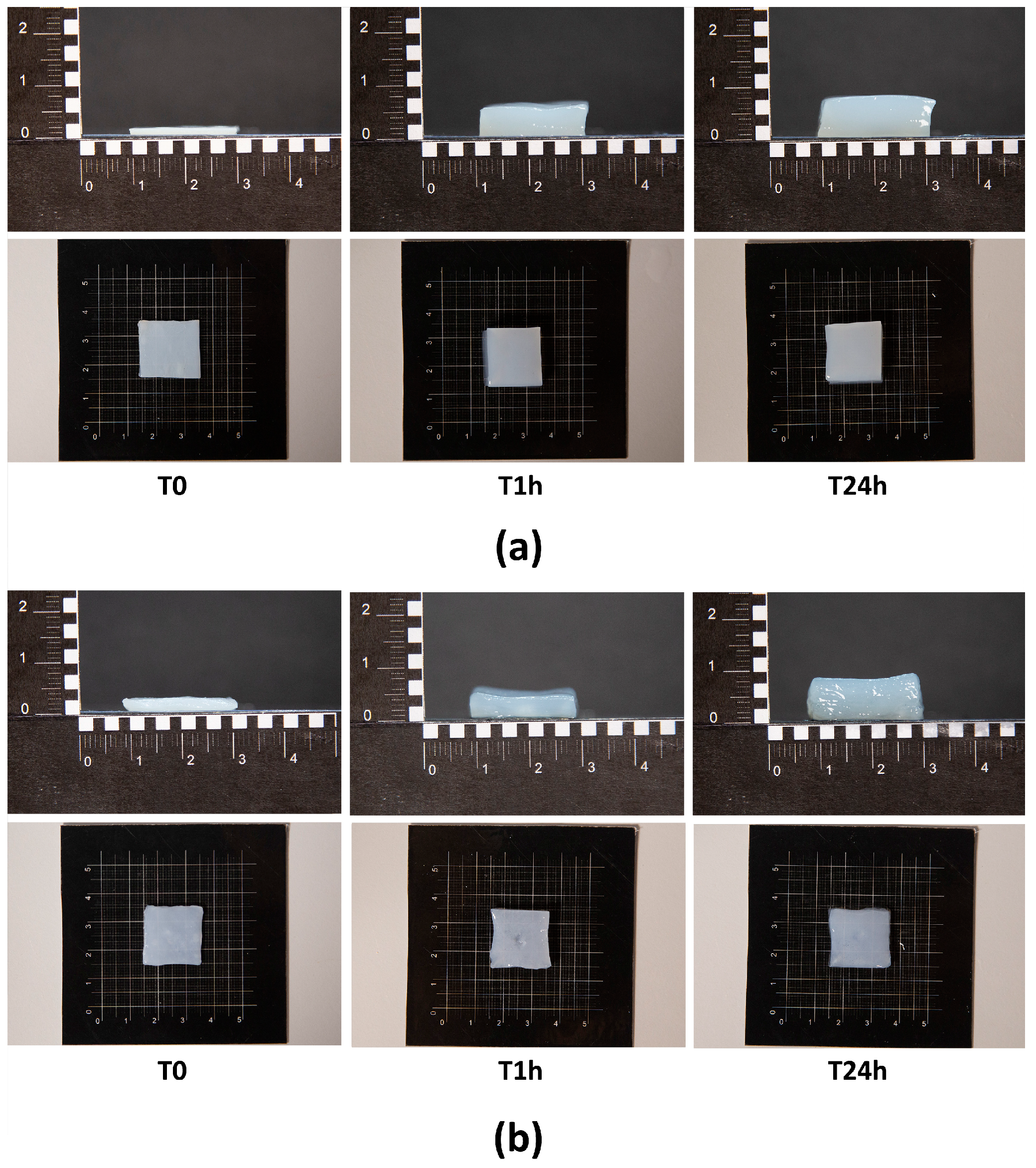






| Abbreviation | Commercial Name | Composition | Category |
|---|---|---|---|
| NS | Suprasorb X® (Lohmann & Rauscher GmbH & Co. KG, Rengsdorf, Germany) | BNC | Commercial medical-grade BNC membrane |
| NK | Kombucha Scoby | BNC | Laboratory-produced BNC membrane |
| AG | Agar Art® (CTS S.r.l., Altavilla Vicentina (VI), Italy) | Agarose and agaropectine | Rigid hydrogel |
| NV | Nevek® (CTS S.r.l., Altavilla Vicentina (VI), Italy) | Agarose and agaropectine | Homogenized grounded hydrogel |
| PB | PVA-borax gel (Antares S.r.l., San Lazzaro di Savena (BO), Italy) | Poly(vinyl alcohol) + sodium borate | Highly viscous polymeric dispersion (HVPD) |
| PC | Arbocel® BWW40 (JRS PHARMA GmbH & Co. KG, Rosenberg, Germany) | Cellulose fibers | Paper pulp |
| Experimental Phase | Property Investigated | Test Performed | Products Tested |
|---|---|---|---|
| Chemical compatibility for conservation application | pH; conductivity; ATR-FTIR | NS; NK |
| Water Holding Capacity | gravimetric measurement | NS; NK | |
| Water Release Rate | gravimetric measurement until complete drying | NS; NK | |
| Solvent loading | thermogravimetric and differential scanning calorimetry (TG–DSC) | NS; NK | |
| Tensile properties | tensile test | NS; NK | |
| Integrity during solvent loading | optical density measurement | NS; NK | |
| Solvent retention | gravimetric measurement | NS; NK; NV; AG; PB; PC |
| Diffusion test | gravimetric measurement; cross-section observation with Rhodamine marker | NS; NK; NV; AG; PB; PC | |
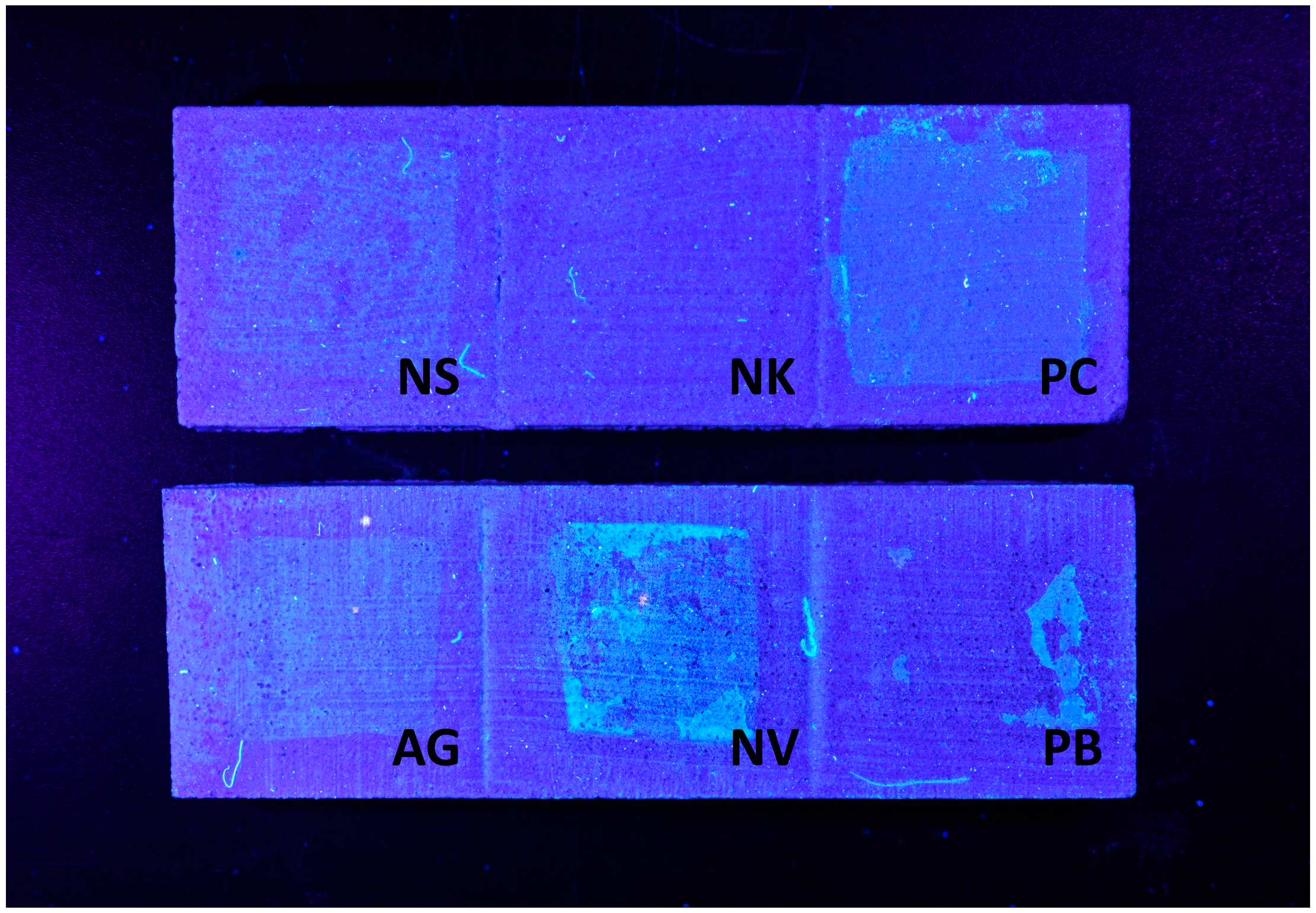
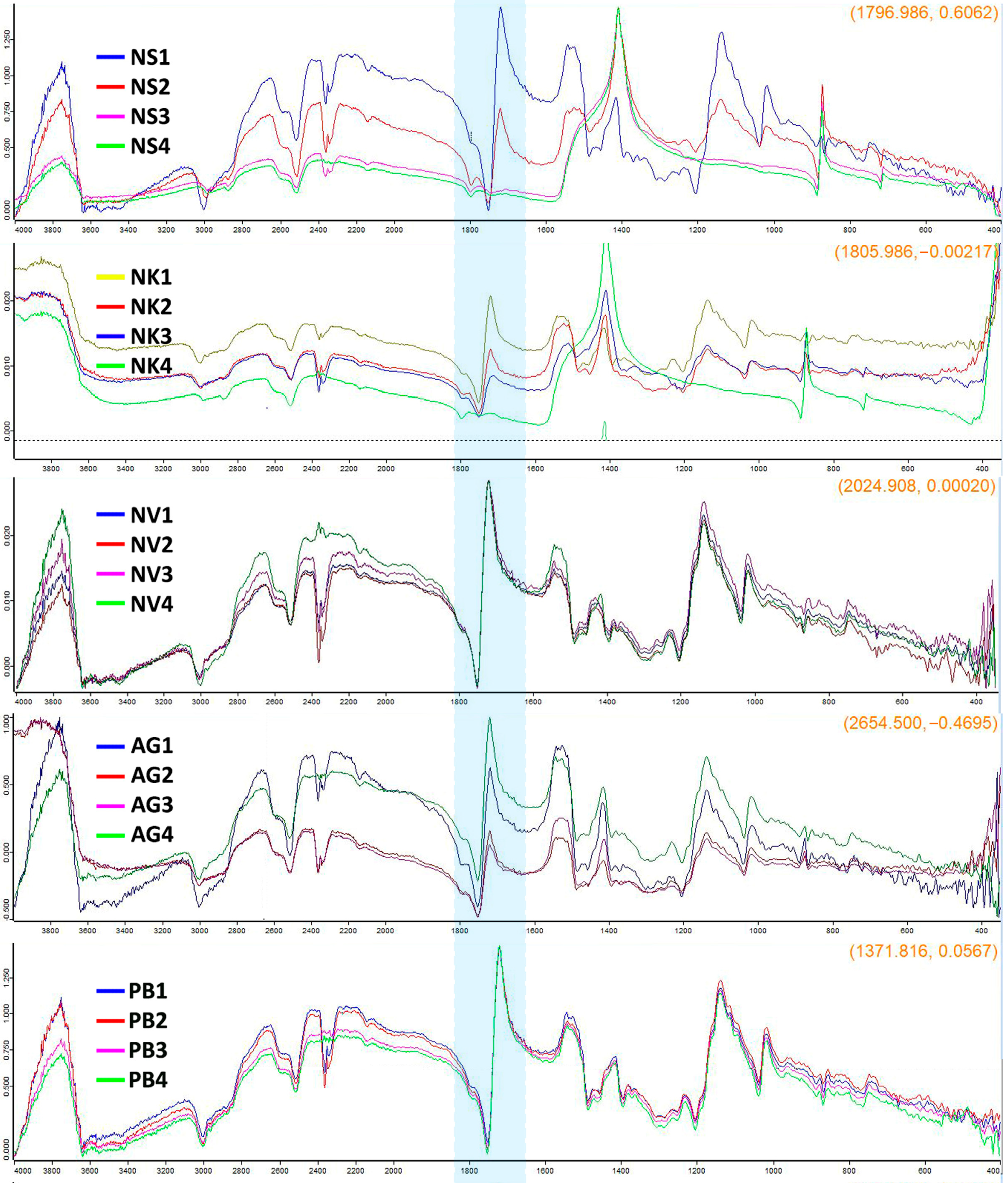
| Residue release | ultraviolet-induced fluorescence imaging analysis; DRIFT-FTIR | NS; NK; NV; AG; PB; PC | |
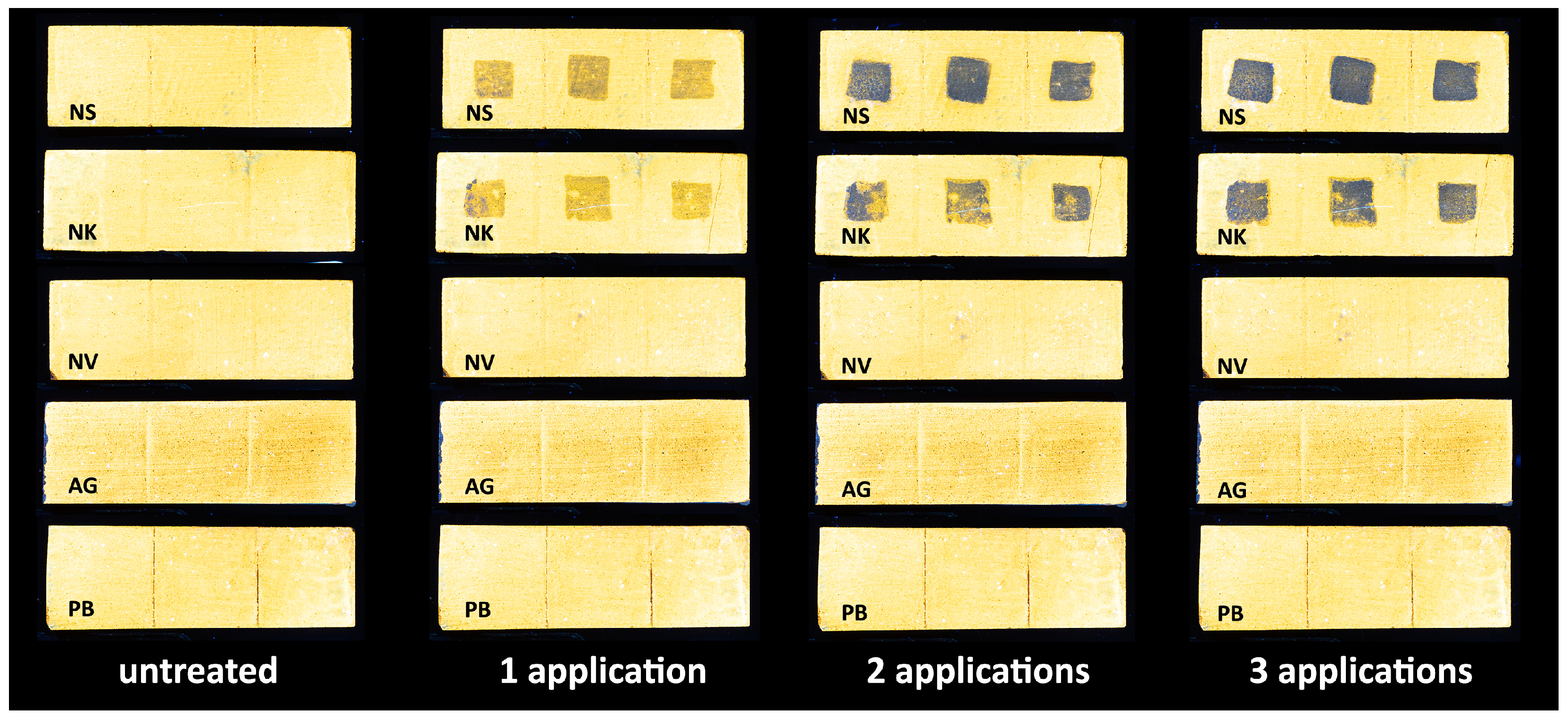
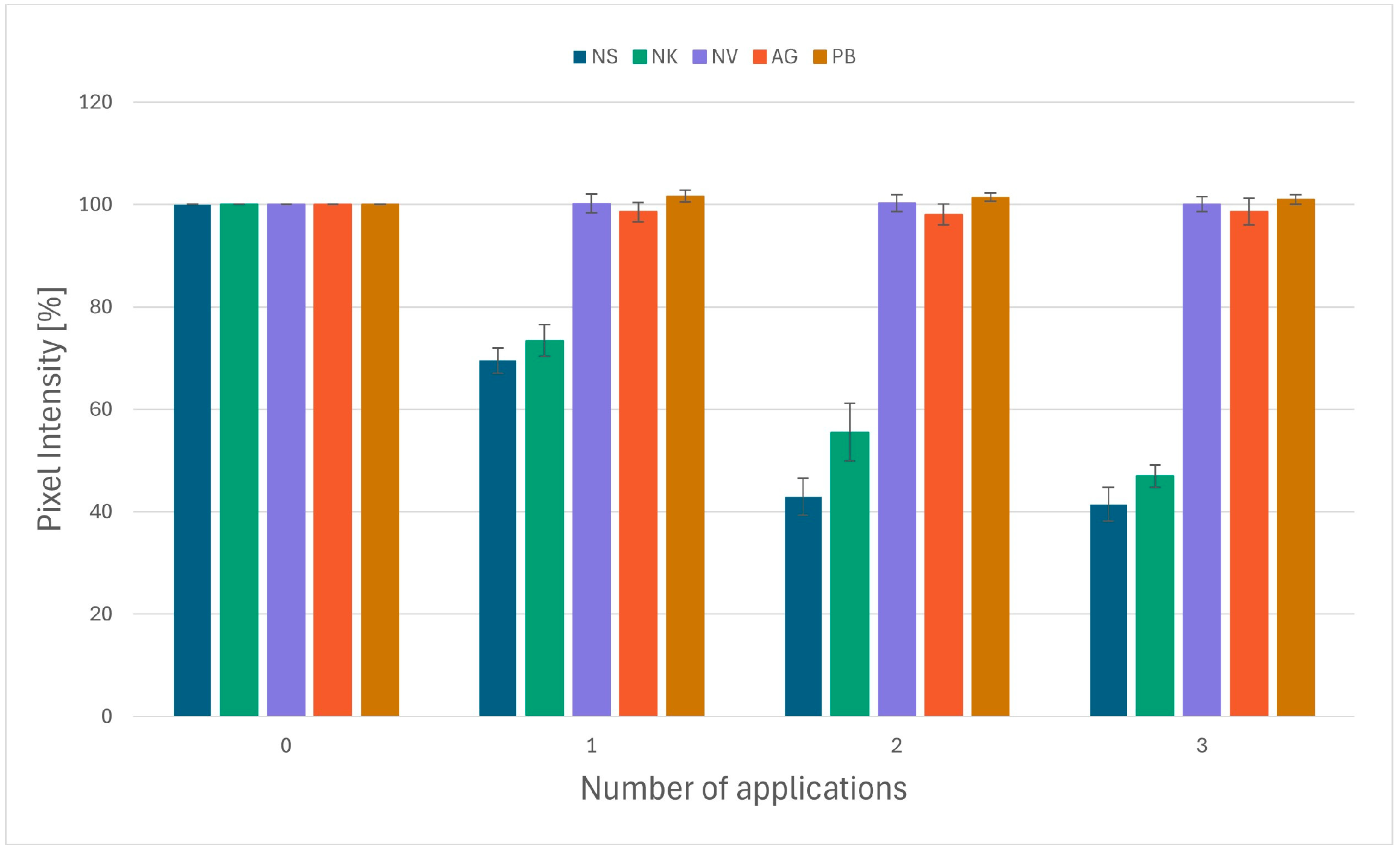
| Cleaning efficacy on mock ups | quantitative image analysis with Rhodamine marker; FTIR reflection mode | NS; NK; NV; AG; PB | |
| Cleaning efficacy on site | FTIR reflection mode | NS; NK; NV; AG |
| Sample | pH | Conductivity (μS/cm) |
|---|---|---|
| Soaking water | 6.3 ± 0.15 | 2.9 ± 0.1 |
| NS | 6.3 ± 0.05 | 18.3 ± 0.2 |
| NK | 6.4 ± 0.10 | 14.3 ± 0.5 |
| BNC | WHC (g H2O/g BNC) | WRR (%/min) |
|---|---|---|
| NS | 151.94 ± 1.77 | −0.227 ± 0.010 |
| NK | 173.12 ± 23.75 | −0.243 ± 0.019 |
| Samples | Immersion Time | In-Plane Dimensional Variation (mm) | Vertical Swelling (mm) | |
|---|---|---|---|---|
| x | y | z | ||
| NS | 1 h | 0 | 0.03 ± 0.06 | 4 ± 0.3 |
| 24 h | 0 | 0.07 ± 0.12 | 6 ± 0.2 | |
| NK | 1 h | 0.07 ± 0.06 | 0.03 ± 0.06 | 1.9 ± 0.2 |
| 24 h | 0.03 ± 0.06 | −0.03 ± 0.06 | 5.2 ± 0.4 | |
| Sample | Loaded Solvent | Fmax (N) | σ (MPa) | ε% |
|---|---|---|---|---|
| NK | Water | 12.38 ± 1.4 | 0.76 ± 0.14 | 22.05 ± 0.54 |
| Acetone | 49.14 ± 16.43 | 2.97 ± 1.06 | 4.69 ± 2.76 | |
| NS | Water | 13.09 ± 1.02 | 0.92 ± 0.09 | 19.99 ± 3.90 |
| Acetone | 28.99 ± 6.16 | 1.63 ± 0.39 | 10.12 ± 1.85 |
| Sample | J0–1 | J1–3 | J3–5 | J5–10 | J10–15 | J15–30 | J30–45 | J45–60 | ῡ (mg/cm2∙min) | Δm Tot (g) | ῡ % |
|---|---|---|---|---|---|---|---|---|---|---|---|
| AC | 44.285 | 30.787 | 26.151 | 16.783 | 16.520 | 11.352 | 10.573 | 10.256 | 1.3457 | 4.0584 | 100.0% |
| PC + AC | 51.288 | 26.290 | 22.789 | 14.119 | 13.626 | 0.8883 | 0.8171 | 0.7862 | 1.1032 | 3.3271 | 82.0% |
| NS + AC | 39.053 | 21.755 | 19.049 | 11.324 | 10.791 | 0.6564 | 0.5876 | 0.5143 | 0.8249 | 2.4880 | 61.3% |
| NK + AC | 39.411 | 20.332 | 19.158 | 11.364 | 11.033 | 0.6866 | 0.6369 | 0.5804 | 0.8599 | 2.5935 | 63.9% |
| AG + AC | 24.669 | 0.9519 | 0.8614 | 0.4723 | 0.4393 | 0.2383 | 0.2186 | 0.2001 | 0.3418 | 1.0308 | 25.4% |
| NV + AC | 58.290 | 21.794 | 19.427 | 11.455 | 10.731 | 0.6415 | 0.5768 | 0.5467 | 0.8607 | 2.5958 | 64.0% |
| PB + AC | 30.856 | 10.673 | 0.9291 | 0.5181 | 0.4751 | 0.2589 | 0.2345 | 0.2200 | 0.3791 | 1.1433 | 28.2% |
| Sample | ῡ0–1 (g/min) | ῡ1–3 (g/min) | ῡ3–5 (g/min) | ῡ5–10 (g/min) | ῡ10–15 (g/min) | ῡ15–30 (g/min) | ῡ30–60 (g/min) | Δmtot (g) |
|---|---|---|---|---|---|---|---|---|
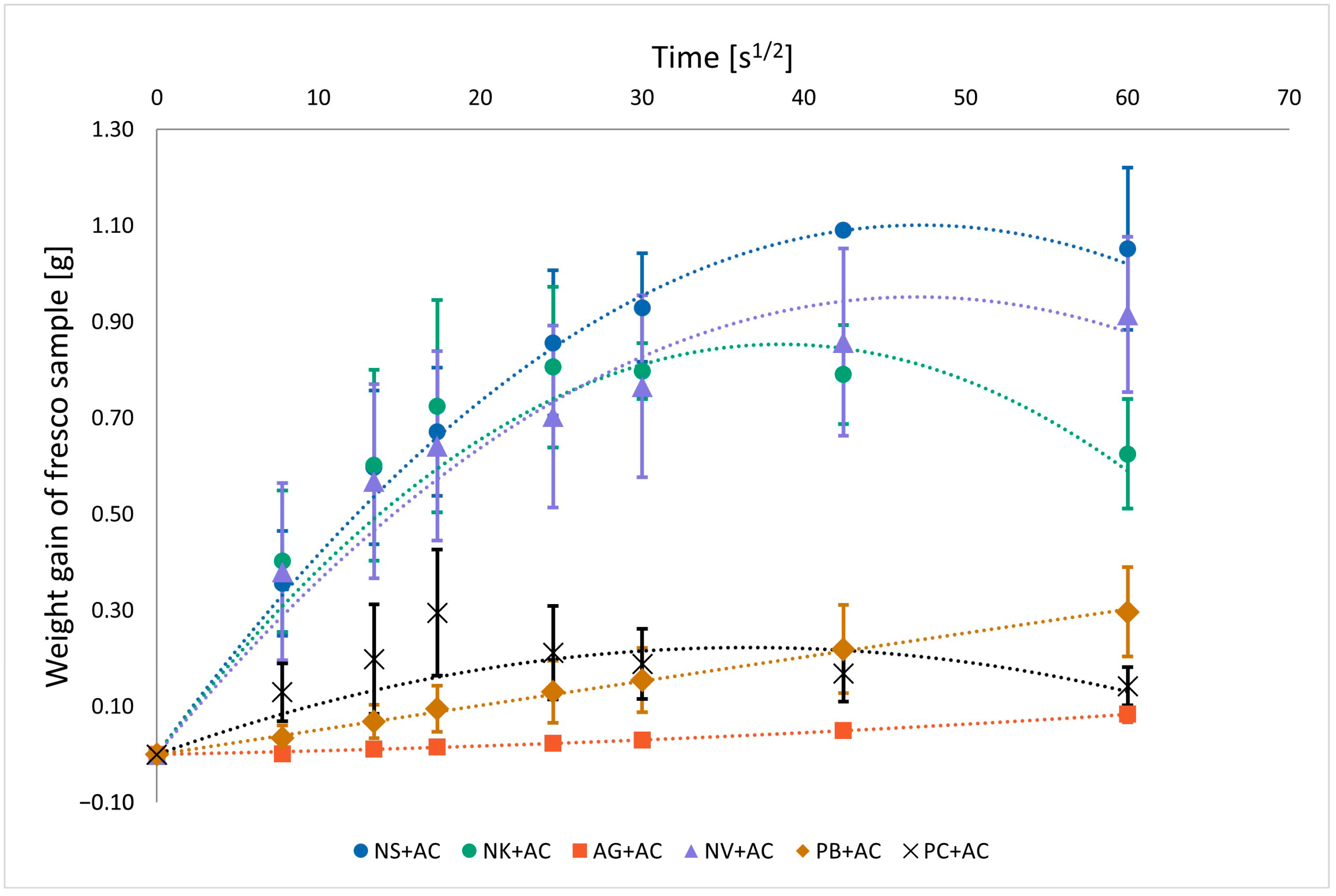
| NS + AC | 0.3560 ± 0.1093 * | 0.1206 ± 0.0969 | 0.0369 ± 0.1042 | 0.0370 ± 0.0403 | 0.0147 ± 0.0377 | 0.0107 ± 0.0075 | −0.0013 ± 0.0056 | 1.0902 ± 0.0054 |
| NK + AC | 0.4023 ± 0.1471 | 0.0998 ± 0.1235 | 0.0613 ± 0.1484 | 0.0164 ± 0.0554 | −0.0018 ± 0.0353 | −0.0005 ± 0.0079 | −0.0055 ± 0.0051 | 0.8063 ± 0.1669 |
| AG + AC | 0.0015 ± 0.0069 | 0.0049 ± 0.0042 | 0.0020 ± 0.0036 | 0.0016 ± 0.0014 | 0.0013 ± 0.0011 | 0.0013 ± 0.0004 | 0.0011 ± 0.0006 | 0.0837 ± 0.0167 |
| NV + AC | 0.3805 ± 0.1837 | 0.0942 ± 0.1365 | 0.0365 ± 0.1409 | 0.0123 ± 0.0546 | 0.0125 ± 0.0535 | 0.0061 ± 0.0181 | 0.0019 ± 0.0084 | 0.9148 ± 0.1615 |
| PB + AC | 0.0342 ± 0.0260 | 0.0170 ± 0.0217 | 0.0133 ± 0.0297 | 0.0071 ± 0.0161 | 0.0049 ± 0.0185 | 0.0043 ± 0.0076 | 0.0026 ± 0.0044 | 0.2968 ± 0.0931 |
| PC + AC | 0.1295 ± 0.0607 | 0.0345 ± 0.0868 | 0.0484 ± 0.0868 | −0.0167 ± 0.0326 | −0.0046 ± 0.0243 | −0.0013 ± 0.0062 | −0.0009 ± 0.0024 | 0.2951 ± 0.1310 |
| Loading Process | Sample Label | H2O % | H2O/Ethanol % | Ethanol % | Ethanol/Acetone % | Acetone % | ||||
|---|---|---|---|---|---|---|---|---|---|---|
| 100 | 75/25 | 50/50 | 25/75 | 100 | 75/25 | 50/50 | 25/75 | 100 | ||
| Solvent exchange | NS_H2O | x | ||||||||
| NS_AL | x | x | x | x | x | |||||
| NS_AC | x | x | x | x | x | x | x | x | x | |
| NK_H2O | x | |||||||||
| NK_AL | x | x | x | x | x | |||||
| NK_AC | x | x | x | x | x | x | x | x | x | |
Disclaimer/Publisher’s Note: The statements, opinions and data contained in all publications are solely those of the individual author(s) and contributor(s) and not of MDPI and/or the editor(s). MDPI and/or the editor(s) disclaim responsibility for any injury to people or property resulting from any ideas, methods, instructions or products referred to in the content. |
© 2026 by the authors. Licensee MDPI, Basel, Switzerland. This article is an open access article distributed under the terms and conditions of the Creative Commons Attribution (CC BY) license.
Share and Cite
Menconi, F.; Santamaria, U.; Cardarelli, A.; Imperio, E.; Iafrate, S. Preliminary Assessment of BNC Membranes as Solvent Delivery Systems for the Cleaning of Mural Paintings: Comparison with Traditional Gel Systems. Gels 2026, 12, 551. https://doi.org/10.3390/gels12060551
Menconi F, Santamaria U, Cardarelli A, Imperio E, Iafrate S. Preliminary Assessment of BNC Membranes as Solvent Delivery Systems for the Cleaning of Mural Paintings: Comparison with Traditional Gel Systems. Gels. 2026; 12(6):551. https://doi.org/10.3390/gels12060551
Chicago/Turabian StyleMenconi, Francesco, Ulderico Santamaria, Alessandro Cardarelli, Eleonora Imperio, and Sara Iafrate. 2026. "Preliminary Assessment of BNC Membranes as Solvent Delivery Systems for the Cleaning of Mural Paintings: Comparison with Traditional Gel Systems" Gels 12, no. 6: 551. https://doi.org/10.3390/gels12060551
APA StyleMenconi, F., Santamaria, U., Cardarelli, A., Imperio, E., & Iafrate, S. (2026). Preliminary Assessment of BNC Membranes as Solvent Delivery Systems for the Cleaning of Mural Paintings: Comparison with Traditional Gel Systems. Gels, 12(6), 551. https://doi.org/10.3390/gels12060551