
Olive Mill Wastewater-Loaded Polysaccharide Hydrogels as Potential Antibacterial Films for Wound Healing



Abstract
1. Introduction
2. Results and Discussion
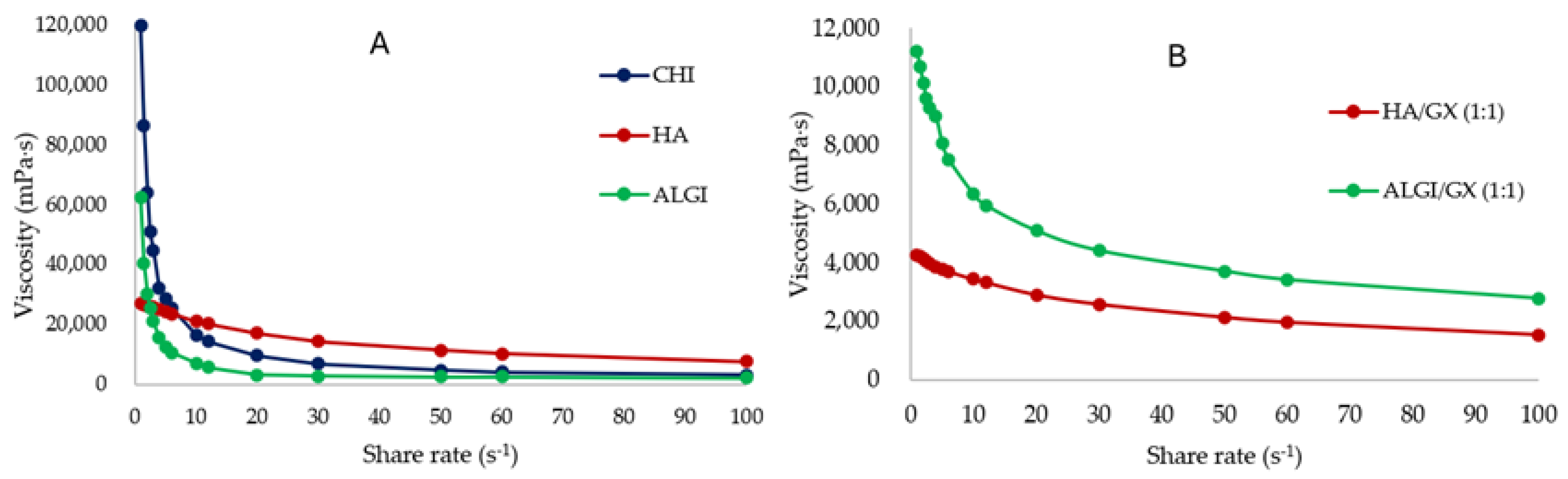
2.1. Rheological Behavior of Hydrogel Formulations
2.2. pH of Hydrogel Formulations
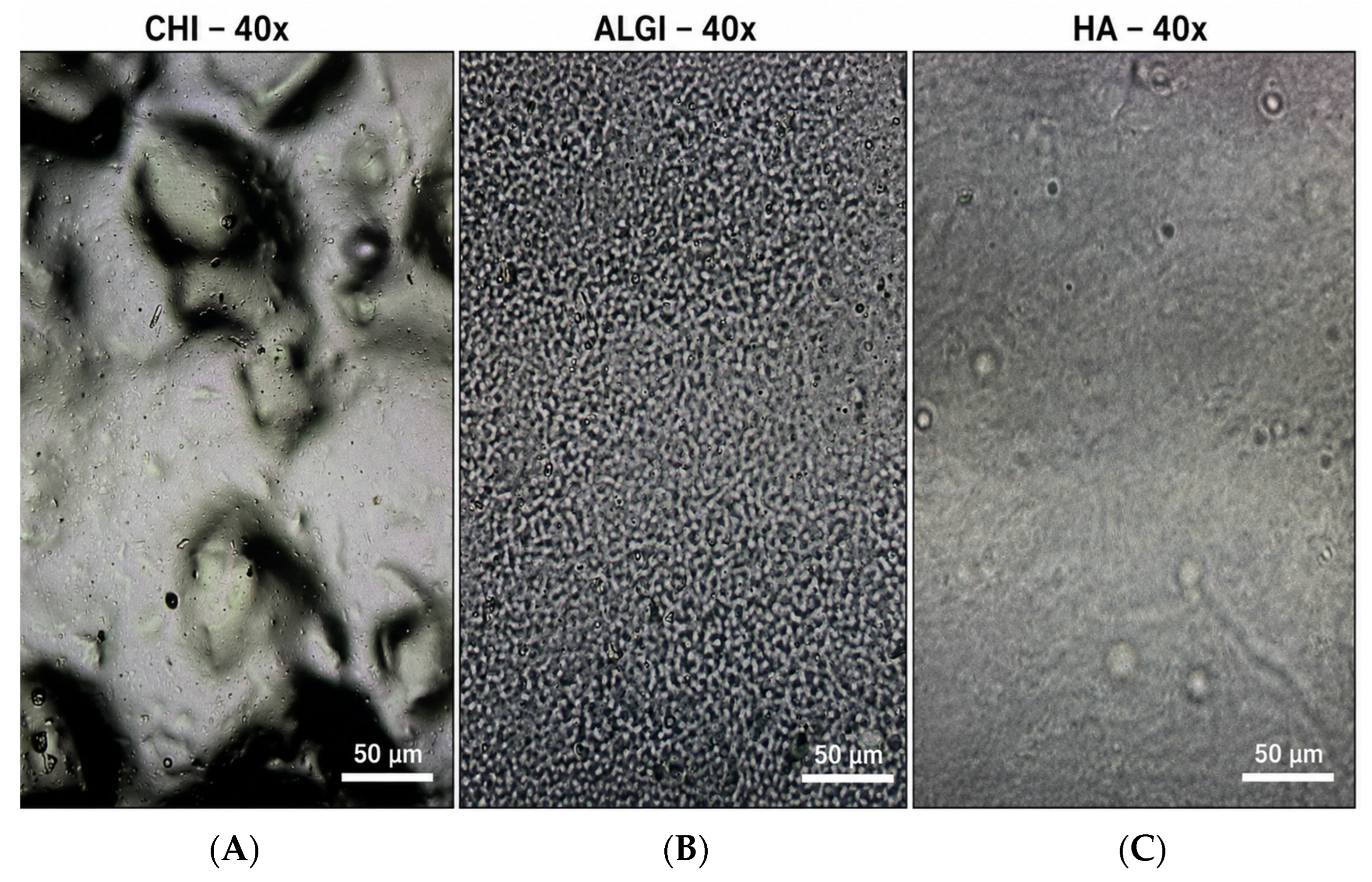
2.3. Film Morphology and Thickness
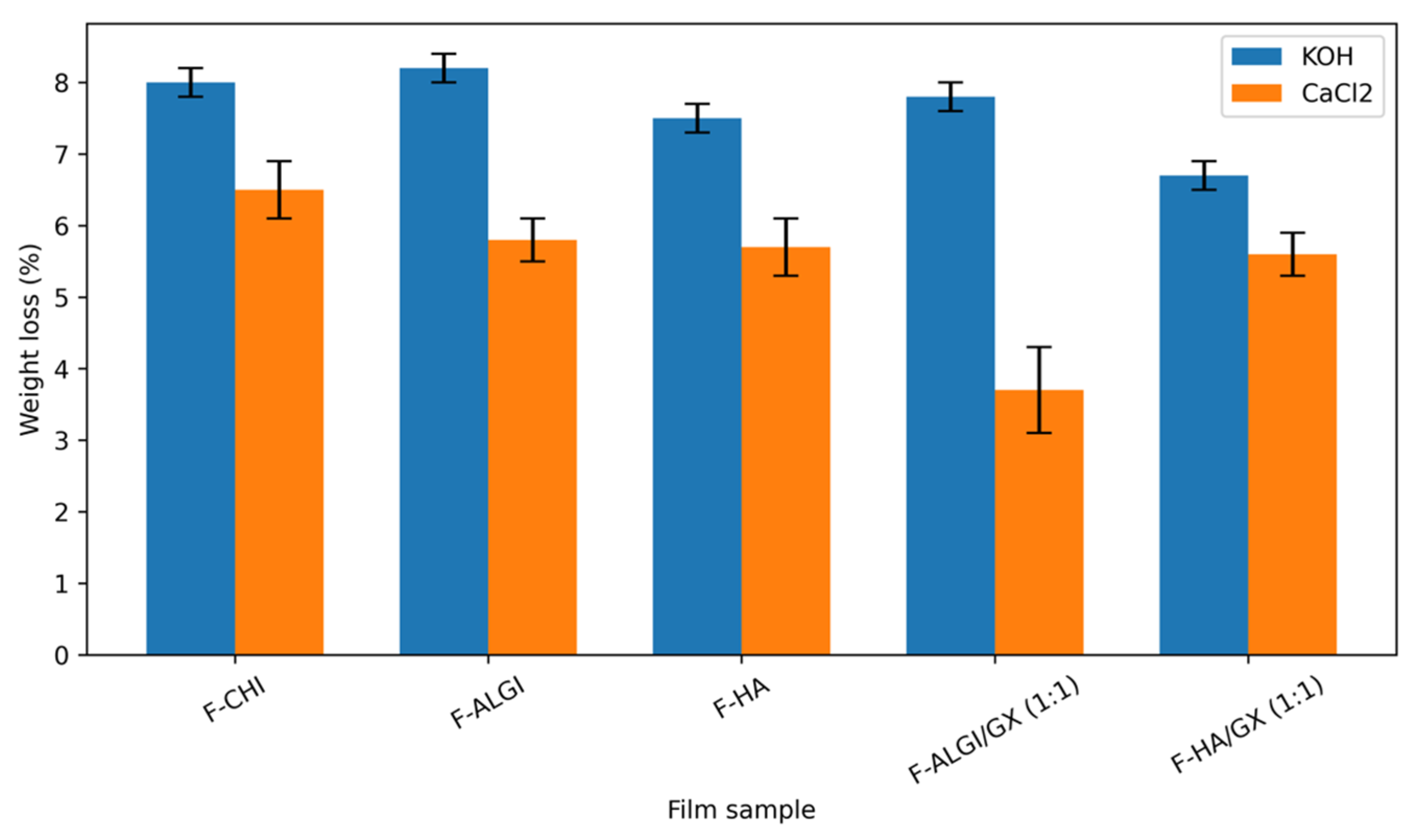
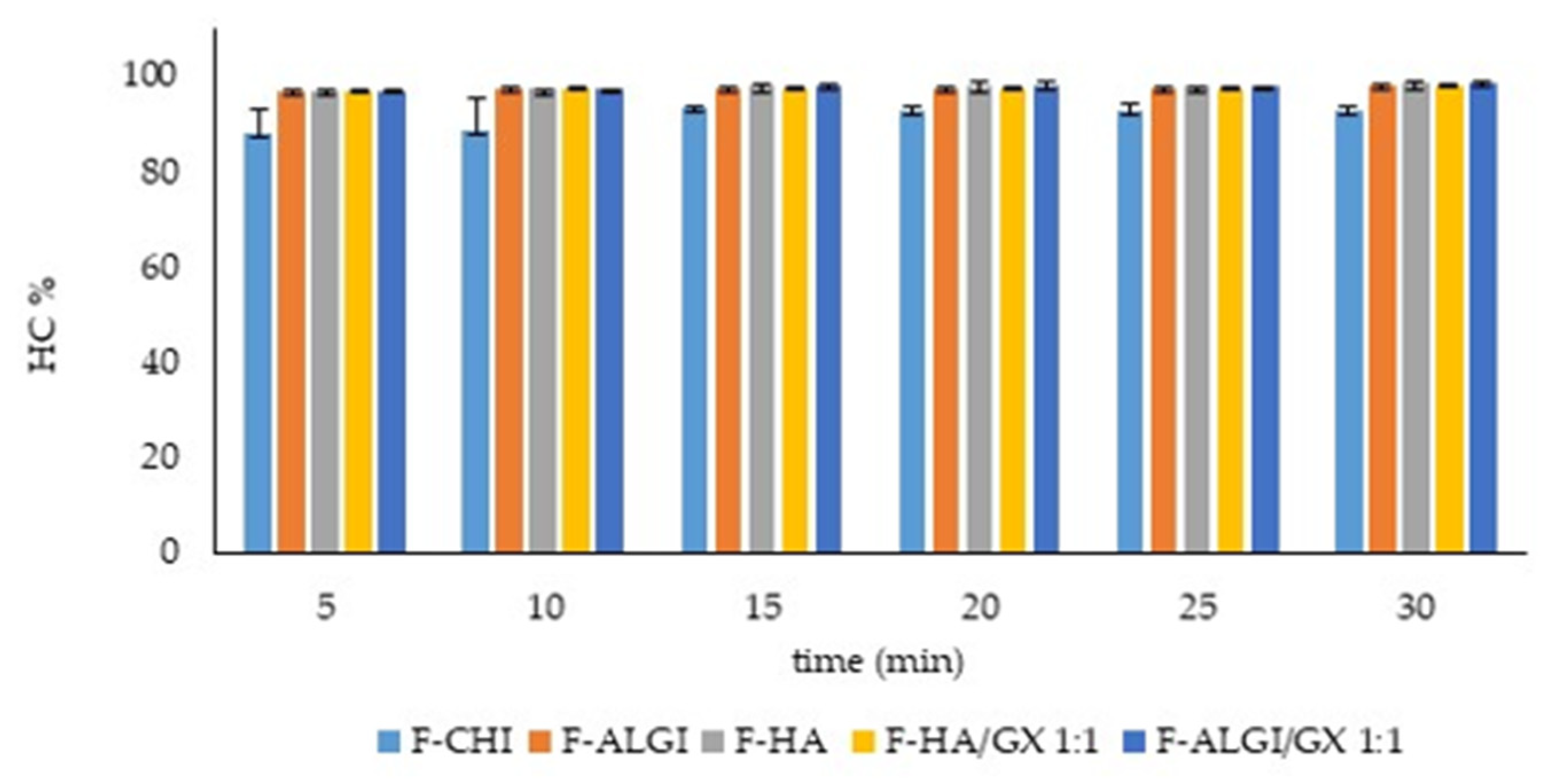
2.4. Film Water Loss
2.5. Water Uptake Capacity and Exudate Simulation
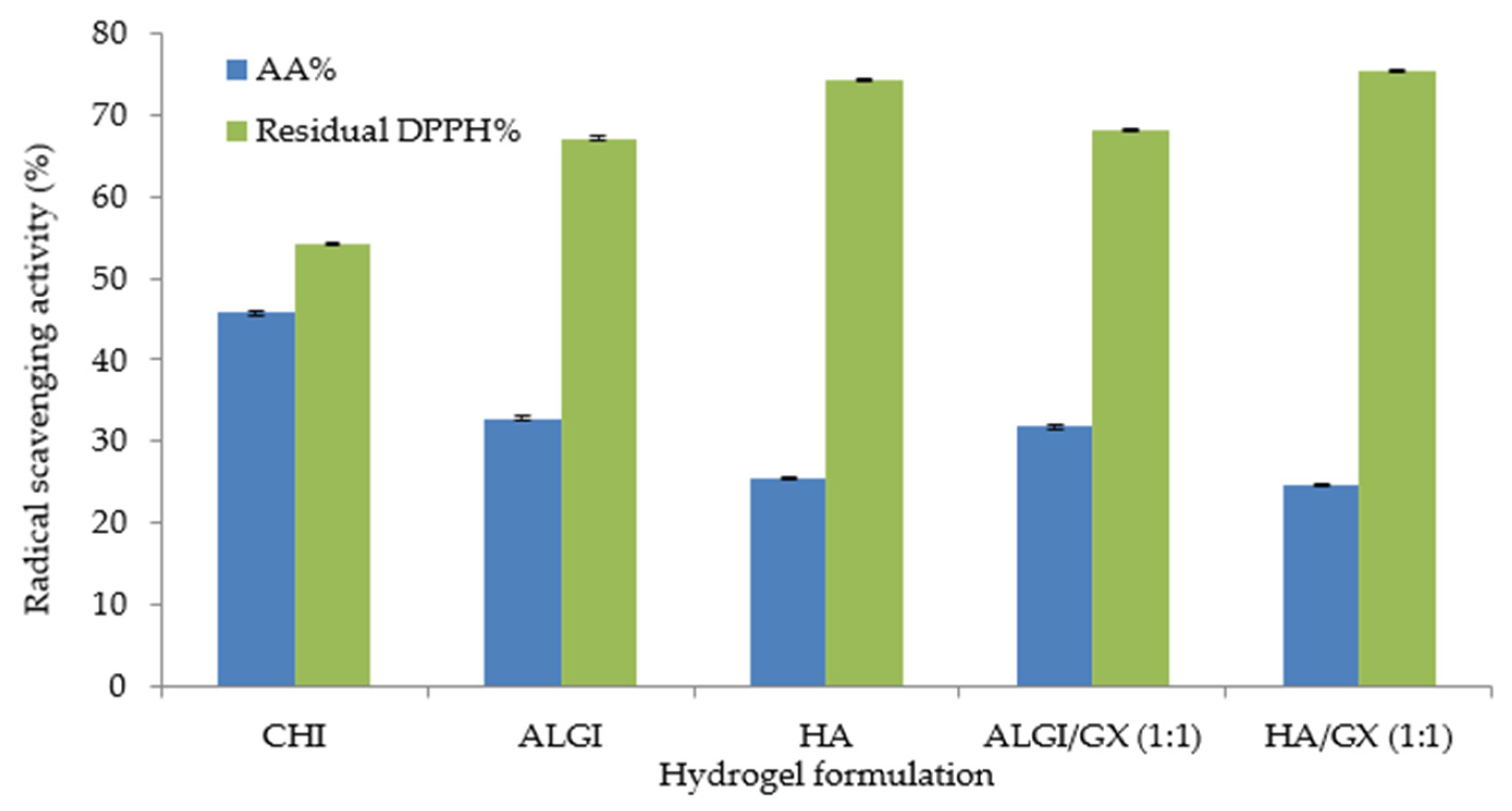
2.6. Antioxidant Activity of OMW-Loaded Hydrogels
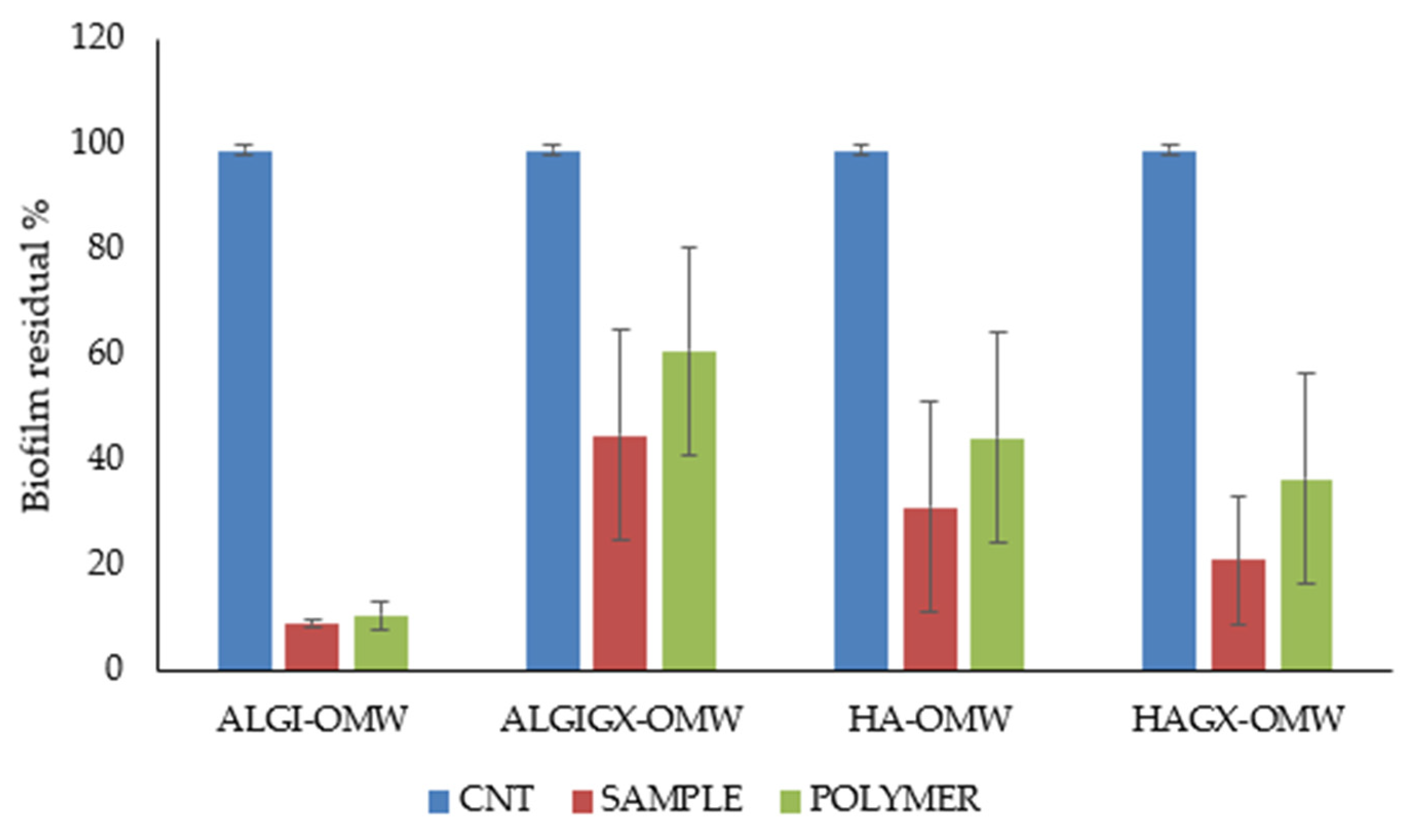
2.7. Inhibition of Biofilm Formation
3. Conclusions
4. Materials and Methods
4.1. Materials
4.2. Preparation of Hydrogels
4.3. Preparation of Hydrogel Films
4.4. Hydrogel and Film Characterization
4.4.1. Rheological Analysis
4.4.2. pH Measurement
4.4.3. Film Morphology and Thickness
4.4.4. Film Water Loss
4.4.5. Water Uptake Capacity and Exudate Simulation
4.5. Antioxidant Properties and Microbiological Evaluation
4.5.1. Determination of Antioxidant Activity by the DPPH Assay
4.5.2. Evaluation of Biofilm Formation Inhibition
4.6. Statistical Analysis
Author Contributions
Funding
Institutional Review Board Statement
Informed Consent Statement
Data Availability Statement
Conflicts of Interest
References
- Jin, C.; Jin, Y.; Ding, Z.; Nuch, K.S.; Han, M.; Shim, J.; Chien, P.N.; Heo, C.Y. Cellular and Molecular Mechanisms of Wound Repair: From Biology to Therapeutic Innovation. Cells 2025, 14, 1850. [Google Scholar] [CrossRef] [PubMed]
- Cioce, A.; Cavani, A.; Cattani, C.; Scopelliti, F. Role of the Skin Immune System in Wound Healing. Cells 2024, 13, 624. [Google Scholar] [CrossRef] [PubMed]
- Shariatzadeh, F.J.; Currie, S.; Logsetty, S.; Spiwak, R.; Liu, S. Enhancing wound healing and minimizing scarring: A comprehensive review of nanofiber technology in wound dressings. Prog. Mater. Sci. 2025, 147, 101350. [Google Scholar] [CrossRef]
- Alberts, A.; Tudorache, D.-I.; Niculescu, A.-G.; Grumezescu, A.M. Advancements in Wound Dressing Materials: Highlighting Recent Progress in Hydrogels, Foams, and Antimicrobial Dressings. Gels 2025, 11, 123. [Google Scholar] [CrossRef] [PubMed]
- Lagoa, T.; Queiroga, M.C.; Martins, L. An Overview of Wound Dressing Materials. Pharmaceuticals 2024, 17, 1110. [Google Scholar] [CrossRef] [PubMed]
- Baldea, I.; Grosu, I.G.; Ghafury, S.; Golat, C.; Doubali, D.; Vestemean, A.-M.; Cedorge, A.N.; Florian, I.; Yiannoulatos, M.; Wajahat, M.M.; et al. Biological Models for Evaluating Hydrogel-Based Formulations in Wound Healing. Gels 2025, 11, 705. [Google Scholar] [CrossRef] [PubMed]
- Zhang, W.; Liu, L.; Cheng, H.; Zhu, J.; Li, X.; Ye, S.; Li, X. Hydrogel-based dressings designed to facilitate wound healing. Mater. Adv. 2024, 5, 1364. [Google Scholar] [CrossRef]
- Xu, L.; Bai, E.; Zhu, Y.; Qin, J.; Du, X.; Huang, H. pH-Responsive Hydrogel as a Potential Oral Delivery System of Baicalin for Prolonging Gastroprotective Activity. Pharmaceutics 2023, 15, 257. [Google Scholar] [CrossRef] [PubMed]
- Lee, H.; Jung, Y.; Lee, N.; Lee, I.; Lee, J.H. Nature-Derived Polysaccharide-Based Composite Hydrogels for Promoting Wound Healing. Int. J. Mol. Sci. 2023, 24, 16714. [Google Scholar] [CrossRef] [PubMed]
- He, Q.; Gao, X.; Wu, Z.; Zhu, J.; Chen, H.; Liu, X.; Zhang, X. Robust, superabsorbent and antibacterial polysaccharide-based hybrid-network hydrogels for wound repair. Int. J. Biol. Macromol. 2024, 279, 134626. [Google Scholar] [CrossRef] [PubMed]
- Boateng, J.; Catanzano, O. Advanced Therapeutic Dressings for Effective Wound Healing—A Review. J. Pharm. Sci. 2015, 104, 3653–3680. [Google Scholar] [CrossRef] [PubMed]
- Benalaya, I.; Alves, G.; Lopes, J.; Silva, L.R. A Review of Natural Polysaccharides: Sources, Characteristics, Properties, Food, and Pharmaceutical Applications. Int. J. Mol. Sci. 2024, 25, 1322. [Google Scholar] [CrossRef] [PubMed]
- Berradi, A.; Aziz, F.; Achaby, M.E.; Ouazzani, N.; Mandi, L. A Comprehensive Review of Polysaccharide-Based Hydrogels as Promising Biomaterials. Polymers 2023, 15, 2908. [Google Scholar] [CrossRef] [PubMed]
- Maqsood, S.; Khalid, W.; Kumar, P.; Benmebarek, I.E.; Rasool, I.F.U.; Trif, M.; Moreno, A.; Esatbeyoglu, T. Valorization of plant-based agro-industrial waste and by-products for the production of polysaccharides: Towards a more circular economy. Appl. Food Res. 2025, 5, 100954. [Google Scholar] [CrossRef]
- Liu, T.; Ren, Q.; Wang, S.; Gao, J.; Shen, C.; Zhang, S.; Wang, Y.; Guan, F. Chemical Modification of Polysaccharides: A Review of Synthetic Approaches, Biological Activity and the Structure–Activity Relationship. Molecules 2023, 28, 6073. [Google Scholar] [CrossRef] [PubMed]
- Sepe, F.; Valentino, A.; Marcolongo, L.; Petillo, O.; Calarco, A.; Margarucci, S.; Peluso, G.; Conte, R. Polysaccharide Hydrogels as Delivery Platforms for Natural Bioactive Molecules: From Tissue Regeneration to Infection Control. Gels 2025, 11, 198. [Google Scholar] [CrossRef] [PubMed]
- Priya, S.; Choudhari, M.; Tomar, Y.; Desai, V.M.; Innani, S.; Dubey, S.K.; Singhvi, G. Exploring polysaccharide-based bio-adhesive topical film as a potential platform for wound dressing application: A review. Carbohydr. Polym. 2024, 327, 121655. [Google Scholar] [CrossRef] [PubMed]
- Shen, S.; Chen, X.; Shen, Z.; Chen, H. Marine Polysaccharides for Wound Dressings Application: An Overview. Pharmaceutics 2021, 13, 1666. [Google Scholar] [CrossRef] [PubMed]
- Cui, R.; Zhang, L.; Ou, R.; Xu, Y.; Xu, L.; Zhan, X.Y.; Li, D. Polysaccharide-Based Hydrogels for Wound Dressing: Design Considerations and Clinical Applications. Front. Bioeng. Biotechnol. 2022, 10, 845735. [Google Scholar] [CrossRef] [PubMed]
- Cafaggi, S.; Russo, E.; Stefani, R.; Leardi, R.; Caviglioli, G.; Parodi, B.; Bignardi, G.; de Totero, D.; Aiello, C.; Viale, M. Preparation and Evaluation of Nanoparticles Made of Chitosan or N-Trimethyl Chitosan and a Cisplatin-Alginate Complex. J. Control. Release 2007, 121, 110–123. [Google Scholar] [CrossRef] [PubMed]
- Chander, S.; Piplani, M.; Waghule, T.; Singhvi, G. Role of Chitosan in Transdermal Drug Delivery. In Chitosan in Drug Delivery; Elsevier: Amsterdam, The Netherlands, 2022; pp. 83–105. [Google Scholar]
- Dai, T.; Tanaka, M.; Huang, Y.-Y.; Hamblin, M.R. Chitosan preparations for wounds and burns: Antimicrobial and wound-healing effects. Expert. Rev. Anti-Infect. Ther. 2011, 9, 857–879. [Google Scholar] [CrossRef] [PubMed]
- Doan, V.K.; Tran, C.M.; Ho, T.T.-P.; Nguyen, L.K.-K.; Nguyen, Y.N.; Tang, N.T.; Luong, T.D.; Dang, N.N.-T.; Tran, N.M.-P.; Vu, B.T.; et al. Optimization of Oligomer Chitosan/Polyvinylpyrrolidone Coating for Enhancing Antibacterial, Hemostatic Effects and Biocompatibility of Nanofibrous Wound Dressing. Polymers 2022, 14, 3541. [Google Scholar] [CrossRef] [PubMed]
- Dash, M.; Chiellini, F.; Ottenbrite, R.M.; Chiellini, E. Chitosan—A versatile semi-synthetic polymer in biomedical applications. Prog. Polym. Sci. 2011, 36, 981–1014. [Google Scholar] [CrossRef]
- Rajinikanth, B.S.; Rajkumar, D.S.R.; Keerthika, K.; Vijayaragavan, V. Chitosan-Based Biomaterial in Wound Healing: A Review. Cureus 2024, 16, e55193. [Google Scholar] [CrossRef] [PubMed]
- Lee, K.Y.; Mooney, D.J. Alginate: Properties and biomedical applications. Prog. Polym. Sci. 2012, 37, 106–126. [Google Scholar] [CrossRef] [PubMed]
- Aderibigbe, B.A.; Buyana, B. Alginate in Wound Dressings. Pharmaceutics 2018, 10, 42. [Google Scholar] [CrossRef] [PubMed]
- Tomic, S.L.; Babic Radic, M.M.; Vukovic, J.S.; Filipovic, V.V.; Nikodinovic-Runic, J.; Vukomanovic, M. Alginate-Based Hydrogels and Scaffolds for Biomedical Applications. Mar. Drugs 2023, 21, 177. [Google Scholar] [CrossRef] [PubMed]
- Nie, L.; Deng, Y.; Yang, N.; Okoro, O.V.; Shavandi, A. Alginate-Based Composite and Its Biomedical Applications. In Properties and Applications of Alginates; IntechOpen: London, UK, 2021. [Google Scholar]
- Chylinska, N.; Maciejczyk, M. Hyaluronic Acid and Skin: Its Role in Aging and Wound-Healing Processes. Gels 2025, 11, 281. [Google Scholar] [CrossRef] [PubMed]
- Wójcik-Pastuszka, D.; Skrzypczyk, A.; Musiał, W. The Interactions and Release Kinetics of Sodium Hyaluronate Implemented in Nonionic and Anionic Polymeric Hydrogels, Studied by Immunoenzymatic ELISA Test. Pharmaceutics 2022, 14, 58. [Google Scholar]
- Dickera, K.T.; Gurskib, L.A.; Pradhan-Bhatt, S.; Wittb, R.L.; Farach-Carsone, M.C.; Jia, X. Hyaluronan: A simple polysaccharide with diverse biological functions. Acta Biomater. 2014, 10, 1558–1570. [Google Scholar] [CrossRef] [PubMed]
- Pagano, C.; Puglia, D.; Luzi, F.; Michele, A.D.; Scuota, S.; Primavilla, S.; Ceccarini, M.R.; Beccari, T.; Iborra, C.A.V.; Ramella, D. Development and Characterization of Xanthan Gum and Alginate Based Bioadhesive Film for Pycnogenol Topical Use in Wound Treatment. Pharmaceutics 2021, 13, 324. [Google Scholar] [CrossRef] [PubMed]
- Rajesh, N.; Siddaramaiah. Feasibility of xanthan gum–sodium alginate as a transdermal drug delivery system for domperidone. J. Mater. Sci. Mater. Med. 2009, 20, 2085–2089. [Google Scholar] [CrossRef] [PubMed]
- Mirmasoudi, S.S.; Shahrousvand, M.; Pourmohammadi-Bejarpasi, Z.; Roudkenar, M.K. Xanthan gum hydrogel wound dressing enhances wound healing in a rat excisional injury model. Heliyon 2025, 11, e43538. [Google Scholar] [CrossRef]
- Lin, X.; Zhang, X.; Wang, S. Hydrogels and hydrogel-based drug delivery systems for promoting refractory wound healing: Applications and prospects. Int. J. Biol. Macromol. 2025, 285, 138098. [Google Scholar] [CrossRef] [PubMed]
- Pintilei, P.S.; Binaymotlagh, R.; Chronopoulou, L.; Palocci, C. The Role of Natural Hydrogels in Enhancing Wound Healing: From Biomaterials to Bioactive Therapies. Pharmaceutics 2025, 17, 1243. [Google Scholar] [CrossRef] [PubMed]
- Genesi, B.P.; de Melo Barbosa, R.; Severino, P.; Rodas, A.C.D.; Yoshida, C.M.P.; Mathor, M.B.; Lopes, P.S.; Viseras, C.; Souto, E.B.; Ferreira da Silva, C. Aloe vera and copaiba oleoresin-loaded chitosan films for wound dressings: Microbial permeation, cytotoxicity, and in vivo proof of concept. Int. J. Pharm. 2023, 634, 122648. [Google Scholar] [CrossRef] [PubMed]
- Călina, I.C.; Scărișoreanu, A.; Demeter, M.; Mănăilă, E.; Crăciun, G. Strategies for Incorporating Natural Therapeutic Agents into Hydrogel Dressings: Innovations in Wound Healing. Polymers 2025, 17, 3105. [Google Scholar] [CrossRef] [PubMed]
- Olteanu, G.; Neacșu, S.M.; Joița, F.A.; Musuc, A.M.; Lupu, E.C.; Ioniță-Mîndrican, C.-B.; Lupuliasa, D.; Mititelu, M. Advancements in Regenerative Hydrogels in Skin Wound Treatment: A Comprehensive Review. Int. J. Mol. Sci. 2024, 25, 3849. [Google Scholar] [CrossRef] [PubMed]
- Russo, E.; Spallarossa, A.; Comite, A.; Pagliero, M.; Guida, P.; Belotti, V.; Caviglia, D.; Schito, A.M. Valorization and Potential Antimicrobial Use of Olive Mill Wastewater (OMW) from Italian Olive Oil Production. Antioxidants 2022, 11, 903. [Google Scholar] [CrossRef] [PubMed]
- Ruggeri, M.; De Luca, F.; Ungolo, A.; Vigani, B.; Paredes, A.J.; Russo, E.; Bottone, M.G.; Bianchi, E.; Ferrari, F.; Rossi, S.; et al. Olive mill wastewater: From by-product to smart antioxidant material. Int. J. Pharm. X 2024, 8, 100301. [Google Scholar] [CrossRef] [PubMed]
- Santajit, S.; Indrawattana, N. Mechanisms of Antimicrobial Resistance in ESKAPE Pathogens. BioMed Res. Int. 2016, 2016, 2475067. [Google Scholar] [CrossRef] [PubMed]
- De Oliveira, D.M.P.; Forde, B.M.; Kidd, T.J.; Harris, P.N.A.; Schembri, M.A.; Beatson, S.A.; Paterson, D.L.; Walker, M.J. Antimicrobial resistance in ESKAPE pathogens. Clin. Microbiol. Rev. 2020, 33, e00181-19. [Google Scholar] [CrossRef] [PubMed]
- Monte, J.; Abreu, A.C.; Borges, A.; Simões, L.C.; Simões, M. Antimicrobial Activity of Selected Phytochemicals against Escherichia coli and Staphylococcus aureus and Their Biofilms. Pathogens 2014, 3, 473–498. [Google Scholar] [CrossRef] [PubMed]
- Daglia, M. Polyphenols as antimicrobial agents. Curr. Opin. Biotechnol. 2012, 23, 174–181. [Google Scholar] [CrossRef] [PubMed]
- Heidarzadeh, M.; Same, K.; Nia, F.B.; Khavari, F.; Shahabi, S.; Nabian, M.H.; Mohammadabadi, S.R.M. Regenerative Medicine: A Review of Solutions in the Treatment of Skin Defects. Open J. Regen. Med. 2023, 12, 97–113. [Google Scholar] [CrossRef]
- Dermeche, S.; Nadour, M.; Larroche, C.; Moulti-Mati, F.; Michaud, P. Olive mill wastes: Biochemical characterizations and valorization strategies. Process Biochem. 2013, 48, 1532–1552. [Google Scholar] [CrossRef]
- Borbolla-Jiménez, F.V.; Peña-Corona, S.I.; Farah, S.J.; Jiménez-Valdés, M.T.; Pineda-Pérez, E.; Romero-Montero, A.; Del Prado-Audelo, M.L.; Bernal-Chávez, S.A.; Magaña, J.J.; Leyva-Gómez, G. Films for Wound Healing Fabricated Using a Solvent Casting Technique. Pharmaceutics 2023, 15, 1914. [Google Scholar] [CrossRef] [PubMed]
- Aree, T.; Jongrungruangchok, S. Structure–antioxidant activity relationship of β-cyclodextrin inclusion complexes with olive tyrosol, hydroxytyrosol and oleuropein: Deep insights from X-ray analysis, DFT calculation and DPPH assay. Carbohydr. Polym. 2018, 199, 661–669. [Google Scholar] [CrossRef] [PubMed]
- Cramton, S.E.; Gerke, C.; Götz, F. In Vitro Methods to Study Staphylococcal Biofilm Formation. Methods Enzymol. 2001, 336, 239–255. [Google Scholar] [CrossRef] [PubMed]
- Russo, E.; Caviglia, D.; Schito, A.M.; Villa, C. Cellulose-Based Hydrogels Incorporating Olive Mill Wastewater (OMW): Preparation, Characterization, and In Vitro Antimicrobial Activity. Gels 2026, 12, 282. [Google Scholar] [CrossRef] [PubMed]



| Hydrogel Formulations | pH |
|---|---|
| CHI | 4.80 ± 0.02 |
| HA | 7.05 ± 0.02 |
| ALGI | 7.02 ± 0.01 |
| HA/GX 1:1 | 6.13 ± 0.02 |
| ALGI/GX 1:1 | 6.19 ± 0.01 |
| Film Solvent Casting | Thickness (mm ± SD) |
|---|---|
| F-CHI | 0.015 ± 0.005 |
| F-ALGI | 0.020 ± 0.005 |
| F-HA | 0.015 ± 0.005 |
| F-ALGI_GX_1_1 | 0.010 ± 0.002 |
| F-HA_GX_1_1 | 0.010 ± 0.002 |
| Film Sample | Drying Condition | Weight Loss (%) |
|---|---|---|
| F-CHI | KOH | 8.0 ± 0.2 |
| CaCl2 | 6.5 ± 0.4 | |
| F-ALGI | KOH | 8.2 ± 0.2 |
| CaCl2 | 5.8 ± 0.3 | |
| F-HA | KOH | 7.5 ± 0.2 |
| CaCl2 | 5.7 ± 0.4 | |
| F-ALGI_GX_ 1_1 | KOH | 7.8 ± 0.2 |
| CaCl2 | 3.7 ± 0.6 | |
| F-HA_GX_ 1_1 | KOH | 6.7± 0.2 |
| CaCl2 | 5.6 ± 0.3 |
| Hydrogel Formulation | Hydrogel Weight (g) | Absorbance (nm) | Residual DPPH (%) | Antioxidant Activity (AA%) |
|---|---|---|---|---|
| CHI | 0.6 | 0.525 | 54.24 ± 0.2 | 45.76 ± 0.2 |
| ALGI | 0.6 | 0.650 | 67.15 ± 0.2 | 32.85 ± 0.2 |
| HA | 0.6 | 0.720 | 74.38 ± 0.1 | 25.62 ± 0.1 |
| ALGI/GX (1:1) | 0.6 | 0.660 | 68.18 ± 0.2 | 31.82 ± 0.2 |
| HA/GX (1:1) | 0.6 | 0.730 | 75.41 ± 0.1 | 24.59 ± 0.1 |
| Blank Sample Code | Polymer Concentration | Solvent | Sample Code with 10% OMW |
|---|---|---|---|
| CHI | Chitosan 2.5% | Water/Acetic acid (1%) | CHI/OMW |
| HA | Sodium hyaluronate 2.5% | Water | HA/OMW |
| ALGI | Sodium alginate 2.5% | Water | ALGI/OMW |
| GX | Xanthan gum 0.5% | Water | – |
| Film Code | Hydrogel Composition | Polymer Ratio (w/w) | Notes |
|---|---|---|---|
| F-CHI | Chitosan 2.5% | – | Single polymer |
| F-ALGI | Sodium alginate 2.5% | – | Single polymer |
| F-HA | Sodium hyaluronate 2.5% | – | Single polymer |
| F-ALGI_GX_1_1 | Sodium alginate/Xanthan gum | 1:1 | Binary mixture |
| F-ALGI_GX_1_0.5 | Sodium alginate/Xanthan gum | 1:0.5 | Binary mixture |
| F-HA_GX_1_1 | Sodium hyaluronate/Xanthan gum | 1:1 | Binary mixture |
| F-HA_GX_1_0.5 | Sodium hyaluronat/Xanthan gum | 1:0.5 | Binary mixture |
Disclaimer/Publisher’s Note: The statements, opinions and data contained in all publications are solely those of the individual author(s) and contributor(s) and not of MDPI and/or the editor(s). MDPI and/or the editor(s) disclaim responsibility for any injury to people or property resulting from any ideas, methods, instructions or products referred to in the content. |
© 2026 by the authors. Licensee MDPI, Basel, Switzerland. This article is an open access article distributed under the terms and conditions of the Creative Commons Attribution (CC BY) license.
Share and Cite
Russo, E.; Villa, C.; Schito, A.M.; Caviglia, D. Olive Mill Wastewater-Loaded Polysaccharide Hydrogels as Potential Antibacterial Films for Wound Healing. Gels 2026, 12, 549. https://doi.org/10.3390/gels12060549
Russo E, Villa C, Schito AM, Caviglia D. Olive Mill Wastewater-Loaded Polysaccharide Hydrogels as Potential Antibacterial Films for Wound Healing. Gels. 2026; 12(6):549. https://doi.org/10.3390/gels12060549
Chicago/Turabian StyleRusso, Eleonora, Carla Villa, Anna Maria Schito, and Debora Caviglia. 2026. "Olive Mill Wastewater-Loaded Polysaccharide Hydrogels as Potential Antibacterial Films for Wound Healing" Gels 12, no. 6: 549. https://doi.org/10.3390/gels12060549
APA StyleRusso, E., Villa, C., Schito, A. M., & Caviglia, D. (2026). Olive Mill Wastewater-Loaded Polysaccharide Hydrogels as Potential Antibacterial Films for Wound Healing. Gels, 12(6), 549. https://doi.org/10.3390/gels12060549