
Ice Templated PEG–Alginate Double-Network Cryogels with Tunable Mechanics and Degradation for Soft Tissue Engineering


Abstract
1. Introduction
2. Results and Discussion
2.1. Synthesis of Cryogels
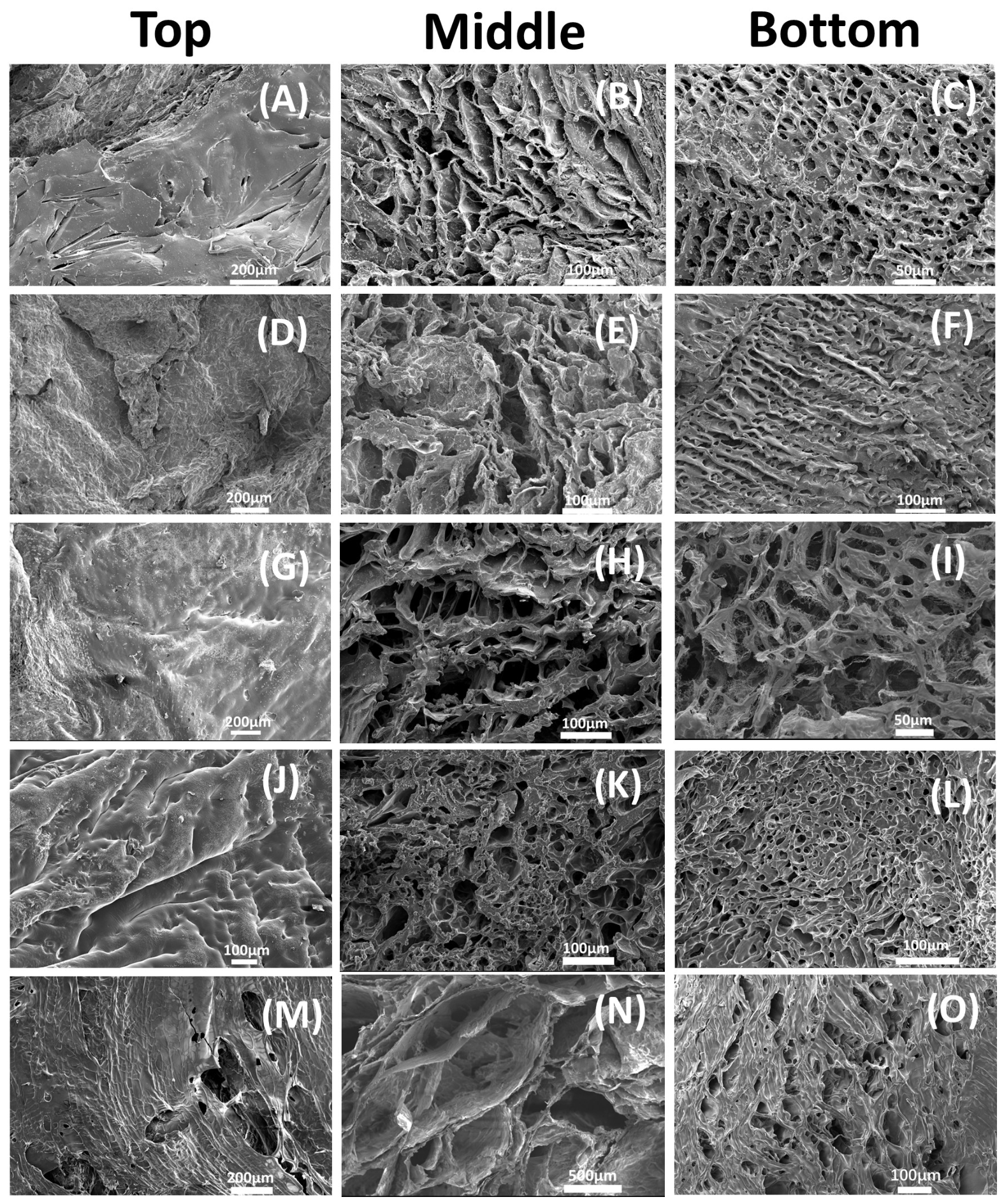
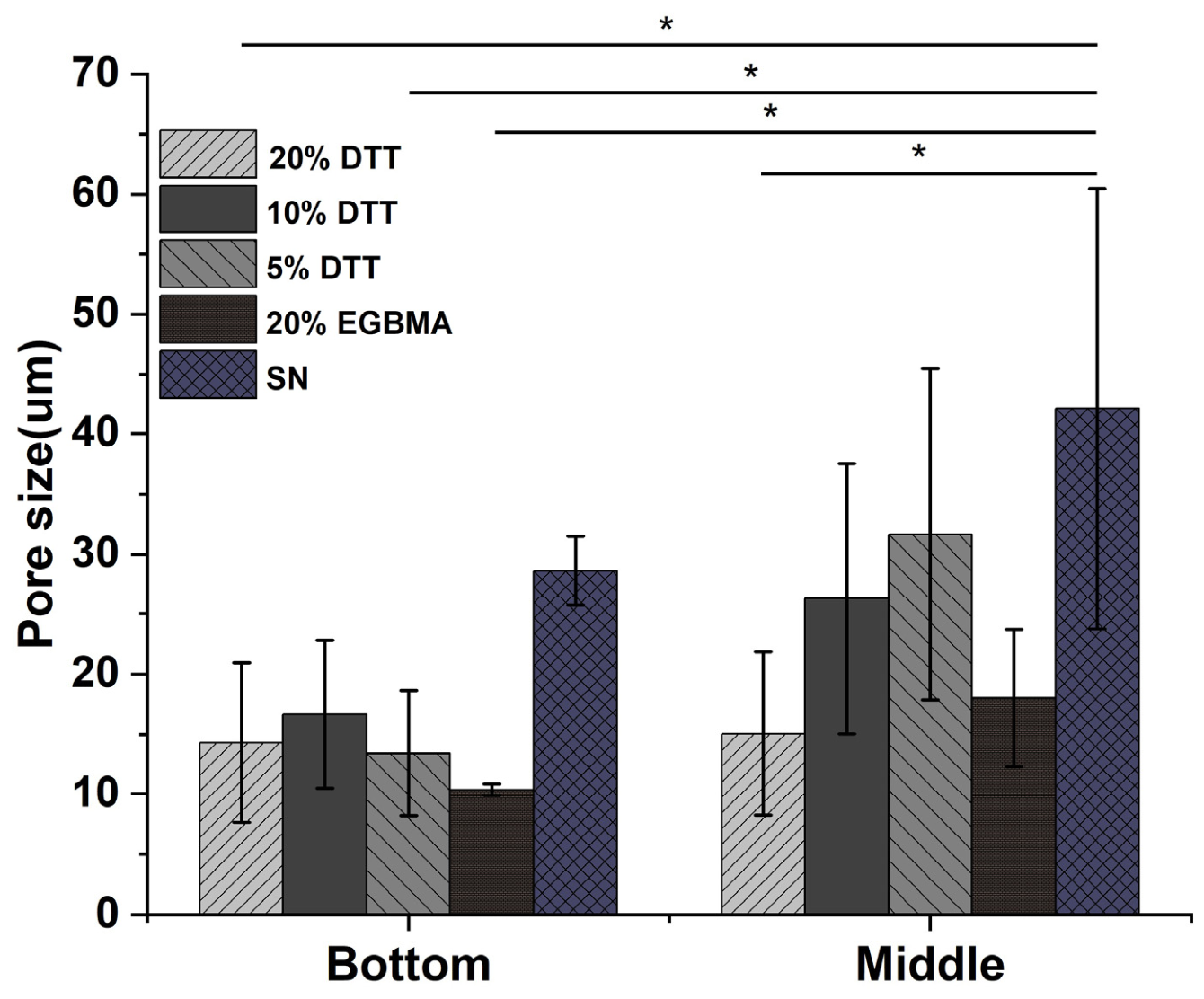
2.2. Microstructure of PEG–Alginate DN Cryogels
2.3. Compressive Mechanical Properties of DN Cryogels
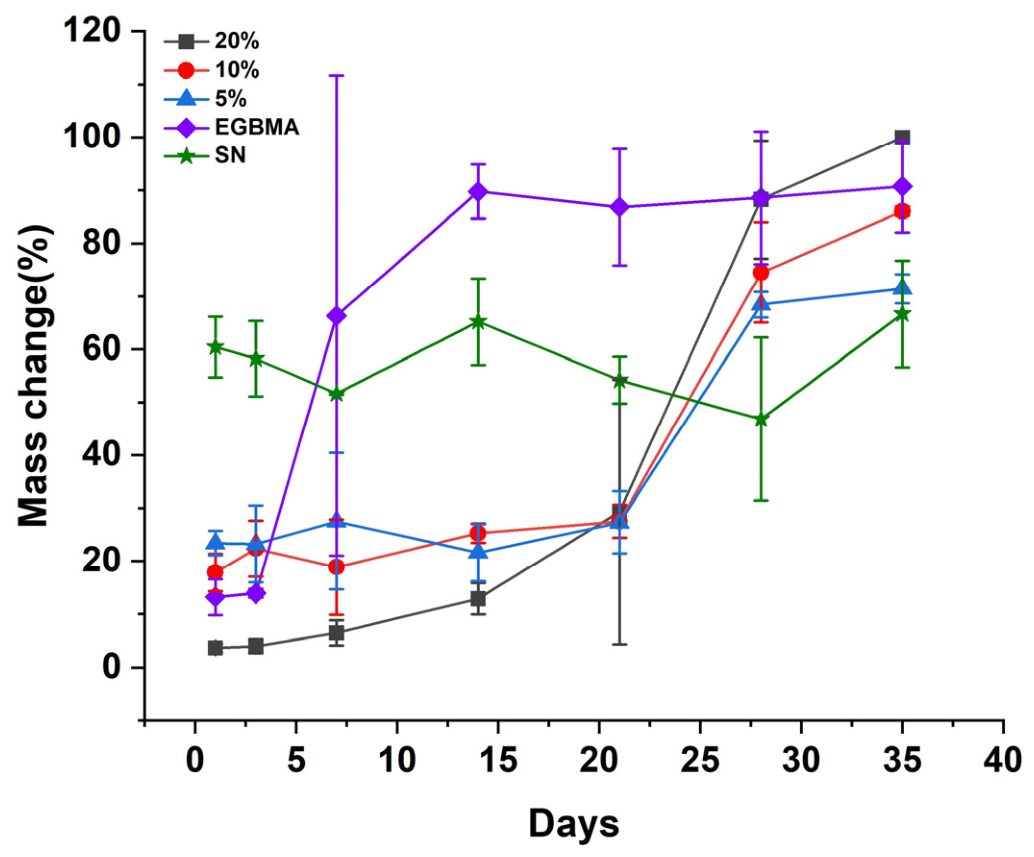
2.4. Degradation Kinetics of the Cryogels
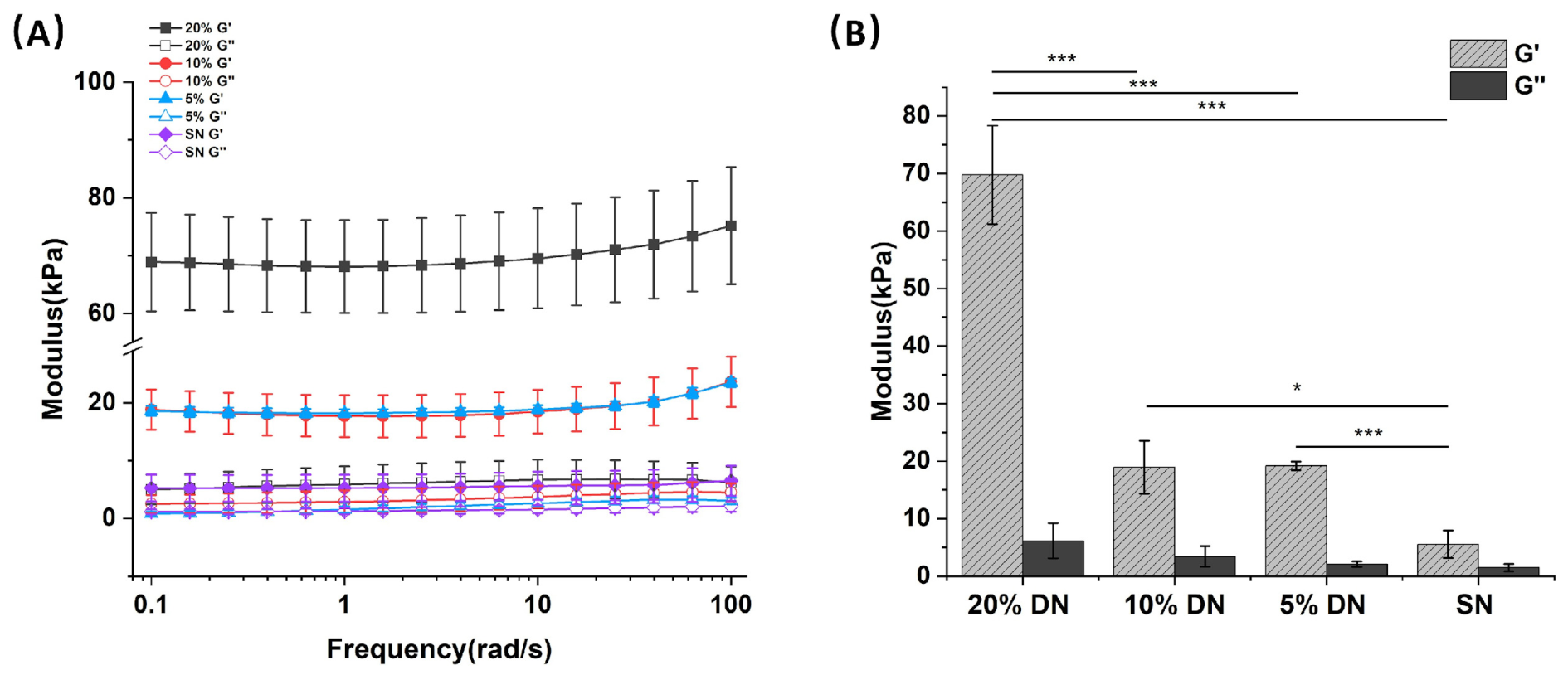
2.5. Rheological Properties of DN Cryogels
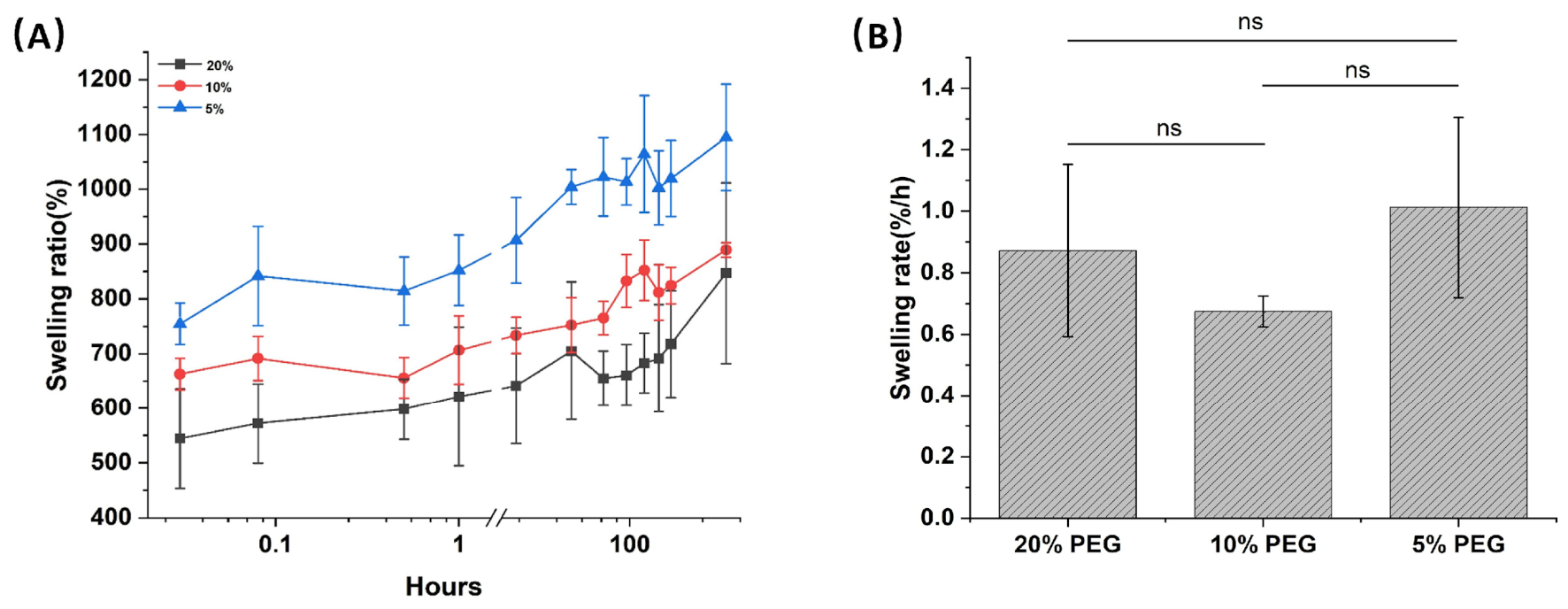
2.6. Swelling Kinetics of DN PEG–Alginate Cryogels
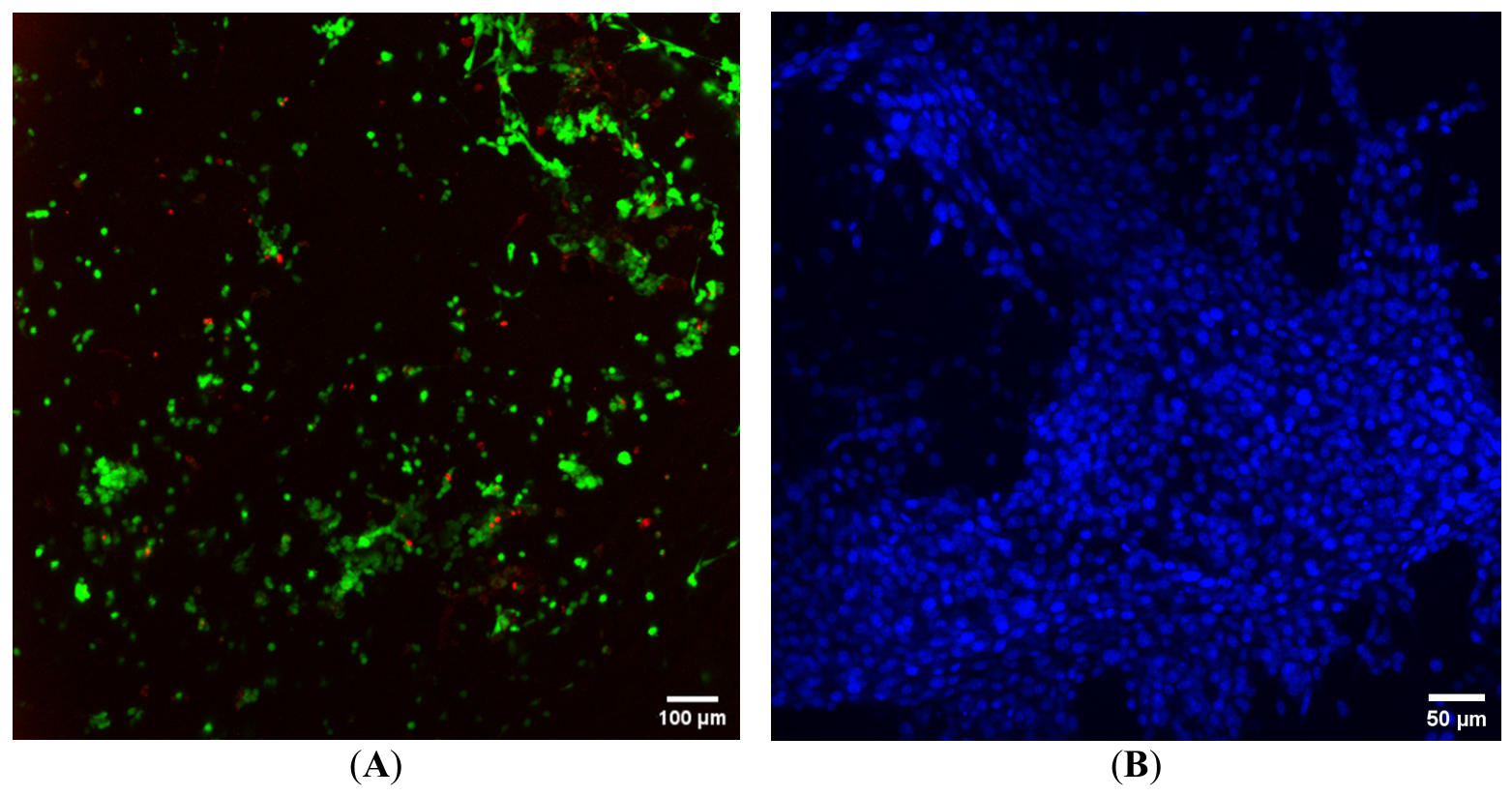
2.7. Cell Culture in the PEG–Alginate DN Cryogels
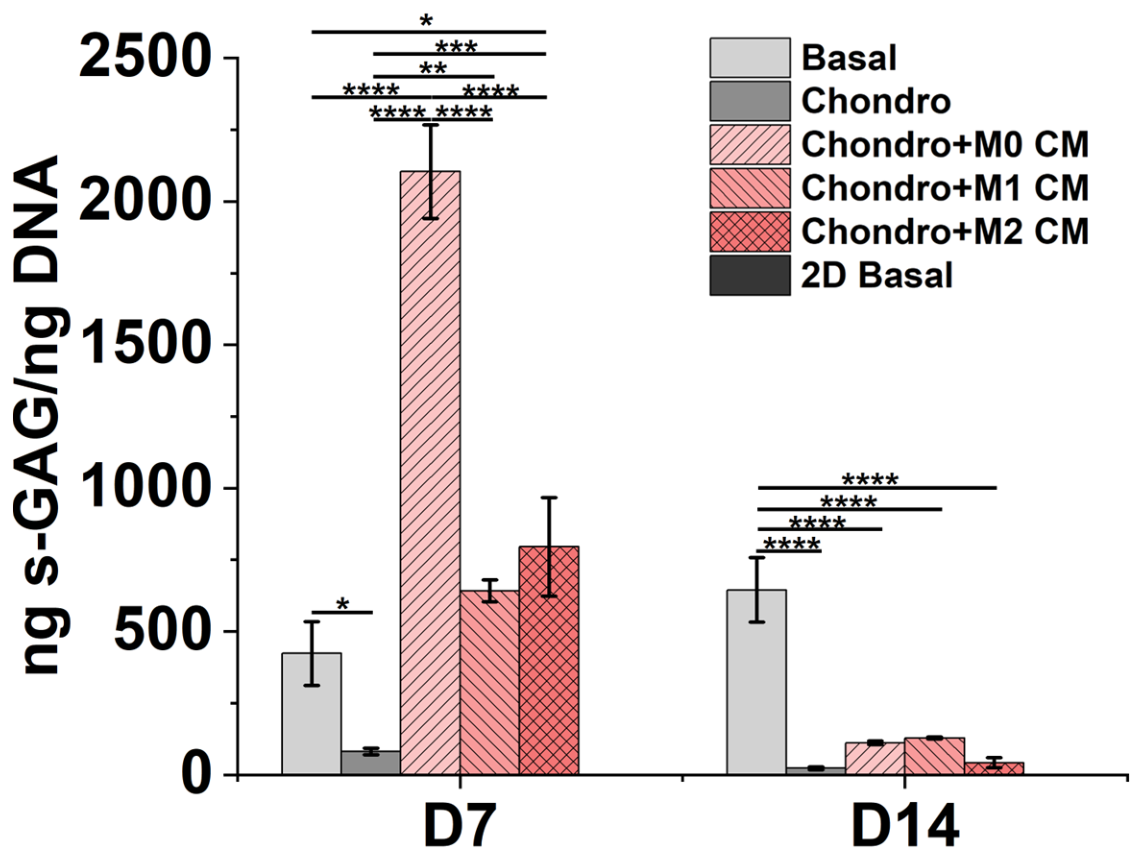
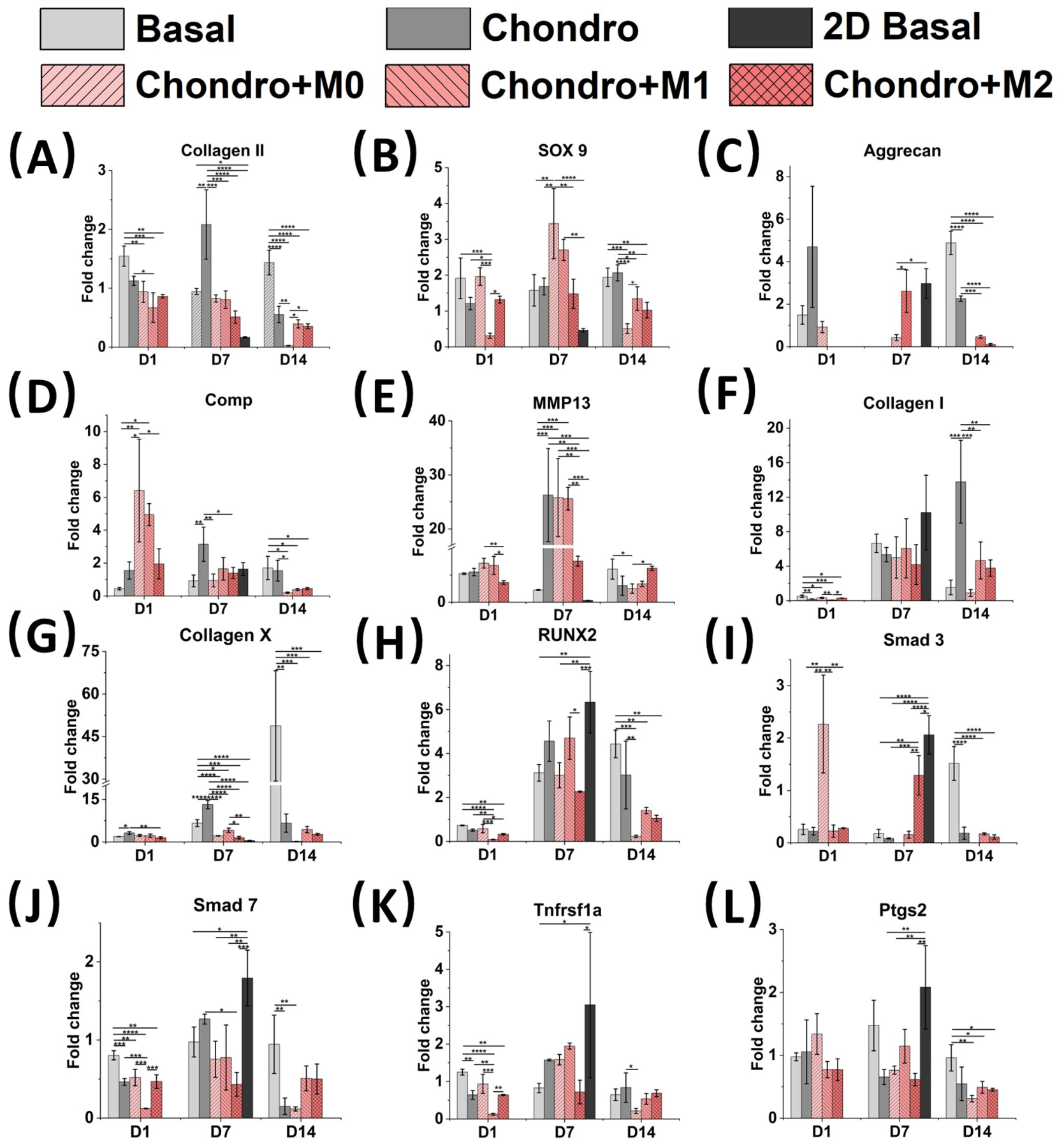
2.8. Chondrogenic Differentiation of Mouse MSCs in PEG–Alginate DN Cryogels
3. Conclusions
4. Materials and Methods
4.1. Materials
4.2. PEG–Alginate Double-Network Cryogel Synthesis
4.3. Scanning Electron Microscopy of Cryogels
4.4. Swelling Kinetics of PEG–Alginate DN Cryogels
4.5. Rheological Measurements of PEG–Alginate DN Cryogels
4.6. Mechanical Analysis of PEG–Alginate DN Cryogels
4.7. Degradation Test
4.8. Collagen Coating and Cell Seeding
4.9. Cell Viability and Infiltration Measurement
4.10. MSC Seeding in Cryogels and Chondrogenic Differentiation
4.11. RNA Extraction and Target Gene Expression
4.12. Quantification of s-GAG Content by DMMB Assay
4.13. Statistical Analysis
Supplementary Materials
Author Contributions
Funding
Institutional Review Board Statement
Informed Consent Statement
Data Availability Statement
Acknowledgments
Conflicts of Interest
References
- Ho, J.; Walsh, C.; Yue, D.; Dardik, A.; Cheema, U. Current advancements and strategies in tissue engineering for wound healing: A comprehensive review. Adv. Wound Care. 2017, 6, 191–209. [Google Scholar] [CrossRef] [PubMed]
- Muzzio, N.; Moya, S.; Romero, G. Multifunctional scaffolds and synergistic strategies in tissue engineering and regenerative medicine. Pharmaceutics 2021, 13, 792. [Google Scholar] [CrossRef]
- Guo, J.-B.; Liang, T.; Che, Y.-J.; Yang, H.-L.; Luo, Z.-P. Structure and mechanical properties of high-weight-bearing and low-weight-bearing areas of hip cartilage at the micro-and nano-levels. BMC Musculoskelet. Disord. 2020, 21, 425. [Google Scholar] [CrossRef]
- Jiang, S.; Wang, M.; He, J. A review of biomimetic scaffolds for bone regeneration: Toward a cell-free strategy. Bioeng. Transl. Med. 2021, 6, e10206. [Google Scholar] [CrossRef]
- Gomez-Florit, M.; Pardo, A.; Domingues, R.M.; Graça, A.L.; Babo, P.S.; Reis, R.L.; Gomes, M.E. Natural-based hydrogels for tissue engineering applications. Molecules 2020, 25, 5858. [Google Scholar] [CrossRef]
- Taghipour, Y.D.; Hokmabad, V.R.; Del Bakhshayesh, A.R.; Asadi, N.; Salehi, R.; Nasrabadi, H.T. The application of hydrogels based on natural polymers for tissue engineering. Curr. Med. Chem. 2020, 27, 2658–2680. [Google Scholar] [CrossRef] [PubMed]
- Lee, J.-H.; Kim, H.-W. Emerging properties of hydrogels in tissue engineering. J. Tissue Eng. 2018, 9, 2041731418768285. [Google Scholar] [CrossRef]
- Li, X.; Gong, J.P. Design principles for strong and tough hydrogels. Nat. Rev. Mater. 2024, 9, 380–398. [Google Scholar] [CrossRef]
- Zhang, Y.S.; Khademhosseini, A. Advances in engineering hydrogels. Sci. Adv. 2017, 356, eaaf3627. [Google Scholar] [CrossRef] [PubMed]
- Xu, X.; Jerca, V.V.; Hoogenboom, R. Bioinspired double network hydrogels: From covalent double network hydrogels via hybrid double network hydrogels to physical double network hydrogels. Mater. Horiz. 2021, 8, 1173–1188. [Google Scholar] [CrossRef]
- Gong, J.P. Why are double network hydrogels so tough? Soft Matter 2010, 6, 2583–2590. [Google Scholar] [CrossRef]
- Kharkar, P.M.; Kiick, K.L.; Kloxin, A.M. Designing degradable hydrogels for orthogonal control of cell microenvironments. Chem. Soc. Rev. 2013, 42, 7335–7372. [Google Scholar] [CrossRef]
- Li, Y.; Maciel, D.; Rodrigues, J.; Shi, X.; Tomás, H. Biodegradable polymer nanogels for drug/nucleic acid delivery. Chem. Rev. 2015, 115, 8564–8608. [Google Scholar] [CrossRef]
- Jain, E.; Zhang, K.; Mishra Tiwari, R. Properties and Characterization of cryogels: Structural, mechanical, and functional insights. ACS Omega 2025, 10, 36771–36787. [Google Scholar] [CrossRef]
- Lozinsky, V.I. Cryogels on the basis of natural and synthetic polymers: Preparation, properties and application. Russ. Chem. Rev. 2002, 71, 489–511. [Google Scholar] [CrossRef]
- Okay, O.; Lozinsky, V.I. Synthesis and structure–property relationships of cryogels. In Polymeric Cryogels: Macroporous Gels with Remarkable Properties; Springer: Berlin/Heidelberg, Germany, 2014; pp. 103–157. [Google Scholar]
- Holkar, K.; Zhang, K.; Mishra Tiwari, R.; Jain, E. Emerging trends in cryogelation: Key factors influencing cryotropic gelation processes. J. Polym. Sci. Eng. 2025, 45, 576–596. [Google Scholar] [CrossRef]
- Yang, Z.; Zhang, K.; Seitz, M.P.; Jain, E. Macroporous Alginate–PEG Hybrid Double Network Cryogels: Tuning Mechanics, Porosity, and Long-Term Growth Factor Release via Polymer Concentration, Ice Nucleation, and Sulfation. ACS Appl. Bio Mater. 2025, 9, 1039–1052. [Google Scholar] [CrossRef] [PubMed]
- Henderson, T.M.; Ladewig, K.; Haylock, D.N.; McLean, K.M.; O’Connor, A.J. Cryogels for biomedical applications. J. Mater. Chem. B. 2013, 1, 2682–2695. [Google Scholar] [CrossRef]
- Gun’ko, V.M.; Savina, I.N.; Mikhalovsky, S.V. Cryogels: Morphological, structural and adsorption characterisation. Adv. Colloid Interface Sci. 2013, 187, 1–46. [Google Scholar] [CrossRef]
- Kothale, D.; Verma, U.; Dewangan, N.; Jana, P.; Jain, A.; Jain, D. Alginate as promising natural polymer for pharmaceutical, food, and biomedical applications. Curr. Drug Deliv. 2020, 17, 755–775. [Google Scholar] [CrossRef] [PubMed]
- Szekalska, M.; Puciłowska, A.; Szymańska, E.; Ciosek, P.; Winnicka, K. Alginate: Current use and future perspectives in pharmaceutical and biomedical applications. Int. J. Polym. Sci. 2016, 2016, 7697031. [Google Scholar] [CrossRef]
- Savina, I.N.; Zoughaib, M.; Yergeshov, A.A. Design and assessment of biodegradable macroporous cryogels as advanced tissue engineering and drug carrying materials. Gels 2021, 7, 79. [Google Scholar] [CrossRef] [PubMed]
- Sezen, S.; Thakur, V.K.; Ozmen, M.M. Highly effective covalently crosslinked composite alginate cryogels for cationic dye removal. Gels 2021, 7, 178. [Google Scholar] [CrossRef]
- Zhang, K.; Yang, Z.; Seitz, M.P.; Jain, E. Macroporous PEG-alginate hybrid double-network cryogels with tunable degradation rates prepared via radical-free cross-linking for cartilage tissue engineering. ACS Appl. Bio Mater. 2024, 7, 5925–5938. [Google Scholar] [CrossRef]
- Kahveci, M.U.; Beyazkilic, Z.; Yagci, Y. Polyacrylamide cryogels by photoinitiated free radical polymerization. J. Polym. Sci. A Polym. Chem. 2010, 48, 4989–4994. [Google Scholar] [CrossRef]
- Shakya, A.K.; Holmdahl, R.; Nandakumar, K.S.; Kumar, A. Polymeric cryogels are biocompatible, and their biodegradation is independent of oxidative radicals. J. Biomed. Mater. Res. A 2014, 102, 3409–3418. [Google Scholar] [CrossRef]
- Carmagnola, I.; Ranzato, E.; Chiono, V. Scaffold functionalization to support a tissue biocompatibility. In Functional 3D Tissue Engineering Scaffolds; Elsevier: Amsterdam, The Netherlands, 2018; pp. 255–277. [Google Scholar]
- Kong, H.J.; Kaigler, D.; Kim, K.; Mooney, D.J. Controlling rigidity and degradation of alginate hydrogels via molecular weight distribution. Biomacromolecules 2004, 5, 1720–1727. [Google Scholar] [CrossRef] [PubMed]
- Lee, K.Y.; Rowley, J.A.; Eiselt, P.; Moy, E.M.; Bouhadir, K.H.; Mooney, D.J. Controlling mechanical and swelling properties of alginate hydrogels independently by cross-linker type and cross-linking density. Macromolecules 2000, 33, 4291–4294. [Google Scholar] [CrossRef]
- D’souza, A.A.; Shegokar, R. Polyethylene glycol (PEG): A versatile polymer for pharmaceutical applications. Expert Opin. Drug Deliv. 2016, 13, 1257–1275. [Google Scholar] [CrossRef]
- Dispinar, T.; Van Camp, W.; De Cock, L.J.; De Geest, B.G.; Du Prez, F.E. Redox-responsive degradable PEG cryogels as potential cell scaffolds in tissue engineering. Macromol. Biosci. 2012, 12, 383–394. [Google Scholar] [CrossRef]
- Ifkovits, J.L.; Burdick, J.A. Photopolymerizable and degradable biomaterials for tissue engineering applications. Tissue Eng. Part A 2007, 13, 2369–2385. [Google Scholar] [CrossRef]
- Lee, K.Y.; Bouhadir, K.H.; Mooney, D.J. Controlled degradation of hydrogels using multi-functional cross-linking molecules. Biomaterials 2004, 25, 2461–2466. [Google Scholar] [CrossRef]
- Jain, E.; Hill, L.; Canning, E.; Sell, S.A.; Zustiak, S.P. Control of gelation, degradation and physical properties of polyethylene glycol hydrogels through the chemical and physical identity of the crosslinker. J. Mater. Chem. B 2017, 5, 2679–2691. [Google Scholar] [CrossRef]
- Li, B.; Yang, Z.; Li, Y.; Zhang, J.; Li, C.; Lv, N. Exploration beyond osteoarthritis: The association and mechanism of its related comorbidities. Front. Endocrinol. 2024, 15, 1352671. [Google Scholar] [CrossRef] [PubMed]
- Yang, Y.; Zhang, H. Intra-articular injection of nanomaterials for the treatment of osteoarthritis: From lubrication function restoration to cell and gene therapy. Adv. Funct. Mater. 2024, 34, 2401547. [Google Scholar] [CrossRef]
- Zhou, H.; Zhang, Z.; Mu, Y.; Yao, H.; Zhang, Y.; Wang, D.-A. Harnessing nanomedicine for cartilage repair: Design considerations and recent advances in biomaterials. ACS Nano 2024, 18, 10667–10687. [Google Scholar] [CrossRef]
- Zhu, R.; Schutyser, M.A.; Boom, R.M.; Zhang, L. Tuning the mechanical properties of starch-based cryogels with the aid of additives. Carbohydr. Polym. Technol. Appl. 2024, 8, 100548. [Google Scholar] [CrossRef]
- Hixon, K.R.; Jain, E.; Kadakia, P.U.; Minden-Birkenmaier, B.A.; Sell, S.A. Cryogel Scaffolds: An Appropriate Scaffold Structure for Promoting Bone Regeneration. Tissue Eng. Part A 2015, 21, S382. [Google Scholar]
- Jain, E.; Kumar, A. Disposable polymeric cryogel bioreactor matrix for therapeutic protein production. Nat. Protoc. 2013, 8, 821–835. [Google Scholar] [CrossRef]
- Greene, G.W.; Zappone, B.; Söderman, O.; Topgaard, D.; Rata, G.; Zeng, H.; Israelachvili, J.N. Anisotropic dynamic changes in the pore network structure, fluid diffusion and fluid flow in articular cartilage under compression. Biomaterials 2010, 31, 3117–3128. [Google Scholar] [CrossRef] [PubMed]
- Neal, S.; Tan, X.; Jain, E.; Chen, C.; Hashemi, M.; Setton, L.A.; Huebsch, N. Enhancing the Potency of Growth Factor-Mimicking Peptides via Cross-Presentation with Integrin Ligands. J. Biomed. Mater. Res. Part A 2025, 113, e37944. [Google Scholar] [CrossRef]
- Goldring, M.B.; Otero, M.; Plumb, D.A.; Dragomir, C.; Favero, M.; El Hachem, K.; Hashimoto, K.; Roach, H.I.; Olivotto, E.; Borzi, R.M.; et al. Roles of inflammatory and anabolic cytokines in cartilage metabolism: Signals and multiple effectors converge upon MMP-13 regulation in osteoarthritis. Eur. Cells Mater. 2011, 21, 202–220. [Google Scholar] [CrossRef]
- Wehling, N.; Palmer, G.D.; Pilapil, C.; Liu, F.; Wells, J.W.; Muller, P.E.; Evans, C.H.; Porter, R.M. Interleukin-1β and tumor necrosis factor alpha inhibit chondrogenesis by human mesenchymal stem cells through NF-κB-dependent pathways. Arthritis Rheum. 2009, 60, 801–812. [Google Scholar] [CrossRef]
- Voskamp, C.; Koevoet, W.; Somoza, R.A.; Caplan, A.I.; Lefebvre, V.; van Osch, G.; Narcisi, R. Enhanced Chondrogenic Capacity of Mesenchymal Stem Cells After TNFalpha Pre-treatment. Front. Bioeng. Biotechnol. 2020, 8, 658. [Google Scholar] [CrossRef]
- Kondo, M.; Yamaoka, K.; Sakata, K.; Sonomoto, K.; Lin, L.; Nakano, K.; Tanaka, Y. Contribution of the Interleukin-6/STAT-3 Signaling Pathway to Chondrogenic Differentiation of Human Mesenchymal Stem Cells. Arthritis Rheum. 2015, 67, 1250–1260. [Google Scholar] [CrossRef] [PubMed]
- Melnik, S.; Gabler, J.; Dreher, S.I.; Hecht, N.; Hofmann, N.; Grossner, T.; Richter, W. MiR-218 affects hypertrophic differentiation of human mesenchymal stromal cells during chondrogenesis via targeting RUNX2, MEF2C, and COL10A1. Stem Cell Res. Ther. 2020, 11, 532. [Google Scholar] [CrossRef]
- Somoza, R.A.; Welter, J.F.; Correa, D.; Caplan, A.I. Chondrogenic differentiation of mesenchymal stem cells: Challenges and unfulfilled expectations. Tissue Eng. Part B Rev. 2014, 20, 596–608. [Google Scholar] [CrossRef] [PubMed]
- de Vries-van Melle, M.L.; Narcisi, R.; Kops, N.; Koevoet, W.J.; Bos, P.K.; Murphy, J.M.; Verhaar, J.A.; van der Kraan, P.M.; van Osch, G.J. Chondrogenesis of mesenchymal stem cells in an osteochondral environment is mediated by the subchondral bone. Tissue Eng. Part A 2014, 20, 23–33. [Google Scholar] [CrossRef] [PubMed]
- Zhong, L.; Huang, X.; Karperien, M.; Post, J.N. The Regulatory Role of Signaling Crosstalk in Hypertrophy of MSCs and Human Articular Chondrocytes. Int. J. Mol. Sci. 2015, 16, 19225–19247. [Google Scholar] [CrossRef]
- Wang, W.; Rigueur, D.; Lyons, K.M. TGFβ signaling in cartilage development and maintenance. Birth Defects Res. Part C Embryo Today Rev. 2014, 102, 37–51. [Google Scholar] [CrossRef]
- Li, T.F.; O’Keefe, R.J.; Chen, D. TGF-β signaling in chondrocytes. Front. Biosci. 2005, 10, 681–688. [Google Scholar] [CrossRef]
- Chen, Z.; Zhou, T.; Luo, H.; Wang, Z.; Wang, Q.; Shi, R.; Li, Z.; Pang, R.; Tan, H. HWJMSC-EVs promote cartilage regeneration and repair via the ITGB1/TGF-beta/Smad2/3 axis mediated by microfractures. J. Nanobiotechnol. 2024, 22, 177. [Google Scholar] [CrossRef]
- van der Kraan, P.M. The changing role of TGFbeta in healthy, ageing and osteoarthritic joints. Nat. Rev. Rheumatol. 2017, 13, 155–163. [Google Scholar] [CrossRef] [PubMed]
- Chen, C.G.; Thuillier, D.; Chin, E.N.; Alliston, T. Chondrocyte-intrinsic Smad3 represses Runx2-inducible matrix metalloproteinase 13 expression to maintain articular cartilage and prevent osteoarthritis. Arthritis Rheum. 2012, 64, 3278–3289. [Google Scholar] [CrossRef]
- Yang, X.; Chen, L.; Xu, X.; Li, C.; Huang, C.; Deng, C.X. TGF-β/Smad3 signals repress chondrocyte hypertrophic differentiation and are required for maintaining articular cartilage. J. Cell Biol. 2001, 153, 35–46. [Google Scholar] [CrossRef] [PubMed]
- Yan, X.; Liu, Z.; Chen, Y. Regulation of TGF-beta signaling by Smad7. Acta Biochim. Biophys. Sin. 2009, 41, 263–272. [Google Scholar] [CrossRef] [PubMed]
- Miyamoto, Y.; Kubota, K.; Asawa, Y.; Hoshi, K.; Hikita, A. M1-like macrophage contributes to chondrogenesis in vitro. Sci. Rep. 2021, 11, 21307. [Google Scholar] [CrossRef]
- Sesia, S.B.; Duhr, R.; Medeiros da Cunha, C.; Wolf, F.; Padovan, E.; Spagnoli, G.C.; Martin, I.; Barbero, A. M2-macrophages modulate the cartilage-forming capacity of human bone marrow-derived mesenchymal stem/progenitor cell. Osteoarthr. Cartil. 2014, 22, S147–S148. [Google Scholar] [CrossRef]
- Khunmanee, S.; Jeong, Y.; Park, H.J. Crosslinking method of hyaluronic-based hydrogel for biomedical applications. J. Tissue Eng. 2017, 8, 2041731417726464. [Google Scholar] [CrossRef]
- Limraksasin, P.; Kosaka, Y.; Zhang, M.; Horie, N.; Kondo, T.; Okawa, H.; Yamada, M.; Egusa, H. Shaking culture enhances chondrogenic differentiation of mouse induced pluripotent stem cell constructs. Sci. Rep. 2020, 10, 14996. [Google Scholar] [CrossRef]
- Glennon-Alty, L.; Williams, R.; Dixon, S.; Murray, P. Induction of mesenchymal stem cell chondrogenesis by polyacrylate substrates. Acta Biomater. 2013, 9, 6041–6051. [Google Scholar] [CrossRef]
- Namachivayam, K.; Blanco, C.L.; MohanKumar, K.; Jagadeeswaran, R.; Vasquez, M.; McGill-Vargas, L.; Garzon, S.A.; Jain, S.K.; Gill, R.K.; Freitag, N.E.; et al. Smad7 inhibits autocrine expression of TGF-β2 in intestinal epithelial cells in baboon necrotizing enterocolitis. Am. J. Physiol. Gastrointest. Liver Physiol. 2013, 304, G167–G180. [Google Scholar] [CrossRef] [PubMed]






| Cryogel | Toughness (kJ/m3) | Stress at Break (kPa) | Strain at Break (%) | Compressive Modulus (kPa) | |
|---|---|---|---|---|---|
| A | 20% PEG with DTT crosslinker | 18.10 ± 4.17 | 103.22 ± 15.59 | 42.70 ± 1.46 | 141.28 ± 34.17 |
| B | 10% PEG with DTT crosslinker | 76.34 ± 0.67 | 132.11 ± 46.20 | 54.34 ± 6.13 | 113.33 ± 1.16 |
| C | 5% PEG with DTT crosslinker | 64.49 ± 36.56 | does not break | does not break | 84.83 ± 1.07 |
| D | 20% PEG with EGBMA crosslinker | 53.85 ± 2.84 | 112.15 ± 23.36 | 39.85 ± 11.52 | 481.41 ± 132.39 |
| E | SN Alginate with AAD crosslinker | 1.14 ± 0.35 | does not break | does not break | 2.34 ± 1.14 |
| Gene Name | Forward Primer Sequence | Reverse Primer Sequence |
|---|---|---|
| SOX 9 | CCTTCAACCTTCCTCACTACAGC | GGTGGAGTAGAGCCCTGAGC |
| ACAN | CGCCACTTTCATGACCGAGA | TCATTCAGACCGATCCACTGGTAG |
| Col2a1 | CCTCCGTCTACTGTCCACTGA | ATTGGAGCCCTGGATGAGCA |
| Col10a1 | GCCAAGCAGTCATGCCTGAT | GACACGGGCATACCTGTTACC |
| Smad3 | TGACAAGGTCCTCACCCAGA | CAGGCTGGTGCCTTAGTTGA |
| Smad7 | GGCTGTGTTGCTGTGAATC | GGTATCTGGGAGTAAGGAGGAG |
| Ptgs2 | TGAGCAACTATTCCAAACCAGC | GCACGTAGTCTTCGATCACTATC |
| Collagen type 1 | TCAGAGGCGAAGGCAACAGTC | GCAGGCGGGAGGTCTTGG |
| MMP13 | GATGACCTGTCTGAGGAAGACC | GCATTTCTCGGAGCCTGTCAAC |
| Tnfrsf1a | GTGTGGCTGTAAGGAGAACCAG | CACACGGTGTTCTGAGTCTCCT |
| COMP | GTGCCCAACTTTGACCAGAGTG | ACAGGCATCACCCACAAAGTCG |
| GAPDH | TGAAGCAGGCATCTGAGGG | CGAAGGTGGAAGAGTGGGAG |
| RUN X2 | CCTGAACTCTGCACCAAGTCCT | TCATCTGGCTCAGATAGGAGGG |
Disclaimer/Publisher’s Note: The statements, opinions and data contained in all publications are solely those of the individual author(s) and contributor(s) and not of MDPI and/or the editor(s). MDPI and/or the editor(s) disclaim responsibility for any injury to people or property resulting from any ideas, methods, instructions or products referred to in the content. |
© 2026 by the authors. Licensee MDPI, Basel, Switzerland. This article is an open access article distributed under the terms and conditions of the Creative Commons Attribution (CC BY) license.
Share and Cite
Zhang, K.; Seitz, M.P.; Pinto, M.; Eghan, W.O.-A.; Jain, E. Ice Templated PEG–Alginate Double-Network Cryogels with Tunable Mechanics and Degradation for Soft Tissue Engineering. Gels 2026, 12, 533. https://doi.org/10.3390/gels12060533
Zhang K, Seitz MP, Pinto M, Eghan WO-A, Jain E. Ice Templated PEG–Alginate Double-Network Cryogels with Tunable Mechanics and Degradation for Soft Tissue Engineering. Gels. 2026; 12(6):533. https://doi.org/10.3390/gels12060533
Chicago/Turabian StyleZhang, Kaixiang, Michael Patrick Seitz, Matthew Pinto, William Ofori-Atta Eghan, and Era Jain. 2026. "Ice Templated PEG–Alginate Double-Network Cryogels with Tunable Mechanics and Degradation for Soft Tissue Engineering" Gels 12, no. 6: 533. https://doi.org/10.3390/gels12060533
APA StyleZhang, K., Seitz, M. P., Pinto, M., Eghan, W. O.-A., & Jain, E. (2026). Ice Templated PEG–Alginate Double-Network Cryogels with Tunable Mechanics and Degradation for Soft Tissue Engineering. Gels, 12(6), 533. https://doi.org/10.3390/gels12060533