

Interfacial Engineering of Clay-Based Nanohybrids with pH-Responsive Network-like Behavior for Hair Photoprotection and Algal Growth Promotion

Abstract
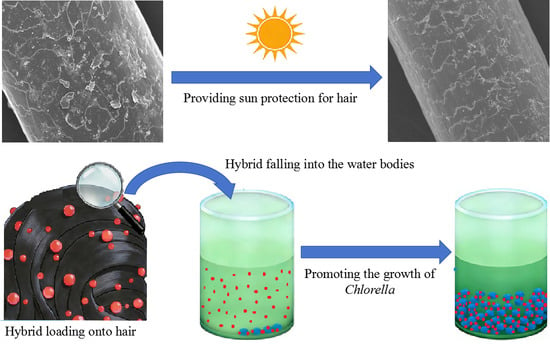
1. Introduction
2. Results and Discussion
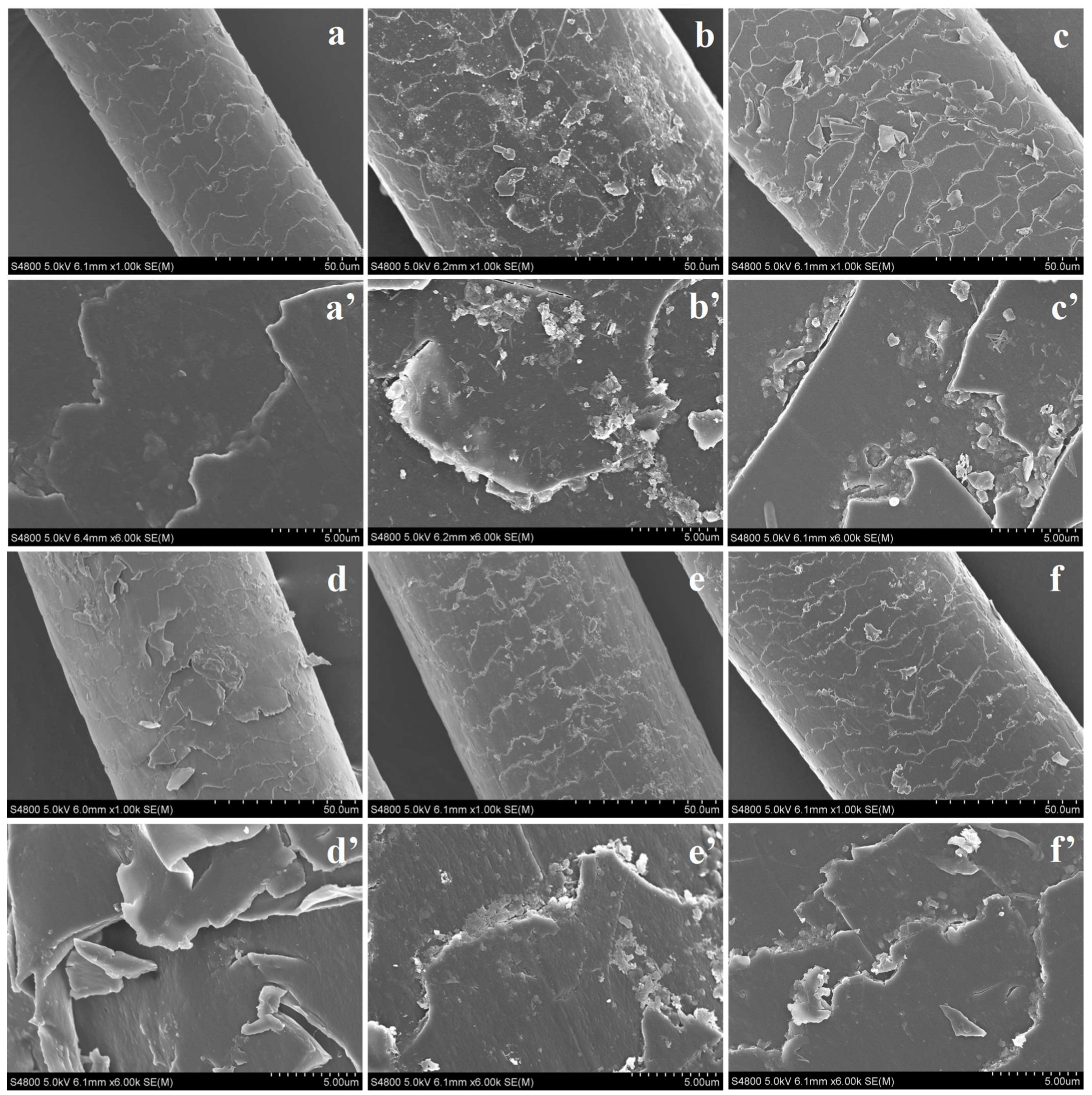
2.1. Microscopic Morphology of Materials
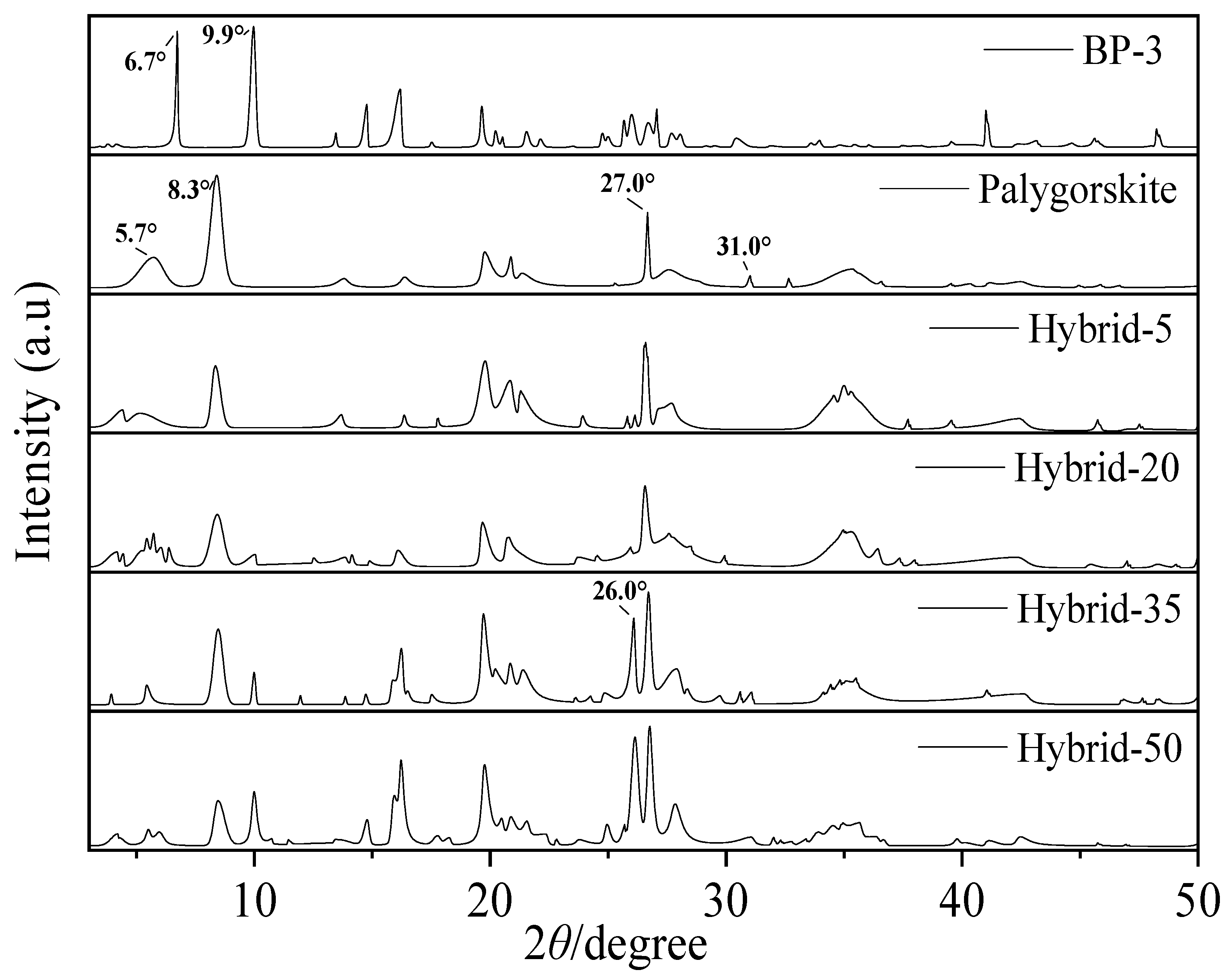
2.2. X-Ray Crystal Structure Analysis
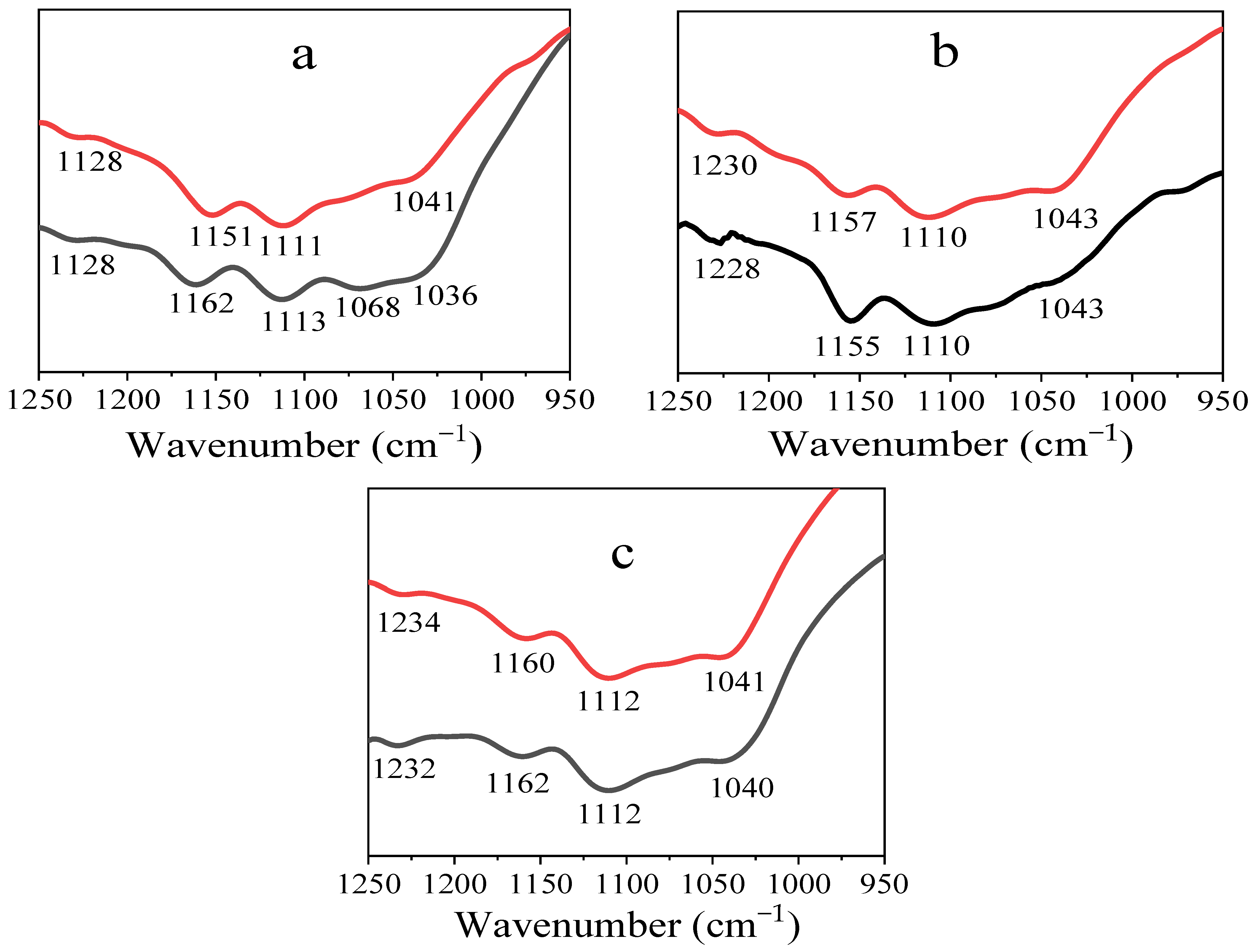
2.3. Infrared Spectrum Analysis
2.4. Adhesion Effect of Modified Hybrid on Hair
2.5. Adhesion Mechanism
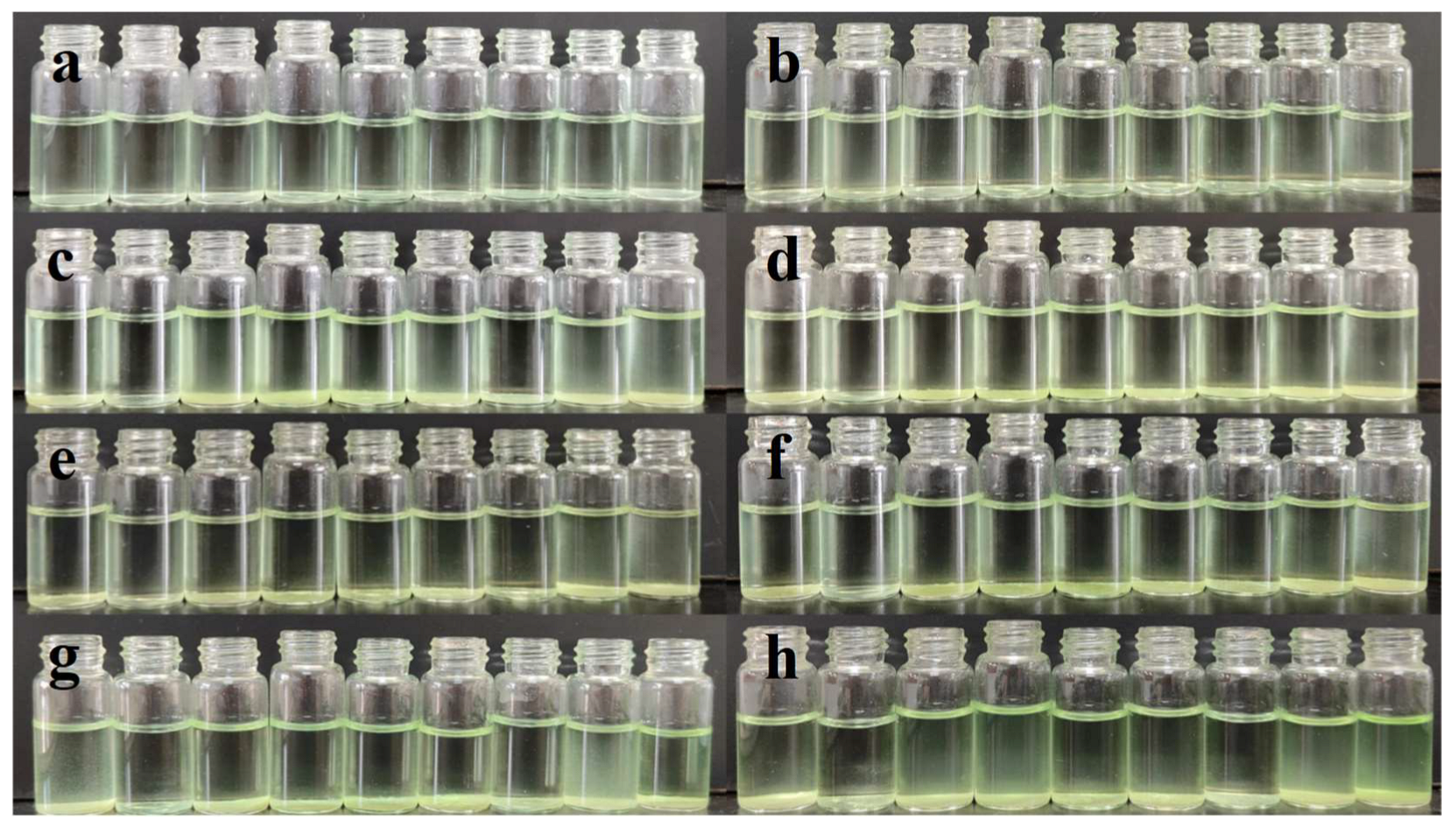
2.5.1. Colloidal Stability
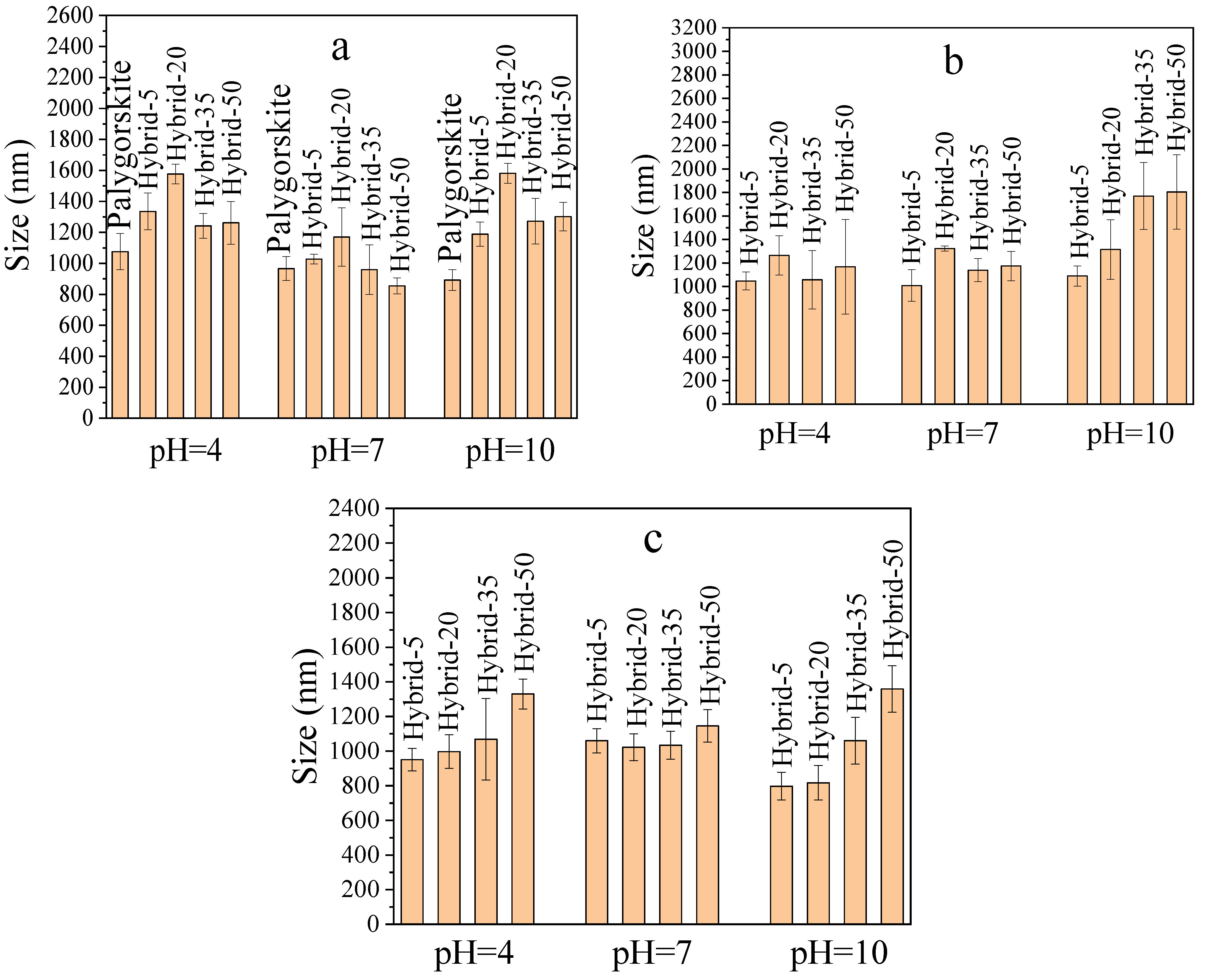
2.5.2. Particle Size Analysis
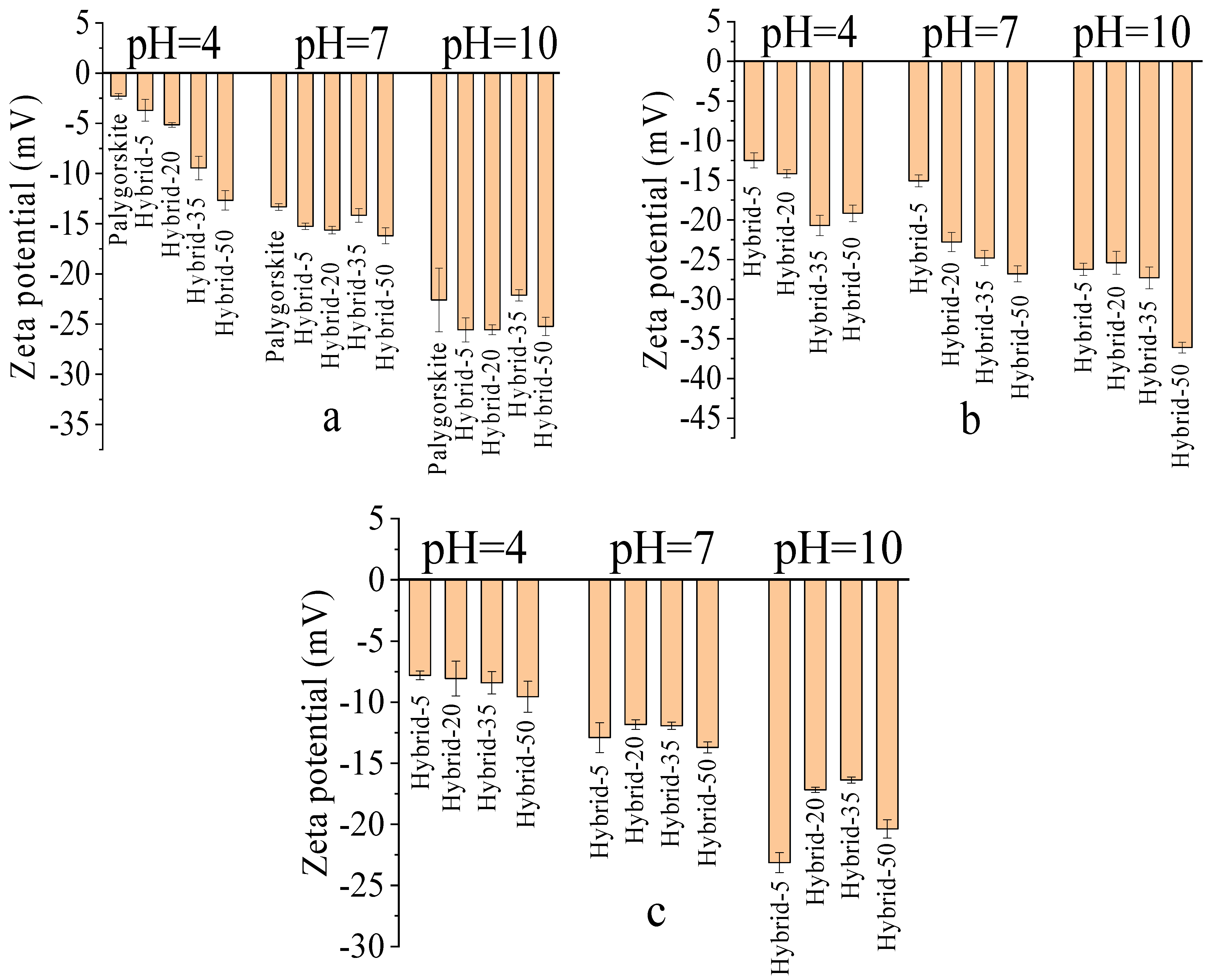
2.5.3. Zeta Potential Analysis
2.5.4. Contact Angle Analysis
2.6. Sunscreen Effect of Hair
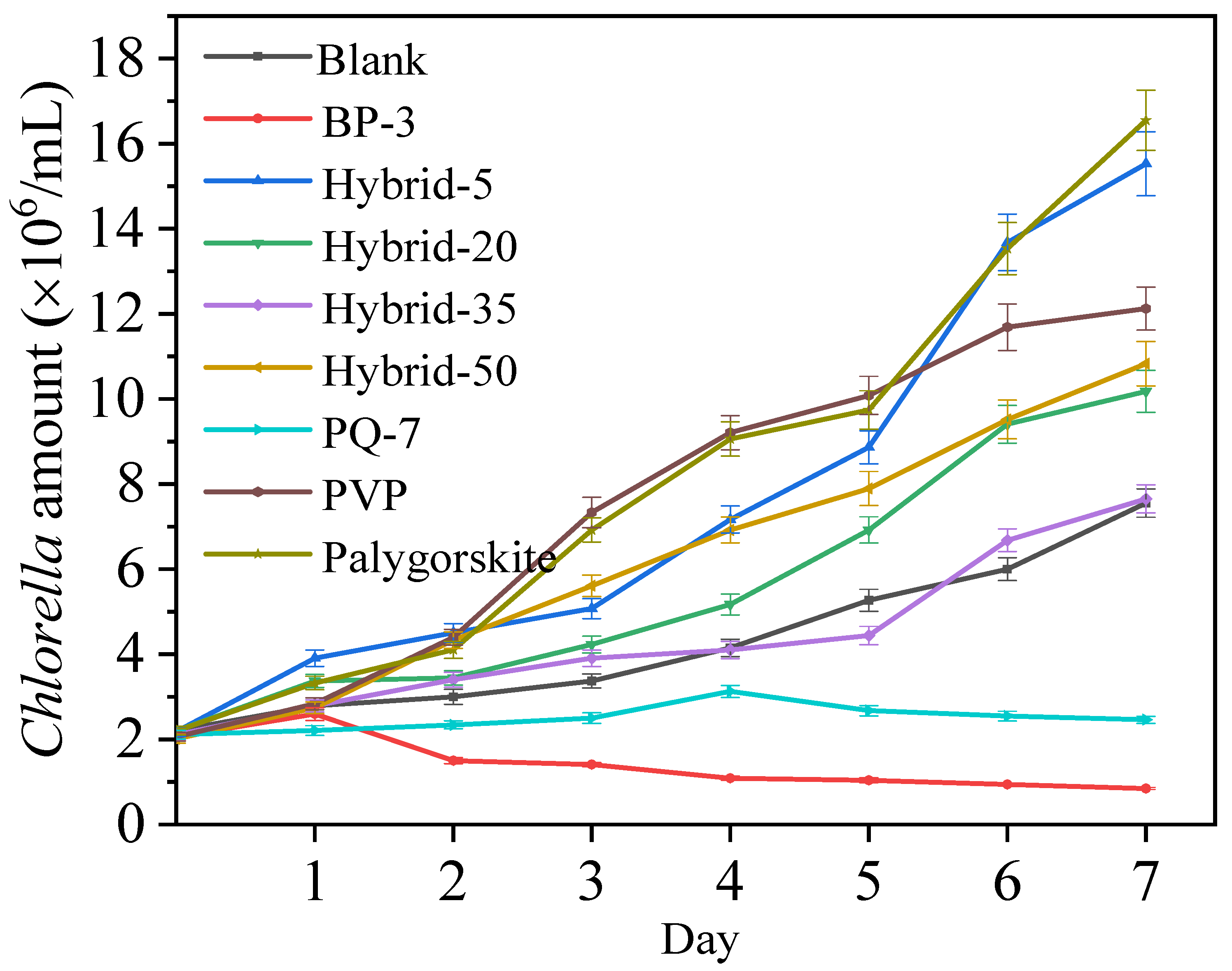
2.7. Effects of Hybrid on the Growth of Chlorella vulgaris
3. Conclusions
- (1)
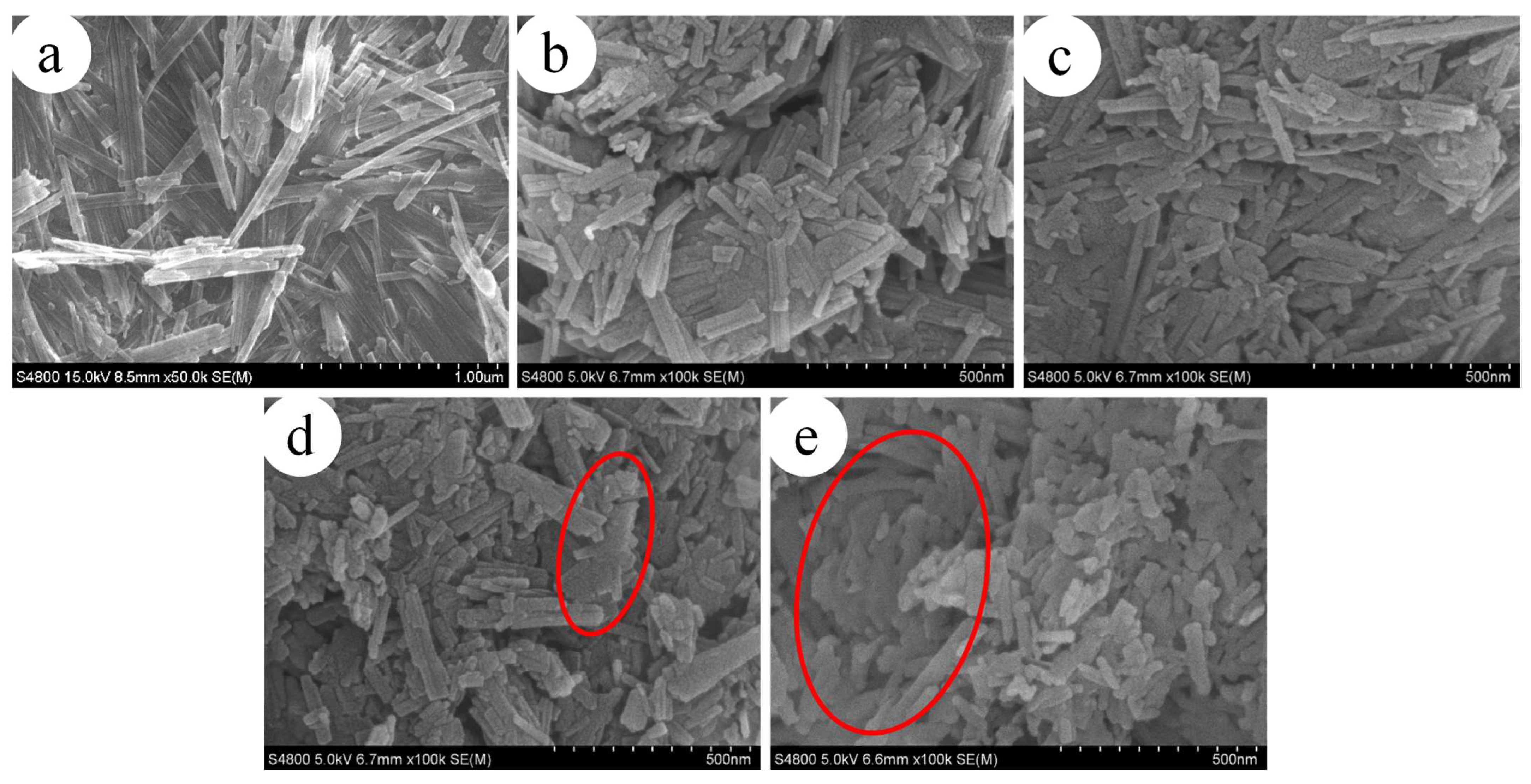
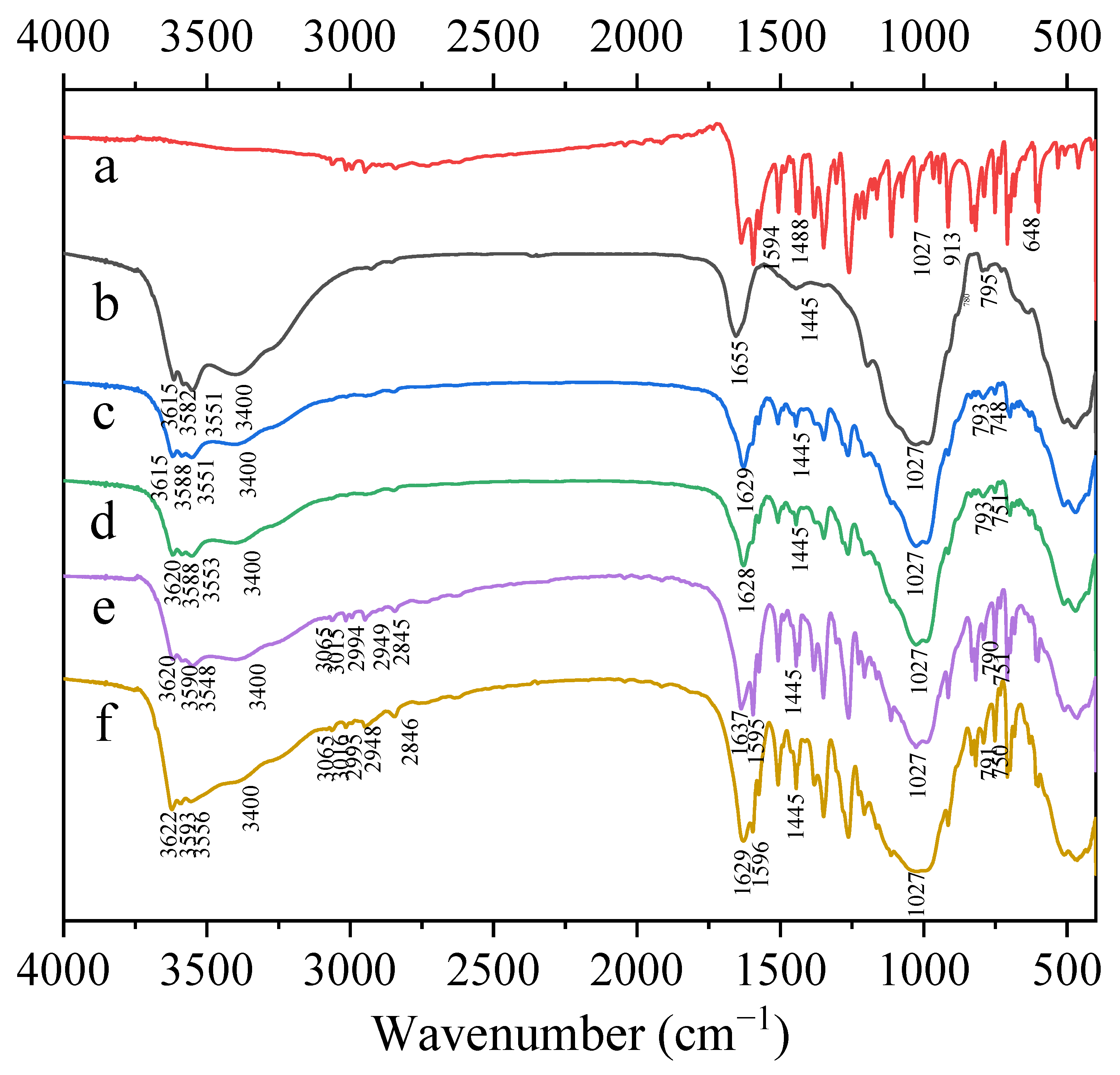
- Hybrid formation and interactions: XRD and FTIR analyses confirmed strong hydrogen bonding between oxybenzone carbonyl groups and palygorskite surface hydroxyls, leading to stable organic–inorganic hybrids. The hydrophobic oxybenzone molecules are adsorbed onto the external surface and physically trapped in inter-rod pores, with excess loadings leading to recrystallization in confined spaces.
- (2)
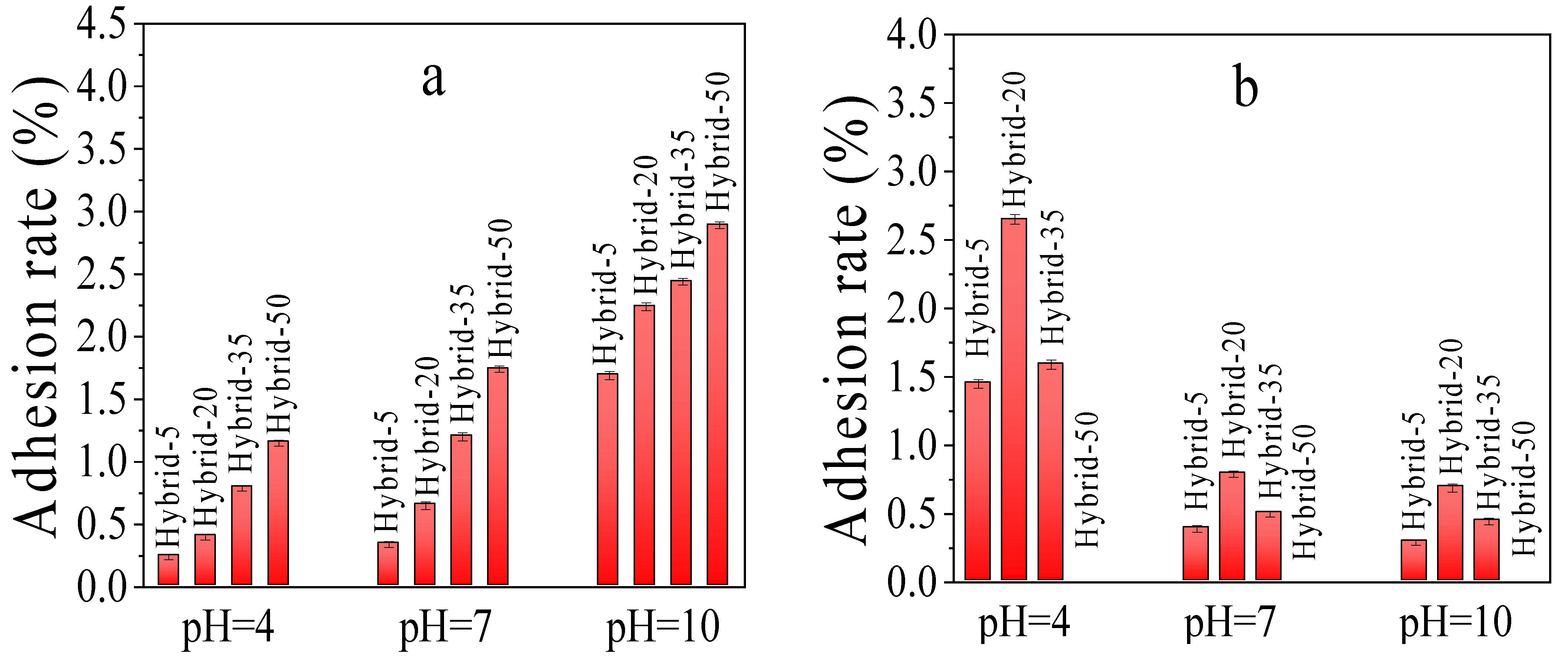
- pH-dependent adhesion mechanisms: While pristine hybrids show no affinity for hair, surface modification with cationic PQ-7 or non-ionic PVP enables effective deposition through two distinct, pH-controlled mechanisms. PQ-7-modified hybrids adhere optimally at pH 10 via electrostatic attraction to negatively charged hair keratin; PVP-modified hybrids adhere best at pH 4 via hydrogen bonding with protonated amino groups. The failure of PVP-modified hybrid-50 to adhere at high loading underscores the critical role of balanced surface hydrophilicity.
- (3)
- Outstanding UV protection: The deposited hybrids significantly mitigate UV-induced hair damage, as evidenced by SEM (suppressed cuticle lifting), colorimetry (ΔE reduced from 10.51 to 1.60–2.29), and FTIR (inhibition of cysteine oxidation). The protective efficacy correlates with oxybenzone content and particle adhesion density.
- (4)
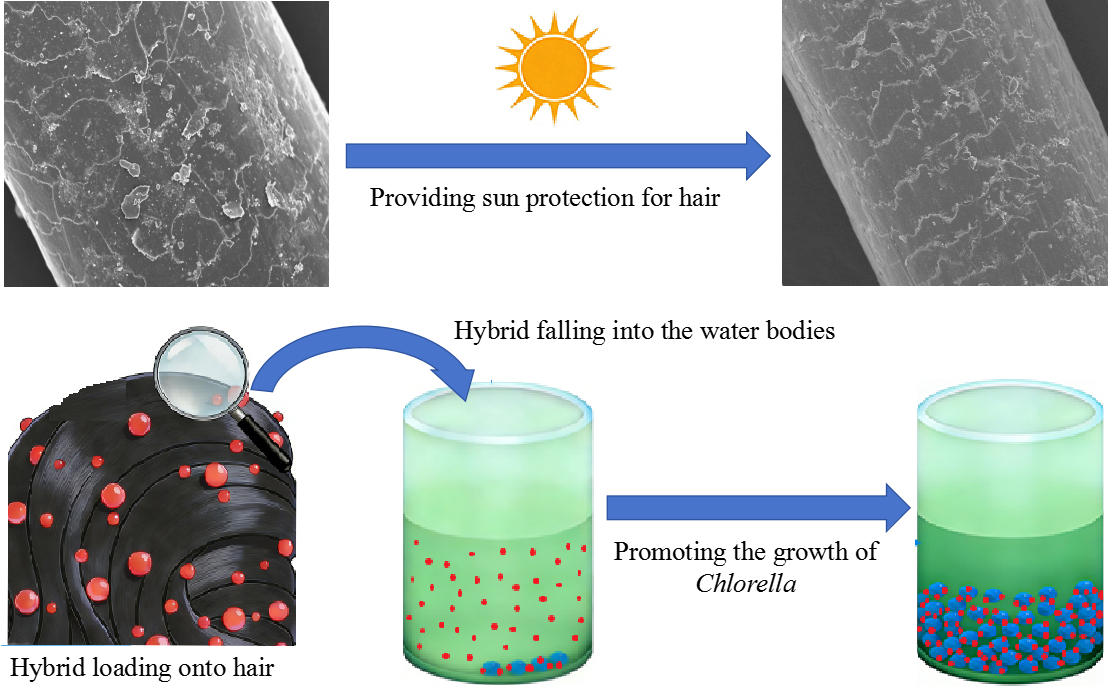
- Environmental compatibility: Loading oxybenzone onto the palygorskite carrier dramatically reduces its ecotoxicity towards Chlorella vulgaris. Remarkably, pure palygorskite and low-loading hybrids promote algal growth, likely by providing nutrient-enriched microenvironments and attachment sites. This dual benefit of effective hair protection and reduced environmental risk highlights the potential of clay-based hybrids for sustainable personal care applications.
4. Materials and Methods
4.1. Materials
4.2. Synthesis of the Oxybenzone–Palygorskite Hybrid
4.3. Modification of Hybrid Materials
4.4. Stability Test of Suspension
4.5. Deposition of Hybrid Material on Hair
4.6. UV Accelerated Aging Test
4.7. Culture of Chlorella
4.8. Characterizations
Supplementary Materials
Author Contributions
Funding
Data Availability Statement
Conflicts of Interest
References
- Murzyn, A.; Popiół, J.; Gunia-Krzyżak, A.; Żelaszczyk, D.; Dąbrówka, B.; Koczurkiewicz-Adamczyk, P.; Piska, K.; Żmudzki, P.; Pękala, E.; Słoczyńska, K. Biotransformation of oxybenzone and 3-(4-methylbenzylidene) camphor in Cunninghamella species: Potential for environmental clean-up of widely used sunscreen agents. J. Hazard. Mater. 2025, 489, 137544. [Google Scholar] [CrossRef]
- Gholap, A.D.; Pardeshi, S.R.; Hatvate, N.T.; Dhorkule, N.; Sayyad, S.F.; Faiyazuddin, M.; Khalid, M. Environmental implications and nanotechnological advances in octocrylene-enriched sunscreen formulations: A comprehensive review. Chemosphere 2024, 358, 142235. [Google Scholar] [CrossRef] [PubMed]
- Schneider, S.L.; Lim, H.W. Review of environmental effects of oxybenzone and other sunscreen active ingredients. J. Am. Acad. Dermatol. 2019, 80, 266–271. [Google Scholar] [CrossRef]
- Downs, C.A.; Kramarsky-Winter, E.; Segal, R.; Fauth, J.; Knutson, S.; Bronstein, O.; Loya, Y. Toxicopathological effects of the sunscreen UV filter, oxybenzone (benzophenone-3), on coral planulae and cultured primary cells and its environmental contamination in Hawaii and the US Virgin Islands. Arch. Environ. Contam. Toxicol. 2016, 70, 265–288. [Google Scholar] [CrossRef]
- Vuckovic, D.; Tinoco, A.I.; Ling, L.; Renicke, C.; Pringle, J.R.; Mitch, W.A. Conversion of oxybenzone sunscreen to phototoxic glucoside conjugates by sea anemones and corals. Science 2022, 376, 644–648. [Google Scholar] [CrossRef] [PubMed]
- Carvalho, P.G.; Naveira, R.I.; Granone, L.I.; Mendive, C.B.; Massa, A.E.; Churio, M.S. A comparative review of natural and synthetic UV filters: Gadusol and benzophenone-3 as representative examples. Environ. Adv. 2023, 13, 100404. [Google Scholar] [CrossRef]
- Vijayakumar, R.; Abd Gani, S.S.; Zaidan, U.H.; Halmi, M.I.E.; Karunakaran, T.; Hamdan, M.R. Exploring the potential use of Hylocereus polyrhizus peels as a source of cosmeceutical sunscreen agent for its antioxidant and photoprotective properties. Evid.-Based Complement. Altern. Med. 2020, 2020, 7520736. [Google Scholar] [CrossRef]
- Nizamov, R.; Poskela, A.; Kaschuk, J.; Henn, K.A.; Grande, R.; Granroth, S.; Miettunen, K. Sustainable nanocellulose UV filters for photovoltaic applications: Comparison of red onion (Allium cepa) extract, iron ions, and colloidal lignin. ACS Appl. Opt. Mater. 2025, 3, 664–675. [Google Scholar] [CrossRef]
- Choi, S.; Rahman, R.T.; Kim, B.M.; Kang, J.; Kim, J.; Shim, J.; Nam, Y.S. Photochemically inert broad-spectrum sunscreen by metal-phenolic network coatings of titanium oxide nanoparticles. ACS Appl. Mater. Interfaces 2024, 16, 16767–16777. [Google Scholar] [CrossRef]
- Tolbert, S.H.; McFadden, P.D.; Loy, D.A. New hybrid organic/inorganic polysilsesquioxane–silica particles as sunscreens. ACS Appl. Mater. Interfaces 2016, 8, 3160–3174. [Google Scholar] [CrossRef]
- Fantini, R.; Vezzalini, G.; Zambon, A.; Ferrari, E.; Di Renzo, F.; Fabbiani, M.; Arletti, R. Boosting sunscreen stability: New hybrid materials from UV filters encapsulation. Microporous Mesoporous Mater. 2021, 328, 111478. [Google Scholar] [CrossRef]
- Confalonieri, G.; Fantini, R.; Allasia, N.; Vezzalini, G.; Fitch, A.N.; Mino, L.; Arletti, R. Structural evidence of sunscreen enhanced stability in UV filter-zeolite hybrids. Microporous Mesoporous Mater. 2022, 344, 112212. [Google Scholar] [CrossRef]
- Lin, Y.C.; Fang, Y.P.; Hung, C.F.; Yu, H.P.; Alalaiwe, A.; Wu, Z.Y.; Fang, J.Y. Multifunctional TiO2/SBA-15 mesoporous silica hybrids loaded with organic sunscreens for skin application: The role in photoprotection and pollutant adsorption with reduced sunscreen permeation. Colloids Surf. B 2021, 202, 111658. [Google Scholar] [CrossRef]
- Fantini, R.; Argenziano, M.; Cavalli, R.; Arletti, R.; Mino, L. Zeofilters for potentially innovative sunscreen products: Formulation, stability and spectroscopic studies. J. Photochem. Photobiol. A 2024, 452, 115585. [Google Scholar] [CrossRef]
- Villa, C.; Lacapra, C.; Rosa, R.; Veronesi, P.; Leonelli, C. Ecosustainable development of novel bio-inorganic hybrid materials as UV protection systems for potential cosmetic applications. Curr. Pharm. Biotechnol. 2015, 16, 1070–1077. [Google Scholar] [CrossRef]
- Hoang-Minh, T.; Le, T.L.; Kasbohm, J.; Gieré, R. UV-protection characteristics of some clays. Appl. Clay Sci. 2010, 48, 349–357. [Google Scholar] [CrossRef]
- Kim, D.; Kim, D.; Kim, J.; Park, C.; Roh, K.M.; Kang, I.M.; Seo, S.M. Synthesis and characterization of montmorillonite-supported TiO2 composites for enhanced UV absorption. Clays Clay Miner. 2020, 68, 533–543. [Google Scholar] [CrossRef]
- Kamada, K.; Kang, J.H.; Paek, S.M.; Choy, J.H. CeO2-layered aluminosilicate nanohybrids for UV screening. J. Phys. Chem. Solids 2012, 73, 1478–1482. [Google Scholar] [CrossRef]
- Ng’etich, W.K.; Martincigh, B.S. A critical review on layered double hydroxides: Their synthesis and application in sunscreen formulations. Appl. Clay Sci. 2021, 208, 106095. [Google Scholar] [CrossRef]
- Perioli, L.; Ambrogi, V.; Bertini, B.; Ricci, M.; Nocchetti, M.; Latterini, L.; Rossi, C. Anionic clays for sunscreen agent safe use: Photoprotection, photostability and prevention of their skin penetration. Eur. J. Pharm. Biopharm. 2006, 62, 185–193. [Google Scholar] [CrossRef]
- Kibwila, D.M.; Simon, A.; de Abreu, L.C.L.; Rodrigues, C.R.; de Sousa, V.P.; de Pádula, M.; Cabral, L.M. New alternatives in photoprotection: Preparation and evaluation of lamellar silicate derivatives and their use as sunscreens. Int. J. Cosmet. Sci. 2025, 48, 172–185. [Google Scholar] [CrossRef]
- Charaabi, S.; Issa, S.; Pensé-Lhéritier, A.M.; Le Borgne, M. Kinetics of benzophenone-3 release from clay minerals or organosilicates for sun protection formulation. Int. J. Pharm. 2025, 682, 125920. [Google Scholar] [CrossRef]
- Cursino, A.C.T.; da Silva Lisboa, F.; dos Santos Pyrrho, A.; de Sousa, V.P.; Wypych, F. Layered double hydroxides intercalated with anionic surfactants/benzophenone as potential materials for sunscreens. J. Colloid Interface Sci. 2013, 397, 88–95. [Google Scholar] [CrossRef]
- Liu, H.; Zhang, C.; Wei, L.; Yao, C.; Li, X. Construction of CeO2/attapulgite/lignin composites for UV shielding application: Mimicking the block mechanism of plant leaf. Colloids Surf. A 2025, 715, 136665. [Google Scholar] [CrossRef]
- Wang, W.; Wang, A. Palygorskite nanomaterials: Structure, properties, and functional applications. In Nanomaterials from Clay Minerals; Elsevier: Amsterdam, The Netherlands, 2019; pp. 21–133. [Google Scholar] [CrossRef]
- Chen, H.; Jin, Y.; Zhong, A.; Wu, J.; Yan, H.; Li, R. Reversible thermochromic behavior and mechanism of Congo red/palygorskite nanohybrid induced by mechanochromism. J. Porous Mater. 2022, 29, 215–227. [Google Scholar] [CrossRef]
- Zhang, P.; Tang, L.; Lang, C. Palygorskite/iron nanoparticles composite for the removal of In(III) from aqueous solutions: Characterization, performance, and mechanism. Appl. Clay Sci. 2025, 265, 107678. [Google Scholar] [CrossRef]
- Chen, H.; Jin, Y.; Wu, J.; Yan, H. Significantly improving the colloidal stability of selenium disulfide in water and antifungal activity by using palygorskite clay. Appl. Clay Sci. 2025, 265, 107659. [Google Scholar] [CrossRef]
- Richena, M.; Rezende, C.A. Effect of photodamage on the outermost cuticle layer of human hair. J. Photochem. Photobiol. B 2015, 153, 296–304. [Google Scholar] [CrossRef]
- Cavallaro, G.; Milioto, S.; Konnova, S.; Fakhrullina, G.; Akhatova, F.; Lazzara, G.; Lvov, Y. Halloysite/keratin nanocomposite for human hair photoprotection coating. ACS Appl. Mater. Interfaces 2020, 12, 24348–24362. [Google Scholar] [CrossRef]
- Yu, D.; Basumatary, I.B.; Kumar, S.; Ye, F.; Dutta, J. Chitosan modified with bio-extract as an antibacterial coating with UV filtering feature. Int. J. Biol. Macromol. 2023, 230, 123145. [Google Scholar] [CrossRef]
- Tang, J.; Mu, B.; Zong, L.; Wang, A. From waste hot-pot oil as carbon precursor to development of recyclable attapulgite/carbon composites for wastewater treatment. J. Environ. Sci. 2019, 75, 346–358. [Google Scholar] [CrossRef]
- Li, S.; Yan, P.; Mu, B.; Kang, Y.; Wang, Q.; Wang, A. Facile mechanochemical fabrication of hybrid pigments with allochroic, antibacterial and superhydrophobic properties based on organo-palygorskite and curcumin. Dye. Pigment. 2022, 203, 110359. [Google Scholar] [CrossRef]
- Fan, J.; Liu, Q.; Zhuang, G.; Yuan, P. Channel confinement effects in palygorskite and sepiolite: Mechanisms behind color and stability variations in Maya Blue pigments. Appl. Clay Sci. 2025, 265, 107689. [Google Scholar] [CrossRef]
- Lu, Y.; Wang, A. From structure evolution of palygorskite to functional material: A review. Microporous Mesoporous Mater. 2022, 333, 111765. [Google Scholar] [CrossRef]
- Liu, J.; Zhong, J.; Chen, Z.; Mao, J.; Liu, J.; Zhang, Z.; Ren, S. Preparation, characterization, application and structure evolution of attapulgite: From nanorods to nanosheets. Appl. Surf. Sci. 2021, 565, 150398. [Google Scholar] [CrossRef]
- Mendelovici, E.; Portillo, D.C. Organic derivatives of attapulgite—I. Infrared spectroscopy and X-ray diffraction studies. Clays Clay Miner. 1976, 24, 177–182. [Google Scholar] [CrossRef]
- Suárez, M.; Garcia-Romero, E. FTIR spectroscopic study of palygorskite: Influence of the composition of the octahedral sheet. Appl. Clay Sci. 2006, 31, 154–163. [Google Scholar] [CrossRef]
- Berenbeim, J.A.; Wong, N.G.; Cockett, M.C.; Berden, G.; Oomens, J.; Rijs, A.M.; Dessent, C.E. Sodium cationization can disrupt the intramolecular hydrogen bond that mediates the sunscreen activity of oxybenzone. Phys. Chem. Chem. Phys. 2020, 22, 19522–19531. [Google Scholar] [CrossRef] [PubMed]
- Chen, H.; Zhong, A.; Wu, J.; Zhao, J.; Yan, H. Adsorption behaviors and mechanisms of methyl orange on heat-treated palygorskite clays. Ind. Eng. Chem. Res. 2012, 51, 14026–14036. [Google Scholar] [CrossRef]
- Ellerbrock, R.H.; Gerke, H.H. FTIR spectral band shifts explained by OM–cation interactions. J. Plant Nutr. Soil Sci. 2021, 184, 388–397. [Google Scholar] [CrossRef]
- Yan, W.; Liu, D.; Tan, D.; Yuan, P.; Chen, M. FTIR spectroscopy study of the structure changes of palygorskite under heating. Spectrochim. Acta A 2012, 97, 1052–1057. [Google Scholar] [CrossRef]
- Zhou, Z.; Xu, J.; Lu, J.; Li, J.; Zhang, W.; Chen, K. Cationic cellulose nanocrystals enhance keratin adsorption to improve hair glossiness and thermal-photo protection. Int. J. Biol. Macromol. 2025, 303, 140492. [Google Scholar] [CrossRef] [PubMed]
- Cozzolino, S.; Gutfreund, P.; Vorobiev, A.; Welbourn, R.J.; Greaves, A.; Zuttion, F.; Luengo, G.S. Adsorption hierarchy of surfactants and polymers to a damaged hair model: Effect of composition, order and polymer size. Phys. Chem. Chem. Phys. 2025, 27, 1089–1099. [Google Scholar] [CrossRef]
- Ghadimi, A.; Saidur, R.; Metselaar, H.S.C. A review of nanofluid stability properties and characterization in stationary conditions. Int. J. Heat Mass Transf. 2011, 54, 4051–4068. [Google Scholar] [CrossRef]
- Lowry, G.V.; Hill, R.J.; Harper, S.; Rawle, A.F.; Hendren, C.O.; Klaessig, F.; Rumble, J. Guidance to improve the scientific value of zeta-potential measurements in nanoEHS. Environ. Sci. Nano 2016, 3, 953–965. [Google Scholar] [CrossRef]
- Cui, J.; Zhang, Z.; Han, F. Effects of pH on the gel properties of montmorillonite, palygorskite and montmorillonite-palygorskite composite clay. Appl. Clay Sci. 2020, 190, 105543. [Google Scholar] [CrossRef]
- Bužková, A.; Hochvaldová, L.; Večeřová, R.; Malina, T.; Petr, M.; Kašlík, J.; Prucek, R. Selenium nanoparticles: Influence of reducing agents on particle stability and antibacterial activity at biogenic concentrations. Nanoscale 2025, 17, 8170–8182. [Google Scholar] [CrossRef]
- Filippo, G.; Erik, W.; Andre, L. Engineering adhesion to thermoresponsive substrates: Effect of polymer composition on liquid-liquid-solid wetting. ACS Appl. Mater. Interfaces 2015, 7, 2518–2528. [Google Scholar] [CrossRef]
- Cao, L.; Xie, W.; Cui, H.; Xiong, Z.; Tang, Y.; Zhang, X.; Feng, Y. Fibrous clays in dermopharmaceutical and cosmetic applications: Traditional and emerging perspectives. Int. J. Pharm. 2022, 625, 122097. [Google Scholar] [CrossRef] [PubMed]
- Liu, X.; Cao, L.; Jiang, C.; Wang, H.; Zhang, X.; Liu, Q.; Feng, Y. Fabrication of multifunctional hybrid pigment for color cosmetics based on chitosan-modified palygorskite and sappanwood extract. Int. J. Biol. Macromol. 2024, 279, 135259. [Google Scholar] [CrossRef] [PubMed]
- Adav, S.S.; Wu, A.R.Y.L.; Ng, K.W. Insights into structural and proteomic alterations related to pH-induced changes and protein deamidation in hair. Int. J. Cosmet. Sci. 2025, 47, 281–296. [Google Scholar] [CrossRef]
- Fernández-Peña, L.; Guzmán, E.; Oñate-Martínez, T.; Fernández-Pérez, C.; Ortega, F.; Rubio, R.G.; Luengo, G.S. Dilution-induced deposition of concentrated binary mixtures of cationic polysaccharides and surfactants. Polymers 2023, 15, 3011. [Google Scholar] [CrossRef]
- Song, S.H.; Park, H.S.; Lim, B.T.; Son, S.K. Biomimetics through bioconjugation of 16-methylheptadecanoic acid to damaged hair for hair barrier recovery. Sci. Rep. 2024, 14, 27387. [Google Scholar] [CrossRef]
- Baus, R.A.; Leichner, C.; Steinbring, C.; Bernkop-Schnürch, A. Strategies for improved hair binding: Keratin fractions and the impact of cationic substructures. Int. J. Biol. Macromol. 2020, 160, 201–211. [Google Scholar] [CrossRef] [PubMed]
- Tham, H.P.; Yip, K.Y.; Aitipamula, S.; Mothe, S.R.; Zhao, W.; Choong, P.S.; Dawson, T.L., Jr. Influence of particle parameters on deposition onto healthy and damaged human hair. Int. J. Cosmet. Sci. 2025, 47, 58–72. [Google Scholar] [CrossRef]
- Chen, H.; Ye, Y. Insight into hair dyeing properties and mechanisms of Maya blue-like pigments modified with different silane coupling agents. J. Indian Chem. Soc. 2025, 102, 101769. [Google Scholar] [CrossRef]
- Smith, J.R.; Swift, J.A. Maple syrup urine disease hair reveals the importance of 18-methyleicosanoic acid in cuticular delamination. Micron 2005, 36, 261–266. [Google Scholar] [CrossRef]
- Miyamae, Y.; Yamakawa, Y.; Ozaki, Y. Evaluation of physical properties of human hair by diffuse reflectance near-infrared spectroscopy. Appl. Spectrosc. 2007, 61, 212–217. [Google Scholar] [CrossRef]
- Richena, M.; Silveira, M.; Rezende, C.A.; Joekes, I. Yellowing and bleaching of grey hair caused by photo and thermal degradation. J. Photochem. Photobiol. B 2014, 138, 172–181. [Google Scholar] [CrossRef]
- Kuzuhara, A. Analysis of structural changes in permanent waved human hair using Raman spectroscopy. Biopolymers 2007, 85, 274–283. [Google Scholar] [CrossRef]
- Neelima, T.K.; Riyamol, K.R.; Harikumar, N. Science and technology of hair fibers. In Handbook of Biomass; Springer Nature: Singapore, 2024; pp. 1307–1325. [Google Scholar]
- Castano, C.; Thomas, A.H.; Lorente, C. Type I photosensitized oxidation of methionine. Photochem. Photobiol. 2021, 97, 91–98. [Google Scholar] [CrossRef]
- Liu, Y.; Liu, X.; Cui, Y.; Yuan, W. Ultrasound for microalgal cell disruption and product extraction: A review. Ultrason. Sonochem. 2022, 87, 106054. [Google Scholar] [CrossRef]
- Mariano, S.; Panzarini, E.; Inverno, M.D.; Voulvoulis, N.; Dini, L. Toxicity, bioaccumulation and biotransformation of glucose-capped silver nanoparticles in green microalgae Chlorella vulgaris. Nanomaterials 2020, 10, 1377. [Google Scholar] [CrossRef]
- Zhong, X.; Downs, C.A.; Che, X.; Zhang, Z.; Li, Y.; Liu, B.; Gao, H. The toxicological effects of oxybenzone, an active ingredient in suncream personal care products, on prokaryotic alga Arthrospira sp. and eukaryotic alga Chlorella sp. Aquat. Toxicol. 2019, 216, 105295. [Google Scholar] [CrossRef]
- DeLeo, P.C.; Huynh, C.; Pattanayek, M.; Schmid, K.C.; Pechacek, N. Assessment of ecological hazards and environmental fate of disinfectant quaternary ammonium compounds. Ecotoxicol. Environ. Saf. 2020, 206, 111116. [Google Scholar] [CrossRef]
- Qin, L.; Feng, P.; Al-Haimi, A.A.N.M.; Wang, Z.; Zhu, S. Investigating the effects of surfactants on Chlorella pyrenoidosa in the hydrolysis acidification liquor by integrated physiochemical and transcriptome analyses. Algal Res. 2023, 70, 103009. [Google Scholar] [CrossRef]
- Mindat. Palygorskite Mineral Data. 2023. Available online: https://www.mindat.org/min-3072.html (accessed on 15 April 2026).
- Ho, Q.N.; Fettweis, M.; Hur, J.; Desmit, X.; Kim, J.I.; Jung, D.W.; Lee, S.D.; Lee, S.; Choi, Y.Y.; Lee, B.J. Flocculation kinetics and mechanisms of microalgae- and clay-containing suspensions in different microalgal growth phases. Water Res. 2022, 226, 119300. [Google Scholar] [CrossRef]
- Tang, Y.; Zhang, H.; Liu, X.; Cai, D.; Feng, H.; Miao, C.; Wang, X.; Wu, Z.; Yu, Z. Flocculation of harmful algal blooms by modified attapulgite and its safety evaluation. Water Res. 2011, 45, 2855–2862. [Google Scholar] [CrossRef]







| Sample | Contact Angle (°) | Immersion Time (s) |
|---|---|---|
| BP-3 | 85.7 ± 3.1 | ∞ |
| Palygorskite | 26.9 ± 0.9 | 1.2 ± 0.1 |
| Hybrid-5 | 50.8 ± 1.4 | 8.4 ± 0.3 |
| Hybrid-20 | 52.2 ± 2.5 | 19.2 ± 0.5 |
| Hybrid-35 | 53.6 ± 2.4 | 106.1 ± 2.6 |
| Hybrid-50 | 60.8 ± 2.7 | 259.9 ± 5.7 |
| Hybrid-5 with PQ-7 | 33.6 ± 1.3 | 4.7 ± 0.1 |
| Hybrid-20 with PQ-7 | 36.5 ± 1.2 | 17.4 ± 0.2 |
| Hybrid-35 with PQ-7 | 50.1 ± 2.1 | 36.4 ± 1.1 |
| Hybrid-50 with PQ-7 | 57.4 ± 1.9 | 60.8 ± 2.5 |
| Hybrid-5 with PVP | 43.8 ± 1.1 | 7.4 ± 0.2 |
| Hybrid-20 with PVP | 45.7 ± 1.5 | 9.1 ± 0.3 |
| Hybrid-35 with PVP | 49.3 ± 1.6 | 26.6 ± 0.8 |
| Hybrid-50 with PVP | 67.9 ± 3.2 | 1159.2 ± 22.4 |
Disclaimer/Publisher’s Note: The statements, opinions and data contained in all publications are solely those of the individual author(s) and contributor(s) and not of MDPI and/or the editor(s). MDPI and/or the editor(s) disclaim responsibility for any injury to people or property resulting from any ideas, methods, instructions or products referred to in the content. |
© 2026 by the authors. Licensee MDPI, Basel, Switzerland. This article is an open access article distributed under the terms and conditions of the Creative Commons Attribution (CC BY) license.
Share and Cite
Chen, H.; Song, Y. Interfacial Engineering of Clay-Based Nanohybrids with pH-Responsive Network-like Behavior for Hair Photoprotection and Algal Growth Promotion. Gels 2026, 12, 530. https://doi.org/10.3390/gels12060530
Chen H, Song Y. Interfacial Engineering of Clay-Based Nanohybrids with pH-Responsive Network-like Behavior for Hair Photoprotection and Algal Growth Promotion. Gels. 2026; 12(6):530. https://doi.org/10.3390/gels12060530
Chicago/Turabian StyleChen, Hao, and Yufan Song. 2026. "Interfacial Engineering of Clay-Based Nanohybrids with pH-Responsive Network-like Behavior for Hair Photoprotection and Algal Growth Promotion" Gels 12, no. 6: 530. https://doi.org/10.3390/gels12060530
APA StyleChen, H., & Song, Y. (2026). Interfacial Engineering of Clay-Based Nanohybrids with pH-Responsive Network-like Behavior for Hair Photoprotection and Algal Growth Promotion. Gels, 12(6), 530. https://doi.org/10.3390/gels12060530