2.3. Physicochemical Characterization of Oral Gel Vehicles
Hydrogels were prepared using commonly applied hydrophilic gel-forming polymers, including carbomer (CAR), sodium alginate (SA), and four grades of HPMC: 606, 60SH4000, 65SH4000, and 90SH4000. The HPMC grades selected for this study represented different substitution types and viscosity grades. HPMC is available in different substitution types, defined by the relative content of methoxy and hydroxypropoxy groups, which may influence polymer hydration, gel-network formation, water distribution, and interaction with the dissolution medium. In the present study, three high-viscosity HPMC grades with comparable nominal viscosity but different substitution types were selected: HPMC 60SH4000, HPMC 65SH4000, and HPMC 90SH4000, corresponding to types 2910, 2906, and 2208, respectively [Ph. Eur. 12.1; Hypromellose monograph]. This selection allowed the effect of substitution type to be evaluated under conditions of comparable nominal viscosity. In addition, HPMC 606 was included as a low-viscosity grade to assess the effect of viscosity grade and polymer concentration on gel properties and pantoprazole release. All tested hydrogels and their polymer concentrations are listed in
Table 1. All polymers, except HPMC 606, formed semi-solid gels at concentrations below 6%. In contrast, the low-viscosity HPMC 606 required substantially higher concentrations, 20–22%, to achieve an adequate consistency suitable for spoon dosing. The target viscosity range was selected on the basis of macroscopic evaluation and rheological testing, with particular attention to the possibility of administering the gels with a teaspoon and facilitating the swallowing of co-administered MTs.
The pH of the hydrogels was within the values between 4.2 and 7.8. The HPMC SH-grade gels showed a lower pH between 4.2 and 5.3, while HPMC 606 and SA gels had pH values close to neutral. CAR gels were neutralized with sodium hydroxide (10%
w/
w NaOH) or tris(hydroxymethyl)aminomethane (20%
w/
w TRIS) to pH values between 6.0 and 7.0. Neutralization of CAR leads to ionization of carboxyl groups, polymer-chain expansion, swelling, and formation of a structured microgel network. Overall, the pH values of the developed formulations were within or close to the range generally considered suitable for oral liquid preparations. From the perspective of oral administration, pH values close to neutral may be preferable for patient comfort and palatability, particularly in pediatric use. In contrast, the mildly acidic pH of selected HPMC SH-grade gels may contribute to sour taste, reduced acceptability, or oral discomfort, and should therefore be considered during further formulation optimization. Although the intended use of these gels involves immediate administration and a short residence time in the oral cavity, repeated exposure to acidic preparations may raise additional oral-safety considerations, including potential effects on tooth enamel. Therefore, the addition of suitable pH-adjusting excipients may be considered to increase the pH of acidic gel formulations; however, such a modification would require careful evaluation because changes in pH may also influence the integrity and dissolution behavior of the enteric coating [
16].
The viscosity–shear rate curves showed that all gels exhibited shear-thinning (non-Newtonian behavior) as their apparent viscosity decreased with increasing shear rate. At a shear rate of 100 s
−1, the apparent viscosity of the SA and HPMC hydrogels at 25 °C ranged from approximately 2.8 to 20 Pa·s, whereas at 0.01 s
−1 it ranged from approximately 16 to 360 Pa·s, depending on polymer type and concentration (
Table 1).
For SA, the apparent viscosity of the 4% gel was comparable to that of 4% HPMC 4000-grade gels and was approximately 7 Pa·s at 100 s
−1. However, the SA gel showed only a modest difference between near-rest conditions, measured at 0.01 s
−1, and shear conditions, measured at 100 s
−1. SA gel showed comparable viscosity values at a shear rate of 100 s
−1, corresponding to flow behavior, both at room temperature (25 °C; application temperature) and at human body temperature (37 °C). SA is a natural linear polysaccharide composed of β-D-mannuronic acid (M) and α-L-guluronic acid (G) residues arranged in different sequences and blocks. Its gelation behavior depends on the M/G ratio and block distribution and may involve intermolecular associations, such as electrostatic interactions, hydrogen bonding and van der Waals forces, resulting in a weak reversible network. Its gelation behavior depends strongly on environmental conditions. In the presence of divalent cations (e.g., Ca
2+), SA forms ionic gels according to the “egg-box” model, whereas under acidic conditions protonation of carboxyl groups may lead to acid-induced gelation or precipitation [
17]. Therefore, although SA is widely used as a biocompatible gelling polymer, ion- and pH-dependent structural changes may be disadvantageous for oral co-administration with enteric-coated MTs, particularly under gastric and intestinal pH-transition conditions [
10]. Potential batch-to-batch variability should be considered, particularly for natural polymers such as sodium alginate, whose rheological behavior may depend on molecular weight, M/G ratio, block distribution, purity, and ionic composition. The present study assessed the within-batch repeatability of the tested formulations, but the inter-batch variability of polymer raw materials was not evaluated. Further development of alginate-based vehicles would therefore require confirmation of batch-to-batch consistency in rheological properties, acid responsiveness, and dissolution performance.
The 4% HPMC gels had similar apparent viscosity values, approximately 7 Pa·s at 100 s−1, irrespective of the pharmacopoeial substitution type, namely 2910, 2906, or 2208. Increasing the HPMC concentration by 1% resulted in an approximately two-fold, or even greater, increase in apparent viscosity, indicating a strong concentration-dependent thickening effect. Only for the low-viscosity HPMC 606 grade was it necessary to use a markedly higher polymer concentration, namely 20%, to obtain a consistency comparable to that achieved with the high-viscosity HPMC 60SH, 65SH, and 90SH grades.
Aqueous HPMC gels are known to exhibit inverse thermoreversible gelation, characterized by a sol–gel transition upon heating and a reversible gel–sol transition upon cooling. However, under the rheological conditions used in the present study, no substantial differences in viscosity were observed between 25 °C and 37 °C, suggesting that the tested temperature range was below the threshold required for a high-viscosity polymer to induce pronounced thermal gelation [
18]. Despite its high polymer concentration, HPMC 606 formed gels with low viscosity and only minor shear-rate-dependent changes, suggesting weak intermolecular interactions and a poorly developed internal network. This may be related to the predominance of shorter polymer chains, which increase polymer content but are less effective in forming an extended three-dimensional structure. The marked increase in viscosity observed at elevated temperature may reflect enhanced polymer–polymer interactions and the onset of thermally induced gelation [
19].
The weak internal network structure of HPMC 606 gels was also supported by the texture analysis results. The low firmness of HPMC 606 gels (
Table 1) despite their high polymer concentration is most likely related to the low-viscosity character of this grade. HPMC 606 contains shorter polymer chains than high-viscosity HPMC grades, which limits chain entanglement and formation of a mechanically coherent gel network. Therefore, the increased polymer concentration raised the solids content but did not translate into proportionally higher firmness. In contrast, most gels prepared with other HPMC grades, including 60SH, 65SH and 90SH, as well as CAR gels, showed higher firmness values. Even at lower concentrations, such as 4% HPMC or 0.5% CAR, firmness values were approximately 150–160 g, indicating a more developed and mechanically resistant gel structure.
For carbomer gels, a pronounced shear-thinning behavior was observed, characterized by very high apparent viscosity at low shear and a substantial decrease in viscosity after exceeding the yield-stress region. The apparent viscosity values (
Table 1), measured at a low shear rate of 0.01 s
−1 under steady-state conditions at 25 °C, were very high: approximately 1520–1660 Pa·s for 0.5% CAR and 2320–2400 Pa·s for 1% CAR. The observed differences in viscosity between CAR gels neutralized with NaOH and TRIS were within the range of SD and were therefore considered not relevant. At higher shear rates, after exceeding the yield-stress region, CAR gels displayed the lowest viscosity among the tested gels, reaching approximately 2.0 and 3.5 Pa·s at 100 s
−1 for 0.5% and 1% CAR, respectively. This combination of high viscosity at rest and low viscosity under shear may be advantageous for oral administration, as the gel remains cohesive on a spoon but becomes easier to spread and swallow during administration.
Gels prepared from CAR showed comparable viscosity values at a shear rate of 100 s
−1, representative of flow conditions, both at room temperature (25 °C; application temperature) and at human body temperature (37 °C). This finding is consistent with literature data indicating that CAR gels are generally highly stable under temperature variations; even brief exposure to elevated temperatures, such as during sterilization, does not substantially alter their formulation characteristics [
20]. However, under very low-shear conditions, a lower apparent viscosity was observed at 37 °C. This difference should be interpreted cautiously, as it may reflect the highly non-linear rheological response of CAR gels in the low-shear or yield-stress region rather than a simple temperature-driven decrease in viscosity [
21,
22].
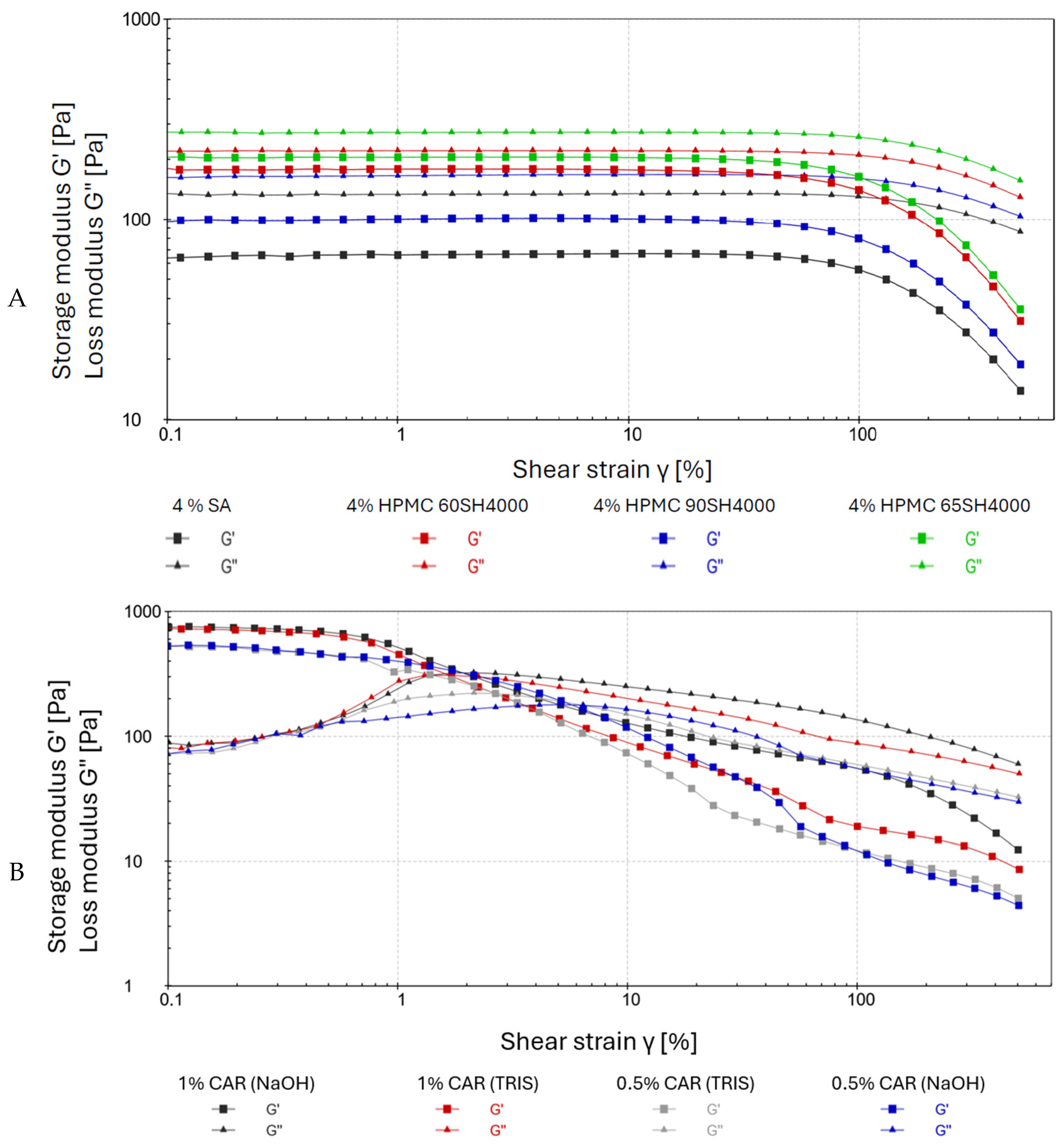
To further characterize the mechanical strength and yielding behavior of the developed gels, stress amplitude sweep tests were also performed, and the results are presented in
Figure 1. SA and HPMC gels, irrespective of HPMC substitution type within the studied concentration range, did not show a distinct yield point within the tested stress range, as indicated by the absence of a crossover between the storage modulus (G′) and loss modulus (G″) (
Figure 1A). Together with the viscosity profiles, this supports their classification as shear-thinning systems without a pronounced yield point. Only the CAR gels, irrespective of polymer concentration (0.5% or 1%) and neutralizing agent (NaOH or TRIS), exhibited a flow stress (τᵧ), defined as the crossover point at which G′ = G″. The τᵧ values increased with polymer concentration and were consistently higher for TRIS-neutralized gels than for NaOH-neutralized gels. The values were 220.9 Pa and 177.6 Pa for 0.5% CAR gels neutralized with TRIS and NaOH, respectively, and 309.5 Pa and 258.6 Pa for the corresponding 1% CAR gels (
Figure 1B). The yield-stress nature of CAR gels can be attributed to the presence of high-molecular-weight, crosslinked polyacrylate chains forming a swollen microgel network with interparticle interactions and chain entanglements, which prevent flow at low shear stresses [
23]. Literature data show that CAR gels at concentrations above approximately 0.7–1.0% undergo a transition from viscous liquid-like behavior to a densely jammed, solid-like state, accompanied by the development of a pronounced yield stress [
24]. This is consistent with the results of the present study, in which CAR gels showed a clear yield point.
2.5. Pharmacopoeial Dissolution Tests
Pharmacopeial dissolution testing was performed as described in
Section 4.4.1. According to European Medicines Agency (EMA) guidance for gastro-resistant dosage forms, dissolution testing should include an acid stage demonstrating gastric resistance, with less than 10% of pantoprazole dissolved after 2 h, followed by testing in a pH 6.8 buffer medium to confirm release of the majority of the pantoprazole [
25].
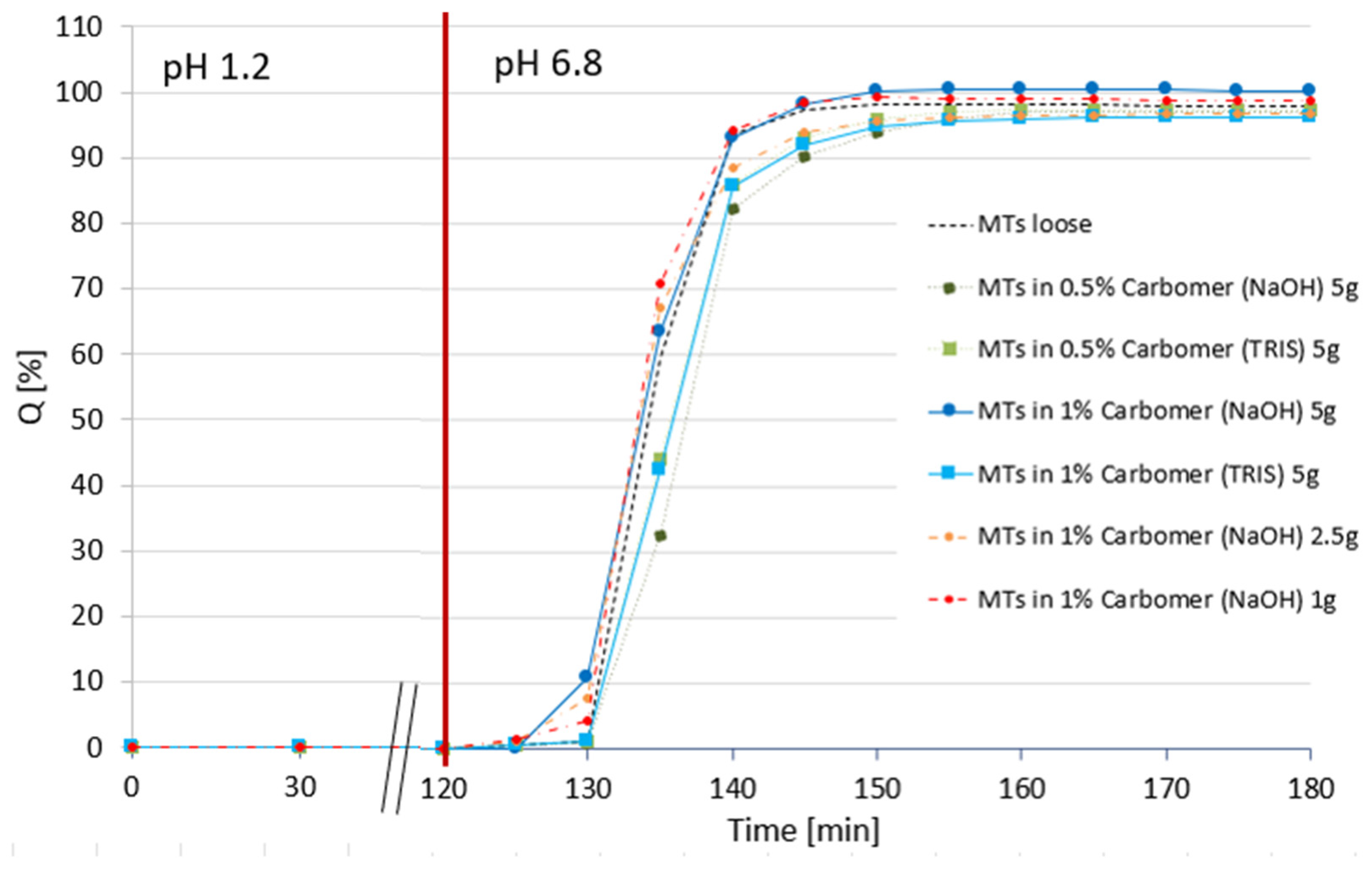
The initial analysis focused on MTs dispersed in 1% CAR gels neutralized with either TRIS or NaOH. As shown in
Figure 3, no pantoprazole release was observed during the acid stage, indicating that the enteric coating maintained its acid-resistant properties in the presence of CAR gels despite the relatively high pH value of 6.9. After transfer to the buffer stage, pantoprazole release was rapid and comparable to that observed for loose MTs. At least 80% of pantoprazole was released within 20 min after the change of dissolution medium, irrespective of the neutralizing agent used. Some variability was observed at the beginning of the release phase after transfer to the buffer medium; however, it remained within an acceptable range and did not affect the interpretation or comparative assessment of the dissolution profiles. Additional testing was performed using different amounts of CAR gel. For 1% CAR neutralized with NaOH, pantoprazole release was evaluated after mixing the MTs with 1.0 g, 2.5 g, and 5.0 g of gel. No marked differences in dissolution behavior were observed between the tested gel masses, indicating that reducing the amount of CAR gel did not substantially modify pantoprazole release under the applied pharmacopoeial conditions. A similar pattern was observed for the 0.5% CAR gel, further supporting that CAR gels did not markedly interfere with the release of pantoprazole from enteric-coated MTs after transfer to the buffer medium. From an application perspective, CAR gels showed favorable rheological properties. Their high apparent viscosity at rest and the presence of a flow point may help maintain a cohesive, spoonable structure and reduce the risk of leakage, spilling, or sedimentation of dispersed MTs before administration. At the same time, the marked decrease in viscosity under shear may facilitate spreading, mixing, and swallowing during oral application. Therefore, CAR gels appear to combine adequate structural stability at rest with easier flow under applied mechanical stress, which is desirable for semisolid oral vehicles intended for the administration of multiparticulate dosage forms [
26].
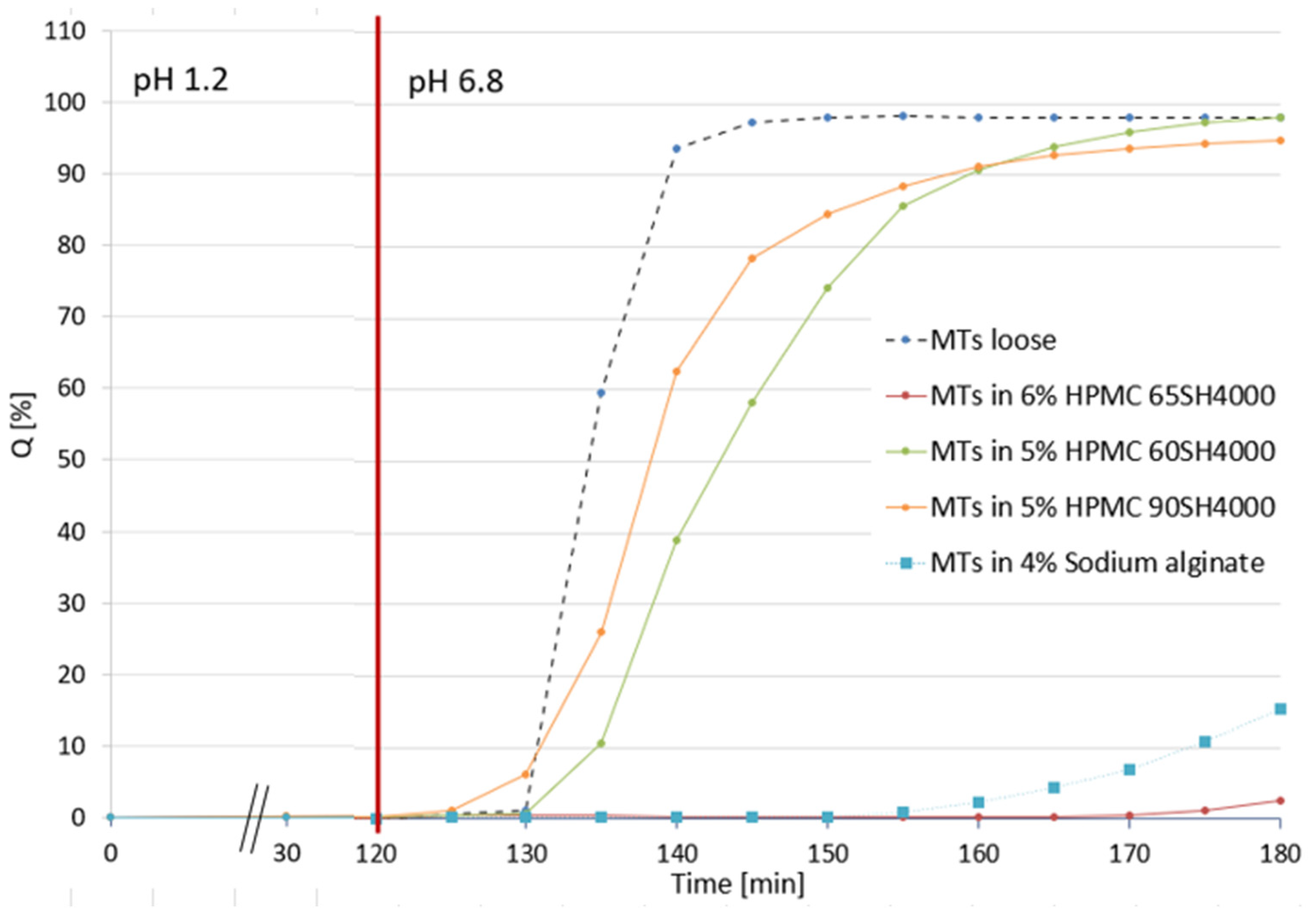
Following the analysis of CAR gels, attention was directed to gel vehicles that delayed pantoprazole release in the buffer stage relative to loose MTs. As shown in
Figure 4, 5% HPMC gels of the 60SH4000 and 90SH4000 grades caused only a slight delay in drug release. In these systems, after the change of dissolution medium, more than 80% of the pantoprazole was released within 35 min, whereas for loose MTs the same threshold was reached within 20 min. Overall, the observed variability remained acceptable and did not compromise the interpretation or comparative assessment of the dissolution profiles. Although the highest SD values were observed during the dynamic release phase, particularly between 135 and 155 min for HPMC 60SH4000 and between 130 and 155 min for HPMC 90SH4000, these deviations were transient and did not affect the overall evaluation of the formulations.
The slight delay in pantoprazole release observed for 5% HPMC 60SH4000 and 90SH4000 should not be attributed to viscosity alone. Although these gels showed moderate apparent viscosity under dissolution-test conditions at 37 °C, their effect on pantoprazole release may also be related to polymer concentration and substitution-dependent gel structure.
The effect of HPMC gels on pantoprazole release was strongly concentration-dependent, but the threshold concentration at which release retardation became evident differed between HPMC grades. As demonstrated later in the dissolution study, none of the tested 4% HPMC gels markedly affected pantoprazole release. However, increasing the polymer concentration to 5% was sufficient to produce a slight delay for HPMC 60SH4000 and 90SH4000, whereas 5% HPMC 65SH4000 still did not affect the dissolution profile. For HPMC 65SH4000, a marked inhibitory effect was observed only at 6%, indicating a higher concentration threshold for the formation of a restrictive gel barrier (
Figure 4). This suggests that the release-modifying effect of HPMC depends not only on the total polymer concentration but also on substitution-dependent hydration and gel-network organization. In the case of HPMC 60SH4000 and 90SH4000, increasing the concentration from 4% to 5% may have been sufficient to increase chain entanglement, local gel cohesion, and diffusional resistance around the MTs, resulting in delayed medium access to the enteric coating. HPMC 60SH and 90SH grades may form more heterogeneous or structurally compact gel layers, which can transiently hinder medium access to the enteric-coated minitablets and delay drug release. In contrast, 6% HPMC 65SH4000 likely exceeded a critical polymer concentration threshold, resulting in the formation of a persistent gel barrier that markedly limited medium penetration and pantoprazole diffusion. Notably, the gel mass remained visible in the baskets even after 2 h in the acid stage and was still present in small amounts at the end of the dissolution test, indicating high structural persistence throughout the experiment. Therefore, the observed dissolution behavior indicates grade-specific concentration thresholds rather than a simple linear relationship between apparent viscosity and drug release [
27].
Overall, these findings suggest that the impact of HPMC gels on pantoprazole release from enteric-coated MTs depends on a combination of polymer concentration, substitution type, hydration behavior, and gel microstructure. Although HPMC gels may be useful as carriers for MTs, excessively concentrated systems may form persistent hydrated barriers that impair drug release and are therefore unsuitable for the administration of enteric-coated pantoprazole MTs.
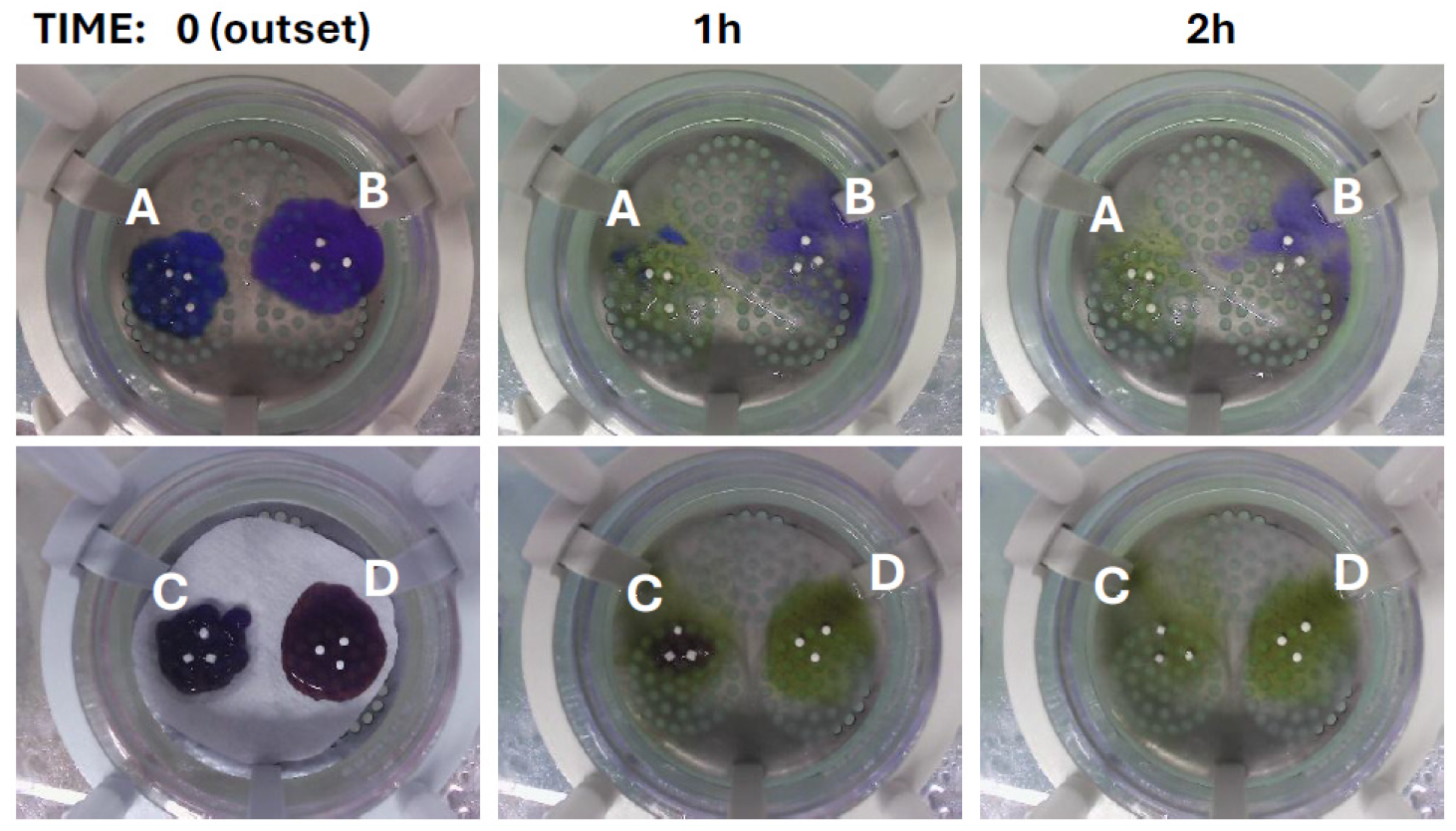
Consistent with the pH-indicator observations, the SA gel showed the strongest tendency to hinder drug release, which may be attributed to its compact and less permeable structure, limiting medium penetration and delaying the release of enteric-coated minitablets from the gel carrier. Despite its relatively low viscosity, the 4% SA gel (
Figure 4) substantially retarded drug release and failed to meet the pharmacopoeial requirements for gastro-resistant dosage forms. The behavior of SA in the two-stage dissolution test can be explained by its pH-responsive properties. In the acidic stage, protonation of SA carboxyl groups leads to shrinkage and densification of the gel network, which helps maintain structural integrity and limits swelling. After transfer to phosphate buffer, the gel becomes more hydrated and progressively loses its integrity because phosphate ions promote the release of Ca
2+ from the calcium-alginate network, leading to swelling and eventual disintegration [
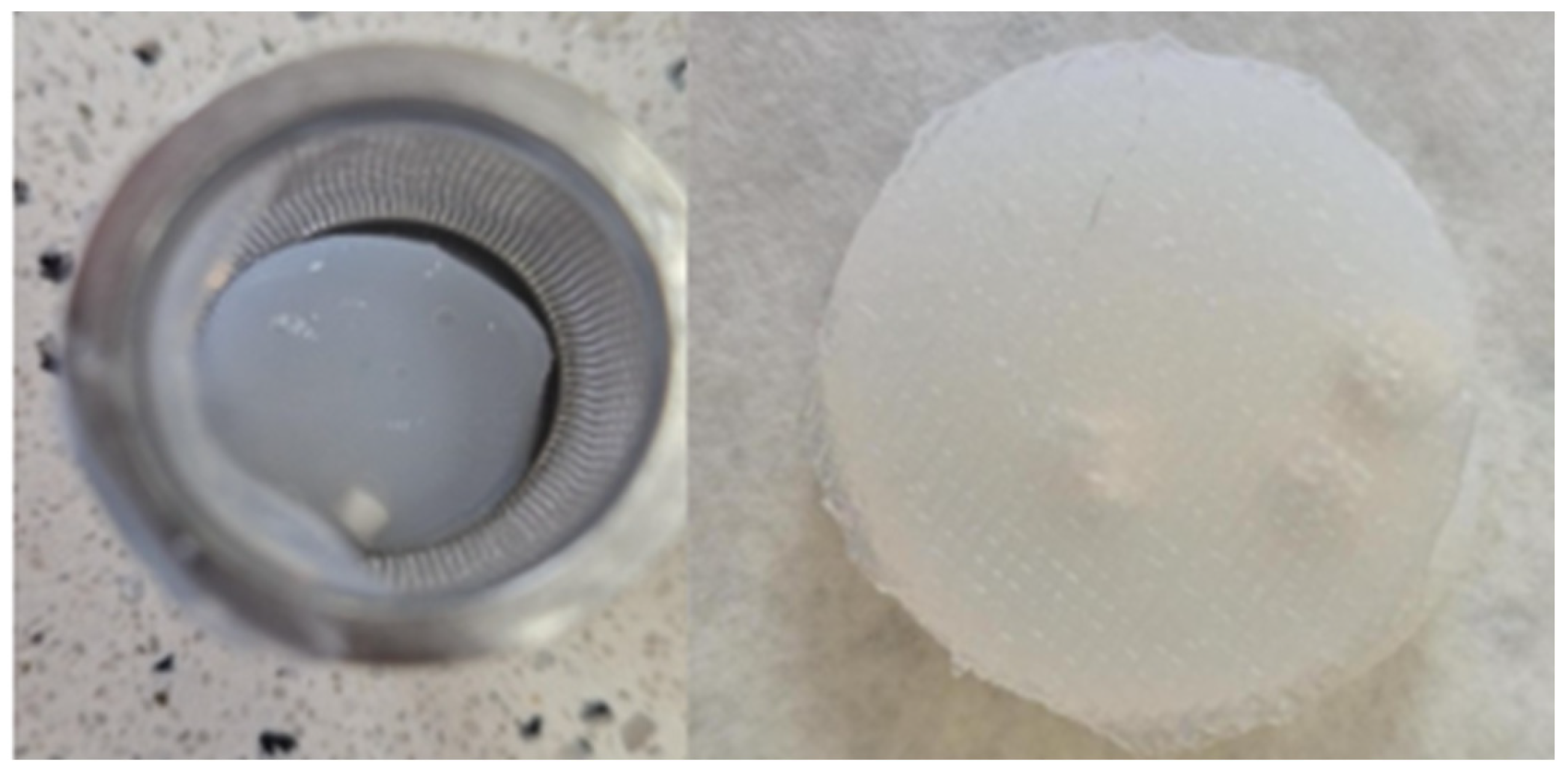
28]. However, despite this pH-dependent response, drug release in the buffer stage remained markedly delayed. A photograph of the minitablets embedded in the SA gel after 3 h of dissolution testing is shown in
Figure 5. Therefore, although the SA gel provided protection in the acidic stage, it was not considered a suitable vehicle for the administration of pantoprazole minitablets.
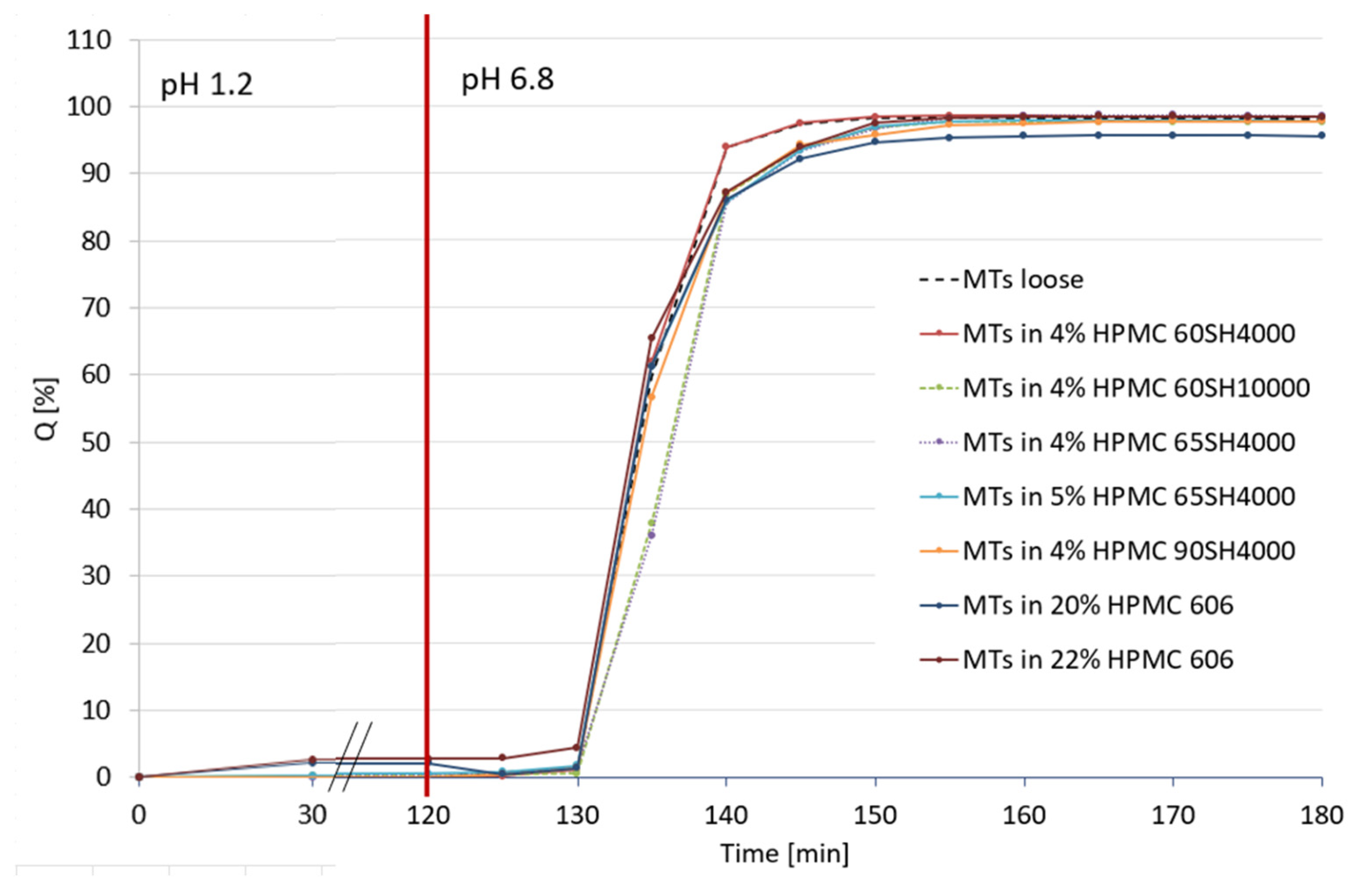
Figure 6 presents the dissolution profiles of enteric-coated MTs dispersed in gel vehicles that did not markedly affect pantoprazole release. As shown, all tested gels in this group allowed rapid pantoprazole release after transfer to the buffer stage. More than 80% of pantoprazole was released within 20 min after the change of dissolution medium, which was comparable to the profile observed for loose MTs. The variability of the results remained low and acceptable, with an increased SD observed only at 135 min, both for loose MTs and for MTs dispersed in gels. These transient deviations did not affect the interpretation of the dissolution profiles, as complete or near-complete drug release was subsequently achieved.
Irrespective of the HPMC substitution type, gels at a concentration of 4% did not markedly affect pantoprazole release from enteric-coated minitablets, yielding dissolution profiles comparable to those of loose MTs. In contrast, higher polymer concentrations (5% and 6%) were generally associated with delayed drug release, as shown in
Figure 4. The only exception was 5% HPMC 65SH4000, for which no noticeable impact on the dissolution profile was observed, in contrast to the slight delay observed for 60SH4000 and 90SH4000, which may therefore be attributed to differences in polymer substitution type and, consequently, hydration kinetics and gel microstructure. It is plausible that HPMC 65SH4000 forms a more homogeneous and rapidly hydrated gel network, allowing efficient penetration of the dissolution medium and limited diffusional resistance.
Although HPMC 606 provided very favorable dissolution results, its practical applicability as an oral gel vehicle should be considered with caution. Gels based on this polymer required concentrations above 20% to achieve suitable application properties, which makes this approach less economical and potentially difficult to justify from a formulation-development perspective. Moreover, a pronounced increase in viscosity was observed at 37 °C, indicating that the gel may behave unpredictably under administration and dissolution-test conditions. This temperature-dependent viscosity increase may also reduce batch-to-batch reproducibility and complicate process control. Therefore, despite its promising dissolution profile, HPMC 606 may be less suitable as a routine gel vehicle than other HPMC grades, which produced comparable release behavior at substantially lower polymer concentrations.
2.6. Advanced Dissolution Tests
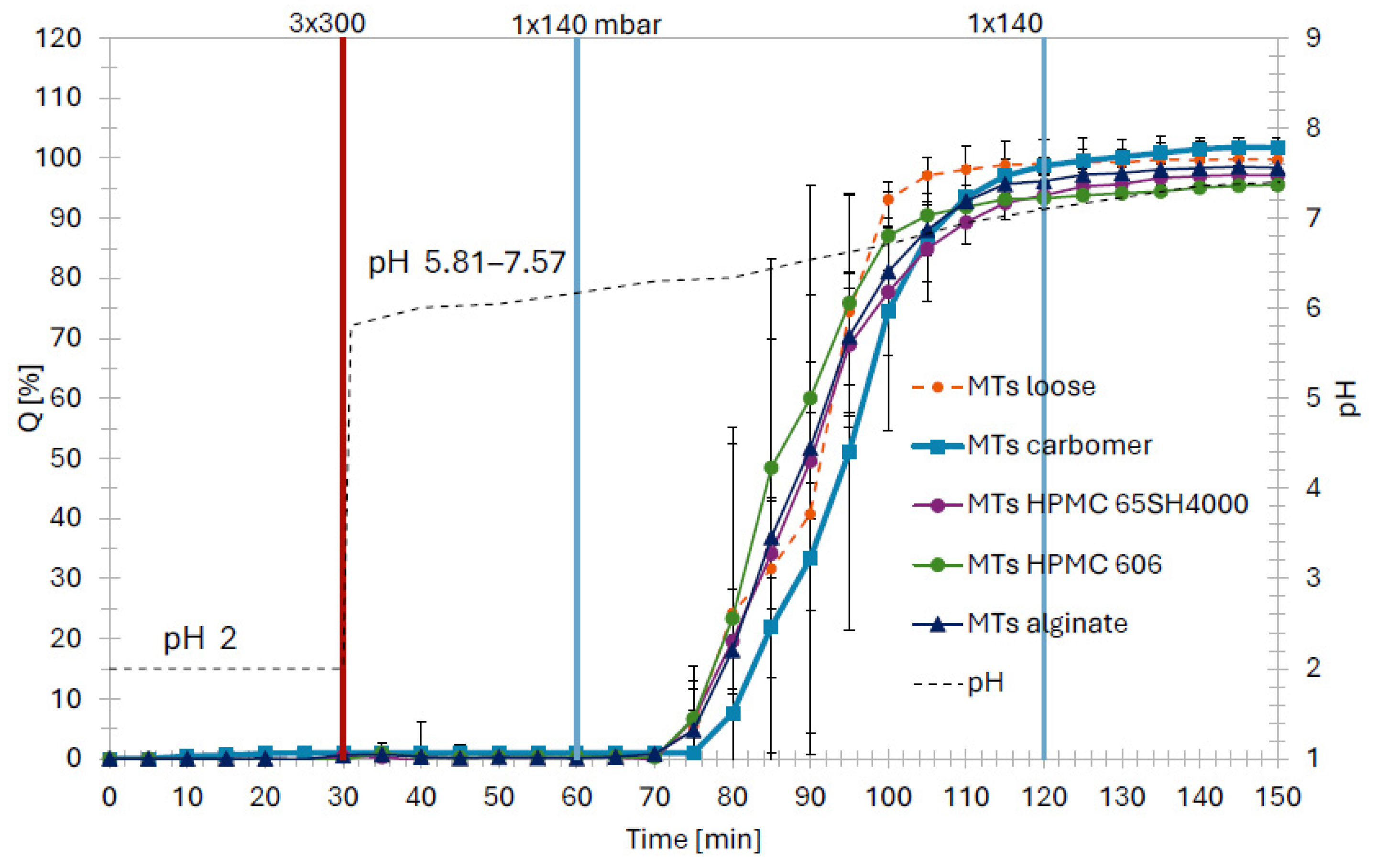
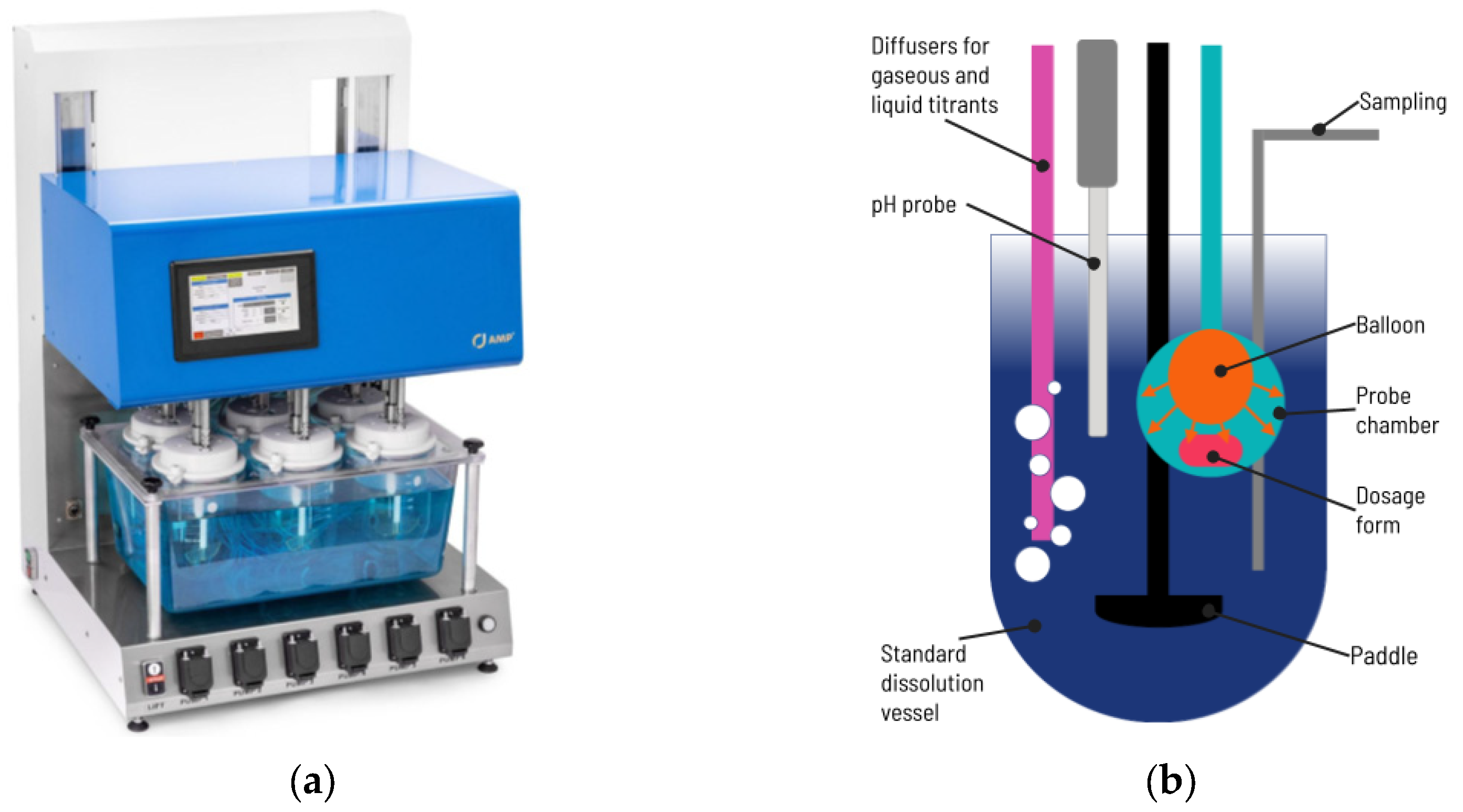
The release profiles obtained under non-pharmacopoeial dynamic Advanced Modular Platform (AMP) conditions are presented in
Figure 7. In this method, after 30 min of exposure to the acidic phase, gastric emptying and passage through the pylorus were simulated by three contraction cycles of 300 mbar. A buffer concentrate was then added to the acceptor medium, increasing the pH to approximately 5.81, followed by a gradual rise to pH 7.57. After the pH increase, the loose MTs showed complete dissolution, with more than 80% of pantoprazole released within approximately 70 min. A similar release profile was observed for MTs administered in 22% HPMC 606 gel, indicating that this vehicle did not markedly delay pharmaceutical availability under the applied dynamic conditions. This observation is consistent with the pharmacopoeial two-stage dissolution test, in which HPMC 606 allowed rapid pantoprazole release after transfer to the buffer stage. Similarly, for MTs administered in 5% HPMC 65SH4000 gel, more than 80% pantoprazole release was recorded approximately 75 min after the pH increase, with a profile close to that of loose MTs. Under dynamic AMP conditions, the HPMC 606 and HPMC 65SH4000 gels were sufficiently penetrated or dispersed to allow effective liberation of the enteric-coated MTs and pantoprazole release.
The relatively large SD values observed between approximately 70 and 100 min are not unexpected for this type of dynamic dissolution experiment and reflect variability during the transitional phase of the AMP test. At this stage, pH elevation, mechanical stress events, gel disruption, liberation of MTs from the gel vehicle, and onset of enteric-coating dissolution occur in close temporal sequence. Consequently, small differences in the timing of MT liberation or coating dissolution between individual vessels may result in larger variability at these time points. The AMP experiments were performed in triplicate, as this part of the study was intended as an exploratory comparative assessment supporting formulation screening rather than as a final release-testing procedure.
The most notable difference between the pharmacopoeial and non-pharmacopoeial tests was observed for the SA gel. In the two-stage pharmacopoeial dissolution test, 4% SA gel markedly retarded pantoprazole release and failed to meet the dissolution requirements for gastro-resistant dosage forms. However, under dynamic AMP conditions, SA did not cause a relevant delay in drug release, with more than 80% of pantoprazole released by approximately 75 min after the pH increase. Thus, the SA gel showed method-dependent behavior, with marked retardation under pharmacopoeial conditions but no relevant delay under the applied dynamic AMP conditions.
Finally, CAR gels did not show pantoprazole release during the acidic stage or during the simulated gastric emptying phase. No initial release was observed despite the application of pressure events and the subsequent increase in medium pH, indicating that the enteric coating maintained its integrity in the presence of CAR gels under the applied dynamic AMP conditions. After the pH transition and disruption of the gel structure, the liberated MTs showed rapid pantoprazole release, with dissolution profiles comparable to those of loose MTs. Following the pH increase, the main release phase began, and at least 80% of pantoprazole release was recorded after approximately 75 min, when the pH of the medium reached approximately 7.0. These findings suggest that CAR gels did not compromise the acid resistance of the enteric-coated MTs and, after mechanical disruption and pH transition, allowed effective liberation of the MTs and subsequent drug release.
The observed differences between hydrogel vehicles can be explained by the combined effects of polymer concentration, gel-network structure, medium penetration, and polymer responsiveness to pH and mechanical stress. In HPMC gels, which are non-ionic cellulose ether systems, the effect on dissolution may be associated with hydration behavior, polymer-chain entanglement, and the possible formation of a hydrated diffusional barrier around the dispersed MTs. At lower concentrations, the gel network was sufficiently hydrated and dispersible to allow rapid penetration of the dissolution medium and effective liberation of the enteric-coated MTs. In contrast, higher HPMC concentrations likely increased network density and tortuosity, thereby slowing medium access to the minitablets and delaying drug release. The differences observed between HPMC grades of similar nominal viscosity suggest that apparent viscosity alone does not fully determine diffusion behavior. These differences may be related to substitution-dependent hydration kinetics and gel-network characteristics; however, because direct structural characterization of hydrated HPMC gels was not performed, this interpretation should be regarded as a mechanistic hypothesis supported by rheological and dissolution data rather than as direct evidence of microstructural differences. For CAR gels, the mechanism is different and is primarily related to the pH-responsive behavior of crosslinked polyacrylic acid. This may explain why CAR gels maintained acid-stage protection but allowed rapid pantoprazole release after the pH transition. SA, in turn, may form a comparatively compact and cohesive matrix under acidic conditions due to reduced ionization and acid-induced structural contraction, which can limit medium penetration under static pharmacopoeial conditions.
The discrepancy observed for SA between the pharmacopoeial and AMP dissolution tests is mechanistically and practically important. Under pharmacopoeial conditions, the SA gel was exposed to a more acidic medium, 0.1 M HCl, for a longer period of 2 h, whereas the AMP test used 0.01 M HCl at pH 2.0 for 30 min, followed by a dynamic pH transition. The stronger and longer acid exposure in the pharmacopoeial test may have promoted more extensive protonation of alginate carboxylate groups and the formation of a compact alginic-acid-rich matrix, thereby reducing gel permeability, limiting medium penetration, and delaying the liberation of MTs from the gel vehicle. In contrast, under AMP conditions, the lower acid strength, shorter gastric exposure, gradual pH increase, and mechanical stress events simulating gastric emptying and intestinal pressure events probably disrupted or loosened the alginate matrix and reduced its barrier effect. Therefore, the favorable behavior of SA under AMP conditions should be interpreted as evidence that dynamic gastrointestinal conditions may partially overcome the barrier observed in the static pharmacopoeial test, rather than as sufficient evidence of formulation suitability. From a practical and regulatory perspective, this discrepancy is critical. Pharmacopoeial dissolution testing remains the primary quality-control and release-testing framework for gastro-resistant dosage forms; therefore, failure to meet pharmacopoeial dissolution requirements represents a major limitation, even if the formulation performs more favorably under biorelevant dynamic conditions. AMP testing may provide valuable mechanistic and biopredictive insight, but it should be regarded as complementary to, rather than a replacement for, compendial dissolution testing. These observations confirm that hydrogel vehicles for enteric-coated multiparticulates should be evaluated not only in terms of bulk viscosity and handling properties, but also with respect to hydration, pH responsiveness, gel-network persistence, medium penetration, and mechanical disruption under gastrointestinally relevant conditions.
It should be emphasized that the gel systems evaluated in this study were intended as administration vehicles, with enteric-coated pantoprazole MTs mixed with the gel immediately before administration. Given the moisture sensitivity of pantoprazole and the high water content of hydrogels, such studies would be required if these systems were to be developed as ready-to-use formulations.
A further limitation of this study is that the proposed mechanisms related to gel-network structure and possible gel–coating interactions were inferred mainly from rheological behavior, pH-indicator observations, visual assessment, and dissolution performance. Representative microscopic images of the coated MTs and coating cross-sections are provided in
Supplementary Figure S1; direct characterization of the hydrated gel microstructure and molecular or surface-level interactions between the hydrogel vehicles and the enteric coating was not performed. Therefore, terms such as gel-network organization, matrix compactness, and gel–coating compatibility should be interpreted as mechanistic hypotheses supported by indirect experimental evidence. Future studies should include complementary structural and surface-sensitive methods, such as microscopy of hydrated gels, imaging of MTs after contact with gel vehicles, and spectroscopic analysis of potential polymer–coating interactions.
In addition, the study should be interpreted in the context of its exploratory formulation-screening design. The number of replicates, including the use of three independent vessels in dissolution testing, was selected to identify formulation-dependent trends and compare the behavior of candidate gel vehicles rather than to provide a fully powered inferential comparison or formal pharmacopoeial batch-release assessment.




 ,
,