Collaborative Bearing Mechanism of Sustainable Coal Gangue Geopolymer Gel Backfill–Rock Combination Under Compression



Abstract
1. Introduction
2. Results and Discussion
2.1. Uniaxial Compressive Behaviors of CGBRC
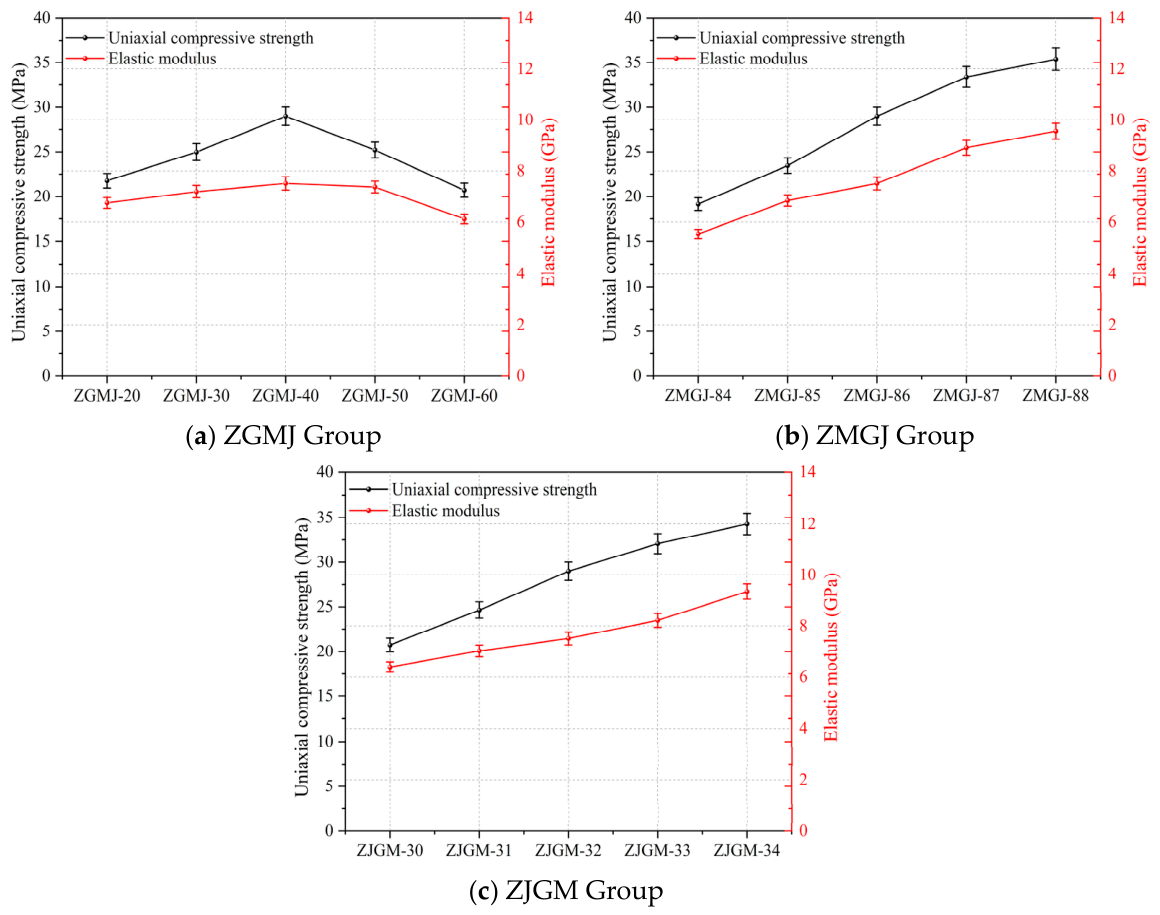
2.1.1. Uniaxial Compressive Strength and Elastic Modulus
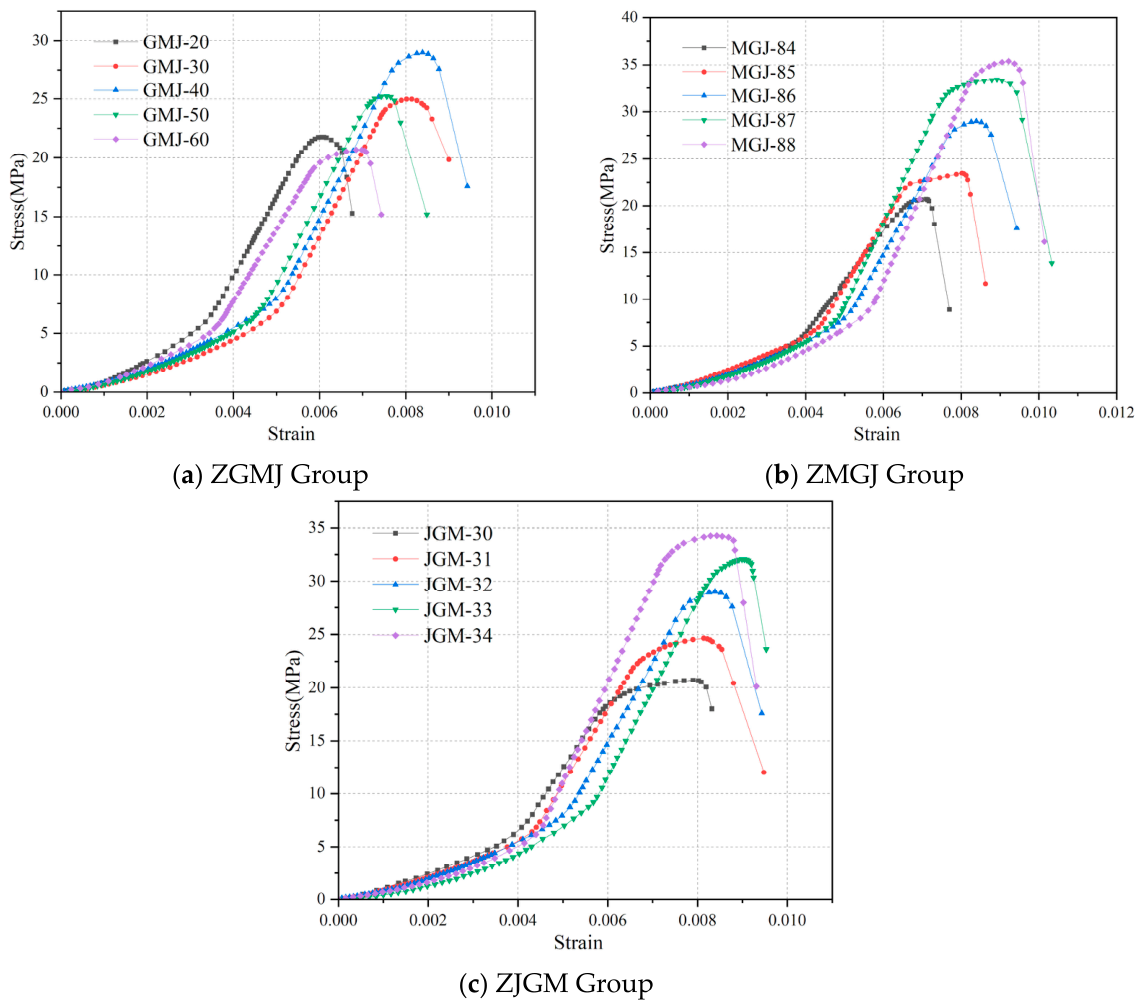
2.1.2. Uniaxial Compression Stress–Strain Curve
2.2. Strain Field Evolution Process
2.3. Damage Process of CGBRC Based on AE Cumulative Count
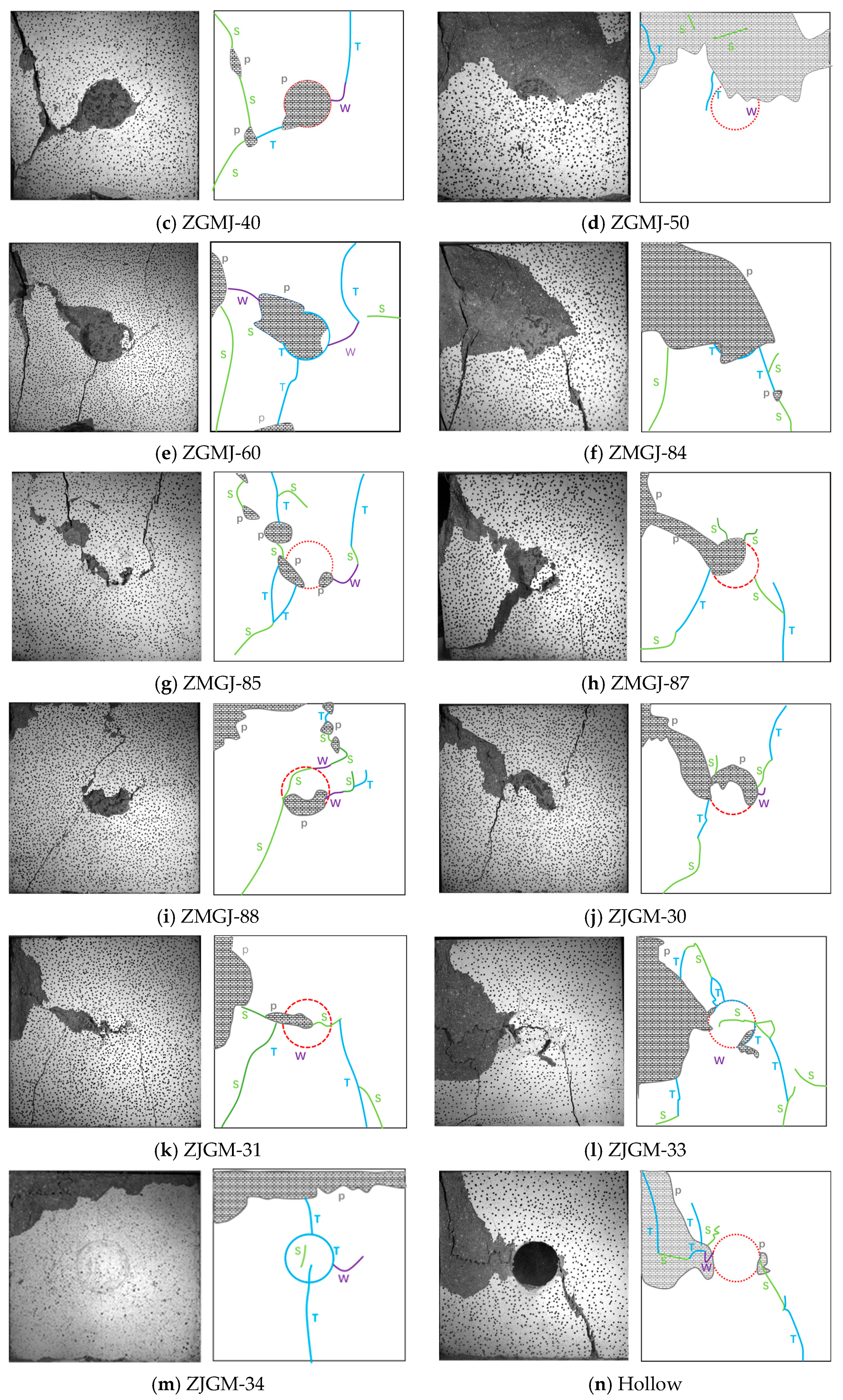
2.4. Failure Mode of CGBRC
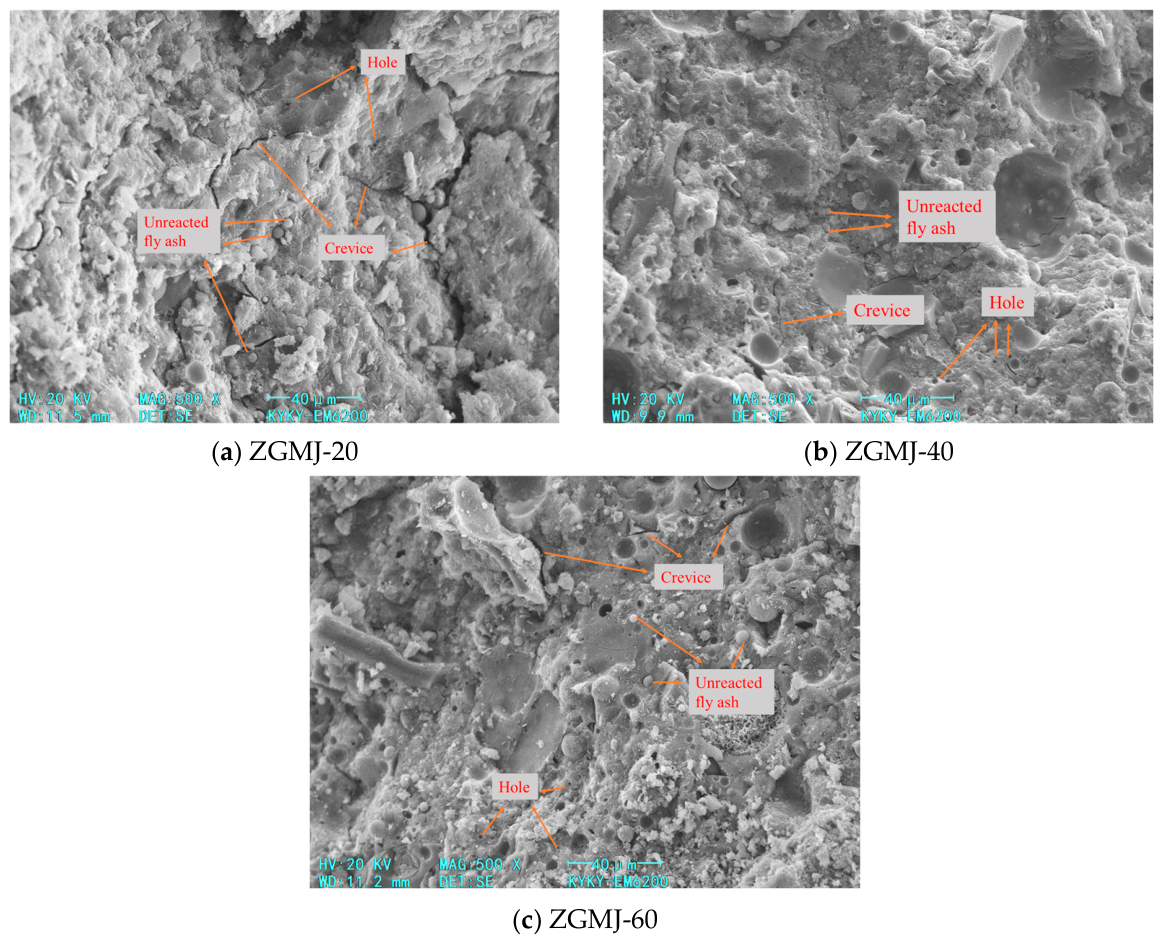
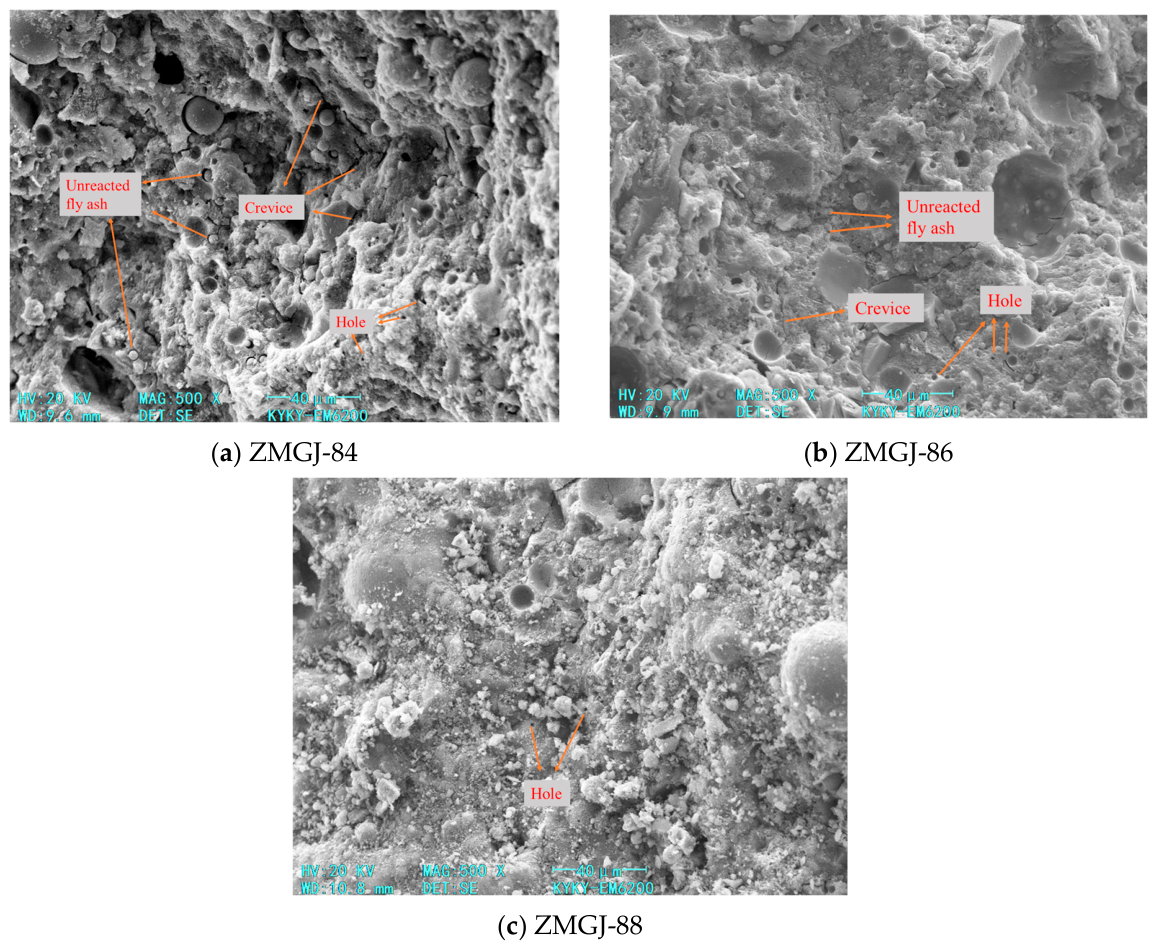
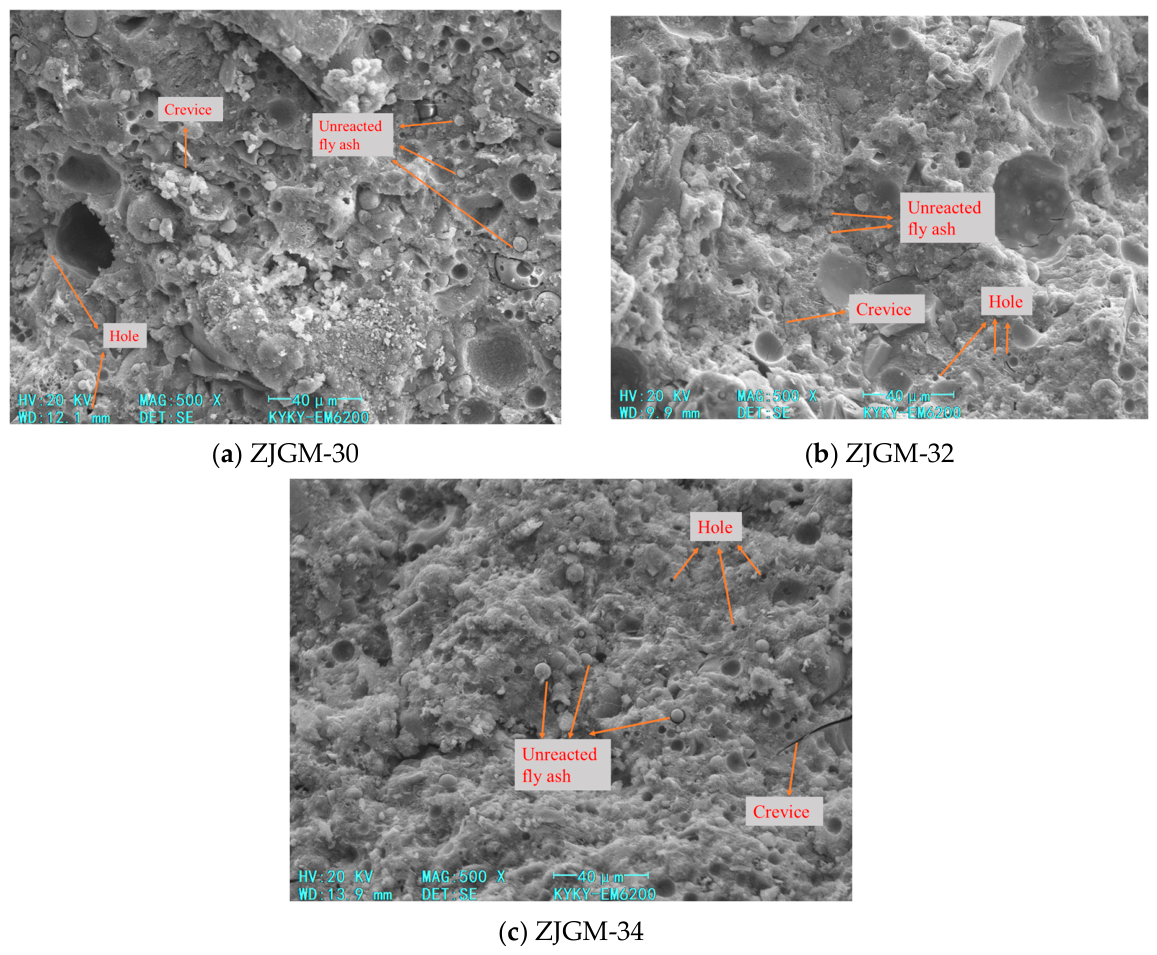
2.5. Influence Mechanism of Backfill Composition on the Strength of CGBRC
2.6. Interfacial Debonding Mechanism Between Backfill Material and Matrix
3. Conclusions
- (1)
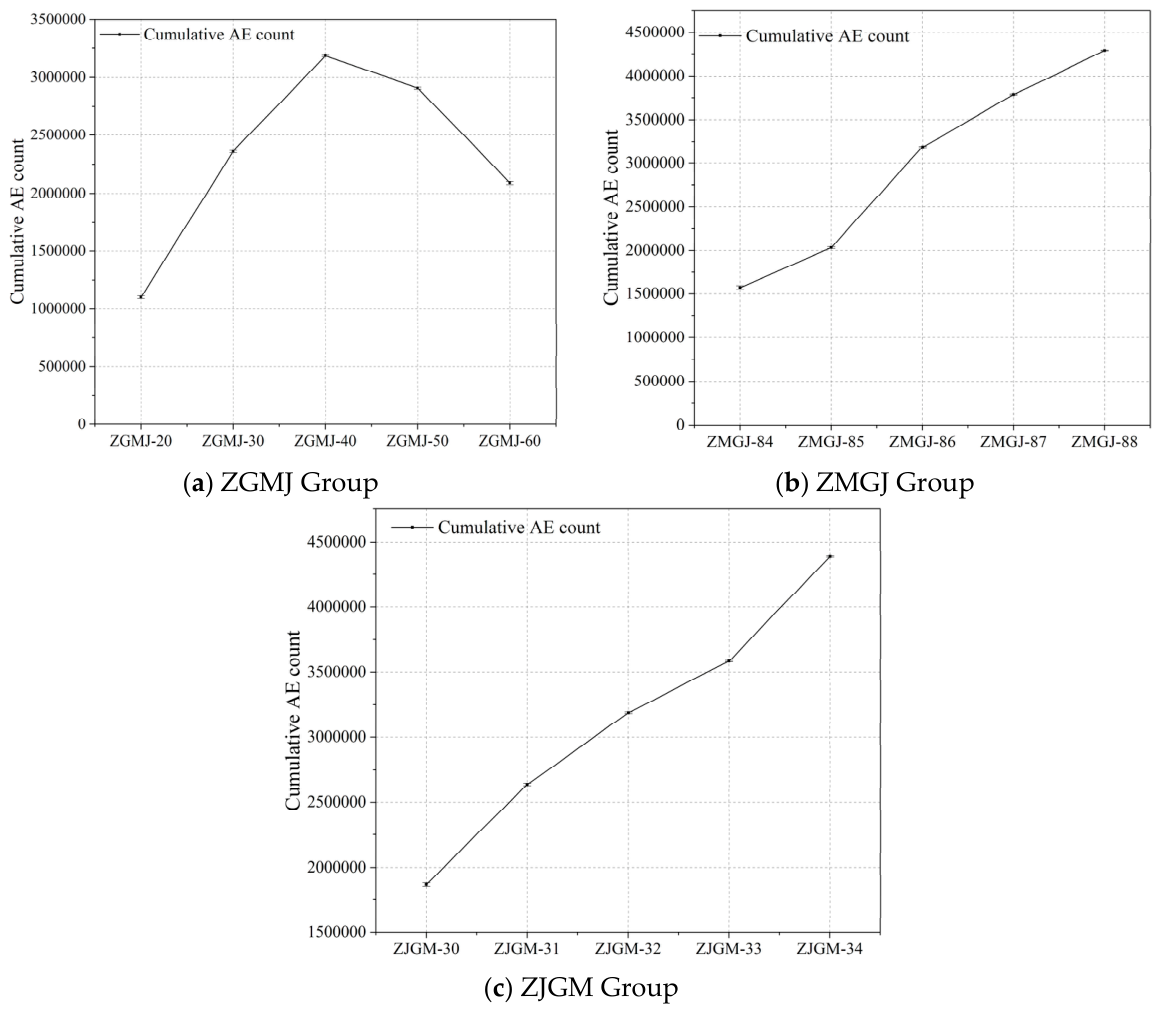
- The compressive strength and elastic modulus of CGBRC first increase and then decrease with the increase in fine gangue content, reaching the maximum at 40% fine gangue content. In comparison, the mechanical properties increase continuously with the increase in mass concentration and binder content, but the growth rate slows down significantly after 86% mass concentration and 32% binder content. The optimal mix proportion obtained in this study is 40% fine gangue content, 86% mass concentration, and 32% binder content, under which the compressive strength of CGBRC can reach more than 25 MPa, meeting the long-term bearing and deformation control requirements of mine backfill engineering. The cumulative AE ringing count is consistent with the compressive strength, which can be used as an effective index to characterize the internal damage degree and stability state of CGBRC.
- (2)
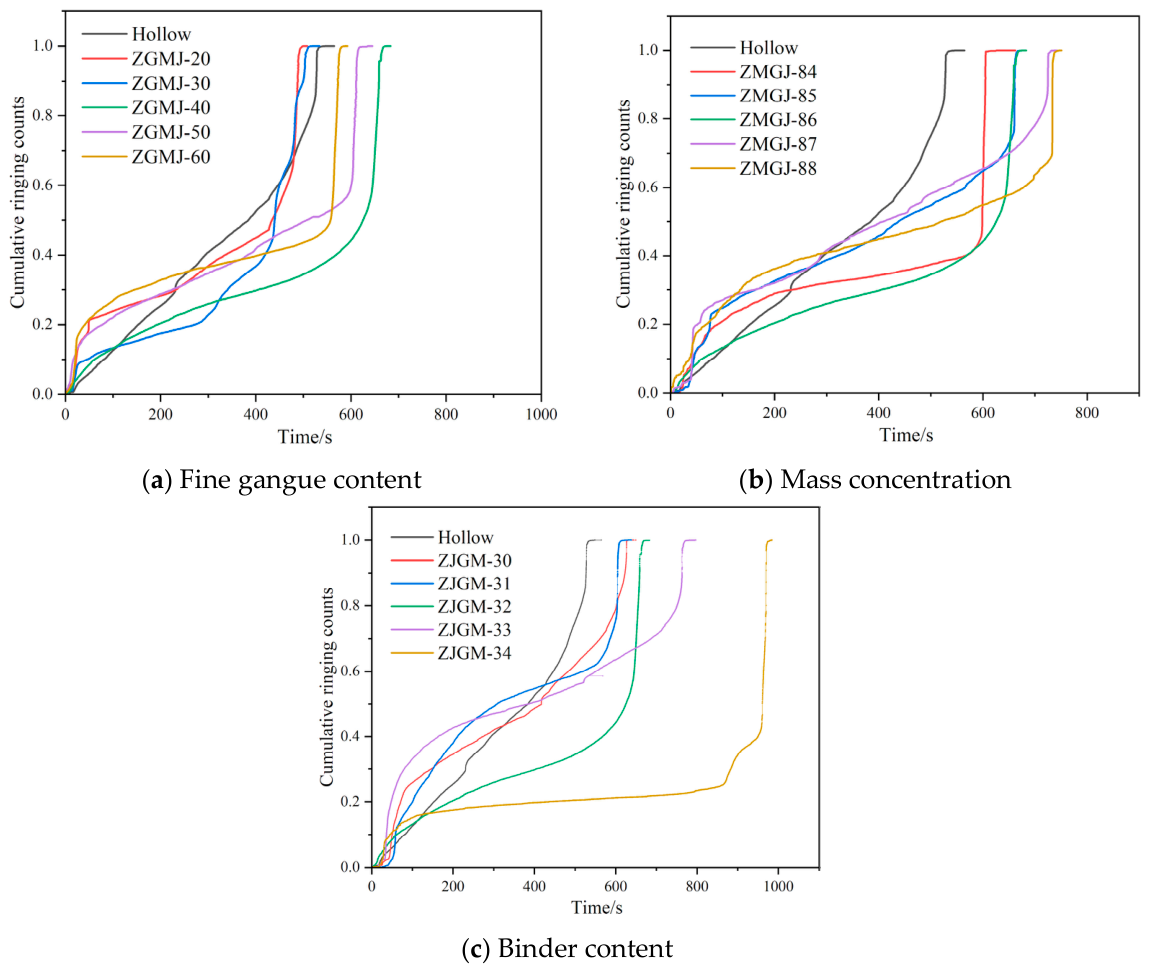
- Strain localization of CGBRC first appears near the backfill–rock interface, and the crack propagation path is controlled by the strength of backfill material. The damage evolution experiences three typical stages: rapid damage accumulation in the compaction stage, steady development in the elastoplastic stage, and sudden acceleration at failure. The DIC and AE results show that the backfill–rock interface is the weakest part of the composite structure. For engineering applications, enhancing the interface bonding state and improving the uniformity of backfill materials can effectively delay strain localization and crack initiation.
- (3)
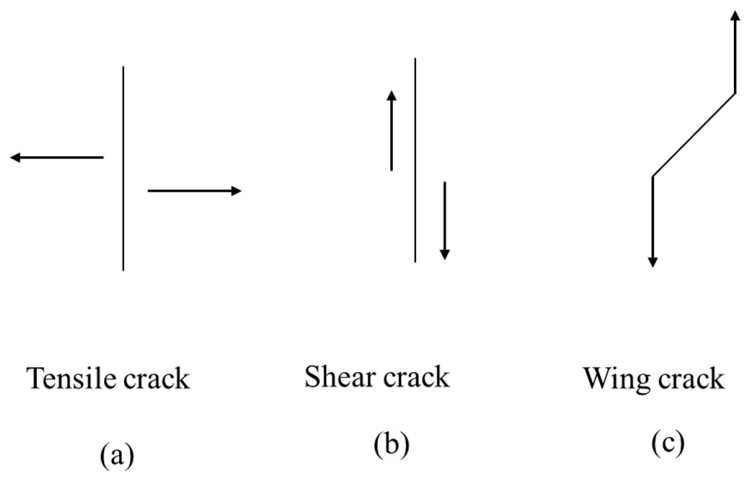
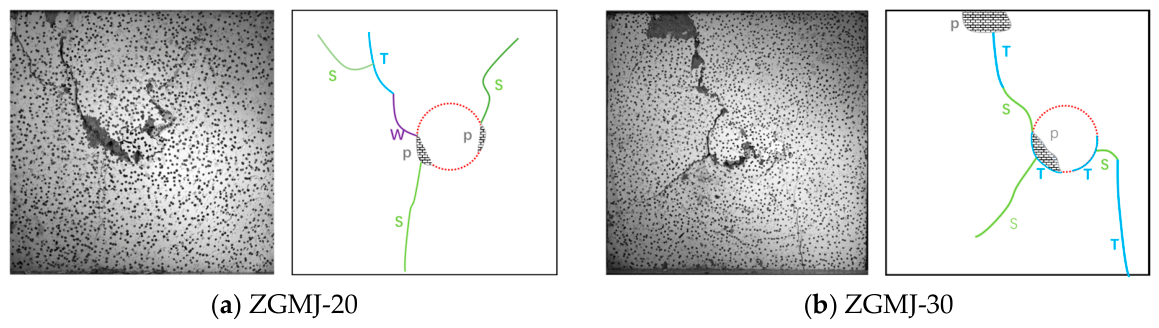
- The interfacial debonding behavior of CGBRC is dominated by the strength mismatch between backfill and surrounding rock. According to the crack propagation path, three failure modes are determined: penetrating backfill failure, axisymmetric interface failure, and centrally symmetric interface failure. With the increase in backfill strength, the failure mode changes from penetrating the internal backfill to interface debonding. For mine backfill engineering, the backfill strength should be matched with the surrounding rock strength to avoid sudden interface debonding and ensure the overall stability of the filling structure.
- (4)
- For practical engineering application, the recommended design strength of coal gangue geopolymer backfill material is not less than 14 MPa, and the optimized mix proportion proposed in this study can fully meet the strength requirements of controlling strata movement, reducing surface subsidence, and ensuring roadway stability. The research results can provide direct parameters and theoretical support for the on-site mixing proportion design, pumping construction, quality control, and safety early warning of coal gangue geopolymer backfill.
4. Materials and Methods
4.1. Materials
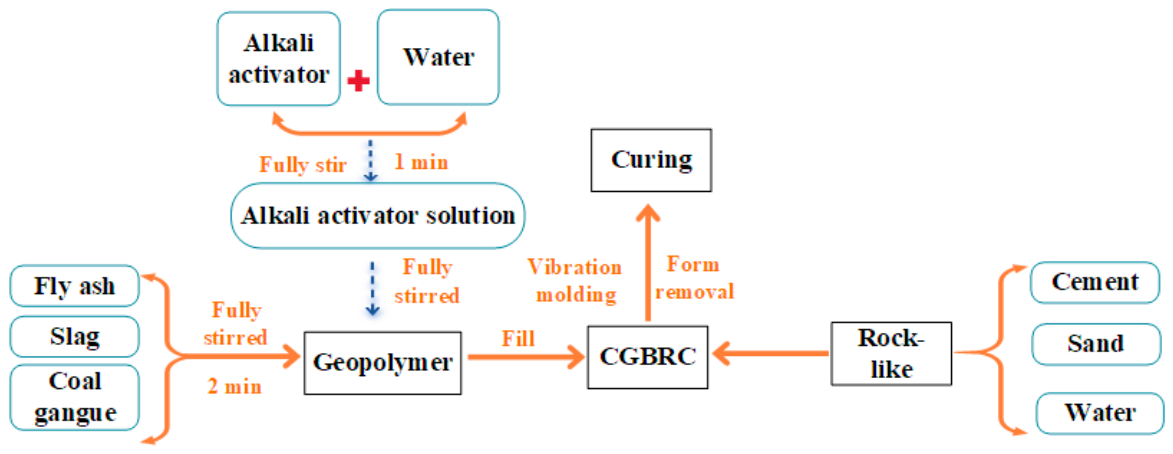
4.2. Specimens Preparation
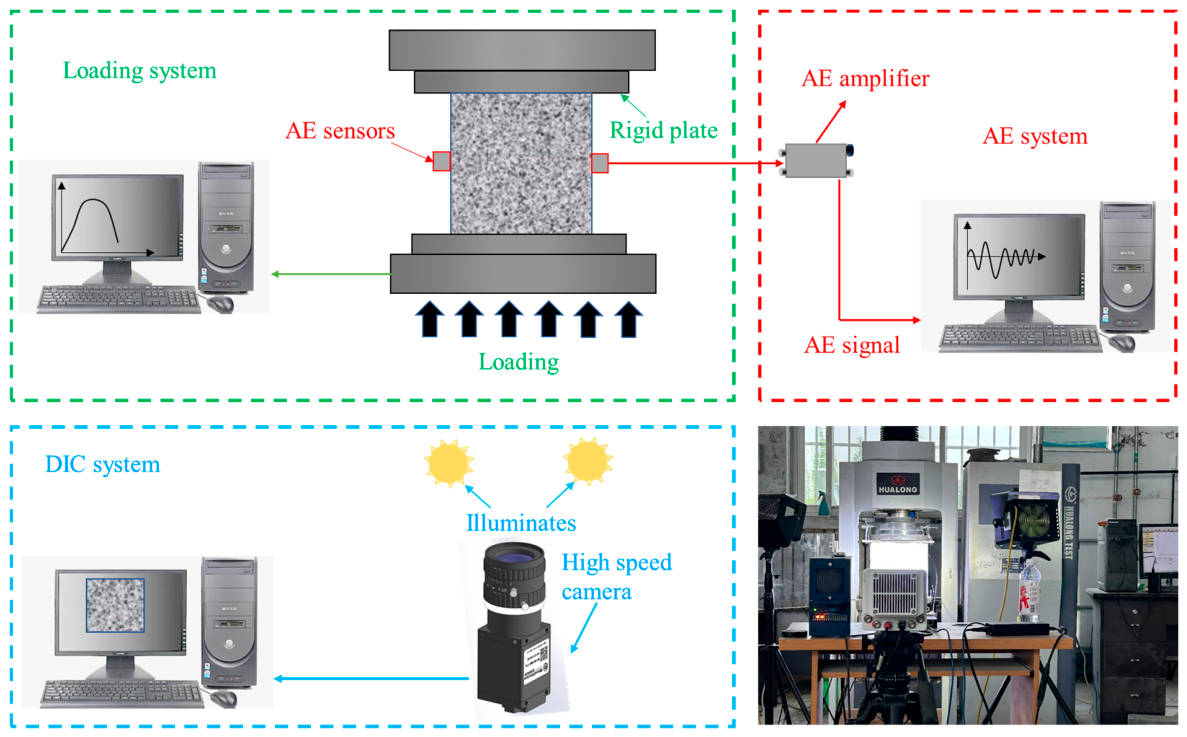
4.3. Methods
4.3.1. Uniaxial Compression Test and Elastic Modulus Test
4.3.2. DIC Analysis Test
4.3.3. AE Analysis Test
Author Contributions
Funding
Data Availability Statement
Conflicts of Interest
References
- Lazorenko, G.; Kasprzhitskii, A.; Yatsenko, E.A.; Wensheng, L.; Chaudhary, S. Towards coal mining waste valorization: Gangue as resource for the production of geopolymer and related alkali-activated materials. Green Technol. Sustain. 2025, 3, 100205. [Google Scholar] [CrossRef]
- Wang, Q.; Li, Z.; Zhang, Y.; Zhang, H.; Zhou, M.; Fang, Y. Influence of coarse coal gangue aggregates on elastic modulus and drying shrinkage behaviour of concrete. J. Build. Eng. 2020, 32, 101748. [Google Scholar] [CrossRef]
- Li, Y.; Liu, S.; Guan, X. Multitechnique investigation of concrete with coal gangue. Constr. Build. Mater. 2021, 301, 124114. [Google Scholar] [CrossRef]
- Wang, J.; Wang, Y.; Liu, H.; Chang, L.; Wang, H.; Wang, Y.; Cui, S. Effect of disodium EDTA on hydration and mechanical properties of calcium sulphoaluminate-belite cement. Cem. Concr. Res. 2023, 164, 107041. [Google Scholar] [CrossRef]
- Zhang, W.; Lang, L.; Dong, C.; Qi, Z.; Zhang, Z.; Li, J. Comprehensive study on coal gangue-based geopolymer activated by phosphoric acid: From macroscale properties to molecular simulation. Constr. Build. Mater. 2024, 438, 137271. [Google Scholar] [CrossRef]
- Rihawi, B.; Maras, M.M.; Ekinci, E.; Kutlusoy, E. Development of novel fiber-reinforced eco-friendly concrete: Application in geopolymer concrete pipes infrastructure systems. Clean Technol. Environ. Policy 2025, 27, 5165–5182. [Google Scholar] [CrossRef]
- Miao, S.; Pan, P.; Wu, Z.; Li, S.; Zhao, S. Fracture analysis of sandstone with a single filled flaw under uniaxial compression. Eng. Fract. Mech. 2018, 204, 319–343. [Google Scholar] [CrossRef]
- Yang, L.; Zhang, F.; Pan, J.; Man, D.; Wei, P.; Xie, H.; Chen, S.; Li, J. Mechanical behaviour and spatial fracture characteristics of granite containing weak inclusions under uniaxial loading revealed by 3D DIC and AE monitoring: The influence of extension length of planar inclusions. Theor. Appl. Fract. Mech. 2023, 127, 104021. [Google Scholar] [CrossRef]
- Zhou, C.; Xie, H.; Zhu, J.; Wang, Z.; Li, C.; Wang, F. Mechanical and fracture behaviors of brittle material with a circular inclusion: Insight from infilling composition. Rock Mech. Rock Eng. 2022, 55, 3331–3352. [Google Scholar] [CrossRef]
- Zeng, W.; Yang, S.; Tian, W. Experimental and numerical investigation of brittle sandstone specimens containing different shapes of holes under uniaxial compression. Eng. Fract. Mech. 2018, 200, 430–450. [Google Scholar] [CrossRef]
- Janeiro, R.P.; Einstein, H.H. Experimental study of the cracking behavior of specimens containing inclusions (under uniaxial compression). Int. J. Fract. 2010, 164, 83–102. [Google Scholar] [CrossRef]
- Han, Z.; Xie, S.; Li, D.; Feng, F.; Yuan, W. Dynamic fracture analysis of sandstone specimens containing different inclusions. Theor. Appl. Fract. Mech. 2022, 122, 103623. [Google Scholar] [CrossRef]
- Zhang, X.; Zhu, S.; Yang, T.; Wang, Y.; Li, J.; Li, K. The influence of coal gangue dosage and concentration on the properties and hydration mechanism of fly ash-based cemented filling materials. J. Clean. Prod. 2025, 492, 144903. [Google Scholar] [CrossRef]
- Chang, X.; Deng, Y.; Li, Z.; Wang, S.; Tang, C.A. Crack propagation from a filled flaw in rocks considering the infill influences. J. Appl. Geophys. 2018, 152, 137–149. [Google Scholar] [CrossRef]
- Wang, Y.; Lu, H.; Wu, J. Experimental investigation on strength and failure characteristics of cemented paste backfill-rock composite under uniaxial compression. Constr. Build. Mater. 2021, 304, 124629. [Google Scholar] [CrossRef]
- Jin, J.; Liu, T.; Li, M.; Lv, T.; Zhang, S.; Zuo, S. Mechanical properties and compression damage characteristics of coal gangue-filled backfill cemented by fly ash modified self-consolidating grouts. Case Stud. Constr. Mater. 2025, 22, e04687. [Google Scholar] [CrossRef]
- Wang, A.; Pan, Y.; Zhao, J.; Liu, P.; Wang, Y.; Chu, Y.; Liu, K.; Sun, D. Research progress of resourceful and efficient utilization of coal gangue in the field of building materials. J. Build. Eng. 2025, 99, 111526. [Google Scholar] [CrossRef]
- Huang, D.; Wang, X.; Chang, X.; Qiao, S.; Lu, H.; Pan, X. Evolution law study of pore and fracture of coal gangue cemented filling body under axial compression using PFC2D. Constr. Build. Mater. 2024, 411, 134340. [Google Scholar] [CrossRef]
- Wang, W.; Zhang, P.; Guo, J.; Wang, F. Abrasion resistance assessment of geopolymer concrete reinforced with nano-SiO2 and steel-polyvinyl alcohol hybrid fiber. Constr. Build. Mater. 2025, 487, 142071. [Google Scholar] [CrossRef]
- Zhu, Q.; Li, D.; Han, Z.; Li, X.; Zhou, Z. Mechanical properties and fracture evolution of sandstone specimens containing different inclusions under uniaxial compression. Int. J. Rock Mech. Min. Sci. 2019, 115, 33–47. [Google Scholar] [CrossRef]
- Ding, J.; Zhang, P.; Gao, J.; Gao, Z. Shrinkage properties and impermeability of the PVA fiber-reinforced Yellow River sediment-based geopolymer concrete. J. Build. Eng. 2026, 119, 115241. [Google Scholar] [CrossRef]
- Sun, Y.; Zhang, P.; Wang, F.; Chen, C.; Zhu, Y. Fracture behavior of geopolymer recycled concrete reinforced with and without nano-SiO2 and steel fiber based on DIC technology. Constr. Build. Mater. 2026, 518, 145857. [Google Scholar] [CrossRef]
- Zhuang, X.; Chun, J.; Zhu, H. A comparative study on unfilled and filled crack propagation for rock-like brittle material. Theor. Appl. Fract. Mech. 2014, 72, 110–120. [Google Scholar] [CrossRef]
- Maji, A.K.; Shah, S.P. Application of acoustic emission and laser holography to study microfracture in concrete. Spec. Publ. 1989, 112, 83–110. [Google Scholar]
- Taylor, M.A.; Broms, B.B. Shear bond strength between coarse aggregate and cement paste or mortar. In Journal Proceedings; ACI: Farmington Hills, MI, USA, 1964; pp. 939–958. [Google Scholar]
- Zaitsev, Y.B.; Wittmann, F.H. Simulation of crack propagation and failure of concrete. Matériaux Constr. 1981, 14, 357–365. [Google Scholar] [CrossRef]
- Zhu, Q.; Li, D. Experimental investigation on crack behavior and stress thresholds of sandstone containing a square inclusion under uniaxial compression. Appl. Sci. 2020, 10, 7621. [Google Scholar] [CrossRef]
- Zhao, Z.; Zhou, D. Mechanical properties and failure modes of rock samples with grout-infilled flaws: A particle mechanics modeling. J. Nat. Gas Sci. Eng. 2016, 34, 702–715. [Google Scholar] [CrossRef]
- Zhou, T.; Chen, J.; Xie, H.; Zhou, C.; Wang, F.; Zhu, J. Failure and Mechanical Behaviors of Sandstone Containing a Pre-existing Flaw Under Compressive–shear Loads: Insight from a Digital Image Correlation (DIC) Analysis. Rock Mech. Rock Eng. 2022, 55, 4237–4256. [Google Scholar] [CrossRef]
- Sun, Y.; Zhang, P.; Sun, X.; Gao, Z.; Lai, C. Mechanical-fracture behavior of steel fibre/nano-SiO2 reinforced geopolymer recycled concrete. Int. J. Mech. Sci. 2025, 305, 110785. [Google Scholar] [CrossRef]
- Liu, L.; Zhu, C.; Qi, C.; Wang, M.; Huan, C.; Zhang, B.; Song, K. Effects of curing time and ice-to-water ratio on performance of cemented paste backfill containing ice slag. Constr. Build. Mater. 2019, 228, 116639. [Google Scholar] [CrossRef]
- Wang, Y.; Han, J.Q.; Song, Z.Y.; Zhu, C. Macro-meso failure behavior of pre-flawed hollow-cylinder granite under multi-level cyclic loads: Insights from acoustic emission and post-test CT scanning. Eng. Fract. Mech. 2021, 258, 108074. [Google Scholar] [CrossRef]
- Zhou, Y.; Yu, X.; Guo, Z.; Yan, Y.; Zhao, K.; Wang, J.; Zhu, S. On acoustic emission characteristics, initiation crack intensity, and damage evolution of cement-paste backfill under uniaxial compression. Constr. Build. Mater. 2021, 269, 121261. [Google Scholar] [CrossRef]
- Wang, J.; Fu, J.; Song, W.; Zhang, Y.; Wu, S. Acoustic emission characteristics and damage evolution process of layered cemented tailings backfill under uniaxial compression. Constr. Build. Mater. 2021, 295, 123663. [Google Scholar] [CrossRef]
- Zhao, Y.; Guo, Y.; Feng, G. Strength evolution and deterioration law of cemented gangue backfill body in acid mine water. J. Cent. South Univ. 2024, 31, 1560–1573. [Google Scholar] [CrossRef]
- Ashby, M.F.A.; Hallam, S.D. The failure of brittle solids containing small cracks under compressive stress states. Acta Metall. 1986, 34, 497–510. [Google Scholar] [CrossRef]
- Wang, F.; Xie, H.; Zhou, C.; Wang, Z.; Li, C. Combined effects of fault geometry and roadway cross-section shape on the collapse behaviors of twin roadways: An experimental investigation. Tunn. Undergr. Space Technol. 2023, 137, 105106. [Google Scholar] [CrossRef]
- Gao, Z.; Zhang, P.; Sun, X.; Guo, J.; Feng, H. High-performance geopolymer concrete for repairing normal concrete: Interfacial bonding characteristics and microstructure evolution. Compos. Struct. 2026, 382, 120086. [Google Scholar] [CrossRef]
- Su, X.; Yu, L.; Peng, Y.; Wu, J.; Zhang, T.; Cao, A. Investigation of static mechanical characteristics and numerical simulation of fractal gangue cemented backfill materials. Phys. Fluids 2024, 36, 107158. [Google Scholar] [CrossRef]
- Yu, G.; Han, Y.; Yu, X.; Bao, R.; Guo, J.; Feng, Q. Mechanical Properties and Deterioration Instability of Filling Body with Gangue-Cement Material Based on AE Experiment. Shock Vib. 2022, 2022, 3818045. [Google Scholar] [CrossRef]
- Song, P.; Liu, Y.; Kong, L.; Tang, Z.; Sun, G. Research on design and optimization for compositions of ultra-high-performance geopolymer concrete. J. Build. Eng. 2025, 100, 111750. [Google Scholar] [CrossRef]
- Sun, Q.; Tian, S.; Sun, Q.; Li, B.; Cai, C.; Xia, Y.; Wei, X.; Mu, Q. Preparation and microstructure of fly ash geopolymer paste backfill material. J. Clean. Prod. 2019, 225, 376–390. [Google Scholar] [CrossRef]
- Sujitha, V.S.; Raja, S.; Rusho, M.A.; Yishak, S. Advances and developments in high strength geopolymer concrete for sustainable construction—A review. Case Stud. Constr. Mater. 2025, 22, e04669. [Google Scholar] [CrossRef]
- Lv, Y.; Chen, Y.; Dai, W.; Yang, H.; Jiang, L.; Li, K.; Jin, W. Preparation and Properties of Porous Concrete Based on Geopolymer of Red Mud and Yellow River Sediment. Materials 2024, 17, 923. [Google Scholar] [CrossRef] [PubMed]
- Peng, H.; Spearing, A.J.S.; Ju, F.; Jessu, K.V.; Shuai, G. Effects of solid backfilling on overburden strata movement in shallow depth longwall coal mines in west China. J. Geophys. Eng. 2018, 15, 2194–2208. [Google Scholar] [CrossRef]
- Wang, W.; Zhang, P.; Sun, X.; Gao, Z. Assessing the influence of nano-SiO2 on abrasion resistance of geopolymer concrete reinforced with hybrid fiber through abrasion tests. Powder Technol. 2026, 470, 122013. [Google Scholar] [CrossRef]
- Alomayri, T. Experimental study of the microstructural and mechanical properties of geopolymer paste with nano material (Al2O3). J. Build. Eng. 2019, 25, 100788. [Google Scholar] [CrossRef]
- Gao, Z.; Zhang, P.; Sun, X.; Guo, J. Interfacial shear behavior between high-performance geopolymer concrete and normal concrete. Int. J. Mech. Sci. 2026, 313, 111277. [Google Scholar] [CrossRef]
- Jaeger, J.C.; Cook, N.G.; Zimmerman, R. Fundamentals of Rock Mechanics; John Wiley & Sons: Hoboken, NJ, USA, 2009. [Google Scholar]
- Gao, Z.; Zhang, P.; Dai, X.; Zheng, Y.; Feng, H. Assessment of bonding behavior of hybrid fiber alkali-activated concrete for tunnel lining concrete restoration. J. Clean. Prod. 2025, 514, 145803. [Google Scholar] [CrossRef]
- Fossen, H. Structural Geology; Cambridge University Press: Cambridge, UK, 2016. [Google Scholar]
- GB/T 50081-2019; Standard for Test Methods of Concrete Physical and Mechanical Properties. China Architecture & Building Press: Beijing, China, 2019.



| Fine gangue content (%) | 20 | 30 | 40 | 50 | 60 |
| Failure mode | I | I | I | I | I |
| Mass concentration (%) | 84 | 85 | 86 | 87 | 88 |
| Failure mode | I | I | I | II | III |
| Binder content (%) | 30 | 31 | 32 | 33 | 34 |
| Failure mode | I | I | I | II | III |
| Specimens | Compressive Strength (MPa) | Elastic Modulus (GPa) | Specimens | Compressive Strength (MPa) | Elastic Modulus (GPa) |
|---|---|---|---|---|---|
| GMJ-20 | 12.9 ± 0.42 | 6.4 ± 0.19 | MGJ-87 | 16.8 ± 0.55 | 8.6 ± 0.27 |
| GMJ-30 | 13.8 ± 0.45 | 6.8 ± 0.21 | MGJ-88 | 17.5 ± 0.58 | 9.3 ± 0.29 |
| GMJ-40 | 14.2 ± 0.47 | 7.1 ± 0.23 | JGM-30 | 12.5 ± 0.40 | 6.1 ± 0.18 |
| GMJ-50 | 14.0 ± 0.44 | 6.9 ± 0.22 | JGM-31 | 13.3 ± 0.43 | 6.6 ± 0.20 |
| GMJ-60 | 11.1 ± 0.36 | 5.6 ± 0.17 | JGM-32 | 14.2 ± 0.46 | 7.1 ± 0.22 |
| MGJ-84 | 9.1 ± 0.29 | 5.1 ± 0.15 | JGM-33 | 15.7 ± 0.51 | 7.7 ± 0.24 |
| MGJ-85 | 13.0 ± 0.42 | 6.5 ± 0.20 | JGM-34 | 16.9 ± 0.56 | 9.0 ± 0.28 |
| MGJ-86 | 14.2 ± 0.46 | 7.1 ± 0.22 | Matrix | 20 ± 0.64 | 10 ± 0.31 |
| Properties | Density (g/cm3) | Specific Surface Area (m3/kg) | Moisture Content (%) | Loss on Ignition (%) | Average Particle Size (μm) |
|---|---|---|---|---|---|
| FA | 2.14 ± 0.03 | 420 ± 8 | 0.61 ± 0.04 | 2.52 ± 0.12 | 29.71 ± 1.35 |
| GGBS | 2.88 ± 0.04 | 426 ± 7 | 0.10 ± 0.01 | 0.36 ± 0.03 | 9.60 ± 0.48 |
| Chemical | CaO | SiO2 | Al2O3 | Fe2O3 | Na2O | MgO | SO3 | K2O |
|---|---|---|---|---|---|---|---|---|
| FA | 3.35 | 52.78 | 34.18 | 5.64 | 0.15 | 0.31 | 0.49 | 1.65 |
| GGBS | 36.71 | 34.21 | 19.48 | 0.38 | 0.18 | 6.12 | 1.05 | 0.38 |
| Group | FA | GGBS | NaSiO3 | NaOH | Water | Fine Aggregate | Coarse Aggregate | Fine Gangue Content | Mass Concentration | Binder Content |
|---|---|---|---|---|---|---|---|---|---|---|
| kg/m3 | kg/m3 | kg/m3 | kg/m3 | kg/m3 | kg/m3 | kg/m3 | % | % | % | |
| ZGMJ-40 ZMGJ-86 ZJGM-32 | 638.4 | 33.6 | 231.6 | 37.3 | 133.3 | 410.3 | 615.4 | 40 | 86 | 32 |
| ZGMJ-20 | 638.4 | 33.6 | 231.6 | 37.3 | 133.3 | 205.1 | 820.6 | 20 | 86 | 32 |
| ZGMJ-30 | 638.4 | 33.6 | 231.6 | 37.3 | 133.3 | 307.7 | 718.0 | 30 | 86 | 32 |
| ZGMJ-50 | 638.4 | 33.6 | 231.6 | 37.3 | 133.3 | 512.9 | 512.9 | 50 | 86 | 32 |
| ZGMJ-60 | 638.4 | 33.6 | 231.6 | 37.3 | 133.3 | 615.5 | 410.3 | 40 | 86 | 32 |
| ZMGJ-84 | 638.4 | 33.6 | 231.6 | 37.3 | 175.3 | 393.5 | 590.3 | 40 | 84 | 32 |
| ZMGJ-85 | 638.4 | 33.6 | 231.6 | 37.3 | 154.3 | 401.9 | 602.9 | 40 | 85 | 32 |
| ZMGJ-87 | 638.4 | 33.6 | 231.6 | 37.3 | 112.3 | 418.7 | 628.1 | 40 | 87 | 32 |
| ZMGJ-88 | 638.4 | 33.6 | 231.6 | 37.3 | 91.3 | 427.1 | 640.7 | 40 | 88 | 32 |
| ZJGM-30 | 598.5 | 31.5 | 217.1 | 35.0 | 143.4 | 429.8 | 644.7 | 40 | 86 | 30 |
| ZJGM-31 | 618.5 | 32.6 | 224.4 | 36.1 | 138.4 | 420.1 | 630.0 | 40 | 86 | 31 |
| ZJGM-33 | 658.4 | 34.7 | 238.9 | 38.4 | 128.3 | 400.6 | 600.8 | 40 | 86 | 33 |
| ZJGM-34 | 678.3 | 35.7 | 246.1 | 39.6 | 123.3 | 390.8 | 586.2 | 40 | 86 | 34 |
| Mechanical Characteristics | Rock-Like Specimens | Sandstone [51] |
|---|---|---|
| Compressive strength (MPa) | 17.3 ± 0.8 | 11–47.3 |
| Elastic modulus (GPa) | 5.6 ± 0.3 | 2.9–31.4 |
| Test Name | Quantity | Specimen Size (mm) |
|---|---|---|
| Uniaxial compression test | 3 × 13 | 100 × 100 × 300 |
| Elastic modulus test | 3 × 13 | 100 × 100 × 300 |
| Microscopic experiment | 3 × 10 | 100 × 100 × 100 |
Disclaimer/Publisher’s Note: The statements, opinions and data contained in all publications are solely those of the individual author(s) and contributor(s) and not of MDPI and/or the editor(s). MDPI and/or the editor(s) disclaim responsibility for any injury to people or property resulting from any ideas, methods, instructions or products referred to in the content. |
© 2026 by the authors. Licensee MDPI, Basel, Switzerland. This article is an open access article distributed under the terms and conditions of the Creative Commons Attribution (CC BY) license.
Share and Cite
Zhang, P.; Wen, Z.; Wang, F.; Chen, C. Collaborative Bearing Mechanism of Sustainable Coal Gangue Geopolymer Gel Backfill–Rock Combination Under Compression. Gels 2026, 12, 517. https://doi.org/10.3390/gels12060517
Zhang P, Wen Z, Wang F, Chen C. Collaborative Bearing Mechanism of Sustainable Coal Gangue Geopolymer Gel Backfill–Rock Combination Under Compression. Gels. 2026; 12(6):517. https://doi.org/10.3390/gels12060517
Chicago/Turabian StyleZhang, Peng, Zhi Wen, Fei Wang, and Cancan Chen. 2026. "Collaborative Bearing Mechanism of Sustainable Coal Gangue Geopolymer Gel Backfill–Rock Combination Under Compression" Gels 12, no. 6: 517. https://doi.org/10.3390/gels12060517
APA StyleZhang, P., Wen, Z., Wang, F., & Chen, C. (2026). Collaborative Bearing Mechanism of Sustainable Coal Gangue Geopolymer Gel Backfill–Rock Combination Under Compression. Gels, 12(6), 517. https://doi.org/10.3390/gels12060517