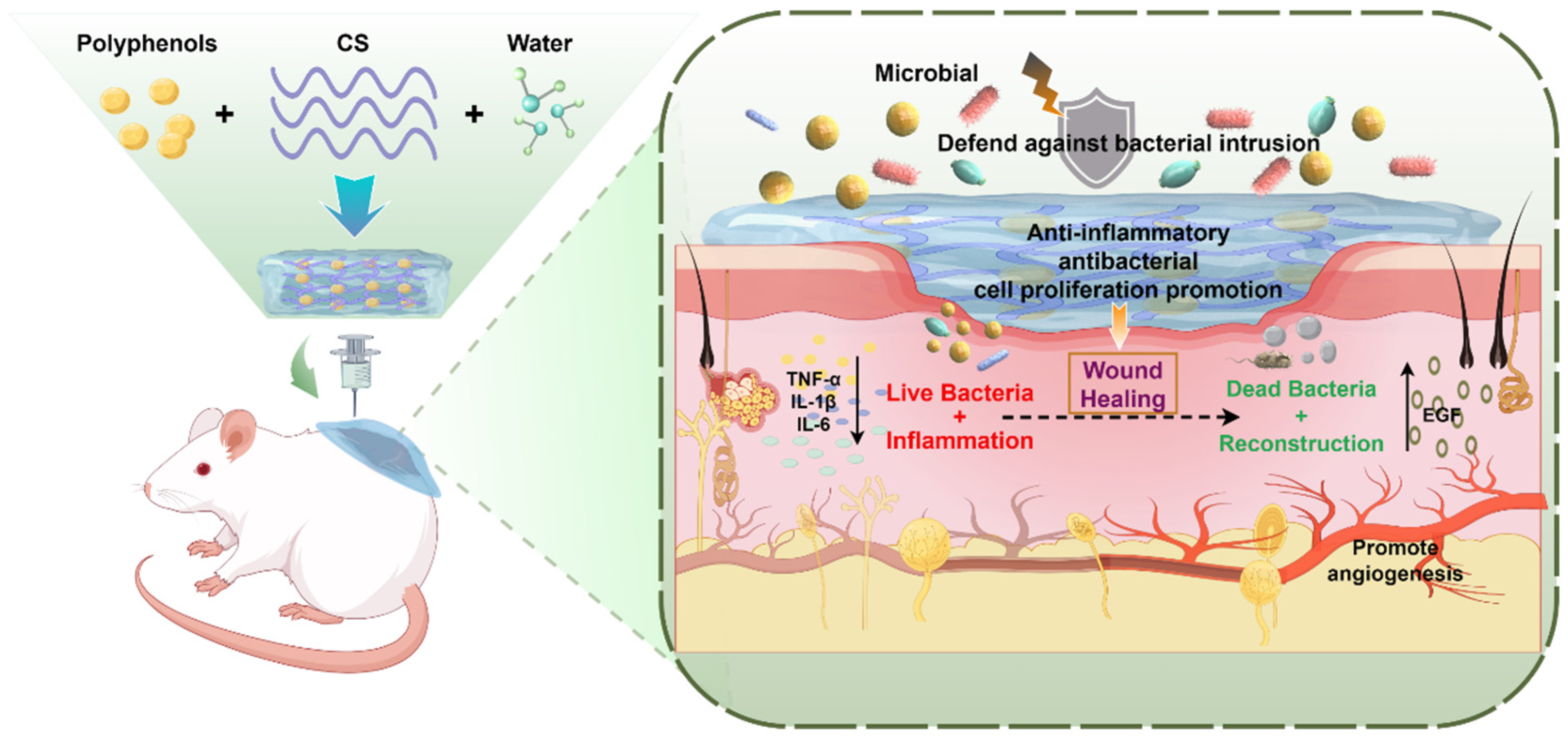
Natural-Origin Bioadhesive Injectable Hydrogels Composed of Polyphenol and Chitosan with Antibacterial Activity for Wound Healing
 , ,
, ,
Abstract
1. Introduction
2. Results and Discussion
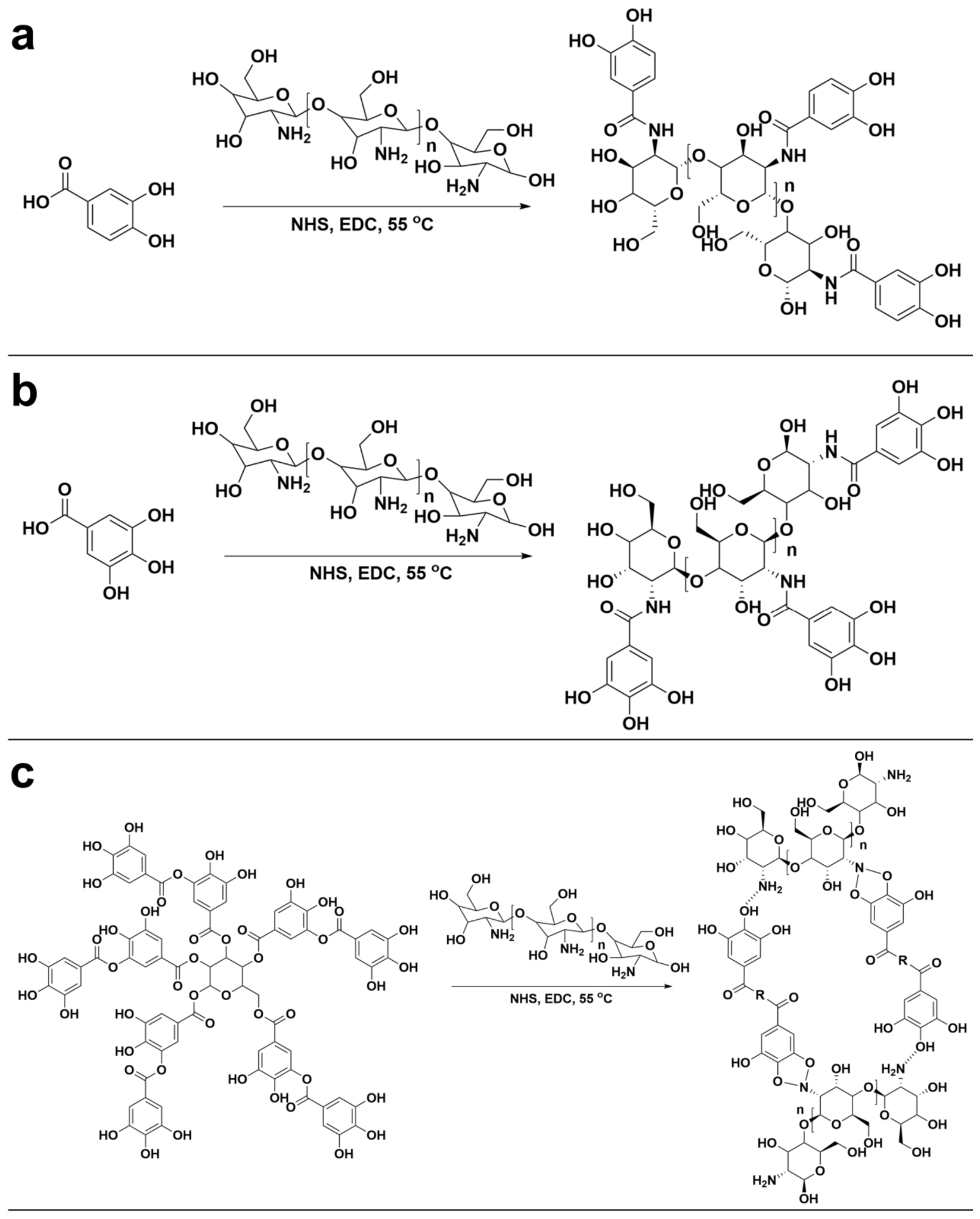
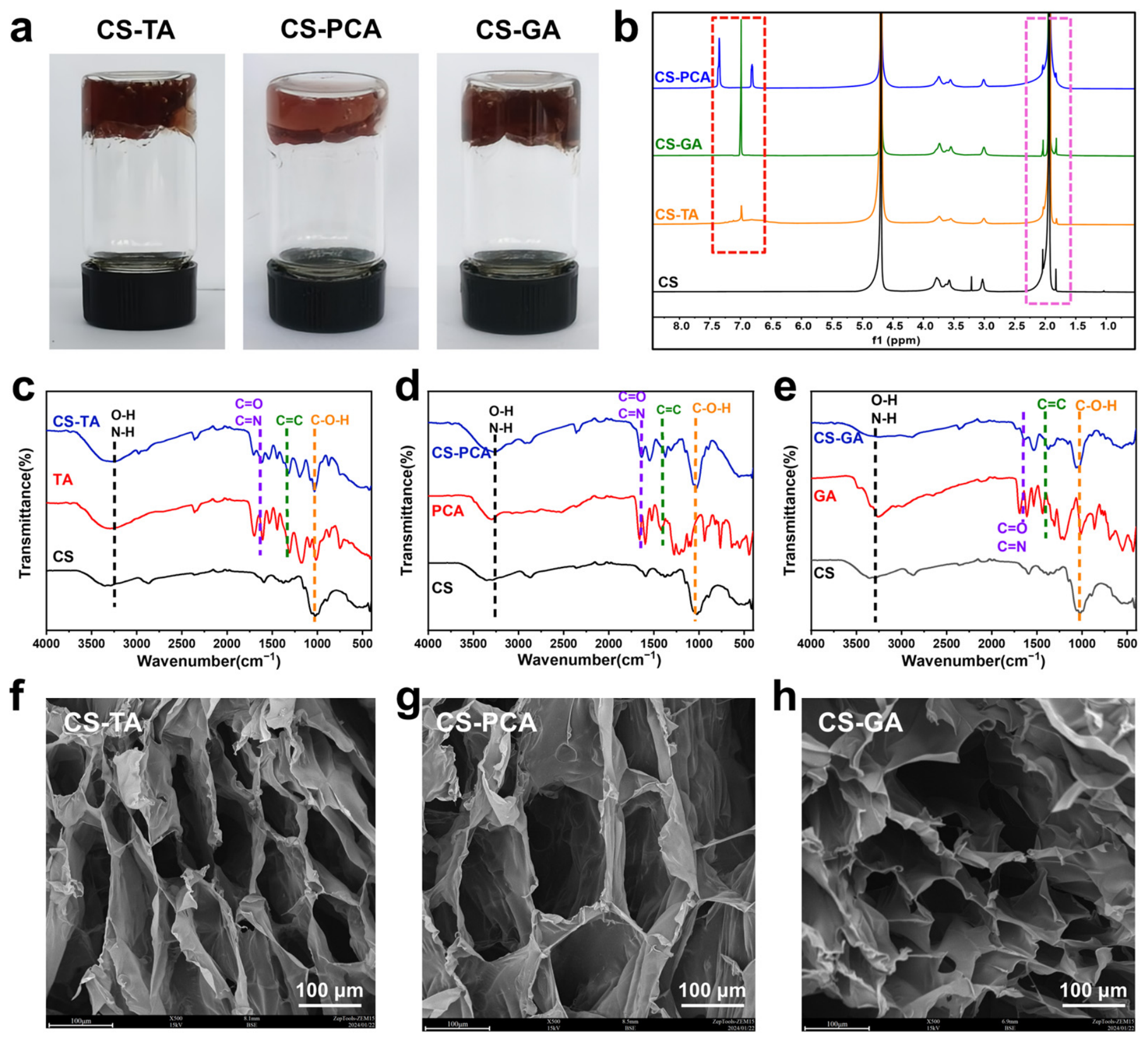
2.1. Synthesis and Characterization of the Hydrogels
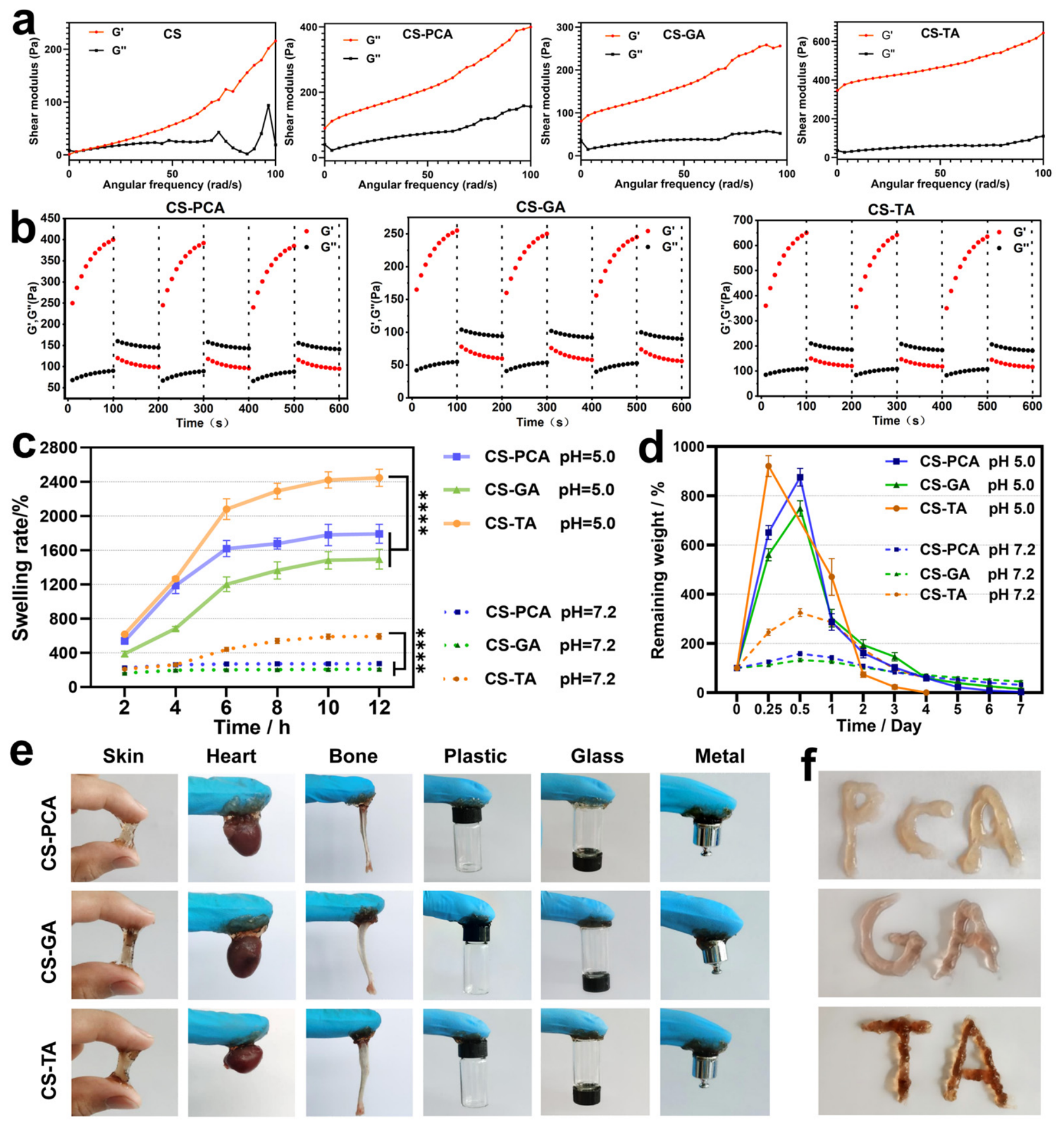
2.2. Performance Evaluation of the Rheological Properties, Swelling Rate, Self-Healing, Degradation Behavior, Injectability, and Tissue Adhesion of the Hydrogels
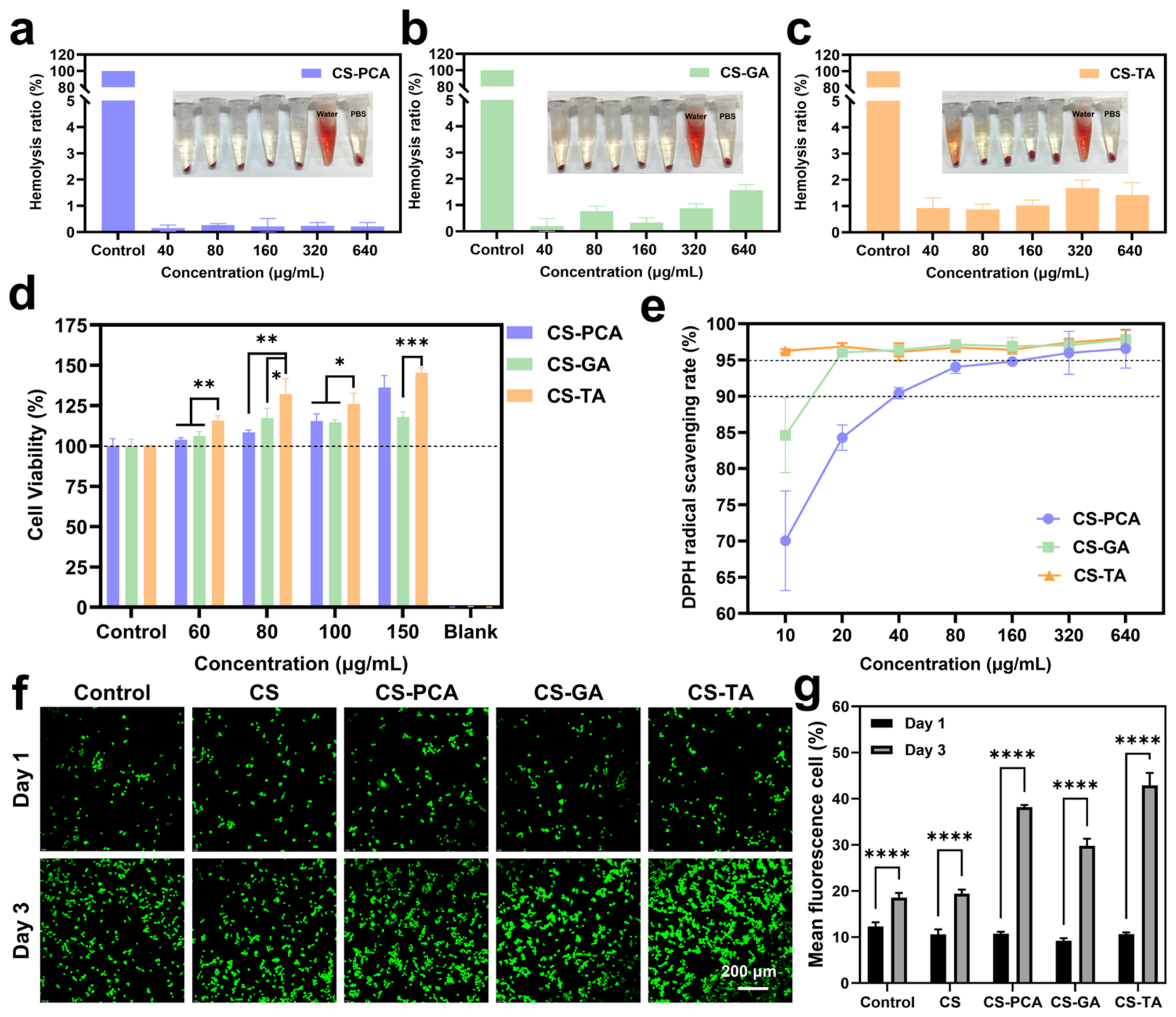
2.3. In Vitro Biological Activity and Biocompatibility of the Hydrogels
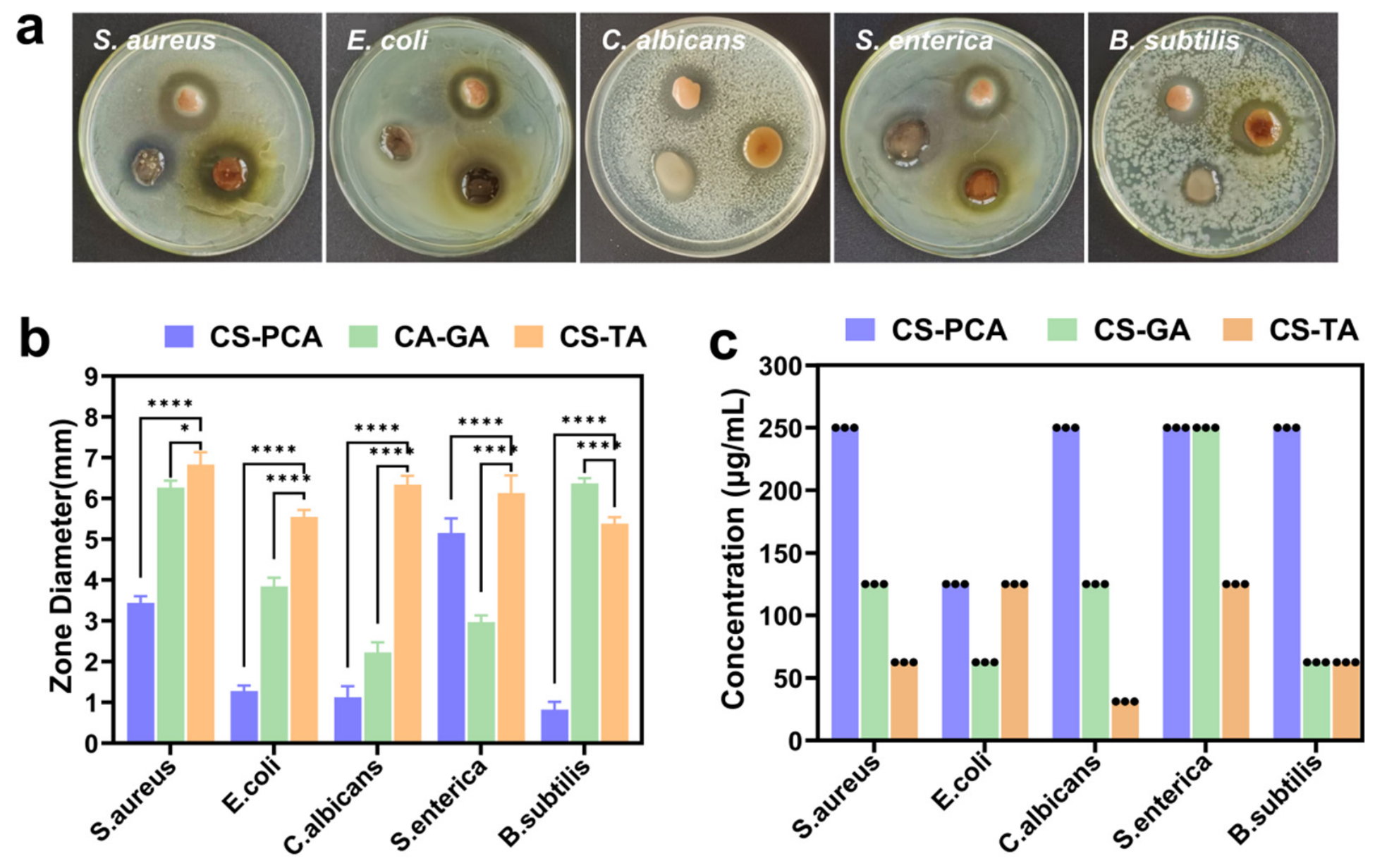
2.4. In Vitro Antibacterial Properties of Hydrogels
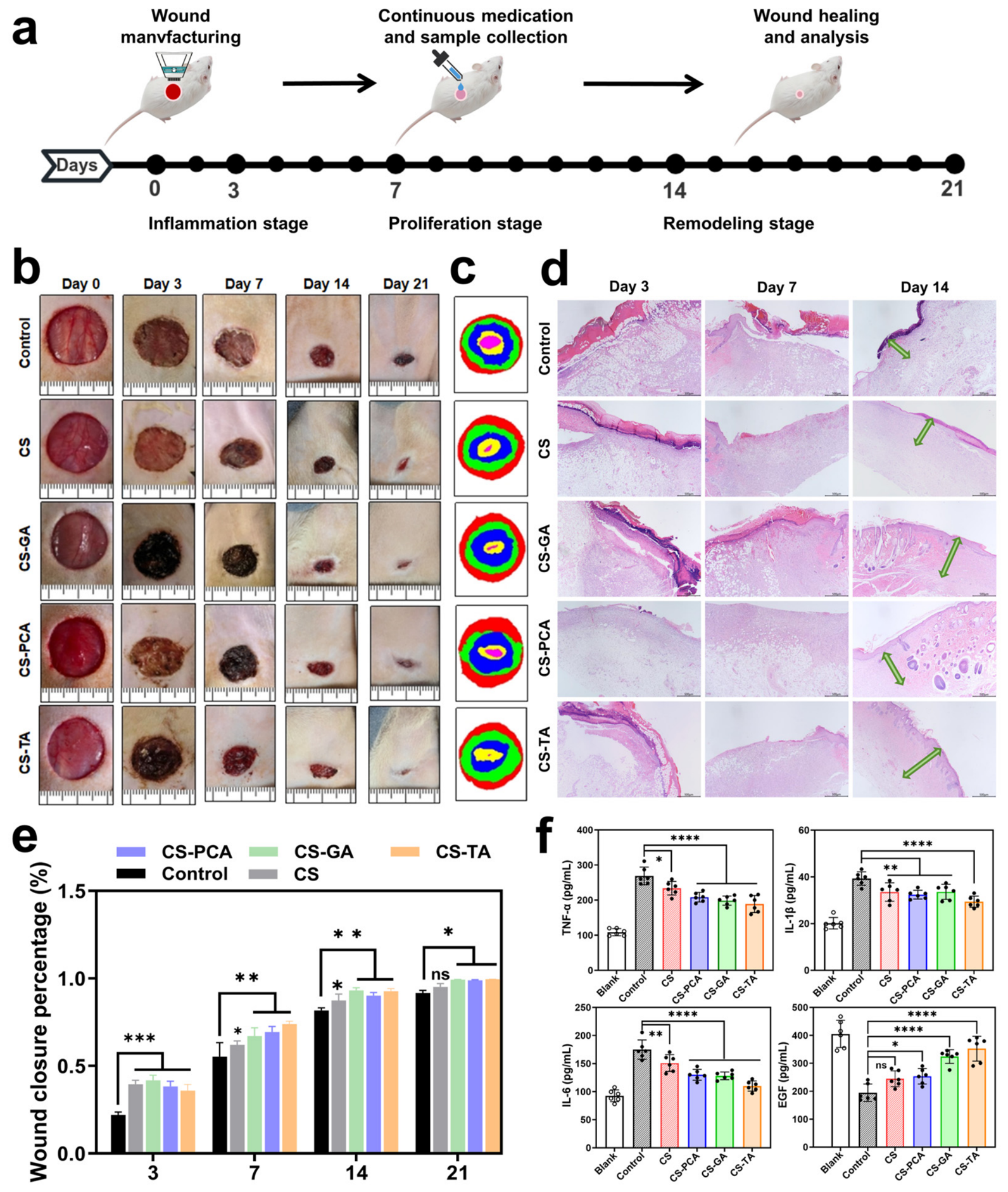
2.5. In Vivo Wound Healing with Hydrogels
3. Conclusions
4. Materials and Methods
4.1. Materials
4.2. Synthesis of Hydrogels
4.3. Structure Analysis
4.4. Rheological Properties
4.5. Swelling Ratio and Degradation Rate
4.6. Self-Healing and Injectability
4.7. Adhesive Properties
4.8. Assessment of Cell Viability Using a CCK-8 Assay
4.9. Calcein-AM/PI Staining
4.10. Hemolytic Activity Assay
4.11. In Vitro Antimicrobial Experiment
4.12. In Vivo Full-Thickness Skin Wound-Healing Evaluation
4.13. Wound Tissue Histopathological Study
4.14. In Vitro Inflammatory Cytokine Expression
4.15. Statistical Analysis
Supplementary Materials
Author Contributions
Funding
Institutional Review Board Statement
Informed Consent Statement
Data Availability Statement
Acknowledgments
Conflicts of Interest
Abbreviations
| CS | Chitosan |
| PCA | Protocatechuic acid |
| GA | Gallic acid |
| TA | Tannic acid |
| EDC | 1-Ethyl-3-(3-dimethylaminopropyl) carbodiimide hydrochloride |
| NHS | N-hydroxysuccinimide |
| FT-IR | Fourier transform infrared |
| UV–Vis | Ultraviolet–Visible |
| G′ | storage modulus |
| G″ | loss modulus |
| S. aureus | Staphylococcus aureus |
| E. coli | Escherichia coli |
| B. subtilis | Bacillus subtilis |
| S. enterica | Salmonella enterica |
| C. albicans | Candida albicans |
| H&E | hematoxylin and eosin |
References
- Hur, Y. Epidermal stem cells: Interplay with the skin microenvironment during wound healing. Mol. Cells 2024, 47, 100138. [Google Scholar] [CrossRef]
- Jakovija, A.; Chtanova, T. Skin immunity in wound healing and cancer. Front. Immunol. 2023, 14, 1060258. [Google Scholar] [CrossRef]
- Xu, J.; Zhang, H.; Ye, H. Research progress on the role of fascia in skin wound healing. Burn. Trauma 2025, 13, tkaf002. [Google Scholar] [CrossRef]
- Peña, O.; Martin, P. Cellular and molecular mechanisms of skin wound healing. Nat. Rev. Mol. Cell Biol. 2024, 25, 599–616. [Google Scholar] [CrossRef]
- Dhandhi, S.; Yeshna; Vishal; Monika; Goel, B.; Chauhan, S.; Nishal, S.; Singh, M.; Jhawat, V. The interplay of skin architecture and cellular dynamics in wound healing: Insights and innovations in care strategies. Tissue Cell 2024, 91, 102578. [Google Scholar] [CrossRef] [PubMed]
- Xing, F.; Ma, H.; Yu, P.; Zhou, Y.; Luo, R.; Xiang, Z.; Rommens, P.; Duan, X.; Ritz, U. Multifunctional metal-organic frameworks for wound healing and skin regeneration. Mater. Des. 2023, 233, 112252. [Google Scholar] [CrossRef]
- Wilkinson, H.; Hardman, M. Wound healing: Cellular mechanisms and pathological outcomes. Open Biol. 2020, 10, 200223. [Google Scholar] [CrossRef] [PubMed]
- Lestari, T.; Syukur, S.; Revilla, G.; Sukma Rita, R.; Rustini, R. The Burn Wound Healing Process: A Review. Int. J. Prog. Sci. Technol. 2023, 40, 12. [Google Scholar] [CrossRef]
- Fernandez-Guarino, M.; Naharro-Rodriguez, J.; Bacci, S. Aberrances of the Wound Healing Process: A Review. Cosmetics 2024, 11, 209. [Google Scholar] [CrossRef]
- Jia, B.; Li, G.; Cao, E.; Luo, J.; Zhao, X.; Huang, H. Recent progress of antibacterial hydrogels in wound dressings. Mater. Today Bio 2023, 19, 100582. [Google Scholar] [CrossRef]
- Alberts, A.; Tudorache, D.; Niculescu, A.; Grumezescu, A. Advancements in Wound Dressing Materials: Highlighting Recent Progress in Hydrogels, Foams, and Antimicrobial Dressings. Gels 2025, 11, 123. [Google Scholar] [CrossRef]
- Che, X.; Zhao, T.; Hu, J.; Yang, K.; Ma, N.; Li, A.; Sun, Q.; Ding, C.; Ding, Q. Application of Chitosan-Based Hydrogel in Promoting Wound Healing: A Review. Polymers 2024, 16, 344. [Google Scholar] [CrossRef]
- Xu, J.; Chang, L.; Xiong, Y.; Peng, Q. Chitosan-Based Hydrogels as Antibacterial/Antioxidant/Anti-Inflammation Multifunctional Dressings for Chronic Wound Healing. Adv. Healthc. Mater. 2024, 13, e2401490. [Google Scholar] [CrossRef] [PubMed]
- Liu, L.; Ma, W.; Wang, J.; Wang, X.; Li, S. Recent Progress in Polyphenol-Based Hydrogels for Wound Treatment and Monitoring. Biosensors 2025, 15, 657. [Google Scholar] [CrossRef]
- Liu, S.; Jiang, N.; Chi, Y.; Peng, Q.; Dai, G.; Qian, L.; Xu, K.; Zhong, W.; Yue, W. Injectable and Self-Healing Hydrogel Based on Chitosan-Tannic Acid and Oxidized Hyaluronic Acid for Wound Healing. ACS Biomater. Sci. Eng. 2022, 8, 3754–3764. [Google Scholar] [CrossRef] [PubMed]
- Zhou, X.; Zhou, Q.; Chen, Q.; Ma, Y.; Wang, Z.; Luo, L.; Ding, Q.; Li, H.; Tang, S. Carboxymethyl Chitosan/Tannic Acid Hydrogel with Antibacterial, Hemostasis, and Antioxidant Properties Promoting Skin Wound Repair. ACS Biomater. Sci. Eng. 2023, 9, 437–448. [Google Scholar] [CrossRef]
- Feng, M.; Zeng, X.; Lin, Q.; Wang, Y.; Wei, H.; Yang, S.; Wang, G.; Chen, X.; Guo, M.; Yang, X.; et al. Characterization of Chitosan-Gallic Acid Graft Copolymer for Periodontal Dressing Hydrogel Application. Adv. Healthc. Mater. 2024, 13, e2302877. [Google Scholar] [CrossRef]
- Ren, M.; Wang, X.; Ouyang, X.; Ling, J.; Wang, N. Protocatechuic Acid Grafted Chitosan/Oxidized Glucomannan Hydrogel with Antimicrobial and Anti-Inflammatory Effects for Enhancing Wound Repair. Int. J. Biol. Macromol. 2024, 281, 136514. [Google Scholar] [CrossRef] [PubMed]
- Zhang, Y.; Chen, S.; Qin, X.; Guo, A.; Li, K.; Chen, L.; Yi, W.; Deng, Z.; Tay, F.; Geng, W.; et al. A Versatile Chitosan-Based Hydrogel Accelerates Infected Wound Healing via Bacterial Elimination, Antioxidation, Immunoregulation, and Angiogenesis. Adv. Healthc. Mater. 2024, 13, 2400318. [Google Scholar] [CrossRef]
- Yang, Z.; Wang, C.; Zhang, Z.; Yu, F.; Wang, Y.; Ding, J.; Zhao, Z.; Liu, Y. A pH Responsive Tannic Acid/Quaternized Carboxymethyl Chitosan/Oxidized Sodium Alginate Hydrogels for Accelerated Diabetic Wound Healing and Real-Time Monitoring. Int. J. Biol. Macromol. 2024, 264, 130741. [Google Scholar] [CrossRef]
- Nezhad-Mokhtari, P.; Hasany, M.; Kohestanian, M.; Dolatshahi-Pirouz, A.; Milani, M.; Mehrali, M. Recent advancements in bioadhesive self-healing hydrogels for effective chronic wound care. Adv. Colloid Interface Sci. 2024, 334, 103306. [Google Scholar] [CrossRef]
- Wang, X.; Wang, B.; Liu, W.; Yu, D.; Song, Z.; Li, G.; Liu, X.; Wang, H.; Ge, S. Using chitosan nanofibers to simultaneously improve the toughness and sensing performance of chitosan-based ionic conductive hydrogels. Int. J. Biol. Macromol. 2024, 260, 129272. [Google Scholar] [CrossRef] [PubMed]
- Sánchez-Cid, P.; Alonso-González, M.; Jiménez-Rosado, M.; Benhnia, M.; Ruiz-Mateos, E.; Ostos, F.; Romero, A.; Perez-Puyana, V. Effect of different crosslinking agents on hybrid chitosan/collagen hydrogels for potential tissue engineering applications. Int. J. Biol. Macromol. 2024, 263, 129858. [Google Scholar] [CrossRef]
- Xu, J.; Zhao, X.; Tang, M.; Ban, Q.; Zhao, R.; An, J.; Wang, M. Tannic acid-mediated reconfiguration of oat globulin fibril-based hydrogels for quercetin encapsulation: Construction, mechanism and performance. Food Chem.-X 2025, 30, 102930. [Google Scholar] [CrossRef]
- Ajaz, N.; Khan, I.U.; Irfan, M.; Khalid, S.H.; Asghar, S.; Mehmood, Y.; Asif, M.; Usra; Hussain, G.; Shahzad, Y.; et al. In Vitro and Biological Characterization of Dexamethasone Sodium Phosphate Laden pH-Sensitive and Mucoadhesive Hydroxy Propyl β-Cyclodextrin-g-poly(acrylic acid)/Gelatin Semi-Interpenetrating Networks. Gels 2022, 8, 290. [Google Scholar] [CrossRef]
- Abune, L.; Wen, C.; Lee, K.; Wang, X.; Ravnic, D.; Wang, Y. Elastic Macroporous Matrix-Supported In Situ Formation of Injectable Extracellular Matrix-Like Hydrogel for Carrying Growth Factors and Living Cells. Macromol. Biosci. 2024, 24, 2300475. [Google Scholar] [CrossRef]
- Hu, X.; Tian, X.; Yang, C.; Ling, F.; Liu, H.; Zhu, X.; Pei, M.; Yang, H.; Liu, T.; Xu, Y.; et al. Melatonin-loaded self-healing hydrogel targets mitochondrial energy metabolism and promotes annulus fibrosus regeneration. Mater. Today Bio 2023, 23, 100811. [Google Scholar] [CrossRef]
- Jiang, J.; Jiang, T.; Zhou, C.; He, Y.; Jiang, A.; Yang, G.; Nie, J.; Wang, F.; Yang, X.; Chen, Z.; et al. An adenine-modified chitosan cross-linked 8arm-PEG-CHO hydrogel for promoting infected wound healing. Mater. Chem. Front. 2024, 8, 2525–2538. [Google Scholar] [CrossRef]
- Taboada, G.; Yang, K.; Pereira, M.; Liu, S.; Hu, Y.; Karp, J.; Artzi, N.; Lee, Y. Overcoming the translational barriers of tissue adhesives. Nat. Rev. Mater. 2020, 5, 310–329. [Google Scholar] [CrossRef]
- Cao, H.; Duan, L.; Zhang, Y.; Cao, J.; Zhang, K. Current hydrogel advances in physicochemical and biological response-driven biomedical application diversity. Signal Transduct. Target. Ther. 2021, 6, 426. [Google Scholar] [CrossRef] [PubMed]
- Maione, A.; Smith, A.; Kashpur, O.; Yanez, V.; Knight, E.; Mooney, D.; Md, A.; Tomic-Canic, M.; Garlick, J. Altered ECM deposition by diabetic foot ulcer-derived fibroblasts implicates fibronectin in chronic wound repair. Wound Repair Regen. 2016, 24, 630–643. [Google Scholar] [CrossRef]
- Perumal, P.O.; Mhlanga, P.; Somboro, A.M.; Amoako, D.G.; Khumalo, H.M.; Khan, R.M. Cytoproliferative and Anti-Oxidant Effects Induced by Tannic Acid in Human Embryonic Kidney (Hek-293) Cells. Biomolecules 2019, 9, 767. [Google Scholar] [CrossRef]
- Bellio, P.; Fagnani, L.; Nazzicone, L.; Celenza, G. New and simplified method for drug combination studies by checkerboard assay. MethodsX 2021, 8, 101543. [Google Scholar] [CrossRef]
- Hu, Z.; Hu, Z.; Zhang, H.; Yu, Z.; Xie, Y. Antimicrobial Effects of Tannic Acid Combined with Plasma-Activated Water and Their Application in Strawberry Preservation. Foods 2025, 14, 2216. [Google Scholar] [CrossRef]
- Tintino, S.; Morais-Tintino, C.; Campina, F.; Costa, M.; Menezes, I.; de Matos, Y.; Calixto, J.; Pereira, P.; Siqueira, J.; Leal-Balbino, T.; et al. Tannic acid affects the phenotype of Staphylococcus aureus resistant to tetracycline and erythromycin by inhibition of efflux pumps. Bioorg. Chem. 2017, 74, 197–200. [Google Scholar] [CrossRef]
- Dong, G.; Liu, H.; Yu, X.; Zhang, X.; Lu, H.; Zhou, T.; Cao, J. Antimicrobial and anti-biofilm activity of tannic acid against Staphylococcus aureus. Nat. Prod. Res. 2018, 32, 2225–2228. [Google Scholar] [CrossRef] [PubMed]
- Fivenson, E.; Rohs, P.; Vettiger, A.; Sardis, M.; Torres, G.; Forchoh, A.; Bernhardt, T. A role for the Gram-negative outer membrane in bacterial shape determination. Proc. Natl. Acad. Sci. USA 2023, 120, e2301987120. [Google Scholar] [CrossRef]
- Eming, S.; Wynn, T.; Martin, P. Inflammation and metabolism in tissue repair and regeneration. Science 2017, 356, 1026–1030. [Google Scholar] [CrossRef] [PubMed]
- Grellner, W.; Georg, T.; Wilske, J. Quantitative analysis of proinflammatory cytokines (IL-1β, IL-6, TNF-α) in human skin wounds. Forensic Sci. Int. 2000, 113, 251–264. [Google Scholar] [CrossRef]
- Liang, H.; Xing, J.; Hou, Q.; Bao, L.; Li, B.; Zhou, B.; Liang, H. Membrane-Mediated Nanoassembly of Lysozyme–Tannic Acid for Crystallization-Suppressed Nobiletin Delivery: Enhanced Cellular Uptake and Mucus Penetration. Biomolecules 2026, 16, 242. [Google Scholar] [CrossRef] [PubMed]
- Rossi, L.; Rocchetti, G.; Lucini, L.; Rebecchi, A. Antimicrobial Potential of Polyphenols: Mechanisms of Action and Microbial Responses-A Narrative Review. Antioxidants 2025, 14, 200. [Google Scholar] [CrossRef] [PubMed]
- Kim, Y.; Kim, S.; Park, K.; Park, K. Bioadhesives and bioactive hydrogels for wound management. J. Control. Release 2025, 379, 285–302. [Google Scholar] [CrossRef] [PubMed]




Disclaimer/Publisher’s Note: The statements, opinions and data contained in all publications are solely those of the individual author(s) and contributor(s) and not of MDPI and/or the editor(s). MDPI and/or the editor(s) disclaim responsibility for any injury to people or property resulting from any ideas, methods, instructions or products referred to in the content. |
© 2026 by the authors. Licensee MDPI, Basel, Switzerland. This article is an open access article distributed under the terms and conditions of the Creative Commons Attribution (CC BY) license.
Share and Cite
Zheng, H.; Wu, S.; Liu, Y.; Zhang, Y.; Xing, Y.; Wang, J.; Yue, X.; Sun, L.; Li, X.; Zhang, Y.; et al. Natural-Origin Bioadhesive Injectable Hydrogels Composed of Polyphenol and Chitosan with Antibacterial Activity for Wound Healing. Gels 2026, 12, 448. https://doi.org/10.3390/gels12050448
Zheng H, Wu S, Liu Y, Zhang Y, Xing Y, Wang J, Yue X, Sun L, Li X, Zhang Y, et al. Natural-Origin Bioadhesive Injectable Hydrogels Composed of Polyphenol and Chitosan with Antibacterial Activity for Wound Healing. Gels. 2026; 12(5):448. https://doi.org/10.3390/gels12050448
Chicago/Turabian StyleZheng, Hongyu, Shikui Wu, Yujie Liu, Yuzhu Zhang, Yushu Xing, Jianye Wang, Xin Yue, Lijun Sun, Xiao Li, Ying Zhang, and et al. 2026. "Natural-Origin Bioadhesive Injectable Hydrogels Composed of Polyphenol and Chitosan with Antibacterial Activity for Wound Healing" Gels 12, no. 5: 448. https://doi.org/10.3390/gels12050448
APA StyleZheng, H., Wu, S., Liu, Y., Zhang, Y., Xing, Y., Wang, J., Yue, X., Sun, L., Li, X., Zhang, Y., Ma, J., Du, X., Xue, Y., Yu, J., Zhang, H., & Wang, H. (2026). Natural-Origin Bioadhesive Injectable Hydrogels Composed of Polyphenol and Chitosan with Antibacterial Activity for Wound Healing. Gels, 12(5), 448. https://doi.org/10.3390/gels12050448