
Review

Cellulose-Based Conductive Hydrogels: Design Strategies and Applications in Flexible Electronics

1
College of Light Industry and Textile, Qiqihar University, 42 Culture Street, Qiqihar 161006, China
2
Engineering Research Center for Hemp and Product in Cold Region of the Ministry of Education, Qiqihar 161006, China
*
Authors to whom correspondence should be addressed.
Gels 2026, 12(5), 372; https://doi.org/10.3390/gels12050372
Submission received: 14 March 2026 / Revised: 19 April 2026 / Accepted: 27 April 2026 / Published: 29 April 2026
(This article belongs to the Special Issue Cellulose Gels: Properties and Prospective Applications)

Abstract

With the rapid advancement of artificial intelligence and wearable technologies, the demand for soft, multifunctional electronic materials has grown substantially. Hydrogels have emerged as a promising platform due to their intrinsic softness, stretchability, and biocompatibility. Among them, cellulose-based conductive hydrogels uniquely integrate the sustainability of natural polymers with tunable electrical functionality, offering significant potential for flexible and biointegrated electronics. This review provides a comprehensive and critical perspective on the recent progress in cellulose-based conductive hydrogels. We systematically summarize key design strategies, including physical and chemical crosslinking and interpenetrating network engineering. More importantly, we present a comparative analysis of distinct conductive mechanisms, including ionic conduction, conductive polymers, metallic nanostructures, and carbon-based fillers, highlighting the inherent trade-offs among electrical conductivity, mechanical robustness, and environmental stability. Emerging applications in flexible electronics, energy storage, bioelectronics, and self-powered systems are discussed through structure–property relationships. Finally, we outline current challenges and future directions, emphasizing multifunctional integration, scalable fabrication, and long-term operational stability, thereby providing a framework for the rational design of next-generation sustainable electronic materials.

1. Introduction

Fossil resource depletion and escalating environmental pollution pose significant challenges to sustainable development in the context of global carbon neutrality goals [1,2,3]. This has accelerated the transition toward renewable and sustainable alternatives, with natural polymers emerging as promising candidates [4,5,6]. Such materials are critical to advancing green technologies and enabling a circular bioeconomy [7,8,9]. Cellulose, the most abundant renewable and biodegradable natural polymer, exhibits physicochemical properties that make it particularly valuable in this context [10,11]. Rich in hydroxyl and other reactive functional groups, cellulose enables extensive chemical modification and structural tuning [12,13]. Moreover, cellulose demonstrates excellent hygroscopicity, elasticity, and mechanical robustness, contributing to its superior processability compared with other biomass-based materials [14,15]. These inherent features have led to the widespread exploration of cellulose and its derivatives in fields such as biomedical engineering and flexible electronics [16,17,18]. Consequently, cellulose serves as a key material for environmentally sustainable and high-performance functional systems [19,20].
A hydrogel is a three-dimensional polymer network formed by crosslinking hydrophilic polymers in aqueous media, with water acting as the dispersion medium [21,22]. The unique structural characteristics of hydrogels endow them with exceptional physical and chemical properties [23,24,25]. Conductive hydrogels, as a class of functional materials, integrate hydrophilic polymer matrices with conductive components to achieve combined flexibility and conductivity [26,27,28,29]. These materials not only retain the high-water content and excellent biocompatibility typical of conventional hydrogels, but also exhibit superior electrical conductivity, making them highly promising for applications in supercapacitors, biosensors [30,31], and flexible wearable electronics [32,33]. Petroleum-based conductive hydrogels exhibit high flexibility, tunable mechanical properties, and excellent electrochemical performance, yet their limited biodegradability poses environmental concerns. This contradictory feature has driven researchers to explore more sustainable, eco-friendly alternatives.
Cellulose and its derivatives possess a high density of polar functional groups, including hydroxyl and carboxyl moieties. These groups facilitate ion transport and enhance the electrical conductivity and mechanical properties of hydrogels via coordination with metal ions [34,35]. Capitalizing on these distinctive properties, cellulose-based materials have emerged as promising candidates for the development of multifunctional conductive hydrogels [36]. Cellulose-based hydrogels are sustainable soft materials with intrinsic biodegradability, mechanical robustness, high water retention, recyclability, and biocompatibility, enabling broad applications [37,38]. Despite progress, studies remain largely descriptive and lack systematic comparison across material systems. Structure–property relationships governing conductivity, mechanical performance, and environmental stability remain poorly unified, hindering rational design.
Here, we present a critical comparative framework for cellulose-based conductive hydrogels (Figure 1). We classify design and fabrication strategies, elucidate conduction mechanisms, and identify key trade-offs across representative systems. By linking material design with performance requirements, this work guides the development of high-performance, sustainable hydrogel electronics.

2. Design and Optimization of Cellulosic Hydrogels

2.1. Physical Crosslinking Strategies

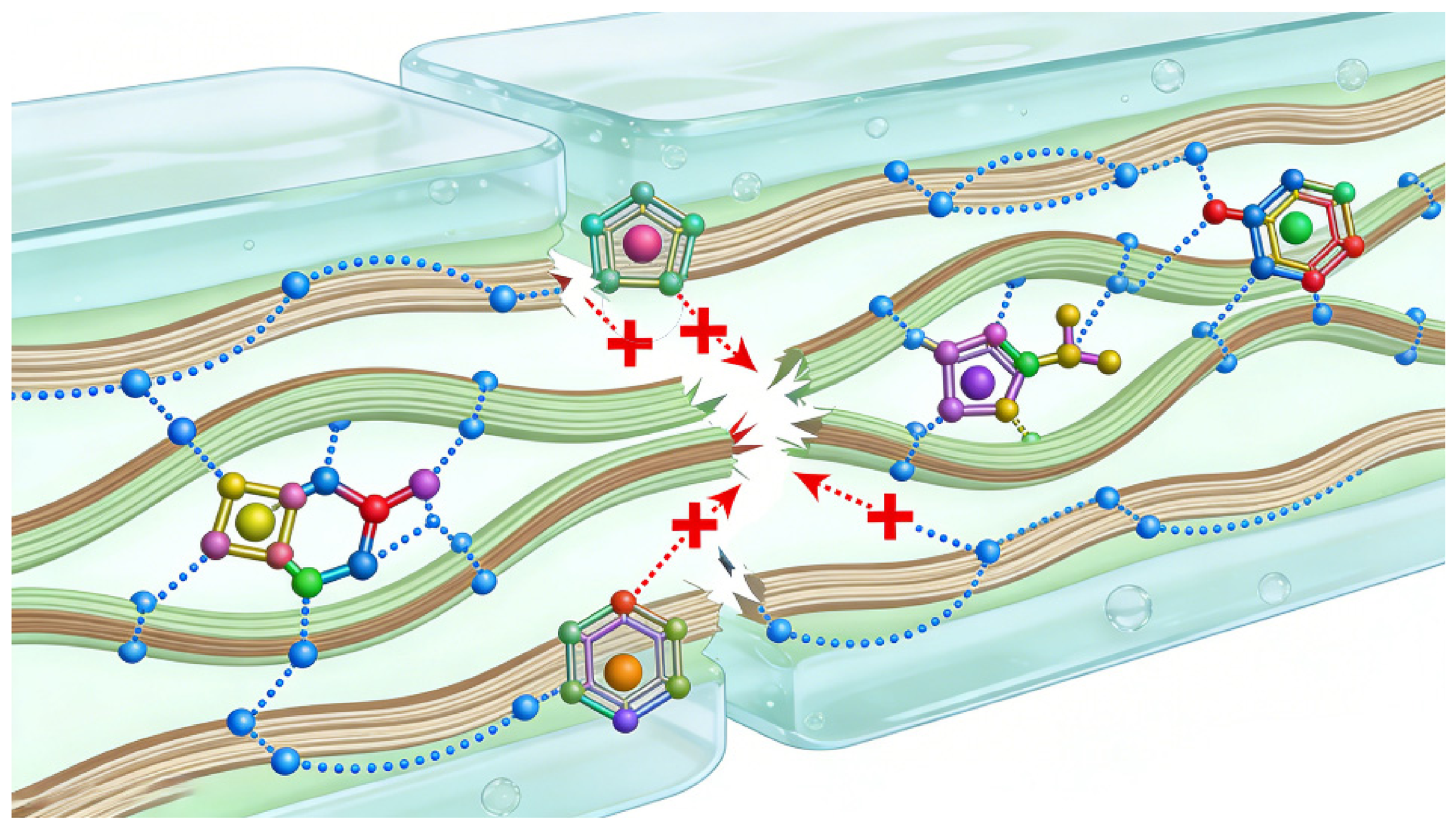
Physical crosslinking enables the construction of cellulose-based hydrogels via reversible non-covalent interactions, including hydrogen bonding, electrostatic interactions, chain entanglement, metal–ligand coordination, and host–guest interactions. Unlike permanent covalent crosslinks, these dynamic interactions endow hydrogels with self-healing, shear-thinning, injectability, and adaptive mechanical compliance (Figure 2). The reversible dissociation and reformation of non-covalent bonds enable efficient energy dissipation under deformation while preserving network integrity, thereby reconciling softness with structural resilience.
Hydrogen bonding is a fundamental and versatile interaction in cellulose-based hydrogels, enabled by the high density of hydroxyl groups along the polysaccharide backbone [39]. The density, spatial distribution, and hierarchical organization of hydrogen bonds dictate mechanical performance and multifunctionality. For example, tannic acid–cellulose systems show enhanced toughness and thermal stability via reinforced hydrogen-bond networks [40]. Incorporating polyvinyl alcohol with TEMPO-oxidized cellulose nanofibers improves interfacial interactions and enables continuous ion-transport pathways [41]. CNFs function as hydrogen-bond-rich nano-crosslinkers capable of forming dense sacrificial networks that dissipate mechanical energy and enhance adhesion [42]. Such hierarchical hydrogen-bond architectures also support multifunctional integration, including transparent stretchable electronics and thermosensitive devices [43]. However, precise regulation of hydrogen-bond dynamics remains challenging, particularly under complex conditions. This limitation highlights the need for quantitative control and real-time characterization to fully exploit hydrogen-bonded networks.
Electrostatic interactions provide an additional mechanism for constructing stimuli-responsive and conductive networks. In CNF/polymer composites incorporating lithium ions, Zhuang et al. [44] demonstrated that ionic modulation simultaneously enhanced stretchability (≈1200%), conductivity, and strain sensitivity. The coupling between ion-transport pathways and π-conjugated frameworks establishes hybrid conduction networks capable of efficient signal transduction. However, maintaining electrostatic stability under fluctuating ionic environments remains a key challenge.
Host–guest interactions introduce molecular recognition capability and programmable reversibility into cellulose matrices. Jiang et al. [45] combined β-cyclodextrin-modified cellulose with adamantane derivatives and dynamic acyl hydrazone bonds to fabricate pH-responsive, self-healing supramolecular hydrogels. This approach highlights how molecular-scale inclusion complexes can precisely regulate network topology and responsiveness.
Beyond these classical interactions, emerging strategies such as multivalent ion exchange [46], Schiff-base coordination and Fe3+ complexation [47], and ion–water stabilization mechanisms for antifreezing tolerance [48] further expand the design space. Bioinspired architectures mimicking dermal structures have also been realized through synergistic physical interactions, achieving high fracture energy and antibacterial functionality [49].
Overall, physically crosslinked cellulose hydrogels rely on dynamic sacrificial networks and hierarchical non-covalent interactions to enable energy dissipation, self-healing, and environmental adaptability. Future progress requires quantitative control of interaction density, real-time characterization of bond dynamics, and multiscale modeling to predict structure–property relationships.

2.2. Chemical Crosslinking Strategies

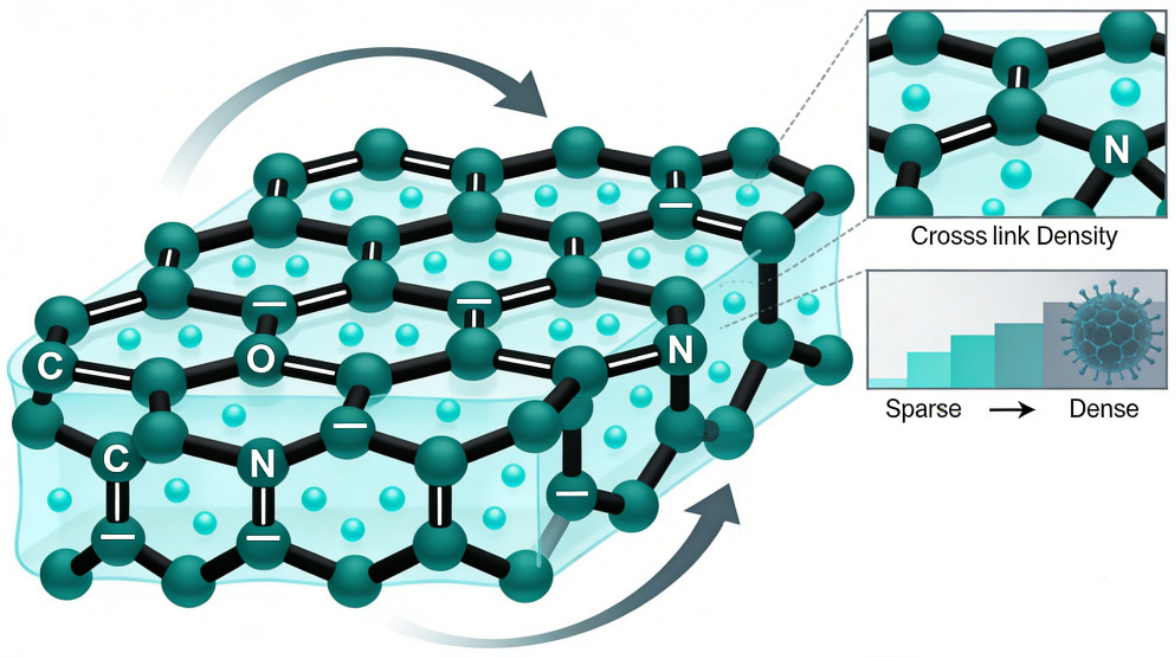
Chemically crosslinked cellulose hydrogels feature permanent covalent crosslinks that confer superior mechanical strength, fatigue resistance, and environmental stability compared with physically crosslinked systems (Figure 3). Stable network architectures enable controlled swelling, long-term durability under cyclic deformation, and resistance to variations in temperature, pH, and ionic strength. Rational control of crosslinking chemistry, reaction kinetics, and cellulose functionalization enables precise tuning of network density and topology for targeted applications. For example, Farooq et al. [50] fabricated a zwitterionic cellulose nanofiber-reinforced poly(sulfobetaine methacrylate–acrylic acid–acrylamide) hydrogel via blue-light-initiated radical polymerization. The synergistic incorporation of zwitterionic moieties and cellulose nanofibers enabled simultaneous enhancement of mechanical strength and electrical conductivity, while imparting antibacterial activity against Escherichia coli and Staphylococcus aureus. This study illustrates how covalent network stabilization can coexist with functional conductivity and bioactivity. Structural reinforcement strategies further extend performance limits. Zhang et al. [51] generated self-reinforcing bacterial cellulose gels through epichlorohydrin-mediated covalent bridging, followed by cyclic stretching to induce nanofiber alignment. The combination of chemical crosslinking and post-processing-induced orientation significantly enhanced anisotropic mechanical properties, demonstrating the importance of coupling network fixation with structural organization. Dynamic covalent chemistry introduces reversibility into otherwise permanent networks. Yang et al. [52] designed dual-responsive hydrogels incorporating reversible acylhydrazone and disulfide bonds, achieving ≈96% self-healing efficiency while maintaining mechanical integrity under physiological conditions. The reversible network enabled pH- and redox-triggered sol–gel transitions and controlled drug release, exemplifying how dynamic covalent linkages bridge stability and adaptability.
Chemically crosslinked cellulose hydrogels are evolving from mechanically robust, static materials into multifunctional, stimuli-responsive systems. The integration of nanofiber reinforcement, network orientation engineering, and dynamic covalent chemistry enables concurrent optimization of strength, conductivity, antibacterial activity, and therapeutic delivery. Remaining challenges include minimizing cytotoxic crosslinkers, balancing permanent stability with dynamic reversibility, and developing green, scalable synthesis routes supported by predictive modeling frameworks.

2.3. Interpenetrating Network Structures

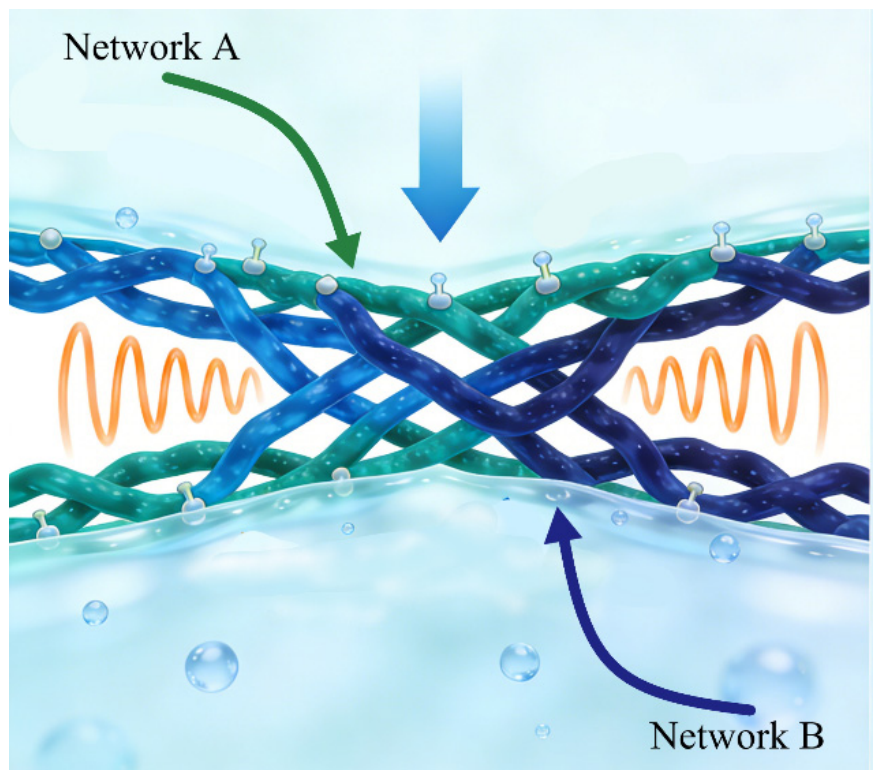
Interpenetrating polymer networks (IPNs) represent an advanced architectural paradigm for achieving synergistic reinforcement in cellulose-based hydrogels. By intertwining two or more polymer networks via topological entanglement and physical interlocking, IPNs preserve the intrinsic attributes of each component while enabling cooperative mechanical and functional enhancement. This architecture effectively decouples energy dissipation from elastic recovery, overcoming the limitations of single-network systems (Figure 4). Rahmani et al. [53] demonstrated that hydrophobic-association crosslinked polyacrylamide reinforced with cellulose nanocrystals and polyaniline achieved ultrahigh stretchability (≈2400%) with low modulus (≈30 kPa) and high conductivity (21.7 S m−1). The interpenetrating conductive network reconciled skin-like compliance with efficient charge transport, underscoring the mechanical–electrical synergy of IPN design. Hierarchical nanosheet assembly further enhances structural cohesion. Yan et al. [54] constructed polydopamine–graphene–cellulose hydrogels via exfoliation–assembly integration, forming physically and chemically interpenetrated networks with improved conductivity and mechanical robustness. Wei et al. [55] introduced a multi-modulus strategy combining chemically crosslinked cellulose domains with physically crosslinked graphene oxide nodes, enabling concurrent increases in strength and toughness alongside photothermal antibacterial functionality. A distinct dual-network paradigm reported by Ye et al. [56] combined sparse chemical crosslinks with dense reversible hydrogen bonds. In this configuration, sacrificial hydrogen bonds dissipate energy under stress, while the loosely crosslinked covalent framework ensures elastic recovery. Force-induced alignment produced optical anisotropy, translating mechanical deformation into optical signals. In conductive IPN systems, Wang et al. [57] integrated regenerated bacterial cellulose with polypyrrole and carbon nanotube networks to establish thermally stable, electrically conductive interpenetrating architectures suitable for flexible electronics. Beyond electronics, Dash et al. [58] demonstrated that gelatin–oxidized cellulose nanowhisker IPNs provide enhanced storage modulus and thermal stability for tissue engineering scaffolds.
Collectively, interpenetrating network (IPN) architectures enable multiscale synergy among rigidity, elasticity, conductivity, and environmental responsiveness. Tuning network composition, crosslink density, nanoscale reinforcement, and interpenetration degree enables performance regimes inaccessible to single networks. Future progress requires scalable fabrication, quantitative control of network interlocking, and multiscale modeling to guide rational IPN design for biomedical, electronic, and environmental applications.

3. Construction of Cellulose-Based Conductive Hydrogels

3.1. Ion Conduction Systems

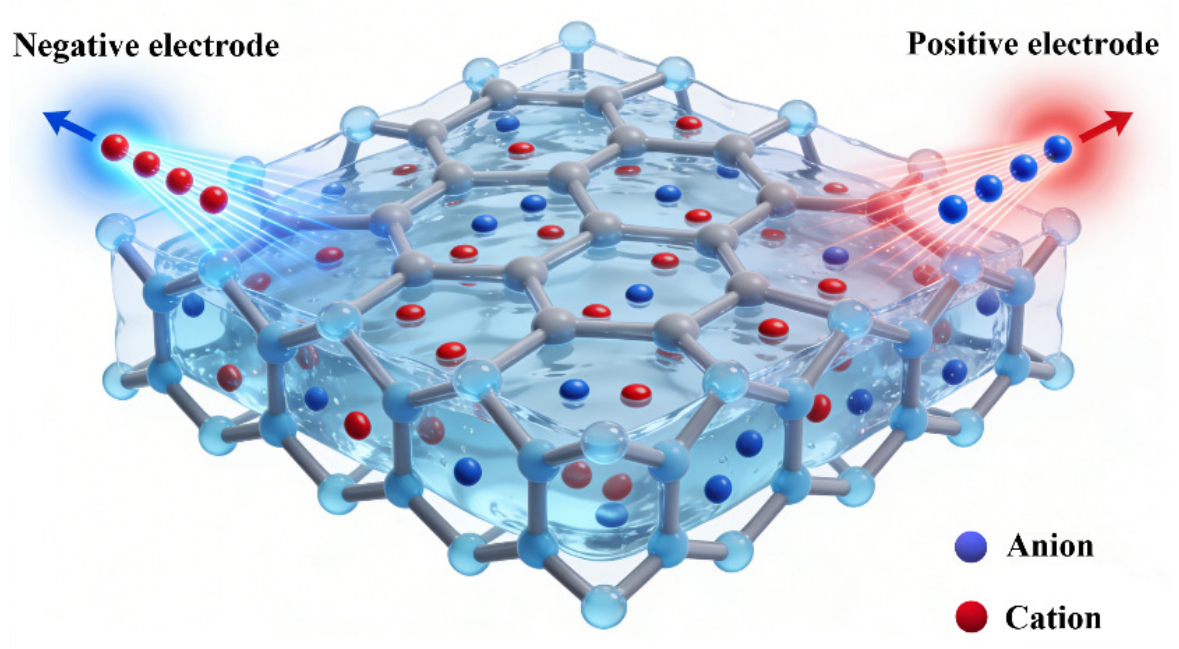
Ion-conductive cellulose hydrogels rely on hydrated three-dimensional polymer networks containing mobile ionic species that migrate under applied electric fields (Figure 5) [59]. Their electrical performance is governed by ionic concentration, mobility, and the continuity of ion-transport pathways, closely resembling charge conduction in biological tissues [60,61]. This biomimetic mechanism underpins their widespread exploration in bioelectronics, wearable sensing, and human–machine interfaces.
Recent advances reveal that high-performance ion conduction arises from synergistic regulation of ionic environments and hierarchical network architecture. Hydrophobic association strategies, for example, introduce phase-separated domains that reinforce the polymer backbone while maintaining ion mobility. Wahab et al. [62] demonstrated that combining micelle-induced physical crosslinking with lithium salt doping produced a hydrogel exhibiting both high ionic conductivity (320 S m−1) and rapid response (≈17 ms), illustrating how decoupling mechanical reinforcement from ion transport can mitigate the traditional softness–conductivity trade-off.
Multivalent ion coordination further enhances network stability and transport efficiency. Li et al. [63] employed Al3+-mediated coordination within a PVA/CNF organohydrogel matrix, where trivalent ions simultaneously reinforced the network and facilitated ion migration. The resulting system maintained stable sensing performance across extreme temperatures and prolonged environmental exposure, highlighting the importance of dynamic coordination chemistry in constructing stable ionic channels.
Beyond mechanical reinforcement, multifunctional integration has also been realized. Sha et al. [64] incorporated Zn2+/Al3+ ionic networks into porous PVA–CNF hydrogels and coupled them with triboelectric nanogenerators, enabling self-powered strain sensing. Similarly, Wu et al. [65] engineered multicomponent ionic environments incorporating dissolved cellulose and bimetallic ions, achieving simultaneous enhancement of compressive strength and ionic conductivity. Collectively, these studies suggest that ionic transport efficiency is maximized when ion–polymer coordination, solvent retention, and structural hierarchy are co-optimized.
Nevertheless, a fundamental challenge remains in balancing ionic concentration with physiological compatibility. High salt contents improve conductivity but may induce osmotic imbalance, ion diffusion, and long-term instability in biointerfaces. Future directions should therefore focus on immobilized ionic reservoirs, partially coordinated ion clusters, and bioinspired ion-channel architectures that achieve high conductivity without compromising biosafety.

3.2. Composite Conductive Packings

3.2.1. Conducting Polymers

Conducting polymers, defined by delocalized π-electron backbones, transform insulating polymer matrices into electronically active systems with tunable conductivity [66]. Representative materials—including polyaniline [67], poly(3,4-ethylenedioxythiophene) [68], and polypyrrole [69,70]—enable percolative electronic networks whose transport characteristics depend on doping level and microstructural ordering.
When integrated into cellulose hydrogels, conducting polymers establish electronically continuous pathways while preserving hydration and mechanical compliance. Importantly, nanoscale morphology control has emerged as a central design principle. Han et al. [71] demonstrated in situ nanofiber formation within hydrogel matrices, mitigating charge-transport limitations without sacrificing flexibility. Likewise, anisotropic alignment strategies, as reported by Jiang et al. [72], show that directing conductive polymer growth along aligned cellulose fibrils enables directional charge transport and improved biointerface compatibility. Device-level integration further highlights the multiscale nature of conductive optimization. Li et al. [73] constructed textile-based supercapacitors integrating polyaniline-coated electrodes with cellulose-reinforced electrolytes, where stress-matched interfaces improved durability and electrochemical stability. These examples collectively indicate that conductive-polymer–hydrogel hybrids achieve non-additive performance gains through coordinated optimization across molecular (π–π stacking), mesoscale (interpenetrating networks), and macroscopic (device integration) levels.

3.2.2. Metal Nanomaterials

Metallic nanostructures introduce continuous electron-transport pathways and high carrier mobility into hydrogel systems. Nanoparticles [74], nanowires [75], and nanorods [76,77] act as conductive scaffolds to enhance electrical and catalytic performance.
Mechanistically, performance enhancement arises from interfacial charge transfer and dynamic ion–metal interactions. Lee et al. [78] embedded liquid metal microparticles within cellulose hydrogels, where controlled gallium ion release generated additional ionic crosslinking, while metallic domains provided continuous electron transport. The dual ionic–electronic conduction mechanism strengthened both mechanical and electrochemical performance. Hierarchical surface engineering further amplifies sensitivity. Yue et al. [79] constructed carbonized ZIF-8-derived protrusive architectures that formed dense contact–separation interfaces, achieving ultrahigh strain sensitivity (GF = 15,901) and rapid response. These findings illustrate how nanoarchitectural design directly governs charge-transfer efficiency and sensing amplification. Despite their advantages, metallic nanomaterials raise concerns regarding ion leaching, oxidative degradation, and long-term cytocompatibility. Surface functionalization, encapsulation, and biodegradable metallic systems are key to translating metallic-hybrid hydrogels into clinical and implantable applications.

3.2.3. Carbon Materials

Carbon nanomaterials—including graphene derivatives [80], carbon nanotubes [81], and MXene [82,83,84]—provide high electrical conductivity, mechanical robustness, and tunable surface chemistry, enabling multifunctional reinforcement within cellulose matrices. A recurring design principle is interfacial stabilization combined with hierarchical dispersion control. Yu et al. [85] stabilized MXene within PVA matrices via polydopamine-mediated protection, suppressing oxidation while maintaining high conductivity. Yang et al. [86] utilized tannic-acid-modified nanofillers to introduce hydrogen bonding, π–π stacking, and coordination interactions, thereby enhancing toughness and strain sensitivity. Sustainable dispersion strategies further improve cytocompatibility and processability. Usala et al. [87] developed a colloidal rGO–CNF bioink suitable for extrusion-based bioprinting, while Li et al. [88] developed a multifunctional poly(vinyl alcohol)–borate/boric acid–graphene oxide–cellulose nanofiber (PBGC) conductive hydrogel, in which the incorporation of GO and CNF significantly enhances electrical conductivity and strain sensitivity.
Collectively, carbon-reinforced hydrogels demonstrate that precise nano–bio interface engineering is essential for achieving high conductivity without sacrificing mechanical resilience or biological compatibility. Remaining challenges lie in scalable manufacturing, interface reproducibility, and long-term stability.

3.3. Interpenetrating Conductive Polymer Networks

IPN strategies represent a unifying framework for integrating ionic and electronic conduction within a single hydrogel matrix. By decoupling mechanical reinforcement from conductive pathways, IPNs overcome conventional trade-offs between strength and electrical performance.
Recent designs employ synergistic combinations of hydrophobic association, dynamic coordination bonds, and multivalent ions to construct hierarchical interaction networks [89,90,91]. A representative example is the PEDOT:PSS-based IPN system reported by Zhao et al. [92], in which π–π stacking, electrostatic interactions, and polymer entanglement collectively establish efficient electron-transport pathways while dissipating mechanical energy. The resulting hydrogels exhibit high elongation (1060%), tensile strength (463 kPa), and stable multimodal sensing capabilities, including ECG and EMG monitoring. More broadly, IPN architectures highlight a central principle in conductive hydrogel design: multiscale interaction engineering enables simultaneous optimization of conductivity, mechanical durability, and biointerface stability. As wireless integration and intelligent sensing technologies continue to evolve, IPN-based cellulose hydrogels are poised to play a pivotal role in next-generation human–machine interfaces and bioelectronic systems.
Despite advances, balancing electrical, mechanical, and environmental performance remains a central challenge in conductive hydrogels. Ionic systems offer flexibility and biocompatibility but are limited by dehydration and ion diffusion. Conductive polymers enhance electronic transport but suffer from brittleness and doping instability. Metallic nanomaterials provide high conductivity but raise concerns over oxidation, ion leakage, and cytocompatibility. Carbon-based systems offer balanced performance but are constrained by scalability and dispersion; no single strategy suffices, and progress requires integrated multicomponent systems to reconcile these trade-offs.

4. Applications in Flexible Electronics

4.1. Energy Storage Electronics

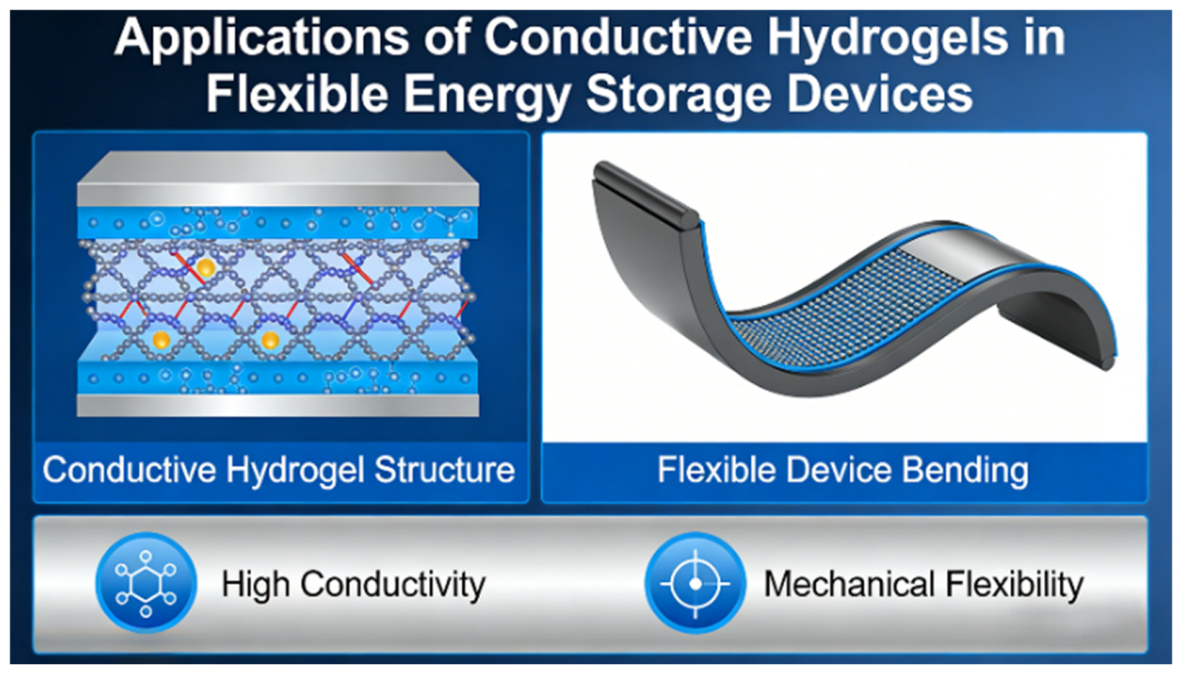
The rapid evolution of flexible and wearable electronics imposes stringent requirements on electrochemical systems to maintain stable energy output under repeated bending, stretching, and shear. Cellulose-based conductive hydrogels have emerged as promising platforms for electrolytes and electrodes, owing to their ability to couple mechanical compliance with continuous ion and electron transport (Figure 6).
In aqueous zinc-ion systems, dendritic growth and parasitic side reactions remain critical barriers to long-term stability. Zhang et al. [93] addressed this challenge by engineering an amphoteric cellulose-based dual-network hydrogel electrolyte featuring zwitterionic ion-transport channels. The spatial homogenization of Zn2+ flux promoted preferential deposition along the (002) crystal plane, while carboxyl-functional groups facilitated desolvation of [Zn(H2O)6]2+ complexes. This dual-regulation strategy exemplifies how molecular-level channel engineering can suppress dendrite formation and interfacial degradation, establishing a blueprint for stable aqueous metal batteries. Beyond dendrite regulation, multifunctional energy devices increasingly integrate structural resilience with electrochemical performance. Wang et al. [94] developed a sandwich-structured hydrogel supercapacitor incorporating cellulose, phytic acid, and polyaniline, achieving an areal energy density of 168.2 μWh cm−2 and retaining 89% capacitance after 1000 bending cycles. Hierarchical interface design enables stress redistribution while preserving ion transport pathways, highlighting how mechanical–electrochemical decoupling improves durability. Thermoelectric conversion further expands the energy-harvesting landscape. Liu et al. [95] constructed bacterial cellulose ion gels integrating the ionic liquid [EMIm][DCA] through strong ion–polymer interactions. The resulting composite exhibited high ionic conductivity (2.88 × 10⁻² S cm−1), an ionic thermovoltage of 18.04 mV K−1, and suppressed thermal conductivity (0.21 W m−1 K−1), enabling efficient ion thermoelectric conversion. Such systems highlight the emerging paradigm of hybrid ionic–thermal energy devices capable of self-powered operation.
Collectively, cellulose-based hydrogel energy systems demonstrate that interfacial ion regulation, hierarchical mechanical reinforcement, and multifunctional coupling are central to achieving high safety, adaptability, and environmental compatibility. Ongoing advances in smart electrolyte design and in situ composite assembly are steering flexible energy storage toward integrated, adaptive, and sustainable architectures.

4.2. Wearable Sensing Electronics

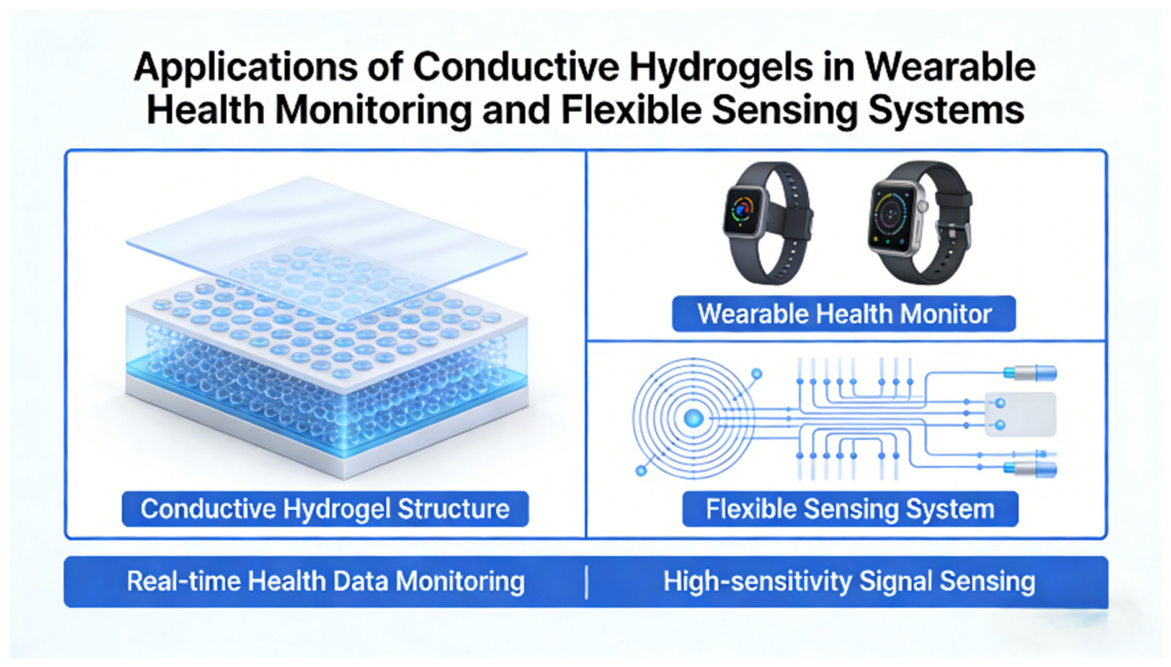
The integration of mechanical flexibility, ionic conductivity, and environmental friendliness renders cellulose-based conductive hydrogels well suited for wearable health monitoring and flexible sensing systems (Figure 7). In flexible batteries, nanocellulose-reinforced hydrogel electrolytes provide shear-resistant frameworks that maintain ion-transport integrity under mechanical deformation. Wang et al. [96] demonstrated that a nanocellulose/polyacrylamide electrolyte enabled Zn–MnO2 cells to retain 88.3% capacity after 1000 cycles at 4 C, while sustaining stable performance under repeated sewing-induced shear stress. This study illustrates how structural skeleton–matrix synergy enhances mechanical tolerance without compromising electrochemical kinetics. Multimodal sensing further leverages hierarchical composite design. Zhao et al. [97] constructed an electronic skin by integrating hydroxypropyl cellulose, PACA, and carbon nanotubes, forming a multi-responsive hydrogel capable of detecting temperature, pressure, and strain while exhibiting chromatic variation induced by structural reconfiguration. Such systems exemplify how nanoengineered conductive pathways and dynamic bonding networks can translate microstructural deformation into amplified electrical and optical signals.
These developments collectively redefine flexible electronics as mechanically adaptive, self-healing, and environmentally responsive systems. Future research increasingly targets neural-interface-compatible hydrogels with hybrid ionic–electronic conduction, and self-powered smart bandages integrating sensing with localized therapeutic delivery.

4.3. Biointegrated Electronics for Tissue Engineering

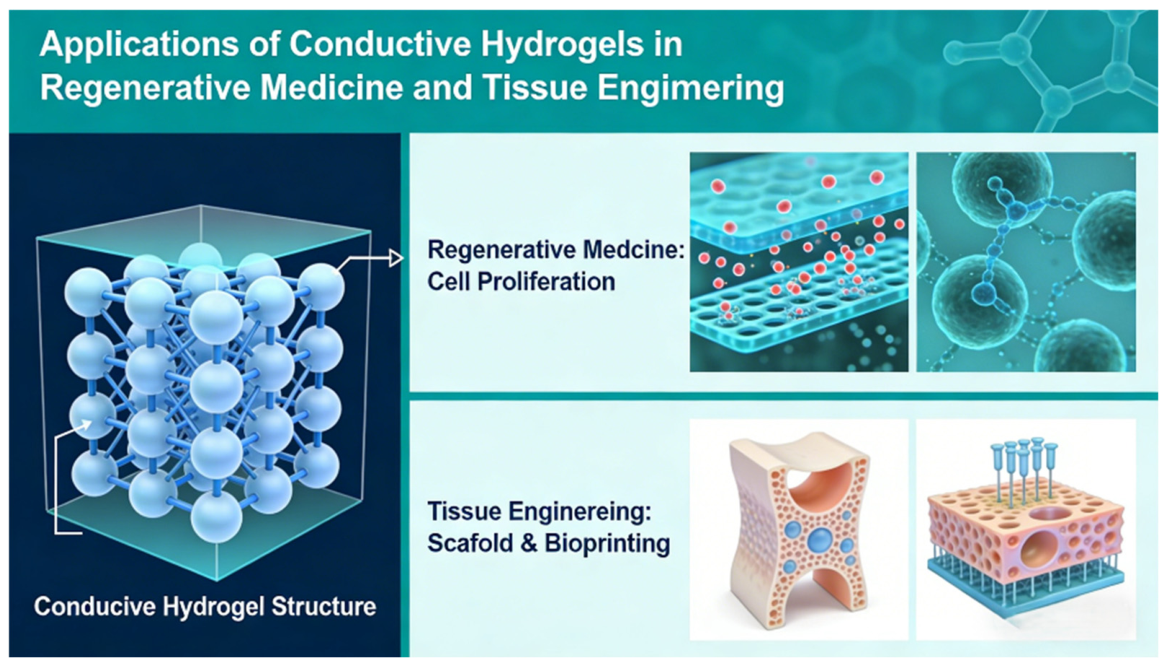
Conductive hydrogels are driving a paradigm shift in regenerative medicine from passive scaffolds to active bioelectronic modulation. By mimicking the electrophysiological microenvironment of native tissues, these materials enable synchronized electrical signaling, enhanced cell migration, and controlled biochemical release (Figure 8).
In neural regeneration, Han et al. [98] fabricated digitally printed conductive scaffolds based on gelatin methacryloyl and chitosan-incorporating PEDOT nanoparticles. The conductive matrix promoted PC12 and Schwann cell proliferation, while electrical stimulation enhanced axonal elongation and functional recovery in vivo, demonstrating the therapeutic value of engineered electrical cues. Similarly, Amirabdollahian et al. [99] developed a silk fibroin/decellularized extracellular matrix hydrogel reinforced with carbon nanotubes, achieving enhanced conductivity (2.35 × 10⁻⁴ S m−1) and structural stability suitable for brain tissue engineering. Spencer et al. [100] further advanced bioprinted GelMA/PEDOT:PSS constructs, validating in vivo biocompatibility and controlled degradation profiles. Electrically triggered drug delivery adds another dimension of functional control. Ho et al. [101] incorporated reduced graphene oxide within PEGDA hydrogels, enabling voltage-dependent nanoparticle release (2–10 V) via electro-induced pore expansion. Meanwhile, Ouyang et al. [102] designed an injectable supramolecular nanoconductive hydrogel integrating growth factors, antimicrobial peptides, and single-walled carbon nanotubes, simultaneously promoting vascular remodeling, immune modulation, and endogenous electric-field-guided cell recruitment. Aligned conductive architectures further enhance regeneration. Yao et al. [103] fabricated oriented CNT/GelMA fibers replicating axonal anisotropy, where combined electrical stimulation significantly restored motor function in spinal cord injury models.
Taken together, these studies delineate three synergistic mechanisms that underpin tissue regeneration: enhanced intercellular electrical coupling, dynamic mechanical adaptability that facilitates structural remodeling, and electronically programmable spatiotemporal drug delivery. Future efforts should target neurotransmitter-responsive hydrogels, optogenetic integration, and organ-on-chip platforms to gain mechanistic insights, positioning conductive hydrogels as next-generation bioelectronic therapeutics.

4.4. Self-Powered Flexible Electronic Systems

The integration of conductive hydrogels with energy harvesting components establishes autonomous sensing systems that emulate biological energy self-sufficiency. Wang et al. [104] engineered a cationic nanocellulose/graphitic carbon nitride composite hydrogel featuring dynamic ion-interaction sacrificial bonds, enabling a microcapacitor to reach 15 V via simple mechanical tapping. Yang et al. [105] realized continuously 3D-printed conductive hydrogels with periodic minimal surface architectures capable of self-powered sensing under mechanical deformation.
Ion thermoelectric systems further exploit ambient thermal gradients. Zhang et al. [106] developed a calcium-ion crosslinking gradient hydrogel achieving an ionic thermovoltage of 34.27 mV K−1 and power density of 730 mW m−2, demonstrating efficient conversion of low-grade heat into electrical output. Jia et al. [107] enhanced proton conduction through ordered covalent organic framework–cellulose composites, maintaining conductivity at −40 °C and enabling high-performance gel supercapacitors and triboelectric nanogenerators.
Collectively, these innovations establish a design paradigm centered on environmental energy harvesting, hierarchical proton/ion transport regulation, and multifunctional device integration. Emerging research directions include biodegradable autonomous electronics, living hydrogels synthesized via microbial pathways, and data-driven inverse materials design.

4.5. Electronics for Extreme Environments

Conductive hydrogels tailored for extreme conditions are transforming specialized electronics from passive endurance to active adaptability [68]. Zhu et al. [108] introduced an ion-regulated cellulose hydrogel featuring electrostatic “ion-lock” interactions between nanocellulose carboxyl groups and metal ions, maintaining conductivity at −30 °C. Quan et al. [109] achieved operation at −80 °C via a double-crosslinked network incorporating LiCl and MXene, where Hofmeister effects and ion–polymer interactions suppressed freezing and dehydration. Han et al. [110] constructed glycerol/water dual-network hydrogels with antifreezing capability and developed a triboelectric nanogenerator integrated into intelligent insoles, achieving 97.1% classification accuracy of skiing maneuvers via machine learning. For arid environments, Lu et al. [111] designed a thermostable ion-gel sustaining conductivity under 7% relative humidity and functioning as a rapid-response Joule heater. Collectively, these studies highlight ion confinement, solvent engineering, and hierarchical porosity as key determinants of environmental resilience. Future efforts are expected to leverage AI-driven inverse design, modular architectures, and materials genome strategies to realize hydrogel electronics capable of autonomous adaptation under extreme conditions.
Despite these advances, device-level progress has yet to translate into practical deployment. The lack of standardized metrics for mechanical durability, electrical stability, and long-term biocompatibility remains a central bottleneck. Recent progress in manufacturing, conductive network engineering, and multiscale structure–property correlations provide a unified framework for flexible electronic architectures (Table 1), yet systematic validation under real-world conditions is still needed.

5. Conclusions, Perspectives, and Challenges

This Review provides a critical synthesis of cellulose-based conductive hydrogels, encompassing design strategies, conduction mechanisms, and applications. Performance is governed by intrinsic trade-offs among conductivity, mechanical robustness, and environmental stability, limiting simultaneous optimization. Physically and chemically crosslinked systems exhibit complementary strengths and limitations, while interpenetrating networks partially mitigate these constraints but remain challenged by synthetic complexity and scalability. These hydrogels show promise in wearable sensing, flexible energy storage, tissue engineering, and flexible electronics under extreme conditions. Practical deployment remains constrained by limited long-term stability, environmental resilience, and scalable fabrication. Key challenges remain the design of hierarchical conductive pathways and cost-effective fabrication. Future progress depends on integrated strategies combining molecular design, quantitative structure–property control, and scalable fabrication, along with deeper mechanistic understanding to enable translation into practical technologies.

Author Contributions

Conceptualization, X.D., Z.W. and H.L.; writing—original draft preparation, X.D.; writing—review and editing, X.D. and Z.W.; supervision, J.Z., M.S., Z.S. and S.G.; project administration, X.D.; funding acquisition, X.D. All authors have read and agreed to the published version of the manuscript.

Funding

The authors are grateful for the financial support from the Heilongjiang Provincial Department of Education for the Basic Research Funds Research Project (No. 145409701).

Data Availability Statement

Not applicable.

Conflicts of Interest

The authors declare no competing financial interests or personal relationships that could have influenced the work reported in this paper.

References

  1. Wei, Y.; Cong, B.; Ji, X.; Wang, D.; Hu, J.; Mou, Z.; Song, H.; Zhi, Y.; Liu, Y.; Zhang, G.; et al. Multifunctional carboxymethyl cellulose/polydopamine dual-network conductive hydrogels for motion detection and photothermal therapy. Carbohydr. Polym. 2026, 380, 125074. [Google Scholar] [CrossRef]
  2. Wang, Y.; Zhang, Y.; Niu, T.; Ding, Y.; Liu, Y.; Gao, C. Hofmeister-driven network reconstruction of bacterial cellulose hydrogels for flexible ion-conductive electrolytes. Chem. Eng. J. 2026, 527, 171914. [Google Scholar] [CrossRef]
  3. Zhuang, J.; Zhang, X.; Jin, W.; Mei, F.; Xu, Y.; He, L.; Tan, S.; Cai, G.; Cheng, D.; Wang, X. Conductive, self-healing and adhesive cellulose nanofibers-based hydrogels as wearable strain sensors and supercapacitors. Ind. Crops Prod. 2025, 225, 120547. [Google Scholar] [CrossRef]
  4. Campebell, R.C.; Oliveira, A.B.; Fagundes, J.L.A.; Fortes, B.N.A.; Veado, H.C.; Macedo, I.L.; Dallago, B.S.L.; Barud, H.S.; Adorno, J.; Salvador, P.A.V.; et al. Evaluation of Bacterial Cellulose/Alginate-Based Hydrogel and Frog Skin Dressings in Equine Skin Wound Healing. Gels 2025, 11, 107. [Google Scholar] [CrossRef] [PubMed]
  5. Yang, Q.; He, M.; Yu, Z.; Liu, Y.; Bai, Y.; Liu, T.; Wang, T.; Meng, L.; Meng, F.; Ma, Q.; et al. Tunicate cellulose nanocrystal reinforced conductive multi-responsive hydrogel with super flexible, fatigue resistant and self-healable capability for antibacterial flexible sensors. Chem. Eng. J. 2024, 495, 153567. [Google Scholar] [CrossRef]
  6. Dong, X.; Shi, C.; Wang, Y.; Hu, F.; Mondal, A.K.; Tang, Z. Customized Hemp Pulp Extraction via Laccase-Pectinase Pretreatment for Improved Waste Pulp Papermaking. ACS Omega 2026, 11, 3984–3992. [Google Scholar] [CrossRef] [PubMed]
  7. Liu, W.; Jiang, C.; Li, X.; Li, H.; Zhang, Y.; Huang, Y.; Chen, S.; Hou, Q. Microwave-assisted DES fabrication of lignin-containing cellulose nanofibrils and its derived composite conductive hydrogel. Carbohydr. Polym. 2024, 328, 121741. [Google Scholar] [CrossRef] [PubMed]
  8. Soleimani, Z.; Baharifar, H.; Najmoddin, N.; Khoshnevisan, K. Evaluation of Carboxymethyl Cellulose/Gelatin Hydrogel-Based Dressing Containing Cefdinir for Wound Healing Promotion in Animal Model. Gels 2025, 11, 38. [Google Scholar] [CrossRef]
  9. Yang, Y.; Li, D.; Yang, N.; Yan, T.; Wen, Y.; Yan, N.; Guo, F. Preparing both mechanically robust and highly conductive semi-solid supercapacitor using environment-friendly gelatin-based hydrogel with cellulose fibers and ionic liquid. Chem. Eng. J. 2025, 526, 171367. [Google Scholar] [CrossRef]
  10. Vazquez-Rivas, E.; Desales-Guzman, L.A.; Pacheco-Sanchez, J.H.; Burillo-Amezcua, S.G. Cellulose-Based Hybrid Hydrogels for Tissue Engineering Applications: A Sustainable Approach. Gels 2025, 11, 438. [Google Scholar] [CrossRef]
  11. Sun, W.; Liu, X.; Hua, W.; Wang, S.; Wang, S.; Yu, J.; Wang, J.; Yong, Q.; Chu, F.; Lu, C. Self-strengthening and conductive cellulose composite hydrogel for high sensitivity strain sensor and flexible triboelectric nanogenerator. Int. J. Biol. Macromol. 2023, 248, 125900. [Google Scholar] [CrossRef]
  12. Tian, Y.; Zhang, L.; Li, X.; Yan, M.; Wang, Y.; Ma, J.; Wang, Z. Compressible, anti-freezing, and ionic conductive cellulose/polyacrylic acid composite hydrogel prepared via AlCl(3)/ZnCl(2) aqueous system as solvent and catalyst. Int. J. Biol. Macromol. 2023, 253, 126550. [Google Scholar] [CrossRef] [PubMed]
  13. Lei, L.; Hu, S.; Xie, Y.; Liu, X.; Xie, C.; Li, H. Synergistic stretching-annealing and salting-out enabling ultrastrong, ultratough anisotropic bacterial cellulose conductive hydrogels for bioelectric sensors. Carbohydr. Polym. 2026, 371, 124513. [Google Scholar] [CrossRef]
  14. Zong, S.Y.; Wen, H.K.; Lv, H.; Li, T.; Tang, R.L.; Liu, L.J.; Jiang, J.X.; Wang, S.P.; Duan, J.F. Intelligent hydrogel with both redox and thermo-response based on cellulose nanofiber for controlled drug delivery. Carbohydr. Polym. 2022, 278, 118943. [Google Scholar] [CrossRef]
  15. Liu, X.; Chen, L.; Sufu, A.; Liu, F. Stretchable and self-healing carboxymethyl cellulose/polyacrylic acid conductive hydrogels for monitoring human motions and electrophysiological signals. Int. J. Biol. Macromol. 2025, 293, 138900. [Google Scholar] [CrossRef] [PubMed]
  16. Hang, T.; Chen, Y.; Yin, F.; Shen, J.; Li, X.; Li, Z.; Zheng, J. Highly stretchable polyvinyl alcohol composite conductive hydrogel sensors reinforced by cellulose nanofibrils and liquid metal for information transmission. Int. J. Biol. Macromol. 2024, 258, 128855. [Google Scholar] [CrossRef] [PubMed]
  17. Gao, J.; Li, X.; Xu, L.; Yan, M.; Bi, H.; Wang, Q. Transparent multifunctional cellulose-based conductive hydrogel for wearable strain sensors and arrays. Carbohydr. Polym. 2024, 329, 121784. [Google Scholar] [CrossRef]
  18. Li, K.Y.; Yang, D.H.; Liu, C.; Jiang, W.; Liu, Y.; Yang, H.Y.; Wang, B.; Fu, Y. MXene/cellulose conductive hydrogel with stretchability, anti-swelling, antibacteriality and environmental adaptability for wearable flexible strain sensors in human behavior monitoring. Int. J. Biol. Macromol. 2025, 329, 147784. [Google Scholar] [CrossRef]
  19. Guan, Q.F.; Yang, H.B.; Han, Z.M.; Ling, Z.C.; Yin, C.H.; Yang, K.P.; Zhao, Y.X.; Yu, S.H. Sustainable Cellulose-Nanofiber-Based Hydrogels. Acs Nano 2021, 15, 7889–7898. [Google Scholar] [CrossRef]
  20. Du, Z.; Wang, N.; Du, J. Recent Progress in Cellulose-Based Conductive Hydrogels. Polymers 2025, 17, 1089. [Google Scholar] [CrossRef]
  21. Zhang, Z.; Wang, Y.; Wang, W. Machine Learning in Gel-Based Additive Manufacturing: From Material Design to Process Optimization. Gels 2025, 11, 582. [Google Scholar] [CrossRef]
  22. Liu, X.; Shi, H.; Song, F.; Yang, W.; Yang, B.; Ding, D.; Liu, Z.; Hui, L.; Zhang, F. A highly sensitive and anti-freezing conductive strain sensor based on polypyrrole/cellulose nanofiber crosslinked polyvinyl alcohol hydrogel for human motion detection. Int. J. Biol. Macromol. 2024, 257, 128800. [Google Scholar] [CrossRef]
  23. Zhang, H.; Zhang, D.; Cai, H.; Ma, Y.; Li, K.; Zhang, P.; Guo, Y. A bacterial cellulose-based multifunctional conductive hydrogel for flexible strain sensors and supercapacitors. Carbohydr. Polym. 2025, 360, 123601. [Google Scholar] [CrossRef] [PubMed]
  24. Wang, J.; Luo, J.; Jia, Z.; Chen, Y.; Li, C.; Zhong, K.; Xiang, J.; Jia, P. High Strength, Swelling Resistance, Antimicrobial and Conductive Zwitterionic Hydrogel Based on Cellulose Frame. ACS Appl. Polym. Mater. 2024, 6, 6603–6613. [Google Scholar] [CrossRef]
  25. Wang, Z.; Deng, Y.; Zhang, Y.; Wei, Z.; Wan, Z.; Li, C.; Tang, X.; Zhao, Z.; Zhou, P.; Li, P.; et al. Impacts of citric acid concentration and pH value on mechanism and rheological properties of cold-set whey protein fibrils hydrogels. LWT 2023, 183, 114872. [Google Scholar] [CrossRef]
  26. Yang, C.; Cheng, S.; Yao, X.; Nian, G.; Liu, Q.; Suo, Z. Ionotronic Luminescent Fibers, Fabrics, and Other Configurations. Adv. Mater. 2020, 32, e2005545. [Google Scholar] [CrossRef]
  27. Miao, H.; Liu, Y.; Zheng, C.; Huang, X.; Song, Y.; Tong, L.; Dong, C.; Fu, X.; Huang, H.; Ge, M.; et al. A flexible, antifreezing, and long-term stable cellulose ionic conductive hydrogel via one-step preparation for flexible electronic sensors. Carbohydr. Polym. 2025, 351, 122936. [Google Scholar] [CrossRef] [PubMed]
  28. Wang, Y.; Yao, A.; Dou, B.; Huang, C.; Yang, L.; Liang, J.; Lan, J.; Lin, S. Self-healing, environmentally stable and adhesive hydrogel sensor with conductive cellulose nanocrystals for motion monitoring and character recognition. Carbohydr. Polym. 2024, 332, 121932. [Google Scholar] [CrossRef]
  29. Sun, B.; Yu, S.; Yin, D.; Jin, H. Application of conductive hydrogel reinforced by cellulose nanocrystals in monitoring crack process of concrete structure. Front. Struct. Civ. Eng. 2025, 19, 1637–1650. [Google Scholar] [CrossRef]
  30. Ni, Q.-Y.; He, X.-F.; Zhou, J.-L.; Yang, Y.-Q.; Zeng, Z.-F.; Mao, P.-F.; Luo, Y.-H.; Xu, J.-M.; Jiang, B.; Wu, Q.; et al. Mechanical tough and stretchable quaternized cellulose nanofibrils/MXene conductive hydrogel for flexible strain sensor with multi-scale monitoring. J. Mater. Sci. Technol. 2024, 191, 181–191. [Google Scholar] [CrossRef]
  31. Lin, F.; Yang, W.; Lu, B.; Xu, Y.; Chen, J.; Zheng, X.; Liu, S.; Lin, C.; Zeng, H.; Huang, B. Muscle-Inspired Robust Anisotropic Cellulose Conductive Hydrogel for Multidirectional Strain Sensors and Implantable Bioelectronics. Adv. Funct. Mater. 2024, 35, 2416419. [Google Scholar] [CrossRef]
  32. Ji, X.; Yu, Z.; Nan, M.; Ge, R.; Gao, Y.; Zhang, H.; Li, Z.; Wang, L. Cellulose nanocomposite hydrogel-conductive, antimicrobial and high tenacity sensor for information encryption, human motion monitoring and animal behavior studies. Int. J. Biol. Macromol. 2025, 315, 144405. [Google Scholar] [CrossRef] [PubMed]
  33. Shu, L.; Wang, Z.; Zhang, X.F.; Yao, J. Highly conductive and anti-freezing cellulose hydrogel for flexible sensors. Int. J. Biol. Macromol. 2023, 230, 123425. [Google Scholar] [CrossRef] [PubMed]
  34. Pan, S.; Zhou, Y.; Wang, K.; Yan, H.; Gu, H.; Che, Y. High conductive, mechanical properties and temperature-sensitive alginate-based hydrogel enhanced with tunicate cellulose nanocrystals for wearable flexible sensors. Int. J. Biol. Macromol. 2025, 318, 145032. [Google Scholar] [CrossRef]
  35. Jiang, Z.; Ji, Z.; Zhu, M.; Ma, W.; Gao, S.; Xu, M. Notch-insensitive, tough and self-healing conductive bacterial cellulose nanocomposite hydrogel for flexible wearable strain sensor. Int. J. Biol. Macromol. 2024, 280, 135947. [Google Scholar] [CrossRef]
  36. Li, Y.; Chen, C.; Cui, G.; Liu, L.; Zhou, C.; Wu, G. Hydroxyethyl cellulose-based stretchable, antifreeze, ion-conductive hydrogel sensor. Eur. Polym. J. 2024, 202, 112603. [Google Scholar] [CrossRef]
  37. Fu, Y.; Zou, J.; Wang, Y.; Yao, Z.; Lv, P.; Wu, D.; Wei, Q.; Zhang, W.; Jiang, Y.; Li, D. Highly stretchable, self-adhesive, conductive, and tough hydrogel reinforced with cellulose nanofibers for wearable biosensor and ultrasonic nanogenerator. Chem. Eng. J. 2025, 516, 164010. [Google Scholar] [CrossRef]
  38. Bai, L.; Yang, C.; Sun, X.; Yue, D.; Wang, W.; Chen, H.; Yang, H.; Yang, L. Antifreeze proteins and surface-modified cellulose nanocrystals for designing anti-freezing conductive hydrogel sensors. Carbohydr. Polym. 2025, 350, 123056. [Google Scholar] [CrossRef]
  39. Gu, P.; Liu, W.; Hou, Q.X.; Ni, Y.H. Lignocellulose-derived hydrogel/aerogel-based flexible quasi-solid-state supercapacitors with high-performance: A review. J. Mater. Chem. A 2021, 9, 14233–14264. [Google Scholar] [CrossRef]
  40. Liu, J.; Wang, H.; Liu, T.; Wu, Q.; Ding, Y.; Ou, R.; Guo, C.; Liu, Z.; Wang, Q. Multimodal Hydrogel-Based Respiratory Monitoring System for Diagnosing Obstructive Sleep Apnea Syndrome. Adv. Funct. Mater. 2022, 32, 2204686. [Google Scholar] [CrossRef]
  41. Ye, Y.; Zhang, Y.; Chen, Y.; Han, X.; Jiang, F. Cellulose Nanofibrils Enhanced, Strong, Stretchable, Freezing-Tolerant Ionic Conductive Organohydrogel for Multi-Functional Sensors. Adv. Funct. Mater. 2020, 30, 2003430. [Google Scholar] [CrossRef]
  42. Shan, C.; Che, M.; Cholewinski, A.; Ki Kunihiro, J.; Yim, E.K.F.; Su, R.; Zhao, B. Adhesive hydrogels tailored with cellulose nanofibers and ferric ions for highly sensitive strain sensors. Chem. Eng. J. 2022, 450, 138256. [Google Scholar] [CrossRef]
  43. Wang, Y.; Zhang, L.; Lu, A. Highly stretchable, transparent cellulose/PVA composite hydrogel for multiple sensing and triboelectric nanogenerators. J. Mater. Chem. A 2020, 8, 13935–13941. [Google Scholar] [CrossRef]
  44. Zhuang, J.; Zhang, W.; Lang, L.; Tan, S.; Cai, G.; Wang, X.; Cheng, D. Stretchable, adhesive and conductive cellulose nanofiber-based hydrogel for multifunctional wearable electronics. Int. J. Biol. Macromol. 2026, 338, 149733. [Google Scholar] [CrossRef]
  45. Jiang, X.; Zeng, F.; Yang, X.; Jian, C.; Zhang, L.; Yu, A.; Lu, A. Injectable self-healing cellulose hydrogel based on host-guest interactions and acylhydrazone bonds for sustained cancer therapy. Acta Biomater. 2022, 141, 102–113. [Google Scholar] [CrossRef]
  46. Zhou, S.; Guo, K.; Bukhvalov, D.; Zhang, X.F.; Zhu, W.; Yao, J.; He, M. Cellulose Hydrogels by Reversible Ion-Exchange as Flexible Pressure Sensors. Adv. Mater. Technol. 2020, 5, 2000358. [Google Scholar]
  47. Fu, H.; Wang, B.; Li, J.; Xu, J.; Li, J.; Zeng, J.; Gao, W.; Chen, K. A self-healing, recyclable and conductive gelatin/nanofibrillated cellulose/Fe(3+) hydrogel based on multi-dynamic interactions for a multifunctional strain sensor. Mater. Horiz. 2022, 9, 1412–1421. [Google Scholar] [CrossRef] [PubMed]
  48. Ge, W.; Cao, S.; Yang, Y.; Rojas, O.J.; Wang, X. Nanocellulose/LiCl systems enable conductive and stretchable electrolyte hydrogels with tolerance to dehydration and extreme cold conditions. Chem. Eng. J. 2021, 408, 127306. [Google Scholar] [CrossRef]
  49. Jian, J.; Xie, Y.; Gao, S.; Sun, Y.; Lai, C.; Wang, J.; Wang, C.; Chu, F.; Zhang, D. A skin-inspired biomimetic strategy to fabricate cellulose enhanced antibacterial hydrogels as strain sensors. Carbohydr. Polym. 2022, 294, 119760. [Google Scholar] [CrossRef] [PubMed]
  50. Farooq, A.; Wanyan, H.; Li, Q.; Lu, S.; Huang, W.; Waqas, M.; Hong, B.; Huang, L.; Chen, L.; Zhou, X.; et al. An adhesive, antibacterial, conductive zwitterionic cellulose nanofibers-containing hydrogel for flexible strain sensors and super-capacitors. Carbohydr. Polym. 2025, 358, 123534. [Google Scholar] [CrossRef]
  51. Zhang, M.H.; Chen, S.Y.; Sheng, N.; Wang, B.X.; Wu, Z.T.; Liang, Q.Q.; Wang, H.P. Anisotropic bacterial cellulose hydrogels with tunable high mechanical performances, non-swelling and bionic nanofluidic ion transmission behavior. Nanoscale 2021, 13, 8126–8136. [Google Scholar] [CrossRef] [PubMed]
  52. Yang, X.; Liu, G.; Peng, L.; Guo, J.; Tao, L.; Yuan, J.; Chang, C.; Wei, Y.; Zhang, L. Highly Efficient Self-Healable and Dual Responsive Cellulose-Based Hydrogels for Controlled Release and 3D Cell Culture. Adv. Funct. Mater. 2017, 27, 1703174. [Google Scholar] [CrossRef]
  53. Rahmani, P.; Shojaei, A.; Dickey, M.D. A highly conductive and ultra-stretchable polyaniline/cellulose nanocrystal/polyacrylamide hydrogel with hydrophobic associations for wearable strain sensors. J. Mater. Chem. A 2024, 12, 9552–9562. [Google Scholar] [CrossRef]
  54. Yan, L.W.; Zhou, T.; Han, L.; Zhu, M.Y.; Cheng, Z.; Li, D.; Ren, F.Z.; Wang, K.F.; Lu, X. Conductive Cellulose Bio-Nanosheets Assembled Biostable Hydrogel for Reliable Bioelectronics. Adv. Funct. Mater. 2021, 31, 2010465. [Google Scholar] [CrossRef]
  55. Wei, P.; Wang, L.; Xie, F.; Cai, J. Strong and tough cellulose–graphene oxide composite hydrogels by multi-modulus components strategy as photothermal antibacterial platform. Chem. Eng. J. 2022, 431, 133964. [Google Scholar] [CrossRef]
  56. Ye, D.; Cheng, Q.; Zhang, Q.; Wang, Y.; Chang, C.; Li, L.; Peng, H.; Zhang, L. Deformation Drives Alignment of Nanofibers in Framework for Inducing Anisotropic Cellulose Hydrogels with High Toughness. ACS Appl. Mater. Interfaces 2017, 9, 43154–43162. [Google Scholar] [CrossRef]
  57. Wang, L.; Hu, S.; Ullah, M.W.; Li, X.; Shi, Z.; Yang, G. Enhanced cell proliferation by electrical stimulation based on electroactive regenerated bacterial cellulose hydrogels. Carbohydr. Polym. 2020, 249, 116829. [Google Scholar] [CrossRef] [PubMed]
  58. Dash, R.; Foston, M.; Ragauskas, A.J. Improving the mechanical and thermal properties of gelatin hydrogels cross-linked by cellulose nanowhiskers. Carbohydr. Polym. 2013, 91, 638–645. [Google Scholar] [CrossRef]
  59. Yu, K.; Luo, B.; Yang, H.; He, J.; Zhu, Z.; Li, P.; Zhong, H. Sodium carboxymethyl cellulose/polyvinyl alcohol/clove essential oil composite hydrogel with integrated antibacterial, antifreeze, and conductive properties as a wearable sensor for human motion monitoring. Int. J. Biol. Macromol. 2025, 327, 147477. [Google Scholar] [CrossRef]
  60. Abdulwahab; Khan, M.T.; Shah, L.A.; Ullah, M.; Fu, J.; Yoo, H. Hydroxyethyl cellulose boosted and hydrophobically associated conductive hydrogel as strain sensor for human motion investigation. Mater. Sci. Eng. B 2026, 323, 118923. [Google Scholar] [CrossRef]
  61. Wang, X.; Song, X.; Lu, J.; Chen, Y.; Guo, Y. A conductive anisotropic hydrogel based on carboxymethyl cellulose and polyvinyl alcohol for intelligent ligament scaffold. Polymer 2026, 344, 129477. [Google Scholar] [CrossRef]
  62. Wahab, A.; Ara, L.; Khan, M.T.; Shah, L.A.; Yoo, H. Efficient ionic conductive hydrogel derived from natural polymer methyl cellulose for multifunctional strain sensors. Colloids Surf. A Physicochem. Eng. Asp. 2025, 720, 137202. [Google Scholar] [CrossRef]
  63. Li, M.; Chen, D.; Sun, X.; Xu, Z.; Yang, Y.; Song, Y.; Jiang, F. An environmentally tolerant, highly stable, cellulose nanofiber-reinforced, conductive hydrogel multifunctional sensor. Carbohydr. Polym. 2022, 284, 119199. [Google Scholar] [CrossRef] [PubMed]
  64. Sha, C.; Wu, Z.; Zhao, Y.; Wang, Z.; Zhang, Y.; He, M.; Guo, N.; Weng, L.; Yang, G.; Ren, J.; et al. A dissolution-regeneration strategy for conductive cellulose nanofiber/PVA hydrogel toward flexible sensor and triboelectric Nanogenerator. React. Funct. Polym. 2026, 220, 106624. [Google Scholar] [CrossRef]
  65. Wu, W.; Tian, Y.; Zhu, Y.; Ye, J.; Miao, M.; Feng, X. Multifunctional triple-network ionic hydrogel sensors engineered by Al/Zn bimetallic salt solution: From cellulose solvent to conductive network architecture. J. Colloid. Interface Sci. 2026, 702, 138971. [Google Scholar] [CrossRef]
  66. Song, J.; Liao, C.; Yuan, Z.; Yu, X.; Cui, J.; Ding, Y.; Shang, P.; Wu, J.; Sun, B.; El-Newehy, M.; et al. Electrically conductive and anti-inflammatory nerve conduits based on chitosan/hydroxyethyl cellulose hydrogel for enhanced peripheral nerve regeneration. Carbohydr. Polym. 2025, 368, 124178. [Google Scholar] [CrossRef]
  67. Boonkrong, P.; Promphet, N.; Rodthongkum, N.; Puthongkham, P. Polyaniline/Cellulose Nanofiber/Polyvinyl Alcohol Porous Conductive Hydrogel-Modified Graphene Electrode for Simultaneous Detection of Cadmium and Nickel in Wastewater. Microchem. J. 2025, 210, 112951. [Google Scholar] [CrossRef]
  68. Hu, Z.; Li, J.; Wei, X.; Wang, C.; Cao, Y.; Gao, Z.; Han, J.; Li, Y. Enhancing Strain-Sensing Properties of the Conductive Hydrogel by Introducing PVDF-TrFE. ACS Appl. Mater. Interfaces 2022, 14, 45853–45868. [Google Scholar] [CrossRef]
  69. He, H.; Li, H.; Pu, A.; Li, W.; Ban, K.; Xu, L. Hybrid assembly of polymeric nanofiber network for robust and electronically conductive hydrogels. Nat. Commun. 2023, 14, 759. [Google Scholar] [CrossRef]
  70. Zheng, H.; Chen, M.; Sun, Y.; Zuo, B. Self-Healing, Wet-Adhesion silk fibroin conductive hydrogel as a wearable strain sensor for underwater applications. Chem. Eng. J. 2022, 446, 136931. [Google Scholar] [CrossRef]
  71. Li, X.L.; Yuan, L.B.; Liu, R.; He, H.N.; Hao, J.N.; Lu, Y.; Wang, Y.M.; Liang, G.M.; Yuan, G.H.; Guo, Z.P. Engineering Textile Electrode and Bacterial Cellulose Nanofiber Reinforced Hydrogel Electrolyte to Enable High-Performance Flexible All-Solid-State Supercapacitors. Adv. Energy Mater. 2021, 11, 2003010. [Google Scholar] [CrossRef]
  72. Jiang, X.; Shi, L.; Li, X.; Chen, L.; Chen, C.; Sun, D. Ordered conductive bacterial cellulose/poly(3,4-ethylenedioxythiophene) composite hydrogel for promoting cell alignment in tissue regeneration. J. Colloid. Interface Sci. 2026, 706, 139763. [Google Scholar] [CrossRef] [PubMed]
  73. Han, L.; Yan, L.; Wang, M.; Wang, K.; Fang, L.; Zhou, J.; Fang, J.; Ren, F.; Lu, X. Transparent, Adhesive, and Conductive Hydrogel for Soft Bioelectronics Based on Light-Transmitting Polydopamine-Doped Polypyrrole Nanofibrils. Chem. Mater. 2018, 30, 5561–5572. [Google Scholar] [CrossRef]
  74. He, X.; Zhang, C.; Wang, M.; Zhang, Y.; Liu, L.; Yang, W. An Electrically and Mechanically Autonomic Self-healing Hybrid Hydrogel with Tough and Thermoplastic Properties. ACS Appl. Mater. Interfaces 2017, 9, 11134–11143. [Google Scholar] [CrossRef]
  75. Wang, C.; Jiang, X.; Kim, H.J.; Zhang, S.; Zhou, X.; Chen, Y.; Ling, H.; Xue, Y.; Chen, Z.; Qu, M.; et al. Flexible patch with printable and antibacterial conductive hydrogel electrodes for accelerated wound healing. Biomaterials 2022, 285, 121479. [Google Scholar] [CrossRef]
  76. Zhu, T.; Ni, Y.; Biesold, G.M.; Cheng, Y.; Ge, M.; Li, H.; Huang, J.; Lin, Z.; Lai, Y. Recent advances in conductive hydrogels: Classifications, properties, and applications. Chem. Soc. Rev. 2023, 52, 473–509. [Google Scholar] [CrossRef]
  77. Wu, C.; Zhang, Y.; Xu, Y.; Long, L.; Hu, X.; Zhang, J.; Wang, Y. Injectable polyaniline nanorods/alginate hydrogel with AAV9-mediated VEGF overexpression for myocardial infarction treatment. Biomaterials 2023, 296, 122088. [Google Scholar] [CrossRef]
  78. Lee, J.H.; Nam, I.-W.; Hyun, J.E.; Ahn, H.; Yeo, S.Y.; Lim, T. Conductive and Robust Cellulose Hydrogel Generated by Liquid Metal for Biomedical Applications. ACS Appl. Polym. Mater. 2023, 6, 49–58. [Google Scholar] [CrossRef]
  79. Yue, J.; Huang, Y.; Teng, Y.; Fan, R.; Li, C.; Lv, Y.; Tao, Y.; Lu, J.; Du, J.; Wang, H. Carboxymethyl cellulose-based hydrogel with high-density crack microstructures inspired from the multi-tentacles of octopus for ultrasensitive flexible sensing microsystem. Int. J. Biol. Macromol. 2024, 261, 129533. [Google Scholar] [CrossRef] [PubMed]
  80. Lv, Q.; Li, X.; Tian, X.; Fu, D.a.; Liu, H.; Liu, J.; Song, Y.; Cai, B.; Wang, J.; Su, Q.; et al. A Degradable and Biocompatible Supercapacitor Implant Based on Functional Sericin Hydrogel Electrode. Adv. Energy Mater. 2023, 13, 2203814. [Google Scholar] [CrossRef]
  81. Wang, S.; Ren, F.; Ren, L.; Wu, N.; He, Q.; Song, W. Mussel-Mimicking Multifunctional Carboxymethyl Cellulose-Based Conductive Hydrogel as a Wearable Strain Sensor for Underwater Applications. ACS Appl. Polym. Mater. 2025, 7, 14222–14233. [Google Scholar] [CrossRef]
  82. Zeng, Z.; Mavrona, E.; Sacré, D.; Kummer, N.; Cao, J.; Müller, L.A.E.; Hack, E.; Zolliker, P.; Nyström, G. Terahertz Birefringent Biomimetic Aerogels Based on Cellulose Nanofibers and Conductive Nanomaterials. ACS Nano 2021, 15, 7451–7462. [Google Scholar] [CrossRef]
  83. Wang, Z.; Zhang, X.; Cao, T.; Wang, T.; Sun, L.; Wang, K.; Fan, X. Antiliquid-Interfering, Antibacteria, and Adhesive Wearable Strain Sensor Based on Superhydrophobic and Conductive Composite Hydrogel. ACS Appl. Mater. Interfaces 2021, 13, 46022–46032. [Google Scholar] [CrossRef]
  84. Yan, H.; Gu, H.; Lu, S.; Meng, F.; Ma, Q.; Xing, X.; Pan, S.; Che, Y. Bioinspired multifunctional conductive hydrogel based on hydroxypropyl methyl cellulose for flexible sensors. Carbohydr. Polym. 2025, 368, 124192. [Google Scholar] [CrossRef]
  85. Yu, Y.; Ma, T.; Wei, Q.; Sun, W.; Tang, J.; Yu, G.; Xie, W.; Zhou, G.; Zhang, Z. Highly Conductive, Stable, and Self-Healing MXene-Based Hydrogel Sensor via a Controlled Assembly of Polydopamine and Cellulose Nanocrystal. Energy Environ. Mater. 2025, 9, 70105. [Google Scholar] [CrossRef]
  86. Yang, B.; Jiang, L.; Luo, S.; Yao, Y.; Cao, Y.; Li, Y. Biomimic Conductive Hydrogel Based on Polyphenol-Modified Cellulose Nanocrystals for Flexible Mechano-sensors. ACS Appl. Mater. Interfaces 2026, 18, 5835–5848. [Google Scholar] [CrossRef]
  87. Usala, E.; Gonzalez, Z.; Campillo, N.; Baena, J.; Rincon, E.; Ferrari, B.; Rodriguez, A.; Espinosa, E. Development of 3D printable conductive cellulose-based hydrogel with incorporation of rGO for neural tissue engineering. J. Colloid. Interface Sci. 2026, 703, 139285. [Google Scholar] [CrossRef]
  88. Li, A.; Zang, J.; Newton, M.; Liu, Y.; Li, T.; Xin, B. Multifunctional double network PVA-Borax/GO-cellulose nanofibrils hydrogel for wearable strain sensor. Polymer 2025, 337, 129027. [Google Scholar] [CrossRef]
  89. Li, M.; Wang, Y.; Wei, Q.; Zhang, J.; An, Y.; Chen, X.; Li, Z.; Jiao, D. Hydrophobic associations and cellulose nanofibers reinforced PVA/PAM multi-network conductive hydrogel with high sensitivity, fast response, and excellent mechanical properties. Carbohydr. Polym. 2025, 368, 124225. [Google Scholar] [CrossRef]
  90. Dong, D.; Lu, H.; Lai, X.; Zeng, X.; Li, H. Cellulose nanofiber-reinforced chitosan conductive hydrogel tailored by double-network strategy for stretchable strain sensor. Int. J. Biol. Macromol. 2025, 333, 148851. [Google Scholar] [CrossRef]
  91. Hong, X.; Wang, Y.; Du, Z.; Li, T.; Wu, Y.; Li, Y.; Li, X. Cellulose nanofiber-reinforced dual-network multifunctional ion-conductive hydrogel with highly sensitive temperature and stress sensing properties for wearable flexible sensors. Colloids Surf. A Physicochem. Eng. Asp. 2025, 717, 136757. [Google Scholar] [CrossRef]
  92. Zhao, M.; Wu, T.; Wang, X.; Liang, L.; Zhang, S.; Yuan, T.; Fang, G. Exploration of hydroxyethyl cellulose-templated PEDOT:PSS for the development of high-performance conductive dual-network hydrogel strain sensor. Chem. Eng. J. 2025, 519, 165000. [Google Scholar] [CrossRef]
  93. Zhang, H.; Gan, X.; Song, Z.; Zhou, J. Amphoteric Cellulose-Based Double-Network Hydrogel Electrolyte Toward Ultra-Stable Zn Anode. Angew. Chem. Int. Ed. Engl. 2023, 62, e202217833. [Google Scholar] [CrossRef]
  94. Wan, H.; Qin, C.; Lu, A. A flexible, robust cellulose/phytic acid/polyaniline hydrogel for all-in-one supercapacitors and strain sensors. J. Mater. Chem. A 2022, 10, 17279–17287. [Google Scholar] [CrossRef]
  95. Liu, K.; Lv, J.; Fan, G.; Wang, B.; Mao, Z.; Sui, X.; Feng, X. Flexible and Robust Bacterial Cellulose-Based Ionogels with High Thermoelectric Properties for Low-Grade Heat Harvesting. Adv. Funct. Mater. 2021, 32, 2107105. [Google Scholar] [CrossRef]
  96. Wang, D.; Li, H.; Liu, Z.; Tang, Z.; Liang, G.; Mo, F.; Yang, Q.; Ma, L.; Zhi, C. A Nanofibrillated Cellulose/Polyacrylamide Electrolyte-Based Flexible and Sewable High-Performance Zn-MnO(2) Battery with Superior Shear Resistance. Small 2018, 14, e1803978. [Google Scholar] [CrossRef]
  97. Zhang, Z.; Chen, Z.; Wang, Y.; Zhao, Y. Bioinspired conductive cellulose liquid-crystal hydrogels as multifunctional electrical skins. Proc. Natl. Acad. Sci. USA 2020, 117, 18310–18316. [Google Scholar] [CrossRef]
  98. Han, Y.; Sun, M.; Lu, X.; Xu, K.; Yu, M.; Yang, H.; Yin, J. A 3D printable gelatin methacryloyl/chitosan hydrogel assembled with conductive PEDOT for neural tissue engineering. Compos. Part B Eng. 2024, 273, 111241. [Google Scholar] [CrossRef]
  99. Amirabdollahian, A.; Moeini, M. An In Situ-Gelling Conductive Hydrogel for Potential Use in Neural Tissue Engineering. Tissue Eng. Part. A 2024, 30, 726–739. [Google Scholar] [CrossRef]
  100. Spencer, A.R.; Shirzaei Sani, E.; Soucy, J.R.; Corbet, C.C.; Primbetova, A.; Koppes, R.A.; Annabi, N. Bioprinting of a Cell-Laden Conductive Hydrogel Composite. ACS Appl. Mater. Interfaces 2019, 11, 30518–30533. [Google Scholar] [CrossRef] [PubMed]
  101. Ho, C.M.B.; Hu, K.; Yoon, Y.-J. Conductive rGO/PEGDA Hydrogel for Controllable Drug Release. Int. J. Precis. Eng. Manuf. Green. Technol. 2024, 12, 263–275. [Google Scholar] [CrossRef]
  102. OuYang, L.; Lin, Z.; He, X.; Sun, J.; Liao, J.; Liao, Y.; Xie, X.; Hu, W.; Zeng, R.; Tao, R.; et al. Conductive Hydrogel Inspires Neutrophil Extracellular Traps to Combat Bacterial Infections in Wounds. ACS Nano 2025, 19, 9868–9884. [Google Scholar] [CrossRef]
  103. Yao, S.; Yang, Y.; Li, C.; Yang, K.; Song, X.; Li, C.; Cao, Z.; Zhao, H.; Yu, X.; Wang, X.; et al. Axon-like aligned conductive CNT/GelMA hydrogel fibers combined with electrical stimulation for spinal cord injury recovery. Bioact. Mater. 2024, 35, 534–548. [Google Scholar] [CrossRef]
  104. Wang, B.; Dai, L.; Hunter, L.A.; Zhang, L.; Yang, G.; Chen, J.; Zhang, X.; He, Z.; Ni, Y. A multifunctional nanocellulose-based hydrogel for strain sensing and self-powering applications. Carbohydr. Polym. 2021, 268, 118210. [Google Scholar] [CrossRef]
  105. Yang, R.; Guo, Z.; Yu, Z.; Du, F.; Thyagaraja, V.G.N.; Lin, L.; Yu, D.R.; Xu, P.; Armstrong, J.N.; Lin, S.; et al. 3D-printed conducting polymer hydrogel-based DC generator for self-powered electromechanical sensing. Nano Energy 2023, 117, 108857. [Google Scholar] [CrossRef]
  106. Zhang, J.; Xue, W.; Dai, Y.; Li, B.; Chen, Y.; Liao, B.; Zeng, W.; Tao, X.; Zhang, M. High ionic thermopower in flexible composite hydrogel for wearable self-powered sensor. Compos. Sci. Technol. 2022, 230, 109771. [Google Scholar] [CrossRef]
  107. Jia, L.; Zhang, L.; Cai, Z.; Zhu, F.; Huang, B.; Lu, Q. Ultra-flexible anti-freezing cellulose conductive hydrogel for energy storage and self-powered sensors. Ind. Crops Prod. 2025, 232, 121222. [Google Scholar] [CrossRef]
  108. Zhu, E.; Xu, H.; Xie, Y.; Song, Y.; Liu, D.; Gao, Y.; Shi, Z.; Yang, Q.; Xiong, C. Antifreezing ionotronic skin based on flexible, transparent, and tunable ionic conductive nanocellulose hydrogels. Cellulose 2021, 28, 5657–5668. [Google Scholar] [CrossRef]
  109. Quan, Q.; Zhao, T.; Luo, Z.; Li, B.X.; Sun, H.; Zhao, H.Y.; Yu, Z.Z.; Yang, D. Antifreezing, Antidrying, and Conductive Hydrogels for Electronic Skin Applications at Ultralow Temperatures. ACS Appl. Mater. Interfaces 2024, 16, 21133–21145. [Google Scholar] [CrossRef]
  110. Han, D.; Cai, Y.; Wang, X.; Zhang, W.; Li, X.; Hou, Z.; Liu, J.; Song, D.; Xu, W. An Antifreeze Gel as Strain Sensors and Machine Learning Assisted Intelligent Motion Monitoring of Triboelectric Nanogenerators in Extreme Environments. Adv. Funct. Mater. 2025, 35, 2501362. [Google Scholar] [CrossRef]
  111. Lu, Y.N.; Mo, K.; Liang, X.H.; Xie, J.S.; Yang, Y.; Zheng, L.; Gu, M.; Liu, X.R.; Lu, Y.; Ge, J. High Ion-Conductive Hydrogel: Soft, Elastic, with Wide Humidity Tolerance and Long-Term Stability. ACS Appl. Mater. Interfaces 2024, 16, 60992–61003. [Google Scholar] [CrossRef]
  112. Wan, H.; Chen, Y.; Tao, Y.; Chen, P.; Wang, S.; Jiang, X.; Lu, A. MXene-Mediated Cellulose Conductive Hydrogel with Ultrastretchability and Self-Healing Ability. ACS Nano 2023, 17, 20699–20710. [Google Scholar] [CrossRef]
  113. Zeng, C.; Ke, A.; Zhang, X. Highly conductive, super-stretchable cellulose hydrogels with self-adhesive properties for flexible sensors. Int. J. Biol. Macromol. 2025, 319, 145533. [Google Scholar] [CrossRef]
  114. Lu, J.; Zhu, X.; Zhang, Y.; Wang, F.; Xie, H.; Guo, L.; Liu, H.; Xu, X. Freeze-Resistant and Tough Cellulose-Integrated Conductive Hydrogels for Flexible Supercapacitors and Self-Powered Electronic Devices. ACS Appl. Electron. Mater. 2025, 7, 8081–8091. [Google Scholar] [CrossRef]
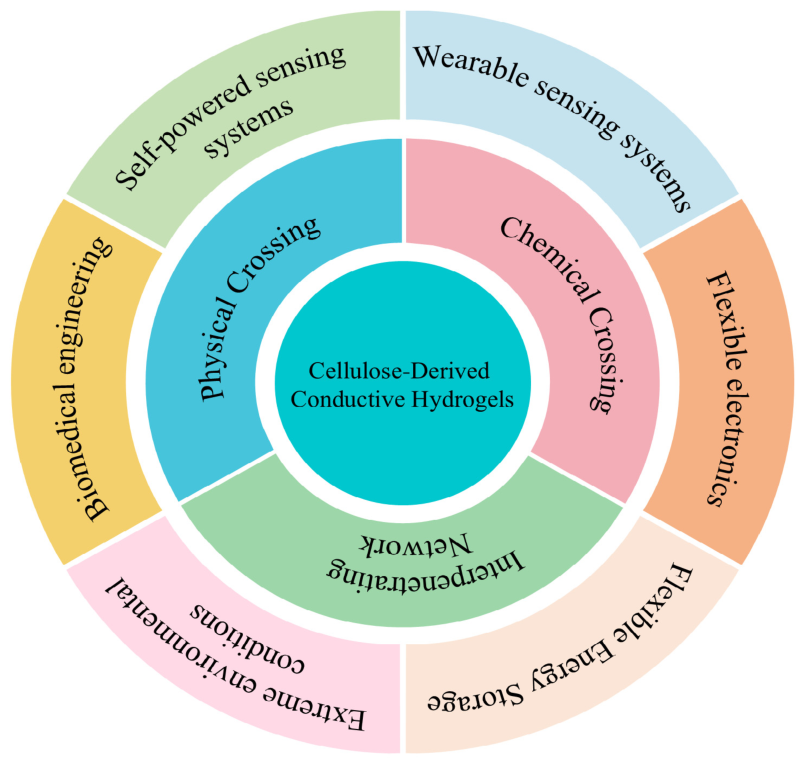
Figure 1. Schematic illustration of fabrication strategies and application domains of cellulose-based conductive hydrogels.
Gels 12 00372 g001
Figure 2. Reversible dissociation and recombination of non-covalent bonds in cellulose-based hydrogels.
Gels 12 00372 g002
Figure 3. Cellulose-based hydrogels forming network structures through permanent covalent bonds.
Gels 12 00372 g003
Figure 4. Interpenetrating polymer networks (IPNs) of cellulose-based hydrogels.
Gels 12 00372 g004
Figure 5. Schematic diagram of the conductive mechanism in ion-conductive cellulose-based hydrogels.
Gels 12 00372 g005
Figure 6. Application of cellulose-based conductive hydrogels in flexible energy storage devices.
Gels 12 00372 g006
Figure 7. Application of conductive hydrogels in wearable health monitoring and flexible sensing systems.
Gels 12 00372 g007
Figure 8. Applications of conductive hydrogels in regenerative medicine and tissue engineering.
Gels 12 00372 g008
Table 1. Summary of representative cellulose-based conductive hydrogels: materials, conductivity, mechanical properties, and applications.
System TypeKey MaterialsConductivity (S m−1)Mechanical PropertiesApplicationsRef
Ion conductionCNF/Al3+/PVAHigh electrical conductivityStretchability (696.0%), strength (0.9 MPa)Wearable sensors[63]
Metal nanomaterial Cellulose/liquid metal/metal nanoparticles/nanowires49.63Stretchability (334.0%), strength (3.0 MPa)Ultrahigh sensitivity[79]
Carbon material Cellulose/MXene-High conductivity Mechanical reinforcement, toughness, flexibilityElectronic skins, energy storage[112]
Interpenetrating polymer networks Carboxylated cellulose nanofiber/chitosan/Ca2+0.11Stretchability (406.7%), strength (0.3 MPa)Flexible electronics[90]
Conducting polymerHydroxyethyl cellulose/PEDOT:PSS/PAM1.44Stretchability (1060%), strength (0.5 MPa)flexible electronic signal detection,
sensing system
[92]
Flexible energy storageBacterial cellulose/ionic liquid2.88 Stretchability (50.0%), strength (3.1 MPa)Thermoelectric devices[95]
Tissue engineeringCellulose nanofibrils/rGOPositive response to electrical stimulation stimuliEnhancement of physical stabilityComplex tissues, particularly neural and cardiac tissues[87]
Wearable health monitoringCarboxymethylcellulose/ATAC/AMPS8.20Stretchability (>1701.0%), strength (3.1 MPa)Flexible sensors[113]
Extreme-environment electronicsCellulose/PAM/Zn2+8.89Strength (0.31 MPa)Flexible supercapacitors[114]
Disclaimer/Publisher’s Note: The statements, opinions and data contained in all publications are solely those of the individual author(s) and contributor(s) and not of MDPI and/or the editor(s). MDPI and/or the editor(s) disclaim responsibility for any injury to people or property resulting from any ideas, methods, instructions or products referred to in the content.