

Radiation-Induced Salivary Gland Fibrosis: Mechanisms, Emerging Therapies, and Gelatin-Based Bioengineered Models


Abstract
1. Introduction
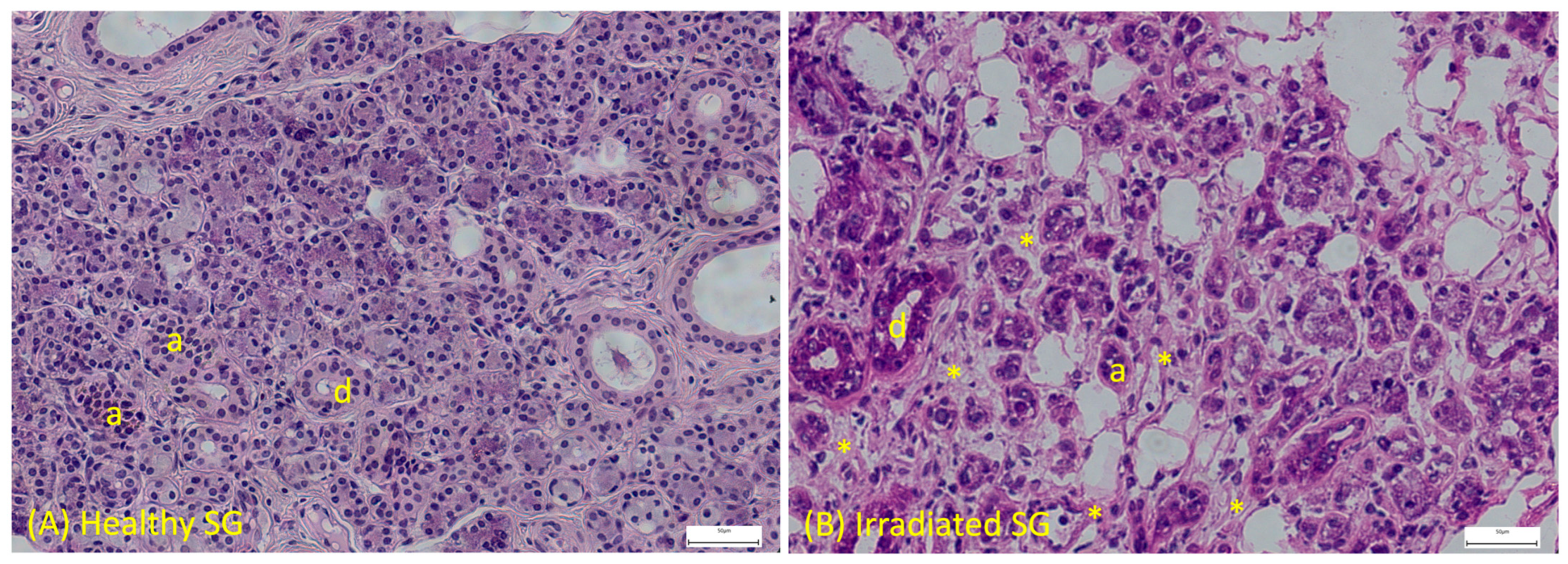
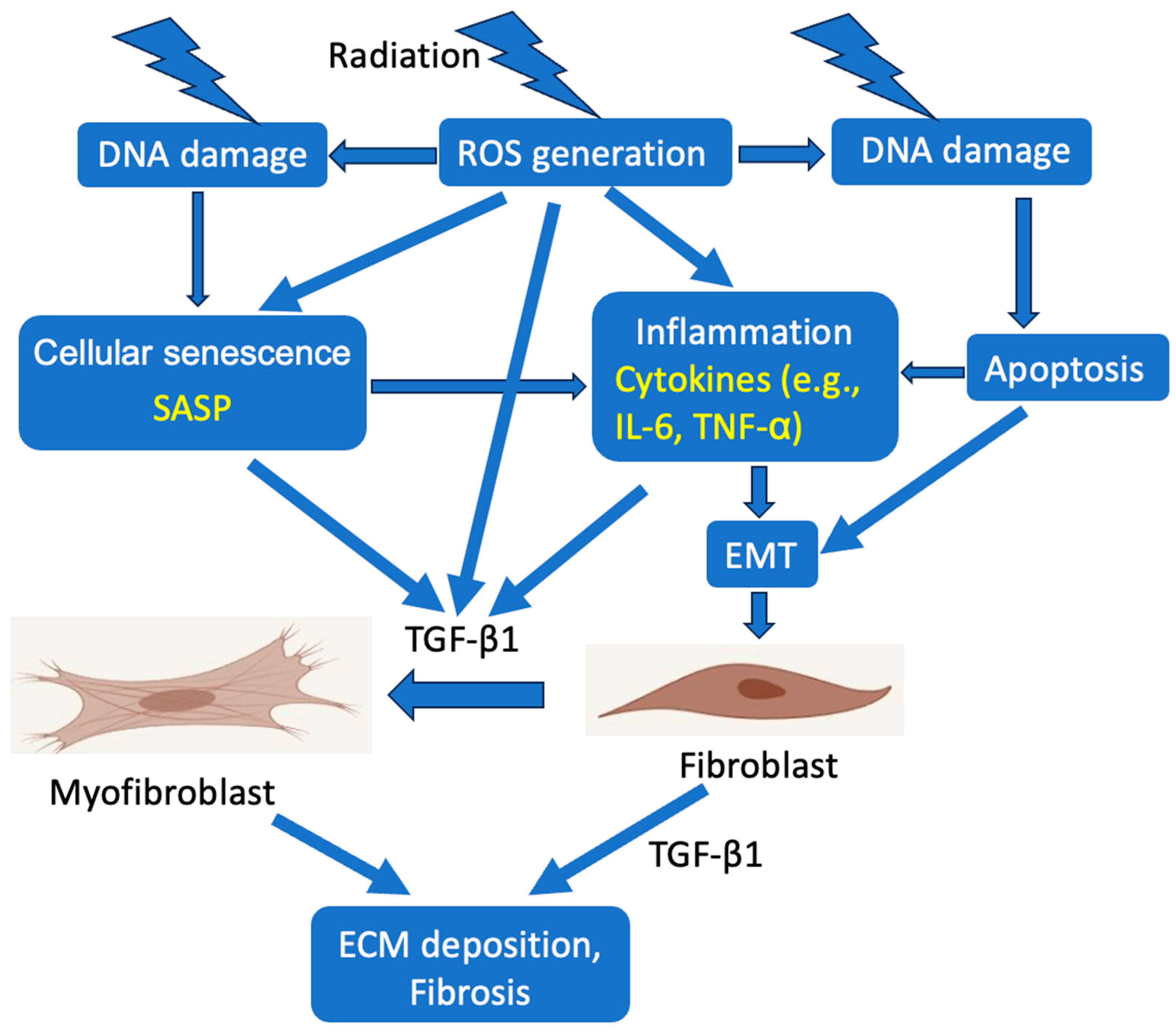
2. Pathogenesis of Ionizing Radiation-Induced Salivary Gland Fibrosis
2.1. DNA Damage
2.2. Reactive Oxygen Species (ROS) Generation
2.3. Apoptosis
2.4. Cellular Senescence
2.5. Inflammation
2.6. Epithelial-to-Mesenchymal Transition (EMT)
2.7. Fibrosis
3. Therapeutic Strategies
3.1. Amifostine and Melatonin
3.2. Metformin
3.3. Gene Transfer Therapy
3.4. Stem Cell Therapy
3.4.1. Hydrogel-Based Platforms for SG Engineering
3.4.2. Gelatin-Based Hydrogels
4. Strengths and Limitations of the Review
5. Conclusions and Future Directions
Author Contributions
Funding
Institutional Review Board Statement
Informed Consent Statement
Data Availability Statement
Conflicts of Interest
References
- Sung, H.; Ferlay, J.; Siegel, R.L.; Laversanne, M.; Soerjomataram, I.; Jemal, A.; Bray, F. Global Cancer Statistics 2020: GLOBOCAN Estimates of Incidence and Mortality Worldwide for 36 Cancers in 185 Countries. CA. Cancer J. Clin. 2021, 71, 209–249. [Google Scholar] [CrossRef]
- Upadhyay, A.; Cao, U.M.N.; Hariharan, A.; Almansoori, A.; Tran, S.D. Gene Therapeutic Delivery to the Salivary Glands. Adv. Exp. Med. Biol. 2023, 1436, 55–68. [Google Scholar] [CrossRef]
- Ghannam, M.G.; Singh, P. Anatomy, Head and Neck, Salivary Glands. In StatPearls; StatPearls Publishing: Treasure Island, FL, USA, 2025. [Google Scholar]
- Rocchi, C.; Barazzuol, L.; Coppes, R.P. The Evolving Definition of Salivary Gland Stem Cells. npj Regen. Med. 2021, 6, 4. [Google Scholar] [CrossRef]
- Jasmer, K.J.; Gilman, K.E.; Muñoz Forti, K.; Weisman, G.A.; Limesand, K.H. Radiation-Induced Salivary Gland Dysfunction: Mechanisms, Therapeutics and Future Directions. J. Clin. Med. 2020, 9, 4095. [Google Scholar] [CrossRef]
- Sisto, M.; Tamma, R.; Ribatti, D.; Lisi, S. IL-6 Contributes to the TGF-Β1-Mediated Epithelial to Mesenchymal Transition in Human Salivary Gland Epithelial Cells. Arch. Immunol. Ther. Exp. 2020, 68, 27. [Google Scholar] [CrossRef] [PubMed]
- Bhide, S.A.; Miah, A.B.; Harrington, K.J.; Newbold, K.L.; Nutting, C.M. Radiation-Induced Xerostomia: Pathophysiology, Prevention and Treatment. Clin. Oncol. 2009, 21, 737–744. [Google Scholar] [CrossRef]
- Fox, P.C. Acquired Salivary Dysfunction: Drugs and Radiation. Ann. N. Y. Acad. Sci. 1998, 842, 132–137. [Google Scholar] [CrossRef]
- Spirk, C.; Hartl, S.; Pritz, E.; Gugatschka, M.; Kolb-Lenz, D.; Leitinger, G.; Roblegg, E. Comprehensive Investigation of Saliva Replacement Liquids for the Treatment of Xerostomia. Int. J. Pharm. 2019, 571, 118759. [Google Scholar] [CrossRef]
- Fox, P.C. Salivary Enhancement Therapies. Caries Res. 2004, 38, 241–246. [Google Scholar] [CrossRef]
- Cramer, J.D.; Burtness, B.; Le, Q.T.; Ferris, R.L. The Changing Therapeutic Landscape of Head and Neck Cancer. Nat. Rev. Clin. Oncol. 2019, 16, 669–683. [Google Scholar] [CrossRef]
- Avila, J.L.; Grundmann, O.; Burd, R.; Limesand, K.H. Radiation-Induced Salivary Gland Dysfunction Results from P53-Dependent Apoptosis. Int. J. Radiat. Oncol. Biol. Phys. 2009, 73, 523–529. [Google Scholar] [CrossRef]
- Emmerson, E.; May, A.J.; Berthoin, L.; Cruz-Pacheco, N.; Nathan, S.; Mattingly, A.J.; Chang, J.L.; Ryan, W.R.; Tward, A.D.; Knox, S.M. Salivary Glands Regenerate after Radiation Injury through SOX2-mediated Secretory Cell Replacement. EMBO Mol. Med. 2018, 10, e8051. [Google Scholar] [CrossRef] [PubMed]
- Wynn, T.A. Common and Unique Mechanisms Regulate Fibrosis in Various Fibroproliferative Diseases. J. Clin. Investig. 2007, 117, 524–529. [Google Scholar] [CrossRef]
- Jiang, Z.; Chen, Z.; Xu, Y.; Li, H.; Li, Y.; Peng, L.; Shan, H.; Liu, X.; Wu, H.; Wu, L.; et al. Low-Frequency Ultrasound Sensitive Piezo1 Channels Regulate Keloid-Related Characteristics of Fibroblasts. Adv. Sci. 2024, 11, 2305489. [Google Scholar] [CrossRef] [PubMed]
- Shaw, S.M.; Skoretz, S.A.; O’Sullivan, B.; Hope, A.; Liu, L.W.C.; Martino, R. Valid and Reliable Techniques for Measuring Fibrosis in Patients with Head and Neck Cancer Postradiotherapy: A Systematic Review. Head Neck 2016, 38, E2322–E2334. [Google Scholar] [CrossRef] [PubMed]
- Ship, J.A.; Hu, K. Radiotherapy-Induced Salivary Dysfunction. Semin. Oncol. 2004, 31, 29–36. [Google Scholar] [CrossRef]
- Munguia-Lopez, J.G.; Pillai, S.; Zhang, Y.; Gantz, A.; Camasao, D.B.; Nazhat, S.N.; Kinsella, J.M.; Tran, S.D. Expansion of Functional Human Salivary Acinar Cell Spheroids with Reversible Thermo-Ionically Crosslinked 3D Hydrogels. Int. J. Oral Sci. 2025, 17, 39. [Google Scholar] [CrossRef]
- Meyer, S.; Chibly, A.M.; Burd, R.; Limesand, K.H. Insulin-Like Growth Factor-1-Mediated DNA Repair in Irradiated Salivary Glands Is Sirtuin-1 Dependent. J. Dent. Res. 2017, 96, 225–232. [Google Scholar] [CrossRef]
- Rose, S. A 3D Co-Culture Model of Senescent Cell Burden and Salivary Gland Fibrosis. Ph.D. Thesis, University at Albany, Albany, NY, USA, 2024. [Google Scholar]
- Jimenez-Socha, M.; Dion, G.R.; Mora-Navarro, C.; Wang, Z.; Nolan, M.W.; Freytes, D.O. Radiation-Induced Fibrosis in Head and Neck Cancer: Challenges and Future Therapeutic Strategies for Vocal Fold Treatments. Cancers 2025, 17, 1108. [Google Scholar] [CrossRef]
- Nelson, D.A.; Kazanjian, I.; Melendez, J.A.; Larsen, M. Senescence and Fibrosis in Salivary Gland Aging and Disease. J. Oral Biol. Craniofacial Res. 2024, 14, 231–237. [Google Scholar] [CrossRef]
- Dalgorf, D.; Higgins, K. Reconstruction of the Midface and Maxilla. Curr. Opin. Otolaryngol. Head Neck Surg. 2008, 16, 303–311. [Google Scholar] [CrossRef]
- Akyuz, M.; Taysi, S.; Baysal, E.; Demir, E.; Alkis, H.; Akan, M.; Binici, H.; Karatas, Z.A. Radioprotective Effect of Thymoquinone on Salivary Gland of Rats Exposed to Total Cranial Irradiation. Head Neck 2017, 39, 2027–2035. [Google Scholar] [CrossRef]
- Liu, X.; Gong, B.; de Souza, L.B.; Ong, H.L.; Subedi, K.P.; Cheng, K.T.; Swaim, W.; Zheng, C.; Mori, Y.; Ambudkar, I.S. Radiation Inhibits Salivary Gland Function by Promoting STIM1 Cleavage by Caspase-3 and Loss of SOCE through a TRPM2-Dependent Pathway. Sci. Signal. 2017, 10, eaal4064. [Google Scholar] [CrossRef]
- Kim, J.H.; Kim, K.M.; Jung, M.H.; Jung, J.H.; Kang, K.M.; Jeong, B.K.; Kim, J.P.; Park, J.J.; Woo, S.H. Protective Effects of Alpha Lipoic Acid on Radiation-Induced Salivary Gland Injury in Rats. Oncotarget 2016, 7, 29143–29153. [Google Scholar] [CrossRef]
- Juan, C.A.; Pérez de la Lastra, J.M.; Plou, F.J.; Pérez-Lebeña, E. The Chemistry of Reactive Oxygen Species (ROS) Revisited: Outlining Their Role in Biological Macromolecules (DNA, Lipids and Proteins) and Induced Pathologies. Int. J. Mol. Sci. 2021, 22, 4642. [Google Scholar] [CrossRef]
- Marmary, Y.; Adar, R.; Gaska, S.; Wygoda, A.; Maly, A.; Cohen, J.; Eliashar, R.; Mizrachi, L.; Orfaig-Geva, C.; Baum, B.J.; et al. Radiation-Induced Loss of Salivary Gland Function Is Driven by Cellular Senescence and Prevented by IL6 Modulation. Cancer Res. 2016, 76, 1170–1180. [Google Scholar] [CrossRef]
- Wang, L.; Zhong, N.-N.; Wang, X.; Peng, B.; Chen, Z.; Wei, L.; Li, B.; Li, Y.; Cheng, Y. Metformin Attenuates TGF-Β1-Induced Fibrosis in Salivary Gland: A Preliminary Study. Int. J. Mol. Sci. 2023, 24, 16260. [Google Scholar] [CrossRef]
- Liu, R.-M.; Desai, L.P. Reciprocal Regulation of TGF-β and Reactive Oxygen Species: A Perverse Cycle for Fibrosis. Redox Biol. 2015, 6, 565–577. [Google Scholar] [CrossRef]
- Juvkam, I.S.; Zlygosteva, O.; Malinen, E.; Edin, N.J.; Galtung, H.K.; Søland, T.M. Fractionated Irradiation of Murine Salivary Glands Resulted in Focal Acinar Cell Atrophy, Immune Cell Infiltration, Fibrosis, and Hyposalivation. bioXiv 2023. [Google Scholar] [CrossRef]
- Luo, L.; Zhang, W.; You, S.; Cui, X.; Tu, H.; Yi, Q.; Wu, J.; Liu, O. The Role of Epithelial Cells in Fibrosis: Mechanisms and Treatment. Pharmacol. Res. 2024, 202, 107144. [Google Scholar] [CrossRef] [PubMed]
- Gunning, J.A.; Limesand, K.H. Chronic Phenotypes Underlying Radiation-Induced Salivary Gland Dysfunction. J. Dent. Res. 2024, 103, 778–786. [Google Scholar] [CrossRef]
- Cao, L.; Li, K.; Li, Q.; Tong, Q.; Wang, Y.; Huang, L. The Controversial Role of Senescence-Associated Secretory Phenotype (SASP) in Cancer Therapy. Mol. Cancer 2025, 24, 283. [Google Scholar] [CrossRef]
- Peng, B.; Guo, X.; Kang, J.; Pan, S.; Wei, L.; Wang, L.; Li, B.; Han, G.; Cheng, Y. Saliva-Derived Extracellular Vesicles: A Promising Therapeutic Approach for Salivary Gland Fibrosis. J. Transl. Med. 2025, 23, 593. [Google Scholar] [CrossRef] [PubMed]
- Uchida, H.; Ingalls, M.H.; Maruyama, E.O.; Johnston, C.J.; Hernady, E.; Faustoferri, R.C.; Ovitt, C.E. Short-Term and Bystander Effects of Radiation on Murine Submandibular Glands. Dis. Model. Mech. 2022, 15, dmm049570. [Google Scholar] [CrossRef] [PubMed]
- Lombaert, I.M.A.; Patel, V.N.; Jones, C.E.; Villier, D.C.; Canada, A.E.; Moore, M.R.; Berenstein, E.; Zheng, C.; Goldsmith, C.M.; Chorini, J.A.; et al. CERE-120 Prevents Irradiation-Induced Hypofunction and Restores Immune Homeostasis in Porcine Salivary Glands. Mol. Ther. Methods Clin. Dev. 2020, 18, 839–855. [Google Scholar] [CrossRef]
- Marinkovic, M.; Tran, O.N.; Wang, H.; Abdul-Azees, P.; Dean, D.D.; Chen, X.-D.; Yeh, C.-K. Extracellular Matrix Turnover in Salivary Gland Disorders and Regenerative Therapies: Obstacles and Opportunities. J. Oral Biol. Craniofacial Res. 2023, 13, 693–703. [Google Scholar] [CrossRef]
- Burnstock, G.; Knight, G.E. The Potential of P2X7 Receptors as a Therapeutic Target, Including Inflammation and Tumour Progression. Purinergic Signal. 2018, 14, 1–18. [Google Scholar] [CrossRef]
- Gilman, K.E.; Camden, J.M.; Klein, R.R.; Zhang, Q.; Weisman, G.A.; Limesand, K.H. P2X7 Receptor Deletion Suppresses γ-Radiation-Induced Hyposalivation. Am. J. Physiol.-Regul. Integr. Comp. Physiol. 2019, 316, R687–R696. [Google Scholar] [CrossRef]
- Peng, B.; Wang, L.; Pan, S.; Kang, J.; Wei, L.; Li, B.; Cheng, Y. Metformin Attenuates Partial Epithelial-Mesenchymal Transition in Salivary Gland Inflammation via PI3K/Akt/GSK3β/Snail Signaling Axis. Inflammation 2025, 48, 1525–1537. [Google Scholar] [CrossRef]
- Lamouille, S.; Xu, J.; Derynck, R. Molecular Mechanisms of Epithelial–Mesenchymal Transition. Nat. Rev. Mol. Cell Biol. 2014, 15, 178–196. [Google Scholar] [CrossRef]
- Xu, R.; Won, J.-Y.; Kim, C.-H.; Kim, D.-E.; Yim, H. Roles of the Phosphorylation of Transcriptional Factors in Epithelial-Mesenchymal Transition. J. Oncol. 2019, 2019, 5810465. [Google Scholar] [CrossRef]
- Rose, S.C.; Larsen, M.; Xie, Y.; Sharfstein, S.T. Salivary Gland Bioengineering. Bioengineering 2024, 11, 28. [Google Scholar] [CrossRef]
- Teymoortash, A.; Simolka, N.; Schrader, C.; Tiemann, M.; Werner, J.A. Lymphocyte Subsets in Irradiation-Induced Sialadenitis of the Submandibular Gland. Histopathology 2005, 47, 493–500. [Google Scholar] [CrossRef]
- Blitzer, G.C.; Paz, C.; McCoy, S.S.; Kimple, R.J. Radiation-Therapy Related Salivary Dysfunction. Semin. Radiat. Oncol. 2025, 35, 278–284. [Google Scholar] [CrossRef]
- Kaae, J.K.; Stenfeldt, L.; Hyrup, B.; Brink, C.; Eriksen, J.G. A Randomized Phase III Trial for Alleviating Radiation-Induced Xerostomia with Chewing Gum. Radiother. Oncol. J. Eur. Soc. Ther. Radiol. Oncol. 2020, 142, 72–78. [Google Scholar] [CrossRef]
- Riley, P.; Glenny, A.-M.; Hua, F.; Worthington, H.V. Pharmacological Interventions for Preventing Dry Mouth and Salivary Gland Dysfunction Following Radiotherapy. Cochrane Database Syst. Rev. 2017, 7, CD012744. [Google Scholar] [CrossRef]
- Ritter, A.; Hikri, E.; Li, H.; Markovsky, E.; Bachar, G.; Kurman, N.; Popovtzer, A.; Haimovitz-Friedman, A.; Mizrachi, A. N-Acetylcysteine Amide Is a Potential Novel Radioprotector of Salivary Gland Function. Cancers 2025, 17, 2902. [Google Scholar] [CrossRef]
- Mishra, K.N.; Moftah, B.A.; Alsbeih, G.A. Appraisal of Mechanisms of Radioprotection and Therapeutic Approaches of Radiation Countermeasures. Biomed. Pharmacother. 2018, 106, 610–617. [Google Scholar] [CrossRef]
- Trachtman, H.; Fervenza, F.C.; Gipson, D.S.; Heering, P.; Jayne, D.R.W.; Peters, H.; Rota, S.; Remuzzi, G.; Rump, L.C.; Sellin, L.K.; et al. A Phase 1, Single-Dose Study of Fresolimumab, an Anti-TGF-β Antibody, in Treatment-Resistant Primary Focal Segmental Glomerulosclerosis. Kidney Int. 2011, 79, 1236–1243. [Google Scholar] [CrossRef]
- Su, H.; Fan, X.; Nie, C.; Tang, X.; Hu, J.; Xu, K.; Zhang, L.; Ma, D. A Narrative Review of Salivary Gland Extracellular Matrix and Sjögren’s Syndrome: Research Status and Future Prospects. Biomolecules 2026, 16, 72. [Google Scholar] [CrossRef] [PubMed]
- Li, H.; Cao, Y.; Zhao, G.; Wang, G.; Huang, G.; Wang, L.; Ding, Z.; Tang, P.M.-K.; Li, C. ORAI2 Is Important for the Development of Early-Stage Postirradiation Fibrosis in Salivary Glands. Int. J. Radiat. Oncol. Biol. Phys. 2025, 121, 798–810. [Google Scholar] [CrossRef] [PubMed]
- Zhang, L.; Pitcher, L.E.; Prahalad, V.; Niedernhofer, L.J.; Robbins, P.D. Targeting Cellular Senescence with Senotherapeutics: Senolytics and Senomorphics. FEBS J. 2023, 290, 1362–1383. [Google Scholar] [CrossRef]
- Peng, X.; Wu, Y.; Brouwer, U.; van Vliet, T.; Wang, B.; Demaria, M.; Barazzuol, L.; Coppes, R.P. Cellular Senescence Contributes to Radiation-Induced Hyposalivation by Affecting the Stem/Progenitor Cell Niche. Cell Death Dis. 2020, 11, 854. [Google Scholar] [CrossRef]
- Elashiry, M.; Cornelius Timothius, C.J.; Zaman, R.; Elliott, M.; Crosby, B.; Bhat, K.; Saad, K.M.; Elsayed, R. The Role of Cellular Senescence in Oral Health and Disease. Int. J. Mol. Sci. 2026, 27, 2269. [Google Scholar] [CrossRef]
- Choi, J.-S.; Shin, H.-S.; An, H.-Y.; Kim, Y.-M.; Lim, J.-Y. Radioprotective Effects of Keratinocyte Growth Factor-1 against Irradiation-Induced Salivary Gland Hypofunction. Oncotarget 2017, 8, 13496–13508. [Google Scholar] [CrossRef]
- Lim, J.-Y.; Yi, T.; Choi, J.-S.; Jang, Y.H.; Lee, S.; Kim, H.J.; Song, S.U.; Kim, Y.-M. Intraglandular Transplantation of Bone Marrow-Derived Clonal Mesenchymal Stem Cells for Amelioration of Post-Irradiation Salivary Gland Damage. Oral Oncol. 2013, 49, 136–143. [Google Scholar] [CrossRef]
- Lee, R.H.; Oh, J.Y.; Choi, H.; Bazhanov, N. Therapeutic Factors Secreted by Mesenchymal Stromal Cells and Tissue Repair. J. Cell. Biochem. 2011, 112, 3073–3078. [Google Scholar] [CrossRef]
- Liu, X.; Cotrim, A.; Teos, L.; Zheng, C.; Swaim, W.; Mitchell, J.; Mori, Y.; Ambudkar, I. Loss of TRPM2 Function Protects against Irradiation-Induced Salivary Gland Dysfunction. Nat. Commun. 2013, 4, 1515. [Google Scholar] [CrossRef]
- Hai, B.; Zhao, Q.; Deveau, M.A.; Liu, F. Delivery of Sonic Hedgehog Gene Repressed Irradiation-Induced Cellular Senescence in Salivary Glands by Promoting DNA Repair and Reducing Oxidative Stress. Theranostics 2018, 8, 1159–1167. [Google Scholar] [CrossRef]
- McDonald, S.; Meyerowitz, C.; Smudzin, T.; Rubin, P. Preliminary Results of a Pilot Study Using WR-2721 before Fractionated Irradiation of the Head and Neck to Reduce Salivary Gland Dysfunction. Int. J. Radiat. Oncol. Biol. Phys. 1994, 29, 747–754. [Google Scholar] [CrossRef]
- Smoluk, G.D.; Fahey, R.C.; Ward, J.F. Equilibrium Dialysis Studies of the Binding of Radioprotector Compounds to DNA. Radiat. Res. 1986, 107, 194–204. [Google Scholar] [CrossRef]
- King, M.; Joseph, S.; Albert, A.; Thomas, T.V.; Nittala, M.R.; Woods, W.C.; Vijayakumar, S.; Packianathan, S. Use of Amifostine for Cytoprotection during Radiation Therapy: A Review. Oncology 2020, 98, 61–80. [Google Scholar] [CrossRef]
- Kim, J.-M.; Kim, D.-H.; Kim, W.-T.; Shin, S.-C.; Cheon, Y.-i.; Park, G.-C.; Lee, H.-W.; Lee, B.-J. Amifostine and Melatonin Prevent Acute Salivary Gland Dysfunction 10 Days After Radiation Through Anti-Ferroptosis and Anti-Ferritinophagy Effects. Int. J. Mol. Sci. 2024, 25, 11613. [Google Scholar] [CrossRef]
- Hu, L.; Zhu, Z.; Hai, B.; Chang, S.; Ma, L.; Xu, Y.; Li, X.; Feng, X.; Wu, X.; Zhao, Q.; et al. Intragland Shh Gene Delivery Mitigated Irradiation-Induced Hyposalivation in a Miniature Pig Model. Theranostics 2018, 8, 4321–4331. [Google Scholar] [CrossRef]
- Sumita, Y.; Liu, Y.; Khalili, S.; Maria, O.M.; Xia, D.; Key, S.; Cotrim, A.P.; Mezey, E.; Tran, S.D. Bone Marrow-Derived Cells Rescue Salivary Gland Function in Mice with Head and Neck Irradiation. Int. J. Biochem. Cell Biol. 2011, 43, 80–87. [Google Scholar] [CrossRef]
- Tran, S.D.; Liu, Y.; Xia, D.; Maria, O.M.; Khalili, S.; Wang, R.W.-J.; Quan, V.-H.; Hu, S.; Seuntjens, J. Paracrine Effects of Bone Marrow Soup Restore Organ Function, Regeneration, and Repair in Salivary Glands Damaged by Irradiation. PLoS ONE 2013, 8, e61632. [Google Scholar] [CrossRef]
- Maria, O.M.; Tran, S.D. Human Mesenchymal Stem Cells Cultured with Salivary Gland Biopsies Adopt an Epithelial Phenotype. Stem Cells Dev. 2011, 20, 959–967. [Google Scholar] [CrossRef]
- Guan, Z.; Zhang, J.; Jiang, N.; Tian, M.; Wang, H.; Liang, B. Efficacy of Mesenchymal Stem Cell Therapy in Rodent Models of Radiation-Induced Xerostomia and Oral Mucositis: A Systematic Review. Stem Cell Res. Ther. 2023, 14, 82. [Google Scholar] [CrossRef]
- Najafi, S.; Nosrati, H.; Faraji, Z.; Mohamadnia, A.; Shirian, S.; Mortazavi, S.M.; Bahrami, N. Reconstruction of Necrotic Submandibular Salivary Gland Using Mesenchymal Stem Cells. Heliyon 2020, 6, e05162. [Google Scholar] [CrossRef]
- Blitzer, G.C.; Paz, C.; Glassey, A.; Ganz, O.; Giri, J.; Pennati, A.; Meyers, R.; Lunga, T.; Robbins, D.; Thibeault, S.; et al. A Pilot Study to Assess the Salivary Gland Regenerative Potential of Bone Marrow Mesenchymal Stromal Cells from Treated Head and Neck Cancer Patients. 2021. Available online: https://www.researchsquare.com/article/rs-965122/v1 (accessed on 29 March 2026).
- Paz, C.; Frick, A.G.; Nickel, K.P.; Gurevic, I.; Blitzer, G.C.; McCoy, S.S.; Kimple, R.J. Early Treatment With Mesenchymal Stromal Cells Prevents Development of Long-Term Radiation Induced Salivary Dysfunction. Int. J. Radiat. Oncol. 2024, 118, e53. [Google Scholar] [CrossRef]
- Choi, J.-S.; An, H.-Y.; Shin, H.-S.; Kim, Y.-M.; Lim, J.-Y. Enhanced Tissue Remodelling Efficacy of Adipose-Derived Mesenchymal Stem Cells Using Injectable Matrices in Radiation-Damaged Salivary Gland Model. J. Tissue Eng. Regen. Med. 2018, 12, e695–e706. [Google Scholar] [CrossRef]
- Kim, J.W.; Kim, J.M.; Choi, M.E.; Kim, S.-K.; Kim, Y.-M.; Choi, J.-S. Adipose-Derived Mesenchymal Stem Cells Regenerate Radioiodine-Induced Salivary Gland Damage in a Murine Model. Sci. Rep. 2019, 9, 15752. [Google Scholar] [CrossRef] [PubMed]
- Lim, J.-Y.; Ra, J.C.; Shin, I.S.; Jang, Y.H.; An, H.-Y.; Choi, J.-S.; Kim, W.C.; Kim, Y.-M. Systemic Transplantation of Human Adipose Tissue-Derived Mesenchymal Stem Cells for the Regeneration of Irradiation-Induced Salivary Gland Damage. PLOS ONE 2013, 8, e71167. [Google Scholar] [CrossRef]
- Carlander, A.-L.F.; Gundestrup, A.K.; Jansson, P.M.; Follin, B.; Hoeeg, C.; Kousholt, B.S.; Larsen, R.T.; Jakobsen, K.K.; Rimborg, S.; Fischer-Nielsen, A.; et al. Mesenchymal Stromal/Stem Cell Therapy Improves Salivary Flow Rate in Radiation-Induced Salivary Gland Hypofunction in Preclinical in Vivo Models: A Systematic Review and Meta-Analysis. Stem Cell Rev. Rep. 2024, 20, 1078–1092. [Google Scholar] [CrossRef] [PubMed]
- Salminen, A. AMPK Signaling Inhibits the Differentiation of Myofibroblasts: Impact on Age-Related Tissue Fibrosis and Degeneration. Biogerontology 2024, 25, 83–106. [Google Scholar] [CrossRef] [PubMed]
- Doerner, A.M.; Zuraw, B.L. TGF-Beta1 Induced Epithelial to Mesenchymal Transition (EMT) in Human Bronchial Epithelial Cells Is Enhanced by IL-1beta but Not Abrogated by Corticosteroids. Respir. Res. 2009, 10, 100. [Google Scholar] [CrossRef] [PubMed]
- Haidar, Z.S. Radiation-Induced Salivary Gland Damage/Dysfunction in Head and Neck Cancer: Nano-Bioengineering Strategies and Artificial Intelligence for Prevention, Therapy and Reparation. J. Radiol. Oncol. 2022, 6, 027–044. [Google Scholar] [CrossRef]
- Li, J.; Wu, Z.; Zhao, L.; Liu, Y.; Su, Y.; Gong, X.; Liu, F.; Zhang, L. The Heterogeneity of Mesenchymal Stem Cells: An Important Issue to Be Addressed in Cell Therapy. Stem Cell Res. Ther. 2023, 14, 381. [Google Scholar] [CrossRef]
- Zhang, J.; Huang, X.; Wang, H.; Liu, X.; Zhang, T.; Wang, Y.; Hu, D. The Challenges and Promises of Allogeneic Mesenchymal Stem Cells for Use as a Cell-Based Therapy. Stem Cell Res. Ther. 2015, 6, 234. [Google Scholar] [CrossRef]
- Caplan, H.; Olson, S.D.; Kumar, A.; George, M.; Prabhakara, K.S.; Wenzel, P.; Bedi, S.; Toledano-Furman, N.E.; Triolo, F.; Kamhieh-Milz, J.; et al. Mesenchymal Stromal Cell Therapeutic Delivery: Translational Challenges to Clinical Application. Front. Immunol. 2019, 10, 1645. [Google Scholar] [CrossRef] [PubMed]
- Petrus-Reurer, S.; Romano, M.; Howlett, S.; Jones, J.L.; Lombardi, G.; Saeb-Parsy, K. Immunological Considerations and Challenges for Regenerative Cellular Therapies. Commun. Biol. 2021, 4, 798. [Google Scholar] [CrossRef]
- Łabowska, M.B.; Cierluk, K.; Jankowska, A.M.; Kulbacka, J.; Detyna, J.; Michalak, I. A Review on the Adaption of Alginate-Gelatin Hydrogels for 3D Cultures and Bioprinting. Materials 2021, 14, 858. [Google Scholar] [CrossRef]
- Pillai, S.; Munguia-Lopez, J.G.; Tran, S.D. Hydrogels for Salivary Gland Tissue Engineering. Gels 2022, 8, 730. [Google Scholar] [CrossRef]
- Aisenbrey, E.A.; Murphy, W.L. Synthetic Alternatives to Matrigel. Nat. Rev. Mater. 2020, 5, 539–551. [Google Scholar] [CrossRef]
- Maria, O.M.; Zeitouni, A.; Gologan, O.; Tran, S.D. Matrigel Improves Functional Properties of Primary Human Salivary Gland Cells. Tissue Eng. Part A 2011, 17, 1229–1238. [Google Scholar] [CrossRef]
- Shubin, A.D.; Felong, T.J.; Graunke, D.; Ovitt, C.E.; Benoit, D.S.W. Development of Poly(Ethylene Glycol) Hydrogels for Salivary Gland Tissue Engineering Applications. Tissue Eng. Part A 2015, 21, 1733–1751. [Google Scholar] [CrossRef]
- Flores-Torres, S.; Peza-Chavez, O.; Kuasne, H.; Munguia-Lopez, J.G.; Kort-Mascort, J.; Ferri, L.; Jiang, T.; Rajadurai, C.V.; Park, M.; Sangwan, V.; et al. Alginate–Gelatin–Matrigel Hydrogels Enable the Development and Multigenerational Passaging of Patient-Derived 3D Bioprinted Cancer Spheroid Models. Biofabrication 2021, 13, 025001. [Google Scholar] [CrossRef]
- Jiang, T.; Munguia-Lopez, J.G.; Flores-Torres, S.; Kort-Mascort, J.; Kinsella, J.M. Extrusion Bioprinting of Soft Materials: An Emerging Technique for Biological Model Fabrication. Appl. Phys. Rev. 2019, 6, 011310. [Google Scholar] [CrossRef]
- Garg, H.G.; Hales, C.A. Chemistry and Biology of Hyaluronan; Elsevier: Amsterdam, The Netherlands, 2004. [Google Scholar]
- Maria, O.; Maria, A.; Cai, Y.; Tran, S. Cell Surface Markers CD44 and CD166 Localized Specific Populations of Salivary Acinar Cells. Oral Dis. 2012, 18, 162–168. [Google Scholar] [CrossRef] [PubMed]



| Therapeutic Category | Mechanism/Target | Representative Agents |
|---|---|---|
| TGF-β Pathway Inhibitors |
|
|
| Senolytics/ Senomorphics | Remove senescent cells/ Suppress SASP factors |
|
| Anti-Apoptotic | Prevent radiation-induced apoptosis of acinar cells | α-Lipoic acid; KGF-1; MSC therapy |
| ROS Scavengers | Reduce oxidative stress and ROS-driven profibrotic signaling | α-Lipoic acid; Tempo; 3-aminobenzamide; Amifostine; NACA, HL-003, Gene transfer therapy |
| Therapy [Related Studies] | Target Mechanism | Adverse Effects/Limitations | Areas Requiring Further Research |
|---|---|---|---|
| Amifostine (FDA-approved) [48,62,63,64,65] | ROS scavenging; anti-inflammatory (↓TNFα, IL-6); anti-fibrotic (↓TGF-β1/2, Col1a1/2) | Hypotension, nausea, vomiting; limited long-term benefit | Need for alternative agents with fewer side effects; optimization of dosing; mechanisms in human SG fibrosis |
| Metformin [29,41] | Inhibits PI3K/Akt/GSK3β/Snail axis to reverse EMT; anti-inflammatory (↓IL-1β); anti-fibrotic (↓TGF-β1); suppresses TGF-β1/SMAD2/3 signaling→↓COL1A1, α-SMA; ↑AMPK phosphorylation→ ↓myofibroblast differentiation | Possible systemic intolerance in non-diabetic patients; limited SG-specific clinical evidence | Human validation; dose optimization for long-term efficacy with minimal systemic side effects; delivery specifically to SG tissues |
| Gene transfer therapy (e.g., CERE-120, Shh) [37,66] | Enhances innervation; modulates immune response, reduces fibrosis; decreases senescence, DNA damage & oxidative stress, reduces IL-6 | Viral vector risks; immune responses; delivery constraints | Safer vector systems; optimal timing (pre- vs. post-IR); long-term functional outcomes |
| MSC therapy [58,59,67,68,69,70,71,72,73,74,75,76,77] | Promotion of cell regeneration; anti-apoptotic (↓apoptotic cells); anti-inflammatory; anti-fibrotic | MSC heterogeneity; inconsistent homing; potential immune rejection; tumorigenicity concerns | Standardization of MSC sources; improved delivery methods; engineered scaffolds; human trials |
Disclaimer/Publisher’s Note: The statements, opinions and data contained in all publications are solely those of the individual author(s) and contributor(s) and not of MDPI and/or the editor(s). MDPI and/or the editor(s) disclaim responsibility for any injury to people or property resulting from any ideas, methods, instructions or products referred to in the content. |
© 2026 by the authors. Licensee MDPI, Basel, Switzerland. This article is an open access article distributed under the terms and conditions of the Creative Commons Attribution (CC BY) license.
Share and Cite
Nguyen, T.K.; Mahmoud, Y.; Ikbariyeh, B.; Tran, S.D. Radiation-Induced Salivary Gland Fibrosis: Mechanisms, Emerging Therapies, and Gelatin-Based Bioengineered Models. Gels 2026, 12, 296. https://doi.org/10.3390/gels12040296
Nguyen TK, Mahmoud Y, Ikbariyeh B, Tran SD. Radiation-Induced Salivary Gland Fibrosis: Mechanisms, Emerging Therapies, and Gelatin-Based Bioengineered Models. Gels. 2026; 12(4):296. https://doi.org/10.3390/gels12040296
Chicago/Turabian StyleNguyen, Tuan Khang, Yazan Mahmoud, Bader Ikbariyeh, and Simon D. Tran. 2026. "Radiation-Induced Salivary Gland Fibrosis: Mechanisms, Emerging Therapies, and Gelatin-Based Bioengineered Models" Gels 12, no. 4: 296. https://doi.org/10.3390/gels12040296
APA StyleNguyen, T. K., Mahmoud, Y., Ikbariyeh, B., & Tran, S. D. (2026). Radiation-Induced Salivary Gland Fibrosis: Mechanisms, Emerging Therapies, and Gelatin-Based Bioengineered Models. Gels, 12(4), 296. https://doi.org/10.3390/gels12040296