1. Introduction
In the modern digital era, the prevalence of eye diseases such as dry eye syndrome has increased significantly due to the prolonged use of electronic devices [
1]. Dry eye syndrome is defined as a multifactorial disease of the ocular surface characterized by a loss of tear film homeostasis. It manifests through symptoms where tear film instability, hyperosmotic pressure, ocular surface inflammation, and neurosensory abnormalities play critical roles in its etiology [
2]. Notably, contact lens users experience dry eye symptoms 12 times more frequently than emmetropic individuals and 5 times more frequently than spectacle wearers. A mechanistic explanation for this higher prevalence is that the tear film thins more rapidly due to evaporation and dehydration, subsequently increasing the osmotic pressure of the tear film [
3]. Other contributing factors include the use of high-water-content lenses, which, despite providing initial comfort, are often associated with spoilation and deposition that can compromise long-term wearing comfort [
3]. Although soft contact lenses offer convenient vision correction, their high water content often causes the eye surface to become dehydrated over time, leading to discomfort and structural deformation. This dehydration disrupts the balance of the tear film, exacerbating dry eye syndrome; furthermore, prolonged wear accelerates tear evaporation, causing further dryness and limiting tear retention capacity [
4,
5,
6,
7].
Conventional hydrogel-based contact lenses are favored for their high water content, which offers immediate moisture. However, these lenses often undergo repeated hydration and dehydration cycles during wear, reducing their morphological stability and mechanical strength over time [
5,
8]. This degradation impairs tear film stability, leading to ocular fatigue and exacerbating dry eye symptoms. Furthermore, limited oxygen transport in conventional hydrogels can lead to ocular surface hypoxia, an environment where increased reactive oxygen species (ROS) can potentially harm ocular tissues [
9,
10]. Consequently, key performance parameters [
11] for next-generation lenses must include balanced light transmittance [
12], morphological stability [
5], water content and wettability [
7], oxygen transport [
13], and mechanical strength [
14].
Recent evaluations have further emphasized the importance of maintaining optical clarity and dimensional stability under varying environmental conditions to ensure consistent visual performance. In particular, the strategic integration of internal wetting agents has emerged as a primary strategy to mitigate the trade-offs between oxygen delivery and surface hydration in advanced silicone-based materials. Water content is essential for maintaining comfort; however, excessive water content accelerates moisture loss in dry environments, leading to lens dehydration and reduced wearing comfort [
6,
7]. Additionally, changes in lens diameter caused by hydration affect both the wearing comfort and the structural stability of the lens [
5,
15]. Oxygen transport is equally vital because the cornea is avascular and depends on oxygen from the external environment. Limited oxygen transmission leads to corneal swelling and increases the risk of long-term complications [
9,
10].
To address these physiological challenges, silicone-based monomers such as 3-[tris(trimethylsilyloxy)silyl]propyl methacrylate (TRISS) have been extensively explored. These materials offer enhanced oxygen transport potential and improved structural integrity compared to conventional hydrogel lenses [
16]. However, the inherent hydrophobicity of the siloxane groups in TRISS significantly limits the equilibrium water content and surface wettability [
16,
17,
18], which can lead to lipid deposition and reduced clinical comfort. Previous studies have indicated that while TRISS-based formulations enhance oxygenation and mechanical stability, their clinical application is often limited by reduced surface hydration [
16,
19]. To mitigate this hydrophobicity, hydrophilic additives such as polyvinylpyrrolidone (PVP) and N-vinyl-2-pyrrolidone (NVP) have been incorporated into these systems [
17,
18] based on an internal wetting agent strategy. Within this strategic design, high-molecular-weight PVP acts as a humectant to entrap water, though it can be prone to phase separation in a hydrophobic siloxane matrix. Conversely, NVP acts as a critical monomeric ‘anchor’ and co-solvent, physically binding the PVP within the network to prevent leaching [
17,
18].
This study, therefore, aims to systematically investigate the effects of TRISS concentration and the presence of a fixed PVP/NVP matrix on the fundamental properties of contact lenses. By analyzing these designed variables up to a targeted limit of 2.0 wt% TRISS—defined here as the hydrophobic threshold within the present formulation window—we sought to identify a workable low-silicone design window. Literature confirms that siloxane content exceeding 2–3 wt% in conventional HEMA systems can trigger severe macro-phase separation, exponential protein adsorption, and optical deterioration [
16,
17]. Accordingly, 2.0 wt% was selected as the upper bound examined in this study to improve the oxygen-transport response without crossing into a catastrophic hydrophobic plateau. These findings are expected to provide a robust technical framework for overcoming the limitations of conventional hydrogels and advancing next-generation contact lens technology, particularly for smart contact lens applications involving ocular drug delivery [
20], microfluidic tear-analysis [
21], theranostic applications [
22], tear-glucose sensing [
23], and intraocular pressure monitoring [
24]. While these emerging directions support the growing role of soft contact lenses as wearable platforms for health management [
25,
26], their clinical translation faces severe material-level bottlenecks. Specifically, as highlighted in a recent critical review by Han et al. [
27], while silicone-based substrates offer essential oxygen permeability, their inherent hydrophobicity and susceptibility to biofouling pose major hurdles for continuous physiological monitoring, strongly necessitating the strategic integration of hydrophilic monomers. Furthermore, another primary challenge is the mechanical mismatch at the interface of rigid microelectronic sensors and soft hydrogel substrates; excessive volume expansion (swelling) of conventional hydrogels upon hydration causes shear stress that leads to sensor delamination [
23,
26]. Additionally, when surface microstructures (e.g., microfluidic channels) are integrated, unpredictable hydration swelling severely distorts their pre-designed dimensions, leading to the functional failure of the fluidic dynamics [
21].
Therefore, establishing a structurally robust substrate with strictly controlled dimensional stability and improved wettability is urgently needed. By successfully suppressing hydration-induced expansion (maintaining an optimal ~15% maximum diameter change) and effectively overcoming the hydrophobic persistence of the siloxane groups through our fixed dual-hydrophilic PVP/NVP matrix, the TRISS-PVP/NVP hydrogel platform proposed in this study directly addresses the exact engineering challenges emphasized by Han et al. [
27] and others. It effectively mitigates both interfacial shear stress for rigid components and geometric warpage for micro-structures, providing a highly stable and viable material foundation for the diagnostic lenses of tomorrow.
2. Results and Discussion
To evaluate the influence of the silicone monomer (TRISS) and the dual-hydrophilic matrix (PVP/NVP) on lens performance, ten distinct formulations were prepared and categorized into the S-series and the E-series. To maintain a systematic comparison, two distinct control groups were established: (1) Pure-H, which serves as the absolute pHEMA reference free of TRISS or PVP/NVP, and (2) S0.0, which acts as the internal baseline for the S-series to evaluate the specific influence of TRISS within the fixed PVP/NVP matrix. The sample nomenclature and detailed chemical compositions are summarized in
Table 1. In this study, the TRISS concentration and the presence of the PVP/NVP matrix were the primary designed formulation variables. While auxiliary components such as EGDMA, GMA, MA, and ADVN were maintained within narrow normalized ranges across the formulation set (EGDMA, 0.656–0.691 wt%; GMA, 0.188–0.198 wt%; MA, 0.028–0.030 wt%; ADVN, 0.300–0.316 wt%), they were not treated as independent design variables; therefore, the observed formulation-dependent differences were interpreted primarily in relation to TRISS concentration and the presence of the PVP/NVP matrix.
2.1. Light Transmittance
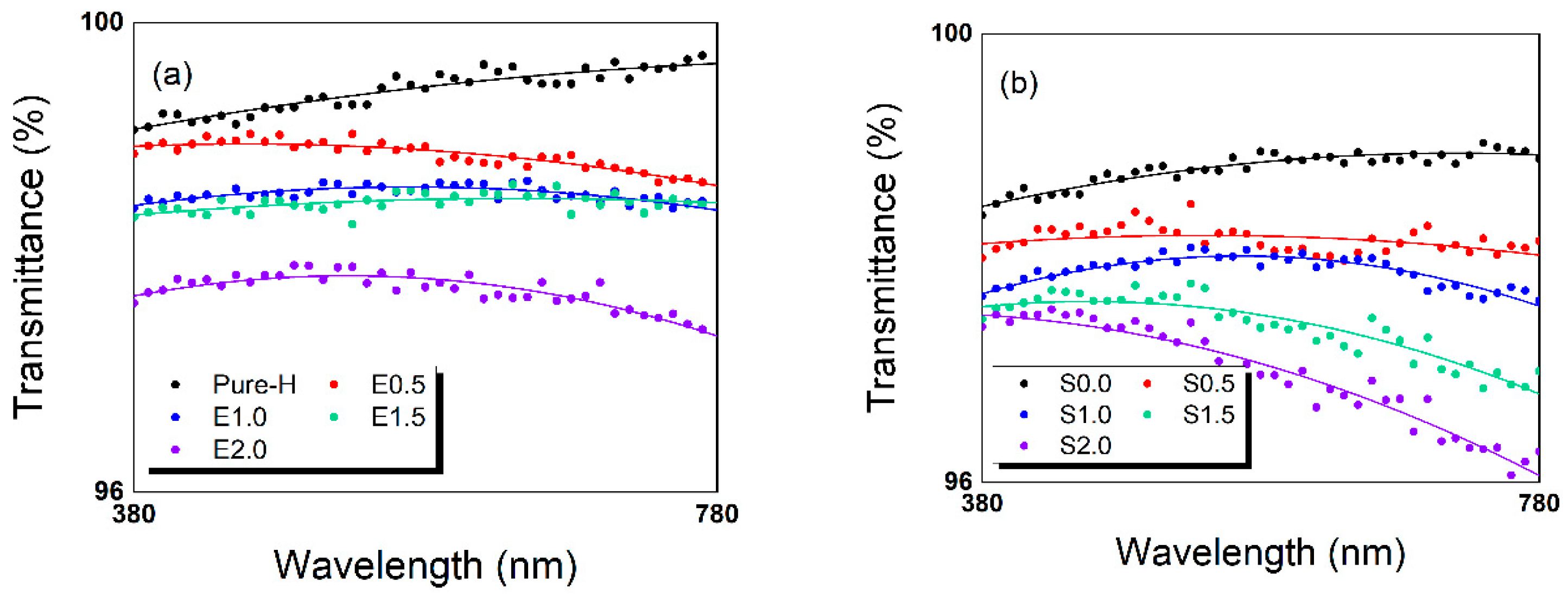
Figure 1 and
Table A1 demonstrate that all lens specimens, including those with TRISS and hydrophilic additives, maintained high visible light transmittance exceeding 97%. These results fully satisfy the international optical requirements for contact lens applications. In the additive-free Group 1, increasing the TRISS content from 0% (Pure-H) to 2.0% (E2.0) resulted in a marginal decrease in transmittance across the visible spectrum (380–780 nm). A similar trend was observed in the PVP/NVP-containing S-series (Group 2), where the transmittance slightly decreased as silicone content increased.
This phenomenon is attributed to the increased silicone domains within the hydrogel matrix, which can induce minor light scattering, particularly when integrated with hydrophilic regions. Specifically, the absolute control lens (Pure-H) exhibited an average transmittance of ~99.3%, while the 2.0 wt% TRISS formulation (E2.0) averaged ~97.3%. Within the S-series, the hydrophilic baseline (S0.0) maintained a high transparency of ~98.9%, which slightly adjusted to ~97.3% for the S2.0 formulation. This minimal reduction in optical clarity, consistent with previous literature [
12,
17], confirms that the incorporation of TRISS and the PVP/NVP additive system at these concentrations preserves the fundamental optical performance of the lenses.
2.2. Hydration Kinetics and Hydration-Induced Dimensional Stability
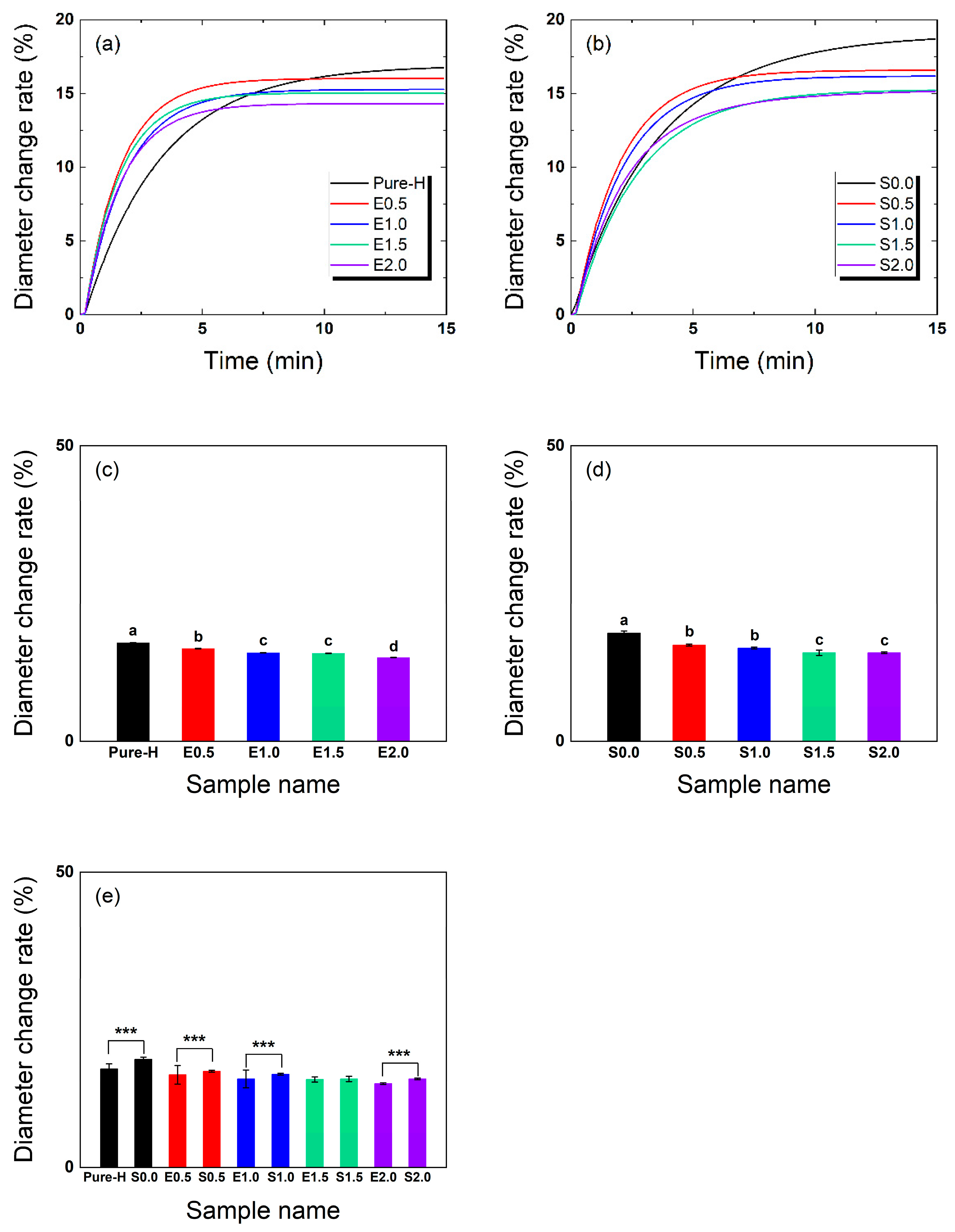
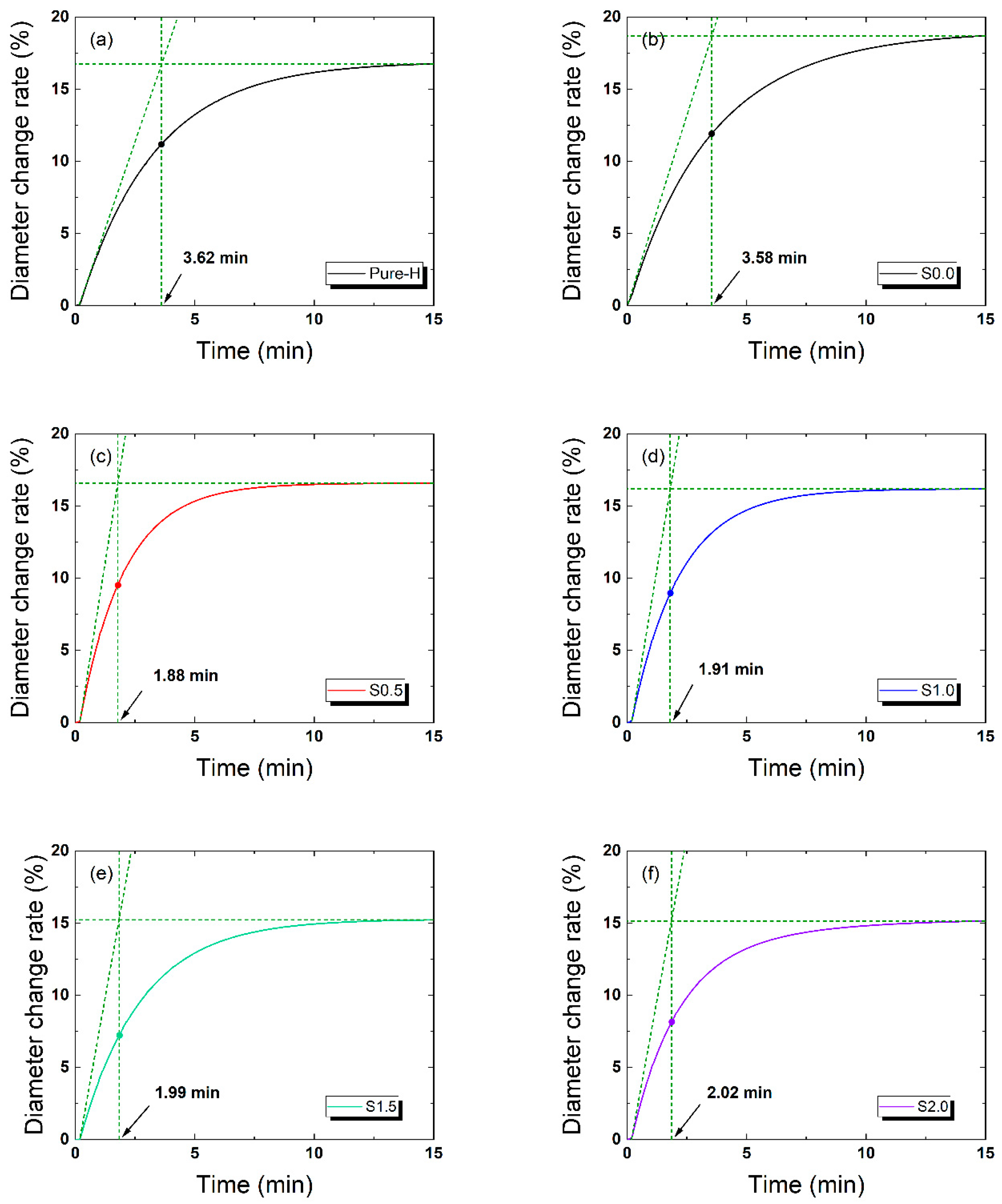
Figure 2 shows the hydration-induced diameter change over time, demonstrating that increasing the TRISS content in the lens reduces swelling upon hydration and thereby improves hydration-induced dimensional stability. The dynamic hydration process was quantitatively evaluated by fitting the diameter-change profiles to the exponential approach-to-equilibrium model described in Section Hydration-Induced Diameter Change, Equation (1), from which the hydration time constant (
) was derived.
The maximum diameter change rates for the S-series, which reflect the final expansion at equilibrium, are summarized in
Table 2. The diameter change rate exhibited a clear decreasing trend as TRISS concentration increased. After complete hydration, the 2.0 wt% TRISS formulation (S2.0) exhibited a maximum diameter change of 15.1%, whereas the absolute control hydrogel (Pure-H) showed 16.7%. In contrast, the baseline formulation containing exclusively hydrophilic additives (S0.0) exhibited the highest expansion rate of 18.3%.
Comparative analysis at the 15-min mark (
Figure 2c,d) confirmed that the incorporation of TRISS is the primary factor suppressing excessive swelling. The significant difference observed between Pure-H and S0.0 (
Figure 2e) suggests that hydrophilic additives alone tend to increase swelling by enhancing water uptake.
The diameter change curves also revealed that formulations containing TRISS reached saturation within a specific period, whereas the additive-only (S0.0) and absolute control (Pure-H) formulations required extended durations to achieve full saturation within 15 min. This indicates that TRISS effectively prevents excessive swelling while simultaneously promoting a faster attainment of hydration equilibrium.
Regarding hydration kinetics, the measured data were non-linearly fitted to a time-dependent dynamic process. As summarized in
Table 2, the hydration time constants for diameter expansion (
) in the S-series ranged from 2.05 to 3.46 min, compared with 3.26 min for Pure-H. At the highest TRISS loading, S2.0 showed a τ
D of 2.45 min and a maximum diameter change of 15.15%, indicating controlled hydration-induced expansion within the fixed PVP/NVP matrix. Rather than claiming a dramatic acceleration of hydration kinetics, the present data support that the 2:1 PVP/NVP matrix functions primarily as a compensatory system that mitigates the hydrophobic penalty of TRISS while preserving mechanical flexibility.
ANOVA results (
Figure 2c–e) confirmed statistically significant differences in diameter change rates among the groups (E-series: F(4,10) = 889.12,
p = 1.04 × 10
−12; S-series: F(4,10) = 5987.10,
p = 7.60 × 10
−17). For the pairwise matched comparisons in
Figure 2e, the exact
p-values are: Pure-H vs. S0.0 (
p = 1.44 × 10
−15), E0.5 vs. S0.5 (
p = 3.18 × 10
−9), E1.0 vs. S1.0 (
p = 1.68 × 10
−13), E1.5 vs. S1.5 (
p = 0.99997, not significant), and E2.0 vs. S2.0 (
p = 6.38 × 10
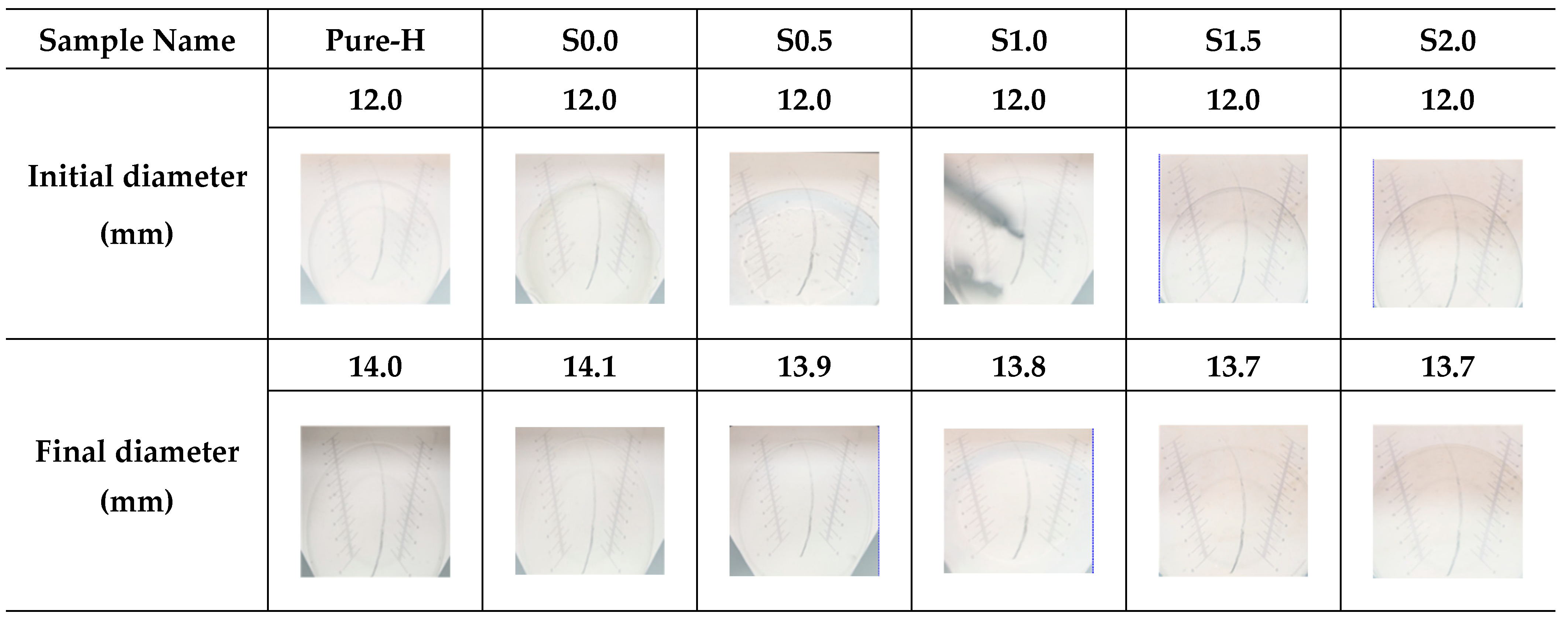
−14). Within the S-series, TRISS-containing formulations (S0.5–S2.0) exhibited significantly lower expansion rates compared with the additive-only baseline (S0.0). These findings demonstrate that TRISS plays a decisive role in enhancing resistance against hydration-induced expansion. Conversely, excessive hydrophilic additives can increase the swelling ratio, underscoring the necessity of calibrating the ratio between silicone monomers and hydrophilic components. Representative images before and after hydration are provided in
Figure A1 (
Appendix B), further illustrating the expansion characteristics observed in each group.
2.3. Water Content
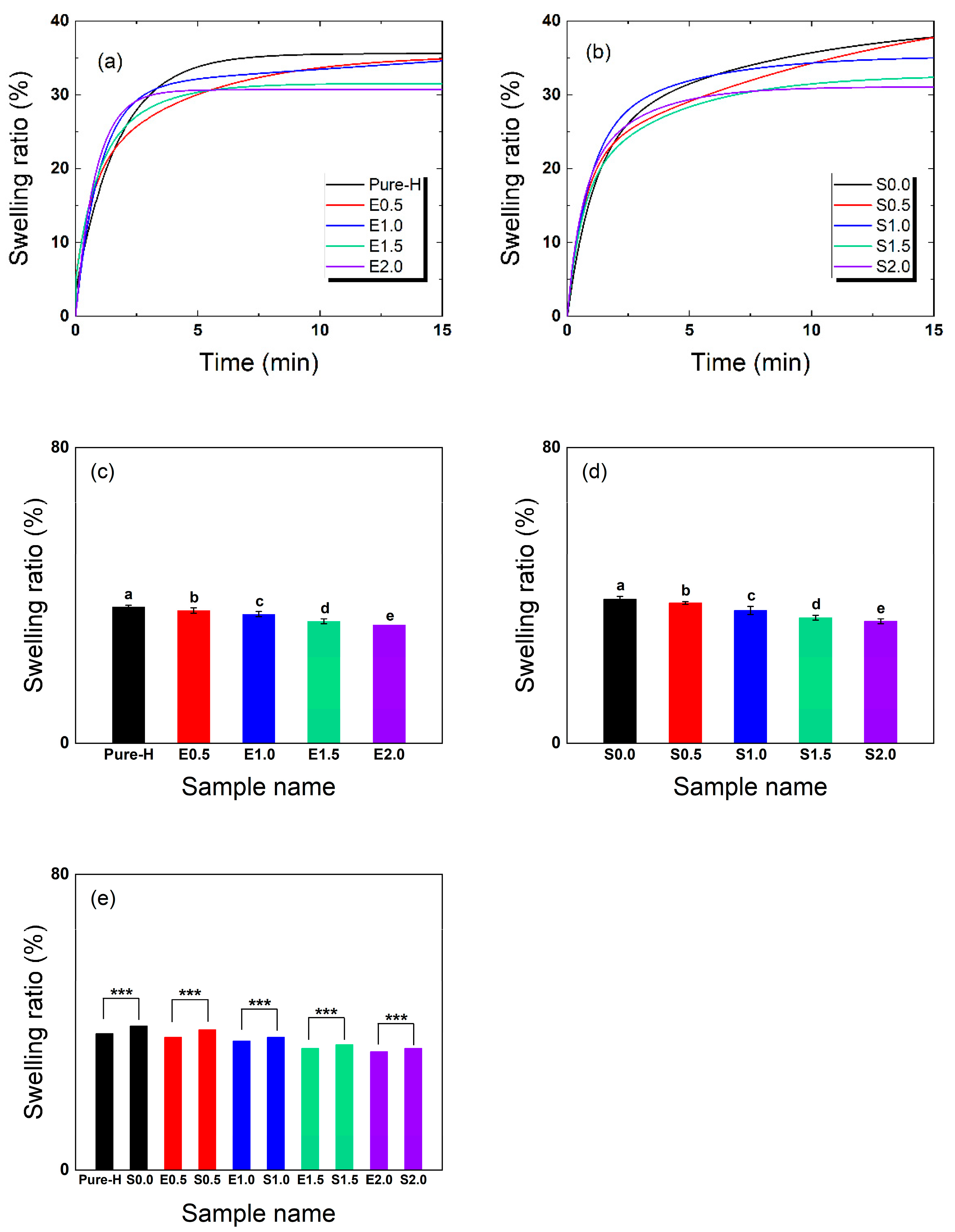
Figure 3 illustrates the equilibrium water content (EWC) of the contact lenses during hydration. For the additive-free formulations, the EWC ranged from approximately 32% (E2.0) to 37% (Pure-H) under fully hydrated conditions. In the PVP/NVP-containing S-series, the addition of NVP and PVP slightly increased the EWC, with values ranging from approximately 33% to 39%, the highest being ~39% for the S0.0 baseline. The hydration behavior of all specimens followed a pseudo-first-order kinetic model. To quantitatively evaluate the dynamic water uptake, the hydration time constant (
), which represents the time required to reach approximately 63.2% of the equilibrium water content, was calculated. The resulting kinetic parameters are summarized in
Table 2.
The reduced water uptake in formulations with higher TRISS content is expected, as silicone-based hydrogels generally possess lower EWCs than conventional hydrogels due to their hydrophobic composition. This inherent hydrophobicity is also reflected in the surface wettability behavior discussed in
Section 2.4. Conversely, the PVP/NVP matrix improved surface wettability and slightly increased water retention, effectively offsetting the hydrophobicity of the silicone.
ANOVA results (
Figure 3c–e) confirmed statistically significant differences in equilibrium water content among the groups (E-series: F(4,10) = 16,608.11,
p = 4.63 × 10
−19; S-series: F(4,10) = 7382.28,
p = 2.67 × 10
−17). For the matched comparisons in
Figure 3e, all differences were highly significant: Pure-H vs. S0.0 (
p = 1.44 × 10
−15), E0.5 vs. S0.5 (
p = 1.44 × 10
−15), E1.0 vs. S1.0 (
p = 1.67 × 10
−15), E1.5 vs. S1.5 (
p = 1.67 × 10
−15), and E2.0 vs. S2.0 (
p = 1.67 × 10
−15). Within the S-series, all TRISS-containing lenses (S0.5–S2.0) exhibited significantly lower swelling ratios compared to the baseline formulation containing exclusively hydrophilic additives (S0.0). A comparative analysis further revealed that while hydrophilic additives alone (as seen in S0.0) increase swelling, the incorporation of TRISS effectively balances this effect. These findings highlight that TRISS is the primary factor in regulating hydration-induced expansion, ensuring material stability even in the presence of hydrophilic additives. The measured EWC values for the S-series were consistent with the overall formulation-dependent trends observed in this study.
2.4. Contact Angle (Wettability)
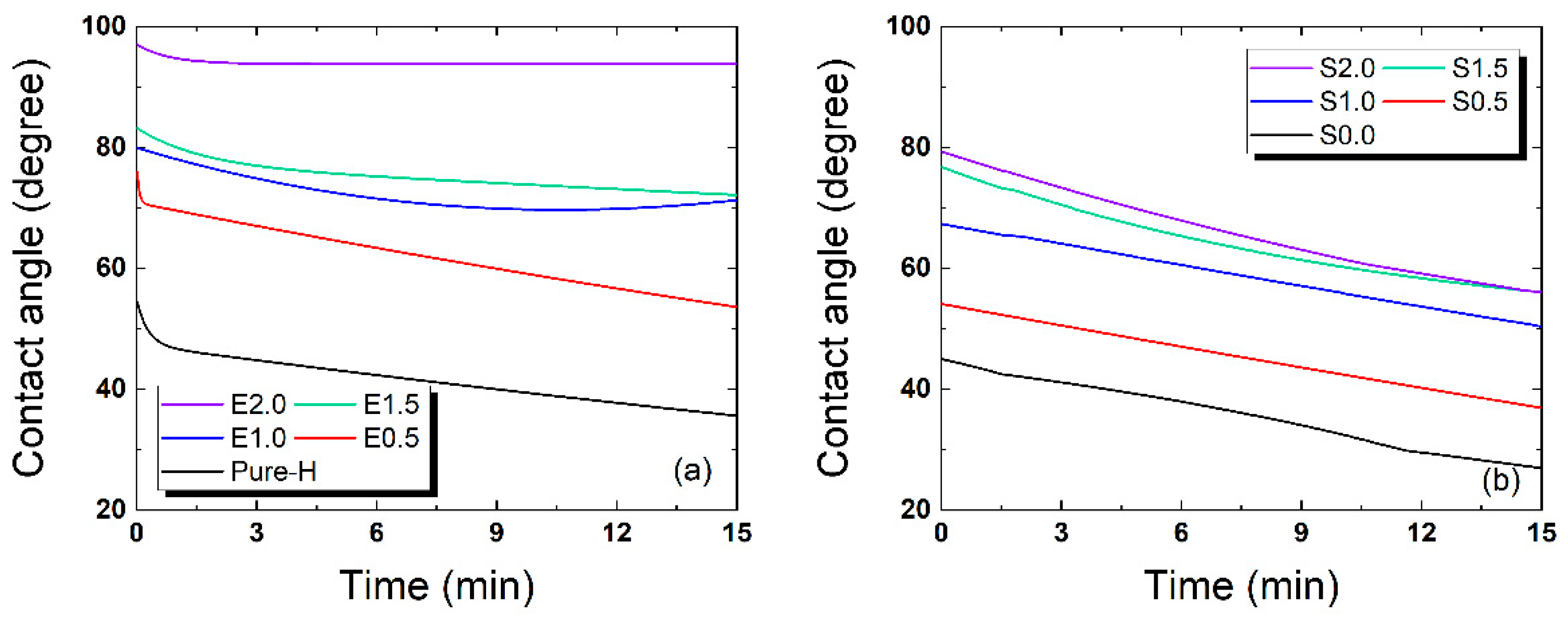
Figure 4 presents the change in contact angle over time, illustrating the significant variations in surface wettability depending on the TRISS concentration and the presence of hydrophilic additives. The results highlight the opposing effects of hydrophobic siloxane groups and the internal wetting agents. As expected, additive-free formulations with higher TRISS concentrations exhibited significantly higher static contact angles, indicating a transition toward a hydrophobic surface. For the additive-free Group, the initial contact angle increased from 53.92° for Pure-H to 95.42° for E2.0 (2.0 wt% TRISS). This substantial increase demonstrates that TRISS, due to its hydrophobic siloxane groups, severely impairs surface wettability. In contrast, the PVP/NVP-containing S-series formulations exhibited a marked improvement in hydrophilicity.
The initial contact angle for S2.0 (2.0 wt% TRISS with additives) was measured at 78.76°, which is significantly lower than that of its additive-free counterpart, E2.0 (95.42°). Even for the silicone-free baseline, the addition of NVP/PVP reduced the initial contact angle from 53.92° (Pure-H) to 49.17° (S0.0). The dynamic wettability behavior further underscored the efficacy of the PVP/NVP matrix, particularly regarding the stark contrast in the final equilibrium states. After a specific period of water droplet exposure, E2.0 maintained a high contact angle of 93.79°, indicating persistent hydrophobicity and an irreversible stall at a hydrophobic plateau. Conversely, the contact angle for S2.0 decreased to 56.04°, completely bypassing this hydrophobic plateau.
These results clearly demonstrate that NVP and PVP effectively counteract the inherent hydrophobicity introduced by TRISS, facilitating the formation of a more wettable lens surface. This trend aligns with literature suggesting that internal wetting agents like PVP are essential for enhancing surface moisture retention in commercial silicone hydrogel lenses. This study confirms that the benefits of high oxygen transport potential provided by TRISS can be achieved while preserving surface wettability by employing a calibrated PVP/NVP concentration. Furthermore, while these measurements provide valuable comparative insights into material surface properties, we transparently acknowledge the inherent limitations of standard in vitro contact angle tests, which do not reproduce the multifaceted in vivo environment involving proteins, lipids, mucins, and dynamic factors like blinking [
23]. Therefore, the time constant (
) serves as an indicator of in vitro surface wetting recovery under specific laboratory conditions, rather than a direct measure of in vivo tear-film stability [
28]. The relationship between our measured wetting kinetics and actual pre-lens tear-film stability remains to be confirmed through future clinical studies, such as pre-lens tear film break-up time evaluations and deposition-challenge models [
29,
30].
2.5. Oxygen Transport Evaluation via Oxygen-Induced Current
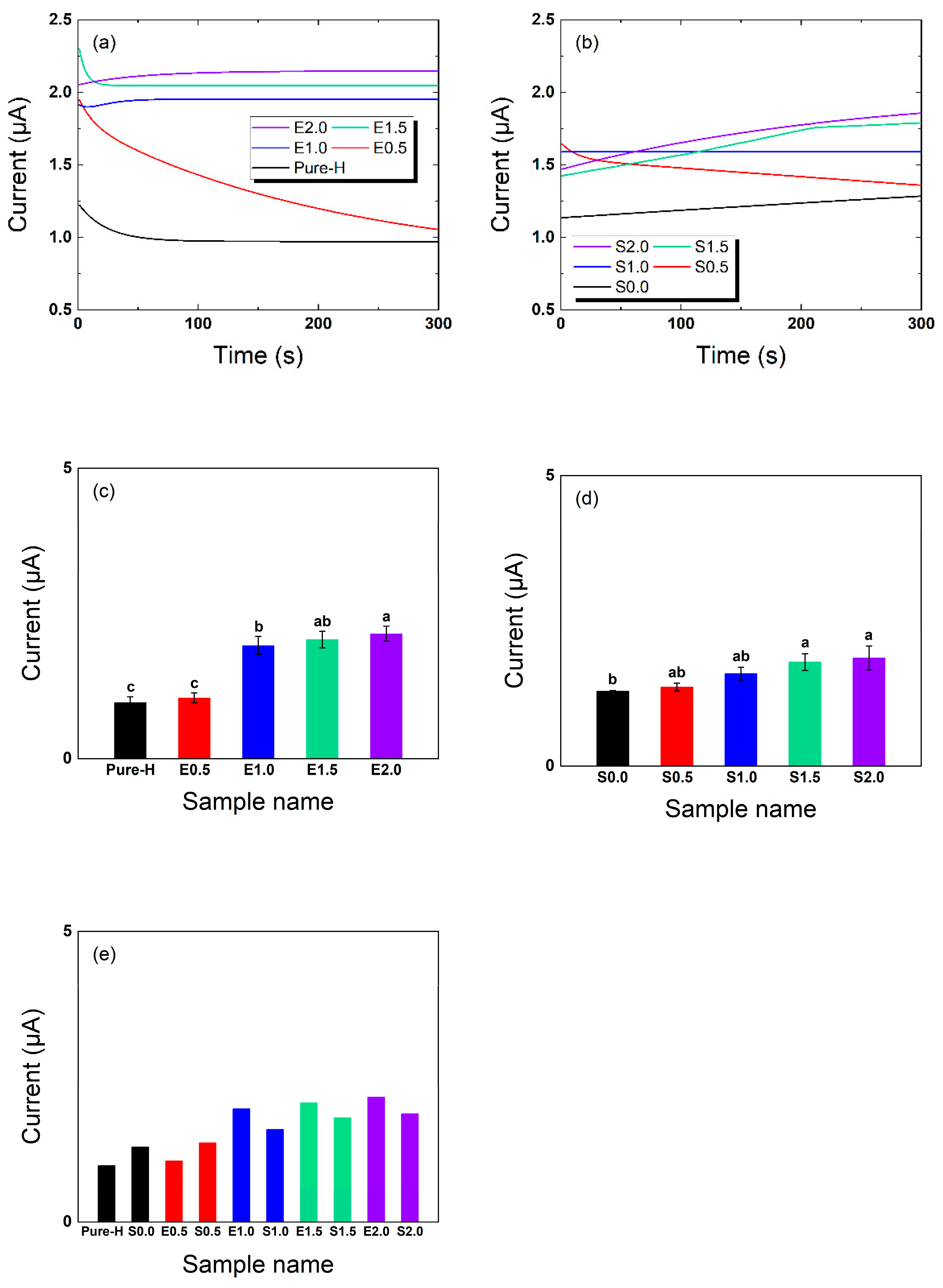
Figure 5 illustrate the oxygen-induced current measured for each formulation. To clearly distinguish the individual effects of the silicone monomer and the hydrophilic matrix, the additive-free TRISS-only formulations without additives (E2.0, as a representative additive-free counterpart) were evaluated alongside the PVP/NVP-containing S-series. In this study, the amperometric current (μA) generated by oxygen reduction is utilized as a relative proxy signal to evaluate the overall oxygen-transport response of the lenses, rather than representing absolute standardized oxygen permeability (
or
) values as specified by ISO standards. Because hydration-induced swelling alters the final hydrated thickness across formulations, calculating
would introduce systemic inaccuracies [
10]. Therefore, the raw current data is reported to maintain experimental transparency and is strictly used for internal formulation-to-formulation comparisons [
13].
Increasing the TRISS content substantially improved the oxygen transport capacity of the lenses. For the additive-free formulations, the oxygen-induced current in the absolute control (Pure-H) nearly doubled, increasing from approximately 0.97 μA to 2.15 μA in the 2.0 wt% TRISS formulation (E2.0). All TRISS-containing lenses exhibited significantly higher current values than the silicone-free control group without silicone. This is consistent with the well-established effect of siloxane monomers, such as TRISS, in increasing the oxygen transmission of hydrogels.
In the PVP/NVP-containing S-series, the oxygen-induced current decreased slightly compared to the corresponding additive-free counterparts. For instance, S2.0 showed an average current of 1.86 μA compared with 2.15 μA for E2.0. This modest reduction (approximately 13.5%) suggests that the incorporation of PVP and NVP may slightly attenuate the oxygen-transport response under the present measurement conditions. Since water itself has a lower oxygen diffusion rate than silicone, a slight trade-off exists between increasing surface wettability and maintaining maximum oxygen-induced current.
Nevertheless, all TRISS-containing formulations in the S-series showed higher oxygen-induced current than the silicone-free controls under identical measurement conditions. These data indicate that TRISS incorporation enhances the oxygen-transport response within the present experimental setup, while the PVP/NVP matrix introduces a modest reduction in current in exchange for improved surface wettability and hydration behavior.
ANOVA results (
Figure 5c–e) confirmed statistically significant differences were observed (E-series: F(4,10) = 497.45,
p = 1.87 × 10
−11; S-series: F(4,10) = 4.26,
p = 0.02879). For the pairwise matched comparisons in
Figure 5e, the addition of the PVP/NVP matrix did not result in statistically significant differences at corresponding TRISS concentrations: Pure-H vs. S0.0 (
p = 0.31409), E0.5 vs. S0.5 (
p = 0.33971), E1.0 vs. S1.0 (
p = 0.17942), E1.5 vs. S1.5 (
p = 0.56477), and E2.0 vs. S2.0 (
p = 0.43866). Within the S-series, TRISS-containing formulations (S0.5–S2.0) consistently showed significantly higher oxygen-induced current than the baseline containing exclusively hydrophilic additives (S0.0). These results highlight that while TRISS is the primary factor for improving oxygen delivery, the hydrophilic additives introduce a measurable but acceptable trade-off to ensure physiological comfort.
2.6. Mechanical Properties
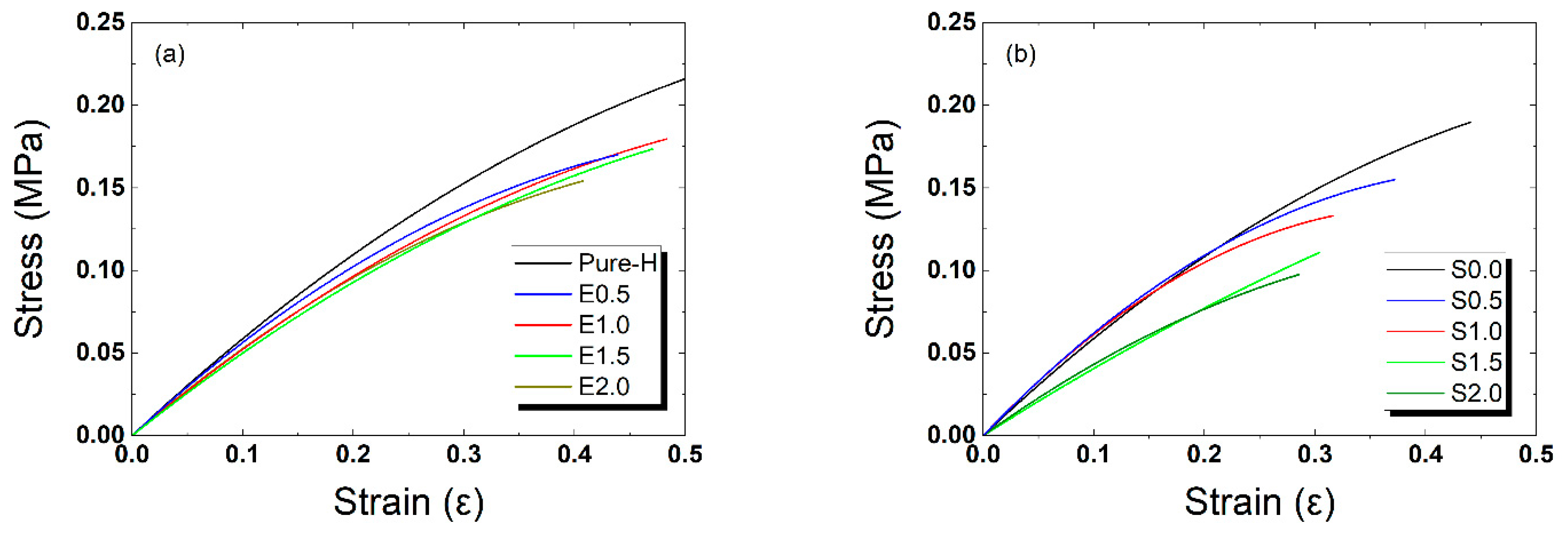
Figure 6 illustrates the stress–strain behavior of the synthesized silicone hydrogel materials, while
Table 3 provides a comprehensive summary of the S-series performance, including its physicochemical properties (EWC, oxygen transport potential), hydration-induced dimensional stability (diameter change), and mechanical properties (Young’s modulus, maximum tensile stress, and elongation at break).
For the PVP/NVP-containing S-series formulations, a progressive decrease in Young’s modulus was observed as the TRISS concentration increased from 0 to 2.0 wt%. Specifically, the Young’s modulus decreased from 0.61 MPa for S0.0 to 0.39 MPa for S2.0, indicating that the incorporation of TRISS enhances the flexibility of the lens matrix. Similarly, the maximum tensile stress and elongation at break exhibited a downward trend with increasing TRISS content, with S2.0 showing the lowest values of 0.10 MPa and 28.58%, respectively.
These results suggest that TRISS incorporation increased the oxygen-induced current, whereas the PVP/NVP matrix improved surface rehydration while shifting the mechanical response toward lower modulus and lower elongation at break at high TRISS loading. However, all S-series formulations maintained sufficient mechanical integrity. Initial expectations suggested that higher TRISS content would increase material stiffness and decrease elongation at break, while NVP/PVP would soften the lens. The results were only partially consistent with these trends, because the Young’s modulus exhibited limited variation within the tested TRISS range (0–2.0 wt%). In the additive-free formulations, the Young’s modulus decreased slightly from 0.62 MPa for Pure-H to 0.50 MPa for E2.0. This indicates that the modulus change remained limited within the tested TRISS range.
However, TRISS had a clearer impact on extensibility. The elongation at break decreased from 51.82% in Pure-H to 40.64% in E2.0 as the TRISS concentration increased, indicating reduced stretchability at higher TRISS levels. In the PVP/NVP-containing S-series, the modulus for S2.0 was 0.39 MPa, lower than that of E2.0 (0.50 MPa), while the elongation at break of S2.0 was 28.58%, also lower than that of E2.0 (40.64%). Thus, within the present formulation window, the PVP/NVP matrix was associated with a softer but less extensible mechanical profile at 2.0 wt% TRISS.
Overall, the moduli of all formulations remained within the range of 0.39–0.61 MPa, which is comparable to many commercial soft contact lenses. The primary distinction lay in toughness; high-TRISS formulations exhibited lower ductility, whereas low-TRISS or additive-free hydrogels demonstrated higher elongation before failure. The findings suggest that incorporating hydrophilic additives at a moderate TRISS concentration (approximately 1.0 wt%, as seen in S1.0) provides a balanced formulation of mechanical properties. Such formulations are sufficiently rigid for shape retention and handling, yet flexible enough to conform comfortably to the ocular surface. Within the tested formulation window, the fixed PVP/NVP matrix (1.0/0.5 wt%) enables 2.0 wt% TRISS loading while preserving wettability and reducing Young’s modulus relative to the additive-free comparator.
3. Conclusions
This study established a silicone hydrogel contact lens platform by integrating a low-concentration 3-[tris(trimethylsilyloxy)silyl]propyl methacrylate (TRISS) monomer with a dual-hydrophilic polyvinylpyrrolidone (PVP) and N-vinyl-2-pyrrolidone (NVP) matrix. Our comprehensive evaluation confirmed that the fixed PVP/NVP system (1.0/0.5 wt%) provides a workable design window for incorporating TRISS up to 2.0 wt% without the catastrophic loss of wettability observed in the additive-free comparator. Notably, the S2.0 formulation achieved an approximately 1.9-fold increase in oxygen-induced current relative to Pure-H (0.97 μA to 1.86 μA) while maintaining optical transparency above 97%. The efficacy of the PVP/NVP matrix was most clearly demonstrated by the final equilibrium comparison at 2.0 wt% TRISS: the equilibrium contact angle was reduced from 93.79° in E2.0 to 56.04° in S2.0, while the Young’s modulus decreased from 0.50 MPa to 0.39 MPa. These data show that the fixed PVP/NVP matrix mitigates the hydrophobic penalty of TRISS while preserving a high oxygen-related response within the tested low-silicone window.
In conclusion, the strategic combination of TRISS and the PVP/NVP matrix established in this study provides a promising material framework for next-generation contact lenses that simultaneously balances oxygen transport potential, surface wettability, and mechanical flexibility. However, because these findings are derived from in vitro evaluations, further clinical studies are required to assess on-eye performance, including pre-lens tear film break-up time [
29] and protein deposition [
30]. Moreover, the dimensional stability described in this study is confined to hydration-induced expansion, whereas stability against other environmental factors, such as temperature [
31,
32] and pH [
33], remains to be determined.
Beyond conventional vision correction and dry eye alleviation, the present findings demonstrate that this highly tunable, stable, and transparent hydrogel platform directly addresses critical material-level bottlenecks of wearable smart lenses. By successfully mitigating the hydrophobic persistence of silicone and strictly suppressing excessive hydration-induced swelling, this substrate effectively minimizes the risks of sensor delamination and geometric warpage of micro-structures. Therefore, it serves as a highly viable foundational matrix for future smart contact lens systems incorporating ocular drug-delivery components [
20], microfluidic architectures [
21], theranostic applications [
22], tear-glucose biosensors [
23], and intraocular pressure monitoring modules [
24].