
Degradation Factors and Mechanisms of Silicone Gel in Power Device Packaging Insulation Under DC Superimposed Pulse Electric Fields
Abstract
1. Introduction
2. Results and Discussion
2.1. Electrical Tree Experiment
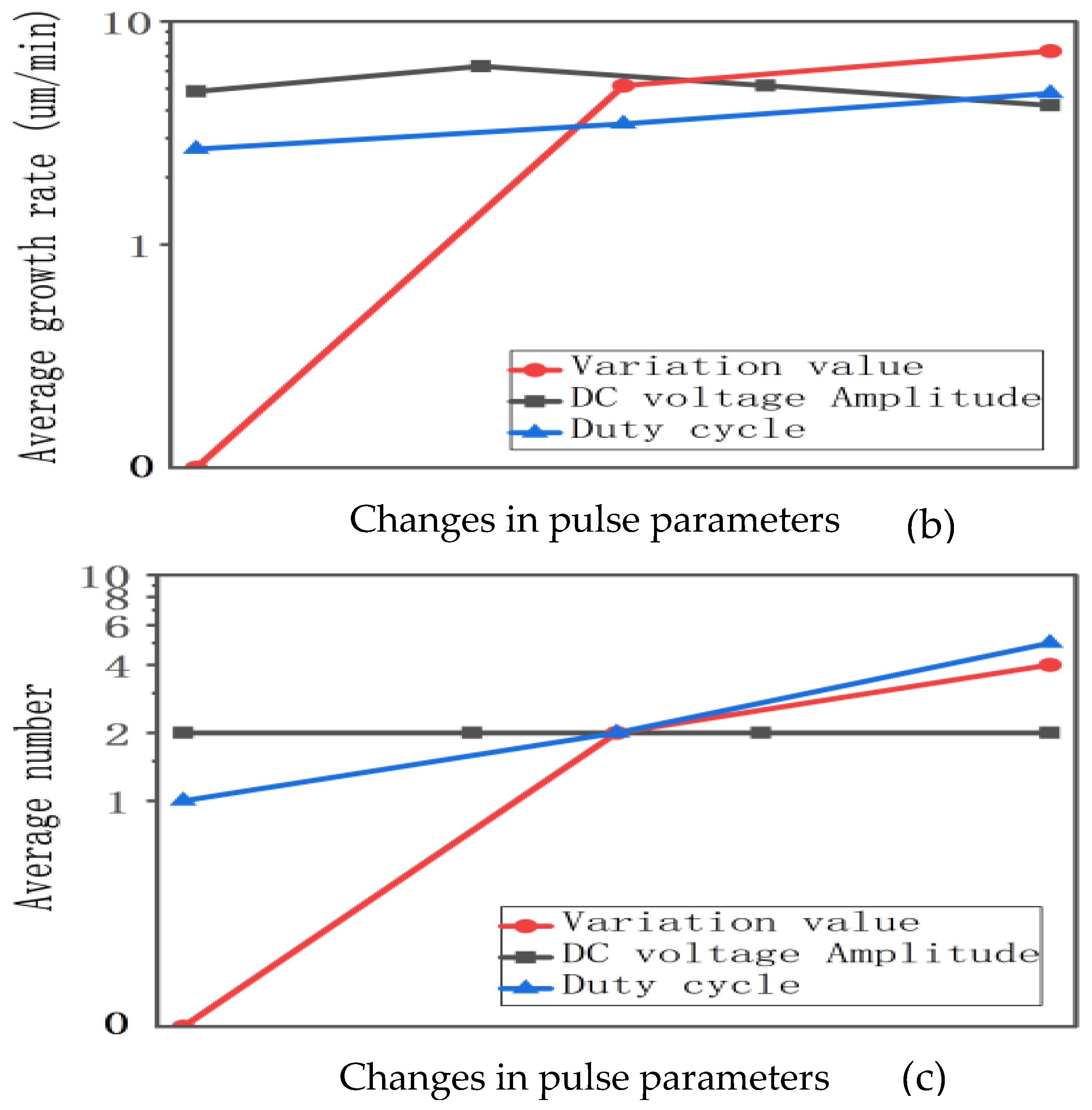
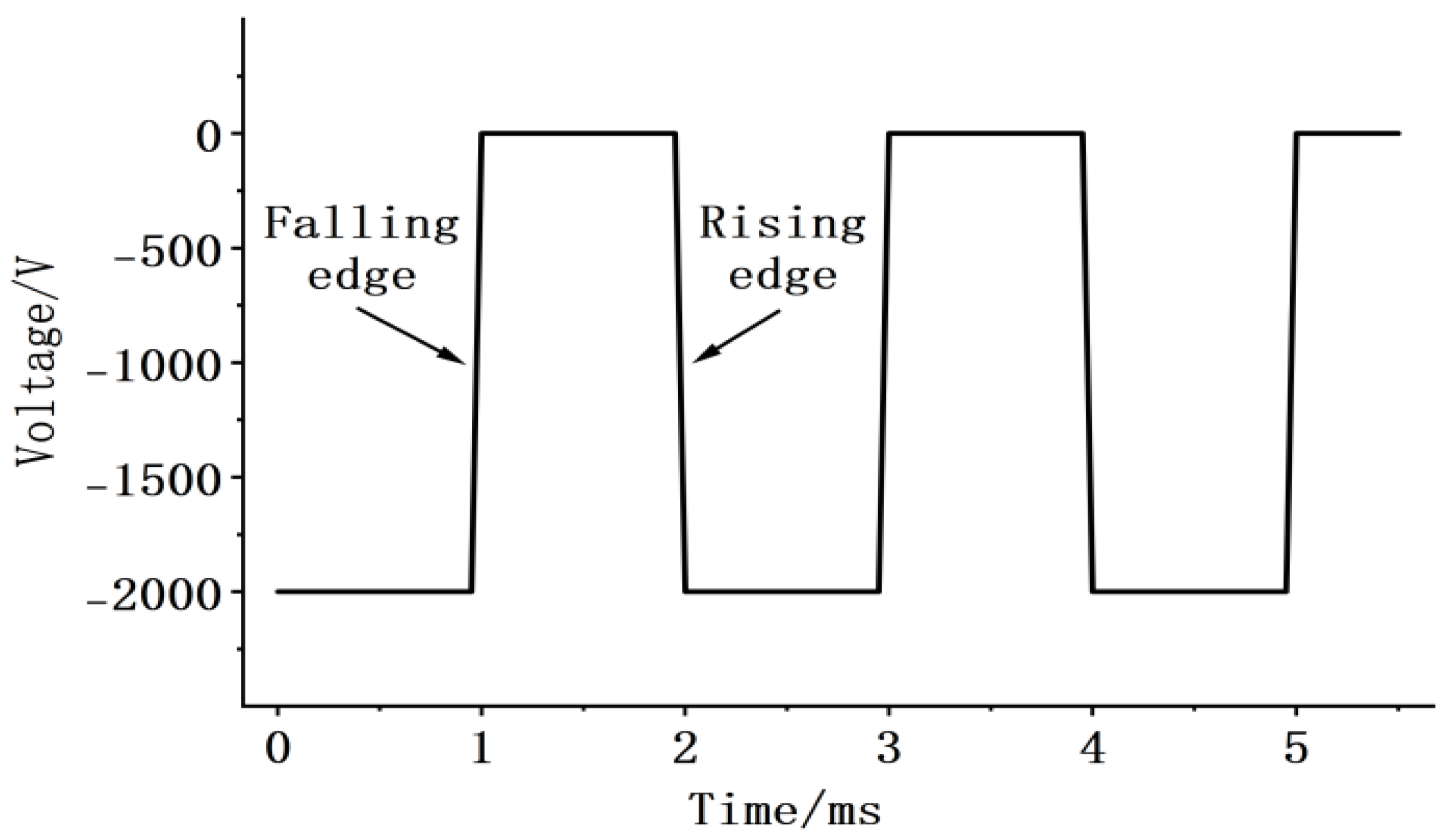
2.1.1. At the Same Pulse Rise Time, the Pulse Variation Value Has the Greatest Impact, Followed by the Superimposed DC Amplitude, and Finally the Duty Cycle
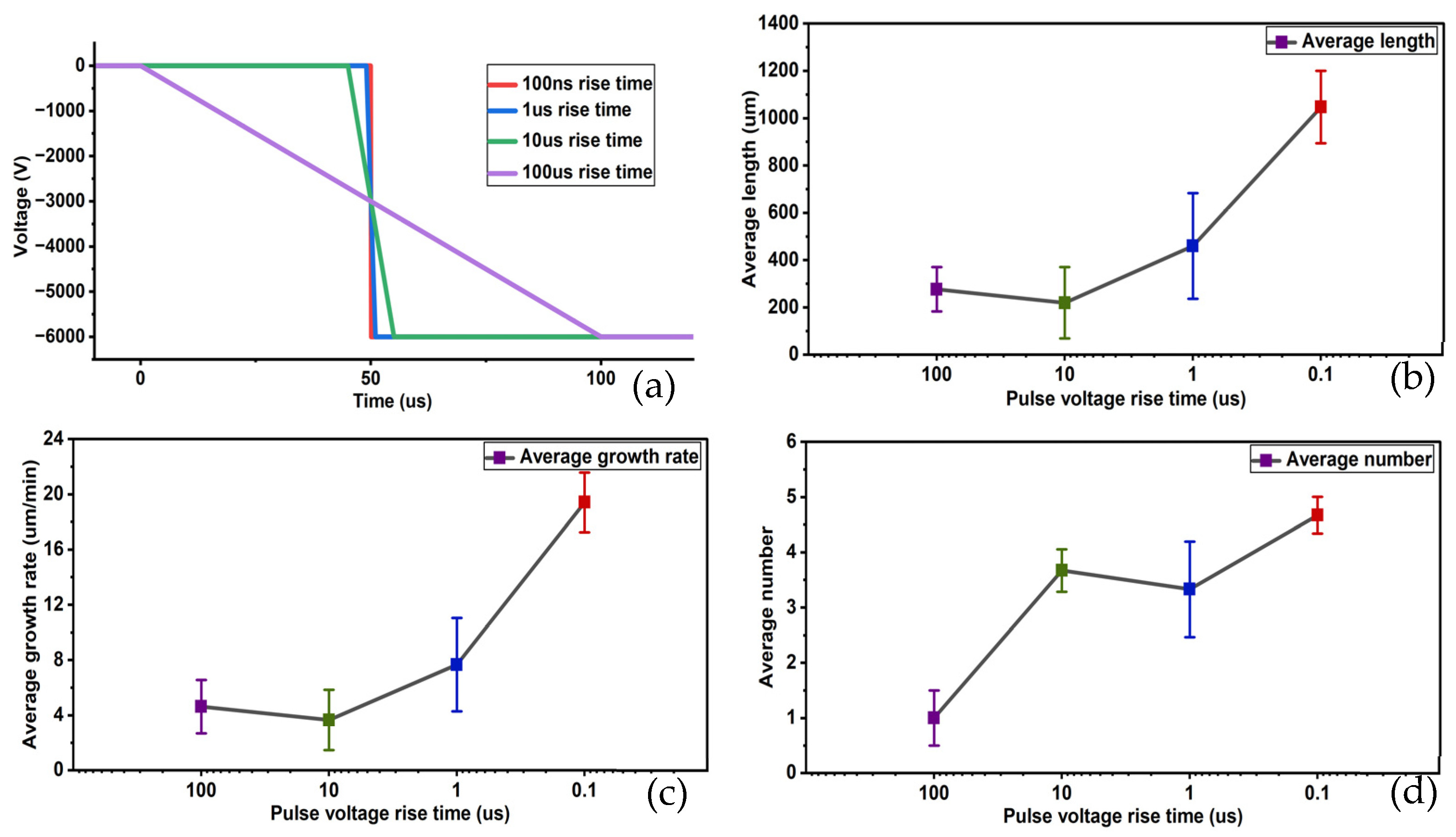
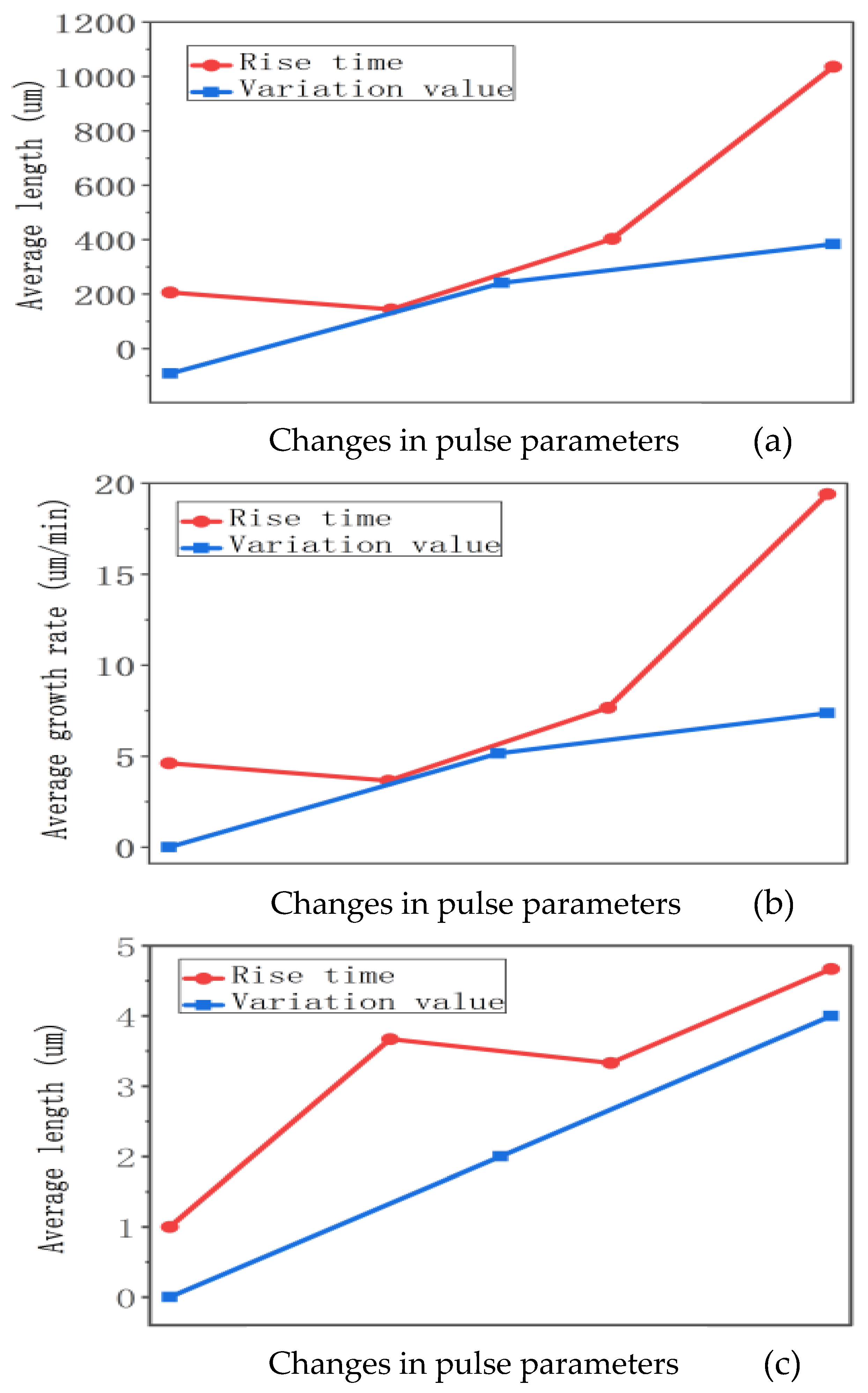
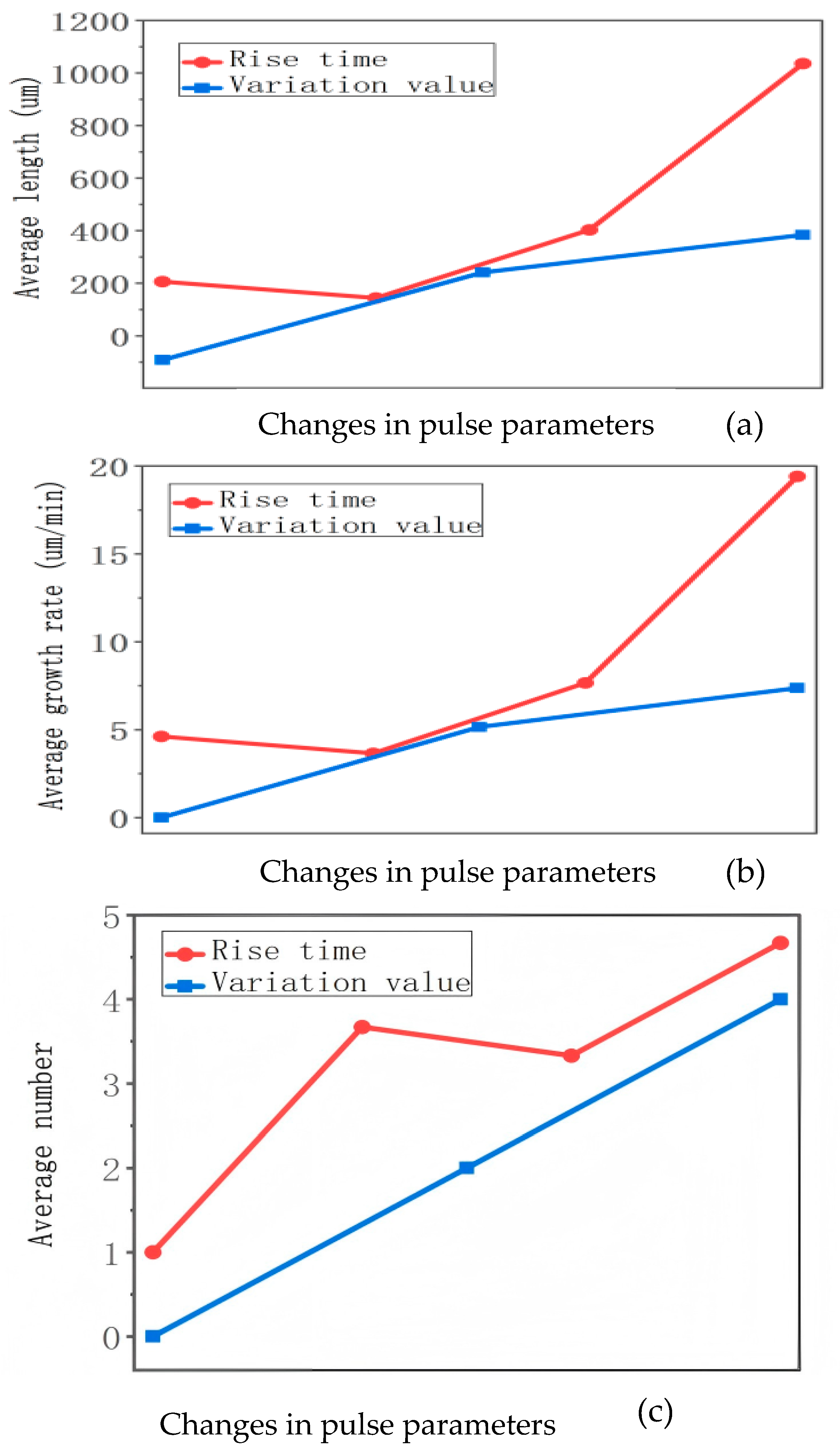
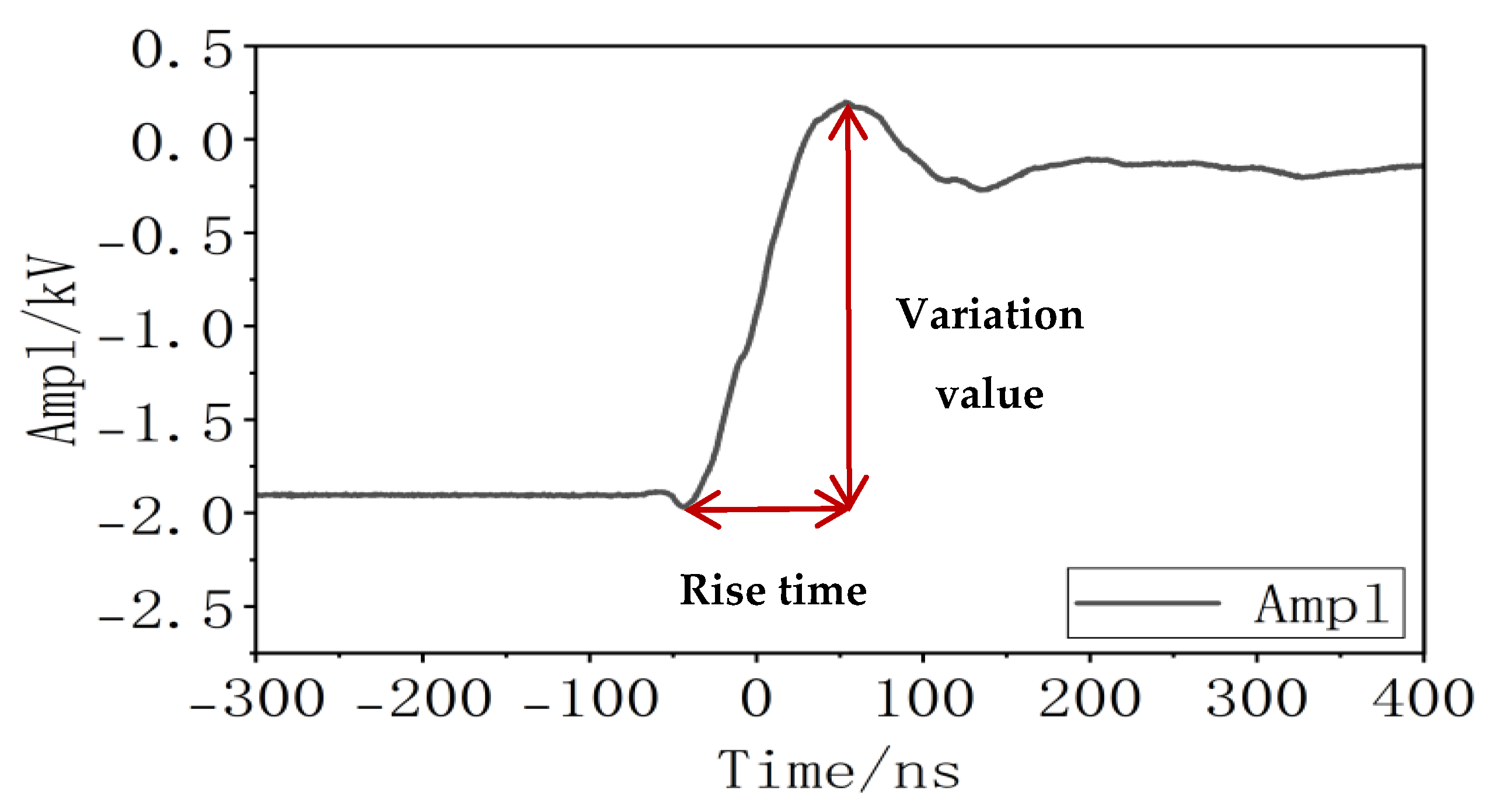
2.1.2. The Rise Time of the Pulse Has a Greater Impact than the Pulse Variation Value, Making the Pulse Voltage Slew Rate the Most Critical Influencing Factor
2.2. Charge Vibration Experiment
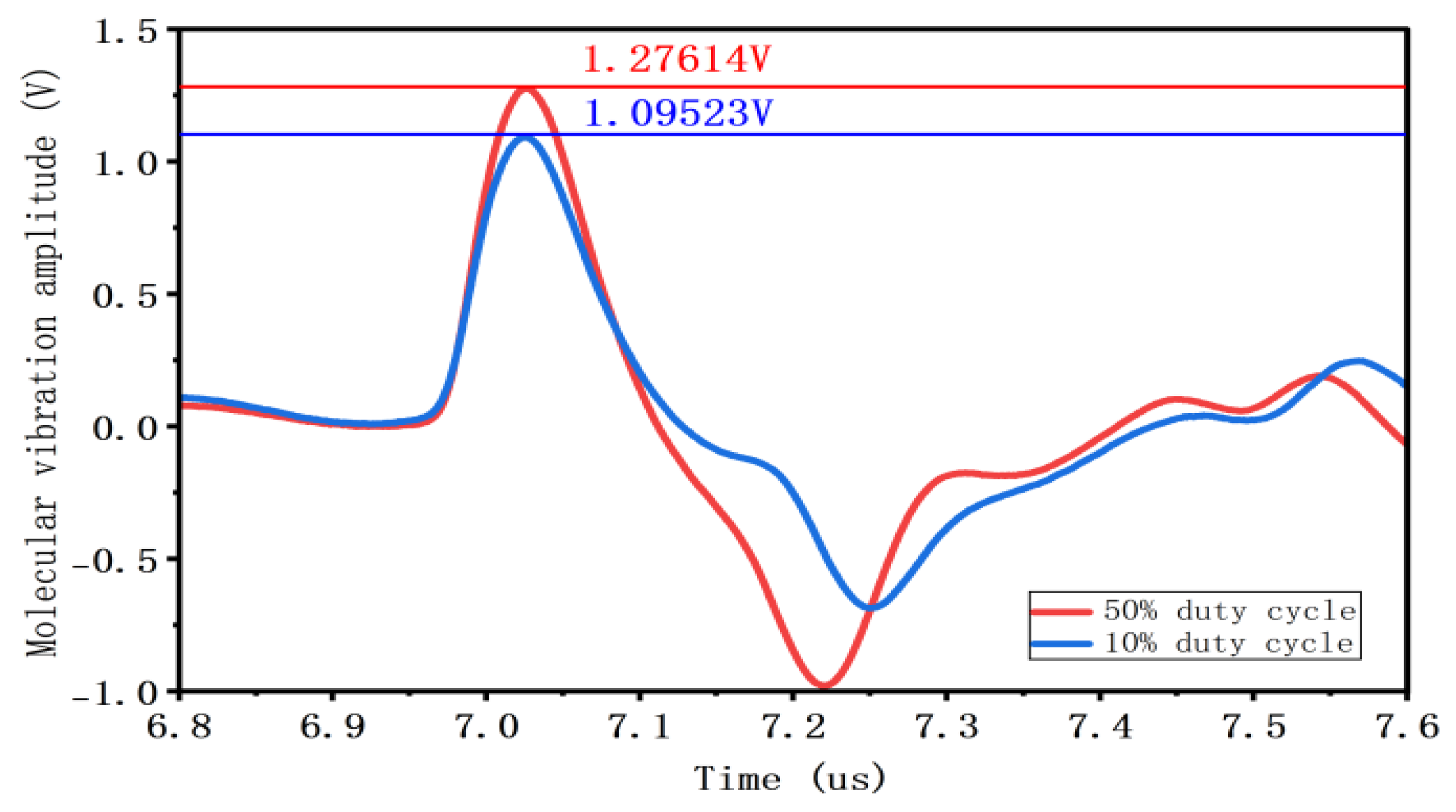
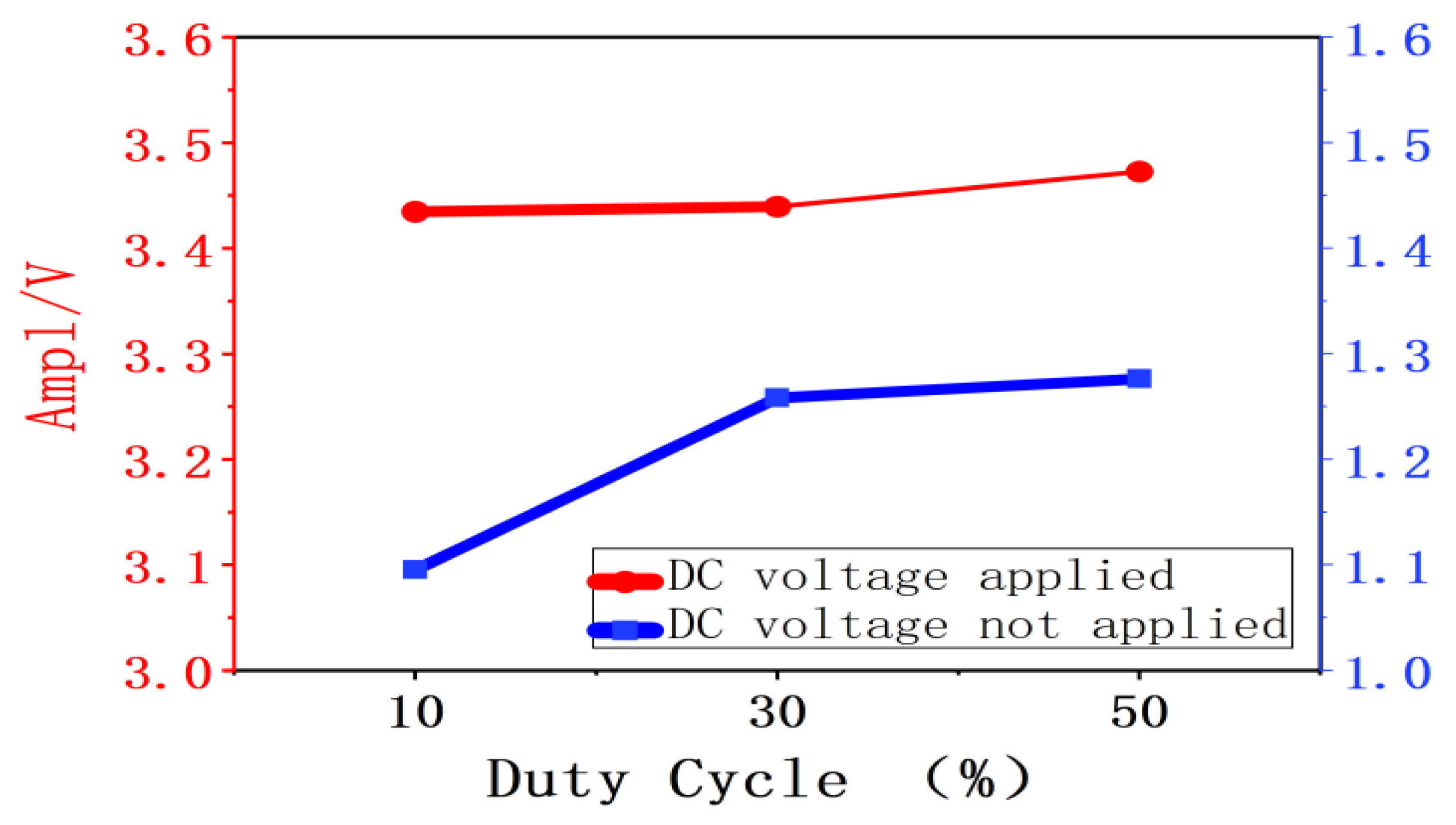
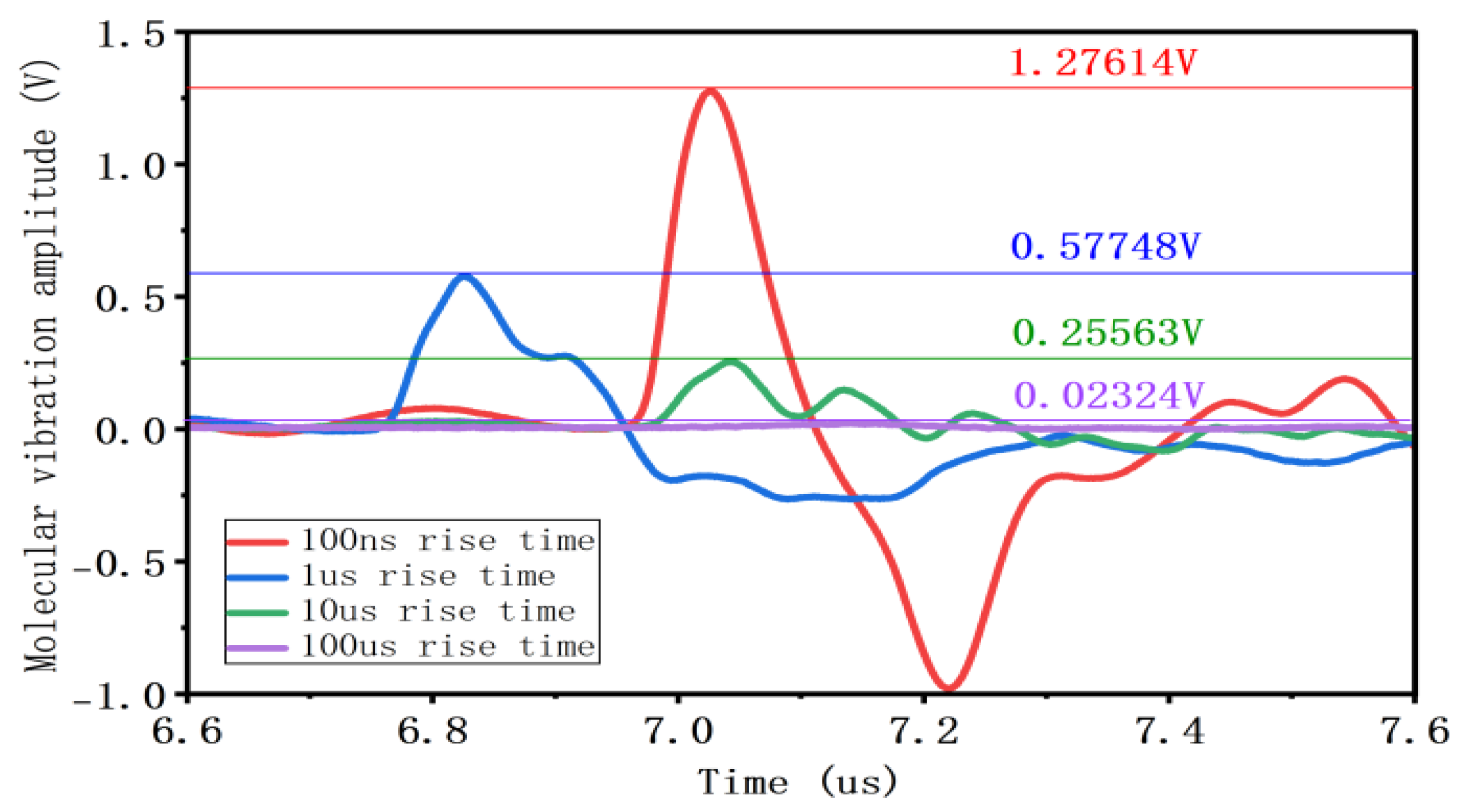
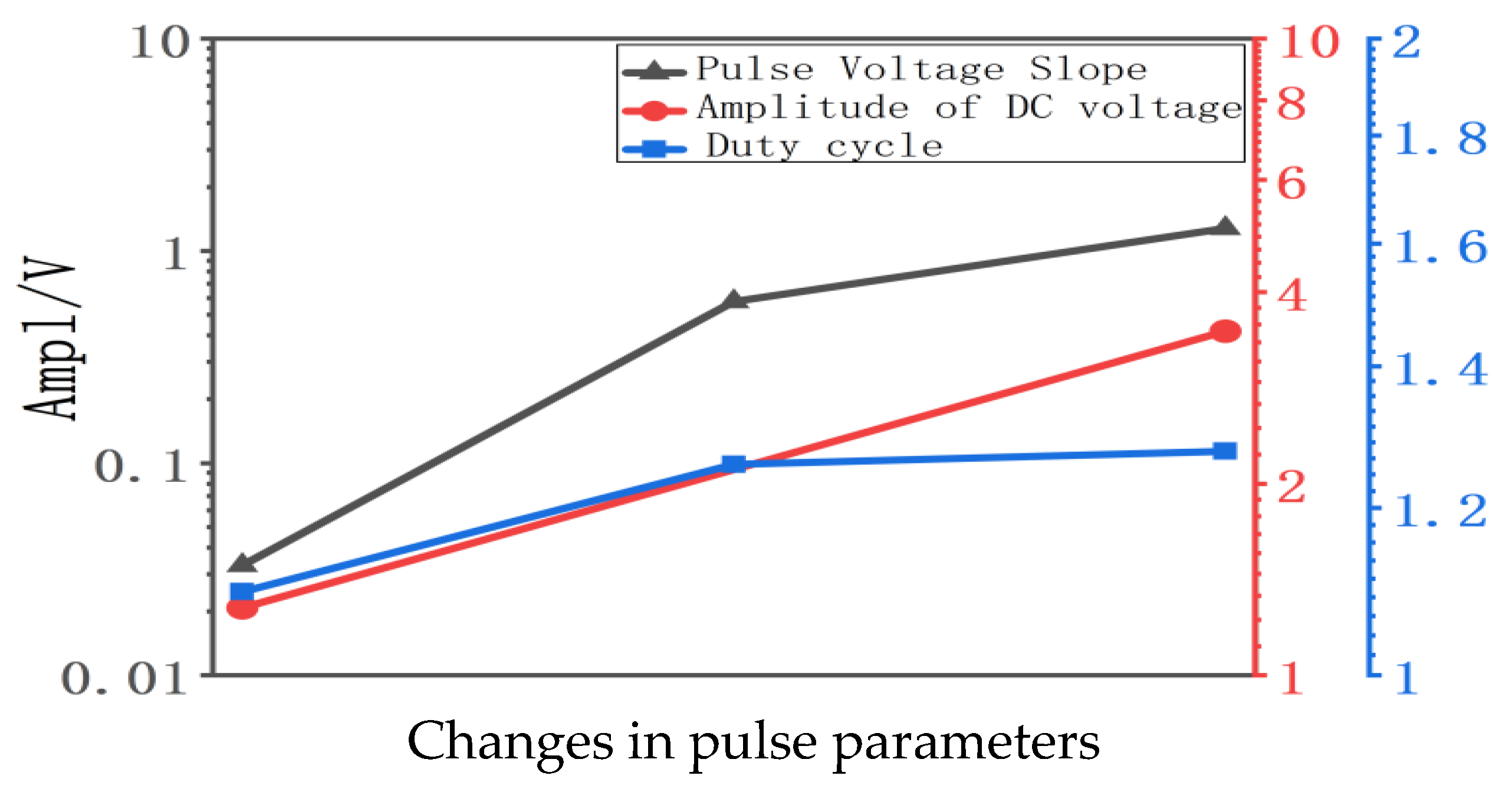
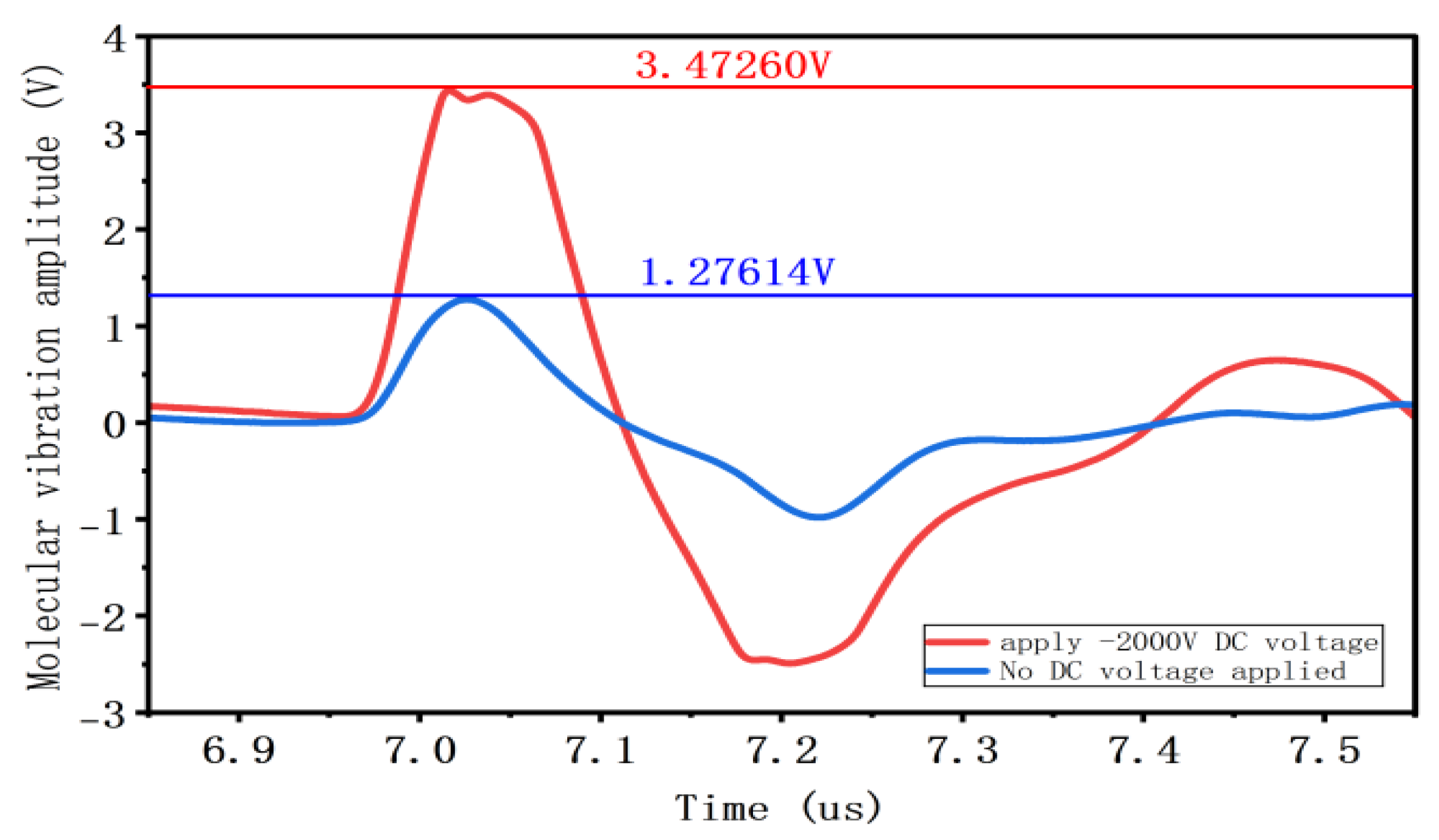
2.2.1. The Impact of Pulse Voltage Slew Rate (Pulse Voltage Slope) Is Greater than That of Superimposed DC Amplitude, and the Impact of Superimposed DC Amplitude Is Greater than That of Duty Cycle
2.2.2. Theoretical Analysis of Forces Acting on Charges
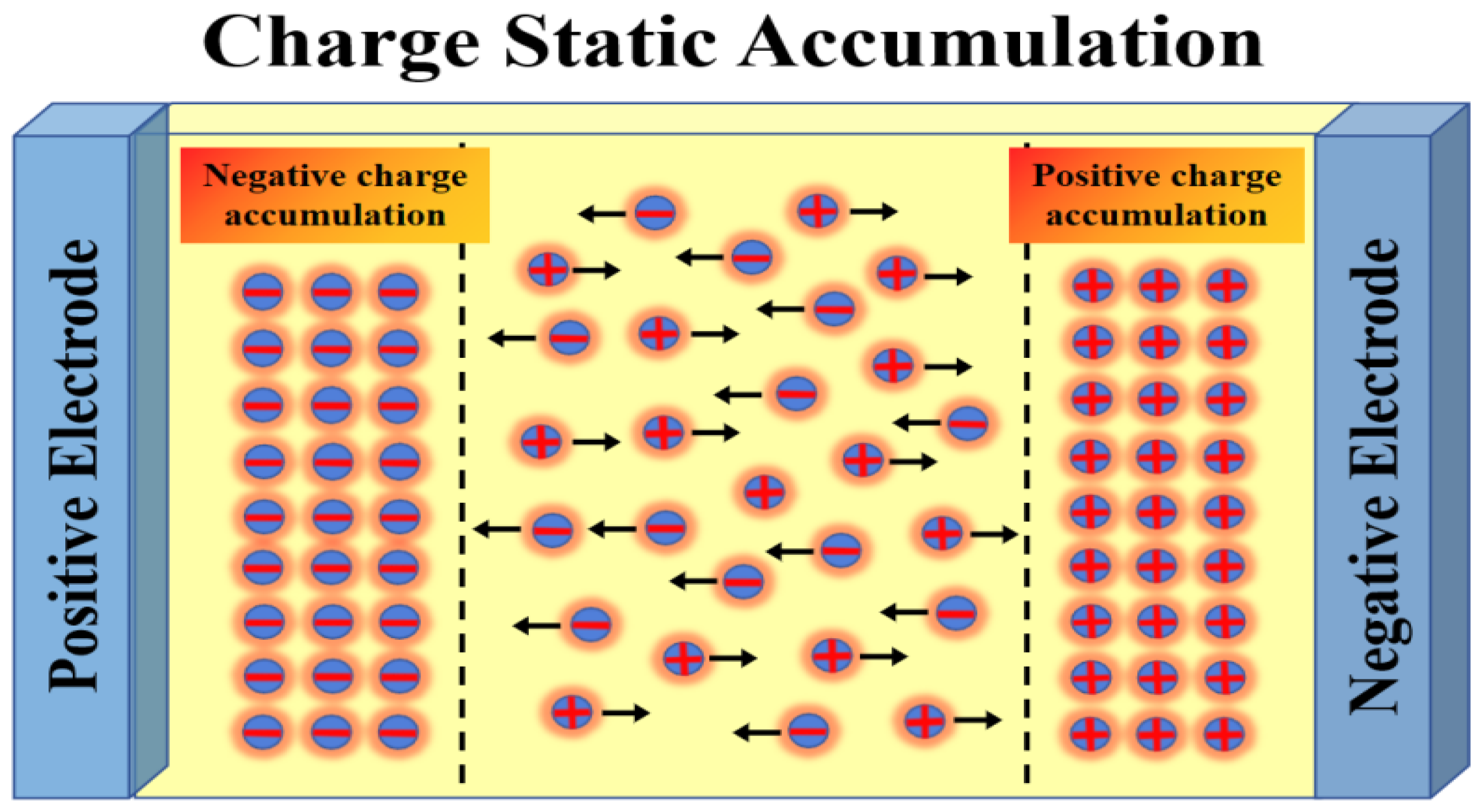
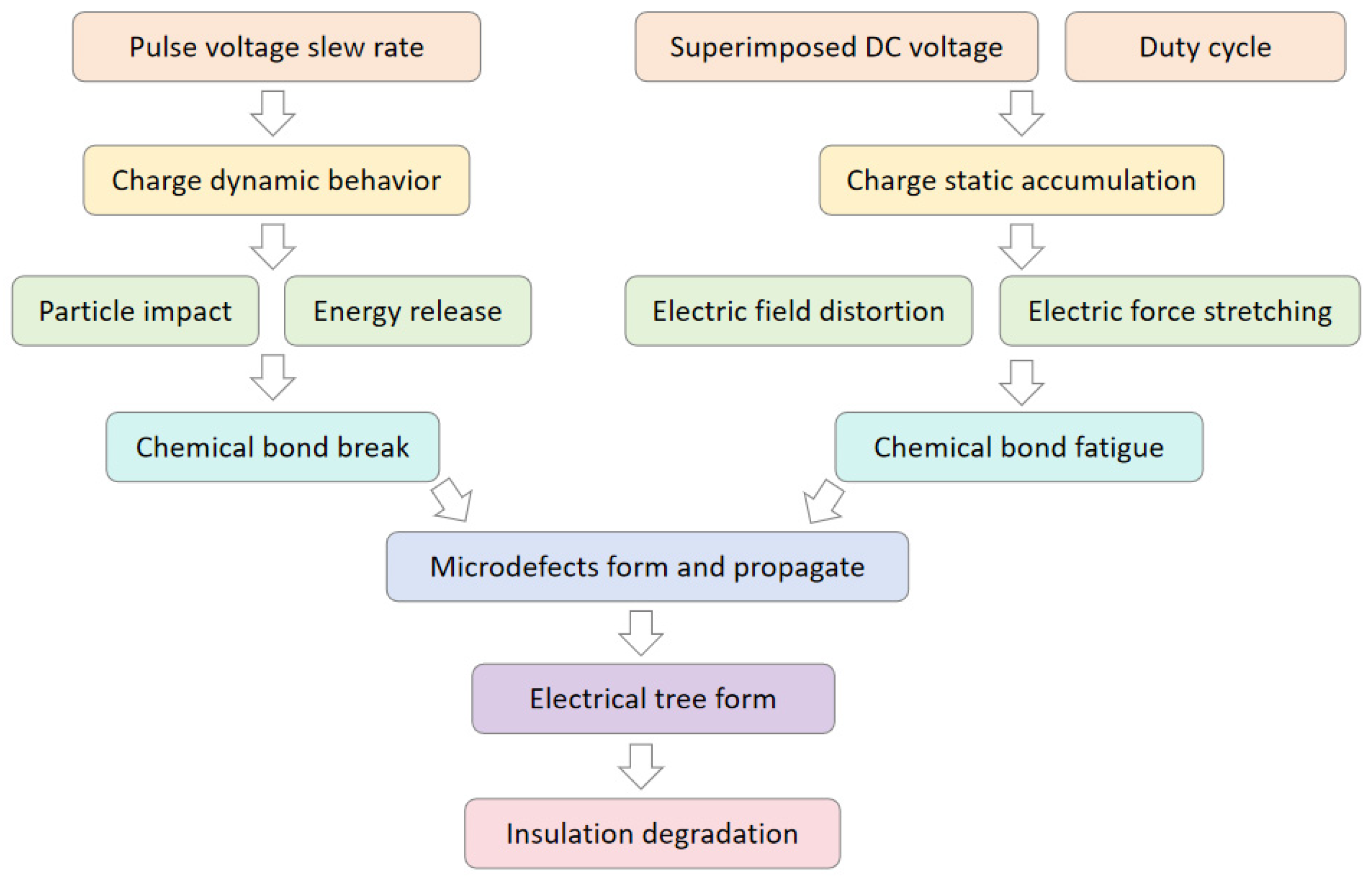
2.3. Influence Chain: Influencing Factors Change—Forces Application on Charges—Charges Dynamic Behaviors—Electrical Tree Formation and Silicone Gel Insulation Degradation
2.3.1. From Influencing Factors Change to Forces Application on Charges
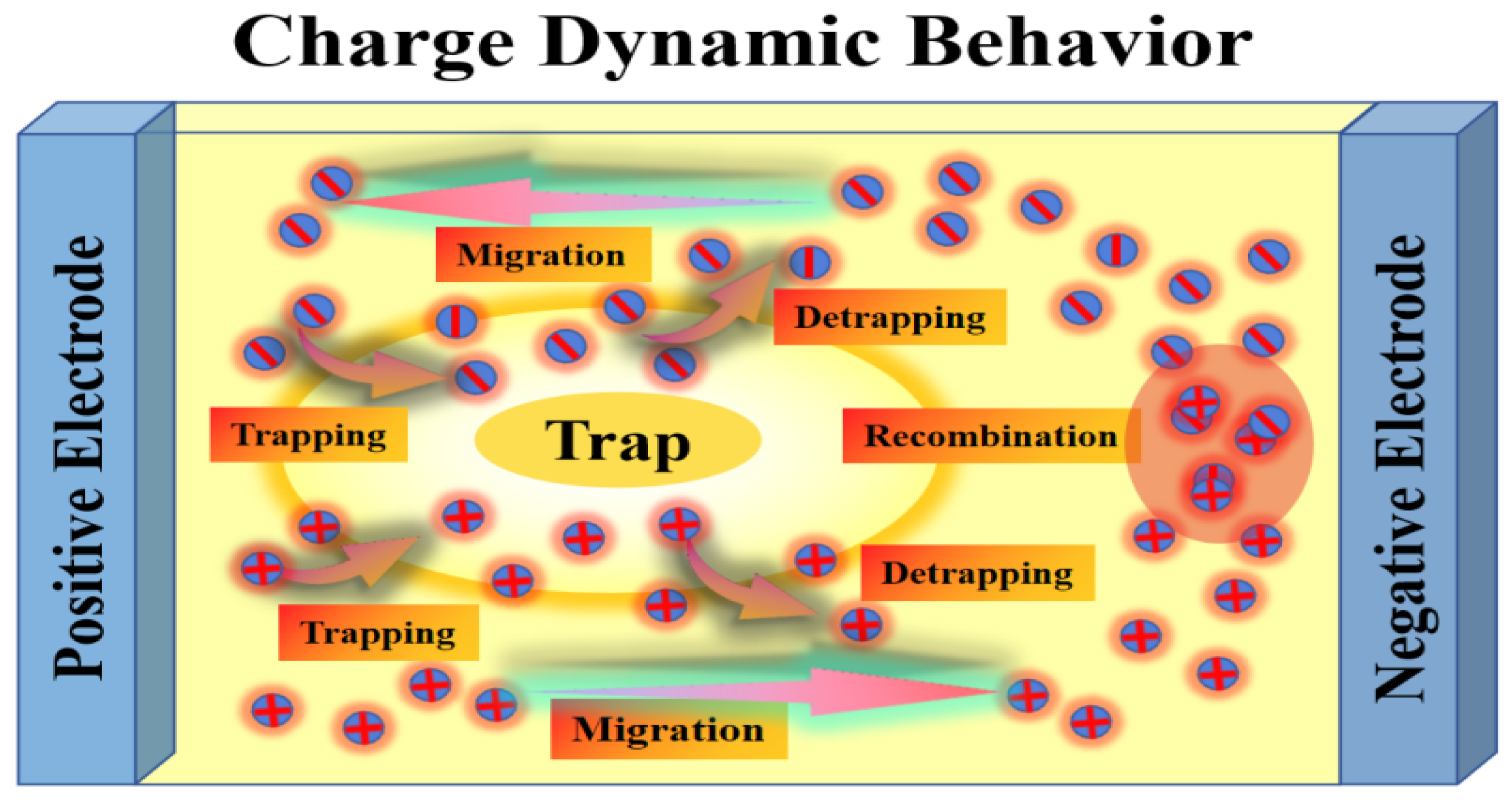
2.3.2. From Forces Application on Charges to Charges Dynamic Behaviors
2.3.3. From Charges Dynamic Behaviors to Electrical Tree Formation and Silicone Gel Insulation Degradation
2.3.4. Fundamental Mechanistic Differences Between Pulse-Induced Charge Vibration and Conventional AC/DC Electrical Stresses
2.4. Comparative Analysis of the Influence Mechanisms of Pulse Voltage Slew Rate, Superimposed DC Amplitude, and Duty Cycle
2.5. Practical Engineering Implications
3. Conclusions
- (1)
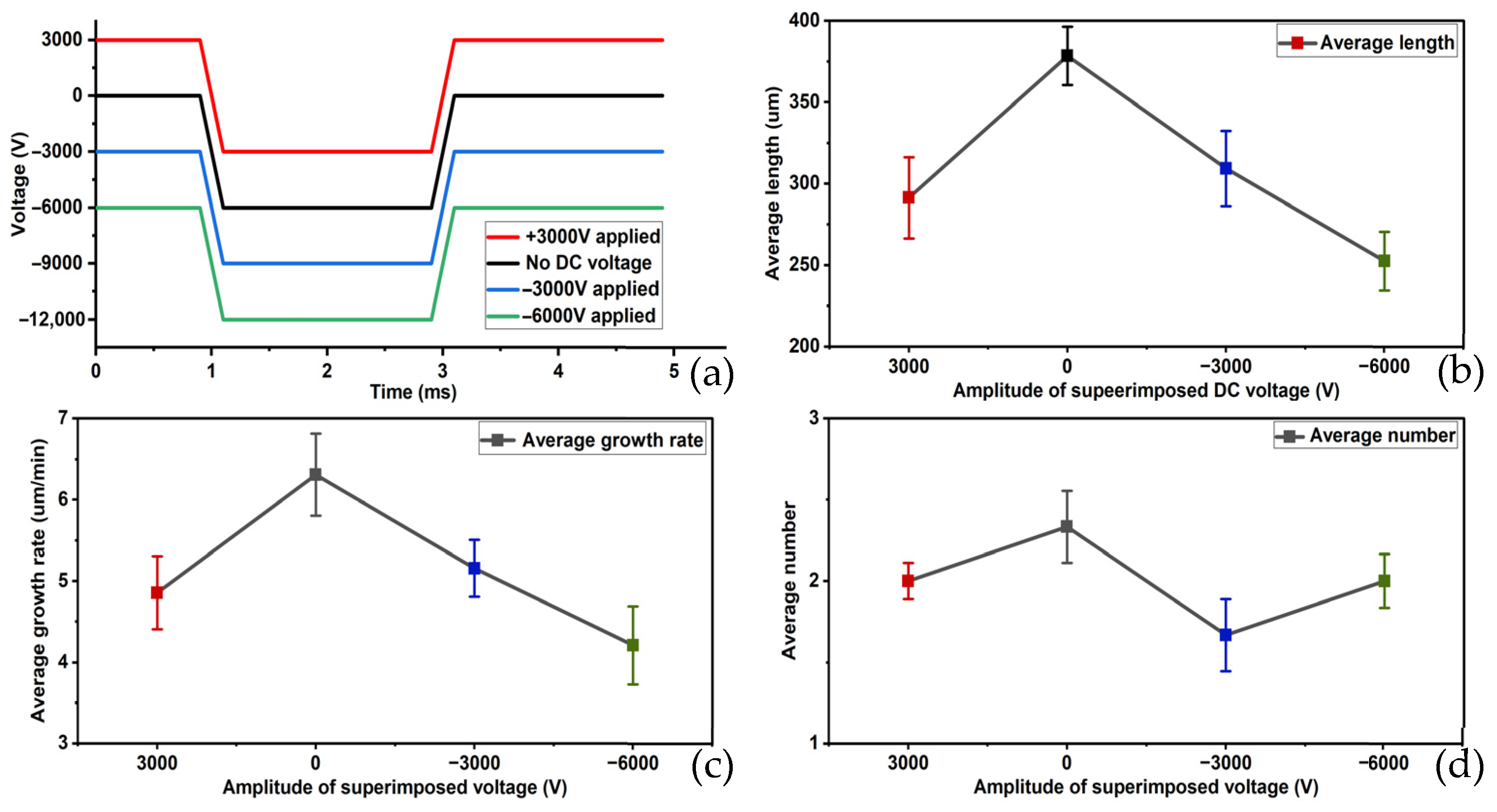
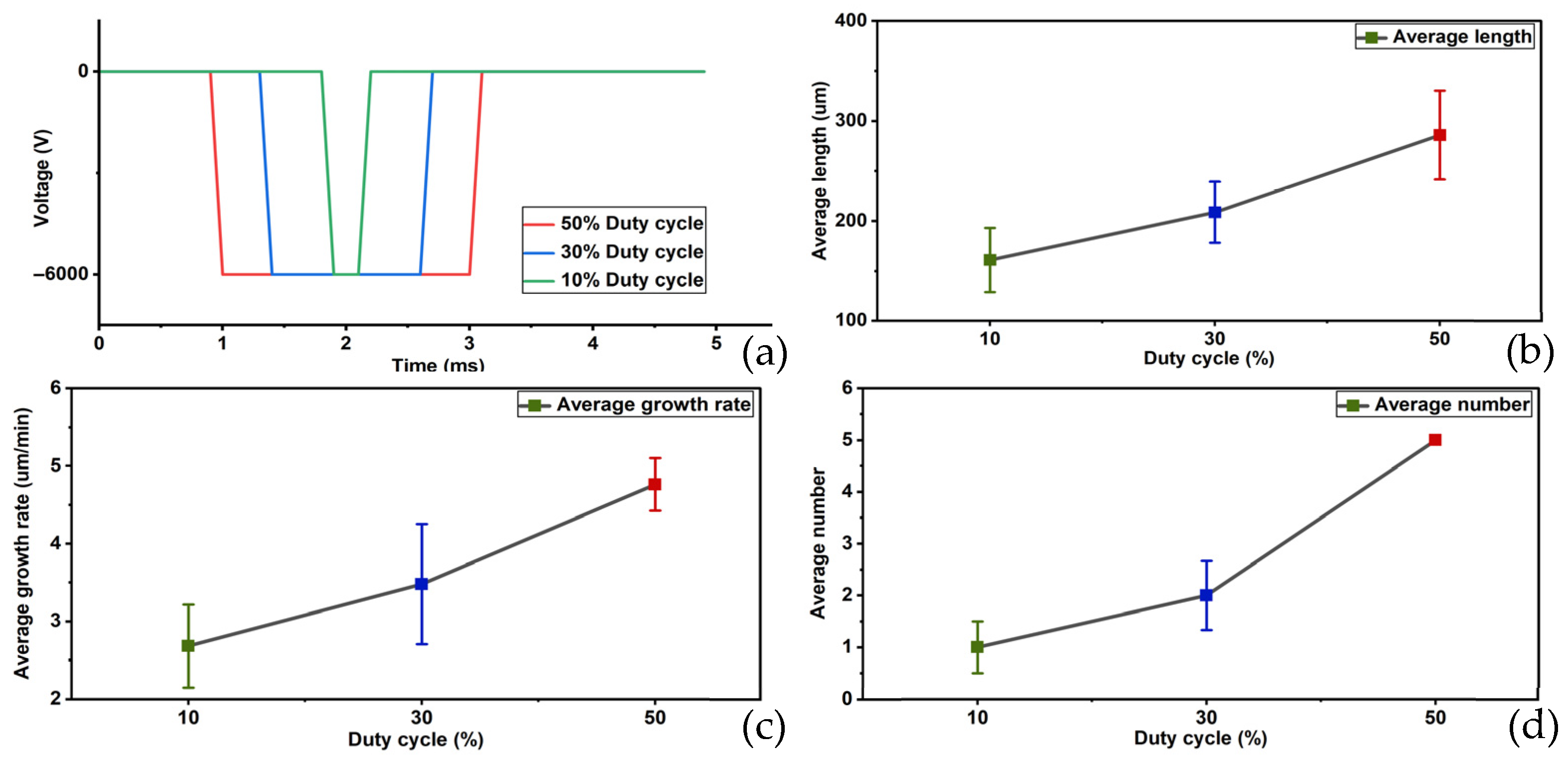
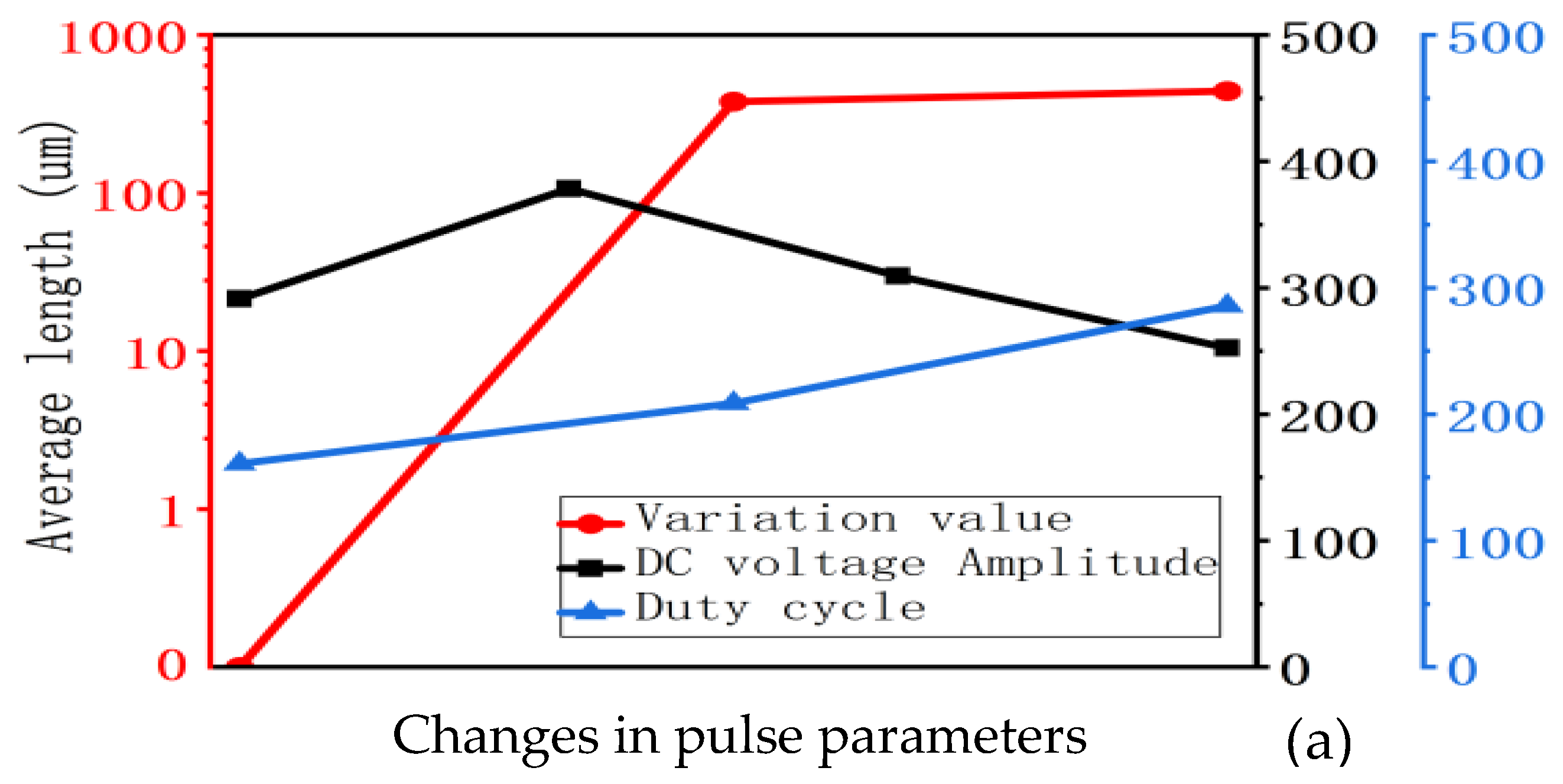
- Using the controlled variables method, the effects of pulse variation value, superimposed DC amplitude, and duty cycle on the degradation of silicone gel insulation were quantified and compared. The results indicate that, with the pulse rise time held constant, pulse variation value has the greatest impact on silicone gel insulation degradation, followed by superimposed DC amplitude, while duty cycle has the least effect. The increase in superimposed DC amplitude and duty cycle are reflected as an increase in static charge accumulation.
- (2)
- It is known that when the pulse rise time remains constant, the pulse variation value has the greatest impact on silicone gel insulation degradation. Furthermore, the pulse rise time exerts a greater influence on silicone gel insulation degradation than the pulse variation value. The pulse voltage slew rate is precisely composed of both the pulse variation value and the rise time. Therefore, the most critical factor affecting silicone gel insulation degradation is the pulse voltage slew rate. An increase in the pulse voltage slew rate is reflected as intensified dynamic behaviors of charge at the pulse edge.
- (3)
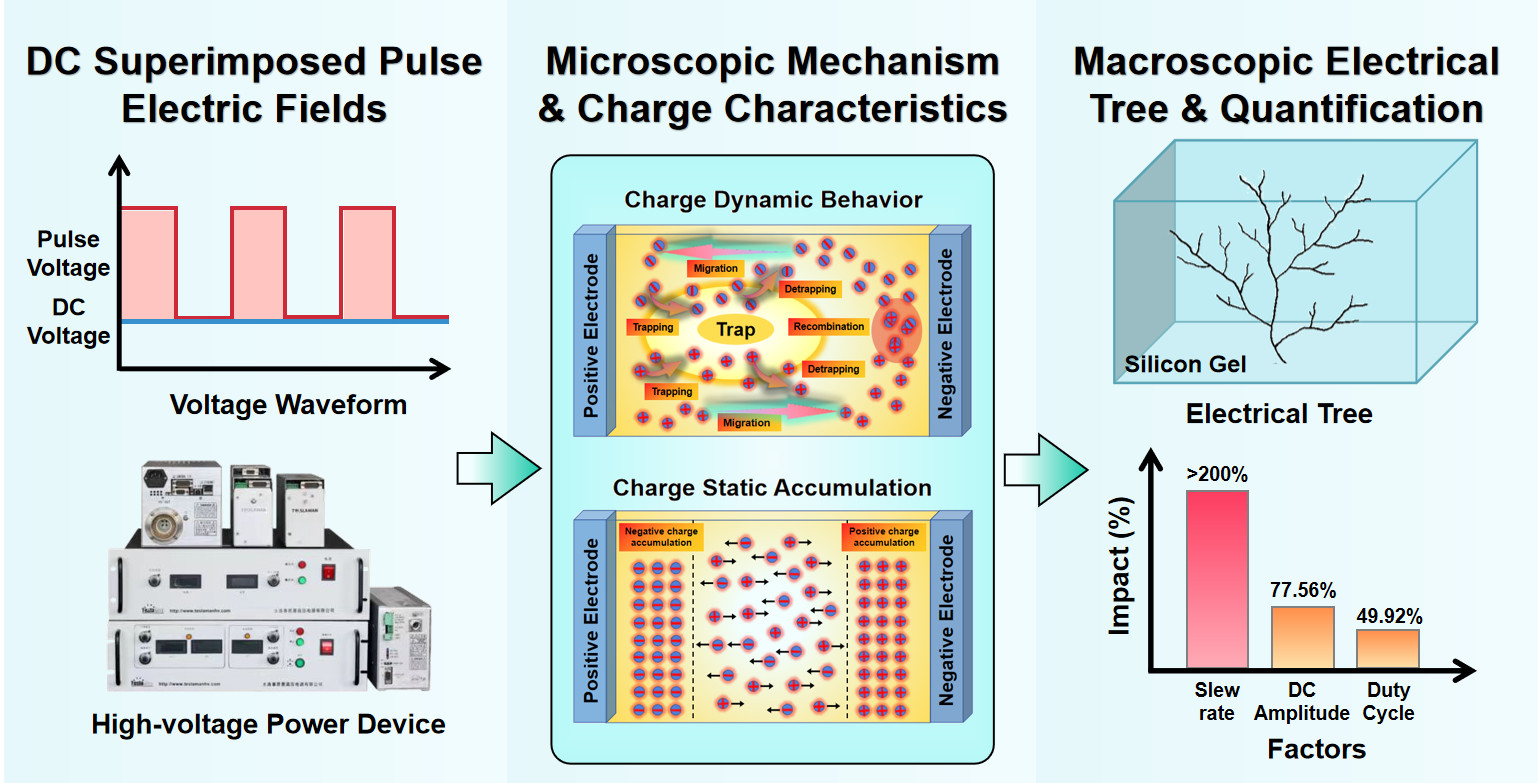
- Increased voltage slew rate, superimposed DC amplitude, and duty cycle alter the force state of charges, thereby modifying charge accumulation and dynamic behaviors. This ultimately influences the formation of electrical tree and the insulating degradation of the silicone gel materials. Within this influence chain, the voltage slew rate reflects the intense dynamic behaviors of charges, while the superimposed DC amplitude and duty cycle reflect the gradual static accumulation of charges. The impact of dynamic charge behaviors is greater than that of static charge accumulation. The microscopic mechanism of silicone gel material insulation failure is reasonably explained through this influence chain, and the pulse voltage slew rate is further identified as the most critical influencing factor.
4. Materials and Methods
4.1. Electrical Tree Experiment
4.1.1. Sample Selection and Preparation
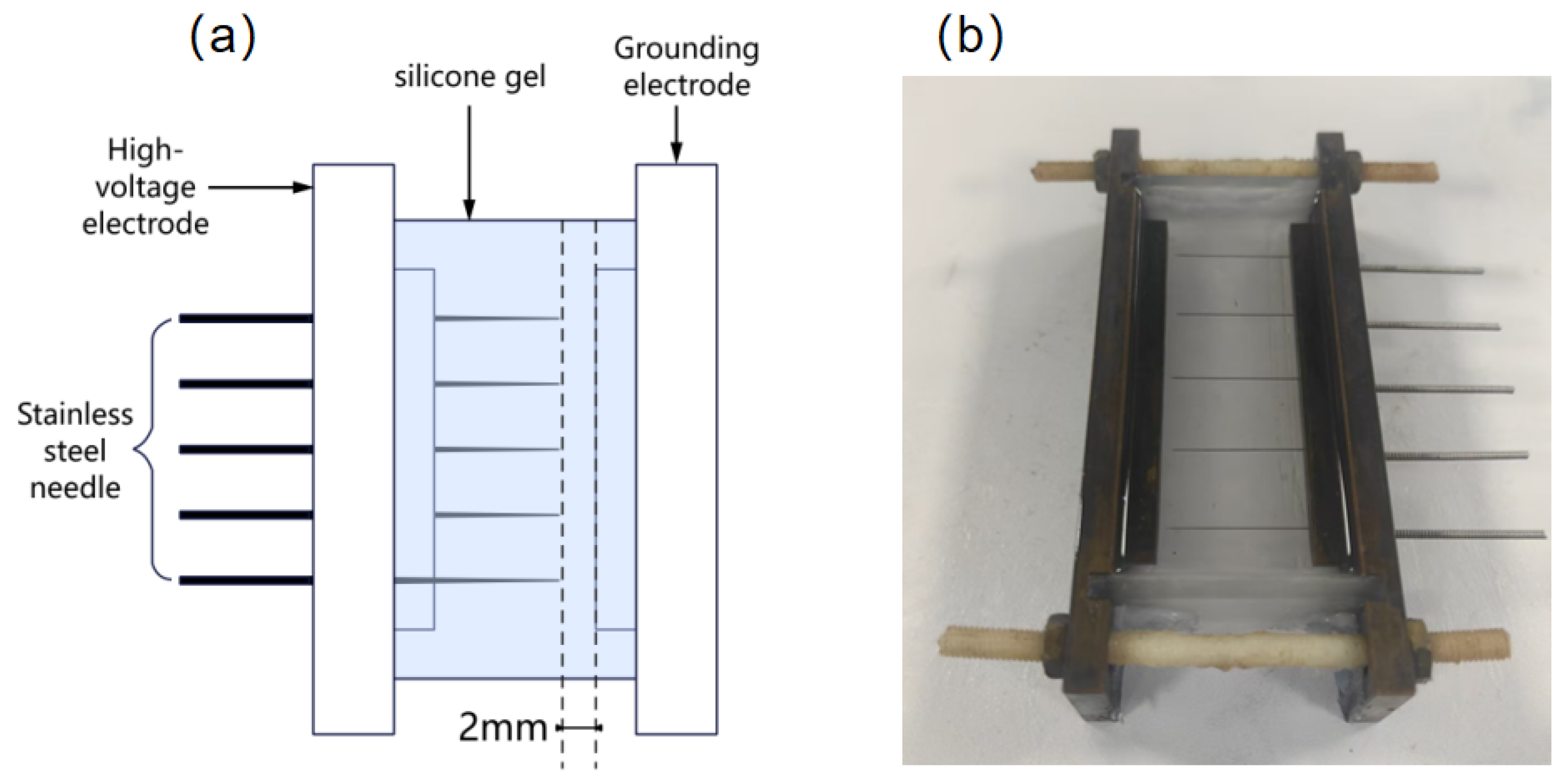
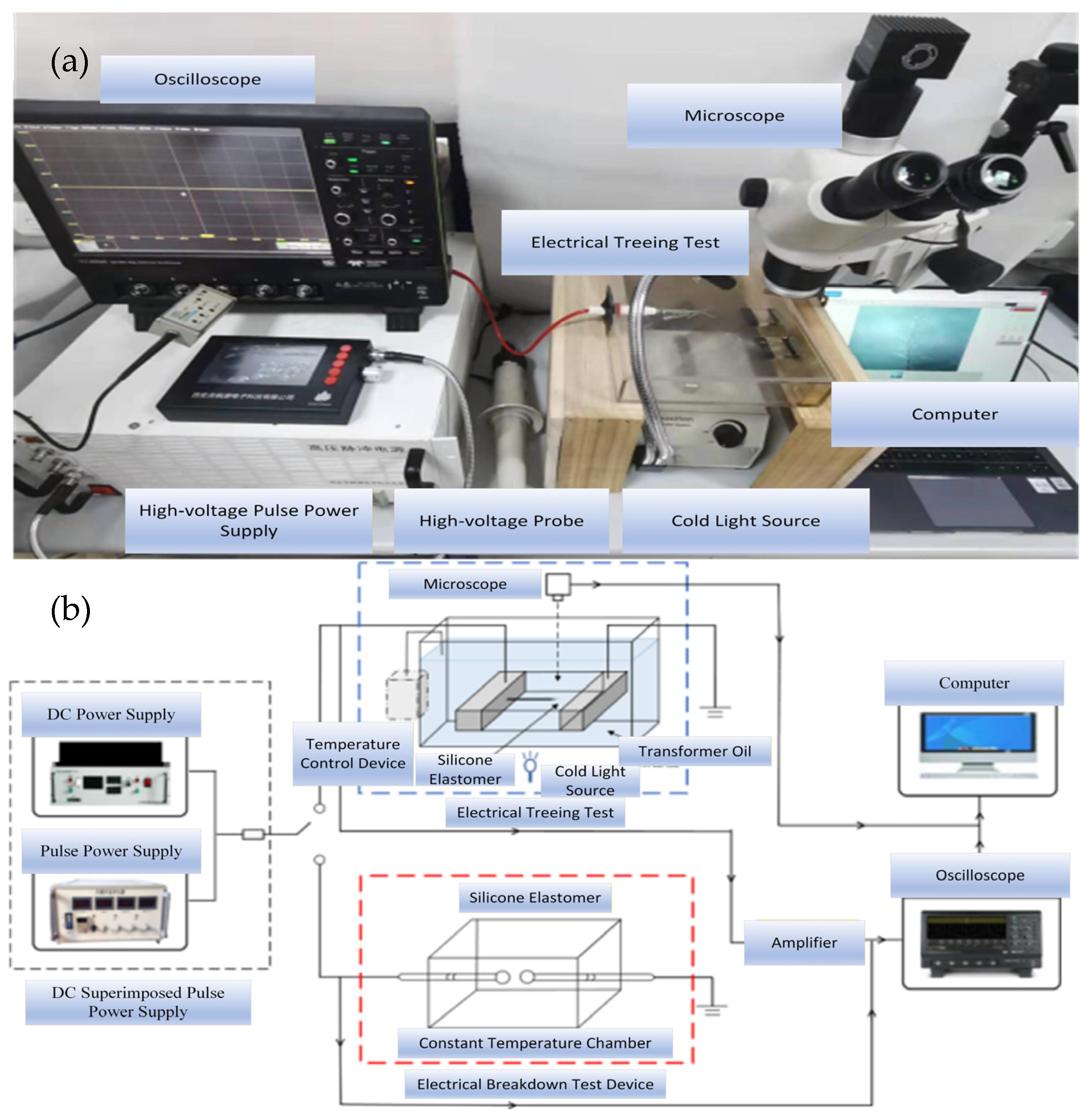
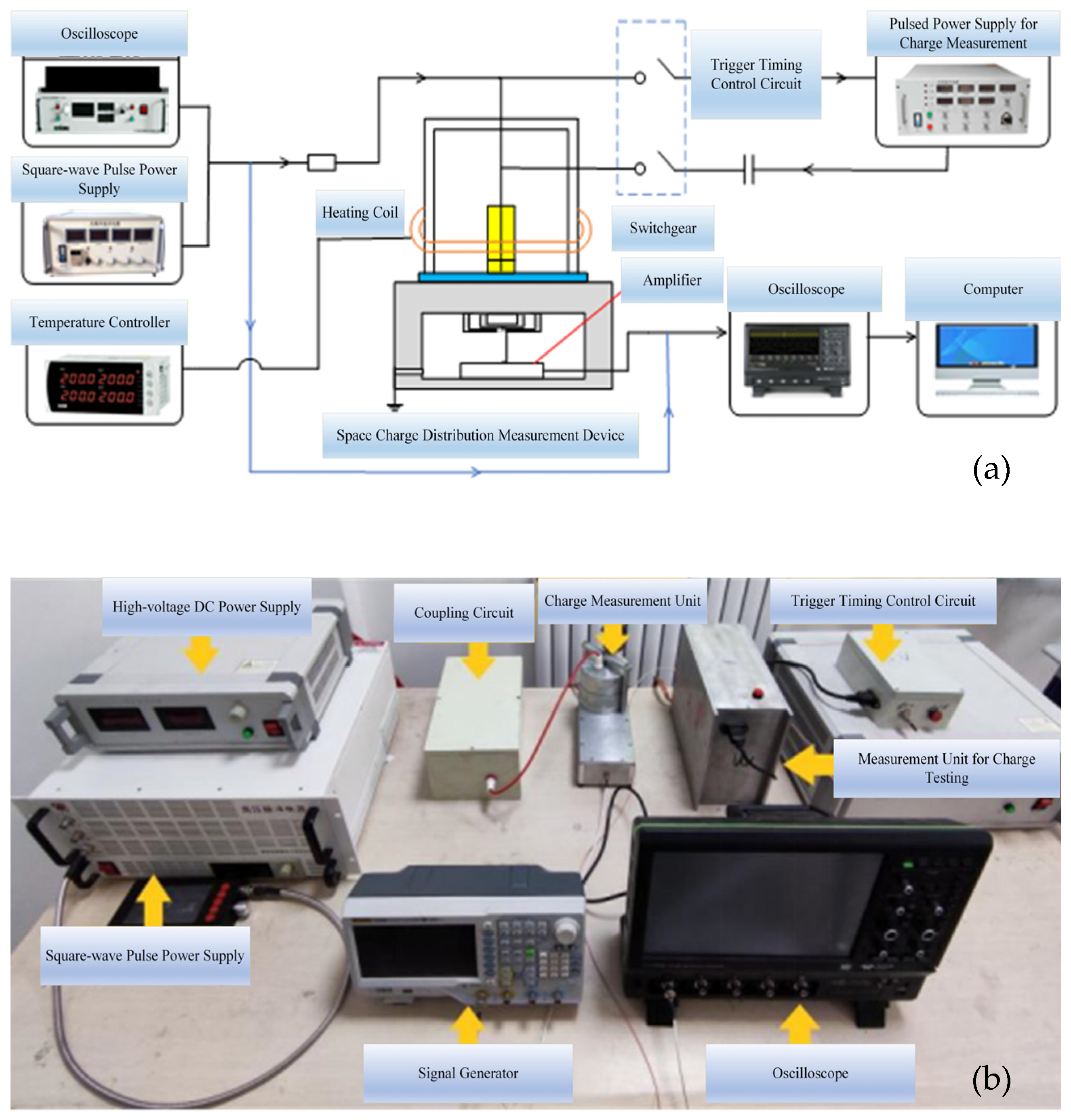
4.1.2. Experimental Platform
4.1.3. Selection of Quantitative Parameters
- (1)
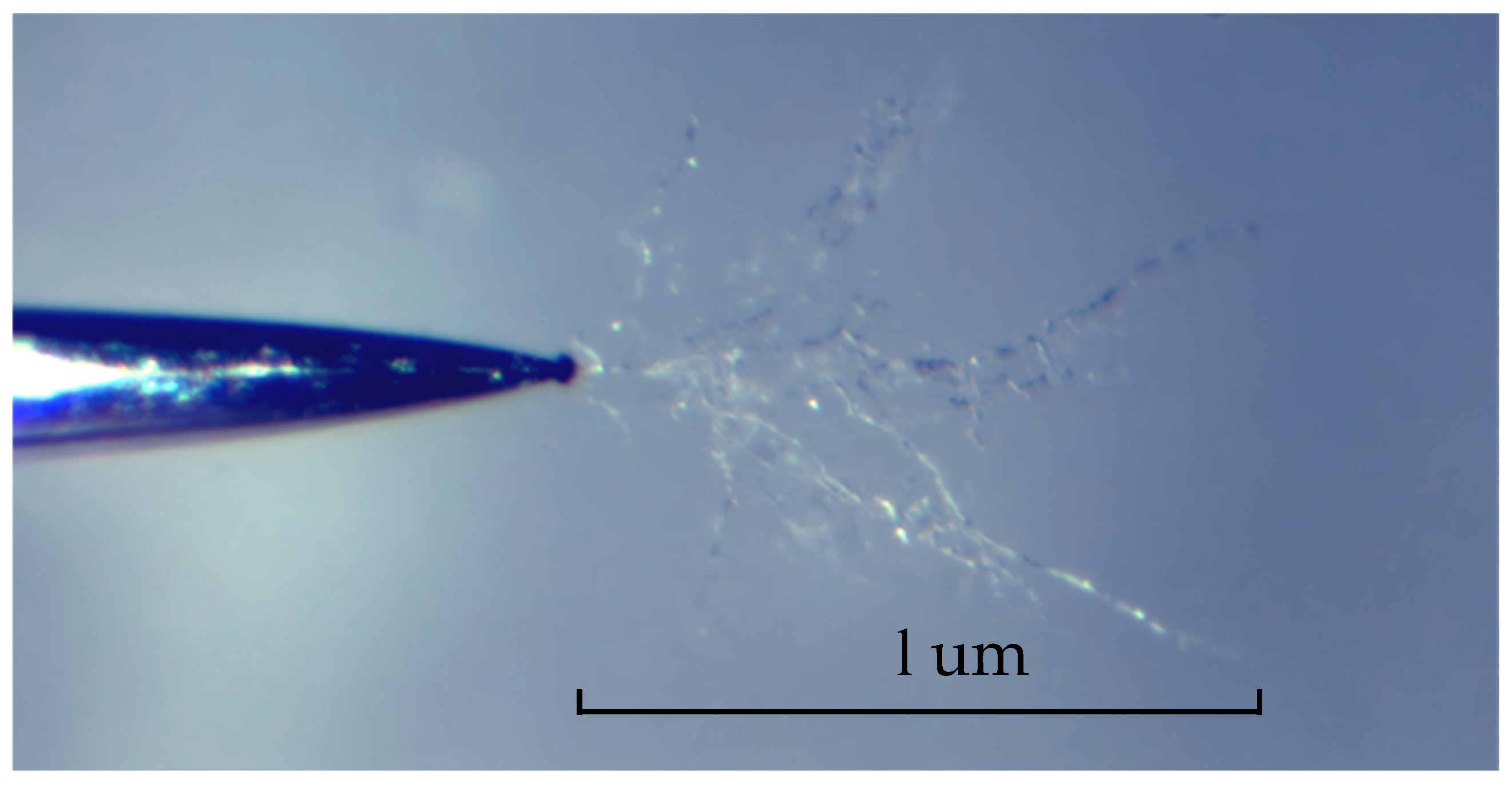
- Length l (um): The final length of the electrical tree along the needle direction when a voltage is applied for 1 h or immediately before breakdown occurs.
- (2)
- Growth rate v (um/min): The start time for the electrical tree growth is recorded as (min). If no breakdown occurs, the end time is set to 60 min, and the electrical tree growth time is calculated as: if breakdown occurs, the end time is set to the breakdown time (min), and the electrical tree growth time is calculated as. From this, the electrical tree growth rate can be determined as.
- (3)
- Number of electrical tree initiation: The number of pins exhibiting treeing phenomena (including breakdown) within one hour of voltage application.
- (4)
- Initiation time (min): The time from the instant the voltage is applied until each needle exhibits treeing.
- (5)
- Number of electrical tree that broken down: The number of pins that broke down within one hour of voltage application.
- (6)
- Breakdown time (min): The time interval from the instant voltage is applied until breakdown occurs in each needle.
4.1.4. Experiment Preparation
4.2. Charge Vibration Experiment
4.2.1. Sample Selection and Preparation
4.2.2. Experimental Platform
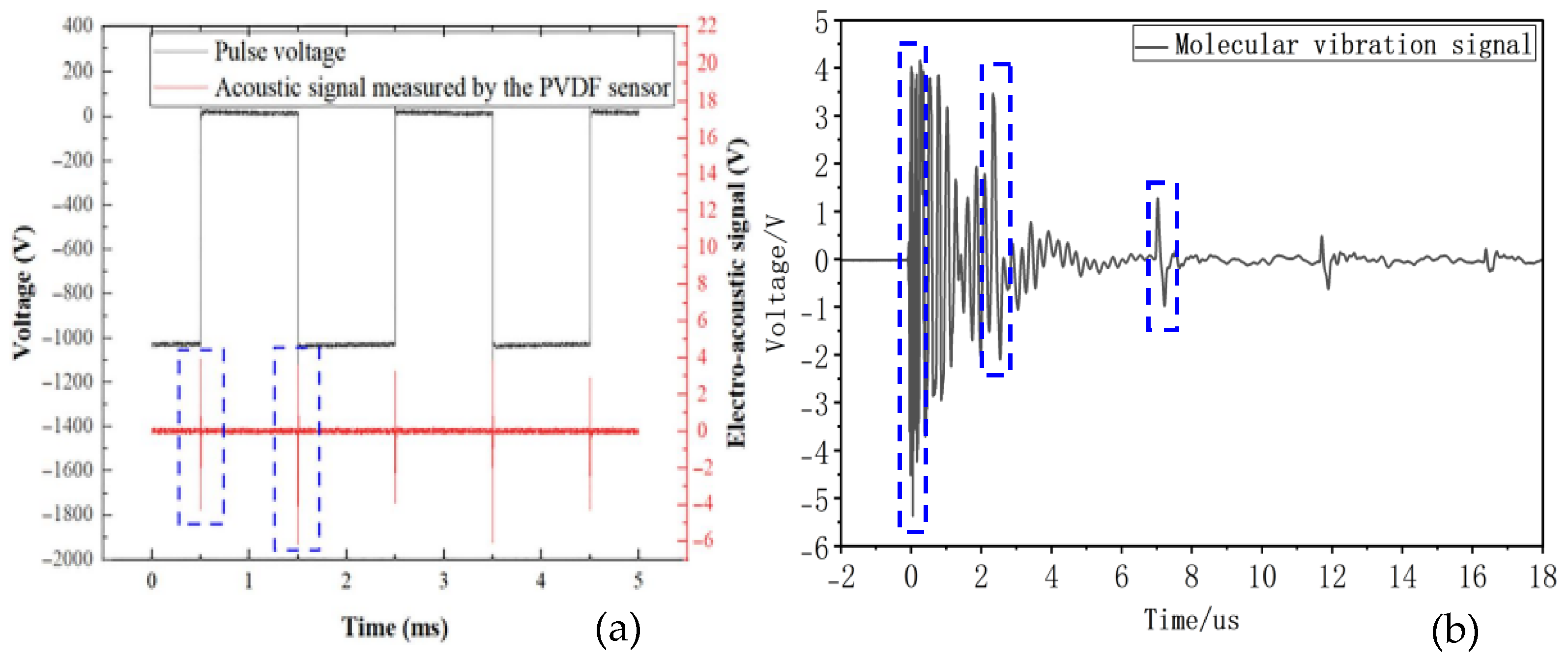
4.2.3. Selection of Quantitative Parameters
4.2.4. Experimental Preparation
Author Contributions
Funding
Institutional Review Board Statement
Informed Consent Statement
Data Availability Statement
Conflicts of Interest
References
- Yang, J.; Liu, J.C. Power electronic technology application in power system reactive power compensation study. Adv. Mater. Res. 2014, 971–973, 1113–1116. [Google Scholar] [CrossRef]
- Sun, X.Y. On the application and research of electronic and electrical technology in power system. In International Conference on Machine Learning and Big Data Analytics for IoT Security and Privacy (AISC); Springer: Berlin/Heidelberg, Germany, 2020; pp. 777–781. [Google Scholar]
- Ghassemi, M. PD measurements, failure analysis, and control in high-power IGBT modules. High Volt. 2018, 3, 170–178. [Google Scholar] [CrossRef]
- Huang, M.; Wang, H.R.; Bai, L.J.; Li, K.; Bai, J.; Zha, X.M. Overview of recent progress in condition monitoring for insulated gate bipolar transistor modules: Detection, estimation, and prediction. High Volt. 2021, 6, 967–977. [Google Scholar] [CrossRef]
- Choi, J.K.; Oh, S.J.; Baeck, S.H.; Shim, S.E.; Qian, Y.J. Multifunctional high fatigue resistant silica aerogel reinforced by polyurethane via ambient pressure drying for improved thermal and sound insulation, water proofing, and vapor permeability. Constr. Build. Mater. 2025, 460, 139826. [Google Scholar] [CrossRef]
- Su, D.Z.; Liu, Z.Q.; Zhong, H.X.; Tang, J.; Zeng, F.P. Research on the improvement and regulation mechanism of silicone gel encapsulation insulation performance for high-voltage power devices. Polym. Degrad. Stab. 2025, 241, 111599. [Google Scholar] [CrossRef]
- Zhang, B.Y.; Yang, Z.Y.; Li, K.X.; Jiang, X.Y.; Li, X.W.; Chang, G.Q. Electrical Properties of Silicone Gel for WBG-Based Power Module Packaging at High Temperatures. IEEE Trans. Dielectr. Electr. Insul. 2023, 30, 852–861. [Google Scholar] [CrossRef]
- Claudi, A. Silicone gel as an insulation material for HV-insulation applications. In Proceedings of the XIVth International Symposium on High Voltage Engineering, Beijing, China, 25–28 August 2005. [Google Scholar]
- Hu, S.; Euvrard, E.; Wang, X.; Wang, R. Study of the Characteristics and Field performance of a novel PTFE—Silicone gel high voltage insulation system. In Conference Record of the 2008 IEEE International Symposium on Electrical Insulation; IEEE: Piscataway, NJ, USA, 2008; pp. 297–303. [Google Scholar] [CrossRef]
- Xue, J.Y.; Li, X.B.; Cui, X.; Mao, Y.; Zhao, Z.B. Preparation Process and Electrical Durability of Silicone Gel for Packaging High-Voltage, High-Power IGBT Devices. J. Electr. Eng. 2021, 36, 352–361. [Google Scholar] [CrossRef]
- Okba, M.H.; Saied, M.H.; Mostafa, M.Z.; Abdel-Moneim, T.M. High Voltage Direct Current Transmission—A Review, Part I; IEEE Energytech: Cleveland, OH, USA, 2012; pp. 1–7. [Google Scholar] [CrossRef]
- Diban, B.; Mazzanti, G.; Mazzocchetti, L.; Seri, P. Experimental Investigation of the Effect of Transient Overvoltages on XLPE-insulated HVDC Cables. IEEE Trans. Dielectr. Electr. Insul. 2023, 30, 1779–1786. [Google Scholar] [CrossRef]
- Ghassemi, M. Accelerated insulation aging due to fast, repetitive voltages: A review identifying challenges and future research needs. IEEE Trans. Dielectr. Electr. Insul. 2019, 26, 1558–1568. [Google Scholar] [CrossRef]
- Madavan, R.; Beroual, A.; Thirumurugan, C. Insulation Degradation Analysis on Electrical Machines Under Fast and Repetitive Voltage Pulses: A Review. IEEE Trans. Dielectr. Electr. Insul. 2025, 32, 2485–2492. [Google Scholar] [CrossRef]
- He, D.X.; Zhang, Z.; Wang, G.Z.; Liu, K.M.; Wang, H.C.; Xu, Z.; Teyssedre, G.; Zhang, Y.T. Mechanism Analysis of Bubble Discharge Within Silicone Gels Under Pulsed Electric Field. Gels 2024, 10, 799. [Google Scholar] [CrossRef] [PubMed]
- Wei, J.Y.; He, D.X.; Gao, T.; Lin, Z.; Wang, H.C.; Li, Q.Q.; Teyssedre, G. Behaviour and mechanisms of molecular vibrations induced by a pulse voltage in a silicone elastomer used for device encapsulation. High Volt. 2023, 8, 1020–1029. [Google Scholar] [CrossRef]
- Rafin, S.M.S.H.; Ahmed, R.; Haque, M.A.; Hossain, M.K.; Haque, M.A.; Mohammed, O.A. Power Electronics Revolutionized: A Comprehensive Analysis of Emerging Wide and Ultrawide Bandgap Devices. Micromachines 2023, 14, 2045. [Google Scholar] [CrossRef]
- Wen, Y.; Yang, Y.; Li, Y. A Novel Short-Circuit Protection Scheme for Silicon Carbide (SiC) MOSFET Module Considering Operation Temperature. IEEE Trans. Power Electron. 2025, 40, 10661–10671. [Google Scholar] [CrossRef]
- Nakamura, S.; Mitani, T.; Ejiri, H.; Sato, M.; Kumada, A.; Hidaka, K. Cavity Propagation under Repetitive Voltage Impulses in Silicone Gel for Encapsulation of Power Modules. IEEE Trans. Power Electron. 2018, 34, 7633–7641. [Google Scholar] [CrossRef]
- Gao, T.; He, D.X.; Xu, Z.; Wei, J.Y.; Xie, S.J.; Teyssedre, G.; Liu, Z.Z.; Cui, B. Degradation induced by charge relaxation in silicone gels under the ultra-fast pulse electric field. High Volt. 2024, 9, 1383–1392. [Google Scholar] [CrossRef]
- Meng, X.B.; Lin, L.; Li, H.; Mei, H.W.; Wang, L.M. Characteristic of Surface Streamer Discharge Under the AC–DC Composite Voltage. IEEE Trans. Dielectr. Electr. Insul. 2025, 32, 1373–1379. [Google Scholar] [CrossRef]
- Wei, J.X.; Liang, F.R.; Feng, H.; Ran, L. Condition Monitoring of Discrete Power Devices: A Data-Driven Approach With Stress Quantification and Mold Temperature Sensing. IEEE J. Emerg. Sel. Top. Power Electron. 2024, 12, 2569–2579. [Google Scholar] [CrossRef]
- Zhang, C.; An, X.Z.; Li, Q.F.; Wu, J.; Xu, Z.; Khaled, U.; He, D.X.; Zhu, L. Research on the Electrical Tree Deterioration Characteristics of Silicone Gel and Silicone Rubber Under Pulsed Electric Field. Gels 2025, 11, 253. [Google Scholar] [CrossRef]
- Zhang, X.Q.; Zhu, H.B.; Yang, Y.T.; Feng, S.Q.; Chen, C.; Zhao, X.T.; Yang, L.J. Study on the Influence of Partial Discharge Voltage and Discharge Duration on the Degradation Performance of Oil-Paper Insulation. High Volt. Appar. 2025, 61, 30–38. [Google Scholar] [CrossRef]
- Chen, J.F.; Cheng, X.; Chen, Y.; Zhao, X.Y.; Chen, W.; Shen, Z. Effect of Aging Time on Insulation Degradation of Power Electronic Transformers. J. Power Sources 2025, 1–10. Available online: https://link.cnki.net/urlid/12.1420.tm.20250429.1104.015 (accessed on 29 November 2025).
- Sun, H.; Yang, D.Q.; Sun, Y.M.; Shi, W.H.; Liu, X.D. Influence of Harmonic and Temperature on Deterioration Characteristics of Epoxy Resin Insulation in Dry-Type Valve-Side Bushings of Converter Transformers. High Volt. Technol. 2026, 52, 815–824. [Google Scholar] [CrossRef]
- Zhang, T.; He, D.X.; Wei, J.Y.; Liu, H.S.; Li, Q.Q.; Teyssedre, G. Charge vibration behaviour in polyimide under the pulse voltage with different rise and fall times. High Volt. 2022, 7, 64–74. [Google Scholar] [CrossRef]
- Xu, Z. Study on the Deterioration Characteristics and Mechanism of Electrical Tree in Silicone Elastomer Under Thermally Coupled Pulse Electric Fields. Master’s Thesis, Shandong University, Jinan, China, 2023. [Google Scholar] [CrossRef]
- Nakamura, S.; Kumada, A.; Hidaka, K.; Sato, M.; Hayase, Y.; Takano, S. Electrical Tree Inception in Silicone Gel under Repetitive Impulse Voltage. In 2018 IEEE International Conference on Dielectrics (ICD); IEEE: Piscataway, NJ, USA, 2018; pp. 1–4. [Google Scholar] [CrossRef]
- Tang, X.Y.; Sima, W.X.; Sun, P.T.; Zun, C.; Yuan, T.; Yang, M.; Shi, Z.Y.; Yang, H.Y.; Deng, Q. In Situ Self-Fluorescence 3D Imaging of Micro/Nano Damage in Silicone Gel for Understanding Insulation Failure under High-Frequency Electric Fields. ACS Appl. Mater. Interfaces 2023, 15, 55082–55094. [Google Scholar] [CrossRef] [PubMed]
- Zhang, S.Y.; Peng, Z.R.; Zhou, C.R.; Chen, G. Numerical analysis on space charge and AC-DC combined breakdown strength in polyethylene. IEEE Trans. Dielectr. Electr. Insul. 2019, 26, 826–834. [Google Scholar] [CrossRef]
- Borghei, M.; Ghassemi, M. Partial Discharge Analysis under High-Frequency, Fast-Rise Square Wave Voltages in Silicone Gel: A Modeling Approach. Energies 2019, 12, 4543. [Google Scholar] [CrossRef]
- He, D.X.; Zhang, T.; Meng, F.S.; Li, Q.Q.; Wang, W.; Liu, H.S.; Teyssedre, G. Space charge behaviors in cable insulation under a direct current-superimposed pulse electric field. High Volt. 2021, 6, 426–434. [Google Scholar] [CrossRef]









Disclaimer/Publisher’s Note: The statements, opinions and data contained in all publications are solely those of the individual author(s) and contributor(s) and not of MDPI and/or the editor(s). MDPI and/or the editor(s) disclaim responsibility for any injury to people or property resulting from any ideas, methods, instructions or products referred to in the content. |
© 2026 by the authors. Licensee MDPI, Basel, Switzerland. This article is an open access article distributed under the terms and conditions of the Creative Commons Attribution (CC BY) license.
Share and Cite
Wu, Z.; He, D. Degradation Factors and Mechanisms of Silicone Gel in Power Device Packaging Insulation Under DC Superimposed Pulse Electric Fields. Gels 2026, 12, 274. https://doi.org/10.3390/gels12040274
Wu Z, He D. Degradation Factors and Mechanisms of Silicone Gel in Power Device Packaging Insulation Under DC Superimposed Pulse Electric Fields. Gels. 2026; 12(4):274. https://doi.org/10.3390/gels12040274
Chicago/Turabian StyleWu, Zichen, and Dongxin He. 2026. "Degradation Factors and Mechanisms of Silicone Gel in Power Device Packaging Insulation Under DC Superimposed Pulse Electric Fields" Gels 12, no. 4: 274. https://doi.org/10.3390/gels12040274
APA StyleWu, Z., & He, D. (2026). Degradation Factors and Mechanisms of Silicone Gel in Power Device Packaging Insulation Under DC Superimposed Pulse Electric Fields. Gels, 12(4), 274. https://doi.org/10.3390/gels12040274