

The Effect of GBFS on the Mechanical Properties and Hydration Products of Steam-Cured Cement Mortar
 , and
, and
Abstract
1. Introduction
2. Results and Discussion
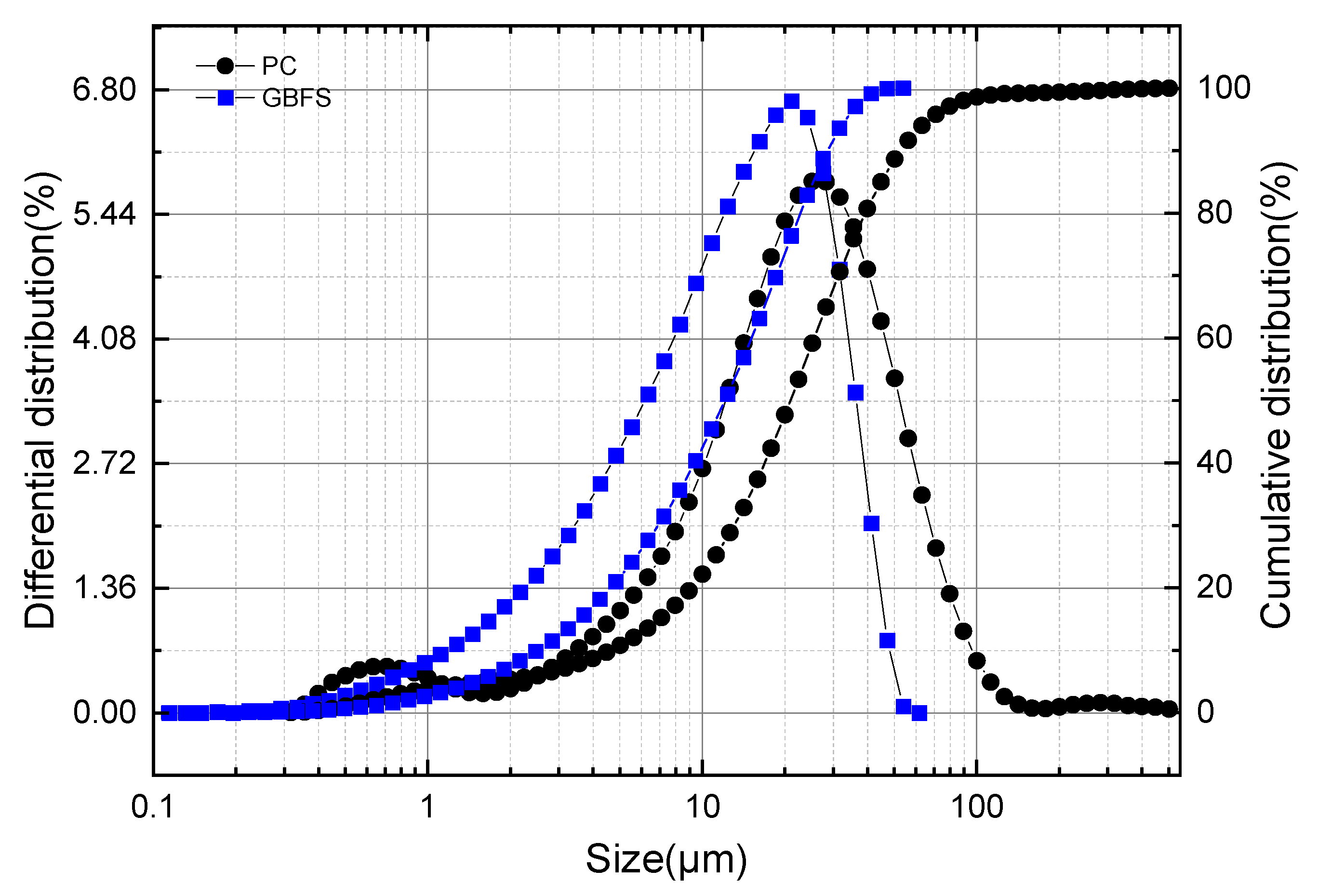
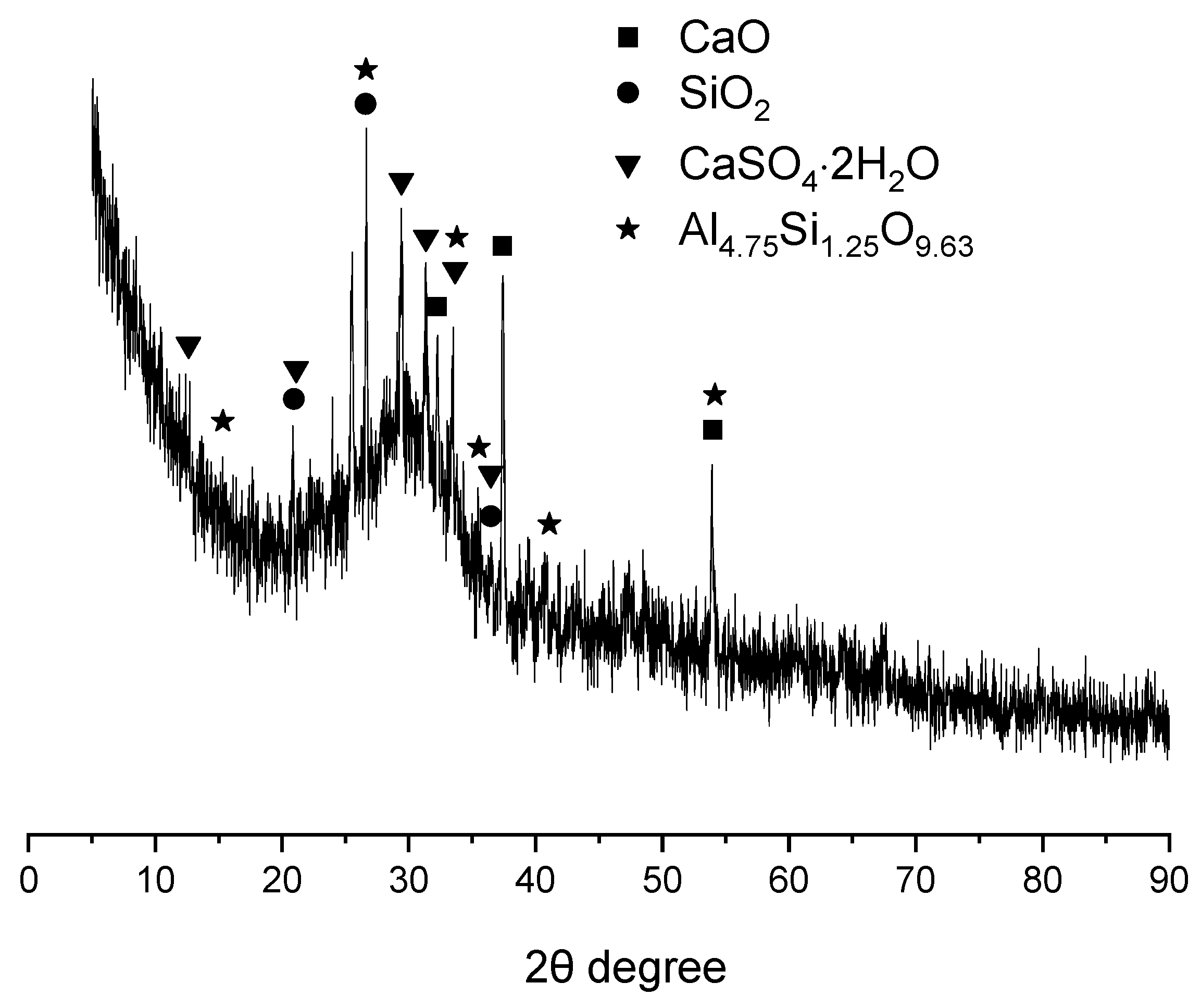
2.1. Results of Material Characterization
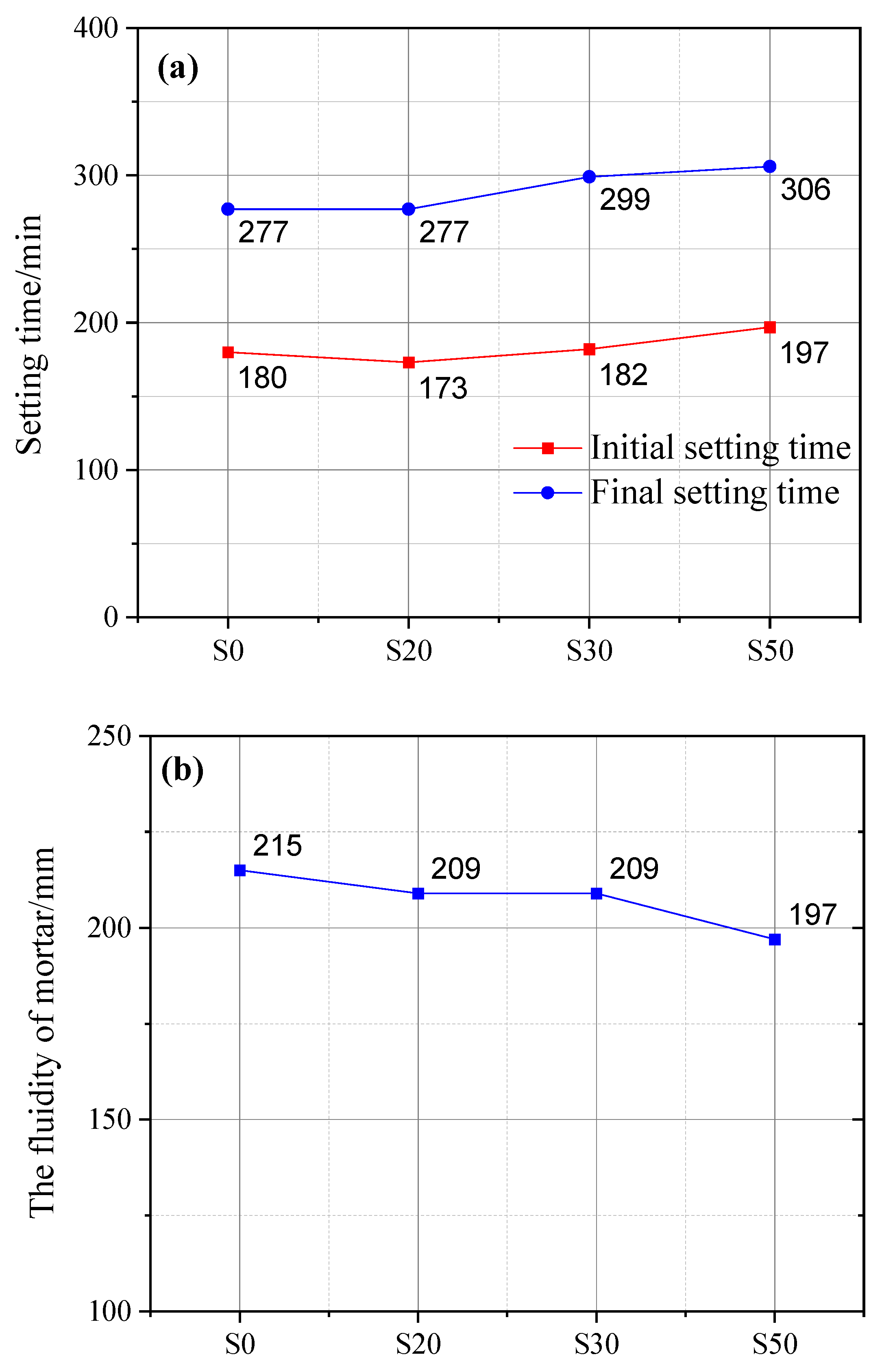
2.2. Setting Time and Fluidity
2.2.1. Setting Time
2.2.2. Fluidity
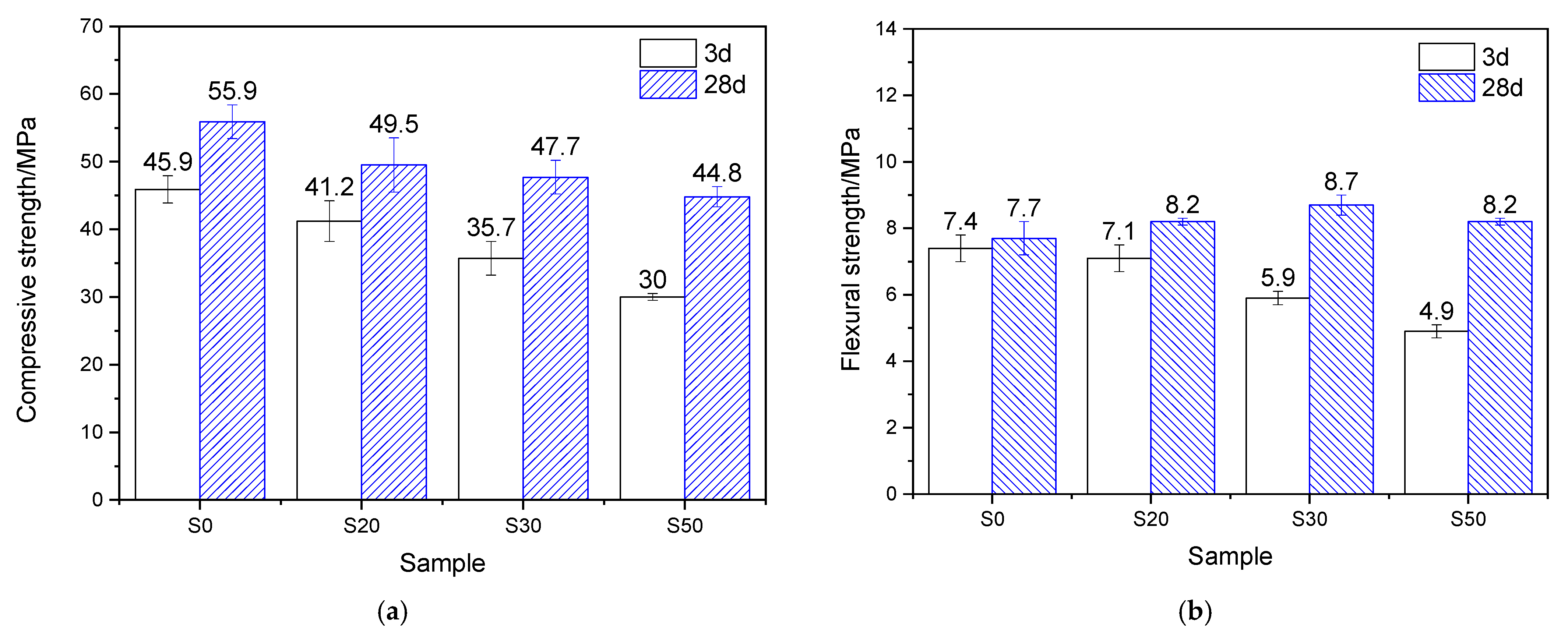
2.3. Mechanical Properties
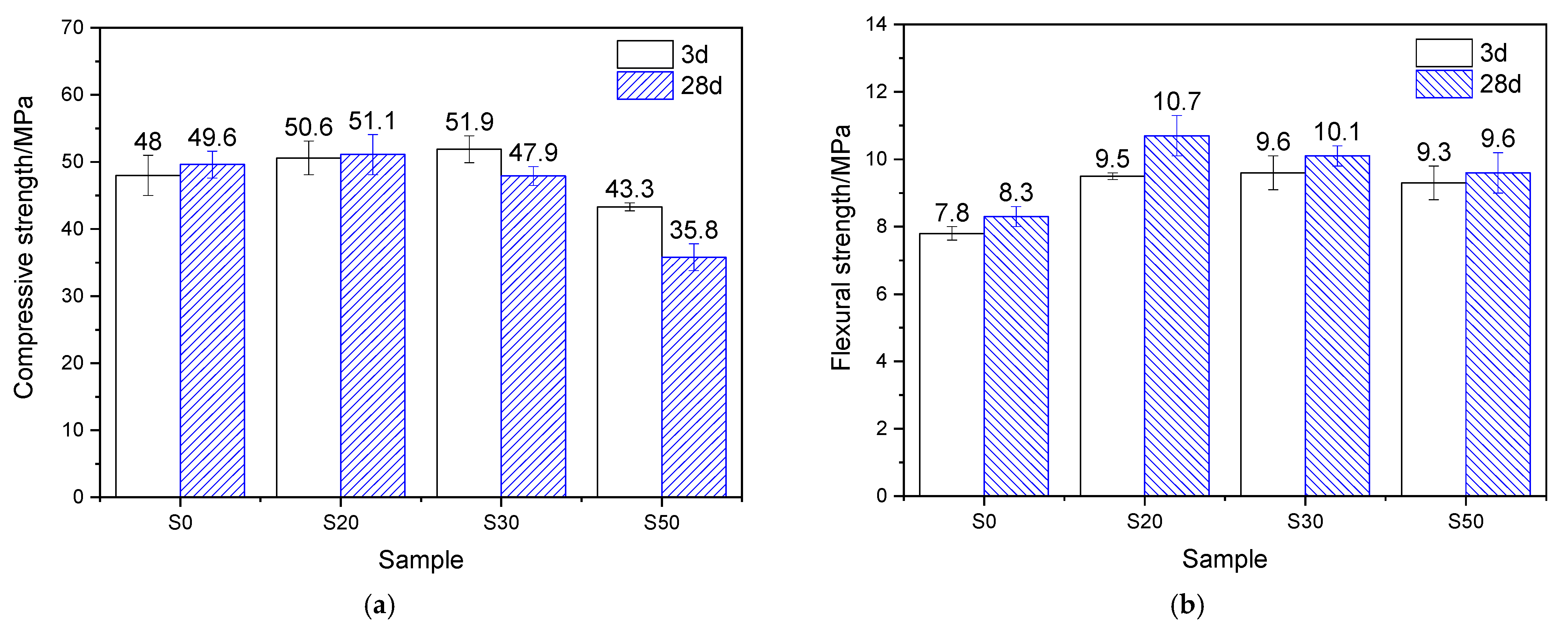
2.3.1. Mortar Steam-Cured at 50 °C
2.3.2. Mortar Steam-Cured at 80 °C
2.4. XRD Analysis of Hydration Products
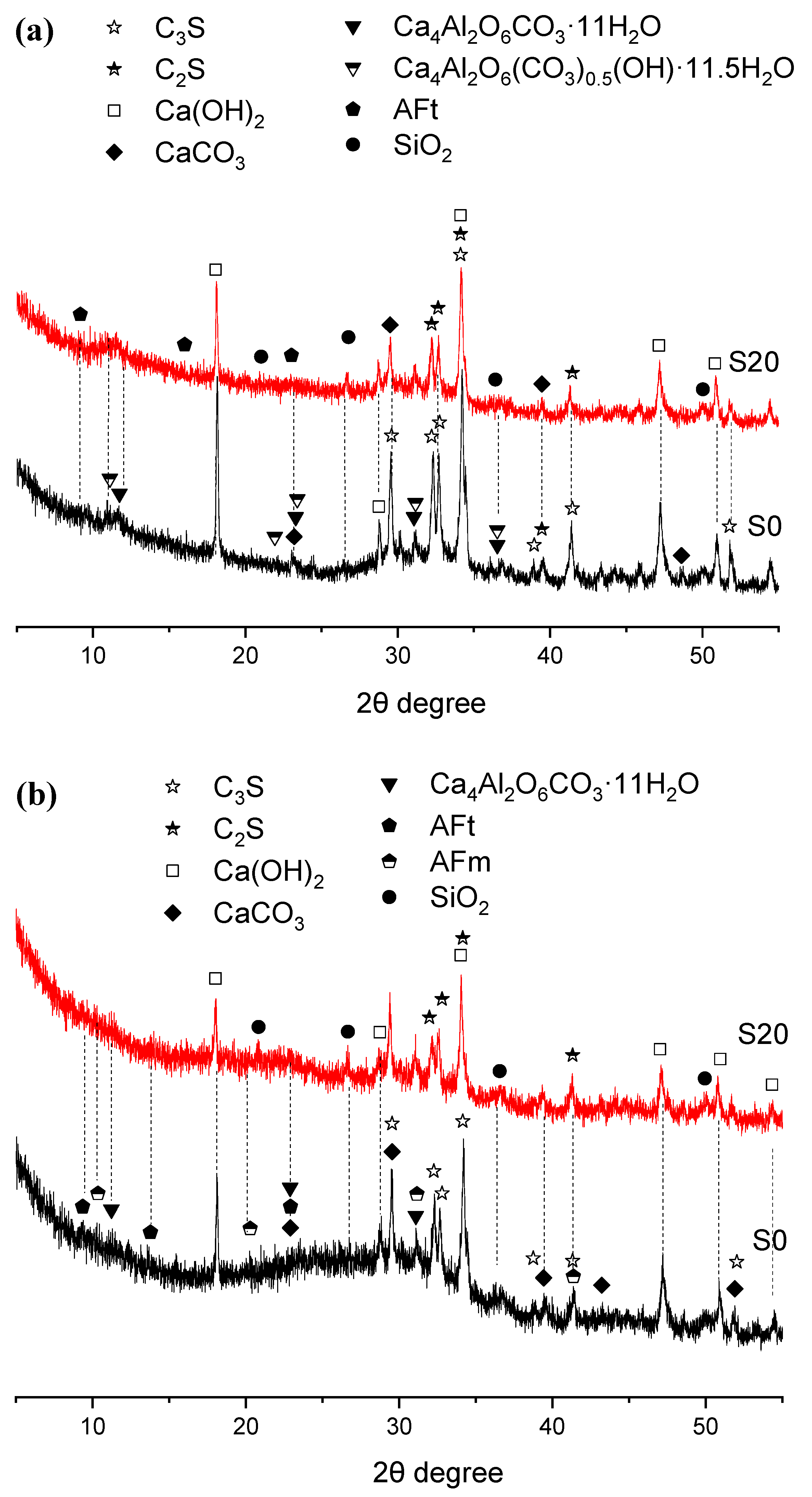
2.4.1. Mortar Steam-Cured at 50 °C
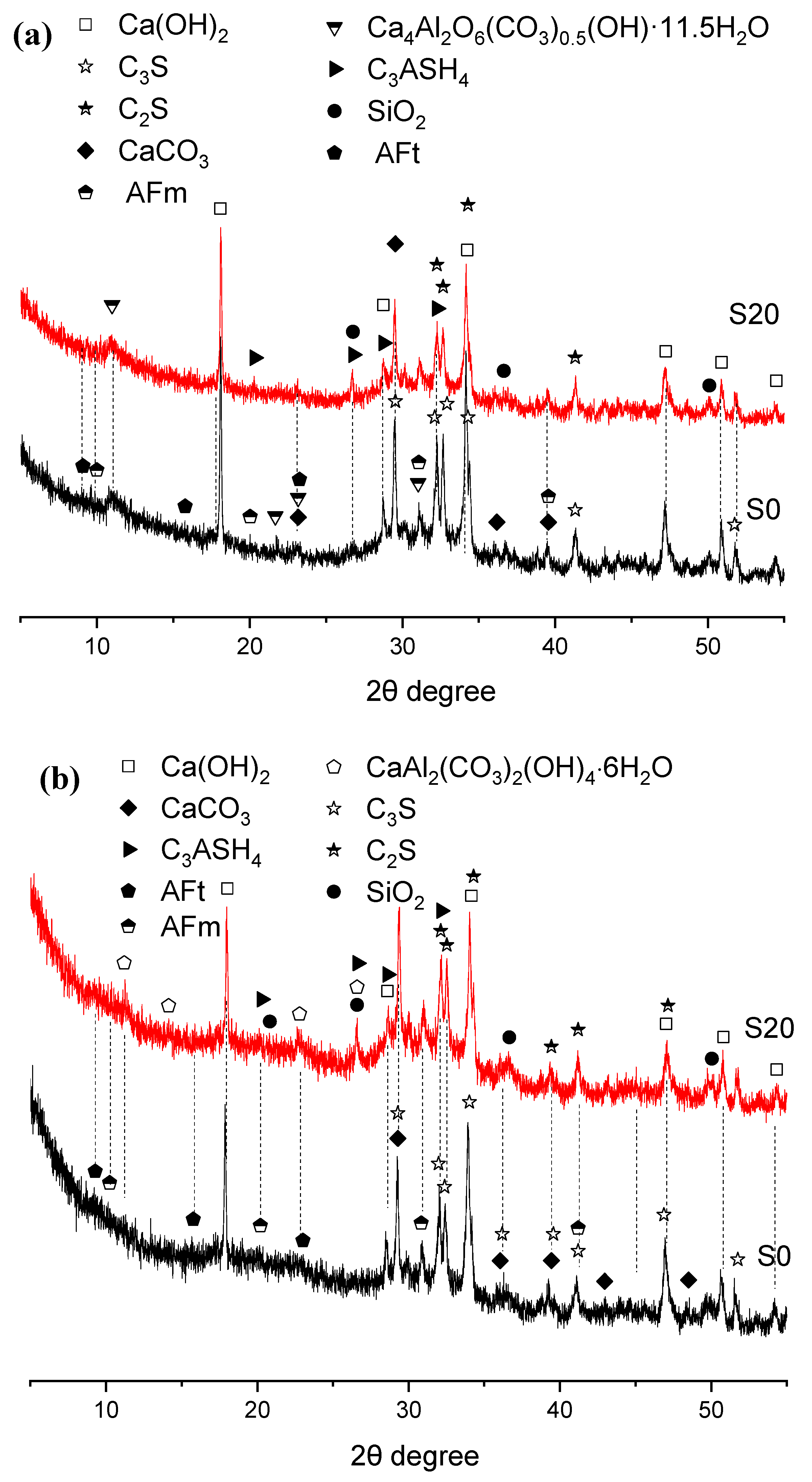
2.4.2. Mortar Steam-Cured at 80 °C
2.5. SEM-EDS Analysis of Hydration Products
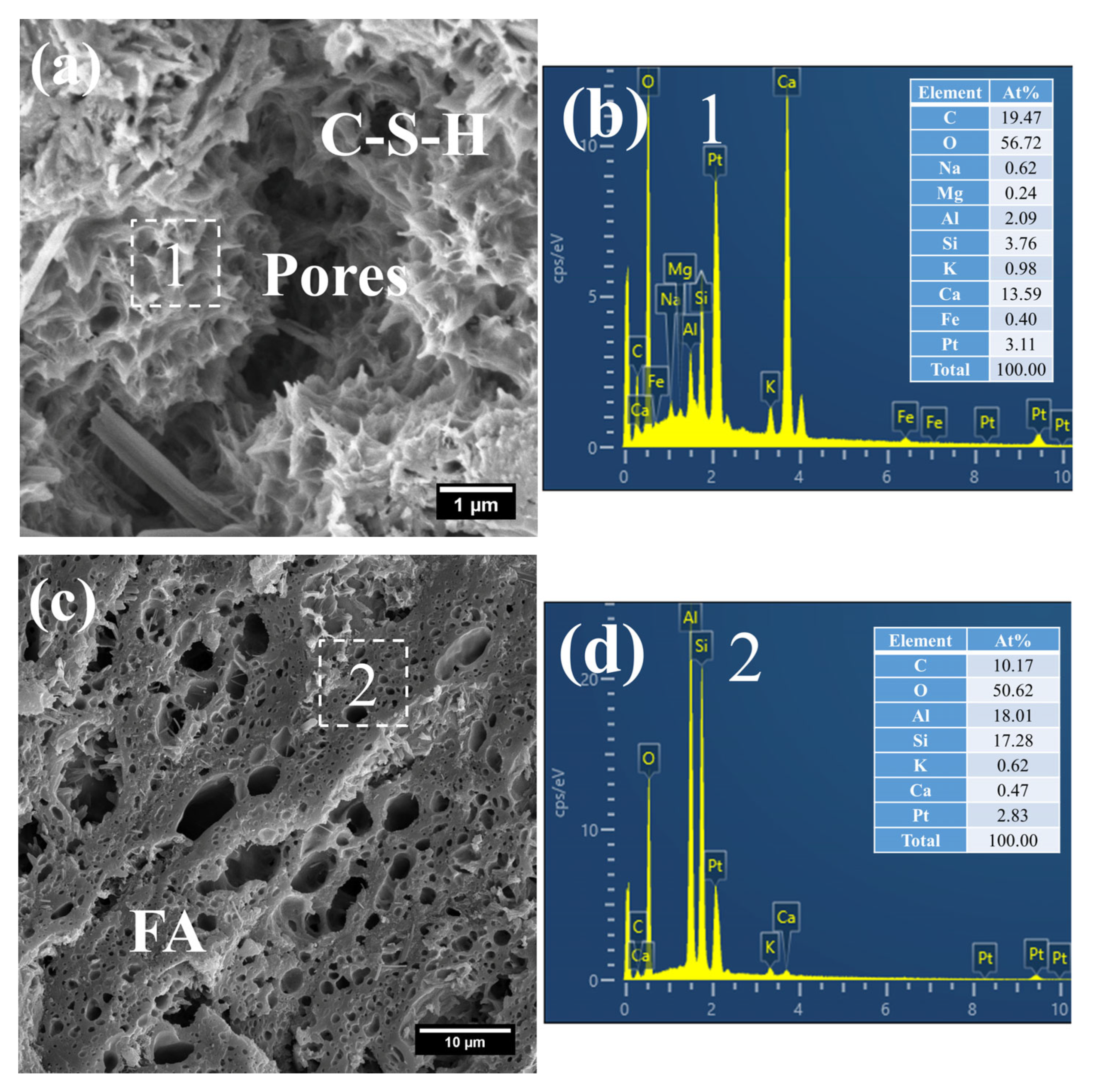
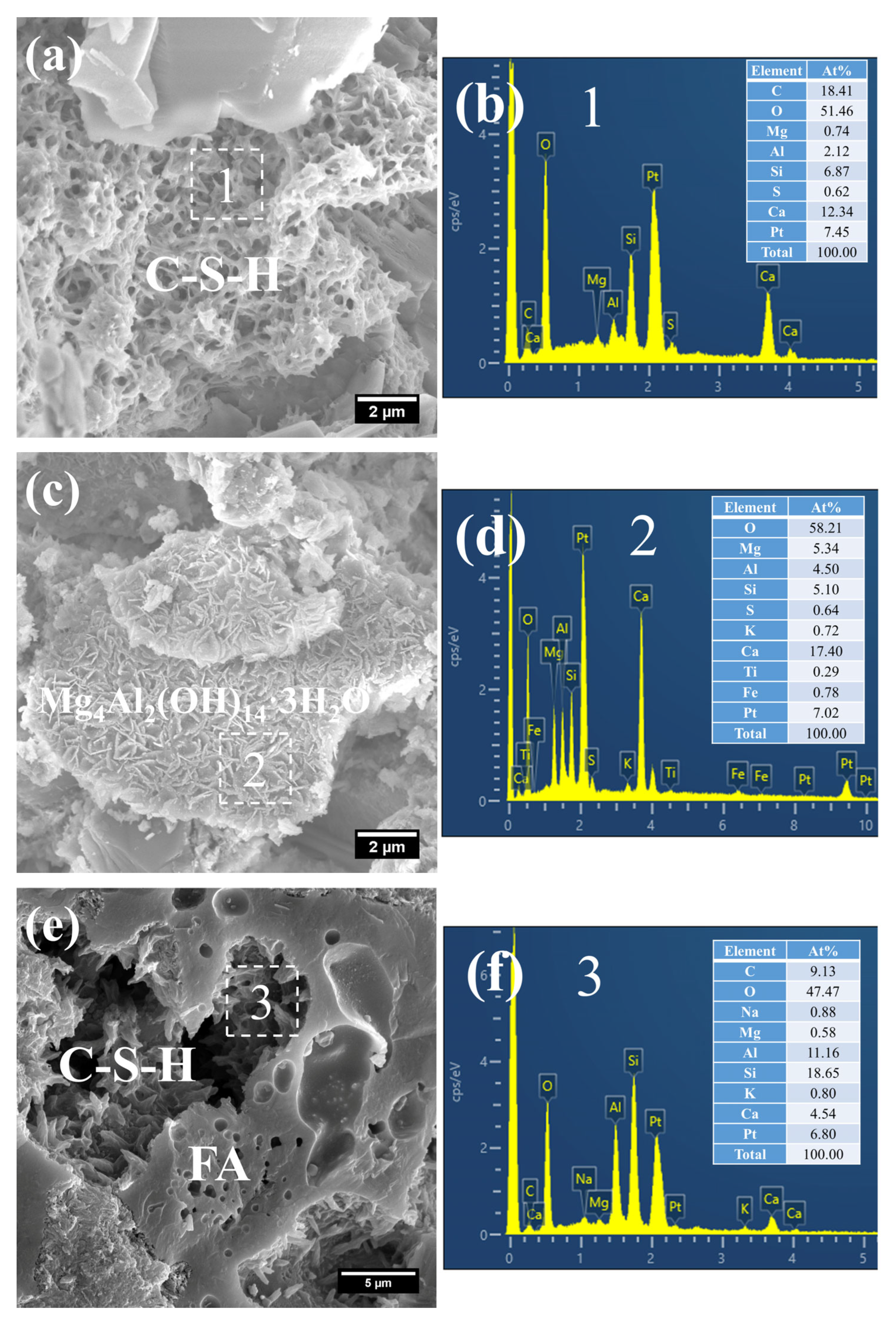
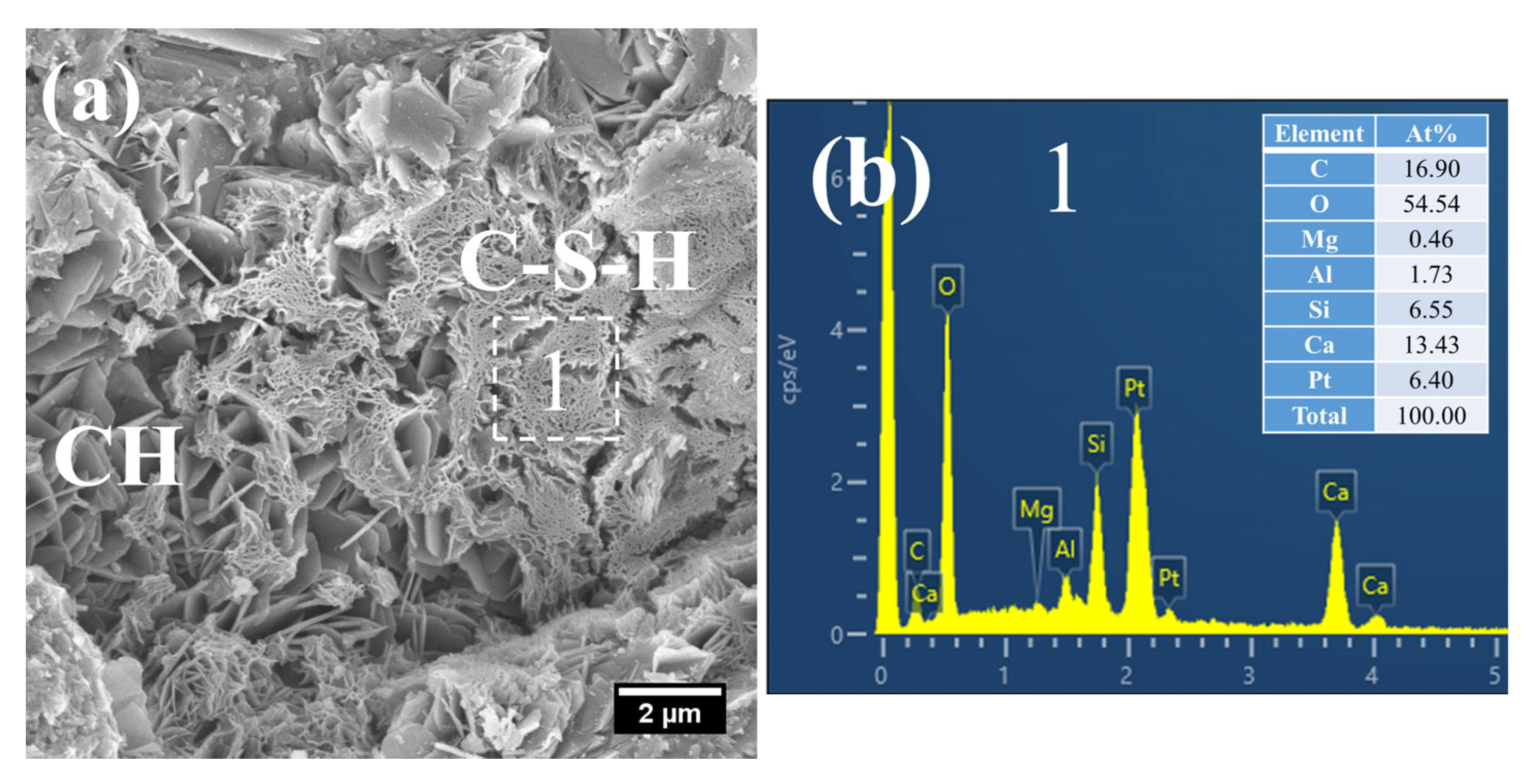
2.5.1. Mortar Steam-Cured at 50 °C
- (1)
- 3 d
- (2)
- 28 d
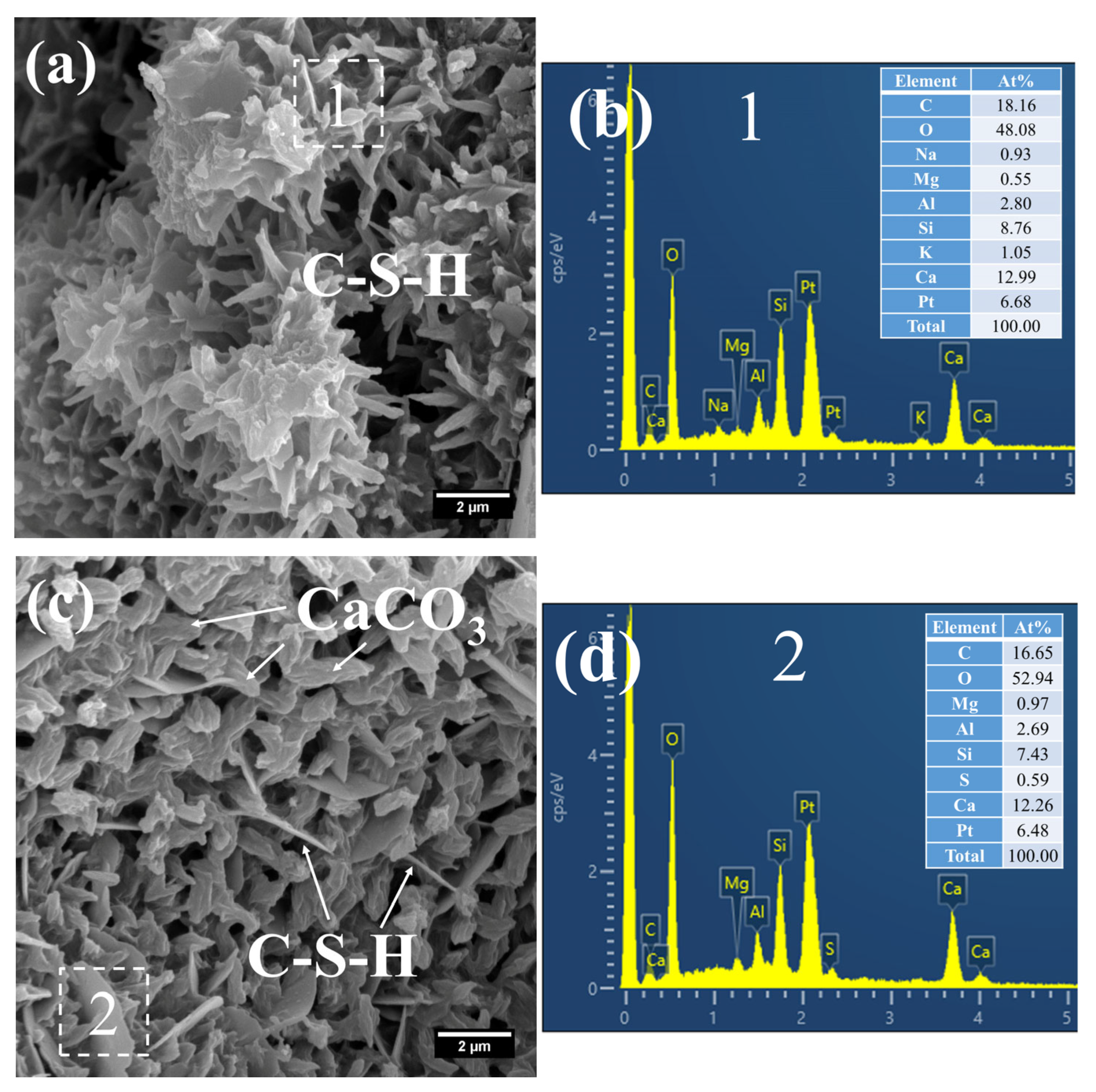
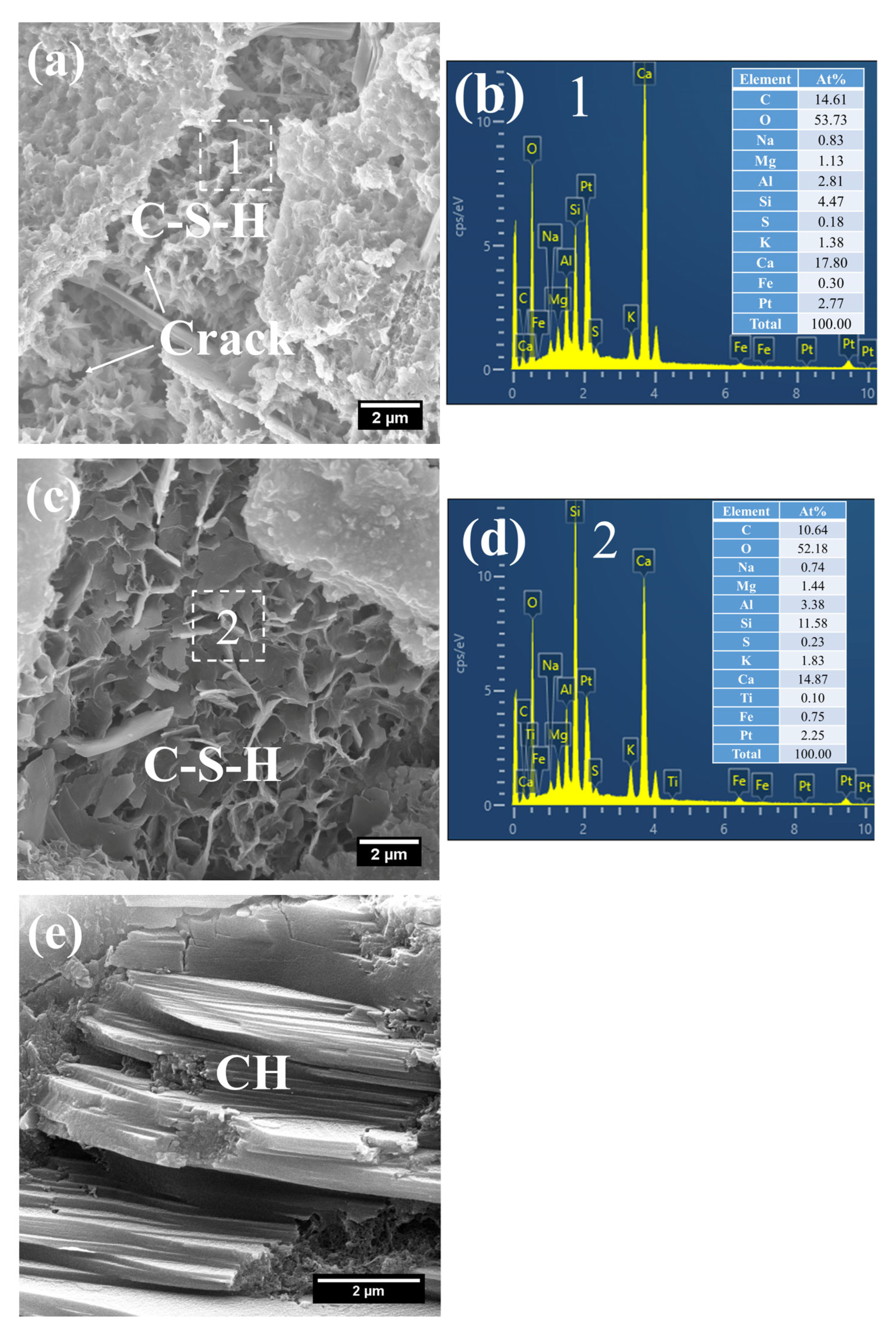
2.5.2. Mortar Steam-Cured at 80 °C
- (1)
- 3 d
- (2)
- 28 d
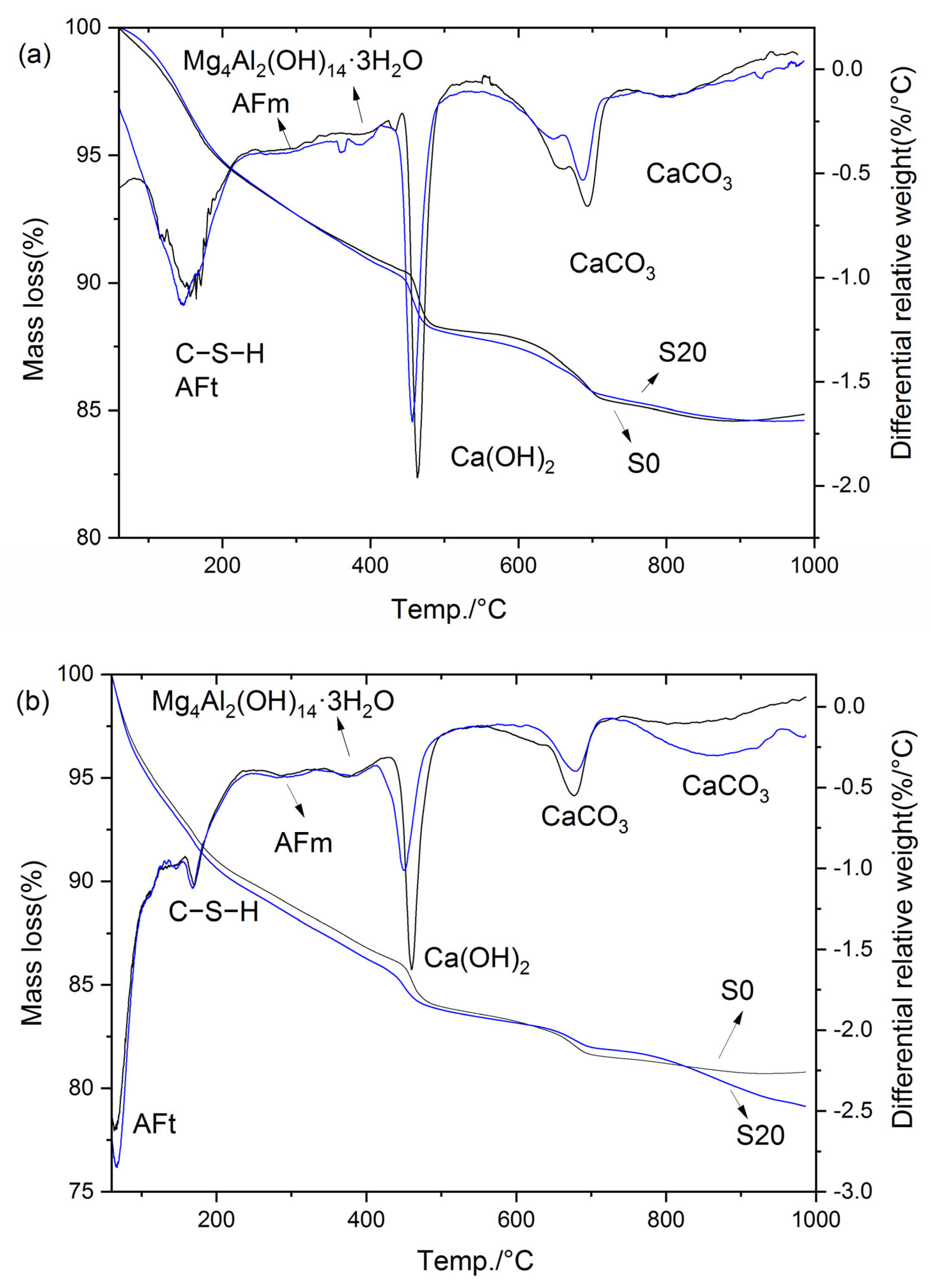
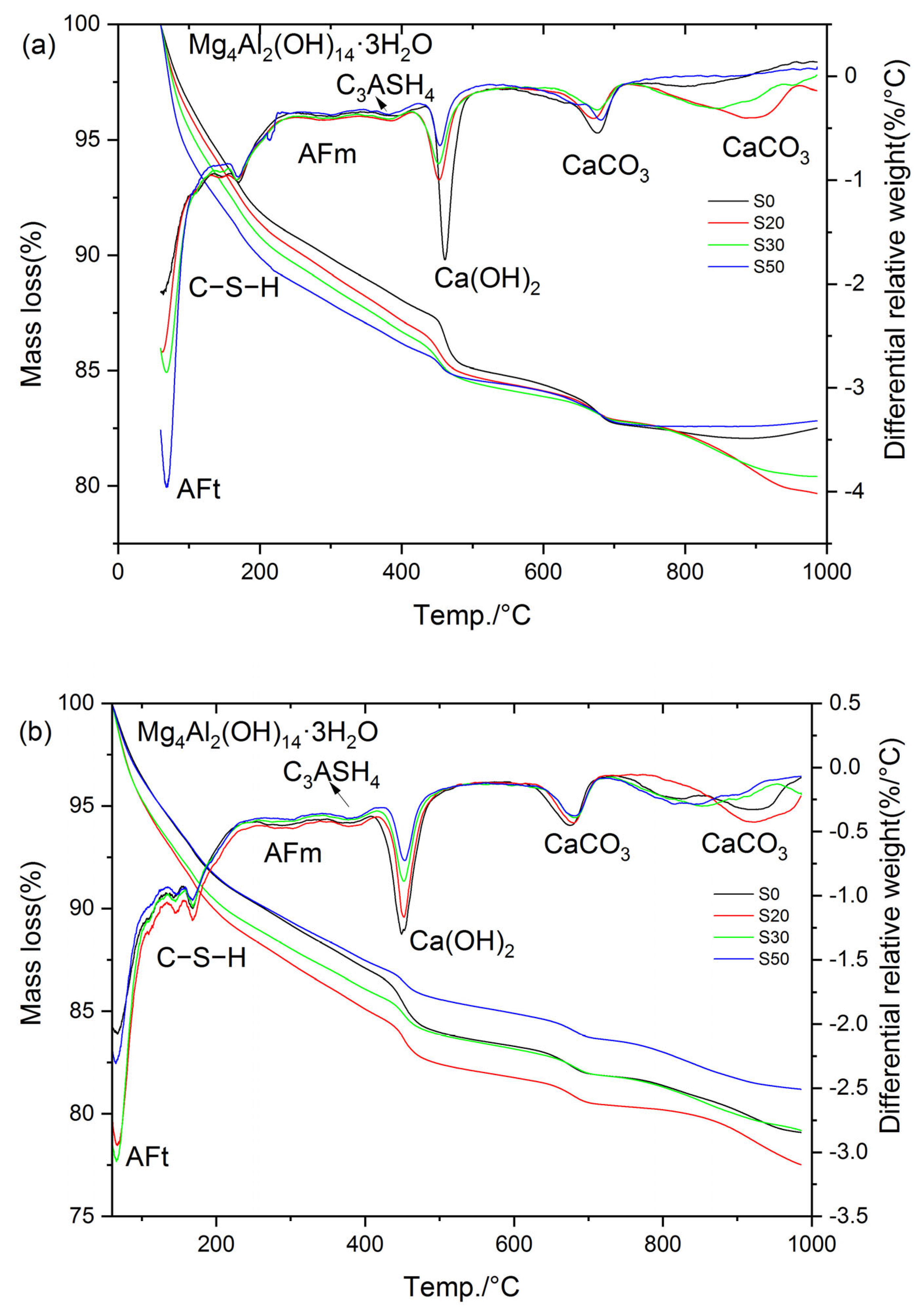
2.6. TG-DTG Analysis of Hydration Products
2.6.1. Mortar Steam-Cured at 50 °C
2.6.2. Mortar Steam-Cured at 80 °C
2.7. Discussion
2.7.1. Hydration Products
- (1)
- C–S–H
- (2)
- CH
- (3)
- Hydrogarnet
- (4)
- DEF
- (5)
- AFm phase
- (6)
- Hydrotalcite
2.7.2. Mechanical Properties
2.7.3. Limitations of Extending the Research Findings to Practical Precast Concrete Applications
- (1)
- Limitations of Model Simplification
- (2)
- Limitations of Size Effect and Constraint Conditions
- (3)
- Limitations of Complex Stress States
3. Conclusions
- (1)
- Increasing GBFS content prolonged the setting time and reduced mortar fluidity, although the effect was negligible at GBFS content of 20%.
- (2)
- At 50 °C steam-curing, higher GBFS content reduced early-age strength but promoted greater later-age strength growth. However, at 80 °C steam-curing, early-age mechanical properties improved significantly. At three days, mortars with 20% and 30% GBFS even outperformed the control. However, higher-temperature curing led to limited later-age strength development and strength retrogression, especially when the GBFS content exceeded 30%.
- (3)
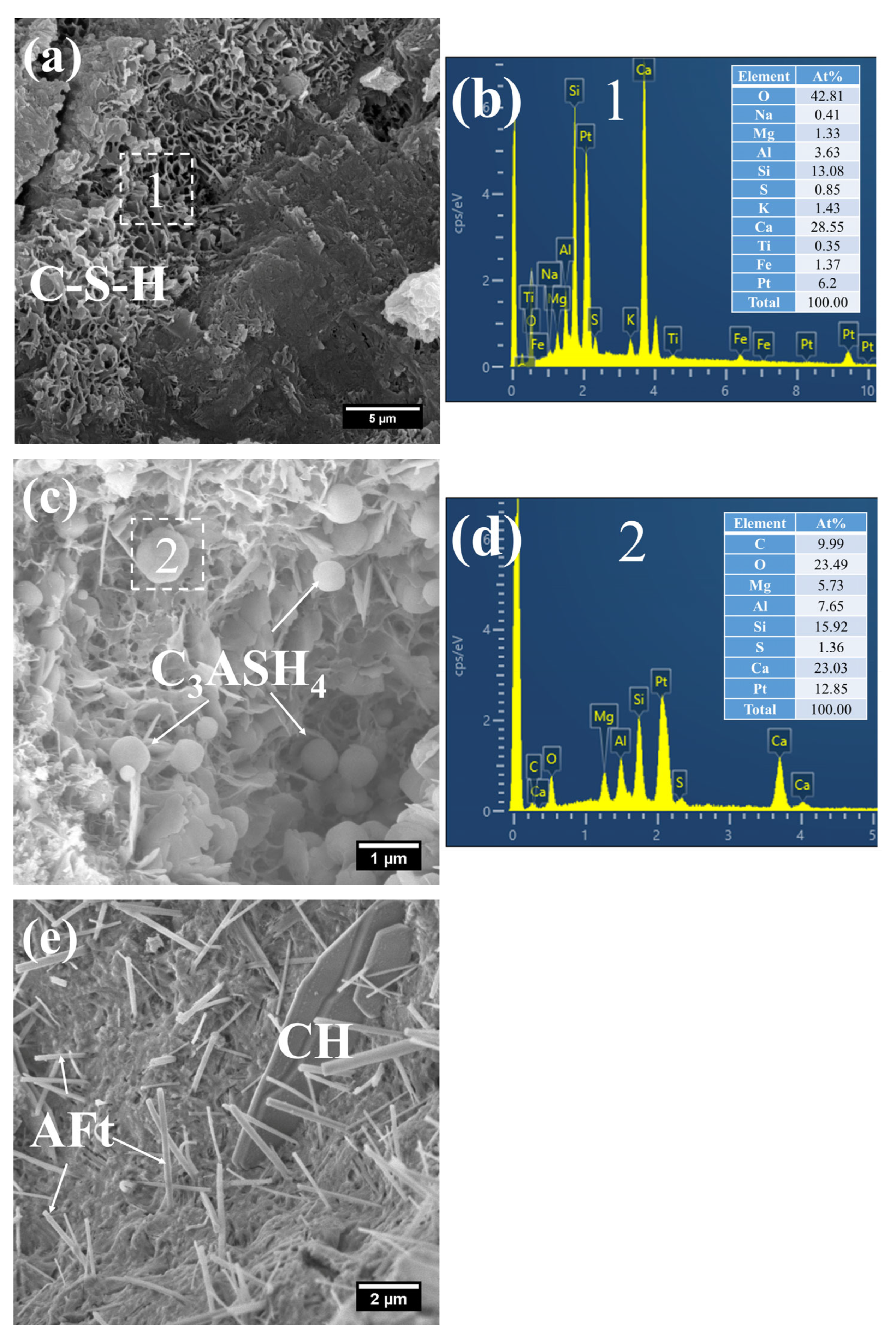
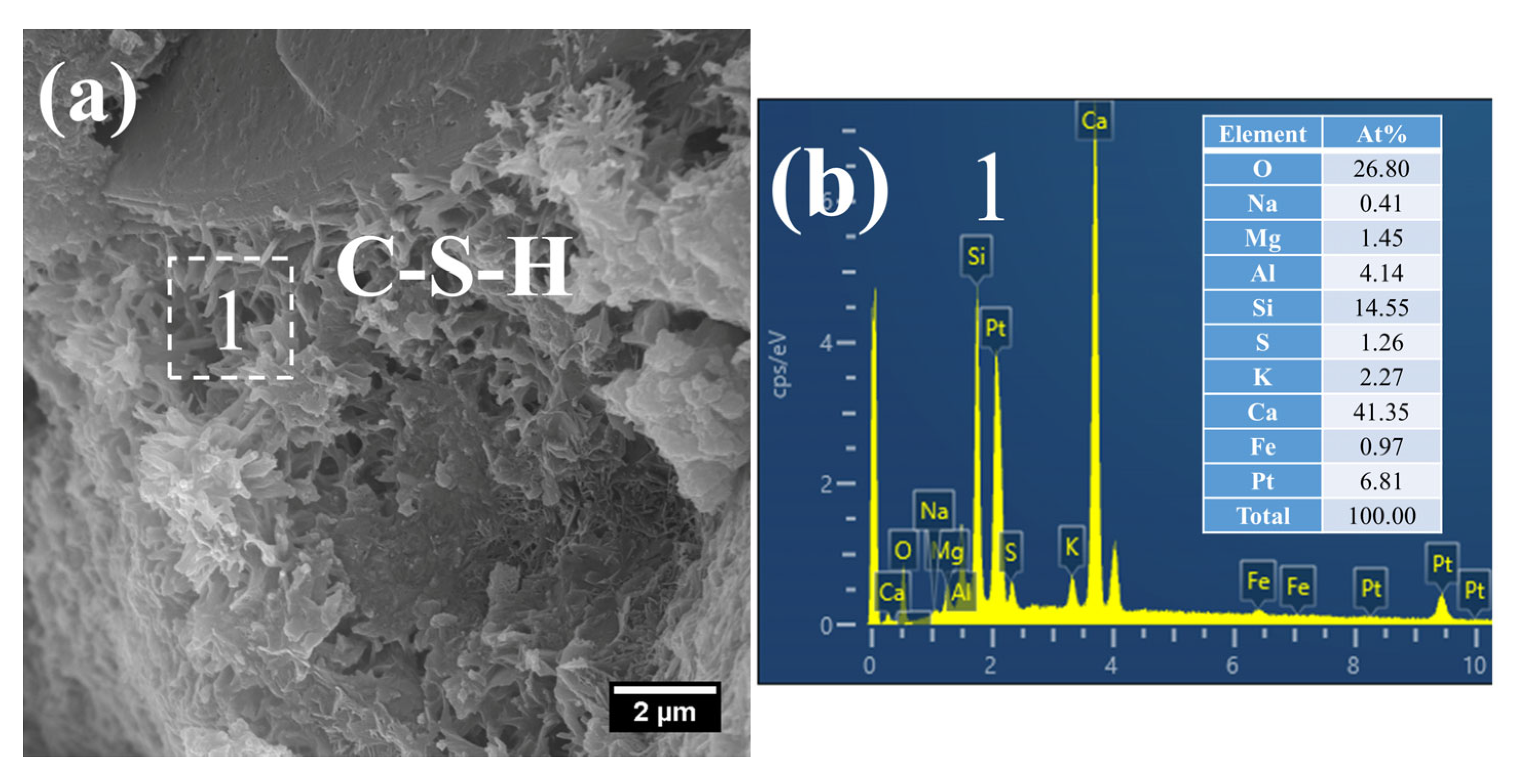
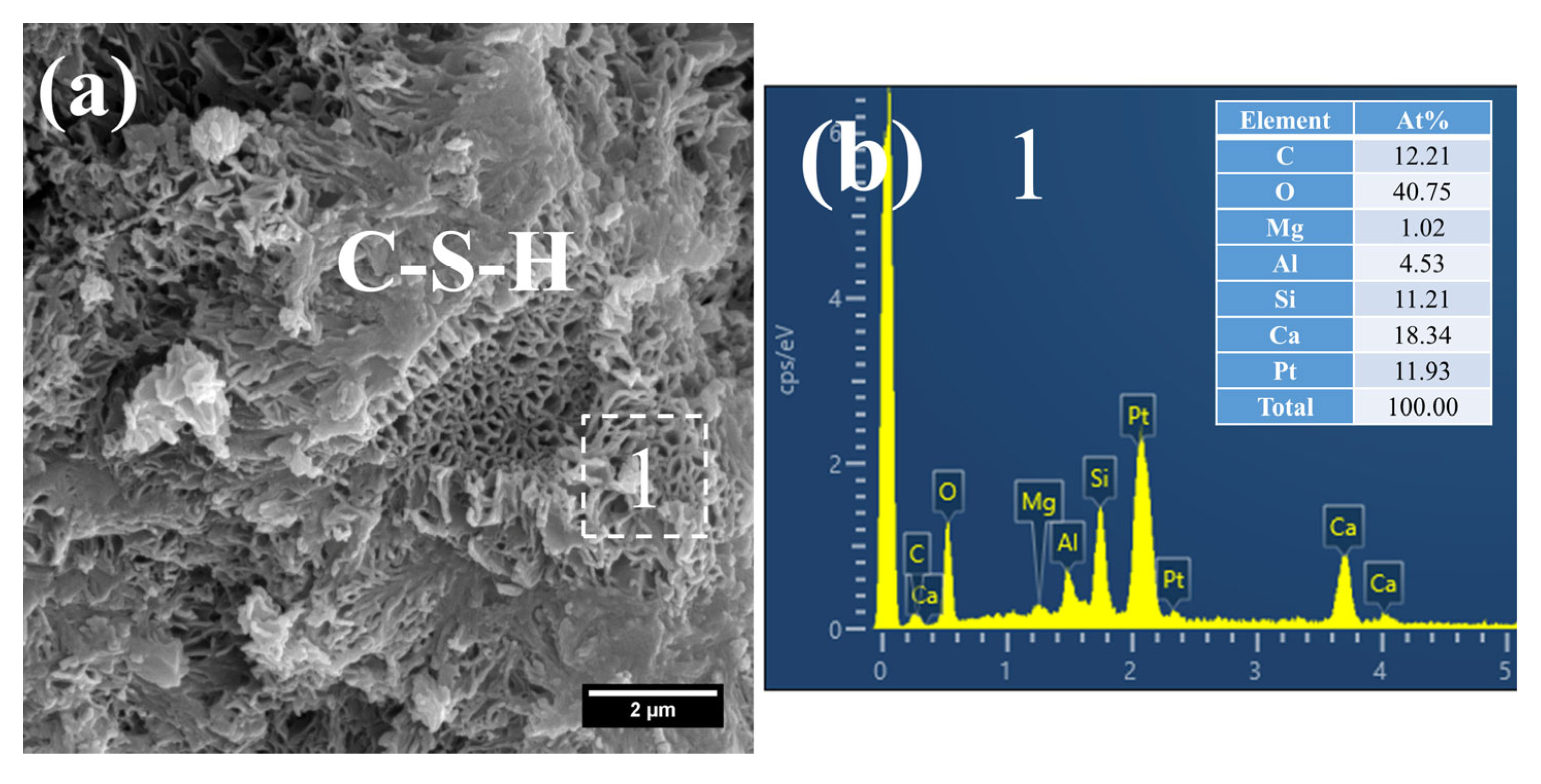
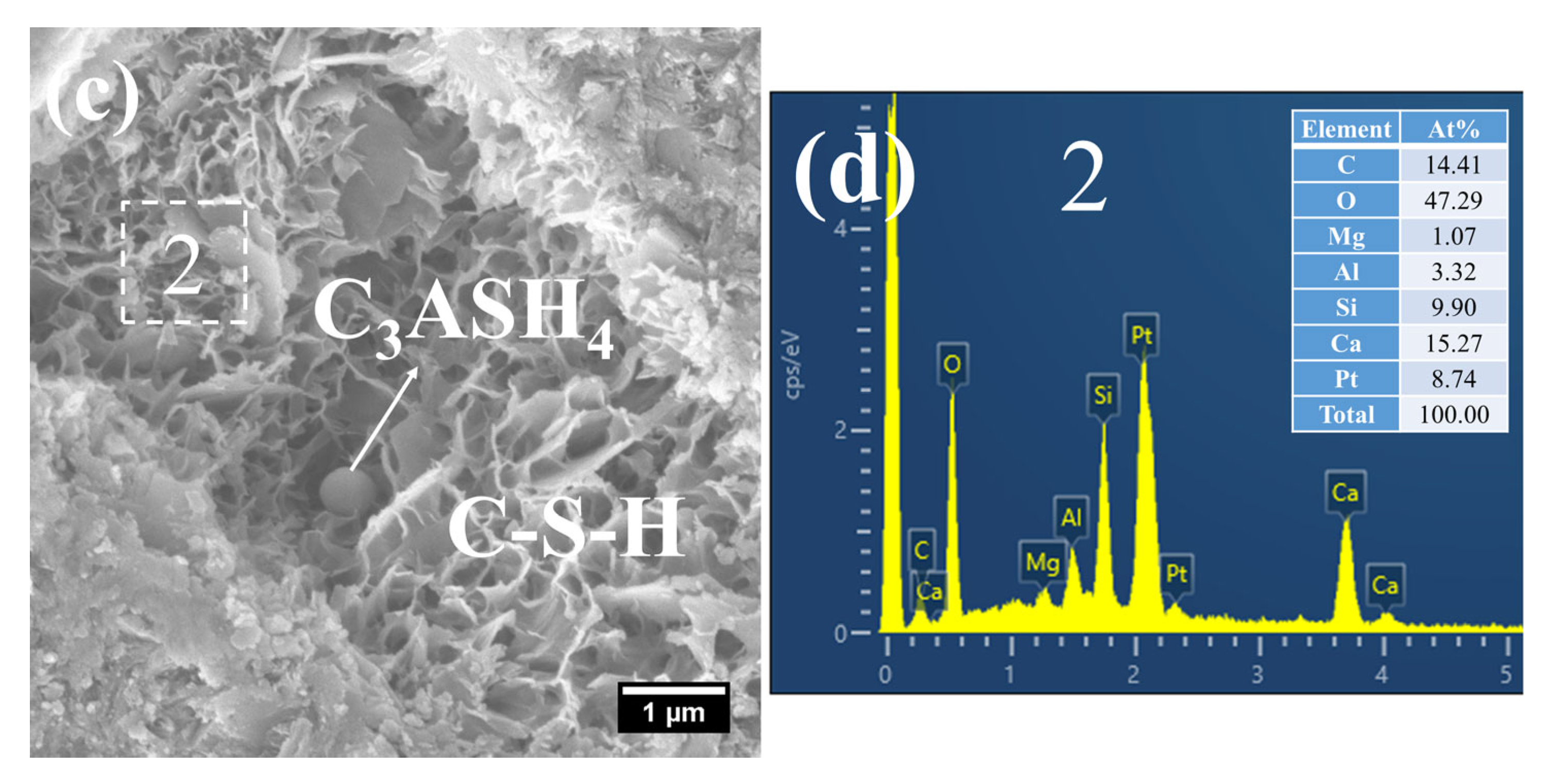
- At the three-day curing age, the C–S–H gels of steam-cured mortar not only exhibited relatively high Ca/Si and Al/Si ratios but were also accompanied by calcium hydroxide crystals with a coarser grain size. However, the incorporation of GBFS was able to mitigate this phenomenon. In addition, GBFS also altered the early-age morphology of C–S–H from spherical honeycomb of short, interwoven fibers in pure cement paste to porous, flake-overlapping honeycomb structures in GBFS-modified pastes.
- (4)
- High dosages of GBFS not only promoted the formation of hydrogarnet and delayed ettringite in mortar cured at 80 °C but also significantly slowed down the formation rate of hydration products in the corresponding specimens at later stages. These two factors jointly constitute the main reasons for the later-age strength regression of the mortar. To mitigate the formation of these undesirable phases, it is necessary to strictly regulate the curing temperature, GBFS content, and the reactive Al2O3/SiO2 ratio and SO3 level within the composite cementitious system.
4. Materials and Methods
4.1. Materials
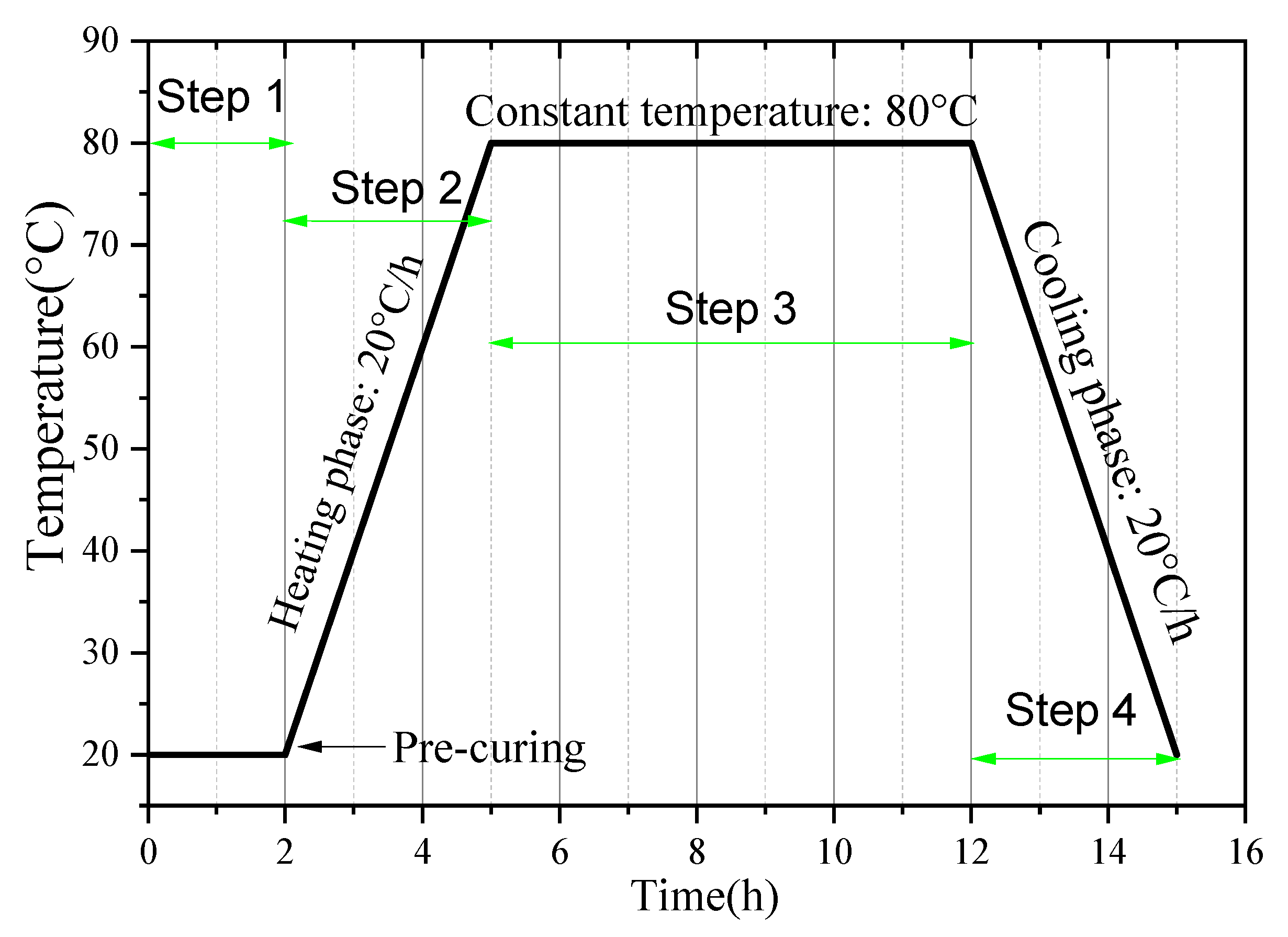
4.2. Sample Preparation and Test Methods
4.2.1. Sample Preparation
4.2.2. Test Methods
Author Contributions
Funding
Institutional Review Board Statement
Informed Consent Statement
Data Availability Statement
Acknowledgments
Conflicts of Interest
Abbreviations
| GBFS | Ground granulated blast-furnace slag |
| C–S–H | Calcium silicate hydrate |
| PPC | Pure Portland cement |
| OPC | Ordinary Portland cement |
| XRD | X-ray diffractometer |
| SEM-EDS | Scanning electron microscope coupled with an X-ray energy dispersive spectrometer |
| TG-DTG | Thermogravimetric and derivative thermogravimetric analyses |
| PCP | Plain cement paste |
| PCM | Plain cement mortar |
| CH | Calcium hydroxide |
| AFt | Ettringite |
| FA | Fly ash |
| AFm | Monosulfoaluminate hydrate |
| DEF | Delayed ettringite formation |
| ITZ | Interfacial transition zone |
References
- Çakır, Ö.; Aköz, F. Effect of curing conditions on the mortars with and without GGBFS. Constr. Build. Mater. 2008, 22, 308–314. [Google Scholar] [CrossRef] [Scilit]
- Cassagnabère, F.; Mouret, M.; Escadeillas, G. Early hydration of clinker–slag–metakaolin combination in steam curing conditions, relation with mechanical properties. Cem. Concr. Res. 2009, 39, 1164–1173. [Google Scholar] [CrossRef] [Scilit]
- Kolani, B.; Buffo-Lacarrière, L.; Sellier, A.; Escadeillas, G.; Boutillon, L.; Linger, L. Hydration of slag-blended cements. Cem. Concr. Compos. 2012, 34, 1009–1018. [Google Scholar] [CrossRef] [Scilit]
- Ahmad, J.; Kontoleon, K.J.; Majdi, A.; Naqash, M.T.; Deifalla, A.F.; Ben Kahla, N.; Isleem, H.F.; Qaidi, S.M. A comprehensive review on the ground granulated blast furnace slag (GGBS) in concrete production. Sustainability 2022, 14, 8783. [Google Scholar] [CrossRef] [Scilit]
- Aydın, S.; Baradan, B. Effect of activator type and content on properties of alkali-activated slag mortars. Compos. Part B Eng. 2014, 57, 166–172. [Google Scholar] [CrossRef] [Scilit]
- Sanal, I. Fresh-state Performance Design of Green Concrete Mixes with Reduced Carbon Dioxide Emissions. Greenh. Gases Sci. Technol. 2018, 8, 1134–1145. [Google Scholar] [CrossRef] [Scilit]
- Ganesh, P.; Murthy, A.R. Tensile Behaviour and Durability Aspects of Sustainable Ultra-High Performance Concrete Incorporated with GGBS as Cementitious Material. Constr. Build. Mater. 2019, 197, 667–680. [Google Scholar] [CrossRef] [Scilit]
- Bheel, N.; Abbasi, S.A.; Awoyera, P.; Olalusi, O.B.; Sohu, S.; Rondon, C.; Echeverría, A.M. Fresh and Hardened Properties of Concrete Incorporating Binary Blend of Metakaolin and Ground Granulated Blast Furnace Slag as Supplementary Cementitious Material. Adv. Civ. Eng. 2020, 2020, 8851030. [Google Scholar] [CrossRef] [Scilit]
- Higgins, D.D. Increased sulfate resistance of GGBS concrete in the presence of carbonate. Cem. Concr. Compos. 2003, 25, 913–919. [Google Scholar] [CrossRef] [Scilit]
- Özbay, E.; Erdemir, M.; Durmuş, H.İ. Utilization and efficiency of ground granulated blast furnace slag on concrete properties–A review. Constr. Build. Mater. 2016, 105, 423–434. [Google Scholar] [CrossRef] [Scilit]
- Ludwig, H.M.; Stark, J. Freeze–thaw and freeze–deicing salt resistance of concretes containing cement rich in granulated blast furnace slag. ACI Mater. J. 1997, 94, 47–55. [Google Scholar] [CrossRef] [Scilit]
- Ghazy, M.F.; Abd Elaty, M.A.; Zalhaf, N.M. Mechanical properties of HPC incorporating fly ash and ground granulated blast furnace slag after exposure to high temperatures. Period. Polytech. Civ. Eng. 2022, 66, 761–774. [Google Scholar] [CrossRef] [Scilit]
- Bougara, A.; Lynsdale, C.; Milestone, N.B. Reactivity and performance of blastfurnace slags of differing origin. Cem. Concr. Compos. 2010, 32, 319–324. [Google Scholar] [CrossRef] [Scilit]
- Ogirigbo, O.R.; Black, L. Influence of slag composition and temperature on the hydration and microstructure of slag blended cements. Constr. Build. Mater. 2016, 126, 496–507. [Google Scholar] [CrossRef] [Scilit]
- Haha, M.B.; Lothenbach, B.; Le Saout, G.; Winnefeld, F. Influence of slag chemistry on the hydration of alkali-activated blast-furnace slag—Part II: Effect of Al2O3. Cem. Concr. Res. 2012, 42, 74–83. [Google Scholar] [CrossRef] [Scilit]
- Wang, P.Z.; Trettin, R.; Rudert, V.; Spaniol, T. Influence of Al2O3 content on hydraulic reactivity of granulated blast-furnace slag, and the interaction between Al2O3 and CaO. Adv. Cem. Res. 2004, 16, 1–7. [Google Scholar] [CrossRef]
- Haha, M.B.; Lothenbach, B.; Le Saout, G.; Winnefeld, F. Influence of slag chemistry on the hydration of alkali-activated blast-furnace slag—Part I: Effect of MgO. Cem. Concr. Res. 2011, 41, 955–963. [Google Scholar] [CrossRef] [Scilit]
- Wu, X.; Roy, D.M.; Langton, C.A. Early stage hydration of slag-cement. Cem. Concr. Res. 1983, 13, 277–286. [Google Scholar] [CrossRef] [Scilit]
- Barnett, S.J.; Soutsos, M.N.; Millard, S.G.; Bungey, J.H. Strength development of mortars containing ground granulated blast-furnace slag: Effect of curing temperature and determination of apparent activation energies. Cem. Concr. Res. 2006, 36, 434–440. [Google Scholar] [CrossRef] [Scilit]
- Singh, S.P.; Murmu, M. Effects of Curing Temperature on Strength of Lime-Activated Slag Cement. Int. J. Civ. Eng. 2017, 15, 575–584. [Google Scholar] [CrossRef] [Scilit]
- Escalante, J.I.; Gómez, L.Y.; Johal, K.K.; Mendoza, G.; Mancha, H.; Méndez, J. Reactivity of blast-furnace slag in Portland cement blends hydrated under different conditions. Cem. Concr. Res. 2001, 31, 1403–1409. [Google Scholar] [CrossRef] [Scilit]
- Roy, D.M.; Idorn, G.M. Hydration, structure, and properties of blast furnace slag cements, mortars, and concrete. ACI J. 1982, 79, 444–457. [Google Scholar] [CrossRef] [Scilit]
- Wang, Q.; Miao, M.; Feng, J.; Yan, P. The influence of high-temperature curing on the hydration characteristics of a cement–GGBS binder. Adv. Cem. Res. 2012, 24, 33–40. [Google Scholar] [CrossRef] [Scilit]
- Escalante-García, J.I.; Sharp, J.H. Effect of temperature on the hydration of the main clinker phases in portland cements: Part ii, blended cements. Cem. Concr. Res. 1998, 28, 1259–1274. [Google Scholar] [CrossRef] [Scilit]
- Luke, K.; Glasser, F.P. Internal chemical evolution of the constitution of blended cements. Cem. Concr. Res. 1988, 18, 495–502. [Google Scholar] [CrossRef] [Scilit]
- Shiyu, Z.; Qiang, W.; Yuqi, Z. Research on the resistance to saline soil erosion of high-volume mineral admixture steam-cured concrete. Constr. Build. Mater. 2019, 202, 1–10. [Google Scholar] [CrossRef] [Scilit]
- Sultana, P.; Das, S.; Bagchi, B.; Bhattacharya, A.; Basu, R.; Nandy, P. Effect of size of fly ash particle on enhancement of mullite content and glass formation. Bull. Mater. Sci. 2011, 34, 1663–1670. [Google Scholar] [CrossRef] [Scilit]
- Mun, K.J.; So, S.Y.; Soh, Y.S. The effect of slaked lime, anhydrous gypsum and limestone powder on properties of blast furnace slag cement mortar and concrete. Constr. Build. Mater. 2007, 21, 1576–1582. [Google Scholar] [CrossRef] [Scilit]
- de Lima Salum, P.; Neto, J.S.A.; Suzuki, S.; Ferraz, D.; Juenger, M.C.; Kirchheim, A.P. Impact of C3A Polymorphism, Lignosulfonate Admixture, Limestone, and Calcium Sulfate Sources in the Hydration Kinetics and Rheology of Cement Pastes. J. Mater. Civ. Eng. 2024, 36, 04024125. [Google Scholar] [CrossRef] [Scilit]
- Liu, J.; Li, Q.; Xu, S. Influence of nanoparticles on fluidity and mechanical properties of cement mortar. Constr. Build. Mater. 2015, 101, 892–901. [Google Scholar] [CrossRef] [Scilit]
- Oinam, Y.; Ju, S.; Gwon, S.; Shin, M.; Pyo, S. Characteristics of GGBFS-based pervious concrete considering rheological properties of the binder. Int. J. Concr. Struct. Mater. 2022, 16, 62. [Google Scholar] [CrossRef] [Scilit]
- Ting, L.; Qiang, W.; Shiyu, Z. Effects of ultra-fine ground granulated blast-furnace slag on initial setting time, fluidity and rheological properties of cement pastes. Powder Technol. 2019, 345, 54–63. [Google Scholar] [CrossRef] [Scilit]
- Song, S.; Sohn, D.; Jennings, H.M.; Mason, T.O. Hydration of alkali-activated ground granulated blast furnace slag. J. Mater. Sci. 2000, 35, 249–257. [Google Scholar] [CrossRef] [Scilit]
- Matschei, T.; Lothenbach, B.; Glasser, F.P. The role of calcium carbonate in cement hydration. Cem. Concr. Res. 2007, 37, 551–558. [Google Scholar] [CrossRef] [Scilit]
- Zajac, M.; Rossberg, A.; Le Saout, G.; Lothenbach, B. Influence of limestone and anhydrite on the hydration of Portland cements. Cem. Concr. Compos. 2014, 46, 99–108. [Google Scholar] [CrossRef] [Scilit]
- Li, B.; Tang, Z.; Huo, B.; Liu, Z.; Cheng, Y.; Ding, B.; Zhang, P. The early age hydration products and mechanical properties of cement paste containing GBFS under steam curing condition. Buildings 2022, 12, 1746. [Google Scholar] [CrossRef] [Scilit]
- Taylor, H.F.W.; Famy, C.; Scrivener, K.L. Delayed ettringite formation. Cem. Concr. Res. 2001, 31, 683–693. [Google Scholar] [CrossRef] [Scilit]
- Collepardi, M. A state-of-the-art review on delayed ettringite attack on concrete. Cem. Concr. Compos. 2003, 25, 401–407. [Google Scholar] [CrossRef] [Scilit]
- Zhang, Y.; Pan, Y.; Zhang, D. A literature review on delayed ettringite formation: Mechanism, affect factors and suppressing methods. Mag. Concr. Res. 2021, 73, 325–342. [Google Scholar] [CrossRef] [Scilit]
- Dilnesa, B.Z.; Lothenbach, B.; Renaudin, G.; Wichser, A.; Kulik, D. Synthesis and characterization of hydrogarnet Ca3(AlxFe1−x)2(SiO4)γ(OH)4(3−γ). Cem. Concr. Res. 2014, 59, 96–111. [Google Scholar] [CrossRef] [Scilit]
- Taylor, H.F. Cement Chemistry, 2nd ed.; Thomas Telford: London, UK, 1997; pp. 170–171. [Google Scholar]
- Huang, J.; Chen, Y.; Brouwers, J.; Yu, Q. Stabilization of Amorphous Calcium Carbonate (ACC) in Carbonated Recycled Cement Powder Based on Colophony Encapsulation. ACS Sustain. Chem. Eng. 2025, 13, 11913–11933. [Google Scholar] [CrossRef] [Scilit]
- Li, B.; Cao, R.; You, N.; Chen, C.; Zhang, Y. Products and properties of steam cured cement mortar containing lithium slag under partial immersion in sulfate solution. Constr. Build. Mater. 2019, 220, 596–606. [Google Scholar] [CrossRef] [Scilit]
- Okoronkwo, M.U.; Glasser, F.P. Compatibility of hydrogarnet, Ca3Al2(SiO4)x(OH)4(3−x), with sulfate and carbonate-bearing cement phases: 5–85 °C. Cem. Concr. Res. 2016, 83, 86–96. [Google Scholar] [CrossRef] [Scilit]
- Wang, X.; Pan, Z.; Shen, X.; Liu, W. Stability and decomposition mechanism of ettringite in presence of ammonium sulfate solution. Constr. Build. Mater. 2016, 124, 786–793. [Google Scholar] [CrossRef] [Scilit]
- Grounds, T.; Midgley, G.H.; Novell, D.V. Carbonation of ettringite by atmospheric carbon dioxide. Thermochim. Acta 1988, 135, 347–352. [Google Scholar] [CrossRef] [Scilit]
- Scrivener, K.; Ouzia, A.; Juilland, P.; Mohamed, A.K. Advances in understanding cement hydration mechanisms. Cem. Concr. Res. 2019, 124, 105823. [Google Scholar] [CrossRef] [Scilit]
- Tadros, M.E.; Skalny, J.; Kalyoncu, R.S. Early hydration of tricalcium silicate. J. Am. Ceram. Soc. 1976, 59, 344–347. [Google Scholar] [CrossRef] [Scilit]
- Kantro, D.L.; Brunauer, S.; Weise, C.H. Development of surface in the hydration of calcium silicates. II. Extension of in-ves-tigations to earlier and later stages of hydration. J. Phys. Chem. 1962, 66, 1804–1809. [Google Scholar] [CrossRef] [Scilit]
- John, E.; Lothenbach, B. Cement hydration mechanisms through time–a review. J. Mater. Sci. 2023, 58, 9805–9833. [Google Scholar] [CrossRef] [Scilit]
- Aye, T.; Oguchi, C.T. Resistance of plain and blended cement mortars exposed to severe sulfate attacks. Constr. Build. Mater. 2011, 25, 2988–2996. [Google Scholar] [CrossRef] [Scilit]
- Quillin, K.; Osborne, G.; Majumdar, A.; Singh, B. Effects of w/c ratio and curing conditions on strength development in BRECEM concretes. Cem. Concr. Res. 2001, 31, 627–632. [Google Scholar] [CrossRef] [Scilit]
- Jappy, T.G.; Glasser, F.P. Synthesis and stability of silica-substituted hydrogarnet Ca3Al2Si3−xO12−4x(OH)4x. Adv. Cem. Res. 1991, 4, 1–8. [Google Scholar] [CrossRef] [Scilit]
- Sha, W. Differential scanning calorimetry study of the hydration products in portland cement pastes with metakaolin replacement. Adv. Build. Technol. 2002, 1, 881–888. [Google Scholar] [CrossRef] [Scilit]
- Fu, Y.; Ding, J.; Beaudoin, J. Zeolite-based additives for high alumina cement products. Adv. Cem. Based Mater. 1996, 3, 37–42. [Google Scholar] [CrossRef] [Scilit]
- Schmidt, T.; Lothenbach, B.; Romer, M.; Neuenschwander, J.; Scrivener, K. Physical and microstructural aspects of sulfate attack on ordinary and limestone blended Portland cements. Cem. Concr. Res. 2009, 39, 1111–1121. [Google Scholar] [CrossRef] [Scilit]
- Yang, Z.; Polder, R.; Mol, J. Modified hydrotalcites as chloride scavengers and inhibitor release agents for improved corrosion protection of reinforced concrete. Heron 2017, 62, 61. Available online: https://resolver.tudelft.nl/uuid:c10ac75d-e445-4800-8ae4-0cf52cae0392 (accessed on 31 December 2025).
- Mir, Z.M.; Bastos, A.; Höche, D.; Zheludkevich, M.L. Recent advances on the application of layered double hydroxides in concrete—A review. Materials 2020, 13, 1426. [Google Scholar] [CrossRef] [Scilit]
- Yang, Z.; Fischer, H.; Polder, R. Modified hydrotalcites as a new emerging class of smart additive of reinforced con-crete for anticorrosion applications: A literature review. Mater. Corros. 2013, 64, 1066–1074. [Google Scholar] [CrossRef] [Scilit]
- GB 175-2023; Code for Common Portland Cement. China Standard Press: Beijing, China, 2024.
- GB 18046-2017; Code for Ground Granulated Blast Furnace Slag Used for Cement, Mortar and Concrete. China Standard Press: Beijing, China, 2018.
- GB/T 17671-2021; Code for Test Method of Cement Mortar Strength (ISO Method). China Metrology Press: Beijing, China, 2018.
- JGJ 63-2006; Standard of Water for Concrete. China Architecture & Building Press: Beijing, China, 2006.
- Zeyad, A.M.; Johari, M.A.M.; Alharbi, Y.R.; Abadel, A.A.; Amran, Y.H.M.; Tayeh, B.A.; Abutaleb, A. Influence of steam curing regimes on the properties of ultrafine POFA-based high-strength green concrete. J. Build. Eng. 2021, 38, 102204. [Google Scholar] [CrossRef] [Scilit]
- Hanif, A.; Kim, Y.; Usman, M.; Park, C. Optimization of Steam-Curing Regime for Recycled Aggregate Concrete Incorporating High Early Strength Cement—A Parametric Study. Materials 2018, 11, 2487. [Google Scholar] [CrossRef] [Scilit]
- Zhuang, S.; Sun, J. The feasibility of properly raising temperature for preparing high-volume fly ash or slag steam-cured concrete: An evaluation on DEF, 4-year strength and durability. Constr. Build. Mater. 2020, 242, 118094. [Google Scholar] [CrossRef] [Scilit]
- GB/T 1346-2024; Code for Test Methods for Water Requirement of Normal Consistency, Setting Time and Soundness of the Portland Cement. China Standard Press: Beijing, China, 2024.
- GB/T 2419-2005; Code for Test Method for Fluidity of Cement Mortar. China Standard Press: Beijing, China, 2017.



| Materials | CaO | SiO2 | Al2O3 | MgO | SO3 | MnO | TiO2 | P2O5 |
|---|---|---|---|---|---|---|---|---|
| OPC | 63.66 | 22.31 | 5.76 | 1.95 | 1.83 | 2.52 | 0.32 | 0.18 |
| GBFS | 39.47 | 26.14 | 12.34 | 7.19 | 3.06 | 0.24 | 0.67 | 0.18 |
| Samples | Curing Age | Total Mass Loss | <80 °C | 80~240 °C | 330~410 °C | CH | Non-Evaporable Water |
|---|---|---|---|---|---|---|---|
| S0 | 3 d | 15.2 | 0.58 | 5.68 | 1.07 | 10.31 | 12.20 |
| S20 | 3 d | 15.4 | 0.44 | 5.78 | 1.03 | 9.62 | 12.57 |
| S0 | 28 d | 19.18 | 2.60 | 7.30 | 1.71 | 10.89 | 16.76 |
| S20 | 28 d | 20.82 | 2.91 | 7.45 | 1.40 | 8.67 | 16.84 |
| Samples | Curing Age | Total Mass Loss | <80 °C | 80~240 °C | 330~410 °C | CH | Non-Evaporable Water |
|---|---|---|---|---|---|---|---|
| S0 | 3 d | 17.44 | 2.09 | 6.92 | 1.64 | 11.18 | 15.58 |
| S20 | 20.39 | 2.45 | 7.12 | 1.79 | 9.08 | 15.86 | |
| S30 | 19.54 | 2.91 | 7.23 | 1.79 | 8.50 | 16.07 | |
| S50 | 17.16 | 3.96 | 7.09 | 1.80 | 4.77 | 15.86 | |
| S0 | 28 d | 20.86 | 2.29 | 7.17 | 1.67 | 11.87 | 16.72 |
| S20 | 22.42 | 2.99 | 8.17 | 1.80 | 10.56 | 18.28 | |
| S30 | 20.86 | 3.07 | 7.61 | 1.68 | 8.13 | 16.84 | |
| S50 | 18.79 | 2.29 | 7.17 | 1.55 | 7.23 | 15.50 |
| Sample | OPC | GBFS | Sand | Water |
|---|---|---|---|---|
| S0 | 450 | 0 | 1350 ± 5 | 225 |
| S20 | 360 | 90 | 1350 ± 5 | 225 |
| S30 | 315 | 135 | 1350 ± 5 | 225 |
| S50 | 225 | 225 | 1350 ± 5 | 225 |
Disclaimer/Publisher’s Note: The statements, opinions and data contained in all publications are solely those of the individual author(s) and contributor(s) and not of MDPI and/or the editor(s). MDPI and/or the editor(s) disclaim responsibility for any injury to people or property resulting from any ideas, methods, instructions or products referred to in the content. |
© 2026 by the authors. Licensee MDPI, Basel, Switzerland. This article is an open access article distributed under the terms and conditions of the Creative Commons Attribution (CC BY) license.
Share and Cite
Li, B.; Li, J.; Li, Y.; Shang, H.; Yu, H.; Huo, B.; Liu, Y. The Effect of GBFS on the Mechanical Properties and Hydration Products of Steam-Cured Cement Mortar. Gels 2026, 12, 110. https://doi.org/10.3390/gels12020110
Li B, Li J, Li Y, Shang H, Yu H, Huo B, Liu Y. The Effect of GBFS on the Mechanical Properties and Hydration Products of Steam-Cured Cement Mortar. Gels. 2026; 12(2):110. https://doi.org/10.3390/gels12020110
Chicago/Turabian StyleLi, Baoliang, Jie Li, Yue Li, Hongrui Shang, Haohang Yu, Binbin Huo, and Yuyi Liu. 2026. "The Effect of GBFS on the Mechanical Properties and Hydration Products of Steam-Cured Cement Mortar" Gels 12, no. 2: 110. https://doi.org/10.3390/gels12020110
APA StyleLi, B., Li, J., Li, Y., Shang, H., Yu, H., Huo, B., & Liu, Y. (2026). The Effect of GBFS on the Mechanical Properties and Hydration Products of Steam-Cured Cement Mortar. Gels, 12(2), 110. https://doi.org/10.3390/gels12020110